
#tesla
tesla
6.6M views
5,203 Discussing
Hot
Latest


·
--
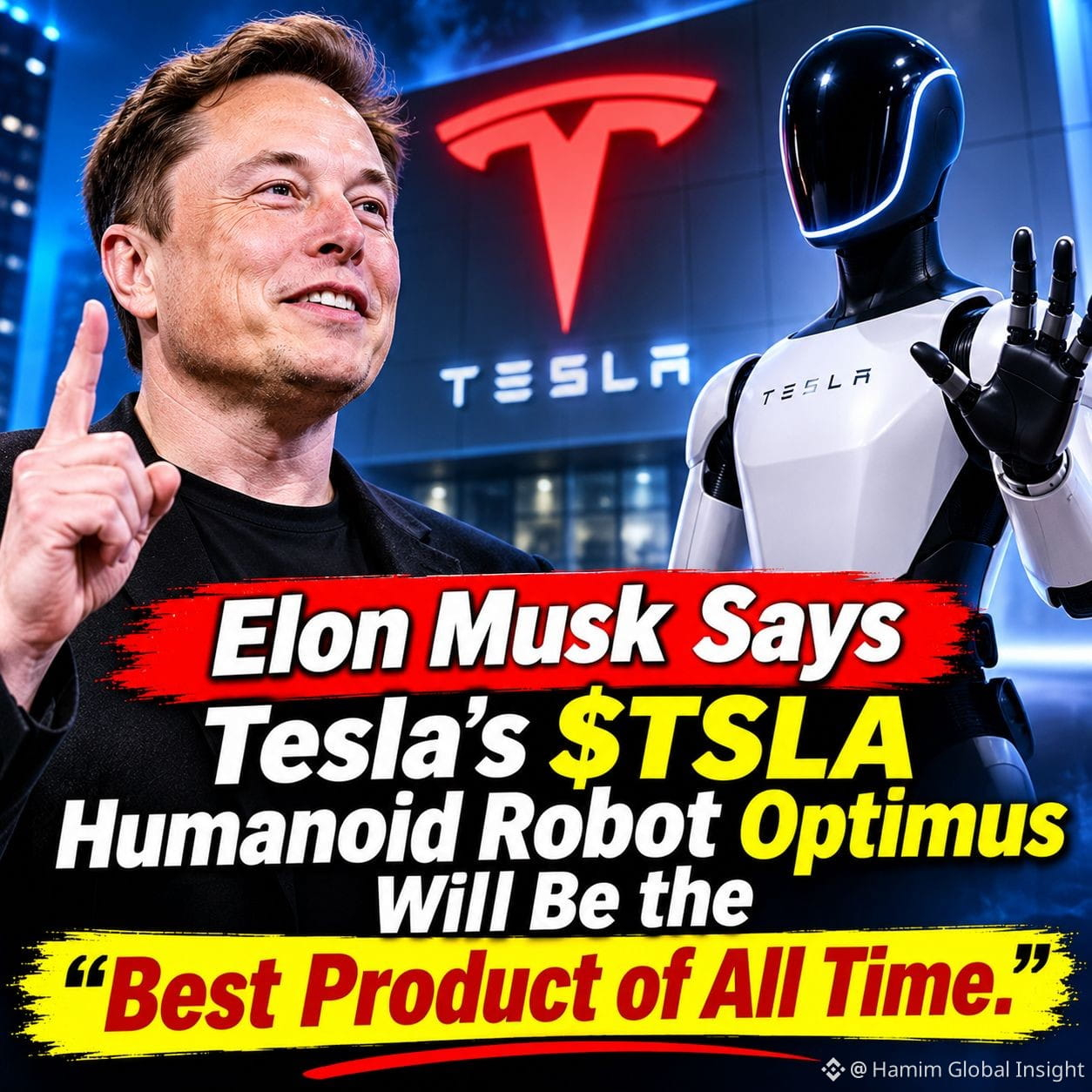
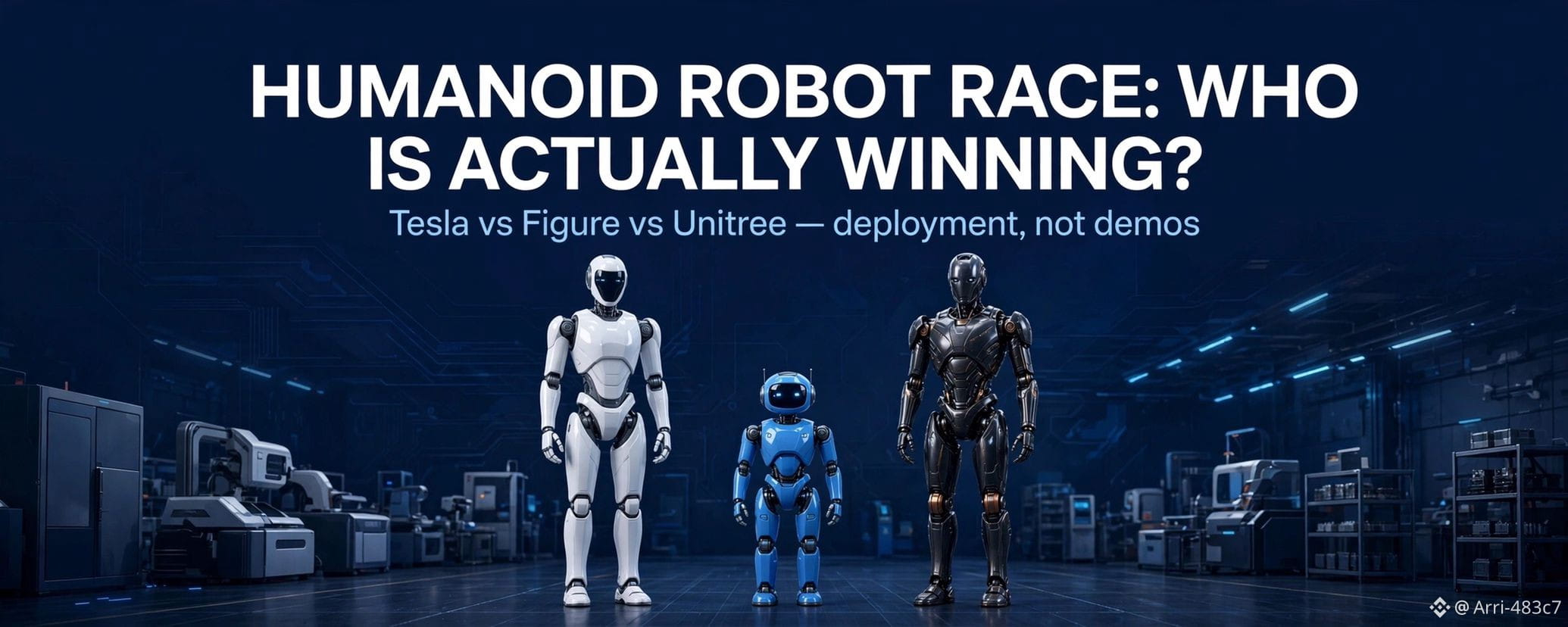
Humanoid Robot Race: Who Is ACTUALLY Winning in 2026? 🤖
Not by demo. By deployment.
🏭 FIGURE 03
✅ Only verified factory pilot: BMW, 1,250+ hrs, 90,000+ parts
✅ $39B valuation, Sept 2025
❌ Price: NOT disclosed
❌ $25/hr + 40 units: NOT confirmed by BMW/Figure
🏭 TESLA OPTIMUS GEN 3
✅ Production started Oct 21, 2026, Fremont
✅ Line design: ~1M / year
❌ Customers: NONE yet
❌ Price: NOT announced
🎯 Target: $20K-$30K at scale
🏭 UNITREE G1
✅ Shipping NOW
✅ Base: $13,500
⚠️ Catch: Base CANNOT be programmed
✅ EDU for research: $43K-$74K via resellers
Verdict:
Access → Unitree
Customer → Figure
Scale bet → Tesla
Winner = whoever proves full-shift, safe, cheaper-than-human work.
Who are you betting on? 👇
$TSLA $UNITREE $ANTHROPIC
#AI #RobotsHumanoides #Tesla #Figure
1
524

Headline:
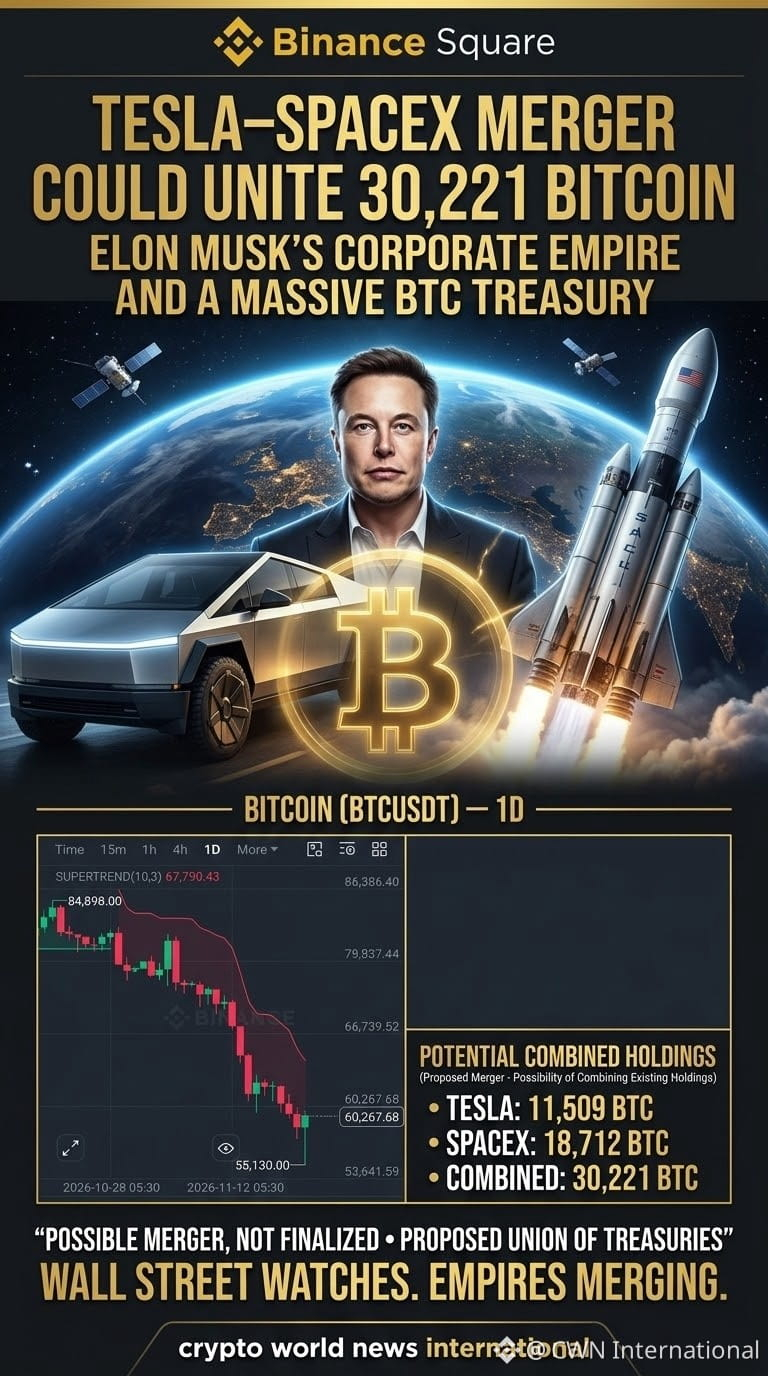
Tesla–SpaceX Merger Could Unite 30,221 Bitcoin Under One Corporate Treasury
Summary:
Elon Musk’s proposed Tesla–SpaceX merger could bring more than 30,000 BTC under one corporate balance sheet, creating one of the largest corporate Bitcoin holdings.
Key Points:
- Tesla holds approximately 11,509 BTC.
- SpaceX holds approximately 18,712 BTC.
- Combined holdings: 30,221 BTC.
- Both companies have established independent committees to explore a potential merger.
- The merger could face significant regulatory, legal and shareholder approval challenges.
- No final merger agreement has been announced.
Market Insight:
The potential merger highlights Bitcoin’s growing presence on major corporate balance sheets. However, combining existing BTC holdings does not create new buying demand by itself. The bigger question is whether the merged company will continue holding, accumulate more, or eventually restructure its Bitcoin position.
#Bitcoin #Tesla #SpaceX #ElonMusk #BitcoinTreasury $SPCX $BTC $TSLA
{future}(TSLAUSDT)
{future}(BTCUSDT)
{future}(SPCXUSDT)
Headline:
Tesla–SpaceX Merger Could Unite 30,221 Bitcoin Under One Corporate Treasury
Summary:
Elon Musk’s proposed Tesla–SpaceX merger could bring more than 30,000 BTC under one corporate balance sheet, creating one of the largest corporate Bitcoin holdings.
Key Points:
- Tesla holds approximately 11,509 BTC.
- SpaceX holds approximately 18,712 BTC.
- Combined holdings: 30,221 BTC.
- Both companies have established independent committees to explore a potential merger.
- The merger could face significant regulatory, legal and shareholder approval challenges.
- No final merger agreement has been announced.
Market Insight:
The potential merger highlights Bitcoin’s growing presence on major corporate balance sheets. However, combining existing BTC holdings does not create new buying demand by itself. The bigger question is whether the merged company will continue holding, accumulate more, or eventually restructure its Bitcoin position.
#Bitcoin #Tesla #SpaceX #ElonMusk #BitcoinTreasury $SPCX $BTC $TSLA
142


Elon Musk's two companies might be about to pull off the laziest $1.8B Bitcoin move ever.
Tesla holds 11,509 $BTC. SpaceX holds 18,712. If the merger Bloomberg reported goes through — announcement possibly as soon as December — all 30,221 coins land on ONE balance sheet. That would make the combined company the 6th biggest corporate Bitcoin holder, ahead of Coinbase.
And here's the funny part: nobody has to buy a single coin. The stack is already there. It's just paperwork.
$BTC is holding ~$60,320 this morning, up ~2.3% after bouncing nearly 10% off Saturday's $55,130 low. Still ~52% below the $126K top though, so don't get carried away.
Not financial advice. DYOR.
#Bitcoin #Tesla #CryptoNews
Elon Musk's two companies might be about to pull off the laziest $1.8B Bitcoin move ever.
Tesla holds 11,509 $BTC . SpaceX holds 18,712. If the merger Bloomberg reported goes through — announcement possibly as soon as December — all 30,221 coins land on ONE balance sheet. That would make the combined company the 6th biggest corporate Bitcoin holder, ahead of Coinbase.
And here's the funny part: nobody has to buy a single coin. The stack is already there. It's just paperwork.
$BTC is holding ~$60,320 this morning, up ~2.3% after bouncing nearly 10% off Saturday's $55,130 low. Still ~52% below the $126K top though, so don't get carried away.
Not financial advice. DYOR.
#Bitcoin #Tesla #CryptoNews
63

·
--
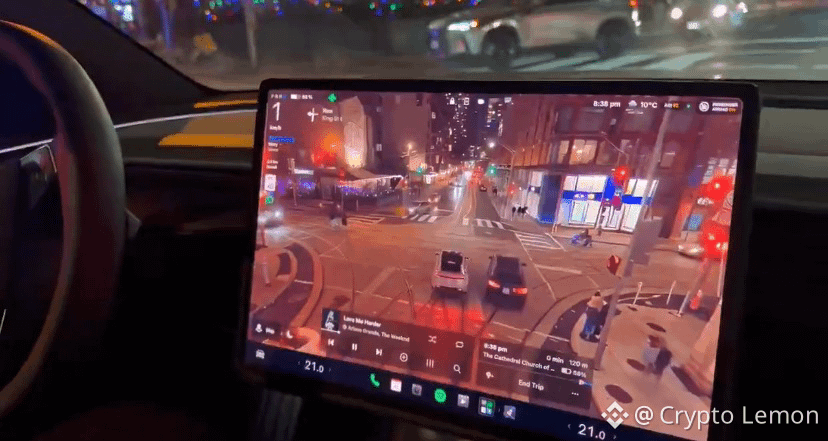
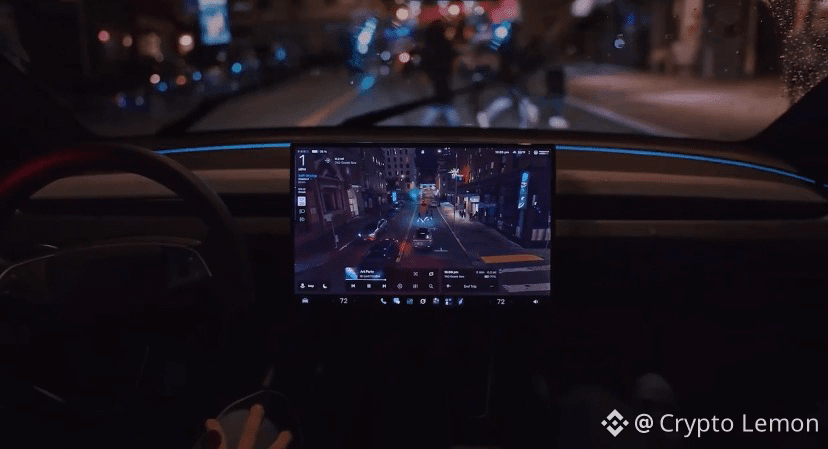
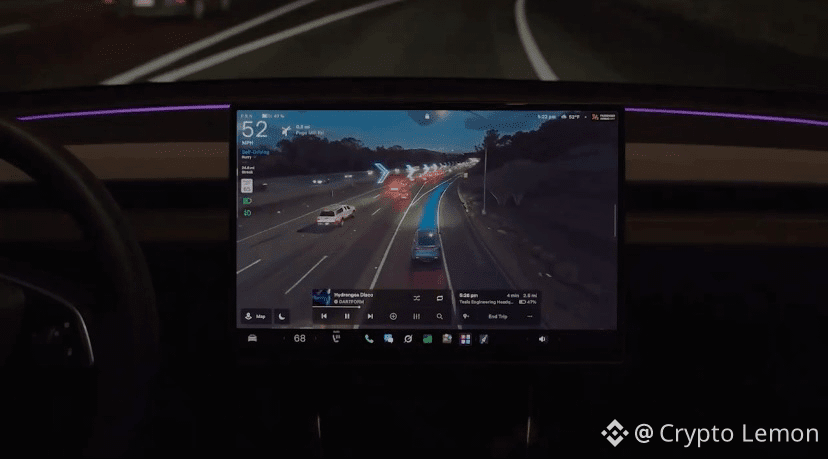
🚗 Tesla is turning Autopilot into a real-life GTA!
The new FSD v15 creates a 3D picture of the road in real time, shows upcoming maneuvers, and lets you choose your direction by tapping the screen.
🤖 Tesla also says the system has become 25 times better at handling critical situations.
The future of driving is closer than it seems! 🔥
#Tesla #ElonMusk #AI #Technology
2
665

Tesla’s Cybercab V1.5 robotaxi has begun on-road testing in Dallas. Its trunk lid directly integrates a Starlink antenna and rear camera. The emergency guide confirms that it is designed for road speeds of up to 85 mph, while street footage also shows it making a millisecond-fast evasive maneuver when a collision suddenly occurs ahead. Musk is bringing satellite communications and driverless transportation together in a single network. #Tesla #Cybercab #Starlink $TSLA
Tesla’s Cybercab V1.5 robotaxi has begun on-road testing in Dallas. Its trunk lid directly integrates a Starlink antenna and rear camera. The emergency guide confirms that it is designed for road speeds of up to 85 mph, while street footage also shows it making a millisecond-fast evasive maneuver when a collision suddenly occurs ahead. Musk is bringing satellite communications and driverless transportation together in a single network. #Tesla #Cybercab #Starlink $TSLA
26
Tesla FSD v15.0.1 (2026.38.6.11) has been rolled out to the AI4 early-access test fleet, bringing the “pixels in, pixels out” Reality View unified vision encoder, directly connecting FSD, Robotaxi, and Optimus humanoid robots. It supports tap-to-park and automatic entry into private garages, while quietly removing the takeover-reason pop-up. The physical-world brains of cars and robots are converging. #Tesla #FSD $TSLA #AI
Tesla FSD v15.0.1 (2026.38.6.11) has been rolled out to the AI4 early-access test fleet, bringing the “pixels in, pixels out” Reality View unified vision encoder, directly connecting FSD, Robotaxi, and Optimus humanoid robots. It supports tap-to-park and automatic entry into private garages, while quietly removing the takeover-reason pop-up. The physical-world brains of cars and robots are converging. #Tesla #FSD $TSLA #AI
24
#Tesla #Robotaxi #Cybercab Tesla has officially launched a dedicated Instagram account for its Robotaxi ride-hailing service, separating brand communications aimed at everyday passengers from its main account for car buyers. Meanwhile, the Cybercab roadshow in Malaysia wraps up today (November 22), as efforts to commercialize driverless taxis across multiple cities clearly gather pace.
#Tesla #Robotaxi #Cybercab Tesla has officially launched a dedicated Instagram account for its Robotaxi ride-hailing service, separating brand communications aimed at everyday passengers from its main account for car buyers. Meanwhile, the Cybercab roadshow in Malaysia wraps up today (November 22), as efforts to commercialize driverless taxis across multiple cities clearly gather pace.
26

·
--
Bullish
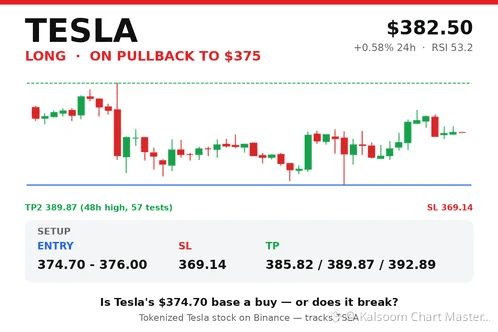
🚀 Tesla is $382.50 — and the entry is $375. Set your order NOW.
$TSLAB (tokenized Tesla stock on Binance) is $382.50, above both EMAs with RSI 53.2. The $374.70 base was tested 13 times in 48 hours. A pullback to that base is the long — not chasing at $382.50.
Roadmap:
$369.14 SL → $375 entry → $382.50 → $385.82 TP1 → $389.87 TP2 → $392.89 TP3
🚀 LONG — $TSLAB (on pullback)
Entry: $374.70 – $376.00
SL: $369.14
TP1: $385.82 | TP2: $389.87 | TP3: $392.89
⚠️ Don't buy at $382.50 — wait for the pullback to $375. If $374.70 breaks, the long fails. Note: TSLAB is tokenized Tesla stock on Binance — it tracks TSLA's price.
Receipts: our calls overnight — SOL TP2 $75, BREV full TP3, MMT full TP3, ZEC TP1.
Is Tesla's $374.70 base a buy, or does it break? 🤔
#Tesla #TSLATrading
NFA — This is not financial advice, DYOR.
1
23
Musk is reshaping Tesla with the most ruthless cuts: discontinuing the Cybertruck to make way for the Cybercab robotaxi; meanwhile, the Fremont factory’s Model S/X production lines have been retired and are being converted into a production line capable of making 1 million Optimus humanoid robots a year (targeting weekly production of 20,000 units and delivery by the end of 2027, with dexterous hands still a major engineering challenge). Tesla is transforming completely from a carmaker into an operator of autonomous vehicle fleets and embodied AI. #Tesla #Optimus
Musk is reshaping Tesla with the most ruthless cuts: discontinuing the Cybertruck to make way for the Cybercab robotaxi; meanwhile, the Fremont factory’s Model S/X production lines have been retired and are being converted into a production line capable of making 1 million Optimus humanoid robots a year (targeting weekly production of 20,000 units and delivery by the end of 2027, with dexterous hands still a major engineering challenge). Tesla is transforming completely from a carmaker into an operator of autonomous vehicle fleets and embodied AI. #Tesla #Optimus
67
While everyone was watching Tesla build cars, its energy business teased “Transformation loading…” at the RE+ energy show in Las Vegas, hinting at the launch of new energy storage hardware. That same morning, Tesla vehicle software version 2026.44.1 also officially began rolling out. Hardware energy storage capitalizes on peak-to-off-peak grid price differences, while software OTA updates enhance the in-car experience. The synchronized evolution of energy and software is Tesla’s true competitive moat. #Tesla #EnergyStorage
While everyone was watching Tesla build cars, its energy business teased “Transformation loading…” at the RE+ energy show in Las Vegas, hinting at the launch of new energy storage hardware. That same morning, Tesla vehicle software version 2026.44.1 also officially began rolling out. Hardware energy storage capitalizes on peak-to-off-peak grid price differences, while software OTA updates enhance the in-car experience. The synchronized evolution of energy and software is Tesla’s true competitive moat. #Tesla #EnergyStorage
53
Musk personally announced that he will visit China again. The news immediately set the market’s most sensitive nerves on edge—is the full version of FSD finally on the verge of launching in China? With domestic Chinese autonomous-driving solutions locked in an intense race, Tesla needs more than factory capacity: it needs a software monetization loop for advanced driver assistance in the world’s largest electric-vehicle market. If this trip finalizes the details of its rollout, the competitive landscape of the autonomous-driving sector could change overnight. #Tesla #FSD
Musk personally announced that he will visit China again. The news immediately set the market’s most sensitive nerves on edge—is the full version of FSD finally on the verge of launching in China? With domestic Chinese autonomous-driving solutions locked in an intense race, Tesla needs more than factory capacity: it needs a software monetization loop for advanced driver assistance in the world’s largest electric-vehicle market. If this trip finalizes the details of its rollout, the competitive landscape of the autonomous-driving sector could change overnight. #Tesla #FSD
158
The latest developments in Tesla Cybercab operations reveal a stark contrast: on one hand, foreign media report that it has been involved in 8 crashes, with data pointing to speed-control issues (463 actually registered in Texas as of the end of October); on the other, Tesla nearly doubled the coverage area of its Miami Robotaxi service on the same day.$BTC #Tesla #Robotaxi
The latest developments in Tesla Cybercab operations reveal a stark contrast: on one hand, foreign media report that it has been involved in 8 crashes, with data pointing to speed-control issues (463 actually registered in Texas as of the end of October); on the other, Tesla nearly doubled the coverage area of its Miami Robotaxi service on the same day.$BTC #Tesla #Robotaxi
28
Tesla confirms a €3 billion investment (approximately $3.31 billion) to expand its Berlin Gigafactory, with plans for a new 500,000-square-meter facility to produce up to 1 million Cybercabs annually starting in 2029. However, the EU still imposes an annual small-series registration cap of 1,500 vehicles on autonomous vehicles without steering wheels, setting capacity expansion and regulatory approval on a collision course. $BTC #Tesla #Autonomous driving
Tesla confirms a €3 billion investment (approximately $3.31 billion) to expand its Berlin Gigafactory, with plans for a new 500,000-square-meter facility to produce up to 1 million Cybercabs annually starting in 2029. However, the EU still imposes an annual small-series registration cap of 1,500 vehicles on autonomous vehicles without steering wheels, setting capacity expansion and regulatory approval on a collision course. $BTC #Tesla #Autonomous driving
59

THE FACTORY IS THE COMPETITIVE ADVANTAGE: HOW SPACEX-TESLA ARE REWRITING THE RULES OF MANUFACTURING🌍 #PositiveMindsGlobalResults
BINANCE SQUARE | INVEST • LEARN • GROW • TOGETHER
Stay positive. Stay informed. Stay secure! 💛🌍
November 16, 2026 | Technology • Manufacturing • Artificial Intelligence • Global Supply Chains
What if the biggest competitive advantage in the next industrial revolution is not simply designing a better product, but controlling almost everything required to manufacture, operate and deliver it?
This is the strategy behind two of Elon Musk's most ambitious businesses: SpaceX and Tesla.
While traditional manufacturers often depend on extensive networks of external suppliers, SpaceX and Tesla have invested heavily in bringing critical engineering, manufacturing and production capabilities closer to their own operations.
This approach is known as vertical integration. It is changing how companies think about production costs, supply-chain security, innovation and industrial competitiveness.
Here is why this manufacturing strategy deserves global attention.
1. 🚀 SpaceX: Bringing Rocket Manufacturing Under One Roof
SpaceX has developed a highly integrated manufacturing operation, producing significant portions of its rocket engines, structures, avionics, spacecraft and satellite systems internally.
Its approach gives engineering teams greater control over design, production, testing and improvements.
Rather than relying entirely on external manufacturers, SpaceX can identify technical problems, redesign components and test new solutions within its own manufacturing ecosystem.
This is particularly important for Starship, where development requires repeated engineering changes and extensive testing.
The company's Satisfactory facility in Texas is designed to support large-scale Starship and Super Heavy production.
The competitive advantage: Faster engineering feedback, greater control over production quality and the potential to reduce manufacturing costs as production scales.
2. 🛰️ Starlink: Controlling More Than Just the Rocket
SpaceX's vertical integration strategy extends beyond launching rockets.
Through Starlink, the company operates across several connected stages of the satellite-internet business:
Satellite design and manufacturing.Rocket launches and deployment.Ground infrastructure and network operations.Customer terminals and connectivity services.Direct relationships with consumers and enterprise customers.
This creates an important business advantage: SpaceX does not simply manufacture equipment for another operator. It participates in delivering the final service to customers.
The model also creates opportunities to coordinate satellite production, launch schedules and network expansion.
3. 🚗 Tesla: Building an Integrated Electric-Vehicle Ecosystem
Tesla applies a similar philosophy to electric vehicles and energy technology.
Its manufacturing strategy covers vehicle engineering, electric powertrains, battery packs, software, charging infrastructure and energy-storage systems.
The company is also expanding its involvement in battery materials and cell manufacturing.
Tesla's Texas lithium refinery, which began operations in January 2026 according to its corporate disclosures, represents another step towards controlling strategically important parts of its battery supply chain.
Why it matters: Battery costs, raw-material availability and manufacturing efficiency are central to the economics of electric vehicles.
Greater control over critical production stages could help Tesla improve cost management and reduce exposure to certain external supply disruptions.
4. 🔋 Battery Manufacturing: The Battle for Energy Independence
Batteries are one of the most strategically important components in the global technology economy.
Electric vehicles, renewable-energy storage, data centres and AI infrastructure all require increasingly sophisticated energy solutions.
Tesla's battery strategy connects several important industrial activities:
Battery-cell development and manufacturing.Battery-pack engineering.Lithium processing.Energy-storage products such as Megapack.Software that manages and optimizes energy systems.
The broader opportunity extends beyond automobiles.
As electricity demand grows, large-scale battery storage could become increasingly important for grid stability, renewable-energy integration and data-centre power management.
This creates a potential connection between Tesla's energy business and the expanding AI infrastructure market.
5. 🤖 Artificial Intelligence: Manufacturing Becomes a Software Business
The next stage of manufacturing competition will not be determined by machinery alone.
Artificial intelligence, robotics, automation and advanced software are becoming increasingly important in factory operations.
SpaceX uses manufacturing software, automated processes and engineering feedback to improve production efficiency.
Tesla is also investing in AI computing infrastructure, autonomous driving, robotics and manufacturing automation.
The long-term opportunity is to create factories that can continuously improve production through better data, predictive maintenance, automated inspection and more efficient resource allocation.
However, automation must deliver measurable productivity improvements. Expensive technology investments do not automatically translate into higher profits.
6. 🌏 Global Supply Chains: Why Vertical Integration Matters
Recent global disruptions have demonstrated how dependent manufacturers can be on international supply networks.
Geopolitical tensions, trade restrictions, shipping disruptions, tariffs and shortages of critical materials can affect production schedules and operating costs.
Vertical integration offers companies greater control over selected strategic components.
For SpaceX, this is particularly relevant to rocket engines, launch systems and satellite manufacturing.
For Tesla, battery materials, cells, power electronics and vehicle production are important areas.
However, neither company operates in complete isolation. Both continue to depend on external suppliers, specialist equipment, raw materials and international manufacturing networks.
The objective is not necessarily to manufacture everything internally. It is to control the parts of the supply chain where ownership provides the greatest strategic advantage.
7. 💰 The Financial Advantage: Cost Control or Expensive Expansion?
Vertical integration can offer several potential financial benefits:
Lower dependency: Greater control over important components can reduce exposure to supplier disruptions.
Production efficiency: Coordinating design and manufacturing may reduce delays, unnecessary complexity and repeated engineering costs.
Faster innovation: Engineering teams can work directly with production facilities to improve products.
Economies of scale: Higher production volumes can spread fixed costs across more units.
Strategic flexibility: Companies gain more control over production priorities and long-term investment decisions.
But there is another side to the equation.
Building factories, purchasing machinery, developing technology and maintaining production capacity require substantial capital.
If demand falls, factories become underutilized. If production targets are missed, fixed costs can weaken profitability.
Vertical integration is therefore a competitive strategy, not a guarantee of financial success.
8. ⚠️ The Hidden Risks: Can This Model Work at Global Scale?
Despite its advantages, vertical integration introduces serious challenges.
Capital expenditure: Building factories and production infrastructure requires billions in long-term investment.Operational complexity: Managing multiple manufacturing activities increases management and execution risks.Technology risk: In-house technologies may not always outperform established specialist suppliers.Raw-material dependence: Manufacturing internally does not eliminate dependence on lithium, nickel, copper, semiconductors and other globally traded materials.Demand uncertainty: Expanding production capacity without sufficient customer demand can create excess inventory and financial pressure.
The real test is whether the additional control creates enough productivity and financial value to justify the investment.
9. 🌐 The Global Industrial Competition: Who Will Follow?
SpaceX and Tesla are part of a much larger transformation in global manufacturing.
China continues to strengthen its position in batteries, electric vehicles and electronics. Japan remains important in advanced industrial machinery and precision manufacturing. South Korea has major capabilities in semiconductors and battery technology. European manufacturers are also investing in industrial automation, clean energy and advanced production systems.
The next competitive battle will involve more than manufacturing costs.
It will involve control over technology, intellectual property, critical materials, energy infrastructure, skilled labour and access to global markets.
Companies that successfully combine these capabilities could establish stronger positions in the next generation of industrial competition.
10. 📈 What Investors Should Watch
For investors evaluating SpaceX and Tesla, the important questions go beyond product announcements and ambitious production targets.
Watch these indicators:
Manufacturing efficiency: Is production becoming cheaper and more reliable?Capital expenditure: Are infrastructure investments generating measurable returns?Gross margins: Is vertical integration improving profitability?Production capacity: Can factories scale without creating bottlenecks?Battery economics: Are cell manufacturing and material-processing costs declining?AI and automation: Are robotics and software improving real-world productivity?Cash flow: Can the businesses finance expansion while maintaining financial strength?
These measurements help distinguish genuine industrial progress from expectations built around future growth.
🌍 FINAL EDITORIAL VIEW: THE FUTURE BELONGS TO COMPANIES THAT CONTROL THEIR CRITICAL TECHNOLOGY
In my view, SpaceX and Tesla demonstrate an important lesson for the global business community: manufacturing competitiveness is increasingly determined by how effectively companies connect engineering, technology, supply chains and customer delivery.
Vertical integration can create powerful advantages, particularly in industries where production complexity, technological innovation and supply-chain security are essential.
However, the winning strategy is not to manufacture every component internally. It is to identify which technologies and production capabilities are strategically important enough to control.
SpaceX is applying this philosophy to rockets, satellites and space-based connectivity. Tesla is applying it to electric vehicles, batteries, energy storage and AI-enabled infrastructure.
Their long-term success will depend on execution, production economics, customer demand and financial discipline.
The next industrial revolution may not be won by the company that designs the best product alone. It may be won by the company that builds the most efficient ecosystem behind it.
⚠️ DISCLAIMER
This article is for educational and informational purposes only and does not constitute financial or investment advice. SpaceX is privately held, and its valuation should not be confused with a publicly traded share price. Tesla is publicly traded, but its future performance is uncertain. Always conduct your own research (DYOR) and assess the risks before making investment decisions.
#PositiveMindsGlobalResults #SpaceX #Tesla #ElonMusk #VerticalIntegration #Manufacturing #GlobalSupplyChains #ArtificialIntelligence #AI #Robotics #Automation #BatteryTechnology #ElectricVehicles #Starlink #Starship #Semiconductors #EnergyStorage #IndustrialInnovation #Technology #GlobalEconomy #InvestLearnGrowTogether #BinanceSquare
THE FACTORY IS THE COMPETITIVE ADVANTAGE: HOW SPACEX-TESLA ARE REWRITING THE RULES OF MANUFACTURING
🌍 #PositiveMindsGlobalResults
BINANCE SQUARE | INVEST • LEARN • GROW • TOGETHER
Stay positive. Stay informed. Stay secure! 💛🌍
November 16, 2026 | Technology • Manufacturing • Artificial Intelligence • Global Supply Chains
What if the biggest competitive advantage in the next industrial revolution is not simply designing a better product, but controlling almost everything required to manufacture, operate and deliver it?
This is the strategy behind two of Elon Musk's most ambitious businesses: SpaceX and Tesla.
While traditional manufacturers often depend on extensive networks of external suppliers, SpaceX and Tesla have invested heavily in bringing critical engineering, manufacturing and production capabilities closer to their own operations.
This approach is known as vertical integration. It is changing how companies think about production costs, supply-chain security, innovation and industrial competitiveness.
Here is why this manufacturing strategy deserves global attention.
1. 🚀 SpaceX: Bringing Rocket Manufacturing Under One Roof
SpaceX has developed a highly integrated manufacturing operation, producing significant portions of its rocket engines, structures, avionics, spacecraft and satellite systems internally.
Its approach gives engineering teams greater control over design, production, testing and improvements.
Rather than relying entirely on external manufacturers, SpaceX can identify technical problems, redesign components and test new solutions within its own manufacturing ecosystem.
This is particularly important for Starship, where development requires repeated engineering changes and extensive testing.
The company's Satisfactory facility in Texas is designed to support large-scale Starship and Super Heavy production.
The competitive advantage: Faster engineering feedback, greater control over production quality and the potential to reduce manufacturing costs as production scales.
2. 🛰️ Starlink: Controlling More Than Just the Rocket
SpaceX's vertical integration strategy extends beyond launching rockets.
Through Starlink, the company operates across several connected stages of the satellite-internet business:
Satellite design and manufacturing.Rocket launches and deployment.Ground infrastructure and network operations.Customer terminals and connectivity services.Direct relationships with consumers and enterprise customers.
This creates an important business advantage: SpaceX does not simply manufacture equipment for another operator. It participates in delivering the final service to customers.
The model also creates opportunities to coordinate satellite production, launch schedules and network expansion.
3. 🚗 Tesla: Building an Integrated Electric-Vehicle Ecosystem
Tesla applies a similar philosophy to electric vehicles and energy technology.
Its manufacturing strategy covers vehicle engineering, electric powertrains, battery packs, software, charging infrastructure and energy-storage systems.
The company is also expanding its involvement in battery materials and cell manufacturing.
Tesla's Texas lithium refinery, which began operations in January 2026 according to its corporate disclosures, represents another step towards controlling strategically important parts of its battery supply chain.
Why it matters: Battery costs, raw-material availability and manufacturing efficiency are central to the economics of electric vehicles.
Greater control over critical production stages could help Tesla improve cost management and reduce exposure to certain external supply disruptions.
4. 🔋 Battery Manufacturing: The Battle for Energy Independence
Batteries are one of the most strategically important components in the global technology economy.
Electric vehicles, renewable-energy storage, data centres and AI infrastructure all require increasingly sophisticated energy solutions.
Tesla's battery strategy connects several important industrial activities:
Battery-cell development and manufacturing.Battery-pack engineering.Lithium processing.Energy-storage products such as Megapack.Software that manages and optimizes energy systems.
The broader opportunity extends beyond automobiles.
As electricity demand grows, large-scale battery storage could become increasingly important for grid stability, renewable-energy integration and data-centre power management.
This creates a potential connection between Tesla's energy business and the expanding AI infrastructure market.
5. 🤖 Artificial Intelligence: Manufacturing Becomes a Software Business
The next stage of manufacturing competition will not be determined by machinery alone.
Artificial intelligence, robotics, automation and advanced software are becoming increasingly important in factory operations.
SpaceX uses manufacturing software, automated processes and engineering feedback to improve production efficiency.
Tesla is also investing in AI computing infrastructure, autonomous driving, robotics and manufacturing automation.
The long-term opportunity is to create factories that can continuously improve production through better data, predictive maintenance, automated inspection and more efficient resource allocation.
However, automation must deliver measurable productivity improvements. Expensive technology investments do not automatically translate into higher profits.
6. 🌏 Global Supply Chains: Why Vertical Integration Matters
Recent global disruptions have demonstrated how dependent manufacturers can be on international supply networks.
Geopolitical tensions, trade restrictions, shipping disruptions, tariffs and shortages of critical materials can affect production schedules and operating costs.
Vertical integration offers companies greater control over selected strategic components.
For SpaceX, this is particularly relevant to rocket engines, launch systems and satellite manufacturing.
For Tesla, battery materials, cells, power electronics and vehicle production are important areas.
However, neither company operates in complete isolation. Both continue to depend on external suppliers, specialist equipment, raw materials and international manufacturing networks.
The objective is not necessarily to manufacture everything internally. It is to control the parts of the supply chain where ownership provides the greatest strategic advantage.
7. 💰 The Financial Advantage: Cost Control or Expensive Expansion?
Vertical integration can offer several potential financial benefits:
Lower dependency: Greater control over important components can reduce exposure to supplier disruptions.
Production efficiency: Coordinating design and manufacturing may reduce delays, unnecessary complexity and repeated engineering costs.
Faster innovation: Engineering teams can work directly with production facilities to improve products.
Economies of scale: Higher production volumes can spread fixed costs across more units.
Strategic flexibility: Companies gain more control over production priorities and long-term investment decisions.
But there is another side to the equation.
Building factories, purchasing machinery, developing technology and maintaining production capacity require substantial capital.
If demand falls, factories become underutilized. If production targets are missed, fixed costs can weaken profitability.
Vertical integration is therefore a competitive strategy, not a guarantee of financial success.
8. ⚠️ The Hidden Risks: Can This Model Work at Global Scale?
Despite its advantages, vertical integration introduces serious challenges.
Capital expenditure: Building factories and production infrastructure requires billions in long-term investment.Operational complexity: Managing multiple manufacturing activities increases management and execution risks.Technology risk: In-house technologies may not always outperform established specialist suppliers.Raw-material dependence: Manufacturing internally does not eliminate dependence on lithium, nickel, copper, semiconductors and other globally traded materials.Demand uncertainty: Expanding production capacity without sufficient customer demand can create excess inventory and financial pressure.
The real test is whether the additional control creates enough productivity and financial value to justify the investment.
9. 🌐 The Global Industrial Competition: Who Will Follow?
SpaceX and Tesla are part of a much larger transformation in global manufacturing.
China continues to strengthen its position in batteries, electric vehicles and electronics. Japan remains important in advanced industrial machinery and precision manufacturing. South Korea has major capabilities in semiconductors and battery technology. European manufacturers are also investing in industrial automation, clean energy and advanced production systems.
The next competitive battle will involve more than manufacturing costs.
It will involve control over technology, intellectual property, critical materials, energy infrastructure, skilled labour and access to global markets.
Companies that successfully combine these capabilities could establish stronger positions in the next generation of industrial competition.
10. 📈 What Investors Should Watch
For investors evaluating SpaceX and Tesla, the important questions go beyond product announcements and ambitious production targets.
Watch these indicators:
Manufacturing efficiency: Is production becoming cheaper and more reliable?Capital expenditure: Are infrastructure investments generating measurable returns?Gross margins: Is vertical integration improving profitability?Production capacity: Can factories scale without creating bottlenecks?Battery economics: Are cell manufacturing and material-processing costs declining?AI and automation: Are robotics and software improving real-world productivity?Cash flow: Can the businesses finance expansion while maintaining financial strength?
These measurements help distinguish genuine industrial progress from expectations built around future growth.
🌍 FINAL EDITORIAL VIEW: THE FUTURE BELONGS TO COMPANIES THAT CONTROL THEIR CRITICAL TECHNOLOGY
In my view, SpaceX and Tesla demonstrate an important lesson for the global business community: manufacturing competitiveness is increasingly determined by how effectively companies connect engineering, technology, supply chains and customer delivery.
Vertical integration can create powerful advantages, particularly in industries where production complexity, technological innovation and supply-chain security are essential.
However, the winning strategy is not to manufacture every component internally. It is to identify which technologies and production capabilities are strategically important enough to control.
SpaceX is applying this philosophy to rockets, satellites and space-based connectivity. Tesla is applying it to electric vehicles, batteries, energy storage and AI-enabled infrastructure.
Their long-term success will depend on execution, production economics, customer demand and financial discipline.
The next industrial revolution may not be won by the company that designs the best product alone. It may be won by the company that builds the most efficient ecosystem behind it.
⚠️ DISCLAIMER
This article is for educational and informational purposes only and does not constitute financial or investment advice. SpaceX is privately held, and its valuation should not be confused with a publicly traded share price. Tesla is publicly traded, but its future performance is uncertain. Always conduct your own research (DYOR) and assess the risks before making investment decisions.
#PositiveMindsGlobalResults #SpaceX #Tesla #ElonMusk #VerticalIntegration #Manufacturing #GlobalSupplyChains #ArtificialIntelligence #AI #Robotics #Automation #BatteryTechnology #ElectricVehicles #Starlink #Starship #Semiconductors #EnergyStorage #IndustrialInnovation #Technology #GlobalEconomy #InvestLearnGrowTogether #BinanceSquare
179

·
--
🟢 $TSLA SHORTS UNDER PRESSURE! $100K LIQUIDATION SIGNALS A POTENTIAL BULLISH SHIFT! 🚀
Tesla just recorded a $100,000 short liquidation at $385.72, putting bearish traders under pressure.
🔥 What This Signals:
- 💰 Liquidation Value: $100K
- 📍 Liquidation Price: $385.72
- 🟢 Side: Short Positions
- ⚡ Market Impact: Potential short squeeze momentum
📈 My Market Outlook:
This liquidation could indicate that buyers are gaining strength around the $385.72 area. If TSLA maintains bullish momentum and pushes above nearby resistance, another upward move could follow as remaining short sellers face pressure.
🎯 Key Levels to Watch:
- $385.72 – Liquidation reference level
- Above this level – Watch for bullish continuation
- Below this level – Be alert for a possible rejection
⚠️ Signal Provider's View: Short-term bias leans bullish, but confirmation through price action and trading volume is essential. One liquidation event alone does not confirm a trend reversal.
DYOR | Trade with proper risk management.
#TSLAUSDT
#Tesla
#Liquidationalert
#CryptoTrading
#Binancesquare
{stock_us}(TSLA.US)
🟢 $TSLA SHORTS UNDER PRESSURE! $100K LIQUIDATION SIGNALS A POTENTIAL BULLISH SHIFT! 🚀
Tesla just recorded a $100,000 short liquidation at $385.72, putting bearish traders under pressure.
🔥 What This Signals:
- 💰 Liquidation Value: $100K
- 📍 Liquidation Price: $385.72
- 🟢 Side: Short Positions
- ⚡ Market Impact: Potential short squeeze momentum
📈 My Market Outlook:
This liquidation could indicate that buyers are gaining strength around the $385.72 area. If TSLA maintains bullish momentum and pushes above nearby resistance, another upward move could follow as remaining short sellers face pressure.
🎯 Key Levels to Watch:
- $385.72 – Liquidation reference level
- Above this level – Watch for bullish continuation
- Below this level – Be alert for a possible rejection
⚠️ Signal Provider's View: Short-term bias leans bullish, but confirmation through price action and trading volume is essential. One liquidation event alone does not confirm a trend reversal.
DYOR | Trade with proper risk management.
#TSLAUSDT
#Tesla
#Liquidationalert
#CryptoTrading
#Binancesquare
TSLA+1.22%
TSLAUS-6.21%
91

·
--
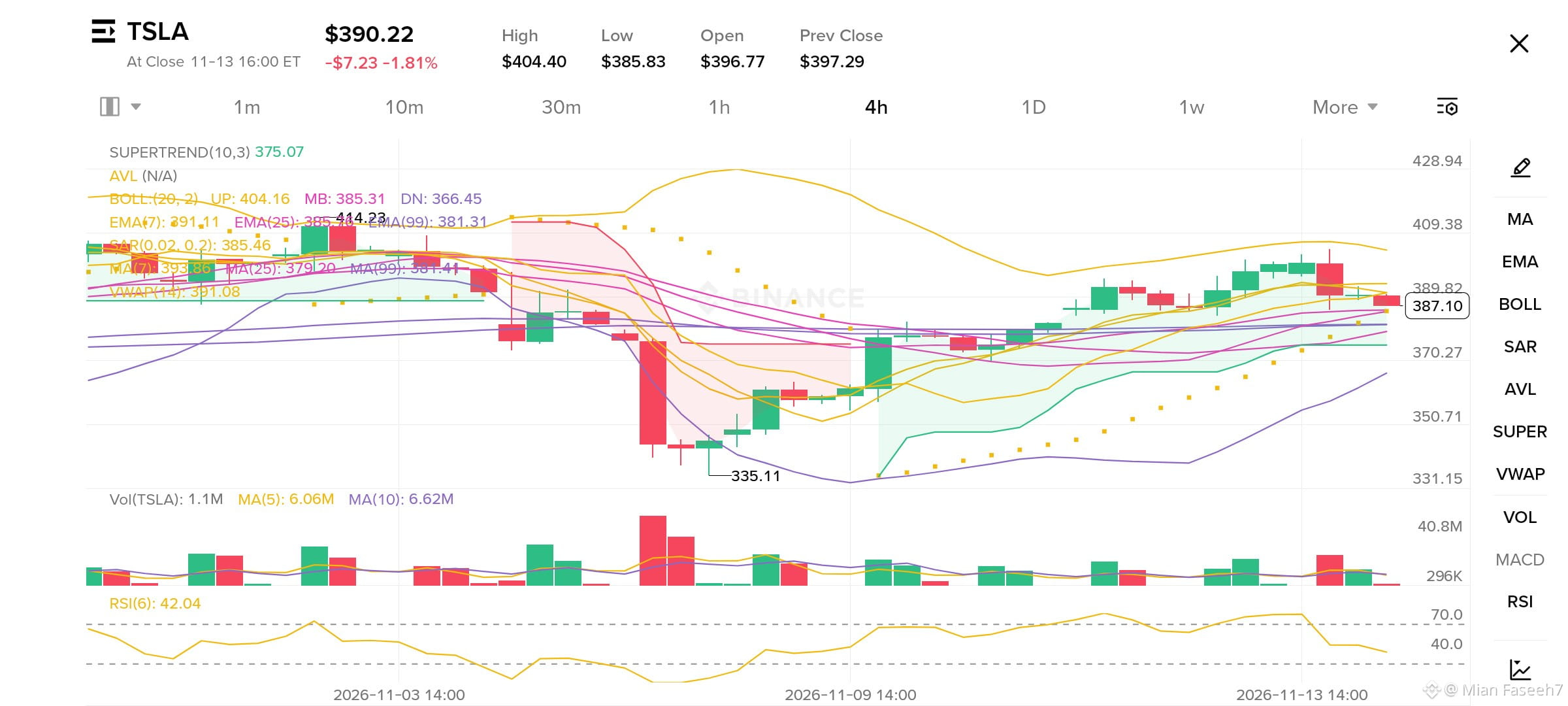
$TSLA is trading at $387.13 after a dip from $390. Sellers tried to push it down but buyers are defending $385.83 again.
Supertrend is at 375.07, so price is still holding well above it. RSI is at 42.04, which means TSLA is not overbought, it still has room to move up.
If $TSLA holds above $385.83, the next target is $404.40. If it breaks below $385.83, then we can see more downside.
I am still holding TSLA. What about you guys? Are you holding or waiting for a lower price?
Follow for daily $TSLA updates and simple analysis.
{stock_us}(TSLA.US)
If this analysis helped you, a small Tip is appreciated 🙏
#TSLA #Tesla #Stocks #BinanceSquare
$TSLA is trading at $387.13 after a dip from $390. Sellers tried to push it down but buyers are defending $385.83 again.
Supertrend is at 375.07, so price is still holding well above it. RSI is at 42.04, which means TSLA is not overbought, it still has room to move up.
If $TSLA holds above $385.83, the next target is $404.40. If it breaks below $385.83, then we can see more downside.
I am still holding TSLA. What about you guys? Are you holding or waiting for a lower price?
Follow for daily $TSLA updates and simple analysis.
If this analysis helped you, a small Tip is appreciated 🙏
#TSLA #Tesla #Stocks #BinanceSquare
TSLA+1.22%
TSLAUS-6.21%
1
365
Blogger MKBHD placed an order under his real name for a $29,990 Tesla Cybercab, sparking heated debate. But the contract terms also came to light: buyers must sign up for a mandatory $299/month autonomous driving subscription (the car cannot be driven if payments stop), and using it to earn money by carrying passengers through Robotaxi is prohibited. The first batch is also limited to geofenced areas in just 5 Texas cities. Musk has responded that $299 is too high and should be reduced to around $115/month.$BTC #Tesla #AutonomousDriving
Blogger MKBHD placed an order under his real name for a $29,990 Tesla Cybercab, sparking heated debate. But the contract terms also came to light: buyers must sign up for a mandatory $299/month autonomous driving subscription (the car cannot be driven if payments stop), and using it to earn money by carrying passengers through Robotaxi is prohibited. The first batch is also limited to geofenced areas in just 5 Texas cities. Musk has responded that $299 is too high and should be reduced to around $115/month.$BTC #Tesla #AutonomousDriving
82

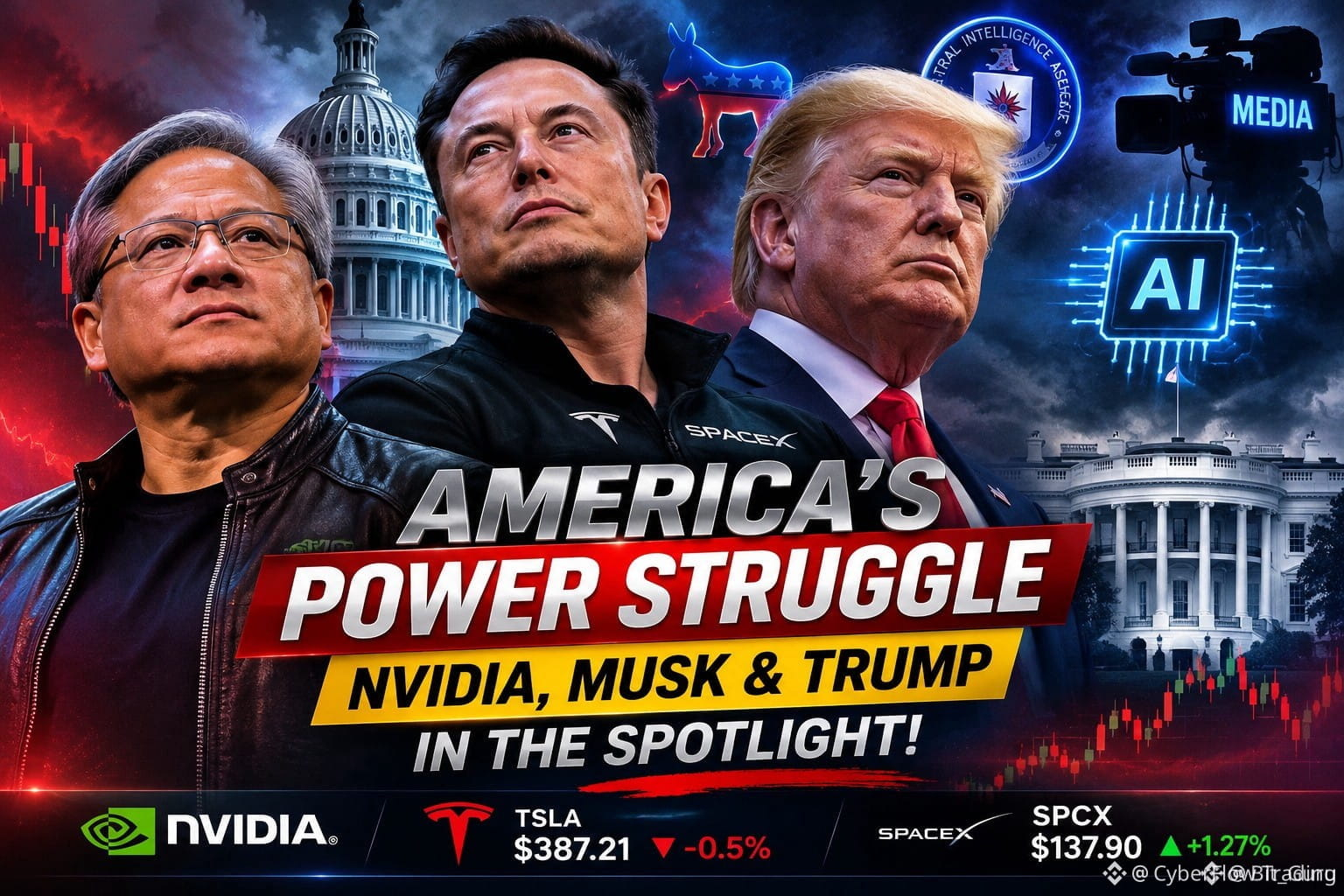
🚨 $TSLA CAUGHT IN THE CROSSFIRE OF WASHINGTON POWER STRUGGLES AND REGULATORY SHIFTS! ⚡
Entry: 387.21 ⚡
The intersection of high finance, political gravity, and tech dominance is creating a volatile macro landscape for top-tier assets. 📊 Institutional order flow is reacting defensively as regulatory crosscurrents test key psychological levels across major tech equities.
When heavyweights like Elon Musk and Jensen Huang land squarely in the political crosshairs, market makers reprice risk instantly. 💡 Smart money is closely tracking these headline-driven liquidity shifts before committing fresh capital to the order books.
💬 Are institutional players positioning for a deeper regulatory shakeout, or is this just macro noise before the next major trend continuation? 👇
⚠️ Not financial advice. Always manage your risk. 🛡️
🏷️ #TSLA #Tesla #MarketSentiment #Macro
🔥 💎
12
Log in to explore more content
Join global crypto users on Binance Square
⚡️ Get latest and useful information about crypto.
💬 Trusted by the world’s largest crypto exchange.
👍 Discover real insights from verified creators.
Email / Phone number
Trending Topics
1
#BTCReboundsAbove$60KAmidWhaleDipBuying
73,642 views
328 Discussing
2
#SolanaSets2027RoadmapToDoubleComputeCapacity
57,994 views
972 Discussing
3
#CaliforniaNvidiaProbeExaminesPotentialCriminalViolations
15,543 views
132 Discussing
4
#BlackRockLaunchesHKDollarDigitalLiquidityFund
47,691 views
747 Discussing
5
#NvidiaLoses$2.7TrillionInMonthAndAHalf
76,900 views
311 Discussing
6
#GlobalStocksFaceLongestLosingStreakSince2023
567,357 views
3,474 Discussing
7
#BlackRockIBITPostsRecord$541MSingleDayOutflow
94,323 views
186 Discussing
8
#AnthropicPlungesTowardIPOPriceonDay2
314,467 views
2,328 Discussing
9
#TwentyOneCapitalAdds172.25BTC
166,658 views
1,641 Discussing
10
#HKBillWouldExcludeTokenizedDepositsFromVirtualAssets
18,311 views
105 Discussing