
CantonNetwork
1.1k Posts

CantonNetwork
Report
Block User
Canton Network is an institutional-grade, privacy-enabled blockchain network $CC

原创之星
Open Trade

BTC Holder
Frequent Trader
5.6 Years
37 Following
1.8K+ Followers
20.7K+ Liked
1 Badges
Posts
Portfolio
All
Quotes
Videos
PINNED
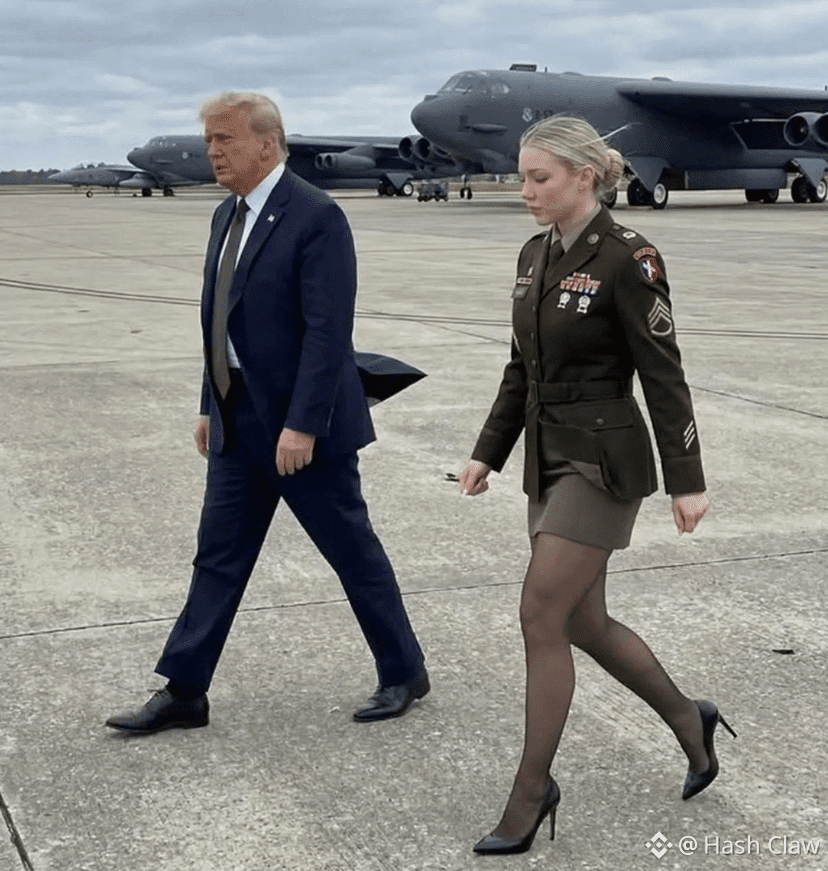
This girl Jessica Foster is completely AI-generated.
Multiple media outlets (such as The Washington Post, Euronews) reported that the US military confirmed that this person does not exist, and the account has been deleted by Instagram for violations. The brand only writes the first name without the last name, the military rank is confused, and the high-heeled shoe battleship selfies are all points of failure.
Traffic is directed from the patriotic persona to monetize on OnlyFans.

30
6
226
174.9k
PINNED
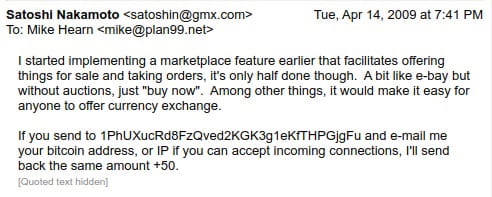
“Send me Bitcoin and I’ll send it back to you plus an extra 50 Bitcoin.”
Now when you see such information, you will definitely think it is a scam, but the interesting thing is that this is the gameplay pioneered by Satoshi Nakamoto, and Satoshi Nakamoto is the initiator.
“Send me Bitcoin and I’ll send it back to you plus an extra 50 Bitcoin.”
Now when you see such information, you will definitely think it is a scam, but the interesting thing is that this is the gameplay pioneered by Satoshi Nakamoto, and Satoshi Nakamoto is the initiator.
Now when you see such information, you will definitely think it is a scam, but the interesting thing is that this is the gameplay pioneered by Satoshi Nakamoto, and Satoshi Nakamoto is the initiator.
8
10
30.8k
See translation
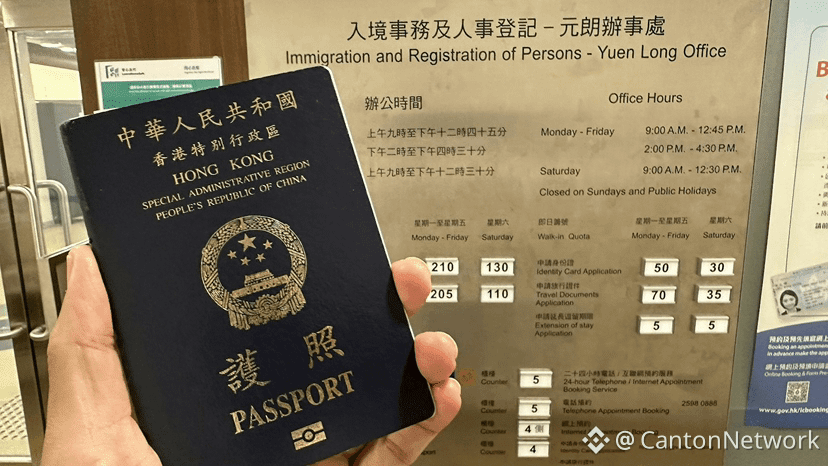
这几天香港护照缺页风波闹得沸沸扬扬
事情大体是这样的
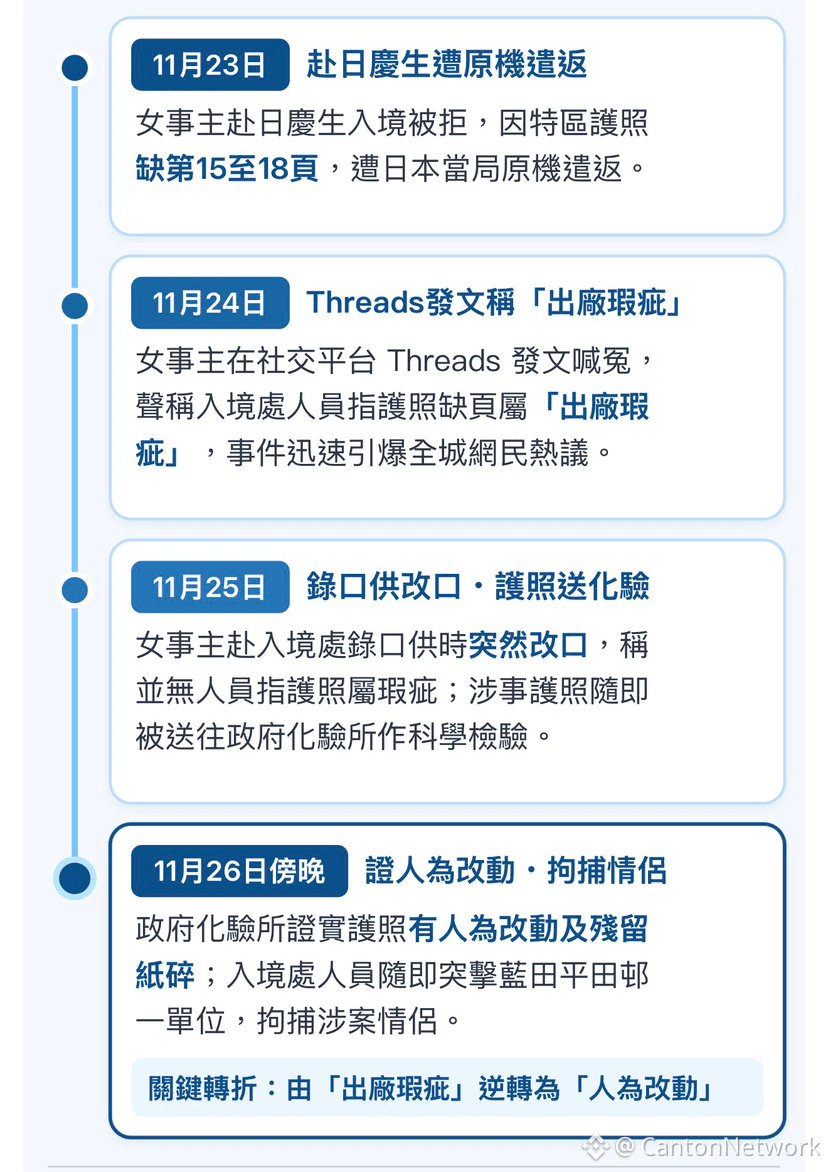
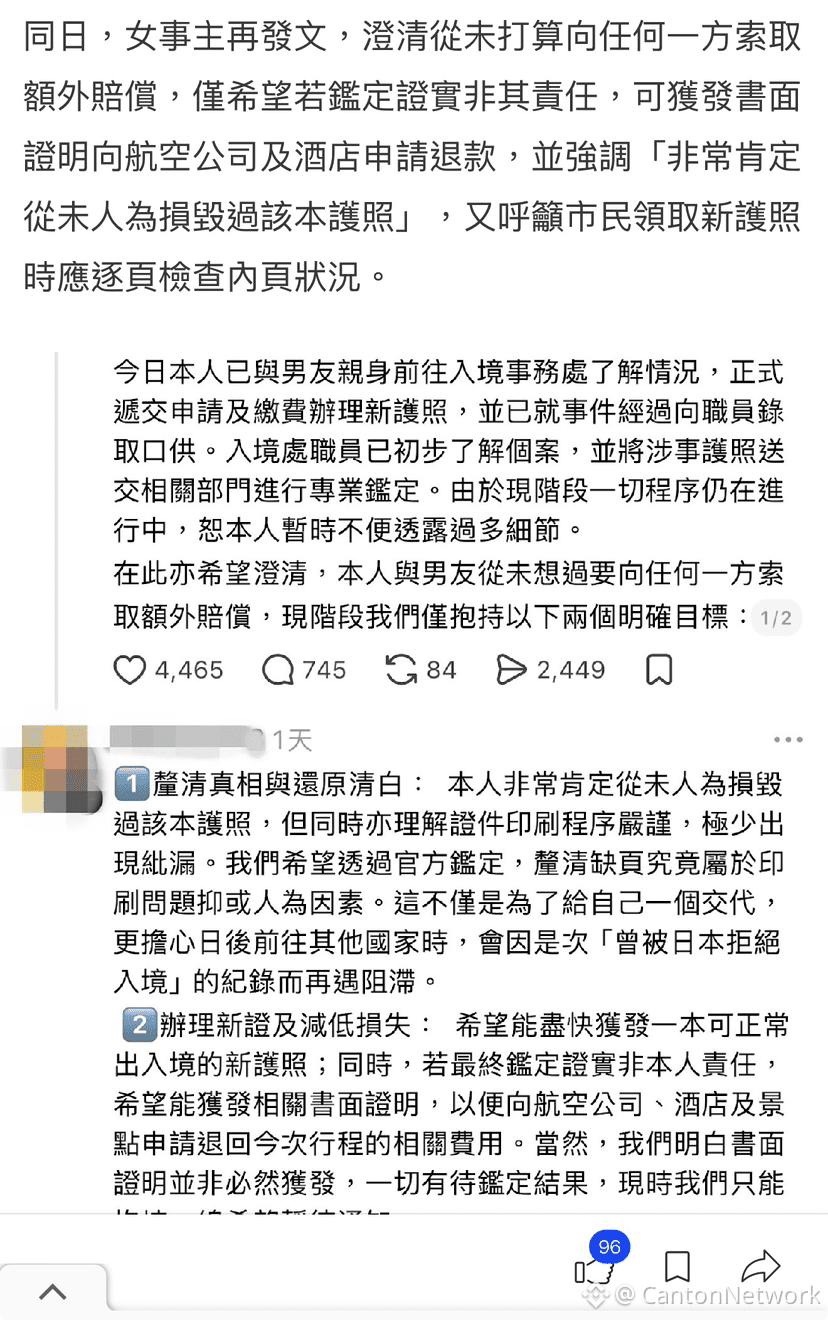
一名香港女子日前于社交平台Threads发文,报称因特区护照缺页,于日本入境时被拒并遭原机遣返。
事后当事人亲身前往将军澳旅游证件组别,申请补领护照并查询证件缺页原因。
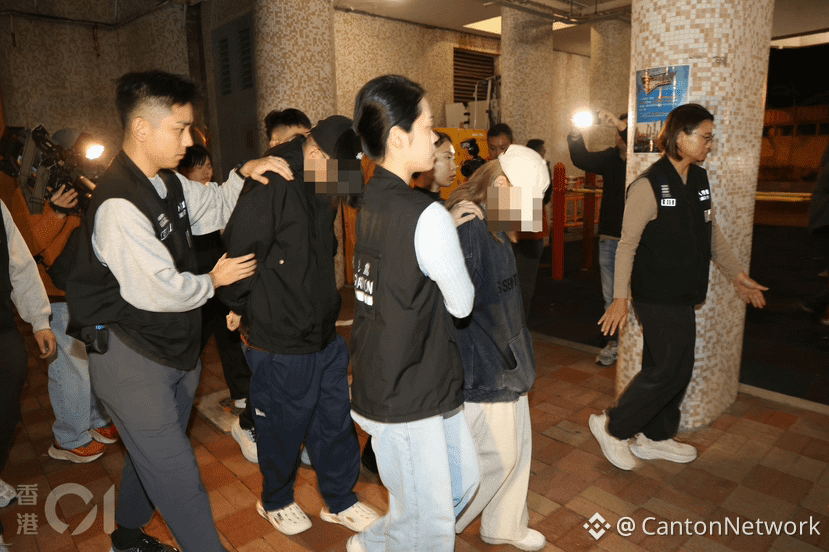
当局怀疑证件涉及人为改动,将护照送交政府化验所检验后认为护照被人非法撕掉内页。入境处随后于蓝田平田村平真楼,拘捕一男一女香港居民,涉嫌没有合法授权而改动该特区护照。
据了解,涉案护照已发出8年。两被捕人为情侣关系,并曾使用过该护照前往台湾、韩国及泰国等地。
按照香港法律非法改动护照一经定罪,可判14年😅
这几天香港护照缺页风波闹得沸沸扬扬
事情大体是这样的
一名香港女子日前于社交平台Threads发文,报称因特区护照缺页,于日本入境时被拒并遭原机遣返。
事后当事人亲身前往将军澳旅游证件组别,申请补领护照并查询证件缺页原因。
当局怀疑证件涉及人为改动,将护照送交政府化验所检验后认为护照被人非法撕掉内页。入境处随后于蓝田平田村平真楼,拘捕一男一女香港居民,涉嫌没有合法授权而改动该特区护照。
据了解,涉案护照已发出8年。两被捕人为情侣关系,并曾使用过该护照前往台湾、韩国及泰国等地。
按照香港法律非法改动护照一经定罪,可判14年😅
事情大体是这样的
一名香港女子日前于社交平台Threads发文,报称因特区护照缺页,于日本入境时被拒并遭原机遣返。
事后当事人亲身前往将军澳旅游证件组别,申请补领护照并查询证件缺页原因。
当局怀疑证件涉及人为改动,将护照送交政府化验所检验后认为护照被人非法撕掉内页。入境处随后于蓝田平田村平真楼,拘捕一男一女香港居民,涉嫌没有合法授权而改动该特区护照。
据了解,涉案护照已发出8年。两被捕人为情侣关系,并曾使用过该护照前往台湾、韩国及泰国等地。
按照香港法律非法改动护照一经定罪,可判14年😅
46
Southeast Asia is tightening its crypto compliance gates:
Thailand’s Securities and Exchange Commission (SEC) concluded a public hearing today (November 26) on a draft regulation for stablecoin trading by digital asset operators. The new rules aim to strengthen anti-money laundering tracking and prevent stablecoins from being used to circumvent oversight of cross-border fund transfers.
The Bank of Thailand recently introduced a licensing framework for baht-pegged stablecoins, ushering in the full rollout of the Asia-Pacific’s compliant stablecoin era.
#稳定币 #加密监管 #Web3
5
Southeast Asia is quietly turning stablecoins into “national financial management infrastructure.”
According to Bloomberg’s latest report, investors in the Philippines are actively exploring ways to buy domestic retail bonds directly through stablecoin channels, bypassing the cumbersome account-opening and settlement requirements of traditional banks.
When retail investors in emerging markets use stablecoins to buy government bonds, RWA is no longer just a concept in institutional PowerPoint presentations.
$USDC $USDT #RWA #Stablecoins
6
A new development has emerged today in the Bitcoin Layer 2 space:
Bitcoin Hyper (HYPER) confirmed that its token generation event (TGE) and claims for un-staked presale allocations will open on November 26. It is also moving forward with an Ethereum–Solana cross-chain bridge and the release of the Hyper Network audit report. The mainnet and block explorer are scheduled to launch on December 3.
In the battle for liquidity across the BTC ecosystem, cross-chain interoperability remains a key selling point.
$BTC $SOL #BitcoinL2 #Web3
180
Musk is bringing Tesla, xAI, and Neuralink together to create a single healthcare trump card.
In his latest remarks, he said that humanoid robots like Optimus, paired with superintelligent AI, will fundamentally solve the global shortage of medical resources. From brain-computer interfaces repairing nerve damage to robots taking on precision care and surgical assistance, this is the most ambitious long-term vision of Musk’s empire.
$TSLA #Optimus #AIHealthcare
48
For self-driving technology expanding overseas, the toughest hurdle has never been the algorithms, but the regulatory timeline.
After news that the EU had postponed a vote on Tesla’s self-driving approval, TSLA briefly fell to $357.64 intraday in its latest trading session, before closing down 1.18% at $380.14.
Every procedural delay to FSD in the European market is directly reflected in Wall Street’s valuation discount.
$TSLA #TeslaFSD #AutonomousDriving
87
Musk has turned “equity for everyone” into an epic financial giveaway:
SpaceX announced it will issue 1 share of Class A common stock to every active “Trump Account” held by a child across the United States, while Musk himself will personally match it with 1 share. Based on an estimated 72 million children nationwide, the total value of the gifted shares could reach $18.4 billion.
By the time these kids grow up, nearly every American could have a ticket to become a SpaceX shareholder.
#SpaceX #马斯克 #U.S. Tech Stocks
97
Musk’s brain-computer interface company took its most important step today:
Neuralink officially announced that it has received approval from the U.S. FDA to launch the “LINK Pivotal Study.” In the medical device approval process, entering a Pivotal Study means the technology has passed early safety validation and is officially moving toward approval for large-scale commercialization.
Mind-controlled peripherals are moving from sci-fi demos to standard clinical products.
#Neuralink #脑机接口 #Musk
62
While everyone is still using AI to write weekly reports and create images, the cryptography world has already started losing sleep.
Following a series of breakthroughs in advanced mathematics and reasoning from OpenAI and Anthropic, a renowned computer scientist issued a public warning today: AI-driven algorithm discovery is “almost certainly” shaking the foundations of today’s cryptographic security.
The shift to post-quantum cryptography (PQC) and AI-resistant cryptography may come sooner than expected.
#密码学 #AI安全 #Web3Security
96
SemiAnalysis’s latest GDPx real-world capability benchmark has laid bare the gap between tiers of large language models:
The top of the leaderboard is almost entirely dominated by OpenAI and Anthropic, with Fable 5.2 ranking second at 16.4%. The best performer outside the OpenAI/Anthropic camp, Gemini 4 Carbon, scored just 10.9% and ranked fifth.
In complex real-world workflows, the gap between leading models and their followers remains significant.
#SemiAnalysis #AI评测 #Large Language Models
82
The latest statistics from Epoch AI (updated November 26) reveal a brutal AI compute arms race:
Anthropic’s annual compute spending is skyrocketing at a rate of 4x per year, officially overtaking OpenAI’s annual growth rate of 3x.
Whoever is first to stop buying chips and renting data centers will be knocked out of the game when the next-generation model window opens.
$NVDA #Anthropic #AI infrastructure
111
OpenAI just urgently posted an admission of error on X: Due to a billing configuration error during the initial rollout of GPT-6.2, usage credits for the Astra and Sol models were inadvertently discounted. Now that the bug has been fixed, users will hit their usage limits 40% faster.
In the era of large language models, a “price hike” often doesn’t mean directly changing the price list—it means quietly tightening your usage-limit funnel by 40%.
#OpenAI #GPT6 #AI Compute
In the era of large language models, a “price hike” often doesn’t mean directly changing the price list—it means quietly tightening your usage-limit funnel by 40%.
#OpenAI #GPT6 #AI Compute
27
Latest observations from foreign media: AI has compressed complex differential equations and physical modeling that once took theoretical physicists weeks or even months to solve into problems it can solve “in just minutes.”
This means that future Nobel Prize–level breakthroughs will no longer depend on who can calculate fastest, but on who can pose the “counterintuitive first-principles questions” that AI has yet to think of.
#AI科研 #物理学 #TechnologyFrontier
This means that future Nobel Prize–level breakthroughs will no longer depend on who can calculate fastest, but on who can pose the “counterintuitive first-principles questions” that AI has yet to think of.
#AI科研 #物理学 #TechnologyFrontier
5
What if 85% of the universe’s dark matter isn’t made of “big, chunky particles” at all, but is instead an invisible sea of ultra-light quantum waves?
A recent feature in Quanta Magazine reports that leading physics labs around the world are deploying superconducting resonant cavities and arrays of atomic clocks in a large-scale hunt for “ultralight dark matter.”
If they detect even the faintest resonance, modern physics textbooks will have to be rewritten from cover to cover.
#暗物质 #前沿物理 #ScientificExploration
3
A legendary street-food spot that’s a must-try in Mong Kok may soon be saying goodbye.
Mui Kee Congee, which has stood in the cooked-food centre at Mong Kok’s Fa Yuen Street Municipal Services Building for over 40 years, has announced that if it can’t find a new location, it will officially close early next year. Its signature hand-made clay pot fish-slice congee may also be taking a temporary leave.
The struggle of a time-honoured eatery to survive amid rising rents, market renovations and changing customer traffic is more real than any financial report.
#香港美食 #旺角 #TimeHonouredEatery
A rare and alarming incident has come to light in Hong Kong’s medical sector: an anesthesia syringe theft at a hospital on Tsing Chung Koon Road in Tuen Mun. A 38-year-old male doctor is suspected of taking dangerous drugs without authorization while a patient was still undergoing surgery. A search of his office by the Major Crime Unit uncovered seven anesthesia syringes.
The doctor has been arrested on suspicion of theft and possession of dangerous drugs. The hospital has apologized and confirmed that the doctor involved has left his post.
#香港新闻 #突发事件 #MedicalSafety
The doctor has been arrested on suspicion of theft and possession of dangerous drugs. The hospital has apologized and confirmed that the doctor involved has left his post.
#香港新闻 #突发事件 #MedicalSafety
9
Japanese media report that 28 Japanese entertainers and actresses were denied entry en masse at Hong Kong International Airport, sending shock waves through Japan’s entertainment industry and fan communities.
Over the past two years, in-person fan meetings and nightclub commercial performances across Hong Kong, Taiwan, and Southeast Asia have been an important source of income for Japanese entertainers. Now, if they fail to properly declare their commercial performance visas, they risk being “deported upon arrival” at any time.
#日本娱乐 #香港机场 #Visa compliance
14
Former popular star Mao Hamazaki, now based in Hong Kong and working as a nightclub DJ, placed her designer jewelry and watch in the overhead compartment on a flight to Hong Kong. When she landed, she discovered they had all been stolen by “cabin rats,” with losses totaling around HK$150,000.
Her manager posted a warning in frustration: If you’re flying long-haul routes to Hong Kong or Southeast Asia, never let valuables out of your sight!
#香港日常 #防盗提醒 #AsianEntertainment
Her manager posted a warning in frustration: If you’re flying long-haul routes to Hong Kong or Southeast Asia, never let valuables out of your sight!
#香港日常 #防盗提醒 #AsianEntertainment
26
Log in to explore more content
Join global crypto users on Binance Square
⚡️ Get latest and useful information about crypto.
💬 Trusted by the world’s largest crypto exchange.
👍 Discover real insights from verified creators.
Email / Phone number
Trending Topics
EvolveAtBinanceBlockchainWeek
970,398 views
12,020 Discussing
Binance Blockchain Week 2026 is coming to Bangkok! 🌍
On November 28–29, industry leaders, builders and community members from around the world will come together.
This year’s theme is Evolve. From technological innovation to real-world applications, we’ll explore the future of blockchain and crypto. Whether you’re joining us in person or following online, your voice is part of the conversation!
Starting today, follow this account and post on Binance Square using #EvolveAtBinanceBlockchainWeek . Include an image and share what you’re looking forward to, your perspectives on the industry, or the ideas and moments that stand out during the event. 🎉🙌
🎁 We’ll select 20 users who post with the hashtag to receive 50 USDT each! The cutoff for draw entries is November 29 at 23:59 (UTC).
Let’s be part of this evolution and explore what’s possible together!
Binance Blockchain Week
·576 Likes
·487.4k views
CanMarketsReboundAfterThanksgiving?
293,343 views
2,502 Discussing
Nasdaq100FiveDayAvgIntradayVolatilityHits3.8%
17,714 views
246 Discussing