

#ccip
ccip
149,749 views
396 Discussing
Hot
Latest

·
--
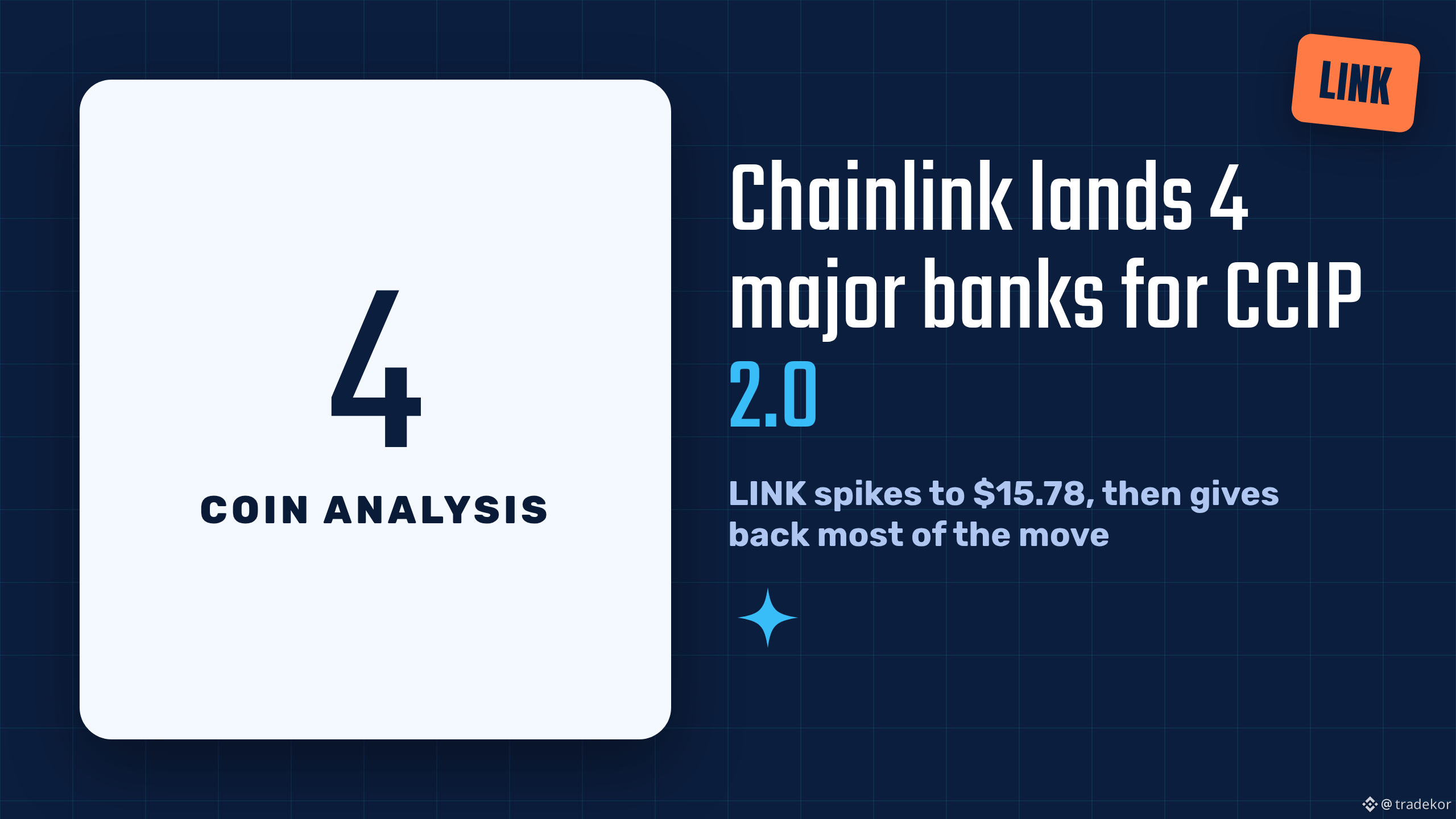
Chainlink just landed 4 major banks as launch partners for its biggest infrastructure upgrade in years -- LINK spiked to an intraday high near $15.78 before giving back most of the move within 24 hours.
The news: Chainlink launched CCIP 2.0 on Sept 28 at Sibos 2026, the SWIFT-organized banking conference, with named partners including Fidelity International, ANZ Bank, Deutsche Börse Group's Crypto Finance, and SBI Digital Markets. The upgrade adds "Cross-Chain Verifiers" (letting institutions bolt their own independent security/compliance checks onto Chainlink's default verification network), configurable execution and fee settings, built-in KYC/AML tooling, and a Swift Ledger integration for 24/7 cross-border tokenized-deposit transfers. Chainlink says CCIP now secures over $84B in total cross-chain token value. LINK's 24-hour trading volume jumped over 225% to ~$1.41B around the launch.
The catch: the price move has already partly reversed. LINK hit an intraday high near $15.78 on Sept 29, then pulled back roughly 6% to the $14.2-14.3 range as some holders took profits -- a reminder that a real infrastructure upgrade and a durable price level aren't the same thing. Some of the loudest price targets circulating (one analyst cited a 200% upside case) are speculative technical calls, not fundamentals-driven forecasts.
Our read: the partner list here is genuinely tier-1 (Fidelity, ANZ, Deutsche Börse, SBI aren't minor names), which matters more for Chainlink's long-term institutional thesis than this week's price chart.
Does landing 4 major banks on a protocol upgrade justify a lasting re-rating for LINK, or is this the kind of news that gets priced in and faded within a week?
Not financial advice. DYOR.
$LINK #CryptoNews #Chainlink #CCIP
Chainlink just landed 4 major banks as launch partners for its biggest infrastructure upgrade in years -- LINK spiked to an intraday high near $15.78 before giving back most of the move within 24 hours.
The news: Chainlink launched CCIP 2.0 on Sept 28 at Sibos 2026, the SWIFT-organized banking conference, with named partners including Fidelity International, ANZ Bank, Deutsche Börse Group's Crypto Finance, and SBI Digital Markets. The upgrade adds "Cross-Chain Verifiers" (letting institutions bolt their own independent security/compliance checks onto Chainlink's default verification network), configurable execution and fee settings, built-in KYC/AML tooling, and a Swift Ledger integration for 24/7 cross-border tokenized-deposit transfers. Chainlink says CCIP now secures over $84B in total cross-chain token value. LINK's 24-hour trading volume jumped over 225% to ~$1.41B around the launch.
The catch: the price move has already partly reversed. LINK hit an intraday high near $15.78 on Sept 29, then pulled back roughly 6% to the $14.2-14.3 range as some holders took profits -- a reminder that a real infrastructure upgrade and a durable price level aren't the same thing. Some of the loudest price targets circulating (one analyst cited a 200% upside case) are speculative technical calls, not fundamentals-driven forecasts.
Our read: the partner list here is genuinely tier-1 (Fidelity, ANZ, Deutsche Börse, SBI aren't minor names), which matters more for Chainlink's long-term institutional thesis than this week's price chart.
Does landing 4 major banks on a protocol upgrade justify a lasting re-rating for LINK, or is this the kind of news that gets priced in and faded within a week?
Not financial advice. DYOR.
$LINK #CryptoNews #Chainlink #CCIP
The news: Chainlink launched CCIP 2.0 on Sept 28 at Sibos 2026, the SWIFT-organized banking conference, with named partners including Fidelity International, ANZ Bank, Deutsche Börse Group's Crypto Finance, and SBI Digital Markets. The upgrade adds "Cross-Chain Verifiers" (letting institutions bolt their own independent security/compliance checks onto Chainlink's default verification network), configurable execution and fee settings, built-in KYC/AML tooling, and a Swift Ledger integration for 24/7 cross-border tokenized-deposit transfers. Chainlink says CCIP now secures over $84B in total cross-chain token value. LINK's 24-hour trading volume jumped over 225% to ~$1.41B around the launch.
The catch: the price move has already partly reversed. LINK hit an intraday high near $15.78 on Sept 29, then pulled back roughly 6% to the $14.2-14.3 range as some holders took profits -- a reminder that a real infrastructure upgrade and a durable price level aren't the same thing. Some of the loudest price targets circulating (one analyst cited a 200% upside case) are speculative technical calls, not fundamentals-driven forecasts.
Our read: the partner list here is genuinely tier-1 (Fidelity, ANZ, Deutsche Börse, SBI aren't minor names), which matters more for Chainlink's long-term institutional thesis than this week's price chart.
Does landing 4 major banks on a protocol upgrade justify a lasting re-rating for LINK, or is this the kind of news that gets priced in and faded within a week?
Not financial advice. DYOR.
$LINK #CryptoNews #Chainlink #CCIP
91

·
--
Learn in 30s What is CCIP Why is everyone talking about it today
You might have seen $LINK trending today
The reason is tech not just price
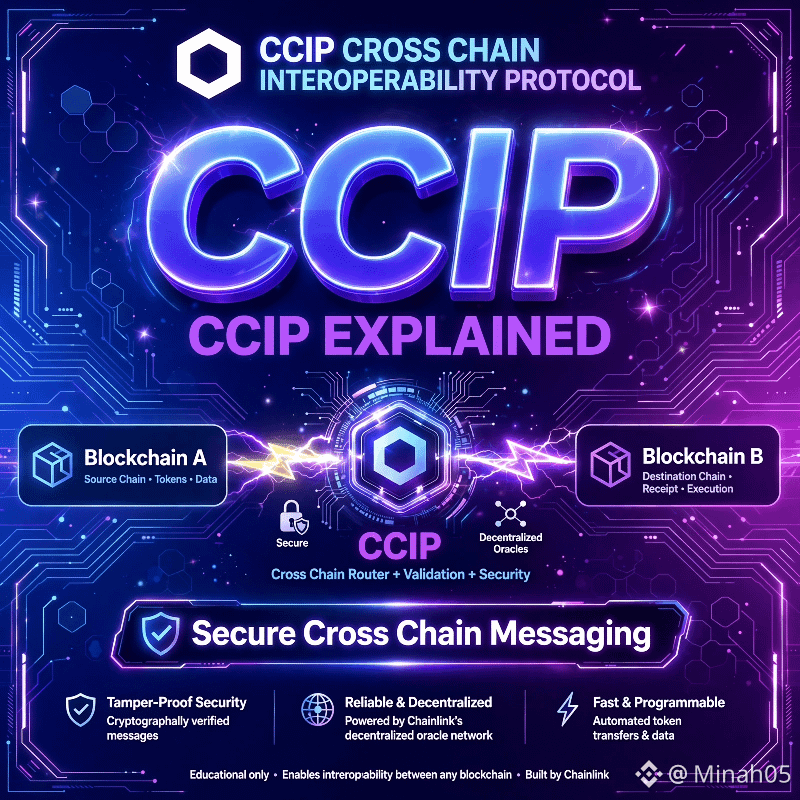
CCIP Cross Chain Interoperability Protocol
Think of it like a secure messenger that lets different blockchains talk to each other
Example
Blockchain A to CCIP to Blockchain B
No central bridge risk
Whats new today
Chainlink $LINK launched CCIP v2 and announced connection with Swift the network banks use worldwide This could help real world assets move on chain more safely
Also trending today $XLM Stellar up more than 10 percent showing strong momentum
Why should you care
If Web3 wants mass adoption blockchains need to talk to banks and each other CCIP is one solution for that
This is education only not financial advice Always DYOR
What other Web3 term should I explain next
#CCIP #Chainlink #Web3 #dyor
Learn in 30s What is CCIP Why is everyone talking about it today
You might have seen $LINK trending today
The reason is tech not just price
CCIP Cross Chain Interoperability Protocol
Think of it like a secure messenger that lets different blockchains talk to each other
Example
Blockchain A to CCIP to Blockchain B
No central bridge risk
Whats new today
Chainlink $LINK launched CCIP v2 and announced connection with Swift the network banks use worldwide This could help real world assets move on chain more safely
Also trending today $XLM Stellar up more than 10 percent showing strong momentum
Why should you care
If Web3 wants mass adoption blockchains need to talk to banks and each other CCIP is one solution for that
This is education only not financial advice Always DYOR
What other Web3 term should I explain next
#CCIP #Chainlink #Web3 #dyor
You might have seen $LINK trending today
The reason is tech not just price
CCIP Cross Chain Interoperability Protocol
Think of it like a secure messenger that lets different blockchains talk to each other
Example
Blockchain A to CCIP to Blockchain B
No central bridge risk
Whats new today
Chainlink $LINK launched CCIP v2 and announced connection with Swift the network banks use worldwide This could help real world assets move on chain more safely
Also trending today $XLM Stellar up more than 10 percent showing strong momentum
Why should you care
If Web3 wants mass adoption blockchains need to talk to banks and each other CCIP is one solution for that
This is education only not financial advice Always DYOR
What other Web3 term should I explain next
#CCIP #Chainlink #Web3 #dyor
184


·
--
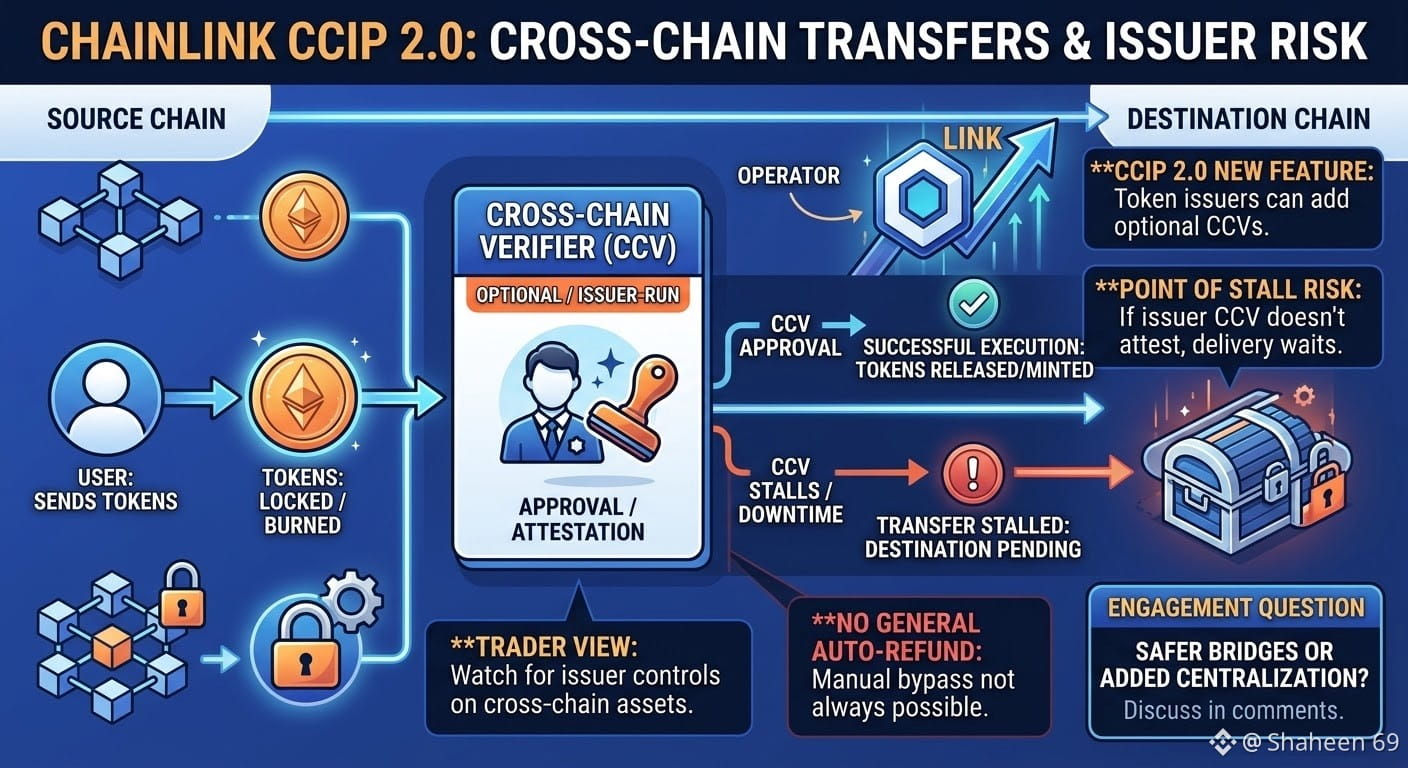
Chainlink has officially introduced CCIP 2.0, featuring a new Cross-Chain Verifier (CCV) system that allows token issuers to require extra verification step before tokens complete a transfer across blockchains.
Under this setup, tokens can be locked or burned on the source chain before the extra verifier gives approval. If that third-party verifier experiences downtime or fails to issue a proof, destination delivery stalls—leaving funds pending with no general automatic refund option.
While this feature adds an extra layer of control and compliance for token creators, it also introduces a potential single point of failure. If an issuer-run verifier goes offline, user funds could end up temporarily stuck in transit.
For traders and DeFi users, moving funds across chains requires paying closer attention to which protocol-level risks and issuer controls exist on specific token bridges.
Will optional issuer verifiers make cross-chain bridges safer, or does this add unnecessary centralization to DeFi?
#Chainlink #CCIP #DeFi #CryptoNews
$LINK
$HBAR
Chainlink has officially introduced CCIP 2.0, featuring a new Cross-Chain Verifier (CCV) system that allows token issuers to require extra verification step before tokens complete a transfer across blockchains.
Under this setup, tokens can be locked or burned on the source chain before the extra verifier gives approval. If that third-party verifier experiences downtime or fails to issue a proof, destination delivery stalls—leaving funds pending with no general automatic refund option.
While this feature adds an extra layer of control and compliance for token creators, it also introduces a potential single point of failure. If an issuer-run verifier goes offline, user funds could end up temporarily stuck in transit.
For traders and DeFi users, moving funds across chains requires paying closer attention to which protocol-level risks and issuer controls exist on specific token bridges.
Will optional issuer verifiers make cross-chain bridges safer, or does this add unnecessary centralization to DeFi?
#Chainlink #CCIP #DeFi #CryptoNews
$LINK
$HBAR
Under this setup, tokens can be locked or burned on the source chain before the extra verifier gives approval. If that third-party verifier experiences downtime or fails to issue a proof, destination delivery stalls—leaving funds pending with no general automatic refund option.
While this feature adds an extra layer of control and compliance for token creators, it also introduces a potential single point of failure. If an issuer-run verifier goes offline, user funds could end up temporarily stuck in transit.
For traders and DeFi users, moving funds across chains requires paying closer attention to which protocol-level risks and issuer controls exist on specific token bridges.
Will optional issuer verifiers make cross-chain bridges safer, or does this add unnecessary centralization to DeFi?
#Chainlink #CCIP #DeFi #CryptoNews
$LINK
$HBAR
2
377

$LINK K — Chainlink
🔗 CHAINLINK JUST UPGRADED ITS CROSS-CHAIN INFRASTRUCTURE
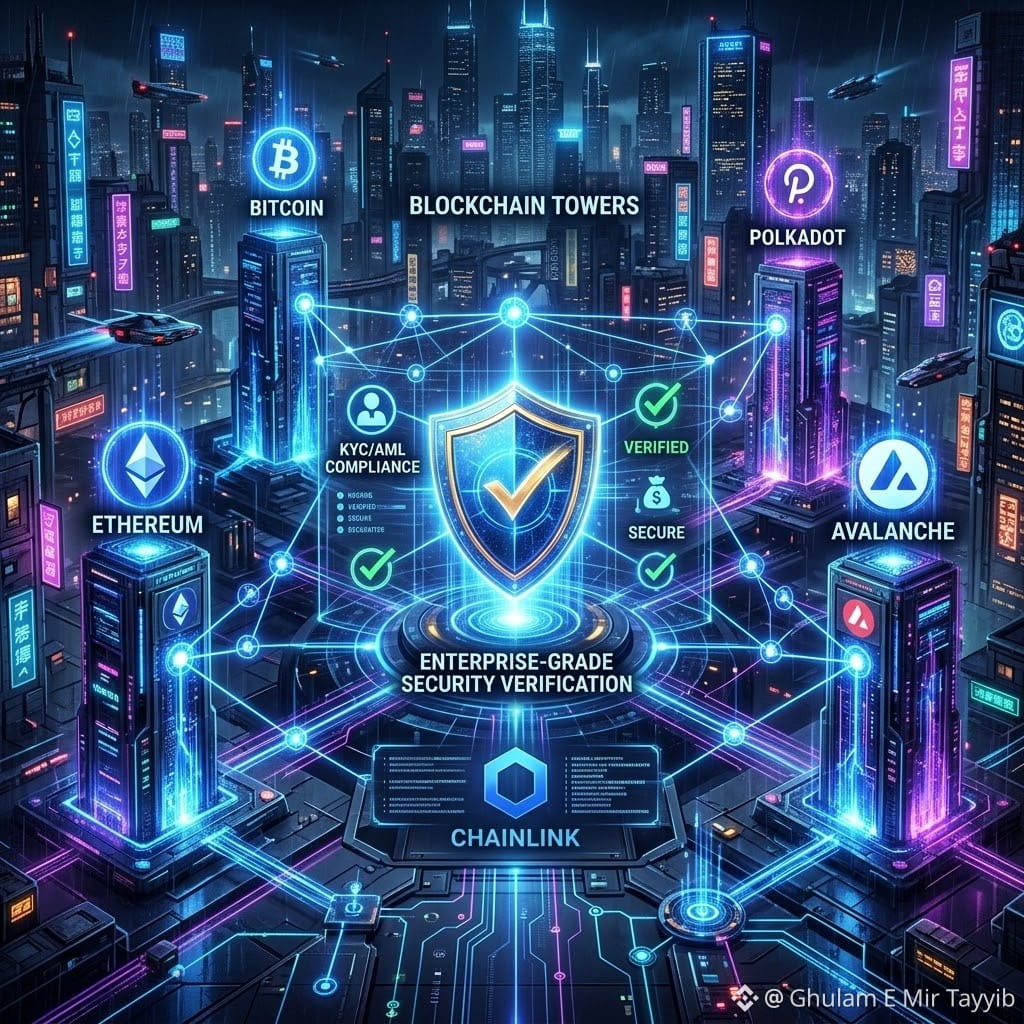
Chainlink has launched CCIP 2.0, introducing more customizable security controls for applications using its cross-chain infrastructure.
The upgrade comes as cross-chain applications continue growing and security remains one of the biggest issues in blockchain interoperability.
For $LINK, the important story isn't simply the token—it’s whether CCIP becomes increasingly embedded in financial and Web3 infrastructure.
$LINK #Chainlink #CCIP #RWA #DeFi #Crypto
$LINK K — Chainlink
🔗 CHAINLINK JUST UPGRADED ITS CROSS-CHAIN INFRASTRUCTURE
Chainlink has launched CCIP 2.0, introducing more customizable security controls for applications using its cross-chain infrastructure.
The upgrade comes as cross-chain applications continue growing and security remains one of the biggest issues in blockchain interoperability.
For $LINK , the important story isn't simply the token—it’s whether CCIP becomes increasingly embedded in financial and Web3 infrastructure.
$LINK #Chainlink #CCIP #RWA #DeFi #Crypto
🔗 CHAINLINK JUST UPGRADED ITS CROSS-CHAIN INFRASTRUCTURE
Chainlink has launched CCIP 2.0, introducing more customizable security controls for applications using its cross-chain infrastructure.
The upgrade comes as cross-chain applications continue growing and security remains one of the biggest issues in blockchain interoperability.
For $LINK , the important story isn't simply the token—it’s whether CCIP becomes increasingly embedded in financial and Web3 infrastructure.
$LINK #Chainlink #CCIP #RWA #DeFi #Crypto
1
6


Article
tital Chainlink CCIP 2.0 Will Institutions Adopt It?🔗 Chainlink Makes Cross Chain Transfers Safer
CCIP 2.0 gives institutions more control over transaction verification. 👀
Now companies can add their own security checks before transfers execute.
Will institutions adopt it?
#Chainlink #CCIP #LINK #Tokenization
{spot}(LINKUSDT)
tital Chainlink CCIP 2.0 Will Institutions Adopt It?
🔗 Chainlink Makes Cross Chain Transfers Safer
CCIP 2.0 gives institutions more control over transaction verification. 👀
Now companies can add their own security checks before transfers execute.
Will institutions adopt it?
#Chainlink #CCIP #LINK #Tokenization
CCIP 2.0 gives institutions more control over transaction verification. 👀
Now companies can add their own security checks before transfers execute.
Will institutions adopt it?
#Chainlink #CCIP #LINK #Tokenization
20

·
--
Bullish
Chainlink just rolled out CCIP 2.0, and the upgrade is a big deal for institutions — it lets organizations choose their own risk level per transaction, balancing between maximum security and faster execution depending on the use case.
This builds on CCIP's existing enterprise backbone, already used by names like BlackRock and BNY Mellon, adding compliance-style verification for cross-chain transfers involving KYC/AML checks.
$LINK is up 8.65% on the news, reflecting fresh institutional attention.
Does deeper enterprise integration push $LINK toward its next leg up? 👇
#ChainlinkLaunchesCCIP2WithEnterpriseVerification #LINK #Chainlink #CCIP
{future}(LINKUSDT)
Chainlink just rolled out CCIP 2.0, and the upgrade is a big deal for institutions — it lets organizations choose their own risk level per transaction, balancing between maximum security and faster execution depending on the use case.
This builds on CCIP's existing enterprise backbone, already used by names like BlackRock and BNY Mellon, adding compliance-style verification for cross-chain transfers involving KYC/AML checks.
$LINK is up 8.65% on the news, reflecting fresh institutional attention.
Does deeper enterprise integration push $LINK toward its next leg up? 👇
#ChainlinkLaunchesCCIP2WithEnterpriseVerification #LINK #Chainlink #CCIP
This builds on CCIP's existing enterprise backbone, already used by names like BlackRock and BNY Mellon, adding compliance-style verification for cross-chain transfers involving KYC/AML checks.
$LINK is up 8.65% on the news, reflecting fresh institutional attention.
Does deeper enterprise integration push $LINK toward its next leg up? 👇
#ChainlinkLaunchesCCIP2WithEnterpriseVerification #LINK #Chainlink #CCIP
1
44

·
--
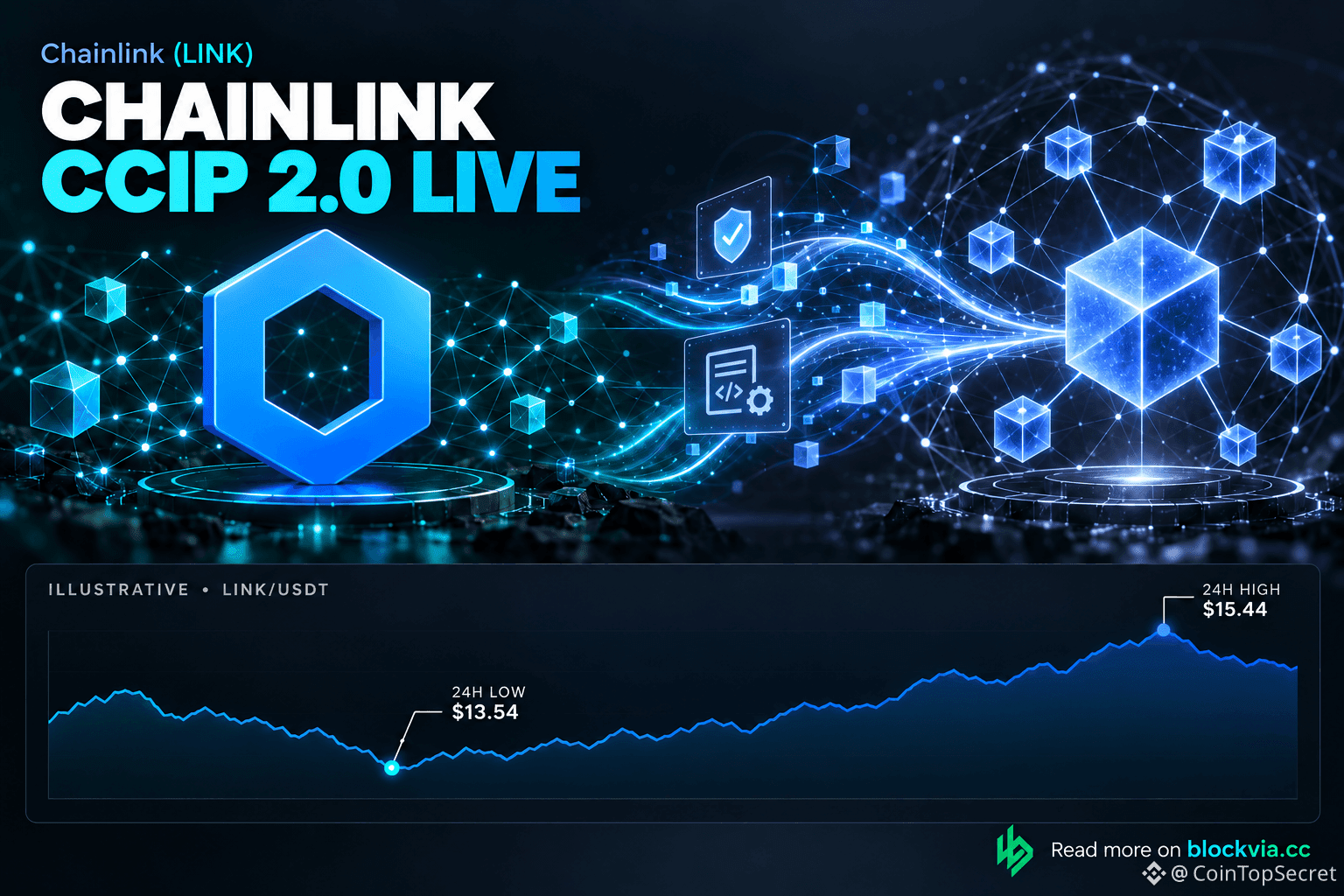
$LINK Update 🔎 Can momentum hold after the CCIP 2.0 launch?
💰 Price now: $15.11 | 24h: +7.3%
📊 Market cap: $11.30B | Rank: #13
📈 24h range: $13.54–$15.44
📰 What's happening:
LINK is higher over 24 hours, with about $1.21B traded. Chainlink announced that CCIP 2.0 is live. The launch is confirmed; its direct effect on LINK’s price is not.
🔥 Key catalyst:
CCIP 2.0 adds configurable cross-chain verification and compliance controls for asset issuers.
👀 Next step to watch:
🔴 Bearish case: Below $13.54, watch the $12.10 seven-day low.
🟢 Bullish case: Above $15.44, watch whether price can sustain a move beyond the seven-day high.
📝 My take:
Usage of the new capabilities will matter beyond today’s reaction.
Not financial advice, DYOR ⚠️
#LINK #Chainlink #CCIP #CryptoNews
$LINK Update 🔎 Can momentum hold after the CCIP 2.0 launch?
💰 Price now: $15.11 | 24h: +7.3%
📊 Market cap: $11.30B | Rank: #13
📈 24h range: $13.54–$15.44
📰 What's happening:
LINK is higher over 24 hours, with about $1.21B traded. Chainlink announced that CCIP 2.0 is live. The launch is confirmed; its direct effect on LINK’s price is not.
🔥 Key catalyst:
CCIP 2.0 adds configurable cross-chain verification and compliance controls for asset issuers.
👀 Next step to watch:
🔴 Bearish case: Below $13.54, watch the $12.10 seven-day low.
🟢 Bullish case: Above $15.44, watch whether price can sustain a move beyond the seven-day high.
📝 My take:
Usage of the new capabilities will matter beyond today’s reaction.
Not financial advice, DYOR ⚠️
#LINK #Chainlink #CCIP #CryptoNews
💰 Price now: $15.11 | 24h: +7.3%
📊 Market cap: $11.30B | Rank: #13
📈 24h range: $13.54–$15.44
📰 What's happening:
LINK is higher over 24 hours, with about $1.21B traded. Chainlink announced that CCIP 2.0 is live. The launch is confirmed; its direct effect on LINK’s price is not.
🔥 Key catalyst:
CCIP 2.0 adds configurable cross-chain verification and compliance controls for asset issuers.
👀 Next step to watch:
🔴 Bearish case: Below $13.54, watch the $12.10 seven-day low.
🟢 Bullish case: Above $15.44, watch whether price can sustain a move beyond the seven-day high.
📝 My take:
Usage of the new capabilities will matter beyond today’s reaction.
Not financial advice, DYOR ⚠️
#LINK #Chainlink #CCIP #CryptoNews
83

·
--
Bullish
$LINK #ChainlinkLaunchesCCIP2WithEnterpriseVerification
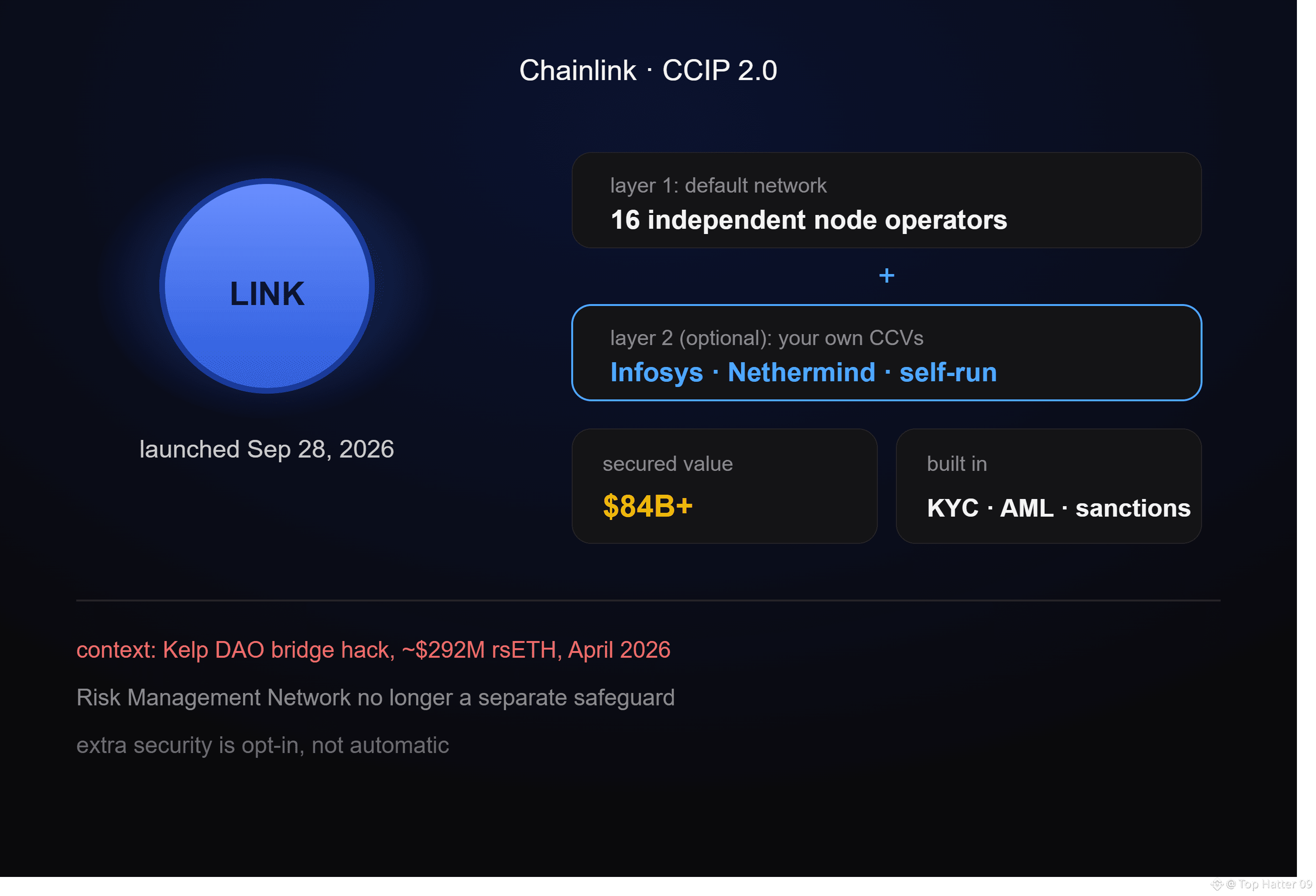
Chainlink launched CCIP 2.0 on September 28, and the main change is who controls the security.
CCIP is the protocol that moves tokens and messages between blockchains. Until now, every transfer was checked by Chainlink's default network of 16 independent node operators. With 2.0, companies can layer their own checks on top by running their own Cross-Chain Verifiers, or by hiring providers like Infosys and Nethermind. KYC, AML, and sanctions screening are built in too, which is what regulated institutions need. Chainlink says CCIP already secures over $84 billion in cross-chain token value, and existing integrations keep working without changes.
The timing matters. In April, the Kelp DAO bridge lost roughly $292 million in rsETH after attackers exploited a bridge that relied on a single verifier. Kelp later said it would move rsETH over to Chainlink.
One detail worth knowing: Chainlink's Risk Management Network no longer acts as a separate independent check. Anyone who doesn't add their own verifiers now relies on the default network alone, where before there were two layers. And as one analysis pointed out, adding verifiers doesn't automatically make a bridge safer. What counts is whether those verifiers are truly independent from each other.
So the upgrade gives serious users more control, but the extra security is something you have to choose to set up.
$LINK #Chainlink’s #CCIP
{future}(LINKUSDT)
$LINK #ChainlinkLaunchesCCIP2WithEnterpriseVerification
Chainlink launched CCIP 2.0 on September 28, and the main change is who controls the security.
CCIP is the protocol that moves tokens and messages between blockchains. Until now, every transfer was checked by Chainlink's default network of 16 independent node operators. With 2.0, companies can layer their own checks on top by running their own Cross-Chain Verifiers, or by hiring providers like Infosys and Nethermind. KYC, AML, and sanctions screening are built in too, which is what regulated institutions need. Chainlink says CCIP already secures over $84 billion in cross-chain token value, and existing integrations keep working without changes.
The timing matters. In April, the Kelp DAO bridge lost roughly $292 million in rsETH after attackers exploited a bridge that relied on a single verifier. Kelp later said it would move rsETH over to Chainlink.
One detail worth knowing: Chainlink's Risk Management Network no longer acts as a separate independent check. Anyone who doesn't add their own verifiers now relies on the default network alone, where before there were two layers. And as one analysis pointed out, adding verifiers doesn't automatically make a bridge safer. What counts is whether those verifiers are truly independent from each other.
So the upgrade gives serious users more control, but the extra security is something you have to choose to set up.
$LINK #Chainlink’s #CCIP
Chainlink launched CCIP 2.0 on September 28, and the main change is who controls the security.
CCIP is the protocol that moves tokens and messages between blockchains. Until now, every transfer was checked by Chainlink's default network of 16 independent node operators. With 2.0, companies can layer their own checks on top by running their own Cross-Chain Verifiers, or by hiring providers like Infosys and Nethermind. KYC, AML, and sanctions screening are built in too, which is what regulated institutions need. Chainlink says CCIP already secures over $84 billion in cross-chain token value, and existing integrations keep working without changes.
The timing matters. In April, the Kelp DAO bridge lost roughly $292 million in rsETH after attackers exploited a bridge that relied on a single verifier. Kelp later said it would move rsETH over to Chainlink.
One detail worth knowing: Chainlink's Risk Management Network no longer acts as a separate independent check. Anyone who doesn't add their own verifiers now relies on the default network alone, where before there were two layers. And as one analysis pointed out, adding verifiers doesn't automatically make a bridge safer. What counts is whether those verifiers are truly independent from each other.
So the upgrade gives serious users more control, but the extra security is something you have to choose to set up.
$LINK #Chainlink’s #CCIP
11

Verified
🚨 Breaking: Chainlink CCIP 2.0 is now live (28 Sept 2026)
Major upgrade for cross-chain interoperability:
• Ethereum Fast Confirmation Rule (FCR) integrated (in partnership with Ethlabs)
• Confirmation times drop from ~13 minutes → 12–24 seconds
• 96% of historical blocks would have confirmed in a single slot (~12s) according to backtesting
• Faster-than-finality path is opt-in — default remains full economic finality for maximum security
• Token issuers can customise risk thresholds and apply extra fees for speed CCIP continues to lead with $84B+ in secured cross-chain value and $15B+ recent migrations.
This significantly improves UX for high-frequency payments, DeFi, and token transfers involving Ethereum while giving institutions full control over speed vs security trade-offs.
Full details: Official Chainlink blog & docs.
{spot}(ETHUSDT)
#CCIP #Chainlink #Ethereum #BNBChain #BTC
🚨 Breaking: Chainlink CCIP 2.0 is now live (28 Sept 2026)
Major upgrade for cross-chain interoperability:
• Ethereum Fast Confirmation Rule (FCR) integrated (in partnership with Ethlabs)
• Confirmation times drop from ~13 minutes → 12–24 seconds
• 96% of historical blocks would have confirmed in a single slot (~12s) according to backtesting
• Faster-than-finality path is opt-in — default remains full economic finality for maximum security
• Token issuers can customise risk thresholds and apply extra fees for speed CCIP continues to lead with $84B+ in secured cross-chain value and $15B+ recent migrations.
This significantly improves UX for high-frequency payments, DeFi, and token transfers involving Ethereum while giving institutions full control over speed vs security trade-offs.
Full details: Official Chainlink blog & docs.
#CCIP #Chainlink #Ethereum #BNBChain #BTC
Major upgrade for cross-chain interoperability:
• Ethereum Fast Confirmation Rule (FCR) integrated (in partnership with Ethlabs)
• Confirmation times drop from ~13 minutes → 12–24 seconds
• 96% of historical blocks would have confirmed in a single slot (~12s) according to backtesting
• Faster-than-finality path is opt-in — default remains full economic finality for maximum security
• Token issuers can customise risk thresholds and apply extra fees for speed CCIP continues to lead with $84B+ in secured cross-chain value and $15B+ recent migrations.
This significantly improves UX for high-frequency payments, DeFi, and token transfers involving Ethereum while giving institutions full control over speed vs security trade-offs.
Full details: Official Chainlink blog & docs.
#CCIP #Chainlink #Ethereum #BNBChain #BTC

2
118

Verified
#chainlinklaunchesccip2withenterpriseverification
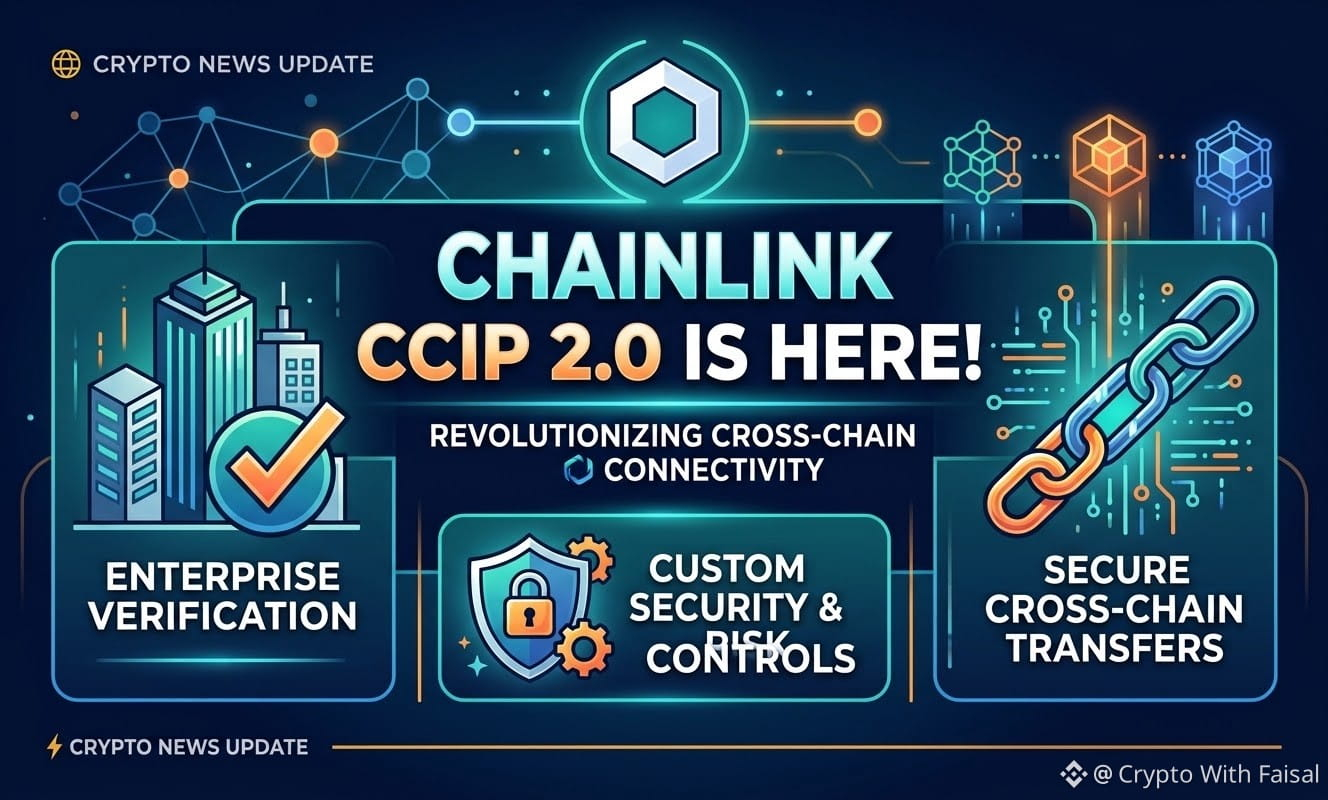
Chainlink has officially launched CCIP 2.0, bringing a major upgrade to its cross-chain interoperability protocol.
Why it matters:
Following a massive $292 million cross-chain bridge hack back in April, security is the main focus. CCIP 2.0 allows token issuers to add their own custom security verification checks on top of Chainlink’s default 16-node network.
Enterprises can now run their own validators or hire third parties like Infosys and Nethermind without needing Chainlink's approval. It’s a massive step for institutional adoption and custom risk control.
Additionally, top DeFi protocols like Aave and Maple have already adopted the update to utilize new "faster-than-finality" token transfers.
Will this open the floodgates for institutional capital on-chain? Share your thoughts below! 👇
$LINK
{future}(LINKUSDT)
$ETH
{future}(ETHUSDT)
$BTC
{future}(BTCUSDT)
#Chainlink #CCIP #CryptoNews
#chainlinklaunchesccip2withenterpriseverification
Chainlink has officially launched CCIP 2.0, bringing a major upgrade to its cross-chain interoperability protocol.
Why it matters:
Following a massive $292 million cross-chain bridge hack back in April, security is the main focus. CCIP 2.0 allows token issuers to add their own custom security verification checks on top of Chainlink’s default 16-node network.
Enterprises can now run their own validators or hire third parties like Infosys and Nethermind without needing Chainlink's approval. It’s a massive step for institutional adoption and custom risk control.
Additionally, top DeFi protocols like Aave and Maple have already adopted the update to utilize new "faster-than-finality" token transfers.
Will this open the floodgates for institutional capital on-chain? Share your thoughts below! 👇
$LINK
$ETH
$BTC
#Chainlink #CCIP #CryptoNews
Chainlink has officially launched CCIP 2.0, bringing a major upgrade to its cross-chain interoperability protocol.
Why it matters:
Following a massive $292 million cross-chain bridge hack back in April, security is the main focus. CCIP 2.0 allows token issuers to add their own custom security verification checks on top of Chainlink’s default 16-node network.
Enterprises can now run their own validators or hire third parties like Infosys and Nethermind without needing Chainlink's approval. It’s a massive step for institutional adoption and custom risk control.
Additionally, top DeFi protocols like Aave and Maple have already adopted the update to utilize new "faster-than-finality" token transfers.
Will this open the floodgates for institutional capital on-chain? Share your thoughts below! 👇
$LINK
$ETH
$BTC
#Chainlink #CCIP #CryptoNews
56

·
--
The sense of security in cross-chain bridges just got an extra layer.
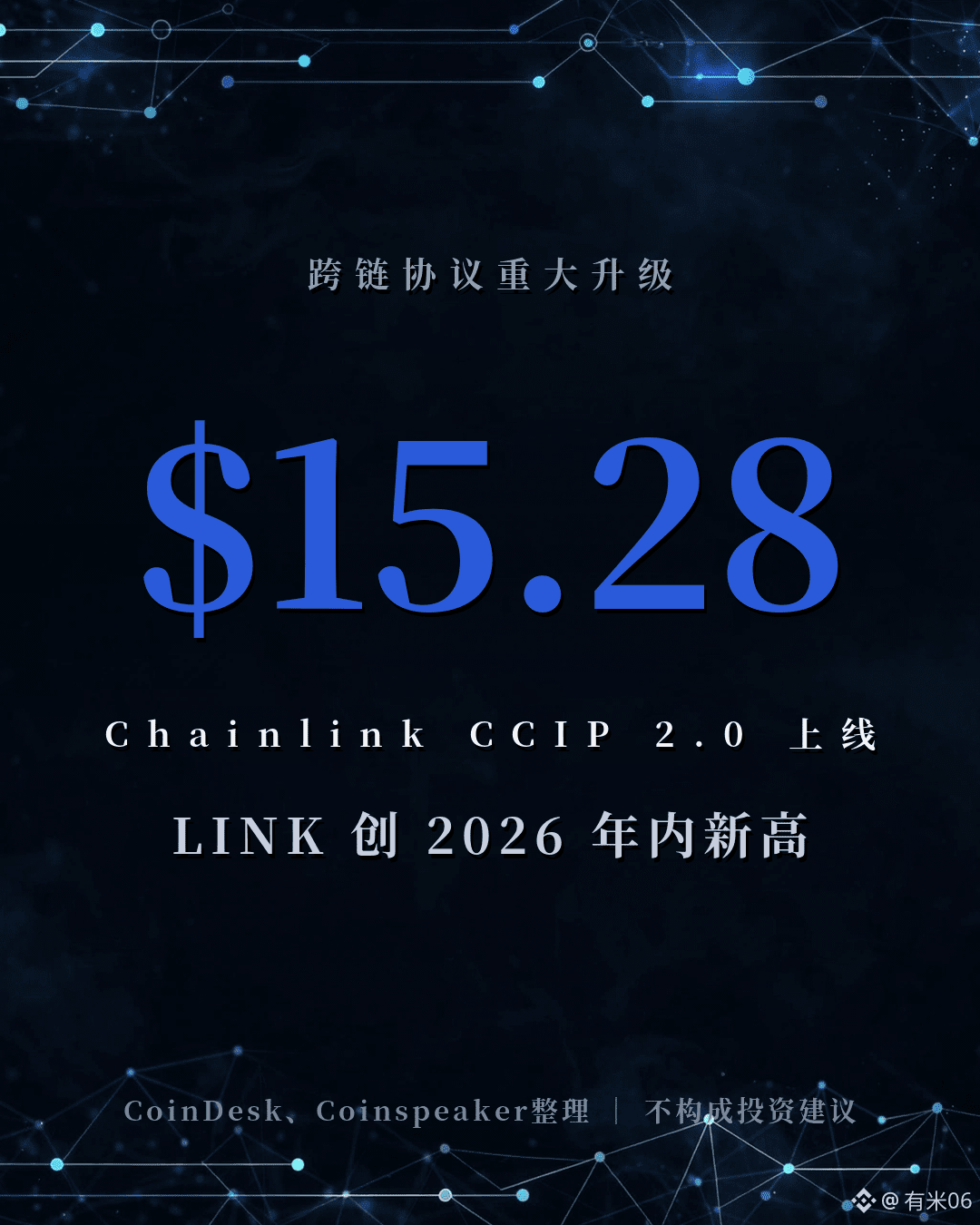
On September 28, Chainlink officially launched CCIP 2.0: in addition to the default 16-node committee verification, institutions and project teams can now layer on their own cross-chain validators (CCVs). It also comes with compliant modules for KYC/anti-money laundering/sanctions screening—essentially putting “double insurance” on cross-chain transactions. The background for this upgrade is also pretty straightforward: in April this year, the Kelp DAO cross-chain bridge was hacked for $292 million because it relied on a single validator.
After the news broke, LINK surged intraday to about $15.28, setting a new intrayear high for 2026; the 24-hour increase was roughly 7.8%–12%.
Data as of: 2026-09-28 13:50 UTC
Source: CoinDesk (2026-09-28); Coinspeaker (citing Chainlink’s official announcement and CoinGecko market data)
For information sharing only and does not constitute investment advice.
#LINK #Chainlink #CCIP
The sense of security in cross-chain bridges just got an extra layer.
On September 28, Chainlink officially launched CCIP 2.0: in addition to the default 16-node committee verification, institutions and project teams can now layer on their own cross-chain validators (CCVs). It also comes with compliant modules for KYC/anti-money laundering/sanctions screening—essentially putting “double insurance” on cross-chain transactions. The background for this upgrade is also pretty straightforward: in April this year, the Kelp DAO cross-chain bridge was hacked for $292 million because it relied on a single validator.
After the news broke, LINK surged intraday to about $15.28, setting a new intrayear high for 2026; the 24-hour increase was roughly 7.8%–12%.
Data as of: 2026-09-28 13:50 UTC
Source: CoinDesk (2026-09-28); Coinspeaker (citing Chainlink’s official announcement and CoinGecko market data)
For information sharing only and does not constitute investment advice.
#LINK #Chainlink #CCIP
On September 28, Chainlink officially launched CCIP 2.0: in addition to the default 16-node committee verification, institutions and project teams can now layer on their own cross-chain validators (CCVs). It also comes with compliant modules for KYC/anti-money laundering/sanctions screening—essentially putting “double insurance” on cross-chain transactions. The background for this upgrade is also pretty straightforward: in April this year, the Kelp DAO cross-chain bridge was hacked for $292 million because it relied on a single validator.
After the news broke, LINK surged intraday to about $15.28, setting a new intrayear high for 2026; the 24-hour increase was roughly 7.8%–12%.
Data as of: 2026-09-28 13:50 UTC
Source: CoinDesk (2026-09-28); Coinspeaker (citing Chainlink’s official announcement and CoinGecko market data)
For information sharing only and does not constitute investment advice.
#LINK #Chainlink #CCIP
171

·
--
Verified
🔗 Yesterday Chainlink announced the launch of CCIP 2.0… what actually changed?
The idea is simple: organizations that move digital assets between different networks can now add an independent verification layer and their own approval rules before executing the transfer. The update also allows setting confirmation speed and adding compliance controls as needed by the asset issuer. 🛡️
Why does it matter? Because it gives large institutions clearer control over transferring tokenized assets between networks, rather than relying on a single path for everyone. But announcing the technology doesn’t mean all the mentioned organizations have actually started using it, nor does it by itself prove a rise in demand for $LINK. 📌
In your opinion, what’s more important here—additional security or the flexibility of controlling transfers? 👇
Source: Chainlink’s official announcement dated September 28.
$LINK #Chainlink #CCIP
We don’t provide you with a ready-made investment opportunity; we share the news, and you research and decide whether there’s a chance for you. 📰🔎 This content is not investment advice.
🔗 Yesterday Chainlink announced the launch of CCIP 2.0… what actually changed?
The idea is simple: organizations that move digital assets between different networks can now add an independent verification layer and their own approval rules before executing the transfer. The update also allows setting confirmation speed and adding compliance controls as needed by the asset issuer. 🛡️
Why does it matter? Because it gives large institutions clearer control over transferring tokenized assets between networks, rather than relying on a single path for everyone. But announcing the technology doesn’t mean all the mentioned organizations have actually started using it, nor does it by itself prove a rise in demand for $LINK . 📌
In your opinion, what’s more important here—additional security or the flexibility of controlling transfers? 👇
Source: Chainlink’s official announcement dated September 28.
$LINK #Chainlink #CCIP
We don’t provide you with a ready-made investment opportunity; we share the news, and you research and decide whether there’s a chance for you. 📰🔎 This content is not investment advice.
The idea is simple: organizations that move digital assets between different networks can now add an independent verification layer and their own approval rules before executing the transfer. The update also allows setting confirmation speed and adding compliance controls as needed by the asset issuer. 🛡️
Why does it matter? Because it gives large institutions clearer control over transferring tokenized assets between networks, rather than relying on a single path for everyone. But announcing the technology doesn’t mean all the mentioned organizations have actually started using it, nor does it by itself prove a rise in demand for $LINK . 📌
In your opinion, what’s more important here—additional security or the flexibility of controlling transfers? 👇
Source: Chainlink’s official announcement dated September 28.
$LINK #Chainlink #CCIP
We don’t provide you with a ready-made investment opportunity; we share the news, and you research and decide whether there’s a chance for you. 📰🔎 This content is not investment advice.

2
84

·
--
#Chainlink上线CCIP2支持企业验证
$LINK Today up +10%, with 24-hour trading volume of $1.15 billion, up 239% from the previous day. The market is buying CCIP 2.0, but don’t rush to read the “2.0” as a safety doubling.
In the updated version, the default is still verified jointly by 16 independent node operators. Institutions can also add their own-built or third-party CCVs; once they’re set as a required condition, both sides sign off before cross-chain transactions are released. KYC, anti-money-laundering, and settlement speed can also be written into the process—this really does look like a banking-grade system.
However, the official documentation also states that the automated off-chain checks of the original Risk Management Network have been stopped, while on-chain emergency circuit breakers remain. Without an additional CCV onboarding counterparty, participants typically only use the default committee. Core security hasn’t disappeared, but extra checks have become optional.
So this rally is really betting that institutions will seriously add these optional checks and generate real usage. The next valuable performance report won’t be a longer list of partners, but who enabled CCV and how many cross-chain transactions were actually processed.
#LINK #Chainlink #CCIP
{future}(LINKUSDT)
#Chainlink上线CCIP2支持企业验证
$LINK Today up +10%, with 24-hour trading volume of $1.15 billion, up 239% from the previous day. The market is buying CCIP 2.0, but don’t rush to read the “2.0” as a safety doubling.
In the updated version, the default is still verified jointly by 16 independent node operators. Institutions can also add their own-built or third-party CCVs; once they’re set as a required condition, both sides sign off before cross-chain transactions are released. KYC, anti-money-laundering, and settlement speed can also be written into the process—this really does look like a banking-grade system.
However, the official documentation also states that the automated off-chain checks of the original Risk Management Network have been stopped, while on-chain emergency circuit breakers remain. Without an additional CCV onboarding counterparty, participants typically only use the default committee. Core security hasn’t disappeared, but extra checks have become optional.
So this rally is really betting that institutions will seriously add these optional checks and generate real usage. The next valuable performance report won’t be a longer list of partners, but who enabled CCV and how many cross-chain transactions were actually processed.
#LINK #Chainlink #CCIP
$LINK Today up +10%, with 24-hour trading volume of $1.15 billion, up 239% from the previous day. The market is buying CCIP 2.0, but don’t rush to read the “2.0” as a safety doubling.
In the updated version, the default is still verified jointly by 16 independent node operators. Institutions can also add their own-built or third-party CCVs; once they’re set as a required condition, both sides sign off before cross-chain transactions are released. KYC, anti-money-laundering, and settlement speed can also be written into the process—this really does look like a banking-grade system.
However, the official documentation also states that the automated off-chain checks of the original Risk Management Network have been stopped, while on-chain emergency circuit breakers remain. Without an additional CCV onboarding counterparty, participants typically only use the default committee. Core security hasn’t disappeared, but extra checks have become optional.
So this rally is really betting that institutions will seriously add these optional checks and generate real usage. The next valuable performance report won’t be a longer list of partners, but who enabled CCV and how many cross-chain transactions were actually processed.
#LINK #Chainlink #CCIP

2
267

·
--
Bullish
$LINK 逆勢走強,市場正在定價的核心是剛上線的 CCIP 2.0。
At 11:09 Taiwan time, Binance market data shows LINK is around $15. Over the past 24 hours, it is up 6.56%, trading in a range of $13.55–$15.74, with turnover of about $1.3 billion. During the same period, BTC, SOL, and BNB all declined, while LINK displays clear relative strength.
On September 28, Chainlink announced the official launch of CCIP 2.0. The main upgrades include:
* Institutions can add independent cross-chain verification mechanisms.
* Embed rules such as KYC, AML, and transaction limits into the cross-chain workflow.
* Choose speed or full final confirmation based on transaction risk.
The official statement says CCIP has already processed more than $84 billion in cross-chain token value, and over the last four months, more than $15 billion in assets have been migrated to this infrastructure.
Next, watch for:
* If it holds above $15 and breaks through $15.74 with increased volume, it indicates that even after the news release there is still new demand coming in.
* If it falls back below $15 and rebounds but cannot reclaim the level, be wary of “buy the expectation, sell the news.”
* If it further retests around $13.55, this round of relative-strength structure will clearly weaken.
* A true confirmation on the fundamentals is whether subsequent cross-chain transaction volume, fees, and LINK demand can grow in sync.
The product upgrade is real, but the adoption of infrastructure does not automatically mean the token value will increase proportionally.
Do you think CCIP 2.0 will drive LINK to be re-priced, or will it just lead to short-term price action after the positive news is released?
#Chainlink #CCIP #RWA
$LINK
{future}(LINKUSDT)
$LINK 逆勢走強,市場正在定價的核心是剛上線的 CCIP 2.0。
At 11:09 Taiwan time, Binance market data shows LINK is around $15. Over the past 24 hours, it is up 6.56%, trading in a range of $13.55–$15.74, with turnover of about $1.3 billion. During the same period, BTC, SOL, and BNB all declined, while LINK displays clear relative strength.
On September 28, Chainlink announced the official launch of CCIP 2.0. The main upgrades include:
* Institutions can add independent cross-chain verification mechanisms.
* Embed rules such as KYC, AML, and transaction limits into the cross-chain workflow.
* Choose speed or full final confirmation based on transaction risk.
The official statement says CCIP has already processed more than $84 billion in cross-chain token value, and over the last four months, more than $15 billion in assets have been migrated to this infrastructure.
Next, watch for:
* If it holds above $15 and breaks through $15.74 with increased volume, it indicates that even after the news release there is still new demand coming in.
* If it falls back below $15 and rebounds but cannot reclaim the level, be wary of “buy the expectation, sell the news.”
* If it further retests around $13.55, this round of relative-strength structure will clearly weaken.
* A true confirmation on the fundamentals is whether subsequent cross-chain transaction volume, fees, and LINK demand can grow in sync.
The product upgrade is real, but the adoption of infrastructure does not automatically mean the token value will increase proportionally.
Do you think CCIP 2.0 will drive LINK to be re-priced, or will it just lead to short-term price action after the positive news is released?
#Chainlink #CCIP #RWA
$LINK
At 11:09 Taiwan time, Binance market data shows LINK is around $15. Over the past 24 hours, it is up 6.56%, trading in a range of $13.55–$15.74, with turnover of about $1.3 billion. During the same period, BTC, SOL, and BNB all declined, while LINK displays clear relative strength.
On September 28, Chainlink announced the official launch of CCIP 2.0. The main upgrades include:
* Institutions can add independent cross-chain verification mechanisms.
* Embed rules such as KYC, AML, and transaction limits into the cross-chain workflow.
* Choose speed or full final confirmation based on transaction risk.
The official statement says CCIP has already processed more than $84 billion in cross-chain token value, and over the last four months, more than $15 billion in assets have been migrated to this infrastructure.
Next, watch for:
* If it holds above $15 and breaks through $15.74 with increased volume, it indicates that even after the news release there is still new demand coming in.
* If it falls back below $15 and rebounds but cannot reclaim the level, be wary of “buy the expectation, sell the news.”
* If it further retests around $13.55, this round of relative-strength structure will clearly weaken.
* A true confirmation on the fundamentals is whether subsequent cross-chain transaction volume, fees, and LINK demand can grow in sync.
The product upgrade is real, but the adoption of infrastructure does not automatically mean the token value will increase proportionally.
Do you think CCIP 2.0 will drive LINK to be re-priced, or will it just lead to short-term price action after the positive news is released?
#Chainlink #CCIP #RWA
$LINK
1
1
436

Verified
Chainlink officially launches CCIP 2.0, $LINK hits its highest price of 2026 and outperforms all major cryptocurrencies
Event details: On September 28, Chainlink officially launched the cross-chain interoperability protocol CCIP 2.0. This upgrade introduces a customizable cross-chain validator (CCV) mechanism, allowing institutions to add their own security verification layer on top of the default 16-node validation network of #Chainlink . Users can either build their own validators or choose third-party service providers. The upgrade also includes a built-in Automated Compliance Engine (ACE), supporting controls such as whitelisting, sanctions screening, transaction limits, and configurable finality speed. Combined with Ethereum's fast confirmation rules, some cross-chain transactions can be settled in seconds. The official disclosure stated that the network now secures $84 billion in cross-chain value, with $15 billion added in just four months, and assets such as #WBTC from BitGo, Coinbase's cbBTC, Kraken's kBTC, and others have already migrated. Partners include Amazon Web Services, Google Cloud, Fidelity International, UBS, Swift, DTCC, Euroclear, ANZ Bank, SBI Digital Markets, and Infosys
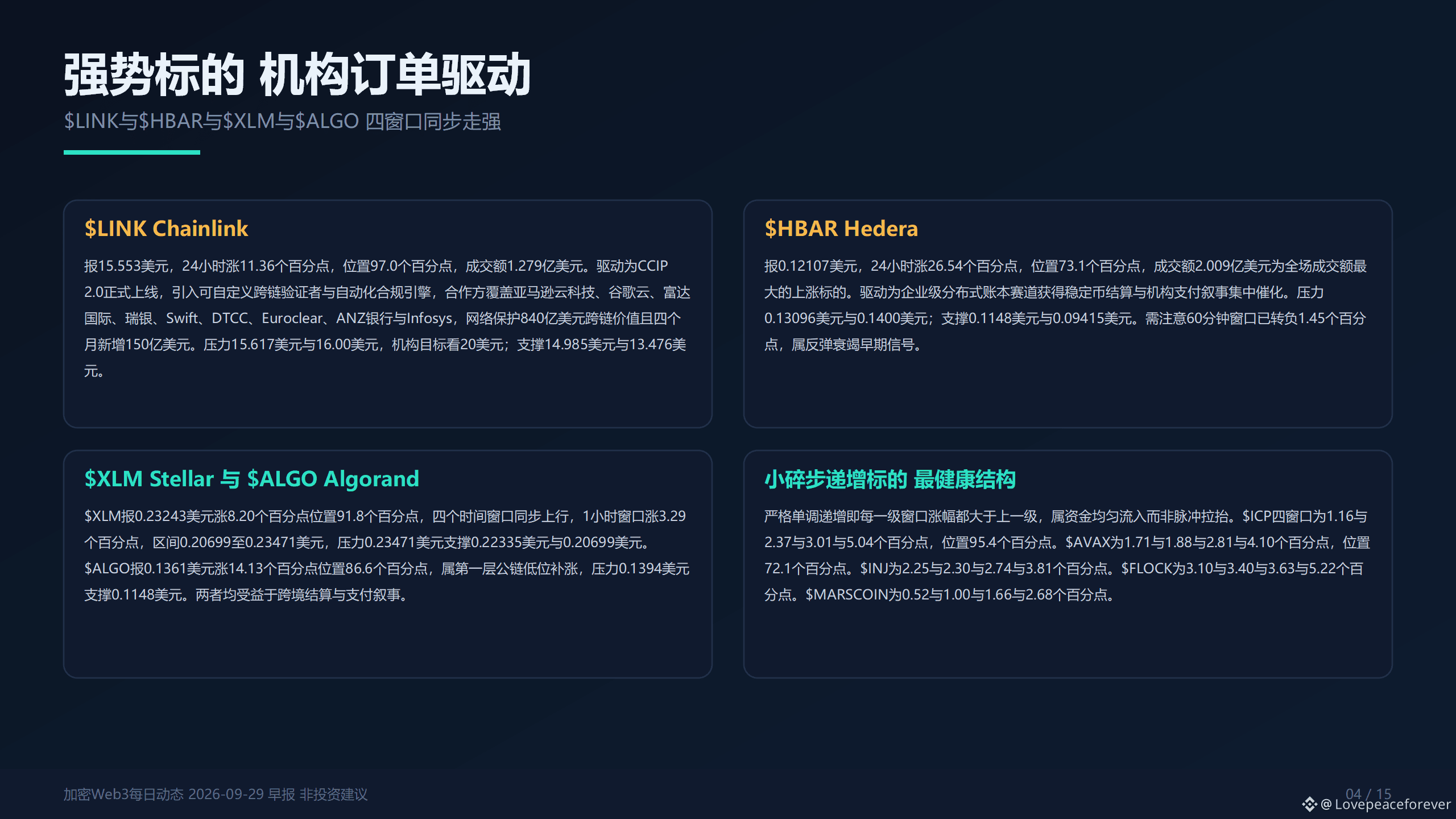
Why it matters: This upgrade is positioned not as a mere technical iteration, but as a direct response to the April attack on Kelp DAO. That incident caused losses of about $2.94 billion and was attributed to a cross-chain bridge setup that relied on a single validator. #CCIP 2.0 hands security verification back to the institutions themselves, directly addressing the counterparty and compliance concerns that banks and asset managers care about most when moving on-chain. Against the backdrop of DTCC's collateral management system plan to go live in Q4 2026, Swift's Project Pangea being tested by more than 50 banks for cross-border settlement, and central banks in Brazil, Hong Kong, Singapore, and Australia using CCIP for CBDC pilots, Chainlink is evolving from an oracle provider into the standard-setter for institutional-grade cross-chain infrastructure. Even more notable is the quality of buying behind this rally: prices rose in sync across four consecutive time windows, with no single-window gain exceeding 3.1 percentage points, indicating steady capital inflow rather than a sharp pump, and 24-hour trading volume expanded to more than three times the usual level.
Positive for which coins: Directly positive for $LINK . It also benefits tokenized assets and cross-chain infrastructure projects in the same theme, including QNT, ONDO, AVAX, CBBTC ecosystem assets, and $WBTC-related assets. It is positive for DeFi protocols such as AAVE and $LDO that adopt CCIP. It creates competitive pressure on $ZRO , as LayerZero's cross-chain solution has faced a trust crisis after the Kelp DAO incident.
Chainlink officially launches CCIP 2.0, $LINK hits its highest price of 2026 and outperforms all major cryptocurrencies
Event details: On September 28, Chainlink officially launched the cross-chain interoperability protocol CCIP 2.0. This upgrade introduces a customizable cross-chain validator (CCV) mechanism, allowing institutions to add their own security verification layer on top of the default 16-node validation network of #Chainlink . Users can either build their own validators or choose third-party service providers. The upgrade also includes a built-in Automated Compliance Engine (ACE), supporting controls such as whitelisting, sanctions screening, transaction limits, and configurable finality speed. Combined with Ethereum's fast confirmation rules, some cross-chain transactions can be settled in seconds. The official disclosure stated that the network now secures $84 billion in cross-chain value, with $15 billion added in just four months, and assets such as #WBTC from BitGo, Coinbase's cbBTC, Kraken's kBTC, and others have already migrated. Partners include Amazon Web Services, Google Cloud, Fidelity International, UBS, Swift, DTCC, Euroclear, ANZ Bank, SBI Digital Markets, and Infosys
Why it matters: This upgrade is positioned not as a mere technical iteration, but as a direct response to the April attack on Kelp DAO. That incident caused losses of about $2.94 billion and was attributed to a cross-chain bridge setup that relied on a single validator. #CCIP 2.0 hands security verification back to the institutions themselves, directly addressing the counterparty and compliance concerns that banks and asset managers care about most when moving on-chain. Against the backdrop of DTCC's collateral management system plan to go live in Q4 2026, Swift's Project Pangea being tested by more than 50 banks for cross-border settlement, and central banks in Brazil, Hong Kong, Singapore, and Australia using CCIP for CBDC pilots, Chainlink is evolving from an oracle provider into the standard-setter for institutional-grade cross-chain infrastructure. Even more notable is the quality of buying behind this rally: prices rose in sync across four consecutive time windows, with no single-window gain exceeding 3.1 percentage points, indicating steady capital inflow rather than a sharp pump, and 24-hour trading volume expanded to more than three times the usual level.
Positive for which coins: Directly positive for $LINK . It also benefits tokenized assets and cross-chain infrastructure projects in the same theme, including QNT, ONDO, AVAX, CBBTC ecosystem assets, and $WBTC-related assets. It is positive for DeFi protocols such as AAVE and $LDO that adopt CCIP. It creates competitive pressure on $ZRO , as LayerZero's cross-chain solution has faced a trust crisis after the Kelp DAO incident.
Event details: On September 28, Chainlink officially launched the cross-chain interoperability protocol CCIP 2.0. This upgrade introduces a customizable cross-chain validator (CCV) mechanism, allowing institutions to add their own security verification layer on top of the default 16-node validation network of #Chainlink . Users can either build their own validators or choose third-party service providers. The upgrade also includes a built-in Automated Compliance Engine (ACE), supporting controls such as whitelisting, sanctions screening, transaction limits, and configurable finality speed. Combined with Ethereum's fast confirmation rules, some cross-chain transactions can be settled in seconds. The official disclosure stated that the network now secures $84 billion in cross-chain value, with $15 billion added in just four months, and assets such as #WBTC from BitGo, Coinbase's cbBTC, Kraken's kBTC, and others have already migrated. Partners include Amazon Web Services, Google Cloud, Fidelity International, UBS, Swift, DTCC, Euroclear, ANZ Bank, SBI Digital Markets, and Infosys
Why it matters: This upgrade is positioned not as a mere technical iteration, but as a direct response to the April attack on Kelp DAO. That incident caused losses of about $2.94 billion and was attributed to a cross-chain bridge setup that relied on a single validator. #CCIP 2.0 hands security verification back to the institutions themselves, directly addressing the counterparty and compliance concerns that banks and asset managers care about most when moving on-chain. Against the backdrop of DTCC's collateral management system plan to go live in Q4 2026, Swift's Project Pangea being tested by more than 50 banks for cross-border settlement, and central banks in Brazil, Hong Kong, Singapore, and Australia using CCIP for CBDC pilots, Chainlink is evolving from an oracle provider into the standard-setter for institutional-grade cross-chain infrastructure. Even more notable is the quality of buying behind this rally: prices rose in sync across four consecutive time windows, with no single-window gain exceeding 3.1 percentage points, indicating steady capital inflow rather than a sharp pump, and 24-hour trading volume expanded to more than three times the usual level.
Positive for which coins: Directly positive for $LINK . It also benefits tokenized assets and cross-chain infrastructure projects in the same theme, including QNT, ONDO, AVAX, CBBTC ecosystem assets, and $WBTC-related assets. It is positive for DeFi protocols such as AAVE and $LDO that adopt CCIP. It creates competitive pressure on $ZRO , as LayerZero's cross-chain solution has faced a trust crisis after the Kelp DAO incident.
1
712

#ChainlinkLaunchesCCIP2WithEnterpriseVerification
Chainlink launches CCIP 2.0.
The update allows token issuers to add custom security checks on Chainlink’s standard network (16 nodes).
Context: a $292 million hack in April exposed the risk of relying on a single validator. CCIP 2.0 addresses this with flexibility.
Companies can run their own validators or hire third parties such as Infosys and Nethermind. Without Chainlink approval.
Aave and Maple have already adopted it. Faster transfers with configurable confirmation thresholds.
What to watch: institutional adoption and the cross-chain capital flow.
$LINK $ETH $BTC
#Chainlink #CCIP #CryptoNews
{spot}(LINKUSDT)
{spot}(ETHUSDT)
{future}(BTCUSDT)
#ChainlinkLaunchesCCIP2WithEnterpriseVerification
Chainlink launches CCIP 2.0.
The update allows token issuers to add custom security checks on Chainlink’s standard network (16 nodes).
Context: a $292 million hack in April exposed the risk of relying on a single validator. CCIP 2.0 addresses this with flexibility.
Companies can run their own validators or hire third parties such as Infosys and Nethermind. Without Chainlink approval.
Aave and Maple have already adopted it. Faster transfers with configurable confirmation thresholds.
What to watch: institutional adoption and the cross-chain capital flow.
$LINK $ETH $BTC
#Chainlink #CCIP #CryptoNews
Chainlink launches CCIP 2.0.
The update allows token issuers to add custom security checks on Chainlink’s standard network (16 nodes).
Context: a $292 million hack in April exposed the risk of relying on a single validator. CCIP 2.0 addresses this with flexibility.
Companies can run their own validators or hire third parties such as Infosys and Nethermind. Without Chainlink approval.
Aave and Maple have already adopted it. Faster transfers with configurable confirmation thresholds.
What to watch: institutional adoption and the cross-chain capital flow.
$LINK $ETH $BTC
#Chainlink #CCIP #CryptoNews

2
189

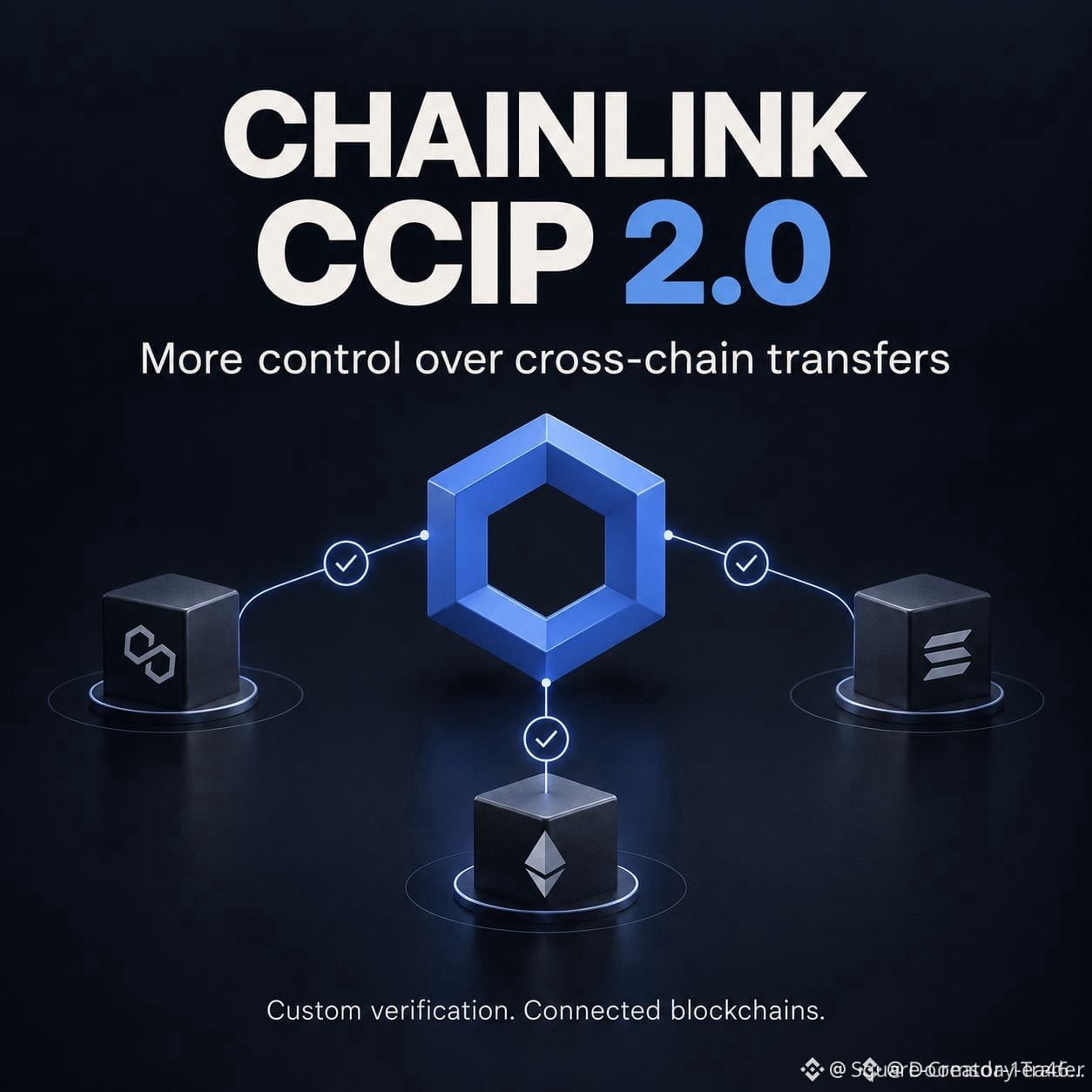
2.0 CCIP from Chainlink gives enterprises greater control over
cross-chain transfer operations.
The update allows enterprises to add their own verification step before executing the transaction.
They can run the Cross-Chain Verifier themselves or add verification through enterprise providers such as Infosys and Nethermind.
This is important for enterprises that need their own security and compliance checks when moving assets between blockchain networks.
For $LINK
{spot}(LINKUSDT)
among followers, what is the next achievement that should be tracked: who actually puts these capabilities into production?
#Tokenization #LINK #CCIP #Chainlink
2.0 CCIP from Chainlink gives enterprises greater control over
cross-chain transfer operations.
The update allows enterprises to add their own verification step before executing the transaction.
They can run the Cross-Chain Verifier themselves or add verification through enterprise providers such as Infosys and Nethermind.
This is important for enterprises that need their own security and compliance checks when moving assets between blockchain networks.
For $LINK
among followers, what is the next achievement that should be tracked: who actually puts these capabilities into production?
#Tokenization #LINK #CCIP #Chainlink
cross-chain transfer operations.
The update allows enterprises to add their own verification step before executing the transaction.
They can run the Cross-Chain Verifier themselves or add verification through enterprise providers such as Infosys and Nethermind.
This is important for enterprises that need their own security and compliance checks when moving assets between blockchain networks.
For $LINK
among followers, what is the next achievement that should be tracked: who actually puts these capabilities into production?
#Tokenization #LINK #CCIP #Chainlink
1
134

Verified
#chainlinklaunchesccip2withenterpriseverification
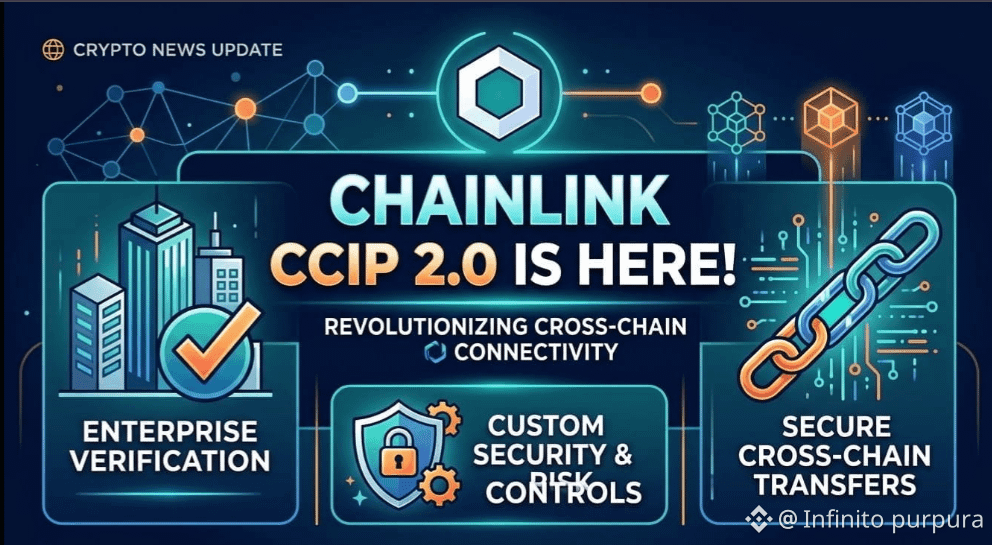
Chainlink has officially launched CCIP 2.0, offering a major update to its cross-chain interoperability protocol.
Why it matters:
After a cross-chain hack of enormous proportions valued at $292 million last April, security has become the primary focus. CCIP 2.0 allows token issuers to add their own customized security checks to the Chainlink network, which is made up of 16 nodes.
Now companies can run their own validators or rely on third parties such as Infosys and Nethermind without needing Chainlink’s approval. This is a big step for institutional adoption, with personalized risk control.
Additionally, major decentralized finance (DeFi) protocols, such as Aave and Maple, have already adopted the update to use new token transfer operations "faster than reaching final liquidation."
Will this pave the way for institutional capital flows into the chain? Share your thoughts below! 👇
Please, continue following us
$LINK
$ETH
$BTC
#Chainlink #CCIP #CryptoNews
#chainlinklaunchesccip2withenterpriseverification
Chainlink has officially launched CCIP 2.0, offering a major update to its cross-chain interoperability protocol.
Why it matters:
After a cross-chain hack of enormous proportions valued at $292 million last April, security has become the primary focus. CCIP 2.0 allows token issuers to add their own customized security checks to the Chainlink network, which is made up of 16 nodes.
Now companies can run their own validators or rely on third parties such as Infosys and Nethermind without needing Chainlink’s approval. This is a big step for institutional adoption, with personalized risk control.
Additionally, major decentralized finance (DeFi) protocols, such as Aave and Maple, have already adopted the update to use new token transfer operations "faster than reaching final liquidation."
Will this pave the way for institutional capital flows into the chain? Share your thoughts below! 👇
Please, continue following us
$LINK
$ETH
$BTC
#Chainlink #CCIP #CryptoNews
Chainlink has officially launched CCIP 2.0, offering a major update to its cross-chain interoperability protocol.
Why it matters:
After a cross-chain hack of enormous proportions valued at $292 million last April, security has become the primary focus. CCIP 2.0 allows token issuers to add their own customized security checks to the Chainlink network, which is made up of 16 nodes.
Now companies can run their own validators or rely on third parties such as Infosys and Nethermind without needing Chainlink’s approval. This is a big step for institutional adoption, with personalized risk control.
Additionally, major decentralized finance (DeFi) protocols, such as Aave and Maple, have already adopted the update to use new token transfer operations "faster than reaching final liquidation."
Will this pave the way for institutional capital flows into the chain? Share your thoughts below! 👇
Please, continue following us
$LINK
$ETH
$BTC
#Chainlink #CCIP #CryptoNews
AngelOfCrypto_-:
nice
2
2
4.3k

Verified
#chainlinklaunchesccip2withenterpriseverification
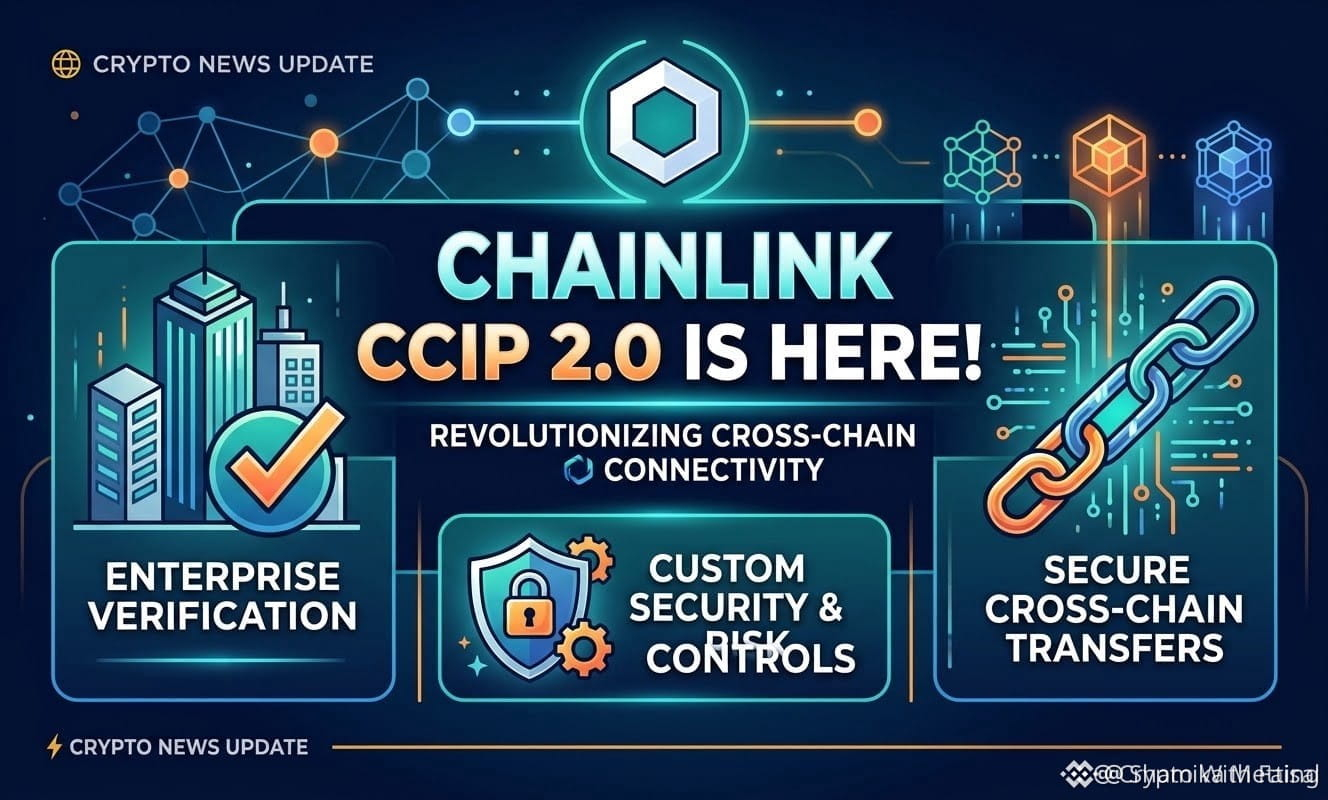
Chainlink officially launched CCIP 2.0 to deliver a major upgrade to its cross-chain interoperability protocol.
Why this matters:
After a massive $292 million cross-chain bridge hack last April, security became the primary focus. CCIP 2.0 allows token issuers to add their own custom security verification checks on top of Chainlink’s virtual network made up of 16 nodes.
Companies can now run their own Validators or use third parties such as Infosys and Nethermind without needing Chainlink’s approval. This is a big step for enterprise adoption, with customized risk control.
In addition, leading DeFi protocols such as Aave and Maple have already adopted the update to use new token transfer operations “faster than reaching final settlement.”
Will this open the door to an inflow of institutional capital on-chain? Share your thoughts below! 👇
Please follow up
$LINK
{future}(LINKUSDT)
$ETH
{future}(ETHUSDT)
$BTC
{future}(BTCUSDT)
#Chainlink #CCIP #CryptoNews
#chainlinklaunchesccip2withenterpriseverification
Chainlink officially launched CCIP 2.0 to deliver a major upgrade to its cross-chain interoperability protocol.
Why this matters:
After a massive $292 million cross-chain bridge hack last April, security became the primary focus. CCIP 2.0 allows token issuers to add their own custom security verification checks on top of Chainlink’s virtual network made up of 16 nodes.
Companies can now run their own Validators or use third parties such as Infosys and Nethermind without needing Chainlink’s approval. This is a big step for enterprise adoption, with customized risk control.
In addition, leading DeFi protocols such as Aave and Maple have already adopted the update to use new token transfer operations “faster than reaching final settlement.”
Will this open the door to an inflow of institutional capital on-chain? Share your thoughts below! 👇
Please follow up
$LINK
$ETH
$BTC
#Chainlink #CCIP #CryptoNews
Chainlink officially launched CCIP 2.0 to deliver a major upgrade to its cross-chain interoperability protocol.
Why this matters:
After a massive $292 million cross-chain bridge hack last April, security became the primary focus. CCIP 2.0 allows token issuers to add their own custom security verification checks on top of Chainlink’s virtual network made up of 16 nodes.
Companies can now run their own Validators or use third parties such as Infosys and Nethermind without needing Chainlink’s approval. This is a big step for enterprise adoption, with customized risk control.
In addition, leading DeFi protocols such as Aave and Maple have already adopted the update to use new token transfer operations “faster than reaching final settlement.”
Will this open the door to an inflow of institutional capital on-chain? Share your thoughts below! 👇
Please follow up
$LINK
$ETH
$BTC
#Chainlink #CCIP #CryptoNews
AngelOfCrypto_-:
nice
2
4
2.1k

·
--
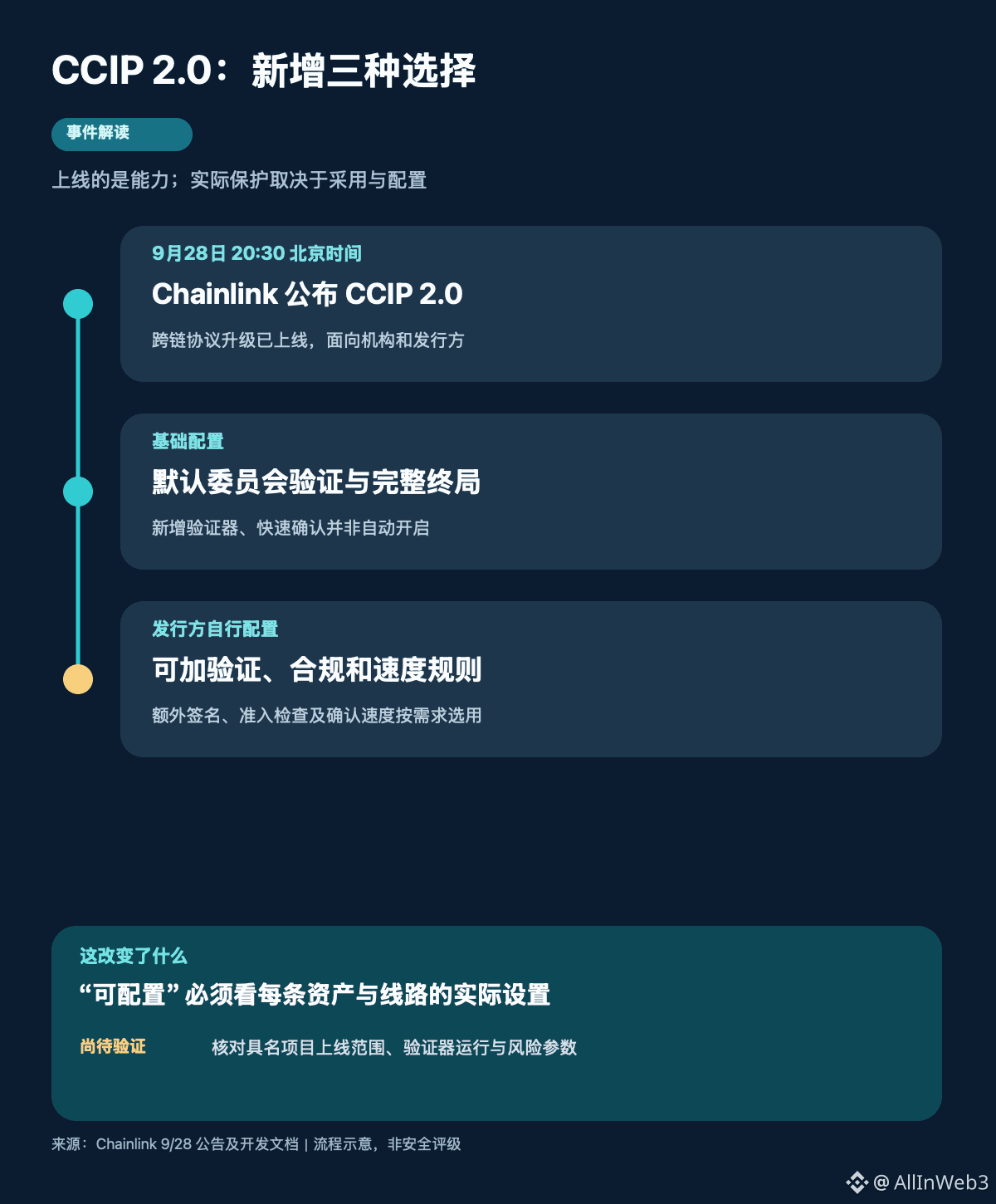
#Chainlink #CCIP Chainlink to announce CCIP 2.0 in Beijing time on September 28 at 20:30. Related topics on the Binance Square are heating up, but after this upgrade, the focus isn’t on the slogan “cross-chain is safer.” Instead, it’s on who enables three new capabilities and where each takes effect. The protocol offers choices, but that doesn’t mean every asset path has already been set up with the same level of security and compliance.
First, look at verification. According to the official explanation, the foundation is Chainlink’s committee validators, which are now operated by 16 independent node operators. The issuer can also run its own, or use a third-party-run, Cross-Chain Verifier (CCV). Once a given transfer is configured to require an additional CCV, both the base committee and the newly added verifier must sign for the destination chain to execute. This additional approval authority is handed to the asset issuer, but it also turns validator key management, availability, and rule configuration into the operational responsibilities it must handle. Simply having a list of partner institutions isn’t enough to prove that every one is running its own CCV on production routes.
The second switch is speed. The development documentation states that the default is still to wait for the source chain to reach full finality. A faster confirmation path is available through an optional configuration. Faster isn’t unconditionally better: it reduces waiting time but also changes how the system tolerates chain reorganizations and confirmation depth. What truly needs to be compared is: for specific assets and specific routes, how many confirmations are selected; how much can be transferred per transaction or cumulatively; and how to pause when exceptions occur—not treating the “second-level” claim from the product introduction as a uniform result for all transfers.
The third switch is compliance. The official materials integrate rules such as identity, sanctions lists, whitelisting, and transaction limits into the cross-chain workflow, and issuers can configure them according to their own policies. For regulated assets, this means restrictions can continue to follow the asset across chains; for ordinary users, it means whether an asset can be transferred and when it can be transferred may be constrained by issuer rules. “Built-in support” is a feature offering—not something you can reverse-engineer to assume that all assets implement the same kind of review, nor can you treat compliance checks as a smart-contract vulnerability insurance policy.
Chainlink says the total cross-chain token value under CCIP has exceeded $8.4 billion. That’s an official cumulative figure, and it can’t be used to infer the incremental transaction volume on the day CCIP 2.0 launched. The announcement lists many partners and supporters, but support, trials, integrations, and continued operation in production are different stages. Next, the more important items to verify are: which named assets have actually enabled additional CCVs; which routes enabled faster confirmations; and whether the relevant verification records, fees, and incident-handling can be examined. For $LINK as well, you can’t deduce immediate token demand or price direction solely from the protocol upgrade.
Sources: Chainlink’s September 28 announcement, CCIP development documentation.
#Chainlink #CCIP Chainlink to announce CCIP 2.0 in Beijing time on September 28 at 20:30. Related topics on the Binance Square are heating up, but after this upgrade, the focus isn’t on the slogan “cross-chain is safer.” Instead, it’s on who enables three new capabilities and where each takes effect. The protocol offers choices, but that doesn’t mean every asset path has already been set up with the same level of security and compliance.
First, look at verification. According to the official explanation, the foundation is Chainlink’s committee validators, which are now operated by 16 independent node operators. The issuer can also run its own, or use a third-party-run, Cross-Chain Verifier (CCV). Once a given transfer is configured to require an additional CCV, both the base committee and the newly added verifier must sign for the destination chain to execute. This additional approval authority is handed to the asset issuer, but it also turns validator key management, availability, and rule configuration into the operational responsibilities it must handle. Simply having a list of partner institutions isn’t enough to prove that every one is running its own CCV on production routes.
The second switch is speed. The development documentation states that the default is still to wait for the source chain to reach full finality. A faster confirmation path is available through an optional configuration. Faster isn’t unconditionally better: it reduces waiting time but also changes how the system tolerates chain reorganizations and confirmation depth. What truly needs to be compared is: for specific assets and specific routes, how many confirmations are selected; how much can be transferred per transaction or cumulatively; and how to pause when exceptions occur—not treating the “second-level” claim from the product introduction as a uniform result for all transfers.
The third switch is compliance. The official materials integrate rules such as identity, sanctions lists, whitelisting, and transaction limits into the cross-chain workflow, and issuers can configure them according to their own policies. For regulated assets, this means restrictions can continue to follow the asset across chains; for ordinary users, it means whether an asset can be transferred and when it can be transferred may be constrained by issuer rules. “Built-in support” is a feature offering—not something you can reverse-engineer to assume that all assets implement the same kind of review, nor can you treat compliance checks as a smart-contract vulnerability insurance policy.
Chainlink says the total cross-chain token value under CCIP has exceeded $8.4 billion. That’s an official cumulative figure, and it can’t be used to infer the incremental transaction volume on the day CCIP 2.0 launched. The announcement lists many partners and supporters, but support, trials, integrations, and continued operation in production are different stages. Next, the more important items to verify are: which named assets have actually enabled additional CCVs; which routes enabled faster confirmations; and whether the relevant verification records, fees, and incident-handling can be examined. For $LINK as well, you can’t deduce immediate token demand or price direction solely from the protocol upgrade.
Sources: Chainlink’s September 28 announcement, CCIP development documentation.
First, look at verification. According to the official explanation, the foundation is Chainlink’s committee validators, which are now operated by 16 independent node operators. The issuer can also run its own, or use a third-party-run, Cross-Chain Verifier (CCV). Once a given transfer is configured to require an additional CCV, both the base committee and the newly added verifier must sign for the destination chain to execute. This additional approval authority is handed to the asset issuer, but it also turns validator key management, availability, and rule configuration into the operational responsibilities it must handle. Simply having a list of partner institutions isn’t enough to prove that every one is running its own CCV on production routes.
The second switch is speed. The development documentation states that the default is still to wait for the source chain to reach full finality. A faster confirmation path is available through an optional configuration. Faster isn’t unconditionally better: it reduces waiting time but also changes how the system tolerates chain reorganizations and confirmation depth. What truly needs to be compared is: for specific assets and specific routes, how many confirmations are selected; how much can be transferred per transaction or cumulatively; and how to pause when exceptions occur—not treating the “second-level” claim from the product introduction as a uniform result for all transfers.
The third switch is compliance. The official materials integrate rules such as identity, sanctions lists, whitelisting, and transaction limits into the cross-chain workflow, and issuers can configure them according to their own policies. For regulated assets, this means restrictions can continue to follow the asset across chains; for ordinary users, it means whether an asset can be transferred and when it can be transferred may be constrained by issuer rules. “Built-in support” is a feature offering—not something you can reverse-engineer to assume that all assets implement the same kind of review, nor can you treat compliance checks as a smart-contract vulnerability insurance policy.
Chainlink says the total cross-chain token value under CCIP has exceeded $8.4 billion. That’s an official cumulative figure, and it can’t be used to infer the incremental transaction volume on the day CCIP 2.0 launched. The announcement lists many partners and supporters, but support, trials, integrations, and continued operation in production are different stages. Next, the more important items to verify are: which named assets have actually enabled additional CCVs; which routes enabled faster confirmations; and whether the relevant verification records, fees, and incident-handling can be examined. For $LINK as well, you can’t deduce immediate token demand or price direction solely from the protocol upgrade.
Sources: Chainlink’s September 28 announcement, CCIP development documentation.
7
Log in to explore more content
Join global crypto users on Binance Square
⚡️ Get latest and useful information about crypto.
💬 Trusted by the world’s largest crypto exchange.
👍 Discover real insights from verified creators.
Email / Phone number
Trending Topics
1
#AmazonPlansToSell$8BNvidiaChips
351 views
20 Discussing
2
#NEARFallsToAround$4.70Down14%
27,220 views
56 Discussing
3
#EthereumFoundationLaunchesZkAPIOnMainnet
26,476 views
409 Discussing
4
#EvernorthPlansNasdaqListingOct8
47,069 views
376 Discussing
5
#SECProposesCryptoCustodyFramework
42,861 views
334 Discussing
6
#IMFApproves$139MDisbursementToElSalvador
25,964 views
24 Discussing
7
#AnthropicTargetsIPOAsSoonAsMidNovember
29,554 views
295 Discussing
8
#EtherGains70.9%InQ3
243,315 views
1,628 Discussing
9
#TreasuryLetsStatesFileStablecoinCertificationsEarly
18,563 views
115 Discussing
10
#US10YearYieldNears5.3%
197,728 views
1,432 Discussing