

#bitcoinsecurity
bitcoinsecurity
188,663 views
273 Discussing
Hot
Latest

WHEN BITCOIN OWNERS DIE, WHO INHERITS THEIR COINS?
Imagine owning 100 BTC, building a fortune, and suddenly passing away. Your family knows the Bitcoin exists, but nobody knows how to access it.
The Bitcoin remains on the blockchain, but without the private keys or recovery phrase, your fortune could become permanently inaccessible.
Unlike traditional banks, Bitcoin has no central authority that can reset lost private keys.
Bitcoin held on custodial exchanges may be recoverable through legal inheritance procedures. Self-custodied Bitcoin, however, requires a secure recovery plan.
My Final Take:
Bitcoin gives you financial independence, but it also makes you responsible for protecting your family's inheritance.
Secure backups, estate planning and multisignature wallets can help ensure your Bitcoin survives you.
Will your family inherit your Bitcoin or lose access to it forever?
#BTC #BitcoinSecurity
$BTC
{future}(BTCUSDT)
WHEN BITCOIN OWNERS DIE, WHO INHERITS THEIR COINS?
Imagine owning 100 BTC, building a fortune, and suddenly passing away. Your family knows the Bitcoin exists, but nobody knows how to access it.
The Bitcoin remains on the blockchain, but without the private keys or recovery phrase, your fortune could become permanently inaccessible.
Unlike traditional banks, Bitcoin has no central authority that can reset lost private keys.
Bitcoin held on custodial exchanges may be recoverable through legal inheritance procedures. Self-custodied Bitcoin, however, requires a secure recovery plan.
My Final Take:
Bitcoin gives you financial independence, but it also makes you responsible for protecting your family's inheritance.
Secure backups, estate planning and multisignature wallets can help ensure your Bitcoin survives you.
Will your family inherit your Bitcoin or lose access to it forever?
#BTC #BitcoinSecurity
$BTC
Imagine owning 100 BTC, building a fortune, and suddenly passing away. Your family knows the Bitcoin exists, but nobody knows how to access it.
The Bitcoin remains on the blockchain, but without the private keys or recovery phrase, your fortune could become permanently inaccessible.
Unlike traditional banks, Bitcoin has no central authority that can reset lost private keys.
Bitcoin held on custodial exchanges may be recoverable through legal inheritance procedures. Self-custodied Bitcoin, however, requires a secure recovery plan.
My Final Take:
Bitcoin gives you financial independence, but it also makes you responsible for protecting your family's inheritance.
Secure backups, estate planning and multisignature wallets can help ensure your Bitcoin survives you.
Will your family inherit your Bitcoin or lose access to it forever?
#BTC #BitcoinSecurity
$BTC

75

Article
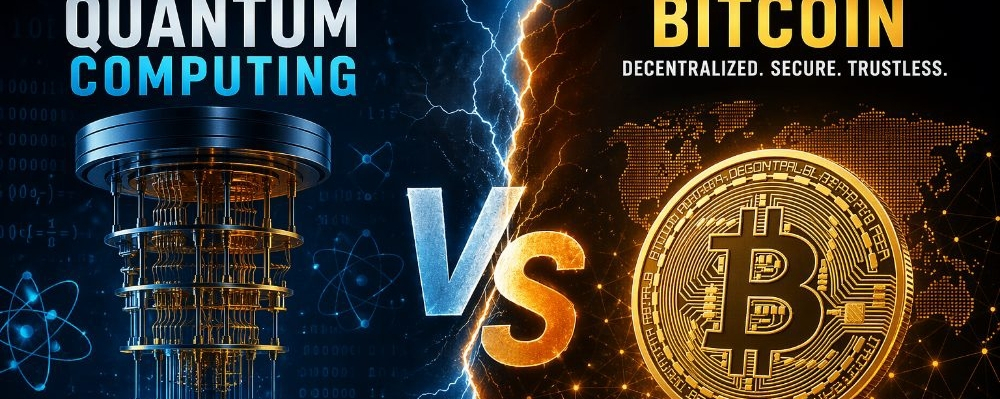
Quantum Computing Could Reshape Crypto Security 🔐Quantum computing is one of the long-term challenges facing modern digital assets, including Bitcoin.
Bitcoin currently relies on cryptographic signatures such as ECDSA. A sufficiently powerful, fault-tolerant quantum computer could potentially use Shor’s algorithm to break elliptic-curve cryptography much faster than classical computers.
But there’s an important point: today’s quantum computers are not yet capable of breaking Bitcoin’s cryptography. The threat is considered a future risk, which is why researchers are already working on Post-Quantum Cryptography (PQC) .
⚙️ The Real Challenge: Performance
Quantum-resistant cryptography can require larger keys, signatures, or significantly more computation than traditional systems.
For blockchains, the goal is not simply to become quantum-resistant. The solution must also remain:
✅ Secure
✅ Scalable
✅ Fast
✅ Cost-efficient
Where AI Could Help
AI can assist developers and researchers by optimizing code, identifying computational bottlenecks, and exploring more efficient implementations of complex cryptographic systems.
However, AI itself is not a quantum-resistant security layer. Its potential role is helping engineers build and optimize the technologies that could protect blockchain networks in a post-quantum era.
🔮 What Comes Next?
The race toward quantum-resistant blockchain infrastructure has already begun.
Future upgrades could involve post-quantum signatures, new cryptographic schemes, optimized zero-knowledge systems, and Layer-2 solutions designed to maintain security without sacrificing scalability.
Bitcoin’s quantum challenge may still be years away — but preparing before the threat becomes practical could be one of the most important security upgrades for the crypto industry. 🚀
#Bitcoinsecurity #QuantumComputing #PostQuantumCryptography #ECDSA #Cryptography
Quantum Computing Could Reshape Crypto Security 🔐
Quantum computing is one of the long-term challenges facing modern digital assets, including Bitcoin.
Bitcoin currently relies on cryptographic signatures such as ECDSA. A sufficiently powerful, fault-tolerant quantum computer could potentially use Shor’s algorithm to break elliptic-curve cryptography much faster than classical computers.
But there’s an important point: today’s quantum computers are not yet capable of breaking Bitcoin’s cryptography. The threat is considered a future risk, which is why researchers are already working on Post-Quantum Cryptography (PQC) .
⚙️ The Real Challenge: Performance
Quantum-resistant cryptography can require larger keys, signatures, or significantly more computation than traditional systems.
For blockchains, the goal is not simply to become quantum-resistant. The solution must also remain:
✅ Secure
✅ Scalable
✅ Fast
✅ Cost-efficient
Where AI Could Help
AI can assist developers and researchers by optimizing code, identifying computational bottlenecks, and exploring more efficient implementations of complex cryptographic systems.
However, AI itself is not a quantum-resistant security layer. Its potential role is helping engineers build and optimize the technologies that could protect blockchain networks in a post-quantum era.
🔮 What Comes Next?
The race toward quantum-resistant blockchain infrastructure has already begun.
Future upgrades could involve post-quantum signatures, new cryptographic schemes, optimized zero-knowledge systems, and Layer-2 solutions designed to maintain security without sacrificing scalability.
Bitcoin’s quantum challenge may still be years away — but preparing before the threat becomes practical could be one of the most important security upgrades for the crypto industry. 🚀
#Bitcoinsecurity #QuantumComputing #PostQuantumCryptography #ECDSA #Cryptography
Bitcoin currently relies on cryptographic signatures such as ECDSA. A sufficiently powerful, fault-tolerant quantum computer could potentially use Shor’s algorithm to break elliptic-curve cryptography much faster than classical computers.
But there’s an important point: today’s quantum computers are not yet capable of breaking Bitcoin’s cryptography. The threat is considered a future risk, which is why researchers are already working on Post-Quantum Cryptography (PQC) .
⚙️ The Real Challenge: Performance
Quantum-resistant cryptography can require larger keys, signatures, or significantly more computation than traditional systems.
For blockchains, the goal is not simply to become quantum-resistant. The solution must also remain:
✅ Secure
✅ Scalable
✅ Fast
✅ Cost-efficient
Where AI Could Help
AI can assist developers and researchers by optimizing code, identifying computational bottlenecks, and exploring more efficient implementations of complex cryptographic systems.
However, AI itself is not a quantum-resistant security layer. Its potential role is helping engineers build and optimize the technologies that could protect blockchain networks in a post-quantum era.
🔮 What Comes Next?
The race toward quantum-resistant blockchain infrastructure has already begun.
Future upgrades could involve post-quantum signatures, new cryptographic schemes, optimized zero-knowledge systems, and Layer-2 solutions designed to maintain security without sacrificing scalability.
Bitcoin’s quantum challenge may still be years away — but preparing before the threat becomes practical could be one of the most important security upgrades for the crypto industry. 🚀
#Bitcoinsecurity #QuantumComputing #PostQuantumCryptography #ECDSA #Cryptography
1
330


·
--

Article
𝐀𝐈 𝐚𝐧𝐝 𝐭𝐡𝐞 𝐐𝐮𝐚𝐧𝐭𝐮𝐦 𝐋𝐞𝐚𝐩: Securing the Future of Bitcoin 🪙⚡The rapid advancement of quantum computing poses one of the most significant theoretical threats to modern digital assets, particularly for decentralized networks like Bitcoin 🔐. Traditional public-key encryption algorithms, such as 𝐄𝐂𝐃𝐒𝐀, rely on mathematical problems that could eventually be solved in seconds by high-powered quantum processors. To safeguard the future of global digital wealth, cryptographers and blockchain developers are actively designing 𝐏𝐨𝐬𝐭-𝐐𝐮𝐚𝐧𝐭𝐮𝐦 𝐂𝐫𝐲𝐩𝐭𝐨𝐠𝐫𝐚𝐩𝐡𝐲 (𝐏𝐐𝐂) solutions, with zero-knowledge proof technologies—specifically 𝐒𝐓𝐀𝐑𝐊𝐬—leading the charge as the most resilient defensive layer 🛡️.
𝐓𝐡𝐞 𝐂𝐨𝐦𝐩𝐮𝐭𝐚𝐭𝐢𝐨𝐧𝐚𝐥 𝐂𝐡𝐚𝐥𝐥𝐞𝐧𝐠𝐞 𝐨𝐟 𝐐𝐮𝐚𝐧𝐭𝐮𝐦 𝐑𝐞𝐬𝐢𝐬𝐭𝐚𝐧𝐜𝐞 🖥️ ⚙️
While quantum-safe cryptographic algorithms offer unbreakable protection, their primary adoption obstacle has always been sheer computational weight. Generating post-quantum signatures and zero-knowledge proofs requires massive processing power from high-end GPU arrays, making full-scale implementation on layer-1 networks exceptionally costly and slow 📉. Scaling these security measures globally requires radical optimizations in hardware efficiency, code parallelization, and algorithm architecture to ensure that advanced protection remains fast, scalable, and economically viable for everyday transactions 🌐.
𝐀𝐫𝐭𝐢𝐟𝐢𝐜𝐢𝐚𝐥 𝐈𝐧𝐭𝐞𝐥𝐥𝐢𝐠𝐞𝐧𝐜𝐞 𝐚𝐬 𝐚 𝐂𝐫𝐲𝐩𝐭𝐨𝐠𝐫𝐚𝐩𝐡𝐢𝐜 𝐀𝐜𝐜𝐞𝐥𝐞𝐫𝐚𝐭𝐨𝐫 🤖💡
This is where Artificial Intelligence fundamentally transforms the paradigm. AI models are no longer passive observer tools; they are now actively collaborating with researchers to re-engineer complex mathematical algorithms and streamline GPU workload execution ⚡. By utilizing AI to identify code bottlenecks and refactor cryptographic proofs, developers have recently achieved unprecedented breakthroughs in reducing the computing overhead required for quantum-resistant verification. This synergy between AI and Web3 demonstrates that cutting-edge AI isn't just a separate technology trend, but an essential engine for fortifying next-generation financial infrastructure 🚀.
𝐓𝐡𝐞 𝐑𝐨𝐚𝐝 𝐀𝐡𝐞𝐚𝐝 𝐟𝐨𝐫 𝐏𝐨𝐬𝐭-𝐐𝐮𝐚𝐧𝐭𝐮𝐦 𝐁𝐥𝐨𝐜𝐤𝐜𝐡𝐚𝐢𝐧 🔮🌐
As quantum threat horizons approach, the combination of advanced cryptography and AI-driven optimization will define the safety standards of digital ownership. Reducing the resource cost of post-quantum proofs allows privacy-preserving protocols, Layer-2 scaling networks, and base-chain security to deploy robust protection without compromising transaction speed or energy efficiency 💎.
The race against quantum computing is no longer just a theoretical debate, but a practical engineering milestone that is actively being solved through intelligent automation and cryptographic innovation 🌟.
#BitcoinSecurity
#QuantumComputing
#ECDSA
#Cryptography
#Web3Tech .
𝐀𝐈 𝐚𝐧𝐝 𝐭𝐡𝐞 𝐐𝐮𝐚𝐧𝐭𝐮𝐦 𝐋𝐞𝐚𝐩: Securing the Future of Bitcoin 🪙⚡
The rapid advancement of quantum computing poses one of the most significant theoretical threats to modern digital assets, particularly for decentralized networks like Bitcoin 🔐. Traditional public-key encryption algorithms, such as 𝐄𝐂𝐃𝐒𝐀, rely on mathematical problems that could eventually be solved in seconds by high-powered quantum processors. To safeguard the future of global digital wealth, cryptographers and blockchain developers are actively designing 𝐏𝐨𝐬𝐭-𝐐𝐮𝐚𝐧𝐭𝐮𝐦 𝐂𝐫𝐲𝐩𝐭𝐨𝐠𝐫𝐚𝐩𝐡𝐲 (𝐏𝐐𝐂) solutions, with zero-knowledge proof technologies—specifically 𝐒𝐓𝐀𝐑𝐊𝐬—leading the charge as the most resilient defensive layer 🛡️.
𝐓𝐡𝐞 𝐂𝐨𝐦𝐩𝐮𝐭𝐚𝐭𝐢𝐨𝐧𝐚𝐥 𝐂𝐡𝐚𝐥𝐥𝐞𝐧𝐠𝐞 𝐨𝐟 𝐐𝐮𝐚𝐧𝐭𝐮𝐦 𝐑𝐞𝐬𝐢𝐬𝐭𝐚𝐧𝐜𝐞 🖥️ ⚙️
While quantum-safe cryptographic algorithms offer unbreakable protection, their primary adoption obstacle has always been sheer computational weight. Generating post-quantum signatures and zero-knowledge proofs requires massive processing power from high-end GPU arrays, making full-scale implementation on layer-1 networks exceptionally costly and slow 📉. Scaling these security measures globally requires radical optimizations in hardware efficiency, code parallelization, and algorithm architecture to ensure that advanced protection remains fast, scalable, and economically viable for everyday transactions 🌐.
𝐀𝐫𝐭𝐢𝐟𝐢𝐜𝐢𝐚𝐥 𝐈𝐧𝐭𝐞𝐥𝐥𝐢𝐠𝐞𝐧𝐜𝐞 𝐚𝐬 𝐚 𝐂𝐫𝐲𝐩𝐭𝐨𝐠𝐫𝐚𝐩𝐡𝐢𝐜 𝐀𝐜𝐜𝐞𝐥𝐞𝐫𝐚𝐭𝐨𝐫 🤖💡
This is where Artificial Intelligence fundamentally transforms the paradigm. AI models are no longer passive observer tools; they are now actively collaborating with researchers to re-engineer complex mathematical algorithms and streamline GPU workload execution ⚡. By utilizing AI to identify code bottlenecks and refactor cryptographic proofs, developers have recently achieved unprecedented breakthroughs in reducing the computing overhead required for quantum-resistant verification. This synergy between AI and Web3 demonstrates that cutting-edge AI isn't just a separate technology trend, but an essential engine for fortifying next-generation financial infrastructure 🚀.
𝐓𝐡𝐞 𝐑𝐨𝐚𝐝 𝐀𝐡𝐞𝐚𝐝 𝐟𝐨𝐫 𝐏𝐨𝐬𝐭-𝐐𝐮𝐚𝐧𝐭𝐮𝐦 𝐁𝐥𝐨𝐜𝐤𝐜𝐡𝐚𝐢𝐧 🔮🌐
As quantum threat horizons approach, the combination of advanced cryptography and AI-driven optimization will define the safety standards of digital ownership. Reducing the resource cost of post-quantum proofs allows privacy-preserving protocols, Layer-2 scaling networks, and base-chain security to deploy robust protection without compromising transaction speed or energy efficiency 💎.
The race against quantum computing is no longer just a theoretical debate, but a practical engineering milestone that is actively being solved through intelligent automation and cryptographic innovation 🌟.
#BitcoinSecurity
#QuantumComputing
#ECDSA
#Cryptography
#Web3Tech .
𝐓𝐡𝐞 𝐂𝐨𝐦𝐩𝐮𝐭𝐚𝐭𝐢𝐨𝐧𝐚𝐥 𝐂𝐡𝐚𝐥𝐥𝐞𝐧𝐠𝐞 𝐨𝐟 𝐐𝐮𝐚𝐧𝐭𝐮𝐦 𝐑𝐞𝐬𝐢𝐬𝐭𝐚𝐧𝐜𝐞 🖥️ ⚙️
While quantum-safe cryptographic algorithms offer unbreakable protection, their primary adoption obstacle has always been sheer computational weight. Generating post-quantum signatures and zero-knowledge proofs requires massive processing power from high-end GPU arrays, making full-scale implementation on layer-1 networks exceptionally costly and slow 📉. Scaling these security measures globally requires radical optimizations in hardware efficiency, code parallelization, and algorithm architecture to ensure that advanced protection remains fast, scalable, and economically viable for everyday transactions 🌐.
𝐀𝐫𝐭𝐢𝐟𝐢𝐜𝐢𝐚𝐥 𝐈𝐧𝐭𝐞𝐥𝐥𝐢𝐠𝐞𝐧𝐜𝐞 𝐚𝐬 𝐚 𝐂𝐫𝐲𝐩𝐭𝐨𝐠𝐫𝐚𝐩𝐡𝐢𝐜 𝐀𝐜𝐜𝐞𝐥𝐞𝐫𝐚𝐭𝐨𝐫 🤖💡
This is where Artificial Intelligence fundamentally transforms the paradigm. AI models are no longer passive observer tools; they are now actively collaborating with researchers to re-engineer complex mathematical algorithms and streamline GPU workload execution ⚡. By utilizing AI to identify code bottlenecks and refactor cryptographic proofs, developers have recently achieved unprecedented breakthroughs in reducing the computing overhead required for quantum-resistant verification. This synergy between AI and Web3 demonstrates that cutting-edge AI isn't just a separate technology trend, but an essential engine for fortifying next-generation financial infrastructure 🚀.
𝐓𝐡𝐞 𝐑𝐨𝐚𝐝 𝐀𝐡𝐞𝐚𝐝 𝐟𝐨𝐫 𝐏𝐨𝐬𝐭-𝐐𝐮𝐚𝐧𝐭𝐮𝐦 𝐁𝐥𝐨𝐜𝐤𝐜𝐡𝐚𝐢𝐧 🔮🌐
As quantum threat horizons approach, the combination of advanced cryptography and AI-driven optimization will define the safety standards of digital ownership. Reducing the resource cost of post-quantum proofs allows privacy-preserving protocols, Layer-2 scaling networks, and base-chain security to deploy robust protection without compromising transaction speed or energy efficiency 💎.
The race against quantum computing is no longer just a theoretical debate, but a practical engineering milestone that is actively being solved through intelligent automation and cryptographic innovation 🌟.
#BitcoinSecurity
#QuantumComputing
#ECDSA
#Cryptography
#Web3Tech .
3
1.1k

·
--
Bitcoin post-quantum solution costs down 79%! StarkWare, through optimization, has slashed quantum-secure Bitcoin transaction costs to below $67—this “last line of defense” is finally affordable. In the quantum era, Bitcoin wallets are safer than ever!
Bitcoin's quantum-resistant solution just got 79% cheaper! StarkWare's optimization slashes costs to under $67, making this "last resort" protection wallet-friendly. Quantum era? Bitcoin's got you covered.
#QuantumComputing #BitcoinSecurity $BTC $STARK
Bitcoin post-quantum solution costs down 79%! StarkWare, through optimization, has slashed quantum-secure Bitcoin transaction costs to below $67—this “last line of defense” is finally affordable. In the quantum era, Bitcoin wallets are safer than ever!
Bitcoin's quantum-resistant solution just got 79% cheaper! StarkWare's optimization slashes costs to under $67, making this "last resort" protection wallet-friendly. Quantum era? Bitcoin's got you covered.
#QuantumComputing #BitcoinSecurity $BTC $STARK
Bitcoin's quantum-resistant solution just got 79% cheaper! StarkWare's optimization slashes costs to under $67, making this "last resort" protection wallet-friendly. Quantum era? Bitcoin's got you covered.
#QuantumComputing #BitcoinSecurity $BTC $STARK
407

Hacked funds moving to trust
Following the Coldcard hack, whitehats moved 52 BTC into a recovery trust. This shift could signal an attempt to manage the stolen funds for eventual return.
#Coldcard #BitcoinSecurity
Hacked funds moving to trust
Following the Coldcard hack, whitehats moved 52 BTC into a recovery trust. This shift could signal an attempt to manage the stolen funds for eventual return.
#Coldcard #BitcoinSecurity
Following the Coldcard hack, whitehats moved 52 BTC into a recovery trust. This shift could signal an attempt to manage the stolen funds for eventual return.
#Coldcard #BitcoinSecurity
264
Ledger CTO Charles Guillemet warns that migrating Bitcoin to quantum resistant cryptography could take years because of significant risks regarding wallet state and recovery.
#BitcoinSecurity #QuantumResistance
Ledger CTO Charles Guillemet warns that migrating Bitcoin to quantum resistant cryptography could take years because of significant risks regarding wallet state and recovery.
#BitcoinSecurity #QuantumResistance
#BitcoinSecurity #QuantumResistance
16
AI agents have slashed the Bitcoin quantum attack benchmark by 86 percent, signaling a major leap in network security.
#BitcoinSecurity #QuantumDefense
AI agents have slashed the Bitcoin quantum attack benchmark by 86 percent, signaling a major leap in network security.
#BitcoinSecurity #QuantumDefense
#BitcoinSecurity #QuantumDefense
8

·
--

Article
Blockstream Faces $600 BTC Heist: What It Means for Your WalletsHave you ever wondered what happens when a major Bitcoin hub gets hijacked? Blockstream, the company behind the Liquid sidechain, just revealed that hackers have seized almost 600 BTC—about $30 million—by exploiting a flaw in its system. Instead of paying a ransom, Blockstream is teaming up with law enforcement, exchanges, and forensic experts to recover the stolen coins.
What’s Liquid and why does it matter? Liquid is a Bitcoin sidechain that lets traders move funds quickly between exchanges, settle trades instantly, and use advanced features like confidential transactions. Think of it as a high-speed express lane for Bitcoin, designed to keep liquidity flowing while keeping the main chain unclogged. When hackers target Liquid, they’re not just stealing coins; they’re disrupting the entire ecosystem that relies on that fast, secure transfer layer.
The hack unfolded when attackers exploited a vulnerability in Liquid’s node software, allowing them to siphon off BTC from the network’s reserves. Blockstream’s response was swift: they stopped the flow of stolen coins, notified affected parties, and opened a joint investigation with regulators and forensic teams. The goal? To trace every satoshi, recover the assets, and patch the weakness before anyone else can exploit it.
Real‑world impact? Exchanges that use Liquid for instant settlements are now on high alert. Some have temporarily halted Liquid withdrawals to protect users. Meanwhile, the broader Bitcoin community is watching closely, as this incident highlights the delicate balance between speed and security in sidechain technology.
Takeaway: Stay vigilant. If you trade on platforms that use Liquid, check whether they’ve paused withdrawals or issued any warnings. Keep your private keys offline, use hardware wallets, and stay updated on security patches from your service provider. Remember, the faster you move, the more you need to protect.
What steps are you taking to safeguard your crypto assets in light of this incident? #BitcoinSecurity #CryptoEducation #LiquidSidechain
Blockstream Faces $600 BTC Heist: What It Means for Your Wallets
Have you ever wondered what happens when a major Bitcoin hub gets hijacked? Blockstream, the company behind the Liquid sidechain, just revealed that hackers have seized almost 600 BTC—about $30 million—by exploiting a flaw in its system. Instead of paying a ransom, Blockstream is teaming up with law enforcement, exchanges, and forensic experts to recover the stolen coins.
What’s Liquid and why does it matter? Liquid is a Bitcoin sidechain that lets traders move funds quickly between exchanges, settle trades instantly, and use advanced features like confidential transactions. Think of it as a high-speed express lane for Bitcoin, designed to keep liquidity flowing while keeping the main chain unclogged. When hackers target Liquid, they’re not just stealing coins; they’re disrupting the entire ecosystem that relies on that fast, secure transfer layer.
The hack unfolded when attackers exploited a vulnerability in Liquid’s node software, allowing them to siphon off BTC from the network’s reserves. Blockstream’s response was swift: they stopped the flow of stolen coins, notified affected parties, and opened a joint investigation with regulators and forensic teams. The goal? To trace every satoshi, recover the assets, and patch the weakness before anyone else can exploit it.
Real‑world impact? Exchanges that use Liquid for instant settlements are now on high alert. Some have temporarily halted Liquid withdrawals to protect users. Meanwhile, the broader Bitcoin community is watching closely, as this incident highlights the delicate balance between speed and security in sidechain technology.
Takeaway: Stay vigilant. If you trade on platforms that use Liquid, check whether they’ve paused withdrawals or issued any warnings. Keep your private keys offline, use hardware wallets, and stay updated on security patches from your service provider. Remember, the faster you move, the more you need to protect.
What steps are you taking to safeguard your crypto assets in light of this incident? #BitcoinSecurity #CryptoEducation #LiquidSidechain
What’s Liquid and why does it matter? Liquid is a Bitcoin sidechain that lets traders move funds quickly between exchanges, settle trades instantly, and use advanced features like confidential transactions. Think of it as a high-speed express lane for Bitcoin, designed to keep liquidity flowing while keeping the main chain unclogged. When hackers target Liquid, they’re not just stealing coins; they’re disrupting the entire ecosystem that relies on that fast, secure transfer layer.
The hack unfolded when attackers exploited a vulnerability in Liquid’s node software, allowing them to siphon off BTC from the network’s reserves. Blockstream’s response was swift: they stopped the flow of stolen coins, notified affected parties, and opened a joint investigation with regulators and forensic teams. The goal? To trace every satoshi, recover the assets, and patch the weakness before anyone else can exploit it.
Real‑world impact? Exchanges that use Liquid for instant settlements are now on high alert. Some have temporarily halted Liquid withdrawals to protect users. Meanwhile, the broader Bitcoin community is watching closely, as this incident highlights the delicate balance between speed and security in sidechain technology.
Takeaway: Stay vigilant. If you trade on platforms that use Liquid, check whether they’ve paused withdrawals or issued any warnings. Keep your private keys offline, use hardware wallets, and stay updated on security patches from your service provider. Remember, the faster you move, the more you need to protect.
What steps are you taking to safeguard your crypto assets in light of this incident? #BitcoinSecurity #CryptoEducation #LiquidSidechain
23
AI agents have significantly lowered the resource requirements for potential quantum attacks on Bitcoin through the ECDSA.Fail challenge.
#BitcoinSecurity #QuantumComputing
AI agents have significantly lowered the resource requirements for potential quantum attacks on Bitcoin through the ECDSA.Fail challenge.
#BitcoinSecurity #QuantumComputing
#BitcoinSecurity #QuantumComputing
31

·
--
💥 AI IS FINDING BITCOIN’S HIDDEN BUGS — BUT THE RISK IS ABOVE THE BASE LAYER
Bitcoin’s base layer remains relatively simple by design, but the infrastructure built around it is becoming a much bigger security target as AI makes vulnerability research dramatically cheaper.
In August, 16 Bitcoin developers used AI to scan 390 projects and produced nearly 5,000 findings, including 85 initially rated critical.
Recent incidents involving Coldcard wallets, Core Lightning and Blockstream’s Liquid Network show the pattern. Coldcard losses reached roughly $114 million, while Liquid saw about 4,000 BTC withdrawn before 3,400 BTC was recovered. Meanwhile, AI-generated reports helped Core Lightning developers uncover genuine vulnerabilities.
The key question is no longer whether AI can find bugs — but whether developers can fix them fast enough.
$BTC $BNB
#BTC #BitcoinSecurity #AI #ThuyBNB
💥 AI IS FINDING BITCOIN’S HIDDEN BUGS — BUT THE RISK IS ABOVE THE BASE LAYER
Bitcoin’s base layer remains relatively simple by design, but the infrastructure built around it is becoming a much bigger security target as AI makes vulnerability research dramatically cheaper.
In August, 16 Bitcoin developers used AI to scan 390 projects and produced nearly 5,000 findings, including 85 initially rated critical.
Recent incidents involving Coldcard wallets, Core Lightning and Blockstream’s Liquid Network show the pattern. Coldcard losses reached roughly $114 million, while Liquid saw about 4,000 BTC withdrawn before 3,400 BTC was recovered. Meanwhile, AI-generated reports helped Core Lightning developers uncover genuine vulnerabilities.
The key question is no longer whether AI can find bugs — but whether developers can fix them fast enough.
$BTC $BNB
#BTC #BitcoinSecurity #AI #ThuyBNB
Bitcoin’s base layer remains relatively simple by design, but the infrastructure built around it is becoming a much bigger security target as AI makes vulnerability research dramatically cheaper.
In August, 16 Bitcoin developers used AI to scan 390 projects and produced nearly 5,000 findings, including 85 initially rated critical.
Recent incidents involving Coldcard wallets, Core Lightning and Blockstream’s Liquid Network show the pattern. Coldcard losses reached roughly $114 million, while Liquid saw about 4,000 BTC withdrawn before 3,400 BTC was recovered. Meanwhile, AI-generated reports helped Core Lightning developers uncover genuine vulnerabilities.
The key question is no longer whether AI can find bugs — but whether developers can fix them fast enough.
$BTC $BNB
#BTC #BitcoinSecurity #AI #ThuyBNB
63
·
--
Liquid hacker’s amazing operation! After stealing 32 million, they even returned 27 million in Bitcoin—leaving 600 BTC not yet returned. This move is kind of interesting. The hacker may be afraid of on-chain tracking, or maybe they suddenly had a change of heart? Either way, in the short term, Bitcoin should be able to hold steady—since most of the stolen funds have already been returned. But in the long run, these kinds of hacker incidents still bury risks in the market, especially for a cross-chain bridge like Liquid, where security is a major concern. Retail investors, stay alert—platform security matters more than returns!
#CryptoHack #BitcoinSecurity $BTC $LQDT
Liquid hacker’s amazing operation! After stealing 32 million, they even returned 27 million in Bitcoin—leaving 600 BTC not yet returned. This move is kind of interesting. The hacker may be afraid of on-chain tracking, or maybe they suddenly had a change of heart? Either way, in the short term, Bitcoin should be able to hold steady—since most of the stolen funds have already been returned. But in the long run, these kinds of hacker incidents still bury risks in the market, especially for a cross-chain bridge like Liquid, where security is a major concern. Retail investors, stay alert—platform security matters more than returns!
#CryptoHack #BitcoinSecurity $BTC $LQDT
#CryptoHack #BitcoinSecurity $BTC $LQDT
39
Liquid Hackers Return Most Stolen Bitcoin
Liquid network bridge exploit leads to recovery of $270M in BTC after hackers were notified of security patches.
#LiquidNetwork #BitcoinSecurity
Liquid Hackers Return Most Stolen Bitcoin
Liquid network bridge exploit leads to recovery of $270M in BTC after hackers were notified of security patches.
#LiquidNetwork #BitcoinSecurity
Liquid network bridge exploit leads to recovery of $270M in BTC after hackers were notified of security patches.
#LiquidNetwork #BitcoinSecurity
19

#LiquidNetworkSuffers$320MExploit
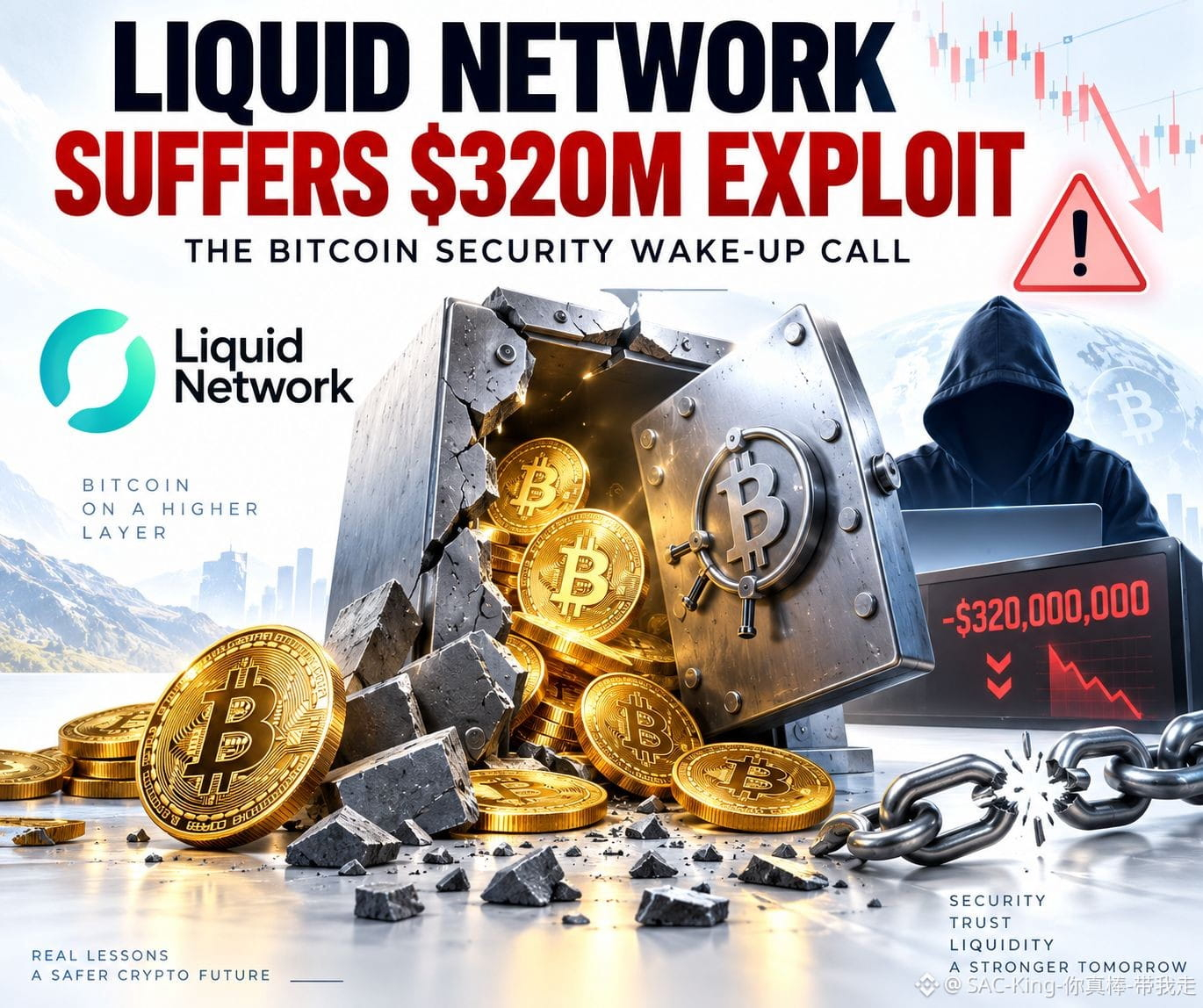
🚨🌊 LIQUID NETWORK SUFFERS $320M EXPLOIT: THE BITCOIN SECURITY WAKE-UP CALL 🌊🚨
When trust sits behind a wall of code,
One hidden flaw can make billions feel exposed.
Liquid Network has suffered a major security incident, with approximately 4,000 BTC worth around $320 million withdrawn from its federation wallet. The network subsequently halted new transactions.
The most unsettling detail? Liquid reported that the cryptographic keys used in the withdrawal were not compromised. The funds moved through SideSwap, an authorized settlement route.
That shifts the conversation from a simple “stolen keys” story toward a deeper infrastructure question: can validation logic and settlement mechanisms remain trustworthy under adversarial conditions?
The individuals behind the withdrawal have described themselves as white-hat hackers and reportedly offered to return most of the Bitcoin after the underlying vulnerability is fixed. That claim and the recovery outcome remain developments to watch.
For crypto markets, the bigger concern is not simply the headline loss. Incidents involving settlement infrastructure can challenge confidence in bridges, federated custody, wrapped assets, and the systems connecting Bitcoin liquidity to trading platforms.
The lesson is uncomfortable but important: security is not proven when nothing goes wrong; it is proven when the system survives what should never have been possible.
Do you think the potential return of the funds changes how seriously the market should view this exploit?
Disclaimer: This is informational content, not financial advice. The incident remains developing, and technical details may change as investigations continue.
#LiquidNetwork #BitcoinSecurity #GrowWithSAC $FET $ATOM $BARD
#LiquidNetworkSuffers$320MExploit
🚨🌊 LIQUID NETWORK SUFFERS $320M EXPLOIT: THE BITCOIN SECURITY WAKE-UP CALL 🌊🚨
When trust sits behind a wall of code,
One hidden flaw can make billions feel exposed.
Liquid Network has suffered a major security incident, with approximately 4,000 BTC worth around $320 million withdrawn from its federation wallet. The network subsequently halted new transactions.
The most unsettling detail? Liquid reported that the cryptographic keys used in the withdrawal were not compromised. The funds moved through SideSwap, an authorized settlement route.
That shifts the conversation from a simple “stolen keys” story toward a deeper infrastructure question: can validation logic and settlement mechanisms remain trustworthy under adversarial conditions?
The individuals behind the withdrawal have described themselves as white-hat hackers and reportedly offered to return most of the Bitcoin after the underlying vulnerability is fixed. That claim and the recovery outcome remain developments to watch.
For crypto markets, the bigger concern is not simply the headline loss. Incidents involving settlement infrastructure can challenge confidence in bridges, federated custody, wrapped assets, and the systems connecting Bitcoin liquidity to trading platforms.
The lesson is uncomfortable but important: security is not proven when nothing goes wrong; it is proven when the system survives what should never have been possible.
Do you think the potential return of the funds changes how seriously the market should view this exploit?
Disclaimer: This is informational content, not financial advice. The incident remains developing, and technical details may change as investigations continue.
#LiquidNetwork #BitcoinSecurity #GrowWithSAC $FET $ATOM $BARD
🚨🌊 LIQUID NETWORK SUFFERS $320M EXPLOIT: THE BITCOIN SECURITY WAKE-UP CALL 🌊🚨
When trust sits behind a wall of code,
One hidden flaw can make billions feel exposed.
Liquid Network has suffered a major security incident, with approximately 4,000 BTC worth around $320 million withdrawn from its federation wallet. The network subsequently halted new transactions.
The most unsettling detail? Liquid reported that the cryptographic keys used in the withdrawal were not compromised. The funds moved through SideSwap, an authorized settlement route.
That shifts the conversation from a simple “stolen keys” story toward a deeper infrastructure question: can validation logic and settlement mechanisms remain trustworthy under adversarial conditions?
The individuals behind the withdrawal have described themselves as white-hat hackers and reportedly offered to return most of the Bitcoin after the underlying vulnerability is fixed. That claim and the recovery outcome remain developments to watch.
For crypto markets, the bigger concern is not simply the headline loss. Incidents involving settlement infrastructure can challenge confidence in bridges, federated custody, wrapped assets, and the systems connecting Bitcoin liquidity to trading platforms.
The lesson is uncomfortable but important: security is not proven when nothing goes wrong; it is proven when the system survives what should never have been possible.
Do you think the potential return of the funds changes how seriously the market should view this exploit?
Disclaimer: This is informational content, not financial advice. The incident remains developing, and technical details may change as investigations continue.
#LiquidNetwork #BitcoinSecurity #GrowWithSAC $FET $ATOM $BARD
1
222
Vitalik Buterin dismissed fears that AI security threats could trigger a massive Bitcoin crash, citing the resilience of cryptography and the potential for future network upgrades.
#VitalikButerin #BitcoinSecurity
Vitalik Buterin dismissed fears that AI security threats could trigger a massive Bitcoin crash, citing the resilience of cryptography and the potential for future network upgrades.
#VitalikButerin #BitcoinSecurity
#VitalikButerin #BitcoinSecurity
74

34% of all #Bitcoin❗ in circulation remains quantum-vulnerable today. @quipnetwork
’s post-quantum firewall contract on Arch Network now gives every BTC holder a way to protect their funds immediately — no fork, no frozen coins, no consensus changes. Your existing wallet stays untouched while gaining military-grade WOTS+ quantum resistance. With Q-Day risks rising fast, this is the practical solution institutions and smart holders are adopting right now. Protection is already live across $BTC , $ETH , and $SOL .
@quipnetwork
#PostQuantumBTC #BitcoinSecurity
34% of all #Bitcoin❗ in circulation remains quantum-vulnerable today. @quipnetwork
’s post-quantum firewall contract on Arch Network now gives every BTC holder a way to protect their funds immediately — no fork, no frozen coins, no consensus changes. Your existing wallet stays untouched while gaining military-grade WOTS+ quantum resistance. With Q-Day risks rising fast, this is the practical solution institutions and smart holders are adopting right now. Protection is already live across $BTC , $ETH , and $SOL .
@quipnetwork
#PostQuantumBTC #BitcoinSecurity
’s post-quantum firewall contract on Arch Network now gives every BTC holder a way to protect their funds immediately — no fork, no frozen coins, no consensus changes. Your existing wallet stays untouched while gaining military-grade WOTS+ quantum resistance. With Q-Day risks rising fast, this is the practical solution institutions and smart holders are adopting right now. Protection is already live across $BTC , $ETH , and $SOL .
@quipnetwork
#PostQuantumBTC #BitcoinSecurity

1
49

·
--
Great! Let’s “dissect” this news in the style of a deep-dive Crypto KOL:
---
**⚡️ BITCOIN’S SPACE RACE: Who is “Quantium-Armoring” the King of Crypto? ⚡️**
The threat posed by quantum computers to Bitcoin’s security has always been a hot topic in the tech world. And now, one of the biggest players in the crypto market has taken extremely decisive action!
**Hot news just announced by Galaxy Digital reveals a broader vision for Bitcoin’s future:**
* This heavyweight has pledged up to **5 million USD** in grants to help developers strengthen Bitcoin’s security against the potential threat from quantum computers.
* In addition, a council of leading experts in quantum technology has also been established. Their main mission is to research secure transformation solutions—helping Bitcoin **“become immune”** to future quantum attacks.
**Personal Take:**
This isn’t news that will cause Bitcoin’s price to swing in the short term, but its importance for the long run is undeniable. The fact that organizations of Galaxy Digital’s caliber are proactively investing in protecting Bitcoin from a technological threat that’s still some way off shows a strong belief in the durability and core value of the King of Crypto. It reinforces the story of Bitcoin’s adaptability and is a positive sign for wider acceptance in the future—when every potential risk is analyzed and mitigated. This is a strategic move, demonstrating the maturity and long-term vision of the entire ecosystem.
What do you think about Galaxy’s pioneering move? Is “quantum armor” for Bitcoin truly the top priority right now, or are there still more pressing issues we need to address? Share your viewpoint in the comments!
Don’t forget to hit **Follow** the channel so you don’t miss the high-quality Crypto analyses and news from me!
#CryptoNews #TrendingNews #BitcoinSecurity #QuantumComputing $BTC
Great! Let’s “dissect” this news in the style of a deep-dive Crypto KOL:
---
**⚡️ BITCOIN’S SPACE RACE: Who is “Quantium-Armoring” the King of Crypto? ⚡️**
The threat posed by quantum computers to Bitcoin’s security has always been a hot topic in the tech world. And now, one of the biggest players in the crypto market has taken extremely decisive action!
**Hot news just announced by Galaxy Digital reveals a broader vision for Bitcoin’s future:**
* This heavyweight has pledged up to **5 million USD** in grants to help developers strengthen Bitcoin’s security against the potential threat from quantum computers.
* In addition, a council of leading experts in quantum technology has also been established. Their main mission is to research secure transformation solutions—helping Bitcoin **“become immune”** to future quantum attacks.
**Personal Take:**
This isn’t news that will cause Bitcoin’s price to swing in the short term, but its importance for the long run is undeniable. The fact that organizations of Galaxy Digital’s caliber are proactively investing in protecting Bitcoin from a technological threat that’s still some way off shows a strong belief in the durability and core value of the King of Crypto. It reinforces the story of Bitcoin’s adaptability and is a positive sign for wider acceptance in the future—when every potential risk is analyzed and mitigated. This is a strategic move, demonstrating the maturity and long-term vision of the entire ecosystem.
What do you think about Galaxy’s pioneering move? Is “quantum armor” for Bitcoin truly the top priority right now, or are there still more pressing issues we need to address? Share your viewpoint in the comments!
Don’t forget to hit **Follow** the channel so you don’t miss the high-quality Crypto analyses and news from me!
#CryptoNews #TrendingNews #BitcoinSecurity #QuantumComputing $BTC
---
**⚡️ BITCOIN’S SPACE RACE: Who is “Quantium-Armoring” the King of Crypto? ⚡️**
The threat posed by quantum computers to Bitcoin’s security has always been a hot topic in the tech world. And now, one of the biggest players in the crypto market has taken extremely decisive action!
**Hot news just announced by Galaxy Digital reveals a broader vision for Bitcoin’s future:**
* This heavyweight has pledged up to **5 million USD** in grants to help developers strengthen Bitcoin’s security against the potential threat from quantum computers.
* In addition, a council of leading experts in quantum technology has also been established. Their main mission is to research secure transformation solutions—helping Bitcoin **“become immune”** to future quantum attacks.
**Personal Take:**
This isn’t news that will cause Bitcoin’s price to swing in the short term, but its importance for the long run is undeniable. The fact that organizations of Galaxy Digital’s caliber are proactively investing in protecting Bitcoin from a technological threat that’s still some way off shows a strong belief in the durability and core value of the King of Crypto. It reinforces the story of Bitcoin’s adaptability and is a positive sign for wider acceptance in the future—when every potential risk is analyzed and mitigated. This is a strategic move, demonstrating the maturity and long-term vision of the entire ecosystem.
What do you think about Galaxy’s pioneering move? Is “quantum armor” for Bitcoin truly the top priority right now, or are there still more pressing issues we need to address? Share your viewpoint in the comments!
Don’t forget to hit **Follow** the channel so you don’t miss the high-quality Crypto analyses and news from me!
#CryptoNews #TrendingNews #BitcoinSecurity #QuantumComputing $BTC
53

·
--
Think you're secure in your Bitcoin storage? Think again. In a shocking turn of events, a recent Coldcard exploit has stolen a staggering 1,367 BTC, equivalent to around $88 million, from unsuspecting users. #bitcoinsecurity #cryptowealth
This exploit is a sobering reminder that even the most seemingly secure wallet systems can be breached. So, what is coldcard and how does it work?
The concept:
A coldcard is a specialized, offline Bitcoin wallet that's connected to a computer using a USB cable. It's meant to be secure because it never touches the internet, but in this case, the attackers somehow found a way to drain the wallets. #coldcardexploit
The real-world example:
Imagine you're a Bitcoin investor who's been using coldcard for months. You've followed all the security best practices, but still, your account gets hacked and millions are lost. This is exactly what's happened to multiple users, with the observed losses being a whopping $88 million.
The takeaway:
To avoid becoming a victim, it's essential to stay informed about wallet security and keep your software up-to-date. We urge you to check your wallet settings and consider using a more secure storage solution. #cryptosafety
What do you think is the most critical aspect of securing your Bitcoin wallet? Share your thoughts in the comments below!
Think you're secure in your Bitcoin storage? Think again. In a shocking turn of events, a recent Coldcard exploit has stolen a staggering 1,367 BTC, equivalent to around $88 million, from unsuspecting users. #bitcoinsecurity #cryptowealth
This exploit is a sobering reminder that even the most seemingly secure wallet systems can be breached. So, what is coldcard and how does it work?
The concept:
A coldcard is a specialized, offline Bitcoin wallet that's connected to a computer using a USB cable. It's meant to be secure because it never touches the internet, but in this case, the attackers somehow found a way to drain the wallets. #coldcardexploit
The real-world example:
Imagine you're a Bitcoin investor who's been using coldcard for months. You've followed all the security best practices, but still, your account gets hacked and millions are lost. This is exactly what's happened to multiple users, with the observed losses being a whopping $88 million.
The takeaway:
To avoid becoming a victim, it's essential to stay informed about wallet security and keep your software up-to-date. We urge you to check your wallet settings and consider using a more secure storage solution. #cryptosafety
What do you think is the most critical aspect of securing your Bitcoin wallet? Share your thoughts in the comments below!
This exploit is a sobering reminder that even the most seemingly secure wallet systems can be breached. So, what is coldcard and how does it work?
The concept:
A coldcard is a specialized, offline Bitcoin wallet that's connected to a computer using a USB cable. It's meant to be secure because it never touches the internet, but in this case, the attackers somehow found a way to drain the wallets. #coldcardexploit
The real-world example:
Imagine you're a Bitcoin investor who's been using coldcard for months. You've followed all the security best practices, but still, your account gets hacked and millions are lost. This is exactly what's happened to multiple users, with the observed losses being a whopping $88 million.
The takeaway:
To avoid becoming a victim, it's essential to stay informed about wallet security and keep your software up-to-date. We urge you to check your wallet settings and consider using a more secure storage solution. #cryptosafety
What do you think is the most critical aspect of securing your Bitcoin wallet? Share your thoughts in the comments below!
24

·
--
🔴 Bearish
🚨 Over $100M BTC Stolen in Coldcard Wallet Hack!
Reports confirm a major security flaw in Coldcard hardware wallets, leading to an estimated $116M in Bitcoin being drained over the past week. This stems from a 2021 software update issue.
📊 Market Impact: Bitcoin saw a temporary dip of around $2,000, and investor confidence in hardware wallets is shaken. Stay vigilant with your security!
#CryptoNews #BitcoinSecurity
🔴 Bearish
🚨 Over $100M BTC Stolen in Coldcard Wallet Hack!
Reports confirm a major security flaw in Coldcard hardware wallets, leading to an estimated $116M in Bitcoin being drained over the past week. This stems from a 2021 software update issue.
📊 Market Impact: Bitcoin saw a temporary dip of around $2,000, and investor confidence in hardware wallets is shaken. Stay vigilant with your security!
#CryptoNews #BitcoinSecurity
🚨 Over $100M BTC Stolen in Coldcard Wallet Hack!
Reports confirm a major security flaw in Coldcard hardware wallets, leading to an estimated $116M in Bitcoin being drained over the past week. This stems from a 2021 software update issue.
📊 Market Impact: Bitcoin saw a temporary dip of around $2,000, and investor confidence in hardware wallets is shaken. Stay vigilant with your security!
#CryptoNews #BitcoinSecurity
12

·
--
Your Keys Won’t Save Your Bitcoin 🔐
Self-custody is powerful, but a private key alone doesn’t protect you from every threat.
Phishing, malware, seed-phrase leaks, SIM swaps, compromised devices, and simple human error can turn “my keys, my coins” into “my coins, gone.”
The real goal isn’t just owning your keys.
It’s building security around them.
🛡️ Secure storage
🧠 Operational discipline
🔑 Backup protection
🚫 Strong phishing awareness
Bitcoin gives you control.
How you protect that control is up to you.
#security
#BitcoinSecurity
What’s the biggest threat to your Bitcoin?
Your Keys Won’t Save Your Bitcoin 🔐
Self-custody is powerful, but a private key alone doesn’t protect you from every threat.
Phishing, malware, seed-phrase leaks, SIM swaps, compromised devices, and simple human error can turn “my keys, my coins” into “my coins, gone.”
The real goal isn’t just owning your keys.
It’s building security around them.
🛡️ Secure storage
🧠 Operational discipline
🔑 Backup protection
🚫 Strong phishing awareness
Bitcoin gives you control.
How you protect that control is up to you.
#security
#BitcoinSecurity
What’s the biggest threat to your Bitcoin?
Self-custody is powerful, but a private key alone doesn’t protect you from every threat.
Phishing, malware, seed-phrase leaks, SIM swaps, compromised devices, and simple human error can turn “my keys, my coins” into “my coins, gone.”
The real goal isn’t just owning your keys.
It’s building security around them.
🛡️ Secure storage
🧠 Operational discipline
🔑 Backup protection
🚫 Strong phishing awareness
Bitcoin gives you control.
How you protect that control is up to you.
#security
#BitcoinSecurity
What’s the biggest threat to your Bitcoin?
🎣 Phishing
0%
🦠 Malware
0%
📱 SIM Swap
0%
🧠 Human Error
0%
0 votes • Voting closed
171

·
--
Bearish
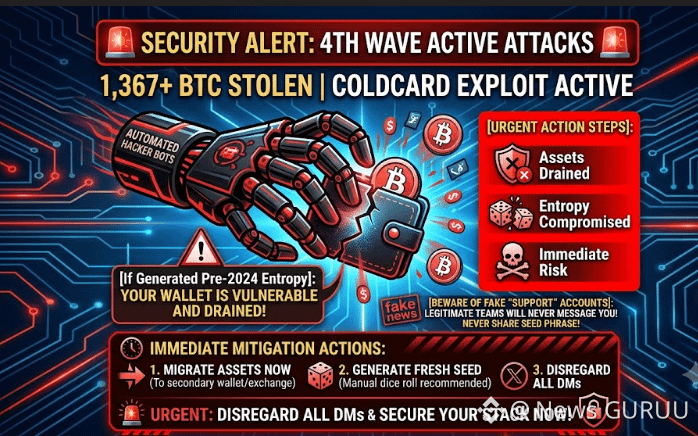
#coldcardexploitdrains1367btc
🚨 COLDCARD SECURITY ALERT: BTC WALLETS UNDER ATTACK
A major Coldcard vulnerability has already led to nearly $89M in reported BTC losses, with attacks still being investigated. The issue involves weak or predictable entropy in seeds generated by affected firmware.
What users should know:
Updating firmware alone may not protect an already-generated vulnerable seed. Affected users should follow official migration guidance and create a fresh seed on patched hardware. Dice-based entropy is also supported by Coldcard.
🎯 TRADING VIEW: SELL/RISK-OFF 📉
For affected holders, security comes before trading. Protect your BTC first and avoid interacting with suspicious support accounts or sharing your seed phrase.
❓ Would this security scare make you reduce BTC exposure?
"CLICK ON THE BELOW YELLOW COIN TAG TO GO TO DESIRED TRADING PAGE TO GET BENEFIT TRADE"$BTC $BICO $VIC
#BitcoinSecurity #Coldcard
{spot}(VICUSDT)
{spot}(BICOUSDT)
{spot}(BTCUSDT)
#coldcardexploitdrains1367btc
🚨 COLDCARD SECURITY ALERT: BTC WALLETS UNDER ATTACK
A major Coldcard vulnerability has already led to nearly $89M in reported BTC losses, with attacks still being investigated. The issue involves weak or predictable entropy in seeds generated by affected firmware.
What users should know:
Updating firmware alone may not protect an already-generated vulnerable seed. Affected users should follow official migration guidance and create a fresh seed on patched hardware. Dice-based entropy is also supported by Coldcard.
🎯 TRADING VIEW: SELL/RISK-OFF 📉
For affected holders, security comes before trading. Protect your BTC first and avoid interacting with suspicious support accounts or sharing your seed phrase.
❓ Would this security scare make you reduce BTC exposure?
"CLICK ON THE BELOW YELLOW COIN TAG TO GO TO DESIRED TRADING PAGE TO GET BENEFIT TRADE"$BTC $BICO $VIC
#BitcoinSecurity #Coldcard
🚨 COLDCARD SECURITY ALERT: BTC WALLETS UNDER ATTACK
A major Coldcard vulnerability has already led to nearly $89M in reported BTC losses, with attacks still being investigated. The issue involves weak or predictable entropy in seeds generated by affected firmware.
What users should know:
Updating firmware alone may not protect an already-generated vulnerable seed. Affected users should follow official migration guidance and create a fresh seed on patched hardware. Dice-based entropy is also supported by Coldcard.
🎯 TRADING VIEW: SELL/RISK-OFF 📉
For affected holders, security comes before trading. Protect your BTC first and avoid interacting with suspicious support accounts or sharing your seed phrase.
❓ Would this security scare make you reduce BTC exposure?
"CLICK ON THE BELOW YELLOW COIN TAG TO GO TO DESIRED TRADING PAGE TO GET BENEFIT TRADE"$BTC $BICO $VIC
#BitcoinSecurity #Coldcard
1
233
Log in to explore more content
Join global crypto users on Binance Square
⚡️ Get latest and useful information about crypto.
💬 Trusted by the world’s largest crypto exchange.
👍 Discover real insights from verified creators.
Email / Phone number
Trending Topics
1
#BinanceLaunchesBinanceIntelligence
478,702 views
3,312 Discussing
2
#BitcoinTargets2026OpenAt$87570
3,311 views
86 Discussing
3
#BitcoinRejectedAt$87KThirdTime
3,048 views
69 Discussing
4
#StrategyMarketCapSurpassesRumble
19,685 views
513 Discussing
5
#StriveBuys2000BTCFor$169M
14,938 views
137 Discussing
6
#EvernorthXRPTreasuryCompletesSPACMerger
195,159 views
1,737 Discussing
7
#ADAGains10%Above$0.27
71,227 views
261 Discussing
8
#ETHUp70%InQ3ButLiquidityFalls
395,569 views
2,710 Discussing
9
#EthStakingExitQueueHits2026High
168,498 views
1,769 Discussing
10
#FedOctoberHoldOdds82.3%
188,847 views
1,701 Discussing