

0xr1
10.3k Posts

0xr1
 Square Verified+
Report
Block User
I RedOne I Network and Systems Engineer | IT Specialist | AI Orchestrator | Cybersecurity & Blockchain enthusiast | 😎🤞🏻
262 Following
36.5K+ Followers
45.9K+ Liked
Posts
All
Quotes
Videos
Live
PINNED
·
--


Binance Square Official
·
--
Introducing a new layer of intelligence for everything finance.
Join the Binance Intelligence launch livestream for an early look at what we've been building.
🗓 Oct 5 | 12:00 UTC
📍 Binance Square Official
Repost this post and tag @Binance Square Official to share your vision for Binance Intelligence for a chance to be one of 5 winners selected for a 20 USDC reward.
Join the Binance Intelligence launch livestream for an early look at what we've been building.
🗓 Oct 5 | 12:00 UTC
📍 Binance Square Official
Repost this post and tag @Binance Square Official to share your vision for Binance Intelligence for a chance to be one of 5 winners selected for a 20 USDC reward.
3
2.1k
·
--
Decentralized Compute Networks & AI Infrastructure
AI models require massive processing power. Decentralized compute networks are filling this demand by providing scalable GPU resources.
Why Decentralized Infrastructure Matters
Key Benefits:
💻 Distributed Processing Power: Tokenized GPU marketplaces allow developers to train and run inference at lower costs.
🌐 Censorship Resistance: Open networks guarantee continuous runtime without single-point cloud failures.
💰 Resource Monetization: Hardware owners earn yields by provisioning idle computing capacity.
The Synergy Between Compute & Crypto Decentralized physical infrastructure networks ensure AI model availability remains open, verifiable, and permissionless for everyone.
Have you explored decentralized compute networks yet?
#DePIN #CryptoAI #Web3 .
Decentralized Compute Networks & AI Infrastructure
AI models require massive processing power. Decentralized compute networks are filling this demand by providing scalable GPU resources.
Why Decentralized Infrastructure Matters
Key Benefits:
💻 Distributed Processing Power: Tokenized GPU marketplaces allow developers to train and run inference at lower costs.
🌐 Censorship Resistance: Open networks guarantee continuous runtime without single-point cloud failures.
💰 Resource Monetization: Hardware owners earn yields by provisioning idle computing capacity.
The Synergy Between Compute & Crypto Decentralized physical infrastructure networks ensure AI model availability remains open, verifiable, and permissionless for everyone.
Have you explored decentralized compute networks yet?
#DePIN #CryptoAI #Web3 .
AI models require massive processing power. Decentralized compute networks are filling this demand by providing scalable GPU resources.
Why Decentralized Infrastructure Matters
Key Benefits:
💻 Distributed Processing Power: Tokenized GPU marketplaces allow developers to train and run inference at lower costs.
🌐 Censorship Resistance: Open networks guarantee continuous runtime without single-point cloud failures.
💰 Resource Monetization: Hardware owners earn yields by provisioning idle computing capacity.
The Synergy Between Compute & Crypto Decentralized physical infrastructure networks ensure AI model availability remains open, verifiable, and permissionless for everyone.
Have you explored decentralized compute networks yet?
#DePIN #CryptoAI #Web3 .

196
·
--
what would Agent OS+ feel like for a normal user? 🧩
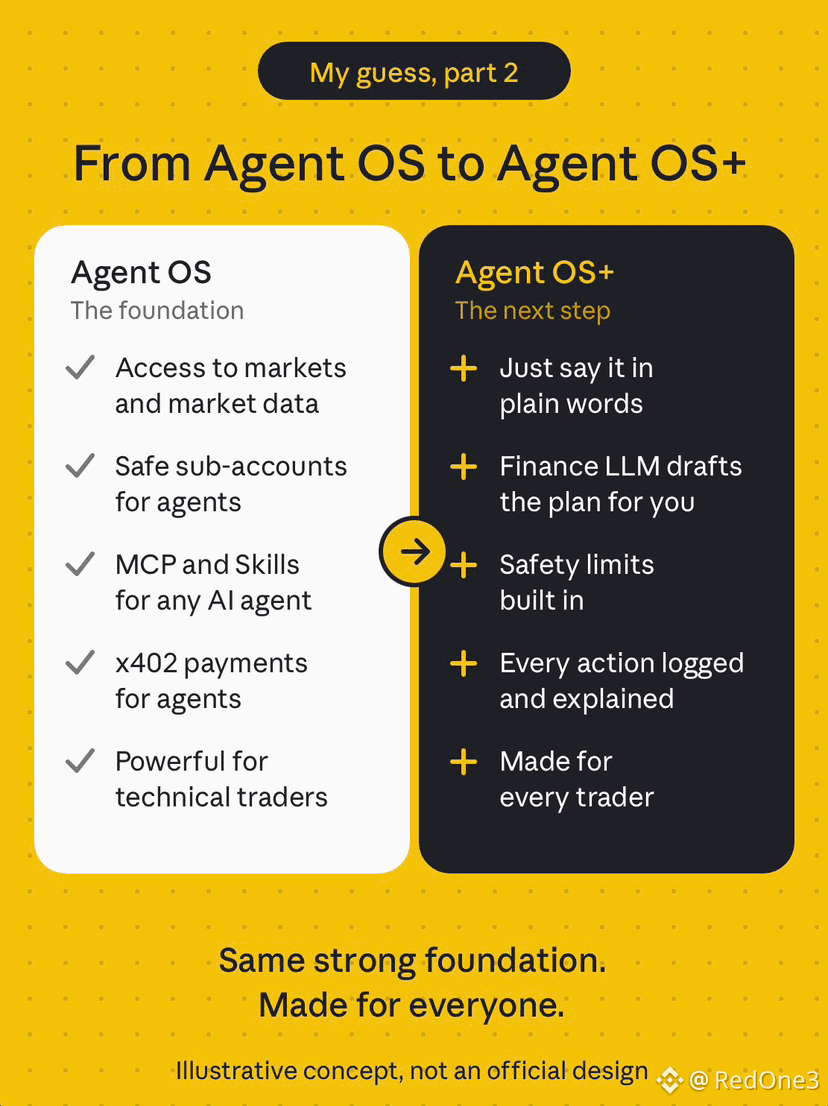
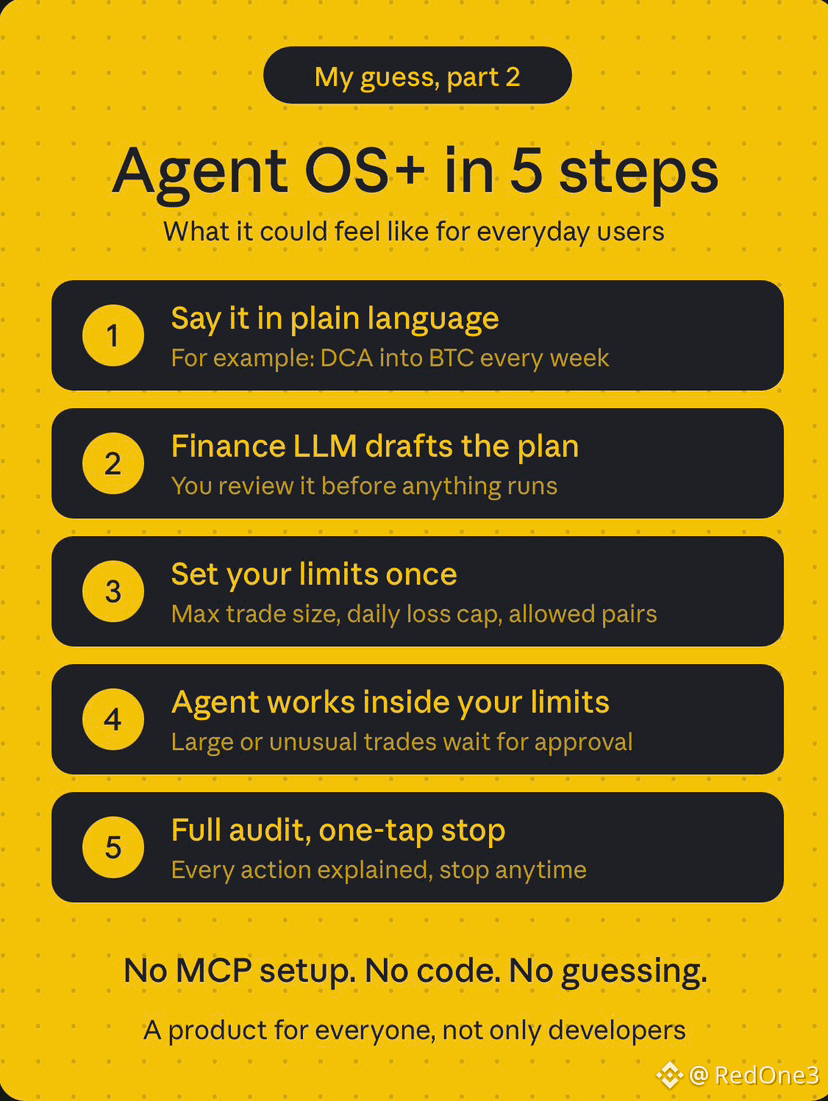
In my last post I said Agent OS+ should bring native protection and Binance's own finance LLM to everyday users. Here's how I picture it:
1️⃣ You say what you want in plain words
2️⃣ The finance LLM drafts the plan, and you review it
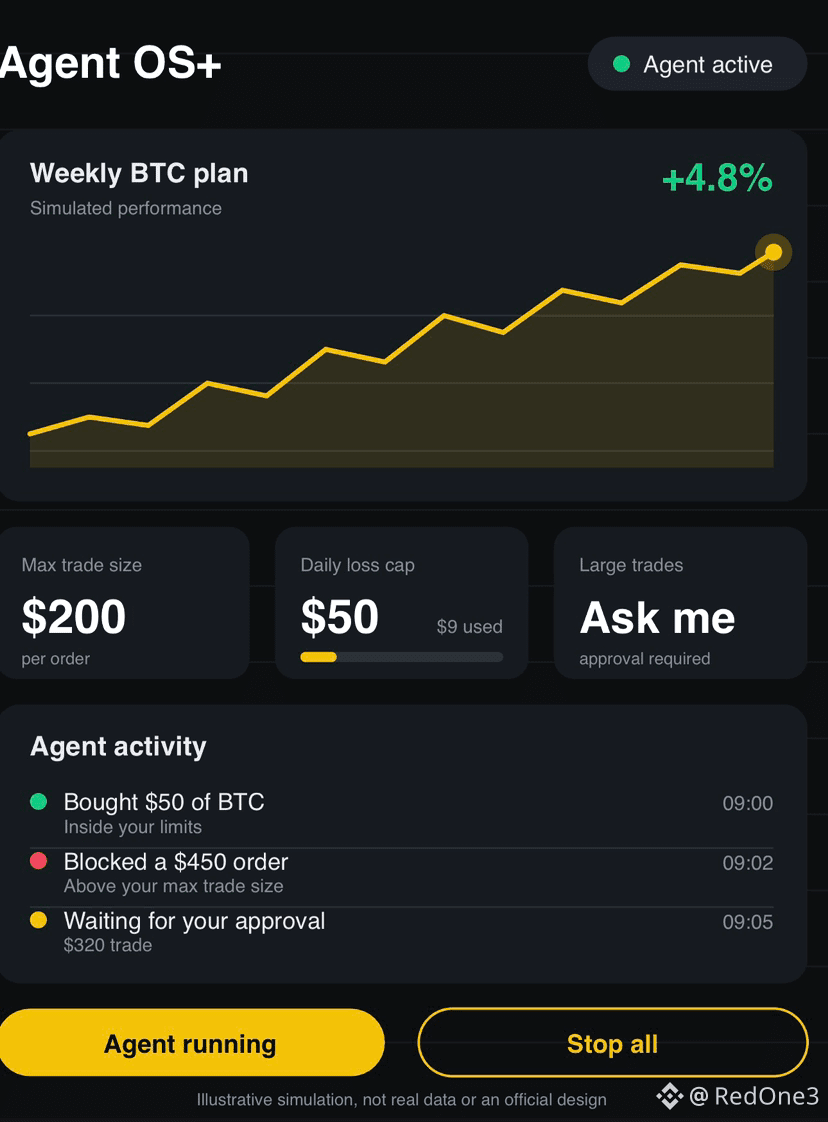
3️⃣ You set your limits once: max trade size, daily loss cap, allowed pairs
4️⃣ The agent works inside those limits, and large trades wait for your approval
5️⃣ Every action is logged and explained, and you can stop everything with one tap
Same strong foundation, made for everyone. No MCP setup, no code, no guessing what your agent did overnight. 🔑
Agree, or would you add something to this flow? 🤔👼🏻😁
#AgentOS+ #BinanceAIPro
#AgentOS #BinanceIntelligence #AI .
what would Agent OS+ feel like for a normal user? 🧩
In my last post I said Agent OS+ should bring native protection and Binance's own finance LLM to everyday users. Here's how I picture it:
1️⃣ You say what you want in plain words
2️⃣ The finance LLM drafts the plan, and you review it
3️⃣ You set your limits once: max trade size, daily loss cap, allowed pairs
4️⃣ The agent works inside those limits, and large trades wait for your approval
5️⃣ Every action is logged and explained, and you can stop everything with one tap
Same strong foundation, made for everyone. No MCP setup, no code, no guessing what your agent did overnight. 🔑
Agree, or would you add something to this flow? 🤔👼🏻😁
#AgentOS+ #BinanceAIPro
#AgentOS #BinanceIntelligence #AI .
In my last post I said Agent OS+ should bring native protection and Binance's own finance LLM to everyday users. Here's how I picture it:
1️⃣ You say what you want in plain words
2️⃣ The finance LLM drafts the plan, and you review it
3️⃣ You set your limits once: max trade size, daily loss cap, allowed pairs
4️⃣ The agent works inside those limits, and large trades wait for your approval
5️⃣ Every action is logged and explained, and you can stop everything with one tap
Same strong foundation, made for everyone. No MCP setup, no code, no guessing what your agent did overnight. 🔑
Agree, or would you add something to this flow? 🤔👼🏻😁
#AgentOS+ #BinanceAIPro
#AgentOS #BinanceIntelligence #AI .
0xr1
·
--
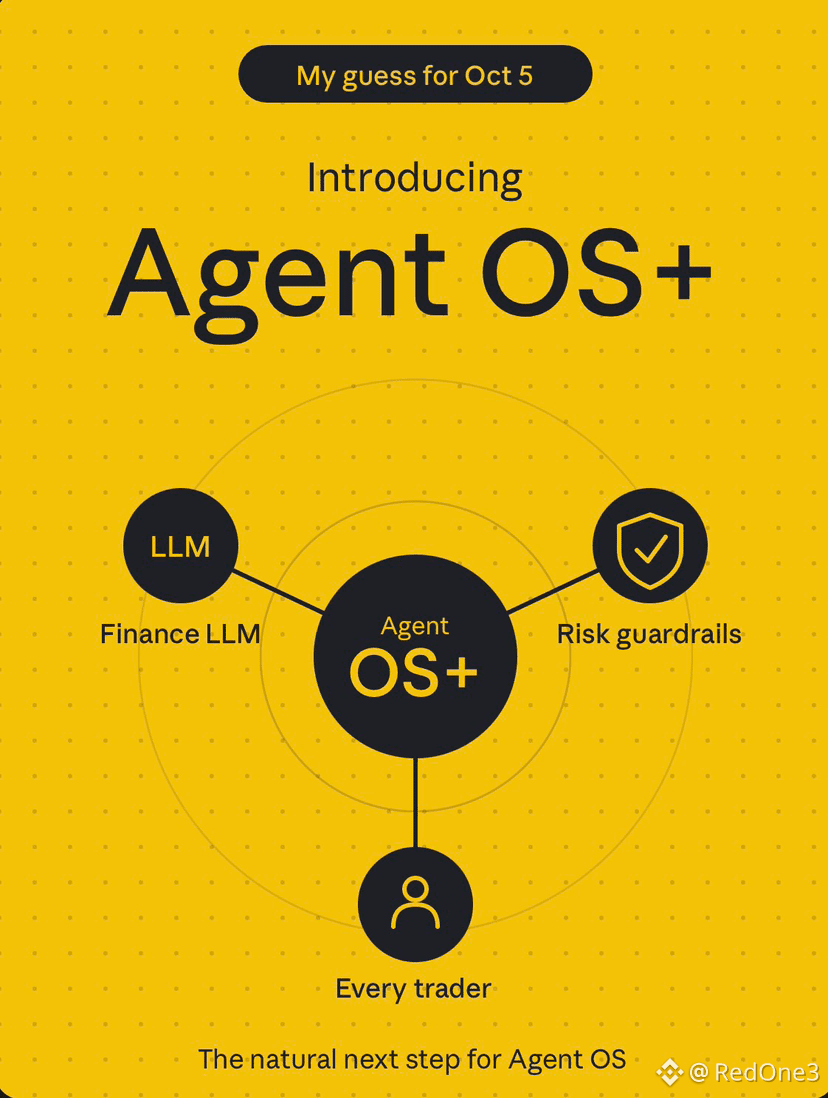
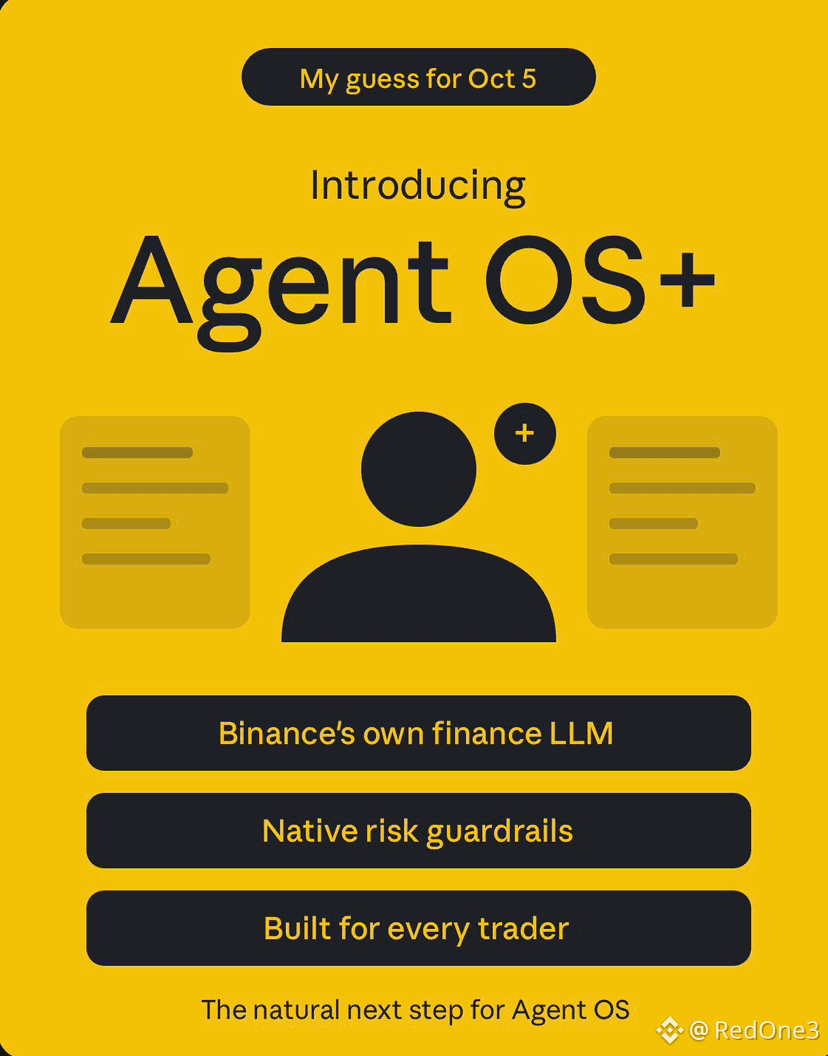
😁🤔 My guess for Oct 5: Agent OS+ 🧩
Agent OS gave AI agents a way into Binance: market data, trading, sub-accounts, MCP. But the protection part was left to whoever builds the agent. I ran into this myself while building a guardrail layer between an AI agent and the wallet for the Agent OS mini hackathon.
Binance can see the orders, but not the agent's reasoning. So the safest place for control is at the order level, and that's where I think Agent OS+ goes:
🔹 Native risk guardrails across the whole platform: per-agent trade limits, daily loss caps, granular permissions, human approval for large trades, a kill switch, and a full audit trail
🔹 Binance's own finance LLM, trained on its market and behavior data, instead of relying only on general-purpose models
🔹 Built for everyday users, not only technical traders: no MCP setup, just pick a strategy, set your limits, and let the agent work
Why it makes sense: Agent OS launched only weeks ago as a developer tool. The natural next step is making it safe and simple enough for everyone. Access is the easy part. Trust is what lets agents manage real money at scale.
Maybe I'm right, maybe the reveal is something else. Either way, I'm curious what you think 👇😁
#AgentOS+
#BinanceIntelligence #AgentOS #AI #BinanceAIPro .
Agent OS gave AI agents a way into Binance: market data, trading, sub-accounts, MCP. But the protection part was left to whoever builds the agent. I ran into this myself while building a guardrail layer between an AI agent and the wallet for the Agent OS mini hackathon.
Binance can see the orders, but not the agent's reasoning. So the safest place for control is at the order level, and that's where I think Agent OS+ goes:
🔹 Native risk guardrails across the whole platform: per-agent trade limits, daily loss caps, granular permissions, human approval for large trades, a kill switch, and a full audit trail
🔹 Binance's own finance LLM, trained on its market and behavior data, instead of relying only on general-purpose models
🔹 Built for everyday users, not only technical traders: no MCP setup, just pick a strategy, set your limits, and let the agent work
Why it makes sense: Agent OS launched only weeks ago as a developer tool. The natural next step is making it safe and simple enough for everyone. Access is the easy part. Trust is what lets agents manage real money at scale.
Maybe I'm right, maybe the reveal is something else. Either way, I'm curious what you think 👇😁
#AgentOS+
#BinanceIntelligence #AgentOS #AI #BinanceAIPro .
1
792
·
--
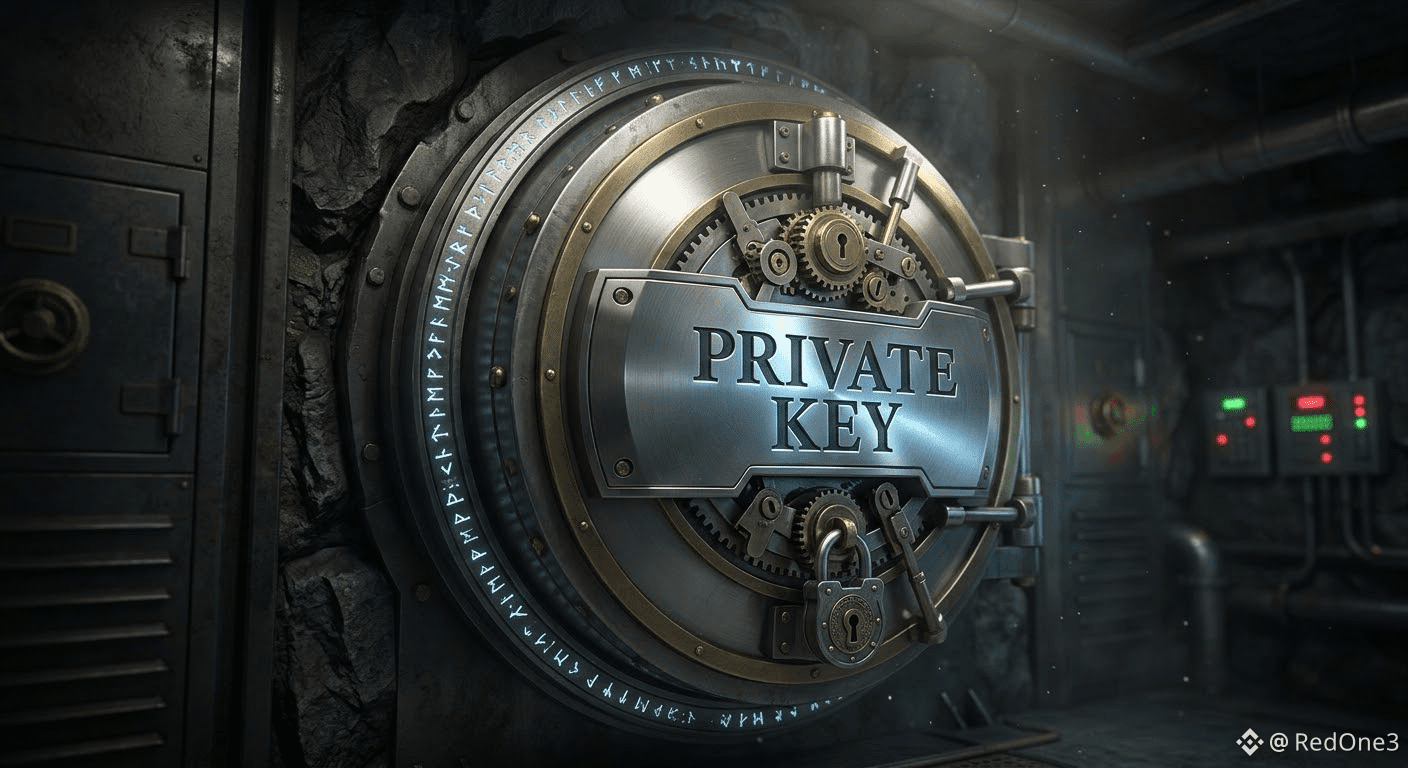
Golden Rule: NEVER share your private key with anyone, ever 🚫 Not with support teams, not with "trusted" friends, not in DMs 🔐
Binance Support will NEVER ask for it - if someone does, it's 100% a scam 🚨
#KeepItLegit
#PrivateKeySecurity #TrustNoOne .
Golden Rule: NEVER share your private key with anyone, ever 🚫 Not with support teams, not with "trusted" friends, not in DMs 🔐
Binance Support will NEVER ask for it - if someone does, it's 100% a scam 🚨
#KeepItLegit
#PrivateKeySecurity #TrustNoOne .
Binance Support will NEVER ask for it - if someone does, it's 100% a scam 🚨
#KeepItLegit
#PrivateKeySecurity #TrustNoOne .
2
141
·
--
Verified
😁🤔 My guess for Oct 5: Agent OS+ 🧩
Agent OS gave AI agents a way into Binance: market data, trading, sub-accounts, MCP. But the protection part was left to whoever builds the agent. I ran into this myself while building a guardrail layer between an AI agent and the wallet for the Agent OS mini hackathon.
Binance can see the orders, but not the agent's reasoning. So the safest place for control is at the order level, and that's where I think Agent OS+ goes:
🔹 Native risk guardrails across the whole platform: per-agent trade limits, daily loss caps, granular permissions, human approval for large trades, a kill switch, and a full audit trail
🔹 Binance's own finance LLM, trained on its market and behavior data, instead of relying only on general-purpose models
🔹 Built for everyday users, not only technical traders: no MCP setup, just pick a strategy, set your limits, and let the agent work
Why it makes sense: Agent OS launched only weeks ago as a developer tool. The natural next step is making it safe and simple enough for everyone. Access is the easy part. Trust is what lets agents manage real money at scale.
Maybe I'm right, maybe the reveal is something else. Either way, I'm curious what you think 👇😁
#AgentOS+
#BinanceIntelligence #AgentOS #AI #BinanceAIPro .
😁🤔 My guess for Oct 5: Agent OS+ 🧩
Agent OS gave AI agents a way into Binance: market data, trading, sub-accounts, MCP. But the protection part was left to whoever builds the agent. I ran into this myself while building a guardrail layer between an AI agent and the wallet for the Agent OS mini hackathon.
Binance can see the orders, but not the agent's reasoning. So the safest place for control is at the order level, and that's where I think Agent OS+ goes:
🔹 Native risk guardrails across the whole platform: per-agent trade limits, daily loss caps, granular permissions, human approval for large trades, a kill switch, and a full audit trail
🔹 Binance's own finance LLM, trained on its market and behavior data, instead of relying only on general-purpose models
🔹 Built for everyday users, not only technical traders: no MCP setup, just pick a strategy, set your limits, and let the agent work
Why it makes sense: Agent OS launched only weeks ago as a developer tool. The natural next step is making it safe and simple enough for everyone. Access is the easy part. Trust is what lets agents manage real money at scale.
Maybe I'm right, maybe the reveal is something else. Either way, I'm curious what you think 👇😁
#AgentOS+
#BinanceIntelligence #AgentOS #AI #BinanceAIPro .
Agent OS gave AI agents a way into Binance: market data, trading, sub-accounts, MCP. But the protection part was left to whoever builds the agent. I ran into this myself while building a guardrail layer between an AI agent and the wallet for the Agent OS mini hackathon.
Binance can see the orders, but not the agent's reasoning. So the safest place for control is at the order level, and that's where I think Agent OS+ goes:
🔹 Native risk guardrails across the whole platform: per-agent trade limits, daily loss caps, granular permissions, human approval for large trades, a kill switch, and a full audit trail
🔹 Binance's own finance LLM, trained on its market and behavior data, instead of relying only on general-purpose models
🔹 Built for everyday users, not only technical traders: no MCP setup, just pick a strategy, set your limits, and let the agent work
Why it makes sense: Agent OS launched only weeks ago as a developer tool. The natural next step is making it safe and simple enough for everyone. Access is the easy part. Trust is what lets agents manage real money at scale.
Maybe I'm right, maybe the reveal is something else. Either way, I'm curious what you think 👇😁
#AgentOS+
#BinanceIntelligence #AgentOS #AI #BinanceAIPro .
Binance Square Official
·
--
[Preview] Binance Intelligence: Product Launch Event | 5,000 USDC Giveaway
5 Oct 12:00 · 29.6k subscribed
1
1
2.2k
·
--
🚀 Top Gainers right now — early market momentum continues to surge across futures contracts.
AIN is dominating the board with a massive rally, up +152.51% in the last 24 hours and trading around $0.06025.
STRK holds the second spot with a solid gain of +23.78% at $0.05341, closely followed by SPORTFUN at +22.02% sitting at $0.02167.
COLLECT and PUMP round out the top five, each delivering strong double-digit moves of +20.02% ($0.02164) and +18.79% ($0.006504) respectively 📈
🚀 Top Gainers right now — early market momentum continues to surge across futures contracts.
AIN is dominating the board with a massive rally, up +152.51% in the last 24 hours and trading around $0.06025.
STRK holds the second spot with a solid gain of +23.78% at $0.05341, closely followed by SPORTFUN at +22.02% sitting at $0.02167.
COLLECT and PUMP round out the top five, each delivering strong double-digit moves of +20.02% ($0.02164) and +18.79% ($0.006504) respectively 📈
AIN is dominating the board with a massive rally, up +152.51% in the last 24 hours and trading around $0.06025.
STRK holds the second spot with a solid gain of +23.78% at $0.05341, closely followed by SPORTFUN at +22.02% sitting at $0.02167.
COLLECT and PUMP round out the top five, each delivering strong double-digit moves of +20.02% ($0.02164) and +18.79% ($0.006504) respectively 📈
1
130
·
--
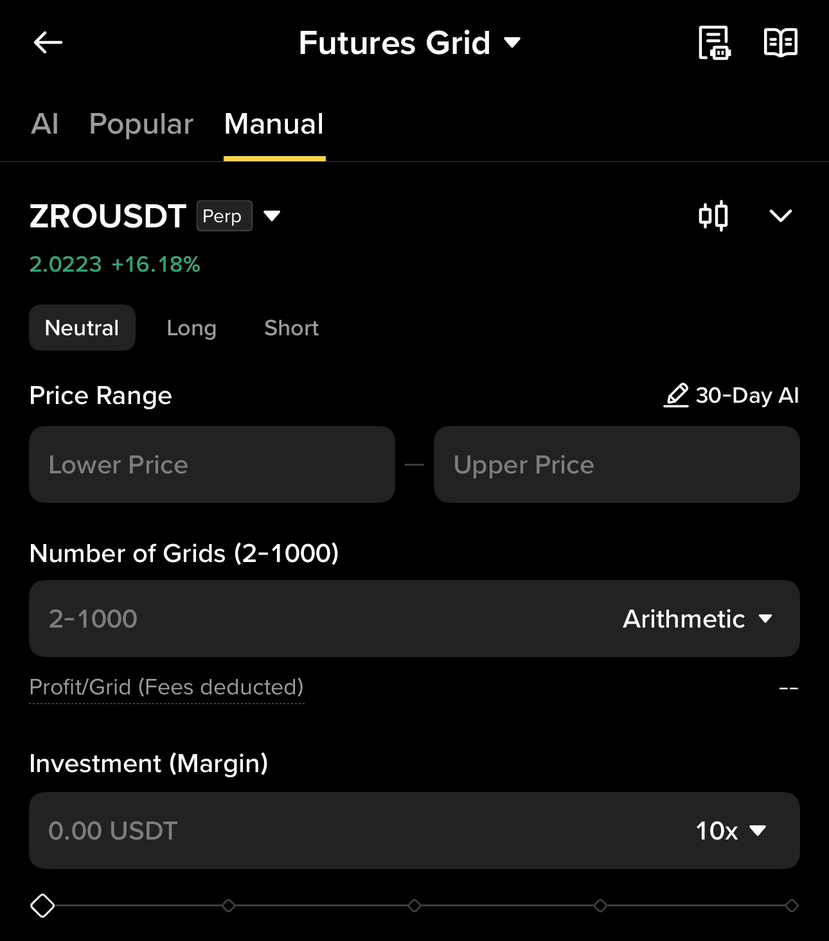
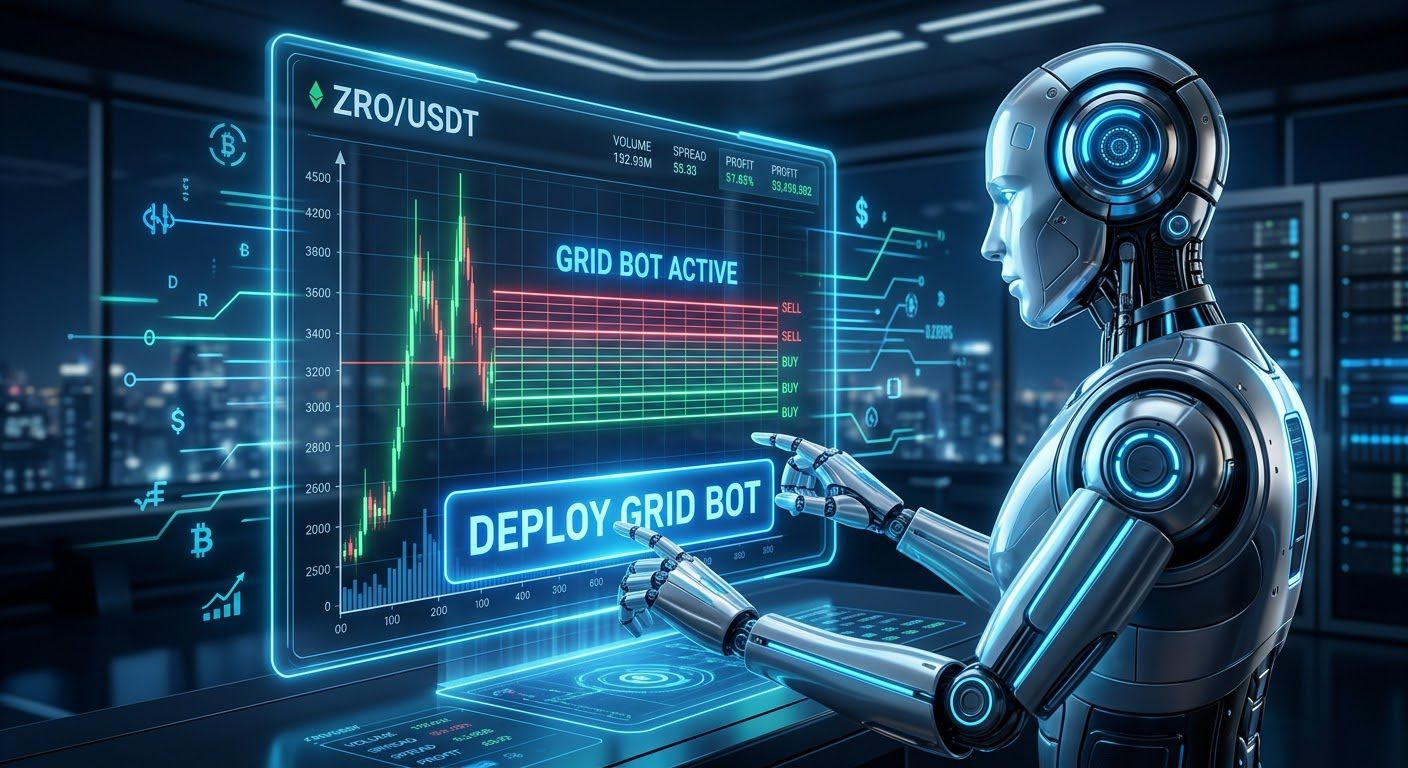
ZRO Futures spiked by 16.88% on the hotrank, transitioning directly into a tight consolidation phase 📈
When high-volatility assets shift into a clear ranging pattern, manual execution often falls victim to overtrading and emotional noise. This is where Futures Grid Bots thrive, systematically monetizing price swings by executing automated buy-low and sell-high orders within a defined channel 🤖
Instead of guessing the next directional breakout, capturing structural volatility through grid mechanics provides a disciplined, strategy-first edge in current market conditions ⚡
#ᴰʸᴼᴿ #ZRO
#FuturesGrid #AlgoTrading #LayerZero .
{future}(ZROUSDT)
ZRO Futures spiked by 16.88% on the hotrank, transitioning directly into a tight consolidation phase 📈
When high-volatility assets shift into a clear ranging pattern, manual execution often falls victim to overtrading and emotional noise. This is where Futures Grid Bots thrive, systematically monetizing price swings by executing automated buy-low and sell-high orders within a defined channel 🤖
Instead of guessing the next directional breakout, capturing structural volatility through grid mechanics provides a disciplined, strategy-first edge in current market conditions ⚡
#ᴰʸᴼᴿ #ZRO
#FuturesGrid #AlgoTrading #LayerZero .
When high-volatility assets shift into a clear ranging pattern, manual execution often falls victim to overtrading and emotional noise. This is where Futures Grid Bots thrive, systematically monetizing price swings by executing automated buy-low and sell-high orders within a defined channel 🤖
Instead of guessing the next directional breakout, capturing structural volatility through grid mechanics provides a disciplined, strategy-first edge in current market conditions ⚡
#ᴰʸᴼᴿ #ZRO
#FuturesGrid #AlgoTrading #LayerZero .
2
372
·
--
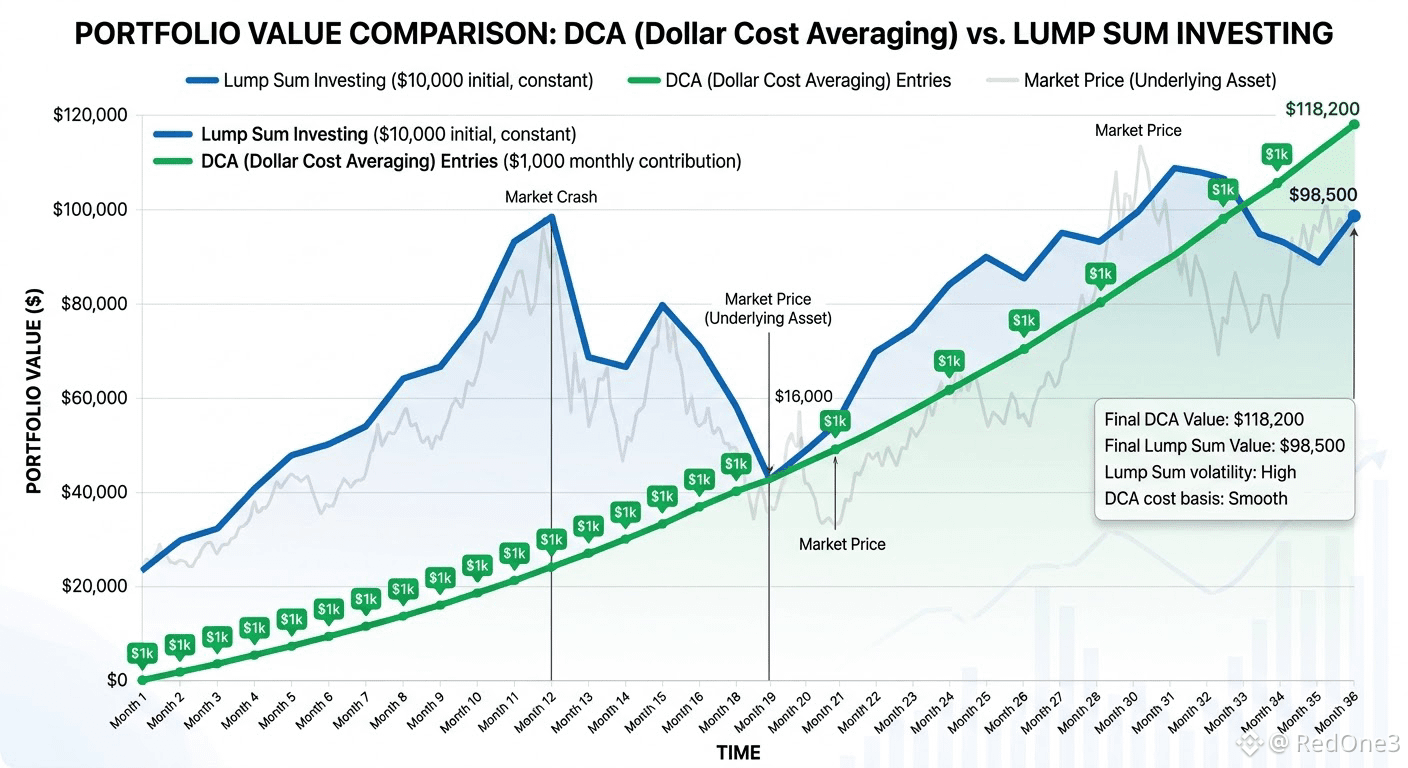
Dollar-Cost Averaging (DCA) beats timing the market 📈
Instead of buying all at once, invest fixed amounts weekly/monthly regardless of price 💵
This removes emotion and reduces average cost per unit over time ⏰
⚠️ Not Financial Advice - Research First
#ᴰʸᴼᴿ #SmartInvesting .
Dollar-Cost Averaging (DCA) beats timing the market 📈
Instead of buying all at once, invest fixed amounts weekly/monthly regardless of price 💵
This removes emotion and reduces average cost per unit over time ⏰
⚠️ Not Financial Advice - Research First
#ᴰʸᴼᴿ #SmartInvesting .
Instead of buying all at once, invest fixed amounts weekly/monthly regardless of price 💵
This removes emotion and reduces average cost per unit over time ⏰
⚠️ Not Financial Advice - Research First
#ᴰʸᴼᴿ #SmartInvesting .
1
168
·
--
Bullish
🚀 Top Gainers right now — early market momentum is building with some strong breakout moves across futures contracts.
$AIN is leading the charge in a massive way, surging +112.62% in the last 24 hours and trading at $0.05054.
$SPORTFUN follows with a solid +29.94% gain at $0.02270, while STRK holds strong momentum, up +23.31% sitting around $0.05147.
$VELVET and ONE round out the top five, posting strong double-digit gains of +22.66% ($0.08530) and +20.46% ($0.0025005) respectively 📈
{spot}(ONEUSDT)
🚀 Top Gainers right now — early market momentum is building with some strong breakout moves across futures contracts.
$AIN is leading the charge in a massive way, surging +112.62% in the last 24 hours and trading at $0.05054.
$SPORTFUN follows with a solid +29.94% gain at $0.02270, while STRK holds strong momentum, up +23.31% sitting around $0.05147.
$VELVET and ONE round out the top five, posting strong double-digit gains of +22.66% ($0.08530) and +20.46% ($0.0025005) respectively 📈
$AIN is leading the charge in a massive way, surging +112.62% in the last 24 hours and trading at $0.05054.
$SPORTFUN follows with a solid +29.94% gain at $0.02270, while STRK holds strong momentum, up +23.31% sitting around $0.05147.
$VELVET and ONE round out the top five, posting strong double-digit gains of +22.66% ($0.08530) and +20.46% ($0.0025005) respectively 📈
483
·
--
When a missing safety check in a liquidation system led to a $197 million disaster . 📉
In March 2023 a decentralized lending protocol named Euler Finance was hit by a massive exploit . 🚨
The protocol had recently introduced a new feature allowing users to donate funds to the liquidity pool to help keep positions healthy . 💸
However the developers forgot to include a critical validation check when those donated funds interacted with the protocol's internal leverage system . ⚠️
The attacker noticed this flaw and realized they could create a artificially bad debt position on purpose . 🧠
By donating a large amount of borrowed funds and immediately triggering a self-liquidation the system miscalculated the balance and granted the attacker millions of dollars in unbacked credit . 💥
In just a few minutes the hacker drained over $197 million in Dai Staked Ethereum and Wrapped Bitcoin . 💰
The protocol team immediately launched on-chain negotiations sending encrypted messages directly to the hacker's wallet . 💬
After weeks of tense public communication and international law enforcement pressure the hacker apologized and returned nearly all the stolen funds . 🤝
It highlights how even the smallest overlooked logic flaw in liquidity code can expose hundreds of millions to instant risk . 🛡️
If a protocol can be restored through on-chain diplomacy does it show the resilience or the vulnerability of Web3 . 🤔
#CryptoSecurity #EulerFinance #DeFi #Web3Safety #FlashLoan .
When a missing safety check in a liquidation system led to a $197 million disaster . 📉
In March 2023 a decentralized lending protocol named Euler Finance was hit by a massive exploit . 🚨
The protocol had recently introduced a new feature allowing users to donate funds to the liquidity pool to help keep positions healthy . 💸
However the developers forgot to include a critical validation check when those donated funds interacted with the protocol's internal leverage system . ⚠️
The attacker noticed this flaw and realized they could create a artificially bad debt position on purpose . 🧠
By donating a large amount of borrowed funds and immediately triggering a self-liquidation the system miscalculated the balance and granted the attacker millions of dollars in unbacked credit . 💥
In just a few minutes the hacker drained over $197 million in Dai Staked Ethereum and Wrapped Bitcoin . 💰
The protocol team immediately launched on-chain negotiations sending encrypted messages directly to the hacker's wallet . 💬
After weeks of tense public communication and international law enforcement pressure the hacker apologized and returned nearly all the stolen funds . 🤝
It highlights how even the smallest overlooked logic flaw in liquidity code can expose hundreds of millions to instant risk . 🛡️
If a protocol can be restored through on-chain diplomacy does it show the resilience or the vulnerability of Web3 . 🤔
#CryptoSecurity #EulerFinance #DeFi #Web3Safety #FlashLoan .
In March 2023 a decentralized lending protocol named Euler Finance was hit by a massive exploit . 🚨
The protocol had recently introduced a new feature allowing users to donate funds to the liquidity pool to help keep positions healthy . 💸
However the developers forgot to include a critical validation check when those donated funds interacted with the protocol's internal leverage system . ⚠️
The attacker noticed this flaw and realized they could create a artificially bad debt position on purpose . 🧠
By donating a large amount of borrowed funds and immediately triggering a self-liquidation the system miscalculated the balance and granted the attacker millions of dollars in unbacked credit . 💥
In just a few minutes the hacker drained over $197 million in Dai Staked Ethereum and Wrapped Bitcoin . 💰
The protocol team immediately launched on-chain negotiations sending encrypted messages directly to the hacker's wallet . 💬
After weeks of tense public communication and international law enforcement pressure the hacker apologized and returned nearly all the stolen funds . 🤝
It highlights how even the smallest overlooked logic flaw in liquidity code can expose hundreds of millions to instant risk . 🛡️
If a protocol can be restored through on-chain diplomacy does it show the resilience or the vulnerability of Web3 . 🤔
#CryptoSecurity #EulerFinance #DeFi #Web3Safety #FlashLoan .
251
·
--
Bookmark official sites. Never Google them. 🔖 Search results can be hijacked by ads. Scammers buy top spots for popular wallets and exchanges. Save the real URL once, use it forever.
#KeepItLegit #ᴰʸᴼᴿ
#StaySAFU #AntiPhising .
Bookmark official sites. Never Google them. 🔖 Search results can be hijacked by ads. Scammers buy top spots for popular wallets and exchanges. Save the real URL once, use it forever.
#KeepItLegit #ᴰʸᴼᴿ
#StaySAFU #AntiPhising .
#KeepItLegit #ᴰʸᴼᴿ
#StaySAFU #AntiPhising .

1
1.1k
·
--
Never buy crypto from a DM. 💬 Strangers offering deals, tokens, or help are scammers. Real projects do not slide into your inbox.
Block, report, and move on.
#ᴰʸᴼᴿ #KeepItLegit #CryptoSecurity .
Never buy crypto from a DM. 💬 Strangers offering deals, tokens, or help are scammers. Real projects do not slide into your inbox.
Block, report, and move on.
#ᴰʸᴼᴿ #KeepItLegit #CryptoSecurity .
Block, report, and move on.
#ᴰʸᴼᴿ #KeepItLegit #CryptoSecurity .

1
1.4k
·
--
Verified
🔐 Ethereum zkAPI: Is Privacy the Ultimate Catalyst for ETH?
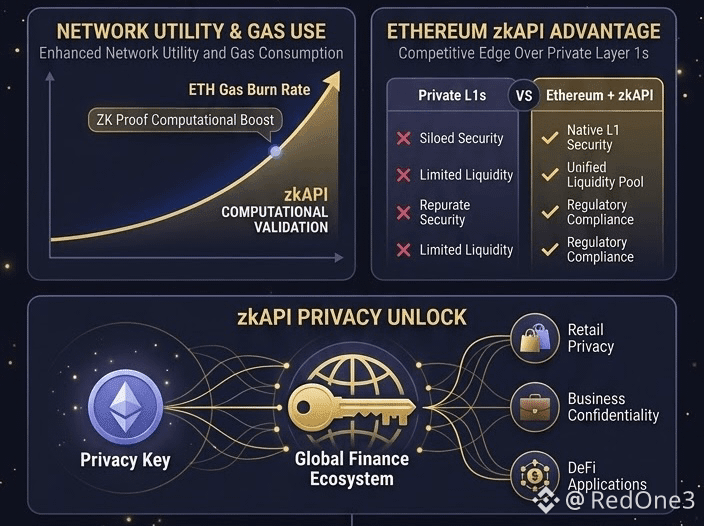
Privacy has long been the missing piece for mainstream institutional and retail adoption on public blockchains. With the introduction of zkAPI on Ethereum, zero-knowledge technology is transforming on-chain payments by enabling privacy-preserving transactions directly on the layer-1 network.
💡 How zkAPI Transforms On-Chain Payments
Traditional public ledgers expose all transactional details, including wallet balances and counterparties. The integration of zkAPI allows users and institutions to execute payments while revealing only the necessary cryptographic proofs, ensuring complete confidentiality without compromising security or regulatory compliance.
🚀 Why This Is Highly Bullish for ETH
🌐 1. Increased Institutional Capital Flows
Institutions have hesitated to move major treasury operations on-chain due to corporate privacy concerns. zkAPI removes this barrier, enabling compliant corporate payments, payroll, and high-value settlements on Ethereum.
🔥 2. Enhanced Network Utility and Gas Consumption
Privacy-focused smart contract interactions require additional computational validation. As adoption scales, demand for ETH as gas will rise, directly driving network revenue and burn rate under EIP-1559.
🛡️ 3. Competitive Edge Over Private Layer 1s
By embedding zero-knowledge privacy tooling into its ecosystem, Ethereum diminishes the market share of dedicated privacy chains while offering native security and liquidity.
📉 Conclusion
The launch of zkAPI bridges the gap between decentralized transparency and enterprise privacy requirements. This milestone strengthens the long-term utility proposition for ETH, solidifying its place as the settlement layer for global finance.
#Ethereum #ETH #zkAPI
#ethereumfoundationlauncheszkapionmainnet .
🔐 Ethereum zkAPI: Is Privacy the Ultimate Catalyst for ETH?
Privacy has long been the missing piece for mainstream institutional and retail adoption on public blockchains. With the introduction of zkAPI on Ethereum, zero-knowledge technology is transforming on-chain payments by enabling privacy-preserving transactions directly on the layer-1 network.
💡 How zkAPI Transforms On-Chain Payments
Traditional public ledgers expose all transactional details, including wallet balances and counterparties. The integration of zkAPI allows users and institutions to execute payments while revealing only the necessary cryptographic proofs, ensuring complete confidentiality without compromising security or regulatory compliance.
🚀 Why This Is Highly Bullish for ETH
🌐 1. Increased Institutional Capital Flows
Institutions have hesitated to move major treasury operations on-chain due to corporate privacy concerns. zkAPI removes this barrier, enabling compliant corporate payments, payroll, and high-value settlements on Ethereum.
🔥 2. Enhanced Network Utility and Gas Consumption
Privacy-focused smart contract interactions require additional computational validation. As adoption scales, demand for ETH as gas will rise, directly driving network revenue and burn rate under EIP-1559.
🛡️ 3. Competitive Edge Over Private Layer 1s
By embedding zero-knowledge privacy tooling into its ecosystem, Ethereum diminishes the market share of dedicated privacy chains while offering native security and liquidity.
📉 Conclusion
The launch of zkAPI bridges the gap between decentralized transparency and enterprise privacy requirements. This milestone strengthens the long-term utility proposition for ETH, solidifying its place as the settlement layer for global finance.
#Ethereum #ETH #zkAPI
#ethereumfoundationlauncheszkapionmainnet .
Privacy has long been the missing piece for mainstream institutional and retail adoption on public blockchains. With the introduction of zkAPI on Ethereum, zero-knowledge technology is transforming on-chain payments by enabling privacy-preserving transactions directly on the layer-1 network.
💡 How zkAPI Transforms On-Chain Payments
Traditional public ledgers expose all transactional details, including wallet balances and counterparties. The integration of zkAPI allows users and institutions to execute payments while revealing only the necessary cryptographic proofs, ensuring complete confidentiality without compromising security or regulatory compliance.
🚀 Why This Is Highly Bullish for ETH
🌐 1. Increased Institutional Capital Flows
Institutions have hesitated to move major treasury operations on-chain due to corporate privacy concerns. zkAPI removes this barrier, enabling compliant corporate payments, payroll, and high-value settlements on Ethereum.
🔥 2. Enhanced Network Utility and Gas Consumption
Privacy-focused smart contract interactions require additional computational validation. As adoption scales, demand for ETH as gas will rise, directly driving network revenue and burn rate under EIP-1559.
🛡️ 3. Competitive Edge Over Private Layer 1s
By embedding zero-knowledge privacy tooling into its ecosystem, Ethereum diminishes the market share of dedicated privacy chains while offering native security and liquidity.
📉 Conclusion
The launch of zkAPI bridges the gap between decentralized transparency and enterprise privacy requirements. This milestone strengthens the long-term utility proposition for ETH, solidifying its place as the settlement layer for global finance.
#Ethereum #ETH #zkAPI
#ethereumfoundationlauncheszkapionmainnet .
245
·
--
Security is not a feature you add later. It is the foundation you build on. 🛡️
Before touching any token, ask: Is the contract audited? Is liquidity locked? Is the team verified?
If any answer is no, walk away. Your money deserves better than hope. 🔐
#KeepItLegit #StaySAFU
#CryptoSecurity #DYOR .
Security is not a feature you add later. It is the foundation you build on. 🛡️
Before touching any token, ask: Is the contract audited? Is liquidity locked? Is the team verified?
If any answer is no, walk away. Your money deserves better than hope. 🔐
#KeepItLegit #StaySAFU
#CryptoSecurity #DYOR .
Before touching any token, ask: Is the contract audited? Is liquidity locked? Is the team verified?
If any answer is no, walk away. Your money deserves better than hope. 🔐
#KeepItLegit #StaySAFU
#CryptoSecurity #DYOR .
2
1k
·
--
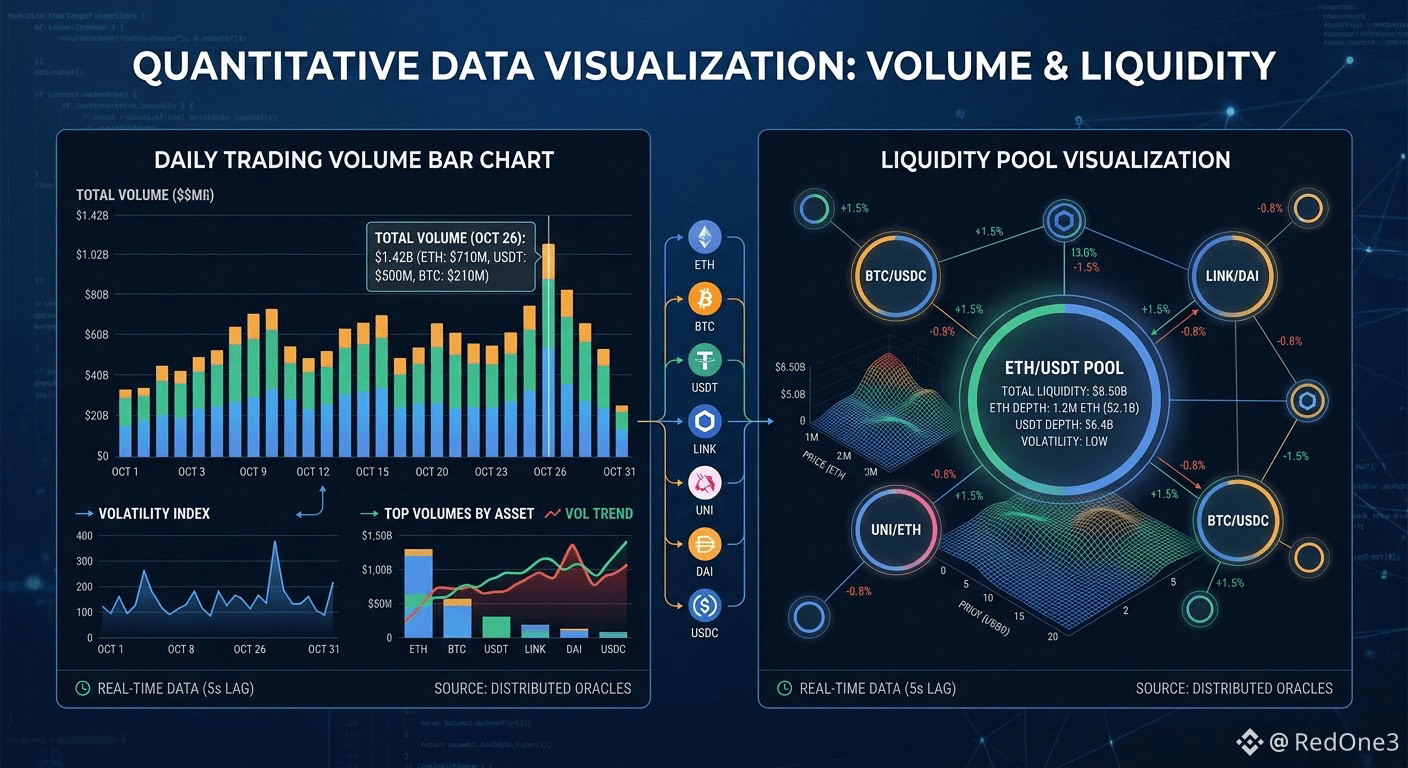
Liquidity is crucial in crypto 💧
Low liquidity = harder to exit positions = slippage 📉
Always check 24h volume before buying any altcoin 📊
If volume is under $1M, be very careful - you might get stuck 🚪
⚠️ Not Financial Advice
#ᴰʸᴼᴿ #Liquidity .
Liquidity is crucial in crypto 💧
Low liquidity = harder to exit positions = slippage 📉
Always check 24h volume before buying any altcoin 📊
If volume is under $1M, be very careful - you might get stuck 🚪
⚠️ Not Financial Advice
#ᴰʸᴼᴿ #Liquidity .
Low liquidity = harder to exit positions = slippage 📉
Always check 24h volume before buying any altcoin 📊
If volume is under $1M, be very careful - you might get stuck 🚪
⚠️ Not Financial Advice
#ᴰʸᴼᴿ #Liquidity .
208
·
--
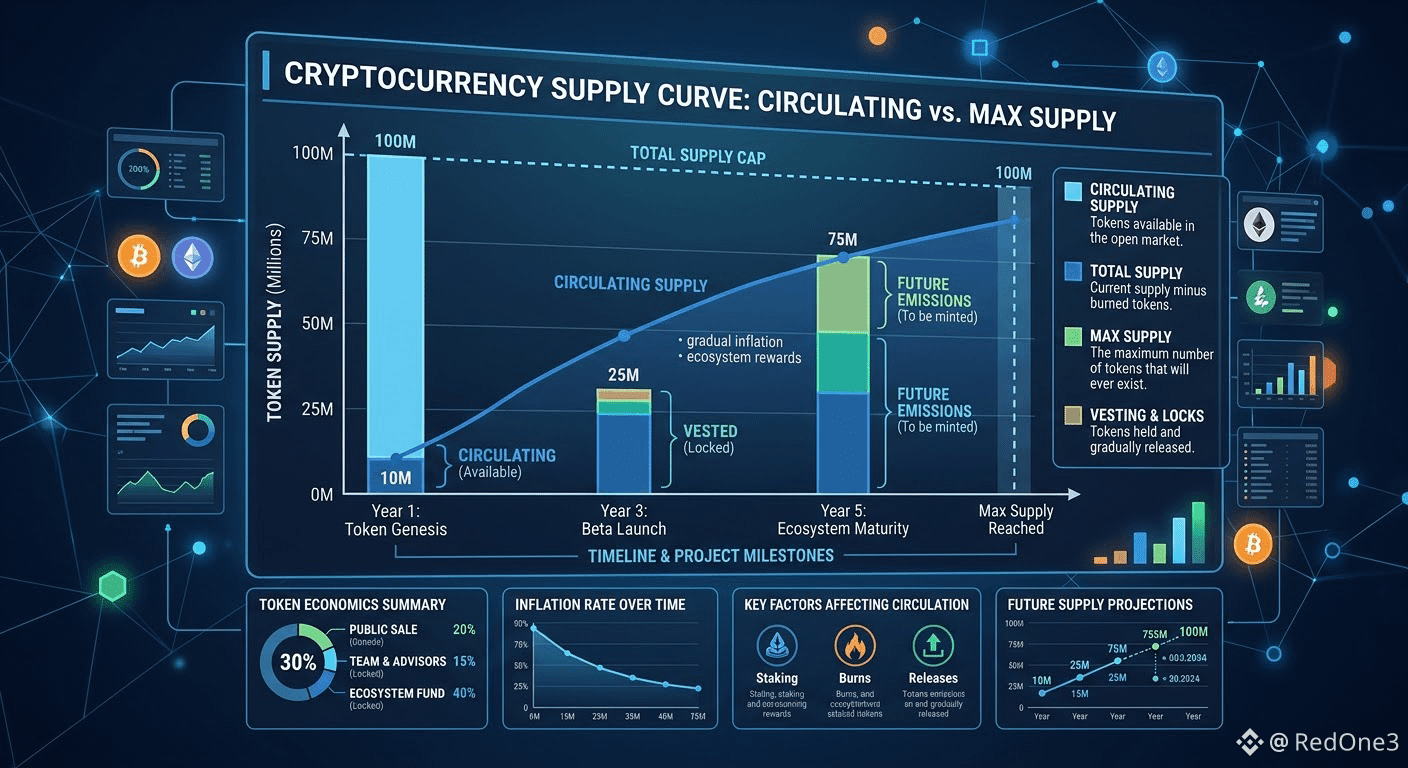
Tokenomics 👀👇🏻
Circulating Supply = coins currently available 🪙
Max Supply = absolute limit that will ever exist 📈
Inflation rate = how fast new coins are created ⏳
Bad tokenomics = unlimited supply = price pressure forever 📉
#ᴰʸᴼᴿ #SAFU #Tokenomics .
Tokenomics 👀👇🏻
Circulating Supply = coins currently available 🪙
Max Supply = absolute limit that will ever exist 📈
Inflation rate = how fast new coins are created ⏳
Bad tokenomics = unlimited supply = price pressure forever 📉
#ᴰʸᴼᴿ #SAFU #Tokenomics .
Circulating Supply = coins currently available 🪙
Max Supply = absolute limit that will ever exist 📈
Inflation rate = how fast new coins are created ⏳
Bad tokenomics = unlimited supply = price pressure forever 📉
#ᴰʸᴼᴿ #SAFU #Tokenomics .
1
758
·
--
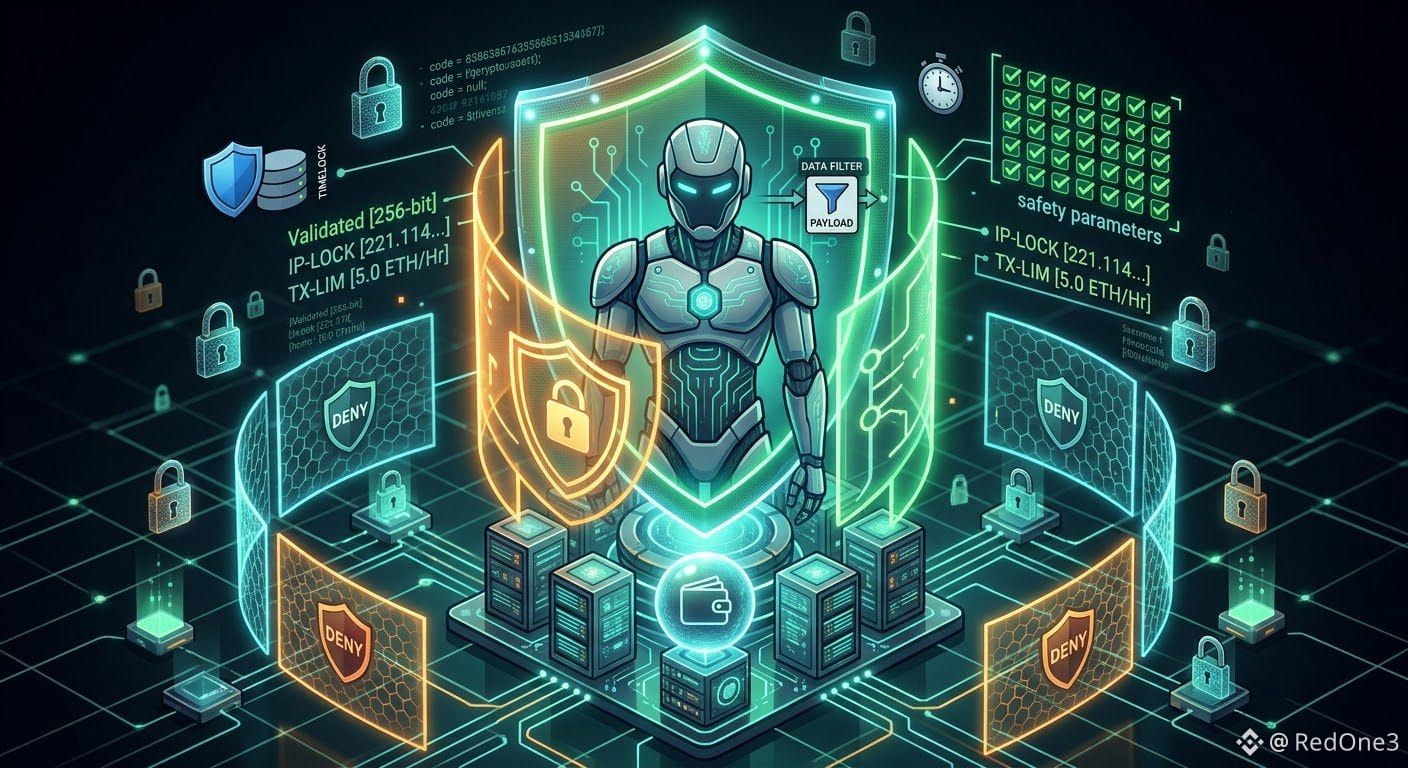
AI Agent Security & Policy Layers
As AI agents gain execution authority over crypto assets, security must move from an afterthought to a core requirement.
Why We Need Deterministic Security Wrappers
Primary Risk Vectors:
⚠️ Prompt Injection Attacks: Malicious actors attempting to hijack agent logic through manipulated inputs.
💥 Unbounded Execution: Bots executing trades without hard cap risk limits or slippage protections.
🔓 Privileged Access Vulnerabilities: Exposing private keys through insecure API endpoints.
Essential Defensive Safeguards:
🛡️ Strict Policy Engines: Pre-execution validation layers checking all outgoing transaction payloads. ⏱️ Timelocks & Spending Limits: Hard caps on transactional volume per period.
🔍 Multi-Sig Authorization: Human-in-the-loop sign-offs for high-value portfolio movements.
Security is what separates sustainable Web3 AI projects from vulnerable experiments.
#KeepItLegit #DYOR
#CryptoSecurity #AIAgents #DeFi .
AI Agent Security & Policy Layers
As AI agents gain execution authority over crypto assets, security must move from an afterthought to a core requirement.
Why We Need Deterministic Security Wrappers
Primary Risk Vectors:
⚠️ Prompt Injection Attacks: Malicious actors attempting to hijack agent logic through manipulated inputs.
💥 Unbounded Execution: Bots executing trades without hard cap risk limits or slippage protections.
🔓 Privileged Access Vulnerabilities: Exposing private keys through insecure API endpoints.
Essential Defensive Safeguards:
🛡️ Strict Policy Engines: Pre-execution validation layers checking all outgoing transaction payloads. ⏱️ Timelocks & Spending Limits: Hard caps on transactional volume per period.
🔍 Multi-Sig Authorization: Human-in-the-loop sign-offs for high-value portfolio movements.
Security is what separates sustainable Web3 AI projects from vulnerable experiments.
#KeepItLegit #DYOR
#CryptoSecurity #AIAgents #DeFi .
As AI agents gain execution authority over crypto assets, security must move from an afterthought to a core requirement.
Why We Need Deterministic Security Wrappers
Primary Risk Vectors:
⚠️ Prompt Injection Attacks: Malicious actors attempting to hijack agent logic through manipulated inputs.
💥 Unbounded Execution: Bots executing trades without hard cap risk limits or slippage protections.
🔓 Privileged Access Vulnerabilities: Exposing private keys through insecure API endpoints.
Essential Defensive Safeguards:
🛡️ Strict Policy Engines: Pre-execution validation layers checking all outgoing transaction payloads. ⏱️ Timelocks & Spending Limits: Hard caps on transactional volume per period.
🔍 Multi-Sig Authorization: Human-in-the-loop sign-offs for high-value portfolio movements.
Security is what separates sustainable Web3 AI projects from vulnerable experiments.
#KeepItLegit #DYOR
#CryptoSecurity #AIAgents #DeFi .
1
806
·
--
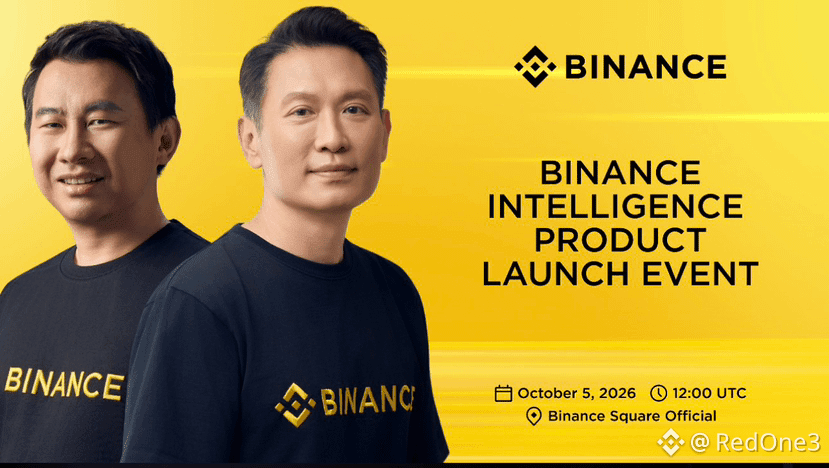
Hey @BiBi I think we are going to have a brand new AI product.
What’s your take on the upcoming Binance Intelligence Product Launch Event? 😁🤔
Hey @Binance BiBi I think we are going to have a brand new AI product.
What’s your take on the upcoming Binance Intelligence Product Launch Event? 😁🤔
What’s your take on the upcoming Binance Intelligence Product Launch Event? 😁🤔

1
1
48
Log in to explore more content
Join global crypto users on Binance Square
⚡️ Get latest and useful information about crypto.
💬 Trusted by the world’s largest crypto exchange.
👍 Discover real insights from verified creators.
Email / Phone number
Trending Topics
DriftHackVictimsBeginClaims
6,034 views
105 Discussing
#drifthackvictimsbeginclaims
THE DRIFT HACK IS STILL MAKING WAVES 👀
Nearly $295.4M in losses were verified after the Drift exploit on Solana.
Now victims have started filing claims through the recovery process, while the initial recovery pool sits at only around $3.11M.
That gap is massive.
For affected users, the big question is how much of those losses can ultimately be recovered.
OH MY WOW 🤯
#sol #DRIFT #defi #crypto
Albert_Tradebtc
·0 Likes
·512 views
SolanaTokenizedStockVolumeTops$4.4BInSeptember
1,385 views
17 Discussing
BitcoinSpotETFsDraw$6.34BInflowsInQ3
9,143 views
130 Discussing