

#tradfi
tradfi
2.1M views
19,092 Discussing
Hot
Latest

🚀🚀🚀 TradFi Focus 🚀🚀🚀
When reviewing TradFi perpetuals, focus on liquidity, funding, spread and execution during active sessions. Product access is useful only when risk controls stay disciplined.
$TSLA $NVDA $MSTR
#TradFi #RWA #StockMarket #TokenizedStocks #BinanceFutures
🚀🚀🚀 TradFi Focus 🚀🚀🚀
When reviewing TradFi perpetuals, focus on liquidity, funding, spread and execution during active sessions. Product access is useful only when risk controls stay disciplined.
$TSLA $NVDA $MSTR
#TradFi #RWA #StockMarket #TokenizedStocks #BinanceFutures
When reviewing TradFi perpetuals, focus on liquidity, funding, spread and execution during active sessions. Product access is useful only when risk controls stay disciplined.
$TSLA $NVDA $MSTR
#TradFi #RWA #StockMarket #TokenizedStocks #BinanceFutures
160

·
--
Bullish
📈 Bridging TradFi & Crypto: The Future of On-Chain Assets! 🌐
The financial world is evolving rapidly! Traditional Finance (TradFi) and Web3 are coming together, bringing real-world assets like stocks, IPOs, and tokenized equity directly onto the blockchain.
Here is why this shift is a massive game-changer:
✨ 24/7 Market Access: No more waiting for traditional market opening hours.
✨ Enhanced Liquidity: Seamlessly trade tokenized assets anywhere, anytime.
✨ Fractional Ownership: Invest in high-value assets without needing massive capital.
As Web3 continues to bridge the gap with TradFi, the opportunities for traders and investors are bigger than ever! 🚀
How do you see the future of tokenized assets shaping crypto? Drop your thoughts below! 👇
#Binance #Write2Earn #TradFi #cryptotradingpro #Web3
📈 Bridging TradFi & Crypto: The Future of On-Chain Assets! 🌐
The financial world is evolving rapidly! Traditional Finance (TradFi) and Web3 are coming together, bringing real-world assets like stocks, IPOs, and tokenized equity directly onto the blockchain.
Here is why this shift is a massive game-changer:
✨ 24/7 Market Access: No more waiting for traditional market opening hours.
✨ Enhanced Liquidity: Seamlessly trade tokenized assets anywhere, anytime.
✨ Fractional Ownership: Invest in high-value assets without needing massive capital.
As Web3 continues to bridge the gap with TradFi, the opportunities for traders and investors are bigger than ever! 🚀
How do you see the future of tokenized assets shaping crypto? Drop your thoughts below! 👇
#Binance #Write2Earn #TradFi #cryptotradingpro #Web3
The financial world is evolving rapidly! Traditional Finance (TradFi) and Web3 are coming together, bringing real-world assets like stocks, IPOs, and tokenized equity directly onto the blockchain.
Here is why this shift is a massive game-changer:
✨ 24/7 Market Access: No more waiting for traditional market opening hours.
✨ Enhanced Liquidity: Seamlessly trade tokenized assets anywhere, anytime.
✨ Fractional Ownership: Invest in high-value assets without needing massive capital.
As Web3 continues to bridge the gap with TradFi, the opportunities for traders and investors are bigger than ever! 🚀
How do you see the future of tokenized assets shaping crypto? Drop your thoughts below! 👇
#Binance #Write2Earn #TradFi #cryptotradingpro #Web3
33

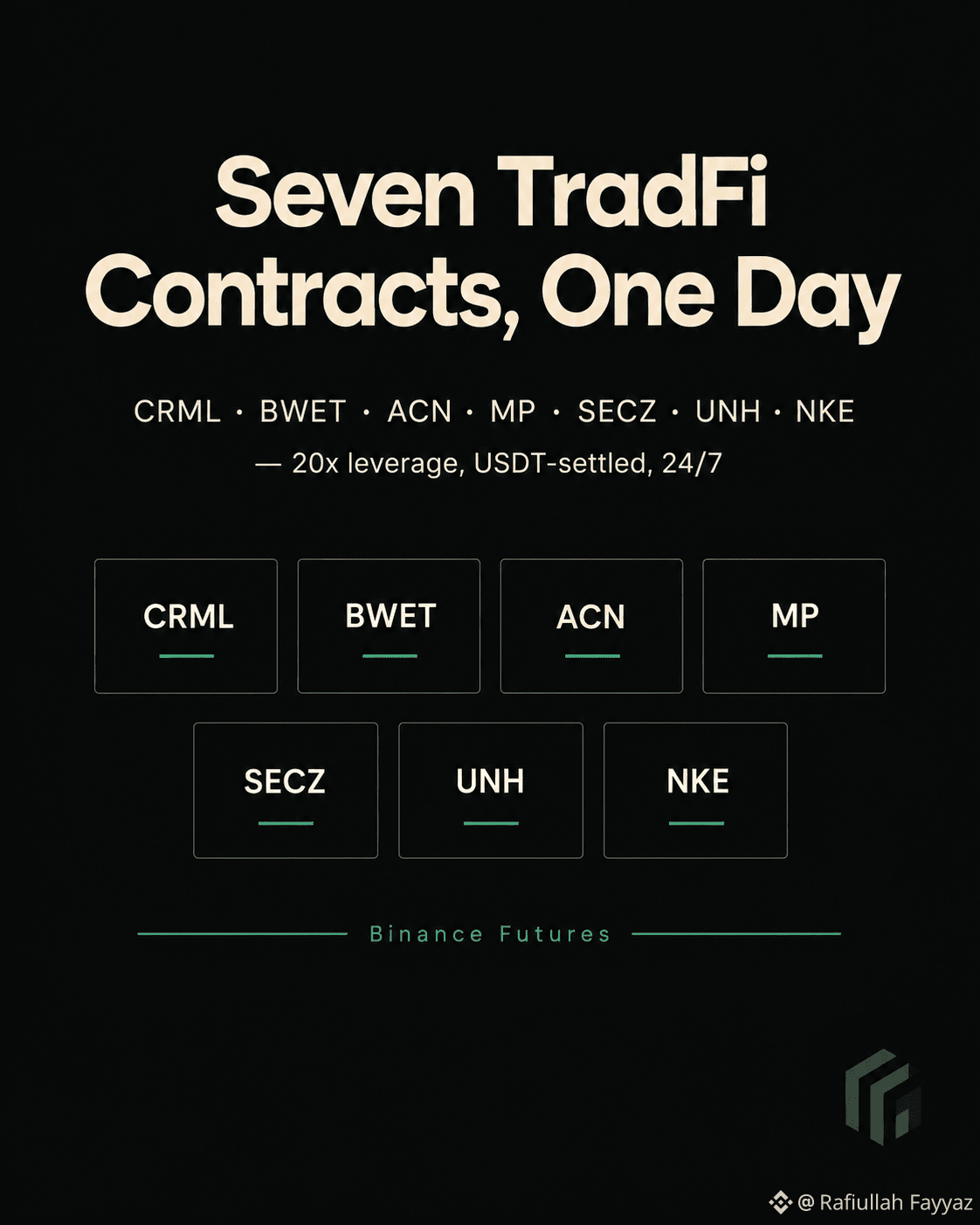
Binance listed seven TradFi perpetual contracts today — all at once.
The contracts: Critical Metals Corp ( $CRML ), Breakwave Tanker Shipping ETF ( $BWET ), Accenture ( $ACN ), MP Materials ( $MP ), Securitize ( $SECZ ), UnitedHealth ( $UNH ), and Nike ( $NKE ).
All launched between 17:00 and 17:30 Beijing time. Up to 20x leverage. Settled in USDT.
This is the largest single-day TradFi futures listing on Binance so far. Seven contracts covering mining, shipping, consulting, healthcare, and consumer brands — all tradeable 24/7 with leverage.
Why this matters: Binance is building a bridge between crypto traders and traditional markets. These aren't crypto tokens. They're equity exposure wrapped in perpetual contracts. The infrastructure lets crypto-native traders express views on Nike or UnitedHealth without leaving the platform.
The question I'm watching: does this bring traditional traders into crypto, or does it just give crypto traders more to speculate on? Either way, the product is expanding.
#Binance #TradFi #Futures
{future}(CRMLUSDT)
{future}(SECZUSDT)
{future}(UNHUSDT)
Binance listed seven TradFi perpetual contracts today — all at once.
The contracts: Critical Metals Corp ( $CRML ), Breakwave Tanker Shipping ETF ( $BWET ), Accenture ( $ACN ), MP Materials ( $MP ), Securitize ( $SECZ ), UnitedHealth ( $UNH ), and Nike ( $NKE ).
All launched between 17:00 and 17:30 Beijing time. Up to 20x leverage. Settled in USDT.
This is the largest single-day TradFi futures listing on Binance so far. Seven contracts covering mining, shipping, consulting, healthcare, and consumer brands — all tradeable 24/7 with leverage.
Why this matters: Binance is building a bridge between crypto traders and traditional markets. These aren't crypto tokens. They're equity exposure wrapped in perpetual contracts. The infrastructure lets crypto-native traders express views on Nike or UnitedHealth without leaving the platform.
The question I'm watching: does this bring traditional traders into crypto, or does it just give crypto traders more to speculate on? Either way, the product is expanding.
#Binance #TradFi #Futures
The contracts: Critical Metals Corp ( $CRML ), Breakwave Tanker Shipping ETF ( $BWET ), Accenture ( $ACN ), MP Materials ( $MP ), Securitize ( $SECZ ), UnitedHealth ( $UNH ), and Nike ( $NKE ).
All launched between 17:00 and 17:30 Beijing time. Up to 20x leverage. Settled in USDT.
This is the largest single-day TradFi futures listing on Binance so far. Seven contracts covering mining, shipping, consulting, healthcare, and consumer brands — all tradeable 24/7 with leverage.
Why this matters: Binance is building a bridge between crypto traders and traditional markets. These aren't crypto tokens. They're equity exposure wrapped in perpetual contracts. The infrastructure lets crypto-native traders express views on Nike or UnitedHealth without leaving the platform.
The question I'm watching: does this bring traditional traders into crypto, or does it just give crypto traders more to speculate on? Either way, the product is expanding.
#Binance #TradFi #Futures
251


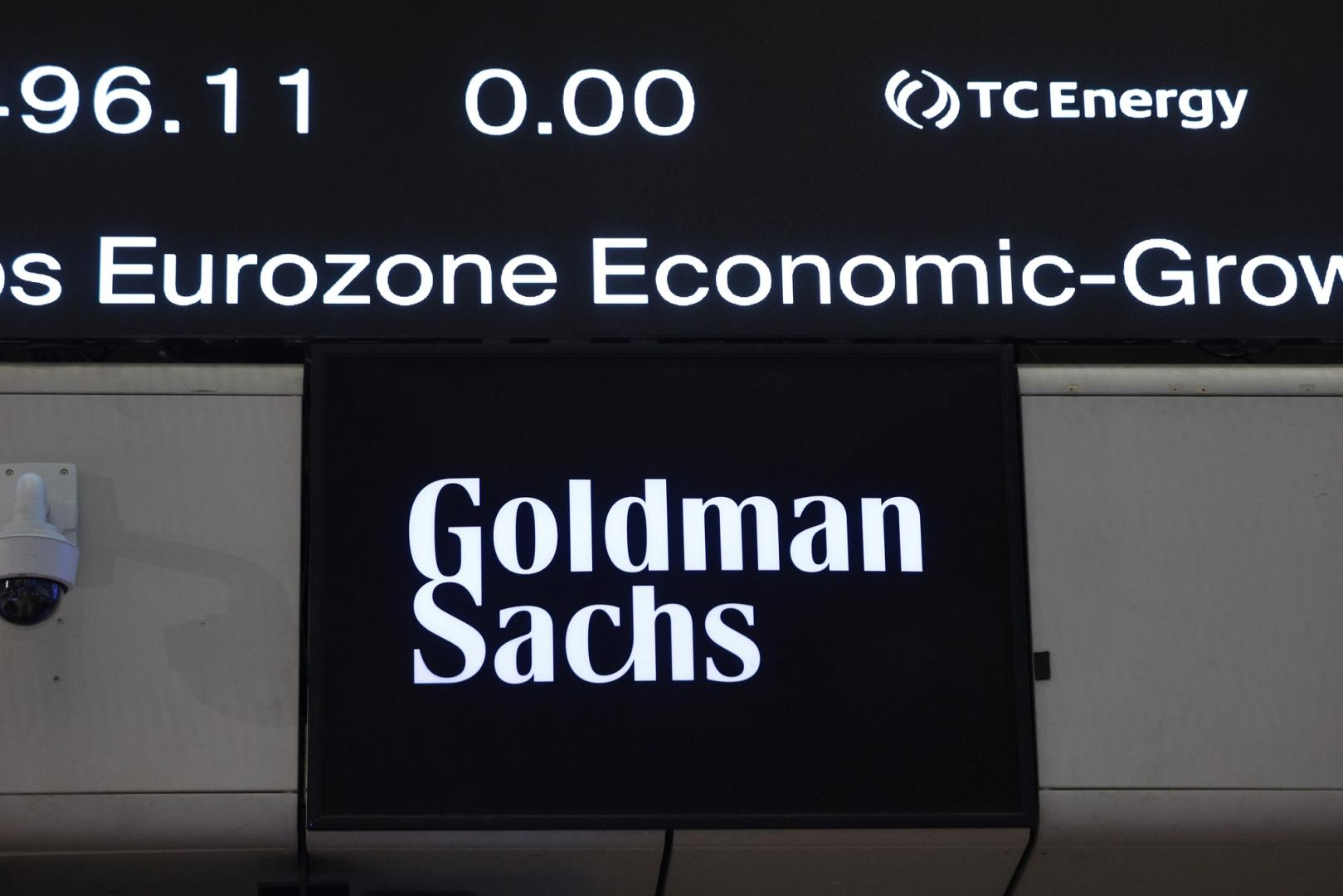
100 billion dollars just entered the crypto rails. Goldman Sachs is wiring its massive Treasury fund directly into on-chain plumbing. This is major institutional adoption playing out in real-time. Watch for tokenized yield adoption and new liquidity flows across the sector. $GS #Write2Earn #CryptoNews #Treasury #TradFi
100 billion dollars just entered the crypto rails. Goldman Sachs is wiring its massive Treasury fund directly into on-chain plumbing. This is major institutional adoption playing out in real-time. Watch for tokenized yield adoption and new liquidity flows across the sector. $GS #Write2Earn #CryptoNews #Treasury #TradFi
75
🚀🚀🚀 TradFi Focus 🚀🚀🚀
TradFi perpetuals may serve as a tactical sleeve rather than a core holding. Keep exposure small, monitor correlations and separate short-term trades from investments.
$TSLA $NVDA $MSTR
#TradFi #RWA #StockMarket #TokenizedStocks #BinanceFutures
🚀🚀🚀 TradFi Focus 🚀🚀🚀
TradFi perpetuals may serve as a tactical sleeve rather than a core holding. Keep exposure small, monitor correlations and separate short-term trades from investments.
$TSLA $NVDA $MSTR
#TradFi #RWA #StockMarket #TokenizedStocks #BinanceFutures
TradFi perpetuals may serve as a tactical sleeve rather than a core holding. Keep exposure small, monitor correlations and separate short-term trades from investments.
$TSLA $NVDA $MSTR
#TradFi #RWA #StockMarket #TokenizedStocks #BinanceFutures
221

·
--
🚀 Binance Is Bringing Crypto & Stocks Closer Together!
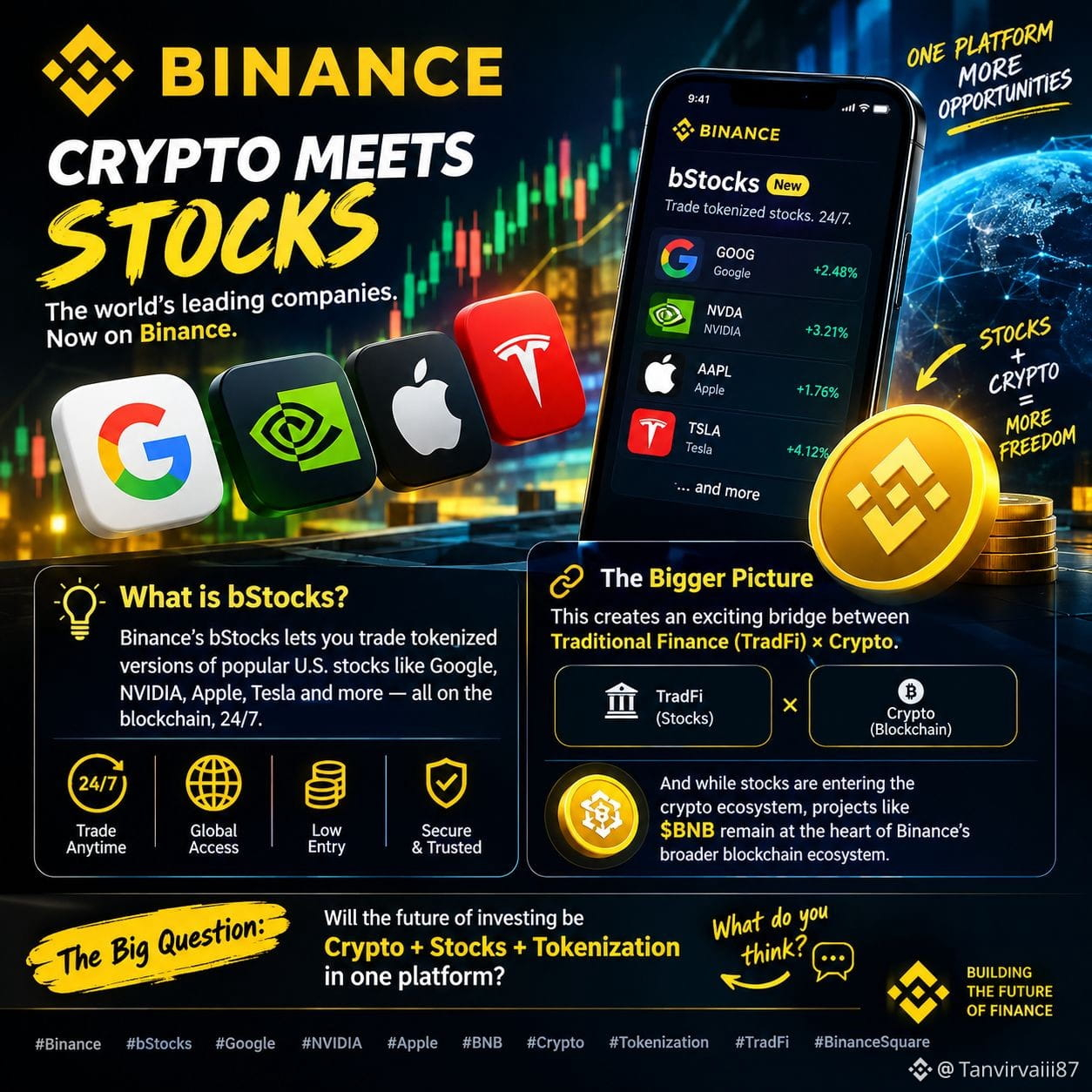
The financial world is changing fast. Binance is expanding beyond traditional crypto and bringing exposure to major global companies like $GOOGL.US , $NVDA.US , $AAPL.US , $Tesla & more through its bStocks ecosystem. 📈🌐
This creates an interesting bridge between Traditional Finance (TradFi) × Crypto.
And while stocks are entering the crypto ecosystem, projects like $BNB remain at the heart of Binance’s broader blockchain ecosystem. 🔶
💡 The big question:
Will the future of investing be Crypto + Stocks + Tokenization in one platform?
What do you think? drop your on comment box👇
#Binance #bStocks #Google #NVIDIA #Apple #bnb #crypto #Tokenization #TradFi #BinanceSquare
🚀 Binance Is Bringing Crypto & Stocks Closer Together!
The financial world is changing fast. Binance is expanding beyond traditional crypto and bringing exposure to major global companies like $GOOGL.US , $NVDA.US , $AAPL.US , $Tesla & more through its bStocks ecosystem. 📈🌐
This creates an interesting bridge between Traditional Finance (TradFi) × Crypto.
And while stocks are entering the crypto ecosystem, projects like $BNB remain at the heart of Binance’s broader blockchain ecosystem. 🔶
💡 The big question:
Will the future of investing be Crypto + Stocks + Tokenization in one platform?
What do you think? drop your on comment box👇
#Binance #bStocks #Google #NVIDIA #Apple #bnb #crypto #Tokenization #TradFi #BinanceSquare
The financial world is changing fast. Binance is expanding beyond traditional crypto and bringing exposure to major global companies like $GOOGL.US , $NVDA.US , $AAPL.US , $Tesla & more through its bStocks ecosystem. 📈🌐
This creates an interesting bridge between Traditional Finance (TradFi) × Crypto.
And while stocks are entering the crypto ecosystem, projects like $BNB remain at the heart of Binance’s broader blockchain ecosystem. 🔶
💡 The big question:
Will the future of investing be Crypto + Stocks + Tokenization in one platform?
What do you think? drop your on comment box👇
#Binance #bStocks #Google #NVIDIA #Apple #bnb #crypto #Tokenization #TradFi #BinanceSquare
AAPLUS-0.01%
NVDAUS+0.34%
GOOGLUS+0.80%
94

·
--
🥇 What Are TradFi Perpetual Contracts?
You may have heard about Perpetual Contracts in crypto, but did you know that similar products can also give traders exposure to certain traditional financial markets? 🤔
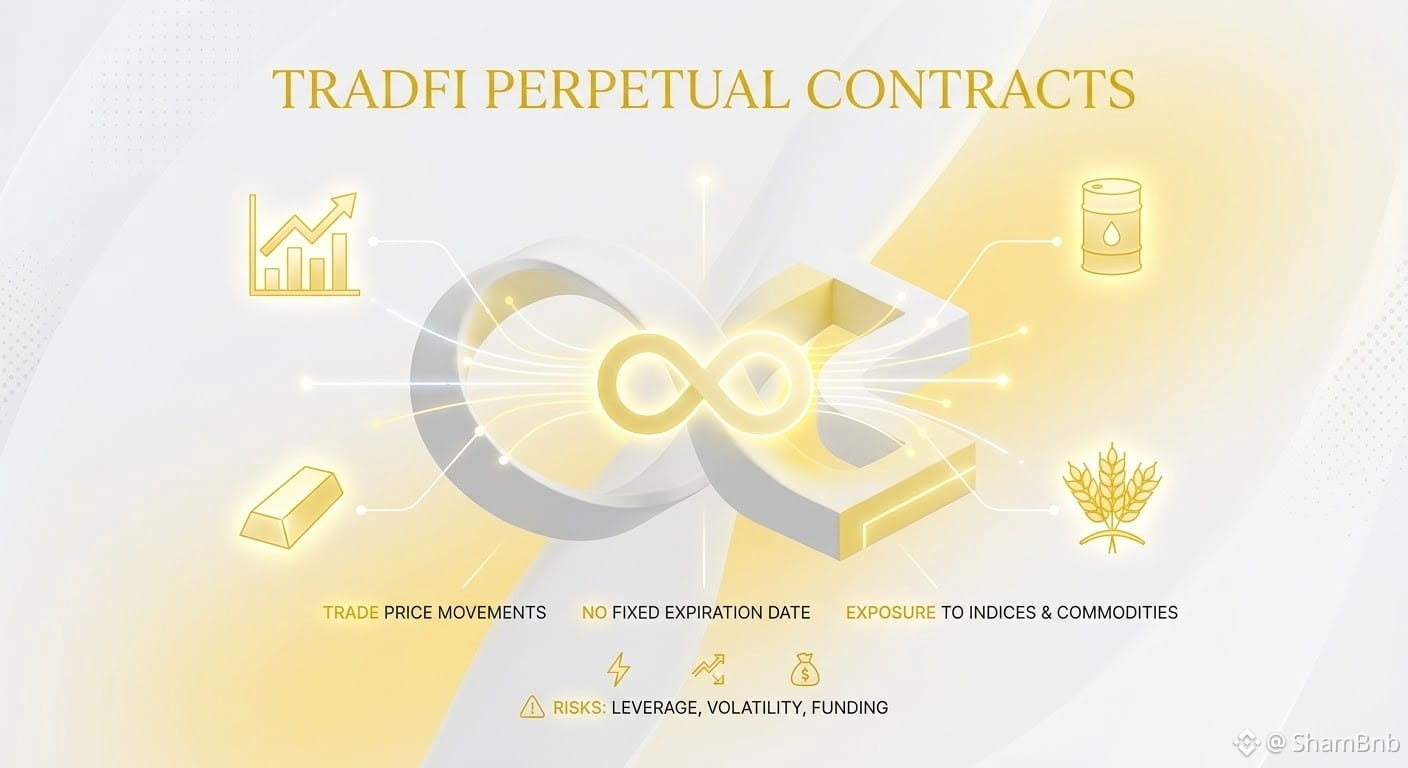
Simply put, perpetual contracts allow you to trade the price movement of an underlying asset without owning the asset itself. Unlike traditional futures, they do not have a fixed expiration date.
So, what does this mean for TradFi products?
The underlying assets can be linked to traditional markets such as indices, commodities and other available assets.
But there is one important point:
You are not buying the underlying asset. You are trading a contract that tracks its price, which means there are risks related to leverage, volatility and funding.
That’s why it’s important to understand how the contract works, its fees, funding and risks before using it.
#CryptoEducation💡🚀 #TradFi
🥇 What Are TradFi Perpetual Contracts?
You may have heard about Perpetual Contracts in crypto, but did you know that similar products can also give traders exposure to certain traditional financial markets? 🤔
Simply put, perpetual contracts allow you to trade the price movement of an underlying asset without owning the asset itself. Unlike traditional futures, they do not have a fixed expiration date.
So, what does this mean for TradFi products?
The underlying assets can be linked to traditional markets such as indices, commodities and other available assets.
But there is one important point:
You are not buying the underlying asset. You are trading a contract that tracks its price, which means there are risks related to leverage, volatility and funding.
That’s why it’s important to understand how the contract works, its fees, funding and risks before using it.
#CryptoEducation💡🚀 #TradFi
You may have heard about Perpetual Contracts in crypto, but did you know that similar products can also give traders exposure to certain traditional financial markets? 🤔
Simply put, perpetual contracts allow you to trade the price movement of an underlying asset without owning the asset itself. Unlike traditional futures, they do not have a fixed expiration date.
So, what does this mean for TradFi products?
The underlying assets can be linked to traditional markets such as indices, commodities and other available assets.
But there is one important point:
You are not buying the underlying asset. You are trading a contract that tracks its price, which means there are risks related to leverage, volatility and funding.
That’s why it’s important to understand how the contract works, its fees, funding and risks before using it.
#CryptoEducation💡🚀 #TradFi
2
72
Verified
Article
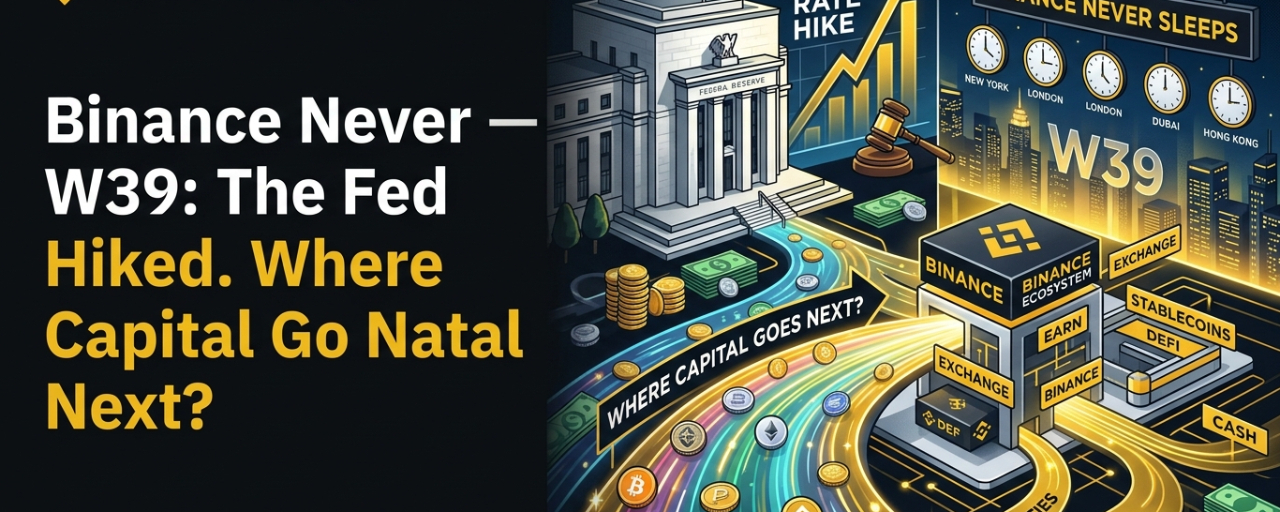
Binance Never Sleeps — W39: The Fed Hiked. Where Does Capital Go Next?The Federal Reserve delivered a 25-basis-point rate hike on September 16, taking the federal funds target range to 3.75%–4.00% in a unanimous 12–0 decision. The Fed said inflation remained elevated and that the move was intended to support a more timely return toward its 2% inflation goal.
But the market did not stop when the U.S. cash session ended.
In fact, some of the most interesting price discovery happened after the traditional market closed.
Binance Research found that US$1.02 billion traded across equity-linked perpetuals while U.S. cash markets were closed following the FOMC decision. During the following weekend, 198 TradFi perpetual contracts recorded US$7.25 billion in trading volume around the S&P DJI rebalance.
That highlights a broader change in how investors can respond to macro events. The question is no longer only what the Fed did.
It is where capital can move next and how quickly investors can express that view when traditional markets are shut.
The Fed Hiked. What Changed?
The September decision was a meaningful change in the policy path.
The Fed raised rates by 25 basis points to 3.75%–4.00%, while its projections showed inflation remained an important concern. Binance Research notes that 16 of 18 FOMC participants projected at least one additional rate increase by year-end, compared with the four cuts markets had been pricing at the beginning of 2026.
That creates different questions for different time horizons.
In the immediate term, traders need to process the policy announcement and its effect on rates, equities and volatility.
Over a longer horizon, investors are thinking about the path of inflation, economic growth and future monetary policy. Those horizons don't necessarily point in the same direction.
And that is where continuous markets become particularly relevant.
The Market Doesn't Close When the News Arrives
Traditional U.S. equity trading occupies only a fraction of the week.
Binance Research estimates that regular U.S. equity sessions account for just 19.3% of a standard week, even though those sessions capture approximately 87.2% of U.S. equity volume. The remaining time includes pre-market, post-market, overnight and weekend periods when new information can still arrive.
Central-bank decisions are a perfect example.
The September FOMC statement was released at 2:00 p.m. Eastern Time, two hours before the regular U.S. equity close. The market therefore had some time to react, but the information continued to be processed after the cash session ended. That's where perpetual markets provide another channel for price discovery.
Instead of waiting for the next U.S. opening bell, eligible traders can continue adjusting positions through supported perpetual contracts.
$1.02 Billion Traded After the FOMC
The post-FOMC session provides a concrete example.
According to Binance Research, US$1.02 billion was traded across 16 equity-linked perpetuals while U.S. cash markets were closed. The median contract captured 97% of the subsequent opening gap.
Individual contracts also showed how different exposures can react:
SPY-linked perpetual: +1.11%TMF-linked perpetual: +2.45%TBT-linked perpetual: −1.32%UVXY-linked perpetual: −5.94%
These were overnight moves between the Wednesday close and Thursday's U.S. market open. The numbers should not be interpreted as evidence that overnight prices always predict the next cash-market move.
Binance Research itself notes that the relationship varies by event and that overnight pricing can differ materially from the eventual opening price. The more important point is that the repricing can happen before the traditional market reopens.
Short-Term Reaction vs. Longer-Term Policy
This is where the Fed story becomes more interesting.
A rate hike affects several parts of the market at once.
Higher rates can change expectations around bonds, equity valuations, volatility and the cost of capital. But markets don't necessarily process all of those effects on the same timeline.
An overnight trader might focus on the immediate repricing of rate-sensitive instruments.
A longer-term investor might focus on whether inflation eventually falls, whether additional hikes materialize and what happens to economic growth.
The same FOMC decision can therefore produce different trading questions:
Short term: How is the market repricing the announcement?
Medium term: What does the policy path imply for rates and risk assets?
Long term: What does the changing cost of capital mean for valuations and portfolio allocation? Continuous markets don't answer those questions for investors. They simply provide another venue in which those views can be expressed.
Why Tokenized Stocks Add Another Layer
The overnight story isn't limited to perpetual contracts.
Binance Research has also documented the rapid growth of tokenized equities.
As of September 9, active tokenized-equity market capitalization had reached approximately US$4.0 billion, up 314% year-to-date, while monthly trading volume increased from US$237 million in January to US$7.9 billion in August. That matters because tokenized equities introduce another dimension to the traditional-versus-digital-market divide.
A stock represented on-chain can potentially interact with blockchain-based liquidity and financial applications rather than existing only inside traditional market infrastructure.
Binance Research found that DeFi active TVL connected to tokenized equities rose from US$21.6 million at the start of 2026 to US$289.1 million by September 9.
The market is therefore evolving beyond simply creating digital representations of stocks.
The emerging question is what investors can actually do with those assets once they are on-chain.
83 Tokenized Stocks, 156 Equity Perpetuals — One Broader Market
This is where Binance's expanding TradFi product set becomes relevant.
The platform now brings together multiple ways to express market views, including tokenized securities, equity-linked perpetuals and direct stock access for eligible users.
The exact number of available instruments changes as products are added, so the figures in this week's brief should be treated as a snapshot rather than a permanent count.
The underlying trend is more important:
More traditional financial exposures are becoming available through markets that operate beyond conventional U.S. equity hours.
That means a macro event arriving overnight no longer necessarily has to wait until Monday morning or the next trading session, before investors can respond through available instruments.
Weekends Are Becoming Part of Price Discovery
The S&P DJI rebalance provides another example.
During the market closure surrounding the September 21 rebalance, Binance Research recorded US$7.25 billion across 198 TradFi perpetuals.
The significance isn't that every contract moved in the same direction.
They didn't.
In fact, the data showed meaningful differences between individual names. SNDK, for example, was the most heavily traded addition by notional volume at US$744 million, but its return was only 0.30%, below the average performance of the selected additions.
That illustrates an important feature of continuous markets. They allow investors to trade individual views, not simply broad market exposure.
Instead of waiting for the next regular session to adjust a position around an event, eligible traders can potentially do so during the closure.
Where Does Capital Go Next?
There isn't one answer.
Some capital may respond to the Fed through rate-sensitive instruments. Some may rotate toward or away from equities depending on changing expectations. Others may use perpetuals to express short-term directional views without owning the underlying asset.
And tokenized-equity markets introduce another possibility: traditional assets can increasingly participate in on-chain liquidity and financial applications.
What matters is that these channels are beginning to overlap. The same macro event can now be reflected across crypto, traditional assets, tokenized securities and derivatives with some of those markets continuing to trade after traditional exchanges close.
The Market Is Becoming More Continuous
The bigger story behind W39 isn't simply that the Fed hiked. It is that market information keeps arriving even when traditional exchanges aren't open.
A central-bank decision doesn't wait for the opening bell. Neither does an unexpected company announcement, regulatory development, geopolitical event or index rebalance.
As more financial instruments become continuously tradable, the boundary between "market hours" and "market closed" becomes less meaningful.
Binance Research's recent data shows that this isn't just theoretical: billions of dollars are already being traded through TradFi perpetuals during periods when U.S. cash markets are closed. The result is a market environment where investors have more opportunities to react but also where price movements can happen around the clock.
The Fed may set the policy rate.
The market decides where capital moves next.
And increasingly, that price discovery doesn't wait for Monday morning.
#Binance #Macro #TradFi #Tokenization #crypto
Binance Never Sleeps — W39: The Fed Hiked. Where Does Capital Go Next?
The Federal Reserve delivered a 25-basis-point rate hike on September 16, taking the federal funds target range to 3.75%–4.00% in a unanimous 12–0 decision. The Fed said inflation remained elevated and that the move was intended to support a more timely return toward its 2% inflation goal.
But the market did not stop when the U.S. cash session ended.
In fact, some of the most interesting price discovery happened after the traditional market closed.
Binance Research found that US$1.02 billion traded across equity-linked perpetuals while U.S. cash markets were closed following the FOMC decision. During the following weekend, 198 TradFi perpetual contracts recorded US$7.25 billion in trading volume around the S&P DJI rebalance.
That highlights a broader change in how investors can respond to macro events. The question is no longer only what the Fed did.
It is where capital can move next and how quickly investors can express that view when traditional markets are shut.
The Fed Hiked. What Changed?
The September decision was a meaningful change in the policy path.
The Fed raised rates by 25 basis points to 3.75%–4.00%, while its projections showed inflation remained an important concern. Binance Research notes that 16 of 18 FOMC participants projected at least one additional rate increase by year-end, compared with the four cuts markets had been pricing at the beginning of 2026.
That creates different questions for different time horizons.
In the immediate term, traders need to process the policy announcement and its effect on rates, equities and volatility.
Over a longer horizon, investors are thinking about the path of inflation, economic growth and future monetary policy. Those horizons don't necessarily point in the same direction.
And that is where continuous markets become particularly relevant.
The Market Doesn't Close When the News Arrives
Traditional U.S. equity trading occupies only a fraction of the week.
Binance Research estimates that regular U.S. equity sessions account for just 19.3% of a standard week, even though those sessions capture approximately 87.2% of U.S. equity volume. The remaining time includes pre-market, post-market, overnight and weekend periods when new information can still arrive.
Central-bank decisions are a perfect example.
The September FOMC statement was released at 2:00 p.m. Eastern Time, two hours before the regular U.S. equity close. The market therefore had some time to react, but the information continued to be processed after the cash session ended. That's where perpetual markets provide another channel for price discovery.
Instead of waiting for the next U.S. opening bell, eligible traders can continue adjusting positions through supported perpetual contracts.
$1.02 Billion Traded After the FOMC
The post-FOMC session provides a concrete example.
According to Binance Research, US$1.02 billion was traded across 16 equity-linked perpetuals while U.S. cash markets were closed. The median contract captured 97% of the subsequent opening gap.
Individual contracts also showed how different exposures can react:
SPY-linked perpetual: +1.11%TMF-linked perpetual: +2.45%TBT-linked perpetual: −1.32%UVXY-linked perpetual: −5.94%
These were overnight moves between the Wednesday close and Thursday's U.S. market open. The numbers should not be interpreted as evidence that overnight prices always predict the next cash-market move.
Binance Research itself notes that the relationship varies by event and that overnight pricing can differ materially from the eventual opening price. The more important point is that the repricing can happen before the traditional market reopens.
Short-Term Reaction vs. Longer-Term Policy
This is where the Fed story becomes more interesting.
A rate hike affects several parts of the market at once.
Higher rates can change expectations around bonds, equity valuations, volatility and the cost of capital. But markets don't necessarily process all of those effects on the same timeline.
An overnight trader might focus on the immediate repricing of rate-sensitive instruments.
A longer-term investor might focus on whether inflation eventually falls, whether additional hikes materialize and what happens to economic growth.
The same FOMC decision can therefore produce different trading questions:
Short term: How is the market repricing the announcement?
Medium term: What does the policy path imply for rates and risk assets?
Long term: What does the changing cost of capital mean for valuations and portfolio allocation? Continuous markets don't answer those questions for investors. They simply provide another venue in which those views can be expressed.
Why Tokenized Stocks Add Another Layer
The overnight story isn't limited to perpetual contracts.
Binance Research has also documented the rapid growth of tokenized equities.
As of September 9, active tokenized-equity market capitalization had reached approximately US$4.0 billion, up 314% year-to-date, while monthly trading volume increased from US$237 million in January to US$7.9 billion in August. That matters because tokenized equities introduce another dimension to the traditional-versus-digital-market divide.
A stock represented on-chain can potentially interact with blockchain-based liquidity and financial applications rather than existing only inside traditional market infrastructure.
Binance Research found that DeFi active TVL connected to tokenized equities rose from US$21.6 million at the start of 2026 to US$289.1 million by September 9.
The market is therefore evolving beyond simply creating digital representations of stocks.
The emerging question is what investors can actually do with those assets once they are on-chain.
83 Tokenized Stocks, 156 Equity Perpetuals — One Broader Market
This is where Binance's expanding TradFi product set becomes relevant.
The platform now brings together multiple ways to express market views, including tokenized securities, equity-linked perpetuals and direct stock access for eligible users.
The exact number of available instruments changes as products are added, so the figures in this week's brief should be treated as a snapshot rather than a permanent count.
The underlying trend is more important:
More traditional financial exposures are becoming available through markets that operate beyond conventional U.S. equity hours.
That means a macro event arriving overnight no longer necessarily has to wait until Monday morning or the next trading session, before investors can respond through available instruments.
Weekends Are Becoming Part of Price Discovery
The S&P DJI rebalance provides another example.
During the market closure surrounding the September 21 rebalance, Binance Research recorded US$7.25 billion across 198 TradFi perpetuals.
The significance isn't that every contract moved in the same direction.
They didn't.
In fact, the data showed meaningful differences between individual names. SNDK, for example, was the most heavily traded addition by notional volume at US$744 million, but its return was only 0.30%, below the average performance of the selected additions.
That illustrates an important feature of continuous markets. They allow investors to trade individual views, not simply broad market exposure.
Instead of waiting for the next regular session to adjust a position around an event, eligible traders can potentially do so during the closure.
Where Does Capital Go Next?
There isn't one answer.
Some capital may respond to the Fed through rate-sensitive instruments. Some may rotate toward or away from equities depending on changing expectations. Others may use perpetuals to express short-term directional views without owning the underlying asset.
And tokenized-equity markets introduce another possibility: traditional assets can increasingly participate in on-chain liquidity and financial applications.
What matters is that these channels are beginning to overlap. The same macro event can now be reflected across crypto, traditional assets, tokenized securities and derivatives with some of those markets continuing to trade after traditional exchanges close.
The Market Is Becoming More Continuous
The bigger story behind W39 isn't simply that the Fed hiked. It is that market information keeps arriving even when traditional exchanges aren't open.
A central-bank decision doesn't wait for the opening bell. Neither does an unexpected company announcement, regulatory development, geopolitical event or index rebalance.
As more financial instruments become continuously tradable, the boundary between "market hours" and "market closed" becomes less meaningful.
Binance Research's recent data shows that this isn't just theoretical: billions of dollars are already being traded through TradFi perpetuals during periods when U.S. cash markets are closed. The result is a market environment where investors have more opportunities to react but also where price movements can happen around the clock.
The Fed may set the policy rate.
The market decides where capital moves next.
And increasingly, that price discovery doesn't wait for Monday morning.
#Binance #Macro #TradFi #Tokenization #crypto
But the market did not stop when the U.S. cash session ended.
In fact, some of the most interesting price discovery happened after the traditional market closed.
Binance Research found that US$1.02 billion traded across equity-linked perpetuals while U.S. cash markets were closed following the FOMC decision. During the following weekend, 198 TradFi perpetual contracts recorded US$7.25 billion in trading volume around the S&P DJI rebalance.
That highlights a broader change in how investors can respond to macro events. The question is no longer only what the Fed did.
It is where capital can move next and how quickly investors can express that view when traditional markets are shut.
The Fed Hiked. What Changed?
The September decision was a meaningful change in the policy path.
The Fed raised rates by 25 basis points to 3.75%–4.00%, while its projections showed inflation remained an important concern. Binance Research notes that 16 of 18 FOMC participants projected at least one additional rate increase by year-end, compared with the four cuts markets had been pricing at the beginning of 2026.
That creates different questions for different time horizons.
In the immediate term, traders need to process the policy announcement and its effect on rates, equities and volatility.
Over a longer horizon, investors are thinking about the path of inflation, economic growth and future monetary policy. Those horizons don't necessarily point in the same direction.
And that is where continuous markets become particularly relevant.
The Market Doesn't Close When the News Arrives
Traditional U.S. equity trading occupies only a fraction of the week.
Binance Research estimates that regular U.S. equity sessions account for just 19.3% of a standard week, even though those sessions capture approximately 87.2% of U.S. equity volume. The remaining time includes pre-market, post-market, overnight and weekend periods when new information can still arrive.
Central-bank decisions are a perfect example.
The September FOMC statement was released at 2:00 p.m. Eastern Time, two hours before the regular U.S. equity close. The market therefore had some time to react, but the information continued to be processed after the cash session ended. That's where perpetual markets provide another channel for price discovery.
Instead of waiting for the next U.S. opening bell, eligible traders can continue adjusting positions through supported perpetual contracts.
$1.02 Billion Traded After the FOMC
The post-FOMC session provides a concrete example.
According to Binance Research, US$1.02 billion was traded across 16 equity-linked perpetuals while U.S. cash markets were closed. The median contract captured 97% of the subsequent opening gap.
Individual contracts also showed how different exposures can react:
SPY-linked perpetual: +1.11%TMF-linked perpetual: +2.45%TBT-linked perpetual: −1.32%UVXY-linked perpetual: −5.94%
These were overnight moves between the Wednesday close and Thursday's U.S. market open. The numbers should not be interpreted as evidence that overnight prices always predict the next cash-market move.
Binance Research itself notes that the relationship varies by event and that overnight pricing can differ materially from the eventual opening price. The more important point is that the repricing can happen before the traditional market reopens.
Short-Term Reaction vs. Longer-Term Policy
This is where the Fed story becomes more interesting.
A rate hike affects several parts of the market at once.
Higher rates can change expectations around bonds, equity valuations, volatility and the cost of capital. But markets don't necessarily process all of those effects on the same timeline.
An overnight trader might focus on the immediate repricing of rate-sensitive instruments.
A longer-term investor might focus on whether inflation eventually falls, whether additional hikes materialize and what happens to economic growth.
The same FOMC decision can therefore produce different trading questions:
Short term: How is the market repricing the announcement?
Medium term: What does the policy path imply for rates and risk assets?
Long term: What does the changing cost of capital mean for valuations and portfolio allocation? Continuous markets don't answer those questions for investors. They simply provide another venue in which those views can be expressed.
Why Tokenized Stocks Add Another Layer
The overnight story isn't limited to perpetual contracts.
Binance Research has also documented the rapid growth of tokenized equities.
As of September 9, active tokenized-equity market capitalization had reached approximately US$4.0 billion, up 314% year-to-date, while monthly trading volume increased from US$237 million in January to US$7.9 billion in August. That matters because tokenized equities introduce another dimension to the traditional-versus-digital-market divide.
A stock represented on-chain can potentially interact with blockchain-based liquidity and financial applications rather than existing only inside traditional market infrastructure.
Binance Research found that DeFi active TVL connected to tokenized equities rose from US$21.6 million at the start of 2026 to US$289.1 million by September 9.
The market is therefore evolving beyond simply creating digital representations of stocks.
The emerging question is what investors can actually do with those assets once they are on-chain.
83 Tokenized Stocks, 156 Equity Perpetuals — One Broader Market
This is where Binance's expanding TradFi product set becomes relevant.
The platform now brings together multiple ways to express market views, including tokenized securities, equity-linked perpetuals and direct stock access for eligible users.
The exact number of available instruments changes as products are added, so the figures in this week's brief should be treated as a snapshot rather than a permanent count.
The underlying trend is more important:
More traditional financial exposures are becoming available through markets that operate beyond conventional U.S. equity hours.
That means a macro event arriving overnight no longer necessarily has to wait until Monday morning or the next trading session, before investors can respond through available instruments.
Weekends Are Becoming Part of Price Discovery
The S&P DJI rebalance provides another example.
During the market closure surrounding the September 21 rebalance, Binance Research recorded US$7.25 billion across 198 TradFi perpetuals.
The significance isn't that every contract moved in the same direction.
They didn't.
In fact, the data showed meaningful differences between individual names. SNDK, for example, was the most heavily traded addition by notional volume at US$744 million, but its return was only 0.30%, below the average performance of the selected additions.
That illustrates an important feature of continuous markets. They allow investors to trade individual views, not simply broad market exposure.
Instead of waiting for the next regular session to adjust a position around an event, eligible traders can potentially do so during the closure.
Where Does Capital Go Next?
There isn't one answer.
Some capital may respond to the Fed through rate-sensitive instruments. Some may rotate toward or away from equities depending on changing expectations. Others may use perpetuals to express short-term directional views without owning the underlying asset.
And tokenized-equity markets introduce another possibility: traditional assets can increasingly participate in on-chain liquidity and financial applications.
What matters is that these channels are beginning to overlap. The same macro event can now be reflected across crypto, traditional assets, tokenized securities and derivatives with some of those markets continuing to trade after traditional exchanges close.
The Market Is Becoming More Continuous
The bigger story behind W39 isn't simply that the Fed hiked. It is that market information keeps arriving even when traditional exchanges aren't open.
A central-bank decision doesn't wait for the opening bell. Neither does an unexpected company announcement, regulatory development, geopolitical event or index rebalance.
As more financial instruments become continuously tradable, the boundary between "market hours" and "market closed" becomes less meaningful.
Binance Research's recent data shows that this isn't just theoretical: billions of dollars are already being traded through TradFi perpetuals during periods when U.S. cash markets are closed. The result is a market environment where investors have more opportunities to react but also where price movements can happen around the clock.
The Fed may set the policy rate.
The market decides where capital moves next.
And increasingly, that price discovery doesn't wait for Monday morning.
#Binance #Macro #TradFi #Tokenization #crypto
424
THE NEXT LEVEL OF FINANCE: TRIFI
For years, finance was divided into separate worlds.
TradFi had the banks, brokers, stocks, bonds, ETFs and commodities.
CeFi brought centralized crypto platforms, exchanges and financial services into the digital world.
DeFi took another step, using blockchain and smart contracts to create financial applications without traditional intermediaries.
Now, these worlds are increasingly moving closer together.
Welcome to TriFi.
TRADFI 🏦
Traditional Finance — banks, brokers, exchanges, stocks, bonds, commodities and other established financial instruments.
CEFI ⚡
Centralized Finance — crypto platforms where a company operates the infrastructure and provides services such as trading, custody and other financial products.
DEFI 🔗
Decentralized Finance — blockchain-based applications where users interact with smart contracts and on-chain protocols.
So what is the TriFi idea?
Instead of thinking about crypto, traditional markets and decentralized finance as completely separate systems, TriFi looks at how they can coexist within one broader financial ecosystem.
On Binance, this convergence can be seen through different layers of the ecosystem: crypto markets, TradFi products such as perpetual contracts, tokenized assets, and access to DeFi through Binance Wallet.
But there is one important lesson: Same ecosystem ≠ same product.
Buying a stock, trading a perpetual contract linked to that stock, holding a tokenized security, or interacting with a DeFi protocol can involve completely different ownership rights, structures, risks and mechanics. That is why understanding the product matters more than simply recognizing the asset.
Bitcoin. Gold. Stocks. ETFs. Tokenized assets. DeFi protocols.
Different markets. Different infrastructure. Different rules.
But increasingly, they can exist within the same financial journey.
#TriFi #TradFi #cefi #defi
THE NEXT LEVEL OF FINANCE: TRIFI
For years, finance was divided into separate worlds.
TradFi had the banks, brokers, stocks, bonds, ETFs and commodities.
CeFi brought centralized crypto platforms, exchanges and financial services into the digital world.
DeFi took another step, using blockchain and smart contracts to create financial applications without traditional intermediaries.
Now, these worlds are increasingly moving closer together.
Welcome to TriFi.
TRADFI 🏦
Traditional Finance — banks, brokers, exchanges, stocks, bonds, commodities and other established financial instruments.
CEFI ⚡
Centralized Finance — crypto platforms where a company operates the infrastructure and provides services such as trading, custody and other financial products.
DEFI 🔗
Decentralized Finance — blockchain-based applications where users interact with smart contracts and on-chain protocols.
So what is the TriFi idea?
Instead of thinking about crypto, traditional markets and decentralized finance as completely separate systems, TriFi looks at how they can coexist within one broader financial ecosystem.
On Binance, this convergence can be seen through different layers of the ecosystem: crypto markets, TradFi products such as perpetual contracts, tokenized assets, and access to DeFi through Binance Wallet.
But there is one important lesson: Same ecosystem ≠ same product.
Buying a stock, trading a perpetual contract linked to that stock, holding a tokenized security, or interacting with a DeFi protocol can involve completely different ownership rights, structures, risks and mechanics. That is why understanding the product matters more than simply recognizing the asset.
Bitcoin. Gold. Stocks. ETFs. Tokenized assets. DeFi protocols.
Different markets. Different infrastructure. Different rules.
But increasingly, they can exist within the same financial journey.
#TriFi #TradFi #cefi #defi
For years, finance was divided into separate worlds.
TradFi had the banks, brokers, stocks, bonds, ETFs and commodities.
CeFi brought centralized crypto platforms, exchanges and financial services into the digital world.
DeFi took another step, using blockchain and smart contracts to create financial applications without traditional intermediaries.
Now, these worlds are increasingly moving closer together.
Welcome to TriFi.
TRADFI 🏦
Traditional Finance — banks, brokers, exchanges, stocks, bonds, commodities and other established financial instruments.
CEFI ⚡
Centralized Finance — crypto platforms where a company operates the infrastructure and provides services such as trading, custody and other financial products.
DEFI 🔗
Decentralized Finance — blockchain-based applications where users interact with smart contracts and on-chain protocols.
So what is the TriFi idea?
Instead of thinking about crypto, traditional markets and decentralized finance as completely separate systems, TriFi looks at how they can coexist within one broader financial ecosystem.
On Binance, this convergence can be seen through different layers of the ecosystem: crypto markets, TradFi products such as perpetual contracts, tokenized assets, and access to DeFi through Binance Wallet.
But there is one important lesson: Same ecosystem ≠ same product.
Buying a stock, trading a perpetual contract linked to that stock, holding a tokenized security, or interacting with a DeFi protocol can involve completely different ownership rights, structures, risks and mechanics. That is why understanding the product matters more than simply recognizing the asset.
Bitcoin. Gold. Stocks. ETFs. Tokenized assets. DeFi protocols.
Different markets. Different infrastructure. Different rules.
But increasingly, they can exist within the same financial journey.
#TriFi #TradFi #cefi #defi
3
39

·
--
Your Binance Funding Account is changing 👀
Starting September 29, Binance will begin gradually moving crypto assets from Funding Accounts to Spot Accounts.
So what happens to the Funding Account?
It will eventually become the Stocks Account, designed specifically for settlement of stock and stock options trading.
The transition is expected to run through January 2027, with specific migration dates announced separately.
What you need to know:
• Crypto in Funding → Spot
• Funding Account → Stocks Account
• Stocks Account will support stock & stock options settlement
• Supported settlement assets include USD, USDC, USDT, USD1, U, and BNB
• Your total asset value and fund safety are not affected by the migration.
So if you use Binance for both crypto and stocks, this is an update worth knowing before September 29.
Have you already checked your Binance account structure? 👀
#crypto #stocks #StockOptions #TradFi #BinanceSquare
Educational content only. Not financial advice. Product availability and eligibility vary by region.
Your Binance Funding Account is changing 👀
Starting September 29, Binance will begin gradually moving crypto assets from Funding Accounts to Spot Accounts.
So what happens to the Funding Account?
It will eventually become the Stocks Account, designed specifically for settlement of stock and stock options trading.
The transition is expected to run through January 2027, with specific migration dates announced separately.
What you need to know:
• Crypto in Funding → Spot
• Funding Account → Stocks Account
• Stocks Account will support stock & stock options settlement
• Supported settlement assets include USD, USDC, USDT, USD1, U, and BNB
• Your total asset value and fund safety are not affected by the migration.
So if you use Binance for both crypto and stocks, this is an update worth knowing before September 29.
Have you already checked your Binance account structure? 👀
#crypto #stocks #StockOptions #TradFi #BinanceSquare
Educational content only. Not financial advice. Product availability and eligibility vary by region.
Starting September 29, Binance will begin gradually moving crypto assets from Funding Accounts to Spot Accounts.
So what happens to the Funding Account?
It will eventually become the Stocks Account, designed specifically for settlement of stock and stock options trading.
The transition is expected to run through January 2027, with specific migration dates announced separately.
What you need to know:
• Crypto in Funding → Spot
• Funding Account → Stocks Account
• Stocks Account will support stock & stock options settlement
• Supported settlement assets include USD, USDC, USDT, USD1, U, and BNB
• Your total asset value and fund safety are not affected by the migration.
So if you use Binance for both crypto and stocks, this is an update worth knowing before September 29.
Have you already checked your Binance account structure? 👀
#crypto #stocks #StockOptions #TradFi #BinanceSquare
Educational content only. Not financial advice. Product availability and eligibility vary by region.
3
72
🚀🚀🚀 TradFi Focus 🚀🚀🚀
A practical TradFi setup starts with a market catalyst, confirmation after the open and a fixed invalidation level. Never let leverage replace a clear trading plan.
$TSLA $NVDA $MSTR
#TradFi #RWA #StockMarket #TokenizedStocks #BinanceFutures
🚀🚀🚀 TradFi Focus 🚀🚀🚀
A practical TradFi setup starts with a market catalyst, confirmation after the open and a fixed invalidation level. Never let leverage replace a clear trading plan.
$TSLA $NVDA $MSTR
#TradFi #RWA #StockMarket #TokenizedStocks #BinanceFutures
A practical TradFi setup starts with a market catalyst, confirmation after the open and a fixed invalidation level. Never let leverage replace a clear trading plan.
$TSLA $NVDA $MSTR
#TradFi #RWA #StockMarket #TokenizedStocks #BinanceFutures
65
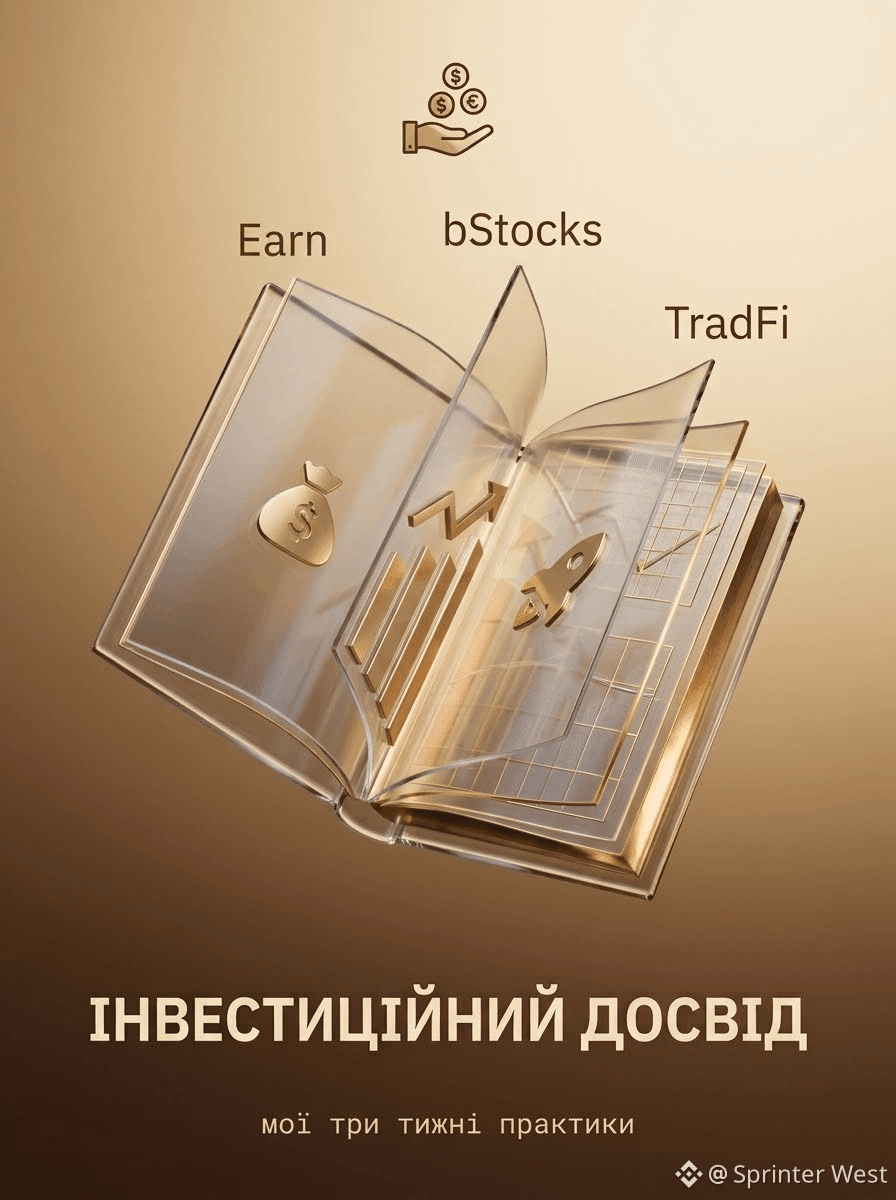
Three weeks ago, I started separately trying Earn, bStocks, and TradFi on Binance. No big plan—just wanted to understand what it all is.
Now that I’ve played around with all three, things became a bit clearer about what each of them is for.
Earn is for money that’s just sitting there.
I’m not expecting any cosmic interest rates. If the money isn’t needed yet, let it at least earn something.
The risk and return here are appropriately matched.
bStocks for me is a completely different story.
Here, I’m basically betting on a specific company. Tesla, Apple, etc.
No leverage or liquidation, but the price still moves along with the stock. So I only put in the amount I’m willing to hold.
TradFi—here you need to be much more careful.
Futures + leverage—and even a small price move can seriously hit your deposit.
So this is definitely not the option where I’d just dump money simply because I saw a chance to make some profit.
And after these three weeks, I stopped thinking in the style of “which one is better?”
Because they’re really about different things.
Some money can be just a reserve, others are a bet on a company, and the third is money for speculation.
Earlier, I could see a good percentage and think: “Oh, I can put money into this.”
And only afterward figure out what exactly I bought and what the risk is here 😅
#TradFi #earn
Three weeks ago, I started separately trying Earn, bStocks, and TradFi on Binance. No big plan—just wanted to understand what it all is.
Now that I’ve played around with all three, things became a bit clearer about what each of them is for.
Earn is for money that’s just sitting there.
I’m not expecting any cosmic interest rates. If the money isn’t needed yet, let it at least earn something.
The risk and return here are appropriately matched.
bStocks for me is a completely different story.
Here, I’m basically betting on a specific company. Tesla, Apple, etc.
No leverage or liquidation, but the price still moves along with the stock. So I only put in the amount I’m willing to hold.
TradFi—here you need to be much more careful.
Futures + leverage—and even a small price move can seriously hit your deposit.
So this is definitely not the option where I’d just dump money simply because I saw a chance to make some profit.
And after these three weeks, I stopped thinking in the style of “which one is better?”
Because they’re really about different things.
Some money can be just a reserve, others are a bet on a company, and the third is money for speculation.
Earlier, I could see a good percentage and think: “Oh, I can put money into this.”
And only afterward figure out what exactly I bought and what the risk is here 😅
#TradFi #earn
Now that I’ve played around with all three, things became a bit clearer about what each of them is for.
Earn is for money that’s just sitting there.
I’m not expecting any cosmic interest rates. If the money isn’t needed yet, let it at least earn something.
The risk and return here are appropriately matched.
bStocks for me is a completely different story.
Here, I’m basically betting on a specific company. Tesla, Apple, etc.
No leverage or liquidation, but the price still moves along with the stock. So I only put in the amount I’m willing to hold.
TradFi—here you need to be much more careful.
Futures + leverage—and even a small price move can seriously hit your deposit.
So this is definitely not the option where I’d just dump money simply because I saw a chance to make some profit.
And after these three weeks, I stopped thinking in the style of “which one is better?”
Because they’re really about different things.
Some money can be just a reserve, others are a bet on a company, and the third is money for speculation.
Earlier, I could see a good percentage and think: “Oh, I can put money into this.”
And only afterward figure out what exactly I bought and what the risk is here 😅
#TradFi #earn
74

·
--

Article
TradFi in Plain English: What Do All These Scary Words Mean? | GuideWhen a beginner opens the TradFi section for the first time, they’re met with a wall of unfamiliar words: long, short, leverage, margin, liquidation 😵
It looks like a closed club "for insiders." In reality, behind these terms there are fairly simple concepts—it's just that nobody explained them properly. Now we’ll go through each one 👇 And right away let’s agree: I’m explaining this not so that you run off to trade with leverage, but so you understand what the whole thing is about and don’t fall for other people’s fairy tales about "easy money".
TradFi in Plain English: What Do All These Scary Words Mean? | Guide
When a beginner opens the TradFi section for the first time, they’re met with a wall of unfamiliar words: long, short, leverage, margin, liquidation 😵
It looks like a closed club "for insiders." In reality, behind these terms there are fairly simple concepts—it's just that nobody explained them properly. Now we’ll go through each one 👇 And right away let’s agree: I’m explaining this not so that you run off to trade with leverage, but so you understand what the whole thing is about and don’t fall for other people’s fairy tales about "easy money".
It looks like a closed club "for insiders." In reality, behind these terms there are fairly simple concepts—it's just that nobody explained them properly. Now we’ll go through each one 👇 And right away let’s agree: I’m explaining this not so that you run off to trade with leverage, but so you understand what the whole thing is about and don’t fall for other people’s fairy tales about "easy money".
684
·
--
Article
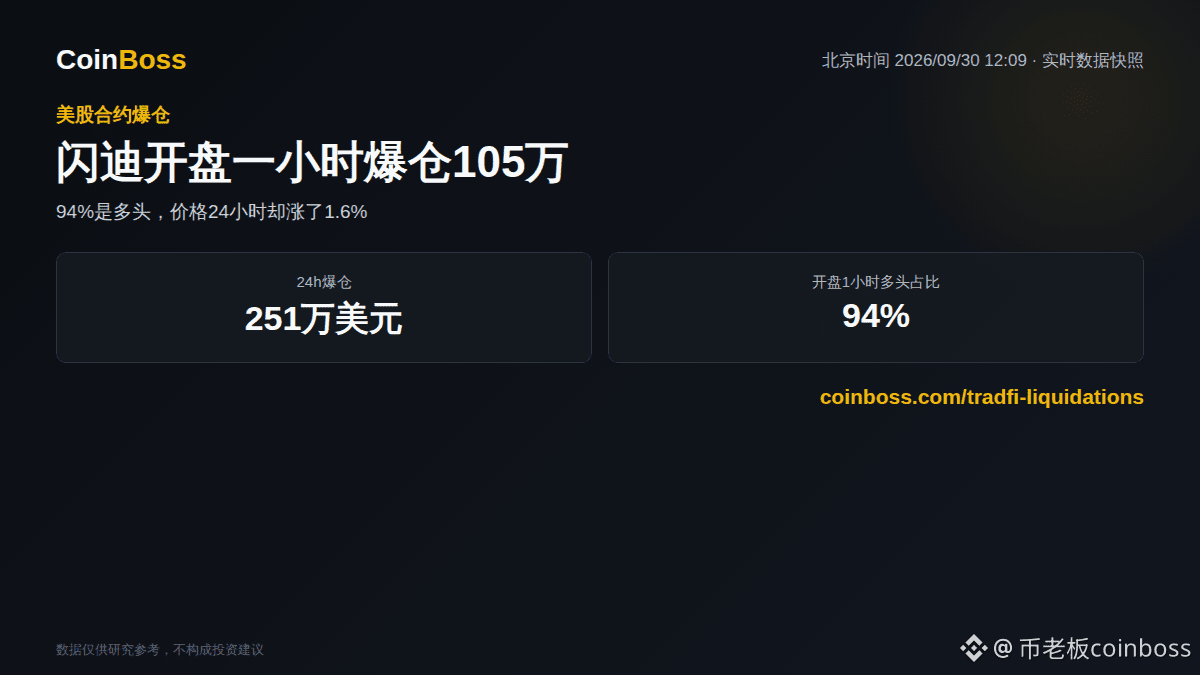
Sandisk liquidations total $1.05 million in the first hour after the open—94% were longs, yet the price roseLast night, within the first hour of the U.S. stock market opening, Sandisk went through the people chasing longs and wiped them out.
In the past 24 hours, the contracts with the most liquidations—neither oil nor gold, but Sandisk: $2.51 million, which is $440,000 more than WTI crude oil.
The most concentrated moment is the first hour after the open—there were 1.05 million in liquidations, and 94% were long positions. In just two minutes, OKX liquidated two long orders back-to-back: one for $299,000 at 1706.8, and another for $232,000 at 1717.2.
Ironically, it’s the price. Sandisk is now $1,725, and over the past 24 hours it’s actually risen by 1.6%—those liquidation trigger prices from those two orders were already left behind below. The direction wasn’t wrong; they just fell to the volatility right at the open.
Sandisk liquidations total $1.05 million in the first hour after the open—94% were longs, yet the price rose
Last night, within the first hour of the U.S. stock market opening, Sandisk went through the people chasing longs and wiped them out.
In the past 24 hours, the contracts with the most liquidations—neither oil nor gold, but Sandisk: $2.51 million, which is $440,000 more than WTI crude oil.
The most concentrated moment is the first hour after the open—there were 1.05 million in liquidations, and 94% were long positions. In just two minutes, OKX liquidated two long orders back-to-back: one for $299,000 at 1706.8, and another for $232,000 at 1717.2.
Ironically, it’s the price. Sandisk is now $1,725, and over the past 24 hours it’s actually risen by 1.6%—those liquidation trigger prices from those two orders were already left behind below. The direction wasn’t wrong; they just fell to the volatility right at the open.
In the past 24 hours, the contracts with the most liquidations—neither oil nor gold, but Sandisk: $2.51 million, which is $440,000 more than WTI crude oil.
The most concentrated moment is the first hour after the open—there were 1.05 million in liquidations, and 94% were long positions. In just two minutes, OKX liquidated two long orders back-to-back: one for $299,000 at 1706.8, and another for $232,000 at 1717.2.
Ironically, it’s the price. Sandisk is now $1,725, and over the past 24 hours it’s actually risen by 1.6%—those liquidation trigger prices from those two orders were already left behind below. The direction wasn’t wrong; they just fell to the volatility right at the open.
172
·
--
Article
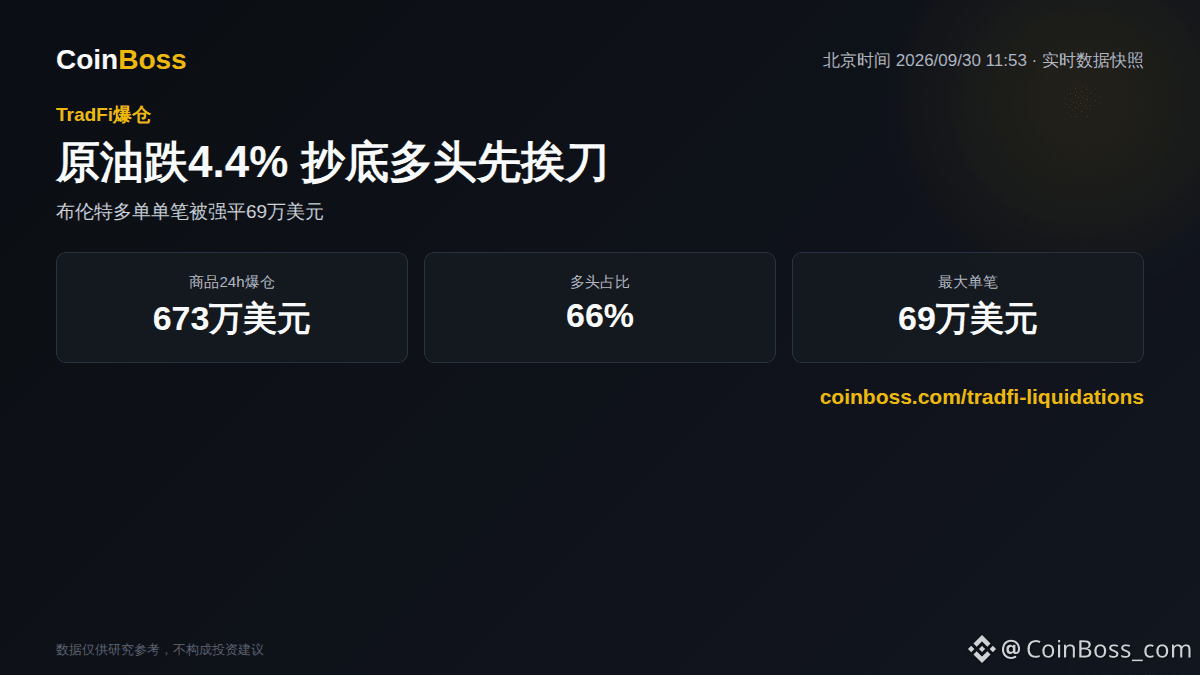
Crude oil drops 4.4% in a day; the largest liquidation is a $690,000 Brent longWith this drop in crude oil, the first to be buried was the dip-buying long crowd.
WTI crude oil fell 4.4% in 24 hours, sliding from 94.7 down to 88.6, and is now around 89.8. Brent is down 3%, hitting a low of 95.2.
Over the past 24 hours, commodity futures such as crude oil and gold saw $6.73 million liquidated, with 66% being long positions. The market keeps falling—every time it drops, people keep catching the dip and get liquidated one after another.
The largest single liquidation on Binance: 7,253 barrels of a Brent long position were liquidated at $95.51, about $690,000— the biggest single liquidation in the entire TradFi sector over the past 24 hours.
The past 4 hours have seen a shift in market sentiment. Brent crude bounced from 95.2 to 96.5; within commodity liquidations, shorts now accounted for 55%. One Brent short position of $310,000 was swept at 96.92. Chasers of shorts didn’t get away either.
Crude oil drops 4.4% in a day; the largest liquidation is a $690,000 Brent long
With this drop in crude oil, the first to be buried was the dip-buying long crowd.
WTI crude oil fell 4.4% in 24 hours, sliding from 94.7 down to 88.6, and is now around 89.8. Brent is down 3%, hitting a low of 95.2.
Over the past 24 hours, commodity futures such as crude oil and gold saw $6.73 million liquidated, with 66% being long positions. The market keeps falling—every time it drops, people keep catching the dip and get liquidated one after another.
The largest single liquidation on Binance: 7,253 barrels of a Brent long position were liquidated at $95.51, about $690,000— the biggest single liquidation in the entire TradFi sector over the past 24 hours.
The past 4 hours have seen a shift in market sentiment. Brent crude bounced from 95.2 to 96.5; within commodity liquidations, shorts now accounted for 55%. One Brent short position of $310,000 was swept at 96.92. Chasers of shorts didn’t get away either.
WTI crude oil fell 4.4% in 24 hours, sliding from 94.7 down to 88.6, and is now around 89.8. Brent is down 3%, hitting a low of 95.2.
Over the past 24 hours, commodity futures such as crude oil and gold saw $6.73 million liquidated, with 66% being long positions. The market keeps falling—every time it drops, people keep catching the dip and get liquidated one after another.
The largest single liquidation on Binance: 7,253 barrels of a Brent long position were liquidated at $95.51, about $690,000— the biggest single liquidation in the entire TradFi sector over the past 24 hours.
The past 4 hours have seen a shift in market sentiment. Brent crude bounced from 95.2 to 96.5; within commodity liquidations, shorts now accounted for 55%. One Brent short position of $310,000 was swept at 96.92. Chasers of shorts didn’t get away either.
147

·
--
One idea — two ways of trading. My result: +27.86 USDT
I expected the semiconductor sector to fall and decided to test one trading idea using two different methods: shorting SOXL and opening a long on SOXS.
📉 Short $SOXL
• +11.17 USDT
• +6.04 USDT
• +6.69 USDT
Total: +23.91 USDT
📈 Long $SOXS
• +2.07 USDT
• +0.63 USDT
• +1.25 USDT
Total: +3.95 USDT
Overall result of closed trades: +27.86 USDT.
SOXL and SOXS are not crypto assets and not individual chip manufacturers. These are two funds tied to the index of U.S. semiconductor companies.
SOXL tries to move about three times as strongly as the index over a single trading day. SOXS works in the opposite direction: when the sector falls, it typically rises about three times as strongly as the index’s daily move.
On Binance, I traded perpetual contracts that track these funds.
I was curious to test both approaches in practice. In this case, the short on SOXL produced a noticeably higher result than the long on SOXS.
For me, the main takeaway is: it’s not enough to correctly identify the market direction. Even the same idea can lead to different outcomes depending on the chosen instrument and the entry point.
#TradFi #Semiconductors
One idea — two ways of trading. My result: +27.86 USDT
I expected the semiconductor sector to fall and decided to test one trading idea using two different methods: shorting SOXL and opening a long on SOXS.
📉 Short $SOXL
• +11.17 USDT
• +6.04 USDT
• +6.69 USDT
Total: +23.91 USDT
📈 Long $SOXS
• +2.07 USDT
• +0.63 USDT
• +1.25 USDT
Total: +3.95 USDT
Overall result of closed trades: +27.86 USDT.
SOXL and SOXS are not crypto assets and not individual chip manufacturers. These are two funds tied to the index of U.S. semiconductor companies.
SOXL tries to move about three times as strongly as the index over a single trading day. SOXS works in the opposite direction: when the sector falls, it typically rises about three times as strongly as the index’s daily move.
On Binance, I traded perpetual contracts that track these funds.
I was curious to test both approaches in practice. In this case, the short on SOXL produced a noticeably higher result than the long on SOXS.
For me, the main takeaway is: it’s not enough to correctly identify the market direction. Even the same idea can lead to different outcomes depending on the chosen instrument and the entry point.
#TradFi #Semiconductors
I expected the semiconductor sector to fall and decided to test one trading idea using two different methods: shorting SOXL and opening a long on SOXS.
📉 Short $SOXL
• +11.17 USDT
• +6.04 USDT
• +6.69 USDT
Total: +23.91 USDT
📈 Long $SOXS
• +2.07 USDT
• +0.63 USDT
• +1.25 USDT
Total: +3.95 USDT
Overall result of closed trades: +27.86 USDT.
SOXL and SOXS are not crypto assets and not individual chip manufacturers. These are two funds tied to the index of U.S. semiconductor companies.
SOXL tries to move about three times as strongly as the index over a single trading day. SOXS works in the opposite direction: when the sector falls, it typically rises about three times as strongly as the index’s daily move.
On Binance, I traded perpetual contracts that track these funds.
I was curious to test both approaches in practice. In this case, the short on SOXL produced a noticeably higher result than the long on SOXS.
For me, the main takeaway is: it’s not enough to correctly identify the market direction. Even the same idea can lead to different outcomes depending on the chosen instrument and the entry point.
#TradFi #Semiconductors
1
132

·
--
📈 Traditional Finance Daily Report | 9.30
━━━━━━━━━━━━━
🇺🇸 US Stocks
▪️ The probability of a Federal Reserve rate hike in October has fallen to 50%, and market expectations for potential rate cuts later this year have warmed up again. Meanwhile, the number of JOLTS job openings in the US for August dropped to the lowest level since March; the layoff rate remains low, and there are mild signs of cooling in the employment picture.
▪️ Trump meets with AI industry executives. OpenAI launches a new product, Dots. Apple’s CEO pushes internal reforms, and the White House establishes an independent committee to oversee the implementation of AI agreements. The Pentagon has selected Boeing to be responsible for building the Navy’s next-generation fighter aircraft, providing a catalyst for defense-related stocks.
🥇 Gold and Commodities
▪️ SPDR Gold Trust reduced its holdings by 1.425 tons in a single day; the world’s largest gold ETF saw a small outflow of funds.
▪️ Trump announced a 54-billion-US-dollar Alaska LNG liquefied natural gas export plan. Under ongoing pressure ahead of midterm elections, he continues to bet on energy infrastructure.
🛢️ Crude Oil
▪️ Middle East supply has recovered to near pre-war levels, and oil prices have stabilized overall. The US plans to release 40 million barrels of strategic petroleum reserves via a swap mechanism. At the same time, the mediator is moving to restart negotiations on a temporary US-Iran agreement; geopolitical risk premium continues to be absorbed.
🔗 Linkage with BTC
BlackRock stated that AI could drive demand for crypto. Combined with fading expectations of Fed rate hikes and expectations that liquidity may ease at the margin, overall risk assets remain relatively warm. SEC Chair Atkins reiterated that he hopes to promote the “on-chain” linkage of the stock market; the narrative of integrating traditional finance with on-chain assets has once again received regulatory endorsement. In the short term, the interest-rate path and institutional narrative remain the key variables driving $BTC valuation. The macro backdrop isn’t particularly cold. #TradFi#Bitcoin
The above is for personal opinion sharing only and does not constitute investment advice. Please manage your position at your own discretion.
📈 Traditional Finance Daily Report | 9.30
━━━━━━━━━━━━━
🇺🇸 US Stocks
▪️ The probability of a Federal Reserve rate hike in October has fallen to 50%, and market expectations for potential rate cuts later this year have warmed up again. Meanwhile, the number of JOLTS job openings in the US for August dropped to the lowest level since March; the layoff rate remains low, and there are mild signs of cooling in the employment picture.
▪️ Trump meets with AI industry executives. OpenAI launches a new product, Dots. Apple’s CEO pushes internal reforms, and the White House establishes an independent committee to oversee the implementation of AI agreements. The Pentagon has selected Boeing to be responsible for building the Navy’s next-generation fighter aircraft, providing a catalyst for defense-related stocks.
🥇 Gold and Commodities
▪️ SPDR Gold Trust reduced its holdings by 1.425 tons in a single day; the world’s largest gold ETF saw a small outflow of funds.
▪️ Trump announced a 54-billion-US-dollar Alaska LNG liquefied natural gas export plan. Under ongoing pressure ahead of midterm elections, he continues to bet on energy infrastructure.
🛢️ Crude Oil
▪️ Middle East supply has recovered to near pre-war levels, and oil prices have stabilized overall. The US plans to release 40 million barrels of strategic petroleum reserves via a swap mechanism. At the same time, the mediator is moving to restart negotiations on a temporary US-Iran agreement; geopolitical risk premium continues to be absorbed.
🔗 Linkage with BTC
BlackRock stated that AI could drive demand for crypto. Combined with fading expectations of Fed rate hikes and expectations that liquidity may ease at the margin, overall risk assets remain relatively warm. SEC Chair Atkins reiterated that he hopes to promote the “on-chain” linkage of the stock market; the narrative of integrating traditional finance with on-chain assets has once again received regulatory endorsement. In the short term, the interest-rate path and institutional narrative remain the key variables driving $BTC valuation. The macro backdrop isn’t particularly cold. #TradFi#Bitcoin
The above is for personal opinion sharing only and does not constitute investment advice. Please manage your position at your own discretion.
━━━━━━━━━━━━━
🇺🇸 US Stocks
▪️ The probability of a Federal Reserve rate hike in October has fallen to 50%, and market expectations for potential rate cuts later this year have warmed up again. Meanwhile, the number of JOLTS job openings in the US for August dropped to the lowest level since March; the layoff rate remains low, and there are mild signs of cooling in the employment picture.
▪️ Trump meets with AI industry executives. OpenAI launches a new product, Dots. Apple’s CEO pushes internal reforms, and the White House establishes an independent committee to oversee the implementation of AI agreements. The Pentagon has selected Boeing to be responsible for building the Navy’s next-generation fighter aircraft, providing a catalyst for defense-related stocks.
🥇 Gold and Commodities
▪️ SPDR Gold Trust reduced its holdings by 1.425 tons in a single day; the world’s largest gold ETF saw a small outflow of funds.
▪️ Trump announced a 54-billion-US-dollar Alaska LNG liquefied natural gas export plan. Under ongoing pressure ahead of midterm elections, he continues to bet on energy infrastructure.
🛢️ Crude Oil
▪️ Middle East supply has recovered to near pre-war levels, and oil prices have stabilized overall. The US plans to release 40 million barrels of strategic petroleum reserves via a swap mechanism. At the same time, the mediator is moving to restart negotiations on a temporary US-Iran agreement; geopolitical risk premium continues to be absorbed.
🔗 Linkage with BTC
BlackRock stated that AI could drive demand for crypto. Combined with fading expectations of Fed rate hikes and expectations that liquidity may ease at the margin, overall risk assets remain relatively warm. SEC Chair Atkins reiterated that he hopes to promote the “on-chain” linkage of the stock market; the narrative of integrating traditional finance with on-chain assets has once again received regulatory endorsement. In the short term, the interest-rate path and institutional narrative remain the key variables driving $BTC valuation. The macro backdrop isn’t particularly cold. #TradFi#Bitcoin
The above is for personal opinion sharing only and does not constitute investment advice. Please manage your position at your own discretion.
165

·
--
Bullish
$BTC
Advice from an old gnome: hidden risks of bStocks ⛏️📜
Tokenized bStocks give you access to US markets right from your crypto wallet, but other rules apply here.
In my tavern, I often see adventurers who believe securities are an absolutely safe harbor. But even beyond the walls of the richest merchants’ guilds, there are traps of their own.
3 main risks of bStocks for a beginner:
• Weekend gaps: the stock market sleeps at night and on weekends. If loud news breaks, on Monday the price can open with a sharp gap past your stop orders.
• Illusion of stability: stocks also fall. Buying at a peak or trading with leverage carries the same liquidation risk as with crypto futures.
• Liquidity control: when US exchanges are closed, the order book thins out. Use only limit orders instead of market orders.
The gnome’s wisdom: keep your base in reliable gold (BTC) and reserves ($USDT ), and enter bStocks only without blind gambling.
Have you already tried trading bStocks on Binance, or do you hold only classic crypto? Write below! 👇
#bstock #CryptoGnome #RiskManagement #TradFi
$BTC
Advice from an old gnome: hidden risks of bStocks ⛏️📜
Tokenized bStocks give you access to US markets right from your crypto wallet, but other rules apply here.
In my tavern, I often see adventurers who believe securities are an absolutely safe harbor. But even beyond the walls of the richest merchants’ guilds, there are traps of their own.
3 main risks of bStocks for a beginner:
• Weekend gaps: the stock market sleeps at night and on weekends. If loud news breaks, on Monday the price can open with a sharp gap past your stop orders.
• Illusion of stability: stocks also fall. Buying at a peak or trading with leverage carries the same liquidation risk as with crypto futures.
• Liquidity control: when US exchanges are closed, the order book thins out. Use only limit orders instead of market orders.
The gnome’s wisdom: keep your base in reliable gold (BTC) and reserves ($USDT ), and enter bStocks only without blind gambling.
Have you already tried trading bStocks on Binance, or do you hold only classic crypto? Write below! 👇
#bstock #CryptoGnome #RiskManagement #TradFi
Advice from an old gnome: hidden risks of bStocks ⛏️📜
Tokenized bStocks give you access to US markets right from your crypto wallet, but other rules apply here.
In my tavern, I often see adventurers who believe securities are an absolutely safe harbor. But even beyond the walls of the richest merchants’ guilds, there are traps of their own.
3 main risks of bStocks for a beginner:
• Weekend gaps: the stock market sleeps at night and on weekends. If loud news breaks, on Monday the price can open with a sharp gap past your stop orders.
• Illusion of stability: stocks also fall. Buying at a peak or trading with leverage carries the same liquidation risk as with crypto futures.
• Liquidity control: when US exchanges are closed, the order book thins out. Use only limit orders instead of market orders.
The gnome’s wisdom: keep your base in reliable gold (BTC) and reserves ($USDT ), and enter bStocks only without blind gambling.
Have you already tried trading bStocks on Binance, or do you hold only classic crypto? Write below! 👇
#bstock #CryptoGnome #RiskManagement #TradFi
1
449

·
--
Cboe just signed a huge deal with S&P, extending exclusive trading rights through 2051! The biggest takeaway is that this collaboration is opening the door to blockchain—sooner or later, S&P options could be offered in a tokenized format. Traditional finance + blockchain—this fusion trend is so obvious right now. Big players are already positioning themselves; missing out might mean falling behind for real! #DeFi #TradFi
Cboe just inked a massive deal with S&P, extending exclusive rights through 2051! The game changer? They're opening the door for blockchain integration. Tokenized S&P options might be coming sooner than we think! Traditional finance meets blockchain - this convergence is accelerating, don't get left behind! #DeFi #TradFi $BTC $SPX
Cboe just signed a huge deal with S&P, extending exclusive trading rights through 2051! The biggest takeaway is that this collaboration is opening the door to blockchain—sooner or later, S&P options could be offered in a tokenized format. Traditional finance + blockchain—this fusion trend is so obvious right now. Big players are already positioning themselves; missing out might mean falling behind for real! #DeFi #TradFi
Cboe just inked a massive deal with S&P, extending exclusive rights through 2051! The game changer? They're opening the door for blockchain integration. Tokenized S&P options might be coming sooner than we think! Traditional finance meets blockchain - this convergence is accelerating, don't get left behind! #DeFi #TradFi $BTC $SPX
Cboe just inked a massive deal with S&P, extending exclusive rights through 2051! The game changer? They're opening the door for blockchain integration. Tokenized S&P options might be coming sooner than we think! Traditional finance meets blockchain - this convergence is accelerating, don't get left behind! #DeFi #TradFi $BTC $SPX
101
bStocks 📈
The market opens at 16:30, and you want to buy right now? With bStocks, you can trade tokenized US stocks 24/7.
💡 Fact: according to Binance Research, the volume of tokenized stocks increased from $237 million to $7.9 billion per month over 8 months.
⚠️ bStocks are certificates, not the stocks themselves. They do not grant voting rights in the company.
#BStocks #TradFi #BİNANCE #BinanceUkraine
bStocks 📈
The market opens at 16:30, and you want to buy right now? With bStocks, you can trade tokenized US stocks 24/7.
💡 Fact: according to Binance Research, the volume of tokenized stocks increased from $237 million to $7.9 billion per month over 8 months.
⚠️ bStocks are certificates, not the stocks themselves. They do not grant voting rights in the company.
#BStocks #TradFi #BİNANCE #BinanceUkraine
The market opens at 16:30, and you want to buy right now? With bStocks, you can trade tokenized US stocks 24/7.
💡 Fact: according to Binance Research, the volume of tokenized stocks increased from $237 million to $7.9 billion per month over 8 months.
⚠️ bStocks are certificates, not the stocks themselves. They do not grant voting rights in the company.
#BStocks #TradFi #BİNANCE #BinanceUkraine
1
175
Log in to explore more content
Join global crypto users on Binance Square
⚡️ Get latest and useful information about crypto.
💬 Trusted by the world’s largest crypto exchange.
👍 Discover real insights from verified creators.
Email / Phone number
Trending Topics
1
#SECToClarifyOnChainFundraisingRules
0 views
16 Discussing
2
#UKFCAOpensCryptoFirmAuthorization
600 views
68 Discussing
3
#JapanMOFStudyGroupOnTokenizedGovtBonds
1,061 views
109 Discussing
4
#QNTRises287%
20,062 views
391 Discussing
5
#TrumpRejectsAIRulesForVoluntaryAudits
17,952 views
482 Discussing
6
#BitgetHotWalletBreachTiedToThirdPartySecurityFlaw
9,226 views
334 Discussing
7
#OpenAIUnveilsAlwaysOnAgentDots
8,416 views
349 Discussing
8
#ChainlinkLaunchesBankSWIFTLedgerFramework
9,071 views
270 Discussing
9
#EarningsSeason
525,635 views
3,779 Discussing
10
#ZcashApproves$1.5MBugBounty
104 views
4 Discussing