

#payments
payments
261,170 views
3,328 Discussing
Hot
Latest

I spent years in financial services watching payments move. Here's the real settlement gap nobody talks about.
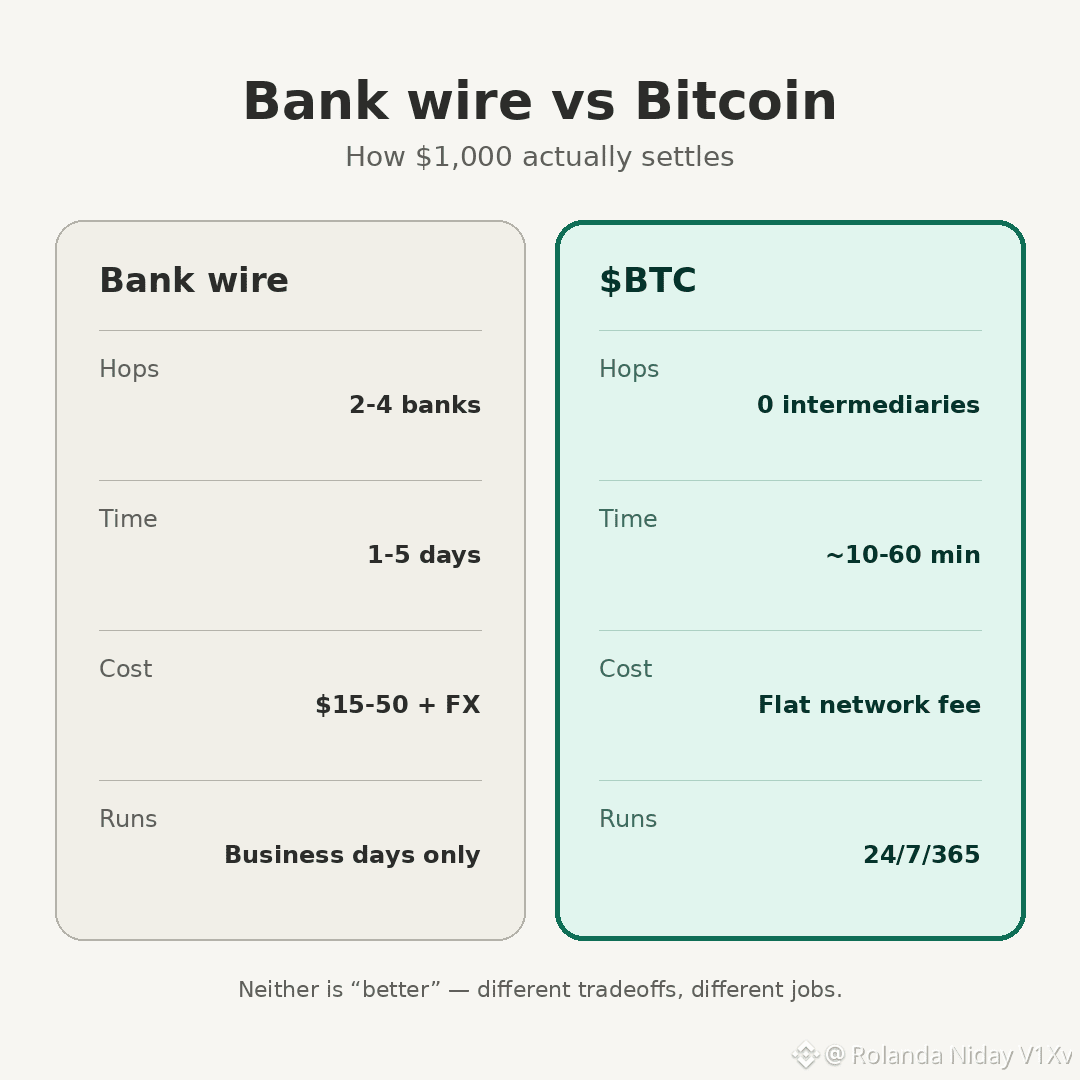
Sending $1,000 via SWIFT (bank wire):
→ Goes through 2-4 correspondent banks
→ Takes 1–5 business days
→ Costs $15–50 in fees, plus a hidden FX spread
→ Doesn't move on weekends or holidays
Sending $1,000 in $BTC:
→ First confirmation: ~10 minutes
→ "Final" settlement (6 confirmations): ~60 minutes
→ Moves 24/7/365 — no weekends, no holidays, no correspondent banks
→ Fee is a flat network fee, not a % + FX spread
⚙️ The tradeoff: banks give you reversibility, dispute protection, and regulatory recourse. Bitcoin gives you speed and no intermediaries — but no chargebacks if something goes wrong.
Neither is "better." They're solving different problems. But if you've ever waited 3 days for an international wire to clear, you already understand why blockchain settlement is a genuinely different model — not just hype.
💬 Have you ever had a wire transfer get stuck for days? Drop your story below.
#BinanceSquare #writetoearn #cryptoeducation #Payments $BTC
I spent years in financial services watching payments move. Here's the real settlement gap nobody talks about.
Sending $1,000 via SWIFT (bank wire):
→ Goes through 2-4 correspondent banks
→ Takes 1–5 business days
→ Costs $15–50 in fees, plus a hidden FX spread
→ Doesn't move on weekends or holidays
Sending $1,000 in $BTC :
→ First confirmation: ~10 minutes
→ "Final" settlement (6 confirmations): ~60 minutes
→ Moves 24/7/365 — no weekends, no holidays, no correspondent banks
→ Fee is a flat network fee, not a % + FX spread
⚙️ The tradeoff: banks give you reversibility, dispute protection, and regulatory recourse. Bitcoin gives you speed and no intermediaries — but no chargebacks if something goes wrong.
Neither is "better." They're solving different problems. But if you've ever waited 3 days for an international wire to clear, you already understand why blockchain settlement is a genuinely different model — not just hype.
💬 Have you ever had a wire transfer get stuck for days? Drop your story below.
#BinanceSquare #writetoearn #cryptoeducation #Payments $BTC
Sending $1,000 via SWIFT (bank wire):
→ Goes through 2-4 correspondent banks
→ Takes 1–5 business days
→ Costs $15–50 in fees, plus a hidden FX spread
→ Doesn't move on weekends or holidays
Sending $1,000 in $BTC :
→ First confirmation: ~10 minutes
→ "Final" settlement (6 confirmations): ~60 minutes
→ Moves 24/7/365 — no weekends, no holidays, no correspondent banks
→ Fee is a flat network fee, not a % + FX spread
⚙️ The tradeoff: banks give you reversibility, dispute protection, and regulatory recourse. Bitcoin gives you speed and no intermediaries — but no chargebacks if something goes wrong.
Neither is "better." They're solving different problems. But if you've ever waited 3 days for an international wire to clear, you already understand why blockchain settlement is a genuinely different model — not just hype.
💬 Have you ever had a wire transfer get stuck for days? Drop your story below.
#BinanceSquare #writetoearn #cryptoeducation #Payments $BTC
68

·
--
Apple and Google are hiring stablecoin experts faster than most crypto-native shops can even get the job post live.
You're still grinding over the next $USDT mint cycle or another $USDC freeze rumor while the actual shift is happening at companies that already own the phones in everyone's pocket. Miss this and you could watch liquidity evaporate from the tokens you actually hold.
Apple sits on more than 2 billion active devices. Google's Android footprint is larger. They are not chasing yield or memes. They want stablecoins to slash the 2-3% card fees down to almost nothing and settle payments in seconds instead of days. That is why they are poaching people who understand how $USDC is minted and how $USDT liquidity actually moves on-chain.
The downside is obvious once you sit with it. These companies already know your location, purchases, and contacts. Plug stablecoins into Apple Pay or Google Wallet and they get to decide which coins survive, add extra KYC layers, or freeze funds the same way Circle already has. Smaller crypto-native issuers get squeezed and the volume that currently props up $ETH gas and DeFi activity can dry up fast.
Where do you think this goes if they start pushing their own rails?
#Stablecoins #Crypto #Payments
Apple and Google are hiring stablecoin experts faster than most crypto-native shops can even get the job post live.
You're still grinding over the next $USDT mint cycle or another $USDC freeze rumor while the actual shift is happening at companies that already own the phones in everyone's pocket. Miss this and you could watch liquidity evaporate from the tokens you actually hold.
Apple sits on more than 2 billion active devices. Google's Android footprint is larger. They are not chasing yield or memes. They want stablecoins to slash the 2-3% card fees down to almost nothing and settle payments in seconds instead of days. That is why they are poaching people who understand how $USDC is minted and how $USDT liquidity actually moves on-chain.
The downside is obvious once you sit with it. These companies already know your location, purchases, and contacts. Plug stablecoins into Apple Pay or Google Wallet and they get to decide which coins survive, add extra KYC layers, or freeze funds the same way Circle already has. Smaller crypto-native issuers get squeezed and the volume that currently props up $ETH gas and DeFi activity can dry up fast.
Where do you think this goes if they start pushing their own rails?
#Stablecoins #Crypto #Payments
You're still grinding over the next $USDT mint cycle or another $USDC freeze rumor while the actual shift is happening at companies that already own the phones in everyone's pocket. Miss this and you could watch liquidity evaporate from the tokens you actually hold.
Apple sits on more than 2 billion active devices. Google's Android footprint is larger. They are not chasing yield or memes. They want stablecoins to slash the 2-3% card fees down to almost nothing and settle payments in seconds instead of days. That is why they are poaching people who understand how $USDC is minted and how $USDT liquidity actually moves on-chain.
The downside is obvious once you sit with it. These companies already know your location, purchases, and contacts. Plug stablecoins into Apple Pay or Google Wallet and they get to decide which coins survive, add extra KYC layers, or freeze funds the same way Circle already has. Smaller crypto-native issuers get squeezed and the volume that currently props up $ETH gas and DeFi activity can dry up fast.
Where do you think this goes if they start pushing their own rails?
#Stablecoins #Crypto #Payments

5

🚨 The U.S. FedNow is preparing to support cross-border payments 🧠
📊 | $BTC | $ETH | $BNB |
- Please follow, like, and comment, and share your thoughts 📈
- The U.S. Federal Reserve’s financial services division announced that FedNow has entered the next stage of cross-border payments
- On September 23, enhanced testing for international transaction information on the U.S. side will begin, inviting the first batch of institutions to participate
- This initiative aims to improve the speed, transparency, and compliance of cross-border payments 🔥
- The market may face downward pressure due to increased uncertainty in cross-border payments
- If testing progress is slow, panic-like volatility could be triggered in the short term, intensifying selling
- It is expected that whale institutions are currently distributing assets or accumulating at low levels, further suppressing prices
- In the short term, digital assets like Bitcoin may continue to face pressure, with volatility rising
- What long-term impact do you think FedNow’s cross-border payments progress will have on crypto assets?
- Welcome to keep following—we will provide subsequent analysis as soon as possible. We look forward to your comments
- #Crypto #Payments #Whales #Trading #Blockchain
🚨 The U.S. FedNow is preparing to support cross-border payments 🧠
📊 | $BTC | $ETH | $BNB |
- Please follow, like, and comment, and share your thoughts 📈
- The U.S. Federal Reserve’s financial services division announced that FedNow has entered the next stage of cross-border payments
- On September 23, enhanced testing for international transaction information on the U.S. side will begin, inviting the first batch of institutions to participate
- This initiative aims to improve the speed, transparency, and compliance of cross-border payments 🔥
- The market may face downward pressure due to increased uncertainty in cross-border payments
- If testing progress is slow, panic-like volatility could be triggered in the short term, intensifying selling
- It is expected that whale institutions are currently distributing assets or accumulating at low levels, further suppressing prices
- In the short term, digital assets like Bitcoin may continue to face pressure, with volatility rising
- What long-term impact do you think FedNow’s cross-border payments progress will have on crypto assets?
- Welcome to keep following—we will provide subsequent analysis as soon as possible. We look forward to your comments
- #Crypto #Payments #Whales #Trading #Blockchain
📊 | $BTC | $ETH | $BNB |
- Please follow, like, and comment, and share your thoughts 📈
- The U.S. Federal Reserve’s financial services division announced that FedNow has entered the next stage of cross-border payments
- On September 23, enhanced testing for international transaction information on the U.S. side will begin, inviting the first batch of institutions to participate
- This initiative aims to improve the speed, transparency, and compliance of cross-border payments 🔥
- The market may face downward pressure due to increased uncertainty in cross-border payments
- If testing progress is slow, panic-like volatility could be triggered in the short term, intensifying selling
- It is expected that whale institutions are currently distributing assets or accumulating at low levels, further suppressing prices
- In the short term, digital assets like Bitcoin may continue to face pressure, with volatility rising
- What long-term impact do you think FedNow’s cross-border payments progress will have on crypto assets?
- Welcome to keep following—we will provide subsequent analysis as soon as possible. We look forward to your comments
- #Crypto #Payments #Whales #Trading #Blockchain
233
🚨 BIX is driving improved everyday usability for crypto assets across wallets 🧠
📊 | $BTC | $ETH | $BNB |
- Follow us, like, and share your thoughts 📈
- BIX has launched a cross-wallet payment feature, allowing stablecoins to be used directly on merchants’ terminals
- The traditional process requires transferring to an exchange to sell first, then withdrawing to a bank—time-consuming and inconvenient
- The new approach enables instant exchange and payments through on-chain bridging
- The market remains cautious about this innovation, as liquidity and regulatory factors are still uncertain 🔥
- In the short term, the rollout of BIX payments may prompt quick distribution among holders, increasing sell pressure
- Large whale accounts showing allocation behavior could further intensify downward price pressure
- If on-chain payment demand grows, BIX’s ecosystem is expected to attract new capital, though short-term recovery may be limited
- Overall, short-term downside risk remains, and volatility may increase
- Do you think BIX’s cross-wallet payments can hold its ground in a highly competitive stablecoin market?
- Welcome to keep following us—leave your insights, and we will update our analysis as soon as possible
#Crypto #Altcoins #Payments #Whales #DeFi
🚨 BIX is driving improved everyday usability for crypto assets across wallets 🧠
📊 | $BTC | $ETH | $BNB |
- Follow us, like, and share your thoughts 📈
- BIX has launched a cross-wallet payment feature, allowing stablecoins to be used directly on merchants’ terminals
- The traditional process requires transferring to an exchange to sell first, then withdrawing to a bank—time-consuming and inconvenient
- The new approach enables instant exchange and payments through on-chain bridging
- The market remains cautious about this innovation, as liquidity and regulatory factors are still uncertain 🔥
- In the short term, the rollout of BIX payments may prompt quick distribution among holders, increasing sell pressure
- Large whale accounts showing allocation behavior could further intensify downward price pressure
- If on-chain payment demand grows, BIX’s ecosystem is expected to attract new capital, though short-term recovery may be limited
- Overall, short-term downside risk remains, and volatility may increase
- Do you think BIX’s cross-wallet payments can hold its ground in a highly competitive stablecoin market?
- Welcome to keep following us—leave your insights, and we will update our analysis as soon as possible
#Crypto #Altcoins #Payments #Whales #DeFi
📊 | $BTC | $ETH | $BNB |
- Follow us, like, and share your thoughts 📈
- BIX has launched a cross-wallet payment feature, allowing stablecoins to be used directly on merchants’ terminals
- The traditional process requires transferring to an exchange to sell first, then withdrawing to a bank—time-consuming and inconvenient
- The new approach enables instant exchange and payments through on-chain bridging
- The market remains cautious about this innovation, as liquidity and regulatory factors are still uncertain 🔥
- In the short term, the rollout of BIX payments may prompt quick distribution among holders, increasing sell pressure
- Large whale accounts showing allocation behavior could further intensify downward price pressure
- If on-chain payment demand grows, BIX’s ecosystem is expected to attract new capital, though short-term recovery may be limited
- Overall, short-term downside risk remains, and volatility may increase
- Do you think BIX’s cross-wallet payments can hold its ground in a highly competitive stablecoin market?
- Welcome to keep following us—leave your insights, and we will update our analysis as soon as possible
#Crypto #Altcoins #Payments #Whales #DeFi
197
🚨 Cardano joins Mastercard’s crypto partnership program, driving payment innovation 🧠
📊 | $BTC | $ETH | $BNB |
- Please follow, like, and comment to share your views. 📈
- Cardano (ADA) has officially joined Mastercard’s crypto partner program, aiming to expand payment scenarios.
- The program focuses on stablecoins and instant settlement, improving the compliance and speed of on-chain payments.
- Mastercard will provide technical integration and merchant onboarding support for Cardano, enabling cross-chain payments.
- This move marks a further deepening of Cardano’s deployment in mainstream payment infrastructure. 🔥
- In the short term, the Cardano price may remain range-bound, and market sentiment is expected to stay neutral.
- If the Mastercard partnership leads to real merchant usage, ADA may gain upward momentum and attract institutional attention.
- Currently, whale behavior has not shown any significant buying or selling; overall holdings remain stable.
- Investors may keep an eye on progress in on-chain payment applications—near-term volatility could be influenced by broader macro risks.
- To what extent do you think the Cardano–Mastercard partnership can enhance its payment ecosystem?
- Feel free to keep following our in-depth analysis and leave your thoughts.
#Crypto #Payments #Cardano #Mastercard #Altcoins
🚨 Cardano joins Mastercard’s crypto partnership program, driving payment innovation 🧠
📊 | $BTC | $ETH | $BNB |
- Please follow, like, and comment to share your views. 📈
- Cardano (ADA) has officially joined Mastercard’s crypto partner program, aiming to expand payment scenarios.
- The program focuses on stablecoins and instant settlement, improving the compliance and speed of on-chain payments.
- Mastercard will provide technical integration and merchant onboarding support for Cardano, enabling cross-chain payments.
- This move marks a further deepening of Cardano’s deployment in mainstream payment infrastructure. 🔥
- In the short term, the Cardano price may remain range-bound, and market sentiment is expected to stay neutral.
- If the Mastercard partnership leads to real merchant usage, ADA may gain upward momentum and attract institutional attention.
- Currently, whale behavior has not shown any significant buying or selling; overall holdings remain stable.
- Investors may keep an eye on progress in on-chain payment applications—near-term volatility could be influenced by broader macro risks.
- To what extent do you think the Cardano–Mastercard partnership can enhance its payment ecosystem?
- Feel free to keep following our in-depth analysis and leave your thoughts.
#Crypto #Payments #Cardano #Mastercard #Altcoins
📊 | $BTC | $ETH | $BNB |
- Please follow, like, and comment to share your views. 📈
- Cardano (ADA) has officially joined Mastercard’s crypto partner program, aiming to expand payment scenarios.
- The program focuses on stablecoins and instant settlement, improving the compliance and speed of on-chain payments.
- Mastercard will provide technical integration and merchant onboarding support for Cardano, enabling cross-chain payments.
- This move marks a further deepening of Cardano’s deployment in mainstream payment infrastructure. 🔥
- In the short term, the Cardano price may remain range-bound, and market sentiment is expected to stay neutral.
- If the Mastercard partnership leads to real merchant usage, ADA may gain upward momentum and attract institutional attention.
- Currently, whale behavior has not shown any significant buying or selling; overall holdings remain stable.
- Investors may keep an eye on progress in on-chain payment applications—near-term volatility could be influenced by broader macro risks.
- To what extent do you think the Cardano–Mastercard partnership can enhance its payment ecosystem?
- Feel free to keep following our in-depth analysis and leave your thoughts.
#Crypto #Payments #Cardano #Mastercard #Altcoins
81

·
--
⚡ Dtcpay Secures $25M Series A with SBI Group, Boosting Southeast Asian Payment Infrastructure
📌 Key Highlights:
• Dtcpay, a Singapore‑based payments platform, closes a $25 million Series A round led by Japan’s SBI Group.
• The funding round expands Dtcpay’s capital base to support cross‑border remittance and digital wallet services across ASEAN.
• The partnership signals growing confidence in regional fintech ecosystems and could accelerate adoption of interoperable payment protocols.
📊 Market Takeaway:
The deal underscores institutional appetite for Southeast Asian fintech, suggesting a bullish stance on cross‑border payment solutions amid rising digital‑currency usage.
#Fintech #Payments #Investing $AKE
⚡ Dtcpay Secures $25M Series A with SBI Group, Boosting Southeast Asian Payment Infrastructure
📌 Key Highlights:
• Dtcpay, a Singapore‑based payments platform, closes a $25 million Series A round led by Japan’s SBI Group.
• The funding round expands Dtcpay’s capital base to support cross‑border remittance and digital wallet services across ASEAN.
• The partnership signals growing confidence in regional fintech ecosystems and could accelerate adoption of interoperable payment protocols.
📊 Market Takeaway:
The deal underscores institutional appetite for Southeast Asian fintech, suggesting a bullish stance on cross‑border payment solutions amid rising digital‑currency usage.
#Fintech #Payments #Investing $AKE
📌 Key Highlights:
• Dtcpay, a Singapore‑based payments platform, closes a $25 million Series A round led by Japan’s SBI Group.
• The funding round expands Dtcpay’s capital base to support cross‑border remittance and digital wallet services across ASEAN.
• The partnership signals growing confidence in regional fintech ecosystems and could accelerate adoption of interoperable payment protocols.
📊 Market Takeaway:
The deal underscores institutional appetite for Southeast Asian fintech, suggesting a bullish stance on cross‑border payment solutions amid rising digital‑currency usage.
#Fintech #Payments #Investing $AKE
2
237
🚨 SBI Group Invests in DTCPAY 📈 $250 Million Series A 🧠
📊 | $BTC | $ETH | $BNB |
- Please follow our platform, like, and share your thoughts. 📈
- Dtcpay completes its Series A financing, amounting to approximately $250 million.
- This round is led by Japan’s SBI Group and is also its first batch of strategic investments.
- The funding will support Dtcpay in expanding its payment network across Asia.
- Other existing investors have not disclosed details of the additional capital. 🔥
- With this capital injection, Dtcpay’s stock price may experience minor fluctuations in the short term.
- Market sentiment is moderately watchful; whale holdings have not shown any significant changes, and trading may remain range-bound.
- If the company accelerates its rollout, its token demand is expected to increase, which could boost related on-chain activity.
- In the short term, overall crypto market sentiment is neutral, with limited opportunities for short-term trading.
- Do you think SBI’s entry will speed up blockchain integration in Asia’s payments industry?
- Stay tuned—we’ll be the first to interpret subsequent developments for you.
- #Crypto #Payments #SBI #Funding #Altcoins
🚨 SBI Group Invests in DTCPAY 📈 $250 Million Series A 🧠
📊 | $BTC | $ETH | $BNB |
- Please follow our platform, like, and share your thoughts. 📈
- Dtcpay completes its Series A financing, amounting to approximately $250 million.
- This round is led by Japan’s SBI Group and is also its first batch of strategic investments.
- The funding will support Dtcpay in expanding its payment network across Asia.
- Other existing investors have not disclosed details of the additional capital. 🔥
- With this capital injection, Dtcpay’s stock price may experience minor fluctuations in the short term.
- Market sentiment is moderately watchful; whale holdings have not shown any significant changes, and trading may remain range-bound.
- If the company accelerates its rollout, its token demand is expected to increase, which could boost related on-chain activity.
- In the short term, overall crypto market sentiment is neutral, with limited opportunities for short-term trading.
- Do you think SBI’s entry will speed up blockchain integration in Asia’s payments industry?
- Stay tuned—we’ll be the first to interpret subsequent developments for you.
- #Crypto #Payments #SBI #Funding #Altcoins
📊 | $BTC | $ETH | $BNB |
- Please follow our platform, like, and share your thoughts. 📈
- Dtcpay completes its Series A financing, amounting to approximately $250 million.
- This round is led by Japan’s SBI Group and is also its first batch of strategic investments.
- The funding will support Dtcpay in expanding its payment network across Asia.
- Other existing investors have not disclosed details of the additional capital. 🔥
- With this capital injection, Dtcpay’s stock price may experience minor fluctuations in the short term.
- Market sentiment is moderately watchful; whale holdings have not shown any significant changes, and trading may remain range-bound.
- If the company accelerates its rollout, its token demand is expected to increase, which could boost related on-chain activity.
- In the short term, overall crypto market sentiment is neutral, with limited opportunities for short-term trading.
- Do you think SBI’s entry will speed up blockchain integration in Asia’s payments industry?
- Stay tuned—we’ll be the first to interpret subsequent developments for you.
- #Crypto #Payments #SBI #Funding #Altcoins
7
🚨 SBI endorses DTCPAY, completes $25 million funding 🧠
📊 | $BTC | $ETH | $BNB |
- Please follow, like, and leave a comment to share your views. 📈
- Dtcpay has received backing from Japan’s SBI Group and has completed a $25 million Series A financing round.
- The funding amount is $25 million, which will be used to expand the merchant network and payment products.
- This round is Series A, with SBI as the primary investor; other investors were not disclosed. 🔥
- This financing may strengthen Dtcpay’s competitiveness in the stablecoin payment sector and attract more merchants to join.
- If market demand for stablecoin payments rises, Dtcpay may quickly expand its market share.
- Currently, there is no indication of large “whale” capital entering; in the short term, the impact on prices is limited, and the market is expected to remain range-bound.
- The related token is expected to have limited price volatility in the near term; investors may keep an eye on industry partnership developments.
- Do you think Dtcpay’s expansion plan can change the stablecoin payment ecosystem? Feel free to discuss.
- Stay tuned for our upcoming coverage and share your insights.
#Crypto #Stablecoins #Payments #Funding #Whales
🚨 SBI endorses DTCPAY, completes $25 million funding 🧠
📊 | $BTC | $ETH | $BNB |
- Please follow, like, and leave a comment to share your views. 📈
- Dtcpay has received backing from Japan’s SBI Group and has completed a $25 million Series A financing round.
- The funding amount is $25 million, which will be used to expand the merchant network and payment products.
- This round is Series A, with SBI as the primary investor; other investors were not disclosed. 🔥
- This financing may strengthen Dtcpay’s competitiveness in the stablecoin payment sector and attract more merchants to join.
- If market demand for stablecoin payments rises, Dtcpay may quickly expand its market share.
- Currently, there is no indication of large “whale” capital entering; in the short term, the impact on prices is limited, and the market is expected to remain range-bound.
- The related token is expected to have limited price volatility in the near term; investors may keep an eye on industry partnership developments.
- Do you think Dtcpay’s expansion plan can change the stablecoin payment ecosystem? Feel free to discuss.
- Stay tuned for our upcoming coverage and share your insights.
#Crypto #Stablecoins #Payments #Funding #Whales
📊 | $BTC | $ETH | $BNB |
- Please follow, like, and leave a comment to share your views. 📈
- Dtcpay has received backing from Japan’s SBI Group and has completed a $25 million Series A financing round.
- The funding amount is $25 million, which will be used to expand the merchant network and payment products.
- This round is Series A, with SBI as the primary investor; other investors were not disclosed. 🔥
- This financing may strengthen Dtcpay’s competitiveness in the stablecoin payment sector and attract more merchants to join.
- If market demand for stablecoin payments rises, Dtcpay may quickly expand its market share.
- Currently, there is no indication of large “whale” capital entering; in the short term, the impact on prices is limited, and the market is expected to remain range-bound.
- The related token is expected to have limited price volatility in the near term; investors may keep an eye on industry partnership developments.
- Do you think Dtcpay’s expansion plan can change the stablecoin payment ecosystem? Feel free to discuss.
- Stay tuned for our upcoming coverage and share your insights.
#Crypto #Stablecoins #Payments #Funding #Whales
151

$DASH is more than a chart or a trade—it is designed for real-world payments and savings. 💳
With a limited eventual supply of 18.9M coins, Dash supporters see scarcity as one factor that could help preserve purchasing power over time.
Still, crypto prices can be highly volatile, so it is important to understand both the use case and the risks before making any decision.
$DASH
#DASH #CryptoTrends2024 #Payments
{spot}(DASHUSDT)
$DASH is more than a chart or a trade—it is designed for real-world payments and savings. 💳
With a limited eventual supply of 18.9M coins, Dash supporters see scarcity as one factor that could help preserve purchasing power over time.
Still, crypto prices can be highly volatile, so it is important to understand both the use case and the risks before making any decision.
$DASH
#DASH #CryptoTrends2024 #Payments
With a limited eventual supply of 18.9M coins, Dash supporters see scarcity as one factor that could help preserve purchasing power over time.
Still, crypto prices can be highly volatile, so it is important to understand both the use case and the risks before making any decision.
$DASH
#DASH #CryptoTrends2024 #Payments
LY_DEV:
$ZEN check it <---
2
3
2.4k
🚨 WORLD 📈 MONEY with STRIPE funding covers 150 countries 🧠
📊 | $BTC | $ETH | $BNB |
- Please follow our channel, like, and share your thoughts. 📈
- World Money announced the launch of a new service in more than 150 countries, supported by Stripe funding.
- The new platform offers Morpho Earn, Bridge virtual accounts, and stablecoin features.
- Supports global payments, aiming to improve convenience for cross-border transactions. 🔥
- This initiative may increase demand for cross-border payments, driving up trading volume of related tokens.
- If regulation remains relaxed, World Money may attract more institutional users.
- Whale activity is currently neutral, and short-term market volatility is expected to be limited.
- If competing platforms accelerate their expansion, it could put pressure on its growth.
- What impact do you think the expansion of such cross-border payment platforms will have on traditional finance?
- Please keep following along and leave your comments to discuss industry trends together.
- #Crypto #Payments #Stablecoins #DeFi #Whales
🚨 WORLD 📈 MONEY with STRIPE funding covers 150 countries 🧠
📊 | $BTC | $ETH | $BNB |
- Please follow our channel, like, and share your thoughts. 📈
- World Money announced the launch of a new service in more than 150 countries, supported by Stripe funding.
- The new platform offers Morpho Earn, Bridge virtual accounts, and stablecoin features.
- Supports global payments, aiming to improve convenience for cross-border transactions. 🔥
- This initiative may increase demand for cross-border payments, driving up trading volume of related tokens.
- If regulation remains relaxed, World Money may attract more institutional users.
- Whale activity is currently neutral, and short-term market volatility is expected to be limited.
- If competing platforms accelerate their expansion, it could put pressure on its growth.
- What impact do you think the expansion of such cross-border payment platforms will have on traditional finance?
- Please keep following along and leave your comments to discuss industry trends together.
- #Crypto #Payments #Stablecoins #DeFi #Whales
📊 | $BTC | $ETH | $BNB |
- Please follow our channel, like, and share your thoughts. 📈
- World Money announced the launch of a new service in more than 150 countries, supported by Stripe funding.
- The new platform offers Morpho Earn, Bridge virtual accounts, and stablecoin features.
- Supports global payments, aiming to improve convenience for cross-border transactions. 🔥
- This initiative may increase demand for cross-border payments, driving up trading volume of related tokens.
- If regulation remains relaxed, World Money may attract more institutional users.
- Whale activity is currently neutral, and short-term market volatility is expected to be limited.
- If competing platforms accelerate their expansion, it could put pressure on its growth.
- What impact do you think the expansion of such cross-border payment platforms will have on traditional finance?
- Please keep following along and leave your comments to discuss industry trends together.
- #Crypto #Payments #Stablecoins #DeFi #Whales
170

·
--
Stablecoin payments company dtcpay secures $25M Series A financing led by SBI! Traditional financial giants are moving into stablecoin payments—what does this mean? Stablecoin real-world application scenarios are about to explode! This round of capital entering the market will definitely speed up stablecoin penetration in commercial payments. $USDT $USDC may have more moves next, especially in the payments applications space! #Stablecoin #Payments
Stablecoin payments firm dtcpay just secured a $25M Series A led by SBI! When big traditional finance players enter the space, you know real adoption is coming. This funding is gonna accelerate stablecoin penetration in commercial payments fast. Keep an eye on $USDT $USDC, especially in payment applications! #Stablecoin #Payments
Stablecoin payments company dtcpay secures $25M Series A financing led by SBI! Traditional financial giants are moving into stablecoin payments—what does this mean? Stablecoin real-world application scenarios are about to explode! This round of capital entering the market will definitely speed up stablecoin penetration in commercial payments. $USDT $USDC may have more moves next, especially in the payments applications space! #Stablecoin #Payments
Stablecoin payments firm dtcpay just secured a $25M Series A led by SBI! When big traditional finance players enter the space, you know real adoption is coming. This funding is gonna accelerate stablecoin penetration in commercial payments fast. Keep an eye on $USDT $USDC , especially in payment applications! #Stablecoin #Payments
Stablecoin payments firm dtcpay just secured a $25M Series A led by SBI! When big traditional finance players enter the space, you know real adoption is coming. This funding is gonna accelerate stablecoin penetration in commercial payments fast. Keep an eye on $USDT $USDC , especially in payment applications! #Stablecoin #Payments
1
1
🚨 DTCPAY gets SBI strategic investment 📈 Completes $25M Series A funding 🧠
📊 | $BTC | $ETH | $BNB |
- Please follow, like, and comment to discuss the latest developments in this report 📈
- dtcpay has completed a $25M Series A funding round, with SBI Group joining as a strategic investor.
- This round of financing aims to support the expansion of its stablecoin payments business across Asia and Europe.
- SBI’s investment highlights its plans for cross-border digital payment solutions.
- After this funding round, dtcpay’s valuation and market attention are expected to increase. 🔥
- In the short term, dtcpay’s stock price may trade sideways, and market sentiment is likely to remain neutral.
- If SBI’s resources can accelerate product rollout, dtcpay may gain a larger market share in the stablecoin payments sector.
- Currently, the trading activity of large “whales” remains neutral, with no significant buying or selling observed.
- It is expected that as the partnership progresses, the liquidity and trading volume of related tokens may increase over the next few weeks.
- How do you think SBI’s involvement will affect dtcpay’s competitive landscape in the global payments market?
- Feel free to keep following our upcoming analysis and share your views.
- #Crypto #DeFi #Stablecoins #Whales #Payments
🚨 DTCPAY gets SBI strategic investment 📈 Completes $25M Series A funding 🧠
📊 | $BTC | $ETH | $BNB |
- Please follow, like, and comment to discuss the latest developments in this report 📈
- dtcpay has completed a $25M Series A funding round, with SBI Group joining as a strategic investor.
- This round of financing aims to support the expansion of its stablecoin payments business across Asia and Europe.
- SBI’s investment highlights its plans for cross-border digital payment solutions.
- After this funding round, dtcpay’s valuation and market attention are expected to increase. 🔥
- In the short term, dtcpay’s stock price may trade sideways, and market sentiment is likely to remain neutral.
- If SBI’s resources can accelerate product rollout, dtcpay may gain a larger market share in the stablecoin payments sector.
- Currently, the trading activity of large “whales” remains neutral, with no significant buying or selling observed.
- It is expected that as the partnership progresses, the liquidity and trading volume of related tokens may increase over the next few weeks.
- How do you think SBI’s involvement will affect dtcpay’s competitive landscape in the global payments market?
- Feel free to keep following our upcoming analysis and share your views.
- #Crypto #DeFi #Stablecoins #Whales #Payments
📊 | $BTC | $ETH | $BNB |
- Please follow, like, and comment to discuss the latest developments in this report 📈
- dtcpay has completed a $25M Series A funding round, with SBI Group joining as a strategic investor.
- This round of financing aims to support the expansion of its stablecoin payments business across Asia and Europe.
- SBI’s investment highlights its plans for cross-border digital payment solutions.
- After this funding round, dtcpay’s valuation and market attention are expected to increase. 🔥
- In the short term, dtcpay’s stock price may trade sideways, and market sentiment is likely to remain neutral.
- If SBI’s resources can accelerate product rollout, dtcpay may gain a larger market share in the stablecoin payments sector.
- Currently, the trading activity of large “whales” remains neutral, with no significant buying or selling observed.
- It is expected that as the partnership progresses, the liquidity and trading volume of related tokens may increase over the next few weeks.
- How do you think SBI’s involvement will affect dtcpay’s competitive landscape in the global payments market?
- Feel free to keep following our upcoming analysis and share your views.
- #Crypto #DeFi #Stablecoins #Whales #Payments
387

Picture this: a trader I follow sent a sizable payment last month on a legacy chain and watched bots scrape the public details within hours, turning a routine transfer into a targeted phishing hit.
Most people miss how often this plays out. Crypto traders lose money from leaked transaction data that invites front-running or scams, plus simple mix-ups when they cannot attach a private note and end up sending to the wrong wallet.
Centralized apps have spent years monetizing your payment history by selling it off, which frequently lands in the hands of attackers hunting high-value wallets. Legacy chains like $ETH still offer no straightforward way to keep notes private, so details stay exposed or you skip context entirely and forget the purpose later. $BTC carries the same gap, leaving users open to both operational errors and future quantum breaks on existing encryption.
The pattern is consistent losses from data exploitation and avoidable mistakes. Liberdus $LIB combines private messaging with payments inside one quantum-secure protocol, something most have overlooked as a direct fix for these risks.
Where do you think protocols like this go from here?
#CryptoPrivacy #QuantumSecure #Payments
Picture this: a trader I follow sent a sizable payment last month on a legacy chain and watched bots scrape the public details within hours, turning a routine transfer into a targeted phishing hit.
Most people miss how often this plays out. Crypto traders lose money from leaked transaction data that invites front-running or scams, plus simple mix-ups when they cannot attach a private note and end up sending to the wrong wallet.
Centralized apps have spent years monetizing your payment history by selling it off, which frequently lands in the hands of attackers hunting high-value wallets. Legacy chains like $ETH still offer no straightforward way to keep notes private, so details stay exposed or you skip context entirely and forget the purpose later. $BTC carries the same gap, leaving users open to both operational errors and future quantum breaks on existing encryption.
The pattern is consistent losses from data exploitation and avoidable mistakes. Liberdus $LIB combines private messaging with payments inside one quantum-secure protocol, something most have overlooked as a direct fix for these risks.
Where do you think protocols like this go from here?
#CryptoPrivacy #QuantumSecure #Payments
Most people miss how often this plays out. Crypto traders lose money from leaked transaction data that invites front-running or scams, plus simple mix-ups when they cannot attach a private note and end up sending to the wrong wallet.
Centralized apps have spent years monetizing your payment history by selling it off, which frequently lands in the hands of attackers hunting high-value wallets. Legacy chains like $ETH still offer no straightforward way to keep notes private, so details stay exposed or you skip context entirely and forget the purpose later. $BTC carries the same gap, leaving users open to both operational errors and future quantum breaks on existing encryption.
The pattern is consistent losses from data exploitation and avoidable mistakes. Liberdus $LIB combines private messaging with payments inside one quantum-secure protocol, something most have overlooked as a direct fix for these risks.
Where do you think protocols like this go from here?
#CryptoPrivacy #QuantumSecure #Payments

27
🚨 Japanese financial institutions adopt AI translation and QR code payments 🧠
📊 | $BTC | $ETH | $BNB |
- Follow this post, like it, and leave a comment to share your thoughts 📈
- PayPay in Japan merchants has added support for UnionPay QR code payments
- Sumitomo Mitsui Banking Corporation deploys a multilingual translation assistant based on OpenAI
- This move aims to improve cross-border payment convenience and customer service efficiency 🔥
- Market sentiment is bearish; Bitcoin is expected to face downward pressure in the short term
- Influenced by payment innovation news, it may trigger short-term selling that increases volatility
- Large “whale” holdings show signs of redistribution or low-level accumulation, which may further intensify downside pressure
- If regulation is tightened further, the overall crypto market is expected to see continued pullbacks
- What impact do you think the integration of AI translation and QR code payments will have on demand for crypto assets?
- Please keep following along and share your views with us
#Crypto #Payments #AI #Whales #Trading
🚨 Japanese financial institutions adopt AI translation and QR code payments 🧠
📊 | $BTC | $ETH | $BNB |
- Follow this post, like it, and leave a comment to share your thoughts 📈
- PayPay in Japan merchants has added support for UnionPay QR code payments
- Sumitomo Mitsui Banking Corporation deploys a multilingual translation assistant based on OpenAI
- This move aims to improve cross-border payment convenience and customer service efficiency 🔥
- Market sentiment is bearish; Bitcoin is expected to face downward pressure in the short term
- Influenced by payment innovation news, it may trigger short-term selling that increases volatility
- Large “whale” holdings show signs of redistribution or low-level accumulation, which may further intensify downside pressure
- If regulation is tightened further, the overall crypto market is expected to see continued pullbacks
- What impact do you think the integration of AI translation and QR code payments will have on demand for crypto assets?
- Please keep following along and share your views with us
#Crypto #Payments #AI #Whales #Trading
📊 | $BTC | $ETH | $BNB |
- Follow this post, like it, and leave a comment to share your thoughts 📈
- PayPay in Japan merchants has added support for UnionPay QR code payments
- Sumitomo Mitsui Banking Corporation deploys a multilingual translation assistant based on OpenAI
- This move aims to improve cross-border payment convenience and customer service efficiency 🔥
- Market sentiment is bearish; Bitcoin is expected to face downward pressure in the short term
- Influenced by payment innovation news, it may trigger short-term selling that increases volatility
- Large “whale” holdings show signs of redistribution or low-level accumulation, which may further intensify downside pressure
- If regulation is tightened further, the overall crypto market is expected to see continued pullbacks
- What impact do you think the integration of AI translation and QR code payments will have on demand for crypto assets?
- Please keep following along and share your views with us
#Crypto #Payments #AI #Whales #Trading
101

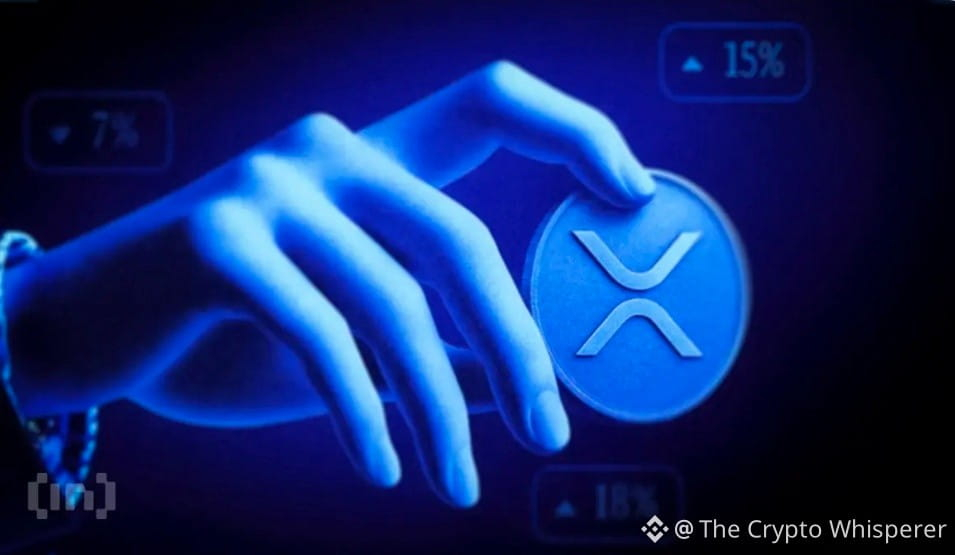
🚨 FORMER RIPPLEX EXECUTIVE: XRP HAS A “KILLER USE CASE” ⚡️
A former RippleX executive is putting the spotlight back on one of XRP’s biggest potential strengths: fast, efficient movement of value across borders.
The broader thesis is simple — if financial institutions can use blockchain to settle transactions faster and more efficiently, a digital asset like $XRP could become part of the liquidity layer connecting global markets.
{spot}(XRPUSDT)
⚡ Fast settlement
💧 Cross-border liquidity
🏦 Institutional adoption
🔗 Blockchain-based payments
But the real test is actual adoption at scale, not just the narrative.
Could payments and liquidity become XRP’s true “killer use case”? 👀
#RippleX #Blockchain #Payments #Altcoins
🚨 FORMER RIPPLEX EXECUTIVE: XRP HAS A “KILLER USE CASE” ⚡️
A former RippleX executive is putting the spotlight back on one of XRP’s biggest potential strengths: fast, efficient movement of value across borders.
The broader thesis is simple — if financial institutions can use blockchain to settle transactions faster and more efficiently, a digital asset like $XRP could become part of the liquidity layer connecting global markets.
⚡ Fast settlement
💧 Cross-border liquidity
🏦 Institutional adoption
🔗 Blockchain-based payments
But the real test is actual adoption at scale, not just the narrative.
Could payments and liquidity become XRP’s true “killer use case”? 👀
#RippleX #Blockchain #Payments #Altcoins
A former RippleX executive is putting the spotlight back on one of XRP’s biggest potential strengths: fast, efficient movement of value across borders.
The broader thesis is simple — if financial institutions can use blockchain to settle transactions faster and more efficiently, a digital asset like $XRP could become part of the liquidity layer connecting global markets.
⚡ Fast settlement
💧 Cross-border liquidity
🏦 Institutional adoption
🔗 Blockchain-based payments
But the real test is actual adoption at scale, not just the narrative.
Could payments and liquidity become XRP’s true “killer use case”? 👀
#RippleX #Blockchain #Payments #Altcoins
30
🚨 The Philippine Central Bank is considering a pause on approvals for new payment operator licenses 🧠
📊 | $BTC | $ETH | $BNB |
- Please follow, like, and leave your thoughts in the comments below. 📈
- The Central Bank of the Philippines is reviewing whether to impose a freeze on the issuance of licenses for new payment operators.
- The move is intended to mitigate financial risks and strengthen oversight of the payments ecosystem.
- If the pause is approved, it may restrict funding channels for new projects.
- Regulators expect to make a decision within this quarter. 🔥
- The market may see further declines, with increased short-term pressure.
- If the freeze takes effect, payment-related tokens may face a sell-off.
- Recent “whale” activity suggests distribution or buying the dip, implying that institutions are positioning themselves.
- Volatility is expected to rise in the short term, and investors should carefully manage their positions.
- How much impact do you think this regulatory action will have on the blockchain ecosystem in the Philippines?
- We welcome you to keep following our in-depth analysis and share your insights.
- #Crypto #Blockchain #Whales #Payments #Regulation
🚨 The Philippine Central Bank is considering a pause on approvals for new payment operator licenses 🧠
📊 | $BTC | $ETH | $BNB |
- Please follow, like, and leave your thoughts in the comments below. 📈
- The Central Bank of the Philippines is reviewing whether to impose a freeze on the issuance of licenses for new payment operators.
- The move is intended to mitigate financial risks and strengthen oversight of the payments ecosystem.
- If the pause is approved, it may restrict funding channels for new projects.
- Regulators expect to make a decision within this quarter. 🔥
- The market may see further declines, with increased short-term pressure.
- If the freeze takes effect, payment-related tokens may face a sell-off.
- Recent “whale” activity suggests distribution or buying the dip, implying that institutions are positioning themselves.
- Volatility is expected to rise in the short term, and investors should carefully manage their positions.
- How much impact do you think this regulatory action will have on the blockchain ecosystem in the Philippines?
- We welcome you to keep following our in-depth analysis and share your insights.
- #Crypto #Blockchain #Whales #Payments #Regulation
📊 | $BTC | $ETH | $BNB |
- Please follow, like, and leave your thoughts in the comments below. 📈
- The Central Bank of the Philippines is reviewing whether to impose a freeze on the issuance of licenses for new payment operators.
- The move is intended to mitigate financial risks and strengthen oversight of the payments ecosystem.
- If the pause is approved, it may restrict funding channels for new projects.
- Regulators expect to make a decision within this quarter. 🔥
- The market may see further declines, with increased short-term pressure.
- If the freeze takes effect, payment-related tokens may face a sell-off.
- Recent “whale” activity suggests distribution or buying the dip, implying that institutions are positioning themselves.
- Volatility is expected to rise in the short term, and investors should carefully manage their positions.
- How much impact do you think this regulatory action will have on the blockchain ecosystem in the Philippines?
- We welcome you to keep following our in-depth analysis and share your insights.
- #Crypto #Blockchain #Whales #Payments #Regulation
150
🚨 Former U.K. central bank deputy governor leads three former central bank officials to join FNALITY 🧠
📊 | $BTC | $ETH | $BNB |
- Please follow, like, and comment to share your views 📈
- Jon Cunliffe, Jochen Metzger, and Ron Berndsen—three former central bank executives—have joined the supervisory board of Fnality Europe.
- Fnality is expanding its cross-border payment business beyond the pound sterling payment system. 🔥
- Market sentiment is weak, as the news is seen as intensifying competition in traditional finance, and further declines may occur in the short term.
- If Fnality succeeds in expanding, it could increase demand for central bank digital currencies, leading funds to flow into other digital assets.
- In the near term, whales appear to be selling off or accumulating at low levels; short-term volatility is expected to increase, and prices may come under pressure.
- What impact do you think Fnality’s cross-border payments strategy will have on the crypto payments ecosystem?
- Stay tuned for more in-depth analysis, and leave your thoughts.
- #Crypto #Payments #Whales #FinTech #Market
🚨 Former U.K. central bank deputy governor leads three former central bank officials to join FNALITY 🧠
📊 | $BTC | $ETH | $BNB |
- Please follow, like, and comment to share your views 📈
- Jon Cunliffe, Jochen Metzger, and Ron Berndsen—three former central bank executives—have joined the supervisory board of Fnality Europe.
- Fnality is expanding its cross-border payment business beyond the pound sterling payment system. 🔥
- Market sentiment is weak, as the news is seen as intensifying competition in traditional finance, and further declines may occur in the short term.
- If Fnality succeeds in expanding, it could increase demand for central bank digital currencies, leading funds to flow into other digital assets.
- In the near term, whales appear to be selling off or accumulating at low levels; short-term volatility is expected to increase, and prices may come under pressure.
- What impact do you think Fnality’s cross-border payments strategy will have on the crypto payments ecosystem?
- Stay tuned for more in-depth analysis, and leave your thoughts.
- #Crypto #Payments #Whales #FinTech #Market
📊 | $BTC | $ETH | $BNB |
- Please follow, like, and comment to share your views 📈
- Jon Cunliffe, Jochen Metzger, and Ron Berndsen—three former central bank executives—have joined the supervisory board of Fnality Europe.
- Fnality is expanding its cross-border payment business beyond the pound sterling payment system. 🔥
- Market sentiment is weak, as the news is seen as intensifying competition in traditional finance, and further declines may occur in the short term.
- If Fnality succeeds in expanding, it could increase demand for central bank digital currencies, leading funds to flow into other digital assets.
- In the near term, whales appear to be selling off or accumulating at low levels; short-term volatility is expected to increase, and prices may come under pressure.
- What impact do you think Fnality’s cross-border payments strategy will have on the crypto payments ecosystem?
- Stay tuned for more in-depth analysis, and leave your thoughts.
- #Crypto #Payments #Whales #FinTech #Market
148

·
--
Verified
#bankofamericagrouppilotsusbdcstablecoin
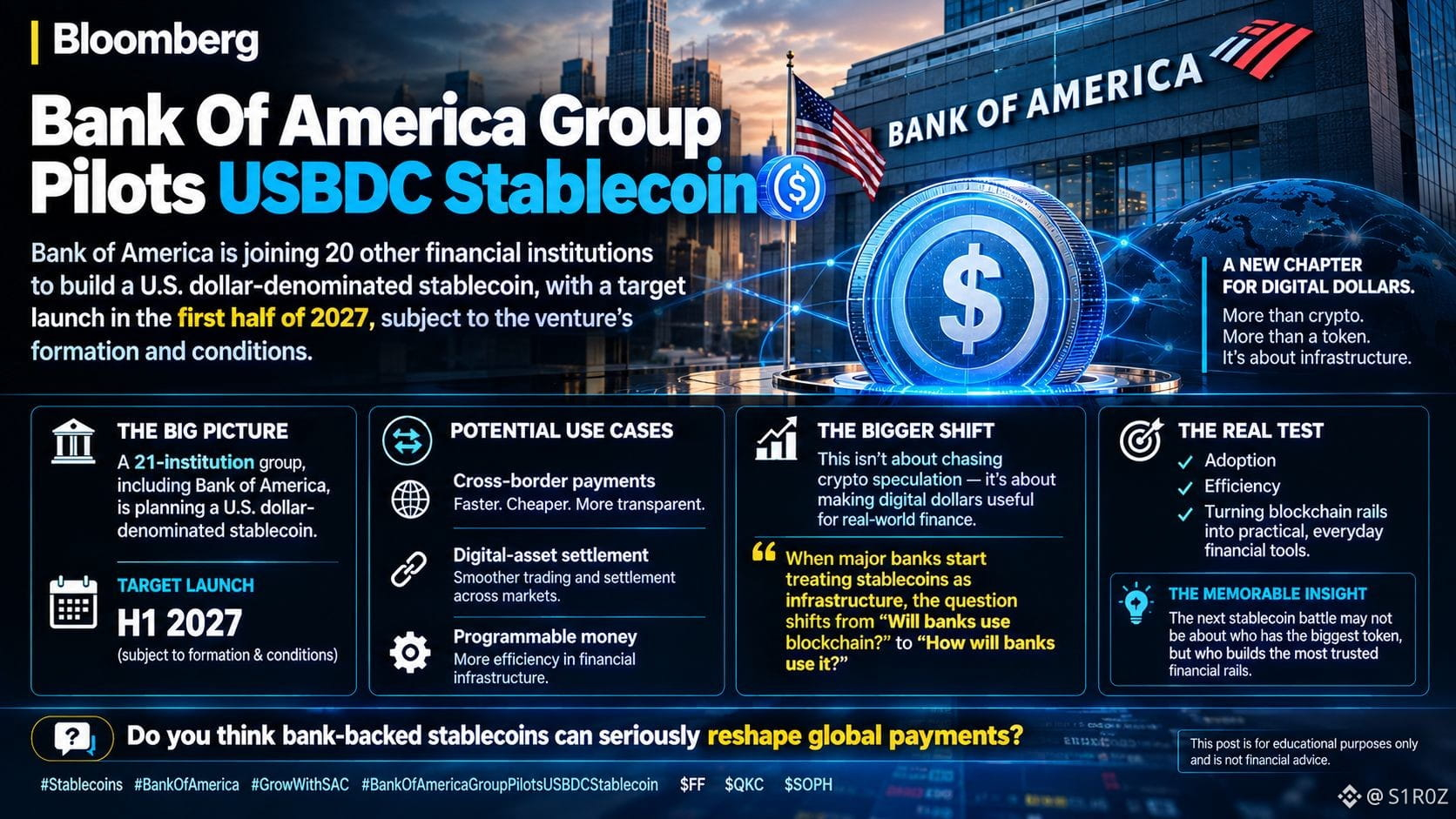
🏦 BANK OF AMERICA IS MOVING INTO STABLECOINS 🪙
Bank of America is reportedly part of a 21-institution group planning a U.S. dollar-denominated stablecoin, with a potential launch targeted for the first half of 2027, subject to the venture’s formation and conditions.
The interesting part isn’t the token itself — it’s the financial infrastructure behind it.
Potential use cases include cross-border payments and digital-asset settlement, where faster and more programmable dollar transfers could be useful.
And this could mark a bigger shift in how banks view blockchain.
The conversation is moving from:
“Will banks use blockchain?”
to:
“How will banks use it?” 👀
The real test will be adoption, efficiency and whether these systems can become practical financial rails.
Could bank-backed stablecoins reshape global payments?
NFA. Educational purposes only.
$FF
{spot}(FFUSDT)
$QKC
{spot}(QKCUSDT)
$SOPH
{spot}(SOPHUSDT)
#Stablecoins #BankOfAmerica #Crypto #Blockchain #Payments
#bankofamericagrouppilotsusbdcstablecoin
🏦 BANK OF AMERICA IS MOVING INTO STABLECOINS 🪙
Bank of America is reportedly part of a 21-institution group planning a U.S. dollar-denominated stablecoin, with a potential launch targeted for the first half of 2027, subject to the venture’s formation and conditions.
The interesting part isn’t the token itself — it’s the financial infrastructure behind it.
Potential use cases include cross-border payments and digital-asset settlement, where faster and more programmable dollar transfers could be useful.
And this could mark a bigger shift in how banks view blockchain.
The conversation is moving from:
“Will banks use blockchain?”
to:
“How will banks use it?” 👀
The real test will be adoption, efficiency and whether these systems can become practical financial rails.
Could bank-backed stablecoins reshape global payments?
NFA. Educational purposes only.
$FF
$QKC
$SOPH
#Stablecoins #BankOfAmerica #Crypto #Blockchain #Payments
🏦 BANK OF AMERICA IS MOVING INTO STABLECOINS 🪙
Bank of America is reportedly part of a 21-institution group planning a U.S. dollar-denominated stablecoin, with a potential launch targeted for the first half of 2027, subject to the venture’s formation and conditions.
The interesting part isn’t the token itself — it’s the financial infrastructure behind it.
Potential use cases include cross-border payments and digital-asset settlement, where faster and more programmable dollar transfers could be useful.
And this could mark a bigger shift in how banks view blockchain.
The conversation is moving from:
“Will banks use blockchain?”
to:
“How will banks use it?” 👀
The real test will be adoption, efficiency and whether these systems can become practical financial rails.
Could bank-backed stablecoins reshape global payments?
NFA. Educational purposes only.
$FF
$QKC
$SOPH
#Stablecoins #BankOfAmerica #Crypto #Blockchain #Payments
1
1.9k

·
--
Bullish
Verified
30D trade $XLM 22.4 USDT
Stellar: Activity is accelerating despite a decline in supply
The volume of stablecoin transfers on the Stellar network rose by around 50% over 30 days, reaching $8.92 billion, even as the supply fell 11.7% to $387.9 million.
What’s even more striking?
Less liquidity… but more movement of funds.
This may indicate an increase in the turnover speed of stablecoins and growing use of Stellar for payments and transfers.
In Q1 2026, stablecoin payments on the network reached $5.5 billion, up 72% year-over-year.
Is Stellar truly becoming a global payments infrastructure?
$XLM
#stellar #XLM #Stablecoins
#crypto #Payments
Stellar: Activity is accelerating despite a decline in supply
The volume of stablecoin transfers on the Stellar network rose by around 50% over 30 days, reaching $8.92 billion, even as the supply fell 11.7% to $387.9 million.
What’s even more striking?
Less liquidity… but more movement of funds.
This may indicate an increase in the turnover speed of stablecoins and growing use of Stellar for payments and transfers.
In Q1 2026, stablecoin payments on the network reached $5.5 billion, up 72% year-over-year.
Is Stellar truly becoming a global payments infrastructure?
$XLM
#stellar #XLM #Stablecoins
#crypto #Payments
The volume of stablecoin transfers on the Stellar network rose by around 50% over 30 days, reaching $8.92 billion, even as the supply fell 11.7% to $387.9 million.
What’s even more striking?
Less liquidity… but more movement of funds.
This may indicate an increase in the turnover speed of stablecoins and growing use of Stellar for payments and transfers.
In Q1 2026, stablecoin payments on the network reached $5.5 billion, up 72% year-over-year.
Is Stellar truly becoming a global payments infrastructure?
$XLM
#stellar #XLM #Stablecoins
#crypto #Payments

3
396

·
--
Bullish
💰 What if your messaging app could become your wallet?
For years, we’ve treated communication and payments as two completely separate things.
You talk to someone in one app.
Then you leave the conversation, open a wallet, find an address, send the funds, confirm the transaction… and go back.
All that just to send someone $5.
But the two actions naturally fit together:
Talk → agree → transact.
The infrastructure behind it can be complex.
The experience shouldn’t be.
That’s one of the ideas I find interesting about #Liberdus
It’s exploring an ecosystem where messaging and payments can work together, instead of forcing users to jump between completely different experiences.
Imagine chatting with someone and sending them value without leaving the conversation.
Talk.
Coordinate.
Transact.
Sometimes, reducing a few steps can completely change how people use a product.
And that could be a powerful direction for decentralized communication. 🔐
#Privacy #decentralization #Payments
💰 What if your messaging app could become your wallet?
For years, we’ve treated communication and payments as two completely separate things.
You talk to someone in one app.
Then you leave the conversation, open a wallet, find an address, send the funds, confirm the transaction… and go back.
All that just to send someone $5.
But the two actions naturally fit together:
Talk → agree → transact.
The infrastructure behind it can be complex.
The experience shouldn’t be.
That’s one of the ideas I find interesting about #Liberdus
It’s exploring an ecosystem where messaging and payments can work together, instead of forcing users to jump between completely different experiences.
Imagine chatting with someone and sending them value without leaving the conversation.
Talk.
Coordinate.
Transact.
Sometimes, reducing a few steps can completely change how people use a product.
And that could be a powerful direction for decentralized communication. 🔐
#Privacy #decentralization #Payments
For years, we’ve treated communication and payments as two completely separate things.
You talk to someone in one app.
Then you leave the conversation, open a wallet, find an address, send the funds, confirm the transaction… and go back.
All that just to send someone $5.
But the two actions naturally fit together:
Talk → agree → transact.
The infrastructure behind it can be complex.
The experience shouldn’t be.
That’s one of the ideas I find interesting about #Liberdus
It’s exploring an ecosystem where messaging and payments can work together, instead of forcing users to jump between completely different experiences.
Imagine chatting with someone and sending them value without leaving the conversation.
Talk.
Coordinate.
Transact.
Sometimes, reducing a few steps can completely change how people use a product.
And that could be a powerful direction for decentralized communication. 🔐
#Privacy #decentralization #Payments

1
186
Log in to explore more content
Join global crypto users on Binance Square
⚡️ Get latest and useful information about crypto.
💬 Trusted by the world’s largest crypto exchange.
👍 Discover real insights from verified creators.
Email / Phone number
Trending Topics
1
#BinanceWillListHyperliquid(HYPE)
10,627 views
371 Discussing
2
#BitcoinFallsBelow$83,000
61 views
20 Discussing
3
#BitcoinFallsToAround$84,600ThisWeek
0 views
0 Discussing
4
#US30YearYieldHighestSince2004
12 views
7 Discussing
5
#ETHBreaksAbove$2,700
436 views
20 Discussing
6
#USWeighsPromotingDollarStablecoinsAbroad
20,202 views
797 Discussing
7
#US10YTreasuryYieldHits19YearHigh
16,936 views
602 Discussing
8
#SpotBitcoinETFsInflow$2.31BInFourDays
2,126 views
54 Discussing
9
#BitcoinRejectedAt$87,300Twice
0 views
0 Discussing
10
#BCHJumps28%OnCMEFuturesListing
60,974 views
1,300 Discussing