
#lam_phat
lam_phat
3,544 views
45 Discussing
Hot
Latest

·
--
In the trading session on 11/9, global inflation pressure flared up again as the U.S. released its Producer Price Index (PPI), which for August rose 5.4% year-on-year, surpassing the forecast of 5.3%. At the same time, the European Central Bank (ECB), under the leadership of President Christine Lagarde, carried out its second interest-rate hike this year, amid intensifying U.S.–Iran military conflict that pushed WTI oil prices up 3.44%, reaching 100 USD per barrel.
Higher-than-expected PPI data combined with 206,000 jobless claims indicates that cost pressure in input markets remains very persistent. More worryingly, surging energy prices are directly threatening to reverse efforts to cool inflation, forcing global policymakers to maintain a tighter monetary stance more aggressively than what the market had previously expected.
Financial markets reacted clearly to the outlook of interest rates staying at a high level for an extended period. Despite rising geopolitical risks, pressure on the exchange rate and yields led spot gold prices to fall 1.00% to 4,357.04 USD per ounce, while silver dropped sharply by 3.00% to 65.25 USD per ounce.
For the crypto market, this complex macro backdrop will likely curb liquidity and new inflows into $BTC. As concerns about inflation and interest rates return to dominate sentiment, risk assets are likely to enter a period of accumulating volatility and face downward pressure in the short term. 📊
#vimo #lam_phat #lai_suat
In the trading session on 11/9, global inflation pressure flared up again as the U.S. released its Producer Price Index (PPI), which for August rose 5.4% year-on-year, surpassing the forecast of 5.3%. At the same time, the European Central Bank (ECB), under the leadership of President Christine Lagarde, carried out its second interest-rate hike this year, amid intensifying U.S.–Iran military conflict that pushed WTI oil prices up 3.44%, reaching 100 USD per barrel.
Higher-than-expected PPI data combined with 206,000 jobless claims indicates that cost pressure in input markets remains very persistent. More worryingly, surging energy prices are directly threatening to reverse efforts to cool inflation, forcing global policymakers to maintain a tighter monetary stance more aggressively than what the market had previously expected.
Financial markets reacted clearly to the outlook of interest rates staying at a high level for an extended period. Despite rising geopolitical risks, pressure on the exchange rate and yields led spot gold prices to fall 1.00% to 4,357.04 USD per ounce, while silver dropped sharply by 3.00% to 65.25 USD per ounce.
For the crypto market, this complex macro backdrop will likely curb liquidity and new inflows into $BTC . As concerns about inflation and interest rates return to dominate sentiment, risk assets are likely to enter a period of accumulating volatility and face downward pressure in the short term. 📊
#vimo #lam_phat #lai_suat
Higher-than-expected PPI data combined with 206,000 jobless claims indicates that cost pressure in input markets remains very persistent. More worryingly, surging energy prices are directly threatening to reverse efforts to cool inflation, forcing global policymakers to maintain a tighter monetary stance more aggressively than what the market had previously expected.
Financial markets reacted clearly to the outlook of interest rates staying at a high level for an extended period. Despite rising geopolitical risks, pressure on the exchange rate and yields led spot gold prices to fall 1.00% to 4,357.04 USD per ounce, while silver dropped sharply by 3.00% to 65.25 USD per ounce.
For the crypto market, this complex macro backdrop will likely curb liquidity and new inflows into $BTC . As concerns about inflation and interest rates return to dominate sentiment, risk assets are likely to enter a period of accumulating volatility and face downward pressure in the short term. 📊
#vimo #lam_phat #lai_suat
2
760
·
--
The energy market continues to record strong fluctuations as WTI crude oil prices rise by 2.00% today, breaking above 93.05 USD per barrel. The price increase for this session is drawing significant attention from investors worldwide, as energy has long been one of the most volatile factors affecting the macroeconomic outlook.
The resurgence of crude oil prices is especially important because it intensifies the inflation pressure. When incoming oil feedstock stays at a high level above 93 USD per barrel, transportation and production costs will be pushed up, directly hindering the cooling progress of the CPI index that central banks are working hard to achieve.
For traditional financial markets, concerns about renewed inflation are beneficial for U.S. government bond yields and for the DXY index to remain at high levels, while simultaneously reducing expectations that the Fed will cut rates soon. This pressure may heighten the risk sentiment across asset classes such as stocks and precious metals.
Specifically for the crypto market, a tight macro environment and falling liquidity are not positive signals for $BTC and altcoins in the near term. When the USD strengthens, money tends to seek safer channels rather than highly volatile assets, requiring investors to remain cautious and maintain discipline in trading decisions.
#gia_dau #vi_mo #inflation
The energy market continues to record strong fluctuations as WTI crude oil prices rise by 2.00% today, breaking above 93.05 USD per barrel. The price increase for this session is drawing significant attention from investors worldwide, as energy has long been one of the most volatile factors affecting the macroeconomic outlook.
The resurgence of crude oil prices is especially important because it intensifies the inflation pressure. When incoming oil feedstock stays at a high level above 93 USD per barrel, transportation and production costs will be pushed up, directly hindering the cooling progress of the CPI index that central banks are working hard to achieve.
For traditional financial markets, concerns about renewed inflation are beneficial for U.S. government bond yields and for the DXY index to remain at high levels, while simultaneously reducing expectations that the Fed will cut rates soon. This pressure may heighten the risk sentiment across asset classes such as stocks and precious metals.
Specifically for the crypto market, a tight macro environment and falling liquidity are not positive signals for $BTC and altcoins in the near term. When the USD strengthens, money tends to seek safer channels rather than highly volatile assets, requiring investors to remain cautious and maintain discipline in trading decisions.
#gia_dau #vi_mo #inflation
The resurgence of crude oil prices is especially important because it intensifies the inflation pressure. When incoming oil feedstock stays at a high level above 93 USD per barrel, transportation and production costs will be pushed up, directly hindering the cooling progress of the CPI index that central banks are working hard to achieve.
For traditional financial markets, concerns about renewed inflation are beneficial for U.S. government bond yields and for the DXY index to remain at high levels, while simultaneously reducing expectations that the Fed will cut rates soon. This pressure may heighten the risk sentiment across asset classes such as stocks and precious metals.
Specifically for the crypto market, a tight macro environment and falling liquidity are not positive signals for $BTC and altcoins in the near term. When the USD strengthens, money tends to seek safer channels rather than highly volatile assets, requiring investors to remain cautious and maintain discipline in trading decisions.
#gia_dau #vi_mo #inflation
13
·
--
Based on data released on Wednesday by the American Automobile Association (AAA), the national average retail diesel price in the United States surged to 5.783 USD per gallon. This is the highest level since mid-2022, surpassing the April peak during heightened Middle East tensions, and is only a hair’s breadth away from the all-time record set in June 2022. Expert Patrick DeHaan from GasBuddy believes this upward momentum could topple the previous record just ahead of the U.S. Labor Day holiday.
The rise in diesel prices is a major warning signal for the macroeconomic picture. Diesel is the lifeblood fuel of the entire supply chain, from road and rail transportation to industrial machinery. When this cost jumps sharply, pressure can quickly seep into the prices of consumer goods, directly threatening efforts to cool inflation, which is currently at a pivotal stage in major economies.
In financial markets, the energy group’s rally immediately reignites fears that inflation may return. This could force the Fed to maintain a hawkish stance for longer, keep U.S. Treasury yields anchored at high levels, and put downward pressure on risk assets such as stocks and, more broadly, commodities.
In the cryptocurrency market, liquidity has weakened as interest rates remain elevated, which will be a significant headwind for the recovery of $BTC and other altcoins. Cautious sentiment is prevailing as investors worry that rising energy costs may delay the global monetary easing cycle in the final months of the year.
#nang_luong #lam_phat #macro_economy
Based on data released on Wednesday by the American Automobile Association (AAA), the national average retail diesel price in the United States surged to 5.783 USD per gallon. This is the highest level since mid-2022, surpassing the April peak during heightened Middle East tensions, and is only a hair’s breadth away from the all-time record set in June 2022. Expert Patrick DeHaan from GasBuddy believes this upward momentum could topple the previous record just ahead of the U.S. Labor Day holiday.
The rise in diesel prices is a major warning signal for the macroeconomic picture. Diesel is the lifeblood fuel of the entire supply chain, from road and rail transportation to industrial machinery. When this cost jumps sharply, pressure can quickly seep into the prices of consumer goods, directly threatening efforts to cool inflation, which is currently at a pivotal stage in major economies.
In financial markets, the energy group’s rally immediately reignites fears that inflation may return. This could force the Fed to maintain a hawkish stance for longer, keep U.S. Treasury yields anchored at high levels, and put downward pressure on risk assets such as stocks and, more broadly, commodities.
In the cryptocurrency market, liquidity has weakened as interest rates remain elevated, which will be a significant headwind for the recovery of $BTC and other altcoins. Cautious sentiment is prevailing as investors worry that rising energy costs may delay the global monetary easing cycle in the final months of the year.
#nang_luong #lam_phat #macro_economy
The rise in diesel prices is a major warning signal for the macroeconomic picture. Diesel is the lifeblood fuel of the entire supply chain, from road and rail transportation to industrial machinery. When this cost jumps sharply, pressure can quickly seep into the prices of consumer goods, directly threatening efforts to cool inflation, which is currently at a pivotal stage in major economies.
In financial markets, the energy group’s rally immediately reignites fears that inflation may return. This could force the Fed to maintain a hawkish stance for longer, keep U.S. Treasury yields anchored at high levels, and put downward pressure on risk assets such as stocks and, more broadly, commodities.
In the cryptocurrency market, liquidity has weakened as interest rates remain elevated, which will be a significant headwind for the recovery of $BTC and other altcoins. Cautious sentiment is prevailing as investors worry that rising energy costs may delay the global monetary easing cycle in the final months of the year.
#nang_luong #lam_phat #macro_economy
11
·
--
The International Energy Agency (IEA) has just released its latest monthly market report, issuing a series of warnings that are cause for concern over the state of supply-demand balance in the global energy market. According to the IEA, the shortfall in crude supply this year will be larger than expected, as global stockpiles decline at a record pace. In addition, the stalled U.S.–Iran nuclear deal delays the recovery of flows in the North Sea oil region until 2027, while ongoing conflict in Ukraine also leads to a forecast decline in Russia’s oil production in 2026 by 8 million barrels per day.
The report shows that extended geopolitical risks may further boost the energy market despite expectations. Persistent under-supplies of crude, along with tightness in the global refining system, if pushed to such extremes, can keep fuel prices elevated—creating significant pressure on the global supply chain as reserve drawdowns become increasingly constrained.
For traditional financial markets, rising oil prices act as a direct trigger for reigniting inflation pressures. This may force major central banks, especially the Fed, to maintain a tighter monetary policy for longer—thereby keeping bond yields and the USD at elevated levels, which in turn puts pressure on the stock market.
The crypto market also cannot avoid indirect effects from this macroeconomic environment. When concerns about inflation and high interest rates return, capital flows into risk assets such as $BTC may be constrained in the short term, requiring investors to carefully monitor subsequent geopolitical developments.
#dau #nang_luong #lam_phat
The International Energy Agency (IEA) has just released its latest monthly market report, issuing a series of warnings that are cause for concern over the state of supply-demand balance in the global energy market. According to the IEA, the shortfall in crude supply this year will be larger than expected, as global stockpiles decline at a record pace. In addition, the stalled U.S.–Iran nuclear deal delays the recovery of flows in the North Sea oil region until 2027, while ongoing conflict in Ukraine also leads to a forecast decline in Russia’s oil production in 2026 by 8 million barrels per day.
The report shows that extended geopolitical risks may further boost the energy market despite expectations. Persistent under-supplies of crude, along with tightness in the global refining system, if pushed to such extremes, can keep fuel prices elevated—creating significant pressure on the global supply chain as reserve drawdowns become increasingly constrained.
For traditional financial markets, rising oil prices act as a direct trigger for reigniting inflation pressures. This may force major central banks, especially the Fed, to maintain a tighter monetary policy for longer—thereby keeping bond yields and the USD at elevated levels, which in turn puts pressure on the stock market.
The crypto market also cannot avoid indirect effects from this macroeconomic environment. When concerns about inflation and high interest rates return, capital flows into risk assets such as $BTC may be constrained in the short term, requiring investors to carefully monitor subsequent geopolitical developments.
#dau #nang_luong #lam_phat
The report shows that extended geopolitical risks may further boost the energy market despite expectations. Persistent under-supplies of crude, along with tightness in the global refining system, if pushed to such extremes, can keep fuel prices elevated—creating significant pressure on the global supply chain as reserve drawdowns become increasingly constrained.
For traditional financial markets, rising oil prices act as a direct trigger for reigniting inflation pressures. This may force major central banks, especially the Fed, to maintain a tighter monetary policy for longer—thereby keeping bond yields and the USD at elevated levels, which in turn puts pressure on the stock market.
The crypto market also cannot avoid indirect effects from this macroeconomic environment. When concerns about inflation and high interest rates return, capital flows into risk assets such as $BTC may be constrained in the short term, requiring investors to carefully monitor subsequent geopolitical developments.
#dau #nang_luong #lam_phat
61
·
--
The global energy market has just witnessed a dramatic surge in volatility as Brent crude prices recorded a sharp increase of 4.00% in a single day, officially breaking through the important psychological threshold and touching a high of 103.55 USD per barrel. This spike reflects a volatile growth pattern, but it also highlights mounting concerns about the risk of supply disruptions.
This strong rise is especially significant because it exerts heavy pressure on the prospects for controlling global inflation. When energy prices remain above 100 USD per barrel, input costs for manufacturing and transportation sectors will be pushed up, directly slowing the pace of cooling in consumer price indices and forcing key economic sectors to face the risk of stagflation.
The impact on financial markets is already evident as fears of inflation returning could compel central banks—especially the U.S. Federal Reserve—to maintain tighter monetary policy for longer. Yields on U.S. Treasury bonds and the U.S. dollar index are likely to strengthen, while stock markets will face selling pressure due to concerns that profit margins for businesses may be eroded.
For the crypto market, this is an extremely sobering signal. When macro pressures rise and the U.S. dollar strengthens, liquidity tends to tighten, with capital withdrawing from risk assets like $BTC to seek relatively safer channels. This volatility may help market sentiment become more cautious in the short term, while also limiting the ability of funds to break through into crypto.
#gia_dau #vi_mo #inflation
The global energy market has just witnessed a dramatic surge in volatility as Brent crude prices recorded a sharp increase of 4.00% in a single day, officially breaking through the important psychological threshold and touching a high of 103.55 USD per barrel. This spike reflects a volatile growth pattern, but it also highlights mounting concerns about the risk of supply disruptions.
This strong rise is especially significant because it exerts heavy pressure on the prospects for controlling global inflation. When energy prices remain above 100 USD per barrel, input costs for manufacturing and transportation sectors will be pushed up, directly slowing the pace of cooling in consumer price indices and forcing key economic sectors to face the risk of stagflation.
The impact on financial markets is already evident as fears of inflation returning could compel central banks—especially the U.S. Federal Reserve—to maintain tighter monetary policy for longer. Yields on U.S. Treasury bonds and the U.S. dollar index are likely to strengthen, while stock markets will face selling pressure due to concerns that profit margins for businesses may be eroded.
For the crypto market, this is an extremely sobering signal. When macro pressures rise and the U.S. dollar strengthens, liquidity tends to tighten, with capital withdrawing from risk assets like $BTC to seek relatively safer channels. This volatility may help market sentiment become more cautious in the short term, while also limiting the ability of funds to break through into crypto.
#gia_dau #vi_mo #inflation
This strong rise is especially significant because it exerts heavy pressure on the prospects for controlling global inflation. When energy prices remain above 100 USD per barrel, input costs for manufacturing and transportation sectors will be pushed up, directly slowing the pace of cooling in consumer price indices and forcing key economic sectors to face the risk of stagflation.
The impact on financial markets is already evident as fears of inflation returning could compel central banks—especially the U.S. Federal Reserve—to maintain tighter monetary policy for longer. Yields on U.S. Treasury bonds and the U.S. dollar index are likely to strengthen, while stock markets will face selling pressure due to concerns that profit margins for businesses may be eroded.
For the crypto market, this is an extremely sobering signal. When macro pressures rise and the U.S. dollar strengthens, liquidity tends to tighten, with capital withdrawing from risk assets like $BTC to seek relatively safer channels. This volatility may help market sentiment become more cautious in the short term, while also limiting the ability of funds to break through into crypto.
#gia_dau #vi_mo #inflation
8
·
--
In the most recent monetary policy meeting, Turkish Central Bank Governor Karahasan and the committee decided to keep the benchmark one-week interest rate unchanged at 37%. The move came as Brent crude oil prices just officially rose above the $100 per barrel mark for the first time since July, directly affected by escalating tensions between Iran and the United States in the Strait of Hormuz area.
The decision reflects an extremely cautious approach from policymakers. Although Turkey’s year-on-year inflation data in August cooled to 31.5% (lower than expected and had sparked hopes for monetary easing), a new energy-supply shock has thrown off the calculations. Oil prices breaking through the $100 threshold poses a direct threat to efforts to contain global inflation, forcing central banks to delay their interest-rate cut roadmap.
On the macroeconomic front, this development places heavy pressure on cost-push dynamics, strengthens the US dollar, and pushes government bond yields higher. Risk-averse sentiment is returning and once again enveloping traditional financial markets as the risk of stagflation re-emerges.
For the crypto market, pressure from energy prices and the tightness of global monetary policy will significantly limit new liquidity inflows into $BTC along with altcoins. Investors should prepare for short-term bouts of volatility and prioritize risk management while geopolitical variables remain highly unpredictable. 🛡
#gia_dau #lam_phat #macro_economics
In the most recent monetary policy meeting, Turkish Central Bank Governor Karahasan and the committee decided to keep the benchmark one-week interest rate unchanged at 37%. The move came as Brent crude oil prices just officially rose above the $100 per barrel mark for the first time since July, directly affected by escalating tensions between Iran and the United States in the Strait of Hormuz area.
The decision reflects an extremely cautious approach from policymakers. Although Turkey’s year-on-year inflation data in August cooled to 31.5% (lower than expected and had sparked hopes for monetary easing), a new energy-supply shock has thrown off the calculations. Oil prices breaking through the $100 threshold poses a direct threat to efforts to contain global inflation, forcing central banks to delay their interest-rate cut roadmap.
On the macroeconomic front, this development places heavy pressure on cost-push dynamics, strengthens the US dollar, and pushes government bond yields higher. Risk-averse sentiment is returning and once again enveloping traditional financial markets as the risk of stagflation re-emerges.
For the crypto market, pressure from energy prices and the tightness of global monetary policy will significantly limit new liquidity inflows into $BTC along with altcoins. Investors should prepare for short-term bouts of volatility and prioritize risk management while geopolitical variables remain highly unpredictable. 🛡
#gia_dau #lam_phat #macro_economics
The decision reflects an extremely cautious approach from policymakers. Although Turkey’s year-on-year inflation data in August cooled to 31.5% (lower than expected and had sparked hopes for monetary easing), a new energy-supply shock has thrown off the calculations. Oil prices breaking through the $100 threshold poses a direct threat to efforts to contain global inflation, forcing central banks to delay their interest-rate cut roadmap.
On the macroeconomic front, this development places heavy pressure on cost-push dynamics, strengthens the US dollar, and pushes government bond yields higher. Risk-averse sentiment is returning and once again enveloping traditional financial markets as the risk of stagflation re-emerges.
For the crypto market, pressure from energy prices and the tightness of global monetary policy will significantly limit new liquidity inflows into $BTC along with altcoins. Investors should prepare for short-term bouts of volatility and prioritize risk management while geopolitical variables remain highly unpredictable. 🛡
#gia_dau #lam_phat #macro_economics
178
·
--
The European Central Bank (ECB) is expected to raise its deposit rate by an additional 25 basis points to 2.5% at its scheduled meeting this Thursday. The tightening move comes amid heightened tensions over the war involving Iran, which has sent energy prices soaring, driving the Eurozone consumer price index above the 3% mark last month—nearing the three-year high.
The decision reflects the ECB’s stance being more hawkish than the U.S. Federal Reserve (Fed) or the Bank of England (BoE) in its efforts to control inflation. The unexpected resilience of the Eurozone economy has strengthened the case for this second rate hike, dashing hopes that major central banks would soon collectively ease monetary policy.
The ECB’s tightening, along with energy risks, will continue to push regional bond yields higher and directly weigh on the strength of the EUR. A sustained increase in the cost of capital will certainly pressure valuations across global stock markets, forcing speculative flows to retreat to safer havens.
For the crypto market, continued macro liquidity tightening will slow the inflow of new capital into $BTC and the entire altcoin segment. Investors should remain cautious ahead of short-term bouts of volatility, as global risk appetite is being shaped by inflation pressure and geopolitical uncertainty. 📊
#ecb #lai_suat #lam_phat
The European Central Bank (ECB) is expected to raise its deposit rate by an additional 25 basis points to 2.5% at its scheduled meeting this Thursday. The tightening move comes amid heightened tensions over the war involving Iran, which has sent energy prices soaring, driving the Eurozone consumer price index above the 3% mark last month—nearing the three-year high.
The decision reflects the ECB’s stance being more hawkish than the U.S. Federal Reserve (Fed) or the Bank of England (BoE) in its efforts to control inflation. The unexpected resilience of the Eurozone economy has strengthened the case for this second rate hike, dashing hopes that major central banks would soon collectively ease monetary policy.
The ECB’s tightening, along with energy risks, will continue to push regional bond yields higher and directly weigh on the strength of the EUR. A sustained increase in the cost of capital will certainly pressure valuations across global stock markets, forcing speculative flows to retreat to safer havens.
For the crypto market, continued macro liquidity tightening will slow the inflow of new capital into $BTC and the entire altcoin segment. Investors should remain cautious ahead of short-term bouts of volatility, as global risk appetite is being shaped by inflation pressure and geopolitical uncertainty. 📊
#ecb #lai_suat #lam_phat
The decision reflects the ECB’s stance being more hawkish than the U.S. Federal Reserve (Fed) or the Bank of England (BoE) in its efforts to control inflation. The unexpected resilience of the Eurozone economy has strengthened the case for this second rate hike, dashing hopes that major central banks would soon collectively ease monetary policy.
The ECB’s tightening, along with energy risks, will continue to push regional bond yields higher and directly weigh on the strength of the EUR. A sustained increase in the cost of capital will certainly pressure valuations across global stock markets, forcing speculative flows to retreat to safer havens.
For the crypto market, continued macro liquidity tightening will slow the inflow of new capital into $BTC and the entire altcoin segment. Investors should remain cautious ahead of short-term bouts of volatility, as global risk appetite is being shaped by inflation pressure and geopolitical uncertainty. 📊
#ecb #lai_suat #lam_phat
98
·
--
The global energy market has just witnessed an important milestone, as the Brent crude futures contract price officially touched the $100 per barrel threshold in today’s trading session—marking the first time it has returned to this psychological level since the end of July.
The return to the $100 mark is not only symbolic, but also signals that input costs are rising on a global scale. This directly threatens efforts to curb inflation by major central banks, especially as bond-market expectations are looking for a clearer path to easing interest rates in the latter half of the year.
In traditional financial markets, crude prices strengthening further tends to stoke bullish sentiment, lift government bond yields and the U.S. dollar index, while putting downward pressure on global stock markets. Higher energy costs may also slow economic growth and force the Fed to keep monetary policy tighter for longer.
For the crypto market, renewed inflation pressure means global liquidity will likely remain tight, causing capital to continue to be cautious toward risky assets such as $BTC kho, which could potentially surge sharply in the short term. Investors should stay alert to unexpected macro-market fluctuations, as inflation risks remain elevated and visible.
#dau #nang_luong #inflation
The global energy market has just witnessed an important milestone, as the Brent crude futures contract price officially touched the $100 per barrel threshold in today’s trading session—marking the first time it has returned to this psychological level since the end of July.
The return to the $100 mark is not only symbolic, but also signals that input costs are rising on a global scale. This directly threatens efforts to curb inflation by major central banks, especially as bond-market expectations are looking for a clearer path to easing interest rates in the latter half of the year.
In traditional financial markets, crude prices strengthening further tends to stoke bullish sentiment, lift government bond yields and the U.S. dollar index, while putting downward pressure on global stock markets. Higher energy costs may also slow economic growth and force the Fed to keep monetary policy tighter for longer.
For the crypto market, renewed inflation pressure means global liquidity will likely remain tight, causing capital to continue to be cautious toward risky assets such as $BTC kho, which could potentially surge sharply in the short term. Investors should stay alert to unexpected macro-market fluctuations, as inflation risks remain elevated and visible.
#dau #nang_luong #inflation
The return to the $100 mark is not only symbolic, but also signals that input costs are rising on a global scale. This directly threatens efforts to curb inflation by major central banks, especially as bond-market expectations are looking for a clearer path to easing interest rates in the latter half of the year.
In traditional financial markets, crude prices strengthening further tends to stoke bullish sentiment, lift government bond yields and the U.S. dollar index, while putting downward pressure on global stock markets. Higher energy costs may also slow economic growth and force the Fed to keep monetary policy tighter for longer.
For the crypto market, renewed inflation pressure means global liquidity will likely remain tight, causing capital to continue to be cautious toward risky assets such as $BTC kho, which could potentially surge sharply in the short term. Investors should stay alert to unexpected macro-market fluctuations, as inflation risks remain elevated and visible.
#dau #nang_luong #inflation
1
·
--
The global energy market has just witnessed a strong uptrend session as WTI crude oil prices rose by more than 2% to reach 90.90 USD per barrel, while Brent crude has already broken above 96 USD per barrel with a 1.81% increase on the day.
This strong oil price rally is taking place amid concerns that supplies will remain tight and prices will keep rising. Sustaining energy prices at high levels is directly putting pressure on the efforts to curb inflation by major central banks, especially when the market is still expecting a softer-landing scenario.
For the overall financial market, pressure from rising oil prices has pushed up yields on U.S. government bond and added further strength to the DXY index. When higher energy costs feed back into expectations for inflation, the market may have to reprice the likelihood that the Fed will keep interest rates at high levels for a longer period.
This prevailing market sentiment is directly weighing on risky assets such as the stock market and crypto. $BTC c along with various altcoins may face short-term jitters if capital flows toward risk-off positions, with preference given to safer assets ahead of new concerns from rising macro volatility. 📊
#gia_dau #vi_mo #inflation
The global energy market has just witnessed a strong uptrend session as WTI crude oil prices rose by more than 2% to reach 90.90 USD per barrel, while Brent crude has already broken above 96 USD per barrel with a 1.81% increase on the day.
This strong oil price rally is taking place amid concerns that supplies will remain tight and prices will keep rising. Sustaining energy prices at high levels is directly putting pressure on the efforts to curb inflation by major central banks, especially when the market is still expecting a softer-landing scenario.
For the overall financial market, pressure from rising oil prices has pushed up yields on U.S. government bond and added further strength to the DXY index. When higher energy costs feed back into expectations for inflation, the market may have to reprice the likelihood that the Fed will keep interest rates at high levels for a longer period.
This prevailing market sentiment is directly weighing on risky assets such as the stock market and crypto. $BTC c along with various altcoins may face short-term jitters if capital flows toward risk-off positions, with preference given to safer assets ahead of new concerns from rising macro volatility. 📊
#gia_dau #vi_mo #inflation
This strong oil price rally is taking place amid concerns that supplies will remain tight and prices will keep rising. Sustaining energy prices at high levels is directly putting pressure on the efforts to curb inflation by major central banks, especially when the market is still expecting a softer-landing scenario.
For the overall financial market, pressure from rising oil prices has pushed up yields on U.S. government bond and added further strength to the DXY index. When higher energy costs feed back into expectations for inflation, the market may have to reprice the likelihood that the Fed will keep interest rates at high levels for a longer period.
This prevailing market sentiment is directly weighing on risky assets such as the stock market and crypto. $BTC c along with various altcoins may face short-term jitters if capital flows toward risk-off positions, with preference given to safer assets ahead of new concerns from rising macro volatility. 📊
#gia_dau #vi_mo #inflation
4
·
--
The global energy market has just witnessed a strong upward session as both WTI and Brent crude oil prices rose together by more than 1% on the day, sequentially breaking through the key levels of USD 90.01 per barrel and USD 95.26 per barrel.
The rebound in front-month oil prices is occurring amid concerns about supply tightness and ongoing geopolitical tensions that continue to drive gains. Keeping oil prices at elevated levels above the 90–95 USD per barrel range is creating very strong pressure on global inflation, especially overall inflation (headline CPI) in the US and Europe, which has already shown signs of cooling recently.
This volatility directly affects markets as US government bond yields and the US dollar (DXY) may rebound strongly ahead of expectations that the Fed will have to keep interest rates high for longer to curb consumer price growth. Stocks and other risky assets therefore face significant adjustment pressure.
For the crypto market in particular, higher energy prices often serve as a short-term negative signal due to risk-avoidance sentiment as capital tends to move away from highly volatile assets such as $BTC and Altcoins in search of safer havens, while expectations for the soonest interest-rate cut become even more distant.
#dau #nang_luong #lam_phat
The global energy market has just witnessed a strong upward session as both WTI and Brent crude oil prices rose together by more than 1% on the day, sequentially breaking through the key levels of USD 90.01 per barrel and USD 95.26 per barrel.
The rebound in front-month oil prices is occurring amid concerns about supply tightness and ongoing geopolitical tensions that continue to drive gains. Keeping oil prices at elevated levels above the 90–95 USD per barrel range is creating very strong pressure on global inflation, especially overall inflation (headline CPI) in the US and Europe, which has already shown signs of cooling recently.
This volatility directly affects markets as US government bond yields and the US dollar (DXY) may rebound strongly ahead of expectations that the Fed will have to keep interest rates high for longer to curb consumer price growth. Stocks and other risky assets therefore face significant adjustment pressure.
For the crypto market in particular, higher energy prices often serve as a short-term negative signal due to risk-avoidance sentiment as capital tends to move away from highly volatile assets such as $BTC and Altcoins in search of safer havens, while expectations for the soonest interest-rate cut become even more distant.
#dau #nang_luong #lam_phat
The rebound in front-month oil prices is occurring amid concerns about supply tightness and ongoing geopolitical tensions that continue to drive gains. Keeping oil prices at elevated levels above the 90–95 USD per barrel range is creating very strong pressure on global inflation, especially overall inflation (headline CPI) in the US and Europe, which has already shown signs of cooling recently.
This volatility directly affects markets as US government bond yields and the US dollar (DXY) may rebound strongly ahead of expectations that the Fed will have to keep interest rates high for longer to curb consumer price growth. Stocks and other risky assets therefore face significant adjustment pressure.
For the crypto market in particular, higher energy prices often serve as a short-term negative signal due to risk-avoidance sentiment as capital tends to move away from highly volatile assets such as $BTC and Altcoins in search of safer havens, while expectations for the soonest interest-rate cut become even more distant.
#dau #nang_luong #lam_phat
57
·
--
In the latest research report, analysts at Deutsche Bank warn that a sharp escalation in geopolitical tensions between the US and Iran is rapidly reversing global market sentiment. The risk of prolonged energy supply disruptions, especially through the Strait of Hormuz, has directly driven oil prices sharply higher, while in Asia, the yield on Japan’s 5-year government bonds has risen by 4.0 basis points to a new record level of 2.295%.
This development shows that the market is facing a double shock: surging geopolitical risk and the return of inflation fears. Elevated energy prices threaten central banks’ efforts to contain inflation, forcing investors to reprice expectations regarding the timing of tightening or the postponement of monetary easing on a broad scale.
A sell-off wave has spread across both global equities and bond markets as capital flows seek safer-haven channels. The sharp jump in bond yields reflects increased cost pressures, putting heavy strain on liquidity in financial markets and causing the USD index and the prices of essential commodities to swing violently.
For the crypto market, this negative macro pressure is significantly reducing risk appetite. Short-term capital tends to move into a defensive posture, putting $BTC and various altcoins under adjustment pressure; investors should closely monitor oil price movements and Middle East tensions before opening large positions.
#dia_chinh_tri #lam_phat #bond
In the latest research report, analysts at Deutsche Bank warn that a sharp escalation in geopolitical tensions between the US and Iran is rapidly reversing global market sentiment. The risk of prolonged energy supply disruptions, especially through the Strait of Hormuz, has directly driven oil prices sharply higher, while in Asia, the yield on Japan’s 5-year government bonds has risen by 4.0 basis points to a new record level of 2.295%.
This development shows that the market is facing a double shock: surging geopolitical risk and the return of inflation fears. Elevated energy prices threaten central banks’ efforts to contain inflation, forcing investors to reprice expectations regarding the timing of tightening or the postponement of monetary easing on a broad scale.
A sell-off wave has spread across both global equities and bond markets as capital flows seek safer-haven channels. The sharp jump in bond yields reflects increased cost pressures, putting heavy strain on liquidity in financial markets and causing the USD index and the prices of essential commodities to swing violently.
For the crypto market, this negative macro pressure is significantly reducing risk appetite. Short-term capital tends to move into a defensive posture, putting $BTC and various altcoins under adjustment pressure; investors should closely monitor oil price movements and Middle East tensions before opening large positions.
#dia_chinh_tri #lam_phat #bond
This development shows that the market is facing a double shock: surging geopolitical risk and the return of inflation fears. Elevated energy prices threaten central banks’ efforts to contain inflation, forcing investors to reprice expectations regarding the timing of tightening or the postponement of monetary easing on a broad scale.
A sell-off wave has spread across both global equities and bond markets as capital flows seek safer-haven channels. The sharp jump in bond yields reflects increased cost pressures, putting heavy strain on liquidity in financial markets and causing the USD index and the prices of essential commodities to swing violently.
For the crypto market, this negative macro pressure is significantly reducing risk appetite. Short-term capital tends to move into a defensive posture, putting $BTC and various altcoins under adjustment pressure; investors should closely monitor oil price movements and Middle East tensions before opening large positions.
#dia_chinh_tri #lam_phat #bond
87
·
--
The University of Michigan has just released a preliminary September report in the U.S. with worrying macro data: the consumer sentiment index unexpectedly fell sharply to 47.8 (well below the forecast of 51 and the prior level of 51.7). More notably, one-year inflation expectations jumped to 4.6%, exceeding the expected 4.2% and the previous 4.0%.
The combination of a drop in consumer confidence and rising inflation expectations reflects a complex economic picture. U.S. consumers clearly feel the growing pressure from higher living costs while growth shows signs of slowing, raising the specter of stagflation—the most troublesome scenario for policymakers.
For traditional financial markets, a surge in inflation expectations will narrow the Fed’s room to loosen monetary policy. U.S. Treasury yields and the U.S. dollar tend to stay elevated to reflect the risk of interest rates remaining anchored for longer, putting pressure on adjustments in U.S. stock markets in the near term.
For the crypto market, risk-averse sentiment is increasing as macro liquidity cannot improve anytime soon. Inflows into $BTC and altcoins may slow down, with investors becoming more defensive against persistent inflation variables. 📊
#kinh_te_my #lam_phat #fed
The University of Michigan has just released a preliminary September report in the U.S. with worrying macro data: the consumer sentiment index unexpectedly fell sharply to 47.8 (well below the forecast of 51 and the prior level of 51.7). More notably, one-year inflation expectations jumped to 4.6%, exceeding the expected 4.2% and the previous 4.0%.
The combination of a drop in consumer confidence and rising inflation expectations reflects a complex economic picture. U.S. consumers clearly feel the growing pressure from higher living costs while growth shows signs of slowing, raising the specter of stagflation—the most troublesome scenario for policymakers.
For traditional financial markets, a surge in inflation expectations will narrow the Fed’s room to loosen monetary policy. U.S. Treasury yields and the U.S. dollar tend to stay elevated to reflect the risk of interest rates remaining anchored for longer, putting pressure on adjustments in U.S. stock markets in the near term.
For the crypto market, risk-averse sentiment is increasing as macro liquidity cannot improve anytime soon. Inflows into $BTC and altcoins may slow down, with investors becoming more defensive against persistent inflation variables. 📊
#kinh_te_my #lam_phat #fed
The combination of a drop in consumer confidence and rising inflation expectations reflects a complex economic picture. U.S. consumers clearly feel the growing pressure from higher living costs while growth shows signs of slowing, raising the specter of stagflation—the most troublesome scenario for policymakers.
For traditional financial markets, a surge in inflation expectations will narrow the Fed’s room to loosen monetary policy. U.S. Treasury yields and the U.S. dollar tend to stay elevated to reflect the risk of interest rates remaining anchored for longer, putting pressure on adjustments in U.S. stock markets in the near term.
For the crypto market, risk-averse sentiment is increasing as macro liquidity cannot improve anytime soon. Inflows into $BTC and altcoins may slow down, with investors becoming more defensive against persistent inflation variables. 📊
#kinh_te_my #lam_phat #fed
225
·
--
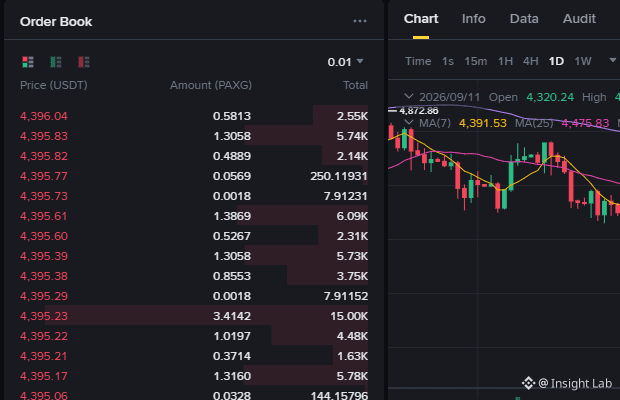
The commodities market has just seen violent fluctuations in today’s trading session as spot gold officially broke above the 4,400 USD per ounce mark, recording an impressive gain of 1.94% within the day, right ahead of the University of Michigan’s release of the September consumer sentiment index and the one-year inflation expectations.
The strong breakout by precious metals reflects a sharp increase in defensive sentiment among investors worldwide. Attention is now focused on the inflation expectations data from the University of Michigan, as this is a key gauge that directly affects the next monetary policy path of the U.S. Federal Reserve (Fed).
Gold’s surge suggests that large funds are looking for safe havens, while also putting pressure on the U.S. dollar and reshaping expectations for Treasury bond yields. If upcoming inflation expectation figures continue to stay elevated, traditional financial markets may face significant bouts of volatility.
For the crypto market, gold’s advance sends signals in multiple directions. On one hand, risk-averse sentiment could cause short-term liquidity on exchanges to tighten, putting pressure on $BTC and altcoins in a tug-of-war. On the other hand, if gold manages to maintain a long-term uptrend amid worries about inflation, Bitcoin could soon benefit from capital flows seeking an alternative store of value. 📊
#vang #lam_phat #kinh_te_vi_mo
The commodities market has just seen violent fluctuations in today’s trading session as spot gold officially broke above the 4,400 USD per ounce mark, recording an impressive gain of 1.94% within the day, right ahead of the University of Michigan’s release of the September consumer sentiment index and the one-year inflation expectations.
The strong breakout by precious metals reflects a sharp increase in defensive sentiment among investors worldwide. Attention is now focused on the inflation expectations data from the University of Michigan, as this is a key gauge that directly affects the next monetary policy path of the U.S. Federal Reserve (Fed).
Gold’s surge suggests that large funds are looking for safe havens, while also putting pressure on the U.S. dollar and reshaping expectations for Treasury bond yields. If upcoming inflation expectation figures continue to stay elevated, traditional financial markets may face significant bouts of volatility.
For the crypto market, gold’s advance sends signals in multiple directions. On one hand, risk-averse sentiment could cause short-term liquidity on exchanges to tighten, putting pressure on $BTC and altcoins in a tug-of-war. On the other hand, if gold manages to maintain a long-term uptrend amid worries about inflation, Bitcoin could soon benefit from capital flows seeking an alternative store of value. 📊
#vang #lam_phat #kinh_te_vi_mo
The strong breakout by precious metals reflects a sharp increase in defensive sentiment among investors worldwide. Attention is now focused on the inflation expectations data from the University of Michigan, as this is a key gauge that directly affects the next monetary policy path of the U.S. Federal Reserve (Fed).
Gold’s surge suggests that large funds are looking for safe havens, while also putting pressure on the U.S. dollar and reshaping expectations for Treasury bond yields. If upcoming inflation expectation figures continue to stay elevated, traditional financial markets may face significant bouts of volatility.
For the crypto market, gold’s advance sends signals in multiple directions. On one hand, risk-averse sentiment could cause short-term liquidity on exchanges to tighten, putting pressure on $BTC and altcoins in a tug-of-war. On the other hand, if gold manages to maintain a long-term uptrend amid worries about inflation, Bitcoin could soon benefit from capital flows seeking an alternative store of value. 📊
#vang #lam_phat #kinh_te_vi_mo
449
·
--
According to the just-recorded figures from the maritime transport sector, Russia’s grain exports by sea in August fell sharply by 61.9% year-on-year, reaching only 2 million tons. The direct cause stems from Russia and Ukraine increasing drone attacks on each other’s maritime infrastructure in recent weeks, which led to the Sea of Azov being blockaded since the beginning of July and the key Black Sea port of Novorossiysk having to temporarily suspend loading and unloading operations after an attack on August 12.
This disruption caused export output through the Azov Sea–Black Sea region to drop by as much as 73.1% in August. In a context where Russia is the world’s leading grain supplier, the Baltic Sea route substitution, which only accommodates 276,300 tons, shows that a logistics bottleneck is posing a serious threat to the global food supply chain.
For financial markets, the risk of a disruption in food supply could reignite pressure on commodity inflation. If food prices continue to rise for an extended period, expectations of easing monetary policy by major central banks would be challenged, while triggering capital flows seeking shelter in traditional hedging assets such as the USD or gold.
The crypto market would also be indirectly affected by this development. As geopolitical instability increases and fears of inflation returning reduce risk appetite, capital flows into $BTC and altcoins may stall in the short term, forcing investors to remain cautious in the face of unpredictable macroeconomic variables.
#dia_chinh_tri #lam_phat #macro_economics
According to the just-recorded figures from the maritime transport sector, Russia’s grain exports by sea in August fell sharply by 61.9% year-on-year, reaching only 2 million tons. The direct cause stems from Russia and Ukraine increasing drone attacks on each other’s maritime infrastructure in recent weeks, which led to the Sea of Azov being blockaded since the beginning of July and the key Black Sea port of Novorossiysk having to temporarily suspend loading and unloading operations after an attack on August 12.
This disruption caused export output through the Azov Sea–Black Sea region to drop by as much as 73.1% in August. In a context where Russia is the world’s leading grain supplier, the Baltic Sea route substitution, which only accommodates 276,300 tons, shows that a logistics bottleneck is posing a serious threat to the global food supply chain.
For financial markets, the risk of a disruption in food supply could reignite pressure on commodity inflation. If food prices continue to rise for an extended period, expectations of easing monetary policy by major central banks would be challenged, while triggering capital flows seeking shelter in traditional hedging assets such as the USD or gold.
The crypto market would also be indirectly affected by this development. As geopolitical instability increases and fears of inflation returning reduce risk appetite, capital flows into $BTC and altcoins may stall in the short term, forcing investors to remain cautious in the face of unpredictable macroeconomic variables.
#dia_chinh_tri #lam_phat #macro_economics
This disruption caused export output through the Azov Sea–Black Sea region to drop by as much as 73.1% in August. In a context where Russia is the world’s leading grain supplier, the Baltic Sea route substitution, which only accommodates 276,300 tons, shows that a logistics bottleneck is posing a serious threat to the global food supply chain.
For financial markets, the risk of a disruption in food supply could reignite pressure on commodity inflation. If food prices continue to rise for an extended period, expectations of easing monetary policy by major central banks would be challenged, while triggering capital flows seeking shelter in traditional hedging assets such as the USD or gold.
The crypto market would also be indirectly affected by this development. As geopolitical instability increases and fears of inflation returning reduce risk appetite, capital flows into $BTC and altcoins may stall in the short term, forcing investors to remain cautious in the face of unpredictable macroeconomic variables.
#dia_chinh_tri #lam_phat #macro_economics
103
·
--
In today’s European trading session, analyst Giulia Petroni noted that gold prices could post a decline of more than 2% this week, as New York gold futures fell 0.5% to USD 4,383.90/ounce. Selling pressure emerged amid a surge in oil prices, persistently high bond yields, and geopolitical tensions in the Middle East continuing to push energy costs higher.
This move becomes especially significant as strong U.S. producer price data for August has heightened concerns about a return of inflation. The market is now fully focused on the Consumer Price Index (CPI) report due out Friday night. According to the CME FedWatch tool, the probability of the Fed raising interest rates next week has now jumped to 67%, reversing much of the earlier easing sentiment.
The shift in monetary policy expectations is supporting the USD and Treasury yields, putting direct pressure on non-yielding assets such as precious metals. As the opportunity cost of holding them rises, short-term hedging flows tend to pull out of the gold market and seek shelter in higher-yielding instruments.
For the crypto market, pressure from expectations of a Fed rate hike and caution ahead of the CPI data could cause new capital inflows to $BTC slow down. Investors should prepare for scenarios of strong volatility over the weekend, when actual inflation figures will determine the next direction of global liquidity.
#fed #vàng #inflation
In today’s European trading session, analyst Giulia Petroni noted that gold prices could post a decline of more than 2% this week, as New York gold futures fell 0.5% to USD 4,383.90/ounce. Selling pressure emerged amid a surge in oil prices, persistently high bond yields, and geopolitical tensions in the Middle East continuing to push energy costs higher.
This move becomes especially significant as strong U.S. producer price data for August has heightened concerns about a return of inflation. The market is now fully focused on the Consumer Price Index (CPI) report due out Friday night. According to the CME FedWatch tool, the probability of the Fed raising interest rates next week has now jumped to 67%, reversing much of the earlier easing sentiment.
The shift in monetary policy expectations is supporting the USD and Treasury yields, putting direct pressure on non-yielding assets such as precious metals. As the opportunity cost of holding them rises, short-term hedging flows tend to pull out of the gold market and seek shelter in higher-yielding instruments.
For the crypto market, pressure from expectations of a Fed rate hike and caution ahead of the CPI data could cause new capital inflows to $BTC slow down. Investors should prepare for scenarios of strong volatility over the weekend, when actual inflation figures will determine the next direction of global liquidity.
#fed #vàng #inflation
This move becomes especially significant as strong U.S. producer price data for August has heightened concerns about a return of inflation. The market is now fully focused on the Consumer Price Index (CPI) report due out Friday night. According to the CME FedWatch tool, the probability of the Fed raising interest rates next week has now jumped to 67%, reversing much of the earlier easing sentiment.
The shift in monetary policy expectations is supporting the USD and Treasury yields, putting direct pressure on non-yielding assets such as precious metals. As the opportunity cost of holding them rises, short-term hedging flows tend to pull out of the gold market and seek shelter in higher-yielding instruments.
For the crypto market, pressure from expectations of a Fed rate hike and caution ahead of the CPI data could cause new capital inflows to $BTC slow down. Investors should prepare for scenarios of strong volatility over the weekend, when actual inflation figures will determine the next direction of global liquidity.
#fed #vàng #inflation

264
·
--
According to the latest data from the American Automobile Association (AAA), diesel prices in the U.S. have officially surpassed the record level of 6 USD per gallon, with a nationwide average of 6.0556 USD per gallon. In particular, the state of California has recorded prices hovering near the 8 USD per gallon threshold.
This is a worrying macroeconomic signal because diesel is the lifeblood of the entire freight transportation supply chain and industrial production. When these fuel costs hit new highs, cost-push inflation pressure will quickly spread to the prices of food and other essential consumer goods, threatening to reverse the cooling trend in inflation that policymakers are expecting.
For financial markets, the rise in the energy sector has rekindled concerns that the U.S. Federal Reserve (Fed) may have to keep interest rates at a high level for longer. Treasury yields and the U.S. dollar have additional reasons to stay elevated, exerting direct pressure on traditional asset channels such as equities.
The crypto market is also under clear indirect pressure as tighter liquidity conditions persist, limiting new capital inflows into $BTC v and altcoins. Heightened macro risk-avoidance sentiment requires investors to be cautious in managing their portfolios ahead of short-term bouts of volatility. ⛽
#lam_phat #nang_luong #thi_truong_tai_chinh
According to the latest data from the American Automobile Association (AAA), diesel prices in the U.S. have officially surpassed the record level of 6 USD per gallon, with a nationwide average of 6.0556 USD per gallon. In particular, the state of California has recorded prices hovering near the 8 USD per gallon threshold.
This is a worrying macroeconomic signal because diesel is the lifeblood of the entire freight transportation supply chain and industrial production. When these fuel costs hit new highs, cost-push inflation pressure will quickly spread to the prices of food and other essential consumer goods, threatening to reverse the cooling trend in inflation that policymakers are expecting.
For financial markets, the rise in the energy sector has rekindled concerns that the U.S. Federal Reserve (Fed) may have to keep interest rates at a high level for longer. Treasury yields and the U.S. dollar have additional reasons to stay elevated, exerting direct pressure on traditional asset channels such as equities.
The crypto market is also under clear indirect pressure as tighter liquidity conditions persist, limiting new capital inflows into $BTC v and altcoins. Heightened macro risk-avoidance sentiment requires investors to be cautious in managing their portfolios ahead of short-term bouts of volatility. ⛽
#lam_phat #nang_luong #thi_truong_tai_chinh
This is a worrying macroeconomic signal because diesel is the lifeblood of the entire freight transportation supply chain and industrial production. When these fuel costs hit new highs, cost-push inflation pressure will quickly spread to the prices of food and other essential consumer goods, threatening to reverse the cooling trend in inflation that policymakers are expecting.
For financial markets, the rise in the energy sector has rekindled concerns that the U.S. Federal Reserve (Fed) may have to keep interest rates at a high level for longer. Treasury yields and the U.S. dollar have additional reasons to stay elevated, exerting direct pressure on traditional asset channels such as equities.
The crypto market is also under clear indirect pressure as tighter liquidity conditions persist, limiting new capital inflows into $BTC v and altcoins. Heightened macro risk-avoidance sentiment requires investors to be cautious in managing their portfolios ahead of short-term bouts of volatility. ⛽
#lam_phat #nang_luong #thi_truong_tai_chinh
1
·
--
After a recent non-farm payrolls (NFP) report that beat expectations, analyst Brandon Brown has just offered a notable assessment of the Federal Reserve’s (Fed) policy path ahead of the September meeting. This comes in the context of Fed Governor Christopher Waller stressing that upcoming inflation data will be the deciding factor in his vote, leading the market to price in a tightening of roughly 15 basis points.
The key point is that expectations for rate hikes in September are currently split 50/50, creating a major divide within the Fed’s policy committee. The pass-through effect from CPI and PPI to core PCE will be a critical measure; if core PCE rises around the 0.25% mark, the policy balance may tilt decisively toward holding rates steady rather than continuing to tighten.
This tug-of-war is making U.S. government bond yields move in an unpredictable way, while also reinforcing the short-term strength of the U.S. dollar. Even though the yield curve is pricing in more than a 60-basis-point increase through mid-2027, the room for additional short-term rate hikes is almost impossible to exceed three times, leaving traditional financial investors extremely cautious.
For the crypto market, Fed uncertainty is dampening large inflows into $BTC and risk assets. Short-term liquidity tends to cluster tighter, causing the market to trade within narrow ranges until the PCE inflation outlook is released clearly enough to establish the next trend. 📊
#Fed #lam_phat #crypto
After a recent non-farm payrolls (NFP) report that beat expectations, analyst Brandon Brown has just offered a notable assessment of the Federal Reserve’s (Fed) policy path ahead of the September meeting. This comes in the context of Fed Governor Christopher Waller stressing that upcoming inflation data will be the deciding factor in his vote, leading the market to price in a tightening of roughly 15 basis points.
The key point is that expectations for rate hikes in September are currently split 50/50, creating a major divide within the Fed’s policy committee. The pass-through effect from CPI and PPI to core PCE will be a critical measure; if core PCE rises around the 0.25% mark, the policy balance may tilt decisively toward holding rates steady rather than continuing to tighten.
This tug-of-war is making U.S. government bond yields move in an unpredictable way, while also reinforcing the short-term strength of the U.S. dollar. Even though the yield curve is pricing in more than a 60-basis-point increase through mid-2027, the room for additional short-term rate hikes is almost impossible to exceed three times, leaving traditional financial investors extremely cautious.
For the crypto market, Fed uncertainty is dampening large inflows into $BTC and risk assets. Short-term liquidity tends to cluster tighter, causing the market to trade within narrow ranges until the PCE inflation outlook is released clearly enough to establish the next trend. 📊
#Fed #lam_phat #crypto
The key point is that expectations for rate hikes in September are currently split 50/50, creating a major divide within the Fed’s policy committee. The pass-through effect from CPI and PPI to core PCE will be a critical measure; if core PCE rises around the 0.25% mark, the policy balance may tilt decisively toward holding rates steady rather than continuing to tighten.
This tug-of-war is making U.S. government bond yields move in an unpredictable way, while also reinforcing the short-term strength of the U.S. dollar. Even though the yield curve is pricing in more than a 60-basis-point increase through mid-2027, the room for additional short-term rate hikes is almost impossible to exceed three times, leaving traditional financial investors extremely cautious.
For the crypto market, Fed uncertainty is dampening large inflows into $BTC and risk assets. Short-term liquidity tends to cluster tighter, causing the market to trade within narrow ranges until the PCE inflation outlook is released clearly enough to establish the next trend. 📊
#Fed #lam_phat #crypto
69
·
--
The energy market has just witnessed a spectacular trading session as US crude oil (WTI) closed at $102.48 per barrel, marking a sharp jump of $6.43, equivalent to 6.69% within a single day.
This sudden surge past the $100 per-barrel mark is a worrying signal for the global inflation outlook. When energy costs rise too quickly, any efforts by central banks to cool prices will face a very significant challenge, raising concerns that inflationary pressure could return more strongly than expected.
This volatility immediately put pressure on traditional financial markets. US Treasury yields have tended to inch higher ahead of expectations that the Fed will need to keep restrictive monetary policy in place for longer, while the USD strengthened, exerting downward pressure on global stock markets.
For the crypto market, the sudden rally in oil prices often triggers short-term defensive sentiment, making capital flows more cautious toward risk assets such as $BTC. Investors should closely monitor the next developments in energy prices, because if oil remains anchored near the $100 level, macro liquidity flowing into the digital asset market is unlikely to explode anytime soon. 🛢️
#dau #nang_luong #lam_phat
The energy market has just witnessed a spectacular trading session as US crude oil (WTI) closed at $102.48 per barrel, marking a sharp jump of $6.43, equivalent to 6.69% within a single day.
This sudden surge past the $100 per-barrel mark is a worrying signal for the global inflation outlook. When energy costs rise too quickly, any efforts by central banks to cool prices will face a very significant challenge, raising concerns that inflationary pressure could return more strongly than expected.
This volatility immediately put pressure on traditional financial markets. US Treasury yields have tended to inch higher ahead of expectations that the Fed will need to keep restrictive monetary policy in place for longer, while the USD strengthened, exerting downward pressure on global stock markets.
For the crypto market, the sudden rally in oil prices often triggers short-term defensive sentiment, making capital flows more cautious toward risk assets such as $BTC . Investors should closely monitor the next developments in energy prices, because if oil remains anchored near the $100 level, macro liquidity flowing into the digital asset market is unlikely to explode anytime soon. 🛢️
#dau #nang_luong #lam_phat
This sudden surge past the $100 per-barrel mark is a worrying signal for the global inflation outlook. When energy costs rise too quickly, any efforts by central banks to cool prices will face a very significant challenge, raising concerns that inflationary pressure could return more strongly than expected.
This volatility immediately put pressure on traditional financial markets. US Treasury yields have tended to inch higher ahead of expectations that the Fed will need to keep restrictive monetary policy in place for longer, while the USD strengthened, exerting downward pressure on global stock markets.
For the crypto market, the sudden rally in oil prices often triggers short-term defensive sentiment, making capital flows more cautious toward risk assets such as $BTC . Investors should closely monitor the next developments in energy prices, because if oil remains anchored near the $100 level, macro liquidity flowing into the digital asset market is unlikely to explode anytime soon. 🛢️
#dau #nang_luong #lam_phat
5
·
--
According to the latest report released by the U.S. Energy Information Administration (EIA), U.S. crude oil production in the week ending September 4 increased by 85,000 barrels per day, officially reaching 13.95 million barrels per day. The figure surpassed the previous week’s record of 13.86 million barrels per day (August 28) and brought domestic U.S. oil supply close to the historic threshold of 14 million barrels per day.
The continued record-breaking output of U.S. shale oil carries significant implications for the global inflation outlook. Amid complex geopolitical factors that could push energy costs higher, abundant supply from the U.S. is acting as an important shock absorber, curbing the rise in gasoline and oil prices and easing pressure on core inflation for the economy.
For financial markets, energy prices cooling down or remaining stable will likely provide favorable conditions for the Federal Reserve (Fed) to feel more confident in its path toward monetary policy easing. Treasury bond yields and the U.S. Dollar Index (USD Index) are likely to stay on a steady trend if inflation expectations are not reignited.
A macro environment with well-controlled energy costs is always a positive catalyst for the crypto market. When monetary tightening pressure eases, speculative capital flows tend to seek returns in higher-risk asset channels such as $BTC and various altcoins, reinforcing the medium-term recovery in liquidity. ⛽
#dau_tho #EIA #nang_luong #lam_phat
According to the latest report released by the U.S. Energy Information Administration (EIA), U.S. crude oil production in the week ending September 4 increased by 85,000 barrels per day, officially reaching 13.95 million barrels per day. The figure surpassed the previous week’s record of 13.86 million barrels per day (August 28) and brought domestic U.S. oil supply close to the historic threshold of 14 million barrels per day.
The continued record-breaking output of U.S. shale oil carries significant implications for the global inflation outlook. Amid complex geopolitical factors that could push energy costs higher, abundant supply from the U.S. is acting as an important shock absorber, curbing the rise in gasoline and oil prices and easing pressure on core inflation for the economy.
For financial markets, energy prices cooling down or remaining stable will likely provide favorable conditions for the Federal Reserve (Fed) to feel more confident in its path toward monetary policy easing. Treasury bond yields and the U.S. Dollar Index (USD Index) are likely to stay on a steady trend if inflation expectations are not reignited.
A macro environment with well-controlled energy costs is always a positive catalyst for the crypto market. When monetary tightening pressure eases, speculative capital flows tend to seek returns in higher-risk asset channels such as $BTC and various altcoins, reinforcing the medium-term recovery in liquidity. ⛽
#dau_tho #EIA #nang_luong #lam_phat
The continued record-breaking output of U.S. shale oil carries significant implications for the global inflation outlook. Amid complex geopolitical factors that could push energy costs higher, abundant supply from the U.S. is acting as an important shock absorber, curbing the rise in gasoline and oil prices and easing pressure on core inflation for the economy.
For financial markets, energy prices cooling down or remaining stable will likely provide favorable conditions for the Federal Reserve (Fed) to feel more confident in its path toward monetary policy easing. Treasury bond yields and the U.S. Dollar Index (USD Index) are likely to stay on a steady trend if inflation expectations are not reignited.
A macro environment with well-controlled energy costs is always a positive catalyst for the crypto market. When monetary tightening pressure eases, speculative capital flows tend to seek returns in higher-risk asset channels such as $BTC and various altcoins, reinforcing the medium-term recovery in liquidity. ⛽
#dau_tho #EIA #nang_luong #lam_phat
127
·
--
The energy market has just reached a notable milestone as the diesel futures contract price has officially broken the $5 per gallon threshold, marking the highest level since 2022.
This surge carries significant implications because diesel is the lifeblood fuel of the entire global supply chain, spanning maritime transport, road freight, and heavy industrial production. When the baseline energy costs remain at a multi-year record level, cost-push inflation pressure will quickly spread to the prices of finished goods and consumer services.
For traditional financial markets, the risk of inflation returning could disrupt expectations for monetary policy easing. Yields on U.S. Treasury bonds are likely to face upward pressure, which would strengthen the U.S. dollar and exert near-term downward pressure on the stock market.
For the crypto market, a prolonged tight macro environment will make it difficult for global liquidity to expand rapidly. Although $BTC is still widely expected by many investors to function as a hedge against currency devaluation risk, in the short term, cautious sentiment over the possibility that the Fed keeps interest rates higher than expected may slow the inflow of new capital into crypto.
#nang_luong #lam_phat #vi_mo
The energy market has just reached a notable milestone as the diesel futures contract price has officially broken the $5 per gallon threshold, marking the highest level since 2022.
This surge carries significant implications because diesel is the lifeblood fuel of the entire global supply chain, spanning maritime transport, road freight, and heavy industrial production. When the baseline energy costs remain at a multi-year record level, cost-push inflation pressure will quickly spread to the prices of finished goods and consumer services.
For traditional financial markets, the risk of inflation returning could disrupt expectations for monetary policy easing. Yields on U.S. Treasury bonds are likely to face upward pressure, which would strengthen the U.S. dollar and exert near-term downward pressure on the stock market.
For the crypto market, a prolonged tight macro environment will make it difficult for global liquidity to expand rapidly. Although $BTC is still widely expected by many investors to function as a hedge against currency devaluation risk, in the short term, cautious sentiment over the possibility that the Fed keeps interest rates higher than expected may slow the inflow of new capital into crypto.
#nang_luong #lam_phat #vi_mo
This surge carries significant implications because diesel is the lifeblood fuel of the entire global supply chain, spanning maritime transport, road freight, and heavy industrial production. When the baseline energy costs remain at a multi-year record level, cost-push inflation pressure will quickly spread to the prices of finished goods and consumer services.
For traditional financial markets, the risk of inflation returning could disrupt expectations for monetary policy easing. Yields on U.S. Treasury bonds are likely to face upward pressure, which would strengthen the U.S. dollar and exert near-term downward pressure on the stock market.
For the crypto market, a prolonged tight macro environment will make it difficult for global liquidity to expand rapidly. Although $BTC is still widely expected by many investors to function as a hedge against currency devaluation risk, in the short term, cautious sentiment over the possibility that the Fed keeps interest rates higher than expected may slow the inflow of new capital into crypto.
#nang_luong #lam_phat #vi_mo
49
Log in to explore more content
Join global crypto users on Binance Square
⚡️ Get latest and useful information about crypto.
💬 Trusted by the world’s largest crypto exchange.
👍 Discover real insights from verified creators.
Email / Phone number
Trending Topics
1
#AIStocksWhatNext
452,541 views
3,380 Discussing
2
#BitcoinTops$87KAtEightMonthHigh
156 views
11 Discussing
3
#BitwiseNEARStakingETPAssetsTop$100M
6,030 views
40 Discussing
4
#BitcoinBreaksAboveMayHighNears$86K
21,221 views
223 Discussing
5
#DogecoinRises15%
66,618 views
1,169 Discussing
6
#$14BBitcoinOptionsExpireFriday
5,853 views
103 Discussing
7
#BNBMarketCapPassesBNYMellon
41,328 views
859 Discussing
8
#CryptoMarketCapReclaims$3Trillion
8,424 views
87 Discussing
9
#MuseOvertakesChatGPTAsTopFreeIOSApp
23,687 views
629 Discussing
10
#TokenizedStockPlatformsCouldLaunchNextQuarter
35,805 views
685 Discussing