

#gonnarich
gonnarich
147,795 views
231 Discussing
Hot
Latest

·
--
Bearish
$G Is Under Heavy Selling Pressure Right Now…!!
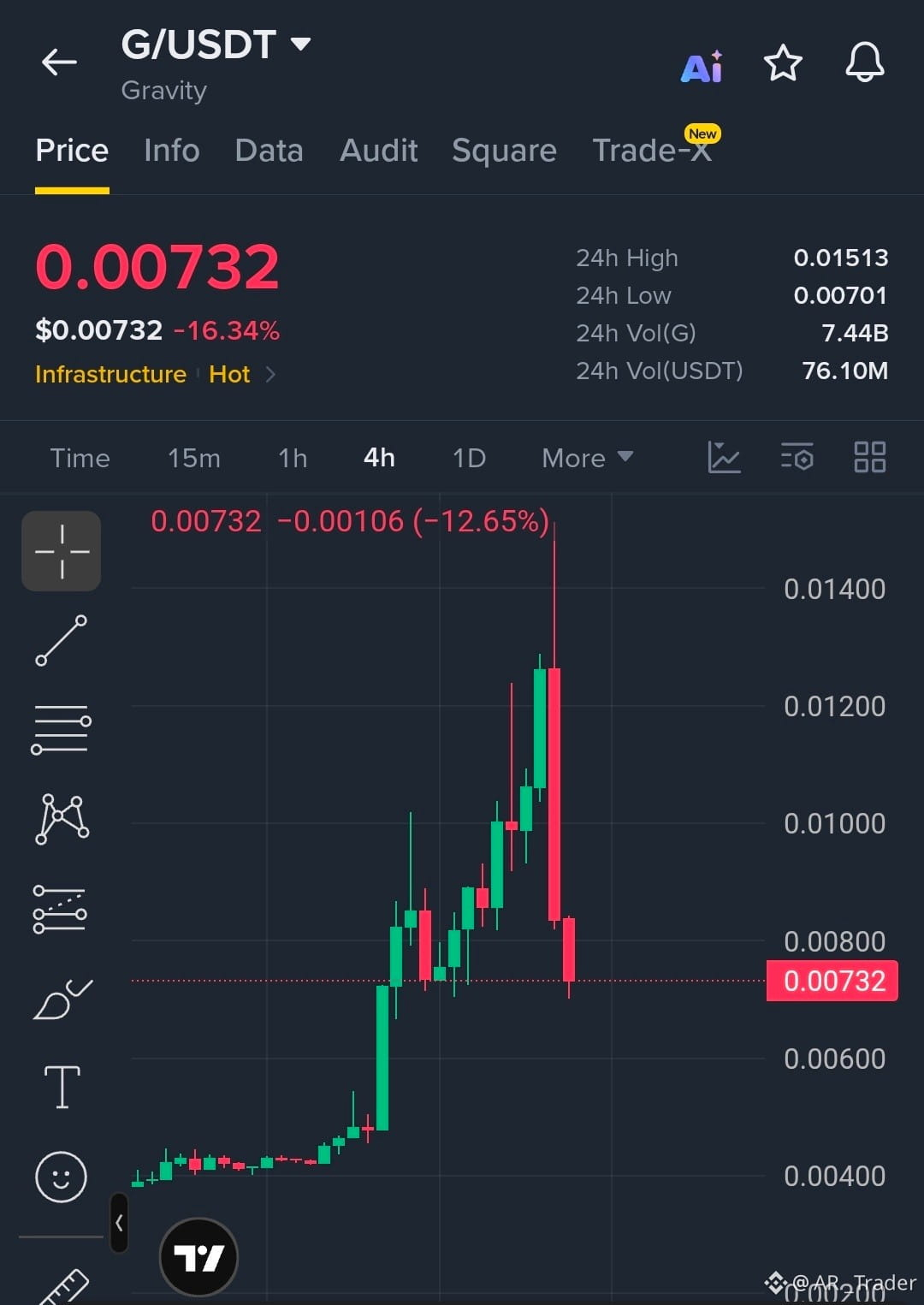
#gonnarich is showing strong bearish momentum after a sharp rejection from the 0.01513 area and price is now near 0.00732 If selling continues the next targets could be 0.00701 and 0.00600 while 0.00800 remains the key resistance zone
{future}(GUSDT)
$GOAT
{future}(GOATUSDT)
$G
$G Is Under Heavy Selling Pressure Right Now…!!
#gonnarich is showing strong bearish momentum after a sharp rejection from the 0.01513 area and price is now near 0.00732 If selling continues the next targets could be 0.00701 and 0.00600 while 0.00800 remains the key resistance zone
$GOAT
$G
#gonnarich is showing strong bearish momentum after a sharp rejection from the 0.01513 area and price is now near 0.00732 If selling continues the next targets could be 0.00701 and 0.00600 while 0.00800 remains the key resistance zone
$GOAT
$G
1
238

·
--
Absolutely ❤️ Let’s make it much more useful for an actual trader, while keeping it realistic and avoiding made-up prices.
🚨 $G
{spot}(GUSDT)
vs $AKE
{future}(AKEUSDT)
vs $STRK
{spot}(STRKUSDT)
— FULL BREAKOUT WATCH
🟢 G — Momentum Setup
LONG trigger
Resistance breaks with strong volume.
15m/1H candle closes above resistance.
Retest holds as support.
Enter after confirmation, not during the first spike.
SHORT trigger
Breakout fails.
Price falls back below resistance.
Retest gets rejected with increasing sell volume.
🛑 Invalidation: LONG idea is invalid if price loses the breakout level and cannot reclaim it.
---
🔥 AKE — Volatility Setup
LONG trigger
Forms a higher high.
Pullback creates a higher low.
Resistance flips into support.
Volume expands when buyers return.
SHORT trigger
Higher-high structure breaks.
Support is lost.
Failed retest confirms sellers.
⚠️ Warning: If AKE pumps vertically while volume starts declining, don't chase. Wait for a pullback/retest.
---
⚡ STRK — Breakout + Retest Setup
LONG trigger
1. Resistance breaks.
2. Candle closes above it.
3. Price comes back to test the level.
4. Buyers defend the level.
5. Volume expands again → entry confirmation.
SHORT trigger
1. Resistance breaks.
2. Price immediately rejects.
3. Candle closes back below resistance.
4. Retest fails.
5. Sellers take control.
🛑 Invalidation: For LONG, below the confirmed retest low. For SHORT, above the failed-breakout high.
---
📊 WHAT TO WATCH BEFORE ENTERING
Signal Meaning
📈 Price ↑ + Volume ↑ Stronger momentum
📈 Price ↑ + Volume ↓ ⚠️ Possible weak breakout
🔴 Support breaks + Volume ↑ Stronger bearish signal
🔄 Break + successful retest Better entry structure
💥 Huge candle immediately Don't chase
🐋 Sudden volume spike Wait for confirmation
🎯 LONG / SHORT CHECKLIST
LONG:
Resistance break → Candle close → Retest → Hold → Volume confirmation → Entry
SHORT:
Support break → Candle close → Retest → Rejection → Sell volume → Entry
#gonnarich #AKE #strk #BinanceSquareFamily
Absolutely ❤️ Let’s make it much more useful for an actual trader, while keeping it realistic and avoiding made-up prices.
🚨 $G
vs $AKE
vs $STRK
— FULL BREAKOUT WATCH
🟢 G — Momentum Setup
LONG trigger
Resistance breaks with strong volume.
15m/1H candle closes above resistance.
Retest holds as support.
Enter after confirmation, not during the first spike.
SHORT trigger
Breakout fails.
Price falls back below resistance.
Retest gets rejected with increasing sell volume.
🛑 Invalidation: LONG idea is invalid if price loses the breakout level and cannot reclaim it.
---
🔥 AKE — Volatility Setup
LONG trigger
Forms a higher high.
Pullback creates a higher low.
Resistance flips into support.
Volume expands when buyers return.
SHORT trigger
Higher-high structure breaks.
Support is lost.
Failed retest confirms sellers.
⚠️ Warning: If AKE pumps vertically while volume starts declining, don't chase. Wait for a pullback/retest.
---
⚡ STRK — Breakout + Retest Setup
LONG trigger
1. Resistance breaks.
2. Candle closes above it.
3. Price comes back to test the level.
4. Buyers defend the level.
5. Volume expands again → entry confirmation.
SHORT trigger
1. Resistance breaks.
2. Price immediately rejects.
3. Candle closes back below resistance.
4. Retest fails.
5. Sellers take control.
🛑 Invalidation: For LONG, below the confirmed retest low. For SHORT, above the failed-breakout high.
---
📊 WHAT TO WATCH BEFORE ENTERING
Signal Meaning
📈 Price ↑ + Volume ↑ Stronger momentum
📈 Price ↑ + Volume ↓ ⚠️ Possible weak breakout
🔴 Support breaks + Volume ↑ Stronger bearish signal
🔄 Break + successful retest Better entry structure
💥 Huge candle immediately Don't chase
🐋 Sudden volume spike Wait for confirmation
🎯 LONG / SHORT CHECKLIST
LONG:
Resistance break → Candle close → Retest → Hold → Volume confirmation → Entry
SHORT:
Support break → Candle close → Retest → Rejection → Sell volume → Entry
#gonnarich #AKE #strk #BinanceSquareFamily
🚨 $G
vs $AKE
vs $STRK
— FULL BREAKOUT WATCH
🟢 G — Momentum Setup
LONG trigger
Resistance breaks with strong volume.
15m/1H candle closes above resistance.
Retest holds as support.
Enter after confirmation, not during the first spike.
SHORT trigger
Breakout fails.
Price falls back below resistance.
Retest gets rejected with increasing sell volume.
🛑 Invalidation: LONG idea is invalid if price loses the breakout level and cannot reclaim it.
---
🔥 AKE — Volatility Setup
LONG trigger
Forms a higher high.
Pullback creates a higher low.
Resistance flips into support.
Volume expands when buyers return.
SHORT trigger
Higher-high structure breaks.
Support is lost.
Failed retest confirms sellers.
⚠️ Warning: If AKE pumps vertically while volume starts declining, don't chase. Wait for a pullback/retest.
---
⚡ STRK — Breakout + Retest Setup
LONG trigger
1. Resistance breaks.
2. Candle closes above it.
3. Price comes back to test the level.
4. Buyers defend the level.
5. Volume expands again → entry confirmation.
SHORT trigger
1. Resistance breaks.
2. Price immediately rejects.
3. Candle closes back below resistance.
4. Retest fails.
5. Sellers take control.
🛑 Invalidation: For LONG, below the confirmed retest low. For SHORT, above the failed-breakout high.
---
📊 WHAT TO WATCH BEFORE ENTERING
Signal Meaning
📈 Price ↑ + Volume ↑ Stronger momentum
📈 Price ↑ + Volume ↓ ⚠️ Possible weak breakout
🔴 Support breaks + Volume ↑ Stronger bearish signal
🔄 Break + successful retest Better entry structure
💥 Huge candle immediately Don't chase
🐋 Sudden volume spike Wait for confirmation
🎯 LONG / SHORT CHECKLIST
LONG:
Resistance break → Candle close → Retest → Hold → Volume confirmation → Entry
SHORT:
Support break → Candle close → Retest → Rejection → Sell volume → Entry
#gonnarich #AKE #strk #BinanceSquareFamily
4
450

·
--
Bullish
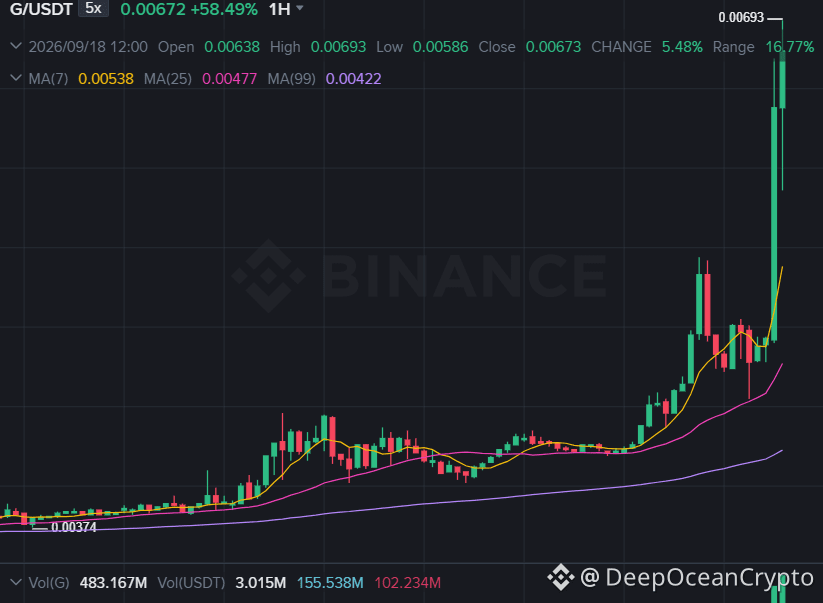
$G G is exploding with a massive +58.49% surge, backed by heavy volume ($3.01M USDT volume) and clean bullish alignment across all moving averages (MA7, MA25, MA99). The bulls are in total control! 📈💎
📌 Live Trade Execution
Entry Zone: 0.00640 - 0.00675
Current Price: 0.00672
Leverage: 5x (Cross/Isolated)
🎯 Take-Profit Targets
TP1: 0.00730 🟢
TP2: 0.00800 🟢
TP3: 0.00900 🟢
🛑 Risk Management
Stop-Loss: 0.00590 🔴
💡 Pro Trader Tip: Extreme pumps come with extreme volatility. Secure partial profits early at TP1 and protect your entry with a trailing stop! 🛡️
#gonnarich #BinanceSquare #cryptotrading #longsignal #GUSDT
{future}(GUSDT)
$G G is exploding with a massive +58.49% surge, backed by heavy volume ($3.01M USDT volume) and clean bullish alignment across all moving averages (MA7, MA25, MA99). The bulls are in total control! 📈💎
📌 Live Trade Execution
Entry Zone: 0.00640 - 0.00675
Current Price: 0.00672
Leverage: 5x (Cross/Isolated)
🎯 Take-Profit Targets
TP1: 0.00730 🟢
TP2: 0.00800 🟢
TP3: 0.00900 🟢
🛑 Risk Management
Stop-Loss: 0.00590 🔴
💡 Pro Trader Tip: Extreme pumps come with extreme volatility. Secure partial profits early at TP1 and protect your entry with a trailing stop! 🛡️
#gonnarich #BinanceSquare #cryptotrading #longsignal #GUSDT
📌 Live Trade Execution
Entry Zone: 0.00640 - 0.00675
Current Price: 0.00672
Leverage: 5x (Cross/Isolated)
🎯 Take-Profit Targets
TP1: 0.00730 🟢
TP2: 0.00800 🟢
TP3: 0.00900 🟢
🛑 Risk Management
Stop-Loss: 0.00590 🔴
💡 Pro Trader Tip: Extreme pumps come with extreme volatility. Secure partial profits early at TP1 and protect your entry with a trailing stop! 🛡️
#gonnarich #BinanceSquare #cryptotrading #longsignal #GUSDT
1
143

·
--
Bullish
Gravity / Galxe ($G ) on social media post:
🌌 Omnichain Infrastructure Spotlight: Gravity ($G) 🚀⚡
Galxe ecosystem ki evolution Layer-1 Gravity chain par high-throughput execution, cross-chain abstraction, aur staking yields ke sath $G accumulation zone me steady volume build kar raha hai! 🔥
📊 Market & Technical Overview:
* Current Price: ~$0.0047 – $0.0049 USD
* Immediate Resistance: $0.0052 – $0.0055 (Breakout opens route toward $0.0068+)
* Key Support Zone: $0.0042 – $0.0045
* Major Structure Support: $0.0035
💡 Key Drivers:
* Omnichain Settlement Layer: Zero-Knowledge proofs (ZK-proofs) aur fast finality Engine omnichain cross-chain transactions ko streamline kar rahe hain.
* Galxe Ecosystem Utility: Web3 identity credentials, loyalty campaigns, aur governance staking $G token ki utility demand ko back karti hain.
* Outlook: $0.0045 support level successfully maintain karne par $0.0052 resistance clear hona reversal leg extend kar sakta hai.
⚠️ Disclaimer: Low-priced altcoins me liquidity moves violent hoti hain. Tight risk management (DYOR) zaroor maintain karein.
#Gravity #gonnarich #Galxe #Web3 #Layer1 #Crypto #DeFi #CryptoTrading
Gravity / Galxe ($G ) on social media post:
🌌 Omnichain Infrastructure Spotlight: Gravity ($G ) 🚀⚡
Galxe ecosystem ki evolution Layer-1 Gravity chain par high-throughput execution, cross-chain abstraction, aur staking yields ke sath $G accumulation zone me steady volume build kar raha hai! 🔥
📊 Market & Technical Overview:
* Current Price: ~$0.0047 – $0.0049 USD
* Immediate Resistance: $0.0052 – $0.0055 (Breakout opens route toward $0.0068+)
* Key Support Zone: $0.0042 – $0.0045
* Major Structure Support: $0.0035
💡 Key Drivers:
* Omnichain Settlement Layer: Zero-Knowledge proofs (ZK-proofs) aur fast finality Engine omnichain cross-chain transactions ko streamline kar rahe hain.
* Galxe Ecosystem Utility: Web3 identity credentials, loyalty campaigns, aur governance staking $G token ki utility demand ko back karti hain.
* Outlook: $0.0045 support level successfully maintain karne par $0.0052 resistance clear hona reversal leg extend kar sakta hai.
⚠️ Disclaimer: Low-priced altcoins me liquidity moves violent hoti hain. Tight risk management (DYOR) zaroor maintain karein.
#Gravity #gonnarich #Galxe #Web3 #Layer1 #Crypto #DeFi #CryptoTrading
🌌 Omnichain Infrastructure Spotlight: Gravity ($G ) 🚀⚡
Galxe ecosystem ki evolution Layer-1 Gravity chain par high-throughput execution, cross-chain abstraction, aur staking yields ke sath $G accumulation zone me steady volume build kar raha hai! 🔥
📊 Market & Technical Overview:
* Current Price: ~$0.0047 – $0.0049 USD
* Immediate Resistance: $0.0052 – $0.0055 (Breakout opens route toward $0.0068+)
* Key Support Zone: $0.0042 – $0.0045
* Major Structure Support: $0.0035
💡 Key Drivers:
* Omnichain Settlement Layer: Zero-Knowledge proofs (ZK-proofs) aur fast finality Engine omnichain cross-chain transactions ko streamline kar rahe hain.
* Galxe Ecosystem Utility: Web3 identity credentials, loyalty campaigns, aur governance staking $G token ki utility demand ko back karti hain.
* Outlook: $0.0045 support level successfully maintain karne par $0.0052 resistance clear hona reversal leg extend kar sakta hai.
⚠️ Disclaimer: Low-priced altcoins me liquidity moves violent hoti hain. Tight risk management (DYOR) zaroor maintain karein.
#Gravity #gonnarich #Galxe #Web3 #Layer1 #Crypto #DeFi #CryptoTrading
232
·
--
Bullish
$G /USDT IS BUILDING MOMENTUM FOR ANOTHER BREAKOUT…!!
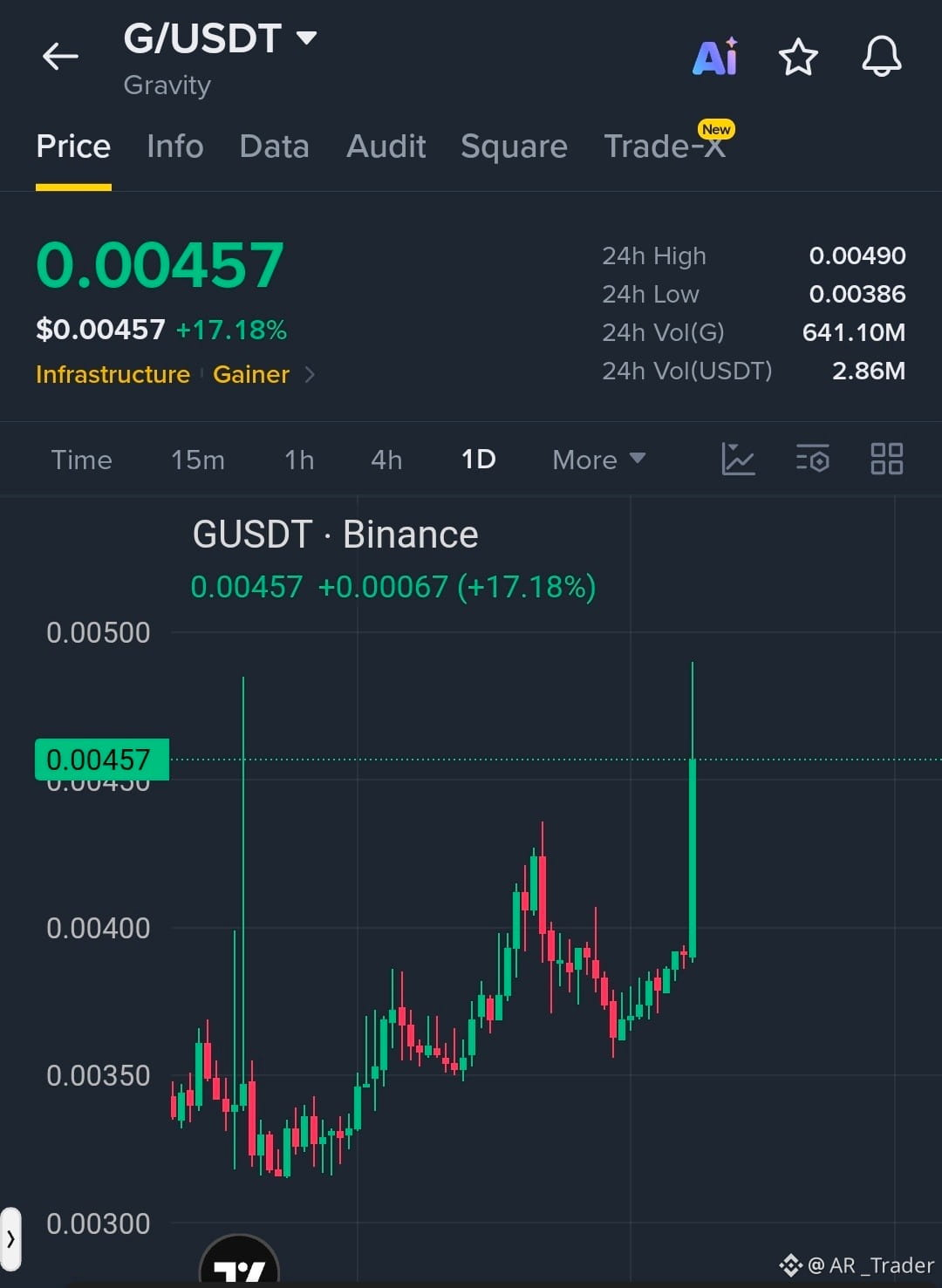
#gonnarich is showing strong bullish momentum after a sharp rally and $GNO is now holding above the 0.00430 support zone A break above 0.00490 could open the way toward 0.00500 and 0.00530 while 0.00430 remains the key support level$GSB
$G /USDT IS BUILDING MOMENTUM FOR ANOTHER BREAKOUT…!!
#gonnarich is showing strong bullish momentum after a sharp rally and $GNO is now holding above the 0.00430 support zone A break above 0.00490 could open the way toward 0.00500 and 0.00530 while 0.00430 remains the key support level$GSB
#gonnarich is showing strong bullish momentum after a sharp rally and $GNO is now holding above the 0.00430 support zone A break above 0.00490 could open the way toward 0.00500 and 0.00530 while 0.00430 remains the key support level$GSB
1
150



Article
USDC gets promoted to the Premier League with Chelsea main shirt sponsor dealCircle becomes Chelsea's principal and front-of-shirt partner for 2026/27, putting USDC branding on the men's, women's and academy kits.
helsea Football Club has named Circle Internet Group as its principal and official front-of-shirt partner for the 2026/27 season, putting USDC on the club's kits as the stablecoin company seeks a larger mainstream audience.
The deal announced by Chelsea covers the men's, women's and academy shirts. Circle and USDC branding is scheduled to appear for the first time on Aug. 30, when Chelsea's men's team plays its first Premier League home game of the season against Brighton.
USDC is far more prominent in sponsorship placement than Circle itself. The partnership announcement frames the Chelsea shirt as a way to place that product name before the club's international football audience.
The agreement gives Circle the club's “principal partner designation” and the central sponsor position on three sets of Chelsea shirts, covering the senior men's and women's teams as well as academy shirts for the 2026/27 season.
For Circle, the obvious value is brand exposure. The company is placing both its corporate name and the USDC label on the most prominent sponsor space on Chelsea's shirts, connecting a financial technology company and its stablecoin with a sports audience that may not encounter either through crypto trading or blockchain applications.
Further, Chelsea have been without a shirt sponsor for some time and have played extended periods as the only team in the Premier League without a main sponsor on the front of their kits. As a result, there's some additional brand awareness from rival fans who are paying attention to the sponsorship saga at Stamford Bridge.
Notably, the announcement does not include a Chelsea payment product, nor does it say supporters will use USDC to buy tickets, merchandise or services. The partnership could expand over time, but the initial arrangement described by both parties is a sponsorship built around brand placement.
That wording matters because the shirt gives USDC broad public visibility without turning the sponsorship itself into an offer of a crypto product. It separates the marketing message, which presents USDC as digital money for a global audience, from any claim that Chelsea is distributing the stablecoin or offering financial services.
#Write2Earn
#HotTrends
#gonnarich
#FIT21
#xmucan
USDC gets promoted to the Premier League with Chelsea main shirt sponsor deal
Circle becomes Chelsea's principal and front-of-shirt partner for 2026/27, putting USDC branding on the men's, women's and academy kits.
helsea Football Club has named Circle Internet Group as its principal and official front-of-shirt partner for the 2026/27 season, putting USDC on the club's kits as the stablecoin company seeks a larger mainstream audience.
The deal announced by Chelsea covers the men's, women's and academy shirts. Circle and USDC branding is scheduled to appear for the first time on Aug. 30, when Chelsea's men's team plays its first Premier League home game of the season against Brighton.
USDC is far more prominent in sponsorship placement than Circle itself. The partnership announcement frames the Chelsea shirt as a way to place that product name before the club's international football audience.
The agreement gives Circle the club's “principal partner designation” and the central sponsor position on three sets of Chelsea shirts, covering the senior men's and women's teams as well as academy shirts for the 2026/27 season.
For Circle, the obvious value is brand exposure. The company is placing both its corporate name and the USDC label on the most prominent sponsor space on Chelsea's shirts, connecting a financial technology company and its stablecoin with a sports audience that may not encounter either through crypto trading or blockchain applications.
Further, Chelsea have been without a shirt sponsor for some time and have played extended periods as the only team in the Premier League without a main sponsor on the front of their kits. As a result, there's some additional brand awareness from rival fans who are paying attention to the sponsorship saga at Stamford Bridge.
Notably, the announcement does not include a Chelsea payment product, nor does it say supporters will use USDC to buy tickets, merchandise or services. The partnership could expand over time, but the initial arrangement described by both parties is a sponsorship built around brand placement.
That wording matters because the shirt gives USDC broad public visibility without turning the sponsorship itself into an offer of a crypto product. It separates the marketing message, which presents USDC as digital money for a global audience, from any claim that Chelsea is distributing the stablecoin or offering financial services.
#Write2Earn
#HotTrends
#gonnarich
#FIT21
#xmucan
helsea Football Club has named Circle Internet Group as its principal and official front-of-shirt partner for the 2026/27 season, putting USDC on the club's kits as the stablecoin company seeks a larger mainstream audience.
The deal announced by Chelsea covers the men's, women's and academy shirts. Circle and USDC branding is scheduled to appear for the first time on Aug. 30, when Chelsea's men's team plays its first Premier League home game of the season against Brighton.
USDC is far more prominent in sponsorship placement than Circle itself. The partnership announcement frames the Chelsea shirt as a way to place that product name before the club's international football audience.
The agreement gives Circle the club's “principal partner designation” and the central sponsor position on three sets of Chelsea shirts, covering the senior men's and women's teams as well as academy shirts for the 2026/27 season.
For Circle, the obvious value is brand exposure. The company is placing both its corporate name and the USDC label on the most prominent sponsor space on Chelsea's shirts, connecting a financial technology company and its stablecoin with a sports audience that may not encounter either through crypto trading or blockchain applications.
Further, Chelsea have been without a shirt sponsor for some time and have played extended periods as the only team in the Premier League without a main sponsor on the front of their kits. As a result, there's some additional brand awareness from rival fans who are paying attention to the sponsorship saga at Stamford Bridge.
Notably, the announcement does not include a Chelsea payment product, nor does it say supporters will use USDC to buy tickets, merchandise or services. The partnership could expand over time, but the initial arrangement described by both parties is a sponsorship built around brand placement.
That wording matters because the shirt gives USDC broad public visibility without turning the sponsorship itself into an offer of a crypto product. It separates the marketing message, which presents USDC as digital money for a global audience, from any claim that Chelsea is distributing the stablecoin or offering financial services.
#Write2Earn
#HotTrends
#gonnarich
#FIT21
#xmucan
1
152

Article
Cardano and Solana just exposed crypto governance’s biggest weaknessCardano risks losing committee capacity while Solana’s system puts passive holders behind validators with their own economic incentives.
Cardano and Solana are testing two competing approaches to on-chain governance, with one exposing the cost of voter absence and the other shifting more power to default representatives who may have their own economic interests.
Cardano’s constitutional committee renewal requires separate approval from delegated representatives, or DReps, and stake pool operators. Solana instead allows validators to cast governance votes using the active stake delegated to them unless individual stakers override that choice.
Cardano faces the more immediate risk. An Aug. 26 snapshot showed support for its committee renewal below the required thresholds among both DReps and stake pool operators, creating the possibility that four committee terms expire without replacements.
Solana reduces that kind of participation bottleneck by making validators default voting agents. But its current governance vote shows the tradeoff: stakers who do nothing effectively allow validators to exercise governance weight associated with their delegated stake, even when those validators may have financial interests affected by the proposal.
Direct delegator overrides were visible but small compared with the roughly 104 million SOL represented in the tally. Validator Info listed 308 delegator voters, with only a fraction of the overall voting weight directly reassigned.
The override mechanism is therefore being used. The current vote does not yet show whether large numbers of passive delegators would intervene when they disagree with their validator.
Solana Company, a publicly traded SOL treasury firm, said it opposed SGP-0002 on timing and policy-stability grounds. Its second-quarter filing showed $2.512 million in staking revenue out of $2.526 million in total revenue, meaning staking accounted for about 99.4% of quarterly revenue.
The Solana governance FAQ says one-third of network stake must participate and two-thirds of participating stake must vote For. The governance proposal repository instead says there is no quorum requirement and that For must receive two-thirds of For plus Against, excluding Abstain.
Cardano bears the cost directly when voters fail to show up. Its immediate danger is concrete: two constituencies remain below required thresholds ahead of a fixed deadline, with committee capacity at stake.
Solana reduces that risk by allowing validators to represent passive holders, but the model shifts more responsibility toward oversight. Delegators must monitor the agents voting with their stake and intervene when their preferences diverge.
Cardano therefore faces a clearer near-term governance threat, while Solana raises a longer-term question about representation and incentive alignment.
The next results will sharpen that contrast. Cardano must determine whether DReps and stake pool operators can mobilize before the committee deadline, while Solana still needs to establish which voting rule governs SGP-0002 and how much weight delegator overrides ultimately carry.
Both systems arrive at the same unresolved question from opposite directions: whether on-chain governance can remain effective when most tokenholders prefer not to participate.
#Write2Earn
#JBVIP
#gonnarich
#Xrp🔥🔥
#shiba⚡
Cardano and Solana just exposed crypto governance’s biggest weakness
Cardano risks losing committee capacity while Solana’s system puts passive holders behind validators with their own economic incentives.
Cardano and Solana are testing two competing approaches to on-chain governance, with one exposing the cost of voter absence and the other shifting more power to default representatives who may have their own economic interests.
Cardano’s constitutional committee renewal requires separate approval from delegated representatives, or DReps, and stake pool operators. Solana instead allows validators to cast governance votes using the active stake delegated to them unless individual stakers override that choice.
Cardano faces the more immediate risk. An Aug. 26 snapshot showed support for its committee renewal below the required thresholds among both DReps and stake pool operators, creating the possibility that four committee terms expire without replacements.
Solana reduces that kind of participation bottleneck by making validators default voting agents. But its current governance vote shows the tradeoff: stakers who do nothing effectively allow validators to exercise governance weight associated with their delegated stake, even when those validators may have financial interests affected by the proposal.
Direct delegator overrides were visible but small compared with the roughly 104 million SOL represented in the tally. Validator Info listed 308 delegator voters, with only a fraction of the overall voting weight directly reassigned.
The override mechanism is therefore being used. The current vote does not yet show whether large numbers of passive delegators would intervene when they disagree with their validator.
Solana Company, a publicly traded SOL treasury firm, said it opposed SGP-0002 on timing and policy-stability grounds. Its second-quarter filing showed $2.512 million in staking revenue out of $2.526 million in total revenue, meaning staking accounted for about 99.4% of quarterly revenue.
The Solana governance FAQ says one-third of network stake must participate and two-thirds of participating stake must vote For. The governance proposal repository instead says there is no quorum requirement and that For must receive two-thirds of For plus Against, excluding Abstain.
Cardano bears the cost directly when voters fail to show up. Its immediate danger is concrete: two constituencies remain below required thresholds ahead of a fixed deadline, with committee capacity at stake.
Solana reduces that risk by allowing validators to represent passive holders, but the model shifts more responsibility toward oversight. Delegators must monitor the agents voting with their stake and intervene when their preferences diverge.
Cardano therefore faces a clearer near-term governance threat, while Solana raises a longer-term question about representation and incentive alignment.
The next results will sharpen that contrast. Cardano must determine whether DReps and stake pool operators can mobilize before the committee deadline, while Solana still needs to establish which voting rule governs SGP-0002 and how much weight delegator overrides ultimately carry.
Both systems arrive at the same unresolved question from opposite directions: whether on-chain governance can remain effective when most tokenholders prefer not to participate.
#Write2Earn
#JBVIP
#gonnarich
#Xrp🔥🔥
#shiba⚡
Cardano and Solana are testing two competing approaches to on-chain governance, with one exposing the cost of voter absence and the other shifting more power to default representatives who may have their own economic interests.
Cardano’s constitutional committee renewal requires separate approval from delegated representatives, or DReps, and stake pool operators. Solana instead allows validators to cast governance votes using the active stake delegated to them unless individual stakers override that choice.
Cardano faces the more immediate risk. An Aug. 26 snapshot showed support for its committee renewal below the required thresholds among both DReps and stake pool operators, creating the possibility that four committee terms expire without replacements.
Solana reduces that kind of participation bottleneck by making validators default voting agents. But its current governance vote shows the tradeoff: stakers who do nothing effectively allow validators to exercise governance weight associated with their delegated stake, even when those validators may have financial interests affected by the proposal.
Direct delegator overrides were visible but small compared with the roughly 104 million SOL represented in the tally. Validator Info listed 308 delegator voters, with only a fraction of the overall voting weight directly reassigned.
The override mechanism is therefore being used. The current vote does not yet show whether large numbers of passive delegators would intervene when they disagree with their validator.
Solana Company, a publicly traded SOL treasury firm, said it opposed SGP-0002 on timing and policy-stability grounds. Its second-quarter filing showed $2.512 million in staking revenue out of $2.526 million in total revenue, meaning staking accounted for about 99.4% of quarterly revenue.
The Solana governance FAQ says one-third of network stake must participate and two-thirds of participating stake must vote For. The governance proposal repository instead says there is no quorum requirement and that For must receive two-thirds of For plus Against, excluding Abstain.
Cardano bears the cost directly when voters fail to show up. Its immediate danger is concrete: two constituencies remain below required thresholds ahead of a fixed deadline, with committee capacity at stake.
Solana reduces that risk by allowing validators to represent passive holders, but the model shifts more responsibility toward oversight. Delegators must monitor the agents voting with their stake and intervene when their preferences diverge.
Cardano therefore faces a clearer near-term governance threat, while Solana raises a longer-term question about representation and incentive alignment.
The next results will sharpen that contrast. Cardano must determine whether DReps and stake pool operators can mobilize before the committee deadline, while Solana still needs to establish which voting rule governs SGP-0002 and how much weight delegator overrides ultimately carry.
Both systems arrive at the same unresolved question from opposite directions: whether on-chain governance can remain effective when most tokenholders prefer not to participate.
#Write2Earn
#JBVIP
#gonnarich
#Xrp🔥🔥
#shiba⚡
1
86

Article
Bitcoin’s 7 million coin quantum problem just reached the US TreasuryA new federal task force brings crypto firms into preparations for a future when today’s cryptography may no longer be enough
he US Treasury has formally brought digital assets into the financial sector’s preparations for quantum computing threats.
On Aug. 24, the US Treasury launched its Quantum-Readiness Task Force, with one of three workstreams dedicated to digital assets and emerging-technology risks. The other tracks cover broader post-quantum cryptography adoption and third-party vendor readiness.
This creates a government-industry forum for crypto custodians and infrastructure providers to coordinate on a future migration to quantum-safe technology.
The public-private group will bring together government agencies, financial institutions, market infrastructure operators and technology providers to identify critical cryptographic dependencies, improve interoperability and prepare for implementation challenges as existing encryption becomes vulnerable to more powerful quantum computers.
For crypto companies, that could mean examining how cryptography is embedded across custody systems, transaction signing, authentication and third-party infrastructure, and whether those systems can eventually migrate without disrupting customer access or interoperability.
Treasury did not impose a migration deadline on Bitcoin, Ethereum or private digital-asset companies. Changes to blockchain signature systems would still require separate engineering and governance decisions within individual networks.
The order calls for high-value and high-impact federal systems to adopt post-quantum key establishment by Dec. 31, 2030, and post-quantum digital signatures by Dec. 31, 2031. Those deadlines apply to specified federal systems, not private blockchains.
Coinbase’s independent quantum advisory council urged blockchain developers in June to begin technical and governance planning well before quantum computers can attack current cryptography.
Treasury’s move takes that concern beyond industry-led initiatives by putting digital assets inside a broader federal coordination effort for quantum-safe finance.
For now, however, the government has created a coordination framework rather than a private-sector countdown. Any binding migration timetable for crypto firms would require rules or other authorities that specifically apply to them.
#Write2Earn
#gonnarich
#ZeusInCrypto
#ordi
#sol板块
Bitcoin’s 7 million coin quantum problem just reached the US Treasury
A new federal task force brings crypto firms into preparations for a future when today’s cryptography may no longer be enough
he US Treasury has formally brought digital assets into the financial sector’s preparations for quantum computing threats.
On Aug. 24, the US Treasury launched its Quantum-Readiness Task Force, with one of three workstreams dedicated to digital assets and emerging-technology risks. The other tracks cover broader post-quantum cryptography adoption and third-party vendor readiness.
This creates a government-industry forum for crypto custodians and infrastructure providers to coordinate on a future migration to quantum-safe technology.
The public-private group will bring together government agencies, financial institutions, market infrastructure operators and technology providers to identify critical cryptographic dependencies, improve interoperability and prepare for implementation challenges as existing encryption becomes vulnerable to more powerful quantum computers.
For crypto companies, that could mean examining how cryptography is embedded across custody systems, transaction signing, authentication and third-party infrastructure, and whether those systems can eventually migrate without disrupting customer access or interoperability.
Treasury did not impose a migration deadline on Bitcoin, Ethereum or private digital-asset companies. Changes to blockchain signature systems would still require separate engineering and governance decisions within individual networks.
The order calls for high-value and high-impact federal systems to adopt post-quantum key establishment by Dec. 31, 2030, and post-quantum digital signatures by Dec. 31, 2031. Those deadlines apply to specified federal systems, not private blockchains.
Coinbase’s independent quantum advisory council urged blockchain developers in June to begin technical and governance planning well before quantum computers can attack current cryptography.
Treasury’s move takes that concern beyond industry-led initiatives by putting digital assets inside a broader federal coordination effort for quantum-safe finance.
For now, however, the government has created a coordination framework rather than a private-sector countdown. Any binding migration timetable for crypto firms would require rules or other authorities that specifically apply to them.
#Write2Earn
#gonnarich
#ZeusInCrypto
#ordi
#sol板块
he US Treasury has formally brought digital assets into the financial sector’s preparations for quantum computing threats.
On Aug. 24, the US Treasury launched its Quantum-Readiness Task Force, with one of three workstreams dedicated to digital assets and emerging-technology risks. The other tracks cover broader post-quantum cryptography adoption and third-party vendor readiness.
This creates a government-industry forum for crypto custodians and infrastructure providers to coordinate on a future migration to quantum-safe technology.
The public-private group will bring together government agencies, financial institutions, market infrastructure operators and technology providers to identify critical cryptographic dependencies, improve interoperability and prepare for implementation challenges as existing encryption becomes vulnerable to more powerful quantum computers.
For crypto companies, that could mean examining how cryptography is embedded across custody systems, transaction signing, authentication and third-party infrastructure, and whether those systems can eventually migrate without disrupting customer access or interoperability.
Treasury did not impose a migration deadline on Bitcoin, Ethereum or private digital-asset companies. Changes to blockchain signature systems would still require separate engineering and governance decisions within individual networks.
The order calls for high-value and high-impact federal systems to adopt post-quantum key establishment by Dec. 31, 2030, and post-quantum digital signatures by Dec. 31, 2031. Those deadlines apply to specified federal systems, not private blockchains.
Coinbase’s independent quantum advisory council urged blockchain developers in June to begin technical and governance planning well before quantum computers can attack current cryptography.
Treasury’s move takes that concern beyond industry-led initiatives by putting digital assets inside a broader federal coordination effort for quantum-safe finance.
For now, however, the government has created a coordination framework rather than a private-sector countdown. Any binding migration timetable for crypto firms would require rules or other authorities that specifically apply to them.
#Write2Earn
#gonnarich
#ZeusInCrypto
#ordi
#sol板块
31
Article
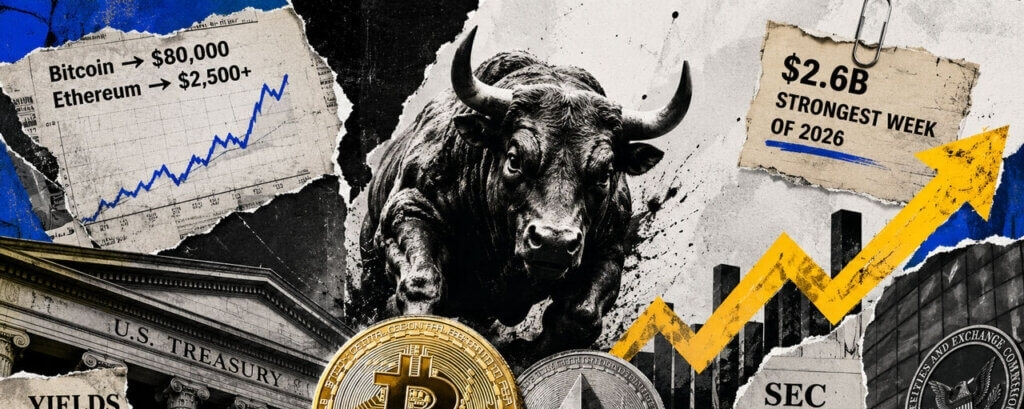
Bitcoin and Ethereum ETFs just had their biggest week of 2026 as crypto exploded higherThe US funds pulled in $2.6 billion as Bitcoin surged toward $80,000 and Washington delivered a string of market-moving catalysts.
S spot Bitcoin and Ethereum ETFs recorded their strongest inflow week of 2026 as a sharp crypto rally pulled investors back into funds that had struggled to attract sustained demand for much of the year.
Bitcoin ETFs drew $1.918 billion in the five trading sessions through Aug. 21, while funds holding Ethereum attracted $697.2 million, according to SoSoValue data. The combined $2.6 billion intake was the strongest for the two groups in about 10 months
Bitcoin funds recorded inflows every day during the week, pushing cumulative net subscriptions since their January 2024 debut to $53.7 billion. Notably, the weekly total was also their largest since the market selloff in October 2025.
Meanwhile, Ethereum funds also had their best showing since October, when they attracted nearly $1.3 billion during the week ended Oct. 3.
Notably, the renewed demand coincided with one of crypto's strongest rallies in years. Bitcoin climbed from roughly $62,300 to briefly trade near $80,000 Friday, while Ethereum surged to a seven-month high above $2,500.
That combination is important because a rally driven primarily by short covering can lose momentum once bearish positions have been cleared. Persistent ETF subscriptions represent new capital entering the market and can provide a more durable source of demand.
Ecoinometrics' ETF-flow model now places Bitcoin in a supported range of roughly $67,000 to $78,000, with an estimated fair value near $72,000. The firm said continued ETF buying could lift that range further if rising prices bring trend-following investors back into the market.
The shift is particularly notable given Bitcoin's performance earlier this year. ETF demand weakened during the downturn from the cryptocurrency's October 2025 record, leaving the market without one of the large structural buyers that had helped drive previous advances.
This week's $1.9 billion intake suggests that channel has reopened, though one strong week does not establish a lasting reversal. The next test will be whether subscriptions remain positive after Bitcoin's roughly 25% weekly advance and once the forced liquidation of bearish positions subsides.
#Write2Earn
#gonnarich
#shiba⚡
#Kriptocutrader
#XAI
Bitcoin and Ethereum ETFs just had their biggest week of 2026 as crypto exploded higher
The US funds pulled in $2.6 billion as Bitcoin surged toward $80,000 and Washington delivered a string of market-moving catalysts.
S spot Bitcoin and Ethereum ETFs recorded their strongest inflow week of 2026 as a sharp crypto rally pulled investors back into funds that had struggled to attract sustained demand for much of the year.
Bitcoin ETFs drew $1.918 billion in the five trading sessions through Aug. 21, while funds holding Ethereum attracted $697.2 million, according to SoSoValue data. The combined $2.6 billion intake was the strongest for the two groups in about 10 months
Bitcoin funds recorded inflows every day during the week, pushing cumulative net subscriptions since their January 2024 debut to $53.7 billion. Notably, the weekly total was also their largest since the market selloff in October 2025.
Meanwhile, Ethereum funds also had their best showing since October, when they attracted nearly $1.3 billion during the week ended Oct. 3.
Notably, the renewed demand coincided with one of crypto's strongest rallies in years. Bitcoin climbed from roughly $62,300 to briefly trade near $80,000 Friday, while Ethereum surged to a seven-month high above $2,500.
That combination is important because a rally driven primarily by short covering can lose momentum once bearish positions have been cleared. Persistent ETF subscriptions represent new capital entering the market and can provide a more durable source of demand.
Ecoinometrics' ETF-flow model now places Bitcoin in a supported range of roughly $67,000 to $78,000, with an estimated fair value near $72,000. The firm said continued ETF buying could lift that range further if rising prices bring trend-following investors back into the market.
The shift is particularly notable given Bitcoin's performance earlier this year. ETF demand weakened during the downturn from the cryptocurrency's October 2025 record, leaving the market without one of the large structural buyers that had helped drive previous advances.
This week's $1.9 billion intake suggests that channel has reopened, though one strong week does not establish a lasting reversal. The next test will be whether subscriptions remain positive after Bitcoin's roughly 25% weekly advance and once the forced liquidation of bearish positions subsides.
#Write2Earn
#gonnarich
#shiba⚡
#Kriptocutrader
#XAI
S spot Bitcoin and Ethereum ETFs recorded their strongest inflow week of 2026 as a sharp crypto rally pulled investors back into funds that had struggled to attract sustained demand for much of the year.
Bitcoin ETFs drew $1.918 billion in the five trading sessions through Aug. 21, while funds holding Ethereum attracted $697.2 million, according to SoSoValue data. The combined $2.6 billion intake was the strongest for the two groups in about 10 months
Bitcoin funds recorded inflows every day during the week, pushing cumulative net subscriptions since their January 2024 debut to $53.7 billion. Notably, the weekly total was also their largest since the market selloff in October 2025.
Meanwhile, Ethereum funds also had their best showing since October, when they attracted nearly $1.3 billion during the week ended Oct. 3.
Notably, the renewed demand coincided with one of crypto's strongest rallies in years. Bitcoin climbed from roughly $62,300 to briefly trade near $80,000 Friday, while Ethereum surged to a seven-month high above $2,500.
That combination is important because a rally driven primarily by short covering can lose momentum once bearish positions have been cleared. Persistent ETF subscriptions represent new capital entering the market and can provide a more durable source of demand.
Ecoinometrics' ETF-flow model now places Bitcoin in a supported range of roughly $67,000 to $78,000, with an estimated fair value near $72,000. The firm said continued ETF buying could lift that range further if rising prices bring trend-following investors back into the market.
The shift is particularly notable given Bitcoin's performance earlier this year. ETF demand weakened during the downturn from the cryptocurrency's October 2025 record, leaving the market without one of the large structural buyers that had helped drive previous advances.
This week's $1.9 billion intake suggests that channel has reopened, though one strong week does not establish a lasting reversal. The next test will be whether subscriptions remain positive after Bitcoin's roughly 25% weekly advance and once the forced liquidation of bearish positions subsides.
#Write2Earn
#gonnarich
#shiba⚡
#Kriptocutrader
#XAI
15
Tehran targets US bases in Gulf after American forces launch new strikes on IranThe United States launched fresh attacks against Iran on Thursday, prompting Tehran to retaliate by targeting US bases across the Gulf, as US leaders accused their counterparts of dragging out negotiations for a deal to end the three-month war.
US Central Command (CENTCOM) said American forces began "additional self-defense strikes" at 5:15 pm on Wednesday in Washington (early Thursday in Iran) in response to what it called Tehran's "unwarranted and continued aggression".
The second consecutive day of attacks came after US President Donald Trump, who had repeatedly said negotiations with Tehran were close to an end, said Tehran had taken "too long to make a deal" to end the war.
Iranian media reported explosions across in cities in the south near the Strait of Hormuz, with explosions heard in Bandar Abbas, Qeshm and Minab, and sources reporting hits by "enemy projectiles" in Kargan and Sirik.
CENTCOM said later that it had "completed" its strikes on "Iranian military surveillance capabilities, communication systems, and air defense sites".
American forces "fired precision munitions on Iranian targets that posed a threat to US forces and international commercial ships transiting regional waters", the command said.
In response, Iran said it had attacked US military bases in Bahrain and Kuwait, the same targets of retaliatory Iranian strikes conducted the day before.
The confrontation has triggered months of military exchanges, retaliatory attacks and diplomatic tensions across the Middle East.
Despite ongoing diplomatic efforts, relations between Washington and Tehran remain strained as both sides continue to exchange accusations and military actions.
#DelistingAlert
#satoshiNakamato
#AImodel
#FactCheck
#gonnarich
Tehran targets US bases in Gulf after American forces launch new strikes on Iran
The United States launched fresh attacks against Iran on Thursday, prompting Tehran to retaliate by targeting US bases across the Gulf, as US leaders accused their counterparts of dragging out negotiations for a deal to end the three-month war.
US Central Command (CENTCOM) said American forces began "additional self-defense strikes" at 5:15 pm on Wednesday in Washington (early Thursday in Iran) in response to what it called Tehran's "unwarranted and continued aggression".
The second consecutive day of attacks came after US President Donald Trump, who had repeatedly said negotiations with Tehran were close to an end, said Tehran had taken "too long to make a deal" to end the war.
Iranian media reported explosions across in cities in the south near the Strait of Hormuz, with explosions heard in Bandar Abbas, Qeshm and Minab, and sources reporting hits by "enemy projectiles" in Kargan and Sirik.
CENTCOM said later that it had "completed" its strikes on "Iranian military surveillance capabilities, communication systems, and air defense sites".
American forces "fired precision munitions on Iranian targets that posed a threat to US forces and international commercial ships transiting regional waters", the command said.
In response, Iran said it had attacked US military bases in Bahrain and Kuwait, the same targets of retaliatory Iranian strikes conducted the day before.
The confrontation has triggered months of military exchanges, retaliatory attacks and diplomatic tensions across the Middle East.
Despite ongoing diplomatic efforts, relations between Washington and Tehran remain strained as both sides continue to exchange accusations and military actions.
#DelistingAlert
#satoshiNakamato
#AImodel
#FactCheck
#gonnarich
US Central Command (CENTCOM) said American forces began "additional self-defense strikes" at 5:15 pm on Wednesday in Washington (early Thursday in Iran) in response to what it called Tehran's "unwarranted and continued aggression".
The second consecutive day of attacks came after US President Donald Trump, who had repeatedly said negotiations with Tehran were close to an end, said Tehran had taken "too long to make a deal" to end the war.
Iranian media reported explosions across in cities in the south near the Strait of Hormuz, with explosions heard in Bandar Abbas, Qeshm and Minab, and sources reporting hits by "enemy projectiles" in Kargan and Sirik.
CENTCOM said later that it had "completed" its strikes on "Iranian military surveillance capabilities, communication systems, and air defense sites".
American forces "fired precision munitions on Iranian targets that posed a threat to US forces and international commercial ships transiting regional waters", the command said.
In response, Iran said it had attacked US military bases in Bahrain and Kuwait, the same targets of retaliatory Iranian strikes conducted the day before.
The confrontation has triggered months of military exchanges, retaliatory attacks and diplomatic tensions across the Middle East.
Despite ongoing diplomatic efforts, relations between Washington and Tehran remain strained as both sides continue to exchange accusations and military actions.
#DelistingAlert
#satoshiNakamato
#AImodel
#FactCheck
#gonnarich
1
69

Success doesn’t come overnight — it comes with patience, learning, and consistency. 🚀
A lot of people give up after facing losses, but every setback is a lesson that makes you stronger. If you are ready to learn new skills, work with dedication, and move toward a better future, this is your time to start.
With years of experience and continuous hard work, I believe anyone can improve their journey with the right mindset and guidance. Stay focused, stay motivated, and never stop believing in yourself.
✨ Big achievements start with small steps.
✨ Your future depends on what you do today.
✨ Keep pushing forward and success will follow.
#Success #SouthKoreaNPSIncreasesStrategyStake Motivation #gonnarich rowth #SouthKoreaNPSIncreasesStrategyStake Trading #SouthKoreaNPSIncreasesStrategyStake Mindset #opportunity
Success doesn’t come overnight — it comes with patience, learning, and consistency. 🚀
A lot of people give up after facing losses, but every setback is a lesson that makes you stronger. If you are ready to learn new skills, work with dedication, and move toward a better future, this is your time to start.
With years of experience and continuous hard work, I believe anyone can improve their journey with the right mindset and guidance. Stay focused, stay motivated, and never stop believing in yourself.
✨ Big achievements start with small steps.
✨ Your future depends on what you do today.
✨ Keep pushing forward and success will follow.
#Success #SouthKoreaNPSIncreasesStrategyStake Motivation #gonnarich rowth #SouthKoreaNPSIncreasesStrategyStake Trading #SouthKoreaNPSIncreasesStrategyStake Mindset #opportunity
A lot of people give up after facing losses, but every setback is a lesson that makes you stronger. If you are ready to learn new skills, work with dedication, and move toward a better future, this is your time to start.
With years of experience and continuous hard work, I believe anyone can improve their journey with the right mindset and guidance. Stay focused, stay motivated, and never stop believing in yourself.
✨ Big achievements start with small steps.
✨ Your future depends on what you do today.
✨ Keep pushing forward and success will follow.
#Success #SouthKoreaNPSIncreasesStrategyStake Motivation #gonnarich rowth #SouthKoreaNPSIncreasesStrategyStake Trading #SouthKoreaNPSIncreasesStrategyStake Mindset #opportunity
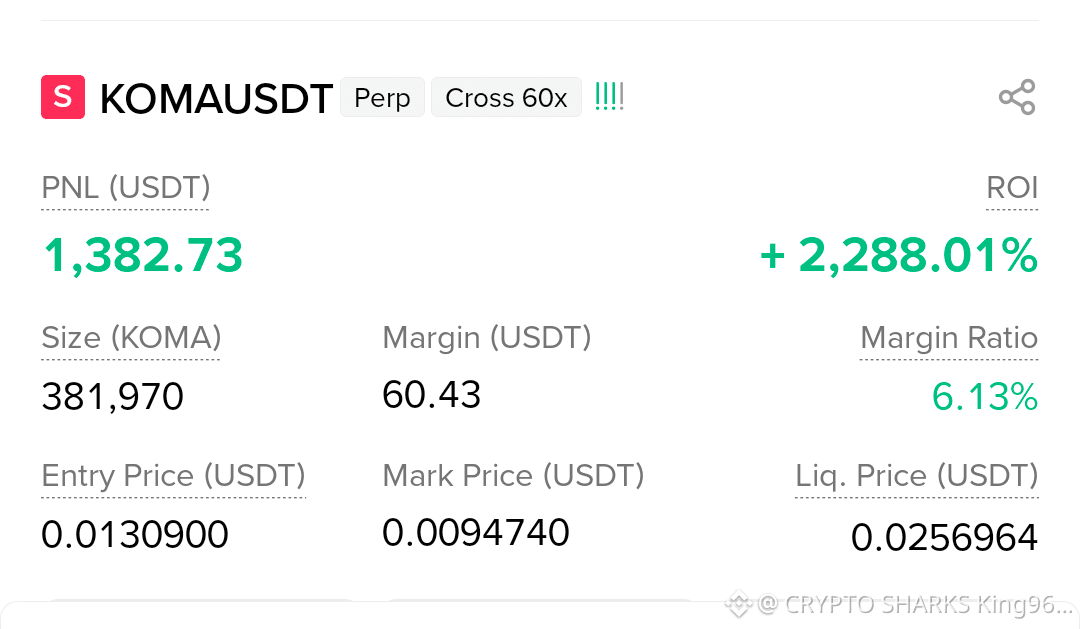
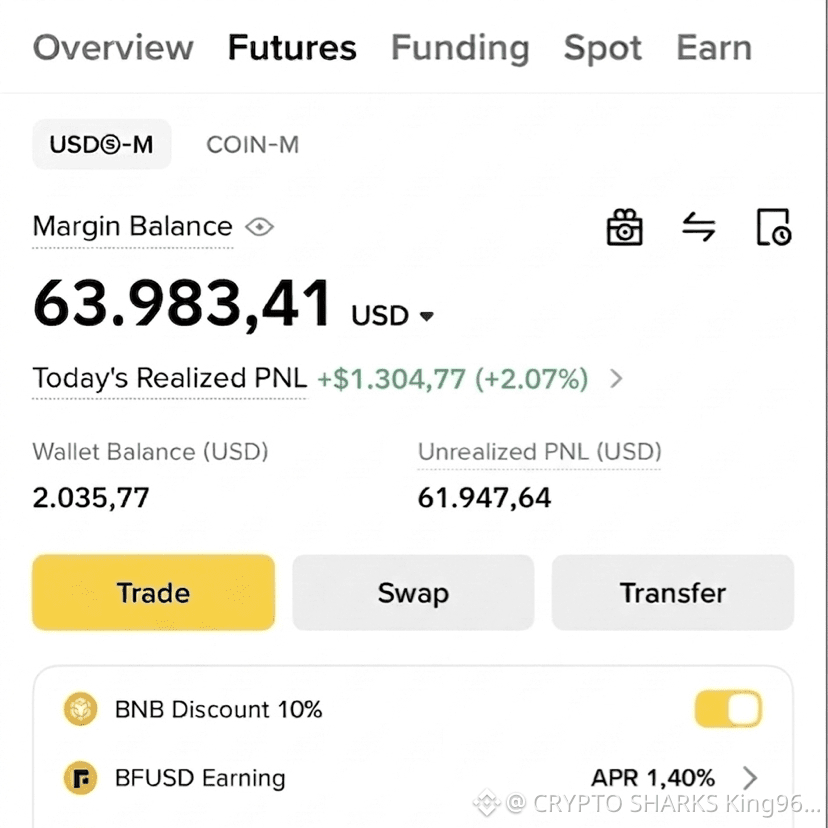
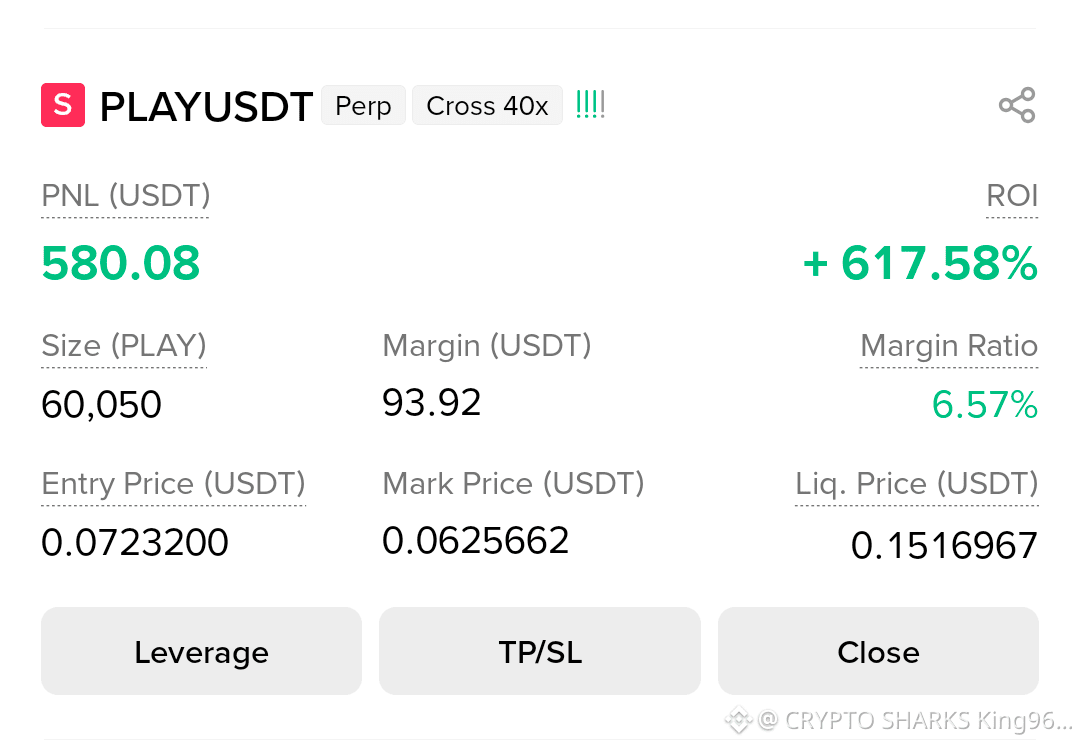
671

·
--
Bullish
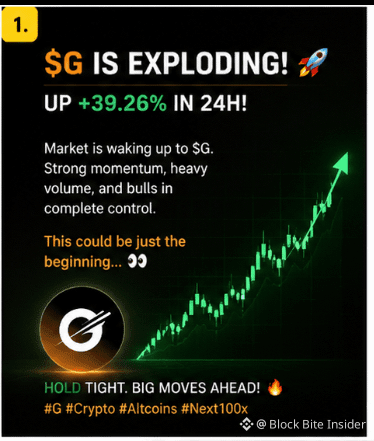
🔥 $G just stole the spotlight! +39.26% in 24H and momentum keeps building.
$G Breakouts like this attract volume, liquidity, and attention. Don’t chase green candles blindly—watch for confirmation and manage risk. 🚀💎
#gonnarich #BinanceSquare #AppleFalls6.1%
{spot}(GUSDT)
🔥 $G just stole the spotlight! +39.26% in 24H and momentum keeps building.
$G Breakouts like this attract volume, liquidity, and attention. Don’t chase green candles blindly—watch for confirmation and manage risk. 🚀💎
#gonnarich #BinanceSquare #AppleFalls6.1%
$G Breakouts like this attract volume, liquidity, and attention. Don’t chase green candles blindly—watch for confirmation and manage risk. 🚀💎
#gonnarich #BinanceSquare #AppleFalls6.1%
2
64
Article
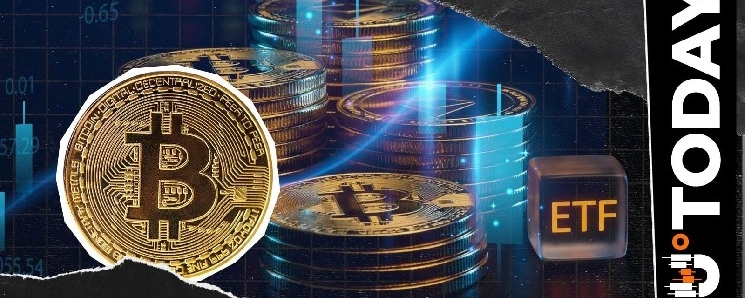
Bitcoin ETF Outflows Recede, $70,000 BTC NextBitcoin ETF outflows are receding, Galaxy Research said in a recent tweet. This is substantiated by Galaxy Research's US spot ETF net flows (30-day rolling) and cumulative total indicator, which saw a reversal after plunging deeply into negative territory.
The receding of Bitcoin ETF outflows is also substantiated by the 'Bitcoin ETF flows by issuer' indicator. According to the chart shared by Galaxy Research, U.S. spot Bitcoin ETF flows by issuer climbed higher from a deeply negative zone reached earlier in the year.
Bitcoin ETF inflows turned positive this week after two months of consistent outflows, marking the first net inflow period in the recent cycle. This shift suggests potential stabilization in institutional Bitcoin demand after a prolonged period of redemptions.
According to SoSoValue data, U.S. spot Bitcoin ETFs recorded total net inflows of $90.44 million on July 10, while U.S. spot Ethereum ETFs recorded total net inflows of $18.43 million on the same day.
Bitcoin is currently trading at $64,100 after recovering from a low of $61,453 on July 8. The next barrier for price to surmount is $65,136, coinciding with the daily MA 50, which once surpassed might open the pathway to the $70,000 psychological level.
The $70,000 level remains significant as it is the upper band of Bitcoin's current range, which analysts say is now the third longest period spent in any $10,000 price band in Bitcoin's history, behind only the $10,000–$20,000 and $20,000–$30,000 bands.
In the options market on Deribit, put skews continue to weaken as Bitcoin's recent price rebound eased downside concerns. Calls at $62,000, $65,000, and $67,000 are among the most-traded instruments, along with the $56,000 put.
The market is currently flashing mixed signals. Bitcoin ETFs still remain in the negative zone despite total net outflows easing. While continuous whale accumulation suggests positivity, a broad-based market bottom is yet to be confirmed.
#MbeyaconsciousComunity
#Notcoin
#btc70k
#gonnarich
#devcripto
Bitcoin ETF Outflows Recede, $70,000 BTC Next
Bitcoin ETF outflows are receding, Galaxy Research said in a recent tweet. This is substantiated by Galaxy Research's US spot ETF net flows (30-day rolling) and cumulative total indicator, which saw a reversal after plunging deeply into negative territory.
The receding of Bitcoin ETF outflows is also substantiated by the 'Bitcoin ETF flows by issuer' indicator. According to the chart shared by Galaxy Research, U.S. spot Bitcoin ETF flows by issuer climbed higher from a deeply negative zone reached earlier in the year.
Bitcoin ETF inflows turned positive this week after two months of consistent outflows, marking the first net inflow period in the recent cycle. This shift suggests potential stabilization in institutional Bitcoin demand after a prolonged period of redemptions.
According to SoSoValue data, U.S. spot Bitcoin ETFs recorded total net inflows of $90.44 million on July 10, while U.S. spot Ethereum ETFs recorded total net inflows of $18.43 million on the same day.
Bitcoin is currently trading at $64,100 after recovering from a low of $61,453 on July 8. The next barrier for price to surmount is $65,136, coinciding with the daily MA 50, which once surpassed might open the pathway to the $70,000 psychological level.
The $70,000 level remains significant as it is the upper band of Bitcoin's current range, which analysts say is now the third longest period spent in any $10,000 price band in Bitcoin's history, behind only the $10,000–$20,000 and $20,000–$30,000 bands.
In the options market on Deribit, put skews continue to weaken as Bitcoin's recent price rebound eased downside concerns. Calls at $62,000, $65,000, and $67,000 are among the most-traded instruments, along with the $56,000 put.
The market is currently flashing mixed signals. Bitcoin ETFs still remain in the negative zone despite total net outflows easing. While continuous whale accumulation suggests positivity, a broad-based market bottom is yet to be confirmed.
#MbeyaconsciousComunity
#Notcoin
#btc70k
#gonnarich
#devcripto
The receding of Bitcoin ETF outflows is also substantiated by the 'Bitcoin ETF flows by issuer' indicator. According to the chart shared by Galaxy Research, U.S. spot Bitcoin ETF flows by issuer climbed higher from a deeply negative zone reached earlier in the year.
Bitcoin ETF inflows turned positive this week after two months of consistent outflows, marking the first net inflow period in the recent cycle. This shift suggests potential stabilization in institutional Bitcoin demand after a prolonged period of redemptions.
According to SoSoValue data, U.S. spot Bitcoin ETFs recorded total net inflows of $90.44 million on July 10, while U.S. spot Ethereum ETFs recorded total net inflows of $18.43 million on the same day.
Bitcoin is currently trading at $64,100 after recovering from a low of $61,453 on July 8. The next barrier for price to surmount is $65,136, coinciding with the daily MA 50, which once surpassed might open the pathway to the $70,000 psychological level.
The $70,000 level remains significant as it is the upper band of Bitcoin's current range, which analysts say is now the third longest period spent in any $10,000 price band in Bitcoin's history, behind only the $10,000–$20,000 and $20,000–$30,000 bands.
In the options market on Deribit, put skews continue to weaken as Bitcoin's recent price rebound eased downside concerns. Calls at $62,000, $65,000, and $67,000 are among the most-traded instruments, along with the $56,000 put.
The market is currently flashing mixed signals. Bitcoin ETFs still remain in the negative zone despite total net outflows easing. While continuous whale accumulation suggests positivity, a broad-based market bottom is yet to be confirmed.
#MbeyaconsciousComunity
#Notcoin
#btc70k
#gonnarich
#devcripto
1
171

Article
UK Court Acquits Diezani Alison-Madueke of Bribery ChargesMrs Alison-Madueke, who served as petroleum minister under former President Goodluck Jonathan’s government from 2010 to 2015, was discharged and acquitted of a charge of conspiracy to commit bribery and five counts of accepting bribes by the London Southwark Crown Court.
She was acquitted of all six charges by the UK court after over 46 hours of deliberation and debate on the charges brought by the prosecutor. Mrs Alison-Madueke’s trial for corruption and bribery came to an end after about a decade in a UK court.
The former minister was tried alongside her brother, Doye Agama, who was charged with conspiracy to commit bribery, and Olatimbo Ayinde, who was charged with one count of bribery.
She later became the first woman to lead the Organisation of the Petroleum Exporting Countries (OPEC), placing her among the most influential figures in global energy diplomacy.
Prosecutors argued that business figures seeking opportunities in Nigeria’s oil industry funded an extravagant lifestyle for Alison-Madueke in Britain between 2011 and 2015.
The acquittal concludes one of the highest-profile corruption cases involving a former African public official.
The case had become a test of how effectively Western authorities could pursue complex corruption investigations spanning multiple jurisdictions, financial systems and regulatory agencies.
It also showed growing efforts by governments to strengthen accountability in sectors such as energy, where billions of dollars in public revenues and private investments are at stake
The ruling is unlikely to end debate over governance and transparency in Nigeria’s oil industry, a sector that has faced repeated scrutiny over the management of public resources despite years of reform efforts.
#LISTAAirdrop #Notcoin
#VETUSDT #gonnarich
#haroonahmadofficial
$NVDAB
{spot}(NVDABUSDT)
UK Court Acquits Diezani Alison-Madueke of Bribery Charges
Mrs Alison-Madueke, who served as petroleum minister under former President Goodluck Jonathan’s government from 2010 to 2015, was discharged and acquitted of a charge of conspiracy to commit bribery and five counts of accepting bribes by the London Southwark Crown Court.
She was acquitted of all six charges by the UK court after over 46 hours of deliberation and debate on the charges brought by the prosecutor. Mrs Alison-Madueke’s trial for corruption and bribery came to an end after about a decade in a UK court.
The former minister was tried alongside her brother, Doye Agama, who was charged with conspiracy to commit bribery, and Olatimbo Ayinde, who was charged with one count of bribery.
She later became the first woman to lead the Organisation of the Petroleum Exporting Countries (OPEC), placing her among the most influential figures in global energy diplomacy.
Prosecutors argued that business figures seeking opportunities in Nigeria’s oil industry funded an extravagant lifestyle for Alison-Madueke in Britain between 2011 and 2015.
The acquittal concludes one of the highest-profile corruption cases involving a former African public official.
The case had become a test of how effectively Western authorities could pursue complex corruption investigations spanning multiple jurisdictions, financial systems and regulatory agencies.
It also showed growing efforts by governments to strengthen accountability in sectors such as energy, where billions of dollars in public revenues and private investments are at stake
The ruling is unlikely to end debate over governance and transparency in Nigeria’s oil industry, a sector that has faced repeated scrutiny over the management of public resources despite years of reform efforts.
#LISTAAirdrop #Notcoin
#VETUSDT #gonnarich
#haroonahmadofficial
$NVDAB
She was acquitted of all six charges by the UK court after over 46 hours of deliberation and debate on the charges brought by the prosecutor. Mrs Alison-Madueke’s trial for corruption and bribery came to an end after about a decade in a UK court.
The former minister was tried alongside her brother, Doye Agama, who was charged with conspiracy to commit bribery, and Olatimbo Ayinde, who was charged with one count of bribery.
She later became the first woman to lead the Organisation of the Petroleum Exporting Countries (OPEC), placing her among the most influential figures in global energy diplomacy.
Prosecutors argued that business figures seeking opportunities in Nigeria’s oil industry funded an extravagant lifestyle for Alison-Madueke in Britain between 2011 and 2015.
The acquittal concludes one of the highest-profile corruption cases involving a former African public official.
The case had become a test of how effectively Western authorities could pursue complex corruption investigations spanning multiple jurisdictions, financial systems and regulatory agencies.
It also showed growing efforts by governments to strengthen accountability in sectors such as energy, where billions of dollars in public revenues and private investments are at stake
The ruling is unlikely to end debate over governance and transparency in Nigeria’s oil industry, a sector that has faced repeated scrutiny over the management of public resources despite years of reform efforts.
#LISTAAirdrop #Notcoin
#VETUSDT #gonnarich
#haroonahmadofficial
$NVDAB
41
Article
Ekhon premium kore deta geyto..but ame cera to tui pabi na aytai prblmQuick Maths On STRC Buybacks: The Truth About Net Bitcoin Per Share and Accretion
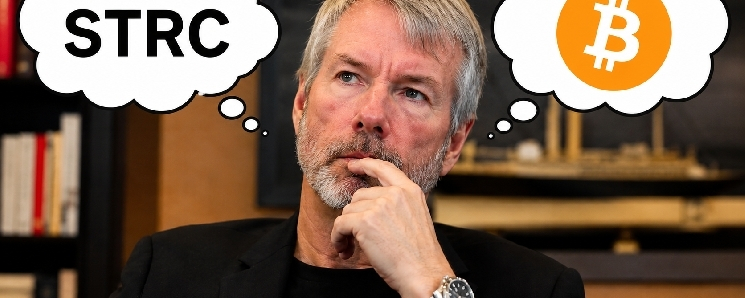
Strategy initiated open-market repurchases of STRC last week (July 20 through July 26, 2026), buying 288,930 shares for ~$25 million at an average price of $86.52. Notably, the company bought no Bitcoin and continued to grow its cash reserve.
Last week’s STRC buyback follows Strategy’s Digital Credit Capital Framework, announced on June 29 in response to the June volatility, which authorized up to $1 billion of repurchases across STRC, STRF, STRD, and STRK. Likely because STRC is now viewed as Strategy’s flagship product, STRC was identified as the initial priority for these buybacks.
Buyback logic starts with the position of MSTR common stock in the capital structure. Common equity owns the residual value after every senior claim has been satisfied. Strategy’s $BTC and cash are its liquid assets. Debt and preferred stock sit ahead of MSTR. Strategy’s USD Reserve (read: cash) offset part of those senior claims. The common stock therefore represents the value left after subtracting debt and preferred stock from the bitcoin reserve and adding back available cash.
This is effectively Strategy’s recently introduced “Net Bitcoin Per Share” metric. Strategy’s current methodology calculates Net $BTC by taking bitcoin holdings and subtracting the bitcoin-equivalent value of out-of-the-money convertible debt, other debt-like instruments, and outstanding perpetual preferred stock, then adding back the USD Reserve. Notice that this is exactly the same description as the prior paragraph!
Net $BTC is divided by fully diluted common shares to produce Net BPS. Strategy’s disclosures mark July 23 as the boundary for its revised mNAV methodology, which uses Net BPS as its denominator.
This metric gives MSTR investors a direct view of $BTC economically attributable to common equity after senior claims. Gross Bitcoin Per Share can rise when Strategy issues more preferred stock or debt to buy bitcoin. Net Bitcoin Per Share captures the liability created alongside that bitcoin purchase, answering the question of how much bitcoin remains for common shareholders after the more senior investors in the capital structure are paid.
Strategy retired $28.893 million of STRC stated amount for about $24.998 million based on the reported average price. The difference equals approximately $3.895 million, and this value accrues to MSTR.
(It’s worth mentioning that also related to this is STRC’s current 12% annualized dividend rate. Retiring $28.893 million of STRC stated amount also removes roughly $3.47 million of annual dividend requirements. Also consider that since STRC is still well below $100, the company likely will raise the dividend, meaning the actual annual dividend expense removed is likely higher.)
Net $BTC identifies the residual $BTC owned by the common stock by considering all the senior liabilities which sit ahead. The STRC buyback is a move of financial engineering to improve the Net $BTC per share metric of the company.
This post Quick Maths On STRC Buybacks: The Truth About Net Bitcoin Per Share and Accretion first appeared on Bitcoin Magazine and is written by Allard Peng.
#Write2Earn
#quickfarm
#gonnarich
#btc70k
#Notcoin
Ekhon premium kore deta geyto..but ame cera to tui pabi na aytai prblm
Quick Maths On STRC Buybacks: The Truth About Net Bitcoin Per Share and Accretion
Strategy initiated open-market repurchases of STRC last week (July 20 through July 26, 2026), buying 288,930 shares for ~$25 million at an average price of $86.52. Notably, the company bought no Bitcoin and continued to grow its cash reserve.
Last week’s STRC buyback follows Strategy’s Digital Credit Capital Framework, announced on June 29 in response to the June volatility, which authorized up to $1 billion of repurchases across STRC, STRF, STRD, and STRK. Likely because STRC is now viewed as Strategy’s flagship product, STRC was identified as the initial priority for these buybacks.
Buyback logic starts with the position of MSTR common stock in the capital structure. Common equity owns the residual value after every senior claim has been satisfied. Strategy’s $BTC and cash are its liquid assets. Debt and preferred stock sit ahead of MSTR. Strategy’s USD Reserve (read: cash) offset part of those senior claims. The common stock therefore represents the value left after subtracting debt and preferred stock from the bitcoin reserve and adding back available cash.
This is effectively Strategy’s recently introduced “Net Bitcoin Per Share” metric. Strategy’s current methodology calculates Net $BTC by taking bitcoin holdings and subtracting the bitcoin-equivalent value of out-of-the-money convertible debt, other debt-like instruments, and outstanding perpetual preferred stock, then adding back the USD Reserve. Notice that this is exactly the same description as the prior paragraph!
Net $BTC is divided by fully diluted common shares to produce Net BPS. Strategy’s disclosures mark July 23 as the boundary for its revised mNAV methodology, which uses Net BPS as its denominator.
This metric gives MSTR investors a direct view of $BTC economically attributable to common equity after senior claims. Gross Bitcoin Per Share can rise when Strategy issues more preferred stock or debt to buy bitcoin. Net Bitcoin Per Share captures the liability created alongside that bitcoin purchase, answering the question of how much bitcoin remains for common shareholders after the more senior investors in the capital structure are paid.
Strategy retired $28.893 million of STRC stated amount for about $24.998 million based on the reported average price. The difference equals approximately $3.895 million, and this value accrues to MSTR.
(It’s worth mentioning that also related to this is STRC’s current 12% annualized dividend rate. Retiring $28.893 million of STRC stated amount also removes roughly $3.47 million of annual dividend requirements. Also consider that since STRC is still well below $100, the company likely will raise the dividend, meaning the actual annual dividend expense removed is likely higher.)
Net $BTC identifies the residual $BTC owned by the common stock by considering all the senior liabilities which sit ahead. The STRC buyback is a move of financial engineering to improve the Net $BTC per share metric of the company.
This post Quick Maths On STRC Buybacks: The Truth About Net Bitcoin Per Share and Accretion first appeared on Bitcoin Magazine and is written by Allard Peng.
#Write2Earn
#quickfarm
#gonnarich
#btc70k
#Notcoin
Strategy initiated open-market repurchases of STRC last week (July 20 through July 26, 2026), buying 288,930 shares for ~$25 million at an average price of $86.52. Notably, the company bought no Bitcoin and continued to grow its cash reserve.
Last week’s STRC buyback follows Strategy’s Digital Credit Capital Framework, announced on June 29 in response to the June volatility, which authorized up to $1 billion of repurchases across STRC, STRF, STRD, and STRK. Likely because STRC is now viewed as Strategy’s flagship product, STRC was identified as the initial priority for these buybacks.
Buyback logic starts with the position of MSTR common stock in the capital structure. Common equity owns the residual value after every senior claim has been satisfied. Strategy’s $BTC and cash are its liquid assets. Debt and preferred stock sit ahead of MSTR. Strategy’s USD Reserve (read: cash) offset part of those senior claims. The common stock therefore represents the value left after subtracting debt and preferred stock from the bitcoin reserve and adding back available cash.
This is effectively Strategy’s recently introduced “Net Bitcoin Per Share” metric. Strategy’s current methodology calculates Net $BTC by taking bitcoin holdings and subtracting the bitcoin-equivalent value of out-of-the-money convertible debt, other debt-like instruments, and outstanding perpetual preferred stock, then adding back the USD Reserve. Notice that this is exactly the same description as the prior paragraph!
Net $BTC is divided by fully diluted common shares to produce Net BPS. Strategy’s disclosures mark July 23 as the boundary for its revised mNAV methodology, which uses Net BPS as its denominator.
This metric gives MSTR investors a direct view of $BTC economically attributable to common equity after senior claims. Gross Bitcoin Per Share can rise when Strategy issues more preferred stock or debt to buy bitcoin. Net Bitcoin Per Share captures the liability created alongside that bitcoin purchase, answering the question of how much bitcoin remains for common shareholders after the more senior investors in the capital structure are paid.
Strategy retired $28.893 million of STRC stated amount for about $24.998 million based on the reported average price. The difference equals approximately $3.895 million, and this value accrues to MSTR.
(It’s worth mentioning that also related to this is STRC’s current 12% annualized dividend rate. Retiring $28.893 million of STRC stated amount also removes roughly $3.47 million of annual dividend requirements. Also consider that since STRC is still well below $100, the company likely will raise the dividend, meaning the actual annual dividend expense removed is likely higher.)
Net $BTC identifies the residual $BTC owned by the common stock by considering all the senior liabilities which sit ahead. The STRC buyback is a move of financial engineering to improve the Net $BTC per share metric of the company.
This post Quick Maths On STRC Buybacks: The Truth About Net Bitcoin Per Share and Accretion first appeared on Bitcoin Magazine and is written by Allard Peng.
#Write2Earn
#quickfarm
#gonnarich
#btc70k
#Notcoin
71

Article
What Is Crypto Market Making? Who Are the Market MakersThe world of cryptocurrency is complex and ever-evolving, with market making playing a pivotal role in maintaining liquidity and stability. This article explores the concept of crypto market making, its importance, and how it operates within the digital asset ecosystem.
Market makers are crucial for healthy market dynamics as they ensure liquidity and price stability, reducing the spread between buy and sell orders and enabling traders to execute orders efficiently.
This section delves into the process and mechanisms of market making in crypto, highlighting the use of algorithms and automated systems to manage orders and maintain market liquidity.
Market makers employ various strategies to profit from spread differentials and market movements, including high-frequency trading, arbitrage, and order book manipulation.
A market maker provides liquidity to the market by continuously buying and selling assets, thereby facilitating smoother transactions and maintaining price stability. They profit from the spread between buy and sell prices. In contrast, a regular trader looks to profit from market movements by buying low and selling high or vice versa, and does not have the obligation to provide liquidity.
Market makers profit by taking advantage of the bid-ask spread, which is the difference between the highest price a buyer is willing to pay (bid) and the lowest price a seller is willing to accept (ask). They buy at the bid price and sell at the ask price, earning the spread between these two prices. Additionally, they may engage in arbitrage and other trading strategies to capitalize on price discrepancies across different markets.
The main risks include market volatility, where sudden price swings can lead to significant losses; credit risk, particularly in decentralized finance (DeFi) platforms where counterparty risks are prevalent; and regulatory risks, as the legal landscape for cryptocurrencies is still evolving and can impact market making activities.
Regulatory changes can have a profound impact on market making by altering the legal and operational framework within which market makers operate. New regulations can introduce compliance requirements, affect the cost of doing business, and change the risk profile of market making activities. They can also influence market structure and liquidity, affecting the profitability and viability of market making strategies.
While technology, especially advanced algorithms and artificial intelligence, can automate many aspects of market making, complete automation is challenging. Human oversight is still necessary to manage risk, make strategic decisions, and comply with regulatory requirements. Moreover, market conditions can change rapidly and unpredictably, requiring human intervention to adapt strategies and mitigate risks effectively.
#Write2Earn
#gonnarich
#JBVIP🎯
#xmucan
#Kriptocutrader
What Is Crypto Market Making? Who Are the Market Makers
The world of cryptocurrency is complex and ever-evolving, with market making playing a pivotal role in maintaining liquidity and stability. This article explores the concept of crypto market making, its importance, and how it operates within the digital asset ecosystem.
Market makers are crucial for healthy market dynamics as they ensure liquidity and price stability, reducing the spread between buy and sell orders and enabling traders to execute orders efficiently.
This section delves into the process and mechanisms of market making in crypto, highlighting the use of algorithms and automated systems to manage orders and maintain market liquidity.
Market makers employ various strategies to profit from spread differentials and market movements, including high-frequency trading, arbitrage, and order book manipulation.
A market maker provides liquidity to the market by continuously buying and selling assets, thereby facilitating smoother transactions and maintaining price stability. They profit from the spread between buy and sell prices. In contrast, a regular trader looks to profit from market movements by buying low and selling high or vice versa, and does not have the obligation to provide liquidity.
Market makers profit by taking advantage of the bid-ask spread, which is the difference between the highest price a buyer is willing to pay (bid) and the lowest price a seller is willing to accept (ask). They buy at the bid price and sell at the ask price, earning the spread between these two prices. Additionally, they may engage in arbitrage and other trading strategies to capitalize on price discrepancies across different markets.
The main risks include market volatility, where sudden price swings can lead to significant losses; credit risk, particularly in decentralized finance (DeFi) platforms where counterparty risks are prevalent; and regulatory risks, as the legal landscape for cryptocurrencies is still evolving and can impact market making activities.
Regulatory changes can have a profound impact on market making by altering the legal and operational framework within which market makers operate. New regulations can introduce compliance requirements, affect the cost of doing business, and change the risk profile of market making activities. They can also influence market structure and liquidity, affecting the profitability and viability of market making strategies.
While technology, especially advanced algorithms and artificial intelligence, can automate many aspects of market making, complete automation is challenging. Human oversight is still necessary to manage risk, make strategic decisions, and comply with regulatory requirements. Moreover, market conditions can change rapidly and unpredictably, requiring human intervention to adapt strategies and mitigate risks effectively.
#Write2Earn
#gonnarich
#JBVIP🎯
#xmucan
#Kriptocutrader
Market makers are crucial for healthy market dynamics as they ensure liquidity and price stability, reducing the spread between buy and sell orders and enabling traders to execute orders efficiently.
This section delves into the process and mechanisms of market making in crypto, highlighting the use of algorithms and automated systems to manage orders and maintain market liquidity.
Market makers employ various strategies to profit from spread differentials and market movements, including high-frequency trading, arbitrage, and order book manipulation.
A market maker provides liquidity to the market by continuously buying and selling assets, thereby facilitating smoother transactions and maintaining price stability. They profit from the spread between buy and sell prices. In contrast, a regular trader looks to profit from market movements by buying low and selling high or vice versa, and does not have the obligation to provide liquidity.
Market makers profit by taking advantage of the bid-ask spread, which is the difference between the highest price a buyer is willing to pay (bid) and the lowest price a seller is willing to accept (ask). They buy at the bid price and sell at the ask price, earning the spread between these two prices. Additionally, they may engage in arbitrage and other trading strategies to capitalize on price discrepancies across different markets.
The main risks include market volatility, where sudden price swings can lead to significant losses; credit risk, particularly in decentralized finance (DeFi) platforms where counterparty risks are prevalent; and regulatory risks, as the legal landscape for cryptocurrencies is still evolving and can impact market making activities.
Regulatory changes can have a profound impact on market making by altering the legal and operational framework within which market makers operate. New regulations can introduce compliance requirements, affect the cost of doing business, and change the risk profile of market making activities. They can also influence market structure and liquidity, affecting the profitability and viability of market making strategies.
While technology, especially advanced algorithms and artificial intelligence, can automate many aspects of market making, complete automation is challenging. Human oversight is still necessary to manage risk, make strategic decisions, and comply with regulatory requirements. Moreover, market conditions can change rapidly and unpredictably, requiring human intervention to adapt strategies and mitigate risks effectively.
#Write2Earn
#gonnarich
#JBVIP🎯
#xmucan
#Kriptocutrader
102

Article
GDMining Provides Free Cloud Mining, Allowing Everyone to Earn Money Through Bitcoin Mininga leading cloud mining platform founded in 2021, is committed to providing efficient and profitable cloud mining services. Located in St Asaph, UK, GDMining has built a reputation for reliability and user-friendliness, attracting a global user base
offers a streamlined process for individuals interested in cryptocurrency mining. The platform’s three-step approach ensures that users can begin mining quickly and with minimal effort. The first step involves signing up with a valid email address, with new users receiving a $50 bonus upon successful registration. Next, users choose from a variety of cloud mining contracts designed to offer stable and risk-free returns. Finally, users start earning immediately, with daily profits deposited directly into their accounts and no withdrawal fees.
GDMining prioritizes stable profits and fast, regular payouts. The system processes all withdrawal requests within five minutes, ensuring users have quick access to their earnings. The platform’s inclusivity is evident in its user-friendly design, making it accessible for both beginners and experienced miners. GDMining’s experienced investment team and IT experts employ market-leading technology to provide reliable and profitable cloud mining solutions.
Browse the available cloud mining contracts and select the one that suits your investment level and goals. Contracts vary in price, duration, and daily rewards, providing options for all types of investors.
Once a contract is purchased, daily profits are automatically deposited into the user’s account. Withdrawals are processed promptly with no fees, and users can choose their preferred cryptocurrency for withdrawals.
#Write2Earn
#Quark
#Uniswp
#solana
#gonnarich
GDMining Provides Free Cloud Mining, Allowing Everyone to Earn Money Through Bitcoin Mining
a leading cloud mining platform founded in 2021, is committed to providing efficient and profitable cloud mining services. Located in St Asaph, UK, GDMining has built a reputation for reliability and user-friendliness, attracting a global user base
offers a streamlined process for individuals interested in cryptocurrency mining. The platform’s three-step approach ensures that users can begin mining quickly and with minimal effort. The first step involves signing up with a valid email address, with new users receiving a $50 bonus upon successful registration. Next, users choose from a variety of cloud mining contracts designed to offer stable and risk-free returns. Finally, users start earning immediately, with daily profits deposited directly into their accounts and no withdrawal fees.
GDMining prioritizes stable profits and fast, regular payouts. The system processes all withdrawal requests within five minutes, ensuring users have quick access to their earnings. The platform’s inclusivity is evident in its user-friendly design, making it accessible for both beginners and experienced miners. GDMining’s experienced investment team and IT experts employ market-leading technology to provide reliable and profitable cloud mining solutions.
Browse the available cloud mining contracts and select the one that suits your investment level and goals. Contracts vary in price, duration, and daily rewards, providing options for all types of investors.
Once a contract is purchased, daily profits are automatically deposited into the user’s account. Withdrawals are processed promptly with no fees, and users can choose their preferred cryptocurrency for withdrawals.
#Write2Earn
#Quark
#Uniswp
#solana
#gonnarich
offers a streamlined process for individuals interested in cryptocurrency mining. The platform’s three-step approach ensures that users can begin mining quickly and with minimal effort. The first step involves signing up with a valid email address, with new users receiving a $50 bonus upon successful registration. Next, users choose from a variety of cloud mining contracts designed to offer stable and risk-free returns. Finally, users start earning immediately, with daily profits deposited directly into their accounts and no withdrawal fees.
GDMining prioritizes stable profits and fast, regular payouts. The system processes all withdrawal requests within five minutes, ensuring users have quick access to their earnings. The platform’s inclusivity is evident in its user-friendly design, making it accessible for both beginners and experienced miners. GDMining’s experienced investment team and IT experts employ market-leading technology to provide reliable and profitable cloud mining solutions.
Browse the available cloud mining contracts and select the one that suits your investment level and goals. Contracts vary in price, duration, and daily rewards, providing options for all types of investors.
Once a contract is purchased, daily profits are automatically deposited into the user’s account. Withdrawals are processed promptly with no fees, and users can choose their preferred cryptocurrency for withdrawals.
#Write2Earn
#Quark
#Uniswp
#solana
#gonnarich
122
Verified

Article
Why Is Sui's Approach to Storing Data On Chain Different From Most BlockchainsSui stores data as individual objects instead of tracking account balances, separating it from Ethereum, Solana, and most other blockchains. Each object carries its own ID, owner, and version history, letting the network process unrelated transactions at once instead of running everything through one shared ledger state.
Ethereum and Solana use an account-based model, where the ledger tracks a balance tied to each wallet address. Every transaction touches that shared state, so the network processes transactions in strict order to avoid conflicts.
Sui, built by Mysten Labs and launched on mainnet in May 2023, treats every asset, from a coin to an NFT to a smart contract package, as a distinct object with its own unique ID. Objects can be owned by one address, shared among multiple users, or marked immutable so no one can change them again.
The practical effect is speed. A wallet-to-wallet transfer clears almost instantly, while an action touching a shared resource still waits for network agreement, similar to other chains.
Sui prices storage differently than chains treating it as a one-time fee. Creating an object costs a fee upfront, split into a refundable deposit and a non-refundable portion, currently 1 percent, permanently removed from circulation.
The refundable share sits in a storage fund until the object is deleted or shrunk, when up to 99 percent returns to whoever performed that transaction, even if they were not the original creator. The rebate exists because today's validators are not the ones who will store data years from now.
On-chain objects suit account state and application logic, but not large files like images or AI training data. Walrus, a separate storage protocol also built by Mysten Labs, splits large files into encoded pieces distributed across storage nodes and referenced through the Sui ledger for verification.
As of mid-July 2026, $SUI trades near $0.75, with a market cap around $3.0 billion, down roughly 86 percent from its all-time high of $5.35 in January 2025.
A CoinStats analysis from late June 2026 estimated Sui's annualized network fee revenue at approximately $15 million, well below Ethereum and Solana's totals above $500 million each, and put monthly active user growth at roughly 10 million to 40 million this year, though that pairing comes from a single research source rather than multiple trackers.
Analyst Michaël van de Poppe recently named $SUI among his top altcoin picks, citing early recovery signs.
Sui's object-centric model processes unrelated transactions in parallel, settles simple transfers in under a second, and charges a storage fee that partially refunds itself when data is deleted.
Shared objects still rely on consensus, and large files route through Walrus instead of staying fully on-chain. Together, these give Sui a genuinely different foundation for on-chain data than account-based blockchains.
#pepe⚡
#Kriptocutrader
#HotTrends
#JohnCarl
#gonnarich
Why Is Sui's Approach to Storing Data On Chain Different From Most Blockchains
Sui stores data as individual objects instead of tracking account balances, separating it from Ethereum, Solana, and most other blockchains. Each object carries its own ID, owner, and version history, letting the network process unrelated transactions at once instead of running everything through one shared ledger state.
Ethereum and Solana use an account-based model, where the ledger tracks a balance tied to each wallet address. Every transaction touches that shared state, so the network processes transactions in strict order to avoid conflicts.
Sui, built by Mysten Labs and launched on mainnet in May 2023, treats every asset, from a coin to an NFT to a smart contract package, as a distinct object with its own unique ID. Objects can be owned by one address, shared among multiple users, or marked immutable so no one can change them again.
The practical effect is speed. A wallet-to-wallet transfer clears almost instantly, while an action touching a shared resource still waits for network agreement, similar to other chains.
Sui prices storage differently than chains treating it as a one-time fee. Creating an object costs a fee upfront, split into a refundable deposit and a non-refundable portion, currently 1 percent, permanently removed from circulation.
The refundable share sits in a storage fund until the object is deleted or shrunk, when up to 99 percent returns to whoever performed that transaction, even if they were not the original creator. The rebate exists because today's validators are not the ones who will store data years from now.
On-chain objects suit account state and application logic, but not large files like images or AI training data. Walrus, a separate storage protocol also built by Mysten Labs, splits large files into encoded pieces distributed across storage nodes and referenced through the Sui ledger for verification.
As of mid-July 2026, $SUI trades near $0.75, with a market cap around $3.0 billion, down roughly 86 percent from its all-time high of $5.35 in January 2025.
A CoinStats analysis from late June 2026 estimated Sui's annualized network fee revenue at approximately $15 million, well below Ethereum and Solana's totals above $500 million each, and put monthly active user growth at roughly 10 million to 40 million this year, though that pairing comes from a single research source rather than multiple trackers.
Analyst Michaël van de Poppe recently named $SUI among his top altcoin picks, citing early recovery signs.
Sui's object-centric model processes unrelated transactions in parallel, settles simple transfers in under a second, and charges a storage fee that partially refunds itself when data is deleted.
Shared objects still rely on consensus, and large files route through Walrus instead of staying fully on-chain. Together, these give Sui a genuinely different foundation for on-chain data than account-based blockchains.
#pepe⚡
#Kriptocutrader
#HotTrends
#JohnCarl
#gonnarich
Ethereum and Solana use an account-based model, where the ledger tracks a balance tied to each wallet address. Every transaction touches that shared state, so the network processes transactions in strict order to avoid conflicts.
Sui, built by Mysten Labs and launched on mainnet in May 2023, treats every asset, from a coin to an NFT to a smart contract package, as a distinct object with its own unique ID. Objects can be owned by one address, shared among multiple users, or marked immutable so no one can change them again.
The practical effect is speed. A wallet-to-wallet transfer clears almost instantly, while an action touching a shared resource still waits for network agreement, similar to other chains.
Sui prices storage differently than chains treating it as a one-time fee. Creating an object costs a fee upfront, split into a refundable deposit and a non-refundable portion, currently 1 percent, permanently removed from circulation.
The refundable share sits in a storage fund until the object is deleted or shrunk, when up to 99 percent returns to whoever performed that transaction, even if they were not the original creator. The rebate exists because today's validators are not the ones who will store data years from now.
On-chain objects suit account state and application logic, but not large files like images or AI training data. Walrus, a separate storage protocol also built by Mysten Labs, splits large files into encoded pieces distributed across storage nodes and referenced through the Sui ledger for verification.
As of mid-July 2026, $SUI trades near $0.75, with a market cap around $3.0 billion, down roughly 86 percent from its all-time high of $5.35 in January 2025.
A CoinStats analysis from late June 2026 estimated Sui's annualized network fee revenue at approximately $15 million, well below Ethereum and Solana's totals above $500 million each, and put monthly active user growth at roughly 10 million to 40 million this year, though that pairing comes from a single research source rather than multiple trackers.
Analyst Michaël van de Poppe recently named $SUI among his top altcoin picks, citing early recovery signs.
Sui's object-centric model processes unrelated transactions in parallel, settles simple transfers in under a second, and charges a storage fee that partially refunds itself when data is deleted.
Shared objects still rely on consensus, and large files route through Walrus instead of staying fully on-chain. Together, these give Sui a genuinely different foundation for on-chain data than account-based blockchains.
#pepe⚡
#Kriptocutrader
#HotTrends
#JohnCarl
#gonnarich
2
1
783
Article
Optimism Highlights $75M Revenue Potential from OP Stack — The Takeaway for CryptoIn a recent tweet, Optimism highlighted a remarkable revenue opportunity for exchanges leveraging its OP Stack. A top-3 US exchange reportedly secured $75 million in sequencer revenue during the second half of 2025 by operating its own chain on this technology. This insight illustrates the advantages of ownership in the blockchain space, as detailed in their tweet.
The broader crypto market is currently exhibiting mixed signals, with varying momentum across major assets. In this context, Optimism’s revelation about its OP Stack’s potential stands out. By owning their infrastructure, exchanges can retain 100% of their revenue while having the flexibility to customize fees and block space. This strategic move not only enhances profitability for exchanges but also aligns with ongoing discussions about revenue generation in the crypto sector. The tweet has garnered significant engagement, growing interest in Optimism’s innovative approach.
Currently, the price of Optimism remains at $0, with no trading volume reported in the last 24 hours. This lack of price movement indicates a pause in market activity. However, the insights shared by Optimism can influence future trading dynamics as stakeholders evaluate the implications of owning chain operations. The emphasis on revenue retention through the OP Stack could attract more exchanges to consider similar strategies, potentially leading to increased adoption of Optimism’s technology.
Optimism is a prominent layer-2 solution that aims to enhance Ethereum’s scalability and efficiency. Its OP Stack technology allows developers to build customizable chains while facilitating lower transaction costs. As the blockchain landscape evolves, Optimism’s focus on empowering exchanges and generating revenue through ownership positions it strategically within the market. The recent discussions around its capabilities reflect a broader trend in the industry towards optimizing financial models on decentralized platforms.
Traders are closely watching how the insights from Optimism might influence other exchanges and projects in the blockchain ecosystem. The potential for increased adoption of the OP Stack could lead to more exchanges exploring similar infrastructural ownership, potentially reshaping transaction dynamics. Additionally, market participants may evaluate how this development interacts with macroeconomic factors such as interest rates and regulatory frameworks, which could further impact the broader crypto market. Observing price behavior and trading volume in the coming days will be crucial as these developments unfold.
This article is for informational purposes only and does not constitute financial advice.
#gonnarich
#MoonshotKimiK3SparksChipSelloff
#SpaceXClosesBelowIPOPrice
#NikkeiFalls5%WorstSinceMarch #devcripto
Optimism Highlights $75M Revenue Potential from OP Stack — The Takeaway for Crypto
In a recent tweet, Optimism highlighted a remarkable revenue opportunity for exchanges leveraging its OP Stack. A top-3 US exchange reportedly secured $75 million in sequencer revenue during the second half of 2025 by operating its own chain on this technology. This insight illustrates the advantages of ownership in the blockchain space, as detailed in their tweet.
The broader crypto market is currently exhibiting mixed signals, with varying momentum across major assets. In this context, Optimism’s revelation about its OP Stack’s potential stands out. By owning their infrastructure, exchanges can retain 100% of their revenue while having the flexibility to customize fees and block space. This strategic move not only enhances profitability for exchanges but also aligns with ongoing discussions about revenue generation in the crypto sector. The tweet has garnered significant engagement, growing interest in Optimism’s innovative approach.
Currently, the price of Optimism remains at $0, with no trading volume reported in the last 24 hours. This lack of price movement indicates a pause in market activity. However, the insights shared by Optimism can influence future trading dynamics as stakeholders evaluate the implications of owning chain operations. The emphasis on revenue retention through the OP Stack could attract more exchanges to consider similar strategies, potentially leading to increased adoption of Optimism’s technology.
Optimism is a prominent layer-2 solution that aims to enhance Ethereum’s scalability and efficiency. Its OP Stack technology allows developers to build customizable chains while facilitating lower transaction costs. As the blockchain landscape evolves, Optimism’s focus on empowering exchanges and generating revenue through ownership positions it strategically within the market. The recent discussions around its capabilities reflect a broader trend in the industry towards optimizing financial models on decentralized platforms.
Traders are closely watching how the insights from Optimism might influence other exchanges and projects in the blockchain ecosystem. The potential for increased adoption of the OP Stack could lead to more exchanges exploring similar infrastructural ownership, potentially reshaping transaction dynamics. Additionally, market participants may evaluate how this development interacts with macroeconomic factors such as interest rates and regulatory frameworks, which could further impact the broader crypto market. Observing price behavior and trading volume in the coming days will be crucial as these developments unfold.
This article is for informational purposes only and does not constitute financial advice.
#gonnarich
#MoonshotKimiK3SparksChipSelloff
#SpaceXClosesBelowIPOPrice
#NikkeiFalls5%WorstSinceMarch #devcripto
The broader crypto market is currently exhibiting mixed signals, with varying momentum across major assets. In this context, Optimism’s revelation about its OP Stack’s potential stands out. By owning their infrastructure, exchanges can retain 100% of their revenue while having the flexibility to customize fees and block space. This strategic move not only enhances profitability for exchanges but also aligns with ongoing discussions about revenue generation in the crypto sector. The tweet has garnered significant engagement, growing interest in Optimism’s innovative approach.
Currently, the price of Optimism remains at $0, with no trading volume reported in the last 24 hours. This lack of price movement indicates a pause in market activity. However, the insights shared by Optimism can influence future trading dynamics as stakeholders evaluate the implications of owning chain operations. The emphasis on revenue retention through the OP Stack could attract more exchanges to consider similar strategies, potentially leading to increased adoption of Optimism’s technology.
Optimism is a prominent layer-2 solution that aims to enhance Ethereum’s scalability and efficiency. Its OP Stack technology allows developers to build customizable chains while facilitating lower transaction costs. As the blockchain landscape evolves, Optimism’s focus on empowering exchanges and generating revenue through ownership positions it strategically within the market. The recent discussions around its capabilities reflect a broader trend in the industry towards optimizing financial models on decentralized platforms.
Traders are closely watching how the insights from Optimism might influence other exchanges and projects in the blockchain ecosystem. The potential for increased adoption of the OP Stack could lead to more exchanges exploring similar infrastructural ownership, potentially reshaping transaction dynamics. Additionally, market participants may evaluate how this development interacts with macroeconomic factors such as interest rates and regulatory frameworks, which could further impact the broader crypto market. Observing price behavior and trading volume in the coming days will be crucial as these developments unfold.
This article is for informational purposes only and does not constitute financial advice.
#gonnarich
#MoonshotKimiK3SparksChipSelloff
#SpaceXClosesBelowIPOPrice
#NikkeiFalls5%WorstSinceMarch #devcripto
164
Log in to explore more content
Join global crypto users on Binance Square
⚡️ Get latest and useful information about crypto.
💬 Trusted by the world’s largest crypto exchange.
👍 Discover real insights from verified creators.
Email / Phone number
Trending Topics
1
#BinanceWillListHyperliquid(HYPE)
10,627 views
371 Discussing
2
#BitcoinFallsBelow$83,000
61 views
20 Discussing
3
#BitcoinFallsToAround$84,600ThisWeek
0 views
0 Discussing
4
#US30YearYieldHighestSince2004
12 views
7 Discussing
5
#ETHBreaksAbove$2,700
436 views
20 Discussing
6
#USWeighsPromotingDollarStablecoinsAbroad
20,202 views
797 Discussing
7
#US10YTreasuryYieldHits19YearHigh
16,936 views
602 Discussing
8
#SpotBitcoinETFsInflow$2.31BInFourDays
2,126 views
54 Discussing
9
#BitcoinRejectedAt$87,300Twice
0 views
0 Discussing
10
#BCHJumps28%OnCMEFuturesListing
60,974 views
1,300 Discussing