
#fatf
fatf
20,073 views
76 Discussing
Hot
Latest

⚖️ FATF and Global Crypto Regulation: Global Watchdog Continues to Push for AML Standards
On July 4, 2026, the FATF's ongoing push for global crypto regulation remains a key theme. Progress on AML enforcement continues but unevenly across the 138 countries that are members of the task force.
The implications are significant for exchanges and DeFi platforms operating across borders. Tighter KYC/AML requirements may impact privacy-focused assets differently than transparent ones.
For now, Bitcoin $BTC at $62,612 continues to trade on its own fundamentals, suggesting markets have largely priced in continued regulatory tightening.
📌 Key Takeaway:
Global AML enforcement is the steady drumbeat of crypto regulation. Compliant projects will thrive; privacy-first ones face an uphill battle.
#FATF #AML #CryptoRegulation
#BinanceAlphaAlert
⚖️ FATF and Global Crypto Regulation: Global Watchdog Continues to Push for AML Standards
On July 4, 2026, the FATF's ongoing push for global crypto regulation remains a key theme. Progress on AML enforcement continues but unevenly across the 138 countries that are members of the task force.
The implications are significant for exchanges and DeFi platforms operating across borders. Tighter KYC/AML requirements may impact privacy-focused assets differently than transparent ones.
For now, Bitcoin $BTC at $62,612 continues to trade on its own fundamentals, suggesting markets have largely priced in continued regulatory tightening.
📌 Key Takeaway:
Global AML enforcement is the steady drumbeat of crypto regulation. Compliant projects will thrive; privacy-first ones face an uphill battle.
#FATF #AML #CryptoRegulation
#BinanceAlphaAlert
On July 4, 2026, the FATF's ongoing push for global crypto regulation remains a key theme. Progress on AML enforcement continues but unevenly across the 138 countries that are members of the task force.
The implications are significant for exchanges and DeFi platforms operating across borders. Tighter KYC/AML requirements may impact privacy-focused assets differently than transparent ones.
For now, Bitcoin $BTC at $62,612 continues to trade on its own fundamentals, suggesting markets have largely priced in continued regulatory tightening.
📌 Key Takeaway:
Global AML enforcement is the steady drumbeat of crypto regulation. Compliant projects will thrive; privacy-first ones face an uphill battle.
#FATF #AML #CryptoRegulation
#BinanceAlphaAlert
18
📜 Regulation 101: Understanding the Travel Rule
On June 30, 2026, Australia's Travel Rule takes effect July 1, joining 40+ countries implementing FATF Recommendation 16. The Travel Rule requires crypto exchanges to share sender and recipient information for transactions above a threshold — similar to traditional banking requirements.
For everyday users, this means exchanges may require additional verification for certain transfers. The goal is to prevent money laundering and illicit finance. Privacy-focused alternatives like decentralized exchanges and privacy coins may become more relevant as Travel Rule adoption grows.
📌 Key Takeaway:
The Travel Rule brings crypto closer to traditional banking compliance — a step toward mainstream adoption that also raises important privacy considerations.
#FATF #TravelRule #CryptoRegulation
#BinanceAlphaAlert
📜 Regulation 101: Understanding the Travel Rule
On June 30, 2026, Australia's Travel Rule takes effect July 1, joining 40+ countries implementing FATF Recommendation 16. The Travel Rule requires crypto exchanges to share sender and recipient information for transactions above a threshold — similar to traditional banking requirements.
For everyday users, this means exchanges may require additional verification for certain transfers. The goal is to prevent money laundering and illicit finance. Privacy-focused alternatives like decentralized exchanges and privacy coins may become more relevant as Travel Rule adoption grows.
📌 Key Takeaway:
The Travel Rule brings crypto closer to traditional banking compliance — a step toward mainstream adoption that also raises important privacy considerations.
#FATF #TravelRule #CryptoRegulation
#BinanceAlphaAlert
On June 30, 2026, Australia's Travel Rule takes effect July 1, joining 40+ countries implementing FATF Recommendation 16. The Travel Rule requires crypto exchanges to share sender and recipient information for transactions above a threshold — similar to traditional banking requirements.
For everyday users, this means exchanges may require additional verification for certain transfers. The goal is to prevent money laundering and illicit finance. Privacy-focused alternatives like decentralized exchanges and privacy coins may become more relevant as Travel Rule adoption grows.
📌 Key Takeaway:
The Travel Rule brings crypto closer to traditional banking compliance — a step toward mainstream adoption that also raises important privacy considerations.
#FATF #TravelRule #CryptoRegulation
#BinanceAlphaAlert
72
📋 FATF Progress: Crypto AML Compliance Has Stalled
On June 29, 2026, only 40 of 138 countries enforce AML standards for crypto — the same as last year. Travel Rule implementation is slow. The gap between compliant and non-compliant jurisdictions widens. For exchanges in regulated markets, compliance is a competitive advantage. Non-compliant jurisdictions risk being cut off from the global banking system as enforcement ramps up.
📌 Key Takeaway:
FATF compliance stalled — the divide between regulated and unregulated crypto markets continues to widen.
#FATF #AML
#BinanceAlphaAlert
📋 FATF Progress: Crypto AML Compliance Has Stalled
On June 29, 2026, only 40 of 138 countries enforce AML standards for crypto — the same as last year. Travel Rule implementation is slow. The gap between compliant and non-compliant jurisdictions widens. For exchanges in regulated markets, compliance is a competitive advantage. Non-compliant jurisdictions risk being cut off from the global banking system as enforcement ramps up.
📌 Key Takeaway:
FATF compliance stalled — the divide between regulated and unregulated crypto markets continues to widen.
#FATF #AML
#BinanceAlphaAlert
On June 29, 2026, only 40 of 138 countries enforce AML standards for crypto — the same as last year. Travel Rule implementation is slow. The gap between compliant and non-compliant jurisdictions widens. For exchanges in regulated markets, compliance is a competitive advantage. Non-compliant jurisdictions risk being cut off from the global banking system as enforcement ramps up.
📌 Key Takeaway:
FATF compliance stalled — the divide between regulated and unregulated crypto markets continues to widen.
#FATF #AML
#BinanceAlphaAlert
12

·
--
What really has my eyes glued is the regulatory grey area around Ghost Orders.
In 2026, FATF and various regulatory bodies are ramping up scrutiny on privacy-enhancing tech, cross-chain transactions, and privacy protocols are all on the radar. Ghost Orders utilizes MPC to fragment transactions into up to 500 temporary wallets, and it’s designed with compliance in mind, claiming "external privacy, internal auditability."
But personally, I think there’s often a gap between the tech design and the actual enforcement by regulators. Just because a protocol claims to be compliant doesn’t mean the regulators will see it that way. Especially now that the EU's MiCA and the US are speeding up legislative processes, the legal classification of privacy tech is still up in the air.
This isn't to say Ghost Orders definitely has issues. It’s just that this uncertainty is the toughest variable to estimate when I look at Genius Terminal right now.
@GeniusOfficial $GENIUS #genius #DeFiRiskManagement #FATF
What really has my eyes glued is the regulatory grey area around Ghost Orders.
In 2026, FATF and various regulatory bodies are ramping up scrutiny on privacy-enhancing tech, cross-chain transactions, and privacy protocols are all on the radar. Ghost Orders utilizes MPC to fragment transactions into up to 500 temporary wallets, and it’s designed with compliance in mind, claiming "external privacy, internal auditability."
But personally, I think there’s often a gap between the tech design and the actual enforcement by regulators. Just because a protocol claims to be compliant doesn’t mean the regulators will see it that way. Especially now that the EU's MiCA and the US are speeding up legislative processes, the legal classification of privacy tech is still up in the air.
This isn't to say Ghost Orders definitely has issues. It’s just that this uncertainty is the toughest variable to estimate when I look at Genius Terminal right now.
@GeniusOfficial $GENIUS #genius #DeFiRiskManagement #FATF
In 2026, FATF and various regulatory bodies are ramping up scrutiny on privacy-enhancing tech, cross-chain transactions, and privacy protocols are all on the radar. Ghost Orders utilizes MPC to fragment transactions into up to 500 temporary wallets, and it’s designed with compliance in mind, claiming "external privacy, internal auditability."
But personally, I think there’s often a gap between the tech design and the actual enforcement by regulators. Just because a protocol claims to be compliant doesn’t mean the regulators will see it that way. Especially now that the EU's MiCA and the US are speeding up legislative processes, the legal classification of privacy tech is still up in the air.
This isn't to say Ghost Orders definitely has issues. It’s just that this uncertainty is the toughest variable to estimate when I look at Genius Terminal right now.
@GeniusOfficial $GENIUS #genius #DeFiRiskManagement #FATF
4
2
82
📌 FATF AML Standards: Only 40 of 138 Countries Enforce Crypto Rules
On July 1, 2026, the global regulatory landscape remains fragmented — only 40 out of 138 countries enforce anti-money laundering standards for digital assets, according to FATF. This gap leaves significant room for illicit flows.
The lack of uniform enforcement creates challenges for compliant exchanges which must navigate a patchwork of regulations. For the industry, clearer global standards would benefit legitimate projects while curbing bad actors and attracting investment.
📌 Key Takeaway:
Only 40 of 138 countries enforce AML standards for crypto — the regulatory gap creates both challenges and opportunities for compliant platforms.
#FATF #AML #CryptoRegulation
#BinanceAlphaAlert
📌 FATF AML Standards: Only 40 of 138 Countries Enforce Crypto Rules
On July 1, 2026, the global regulatory landscape remains fragmented — only 40 out of 138 countries enforce anti-money laundering standards for digital assets, according to FATF. This gap leaves significant room for illicit flows.
The lack of uniform enforcement creates challenges for compliant exchanges which must navigate a patchwork of regulations. For the industry, clearer global standards would benefit legitimate projects while curbing bad actors and attracting investment.
📌 Key Takeaway:
Only 40 of 138 countries enforce AML standards for crypto — the regulatory gap creates both challenges and opportunities for compliant platforms.
#FATF #AML #CryptoRegulation
#BinanceAlphaAlert
On July 1, 2026, the global regulatory landscape remains fragmented — only 40 out of 138 countries enforce anti-money laundering standards for digital assets, according to FATF. This gap leaves significant room for illicit flows.
The lack of uniform enforcement creates challenges for compliant exchanges which must navigate a patchwork of regulations. For the industry, clearer global standards would benefit legitimate projects while curbing bad actors and attracting investment.
📌 Key Takeaway:
Only 40 of 138 countries enforce AML standards for crypto — the regulatory gap creates both challenges and opportunities for compliant platforms.
#FATF #AML #CryptoRegulation
#BinanceAlphaAlert
18
⚖️ FATF AML Standards: Only 40 Countries Enforce Crypto Rules
On July 6, 2026, data shows that only 40 of 138 countries enforce anti-money laundering standards for digital assets as recommended by the FATF. This leaves a significant regulatory gap.
Bitcoin $BTC at $63,208 with a market cap of $1.27T continues to operate globally despite varying compliance levels.
Improved AML enforcement could reduce illicit use of crypto while potentially increasing institutional adoption through clearer compliance pathways.
📌 Key Takeaway:
FATF compliance gaps present both risks and opportunities. Countries that implement clear AML frameworks may attract more institutional capital.
#AML #FATF
#BinanceAlphaAlert
⚖️ FATF AML Standards: Only 40 Countries Enforce Crypto Rules
On July 6, 2026, data shows that only 40 of 138 countries enforce anti-money laundering standards for digital assets as recommended by the FATF. This leaves a significant regulatory gap.
Bitcoin $BTC at $63,208 with a market cap of $1.27T continues to operate globally despite varying compliance levels.
Improved AML enforcement could reduce illicit use of crypto while potentially increasing institutional adoption through clearer compliance pathways.
📌 Key Takeaway:
FATF compliance gaps present both risks and opportunities. Countries that implement clear AML frameworks may attract more institutional capital.
#AML #FATF
#BinanceAlphaAlert
On July 6, 2026, data shows that only 40 of 138 countries enforce anti-money laundering standards for digital assets as recommended by the FATF. This leaves a significant regulatory gap.
Bitcoin $BTC at $63,208 with a market cap of $1.27T continues to operate globally despite varying compliance levels.
Improved AML enforcement could reduce illicit use of crypto while potentially increasing institutional adoption through clearer compliance pathways.
📌 Key Takeaway:
FATF compliance gaps present both risks and opportunities. Countries that implement clear AML frameworks may attract more institutional capital.
#AML #FATF
#BinanceAlphaAlert
29
📋 Global Standards: Travel Rule Adoption Accelerates Worldwide
On June 30, 2026, with Australia's Travel Rule taking effect July 1, momentum is building for global adoption of FATF Recommendation 16. Over 40 countries now require VASPs to share transaction data, up from just a handful in 2023.
The standardization benefits compliant businesses by creating clear operating frameworks. However, it also raises privacy concerns — the tension between regulatory transparency and pseudonymity remains crypto's defining policy debate.
📌 Key Takeaway:
The Travel Rule's rapid global adoption signals crypto's irreversible integration into regulated finance — privacy-preserving compliance solutions will be highly valuable.
#FATF #TravelRule #CryptoRegulation
#BinanceAlphaAlert
📋 Global Standards: Travel Rule Adoption Accelerates Worldwide
On June 30, 2026, with Australia's Travel Rule taking effect July 1, momentum is building for global adoption of FATF Recommendation 16. Over 40 countries now require VASPs to share transaction data, up from just a handful in 2023.
The standardization benefits compliant businesses by creating clear operating frameworks. However, it also raises privacy concerns — the tension between regulatory transparency and pseudonymity remains crypto's defining policy debate.
📌 Key Takeaway:
The Travel Rule's rapid global adoption signals crypto's irreversible integration into regulated finance — privacy-preserving compliance solutions will be highly valuable.
#FATF #TravelRule #CryptoRegulation
#BinanceAlphaAlert
On June 30, 2026, with Australia's Travel Rule taking effect July 1, momentum is building for global adoption of FATF Recommendation 16. Over 40 countries now require VASPs to share transaction data, up from just a handful in 2023.
The standardization benefits compliant businesses by creating clear operating frameworks. However, it also raises privacy concerns — the tension between regulatory transparency and pseudonymity remains crypto's defining policy debate.
📌 Key Takeaway:
The Travel Rule's rapid global adoption signals crypto's irreversible integration into regulated finance — privacy-preserving compliance solutions will be highly valuable.
#FATF #TravelRule #CryptoRegulation
#BinanceAlphaAlert
2
🌍 FATF and Crypto: Global Anti-Money Laundering Standards Evolve
On June 28, 2026, the Financial Action Task Force continues shaping global crypto regulation. Only a minority of countries enforce AML standards for digital assets.
The FATF Travel Rule is being adopted unevenly. Exchanges implementing robust KYC/AML protocols position themselves for long-term compliance.
📌 Key Takeaway:
Global AML standards for crypto are tightening — platforms investing in compliance today will have a competitive advantage.
#FATF #AML #CryptoRegulation
#BinanceAlphaAlert
🌍 FATF and Crypto: Global Anti-Money Laundering Standards Evolve
On June 28, 2026, the Financial Action Task Force continues shaping global crypto regulation. Only a minority of countries enforce AML standards for digital assets.
The FATF Travel Rule is being adopted unevenly. Exchanges implementing robust KYC/AML protocols position themselves for long-term compliance.
📌 Key Takeaway:
Global AML standards for crypto are tightening — platforms investing in compliance today will have a competitive advantage.
#FATF #AML #CryptoRegulation
#BinanceAlphaAlert
On June 28, 2026, the Financial Action Task Force continues shaping global crypto regulation. Only a minority of countries enforce AML standards for digital assets.
The FATF Travel Rule is being adopted unevenly. Exchanges implementing robust KYC/AML protocols position themselves for long-term compliance.
📌 Key Takeaway:
Global AML standards for crypto are tightening — platforms investing in compliance today will have a competitive advantage.
#FATF #AML #CryptoRegulation
#BinanceAlphaAlert
6

·
--
🚨 BREAKING: FATF has issued a major warning on crypto regulation.
Weak AML enforcement and poor oversight are allowing criminals to launder billions through digital assets, offshore exchanges, and some stablecoins.
While 83% of countries have adopted crypto Travel Rule laws, only ~40% are actively enforcing them.
⚠️ What happens next?
• Stricter KYC requirements
• Tougher compliance for exchanges
• Increased scrutiny on cross-border transfers
• More regulation for stablecoins and DeFi
This isn't a ban on crypto. It's a push to close the loopholes that criminals exploit and make the industry safer for institutional adoption.
Bullish or Bearish for crypto? 👇
#Bitcoin #Crypto #FATF #Blockchain #Binance #DeFi #Stablecoins #AML #BTC #CryptoNews
$BTC
{spot}(BTCUSDT)
🚨 BREAKING: FATF has issued a major warning on crypto regulation.
Weak AML enforcement and poor oversight are allowing criminals to launder billions through digital assets, offshore exchanges, and some stablecoins.
While 83% of countries have adopted crypto Travel Rule laws, only ~40% are actively enforcing them.
⚠️ What happens next?
• Stricter KYC requirements
• Tougher compliance for exchanges
• Increased scrutiny on cross-border transfers
• More regulation for stablecoins and DeFi
This isn't a ban on crypto. It's a push to close the loopholes that criminals exploit and make the industry safer for institutional adoption.
Bullish or Bearish for crypto? 👇
#Bitcoin #Crypto #FATF #Blockchain #Binance #DeFi #Stablecoins #AML #BTC #CryptoNews
$BTC
Weak AML enforcement and poor oversight are allowing criminals to launder billions through digital assets, offshore exchanges, and some stablecoins.
While 83% of countries have adopted crypto Travel Rule laws, only ~40% are actively enforcing them.
⚠️ What happens next?
• Stricter KYC requirements
• Tougher compliance for exchanges
• Increased scrutiny on cross-border transfers
• More regulation for stablecoins and DeFi
This isn't a ban on crypto. It's a push to close the loopholes that criminals exploit and make the industry safer for institutional adoption.
Bullish or Bearish for crypto? 👇
#Bitcoin #Crypto #FATF #Blockchain #Binance #DeFi #Stablecoins #AML #BTC #CryptoNews
$BTC
13

FATF pushes for faster AML enforcement for crypto as stablecoin-related criminals rise
- The FATF global task force says criminal networks are using stablecoins and developing their own tokens to avoid having assets frozen.
- Countries are struggling to enforce anti-money laundering (AML) rules for cryptocurrencies.
- FATF calls for stronger, faster AML enforcement in the crypto sector.
#FATF #AML #Stablecoin #CryptoNews #BinanceSquare
$btc $eth
vlikevn Titanbot
Source: CoinTelegraph
FATF pushes for faster AML enforcement for crypto as stablecoin-related criminals rise
- The FATF global task force says criminal networks are using stablecoins and developing their own tokens to avoid having assets frozen.
- Countries are struggling to enforce anti-money laundering (AML) rules for cryptocurrencies.
- FATF calls for stronger, faster AML enforcement in the crypto sector.
#FATF #AML #Stablecoin #CryptoNews #BinanceSquare
$btc $eth
vlikevn Titanbot
Source: CoinTelegraph
- The FATF global task force says criminal networks are using stablecoins and developing their own tokens to avoid having assets frozen.
- Countries are struggling to enforce anti-money laundering (AML) rules for cryptocurrencies.
- FATF calls for stronger, faster AML enforcement in the crypto sector.
#FATF #AML #Stablecoin #CryptoNews #BinanceSquare
$btc $eth
vlikevn Titanbot
Source: CoinTelegraph
88
South Korea Proposes Expanding Travel Rule for Small Crypto Transactions
- The Financial Intelligence Unit (FIU) of South Korea is calling for an expansion of the Financial Action Task Force (FATF) Travel Rule.
- This proposal aims to include small value cryptocurrency transactions, which are currently not monitored.
- The goal is to address cross-border money laundering risks and the lack of consistency in global anti-money laundering (AML) enforcement.
- This move comes amid FATF negotiations, highlighting South Korea's commitment to enhancing crypto market oversight.
#BinanceSquare #CryptoNews #FATF #TravelRule #AML SouthKorea TravelRule
$btc $eth
vlikevn Titanbot
Source: CoinTelegraph
South Korea Proposes Expanding Travel Rule for Small Crypto Transactions
- The Financial Intelligence Unit (FIU) of South Korea is calling for an expansion of the Financial Action Task Force (FATF) Travel Rule.
- This proposal aims to include small value cryptocurrency transactions, which are currently not monitored.
- The goal is to address cross-border money laundering risks and the lack of consistency in global anti-money laundering (AML) enforcement.
- This move comes amid FATF negotiations, highlighting South Korea's commitment to enhancing crypto market oversight.
#BinanceSquare #CryptoNews #FATF #TravelRule #AML SouthKorea TravelRule
$btc $eth
vlikevn Titanbot
Source: CoinTelegraph
- The Financial Intelligence Unit (FIU) of South Korea is calling for an expansion of the Financial Action Task Force (FATF) Travel Rule.
- This proposal aims to include small value cryptocurrency transactions, which are currently not monitored.
- The goal is to address cross-border money laundering risks and the lack of consistency in global anti-money laundering (AML) enforcement.
- This move comes amid FATF negotiations, highlighting South Korea's commitment to enhancing crypto market oversight.
#BinanceSquare #CryptoNews #FATF #TravelRule #AML SouthKorea TravelRule
$btc $eth
vlikevn Titanbot
Source: CoinTelegraph
104

Almost every country still hasn’t touched DeFi—and the FATF has just warned that it will completely ban platforms that refuse to comply. This isn’t a rumor anymore.
The FATF points out that DeFi isn’t truly decentralized: there are still development teams, and major liquidity providers hold control. That’s why they call on countries to implement AML/CFT requirements; otherwise, they will be “shut out” entirely.
Immediately, UNI, AAVE, and CRV dipped slightly. Market sentiment worsened, but in my view this is a double-edged sword. With a clear regulatory framework, DeFi could grow more sustainably. But in the short term, this is a shock.
Advice: don’t FOMO into bottom-fishing DeFi before you know each project’s direction. Track the moves of major protocols—who is willing to do KYC, who is digging in. As for the rest, do your own research and manage risk.
#DeFi #Pháplý #Crypto #FATF
Almost every country still hasn’t touched DeFi—and the FATF has just warned that it will completely ban platforms that refuse to comply. This isn’t a rumor anymore.
The FATF points out that DeFi isn’t truly decentralized: there are still development teams, and major liquidity providers hold control. That’s why they call on countries to implement AML/CFT requirements; otherwise, they will be “shut out” entirely.
Immediately, UNI, AAVE, and CRV dipped slightly. Market sentiment worsened, but in my view this is a double-edged sword. With a clear regulatory framework, DeFi could grow more sustainably. But in the short term, this is a shock.
Advice: don’t FOMO into bottom-fishing DeFi before you know each project’s direction. Track the moves of major protocols—who is willing to do KYC, who is digging in. As for the rest, do your own research and manage risk.
#DeFi #Pháplý #Crypto #FATF
The FATF points out that DeFi isn’t truly decentralized: there are still development teams, and major liquidity providers hold control. That’s why they call on countries to implement AML/CFT requirements; otherwise, they will be “shut out” entirely.
Immediately, UNI, AAVE, and CRV dipped slightly. Market sentiment worsened, but in my view this is a double-edged sword. With a clear regulatory framework, DeFi could grow more sustainably. But in the short term, this is a shock.
Advice: don’t FOMO into bottom-fishing DeFi before you know each project’s direction. Track the moves of major protocols—who is willing to do KYC, who is digging in. As for the rest, do your own research and manage risk.
#DeFi #Pháplý #Crypto #FATF
195

·
--
🔸 Three things the G20 just called on countries to do:
🔹 expand large-value payment system operating hours
🔹 encourage the harmonized ISO 20022 data model
🔹 facilitate cross-border transmission of financial services-related data
Same statement that recognizes a transformative role for digital assets. One paragraph hands us the adjective. The next one puts a work plan under the rails we said we'd replace
Longer hours, one message format, financial data crossing borders without a correspondent chain taking a cut at every hop. That's the pitch. It's the reason a lot of us moved money on-chain in the first place, and now it sits on the G20 roadmap with the incumbents doing the building
And the one hard verb aimed at us goes to FATF: make sure jurisdictions with significant virtual assets use are implementing the virtual asset standards, as a priority. Not a pathway, an instruction
$BTC is -1.7% on the day, which is roughly what an adjective is worth)
Anyone actually think the banks ship this before we do?
Not financial advice.
#g20 #FATF
🔸 Three things the G20 just called on countries to do:
🔹 expand large-value payment system operating hours
🔹 encourage the harmonized ISO 20022 data model
🔹 facilitate cross-border transmission of financial services-related data
Same statement that recognizes a transformative role for digital assets. One paragraph hands us the adjective. The next one puts a work plan under the rails we said we'd replace
Longer hours, one message format, financial data crossing borders without a correspondent chain taking a cut at every hop. That's the pitch. It's the reason a lot of us moved money on-chain in the first place, and now it sits on the G20 roadmap with the incumbents doing the building
And the one hard verb aimed at us goes to FATF: make sure jurisdictions with significant virtual assets use are implementing the virtual asset standards, as a priority. Not a pathway, an instruction
$BTC is -1.7% on the day, which is roughly what an adjective is worth)
Anyone actually think the banks ship this before we do?
Not financial advice.
#g20 #FATF
🔹 expand large-value payment system operating hours
🔹 encourage the harmonized ISO 20022 data model
🔹 facilitate cross-border transmission of financial services-related data
Same statement that recognizes a transformative role for digital assets. One paragraph hands us the adjective. The next one puts a work plan under the rails we said we'd replace
Longer hours, one message format, financial data crossing borders without a correspondent chain taking a cut at every hop. That's the pitch. It's the reason a lot of us moved money on-chain in the first place, and now it sits on the G20 roadmap with the incumbents doing the building
And the one hard verb aimed at us goes to FATF: make sure jurisdictions with significant virtual assets use are implementing the virtual asset standards, as a priority. Not a pathway, an instruction
$BTC is -1.7% on the day, which is roughly what an adjective is worth)
Anyone actually think the banks ship this before we do?
Not financial advice.
#g20 #FATF
5
129


This week, FATF sends a cold reminder: cyber criminals have shifted to stablecoins to evade asset freezes, and now the organization wants countries to take stronger action on AML. This isn’t shocking news, but it signals an upcoming wave of regulation—one that could directly affect USDT, USDC, and the entire ecosystem.
Short-term bad news: compliance costs for stablecoin issuers will rise. Liquidity on DEXs and bridges may be tightened. Investor sentiment, already cautious, will be weighed down even more.
But if we look further ahead, a clear framework will weed out shady tokens, helping stablecoins become the backbone of decentralized finance for real. Whales usually prefer clarity—the thing they hate is chaos.
For now, I’m not rushing into any trades. Let’s see which country reacts first, and how the market adjusts. And remember: when regulation arrives, liquidity always withdraws first. Don’t stand under the arrow.
DYOR—risk management always comes first.
#PhapLy #Stablecoin #BaoMat #Crypto #FATF
This week, FATF sends a cold reminder: cyber criminals have shifted to stablecoins to evade asset freezes, and now the organization wants countries to take stronger action on AML. This isn’t shocking news, but it signals an upcoming wave of regulation—one that could directly affect USDT, USDC, and the entire ecosystem.
Short-term bad news: compliance costs for stablecoin issuers will rise. Liquidity on DEXs and bridges may be tightened. Investor sentiment, already cautious, will be weighed down even more.
But if we look further ahead, a clear framework will weed out shady tokens, helping stablecoins become the backbone of decentralized finance for real. Whales usually prefer clarity—the thing they hate is chaos.
For now, I’m not rushing into any trades. Let’s see which country reacts first, and how the market adjusts. And remember: when regulation arrives, liquidity always withdraws first. Don’t stand under the arrow.
DYOR—risk management always comes first.
#PhapLy #Stablecoin #BaoMat #Crypto #FATF
Short-term bad news: compliance costs for stablecoin issuers will rise. Liquidity on DEXs and bridges may be tightened. Investor sentiment, already cautious, will be weighed down even more.
But if we look further ahead, a clear framework will weed out shady tokens, helping stablecoins become the backbone of decentralized finance for real. Whales usually prefer clarity—the thing they hate is chaos.
For now, I’m not rushing into any trades. Let’s see which country reacts first, and how the market adjusts. And remember: when regulation arrives, liquidity always withdraws first. Don’t stand under the arrow.
DYOR—risk management always comes first.
#PhapLy #Stablecoin #BaoMat #Crypto #FATF

15

·
--
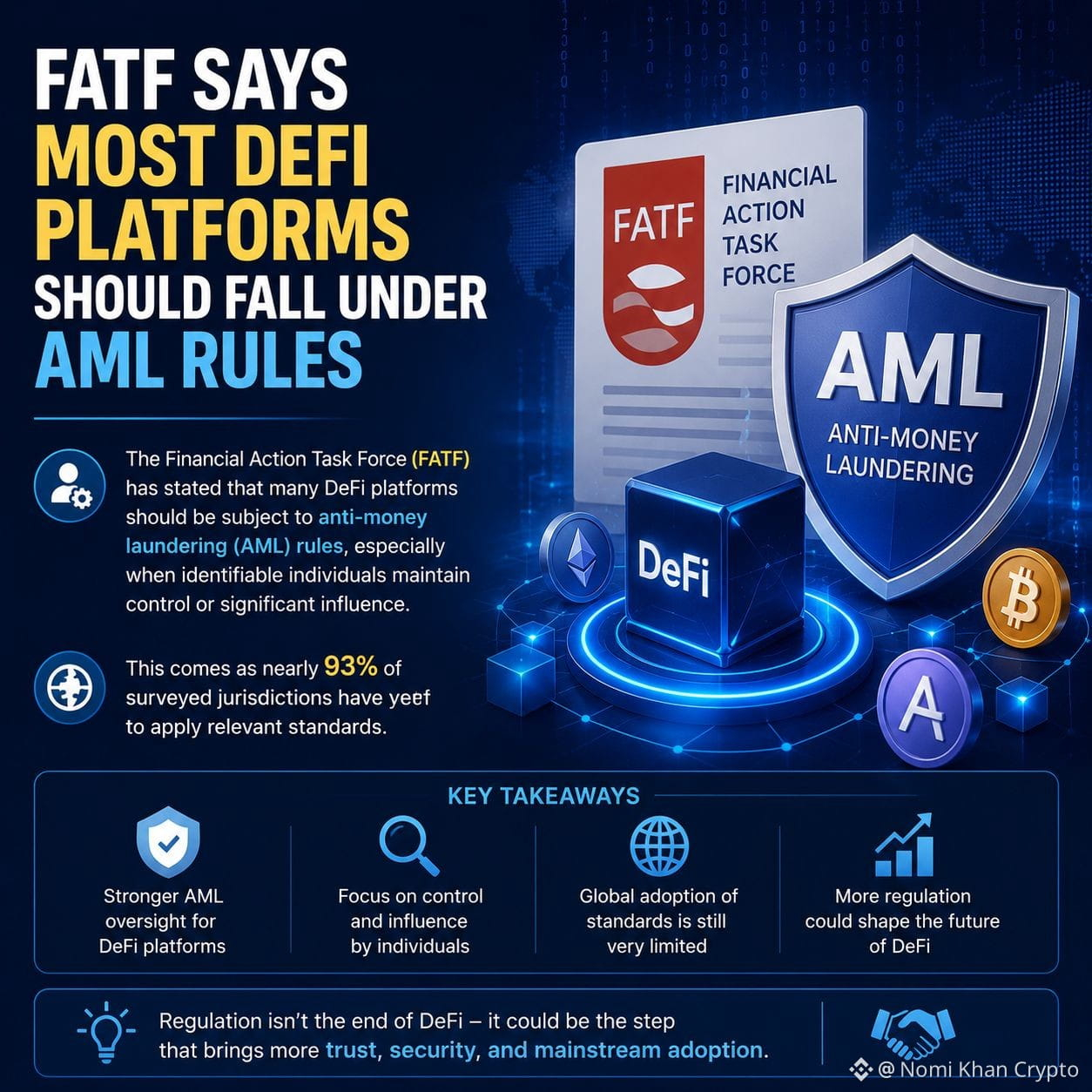
Regulatory attention on DeFi continues to grow.
The FATF believes that many DeFi platforms should comply with AML rules if there are identifiable individuals or teams who still control or significantly influence the protocol.
$SIGMA
{alpha}(560x85375d3e9c4a39350f1140280a8b0de6890a40e7)
$PHA
{spot}(PHAUSDT)
What stands out is that nearly 93% of surveyed jurisdictions have not yet fully implemented these standards. That suggests we could see more regulatory developments around DeFi in the coming months.
Do you think stronger regulations will help DeFi gain wider adoption, or could they slow innovation? Share your thoughts below.
#DeFi #Crypto #aml #FATF #blockchain
Regulatory attention on DeFi continues to grow.
The FATF believes that many DeFi platforms should comply with AML rules if there are identifiable individuals or teams who still control or significantly influence the protocol.
$SIGMA
$PHA
What stands out is that nearly 93% of surveyed jurisdictions have not yet fully implemented these standards. That suggests we could see more regulatory developments around DeFi in the coming months.
Do you think stronger regulations will help DeFi gain wider adoption, or could they slow innovation? Share your thoughts below.
#DeFi #Crypto #aml #FATF #blockchain
The FATF believes that many DeFi platforms should comply with AML rules if there are identifiable individuals or teams who still control or significantly influence the protocol.
$SIGMA
$PHA
What stands out is that nearly 93% of surveyed jurisdictions have not yet fully implemented these standards. That suggests we could see more regulatory developments around DeFi in the coming months.
Do you think stronger regulations will help DeFi gain wider adoption, or could they slow innovation? Share your thoughts below.
#DeFi #Crypto #aml #FATF #blockchain
346

·
--
🟠 Australia joins the EU in rolling out a strict “Travel Rule” for crypto from July 1
Australia is putting its “Travel Rule” for crypto into effect on July 1, requiring all regulated exchanges to include sender and recipient identity data for every transfer, regardless of its size. This aligns with MiCA’s deadline in Europe, creating a synchronized tightening of global crypto regulations. AUSTRAC, Australia’s financial intelligence agency, is rolling it out as the final piece of its AML/CTF review, flagging the local sector as high-risk. Users will have to enter new counterparty name and exchange details, although platforms may store data for repeat transactions. Transfers to self-custody wallets will require user confirmation of control, pushing some holders toward self-custody before the July 1 deadline, even as formal reporting for unverified self-hosted wallets is deferred until 2029. The move follows the EU, which introduced similar rules in December 2024, and traces back to FATF guidance—driving global convergence on identity data for crypto transactions.
📊 Expect only minor friction for Australian traders and a small uptick in demand for self-custody. Broader market impact is likely to be minimal unless similar rules trigger significant outflows from other major jurisdictions.
Will Australia’s “Travel Rule” push more users toward self-custody, or simply normalize KYC worldwide? 👇
#australia #travelrule #aml #fatf #micca
🟠 Australia joins the EU in rolling out a strict “Travel Rule” for crypto from July 1
Australia is putting its “Travel Rule” for crypto into effect on July 1, requiring all regulated exchanges to include sender and recipient identity data for every transfer, regardless of its size. This aligns with MiCA’s deadline in Europe, creating a synchronized tightening of global crypto regulations. AUSTRAC, Australia’s financial intelligence agency, is rolling it out as the final piece of its AML/CTF review, flagging the local sector as high-risk. Users will have to enter new counterparty name and exchange details, although platforms may store data for repeat transactions. Transfers to self-custody wallets will require user confirmation of control, pushing some holders toward self-custody before the July 1 deadline, even as formal reporting for unverified self-hosted wallets is deferred until 2029. The move follows the EU, which introduced similar rules in December 2024, and traces back to FATF guidance—driving global convergence on identity data for crypto transactions.
📊 Expect only minor friction for Australian traders and a small uptick in demand for self-custody. Broader market impact is likely to be minimal unless similar rules trigger significant outflows from other major jurisdictions.
Will Australia’s “Travel Rule” push more users toward self-custody, or simply normalize KYC worldwide? 👇
#australia #travelrule #aml #fatf #micca
Australia is putting its “Travel Rule” for crypto into effect on July 1, requiring all regulated exchanges to include sender and recipient identity data for every transfer, regardless of its size. This aligns with MiCA’s deadline in Europe, creating a synchronized tightening of global crypto regulations. AUSTRAC, Australia’s financial intelligence agency, is rolling it out as the final piece of its AML/CTF review, flagging the local sector as high-risk. Users will have to enter new counterparty name and exchange details, although platforms may store data for repeat transactions. Transfers to self-custody wallets will require user confirmation of control, pushing some holders toward self-custody before the July 1 deadline, even as formal reporting for unverified self-hosted wallets is deferred until 2029. The move follows the EU, which introduced similar rules in December 2024, and traces back to FATF guidance—driving global convergence on identity data for crypto transactions.
📊 Expect only minor friction for Australian traders and a small uptick in demand for self-custody. Broader market impact is likely to be minimal unless similar rules trigger significant outflows from other major jurisdictions.
Will Australia’s “Travel Rule” push more users toward self-custody, or simply normalize KYC worldwide? 👇
#australia #travelrule #aml #fatf #micca
116

·
--
South Korea’s Financial Intelligence Unit (FIU) has proposed expanding the Virtual Asset Travel Rule to cover low-value crypto transactions during talks with the Financial Action Task Force (FATF). The proposal also includes tighter restrictions on transactions involving high-risk and unverified offshore virtual asset service providers (VASPs).
#SouthKorea
#CryptoRegulation
#TravelRule
#FATF
#VASP
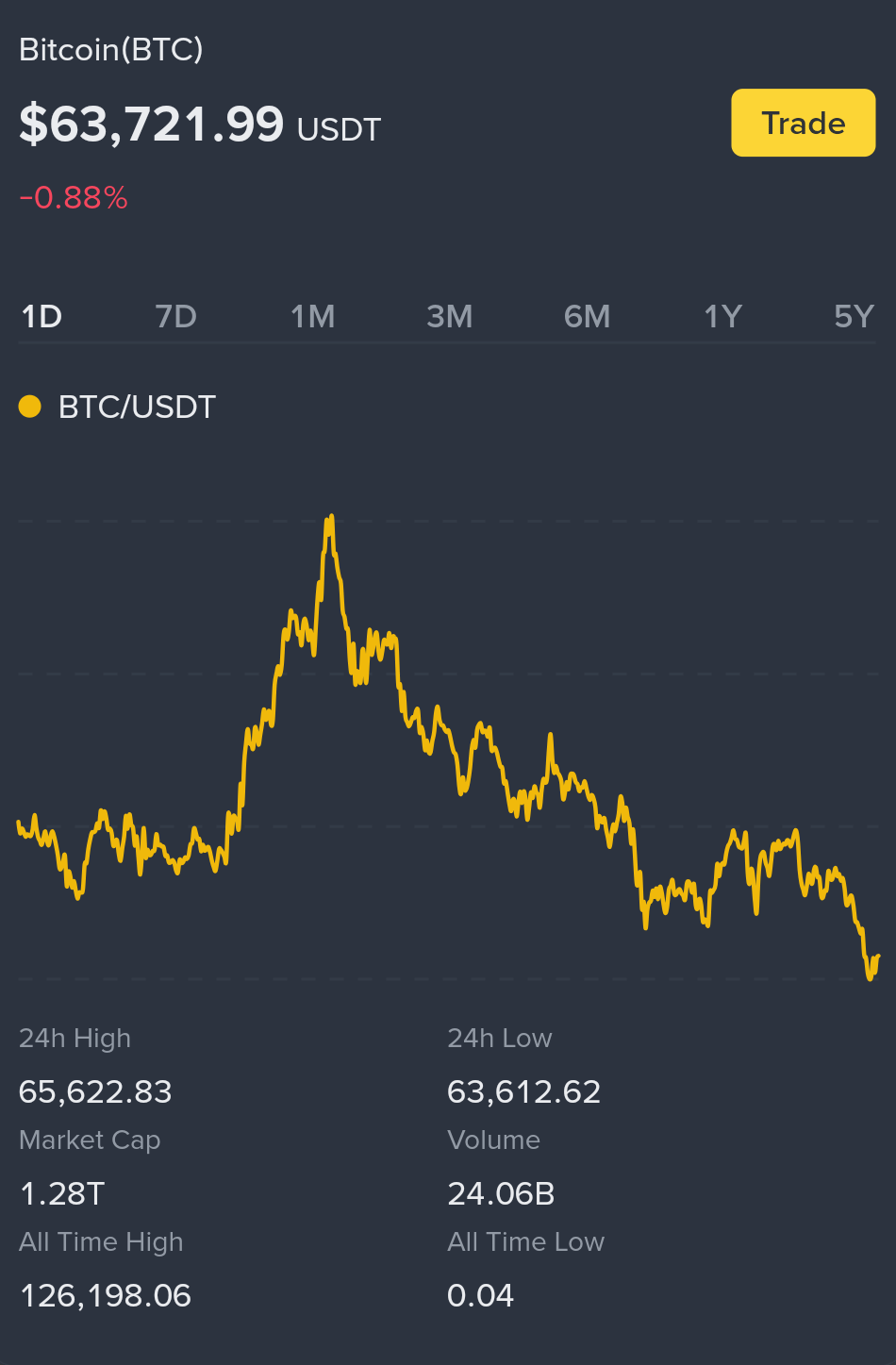
BTC is currently trading at $63,712.00, down about 0.9% over the last 24 hours. The 24h high is $65,622.83 and the low is $63,612.62.
$BTC $ETH $SOL
South Korea’s Financial Intelligence Unit (FIU) has proposed expanding the Virtual Asset Travel Rule to cover low-value crypto transactions during talks with the Financial Action Task Force (FATF). The proposal also includes tighter restrictions on transactions involving high-risk and unverified offshore virtual asset service providers (VASPs).
#SouthKorea
#CryptoRegulation
#TravelRule
#FATF
#VASP
BTC is currently trading at $63,712.00, down about 0.9% over the last 24 hours. The 24h high is $65,622.83 and the low is $63,612.62.
$BTC $ETH $SOL
#SouthKorea
#CryptoRegulation
#TravelRule
#FATF
#VASP
BTC is currently trading at $63,712.00, down about 0.9% over the last 24 hours. The 24h high is $65,622.83 and the low is $63,612.62.
$BTC $ETH $SOL
120

🚨 International Warning: Central Elements Threaten DeFi and Require Immediate Regulation by the FATF!
The Financial Action Task Force (FATF) warned that central elements are still prevalent in the decentralized finance (DeFi) sector, stressing the urgent need to implement regulatory rules. It also noted that most countries have not yet applied these regulations, threatening to ban non-compliant platforms.
━━━━━━━━━━━━━━
📊 Impact: 🔥 Very High
🏷️ REGULATION
#DeFiRegulation #FATF #CryptoCompliance #Centralization #Blockchain
🔗 Source: https://decrypt.co/374041/centralized-elements-frequently-persist-in-defi-and-should-be-regulated-fatf
🚨 International Warning: Central Elements Threaten DeFi and Require Immediate Regulation by the FATF!
The Financial Action Task Force (FATF) warned that central elements are still prevalent in the decentralized finance (DeFi) sector, stressing the urgent need to implement regulatory rules. It also noted that most countries have not yet applied these regulations, threatening to ban non-compliant platforms.
━━━━━━━━━━━━━━
📊 Impact: 🔥 Very High
🏷️ REGULATION
#DeFiRegulation #FATF #CryptoCompliance #Centralization #Blockchain
🔗 Source: https://decrypt.co/374041/centralized-elements-frequently-persist-in-defi-and-should-be-regulated-fatf
The Financial Action Task Force (FATF) warned that central elements are still prevalent in the decentralized finance (DeFi) sector, stressing the urgent need to implement regulatory rules. It also noted that most countries have not yet applied these regulations, threatening to ban non-compliant platforms.
━━━━━━━━━━━━━━
📊 Impact: 🔥 Very High
🏷️ REGULATION
#DeFiRegulation #FATF #CryptoCompliance #Centralization #Blockchain
🔗 Source: https://decrypt.co/374041/centralized-elements-frequently-persist-in-defi-and-should-be-regulated-fatf
23

·
--
🟠 Australia Joins EU in Strict Crypto Travel Rule Rollout July 1
Australia is rolling out its crypto Travel Rule on July 1, forcing all regulated exchanges to tag sender and receiver identity details on every transfer, regardless of size. This aligns with Europe's MiCA deadline, creating a synchronized tightening of global crypto regulations. AUSTRAC, Australia's financial intelligence agency, is enforcing this as the final piece of its AML/CTF overhaul, flagging the local sector as high-risk. Users will face new prompts for counterparty names and exchanges, though platforms can store data for repeat transactions. Transfers to self-custodial wallets will require user confirmation of control, pushing some holders towards self-custody ahead of the July 1 deadline, though formal reporting on unverified self-hosted wallets is deferred until 2029. This move follows the EU's lead, which implemented similar rules in December 2024, and traces back to FATF recommendations, creating a global convergence on identity data for crypto transactions.
📊 Expect minor friction for Australian traders and a slight increase in self-custody demand. The broader market impact will be muted unless similar rules trigger significant outflows from other major jurisdictions.
Will Australia's Travel Rule push more users to self-custody or just normalize KYC across borders? 👇
#australia #travelrule #aml #fatf #micca
🟠 Australia Joins EU in Strict Crypto Travel Rule Rollout July 1
Australia is rolling out its crypto Travel Rule on July 1, forcing all regulated exchanges to tag sender and receiver identity details on every transfer, regardless of size. This aligns with Europe's MiCA deadline, creating a synchronized tightening of global crypto regulations. AUSTRAC, Australia's financial intelligence agency, is enforcing this as the final piece of its AML/CTF overhaul, flagging the local sector as high-risk. Users will face new prompts for counterparty names and exchanges, though platforms can store data for repeat transactions. Transfers to self-custodial wallets will require user confirmation of control, pushing some holders towards self-custody ahead of the July 1 deadline, though formal reporting on unverified self-hosted wallets is deferred until 2029. This move follows the EU's lead, which implemented similar rules in December 2024, and traces back to FATF recommendations, creating a global convergence on identity data for crypto transactions.
📊 Expect minor friction for Australian traders and a slight increase in self-custody demand. The broader market impact will be muted unless similar rules trigger significant outflows from other major jurisdictions.
Will Australia's Travel Rule push more users to self-custody or just normalize KYC across borders? 👇
#australia #travelrule #aml #fatf #micca
Australia is rolling out its crypto Travel Rule on July 1, forcing all regulated exchanges to tag sender and receiver identity details on every transfer, regardless of size. This aligns with Europe's MiCA deadline, creating a synchronized tightening of global crypto regulations. AUSTRAC, Australia's financial intelligence agency, is enforcing this as the final piece of its AML/CTF overhaul, flagging the local sector as high-risk. Users will face new prompts for counterparty names and exchanges, though platforms can store data for repeat transactions. Transfers to self-custodial wallets will require user confirmation of control, pushing some holders towards self-custody ahead of the July 1 deadline, though formal reporting on unverified self-hosted wallets is deferred until 2029. This move follows the EU's lead, which implemented similar rules in December 2024, and traces back to FATF recommendations, creating a global convergence on identity data for crypto transactions.
📊 Expect minor friction for Australian traders and a slight increase in self-custody demand. The broader market impact will be muted unless similar rules trigger significant outflows from other major jurisdictions.
Will Australia's Travel Rule push more users to self-custody or just normalize KYC across borders? 👇
#australia #travelrule #aml #fatf #micca
16
Log in to explore more content
Join global crypto users on Binance Square
⚡️ Get latest and useful information about crypto.
💬 Trusted by the world’s largest crypto exchange.
👍 Discover real insights from verified creators.
Email / Phone number
Trending Topics
1
#AIStocksWhatNext
296,926 views
2,715 Discussing
2
#BitcoinBreaksAboveMayHighNears$86K
10,984 views
164 Discussing
3
#DogecoinRises15%
33,111 views
875 Discussing
4
#$14BBitcoinOptionsExpireFriday
2,524 views
75 Discussing
5
#BNBMarketCapPassesBNYMellon
22,782 views
647 Discussing
6
#CryptoMarketCapReclaims$3Trillion
3,178 views
70 Discussing
7
#MuseOvertakesChatGPTAsTopFreeIOSApp
13,537 views
493 Discussing
8
#TokenizedStockPlatformsCouldLaunchNextQuarter
21,559 views
551 Discussing
9
#StrategyAdds950Bitcoin
26,967 views
621 Discussing
10
#CardanoAddedToX402KitForADAPayments
25,936 views
629 Discussing