Binance Square
#bstocks

bstocks

1.2M views
4,975 Discussing
MO_BSC
·
--
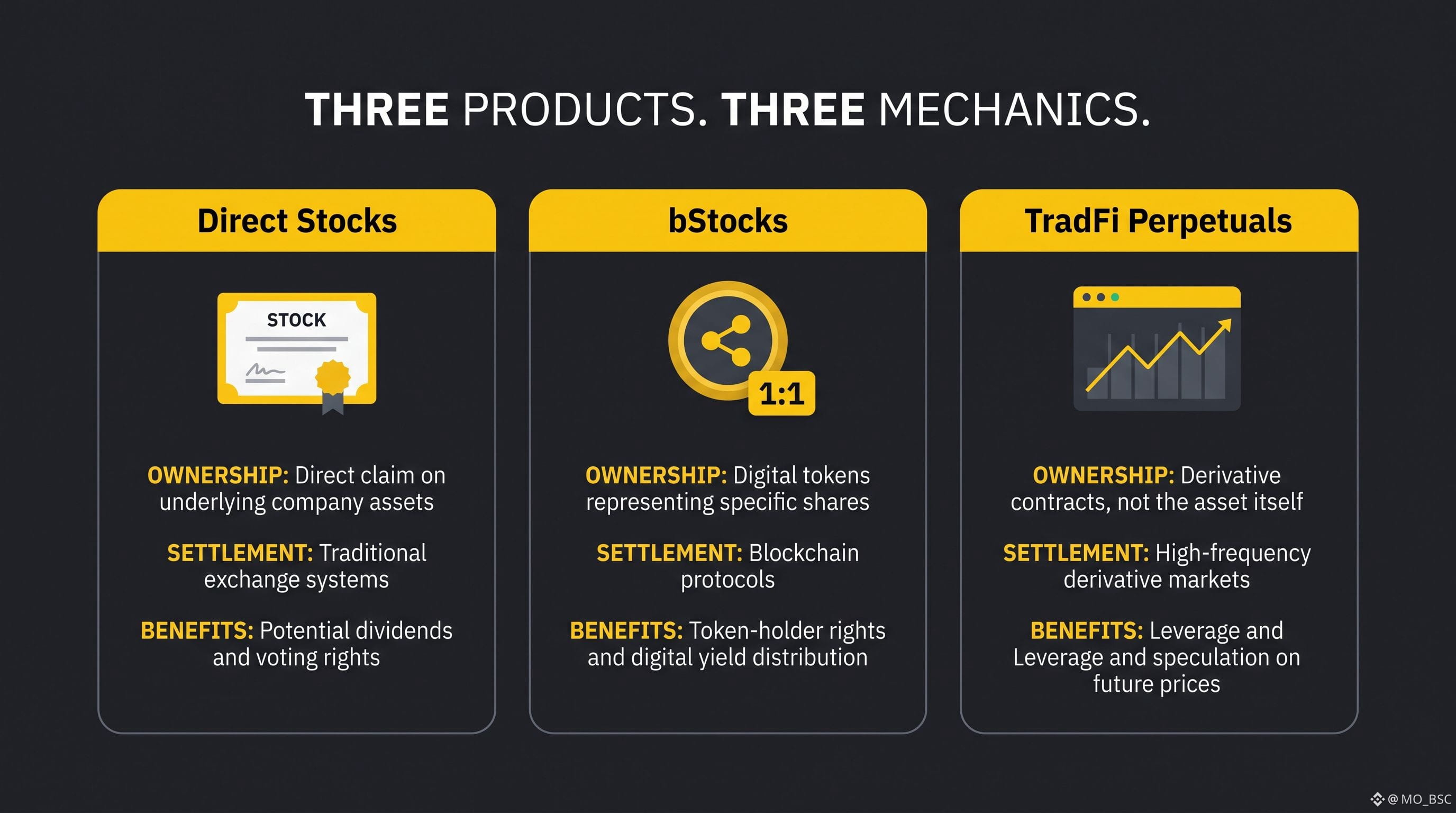
Three terms that shouldn't be mixed together: Direct Stocks. bStocks. TradFi Perpetuals. Direct stock trading can provide ownership of the underlying shares through the relevant structure. bStocks are tokenized securities representing an interest in underlying securities, with each bStock backed 1:1 by a corresponding share. TradFi perpetuals are derivatives that track the price of traditional assets without giving you direct ownership. Three products. Three structures. Three different things to understand. The label matters. The mechanics matter more. @Binance_Academy #Binance #bStocks
Three terms that shouldn't be mixed together:

Direct Stocks.
bStocks.
TradFi Perpetuals.

Direct stock trading can provide ownership of the underlying shares through the relevant structure.

bStocks are tokenized securities representing an interest in underlying securities, with each bStock backed 1:1 by a corresponding share.

TradFi perpetuals are derivatives that track the price of traditional assets without giving you direct ownership.

Three products.

Three structures.

Three different things to understand.

The label matters.

The mechanics matter more.

@Binance Academy
#Binance #bStocks
🚀🚀🚀 bStocks Focus 🚀🚀🚀 A practical bStocks watchlist can pair three liquid names, define entry conditions and cap risk before the US session. The goal is preparation, not chasing a fast move. $TSLA $NVDA $MSTR #bStocks #TokenizedStocks #StockMarket #TradFi #Binance
🚀🚀🚀 bStocks Focus 🚀🚀🚀

A practical bStocks watchlist can pair three liquid names, define entry conditions and cap risk before the US session. The goal is preparation, not chasing a fast move.

$TSLA $NVDA $MSTR

#bStocks #TokenizedStocks #StockMarket #TradFi #Binance
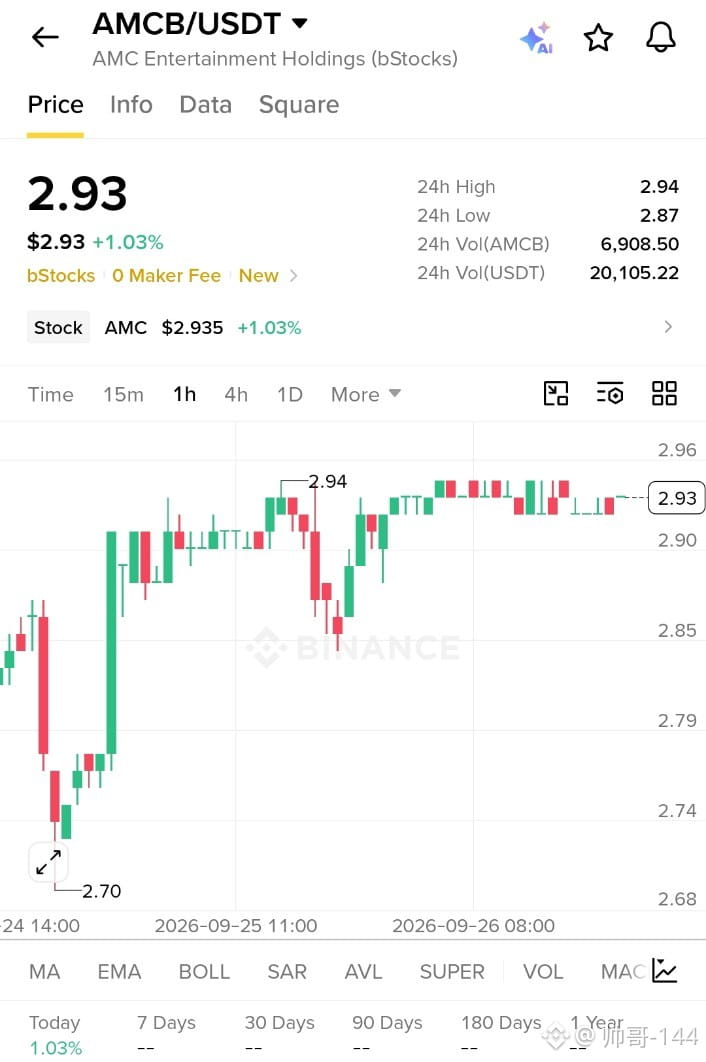
$AMCB AMCB/USDT — LONG SETUP AMC Entertainment Holdings (bStocks) Price: ~$2.93 24H: +1.03% The price is holding near the recent high around $2.94. I’d avoid chasing here and wait for confirmation above resistance or a clean pullback into support. Entry Zone EP1: $2.90–$2.93 EP2: $2.86–$2.89 Take Profit TP1: $2.98 TP2: $3.05 TP3: $3.15 TP4: $3.25 Stop Loss #AMC #bStocks #Binance #Trading #CryptoTrading
$AMCB

AMCB/USDT — LONG SETUP

AMC Entertainment Holdings (bStocks)
Price: ~$2.93
24H: +1.03%

The price is holding near the recent high around $2.94. I’d avoid chasing here and wait for confirmation above resistance or a clean pullback into support.

Entry Zone
EP1: $2.90–$2.93
EP2: $2.86–$2.89

Take Profit
TP1: $2.98
TP2: $3.05
TP3: $3.15
TP4: $3.25

Stop Loss
#AMC #bStocks #Binance #Trading #CryptoTrading
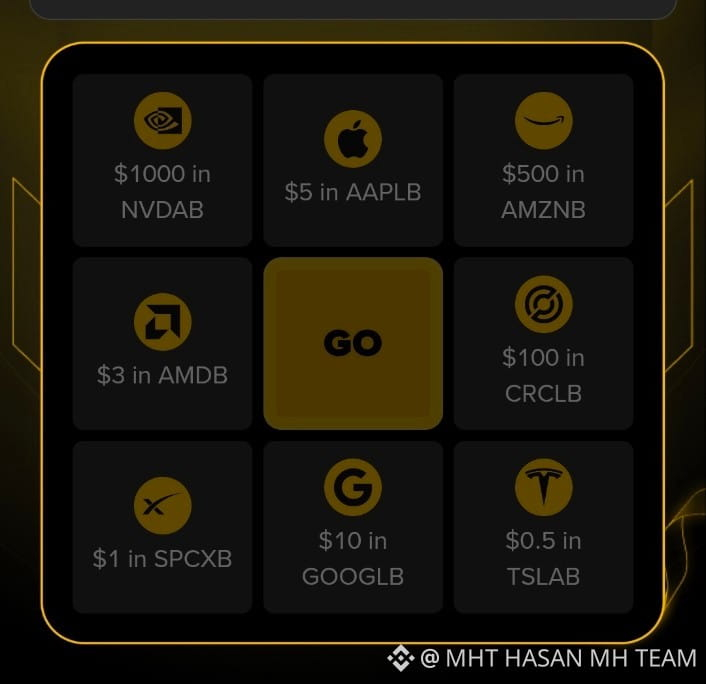
​🚀 Binance US Stocks MegaFest! $500,000 Prize Pool! ​Are you missing out on this mega event by Binance? 😱 Trade now for a golden opportunity to win rewards in your favorite stock tokens! ​🎁 Rewards up for grabs: ▪️ $1000 in NVDAB ▪️ $500 in AMZNB ▪️ $100 in CRCLB ▪️ $10 in GOOGLB ▪️ $5 in AAPLB ▪️ $3 in AMDB ▪️ $1 in SPCXB ▪️ $0.5 in TSLAB ​🔥 Which one did you get? Let us know in the comments below! 👇 ​ #MegaFest #bStocks #CryptoCommunit #CryptoTrading #BinanceSquare
​🚀 Binance US Stocks MegaFest! $500,000 Prize Pool!
​Are you missing out on this mega event by Binance? 😱 Trade now for a golden opportunity to win rewards in your favorite stock tokens!
​🎁 Rewards up for grabs:
▪️ $1000 in NVDAB
▪️ $500 in AMZNB
▪️ $100 in CRCLB
▪️ $10 in GOOGLB
▪️ $5 in AAPLB
▪️ $3 in AMDB
▪️ $1 in SPCXB
▪️ $0.5 in TSLAB
​🔥 Which one did you get? Let us know in the comments below! 👇
​ #MegaFest #bStocks #CryptoCommunit #CryptoTrading #BinanceSquare
Article
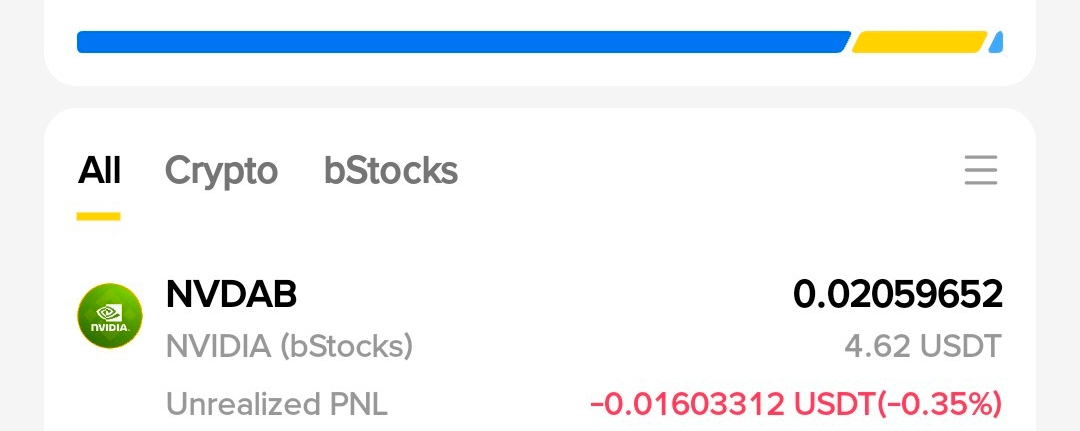
I Just Bought My First NVDAB bStock for $4.63!Alhamdulillah! I just got my first NVDAB bStock exposure! I wanted to see how tokenized NVIDIA exposure works through Binance. ✅ Bought: 0.02059 NVDAB ✅ Cost: $4.63 USDT ✅ Method: Binance Convert The important part: NVDAB is NOT the same as directly owning NVIDIA shares. It is a tokenized security designed to provide economic exposure to the underlying NVIDIA security. So instead of saying “I became a NVIDIA shareholder,” I’d say: I just got my first tokenized NVIDIA exposure. 📈 I’m sharing my bStocks journey and learning along the way. Not financial advice — just my experience. #bStocks #NVDAB #Binance #TokenizedStock

I Just Bought My First NVDAB bStock for $4.63!

Alhamdulillah!
I just got my first NVDAB bStock exposure!
I wanted to see how tokenized NVIDIA exposure works through Binance.
✅ Bought: 0.02059 NVDAB
✅ Cost: $4.63 USDT
✅ Method: Binance Convert
The important part: NVDAB is NOT the same as directly owning NVIDIA shares. It is a tokenized security designed to provide economic exposure to the underlying NVIDIA security.
So instead of saying “I became a NVIDIA shareholder,” I’d say:
I just got my first tokenized NVIDIA exposure. 📈
I’m sharing my bStocks journey and learning along the way.
Not financial advice — just my experience.
#bStocks #NVDAB #Binance #TokenizedStock
Article
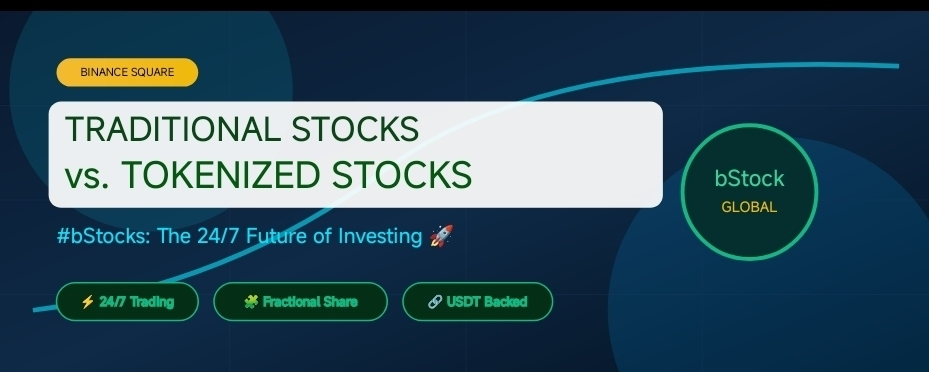
Traditional Stocks vs. Tokenized Stocks (bStocks): What’s the Difference?The global financial ecosystem is undergoing an unprecedented shift. For decades, traditional equity markets—such as the New York Stock Exchange (NYSE), London Stock Exchange (LSE), and Nasdaq—have been the main instruments for wealth creation and capital appreciation. Investors around the world relied heavily on conventional stockbrokers, traditional banking channels, and standard market schedules to build their investment portfolios. However, with the rapid evolution of Web3 technology, digital assets, and decentralized finance (DeFi), a new financial concept has emerged: Tokenized Stocks, frequently referenced in the crypto community as bStocks. Tokenized stocks bridge the gap between traditional finance (TradFi) and the Web3 ecosystem, allowing users to interact with corporate shares using blockchain rails. In this comprehensive guide, we will analyze the structure of traditional stocks versus tokenized stocks, explore their key operational differences, evaluate the core advantages for modern investors, and look into why tokenized real-world assets (RWAs) are shaping the future of global trading. --- ### 1. Understanding Traditional Stocks Traditional stocks represent direct fractional ownership in a publicly traded corporation. When an investor purchases a share of a company, they hold legal equity in that enterprise, which may grant them dividend payouts, corporate voting rights, and long-term capital growth. While traditional stocks are supported by robust regulatory frameworks and decades of market infrastructure, they are also bound by legacy limitations: - Restrictive Market Hours: Traditional stock exchanges operate strictly within fixed regional hours (for example, 9:30 AM to 4:00 PM EST in the United States). Markets are closed on weekends and national holidays, meaning investors cannot react immediately to weekend news or global events. - Geographic and Cross-Border Friction: Opening a traditional brokerage account from a non-domestic jurisdiction often involves complex paperwork, local tax identification requirements, and strict banking restrictions. - Delayed Settlement Cycles: Conventional equity trades usually settle on a T+1 or T+2 basis (one to two business days after trade execution) through centralized clearinghouses. - High Capital Barriers: Purchasing whole shares of high-value blue-chip technology companies can require significant initial capital, making it difficult for small retail investors to properly diversify. --- ### 2. What Are Tokenized Stocks (bStocks)? Tokenized Stocks, or bStocks, are digital tokens issued on a blockchain that represent and track the real-time market price of underlying traditional equities or exchange-traded funds (ETFs). Each tokenized asset is backed by actual shares held in custody by licensed financial institutions or regulated asset managers. By migrating equity exposure onto blockchain networks, platforms like Binance enable users to trade stock-backed digital assets using stablecoins (such as USDT) directly from their crypto wallets. This provides seamless access to global corporations without leaving the digital asset ecosystem. --- ### 3. Detailed Comparison: Traditional Stocks vs. bStocks To better understand how these two asset classes compare, let us break down their fundamental differences across key parameters: | Parameter | Traditional Stocks | Tokenized Stocks (bStocks) | | :--- | :--- | :--- | | Market Availability | Mon–Fri (Fixed Trading Hours) | 24/7/365 Continuous Trading | | Minimum Investment | Whole Shares (Usually Higher Cost) | Fractional Tokens (Start from $1) | | Settlement Time | T+1 or T+2 Days via Clearinghouse | Instant Blockchain Settlement | | Trading Currency | Regional Fiat Currency (USD, EUR) | Stablecoins (USDT) & Cryptocurrencies | | Asset Storage | Centralized Brokerage Account | Secure Crypto Wallet / Exchange Account | | Liquidity Access | Regional Fiat Market Liquidity | Global Web3 Liquidity Pools | --- ### 4. Key Advantages of Tokenized Stocks (bStocks) The integration of corporate equity into blockchain networks offers several distinct advantages for contemporary traders: - Continuous 24/7 Trading Flexibility: Global market events, economic reports, and earnings announcements often happen outside standard trading hours. With bStocks, investors can enter or exit positions at any time of day or night, including weekends. - True Fractional Ownership: Tokenization allows high-priced stocks to be split into tiny digital units. An investor can allocate as little as $5 or $10 into a tokenized asset, enabling efficient portfolio diversification regardless of budget size. - Frictionless Capital Allocation: Crypto traders can reallocate profits from volatile crypto assets into stable corporate equity tokens without converting their funds back into traditional fiat currency or paying unnecessary bank transfer fees. - Global Financial Inclusion: Blockchain accessibility allows qualified retail investors from all over the world to access global market exposure without needing regional brokerage accounts. --- ### 5. The Horizon: Convergence of TradFi and Web3 Tokenized stocks are not designed to replace traditional stock exchanges; instead, they act as a complementary layer that enhances market liquidity, accessibility, and overall efficiency. The rise of Real-World Asset (RWA) tokenization demonstrates that institutional finance and blockchain technology are converging into a unified digital financial ecosystem. As regulatory clarity improves across international jurisdictions, the adoption of tokenized equities will continue to accelerate. Investors who familiarize themselves with bStocks today are building a strong foundation for the next generation of asset management. #bStocks #BinanceSquare #Stocks @BinanceBurmese #SEABStock

Traditional Stocks vs. Tokenized Stocks (bStocks): What’s the Difference?

The global financial ecosystem is undergoing an unprecedented shift. For decades, traditional equity markets—such as the New York Stock Exchange (NYSE), London Stock Exchange (LSE), and Nasdaq—have been the main instruments for wealth creation and capital appreciation. Investors around the world relied heavily on conventional stockbrokers, traditional banking channels, and standard market schedules to build their investment portfolios.
However, with the rapid evolution of Web3 technology, digital assets, and decentralized finance (DeFi), a new financial concept has emerged: Tokenized Stocks, frequently referenced in the crypto community as bStocks. Tokenized stocks bridge the gap between traditional finance (TradFi) and the Web3 ecosystem, allowing users to interact with corporate shares using blockchain rails.
In this comprehensive guide, we will analyze the structure of traditional stocks versus tokenized stocks, explore their key operational differences, evaluate the core advantages for modern investors, and look into why tokenized real-world assets (RWAs) are shaping the future of global trading.
---
### 1. Understanding Traditional Stocks
Traditional stocks represent direct fractional ownership in a publicly traded corporation. When an investor purchases a share of a company, they hold legal equity in that enterprise, which may grant them dividend payouts, corporate voting rights, and long-term capital growth.
While traditional stocks are supported by robust regulatory frameworks and decades of market infrastructure, they are also bound by legacy limitations:
- Restrictive Market Hours: Traditional stock exchanges operate strictly within fixed regional hours (for example, 9:30 AM to 4:00 PM EST in the United States). Markets are closed on weekends and national holidays, meaning investors cannot react immediately to weekend news or global events.
- Geographic and Cross-Border Friction: Opening a traditional brokerage account from a non-domestic jurisdiction often involves complex paperwork, local tax identification requirements, and strict banking restrictions.
- Delayed Settlement Cycles: Conventional equity trades usually settle on a T+1 or T+2 basis (one to two business days after trade execution) through centralized clearinghouses.
- High Capital Barriers: Purchasing whole shares of high-value blue-chip technology companies can require significant initial capital, making it difficult for small retail investors to properly diversify.
---
### 2. What Are Tokenized Stocks (bStocks)?
Tokenized Stocks, or bStocks, are digital tokens issued on a blockchain that represent and track the real-time market price of underlying traditional equities or exchange-traded funds (ETFs). Each tokenized asset is backed by actual shares held in custody by licensed financial institutions or regulated asset managers.
By migrating equity exposure onto blockchain networks, platforms like Binance enable users to trade stock-backed digital assets using stablecoins (such as USDT) directly from their crypto wallets. This provides seamless access to global corporations without leaving the digital asset ecosystem.
---
### 3. Detailed Comparison: Traditional Stocks vs. bStocks
To better understand how these two asset classes compare, let us break down their fundamental differences across key parameters:
| Parameter | Traditional Stocks | Tokenized Stocks (bStocks) |
| :--- | :--- | :--- |
| Market Availability | Mon–Fri (Fixed Trading Hours) | 24/7/365 Continuous Trading |
| Minimum Investment | Whole Shares (Usually Higher Cost) | Fractional Tokens (Start from $1) |
| Settlement Time | T+1 or T+2 Days via Clearinghouse | Instant Blockchain Settlement |
| Trading Currency | Regional Fiat Currency (USD, EUR) | Stablecoins (USDT) & Cryptocurrencies |
| Asset Storage | Centralized Brokerage Account | Secure Crypto Wallet / Exchange Account |
| Liquidity Access | Regional Fiat Market Liquidity | Global Web3 Liquidity Pools |
---
### 4. Key Advantages of Tokenized Stocks (bStocks)
The integration of corporate equity into blockchain networks offers several distinct advantages for contemporary traders:
- Continuous 24/7 Trading Flexibility: Global market events, economic reports, and earnings announcements often happen outside standard trading hours. With bStocks, investors can enter or exit positions at any time of day or night, including weekends.
- True Fractional Ownership: Tokenization allows high-priced stocks to be split into tiny digital units. An investor can allocate as little as $5 or $10 into a tokenized asset, enabling efficient portfolio diversification regardless of budget size.
- Frictionless Capital Allocation: Crypto traders can reallocate profits from volatile crypto assets into stable corporate equity tokens without converting their funds back into traditional fiat currency or paying unnecessary bank transfer fees.
- Global Financial Inclusion: Blockchain accessibility allows qualified retail investors from all over the world to access global market exposure without needing regional brokerage accounts.
---
### 5. The Horizon: Convergence of TradFi and Web3
Tokenized stocks are not designed to replace traditional stock exchanges; instead, they act as a complementary layer that enhances market liquidity, accessibility, and overall efficiency. The rise of Real-World Asset (RWA) tokenization demonstrates that institutional finance and blockchain technology are converging into a unified digital financial ecosystem.
As regulatory clarity improves across international jurisdictions, the adoption of tokenized equities will continue to accelerate. Investors who familiarize themselves with bStocks today are building a strong foundation for the next generation of asset management.
#bStocks #BinanceSquare #Stocks
@Binance Burmese
#SEABStock
Bryon777:
nice
Article
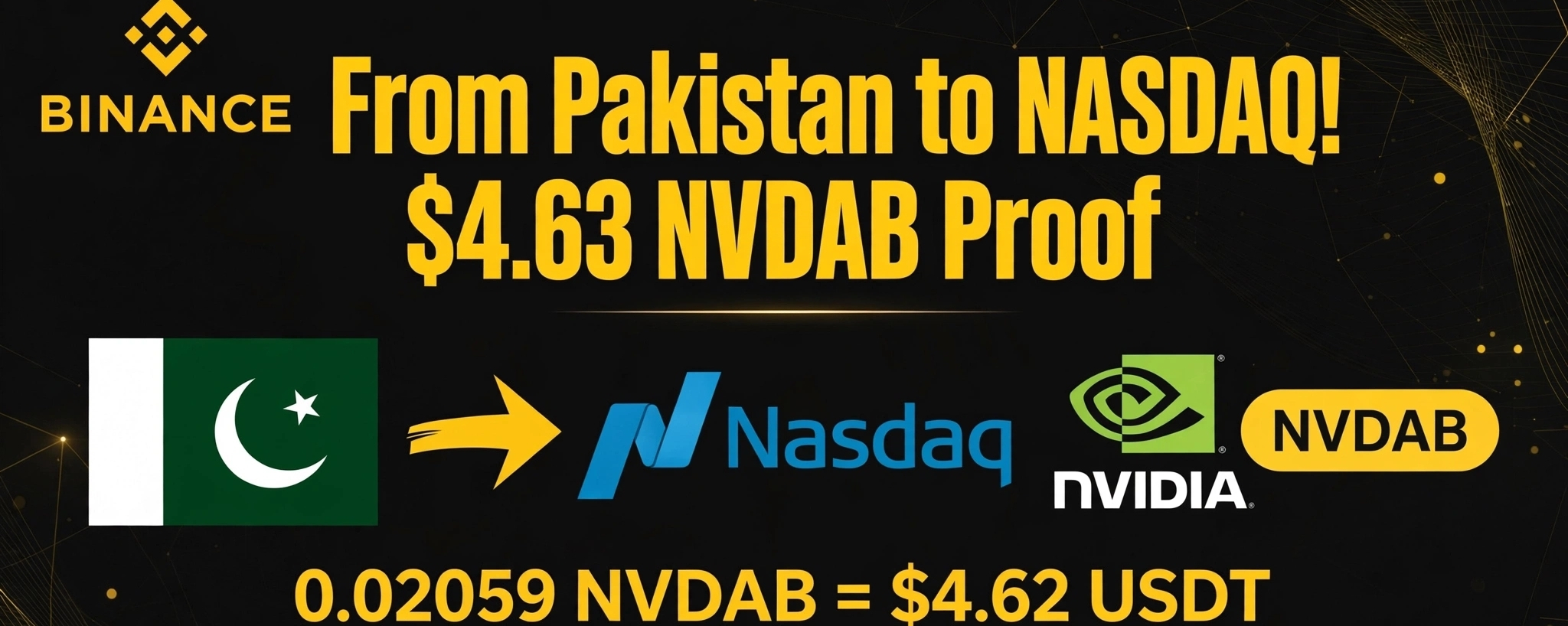
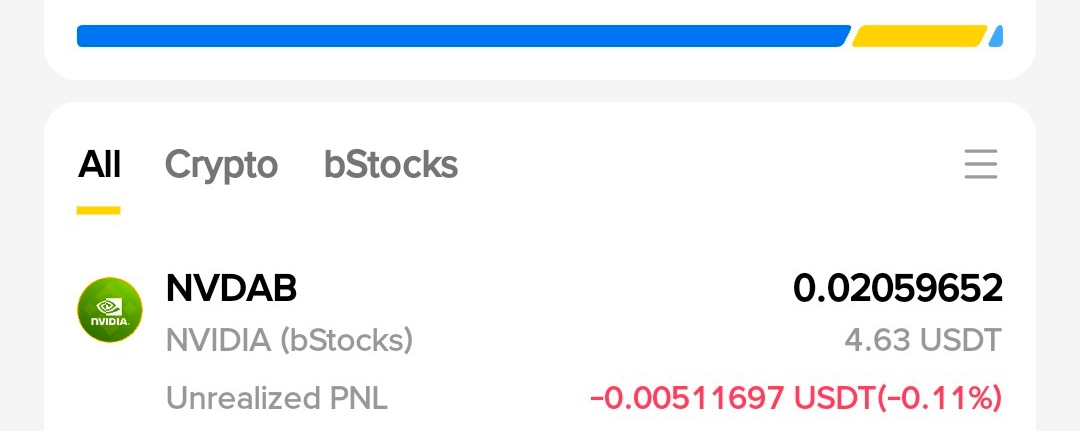
My $4.63 NVDAB Proof - From Pakistan to NASDAQ!Alhamdulillah! I just bought 0.02059 NVDAB, giving me fractional exposure to NVIDIA through Binance bStocks. Many people think you need hundreds of dollars to get exposure to US stocks — I started with just $4.63! 📌 Amount: 0.02059 NVDAB 💰 Cost: $4.63 📱 Via: Binance bStocks Convert Small loss today, but I’m looking at the long term. 📈 If I can start small, you can too. 🇵🇰 #bStocks #NVDAB #Binance #investing #bStocks

My $4.63 NVDAB Proof - From Pakistan to NASDAQ!

Alhamdulillah! I just bought 0.02059 NVDAB, giving me fractional exposure to NVIDIA through Binance bStocks.
Many people think you need hundreds of dollars to get exposure to US stocks — I started with just $4.63!
📌 Amount: 0.02059 NVDAB
💰 Cost: $4.63
📱 Via: Binance bStocks Convert
Small loss today, but I’m looking at the long term. 📈
If I can start small, you can too. 🇵🇰
#bStocks #NVDAB #Binance #investing
#bStocks
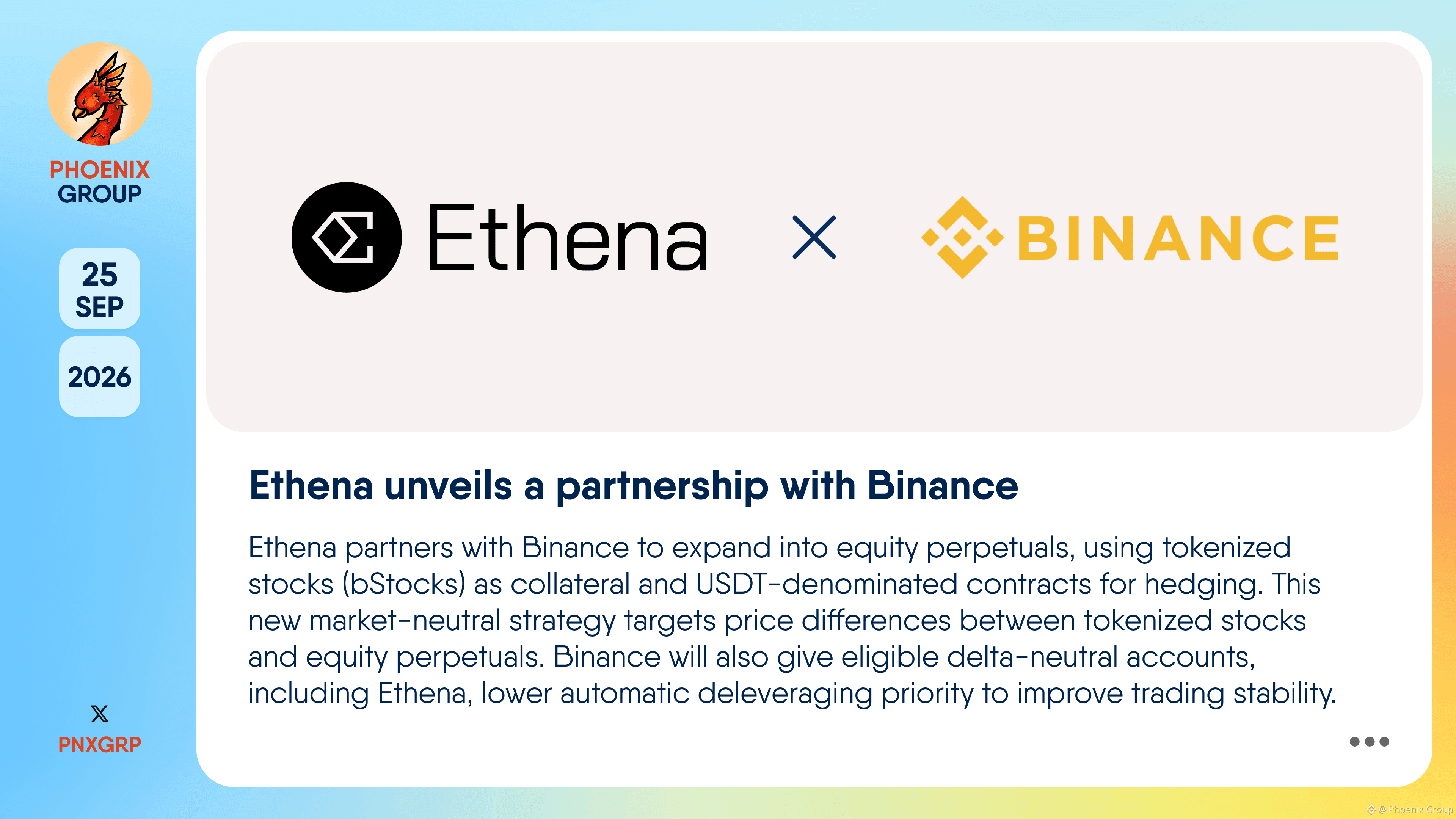
Ethena unveils a partnership with Binance #Ethena partners with #Binance to expand into equity perpetuals, using tokenized stocks #bStocks as collateral and USDT-denominated contracts for hedging. This new market-neutral strategy targets price differences between tokenized stocks and equity perpetuals. Binance will also give eligible delta-neutral accounts, including Ethena, lower automatic deleveraging priority to improve trading stability. 👉 x.com/ethena/status/2103439484113346986
Ethena unveils a partnership with Binance

#Ethena partners with #Binance to expand into equity perpetuals, using tokenized stocks #bStocks as collateral and USDT-denominated contracts for hedging. This new market-neutral strategy targets price differences between tokenized stocks and equity perpetuals. Binance will also give eligible delta-neutral accounts, including Ethena, lower automatic deleveraging priority to improve trading stability.

👉 x.com/ethena/status/2103439484113346986
From Crypto to Stocks: What I’m Learning About Stocks and BStocks 📈As someone who has spent time learning about cryptocurrency, I have always been interested in how other financial markets work. Crypto and stocks may look completely different at first, but learning about both can help us understand the wider financial world. Crypto is well known for its 24/7 market, fast price movements, blockchain technology, and global community. Stocks are connected to companies and traditional financial markets. When we study a stock, we may look at the company’s business model, revenue, earnings, products, competition, and future growth plans. This is one reason I became interested in learning about US stocks and BStocks. For a crypto user, the first important lesson is that stocks should not simply be treated like another cryptocurrency. A stock is connected to a company and represents an ownership interest in that company. The factors that influence stock prices can include company earnings, economic conditions, interest rates, industry developments, investor expectations, and market sentiment. BStocks introduce another concept that crypto users should understand: tokenization. Instead of assuming that a BStock is exactly the same thing as owning the underlying company’s traditional shares, beginners should first understand what the product represents, how it works, what rights are attached to it, what fees may apply, and whether it is available in their jurisdiction. Binance’s own information states that bStocks are tokenized securities and are not the same as stocks or shares of the underlying company, with availability limited to eligible users in permitted jurisdtions That distinction is important. For me, learning about stocks is not about leaving crypto behind. It is about expanding my financial knowledge. When I look at a crypto chart, I may focus on price action, volume, market structure, liquidity, and sentiment. When I look at a company, I also want to understand the business behind the ticker. What does the company actually do? How does it make money? Is its revenue growing? What are its major risks? What is happening in its industry? These questions create a different way of thinking. Another important difference is trading hours. Cryptocurrency markets generally operate continuously, while traditional US stock markets have specific trading sessions and holidays. This means that someone who is used to crypto needs to understand the different market structure before trading stocks. Risk is another major lesson. Neither crypto nor stocks is guaranteed to make money. A strong company can still see its stock price fall, and a popular cryptocurrency can experience a large correction. Market conditions can change quickly, so learning risk management is just as important as learning how to identify opportunities. For beginners, I think a simple learning checklist can help: ✅ Learn how stocks work. ✅ Understand the company behind a stock. ✅ Learn basic terms such as revenue, earnings, EPS, P/E ratio, and dividends. ✅ Understand how BStocks work before using them. ✅ Check product availability and rules in your country. ✅ Research before making any trade or investment. ✅ Never risk money that you cannot afford to lose. ✅ Keep learning instead of simply following market hype. One thing I have learned from crypto is that excitement can sometimes make people act too quickly. The same lesson applies to stocks. Seeing a stock move strongly on social media does not automatically mean that it is the right opportunity for everyone. For me, the better approach is simple: Learn → Research → Understand → Manage Risk → Decide The connection between traditional finance and digital assets is becoming an interesting area to learn about. For crypto users, exploring Stocks and BStocks can be a way to understand another side of the financial market. I am still learning, and I do not think anyone needs to understand everything in one day. The most important step for beginners is to start with knowledge, ask questions, understand the risks, and make decisions based on their own research. The financial market is much bigger than one asset class. Whether someone is interested in crypto, stocks, or tokenized securities, understanding how each market works can make the learning journey more valuable. This is my personal educational perspective, not financial advice or a recommendation to buy, sell, or hold any asset. Always conduct your own research, check the latest official Binance information and product terms, and confirm whether the relevant product is available in your jurisdiction. @BinanceBurmese #SEABstock #SEAstock #BStocks #stocks #financialeducation

From Crypto to Stocks: What I’m Learning About Stocks and BStocks 📈

As someone who has spent time learning about cryptocurrency, I have always been interested in how other financial markets work. Crypto and stocks may look completely different at first, but learning about both can help us understand the wider financial world.
Crypto is well known for its 24/7 market, fast price movements, blockchain technology, and global community. Stocks are connected to companies and traditional financial markets. When we study a stock, we may look at the company’s business model, revenue, earnings, products, competition, and future growth plans.
This is one reason I became interested in learning about US stocks and BStocks.
For a crypto user, the first important lesson is that stocks should not simply be treated like another cryptocurrency. A stock is connected to a company and represents an ownership interest in that company. The factors that influence stock prices can include company earnings, economic conditions, interest rates, industry developments, investor expectations, and market sentiment.
BStocks introduce another concept that crypto users should understand: tokenization.
Instead of assuming that a BStock is exactly the same thing as owning the underlying company’s traditional shares, beginners should first understand what the product represents, how it works, what rights are attached to it, what fees may apply, and whether it is available in their jurisdiction. Binance’s own information states that bStocks are tokenized securities and are not the same as stocks or shares of the underlying company, with availability limited to eligible users in permitted jurisdtions
That distinction is important.
For me, learning about stocks is not about leaving crypto behind. It is about expanding my financial knowledge.
When I look at a crypto chart, I may focus on price action, volume, market structure, liquidity, and sentiment. When I look at a company, I also want to understand the business behind the ticker. What does the company actually do? How does it make money? Is its revenue growing? What are its major risks? What is happening in its industry?
These questions create a different way of thinking.
Another important difference is trading hours. Cryptocurrency markets generally operate continuously, while traditional US stock markets have specific trading sessions and holidays. This means that someone who is used to crypto needs to understand the different market structure before trading stocks.
Risk is another major lesson.
Neither crypto nor stocks is guaranteed to make money. A strong company can still see its stock price fall, and a popular cryptocurrency can experience a large correction. Market conditions can change quickly, so learning risk management is just as important as learning how to identify opportunities.
For beginners, I think a simple learning checklist can help:
✅ Learn how stocks work.
✅ Understand the company behind a stock.
✅ Learn basic terms such as revenue, earnings, EPS, P/E ratio, and dividends.
✅ Understand how BStocks work before using them.
✅ Check product availability and rules in your country.
✅ Research before making any trade or investment.
✅ Never risk money that you cannot afford to lose.
✅ Keep learning instead of simply following market hype.
One thing I have learned from crypto is that excitement can sometimes make people act too quickly. The same lesson applies to stocks. Seeing a stock move strongly on social media does not automatically mean that it is the right opportunity for everyone.
For me, the better approach is simple:
Learn → Research → Understand → Manage Risk → Decide
The connection between traditional finance and digital assets is becoming an interesting area to learn about. For crypto users, exploring Stocks and BStocks can be a way to understand another side of the financial market.
I am still learning, and I do not think anyone needs to understand everything in one day. The most important step for beginners is to start with knowledge, ask questions, understand the risks, and make decisions based on their own research.
The financial market is much bigger than one asset class. Whether someone is interested in crypto, stocks, or tokenized securities, understanding how each market works can make the learning journey more valuable.
This is my personal educational perspective, not financial advice or a recommendation to buy, sell, or hold any asset. Always conduct your own research, check the latest official Binance information and product terms, and confirm whether the relevant product is available in your jurisdiction.
@Binance Burmese
#SEABstock #SEAstock #BStocks #stocks #financialeducation
U Myo Ko:
woo
Article
How I Bought NVIDIA bStock with Only $4.63 on Binance ConvertBody: I always thought US stocks need $100s, but Binance bStocks changed it! Today I bought $NVDAB (NVIDIA) with only $4.63 USDT using Convert - No $5 limit like Spot! My Experience: 1. Go to Convert, not Spot 2. From USDT to NVDAB 3. Amount $4.63 and Buy! Now I own 0.0205 shares of NVIDIA on-chain, backed 1:1 by real stock! This is perfect for small investors from Pakistan. You can start with $1! #bStocks $NVDAB $TSLAB #Binance #bStocks

How I Bought NVIDIA bStock with Only $4.63 on Binance Convert

Body:
I always thought US stocks need $100s, but Binance bStocks changed it!
Today I bought $NVDAB (NVIDIA) with only $4.63 USDT using Convert - No $5 limit like Spot!
My Experience:
1. Go to Convert, not Spot
2. From USDT to NVDAB
3. Amount $4.63 and Buy!
Now I own 0.0205 shares of NVIDIA on-chain, backed 1:1 by real stock!
This is perfect for small investors from Pakistan. You can start with $1!
#bStocks $NVDAB $TSLAB #Binance
#bStocks
Just bought my 1st bstock $NVDAB on Binance convert with only $4.63 ! No $5 limit here . On-chain use stocks are now so easy ! #bStocks
·
--
Bullish
Tampa Bay Rays vs. New York Yankees

Tampa Bay Rays vs. New York Yankees

1%TB99%NYY
Volume $83,515.1
·
--
Bullish
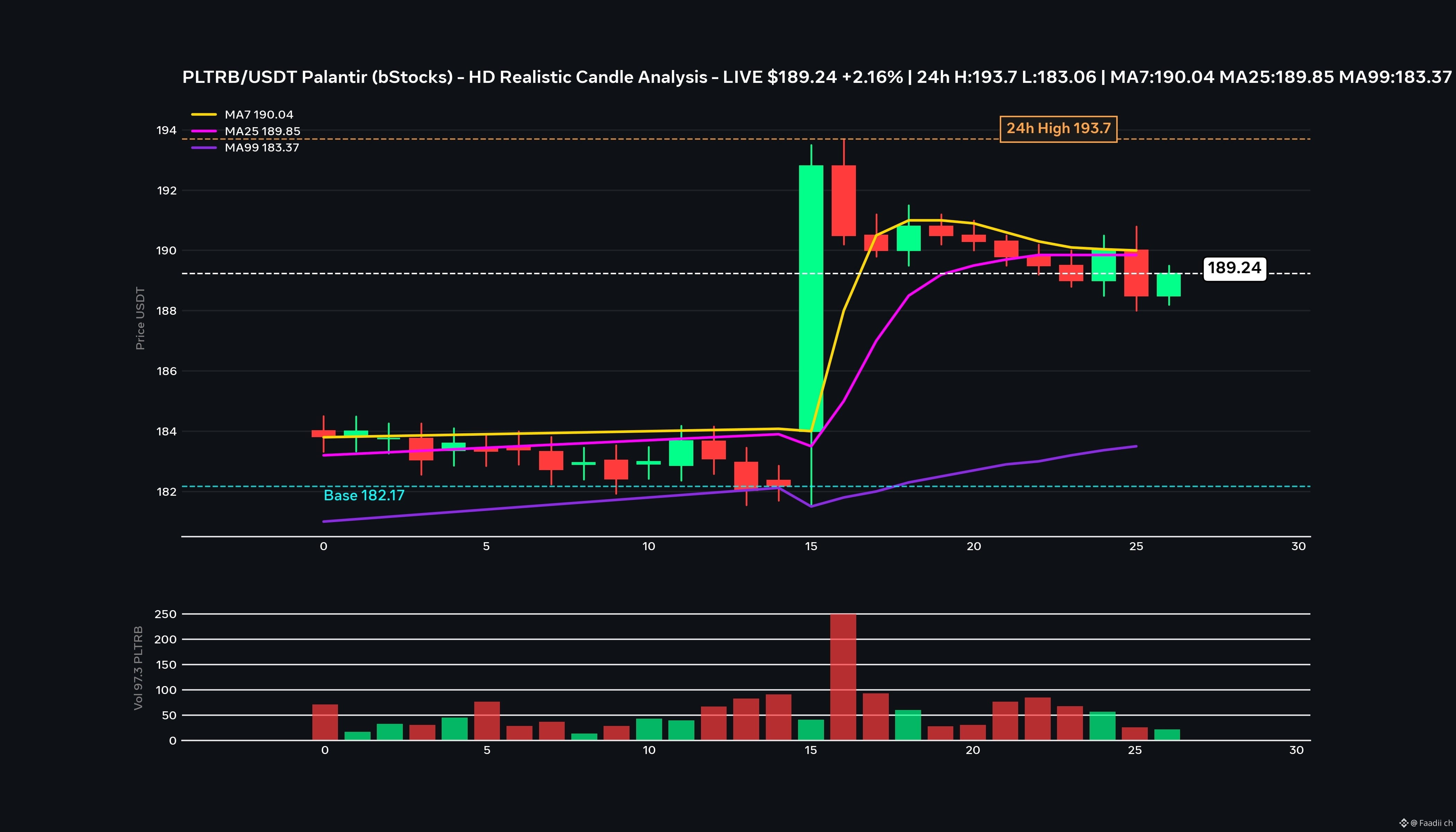
🚨$PLTRB just exploded +2.16% out of nowhere and then dumped? 👀* {spot}(PLTRBUSDT) Palantir (bStocks) was sleeping around $182.17 then BOOM - straight to $193.70 in one candle! Now cooling off at $189.24. $PLTRB : Price pumped hard above all MAs then started fading. Now it's sitting right under MA7 $190.04 and MA25 $189.85. MA99 way down at $183.37. RSI(6) at 34.22 - getting close to oversold, so selling might be slowing down. Levels that matter: 🔴 Resistance: $190.04 (MA7) then $193.70 (24h high) - break that and pump continues 🟢 Support: $189.85 (MA25) immediate, then $183.37 (MA99) and $183.06 (24h low) - if $183 holds, this could be a higher low Classic pump then healthy pullback setup. You think $PLTRB holds $183 or we go lower? 👇 #PLTRB #Palantir #bStocks #Binance
🚨$PLTRB just exploded +2.16% out of nowhere and then dumped? 👀*


Palantir (bStocks) was sleeping around $182.17 then BOOM - straight to $193.70 in one candle! Now cooling off at $189.24.

$PLTRB : Price pumped hard above all MAs then started fading. Now it's sitting right under MA7 $190.04 and MA25 $189.85. MA99 way down at $183.37. RSI(6) at 34.22 - getting close to oversold, so selling might be slowing down.

Levels that matter:
🔴 Resistance: $190.04 (MA7) then $193.70 (24h high) - break that and pump continues
🟢 Support: $189.85 (MA25) immediate, then $183.37 (MA99) and $183.06 (24h low) - if $183 holds, this could be a higher low

Classic pump then healthy pullback setup.

You think $PLTRB holds $183 or we go lower? 👇

#PLTRB #Palantir #bStocks #Binance
Article
Binance BStocks: A New Way to Access Stocks on BlockchainThe financial world is changing rapidly as traditional markets and blockchain technology become increasingly connected. One of the newer developments in this space is Binance BStocks, which aims to provide users with blockchain-based access to stock-related investment products. What Are Binance BStocks? Binance BStocks are blockchain-based products designed to provide exposure to the performance of traditional stocks. Instead of buying a traditional share through a conventional stockbroker, users can access a tokenized representation through a supported blockchain platform. This brings together two different financial worlds: traditional equities and digital assets. How Does It Work? The basic concept is simple: Choose a supported BStock → Buy the token → Track the underlying stock → Sell when you decide. The value of a BStock is generally connected to the performance of its underlying asset. If the underlying stock increases in value, the BStock may also increase. If the stock falls, the BStock can lose value as well. However, users should always check the specific terms, structure, fees, and rights of each product before investing. Why Are BStocks Interesting? One potential advantage is accessibility. Blockchain-based products can make it easier for eligible users to interact with financial assets through a digital-asset ecosystem. Other potential features may include: - Blockchain-based transactions - Digital ownership or exposure to traditional assets - Access through a crypto-focused platform - Potentially simpler portfolio management - Integration between traditional finance and blockchain technology What Are the Risks? BStocks are not risk-free. The underlying stock can lose value because of company performance, economic conditions, interest rates, market sentiment, or other factors. There can also be additional risks related to tokenization, liquidity, fees, regulations, and the platform providing the product. For this reason, users should understand exactly what they are buying rather than assuming that a tokenized stock is identical to owning a conventional share. BStocks vs. Traditional Stocks Traditional stocks are normally purchased through a regulated stockbroker and can provide shareholder rights depending on the type of security. BStocks, on the other hand, are blockchain-based products. Their exact structure and investor rights depend on the specific product and its legal framework. Therefore, investors should read the product documentation before making a decision. Final Thoughts Binance BStocks represent an interesting development at the intersection of traditional finance and blockchain technology. They could make stock-market exposure more accessible within a digital-asset environment, but they also introduce risks that investors need to understand. Before investing, always check the supported assets, fees, availability in your country, regulatory status, and the exact rights associated with the product. The future of finance may not be purely traditional or purely digital—it could be a combination of both. #Binance #BStocks #viralpost

Binance BStocks: A New Way to Access Stocks on Blockchain

The financial world is changing rapidly as traditional markets and blockchain technology become increasingly connected. One of the newer developments in this space is Binance BStocks, which aims to provide users with blockchain-based access to stock-related investment products.
What Are Binance BStocks?
Binance BStocks are blockchain-based products designed to provide exposure to the performance of traditional stocks. Instead of buying a traditional share through a conventional stockbroker, users can access a tokenized representation through a supported blockchain platform.
This brings together two different financial worlds: traditional equities and digital assets.
How Does It Work?
The basic concept is simple:
Choose a supported BStock → Buy the token → Track the underlying stock → Sell when you decide.
The value of a BStock is generally connected to the performance of its underlying asset. If the underlying stock increases in value, the BStock may also increase. If the stock falls, the BStock can lose value as well.
However, users should always check the specific terms, structure, fees, and rights of each product before investing.
Why Are BStocks Interesting?
One potential advantage is accessibility. Blockchain-based products can make it easier for eligible users to interact with financial assets through a digital-asset ecosystem.
Other potential features may include:
- Blockchain-based transactions
- Digital ownership or exposure to traditional assets
- Access through a crypto-focused platform
- Potentially simpler portfolio management
- Integration between traditional finance and blockchain technology
What Are the Risks?
BStocks are not risk-free.
The underlying stock can lose value because of company performance, economic conditions, interest rates, market sentiment, or other factors. There can also be additional risks related to tokenization, liquidity, fees, regulations, and the platform providing the product.
For this reason, users should understand exactly what they are buying rather than assuming that a tokenized stock is identical to owning a conventional share.
BStocks vs. Traditional Stocks
Traditional stocks are normally purchased through a regulated stockbroker and can provide shareholder rights depending on the type of security.
BStocks, on the other hand, are blockchain-based products. Their exact structure and investor rights depend on the specific product and its legal framework.
Therefore, investors should read the product documentation before making a decision.
Final Thoughts
Binance BStocks represent an interesting development at the intersection of traditional finance and blockchain technology. They could make stock-market exposure more accessible within a digital-asset environment, but they also introduce risks that investors need to understand.
Before investing, always check the supported assets, fees, availability in your country, regulatory status, and the exact rights associated with the product.
The future of finance may not be purely traditional or purely digital—it could be a combination of both.
#Binance #BStocks #viralpost
Article
I Came for Crypto. Then I Started Looking at Stocks. 📈I Came for Crypto. Then I Started Looking at Stocks. When I first got into crypto, I thought I already understood investing. Charts going up. Charts going down. Green candles. Red candles. Buy the dip. Don’t FOMO. Then I started paying attention to the stock market. And honestly, I realized something: Stocks and crypto may look completely different, but the biggest challenge is still the same — knowing what you’re actually buying. That’s what made me interested in Stocks and BStocks on Binance. If you’re a crypto user who has never seriously looked at US stocks before, this might be a good time to start learning. Not necessarily to rush into buying anything. Just to understand another side of the market. So, what exactly is a Stock? In simple terms, when you buy a company’s stock, you’re buying a share of that business. Think about companies you already use or hear about every day — technology companies, car companies, semiconductor companies, banks, retailers, and so on. Their stock prices can move based on many things: Company earnings. Revenue growth. New products. Competition. Interest rates. Economic conditions. Market expectations. And, of course, investor sentiment. This is one thing I find interesting about stocks. You’re not just looking at a chart. Sometimes, you’re looking at an actual business and asking: “Is this company really worth what the market says it is?” That question can lead you down a much deeper rabbit hole. But isn’t crypto enough? Maybe. It depends on what you’re trying to learn and what kind of exposure you want. Crypto and stocks are different asset classes, and neither one is automatically “better.” Crypto markets operate differently from traditional stock markets. Crypto can trade 24/7, while traditional US stock markets operate during defined market hours. The reasons prices move can also be very different. For crypto, you might pay attention to network activity, adoption, token supply, regulations, ecosystem developments and market sentiment. For stocks, you might spend more time looking at earnings, revenue, profit, debt, valuation and the company’s future growth. So if you already understand crypto, learning stocks can actually give you a different perspective on markets. And you may start noticing something interesting: Market psychology is everywhere. FOMO exists in stocks. Panic selling exists in stocks. Overconfidence exists in stocks. People chasing something just because it has already gone up? Yep. That happens too. If you’re new to US Stocks, start here Don’t start with: “Which stock will make me rich?” Start with: “What am I actually looking at?” Here’s the checklist I would use. 1. Understand the company Before looking at the price, understand the business. What does the company sell? How does it make money? Who are its competitors? Is its industry growing or shrinking? You don’t need to become a Wall Street analyst overnight. You just need to understand what you’re putting your money into. 2. Look beyond the price chart A stock going up doesn’t automatically mean the company is becoming a better investment. And a stock going down doesn’t automatically mean it’s a bargain. Try to understand what is happening behind the chart. Read company updates. Look at financial results. Follow important news. The more context you have, the less likely you are to make decisions based purely on a green candle. 3. Learn the basic numbers Revenue. Profit. Debt. Earnings. Valuation. You don’t need to memorize every financial ratio on day one. Start with the basics and slowly build your knowledge. 4. Don’t confuse hype with research This is probably one of the biggest lessons for anyone coming from crypto. When everyone is talking about the same asset, it can feel like you’re missing out if you don’t buy. But popularity isn’t research. A viral post isn’t a financial statement. And someone saying “this is going to 10x” isn’t a guarantee. Do your own research before making a decision. 5. Know your risk This part is boring until it suddenly becomes very important. Stocks can go down. Sometimes they can go down much faster than expected. So before thinking about potential returns, think about how much risk you’re actually comfortable taking. Never invest money you can’t afford to lose, and don’t assume that past performance guarantees future results. Why BStocks caught my attention For someone already spending time on Binance, the idea of being able to learn more about Stocks alongside crypto is interesting. It creates an opportunity to look at markets from another angle instead of putting everything into one category. And personally, I think that’s the more interesting part. You don’t have to choose an identity. You don’t have to be “a crypto person” or “a stock person.” You can simply be someone who wants to understand financial markets better. The more you learn, the more questions you start asking. Why did this stock move today? Why did earnings matter? Why are interest rates affecting technology companies? Why does one company have a much higher valuation than another? Those questions are where the real learning starts. One last thought If you’re a crypto user who has never explored US Stocks, don’t feel like you need to understand everything before you begin. Start small. Pick one company you already know. Learn what the business does. Read its latest results. Watch how its stock reacts to major news. Compare what you expected with what actually happened. Do that repeatedly and eventually the stock market starts to make a lot more sense. For me, the biggest takeaway is simple: The goal isn’t to chase every opportunity. The goal is to understand the opportunities you’re looking at. Crypto introduced many of us to a completely new way of thinking about money and markets. Stocks can introduce us to another one. And with platforms like Binance continuing to bring different parts of the financial world closer together, there’s never been a better reason to keep learning. Research first. Understand the risk. Make your own decision. That’s a much better starting point than simply asking, “What should I buy?” 🚀 @BinanceBurmese #SEABstock #BStocks #Investing #stockmarket

I Came for Crypto. Then I Started Looking at Stocks. 📈

I Came for Crypto. Then I Started Looking at Stocks.
When I first got into crypto, I thought I already understood investing.
Charts going up.
Charts going down.
Green candles. Red candles.
Buy the dip. Don’t FOMO.
Then I started paying attention to the stock market.
And honestly, I realized something:
Stocks and crypto may look completely different, but the biggest challenge is still the same — knowing what you’re actually buying.
That’s what made me interested in Stocks and BStocks on Binance.
If you’re a crypto user who has never seriously looked at US stocks before, this might be a good time to start learning.
Not necessarily to rush into buying anything.
Just to understand another side of the market.
So, what exactly is a Stock?
In simple terms, when you buy a company’s stock, you’re buying a share of that business.
Think about companies you already use or hear about every day — technology companies, car companies, semiconductor companies, banks, retailers, and so on.
Their stock prices can move based on many things:
Company earnings.
Revenue growth.
New products.
Competition.
Interest rates.
Economic conditions.
Market expectations.
And, of course, investor sentiment.
This is one thing I find interesting about stocks.
You’re not just looking at a chart.
Sometimes, you’re looking at an actual business and asking:
“Is this company really worth what the market says it is?”
That question can lead you down a much deeper rabbit hole.
But isn’t crypto enough?
Maybe.
It depends on what you’re trying to learn and what kind of exposure you want.
Crypto and stocks are different asset classes, and neither one is automatically “better.”
Crypto markets operate differently from traditional stock markets. Crypto can trade 24/7, while traditional US stock markets operate during defined market hours.
The reasons prices move can also be very different.
For crypto, you might pay attention to network activity, adoption, token supply, regulations, ecosystem developments and market sentiment.
For stocks, you might spend more time looking at earnings, revenue, profit, debt, valuation and the company’s future growth.
So if you already understand crypto, learning stocks can actually give you a different perspective on markets.
And you may start noticing something interesting:
Market psychology is everywhere.
FOMO exists in stocks.
Panic selling exists in stocks.
Overconfidence exists in stocks.
People chasing something just because it has already gone up?
Yep. That happens too.
If you’re new to US Stocks, start here
Don’t start with:
“Which stock will make me rich?”
Start with:
“What am I actually looking at?”
Here’s the checklist I would use.
1. Understand the company
Before looking at the price, understand the business.
What does the company sell?
How does it make money?
Who are its competitors?
Is its industry growing or shrinking?
You don’t need to become a Wall Street analyst overnight. You just need to understand what you’re putting your money into.
2. Look beyond the price chart
A stock going up doesn’t automatically mean the company is becoming a better investment.
And a stock going down doesn’t automatically mean it’s a bargain.
Try to understand what is happening behind the chart.
Read company updates. Look at financial results. Follow important news.
The more context you have, the less likely you are to make decisions based purely on a green candle.
3. Learn the basic numbers
Revenue.
Profit.
Debt.
Earnings.
Valuation.
You don’t need to memorize every financial ratio on day one.
Start with the basics and slowly build your knowledge.
4. Don’t confuse hype with research
This is probably one of the biggest lessons for anyone coming from crypto.
When everyone is talking about the same asset, it can feel like you’re missing out if you don’t buy.
But popularity isn’t research.
A viral post isn’t a financial statement.
And someone saying “this is going to 10x” isn’t a guarantee.
Do your own research before making a decision.
5. Know your risk
This part is boring until it suddenly becomes very important.
Stocks can go down.
Sometimes they can go down much faster than expected.
So before thinking about potential returns, think about how much risk you’re actually comfortable taking.
Never invest money you can’t afford to lose, and don’t assume that past performance guarantees future results.
Why BStocks caught my attention
For someone already spending time on Binance, the idea of being able to learn more about Stocks alongside crypto is interesting.
It creates an opportunity to look at markets from another angle instead of putting everything into one category.
And personally, I think that’s the more interesting part.
You don’t have to choose an identity.
You don’t have to be “a crypto person” or “a stock person.”
You can simply be someone who wants to understand financial markets better.
The more you learn, the more questions you start asking.
Why did this stock move today?
Why did earnings matter?
Why are interest rates affecting technology companies?
Why does one company have a much higher valuation than another?
Those questions are where the real learning starts.
One last thought
If you’re a crypto user who has never explored US Stocks, don’t feel like you need to understand everything before you begin.
Start small.
Pick one company you already know.
Learn what the business does.
Read its latest results.
Watch how its stock reacts to major news.
Compare what you expected with what actually happened.
Do that repeatedly and eventually the stock market starts to make a lot more sense.
For me, the biggest takeaway is simple:
The goal isn’t to chase every opportunity. The goal is to understand the opportunities you’re looking at.
Crypto introduced many of us to a completely new way of thinking about money and markets.
Stocks can introduce us to another one.
And with platforms like Binance continuing to bring different parts of the financial world closer together, there’s never been a better reason to keep learning.
Research first. Understand the risk. Make your own decision.
That’s a much better starting point than simply asking, “What should I buy?” 🚀
@Binance Burmese
#SEABstock #BStocks #Investing #stockmarket
Htet Htet Lay:
💯💯👏
Verified
On September 25, Ethena (token $ENA) announced a partnership with Binance to extend its synthetic dollar $USDe basis-trading strategy into the stock market for the first time: using Binance bStocks (tokenized US stocks and ETFs) as spot-side collateral, while establishing a short hedge on the Binance USDT-margined stock perpetuals to form a market-neutral structure mirroring that on the crypto asset side. The official statement says the allocation would start from that day; according to DefiLlama, circulating USDe totals about $4.9 billion. Ethena said this move expands the underlying market that can be targeted—from roughly a $2.5 trillion crypto asset base to a real-world asset pool on the order of more than $150 trillion—referring to potential addressable scale, not the amount already allocated on the day. The Binance stock perpetual open interest exceeds about $2.9 billion, and lower automatic deleveraging priority is granted to market-neutral accounts that meet the criteria. Ethena’s risk committee has reviewed the tokenized stock basis framework; bStocks are issued by Binance’s affiliate, BTech Holdings, and holders receive equity in the issuer’s positions rather than direct ownership of the stocks. Whether it will expand to more exchanges later, and how side-letter and other risk-control arrangements will be implemented, remains to be seen. #USDe #ENA #bStocks does not constitute investment advice

On September 25, Ethena (token $ENA ) announced a partnership with Binance to extend its synthetic dollar $USDe basis-trading strategy into the stock market for the first time: using Binance bStocks (tokenized US stocks and ETFs) as spot-side collateral, while establishing a short hedge on the Binance USDT-margined stock perpetuals to form a market-neutral structure mirroring that on the crypto asset side. The official statement says the allocation would start from that day; according to DefiLlama, circulating USDe totals about $4.9 billion. Ethena said this move expands the underlying market that can be targeted—from roughly a $2.5 trillion crypto asset base to a real-world asset pool on the order of more than $150 trillion—referring to potential addressable scale, not the amount already allocated on the day.

The Binance stock perpetual open interest exceeds about $2.9 billion, and lower automatic deleveraging priority is granted to market-neutral accounts that meet the criteria. Ethena’s risk committee has reviewed the tokenized stock basis framework; bStocks are issued by Binance’s affiliate, BTech Holdings, and holders receive equity in the issuer’s positions rather than direct ownership of the stocks. Whether it will expand to more exchanges later, and how side-letter and other risk-control arrangements will be implemented, remains to be seen.

#USDe #ENA #bStocks does not constitute investment advice
🔴 I covered their Binance listing. Here’s the follow-up with all three showing red. The Spot quotes in my screenshots: • AGPUB — Axe Compute: 11.95 USDT | −8.08% • AMCB — AMC Entertainment: 2.87 USDT | −3.37% • CYPHB — Cypherpunk Technologies: 3.59 USDT | −5.53% These are the changes displayed when I took the screenshots, not confirmed returns since listing. Announcing new listings is only part of the story. I want to follow what happens afterward, too—even when the numbers aren’t green. My takeaway: the listing alone isn’t enough to build an investment thesis. And a red percentage alone doesn’t tell us whether something is cheap. Were any of these three on your watchlist? What made you interested in the company behind the ticker? #BStocks #Tokenization
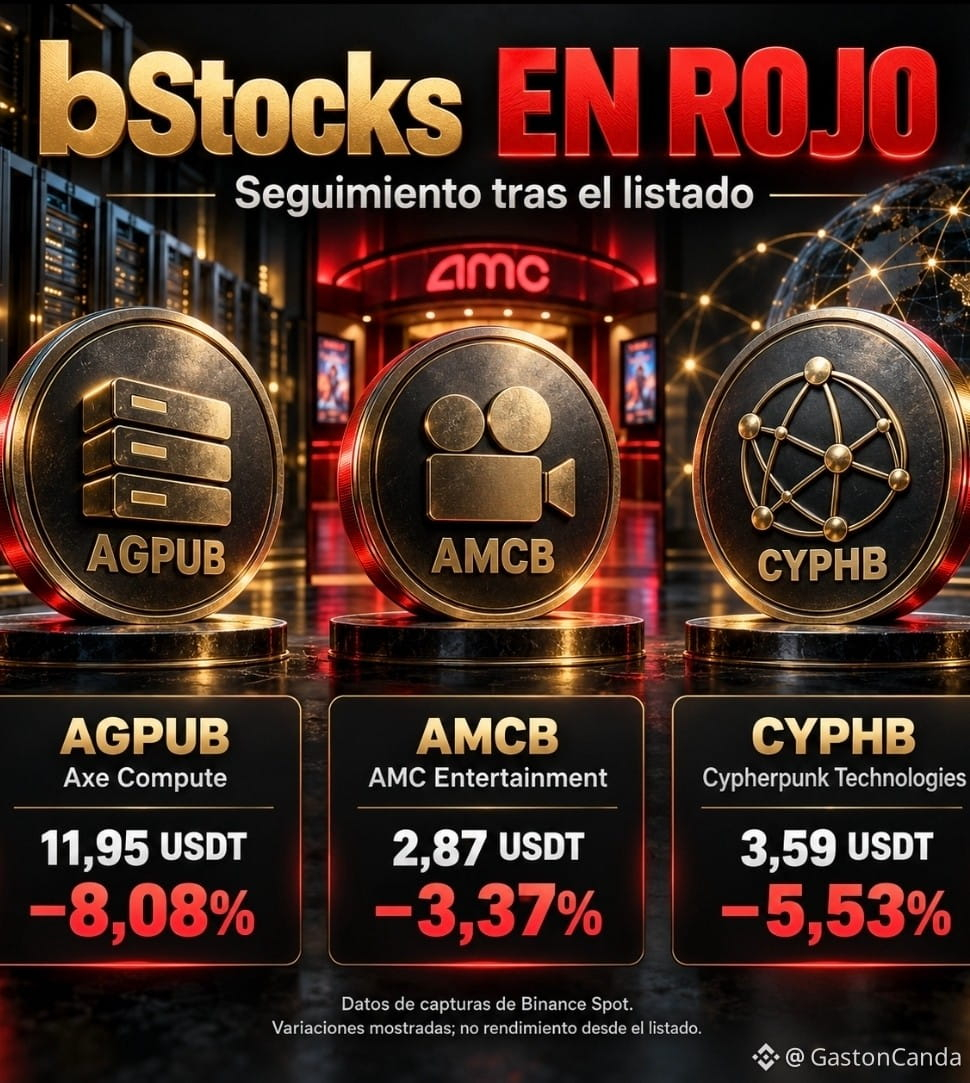
🔴 I covered their Binance listing. Here’s the follow-up with all three showing red.

The Spot quotes in my screenshots:

• AGPUB — Axe Compute: 11.95 USDT | −8.08%
• AMCB — AMC Entertainment: 2.87 USDT | −3.37%
• CYPHB — Cypherpunk Technologies: 3.59 USDT | −5.53%

These are the changes displayed when I took the screenshots, not confirmed returns since listing.

Announcing new listings is only part of the story. I want to follow what happens afterward, too—even when the numbers aren’t green.

My takeaway: the listing alone isn’t enough to build an investment thesis. And a red percentage alone doesn’t tell us whether something is cheap.

Were any of these three on your watchlist? What made you interested in the company behind the ticker?

#BStocks #Tokenization
cksHow Are Stocks Different from Crypto? Stocks and cryptocurrencies are both popular investment options, but they work differently. Stocks represent ownership in a company. When you buy shares, you become a shareholder. Stock prices can rise or fall depending on the company’s performance, economic conditions, and market demand. Some companies also pay dividends. Stock markets usually operate during specific trading hours and are regulated by financial authorities. Cryptocurrency, such as Bitcoin and Ethereum, is a digital asset based on blockchain technology. Crypto does not usually represent ownership of a company. Its prices can change very quickly, making it more volatile than many traditional investments. Crypto markets are generally available 24 hours a day, seven days a week. There are also differences in regulation. Stock markets generally have established rules and investor protections, while cryptocurrency regulations can vary depending on the country, asset, and platform. Both stocks and crypto offer opportunities and risks. Stocks can provide long-term growth and, in some cases, dividend income. Crypto provides access to digital assets and blockchain technology but can involve higher price volatility and other risks. Before investing, beginners should understand how each asset works, consider their financial goals and risk tolerance, and do their own research. Neither stocks nor crypto guarantees a profit, so investing without understanding the risks can lead to financial losses. In conclusion, stocks are mainly connected to ownership in companies, while crypto is a form of digital asset. Understanding their differences can help investors make more informed decisions.#AIStocksWhatNext #SEABstock #BStocks # @BinanceBurmese #USstock
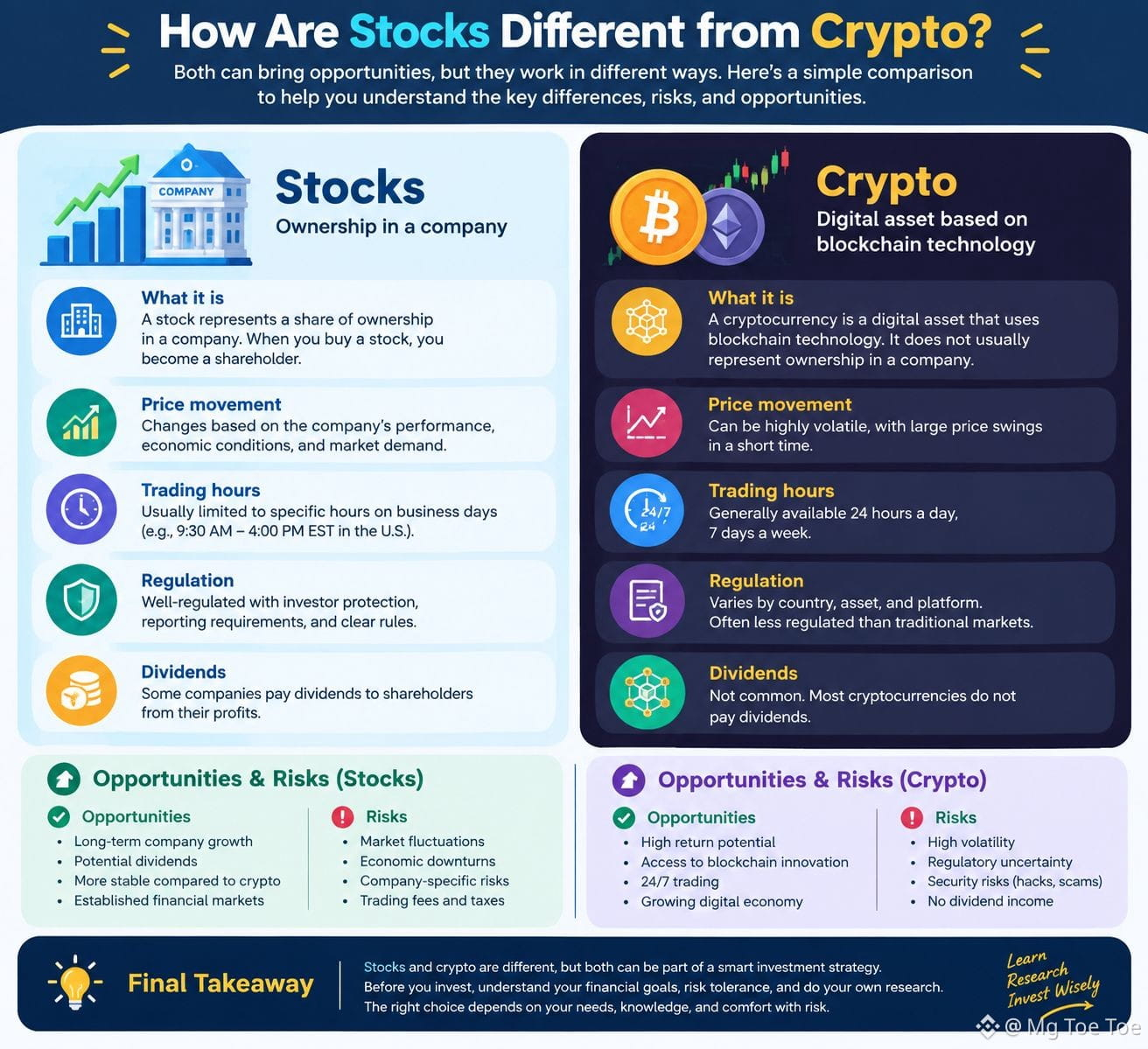
cksHow Are Stocks Different from Crypto?

Stocks and cryptocurrencies are both popular investment options, but they work differently.

Stocks represent ownership in a company. When you buy shares, you become a shareholder. Stock prices can rise or fall depending on the company’s performance, economic conditions, and market demand. Some companies also pay dividends. Stock markets usually operate during specific trading hours and are regulated by financial authorities.

Cryptocurrency, such as Bitcoin and Ethereum, is a digital asset based on blockchain technology. Crypto does not usually represent ownership of a company. Its prices can change very quickly, making it more volatile than many traditional investments. Crypto markets are generally available 24 hours a day, seven days a week.

There are also differences in regulation. Stock markets generally have established rules and investor protections, while cryptocurrency regulations can vary depending on the country, asset, and platform.

Both stocks and crypto offer opportunities and risks. Stocks can provide long-term growth and, in some cases, dividend income. Crypto provides access to digital assets and blockchain technology but can involve higher price volatility and other risks.

Before investing, beginners should understand how each asset works, consider their financial goals and risk tolerance, and do their own research. Neither stocks nor crypto guarantees a profit, so investing without understanding the risks can lead to financial losses.

In conclusion, stocks are mainly connected to ownership in companies, while crypto is a form of digital asset. Understanding their differences can help investors make more informed decisions.#AIStocksWhatNext #SEABstock #BStocks # @Binance Burmese #USstock
yammeezeed:
good
Verified
ENA rises 54% within a week and reaches nearly 0.28—this isn’t just fleeting speculation; there are clear, structural reasons behind this move: 1. Expansion into the Stocks sector (bStocks): Ethena announced a push to support its stablecoin USDe with tokenized U.S. stocks (e.g., Nvidia and Tesla) available on Binance, hedged via perpetual contracts. This step opens the door to expanding USDe yield sources from the crypto market into the global stock market 2. The Fee Switch proposal: A proposal was put forward to use 95% of the protocol’s net revenue to programmatically buy ENA from the market—creating continuous cash demand for the token and supporting its price 3. Whale concentration: Arthur Hayes (BitMEX founder) entered by buying about 25.3 million ENA, and his expectation for the price to reach $0.50 added momentum and increased confidence in the current trend Points you need to keep in mind (risk management): 🔓 Unlocks:On October 5, large amounts will be unlocked (around 1.33 billion ENA), which could create temporary selling pressure in the market 📈 Technical levels: The coin is approaching a resistance zone between 0.30 and 0.31, while the main support zones currently sit between 0.18 and 0.20 Do you think ENA can break above 0.30 and continue to 0.50, or will the token unlocks in October calm the game? 👇 $ENA {spot}(ENAUSDT) #BStocks
ENA rises 54% within a week and reaches nearly 0.28—this isn’t just fleeting speculation; there are clear, structural reasons behind this move:
1. Expansion into the Stocks sector (bStocks):
Ethena announced a push to support its stablecoin USDe with tokenized U.S. stocks (e.g., Nvidia and Tesla) available on Binance, hedged via perpetual contracts. This step opens the door to expanding USDe yield sources from the crypto market into the global stock market
2. The Fee Switch proposal:
A proposal was put forward to use 95% of the protocol’s net revenue to programmatically buy ENA from the market—creating continuous cash demand for the token and supporting its price
3. Whale concentration:
Arthur Hayes (BitMEX founder) entered by buying about 25.3 million ENA, and his expectation for the price to reach $0.50 added momentum and increased confidence in the current trend
Points you need to keep in mind (risk management):
🔓 Unlocks:On October 5, large amounts will be unlocked (around 1.33 billion ENA), which could create temporary selling pressure in the market
📈 Technical levels: The coin is approaching a resistance zone between 0.30 and 0.31, while the main support zones currently sit between 0.18 and 0.20
Do you think ENA can break above 0.30 and continue to 0.50, or will the token unlocks in October calm the game? 👇
$ENA

#BStocks
Log in to explore more content
Join global crypto users on Binance Square
⚡️ Get latest and useful information about crypto.
💬 Trusted by the world’s largest crypto exchange.
👍 Discover real insights from verified creators.
Email / Phone number