

#vertex
vertex
98 views
5 Discussing
Hot
Latest

·
--
Article
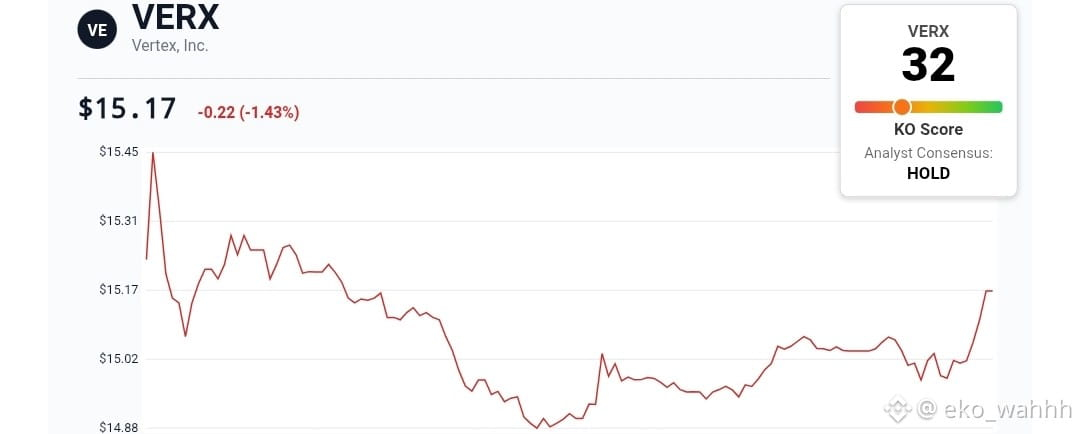
Vertex, Inc. (VERX) Stock: Unveils Vertex Sōl to Transform Tax Compliance With AIVertex, Inc. (VERX) has introduced Vertex Sōl, a new platform that connects tax compliance processes through artificial intelligence. The system combines tax decisions, regulatory intelligence, reporting, and audit records within a unified framework. Meanwhile, VERX stock fell 1.49% to $15.16, losing $0.23 after recovering from an intraday low near $14.87.
The launch expands Vertex’s technology portfolio as businesses seek greater control over automated tax operations. Vertex Sōl connects compliance activities across individual transactions, from initial tax calculations through reporting and audits. Tax departments can identify potential errors earlier and manage supporting records through one system.
Vertex Sōl Brings AI Into Tax Compliance Operations
Vertex Sōl integrates tax determination, electronic invoicing, regulatory reporting, and audit preparation into a connected workflow. The platform maintains transaction records throughout each compliance stage, reducing the need for separate documentation processes. Furthermore, Vertex Intelligence supports the system with regulatory information, tax expertise, explanations, and recommendations.
The company designed the platform to give tax professionals direct control over automated decisions. Teams can review recommendations, approve actions, and reverse decisions when necessary. This structure allows businesses to adjust automation levels according to internal policies and compliance requirements.
Vertex serves a customer base that includes more than 60% of Fortune 500 companies. Its existing tax solutions support businesses that manage complex transactions across different regulatory environments. The new platform extends those services by connecting tax calculations with documentation and audit requirements.
Vertex Survey Highlights Demand for AI Oversight
Vertex introduced the platform as enterprises examine the risks and benefits of automated compliance systems. A company-commissioned survey questioned 402 tax and compliance software decision-makers across the United States and Germany. Emerald Research Group conducted the research to assess expectations surrounding artificial intelligence in compliance operations.
The survey found that 81% of respondents required full visibility into automated decisions before adopting AI compliance tools. Respondents also wanted the ability to override or reverse automated actions at any time. These findings highlight the importance of transparency and human control in regulated financial operations.
Vertex Sōl addresses these requirements through adjustable automation settings and decision records. Tax departments can choose whether the system recommends actions, assists employees, or operates within established controls. Meanwhile, its recordkeeping functions allow teams to trace decisions back to their original transactions.
Vertex Expands Compliance Capabilities Across Tax Workflows
Vertex Sōl supports several activities that tax departments handle throughout the reporting cycle. When regulations change, the platform connects updated requirements with relevant transactions and identifies potential compliance impacts. Tax professionals can then review the information before making operational changes.
Before filing, the system identifies relevant issues and provides recommendations within company-defined controls. During audits, it helps teams organize notices, gather supporting documents, and identify missing information. These functions connect routine compliance work with the evidence businesses need during regulatory reviews.
Industry research firm IDC identifies governance and traceability as important requirements for enterprise compliance technology. Its assessment emphasizes the need to explain automated actions and connect them with original tax decisions. Vertex’s latest launch reflects that direction while extending its existing compliance software capabilities.
Articles by @Blockonomi #vertex $VERX.US x #ai
Vertex, Inc. (VERX) Stock: Unveils Vertex Sōl to Transform Tax Compliance With AI
Vertex, Inc. (VERX) has introduced Vertex Sōl, a new platform that connects tax compliance processes through artificial intelligence. The system combines tax decisions, regulatory intelligence, reporting, and audit records within a unified framework. Meanwhile, VERX stock fell 1.49% to $15.16, losing $0.23 after recovering from an intraday low near $14.87.
The launch expands Vertex’s technology portfolio as businesses seek greater control over automated tax operations. Vertex Sōl connects compliance activities across individual transactions, from initial tax calculations through reporting and audits. Tax departments can identify potential errors earlier and manage supporting records through one system.
Vertex Sōl Brings AI Into Tax Compliance Operations
Vertex Sōl integrates tax determination, electronic invoicing, regulatory reporting, and audit preparation into a connected workflow. The platform maintains transaction records throughout each compliance stage, reducing the need for separate documentation processes. Furthermore, Vertex Intelligence supports the system with regulatory information, tax expertise, explanations, and recommendations.
The company designed the platform to give tax professionals direct control over automated decisions. Teams can review recommendations, approve actions, and reverse decisions when necessary. This structure allows businesses to adjust automation levels according to internal policies and compliance requirements.
Vertex serves a customer base that includes more than 60% of Fortune 500 companies. Its existing tax solutions support businesses that manage complex transactions across different regulatory environments. The new platform extends those services by connecting tax calculations with documentation and audit requirements.
Vertex Survey Highlights Demand for AI Oversight
Vertex introduced the platform as enterprises examine the risks and benefits of automated compliance systems. A company-commissioned survey questioned 402 tax and compliance software decision-makers across the United States and Germany. Emerald Research Group conducted the research to assess expectations surrounding artificial intelligence in compliance operations.
The survey found that 81% of respondents required full visibility into automated decisions before adopting AI compliance tools. Respondents also wanted the ability to override or reverse automated actions at any time. These findings highlight the importance of transparency and human control in regulated financial operations.
Vertex Sōl addresses these requirements through adjustable automation settings and decision records. Tax departments can choose whether the system recommends actions, assists employees, or operates within established controls. Meanwhile, its recordkeeping functions allow teams to trace decisions back to their original transactions.
Vertex Expands Compliance Capabilities Across Tax Workflows
Vertex Sōl supports several activities that tax departments handle throughout the reporting cycle. When regulations change, the platform connects updated requirements with relevant transactions and identifies potential compliance impacts. Tax professionals can then review the information before making operational changes.
Before filing, the system identifies relevant issues and provides recommendations within company-defined controls. During audits, it helps teams organize notices, gather supporting documents, and identify missing information. These functions connect routine compliance work with the evidence businesses need during regulatory reviews.
Industry research firm IDC identifies governance and traceability as important requirements for enterprise compliance technology. Its assessment emphasizes the need to explain automated actions and connect them with original tax decisions. Vertex’s latest launch reflects that direction while extending its existing compliance software capabilities.
Articles by @Blockonomi #vertex $VERX.US x #ai
VERXUS-0.75%
93


·
--

Article
Vertex Protocol: Safer than CEX, more convenient than DEXPreface According to the #DeFiLlama data platform, since November 23, the transaction volume and TVL of #Vertex have increased dramatically. The transaction volume once became the second-ranked on-chain perpetual contract platform (the first is dYdX), and it is quite possible to catch up with dYdX. potential. Why has Vertex grown so rapidly in terms of transaction volume and TVL in a short period of time? What is so innovative and attractive about Vertex? Let's take a look. 1. Project introduction: Vertex is a decentralized derivatives protocol on #Arbitrum , with spot, perpetual and comprehensive currency markets. The vision is to trade like a CEX and self-custody like a DEX. It was once a decentralized foreign exchange platform on the Terra chain. After the collapse of Terra in May 2022, it was migrated to Arbitrum as a DEX and developed three types of products: spot trading, futures trading and lending market. Agreement profit model: collecting transaction fees to generate agreement income. Financial incentives to provide liquidity to market makers. Moderate speculation and manipulation on specific trading pairs. Official website: https://vertexprotocol.com/ 2. Products and innovation: Products: Spot trading market: All spot assets are quoted in USDC. On Vertex, users always retain ownership of spot assets on the chain. Perpetual contracts market: Traders can go long or short crypto assets with up to 10x leverage, using USDC as primary collateral, and a cross-margin system can leverage other spot assets to support perpetual positions. Lending Market: Users can automatically borrow spot assets using their portfolio margin to obtain loans. Smart contracts for the lending market are on-chain (for example, on Arbitrum). Innovation: Hybrid design of order book + AMM: At the protocol level, the exchange and risk engine on the chain are integrated, and an off-chain sequencer is configured to form a hybrid order book + AMM DEX. Includes spot, perpetual contracts and currency markets – controlled by Vertex Protocol smart contracts on the Arbitrum layer. Three key elements: A fully on-chain exchange (constant product AMM) – protocol level. A risk engine entirely on-chain — at the protocol level. Off-chain sequencer for order matching. Cross Margin Mode: By default, Vertex is fully margined, and the user’s portfolio will be used as collateral for multiple open positions.Vertex V1 does not currently support isolated margin, and Vertex V2 will add the isolated margin function of perpetual contracts for users to choose. Subaccounts: Traders can isolate the risks associated with individual positions by opening new subaccounts. Use multiple oracles to feed prices: Currently, the Stork oracle is mainly used. Going forward, Chainlink’s high-fidelity sub-second market data will work with Stork to help support market-enabled clearing, funding rates, and profit and loss calculations. Stork is an ultra-low-latency, decentralized hybrid oracle network for EMV-compliant quotes. Powering Vertex through its hybrid on-chain/off-chain architecture unlocks the ability to perform initial processing off-chain. Competitive trading fees: Offers cheap trading fees (0.02%) for taker users, and zero fees for place orders for spot and perpetual contracts on major currency pairs such as BTC/USDC and ETH/USDC. Compared with DYDX and GMX, Vertex has lower handling fees and is more competitive. One-Click Transaction 1CT: Enables users to sign an approval transaction at the beginning without the need for subsequent approval signatures, an experience similar to CEX where users can log in (sign the approval transaction) and start trading without having to sign every transaction they make. More innovations will be launched in V2! 3. Community and data: Social media: Twitter: https://twitter.com/vertex_protocol, 84.3K followers Discord: https://discord.com/invite/berachain, 28.8k members, 2.2k online protocol data: total transaction volume : $45.21b, of which the perpetual contract is $41.21bTVL: $45.3M24h trading volume: $242.87M users: 20,61524h trading fees: $49.26k Average daily user volume in the past month: 500–600 Data source: https://stats .vertexprotocol.com/ You can currently participate in the 6+ year continuous incentive plan of the protocol itself and the short-term incentive plan (STIP) of 3 million ARB tokens provided by Arbitrum DAO. 4. Economic model: VRTX total supply: 1B, no additional issuance. 90.85% of these tokens will be released within 5+ years. Distribution: Ongoing Incentives: 34.0% (340 million VRTX) Initial Token Phase: 10.0% (100 million VRTX) Initial Token Phase includes the first 7 periods of the Vertex Trade & Earn rewards program, which launches in April 2023 , and ends on November 8, 2023.10.0% of the VRTX supply designated for the initial token phase is a one-time distribution of VRTX tokens – which early Vertex users can accrue as trading rewards. Early Investors: 8.8% (88 million VRTX) Early investors include participants in Vertex’s $8.5 million seed round raised starting in 2022. Initial VRTX Liquidity (LBA): 1.0% (10 million VRTX) Initial VRTX liquidity is 1.0% of the VRTX token supply unlocked at Genesis and is designated as a reward for Vertex LBA participants. Future contributors: 5.0% (50 million VRTX) Future contributor allocation is a reserve for future team growth. Once vested, it will be placed into the protocol vault for potential use, but will not necessarily enter circulation. VRTX tokens allocated to the Future Contributor category do not begin to vest until Year 2. Ecosystem: 9.0% (90 million VRTX) Ecosystem development allocation includes a reserve of VRTX tokens that support Vertex’s long-term ecosystem growth. On Genesis, 1% of the VRTX allocation for ecosystem development is unlocked (10 million VRTX). The remaining 8% of VRTX tokens are earmarked for ecosystem development, with a linear release of 2.67% per year from Year 1 to Year 3. Advisor: 0.5% (5 million VRTX) 0.5% of the total VRTX supply, and will be released starting in year 1. Will be used for third-party services that provide long-term benefits to the growth, security, and sustainability of the Vertex protocol — including but not limited to code audits and bug bounties. Protocol Vault: 11.7% (117 million VRTX) 5% of the total VRTX supply (50 million VRTX) will be unlocked to the protocol treasury, with the remainder released linearly from year 1 to year 3. Founding Team: 20.0% (200 million VRTX) The schedule for team allocation is roughly to be released within 2–3 years after the mainnet launch in April 2023. Monthly release details can be seen here: https://docs.google.com/spreadsheets/d/1iLKBY7uoiYpa7lVzYuCK6HRCOJw-u4mnUR1CcD_OW3s/edit#gid=639807660VRTX staking voVRTX User Score: Multiple incentive mechanisms will be introduced to allow active participants Get rewarded with VRTX tokens. Increasing the voVRTX score increases the number of incentives. USDC rewards: USDC is awarded based on the user’s voVRTX score, and USDC comes from the protocol revenue. The insurance fund pledge (USDC) rewards the liquidation profits of the insurance fund pool (if there is a surplus) to further increase the voVRTX user score, thereby obtaining more VRTX pledge rewards 5. Financing and team: Financing: 2022–4: Vertex Protocol completes US$8.5 million Seed round financing, investors include Hack VC, Dexterity Capital, Jane Street, Hudson River Trading, etc.2023-6-22: Received strategic investment from Wintermute Ventures, the specific amount has not yet been disclosed. Team: Alwin Peng: Co-founder, former Software Engineer at Jump Trading Darius Tabatabai: Co-founder, former Head of Trading at JST Capital with 20 years of trading experience in options, commodities and FX. BSc Government and Economics from the London School of Economics and Political Science. Conor McNamee: Head of Product, former Business Development and Operations Manager at Eterna Capital. Graduated from the University of Western Ontario, Canada and City University of Hong Kong. SJ Park: Head of Strategy. He has 10 years of trading experience in rates and credit and was a former Goldman Sachs portfolio manager. Jeff Blockinger: General Counsel with 25 years of experience specializing in securities, investment funds, fintech, blockchain, cryptocurrency and regulatory matters. Also currently General Counsel of Quadrata. 6. Summary: Vertex is a vertically integrated DEX that aggregates spot, perpetual contracts and currency markets into a unified trading platform. Trade with lightning speeds, universal cross margins and a user-friendly trading interface. Vertex integrates the advantages of DEX and CEX, enabling both self-custody of DEX and fast transactions like CEX. Different from dYdX (off-chain order book) and GMX (on-chain liquidity pool solution), Vertex uses a hybrid order book + AMM to implement spot and perpetual contract transactions. With products with CEX and DEX advantages and an ongoing trading incentive program (340 million VRTX), Vertex's trading volume and TVL have been steadily rising. In the field of derivatives, there is currently no monopoly overlord, and Vertex is expected to compete for a place among them. Currently, dYdX, GMX, and APEX, which has surged tenfold recently, each have their own advantages. Only protocols that provide safe, reliable, smooth transaction experience and low slippage and low transaction fees are likely to gain users for a long time, and allocating protocol income to token pledgers is an important aspect that can firmly attract users. From the perspective of market value, DYDX has a market value of $990M, GMX has a market value of $385M, and Vertex has a market value of $44M. Based on the transaction volume, they are underestimated. From a profit perspective, the transaction volume is high, but the transaction fee rate is very low, the daily fee income is relatively low (about $50K), and the income distributed to currency holders is also relatively small.Fortunately, the official incentive activities can make up for this. In addition, according to official disclosures, the Vertex V2 version will have more optimizations and innovations. We look forward to Vertex bringing us more surprises! #内容挖矿 SANYUAN Labs is a DAO-driven venture capital institution focused on investing in Web3.0, DeFi and AI. Twitter: https://twitter.com/SanyuanCapitalTelegram: https://t.me/TernaryCapital
Vertex Protocol: Safer than CEX, more convenient than DEX
Preface According to the #DeFiLlama data platform, since November 23, the transaction volume and TVL of #Vertex have increased dramatically. The transaction volume once became the second-ranked on-chain perpetual contract platform (the first is dYdX), and it is quite possible to catch up with dYdX. potential. Why has Vertex grown so rapidly in terms of transaction volume and TVL in a short period of time? What is so innovative and attractive about Vertex? Let's take a look. 1. Project introduction: Vertex is a decentralized derivatives protocol on #Arbitrum , with spot, perpetual and comprehensive currency markets. The vision is to trade like a CEX and self-custody like a DEX. It was once a decentralized foreign exchange platform on the Terra chain. After the collapse of Terra in May 2022, it was migrated to Arbitrum as a DEX and developed three types of products: spot trading, futures trading and lending market. Agreement profit model: collecting transaction fees to generate agreement income. Financial incentives to provide liquidity to market makers. Moderate speculation and manipulation on specific trading pairs. Official website: https://vertexprotocol.com/ 2. Products and innovation: Products: Spot trading market: All spot assets are quoted in USDC. On Vertex, users always retain ownership of spot assets on the chain. Perpetual contracts market: Traders can go long or short crypto assets with up to 10x leverage, using USDC as primary collateral, and a cross-margin system can leverage other spot assets to support perpetual positions. Lending Market: Users can automatically borrow spot assets using their portfolio margin to obtain loans. Smart contracts for the lending market are on-chain (for example, on Arbitrum). Innovation: Hybrid design of order book + AMM: At the protocol level, the exchange and risk engine on the chain are integrated, and an off-chain sequencer is configured to form a hybrid order book + AMM DEX. Includes spot, perpetual contracts and currency markets – controlled by Vertex Protocol smart contracts on the Arbitrum layer. Three key elements: A fully on-chain exchange (constant product AMM) – protocol level. A risk engine entirely on-chain — at the protocol level. Off-chain sequencer for order matching. Cross Margin Mode: By default, Vertex is fully margined, and the user’s portfolio will be used as collateral for multiple open positions.Vertex V1 does not currently support isolated margin, and Vertex V2 will add the isolated margin function of perpetual contracts for users to choose. Subaccounts: Traders can isolate the risks associated with individual positions by opening new subaccounts. Use multiple oracles to feed prices: Currently, the Stork oracle is mainly used. Going forward, Chainlink’s high-fidelity sub-second market data will work with Stork to help support market-enabled clearing, funding rates, and profit and loss calculations. Stork is an ultra-low-latency, decentralized hybrid oracle network for EMV-compliant quotes. Powering Vertex through its hybrid on-chain/off-chain architecture unlocks the ability to perform initial processing off-chain. Competitive trading fees: Offers cheap trading fees (0.02%) for taker users, and zero fees for place orders for spot and perpetual contracts on major currency pairs such as BTC/USDC and ETH/USDC. Compared with DYDX and GMX, Vertex has lower handling fees and is more competitive. One-Click Transaction 1CT: Enables users to sign an approval transaction at the beginning without the need for subsequent approval signatures, an experience similar to CEX where users can log in (sign the approval transaction) and start trading without having to sign every transaction they make. More innovations will be launched in V2! 3. Community and data: Social media: Twitter: https://twitter.com/vertex_protocol, 84.3K followers Discord: https://discord.com/invite/berachain, 28.8k members, 2.2k online protocol data: total transaction volume : $45.21b, of which the perpetual contract is $41.21bTVL: $45.3M24h trading volume: $242.87M users: 20,61524h trading fees: $49.26k Average daily user volume in the past month: 500–600 Data source: https://stats .vertexprotocol.com/ You can currently participate in the 6+ year continuous incentive plan of the protocol itself and the short-term incentive plan (STIP) of 3 million ARB tokens provided by Arbitrum DAO. 4. Economic model: VRTX total supply: 1B, no additional issuance. 90.85% of these tokens will be released within 5+ years. Distribution: Ongoing Incentives: 34.0% (340 million VRTX) Initial Token Phase: 10.0% (100 million VRTX) Initial Token Phase includes the first 7 periods of the Vertex Trade & Earn rewards program, which launches in April 2023 , and ends on November 8, 2023.10.0% of the VRTX supply designated for the initial token phase is a one-time distribution of VRTX tokens – which early Vertex users can accrue as trading rewards. Early Investors: 8.8% (88 million VRTX) Early investors include participants in Vertex’s $8.5 million seed round raised starting in 2022. Initial VRTX Liquidity (LBA): 1.0% (10 million VRTX) Initial VRTX liquidity is 1.0% of the VRTX token supply unlocked at Genesis and is designated as a reward for Vertex LBA participants. Future contributors: 5.0% (50 million VRTX) Future contributor allocation is a reserve for future team growth. Once vested, it will be placed into the protocol vault for potential use, but will not necessarily enter circulation. VRTX tokens allocated to the Future Contributor category do not begin to vest until Year 2. Ecosystem: 9.0% (90 million VRTX) Ecosystem development allocation includes a reserve of VRTX tokens that support Vertex’s long-term ecosystem growth. On Genesis, 1% of the VRTX allocation for ecosystem development is unlocked (10 million VRTX). The remaining 8% of VRTX tokens are earmarked for ecosystem development, with a linear release of 2.67% per year from Year 1 to Year 3. Advisor: 0.5% (5 million VRTX) 0.5% of the total VRTX supply, and will be released starting in year 1. Will be used for third-party services that provide long-term benefits to the growth, security, and sustainability of the Vertex protocol — including but not limited to code audits and bug bounties. Protocol Vault: 11.7% (117 million VRTX) 5% of the total VRTX supply (50 million VRTX) will be unlocked to the protocol treasury, with the remainder released linearly from year 1 to year 3. Founding Team: 20.0% (200 million VRTX) The schedule for team allocation is roughly to be released within 2–3 years after the mainnet launch in April 2023. Monthly release details can be seen here: https://docs.google.com/spreadsheets/d/1iLKBY7uoiYpa7lVzYuCK6HRCOJw-u4mnUR1CcD_OW3s/edit#gid=639807660VRTX staking voVRTX User Score: Multiple incentive mechanisms will be introduced to allow active participants Get rewarded with VRTX tokens. Increasing the voVRTX score increases the number of incentives. USDC rewards: USDC is awarded based on the user’s voVRTX score, and USDC comes from the protocol revenue. The insurance fund pledge (USDC) rewards the liquidation profits of the insurance fund pool (if there is a surplus) to further increase the voVRTX user score, thereby obtaining more VRTX pledge rewards 5. Financing and team: Financing: 2022–4: Vertex Protocol completes US$8.5 million Seed round financing, investors include Hack VC, Dexterity Capital, Jane Street, Hudson River Trading, etc.2023-6-22: Received strategic investment from Wintermute Ventures, the specific amount has not yet been disclosed. Team: Alwin Peng: Co-founder, former Software Engineer at Jump Trading Darius Tabatabai: Co-founder, former Head of Trading at JST Capital with 20 years of trading experience in options, commodities and FX. BSc Government and Economics from the London School of Economics and Political Science. Conor McNamee: Head of Product, former Business Development and Operations Manager at Eterna Capital. Graduated from the University of Western Ontario, Canada and City University of Hong Kong. SJ Park: Head of Strategy. He has 10 years of trading experience in rates and credit and was a former Goldman Sachs portfolio manager. Jeff Blockinger: General Counsel with 25 years of experience specializing in securities, investment funds, fintech, blockchain, cryptocurrency and regulatory matters. Also currently General Counsel of Quadrata. 6. Summary: Vertex is a vertically integrated DEX that aggregates spot, perpetual contracts and currency markets into a unified trading platform. Trade with lightning speeds, universal cross margins and a user-friendly trading interface. Vertex integrates the advantages of DEX and CEX, enabling both self-custody of DEX and fast transactions like CEX. Different from dYdX (off-chain order book) and GMX (on-chain liquidity pool solution), Vertex uses a hybrid order book + AMM to implement spot and perpetual contract transactions. With products with CEX and DEX advantages and an ongoing trading incentive program (340 million VRTX), Vertex's trading volume and TVL have been steadily rising. In the field of derivatives, there is currently no monopoly overlord, and Vertex is expected to compete for a place among them. Currently, dYdX, GMX, and APEX, which has surged tenfold recently, each have their own advantages. Only protocols that provide safe, reliable, smooth transaction experience and low slippage and low transaction fees are likely to gain users for a long time, and allocating protocol income to token pledgers is an important aspect that can firmly attract users. From the perspective of market value, DYDX has a market value of $990M, GMX has a market value of $385M, and Vertex has a market value of $44M. Based on the transaction volume, they are underestimated. From a profit perspective, the transaction volume is high, but the transaction fee rate is very low, the daily fee income is relatively low (about $50K), and the income distributed to currency holders is also relatively small.Fortunately, the official incentive activities can make up for this. In addition, according to official disclosures, the Vertex V2 version will have more optimizations and innovations. We look forward to Vertex bringing us more surprises! #内容挖矿 SANYUAN Labs is a DAO-driven venture capital institution focused on investing in Web3.0, DeFi and AI. Twitter: https://twitter.com/SanyuanCapitalTelegram: https://t.me/TernaryCapital
2
8.7k

ALERT 🚨 Neblio ( $NEBL ) is surging as institutional order blocks accumulate, spiking volume and fueling bullish momentum 📈. Nexo ( $NEXO ) leverages its expanding ecosystem, boosting liquidity and investor confidence 💹, while Vertex ( $VGX ) showcases innovative DeFi layers, driving adoption and trading activity 🚀. These catalysts signal a strong buy across the trio, with market sentiment poised for continued growth. #Neblio #Nexo #Vertex #CryptoTrading #Bullish
ALERT 🚨 Neblio ( $NEBL ) is surging as institutional order blocks accumulate, spiking volume and fueling bullish momentum 📈. Nexo ( $NEXO ) leverages its expanding ecosystem, boosting liquidity and investor confidence 💹, while Vertex ( $VGX ) showcases innovative DeFi layers, driving adoption and trading activity 🚀. These catalysts signal a strong buy across the trio, with market sentiment poised for continued growth. #Neblio #Nexo #Vertex #CryptoTrading #Bullish
64
Log in to explore more content
Join global crypto users on Binance Square
⚡️ Get latest and useful information about crypto.
💬 Trusted by the world’s largest crypto exchange.
👍 Discover real insights from verified creators.
Email / Phone number
Trending Topics
1
#BinanceProcesses$4.65BWithdrawals
56,946 views
242 Discussing
2
#WithdrawalsBack: 15 networks live
13,007 views
180 Discussing
3
#EthereumSurpasses$2300
2,480 views
49 Discussing
4
#BitcoinSpotETFsPost$203MWeeklyOutflow
3,018 views
31 Discussing
5
#SouthKoreanLawmakerProposesReviewOfAllListedDigitalAssets
1,257 views
35 Discussing
6
#BrazilVirtualAssetLicenseDeadlineDrawsAbout40Firms
22,629 views
386 Discussing
7
#BTCPayServerUrgesOperatorsToShutDownInstances
17,781 views
326 Discussing
8
#BankOfKoreaSurveysFinancialFirmsOnVirtualAssetRisks
566 views
19 Discussing
9
#StudyFindsCircleAIAgentWalletLimitsCanBeBypassed
12,329 views
205 Discussing
10
#BinanceHadAlreadyCovered$6BofHackLoss
14,691 views
147 Discussing