
#virtual
virtual
5.2M views
11,159 Discussing
Hot
Latest

VIRTUAL/USDT (Virtuals Protocol): tight range, waiting for a break
Virtuals Protocol (VIRTUAL) is trading around 0.60 USDT, up about 1.4% to 2.4% in 24 hours. The day's range was only about 0.58 to 0.61, so this is a quiet market.
- Price: ~0.60 USDT
- 24h range: ~0.58 to ~0.61 (about a 5% band)
- 7-day change: about -1.5% to flat
- 24h volume: ~$21M to $61M (sources differ)
- Market cap: ~$396M (rank around #94 to #95)
- 1-year change: about -53%
- All-time high: ~$5.07 (Jan 2025), so VIRTUAL is about 88% below it
What stands out
1) Price is compressing. A 5% daily range and a flat week mean volatility is low. Ranges like this usually end with a larger move, and the break tells you which way.
2) Buyers are defending 0.58. The day's low held, and price closed in the upper half of the range. That is a mild positive, not a signal on its own.
3) Volume is modest. About $21M to $61M traded against a market cap near $396M, which is roughly 5% to 15% of cap. Reported volume varies a lot by source, so I would not lean on the higher number. Bitget's own VIRTUAL/USDT pair shows only about $0.3M.
4) The bigger trend is weak. Down about 53% over a year and about 88% from the high, VIRTUAL is still in a long-term downtrend. A sideways week is an improvement over falling, but it does not change that structure.
Levels I'm watching
Support: 0.58, then 0.55
Resistance: 0.61, then 0.65
My read: neutral to slightly constructive while 0.58 holds. I'd want a daily close above 0.61 on rising volume before calling a breakout, and a close under 0.58 would shift the bias back to the downside. Until one of those happens, this is a range trade.
Are you positioned for the break above 0.61 or waiting for a move below 0.58?
Not financial advice. Do your own research and manage your risk.
#VIRTUAL
$VIRTUAL
{future}(VIRTUALUSDT)
VIRTUAL/USDT (Virtuals Protocol): tight range, waiting for a break
Virtuals Protocol (VIRTUAL) is trading around 0.60 USDT, up about 1.4% to 2.4% in 24 hours. The day's range was only about 0.58 to 0.61, so this is a quiet market.
- Price: ~0.60 USDT
- 24h range: ~0.58 to ~0.61 (about a 5% band)
- 7-day change: about -1.5% to flat
- 24h volume: ~$21M to $61M (sources differ)
- Market cap: ~$396M (rank around #94 to #95)
- 1-year change: about -53%
- All-time high: ~$5.07 (Jan 2025), so VIRTUAL is about 88% below it
What stands out
1) Price is compressing. A 5% daily range and a flat week mean volatility is low. Ranges like this usually end with a larger move, and the break tells you which way.
2) Buyers are defending 0.58. The day's low held, and price closed in the upper half of the range. That is a mild positive, not a signal on its own.
3) Volume is modest. About $21M to $61M traded against a market cap near $396M, which is roughly 5% to 15% of cap. Reported volume varies a lot by source, so I would not lean on the higher number. Bitget's own VIRTUAL/USDT pair shows only about $0.3M.
4) The bigger trend is weak. Down about 53% over a year and about 88% from the high, VIRTUAL is still in a long-term downtrend. A sideways week is an improvement over falling, but it does not change that structure.
Levels I'm watching
Support: 0.58, then 0.55
Resistance: 0.61, then 0.65
My read: neutral to slightly constructive while 0.58 holds. I'd want a daily close above 0.61 on rising volume before calling a breakout, and a close under 0.58 would shift the bias back to the downside. Until one of those happens, this is a range trade.
Are you positioned for the break above 0.61 or waiting for a move below 0.58?
Not financial advice. Do your own research and manage your risk.
#VIRTUAL
$VIRTUAL
Virtuals Protocol (VIRTUAL) is trading around 0.60 USDT, up about 1.4% to 2.4% in 24 hours. The day's range was only about 0.58 to 0.61, so this is a quiet market.
- Price: ~0.60 USDT
- 24h range: ~0.58 to ~0.61 (about a 5% band)
- 7-day change: about -1.5% to flat
- 24h volume: ~$21M to $61M (sources differ)
- Market cap: ~$396M (rank around #94 to #95)
- 1-year change: about -53%
- All-time high: ~$5.07 (Jan 2025), so VIRTUAL is about 88% below it
What stands out
1) Price is compressing. A 5% daily range and a flat week mean volatility is low. Ranges like this usually end with a larger move, and the break tells you which way.
2) Buyers are defending 0.58. The day's low held, and price closed in the upper half of the range. That is a mild positive, not a signal on its own.
3) Volume is modest. About $21M to $61M traded against a market cap near $396M, which is roughly 5% to 15% of cap. Reported volume varies a lot by source, so I would not lean on the higher number. Bitget's own VIRTUAL/USDT pair shows only about $0.3M.
4) The bigger trend is weak. Down about 53% over a year and about 88% from the high, VIRTUAL is still in a long-term downtrend. A sideways week is an improvement over falling, but it does not change that structure.
Levels I'm watching
Support: 0.58, then 0.55
Resistance: 0.61, then 0.65
My read: neutral to slightly constructive while 0.58 holds. I'd want a daily close above 0.61 on rising volume before calling a breakout, and a close under 0.58 would shift the bias back to the downside. Until one of those happens, this is a range trade.
Are you positioned for the break above 0.61 or waiting for a move below 0.58?
Not financial advice. Do your own research and manage your risk.
#VIRTUAL
$VIRTUAL
137

·
--
Bullish
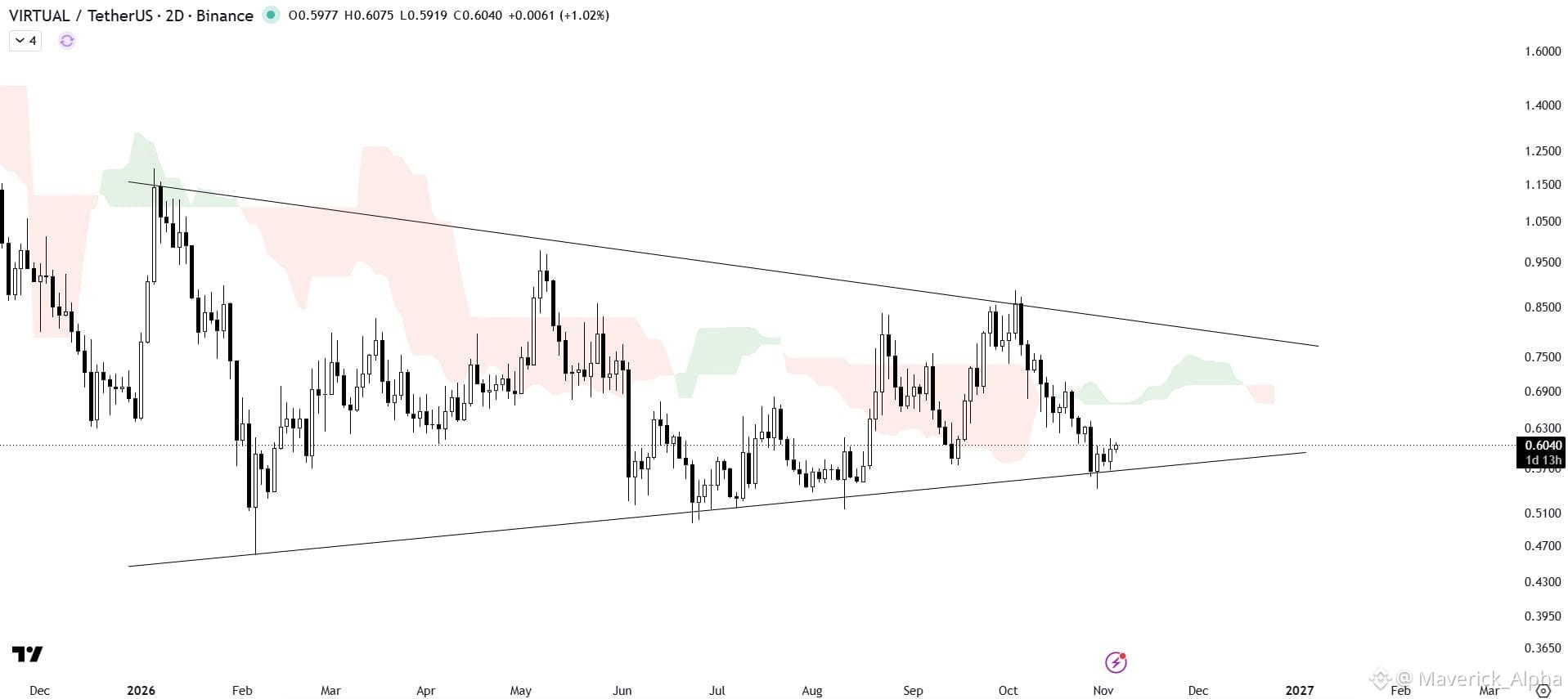
🚀 $VIRTUAL Explosive Rally Potential!
Entry Zone: $0.5850 – $0.5980
Bullish Above: $0.6100
🎯 TP1: $0.6280
🚀 TP2: $0.6620
💹 TP3: $0.7100
🛑 SL: $0.5580
#VIRTUAL $VIRTUAL
{future}(VIRTUALUSDT)
🚀 $VIRTUAL Explosive Rally Potential!
Entry Zone: $0.5850 – $0.5980
Bullish Above: $0.6100
🎯 TP1: $0.6280
🚀 TP2: $0.6620
💹 TP3: $0.7100
🛑 SL: $0.5580
#VIRTUAL $VIRTUAL
Entry Zone: $0.5850 – $0.5980
Bullish Above: $0.6100
🎯 TP1: $0.6280
🚀 TP2: $0.6620
💹 TP3: $0.7100
🛑 SL: $0.5580
#VIRTUAL $VIRTUAL
4

·
--
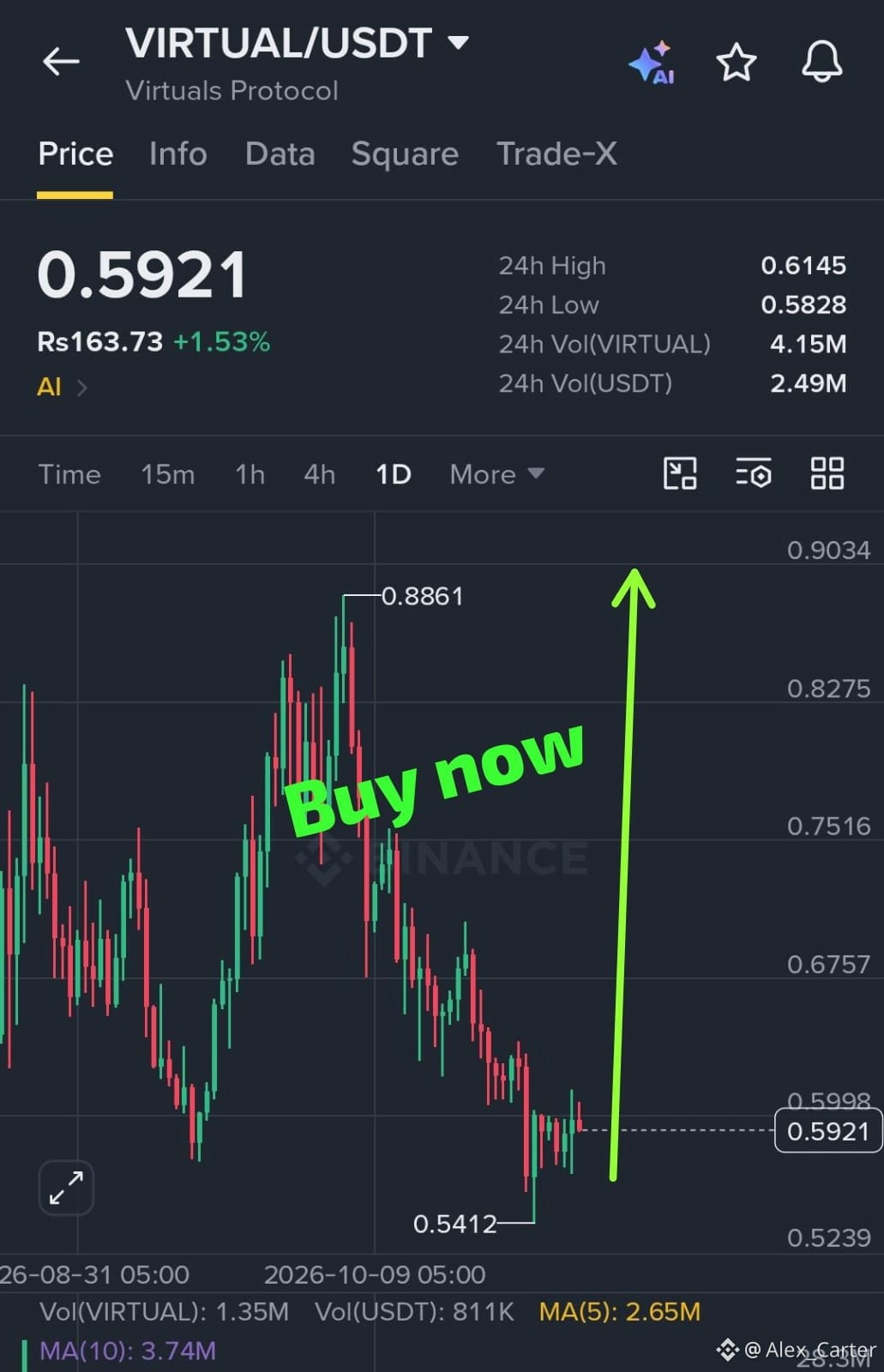
🚀 $VIRTUAL ON THE CUSP OF A POWERFUL BREAKOUT THROUGH THE ICHIMOKU CLOUD! 📈
The Ichimoku cloud now sits as a thick ceiling, acting like a shark‑guarded liquidity wall. 📊 Buyers need a clean punch through to flip the script.
A decisive surge that tears through both the cloud and the triangle resistance would light up the order flow, signaling smart‑money re‑entry and a fresh upward thrust. ⚡🦈
Momentum is stacking, but a false break could dump us back into the fog. 💬 Do you see the price carving a path above the cloud, or are you waiting for a second wave? 👇
⚠️ Not financial advice. Always manage your risk. 🛡️
🏷️ #VIRTUAL #Breakout #Ichimoku #Crypto
🚀 🔥
🚀 $VIRTUAL ON THE CUSP OF A POWERFUL BREAKOUT THROUGH THE ICHIMOKU CLOUD! 📈
The Ichimoku cloud now sits as a thick ceiling, acting like a shark‑guarded liquidity wall. 📊 Buyers need a clean punch through to flip the script.
A decisive surge that tears through both the cloud and the triangle resistance would light up the order flow, signaling smart‑money re‑entry and a fresh upward thrust. ⚡🦈
Momentum is stacking, but a false break could dump us back into the fog. 💬 Do you see the price carving a path above the cloud, or are you waiting for a second wave? 👇
⚠️ Not financial advice. Always manage your risk. 🛡️
🏷️ #VIRTUAL #Breakout #Ichimoku #Crypto
🚀 🔥
The Ichimoku cloud now sits as a thick ceiling, acting like a shark‑guarded liquidity wall. 📊 Buyers need a clean punch through to flip the script.
A decisive surge that tears through both the cloud and the triangle resistance would light up the order flow, signaling smart‑money re‑entry and a fresh upward thrust. ⚡🦈
Momentum is stacking, but a false break could dump us back into the fog. 💬 Do you see the price carving a path above the cloud, or are you waiting for a second wave? 👇
⚠️ Not financial advice. Always manage your risk. 🛡️
🏷️ #VIRTUAL #Breakout #Ichimoku #Crypto
🚀 🔥
6

·
--
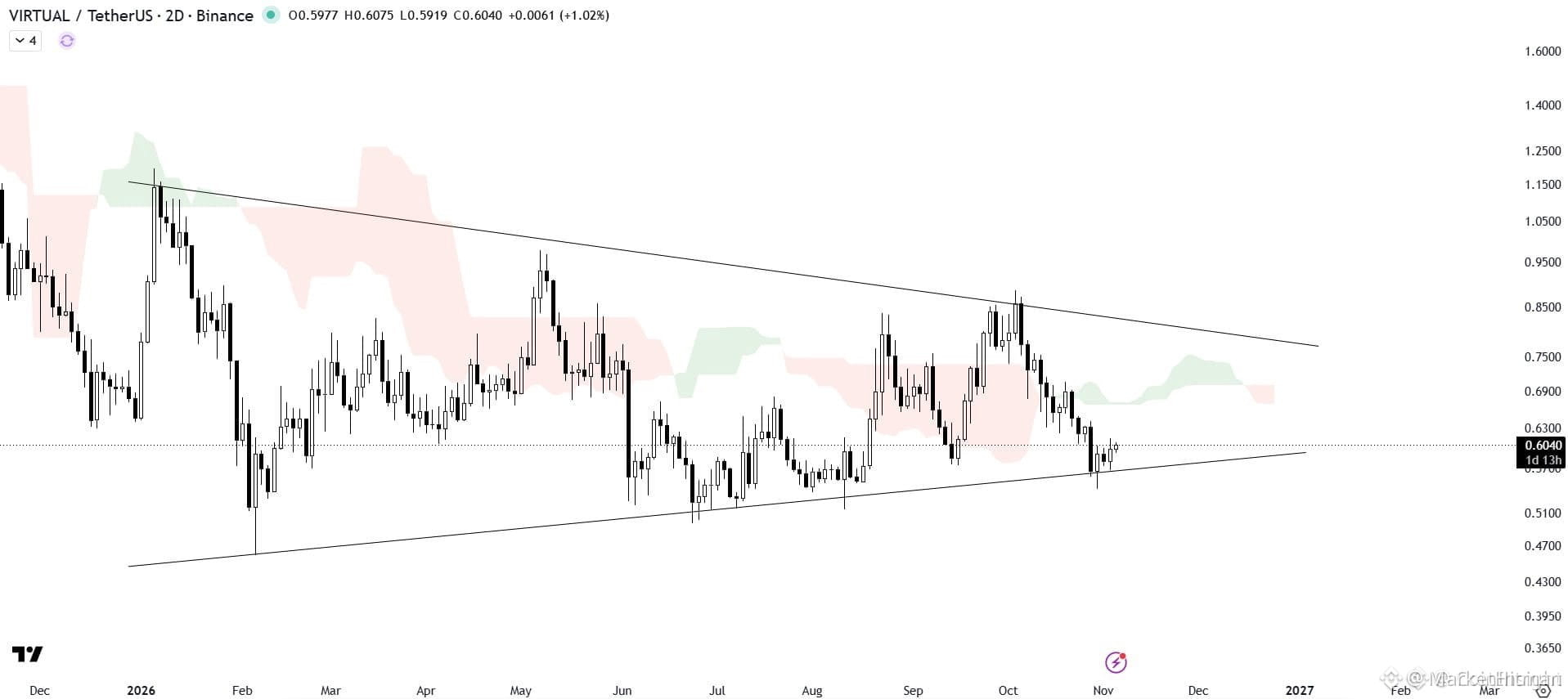
🚀 🦈 $VIRTUAL EYES ICHIMOKU CLOUD BREAKOUT – WILL IT SURGE?
The Ichimoku cloud now acts as the primary resistance ceiling. A decisive break through both the cloud and the descending triangle’s upper trendline would confirm a strong institutional thrust, targeting the liquidity pool perched above. 📊 Volume on the 4‑hour chart is expanding, and the momentum gauge flashes green, hinting at acceleration. 📌 Keep an eye on the cloud’s upper band – a clean breach could unleash the next bullish leg. 🌊
💬 Do you plan to ride the breakout or wait for tighter confirmation? 👇
⚠️ Not financial advice. Always manage your risk. 🛡️
🏷️ #VIRTUAL #Breakout #Ichimoku #SmartMoney
🔥 💎
🚀 🦈 $VIRTUAL EYES ICHIMOKU CLOUD BREAKOUT – WILL IT SURGE?
The Ichimoku cloud now acts as the primary resistance ceiling. A decisive break through both the cloud and the descending triangle’s upper trendline would confirm a strong institutional thrust, targeting the liquidity pool perched above. 📊 Volume on the 4‑hour chart is expanding, and the momentum gauge flashes green, hinting at acceleration. 📌 Keep an eye on the cloud’s upper band – a clean breach could unleash the next bullish leg. 🌊
💬 Do you plan to ride the breakout or wait for tighter confirmation? 👇
⚠️ Not financial advice. Always manage your risk. 🛡️
🏷️ #VIRTUAL #Breakout #Ichimoku #SmartMoney
🔥 💎
The Ichimoku cloud now acts as the primary resistance ceiling. A decisive break through both the cloud and the descending triangle’s upper trendline would confirm a strong institutional thrust, targeting the liquidity pool perched above. 📊 Volume on the 4‑hour chart is expanding, and the momentum gauge flashes green, hinting at acceleration. 📌 Keep an eye on the cloud’s upper band – a clean breach could unleash the next bullish leg. 🌊
💬 Do you plan to ride the breakout or wait for tighter confirmation? 👇
⚠️ Not financial advice. Always manage your risk. 🛡️
🏷️ #VIRTUAL #Breakout #Ichimoku #SmartMoney
🔥 💎
1

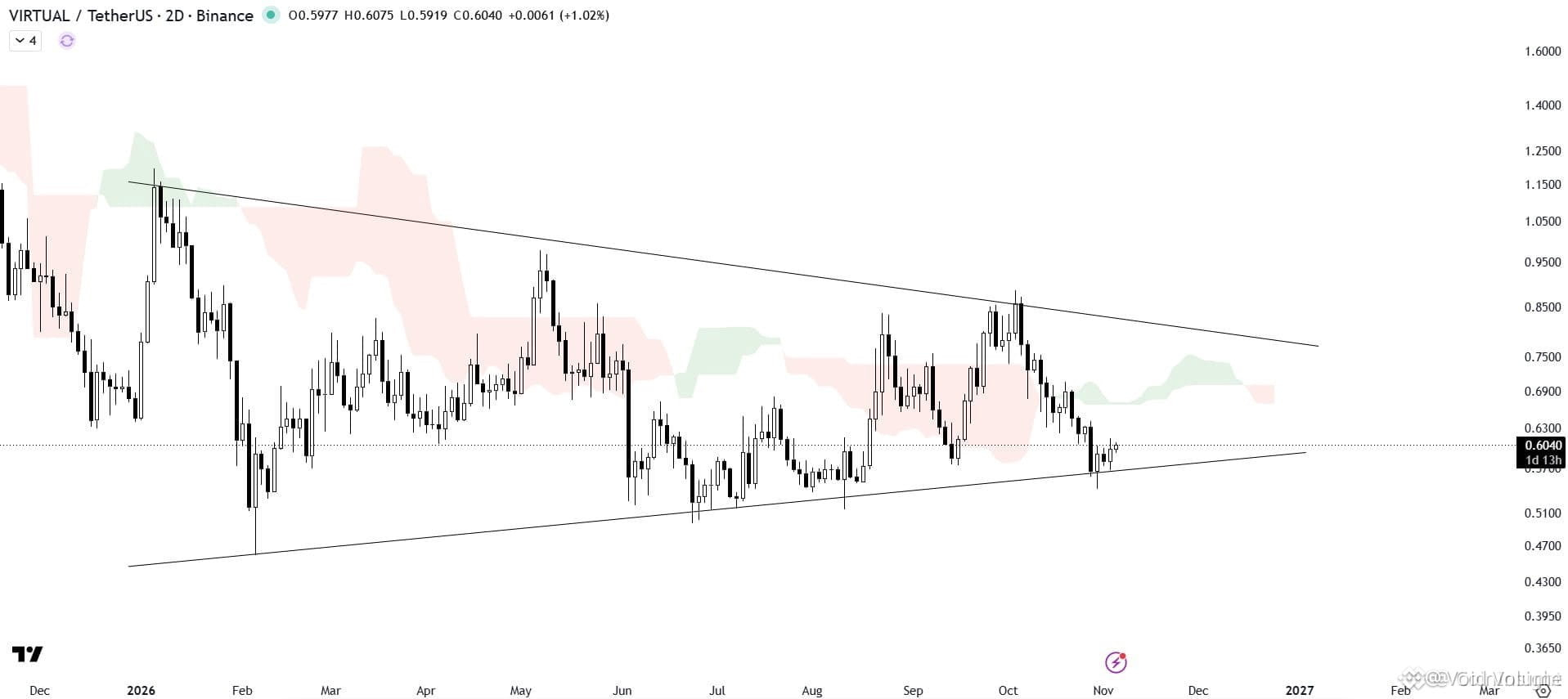
HEAVY OVERHEAD SUPPLY STIFLES RECOVERY AS $VIRTUAL FACES LIQUIDITY REJECTION 🚨 🔴
Entry: 0.749 - 0.765 ⚡
Target: 0.742, 0.716, 0.696 🎯
Stop Loss: 0.822 ⚠️
Buyers are running out of steam trying to extend this recovery, leaving a heavy wall of overhead supply holding price down. 🔻 Every push higher is meeting aggressive absorption, signaling smart money is quietly positioning for a move down.
Momentum is shifting back to the bears as buy-side interest dries up completely. 📊 This clean rejection sets up a solid opportunity to catch the swing back into lower liquidity pockets. 🤔 Are you riding the slide down with the sellers, or sitting on your hands until support gets tested? 👇
⚠️ Not financial advice. Always manage your risk. 🛡️
🏷️ #VIRTUAL #ShortSetup #Altcoins #CryptoTrading
🔻 🐻
HEAVY OVERHEAD SUPPLY STIFLES RECOVERY AS $VIRTUAL FACES LIQUIDITY REJECTION 🚨 🔴
Entry: 0.749 - 0.765 ⚡
Target: 0.742, 0.716, 0.696 🎯
Stop Loss: 0.822 ⚠️
Buyers are running out of steam trying to extend this recovery, leaving a heavy wall of overhead supply holding price down. 🔻 Every push higher is meeting aggressive absorption, signaling smart money is quietly positioning for a move down.
Momentum is shifting back to the bears as buy-side interest dries up completely. 📊 This clean rejection sets up a solid opportunity to catch the swing back into lower liquidity pockets. 🤔 Are you riding the slide down with the sellers, or sitting on your hands until support gets tested? 👇
⚠️ Not financial advice. Always manage your risk. 🛡️
🏷️ #VIRTUAL #ShortSetup #Altcoins #CryptoTrading
🔻 🐻
Entry: 0.749 - 0.765 ⚡
Target: 0.742, 0.716, 0.696 🎯
Stop Loss: 0.822 ⚠️
Buyers are running out of steam trying to extend this recovery, leaving a heavy wall of overhead supply holding price down. 🔻 Every push higher is meeting aggressive absorption, signaling smart money is quietly positioning for a move down.
Momentum is shifting back to the bears as buy-side interest dries up completely. 📊 This clean rejection sets up a solid opportunity to catch the swing back into lower liquidity pockets. 🤔 Are you riding the slide down with the sellers, or sitting on your hands until support gets tested? 👇
⚠️ Not financial advice. Always manage your risk. 🛡️
🏷️ #VIRTUAL #ShortSetup #Altcoins #CryptoTrading
🔻 🐻
6

The market priced the reopening of withdrawals at +1.30%. That reaction feels off—not because the price barely moved, but because it moved in the wrong direction.
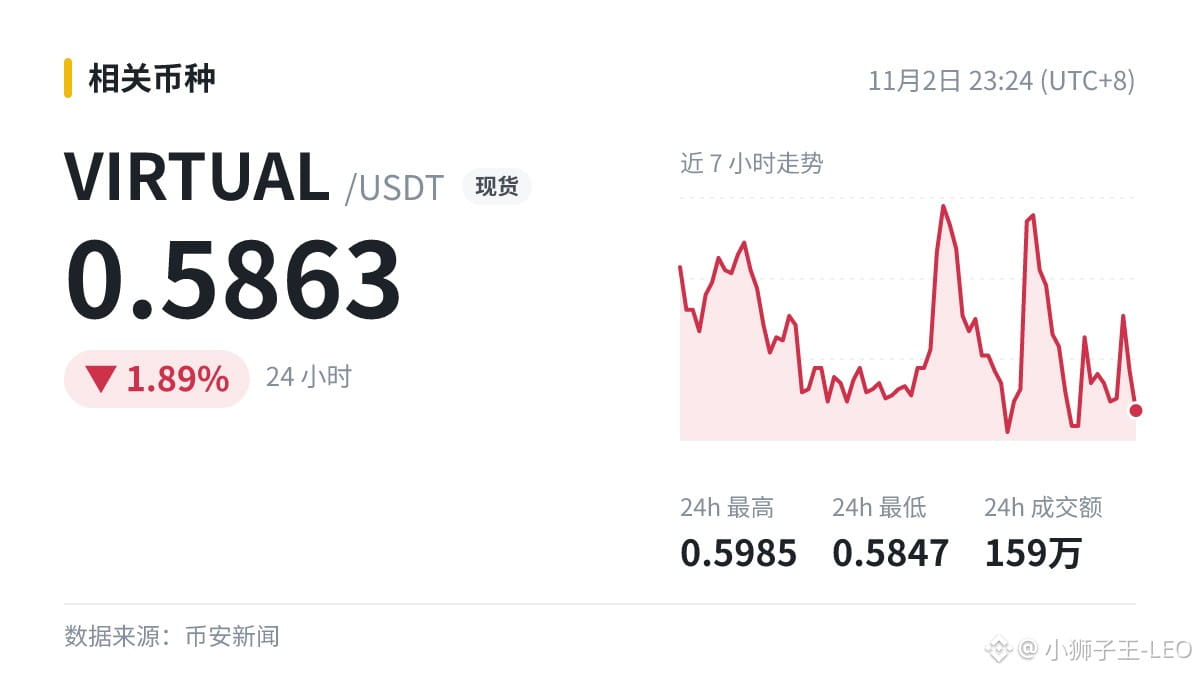
VIRTUAL is currently at 0.5927, with 24-hour trading volume of 14.8 million USDT. The funding rate is still positive at +0.0050%, settling every 4 hours, which works out to an annualized rate of about 11%. If the market really viewed “frozen tokens becoming movable” as potential selling pressure, the funding rate shouldn’t be positive, and the price shouldn’t be rising. So there are only three possibilities: there weren’t many tokens in this batch to begin with, holders have no intention of selling, or the market hasn’t reacted yet. The third possibility is the one most worth betting on.
First, let’s clarify a point that’s often confused: unlocking and becoming “movable” are two different things. The former adds new supply; the latter is a change in liquidity status. These tokens were already on the books—they were just frozen. Reopening withdrawals doesn’t create a single new coin; it simply changes their status from “unable to move” to “able to move.” These two things have completely different transmission paths to price: new supply creates certain selling pressure, while a change in liquidity status merely takes the possibility of selling pressure from zero to some unknown level. The market is currently pricing the latter at zero, and that’s the tradable mispricing.
The second thing to watch is the funding-rate structure. +0.0050%/4h looks modest, and an annualized 11% isn’t outrageous, but the key is how it fits with the rest. The price moved only 1.30% over 24 hours, while longs kept paying funding; the paying side got no price follow-through in return. That suggests the positive funding rate isn’t being driven by spot buying. It looks more like perpetuals are balancing long and short positions, or hedgers are paying. The long-account ratio is 49.4%, which is quite telling: among retail traders, longs and shorts are almost evenly split, with shorts even slightly ahead. So the positive funding rate wasn’t built up by retail FOMO, which means its value as an indicator of “who is bearing the selling pressure” should be discounted. In other words, a positive funding rate doesn’t mean longs are crowded; it only means there’s a structural payer on the perpetuals side.
The third dimension is the market’s depth. Open interest is 11.79 million USDT, compared with 24-hour trading volume of 14.8 million USDT, putting the daily turnover ratio at only around 1.25x. This structure suggests there’s little leverage sitting in the market and the order book is shallow. Shallow markets have one particular trait: it doesn’t take much volume to create a sharp move up, and likewise, it doesn’t take much to create a hole on the way down. So under this liquidity structure, “tokens becoming movable” has an amplified impact—not because the volume is large, but because there’s little depth on the other side. The same $2 million transfer is noise in a deep market, but a needle here.
Finally, consider where we are in the narrative timeline. The security incident recovery updates are now at issue 8, and the marginal information value of announcements like these diminishes over time. The market essentially priced in “recovery” with the first update; issue 8 is just a tail-end confirmation—in essence, the good news is already out. What we should really be waiting for isn’t another announcement, but actual on-chain activity afterward: have the unlocked addresses transferred coins to exchanges? Are the transfers concentrated in a few addresses or spread out? Once they reach an exchange, are they being posted for gradual sale or dumped directly into bids? These signs usually show up on block explorers half a day to a day before they appear on the candlestick chart, making them the only signals with any real lead time.
Let’s make the risk warning concrete: if the funding rate flips negative from +0.0050% over the next few days while the price doesn’t fall, that means shorts are building up and could be squeezed at any moment. If the funding rate stays positive but large deposits to exchanges appear on-chain, that’s when selling pressure is actually starting to hit. These two signals point in opposite directions, so don’t take a side prematurely.
I’ll be watching for divergence between on-chain transfers and funding rates, rather than waiting for the candlestick chart to give me an answer.
#VIRTUAL #Crypto
The market priced the reopening of withdrawals at +1.30%. That reaction feels off—not because the price barely moved, but because it moved in the wrong direction.
VIRTUAL is currently at 0.5927, with 24-hour trading volume of 14.8 million USDT. The funding rate is still positive at +0.0050%, settling every 4 hours, which works out to an annualized rate of about 11%. If the market really viewed “frozen tokens becoming movable” as potential selling pressure, the funding rate shouldn’t be positive, and the price shouldn’t be rising. So there are only three possibilities: there weren’t many tokens in this batch to begin with, holders have no intention of selling, or the market hasn’t reacted yet. The third possibility is the one most worth betting on.
First, let’s clarify a point that’s often confused: unlocking and becoming “movable” are two different things. The former adds new supply; the latter is a change in liquidity status. These tokens were already on the books—they were just frozen. Reopening withdrawals doesn’t create a single new coin; it simply changes their status from “unable to move” to “able to move.” These two things have completely different transmission paths to price: new supply creates certain selling pressure, while a change in liquidity status merely takes the possibility of selling pressure from zero to some unknown level. The market is currently pricing the latter at zero, and that’s the tradable mispricing.
The second thing to watch is the funding-rate structure. +0.0050%/4h looks modest, and an annualized 11% isn’t outrageous, but the key is how it fits with the rest. The price moved only 1.30% over 24 hours, while longs kept paying funding; the paying side got no price follow-through in return. That suggests the positive funding rate isn’t being driven by spot buying. It looks more like perpetuals are balancing long and short positions, or hedgers are paying. The long-account ratio is 49.4%, which is quite telling: among retail traders, longs and shorts are almost evenly split, with shorts even slightly ahead. So the positive funding rate wasn’t built up by retail FOMO, which means its value as an indicator of “who is bearing the selling pressure” should be discounted. In other words, a positive funding rate doesn’t mean longs are crowded; it only means there’s a structural payer on the perpetuals side.
The third dimension is the market’s depth. Open interest is 11.79 million USDT, compared with 24-hour trading volume of 14.8 million USDT, putting the daily turnover ratio at only around 1.25x. This structure suggests there’s little leverage sitting in the market and the order book is shallow. Shallow markets have one particular trait: it doesn’t take much volume to create a sharp move up, and likewise, it doesn’t take much to create a hole on the way down. So under this liquidity structure, “tokens becoming movable” has an amplified impact—not because the volume is large, but because there’s little depth on the other side. The same $2 million transfer is noise in a deep market, but a needle here.
Finally, consider where we are in the narrative timeline. The security incident recovery updates are now at issue 8, and the marginal information value of announcements like these diminishes over time. The market essentially priced in “recovery” with the first update; issue 8 is just a tail-end confirmation—in essence, the good news is already out. What we should really be waiting for isn’t another announcement, but actual on-chain activity afterward: have the unlocked addresses transferred coins to exchanges? Are the transfers concentrated in a few addresses or spread out? Once they reach an exchange, are they being posted for gradual sale or dumped directly into bids? These signs usually show up on block explorers half a day to a day before they appear on the candlestick chart, making them the only signals with any real lead time.
Let’s make the risk warning concrete: if the funding rate flips negative from +0.0050% over the next few days while the price doesn’t fall, that means shorts are building up and could be squeezed at any moment. If the funding rate stays positive but large deposits to exchanges appear on-chain, that’s when selling pressure is actually starting to hit. These two signals point in opposite directions, so don’t take a side prematurely.
I’ll be watching for divergence between on-chain transfers and funding rates, rather than waiting for the candlestick chart to give me an answer.
#VIRTUAL #Crypto
VIRTUAL is currently at 0.5927, with 24-hour trading volume of 14.8 million USDT. The funding rate is still positive at +0.0050%, settling every 4 hours, which works out to an annualized rate of about 11%. If the market really viewed “frozen tokens becoming movable” as potential selling pressure, the funding rate shouldn’t be positive, and the price shouldn’t be rising. So there are only three possibilities: there weren’t many tokens in this batch to begin with, holders have no intention of selling, or the market hasn’t reacted yet. The third possibility is the one most worth betting on.
First, let’s clarify a point that’s often confused: unlocking and becoming “movable” are two different things. The former adds new supply; the latter is a change in liquidity status. These tokens were already on the books—they were just frozen. Reopening withdrawals doesn’t create a single new coin; it simply changes their status from “unable to move” to “able to move.” These two things have completely different transmission paths to price: new supply creates certain selling pressure, while a change in liquidity status merely takes the possibility of selling pressure from zero to some unknown level. The market is currently pricing the latter at zero, and that’s the tradable mispricing.
The second thing to watch is the funding-rate structure. +0.0050%/4h looks modest, and an annualized 11% isn’t outrageous, but the key is how it fits with the rest. The price moved only 1.30% over 24 hours, while longs kept paying funding; the paying side got no price follow-through in return. That suggests the positive funding rate isn’t being driven by spot buying. It looks more like perpetuals are balancing long and short positions, or hedgers are paying. The long-account ratio is 49.4%, which is quite telling: among retail traders, longs and shorts are almost evenly split, with shorts even slightly ahead. So the positive funding rate wasn’t built up by retail FOMO, which means its value as an indicator of “who is bearing the selling pressure” should be discounted. In other words, a positive funding rate doesn’t mean longs are crowded; it only means there’s a structural payer on the perpetuals side.
The third dimension is the market’s depth. Open interest is 11.79 million USDT, compared with 24-hour trading volume of 14.8 million USDT, putting the daily turnover ratio at only around 1.25x. This structure suggests there’s little leverage sitting in the market and the order book is shallow. Shallow markets have one particular trait: it doesn’t take much volume to create a sharp move up, and likewise, it doesn’t take much to create a hole on the way down. So under this liquidity structure, “tokens becoming movable” has an amplified impact—not because the volume is large, but because there’s little depth on the other side. The same $2 million transfer is noise in a deep market, but a needle here.
Finally, consider where we are in the narrative timeline. The security incident recovery updates are now at issue 8, and the marginal information value of announcements like these diminishes over time. The market essentially priced in “recovery” with the first update; issue 8 is just a tail-end confirmation—in essence, the good news is already out. What we should really be waiting for isn’t another announcement, but actual on-chain activity afterward: have the unlocked addresses transferred coins to exchanges? Are the transfers concentrated in a few addresses or spread out? Once they reach an exchange, are they being posted for gradual sale or dumped directly into bids? These signs usually show up on block explorers half a day to a day before they appear on the candlestick chart, making them the only signals with any real lead time.
Let’s make the risk warning concrete: if the funding rate flips negative from +0.0050% over the next few days while the price doesn’t fall, that means shorts are building up and could be squeezed at any moment. If the funding rate stays positive but large deposits to exchanges appear on-chain, that’s when selling pressure is actually starting to hit. These two signals point in opposite directions, so don’t take a side prematurely.
I’ll be watching for divergence between on-chain transfers and funding rates, rather than waiting for the candlestick chart to give me an answer.
#VIRTUAL #Crypto
5

·
--
🚨 VIRTUAL ($VIRTUAL): THE CALM BEFORE THE NEXT BIG MOVE? 👀🔥
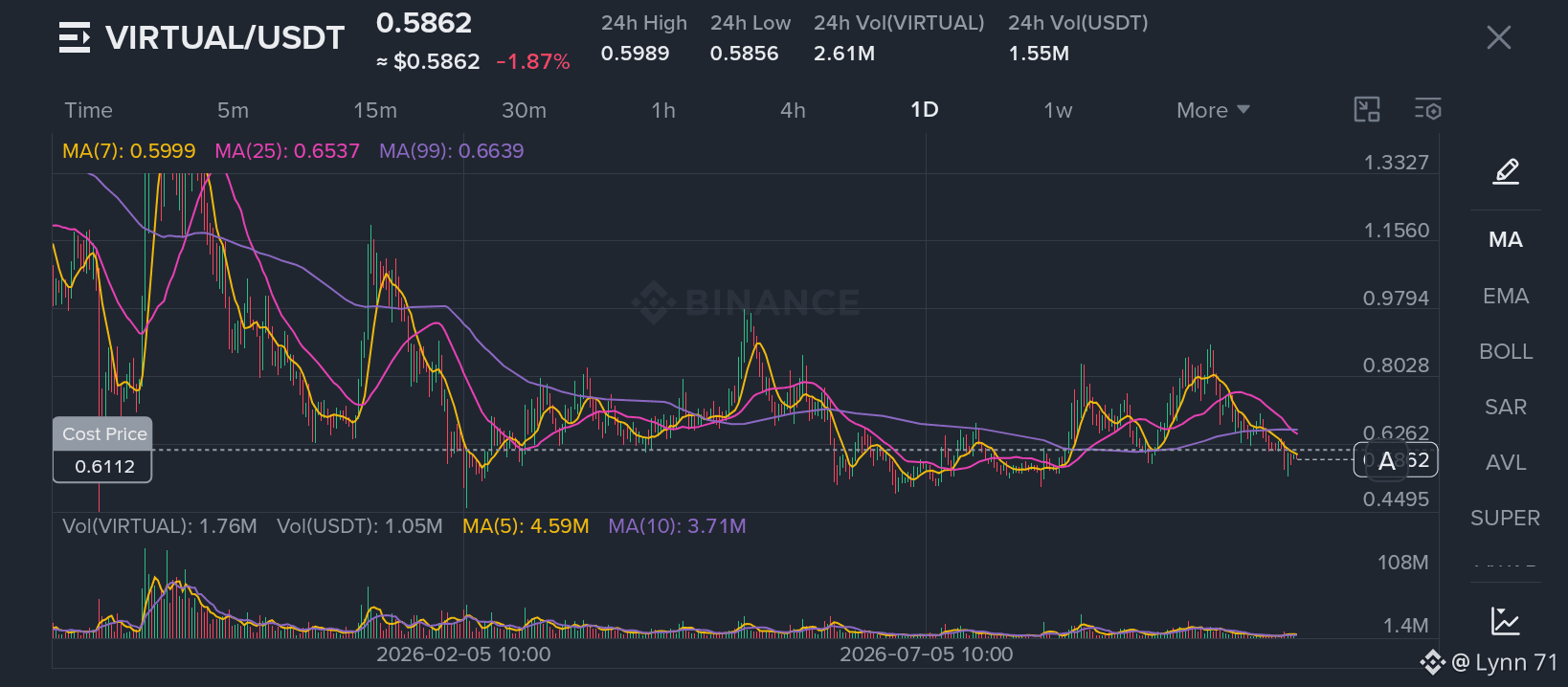
VIRTUAL is trading around $0.586, down 1.87%, but the daily chart is showing something worth watching!
📉 Price is currently below:
- MA(7): $0.5999
- MA(25): $0.6537
- MA(99): $0.6639
🔍 Key levels to watch:
- Support: $0.585 – $0.58
- Resistance: $0.60
- Major resistance: $0.626 – $0.66
🐂 Bulls need to reclaim $0.60 and build momentum for a potential recovery.
🐻 Bears could take control if support breaks, opening the door to further downside.
THE BIG QUESTION: Is VIRTUAL preparing for a powerful comeback, or is another leg down coming?
🔥 BULLISH 🐂 or BEARISH 🐻?
#VIRTUAL $VIRTUAL
{spot}(VIRTUALUSDT)
🚨 VIRTUAL ($VIRTUAL ): THE CALM BEFORE THE NEXT BIG MOVE? 👀🔥
VIRTUAL is trading around $0.586, down 1.87%, but the daily chart is showing something worth watching!
📉 Price is currently below:
- MA(7): $0.5999
- MA(25): $0.6537
- MA(99): $0.6639
🔍 Key levels to watch:
- Support: $0.585 – $0.58
- Resistance: $0.60
- Major resistance: $0.626 – $0.66
🐂 Bulls need to reclaim $0.60 and build momentum for a potential recovery.
🐻 Bears could take control if support breaks, opening the door to further downside.
THE BIG QUESTION: Is VIRTUAL preparing for a powerful comeback, or is another leg down coming?
🔥 BULLISH 🐂 or BEARISH 🐻?
#VIRTUAL $VIRTUAL
VIRTUAL is trading around $0.586, down 1.87%, but the daily chart is showing something worth watching!
📉 Price is currently below:
- MA(7): $0.5999
- MA(25): $0.6537
- MA(99): $0.6639
🔍 Key levels to watch:
- Support: $0.585 – $0.58
- Resistance: $0.60
- Major resistance: $0.626 – $0.66
🐂 Bulls need to reclaim $0.60 and build momentum for a potential recovery.
🐻 Bears could take control if support breaks, opening the door to further downside.
THE BIG QUESTION: Is VIRTUAL preparing for a powerful comeback, or is another leg down coming?
🔥 BULLISH 🐂 or BEARISH 🐻?
#VIRTUAL $VIRTUAL
248

·
--
$VIRTUAL - The news everyone ignored 👀
Price now: $0.602
+5.21% in 24 hours
Low: $0.568 / High: $0.6145
And the reason isn’t speculation... it’s fundamental:
✅ Virtuals went LIVE on the Arc network
Any AI agent can now launch on Arc through Virtuals
And getting started begins with buying VIRTUAL first = direct demand for the token
✅ Volume rose from $62M to $78M — a move backed by real liquidity
✅ Small whales have started accumulating at a $366M–$370M market cap
✅ Still down 88% from its $5.07 peak — which means it’s still near the bottom
Why is VIRTUAL better than RUNE and ZRO right now?
RUNE: Shot up 15% due to laundering money stolen by the Binance hacker through THORChain — an unsustainable and dangerous move
ZRO: Shot up 15.9% from $1.68 to $1.947, and has already cooled off — chasing it now = a trap
VIRTUAL: Up only 5%, on fundamental news, and it hasn’t taken off yet
Levels:
Support: $0.568, then $0.52
Resistance: $0.63, then $0.66
Holding above $0.602 = target of $0.63
I don’t buy what’s already taken off; I buy what’s just starting to fly.
Do you think VIRTUAL will return to $1 with Arc? 👇
#VIRTUAL #Mohoagd $VIRTUAL $RUNE #Aİ #ARC #Binance
$VIRTUAL - The news everyone ignored 👀
Price now: $0.602
+5.21% in 24 hours
Low: $0.568 / High: $0.6145
And the reason isn’t speculation... it’s fundamental:
✅ Virtuals went LIVE on the Arc network
Any AI agent can now launch on Arc through Virtuals
And getting started begins with buying VIRTUAL first = direct demand for the token
✅ Volume rose from $62M to $78M — a move backed by real liquidity
✅ Small whales have started accumulating at a $366M–$370M market cap
✅ Still down 88% from its $5.07 peak — which means it’s still near the bottom
Why is VIRTUAL better than RUNE and ZRO right now?
RUNE: Shot up 15% due to laundering money stolen by the Binance hacker through THORChain — an unsustainable and dangerous move
ZRO: Shot up 15.9% from $1.68 to $1.947, and has already cooled off — chasing it now = a trap
VIRTUAL: Up only 5%, on fundamental news, and it hasn’t taken off yet
Levels:
Support: $0.568, then $0.52
Resistance: $0.63, then $0.66
Holding above $0.602 = target of $0.63
I don’t buy what’s already taken off; I buy what’s just starting to fly.
Do you think VIRTUAL will return to $1 with Arc? 👇
#VIRTUAL #Mohoagd $VIRTUAL $RUNE #Aİ #ARC #Binance
Price now: $0.602
+5.21% in 24 hours
Low: $0.568 / High: $0.6145
And the reason isn’t speculation... it’s fundamental:
✅ Virtuals went LIVE on the Arc network
Any AI agent can now launch on Arc through Virtuals
And getting started begins with buying VIRTUAL first = direct demand for the token
✅ Volume rose from $62M to $78M — a move backed by real liquidity
✅ Small whales have started accumulating at a $366M–$370M market cap
✅ Still down 88% from its $5.07 peak — which means it’s still near the bottom
Why is VIRTUAL better than RUNE and ZRO right now?
RUNE: Shot up 15% due to laundering money stolen by the Binance hacker through THORChain — an unsustainable and dangerous move
ZRO: Shot up 15.9% from $1.68 to $1.947, and has already cooled off — chasing it now = a trap
VIRTUAL: Up only 5%, on fundamental news, and it hasn’t taken off yet
Levels:
Support: $0.568, then $0.52
Resistance: $0.63, then $0.66
Holding above $0.602 = target of $0.63
I don’t buy what’s already taken off; I buy what’s just starting to fly.
Do you think VIRTUAL will return to $1 with Arc? 👇
#VIRTUAL #Mohoagd $VIRTUAL $RUNE #Aİ #ARC #Binance
216
·
--
Holding $VIRTUAL 7.9 USDT
$VIRTUAL - Is this the real bottom? 👀
Price now: $0.59
30 days ago: -32%
Down from the peak of $5.07: -88% 🔥
People sold in fear, but the project is quietly building:
✅ Launched Butler — an AI trading assistant that reads macro trends + security + on-chain data before every trade
✅ The web version of the Virtuals app entered closed beta
✅ 18,000+ AI agents built on the protocol
✅ Fixed supply of 1B — no inflation, 658M in circulation
Levels I’m watching:
Support: $0.568 / $0.52
Resistance: $0.63 / $0.66 / $0.71
I don’t buy the top; I buy the fear.
Do you think VIRTUAL will get back to $1 before the end of the year?
#VIRTUAL #Mohoagd $VIRTUAL #Aİ #Binance
$VIRTUAL - Is this the real bottom? 👀
Price now: $0.59
30 days ago: -32%
Down from the peak of $5.07: -88% 🔥
People sold in fear, but the project is quietly building:
✅ Launched Butler — an AI trading assistant that reads macro trends + security + on-chain data before every trade
✅ The web version of the Virtuals app entered closed beta
✅ 18,000+ AI agents built on the protocol
✅ Fixed supply of 1B — no inflation, 658M in circulation
Levels I’m watching:
Support: $0.568 / $0.52
Resistance: $0.63 / $0.66 / $0.71
I don’t buy the top; I buy the fear.
Do you think VIRTUAL will get back to $1 before the end of the year?
#VIRTUAL #Mohoagd $VIRTUAL #Aİ #Binance
Price now: $0.59
30 days ago: -32%
Down from the peak of $5.07: -88% 🔥
People sold in fear, but the project is quietly building:
✅ Launched Butler — an AI trading assistant that reads macro trends + security + on-chain data before every trade
✅ The web version of the Virtuals app entered closed beta
✅ 18,000+ AI agents built on the protocol
✅ Fixed supply of 1B — no inflation, 658M in circulation
Levels I’m watching:
Support: $0.568 / $0.52
Resistance: $0.63 / $0.66 / $0.71
I don’t buy the top; I buy the fear.
Do you think VIRTUAL will get back to $1 before the end of the year?
#VIRTUAL #Mohoagd $VIRTUAL #Aİ #Binance
1
186

·
--
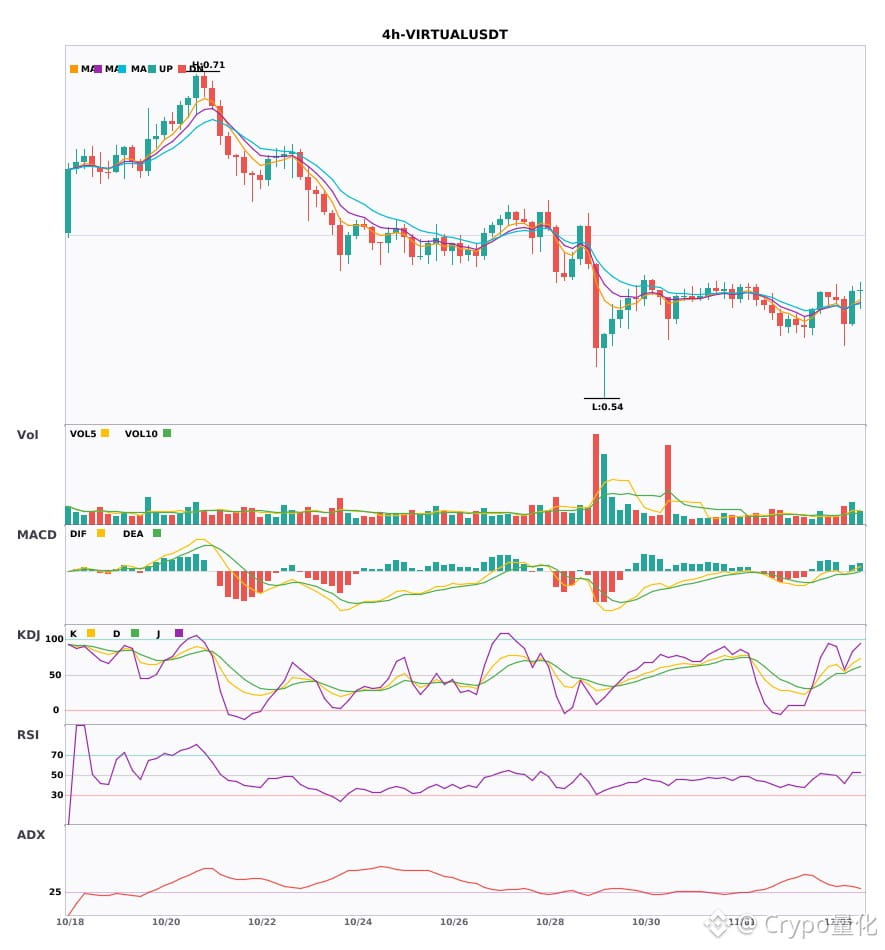
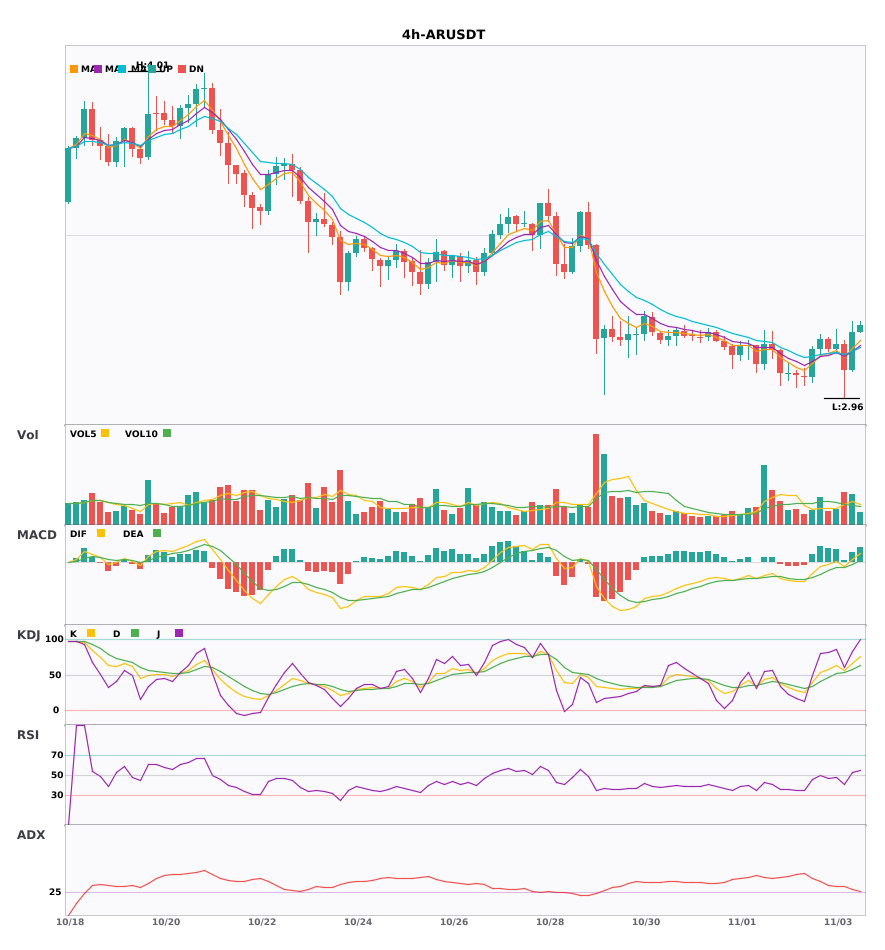
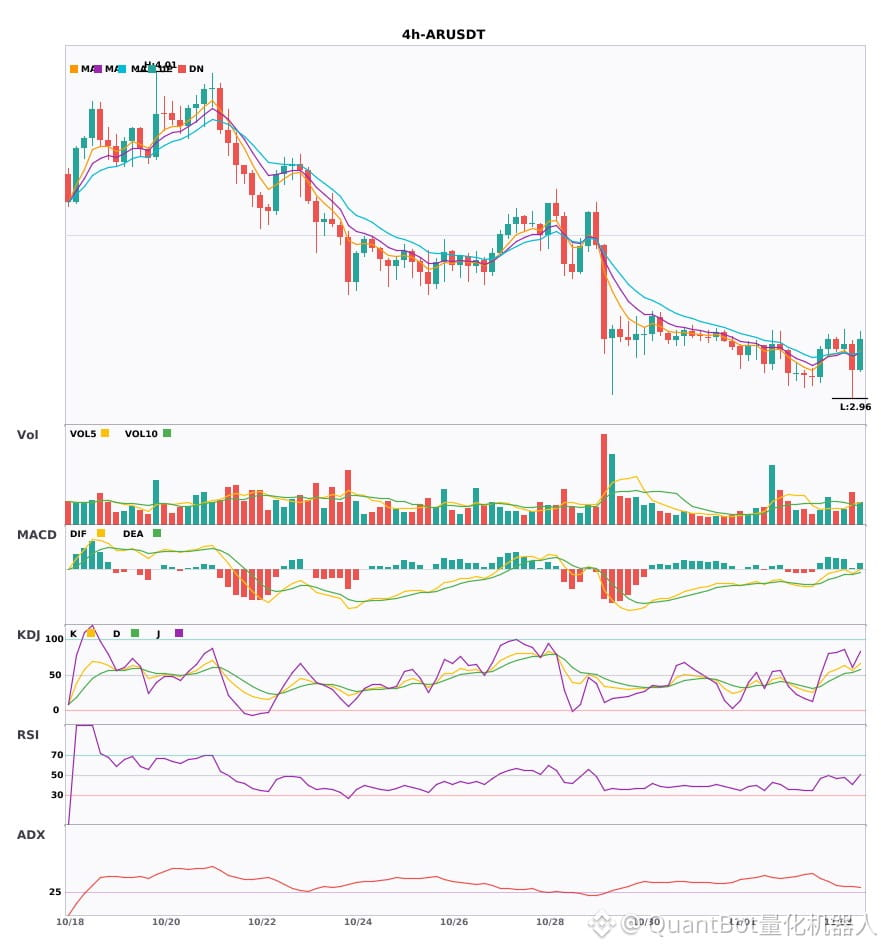
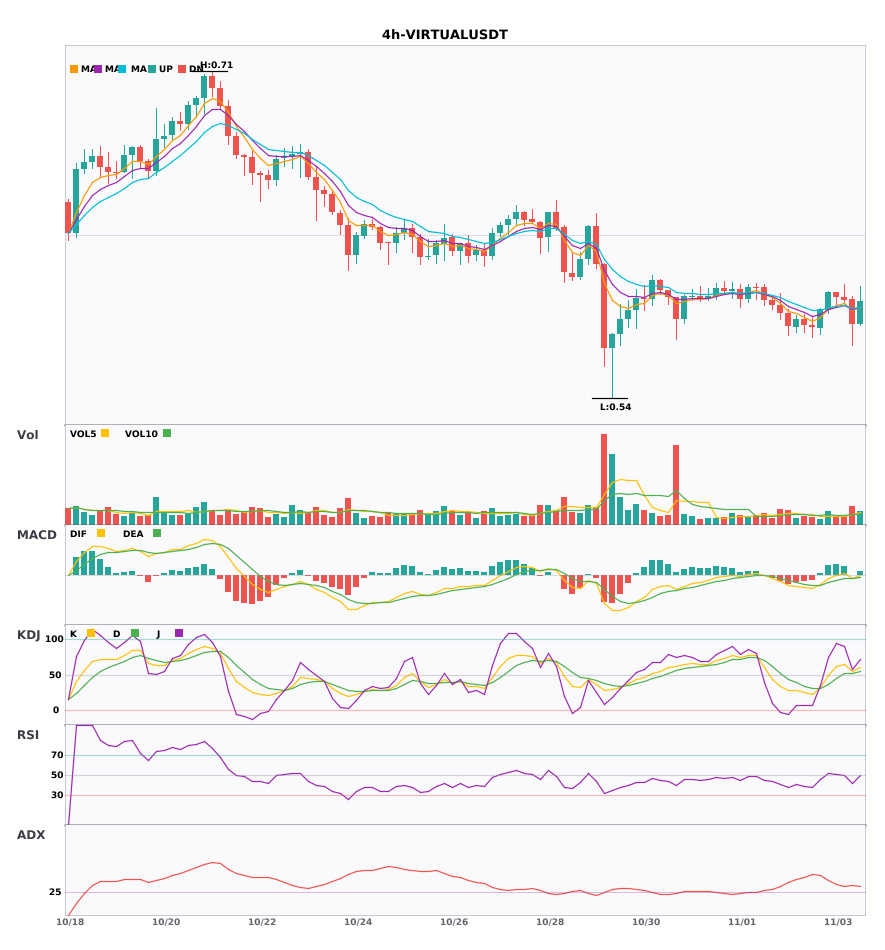
Two 4-hour bullish signals appeared simultaneously: $VIRTUAL / $AR🔥
════════════════════
🔴 $VIRTUAL 4-hour bullish signal
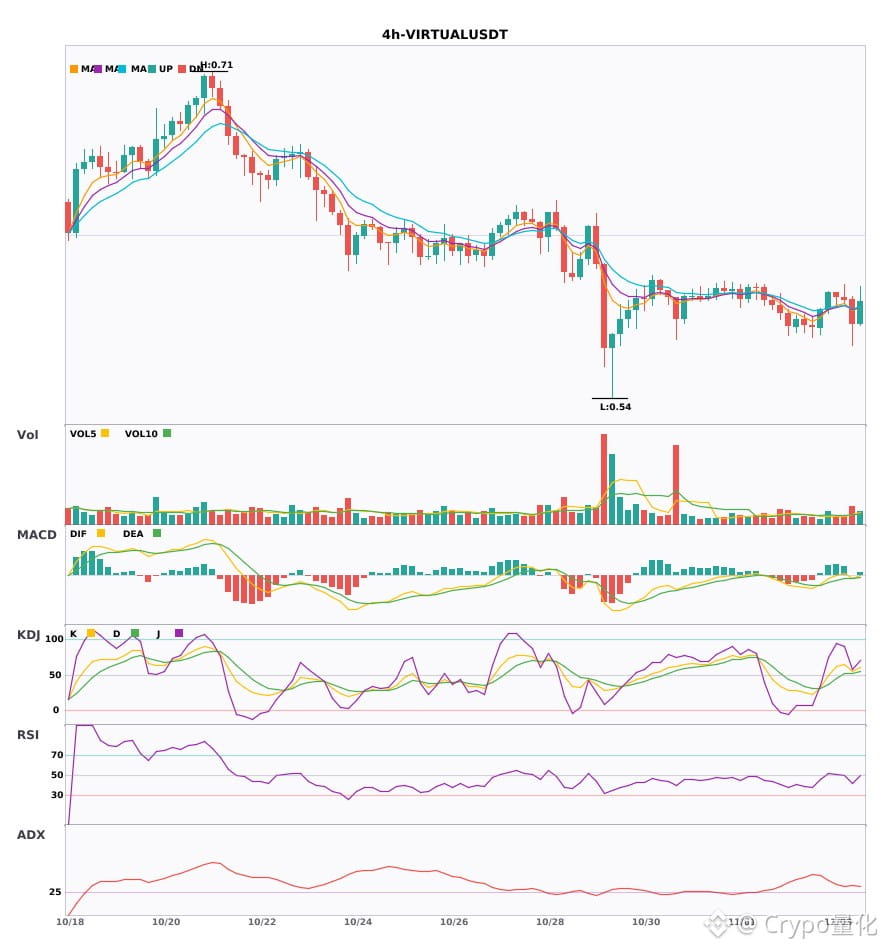
⚠️Technical analysis: ADX(34): strong trending market | MACD bullish crossover above zero, bullish momentum emerging | EMA5 crosses above EMA8, short-term trend turns bullish | KDJ showing strength, bulls in control (K: 65.8, D: 57.0) | Volume increased (2.0x)
════════════════════
🔴 $AR 4-hour bullish signal
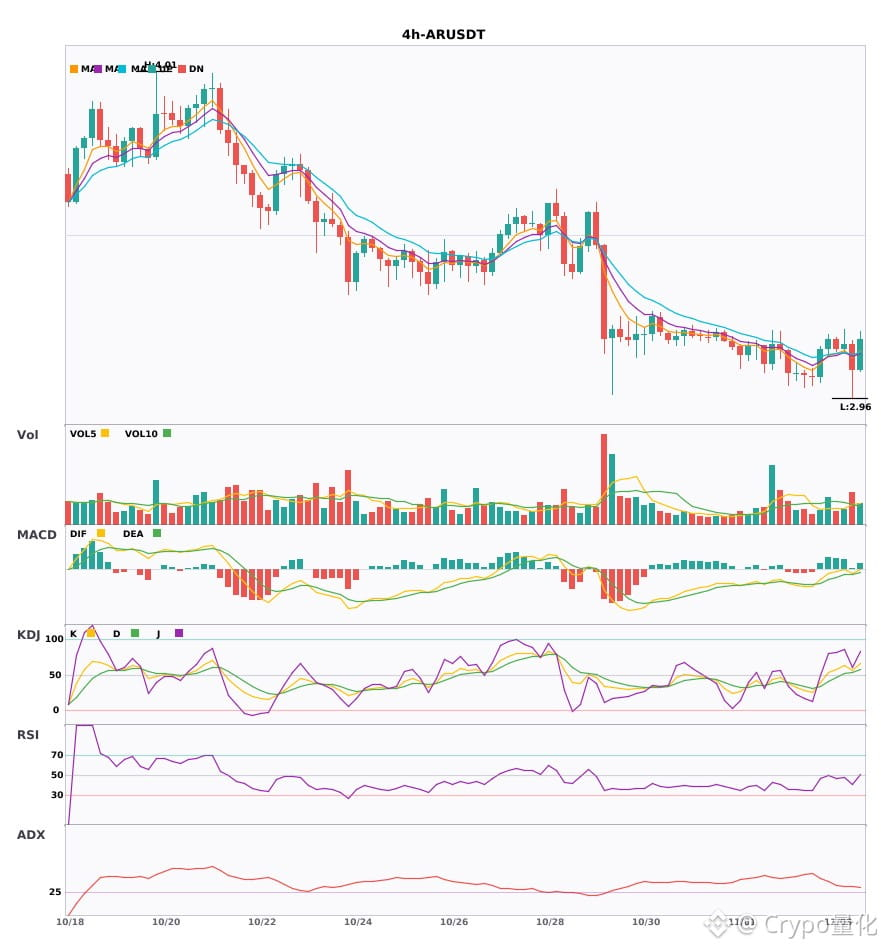
⚠️Technical analysis: ADX(29): trend is forming, potential opportunity to participate | MACD DIF breaks above the zero line, trend turns bullish | EMA5 crosses above EMA8, short-term trend turns bullish | KDJ showing strength, bulls in control (K: 66.1, D: 57.7) | Volume increased (1.6x)
════════════════════
🔔 Follow for first-hand market updates 🔔
#技术分析 #VIRTUAL #AR
📌 When trading, watch whether the candlestick patterns confirm the signal
Two 4-hour bullish signals appeared simultaneously: $VIRTUAL / $AR 🔥
════════════════════
🔴 $VIRTUAL 4-hour bullish signal
⚠️Technical analysis: ADX(34): strong trending market | MACD bullish crossover above zero, bullish momentum emerging | EMA5 crosses above EMA8, short-term trend turns bullish | KDJ showing strength, bulls in control (K: 65.8, D: 57.0) | Volume increased (2.0x)
════════════════════
🔴 $AR 4-hour bullish signal
⚠️Technical analysis: ADX(29): trend is forming, potential opportunity to participate | MACD DIF breaks above the zero line, trend turns bullish | EMA5 crosses above EMA8, short-term trend turns bullish | KDJ showing strength, bulls in control (K: 66.1, D: 57.7) | Volume increased (1.6x)
════════════════════
🔔 Follow for first-hand market updates 🔔
#技术分析 #VIRTUAL #AR
📌 When trading, watch whether the candlestick patterns confirm the signal
════════════════════
🔴 $VIRTUAL 4-hour bullish signal
⚠️Technical analysis: ADX(34): strong trending market | MACD bullish crossover above zero, bullish momentum emerging | EMA5 crosses above EMA8, short-term trend turns bullish | KDJ showing strength, bulls in control (K: 65.8, D: 57.0) | Volume increased (2.0x)
════════════════════
🔴 $AR 4-hour bullish signal
⚠️Technical analysis: ADX(29): trend is forming, potential opportunity to participate | MACD DIF breaks above the zero line, trend turns bullish | EMA5 crosses above EMA8, short-term trend turns bullish | KDJ showing strength, bulls in control (K: 66.1, D: 57.7) | Volume increased (1.6x)
════════════════════
🔔 Follow for first-hand market updates 🔔
#技术分析 #VIRTUAL #AR
📌 When trading, watch whether the candlestick patterns confirm the signal
19

·
--
Market update: “Mercado Bitcoin hacker transfers 1.92 million VIRTUAL and sells it in batches via MetaMask”
Events like this can dampen short-term sentiment, but in most past cases, the impact on prices has been temporary. The key is the project team's progress on compensation.
$VIRTUAL Let's see how it plays out. Which side are you on? Share your thoughts.
#VIRTUAL
Market update: “Mercado Bitcoin hacker transfers 1.92 million VIRTUAL and sells it in batches via MetaMask”
Events like this can dampen short-term sentiment, but in most past cases, the impact on prices has been temporary. The key is the project team's progress on compensation.
$VIRTUAL Let's see how it plays out. Which side are you on? Share your thoughts.
#VIRTUAL
Events like this can dampen short-term sentiment, but in most past cases, the impact on prices has been temporary. The key is the project team's progress on compensation.
$VIRTUAL Let's see how it plays out. Which side are you on? Share your thoughts.
#VIRTUAL
3

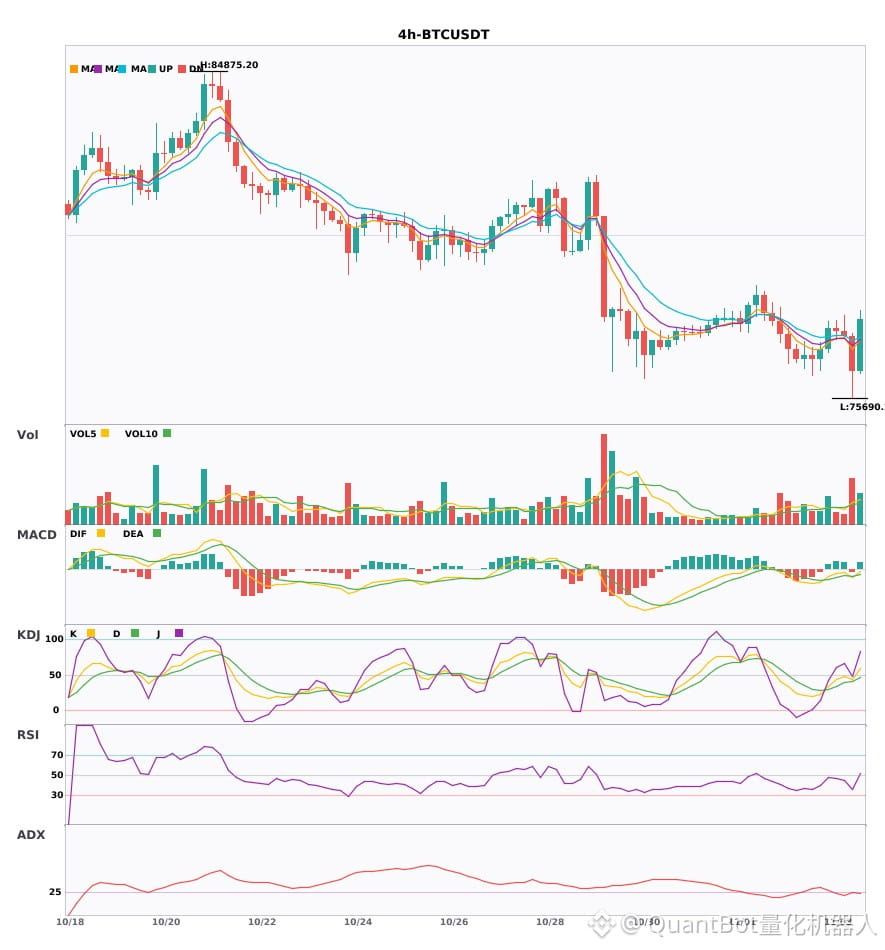
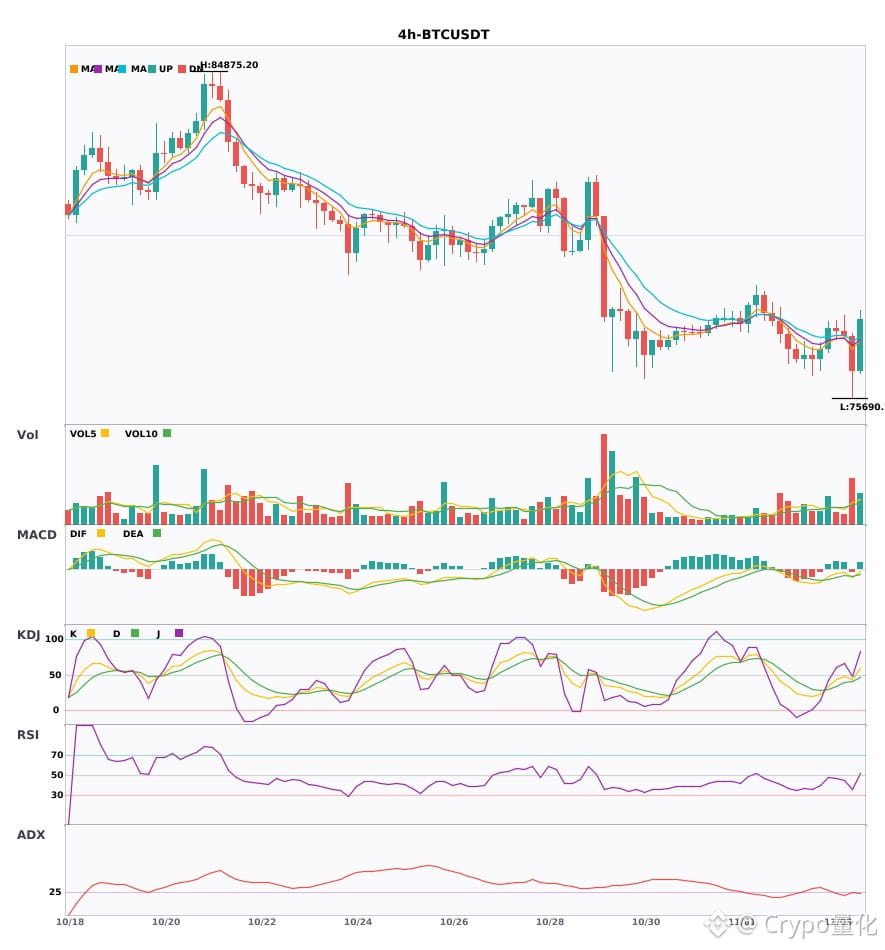
$BTC / $AR / $VIRTUAL 4-hour confluence turns bearish, with bearish signals appearing simultaneously
📉 $BTC | 4-hour bearish signal
━━━━━━━━━━━━━━━━━━
Technical analysis: ADX(27): Trend is forming; participation is possible | MACD death cross below zero, bearish momentum accelerating | EMA5 crosses below EMA8, short-term trend turns bearish | KDJ trending weakly, bears in control (K: 43.0, D: 40.3) | Volume increases (2.2x)
Price change: -1.2600%
📌 Market update: Morning Minute: Tom Lee Calls the Binance Hack Bullish for Ethereum - Meanwhile, both the BTC ETFs and ETH ETFs bleed outflows in the Binance hack aftermath, dragging down prices.
📉 $AR | 4-hour bearish signal
━━━━━━━━━━━━━━━━━━
Technical analysis: ADX(32): Clear trending market | MACD DIF falls below zero, trend turns bearish | EMA5 crosses below EMA8, short-term trend turns bearish | KDJ trending strongly, bulls in control (K: 56.0, D: 53.5) | Volume increases (1.6x)
Price change: -2.6500%
📉 $VIRTUAL | 4-hour bearish signal
━━━━━━━━━━━━━━━━━━
Technical analysis: ADX(36): Clear trending market | MACD death cross below zero, bearish momentum accelerating | EMA5 crosses below EMA8, short-term trend turns bearish | KDJ trending strongly, bulls in control (K: 54.5, D: 52.7) | Volume increases (1.7x)
Price change: -2.0800%
━━━━━━━━━━━━━━━━━━
#技术分析 #BTC #AR #VIRTUAL
📌 The above is for reference only and does not constitute investment advice
$BTC / $AR / $VIRTUAL 4-hour confluence turns bearish, with bearish signals appearing simultaneously
📉 $BTC | 4-hour bearish signal
━━━━━━━━━━━━━━━━━━
Technical analysis: ADX(27): Trend is forming; participation is possible | MACD death cross below zero, bearish momentum accelerating | EMA5 crosses below EMA8, short-term trend turns bearish | KDJ trending weakly, bears in control (K: 43.0, D: 40.3) | Volume increases (2.2x)
Price change: -1.2600%
📌 Market update: Morning Minute: Tom Lee Calls the Binance Hack Bullish for Ethereum - Meanwhile, both the BTC ETFs and ETH ETFs bleed outflows in the Binance hack aftermath, dragging down prices.
📉 $AR | 4-hour bearish signal
━━━━━━━━━━━━━━━━━━
Technical analysis: ADX(32): Clear trending market | MACD DIF falls below zero, trend turns bearish | EMA5 crosses below EMA8, short-term trend turns bearish | KDJ trending strongly, bulls in control (K: 56.0, D: 53.5) | Volume increases (1.6x)
Price change: -2.6500%
📉 $VIRTUAL | 4-hour bearish signal
━━━━━━━━━━━━━━━━━━
Technical analysis: ADX(36): Clear trending market | MACD death cross below zero, bearish momentum accelerating | EMA5 crosses below EMA8, short-term trend turns bearish | KDJ trending strongly, bulls in control (K: 54.5, D: 52.7) | Volume increases (1.7x)
Price change: -2.0800%
━━━━━━━━━━━━━━━━━━
#技术分析 #BTC #AR #VIRTUAL
📌 The above is for reference only and does not constitute investment advice
📉 $BTC | 4-hour bearish signal
━━━━━━━━━━━━━━━━━━
Technical analysis: ADX(27): Trend is forming; participation is possible | MACD death cross below zero, bearish momentum accelerating | EMA5 crosses below EMA8, short-term trend turns bearish | KDJ trending weakly, bears in control (K: 43.0, D: 40.3) | Volume increases (2.2x)
Price change: -1.2600%
📌 Market update: Morning Minute: Tom Lee Calls the Binance Hack Bullish for Ethereum - Meanwhile, both the BTC ETFs and ETH ETFs bleed outflows in the Binance hack aftermath, dragging down prices.
📉 $AR | 4-hour bearish signal
━━━━━━━━━━━━━━━━━━
Technical analysis: ADX(32): Clear trending market | MACD DIF falls below zero, trend turns bearish | EMA5 crosses below EMA8, short-term trend turns bearish | KDJ trending strongly, bulls in control (K: 56.0, D: 53.5) | Volume increases (1.6x)
Price change: -2.6500%
📉 $VIRTUAL | 4-hour bearish signal
━━━━━━━━━━━━━━━━━━
Technical analysis: ADX(36): Clear trending market | MACD death cross below zero, bearish momentum accelerating | EMA5 crosses below EMA8, short-term trend turns bearish | KDJ trending strongly, bulls in control (K: 54.5, D: 52.7) | Volume increases (1.7x)
Price change: -2.0800%
━━━━━━━━━━━━━━━━━━
#技术分析 #BTC #AR #VIRTUAL
📌 The above is for reference only and does not constitute investment advice
7

·
--
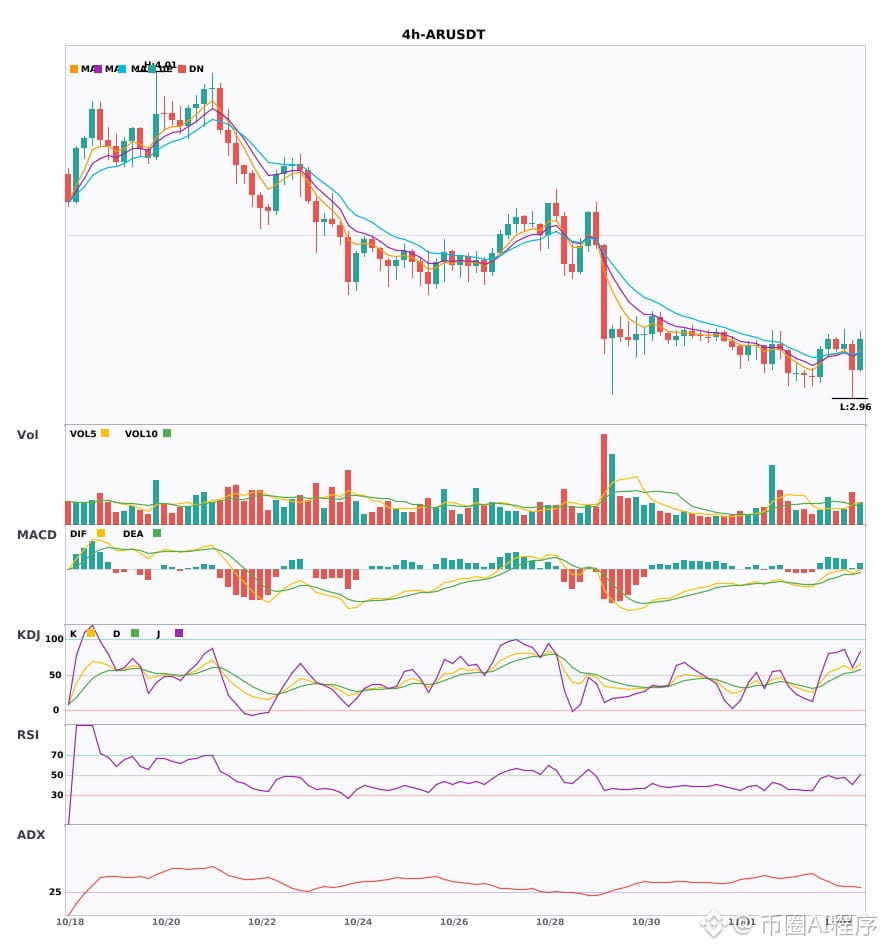
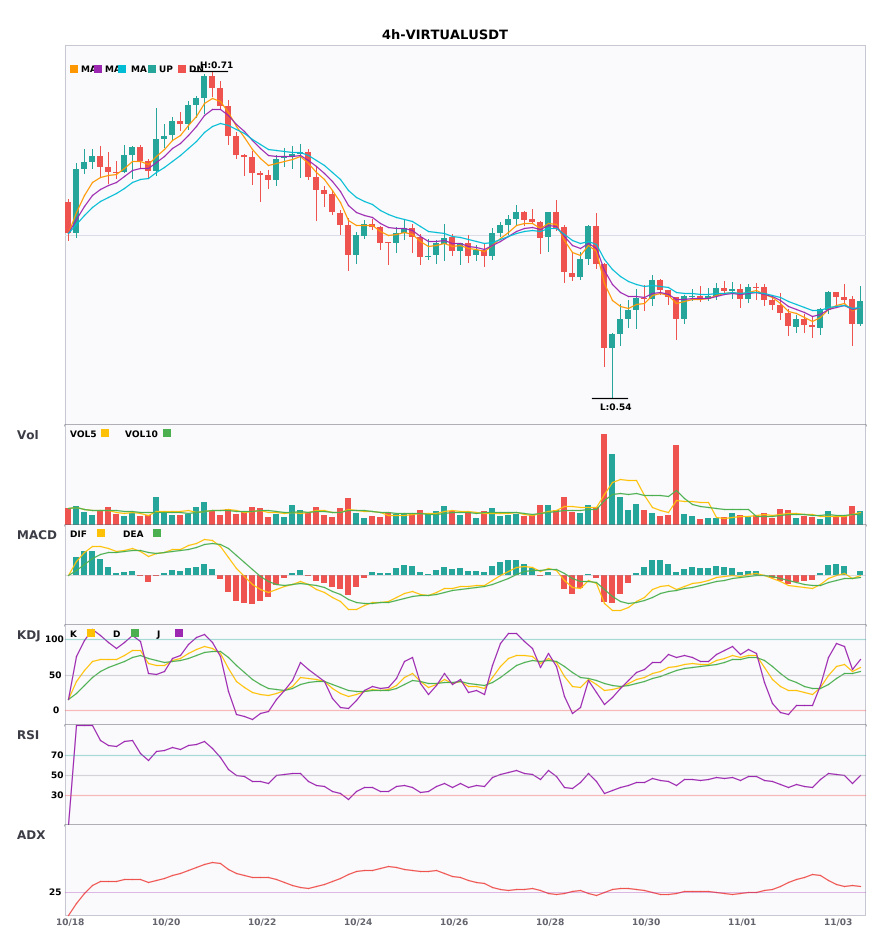
$AR / $VIRTUAL / $G 4-hour short + daily short aligned, multi-timeframe confluence turns bearish 🔥
════════════════════
🟢 $AR 4-hour short signal
⚠️Technical analysis: Daily bearish confluence confirmed | 4-hour entry: MACD DIF breaks below zero, trend turns bearish | EMA5 crosses below EMA8, short-term trend turns bearish | KDJ running strong, bulls have the upper hand (K: 56.0, D: 53.5) | Volume increases (1.6x)
════════════════════
🟢 $VIRTUAL 4-hour short signal
⚠️Technical analysis: Daily bearish confluence confirmed | 4-hour entry: MACD bearish crossover below zero, bearish momentum accelerating | EMA5 crosses below EMA8, short-term trend turns bearish | KDJ running strong, bulls have the upper hand (K: 54.5, D: 52.7) | Volume increases (1.7x)
════════════════════
🟢 $G 4-hour short signal
⚠️Technical analysis: Daily bearish confluence confirmed | 4-hour entry: MACD bearish crossover below zero, bearish momentum accelerating | EMA5 < EMA8 < EMA13, bearish alignment | KDJ in oversold territory; watch for a potential rebound (K: 12.4, D: 12.0) | Volume normal (1.2x)
════════════════════
🔔 Follow for first-hand market movement alerts 🔔
#多周期共振 #AR #VIRTUAL #G
📌 When trading, check whether the candlestick pattern confirms the signal
$AR / $VIRTUAL / $G 4-hour short + daily short aligned, multi-timeframe confluence turns bearish 🔥
════════════════════
🟢 $AR 4-hour short signal
⚠️Technical analysis: Daily bearish confluence confirmed | 4-hour entry: MACD DIF breaks below zero, trend turns bearish | EMA5 crosses below EMA8, short-term trend turns bearish | KDJ running strong, bulls have the upper hand (K: 56.0, D: 53.5) | Volume increases (1.6x)
════════════════════
🟢 $VIRTUAL 4-hour short signal
⚠️Technical analysis: Daily bearish confluence confirmed | 4-hour entry: MACD bearish crossover below zero, bearish momentum accelerating | EMA5 crosses below EMA8, short-term trend turns bearish | KDJ running strong, bulls have the upper hand (K: 54.5, D: 52.7) | Volume increases (1.7x)
════════════════════
🟢 $G 4-hour short signal
⚠️Technical analysis: Daily bearish confluence confirmed | 4-hour entry: MACD bearish crossover below zero, bearish momentum accelerating | EMA5 < EMA8 < EMA13, bearish alignment | KDJ in oversold territory; watch for a potential rebound (K: 12.4, D: 12.0) | Volume normal (1.2x)
════════════════════
🔔 Follow for first-hand market movement alerts 🔔
#多周期共振 #AR #VIRTUAL #G
📌 When trading, check whether the candlestick pattern confirms the signal
════════════════════
🟢 $AR 4-hour short signal
⚠️Technical analysis: Daily bearish confluence confirmed | 4-hour entry: MACD DIF breaks below zero, trend turns bearish | EMA5 crosses below EMA8, short-term trend turns bearish | KDJ running strong, bulls have the upper hand (K: 56.0, D: 53.5) | Volume increases (1.6x)
════════════════════
🟢 $VIRTUAL 4-hour short signal
⚠️Technical analysis: Daily bearish confluence confirmed | 4-hour entry: MACD bearish crossover below zero, bearish momentum accelerating | EMA5 crosses below EMA8, short-term trend turns bearish | KDJ running strong, bulls have the upper hand (K: 54.5, D: 52.7) | Volume increases (1.7x)
════════════════════
🟢 $G 4-hour short signal
⚠️Technical analysis: Daily bearish confluence confirmed | 4-hour entry: MACD bearish crossover below zero, bearish momentum accelerating | EMA5 < EMA8 < EMA13, bearish alignment | KDJ in oversold territory; watch for a potential rebound (K: 12.4, D: 12.0) | Volume normal (1.2x)
════════════════════
🔔 Follow for first-hand market movement alerts 🔔
#多周期共振 #AR #VIRTUAL #G
📌 When trading, check whether the candlestick pattern confirms the signal
63
·
--
3 4-hour bearish alerts: $BTC / $AR / $VIRTUAL🔥
════════════════════
🟢 $BTC 4-hour bearish signal
⚠️Technical analysis: ADX(27) Trend is forming; participation is possible | MACD bearish cross below zero; bearish momentum accelerating | EMA5 crossed below EMA8; short-term outlook turns bearish | KDJ is weak; bears have the upper hand (K: 43.0, D: 40.3) | Volume increased (2.2x)
📢Market update: Morning Minute: Tom Lee Calls the Binance Hack Bullish for Ethereum - Meanwhile, both the BTC ETFs and ETH ETFs bleed outflows in the Binance hack aftermath, dragging down prices.
════════════════════
🟢 $AR 4-hour bearish signal
⚠️Technical analysis: ADX(32) Clear trending market | MACD DIF fell below the zero line; trend turns bearish | EMA5 crossed below EMA8; short-term outlook turns bearish | KDJ is strong; bulls have the upper hand (K: 56.0, D: 53.5) | Volume increased (1.6x)
════════════════════
🟢 $VIRTUAL 4-hour bearish signal
⚠️Technical analysis: ADX(36) Clear trending market | MACD bearish cross below zero; bearish momentum accelerating | EMA5 crossed below EMA8; short-term outlook turns bearish | KDJ is strong; bulls have the upper hand (K: 54.5, D: 52.7) | Volume increased (1.7x)
════════════════════
🔔 Follow for first-hand market movement updates 🔔
#技术分析 #BTC #AR #VIRTUAL
📌 When trading, pay attention to whether the candlestick pattern meets the criteria
3 4-hour bearish alerts: $BTC / $AR / $VIRTUAL 🔥
════════════════════
🟢 $BTC 4-hour bearish signal
⚠️Technical analysis: ADX(27) Trend is forming; participation is possible | MACD bearish cross below zero; bearish momentum accelerating | EMA5 crossed below EMA8; short-term outlook turns bearish | KDJ is weak; bears have the upper hand (K: 43.0, D: 40.3) | Volume increased (2.2x)
📢Market update: Morning Minute: Tom Lee Calls the Binance Hack Bullish for Ethereum - Meanwhile, both the BTC ETFs and ETH ETFs bleed outflows in the Binance hack aftermath, dragging down prices.
════════════════════
🟢 $AR 4-hour bearish signal
⚠️Technical analysis: ADX(32) Clear trending market | MACD DIF fell below the zero line; trend turns bearish | EMA5 crossed below EMA8; short-term outlook turns bearish | KDJ is strong; bulls have the upper hand (K: 56.0, D: 53.5) | Volume increased (1.6x)
════════════════════
🟢 $VIRTUAL 4-hour bearish signal
⚠️Technical analysis: ADX(36) Clear trending market | MACD bearish cross below zero; bearish momentum accelerating | EMA5 crossed below EMA8; short-term outlook turns bearish | KDJ is strong; bulls have the upper hand (K: 54.5, D: 52.7) | Volume increased (1.7x)
════════════════════
🔔 Follow for first-hand market movement updates 🔔
#技术分析 #BTC #AR #VIRTUAL
📌 When trading, pay attention to whether the candlestick pattern meets the criteria
════════════════════
🟢 $BTC 4-hour bearish signal
⚠️Technical analysis: ADX(27) Trend is forming; participation is possible | MACD bearish cross below zero; bearish momentum accelerating | EMA5 crossed below EMA8; short-term outlook turns bearish | KDJ is weak; bears have the upper hand (K: 43.0, D: 40.3) | Volume increased (2.2x)
📢Market update: Morning Minute: Tom Lee Calls the Binance Hack Bullish for Ethereum - Meanwhile, both the BTC ETFs and ETH ETFs bleed outflows in the Binance hack aftermath, dragging down prices.
════════════════════
🟢 $AR 4-hour bearish signal
⚠️Technical analysis: ADX(32) Clear trending market | MACD DIF fell below the zero line; trend turns bearish | EMA5 crossed below EMA8; short-term outlook turns bearish | KDJ is strong; bulls have the upper hand (K: 56.0, D: 53.5) | Volume increased (1.6x)
════════════════════
🟢 $VIRTUAL 4-hour bearish signal
⚠️Technical analysis: ADX(36) Clear trending market | MACD bearish cross below zero; bearish momentum accelerating | EMA5 crossed below EMA8; short-term outlook turns bearish | KDJ is strong; bulls have the upper hand (K: 54.5, D: 52.7) | Volume increased (1.7x)
════════════════════
🔔 Follow for first-hand market movement updates 🔔
#技术分析 #BTC #AR #VIRTUAL
📌 When trading, pay attention to whether the candlestick pattern meets the criteria
10

·
--
Regulators killing $VIRTUAL hype are actually doing longs a massive favor 📉
strict rules weed out weak projects fast and leave room for real movers
traders need to watch how volume reacts near the bottom of that range
im sitting on hands right now waiting for a clear break instead of guessing
massive volume without any price bounce would prove this thesis totally wrong
Tap $VIRTUAL and check the hourly chart yourself
agree or no
#BrazilVirtualAssetLicenseDeadlineDrawsAbout40Firms #VIRTUAL
Regulators killing $VIRTUAL hype are actually doing longs a massive favor 📉
strict rules weed out weak projects fast and leave room for real movers
traders need to watch how volume reacts near the bottom of that range
im sitting on hands right now waiting for a clear break instead of guessing
massive volume without any price bounce would prove this thesis totally wrong
Tap $VIRTUAL and check the hourly chart yourself
agree or no
#BrazilVirtualAssetLicenseDeadlineDrawsAbout40Firms #VIRTUAL
strict rules weed out weak projects fast and leave room for real movers
traders need to watch how volume reacts near the bottom of that range
im sitting on hands right now waiting for a clear break instead of guessing
massive volume without any price bounce would prove this thesis totally wrong
Tap $VIRTUAL and check the hourly chart yourself
agree or no
#BrazilVirtualAssetLicenseDeadlineDrawsAbout40Firms #VIRTUAL
3

·
--
🚨 $VIRTUAL BREAKS MID-BAND AS MACD BULL FLIP SENDS VOLUME SOARING! 💥
Entry: 0.7443 ⚡
Target: 0.7890 🚀
Stop Loss: 0.7310 ⚠️
📌 A crisp MACD bullish cross just fired while heavy buying volume sliced straight through the 0.7375 mid-band resistance. 📊 Buyers are aggressively bidding the order book, creating a clear runway toward the upper expansion target.
💡 Hesitating on high-conviction momentum setups usually leaves traders buying the blow-off top later. ⚡ The risk is tightly defined against support, offering a prime window to capture this continuation leg. 💬 Are you front-running this push to 0.7890 or waiting to chase the breakout late? 👇
⚠️ Not financial advice. Always manage your risk. 🛡️
🏷️ #VIRTUAL #LongSetup #Altcoins #Crypto #Breakout
🔥 ⚡
🚨 $VIRTUAL BREAKS MID-BAND AS MACD BULL FLIP SENDS VOLUME SOARING! 💥
Entry: 0.7443 ⚡
Target: 0.7890 🚀
Stop Loss: 0.7310 ⚠️
📌 A crisp MACD bullish cross just fired while heavy buying volume sliced straight through the 0.7375 mid-band resistance. 📊 Buyers are aggressively bidding the order book, creating a clear runway toward the upper expansion target.
💡 Hesitating on high-conviction momentum setups usually leaves traders buying the blow-off top later. ⚡ The risk is tightly defined against support, offering a prime window to capture this continuation leg. 💬 Are you front-running this push to 0.7890 or waiting to chase the breakout late? 👇
⚠️ Not financial advice. Always manage your risk. 🛡️
🏷️ #VIRTUAL #LongSetup #Altcoins #Crypto #Breakout
🔥 ⚡
Entry: 0.7443 ⚡
Target: 0.7890 🚀
Stop Loss: 0.7310 ⚠️
📌 A crisp MACD bullish cross just fired while heavy buying volume sliced straight through the 0.7375 mid-band resistance. 📊 Buyers are aggressively bidding the order book, creating a clear runway toward the upper expansion target.
💡 Hesitating on high-conviction momentum setups usually leaves traders buying the blow-off top later. ⚡ The risk is tightly defined against support, offering a prime window to capture this continuation leg. 💬 Are you front-running this push to 0.7890 or waiting to chase the breakout late? 👇
⚠️ Not financial advice. Always manage your risk. 🛡️
🏷️ #VIRTUAL #LongSetup #Altcoins #Crypto #Breakout
🔥 ⚡
13
$VIRTUAL HEAVY SUPPLY ZONE AT 0.720 THREATENS LATE LONGS WITH DOWNSIDE LIQUIDATION! 🔴 🩸
Entry: 0.708 - 0.722 🔻
Target: 0.701 - 0.650 🎯
Stop Loss: 0.774 ⚠️
The heavy supply block around 0.720 is proving to be a concrete wall, yet late buyers keep feeding liquidity right into sell orders. 🐻 Smart money is stacked at these high levels, waiting for the trap to spring and flush out over-leveraged longs.
📊 Order flow indicators signal momentum shifting heavily toward sellers as resistance holds firm. 💡 A sharp rejection here opens up a clean glide path down toward the 0.650 target zone. 💬 Are you shorting this wall or betting on an unlikely breakout? 👇
⚠️ Not financial advice. Always manage your risk. 🛡️
🏷️ #VIRTUAL #ShortSetup #Bearish #Crypto #Trading
📉 🐻
$VIRTUAL HEAVY SUPPLY ZONE AT 0.720 THREATENS LATE LONGS WITH DOWNSIDE LIQUIDATION! 🔴 🩸
Entry: 0.708 - 0.722 🔻
Target: 0.701 - 0.650 🎯
Stop Loss: 0.774 ⚠️
The heavy supply block around 0.720 is proving to be a concrete wall, yet late buyers keep feeding liquidity right into sell orders. 🐻 Smart money is stacked at these high levels, waiting for the trap to spring and flush out over-leveraged longs.
📊 Order flow indicators signal momentum shifting heavily toward sellers as resistance holds firm. 💡 A sharp rejection here opens up a clean glide path down toward the 0.650 target zone. 💬 Are you shorting this wall or betting on an unlikely breakout? 👇
⚠️ Not financial advice. Always manage your risk. 🛡️
🏷️ #VIRTUAL #ShortSetup #Bearish #Crypto #Trading
📉 🐻
Entry: 0.708 - 0.722 🔻
Target: 0.701 - 0.650 🎯
Stop Loss: 0.774 ⚠️
The heavy supply block around 0.720 is proving to be a concrete wall, yet late buyers keep feeding liquidity right into sell orders. 🐻 Smart money is stacked at these high levels, waiting for the trap to spring and flush out over-leveraged longs.
📊 Order flow indicators signal momentum shifting heavily toward sellers as resistance holds firm. 💡 A sharp rejection here opens up a clean glide path down toward the 0.650 target zone. 💬 Are you shorting this wall or betting on an unlikely breakout? 👇
⚠️ Not financial advice. Always manage your risk. 🛡️
🏷️ #VIRTUAL #ShortSetup #Bearish #Crypto #Trading
📉 🐻
2

·
--
As soon as the news broke, the candlesticks moved faster than the reporters—I’d only just started reading the first line.
Here’s what happened: Virtuals released a web version of the Virtuals App for internal beta testing, with Butler built in.
$VIRTUAL , you can check whether projects in the same sector have reacted.
#VIRTUAL
As soon as the news broke, the candlesticks moved faster than the reporters—I’d only just started reading the first line.
Here’s what happened: Virtuals released a web version of the Virtuals App for internal beta testing, with Butler built in.
$VIRTUAL , you can check whether projects in the same sector have reacted.
#VIRTUAL
Here’s what happened: Virtuals released a web version of the Virtuals App for internal beta testing, with Butler built in.
$VIRTUAL , you can check whether projects in the same sector have reacted.
#VIRTUAL

·
--
“Virtuals launches a web version of the Virtuals App in beta, with Butler built in”
Here are clear answers to the four questions everyone cares about most—
Q1: Is this bullish or bearish?
A: Generally bullish, but good news is often priced in once before long.
Q2: Will it show up in the price right away?
A: Not necessarily. There’s often a lag between news and price action. First, watch to see whether the intraday highs and lows get tested repeatedly.
Q3: What should we watch next?
A: Whether other media outlets follow up with coverage.
Q4: Should I adjust my position because of this?
A: I generally don’t change my plan because of a single news item, unless the market confirms it. $VIRTUAL Current price: 0.5876, 24h: -1.64%. Keep an eye on it.
#VIRTUAL
“Virtuals launches a web version of the Virtuals App in beta, with Butler built in”
Here are clear answers to the four questions everyone cares about most—
Q1: Is this bullish or bearish?
A: Generally bullish, but good news is often priced in once before long.
Q2: Will it show up in the price right away?
A: Not necessarily. There’s often a lag between news and price action. First, watch to see whether the intraday highs and lows get tested repeatedly.
Q3: What should we watch next?
A: Whether other media outlets follow up with coverage.
Q4: Should I adjust my position because of this?
A: I generally don’t change my plan because of a single news item, unless the market confirms it. $VIRTUAL Current price: 0.5876, 24h: -1.64%. Keep an eye on it.
#VIRTUAL
Here are clear answers to the four questions everyone cares about most—
Q1: Is this bullish or bearish?
A: Generally bullish, but good news is often priced in once before long.
Q2: Will it show up in the price right away?
A: Not necessarily. There’s often a lag between news and price action. First, watch to see whether the intraday highs and lows get tested repeatedly.
Q3: What should we watch next?
A: Whether other media outlets follow up with coverage.
Q4: Should I adjust my position because of this?
A: I generally don’t change my plan because of a single news item, unless the market confirms it. $VIRTUAL Current price: 0.5876, 24h: -1.64%. Keep an eye on it.
#VIRTUAL
3

·
--
Virtuals launches the web version of the Virtuals App beta, with Butler built in—what does this mean for the market?
A bullish signal. I’d rather wait for the candlesticks to confirm before acting. I’ll compare whale wallet activity before and after the news.
Related: $VIRTUAL
#VIRTUAL
Virtuals launches the web version of the Virtuals App beta, with Butler built in—what does this mean for the market?
A bullish signal. I’d rather wait for the candlesticks to confirm before acting. I’ll compare whale wallet activity before and after the news.
Related: $VIRTUAL
#VIRTUAL
A bullish signal. I’d rather wait for the candlesticks to confirm before acting. I’ll compare whale wallet activity before and after the news.
Related: $VIRTUAL
#VIRTUAL
Log in to explore more content
Join global crypto users on Binance Square
⚡️ Get latest and useful information about crypto.
💬 Trusted by the world’s largest crypto exchange.
👍 Discover real insights from verified creators.
Email / Phone number
Trending Topics
1
#BinanceReopensWithdrawalsForMoreAssets
850,092 views
4,605 Discussing
2
#Binance98PercentReplenished
189,271 views
1,870 Discussing
3
#USStocksSlipandCryptoMarketUnderBroadPressure
13,458 views
244 Discussing
4
#StrategySTRCResumesIssuanceAfterOver170Days
23,416 views
420 Discussing
5
#ADPUSPrivateEmployersAdd86000JobsInOctober
39,595 views
571 Discussing
6
#KazakhstanReportedlyInvests$100MInCryptoFunds
2,417 views
58 Discussing
7
#SouthKoreaSeeksCryptoTaxDelayUntil2029
23,808 views
260 Discussing
8
#USMidterms-WhatAreMarketsExpecting?
638,912 views
2,945 Discussing
9
#US10YearTreasuryYieldFallsTo4.845%
32,917 views
194 Discussing
10
#ZcashExpectsNU7ToMake$16MSproutZECInaccessible
1,811 views
24 Discussing