
#theeconomist
theeconomist
102,685 views
67 Discussing
Hot
Latest

·
--
Bearish
After a long while, I’m looking at the cover of that magazine—the one with the questionable credibility.
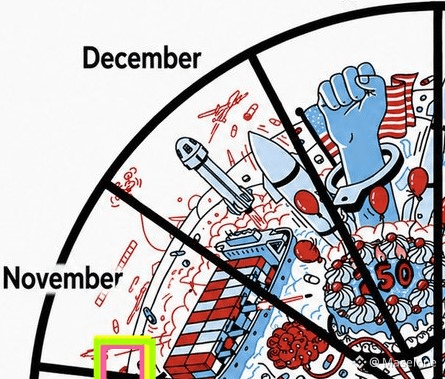
Taking a straightforward look at it: in November, a warship (Iran, perhaps?) fires upon a cake representing the 250th anniversary of the U.S. Following this, a situation unfolds involving missile launches and aerial bombardments (an escalation of the conflict between Iran and the U.S., perhaps?).
And then, there’s the sequence showing the arrest of an individual raising their right fist (🐯, perhaps?).
That’s one way to interpret it, though I’m not sure if it’s accurate or not 😅 #TheEconomist
3
7
12.4k

🇨🇳🇹🇼 China would face a real “hell” in a war over Taiwan
A war in the Taiwan Strait could turn into one of the most destructive conflicts of the 21st century. In an analysis published on September 15, The Economist assessed the enormous military, economic, and strategic risks that China would face if it tried to take Taiwan by force.
The challenge would not be only crossing the strait and defeating Taiwan’s forces. Such an operation could involve large-scale air and naval attacks, huge logistical difficulties, and the possibility of intervention by the United States and regional allies.
The economic impact would also be enormous. Taiwan sits at the center of global technology and semiconductor supply chains, while the Taiwan Strait is one of the main routes for international trade. A conflict could cause disruptions in trade, shocks to financial markets, and a global supply crisis.
The central point raised by the analysis is that even a China that is far more powerful militarily would have to pay an extraordinarily high price for a war of this kind. And the more other powers get involved, the greater the risk that the conflict would quickly go beyond the limits of the Indo-Pacific.
The Economist itself has already noted that a confrontation between China and the United States over Taiwan could have catastrophic consequences for global trade and for geopolitical stability.
🌏 Taiwan, therefore, is not just a regional issue: any war in the strait would have the potential to trigger consequences far beyond Asia.
#China #Taiwan #Geopolitics #USA #Asia #Semiconductors #GlobalEconomy #TheEconomist
2
1.1k

TheWorldAhead2027
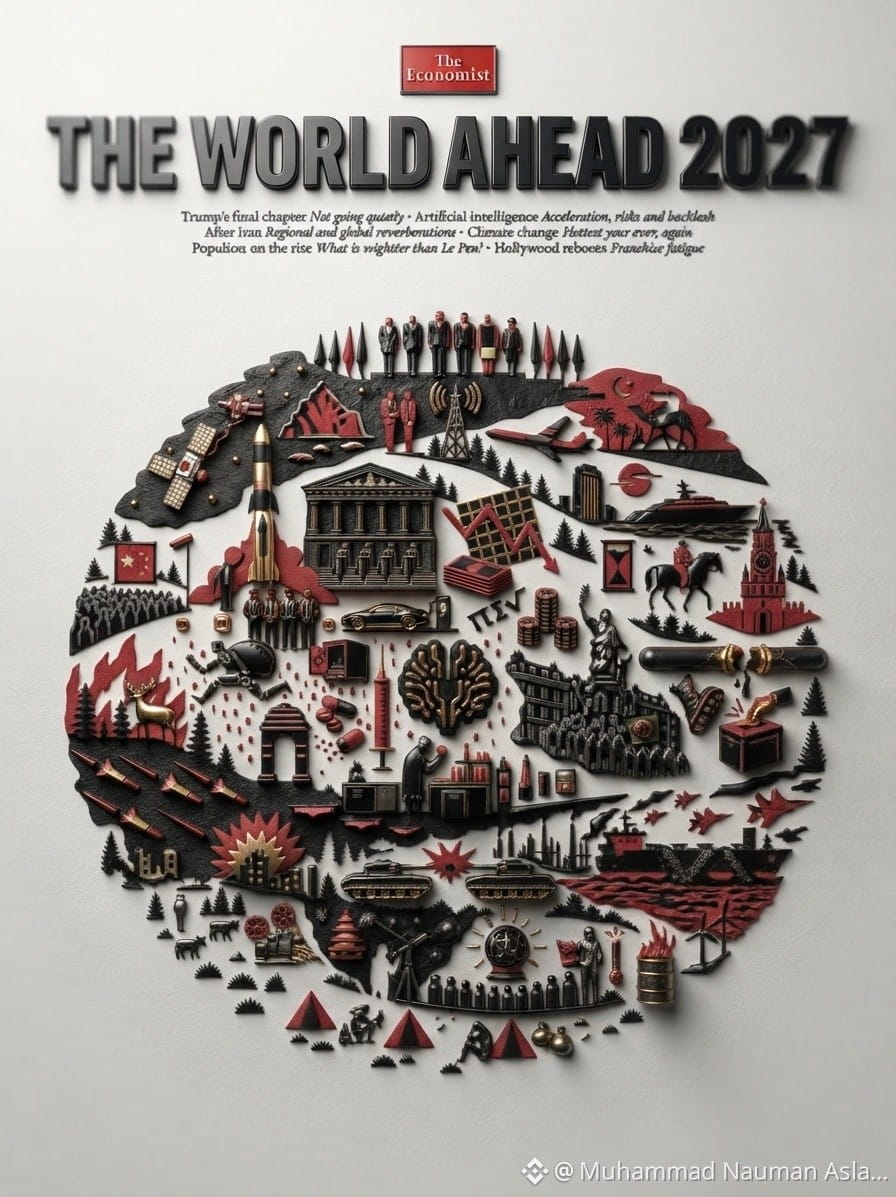
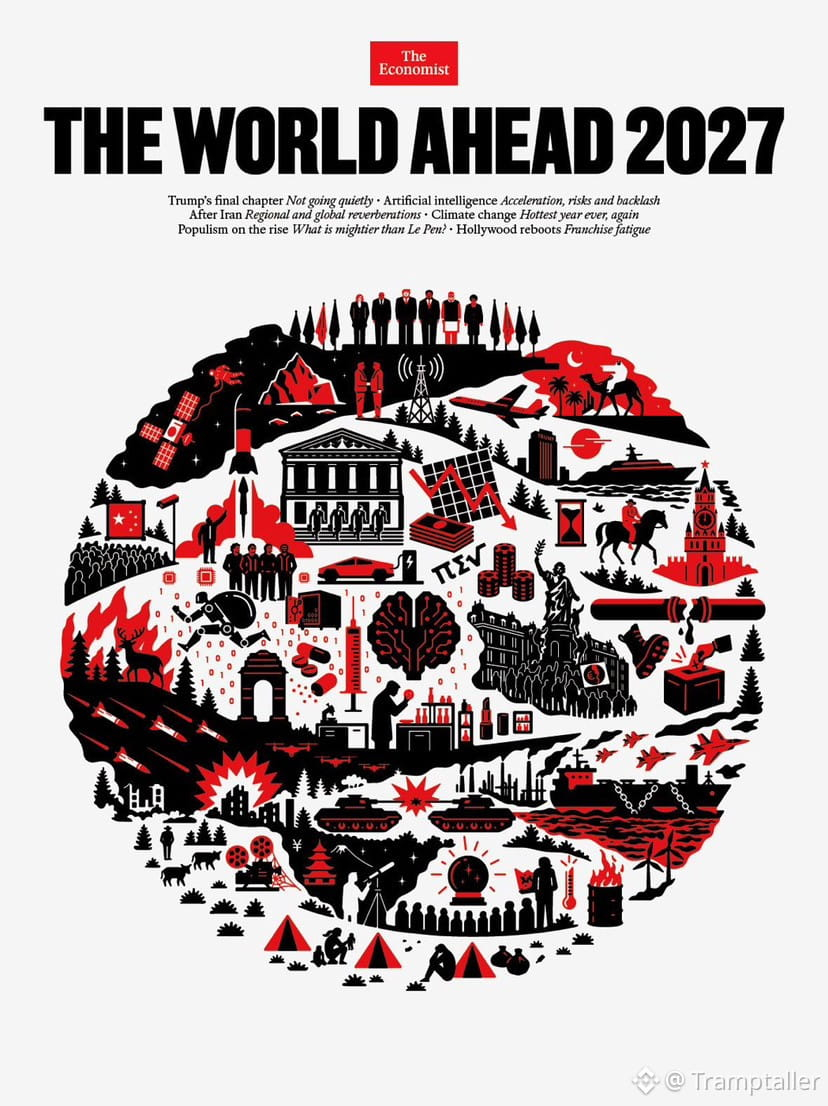
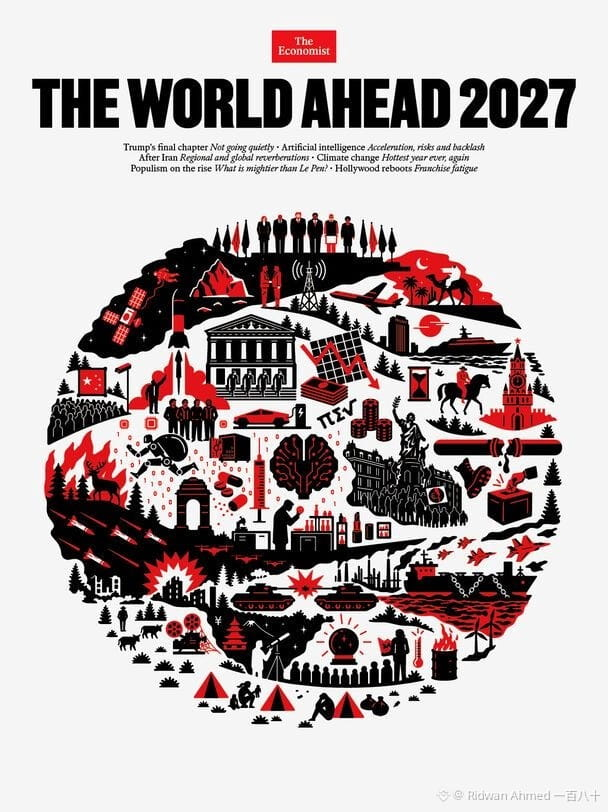
🏛️ Leaders standing together at the top point to power dynamics, shifting alliances, and the post Trump political era.
🚀Rocket, satellite, and space visuals show cheaper space launches, private space stations, and orbital tech competition.
📡Communications tower and network lines point to global connectivity, information shifts, and media trust pressures.
✈️Aircraft and shipping lanes highlight travel, trade routes, and supply chain sensitivity to global shocks.
🐫Desert and camel imagery reflects Middle East dynamics, energy routes, and regional aftershocks from Iran.
🏛️Classical building and bank columns tie into sovereign debt, fiscal strain, and institutional stability.
📉Falling grid chart and cash stacks warn of rising bond yields, debt pressure, and market liquidity stress.
⏳Hourglass and clock motifs signal ticking deadlines, market timing, and geopolitical readiness windows.
🐎Rider and Kremlin style tower point to Russian power, leadership signaling, and Eurasian geopolitical friction.
🚩Flag and crowd visuals represent mass movements, national signaling, and changing political alignment.
🤖Circuit brain, robot, and data elements show AI at the center of markets alongside backlash and opaque debt risks.
💉Syringe and medical icons reflect weight loss drugs, longevity research, and shifting consumer spending habits.
🗳️Ballot box and voting imagery highlight elections, populist waves, and political shifts across Europe and beyond.
🛢️Broken pipeline and fuel barrels signal energy chokepoints, commodity swings, and supply chain disruption.
🔥Wildfires, heat, and wind turbines point to extreme weather, El Nino risks, and clean energy adoption.
🚀Missiles, tanks, and jets reflect military buildup, conflict flashpoints, and Taiwan readiness tensions.
⛓️Cargo ship wrapped in chains points to maritime trade pressure, shipping bottlenecks, and global commerce risk.
🎬Film camera and stage visuals show entertainment shifts.
⛺Tents show human costs.
#Bitcoin #BinanceSquareFamily #TheEconomist
74

·
--
Bearish
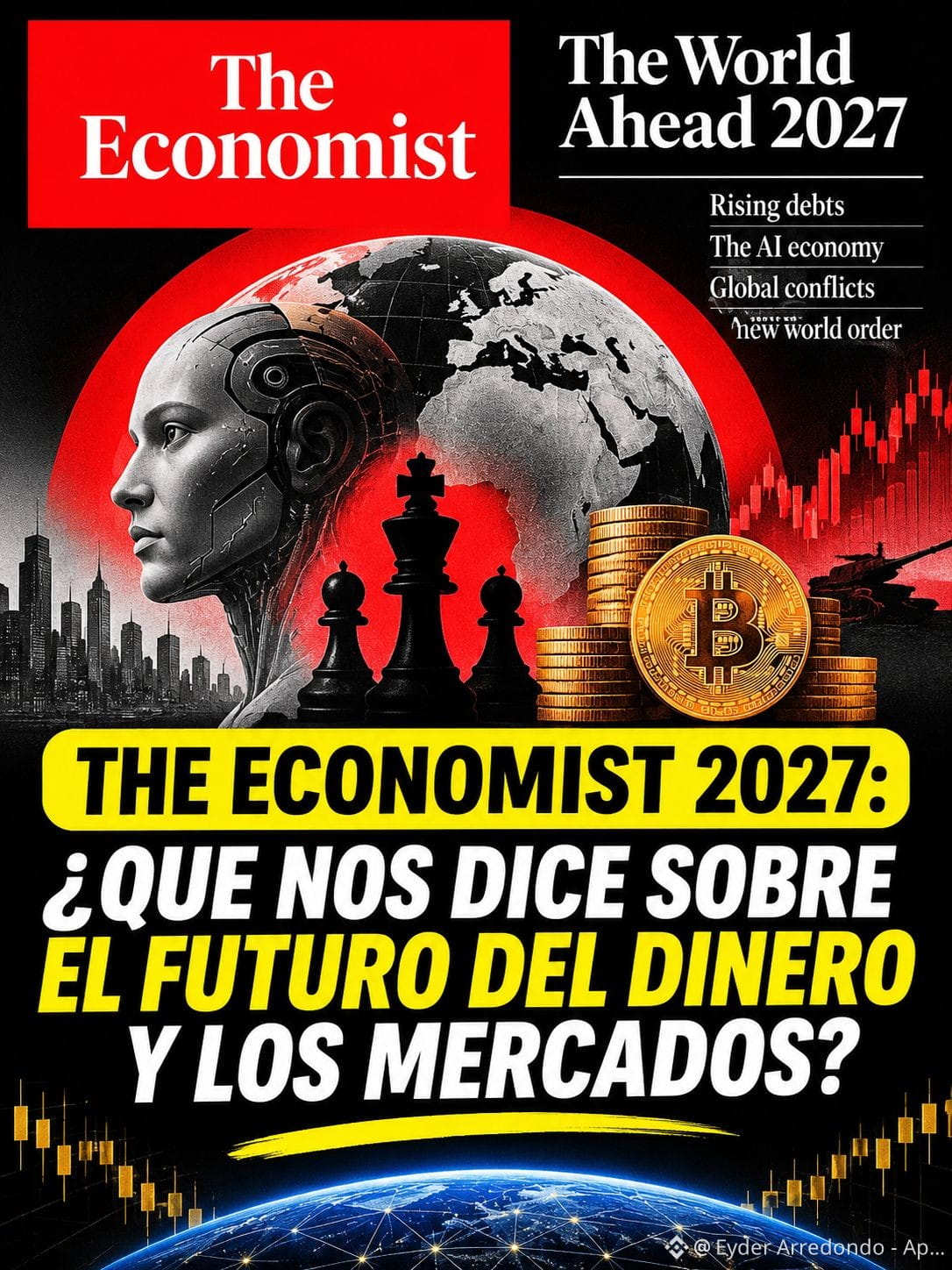
🪙 The Economist’s new cover: The World Ahead 2027 invites us to reflect on some of the major issues that could shape the coming year.
Beyond the visual elements on its cover, there are economic, political, and technological issues that deserve our attention.
What should we be watching?
🔹 1. ECONOMY AND DEBT: Government and corporate debt levels can put pressure on financial markets and the global economy.
🔹 2. ARTIFICIAL INTELLIGENCE: The technological revolution continues to advance, but it also raises questions about investment, profitability, and the value of companies in the sector.
🔹 3. GEOPOLITICAL CONFLICTS: International tensions can affect trade, energy, inflation, and the economic stability of different regions.
🔹 4. CRYPTOCURRENCIES AND BITCOIN: Amid economic uncertainty, digital assets also enter the debate. However, Bitcoin is not insulated from movements in financial markets and can experience sharp declines even when uncertainty is rising.
WHAT SHOULD WE LEARN FROM ALL THIS?
That our money doesn’t depend solely on what happens in our personal economy.
Decisions made by governments, central banks, and large companies, as well as international events, can directly or indirectly influence our investments.
That’s why it’s not enough to watch whether $BTC is going up or down. We also need to learn to interpret the economic context around it.
A cover is not an infallible prediction of the future, but it can be a good starting point for researching, analyzing, and asking ourselves better questions.
The goal isn’t to guess what will happen in 2027, but to better prepare ourselves to understand the scenarios that could unfold.
DYOR.
#TheEconomist #Bitcoin #MercadosFinancieros
89

·
--
Verified
Article
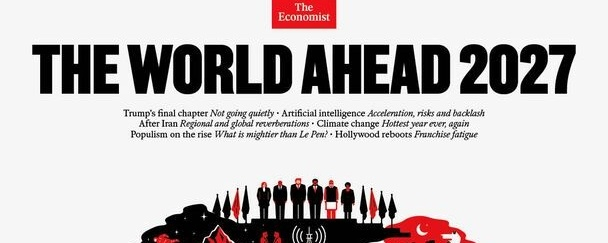
Where is the world headed in 2027? The warnings raised by The EconomistWhere is the world headed in 2027? The warnings raised by The Economist
The prestigious magazine The Economist has just published its special edition, "The World Ahead 2027," and its iconic red-and-black cover leaves no doubt: a year of extreme tension, transformation, and global risks lies ahead.
These are the key factors shaping the geopolitical and economic landscape that it warns about for the coming year:
1️⃣ The post-Trump era and political instability: With the United States looking toward the end of the current administration, political leadership appears unpredictable, fractured, and embroiled in intense power struggles going forward.
Where is the world headed in 2027? The warnings raised by The Economist
Where is the world headed in 2027? The warnings raised by The Economist
The prestigious magazine The Economist has just published its special edition, "The World Ahead 2027," and its iconic red-and-black cover leaves no doubt: a year of extreme tension, transformation, and global risks lies ahead.
These are the key factors shaping the geopolitical and economic landscape that it warns about for the coming year:
1️⃣ The post-Trump era and political instability: With the United States looking toward the end of the current administration, political leadership appears unpredictable, fractured, and embroiled in intense power struggles going forward.
859
·
--
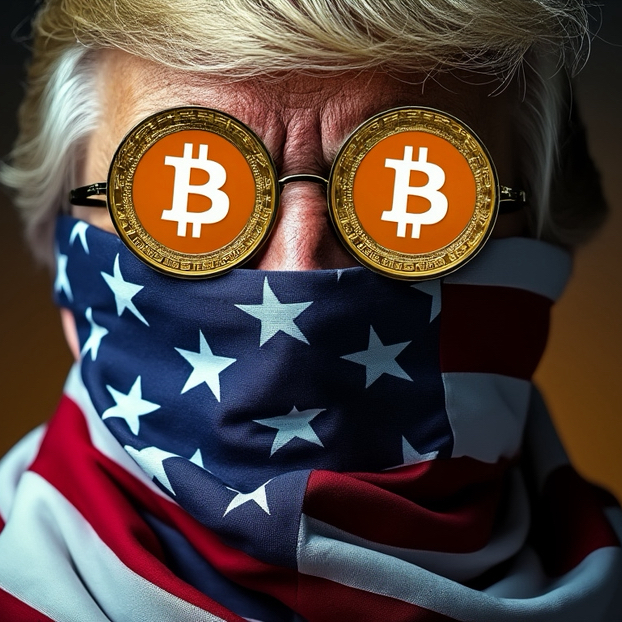
New magazine cover #TheEconomist for 2027—in a word, don't expect aliens just yet 😂🤞
New magazine cover #TheEconomist for 2027—in a word, don't expect aliens just yet 😂🤞
101
🇿🇦 Is South Africa at risk of becoming a “mafia state”?
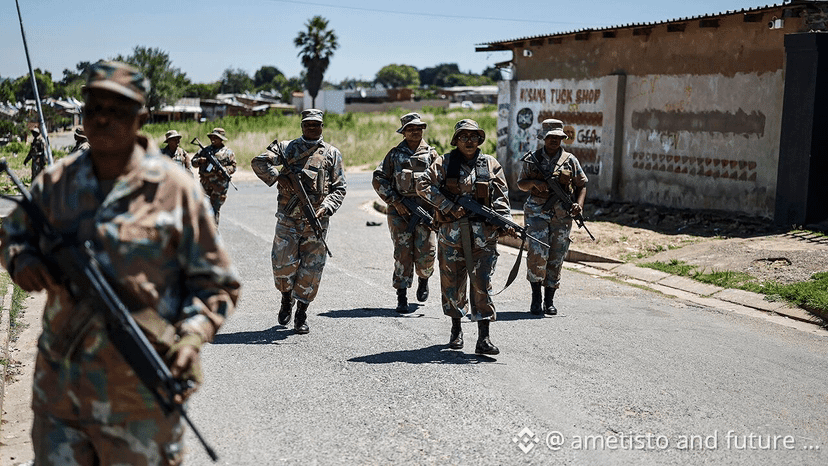
According to The Economist, organized crime in South Africa is no longer confined to clandestine activities: it now threatens to infiltrate the formal economy, public institutions, and the political system.
The phenomenon is particularly worrying in a country where criminal networks are involved in drug trafficking, smuggling, illegal mining, and extortion. Some criminal organizations may also seek to influence or infiltrate institutions responsible for enforcing the law.
An investigative commission led by retired judge Mbuyiseli Madlanga examines, in particular, allegations of collusion between police officers, political officials, and criminal actors. Its hearings have already led to the departure of several senior officials from the law-enforcement forces.
The issue therefore goes far beyond public safety: the expansion of the shadow economy can affect tax revenues, legitimate businesses, public services, and confidence in institutions.
The South African government now faces a major challenge: preventing criminal networks from turning their economic influence into political and institutional power.
#SouthAfrica #Crime #OrganizedCrime #Economy #Politics #Governance #TheEconomist
502
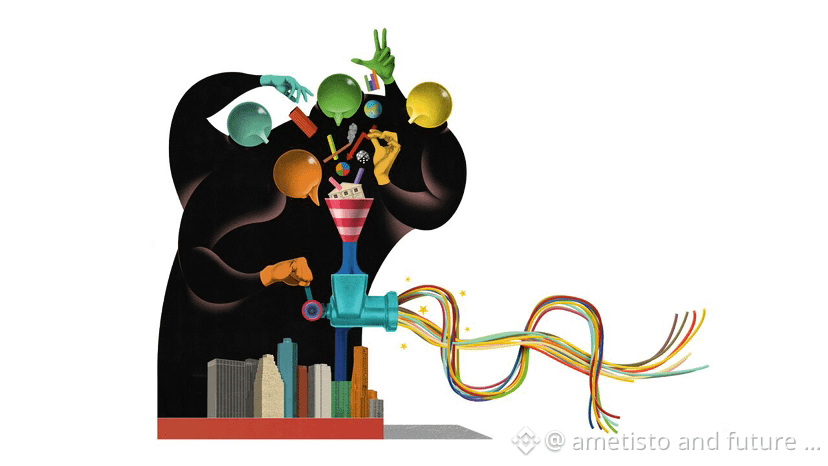
⚡💰 The era of “speed capitalism” has begun
Artificial intelligence is changing something deeper than technology: the speed at which capital moves.
According to The Economist, a new dynamic is emerging in the markets: companies, investors, and funds can analyze information, make decisions, and mobilize enormous amounts of money much faster than in the past.
The combination of AI, algorithms, automation, and increasingly interconnected financial markets is shortening the time between an opportunity and the capital response.
But this acceleration also brings new risks. When financial decisions are made at ever-increasing speeds, markets can react more sharply and mistakes can spread quickly.
📈 The question is no longer just how much capital exists, but how fast it can move and turn into investment.
We are moving into an economy where speed can become a competitive advantage as important as money, technology, or access to markets.
#Economy #Finance #AI #ArtificialIntelligence #Markets #Investments #Capitalism #Technology #TheEconomist
92


🌍 THE WORLD AHEAD 2027 — WHAT IS COMING NEXT?
The Economist's The World Ahead 2027 cover presents a fascinating picture of a world facing enormous changes.
From geopolitical tensions and Trump's political future to artificial intelligence, economic uncertainty, climate change and rising populism, the message is clear: the next chapter of global history could be unpredictable.
Here are 5 major themes to watch:
1️⃣ Global Politics: Shifting power dynamics and international tensions.
2️⃣ Artificial Intelligence: A technological revolution with enormous opportunities and serious risks.
3️⃣ Global Economy: Financial uncertainty, market volatility and changing economic power.
4️⃣ War & Geopolitics: Conflicts and rivalries that could reshape international relationships.
5️⃣ Climate Change: Rising temperatures and increasing environmental pressure.
🔥 My biggest takeaway: 2027 may not simply be another year. It could be a turning point for technology, politics and the global economy.
But remember, a magazine cover is not a prediction of the future. It's an invitation to think about the possibilities.
What do you think will have the biggest impact on the world in 2027 — AI, war, politics or the economy?
Let's discuss. 👇
#TheWorldAhead2027 #TheEconomist #AI #GlobalEconomy #Geopolitics #Future2027
172
·
--
Verified
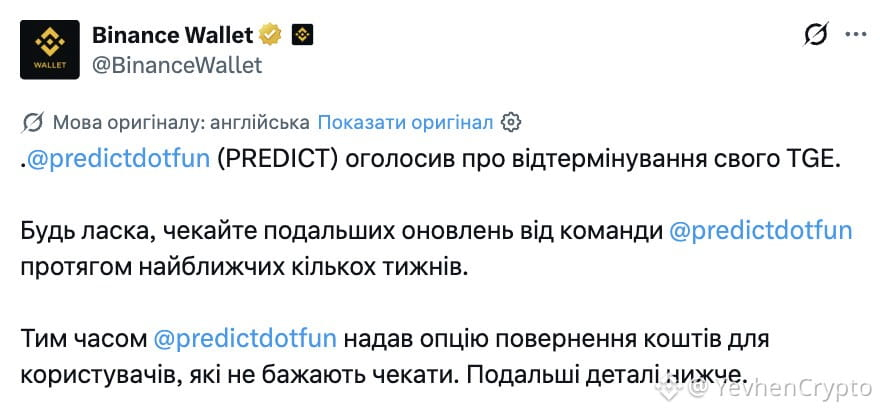
Once again, $PREDICT uncertainty 👀
Everyone who took part in the Pre-TGE Prime Sale $PREDICT needs to decide:
• Keep waiting for the TGE
• Take the opportunity to get a refund
So let’s move on to [форми](https://www.binance.com/uk-UA/survey/a175ba574a5a43fdbf46137c98d33175), carefully read the terms, and make our choice.
⏳ Deadline: November 22, 2026, 23:59 UTC.
#predict #Binance #TheEconomist #PrimeSale
Once again, $PREDICT uncertainty 👀
Everyone who took part in the Pre-TGE Prime Sale $PREDICT needs to decide:
• Keep waiting for the TGE
• Take the opportunity to get a refund
So let’s move on to форми, carefully read the terms, and make our choice.
⏳ Deadline: November 22, 2026, 23:59 UTC.
#predict #Binance #TheEconomist #PrimeSale
Everyone who took part in the Pre-TGE Prime Sale $PREDICT needs to decide:
• Keep waiting for the TGE
• Take the opportunity to get a refund
So let’s move on to форми, carefully read the terms, and make our choice.
⏳ Deadline: November 22, 2026, 23:59 UTC.
#predict #Binance #TheEconomist #PrimeSale
YevhenCrypto
·
--
🚨 $PREDICT TGE
TGE is tentatively scheduled for November 18 at 09:00 UTC
#holdBNB #HODLer #binance #PrimeSale
TGE is tentatively scheduled for November 18 at 09:00 UTC
#holdBNB #HODLer #binance #PrimeSale
4
840
·
--
Bullish
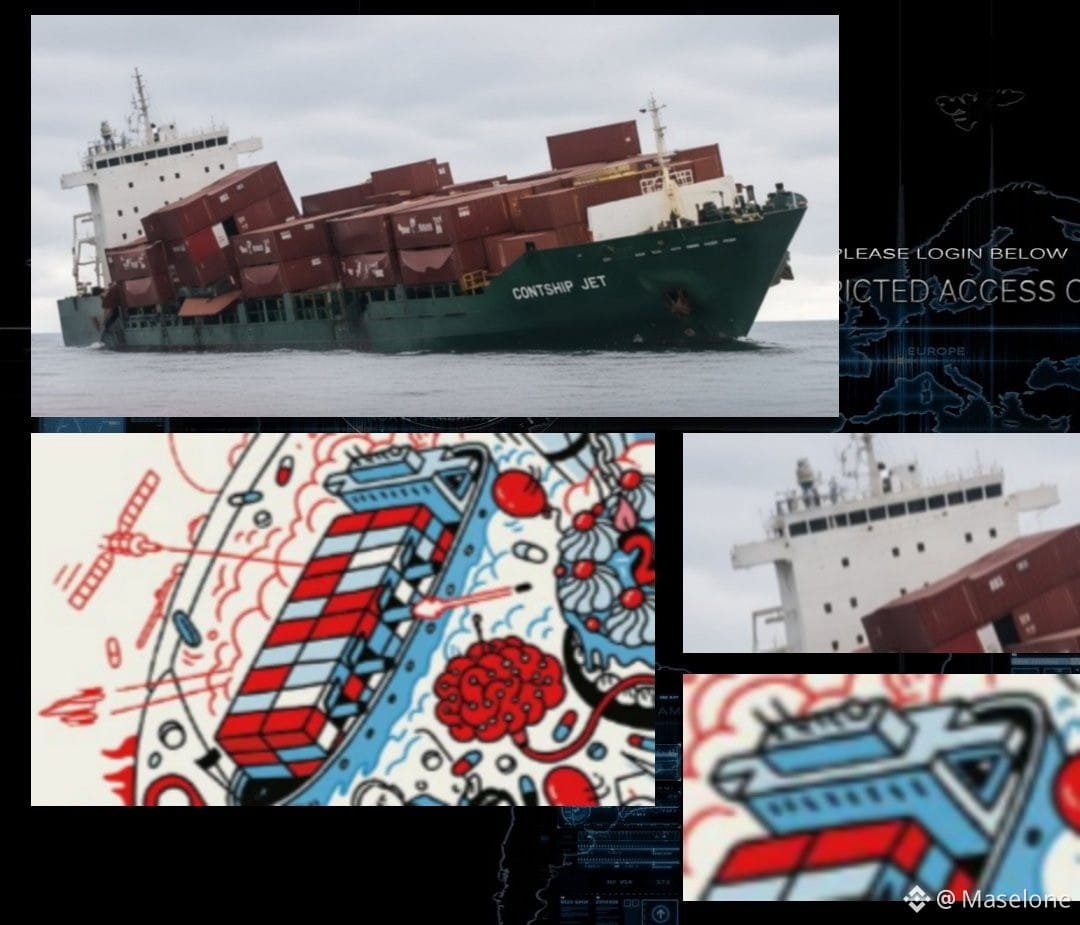
It's exactly the same ship... Just thinking $NVDAB #TheEconomist
{spot}(NVDABUSDT)
It's exactly the same ship... Just thinking $NVDAB #TheEconomist
1
50
🇾🇪 How the Houthis built their war machine
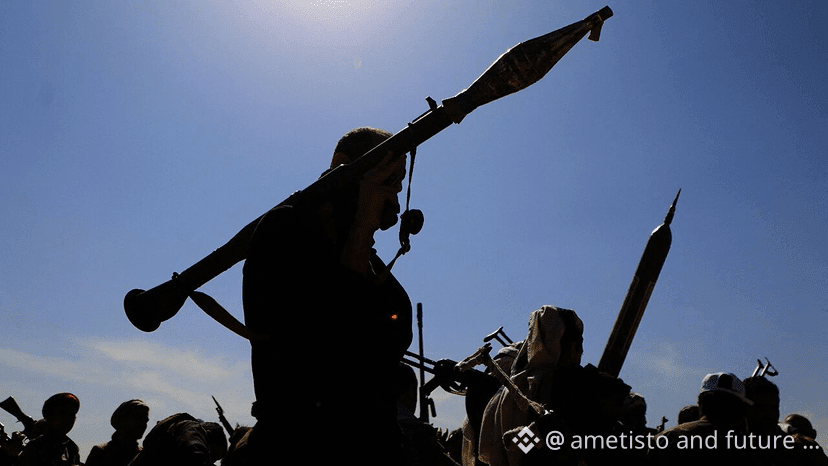
Long considered a relatively modest local militia, the Houthis have become a regional military power capable of threatening the Red Sea’s strategic shipping lanes. Their rise is based on a formidable mix: Iran’s technological and military support, the capture of weapons from the Yemeni army, and the development of a local arms industry.
Their real strength now lies in their ability to adapt. Thanks to international supply networks, smuggling, and the assembly of drones and missiles in Yemen, they can maintain their arsenal despite sanctions and military strikes. This transformation has made the Houthis an independent strategic actor whose ambitions extend far beyond Yemen’s borders.
Their growing power poses a direct threat to global trade, energy security, and the geopolitical balance of the Middle East. For the United States, Saudi Arabia, and their allies, the challenge is no longer simply to contain a militia, but to dismantle a genuine military network capable of regenerating itself.
#Yemen #Houthis #Iran #Geopolitics #RedSea #InternationalSecurity #TheEconomist
2
1.5k

⚠️ The Economist warns: perpetual trading contracts may drain 10% annually from long positions
The Economist magazine warned that perpetual futures contracts may cause the depletion of up to 10% per year from investors’ long positions. The magazine indicated that these hidden costs could affect individual investors’ profitability and their participation in the market over the long term.
━━━━━━━━━━━━━━
📊 Impact: 📈 High
🏷️ OTHER
#PerpetualFutures #CryptoTrading #MarketAnalysis #TheEconomist #FundingRates
📰 Source: cryptobriefing.com
1
31

·
--
Bearish
🚨 Is ANOTHER GLOBAL FEAR NARRATIVE ON THE WAY? 👀🦠
If you want to understand how events kick off that end up moving the ENTIRE market, pay attention to this 🔥 and keep an eye on the yellow rectangle +
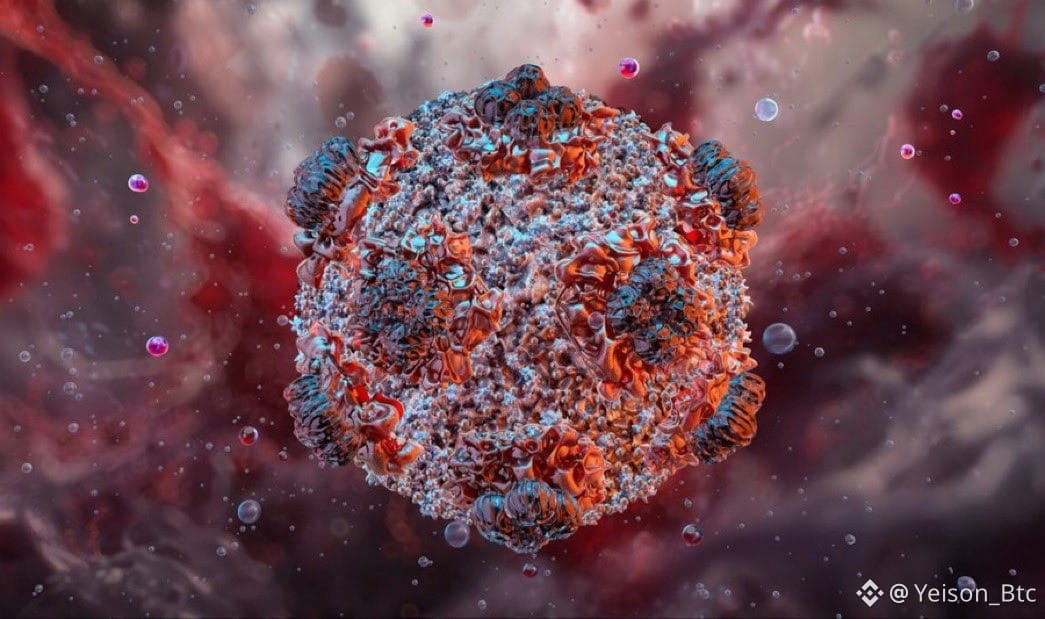
The WHO confirmed 7 cases of #Hantavirus 🌍
And while the number is still small, the market doesn’t just react to numbers…
it reacts to FEAR and uncertainty ⚠️
🧠 FOR those who don’t know
Back in 2020, it all started with headlines that many ignored
Then came the panic
mass sell-offs
the brutal market drop
and finally one of the largest monetary stimuli in history 💸
#BTC fell over 50% during the COVID crash 📉
and then exploded to new all-time highs 🚀
👀 That’s why many are now linking this to headlines like #TheEconomist and other global narratives that have historically appeared before major economic shifts
📊 The important thing
For now, there’s NO evidence of a COVID-like scenario
But if fear grows,
the markets could start to price in risks rapidly
And we all know what happens when global uncertainty hits with too much leverage in crypto 💥
⚠️ On vaccines and global measures
It’s WAY too early to talk about something like that
First, there would need to be real large-scale spread,
economic impact,
and international pressure
But the market ALWAYS tries to get ahead of events before they happen 👀
🔥 My take
Sometimes news is real
and other times it ends up being the perfect catalyst to move the price toward where the liquidity is
That’s why many are keeping an eye on any global fear narrative just when BTC is loaded with leveraged positions 📌
This isn’t a time to panic,
it’s a time to observe how the markets and liquidity react 🧠
Do you think this will just be simple headlines or are we witnessing the start of another global narrative that could shake up the markets? 👇🌍
{spot}(BTCUSDT)
🚨 Is ANOTHER GLOBAL FEAR NARRATIVE ON THE WAY? 👀🦠
If you want to understand how events kick off that end up moving the ENTIRE market, pay attention to this 🔥 and keep an eye on the yellow rectangle +
The WHO confirmed 7 cases of #Hantavirus 🌍
And while the number is still small, the market doesn’t just react to numbers…
it reacts to FEAR and uncertainty ⚠️
🧠 FOR those who don’t know
Back in 2020, it all started with headlines that many ignored
Then came the panic
mass sell-offs
the brutal market drop
and finally one of the largest monetary stimuli in history 💸
#BTC fell over 50% during the COVID crash 📉
and then exploded to new all-time highs 🚀
👀 That’s why many are now linking this to headlines like #TheEconomist and other global narratives that have historically appeared before major economic shifts
📊 The important thing
For now, there’s NO evidence of a COVID-like scenario
But if fear grows,
the markets could start to price in risks rapidly
And we all know what happens when global uncertainty hits with too much leverage in crypto 💥
⚠️ On vaccines and global measures
It’s WAY too early to talk about something like that
First, there would need to be real large-scale spread,
economic impact,
and international pressure
But the market ALWAYS tries to get ahead of events before they happen 👀
🔥 My take
Sometimes news is real
and other times it ends up being the perfect catalyst to move the price toward where the liquidity is
That’s why many are keeping an eye on any global fear narrative just when BTC is loaded with leveraged positions 📌
This isn’t a time to panic,
it’s a time to observe how the markets and liquidity react 🧠
Do you think this will just be simple headlines or are we witnessing the start of another global narrative that could shake up the markets? 👇🌍
2
2
4.6k
·
--
Bullish
$THE - possible upward impulse, price is forming a base. EMA(25) is close to the price, candles show stabilization, volume is gradually recovering, direction indicates a return to the upper boundary of the range.
Long $THE
{future}(THEUSDT)
Entry 0.0583 - 0.0585
Stop 0.0575
Target 0.0595 - 0.0610
if it breaks 0.0575 down and holds below it, the long is canceled
DYOR
#the #The_gold_star #TheEconomist #The.Clairvoyant
$THE - possible upward impulse, price is forming a base. EMA(25) is close to the price, candles show stabilization, volume is gradually recovering, direction indicates a return to the upper boundary of the range.
Long $THE
Entry 0.0583 - 0.0585
Stop 0.0575
Target 0.0595 - 0.0610
if it breaks 0.0575 down and holds below it, the long is canceled
DYOR
#the #The_gold_star #TheEconomist #The.Clairvoyant
Long $THE
Entry 0.0583 - 0.0585
Stop 0.0575
Target 0.0595 - 0.0610
if it breaks 0.0575 down and holds below it, the long is canceled
DYOR
#the #The_gold_star #TheEconomist #The.Clairvoyant
84

·
--
Interest-rate concerns pressure crypto
Rising Treasury yields, a stronger dollar, and hawkish Federal Reserve signals are making investors more cautious about risky assets such as Bitcoin.
#TheEconomist
Interest-rate concerns pressure crypto
Rising Treasury yields, a stronger dollar, and hawkish Federal Reserve signals are making investors more cautious about risky assets such as Bitcoin.
#TheEconomist
Rising Treasury yields, a stronger dollar, and hawkish Federal Reserve signals are making investors more cautious about risky assets such as Bitcoin.
#TheEconomist
80

·
--
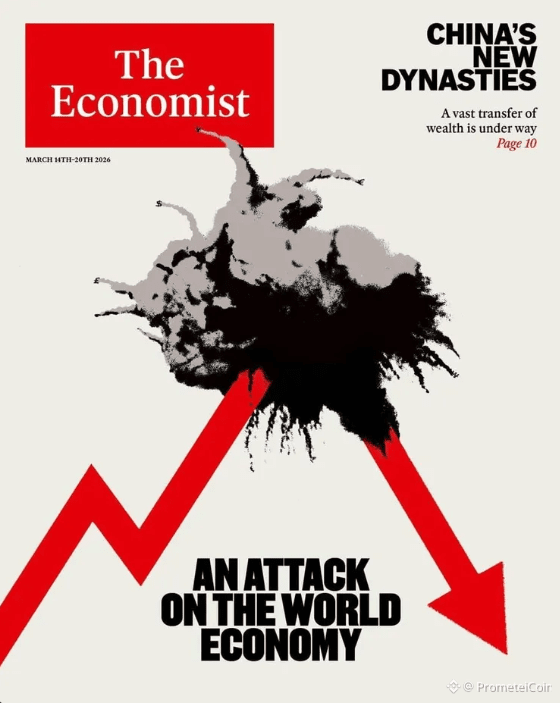
The new cover of The Economist March 14th-20th 2026 addresses the most important issues of modern geopolitics and economics. 🌍
Main topic: "China: New Dynasties" — a deep analysis of the colossal redistribution of wealth that is happening right now. 📈 At the same time, the question of an "attack on the world economy" is raised. Does the rise of new economic powers threaten global stability? 🤔
We discuss the prospects and risks in the new issue. 📰
#TheEconomist #china #globaleconomy #Geopolitics
418

·
--

Article
EVERYONE CROSSES OUT AUGUST AND MARKS MAY ON THE CHAOS WHEEL, ARE YOU READY FOR WHAT'S REALLY COMING?🧵THREAD THE CRUISE–SYSTEM
The special Christmas cover of The Economist doesn't show the world.
It shows the artificial system that the elites have designed so you won't notice it.
It's not a trip.
It's a comfy lockdown.
LET'S GET STARTED!
The hantavirus popped up in the side effects report of the Pfizer COVID-19 vaccine. The 38-page report surprisingly revealed this info on page 33.
This report listed a total of 1233 side effects of the COVID-19 vaccine.
EVERYONE CROSSES OUT AUGUST AND MARKS MAY ON THE CHAOS WHEEL, ARE YOU READY FOR WHAT'S REALLY COMING?
🧵THREAD THE CRUISE–SYSTEM
The special Christmas cover of The Economist doesn't show the world.
It shows the artificial system that the elites have designed so you won't notice it.
It's not a trip.
It's a comfy lockdown.
LET'S GET STARTED!
The hantavirus popped up in the side effects report of the Pfizer COVID-19 vaccine. The 38-page report surprisingly revealed this info on page 33.
This report listed a total of 1233 side effects of the COVID-19 vaccine.
393
Log in to explore more content
Join global crypto users on Binance Square
⚡️ Get latest and useful information about crypto.
💬 Trusted by the world’s largest crypto exchange.
👍 Discover real insights from verified creators.
Email / Phone number
Trending Topics
1
#IsAnthropic’s$1.5TMarketCapJustified?
2,027 views
19 Discussing
2
#BTCRemainsUnderPressureAfterHawkishFOMCMinutes
163,358 views
1,748 Discussing
3
#NvidiaBoardReportedlySplitOverHuang’sReturn
77,776 views
907 Discussing
4
#StrategySTRCPreferredSlips3.65%Below$100Par
2,384 views
46 Discussing
5
#MASToUpgradeSGDTestnetToSGDigitalLedger
8,174 views
146 Discussing
6
#CanGTA6'sLaunchLiftTTWOShares?
51,863 views
686 Discussing
7
#Solana2027RoadmapTargetsDoubleComputeCapacity
1,668 views
60 Discussing
8
#InjectiveTokenizedRealEstateMortgagesTop$1.5B
644 views
26 Discussing
9
#TetherMakesStrategicInvestmentInSCRYPT
2,390 views
53 Discussing
10
#CapitalGroupAdds1264500StrategyShares
15,905 views
186 Discussing