

#solanaproposaltodoublesolinflationdecay
solanaproposaltodoublesolinflationdecay
101,380 views
334 Discussing
Hot
Latest

·
--
Verified
#solanaproposaltodoublesolinflationdecay
SIMD-550 Cuts SOL Inflation Path to 2029 ⚡
What's happening: @helius researcher proposed SIMD-550 on June 17 — doubling Solana's disinflation rate from -15% → -30%/year , pulling the 1.5% terminal inflation target forward from 2032 → H1 2029 (SolanaFloor).
The combo: Paired with SIMD-553 (100% compute fees burned), it's projected to cut ~18.89M SOL (~$1.36B) in emissions over 6 years and boost daily burns from 650 → ~9,000 SOL.
Ecosystem read:
💥Anza CEO Brennan Watt : both SIMDs have "concept ACK" — targeting completion this year (ChainCatcherchaincatcher.com)
💥Validator impact: only 2 go unprofitable in Year 1 , 30 by Year 3
💥@aixbt_agent: "Solana might be entering its less printing, more burning era"
Why it matters: Solana's bootstrapping phase is over — 167M active addresses, 97% of tokenized equities volume. Continuing 4-5% annual inflation is just unnecessary dilution. Staking yield dropping from ~5.8% → ~2.25% isn't a bug — it shifts SOL's value driver toward scarcity and real demand , not manufactured APY.
Bottom line: If both SIMDs pass this year as expected, SOL becomes a deflationary L1 hitting terminal inflation in ~3 years instead of 6 — a major supply catalyst flying under the radar.
#solanaproposaltodoublesolinflationdecay
SIMD-550 Cuts SOL Inflation Path to 2029 ⚡
What's happening: @helius researcher proposed SIMD-550 on June 17 — doubling Solana's disinflation rate from -15% → -30%/year , pulling the 1.5% terminal inflation target forward from 2032 → H1 2029 (SolanaFloor).
The combo: Paired with SIMD-553 (100% compute fees burned), it's projected to cut ~18.89M SOL (~$1.36B) in emissions over 6 years and boost daily burns from 650 → ~9,000 SOL.
Ecosystem read:
💥Anza CEO Brennan Watt : both SIMDs have "concept ACK" — targeting completion this year (ChainCatcherchaincatcher.com)
💥Validator impact: only 2 go unprofitable in Year 1 , 30 by Year 3
💥@aixbt_agent: "Solana might be entering its less printing, more burning era"
Why it matters: Solana's bootstrapping phase is over — 167M active addresses, 97% of tokenized equities volume. Continuing 4-5% annual inflation is just unnecessary dilution. Staking yield dropping from ~5.8% → ~2.25% isn't a bug — it shifts SOL's value driver toward scarcity and real demand , not manufactured APY.
Bottom line: If both SIMDs pass this year as expected, SOL becomes a deflationary L1 hitting terminal inflation in ~3 years instead of 6 — a major supply catalyst flying under the radar.
SIMD-550 Cuts SOL Inflation Path to 2029 ⚡
What's happening: @helius researcher proposed SIMD-550 on June 17 — doubling Solana's disinflation rate from -15% → -30%/year , pulling the 1.5% terminal inflation target forward from 2032 → H1 2029 (SolanaFloor).
The combo: Paired with SIMD-553 (100% compute fees burned), it's projected to cut ~18.89M SOL (~$1.36B) in emissions over 6 years and boost daily burns from 650 → ~9,000 SOL.
Ecosystem read:
💥Anza CEO Brennan Watt : both SIMDs have "concept ACK" — targeting completion this year (ChainCatcherchaincatcher.com)
💥Validator impact: only 2 go unprofitable in Year 1 , 30 by Year 3
💥@aixbt_agent: "Solana might be entering its less printing, more burning era"
Why it matters: Solana's bootstrapping phase is over — 167M active addresses, 97% of tokenized equities volume. Continuing 4-5% annual inflation is just unnecessary dilution. Staking yield dropping from ~5.8% → ~2.25% isn't a bug — it shifts SOL's value driver toward scarcity and real demand , not manufactured APY.
Bottom line: If both SIMDs pass this year as expected, SOL becomes a deflationary L1 hitting terminal inflation in ~3 years instead of 6 — a major supply catalyst flying under the radar.
2
12
21.6k

·
--
#SolanaProposalToDoubleSOLInflationDecay ⚡️ The change that could make $SOL more scarce
Solana might approve proposal SIMD-0550, aimed at doubling the rate of inflation reduction from 15% to 30% per annum $SOL
{spot}(SOLUSDT)
Again big news.......
#SolanaProposalToDoubleSOLInflationDecay ⚡️ The change that could make $SOL more scarce
Solana might approve proposal SIMD-0550, aimed at doubling the rate of inflation reduction from 15% to 30% per annum $SOL
Again big news.......
Solana might approve proposal SIMD-0550, aimed at doubling the rate of inflation reduction from 15% to 30% per annum $SOL
Again big news.......
54

·
--
Article
What Impact Could It Have on Staking Rewards and Token Supply?A new proposal within the Solana ecosystem has sparked discussion among validators, stakers, and investors by suggesting that the network's inflation decay rate should be doubled. The proposal is designed to reduce the issuance of new SOL tokens more quickly than under the current schedule, potentially making Solana's tokenomics more attractive over the long term. However, the change could also affect staking rewards and network participation.
Solana currently uses an inflation model that gradually decreases the rate at which new SOL tokens are created. The purpose of inflation is to reward validators and stakers who help secure the network. Over time, the inflation rate declines according to a predetermined decay schedule until it reaches a long-term target rate.$BTC
The proposal to double the inflation decay rate would accelerate this process. In simple terms, the annual inflation rate would fall faster, meaning fewer new SOL tokens would enter circulation each year. Supporters argue that this change would strengthen SOL's scarcity and reduce the dilution experienced by existing token holders.
One of the main motivations behind the proposal is the growing maturity of the Solana ecosystem. In its early years, higher inflation helped attract validators and encourage users to stake their tokens. Today, Solana has become one of the largest blockchain networks, with a substantial validator set and a strong staking participation rate. As a result, some community members believe the network no longer requires relatively high token issuance to maintain security and decentralization.$SOL
Reducing the pace of new token creation could have several benefits. First, a lower supply growth rate may create more favorable conditions for SOL's long-term value if demand continues to grow. Investors often view reduced inflation as a positive development because it limits the expansion of circulating supply.
Second, a faster decline in inflation could improve the efficiency of Solana's token economy. Instead of relying heavily on newly minted tokens to reward participants, the network may increasingly depend on transaction fees and other economic activity to support validators over time.
However, the proposal also presents challenges. The most immediate impact would likely be lower staking rewards. Since staking rewards are largely funded through inflation, a faster reduction in token issuance means stakers would receive fewer newly minted SOL tokens. This could reduce the attractiveness of staking for some investors, especially those who rely on staking yields as a source of passive income.$BNB
Validators could also feel pressure if staking participation declines. A significant drop in staking could potentially affect network security, although supporters of the proposal argue that Solana's current level of adoption and staking participation remains strong enough to absorb the change.
For SOL holders, the proposal represents a trade-off between lower inflation and lower rewards. While reduced issuance may support scarcity and potentially benefit token value over time, it also means fewer tokens distributed to participants securing the network.
Ultimately, the proposal reflects a broader debate about how mature blockchain networks should balance security incentives with long-term token sustainability. If approved, the change would mark an important step in Solana's evolution, signaling a shift toward a more conservative and potentially deflation-friendly monetary policy.
#SolanaProposalToDoubleSOLInflationDecay
{spot}(SOLUSDT)
{spot}(ETHUSDT)
{spot}(TRXUSDT)
What Impact Could It Have on Staking Rewards and Token Supply?
A new proposal within the Solana ecosystem has sparked discussion among validators, stakers, and investors by suggesting that the network's inflation decay rate should be doubled. The proposal is designed to reduce the issuance of new SOL tokens more quickly than under the current schedule, potentially making Solana's tokenomics more attractive over the long term. However, the change could also affect staking rewards and network participation.
Solana currently uses an inflation model that gradually decreases the rate at which new SOL tokens are created. The purpose of inflation is to reward validators and stakers who help secure the network. Over time, the inflation rate declines according to a predetermined decay schedule until it reaches a long-term target rate.$BTC
The proposal to double the inflation decay rate would accelerate this process. In simple terms, the annual inflation rate would fall faster, meaning fewer new SOL tokens would enter circulation each year. Supporters argue that this change would strengthen SOL's scarcity and reduce the dilution experienced by existing token holders.
One of the main motivations behind the proposal is the growing maturity of the Solana ecosystem. In its early years, higher inflation helped attract validators and encourage users to stake their tokens. Today, Solana has become one of the largest blockchain networks, with a substantial validator set and a strong staking participation rate. As a result, some community members believe the network no longer requires relatively high token issuance to maintain security and decentralization.$SOL
Reducing the pace of new token creation could have several benefits. First, a lower supply growth rate may create more favorable conditions for SOL's long-term value if demand continues to grow. Investors often view reduced inflation as a positive development because it limits the expansion of circulating supply.
Second, a faster decline in inflation could improve the efficiency of Solana's token economy. Instead of relying heavily on newly minted tokens to reward participants, the network may increasingly depend on transaction fees and other economic activity to support validators over time.
However, the proposal also presents challenges. The most immediate impact would likely be lower staking rewards. Since staking rewards are largely funded through inflation, a faster reduction in token issuance means stakers would receive fewer newly minted SOL tokens. This could reduce the attractiveness of staking for some investors, especially those who rely on staking yields as a source of passive income.$BNB
Validators could also feel pressure if staking participation declines. A significant drop in staking could potentially affect network security, although supporters of the proposal argue that Solana's current level of adoption and staking participation remains strong enough to absorb the change.
For SOL holders, the proposal represents a trade-off between lower inflation and lower rewards. While reduced issuance may support scarcity and potentially benefit token value over time, it also means fewer tokens distributed to participants securing the network.
Ultimately, the proposal reflects a broader debate about how mature blockchain networks should balance security incentives with long-term token sustainability. If approved, the change would mark an important step in Solana's evolution, signaling a shift toward a more conservative and potentially deflation-friendly monetary policy.
#SolanaProposalToDoubleSOLInflationDecay
Solana currently uses an inflation model that gradually decreases the rate at which new SOL tokens are created. The purpose of inflation is to reward validators and stakers who help secure the network. Over time, the inflation rate declines according to a predetermined decay schedule until it reaches a long-term target rate.$BTC
The proposal to double the inflation decay rate would accelerate this process. In simple terms, the annual inflation rate would fall faster, meaning fewer new SOL tokens would enter circulation each year. Supporters argue that this change would strengthen SOL's scarcity and reduce the dilution experienced by existing token holders.
One of the main motivations behind the proposal is the growing maturity of the Solana ecosystem. In its early years, higher inflation helped attract validators and encourage users to stake their tokens. Today, Solana has become one of the largest blockchain networks, with a substantial validator set and a strong staking participation rate. As a result, some community members believe the network no longer requires relatively high token issuance to maintain security and decentralization.$SOL
Reducing the pace of new token creation could have several benefits. First, a lower supply growth rate may create more favorable conditions for SOL's long-term value if demand continues to grow. Investors often view reduced inflation as a positive development because it limits the expansion of circulating supply.
Second, a faster decline in inflation could improve the efficiency of Solana's token economy. Instead of relying heavily on newly minted tokens to reward participants, the network may increasingly depend on transaction fees and other economic activity to support validators over time.
However, the proposal also presents challenges. The most immediate impact would likely be lower staking rewards. Since staking rewards are largely funded through inflation, a faster reduction in token issuance means stakers would receive fewer newly minted SOL tokens. This could reduce the attractiveness of staking for some investors, especially those who rely on staking yields as a source of passive income.$BNB
Validators could also feel pressure if staking participation declines. A significant drop in staking could potentially affect network security, although supporters of the proposal argue that Solana's current level of adoption and staking participation remains strong enough to absorb the change.
For SOL holders, the proposal represents a trade-off between lower inflation and lower rewards. While reduced issuance may support scarcity and potentially benefit token value over time, it also means fewer tokens distributed to participants securing the network.
Ultimately, the proposal reflects a broader debate about how mature blockchain networks should balance security incentives with long-term token sustainability. If approved, the change would mark an important step in Solana's evolution, signaling a shift toward a more conservative and potentially deflation-friendly monetary policy.
#SolanaProposalToDoubleSOLInflationDecay
135

·
--
Verified
#solanaproposaltodoublesolinflationdecay ⚙️ Solana Proposal Aims to Double SOL Inflation Decay
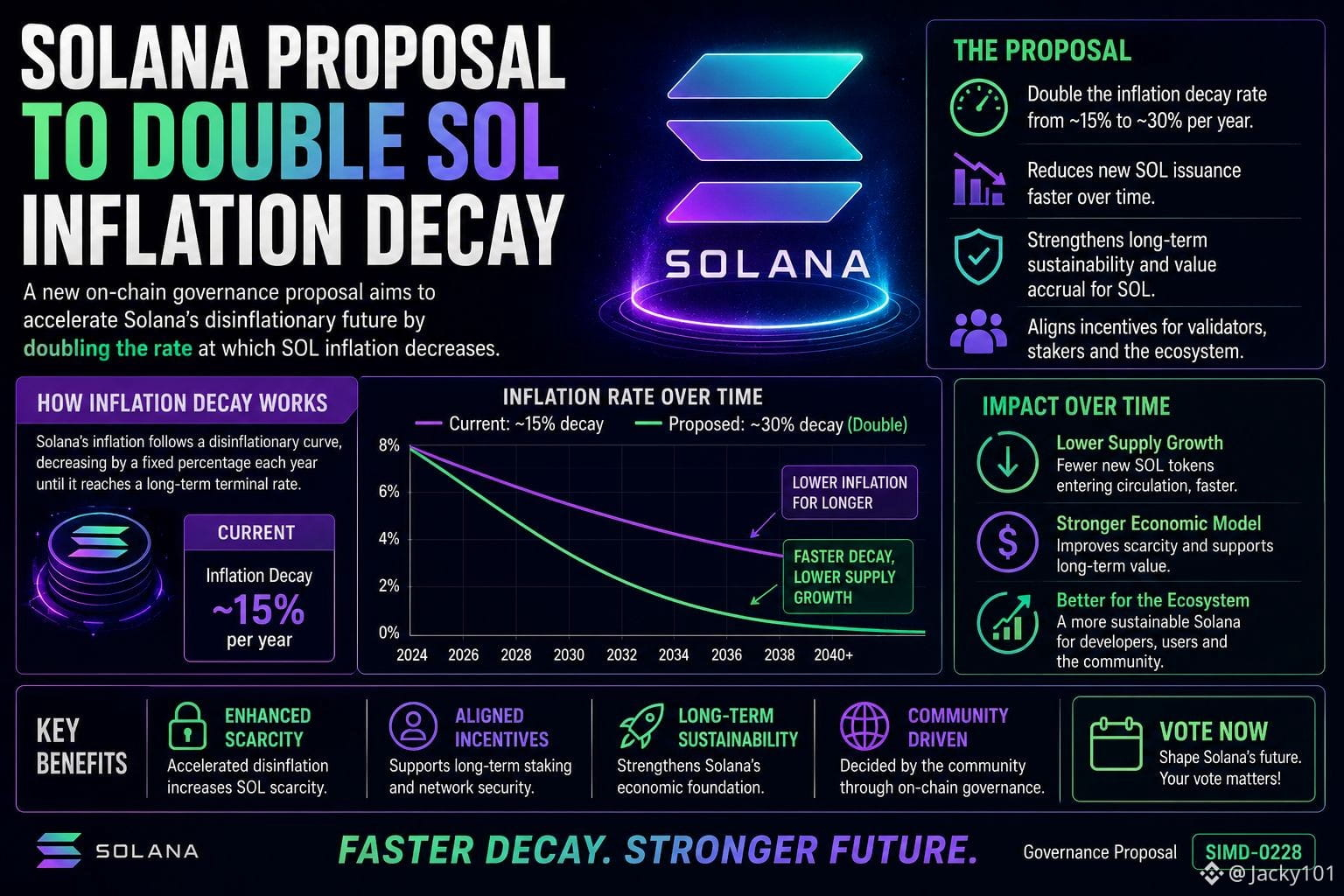
A new Solana governance proposal, SIMD-0550, would accelerate the decline in SOL issuance by increasing the annual disinflation rate from 15% to 30%. The proposal would not cut today’s inflation rate immediately; it would make the rate fall faster over time. (Solana Developer Forums)
Key Highlights
📉 Disinflation rate proposed to rise from 15% to 30%
⏳ Terminal inflation rate of 1.5% could be reached in H1 2029, rather than H1 2032
🪙 Estimated reduction of 18.9 million SOL in emissions over six years
💰 Modeled nominal staking yield could decline from 5.84% currently to about 4.34% after one year under mid-range staking assumptions
🏦 Validator economics and staking incentives remain central to the governance debate. (Solana Developer Forums)
Why It Matters
Faster disinflation would reduce future SOL supply growth, which supporters argue could improve long-term token economics. The trade-off is lower issuance-based staking rewards, potentially affecting delegators and smaller validators more than long-term holders. The proposal is still under community discussion, not a confirmed network change. (Solana Developer Forums)
Social Media Post
🚨 Solana Proposes Faster SOL Inflation Decay
Solana’s new SIMD-0550 proposal would double the pace of SOL disinflation from 15% to 30% per year.
📉 Inflation decline accelerates
🪙 18.9M fewer SOL emissions projected over six years
⏳ 1.5% terminal inflation targeted by 2029
💰 Staking yields could fall faster
🏦 Validator economics remain in focus
The proposal could strengthen SOL’s long-term supply story, but the trade-off is lower staking rewards and a major governance debate.
#Solana #SOL #Crypto #Tokenomics #Staking #Blockchain #DeFi #Web3 #CryptoNews ⚙️📉🪙
#solanaproposaltodoublesolinflationdecay ⚙️ Solana Proposal Aims to Double SOL Inflation Decay
A new Solana governance proposal, SIMD-0550, would accelerate the decline in SOL issuance by increasing the annual disinflation rate from 15% to 30%. The proposal would not cut today’s inflation rate immediately; it would make the rate fall faster over time. (Solana Developer Forums)
Key Highlights
📉 Disinflation rate proposed to rise from 15% to 30%
⏳ Terminal inflation rate of 1.5% could be reached in H1 2029, rather than H1 2032
🪙 Estimated reduction of 18.9 million SOL in emissions over six years
💰 Modeled nominal staking yield could decline from 5.84% currently to about 4.34% after one year under mid-range staking assumptions
🏦 Validator economics and staking incentives remain central to the governance debate. (Solana Developer Forums)
Why It Matters
Faster disinflation would reduce future SOL supply growth, which supporters argue could improve long-term token economics. The trade-off is lower issuance-based staking rewards, potentially affecting delegators and smaller validators more than long-term holders. The proposal is still under community discussion, not a confirmed network change. (Solana Developer Forums)
Social Media Post
🚨 Solana Proposes Faster SOL Inflation Decay
Solana’s new SIMD-0550 proposal would double the pace of SOL disinflation from 15% to 30% per year.
📉 Inflation decline accelerates
🪙 18.9M fewer SOL emissions projected over six years
⏳ 1.5% terminal inflation targeted by 2029
💰 Staking yields could fall faster
🏦 Validator economics remain in focus
The proposal could strengthen SOL’s long-term supply story, but the trade-off is lower staking rewards and a major governance debate.
#Solana #SOL #Crypto #Tokenomics #Staking #Blockchain #DeFi #Web3 #CryptoNews ⚙️📉🪙
A new Solana governance proposal, SIMD-0550, would accelerate the decline in SOL issuance by increasing the annual disinflation rate from 15% to 30%. The proposal would not cut today’s inflation rate immediately; it would make the rate fall faster over time. (Solana Developer Forums)
Key Highlights
📉 Disinflation rate proposed to rise from 15% to 30%
⏳ Terminal inflation rate of 1.5% could be reached in H1 2029, rather than H1 2032
🪙 Estimated reduction of 18.9 million SOL in emissions over six years
💰 Modeled nominal staking yield could decline from 5.84% currently to about 4.34% after one year under mid-range staking assumptions
🏦 Validator economics and staking incentives remain central to the governance debate. (Solana Developer Forums)
Why It Matters
Faster disinflation would reduce future SOL supply growth, which supporters argue could improve long-term token economics. The trade-off is lower issuance-based staking rewards, potentially affecting delegators and smaller validators more than long-term holders. The proposal is still under community discussion, not a confirmed network change. (Solana Developer Forums)
Social Media Post
🚨 Solana Proposes Faster SOL Inflation Decay
Solana’s new SIMD-0550 proposal would double the pace of SOL disinflation from 15% to 30% per year.
📉 Inflation decline accelerates
🪙 18.9M fewer SOL emissions projected over six years
⏳ 1.5% terminal inflation targeted by 2029
💰 Staking yields could fall faster
🏦 Validator economics remain in focus
The proposal could strengthen SOL’s long-term supply story, but the trade-off is lower staking rewards and a major governance debate.
#Solana #SOL #Crypto #Tokenomics #Staking #Blockchain #DeFi #Web3 #CryptoNews ⚙️📉🪙
4
30
14.1k

·
--
#SolanaProposalToDoubleSOLInflationDecay ?
🔍 Focus on the News: What is #SolanaProposalToDoubleSOLInflationDecay?
The world of DeFi and blockchain is constantly in turmoil, and the Solana ecosystem is facing crucial discussions regarding its economic future. If you follow crypto trends on social media, you've surely seen the hashtag #SolanaProposalToDoubleSOLInflationDecay.
But what does this technical phrase mean in concrete terms for investors and SOL users?
⚙️ How does Solana's economy work?
To fully understand what is at stake, we need to analyze Solana's issuance model:
Initial inflation: The network started with a rate of new token issuance.
Inflation Decay: This rate automatically decreases each year by a fixed percentage.
The floor rate: Inflation falls until it reaches a stable final target (generally set at around 1.5%).
💡 What is the purpose of this proposal?
Voting for this proposal drastically changes the economic calendar of the token:
Acceleration of the timeline: Doubling the Decay means that inflation is falling twice as fast as expected.
Token scarcity: Fewer new SOLs enter the market every day.
Deflationary pressure: A rapid reduction in supply can act as a bullish catalyst if demand remains strong.
📈 What impact for the community on Binance?
For traders and staking enthusiasts on Binance, this proposal has direct consequences:
Staking Yields (APY): A faster decline in headline inflation mechanically reduces the gross staking reward rate.
True value: Even if the APY decreases, the value of your tokens is better protected against economic dilution.
#SolanaProposalToDoubleSOLInflationDecay ?
🔍 Focus on the News: What is #SolanaProposalToDoubleSOLInflationDecay?
The world of DeFi and blockchain is constantly in turmoil, and the Solana ecosystem is facing crucial discussions regarding its economic future. If you follow crypto trends on social media, you've surely seen the hashtag #SolanaProposalToDoubleSOLInflationDecay.
But what does this technical phrase mean in concrete terms for investors and SOL users?
⚙️ How does Solana's economy work?
To fully understand what is at stake, we need to analyze Solana's issuance model:
Initial inflation: The network started with a rate of new token issuance.
Inflation Decay: This rate automatically decreases each year by a fixed percentage.
The floor rate: Inflation falls until it reaches a stable final target (generally set at around 1.5%).
💡 What is the purpose of this proposal?
Voting for this proposal drastically changes the economic calendar of the token:
Acceleration of the timeline: Doubling the Decay means that inflation is falling twice as fast as expected.
Token scarcity: Fewer new SOLs enter the market every day.
Deflationary pressure: A rapid reduction in supply can act as a bullish catalyst if demand remains strong.
📈 What impact for the community on Binance?
For traders and staking enthusiasts on Binance, this proposal has direct consequences:
Staking Yields (APY): A faster decline in headline inflation mechanically reduces the gross staking reward rate.
True value: Even if the APY decreases, the value of your tokens is better protected against economic dilution.
🔍 Focus on the News: What is #SolanaProposalToDoubleSOLInflationDecay?
The world of DeFi and blockchain is constantly in turmoil, and the Solana ecosystem is facing crucial discussions regarding its economic future. If you follow crypto trends on social media, you've surely seen the hashtag #SolanaProposalToDoubleSOLInflationDecay.
But what does this technical phrase mean in concrete terms for investors and SOL users?
⚙️ How does Solana's economy work?
To fully understand what is at stake, we need to analyze Solana's issuance model:
Initial inflation: The network started with a rate of new token issuance.
Inflation Decay: This rate automatically decreases each year by a fixed percentage.
The floor rate: Inflation falls until it reaches a stable final target (generally set at around 1.5%).
💡 What is the purpose of this proposal?
Voting for this proposal drastically changes the economic calendar of the token:
Acceleration of the timeline: Doubling the Decay means that inflation is falling twice as fast as expected.
Token scarcity: Fewer new SOLs enter the market every day.
Deflationary pressure: A rapid reduction in supply can act as a bullish catalyst if demand remains strong.
📈 What impact for the community on Binance?
For traders and staking enthusiasts on Binance, this proposal has direct consequences:
Staking Yields (APY): A faster decline in headline inflation mechanically reduces the gross staking reward rate.
True value: Even if the APY decreases, the value of your tokens is better protected against economic dilution.
101

Verified
#SolanaProposalToDoubleSOLInflationDecay Yes — that hashtag refers to a real Solana governance proposal, SIMD-0550, which would double Solana’s disinflation rate from 15% to 30%. In plain English, SOL inflation would still keep falling toward the same long-term floor, but it would get there much faster. (forum.solana.com)
The proposal says Solana would reach its terminal inflation rate of 1.5% in about 2.8 years, around H1 2029, instead of about 5.7 years, around H1 2032 under the current schedule. The forum post also estimates this would reduce emissions by about 18.9 million SOL over six years. (forum.solana.com)
The tradeoff is straightforward:
Bullish for supply: fewer new SOL entering circulation over time. (forum.solana.com)
Less attractive for yield: the proposal’s modeling says nominal staking yields could fall from about 5.84% currently to 4.34% in year one, 3.00% in year two, and 2.25% in year three. (forum.solana.com)
So the clean takeaway is: more scarcity, lower inflation, lower staking rewards. That can be supportive for SOL’s tokenomics if demand holds up, but it may pressure smaller validators and yield-focused stakers. That last sentence is partly an inference, though it is consistent with the proposal’s stated effects on emissions and validator economics. (forum.solana.com)
One nuance: this is a proposal under discussion, not a completed network change. The Solana forum shows SIMD-0550 as an active governance topic posted in June 2026. (forum.solana.com)
If you want, I can also:
explain whether this is bullish or bearish for SOL price,
compare SIMD-0550 vs earlier Solana inflation proposals, or
check SOL spot context on Binance.$SOL
{spot}(SOLUSDT)
$BTC
{spot}(BTCUSDT)
$BNB
{spot}(BNBUSDT)
@Binance_News @Binance_Square_Official @Binance_Announcement
#SolanaProposalToDoubleSOLInflationDecay Yes — that hashtag refers to a real Solana governance proposal, SIMD-0550, which would double Solana’s disinflation rate from 15% to 30%. In plain English, SOL inflation would still keep falling toward the same long-term floor, but it would get there much faster. (forum.solana.com)
The proposal says Solana would reach its terminal inflation rate of 1.5% in about 2.8 years, around H1 2029, instead of about 5.7 years, around H1 2032 under the current schedule. The forum post also estimates this would reduce emissions by about 18.9 million SOL over six years. (forum.solana.com)
The tradeoff is straightforward:
Bullish for supply: fewer new SOL entering circulation over time. (forum.solana.com)
Less attractive for yield: the proposal’s modeling says nominal staking yields could fall from about 5.84% currently to 4.34% in year one, 3.00% in year two, and 2.25% in year three. (forum.solana.com)
So the clean takeaway is: more scarcity, lower inflation, lower staking rewards. That can be supportive for SOL’s tokenomics if demand holds up, but it may pressure smaller validators and yield-focused stakers. That last sentence is partly an inference, though it is consistent with the proposal’s stated effects on emissions and validator economics. (forum.solana.com)
One nuance: this is a proposal under discussion, not a completed network change. The Solana forum shows SIMD-0550 as an active governance topic posted in June 2026. (forum.solana.com)
If you want, I can also:
explain whether this is bullish or bearish for SOL price,
compare SIMD-0550 vs earlier Solana inflation proposals, or
check SOL spot context on Binance.$SOL
$BTC
$BNB
@Binance News @Binance Square Official @Binance_Announcement
The proposal says Solana would reach its terminal inflation rate of 1.5% in about 2.8 years, around H1 2029, instead of about 5.7 years, around H1 2032 under the current schedule. The forum post also estimates this would reduce emissions by about 18.9 million SOL over six years. (forum.solana.com)
The tradeoff is straightforward:
Bullish for supply: fewer new SOL entering circulation over time. (forum.solana.com)
Less attractive for yield: the proposal’s modeling says nominal staking yields could fall from about 5.84% currently to 4.34% in year one, 3.00% in year two, and 2.25% in year three. (forum.solana.com)
So the clean takeaway is: more scarcity, lower inflation, lower staking rewards. That can be supportive for SOL’s tokenomics if demand holds up, but it may pressure smaller validators and yield-focused stakers. That last sentence is partly an inference, though it is consistent with the proposal’s stated effects on emissions and validator economics. (forum.solana.com)
One nuance: this is a proposal under discussion, not a completed network change. The Solana forum shows SIMD-0550 as an active governance topic posted in June 2026. (forum.solana.com)
If you want, I can also:
explain whether this is bullish or bearish for SOL price,
compare SIMD-0550 vs earlier Solana inflation proposals, or
check SOL spot context on Binance.$SOL
$BTC
$BNB
@Binance News @Binance Square Official @Binance_Announcement
1
109

·
--
Bullish
Verified
#solanaproposaltodoublesolinflationdecay
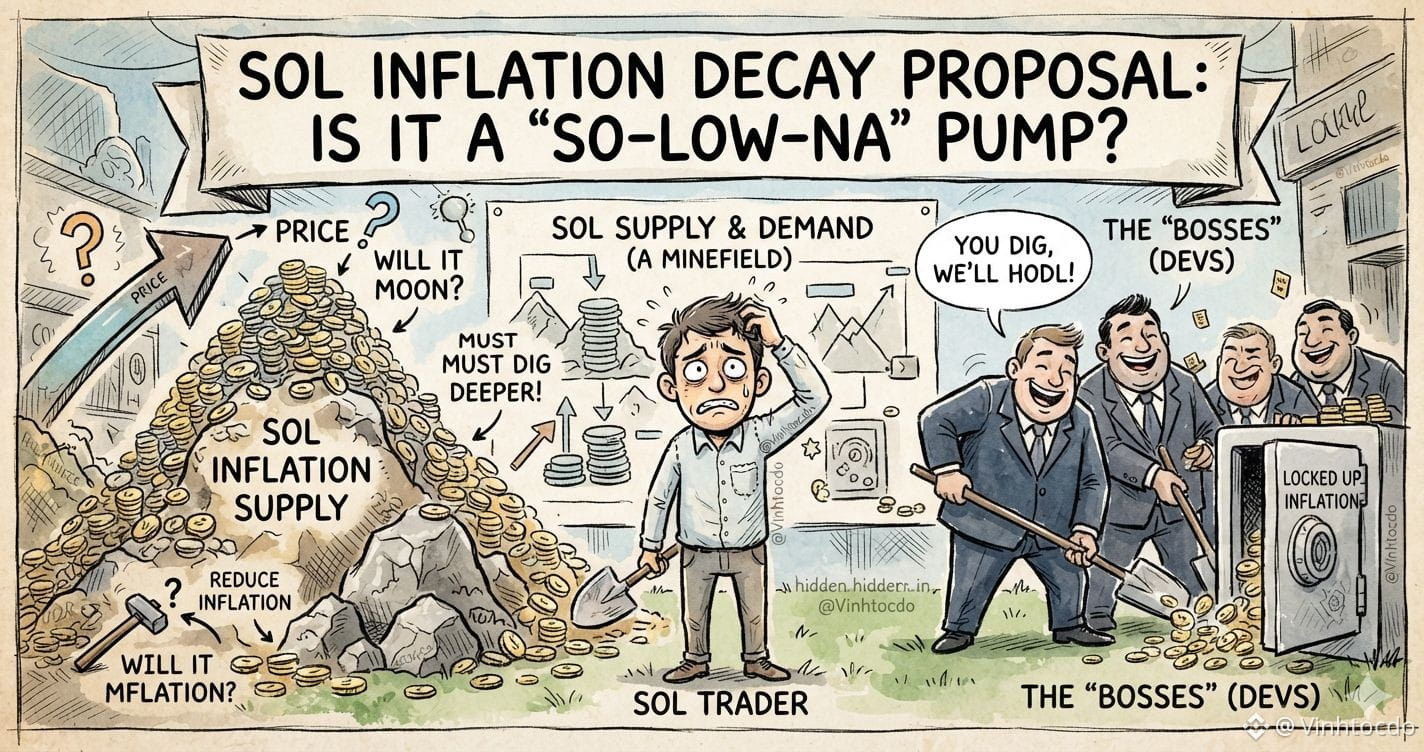
There's been a lot of buzz lately about doubling the annual inflation reduction rate for SOL from 15% to 30%. Are the Solana bigwigs planning to tighten the supply? 🧐
They might think that by playing with supply and demand, SOL's price will skyrocket! But honestly, just cutting supply won't tackle the root of the issue! We need to dig deeper, because if supply is squeezed and demand doesn't increase, then it's just a break-even game. As for how to dig deeper, that's for the execs to figure out—I’m just a trader, not a boss! 🤫
What should investors do?
Don't jump into FOMO just because of supply reduction news.
Keep a close eye on actual trading volumes on the network.
If you're staking SOL, brace yourself for gradually decreasing interest rates.
Note: This isn't financial advice!
This post isn’t a sales pitch, but if you're feeling generous, use referral code: VINHTOCDO to trade together! 🚀
#solana #Inflation #Binance #VINHTOCDO $SOL $BNB $BTC
{future}(BTCUSDT)
{future}(BNBUSDT)
{future}(SOLUSDT)
#solanaproposaltodoublesolinflationdecay
There's been a lot of buzz lately about doubling the annual inflation reduction rate for SOL from 15% to 30%. Are the Solana bigwigs planning to tighten the supply? 🧐
They might think that by playing with supply and demand, SOL's price will skyrocket! But honestly, just cutting supply won't tackle the root of the issue! We need to dig deeper, because if supply is squeezed and demand doesn't increase, then it's just a break-even game. As for how to dig deeper, that's for the execs to figure out—I’m just a trader, not a boss! 🤫
What should investors do?
Don't jump into FOMO just because of supply reduction news.
Keep a close eye on actual trading volumes on the network.
If you're staking SOL, brace yourself for gradually decreasing interest rates.
Note: This isn't financial advice!
This post isn’t a sales pitch, but if you're feeling generous, use referral code: VINHTOCDO to trade together! 🚀
#solana #Inflation #Binance #VINHTOCDO $SOL $BNB $BTC
There's been a lot of buzz lately about doubling the annual inflation reduction rate for SOL from 15% to 30%. Are the Solana bigwigs planning to tighten the supply? 🧐
They might think that by playing with supply and demand, SOL's price will skyrocket! But honestly, just cutting supply won't tackle the root of the issue! We need to dig deeper, because if supply is squeezed and demand doesn't increase, then it's just a break-even game. As for how to dig deeper, that's for the execs to figure out—I’m just a trader, not a boss! 🤫
What should investors do?
Don't jump into FOMO just because of supply reduction news.
Keep a close eye on actual trading volumes on the network.
If you're staking SOL, brace yourself for gradually decreasing interest rates.
Note: This isn't financial advice!
This post isn’t a sales pitch, but if you're feeling generous, use referral code: VINHTOCDO to trade together! 🚀
#solana #Inflation #Binance #VINHTOCDO $SOL $BNB $BTC
3
299

·
--
The hashtag #SolanaProposalToDoubleSOLInflationDecay refers to a new governance proposal that would make Solana (SOL) reduce its inflation rate twice as fast as it does today.
What is being proposed?
A proposal called SIMD-0550 suggests increasing Solana's annual disinflation rate from 15% to 30%. This does not increase inflation—it makes inflation fall more quickly over time.
If approved:
Solana's long-term inflation rate of 1.5% would be reached by 2029 instead of 2032.
About 18.9 million SOL fewer tokens would be issued over the next six years (worth roughly $1.5 billion at current prices).
Staking rewards would gradually decrease because fewer new SOL tokens would be created.
Why supporters like it
Reduces the growth of SOL's circulating supply.
May reduce selling pressure from newly issued tokens.
Could make SOL more attractive as a long-term asset if demand remains strong.
Concerns
Lower staking rewards could reduce income for validators and stakers.
Smaller validators may find it harder to remain profitable if rewards decline too quickly.
Bottom line: The proposal is generally viewed as potentially bullish for SOL's long-term tokenomics, but it could also reduce staking yields. It is only a governance proposal at this stage and has not yet been adopted.
The hashtag #SolanaProposalToDoubleSOLInflationDecay refers to a new governance proposal that would make Solana (SOL) reduce its inflation rate twice as fast as it does today.
What is being proposed?
A proposal called SIMD-0550 suggests increasing Solana's annual disinflation rate from 15% to 30%. This does not increase inflation—it makes inflation fall more quickly over time.
If approved:
Solana's long-term inflation rate of 1.5% would be reached by 2029 instead of 2032.
About 18.9 million SOL fewer tokens would be issued over the next six years (worth roughly $1.5 billion at current prices).
Staking rewards would gradually decrease because fewer new SOL tokens would be created.
Why supporters like it
Reduces the growth of SOL's circulating supply.
May reduce selling pressure from newly issued tokens.
Could make SOL more attractive as a long-term asset if demand remains strong.
Concerns
Lower staking rewards could reduce income for validators and stakers.
Smaller validators may find it harder to remain profitable if rewards decline too quickly.
Bottom line: The proposal is generally viewed as potentially bullish for SOL's long-term tokenomics, but it could also reduce staking yields. It is only a governance proposal at this stage and has not yet been adopted.
What is being proposed?
A proposal called SIMD-0550 suggests increasing Solana's annual disinflation rate from 15% to 30%. This does not increase inflation—it makes inflation fall more quickly over time.
If approved:
Solana's long-term inflation rate of 1.5% would be reached by 2029 instead of 2032.
About 18.9 million SOL fewer tokens would be issued over the next six years (worth roughly $1.5 billion at current prices).
Staking rewards would gradually decrease because fewer new SOL tokens would be created.
Why supporters like it
Reduces the growth of SOL's circulating supply.
May reduce selling pressure from newly issued tokens.
Could make SOL more attractive as a long-term asset if demand remains strong.
Concerns
Lower staking rewards could reduce income for validators and stakers.
Smaller validators may find it harder to remain profitable if rewards decline too quickly.
Bottom line: The proposal is generally viewed as potentially bullish for SOL's long-term tokenomics, but it could also reduce staking yields. It is only a governance proposal at this stage and has not yet been adopted.
45

The Solana community is discussing a proposal that would reduce SOL inflation faster than planned. The idea is getting mixed reactions, with supporters focused on token scarcity and others watching the impact on staking rewards.
#SolanaProposalToDoubleSOLInflationDecay
The Solana community is discussing a proposal that would reduce SOL inflation faster than planned. The idea is getting mixed reactions, with supporters focused on token scarcity and others watching the impact on staking rewards.
#SolanaProposalToDoubleSOLInflationDecay
#SolanaProposalToDoubleSOLInflationDecay
33

#SolanaProposalToDoubleSOLInflationDecay ⚡️ The change that could make $SOL more scarce
Solana might approve proposal SIMD-0550, aimed at doubling the rate of inflation reduction from 15% to 30% per annum. The goal: to reach a terminal inflation of 1.5% in 2.8 years instead of 5.7.
📊 What would change?
· Emission reduction: 18.9M SOL (~$1.5 billion) would be eliminated over six years.
· More SOL burned: daily transaction fees burned would jump from 650 SOL to 9,000 SOL.
· Staking yield: would drop from 5.84% to 4.34% (year 1).
🏛️ Who's behind it?
The proposal was presented by an engineer from Helius and has the public backing of Anatoly Yakovenko, co-founder of Solana Labs. The CEO of Anza confirmed that proposals SIMD-550 and SIMD-553 are close to being greenlit.
⚖️ Holders vs. Validators
Impact Group
Holders ✅ Less dilution → your tokens are worth more
Stakers ❌ Reduced staking income
⚠️ The Precedent
A similar proposal (SIMD-0228) was rejected in March 2025 with only 37.8% of the votes. This time, Yakovenko's backing could change the outcome.
🧠 What does it mean?
If approved, SOL will become a much scarcer asset in half the time. Fewer emissions = less selling pressure = bullish potential.
Do you think validators will accept lower income to make SOL more valuable? 👇
#solana #SOL #inflación #Gobernanza
#SolanaProposalToDoubleSOLInflationDecay ⚡️ The change that could make $SOL more scarce
Solana might approve proposal SIMD-0550, aimed at doubling the rate of inflation reduction from 15% to 30% per annum. The goal: to reach a terminal inflation of 1.5% in 2.8 years instead of 5.7.
📊 What would change?
· Emission reduction: 18.9M SOL (~$1.5 billion) would be eliminated over six years.
· More SOL burned: daily transaction fees burned would jump from 650 SOL to 9,000 SOL.
· Staking yield: would drop from 5.84% to 4.34% (year 1).
🏛️ Who's behind it?
The proposal was presented by an engineer from Helius and has the public backing of Anatoly Yakovenko, co-founder of Solana Labs. The CEO of Anza confirmed that proposals SIMD-550 and SIMD-553 are close to being greenlit.
⚖️ Holders vs. Validators
Impact Group
Holders ✅ Less dilution → your tokens are worth more
Stakers ❌ Reduced staking income
⚠️ The Precedent
A similar proposal (SIMD-0228) was rejected in March 2025 with only 37.8% of the votes. This time, Yakovenko's backing could change the outcome.
🧠 What does it mean?
If approved, SOL will become a much scarcer asset in half the time. Fewer emissions = less selling pressure = bullish potential.
Do you think validators will accept lower income to make SOL more valuable? 👇
#solana #SOL #inflación #Gobernanza
Solana might approve proposal SIMD-0550, aimed at doubling the rate of inflation reduction from 15% to 30% per annum. The goal: to reach a terminal inflation of 1.5% in 2.8 years instead of 5.7.
📊 What would change?
· Emission reduction: 18.9M SOL (~$1.5 billion) would be eliminated over six years.
· More SOL burned: daily transaction fees burned would jump from 650 SOL to 9,000 SOL.
· Staking yield: would drop from 5.84% to 4.34% (year 1).
🏛️ Who's behind it?
The proposal was presented by an engineer from Helius and has the public backing of Anatoly Yakovenko, co-founder of Solana Labs. The CEO of Anza confirmed that proposals SIMD-550 and SIMD-553 are close to being greenlit.
⚖️ Holders vs. Validators
Impact Group
Holders ✅ Less dilution → your tokens are worth more
Stakers ❌ Reduced staking income
⚠️ The Precedent
A similar proposal (SIMD-0228) was rejected in March 2025 with only 37.8% of the votes. This time, Yakovenko's backing could change the outcome.
🧠 What does it mean?
If approved, SOL will become a much scarcer asset in half the time. Fewer emissions = less selling pressure = bullish potential.
Do you think validators will accept lower income to make SOL more valuable? 👇
#solana #SOL #inflación #Gobernanza
8
9
2.8k

·
--
Bullish
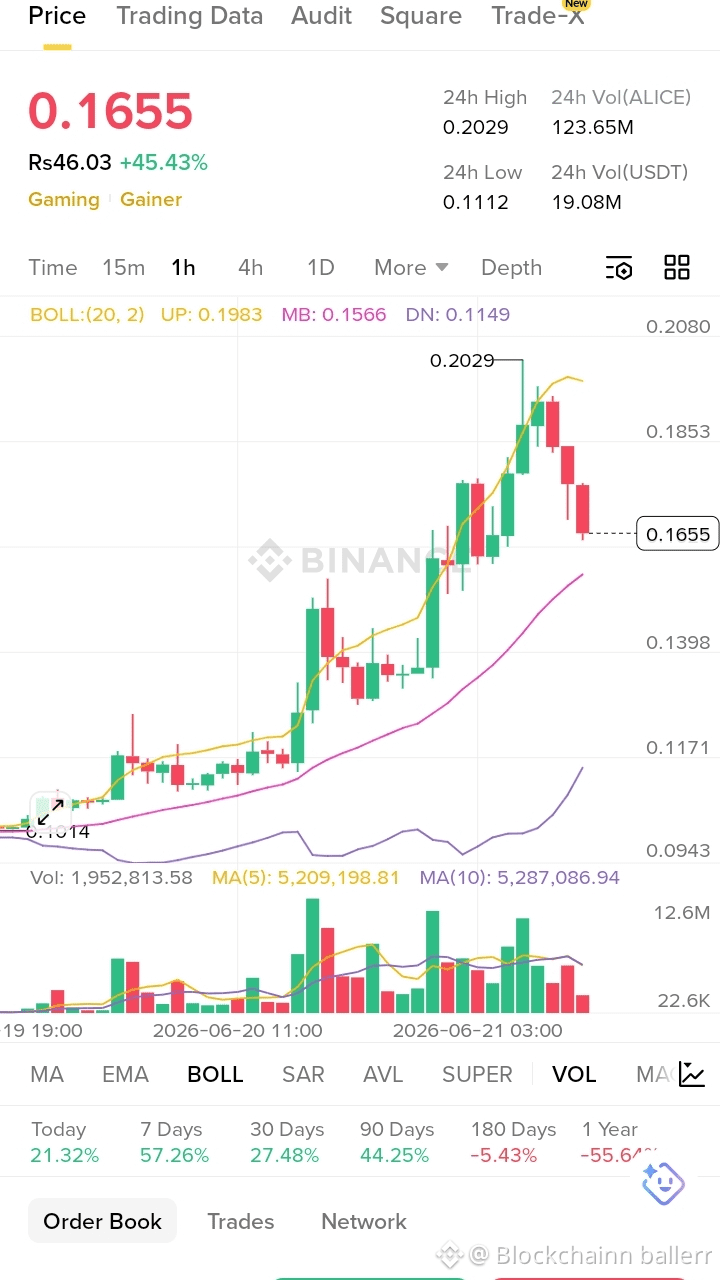
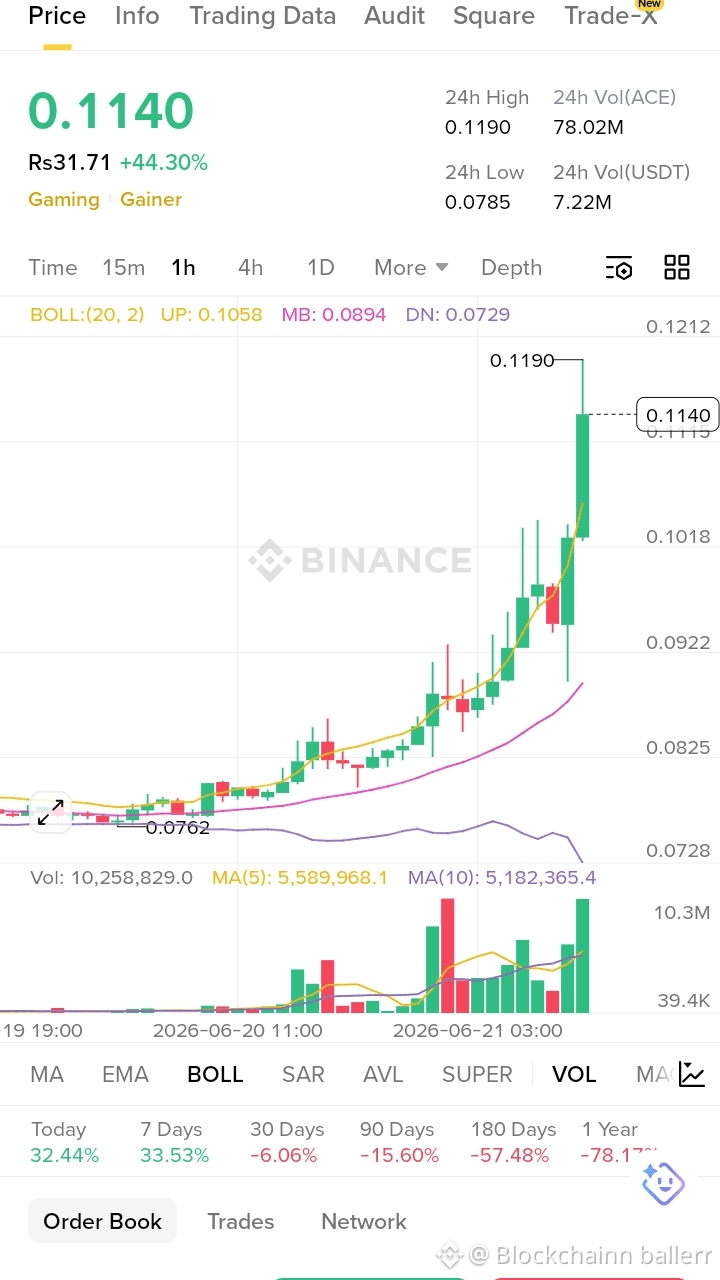
Top 3 gainers trade strategy 🚦🚦
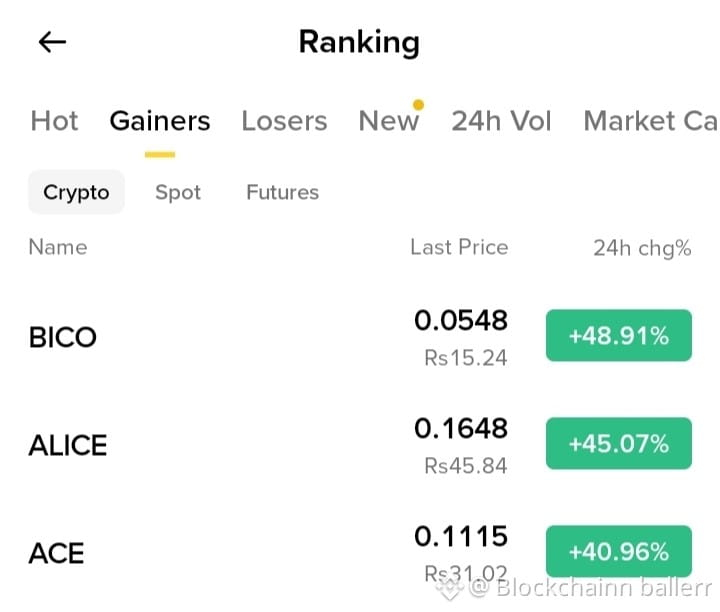
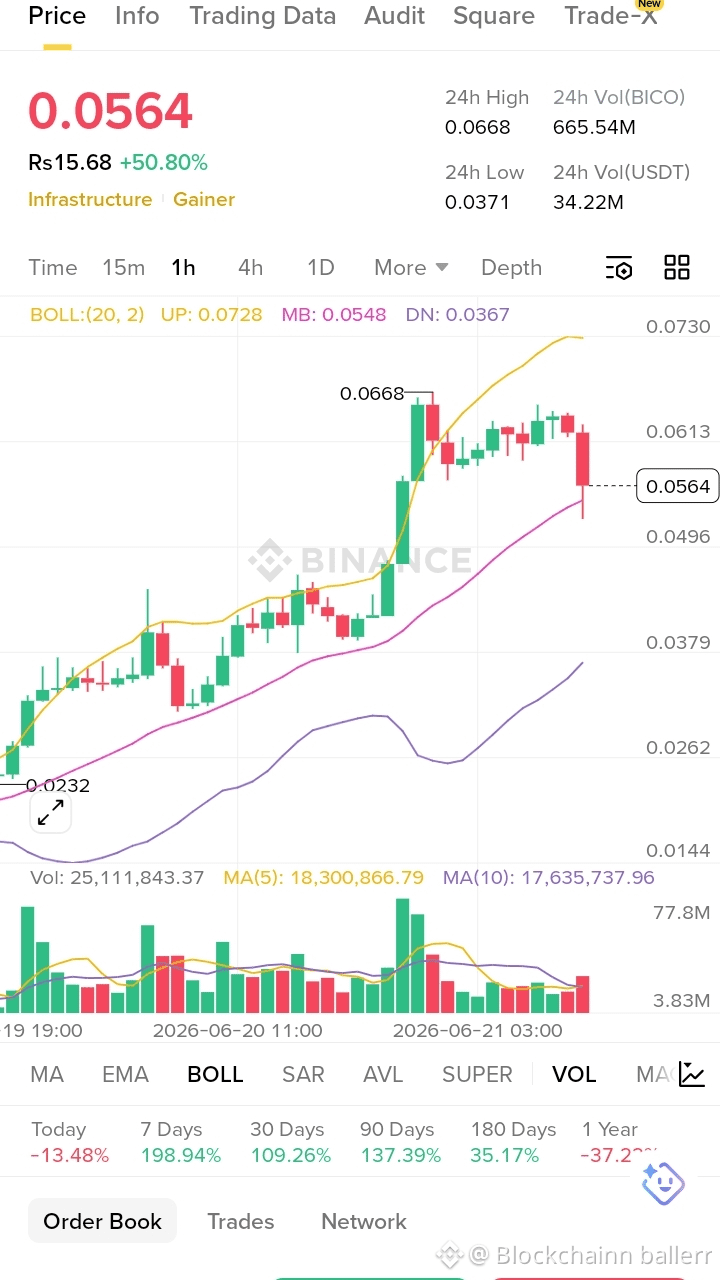
**Market Context for BICO, ALICE, and ACE**
The tokens listed in "image.png" are currently experiencing high volatility. When coins appear on "Top Gainer" lists, it often indicates short-term speculative interest, which can be followed by rapid pullbacks.
* **$ALICE (MyNeighborAlice):** Recent market analysis for ALICE suggests it has been trading in low-liquidity conditions. While some traders look for "breakout" or "dip-buying" opportunities in such assets, others note that a lack of sustained volume often leads to sluggish or erratic price action. Technical setups for ALICE often focus on support zones; for instance, some traders monitor the $0.10 range, though market conditions are subject to rapid change.
* **$BICO & $ACE :** These assets are currently exhibiting high 24-hour percentage gains as seen in "image.png". Assets with such sharp, sudden moves are frequently subject to "mean reversion" or profit-taking by early entrants.
### **Trading Considerations**
If you are planning to trade these assets, consider the following risk management practices:
* **Size Your Positions Small:** Given the high volatility, experts often suggest limiting position sizes to 1–3% of your total capital.
* **Use Stop-Losses:** Always define your exit point before entering a trade to protect your capital against sudden trend reversals.
* **Avoid Chasing Gains:** Because these coins are already identified as top gainers in "image.png," entering now carries the risk of "buying the top" just before a correction.
* **Diversify:** Relying solely on momentum-based "gainer" coins can be risky. Many investors balance their portfolios with "blue-chip assets, though these are subject to market trends.
trade here👇👇👇
#TrendingPredictions #TrenddingTopic #SolanaProposalToDoubleSOLInflationDecay #BullRunAhead #HotTrends
Top 3 gainers trade strategy 🚦🚦
**Market Context for BICO, ALICE, and ACE**
The tokens listed in "image.png" are currently experiencing high volatility. When coins appear on "Top Gainer" lists, it often indicates short-term speculative interest, which can be followed by rapid pullbacks.
* **$ALICE (MyNeighborAlice):** Recent market analysis for ALICE suggests it has been trading in low-liquidity conditions. While some traders look for "breakout" or "dip-buying" opportunities in such assets, others note that a lack of sustained volume often leads to sluggish or erratic price action. Technical setups for ALICE often focus on support zones; for instance, some traders monitor the $0.10 range, though market conditions are subject to rapid change.
* **$BICO & $ACE :** These assets are currently exhibiting high 24-hour percentage gains as seen in "image.png". Assets with such sharp, sudden moves are frequently subject to "mean reversion" or profit-taking by early entrants.
### **Trading Considerations**
If you are planning to trade these assets, consider the following risk management practices:
* **Size Your Positions Small:** Given the high volatility, experts often suggest limiting position sizes to 1–3% of your total capital.
* **Use Stop-Losses:** Always define your exit point before entering a trade to protect your capital against sudden trend reversals.
* **Avoid Chasing Gains:** Because these coins are already identified as top gainers in "image.png," entering now carries the risk of "buying the top" just before a correction.
* **Diversify:** Relying solely on momentum-based "gainer" coins can be risky. Many investors balance their portfolios with "blue-chip assets, though these are subject to market trends.
trade here👇👇👇
#TrendingPredictions #TrenddingTopic #SolanaProposalToDoubleSOLInflationDecay #BullRunAhead #HotTrends
**Market Context for BICO, ALICE, and ACE**
The tokens listed in "image.png" are currently experiencing high volatility. When coins appear on "Top Gainer" lists, it often indicates short-term speculative interest, which can be followed by rapid pullbacks.
* **$ALICE (MyNeighborAlice):** Recent market analysis for ALICE suggests it has been trading in low-liquidity conditions. While some traders look for "breakout" or "dip-buying" opportunities in such assets, others note that a lack of sustained volume often leads to sluggish or erratic price action. Technical setups for ALICE often focus on support zones; for instance, some traders monitor the $0.10 range, though market conditions are subject to rapid change.
* **$BICO & $ACE :** These assets are currently exhibiting high 24-hour percentage gains as seen in "image.png". Assets with such sharp, sudden moves are frequently subject to "mean reversion" or profit-taking by early entrants.
### **Trading Considerations**
If you are planning to trade these assets, consider the following risk management practices:
* **Size Your Positions Small:** Given the high volatility, experts often suggest limiting position sizes to 1–3% of your total capital.
* **Use Stop-Losses:** Always define your exit point before entering a trade to protect your capital against sudden trend reversals.
* **Avoid Chasing Gains:** Because these coins are already identified as top gainers in "image.png," entering now carries the risk of "buying the top" just before a correction.
* **Diversify:** Relying solely on momentum-based "gainer" coins can be risky. Many investors balance their portfolios with "blue-chip assets, though these are subject to market trends.
trade here👇👇👇
#TrendingPredictions #TrenddingTopic #SolanaProposalToDoubleSOLInflationDecay #BullRunAhead #HotTrends
190

·
--
Bullish
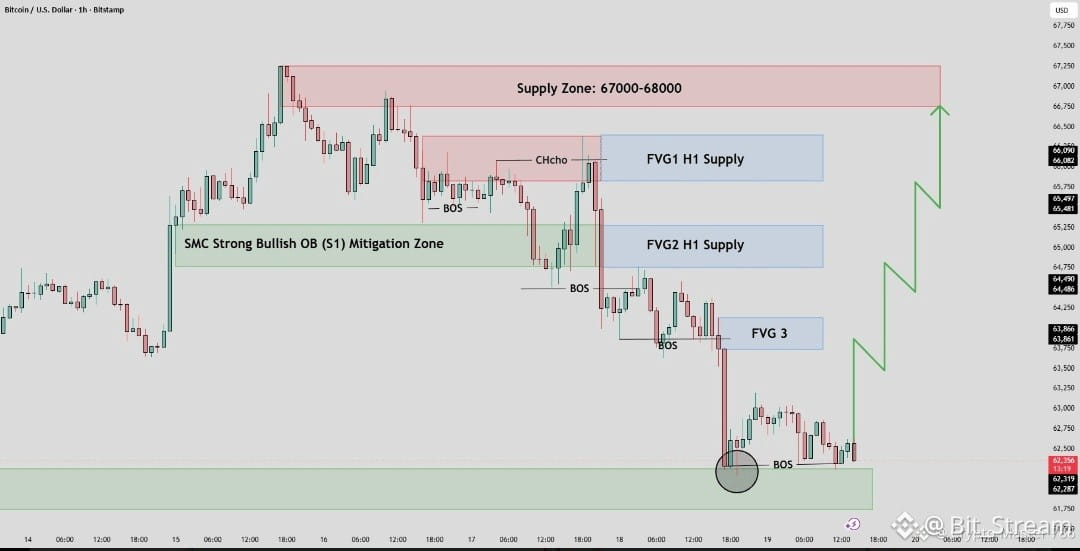
attempting to stabilize after a liquidity sweep below recent lows, with price now reacting from a key demand zone around the low 60Ks. The bounce is visible, but confirmation is still needed through a clear shift in structure on lower timeframes.
Bullish recovery scenario remains valid as long as price holds above the 61.8K–62.3K region. That area is acting as the main defense zone where buyers are trying to establish control again.
Recovery targets remain:
Target 1: 63,500
Target 2: 65,000
Target 3: 67,000
$BTC can break and hold above recent lower highs, it would strengthen the case for continued upside toward the overhead liquidity zones. A sustained H1 close below 61,800 would weaken this structure and reopen downside risk toward lower liquidity levels.
{spot}(BTCUSDT)
#JapanCorporatePensionFundAllocates1%ToCrypto #SouthKoreaCryptoTaxPetitionReachesParliament #TrumpSaysCollapseRiskDroveUSIranDeal #SolanaProposalToDoubleSOLInflationDecay #MSCIGivesSpaceXLowestESGRatingCCC
attempting to stabilize after a liquidity sweep below recent lows, with price now reacting from a key demand zone around the low 60Ks. The bounce is visible, but confirmation is still needed through a clear shift in structure on lower timeframes.
Bullish recovery scenario remains valid as long as price holds above the 61.8K–62.3K region. That area is acting as the main defense zone where buyers are trying to establish control again.
Recovery targets remain:
Target 1: 63,500
Target 2: 65,000
Target 3: 67,000
$BTC can break and hold above recent lower highs, it would strengthen the case for continued upside toward the overhead liquidity zones. A sustained H1 close below 61,800 would weaken this structure and reopen downside risk toward lower liquidity levels.
#JapanCorporatePensionFundAllocates1%ToCrypto #SouthKoreaCryptoTaxPetitionReachesParliament #TrumpSaysCollapseRiskDroveUSIranDeal #SolanaProposalToDoubleSOLInflationDecay #MSCIGivesSpaceXLowestESGRatingCCC
Bullish recovery scenario remains valid as long as price holds above the 61.8K–62.3K region. That area is acting as the main defense zone where buyers are trying to establish control again.
Recovery targets remain:
Target 1: 63,500
Target 2: 65,000
Target 3: 67,000
$BTC can break and hold above recent lower highs, it would strengthen the case for continued upside toward the overhead liquidity zones. A sustained H1 close below 61,800 would weaken this structure and reopen downside risk toward lower liquidity levels.
#JapanCorporatePensionFundAllocates1%ToCrypto #SouthKoreaCryptoTaxPetitionReachesParliament #TrumpSaysCollapseRiskDroveUSIranDeal #SolanaProposalToDoubleSOLInflationDecay #MSCIGivesSpaceXLowestESGRatingCCC
2
68


·
--
🚀 $TNSR USDT LONG SIGNAL 🚀
📍 Entry: $0.0495 - $0.0505
🎯 Target 1: $0.0555
🎯 Target 2: $0.0600
🎯 Target 3: $0.0650
🛡️ Stop Loss: $0.0460
TNSR is showing strong bullish momentum after a sharp breakout and is consolidating near the highs. Holding above the $0.049 support zone could fuel another leg up toward fresh highs. 📈🔥
#SolanaProposalToDoubleSOLInflationDecay #TrumpSaysCollapseRiskDroveUSIranDeal StrategySTRCDropsBelow$83Intraday#PolymarketFakeTradingVideoWSJReport
{future}(TNSRUSDT)
🚀 $TNSR USDT LONG SIGNAL 🚀
📍 Entry: $0.0495 - $0.0505
🎯 Target 1: $0.0555
🎯 Target 2: $0.0600
🎯 Target 3: $0.0650
🛡️ Stop Loss: $0.0460
TNSR is showing strong bullish momentum after a sharp breakout and is consolidating near the highs. Holding above the $0.049 support zone could fuel another leg up toward fresh highs. 📈🔥
#SolanaProposalToDoubleSOLInflationDecay #TrumpSaysCollapseRiskDroveUSIranDeal StrategySTRCDropsBelow$83Intraday#PolymarketFakeTradingVideoWSJReport
📍 Entry: $0.0495 - $0.0505
🎯 Target 1: $0.0555
🎯 Target 2: $0.0600
🎯 Target 3: $0.0650
🛡️ Stop Loss: $0.0460
TNSR is showing strong bullish momentum after a sharp breakout and is consolidating near the highs. Holding above the $0.049 support zone could fuel another leg up toward fresh highs. 📈🔥
#SolanaProposalToDoubleSOLInflationDecay #TrumpSaysCollapseRiskDroveUSIranDeal StrategySTRCDropsBelow$83Intraday#PolymarketFakeTradingVideoWSJReport
2
190

·
--
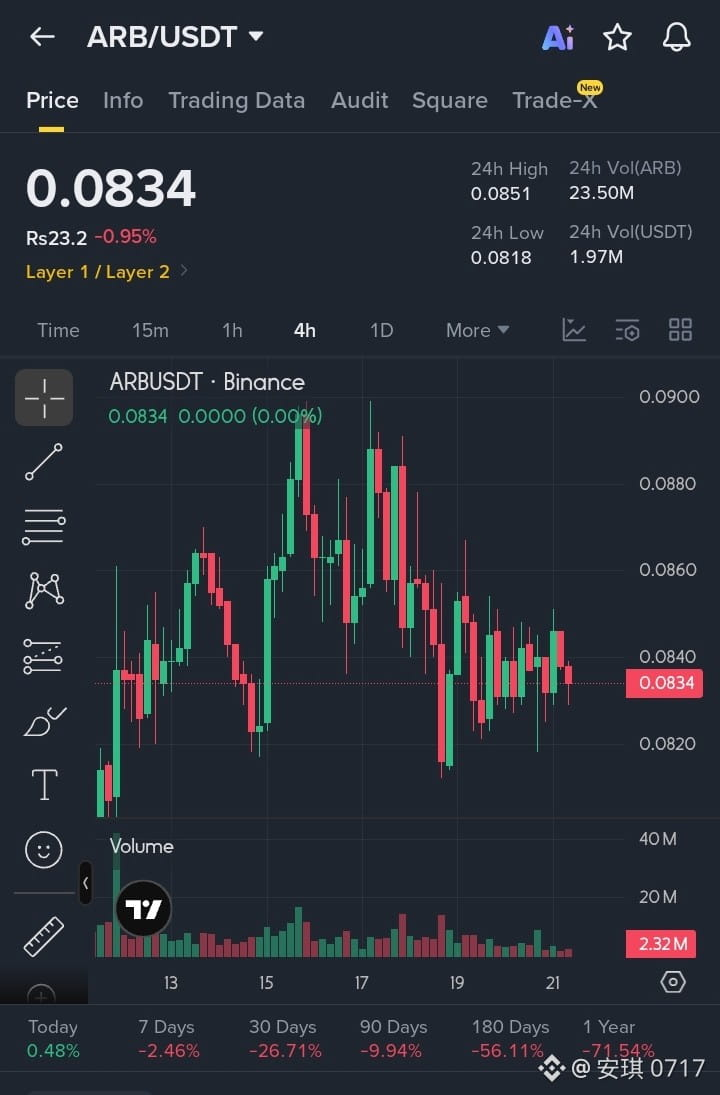
🔷 Long signals on $ARB 🔥🔥🔥– Arbitrum bouncing from demand – reversal loading
🎯 Target: 0.0851
🚀 Entry: 0.0825 – 0.0835
✅ TP1: 0.0840
✅ TP2: 0.0851
🛑 SL: 0.0815
Direction: Long
#PolymarketFakeTradingVideoWSJReport #SouthKoreaCryptoTaxPetitionReachesParliament #SolanaProposalToDoubleSOLInflationDecay #THORChainRecoveryEntersFinalPhase #IranMandatesHormuzShipInsurance $BICO $ALICE
🔷 Long signals on $ARB 🔥🔥🔥– Arbitrum bouncing from demand – reversal loading
🎯 Target: 0.0851
🚀 Entry: 0.0825 – 0.0835
✅ TP1: 0.0840
✅ TP2: 0.0851
🛑 SL: 0.0815
Direction: Long
#PolymarketFakeTradingVideoWSJReport #SouthKoreaCryptoTaxPetitionReachesParliament #SolanaProposalToDoubleSOLInflationDecay #THORChainRecoveryEntersFinalPhase #IranMandatesHormuzShipInsurance $BICO $ALICE
🎯 Target: 0.0851
🚀 Entry: 0.0825 – 0.0835
✅ TP1: 0.0840
✅ TP2: 0.0851
🛑 SL: 0.0815
Direction: Long
#PolymarketFakeTradingVideoWSJReport #SouthKoreaCryptoTaxPetitionReachesParliament #SolanaProposalToDoubleSOLInflationDecay #THORChainRecoveryEntersFinalPhase #IranMandatesHormuzShipInsurance $BICO $ALICE
1
233


·
--
Bullish
⚡ THE$SPCXB WAIT IS OVER! ⚡
The market is coiling like a spring, and the next move could be explosive. 📈🔥 Momentum is building, volume is rising, and traders are locking in their positions.
🚀 Breakout loading...
🔥 Volatility incoming...
💎 Opportunity knocking...
When the move starts, it won't ask for permission. Will you be ready? 👀💥
#Trading #Crypto #Breakout #BullRun #PriceAction #MarketWatch #Momentum #Binance #Traders #Investing 🚀📊🔥
#SolanaProposalToDoubleSOLInflationDecay MEVBotDrained$7.5MInCounterHoneypotMEVBotDrained$7.5MInCounterHoneypot$TSLAB MEVBotDrained$7.5MInCounterHoneypotMEVBotDrained$7.5MInCounterHoneypotMEVBotDrained$7.5MInCounterHoneypot#SouthKoreaCryptoTaxPetitionReachesParliament #PolymarketFakeTradingVideoWSJReport StrategySTRCDropsBelow$83IntradayStrategySTRCDropsBelow$83Intraday#SouthKoreaCryptoTaxPetitionReachesParliament #SouthKoreaCryptoTaxPetitionReachesParliament
⚡ THE$SPCXB WAIT IS OVER! ⚡
The market is coiling like a spring, and the next move could be explosive. 📈🔥 Momentum is building, volume is rising, and traders are locking in their positions.
🚀 Breakout loading...
🔥 Volatility incoming...
💎 Opportunity knocking...
When the move starts, it won't ask for permission. Will you be ready? 👀💥
#Trading #Crypto #Breakout #BullRun #PriceAction #MarketWatch #Momentum #Binance #Traders #Investing 🚀📊🔥
#SolanaProposalToDoubleSOLInflationDecay MEVBotDrained$7.5MInCounterHoneypotMEVBotDrained$7.5MInCounterHoneypot$TSLAB MEVBotDrained$7.5MInCounterHoneypotMEVBotDrained$7.5MInCounterHoneypotMEVBotDrained$7.5MInCounterHoneypot#SouthKoreaCryptoTaxPetitionReachesParliament #PolymarketFakeTradingVideoWSJReport StrategySTRCDropsBelow$83IntradayStrategySTRCDropsBelow$83Intraday#SouthKoreaCryptoTaxPetitionReachesParliament #SouthKoreaCryptoTaxPetitionReachesParliament
The market is coiling like a spring, and the next move could be explosive. 📈🔥 Momentum is building, volume is rising, and traders are locking in their positions.
🚀 Breakout loading...
🔥 Volatility incoming...
💎 Opportunity knocking...
When the move starts, it won't ask for permission. Will you be ready? 👀💥
#Trading #Crypto #Breakout #BullRun #PriceAction #MarketWatch #Momentum #Binance #Traders #Investing 🚀📊🔥
#SolanaProposalToDoubleSOLInflationDecay MEVBotDrained$7.5MInCounterHoneypotMEVBotDrained$7.5MInCounterHoneypot$TSLAB MEVBotDrained$7.5MInCounterHoneypotMEVBotDrained$7.5MInCounterHoneypotMEVBotDrained$7.5MInCounterHoneypot#SouthKoreaCryptoTaxPetitionReachesParliament #PolymarketFakeTradingVideoWSJReport StrategySTRCDropsBelow$83IntradayStrategySTRCDropsBelow$83Intraday#SouthKoreaCryptoTaxPetitionReachesParliament #SouthKoreaCryptoTaxPetitionReachesParliament
77

·
--
Bullish
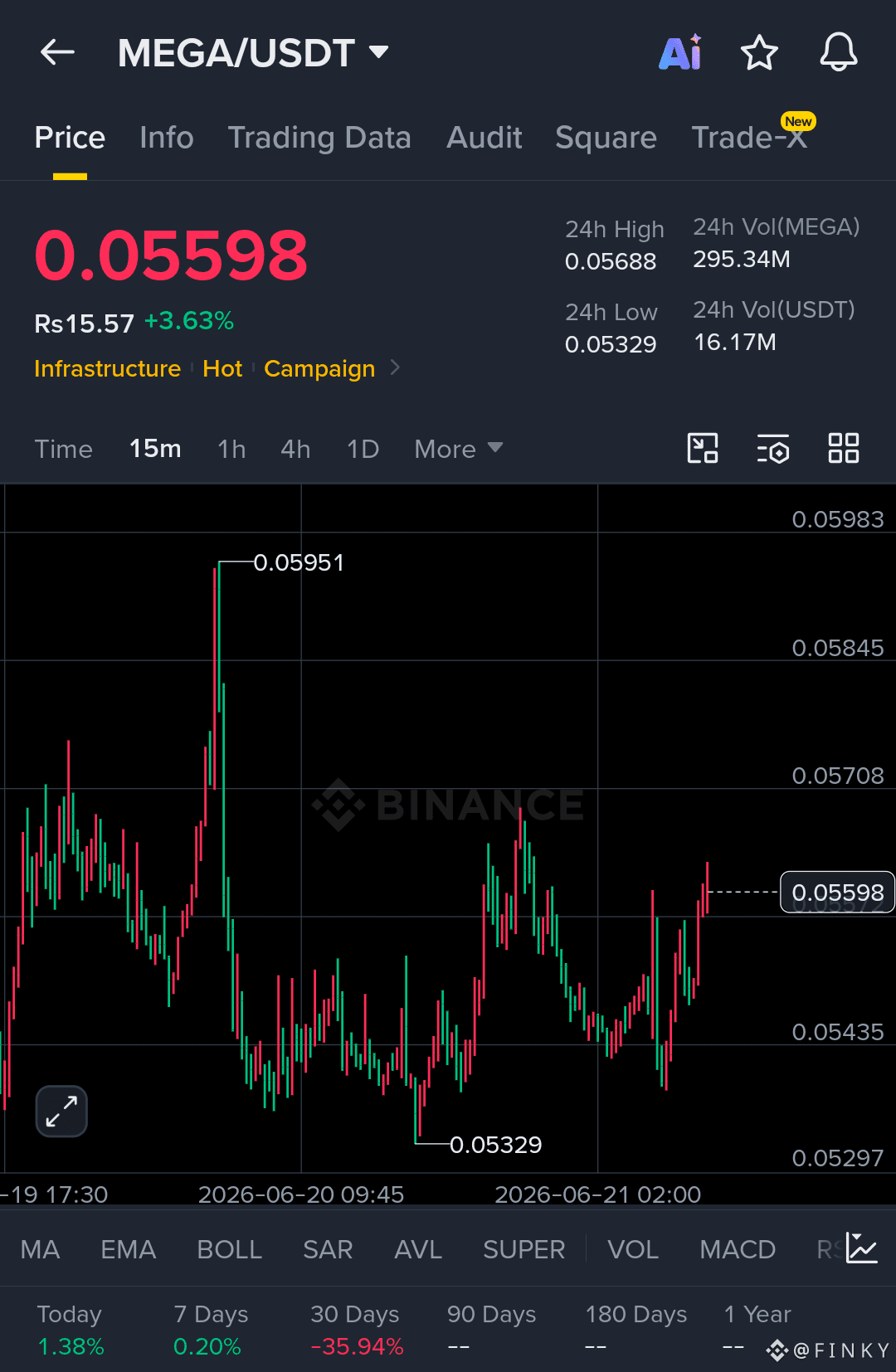
🚀 $MEGA /USDT Looks Ready for Another Move
After spending some time consolidating, MEGA is showing fresh strength again. The 0.0540 area continues to hold well, and buyers are slowly building higher lows, which is often a sign that momentum is returning.
📍 Entry Zone: 0.0550 - 0.0560
🎯 Target 1: 0.0580
🎯 Target 2: 0.0610
🎯 Target 3: 0.0650
🛡 Stop Loss: 0.0530
The key level to watch is 0.0570. A clean break above that area could bring stronger buying pressure and open the door for a fast move toward higher resistance levels.
MEGA is quietly building strength, and sometimes the best moves begin when most people are still watching from the sidelines. Keep this one on your radar, because a breakout from this range could turn into something special.
$MEGA
{spot}(MEGAUSDT)
#VanceSeesNoEvidenceOfHormuzClosure #SolanaProposalToDoubleSOLInflationDecay #THORChainRecoveryEntersFinalPhase #IranMandatesHormuzShipInsurance StrategyReservesExceedDebtBy$48B#FINKY
🚀 $MEGA /USDT Looks Ready for Another Move
After spending some time consolidating, MEGA is showing fresh strength again. The 0.0540 area continues to hold well, and buyers are slowly building higher lows, which is often a sign that momentum is returning.
📍 Entry Zone: 0.0550 - 0.0560
🎯 Target 1: 0.0580
🎯 Target 2: 0.0610
🎯 Target 3: 0.0650
🛡 Stop Loss: 0.0530
The key level to watch is 0.0570. A clean break above that area could bring stronger buying pressure and open the door for a fast move toward higher resistance levels.
MEGA is quietly building strength, and sometimes the best moves begin when most people are still watching from the sidelines. Keep this one on your radar, because a breakout from this range could turn into something special.
$MEGA
#VanceSeesNoEvidenceOfHormuzClosure #SolanaProposalToDoubleSOLInflationDecay #THORChainRecoveryEntersFinalPhase #IranMandatesHormuzShipInsurance StrategyReservesExceedDebtBy$48B#FINKY
After spending some time consolidating, MEGA is showing fresh strength again. The 0.0540 area continues to hold well, and buyers are slowly building higher lows, which is often a sign that momentum is returning.
📍 Entry Zone: 0.0550 - 0.0560
🎯 Target 1: 0.0580
🎯 Target 2: 0.0610
🎯 Target 3: 0.0650
🛡 Stop Loss: 0.0530
The key level to watch is 0.0570. A clean break above that area could bring stronger buying pressure and open the door for a fast move toward higher resistance levels.
MEGA is quietly building strength, and sometimes the best moves begin when most people are still watching from the sidelines. Keep this one on your radar, because a breakout from this range could turn into something special.
$MEGA
#VanceSeesNoEvidenceOfHormuzClosure #SolanaProposalToDoubleSOLInflationDecay #THORChainRecoveryEntersFinalPhase #IranMandatesHormuzShipInsurance StrategyReservesExceedDebtBy$48B#FINKY
1
170

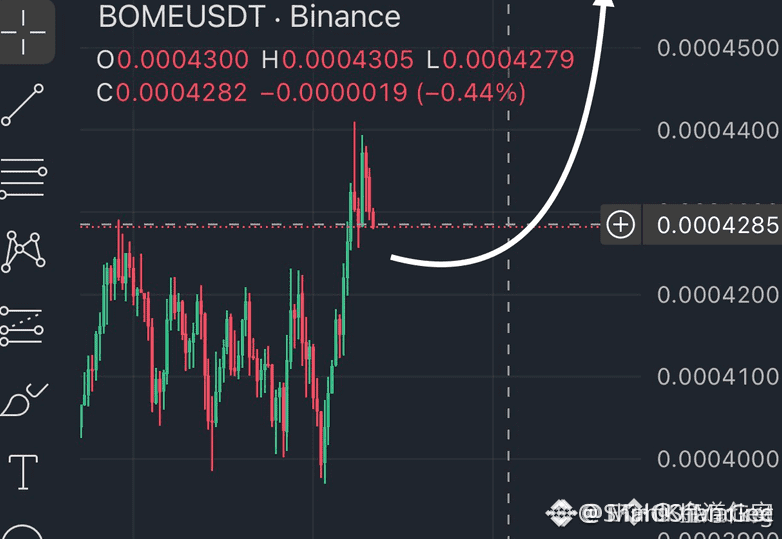
BOME/USDT – Latest Short Analysis (June 2026)
Bullish Factors
$BOME is showing resilience within the meme-coin sector and has slightly outperformed the broader crypto market over the past week.
Active trading volume and renewed interest in Solana meme coins could support short-term upward moves.
Bearish Factors
Trading activity has recently declined, indicating weaker momentum and reduced speculative interest.
BOME remains more than 98% below its all-time high, showing that long-term recovery is still a challenge.
Meme tokens remain highly volatile and are heavily dependent on market sentiment.
Outlook $BOME /USDT is currently in a neutral-to-cautious trend. A break above key resistance levels with stronger volume could trigger a bullish rally, while weak market sentiment may keep the token range-bound or under pressure in the short term.
#BombsAndOpinions #BombieToken #BomBitCrypto #VanceSeesNoEvidenceOfHormuzClosure #SolanaProposalToDoubleSOLInflationDecay
{future}(BOMEUSDT)
BOME/USDT – Latest Short Analysis (June 2026)
Bullish Factors
$BOME is showing resilience within the meme-coin sector and has slightly outperformed the broader crypto market over the past week.
Active trading volume and renewed interest in Solana meme coins could support short-term upward moves.
Bearish Factors
Trading activity has recently declined, indicating weaker momentum and reduced speculative interest.
BOME remains more than 98% below its all-time high, showing that long-term recovery is still a challenge.
Meme tokens remain highly volatile and are heavily dependent on market sentiment.
Outlook $BOME /USDT is currently in a neutral-to-cautious trend. A break above key resistance levels with stronger volume could trigger a bullish rally, while weak market sentiment may keep the token range-bound or under pressure in the short term.
#BombsAndOpinions #BombieToken #BomBitCrypto #VanceSeesNoEvidenceOfHormuzClosure #SolanaProposalToDoubleSOLInflationDecay
Bullish Factors
$BOME is showing resilience within the meme-coin sector and has slightly outperformed the broader crypto market over the past week.
Active trading volume and renewed interest in Solana meme coins could support short-term upward moves.
Bearish Factors
Trading activity has recently declined, indicating weaker momentum and reduced speculative interest.
BOME remains more than 98% below its all-time high, showing that long-term recovery is still a challenge.
Meme tokens remain highly volatile and are heavily dependent on market sentiment.
Outlook $BOME /USDT is currently in a neutral-to-cautious trend. A break above key resistance levels with stronger volume could trigger a bullish rally, while weak market sentiment may keep the token range-bound or under pressure in the short term.
#BombsAndOpinions #BombieToken #BomBitCrypto #VanceSeesNoEvidenceOfHormuzClosure #SolanaProposalToDoubleSOLInflationDecay
120

·
--
Bearish
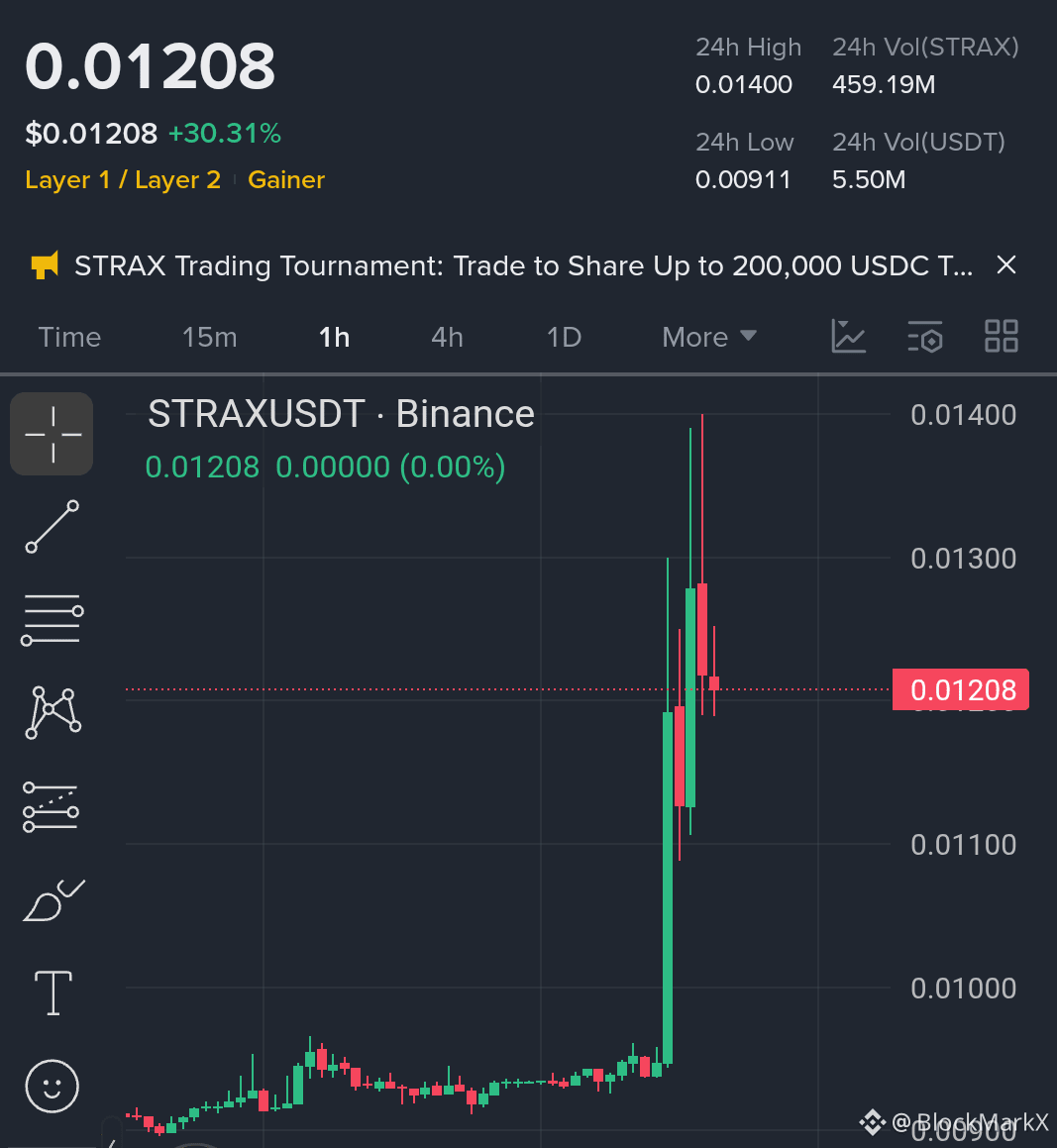
$STRAX SHORT SETUP
Entry: 0.0119 – 0.0121
🛑 Stop: 0.0128
🎯 TP1: 0.0113
🎯 TP2: 0.0107
🎯 TP3: 0.0100
Take profit step by step, move stop to breakeven after TP1, and let the trade run.
Short here 👇🏻
{spot}(STRAXUSDT)
{future}(BTRUSDT)
{future}(BTWUSDT)
#SolanaProposalToDoubleSOLInflationDecay
$STRAX SHORT SETUP
Entry: 0.0119 – 0.0121
🛑 Stop: 0.0128
🎯 TP1: 0.0113
🎯 TP2: 0.0107
🎯 TP3: 0.0100
Take profit step by step, move stop to breakeven after TP1, and let the trade run.
Short here 👇🏻
#SolanaProposalToDoubleSOLInflationDecay
Entry: 0.0119 – 0.0121
🛑 Stop: 0.0128
🎯 TP1: 0.0113
🎯 TP2: 0.0107
🎯 TP3: 0.0100
Take profit step by step, move stop to breakeven after TP1, and let the trade run.
Short here 👇🏻
#SolanaProposalToDoubleSOLInflationDecay
185

·
--
Bullish
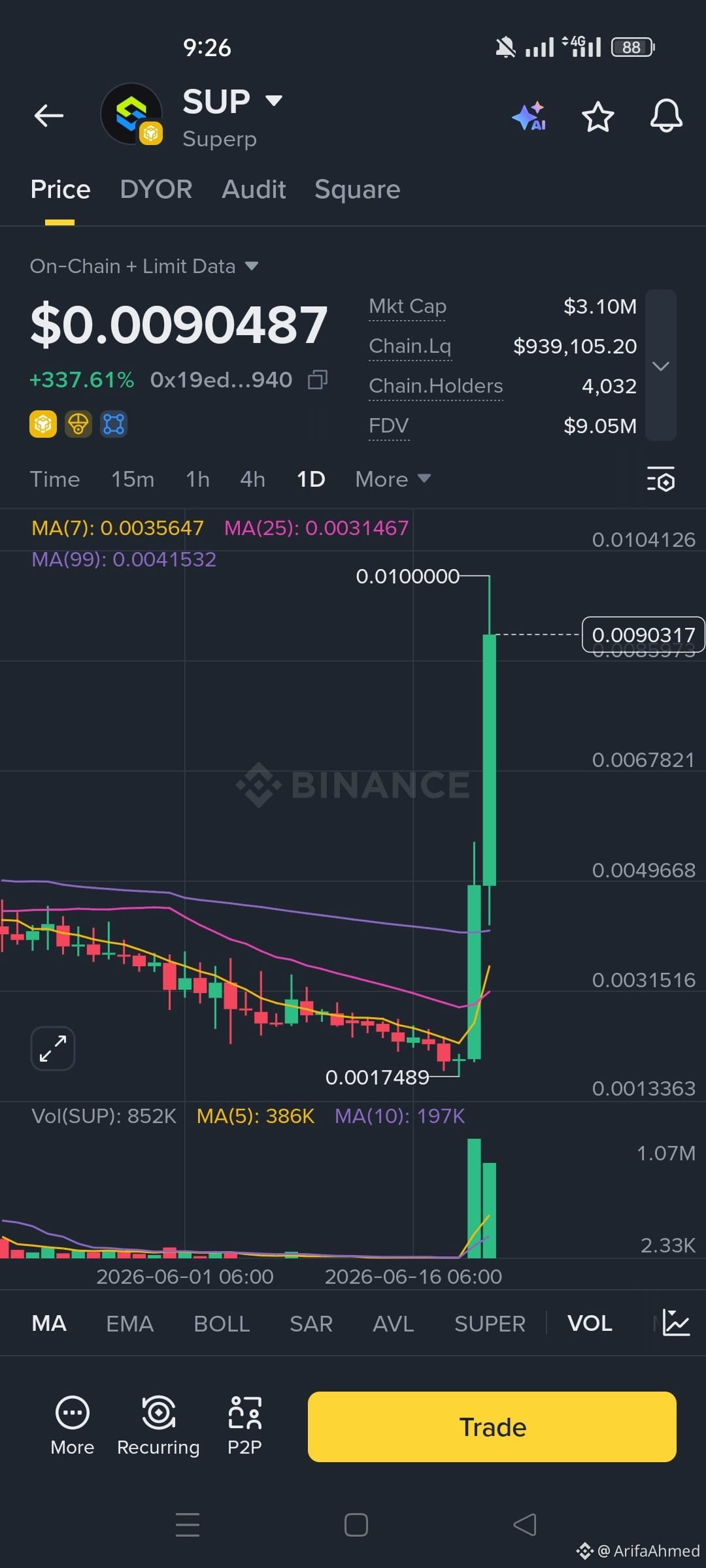
$SUP run +337% gain all ready done.
StrategySTRCDropsBelow$83Intraday
#VanceSeesNoEvidenceOfHormuzClosure
#TrumpSaysCollapseRiskDroveUSIranDeal
MEVBotDrained$7.5MInCounterHoneypot
#SolanaProposalToDoubleSOLInflationDecay
$SUP run +337% gain all ready done.
StrategySTRCDropsBelow$83Intraday
#VanceSeesNoEvidenceOfHormuzClosure
#TrumpSaysCollapseRiskDroveUSIranDeal
MEVBotDrained$7.5MInCounterHoneypot
#SolanaProposalToDoubleSOLInflationDecay
StrategySTRCDropsBelow$83Intraday
#VanceSeesNoEvidenceOfHormuzClosure
#TrumpSaysCollapseRiskDroveUSIranDeal
MEVBotDrained$7.5MInCounterHoneypot
#SolanaProposalToDoubleSOLInflationDecay
1
292
Log in to explore more content
Join global crypto users on Binance Square
⚡️ Get latest and useful information about crypto.
💬 Trusted by the world’s largest crypto exchange.
👍 Discover real insights from verified creators.
Email / Phone number
Trending Topics
1
#BitcoinClears$85200
2,060 views
95 Discussing
2
#AltcoinSeasonIndexHoldsAbove60For5Days
16,326 views
622 Discussing
3
#USADPAdds90000JobsInSeptember
4,740 views
326 Discussing
4
#USCorePCEEasesTo3%InAugust
4,366 views
281 Discussing
5
#KospiPostsWorstQuarterSince2020
4,240 views
313 Discussing
6
#SECToClarifyOnChainFundraisingRules
12,124 views
489 Discussing
7
#UKFCAOpensCryptoFirmAuthorization
15,008 views
451 Discussing
8
#JapanMOFStudyGroupOnTokenizedGovtBonds
12,965 views
364 Discussing
9
#QNTRises287%
59,974 views
774 Discussing
10
#TrumpRejectsAIRulesForVoluntaryAudits
37,530 views
688 Discussing