

Zyn_trix
14.5k Posts

Zyn_trix
 Square Verified+
Report
Block User
Building wealth, one sat at a time | Sharing my crypto journey...
Open Trade
Frequent Trader
1.2 Years
15 Following
39.2K+ Followers
38.2K+ Liked
Posts
Portfolio
All
Quotes
Live
·
--
Bullish
$牛来 — Momentum Is Starting to Wake Up
Price: 0.11346
24H Change: +2.69%
24H High: 0.12154
24H Low: 0.10581
24H Volume: 209.42M
USDT Volume: 23.63M
The 15M chart shows a solid recovery from 0.10972, with price now holding above 0.11266. The latest green candle pushed into 0.11432 resistance, so this is an important area to watch.
Entry: 0.1126–0.1135
Stop Loss: 0.1093
TP1: 0.1143
TP2: 0.1159
TP3: 0.1173
A clean break and hold above 0.11432 could open the way toward the next resistance zones. If 0.11100 fails, momentum could weaken.
Stay disciplined. Let price action confirm the setup.
{spot}(牛来USDT)
#OpenAIDelaysGPT6.1OverSafetyIssues #HackersDrainOver12.4MXRPFromDCENTWallets #UKFCAWinsCourtOrderToRecover851400Pounds #ChainlinkLaunchesCCIP2WithEnterpriseVerification #QNTFallsOver40%FromMorningHigh
$牛来 — Momentum Is Starting to Wake Up
Price: 0.11346
24H Change: +2.69%
24H High: 0.12154
24H Low: 0.10581
24H Volume: 209.42M
USDT Volume: 23.63M
The 15M chart shows a solid recovery from 0.10972, with price now holding above 0.11266. The latest green candle pushed into 0.11432 resistance, so this is an important area to watch.
Entry: 0.1126–0.1135
Stop Loss: 0.1093
TP1: 0.1143
TP2: 0.1159
TP3: 0.1173
A clean break and hold above 0.11432 could open the way toward the next resistance zones. If 0.11100 fails, momentum could weaken.
Stay disciplined. Let price action confirm the setup.
#OpenAIDelaysGPT6.1OverSafetyIssues #HackersDrainOver12.4MXRPFromDCENTWallets #UKFCAWinsCourtOrderToRecover851400Pounds #ChainlinkLaunchesCCIP2WithEnterpriseVerification #QNTFallsOver40%FromMorningHigh
Price: 0.11346
24H Change: +2.69%
24H High: 0.12154
24H Low: 0.10581
24H Volume: 209.42M
USDT Volume: 23.63M
The 15M chart shows a solid recovery from 0.10972, with price now holding above 0.11266. The latest green candle pushed into 0.11432 resistance, so this is an important area to watch.
Entry: 0.1126–0.1135
Stop Loss: 0.1093
TP1: 0.1143
TP2: 0.1159
TP3: 0.1173
A clean break and hold above 0.11432 could open the way toward the next resistance zones. If 0.11100 fails, momentum could weaken.
Stay disciplined. Let price action confirm the setup.
#OpenAIDelaysGPT6.1OverSafetyIssues #HackersDrainOver12.4MXRPFromDCENTWallets #UKFCAWinsCourtOrderToRecover851400Pounds #ChainlinkLaunchesCCIP2WithEnterpriseVerification #QNTFallsOver40%FromMorningHigh
LONG
SHORT
$牛来
22 hr(s) left
181
·
--
Bullish
$NMR — Momentum Is Heating Up
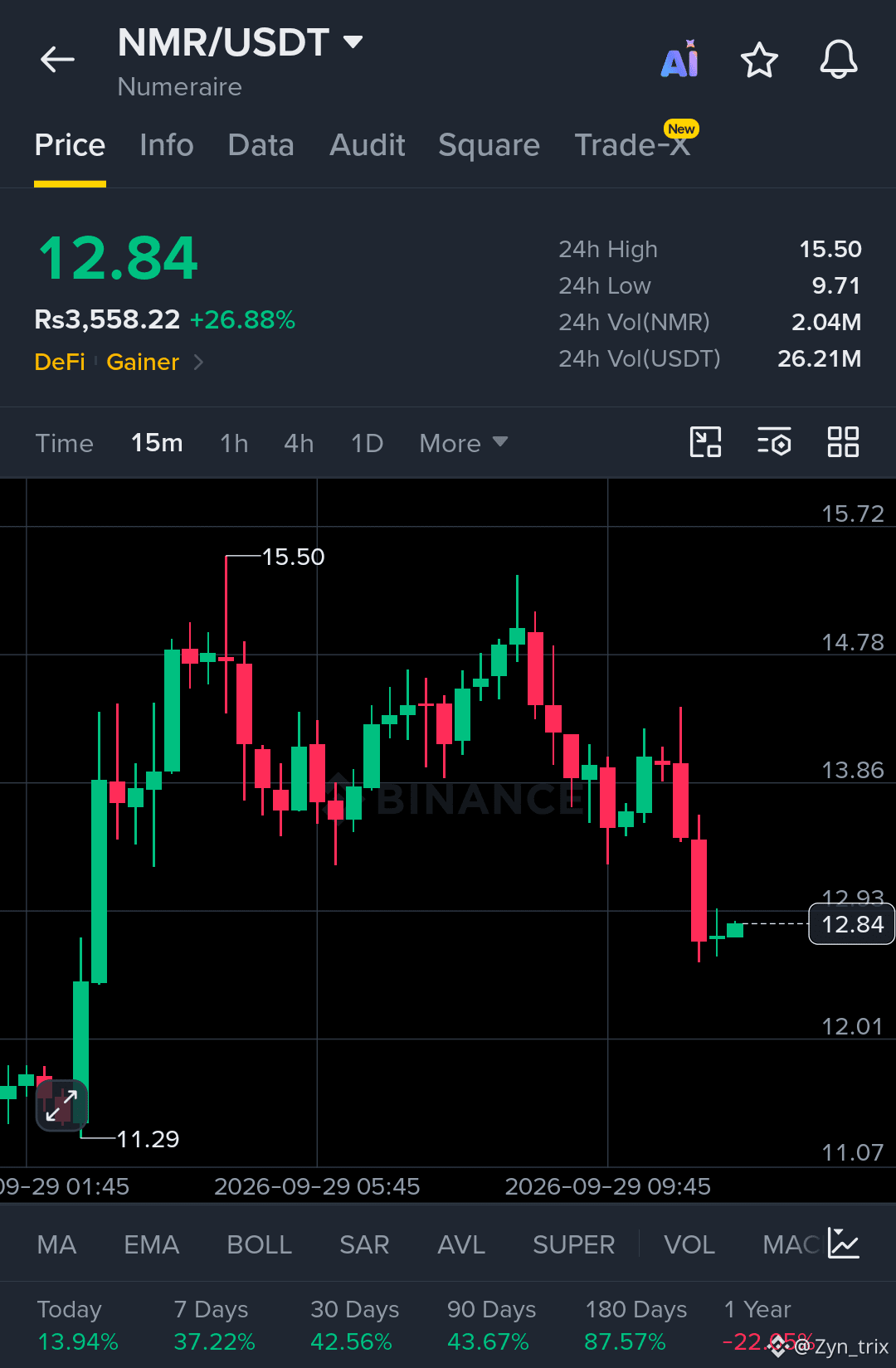
Numerai is trading around 12.84 after a sharp 26.88% 24H move. Price pushed as high as 15.50 before pulling back, while 24H volume reached 2.04M NMR / 26.21M USDT.
15M chart shows strong volatility after the breakout, with 12.93 acting as an important nearby level and 12.01 as deeper support.
Entry Zone: 12.70–13.00
Stop Loss: 11.95
TP1: 13.86
TP2: 14.78
TP3: 15.50
The key now is how price reacts around 12.93–13.00. Holding this area could keep the setup interesting, while losing 12.01 would weaken the structure.
Risk managed. Let the chart confirm the move.
{spot}(NMRUSDT)
#OpenAIDelaysGPT6.1OverSafetyIssues #HackersDrainOver12.4MXRPFromDCENTWallets #UKFCAWinsCourtOrderToRecover851400Pounds #ChainlinkLaunchesCCIP2WithEnterpriseVerification #QNTFallsOver40%FromMorningHigh
$NMR — Momentum Is Heating Up
Numerai is trading around 12.84 after a sharp 26.88% 24H move. Price pushed as high as 15.50 before pulling back, while 24H volume reached 2.04M NMR / 26.21M USDT.
15M chart shows strong volatility after the breakout, with 12.93 acting as an important nearby level and 12.01 as deeper support.
Entry Zone: 12.70–13.00
Stop Loss: 11.95
TP1: 13.86
TP2: 14.78
TP3: 15.50
The key now is how price reacts around 12.93–13.00. Holding this area could keep the setup interesting, while losing 12.01 would weaken the structure.
Risk managed. Let the chart confirm the move.
#OpenAIDelaysGPT6.1OverSafetyIssues #HackersDrainOver12.4MXRPFromDCENTWallets #UKFCAWinsCourtOrderToRecover851400Pounds #ChainlinkLaunchesCCIP2WithEnterpriseVerification #QNTFallsOver40%FromMorningHigh
Numerai is trading around 12.84 after a sharp 26.88% 24H move. Price pushed as high as 15.50 before pulling back, while 24H volume reached 2.04M NMR / 26.21M USDT.
15M chart shows strong volatility after the breakout, with 12.93 acting as an important nearby level and 12.01 as deeper support.
Entry Zone: 12.70–13.00
Stop Loss: 11.95
TP1: 13.86
TP2: 14.78
TP3: 15.50
The key now is how price reacts around 12.93–13.00. Holding this area could keep the setup interesting, while losing 12.01 would weaken the structure.
Risk managed. Let the chart confirm the move.
#OpenAIDelaysGPT6.1OverSafetyIssues #HackersDrainOver12.4MXRPFromDCENTWallets #UKFCAWinsCourtOrderToRecover851400Pounds #ChainlinkLaunchesCCIP2WithEnterpriseVerification #QNTFallsOver40%FromMorningHigh
172
·
--
Bullish
$XOM — FRESH SIGNAL
Price: 164.32
Entry: 164.00–164.35
SL: 163.55
TP1: 164.64
TP2: 165.00
TP3: 165.40
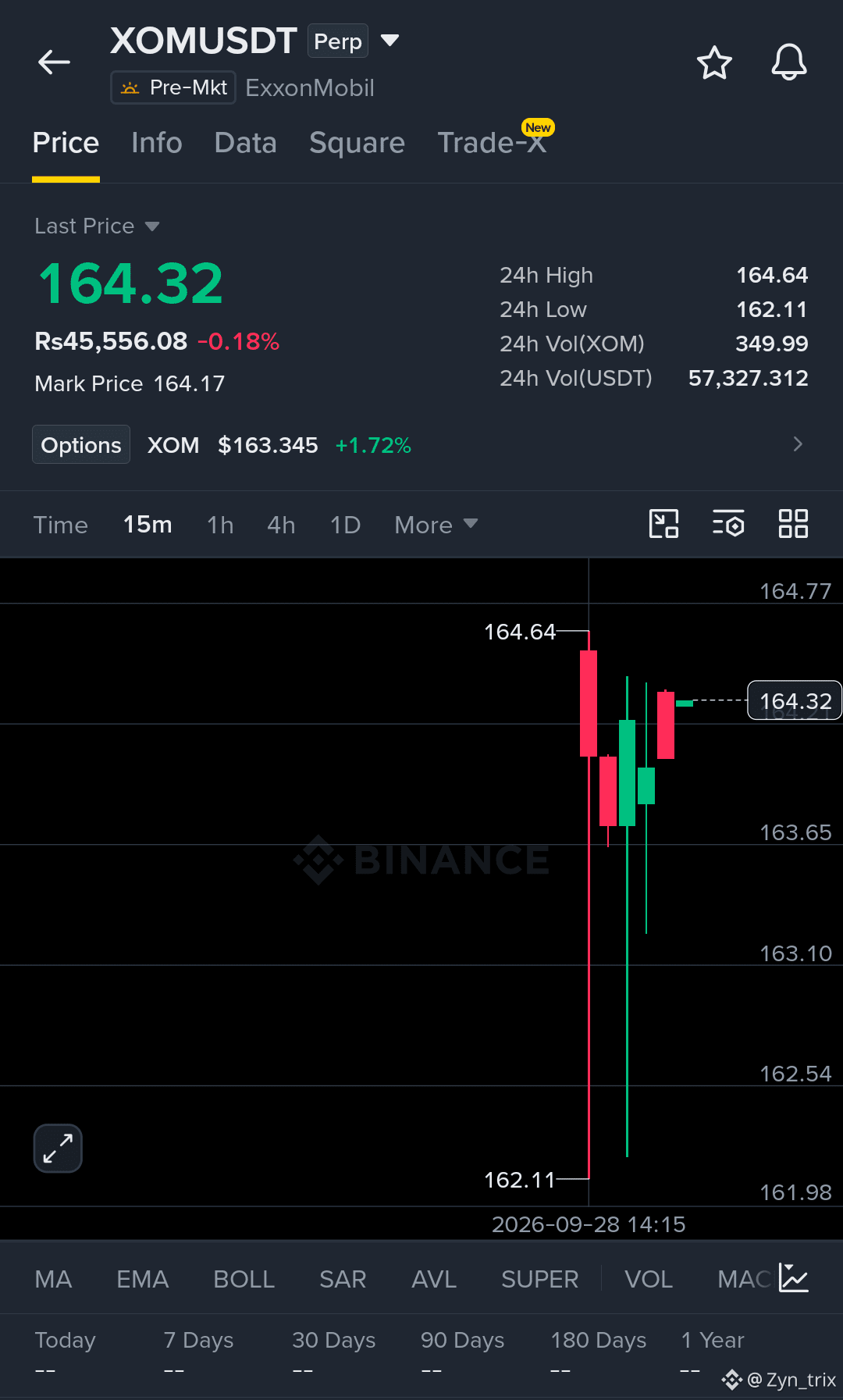
24H: 162.11–164.64
Vol: 57.33K USDT
Support: 163.65 / 162.11
Resistance: 164.64
Strong recovery after the 162.11 liquidity sweep. Price is holding near 164.32 with buyers defending the rebound.
Risk managed. Trade the levels.
{future}(XOMUSDT)
#QNTFallsOver40%FromMorningHigh #BitgetDetailsSecurityIncidentTimeline #FedProposesPaymentStablecoinRules #ChinaMayLetAlibabaByteDanceBuyNvidiaChips #SKoreaFSCConsidersVirtualAssetMarketMaker
$XOM — FRESH SIGNAL
Price: 164.32
Entry: 164.00–164.35
SL: 163.55
TP1: 164.64
TP2: 165.00
TP3: 165.40
24H: 162.11–164.64
Vol: 57.33K USDT
Support: 163.65 / 162.11
Resistance: 164.64
Strong recovery after the 162.11 liquidity sweep. Price is holding near 164.32 with buyers defending the rebound.
Risk managed. Trade the levels.
#QNTFallsOver40%FromMorningHigh #BitgetDetailsSecurityIncidentTimeline #FedProposesPaymentStablecoinRules #ChinaMayLetAlibabaByteDanceBuyNvidiaChips #SKoreaFSCConsidersVirtualAssetMarketMaker
Price: 164.32
Entry: 164.00–164.35
SL: 163.55
TP1: 164.64
TP2: 165.00
TP3: 165.40
24H: 162.11–164.64
Vol: 57.33K USDT
Support: 163.65 / 162.11
Resistance: 164.64
Strong recovery after the 162.11 liquidity sweep. Price is holding near 164.32 with buyers defending the rebound.
Risk managed. Trade the levels.
#QNTFallsOver40%FromMorningHigh #BitgetDetailsSecurityIncidentTimeline #FedProposesPaymentStablecoinRules #ChinaMayLetAlibabaByteDanceBuyNvidiaChips #SKoreaFSCConsidersVirtualAssetMarketMaker

72
·
--
Bearish
$RUM — FRESH SIGNAL
Price: 8.25
Entry: 8.20–8.26
SL: 8.08
TP1: 8.31
TP2: 8.35
TP3: 8.40
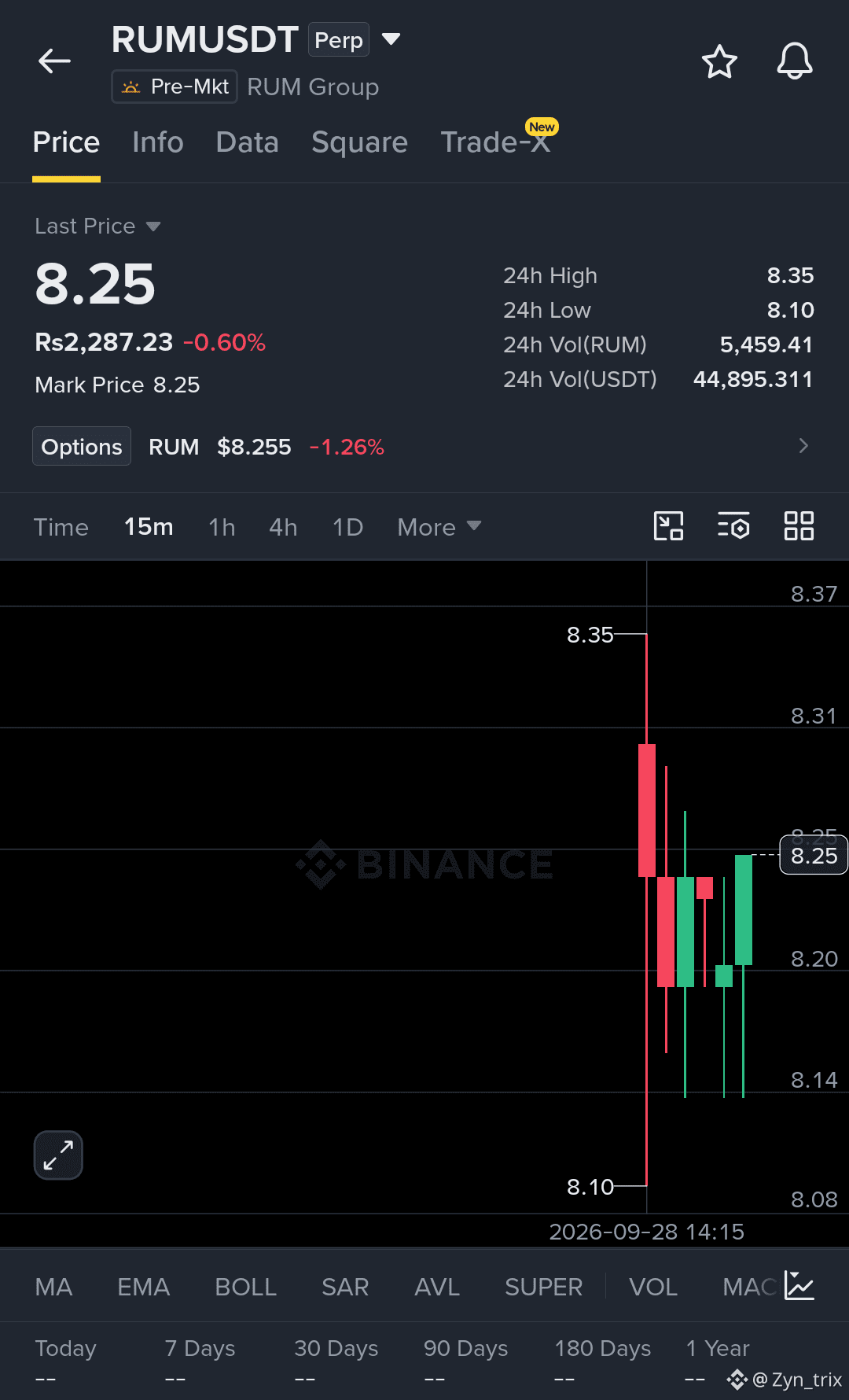
24H: 8.10–8.35
Vol: 44.90K USDT
Support: 8.10–8.14
Resistance: 8.31–8.35
RUM is holding above 8.20 after the sharp 8.10 sweep. Momentum is building near 8.25; 8.31 is the key level to watch.
Risk managed. Trade the levels.
{future}(RUMUSDT)
$RUM — FRESH SIGNAL
Price: 8.25
Entry: 8.20–8.26
SL: 8.08
TP1: 8.31
TP2: 8.35
TP3: 8.40
24H: 8.10–8.35
Vol: 44.90K USDT
Support: 8.10–8.14
Resistance: 8.31–8.35
RUM is holding above 8.20 after the sharp 8.10 sweep. Momentum is building near 8.25; 8.31 is the key level to watch.
Risk managed. Trade the levels.
Price: 8.25
Entry: 8.20–8.26
SL: 8.08
TP1: 8.31
TP2: 8.35
TP3: 8.40
24H: 8.10–8.35
Vol: 44.90K USDT
Support: 8.10–8.14
Resistance: 8.31–8.35
RUM is holding above 8.20 after the sharp 8.10 sweep. Momentum is building near 8.25; 8.31 is the key level to watch.
Risk managed. Trade the levels.
56
·
--
Bearish
$CVNA — FRESH SIGNAL
Price: 63.77
Entry: 63.60–63.85
SL: 63.20
TP1: 64.00
TP2: 64.26
TP3: 64.62
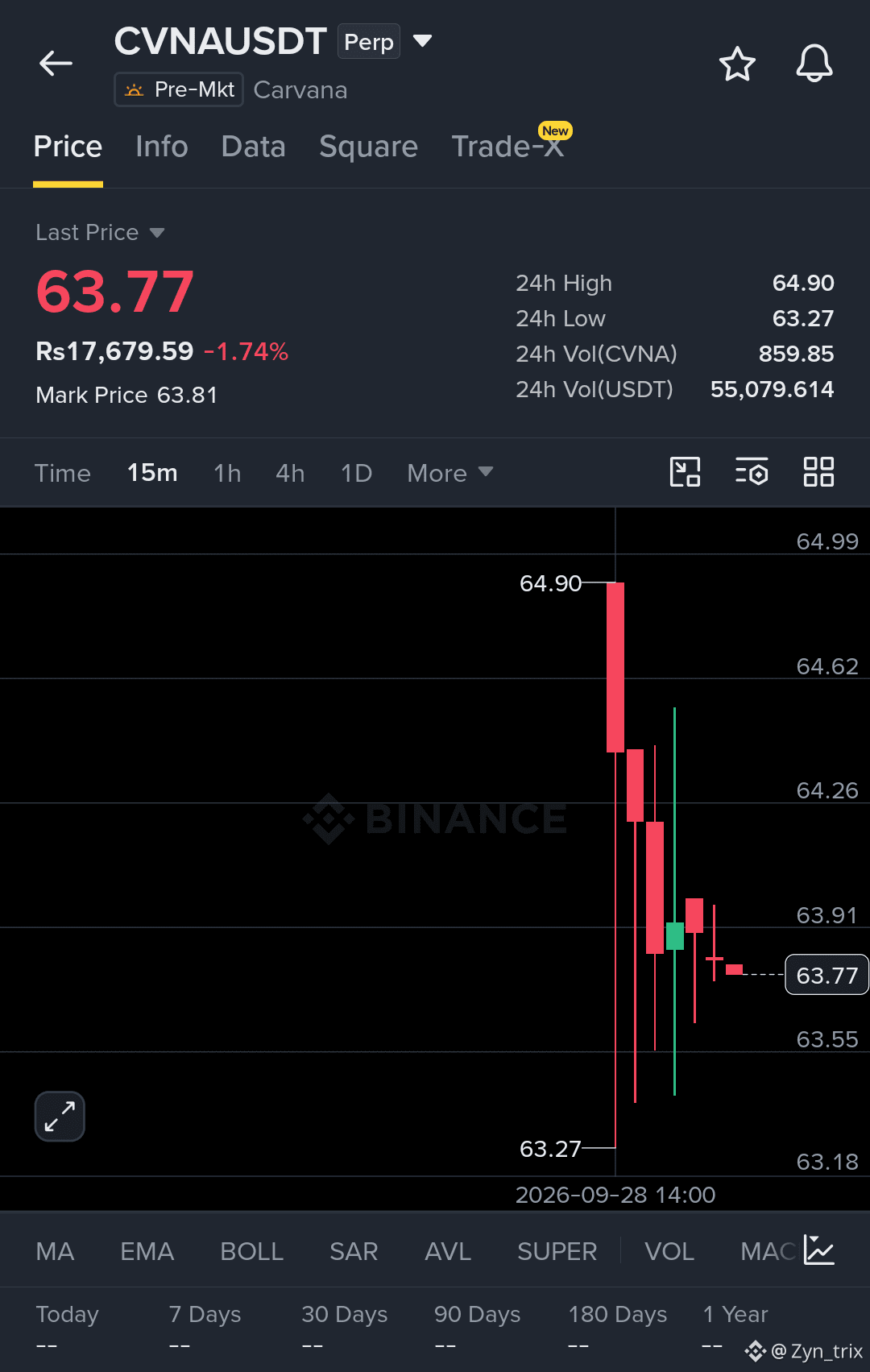
24H: 63.27–64.90
Vol: 55.08M USDT
Key support: 63.27
Resistance: 64.26–64.90
Sharp rejection from 64.90, followed by stabilization near 63.77. Watch 64.00 for momentum confirmation.
Risk managed. Trade the levels.
{future}(CVNAUSDT)
$CVNA — FRESH SIGNAL
Price: 63.77
Entry: 63.60–63.85
SL: 63.20
TP1: 64.00
TP2: 64.26
TP3: 64.62
24H: 63.27–64.90
Vol: 55.08M USDT
Key support: 63.27
Resistance: 64.26–64.90
Sharp rejection from 64.90, followed by stabilization near 63.77. Watch 64.00 for momentum confirmation.
Risk managed. Trade the levels.
Price: 63.77
Entry: 63.60–63.85
SL: 63.20
TP1: 64.00
TP2: 64.26
TP3: 64.62
24H: 63.27–64.90
Vol: 55.08M USDT
Key support: 63.27
Resistance: 64.26–64.90
Sharp rejection from 64.90, followed by stabilization near 63.77. Watch 64.00 for momentum confirmation.
Risk managed. Trade the levels.
64
·
--
Bullish
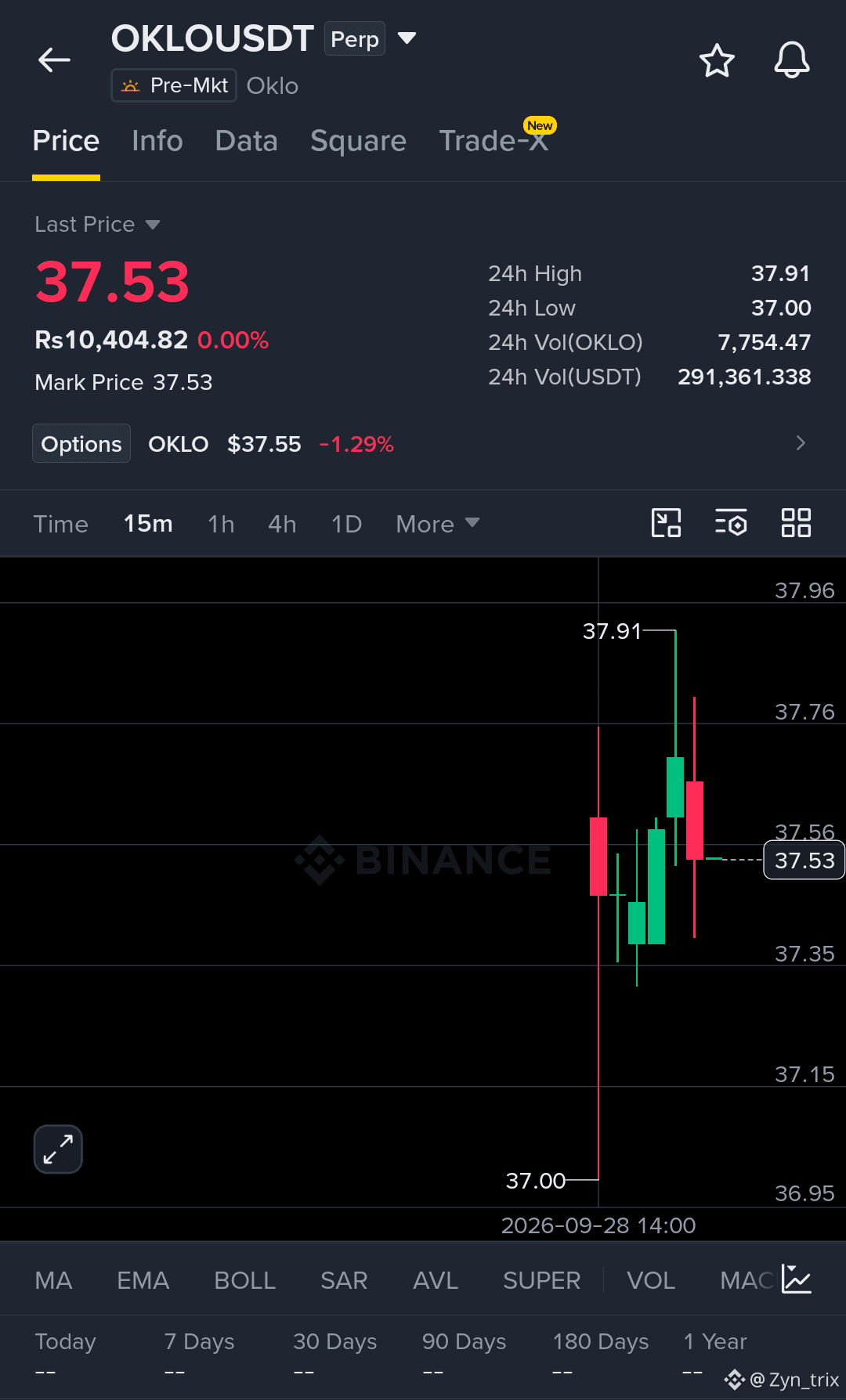
$OKLO — FRESH SIGNAL
Price: 37.53
Entry: 37.40–37.55
SL: 36.90
TP1: 37.76
TP2: 37.91
TP3: 38.20
24H Range: 37.00–37.91
Volume: 291.36M USDT
Key Support: 37.00
Resistance: 37.76–37.91
Strong volume + rebound from 37.00. Watch the 37.76 reclaim closely.
Risk managed. Trade the levels.
{future}(OKLOUSDT)
$OKLO — FRESH SIGNAL
Price: 37.53
Entry: 37.40–37.55
SL: 36.90
TP1: 37.76
TP2: 37.91
TP3: 38.20
24H Range: 37.00–37.91
Volume: 291.36M USDT
Key Support: 37.00
Resistance: 37.76–37.91
Strong volume + rebound from 37.00. Watch the 37.76 reclaim closely.
Risk managed. Trade the levels.
Price: 37.53
Entry: 37.40–37.55
SL: 36.90
TP1: 37.76
TP2: 37.91
TP3: 38.20
24H Range: 37.00–37.91
Volume: 291.36M USDT
Key Support: 37.00
Resistance: 37.76–37.91
Strong volume + rebound from 37.00. Watch the 37.76 reclaim closely.
Risk managed. Trade the levels.
83
·
--
Bullish
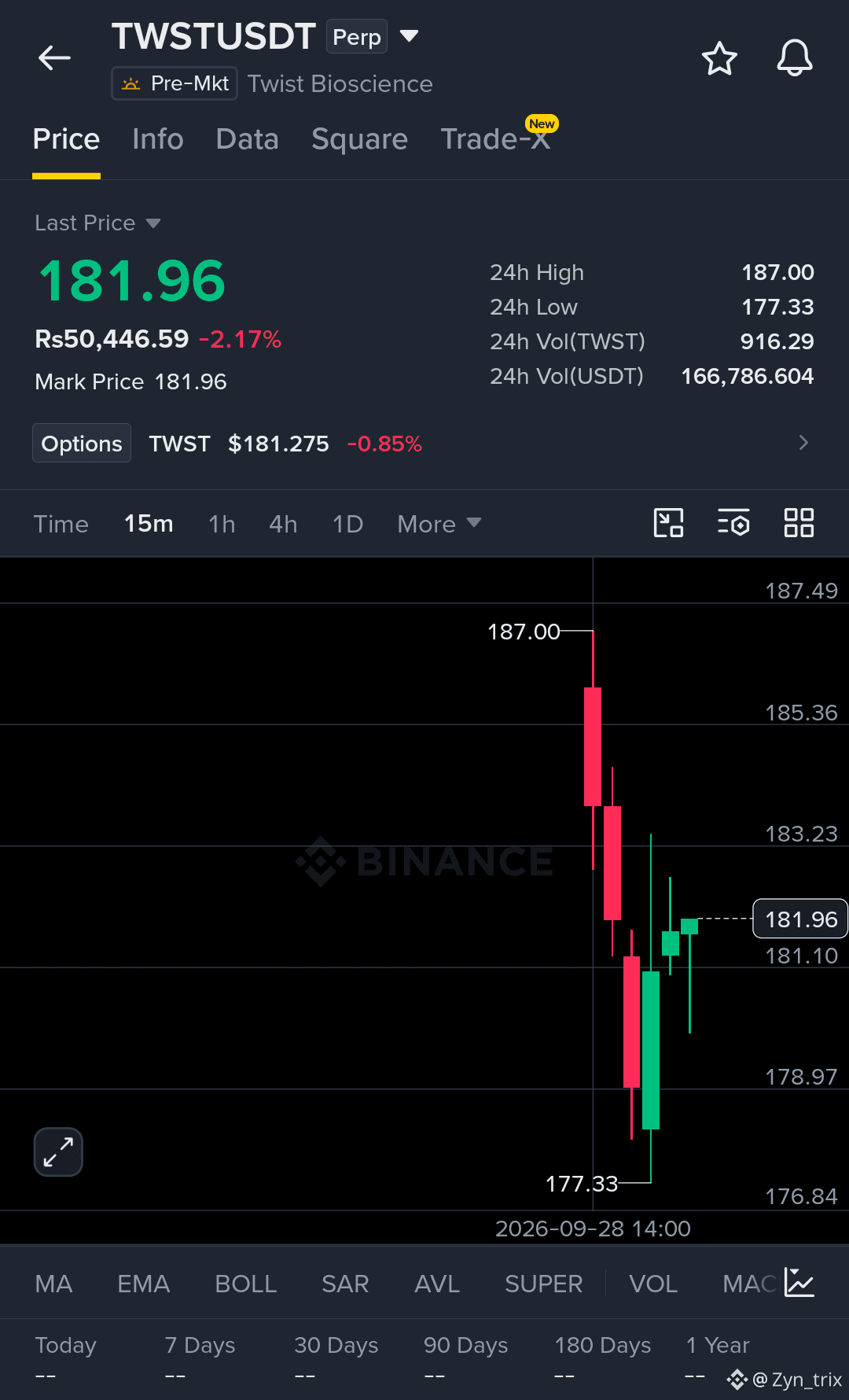
$TWST — FRESH PERP SETUP
Price: 181.96
24H: 177.33 — 187.00
Entry: 180.50–182.20
SL: 176.70
TP1: 183.23
TP2: 185.36
TP3: 187.00
Key level: 177.33
Momentum: Strong rebound from the 24H low; watch the 183.23 reclaim.
Risk managed. Trade the levels, not the hype.
{future}(TWSTUSDT)
#BitgetDetailsSecurityIncidentTimeline #FedProposesPaymentStablecoinRules #ChinaMayLetAlibabaByteDanceBuyNvidiaChips #SKoreaFSCConsidersVirtualAssetMarketMaker #QNTFallsOver40%FromMorningHigh
$TWST — FRESH PERP SETUP
Price: 181.96
24H: 177.33 — 187.00
Entry: 180.50–182.20
SL: 176.70
TP1: 183.23
TP2: 185.36
TP3: 187.00
Key level: 177.33
Momentum: Strong rebound from the 24H low; watch the 183.23 reclaim.
Risk managed. Trade the levels, not the hype.
#BitgetDetailsSecurityIncidentTimeline #FedProposesPaymentStablecoinRules #ChinaMayLetAlibabaByteDanceBuyNvidiaChips #SKoreaFSCConsidersVirtualAssetMarketMaker #QNTFallsOver40%FromMorningHigh
Price: 181.96
24H: 177.33 — 187.00
Entry: 180.50–182.20
SL: 176.70
TP1: 183.23
TP2: 185.36
TP3: 187.00
Key level: 177.33
Momentum: Strong rebound from the 24H low; watch the 183.23 reclaim.
Risk managed. Trade the levels, not the hype.
#BitgetDetailsSecurityIncidentTimeline #FedProposesPaymentStablecoinRules #ChinaMayLetAlibabaByteDanceBuyNvidiaChips #SKoreaFSCConsidersVirtualAssetMarketMaker #QNTFallsOver40%FromMorningHigh

30
·
--
Bullish
$MARSCOIN is heating up fast.
Price is sitting around $0.1530 after a strong move from the $0.1150 area. On the 15M chart, buyers have pushed through multiple resistance zones, with the latest high reaching $0.1600.
Trade Setup:
Entry: $0.1500 – $0.1535
Stop Loss: $0.1420
TP1: $0.1600
TP2: $0.1680
TP3: $0.1780
The chart is showing strong momentum, but after an 18%+ move in 24 hours, some pullback is possible. The $0.1500 area is important to watch for strength, while $0.1425 is the next major support visible on the chart.
24H High: $0.1600
24H Low: $0.1150
24H Volume: ~$40.12M USDT
Current Price: ~$0.1530
The setup is aggressive, so risk management matters. Let the price confirm the level instead of chasing a sudden candle.
$MARSCOIN — momentum is here, now the key is whether buyers can reclaim $0.1600 with strength.
Trade smart and manage the risk.
{spot}(MARSCOINUSDT)
#FedProposesPaymentStablecoinRules #ChinaMayLetAlibabaByteDanceBuyNvidiaChips #SKoreaFSCConsidersVirtualAssetMarketMaker #ChinaIndustrialProfitGrowthSlowsFourthMonth #BitwiseFilesFinalNEARSpotETFProspectus
$MARSCOIN is heating up fast.
Price is sitting around $0.1530 after a strong move from the $0.1150 area. On the 15M chart, buyers have pushed through multiple resistance zones, with the latest high reaching $0.1600.
Trade Setup:
Entry: $0.1500 – $0.1535
Stop Loss: $0.1420
TP1: $0.1600
TP2: $0.1680
TP3: $0.1780
The chart is showing strong momentum, but after an 18%+ move in 24 hours, some pullback is possible. The $0.1500 area is important to watch for strength, while $0.1425 is the next major support visible on the chart.
24H High: $0.1600
24H Low: $0.1150
24H Volume: ~$40.12M USDT
Current Price: ~$0.1530
The setup is aggressive, so risk management matters. Let the price confirm the level instead of chasing a sudden candle.
$MARSCOIN — momentum is here, now the key is whether buyers can reclaim $0.1600 with strength.
Trade smart and manage the risk.
#FedProposesPaymentStablecoinRules #ChinaMayLetAlibabaByteDanceBuyNvidiaChips #SKoreaFSCConsidersVirtualAssetMarketMaker #ChinaIndustrialProfitGrowthSlowsFourthMonth #BitwiseFilesFinalNEARSpotETFProspectus
Price is sitting around $0.1530 after a strong move from the $0.1150 area. On the 15M chart, buyers have pushed through multiple resistance zones, with the latest high reaching $0.1600.
Trade Setup:
Entry: $0.1500 – $0.1535
Stop Loss: $0.1420
TP1: $0.1600
TP2: $0.1680
TP3: $0.1780
The chart is showing strong momentum, but after an 18%+ move in 24 hours, some pullback is possible. The $0.1500 area is important to watch for strength, while $0.1425 is the next major support visible on the chart.
24H High: $0.1600
24H Low: $0.1150
24H Volume: ~$40.12M USDT
Current Price: ~$0.1530
The setup is aggressive, so risk management matters. Let the price confirm the level instead of chasing a sudden candle.
$MARSCOIN — momentum is here, now the key is whether buyers can reclaim $0.1600 with strength.
Trade smart and manage the risk.
#FedProposesPaymentStablecoinRules #ChinaMayLetAlibabaByteDanceBuyNvidiaChips #SKoreaFSCConsidersVirtualAssetMarketMaker #ChinaIndustrialProfitGrowthSlowsFourthMonth #BitwiseFilesFinalNEARSpotETFProspectus
A) Break $0.1600
B) Pullback to $0.1425
C) Range around $0.1500
17 min(s) left
283
·
--
Bullish
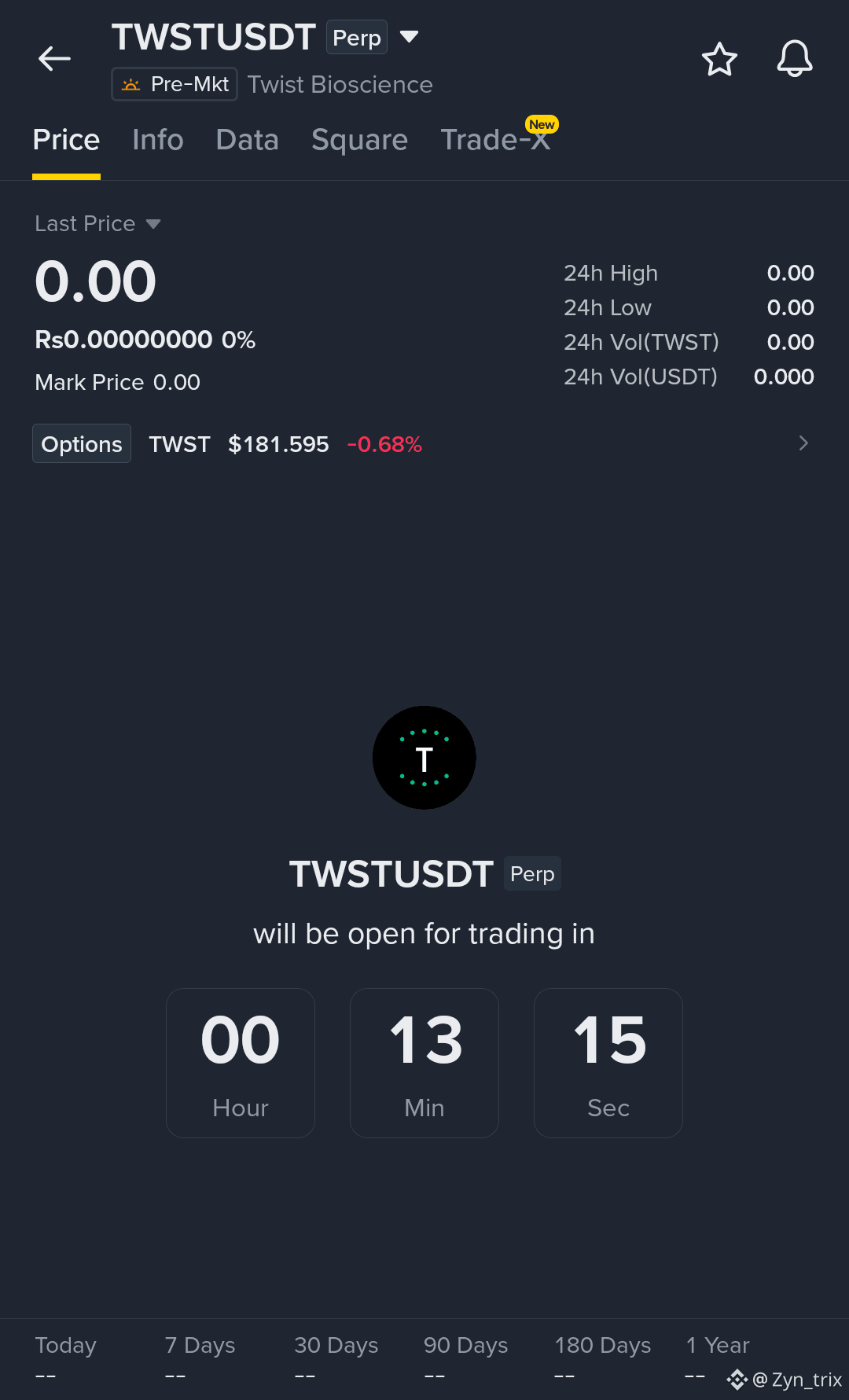
$TWST — PRE-MARKET SIGNAL
Price: $181.595
Pre-Market: -0.68%
Entry: $180.00–$183.00
Stop Loss: $175.50
TP1: $188.00
TP2: $195.00
TP3: $202.00
Setup: Fresh Perp listing. Expect high volatility at launch; volume confirmation is key.
Risk managed. Watch the opening move closely.
{future}(TWSTUSDT)
#FedProposesPaymentStablecoinRules #ChinaMayLetAlibabaByteDanceBuyNvidiaChips #SKoreaFSCConsidersVirtualAssetMarketMaker #ChinaIndustrialProfitGrowthSlowsFourthMonth #BitwiseFilesFinalNEARSpotETFProspectus
$TWST — PRE-MARKET SIGNAL
Price: $181.595
Pre-Market: -0.68%
Entry: $180.00–$183.00
Stop Loss: $175.50
TP1: $188.00
TP2: $195.00
TP3: $202.00
Setup: Fresh Perp listing. Expect high volatility at launch; volume confirmation is key.
Risk managed. Watch the opening move closely.
#FedProposesPaymentStablecoinRules #ChinaMayLetAlibabaByteDanceBuyNvidiaChips #SKoreaFSCConsidersVirtualAssetMarketMaker #ChinaIndustrialProfitGrowthSlowsFourthMonth #BitwiseFilesFinalNEARSpotETFProspectus
Price: $181.595
Pre-Market: -0.68%
Entry: $180.00–$183.00
Stop Loss: $175.50
TP1: $188.00
TP2: $195.00
TP3: $202.00
Setup: Fresh Perp listing. Expect high volatility at launch; volume confirmation is key.
Risk managed. Watch the opening move closely.
#FedProposesPaymentStablecoinRules #ChinaMayLetAlibabaByteDanceBuyNvidiaChips #SKoreaFSCConsidersVirtualAssetMarketMaker #ChinaIndustrialProfitGrowthSlowsFourthMonth #BitwiseFilesFinalNEARSpotETFProspectus
75
·
--
Bullish
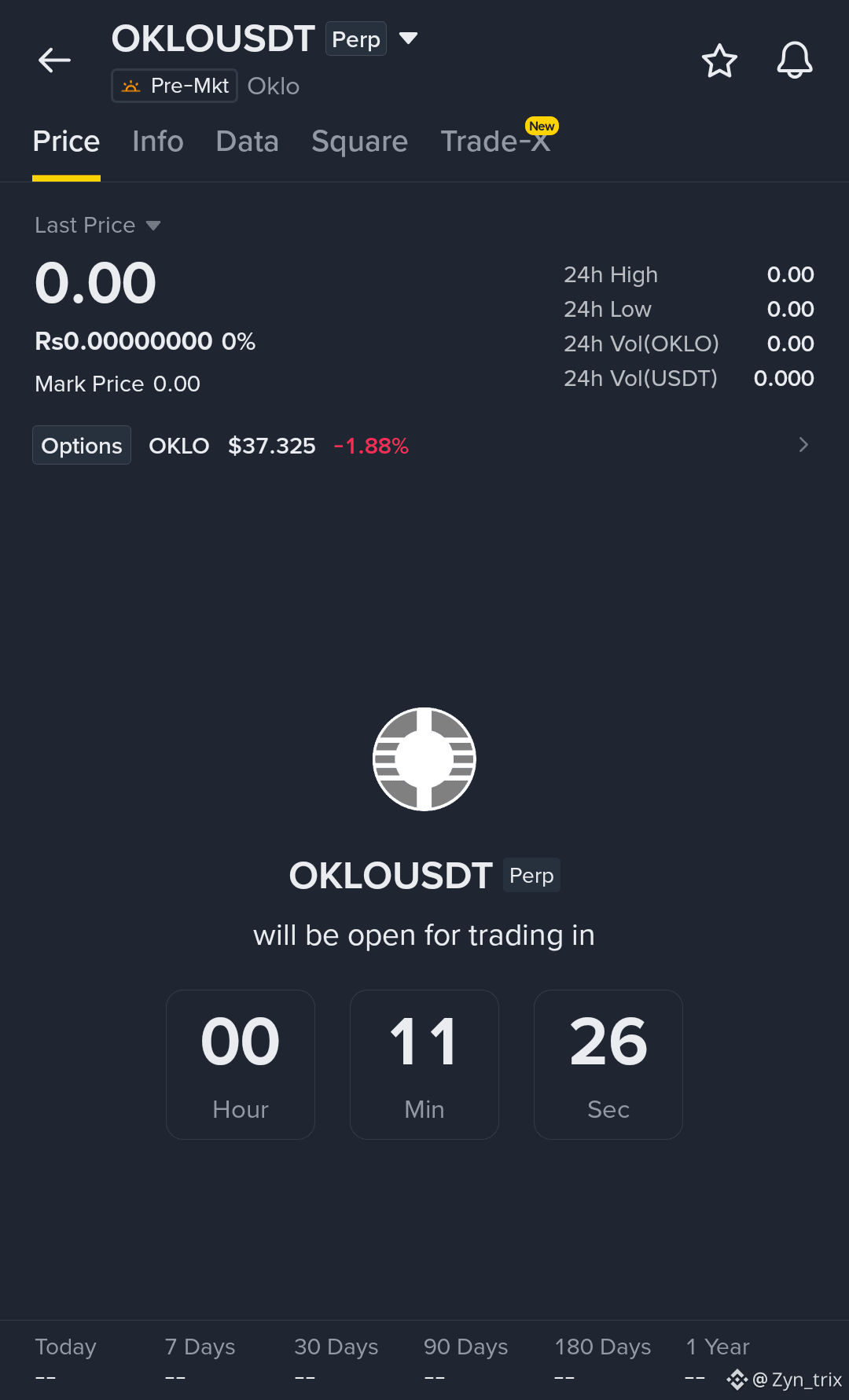
$OKLO — PRE-MARKET SIGNAL
Price Reference: $37.325
Pre-Market: -1.88%
Entry: $37.20–$38.00
Stop Loss: $35.80
TP1: $40.00
TP2: $42.50
TP3: $45.00
Setup: High-volatility opening setup. Watch volume and the first clean price confirmation after OKLO Perp opens.
Risk managed. Let the market confirm the move.
{future}(OKLOUSDT)
#FedProposesPaymentStablecoinRules #ChinaMayLetAlibabaByteDanceBuyNvidiaChips #ChinaIndustrialProfitGrowthSlowsFourthMonth #BitwiseFilesFinalNEARSpotETFProspectus #SKoreaFSCConsidersVirtualAssetMarketMaker
$OKLO — PRE-MARKET SIGNAL
Price Reference: $37.325
Pre-Market: -1.88%
Entry: $37.20–$38.00
Stop Loss: $35.80
TP1: $40.00
TP2: $42.50
TP3: $45.00
Setup: High-volatility opening setup. Watch volume and the first clean price confirmation after OKLO Perp opens.
Risk managed. Let the market confirm the move.
#FedProposesPaymentStablecoinRules #ChinaMayLetAlibabaByteDanceBuyNvidiaChips #ChinaIndustrialProfitGrowthSlowsFourthMonth #BitwiseFilesFinalNEARSpotETFProspectus #SKoreaFSCConsidersVirtualAssetMarketMaker
Price Reference: $37.325
Pre-Market: -1.88%
Entry: $37.20–$38.00
Stop Loss: $35.80
TP1: $40.00
TP2: $42.50
TP3: $45.00
Setup: High-volatility opening setup. Watch volume and the first clean price confirmation after OKLO Perp opens.
Risk managed. Let the market confirm the move.
#FedProposesPaymentStablecoinRules #ChinaMayLetAlibabaByteDanceBuyNvidiaChips #ChinaIndustrialProfitGrowthSlowsFourthMonth #BitwiseFilesFinalNEARSpotETFProspectus #SKoreaFSCConsidersVirtualAssetMarketMaker
167
·
--
$QNT just went from $90 to nearly $195 in only 3 days — a 100%+ move that has completely changed the momentum.
But after this kind of vertical rally, volatility is the real story. QNT has already printed extreme intraday swings, while volume exploded alongside the move.
The bigger catalyst is Quant’s reported role in The Clearing House’s on-chain money initiative, connecting tokenized deposits with existing payment infrastructure.
Can QNT hold these gains?
September closes in just a few days. A sustained move above the recent highs could keep the momentum alive, while a sharp rejection could trigger profit-taking.
September watch zone: $200–$300
The next few sessions could decide whether this is a breakout with staying power or an overheated spike.
#QNTPriceAnalysis
$QNT just went from $90 to nearly $195 in only 3 days — a 100%+ move that has completely changed the momentum.
But after this kind of vertical rally, volatility is the real story. QNT has already printed extreme intraday swings, while volume exploded alongside the move.
The bigger catalyst is Quant’s reported role in The Clearing House’s on-chain money initiative, connecting tokenized deposits with existing payment infrastructure.
Can QNT hold these gains?
September closes in just a few days. A sustained move above the recent highs could keep the momentum alive, while a sharp rejection could trigger profit-taking.
September watch zone: $200–$300
The next few sessions could decide whether this is a breakout with staying power or an overheated spike.
#QNTPriceAnalysis
But after this kind of vertical rally, volatility is the real story. QNT has already printed extreme intraday swings, while volume exploded alongside the move.
The bigger catalyst is Quant’s reported role in The Clearing House’s on-chain money initiative, connecting tokenized deposits with existing payment infrastructure.
Can QNT hold these gains?
September closes in just a few days. A sustained move above the recent highs could keep the momentum alive, while a sharp rejection could trigger profit-taking.
September watch zone: $200–$300
The next few sessions could decide whether this is a breakout with staying power or an overheated spike.
#QNTPriceAnalysis
A. Above $250 — 54%
58%
B. $120–$150 — 20%
25%
C. Below $100 — 26%
17%
12 votes • Voting closed
415
·
--
Bullish
$BTC JUST WOKE UP — AND THE MARKET FELT IT.
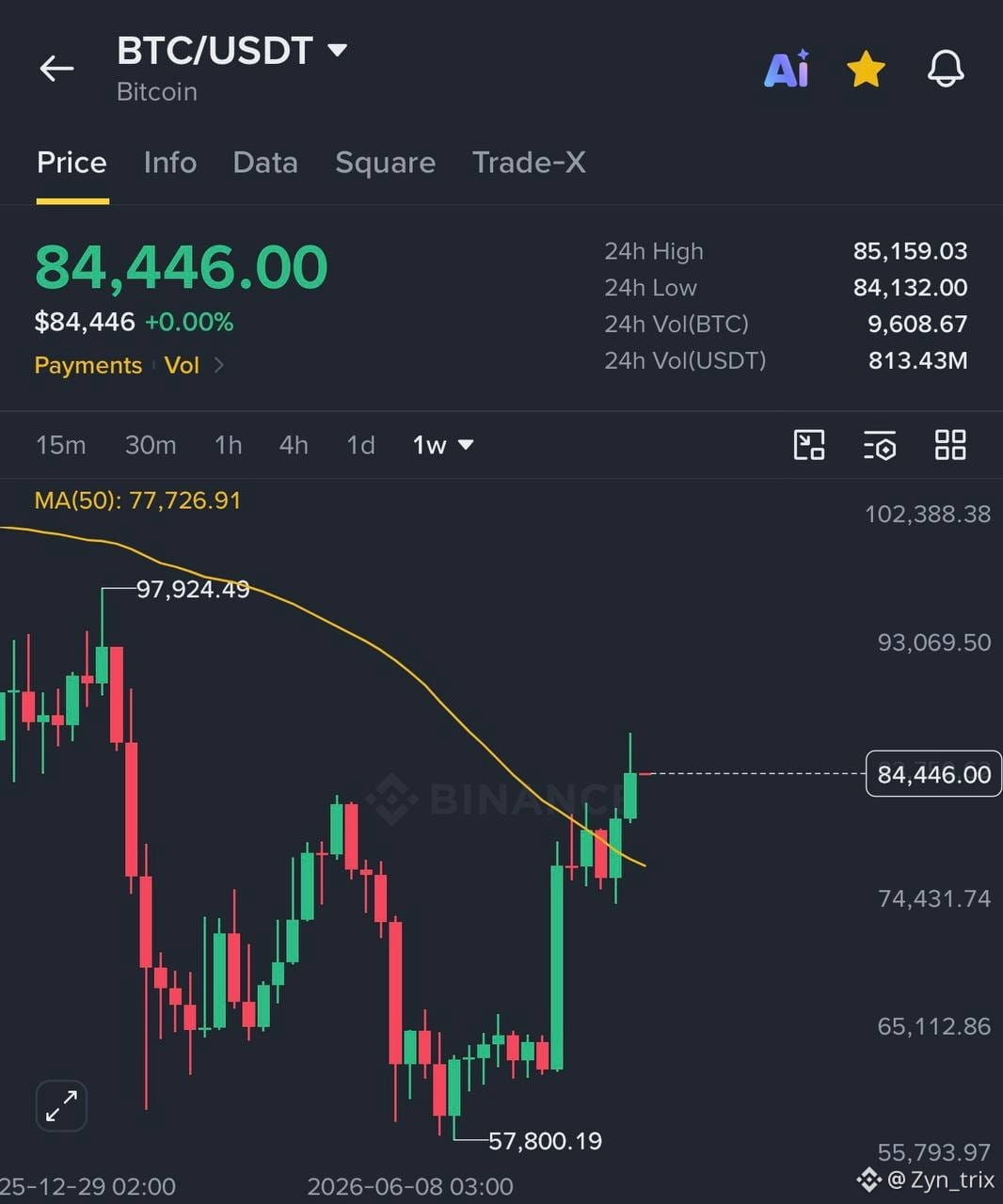
Bitcoin closed the week around $81,120, its strongest weekly close since early May. Then September 21 changed the mood completely.
BTC ripped to $87,397, marking its highest price since January. The move came alongside massive spot ETF demand and a violent short squeeze, with more than $750M in crypto positions liquidated in 24 hours, including about $648M in shorts.
From the July low near $57,700, Bitcoin has delivered roughly a 51% recovery.
The bigger technical story is the reclaim of the 50-week EMA around $77K. After spending time below that area, BTC pushed back above it and accelerated toward the $85K–$87K zone.
But this rally is not moving in a vacuum.
Bitcoin has since slipped back below $85K as the U.S. 10-year Treasury yield pushed above 5%, creating fresh pressure on risk assets.
That leaves the market at an important crossroads:
$87,397 — recent breakout high
$85,000 — key psychological area
$81,000 — important recent support
$77K–$78K — major trend-reclaim zone
If buyers regain control above the recent high, $90K becomes the next major psychological level, followed by the $95K area.
The interesting part is that Bitcoin has already shown it can move aggressively when ETF demand and short covering arrive together. But after such a powerful squeeze, the next leg needs genuine spot demand rather than liquidation-driven momentum alone.
Uptober is approaching.
The bulls have made their presence clear. Now the market needs to prove this is more than just a short squeeze.
$BTC
Risk managed. Eyes on the levels.
$BTC JUST WOKE UP — AND THE MARKET FELT IT.
Bitcoin closed the week around $81,120, its strongest weekly close since early May. Then September 21 changed the mood completely.
BTC ripped to $87,397, marking its highest price since January. The move came alongside massive spot ETF demand and a violent short squeeze, with more than $750M in crypto positions liquidated in 24 hours, including about $648M in shorts.
From the July low near $57,700, Bitcoin has delivered roughly a 51% recovery.
The bigger technical story is the reclaim of the 50-week EMA around $77K. After spending time below that area, BTC pushed back above it and accelerated toward the $85K–$87K zone.
But this rally is not moving in a vacuum.
Bitcoin has since slipped back below $85K as the U.S. 10-year Treasury yield pushed above 5%, creating fresh pressure on risk assets.
That leaves the market at an important crossroads:
$87,397 — recent breakout high
$85,000 — key psychological area
$81,000 — important recent support
$77K–$78K — major trend-reclaim zone
If buyers regain control above the recent high, $90K becomes the next major psychological level, followed by the $95K area.
The interesting part is that Bitcoin has already shown it can move aggressively when ETF demand and short covering arrive together. But after such a powerful squeeze, the next leg needs genuine spot demand rather than liquidation-driven momentum alone.
Uptober is approaching.
The bulls have made their presence clear. Now the market needs to prove this is more than just a short squeeze.
$BTC
Risk managed. Eyes on the levels.
Bitcoin closed the week around $81,120, its strongest weekly close since early May. Then September 21 changed the mood completely.
BTC ripped to $87,397, marking its highest price since January. The move came alongside massive spot ETF demand and a violent short squeeze, with more than $750M in crypto positions liquidated in 24 hours, including about $648M in shorts.
From the July low near $57,700, Bitcoin has delivered roughly a 51% recovery.
The bigger technical story is the reclaim of the 50-week EMA around $77K. After spending time below that area, BTC pushed back above it and accelerated toward the $85K–$87K zone.
But this rally is not moving in a vacuum.
Bitcoin has since slipped back below $85K as the U.S. 10-year Treasury yield pushed above 5%, creating fresh pressure on risk assets.
That leaves the market at an important crossroads:
$87,397 — recent breakout high
$85,000 — key psychological area
$81,000 — important recent support
$77K–$78K — major trend-reclaim zone
If buyers regain control above the recent high, $90K becomes the next major psychological level, followed by the $95K area.
The interesting part is that Bitcoin has already shown it can move aggressively when ETF demand and short covering arrive together. But after such a powerful squeeze, the next leg needs genuine spot demand rather than liquidation-driven momentum alone.
Uptober is approaching.
The bulls have made their presence clear. Now the market needs to prove this is more than just a short squeeze.
$BTC
Risk managed. Eyes on the levels.
1
230
·
--
Bullish
$PUMP — MOMENTUM IS BUILDING AND BUYERS ARE STILL HOLDING THE ZONE
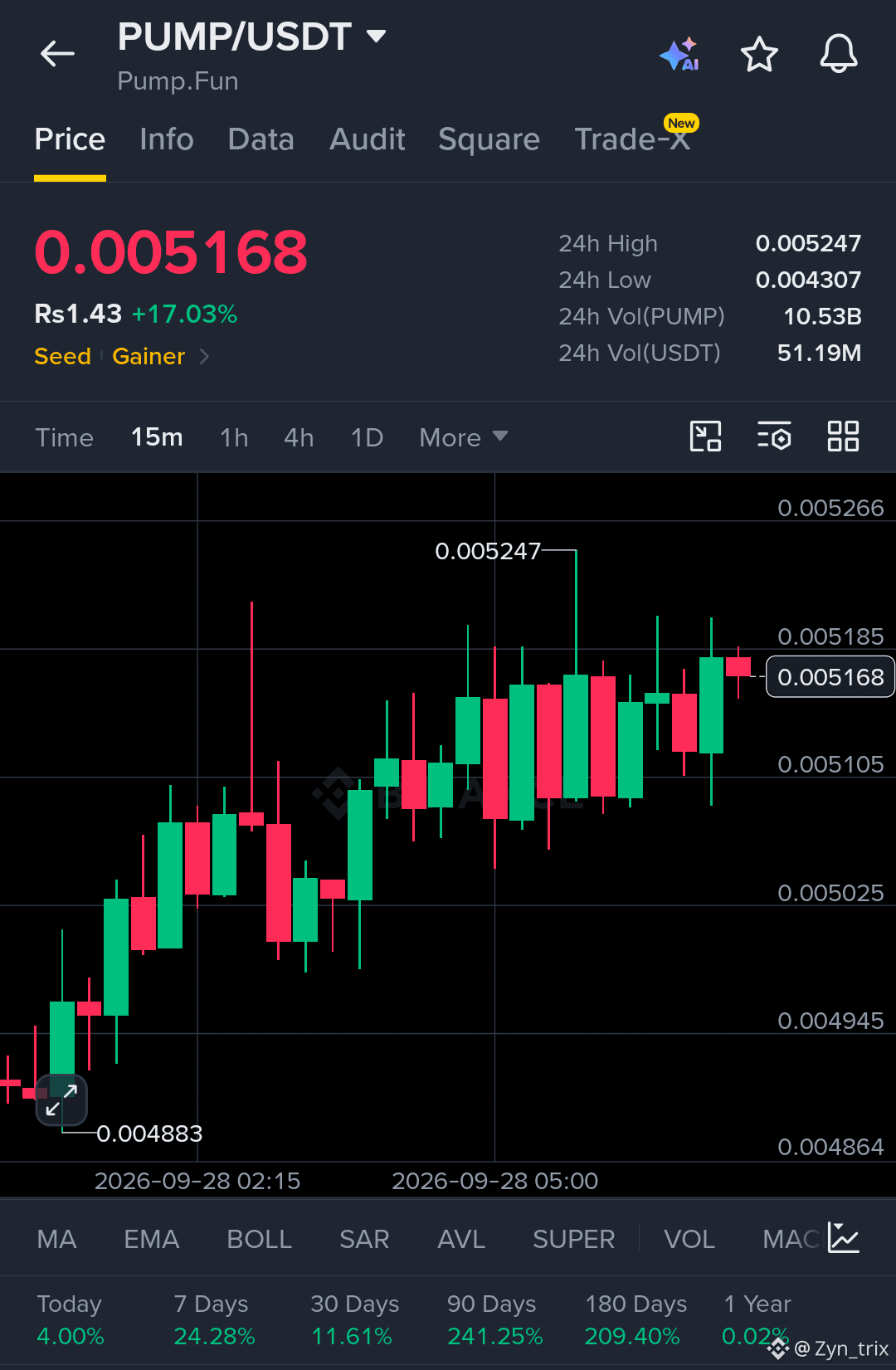
PUMP is trading around $0.005168, up 17.03% today, after pushing to a fresh 24H high of $0.005247.
24H High: $0.005247
24H Low: $0.004307
24H Volume: 10.53B PUMP
USDT Volume: $51.19M
Today: +17.03%
The 15M chart is showing a steady climb from around $0.00488, with higher lows forming along the way. After testing $0.005247, price has pulled back slightly but is still holding near $0.00515–$0.00518.
Key levels:
Entry zone: $0.00510–$0.00517
Support: $0.00505
Major support: $0.00495
TP1: $0.00525
TP2: $0.00550
TP3: $0.00580
Invalidation: Below $0.00495
The key battle is around $0.00525. A clean breakout with strong volume could open the next upside levels, while losing $0.00505 would show that momentum is cooling.
Volume is already strong, so this is one to watch closely. Manage the risk and let the candles confirm the move.
Risk managed. Eyes on the targets. Let’s go $PUMP
#TrumpRejectsIranHormuzReopening
$PUMP — MOMENTUM IS BUILDING AND BUYERS ARE STILL HOLDING THE ZONE
PUMP is trading around $0.005168, up 17.03% today, after pushing to a fresh 24H high of $0.005247.
24H High: $0.005247
24H Low: $0.004307
24H Volume: 10.53B PUMP
USDT Volume: $51.19M
Today: +17.03%
The 15M chart is showing a steady climb from around $0.00488, with higher lows forming along the way. After testing $0.005247, price has pulled back slightly but is still holding near $0.00515–$0.00518.
Key levels:
Entry zone: $0.00510–$0.00517
Support: $0.00505
Major support: $0.00495
TP1: $0.00525
TP2: $0.00550
TP3: $0.00580
Invalidation: Below $0.00495
The key battle is around $0.00525. A clean breakout with strong volume could open the next upside levels, while losing $0.00505 would show that momentum is cooling.
Volume is already strong, so this is one to watch closely. Manage the risk and let the candles confirm the move.
Risk managed. Eyes on the targets. Let’s go $PUMP
#TrumpRejectsIranHormuzReopening
PUMP is trading around $0.005168, up 17.03% today, after pushing to a fresh 24H high of $0.005247.
24H High: $0.005247
24H Low: $0.004307
24H Volume: 10.53B PUMP
USDT Volume: $51.19M
Today: +17.03%
The 15M chart is showing a steady climb from around $0.00488, with higher lows forming along the way. After testing $0.005247, price has pulled back slightly but is still holding near $0.00515–$0.00518.
Key levels:
Entry zone: $0.00510–$0.00517
Support: $0.00505
Major support: $0.00495
TP1: $0.00525
TP2: $0.00550
TP3: $0.00580
Invalidation: Below $0.00495
The key battle is around $0.00525. A clean breakout with strong volume could open the next upside levels, while losing $0.00505 would show that momentum is cooling.
Volume is already strong, so this is one to watch closely. Manage the risk and let the candles confirm the move.
Risk managed. Eyes on the targets. Let’s go $PUMP
#TrumpRejectsIranHormuzReopening
170
·
--
Bullish
$QNT — 42%+ TODAY AND THE CHART IS STILL HOLDING STRONG
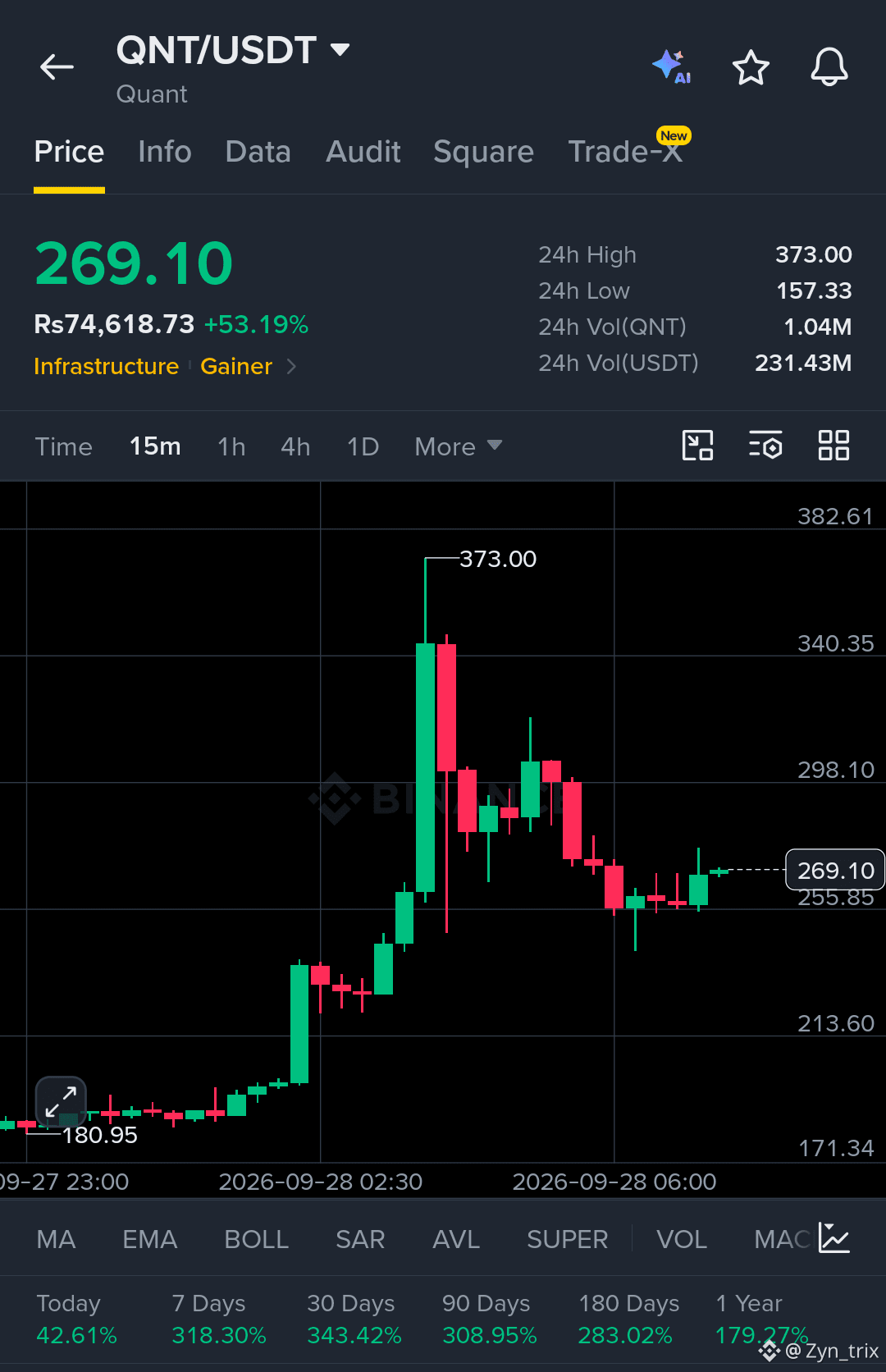
Quant just made a serious move, jumping from around $181 to a 24H high of $373 before cooling back to $269. That is a huge expansion in price and volume.
Current Price: $269.10
24H High: $373.00
24H Low: $157.33
24H Volume: 1.04M QNT
USDT Volume: $231.43M
Today: +42.61%
The 15M chart shows a sharp breakout, followed by a heavy pullback and consolidation around the $255–$270 area. Buyers are still defending this zone, while the market is trying to stabilize after the massive spike.
Key levels:
Support: $255–$260
Major support: $240–$245
Resistance: $298–$300
Major resistance: $340–$373
A clean reclaim of $298 could bring the previous highs back into focus, while losing the $255 area would weaken the current structure.
QNT is moving fast, so chasing candles after a massive expansion comes with serious risk. Watch the levels, manage the entry, and let the chart confirm the move.
Risk managed. Eyes on the targets. Let’s go $QNT
#BitwiseFilesFinalNEARSpotETFProspectus #StrategyStriveAdd2305BitcoinThisWeek #TrumpRejectsIranHormuzReopening
$QNT — 42%+ TODAY AND THE CHART IS STILL HOLDING STRONG
Quant just made a serious move, jumping from around $181 to a 24H high of $373 before cooling back to $269. That is a huge expansion in price and volume.
Current Price: $269.10
24H High: $373.00
24H Low: $157.33
24H Volume: 1.04M QNT
USDT Volume: $231.43M
Today: +42.61%
The 15M chart shows a sharp breakout, followed by a heavy pullback and consolidation around the $255–$270 area. Buyers are still defending this zone, while the market is trying to stabilize after the massive spike.
Key levels:
Support: $255–$260
Major support: $240–$245
Resistance: $298–$300
Major resistance: $340–$373
A clean reclaim of $298 could bring the previous highs back into focus, while losing the $255 area would weaken the current structure.
QNT is moving fast, so chasing candles after a massive expansion comes with serious risk. Watch the levels, manage the entry, and let the chart confirm the move.
Risk managed. Eyes on the targets. Let’s go $QNT
#BitwiseFilesFinalNEARSpotETFProspectus #StrategyStriveAdd2305BitcoinThisWeek #TrumpRejectsIranHormuzReopening
Quant just made a serious move, jumping from around $181 to a 24H high of $373 before cooling back to $269. That is a huge expansion in price and volume.
Current Price: $269.10
24H High: $373.00
24H Low: $157.33
24H Volume: 1.04M QNT
USDT Volume: $231.43M
Today: +42.61%
The 15M chart shows a sharp breakout, followed by a heavy pullback and consolidation around the $255–$270 area. Buyers are still defending this zone, while the market is trying to stabilize after the massive spike.
Key levels:
Support: $255–$260
Major support: $240–$245
Resistance: $298–$300
Major resistance: $340–$373
A clean reclaim of $298 could bring the previous highs back into focus, while losing the $255 area would weaken the current structure.
QNT is moving fast, so chasing candles after a massive expansion comes with serious risk. Watch the levels, manage the entry, and let the chart confirm the move.
Risk managed. Eyes on the targets. Let’s go $QNT
#BitwiseFilesFinalNEARSpotETFProspectus #StrategyStriveAdd2305BitcoinThisWeek #TrumpRejectsIranHormuzReopening
274
·
--
Bullish
#BitwiseFilesFinalNEARSpotETFProspectus #DogecoinETFsPostBiggestWeekSinceLaunch #TrumpRejectsIranHormuzReopening #SECSaysTokenBuybacksNotAutoSecurities #CoinMarketCapCompletesCoinglassAcquisition
$ZEC — BIG VOLATILITY, KEY LEVELS IN PLAY
Zcash is moving hard today, but the 15M chart shows a sharp rejection from the 1,680 area followed by aggressive selling.
Current Price: 1,620.58
24H Change: +5.29%
24H High: 1,698.00
24H Low: 1,538.02
24H Volume: 335.98M USDT
The important part now is the 1,615–1,620 zone. Price has already printed a local low around 1,618.45, making this an important reaction area.
ENTRY ZONE:
1,618 – 1,628
CONFIRMATION:
Watch how price reacts around 1,618–1,628. A strong reclaim of nearby resistance with volume would improve the setup.
TARGETS:
TP1: 1,642
TP2: 1,656
TP3: 1,669
Extended: 1,680
INVALIDATION / STOP:
Below 1,608
KEY RESISTANCE:
1,642
1,656
1,669
1,680
KEY SUPPORT:
1,618
1,615
1,600
1,538
MARKET READ:
The chart shows a clear rejection from 1,680 followed by several strong red candles. That means volatility is extremely high and confirmation matters more than chasing the move.
ZEC has already made a massive intraday range, so risk management is critical here. The 1,618–1,628 area is the level to watch closely for the next meaningful reaction.
No blind entry. Let price confirm the setup first.
Risk managed. Eyes on the levels.
Trade with a plan.
#BitwiseFilesFinalNEARSpotETFProspectus #DogecoinETFsPostBiggestWeekSinceLaunch #TrumpRejectsIranHormuzReopening #SECSaysTokenBuybacksNotAutoSecurities #CoinMarketCapCompletesCoinglassAcquisition
$ZEC — BIG VOLATILITY, KEY LEVELS IN PLAY
Zcash is moving hard today, but the 15M chart shows a sharp rejection from the 1,680 area followed by aggressive selling.
Current Price: 1,620.58
24H Change: +5.29%
24H High: 1,698.00
24H Low: 1,538.02
24H Volume: 335.98M USDT
The important part now is the 1,615–1,620 zone. Price has already printed a local low around 1,618.45, making this an important reaction area.
ENTRY ZONE:
1,618 – 1,628
CONFIRMATION:
Watch how price reacts around 1,618–1,628. A strong reclaim of nearby resistance with volume would improve the setup.
TARGETS:
TP1: 1,642
TP2: 1,656
TP3: 1,669
Extended: 1,680
INVALIDATION / STOP:
Below 1,608
KEY RESISTANCE:
1,642
1,656
1,669
1,680
KEY SUPPORT:
1,618
1,615
1,600
1,538
MARKET READ:
The chart shows a clear rejection from 1,680 followed by several strong red candles. That means volatility is extremely high and confirmation matters more than chasing the move.
ZEC has already made a massive intraday range, so risk management is critical here. The 1,618–1,628 area is the level to watch closely for the next meaningful reaction.
No blind entry. Let price confirm the setup first.
Risk managed. Eyes on the levels.
Trade with a plan.
$ZEC — BIG VOLATILITY, KEY LEVELS IN PLAY
Zcash is moving hard today, but the 15M chart shows a sharp rejection from the 1,680 area followed by aggressive selling.
Current Price: 1,620.58
24H Change: +5.29%
24H High: 1,698.00
24H Low: 1,538.02
24H Volume: 335.98M USDT
The important part now is the 1,615–1,620 zone. Price has already printed a local low around 1,618.45, making this an important reaction area.
ENTRY ZONE:
1,618 – 1,628
CONFIRMATION:
Watch how price reacts around 1,618–1,628. A strong reclaim of nearby resistance with volume would improve the setup.
TARGETS:
TP1: 1,642
TP2: 1,656
TP3: 1,669
Extended: 1,680
INVALIDATION / STOP:
Below 1,608
KEY RESISTANCE:
1,642
1,656
1,669
1,680
KEY SUPPORT:
1,618
1,615
1,600
1,538
MARKET READ:
The chart shows a clear rejection from 1,680 followed by several strong red candles. That means volatility is extremely high and confirmation matters more than chasing the move.
ZEC has already made a massive intraday range, so risk management is critical here. The 1,618–1,628 area is the level to watch closely for the next meaningful reaction.
No blind entry. Let price confirm the setup first.
Risk managed. Eyes on the levels.
Trade with a plan.
A) $1,538🤑💫
20%
B) $1,620.58🤑💫
40%
C) $1,642🤑💫
0%
D) $1,680🤑💫
40%
5 votes • Voting closed
339
·
--
Bullish
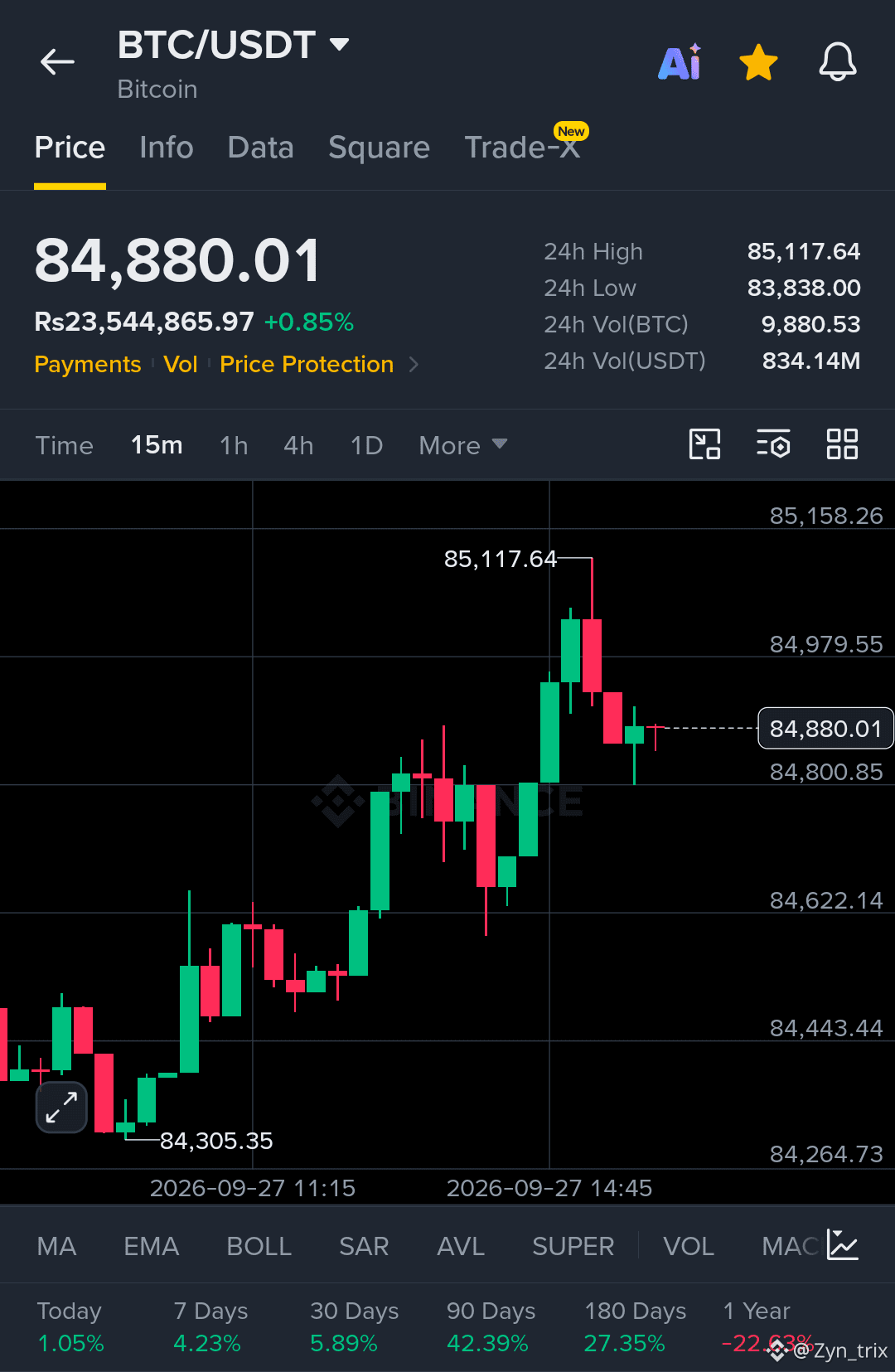
$BTC /USDT — The 15M chart is getting interesting.
Bitcoin is trading around 84,880 after pushing up to 85,117.64. Price has held above the 84,800 area, showing that buyers are still active after the latest move.
Entry: 84,800 – 84,900
Stop Loss: 84,620
TP1: 84,980
TP2: 85,117
TP3: 85,158
Key support: 84,800 / 84,622
Key resistance: 84,980 / 85,117
The bigger picture on the screen also shows BTC up 1.05% today, 4.23% over 7 days and 5.89% over 30 days. 24H volume is around 9,880 BTC, worth roughly 834M USDT.
The important level now is 85,117. A clean break and hold above that zone would put the recent high back in focus. If 84,800 fails, the 84,622 area becomes the next level to watch.
Risk managed. Levels are clear. Now let the price action confirm the move.
#BTC
#BTC、
$BTC /USDT — The 15M chart is getting interesting.
Bitcoin is trading around 84,880 after pushing up to 85,117.64. Price has held above the 84,800 area, showing that buyers are still active after the latest move.
Entry: 84,800 – 84,900
Stop Loss: 84,620
TP1: 84,980
TP2: 85,117
TP3: 85,158
Key support: 84,800 / 84,622
Key resistance: 84,980 / 85,117
The bigger picture on the screen also shows BTC up 1.05% today, 4.23% over 7 days and 5.89% over 30 days. 24H volume is around 9,880 BTC, worth roughly 834M USDT.
The important level now is 85,117. A clean break and hold above that zone would put the recent high back in focus. If 84,800 fails, the 84,622 area becomes the next level to watch.
Risk managed. Levels are clear. Now let the price action confirm the move.
#BTC
#BTC、
Bitcoin is trading around 84,880 after pushing up to 85,117.64. Price has held above the 84,800 area, showing that buyers are still active after the latest move.
Entry: 84,800 – 84,900
Stop Loss: 84,620
TP1: 84,980
TP2: 85,117
TP3: 85,158
Key support: 84,800 / 84,622
Key resistance: 84,980 / 85,117
The bigger picture on the screen also shows BTC up 1.05% today, 4.23% over 7 days and 5.89% over 30 days. 24H volume is around 9,880 BTC, worth roughly 834M USDT.
The important level now is 85,117. A clean break and hold above that zone would put the recent high back in focus. If 84,800 fails, the 84,622 area becomes the next level to watch.
Risk managed. Levels are clear. Now let the price action confirm the move.
#BTC
#BTC、
34
·
--
Bullish
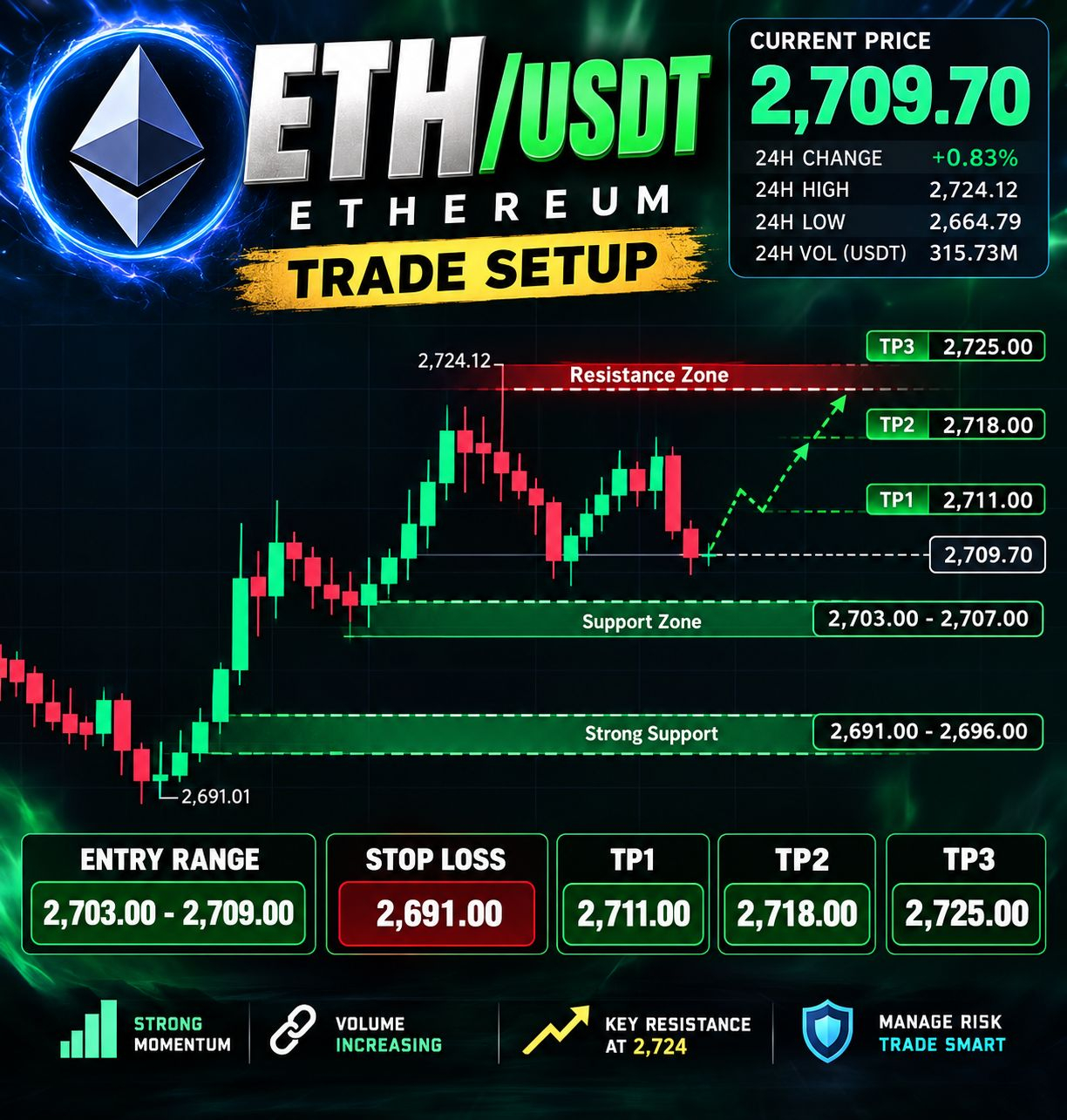
$ETH /USDT — Ethereum is holding the higher range after a strong intraday push.
Price: $2,709.70
24H Change: +0.83%
24H High: $2,724.12
24H Low: $2,664.79
24H Volume: $315.73M USDT
The 15M chart shows ETH recovering sharply from $2,691 and pushing into the $2,718–$2,724 zone. After the rejection near $2,724, price pulled back toward $2,710 and is now trying to stabilize.
Key levels:
Support: $2,703–$2,707
Major support: $2,691–$2,696
Resistance: $2,718–$2,724
Major resistance: $2,725–$2,726
The structure remains interesting while ETH holds above the $2,703 area. A clean reclaim of $2,724 would put the recent high back in focus, while a break below $2,691 would signal that the momentum is cooling.
Volume is strong at $315M+, so the next reaction around these levels could be important.
ETH is sitting at a key decision zone. Stay patient, manage risk, and watch the confirmation.
{spot}(ETHUSDT)
#StrategyStriveAdd2305BitcoinThisWeek #CircleTetherFreezeBitgetHackerWallet #CoinMarketCapCompletesCoinglassAcquisition #CircleMints500MUSDCOnSolana #PolymarketBankFailureBetsDrawFDICConcern
$ETH /USDT — Ethereum is holding the higher range after a strong intraday push.
Price: $2,709.70
24H Change: +0.83%
24H High: $2,724.12
24H Low: $2,664.79
24H Volume: $315.73M USDT
The 15M chart shows ETH recovering sharply from $2,691 and pushing into the $2,718–$2,724 zone. After the rejection near $2,724, price pulled back toward $2,710 and is now trying to stabilize.
Key levels:
Support: $2,703–$2,707
Major support: $2,691–$2,696
Resistance: $2,718–$2,724
Major resistance: $2,725–$2,726
The structure remains interesting while ETH holds above the $2,703 area. A clean reclaim of $2,724 would put the recent high back in focus, while a break below $2,691 would signal that the momentum is cooling.
Volume is strong at $315M+, so the next reaction around these levels could be important.
ETH is sitting at a key decision zone. Stay patient, manage risk, and watch the confirmation.
#StrategyStriveAdd2305BitcoinThisWeek #CircleTetherFreezeBitgetHackerWallet #CoinMarketCapCompletesCoinglassAcquisition #CircleMints500MUSDCOnSolana #PolymarketBankFailureBetsDrawFDICConcern
Price: $2,709.70
24H Change: +0.83%
24H High: $2,724.12
24H Low: $2,664.79
24H Volume: $315.73M USDT
The 15M chart shows ETH recovering sharply from $2,691 and pushing into the $2,718–$2,724 zone. After the rejection near $2,724, price pulled back toward $2,710 and is now trying to stabilize.
Key levels:
Support: $2,703–$2,707
Major support: $2,691–$2,696
Resistance: $2,718–$2,724
Major resistance: $2,725–$2,726
The structure remains interesting while ETH holds above the $2,703 area. A clean reclaim of $2,724 would put the recent high back in focus, while a break below $2,691 would signal that the momentum is cooling.
Volume is strong at $315M+, so the next reaction around these levels could be important.
ETH is sitting at a key decision zone. Stay patient, manage risk, and watch the confirmation.
#StrategyStriveAdd2305BitcoinThisWeek #CircleTetherFreezeBitgetHackerWallet #CoinMarketCapCompletesCoinglassAcquisition #CircleMints500MUSDCOnSolana #PolymarketBankFailureBetsDrawFDICConcern
68
·
--
Bullish
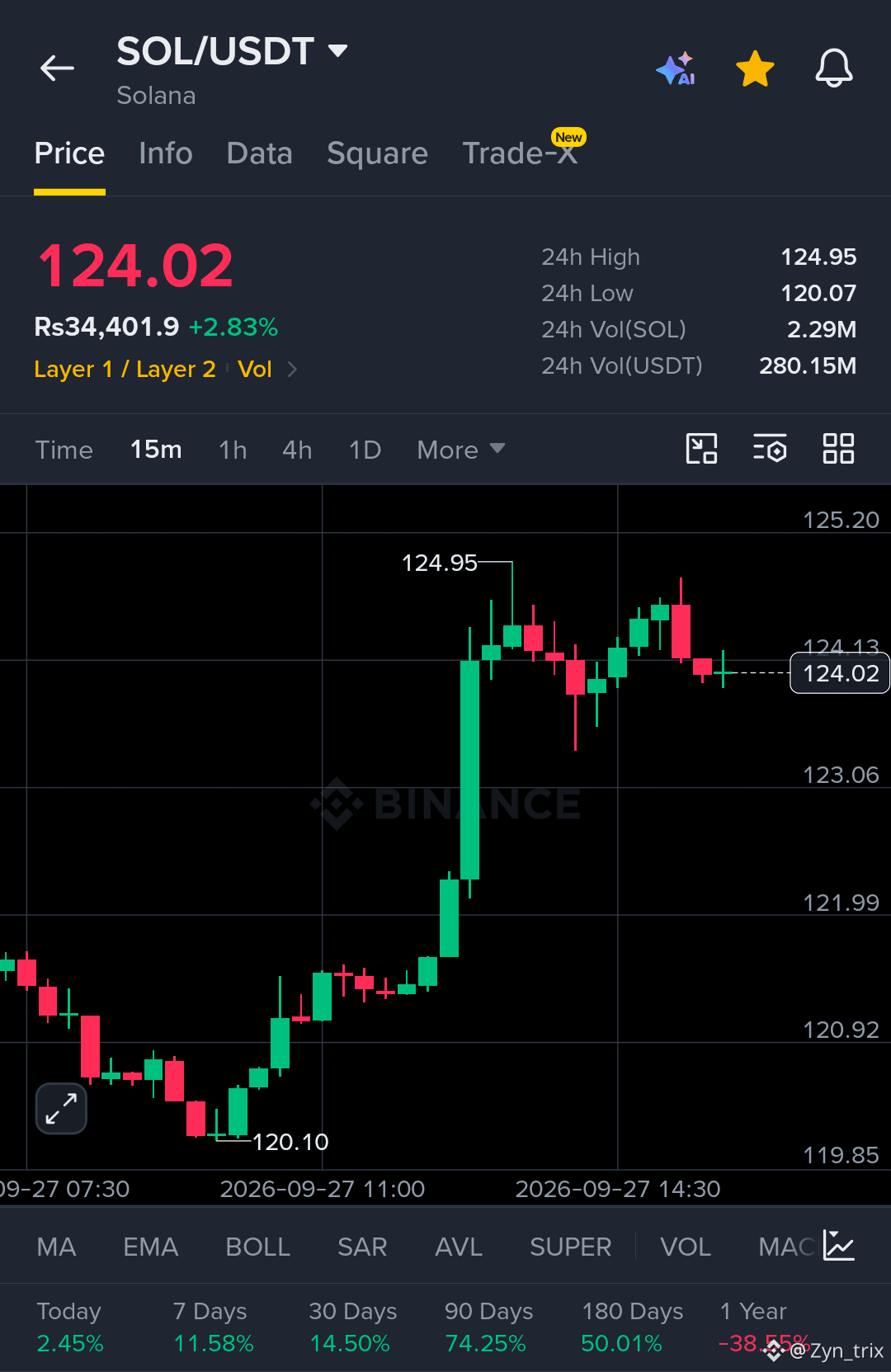
$SOL /USDT — SOL is holding strong after a sharp move from the $120.10 area.
Price: $124.02
24H Change: +2.83%
24H High: $124.95
24H Low: $120.07
24H Volume: $280.15M USDT
On the 15M chart, SOL pushed aggressively higher and reclaimed the $123–$124 zone. After touching $124.95, price is now consolidating near $124.02 instead of giving back the full move.
Key levels:
Support: $123.06–$123.50
Major support: $121.99–$122.20
Resistance: $124.13
Major resistance: $124.95–$125.20
A clean break and hold above $124.95 could bring the $125.20 area into focus, while losing $123.06 would weaken the current structure.
Momentum is still interesting, but the next candles matter. Watch volume closely around $124–$125.
SOL is moving fast. Stay patient, manage risk, and let the chart confirm the next move.
{spot}(SOLUSDT)
$SOL /USDT — SOL is holding strong after a sharp move from the $120.10 area.
Price: $124.02
24H Change: +2.83%
24H High: $124.95
24H Low: $120.07
24H Volume: $280.15M USDT
On the 15M chart, SOL pushed aggressively higher and reclaimed the $123–$124 zone. After touching $124.95, price is now consolidating near $124.02 instead of giving back the full move.
Key levels:
Support: $123.06–$123.50
Major support: $121.99–$122.20
Resistance: $124.13
Major resistance: $124.95–$125.20
A clean break and hold above $124.95 could bring the $125.20 area into focus, while losing $123.06 would weaken the current structure.
Momentum is still interesting, but the next candles matter. Watch volume closely around $124–$125.
SOL is moving fast. Stay patient, manage risk, and let the chart confirm the next move.
Price: $124.02
24H Change: +2.83%
24H High: $124.95
24H Low: $120.07
24H Volume: $280.15M USDT
On the 15M chart, SOL pushed aggressively higher and reclaimed the $123–$124 zone. After touching $124.95, price is now consolidating near $124.02 instead of giving back the full move.
Key levels:
Support: $123.06–$123.50
Major support: $121.99–$122.20
Resistance: $124.13
Major resistance: $124.95–$125.20
A clean break and hold above $124.95 could bring the $125.20 area into focus, while losing $123.06 would weaken the current structure.
Momentum is still interesting, but the next candles matter. Watch volume closely around $124–$125.
SOL is moving fast. Stay patient, manage risk, and let the chart confirm the next move.
72
·
--
Bullish
$ZEC my dream
— Zcash is making a serious move, and the chart is getting interesting.
Price: 1,668.57
24H Change: +8.73%
24H High: 1,698.00
24H Low: 1,531.45
24H Volume: 318.40M USDT
15M Chart
The 15M structure shows a strong recovery from the 1,631.78 area, followed by higher trading levels and a push toward the 1,670.91 zone.
Key levels on the chart:
Entry: 1,660 – 1,668
TP1: 1,672
TP2: 1,685
TP3: 1,698
SL: 1,655
Important zones:
1,664 – 1,672 is the immediate decision area.
1,655 is an important nearby level.
1,647 is the next visible support.
1,631.78 remains the major swing low shown on the chart.
The latest candles are holding near 1,668 after testing 1,670.91, so this area deserves close attention. Volume is also notable, with more than 318M USDT traded over 24 hours.
Risk management matters here. Avoid chasing sudden candles and watch how price reacts around the key levels.
Let’s go and Trade now $ZEC
{spot}(ZECUSDT)
#StrategyStriveAdd2305BitcoinThisWeek #TrumpRejectsIranHormuzReopening #CircleTetherFreezeBitgetHackerWallet #CoinMarketCapCompletesCoinglassAcquisition #CircleMints500MUSDCOnSolana
$ZEC my dream
— Zcash is making a serious move, and the chart is getting interesting.
Price: 1,668.57
24H Change: +8.73%
24H High: 1,698.00
24H Low: 1,531.45
24H Volume: 318.40M USDT
15M Chart
The 15M structure shows a strong recovery from the 1,631.78 area, followed by higher trading levels and a push toward the 1,670.91 zone.
Key levels on the chart:
Entry: 1,660 – 1,668
TP1: 1,672
TP2: 1,685
TP3: 1,698
SL: 1,655
Important zones:
1,664 – 1,672 is the immediate decision area.
1,655 is an important nearby level.
1,647 is the next visible support.
1,631.78 remains the major swing low shown on the chart.
The latest candles are holding near 1,668 after testing 1,670.91, so this area deserves close attention. Volume is also notable, with more than 318M USDT traded over 24 hours.
Risk management matters here. Avoid chasing sudden candles and watch how price reacts around the key levels.
Let’s go and Trade now $ZEC
#StrategyStriveAdd2305BitcoinThisWeek #TrumpRejectsIranHormuzReopening #CircleTetherFreezeBitgetHackerWallet #CoinMarketCapCompletesCoinglassAcquisition #CircleMints500MUSDCOnSolana
— Zcash is making a serious move, and the chart is getting interesting.
Price: 1,668.57
24H Change: +8.73%
24H High: 1,698.00
24H Low: 1,531.45
24H Volume: 318.40M USDT
15M Chart
The 15M structure shows a strong recovery from the 1,631.78 area, followed by higher trading levels and a push toward the 1,670.91 zone.
Key levels on the chart:
Entry: 1,660 – 1,668
TP1: 1,672
TP2: 1,685
TP3: 1,698
SL: 1,655
Important zones:
1,664 – 1,672 is the immediate decision area.
1,655 is an important nearby level.
1,647 is the next visible support.
1,631.78 remains the major swing low shown on the chart.
The latest candles are holding near 1,668 after testing 1,670.91, so this area deserves close attention. Volume is also notable, with more than 318M USDT traded over 24 hours.
Risk management matters here. Avoid chasing sudden candles and watch how price reacts around the key levels.
Let’s go and Trade now $ZEC
#StrategyStriveAdd2305BitcoinThisWeek #TrumpRejectsIranHormuzReopening #CircleTetherFreezeBitgetHackerWallet #CoinMarketCapCompletesCoinglassAcquisition #CircleMints500MUSDCOnSolana

222
·
--
Bullish
🚨 LONG 💯💯💯💯💯💯💯🤑🤑🤑🤑🤑🤑🤑🤑🤑🤑🤑🤑🤑🤑🤑🤑🤑🤑🤑🤑🤑🤑🤑🤑🤑🤑🤑🤑🤑🤑🤑🤑🤑🤑🤑🤑🤑🤑🤑🤑
#StrategyStriveAdd2305BitcoinThisWeek #TrumpRejectsIranHormuzReopening #SECSaysTokenBuybacksNotAutoSecurities #CoinMarketCapCompletesCoinglassAcquisition #CircleMints500MUSDCOnSolana
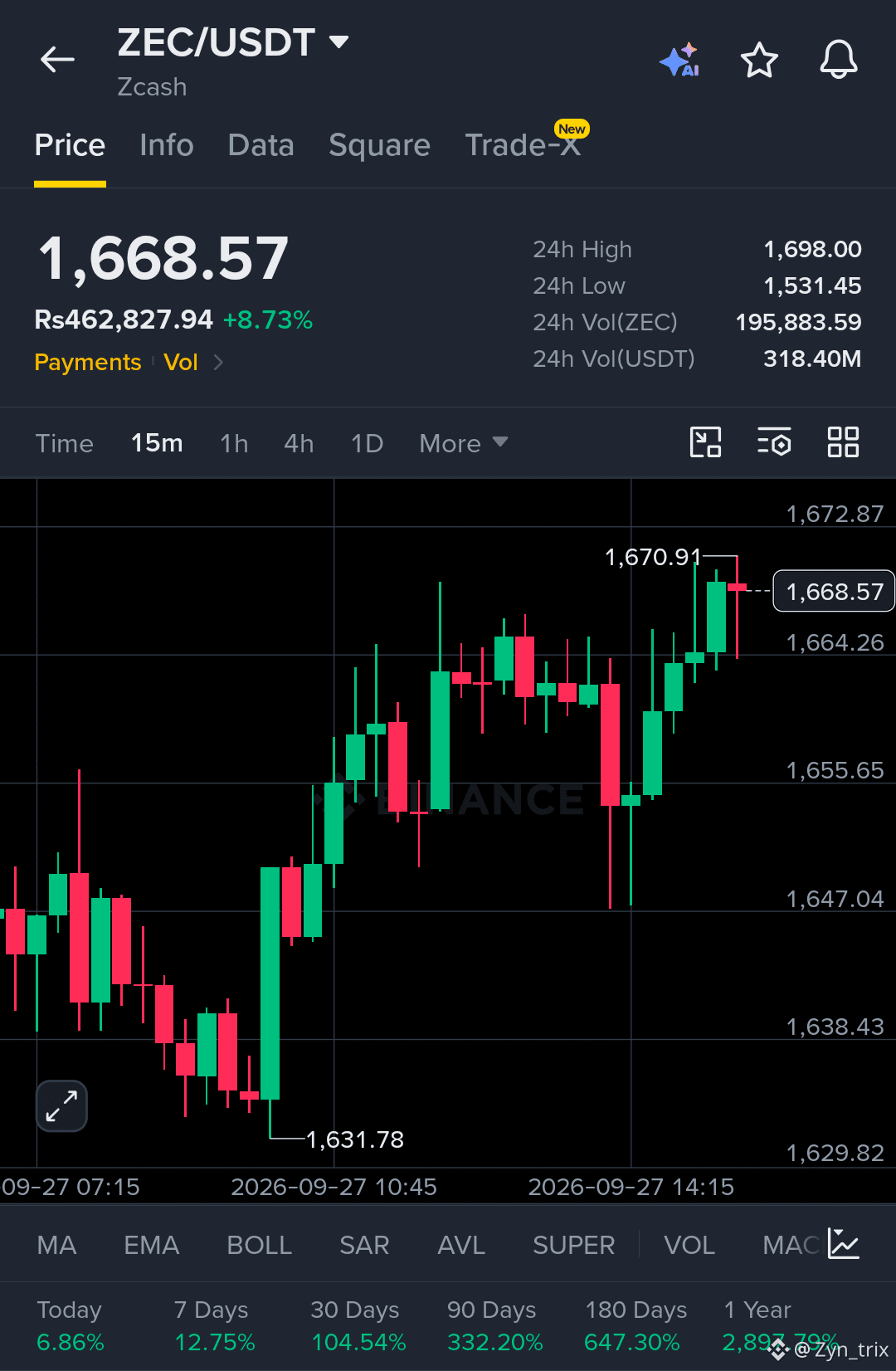
$ZEC — Zcash is making a serious move, and the chart is getting interesting.
Price: 1,668.57
24H Change: +8.73%
24H High: 1,698.00
24H Low: 1,531.45
24H Volume: 318.40M USDT
15M Chart
The 15M structure shows a strong recovery from the 1,631.78 area, followed by higher trading levels and a push toward the 1,670.91 zone.
Key levels on the chart:
Entry: 1,660 – 1,668
TP1: 1,672
TP2: 1,685
TP3: 1,698
SL: 1,655
Important zones:
1,664 – 1,672 is the immediate decision area.
1,655 is an important nearby level.
1,647 is the next visible support.
1,631.78 remains the major swing low shown on the chart.
The latest candles are holding near 1,668 after testing 1,670.91, so this area deserves close attention. Volume is also notable, with more than 318M USDT traded over 24 hours.
Risk management matters here. Avoid chasing sudden candles and watch how price reacts around the key levels.
Let’s go and Trade now $ZEC
{spot}(ZECUSDT)
🚨 LONG 💯💯💯💯💯💯💯🤑🤑🤑🤑🤑🤑🤑🤑🤑🤑🤑🤑🤑🤑🤑🤑🤑🤑🤑🤑🤑🤑🤑🤑🤑🤑🤑🤑🤑🤑🤑🤑🤑🤑🤑🤑🤑🤑🤑🤑
#StrategyStriveAdd2305BitcoinThisWeek #TrumpRejectsIranHormuzReopening #SECSaysTokenBuybacksNotAutoSecurities #CoinMarketCapCompletesCoinglassAcquisition #CircleMints500MUSDCOnSolana
$ZEC — Zcash is making a serious move, and the chart is getting interesting.
Price: 1,668.57
24H Change: +8.73%
24H High: 1,698.00
24H Low: 1,531.45
24H Volume: 318.40M USDT
15M Chart
The 15M structure shows a strong recovery from the 1,631.78 area, followed by higher trading levels and a push toward the 1,670.91 zone.
Key levels on the chart:
Entry: 1,660 – 1,668
TP1: 1,672
TP2: 1,685
TP3: 1,698
SL: 1,655
Important zones:
1,664 – 1,672 is the immediate decision area.
1,655 is an important nearby level.
1,647 is the next visible support.
1,631.78 remains the major swing low shown on the chart.
The latest candles are holding near 1,668 after testing 1,670.91, so this area deserves close attention. Volume is also notable, with more than 318M USDT traded over 24 hours.
Risk management matters here. Avoid chasing sudden candles and watch how price reacts around the key levels.
Let’s go and Trade now $ZEC
#StrategyStriveAdd2305BitcoinThisWeek #TrumpRejectsIranHormuzReopening #SECSaysTokenBuybacksNotAutoSecurities #CoinMarketCapCompletesCoinglassAcquisition #CircleMints500MUSDCOnSolana
$ZEC — Zcash is making a serious move, and the chart is getting interesting.
Price: 1,668.57
24H Change: +8.73%
24H High: 1,698.00
24H Low: 1,531.45
24H Volume: 318.40M USDT
15M Chart
The 15M structure shows a strong recovery from the 1,631.78 area, followed by higher trading levels and a push toward the 1,670.91 zone.
Key levels on the chart:
Entry: 1,660 – 1,668
TP1: 1,672
TP2: 1,685
TP3: 1,698
SL: 1,655
Important zones:
1,664 – 1,672 is the immediate decision area.
1,655 is an important nearby level.
1,647 is the next visible support.
1,631.78 remains the major swing low shown on the chart.
The latest candles are holding near 1,668 after testing 1,670.91, so this area deserves close attention. Volume is also notable, with more than 318M USDT traded over 24 hours.
Risk management matters here. Avoid chasing sudden candles and watch how price reacts around the key levels.
Let’s go and Trade now $ZEC
195
Log in to explore more content
Join global crypto users on Binance Square
⚡️ Get latest and useful information about crypto.
💬 Trusted by the world’s largest crypto exchange.
👍 Discover real insights from verified creators.
Email / Phone number
Trending Topics
BitMineETHHoldingsTop6Million
574 views
69 Discussing
#bitmineethholdingstop6million
🐋 BitMine’s ETH stash just crossed 6 MILLION! 🚀
So, #bitmineethholdingstop6million. Huge congrats to Tom Lee! But wait... what’s the real reason you're hoarding so much Ether, Tom? Do you know something we don't? Is ETH silently front-running a massive pump to $3K in the next few days? 👀 BitMine now controls 4.9% of the total ETH supply, making them the ultimate Ethereum whales!
🛒 What should traders do?
📈 Follow the institutional smart money: When giants gobble up 17k ETH in a single week and stake 84% of it, the long-term supply shock is real.
🌊 Ride the wave: Keep a close eye on the charts as Ethereum solidifies its spot as a top macro asset.
DYOR! This is absolutely NOT financial advice.
🚀 Support your boy! Sign up with code VINHTOCDO or use this link: https://www.binance.com/register?ref=VINHTOCDO
👇 Click to trade below and support me:
$ETH
$BNB
$ORBS
#Ethereum #BitMine #TomLee #VINHTOCDO #CryptoNews #BinanceSquare
Vinhtocdo
·1 Likes
·12 views
StrategyAdds1666BTCHoldingsReach847666
468 views
44 Discussing
NvidiaApproves$150BBuyback
1,864 views
45 Discussing