

#staking
staking
2.2M views
8,158 Discussing
Hot
Latest

·
--
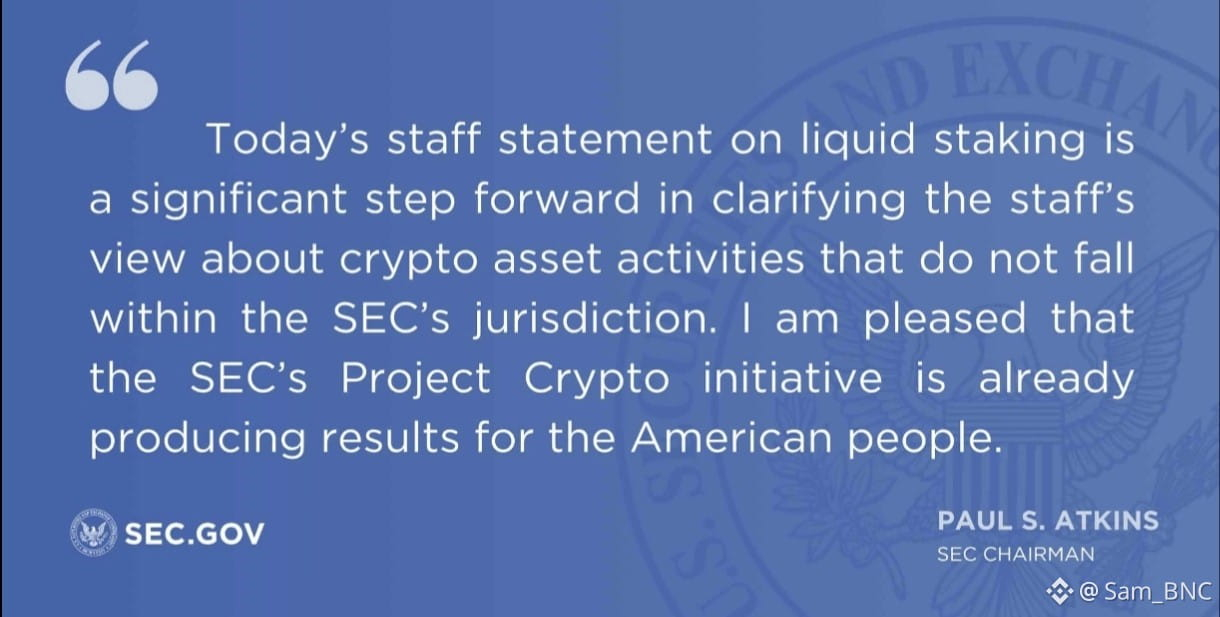
🚨 SEC JUST CLARIFIED LIQUID STAKING!
SEC staff says certain staking receipt tokens may be treated as digital tools rather than securities, depending on how they work.
{future}(ETHUSDT)
Could this impact the staking sector? 👀
#Ethereum #ETH #Crypto #Staking #BinanceSquare
🚨 SEC JUST CLARIFIED LIQUID STAKING!
SEC staff says certain staking receipt tokens may be treated as digital tools rather than securities, depending on how they work.
Could this impact the staking sector? 👀
#Ethereum #ETH #Crypto #Staking #BinanceSquare
SEC staff says certain staking receipt tokens may be treated as digital tools rather than securities, depending on how they work.
Could this impact the staking sector? 👀
#Ethereum #ETH #Crypto #Staking #BinanceSquare
1
24

·
--
Staking yield is the most misunderstood number in crypto.
When a chain advertises 8% staking APY, most people read it as income. Read it as inflation first. Nominal staking yield is mostly new token issuance — a transfer from non-stakers to stakers. If everyone stakes, everyone gets diluted in lockstep, and that "yield" simply buys back the share of your own inflation.
The honest number is real yield: what the chain actually earns. A chain paying 8% while inflating 6% hands you roughly 2% of true economic yield. A chain paying 3% with heavy fee burn and real user demand can quietly pay more.
This reframes the Layer 1 comparison. $ETH's fee-burn design separates the books: issuance is payroll for security, fees are revenue, and the burn refunds part of the inflation back to every holder. $SOL's high nominal yield is a deliberate adoption subsidy — transparent, but funded by non-stakers. $DOT ties its inflation to participation, paying those who show up and pruning those who don't.
The rule of thumb: yield paid from outside the system (fees, MEV, real demand) is income. Yield paid from inside the system (fresh issuance) is a refund on money already taken from you.
Before chasing any APY, ask one question: who is actually paying for this yield?
#Staking #Tokenomics #Layer1 #Yield #Crypto
Staking yield is the most misunderstood number in crypto.
When a chain advertises 8% staking APY, most people read it as income. Read it as inflation first. Nominal staking yield is mostly new token issuance — a transfer from non-stakers to stakers. If everyone stakes, everyone gets diluted in lockstep, and that "yield" simply buys back the share of your own inflation.
The honest number is real yield: what the chain actually earns. A chain paying 8% while inflating 6% hands you roughly 2% of true economic yield. A chain paying 3% with heavy fee burn and real user demand can quietly pay more.
This reframes the Layer 1 comparison. $ETH 's fee-burn design separates the books: issuance is payroll for security, fees are revenue, and the burn refunds part of the inflation back to every holder. $SOL 's high nominal yield is a deliberate adoption subsidy — transparent, but funded by non-stakers. $DOT ties its inflation to participation, paying those who show up and pruning those who don't.
The rule of thumb: yield paid from outside the system (fees, MEV, real demand) is income. Yield paid from inside the system (fresh issuance) is a refund on money already taken from you.
Before chasing any APY, ask one question: who is actually paying for this yield?
#Staking #Tokenomics #Layer1 #Yield #Crypto
When a chain advertises 8% staking APY, most people read it as income. Read it as inflation first. Nominal staking yield is mostly new token issuance — a transfer from non-stakers to stakers. If everyone stakes, everyone gets diluted in lockstep, and that "yield" simply buys back the share of your own inflation.
The honest number is real yield: what the chain actually earns. A chain paying 8% while inflating 6% hands you roughly 2% of true economic yield. A chain paying 3% with heavy fee burn and real user demand can quietly pay more.
This reframes the Layer 1 comparison. $ETH 's fee-burn design separates the books: issuance is payroll for security, fees are revenue, and the burn refunds part of the inflation back to every holder. $SOL 's high nominal yield is a deliberate adoption subsidy — transparent, but funded by non-stakers. $DOT ties its inflation to participation, paying those who show up and pruning those who don't.
The rule of thumb: yield paid from outside the system (fees, MEV, real demand) is income. Yield paid from inside the system (fresh issuance) is a refund on money already taken from you.
Before chasing any APY, ask one question: who is actually paying for this yield?
#Staking #Tokenomics #Layer1 #Yield #Crypto
260

·
--
Staking is like putting your crypto to work instead of letting it sit idle. You lock up tokens to help secure a blockchain network, and in return you earn rewards — similar to interest on a savings account but powered by code not banks.
Popular options right now include Ethereum (ETH) via liquid staking on Lido at 3-4% APY, Solana (SOL) through native delegation around 6-7%, and Polygon (MATIC) on Binance Earn or Lido near 4-5%. These are conservative estimates — actual yields fluctuate with network activity and validator performance.
Platforms like Binance Earn, Lido, and Coinbase make it simple with one-click staking. No technical setup needed. Just choose your asset, confirm the lock period if any, and watch rewards compound daily.
Risk warning: slashing penalties can slash your principal if validators misbehave or go offline. Always research validator reputation and diversify across multiple operators.
Staking turns holders into earners without trading stress. The best part? You keep custody of your keys on non-custodial options.
Are you staking any crypto right now? Drop your favourite coin below!
#Altcoins #CryptoNews #Staking #PassiveIncome
Staking is like putting your crypto to work instead of letting it sit idle. You lock up tokens to help secure a blockchain network, and in return you earn rewards — similar to interest on a savings account but powered by code not banks.
Popular options right now include Ethereum (ETH) via liquid staking on Lido at 3-4% APY, Solana (SOL) through native delegation around 6-7%, and Polygon (MATIC) on Binance Earn or Lido near 4-5%. These are conservative estimates — actual yields fluctuate with network activity and validator performance.
Platforms like Binance Earn, Lido, and Coinbase make it simple with one-click staking. No technical setup needed. Just choose your asset, confirm the lock period if any, and watch rewards compound daily.
Risk warning: slashing penalties can slash your principal if validators misbehave or go offline. Always research validator reputation and diversify across multiple operators.
Staking turns holders into earners without trading stress. The best part? You keep custody of your keys on non-custodial options.
Are you staking any crypto right now? Drop your favourite coin below!
#Altcoins #CryptoNews #Staking #PassiveIncome
Popular options right now include Ethereum (ETH) via liquid staking on Lido at 3-4% APY, Solana (SOL) through native delegation around 6-7%, and Polygon (MATIC) on Binance Earn or Lido near 4-5%. These are conservative estimates — actual yields fluctuate with network activity and validator performance.
Platforms like Binance Earn, Lido, and Coinbase make it simple with one-click staking. No technical setup needed. Just choose your asset, confirm the lock period if any, and watch rewards compound daily.
Risk warning: slashing penalties can slash your principal if validators misbehave or go offline. Always research validator reputation and diversify across multiple operators.
Staking turns holders into earners without trading stress. The best part? You keep custody of your keys on non-custodial options.
Are you staking any crypto right now? Drop your favourite coin below!
#Altcoins #CryptoNews #Staking #PassiveIncome
19

⚡ $HYPE SECURES PRIME LISTING WITH STAKING REWARDS OFFICIALLY UNLOCKED! 🚀
The waiting game is officially over as $HYPE hits a top-tier exchange under the Seed Tag umbrella. 📊 This opens up direct access to deep institutional liquidity while enabling native staking options right at launch.
Early accumulators are already watching order books closely to see how initial price discovery shapes up. 💡 With spot access and yield integration landing simultaneously, market momentum could ignite aggressive bid defense around initial order blocks. 💬 Will you be locking in yield on day one, or waiting for secondary price discovery to settle? 👇
⚠️ Not financial advice. Always manage your risk. 🛡️
🏷️ #HYPE #CryptoListing #Altcoins #Staking
⚡ 💎
⚡ $HYPE SECURES PRIME LISTING WITH STAKING REWARDS OFFICIALLY UNLOCKED! 🚀
The waiting game is officially over as $HYPE hits a top-tier exchange under the Seed Tag umbrella. 📊 This opens up direct access to deep institutional liquidity while enabling native staking options right at launch.
Early accumulators are already watching order books closely to see how initial price discovery shapes up. 💡 With spot access and yield integration landing simultaneously, market momentum could ignite aggressive bid defense around initial order blocks. 💬 Will you be locking in yield on day one, or waiting for secondary price discovery to settle? 👇
⚠️ Not financial advice. Always manage your risk. 🛡️
🏷️ #HYPE #CryptoListing #Altcoins #Staking
⚡ 💎
The waiting game is officially over as $HYPE hits a top-tier exchange under the Seed Tag umbrella. 📊 This opens up direct access to deep institutional liquidity while enabling native staking options right at launch.
Early accumulators are already watching order books closely to see how initial price discovery shapes up. 💡 With spot access and yield integration landing simultaneously, market momentum could ignite aggressive bid defense around initial order blocks. 💬 Will you be locking in yield on day one, or waiting for secondary price discovery to settle? 👇
⚠️ Not financial advice. Always manage your risk. 🛡️
🏷️ #HYPE #CryptoListing #Altcoins #Staking
⚡ 💎

41


Verified
#BitwiseNEARStakingETPAssetsTop$100M
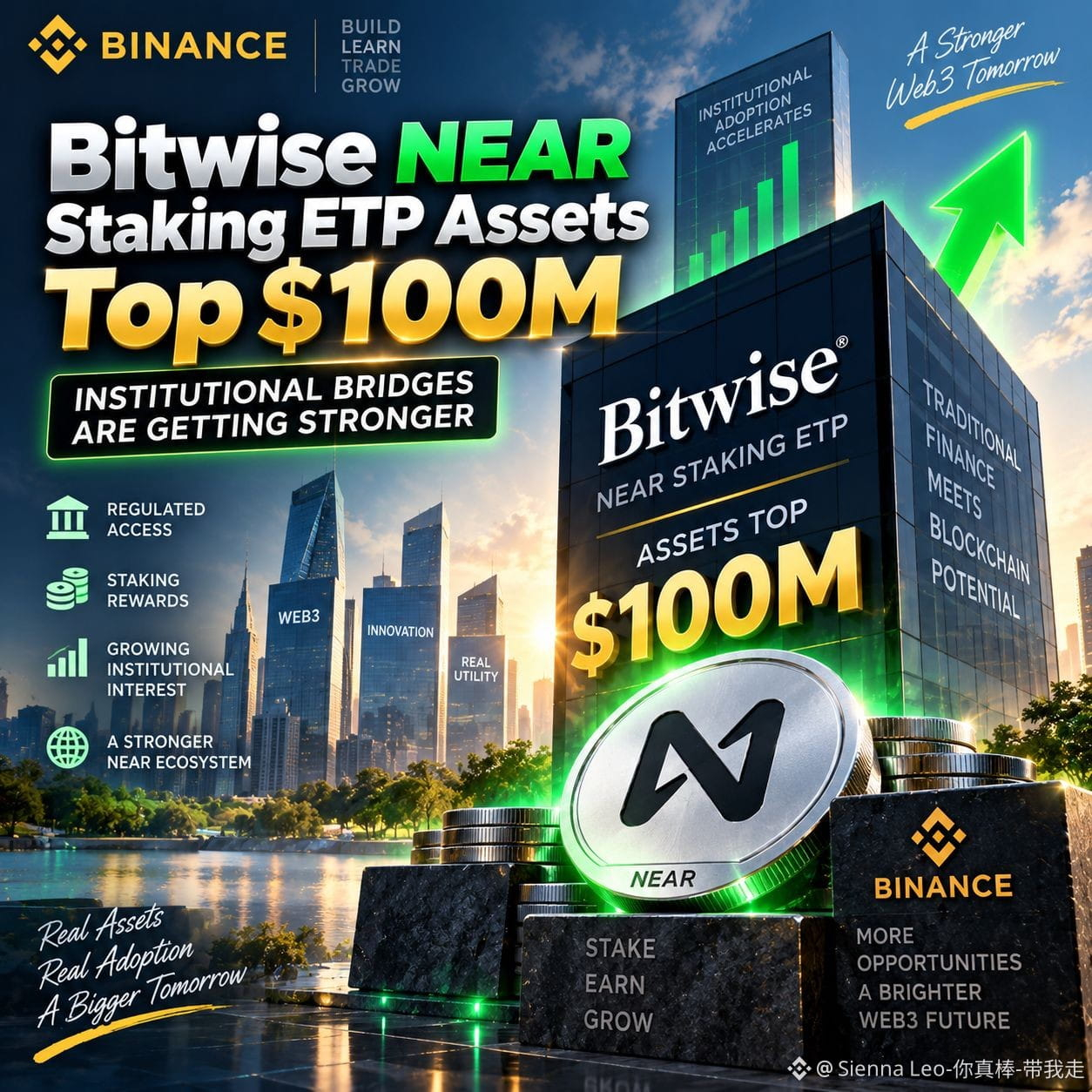
🚨 Bitwise $NEAR Staking ETP Assets Top $100M: What’s Really Driving It? 🚨
The market was moving quietly when one number suddenly became impossible to ignore: Bitwise’s NEAR Staking ETP had crossed the $100 million mark. But behind that headline sits a more interesting question: how much of the growth came from investors, and how much came from NEAR itself?
As of September 23, Bitwise reports approximately $110.65 million in assets, with about 25.43 million NEAR held across roughly 4.91 million outstanding units.
The important distinction is that rising AUM does not automatically mean an equivalent wave of fresh capital entered the product. The value of the underlying NEAR holdings can rise sharply even if the number of ETP units changes only modestly. Recent reporting found unit growth of around 0.6% during one measured period, while NEAR's price appreciation did much more of the lifting.
That makes the milestone meaningful, but also worth reading carefully. The ETP gives European investors regulated market access to NEAR while staking the underlying tokens, connecting traditional investment infrastructure with on-chain yield.
My take: the next signal to watch is not simply AUM, but whether outstanding units continue expanding alongside network activity. That would provide stronger evidence of sustained investor demand rather than price-driven asset growth.
A bigger number gets attention; the composition behind that number tells the real story.
❓Do you think rising NEAR ETP assets will translate into stronger long-term institutional participation?
Disclaimer: This content is for educational purposes only and is not financial advice. Crypto assets are volatile and carry significant risk.
#NEAR #Staking #GrowWithSAC $MUBARAK $MARSCOIN
#BitwiseNEARStakingETPAssetsTop$100M
🚨 Bitwise $NEAR Staking ETP Assets Top $100M: What’s Really Driving It? 🚨
The market was moving quietly when one number suddenly became impossible to ignore: Bitwise’s NEAR Staking ETP had crossed the $100 million mark. But behind that headline sits a more interesting question: how much of the growth came from investors, and how much came from NEAR itself?
As of September 23, Bitwise reports approximately $110.65 million in assets, with about 25.43 million NEAR held across roughly 4.91 million outstanding units.
The important distinction is that rising AUM does not automatically mean an equivalent wave of fresh capital entered the product. The value of the underlying NEAR holdings can rise sharply even if the number of ETP units changes only modestly. Recent reporting found unit growth of around 0.6% during one measured period, while NEAR's price appreciation did much more of the lifting.
That makes the milestone meaningful, but also worth reading carefully. The ETP gives European investors regulated market access to NEAR while staking the underlying tokens, connecting traditional investment infrastructure with on-chain yield.
My take: the next signal to watch is not simply AUM, but whether outstanding units continue expanding alongside network activity. That would provide stronger evidence of sustained investor demand rather than price-driven asset growth.
A bigger number gets attention; the composition behind that number tells the real story.
❓Do you think rising NEAR ETP assets will translate into stronger long-term institutional participation?
Disclaimer: This content is for educational purposes only and is not financial advice. Crypto assets are volatile and carry significant risk.
#NEAR #Staking #GrowWithSAC $MUBARAK $MARSCOIN
🚨 Bitwise $NEAR Staking ETP Assets Top $100M: What’s Really Driving It? 🚨
The market was moving quietly when one number suddenly became impossible to ignore: Bitwise’s NEAR Staking ETP had crossed the $100 million mark. But behind that headline sits a more interesting question: how much of the growth came from investors, and how much came from NEAR itself?
As of September 23, Bitwise reports approximately $110.65 million in assets, with about 25.43 million NEAR held across roughly 4.91 million outstanding units.
The important distinction is that rising AUM does not automatically mean an equivalent wave of fresh capital entered the product. The value of the underlying NEAR holdings can rise sharply even if the number of ETP units changes only modestly. Recent reporting found unit growth of around 0.6% during one measured period, while NEAR's price appreciation did much more of the lifting.
That makes the milestone meaningful, but also worth reading carefully. The ETP gives European investors regulated market access to NEAR while staking the underlying tokens, connecting traditional investment infrastructure with on-chain yield.
My take: the next signal to watch is not simply AUM, but whether outstanding units continue expanding alongside network activity. That would provide stronger evidence of sustained investor demand rather than price-driven asset growth.
A bigger number gets attention; the composition behind that number tells the real story.
❓Do you think rising NEAR ETP assets will translate into stronger long-term institutional participation?
Disclaimer: This content is for educational purposes only and is not financial advice. Crypto assets are volatile and carry significant risk.
#NEAR #Staking #GrowWithSAC $MUBARAK $MARSCOIN
4
1.8k

·
--
Bullish
@LidoFinance LDO is trading at $0.4612 with +16.20%. I don’t start from the price at all. I start from Ethereum itself: when staking becomes massive, how do we preserve the distribution of power? Lido’s developments around validator operations models and community participation matter for exactly this reason. For me, Lido’s success is not only that it grows; but that it grows without becoming a new centralized layer on top of Ethereum.
#staking #marouan47 #ldo @LidoFinance
$LDO
{spot}(LDOUSDT)
$ETH
{spot}(ETHUSDT)
@Lido LDO is trading at $0.4612 with +16.20%. I don’t start from the price at all. I start from Ethereum itself: when staking becomes massive, how do we preserve the distribution of power? Lido’s developments around validator operations models and community participation matter for exactly this reason. For me, Lido’s success is not only that it grows; but that it grows without becoming a new centralized layer on top of Ethereum.
#staking #marouan47 #ldo @Lido
$LDO
$ETH
#staking #marouan47 #ldo @Lido
$LDO
$ETH
1
326

·
--
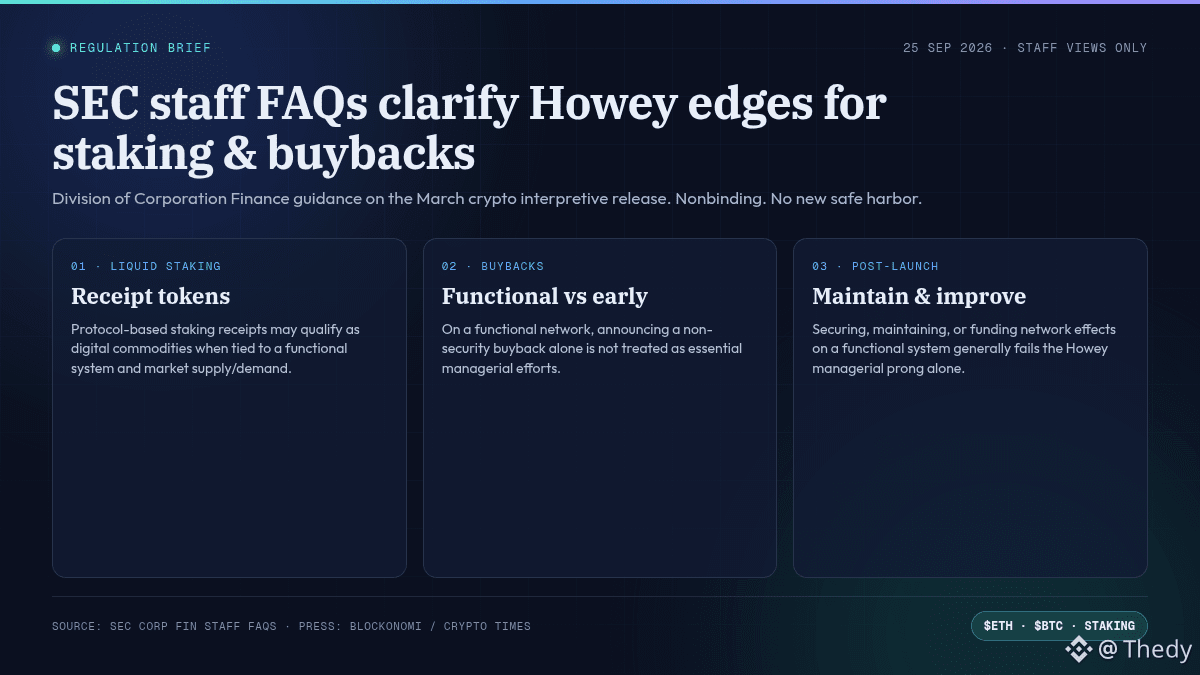
The SEC does not change the law. It clarifies where Howey ends for staking and buybacks.
Facts (Corp Fin staff, FAQs dated 09/25, staff-only views, with no legal force):
• Receipts from liquid staking tied to a crypto system that is already functioning may, depending on the circumstances described, be treated as digital commodities (value tied to programmatic functioning + supply/demand).
• Announcing a buyback of a non-security token on a network that is already functioning, by itself, is not viewed as a promise of “essential managerial efforts.”
• Securing, maintaining, improving a functioning system, or funding network effects, generally is not enough to satisfy the “managerial efforts” prong of Howey.
• The document does not create a safe harbor. It interprets the March 2026 framework. Confirmation press: Blockonomi, The Crypto Times.
Market context (Kraken, ~00:45 UTC 09/26): BTC ≈ $83,870, ETH ≈ $2,685, SOL ≈ $121.5, XRP ≈ $1.56. No violent break while the regulatory thread advances.
Interpretation (not legal advice):
Less ambiguity around networks that are already live, more discipline in marketing yield/buybacks before functionality. For $ETH et liquid staking, the detail “receipt = tool / commodity depending on the issuer” deserves to be read line by line, not summarized in a tweet.
Scenarios:
• A: projects that clearly frame utility vs. a promise of returns → perceived regulatory friction decreases, with no immediate price change.
• B: projects that are still pre-functional selling the buyback as “yield” → the Howey signal remains active, and the risk of reclassification remains as well.
Are you reading the staking receipts angle, or the buybacks angle?
$ETH $BTC
#Crypto #Staking
The SEC does not change the law. It clarifies where Howey ends for staking and buybacks.
Facts (Corp Fin staff, FAQs dated 09/25, staff-only views, with no legal force):
• Receipts from liquid staking tied to a crypto system that is already functioning may, depending on the circumstances described, be treated as digital commodities (value tied to programmatic functioning + supply/demand).
• Announcing a buyback of a non-security token on a network that is already functioning, by itself, is not viewed as a promise of “essential managerial efforts.”
• Securing, maintaining, improving a functioning system, or funding network effects, generally is not enough to satisfy the “managerial efforts” prong of Howey.
• The document does not create a safe harbor. It interprets the March 2026 framework. Confirmation press: Blockonomi, The Crypto Times.
Market context (Kraken, ~00:45 UTC 09/26): BTC ≈ $83,870, ETH ≈ $2,685, SOL ≈ $121.5, XRP ≈ $1.56. No violent break while the regulatory thread advances.
Interpretation (not legal advice):
Less ambiguity around networks that are already live, more discipline in marketing yield/buybacks before functionality. For $ETH et liquid staking, the detail “receipt = tool / commodity depending on the issuer” deserves to be read line by line, not summarized in a tweet.
Scenarios:
• A: projects that clearly frame utility vs. a promise of returns → perceived regulatory friction decreases, with no immediate price change.
• B: projects that are still pre-functional selling the buyback as “yield” → the Howey signal remains active, and the risk of reclassification remains as well.
Are you reading the staking receipts angle, or the buybacks angle?
$ETH $BTC
#Crypto #Staking
Facts (Corp Fin staff, FAQs dated 09/25, staff-only views, with no legal force):
• Receipts from liquid staking tied to a crypto system that is already functioning may, depending on the circumstances described, be treated as digital commodities (value tied to programmatic functioning + supply/demand).
• Announcing a buyback of a non-security token on a network that is already functioning, by itself, is not viewed as a promise of “essential managerial efforts.”
• Securing, maintaining, improving a functioning system, or funding network effects, generally is not enough to satisfy the “managerial efforts” prong of Howey.
• The document does not create a safe harbor. It interprets the March 2026 framework. Confirmation press: Blockonomi, The Crypto Times.
Market context (Kraken, ~00:45 UTC 09/26): BTC ≈ $83,870, ETH ≈ $2,685, SOL ≈ $121.5, XRP ≈ $1.56. No violent break while the regulatory thread advances.
Interpretation (not legal advice):
Less ambiguity around networks that are already live, more discipline in marketing yield/buybacks before functionality. For $ETH et liquid staking, the detail “receipt = tool / commodity depending on the issuer” deserves to be read line by line, not summarized in a tweet.
Scenarios:
• A: projects that clearly frame utility vs. a promise of returns → perceived regulatory friction decreases, with no immediate price change.
• B: projects that are still pre-functional selling the buyback as “yield” → the Howey signal remains active, and the risk of reclassification remains as well.
Are you reading the staking receipts angle, or the buybacks angle?
$ETH $BTC
#Crypto #Staking
177

·
--
Bullish
#BitwiseNEARStakingETPAssetsTop$100M
Bitwise’s NEAR Staking ETP Tops $100M as Assets Reach $110.65M
NEAR’s exchange-traded investment footprint has crossed a notable milestone.
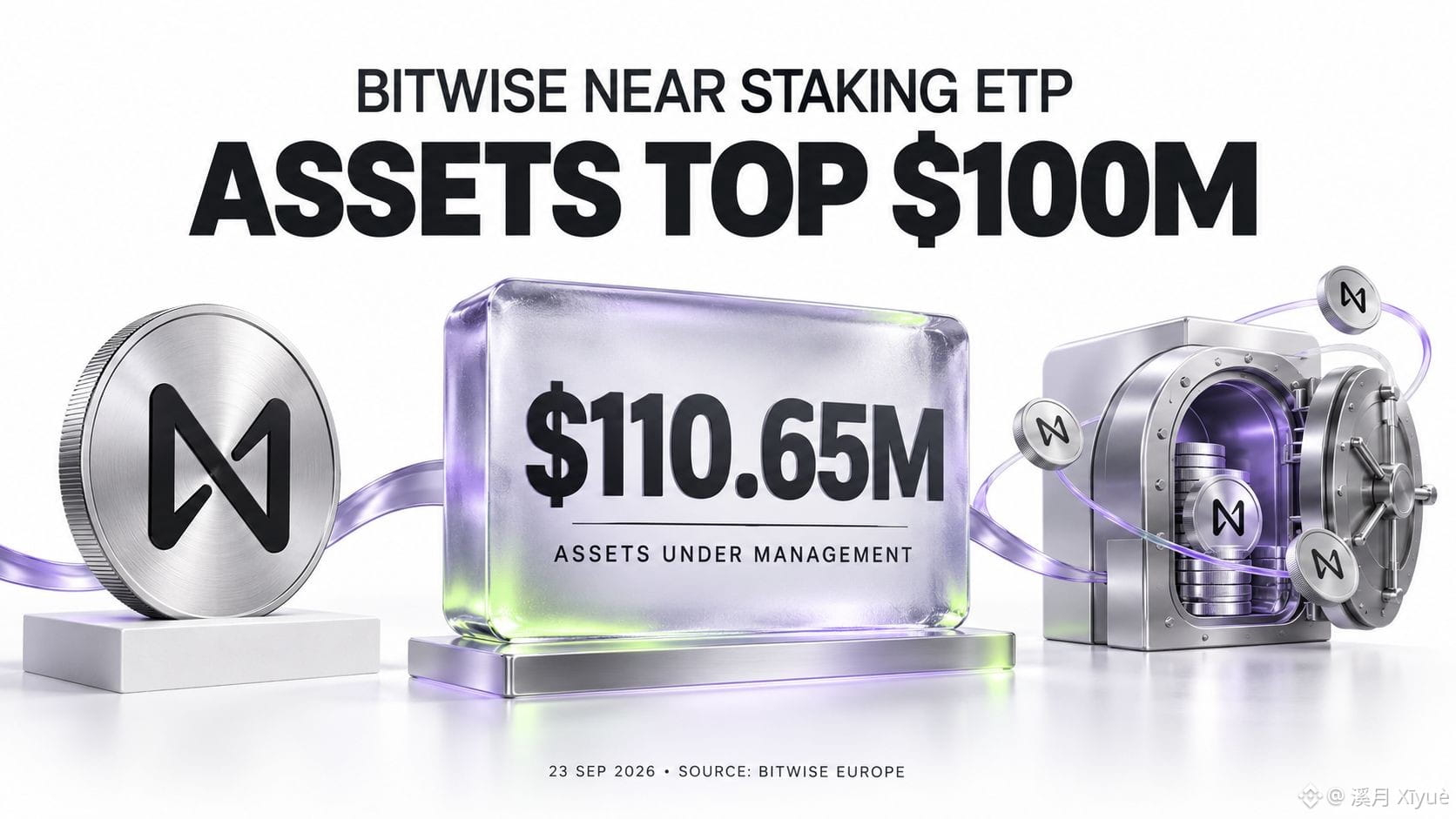
Bitwise reports $110.65 million in assets under management as of September 23, 2026. Its NEAR Staking ETP holds approximately 25.43 million NEAR tokens across 4.91 million outstanding units.
The European product provides NEAR exposure through a brokerage account. It is fully backed by tokens held in professional custody, with staking rewards accumulated inside the product. Those rewards vary, and fees affect returns.
My take: This is a meaningful milestone for the product’s size, but the next question is how much growth comes from new subscriptions. AUM changes with token prices, creations or redemptions, and staking accruals. A rising dollar balance alone cannot establish how much fresh money investors committed.
Watching outstanding units over time would help separate investor demand from market appreciation. If units continue expanding while NEAR’s price stabilizes, that would strengthen the case for broader demand through this investment channel.
For NEAR’s longer-term outlook, I would also compare product growth with network activity. Easier investment access and stronger blockchain usage answer different questions about adoption.
Which would you watch more closely: total AUM or growth in ETP units?
#Near #staking
$MUBARAK $MARSCOIN $USELESS
{future}(USELESSUSDT)
{future}(MARSCOINUSDT)
{future}(MUBARAKUSDT)
#BitwiseNEARStakingETPAssetsTop$100M
Bitwise’s NEAR Staking ETP Tops $100M as Assets Reach $110.65M
NEAR’s exchange-traded investment footprint has crossed a notable milestone.
Bitwise reports $110.65 million in assets under management as of September 23, 2026. Its NEAR Staking ETP holds approximately 25.43 million NEAR tokens across 4.91 million outstanding units.
The European product provides NEAR exposure through a brokerage account. It is fully backed by tokens held in professional custody, with staking rewards accumulated inside the product. Those rewards vary, and fees affect returns.
My take: This is a meaningful milestone for the product’s size, but the next question is how much growth comes from new subscriptions. AUM changes with token prices, creations or redemptions, and staking accruals. A rising dollar balance alone cannot establish how much fresh money investors committed.
Watching outstanding units over time would help separate investor demand from market appreciation. If units continue expanding while NEAR’s price stabilizes, that would strengthen the case for broader demand through this investment channel.
For NEAR’s longer-term outlook, I would also compare product growth with network activity. Easier investment access and stronger blockchain usage answer different questions about adoption.
Which would you watch more closely: total AUM or growth in ETP units?
#Near #staking
$MUBARAK $MARSCOIN $USELESS
Bitwise’s NEAR Staking ETP Tops $100M as Assets Reach $110.65M
NEAR’s exchange-traded investment footprint has crossed a notable milestone.
Bitwise reports $110.65 million in assets under management as of September 23, 2026. Its NEAR Staking ETP holds approximately 25.43 million NEAR tokens across 4.91 million outstanding units.
The European product provides NEAR exposure through a brokerage account. It is fully backed by tokens held in professional custody, with staking rewards accumulated inside the product. Those rewards vary, and fees affect returns.
My take: This is a meaningful milestone for the product’s size, but the next question is how much growth comes from new subscriptions. AUM changes with token prices, creations or redemptions, and staking accruals. A rising dollar balance alone cannot establish how much fresh money investors committed.
Watching outstanding units over time would help separate investor demand from market appreciation. If units continue expanding while NEAR’s price stabilizes, that would strengthen the case for broader demand through this investment channel.
For NEAR’s longer-term outlook, I would also compare product growth with network activity. Easier investment access and stronger blockchain usage answer different questions about adoption.
Which would you watch more closely: total AUM or growth in ETP units?
#Near #staking
$MUBARAK $MARSCOIN $USELESS
351

STAKING💰 ❗️❗️❗️ Or, How to make crypto work for you while you sleep?
Staking is like a digital bank deposit, but without the bank’s involvement. You lock your coins on the blockchain (for example, via the #Binance Earn tab) to help the network operate.
The blockchain uses your coins to verify transactions and ensure security. In return for helping the network run, it rewards you—by issuing new coins as interest.
⚖️ Two main types of staking:
1. FIXED (Locked): You freeze your crypto for a specific period (30, 60, 90, or 120 days). The percentage (APR) here is the most tempting, but you can’t withdraw the coins early without losing the accumulated interest.
2. FLEXIBLE (Flexible): You can withdraw coins at any moment. Ideal for those who are afraid of sudden market moves, but the interest here is lower.
⚡️ What’s the main trick for earning?
It’s compound interest! The coins you earn each day automatically get added to your balance, and the next day they bring in even more profit. Over a few months, it turns into a powerful snowball. 📈
$BTC $BNB $ETH
#staking #cryptoearning #PassiveIncome
STAKING💰 ❗️❗️❗️ Or, How to make crypto work for you while you sleep?
Staking is like a digital bank deposit, but without the bank’s involvement. You lock your coins on the blockchain (for example, via the #Binance Earn tab) to help the network operate.
The blockchain uses your coins to verify transactions and ensure security. In return for helping the network run, it rewards you—by issuing new coins as interest.
⚖️ Two main types of staking:
1. FIXED (Locked): You freeze your crypto for a specific period (30, 60, 90, or 120 days). The percentage (APR) here is the most tempting, but you can’t withdraw the coins early without losing the accumulated interest.
2. FLEXIBLE (Flexible): You can withdraw coins at any moment. Ideal for those who are afraid of sudden market moves, but the interest here is lower.
⚡️ What’s the main trick for earning?
It’s compound interest! The coins you earn each day automatically get added to your balance, and the next day they bring in even more profit. Over a few months, it turns into a powerful snowball. 📈
$BTC $BNB $ETH
#staking #cryptoearning #PassiveIncome
Staking is like a digital bank deposit, but without the bank’s involvement. You lock your coins on the blockchain (for example, via the #Binance Earn tab) to help the network operate.
The blockchain uses your coins to verify transactions and ensure security. In return for helping the network run, it rewards you—by issuing new coins as interest.
⚖️ Two main types of staking:
1. FIXED (Locked): You freeze your crypto for a specific period (30, 60, 90, or 120 days). The percentage (APR) here is the most tempting, but you can’t withdraw the coins early without losing the accumulated interest.
2. FLEXIBLE (Flexible): You can withdraw coins at any moment. Ideal for those who are afraid of sudden market moves, but the interest here is lower.
⚡️ What’s the main trick for earning?
It’s compound interest! The coins you earn each day automatically get added to your balance, and the next day they bring in even more profit. Over a few months, it turns into a powerful snowball. 📈
$BTC $BNB $ETH
#staking #cryptoearning #PassiveIncome
102
·
--
Count words roughly. Let's write and then count.
Draft:
"Staking lets you lock up a cryptocurrency to help secure a blockchain network and, in return, you earn rewards — think of it like earning interest on a savings account but with digital assets. You simply delegate your tokens to a validator or run your own node; the protocol pays you a share of transaction fees or newly minted coins.
Popular options right now include Ethereum (ETH) on the Beacon Chain, Cardano (ADA) via Daedalus or Yoroi, and Polkadot (DOT) through the Polkadot.js dashboard or supported exchanges. Conservative annual yields tend to sit around 3‑5 % for ETH, 4‑6 % for ADA, and 5‑7 % for DOT, though rates shift with network demand and token price.
Risk warning: if the validator you choose misbehaves or the network suffers a slashing event, a portion of your staked funds can be permanently lost.
Are you staking any crypto right now? Drop your favourite coin below!
#BearMarket #BullMarket #Staking #PassiveIncome"
Now count words. Let's count manually.
"Staking(1) lets2 you3 lock4 up5 a6 cryptocurrency7 to8 help9 secure10 a11 blockchain12 network13 and,14 in15 return,16 you17 earn18 rewards — think19 of20 it21 like22 earning23 interest24 on25 a26 savings27 account28 but29 with30 digital31 assets.32 You33 simply34 delegate35 your36 tokens
Count words roughly. Let's write and then count.
Draft:
"Staking lets you lock up a cryptocurrency to help secure a blockchain network and, in return, you earn rewards — think of it like earning interest on a savings account but with digital assets. You simply delegate your tokens to a validator or run your own node; the protocol pays you a share of transaction fees or newly minted coins.
Popular options right now include Ethereum (ETH) on the Beacon Chain, Cardano (ADA) via Daedalus or Yoroi, and Polkadot (DOT) through the Polkadot.js dashboard or supported exchanges. Conservative annual yields tend to sit around 3‑5 % for ETH, 4‑6 % for ADA, and 5‑7 % for DOT, though rates shift with network demand and token price.
Risk warning: if the validator you choose misbehaves or the network suffers a slashing event, a portion of your staked funds can be permanently lost.
Are you staking any crypto right now? Drop your favourite coin below!
#BearMarket #BullMarket #Staking #PassiveIncome"
Now count words. Let's count manually.
"Staking(1) lets2 you3 lock4 up5 a6 cryptocurrency7 to8 help9 secure10 a11 blockchain12 network13 and,14 in15 return,16 you17 earn18 rewards — think19 of20 it21 like22 earning23 interest24 on25 a26 savings27 account28 but29 with30 digital31 assets.32 You33 simply34 delegate35 your36 tokens
Draft:
"Staking lets you lock up a cryptocurrency to help secure a blockchain network and, in return, you earn rewards — think of it like earning interest on a savings account but with digital assets. You simply delegate your tokens to a validator or run your own node; the protocol pays you a share of transaction fees or newly minted coins.
Popular options right now include Ethereum (ETH) on the Beacon Chain, Cardano (ADA) via Daedalus or Yoroi, and Polkadot (DOT) through the Polkadot.js dashboard or supported exchanges. Conservative annual yields tend to sit around 3‑5 % for ETH, 4‑6 % for ADA, and 5‑7 % for DOT, though rates shift with network demand and token price.
Risk warning: if the validator you choose misbehaves or the network suffers a slashing event, a portion of your staked funds can be permanently lost.
Are you staking any crypto right now? Drop your favourite coin below!
#BearMarket #BullMarket #Staking #PassiveIncome"
Now count words. Let's count manually.
"Staking(1) lets2 you3 lock4 up5 a6 cryptocurrency7 to8 help9 secure10 a11 blockchain12 network13 and,14 in15 return,16 you17 earn18 rewards — think19 of20 it21 like22 earning23 interest24 on25 a26 savings27 account28 but29 with30 digital31 assets.32 You33 simply34 delegate35 your36 tokens
1
1

2️⃣ — DeFi Concept for Beginners
🔑 Staking: the simplest way to make your crypto workIf you have $ETH o $SOL sleeping in your wallet without doing anything, you’re missing out on something.
Staking is basically this:
✅ You lock your tokens to help validate the network
✅ In return, you receive rewards—like interest, but in crypto
✅ You don’t need to be a programmer or have a gaming PC—many networks let you do it directly from the exchange
⚠️ Watch out: there’s a lock-up period on some networks, and the token value can go up or down during that time. This is not a guaranteed profit—just another tool.
2️⃣ — DeFi Concept for Beginners 🔑 Staking: the simplest way to make your crypto work
If you have $ETH o $SOL sleeping in your wallet without doing anything, you’re missing out on something.
Staking is basically this:
✅ You lock your tokens to help validate the network
✅ In return, you receive rewards—like interest, but in crypto
✅ You don’t need to be a programmer or have a gaming PC—many networks let you do it directly from the exchange
⚠️ Watch out: there’s a lock-up period on some networks, and the token value can go up or down during that time. This is not a guaranteed profit—just another tool.
Staking is basically this:
✅ You lock your tokens to help validate the network
✅ In return, you receive rewards—like interest, but in crypto
✅ You don’t need to be a programmer or have a gaming PC—many networks let you do it directly from the exchange
⚠️ Watch out: there’s a lock-up period on some networks, and the token value can go up or down during that time. This is not a guaranteed profit—just another tool.
319

·
--
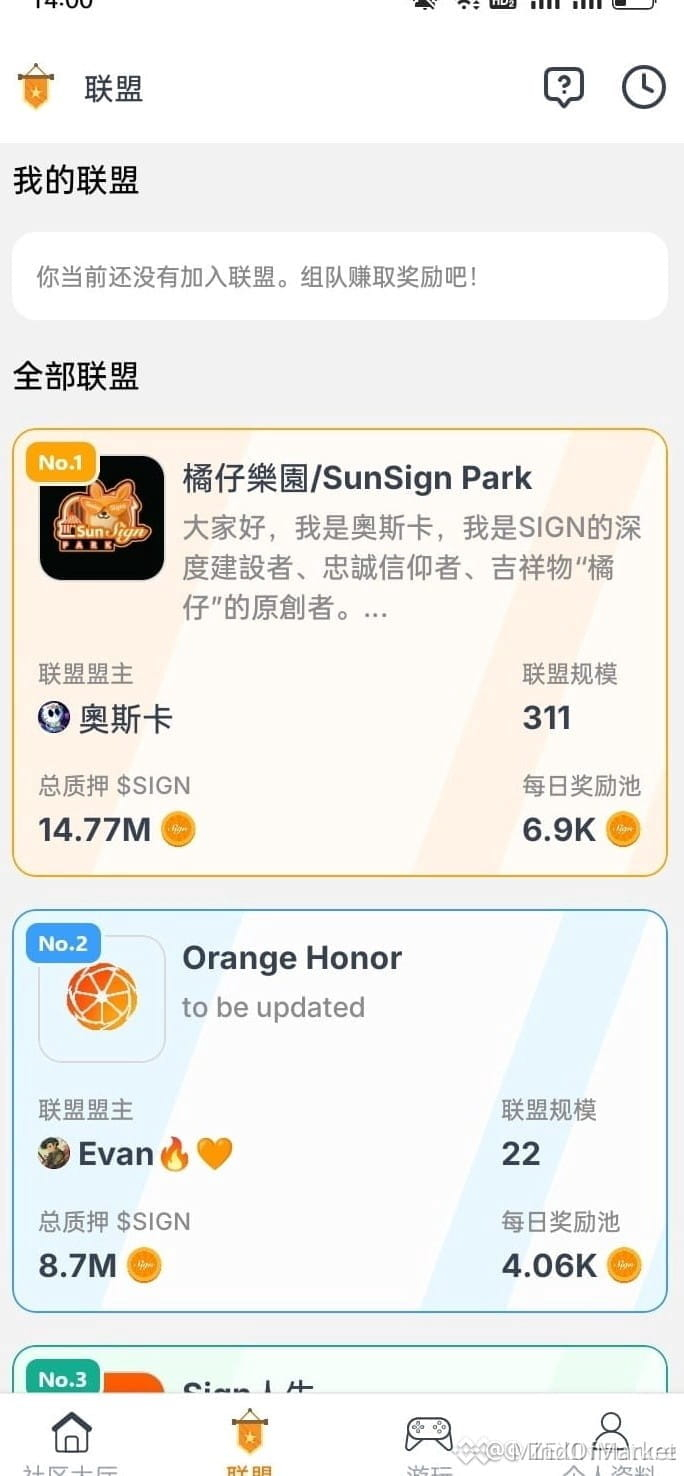
🚨 $SIGN SUPPLY DRAIN INTENSIFIES AS INSTITUTIONAL STAKING LOCKS UP CIRCULATING FLOAT! 💥
Staking protocols are rapidly absorbing circulating liquid float in $SIGN , creating a severe structural supply deficit across market pairs. 📊 As token emissions get aggressively locked into high-yielding pools, available liquid supply is thinning out.
This continuous supply sink reduces sell-side liquidity, establishing an ideal setup for volatility expansion once demand sweeps the remaining order book depth. 💡 Market participants are locking in structural yields before float scarcity drives the next leg. 💬 Are you securing yield during this structural accumulation phase, or waiting to chase the momentum after the float dries up? 👇
⚠️ Not financial advice. Always manage your risk. 🛡️
🏷️ #SIGN #Staking #Crypto #MarketStructure
🔥 💎
🚨 $SIGN SUPPLY DRAIN INTENSIFIES AS INSTITUTIONAL STAKING LOCKS UP CIRCULATING FLOAT! 💥
Staking protocols are rapidly absorbing circulating liquid float in $SIGN , creating a severe structural supply deficit across market pairs. 📊 As token emissions get aggressively locked into high-yielding pools, available liquid supply is thinning out.
This continuous supply sink reduces sell-side liquidity, establishing an ideal setup for volatility expansion once demand sweeps the remaining order book depth. 💡 Market participants are locking in structural yields before float scarcity drives the next leg. 💬 Are you securing yield during this structural accumulation phase, or waiting to chase the momentum after the float dries up? 👇
⚠️ Not financial advice. Always manage your risk. 🛡️
🏷️ #SIGN #Staking #Crypto #MarketStructure
🔥 💎
Staking protocols are rapidly absorbing circulating liquid float in $SIGN , creating a severe structural supply deficit across market pairs. 📊 As token emissions get aggressively locked into high-yielding pools, available liquid supply is thinning out.
This continuous supply sink reduces sell-side liquidity, establishing an ideal setup for volatility expansion once demand sweeps the remaining order book depth. 💡 Market participants are locking in structural yields before float scarcity drives the next leg. 💬 Are you securing yield during this structural accumulation phase, or waiting to chase the momentum after the float dries up? 👇
⚠️ Not financial advice. Always manage your risk. 🛡️
🏷️ #SIGN #Staking #Crypto #MarketStructure
🔥 💎
215

Europe is setting its sights on crypto staking in the latest MiCA framework review, and the quiet regulatory probe could turn into a major headwind. If compliance burdens crush service providers, everyday yields might plummet. Worse, over-regulating staking risks driving validators offshore, inadvertently weakening the very network security Brussels claims to protect. Crypto policy needs balance, not blunt force. $ETH #CryptoRegulation #Staking #Ethereum
Europe is setting its sights on crypto staking in the latest MiCA framework review, and the quiet regulatory probe could turn into a major headwind. If compliance burdens crush service providers, everyday yields might plummet. Worse, over-regulating staking risks driving validators offshore, inadvertently weakening the very network security Brussels claims to protect. Crypto policy needs balance, not blunt force. $ETH #CryptoRegulation #Staking #Ethereum
11


Article
⚠️ Passive income trap: hidden risks of liquid staking that influencers don’t talk aboutBuy a token, put it into staking at 10–15% per year, and simply watch your balance grow—that’s the classic dream of every investor. And with the emergence of liquid staking protocols (Liquid Staking Tokens or LST), it all got even “sweeter”: you hand over your $ETH or $SOL , get back their wrapped version (for example, stETH or mSOL), which increases in price, and at the same time you can use these wrapped tokens in DeFi in parallel.
⚠️ Passive income trap: hidden risks of liquid staking that influencers don’t talk about
Buy a token, put it into staking at 10–15% per year, and simply watch your balance grow—that’s the classic dream of every investor. And with the emergence of liquid staking protocols (Liquid Staking Tokens or LST), it all got even “sweeter”: you hand over your $ETH or $SOL , get back their wrapped version (for example, stETH or mSOL), which increases in price, and at the same time you can use these wrapped tokens in DeFi in parallel.
5
2.2k

🚨 EU reviews staking regulation 📈 Could impact returns and cybersecurity 🧠
📊 | $BTC | $ETH | $BNB |
- Please pay attention, like, and leave a comment to share your thoughts 📈
- The European Commission, in MiCA amendment draft page 36, item 66, proposes reviewing the adequacy of regulation for staking services
- If current regulation is insufficient, companies providing staking services may be required to comply with stricter compliance obligations
- Although this review is brief in text, it could affect the yield of crypto assets and network security
- This topic was first reported by CryptoSlate, and the market is watching for potential impact 🔥
- If regulation tightens, staking yields may decline, causing some investors to shift to other yield channels
- Regulatory uncertainty may also trigger short-term capital outflows, with cybersecurity risk expected to rise
- At present, whale behavior remains neutral, with no large-scale staking or withdrawal actions
- In the short term, the market may see volatility, but the overall trend is expected to remain range-bound
- What long-term impact do you think the EU’s new staking regulatory rules will have on the DeFi ecosystem?
- Feel free to keep following and share your viewpoint in the comments
- #Crypto #Staking #Regulation #Whales #DeFi
🚨 EU reviews staking regulation 📈 Could impact returns and cybersecurity 🧠
📊 | $BTC | $ETH | $BNB |
- Please pay attention, like, and leave a comment to share your thoughts 📈
- The European Commission, in MiCA amendment draft page 36, item 66, proposes reviewing the adequacy of regulation for staking services
- If current regulation is insufficient, companies providing staking services may be required to comply with stricter compliance obligations
- Although this review is brief in text, it could affect the yield of crypto assets and network security
- This topic was first reported by CryptoSlate, and the market is watching for potential impact 🔥
- If regulation tightens, staking yields may decline, causing some investors to shift to other yield channels
- Regulatory uncertainty may also trigger short-term capital outflows, with cybersecurity risk expected to rise
- At present, whale behavior remains neutral, with no large-scale staking or withdrawal actions
- In the short term, the market may see volatility, but the overall trend is expected to remain range-bound
- What long-term impact do you think the EU’s new staking regulatory rules will have on the DeFi ecosystem?
- Feel free to keep following and share your viewpoint in the comments
- #Crypto #Staking #Regulation #Whales #DeFi
📊 | $BTC | $ETH | $BNB |
- Please pay attention, like, and leave a comment to share your thoughts 📈
- The European Commission, in MiCA amendment draft page 36, item 66, proposes reviewing the adequacy of regulation for staking services
- If current regulation is insufficient, companies providing staking services may be required to comply with stricter compliance obligations
- Although this review is brief in text, it could affect the yield of crypto assets and network security
- This topic was first reported by CryptoSlate, and the market is watching for potential impact 🔥
- If regulation tightens, staking yields may decline, causing some investors to shift to other yield channels
- Regulatory uncertainty may also trigger short-term capital outflows, with cybersecurity risk expected to rise
- At present, whale behavior remains neutral, with no large-scale staking or withdrawal actions
- In the short term, the market may see volatility, but the overall trend is expected to remain range-bound
- What long-term impact do you think the EU’s new staking regulatory rules will have on the DeFi ecosystem?
- Feel free to keep following and share your viewpoint in the comments
- #Crypto #Staking #Regulation #Whales #DeFi
340

·
--
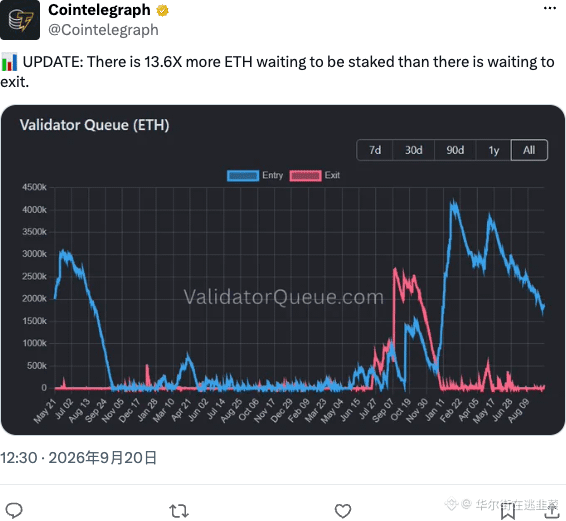
The staking queue is 13.6 times larger than the exit queue. Everyone’s rushing ETH in—no one wants to get off. The more staking and lock-ups are piled up, the higher they get, and the circulating supply will only become tighter. At a time like this, going bearish isn’t stubborn courage—it means you haven’t been watching the on-chain data.
$ETH #Staking
The staking queue is 13.6 times larger than the exit queue. Everyone’s rushing ETH in—no one wants to get off. The more staking and lock-ups are piled up, the higher they get, and the circulating supply will only become tighter. At a time like this, going bearish isn’t stubborn courage—it means you haven’t been watching the on-chain data.
$ETH #Staking
$ETH #Staking
212

·
--
Verified
#secreceivesamendedinjectiveetffiling
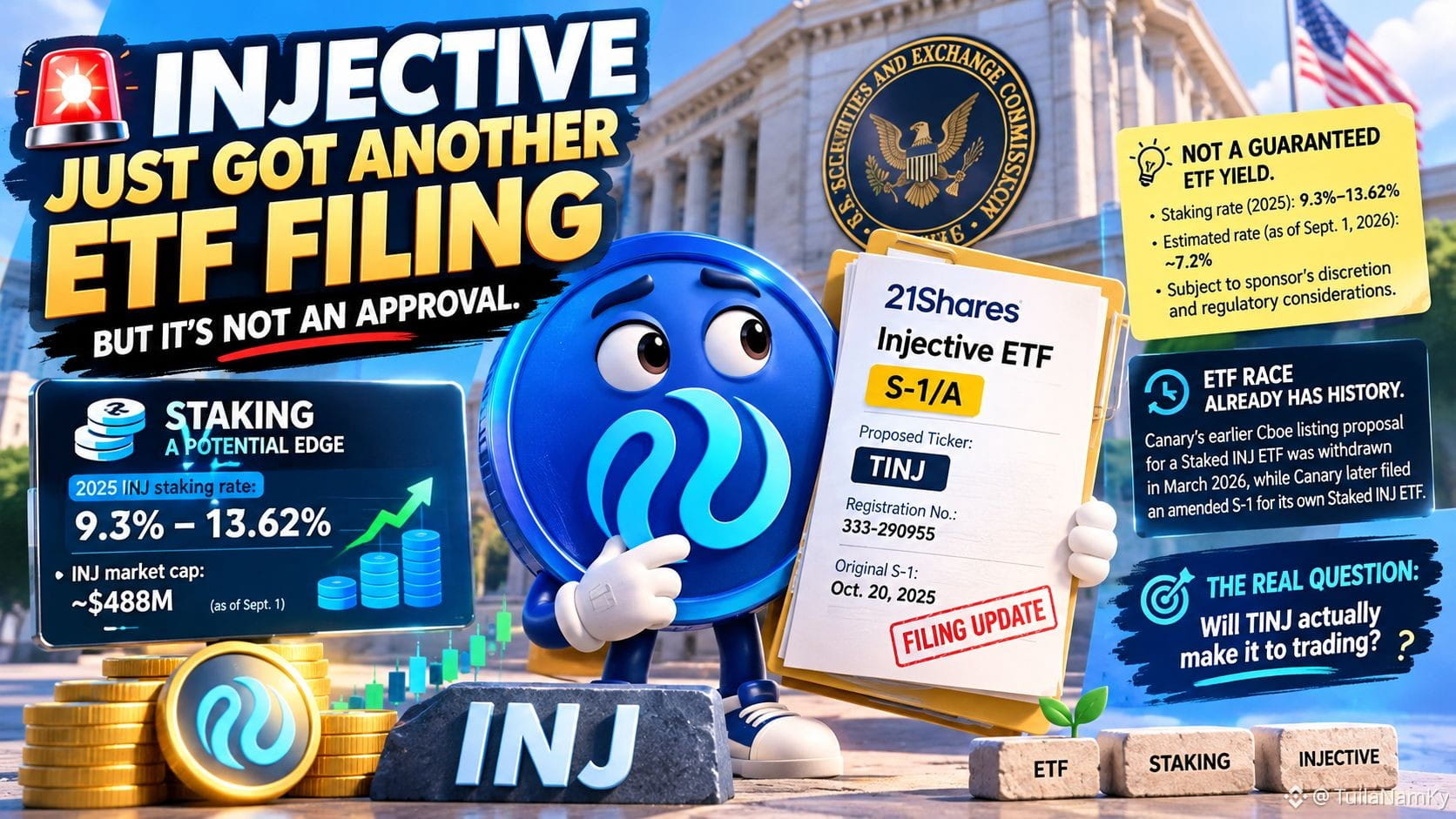
🚨 Injective Just Got Another ETF Filing. But It’s NOT an Approval.
The SEC received an amended S-1/A for the 21Shares Injective ETF.
Proposed ticker?
TINJ.
But here’s where the headline gets interesting. 👀
This is a filing update — not an ETF approval.
The bigger twist is what sits inside the structure:
STAKING.
The proposed ETF can stake a portion of its INJ holdings, potentially allowing shareholders to benefit from staking rewards alongside INJ price exposure.
📊 Key numbers:
→ 2025 INJ staking rate: 9.3%–13.62%
→ INJ market cap: ~$488M as of Sept. 1
→ Proposed ticker: TINJ
→ Registration No.: 333-290955
→ Original S-1: Oct. 20, 2025
BUT HERE’S WHAT MANY PEOPLE MISS 👀
9.3%–13.62% is NOT a guaranteed ETF yield.
That was the historical staking range for 2025.
The filing says staking is subject to the sponsor’s discretion and regulatory considerations. In fact, the filing estimates INJ’s staking rate at around 7.2% as of Sept. 1, 2026.
And the ETF race already has history.
Canary’s earlier Cboe listing proposal for a Staked INJ ETF was withdrawn in March 2026, while Canary later filed an amended S-1 for its own Staked INJ ETF.
So this isn't simply about “INJ gets an ETF.”
It’s about whether altcoin ETFs can turn staking yield into a real product advantage.
🧠 Square Insight:
The filing opens the door. Staking could be what makes the product different.
Now the market waits for the next step:
Will TINJ actually make it to trading? 👀
Market commentary only. Not financial advice.
#Injective #CryptoETF #Staking
$INJ
{future}(INJUSDT)
#secreceivesamendedinjectiveetffiling
🚨 Injective Just Got Another ETF Filing. But It’s NOT an Approval.
The SEC received an amended S-1/A for the 21Shares Injective ETF.
Proposed ticker?
TINJ.
But here’s where the headline gets interesting. 👀
This is a filing update — not an ETF approval.
The bigger twist is what sits inside the structure:
STAKING.
The proposed ETF can stake a portion of its INJ holdings, potentially allowing shareholders to benefit from staking rewards alongside INJ price exposure.
📊 Key numbers:
→ 2025 INJ staking rate: 9.3%–13.62%
→ INJ market cap: ~$488M as of Sept. 1
→ Proposed ticker: TINJ
→ Registration No.: 333-290955
→ Original S-1: Oct. 20, 2025
BUT HERE’S WHAT MANY PEOPLE MISS 👀
9.3%–13.62% is NOT a guaranteed ETF yield.
That was the historical staking range for 2025.
The filing says staking is subject to the sponsor’s discretion and regulatory considerations. In fact, the filing estimates INJ’s staking rate at around 7.2% as of Sept. 1, 2026.
And the ETF race already has history.
Canary’s earlier Cboe listing proposal for a Staked INJ ETF was withdrawn in March 2026, while Canary later filed an amended S-1 for its own Staked INJ ETF.
So this isn't simply about “INJ gets an ETF.”
It’s about whether altcoin ETFs can turn staking yield into a real product advantage.
🧠 Square Insight:
The filing opens the door. Staking could be what makes the product different.
Now the market waits for the next step:
Will TINJ actually make it to trading? 👀
Market commentary only. Not financial advice.
#Injective #CryptoETF #Staking
$INJ
🚨 Injective Just Got Another ETF Filing. But It’s NOT an Approval.
The SEC received an amended S-1/A for the 21Shares Injective ETF.
Proposed ticker?
TINJ.
But here’s where the headline gets interesting. 👀
This is a filing update — not an ETF approval.
The bigger twist is what sits inside the structure:
STAKING.
The proposed ETF can stake a portion of its INJ holdings, potentially allowing shareholders to benefit from staking rewards alongside INJ price exposure.
📊 Key numbers:
→ 2025 INJ staking rate: 9.3%–13.62%
→ INJ market cap: ~$488M as of Sept. 1
→ Proposed ticker: TINJ
→ Registration No.: 333-290955
→ Original S-1: Oct. 20, 2025
BUT HERE’S WHAT MANY PEOPLE MISS 👀
9.3%–13.62% is NOT a guaranteed ETF yield.
That was the historical staking range for 2025.
The filing says staking is subject to the sponsor’s discretion and regulatory considerations. In fact, the filing estimates INJ’s staking rate at around 7.2% as of Sept. 1, 2026.
And the ETF race already has history.
Canary’s earlier Cboe listing proposal for a Staked INJ ETF was withdrawn in March 2026, while Canary later filed an amended S-1 for its own Staked INJ ETF.
So this isn't simply about “INJ gets an ETF.”
It’s about whether altcoin ETFs can turn staking yield into a real product advantage.
🧠 Square Insight:
The filing opens the door. Staking could be what makes the product different.
Now the market waits for the next step:
Will TINJ actually make it to trading? 👀
Market commentary only. Not financial advice.
#Injective #CryptoETF #Staking
$INJ
1
620

·
--
Let’s consider what role Binance Earn can play in a long-term investment strategy—at the level of logic, without specific amounts...
A long-term strategy usually involves assets you don’t plan to touch in the near future—they simply sit in your portfolio, waiting for their value to grow over time. The question is whether such assets should spend all this time doing nothing, or whether they can work at the same time.
This is where Binance Earn comes in: if there’s a portion of your portfolio intended specifically for long-term holding, you can place it in Earn products while it’s still waiting for the price to rise. This doesn’t fundamentally change the long-term strategy—because the asset is still held for a long time—but it adds another layer of income on top of the expected price movement.
An important nuance: a long-term time horizon works best with fixed products for longer periods, whereas assets meant for short-term decisions or quick responses to market changes are better kept outside such products or in flexible options.
So, in a long-term strategy, Earn is not a separate goal—it’s a way to make the already-made decision to hold an asset for the long term a bit more efficient.
#earn #staking
Let’s consider what role Binance Earn can play in a long-term investment strategy—at the level of logic, without specific amounts...
A long-term strategy usually involves assets you don’t plan to touch in the near future—they simply sit in your portfolio, waiting for their value to grow over time. The question is whether such assets should spend all this time doing nothing, or whether they can work at the same time.
This is where Binance Earn comes in: if there’s a portion of your portfolio intended specifically for long-term holding, you can place it in Earn products while it’s still waiting for the price to rise. This doesn’t fundamentally change the long-term strategy—because the asset is still held for a long time—but it adds another layer of income on top of the expected price movement.
An important nuance: a long-term time horizon works best with fixed products for longer periods, whereas assets meant for short-term decisions or quick responses to market changes are better kept outside such products or in flexible options.
So, in a long-term strategy, Earn is not a separate goal—it’s a way to make the already-made decision to hold an asset for the long term a bit more efficient.
#earn #staking
A long-term strategy usually involves assets you don’t plan to touch in the near future—they simply sit in your portfolio, waiting for their value to grow over time. The question is whether such assets should spend all this time doing nothing, or whether they can work at the same time.
This is where Binance Earn comes in: if there’s a portion of your portfolio intended specifically for long-term holding, you can place it in Earn products while it’s still waiting for the price to rise. This doesn’t fundamentally change the long-term strategy—because the asset is still held for a long time—but it adds another layer of income on top of the expected price movement.
An important nuance: a long-term time horizon works best with fixed products for longer periods, whereas assets meant for short-term decisions or quick responses to market changes are better kept outside such products or in flexible options.
So, in a long-term strategy, Earn is not a separate goal—it’s a way to make the already-made decision to hold an asset for the long term a bit more efficient.
#earn #staking

101
·
--
Staking is like earning interest on your crypto by locking it up to help secure a blockchain network. Instead of mining with expensive hardware, you simply hold coins in a compatible wallet or platform. The network rewards you for validating transactions — think of it as putting your money to work while you sleep.
Popular options include Ethereum (ETH) at roughly 3–5% APY after the Merge, Cardano (ADA) around 2–4%, and Solana (SOL) near 5–7% on major platforms like Binance Earn, Kraken, or Lido. Firo (FIRO) also offers staking via masternodes or delegated pools, yielding approximately 6–9% depending on setup — attractive for privacy-focused holders.
Rates fluctuate with network activity and validator performance, so treat these as conservative baselines. Always verify current terms before committing.
Risk warning: Staked funds are often locked for days or weeks. If the token price drops sharply, you can’t exit quickly — impermanent loss meets opportunity cost.
Are you staking any crypto right now? Drop your favourite coin below!
#Trading #CryptoTrading #Staking #PassiveIncome
Staking is like earning interest on your crypto by locking it up to help secure a blockchain network. Instead of mining with expensive hardware, you simply hold coins in a compatible wallet or platform. The network rewards you for validating transactions — think of it as putting your money to work while you sleep.
Popular options include Ethereum (ETH) at roughly 3–5% APY after the Merge, Cardano (ADA) around 2–4%, and Solana (SOL) near 5–7% on major platforms like Binance Earn, Kraken, or Lido. Firo (FIRO) also offers staking via masternodes or delegated pools, yielding approximately 6–9% depending on setup — attractive for privacy-focused holders.
Rates fluctuate with network activity and validator performance, so treat these as conservative baselines. Always verify current terms before committing.
Risk warning: Staked funds are often locked for days or weeks. If the token price drops sharply, you can’t exit quickly — impermanent loss meets opportunity cost.
Are you staking any crypto right now? Drop your favourite coin below!
#Trading #CryptoTrading #Staking #PassiveIncome
Popular options include Ethereum (ETH) at roughly 3–5% APY after the Merge, Cardano (ADA) around 2–4%, and Solana (SOL) near 5–7% on major platforms like Binance Earn, Kraken, or Lido. Firo (FIRO) also offers staking via masternodes or delegated pools, yielding approximately 6–9% depending on setup — attractive for privacy-focused holders.
Rates fluctuate with network activity and validator performance, so treat these as conservative baselines. Always verify current terms before committing.
Risk warning: Staked funds are often locked for days or weeks. If the token price drops sharply, you can’t exit quickly — impermanent loss meets opportunity cost.
Are you staking any crypto right now? Drop your favourite coin below!
#Trading #CryptoTrading #Staking #PassiveIncome
82

Top institutional crypto staking platforms for 2026
- Institutional staking platforms enable businesses to earn rewards through validators, asset delegation, and staking APIs
- Differences from retail staking: requires careful checks of asset control rights, validator reliability, slashing risks, insurance, and reporting
- The article reviews the top options for 2026 (details at CoinGape)
#BinanceSquare #CryptoNews #Staking #Institutional
$btc $eth
#vlikevn Titanbot
Source: CoinGape
Top institutional crypto staking platforms for 2026
- Institutional staking platforms enable businesses to earn rewards through validators, asset delegation, and staking APIs
- Differences from retail staking: requires careful checks of asset control rights, validator reliability, slashing risks, insurance, and reporting
- The article reviews the top options for 2026 (details at CoinGape)
#BinanceSquare #CryptoNews #Staking #Institutional
$btc $eth
#vlikevn Titanbot
Source: CoinGape
- Institutional staking platforms enable businesses to earn rewards through validators, asset delegation, and staking APIs
- Differences from retail staking: requires careful checks of asset control rights, validator reliability, slashing risks, insurance, and reporting
- The article reviews the top options for 2026 (details at CoinGape)
#BinanceSquare #CryptoNews #Staking #Institutional
$btc $eth
#vlikevn Titanbot
Source: CoinGape
143
Log in to explore more content
Join global crypto users on Binance Square
⚡️ Get latest and useful information about crypto.
💬 Trusted by the world’s largest crypto exchange.
👍 Discover real insights from verified creators.
Email / Phone number
Trending Topics
1
#CircleMints500MUSDCOnSolana
20,917 views
686 Discussing
2
#PolymarketBankFailureBetsDrawFDICConcern
35,930 views
863 Discussing
3
#BlackRockBuildsTokenizedPortfoliosForOndo
29,393 views
593 Discussing
4
#BitwiseFilesToListNEARETFOnNYSEArca
28,142 views
526 Discussing
5
#SECCommissionerPeirceToLeaveOct2
28,196 views
438 Discussing
6
#SECSaysBuybacksUpgradesDontMakeTokenSecurity
27,412 views
371 Discussing
7
#StrategyProposesDailyDividendsForPreferreds
4,121 views
112 Discussing
8
#CircleTetherFreezeBitgetHackerWallet
3,474 views
64 Discussing
9
#CoinMarketCapCompletesCoinglassAcquisition
6,683 views
89 Discussing
10
#QNTRises39%
88,027 views
1,455 Discussing