
#predictionmarket
predictionmarket
145,996 views
978 Discussing
Hot
Latest

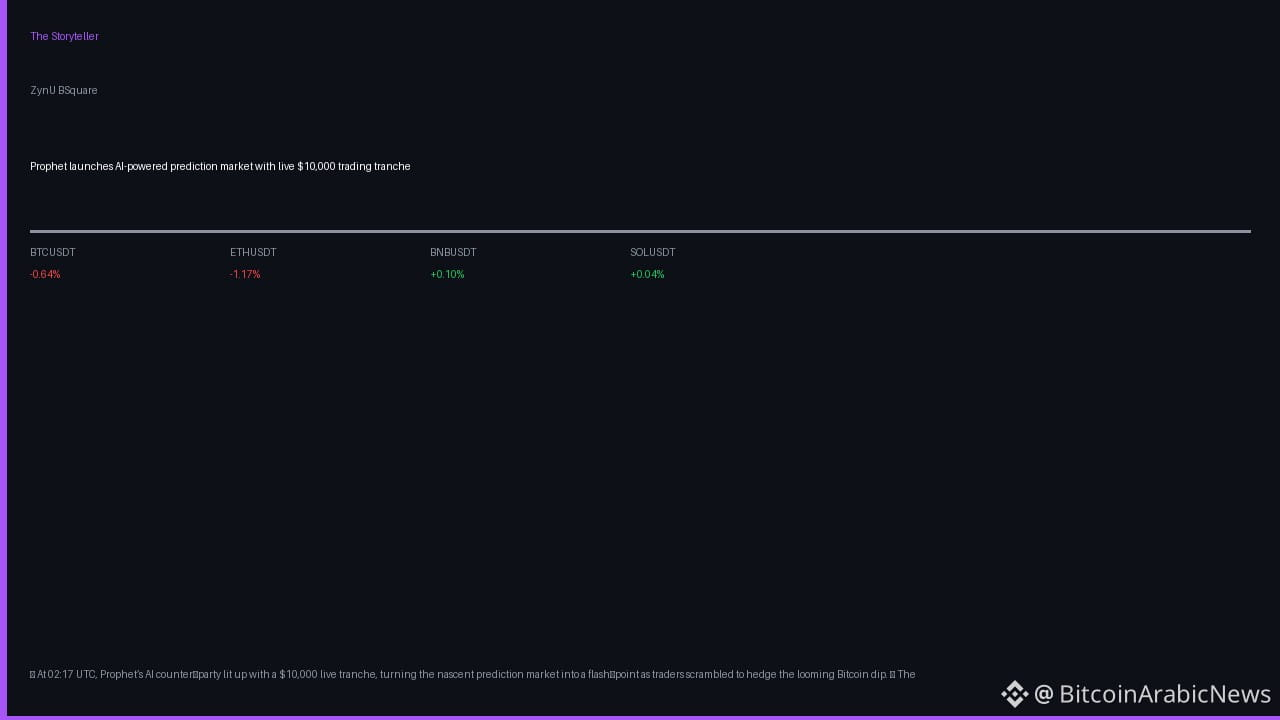
🔥 At 02:17 UTC, Prophet’s AI counter‑party lit up with a $10,000 live tranche, turning the nascent prediction market into a flash‑point as traders scrambled to hedge the looming Bitcoin dip.
📊 The market, trembling under a 28‑point fear score and Bitcoin sliding to $75,886 with RSI 38.3, saw futures open interest cling to $7.33 B and funding rates nudge bullish at +0.0100%, signaling that institutional longs are still betting on a rebound. Meanwhile, smart‑money wallets on Solana—BOOMER, ANTHROPIC and SPCX—collectively pumped five contracts, a silent chorus that hints the AI’s counter‑party isn’t just a sandbox but a magnet for capital hungry on #AI‑driven #PredictionMarket action in #Crypto.
💡 The twist? Prophet’s AI isn’t merely matching bets; it auto‑adjusts exposure based on real‑time on‑chain inflows, meaning the $10k tranche could swell into a multi‑million shield for the very assets the market fears.
❓If the AI can read the market’s panic and flip it into profit, are we witnessing the birth of a new market maker that could rewrite the rules of speculation?
5

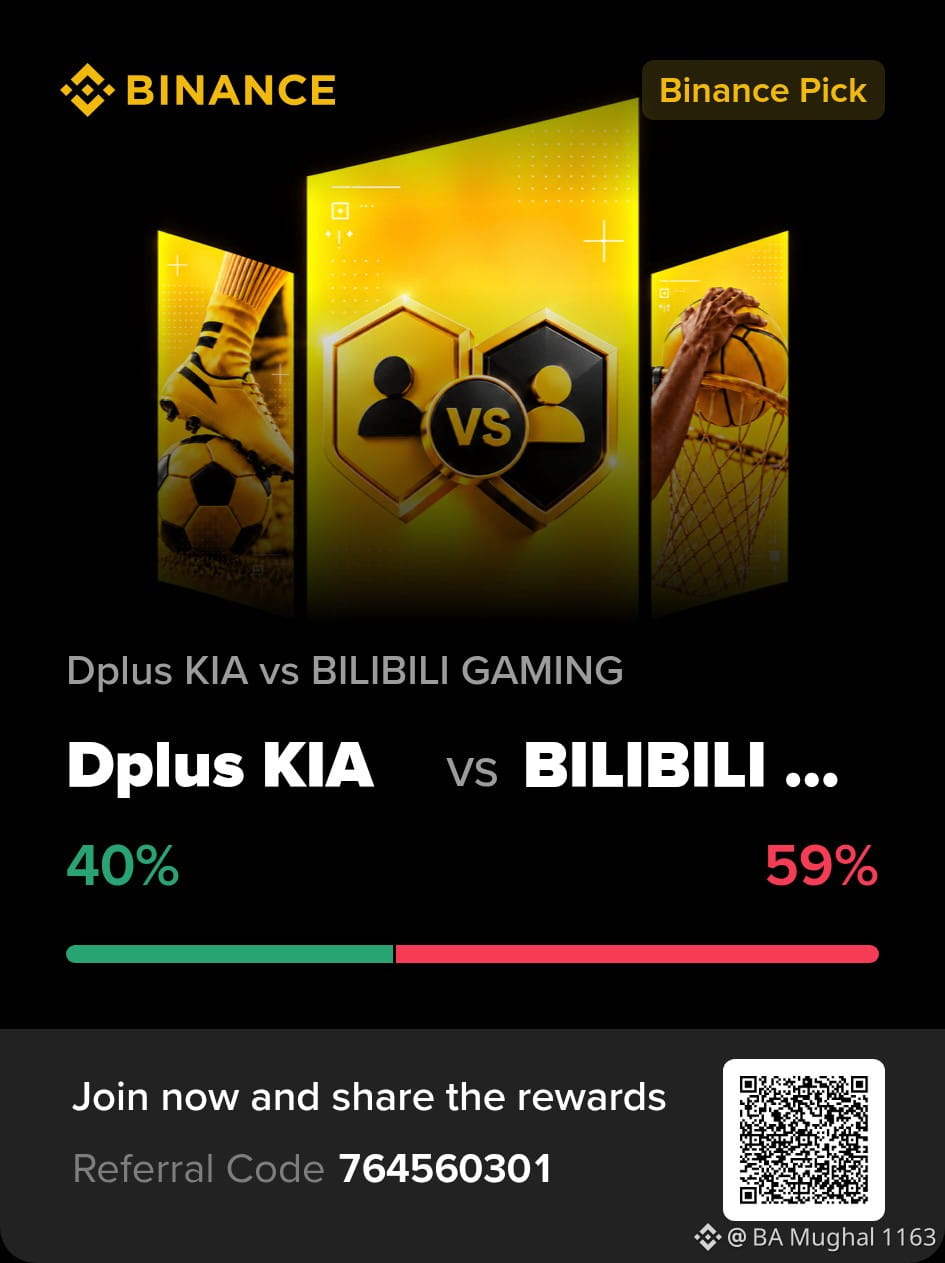
#BinancePick 🔥 Worlds 2026 – League of Legends Prediction! 🎮
Dplus KIA 🆚 Bilibili Gaming (BO5)
My pick: BILIBILI GAMING (BLG) to win! 🏆
💰 Position: $199.98
📊 Shares: 298.48
🎯 Average Cost: $0.67
💵 Potential Payout: $298.48
BLG is my choice in this exciting BO5 matchup! Ready to see if this prediction pays off. 🚀
Who are you backing? BLG or Dplus KIA? 👇
#PredictionMarket #BLG #Esports
76

·
--
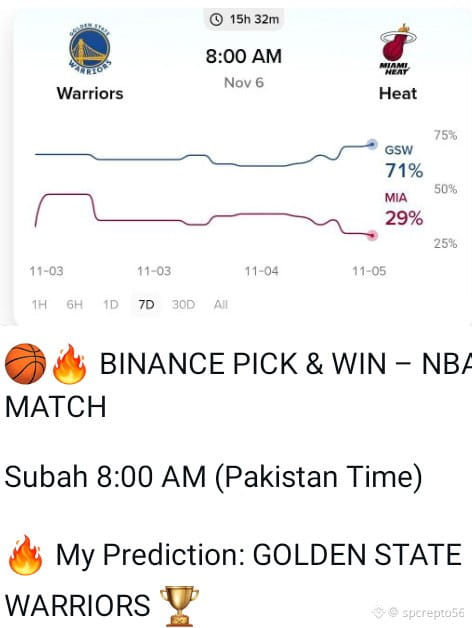
#BinancePick
Title : 🎯 Binance Pick: Every Prediction Brings
You Closer to More Rewards!
The Binance Pick campaign is becoming more exciting every day! 🚀
I'm staying active, making predictions, and collecting scores while exploring new opportunities through this campaign.
Here’s what makes it interesting:
✅ Daily Check-In: Stay consistent and unlock extra scores throughout the week.
🎯 Participate in Binance Pick: Join prediction markets, make your picks, and work toward unlocking season milestones.
Prediction Market Trading Task: An additional opportunity to earn scores by participating in the campaign.
Post on Binance Square: Share your thoughts, stay engaged with the community, and earn +100 scores.$USDC
🙋 Invite Friends: Successful invitations can bring 300 scores per qualified friend!
The campaign is not just about making predictions. It's also about consistency, learning, and staying connected with the Binance community.
My strategy is simple: Stay active, make informed predictions, and never miss an opportunity to collect scores.
Every day counts. Every score matters. And every prediction is another chance to move forward! 🔥
Who's participating in Binance Pick with me? 👇
Let's keep picking, learning, and growing together! 👋🥰
#binancerewads #predictionmarket $USDC
[click the link and join campaign](https://app.binance.com/uni-qr/prophet?from=share&seasonId=prophet_1019_s1&ref=809479996)
#BinancePick
Title : 🎯 Binance Pick: Every Prediction Brings
You Closer to More Rewards!
The Binance Pick campaign is becoming more exciting every day! 🚀
I'm staying active, making predictions, and collecting scores while exploring new opportunities through this campaign.
Here’s what makes it interesting:
✅ Daily Check-In: Stay consistent and unlock extra scores throughout the week.
🎯 Participate in Binance Pick: Join prediction markets, make your picks, and work toward unlocking season milestones.
Prediction Market Trading Task: An additional opportunity to earn scores by participating in the campaign.
Post on Binance Square: Share your thoughts, stay engaged with the community, and earn +100 scores.$USDC
🙋 Invite Friends: Successful invitations can bring 300 scores per qualified friend!
The campaign is not just about making predictions. It's also about consistency, learning, and staying connected with the Binance community.
My strategy is simple: Stay active, make informed predictions, and never miss an opportunity to collect scores.
Every day counts. Every score matters. And every prediction is another chance to move forward! 🔥
Who's participating in Binance Pick with me? 👇
Let's keep picking, learning, and growing together! 👋🥰
#binancerewads #predictionmarket $USDC
click the link and join campaign
80

·
--
Suspicious Bets Emerge Before Polls Are Released on Prediction Markets; NYT Raises Insider Trading Concerns
An unusual trade on a crypto prediction market is putting “fairness” and the “boundaries of regulation” back on the table.
According to Cointelegraph, The New York Times (NYT) reported suspicious activity on prediction markets ahead of the public release of two recent New York Times/Siena polls, with bets placed before the polls were published. The report relies on sources cited by the NYT alone, and there has been no official determination.
Why is this worth examining from a capital-flow perspective? Prediction markets essentially turn information into tradable positions: whoever has earlier and more accurate information can position themselves before prices are set. If the time gap before a poll’s release is used to place bets, the market’s most fundamental basis of trust is shaken: participants may begin to wonder whether the odds they see have already been priced in by “insiders.”
Mechanically, these prediction markets rely heavily on concentrated, derivatives-style trading and liquidity. The speed of capital inflows, the concentration of bets, and price swings around key event milestones are all windows into whether information may have leaked early. When unusual funds are concentrated just before a sensitive point in time, it is only natural for the market to suspect insider trading.
How might the market react? In the short term, this kind of narrative can easily undermine users’ trust in the prediction-market sector, and cooling sentiment may lead to a contraction in trading volumes and capital flows. On the other hand, because the report is based solely on sources cited by the NYT, and the timing of the polls is itself sensitive, opponents could plausibly explain the activity as normal trading fluctuations, limiting the potential for a one-way decline.
Factors that warrant caution include the absence of any regulatory determination, the single source, and the fact that a link between prediction markets and real-world political polls has yet to be established. This means that “insider trading” remains a suspicion, not a conclusion.
What should we watch next? The key questions are whether regulators will get involved, whether another media outlet or platform data will corroborate the timing gap, and whether trading volumes and capital flows in related markets can stabilize after the sentiment shock. Until the evidence becomes clearer, rebuilding trust is often slower than price movements.
#PredictionMarket #CryptoRegulation
The above is a compilation of information and personal analysis and does not constitute investment advice.
34

NYT Poll: Suspicious market prediction activity
- Market prediction activity ahead of the NYT poll
- NYT report highlights this event
#BinanceSquare #CryptoNews #PredictionMarket #Election
$btc $eth
#vlikevn Titanbot
Source: CoinTelegraph
NYT Poll: Suspicious market prediction activity
- Market prediction activity ahead of the NYT poll
- NYT report highlights this event
#BinanceSquare #CryptoNews #PredictionMarket #Election
$btc $eth
#vlikevn Titanbot
Source: CoinTelegraph
- Market prediction activity ahead of the NYT poll
- NYT report highlights this event
#BinanceSquare #CryptoNews #PredictionMarket #Election
$btc $eth
#vlikevn Titanbot
Source: CoinTelegraph
206
Unusual trading in prediction markets before NYT poll results were announced
- **Unusual trading activity:** Bets were placed just before the results of two New York Times/Siena polls were announced, according to the latest report.
- **Concerns about transparency and fairness:** These actions in prediction markets raise alarm bells about the use of information before it becomes public.
- **Connection to Web3:** Prediction markets often rely on blockchain technology, a topic of great interest to the crypto community for its decentralization and transparency.
#BinanceSquare #CryptoNews #PredictionMarket #Polymarket #Web3
$btc $eth
vlikevn Titanbot
Source: CoinTelegraph
141

🕵️ Suspicious betting activity on prediction markets before election polls were released
According to a New York Times report, bets were placed on prediction markets shortly before two recent NYT/Siena political polls were made public. In other words, someone placed bets just before the poll results were released to the public.
The available data does not make clear who was behind these bets, their exact size, or whether any rules were violated. So we should be cautious and avoid rushing to conclusions about the motive.
For the trading community, this is a reminder of a familiar risk in prediction markets: information asymmetry. If someone with insider information places bets early, others can easily be put at a disadvantage. This story could also increase pressure for greater oversight and transparency in the sector.
How strictly do you think prediction markets should be regulated to limit trading based on insider information?
#Crypto #TinTucCrypto #PredictionMarket
Source: Cointelegraph
63
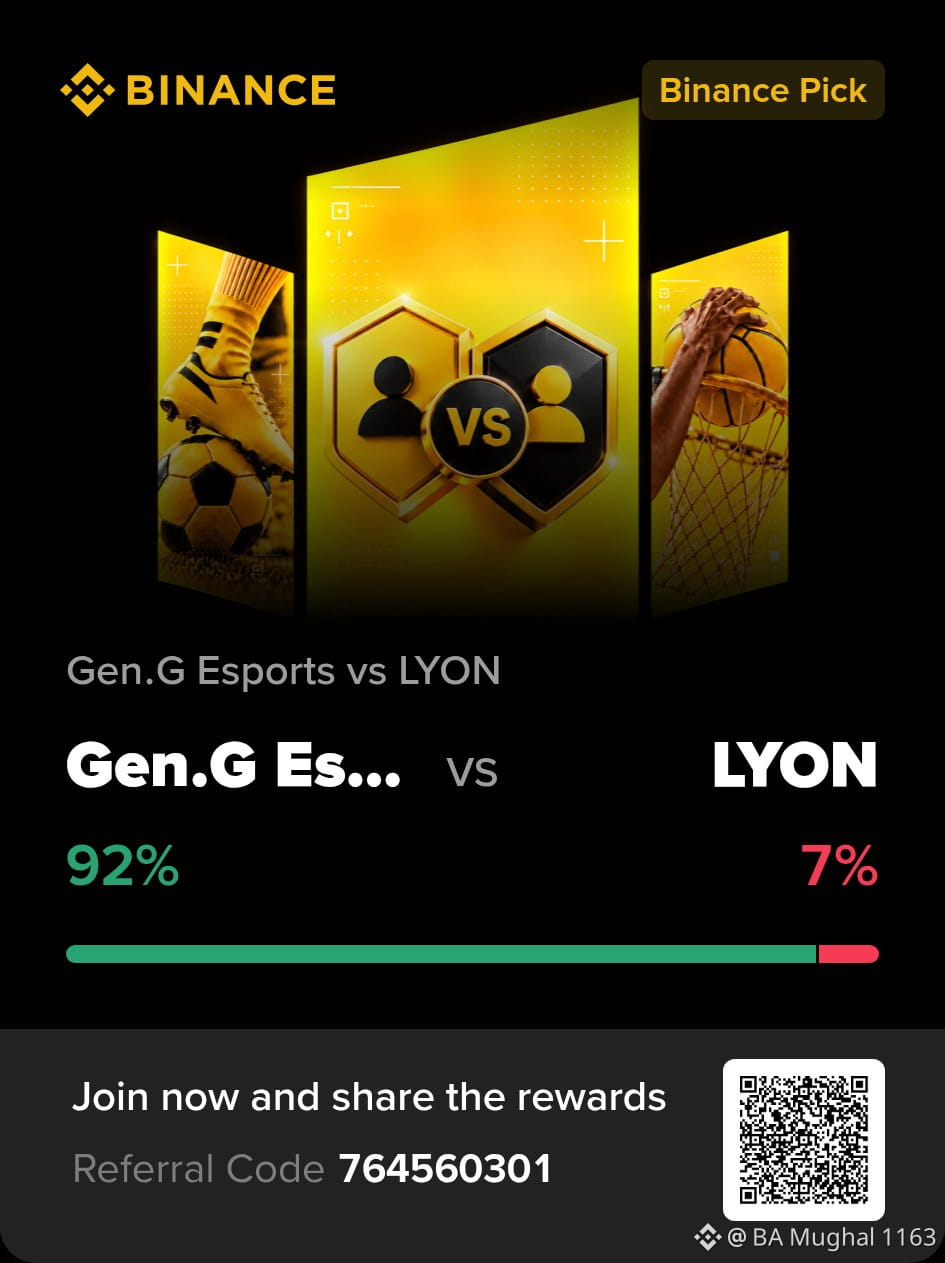
#BinancePick 🔥 WORLDS 2026 – GEN.G vs LYON | MATCH PREDICTION 🎮
My pick is GEN.G (GEN) to win! 🏆
📊 Current Position:
💰 Current Price: $0.91
📈 Average Cost: $0.90
🎯 Shares: 66.64
💵 Position Value: $60.64
🟢 Current PnL: +$0.66 (+1.11%)
🏆 Potential Payout: $66.64
GEN.G looks like a strong pick in this BO5 Worlds Playoffs matchup. Confidence is on GEN.G to secure the victory!
🔥 Who's your pick?
GEN.G or LYON?
#PredictionMarket
90


Article
Your simple guide to understanding Binance Prediction Markets and how points and profits are calculated like a pro!💡 Your simple guide to understanding Binance Prediction Markets and how points and profits are calculated! 📊⚽
Many beginners and traders ask about the Season Points portfolio interface in Binance Prediction Markets, and how the figures and shares are calculated. Today, “Al Yusr” explains the formula simply, like a pro, based on the attached screenshot!
Your simple guide to understanding Binance Prediction Markets and how points and profits are calculated like a pro!
💡 Your simple guide to understanding Binance Prediction Markets and how points and profits are calculated! 📊⚽
Many beginners and traders ask about the Season Points portfolio interface in Binance Prediction Markets, and how the figures and shares are calculated. Today, “Al Yusr” explains the formula simply, like a pro, based on the attached screenshot!
Many beginners and traders ask about the Season Points portfolio interface in Binance Prediction Markets, and how the figures and shares are calculated. Today, “Al Yusr” explains the formula simply, like a pro, based on the attached screenshot!
B_Guerras_Pro:
بالطبع مع الرد من طرفك
8
12
2.1k

·
--
Arkansas has become the seventh state to sue Kalshi — and this lawsuit goes straight to the heart of the prediction market business model.
The facts: Arkansas Attorney General Tim Griffin sued KalshiEX LLC and Kalshi Inc. on Nov. 4, 2026, alleging that the platform operated unlicensed sports gambling in the state, was open to users aged 18 and older, and violated the Arkansas Deceptive Trade Practices Act. The 57-page lawsuit seeks restitution, civil penalties, back taxes, and a court order. The case is listed in the Circuit Court of Independence County under case number 32CV-26-717. Kalshi has argued that its contracts are financial derivatives regulated by the CFTC, not gambling. There has been no court ruling on Arkansas’s allegations.
My take: this is no longer a lawsuit from just one state — it’s a pattern. Utah has filed 14 criminal charges against Kalshi and its founders, and now seven states have taken action. The real fight is over jurisdiction: states see an online bookmaker, while the CFTC sees a federal futures exchange. Until the Supreme Court or Congress answers that question, every new lawsuit adds legal risk for the entire prediction market sector — including crypto contracts traded on similar platforms. BTC itself was steady around $80,300 as the news circulated, so the market hasn’t priced this in as a shock — but the regulatory headwinds are clear.
What I’m watching next: Kalshi’s response to this lawsuit, the CFTC’s Nov. 6 response deadline in a separate case involving stock perps, and whether other states file similar lawsuits.
What do you think: are event contracts on Kalshi financial products or gambling — and who should regulate them?
This is my analysis, not financial advice — always DYOR.
#Kalshi #PredictionMarket #Regulasi
13

·
--
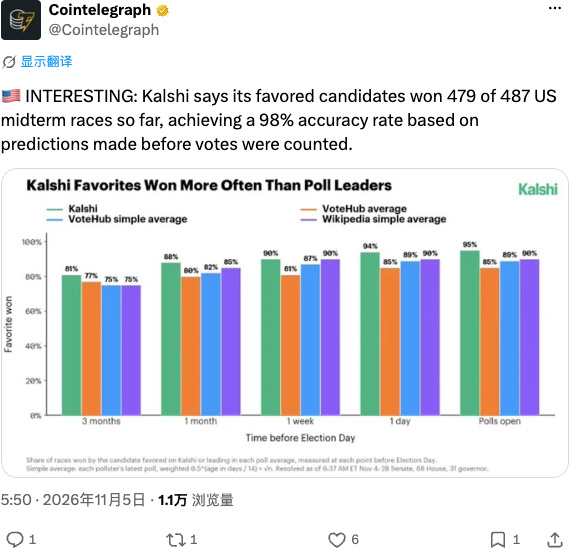
Kalshi’s midterm election predictions hit 98% accuracy—just 8 wrong out of 479. Prediction markets aren’t just for show; they’re a real-world use case for RWA. On-chain political battles are getting increasingly intense, and they’re far more reliable than polls.
$POLY $RWA #PredictionMarket
Kalshi’s midterm election predictions hit 98% accuracy—just 8 wrong out of 479. Prediction markets aren’t just for show; they’re a real-world use case for RWA. On-chain political battles are getting increasingly intense, and they’re far more reliable than polls.
$POLY $RWA #PredictionMarket
$POLY $RWA #PredictionMarket
6
·
--
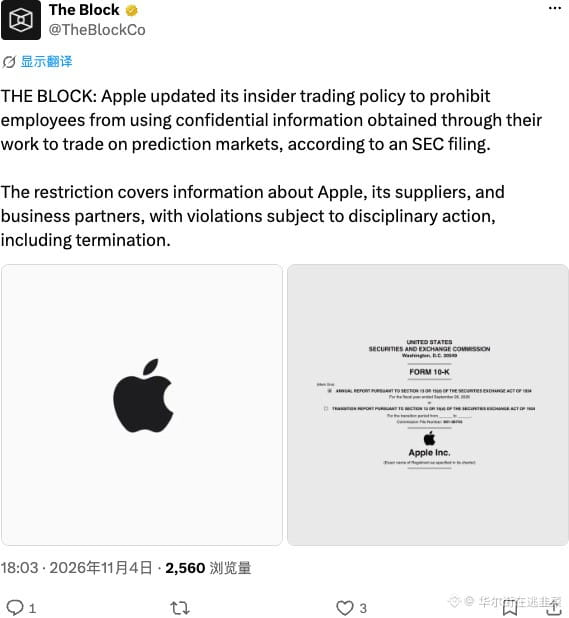
Apple just cracked down, strictly prohibiting employees from using confidential information to bet on prediction markets—and even banning supplier data. Looks like tech guys love playing “prophet” a little too much, and Apple has had enough. But this move has actually cemented Polymarket’s position as a “compliance play.” Next up: institutional money moving in to reap the rewards.
$AAPL $POLY #PredictionMarket #CryptoNews
$AAPL $POLY #PredictionMarket #CryptoNews
6
·
--
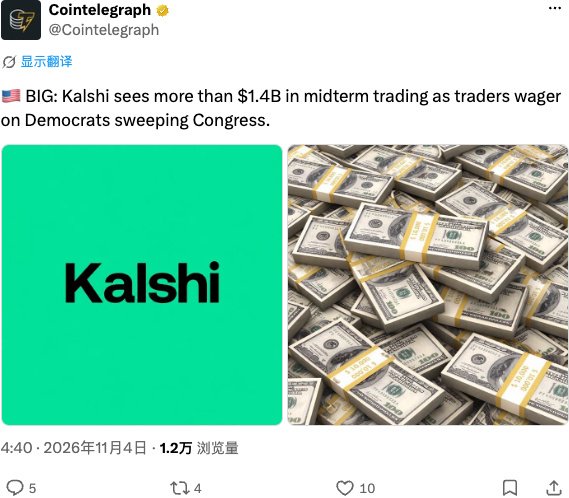
$1.4 billion is being poured directly into Kalshi, and a high-stakes bet on Democrats sweeping Congress is about to unfold. This isn’t a prediction market—it’s a digital political loyalty pledge. With the CFTC clearing the way, this sector’s explosive potential is simply absurd. Before long, algorithms will decide who gets elected. Prediction markets are taking off.
$KALSHI #PredictionMarket
$KALSHI #PredictionMarket
4

#asichasreceivednopredictionmarketapplications
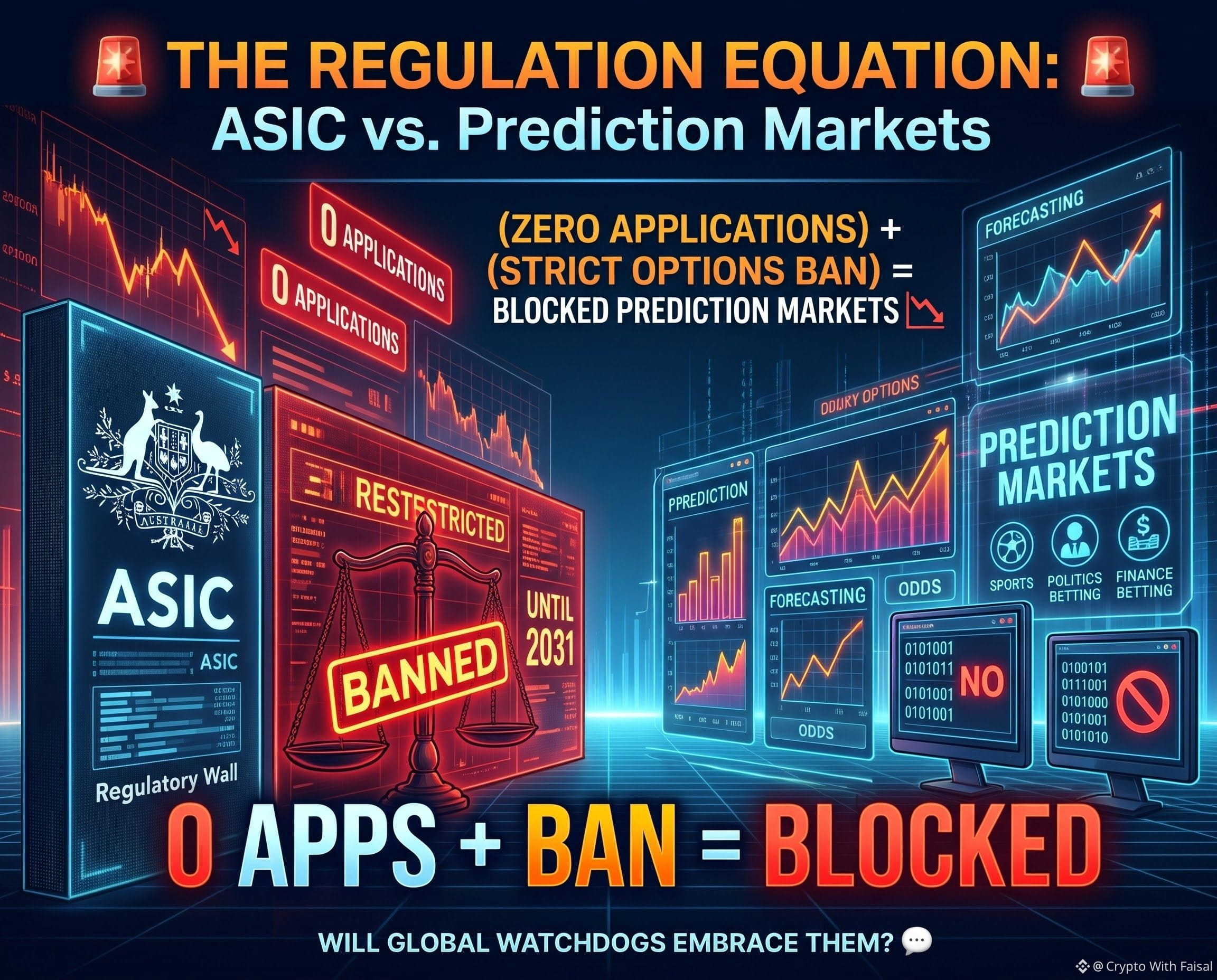
🚨 THE REGULATION EQUATION: ASIC vs. Prediction Markets 🚨
Australia is taking a hard stance. Let's break down the math 🧮👇
(Zero Applications) + (Strict Options Ban) = Blocked Prediction Markets 📉
The Asset Input:
(The Catalyst) = ASIC Chair Sarah Court confirmed to parliament that the regulator currently has zero applications from prediction market operators. Any future filings will face severe scrutiny.
The Key Deliverable:
(The Stance) ➔ ASIC officially classifies prediction platforms in the same high-risk bucket as binary options. Since binary options are strictly banned for retail clients in Australia until October 2031, prediction markets face a massive regulatory wall.
The Breakdown:
Local regulators are refusing to play ball. With zero local licenses, Australian users trading offshore have no financial protection if things go wrong.
Will global watchdogs eventually embrace prediction markets? 👇💬
$BTC
{future}(BTCUSDT)
$POL
{future}(POLUSDT)
$BNB
{future}(BNBUSDT)
#ASIC #Polymarket #predictionmarket
#asichasreceivednopredictionmarketapplications
🚨 THE REGULATION EQUATION: ASIC vs. Prediction Markets 🚨
Australia is taking a hard stance. Let's break down the math 🧮👇
(Zero Applications) + (Strict Options Ban) = Blocked Prediction Markets 📉
The Asset Input:
(The Catalyst) = ASIC Chair Sarah Court confirmed to parliament that the regulator currently has zero applications from prediction market operators. Any future filings will face severe scrutiny.
The Key Deliverable:
(The Stance) ➔ ASIC officially classifies prediction platforms in the same high-risk bucket as binary options. Since binary options are strictly banned for retail clients in Australia until October 2031, prediction markets face a massive regulatory wall.
The Breakdown:
Local regulators are refusing to play ball. With zero local licenses, Australian users trading offshore have no financial protection if things go wrong.
Will global watchdogs eventually embrace prediction markets? 👇💬
$BTC
$POL
$BNB
#ASIC #Polymarket #predictionmarket
1
187

·
--
Bullish
Verified
🚀🔥 **$PREDICT — THE FUTURE IS NOW!** 🔥🚀
🔮 **Big Moves Ahead for Predict!**
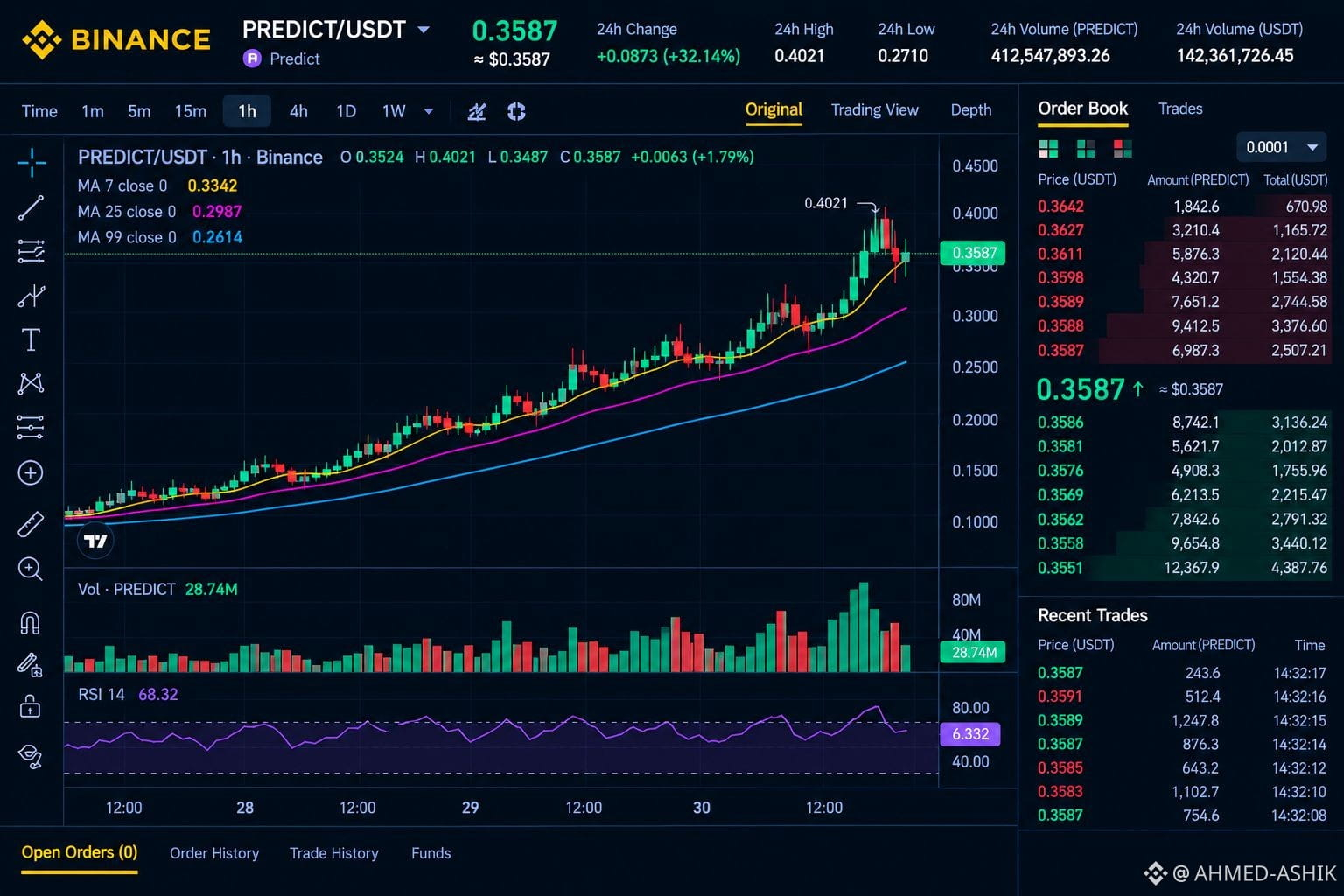
💎 $PREDICT is bringing prediction markets to the next level on BNB Chain, allowing users to trade on real-world outcomes across crypto, sports, politics, and more.
🚨 **BINANCE SPOT LISTING TODAY!**
📅 October 30, 2026
⏰ 10:00 UTC
🔥 **Trading Pairs:**
* $PREDICT/USDT
* $PREDICT/USDC
* $PREDICT/TRY
📊 **KEY THINGS TO WATCH**
⚡ Listing-day momentum
📈 Trading volume and liquidity
💰 Market demand and price action
🎯 Volatility after launch
⚠️ **Seed Tag Alert:** Expect higher volatility and manage your risk carefully.
🔥 **THE BIG QUESTION:** Can $PREDICT surprise the market and make a powerful Binance debut?
💬 What’s your prediction? Drop your thoughts below! 🚀
⚠️ Not financial advice. Always DYOR.
#PREDICT #Binance #Crypto #BinanceSquare #PredictionMarket
{future}(PREDICTUSDT)
🚀🔥 **$PREDICT — THE FUTURE IS NOW!** 🔥🚀
🔮 **Big Moves Ahead for Predict!**
💎 $PREDICT is bringing prediction markets to the next level on BNB Chain, allowing users to trade on real-world outcomes across crypto, sports, politics, and more.
🚨 **BINANCE SPOT LISTING TODAY!**
📅 October 30, 2026
⏰ 10:00 UTC
🔥 **Trading Pairs:**
* $PREDICT /USDT
* $PREDICT /USDC
* $PREDICT /TRY
📊 **KEY THINGS TO WATCH**
⚡ Listing-day momentum
📈 Trading volume and liquidity
💰 Market demand and price action
🎯 Volatility after launch
⚠️ **Seed Tag Alert:** Expect higher volatility and manage your risk carefully.
🔥 **THE BIG QUESTION:** Can $PREDICT surprise the market and make a powerful Binance debut?
💬 What’s your prediction? Drop your thoughts below! 🚀
⚠️ Not financial advice. Always DYOR.
#PREDICT #Binance #Crypto #BinanceSquare #PredictionMarket
1
1
815
·
--
An admin wallet that could decide market outcomes — that’s how Myriad’s prediction market was exploited, and 10 of its markets were canceled.
The facts: Myriad Markets, a prediction-market platform whose core protocol runs on BNB Chain, confirmed that its internal admin wallet was compromised on Oct. 26. The attacker used the wallet to manipulate the outcomes of 10 markets — including the OpenAI and Anthropic IPOs, whether Base would issue a token in 2026, the U.S. midterm elections, crypto and commodity prices, and F1 champion George Russell — then claimed the rewards. Myriad revoked the wallet’s admin privileges, canceled all 10 markets, and promised automatic refunds to both sides at pre-attack prices, minus any winnings already claimed. The funds have reportedly been recovered, and the attacker didn’t manage to withdraw any. According to Myriad, the cause was a vulnerability in a third-party library used by its backend service, which had been exposed several weeks earlier. (The Defiant, Oct. 27; confirmed by TokenPost and KuCoin on Oct. 28.)
My take: this is a lesson about admin keys. A market that claims to be decentralized still has a single point of failure if one wallet can force an outcome. Canceling the markets and issuing refunds was the right response — but it’s still an intervention, and users have to trust the operator to cancel them fairly. The amount involved was relatively small, but the precedent is significant: institutions are starting to take an interest in prediction markets, and incidents like this will determine whether they’re willing to participate.
What I’m watching: whether the refunds are actually issued automatically, without users having to claim them, and whether Myriad publishes an audit of the third-party library that caused the vulnerability.
Do you think a prediction market where an admin wallet can force outcomes still deserves to be called decentralized?
This is my analysis, not financial advice — always DYOR.
#PredictionMarket #KeamananCrypto $BNB
13
·
--
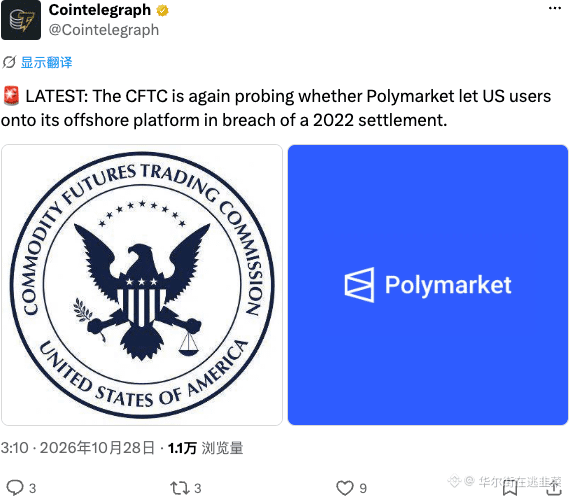
The U.S. Commodity Futures Trading Commission has once again trained its sights on Polymarket, looking into whether it’s secretly letting U.S. retail traders gamble on the platform. We’ve seen this back-and-forth play out plenty of times—the regulators just want to force them to get compliant. The rest of us retail traders can sit back and see how this drama ends.
#PredictionMarket #USRegulation
#PredictionMarket #USRegulation
9

·
--
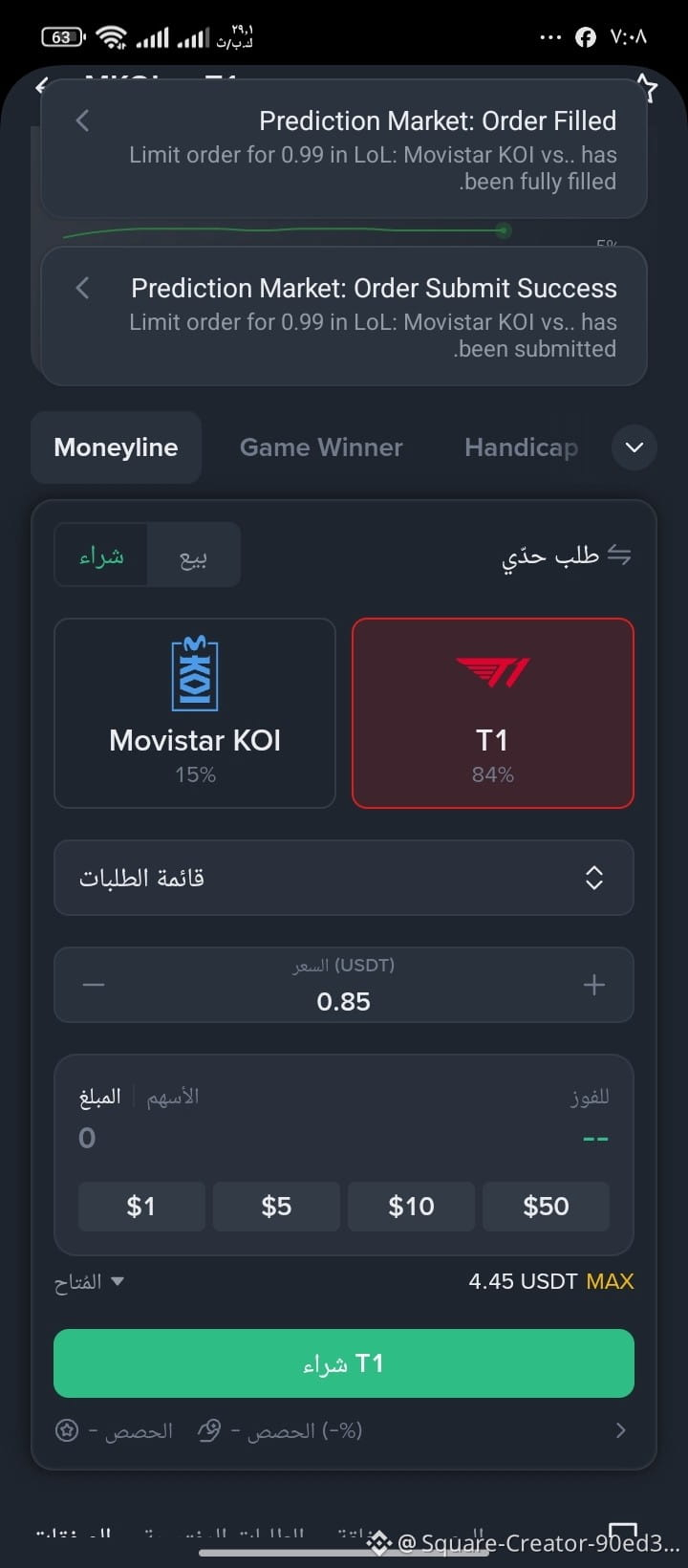
My prediction for tonight’s T1 vs Movistar KOI match—and why I bet 1$ on T1?
> *Movistar KOI vs T1 - Swiss Stage Round 2*
>
> I bet 1$ on T1 at 0.85 odds. Why?
> 1. T1 beat KOI 2-0 just 3 days ago
> 2. KOI lost 0-2 to Dplus KIA yesterday
> 3. Faker doesn’t mess around in elimination matches - 86% of analysts predict a T1 win
>
> Even if the profit is only 0.15$ , it’s all about the *loot box* - every bet gets you a box, and if it’s epic, you get a share of 250,000 USDT
>
> What’s your prediction? T1 2-1 or 2-0?
>
> #LoLWorlds #T1 #PredictionMarket
1
143
·
--
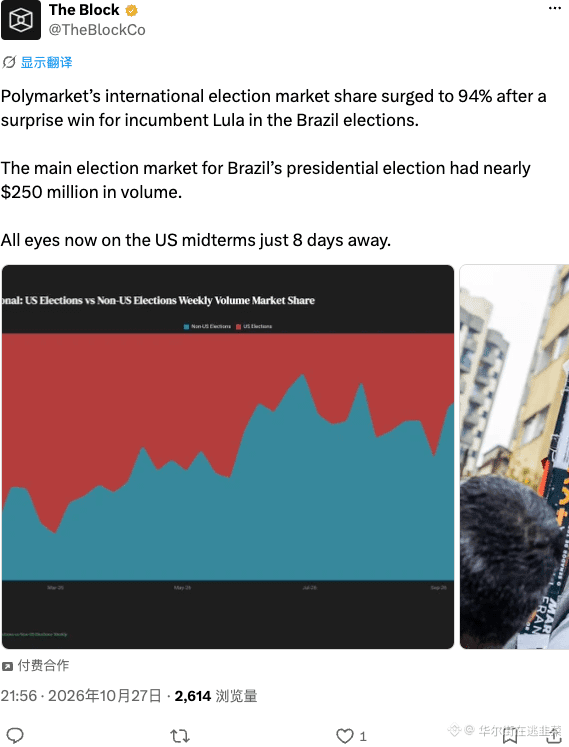
The surprise result of Brazil’s election sent Polymarket’s international share soaring to 94%, with trading volume hitting $250 million. The Brazilians have had their fill; now it’s the Americans’ turn. In 8 days, it’ll be blood and thunder all over again—don’t miss out on this wave of liquidity.
$POLY #PredictionMarket #Polymarket #Election
$POLY #PredictionMarket #Polymarket #Election
14
·
--
The NBA is entering prediction markets! It has officially named Kalshi and Polymarket its preferred exchanges and partnered with the CFTC. Sports + prediction markets + official endorsement—this is a major player making its move! #PredictionMarket #SportsCrypto $POLY
NBA's making a big move into prediction markets! They've officially named Kalshi and Polymarket as preferred exchanges and signed a deal with the CFTC. Sports + prediction markets + official endorsement? This is a major game-changer! #PredictionMarket #SportsCrypto $POLY
NBA's making a big move into prediction markets! They've officially named Kalshi and Polymarket as preferred exchanges and signed a deal with the CFTC. Sports + prediction markets + official endorsement? This is a major game-changer! #PredictionMarket #SportsCrypto $POLY
3
Log in to explore more content
Join global crypto users on Binance Square
⚡️ Get latest and useful information about crypto.
💬 Trusted by the world’s largest crypto exchange.
👍 Discover real insights from verified creators.
Email / Phone number
Trending Topics
1
#JobsReportRaisesHikeOdds
503,034 views
3,262 Discussing
2
#CPITestsDecemberRateOutlook
142,046 views
1,064 Discussing
3
#BitcoinRebounds$75KAsChipsLead
45,749 views
337 Discussing
4
#US Data Center Rules May Constrain AI Expansion
70,167 views
225 Discussing
5
#ARKPlans14ThematicETFsCoveringAIAndTokenizedMarkets
4,051 views
65 Discussing
6
#WillAnthropicListOnTime
149,287 views
1,307 Discussing
7
#WillUS-IranTensionsBoostSafe-HavenDemand?
65,202 views
473 Discussing
8
#BitcoinETFsSee$412MNetOutflows
14,580 views
73 Discussing
9
#HKSFCPlansToRestrictCryptoAndExchangeTerms
57,029 views
510 Discussing
10
#TradFiForBeginners
88,982 views
966 Discussing