Binance Square
#realyield

realyield

79,395 views
630 Discussing
YOYOOYOOO
·
--
DeFi's Yield Evolution: From Emissions to Revenue The first era of DeFi was built on a lie we all agreed to believe. Protocols printed governance tokens, distributed them to liquidity providers, and called it "yield." It wasn't yield — it was dilution dressed up as income. The protocol was paying you in its own increasingly worthless tokens to compensate for the fact that the economics didn't actually work yet. That era is ending, and the replacement is far more interesting. Real yield changes everything. When a protocol distributes actual fee revenue to token stakers, the math has to close. You can't inflate your way to sustainability. Protocols either generate genuine economic activity or they don't. The market can now distinguish between a protocol earning $50M in fees and one distributing $50M in printed tokens. This separation creates a new valuation framework. Fee-to-FDV becomes the P/E ratio of crypto. Protocols with real revenue trade at premiums. Protocols surviving on emissions trade at discounts. The market is finally pricing what matters — productive capacity, not narrative potential. The implications compound. Institutional allocators who couldn't justify exposure to "yield farming" can underwrite fee-sharing models. Treasury allocations shift from speculative bets to income-generating positions. The entire risk-adjusted return calculation changes when yield comes from economic activity rather than token emission. $ETH $SOL $BNB #DeFi #RealYield #CryptoMarkets #OnchainEconomy
DeFi's Yield Evolution: From Emissions to Revenue

The first era of DeFi was built on a lie we all agreed to believe. Protocols printed governance tokens, distributed them to liquidity providers, and called it "yield." It wasn't yield — it was dilution dressed up as income. The protocol was paying you in its own increasingly worthless tokens to compensate for the fact that the economics didn't actually work yet.

That era is ending, and the replacement is far more interesting.

Real yield changes everything. When a protocol distributes actual fee revenue to token stakers, the math has to close. You can't inflate your way to sustainability. Protocols either generate genuine economic activity or they don't. The market can now distinguish between a protocol earning $50M in fees and one distributing $50M in printed tokens.

This separation creates a new valuation framework. Fee-to-FDV becomes the P/E ratio of crypto. Protocols with real revenue trade at premiums. Protocols surviving on emissions trade at discounts. The market is finally pricing what matters — productive capacity, not narrative potential.

The implications compound. Institutional allocators who couldn't justify exposure to "yield farming" can underwrite fee-sharing models. Treasury allocations shift from speculative bets to income-generating positions. The entire risk-adjusted return calculation changes when yield comes from economic activity rather than token emission.

$ETH $SOL $BNB

#DeFi #RealYield #CryptoMarkets #OnchainEconomy
·
--
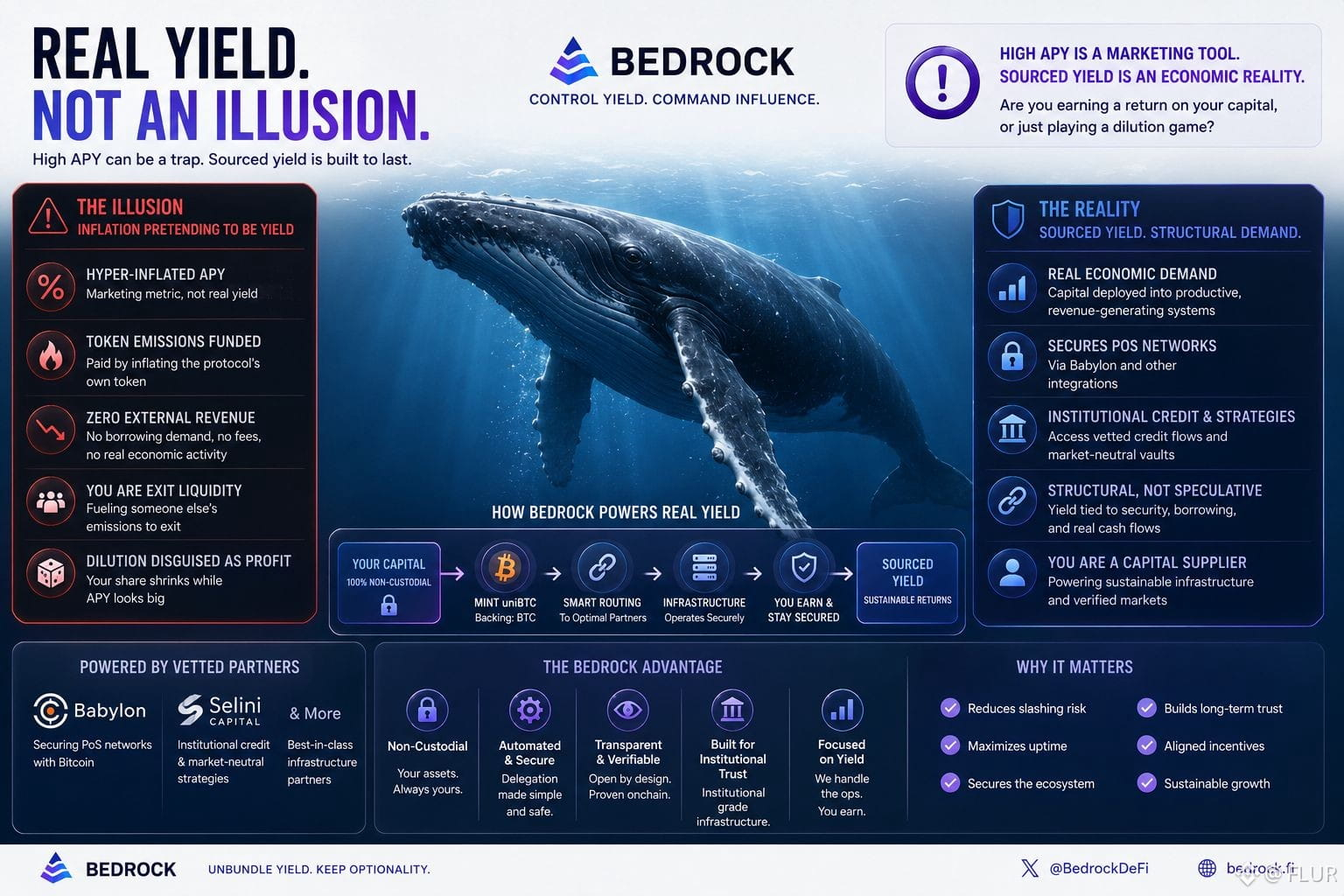
I was watching a liquidity pool advertise a 40% APY on wrapped Bitcoin last week. In crypto, we are biologically wired to chase the highest percentage. We see a massive APY on a dashboard and instantly assume the protocol is highly profitable. We assume that yield is a reward for our capital. But when I traced the actual on-chain routing, there was zero external revenue. Zero borrowing demand. Zero network fees. The protocol was just hyper-inflating its native token to pay the depositors. It wasn’t an interest rate. It was a localized inflation rate. They were essentially bribing users with a rapidly depreciating asset just to artificially inflate their metrics. We constantly confuse dilution with profit. This behavioral trap is exactly why I’ve been paying so much attention to the origin of Bedrock’s yield structure. Bedrock doesn’t manufacture synthetic APY out of thin air. When you mint uniBTC, the underlying Bitcoin is deployed into environments driven by actual economic demand. Instead of relying on an inflationary token loop, the capital provides foundational crypto-economic security to PoS networks via Babylon, or plugs directly into institutional credit flows and market-neutral strategies through professionally managed vaults (like their integration with Selini Capital). The yield is tethered to structural network security and institutional borrowing, not internal token printing. It fundamentally changes your role in the ecosystem. You stop acting as the exit liquidity for a temporary emission schedule, and start acting as a supplier to a verified, sustainable credit market. High APY is a marketing tool. Sourced yield is an economic reality. Are you actually earning a return on your capital, or are you just participating in a multiplayer dilution game? @Bedrock #Bedrock $BR {future}(BRUSDT) #BTCFi $BTC {future}(BTCUSDT) $RIF {future}(RIFUSDT) #RealYield
I was watching a liquidity pool advertise a 40% APY on wrapped Bitcoin last week.

In crypto, we are biologically wired to chase the highest percentage. We see a massive APY on a dashboard and instantly assume the protocol is highly profitable.

We assume that yield is a reward for our capital.

But when I traced the actual on-chain routing, there was zero external revenue.

Zero borrowing demand.

Zero network fees.

The protocol was just hyper-inflating its native token to pay the depositors.

It wasn’t an interest rate.

It was a localized inflation rate.

They were essentially bribing users with a rapidly depreciating asset just to artificially inflate their metrics.

We constantly confuse dilution with profit.

This behavioral trap is exactly why I’ve been paying so much attention to the origin of Bedrock’s yield structure.

Bedrock doesn’t manufacture synthetic APY out of thin air.

When you mint uniBTC, the underlying Bitcoin is deployed into environments driven by actual economic demand.

Instead of relying on an inflationary token loop, the capital provides foundational crypto-economic security to PoS networks via Babylon, or plugs directly into institutional credit flows and market-neutral strategies through professionally managed vaults (like their integration with Selini Capital).

The yield is tethered to structural network security and institutional borrowing, not internal token printing.

It fundamentally changes your role in the ecosystem.

You stop acting as the exit liquidity for a temporary emission schedule, and start acting as a supplier to a verified, sustainable credit market.

High APY is a marketing tool.

Sourced yield is an economic reality.

Are you actually earning a return on your capital, or are you just participating in a multiplayer dilution game?

@Bedrock #Bedrock $BR

#BTCFi
$BTC
$RIF

#RealYield
🌾 DeFi Spring? Sustainable Yields Return to Protocols On June 29, 2026, decentralized finance shows revival signs. While total market cap is $2.14T, DeFi generates real yields again. Lending demand, RWA integration, and organic activity are driving on-chain economics. Ethereum $ETH dominates DeFi, but other chains gain share. The next DeFi wave may be quieter but more sustainable — focused on real revenue rather than inflated token incentive programs. 📌 Key Takeaway: Real yields in DeFi signal organic demand — the next wave is built on sustainable revenue, not token inflation. #DeFi #RealYield #BinanceAlphaAlert
🌾 DeFi Spring? Sustainable Yields Return to Protocols
On June 29, 2026, decentralized finance shows revival signs. While total market cap is $2.14T, DeFi generates real yields again. Lending demand, RWA integration, and organic activity are driving on-chain economics. Ethereum $ETH dominates DeFi, but other chains gain share. The next DeFi wave may be quieter but more sustainable — focused on real revenue rather than inflated token incentive programs.

📌 Key Takeaway:
Real yields in DeFi signal organic demand — the next wave is built on sustainable revenue, not token inflation.

#DeFi #RealYield
#BinanceAlphaAlert
Article
💰 The end of “ghost tokens”? In 2026, DeFi enters the era of real revenuesFor years, much of DeFi’s governance token landscape suffered from the same problem: they granted a voting right... but very little direct economic value to their holders. In 2026, this model evolves rapidly. Investors now place more importance on protocols that can generate sustainable revenue rather than mere growth promises. A new trend is taking hold: revenue sharing (Fee Switching) and Real Yield. 📊 1. Tokens that finally capture value

💰 The end of “ghost tokens”? In 2026, DeFi enters the era of real revenues

For years, much of DeFi’s governance token landscape suffered from the same problem: they granted a voting right... but very little direct economic value to their holders.
In 2026, this model evolves rapidly.
Investors now place more importance on protocols that can generate sustainable revenue rather than mere growth promises. A new trend is taking hold: revenue sharing (Fee Switching) and Real Yield.
📊 1. Tokens that finally capture value
Vault yields across perp DEXs are NOT apples-to-apples. 🏦 Two very different sources: • Emissions/points-only vaults: headline APRs of 200–400%, but value = token emissions. Depends entirely on TGE price holding. High variance. • Real-yield vaults: paid from actual trading fees. Lower headline, but doesn't evaporate. @AFX_XYZ Vault is the real-yield type: ~11.44% APY from fee sharing, plus points on top, no penalty. So your downside has a fee-based floor while you still get points upside. Rule of thumb: separate the "real" APR from the "if-token-holds" APR before you size in. #AFX #RealYield #YieldFarming #DeFi NFA. 👉 https://app.afx.xyz/?src=bn3⁠
Vault yields across perp DEXs are NOT apples-to-apples. 🏦

Two very different sources:
• Emissions/points-only vaults: headline APRs of 200–400%, but value = token emissions. Depends entirely on TGE price holding. High variance.
• Real-yield vaults: paid from actual trading fees. Lower headline, but doesn't evaporate.

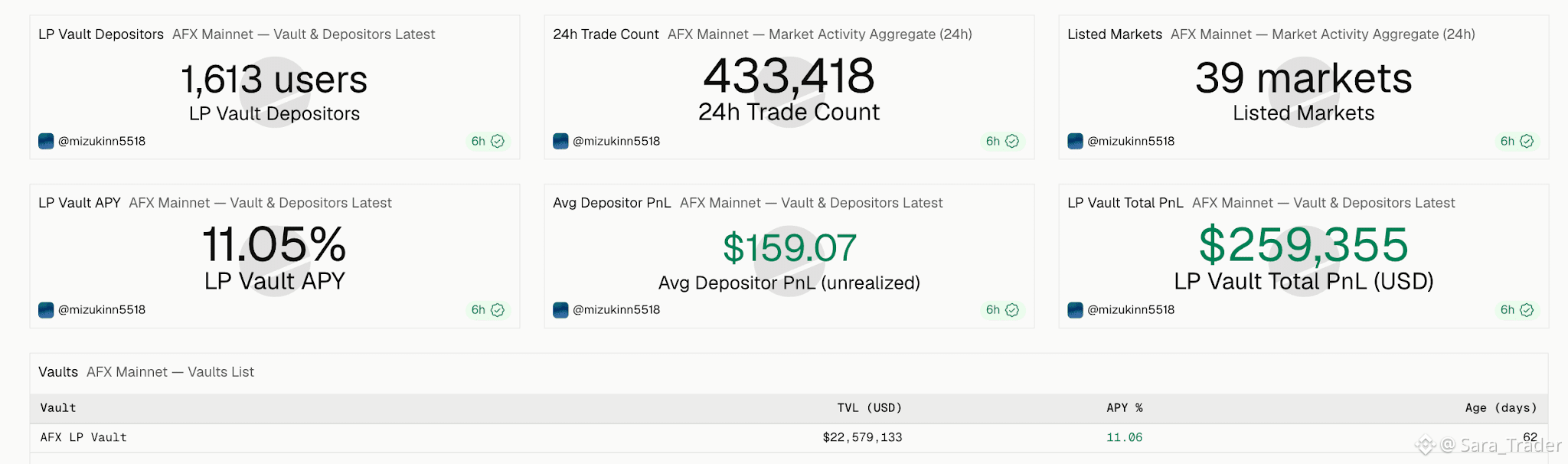
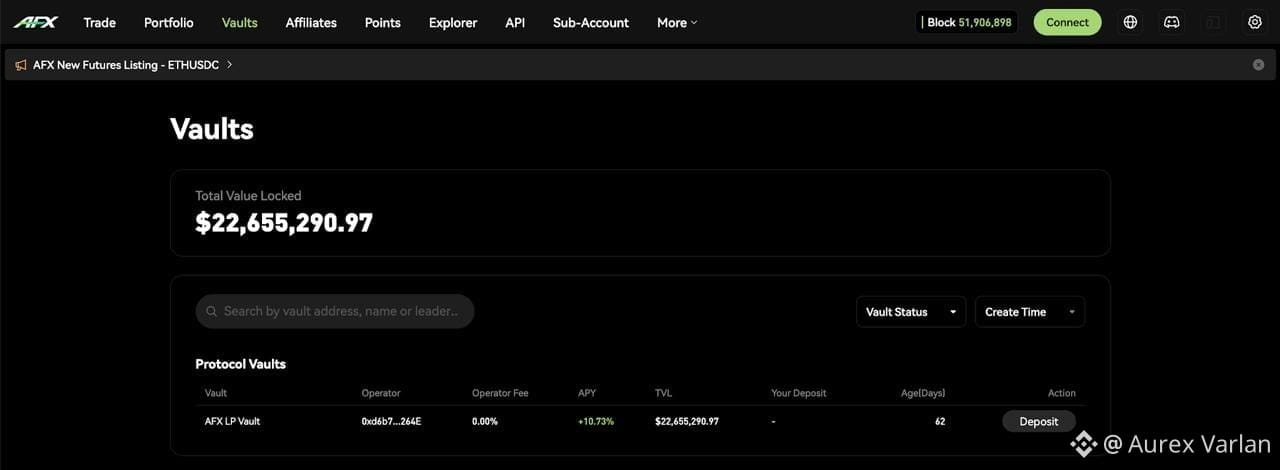
@AFX_XYZ Vault is the real-yield type: ~11.44% APY from fee sharing, plus points on top, no penalty. So your downside has a fee-based floor while you still get points upside.

Rule of thumb: separate the "real" APR from the "if-token-holds" APR before you size in.

#AFX #RealYield #YieldFarming #DeFi NFA. 👉
https://app.afx.xyz/?src=bn3⁠
$AFX CUMULATIVE VOLUME NEARING $1 BILLION - REAL YIELD MACHINE 🔥 Volume just hit $946M with $20.71M locked and annualized protocol revenue at $1.07M. The VIP program returns 30-50% of that fee revenue as hard USDC yield to active traders. No inflationary token emissions, no fake APR - just real yield backed by on-chain activity. This isn't hype. The numbers are climbing fast and the momentum is real. A sovereign L1 delivering institutional execution while sharing half the revenue with its users? That's a flywheel worth watching. Are you looking at real-yield plays or still chasing emission farms? Not financial advice. Always manage your risk. #AFX #DeFi #RealYield #Derivatives 🔥
$AFX CUMULATIVE VOLUME NEARING $1 BILLION - REAL YIELD MACHINE 🔥

Volume just hit $946M with $20.71M locked and annualized protocol revenue at $1.07M. The VIP program returns 30-50% of that fee revenue as hard USDC yield to active traders. No inflationary token emissions, no fake APR - just real yield backed by on-chain activity.

This isn't hype. The numbers are climbing fast and the momentum is real. A sovereign L1 delivering institutional execution while sharing half the revenue with its users? That's a flywheel worth watching.

Are you looking at real-yield plays or still chasing emission farms?

Not financial advice. Always manage your risk.

#AFX #DeFi #RealYield #Derivatives

🔥
$GRVT IS REDEFINING TOKEN UTILITY AS A LIVING MEMBERSHIP 🔥 Most exchange tokens are just entry tickets. Hold and hope. GRVT flips that model entirely. Token holders earn lower fees, higher yield, protocol revenue share, and early access to new products — all by actively using the platform. 100% of the economic surplus flows back to holders through buybacks and reinvestment. That means every dollar the platform earns directly increases $GRVT ’s intrinsic value. No hype, just real cash flow alignment. With TGE approaching, this is one of the few structures where your token actually works for you instead of just sitting idle. Which factor do you think will matter most for long-term value? Not financial advice. Always manage your risk. #GRVT #Tokenomics #RealYield #Crypto 🔥
$GRVT IS REDEFINING TOKEN UTILITY AS A LIVING MEMBERSHIP 🔥

Most exchange tokens are just entry tickets. Hold and hope. GRVT flips that model entirely. Token holders earn lower fees, higher yield, protocol revenue share, and early access to new products — all by actively using the platform.

100% of the economic surplus flows back to holders through buybacks and reinvestment. That means every dollar the platform earns directly increases $GRVT ’s intrinsic value. No hype, just real cash flow alignment.

With TGE approaching, this is one of the few structures where your token actually works for you instead of just sitting idle. Which factor do you think will matter most for long-term value?

Not financial advice. Always manage your risk.

#GRVT #Tokenomics #RealYield #Crypto

🔥
The May flush clarified something most portfolios won't admit. Yield-less assets got punished hardest. Productive ones held relatively better — and that gap matters heading into June. $ETH post-Pectra is generating real staking yield while blob fees compress costs. That's a supply squeeze AND a demand flywheel running simultaneously. $BNB burns continue outpacing issuance at current activity levels — a deflation mechanism that compounds quietly. $ADA staking rewards kept running while everyone was panic-refreshing price charts. Meanwhile TradFi bonds are sitting near 5%. That backdrop doesn't kill crypto — it raises the bar. The assets that survive a rate-competitive world are the ones that earn while you hold. BTC ETF outflows dominated this week's headlines. Notice which chains didn't make the outflow list. The divergence isn't noise — it's the real portfolio thesis. May was a stress test. June is where you find out if your holdings passed it. The productive asset trade is back on the menu. Generic exposure isn't enough anymore. #Crypto #RealYield #DeFi #CryptoInvesting #Altcoins
The May flush clarified something most portfolios won't admit.

Yield-less assets got punished hardest. Productive ones held relatively better — and that gap matters heading into June.

$ETH post-Pectra is generating real staking yield while blob fees compress costs. That's a supply squeeze AND a demand flywheel running simultaneously. $BNB burns continue outpacing issuance at current activity levels — a deflation mechanism that compounds quietly. $ADA staking rewards kept running while everyone was panic-refreshing price charts.

Meanwhile TradFi bonds are sitting near 5%. That backdrop doesn't kill crypto — it raises the bar. The assets that survive a rate-competitive world are the ones that earn while you hold.

BTC ETF outflows dominated this week's headlines. Notice which chains didn't make the outflow list. The divergence isn't noise — it's the real portfolio thesis.

May was a stress test. June is where you find out if your holdings passed it.

The productive asset trade is back on the menu. Generic exposure isn't enough anymore.

#Crypto #RealYield #DeFi #CryptoInvesting #Altcoins
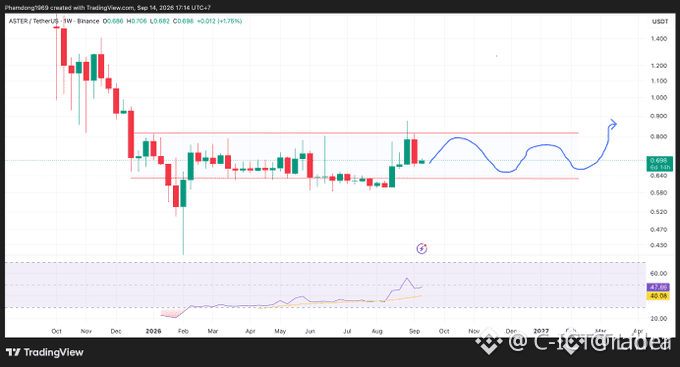
🚨 Alpha: Aggressive Deflation and the Power of "Real Yield" in $ASTER I've been diving into the new tokenomics update for Aster, and the economic model they've set up really caught my attention. They've implemented a Buyback and Burn system that could hit 198%. What does this mean in practice? 🔥 Buyback: 99% of the daily fees generated by the platform are used to buy back $ASTER from the market (constant buying pressure). 🔥 Burn: An equivalent amount (plus another 99%) is burned from the team's reserves, reducing the total supply (the goal is to drop from 8 billion to 3 billion tokens). But here's the big kicker: the repurchased tokens don't disappear; they go straight into the Loyalty Rewards. In other words, users who stake long-term and lock up their tokens (generating veASTER) are the ones capturing all that value from the exchange fees. Models that utilize the protocol's own revenue to reward those supporting the network (Real Yield) are becoming the gold standard for survival in DeFi. Is anyone here already keeping an eye on or farming in this ecosystem? 👇 #ASTER $ASTER #RealYield #CryptoInsights
🚨 Alpha: Aggressive Deflation and the Power of "Real Yield" in $ASTER
I've been diving into the new tokenomics update for Aster, and the economic model they've set up really caught my attention. They've implemented a Buyback and Burn system that could hit 198%. What does this mean in practice?

🔥 Buyback: 99% of the daily fees generated by the platform are used to buy back $ASTER from the market (constant buying pressure). 🔥 Burn: An equivalent amount (plus another 99%) is burned from the team's reserves, reducing the total supply (the goal is to drop from 8 billion to 3 billion tokens).

But here's the big kicker: the repurchased tokens don't disappear; they go straight into the Loyalty Rewards. In other words, users who stake long-term and lock up their tokens (generating veASTER) are the ones capturing all that value from the exchange fees.
Models that utilize the protocol's own revenue to reward those supporting the network (Real Yield) are becoming the gold standard for survival in DeFi.

Is anyone here already keeping an eye on or farming in this ecosystem? 👇

#ASTER $ASTER #RealYield #CryptoInsights
If you're a "low-effort, capital-efficient" farmer, the @AFX_XYZ Vault is worth a look. 🏦 • Base real yield: ~11.44% APY (fee sharing, not emissions) • + points while deposited • No penalty — points don't reduce your yield Official example from their points page: 5,000 USDC in Vault for 7 days ≈ 50 pts. That's passive points on top of double-digit real yield — before any TGE upside. Set-and-forget farming while Season 1 runs. This is the "sleep well" tier of perp DEX farming. 👉 https://app.afx.xyz/?src=bn2 #AFX #YieldFarming #PerpDEX #RealYield NFA.
If you're a "low-effort, capital-efficient" farmer, the @AFX_XYZ Vault is worth a look. 🏦

• Base real yield: ~11.44% APY (fee sharing, not emissions)
• + points while deposited
• No penalty — points don't reduce your yield

Official example from their points page: 5,000 USDC in Vault for 7 days ≈ 50 pts. That's passive points on top of double-digit real yield — before any TGE upside.

Set-and-forget farming while Season 1 runs. This is the "sleep well" tier of perp DEX farming.
👉 https://app.afx.xyz/?src=bn2

#AFX #YieldFarming #PerpDEX #RealYield
NFA.
·
--
Bullish
🚨 THE REAL YIELD REVOLUTION: SMART MONEY LOCKS CASH! 💸⚡ Speculative inflationary farming is dead. Smart Money is shifting capital into sustainable real yield engines and yield-tokenization primitives! 📈 📊 REAL YIELD ALLOCATION SHARE (TEXT CHART): 45% 🟩🟩🟩🟩🟩🟩🟩 | Yield Tokenization ($PENDLE) 35% 🟨🟨🟨🟨🟨 | Synthetic Dollar Yield ($ENA) 20% 🟦🟦🟦 | Traditional Money Markets 🔹 $PENDLE: Tokenizes yield streams to lock fixed returns or trade yield volatility. 🔹 $ENA: Powers synthetic dollar yield generated from delta-neutral arbitrage. 💡 WHALE LESSON: Stop chasing high-inflation rewards. Own protocols that capture real organic revenue! 🎒 📊 COMMUNITY POLL: Which yield powerhouse do you hold? 1️⃣ Pendle ($PENDLE) 💸 2️⃣ Ethena ($ENA) ⚡ 3️⃣ Both ($PENDLE +$ENA) 🚀 4️⃣ Pure Stables ($USDT) 💵 💬 Vote above & drop your strategy below! 👇 #DeFi #RealYield #PENDLE #ENA #BinanceSquare #SmartMoney
🚨 THE REAL YIELD REVOLUTION: SMART MONEY LOCKS CASH! 💸⚡
Speculative inflationary farming is dead. Smart Money is shifting capital into sustainable real yield engines and yield-tokenization primitives! 📈
📊 REAL YIELD ALLOCATION SHARE (TEXT CHART):

45% 🟩🟩🟩🟩🟩🟩🟩 | Yield Tokenization ($PENDLE)
35% 🟨🟨🟨🟨🟨 | Synthetic Dollar Yield ($ENA)
20% 🟦🟦🟦 | Traditional Money Markets

🔹 $PENDLE: Tokenizes yield streams to lock fixed returns or trade yield volatility.
🔹 $ENA: Powers synthetic dollar yield generated from delta-neutral arbitrage.
💡 WHALE LESSON: Stop chasing high-inflation rewards. Own protocols that capture real organic revenue! 🎒
📊 COMMUNITY POLL: Which yield powerhouse do you hold?

1️⃣ Pendle ($PENDLE) 💸
2️⃣ Ethena ($ENA) ⚡
3️⃣ Both ($PENDLE +$ENA) 🚀
4️⃣ Pure Stables ($USDT) 💵
💬 Vote above & drop your strategy below! 👇
#DeFi #RealYield #PENDLE #ENA #BinanceSquare #SmartMoney
Bitcoin Up or Down - September 20, 5:15PM-5:30PM ET

Bitcoin Up or Down - September 20, 5:15PM-5:30PM ET

98%Up1%Down
Volume $6,261.79
Verified
🚨 $ASTER TOKENOMICS OVERHAUL DIRECTS 99% OF PROTOCOL FEES TO REAL YIELD BUYBACKS! 💥 Smart money accumulation mechanics just got a massive structural upgrade for $ASTER . By routing 99% of daily platform fees directly into automated market TWAP buybacks for veASTER stakers, the protocol establishes a persistent, organic demand engine tied straight to real volume. 📊 With over $214M in prior buybacks already absorbing roughly 7.1% of circulating supply, this continuous fee-recapture loop creates an ongoing liquidity sink. 🔍 As trading volume scales, constant buy-side absorption systematically tightens float while aligning token valuation directly with protocol revenue streams. 💡 💬 Will this relentless TWAP fee absorption catalyze a sustained structural shift for $ASTER as volume expands? 👇 ⚠️ Not financial advice. Always manage your risk. 🛡️ 🏷️ #ASTER #Tokenomics #RealYield #DeFi #Crypto 🦈 💎
🚨 $ASTER TOKENOMICS OVERHAUL DIRECTS 99% OF PROTOCOL FEES TO REAL YIELD BUYBACKS! 💥

Smart money accumulation mechanics just got a massive structural upgrade for $ASTER . By routing 99% of daily platform fees directly into automated market TWAP buybacks for veASTER stakers, the protocol establishes a persistent, organic demand engine tied straight to real volume. 📊

With over $214M in prior buybacks already absorbing roughly 7.1% of circulating supply, this continuous fee-recapture loop creates an ongoing liquidity sink. 🔍 As trading volume scales, constant buy-side absorption systematically tightens float while aligning token valuation directly with protocol revenue streams. 💡

💬 Will this relentless TWAP fee absorption catalyze a sustained structural shift for $ASTER as volume expands? 👇

⚠️ Not financial advice. Always manage your risk. 🛡️

🏷️ #ASTER #Tokenomics #RealYield #DeFi #Crypto

🦈 💎
🚨 $NINJA REVENUE DISTRIBUTION IS LIVE AS REWARD VAULTS OPEN FOR HOLDERS! 💥 Smart money is locking into $NINJA as the team triggers its latest revenue payout round. 🏦 While speculative capital chases ghost volume elsewhere, holders are quietly sitting on real yield flowing directly into active wallets. 📊 Consistent cash flow models are flipping tokenomics on their head, driving organic buybacks and solidifying strong support floors. 💡 Real yield momentum like this creates a strong defense when broad market volatility kicks in. ⚡ 💬 Did your wallet catch the latest $NINJA payout or are you still sitting on the sidelines watching yield hit the order books? 👇 ⚠️ Not financial advice. Always manage your risk. 🛡️ 🏷️ #NINJA #RevenueShare #RealYield #Crypto #Altcoins 🔥 💎
🚨 $NINJA REVENUE DISTRIBUTION IS LIVE AS REWARD VAULTS OPEN FOR HOLDERS! 💥

Smart money is locking into $NINJA as the team triggers its latest revenue payout round. 🏦 While speculative capital chases ghost volume elsewhere, holders are quietly sitting on real yield flowing directly into active wallets. 📊

Consistent cash flow models are flipping tokenomics on their head, driving organic buybacks and solidifying strong support floors. 💡 Real yield momentum like this creates a strong defense when broad market volatility kicks in. ⚡

💬 Did your wallet catch the latest $NINJA payout or are you still sitting on the sidelines watching yield hit the order books? 👇

⚠️ Not financial advice. Always manage your risk. 🛡️

🏷️ #NINJA #RevenueShare #RealYield #Crypto #Altcoins

🔥 💎
Real Yield vs. Inflationary Emissions: DeFi's Coming-of-Age Moment For years, DeFi protocols competed on one metric: APY. The higher the number, the more liquidity they attracted. The problem? Most of those returns were paid in freshly minted governance tokens — inflationary emissions that diluted existing holders and masked the absence of real economic activity. The market is finally pricing this correctly. Real yield — revenue generated from actual protocol usage, distributed to stakers and LPs — is becoming the benchmark that sophisticated capital chases. Protocols that generate genuine fee income from trading volume, lending spreads, and liquidation flows are outperforming pure emission farms in long-term TVL retention. The shift matters for $ETH holders too. EIP-1559 turned ETH into a yield-bearing asset backed by real network demand. High L2 activity flows fee burns back to mainnet, tightening supply. $BNB follows a similar model with quarterly burns tied to BNB Chain throughput. The protocols that survive the next bear cycle will be the ones where you can open the books and see actual revenue — not tokenomics sleight of hand. In DeFi's next chapter, cash flow is king. Narrow the field. Back real yield. $AVAX ecosystems face the same test. #DeFi #RealYield #CryptoInvesting #BinanceSquare #Web3
Real Yield vs. Inflationary Emissions: DeFi's Coming-of-Age Moment

For years, DeFi protocols competed on one metric: APY. The higher the number, the more liquidity they attracted. The problem? Most of those returns were paid in freshly minted governance tokens — inflationary emissions that diluted existing holders and masked the absence of real economic activity.

The market is finally pricing this correctly.

Real yield — revenue generated from actual protocol usage, distributed to stakers and LPs — is becoming the benchmark that sophisticated capital chases. Protocols that generate genuine fee income from trading volume, lending spreads, and liquidation flows are outperforming pure emission farms in long-term TVL retention.

The shift matters for $ETH holders too. EIP-1559 turned ETH into a yield-bearing asset backed by real network demand. High L2 activity flows fee burns back to mainnet, tightening supply. $BNB follows a similar model with quarterly burns tied to BNB Chain throughput.

The protocols that survive the next bear cycle will be the ones where you can open the books and see actual revenue — not tokenomics sleight of hand. In DeFi's next chapter, cash flow is king.

Narrow the field. Back real yield. $AVAX ecosystems face the same test.

#DeFi #RealYield #CryptoInvesting #BinanceSquare #Web3
⚡ ROBINHOOD CHAIN FLIPS $HYPE WITH $4.13M IN 24H REVENUE! 📊 DefiLlama metrics just dropped a massive structural shift in protocol fees. Robinhood Chain pulled in a staggering $4.13 million over the last 24 hours, officially dethroning $HYPE ($2.7M) to claim the number three spot globally. 📊 Cumulative revenue now sits at $20.69 million, signaling relentless underlying demand and real yield generation that smart money simply cannot ignore. 🌊 Heavy order flow is clearly moving into high-throughput execution layers while traditional traders quietly bridge over. 💡 With fee generation ramping up at this velocity, are you accumulating fee-switch beneficiaries now or waiting for the narrative to fully price in? 👇 ⚠️ Not financial advice. Always manage your risk. 🛡️ 🏷️ #HYPE #DeFi #Crypto #RealYield #DefiLlama 🔥 💎
⚡ ROBINHOOD CHAIN FLIPS $HYPE WITH $4.13M IN 24H REVENUE! 📊

DefiLlama metrics just dropped a massive structural shift in protocol fees. Robinhood Chain pulled in a staggering $4.13 million over the last 24 hours, officially dethroning $HYPE ($2.7M) to claim the number three spot globally. 📊

Cumulative revenue now sits at $20.69 million, signaling relentless underlying demand and real yield generation that smart money simply cannot ignore. 🌊 Heavy order flow is clearly moving into high-throughput execution layers while traditional traders quietly bridge over. 💡

With fee generation ramping up at this velocity, are you accumulating fee-switch beneficiaries now or waiting for the narrative to fully price in? 👇

⚠️ Not financial advice. Always manage your risk. 🛡️

🏷️ #HYPE #DeFi #Crypto #RealYield #DefiLlama

🔥 💎
DeFi Is Growing Up And Real Yield Is How You Tell The DeFi protocols still standing after two bear markets share one trait: they generate actual revenue. Not token emissions. Not liquidity mining incentives. Real protocol fees, paid in assets users actually want to hold. This distinction matters more than ever. As institutional capital evaluates DeFi seriously, the first question is not TVL but where does the yield come from? Emissions-driven APY collapses the moment incentives slow. Fee-driven yield compounds as usage grows. $ETH sits at the foundation here. EIP-1559 burn plus staking yield creates a dual compression mechanism where supply shrinks as demand for blockspace rises. Protocol economics working exactly as designed. $BNB runs a similar playbook. Quarterly burns tied to on-chain activity mean the deflation rate accelerates with ecosystem growth, not against it. That is a fee-driven loop, not a token subsidy. $AVAX subnets are quietly solving something DeFi has not cracked at scale: isolated risk environments with shared liquidity. Institutional DeFi needs this architecture more than another high-APY farm. Real yield is the filter. If a protocol cannot explain where fees come from without mentioning its own token, that tells you everything you need to know. The protocols that survive the next cycle will be the ones charging for genuine utility today. #DeFi #CryptoInvesting #RealYield #Blockchain #Web3
DeFi Is Growing Up And Real Yield Is How You Tell

The DeFi protocols still standing after two bear markets share one trait: they generate actual revenue.

Not token emissions. Not liquidity mining incentives. Real protocol fees, paid in assets users actually want to hold.

This distinction matters more than ever. As institutional capital evaluates DeFi seriously, the first question is not TVL but where does the yield come from? Emissions-driven APY collapses the moment incentives slow. Fee-driven yield compounds as usage grows.

$ETH sits at the foundation here. EIP-1559 burn plus staking yield creates a dual compression mechanism where supply shrinks as demand for blockspace rises. Protocol economics working exactly as designed.

$BNB runs a similar playbook. Quarterly burns tied to on-chain activity mean the deflation rate accelerates with ecosystem growth, not against it. That is a fee-driven loop, not a token subsidy.

$AVAX subnets are quietly solving something DeFi has not cracked at scale: isolated risk environments with shared liquidity. Institutional DeFi needs this architecture more than another high-APY farm.

Real yield is the filter. If a protocol cannot explain where fees come from without mentioning its own token, that tells you everything you need to know. The protocols that survive the next cycle will be the ones charging for genuine utility today.

#DeFi #CryptoInvesting #RealYield #Blockchain #Web3
The DeFi metric most investors still get wrong: TVL. Total Value Locked sounds like a proxy for health — but it is not. A protocol can have $5B TVL built entirely on mercenary capital chasing inflationary token emissions. The moment those emissions slow, that TVL evaporates overnight. Real yield changes the equation entirely. Real yield is protocol revenue distributed to participants — not newly minted tokens, but actual fees generated from genuine economic activity. Swap fees, borrowing interest, liquidation proceeds. When $ETH-based DeFi protocols generate fees that exceed their token emission rate, they cross into a fundamentally different risk category. This is why TVL quality matters more than TVL size: — Emissions-driven TVL: fragile, mercenary, reflexive downside — Fee-driven TVL: sticky, conviction-based, protocol-health signal $BNB chain DeFi has been quietly maturing on this axis — BNB Chain DEX fee volumes have grown structurally even in bear periods. $AVAX subnet DeFi is beginning to show similar characteristics as subnet-specific fee markets develop. Before chasing the highest APY in any protocol, ask one question: is this yield coming from real economic activity, or from the protocol printing its own token to rent your liquidity? The answer tells you everything about how long it lasts. #DeFi #RealYield #CryptoInvesting #BNBChain #DecentralizedFinance
The DeFi metric most investors still get wrong: TVL.

Total Value Locked sounds like a proxy for health — but it is not. A protocol can have $5B TVL built entirely on mercenary capital chasing inflationary token emissions. The moment those emissions slow, that TVL evaporates overnight.

Real yield changes the equation entirely. Real yield is protocol revenue distributed to participants — not newly minted tokens, but actual fees generated from genuine economic activity. Swap fees, borrowing interest, liquidation proceeds. When $ETH -based DeFi protocols generate fees that exceed their token emission rate, they cross into a fundamentally different risk category.

This is why TVL quality matters more than TVL size:
— Emissions-driven TVL: fragile, mercenary, reflexive downside
— Fee-driven TVL: sticky, conviction-based, protocol-health signal

$BNB chain DeFi has been quietly maturing on this axis — BNB Chain DEX fee volumes have grown structurally even in bear periods. $AVAX subnet DeFi is beginning to show similar characteristics as subnet-specific fee markets develop.

Before chasing the highest APY in any protocol, ask one question: is this yield coming from real economic activity, or from the protocol printing its own token to rent your liquidity?

The answer tells you everything about how long it lasts.

#DeFi #RealYield #CryptoInvesting #BNBChain #DecentralizedFinance
Real Yield vs. Inflationary Emissions: The DeFi Divide That Matters For years, DeFi protocols competed on APY. The higher the number, the louder the marketing. But most of that yield was fake — freshly minted governance tokens diluting your stack faster than the rewards could compensate. The market has grown up. Sophisticated capital now filters DeFi by one criterion above all: is this yield backed by real protocol revenue, or is it just printed inflation? Real yield protocols — those distributing actual fee revenue to stakers and LPs — have demonstrated structural stickiness that emission-based models simply cannot replicate. When token prices drop, inflationary rewards collapse in dollar terms, TVL flees, and the death spiral begins. Real yield protocols weather downturns because their revenue comes from users paying to use the protocol, not from minting new supply. $ETH set the template here. EIP-1559 burn + staking rewards funded by real blockspace demand made ETH the benchmark for sustainable tokenomics. $BNB follows a similar burn-and-utility model. $AVAX is building toward fee-driven revenue as its ecosystem matures. The playbook for the next DeFi cycle is clear: protocols that generate real cash flows will attract institutional capital; those relying on emissions will bleed it. Before chasing any DeFi yield, ask: where does this come from? If the answer is token inflation, size accordingly. #DeFi #RealYield #CryptoInvesting #Tokenomics #Web3
Real Yield vs. Inflationary Emissions: The DeFi Divide That Matters

For years, DeFi protocols competed on APY. The higher the number, the louder the marketing. But most of that yield was fake — freshly minted governance tokens diluting your stack faster than the rewards could compensate.

The market has grown up. Sophisticated capital now filters DeFi by one criterion above all: is this yield backed by real protocol revenue, or is it just printed inflation?

Real yield protocols — those distributing actual fee revenue to stakers and LPs — have demonstrated structural stickiness that emission-based models simply cannot replicate. When token prices drop, inflationary rewards collapse in dollar terms, TVL flees, and the death spiral begins. Real yield protocols weather downturns because their revenue comes from users paying to use the protocol, not from minting new supply.

$ETH set the template here. EIP-1559 burn + staking rewards funded by real blockspace demand made ETH the benchmark for sustainable tokenomics. $BNB follows a similar burn-and-utility model. $AVAX is building toward fee-driven revenue as its ecosystem matures.

The playbook for the next DeFi cycle is clear: protocols that generate real cash flows will attract institutional capital; those relying on emissions will bleed it.

Before chasing any DeFi yield, ask: where does this come from? If the answer is token inflation, size accordingly.

#DeFi #RealYield #CryptoInvesting #Tokenomics #Web3
Real Yield vs. Inflationary Yield: Why the Distinction Matters Now For years, DeFi protocols attracted liquidity with token emissions. Sky-high APYs that collapsed the moment incentives dried up. That era is fading. Real yield — returns generated from actual protocol revenue rather than token printing — is becoming the new benchmark for evaluating DeFi projects. The logic is simple: a protocol that pays you from swap fees, liquidation revenue, or lending spreads is running a sustainable business. One that pays you by diluting its own token supply is borrowing from the future. This shift matters enormously for long-term positioning. Protocols with genuine fee-generating activity tend to retain TVL through bear markets, attract quality liquidity providers, and build compounding network effects. Their tokens also have a fundamental floor — buybacks, burns, or dividend-like distributions tied to real cash flow. The $ETH ecosystem leads here. Top DEXs, lending markets, and derivatives platforms on Ethereum now generate hundreds of millions in annual fees. $BNB chain has followed suit with deep AMM volume and fee-sharing structures. $AVAX ecosystems are maturing similarly as native app layers deepen. The practical takeaway: when evaluating any DeFi position, ask where the yield originates. Token emission is a short-term incentive. Protocol revenue is a long-term moat. The market is slowly but surely pricing this distinction in. Real yield is not just a narrative. It is the foundation of sustainable DeFi. $ETH $BNB $AVAX #DeFi #RealYield #CryptoInsights #Binance #Web3
Real Yield vs. Inflationary Yield: Why the Distinction Matters Now

For years, DeFi protocols attracted liquidity with token emissions. Sky-high APYs that collapsed the moment incentives dried up. That era is fading.

Real yield — returns generated from actual protocol revenue rather than token printing — is becoming the new benchmark for evaluating DeFi projects. The logic is simple: a protocol that pays you from swap fees, liquidation revenue, or lending spreads is running a sustainable business. One that pays you by diluting its own token supply is borrowing from the future.

This shift matters enormously for long-term positioning. Protocols with genuine fee-generating activity tend to retain TVL through bear markets, attract quality liquidity providers, and build compounding network effects. Their tokens also have a fundamental floor — buybacks, burns, or dividend-like distributions tied to real cash flow.

The $ETH ecosystem leads here. Top DEXs, lending markets, and derivatives platforms on Ethereum now generate hundreds of millions in annual fees. $BNB chain has followed suit with deep AMM volume and fee-sharing structures. $AVAX ecosystems are maturing similarly as native app layers deepen.

The practical takeaway: when evaluating any DeFi position, ask where the yield originates. Token emission is a short-term incentive. Protocol revenue is a long-term moat. The market is slowly but surely pricing this distinction in.

Real yield is not just a narrative. It is the foundation of sustainable DeFi.

$ETH $BNB $AVAX
#DeFi #RealYield #CryptoInsights #Binance #Web3
The Real Yield Renaissance: Why Protocol Revenue Is Repricing DeFi For two years, DeFi protocols competed on emission-based APYs — printing governance tokens to attract liquidity. It worked short-term but destroyed tokenomics. Mercenary capital left the moment rewards dropped. Token prices bled. Now the narrative has shifted. The protocols winning in 2026 are generating genuine fee revenue — swap fees, borrow spreads, liquidation penalties — and distributing it to token holders or burning supply. This is real yield: income that exists because users are paying for a service, not because a treasury is inflating itself. Why does this matter for valuation? Because real yield lets you apply a price-to-earnings framework to DeFi for the first time. A protocol generating $200M in annual fees with a $1B FDV trades at 5x revenue — comparable to a high-growth fintech. That anchors valuation in something tangible, not hype. $ETH sits at the base of most real-yield stacks — staking yield is now partially fee-derived post-merge. $BNB benefits from BSC ecosystem fee velocity. $AVAX subnet fee revenue is compounding as enterprise adoption grows. The filter for the next DeFi cycle is simple: follow the fee revenue. Emissions decay. Real yield compounds. #DeFi #RealYield #CryptoInvesting #BinanceSquare #Web3
The Real Yield Renaissance: Why Protocol Revenue Is Repricing DeFi

For two years, DeFi protocols competed on emission-based APYs — printing governance tokens to attract liquidity. It worked short-term but destroyed tokenomics. Mercenary capital left the moment rewards dropped. Token prices bled.

Now the narrative has shifted. The protocols winning in 2026 are generating genuine fee revenue — swap fees, borrow spreads, liquidation penalties — and distributing it to token holders or burning supply. This is real yield: income that exists because users are paying for a service, not because a treasury is inflating itself.

Why does this matter for valuation? Because real yield lets you apply a price-to-earnings framework to DeFi for the first time. A protocol generating $200M in annual fees with a $1B FDV trades at 5x revenue — comparable to a high-growth fintech. That anchors valuation in something tangible, not hype.

$ETH sits at the base of most real-yield stacks — staking yield is now partially fee-derived post-merge. $BNB benefits from BSC ecosystem fee velocity. $AVAX subnet fee revenue is compounding as enterprise adoption grows.

The filter for the next DeFi cycle is simple: follow the fee revenue. Emissions decay. Real yield compounds.

#DeFi #RealYield #CryptoInvesting #BinanceSquare #Web3
Log in to explore more content
Join global crypto users on Binance Square
⚡️ Get latest and useful information about crypto.
💬 Trusted by the world’s largest crypto exchange.
👍 Discover real insights from verified creators.
Email / Phone number