

#polymarket
polymarket
3.3M views
6,371 Discussing
Hot
Latest

·
--
🚨 GOLDMAN SACHS HEAVYWEIGHT JOINS $POLYMARKET TO UNLOCK WALL STREET INSTITUTIONAL CAPITAL! 🦈
The institutional floodgates for prediction markets are officially opening. 🏦 Polymarket just poached a 30-year Goldman Sachs veteran and former ETF accelerator chief to lead its institutional growth, signaling a massive shift from retail sports betting to deep Wall Street order flow.
With international block trades already executing and U.S. block trading infrastructure nearing launch, heavy capital is positioning to use event contracts for macroeconomic risk hedging. 📊 When smart money enters the arena to build bespoke institutional liquidity, market dynamics change permanently.
💬 Do you see institutional liquidity in prediction markets taking market share away from traditional derivatives this cycle? 👇
⚠️ Not financial advice. Always manage your risk. 🛡️
🏷️ #POLYMARKET #Crypto #Institutional #PredictionMarkets #WallStreet
🎯 🦈
🚨 GOLDMAN SACHS HEAVYWEIGHT JOINS $POLYMARKET TO UNLOCK WALL STREET INSTITUTIONAL CAPITAL! 🦈
The institutional floodgates for prediction markets are officially opening. 🏦 Polymarket just poached a 30-year Goldman Sachs veteran and former ETF accelerator chief to lead its institutional growth, signaling a massive shift from retail sports betting to deep Wall Street order flow.
With international block trades already executing and U.S. block trading infrastructure nearing launch, heavy capital is positioning to use event contracts for macroeconomic risk hedging. 📊 When smart money enters the arena to build bespoke institutional liquidity, market dynamics change permanently.
💬 Do you see institutional liquidity in prediction markets taking market share away from traditional derivatives this cycle? 👇
⚠️ Not financial advice. Always manage your risk. 🛡️
🏷️ #POLYMARKET #Crypto #Institutional #PredictionMarkets #WallStreet
🎯 🦈
The institutional floodgates for prediction markets are officially opening. 🏦 Polymarket just poached a 30-year Goldman Sachs veteran and former ETF accelerator chief to lead its institutional growth, signaling a massive shift from retail sports betting to deep Wall Street order flow.
With international block trades already executing and U.S. block trading infrastructure nearing launch, heavy capital is positioning to use event contracts for macroeconomic risk hedging. 📊 When smart money enters the arena to build bespoke institutional liquidity, market dynamics change permanently.
💬 Do you see institutional liquidity in prediction markets taking market share away from traditional derivatives this cycle? 👇
⚠️ Not financial advice. Always manage your risk. 🛡️
🏷️ #POLYMARKET #Crypto #Institutional #PredictionMarkets #WallStreet
🎯 🦈
7

·
--
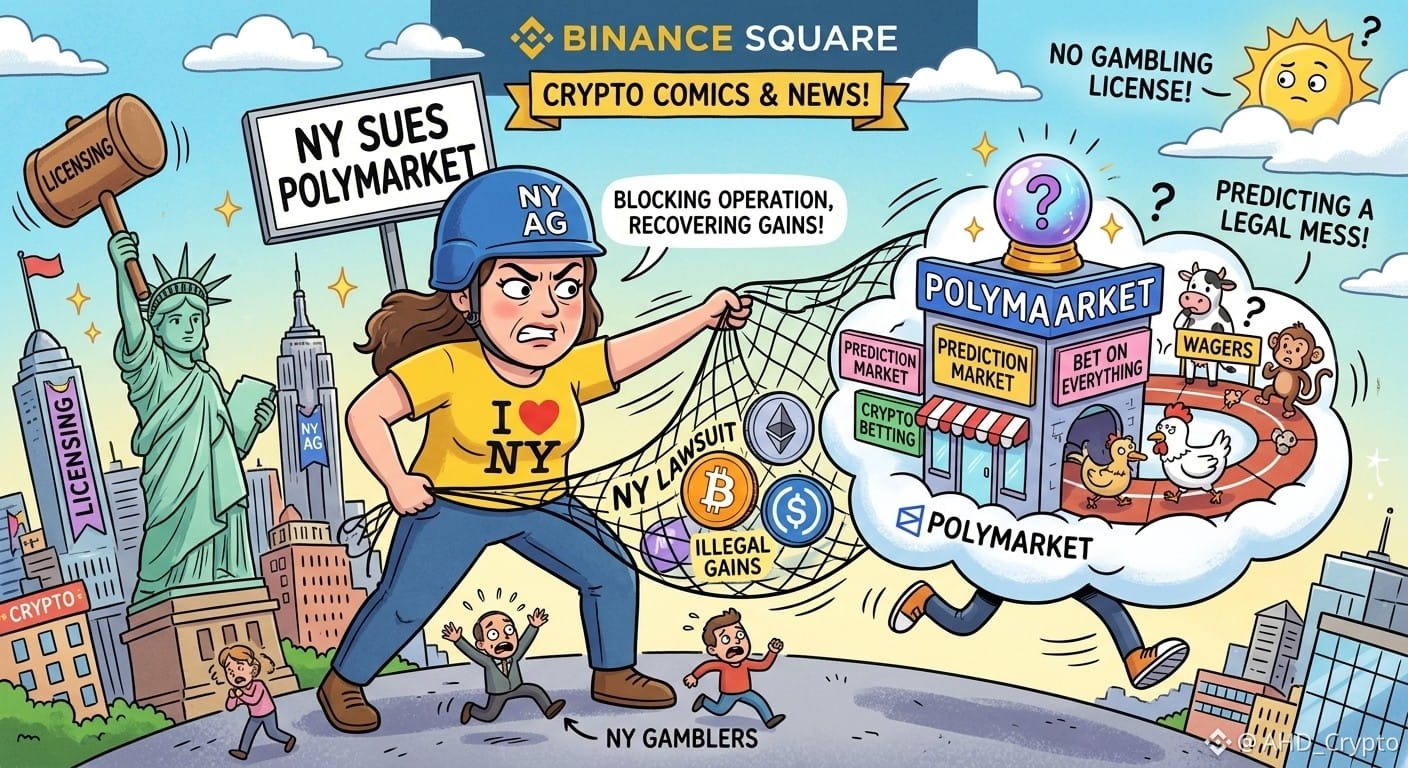
🚨 New York Sues Polymarket Over Alleged Illegal Gambling Operation!
New York has filed a lawsuit against decentralized prediction platform Polymarket. State regulators allege that the popular Web3 platform is running an unlicensed gambling operation, exposing consumers—including underage users—to unregulated risks.
📌 Key Highlights:
>> The Allegations: New York Attorney General Letitia James claims Polymarket’s event contracts constitute illegal gambling because outcomes depend on uncertain future events outside the bettor's control.
>> State Demands: Authorities are seeking a court order to halt Polymarket’s operations in New York, enforce heavy civil fines, and force the platform to forfeit all allegedly illegal gains while providing user restitution.
>> Polymarket Strikes Back: Countering the state's filing, Polymarket filed a federal lawsuit asserting that the federal CFTC (Commodity Futures Trading Commission) holds exclusive jurisdiction over prediction markets, not state regulators.
>> Market Impact: This lawsuit comes as decentralized prediction platforms face growing regulatory headwinds across multiple states, raising concerns over how decentralized finance $DEFI and prediction markets will navigate U.S. jurisdictional battles.
As legal battles intensify between federal oversight and state authority, crypto market traders are watching closely to see how prediction platforms adapt.
What do you think about state regulators targeting decentralized event platforms like Polymarket? Share your thoughts below! 👇
#writetoearn #Polymarket #CryptoNews #Web3 #Write2Earn
🚨 New York Sues Polymarket Over Alleged Illegal Gambling Operation!
New York has filed a lawsuit against decentralized prediction platform Polymarket. State regulators allege that the popular Web3 platform is running an unlicensed gambling operation, exposing consumers—including underage users—to unregulated risks.
📌 Key Highlights:
>> The Allegations: New York Attorney General Letitia James claims Polymarket’s event contracts constitute illegal gambling because outcomes depend on uncertain future events outside the bettor's control.
>> State Demands: Authorities are seeking a court order to halt Polymarket’s operations in New York, enforce heavy civil fines, and force the platform to forfeit all allegedly illegal gains while providing user restitution.
>> Polymarket Strikes Back: Countering the state's filing, Polymarket filed a federal lawsuit asserting that the federal CFTC (Commodity Futures Trading Commission) holds exclusive jurisdiction over prediction markets, not state regulators.
>> Market Impact: This lawsuit comes as decentralized prediction platforms face growing regulatory headwinds across multiple states, raising concerns over how decentralized finance $DEFI and prediction markets will navigate U.S. jurisdictional battles.
As legal battles intensify between federal oversight and state authority, crypto market traders are watching closely to see how prediction platforms adapt.
What do you think about state regulators targeting decentralized event platforms like Polymarket? Share your thoughts below! 👇
#writetoearn #Polymarket #CryptoNews #Web3 #Write2Earn
New York has filed a lawsuit against decentralized prediction platform Polymarket. State regulators allege that the popular Web3 platform is running an unlicensed gambling operation, exposing consumers—including underage users—to unregulated risks.
📌 Key Highlights:
>> The Allegations: New York Attorney General Letitia James claims Polymarket’s event contracts constitute illegal gambling because outcomes depend on uncertain future events outside the bettor's control.
>> State Demands: Authorities are seeking a court order to halt Polymarket’s operations in New York, enforce heavy civil fines, and force the platform to forfeit all allegedly illegal gains while providing user restitution.
>> Polymarket Strikes Back: Countering the state's filing, Polymarket filed a federal lawsuit asserting that the federal CFTC (Commodity Futures Trading Commission) holds exclusive jurisdiction over prediction markets, not state regulators.
>> Market Impact: This lawsuit comes as decentralized prediction platforms face growing regulatory headwinds across multiple states, raising concerns over how decentralized finance $DEFI and prediction markets will navigate U.S. jurisdictional battles.
As legal battles intensify between federal oversight and state authority, crypto market traders are watching closely to see how prediction platforms adapt.
What do you think about state regulators targeting decentralized event platforms like Polymarket? Share your thoughts below! 👇
#writetoearn #Polymarket #CryptoNews #Web3 #Write2Earn
46

·
--
Geopolitics meets DeFi. 🌐 Polymarket traders have placed over $33.5M in bets on the future of the Iran blockade. Currently, the market reflects a 74.5% probability that the U.S. will announce an end to the blockade by March 31, 2027.
This massive volume highlights how decentralized prediction markets are becoming leading indicators for real-world geopolitical sentiment.
Are these odds realistic? 👇
#Polymarket #CryptoNews #Web3
Geopolitics meets DeFi. 🌐 Polymarket traders have placed over $33.5M in bets on the future of the Iran blockade. Currently, the market reflects a 74.5% probability that the U.S. will announce an end to the blockade by March 31, 2027.
This massive volume highlights how decentralized prediction markets are becoming leading indicators for real-world geopolitical sentiment.
Are these odds realistic? 👇
#Polymarket #CryptoNews #Web3
This massive volume highlights how decentralized prediction markets are becoming leading indicators for real-world geopolitical sentiment.
Are these odds realistic? 👇
#Polymarket #CryptoNews #Web3
4


·
--
Verified
Prediction markets are becoming a bigger topic in crypto.
@polymarket is one platform often discussed in this space.
The idea is simple. People price questions about future events in sports, politics, tech, music, and world news.
Reported figures include:
• 250–500k monthly active traders
• $18B projected 2025 volume
• 17M+ monthly visits
I like comparing the news with the market price. Sometimes they match. Sometimes they don’t.
That difference can show how people see an event at that moment.
#polymarket #predictionmarket #EarningsSeason
Prediction markets are becoming a bigger topic in crypto.
@Polymarket is one platform often discussed in this space.
The idea is simple. People price questions about future events in sports, politics, tech, music, and world news.
Reported figures include:
• 250–500k monthly active traders
• $18B projected 2025 volume
• 17M+ monthly visits
I like comparing the news with the market price. Sometimes they match. Sometimes they don’t.
That difference can show how people see an event at that moment.
#polymarket #predictionmarket #EarningsSeason
@Polymarket is one platform often discussed in this space.
The idea is simple. People price questions about future events in sports, politics, tech, music, and world news.
Reported figures include:
• 250–500k monthly active traders
• $18B projected 2025 volume
• 17M+ monthly visits
I like comparing the news with the market price. Sometimes they match. Sometimes they don’t.
That difference can show how people see an event at that moment.
#polymarket #predictionmarket #EarningsSeason
NovaElen:
👀 That gap between news and crowd pricing can reveal a lot about sentiment.
30
3
27
599
🚨 POLYMARKET HIRES GOLDMAN SACHS VETERAN TO POOL WALL STREET LIQUIDITY INTO $ETH ECOSYSTEM! 🦈
Prediction market powerhouse Polymarket just snagged a 30-year Goldman Sachs partner to spearhead institutional growth. 🦈 This signals a massive structural shift as smart money prepares to bridge traditional finance capital straight into decentralized order books. 📊
The institutional playbook is executing in real time, turning prediction markets from retail speculation into heavy-weight Wall Street liquidity hubs. 💡 Expect smart money flows to sharpen volume across the entire sector as traditional desks take their positions. 🌊
💬 Will institutional order flow make prediction markets crypto's biggest breakthrough narrative this year? 👇
⚠️ Not financial advice. Always manage your risk. 🛡️
🏷️ #ETH #Polymarket #CryptoNews #WallStreet #Institutional
🦈 ⚡
🚨 POLYMARKET HIRES GOLDMAN SACHS VETERAN TO POOL WALL STREET LIQUIDITY INTO $ETH ECOSYSTEM! 🦈
Prediction market powerhouse Polymarket just snagged a 30-year Goldman Sachs partner to spearhead institutional growth. 🦈 This signals a massive structural shift as smart money prepares to bridge traditional finance capital straight into decentralized order books. 📊
The institutional playbook is executing in real time, turning prediction markets from retail speculation into heavy-weight Wall Street liquidity hubs. 💡 Expect smart money flows to sharpen volume across the entire sector as traditional desks take their positions. 🌊
💬 Will institutional order flow make prediction markets crypto's biggest breakthrough narrative this year? 👇
⚠️ Not financial advice. Always manage your risk. 🛡️
🏷️ #ETH #Polymarket #CryptoNews #WallStreet #Institutional
🦈 ⚡
Prediction market powerhouse Polymarket just snagged a 30-year Goldman Sachs partner to spearhead institutional growth. 🦈 This signals a massive structural shift as smart money prepares to bridge traditional finance capital straight into decentralized order books. 📊
The institutional playbook is executing in real time, turning prediction markets from retail speculation into heavy-weight Wall Street liquidity hubs. 💡 Expect smart money flows to sharpen volume across the entire sector as traditional desks take their positions. 🌊
💬 Will institutional order flow make prediction markets crypto's biggest breakthrough narrative this year? 👇
⚠️ Not financial advice. Always manage your risk. 🛡️
🏷️ #ETH #Polymarket #CryptoNews #WallStreet #Institutional
🦈 ⚡
18

·
--
🦈 POLYMARKET HIRES GOLDMAN SACHS PARTNER TO HUNT WALL STREET INSTITUTIONAL LIQUIDITY FOR $ETH ⚡
When prediction market architecture starts onboarding three-decade Goldman Sachs partners like Lisa Mantil, the smart money trajectory becomes crystal clear. 🌊 Institutional venues are no longer just observing decentralized order flow; they are actively building capital pipelines to siphon traditional Wall Street liquidity into on-chain settlement layers.
Mantil's background managing ETF acceleration signals a deliberate push to structure institution-grade financial products around real-world outcome markets. 📊 As capital efficiency and deep order books take priority, this institutional bridge will redefine how smart money hedges macro risk on-chain. 💬 Do you expect institutional order flow to permanently migrate to decentralized prediction markets this cycle? 👇
⚠️ Not financial advice. Always manage your risk. 🛡️
🏷️ #ETH #Polymarket #Institutional #SmartMoney #Crypto
🎯 🦈
🦈 POLYMARKET HIRES GOLDMAN SACHS PARTNER TO HUNT WALL STREET INSTITUTIONAL LIQUIDITY FOR $ETH ⚡
When prediction market architecture starts onboarding three-decade Goldman Sachs partners like Lisa Mantil, the smart money trajectory becomes crystal clear. 🌊 Institutional venues are no longer just observing decentralized order flow; they are actively building capital pipelines to siphon traditional Wall Street liquidity into on-chain settlement layers.
Mantil's background managing ETF acceleration signals a deliberate push to structure institution-grade financial products around real-world outcome markets. 📊 As capital efficiency and deep order books take priority, this institutional bridge will redefine how smart money hedges macro risk on-chain. 💬 Do you expect institutional order flow to permanently migrate to decentralized prediction markets this cycle? 👇
⚠️ Not financial advice. Always manage your risk. 🛡️
🏷️ #ETH #Polymarket #Institutional #SmartMoney #Crypto
🎯 🦈
When prediction market architecture starts onboarding three-decade Goldman Sachs partners like Lisa Mantil, the smart money trajectory becomes crystal clear. 🌊 Institutional venues are no longer just observing decentralized order flow; they are actively building capital pipelines to siphon traditional Wall Street liquidity into on-chain settlement layers.
Mantil's background managing ETF acceleration signals a deliberate push to structure institution-grade financial products around real-world outcome markets. 📊 As capital efficiency and deep order books take priority, this institutional bridge will redefine how smart money hedges macro risk on-chain. 💬 Do you expect institutional order flow to permanently migrate to decentralized prediction markets this cycle? 👇
⚠️ Not financial advice. Always manage your risk. 🛡️
🏷️ #ETH #Polymarket #Institutional #SmartMoney #Crypto
🎯 🦈
13

·
--
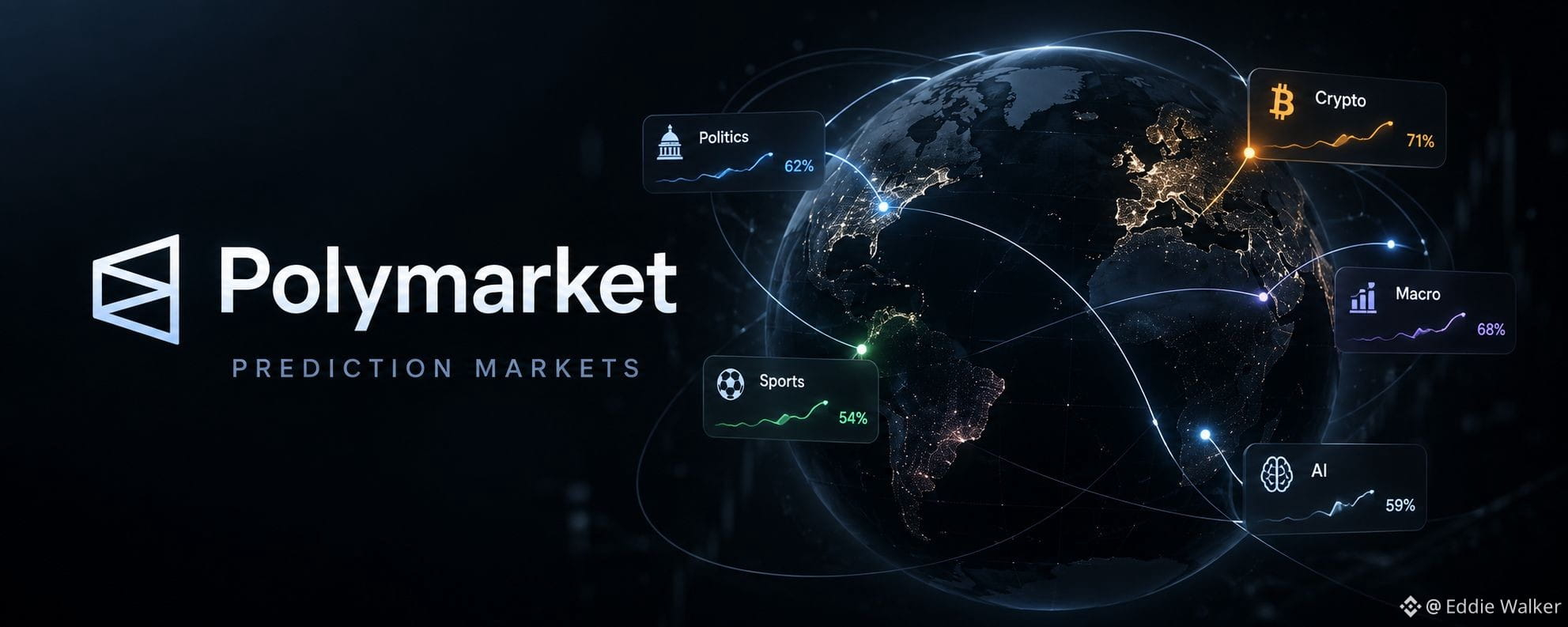
@polymarket makes real world events feel completely different.
Politics, crypto, sports, macro, AI everything becomes a live market where probabilities keep changing as new information comes in.
→ One headline can shift the odds
→ One update can flip sentiment
→ One surprise can change the whole market
That’s what keeps Polymarket interesting for me.
You’re not just reading what people think. You’re watching expectations move in real time.
And sometimes, the market reacts before the story is even finished.
#Polymarket #QNTFallsOver40%FromMorningHigh
@Polymarket makes real world events feel completely different.
Politics, crypto, sports, macro, AI everything becomes a live market where probabilities keep changing as new information comes in.
→ One headline can shift the odds
→ One update can flip sentiment
→ One surprise can change the whole market
That’s what keeps Polymarket interesting for me.
You’re not just reading what people think. You’re watching expectations move in real time.
And sometimes, the market reacts before the story is even finished.
#Polymarket #QNTFallsOver40%FromMorningHigh
Politics, crypto, sports, macro, AI everything becomes a live market where probabilities keep changing as new information comes in.
→ One headline can shift the odds
→ One update can flip sentiment
→ One surprise can change the whole market
That’s what keeps Polymarket interesting for me.
You’re not just reading what people think. You’re watching expectations move in real time.
And sometimes, the market reacts before the story is even finished.
#Polymarket #QNTFallsOver40%FromMorningHigh
Leo_Carter:
The live probabilities make everything feel more real
22
16
8.6k

·
--
🚨 BREAKING: POLYMARKET LAUNCHES 15-MINUTE BTC MARKETS
Polymarket has launched 15-minute Bitcoin “Up or Down” markets on its U.S. app, allowing users to speculate on BTC’s direction over extremely short timeframes.
The new markets bring faster prediction cycles to crypto, with outcomes tied to Bitcoin’s price movement during each 15-minute window. This could add another layer of real-time market activity as traders closely watch volatility and momentum.
With Bitcoin moving rapidly, these short-duration markets are likely to put even more focus on immediate price action and market sentiment.
$BTC #Bitcoin #Polymarket #Crypto
🚨 BREAKING: POLYMARKET LAUNCHES 15-MINUTE BTC MARKETS
Polymarket has launched 15-minute Bitcoin “Up or Down” markets on its U.S. app, allowing users to speculate on BTC’s direction over extremely short timeframes.
The new markets bring faster prediction cycles to crypto, with outcomes tied to Bitcoin’s price movement during each 15-minute window. This could add another layer of real-time market activity as traders closely watch volatility and momentum.
With Bitcoin moving rapidly, these short-duration markets are likely to put even more focus on immediate price action and market sentiment.
$BTC #Bitcoin #Polymarket #Crypto
Polymarket has launched 15-minute Bitcoin “Up or Down” markets on its U.S. app, allowing users to speculate on BTC’s direction over extremely short timeframes.
The new markets bring faster prediction cycles to crypto, with outcomes tied to Bitcoin’s price movement during each 15-minute window. This could add another layer of real-time market activity as traders closely watch volatility and momentum.
With Bitcoin moving rapidly, these short-duration markets are likely to put even more focus on immediate price action and market sentiment.
$BTC #Bitcoin #Polymarket #Crypto

1
80

·
--
Bullish
Partly True
Polymarket — trade the events shaping the world, not just the charts.
Prediction markets turn real-world information into tradable outcomes.
Polymarket covers crypto, AI, economics, geopolitics, sports, music, and other major narratives, with markets reflecting changing probabilities.
Getting started is simple.
Connect a supported wallet, fund your account through available payment options, find a market you understand, and trade where you believe the probability is mispriced.
That creates a different kind of edge.
While tokens like $HYPE , $PENGU , $ENA , and AAVE capture different crypto narratives, Polymarket gives users another way to trade their knowledge around actual events and outcomes.
The campaign figures point to 250K–500K monthly active traders, a projected $18B in 2025 trading volume, and 17M+ monthly visits.
For everyday users, that means expertise in a specific niche can become actionable market information.
Polymarket is making trading less about simply following narratives—and more about understanding how they unfold.
Only information not financial advice
#Polymarket #PredictionMarkets #Crypto
Polymarket — trade the events shaping the world, not just the charts.
Prediction markets turn real-world information into tradable outcomes.
Polymarket covers crypto, AI, economics, geopolitics, sports, music, and other major narratives, with markets reflecting changing probabilities.
Getting started is simple.
Connect a supported wallet, fund your account through available payment options, find a market you understand, and trade where you believe the probability is mispriced.
That creates a different kind of edge.
While tokens like $HYPE , $PENGU , $ENA , and AAVE capture different crypto narratives, Polymarket gives users another way to trade their knowledge around actual events and outcomes.
The campaign figures point to 250K–500K monthly active traders, a projected $18B in 2025 trading volume, and 17M+ monthly visits.
For everyday users, that means expertise in a specific niche can become actionable market information.
Polymarket is making trading less about simply following narratives—and more about understanding how they unfold.
Only information not financial advice
#Polymarket #PredictionMarkets #Crypto
Prediction markets turn real-world information into tradable outcomes.
Polymarket covers crypto, AI, economics, geopolitics, sports, music, and other major narratives, with markets reflecting changing probabilities.
Getting started is simple.
Connect a supported wallet, fund your account through available payment options, find a market you understand, and trade where you believe the probability is mispriced.
That creates a different kind of edge.
While tokens like $HYPE , $PENGU , $ENA , and AAVE capture different crypto narratives, Polymarket gives users another way to trade their knowledge around actual events and outcomes.
The campaign figures point to 250K–500K monthly active traders, a projected $18B in 2025 trading volume, and 17M+ monthly visits.
For everyday users, that means expertise in a specific niche can become actionable market information.
Polymarket is making trading less about simply following narratives—and more about understanding how they unfold.
Only information not financial advice
#Polymarket #PredictionMarkets #Crypto
omar Rashid:
Niche knowledge becoming tradable is a pretty interesting concept.
26
41
15.5k

·
--
Bearish
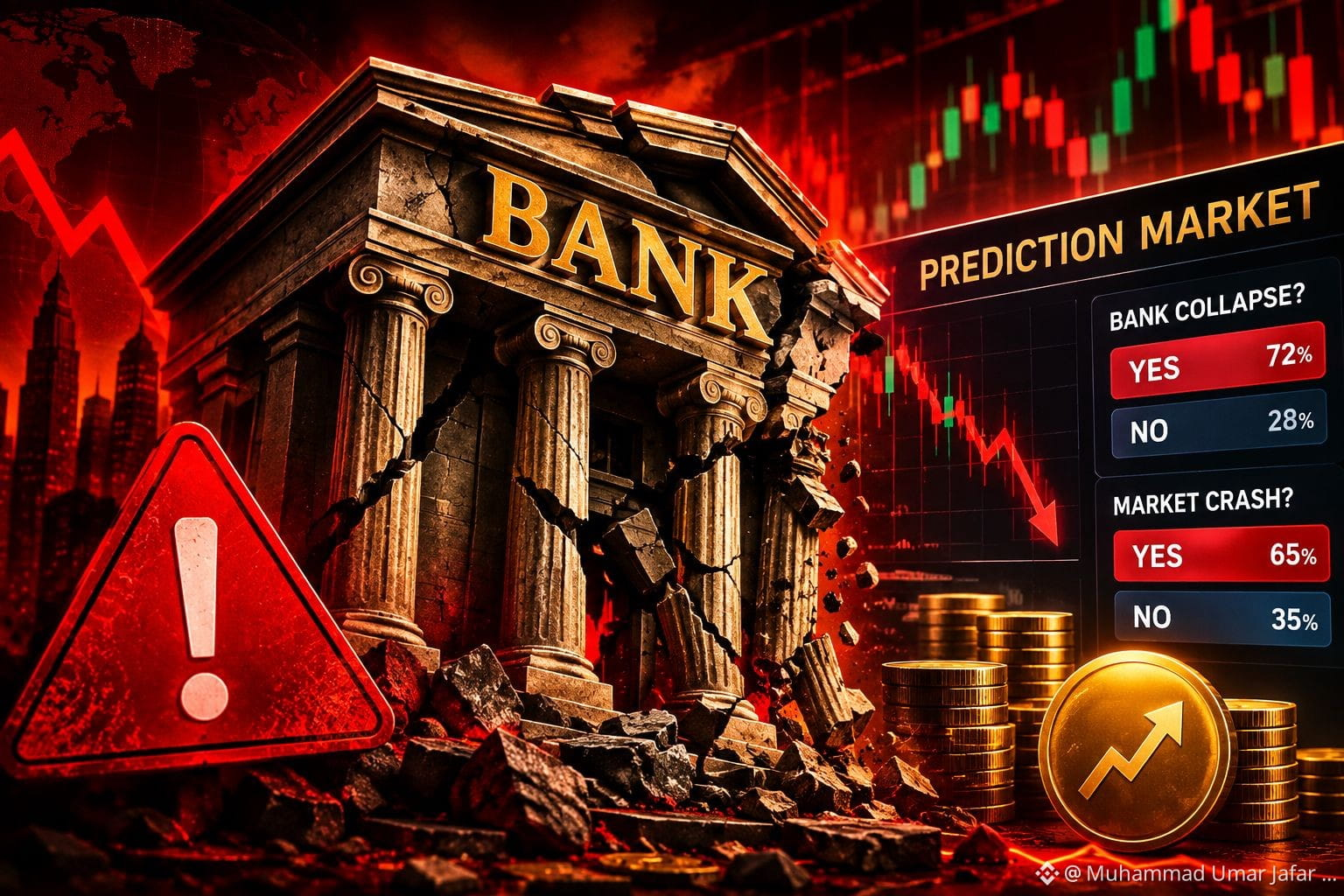
@Binance_Announcement Prediction markets betting on bank failures are drawing FDIC attention. 🏦 When traders start pricing in real-world financial risk on platforms like Polymarket, it's worth asking — is this healthy market signaling, or a red flag being ignored? #Polymarket #CryptoNews
@Binance Announcement Prediction markets betting on bank failures are drawing FDIC attention. 🏦 When traders start pricing in real-world financial risk on platforms like Polymarket, it's worth asking — is this healthy market signaling, or a red flag being ignored? #Polymarket #CryptoNews
58

·
--
Bullish
Partly True
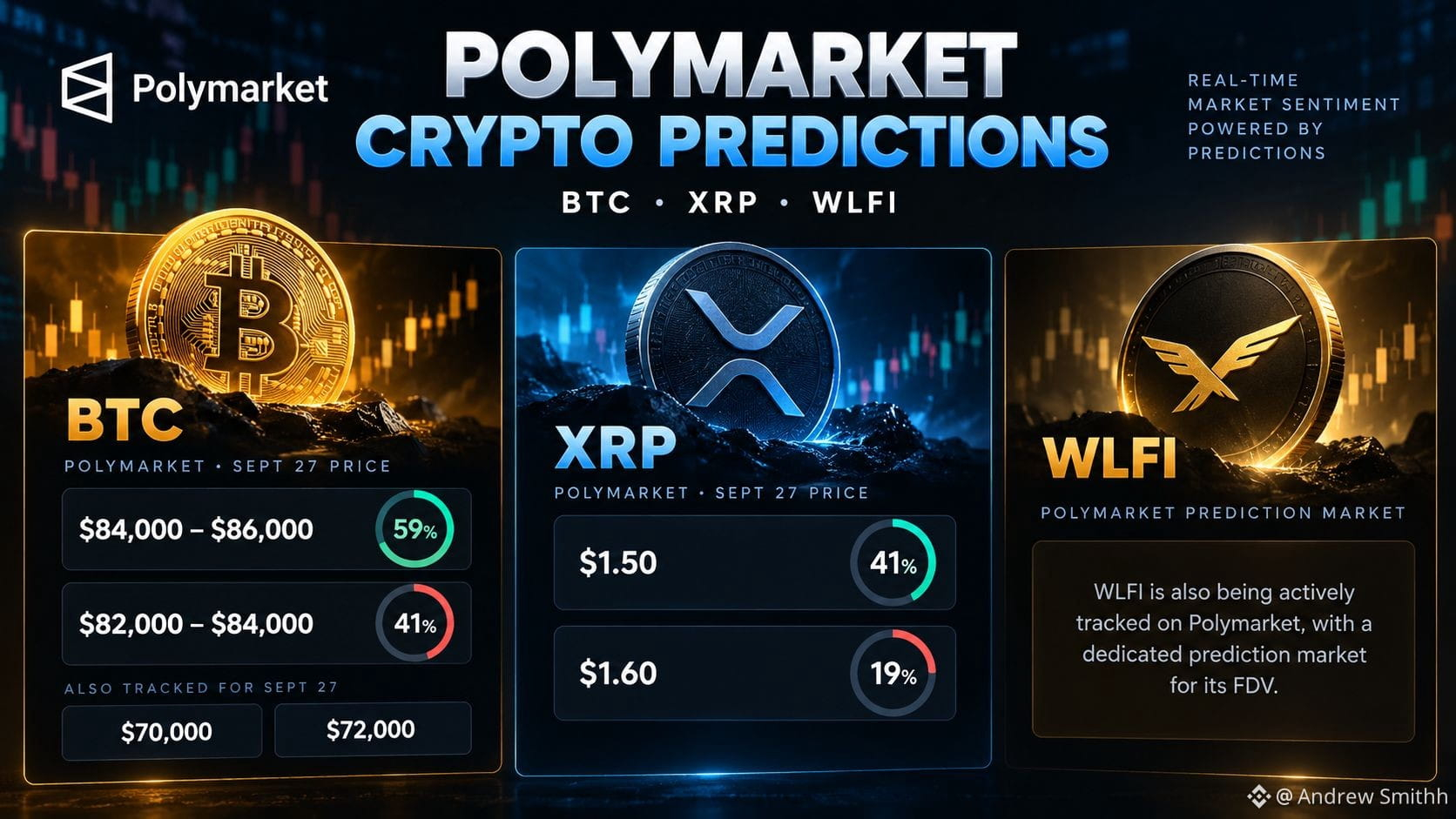
Polymarket is giving a real-time snapshot of crypto market expectations 👀
$BTC : The Sept. 27 market currently puts the $84K–$86K range at 59%, with $82K–$84K at 41%.
$XRP : The market is pricing a 41% probability around $1.50 and 19% around $1.60 for Sept. 27
.
$WLFI I: Polymarket is also tracking WLFI through dedicated FDV prediction markets, showing how closely traders are watching its valuation.
The key takeaway: prediction markets aren’t guarantees they’re live signals of where traders are putting their money and attention.
Watch the odds. Watch the volume. Then watch what actually happens. 📊
@polymarket #Polymarket #Trading #Binance
Polymarket is giving a real-time snapshot of crypto market expectations 👀
$BTC : The Sept. 27 market currently puts the $84K–$86K range at 59%, with $82K–$84K at 41%.
$XRP : The market is pricing a 41% probability around $1.50 and 19% around $1.60 for Sept. 27
.
$WLFI I: Polymarket is also tracking WLFI through dedicated FDV prediction markets, showing how closely traders are watching its valuation.
The key takeaway: prediction markets aren’t guarantees they’re live signals of where traders are putting their money and attention.
Watch the odds. Watch the volume. Then watch what actually happens. 📊
@Polymarket #Polymarket #Trading #Binance
$BTC : The Sept. 27 market currently puts the $84K–$86K range at 59%, with $82K–$84K at 41%.
$XRP : The market is pricing a 41% probability around $1.50 and 19% around $1.60 for Sept. 27
.
$WLFI I: Polymarket is also tracking WLFI through dedicated FDV prediction markets, showing how closely traders are watching its valuation.
The key takeaway: prediction markets aren’t guarantees they’re live signals of where traders are putting their money and attention.
Watch the odds. Watch the volume. Then watch what actually happens. 📊
@Polymarket #Polymarket #Trading #Binance
Maha BNB:
Prediction markets are useful for tracking how trader expectations shift in real time.
5
6
643

Article
Polymarket Bank Failure Bets Draw FDIC Attention🚨 Polymarket's bank failure bets are drawing FDIC attention. 🏦👀
Contracts tied to possible failures of JPMorgan, Wells Fargo and Bank of America have raised concerns among US banking officials.
Reported volume remains relatively small:
💰 ~$76K in recent contracts
📊 Earlier contracts reportedly reached ~$591K
So why the concern?
The potential feedback loop:
Prediction → Public attention → Depositor reaction → More pressure on a bank
But there's an important distinction:
⚠️ These contracts are bets, not evidence that any named bank is failing.
The bigger debate is about whether prediction markets simply reflect expectations or can influence the events they're measuring.
For crypto traders, this is another example of prediction markets becoming part of the broader financial information landscape.
👀 Can prediction markets reveal financial stress early, or could they amplify fear during a real crisis?
$KMNO $2Z $MARSCOIN
#Polymarket
{future}(MARSCOINUSDT)
{future}(KMNOUSDT)
{future}(2ZUSDT)
#FDIC #Banking #Crypto #PredictionMarkets
Polymarket Bank Failure Bets Draw FDIC Attention
🚨 Polymarket's bank failure bets are drawing FDIC attention. 🏦👀
Contracts tied to possible failures of JPMorgan, Wells Fargo and Bank of America have raised concerns among US banking officials.
Reported volume remains relatively small:
💰 ~$76K in recent contracts
📊 Earlier contracts reportedly reached ~$591K
So why the concern?
The potential feedback loop:
Prediction → Public attention → Depositor reaction → More pressure on a bank
But there's an important distinction:
⚠️ These contracts are bets, not evidence that any named bank is failing.
The bigger debate is about whether prediction markets simply reflect expectations or can influence the events they're measuring.
For crypto traders, this is another example of prediction markets becoming part of the broader financial information landscape.
👀 Can prediction markets reveal financial stress early, or could they amplify fear during a real crisis?
$KMNO $2Z $MARSCOIN
#Polymarket
#FDIC #Banking #Crypto #PredictionMarkets
Contracts tied to possible failures of JPMorgan, Wells Fargo and Bank of America have raised concerns among US banking officials.
Reported volume remains relatively small:
💰 ~$76K in recent contracts
📊 Earlier contracts reportedly reached ~$591K
So why the concern?
The potential feedback loop:
Prediction → Public attention → Depositor reaction → More pressure on a bank
But there's an important distinction:
⚠️ These contracts are bets, not evidence that any named bank is failing.
The bigger debate is about whether prediction markets simply reflect expectations or can influence the events they're measuring.
For crypto traders, this is another example of prediction markets becoming part of the broader financial information landscape.
👀 Can prediction markets reveal financial stress early, or could they amplify fear during a real crisis?
$KMNO $2Z $MARSCOIN
#Polymarket
#FDIC #Banking #Crypto #PredictionMarkets
414

@polymarket IS ENTERING A BIG NEW PHASE
#Polymarket is getting more interesting to watch, not only because prediction markets are growing, but because regulation is becoming the real battle.
New York authorities and Polymarket have now filed lawsuits against each other over whether prediction markets should fall under state gambling laws or federal commodities regulation. Polymarket’s position is that these markets should primarily be overseen at the federal level.
At the same time, the company is pushing for expansion in Europe and the UK, arguing that prediction contracts should be treated more like financial products instead of traditional gambling.
We’re also seeing Polymarket expand its product side. This month it launched a dedicated 2026 Midterms Hub, appointed Warren Jenson as CFO, and introduced “Squads,” a social feature for prediction-market users.
My view: Polymarket is moving beyond being just a crypto prediction platform. The bigger question now is whether regulation can keep pace with its expansion.
This is definitely one project I’m watching closely.
$BULLA
$NIL
$QNT
{future}(QNTUSDT)
{future}(NILUSDT)
{future}(BULLAUSDT)
@Polymarket IS ENTERING A BIG NEW PHASE
#Polymarket is getting more interesting to watch, not only because prediction markets are growing, but because regulation is becoming the real battle.
New York authorities and Polymarket have now filed lawsuits against each other over whether prediction markets should fall under state gambling laws or federal commodities regulation. Polymarket’s position is that these markets should primarily be overseen at the federal level.
At the same time, the company is pushing for expansion in Europe and the UK, arguing that prediction contracts should be treated more like financial products instead of traditional gambling.
We’re also seeing Polymarket expand its product side. This month it launched a dedicated 2026 Midterms Hub, appointed Warren Jenson as CFO, and introduced “Squads,” a social feature for prediction-market users.
My view: Polymarket is moving beyond being just a crypto prediction platform. The bigger question now is whether regulation can keep pace with its expansion.
This is definitely one project I’m watching closely.
$BULLA
$NIL
$QNT
#Polymarket is getting more interesting to watch, not only because prediction markets are growing, but because regulation is becoming the real battle.
New York authorities and Polymarket have now filed lawsuits against each other over whether prediction markets should fall under state gambling laws or federal commodities regulation. Polymarket’s position is that these markets should primarily be overseen at the federal level.
At the same time, the company is pushing for expansion in Europe and the UK, arguing that prediction contracts should be treated more like financial products instead of traditional gambling.
We’re also seeing Polymarket expand its product side. This month it launched a dedicated 2026 Midterms Hub, appointed Warren Jenson as CFO, and introduced “Squads,” a social feature for prediction-market users.
My view: Polymarket is moving beyond being just a crypto prediction platform. The bigger question now is whether regulation can keep pace with its expansion.
This is definitely one project I’m watching closely.
$BULLA
$NIL
$QNT
2
634

·
--
Bullish
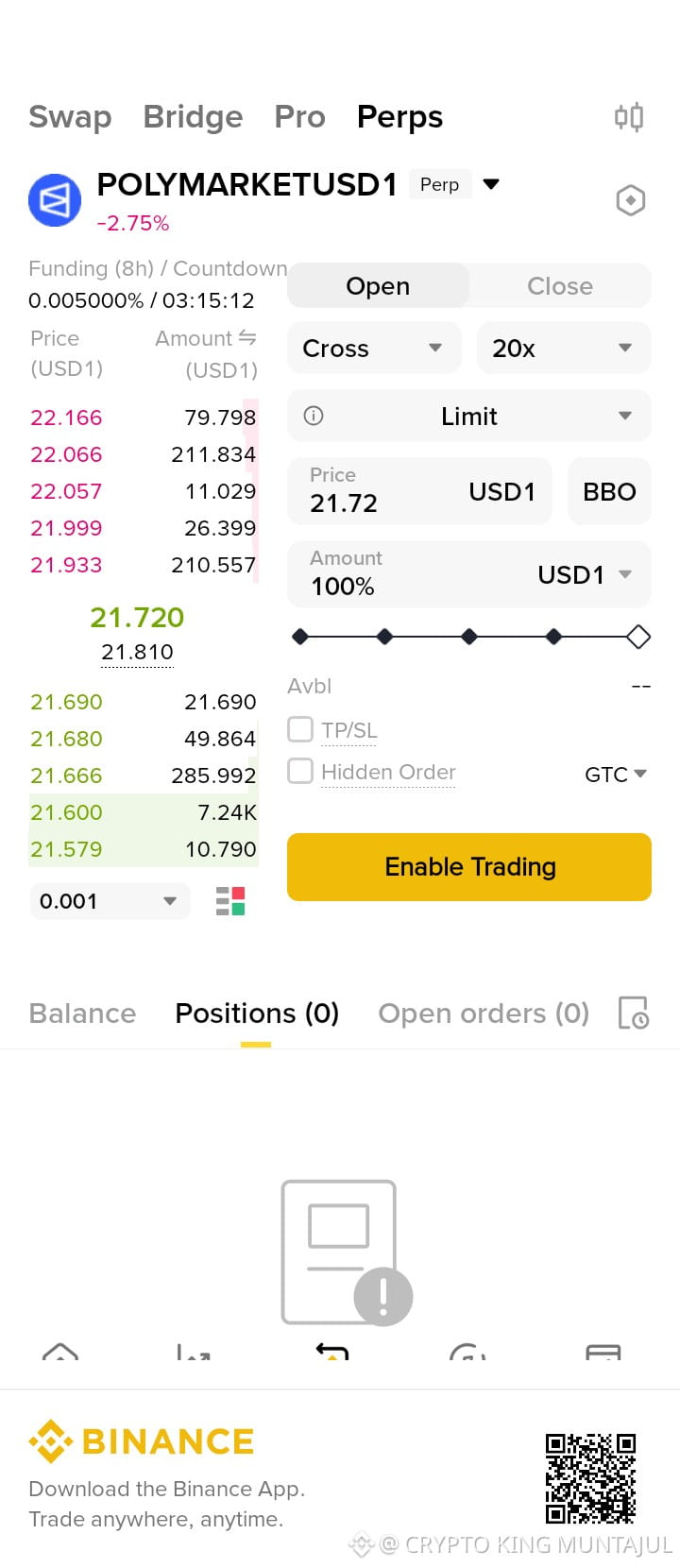
🔥 **$POLYMARKETUSD1 Perpetual Futures Analysis & Trading Setup!** 📊
Looking at the **POLYMARKETUSD1** Perpetual contract, price action is currently showing a slight pullback, trading around **21.72 USD1** with a **-2.75%** decline on the day.
### 📉 **Key Market Data:**
* **Current Price:** 21.720
* **Funding Rate (8h):** +0.005000% (Countdown: 03:15:12)
* **24h Trend:** Short-term correction after hitting recent intraday highs.
* **Leverage Available:** Up to **20x Cross/Isolated**.
💡 **Trading Strategy & Insight:**
* **Support Zone:** Watch for potential reactions near the **21.50 - 21.60** range where buy liquidity is building up.
* **Resistance Level:** A breakout above **22.10 - 22.20** could trigger bullish momentum toward higher levels.
* ⚠️ **Risk Management:** Always use proper Stop-Loss (TP/SL) and risk management strategies when trading futures contracts with high leverage!
Are you bullish or bearish on **POLYMARKETUSD1**? Drop your thoughts below! 👇$SOL
{future}(SOLUSDT)
$USD1
{spot}(USD1USDT)
$JELLYJELLY
{future}(JELLYJELLYUSDT)
#Binance #cryptotrading #PerpetualFutures #Polymarket #Write2Earn #BinanceSquare #CryptoMarketAnalysis
🔥 **$POLYMARKETUSD1 Perpetual Futures Analysis & Trading Setup!** 📊
Looking at the **POLYMARKETUSD1** Perpetual contract, price action is currently showing a slight pullback, trading around **21.72 USD1** with a **-2.75%** decline on the day.
### 📉 **Key Market Data:**
* **Current Price:** 21.720
* **Funding Rate (8h):** +0.005000% (Countdown: 03:15:12)
* **24h Trend:** Short-term correction after hitting recent intraday highs.
* **Leverage Available:** Up to **20x Cross/Isolated**.
💡 **Trading Strategy & Insight:**
* **Support Zone:** Watch for potential reactions near the **21.50 - 21.60** range where buy liquidity is building up.
* **Resistance Level:** A breakout above **22.10 - 22.20** could trigger bullish momentum toward higher levels.
* ⚠️ **Risk Management:** Always use proper Stop-Loss (TP/SL) and risk management strategies when trading futures contracts with high leverage!
Are you bullish or bearish on **POLYMARKETUSD1**? Drop your thoughts below! 👇$SOL
$USD1
$JELLYJELLY
#Binance #cryptotrading #PerpetualFutures #Polymarket #Write2Earn #BinanceSquare #CryptoMarketAnalysis
Looking at the **POLYMARKETUSD1** Perpetual contract, price action is currently showing a slight pullback, trading around **21.72 USD1** with a **-2.75%** decline on the day.
### 📉 **Key Market Data:**
* **Current Price:** 21.720
* **Funding Rate (8h):** +0.005000% (Countdown: 03:15:12)
* **24h Trend:** Short-term correction after hitting recent intraday highs.
* **Leverage Available:** Up to **20x Cross/Isolated**.
💡 **Trading Strategy & Insight:**
* **Support Zone:** Watch for potential reactions near the **21.50 - 21.60** range where buy liquidity is building up.
* **Resistance Level:** A breakout above **22.10 - 22.20** could trigger bullish momentum toward higher levels.
* ⚠️ **Risk Management:** Always use proper Stop-Loss (TP/SL) and risk management strategies when trading futures contracts with high leverage!
Are you bullish or bearish on **POLYMARKETUSD1**? Drop your thoughts below! 👇$SOL
$USD1
$JELLYJELLY
#Binance #cryptotrading #PerpetualFutures #Polymarket #Write2Earn #BinanceSquare #CryptoMarketAnalysis
2
677
·
--
Bullish
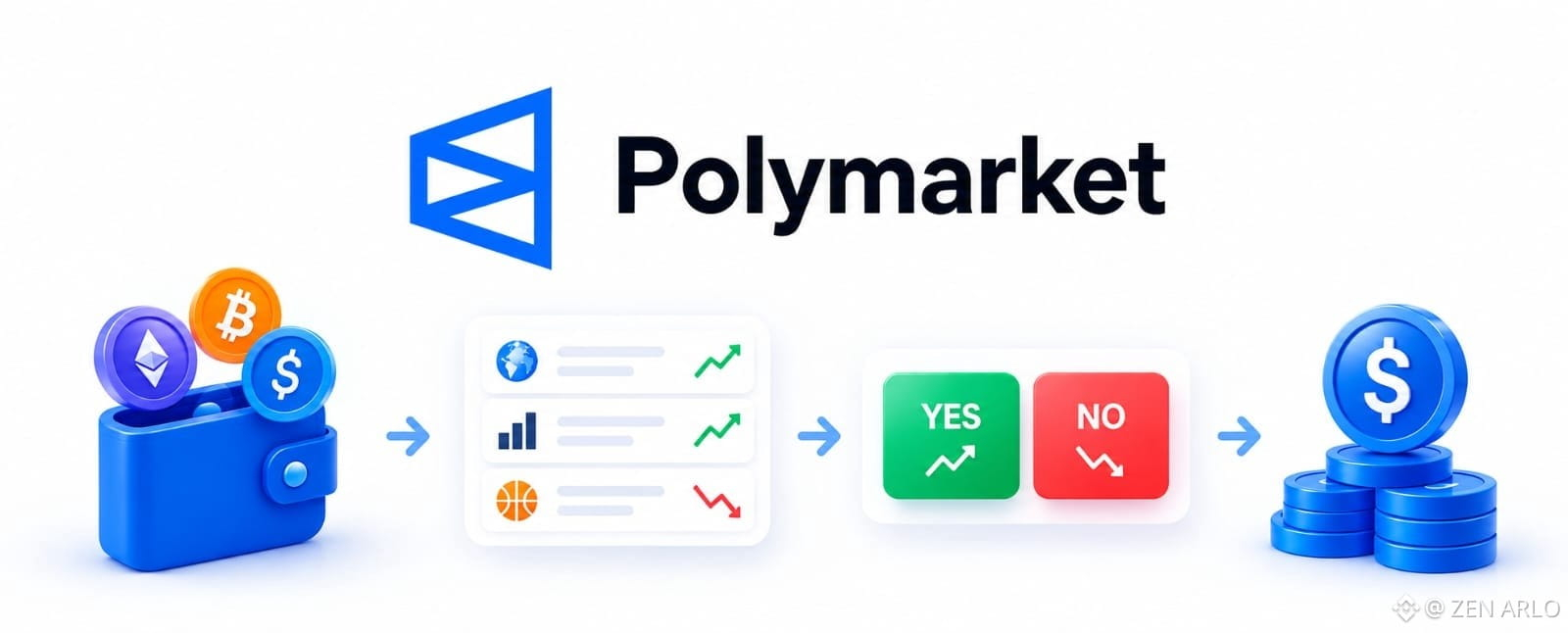
Polymarket turns predictions into tradable positions.
Crypto, sports, geopolitics, economics, AI or culture—pick a market where you understand the narrative and trade the outcome you believe is being mispriced.
The mechanics are simple.
If YES trades at $0.40, the market is implying roughly a 40% probability. Believe the real odds are higher? Buy YES. Disagree? Trade the opposite outcome.
As new information arrives, probabilities and prices move. Traders can adjust or sell positions before resolution instead of simply waiting for the final result.
That makes Polymarket different from simply holding tokens like $PENGU , $DOOD , $MASK or $ARB. The focus here is trading your view on real-world events rather than relying only on a token’s price direction.
Your niche knowledge becomes the edge: understand the event, read the probabilities, and trade where your prediction differs from the market.
Predict it. Price it. Trade it.
Only information not financial advice
#Polymarket #PredictionMarkets #CryptoTrading
Polymarket turns predictions into tradable positions.
Crypto, sports, geopolitics, economics, AI or culture—pick a market where you understand the narrative and trade the outcome you believe is being mispriced.
The mechanics are simple.
If YES trades at $0.40, the market is implying roughly a 40% probability. Believe the real odds are higher? Buy YES. Disagree? Trade the opposite outcome.
As new information arrives, probabilities and prices move. Traders can adjust or sell positions before resolution instead of simply waiting for the final result.
That makes Polymarket different from simply holding tokens like $PENGU , $DOOD , $MASK or $ARB. The focus here is trading your view on real-world events rather than relying only on a token’s price direction.
Your niche knowledge becomes the edge: understand the event, read the probabilities, and trade where your prediction differs from the market.
Predict it. Price it. Trade it.
Only information not financial advice
#Polymarket #PredictionMarkets #CryptoTrading
Crypto, sports, geopolitics, economics, AI or culture—pick a market where you understand the narrative and trade the outcome you believe is being mispriced.
The mechanics are simple.
If YES trades at $0.40, the market is implying roughly a 40% probability. Believe the real odds are higher? Buy YES. Disagree? Trade the opposite outcome.
As new information arrives, probabilities and prices move. Traders can adjust or sell positions before resolution instead of simply waiting for the final result.
That makes Polymarket different from simply holding tokens like $PENGU , $DOOD , $MASK or $ARB. The focus here is trading your view on real-world events rather than relying only on a token’s price direction.
Your niche knowledge becomes the edge: understand the event, read the probabilities, and trade where your prediction differs from the market.
Predict it. Price it. Trade it.
Only information not financial advice
#Polymarket #PredictionMarkets #CryptoTrading
Bianca Sofia:
Polymarket makes information itself tradable.
61
32
10.4k

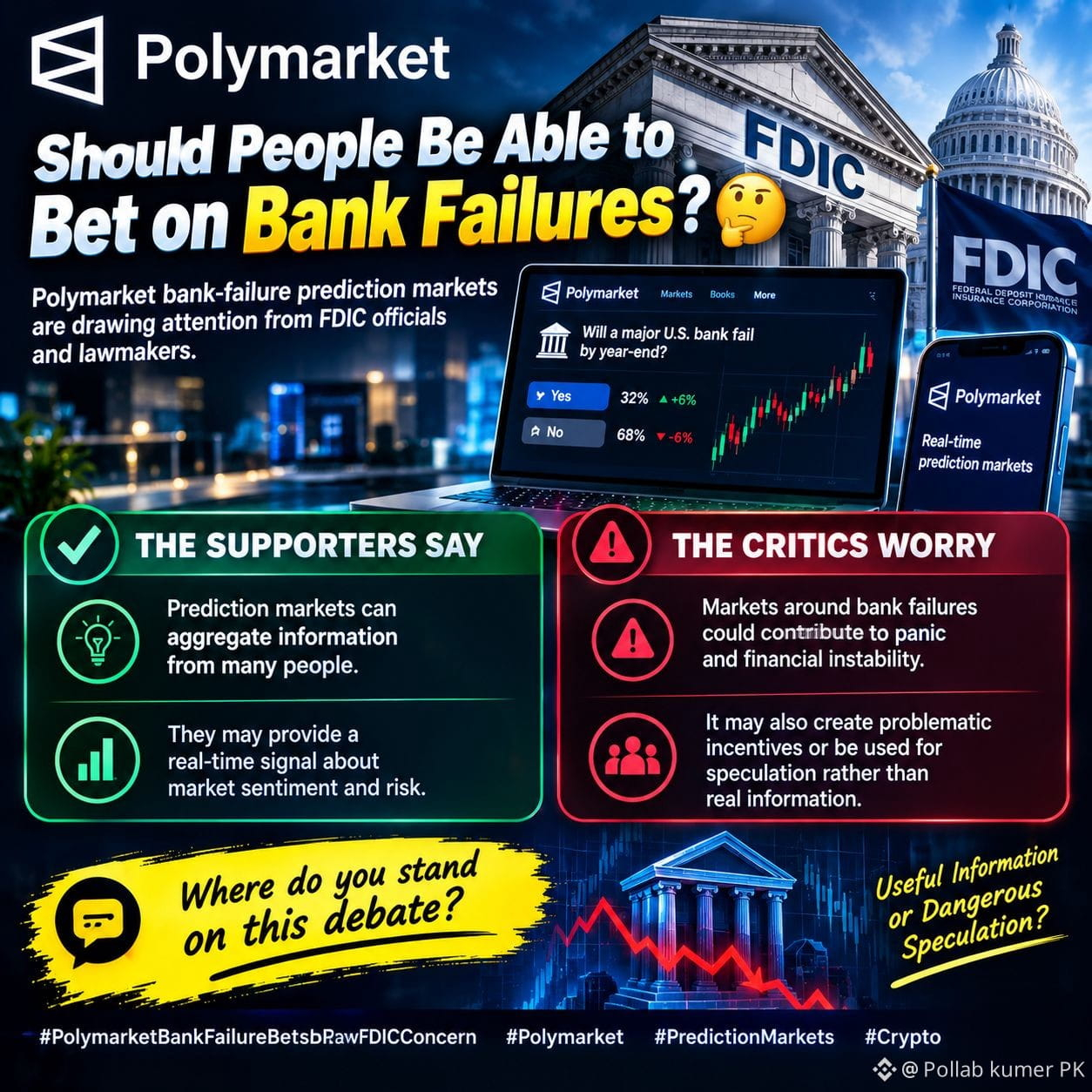
Should People Be Able to Bet on Bank Failures? 🤔
Polymarket bank-failure prediction markets are drawing attention from FDIC officials and lawmakers.
Supporters argue that prediction markets can aggregate information and provide a real-time signal.
Critics worry that markets around bank failures could contribute to panic or create problematic incentives.
Where do you stand on this debate?
#PolymarketBankFailureBetsDrawFDICConcern #Polymarket #PredictionMarkets #crypto
Should People Be Able to Bet on Bank Failures? 🤔
Polymarket bank-failure prediction markets are drawing attention from FDIC officials and lawmakers.
Supporters argue that prediction markets can aggregate information and provide a real-time signal.
Critics worry that markets around bank failures could contribute to panic or create problematic incentives.
Where do you stand on this debate?
#PolymarketBankFailureBetsDrawFDICConcern #Polymarket #PredictionMarkets #crypto
Polymarket bank-failure prediction markets are drawing attention from FDIC officials and lawmakers.
Supporters argue that prediction markets can aggregate information and provide a real-time signal.
Critics worry that markets around bank failures could contribute to panic or create problematic incentives.
Where do you stand on this debate?
#PolymarketBankFailureBetsDrawFDICConcern #Polymarket #PredictionMarkets #crypto
41

·
--
📰 Market predictions and meme coins may look like two different arenas, but in reality they both test the same thing: whether you can find truly useful trading signals from a pile of noise.
PolymarketScan’s approach is straightforward. First, it screens markets using criteria such as trading volume, liquidity, changes in probability, deadlines, and recent activity—flagging contracts that suddenly moved, show unusual trading, or are close to settlement. Then you decide whether it’s worth digging deeper.
🔥 But seeing a big whale enter doesn’t necessarily mean they have better information. A safer approach is to keep checking which markets that wallet has traded in the past, how it performed in similar events, and whether this position is part of a longer-term strategy.
In fact, reviewing watchlists is easier than ad hoc tracking. PolymarketScan currently has more than 290 public watchlists. You can also organize your own: find active wallets, review their history and participation in markets, and then assess whether their activity helps your research.
💡 Don’t skip already-settled markets, either. Past probability changes, the timing of major price swings, trading volume before settlement, and the gap between early judgment and the final outcome are all useful for post-mortems. The platform’s research features and AI tools can also search historical markets by keywords, with 30 free questions.
To be honest, tools can only help you narrow the field—they can’t make the call for you. Will you start by watching whale wallets, or will you look for patterns from settled markets?
#预测市场 #Polymarket #链上数据 #聪明钱
📰 Market predictions and meme coins may look like two different arenas, but in reality they both test the same thing: whether you can find truly useful trading signals from a pile of noise.
PolymarketScan’s approach is straightforward. First, it screens markets using criteria such as trading volume, liquidity, changes in probability, deadlines, and recent activity—flagging contracts that suddenly moved, show unusual trading, or are close to settlement. Then you decide whether it’s worth digging deeper.
🔥 But seeing a big whale enter doesn’t necessarily mean they have better information. A safer approach is to keep checking which markets that wallet has traded in the past, how it performed in similar events, and whether this position is part of a longer-term strategy.
In fact, reviewing watchlists is easier than ad hoc tracking. PolymarketScan currently has more than 290 public watchlists. You can also organize your own: find active wallets, review their history and participation in markets, and then assess whether their activity helps your research.
💡 Don’t skip already-settled markets, either. Past probability changes, the timing of major price swings, trading volume before settlement, and the gap between early judgment and the final outcome are all useful for post-mortems. The platform’s research features and AI tools can also search historical markets by keywords, with 30 free questions.
To be honest, tools can only help you narrow the field—they can’t make the call for you. Will you start by watching whale wallets, or will you look for patterns from settled markets?
#预测市场 #Polymarket #链上数据 #聪明钱
PolymarketScan’s approach is straightforward. First, it screens markets using criteria such as trading volume, liquidity, changes in probability, deadlines, and recent activity—flagging contracts that suddenly moved, show unusual trading, or are close to settlement. Then you decide whether it’s worth digging deeper.
🔥 But seeing a big whale enter doesn’t necessarily mean they have better information. A safer approach is to keep checking which markets that wallet has traded in the past, how it performed in similar events, and whether this position is part of a longer-term strategy.
In fact, reviewing watchlists is easier than ad hoc tracking. PolymarketScan currently has more than 290 public watchlists. You can also organize your own: find active wallets, review their history and participation in markets, and then assess whether their activity helps your research.
💡 Don’t skip already-settled markets, either. Past probability changes, the timing of major price swings, trading volume before settlement, and the gap between early judgment and the final outcome are all useful for post-mortems. The platform’s research features and AI tools can also search historical markets by keywords, with 30 free questions.
To be honest, tools can only help you narrow the field—they can’t make the call for you. Will you start by watching whale wallets, or will you look for patterns from settled markets?
#预测市场 #Polymarket #链上数据 #聪明钱
43

✅ Why I would exchange @variational_io pre-TGE FDV on @pascaldottrade instead of Polymarket
For this specific market, I simply prefer how Pascal handles it
On Poly you have separate binary markets for $500M, $1B, $2B, and $5B FDV. If I want to know what the market really thinks VAR is worth, I have to combine them all
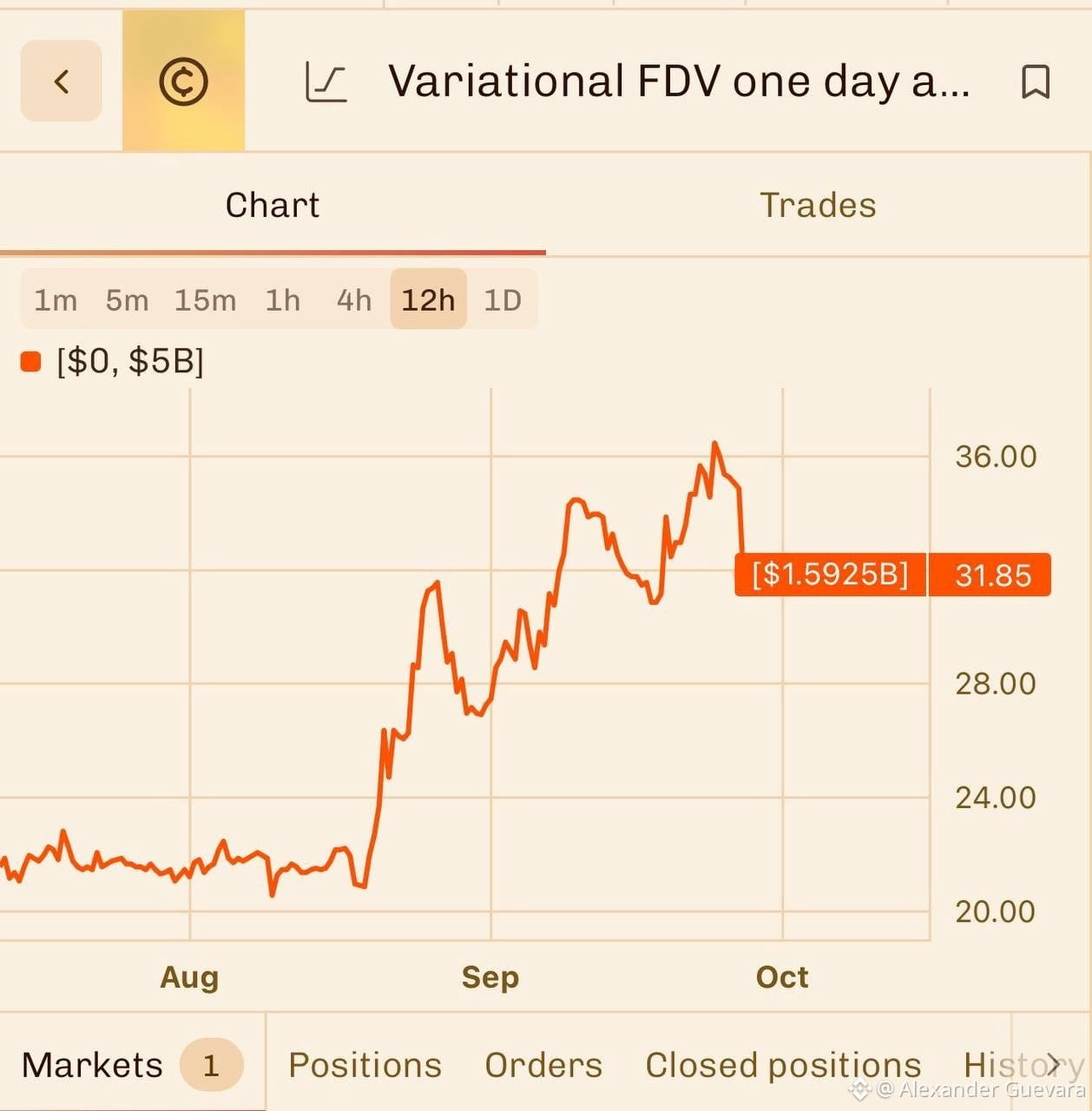
Pascal gives me a scalar market from $0–$5B. Right now it’s trading around 31.85¢, which implies -$1.59B FDV
I can also open the chart and see how that number has changed since August across different timeframes.
You can even use it to hedge your airdrop by going long or short depending on which direction you think FDV is headed.
Variational Found recently backed its launch and is ready to integrate
That’s why I’ll trade my Pre Variational market
#Polymarket #DEX #AirdropAlert #VARisBroken #TradingCommunity $BTC
✅ Why I would exchange @variational_io pre-TGE FDV on @pascaldottrade instead of Polymarket
For this specific market, I simply prefer how Pascal handles it
On Poly you have separate binary markets for $500M, $1B, $2B, and $5B FDV. If I want to know what the market really thinks VAR is worth, I have to combine them all
Pascal gives me a scalar market from $0–$5B. Right now it’s trading around 31.85¢, which implies -$1.59B FDV
I can also open the chart and see how that number has changed since August across different timeframes.
You can even use it to hedge your airdrop by going long or short depending on which direction you think FDV is headed.
Variational Found recently backed its launch and is ready to integrate
That’s why I’ll trade my Pre Variational market
#Polymarket #DEX #AirdropAlert #VARisBroken #TradingCommunity $BTC
For this specific market, I simply prefer how Pascal handles it
On Poly you have separate binary markets for $500M, $1B, $2B, and $5B FDV. If I want to know what the market really thinks VAR is worth, I have to combine them all
Pascal gives me a scalar market from $0–$5B. Right now it’s trading around 31.85¢, which implies -$1.59B FDV
I can also open the chart and see how that number has changed since August across different timeframes.
You can even use it to hedge your airdrop by going long or short depending on which direction you think FDV is headed.
Variational Found recently backed its launch and is ready to integrate
That’s why I’ll trade my Pre Variational market
#Polymarket #DEX #AirdropAlert #VARisBroken #TradingCommunity $BTC
Alexander Guevara
·
--
✅$VAR Salt Sheet
$40 per point is the foundation, $55 is the dream
The buyback commitment has gone from 30% to 100% of revenue. $2B FDV is my new base target from $1.5B
✅😬We keep operating the Range to perfection and already protected in BE; if you want to make money with DeFi, memes, and farming airdrops 🟢
#Varitional #AirdropAlert #Airdrop #BTC #TradingCommunity $BTC
$40 per point is the foundation, $55 is the dream
The buyback commitment has gone from 30% to 100% of revenue. $2B FDV is my new base target from $1.5B
✅😬We keep operating the Range to perfection and already protected in BE; if you want to make money with DeFi, memes, and farming airdrops 🟢
#Varitional #AirdropAlert #Airdrop #BTC #TradingCommunity $BTC
59

·
--
Bullish
🔥 Polymarket strongly moves the odds of the “Yes” to $82,500 for BTC in September. The prediction market is reacting to every candle, and with month-end right around the corner, volatility could increase. Does it happen or not? 👀
$BTC #Bitcoin #Polymarket #BinanceSquare
Opinion version
📊 The odds of BTC touching $82,500 this month changed sharply on Polymarket. These markets reflect what people are betting on, not what’s going to happen—but they’re useful for gauging sentiment.
With the monthly close coming up, I’d keep an eye on volume and support levels before making decisions in spot. No entering out of FOMO.
What do you think: yes or no? 👇
$BTC #Bitcoin❗ #Polymarket #Spot
🔥 Polymarket strongly moves the odds of the “Yes” to $82,500 for BTC in September. The prediction market is reacting to every candle, and with month-end right around the corner, volatility could increase. Does it happen or not? 👀
$BTC #Bitcoin #Polymarket #BinanceSquare
Opinion version
📊 The odds of BTC touching $82,500 this month changed sharply on Polymarket. These markets reflect what people are betting on, not what’s going to happen—but they’re useful for gauging sentiment.
With the monthly close coming up, I’d keep an eye on volume and support levels before making decisions in spot. No entering out of FOMO.
What do you think: yes or no? 👇
$BTC #Bitcoin❗ #Polymarket #Spot
$BTC #Bitcoin #Polymarket #BinanceSquare
Opinion version
📊 The odds of BTC touching $82,500 this month changed sharply on Polymarket. These markets reflect what people are betting on, not what’s going to happen—but they’re useful for gauging sentiment.
With the monthly close coming up, I’d keep an eye on volume and support levels before making decisions in spot. No entering out of FOMO.
What do you think: yes or no? 👇
$BTC #Bitcoin❗ #Polymarket #Spot


Binance News
·
--
Polymarket Bitcoin September Price Bet Sees Sharp Swing in $82,500 Yes Odds
Polymarket’s "Bitcoin September price prediction" submarket for $82,500 saw the probability of the "yes" option swing sharply, falling from 69.5% one hour earlier to 48.5% at the time of monitoring, a 21 percentage point move. According to ChainCatcher, the change reflects the impact of related breaking news.
176
·
--
🚨 POLYMARKET CLOB ENGINE SUSPENDS TRADING AS LIQUIDITY FREEZES AROUND $UMA INFRASTRUCTURE! 🔍
The Central Limit Order Book engine experienced critical read latency at 06:30 UTC, freezing order execution across prediction liquidity pools. 🔍 While front-end market feeds remain active, active order routing remains fully locked until technical remediation completes.
Institutions must prepare for a sharp volatility injection once the mandatory 15-minute cancel-only window opens ahead of the targeted 10:00 UTC restart. 📊 This execution pause forces market makers to rapidly restructure their resting order books across $UMA oracle resolution feeds.
💬 Will you be clearing your resting orders during the cancel window or holding positions through the restart? 👇
⚠️ Not financial advice. Always manage your risk. 🛡️
🏷️ #UMA #Polymarket #CryptoNews #OrderFlow
🎯 🦈
🚨 POLYMARKET CLOB ENGINE SUSPENDS TRADING AS LIQUIDITY FREEZES AROUND $UMA INFRASTRUCTURE! 🔍
The Central Limit Order Book engine experienced critical read latency at 06:30 UTC, freezing order execution across prediction liquidity pools. 🔍 While front-end market feeds remain active, active order routing remains fully locked until technical remediation completes.
Institutions must prepare for a sharp volatility injection once the mandatory 15-minute cancel-only window opens ahead of the targeted 10:00 UTC restart. 📊 This execution pause forces market makers to rapidly restructure their resting order books across $UMA oracle resolution feeds.
💬 Will you be clearing your resting orders during the cancel window or holding positions through the restart? 👇
⚠️ Not financial advice. Always manage your risk. 🛡️
🏷️ #UMA #Polymarket #CryptoNews #OrderFlow
🎯 🦈
The Central Limit Order Book engine experienced critical read latency at 06:30 UTC, freezing order execution across prediction liquidity pools. 🔍 While front-end market feeds remain active, active order routing remains fully locked until technical remediation completes.
Institutions must prepare for a sharp volatility injection once the mandatory 15-minute cancel-only window opens ahead of the targeted 10:00 UTC restart. 📊 This execution pause forces market makers to rapidly restructure their resting order books across $UMA oracle resolution feeds.
💬 Will you be clearing your resting orders during the cancel window or holding positions through the restart? 👇
⚠️ Not financial advice. Always manage your risk. 🛡️
🏷️ #UMA #Polymarket #CryptoNews #OrderFlow
🎯 🦈
123
Log in to explore more content
Join global crypto users on Binance Square
⚡️ Get latest and useful information about crypto.
💬 Trusted by the world’s largest crypto exchange.
👍 Discover real insights from verified creators.
Email / Phone number
Trending Topics
1
#EarningsSeason
376,360 views
2,872 Discussing
2
#SECChairWantsStockMarketsOnChain
428 views
30 Discussing
3
#MulticoinInvestsInGrass
0 views
6 Discussing
4
#CEARenamesToBNBStandardUnderBNC
629 views
43 Discussing
5
#BitwiseLaunchesFirstSpotNEARETF
44,605 views
671 Discussing
6
#USJobOpeningsFallToFiveMonthLow
50,302 views
524 Discussing
7
#ECBToTestAIAgentsInDigitalEuroPayments
34,258 views
595 Discussing
8
#JapanFSABacksFourthStablecoinTradeSettlementPilot
38,971 views
622 Discussing
9
#BitgetHackerFailsToMoveStolenFunds
55,853 views
674 Discussing
10
#BitMineETHHoldingsTop6Million
43,861 views
744 Discussing