
#onekey
onekey
9,743 views
34 Discussing
Hot
Latest

OneKey Founder Warns: Don’t Use an iPhone as a Hardware Wallet
- OneKey’s founder says an old iPhone kept offline cannot replace a dedicated hardware wallet
- Potential security risks of using a phone as a cold wallet
- Recommends using dedicated devices to protect crypto assets
#BinanceSquare #CryptoNews #OneKey #HardwareWallet #Security
$btc $eth
vlikevn Titanbot
Source: U.Today
OneKey Founder Warns: Don’t Use an iPhone as a Hardware Wallet
- OneKey’s founder says an old iPhone kept offline cannot replace a dedicated hardware wallet
- Potential security risks of using a phone as a cold wallet
- Recommends using dedicated devices to protect crypto assets
#BinanceSquare #CryptoNews #OneKey #HardwareWallet #Security
$btc $eth
vlikevn Titanbot
Source: U.Today
- OneKey’s founder says an old iPhone kept offline cannot replace a dedicated hardware wallet
- Potential security risks of using a phone as a cold wallet
- Recommends using dedicated devices to protect crypto assets
#BinanceSquare #CryptoNews #OneKey #HardwareWallet #Security
$btc $eth
vlikevn Titanbot
Source: U.Today
176

·
--
Stop using old iPhones as cold wallets
OneKey founder Yishi warns that
iPhone 11 and earlier models
have hardware-level vulnerabilities that system updates cannot fix
The vulnerabilities he mentioned:
checkm8 affects even older models
usbliter8 affects the XS, XR, 11 series, and second-generation SE
They’re all in the low-level boot code
System upgrades can’t fix them
An attack requires physical access to the device
But once your seed phrase is on one of these machines
the risk model changes
If you really want a phone for cold storage,
at least switch to a newer model officially identified as secure
An old phone is better off as a paperweight than a backup drive
$BTC $ETH
#OneKey #冷钱包 #HardwareSecurity
Stop using old iPhones as cold wallets
OneKey founder Yishi warns that
iPhone 11 and earlier models
have hardware-level vulnerabilities that system updates cannot fix
The vulnerabilities he mentioned:
checkm8 affects even older models
usbliter8 affects the XS, XR, 11 series, and second-generation SE
They’re all in the low-level boot code
System upgrades can’t fix them
An attack requires physical access to the device
But once your seed phrase is on one of these machines
the risk model changes
If you really want a phone for cold storage,
at least switch to a newer model officially identified as secure
An old phone is better off as a paperweight than a backup drive
$BTC $ETH
#OneKey #冷钱包 #HardwareSecurity
OneKey founder Yishi warns that
iPhone 11 and earlier models
have hardware-level vulnerabilities that system updates cannot fix
The vulnerabilities he mentioned:
checkm8 affects even older models
usbliter8 affects the XS, XR, 11 series, and second-generation SE
They’re all in the low-level boot code
System upgrades can’t fix them
An attack requires physical access to the device
But once your seed phrase is on one of these machines
the risk model changes
If you really want a phone for cold storage,
at least switch to a newer model officially identified as secure
An old phone is better off as a paperweight than a backup drive
$BTC $ETH
#OneKey #冷钱包 #HardwareSecurity
1
422

·
--
Using an old iPhone as a cold wallet isn’t safe: Stop storing seed phrases on iPhone 11 and earlier models
According to reports by PANews and ChainCatcher, OneKey founder Yishi posted a warning on X on the morning of November 1, Beijing time: wiping an old iPhone, turning on airplane mode, and using it only to store a seed phrase isn’t as safe as many people imagine.
- The vulnerabilities are at the chip level and can’t be fixed with system updates: iPhone 4S through iPhone X have the checkm8 BootROM vulnerability. The usbliter8 vulnerability, disclosed this June, affects the iPhone XS, XR, and 11 series, as well as the second-generation SE. These are all issues with low-level boot code, and iOS updates cannot fundamentally fix them.
- The attack requires physical access: After getting hold of the device, an attacker can connect a specially crafted USB device in DFU mode and execute code before iOS starts. Airplane mode won’t stop this, and there may be no obvious signs on the phone afterward.
- The right solution isn’t simply to switch addresses: Users who have stored seed phrases on the models listed above should generate a completely new seed phrase in a trusted environment and transfer their assets. Creating a new address under the original seed phrase won’t help. Also use a long alphanumeric passcode, avoid simple 6-digit PINs, bring your own charger, enable Lockdown Mode, and keep the system up to date.
My take: Short-term, I’m neutral on $BTC , because this is a wallet custody security warning, not on-chain selling or a protocol vulnerability, so the short-term price impact is limited. However, the custody risk is real, especially now, while the fallout from the Binance incident is still ongoing and everyone is reviewing wallet security.
$BTC $ETH
#钱包安全 #助记词 #OneKey
Source: Reports by PANews, ChainCatcher, and CoinEdition; Yishi’s post on X (October 31). BTC was around $77,600 this morning, and ETH around $2,255. Note that exploiting these vulnerabilities requires physical access to the device and specialized hardware; they do not enable remote, one-click theft of coins. Based on currently available public information, no similar BootROM vulnerabilities are known in iPhone 12 and newer models.
Are you still using an old phone to store your seed phrase? Tell us in the comments how you keep it safe. Tap the tags to see real-time market prices. For reference only; this is not investment advice.
Using an old iPhone as a cold wallet isn’t safe: Stop storing seed phrases on iPhone 11 and earlier models
According to reports by PANews and ChainCatcher, OneKey founder Yishi posted a warning on X on the morning of November 1, Beijing time: wiping an old iPhone, turning on airplane mode, and using it only to store a seed phrase isn’t as safe as many people imagine.
- The vulnerabilities are at the chip level and can’t be fixed with system updates: iPhone 4S through iPhone X have the checkm8 BootROM vulnerability. The usbliter8 vulnerability, disclosed this June, affects the iPhone XS, XR, and 11 series, as well as the second-generation SE. These are all issues with low-level boot code, and iOS updates cannot fundamentally fix them.
- The attack requires physical access: After getting hold of the device, an attacker can connect a specially crafted USB device in DFU mode and execute code before iOS starts. Airplane mode won’t stop this, and there may be no obvious signs on the phone afterward.
- The right solution isn’t simply to switch addresses: Users who have stored seed phrases on the models listed above should generate a completely new seed phrase in a trusted environment and transfer their assets. Creating a new address under the original seed phrase won’t help. Also use a long alphanumeric passcode, avoid simple 6-digit PINs, bring your own charger, enable Lockdown Mode, and keep the system up to date.
My take: Short-term, I’m neutral on $BTC , because this is a wallet custody security warning, not on-chain selling or a protocol vulnerability, so the short-term price impact is limited. However, the custody risk is real, especially now, while the fallout from the Binance incident is still ongoing and everyone is reviewing wallet security.
$BTC $ETH
#钱包安全 #助记词 #OneKey
Source: Reports by PANews, ChainCatcher, and CoinEdition; Yishi’s post on X (October 31). BTC was around $77,600 this morning, and ETH around $2,255. Note that exploiting these vulnerabilities requires physical access to the device and specialized hardware; they do not enable remote, one-click theft of coins. Based on currently available public information, no similar BootROM vulnerabilities are known in iPhone 12 and newer models.
Are you still using an old phone to store your seed phrase? Tell us in the comments how you keep it safe. Tap the tags to see real-time market prices. For reference only; this is not investment advice.
According to reports by PANews and ChainCatcher, OneKey founder Yishi posted a warning on X on the morning of November 1, Beijing time: wiping an old iPhone, turning on airplane mode, and using it only to store a seed phrase isn’t as safe as many people imagine.
- The vulnerabilities are at the chip level and can’t be fixed with system updates: iPhone 4S through iPhone X have the checkm8 BootROM vulnerability. The usbliter8 vulnerability, disclosed this June, affects the iPhone XS, XR, and 11 series, as well as the second-generation SE. These are all issues with low-level boot code, and iOS updates cannot fundamentally fix them.
- The attack requires physical access: After getting hold of the device, an attacker can connect a specially crafted USB device in DFU mode and execute code before iOS starts. Airplane mode won’t stop this, and there may be no obvious signs on the phone afterward.
- The right solution isn’t simply to switch addresses: Users who have stored seed phrases on the models listed above should generate a completely new seed phrase in a trusted environment and transfer their assets. Creating a new address under the original seed phrase won’t help. Also use a long alphanumeric passcode, avoid simple 6-digit PINs, bring your own charger, enable Lockdown Mode, and keep the system up to date.
My take: Short-term, I’m neutral on $BTC , because this is a wallet custody security warning, not on-chain selling or a protocol vulnerability, so the short-term price impact is limited. However, the custody risk is real, especially now, while the fallout from the Binance incident is still ongoing and everyone is reviewing wallet security.
$BTC $ETH
#钱包安全 #助记词 #OneKey
Source: Reports by PANews, ChainCatcher, and CoinEdition; Yishi’s post on X (October 31). BTC was around $77,600 this morning, and ETH around $2,255. Note that exploiting these vulnerabilities requires physical access to the device and specialized hardware; they do not enable remote, one-click theft of coins. Based on currently available public information, no similar BootROM vulnerabilities are known in iPhone 12 and newer models.
Are you still using an old phone to store your seed phrase? Tell us in the comments how you keep it safe. Tap the tags to see real-time market prices. For reference only; this is not investment advice.
266

·
--
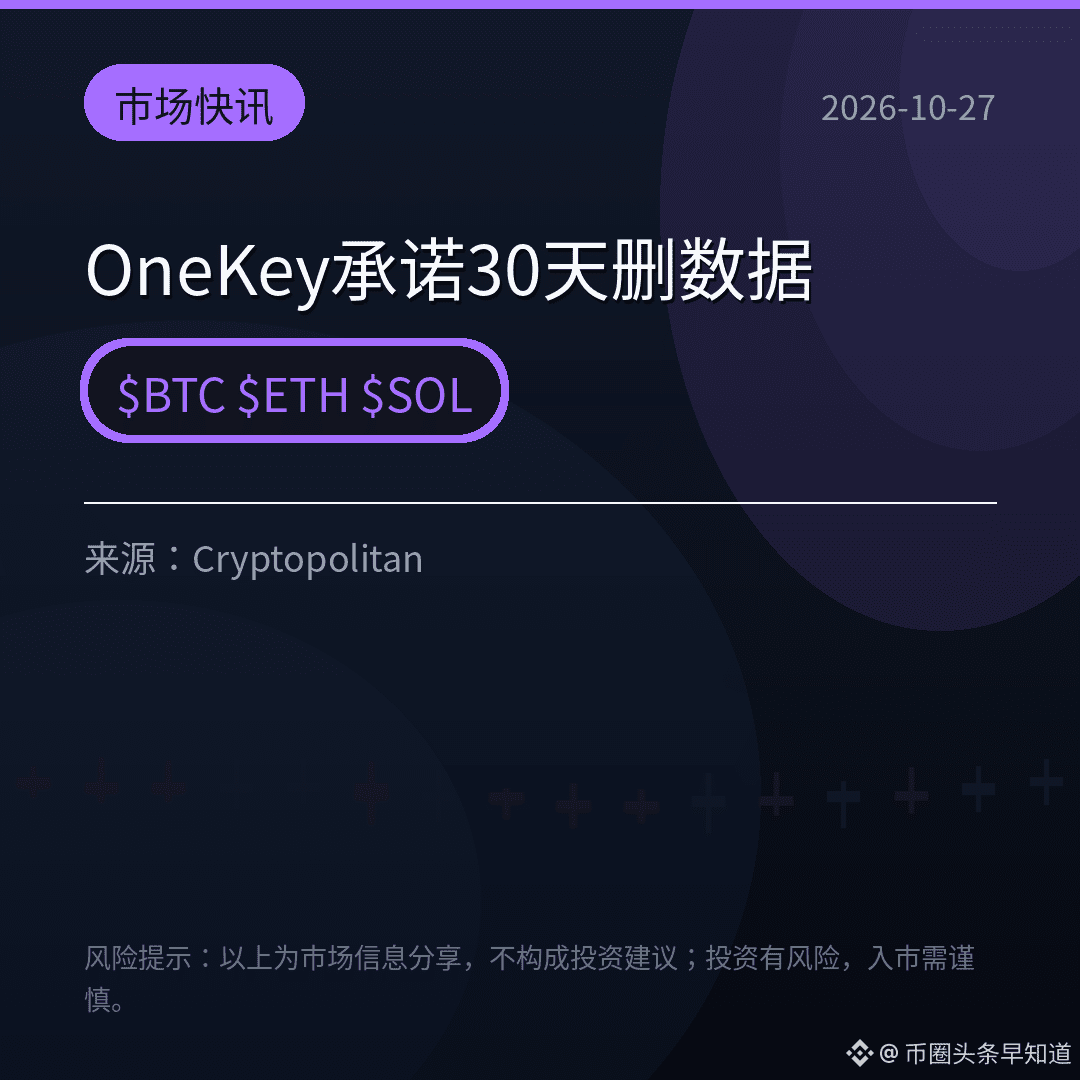
【Market Flash】Don’t wait for a data leak to talk about deleting data: OneKey founder Yishi Wang promises to delete customer data within 30 days. This comes after Keystone admitted its 180-day automatic deletion system failed, leaving 25,964 Shopify buyer records past their retention period, including names, addresses, and purchase histories. OneKey hasn’t had an incident, but the principle holds: the longer data is kept, the larger the pool at risk of a leak. Do you trust the 30-day promise?
$BTC $ETH $SOL
#硬件钱包 #数据安全 #OneKey
(Source: Cryptopolitan)
⚠️Risk warning: The above is shared for informational purposes only and does not constitute investment advice. Investing involves risks; please exercise caution.
【Market Flash】Don’t wait for a data leak to talk about deleting data: OneKey founder Yishi Wang promises to delete customer data within 30 days. This comes after Keystone admitted its 180-day automatic deletion system failed, leaving 25,964 Shopify buyer records past their retention period, including names, addresses, and purchase histories. OneKey hasn’t had an incident, but the principle holds: the longer data is kept, the larger the pool at risk of a leak. Do you trust the 30-day promise?
$BTC $ETH $SOL
#硬件钱包 #数据安全 #OneKey
(Source: Cryptopolitan)
⚠️Risk warning: The above is shared for informational purposes only and does not constitute investment advice. Investing involves risks; please exercise caution.
$BTC $ETH $SOL
#硬件钱包 #数据安全 #OneKey
(Source: Cryptopolitan)
⚠️Risk warning: The above is shared for informational purposes only and does not constitute investment advice. Investing involves risks; please exercise caution.
486

·
--
🎯 Hardware wallet supply-chain tampering exposed
📰 OneKey cuts ties with Malaysian distributor CryptoBilis after Ledger wallets it sold were found to have been tampered with; an internal review has been launched
💬 The foundation of trust in a cold wallet isn’t the chip—it’s the supply channel. If someone has opened it up and swapped things out before it reaches you, even the most secure firmware is useless. If you’re stocking up on hardware wallets, remember: buy directly from the official website; don’t be tempted by cheaper channels.
🏷️ #硬件钱包 #供应链攻击 #OneKey #Ledger
🎯 Hardware wallet supply-chain tampering exposed
📰 OneKey cuts ties with Malaysian distributor CryptoBilis after Ledger wallets it sold were found to have been tampered with; an internal review has been launched
💬 The foundation of trust in a cold wallet isn’t the chip—it’s the supply channel. If someone has opened it up and swapped things out before it reaches you, even the most secure firmware is useless. If you’re stocking up on hardware wallets, remember: buy directly from the official website; don’t be tempted by cheaper channels.
🏷️ #硬件钱包 #供应链攻击 #OneKey #Ledger
📰 OneKey cuts ties with Malaysian distributor CryptoBilis after Ledger wallets it sold were found to have been tampered with; an internal review has been launched
💬 The foundation of trust in a cold wallet isn’t the chip—it’s the supply channel. If someone has opened it up and swapped things out before it reaches you, even the most secure firmware is useless. If you’re stocking up on hardware wallets, remember: buy directly from the official website; don’t be tempted by cheaper channels.
🏷️ #硬件钱包 #供应链攻击 #OneKey #Ledger
12

·
--
Verified
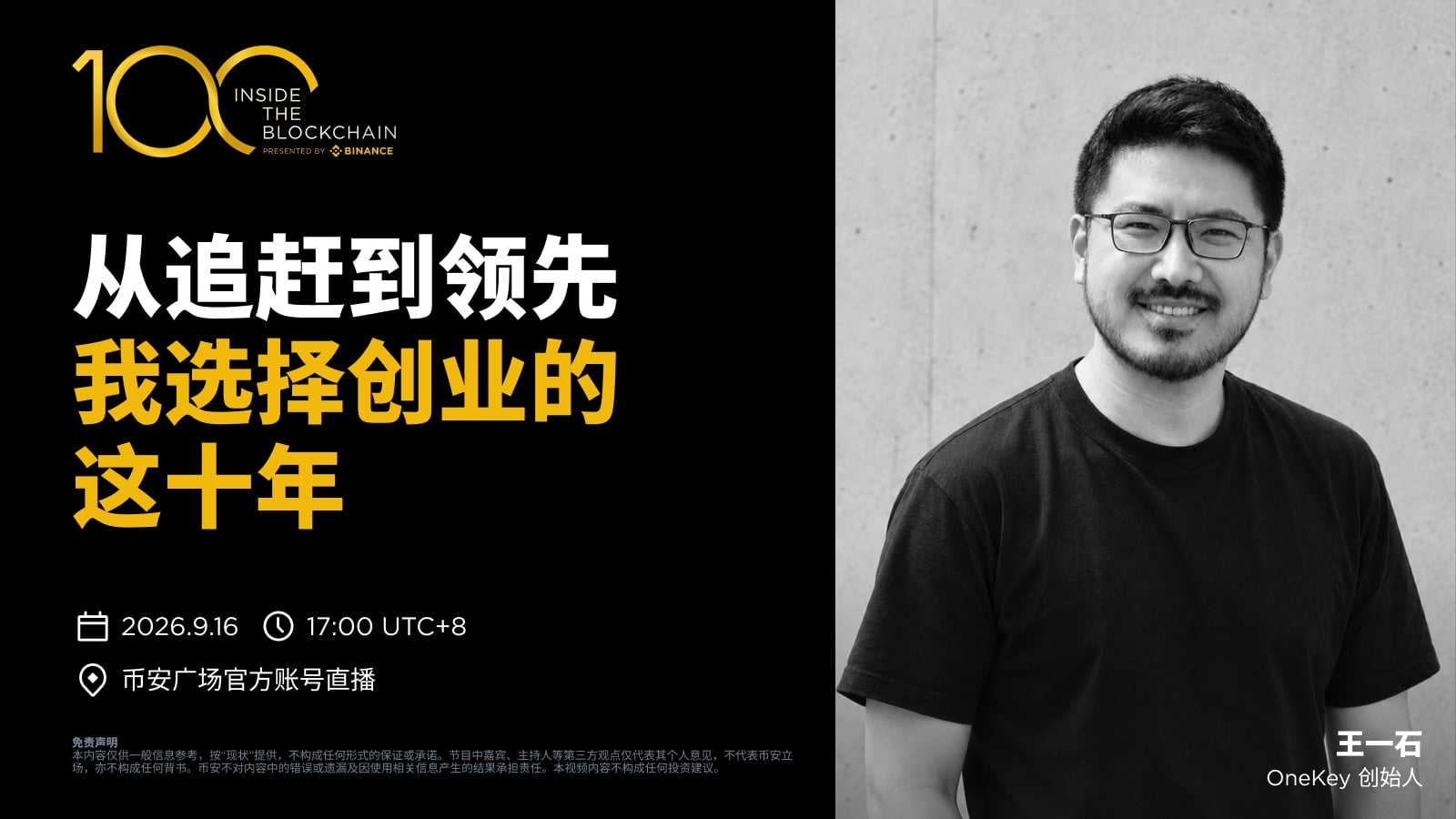
📰 A civil engineering junior in college, because Bitcoin was rising, bought his first Bitcoin on Taobao in 2013. Twelve years later, he became the founder of OneKey. The turnaround sounds legendary, but Wang Yishi puts it very plainly himself: back then, it was only because it was going up that he started to seriously research it.
🔥 In this conversation, the most painful part isn’t the entrepreneurship story—it’s just how hard the hardware wallet business actually is. During the 2020 DeFi Summer, a large amount of capital flowed from exchanges onto the blockchain, and users needed safer wallets. But once hardware wallets run into supply chain issues, firmware, molds, and the like, it’s often not a single problem that follows—it’s a whole chain of problems.
In OneKey’s early days, it won users by reducing operational friction, delivering a localized experience, and being open source. Before, when connecting a hardware wallet to DeFi, people often had to switch back and forth between multiple clients, like using three remote controls to operate one TV. To be honest, even if it’s very secure, if it’s hard to use to the point that people give up, it’s also very hard to retain users.
💡 Wang Yishi also mentioned that security can’t rely only on “trusting the product.” Users also need the ability to verify whether the product is truly secure. That’s where the value of open source lies. But open source doesn’t automatically mean safety. Coldcard once had a vulnerability related to mnemonic generation that went public as existing for nearly four years—an incident that makes people rethink: the real difficulty isn’t simply putting code out there; it’s continuously fixing problems.
👀 After AI arrived, the efficiency of vulnerability discovery kept improving, and both sides of offense and defense accelerated too. What used to be measured in “two months” is now “two weeks” in the headlines. For hardware wallets, it’s not just a matter of adding a few protective tools—it means R&D, auditing, and response speed all need to keep up. The OneKey team established Anzen Lab as part of responding to this change.
🤔 What do you think hardware wallets should prioritize most: security verification, user experience, or vulnerability response speed?
#OneKey #硬件钱包 #加密安全 #AI时代
📰 A civil engineering junior in college, because Bitcoin was rising, bought his first Bitcoin on Taobao in 2013. Twelve years later, he became the founder of OneKey. The turnaround sounds legendary, but Wang Yishi puts it very plainly himself: back then, it was only because it was going up that he started to seriously research it.
🔥 In this conversation, the most painful part isn’t the entrepreneurship story—it’s just how hard the hardware wallet business actually is. During the 2020 DeFi Summer, a large amount of capital flowed from exchanges onto the blockchain, and users needed safer wallets. But once hardware wallets run into supply chain issues, firmware, molds, and the like, it’s often not a single problem that follows—it’s a whole chain of problems.
In OneKey’s early days, it won users by reducing operational friction, delivering a localized experience, and being open source. Before, when connecting a hardware wallet to DeFi, people often had to switch back and forth between multiple clients, like using three remote controls to operate one TV. To be honest, even if it’s very secure, if it’s hard to use to the point that people give up, it’s also very hard to retain users.
💡 Wang Yishi also mentioned that security can’t rely only on “trusting the product.” Users also need the ability to verify whether the product is truly secure. That’s where the value of open source lies. But open source doesn’t automatically mean safety. Coldcard once had a vulnerability related to mnemonic generation that went public as existing for nearly four years—an incident that makes people rethink: the real difficulty isn’t simply putting code out there; it’s continuously fixing problems.
👀 After AI arrived, the efficiency of vulnerability discovery kept improving, and both sides of offense and defense accelerated too. What used to be measured in “two months” is now “two weeks” in the headlines. For hardware wallets, it’s not just a matter of adding a few protective tools—it means R&D, auditing, and response speed all need to keep up. The OneKey team established Anzen Lab as part of responding to this change.
🤔 What do you think hardware wallets should prioritize most: security verification, user experience, or vulnerability response speed?
#OneKey #硬件钱包 #加密安全 #AI时代
🔥 In this conversation, the most painful part isn’t the entrepreneurship story—it’s just how hard the hardware wallet business actually is. During the 2020 DeFi Summer, a large amount of capital flowed from exchanges onto the blockchain, and users needed safer wallets. But once hardware wallets run into supply chain issues, firmware, molds, and the like, it’s often not a single problem that follows—it’s a whole chain of problems.
In OneKey’s early days, it won users by reducing operational friction, delivering a localized experience, and being open source. Before, when connecting a hardware wallet to DeFi, people often had to switch back and forth between multiple clients, like using three remote controls to operate one TV. To be honest, even if it’s very secure, if it’s hard to use to the point that people give up, it’s also very hard to retain users.
💡 Wang Yishi also mentioned that security can’t rely only on “trusting the product.” Users also need the ability to verify whether the product is truly secure. That’s where the value of open source lies. But open source doesn’t automatically mean safety. Coldcard once had a vulnerability related to mnemonic generation that went public as existing for nearly four years—an incident that makes people rethink: the real difficulty isn’t simply putting code out there; it’s continuously fixing problems.
👀 After AI arrived, the efficiency of vulnerability discovery kept improving, and both sides of offense and defense accelerated too. What used to be measured in “two months” is now “two weeks” in the headlines. For hardware wallets, it’s not just a matter of adding a few protective tools—it means R&D, auditing, and response speed all need to keep up. The OneKey team established Anzen Lab as part of responding to this change.
🤔 What do you think hardware wallets should prioritize most: security verification, user experience, or vulnerability response speed?
#OneKey #硬件钱包 #加密安全 #AI时代


大吉大利
From GetMoney
1.9k


·
--
Bullish
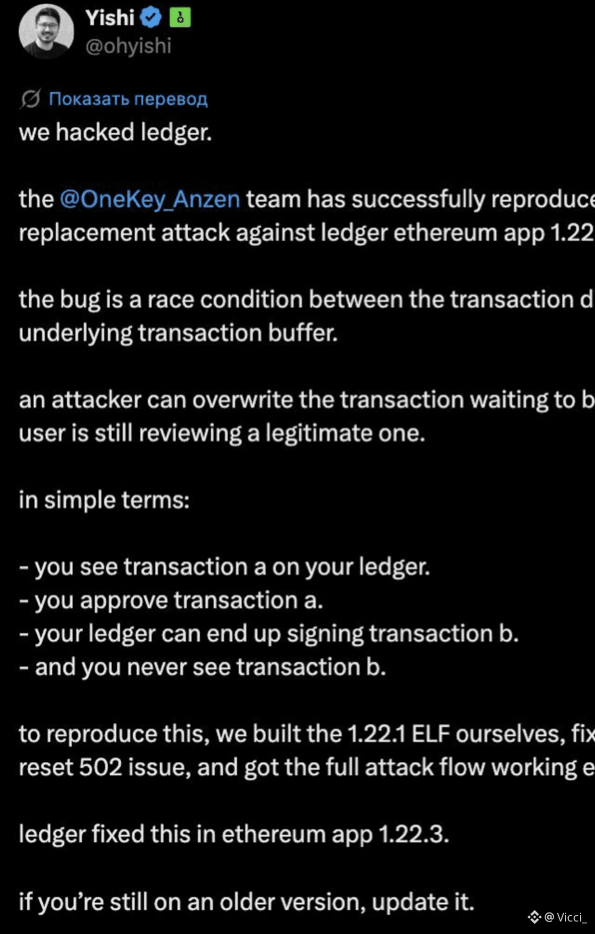
OneKey just publicly reproduced a Ledger exploit, start to finish
- the claim: Ledger's Ethereum app (v1.22.1) could sign a transaction different from the one shown on screen
- you approve transaction A
- the device actually signs transaction B, the one you never saw
- reproduced end to end, no theory
Ledger patched it in 1.22.3, update or stay exposed
can't verify this myself, but a rival naming an exact version number in public is not nothing.
Drop your Ledger firmware version below — let's see how many of you already updated.
already checked mine)
#oneKey #Ledger #exploit
$ETH
OneKey just publicly reproduced a Ledger exploit, start to finish
- the claim: Ledger's Ethereum app (v1.22.1) could sign a transaction different from the one shown on screen
- you approve transaction A
- the device actually signs transaction B, the one you never saw
- reproduced end to end, no theory
Ledger patched it in 1.22.3, update or stay exposed
can't verify this myself, but a rival naming an exact version number in public is not nothing.
Drop your Ledger firmware version below — let's see how many of you already updated.
already checked mine)
#oneKey #Ledger #exploit
$ETH
- the claim: Ledger's Ethereum app (v1.22.1) could sign a transaction different from the one shown on screen
- you approve transaction A
- the device actually signs transaction B, the one you never saw
- reproduced end to end, no theory
Ledger patched it in 1.22.3, update or stay exposed
can't verify this myself, but a rival naming an exact version number in public is not nothing.
Drop your Ledger firmware version below — let's see how many of you already updated.
already checked mine)
#oneKey #Ledger #exploit
$ETH
120
OneKey Warns Against Older iPhone Wallets Due to Unpatchable Chip Flaws :-
OneKey founder Yishi Wang has issued a security warning stating that unpatchable chip flaws in older iPhones could threaten offline crypto seed storage if attackers obtain physical USB access.
* Recommended Precautions: Users have been advised to move assets to newly generated seeds.
* Model Protection Limits: Passcodes and Secure Enclave protections continue to restrict unauthorized access on XS and 11 models.
For crypto holders, active traders, and hardware wallet users, evaluating device security vulnerabilities remains vital for safeguarding digital assets against physical compromise.
$AAPLB $AAPL $AAP.US
#CoinVahini #OneKey #Apple #CryptoSecurity #HardwareWallet
OneKey Warns Against Older iPhone Wallets Due to Unpatchable Chip Flaws :-
OneKey founder Yishi Wang has issued a security warning stating that unpatchable chip flaws in older iPhones could threaten offline crypto seed storage if attackers obtain physical USB access.
* Recommended Precautions: Users have been advised to move assets to newly generated seeds.
* Model Protection Limits: Passcodes and Secure Enclave protections continue to restrict unauthorized access on XS and 11 models.
For crypto holders, active traders, and hardware wallet users, evaluating device security vulnerabilities remains vital for safeguarding digital assets against physical compromise.
$AAPLB $AAPL $AAP.US
#CoinVahini #OneKey #Apple #CryptoSecurity #HardwareWallet
OneKey founder Yishi Wang has issued a security warning stating that unpatchable chip flaws in older iPhones could threaten offline crypto seed storage if attackers obtain physical USB access.
* Recommended Precautions: Users have been advised to move assets to newly generated seeds.
* Model Protection Limits: Passcodes and Secure Enclave protections continue to restrict unauthorized access on XS and 11 models.
For crypto holders, active traders, and hardware wallet users, evaluating device security vulnerabilities remains vital for safeguarding digital assets against physical compromise.
$AAPLB $AAPL $AAP.US
#CoinVahini #OneKey #Apple #CryptoSecurity #HardwareWallet
4
·
--
Bullish
Your Cryptos Aren't Safe 🚨
Let me show you how to protect your assets in the best way, with the top Cold Wallet that has a strategic partnership with Binance!
Both here on Binance and in a web3 wallet, your cryptos are at risk, and here's why:
🥴 On any exchange, you risk getting your account blocked due to any misunderstanding, or if you accidentally log in from a prohibited country’s IP, or any situation could jeopardize your assets.
👀 On the other hand, hot wallets or web3 wallets carry a lot of risk as they are vulnerable to hacks, malicious contract signatures, and you frequently use them on your computer or mobile phone that is always connected to the Internet.
☝🏻 The safest option is to use Cold Wallets! They are Offline, and you absolutely need the Hardware to sign transactions.
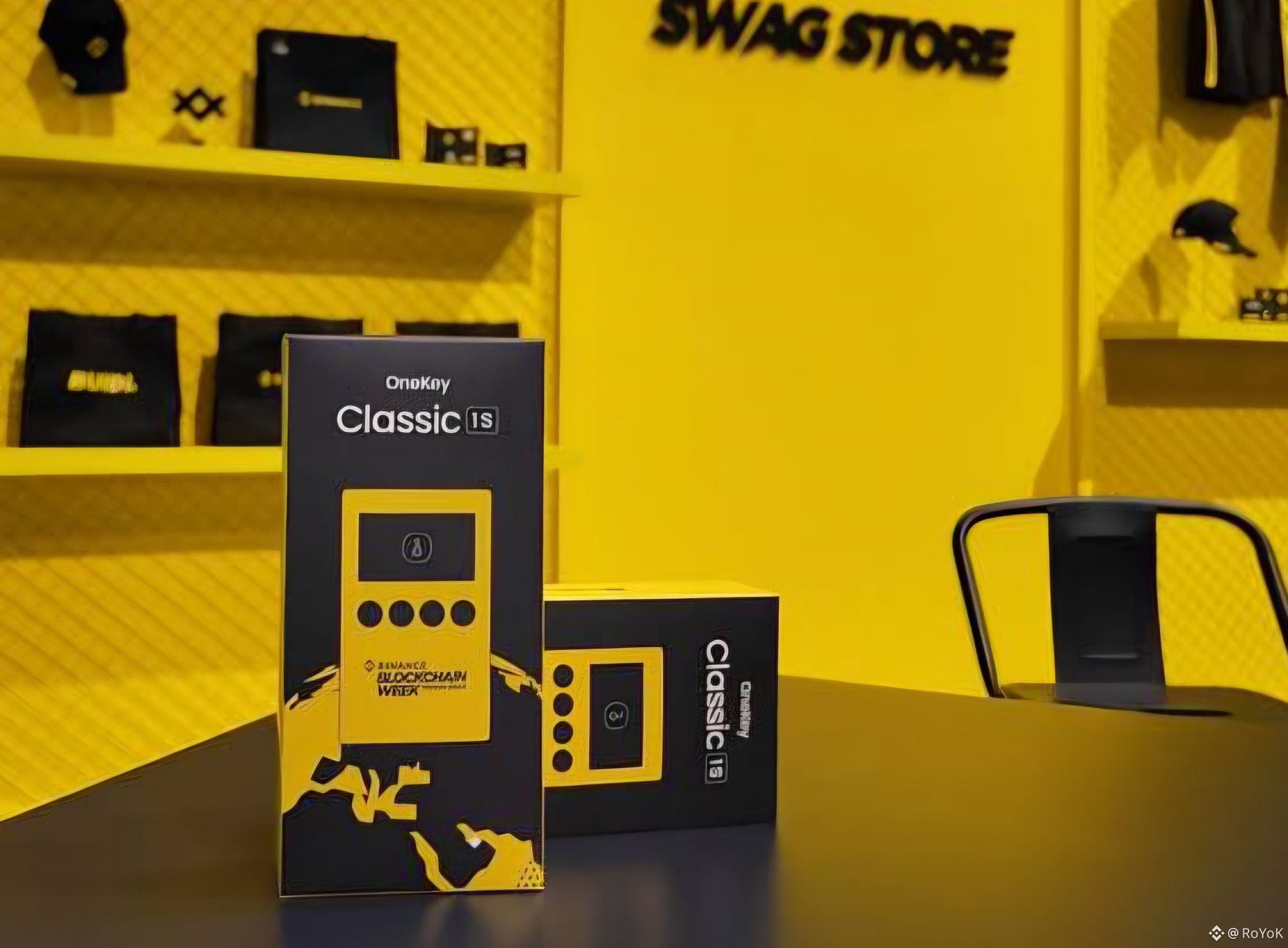
✅️ I recommend the OneKey wallet, which has a partnership with Binance!
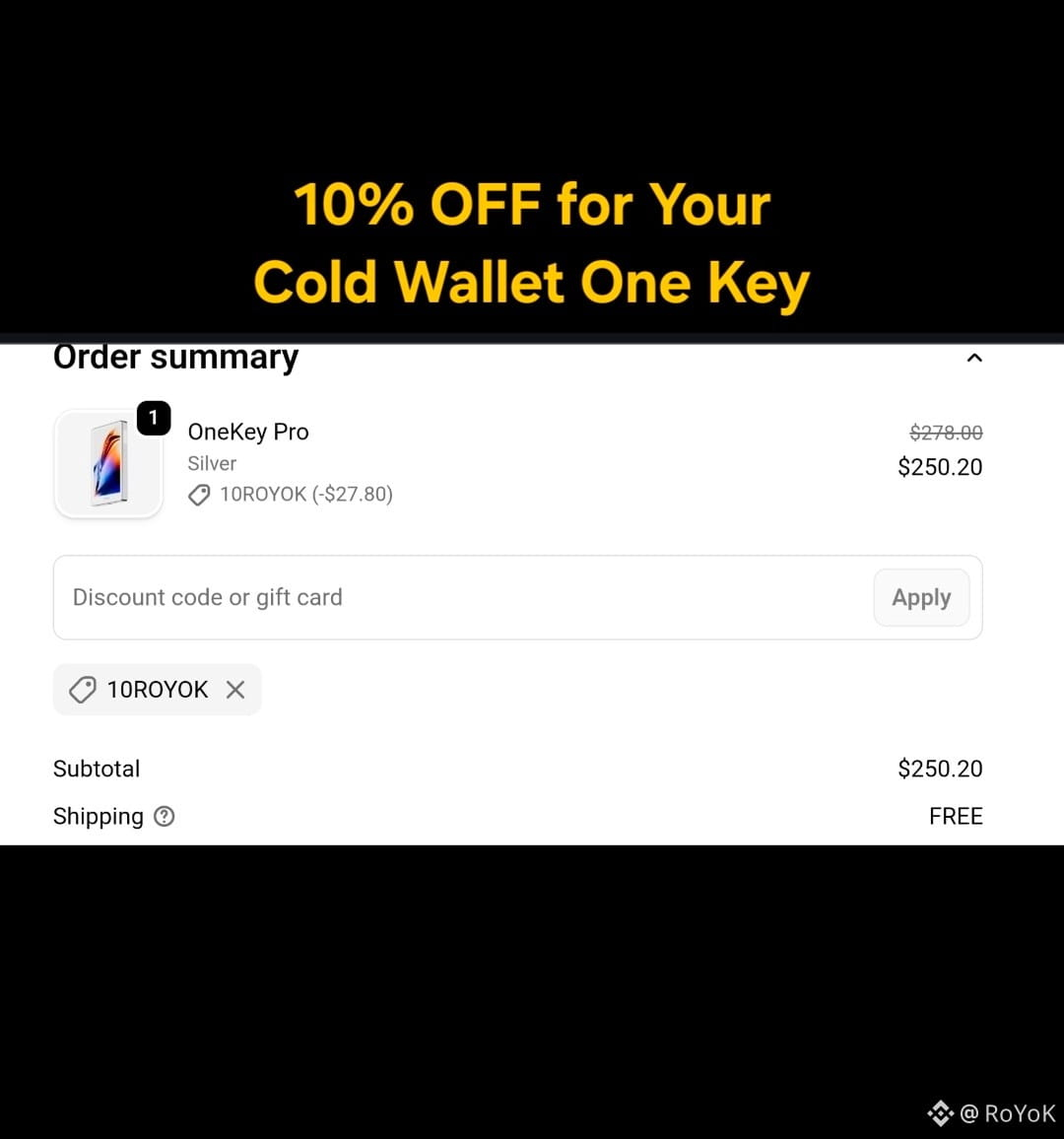
To buy it, head over to the official OneKey website, with prices ranging from $99 to $280, but you won’t pay that because I have a 10% discount for you using the Code 🔥➡️ 10ROYOK at Checkout.
🤑 A Unique 10% discount using Code 10ROYOK.
So tell me, would you migrate to a Cold Wallet?
#OneKey #Coldwallet #SecurityAlert
$BNB
Your Cryptos Aren't Safe 🚨
Let me show you how to protect your assets in the best way, with the top Cold Wallet that has a strategic partnership with Binance!
Both here on Binance and in a web3 wallet, your cryptos are at risk, and here's why:
🥴 On any exchange, you risk getting your account blocked due to any misunderstanding, or if you accidentally log in from a prohibited country’s IP, or any situation could jeopardize your assets.
👀 On the other hand, hot wallets or web3 wallets carry a lot of risk as they are vulnerable to hacks, malicious contract signatures, and you frequently use them on your computer or mobile phone that is always connected to the Internet.
☝🏻 The safest option is to use Cold Wallets! They are Offline, and you absolutely need the Hardware to sign transactions.
✅️ I recommend the OneKey wallet, which has a partnership with Binance!
To buy it, head over to the official OneKey website, with prices ranging from $99 to $280, but you won’t pay that because I have a 10% discount for you using the Code 🔥➡️ 10ROYOK at Checkout.
🤑 A Unique 10% discount using Code 10ROYOK.
So tell me, would you migrate to a Cold Wallet?
#OneKey #Coldwallet #SecurityAlert
$BNB
Let me show you how to protect your assets in the best way, with the top Cold Wallet that has a strategic partnership with Binance!
Both here on Binance and in a web3 wallet, your cryptos are at risk, and here's why:
🥴 On any exchange, you risk getting your account blocked due to any misunderstanding, or if you accidentally log in from a prohibited country’s IP, or any situation could jeopardize your assets.
👀 On the other hand, hot wallets or web3 wallets carry a lot of risk as they are vulnerable to hacks, malicious contract signatures, and you frequently use them on your computer or mobile phone that is always connected to the Internet.
☝🏻 The safest option is to use Cold Wallets! They are Offline, and you absolutely need the Hardware to sign transactions.
✅️ I recommend the OneKey wallet, which has a partnership with Binance!
To buy it, head over to the official OneKey website, with prices ranging from $99 to $280, but you won’t pay that because I have a 10% discount for you using the Code 🔥➡️ 10ROYOK at Checkout.
🤑 A Unique 10% discount using Code 10ROYOK.
So tell me, would you migrate to a Cold Wallet?
#OneKey #Coldwallet #SecurityAlert
$BNB
1
211
·
--

Article
🚨 ALERT Venezuelan Users! Check your IP before opening BinanceI just had the biggest scare with my Binance account recently! It was a misunderstanding, and I accidentally connected to StarLink devices!!
If you're Venezuelan and have a StarLink device, it might come configured or with a US, Colombia, or Mexico account!
The problem arises when you buy and activate a US account, as your IP will be from that country!
And by innocently connecting, you could lose your Binance account, especially!
According to Binance's rules, it's PROHIBITED for the US, so connecting from an American IP could imply you're violating the rules even if you're living in Venezuela.
🚨 ALERT Venezuelan Users! Check your IP before opening Binance
I just had the biggest scare with my Binance account recently! It was a misunderstanding, and I accidentally connected to StarLink devices!!
If you're Venezuelan and have a StarLink device, it might come configured or with a US, Colombia, or Mexico account!
The problem arises when you buy and activate a US account, as your IP will be from that country!
And by innocently connecting, you could lose your Binance account, especially!
According to Binance's rules, it's PROHIBITED for the US, so connecting from an American IP could imply you're violating the rules even if you're living in Venezuela.
If you're Venezuelan and have a StarLink device, it might come configured or with a US, Colombia, or Mexico account!
The problem arises when you buy and activate a US account, as your IP will be from that country!
And by innocently connecting, you could lose your Binance account, especially!
According to Binance's rules, it's PROHIBITED for the US, so connecting from an American IP could imply you're violating the rules even if you're living in Venezuela.
1
418
Log in to explore more content
Join global crypto users on Binance Square
⚡️ Get latest and useful information about crypto.
💬 Trusted by the world’s largest crypto exchange.
👍 Discover real insights from verified creators.
Email / Phone number
Trending Topics
1
#BitcoinRebounds$75KAsChipsLead
14,153 views
181 Discussing
2
#JobsReportRaisesHikeOdds
168,925 views
1,445 Discussing
3
#US Data Center Rules May Constrain AI Expansion
26,970 views
136 Discussing
4
#WillAnthropicListOnTime
37,249 views
500 Discussing
5
#BitcoinETFsSee$412MNetOutflows
109 views
29 Discussing
6
#HKSFCPlansToRestrictCryptoAndExchangeTerms
1,987 views
88 Discussing
7
#AnthropicStillPlansPreThanksgivingIPO
11,053 views
177 Discussing
8
#FinCENAndFedWithdraw$250CryptoTransferProposal
3,170 views
13 Discussing
9
#TradFiForBeginners
25,983 views
424 Discussing
10
#$2TWipedOutHedgeFundsFaceLiquidation
24,748 views
108 Discussing