
#multiversxplanshardforkrecovery
multiversxplanshardforkrecovery
Hot
Latest

·
--
🚨 $EGLD — MultiversX is preparing a coordinated hard fork after a mainnet security incident.
The network was paused after an attacker exploited a VM-level atomicity issue, causing invalid state changes onchain. MultiversX says the vulnerability was contained, the attacker’s accounts were identified and frozen with major exchanges, and law enforcement has been involved.
Now the recovery plan is moving forward:
Known-good checkpoint → hard fork → validator testing → staged restart.
The team says the recovery code is already public and is being rehearsed on Testnet and Devnet before mainnet comes back online. Users have been told not to submit or rebroadcast transactions, and to avoid EGLD/ESDT deposits or withdrawals through exchanges and bridges until the all-clear is given.
For $EGLD, the next catalyst is no longer just price.
It’s whether MultiversX can prove that the chain can recover cleanly, preserve legitimate balances, and restore normal liquidity without another failure.
Successful restart → confidence recovery.
Further delays or technical issues → pressure stays high.
This could become a major test of MultiversX’s resilience.
The fork may fix the chain — but can it fix market confidence too? 👀
{future}(EGLDUSDT)
#multiversxplanshardforkrecovery #XRPRises8% #AppleGoogleSeekStablecoinTokenizedDepositTalent #NvidiaToBuyAnother$1.5BSBEnergySharesPreIPO #NEARRisesNearly80%InAWeek
🚨 $EGLD — MultiversX is preparing a coordinated hard fork after a mainnet security incident.
The network was paused after an attacker exploited a VM-level atomicity issue, causing invalid state changes onchain. MultiversX says the vulnerability was contained, the attacker’s accounts were identified and frozen with major exchanges, and law enforcement has been involved.
Now the recovery plan is moving forward:
Known-good checkpoint → hard fork → validator testing → staged restart.
The team says the recovery code is already public and is being rehearsed on Testnet and Devnet before mainnet comes back online. Users have been told not to submit or rebroadcast transactions, and to avoid EGLD/ESDT deposits or withdrawals through exchanges and bridges until the all-clear is given.
For $EGLD , the next catalyst is no longer just price.
It’s whether MultiversX can prove that the chain can recover cleanly, preserve legitimate balances, and restore normal liquidity without another failure.
Successful restart → confidence recovery.
Further delays or technical issues → pressure stays high.
This could become a major test of MultiversX’s resilience.
The fork may fix the chain — but can it fix market confidence too? 👀
#multiversxplanshardforkrecovery #XRPRises8% #AppleGoogleSeekStablecoinTokenizedDepositTalent #NvidiaToBuyAnother$1.5BSBEnergySharesPreIPO #NEARRisesNearly80%InAWeek
The network was paused after an attacker exploited a VM-level atomicity issue, causing invalid state changes onchain. MultiversX says the vulnerability was contained, the attacker’s accounts were identified and frozen with major exchanges, and law enforcement has been involved.
Now the recovery plan is moving forward:
Known-good checkpoint → hard fork → validator testing → staged restart.
The team says the recovery code is already public and is being rehearsed on Testnet and Devnet before mainnet comes back online. Users have been told not to submit or rebroadcast transactions, and to avoid EGLD/ESDT deposits or withdrawals through exchanges and bridges until the all-clear is given.
For $EGLD , the next catalyst is no longer just price.
It’s whether MultiversX can prove that the chain can recover cleanly, preserve legitimate balances, and restore normal liquidity without another failure.
Successful restart → confidence recovery.
Further delays or technical issues → pressure stays high.
This could become a major test of MultiversX’s resilience.
The fork may fix the chain — but can it fix market confidence too? 👀
#multiversxplanshardforkrecovery #XRPRises8% #AppleGoogleSeekStablecoinTokenizedDepositTalent #NvidiaToBuyAnother$1.5BSBEnergySharesPreIPO #NEARRisesNearly80%InAWeek
1
264

·
--
#multiversxplanshardforkrecovery
Containing the Breach: Inside MultiversX’s Coordinated Hard Fork Recovery $EGLD
{spot}(EGLDUSDT)
Following a mainnet exploit stemming from a VM-level atomicity state error, MultiversX has halted transaction progression and outlined a coordinated hard fork recovery plan to restore protocol integrity. Developers identified the vulnerability as an edge-case transaction sequence flaw, quickly freezing the attacker's illicitly acquired assets across centralized exchanges through active law enforcement coordination. To repair state discrepancies, validators are executing a targeted hard fork to roll back network state to a confirmed "known good checkpoint" before the breach. Practically, users must refrain from submitting transactions or attempting EGLD/ESDT bridge transfers until testnet drills finalize and mainnet consensus is formally restored, as major exchanges like Upbit and Kraken maintain deposit and withdrawal halts.
#multiversxplanshardforkrecovery
Containing the Breach: Inside MultiversX’s Coordinated Hard Fork Recovery $EGLD
Following a mainnet exploit stemming from a VM-level atomicity state error, MultiversX has halted transaction progression and outlined a coordinated hard fork recovery plan to restore protocol integrity. Developers identified the vulnerability as an edge-case transaction sequence flaw, quickly freezing the attacker's illicitly acquired assets across centralized exchanges through active law enforcement coordination. To repair state discrepancies, validators are executing a targeted hard fork to roll back network state to a confirmed "known good checkpoint" before the breach. Practically, users must refrain from submitting transactions or attempting EGLD/ESDT bridge transfers until testnet drills finalize and mainnet consensus is formally restored, as major exchanges like Upbit and Kraken maintain deposit and withdrawal halts.
Containing the Breach: Inside MultiversX’s Coordinated Hard Fork Recovery $EGLD
Following a mainnet exploit stemming from a VM-level atomicity state error, MultiversX has halted transaction progression and outlined a coordinated hard fork recovery plan to restore protocol integrity. Developers identified the vulnerability as an edge-case transaction sequence flaw, quickly freezing the attacker's illicitly acquired assets across centralized exchanges through active law enforcement coordination. To repair state discrepancies, validators are executing a targeted hard fork to roll back network state to a confirmed "known good checkpoint" before the breach. Practically, users must refrain from submitting transactions or attempting EGLD/ESDT bridge transfers until testnet drills finalize and mainnet consensus is formally restored, as major exchanges like Upbit and Kraken maintain deposit and withdrawal halts.

2
471

·
--
#multiversxplanshardforkrecovery REAKING: MULTIVERSX PAUSES MAINNET AFTER EXPLOIT ATTEMPT
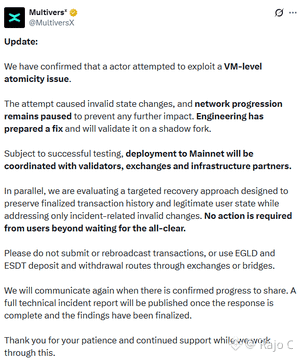
MultiversX says an actor tried to exploit a VM-level atomicity issue, causing invalid state changes. Network progression remains paused while engineers validate a fix on a shadow
fork.$NVO $PTB $COTI
#multiversxplanshardforkrecovery REAKING: MULTIVERSX PAUSES MAINNET AFTER EXPLOIT ATTEMPT
MultiversX says an actor tried to exploit a VM-level atomicity issue, causing invalid state changes. Network progression remains paused while engineers validate a fix on a shadow
fork.$NVO $PTB $COTI
MultiversX says an actor tried to exploit a VM-level atomicity issue, causing invalid state changes. Network progression remains paused while engineers validate a fix on a shadow
fork.$NVO $PTB $COTI

759
·
--
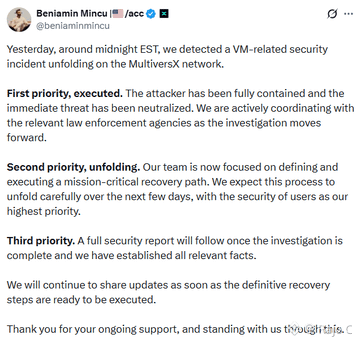
#multiversxplanshardforkrecovery MultiversX paused mainnet after detecting an attempted exploit of a virtual-machine atomicity flaw; a fix is in testing on a shadow fork, with recovery planned to protect legitimate balances.$GENIUS $4 $PENDLE
#multiversxplanshardforkrecovery MultiversX paused mainnet after detecting an attempted exploit of a virtual-machine atomicity flaw; a fix is in testing on a shadow fork, with recovery planned to protect legitimate balances.$GENIUS $4 $PENDLE
882

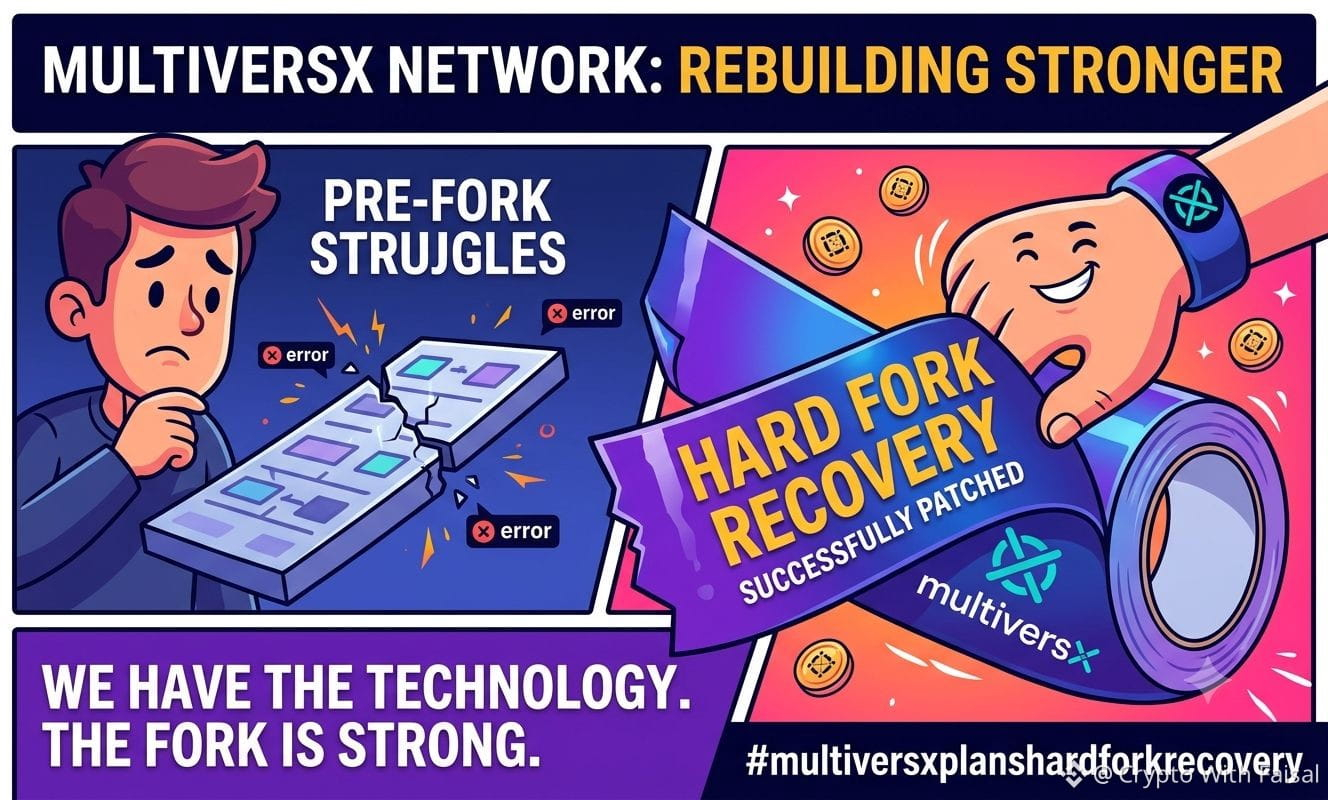
🚨 $EGLD / MultiversX Update: Hard Fork Recovery in Progress 🚨 #multiversxplanshardforkrecovery
The MultiversX team is tackling a recent network attack head-on with a coordinated hard fork recovery. If you are holding EGLD, here is the verified alpha on what happened and what you need to do right now.
The Breakdown:
The Cause: An ordering error during an edge case triggered the exploit, but validators quickly brought the situation under control.
Justice Served: The attacker has been identified, their accounts are frozen across major exchanges, and law enforcement is involved.
The Fix: A coordinated hard fork is rolling out from a secure, known good checkpoint to safely restore the network.
Your Funds: Standard wallet balances remain completely safe during this process.
⚠️ Crucial Safety Steps for Users:
Do NOT submit or rebroadcast any transactions right now. Avoid depositing or withdrawing EGLD or ESDT through exchanges and cross-chain bridges until official confirmation that the recovery is complete. Exchanges and bridges will reopen in phases once the restart is successful.
Stay secure, stay patient, and let the validators work!
👇 Are you impressed by how fast the ecosystem contained this? Drop your thoughts below!
Disclaimer: NFA. Always verify updates via official project channels.
{future}(EGLDUSDT)
$FORM
{future}(FORMUSDT)
$UAI
{future}(UAIUSDT)
#MultiversXPlansHardForkRecovery
#MultiversX #CryptoSafety #EGLD
🚨 $EGLD / MultiversX Update: Hard Fork Recovery in Progress 🚨 #multiversxplanshardforkrecovery
The MultiversX team is tackling a recent network attack head-on with a coordinated hard fork recovery. If you are holding EGLD, here is the verified alpha on what happened and what you need to do right now.
The Breakdown:
The Cause: An ordering error during an edge case triggered the exploit, but validators quickly brought the situation under control.
Justice Served: The attacker has been identified, their accounts are frozen across major exchanges, and law enforcement is involved.
The Fix: A coordinated hard fork is rolling out from a secure, known good checkpoint to safely restore the network.
Your Funds: Standard wallet balances remain completely safe during this process.
⚠️ Crucial Safety Steps for Users:
Do NOT submit or rebroadcast any transactions right now. Avoid depositing or withdrawing EGLD or ESDT through exchanges and cross-chain bridges until official confirmation that the recovery is complete. Exchanges and bridges will reopen in phases once the restart is successful.
Stay secure, stay patient, and let the validators work!
👇 Are you impressed by how fast the ecosystem contained this? Drop your thoughts below!
Disclaimer: NFA. Always verify updates via official project channels.
$FORM
$UAI
#MultiversXPlansHardForkRecovery
#MultiversX #CryptoSafety #EGLD
The MultiversX team is tackling a recent network attack head-on with a coordinated hard fork recovery. If you are holding EGLD, here is the verified alpha on what happened and what you need to do right now.
The Breakdown:
The Cause: An ordering error during an edge case triggered the exploit, but validators quickly brought the situation under control.
Justice Served: The attacker has been identified, their accounts are frozen across major exchanges, and law enforcement is involved.
The Fix: A coordinated hard fork is rolling out from a secure, known good checkpoint to safely restore the network.
Your Funds: Standard wallet balances remain completely safe during this process.
⚠️ Crucial Safety Steps for Users:
Do NOT submit or rebroadcast any transactions right now. Avoid depositing or withdrawing EGLD or ESDT through exchanges and cross-chain bridges until official confirmation that the recovery is complete. Exchanges and bridges will reopen in phases once the restart is successful.
Stay secure, stay patient, and let the validators work!
👇 Are you impressed by how fast the ecosystem contained this? Drop your thoughts below!
Disclaimer: NFA. Always verify updates via official project channels.
$FORM
$UAI
#MultiversXPlansHardForkRecovery
#MultiversX #CryptoSafety #EGLD
2
524
·
--
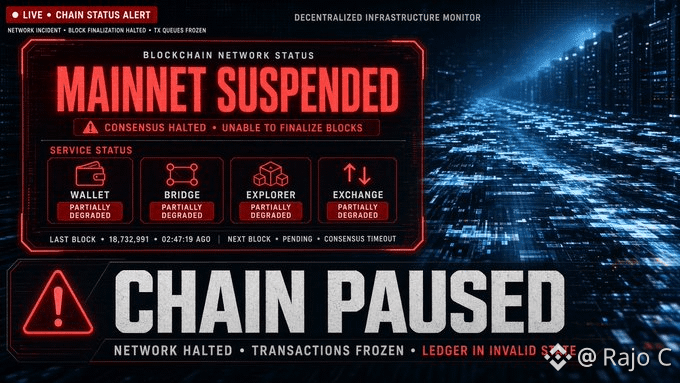
#multiversxplanshardforkrecovery MultiversX just hit the big red button: mainnet suspended after a VM atomicity attack left invalid state onchain. Wallets, bridge, explorer flagged degraded. No loss figure yet. Just… freeze.$G $BNC $MORPHO
#multiversxplanshardforkrecovery MultiversX just hit the big red button: mainnet suspended after a VM atomicity attack left invalid state onchain. Wallets, bridge, explorer flagged degraded. No loss figure yet. Just… freeze.$G $BNC $MORPHO
698

#MultiversXPlansHardForkRecovery
MultiversX is preparing a coordinated hard fork to recover the network after a recent security incident.
🔹 Recovery from a known-good checkpoint
🔹 Security fix already prepared
🔹 Validator testing underway
🔹 Users advised to wait before making $EGLD /ESDT transactions
The focus is now to secure the network, restore consistency, and resume safely.
#Mahanadi
{future}(EGLDUSDT)
{future}(BTCUSDT)
{future}(ETHUSDT)
#MultiversXPlansHardForkRecovery
MultiversX is preparing a coordinated hard fork to recover the network after a recent security incident.
🔹 Recovery from a known-good checkpoint
🔹 Security fix already prepared
🔹 Validator testing underway
🔹 Users advised to wait before making $EGLD /ESDT transactions
The focus is now to secure the network, restore consistency, and resume safely.
#Mahanadi
MultiversX is preparing a coordinated hard fork to recover the network after a recent security incident.
🔹 Recovery from a known-good checkpoint
🔹 Security fix already prepared
🔹 Validator testing underway
🔹 Users advised to wait before making $EGLD /ESDT transactions
The focus is now to secure the network, restore consistency, and resume safely.
#Mahanadi

Hard fork 🍴
From Digital Mahanadi
2
147
·
--
#multiversxplanshardforkrecovery JUST IN: MultiversX suspends network operations after an attempted VM-level exploit caused invalid state changes; a fix is being tested in a shadow fork and deployments to mainnet will follow after validators and partners confirm.$PTB $COTI $UAI
#multiversxplanshardforkrecovery JUST IN: MultiversX suspends network operations after an attempted VM-level exploit caused invalid state changes; a fix is being tested in a shadow fork and deployments to mainnet will follow after validators and partners confirm.$PTB $COTI $UAI

472

·
--
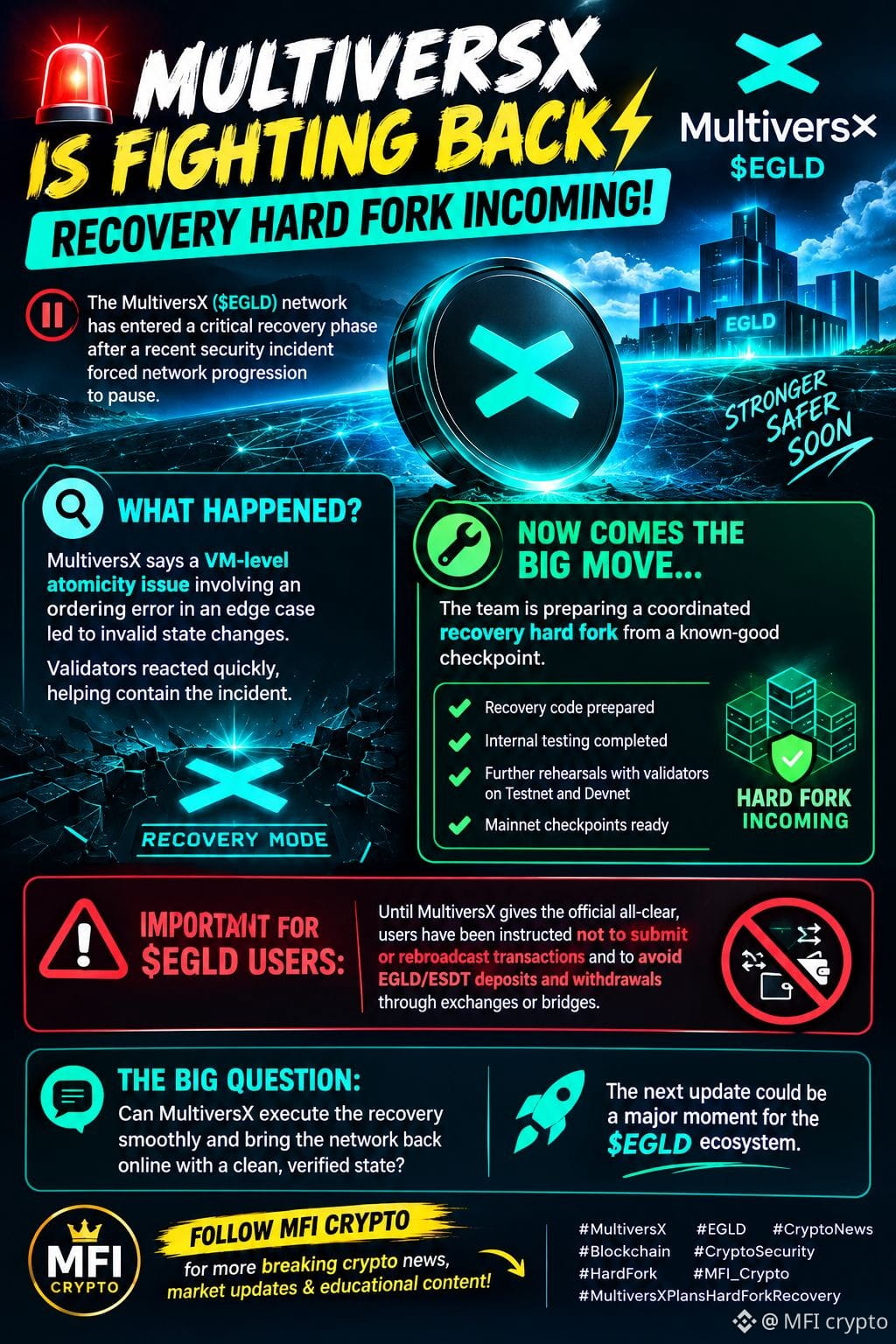
🚨⚡ #MULTIVERSX IS FIGHTING BACK — RECOVERY HARD FORK INCOMING! ⚡🚨
The MultiversX ($EGLD ) network has entered a critical recovery phase after a recent security incident forced network progression to pause. 🛑
🔍 WHAT HAPPENED?
MultiversX says a VM-level atomicity issue involving an ordering error in an edge case led to invalid state changes. Validators reacted quickly, helping contain the incident.
🛠️ NOW COMES THE BIG MOVE…
The team is preparing a coordinated recovery hard fork from a known-good checkpoint.
🔥 The recovery code has been prepared and internal testing has been completed, while further rehearsals with validators are being conducted across Testnet and Devnet. Mainnet checkpoints are also ready.
⚠️ IMPORTANT FOR $EGLD USERS:
Until MultiversX gives the official all-clear, users have been instructed not to submit or rebroadcast transactions and to avoid EGLD/ESDT deposits and withdrawals through exchanges or bridges.
👀 THE BIG QUESTION:
Can MultiversX execute the recovery smoothly and bring the network back online with a clean, verified state?
The next update could be a major moment for the $EGLD ecosystem. 🚀
🔥 Follow MFI CRYPTO for more breaking crypto news, market updates & educational content!
#MultiversX #EGLD #CryptoNews #Blockchain #CryptoSecurity #HardFork #MFI_Crypto #MultiversXPlansHardForkRecovery
#multiversxplanshardforkrecovery
{spot}(XRPUSDT)
{spot}(BTCUSDT)
{spot}(EGLDUSDT)
🚨⚡ #MULTIVERSX IS FIGHTING BACK — RECOVERY HARD FORK INCOMING! ⚡🚨
The MultiversX ($EGLD ) network has entered a critical recovery phase after a recent security incident forced network progression to pause. 🛑
🔍 WHAT HAPPENED?
MultiversX says a VM-level atomicity issue involving an ordering error in an edge case led to invalid state changes. Validators reacted quickly, helping contain the incident.
🛠️ NOW COMES THE BIG MOVE…
The team is preparing a coordinated recovery hard fork from a known-good checkpoint.
🔥 The recovery code has been prepared and internal testing has been completed, while further rehearsals with validators are being conducted across Testnet and Devnet. Mainnet checkpoints are also ready.
⚠️ IMPORTANT FOR $EGLD USERS:
Until MultiversX gives the official all-clear, users have been instructed not to submit or rebroadcast transactions and to avoid EGLD/ESDT deposits and withdrawals through exchanges or bridges.
👀 THE BIG QUESTION:
Can MultiversX execute the recovery smoothly and bring the network back online with a clean, verified state?
The next update could be a major moment for the $EGLD ecosystem. 🚀
🔥 Follow MFI CRYPTO for more breaking crypto news, market updates & educational content!
#MultiversX #EGLD #CryptoNews #Blockchain #CryptoSecurity #HardFork #MFI_Crypto #MultiversXPlansHardForkRecovery
#multiversxplanshardforkrecovery
The MultiversX ($EGLD ) network has entered a critical recovery phase after a recent security incident forced network progression to pause. 🛑
🔍 WHAT HAPPENED?
MultiversX says a VM-level atomicity issue involving an ordering error in an edge case led to invalid state changes. Validators reacted quickly, helping contain the incident.
🛠️ NOW COMES THE BIG MOVE…
The team is preparing a coordinated recovery hard fork from a known-good checkpoint.
🔥 The recovery code has been prepared and internal testing has been completed, while further rehearsals with validators are being conducted across Testnet and Devnet. Mainnet checkpoints are also ready.
⚠️ IMPORTANT FOR $EGLD USERS:
Until MultiversX gives the official all-clear, users have been instructed not to submit or rebroadcast transactions and to avoid EGLD/ESDT deposits and withdrawals through exchanges or bridges.
👀 THE BIG QUESTION:
Can MultiversX execute the recovery smoothly and bring the network back online with a clean, verified state?
The next update could be a major moment for the $EGLD ecosystem. 🚀
🔥 Follow MFI CRYPTO for more breaking crypto news, market updates & educational content!
#MultiversX #EGLD #CryptoNews #Blockchain #CryptoSecurity #HardFork #MFI_Crypto #MultiversXPlansHardForkRecovery
#multiversxplanshardforkrecovery
1
121

·
--
Verified
#multiversxplanshardforkrecovery
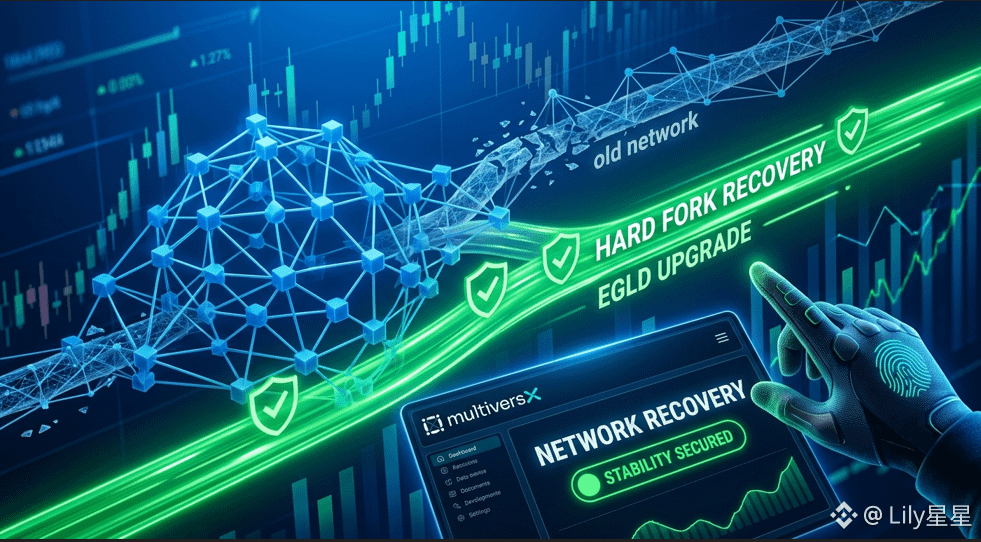
MultiversX is moving to fix recent network hurdles — what EGLD holders need to know 🛠️
Network hiccups are never fun, but how a core team responds makes all the difference. MultiversX is pushing ahead with hard fork recovery measures to restore full network speed and stability. For EGLD holders, standard wallet balances remain safe, but keeping an eye on validator updates and node status is key right now.
What is a Hard Fork? A hard fork is a radical change to the network protocol that requires all participants to upgrade to the new rules. This isn't just a simple patch; it’s a necessary, planned upgrade to correct underlying issues and enhance long-term scalability and security.
We want to hear from you! Hard forks are a significant event in any blockchain's lifecycle.
Do you think hard forks like this build long-term resilience by fixing underlying problems, or do they shake short-term trust due to the necessary downtime and required user/node upgrades?
Let’s discuss the balance between technical upgrades and market perception in the comments below! 👇💬
#MultiversX #EGLD #CanaryFilesSecondAmendmentForStakedSEIETF
#multiversxplanshardforkrecovery
MultiversX is moving to fix recent network hurdles — what EGLD holders need to know 🛠️
Network hiccups are never fun, but how a core team responds makes all the difference. MultiversX is pushing ahead with hard fork recovery measures to restore full network speed and stability. For EGLD holders, standard wallet balances remain safe, but keeping an eye on validator updates and node status is key right now.
What is a Hard Fork? A hard fork is a radical change to the network protocol that requires all participants to upgrade to the new rules. This isn't just a simple patch; it’s a necessary, planned upgrade to correct underlying issues and enhance long-term scalability and security.
We want to hear from you! Hard forks are a significant event in any blockchain's lifecycle.
Do you think hard forks like this build long-term resilience by fixing underlying problems, or do they shake short-term trust due to the necessary downtime and required user/node upgrades?
Let’s discuss the balance between technical upgrades and market perception in the comments below! 👇💬
#MultiversX #EGLD #CanaryFilesSecondAmendmentForStakedSEIETF
MultiversX is moving to fix recent network hurdles — what EGLD holders need to know 🛠️
Network hiccups are never fun, but how a core team responds makes all the difference. MultiversX is pushing ahead with hard fork recovery measures to restore full network speed and stability. For EGLD holders, standard wallet balances remain safe, but keeping an eye on validator updates and node status is key right now.
What is a Hard Fork? A hard fork is a radical change to the network protocol that requires all participants to upgrade to the new rules. This isn't just a simple patch; it’s a necessary, planned upgrade to correct underlying issues and enhance long-term scalability and security.
We want to hear from you! Hard forks are a significant event in any blockchain's lifecycle.
Do you think hard forks like this build long-term resilience by fixing underlying problems, or do they shake short-term trust due to the necessary downtime and required user/node upgrades?
Let’s discuss the balance between technical upgrades and market perception in the comments below! 👇💬
#MultiversX #EGLD #CanaryFilesSecondAmendmentForStakedSEIETF
1
518

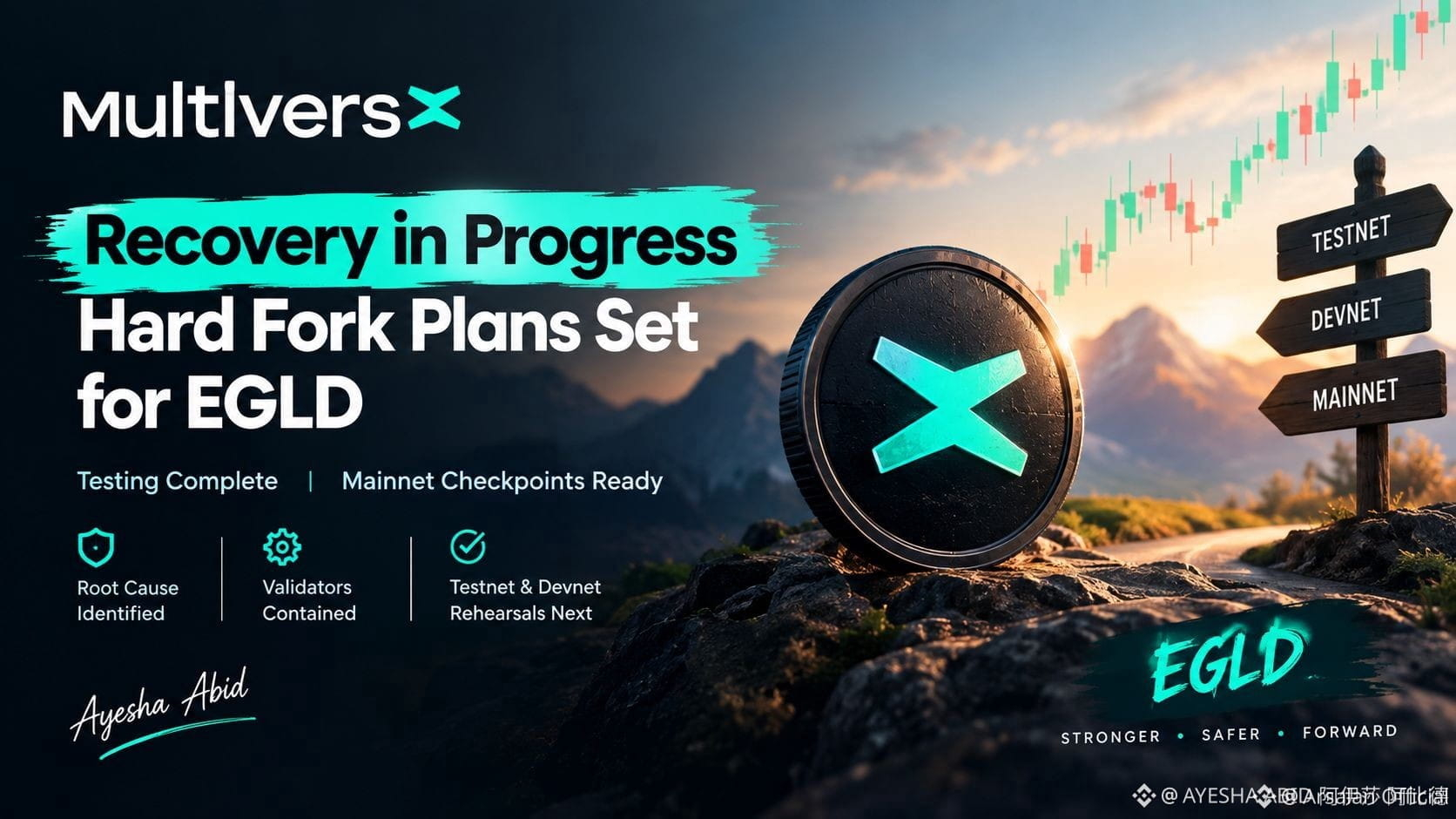
#MultiversXPlansHardForkRecovery MultiversX is preparing a coordinated recovery hard fork after a VM-level exploit caused invalid state changes. The recovery plan uses a known-good checkpoint, with testing and validator coordination underway while the mainnet remains paused.
#EGLD #MultiversX #Crypto #Blockchain #CryptoNews #Web3 #DigitalAssets #DeFi$EGLD
{spot}(EGLDUSDT)
#MultiversXPlansHardForkRecovery MultiversX is preparing a coordinated recovery hard fork after a VM-level exploit caused invalid state changes. The recovery plan uses a known-good checkpoint, with testing and validator coordination underway while the mainnet remains paused.
#EGLD #MultiversX #Crypto #Blockchain #CryptoNews #Web3 #DigitalAssets #DeFi$EGLD
#EGLD #MultiversX #Crypto #Blockchain #CryptoNews #Web3 #DigitalAssets #DeFi$EGLD
1
89

·
--
If you're still panic-dumping every L1 the moment a hard fork gets announced, stop now.
That habit has quietly drained more portfolios than the outages themselves. People sell $EGLD on the fear, then sit on the sidelines while the recovery trade plays out without them.
We've been here before. Ethereum split after the DAO and $ETH became the default settlement layer anyway. Solana has gone down, restarted, and kept climbing, even as it now pushes slot times toward 250ms.
MultiversX planning a hard fork recovery looks a lot more like those chapters than a chain death. The market is already in greed territory, which means the bounce, if it comes, will not wait for everyone to feel comfortable.
Hard forks are ugly in the moment. History says they are rarely the ending people expect.
What's your take on whether $EGLD follows the $SOL recovery pattern or the ones that never quite came back?
#MultiversXPlansHardForkRecovery #NEARRisesNearly80 #SolanaCutsTargetSlotTimeTo250ms
If you're still panic-dumping every L1 the moment a hard fork gets announced, stop now.
That habit has quietly drained more portfolios than the outages themselves. People sell $EGLD on the fear, then sit on the sidelines while the recovery trade plays out without them.
We've been here before. Ethereum split after the DAO and $ETH became the default settlement layer anyway. Solana has gone down, restarted, and kept climbing, even as it now pushes slot times toward 250ms.
MultiversX planning a hard fork recovery looks a lot more like those chapters than a chain death. The market is already in greed territory, which means the bounce, if it comes, will not wait for everyone to feel comfortable.
Hard forks are ugly in the moment. History says they are rarely the ending people expect.
What's your take on whether $EGLD follows the $SOL recovery pattern or the ones that never quite came back?
#MultiversXPlansHardForkRecovery #NEARRisesNearly80 #SolanaCutsTargetSlotTimeTo250ms
That habit has quietly drained more portfolios than the outages themselves. People sell $EGLD on the fear, then sit on the sidelines while the recovery trade plays out without them.
We've been here before. Ethereum split after the DAO and $ETH became the default settlement layer anyway. Solana has gone down, restarted, and kept climbing, even as it now pushes slot times toward 250ms.
MultiversX planning a hard fork recovery looks a lot more like those chapters than a chain death. The market is already in greed territory, which means the bounce, if it comes, will not wait for everyone to feel comfortable.
Hard forks are ugly in the moment. History says they are rarely the ending people expect.
What's your take on whether $EGLD follows the $SOL recovery pattern or the ones that never quite came back?
#MultiversXPlansHardForkRecovery #NEARRisesNearly80 #SolanaCutsTargetSlotTimeTo250ms
75

Have you noticed how retail traders always panic sell the exact moment a Layer 1 network announces an emergency recovery plan? Watching your positions freeze while liquidity rotates out to stablecoins like $USDT is a miserable experience. Most investors either dump their holdings at the absolute bottom or bag-hold blindly without evaluating the actual engineering response.
The mainstream narrative treats emergency patches as a fatal flaw, but that perspective is fundamentally flawed. When MultiversX coordinates a structured hard fork recovery, it signals strong validator alignment and active developer intervention rather than an abandoned chain. When network state finality is restored cleanly, the resulting market panic often leaves $EGLD mispriced relative to the broader market momentum driven by $BTC.
Navigating these technical disruptions requires a calm, systematic process. Always monitor validator node resynchronization on-chain rather than following emotional social feeds. Wait for official bridge and exchange wallet re-openings before moving capital. Most importantly, review the core team's technical post-mortem to confirm the root vulnerability has been permanently resolved before re-allocating funds.
How do you handle your positions when a major protocol executes an emergency technical upgrade?
#MultiversXPlansHardForkRecovery #SolanaCutsTargetSlotTimeTo250ms #NEARRisesNearly80
Have you noticed how retail traders always panic sell the exact moment a Layer 1 network announces an emergency recovery plan? Watching your positions freeze while liquidity rotates out to stablecoins like $USDT is a miserable experience. Most investors either dump their holdings at the absolute bottom or bag-hold blindly without evaluating the actual engineering response.
The mainstream narrative treats emergency patches as a fatal flaw, but that perspective is fundamentally flawed. When MultiversX coordinates a structured hard fork recovery, it signals strong validator alignment and active developer intervention rather than an abandoned chain. When network state finality is restored cleanly, the resulting market panic often leaves $EGLD mispriced relative to the broader market momentum driven by $BTC .
Navigating these technical disruptions requires a calm, systematic process. Always monitor validator node resynchronization on-chain rather than following emotional social feeds. Wait for official bridge and exchange wallet re-openings before moving capital. Most importantly, review the core team's technical post-mortem to confirm the root vulnerability has been permanently resolved before re-allocating funds.
How do you handle your positions when a major protocol executes an emergency technical upgrade?
#MultiversXPlansHardForkRecovery #SolanaCutsTargetSlotTimeTo250ms #NEARRisesNearly80
The mainstream narrative treats emergency patches as a fatal flaw, but that perspective is fundamentally flawed. When MultiversX coordinates a structured hard fork recovery, it signals strong validator alignment and active developer intervention rather than an abandoned chain. When network state finality is restored cleanly, the resulting market panic often leaves $EGLD mispriced relative to the broader market momentum driven by $BTC .
Navigating these technical disruptions requires a calm, systematic process. Always monitor validator node resynchronization on-chain rather than following emotional social feeds. Wait for official bridge and exchange wallet re-openings before moving capital. Most importantly, review the core team's technical post-mortem to confirm the root vulnerability has been permanently resolved before re-allocating funds.
How do you handle your positions when a major protocol executes an emergency technical upgrade?
#MultiversXPlansHardForkRecovery #SolanaCutsTargetSlotTimeTo250ms #NEARRisesNearly80
114

·
--
Picture this: a major Layer 1 network encounters a critical incident, and the core team chooses the ultimate reset button by proposing an emergency hard fork to recover user state.
For anyone holding capital on-chain, nothing triggers anxiety quite like the realization that decentralization often takes a back seat the moment millions of dollars hang in the balance. We all fear waking up to an exploit, but the real dilemma begins when the community must decide between preserving absolute ledger immutability and rolling things back to make victims whole.
This situation brings back memories of Ethereum handling The DAO in 2016, or more recently when BNB Chain coordinated a quick validator halt after the cross-chain bridge exploit. Now, as MultiversX maps out a hard fork recovery path for $EGLD holders, we are watching that exact philosophical battle play out again in real time. While older chains like $ETC exist purely because a faction refused state rollbacks, modern ecosystems often prioritize capital preservation over pure code-is-law ideology.
What makes this case study fascinating compared to networks like $BTC is how governance responds under acute pressure. When catastrophic failures occur, pragmatic intervention usually wins over purist decentralization, but it inevitably reshapes how institutions and DeFi users evaluate network trust long after the dust settles.
Do you think coordinating a hard fork recovery builds more long-term confidence for ecosystem capital, or does it permanently damage the core promise of immutability?
#MultiversXPlansHardForkRecovery #SolanaCutsTargetSlotTimeTo250ms
Picture this: a major Layer 1 network encounters a critical incident, and the core team chooses the ultimate reset button by proposing an emergency hard fork to recover user state.
For anyone holding capital on-chain, nothing triggers anxiety quite like the realization that decentralization often takes a back seat the moment millions of dollars hang in the balance. We all fear waking up to an exploit, but the real dilemma begins when the community must decide between preserving absolute ledger immutability and rolling things back to make victims whole.
This situation brings back memories of Ethereum handling The DAO in 2016, or more recently when BNB Chain coordinated a quick validator halt after the cross-chain bridge exploit. Now, as MultiversX maps out a hard fork recovery path for $EGLD holders, we are watching that exact philosophical battle play out again in real time. While older chains like $ETC exist purely because a faction refused state rollbacks, modern ecosystems often prioritize capital preservation over pure code-is-law ideology.
What makes this case study fascinating compared to networks like $BTC is how governance responds under acute pressure. When catastrophic failures occur, pragmatic intervention usually wins over purist decentralization, but it inevitably reshapes how institutions and DeFi users evaluate network trust long after the dust settles.
Do you think coordinating a hard fork recovery builds more long-term confidence for ecosystem capital, or does it permanently damage the core promise of immutability?
#MultiversXPlansHardForkRecovery #SolanaCutsTargetSlotTimeTo250ms
For anyone holding capital on-chain, nothing triggers anxiety quite like the realization that decentralization often takes a back seat the moment millions of dollars hang in the balance. We all fear waking up to an exploit, but the real dilemma begins when the community must decide between preserving absolute ledger immutability and rolling things back to make victims whole.
This situation brings back memories of Ethereum handling The DAO in 2016, or more recently when BNB Chain coordinated a quick validator halt after the cross-chain bridge exploit. Now, as MultiversX maps out a hard fork recovery path for $EGLD holders, we are watching that exact philosophical battle play out again in real time. While older chains like $ETC exist purely because a faction refused state rollbacks, modern ecosystems often prioritize capital preservation over pure code-is-law ideology.
What makes this case study fascinating compared to networks like $BTC is how governance responds under acute pressure. When catastrophic failures occur, pragmatic intervention usually wins over purist decentralization, but it inevitably reshapes how institutions and DeFi users evaluate network trust long after the dust settles.
Do you think coordinating a hard fork recovery builds more long-term confidence for ecosystem capital, or does it permanently damage the core promise of immutability?
#MultiversXPlansHardForkRecovery #SolanaCutsTargetSlotTimeTo250ms
58

Most crypto networks will watch millions vanish into a security exploit before ever daring to roll back state with a hard fork.
Nothing tests your conviction quite like watching your holdings get frozen while validator committees decide whether immutability matters more than your capital. The panic of not knowing whether your portfolio will survive the next epoch is a sickening feeling every veteran remembers.
Back in 2016, Ethereum faced the exact same existential crossroad after the DAO hack, and critics claimed intervening on-chain would permanently destroy trust in $BTC and decentralized ledgers. Yet here we are watching MultiversX step up with a coordinated recovery fork for $EGLD, proving that when catastrophic exploit risk strikes, pragmatic survival usually beats theoretical purity every single cycle.
When market sentiment sits near peak euphoria, people forget that infrastructure risk does not care about your unrealized gains. Layer 1s that can coordinate swift disaster response often weather the storm far better than ghost chains that freeze under pressure, much like how $SOL adapted through its early network halts.
Do you think coordinated hard forks undermine decentralization, or are they a necessary safety net for mainstream adoption?
#MultiversXPlansHardForkRecovery #BitcoinHits #SolanaCutsTargetSlotTimeTo250ms
Most crypto networks will watch millions vanish into a security exploit before ever daring to roll back state with a hard fork.
Nothing tests your conviction quite like watching your holdings get frozen while validator committees decide whether immutability matters more than your capital. The panic of not knowing whether your portfolio will survive the next epoch is a sickening feeling every veteran remembers.
Back in 2016, Ethereum faced the exact same existential crossroad after the DAO hack, and critics claimed intervening on-chain would permanently destroy trust in $BTC and decentralized ledgers. Yet here we are watching MultiversX step up with a coordinated recovery fork for $EGLD , proving that when catastrophic exploit risk strikes, pragmatic survival usually beats theoretical purity every single cycle.
When market sentiment sits near peak euphoria, people forget that infrastructure risk does not care about your unrealized gains. Layer 1s that can coordinate swift disaster response often weather the storm far better than ghost chains that freeze under pressure, much like how $SOL adapted through its early network halts.
Do you think coordinated hard forks undermine decentralization, or are they a necessary safety net for mainstream adoption?
#MultiversXPlansHardForkRecovery #BitcoinHits #SolanaCutsTargetSlotTimeTo250ms
Nothing tests your conviction quite like watching your holdings get frozen while validator committees decide whether immutability matters more than your capital. The panic of not knowing whether your portfolio will survive the next epoch is a sickening feeling every veteran remembers.
Back in 2016, Ethereum faced the exact same existential crossroad after the DAO hack, and critics claimed intervening on-chain would permanently destroy trust in $BTC and decentralized ledgers. Yet here we are watching MultiversX step up with a coordinated recovery fork for $EGLD , proving that when catastrophic exploit risk strikes, pragmatic survival usually beats theoretical purity every single cycle.
When market sentiment sits near peak euphoria, people forget that infrastructure risk does not care about your unrealized gains. Layer 1s that can coordinate swift disaster response often weather the storm far better than ghost chains that freeze under pressure, much like how $SOL adapted through its early network halts.
Do you think coordinated hard forks undermine decentralization, or are they a necessary safety net for mainstream adoption?
#MultiversXPlansHardForkRecovery #BitcoinHits #SolanaCutsTargetSlotTimeTo250ms

77

·
--
Everyone thinks a blockchain hard fork is just a routine software upgrade, but actually, it is more like emergency surgery on a moving airplane.
When networks pause or fork unexpectedly, traders often freeze, trapped in open positions while liquidity vanishes across decentralized venues. Trying to move funds during an unscheduled network split usually leads to stuck transactions or heavy slippage.
Think of a blockchain state like a shared digital ledger that thousands of computers must keep synchronized every second. When MultiversX coordinates an emergency recovery fork, the entire system pauses to repair state discrepancies before resuming normal block production. First, this pause temporarily locks bridge assets and liquidity pools, meaning your $EGLD cannot be safely routed until validators reach complete consensus on the corrected chain state.
Second, volatility inevitably spikes the moment trading reopens because participants rush to rebalance positions against major benchmarks like $BTC. The primary risk is not the recovery itself, but the chaotic window immediately after nodes sync up, where oracle price feeds can lag behind fast-moving order books. Staying patient until network confirmations normalize is always safer than rushing into unconfirmed blocks.
Where do you think this recovery leaves confidence in network resilience going forward?
#MultiversXPlansHardForkRecovery #BitcoinHits #SolanaCutsTargetSlotTimeTo250ms
Everyone thinks a blockchain hard fork is just a routine software upgrade, but actually, it is more like emergency surgery on a moving airplane.
When networks pause or fork unexpectedly, traders often freeze, trapped in open positions while liquidity vanishes across decentralized venues. Trying to move funds during an unscheduled network split usually leads to stuck transactions or heavy slippage.
Think of a blockchain state like a shared digital ledger that thousands of computers must keep synchronized every second. When MultiversX coordinates an emergency recovery fork, the entire system pauses to repair state discrepancies before resuming normal block production. First, this pause temporarily locks bridge assets and liquidity pools, meaning your $EGLD cannot be safely routed until validators reach complete consensus on the corrected chain state.
Second, volatility inevitably spikes the moment trading reopens because participants rush to rebalance positions against major benchmarks like $BTC . The primary risk is not the recovery itself, but the chaotic window immediately after nodes sync up, where oracle price feeds can lag behind fast-moving order books. Staying patient until network confirmations normalize is always safer than rushing into unconfirmed blocks.
Where do you think this recovery leaves confidence in network resilience going forward?
#MultiversXPlansHardForkRecovery #BitcoinHits #SolanaCutsTargetSlotTimeTo250ms
When networks pause or fork unexpectedly, traders often freeze, trapped in open positions while liquidity vanishes across decentralized venues. Trying to move funds during an unscheduled network split usually leads to stuck transactions or heavy slippage.
Think of a blockchain state like a shared digital ledger that thousands of computers must keep synchronized every second. When MultiversX coordinates an emergency recovery fork, the entire system pauses to repair state discrepancies before resuming normal block production. First, this pause temporarily locks bridge assets and liquidity pools, meaning your $EGLD cannot be safely routed until validators reach complete consensus on the corrected chain state.
Second, volatility inevitably spikes the moment trading reopens because participants rush to rebalance positions against major benchmarks like $BTC . The primary risk is not the recovery itself, but the chaotic window immediately after nodes sync up, where oracle price feeds can lag behind fast-moving order books. Staying patient until network confirmations normalize is always safer than rushing into unconfirmed blocks.
Where do you think this recovery leaves confidence in network resilience going forward?
#MultiversXPlansHardForkRecovery #BitcoinHits #SolanaCutsTargetSlotTimeTo250ms

53


·
--
Bullish
Verified
#multiversxplanshardforkrecovery
MultiversX Plans Hard Fork Recovery After Mainnet Incident
For EGLD holders, the next milestone is a tested restart and dependable access to funds.
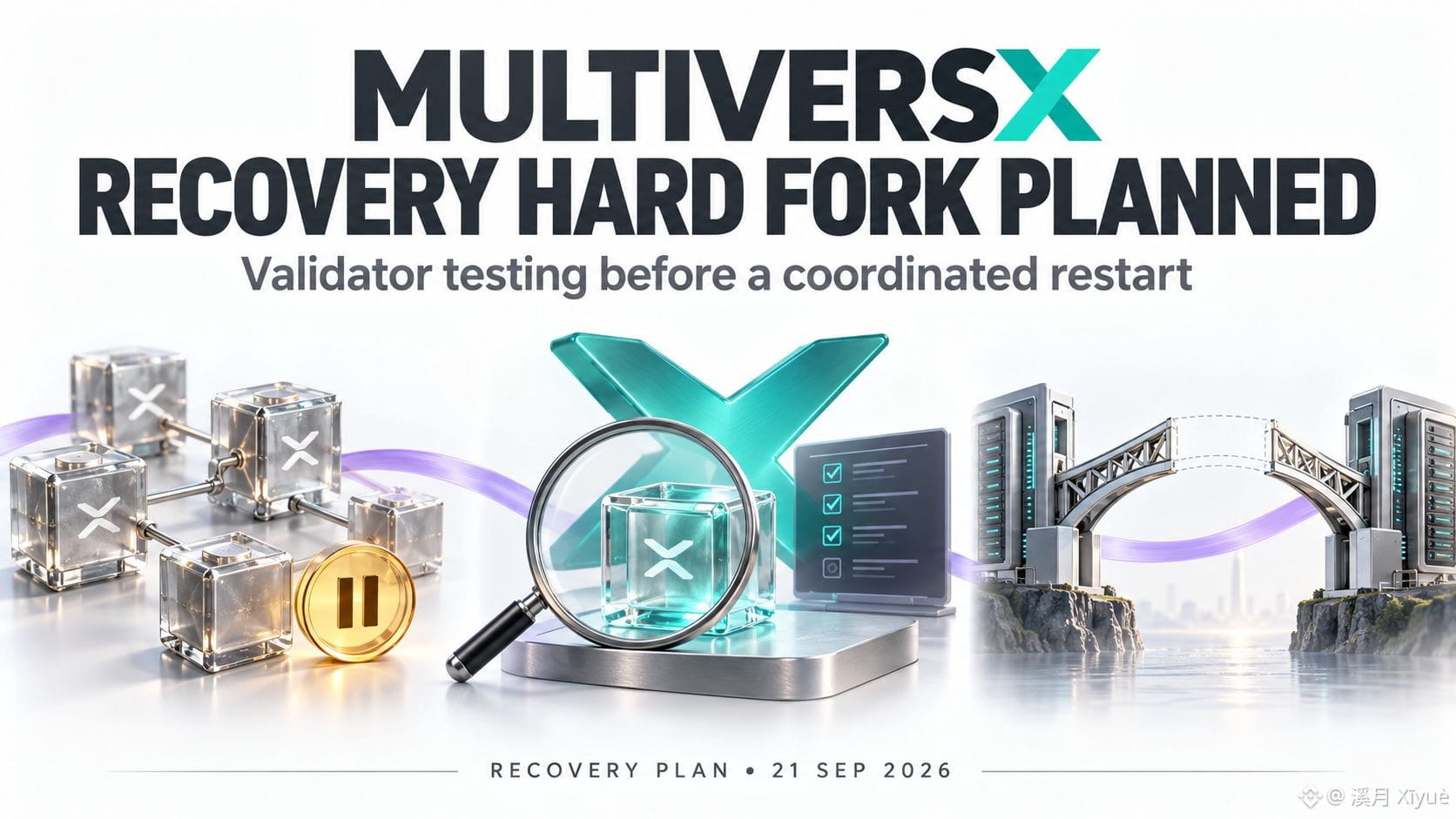
On September 21, Binance News reported that MultiversX plans a coordinated hard fork from a known good checkpoint. The recovery process includes validator rehearsals on testnet and devnet before restarting mainnet. Code has reportedly been published, with testing ongoing.
The reported guidance asks users to avoid submitting or rebroadcasting transactions and transferring EGLD/ESDT through exchanges or bridges until recovery is officially confirmed. Services are expected to reopen in stages.
Recovery remains a plan under testing. When checked on September 21, MultiversX’s official status page still showed degraded performance across several services, including wallets, bridges and xExchange.
My take: a credible recovery should explain what changed, how balances were checked, and which safeguards address the underlying failure. Clear evidence would help users assess whether they can rely on the network again.
Exchange transfers and bridges may resume at different times, making service availability another practical milestone. For EGLD, sustained network stability and normal access to liquidity would provide stronger evidence of recovery than short-term price movements alone.
Which would rebuild your confidence most: transparent reporting, independent testing, or consistent uptime?
#MultiversXPlansHardForkRecovery #EGLD #BlockchainSecurity
$UAI $PTB $BTW
{future}(BTWUSDT)
{future}(PTBUSDT)
{future}(UAIUSDT)
#multiversxplanshardforkrecovery
MultiversX Plans Hard Fork Recovery After Mainnet Incident
For EGLD holders, the next milestone is a tested restart and dependable access to funds.
On September 21, Binance News reported that MultiversX plans a coordinated hard fork from a known good checkpoint. The recovery process includes validator rehearsals on testnet and devnet before restarting mainnet. Code has reportedly been published, with testing ongoing.
The reported guidance asks users to avoid submitting or rebroadcasting transactions and transferring EGLD/ESDT through exchanges or bridges until recovery is officially confirmed. Services are expected to reopen in stages.
Recovery remains a plan under testing. When checked on September 21, MultiversX’s official status page still showed degraded performance across several services, including wallets, bridges and xExchange.
My take: a credible recovery should explain what changed, how balances were checked, and which safeguards address the underlying failure. Clear evidence would help users assess whether they can rely on the network again.
Exchange transfers and bridges may resume at different times, making service availability another practical milestone. For EGLD, sustained network stability and normal access to liquidity would provide stronger evidence of recovery than short-term price movements alone.
Which would rebuild your confidence most: transparent reporting, independent testing, or consistent uptime?
#MultiversXPlansHardForkRecovery #EGLD #BlockchainSecurity
$UAI $PTB $BTW
MultiversX Plans Hard Fork Recovery After Mainnet Incident
For EGLD holders, the next milestone is a tested restart and dependable access to funds.
On September 21, Binance News reported that MultiversX plans a coordinated hard fork from a known good checkpoint. The recovery process includes validator rehearsals on testnet and devnet before restarting mainnet. Code has reportedly been published, with testing ongoing.
The reported guidance asks users to avoid submitting or rebroadcasting transactions and transferring EGLD/ESDT through exchanges or bridges until recovery is officially confirmed. Services are expected to reopen in stages.
Recovery remains a plan under testing. When checked on September 21, MultiversX’s official status page still showed degraded performance across several services, including wallets, bridges and xExchange.
My take: a credible recovery should explain what changed, how balances were checked, and which safeguards address the underlying failure. Clear evidence would help users assess whether they can rely on the network again.
Exchange transfers and bridges may resume at different times, making service availability another practical milestone. For EGLD, sustained network stability and normal access to liquidity would provide stronger evidence of recovery than short-term price movements alone.
Which would rebuild your confidence most: transparent reporting, independent testing, or consistent uptime?
#MultiversXPlansHardForkRecovery #EGLD #BlockchainSecurity
$UAI $PTB $BTW
1.7k

#multiversxplanshardforkrecovery
$EGLD Halted: Crisis or the Ultimate Resilience Test?
A mainnet exploit caused by a VM-level atomicity error forced a total network halt. But here is what the crowd is missing: MultiversX isn't panicking, they are executing a coordinated hard fork recovery.
🔒 Attacker assets frozen via quick law enforcement collaboration
🔄 Validators testing a state rollback to a secure checkpoint
⚠️ User funds remain safe, but bridges and exchanges are paused
True blockchain strength isn't tested when everything is smooth—it's tested when disaster strikes.
👇 Are you dropping your bags in panic, or backing their fast recovery response? Let’s hear your thoughts!
$EGLD $BTC $ETH
{spot}(EGLDUSDT)
#MultiversX #CryptoSecurity #EGLD #BinanceSquare
#multiversxplanshardforkrecovery
$EGLD Halted: Crisis or the Ultimate Resilience Test?
A mainnet exploit caused by a VM-level atomicity error forced a total network halt. But here is what the crowd is missing: MultiversX isn't panicking, they are executing a coordinated hard fork recovery.
🔒 Attacker assets frozen via quick law enforcement collaboration
🔄 Validators testing a state rollback to a secure checkpoint
⚠️ User funds remain safe, but bridges and exchanges are paused
True blockchain strength isn't tested when everything is smooth—it's tested when disaster strikes.
👇 Are you dropping your bags in panic, or backing their fast recovery response? Let’s hear your thoughts!
$EGLD $BTC $ETH
#MultiversX #CryptoSecurity #EGLD #BinanceSquare
$EGLD Halted: Crisis or the Ultimate Resilience Test?
A mainnet exploit caused by a VM-level atomicity error forced a total network halt. But here is what the crowd is missing: MultiversX isn't panicking, they are executing a coordinated hard fork recovery.
🔒 Attacker assets frozen via quick law enforcement collaboration
🔄 Validators testing a state rollback to a secure checkpoint
⚠️ User funds remain safe, but bridges and exchanges are paused
True blockchain strength isn't tested when everything is smooth—it's tested when disaster strikes.
👇 Are you dropping your bags in panic, or backing their fast recovery response? Let’s hear your thoughts!
$EGLD $BTC $ETH
#MultiversX #CryptoSecurity #EGLD #BinanceSquare
2
1.6k

MultiversX is gearing up for a significant hard fork aimed at network recovery. This event is crucial for the blockchain's future stability and performance. The community is closely watching how these recovery plans will be implemented and their potential impact on the ecosystem. Success here could pave the way for renewed confidence and development, while any setbacks might raise concerns about the project's long-term viability. The focus is now on execution and transparent communication throughout this critical phase.
Disclaimer: This content is for informational purposes only and does not constitute investment advice.
#MultiversXPlansHardForkRecovery
MultiversX is gearing up for a significant hard fork aimed at network recovery. This event is crucial for the blockchain's future stability and performance. The community is closely watching how these recovery plans will be implemented and their potential impact on the ecosystem. Success here could pave the way for renewed confidence and development, while any setbacks might raise concerns about the project's long-term viability. The focus is now on execution and transparent communication throughout this critical phase.
Disclaimer: This content is for informational purposes only and does not constitute investment advice.
#MultiversXPlansHardForkRecovery
Disclaimer: This content is for informational purposes only and does not constitute investment advice.
#MultiversXPlansHardForkRecovery
57

·
--
#MultiversXPlansHardForkRecovery
🚨 MultiversX Plans Hard Fork Recovery After Mainnet Incident
MultiversX has outlined a coordinated recovery plan following an attack linked to an edge-case transaction-ordering issue that caused invalid state changes on the network.
The team says the incident has been contained, with validators responding quickly. Its proposed path forward is a hard fork from a known-good checkpoint, after recovery drills on testnet and devnet with validator participation.
Key points:
• Recovery code has been published and testing is still underway
• Mainnet remains paused during validation
• The team is coordinating with validators, exchanges, and infrastructure partners
• Users are advised not to submit or rebroadcast transactions, or move EGLD/ESDT through exchanges or cross-chain bridges until an official all-clear is issued
• Services are expected to reopen gradually after the restart
This is a major reminder that rapid incident response, transparent communication, and validator coordination remain critical for blockchain resilience. The recovery’s execution and post-incident review will be closely watched by the wider crypto community.
#MultiversX #EGLD #CryptoNews #BlockchainSecurity #Hardfork #Web3
#MultiversXPlansHardForkRecovery
🚨 MultiversX Plans Hard Fork Recovery After Mainnet Incident
MultiversX has outlined a coordinated recovery plan following an attack linked to an edge-case transaction-ordering issue that caused invalid state changes on the network.
The team says the incident has been contained, with validators responding quickly. Its proposed path forward is a hard fork from a known-good checkpoint, after recovery drills on testnet and devnet with validator participation.
Key points:
• Recovery code has been published and testing is still underway
• Mainnet remains paused during validation
• The team is coordinating with validators, exchanges, and infrastructure partners
• Users are advised not to submit or rebroadcast transactions, or move EGLD/ESDT through exchanges or cross-chain bridges until an official all-clear is issued
• Services are expected to reopen gradually after the restart
This is a major reminder that rapid incident response, transparent communication, and validator coordination remain critical for blockchain resilience. The recovery’s execution and post-incident review will be closely watched by the wider crypto community.
#MultiversX #EGLD #CryptoNews #BlockchainSecurity #Hardfork #Web3
🚨 MultiversX Plans Hard Fork Recovery After Mainnet Incident
MultiversX has outlined a coordinated recovery plan following an attack linked to an edge-case transaction-ordering issue that caused invalid state changes on the network.
The team says the incident has been contained, with validators responding quickly. Its proposed path forward is a hard fork from a known-good checkpoint, after recovery drills on testnet and devnet with validator participation.
Key points:
• Recovery code has been published and testing is still underway
• Mainnet remains paused during validation
• The team is coordinating with validators, exchanges, and infrastructure partners
• Users are advised not to submit or rebroadcast transactions, or move EGLD/ESDT through exchanges or cross-chain bridges until an official all-clear is issued
• Services are expected to reopen gradually after the restart
This is a major reminder that rapid incident response, transparent communication, and validator coordination remain critical for blockchain resilience. The recovery’s execution and post-incident review will be closely watched by the wider crypto community.
#MultiversX #EGLD #CryptoNews #BlockchainSecurity #Hardfork #Web3
62
Log in to explore more content
Join global crypto users on Binance Square
⚡️ Get latest and useful information about crypto.
💬 Trusted by the world’s largest crypto exchange.
👍 Discover real insights from verified creators.
Email / Phone number
Trending Topics
1
#CardanoAddedToX402KitForADAPayments
176 views
56 Discussing
2
#XRPRises8%
6,964 views
409 Discussing
3
#AMDHits$1TrillionMarketCap
52 views
17 Discussing
4
#BitcoinSpotETFs$999MNetInflow
307 views
25 Discussing
5
#AppleGoogleSeekStablecoinTokenizedDepositTalent
4,964 views
317 Discussing
6
#NvidiaToBuyAnother$1.5BSBEnergySharesPreIPO
1,088 views
29 Discussing
7
#AgoraGetsPreliminaryOCCApprovalForTrustBank
2,803 views
148 Discussing
8
#NEARRisesNearly80%InAWeek
68,909 views
1,285 Discussing
9
#MultiversXPlansHardForkRecovery
54,341 views
968 Discussing
10
#CircleLaunchesInstitutionalBTCBackedBorrowing
48,472 views
962 Discussing