
#msftb
msftb
7,692 views
446 Discussing
Hot
Latest

·
--
MSFTB is currently at 546.43, up 2.65% over 24 hours and 2.83% over 7 days. Intraday range: 526.95–567.64; volatility: 7.7%.
【Market】
GM, the overall market is strong today, with the focus still on key levels.
MSFTB’s 2.65% gain puts it among the stronger performers in the top coins.
During the broader market’s bottoming phase, MSFTB has still managed to stay in the green over 24 hours, suggesting independent buyers are supporting it.
The price has retested 526.95 several times without breaking below it, and dip buying has been decisive.
The broader market is up just +0.51% over the same period, so MSFTB’s 2.65% gain represents outperformance.
【Macro】 U.S. stocks rose overnight: Nasdaq +0.82%, S&P 500 +0.70% (close on 2026-10-27). BTC ETFs saw net outflows of about $45.2 billion this month. U.S. CPI came in above expectations at 3.7% year over year, and the probability of a rate hike at the 2026-10-27/28 policy meeting is about 47%.
The short-term outlook leans bullish.
【Bullish Case】
A sustained hold above 526.95 would confirm genuine strength; 567.64 is the key level in the opposite direction.
With a 24-hour gain of 2.65% and a range of 526.95–567.64, buyers are currently in control.
Support on pullbacks and volume on advances make this kind of price action more sustainable than a one-way rally.
Don’t chase or panic; keep a close eye on key levels.
The risk is that profit-taking could emerge at any time after the short-term rise, and chasing higher could leave you vulnerable to a sharp wick.
$MSFTB #MSFTB
MSFTB is currently at 546.43, up 2.65% over 24 hours and 2.83% over 7 days. Intraday range: 526.95–567.64; volatility: 7.7%.
【Market】
GM, the overall market is strong today, with the focus still on key levels.
MSFTB’s 2.65% gain puts it among the stronger performers in the top coins.
During the broader market’s bottoming phase, MSFTB has still managed to stay in the green over 24 hours, suggesting independent buyers are supporting it.
The price has retested 526.95 several times without breaking below it, and dip buying has been decisive.
The broader market is up just +0.51% over the same period, so MSFTB’s 2.65% gain represents outperformance.
【Macro】 U.S. stocks rose overnight: Nasdaq +0.82%, S&P 500 +0.70% (close on 2026-10-27). BTC ETFs saw net outflows of about $45.2 billion this month. U.S. CPI came in above expectations at 3.7% year over year, and the probability of a rate hike at the 2026-10-27/28 policy meeting is about 47%.
The short-term outlook leans bullish.
【Bullish Case】
A sustained hold above 526.95 would confirm genuine strength; 567.64 is the key level in the opposite direction.
With a 24-hour gain of 2.65% and a range of 526.95–567.64, buyers are currently in control.
Support on pullbacks and volume on advances make this kind of price action more sustainable than a one-way rally.
Don’t chase or panic; keep a close eye on key levels.
The risk is that profit-taking could emerge at any time after the short-term rise, and chasing higher could leave you vulnerable to a sharp wick.
$MSFTB #MSFTB
【Market】
GM, the overall market is strong today, with the focus still on key levels.
MSFTB’s 2.65% gain puts it among the stronger performers in the top coins.
During the broader market’s bottoming phase, MSFTB has still managed to stay in the green over 24 hours, suggesting independent buyers are supporting it.
The price has retested 526.95 several times without breaking below it, and dip buying has been decisive.
The broader market is up just +0.51% over the same period, so MSFTB’s 2.65% gain represents outperformance.
【Macro】 U.S. stocks rose overnight: Nasdaq +0.82%, S&P 500 +0.70% (close on 2026-10-27). BTC ETFs saw net outflows of about $45.2 billion this month. U.S. CPI came in above expectations at 3.7% year over year, and the probability of a rate hike at the 2026-10-27/28 policy meeting is about 47%.
The short-term outlook leans bullish.
【Bullish Case】
A sustained hold above 526.95 would confirm genuine strength; 567.64 is the key level in the opposite direction.
With a 24-hour gain of 2.65% and a range of 526.95–567.64, buyers are currently in control.
Support on pullbacks and volume on advances make this kind of price action more sustainable than a one-way rally.
Don’t chase or panic; keep a close eye on key levels.
The risk is that profit-taking could emerge at any time after the short-term rise, and chasing higher could leave you vulnerable to a sharp wick.
$MSFTB #MSFTB

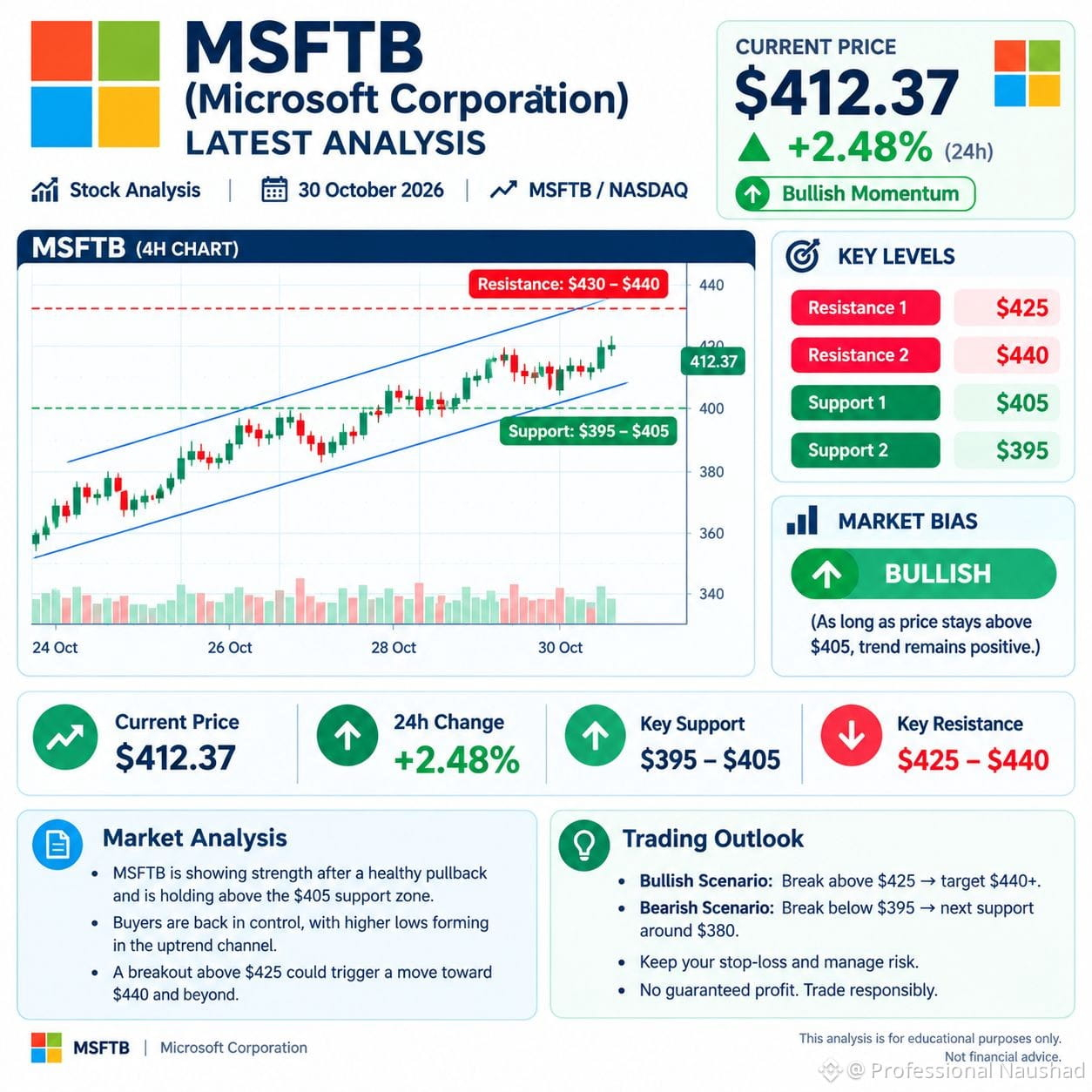
$MSFTB Latest Analysis
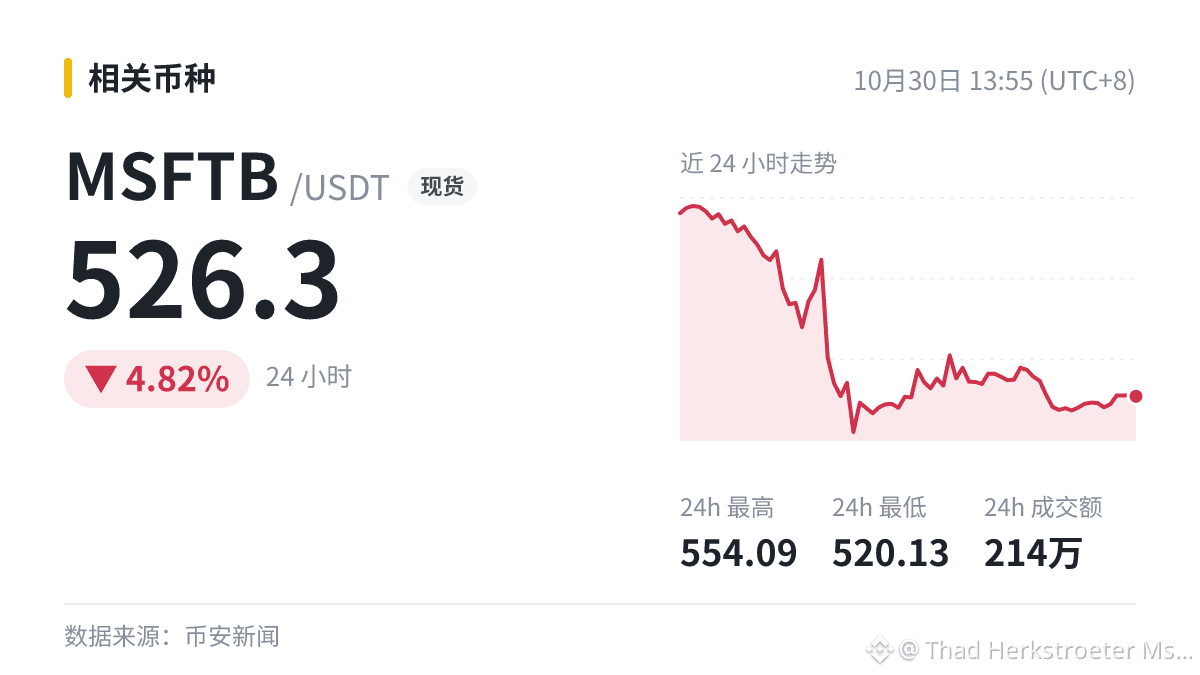
30 October 2026 | MSFTB/USDT
Current price: Around $525–$527
24H change: Approximately -4.9%
Support: $520–$521
Resistance: $550–$552
24H volume: Around $3.4 million
Market Analysis:
MSFTB is facing selling pressure after a recent pullback. Buyers need to push above $550 to improve bullish momentum. A break below $520 could create further downside risk.
Trading Outlook:
Bullish confirmation: Above $552.#MSFTB #BinanceWillListPredictPREDICT #KOSPIFalls3.53%BackBelow6000
{spot}(MSFTBUSDT)
$MSFTB Latest Analysis
30 October 2026 | MSFTB/USDT
Current price: Around $525–$527
24H change: Approximately -4.9%
Support: $520–$521
Resistance: $550–$552
24H volume: Around $3.4 million
Market Analysis:
MSFTB is facing selling pressure after a recent pullback. Buyers need to push above $550 to improve bullish momentum. A break below $520 could create further downside risk.
Trading Outlook:
Bullish confirmation: Above $552.#MSFTB #BinanceWillListPredictPREDICT #KOSPIFalls3.53%BackBelow6000
30 October 2026 | MSFTB/USDT
Current price: Around $525–$527
24H change: Approximately -4.9%
Support: $520–$521
Resistance: $550–$552
24H volume: Around $3.4 million
Market Analysis:
MSFTB is facing selling pressure after a recent pullback. Buyers need to push above $550 to improve bullish momentum. A break below $520 could create further downside risk.
Trading Outlook:
Bullish confirmation: Above $552.#MSFTB #BinanceWillListPredictPREDICT #KOSPIFalls3.53%BackBelow6000
38

·
--
About $MSFTB, this is the hottest topic today—
Microsoft is about to release its earnings report, and the market is watching to see whether AI investment can translate into actual revenue, and how Azure and Copilot are performing
Behind the numbers are emotions
Are you watching too? 👇
#市场观察 #MSFTB #Binance
About $MSFTB , this is the hottest topic today—
Microsoft is about to release its earnings report, and the market is watching to see whether AI investment can translate into actual revenue, and how Azure and Copilot are performing
Behind the numbers are emotions
Are you watching too? 👇
#市场观察 #MSFTB #Binance
Microsoft is about to release its earnings report, and the market is watching to see whether AI investment can translate into actual revenue, and how Azure and Copilot are performing
Behind the numbers are emotions
Are you watching too? 👇
#市场观察 #MSFTB #Binance
1

·
--
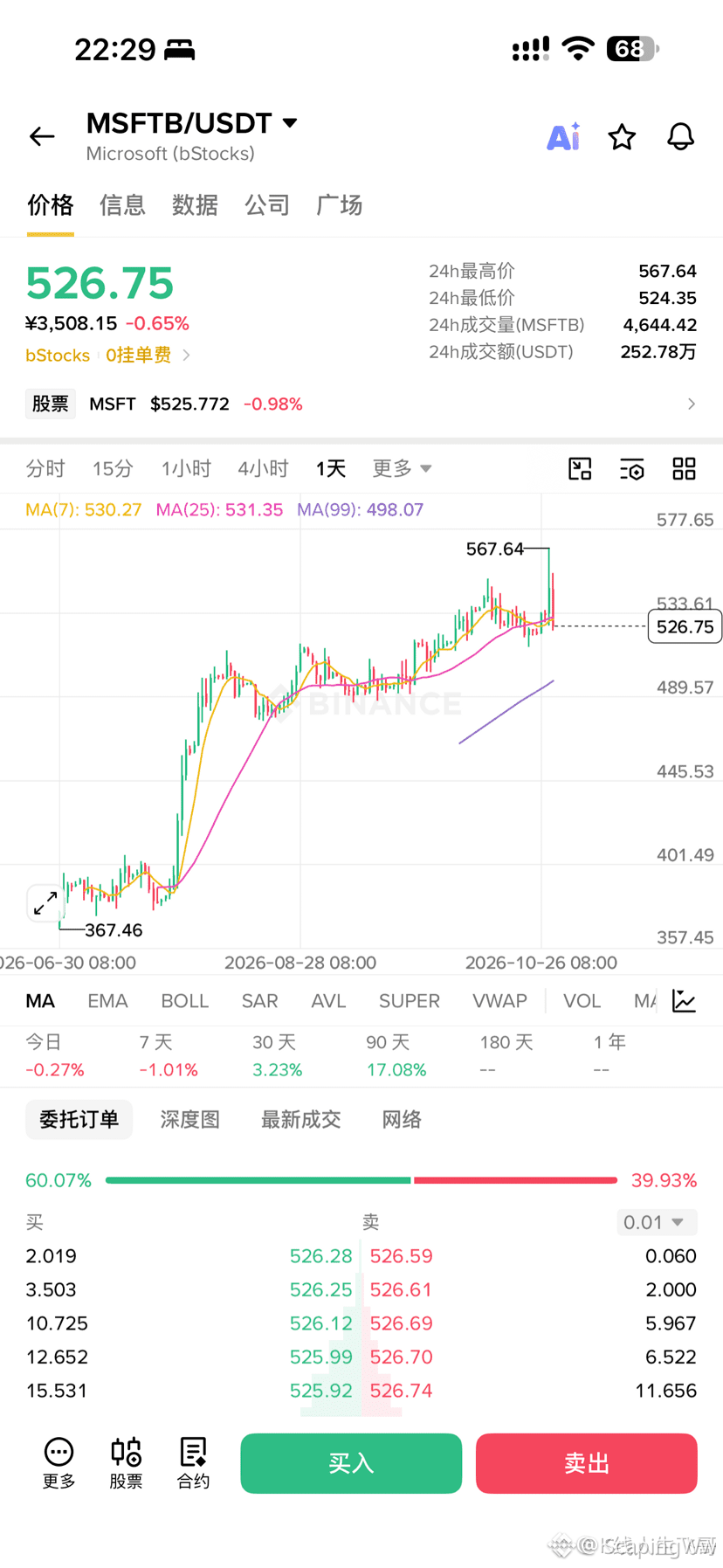
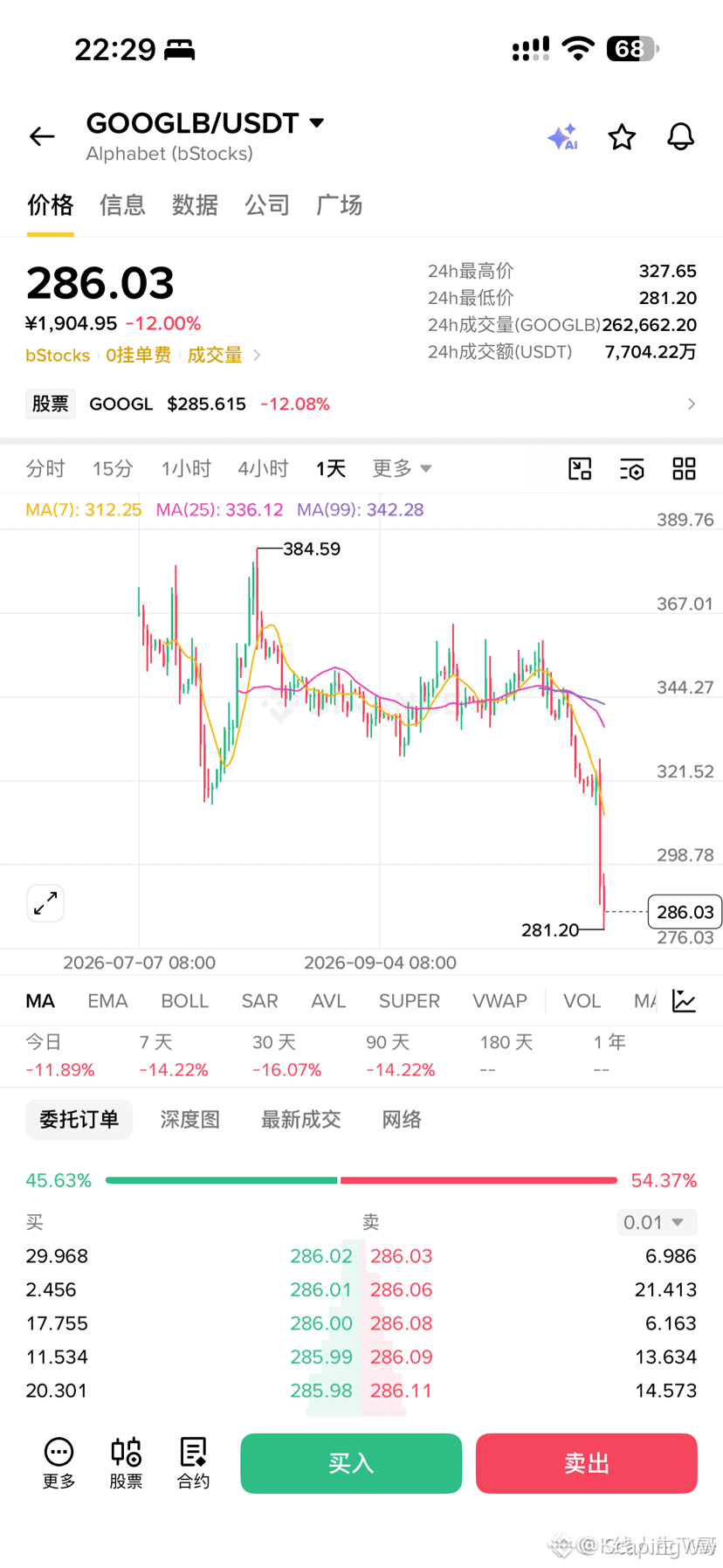
🚀 $MSFTB SURGES AS AI CASH FLOWS, $GOOGLB STAGGERING UNDER CAPEX 🔴
📊 Smart money is already re‑allocating capital to the AI engine that can actually turn spend into profit. Microsoft’s Azure growth at 48%⚡ and free cash flow still at $186 B shows the burn is being funded by real revenue, giving the bulls a clear edge.
💡 Google’s cloud surge looks impressive at 103%, but a $90.7 B negative free cash flow and softer ad demand raise a red flag. The market’s liquidity sweep 🌊 is dragging the stock toward a support zone where sellers are likely to pounce. 🤔 Are you shifting weight to $MSFTB or waiting for $GOOGLB to find a floor? 💬
⚠️ Not financial advice. Always manage your risk. 🛡️
🏷️ #MSFTB #GOOGLB #AIInvest #Earnings #MarketShift
🔥 💎
🚀 $MSFTB SURGES AS AI CASH FLOWS, $GOOGLB STAGGERING UNDER CAPEX 🔴
📊 Smart money is already re‑allocating capital to the AI engine that can actually turn spend into profit. Microsoft’s Azure growth at 48%⚡ and free cash flow still at $186 B shows the burn is being funded by real revenue, giving the bulls a clear edge.
💡 Google’s cloud surge looks impressive at 103%, but a $90.7 B negative free cash flow and softer ad demand raise a red flag. The market’s liquidity sweep 🌊 is dragging the stock toward a support zone where sellers are likely to pounce. 🤔 Are you shifting weight to $MSFTB or waiting for $GOOGLB to find a floor? 💬
⚠️ Not financial advice. Always manage your risk. 🛡️
🏷️ #MSFTB #GOOGLB #AIInvest #Earnings #MarketShift
🔥 💎
📊 Smart money is already re‑allocating capital to the AI engine that can actually turn spend into profit. Microsoft’s Azure growth at 48%⚡ and free cash flow still at $186 B shows the burn is being funded by real revenue, giving the bulls a clear edge.
💡 Google’s cloud surge looks impressive at 103%, but a $90.7 B negative free cash flow and softer ad demand raise a red flag. The market’s liquidity sweep 🌊 is dragging the stock toward a support zone where sellers are likely to pounce. 🤔 Are you shifting weight to $MSFTB or waiting for $GOOGLB to find a floor? 💬
⚠️ Not financial advice. Always manage your risk. 🛡️
🏷️ #MSFTB #GOOGLB #AIInvest #Earnings #MarketShift
🔥 💎
4

·
--
$MSFTB +4.30% | $BICO +4.09% | $SOXSB +4.02%
#MSFTB climbs to $553.40, up +4.30% on $1.5M volume. The modest flow suggests steady interest rather than a frenzy.
#BICO nudges higher to $0.0163, gaining +4.09% with $2.2M changing hands. Small‑cap activity could be a barometer for broader alt sentiment.
#SOXSB reaches $42.92, up +4.02% on a hefty $6.9M volume. The larger turnover may give this move more staying power.
👀 Watch if the volume disparity between BICO and SOXSB translates into divergent short‑term trends.
#Write2Earn #Binance
$MSFTB +4.30% | $BICO +4.09% | $SOXSB +4.02%
#MSFTB climbs to $553.40, up +4.30% on $1.5M volume. The modest flow suggests steady interest rather than a frenzy.
#BICO nudges higher to $0.0163, gaining +4.09% with $2.2M changing hands. Small‑cap activity could be a barometer for broader alt sentiment.
#SOXSB reaches $42.92, up +4.02% on a hefty $6.9M volume. The larger turnover may give this move more staying power.
👀 Watch if the volume disparity between BICO and SOXSB translates into divergent short‑term trends.
#Write2Earn #Binance
#MSFTB climbs to $553.40, up +4.30% on $1.5M volume. The modest flow suggests steady interest rather than a frenzy.
#BICO nudges higher to $0.0163, gaining +4.09% with $2.2M changing hands. Small‑cap activity could be a barometer for broader alt sentiment.
#SOXSB reaches $42.92, up +4.02% on a hefty $6.9M volume. The larger turnover may give this move more staying power.
👀 Watch if the volume disparity between BICO and SOXSB translates into divergent short‑term trends.
#Write2Earn #Binance
2

Whenever I see major news, my fingers always get ahead of my reason. Today, I finally managed to hold back.
It started with this: Microsoft: North Korean hackers are using AI to mass-produce phishing documents; fake job offers and malware development are already happening.
$MSFTB , I’ll compare it with trading activity and normal levels later to see if there’s been a noticeable spike.
#MSFTB
Whenever I see major news, my fingers always get ahead of my reason. Today, I finally managed to hold back.
It started with this: Microsoft: North Korean hackers are using AI to mass-produce phishing documents; fake job offers and malware development are already happening.
$MSFTB , I’ll compare it with trading activity and normal levels later to see if there’s been a noticeable spike.
#MSFTB
It started with this: Microsoft: North Korean hackers are using AI to mass-produce phishing documents; fake job offers and malware development are already happening.
$MSFTB , I’ll compare it with trading activity and normal levels later to see if there’s been a noticeable spike.
#MSFTB
1

·
--
$MSFTB +4.47% | $ADX +4.47% | $AXTIB +4.22%
#MSFTB slipped to $553.56, up +4.47% on $1.5 M of trades. The modest bump suggests a short‑term rally, but the volume isn’t huge enough to confirm a broader breakout.
#ADX nudged higher to $0.0584, also gaining +4.47% with $1.0 M changing hands. The parallel % move with MSFTB is interesting, though the lower turnover hints at a more fragile push.
#AXTIB rose to $61.80, +4.22% on $1.5 M volume. The price gain matches its peers, and the solid volume could give this move a bit more credibility.
👀 Keep an eye on whether the similar percentage climbs across these three will converge into a shared upward trend or diverge as volume dynamics shift.
#Write2Earn #Binance
$MSFTB +4.47% | $ADX +4.47% | $AXTIB +4.22%
#MSFTB slipped to $553.56, up +4.47% on $1.5 M of trades. The modest bump suggests a short‑term rally, but the volume isn’t huge enough to confirm a broader breakout.
#ADX nudged higher to $0.0584, also gaining +4.47% with $1.0 M changing hands. The parallel % move with MSFTB is interesting, though the lower turnover hints at a more fragile push.
#AXTIB rose to $61.80, +4.22% on $1.5 M volume. The price gain matches its peers, and the solid volume could give this move a bit more credibility.
👀 Keep an eye on whether the similar percentage climbs across these three will converge into a shared upward trend or diverge as volume dynamics shift.
#Write2Earn #Binance
#MSFTB slipped to $553.56, up +4.47% on $1.5 M of trades. The modest bump suggests a short‑term rally, but the volume isn’t huge enough to confirm a broader breakout.
#ADX nudged higher to $0.0584, also gaining +4.47% with $1.0 M changing hands. The parallel % move with MSFTB is interesting, though the lower turnover hints at a more fragile push.
#AXTIB rose to $61.80, +4.22% on $1.5 M volume. The price gain matches its peers, and the solid volume could give this move a bit more credibility.
👀 Keep an eye on whether the similar percentage climbs across these three will converge into a shared upward trend or diverge as volume dynamics shift.
#Write2Earn #Binance
·
--
$MSFTB +3.52% | $COCOS +3.44% | $TOMO +3.22%
#MSFTB nudged up to $549.65, gaining +3.52% on $1.4 M volume. The modest bump suggests some buying interest, though the size of the move is still limited.
#COCOS rose to $1.75, up +3.44% with $1.5 M changing hands. The price lift is backed by the highest volume in this set, hinting at stronger trader participation.
#TOMO climbed to $1.38, advancing +3.22% on $1.1 M volume. The lower turnover may make the rally a bit more fragile.
👀 Keep an eye on whether the volume advantage of COCOS can sustain its edge over the other two.
#Write2Earn #Binance
$MSFTB +3.52% | $COCOS +3.44% | $TOMO +3.22%
#MSFTB nudged up to $549.65, gaining +3.52% on $1.4 M volume. The modest bump suggests some buying interest, though the size of the move is still limited.
#COCOS rose to $1.75, up +3.44% with $1.5 M changing hands. The price lift is backed by the highest volume in this set, hinting at stronger trader participation.
#TOMO climbed to $1.38, advancing +3.22% on $1.1 M volume. The lower turnover may make the rally a bit more fragile.
👀 Keep an eye on whether the volume advantage of COCOS can sustain its edge over the other two.
#Write2Earn #Binance
#MSFTB nudged up to $549.65, gaining +3.52% on $1.4 M volume. The modest bump suggests some buying interest, though the size of the move is still limited.
#COCOS rose to $1.75, up +3.44% with $1.5 M changing hands. The price lift is backed by the highest volume in this set, hinting at stronger trader participation.
#TOMO climbed to $1.38, advancing +3.22% on $1.1 M volume. The lower turnover may make the rally a bit more fragile.
👀 Keep an eye on whether the volume advantage of COCOS can sustain its edge over the other two.
#Write2Earn #Binance
·
--
Regarding $MSFTB, today's hottest topic is this—
Can AI investment returns and cloud business growth during earnings season cover the costs for Microsoft and Google?
Seasoned traders know that volume matters more than price—a saying that never goes out of date
Join the discussion in the comments 👇
#市场观察 #MSFTB #Binance
Regarding $MSFTB , today's hottest topic is this—
Can AI investment returns and cloud business growth during earnings season cover the costs for Microsoft and Google?
Seasoned traders know that volume matters more than price—a saying that never goes out of date
Join the discussion in the comments 👇
#市场观察 #MSFTB #Binance
Can AI investment returns and cloud business growth during earnings season cover the costs for Microsoft and Google?
Seasoned traders know that volume matters more than price—a saying that never goes out of date
Join the discussion in the comments 👇
#市场观察 #MSFTB #Binance


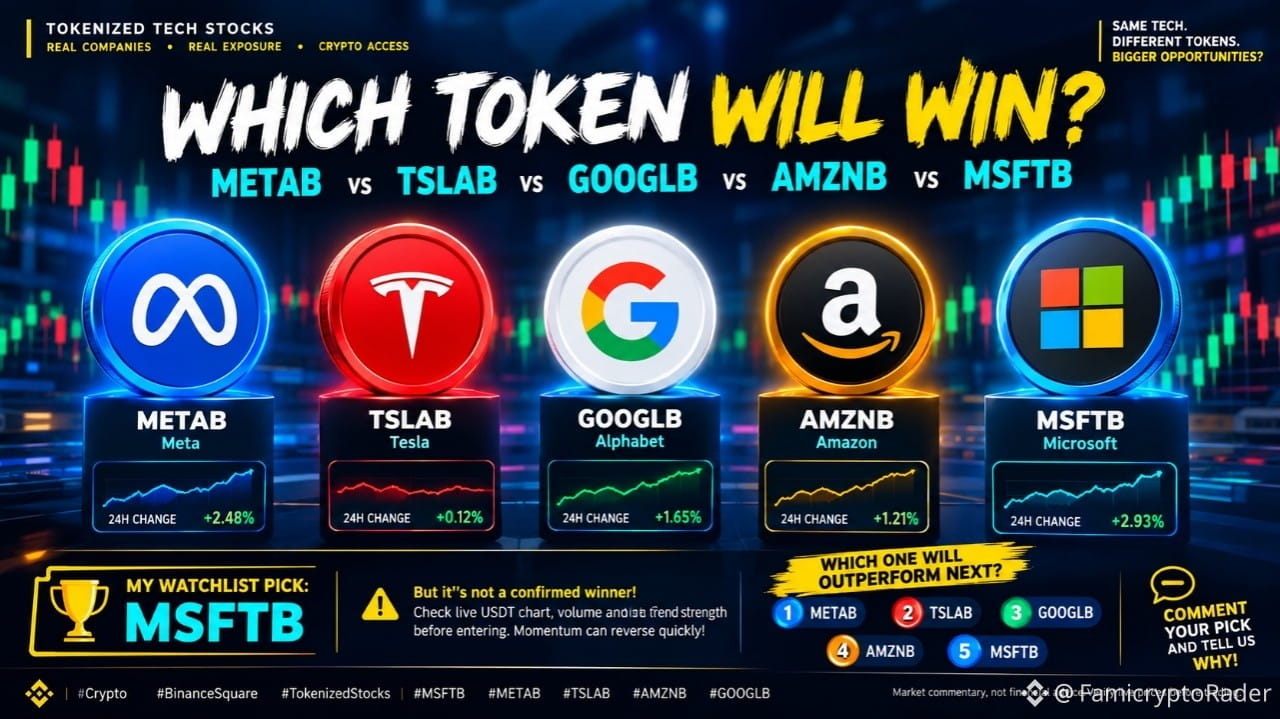
🚀 METAB vs TSLAB vs GOOGLB vs AMZNB vs MSFTB — WHO WINS? 🏆
The Tokenized Tech Stock Battle is ON! 🔥
📊 5 Assets to Watch:
🔵 METAB — Meta
🚗 TSLAB — Tesla
🔎 GOOGLB — Alphabet
📦 AMZNB — Amazon
💻 MSFTB — Microsoft
👀 My watchlist pick: MSFTB — recent data showed positive 24H momentum, but confirmation is needed before calling a winner.
⚠️ Watch volume, trend strength, and the underlying stock market. Momentum can reverse quickly!
👇 Which one will outperform next?
1️⃣ METAB
2️⃣ TSLAB
3️⃣ GOOGLB
4️⃣ AMZNB
5️⃣ MSFTB
💬 Comment your pick and tell us WHY!
#Crypto #TokenizedStocks #MSFTB #METAB #CanMicrosoftDeliverOnAI
Market commentary, not financial advice. Verify live prices before trading.
$METAB
{spot}(METABUSDT)
$TSLAB
{spot}(TSLABUSDT)
$GOOGLB
{spot}(GOOGLBUSDT)
🚀 METAB vs TSLAB vs GOOGLB vs AMZNB vs MSFTB — WHO WINS? 🏆
The Tokenized Tech Stock Battle is ON! 🔥
📊 5 Assets to Watch:
🔵 METAB — Meta
🚗 TSLAB — Tesla
🔎 GOOGLB — Alphabet
📦 AMZNB — Amazon
💻 MSFTB — Microsoft
👀 My watchlist pick: MSFTB — recent data showed positive 24H momentum, but confirmation is needed before calling a winner.
⚠️ Watch volume, trend strength, and the underlying stock market. Momentum can reverse quickly!
👇 Which one will outperform next?
1️⃣ METAB
2️⃣ TSLAB
3️⃣ GOOGLB
4️⃣ AMZNB
5️⃣ MSFTB
💬 Comment your pick and tell us WHY!
#Crypto #TokenizedStocks #MSFTB #METAB #CanMicrosoftDeliverOnAI
Market commentary, not financial advice. Verify live prices before trading.
$METAB
$TSLAB
$GOOGLB
The Tokenized Tech Stock Battle is ON! 🔥
📊 5 Assets to Watch:
🔵 METAB — Meta
🚗 TSLAB — Tesla
🔎 GOOGLB — Alphabet
📦 AMZNB — Amazon
💻 MSFTB — Microsoft
👀 My watchlist pick: MSFTB — recent data showed positive 24H momentum, but confirmation is needed before calling a winner.
⚠️ Watch volume, trend strength, and the underlying stock market. Momentum can reverse quickly!
👇 Which one will outperform next?
1️⃣ METAB
2️⃣ TSLAB
3️⃣ GOOGLB
4️⃣ AMZNB
5️⃣ MSFTB
💬 Comment your pick and tell us WHY!
#Crypto #TokenizedStocks #MSFTB #METAB #CanMicrosoftDeliverOnAI
Market commentary, not financial advice. Verify live prices before trading.
$METAB
$TSLAB
$GOOGLB
102

·
--
🐋 Note for those tracking large orders:
The Square is buzzing about “Will Microsoft’s earnings deliver on the AI windfall?” (530K views).
Public discussion reflects the crowd’s sentiment. Whales usually don’t post—they speak through their trades. $MSFTB 24h had a trading volume of $1.52 million; watch which way aggressive buying and selling are flowing.
#微软财报能否兑现ai红利 #MSFTB
🐋 Note for those tracking large orders:
The Square is buzzing about “Will Microsoft’s earnings deliver on the AI windfall?” (530K views).
Public discussion reflects the crowd’s sentiment. Whales usually don’t post—they speak through their trades. $MSFTB 24h had a trading volume of $1.52 million; watch which way aggressive buying and selling are flowing.
#微软财报能否兑现ai红利 #MSFTB
The Square is buzzing about “Will Microsoft’s earnings deliver on the AI windfall?” (530K views).
Public discussion reflects the crowd’s sentiment. Whales usually don’t post—they speak through their trades. $MSFTB 24h had a trading volume of $1.52 million; watch which way aggressive buying and selling are flowing.
#微软财报能否兑现ai红利 #MSFTB
1

·
--
After the market closed on October 28 Eastern Time, Google parent Alphabet and Microsoft reported quarterly results at almost the same time—but the market reacted in opposite ways.
Alphabet reported third-quarter revenue of $127.58 billion, below Wall Street’s estimate of $128.22 billion. Adjusted earnings per share came in at $2.67, also below expectations of $3.02. Free cash flow was negative $9.07 billion, marking the first time in nearly four years that both revenue and profit missed estimates. Its cloud business, however, fared well: revenue was about $30.7 billion, more than double year over year, and the Gemini app was said to have surpassed 1 billion users. But investors were more focused on the spending, and the stock fell more than 10% at one point after hours. Google’s tokenized security $GOOGLB on Binance Spot was trading at around $293 early on October 29 (UTC+8), down about 10% over the previous 24 hours.
Microsoft presented a different picture. Revenue for its fiscal first quarter was $92.28 billion, above expectations. Adjusted earnings per share were $4.89, also beating forecasts. Azure cloud revenue was reported separately for the first time, at $33.17 billion, up about 48% year over year. The stock rose about 4% at one point after hours. Microsoft’s tokenized security $MSFTB on Binance was trading at around $550 over the same period, up about 3.6% in the previous 24 hours.
The two AI giants’ results on the same day showed the divide, first reflected in Binance bStocks order books: one saw cloud growth but couldn’t shake cash-flow concerns, while the other beat expectations and won the market’s approval. Earnings season is still underway, and tokenized on-chain assets will continue to move with sentiment in U.S. equities.
#GOOGLB #MSFTB #股票 does not constitute investment advice
After the market closed on October 28 Eastern Time, Google parent Alphabet and Microsoft reported quarterly results at almost the same time—but the market reacted in opposite ways.
Alphabet reported third-quarter revenue of $127.58 billion, below Wall Street’s estimate of $128.22 billion. Adjusted earnings per share came in at $2.67, also below expectations of $3.02. Free cash flow was negative $9.07 billion, marking the first time in nearly four years that both revenue and profit missed estimates. Its cloud business, however, fared well: revenue was about $30.7 billion, more than double year over year, and the Gemini app was said to have surpassed 1 billion users. But investors were more focused on the spending, and the stock fell more than 10% at one point after hours. Google’s tokenized security $GOOGLB on Binance Spot was trading at around $293 early on October 29 (UTC+8), down about 10% over the previous 24 hours.
Microsoft presented a different picture. Revenue for its fiscal first quarter was $92.28 billion, above expectations. Adjusted earnings per share were $4.89, also beating forecasts. Azure cloud revenue was reported separately for the first time, at $33.17 billion, up about 48% year over year. The stock rose about 4% at one point after hours. Microsoft’s tokenized security $MSFTB on Binance was trading at around $550 over the same period, up about 3.6% in the previous 24 hours.
The two AI giants’ results on the same day showed the divide, first reflected in Binance bStocks order books: one saw cloud growth but couldn’t shake cash-flow concerns, while the other beat expectations and won the market’s approval. Earnings season is still underway, and tokenized on-chain assets will continue to move with sentiment in U.S. equities.
#GOOGLB #MSFTB #股票 does not constitute investment advice
Alphabet reported third-quarter revenue of $127.58 billion, below Wall Street’s estimate of $128.22 billion. Adjusted earnings per share came in at $2.67, also below expectations of $3.02. Free cash flow was negative $9.07 billion, marking the first time in nearly four years that both revenue and profit missed estimates. Its cloud business, however, fared well: revenue was about $30.7 billion, more than double year over year, and the Gemini app was said to have surpassed 1 billion users. But investors were more focused on the spending, and the stock fell more than 10% at one point after hours. Google’s tokenized security $GOOGLB on Binance Spot was trading at around $293 early on October 29 (UTC+8), down about 10% over the previous 24 hours.
Microsoft presented a different picture. Revenue for its fiscal first quarter was $92.28 billion, above expectations. Adjusted earnings per share were $4.89, also beating forecasts. Azure cloud revenue was reported separately for the first time, at $33.17 billion, up about 48% year over year. The stock rose about 4% at one point after hours. Microsoft’s tokenized security $MSFTB on Binance was trading at around $550 over the same period, up about 3.6% in the previous 24 hours.
The two AI giants’ results on the same day showed the divide, first reflected in Binance bStocks order books: one saw cloud growth but couldn’t shake cash-flow concerns, while the other beat expectations and won the market’s approval. Earnings season is still underway, and tokenized on-chain assets will continue to move with sentiment in U.S. equities.
#GOOGLB #MSFTB #股票 does not constitute investment advice

158

$10 billion in recognized revenue and $10 billion in cash receipts are the same number on the financial statements, but they mean two very different things for valuation.
Microsoft has put the revenue it recognized from its commercial arrangement with OpenAI on the table, and the market’s first reaction was: “AI is finally starting to generate revenue.” But when you break down the chain, it closes back on itself: the money Microsoft invests becomes OpenAI’s budget; OpenAI uses that budget to buy Azure computing power; Microsoft then recognizes the money it receives as cloud revenue. The money has gone around in a circle between the two companies. This is neither a compliance issue nor unusual—related-party transactions are supposed to be recorded this way. But it means this $10 billion demonstrates “purchasing power from a related party,” not “willingness to pay from the broader market.” The metric that truly validates AI monetization is whether third-party customers are willing to pay the same price for equivalent computing power—not the scale of this internal loop.
First, look at how the narrative is being misread. The keyword in the headline is “revenue,” but readers fill in “cash.” Those two words carry completely different weight in the AI sector’s valuation logic: the former goes on the income statement, the latter into free cash flow. And the premium the market currently assigns to Microsoft is based largely on when its capital expenditures will be covered by cash flow. This news doesn’t change that timeline; if anything, it reminds you that at the other end of those capital expenditures, one of the biggest buyers is a company Microsoft itself funded. So the pricing implications for MSFTB are close to zero, perhaps even slightly negative: one more footnote about “circularity” means a little more risk that analysts will reclassify it down the road.
Second, look at the pricing mechanism of MSFTB itself. It isn’t a real-time shadow of Microsoft; it’s anchored to the closing NAV, plus the overnight gap. During the hours when the U.S. stock market is closed, the token price is driven by sentiment and liquidity, not fundamentals. That means any highly prominent headline can be amplified into a directional trade during Asian trading hours, then recalibrated at the gap when the U.S. market opens. The more eye-catching the headline, the more likely the gap is to close, because people entering the trade are buying the news, not the net asset value.
Third, look at participation. This news got 3 likes and 2 comments on the social feed. High visibility, low participation—that’s a classic “hot in the media, cold among investors” setup. The money that actually follows Microsoft’s fundamentals hasn’t joined in. For short-term traders, this is more informative than the price itself: a narrative without incremental buyers to support it is usually only enough to sustain an opening gap.
Fourth, where are the risks? Tokenized stocks have three sources of discount: premiums or discounts to NAV, counterparty risk in issuance and custody, and thin liquidity while markets are closed. Around weekends and holidays, all three can intensify at once, and the volatility you see may have nothing to do with Microsoft. Before deciding on a direction, make sure you know whether you’re trading the stock or the liquidity.
My view: this $10 billion is a figure that should be “read with a discount.” It reinforces the depth of Microsoft’s ties to OpenAI, not the breadth of AI demand. If MSFTB is pushed higher by this headline during market closure, that price includes a sentiment premium, not NAV. If you really want to follow the move, wait for the U.S. market gap to emerge and for the price to realign with NAV before taking a view. Don’t pay for a headline when liquidity is at its thinnest.
For assets like this, position sizing matters far more than getting the direction right.
#Crypto #MSFTB
$10 billion in recognized revenue and $10 billion in cash receipts are the same number on the financial statements, but they mean two very different things for valuation.
Microsoft has put the revenue it recognized from its commercial arrangement with OpenAI on the table, and the market’s first reaction was: “AI is finally starting to generate revenue.” But when you break down the chain, it closes back on itself: the money Microsoft invests becomes OpenAI’s budget; OpenAI uses that budget to buy Azure computing power; Microsoft then recognizes the money it receives as cloud revenue. The money has gone around in a circle between the two companies. This is neither a compliance issue nor unusual—related-party transactions are supposed to be recorded this way. But it means this $10 billion demonstrates “purchasing power from a related party,” not “willingness to pay from the broader market.” The metric that truly validates AI monetization is whether third-party customers are willing to pay the same price for equivalent computing power—not the scale of this internal loop.
First, look at how the narrative is being misread. The keyword in the headline is “revenue,” but readers fill in “cash.” Those two words carry completely different weight in the AI sector’s valuation logic: the former goes on the income statement, the latter into free cash flow. And the premium the market currently assigns to Microsoft is based largely on when its capital expenditures will be covered by cash flow. This news doesn’t change that timeline; if anything, it reminds you that at the other end of those capital expenditures, one of the biggest buyers is a company Microsoft itself funded. So the pricing implications for MSFTB are close to zero, perhaps even slightly negative: one more footnote about “circularity” means a little more risk that analysts will reclassify it down the road.
Second, look at the pricing mechanism of MSFTB itself. It isn’t a real-time shadow of Microsoft; it’s anchored to the closing NAV, plus the overnight gap. During the hours when the U.S. stock market is closed, the token price is driven by sentiment and liquidity, not fundamentals. That means any highly prominent headline can be amplified into a directional trade during Asian trading hours, then recalibrated at the gap when the U.S. market opens. The more eye-catching the headline, the more likely the gap is to close, because people entering the trade are buying the news, not the net asset value.
Third, look at participation. This news got 3 likes and 2 comments on the social feed. High visibility, low participation—that’s a classic “hot in the media, cold among investors” setup. The money that actually follows Microsoft’s fundamentals hasn’t joined in. For short-term traders, this is more informative than the price itself: a narrative without incremental buyers to support it is usually only enough to sustain an opening gap.
Fourth, where are the risks? Tokenized stocks have three sources of discount: premiums or discounts to NAV, counterparty risk in issuance and custody, and thin liquidity while markets are closed. Around weekends and holidays, all three can intensify at once, and the volatility you see may have nothing to do with Microsoft. Before deciding on a direction, make sure you know whether you’re trading the stock or the liquidity.
My view: this $10 billion is a figure that should be “read with a discount.” It reinforces the depth of Microsoft’s ties to OpenAI, not the breadth of AI demand. If MSFTB is pushed higher by this headline during market closure, that price includes a sentiment premium, not NAV. If you really want to follow the move, wait for the U.S. market gap to emerge and for the price to realign with NAV before taking a view. Don’t pay for a headline when liquidity is at its thinnest.
For assets like this, position sizing matters far more than getting the direction right.
#Crypto #MSFTB
Microsoft has put the revenue it recognized from its commercial arrangement with OpenAI on the table, and the market’s first reaction was: “AI is finally starting to generate revenue.” But when you break down the chain, it closes back on itself: the money Microsoft invests becomes OpenAI’s budget; OpenAI uses that budget to buy Azure computing power; Microsoft then recognizes the money it receives as cloud revenue. The money has gone around in a circle between the two companies. This is neither a compliance issue nor unusual—related-party transactions are supposed to be recorded this way. But it means this $10 billion demonstrates “purchasing power from a related party,” not “willingness to pay from the broader market.” The metric that truly validates AI monetization is whether third-party customers are willing to pay the same price for equivalent computing power—not the scale of this internal loop.
First, look at how the narrative is being misread. The keyword in the headline is “revenue,” but readers fill in “cash.” Those two words carry completely different weight in the AI sector’s valuation logic: the former goes on the income statement, the latter into free cash flow. And the premium the market currently assigns to Microsoft is based largely on when its capital expenditures will be covered by cash flow. This news doesn’t change that timeline; if anything, it reminds you that at the other end of those capital expenditures, one of the biggest buyers is a company Microsoft itself funded. So the pricing implications for MSFTB are close to zero, perhaps even slightly negative: one more footnote about “circularity” means a little more risk that analysts will reclassify it down the road.
Second, look at the pricing mechanism of MSFTB itself. It isn’t a real-time shadow of Microsoft; it’s anchored to the closing NAV, plus the overnight gap. During the hours when the U.S. stock market is closed, the token price is driven by sentiment and liquidity, not fundamentals. That means any highly prominent headline can be amplified into a directional trade during Asian trading hours, then recalibrated at the gap when the U.S. market opens. The more eye-catching the headline, the more likely the gap is to close, because people entering the trade are buying the news, not the net asset value.
Third, look at participation. This news got 3 likes and 2 comments on the social feed. High visibility, low participation—that’s a classic “hot in the media, cold among investors” setup. The money that actually follows Microsoft’s fundamentals hasn’t joined in. For short-term traders, this is more informative than the price itself: a narrative without incremental buyers to support it is usually only enough to sustain an opening gap.
Fourth, where are the risks? Tokenized stocks have three sources of discount: premiums or discounts to NAV, counterparty risk in issuance and custody, and thin liquidity while markets are closed. Around weekends and holidays, all three can intensify at once, and the volatility you see may have nothing to do with Microsoft. Before deciding on a direction, make sure you know whether you’re trading the stock or the liquidity.
My view: this $10 billion is a figure that should be “read with a discount.” It reinforces the depth of Microsoft’s ties to OpenAI, not the breadth of AI demand. If MSFTB is pushed higher by this headline during market closure, that price includes a sentiment premium, not NAV. If you really want to follow the move, wait for the U.S. market gap to emerge and for the price to realign with NAV before taking a view. Don’t pay for a headline when liquidity is at its thinnest.
For assets like this, position sizing matters far more than getting the direction right.
#Crypto #MSFTB
46


·
--
“Can Microsoft’s earnings deliver the AI upside?” 271K views, currently a hot topic in the plaza.
Topics usually go through three stages: early insiders discuss it → widespread discussion → interest cools. Price performance is generally better in the first stage, while volatility increases in the second.
$MSFTB 24h +0.083%, which stage do you think we’re in now?
#微软财报能否兑现ai红利 #MSFTB
“Can Microsoft’s earnings deliver the AI upside?” 271K views, currently a hot topic in the plaza.
Topics usually go through three stages: early insiders discuss it → widespread discussion → interest cools. Price performance is generally better in the first stage, while volatility increases in the second.
$MSFTB 24h +0.083%, which stage do you think we’re in now?
#微软财报能否兑现ai红利 #MSFTB
Topics usually go through three stages: early insiders discuss it → widespread discussion → interest cools. Price performance is generally better in the first stage, while volatility increases in the second.
$MSFTB 24h +0.083%, which stage do you think we’re in now?
#微软财报能否兑现ai红利 #MSFTB
1

·
--
People on the forum are discussing “Can Microsoft’s earnings deliver on the AI boom?” (271K views).
The level of discussion itself is a sentiment indicator. I pay more attention to three details:
· Is the discussion one-sided or divided?
· Is the topic just gaining traction, or is it everywhere?
· Has the volume and price action of $MSFTB picked up as well?
When sentiment is highly unanimous and the topic is everywhere, it often means the short-term move is near an extreme. If people are still debating it and the topic has only just emerged, there may be more momentum ahead.
$MSFTB is currently at 530.08, up 0.094% over 24 hours. First, let’s see how the market reacts.
#微软财报能否兑现ai红利 #MSFTB
Don’t treat this as a buy or sell signal.
People on the forum are discussing “Can Microsoft’s earnings deliver on the AI boom?” (271K views).
The level of discussion itself is a sentiment indicator. I pay more attention to three details:
· Is the discussion one-sided or divided?
· Is the topic just gaining traction, or is it everywhere?
· Has the volume and price action of $MSFTB picked up as well?
When sentiment is highly unanimous and the topic is everywhere, it often means the short-term move is near an extreme. If people are still debating it and the topic has only just emerged, there may be more momentum ahead.
$MSFTB is currently at 530.08, up 0.094% over 24 hours. First, let’s see how the market reacts.
#微软财报能否兑现ai红利 #MSFTB
Don’t treat this as a buy or sell signal.
The level of discussion itself is a sentiment indicator. I pay more attention to three details:
· Is the discussion one-sided or divided?
· Is the topic just gaining traction, or is it everywhere?
· Has the volume and price action of $MSFTB picked up as well?
When sentiment is highly unanimous and the topic is everywhere, it often means the short-term move is near an extreme. If people are still debating it and the topic has only just emerged, there may be more momentum ahead.
$MSFTB is currently at 530.08, up 0.094% over 24 hours. First, let’s see how the market reacts.
#微软财报能否兑现ai红利 #MSFTB
Don’t treat this as a buy or sell signal.

·
--
Fund flows are worth watching: #微软财报能否兑现ai红利
I’ve summed up three combinations of buzz in the plaza and trading volume:
· High buzz + rising trading volume: money is genuinely flowing in, which gives the trend staying power
· High buzz + unchanged trading volume: mostly just talk—here today, gone tomorrow
· High buzz + weakening prices: there’s more disagreement in the discussion; watch to see if buyers step in at lower levels
$MSFTB Current 24h trading volume: $807,000, 24h change: -0.14%. Which category do you think it falls into?
#MSFTB
Fund flows are worth watching: #微软财报能否兑现ai红利
I’ve summed up three combinations of buzz in the plaza and trading volume:
· High buzz + rising trading volume: money is genuinely flowing in, which gives the trend staying power
· High buzz + unchanged trading volume: mostly just talk—here today, gone tomorrow
· High buzz + weakening prices: there’s more disagreement in the discussion; watch to see if buyers step in at lower levels
$MSFTB Current 24h trading volume: $807,000, 24h change: -0.14%. Which category do you think it falls into?
#MSFTB
I’ve summed up three combinations of buzz in the plaza and trading volume:
· High buzz + rising trading volume: money is genuinely flowing in, which gives the trend staying power
· High buzz + unchanged trading volume: mostly just talk—here today, gone tomorrow
· High buzz + weakening prices: there’s more disagreement in the discussion; watch to see if buyers step in at lower levels
$MSFTB Current 24h trading volume: $807,000, 24h change: -0.14%. Which category do you think it falls into?
#MSFTB
88

·
--
The hottest topic on the Square right now: “Can Microsoft’s earnings deliver on the AI boom?”
$MSFTB is currently at 533.3. Whether the buzz lasts for two or three days matters more than a momentary ranking. Which do you value more: technical analysis or the news?
#微软财报能否兑现ai红利 #MSFTB
The hottest topic on the Square right now: “Can Microsoft’s earnings deliver on the AI boom?”
$MSFTB is currently at 533.3. Whether the buzz lasts for two or three days matters more than a momentary ranking. Which do you value more: technical analysis or the news?
#微软财报能否兑现ai红利 #MSFTB
$MSFTB is currently at 533.3. Whether the buzz lasts for two or three days matters more than a momentary ranking. Which do you value more: technical analysis or the news?
#微软财报能否兑现ai红利 #MSFTB
9

·
--
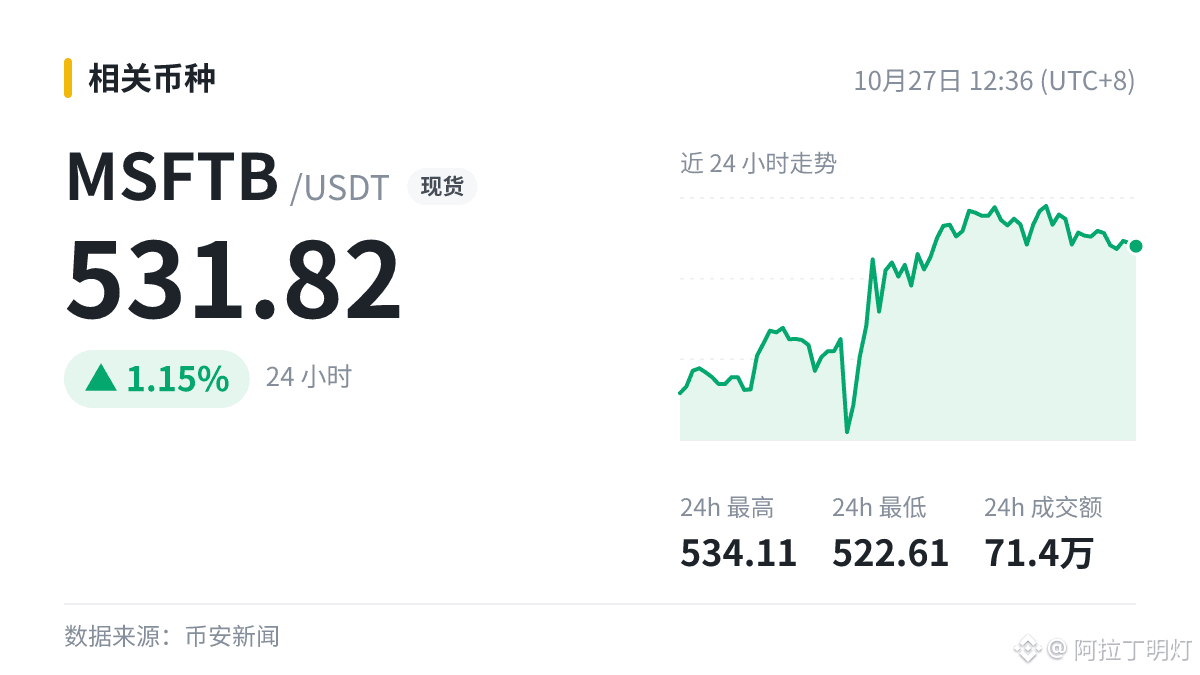
First, the data: $MSFTB 531.82, 24h +1.15%
News: Binance Square will livestream a discussion of Microsoft and Google earnings and returns on AI investment.
The positive news is no question; the key is how much of it has already been priced in. Data is more honest than any interpretation: first, see whether trading volume and price are moving in tandem.
#MSFTB
First, the data: $MSFTB 531.82, 24h +1.15%
News: Binance Square will livestream a discussion of Microsoft and Google earnings and returns on AI investment.
The positive news is no question; the key is how much of it has already been priced in. Data is more honest than any interpretation: first, see whether trading volume and price are moving in tandem.
#MSFTB
News: Binance Square will livestream a discussion of Microsoft and Google earnings and returns on AI investment.
The positive news is no question; the key is how much of it has already been priced in. Data is more honest than any interpretation: first, see whether trading volume and price are moving in tandem.
#MSFTB
4

·
--
Q: Former Microsoft executive Peter Sellis joins X to lead product. What impact will this have on the market?
A: There’s no apparent positive impact; it looks more like routine market activity. A genuine breakout needs to be accompanied by volume. Without volume, a breakout will probably fall back into the range.
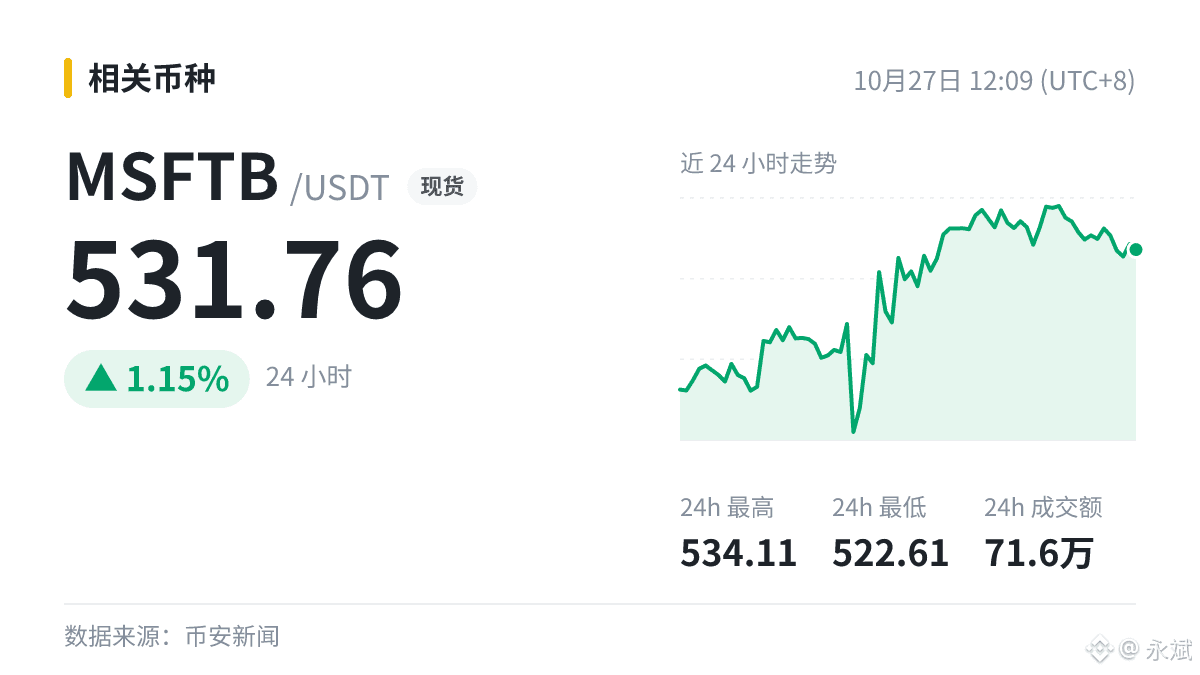
$MSFTB is currently trading at 531.76.
#MSFTB
Q: Former Microsoft executive Peter Sellis joins X to lead product. What impact will this have on the market?
A: There’s no apparent positive impact; it looks more like routine market activity. A genuine breakout needs to be accompanied by volume. Without volume, a breakout will probably fall back into the range.
$MSFTB is currently trading at 531.76.
#MSFTB
A: There’s no apparent positive impact; it looks more like routine market activity. A genuine breakout needs to be accompanied by volume. Without volume, a breakout will probably fall back into the range.
$MSFTB is currently trading at 531.76.
#MSFTB
25
Log in to explore more content
Join global crypto users on Binance Square
⚡️ Get latest and useful information about crypto.
💬 Trusted by the world’s largest crypto exchange.
👍 Discover real insights from verified creators.
Email / Phone number
Trending Topics
1
#BinanceIncidentReport
41,289 views
589 Discussing
2
#BinanceReopensWithdrawalsForMoreAssets
156,097 views
1,776 Discussing
3
#BinanceHourlyDepositsExceedWithdrawals
74,538 views
817 Discussing
4
#USMidtermElections
901,229 views
4,659 Discussing
5
#AnthropicIPOPricedDownasInvestorsEye$1.5T
4,325 views
56 Discussing
6
#USOctoberNFP-AreRateCutsStillPossible
168,874 views
1,298 Discussing
7
#AppleReportsMixedResults
68,817 views
981 Discussing
8
#PalantirSlides3PercentOn$2BRevenue
6,106 views
47 Discussing
9
#FrenchAssemblyRejectsTwoCryptoExitTaxProposals
13,178 views
183 Discussing
10
#Nasdaq100EntersCorrection
16,259 views
196 Discussing