

#fualnguyen
fualnguyen
1.5M views
840 Discussing
Hot
Latest

·
--
Bullish
There are many people suggesting that I should close this position, but I always prefer averaging in and averaging out. DCA is always the best solution in terms of both psychology and strategy.
I’ve already taken profit on half of my position at $HYPE $35. If the price drops below $32, I’ll DCA with half of the amount I took profit on at $35.
If the price moves up to $37, I’ll take another TP2 on half of my remaining position and raise my DCA level by deploying half of the profit taken at $33 when a pullback happens.
Try observing this strategy for a while and let me know your results.
#Fualnguyen
There are many people suggesting that I should close this position, but I always prefer averaging in and averaging out. DCA is always the best solution in terms of both psychology and strategy.
I’ve already taken profit on half of my position at $HYPE $35. If the price drops below $32, I’ll DCA with half of the amount I took profit on at $35.
If the price moves up to $37, I’ll take another TP2 on half of my remaining position and raise my DCA level by deploying half of the profit taken at $33 when a pullback happens.
Try observing this strategy for a while and let me know your results.
#Fualnguyen
I’ve already taken profit on half of my position at $HYPE $35. If the price drops below $32, I’ll DCA with half of the amount I took profit on at $35.
If the price moves up to $37, I’ll take another TP2 on half of my remaining position and raise my DCA level by deploying half of the profit taken at $33 when a pullback happens.
Try observing this strategy for a while and let me know your results.
#Fualnguyen
2
2.2k
·
--
Bullish
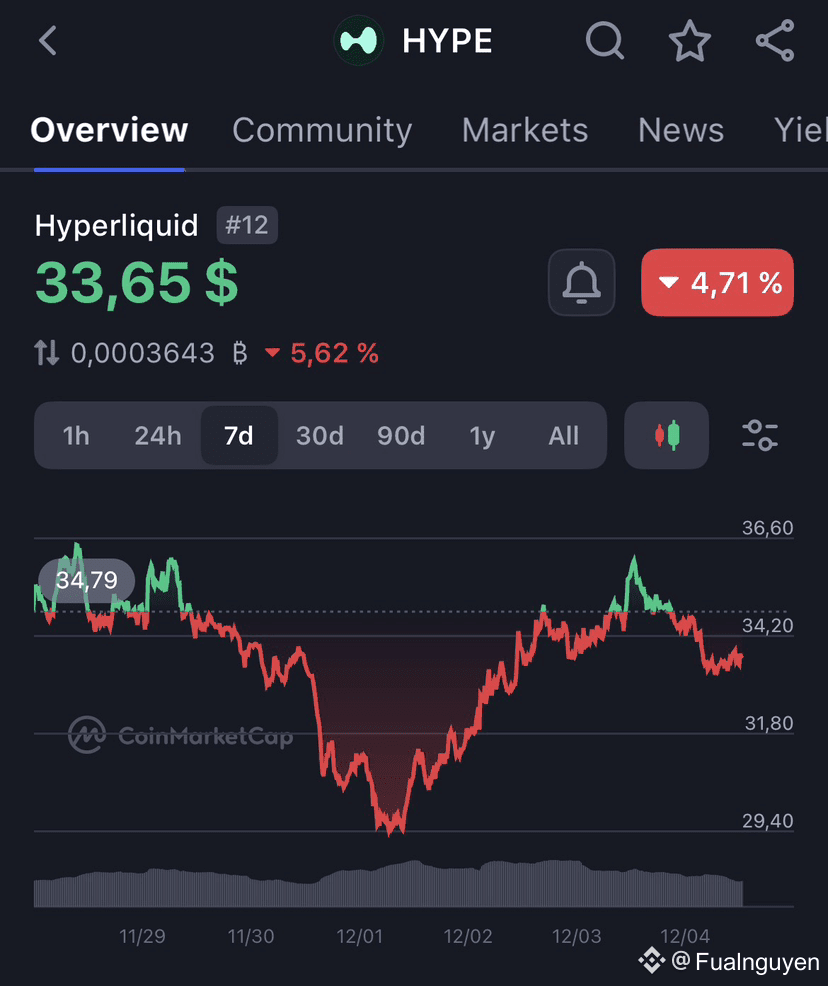
Price $HYPE sideway around the level of $33.5 to $34.5 waiting for the stability and leadership of BTC
Holding profits up to $37 $38 💪🏾 Can DCA more at the current price levels or adjust a little
#Fualnguyen
Price $HYPE sideway around the level of $33.5 to $34.5 waiting for the stability and leadership of BTC
Holding profits up to $37 $38 💪🏾 Can DCA more at the current price levels or adjust a little
#Fualnguyen
Holding profits up to $37 $38 💪🏾 Can DCA more at the current price levels or adjust a little
#Fualnguyen
1
1.8k
·
--
Bullish
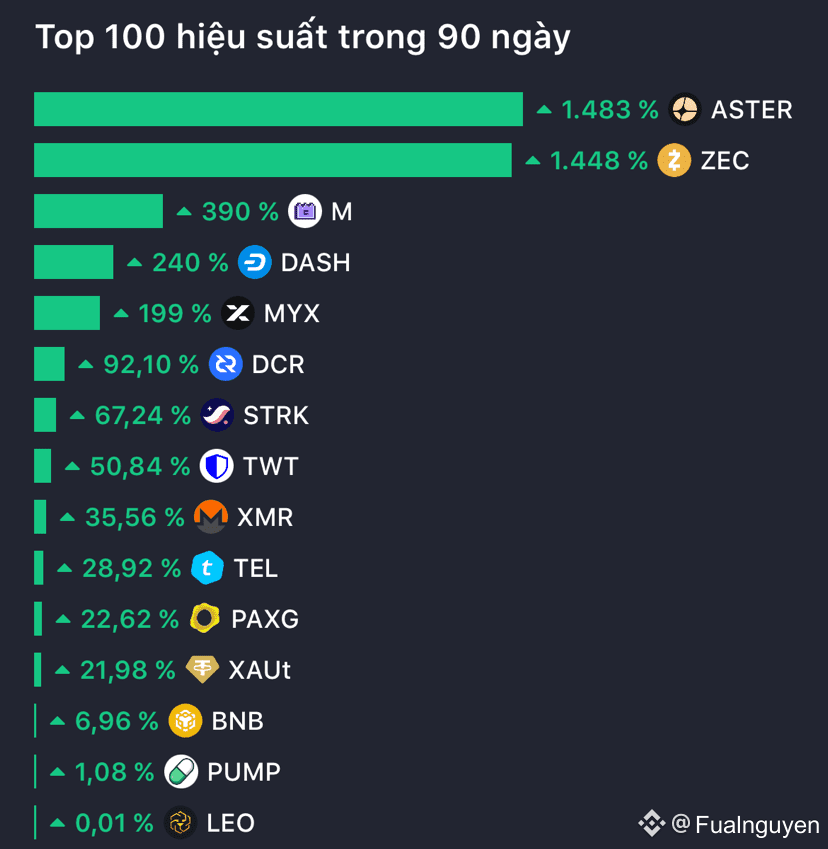
$MYX is the Alpha project that ranks among the top altcoins performing best in the last 90 days.
MYX operates on very modern derivative DeFi, with a clever design to reduce slippage and optimize capital.
The decentralized derivatives exchange is currently a new trend in the investment world, and MYX attracts attention with innovative ideas that serve the masses.
#Fualnguyen #BNBholic #Asterians #writewithoutAI
{future}(HYPEUSDT)
{alpha}(560xd82544bf0dfe8385ef8fa34d67e6e4940cc63e16)
$MYX is the Alpha project that ranks among the top altcoins performing best in the last 90 days.
MYX operates on very modern derivative DeFi, with a clever design to reduce slippage and optimize capital.
The decentralized derivatives exchange is currently a new trend in the investment world, and MYX attracts attention with innovative ideas that serve the masses.
#Fualnguyen #BNBholic #Asterians #writewithoutAI
MYX operates on very modern derivative DeFi, with a clever design to reduce slippage and optimize capital.
The decentralized derivatives exchange is currently a new trend in the investment world, and MYX attracts attention with innovative ideas that serve the masses.
#Fualnguyen #BNBholic #Asterians #writewithoutAI
3
2
2.7k
·
--
Article
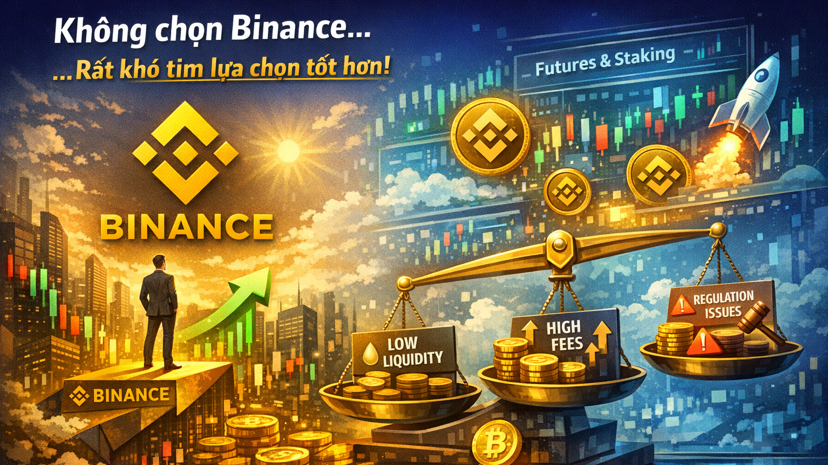
If you do not choose Binance, it is really very difficult to find a better optionIn the context of the crypto market continuously fluctuating and being heavily influenced by legal and investor sentiment, choosing a suitable exchange is no longer a matter of 'using what you like,' but rather a strategic decision. And realistically speaking, if you do not choose Binance at this moment, there are hardly many comprehensive alternatives available.
The first strength of Binance lies in its liquidity. With trading volumes consistently ranking among the top in the world, users can execute orders quickly, with low spreads, which is particularly important for altcoin pairs or during periods of high market volatility. This is a factor that most other exchanges find hard to directly compare.
If you do not choose Binance, it is really very difficult to find a better option
In the context of the crypto market continuously fluctuating and being heavily influenced by legal and investor sentiment, choosing a suitable exchange is no longer a matter of 'using what you like,' but rather a strategic decision. And realistically speaking, if you do not choose Binance at this moment, there are hardly many comprehensive alternatives available.
The first strength of Binance lies in its liquidity. With trading volumes consistently ranking among the top in the world, users can execute orders quickly, with low spreads, which is particularly important for altcoin pairs or during periods of high market volatility. This is a factor that most other exchanges find hard to directly compare.
The first strength of Binance lies in its liquidity. With trading volumes consistently ranking among the top in the world, users can execute orders quickly, with low spreads, which is particularly important for altcoin pairs or during periods of high market volatility. This is a factor that most other exchanges find hard to directly compare.
1
212
·
--
Bullish
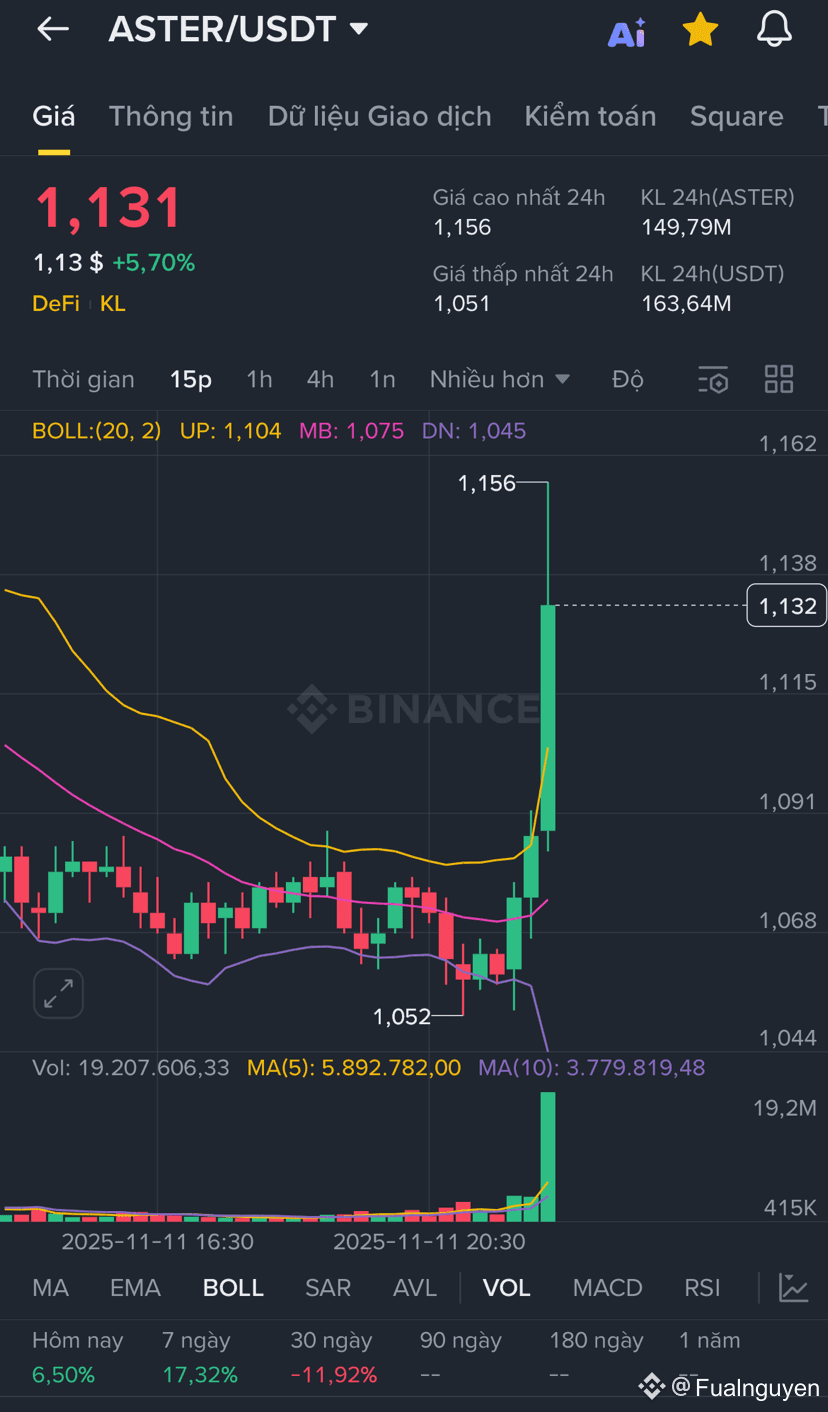
$ASTER in this zone is perfect for entering multiple times to get the best average price.
If you don’t buy in a good price range now, are you really going to wait until the market turns green and then FOMO-buy the top? 😂
#Fualnguyen #Asterians
$ASTER in this zone is perfect for entering multiple times to get the best average price.
If you don’t buy in a good price range now, are you really going to wait until the market turns green and then FOMO-buy the top? 😂
#Fualnguyen #Asterians
If you don’t buy in a good price range now, are you really going to wait until the market turns green and then FOMO-buy the top? 😂
#Fualnguyen #Asterians
1
1
5
3.4k
·
--
Topic: New token hot trending.
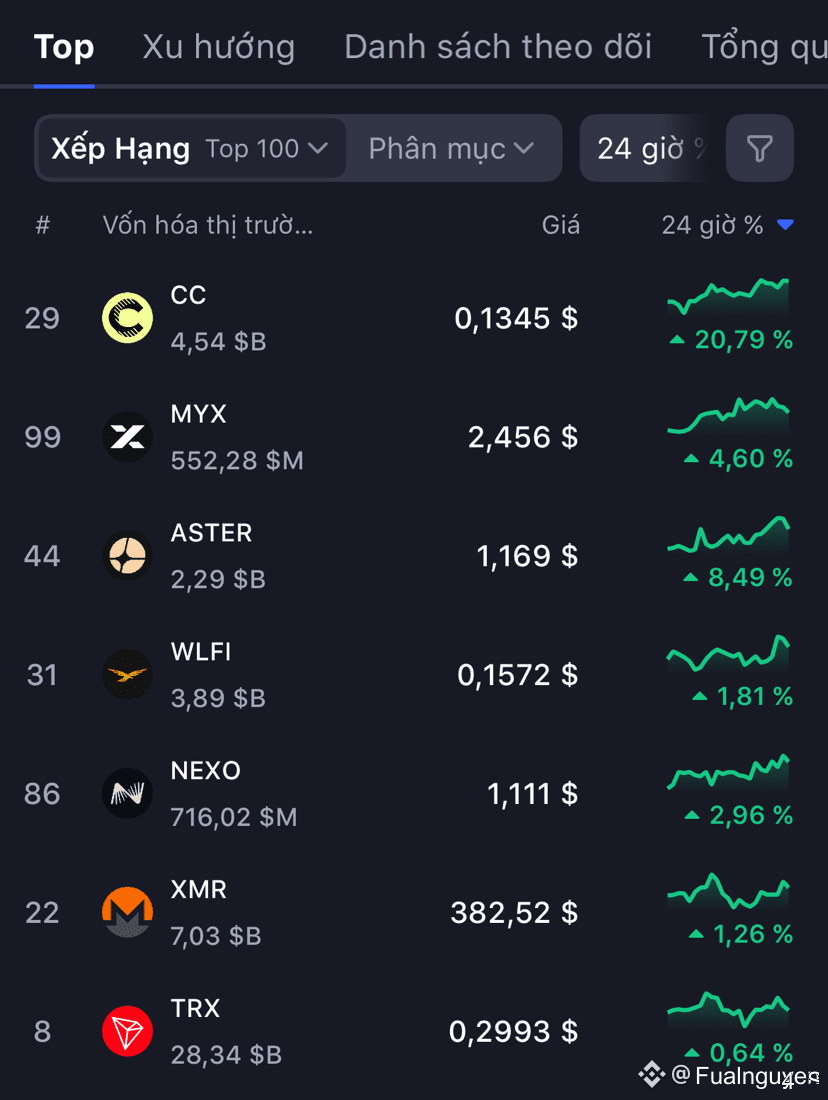
24h witnessed a spike in growth of $CC a public L1 blockchain designed specifically for financial institutions, with high security, privacy, and interoperability capabilities. With the mission "The power of capital markets meets the real value of blockchain", many companies and major banks from "Wall Street" and the traditional financial market have participated in investing, experimenting, and using Canton Network
CC does not support spot buying in the Asian market. Binance has listed the perpetual futures contract of CC
In addition, $MYX and $WLFI are 2 outstanding Defi projects coming from BEP-20 and ERC-20, respectively, showing strong price recovery in the last 12 hours.
Aster maintains its upward momentum after continuously leading trading volume on the top largest decentralized crypto exchanges in the world.
#Fualnguyen #BNBholic #Asterians
{future}(WLFIUSDT)
{future}(MYXUSDT)
{future}(CCUSDT)
Topic: New token hot trending.
24h witnessed a spike in growth of $CC a public L1 blockchain designed specifically for financial institutions, with high security, privacy, and interoperability capabilities. With the mission "The power of capital markets meets the real value of blockchain", many companies and major banks from "Wall Street" and the traditional financial market have participated in investing, experimenting, and using Canton Network
CC does not support spot buying in the Asian market. Binance has listed the perpetual futures contract of CC
In addition, $MYX and $WLFI are 2 outstanding Defi projects coming from BEP-20 and ERC-20, respectively, showing strong price recovery in the last 12 hours.
Aster maintains its upward momentum after continuously leading trading volume on the top largest decentralized crypto exchanges in the world.
#Fualnguyen #BNBholic #Asterians
24h witnessed a spike in growth of $CC a public L1 blockchain designed specifically for financial institutions, with high security, privacy, and interoperability capabilities. With the mission "The power of capital markets meets the real value of blockchain", many companies and major banks from "Wall Street" and the traditional financial market have participated in investing, experimenting, and using Canton Network
CC does not support spot buying in the Asian market. Binance has listed the perpetual futures contract of CC
In addition, $MYX and $WLFI are 2 outstanding Defi projects coming from BEP-20 and ERC-20, respectively, showing strong price recovery in the last 12 hours.
Aster maintains its upward momentum after continuously leading trading volume on the top largest decentralized crypto exchanges in the world.
#Fualnguyen #BNBholic #Asterians
3
4k
·
--
Bullish
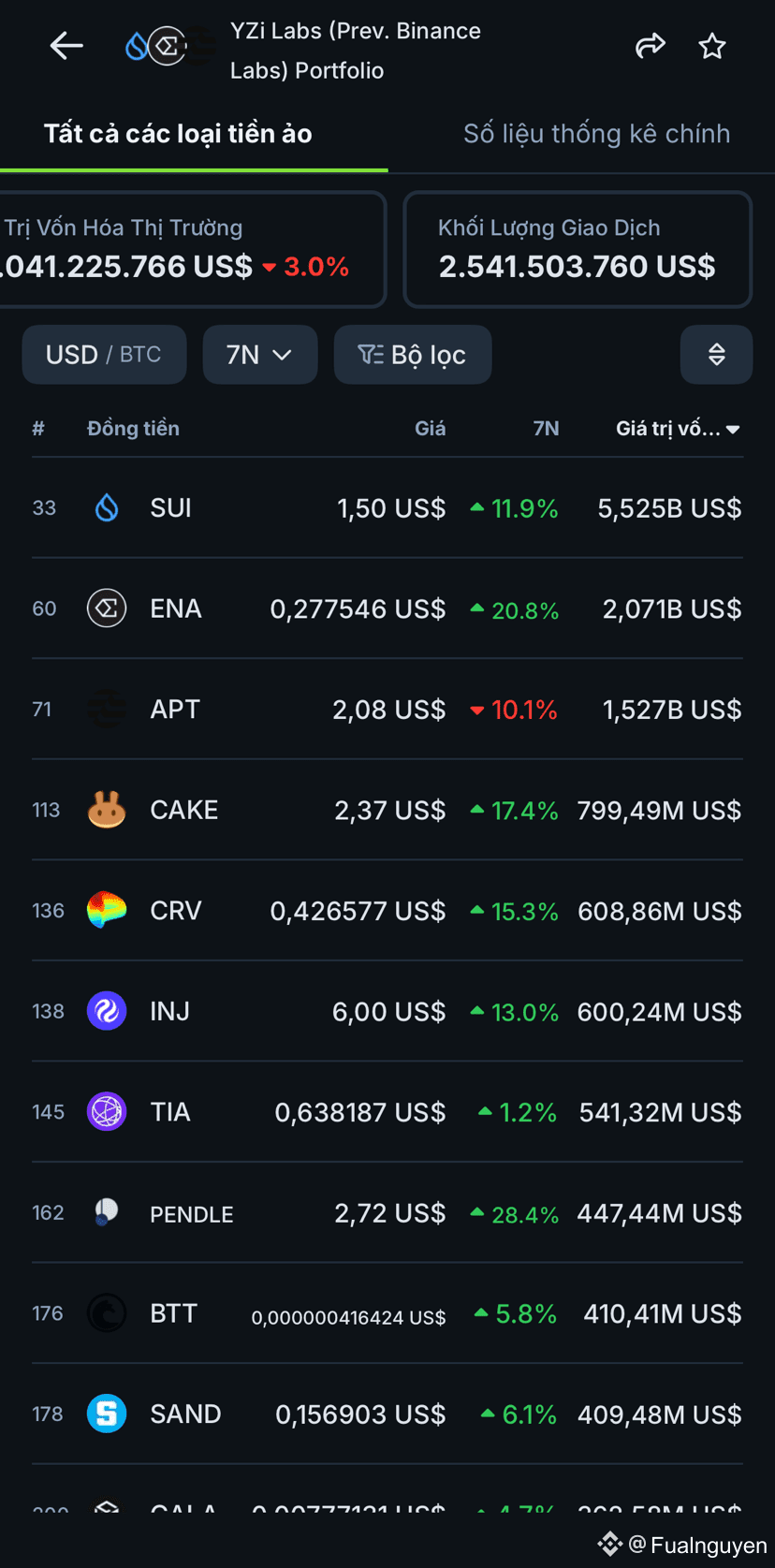
Surely you have heard about #YZILabs , formerly known as Binance Labs - the venture capital fund of Binance exchange.
They manage a very large asset block (estimated at around 10 billion USD) and have a diverse investment portfolio across many projects.
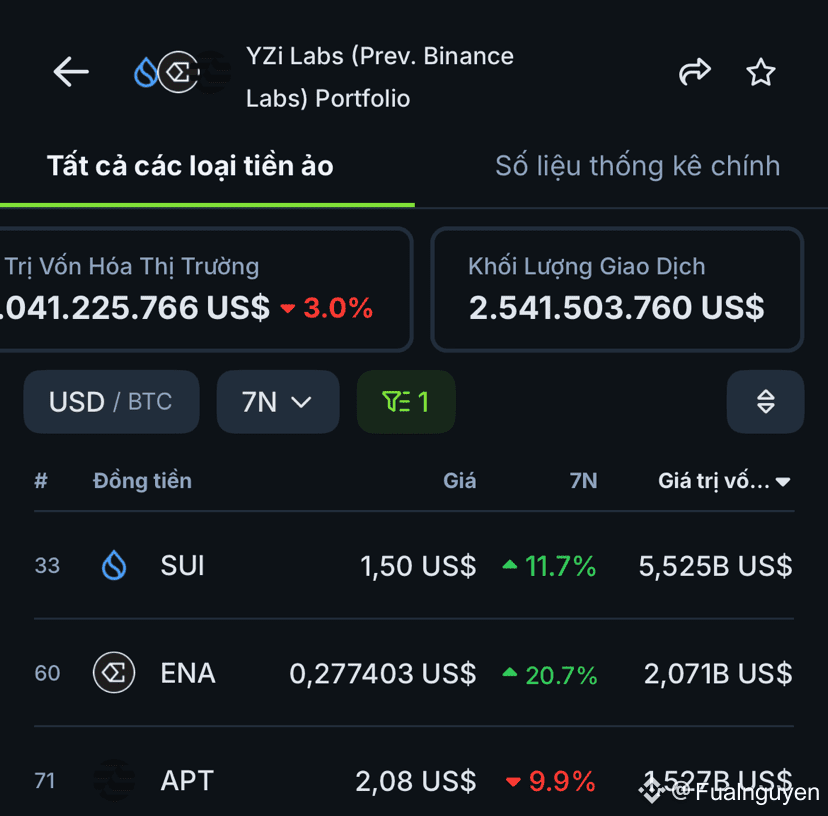
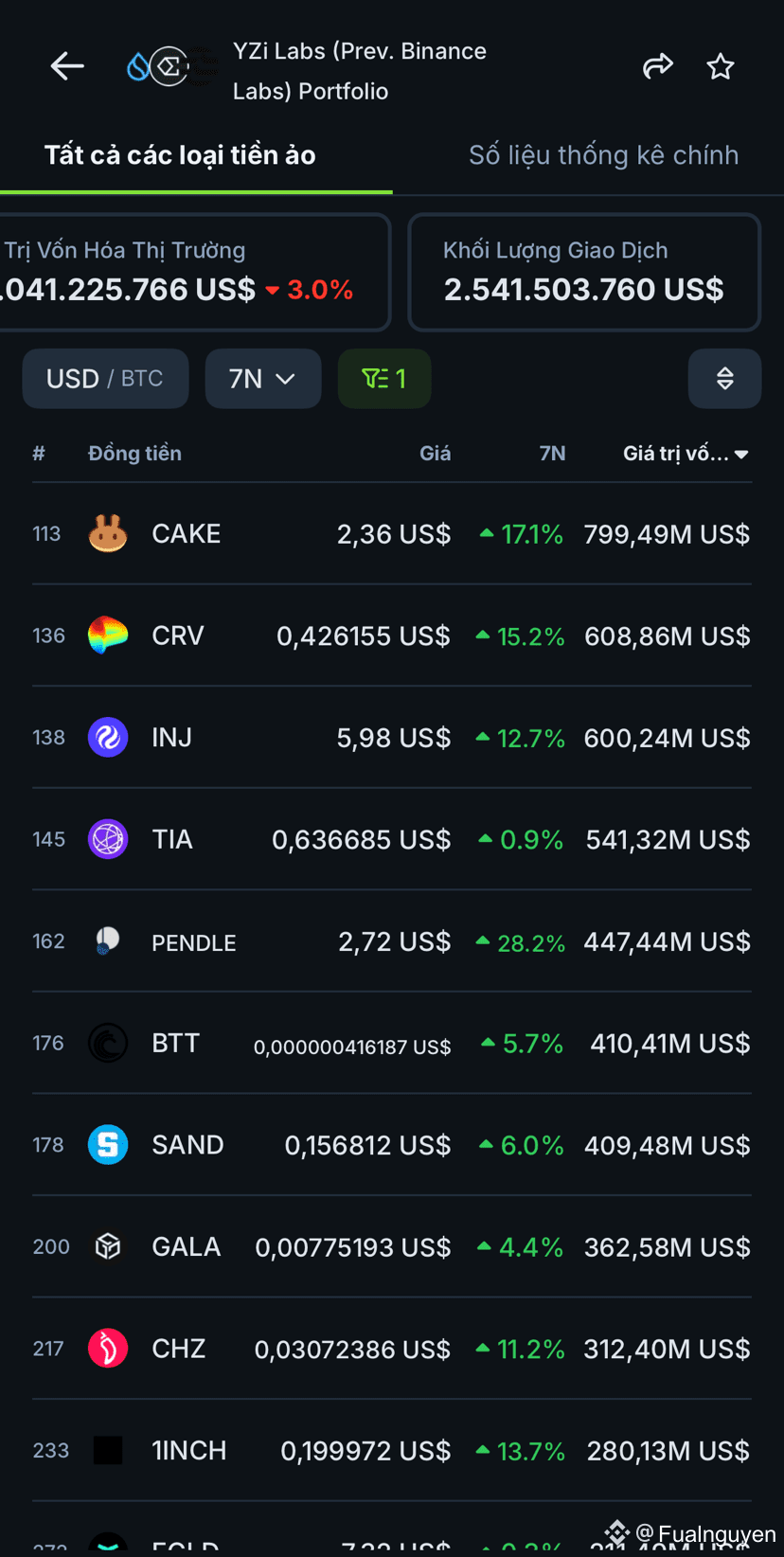
Looking at the price movements of the tokens in their portfolio over the past week, one must acknowledge that they always make excellent choices.
Among them are 3 projects with a market capitalization over 1 billion USD that have shown the best price recovery in the market: ENA SUI APT
In parallel, the low-cap projects they invest in are also coins with quite good performance, maintaining their price steadily and recovering quickly.
The portfolio of #YZILabs is also very worth learning from.
#Fualnguyen
{future}(TIAUSDT)
{future}(EDUUSDT)
{future}(CHZUSDT)
Surely you have heard about #YZILabs , formerly known as Binance Labs - the venture capital fund of Binance exchange.
They manage a very large asset block (estimated at around 10 billion USD) and have a diverse investment portfolio across many projects.
Looking at the price movements of the tokens in their portfolio over the past week, one must acknowledge that they always make excellent choices.
Among them are 3 projects with a market capitalization over 1 billion USD that have shown the best price recovery in the market: ENA SUI APT
In parallel, the low-cap projects they invest in are also coins with quite good performance, maintaining their price steadily and recovering quickly.
The portfolio of #YZILabs is also very worth learning from.
#Fualnguyen
They manage a very large asset block (estimated at around 10 billion USD) and have a diverse investment portfolio across many projects.
Looking at the price movements of the tokens in their portfolio over the past week, one must acknowledge that they always make excellent choices.
Among them are 3 projects with a market capitalization over 1 billion USD that have shown the best price recovery in the market: ENA SUI APT
In parallel, the low-cap projects they invest in are also coins with quite good performance, maintaining their price steadily and recovering quickly.
The portfolio of #YZILabs is also very worth learning from.
#Fualnguyen
2
4.5k
·
--
Bullish
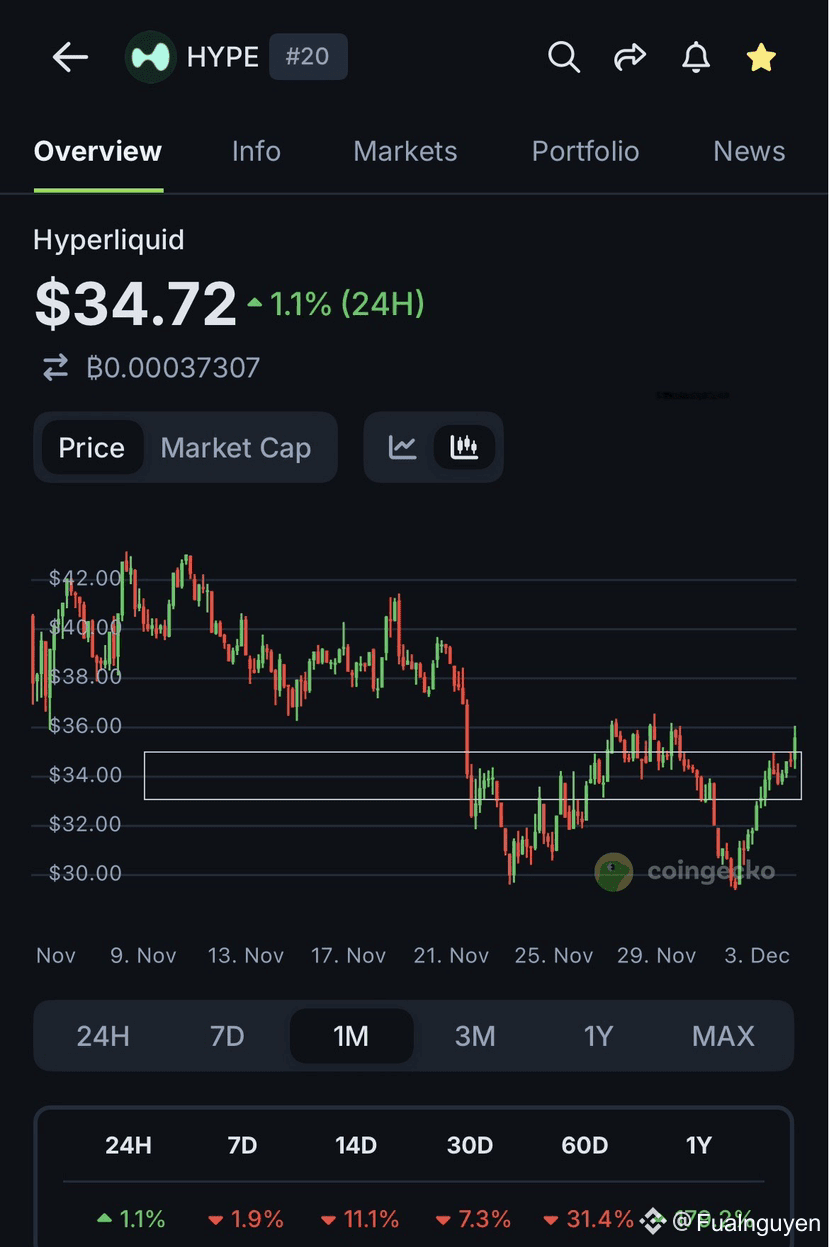
I continue to wait for the TP at $37 for 50% of the remaining position volume 💪🏻
The daily chart over a month shows that the price $HYPE has been strongly accumulated in the area around $34, forming a strong support zone that makes it easy for the price to rise above this level.
As long as BTC stabilizes, the price $HYPE will surely return to the old ATH area and set a new ATH. The current trading price is also too ideal to follow a long-term LONG position
#Fualnguyen #BinanceBlockchainWeek
I continue to wait for the TP at $37 for 50% of the remaining position volume 💪🏻
The daily chart over a month shows that the price $HYPE has been strongly accumulated in the area around $34, forming a strong support zone that makes it easy for the price to rise above this level.
As long as BTC stabilizes, the price $HYPE will surely return to the old ATH area and set a new ATH. The current trading price is also too ideal to follow a long-term LONG position
#Fualnguyen #BinanceBlockchainWeek
The daily chart over a month shows that the price $HYPE has been strongly accumulated in the area around $34, forming a strong support zone that makes it easy for the price to rise above this level.
As long as BTC stabilizes, the price $HYPE will surely return to the old ATH area and set a new ATH. The current trading price is also too ideal to follow a long-term LONG position
#Fualnguyen #BinanceBlockchainWeek
2
36
·
--
Article
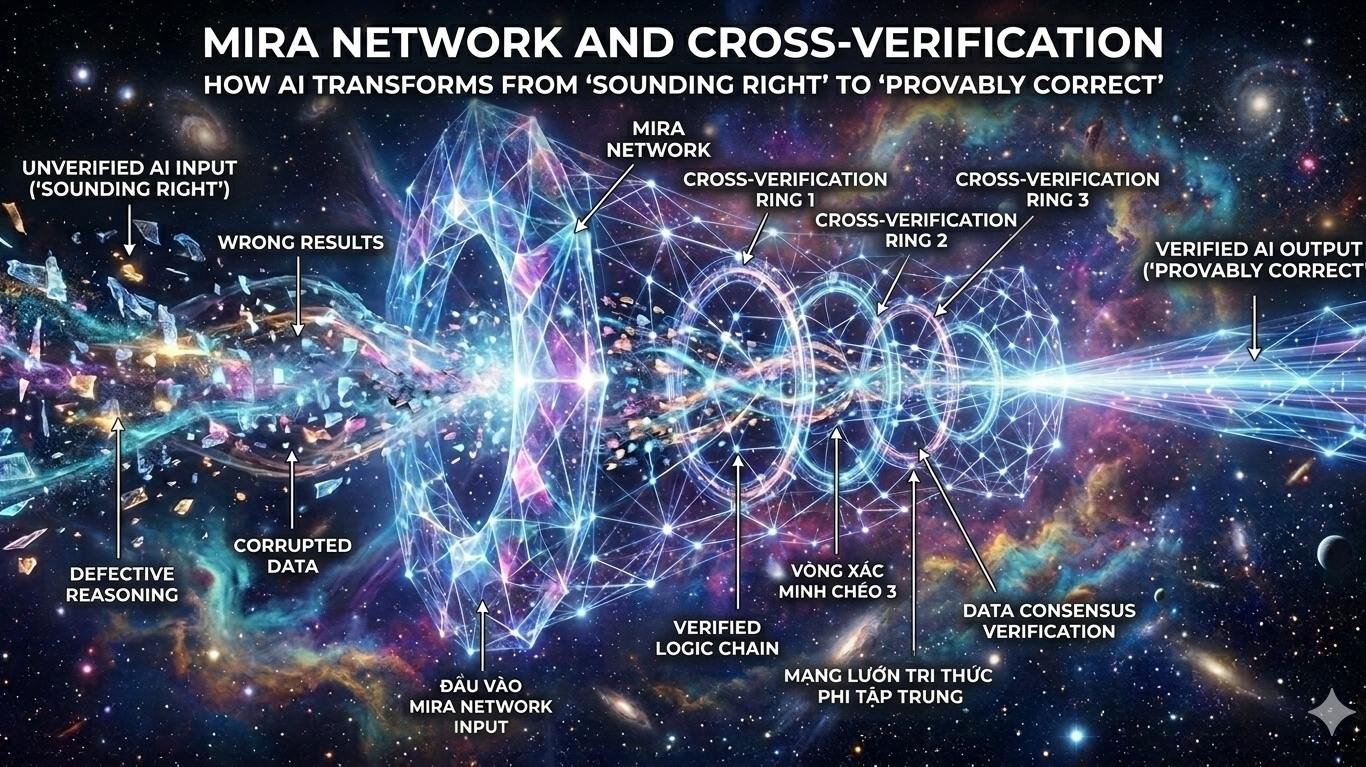
Mira Network and Cross-Verification: From “Sounding Right” To “Provably Correct”As artificial intelligence continues to advance at an unprecedented pace, the world is facing a growing paradox: the more powerful AI becomes, the greater the risks it introduces. Modern AI systems can reason, write, and persuade with remarkable fluency - yet a fundamental problem remains unresolved: trust.
AI can be correct. AI can be wrong.
Most dangerously, AI can be wrong while sounding perfectly right.
This is the defining challenge of the AI era. Power alone is no longer enough. What truly matters is whether AI outputs can be reliably verified, not just rhetorically convincing. This is precisely the problem Mira Network was designed to solve.
The Core Problem: AI Does Not Know When It Is Wrong
Modern AI does not understand truth the way humans do. It does not know - it predicts. Each response is generated based on probabilistic language modeling, not factual certainty.
As a result:
- AI cannot distinguish truth from falsehood
- AI cannot recognize its own uncertainty
- AI expresses confidence regardless of correctness
In high-stakes domains such as finance, law, healthcare, and critical infrastructure, a plausible but incorrect answer can cause enormous damage.
Mira Network Doesn’t Ask: “Is This AI Trustworthy?”
Instead, Mira asks: “How can any AI output be independently verified?” This shift in perspective leads to an entirely different system architecture.
Step 1: Breaking AI Outputs into Verifiable Claims
Rather than evaluating a long narrative answer, Mira decomposes AI outputs into individual claims - each with clear semantics and a binary truth value.
This transforms AI output from persuasive storytelling into auditable units of information.
Step 2: Cross-Verification — The Heart of the Trust Layer
Cross-verification is not about having multiple AIs repeat the same answer. Models trained on similar data can fail in identical ways.
Mira solves this by:
- Sending each claim to multiple independent validators
- Ensuring validators do not know the source of the claim
- Allowing validators to use different models, logic, and data sources
Validators act as independent judges, not scorekeepers, asking only: “Does this claim withstand scrutiny from multiple independent perspectives?”
Step 3: Costly Consensus — Truth Enforced by Economics
Validators must stake real value. Correct verification is rewarded. Incorrect verification is penalized. Truth is not enforced by authority or reputation, but by economic consequence.
Why Cross-Verification Is More Reliable Than Human Judgment
Humans are emotional, biased, and manipulable. Mira’s system is neutral, incentive-driven, and structurally honest. Trust emerges not from who speaks, but from a system that makes dishonesty irrational.
Mira Doesn’t Make AI Smarter — It Makes AI Trustworthy
In an era where hundreds of billions of dollars are flowing into AI, a trust layer is no longer optional infrastructure - it is foundational.
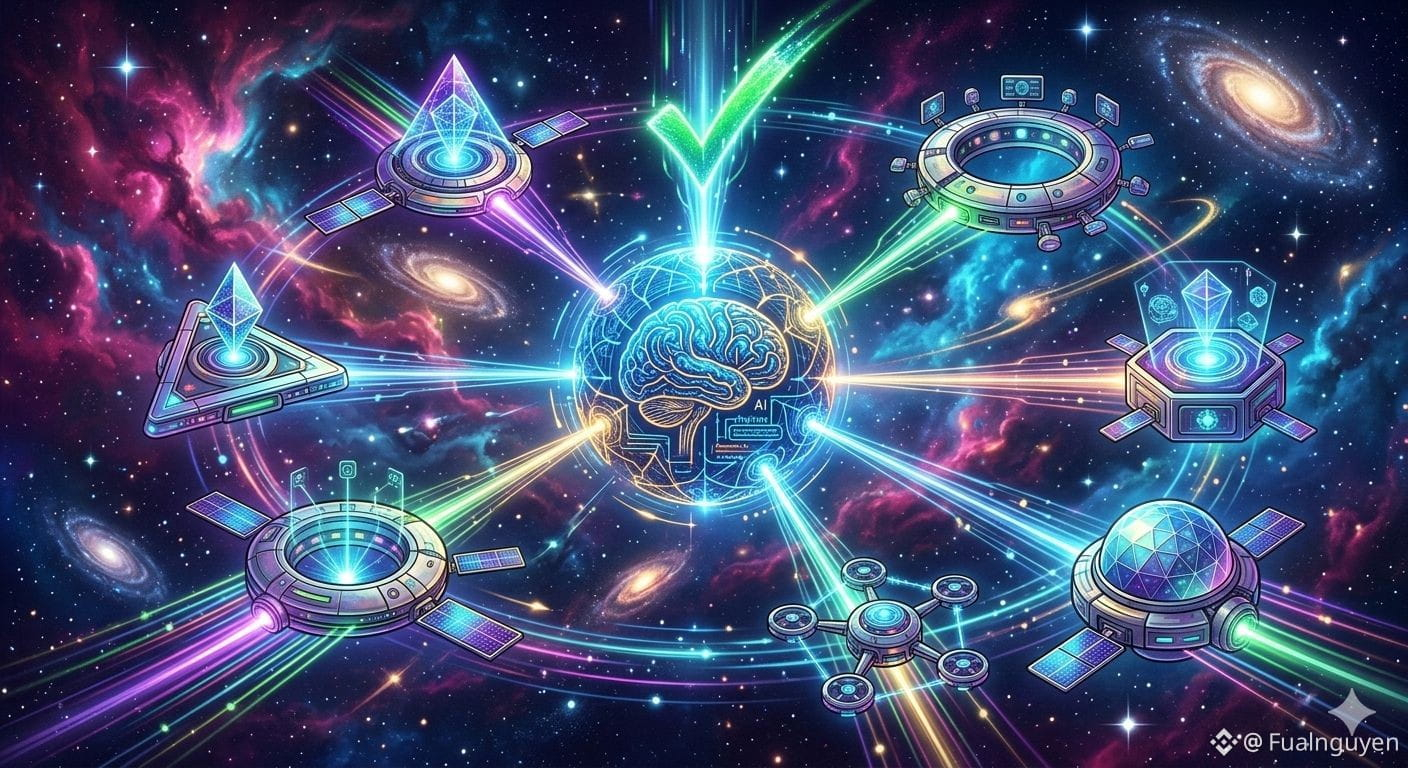
If AI is the brain of the future, @mira_network is the immune system that allows that brain to operate safely at global scale.
#MIRA $MIRA #Fualnguyen
{spot}(MIRAUSDT)
Mira Network and Cross-Verification: From “Sounding Right” To “Provably Correct”
As artificial intelligence continues to advance at an unprecedented pace, the world is facing a growing paradox: the more powerful AI becomes, the greater the risks it introduces. Modern AI systems can reason, write, and persuade with remarkable fluency - yet a fundamental problem remains unresolved: trust.
AI can be correct. AI can be wrong.
Most dangerously, AI can be wrong while sounding perfectly right.
This is the defining challenge of the AI era. Power alone is no longer enough. What truly matters is whether AI outputs can be reliably verified, not just rhetorically convincing. This is precisely the problem Mira Network was designed to solve.
The Core Problem: AI Does Not Know When It Is Wrong
Modern AI does not understand truth the way humans do. It does not know - it predicts. Each response is generated based on probabilistic language modeling, not factual certainty.
As a result:
- AI cannot distinguish truth from falsehood
- AI cannot recognize its own uncertainty
- AI expresses confidence regardless of correctness
In high-stakes domains such as finance, law, healthcare, and critical infrastructure, a plausible but incorrect answer can cause enormous damage.
Mira Network Doesn’t Ask: “Is This AI Trustworthy?”
Instead, Mira asks: “How can any AI output be independently verified?” This shift in perspective leads to an entirely different system architecture.
Step 1: Breaking AI Outputs into Verifiable Claims
Rather than evaluating a long narrative answer, Mira decomposes AI outputs into individual claims - each with clear semantics and a binary truth value.
This transforms AI output from persuasive storytelling into auditable units of information.
Step 2: Cross-Verification — The Heart of the Trust Layer
Cross-verification is not about having multiple AIs repeat the same answer. Models trained on similar data can fail in identical ways.
Mira solves this by:
- Sending each claim to multiple independent validators
- Ensuring validators do not know the source of the claim
- Allowing validators to use different models, logic, and data sources
Validators act as independent judges, not scorekeepers, asking only: “Does this claim withstand scrutiny from multiple independent perspectives?”
Step 3: Costly Consensus — Truth Enforced by Economics
Validators must stake real value. Correct verification is rewarded. Incorrect verification is penalized. Truth is not enforced by authority or reputation, but by economic consequence.
Why Cross-Verification Is More Reliable Than Human Judgment
Humans are emotional, biased, and manipulable. Mira’s system is neutral, incentive-driven, and structurally honest. Trust emerges not from who speaks, but from a system that makes dishonesty irrational.
Mira Doesn’t Make AI Smarter — It Makes AI Trustworthy
In an era where hundreds of billions of dollars are flowing into AI, a trust layer is no longer optional infrastructure - it is foundational.
If AI is the brain of the future, @Mira - Trust Layer of AI is the immune system that allows that brain to operate safely at global scale.
#MIRA $MIRA #Fualnguyen
AI can be correct. AI can be wrong.
Most dangerously, AI can be wrong while sounding perfectly right.
This is the defining challenge of the AI era. Power alone is no longer enough. What truly matters is whether AI outputs can be reliably verified, not just rhetorically convincing. This is precisely the problem Mira Network was designed to solve.
The Core Problem: AI Does Not Know When It Is Wrong
Modern AI does not understand truth the way humans do. It does not know - it predicts. Each response is generated based on probabilistic language modeling, not factual certainty.
As a result:
- AI cannot distinguish truth from falsehood
- AI cannot recognize its own uncertainty
- AI expresses confidence regardless of correctness
In high-stakes domains such as finance, law, healthcare, and critical infrastructure, a plausible but incorrect answer can cause enormous damage.
Mira Network Doesn’t Ask: “Is This AI Trustworthy?”
Instead, Mira asks: “How can any AI output be independently verified?” This shift in perspective leads to an entirely different system architecture.
Step 1: Breaking AI Outputs into Verifiable Claims
Rather than evaluating a long narrative answer, Mira decomposes AI outputs into individual claims - each with clear semantics and a binary truth value.
This transforms AI output from persuasive storytelling into auditable units of information.
Step 2: Cross-Verification — The Heart of the Trust Layer
Cross-verification is not about having multiple AIs repeat the same answer. Models trained on similar data can fail in identical ways.
Mira solves this by:
- Sending each claim to multiple independent validators
- Ensuring validators do not know the source of the claim
- Allowing validators to use different models, logic, and data sources
Validators act as independent judges, not scorekeepers, asking only: “Does this claim withstand scrutiny from multiple independent perspectives?”
Step 3: Costly Consensus — Truth Enforced by Economics
Validators must stake real value. Correct verification is rewarded. Incorrect verification is penalized. Truth is not enforced by authority or reputation, but by economic consequence.
Why Cross-Verification Is More Reliable Than Human Judgment
Humans are emotional, biased, and manipulable. Mira’s system is neutral, incentive-driven, and structurally honest. Trust emerges not from who speaks, but from a system that makes dishonesty irrational.
Mira Doesn’t Make AI Smarter — It Makes AI Trustworthy
In an era where hundreds of billions of dollars are flowing into AI, a trust layer is no longer optional infrastructure - it is foundational.
If AI is the brain of the future, @Mira - Trust Layer of AI is the immune system that allows that brain to operate safely at global scale.
#MIRA $MIRA #Fualnguyen
8
3k
·
--
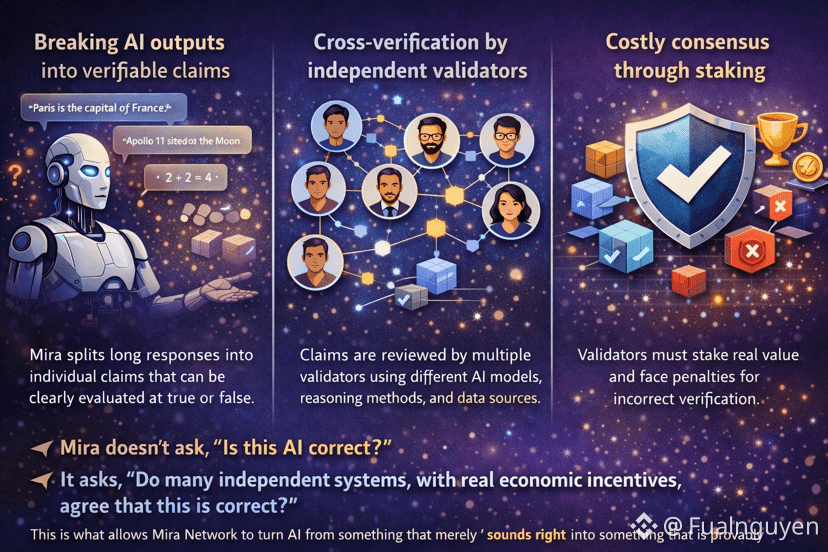
@mira_network can verify the correctness of AI models because it does not rely on a single AI system. Instead, it uses a network of independent verification.
In short, Mira achieves this through three core mechanisms:
1. Breaking AI outputs into verifiable claims
Rather than judging a long AI-generated response as a whole, Mira splits it into individual claims that can be clearly evaluated as true or false. This makes verification precise and objective.
2. Cross-verification by independent validators
Each claim is reviewed by multiple validators using different AI models, reasoning methods, and data sources. No model is allowed to validate its own output.
3. Costly consensus through staking
Validators must stake real value and face penalties for incorrect verification. Because there is real economic risk involved, validation results are far more trustworthy than a single model’s assertion.
- Mira doesn’t ask, “Is this AI correct?”
- It asks, “Do many independent systems, with real economic incentives, agree that this is correct?”
This is what allows Mira Network to turn AI from something that merely sounds right into something that is provably trustworthy.
#Mira $MIRA #Fualnguyen #writewithoutAI
{spot}(MIRAUSDT)
@Mira - Trust Layer of AI can verify the correctness of AI models because it does not rely on a single AI system. Instead, it uses a network of independent verification.
In short, Mira achieves this through three core mechanisms:
1. Breaking AI outputs into verifiable claims
Rather than judging a long AI-generated response as a whole, Mira splits it into individual claims that can be clearly evaluated as true or false. This makes verification precise and objective.
2. Cross-verification by independent validators
Each claim is reviewed by multiple validators using different AI models, reasoning methods, and data sources. No model is allowed to validate its own output.
3. Costly consensus through staking
Validators must stake real value and face penalties for incorrect verification. Because there is real economic risk involved, validation results are far more trustworthy than a single model’s assertion.
- Mira doesn’t ask, “Is this AI correct?”
- It asks, “Do many independent systems, with real economic incentives, agree that this is correct?”
This is what allows Mira Network to turn AI from something that merely sounds right into something that is provably trustworthy.
#Mira $MIRA #Fualnguyen #writewithoutAI
In short, Mira achieves this through three core mechanisms:
1. Breaking AI outputs into verifiable claims
Rather than judging a long AI-generated response as a whole, Mira splits it into individual claims that can be clearly evaluated as true or false. This makes verification precise and objective.
2. Cross-verification by independent validators
Each claim is reviewed by multiple validators using different AI models, reasoning methods, and data sources. No model is allowed to validate its own output.
3. Costly consensus through staking
Validators must stake real value and face penalties for incorrect verification. Because there is real economic risk involved, validation results are far more trustworthy than a single model’s assertion.
- Mira doesn’t ask, “Is this AI correct?”
- It asks, “Do many independent systems, with real economic incentives, agree that this is correct?”
This is what allows Mira Network to turn AI from something that merely sounds right into something that is provably trustworthy.
#Mira $MIRA #Fualnguyen #writewithoutAI
4
1.9k
·
--
Article
Gold’s Sudden Drop Highlights Liquidity Fragility and Excessive Derivative Leverage{future}(BTCUSDT)
{future}(XAUUSDT)
{future}(BNBUSDT)
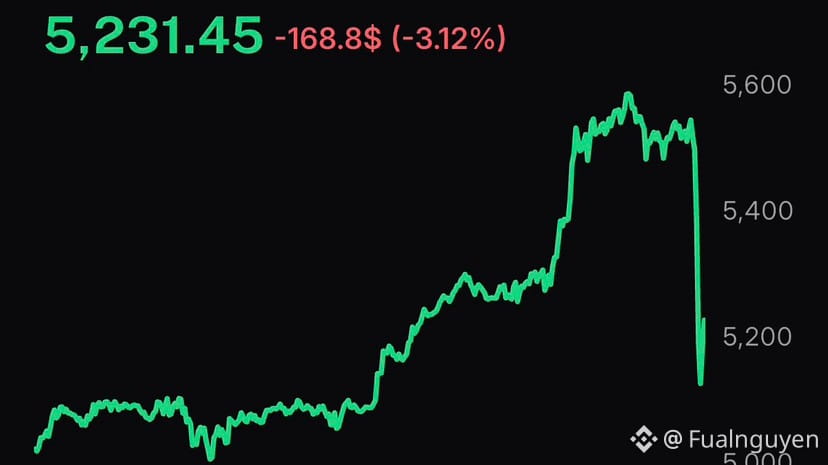
Gold prices experienced a sharp, sudden decline today, falling by over 4% after hitting record highs earlier in the session, as investors locked in profits amid heightened volatility. This abrupt move occurred despite limited new macroeconomic developments, underscoring deeper structural dynamics in the market.
At the core of this sell-off is the fragility caused by thinning real liquidity in the spot market. When physical buying interest is not sufficiently deep, prices become increasingly sensitive to short-term capital flows and speculative positioning, rather than traditional supply and demand fundamentals.
In such an environment, the role of the derivatives market becomes disproportionately influential. With open interest in gold futures and options elevated to multi-year highs, large leveraged positions accumulated over recent months have made the market highly susceptible to forced liquidations and cascading margin calls.
Once selling pressure is triggered, limited bid-side liquidity fails to absorb the supply, causing prices to gap lower through multiple technical support levels. Today’s sell-off, which saw prices retreat sharply from session highs, is a textbook example of how leveraged positions and liquidity gaps can amplify price swings in a seemingly orderly market.
Notably, this type of price action unfolded without any obvious macro shock — no major interest rate announcement or geopolitical event directly explains the magnitude of the drop. Instead, it reflects a market where structure and positioning matter more than ever for short-term price behavior.
Even traditionally “safe haven” assets like gold are not immune when liquidity is thin and leverage is high. In these conditions, volatility becomes decoupled from macro fundamentals, and sharp moves can occur even in the absence of new economic data.
Today’s price action serves as a stark reminder that in a market dominated by derivative leverage and fragile liquidity, risk can surface abruptly and severely. For investors and risk managers alike, understanding the interplay between liquidity, leverage, and market structure is now essential to navigating precious metals markets.
#Fualnguyen #LongTermInvestment #LongTermAnalysis
Gold’s Sudden Drop Highlights Liquidity Fragility and Excessive Derivative Leverage
Gold prices experienced a sharp, sudden decline today, falling by over 4% after hitting record highs earlier in the session, as investors locked in profits amid heightened volatility. This abrupt move occurred despite limited new macroeconomic developments, underscoring deeper structural dynamics in the market.
At the core of this sell-off is the fragility caused by thinning real liquidity in the spot market. When physical buying interest is not sufficiently deep, prices become increasingly sensitive to short-term capital flows and speculative positioning, rather than traditional supply and demand fundamentals.
In such an environment, the role of the derivatives market becomes disproportionately influential. With open interest in gold futures and options elevated to multi-year highs, large leveraged positions accumulated over recent months have made the market highly susceptible to forced liquidations and cascading margin calls.
Once selling pressure is triggered, limited bid-side liquidity fails to absorb the supply, causing prices to gap lower through multiple technical support levels. Today’s sell-off, which saw prices retreat sharply from session highs, is a textbook example of how leveraged positions and liquidity gaps can amplify price swings in a seemingly orderly market.
Notably, this type of price action unfolded without any obvious macro shock — no major interest rate announcement or geopolitical event directly explains the magnitude of the drop. Instead, it reflects a market where structure and positioning matter more than ever for short-term price behavior.
Even traditionally “safe haven” assets like gold are not immune when liquidity is thin and leverage is high. In these conditions, volatility becomes decoupled from macro fundamentals, and sharp moves can occur even in the absence of new economic data.
Today’s price action serves as a stark reminder that in a market dominated by derivative leverage and fragile liquidity, risk can surface abruptly and severely. For investors and risk managers alike, understanding the interplay between liquidity, leverage, and market structure is now essential to navigating precious metals markets.
#Fualnguyen #LongTermInvestment #LongTermAnalysis
At the core of this sell-off is the fragility caused by thinning real liquidity in the spot market. When physical buying interest is not sufficiently deep, prices become increasingly sensitive to short-term capital flows and speculative positioning, rather than traditional supply and demand fundamentals.
In such an environment, the role of the derivatives market becomes disproportionately influential. With open interest in gold futures and options elevated to multi-year highs, large leveraged positions accumulated over recent months have made the market highly susceptible to forced liquidations and cascading margin calls.
Once selling pressure is triggered, limited bid-side liquidity fails to absorb the supply, causing prices to gap lower through multiple technical support levels. Today’s sell-off, which saw prices retreat sharply from session highs, is a textbook example of how leveraged positions and liquidity gaps can amplify price swings in a seemingly orderly market.
Notably, this type of price action unfolded without any obvious macro shock — no major interest rate announcement or geopolitical event directly explains the magnitude of the drop. Instead, it reflects a market where structure and positioning matter more than ever for short-term price behavior.
Even traditionally “safe haven” assets like gold are not immune when liquidity is thin and leverage is high. In these conditions, volatility becomes decoupled from macro fundamentals, and sharp moves can occur even in the absence of new economic data.
Today’s price action serves as a stark reminder that in a market dominated by derivative leverage and fragile liquidity, risk can surface abruptly and severely. For investors and risk managers alike, understanding the interplay between liquidity, leverage, and market structure is now essential to navigating precious metals markets.
#Fualnguyen #LongTermInvestment #LongTermAnalysis
5
1
8
3.9k
·
--
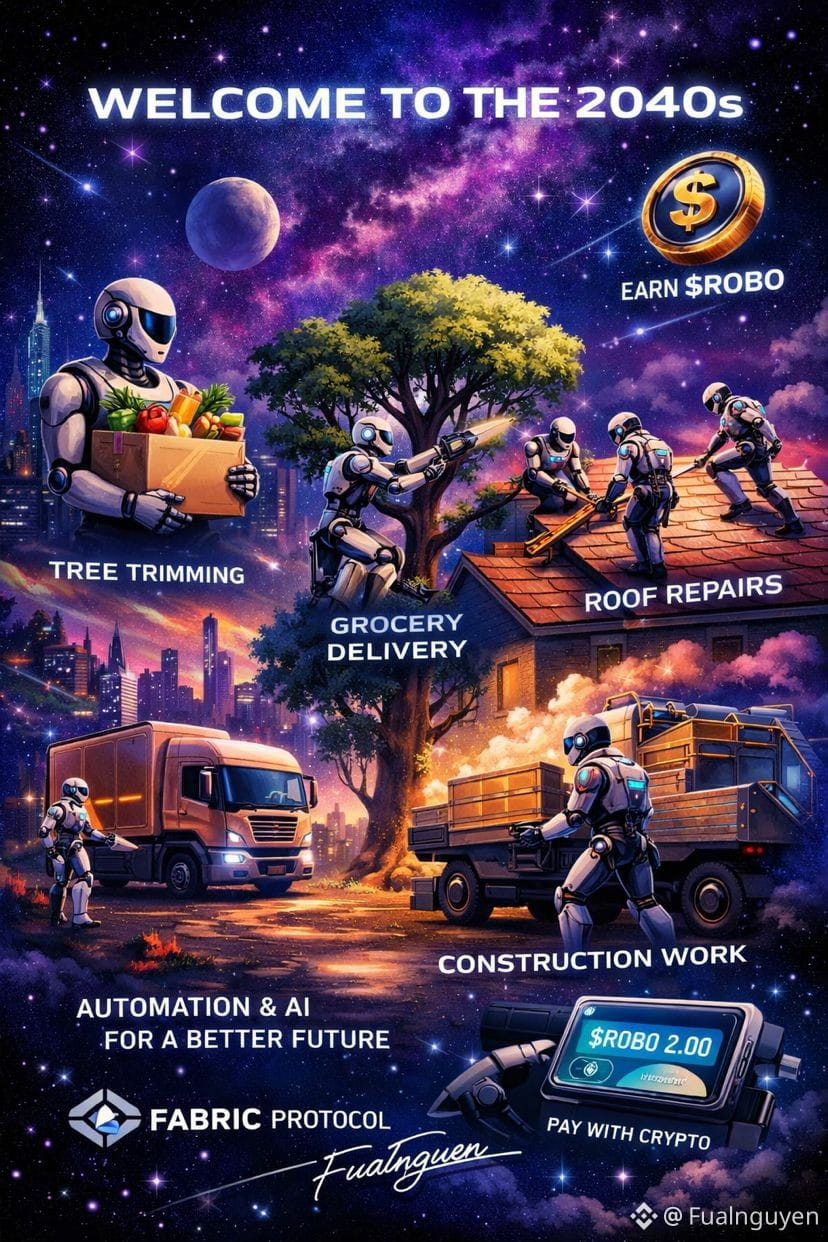
Let’s imagine waking up one morning in the 2040s
Robots have already replaced humans in 100% of physically demanding jobs. This morning, I need to trim the large trees in my garden and buy groceries for the coming week. I open an app on my phone and order a robot to handle both tasks. The system assigns one robot to go to the supermarket, purchase the food I requested, and deliver it to my house. After completing the delivery, the same robot begins trimming the old trees in my garden according to the instructions and descriptions I had already entered.
Once both tasks are completed, I pay a fee of 2 $ROBO using the token stored in my personal wallet integrated into the crypto application.
At that moment, imagine that you are my neighbor. While preparing lunch, I notice that the roof of your house is being repaired by four robots. Even from a distance, I can see identification chips attached to the chest of each robot as they hang while working on the roof. A truck carrying construction materials has just arrived in front of your house, delivered by another robot.
This picture is not unrealistic in a near future where robots and AI increasingly help humans handle work across almost every field. The era of rapid advancement in automation, AI, and robotics raises an important question: can this new technological foundation become something fair and accessible for everyone, while also guiding the world toward sustainable development?
That vision is exactly the philosophy that Fabric Protocol aims to build, and it is already beginning to take shape in the imagination that you and I share today.
And right now, you already have the opportunity to capture that future by accumulating $ROBO with enormous long-term potential.
#robo $ROBO @FabricFND #Fualnguyen
{spot}(ROBOUSDT)
Let’s imagine waking up one morning in the 2040s
Robots have already replaced humans in 100% of physically demanding jobs. This morning, I need to trim the large trees in my garden and buy groceries for the coming week. I open an app on my phone and order a robot to handle both tasks. The system assigns one robot to go to the supermarket, purchase the food I requested, and deliver it to my house. After completing the delivery, the same robot begins trimming the old trees in my garden according to the instructions and descriptions I had already entered.
Once both tasks are completed, I pay a fee of 2 $ROBO using the token stored in my personal wallet integrated into the crypto application.
At that moment, imagine that you are my neighbor. While preparing lunch, I notice that the roof of your house is being repaired by four robots. Even from a distance, I can see identification chips attached to the chest of each robot as they hang while working on the roof. A truck carrying construction materials has just arrived in front of your house, delivered by another robot.
This picture is not unrealistic in a near future where robots and AI increasingly help humans handle work across almost every field. The era of rapid advancement in automation, AI, and robotics raises an important question: can this new technological foundation become something fair and accessible for everyone, while also guiding the world toward sustainable development?
That vision is exactly the philosophy that Fabric Protocol aims to build, and it is already beginning to take shape in the imagination that you and I share today.
And right now, you already have the opportunity to capture that future by accumulating $ROBO with enormous long-term potential.
#robo $ROBO @Fabric Foundation #Fualnguyen
Robots have already replaced humans in 100% of physically demanding jobs. This morning, I need to trim the large trees in my garden and buy groceries for the coming week. I open an app on my phone and order a robot to handle both tasks. The system assigns one robot to go to the supermarket, purchase the food I requested, and deliver it to my house. After completing the delivery, the same robot begins trimming the old trees in my garden according to the instructions and descriptions I had already entered.
Once both tasks are completed, I pay a fee of 2 $ROBO using the token stored in my personal wallet integrated into the crypto application.
At that moment, imagine that you are my neighbor. While preparing lunch, I notice that the roof of your house is being repaired by four robots. Even from a distance, I can see identification chips attached to the chest of each robot as they hang while working on the roof. A truck carrying construction materials has just arrived in front of your house, delivered by another robot.
This picture is not unrealistic in a near future where robots and AI increasingly help humans handle work across almost every field. The era of rapid advancement in automation, AI, and robotics raises an important question: can this new technological foundation become something fair and accessible for everyone, while also guiding the world toward sustainable development?
That vision is exactly the philosophy that Fabric Protocol aims to build, and it is already beginning to take shape in the imagination that you and I share today.
And right now, you already have the opportunity to capture that future by accumulating $ROBO with enormous long-term potential.
#robo $ROBO @Fabric Foundation #Fualnguyen
5
4
2.5k
·
--
One interesting detail mentioned in Fabric Protocol that few people notice.
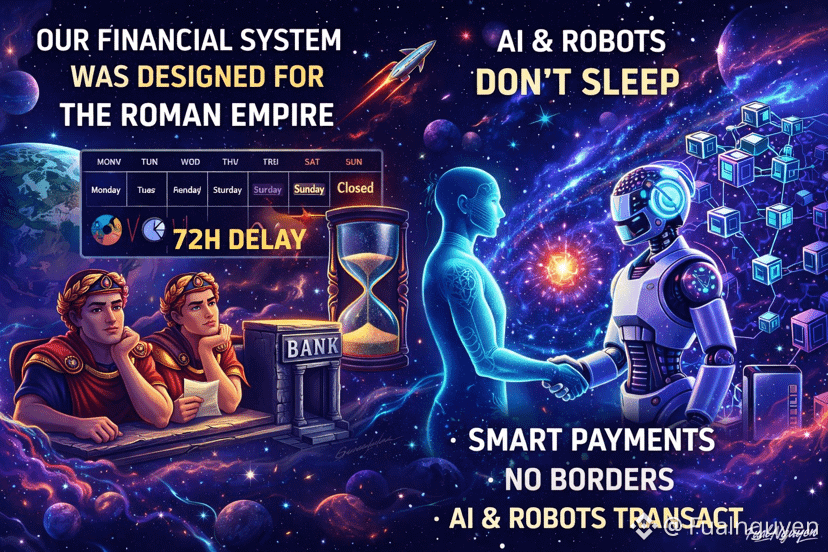
We have accepted that international money transfers take 24–72 hours. Not because technology cannot make it faster.
The real reason is that the modern financial system still operates based on the logic of the workweek, a concept that dates back to the time of Roman Emperor Augustus more than 2,000 years ago. Banks close on weekends. Payment systems pause on holidays. Many processes still rely on human working schedules.
However, machines and AI do not recognize Mondays or Sundays. Robots do not sleep, AI does not take holidays. Data moves at the speed of the internet.
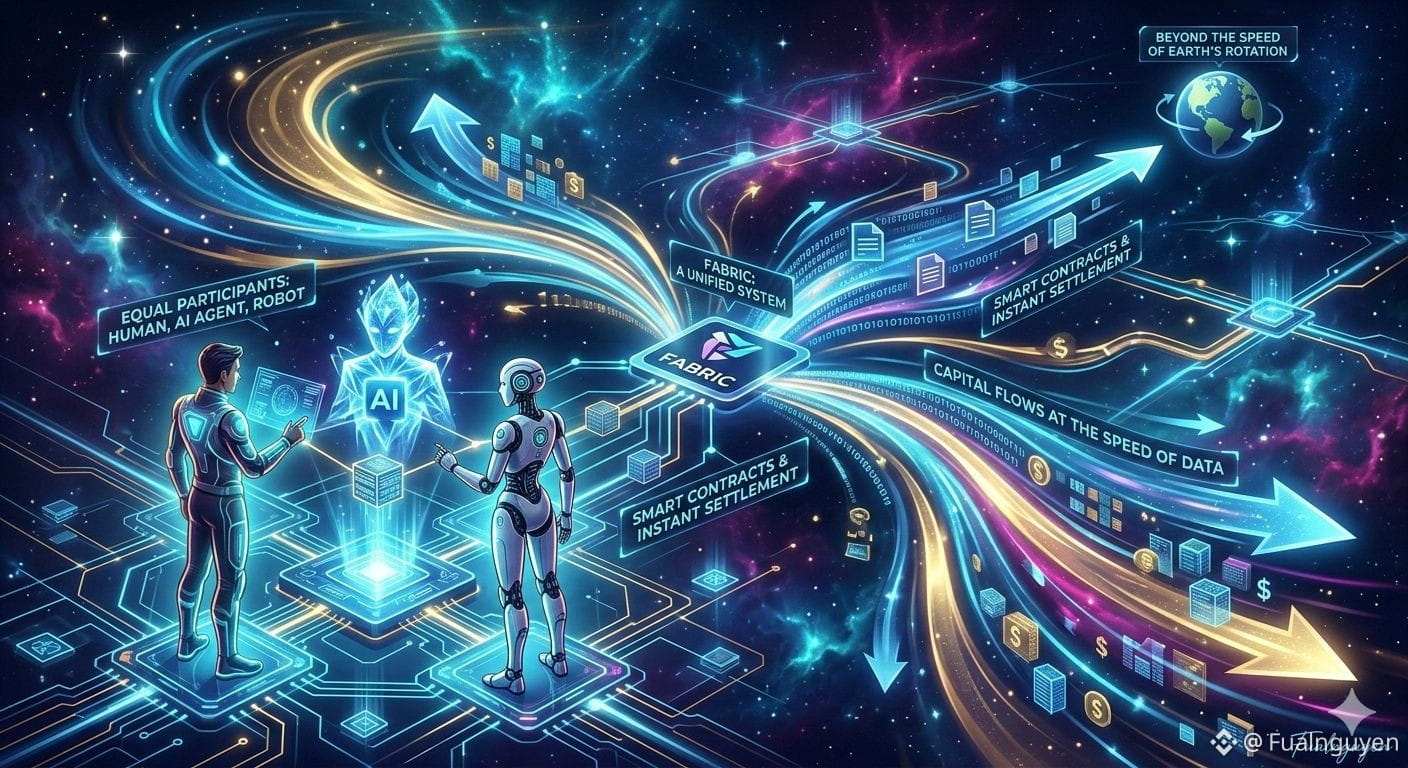
This is exactly why blockchain protocols like Fabric are being built. It is a new financial system where:
• Payments happen instantly through smart contracts.
• There are no borders and no dependency on time zones.
• Humans, AI agents, and robots can transact directly with each other.
In other words, Fabric is not just building infrastructure for robots. It is building a financial system designed for the era of AI and robotics.
Fabric establishes a system where humans, AI agents, and robots are treated equally. Every entity interacts through smart contracts and fast, irreversible settlement systems. Capital can flow at the speed of data rather than the rotation of the Earth.
#robo $ROBO @FabricFND #Fualnguyen
{spot}(ROBOUSDT)
One interesting detail mentioned in Fabric Protocol that few people notice.
We have accepted that international money transfers take 24–72 hours. Not because technology cannot make it faster.
The real reason is that the modern financial system still operates based on the logic of the workweek, a concept that dates back to the time of Roman Emperor Augustus more than 2,000 years ago. Banks close on weekends. Payment systems pause on holidays. Many processes still rely on human working schedules.
However, machines and AI do not recognize Mondays or Sundays. Robots do not sleep, AI does not take holidays. Data moves at the speed of the internet.
This is exactly why blockchain protocols like Fabric are being built. It is a new financial system where:
• Payments happen instantly through smart contracts.
• There are no borders and no dependency on time zones.
• Humans, AI agents, and robots can transact directly with each other.
In other words, Fabric is not just building infrastructure for robots. It is building a financial system designed for the era of AI and robotics.
Fabric establishes a system where humans, AI agents, and robots are treated equally. Every entity interacts through smart contracts and fast, irreversible settlement systems. Capital can flow at the speed of data rather than the rotation of the Earth.
#robo $ROBO @Fabric Foundation #Fualnguyen
We have accepted that international money transfers take 24–72 hours. Not because technology cannot make it faster.
The real reason is that the modern financial system still operates based on the logic of the workweek, a concept that dates back to the time of Roman Emperor Augustus more than 2,000 years ago. Banks close on weekends. Payment systems pause on holidays. Many processes still rely on human working schedules.
However, machines and AI do not recognize Mondays or Sundays. Robots do not sleep, AI does not take holidays. Data moves at the speed of the internet.
This is exactly why blockchain protocols like Fabric are being built. It is a new financial system where:
• Payments happen instantly through smart contracts.
• There are no borders and no dependency on time zones.
• Humans, AI agents, and robots can transact directly with each other.
In other words, Fabric is not just building infrastructure for robots. It is building a financial system designed for the era of AI and robotics.
Fabric establishes a system where humans, AI agents, and robots are treated equally. Every entity interacts through smart contracts and fast, irreversible settlement systems. Capital can flow at the speed of data rather than the rotation of the Earth.
#robo $ROBO @Fabric Foundation #Fualnguyen
2
6
2k
·
--

Article
Validators – The Foundation Of The AI Trust Layer In Mira NetworkIn the vision of @mira_network the biggest problem with today’s AI is not a lack of intelligence, but a lack of trust. AI can generate highly convincing answers, yet users have no reliable way to know how accurate those answers truly are. The trust layer exists to close this gap, and validators sit at the core of this system.
Unlike validators in traditional blockchains—who primarily verify transactions—validators in Mira Network act as truth auditors for AI outputs. When an AI produces a response, the system breaks it down into multiple verifiable claims, each of which can be independently evaluated as true or false. These claims are then distributed to validators across the network.
Validators assess each claim using independent AI models, logical reasoning, and external data sources. Crucially, validators do not know which AI model originally generated the claim, eliminating bias and preventing scenarios where AI systems effectively validate their own outputs. Each validator provides an independent judgment, creating a decentralized verification process.
Once validators submit their evaluations, the network aggregates the results through a consensus mechanism. If the majority of validators confirm a claim, it is marked as verified. If significant disagreement exists, the claim is flagged as unreliable or sent for further verification. Trust, therefore, does not rely on authority or reputation, but on costly, decentralized consensus.
To ensure honest participation, Mira Network introduces a staking-based incentive system. Validators must stake network tokens to participate in verification. Accurate and consensus-aligned evaluations are rewarded, while careless or malicious behavior is penalized through economic loss. This creates strong “skin in the game,” where trust is enforced by real financial incentives rather than promises.
All verification activities are recorded on-chain as cryptographic proofs, making the entire process transparent and auditable. This transforms AI outputs from opaque “black-box” responses into results that can be traced, reviewed, and independently verified.
So, validators are the mechanism that turns AI from something that merely sounds correct into something that is provably reliable. Without validators, AI remains a powerful but trust-dependent tool. With validators, AI becomes trustworthy infrastructure, suitable for high-stakes domains such as finance, legal systems, and sensitive data environments.
#Mira #Fualnguyen $MIRA @mira_network
Validators – The Foundation Of The AI Trust Layer In Mira Network
In the vision of @Mira - Trust Layer of AI the biggest problem with today’s AI is not a lack of intelligence, but a lack of trust. AI can generate highly convincing answers, yet users have no reliable way to know how accurate those answers truly are. The trust layer exists to close this gap, and validators sit at the core of this system.
Unlike validators in traditional blockchains—who primarily verify transactions—validators in Mira Network act as truth auditors for AI outputs. When an AI produces a response, the system breaks it down into multiple verifiable claims, each of which can be independently evaluated as true or false. These claims are then distributed to validators across the network.
Validators assess each claim using independent AI models, logical reasoning, and external data sources. Crucially, validators do not know which AI model originally generated the claim, eliminating bias and preventing scenarios where AI systems effectively validate their own outputs. Each validator provides an independent judgment, creating a decentralized verification process.
Once validators submit their evaluations, the network aggregates the results through a consensus mechanism. If the majority of validators confirm a claim, it is marked as verified. If significant disagreement exists, the claim is flagged as unreliable or sent for further verification. Trust, therefore, does not rely on authority or reputation, but on costly, decentralized consensus.
To ensure honest participation, Mira Network introduces a staking-based incentive system. Validators must stake network tokens to participate in verification. Accurate and consensus-aligned evaluations are rewarded, while careless or malicious behavior is penalized through economic loss. This creates strong “skin in the game,” where trust is enforced by real financial incentives rather than promises.
All verification activities are recorded on-chain as cryptographic proofs, making the entire process transparent and auditable. This transforms AI outputs from opaque “black-box” responses into results that can be traced, reviewed, and independently verified.
So, validators are the mechanism that turns AI from something that merely sounds correct into something that is provably reliable. Without validators, AI remains a powerful but trust-dependent tool. With validators, AI becomes trustworthy infrastructure, suitable for high-stakes domains such as finance, legal systems, and sensitive data environments.
#Mira #Fualnguyen $MIRA @mira_network
Unlike validators in traditional blockchains—who primarily verify transactions—validators in Mira Network act as truth auditors for AI outputs. When an AI produces a response, the system breaks it down into multiple verifiable claims, each of which can be independently evaluated as true or false. These claims are then distributed to validators across the network.
Validators assess each claim using independent AI models, logical reasoning, and external data sources. Crucially, validators do not know which AI model originally generated the claim, eliminating bias and preventing scenarios where AI systems effectively validate their own outputs. Each validator provides an independent judgment, creating a decentralized verification process.
Once validators submit their evaluations, the network aggregates the results through a consensus mechanism. If the majority of validators confirm a claim, it is marked as verified. If significant disagreement exists, the claim is flagged as unreliable or sent for further verification. Trust, therefore, does not rely on authority or reputation, but on costly, decentralized consensus.
To ensure honest participation, Mira Network introduces a staking-based incentive system. Validators must stake network tokens to participate in verification. Accurate and consensus-aligned evaluations are rewarded, while careless or malicious behavior is penalized through economic loss. This creates strong “skin in the game,” where trust is enforced by real financial incentives rather than promises.
All verification activities are recorded on-chain as cryptographic proofs, making the entire process transparent and auditable. This transforms AI outputs from opaque “black-box” responses into results that can be traced, reviewed, and independently verified.
So, validators are the mechanism that turns AI from something that merely sounds correct into something that is provably reliable. Without validators, AI remains a powerful but trust-dependent tool. With validators, AI becomes trustworthy infrastructure, suitable for high-stakes domains such as finance, legal systems, and sensitive data environments.
#Mira #Fualnguyen $MIRA @mira_network
2
1
6
3.1k
·
--
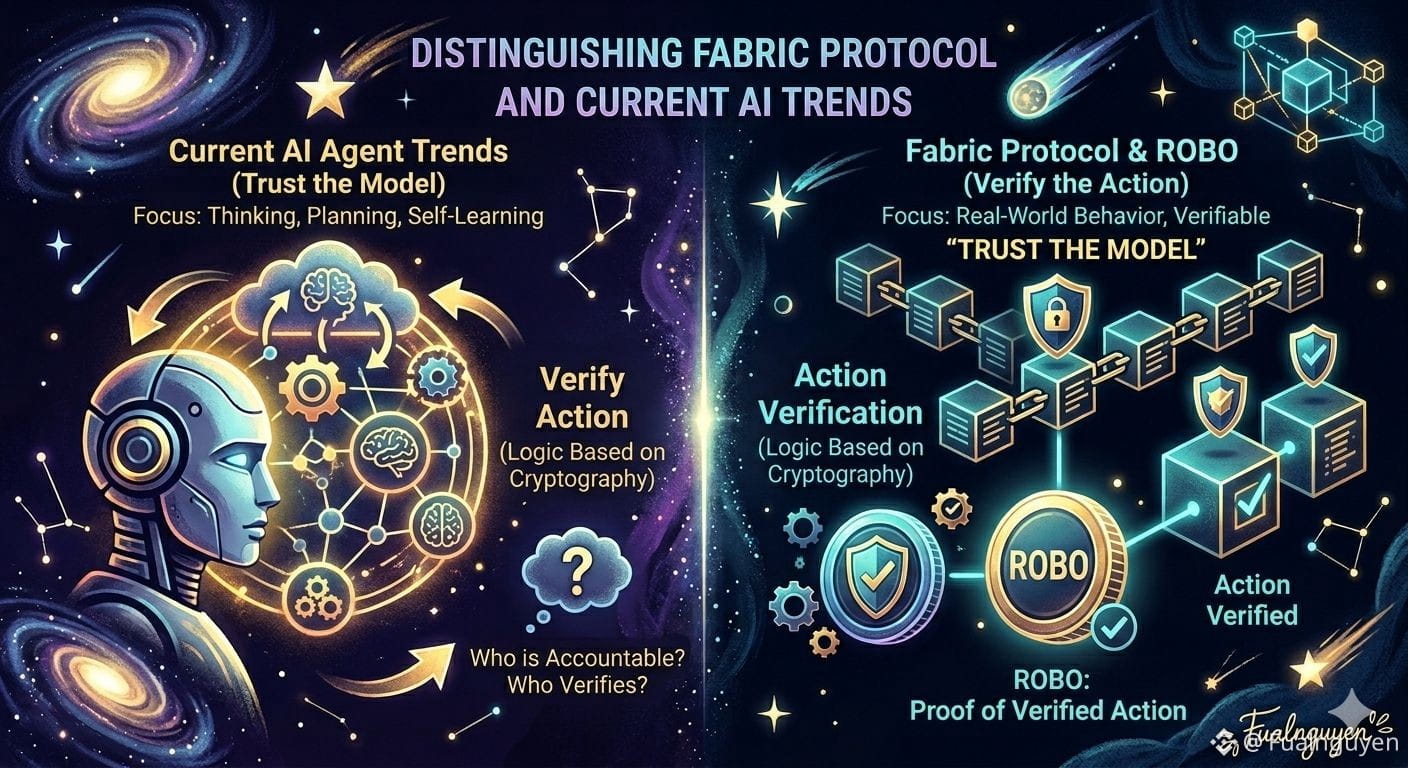
The Difference Between Fabric Protocol and Current AI Agent & Robotics Trends
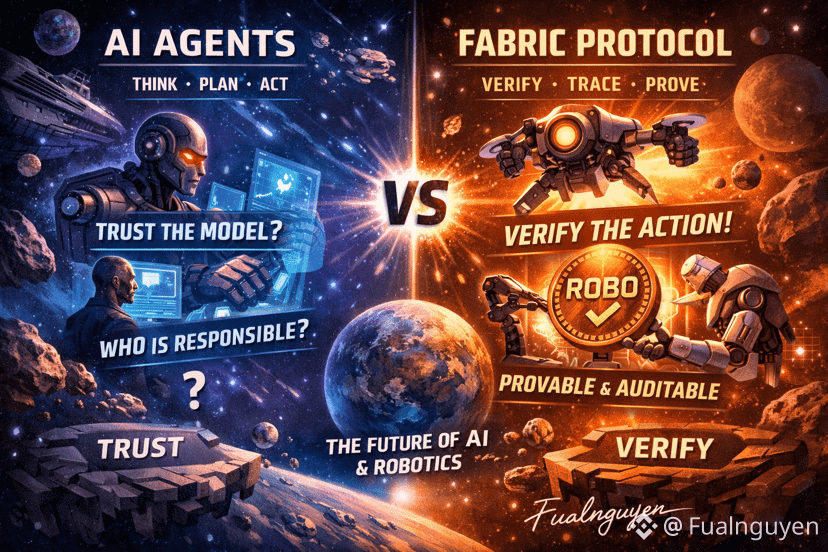
Today’s AI Agent trend focuses on creating autonomous agents capable of thinking, planning, and acting on behalf of humans. These systems are optimized to become smarter, more responsive, and better at self-learning over time. However, a core weakness remains largely unresolved: who is responsible for their actions, and how can those actions be objectively verified?
Fabric Protocol approaches this problem from a fundamentally different angle.
Instead of asking what AI can do, Fabric Protocol asks what AI has actually done and whether that action can be verified. The focus shifts away from cognitive capability toward real-world behavior that has already occurred.
The ROBO token, aligned with Fabric Protocol’s philosophy, does not represent control over AI, nor is it an abstract incentive for vague behavior. ROBO only comes into existence when a specific action performed by a robot or AI has taken place and has been cryptographically verified. In other words, the token is tied to provable action, not promises or trust.
If most AI Agents today operate under a “trust the model” logic - trusting the model, the developer, or centralized oversight - Fabric Protocol operates under a “verify the action” logic. Every action must be auditable, traceable, and attributable.
In the future, as robots and AI move beyond answering questions to directly impacting assets, infrastructure, and society, this distinction will become critically important. Fabric Protocol does not oppose the AI Agent trend; instead, it adds the missing layer: a cryptographic framework to govern behavior, not just computation.
That is why $ROBO is not a typical “AI narrative” token, but rather a foundational building block for a future where autonomous AI and robots are verifiable and accountable.
#robo $ROBO @FabricFND #Fualnguyen
{alpha}(560x475cbf5919608e0c6af00e7bf87fab83bf3ef6e2)
The Difference Between Fabric Protocol and Current AI Agent & Robotics Trends
Today’s AI Agent trend focuses on creating autonomous agents capable of thinking, planning, and acting on behalf of humans. These systems are optimized to become smarter, more responsive, and better at self-learning over time. However, a core weakness remains largely unresolved: who is responsible for their actions, and how can those actions be objectively verified?
Fabric Protocol approaches this problem from a fundamentally different angle.
Instead of asking what AI can do, Fabric Protocol asks what AI has actually done and whether that action can be verified. The focus shifts away from cognitive capability toward real-world behavior that has already occurred.
The ROBO token, aligned with Fabric Protocol’s philosophy, does not represent control over AI, nor is it an abstract incentive for vague behavior. ROBO only comes into existence when a specific action performed by a robot or AI has taken place and has been cryptographically verified. In other words, the token is tied to provable action, not promises or trust.
If most AI Agents today operate under a “trust the model” logic - trusting the model, the developer, or centralized oversight - Fabric Protocol operates under a “verify the action” logic. Every action must be auditable, traceable, and attributable.
In the future, as robots and AI move beyond answering questions to directly impacting assets, infrastructure, and society, this distinction will become critically important. Fabric Protocol does not oppose the AI Agent trend; instead, it adds the missing layer: a cryptographic framework to govern behavior, not just computation.
That is why $ROBO is not a typical “AI narrative” token, but rather a foundational building block for a future where autonomous AI and robots are verifiable and accountable.
#robo $ROBO @Fabric Foundation #Fualnguyen
Today’s AI Agent trend focuses on creating autonomous agents capable of thinking, planning, and acting on behalf of humans. These systems are optimized to become smarter, more responsive, and better at self-learning over time. However, a core weakness remains largely unresolved: who is responsible for their actions, and how can those actions be objectively verified?
Fabric Protocol approaches this problem from a fundamentally different angle.
Instead of asking what AI can do, Fabric Protocol asks what AI has actually done and whether that action can be verified. The focus shifts away from cognitive capability toward real-world behavior that has already occurred.
The ROBO token, aligned with Fabric Protocol’s philosophy, does not represent control over AI, nor is it an abstract incentive for vague behavior. ROBO only comes into existence when a specific action performed by a robot or AI has taken place and has been cryptographically verified. In other words, the token is tied to provable action, not promises or trust.
If most AI Agents today operate under a “trust the model” logic - trusting the model, the developer, or centralized oversight - Fabric Protocol operates under a “verify the action” logic. Every action must be auditable, traceable, and attributable.
In the future, as robots and AI move beyond answering questions to directly impacting assets, infrastructure, and society, this distinction will become critically important. Fabric Protocol does not oppose the AI Agent trend; instead, it adds the missing layer: a cryptographic framework to govern behavior, not just computation.
That is why $ROBO is not a typical “AI narrative” token, but rather a foundational building block for a future where autonomous AI and robots are verifiable and accountable.
#robo $ROBO @Fabric Foundation #Fualnguyen
8
2.3k
·
--
Bullish
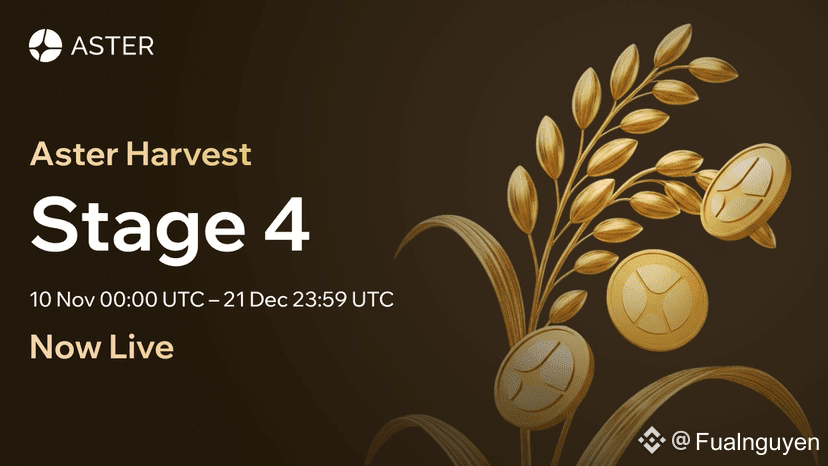
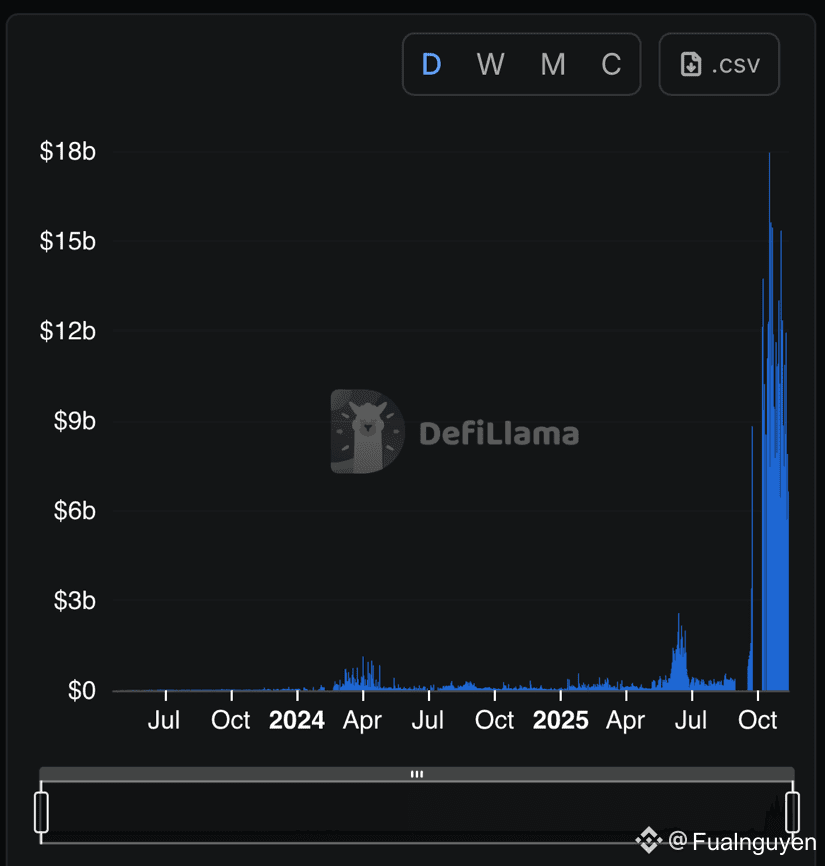
$ASTER Aster Harvest phase 4 announcement (details below in the feedback)
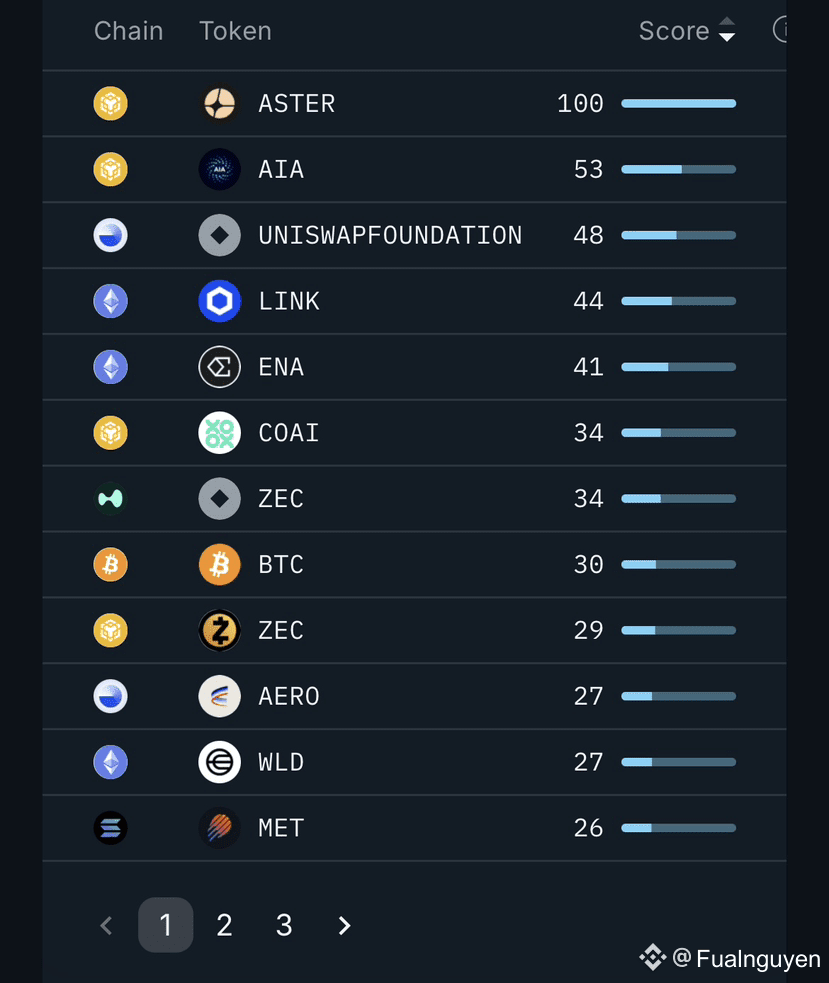
Although emerging after major names, #AsterDEX asserts its position with impressive figures:
- Trading volume on the exchange has skyrocketed
- The number of real users continues to increase and ranks top 1 in the user popularity chart
- Clear and transparent tokenomic plan.
The above reasons suggest that Aster has full potential for a long-term investment decision.
#Fualnguyen #BNBholic #Asterians
{future}(ASTERUSDT)
{future}(BNBUSDT)
{future}(HYPEUSDT)
$ASTER Aster Harvest phase 4 announcement (details below in the feedback)
Although emerging after major names, #AsterDEX asserts its position with impressive figures:
- Trading volume on the exchange has skyrocketed
- The number of real users continues to increase and ranks top 1 in the user popularity chart
- Clear and transparent tokenomic plan.
The above reasons suggest that Aster has full potential for a long-term investment decision.
#Fualnguyen #BNBholic #Asterians
Although emerging after major names, #AsterDEX asserts its position with impressive figures:
- Trading volume on the exchange has skyrocketed
- The number of real users continues to increase and ranks top 1 in the user popularity chart
- Clear and transparent tokenomic plan.
The above reasons suggest that Aster has full potential for a long-term investment decision.
#Fualnguyen #BNBholic #Asterians
3
1
5
4.4k
·
--
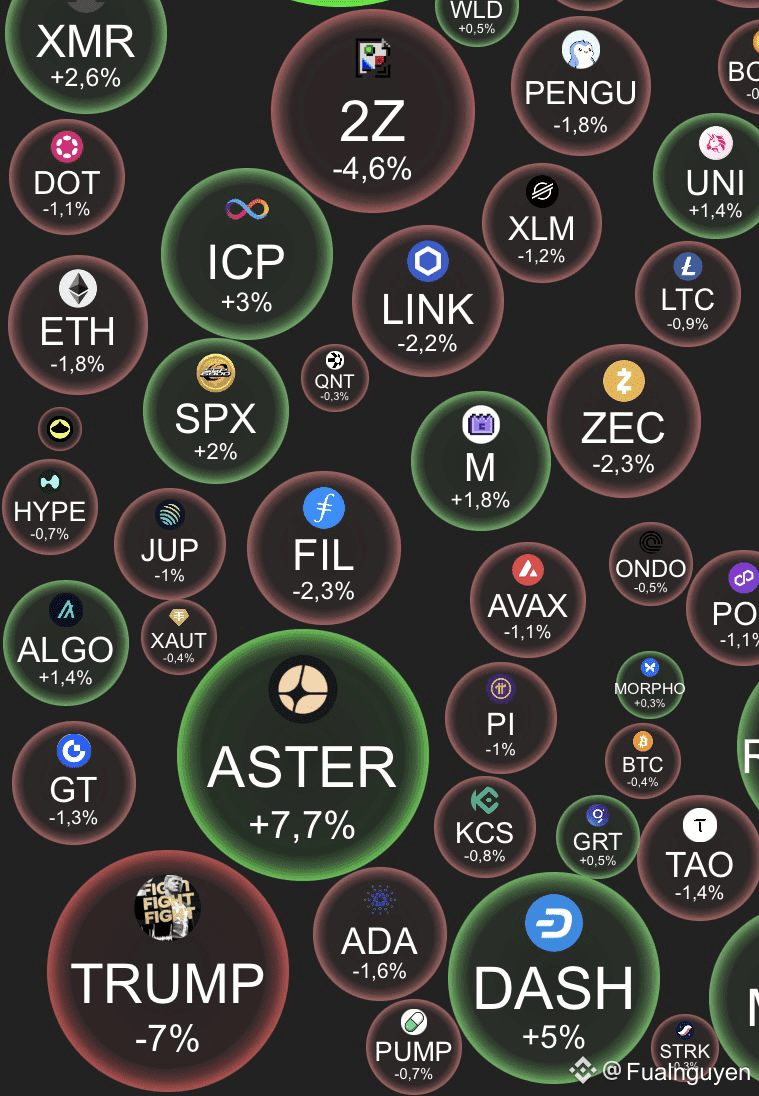
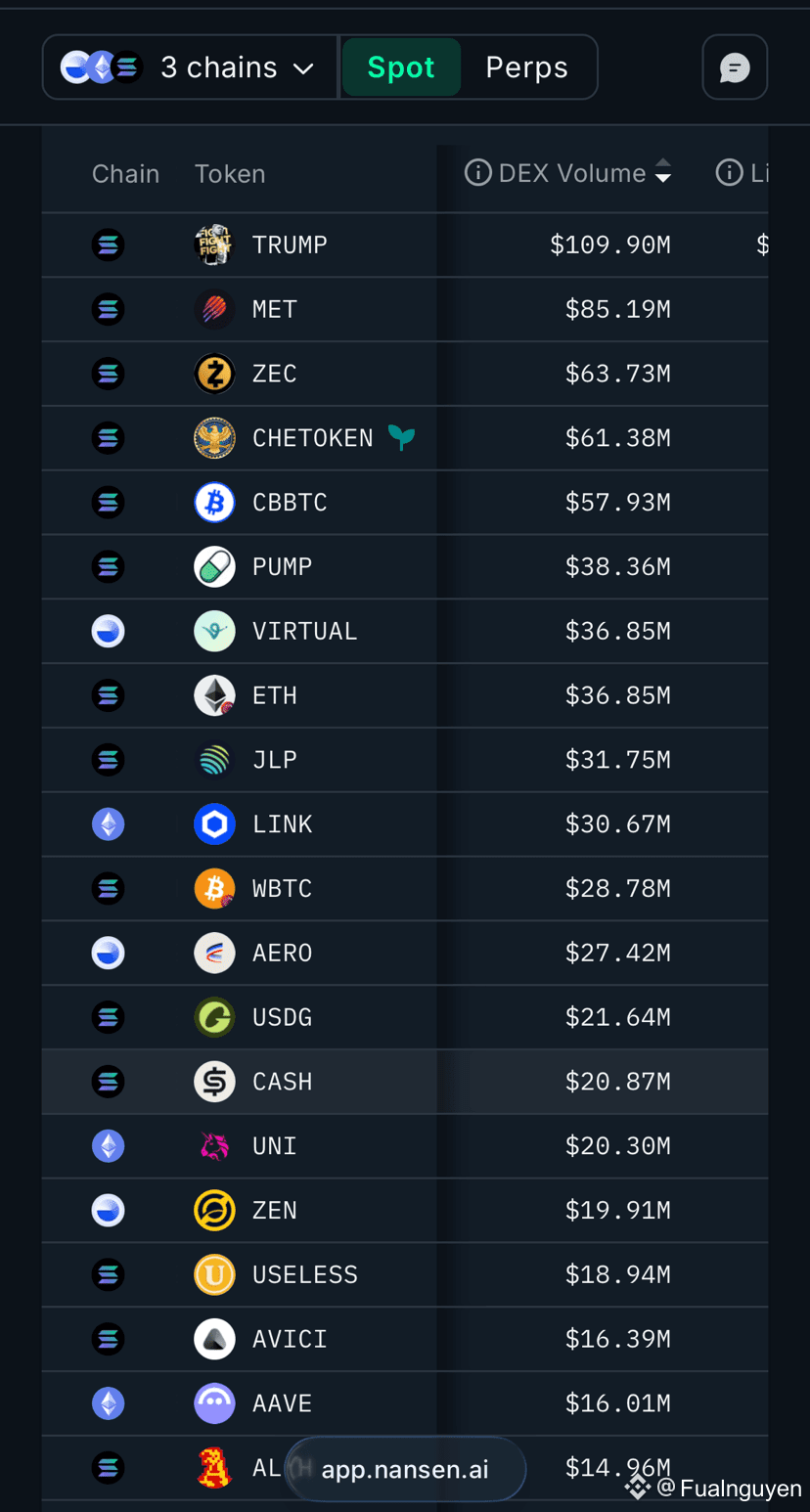
Shopping situation for tokens on decentralized exchanges
- $TRUMP leads the shopping top for many days now. ZEC and ETH still have notable shopping activity.
- Tokens in the top shopping list have significant potential for price increase in the near future: $UNI JUP LINK
- ZEC $ZEN is clearly a trendsetter present in the top from all exchanges.
#Fualnguyen #BNBholic #Asterians
{future}(ZENUSDT)
{future}(UNIUSDT)
{future}(TRUMPUSDT)
Shopping situation for tokens on decentralized exchanges
- $TRUMP leads the shopping top for many days now. ZEC and ETH still have notable shopping activity.
- Tokens in the top shopping list have significant potential for price increase in the near future: $UNI JUP LINK
- ZEC $ZEN is clearly a trendsetter present in the top from all exchanges.
#Fualnguyen #BNBholic #Asterians
- $TRUMP leads the shopping top for many days now. ZEC and ETH still have notable shopping activity.
- Tokens in the top shopping list have significant potential for price increase in the near future: $UNI JUP LINK
- ZEC $ZEN is clearly a trendsetter present in the top from all exchanges.
#Fualnguyen #BNBholic #Asterians
5
5.1k
·
--
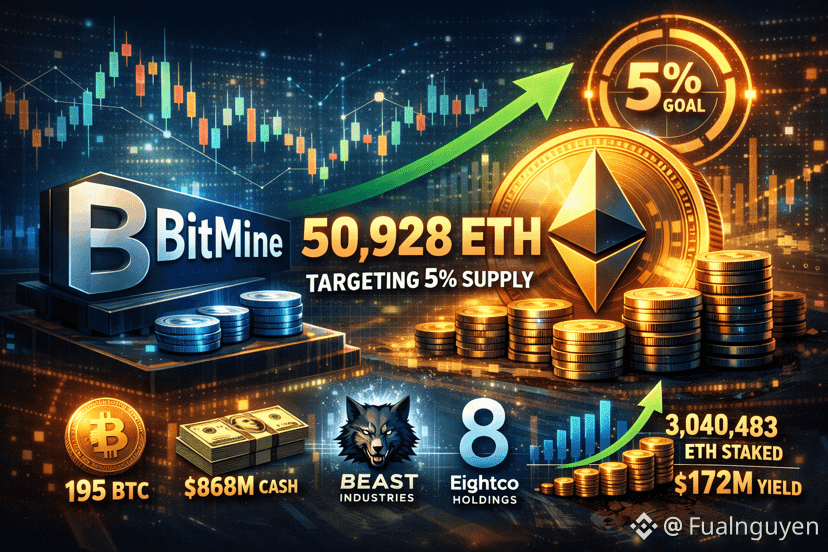
BitMine Acquires 50,928 ETH, Targets 5% of Total Ethereum Supply
BitMine has once again captured market attention after acquiring an additional 50,928 ETH at an average price of USD 1,976. This purchase brings the company’s total Ethereum holdings to 4,473,587 ETH, valued at approximately USD 8.84 billion at current prices. The amount represents 3.71% of Ethereum’s total supply, pushing BitMine closer to its ambitious goal of controlling 5% of all ETH in circulation. As of March 1, 2026, BitMine’s total assets, including cryptocurrencies, cash, and strategic investments, reached around USD 9.9 billion, highlighting its rapidly expanding footprint in the crypto ecosystem. Beyond Ethereum, the company also holds 195 BTC, USD 868 million in cash, and notable investments such as USD 200 million in Beast Industries and USD 14 million in Eightco Holdings. More importantly, BitMine has staked 3,040,483 ETH, generating an estimated annual staking yield of USD 172 million, providing a strong and sustainable revenue stream. Looking ahead, BitMine plans to launch its own staking solution, MAVAN, in the first quarter of 2026, further solidifying its role as a major institutional player within the Ethereum ecosystem.
#Fualnguyen $ETH
{future}(ETHUSDT)
BitMine Acquires 50,928 ETH, Targets 5% of Total Ethereum Supply
BitMine has once again captured market attention after acquiring an additional 50,928 ETH at an average price of USD 1,976. This purchase brings the company’s total Ethereum holdings to 4,473,587 ETH, valued at approximately USD 8.84 billion at current prices. The amount represents 3.71% of Ethereum’s total supply, pushing BitMine closer to its ambitious goal of controlling 5% of all ETH in circulation. As of March 1, 2026, BitMine’s total assets, including cryptocurrencies, cash, and strategic investments, reached around USD 9.9 billion, highlighting its rapidly expanding footprint in the crypto ecosystem. Beyond Ethereum, the company also holds 195 BTC, USD 868 million in cash, and notable investments such as USD 200 million in Beast Industries and USD 14 million in Eightco Holdings. More importantly, BitMine has staked 3,040,483 ETH, generating an estimated annual staking yield of USD 172 million, providing a strong and sustainable revenue stream. Looking ahead, BitMine plans to launch its own staking solution, MAVAN, in the first quarter of 2026, further solidifying its role as a major institutional player within the Ethereum ecosystem.
#Fualnguyen $ETH
BitMine has once again captured market attention after acquiring an additional 50,928 ETH at an average price of USD 1,976. This purchase brings the company’s total Ethereum holdings to 4,473,587 ETH, valued at approximately USD 8.84 billion at current prices. The amount represents 3.71% of Ethereum’s total supply, pushing BitMine closer to its ambitious goal of controlling 5% of all ETH in circulation. As of March 1, 2026, BitMine’s total assets, including cryptocurrencies, cash, and strategic investments, reached around USD 9.9 billion, highlighting its rapidly expanding footprint in the crypto ecosystem. Beyond Ethereum, the company also holds 195 BTC, USD 868 million in cash, and notable investments such as USD 200 million in Beast Industries and USD 14 million in Eightco Holdings. More importantly, BitMine has staked 3,040,483 ETH, generating an estimated annual staking yield of USD 172 million, providing a strong and sustainable revenue stream. Looking ahead, BitMine plans to launch its own staking solution, MAVAN, in the first quarter of 2026, further solidifying its role as a major institutional player within the Ethereum ecosystem.
#Fualnguyen $ETH
5
2k
·
--
Article
BINANCE AND A STATEMENT OF STRENGTH AMID MARKET VOLATILITYDespite recent market drawdowns, liquidity has not exited the crypto ecosystem but is instead being actively repositioned. Over the past seven days, Binance has overwhelmingly led exchange inflows with $949 million, far surpassing Deribit and Gemini, each recording around $214 million. In contrast, OKX, Gate, and Crypto.com have seen combined outflows of approximately $149 million, clearly indicating a rotation of capital toward the market’s largest liquidity hub. A net positive inflow suggests that traders and institutions remain engaged, moving capital onto exchanges to prepare for action rather than exiting, placing the market in a sensitive zone ahead of a potential major move.
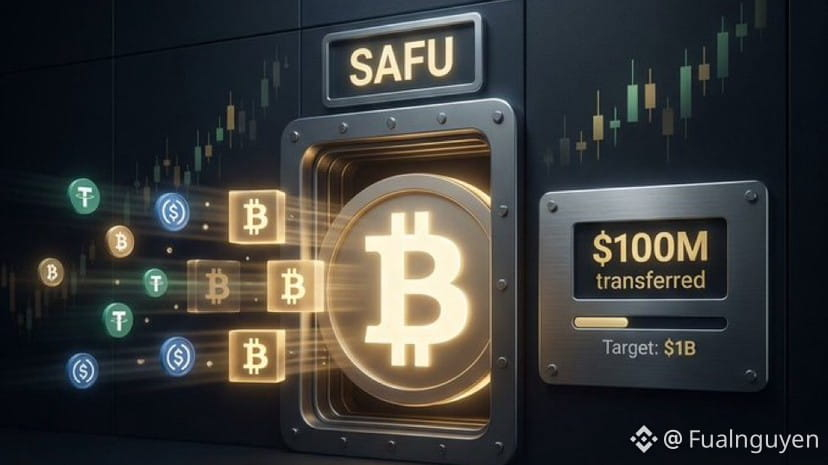
More importantly, Binance is not merely a destination for inflows => it has become a direct buyer of Bitcoin itself. As part of its plan to convert the SAFU insurance fund from stablecoins into Bitcoin, Binance executed its first BTC purchase of 1,315 BTC, worth roughly $100.7 million. Shortly after, according to Bitcoin Magazine, Binance added another 1,350 BTC, valued at around $102 million, directly into the SAFU Fund. In a short period of time, more than 2,600 BTC have been accumulated, steadily advancing Binance’s plan to convert $1 billion of SAFU reserves into Bitcoin. At a time when the market is correcting, choosing to increase exposure to Bitcoin rather than retreat into stablecoins sends a clear strategic message.
Alongside these moves, BNB has demonstrated standout performance among platform tokens. While Bitcoin is down roughly 21% over the past 30 days and both ETH and SOL have fallen more than 30%, with many Layer 1 and Layer 2 platforms underperforming the broader market, BNB has declined by only about 19%. This makes BNB the best-performing major platform token during the period, reflecting capital preference for ecosystems with real cash flows, confidence in Binance as the financial backbone of crypto, and BNB’s role as a proxy for the overall health of the Binance ecosystem. It is no coincidence that Binance leads inflows, SAFU is anchored in Bitcoin, and BNB exhibits superior resilience relative to its peers.
Taken together, capital remains within the market, Binance continues to function as the core liquidity hub, SAFU evolves into a Bitcoin-backed shield, and BNB mirrors the strength and confidence in the ecosystem. In times of uncertainty, the strongest players do not stand aside ==> they act.
And today, Binance is demonstrating exactly why it remains a pillar of the global crypto market.
Reference: CoinMarketCap, BeinCrypto
{spot}(TSTUSDT)
{spot}(BNBUSDT)
BINANCE AND A STATEMENT OF STRENGTH AMID MARKET VOLATILITY
Despite recent market drawdowns, liquidity has not exited the crypto ecosystem but is instead being actively repositioned. Over the past seven days, Binance has overwhelmingly led exchange inflows with $949 million, far surpassing Deribit and Gemini, each recording around $214 million. In contrast, OKX, Gate, and Crypto.com have seen combined outflows of approximately $149 million, clearly indicating a rotation of capital toward the market’s largest liquidity hub. A net positive inflow suggests that traders and institutions remain engaged, moving capital onto exchanges to prepare for action rather than exiting, placing the market in a sensitive zone ahead of a potential major move.
More importantly, Binance is not merely a destination for inflows => it has become a direct buyer of Bitcoin itself. As part of its plan to convert the SAFU insurance fund from stablecoins into Bitcoin, Binance executed its first BTC purchase of 1,315 BTC, worth roughly $100.7 million. Shortly after, according to Bitcoin Magazine, Binance added another 1,350 BTC, valued at around $102 million, directly into the SAFU Fund. In a short period of time, more than 2,600 BTC have been accumulated, steadily advancing Binance’s plan to convert $1 billion of SAFU reserves into Bitcoin. At a time when the market is correcting, choosing to increase exposure to Bitcoin rather than retreat into stablecoins sends a clear strategic message.
Alongside these moves, BNB has demonstrated standout performance among platform tokens. While Bitcoin is down roughly 21% over the past 30 days and both ETH and SOL have fallen more than 30%, with many Layer 1 and Layer 2 platforms underperforming the broader market, BNB has declined by only about 19%. This makes BNB the best-performing major platform token during the period, reflecting capital preference for ecosystems with real cash flows, confidence in Binance as the financial backbone of crypto, and BNB’s role as a proxy for the overall health of the Binance ecosystem. It is no coincidence that Binance leads inflows, SAFU is anchored in Bitcoin, and BNB exhibits superior resilience relative to its peers.
Taken together, capital remains within the market, Binance continues to function as the core liquidity hub, SAFU evolves into a Bitcoin-backed shield, and BNB mirrors the strength and confidence in the ecosystem. In times of uncertainty, the strongest players do not stand aside ==> they act.
And today, Binance is demonstrating exactly why it remains a pillar of the global crypto market.
Reference: CoinMarketCap, BeinCrypto
More importantly, Binance is not merely a destination for inflows => it has become a direct buyer of Bitcoin itself. As part of its plan to convert the SAFU insurance fund from stablecoins into Bitcoin, Binance executed its first BTC purchase of 1,315 BTC, worth roughly $100.7 million. Shortly after, according to Bitcoin Magazine, Binance added another 1,350 BTC, valued at around $102 million, directly into the SAFU Fund. In a short period of time, more than 2,600 BTC have been accumulated, steadily advancing Binance’s plan to convert $1 billion of SAFU reserves into Bitcoin. At a time when the market is correcting, choosing to increase exposure to Bitcoin rather than retreat into stablecoins sends a clear strategic message.
Alongside these moves, BNB has demonstrated standout performance among platform tokens. While Bitcoin is down roughly 21% over the past 30 days and both ETH and SOL have fallen more than 30%, with many Layer 1 and Layer 2 platforms underperforming the broader market, BNB has declined by only about 19%. This makes BNB the best-performing major platform token during the period, reflecting capital preference for ecosystems with real cash flows, confidence in Binance as the financial backbone of crypto, and BNB’s role as a proxy for the overall health of the Binance ecosystem. It is no coincidence that Binance leads inflows, SAFU is anchored in Bitcoin, and BNB exhibits superior resilience relative to its peers.
Taken together, capital remains within the market, Binance continues to function as the core liquidity hub, SAFU evolves into a Bitcoin-backed shield, and BNB mirrors the strength and confidence in the ecosystem. In times of uncertainty, the strongest players do not stand aside ==> they act.
And today, Binance is demonstrating exactly why it remains a pillar of the global crypto market.
Reference: CoinMarketCap, BeinCrypto
14
1
15
4.5k
·
--
Bullish
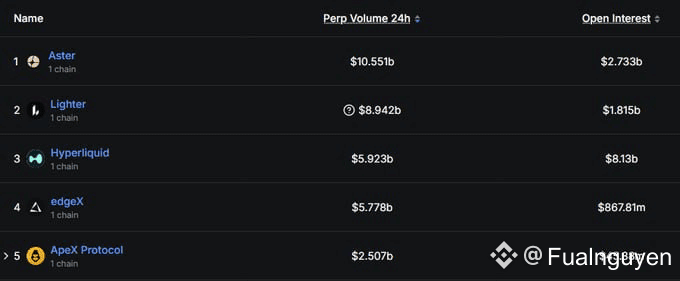
$ASTER is currently dominating the DEX market
1️⃣ $10.55B in 24h perp volume
2️⃣ $2.73B in open interest
3️⃣ Fastest-growing DEX of the week
Momentum for $ASTER to push prices higher with a surge in volume
#Fualnguyen #BNBholic #Asterians
{future}(ASTERUSDT)
$ASTER is currently dominating the DEX market
1️⃣ $10.55B in 24h perp volume
2️⃣ $2.73B in open interest
3️⃣ Fastest-growing DEX of the week
Momentum for $ASTER to push prices higher with a surge in volume
#Fualnguyen #BNBholic #Asterians
1️⃣ $10.55B in 24h perp volume
2️⃣ $2.73B in open interest
3️⃣ Fastest-growing DEX of the week
Momentum for $ASTER to push prices higher with a surge in volume
#Fualnguyen #BNBholic #Asterians
4
1.9k
Log in to explore more content
Join global crypto users on Binance Square
⚡️ Get latest and useful information about crypto.
💬 Trusted by the world’s largest crypto exchange.
👍 Discover real insights from verified creators.
Email / Phone number
Trending Topics
1
#ZcashETFPostsFirstWeeklyOutflow$93.6M
34,352 views
99 Discussing
2
#GreekPoliceBustCryptoScamRingArrest17
71,991 views
686 Discussing
3
#BitcoinRejectedAt$87K
120,134 views
158 Discussing
4
#FedOctoberRateHikeOddsFallTo17%
97,239 views
971 Discussing
5
#NvidiaHitsRecordHighUp2.4%
65,907 views
707 Discussing
6
#CanaryFilesAmendedS1ForPEPEETF
18,749 views
499 Discussing
7
#USRussiaUkraineTalksReportedlyIncludeLukoilOilDeal
29,267 views
498 Discussing
8
#BitcoinParesGainsAfterRallyTo$86.5K
47,085 views
166 Discussing
9
#CerebrasSinksNearly20%OnReportNvidiaToPowerOpenAI
114,793 views
1,104 Discussing
10
#SECProposesCryptoCustodyRules
155,051 views
1,385 Discussing