
#ethereumfoundationplansshifttohashbasedsignaturesby2028
ethereumfoundationplansshifttohashbasedsignaturesby2028
Hot
Latest

Partly True
Ethereum just moved its quantum deadline up a year. Did it?
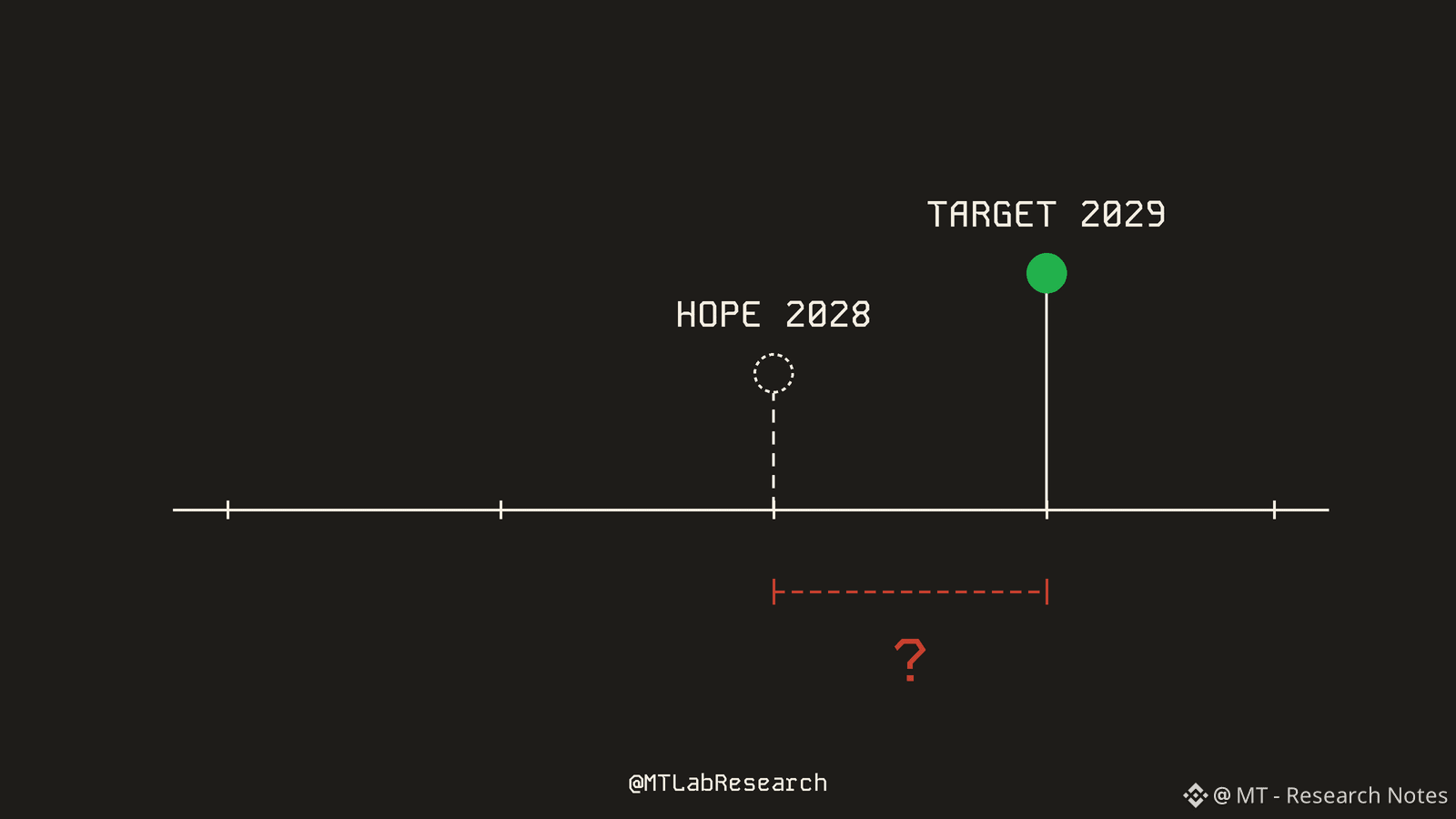
Headlines say the Ethereum Foundation (EF) will switch to quantum-proof signatures by 2028. The switch was already in the roadmap. What is new is a date said on a stage, and the word used was "hope".
On Nov 3 at Devcon 8, EF researcher Justin Drake said he hopes Ethereum finishes its post-quantum upgrade by December 2028 (per Forklog). The official target is still December 2029, from the EF's Sept 7 roadmap. The EF says it will not move that date before it reassesses quantum risk with outside experts in January 2027.
What changes, in plain words?
- Validators, the nodes that vote on blocks, sign with BLS signatures. Quantum computers could break the math behind them, and behind normal wallet signatures too.
- The fix is hash-based signatures. They rely on hash functions, which quantum computers weaken but do not break (per ethereum(.)org).
- The price: each signature is a few thousand bytes vs 96 for BLS. A tool called leanVM bundles many signatures into one small proof, which ethereum(.)org puts at about 250x less data.
Is your ETH in danger today? No. Per ethereum(.)org, no quantum computer today can break Ethereum's cryptography. The EF plans around a worst case where a dangerous machine shows up as early as 2030.
Why 2028 is a stretch? It needs three hard forks (big network upgrades) in 24 months after Glamsterdam, about one every 8 months. Glamsterdam itself is still targeted for December and has not shipped.
Here is how to read the date:
- If the January 2027 review pulls the official target forward, 2028 becomes a plan.
- If forks slip, 2029 is the number to watch.
- If new research shrinks the machine needed to break the math, pressure on every date rises.
Are you still bullish on ETH? $ETH
{future}(ETHUSDT)
Experience, not financial advice.
#EthereumFoundationPlansShiftToHashBasedSignaturesBy2028
Ethereum just moved its quantum deadline up a year. Did it?
Headlines say the Ethereum Foundation (EF) will switch to quantum-proof signatures by 2028. The switch was already in the roadmap. What is new is a date said on a stage, and the word used was "hope".
On Nov 3 at Devcon 8, EF researcher Justin Drake said he hopes Ethereum finishes its post-quantum upgrade by December 2028 (per Forklog). The official target is still December 2029, from the EF's Sept 7 roadmap. The EF says it will not move that date before it reassesses quantum risk with outside experts in January 2027.
What changes, in plain words?
- Validators, the nodes that vote on blocks, sign with BLS signatures. Quantum computers could break the math behind them, and behind normal wallet signatures too.
- The fix is hash-based signatures. They rely on hash functions, which quantum computers weaken but do not break (per ethereum(.)org).
- The price: each signature is a few thousand bytes vs 96 for BLS. A tool called leanVM bundles many signatures into one small proof, which ethereum(.)org puts at about 250x less data.
Is your ETH in danger today? No. Per ethereum(.)org, no quantum computer today can break Ethereum's cryptography. The EF plans around a worst case where a dangerous machine shows up as early as 2030.
Why 2028 is a stretch? It needs three hard forks (big network upgrades) in 24 months after Glamsterdam, about one every 8 months. Glamsterdam itself is still targeted for December and has not shipped.
Here is how to read the date:
- If the January 2027 review pulls the official target forward, 2028 becomes a plan.
- If forks slip, 2029 is the number to watch.
- If new research shrinks the machine needed to break the math, pressure on every date rises.
Are you still bullish on ETH? $ETH
Experience, not financial advice.
#EthereumFoundationPlansShiftToHashBasedSignaturesBy2028
1
2k

·
--
🚨 ETH IS GOING QUANTUM-PROOF — AND YOUR WALLET IS ABOUT TO CHANGE
Ethereum just announced its biggest security shift ever.
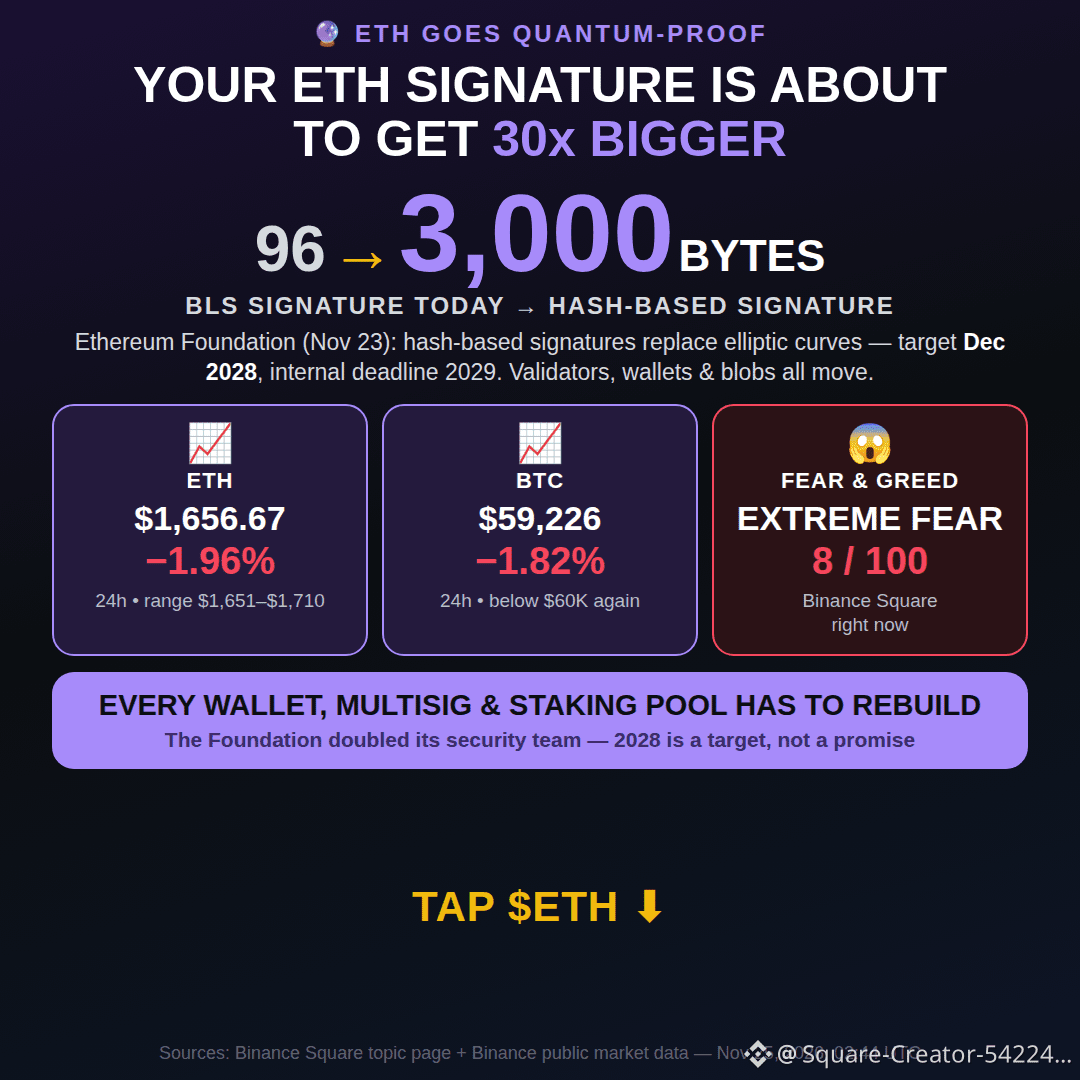
The Ethereum Foundation's post (Nov 23) says hash-based signatures will replace elliptic curves — target December 2028. Validators, wallets AND blobs all move.
Here's the shocking part: a BLS signature today is 96 bytes. A hash-based one is ~3,000 bytes. Over 30x bigger — and every wallet, multisig and staking pool has to rebuild for it.
Why now? Quantum computers. The Foundation doubled its protocol security team, and says hash-based crypto adds no new assumption — Ethereum already relies on hashes.
The catch: 2028 is a target, not a promise. The Foundation keeps 2029 as its internal deadline and reviews the timeline in January.
Meanwhile
$ETH trades at $1,656.67 (-1.96% in 24h) while $BTC sits under $60K at $59,226 — Extreme Fear is 8.
Tap $ETH for the live trade 👇
Is Ethereum early — or is 2028 already too late for quantum? What's your take?
#EthereumFoundationPlansShiftToHashBasedSignaturesBy2028
#Crypto #BinanceSquare #ETH
122

🔥 Ethereum Is Taking The Long-Term Security Route
Instead of waiting for quantum threats to become urgent, Ethereum is looking toward a 2028 cryptographic upgrade. This forward-thinking approach could strengthen confidence in the network's long-term resilience. Execution and compatibility will be key challenges. Could this become one of Ethereum's most important upgrades?
$ETH $BTC $SOL $XRP #EthereumFoundationPlansShiftToHashBasedSignaturesBy2028
116
🛡️ Security Could Become Ethereum's Biggest Competitive Advantage
The shift toward hash-based signatures is an important step in preparing Ethereum for a potential post-quantum future. Protecting wallets, transactions and network infrastructure will remain essential as technology evolves. Long-term security deserves attention today. How important is quantum resistance when choosing a blockchain?
$ETH $BTC $XRP $LINK #EthereumFoundationPlansShiftToHashBasedSignaturesBy2028
93

·
--
#EthereumFoundationPlansShiftToHashBasedSignaturesBy2028
AI Finds Ethereum Bugs Faster. Is ETH Ready?
Ethereum's security overhaul is bigger than The Merge — and quantum isn't the main reason.
The Ethereum Foundation just moved its target for switching from elliptic-curve cryptography to hash-based cryptography to the end of 2028, one year earlier than its previous 2029 goal.
The surprise is why.
Quantum computers remain a long-term risk. EF researcher Kev Wedderburn points to AI that scans code for vulnerabilities automatically as a threat already here.
EF has doubled its protocol security team in response.
Post-AI comes first. Post-quantum second.
The overhaul has 3 pillars, and its complexity exceeds The Merge in 2022:
Consensus layer: Validators move from BLS to hash-based signatures such as leanXMSS. A new security model that doesn't rely on today's cryptographic assumptions.
Your wallet: Account Abstraction allows wallets to migrate gradually away from ECDSA, the signature scheme behind regular addresses, without disrupting daily use.
Layer 2 data (blobs): KZG commitments — the "receipts" rollups use to post data — get replaced by hash commitments.
Market view:
ETH is under short-term pressure near ~$1,688 amid the broad market pullback. Upgrades like this rarely move price overnight.
But they strengthen Ethereum's security moat over decades.
They may also bring fresh attention to Account Abstraction, ZK/STARK and security infrastructure plays such as STRK and $ZK.
Square Insight:
Infrastructure upgrades don't pump the chart next week. They help explain why institutional money keeps choosing the chain with the most to lose from a failure.
Patience beats headline-chasing here.
Question for you:
If AI can find bugs faster than humans can fix them, which chain is better prepared — Ethereum with its 2028 plan, or Bitcoin ($BTC) with its slow-and-steady approach?
$ETH
{future}(ETHUSDT)
$STRK
{future}(STRKUSDT)
$BTC
{future}(BTCUSDT)
NFA / DYOR
#EthereumFoundationPlansShiftToHashBasedSignaturesBy2028
AI Finds Ethereum Bugs Faster. Is ETH Ready?
Ethereum's security overhaul is bigger than The Merge — and quantum isn't the main reason.
The Ethereum Foundation just moved its target for switching from elliptic-curve cryptography to hash-based cryptography to the end of 2028, one year earlier than its previous 2029 goal.
The surprise is why.
Quantum computers remain a long-term risk. EF researcher Kev Wedderburn points to AI that scans code for vulnerabilities automatically as a threat already here.
EF has doubled its protocol security team in response.
Post-AI comes first. Post-quantum second.
The overhaul has 3 pillars, and its complexity exceeds The Merge in 2022:
Consensus layer: Validators move from BLS to hash-based signatures such as leanXMSS. A new security model that doesn't rely on today's cryptographic assumptions.
Your wallet: Account Abstraction allows wallets to migrate gradually away from ECDSA, the signature scheme behind regular addresses, without disrupting daily use.
Layer 2 data (blobs): KZG commitments — the "receipts" rollups use to post data — get replaced by hash commitments.
Market view:
ETH is under short-term pressure near ~$1,688 amid the broad market pullback. Upgrades like this rarely move price overnight.
But they strengthen Ethereum's security moat over decades.
They may also bring fresh attention to Account Abstraction, ZK/STARK and security infrastructure plays such as STRK and $ZK.
Square Insight:
Infrastructure upgrades don't pump the chart next week. They help explain why institutional money keeps choosing the chain with the most to lose from a failure.
Patience beats headline-chasing here.
Question for you:
If AI can find bugs faster than humans can fix them, which chain is better prepared — Ethereum with its 2028 plan, or Bitcoin ($BTC ) with its slow-and-steady approach?
$ETH
$STRK
$BTC
NFA / DYOR

226

·
--
Bearish
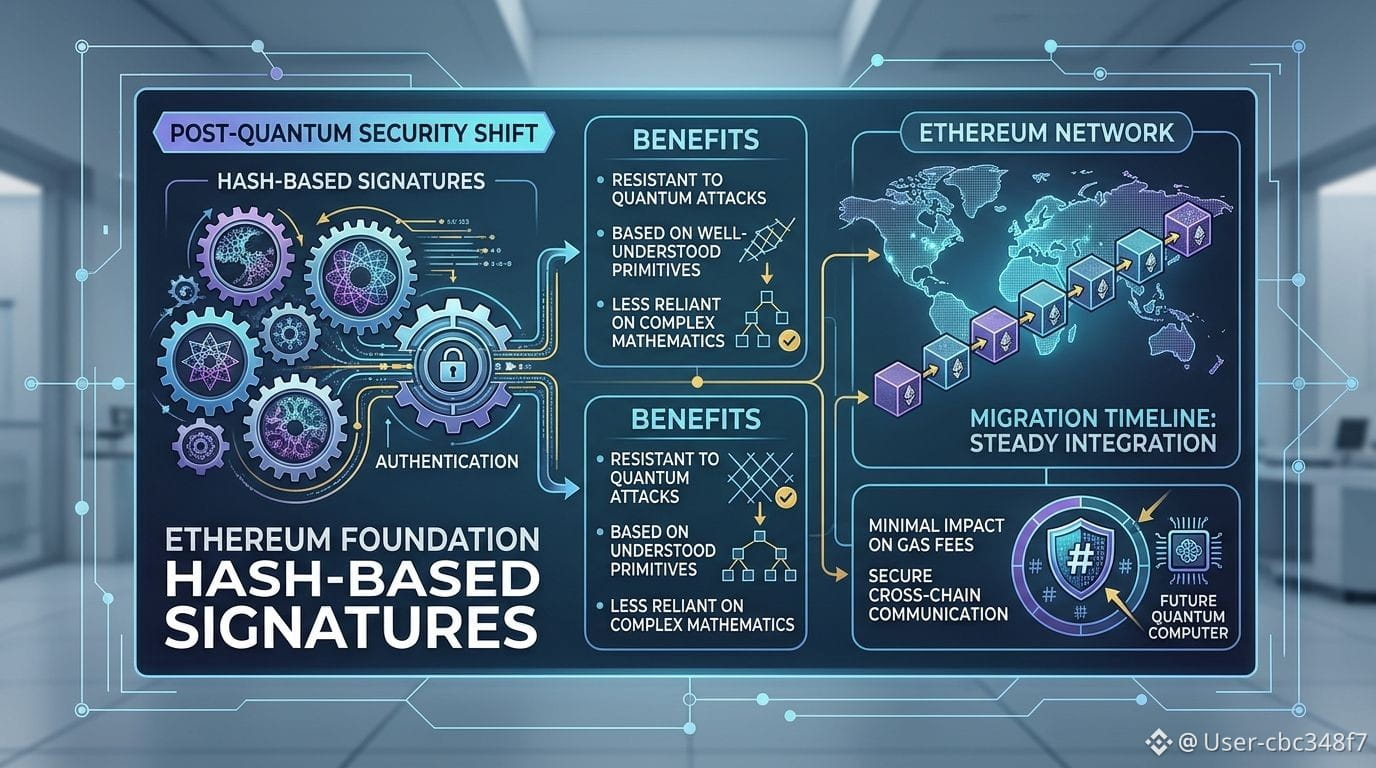
#EthereumFoundationPlansShiftToHashBasedSignaturesBy2028 The Ethereum Foundation is prioritizing a shift to hash-based signatures across consensus, user accounts, and blob data commitments to prepare for a post-quantum, post-AI world. Replacing elliptic-curve cryptography avoids new trust assumptions while targeting full transition milestones around 2028–2029, backed by a doubled protocol security team. Because hash signatures are much larger, zkVM aggregation and wallet upgrades will be critical—making long-term security resilience a major narrative to watch. #ETH #Ethereum #PostQuantum #BinanceSquare
$BTC $ETH $HUMA
{spot}(HUMAUSDT)
{spot}(ETHUSDT)
{spot}(BTCUSDT)
#EthereumFoundationPlansShiftToHashBasedSignaturesBy2028 The Ethereum Foundation is prioritizing a shift to hash-based signatures across consensus, user accounts, and blob data commitments to prepare for a post-quantum, post-AI world. Replacing elliptic-curve cryptography avoids new trust assumptions while targeting full transition milestones around 2028–2029, backed by a doubled protocol security team. Because hash signatures are much larger, zkVM aggregation and wallet upgrades will be critical—making long-term security resilience a major narrative to watch. #ETH #Ethereum #PostQuantum #BinanceSquare
$BTC $ETH $HUMA
$BTC $ETH $HUMA
208

·
--

Article
ETHEREUM IS PREPARING FOR THE QUANTUM ERA!#EthereumFoundationPlansShiftToHashBasedSignaturesBy2028 The Ethereum Foundation is making a major security move: shifting toward hash-based cryptography to protect the network against future AI and quantum-computing threats.
🔐 What's changing?
Validators will move toward hash-based signatures.
Wallets will need new security mechanisms.
Ethereum's data infrastructure will also be upgraded.
The Foundation has doubled its protocol security team.
📅 Target: December 2028, with 2029 as the internal deadline.
🔥 Why it matters: Ethereum isn't waiting for quantum threats to become reality. It's preparing its security infrastructure in advance.
THE BIG QUESTION: Could Ethereum's security upgrade set a new standard for the entire crypto industry?
ETHEREUM GOES QUANTUM-SAFE!
A NEW ERA OF BLOCKCHAIN SECURITY
#ETHETFsApproved #AI #CryptoNews #Web3
ETHEREUM IS PREPARING FOR THE QUANTUM ERA!
#EthereumFoundationPlansShiftToHashBasedSignaturesBy2028 The Ethereum Foundation is making a major security move: shifting toward hash-based cryptography to protect the network against future AI and quantum-computing threats.
🔐 What's changing?
Validators will move toward hash-based signatures.
Wallets will need new security mechanisms.
Ethereum's data infrastructure will also be upgraded.
The Foundation has doubled its protocol security team.
📅 Target: December 2028, with 2029 as the internal deadline.
🔥 Why it matters: Ethereum isn't waiting for quantum threats to become reality. It's preparing its security infrastructure in advance.
THE BIG QUESTION: Could Ethereum's security upgrade set a new standard for the entire crypto industry?
ETHEREUM GOES QUANTUM-SAFE!
A NEW ERA OF BLOCKCHAIN SECURITY
#ETHETFsApproved #AI #CryptoNews #Web3
41

·
--

Article
THE HEADLINE SAYS 2028. THE FOUNDATION STILL SAYS 2029Headlines this week said Ethereum moved its quantum deadline up a year, to 2028. The deadline did not move. What moved was one researcher's hope, said out loud on a stage in Mumbai.
At the Devcon 8 opening ceremony on November 3, Ethereum Foundation researcher Justin Drake told the crowd: "Our hope is that by December 2028 we'll be able to wrap up the full post-quantum and post-AI transition." That means three hard forks in 24 months after Glamsterdam.
The Foundation's own plan still says December 2029. Its September roadmap set that date for quantum resistance across the execution, consensus and data layers, and locked it in until a review with outside experts in January 2027. The Foundation's own blog, PQAI #0, published November 23, says it plainly: Drake put forward December 2028 as a target, "with 2029 still the EF's internal deadline."
What the upgrade actually does is swap out the cryptography that secures Ethereum today. Wallet signatures run on ECDSA, validator signatures on BLS — both elliptic-curve schemes a powerful enough quantum computer could break. The replacement is hash-based signatures: leanSPHINCS for accounts, leanXMSS for validators. Validators sign with hash-based keys, wallets get a route to move their accounts over, and blobs switch to hash-based commitments. A small proving engine called leanVM keeps the far larger signatures — 3,112 bytes against 96 for BLS — from choking the network, and framework transactions in the Hegotá fork, due in 2027, let each account choose its own signature scheme.
The rush has a reason. The Foundation's conservative scenario puts a cryptographically significant quantum computer as early as 2030, and a March paper from Google Quantum AI, UC Berkeley, the Foundation and Stanford estimated fewer than 1,200 logical qubits could break Ethereum's elliptic-curve signatures in minutes. No machine today can do it, so ETH is not in danger today. The bottleneck is delivery, not maths: Glamsterdam slipped off its second testnet on October 22 after a gas repricing broke assumptions in live contracts. Three forks in 24 months would be the fastest pace Ethereum has shipped in years.
The Foundation has made this its top priority and doubled its protocol security team. Even Ethlabs, the lab behind the pqai label, wants the job done in 2027. The real story is not a moved deadline. It is that Ethereum has started changing its locks while the chain is still running — and the race now is against its own release schedule, not against a quantum computer that does not exist yet.
ETH trades near $1,680, down about 3.5% on the day.
$ETH #EthereumFoundationPlansShiftToHashBasedSignaturesBy2028 #Ethereum #quantumcomputing
THE HEADLINE SAYS 2028. THE FOUNDATION STILL SAYS 2029
Headlines this week said Ethereum moved its quantum deadline up a year, to 2028. The deadline did not move. What moved was one researcher's hope, said out loud on a stage in Mumbai.
At the Devcon 8 opening ceremony on November 3, Ethereum Foundation researcher Justin Drake told the crowd: "Our hope is that by December 2028 we'll be able to wrap up the full post-quantum and post-AI transition." That means three hard forks in 24 months after Glamsterdam.
The Foundation's own plan still says December 2029. Its September roadmap set that date for quantum resistance across the execution, consensus and data layers, and locked it in until a review with outside experts in January 2027. The Foundation's own blog, PQAI #0, published November 23, says it plainly: Drake put forward December 2028 as a target, "with 2029 still the EF's internal deadline."
What the upgrade actually does is swap out the cryptography that secures Ethereum today. Wallet signatures run on ECDSA, validator signatures on BLS — both elliptic-curve schemes a powerful enough quantum computer could break. The replacement is hash-based signatures: leanSPHINCS for accounts, leanXMSS for validators. Validators sign with hash-based keys, wallets get a route to move their accounts over, and blobs switch to hash-based commitments. A small proving engine called leanVM keeps the far larger signatures — 3,112 bytes against 96 for BLS — from choking the network, and framework transactions in the Hegotá fork, due in 2027, let each account choose its own signature scheme.
The rush has a reason. The Foundation's conservative scenario puts a cryptographically significant quantum computer as early as 2030, and a March paper from Google Quantum AI, UC Berkeley, the Foundation and Stanford estimated fewer than 1,200 logical qubits could break Ethereum's elliptic-curve signatures in minutes. No machine today can do it, so ETH is not in danger today. The bottleneck is delivery, not maths: Glamsterdam slipped off its second testnet on October 22 after a gas repricing broke assumptions in live contracts. Three forks in 24 months would be the fastest pace Ethereum has shipped in years.
The Foundation has made this its top priority and doubled its protocol security team. Even Ethlabs, the lab behind the pqai label, wants the job done in 2027. The real story is not a moved deadline. It is that Ethereum has started changing its locks while the chain is still running — and the race now is against its own release schedule, not against a quantum computer that does not exist yet.
ETH trades near $1,680, down about 3.5% on the day.
$ETH #EthereumFoundationPlansShiftToHashBasedSignaturesBy2028 #Ethereum #quantumcomputing
1
135

·
--
Verified
The Ethereum Foundation says December 2028 is now the target for moving Ethereum to hash-based signatures.
The plan covers validators, user wallets and blob data. The EF also doubled its protocol security team and says some other features will have to wait.
What I'm watching next: how wallets and staking pools handle the switch on the first test networks.
#EthereumFoundationPlansShiftToHashBasedSignaturesBy2028 #Ethereum #Crypto
Source: https://blog.ethereum.org/2026/11/23/pqai-0
2
1.1k

·
--
$ETH: the Ethereum Foundation's new post says hash-based signatures will replace elliptic curves, and the headline date is December 2028. Why does the same post still call 2029 its internal deadline?
Where I land: 2028 is a target Drake floated at Devcon, not a commitment; the Foundation keeps 2029 internally and reviews the timeline in January.
What it says:
- The EF's PQAI post, published November 23, 2026, has three parts: validators sign with hash-based keys, wallets move accounts to hash-based signatures, and blobs switch to hash-based commitments.
- After over a year of evaluating schemes, the EF argues hash-based cryptography adds no new assumption since the protocol already relies on hashes.
- It doubled its protocol security team to keep pace with formal verification.
Why size drives the schedule:
- BLS signatures are 96 bytes; ethereum.org's roadmap page puts hash-based ones near 3,000 bytes, so compressing them about 250 times is what makes this practical.
- Tooling built around BLS gets reworked, and wallets, multisigs and staking pools all need changes; this is not a wallet toggle.
- Bigger signatures raise bandwidth and storage per slot, which puts home-staker hardware in scope.
Dates I have marked:
- The January timeline review, the Foundation's gate before 2028 can be called a date.
- The remaining All Core Devs calls this year, where features may be cut from the fork to free engineering time.
- Whether client teams publish the key-registry specs for the first pq-cl devnet.
- ETH was $1,684.21 at 17:35 Kyiv, -5.36% over rolling 24 hours inside $1,667.56-$1,786.19 (Binance). A dated quote, not a verdict.
My rule: a year in a roadmap post is a target until the team's own review signs it off.
#Write2Earn #EthereumFoundationPlansShiftToHashBasedSignaturesBy2028
When a roadmap gives you a year, what do you check before you plan around it, and why?
$ETH : the Ethereum Foundation's new post says hash-based signatures will replace elliptic curves, and the headline date is December 2028. Why does the same post still call 2029 its internal deadline?
Where I land: 2028 is a target Drake floated at Devcon, not a commitment; the Foundation keeps 2029 internally and reviews the timeline in January.
What it says:
- The EF's PQAI post, published November 23, 2026, has three parts: validators sign with hash-based keys, wallets move accounts to hash-based signatures, and blobs switch to hash-based commitments.
- After over a year of evaluating schemes, the EF argues hash-based cryptography adds no new assumption since the protocol already relies on hashes.
- It doubled its protocol security team to keep pace with formal verification.
Why size drives the schedule:
- BLS signatures are 96 bytes; ethereum.org's roadmap page puts hash-based ones near 3,000 bytes, so compressing them about 250 times is what makes this practical.
- Tooling built around BLS gets reworked, and wallets, multisigs and staking pools all need changes; this is not a wallet toggle.
- Bigger signatures raise bandwidth and storage per slot, which puts home-staker hardware in scope.
Dates I have marked:
- The January timeline review, the Foundation's gate before 2028 can be called a date.
- The remaining All Core Devs calls this year, where features may be cut from the fork to free engineering time.
- Whether client teams publish the key-registry specs for the first pq-cl devnet.
- ETH was $1,684.21 at 17:35 Kyiv, -5.36% over rolling 24 hours inside $1,667.56-$1,786.19 (Binance). A dated quote, not a verdict.
My rule: a year in a roadmap post is a target until the team's own review signs it off.
#Write2Earn #EthereumFoundationPlansShiftToHashBasedSignaturesBy2028
When a roadmap gives you a year, what do you check before you plan around it, and why?
63

·
--
Bullish
Verified
#EthereumFoundationPlansShiftToHashBasedSignaturesBy2028
🚨 Ethereum Foundation Pushes Toward Hash-Based Signatures by 2028
The Ethereum Foundation is accelerating work to make Ethereum resistant to future quantum and AI-driven cryptographic risks. The proposed direction would replace today’s elliptic-curve-based signatures with hash-based cryptography across validators, user accounts, and data commitments.
A key point for traders: December 2028 is an aspirational target, not a confirmed upgrade date. The Foundation still maintains a 2029 internal deadline and plans to review the timeline in January 2027.
Why does this matter?
Hash-based signatures are designed to remain secure against quantum computers, but they come with a major trade-off: signatures are significantly larger than Ethereum’s current BLS signatures. That means validators, staking infrastructure, wallets and Ethereum tooling will need substantial upgrades.
Trader perspective: This is fundamentally a long-term security and infrastructure story, not an immediate ETH price catalyst. In the near term, markets may focus more on execution risk, upgrade complexity and developer priorities. Longer term, successfully completing the transition could strengthen Ethereum’s credibility as infrastructure designed to remain secure for decades.
Bottom line: Ethereum is preparing for a threat that does not exist at dangerous scale today—but the cryptographic migration could take years, making early preparation strategically important.
#Ethereum #ETH #crypto #blockchain
$MMT $ARIA $SAHARA
{future}(SAHARAUSDT)
{future}(ARIAUSDT)
{future}(MMTUSDT)
#EthereumFoundationPlansShiftToHashBasedSignaturesBy2028
🚨 Ethereum Foundation Pushes Toward Hash-Based Signatures by 2028
The Ethereum Foundation is accelerating work to make Ethereum resistant to future quantum and AI-driven cryptographic risks. The proposed direction would replace today’s elliptic-curve-based signatures with hash-based cryptography across validators, user accounts, and data commitments.
A key point for traders: December 2028 is an aspirational target, not a confirmed upgrade date. The Foundation still maintains a 2029 internal deadline and plans to review the timeline in January 2027.
Why does this matter?
Hash-based signatures are designed to remain secure against quantum computers, but they come with a major trade-off: signatures are significantly larger than Ethereum’s current BLS signatures. That means validators, staking infrastructure, wallets and Ethereum tooling will need substantial upgrades.
Trader perspective: This is fundamentally a long-term security and infrastructure story, not an immediate ETH price catalyst. In the near term, markets may focus more on execution risk, upgrade complexity and developer priorities. Longer term, successfully completing the transition could strengthen Ethereum’s credibility as infrastructure designed to remain secure for decades.
Bottom line: Ethereum is preparing for a threat that does not exist at dangerous scale today—but the cryptographic migration could take years, making early preparation strategically important.
#Ethereum #ETH #crypto #blockchain
$MMT $ARIA $SAHARA

44


·
--
Ethereum Is Preparing for a Post-Quantum Future. A Major Security Shift Is Coming! 🔐#EthereumFoundationPlansShiftToHashBasedSignaturesBy2028
Ethereum is taking a major step towards protecting its network against future cryptographic threats.
The Ethereum Foundation has made post-quantum and post-AI security a top priority, proposing a transition from elliptic-curve cryptography to hash-based cryptography.
The upgrade focuses on three critical areas:
- Validators: Moving to hash-based signatures instead of relying on elliptic-curve keys.
- Wallets: Creating a migration path so users can adopt new signature systems.
- Data: Replacing existing blob commitments with hash-based alternatives.
My perspective: This is about long-term infrastructure security, not just reacting to an immediate threat. As AI capabilities and quantum computing advance, blockchain networks need to prepare their cryptographic foundations.
Ethereum is targeting December 2028 for the transition, while its internal deadline remains 2029.
The real challenge is upgrading security without compromising network performance and decentralization.
#ETH #Ethereum
{spot}(ETHUSDT)
Ethereum Is Preparing for a Post-Quantum Future. A Major Security Shift Is Coming! 🔐
#EthereumFoundationPlansShiftToHashBasedSignaturesBy2028
Ethereum is taking a major step towards protecting its network against future cryptographic threats.
The Ethereum Foundation has made post-quantum and post-AI security a top priority, proposing a transition from elliptic-curve cryptography to hash-based cryptography.
The upgrade focuses on three critical areas:
- Validators: Moving to hash-based signatures instead of relying on elliptic-curve keys.
- Wallets: Creating a migration path so users can adopt new signature systems.
- Data: Replacing existing blob commitments with hash-based alternatives.
My perspective: This is about long-term infrastructure security, not just reacting to an immediate threat. As AI capabilities and quantum computing advance, blockchain networks need to prepare their cryptographic foundations.
Ethereum is targeting December 2028 for the transition, while its internal deadline remains 2029.
The real challenge is upgrading security without compromising network performance and decentralization.
#ETH #Ethereum
5
132
🎯 Preparing For Quantum Risks Before They Arrive
Ethereum's 2028 security plans highlight an important lesson: prevention is better than emergency repairs. Hash-based signatures could play a role in protecting the ecosystem against future quantum-computing risks. The real test will be a secure and practical implementation. Do you think quantum resistance should be a priority for every blockchain?
$ETH $BTC $ADA $SOL #EthereumFoundationPlansShiftToHashBasedSignaturesBy2028
79

·
--
🚨 BREAKING: Ethereum Foundation Maps Out 2028 Crypto Shift
Ethereum Foundation sets sights on hash-based signatures by 2028.
739 views are already tracking the protocol's long-term roadmap across 49 posts.
Is this a game-changing security upgrade, or too far down the line to matter?
Not financial advice. DYOR.
$ETH #EthereumFoundationPlansShiftToHashBasedSignaturesBy2028

162
🚀 Ethereum Is Thinking Beyond Today's Threats
The Ethereum Foundation's 2028 target for hash-based signatures shows that blockchain development is about more than transaction speed. Future-proof security could become equally important as quantum technology advances. Networks that prepare early may gain greater long-term confidence. Is Ethereum setting an example?
$ETH $BNB $BTC $SOL #EthereumFoundationPlansShiftToHashBasedSignaturesBy2028
30
🌐 Blockchain Security Must Evolve With Technology
The Ethereum Foundation's planned move toward hash-based signatures shows why innovation cannot stop at scalability and lower fees. Protecting blockchain networks against future cryptographic threats is equally important. The industry may need to rethink security standards over time. Are other networks paying enough attention?
$ETH $BTC $BNB $LINK #EthereumFoundationPlansShiftToHashBasedSignaturesBy2028
1
89
📊 2028 Could Be A Major Year For Ethereum Security
Ethereum's proposed cryptographic transition highlights the growing importance of quantum-resistant technology. Hash-based signatures are being considered as part of a broader effort to strengthen future security. The challenge will be implementing changes without disrupting the ecosystem. Can Ethereum make the transition smoothly?
$ETH $BTC $BNB $AVAX #EthereumFoundationPlansShiftToHashBasedSignaturesBy2028
28
⚡ Quantum Computing Is Changing Ethereum's Priorities
Ethereum's planned move toward hash-based signatures signals growing attention to long-term security. Quantum computers could eventually challenge some cryptographic systems used across blockchain networks. Preparing years ahead could help protect users and infrastructure. Could this become a major milestone for crypto security?
$ETH $BTC $LINK $ADA #EthereumFoundationPlansShiftToHashBasedSignaturesBy2028
23
🔐 Ethereum Prepares For A Post-Quantum Security Upgrade
The Ethereum Foundation is planning a major cryptographic shift toward hash-based signatures by 2028. The goal is to strengthen the network against potential quantum-computing threats. This highlights how blockchain security must evolve before future risks become real. Is Ethereum preparing early enough?
$ETH $BTC $BNB $SOL #EthereumFoundationPlansShiftToHashBasedSignaturesBy2028
12

·
--
ethereum is pushing back features to rewrite its own signatures, and i think thats the right trade
#EthereumFoundationPlansShiftToHashBasedSignaturesBy2028
the ef wants validators, wallets and blobs off elliptic curves and onto hash-based crypto. drake pitched december 2028, the internal deadline is still 2029
upside, hashes are something eth already trusts, no new assumption. cost, much bigger sigs and features people waited for get pushed
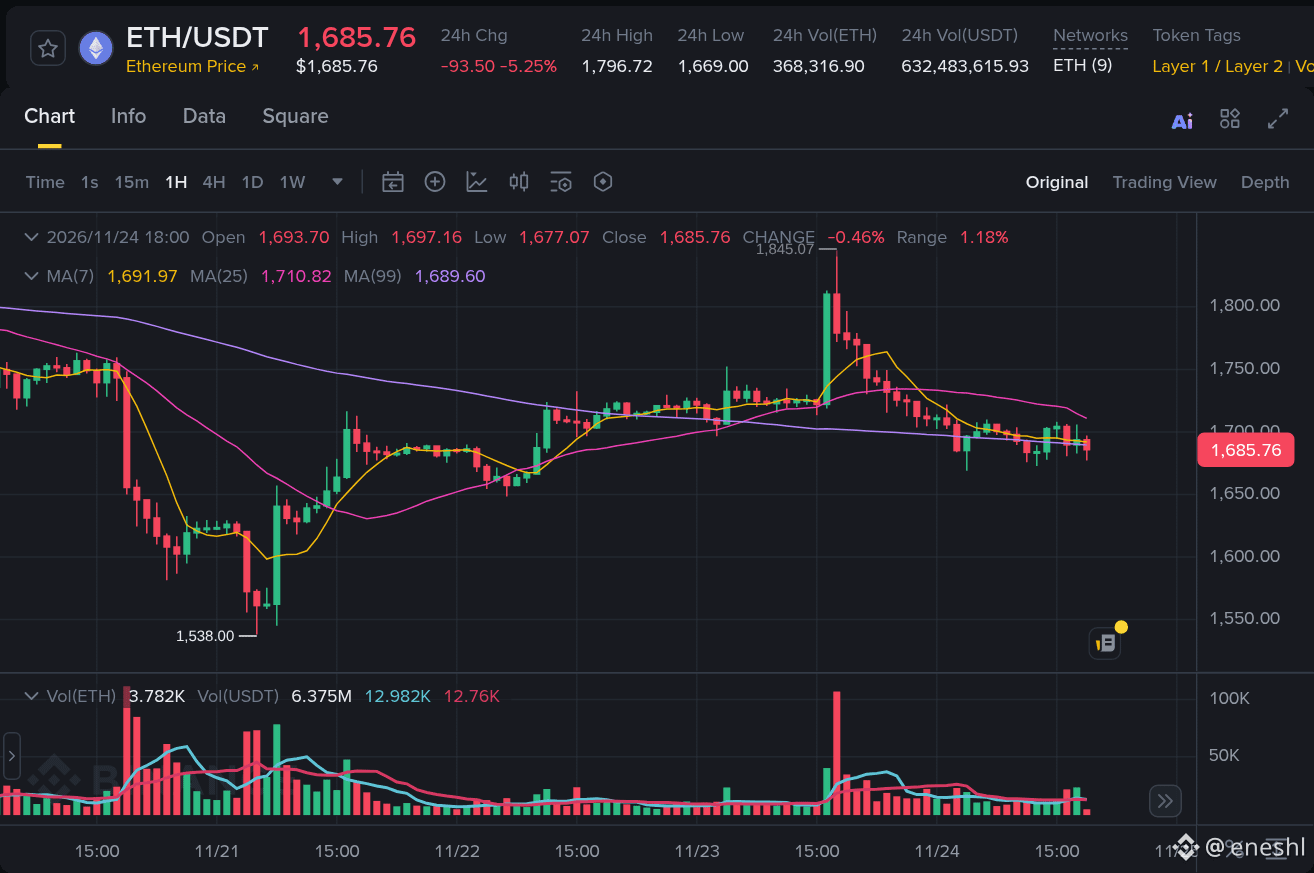
second order, staking pools and multisigs all have to migrate, whoever ships pq support first keeps the flows. for $ETH my line is the 1,670 area that held today, holding that while $BTC chops is where i keep adding slowly
next thing i watch is the january timeline review
100
Log in to explore more content
Join global crypto users on Binance Square
⚡️ Get latest and useful information about crypto.
💬 Trusted by the world’s largest crypto exchange.
👍 Discover real insights from verified creators.
Email / Phone number
Trending Topics
1
#BitcoinAndStocksSlipAgainAmidTrump’sTariffPlans
23,924 views
390 Discussing
2
#WillOctCorePCEShiftFedHikeExpectations?
312,876 views
2,066 Discussing
3
#JensenHuangSaysNvidiaDoesn’tNeedASuccessionPlan
18,049 views
278 Discussing
4
#AnthropicBreaksBelowIPOPriceAmidAISlump
113,990 views
1,046 Discussing
5
#FidelityCryptoAddsAAVELINKAndUNITrading
5,389 views
107 Discussing
6
#UKToBanExchangesMakingMarketsOnOwnPlatforms
3,876 views
87 Discussing
7
#CFTCApprovesTradeReportingRuleForPredictionMarkets
11,838 views
152 Discussing
8
#Bitcoin'sReboundFadesBelow$60K
176,884 views
456 Discussing
9
#WillMarketsStageAThanksgivingReliefRally?
719,846 views
3,793 Discussing
10
#EthereumFoundationPlansShiftToHashBasedSignaturesBy2028
7,717 views
150 Discussing