

#cryptoquestions
cryptoquestions
53,916 views
100 Discussing
Hot
Latest

·
--
CRYPTO QUESTIONS NOBODY ASKS #05
💰⚙️ WHAT HAPPENS WHEN MONEY BECOMES PROGRAMMABLE?
For most of history, money has simply been something we hold, send and receive.
But what if money could also follow instructions?
Imagine receiving a payment with rules attached:
➡️ It can only be spent on a particular service.
➡️ A payment is released automatically when a job is completed.
➡️ Funds are divided between several people the moment a transaction settles.
➡️ A machine automatically pays for the electricity or computing power it consumes.
➡️ An AI agent receives a limited budget and spends it according to predefined rules.
This is where programmable money becomes interesting.
Smart contracts can make digital assets interact with predefined conditions.
For example:
Condition: Service completed ✅
↓
Verification: Confirmed ✅
↓
Payment: Automatically released 💰
No person has to manually press “send” at the final stage.
But programmable money also raises difficult questions.
Who writes the rules?
What happens if the rules contain an error?
Who can change them?
What happens if someone exploits the code?
And perhaps most importantly:
How much control should humans give to automated financial systems?
The interesting future may not simply be about having digital money.
It could be about having money that can interact with software.
That could change payments, commerce, finance, gaming, AI and potentially many other industries.
But there's a catch:
The more programmable money becomes, the more important the code controlling it becomes.
So perhaps the future question isn't:
“Is crypto money?”
Maybe it's:
“What can money do when it becomes software?”
👇 What do you think?
Would you trust money that can automatically make decisions according to code?
#CryptoQuestions #ProgrammableMoney #Crypto
CRYPTO QUESTIONS NOBODY ASKS #05
💰⚙️ WHAT HAPPENS WHEN MONEY BECOMES PROGRAMMABLE?
For most of history, money has simply been something we hold, send and receive.
But what if money could also follow instructions?
Imagine receiving a payment with rules attached:
➡️ It can only be spent on a particular service.
➡️ A payment is released automatically when a job is completed.
➡️ Funds are divided between several people the moment a transaction settles.
➡️ A machine automatically pays for the electricity or computing power it consumes.
➡️ An AI agent receives a limited budget and spends it according to predefined rules.
This is where programmable money becomes interesting.
Smart contracts can make digital assets interact with predefined conditions.
For example:
Condition: Service completed ✅
↓
Verification: Confirmed ✅
↓
Payment: Automatically released 💰
No person has to manually press “send” at the final stage.
But programmable money also raises difficult questions.
Who writes the rules?
What happens if the rules contain an error?
Who can change them?
What happens if someone exploits the code?
And perhaps most importantly:
How much control should humans give to automated financial systems?
The interesting future may not simply be about having digital money.
It could be about having money that can interact with software.
That could change payments, commerce, finance, gaming, AI and potentially many other industries.
But there's a catch:
The more programmable money becomes, the more important the code controlling it becomes.
So perhaps the future question isn't:
“Is crypto money?”
Maybe it's:
“What can money do when it becomes software?”
👇 What do you think?
Would you trust money that can automatically make decisions according to code?
#CryptoQuestions #ProgrammableMoney #Crypto
💰⚙️ WHAT HAPPENS WHEN MONEY BECOMES PROGRAMMABLE?
For most of history, money has simply been something we hold, send and receive.
But what if money could also follow instructions?
Imagine receiving a payment with rules attached:
➡️ It can only be spent on a particular service.
➡️ A payment is released automatically when a job is completed.
➡️ Funds are divided between several people the moment a transaction settles.
➡️ A machine automatically pays for the electricity or computing power it consumes.
➡️ An AI agent receives a limited budget and spends it according to predefined rules.
This is where programmable money becomes interesting.
Smart contracts can make digital assets interact with predefined conditions.
For example:
Condition: Service completed ✅
↓
Verification: Confirmed ✅
↓
Payment: Automatically released 💰
No person has to manually press “send” at the final stage.
But programmable money also raises difficult questions.
Who writes the rules?
What happens if the rules contain an error?
Who can change them?
What happens if someone exploits the code?
And perhaps most importantly:
How much control should humans give to automated financial systems?
The interesting future may not simply be about having digital money.
It could be about having money that can interact with software.
That could change payments, commerce, finance, gaming, AI and potentially many other industries.
But there's a catch:
The more programmable money becomes, the more important the code controlling it becomes.
So perhaps the future question isn't:
“Is crypto money?”
Maybe it's:
“What can money do when it becomes software?”
👇 What do you think?
Would you trust money that can automatically make decisions according to code?
#CryptoQuestions #ProgrammableMoney #Crypto
72
·
--
CRYPTO QUESTIONS NOBODY ASKS #04
⛓️💰 IF BLOCKCHAIN TRANSACTIONS BECOME ALMOST FREE, WHO CAPTURES THE VALUE?
We often hear that cheaper transactions are good for crypto.
And obviously, paying less to move money sounds attractive.
But there is a deeper economic question:
If using a blockchain becomes extremely cheap, where does the value go?
Imagine sending a transaction for almost nothing.
Then imagine millions of people and machines doing it every day.
Payments.
Gaming.
AI agents.
Trading.
Data.
Tokenized assets.
Machine-to-machine transactions.
The cost of using the network could become tiny.
That sounds like a perfect situation for users.
But someone still has to provide the infrastructure.
Validators or other network participants need to process transactions.
Developers need to build applications.
Infrastructure providers need to operate systems.
And investors may still expect economic value from the networks and applications they support.
So the interesting question isn't simply:
“Can blockchain fees become cheaper?”
It's:
“When blockspace becomes abundant and inexpensive, which part of the ecosystem captures the economic value?”
It could be the blockchain itself.
It could be applications built on top of it.
It could be infrastructure providers.
Or the value could shift between several layers.
This is one reason looking only at a token's price can miss an important part of the crypto economy.
The real question is:
Where does the economic activity actually happen and who captures it?
🤔 If blockchain transactions eventually become almost free, where do you think the biggest economic value will accumulate?
#CryptoQuestions #CryptoEconomics
CRYPTO QUESTIONS NOBODY ASKS #04
⛓️💰 IF BLOCKCHAIN TRANSACTIONS BECOME ALMOST FREE, WHO CAPTURES THE VALUE?
We often hear that cheaper transactions are good for crypto.
And obviously, paying less to move money sounds attractive.
But there is a deeper economic question:
If using a blockchain becomes extremely cheap, where does the value go?
Imagine sending a transaction for almost nothing.
Then imagine millions of people and machines doing it every day.
Payments.
Gaming.
AI agents.
Trading.
Data.
Tokenized assets.
Machine-to-machine transactions.
The cost of using the network could become tiny.
That sounds like a perfect situation for users.
But someone still has to provide the infrastructure.
Validators or other network participants need to process transactions.
Developers need to build applications.
Infrastructure providers need to operate systems.
And investors may still expect economic value from the networks and applications they support.
So the interesting question isn't simply:
“Can blockchain fees become cheaper?”
It's:
“When blockspace becomes abundant and inexpensive, which part of the ecosystem captures the economic value?”
It could be the blockchain itself.
It could be applications built on top of it.
It could be infrastructure providers.
Or the value could shift between several layers.
This is one reason looking only at a token's price can miss an important part of the crypto economy.
The real question is:
Where does the economic activity actually happen and who captures it?
🤔 If blockchain transactions eventually become almost free, where do you think the biggest economic value will accumulate?
#CryptoQuestions #CryptoEconomics
⛓️💰 IF BLOCKCHAIN TRANSACTIONS BECOME ALMOST FREE, WHO CAPTURES THE VALUE?
We often hear that cheaper transactions are good for crypto.
And obviously, paying less to move money sounds attractive.
But there is a deeper economic question:
If using a blockchain becomes extremely cheap, where does the value go?
Imagine sending a transaction for almost nothing.
Then imagine millions of people and machines doing it every day.
Payments.
Gaming.
AI agents.
Trading.
Data.
Tokenized assets.
Machine-to-machine transactions.
The cost of using the network could become tiny.
That sounds like a perfect situation for users.
But someone still has to provide the infrastructure.
Validators or other network participants need to process transactions.
Developers need to build applications.
Infrastructure providers need to operate systems.
And investors may still expect economic value from the networks and applications they support.
So the interesting question isn't simply:
“Can blockchain fees become cheaper?”
It's:
“When blockspace becomes abundant and inexpensive, which part of the ecosystem captures the economic value?”
It could be the blockchain itself.
It could be applications built on top of it.
It could be infrastructure providers.
Or the value could shift between several layers.
This is one reason looking only at a token's price can miss an important part of the crypto economy.
The real question is:
Where does the economic activity actually happen and who captures it?
🤔 If blockchain transactions eventually become almost free, where do you think the biggest economic value will accumulate?
#CryptoQuestions #CryptoEconomics
51
·
--
CRYPTO QUESTIONS NOBODY ASKS #03
🏦📱 IS YOUR WALLET BECOMING YOUR BANK?
For decades, we have separated our financial activities.
A bank account for money.
A broker for investments.
An exchange for trading.
A payment app for transfers.
A separate platform for other financial services.
But crypto is slowly challenging that separation.
Imagine opening one wallet and being able to:
💰 Hold digital money
🔄 Swap assets
📈 Trade
💳 Make payments
🌎 Send money internationally
🏦 Earn returns through certain protocols
🏠 Hold tokenized assets
🤖 Give an AI agent limited permission to transact
Suddenly, the wallet isn't just somewhere you store crypto.
It starts becoming an interface to a financial system.
And here's the interesting part:
The wallet doesn't necessarily need to know where you live, which bank you use, or which country you're sending money to in order to interact with a blockchain network.
But that doesn't mean traditional banks are disappearing.
Banks still provide important functions such as regulated custody, lending, payments infrastructure and access to the traditional financial system.
Instead, we may be heading toward a world where banking and blockchain-based finance increasingly overlap.
The biggest question may therefore not be:
“Will crypto replace banks?”
It may be:
“Which financial services will eventually move into wallets?”
And if wallets become the main interface for money, payments and digital assets...
What exactly will a crypto wallet look like five or ten years from now?
👇 What do you think?
Will the wallet of the future look more like today's bank account—or something completely different?
#CryptoQuestions #crypto #Wallets
CRYPTO QUESTIONS NOBODY ASKS #03
🏦📱 IS YOUR WALLET BECOMING YOUR BANK?
For decades, we have separated our financial activities.
A bank account for money.
A broker for investments.
An exchange for trading.
A payment app for transfers.
A separate platform for other financial services.
But crypto is slowly challenging that separation.
Imagine opening one wallet and being able to:
💰 Hold digital money
🔄 Swap assets
📈 Trade
💳 Make payments
🌎 Send money internationally
🏦 Earn returns through certain protocols
🏠 Hold tokenized assets
🤖 Give an AI agent limited permission to transact
Suddenly, the wallet isn't just somewhere you store crypto.
It starts becoming an interface to a financial system.
And here's the interesting part:
The wallet doesn't necessarily need to know where you live, which bank you use, or which country you're sending money to in order to interact with a blockchain network.
But that doesn't mean traditional banks are disappearing.
Banks still provide important functions such as regulated custody, lending, payments infrastructure and access to the traditional financial system.
Instead, we may be heading toward a world where banking and blockchain-based finance increasingly overlap.
The biggest question may therefore not be:
“Will crypto replace banks?”
It may be:
“Which financial services will eventually move into wallets?”
And if wallets become the main interface for money, payments and digital assets...
What exactly will a crypto wallet look like five or ten years from now?
👇 What do you think?
Will the wallet of the future look more like today's bank account—or something completely different?
#CryptoQuestions #crypto #Wallets
🏦📱 IS YOUR WALLET BECOMING YOUR BANK?
For decades, we have separated our financial activities.
A bank account for money.
A broker for investments.
An exchange for trading.
A payment app for transfers.
A separate platform for other financial services.
But crypto is slowly challenging that separation.
Imagine opening one wallet and being able to:
💰 Hold digital money
🔄 Swap assets
📈 Trade
💳 Make payments
🌎 Send money internationally
🏦 Earn returns through certain protocols
🏠 Hold tokenized assets
🤖 Give an AI agent limited permission to transact
Suddenly, the wallet isn't just somewhere you store crypto.
It starts becoming an interface to a financial system.
And here's the interesting part:
The wallet doesn't necessarily need to know where you live, which bank you use, or which country you're sending money to in order to interact with a blockchain network.
But that doesn't mean traditional banks are disappearing.
Banks still provide important functions such as regulated custody, lending, payments infrastructure and access to the traditional financial system.
Instead, we may be heading toward a world where banking and blockchain-based finance increasingly overlap.
The biggest question may therefore not be:
“Will crypto replace banks?”
It may be:
“Which financial services will eventually move into wallets?”
And if wallets become the main interface for money, payments and digital assets...
What exactly will a crypto wallet look like five or ten years from now?
👇 What do you think?
Will the wallet of the future look more like today's bank account—or something completely different?
#CryptoQuestions #crypto #Wallets
75
·
--
CRYPTO QUESTIONS NOBODY ASKS #02
💸🤖 What Happens When AI Agents Start Paying Each Other?
In #01, we asked:
Can a machine own crypto?
Now let's take the next step.
Imagine thousands or eventually millions of AI agents operating around the clock.
One agent needs data.
Another provides it.
One needs computing power.
Another supplies it.
One agent needs a translation.
Another specializes in translation.
Instead of humans arranging every transaction, the agents could potentially pay each other automatically.
And this is where crypto becomes interesting.
Imagine this:
🤖 Agent A needs a service
⬇️
🔎 Agent A finds Agent B
⬇️
📜 A smart contract defines the terms
⬇️
⚡ Agent B completes the service
⬇️
💰 Agent A sends payment
⬇️
⛓️ The blockchain records the settlement
The payment could potentially happen in seconds, without the traditional banking process sitting in the middle.
Stablecoins could be particularly useful for this because their value is designed to remain relatively stable compared with volatile cryptoassets.
But there is a much bigger question hiding underneath:
Who controls the money?
If an AI agent has access to a wallet, who sets its spending limits?
What happens if it makes a mistake?
Who is responsible if it pays the wrong agent?
And could malicious agents trick other agents into sending them money?
These aren't just technical questions.
They're questions about trust, identity, security and ownership.
The fascinating possibility is that crypto may not only be a financial system for humans.
It could eventually become part of the economic infrastructure through which machines interact with each other.
We're still early.
But if AI agents become increasingly autonomous, the economy of the future might contain transactions where neither side is human.
🤔 Would you trust an AI agent to control a crypto wallet and spend money on your behalf?
#CryptoQuestions #AI #Crypto
CRYPTO QUESTIONS NOBODY ASKS #02
💸🤖 What Happens When AI Agents Start Paying Each Other?
In #01, we asked:
Can a machine own crypto?
Now let's take the next step.
Imagine thousands or eventually millions of AI agents operating around the clock.
One agent needs data.
Another provides it.
One needs computing power.
Another supplies it.
One agent needs a translation.
Another specializes in translation.
Instead of humans arranging every transaction, the agents could potentially pay each other automatically.
And this is where crypto becomes interesting.
Imagine this:
🤖 Agent A needs a service
⬇️
🔎 Agent A finds Agent B
⬇️
📜 A smart contract defines the terms
⬇️
⚡ Agent B completes the service
⬇️
💰 Agent A sends payment
⬇️
⛓️ The blockchain records the settlement
The payment could potentially happen in seconds, without the traditional banking process sitting in the middle.
Stablecoins could be particularly useful for this because their value is designed to remain relatively stable compared with volatile cryptoassets.
But there is a much bigger question hiding underneath:
Who controls the money?
If an AI agent has access to a wallet, who sets its spending limits?
What happens if it makes a mistake?
Who is responsible if it pays the wrong agent?
And could malicious agents trick other agents into sending them money?
These aren't just technical questions.
They're questions about trust, identity, security and ownership.
The fascinating possibility is that crypto may not only be a financial system for humans.
It could eventually become part of the economic infrastructure through which machines interact with each other.
We're still early.
But if AI agents become increasingly autonomous, the economy of the future might contain transactions where neither side is human.
🤔 Would you trust an AI agent to control a crypto wallet and spend money on your behalf?
#CryptoQuestions #AI #Crypto
💸🤖 What Happens When AI Agents Start Paying Each Other?
In #01, we asked:
Can a machine own crypto?
Now let's take the next step.
Imagine thousands or eventually millions of AI agents operating around the clock.
One agent needs data.
Another provides it.
One needs computing power.
Another supplies it.
One agent needs a translation.
Another specializes in translation.
Instead of humans arranging every transaction, the agents could potentially pay each other automatically.
And this is where crypto becomes interesting.
Imagine this:
🤖 Agent A needs a service
⬇️
🔎 Agent A finds Agent B
⬇️
📜 A smart contract defines the terms
⬇️
⚡ Agent B completes the service
⬇️
💰 Agent A sends payment
⬇️
⛓️ The blockchain records the settlement
The payment could potentially happen in seconds, without the traditional banking process sitting in the middle.
Stablecoins could be particularly useful for this because their value is designed to remain relatively stable compared with volatile cryptoassets.
But there is a much bigger question hiding underneath:
Who controls the money?
If an AI agent has access to a wallet, who sets its spending limits?
What happens if it makes a mistake?
Who is responsible if it pays the wrong agent?
And could malicious agents trick other agents into sending them money?
These aren't just technical questions.
They're questions about trust, identity, security and ownership.
The fascinating possibility is that crypto may not only be a financial system for humans.
It could eventually become part of the economic infrastructure through which machines interact with each other.
We're still early.
But if AI agents become increasingly autonomous, the economy of the future might contain transactions where neither side is human.
🤔 Would you trust an AI agent to control a crypto wallet and spend money on your behalf?
#CryptoQuestions #AI #Crypto
67
·
--
CRYPTO QUESTIONS NOBODY ASKS #01
🤖 Can a Machine Own Crypto?
We usually think of crypto users as humans.
But what happens when the “user” is an AI agent?
Imagine an AI agent with its own crypto wallet. It could receive funds, pay for computing power, purchase data, interact with smart contracts, and potentially exchange digital assets, without a human manually approving every transaction.
That changes the question.
It is no longer just:
“Can AI trade crypto?”
The bigger question becomes:
“Can AI become an economic participant in crypto?”
Stablecoins could make this especially interesting because they can function as digital payment and settlement assets. Smart contracts could provide rules for how funds are spent, while blockchain networks could provide the settlement layer.
A simple example:
AI Agent A needs computing power ⚙️
↓
AI Agent B provides the computing power
↓
A smart contract verifies the transaction
↓
Agent A pays Agent B in a stablecoin
↓
The transaction settles on-chain
No bank branch.
No human-to-human payment.
Potentially no manual approval.
This doesn't mean machines are already independent financial beings. There are still major questions around security, permissions, regulation, identity, liability and who ultimately controls the wallet.
But if AI agents become increasingly autonomous, crypto could provide one of the financial rails they use to interact with each other.
And that leads to an even bigger question:
If machines eventually become economic participants, what will they spend money on—and which crypto networks will provide the infrastructure?
👇 What do you think?
Could AI agents become genuine crypto users, or will humans always remain the real users behind them?
#Cryto #AI #CryptoQuestions
CRYPTO QUESTIONS NOBODY ASKS #01
🤖 Can a Machine Own Crypto?
We usually think of crypto users as humans.
But what happens when the “user” is an AI agent?
Imagine an AI agent with its own crypto wallet. It could receive funds, pay for computing power, purchase data, interact with smart contracts, and potentially exchange digital assets, without a human manually approving every transaction.
That changes the question.
It is no longer just:
“Can AI trade crypto?”
The bigger question becomes:
“Can AI become an economic participant in crypto?”
Stablecoins could make this especially interesting because they can function as digital payment and settlement assets. Smart contracts could provide rules for how funds are spent, while blockchain networks could provide the settlement layer.
A simple example:
AI Agent A needs computing power ⚙️
↓
AI Agent B provides the computing power
↓
A smart contract verifies the transaction
↓
Agent A pays Agent B in a stablecoin
↓
The transaction settles on-chain
No bank branch.
No human-to-human payment.
Potentially no manual approval.
This doesn't mean machines are already independent financial beings. There are still major questions around security, permissions, regulation, identity, liability and who ultimately controls the wallet.
But if AI agents become increasingly autonomous, crypto could provide one of the financial rails they use to interact with each other.
And that leads to an even bigger question:
If machines eventually become economic participants, what will they spend money on—and which crypto networks will provide the infrastructure?
👇 What do you think?
Could AI agents become genuine crypto users, or will humans always remain the real users behind them?
#Cryto #AI #CryptoQuestions
🤖 Can a Machine Own Crypto?
We usually think of crypto users as humans.
But what happens when the “user” is an AI agent?
Imagine an AI agent with its own crypto wallet. It could receive funds, pay for computing power, purchase data, interact with smart contracts, and potentially exchange digital assets, without a human manually approving every transaction.
That changes the question.
It is no longer just:
“Can AI trade crypto?”
The bigger question becomes:
“Can AI become an economic participant in crypto?”
Stablecoins could make this especially interesting because they can function as digital payment and settlement assets. Smart contracts could provide rules for how funds are spent, while blockchain networks could provide the settlement layer.
A simple example:
AI Agent A needs computing power ⚙️
↓
AI Agent B provides the computing power
↓
A smart contract verifies the transaction
↓
Agent A pays Agent B in a stablecoin
↓
The transaction settles on-chain
No bank branch.
No human-to-human payment.
Potentially no manual approval.
This doesn't mean machines are already independent financial beings. There are still major questions around security, permissions, regulation, identity, liability and who ultimately controls the wallet.
But if AI agents become increasingly autonomous, crypto could provide one of the financial rails they use to interact with each other.
And that leads to an even bigger question:
If machines eventually become economic participants, what will they spend money on—and which crypto networks will provide the infrastructure?
👇 What do you think?
Could AI agents become genuine crypto users, or will humans always remain the real users behind them?
#Cryto #AI #CryptoQuestions
69
·
--
End of the day, and I'm asking myself the most ridiculous question in the world.
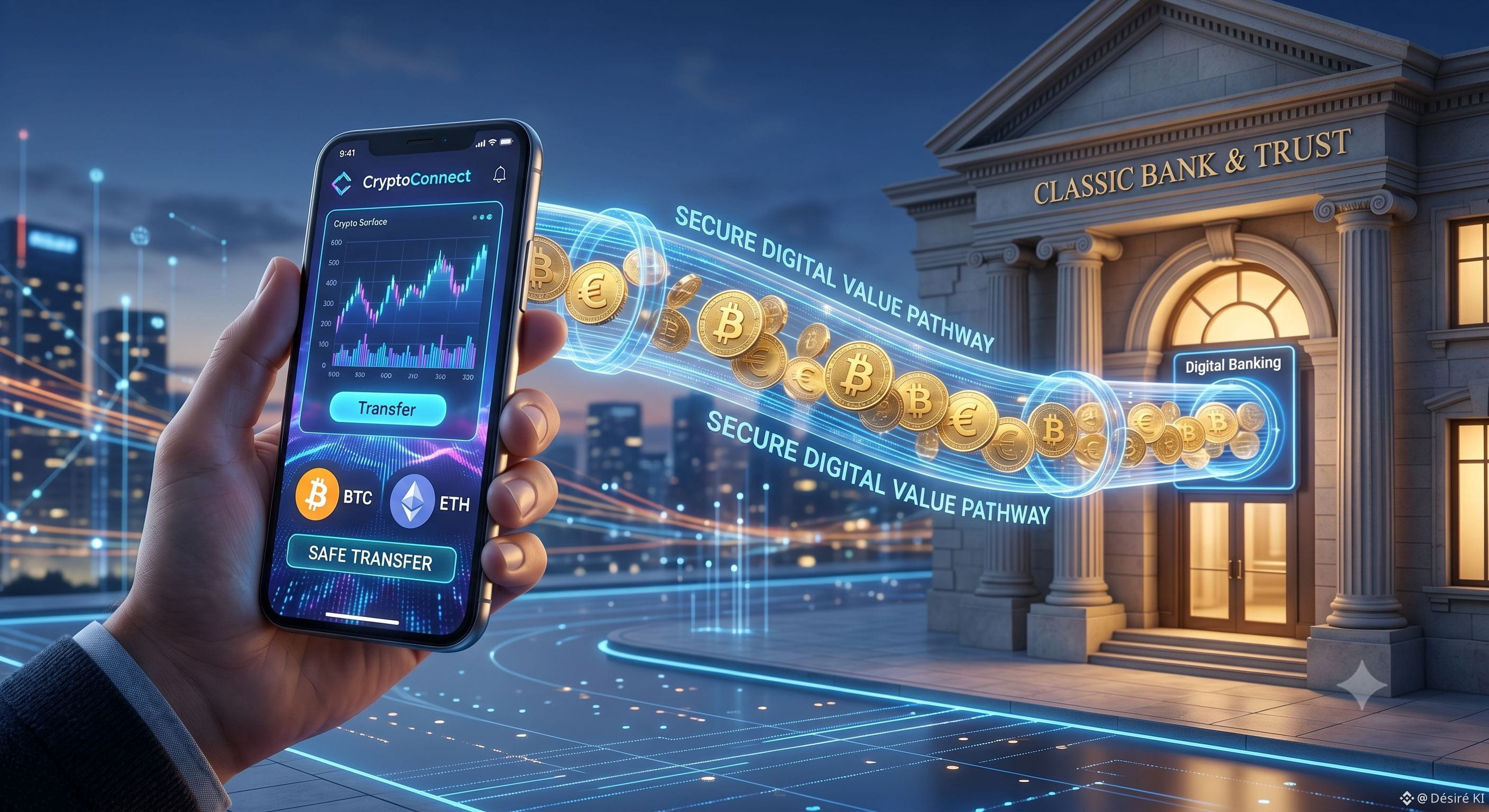
Loading funds onto the app with my debit card was super easy (too easy, honestly). But now, I'm wondering: when I want to pull my 20 euros back and send it to my "normal" bank account (La Banque Postale, Société Générale, etc.), is it complicated?
I hear so many stories online about folks struggling to withdraw their funds.
For those who do this regularly: is withdrawing from Binance to a French bank account a 5-minute job or a total grind with 12 forms to fill out? Be honest with me 👇
#BinanceSquare #CryptoQuestions #banque
End of the day, and I'm asking myself the most ridiculous question in the world.
Loading funds onto the app with my debit card was super easy (too easy, honestly). But now, I'm wondering: when I want to pull my 20 euros back and send it to my "normal" bank account (La Banque Postale, Société Générale, etc.), is it complicated?
I hear so many stories online about folks struggling to withdraw their funds.
For those who do this regularly: is withdrawing from Binance to a French bank account a 5-minute job or a total grind with 12 forms to fill out? Be honest with me 👇
#BinanceSquare #CryptoQuestions #banque
Loading funds onto the app with my debit card was super easy (too easy, honestly). But now, I'm wondering: when I want to pull my 20 euros back and send it to my "normal" bank account (La Banque Postale, Société Générale, etc.), is it complicated?
I hear so many stories online about folks struggling to withdraw their funds.
For those who do this regularly: is withdrawing from Binance to a French bank account a 5-minute job or a total grind with 12 forms to fill out? Be honest with me 👇
#BinanceSquare #CryptoQuestions #banque
1
3
676

·
--
#pixel $PIXEL The Evolution of @Pixels: Beyond Farming with the Stacked Ecosystem
The landscape of Web3 gaming is shifting, and Pixels is leading this transformation. It's not just about farming land; the integration of the Stacked ecosystem is taking gameplay to a whole new level of strategic depth.
The utility of the token $PIXEL is solidifying as the cornerstone for players looking to optimize their progress and engage in a sustainable digital economy. Watching how @Pixels expands its horizons with new mechanics shows that the focus on user retention and real value is the key to long-term success.
What’s your current strategy for maximizing your resources in this new environment?
#pixel #Web3Gaming #CryptoQuestions
[https://www.binance.com/es/square/profile/](https://www.binance.com/es/square/profile/)
#pixel $PIXEL The Evolution of @Pixels: Beyond Farming with the Stacked Ecosystem
The landscape of Web3 gaming is shifting, and Pixels is leading this transformation. It's not just about farming land; the integration of the Stacked ecosystem is taking gameplay to a whole new level of strategic depth.
The utility of the token $PIXEL is solidifying as the cornerstone for players looking to optimize their progress and engage in a sustainable digital economy. Watching how @Pixels expands its horizons with new mechanics shows that the focus on user retention and real value is the key to long-term success.
What’s your current strategy for maximizing your resources in this new environment?
#pixel #Web3Gaming #CryptoQuestions
https://www.binance.com/es/square/profile/
The landscape of Web3 gaming is shifting, and Pixels is leading this transformation. It's not just about farming land; the integration of the Stacked ecosystem is taking gameplay to a whole new level of strategic depth.
The utility of the token $PIXEL is solidifying as the cornerstone for players looking to optimize their progress and engage in a sustainable digital economy. Watching how @Pixels expands its horizons with new mechanics shows that the focus on user retention and real value is the key to long-term success.
What’s your current strategy for maximizing your resources in this new environment?
#pixel #Web3Gaming #CryptoQuestions
https://www.binance.com/es/square/profile/
181

·
--
Question
Would you rather:
A: Make 10 small profitable trades
or
B: Make one huge profitable trade?
Personally, I'd rather build a repeatable process than depend on one lucky trade.
What's your choice?
#CryptoQuestions
Question
Would you rather:
A: Make 10 small profitable trades
or
B: Make one huge profitable trade?
Personally, I'd rather build a repeatable process than depend on one lucky trade.
What's your choice?
#CryptoQuestions
Would you rather:
A: Make 10 small profitable trades
or
B: Make one huge profitable trade?
Personally, I'd rather build a repeatable process than depend on one lucky trade.
What's your choice?
#CryptoQuestions
1
47

·
--
Crypto Question 👇
What’s your biggest challenge in crypto right now?
A) Choosing the right coins
B) Timing the market
C) Managing risk
D) Staying consistent
#CryptoQuestions
Comment your answer 👇
Let’s learn from each other.
Follow Coin-Dropz for daily crypto discussions.
Crypto Question 👇
What’s your biggest challenge in crypto right now?
A) Choosing the right coins
B) Timing the market
C) Managing risk
D) Staying consistent
#CryptoQuestions
Comment your answer 👇
Let’s learn from each other.
Follow Coin-Dropz for daily crypto discussions.
What’s your biggest challenge in crypto right now?
A) Choosing the right coins
B) Timing the market
C) Managing risk
D) Staying consistent
#CryptoQuestions
Comment your answer 👇
Let’s learn from each other.
Follow Coin-Dropz for daily crypto discussions.
40

🔥 Honest question for crypto traders…
If the market suddenly crashed –40% tomorrow, what would you REALLY do?
A) Panic sell
B) Buy the dip
C) Do nothing
D) Regret not buying earlier 😅
Be honest.
Because everyone says “I’ll buy the dip”…
until the dip actually comes.
The truth is:
Most traders love bull markets.
But real portfolios are built in bear markets.
So tell me 👇
Are you emotionally ready for the next crash?
💬 Comment A / B / C / D
#CryptoQuestions #CryptoPsychology #Altcoins #CryptoCommunity #CryptoMindset
🔥 Honest question for crypto traders…
If the market suddenly crashed –40% tomorrow, what would you REALLY do?
A) Panic sell
B) Buy the dip
C) Do nothing
D) Regret not buying earlier 😅
Be honest.
Because everyone says “I’ll buy the dip”…
until the dip actually comes.
The truth is:
Most traders love bull markets.
But real portfolios are built in bear markets.
So tell me 👇
Are you emotionally ready for the next crash?
💬 Comment A / B / C / D
#CryptoQuestions #CryptoPsychology #Altcoins #CryptoCommunity #CryptoMindset
If the market suddenly crashed –40% tomorrow, what would you REALLY do?
A) Panic sell
B) Buy the dip
C) Do nothing
D) Regret not buying earlier 😅
Be honest.
Because everyone says “I’ll buy the dip”…
until the dip actually comes.
The truth is:
Most traders love bull markets.
But real portfolios are built in bear markets.
So tell me 👇
Are you emotionally ready for the next crash?
💬 Comment A / B / C / D
#CryptoQuestions #CryptoPsychology #Altcoins #CryptoCommunity #CryptoMindset
37

·
--
$19M+ got liquidated just getting LAB to its all-time high!
before the real crash even started. Makes me wonder how much of that "vertical candle" excitement was actual demand, versus shorts getting forced to buy back at any price.
$LAB
#LAB #Liquidations #CryptoQuestions
$19M+ got liquidated just getting LAB to its all-time high!
before the real crash even started. Makes me wonder how much of that "vertical candle" excitement was actual demand, versus shorts getting forced to buy back at any price.
$LAB
#LAB #Liquidations #CryptoQuestions
before the real crash even started. Makes me wonder how much of that "vertical candle" excitement was actual demand, versus shorts getting forced to buy back at any price.
$LAB
#LAB #Liquidations #CryptoQuestions
Ganzu Coiner
·
--
LAB went from $20 to $0.38! The chart called it before the headlines did.
This past 2 week I've been going back through LAB's chart instead of just reading the headlines about it, and the structure tells a more useful story than the percentage drop does.
Zoom out and the pattern is textbook. From late June into early July, price built a series of higher highs — BOS after BOS, classic markup structure — right up until it tapped the $20 zone and printed what smart-money-concept traders would call a "Strong High." That's not decoration. A Strong High marks a level where a large amount of liquidity (stop-losses, resting sell orders) was sitting untested. Price doesn't usually leave a zone like that alone for long.
What happened next is the part that matters more than the top itself. After the rejection near $20, $LAB didn't just pull back — it broke structure downward repeatedly, each CHoCH (change of character) flipping the short-term trend before the next leg down even started. By the time price reached the $8-9 area, the last real demand zone from late June, it broke through that too. That's the moment a pullback stops being a pullback and becomes trend reversal.
Then came the acceleration. Between roughly July 8 and July 9, LAB didn't grind down — it gapped through multiple price levels on a volume spike that dwarfed everything before it on the chart. That's not organic distribution. That kind of move usually means one of two things: forced liquidations cascading through thin orderbook liquidity, or large wallets exiting into whatever bids existed, regardless of price. Reporting around that period pointed to both — leveraged longs getting liquidated on Binance's perpetual market, layered on top of on-chain tracked wallets moving large $LAB balances toward exchanges before the sell-off.
Here's the part I keep coming back to as a framework, not a prediction: on a normal token, a crash like this eventually finds a "Weak Low" — a level where sellers are exhausted and buyers start defending. LAB's chart is now marked at a Weak Low around $0.38-0.39, with price barely moving for several sessions. But a Weak Low only means something if the supply behind it is actually distributed. If a small number of wallets still control the majority of float — which is exactly what on-chain investigators have alleged here — a "quiet" chart isn't stabilization, it's just nobody left to sell at that price yet. The next unlock event becomes the real test, not the chart pattern.
That's the mindset shift I try to apply to any token showing this shape: market structure tells you where liquidity was taken and where it might get tested next. It doesn't tell you whether the supply behind the chart is healthy. Those are two separate questions, and conflating them is how people mistake "the crash is over" for "the reason it crashed is fixed." One is a chart observation. The other needs on-chain data, not candles.
#LAB #SmartMoneyConcepts #OnChainAnalysis #TokenCollapse
Zoom out and the pattern is textbook. From late June into early July, price built a series of higher highs — BOS after BOS, classic markup structure — right up until it tapped the $20 zone and printed what smart-money-concept traders would call a "Strong High." That's not decoration. A Strong High marks a level where a large amount of liquidity (stop-losses, resting sell orders) was sitting untested. Price doesn't usually leave a zone like that alone for long.
What happened next is the part that matters more than the top itself. After the rejection near $20, $LAB didn't just pull back — it broke structure downward repeatedly, each CHoCH (change of character) flipping the short-term trend before the next leg down even started. By the time price reached the $8-9 area, the last real demand zone from late June, it broke through that too. That's the moment a pullback stops being a pullback and becomes trend reversal.
Then came the acceleration. Between roughly July 8 and July 9, LAB didn't grind down — it gapped through multiple price levels on a volume spike that dwarfed everything before it on the chart. That's not organic distribution. That kind of move usually means one of two things: forced liquidations cascading through thin orderbook liquidity, or large wallets exiting into whatever bids existed, regardless of price. Reporting around that period pointed to both — leveraged longs getting liquidated on Binance's perpetual market, layered on top of on-chain tracked wallets moving large $LAB balances toward exchanges before the sell-off.
Here's the part I keep coming back to as a framework, not a prediction: on a normal token, a crash like this eventually finds a "Weak Low" — a level where sellers are exhausted and buyers start defending. LAB's chart is now marked at a Weak Low around $0.38-0.39, with price barely moving for several sessions. But a Weak Low only means something if the supply behind it is actually distributed. If a small number of wallets still control the majority of float — which is exactly what on-chain investigators have alleged here — a "quiet" chart isn't stabilization, it's just nobody left to sell at that price yet. The next unlock event becomes the real test, not the chart pattern.
That's the mindset shift I try to apply to any token showing this shape: market structure tells you where liquidity was taken and where it might get tested next. It doesn't tell you whether the supply behind the chart is healthy. Those are two separate questions, and conflating them is how people mistake "the crash is over" for "the reason it crashed is fixed." One is a chart observation. The other needs on-chain data, not candles.
#LAB #SmartMoneyConcepts #OnChainAnalysis #TokenCollapse

144

·
--
Most people buy crypto because:
"Someone said it will pump."
That's not investing. That's gambling.
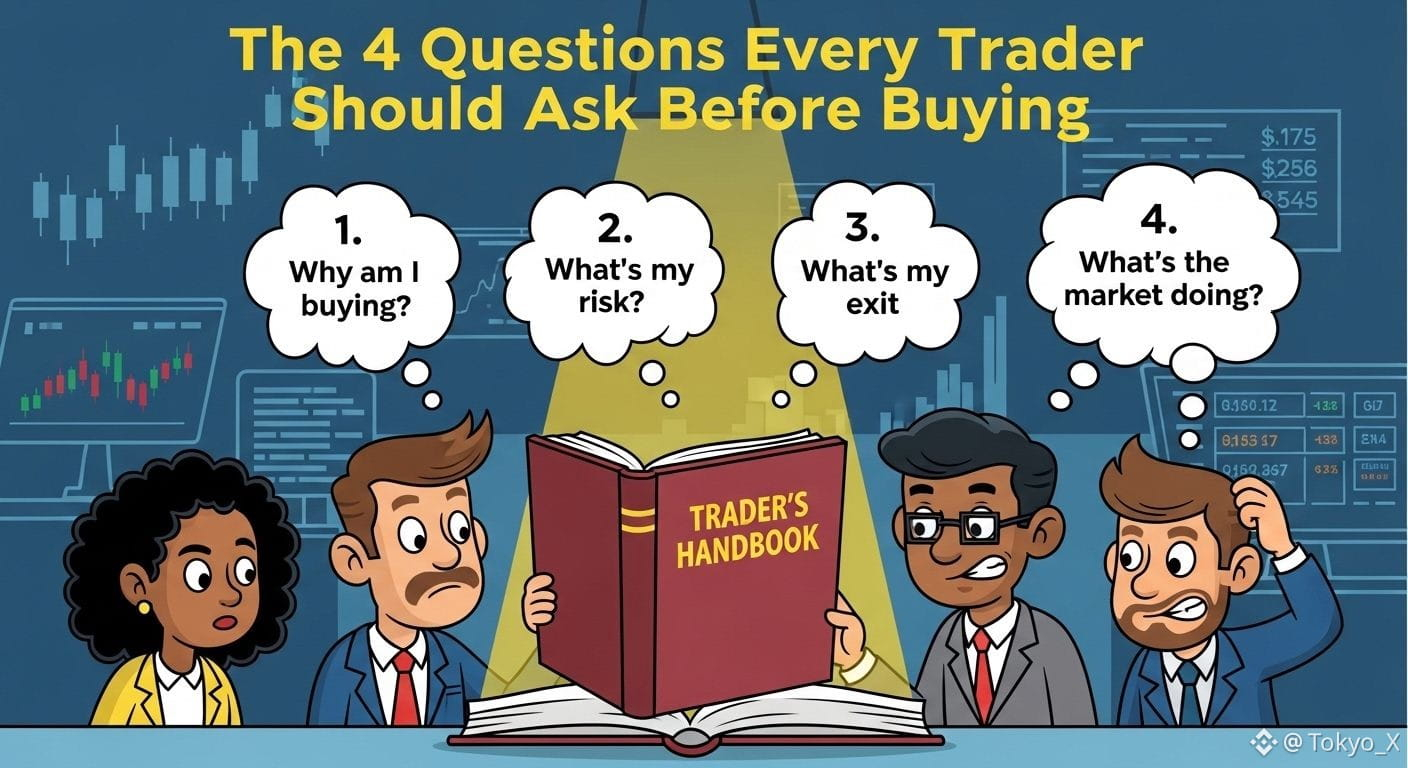
Here are 4 questions I ask before EVERY buy.
📍 QUESTION 1: What problem does this project solve?
No real problem? No real value.
📍 QUESTION 2: Who is using it right now?
If no one is using it today... why will anyone use it tomorrow?
📍 QUESTION 3: What's the team's track record?
Have they built before? Do they show up daily? Or just hype?
📍 QUESTION 4: Can I hold this for 1 year without checking price?
If the answer is no... your position size is too big. Or your conviction is too weak.
📍 MY RULE
No answers = No buy.
Simple.
Which question do most people skip?
#CryptoQuestions #SmartBuying
#DYOR #Tokyo_X
$APT $KAT $ZEC
Most people buy crypto because:
"Someone said it will pump."
That's not investing. That's gambling.
Here are 4 questions I ask before EVERY buy.
📍 QUESTION 1: What problem does this project solve?
No real problem? No real value.
📍 QUESTION 2: Who is using it right now?
If no one is using it today... why will anyone use it tomorrow?
📍 QUESTION 3: What's the team's track record?
Have they built before? Do they show up daily? Or just hype?
📍 QUESTION 4: Can I hold this for 1 year without checking price?
If the answer is no... your position size is too big. Or your conviction is too weak.
📍 MY RULE
No answers = No buy.
Simple.
Which question do most people skip?
#CryptoQuestions #SmartBuying
#DYOR #Tokyo_X
$APT $KAT $ZEC
"Someone said it will pump."
That's not investing. That's gambling.
Here are 4 questions I ask before EVERY buy.
📍 QUESTION 1: What problem does this project solve?
No real problem? No real value.
📍 QUESTION 2: Who is using it right now?
If no one is using it today... why will anyone use it tomorrow?
📍 QUESTION 3: What's the team's track record?
Have they built before? Do they show up daily? Or just hype?
📍 QUESTION 4: Can I hold this for 1 year without checking price?
If the answer is no... your position size is too big. Or your conviction is too weak.
📍 MY RULE
No answers = No buy.
Simple.
Which question do most people skip?
#CryptoQuestions #SmartBuying
#DYOR #Tokyo_X
$APT $KAT $ZEC
1
3
519

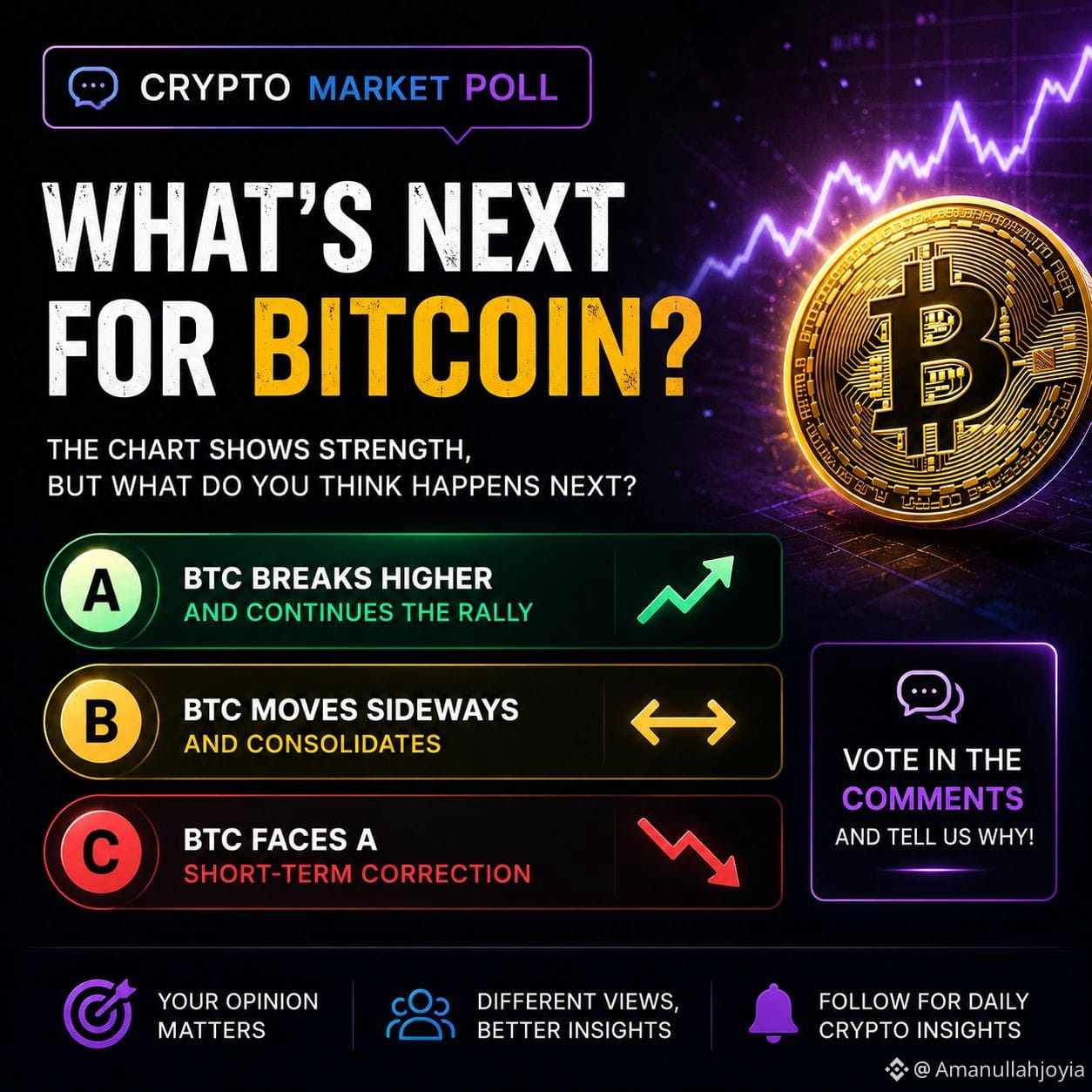
WHAT'S NEXT FOR BITCOIN?
🔥 Continue Higher
😐 Move Sideways
📉 Short-Term Correction
💬 Vote In The Comments
🔔 Follow For Daily Crypto Insights
#cryptouniverseofficial #tradingtechnique #CryptoQuestions
WHAT'S NEXT FOR BITCOIN?
🔥 Continue Higher
😐 Move Sideways
📉 Short-Term Correction
💬 Vote In The Comments
🔔 Follow For Daily Crypto Insights
#cryptouniverseofficial #tradingtechnique #CryptoQuestions
🔥 Continue Higher
😐 Move Sideways
📉 Short-Term Correction
💬 Vote In The Comments
🔔 Follow For Daily Crypto Insights
#cryptouniverseofficial #tradingtechnique #CryptoQuestions
59
·
--
Crypto Question 👇
What’s your biggest goal in the next 6 months?
A) Double portfolio
B) Learn trading
C) Find hidden gems
D) Stay consistent
#CryptoQuestions
Comment your answer 👇
Let’s see what everyone is aiming for.
Follow Coin-Dropz for daily crypto discussions.
Crypto Question 👇
What’s your biggest goal in the next 6 months?
A) Double portfolio
B) Learn trading
C) Find hidden gems
D) Stay consistent
#CryptoQuestions
Comment your answer 👇
Let’s see what everyone is aiming for.
Follow Coin-Dropz for daily crypto discussions.
What’s your biggest goal in the next 6 months?
A) Double portfolio
B) Learn trading
C) Find hidden gems
D) Stay consistent
#CryptoQuestions
Comment your answer 👇
Let’s see what everyone is aiming for.
Follow Coin-Dropz for daily crypto discussions.
29
Log in to explore more content
Join global crypto users on Binance Square
⚡️ Get latest and useful information about crypto.
💬 Trusted by the world’s largest crypto exchange.
👍 Discover real insights from verified creators.
Email / Phone number
Trending Topics
1
#NFPWatch
10.9M views
19,249 Discussing
2
#BitcoinFundingRateTriplesTo10%
166,857 views
1,183 Discussing
3
#BitcoinSurpasses$86KUp2.99%
54,531 views
113 Discussing
4
#ZcashFalls21%FromSeptemberPeak
87,819 views
842 Discussing
5
#USSeptemberPayrollsAdd29KUnemploymentRises4.2%
72,642 views
513 Discussing
6
#XRPPostsFirstThreeGreenMonthsInQ3
60,902 views
704 Discussing
7
#BNBChainTokenizedStocksTop$1BAt30%Share
27,282 views
38 Discussing
8
#BitcoinRisesToward$85K
125,181 views
157 Discussing
9
#AmazonPlansToSell$8BNvidiaChips
8,123 views
91 Discussing
10
#NEARFallsToAround$4.70Down14%
50,300 views
118 Discussing