
#clarityact
clarityact
3.7M views
9,365 Discussing
Hot
Latest

·
--
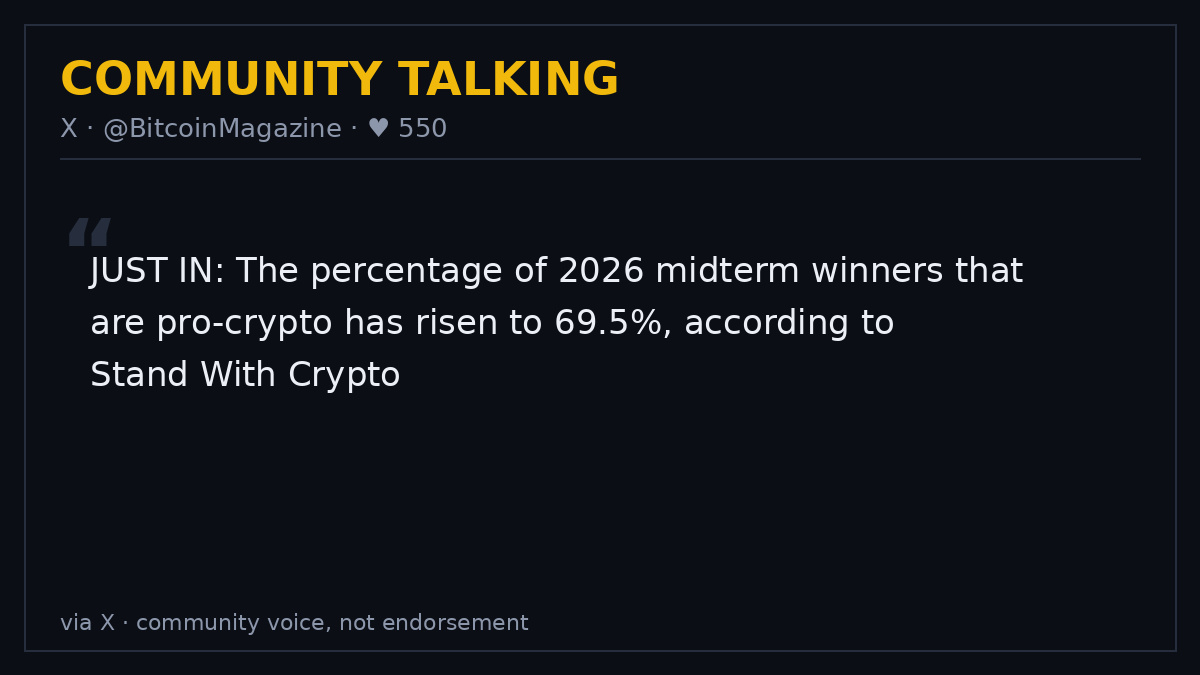
Traders on X are celebrating a big number: 69.5% of 2026 midterm winners are pro-crypto, according to Stand With Crypto (BitcoinMagazine, 550 likes).
Here is the number that matters more: $233M. Crypto firms gave that much to political groups this cycle, about a third of all corporate giving (Public Citizen, FEC filings). And the bill that money was meant to save is about to die anyway.
The CLARITY Act passed the House 294-134 in July 2025. It stalled in the Senate on a 49-50 vote on September 15, eleven short of the 60 needed to advance. Democrats won both chambers on November 3, and unpassed bills expire when the new Congress convenes January 3, 2027. The act starts over from scratch.
🔥 Why it matters: every Senate crypto bill has to clear the Banking Committee, and Elizabeth Warren is set to chair it. She led the September opposition and published five principles for crypto legislation in July 2025. A reintroduced bill goes back to her committee, and she decides whether it gets a vote.
My take: this is not money failing. It is money hitting its limit. Crypto bought candidates, not the committee calendar. Winning 69.5% of the winners is not the same as winning the one chair that controls the vote.
Three ways this plays out:
🟢 A rewritten bill under Warren's terms, heavier on ethics rules and consumer protections
🟡 House Democrats pass their own bill and the chambers negotiate
🔴 Nothing moves for two years, which is what TD Cowen's Jaret Seiberg now expects
What to watch: the Jan 3 expiry, Warren's agenda, and the House Democrats' draft text. $BTC sits flat near $76,000, and the market has barely blinked. The stall is already priced in.
Did crypto spend $233M to win the election and lose the bill, or is this just the price of a seat at the table? 👇
Not financial advice. DYOR.
#crypto #CLARITYAct
22

🚨 WHITE HOUSE REGULATORY PUSH FUELS $BTC NARRATIVE WHILE SENATE HURDLES LOOM! ⚡
Executive pressure is giving market bulls a fresh narrative angle, but smart capital knows Capitol Hill moves at its own pace. The 60-vote threshold in the Senate means bipartisan negotiations for the CLARITY Act could easily stretch beyond initial projections. ⚖️
Treating a September timeline as a concrete deadline is a classic trap for over-leveraged traders. ⏱️ Smart money is watching how order flow absorbs regulatory headlines while building positions around actual policy momentum rather than political promises. 💡
💬 Are you pricing in early regulatory approval for $BTC or holding capital for the inevitable policy volatility ahead? 👇
⚠️ Not financial advice. Always manage your risk. 🛡️
🏷️ #BTC #CryptoRegulation #ClarityAct #Crypto
🔥 💎
25

Article
🇺🇸Democrats take Congress, and crypto felt it instantlyBTC around $76–78K, a new Congress, a hawkish Fed, and a regulation bill in limbo. Here's how the pieces fit together.
1. What happened
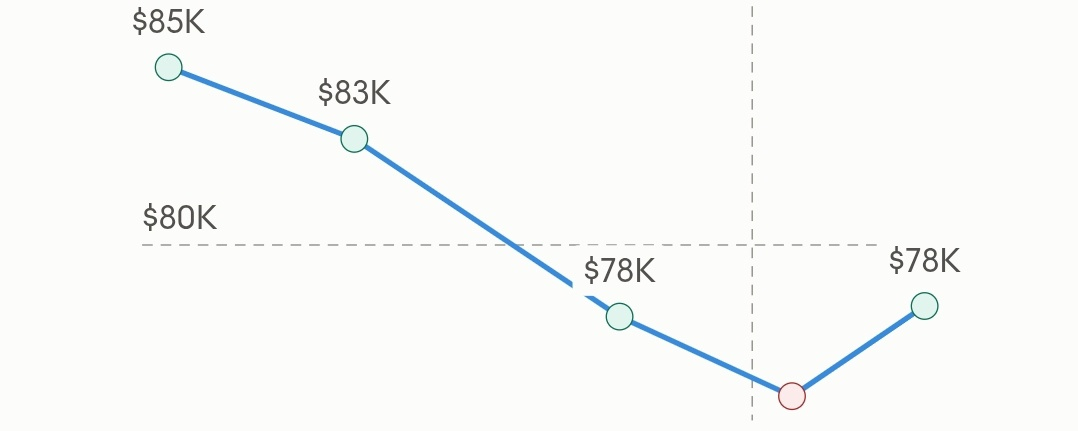
Bitcoin fell to $75,618 as Democrats won both the House and Senate, then bounced toward $78K resistance. Context matters here. BTC was trading around $87K at the start of October and slid below $80K in the weeks after. The midterms didn't start this move, they added to it. (Cointelegraph)
The sharper reaction came in politically linked assets. The official TRUMP and World Liberty Financial tokens were the two biggest losers among the top 100 even as BTC and ETH rallied. The market is separating "crypto as an asset class" from "crypto as a political trade." The second is more fragile. (Cointelegraph)
2. The regulation question: CLARITY Act
This is where the election matters most for the long term. The Senate's cloture vote on the CLARITY Act failed, short of the 60 votes needed. The bill would have created a unified federal framework for the industry. (investinglive)
The two sides read the new Congress very differently:
The cautious view: Control of committees and the agenda shifts. Some Democrats have raised concerns about Trump's ties to the crypto industry, so scrutiny of those ventures could rise and the bill could be reworked in 2027. (Cointelegraph)
The constructive view: Bipartisan interest hasn't disappeared. Senators from both parties are reportedly weighing another attempt during the lame-duck session. Others argue Democrats may cut a deal, since a defined rulebook protects consumers too. (Cointelegraph) (Cointelegraph)
My read: the bill isn't dead, but the timeline got longer and less certain. Markets dislike uncertainty more than bad news, which is why even a "wait and see" outcome can weigh on prices.
3. The bigger driver: the Fed
Politics gets the headlines, but rates drive risk assets. The macro picture is not friendly:
The Fed held rates on Oct 28 in a 10-2 vote, with two members voting for an increase. The debate is about hikes, not cuts. (coinspeaker)
September's CPI rose 3.7% from a year earlier, so inflation remains the Fed's main concern. (coinspeaker)
Today's jobs report added fuel. Payrolls rose more than expected and unemployment fell to 4.1%, which gives the Fed more room to focus on inflation. The gain was 165,000, versus a rise of 60,000 in September. (aol) (morningstar)
A strong economy is good news in general, but for BTC it can mean fewer rate-cut hopes and higher yields. That's the same pattern we saw in early October, in reverse: a weak jobs print sent BTC toward $87K, and a strong one now pushes the other way.
4. Flows tell the real story
ETF demand has been choppy. Bitcoin ETF outflows hit $635.6 million on a single day, Oct 22, yet buyers came back around the Fed meeting, with ETFs adding $424 million. That's a market where institutions are tactical, not panicking. Watch whether inflows stay positive on dips. Sustained outflows would be the real warning sign, not a one-day headline. (fixygen) (coinspeaker)
5. Levels and scenarios
These are conditional frameworks, not predictions.
Base case, range-bound ($75–80K): The $75.6K low and the $78–80K zone act as the floor and ceiling while the market digests rates and politics. This is the most likely outcome when no single catalyst dominates.
Bullish case: A daily close above $80K with rising ETF inflows, plus a softer inflation print, would suggest the post-election selloff is done. Regulatory progress in the lame-duck session would add support.
Bearish case: A break below the $75.6K low, especially alongside hot CPI and renewed ETF outflows, would open lower support zones and likely push leverage out of the market.
6. The calendar that matters
📅 Nov 10: October CPI. It lands on the date set in the BLS release calendar, and it's the next big test for rate expectations.
📅 Nov 10: China's rare-earth export-control suspension expires, a trade-truce lever that can shake equities and crypto.
📅 Dec 9: The Fed's next decision.
📅 Lame-duck session: Possible last attempt at CLARITY before the new Congress. (coinspeaker) (buttondown)
7. My takeaways
Don't over-credit the election. It's one factor among rates, flows, and tech sentiment.
Political tokens carry political risk. Know what you're holding and why.
Regulation is delayed, not cancelled. Plan for months, not days.
Inflation data is the real catalyst this month. Respect Nov 10.
Risk first. In a range, position size and stop levels matter more than direction calls.
💬 What's your view: does a divided Washington end up helping crypto get clear rules, or slowing it down? Tell me below 👇
Not financial advice. Data from news reports at time of writing, so check live prices before acting. DYOR.
#Bitcoin #BTC #USElections #CLARITYAct #Binance
🇺🇸Democrats take Congress, and crypto felt it instantly
BTC around $76–78K, a new Congress, a hawkish Fed, and a regulation bill in limbo. Here's how the pieces fit together.
1. What happened
Bitcoin fell to $75,618 as Democrats won both the House and Senate, then bounced toward $78K resistance. Context matters here. BTC was trading around $87K at the start of October and slid below $80K in the weeks after. The midterms didn't start this move, they added to it. (Cointelegraph)
The sharper reaction came in politically linked assets. The official TRUMP and World Liberty Financial tokens were the two biggest losers among the top 100 even as BTC and ETH rallied. The market is separating "crypto as an asset class" from "crypto as a political trade." The second is more fragile. (Cointelegraph)
2. The regulation question: CLARITY Act
This is where the election matters most for the long term. The Senate's cloture vote on the CLARITY Act failed, short of the 60 votes needed. The bill would have created a unified federal framework for the industry. (investinglive)
The two sides read the new Congress very differently:
The cautious view: Control of committees and the agenda shifts. Some Democrats have raised concerns about Trump's ties to the crypto industry, so scrutiny of those ventures could rise and the bill could be reworked in 2027. (Cointelegraph)
The constructive view: Bipartisan interest hasn't disappeared. Senators from both parties are reportedly weighing another attempt during the lame-duck session. Others argue Democrats may cut a deal, since a defined rulebook protects consumers too. (Cointelegraph) (Cointelegraph)
My read: the bill isn't dead, but the timeline got longer and less certain. Markets dislike uncertainty more than bad news, which is why even a "wait and see" outcome can weigh on prices.
3. The bigger driver: the Fed
Politics gets the headlines, but rates drive risk assets. The macro picture is not friendly:
The Fed held rates on Oct 28 in a 10-2 vote, with two members voting for an increase. The debate is about hikes, not cuts. (coinspeaker)
September's CPI rose 3.7% from a year earlier, so inflation remains the Fed's main concern. (coinspeaker)
Today's jobs report added fuel. Payrolls rose more than expected and unemployment fell to 4.1%, which gives the Fed more room to focus on inflation. The gain was 165,000, versus a rise of 60,000 in September. (aol) (morningstar)
A strong economy is good news in general, but for BTC it can mean fewer rate-cut hopes and higher yields. That's the same pattern we saw in early October, in reverse: a weak jobs print sent BTC toward $87K, and a strong one now pushes the other way.
4. Flows tell the real story
ETF demand has been choppy. Bitcoin ETF outflows hit $635.6 million on a single day, Oct 22, yet buyers came back around the Fed meeting, with ETFs adding $424 million. That's a market where institutions are tactical, not panicking. Watch whether inflows stay positive on dips. Sustained outflows would be the real warning sign, not a one-day headline. (fixygen) (coinspeaker)
5. Levels and scenarios
These are conditional frameworks, not predictions.
Base case, range-bound ($75–80K): The $75.6K low and the $78–80K zone act as the floor and ceiling while the market digests rates and politics. This is the most likely outcome when no single catalyst dominates.
Bullish case: A daily close above $80K with rising ETF inflows, plus a softer inflation print, would suggest the post-election selloff is done. Regulatory progress in the lame-duck session would add support.
Bearish case: A break below the $75.6K low, especially alongside hot CPI and renewed ETF outflows, would open lower support zones and likely push leverage out of the market.
6. The calendar that matters
📅 Nov 10: October CPI. It lands on the date set in the BLS release calendar, and it's the next big test for rate expectations.
📅 Nov 10: China's rare-earth export-control suspension expires, a trade-truce lever that can shake equities and crypto.
📅 Dec 9: The Fed's next decision.
📅 Lame-duck session: Possible last attempt at CLARITY before the new Congress. (coinspeaker) (buttondown)
7. My takeaways
Don't over-credit the election. It's one factor among rates, flows, and tech sentiment.
Political tokens carry political risk. Know what you're holding and why.
Regulation is delayed, not cancelled. Plan for months, not days.
Inflation data is the real catalyst this month. Respect Nov 10.
Risk first. In a range, position size and stop levels matter more than direction calls.
💬 What's your view: does a divided Washington end up helping crypto get clear rules, or slowing it down? Tell me below 👇
Not financial advice. Data from news reports at time of writing, so check live prices before acting. DYOR.
#Bitcoin #BTC #USElections #CLARITYAct #Binance
263

SEC’s Peirce Expects Clarity Act This Summer—Will the Senate Deliver?SEC Commissioner Hester Peirce expects the Clarity Act to pass this summer, but the Senate still has to act. The bill has already cleared the House. $BTC
The Clarity Act would split crypto oversight between the SEC and the Commodity Futures Trading Commission and create a federal framework for spot markets, which does not exist today. Peirce said it would also clarify how the Howey Test applies to tokens and protect developers when others misuse their tools.
Peirce, whose term is nearing its end, argued that past enforcement rewarded throwaway projects and made honest builders hard to distinguish from fraudsters. SEC Chairman Paul Atkins separately said the Trump administration wants the U.S. to be the global crypto hub and pledged to bring innovators back.
The caveat: Peirce’s summer timeline is an expectation, not a confirmed schedule. Senate action is still pending, and the bill is large with many moving parts.
If you build or trade crypto in the U.S., clearer rules could reduce legal guesswork—but only if the Senate passes the bill and regulators implement it as described.
The developer shield is the detail worth saving: it could change who gets sued for how others use their code.
Do you think the Senate passes the Clarity Act before summer ends? 👇
#ClarityAct #SEC
Tap $BTC to trade
$BTC
غيرك سبقك وتابع. ادخل بروفايلي وخلك مع اللي يقرأ قبل ما ينتشر الخبر.
SEC’s Peirce Expects Clarity Act This Summer—Will the Senate Deliver?
SEC Commissioner Hester Peirce expects the Clarity Act to pass this summer, but the Senate still has to act. The bill has already cleared the House. $BTC
The Clarity Act would split crypto oversight between the SEC and the Commodity Futures Trading Commission and create a federal framework for spot markets, which does not exist today. Peirce said it would also clarify how the Howey Test applies to tokens and protect developers when others misuse their tools.
Peirce, whose term is nearing its end, argued that past enforcement rewarded throwaway projects and made honest builders hard to distinguish from fraudsters. SEC Chairman Paul Atkins separately said the Trump administration wants the U.S. to be the global crypto hub and pledged to bring innovators back.
The caveat: Peirce’s summer timeline is an expectation, not a confirmed schedule. Senate action is still pending, and the bill is large with many moving parts.
If you build or trade crypto in the U.S., clearer rules could reduce legal guesswork—but only if the Senate passes the bill and regulators implement it as described.
The developer shield is the detail worth saving: it could change who gets sued for how others use their code.
Do you think the Senate passes the Clarity Act before summer ends? 👇
#ClarityAct #SEC
Tap $BTC to trade
$BTC
غيرك سبقك وتابع. ادخل بروفايلي وخلك مع اللي يقرأ قبل ما ينتشر الخبر.
31

·
--
Bullish
🇺🇸 U.S. Democrats Push for a New CLARITY Act — Seeking Greater SEC Oversight
House Democrats are reportedly preparing an alternative crypto market structure bill based on Rep. Maxine Waters' Crypto Investor and Consumer Bill of Rights, following the stalled CLARITY Act.
The proposed framework could expand the SEC's authority while limiting the CFTC's role, strengthen investor protections and introduce stricter ethics rules for public officials involved in crypto. Discussions remain preliminary, with no formal bill introduced yet.
The bigger picture: U.S. crypto regulation is entering a new political phase. The balance between SEC and CFTC oversight could shape the future of DeFi, tokenized assets and institutional adoption of onchain finance.
#CLARITYAct
71

2027 Crypto Shake-Up: What Will Democrats Change?
What if crypto’s rulebook gets rewritten instead of rushed? 🤔🔮
The CLARITY Act died in September when the Senate refused to debate it, 49 to 50, largely over ethics language on the president’s crypto income. 🏛️⚖️ After Democrats’ November 3 wins, House Democrats are reportedly discussing a fresh market structure bill. 🔄🗳️
It could lean on Maxine Waters’ investor protections and expand SEC oversight. 🛡️📈 Analysts think Waters could trade support for parts of the bill in exchange for those safeguards. 🤝💬
So the real fight may be less about crypto itself and more about who profits from it while in office. 💰🔍 A bigger SEC role could also change which tokens count as securities and how exchanges operate. 🏦
Senate math will still decide what survives. 🧮🧩 Will crypto get clarity, or just stricter clarity? 🧐
#CLARITYAct #SEC
$BTC
{spot}(BTCUSDT)
2027 Crypto Shake-Up: What Will Democrats Change?
What if crypto’s rulebook gets rewritten instead of rushed? 🤔🔮
The CLARITY Act died in September when the Senate refused to debate it, 49 to 50, largely over ethics language on the president’s crypto income. 🏛️⚖️ After Democrats’ November 3 wins, House Democrats are reportedly discussing a fresh market structure bill. 🔄🗳️
It could lean on Maxine Waters’ investor protections and expand SEC oversight. 🛡️📈 Analysts think Waters could trade support for parts of the bill in exchange for those safeguards. 🤝💬
So the real fight may be less about crypto itself and more about who profits from it while in office. 💰🔍 A bigger SEC role could also change which tokens count as securities and how exchanges operate. 🏦
Senate math will still decide what survives. 🧮🧩 Will crypto get clarity, or just stricter clarity? 🧐
#CLARITYAct #SEC
$BTC
1
1.2k

·
--
Crypto rallied on the Democratic sweep, but the CLARITY Act just got harder to pass.
• $BTC back above $80,000, up about 5% in 24h (CoinGecko)
• Reports say House Democrats are discussing greater SEC control over crypto after the CLARITY Act collapse
• Industry voices flag more scrutiny of financial privacy and illicit finance
My take: markets are cheering lower oil and a risk-on stocks rally, not regulation. If rules tighten, $ETH and $XRP, the names most tied to US policy, feel it first.
Will a US market-structure bill pass before mid-2027? Yes or no?
#CLARITYAct #Bitcoin #CryptoRegulation
Not financial advice.
Crypto rallied on the Democratic sweep, but the CLARITY Act just got harder to pass.
• $BTC back above $80,000, up about 5% in 24h (CoinGecko)
• Reports say House Democrats are discussing greater SEC control over crypto after the CLARITY Act collapse
• Industry voices flag more scrutiny of financial privacy and illicit finance
My take: markets are cheering lower oil and a risk-on stocks rally, not regulation. If rules tighten, $ETH and $XRP , the names most tied to US policy, feel it first.
Will a US market-structure bill pass before mid-2027? Yes or no?
#CLARITYAct #Bitcoin #CryptoRegulation
Not financial advice.
3

Clarity Act Gathers Momentum Following US Election
The Democratic sweep is breathing new life into the Clarity Act as legislative compromise becomes the new focus in Washington.
#ClarityAct #USRegulation
Clarity Act Gathers Momentum Following US Election
The Democratic sweep is breathing new life into the Clarity Act as legislative compromise becomes the new focus in Washington.
#ClarityAct #USRegulation
The Democratic sweep is breathing new life into the Clarity Act as legislative compromise becomes the new focus in Washington.
#ClarityAct #USRegulation

17

·
--
🇺🇸 $TRUMP Latest Crypto Move: CLARITY Act in Focus! 👀
Donald Trump has urged Congress to move forward with the CLARITY Act, aiming to establish a clearer regulatory framework for the US crypto industry.
The discussion involved major crypto players, including Coinbase, Ripple, Gemini and Chainlink.
But there is still uncertainty. The legislation faces disagreements in the Senate, and the recent US midterm results could influence its progress.
📊 What I'm Watching:
- Clearer crypto regulations in the US.
- Potential impact on Bitcoin and altcoins.
- Institutional confidence in digital assets.
- Whether Congress moves the bill forward.
Crypto needs clear rules, but the real question is how those rules will affect the market.
Do you think Trump's crypto agenda can bring more confidence to the market? 👇
#Trump #Crypto #Bitcoin #BTC #CLARITYAct
{future}(TRUMPUSDT)
$LINK
{future}(LINKUSDT)
$BTC
{future}(BTCUSDT)
🇺🇸 $TRUMP Latest Crypto Move: CLARITY Act in Focus! 👀
Donald Trump has urged Congress to move forward with the CLARITY Act, aiming to establish a clearer regulatory framework for the US crypto industry.
The discussion involved major crypto players, including Coinbase, Ripple, Gemini and Chainlink.
But there is still uncertainty. The legislation faces disagreements in the Senate, and the recent US midterm results could influence its progress.
📊 What I'm Watching:
- Clearer crypto regulations in the US.
- Potential impact on Bitcoin and altcoins.
- Institutional confidence in digital assets.
- Whether Congress moves the bill forward.
Crypto needs clear rules, but the real question is how those rules will affect the market.
Do you think Trump's crypto agenda can bring more confidence to the market? 👇
#Trump #Crypto #Bitcoin #BTC #CLARITYAct
$LINK
$BTC

2
105

·
--
#USMidterms-WhatAreMarketsExpecting?
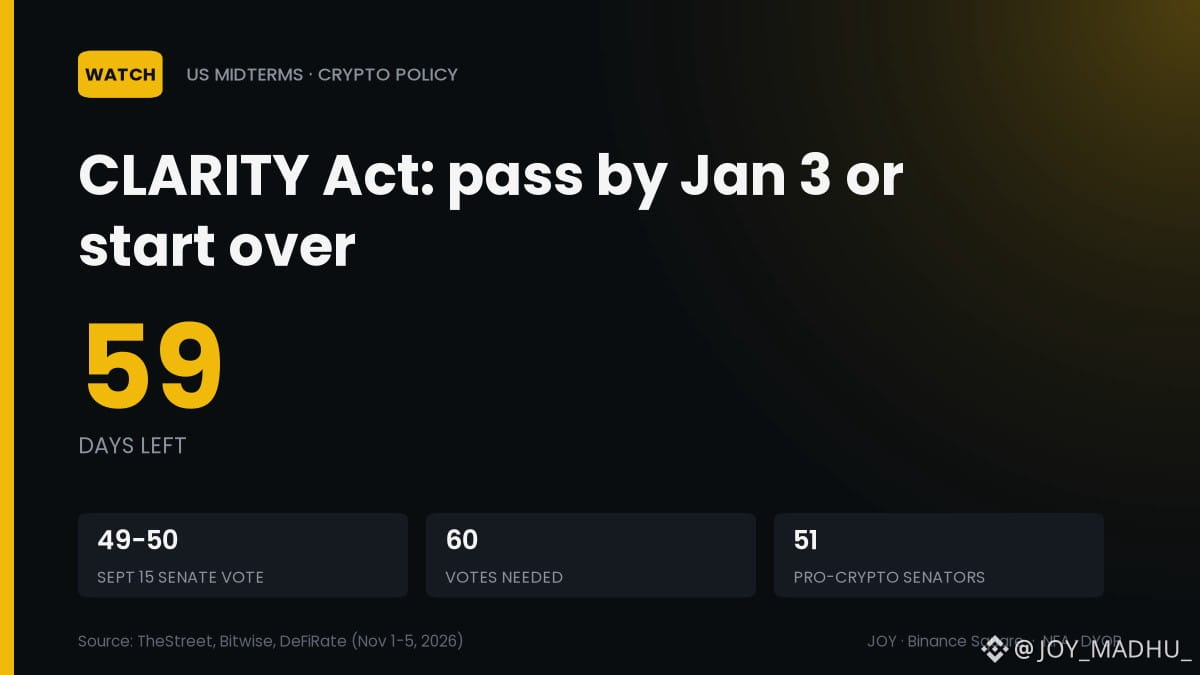
⏳ Crypto's Big Bill Has 59 Days and Is 11 Votes Short
Democrats won both chambers, so the CLARITY Act must pass in the lame-duck window or start over.
📅 Congress ends Jan 3, 2027; unpassed bills restart from scratch
📊 Sept 15 Senate vote to begin debate failed 49-50, 11 short of 60
📉 Polymarket priced H.R. 3633 signed in 2026 at about 3% (Nov 1)
🏦 Bitwise counts 51 pro-crypto senators, down from 52
The catch: GENIUS Act stays law, but agency rules are easier to reverse than statute.
Lame-duck deal in 59 days, or a reset against 51 Democratic-aligned seats? 👇
$BTC $ETH
#CLARITYAct #Crypto #USMidterms-WhatAreMarketsExpecting?
36

·
--
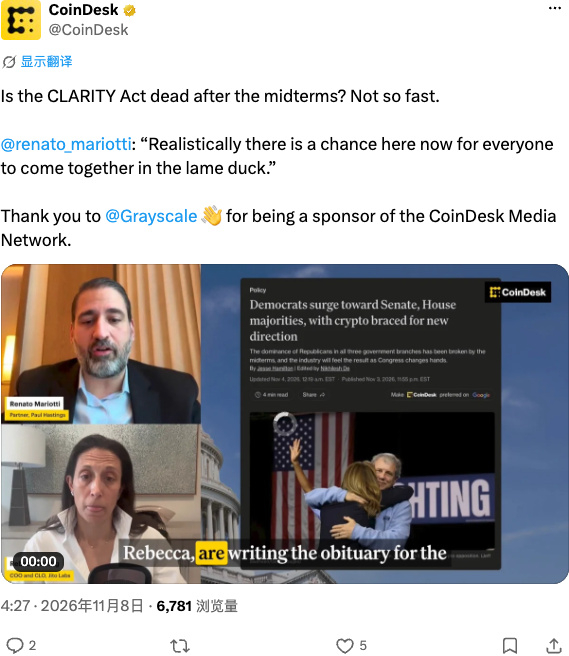
The Clarity Act isn’t dead yet—don’t rush to raise the white flag.
Renato hinted that the parties could still make another push during the lame-duck session. Grayscale sponsoring CoinDesk now is clearly an attempt to ride the wave of policy expectations and grab some more attention. Don’t focus only on short-term volatility; the bigger picture depends on how this political drama plays out.
#CLARITYAct #CryptoPolicy
1

Democrats control Congress: How will the CLARITY Act on crypto change?
- **The CLARITY Act faces new challenges:** Democratic control of both chambers of Congress creates a new legislative landscape and challenges the bill’s passage.
- **Consumer protection is a top priority:** Democratic representatives may push bills focused on ethics, transparency, and protecting retail investors.
- **The crypto industry may have to make concessions:** Cryptocurrency companies may face stricter compliance regulations.
- **Markets need close monitoring:** Major political changes in the U.S. often have a profound impact on sentiment and prices across the market.
#BinanceSquare #CryptoNews #CLARITYAct #BTC #ETH
$btc $eth
vlikevn Titanbot
Source: CoinTelegraph
268

·
--
🚨🇺🇸 CRYPTO REGULATORY SHOCKWAVE 📉🚨
⚡ The recent Democratic sweep of both House & Senate is officially deemed the "final nail in the coffin" for the crypto-backed CLARITY Act! ⚰️ Despite a staggering $170.5M spent by crypto PACs during the election cycle, Washington's balance of power has completely shifted! 💰❌
🏛️ Market Structural Impact:
• #WallStreet analysts (TD Cowen) declare the industry-backed bill dead, forcing crypto regulation back to square one. 📊🔄
• Senator Elizabeth Warren is poised to chair the Senate Banking Committee, signaling a return to heavy enforcement over legislative compromise. ⚖️🛑
🔥 High-Risk Targets Under Watch:
• Congressional pro-regulatory leaders plan immediate, aggressive oversight hearings targeting Donald Trump's personal crypto ventures. 🔎🇺🇸
• Industry experts forecast intensive scrutiny hitting retail trading giants, specifically targeting Robinhood ($ HOOD) and its tokenized offerings. 📱🚨
#MidtermElections2026 🗳️ #CryptoRegulation ⚖️ #ClarityAct 📜 #Robinhood 📱 #TrumpCrypto 💸 #BinanceSquare ⚡
$HOODB
{spot}(HOODBUSDT)
$BTC
{spot}(BTCUSDT)
$ETH
{spot}(ETHUSDT)
🚨🇺🇸 CRYPTO REGULATORY SHOCKWAVE 📉🚨
⚡ The recent Democratic sweep of both House & Senate is officially deemed the "final nail in the coffin" for the crypto-backed CLARITY Act! ⚰️ Despite a staggering $170.5M spent by crypto PACs during the election cycle, Washington's balance of power has completely shifted! 💰❌
🏛️ Market Structural Impact:
• #WallStreet analysts (TD Cowen) declare the industry-backed bill dead, forcing crypto regulation back to square one. 📊🔄
• Senator Elizabeth Warren is poised to chair the Senate Banking Committee, signaling a return to heavy enforcement over legislative compromise. ⚖️🛑
🔥 High-Risk Targets Under Watch:
• Congressional pro-regulatory leaders plan immediate, aggressive oversight hearings targeting Donald Trump's personal crypto ventures. 🔎🇺🇸
• Industry experts forecast intensive scrutiny hitting retail trading giants, specifically targeting Robinhood ($ HOOD) and its tokenized offerings. 📱🚨
#MidtermElections2026 🗳️ #CryptoRegulation ⚖️ #ClarityAct 📜 #Robinhood 📱 #TrumpCrypto 💸 #BinanceSquare ⚡
$HOODB
$BTC
$ETH


Good luck 🍀
From OnionSam
Claud Cowley dOM1:
Claim 💰
6
4
266

·
--
🔴 TD Cowen says the Democratic sweep of Congress closes the door on crypto market structure legislation like the CLARITY Act for two years. 🏛️ Analyst Jaret Seiberg said the bill dies Jan. 3 unless the lame duck revives it, while the SEC and CFTC can still keep acting on crypto, prediction markets and perps without Congress.
How would a stalled US market structure bill change the way you handle compliance in your own P2P or trading work? 👇
#clarityact #tdcowen #congress #sec #cftc
How would a stalled US market structure bill change the way you handle compliance in your own P2P or trading work? 👇
#clarityact #tdcowen #congress #sec #cftc

31

·
--
🚨BREAKING🚨
* 🏛️ Democrats won control of both the U.S. Senate and House, creating new uncertainty for crypto legislation.
* ⚠️ The CLARITY Act faces a major setback, with industry leaders warning that its current version is unlikely to pass.
* 💰 Crypto political groups spent approximately $170.5 million during the elections to support crypto-friendly candidates.
* 🔍 Democrats are expected to increase scrutiny of crypto companies, particularly regarding money laundering, cybersecurity and consumer protection.
* ⚖️ Potential new restrictions could target conflicts of interest involving government officials and crypto businesses.
* 🤝 Some industry leaders believe bipartisan cooperation could still produce a revised bill with stronger consumer protections.
* 📉 Market impact: Uncertainty surrounding U.S. crypto regulation could weigh on industry sentiment and delay regulatory clarity.
$BTC $ETH
#U.S. #CLARITYAct
1
236

·
--
🔥 **AMERICA IN SHOCK: Democrats take power, and the future of the CLARITY Act and crypto’s fate face MAJOR TURBULENCE!** 🔥
Hey everyone, breaking news has just landed from Washington, D.C.! The U.S. midterm election results are in, and with Democrats taking control of Congress, a bill that’s extremely important to our crypto space—the CLARITY Act—is facing an entirely new challenge. This isn’t just political news; it could reshape the playing field for the entire industry!
**Here’s a quick summary of what you need to know:**
* Democrats will now hold significant power in the U.S. Congress, particularly following the recent midterm elections.
* With this shift, the CLARITY Act—a bill focused on establishing a regulatory framework for digital assets—will face a tougher test than ever before.
* Key issues include strengthening consumer protections, ensuring transparency and ethical conduct across the industry, and raising major questions about the “concessions” the crypto industry may have to accept to comply with new regulations.
---
**My personal take:**
This signals that regulatory uncertainty in the U.S. could continue—or even intensify—in the coming months. Crypto investors and projects should pay close attention, because stricter consumer protection requirements and ethical standards could directly affect operating models, compliance costs, and the ability to attract capital. The market may react cautiously to these potential changes. Be prepared for a period when regulatory clarity remains a challenge!
---
What do you think about this political shift and its impact on the crypto market? Is this good news or bad news for projects and investors?
Leave a comment and share your thoughts! Don’t forget to **Follow** my channel so you don’t miss the latest in-depth analysis and breaking news from the crypto market!
#CryptoNews #TrendingNews #CLARITYAct #USRegs #Blockchain
8


·
--
🚨 Is the CLARITY Act facing an uncertain future?
The U.S. midterm elections have changed the political landscape, with Democrats taking control of both the House and Senate. This could create new challenges for the crypto industry's push for regulatory clarity.
The CLARITY Act already faced a major setback on September 15, when it failed to advance in the Senate, receiving only 49 votes against the 60 needed.
With a new congressional majority coming in January 2027, the bill's path could become even more complicated. However, a delay doesn't necessarily mean the end.
One thing is clear: the crypto industry still needs transparent, predictable regulations to grow.
Will lawmakers find common ground, or will crypto regulation face another long delay? 🤔
$SPCXB
{spot}(SPCXBUSDT)
$WLD
{future}(WLDUSDT)
$ICP
{future}(ICPUSDT)
#CLARITYAct
#USMidterms-WhatAreMarketsExpecting?
#USOctoberNFP-AreRateCutsStillPossible
#BinanceIncidentReport
#BinanceReopensWithdrawalsForMoreAssets
🚨 Is the CLARITY Act facing an uncertain future?
The U.S. midterm elections have changed the political landscape, with Democrats taking control of both the House and Senate. This could create new challenges for the crypto industry's push for regulatory clarity.
The CLARITY Act already faced a major setback on September 15, when it failed to advance in the Senate, receiving only 49 votes against the 60 needed.
With a new congressional majority coming in January 2027, the bill's path could become even more complicated. However, a delay doesn't necessarily mean the end.
One thing is clear: the crypto industry still needs transparent, predictable regulations to grow.
Will lawmakers find common ground, or will crypto regulation face another long delay? 🤔
$SPCXB
$WLD
$ICP
#CLARITYAct
#USMidterms-WhatAreMarketsExpecting?
#USOctoberNFP-AreRateCutsStillPossible
#BinanceIncidentReport
#BinanceReopensWithdrawalsForMoreAssets

1
104
Democratic sweep challenges the CLARITY Act for the crypto industry
- Democrats gain the upper hand in Congress, renewing challenges for the CLARITY Act.
- Questions around consumer protection, ethics, and the crypto industry's commitments.
- The industry may have to make concessions in the new political environment. #BinanceSquare #CryptoNews #CLARITYAct
$btc $eth
#vlikevn #Titanbot
Source: CoinTelegraph
319

Article
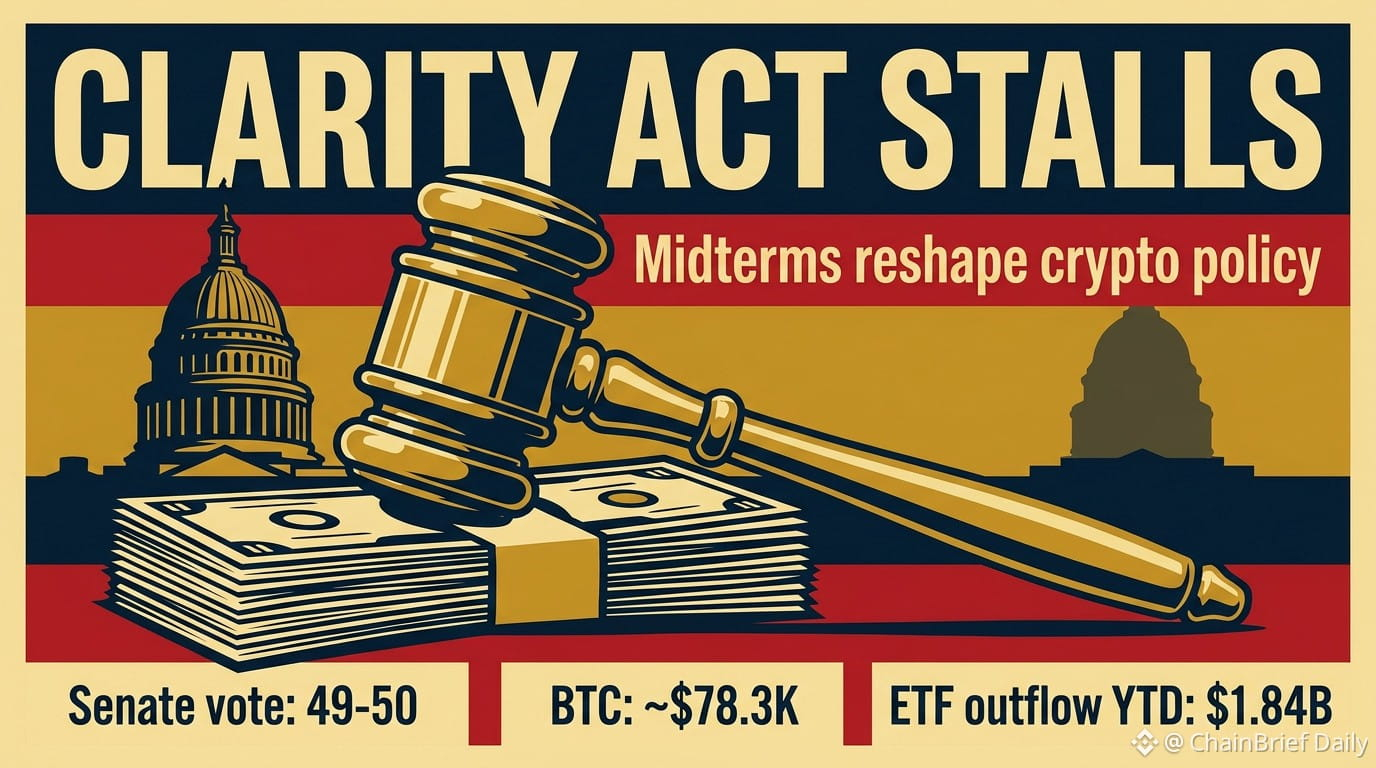
Midterms Hit Crypto: Why the CLARITY Act StallsThe US midterms are over, and crypto's biggest policy bill just lost its easiest path forward. Reuters reports Democrats won majorities in both the Senate and the House. Bitcoin briefly touched a six-week low overnight, then recovered to about $78,354 by 0841 GMT, up 0.7% on the day, while Ether traded near $2,323. The dip was real but shallow. The longer story is what happens to legislation.
What the CLARITY Act would do
The Digital Asset Market Clarity Act is the market-structure bill the industry has chased for years. As described by BigGo's recap, it would split assets into three buckets. Bitcoin and Ether would be classified as digital commodities, with the CFTC holding exclusive jurisdiction over spot markets. Payment stablecoins would sit under joint SEC and CFTC oversight, building on the GENIUS Act signed in July 2025. Everything else would face a decentralization test: once no single entity controls more than 20% of supply or voting power, a network counts as a commodity. Tokens that fail stay with the SEC.
Why it was already stuck
The House passed the bill in July 2025, 294 to 134. In the Senate, a cloture vote on September 15 failed 49 to 50. No Democrat voted yes, and Republicans Susan Collins, Josh Hawley and Jerry Moran also voted no. Three provisions blocked a deal: an ethics clause covering the president's crypto income, Section 604's protections for non-custodial developers, and Section 404's limits on stablecoin yield. The bill expires on January 3, when the new Congress is seated.
Because Senate rules need 60 votes to end debate, no election result could revive the bill alone. TD Cowen's Jaret Seiberg wrote that a Democratic-controlled Congress would likely investigate Trump's crypto ties, which is why the firm does not expect the Clarity Act to pass over the next two years. Treat that as one analyst's view, not a certainty. Senator Angela Alsobrooks, one of the bill's negotiators, still sees room for a lame-duck deal before January 3.
The money that went in
Reuters notes the sector spent more than $300 million backing crypto-friendly Democrats and Republicans in roughly equal measure across the current and previous cycles. Some Democrats have backed a light-touch approach, so a Democratic Congress is not automatically an anti-crypto Congress. It does shift the agenda toward oversight hearings and nominee fights.
The market's real worry is bigger than one bill
Price action tells you the election was one factor among several. Reuters says the overall crypto market has lost about $300 billion in value over the last month, with concern about AI returns and rising borrowing costs pushing investors toward government bonds and safe-haven currencies. Bitcoin is down roughly 41% from its record above $122,000 in October 2025. Investors pulled $215 million from the largest Bitcoin ETFs in October, taking the year-to-date outflow to $1.84 billion, per LSEG/Lipper. The Binance hack triggered the largest weekly net outflow from Bitcoin ETFs since early July, at $884 million.
Smaller tokens bounced too. Reuters says SOL, DOGE and ADA gained between 1.6% and 2.2% on Wednesday, but all three are down nearly a quarter over the past month.
Regulators can still move
Legislation is only one route. The SEC and CFTC can keep writing rules without Congress, as long as the agencies stay staffed. Democrats could slow nominees, though. Washington has already allowed easier access to banking and exchange-traded products and passed a federal stablecoin law, so some of the foundation is in place. The gap is a clear rulebook for everything outside Bitcoin, Ether and payment stablecoins.
What to watch next
First, the lame-duck session through January 3, which is the last window for the current bill. Second, Friday's US jobs report on November 6, which could matter more for short-term prices than any policy headline. Third, who chairs the key committees when the new Congress starts, since that decides whether crypto bills get hearings or investigations.
A note on history: the BigGo recap points out that in the 30 days after the last six US elections, Bitcoin moved anywhere from a 45% decline to a 44% gain. Election outcomes are a poor guide to the next month.
Bottom line: a Democratic Congress does not end US crypto policy, but it likely pushes comprehensive legislation out by years and hands more power to regulators and oversight committees. For traders, that means headline risk rather than a clean trend.
Do you think crypto does better with a single big law or with agency-by-agency rules? Tell me in the comments.
Sources: Reuters, BigGo, as of Nov 4, 2026.
#CLARITYAct #CryptoRegulation #Bitcoin
Not financial advice.
Midterms Hit Crypto: Why the CLARITY Act Stalls
The US midterms are over, and crypto's biggest policy bill just lost its easiest path forward. Reuters reports Democrats won majorities in both the Senate and the House. Bitcoin briefly touched a six-week low overnight, then recovered to about $78,354 by 0841 GMT, up 0.7% on the day, while Ether traded near $2,323. The dip was real but shallow. The longer story is what happens to legislation.
What the CLARITY Act would do
The Digital Asset Market Clarity Act is the market-structure bill the industry has chased for years. As described by BigGo's recap, it would split assets into three buckets. Bitcoin and Ether would be classified as digital commodities, with the CFTC holding exclusive jurisdiction over spot markets. Payment stablecoins would sit under joint SEC and CFTC oversight, building on the GENIUS Act signed in July 2025. Everything else would face a decentralization test: once no single entity controls more than 20% of supply or voting power, a network counts as a commodity. Tokens that fail stay with the SEC.
Why it was already stuck
The House passed the bill in July 2025, 294 to 134. In the Senate, a cloture vote on September 15 failed 49 to 50. No Democrat voted yes, and Republicans Susan Collins, Josh Hawley and Jerry Moran also voted no. Three provisions blocked a deal: an ethics clause covering the president's crypto income, Section 604's protections for non-custodial developers, and Section 404's limits on stablecoin yield. The bill expires on January 3, when the new Congress is seated.
Because Senate rules need 60 votes to end debate, no election result could revive the bill alone. TD Cowen's Jaret Seiberg wrote that a Democratic-controlled Congress would likely investigate Trump's crypto ties, which is why the firm does not expect the Clarity Act to pass over the next two years. Treat that as one analyst's view, not a certainty. Senator Angela Alsobrooks, one of the bill's negotiators, still sees room for a lame-duck deal before January 3.
The money that went in
Reuters notes the sector spent more than $300 million backing crypto-friendly Democrats and Republicans in roughly equal measure across the current and previous cycles. Some Democrats have backed a light-touch approach, so a Democratic Congress is not automatically an anti-crypto Congress. It does shift the agenda toward oversight hearings and nominee fights.
The market's real worry is bigger than one bill
Price action tells you the election was one factor among several. Reuters says the overall crypto market has lost about $300 billion in value over the last month, with concern about AI returns and rising borrowing costs pushing investors toward government bonds and safe-haven currencies. Bitcoin is down roughly 41% from its record above $122,000 in October 2025. Investors pulled $215 million from the largest Bitcoin ETFs in October, taking the year-to-date outflow to $1.84 billion, per LSEG/Lipper. The Binance hack triggered the largest weekly net outflow from Bitcoin ETFs since early July, at $884 million.
Smaller tokens bounced too. Reuters says SOL, DOGE and ADA gained between 1.6% and 2.2% on Wednesday, but all three are down nearly a quarter over the past month.
Regulators can still move
Legislation is only one route. The SEC and CFTC can keep writing rules without Congress, as long as the agencies stay staffed. Democrats could slow nominees, though. Washington has already allowed easier access to banking and exchange-traded products and passed a federal stablecoin law, so some of the foundation is in place. The gap is a clear rulebook for everything outside Bitcoin, Ether and payment stablecoins.
What to watch next
First, the lame-duck session through January 3, which is the last window for the current bill. Second, Friday's US jobs report on November 6, which could matter more for short-term prices than any policy headline. Third, who chairs the key committees when the new Congress starts, since that decides whether crypto bills get hearings or investigations.
A note on history: the BigGo recap points out that in the 30 days after the last six US elections, Bitcoin moved anywhere from a 45% decline to a 44% gain. Election outcomes are a poor guide to the next month.
Bottom line: a Democratic Congress does not end US crypto policy, but it likely pushes comprehensive legislation out by years and hands more power to regulators and oversight committees. For traders, that means headline risk rather than a clean trend.
Do you think crypto does better with a single big law or with agency-by-agency rules? Tell me in the comments.
Sources: Reuters, BigGo, as of Nov 4, 2026.
#CLARITYAct #CryptoRegulation #Bitcoin
Not financial advice.
38

·
--
The largest US crypto bill may remain in limbo until 2028 — and its replacement could be even stricter.
Fact: The CLARITY Act, the US crypto market structure bill, is expected to be delayed until 2028 after Democrats won big in the Nov. 3 midterm elections (Coin Edition & PANews, Nov. 5, citing CNBC). TD Cowen analyst Jaret Seiberg believes the bill is unlikely to advance over the next two years; Sharplink CEO Joseph Chalom expects it to be delayed until 2028. The bill passed the House 294–134 in July 2025, but failed in the Senate on Sept. 15, 2026 (49–50; 60 votes were needed). Paradigm senior adviser Justin Slaughter called it "dead" during the lame-duck session — House Democratic staffers are reportedly drafting their own bill, with stricter DeFi rules and authority shifting from the CFTC to the SEC.
My take: This isn't just a delay — it's a change of direction. The market is losing the regulatory certainty it has been waiting for over two years, and the replacement version points to tougher oversight. But it's worth noting that stablecoins and tokenized stocks can still move forward under existing rules — the GENIUS Act is already law and takes effect on Jan. 18, 2027.
What I'm watching: the House Democrats' draft bill, and whether the Senate manages to hold another vote before the 119th Congress ends in January 2027 — if not, the bill expires and will have to be reintroduced from scratch.
Do you think stricter US regulation is a burden on the market, or the certainty we've been waiting for?
This is my analysis, not financial advice — always DYOR.
#RegulasiCrypto #CLARITYAct $BTC
14
Log in to explore more content
Join global crypto users on Binance Square
⚡️ Get latest and useful information about crypto.
💬 Trusted by the world’s largest crypto exchange.
👍 Discover real insights from verified creators.
Email / Phone number
Trending Topics
1
#JobsReportRaisesHikeOdds
541,209 views
3,445 Discussing
2
#CPITestsDecemberRateOutlook
164,804 views
1,200 Discussing
3
#US Data Center Rules May Constrain AI Expansion
75,579 views
230 Discussing
4
#ARKPlans14ThematicETFsCoveringAIAndTokenizedMarkets
4,556 views
71 Discussing
5
#WillAnthropicListOnTime
164,808 views
1,423 Discussing
6
#WillUS-IranTensionsBoostSafe-HavenDemand?
76,563 views
555 Discussing
7
#BitcoinETFsSee$412MNetOutflows
16,402 views
78 Discussing
8
#HKSFCPlansToRestrictCryptoAndExchangeTerms
64,567 views
580 Discussing
9
#TradFiForBeginners
96,415 views
1,032 Discussing
10
#FinCENAndFedWithdraw$250CryptoTransferProposal
10,590 views
18 Discussing