

#bitcoindominancerisesto59
bitcoindominancerisesto59
1,397 views
63 Discussing
Hot
Latest

·
--
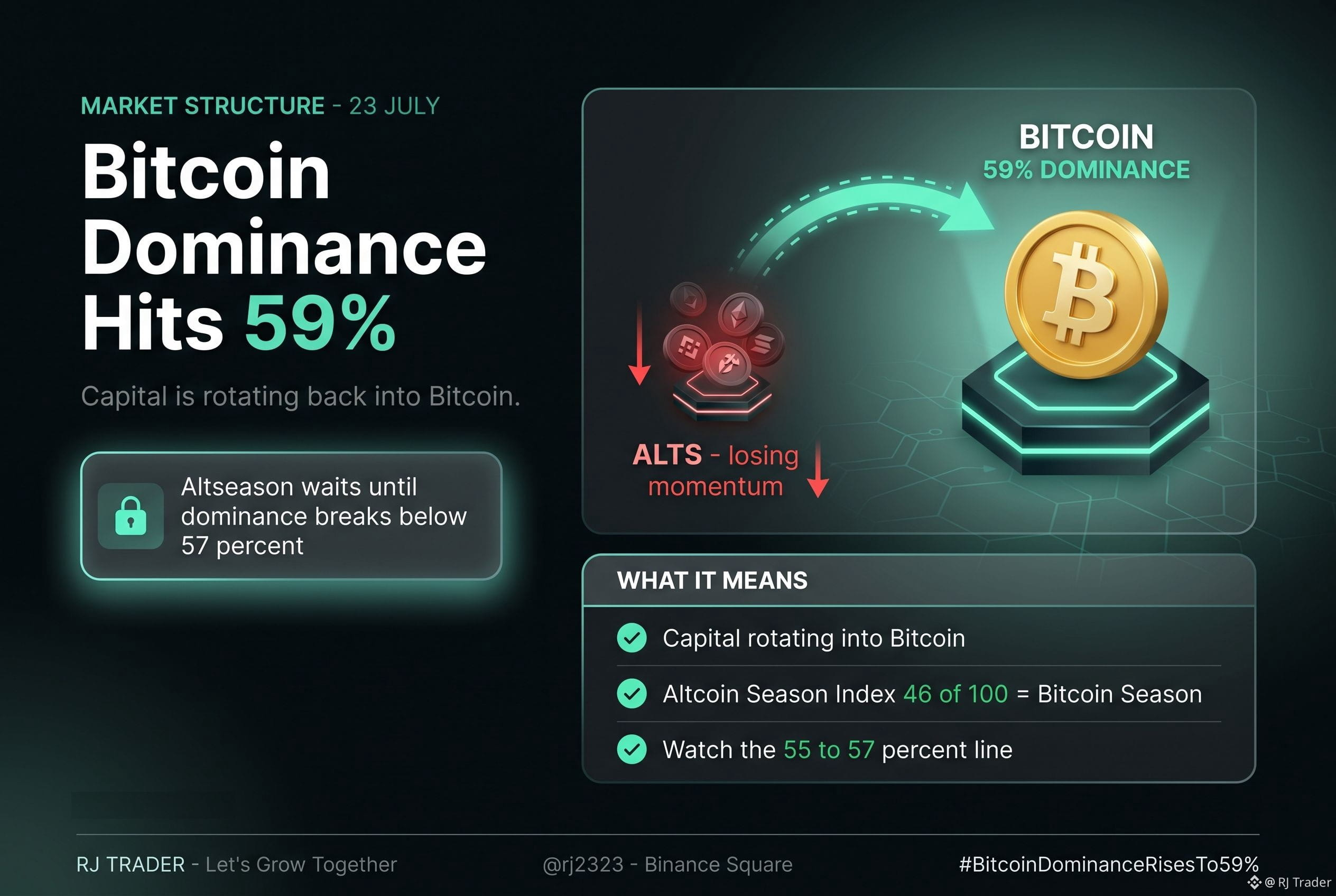
🚨 Bitcoin dominance just hit 59% — and if you hold altcoins, you're already feeling it.
Capital is quietly rotating OUT of alts and back into BTC.
When traders get nervous, they don't leave crypto — they hide in Bitcoin. A 59% dominance reading in a Fear-index market is the market whispering "risk-off."
The crypto angle: "altseason" doesn't begin until this number breaks DOWN.
Analysts are watching the 55-57% zone — a sustained break below it is the first real sign money is rotating back to alts. Until then, the Altcoin Season Index near 46/100 says we're firmly in Bitcoin Season.
My take: rising dominance in a fearful tape isn't bullish OR bearish — it's a flight to safety INSIDE crypto. I'm not chasing alts until BTC.D cracks 57%. Watch the ratio, not the hype.
Are you buying alts here, or waiting for dominance to break? 👇
NFA · DYOR
$BTC $ETH #BitcoinDominanceRisesTo59
🚨 Bitcoin dominance just hit 59% — and if you hold altcoins, you're already feeling it.
Capital is quietly rotating OUT of alts and back into BTC.
When traders get nervous, they don't leave crypto — they hide in Bitcoin. A 59% dominance reading in a Fear-index market is the market whispering "risk-off."
The crypto angle: "altseason" doesn't begin until this number breaks DOWN.
Analysts are watching the 55-57% zone — a sustained break below it is the first real sign money is rotating back to alts. Until then, the Altcoin Season Index near 46/100 says we're firmly in Bitcoin Season.
My take: rising dominance in a fearful tape isn't bullish OR bearish — it's a flight to safety INSIDE crypto. I'm not chasing alts until BTC.D cracks 57%. Watch the ratio, not the hype.
Are you buying alts here, or waiting for dominance to break? 👇
NFA · DYOR
$BTC $ETH #BitcoinDominanceRisesTo59
Capital is quietly rotating OUT of alts and back into BTC.
When traders get nervous, they don't leave crypto — they hide in Bitcoin. A 59% dominance reading in a Fear-index market is the market whispering "risk-off."
The crypto angle: "altseason" doesn't begin until this number breaks DOWN.
Analysts are watching the 55-57% zone — a sustained break below it is the first real sign money is rotating back to alts. Until then, the Altcoin Season Index near 46/100 says we're firmly in Bitcoin Season.
My take: rising dominance in a fearful tape isn't bullish OR bearish — it's a flight to safety INSIDE crypto. I'm not chasing alts until BTC.D cracks 57%. Watch the ratio, not the hype.
Are you buying alts here, or waiting for dominance to break? 👇
NFA · DYOR
$BTC $ETH #BitcoinDominanceRisesTo59
91

**Bitcoin dominance** reached 59%, and many wonder what it means. Here’s the background explanation.
Dominance measures what percentage of the total *crypto market cap* belongs to Bitcoin. When it rises, it indicates that capital is flowing into BTC faster than into altcoins; when it falls, altcoins gain ground.
High dominance (above 50%) is usually seen in two scenarios: the **early stage of a bull market** (money initially goes into BTC as the most liquid and well-known asset) or a **bear market** (investors flee from risky alts to Bitcoin as a relative safe haven).
When dominance starts to fall after a BTC rally, historically it has marked the beginning of **alt season**: the moment when Ethereum and other altcoins surge in performance.
But watch out: dominance is not the same as price. BTC can rise in dominance while its price falls if altcoins drop faster. And it can fall in dominance while its price rises if alts rise more.
To read the market clearly, look at dominance together with price and volume movement. A BTC rising with increasing dominance is a sign of institutional strength; a sideways BTC with falling dominance suggests that risk is shifting toward speculation in alts.
Follow us for more context behind the trends that move the market.
#BitcoinDominanceRisesTo59%
**Bitcoin dominance** reached 59%, and many wonder what it means. Here’s the background explanation.
Dominance measures what percentage of the total *crypto market cap* belongs to Bitcoin. When it rises, it indicates that capital is flowing into BTC faster than into altcoins; when it falls, altcoins gain ground.
High dominance (above 50%) is usually seen in two scenarios: the **early stage of a bull market** (money initially goes into BTC as the most liquid and well-known asset) or a **bear market** (investors flee from risky alts to Bitcoin as a relative safe haven).
When dominance starts to fall after a BTC rally, historically it has marked the beginning of **alt season**: the moment when Ethereum and other altcoins surge in performance.
But watch out: dominance is not the same as price. BTC can rise in dominance while its price falls if altcoins drop faster. And it can fall in dominance while its price rises if alts rise more.
To read the market clearly, look at dominance together with price and volume movement. A BTC rising with increasing dominance is a sign of institutional strength; a sideways BTC with falling dominance suggests that risk is shifting toward speculation in alts.
Follow us for more context behind the trends that move the market.
#BitcoinDominanceRisesTo59%
Dominance measures what percentage of the total *crypto market cap* belongs to Bitcoin. When it rises, it indicates that capital is flowing into BTC faster than into altcoins; when it falls, altcoins gain ground.
High dominance (above 50%) is usually seen in two scenarios: the **early stage of a bull market** (money initially goes into BTC as the most liquid and well-known asset) or a **bear market** (investors flee from risky alts to Bitcoin as a relative safe haven).
When dominance starts to fall after a BTC rally, historically it has marked the beginning of **alt season**: the moment when Ethereum and other altcoins surge in performance.
But watch out: dominance is not the same as price. BTC can rise in dominance while its price falls if altcoins drop faster. And it can fall in dominance while its price rises if alts rise more.
To read the market clearly, look at dominance together with price and volume movement. A BTC rising with increasing dominance is a sign of institutional strength; a sideways BTC with falling dominance suggests that risk is shifting toward speculation in alts.
Follow us for more context behind the trends that move the market.
#BitcoinDominanceRisesTo59%
62
·
--
🌅 Daily Pulse — 23 July 2026
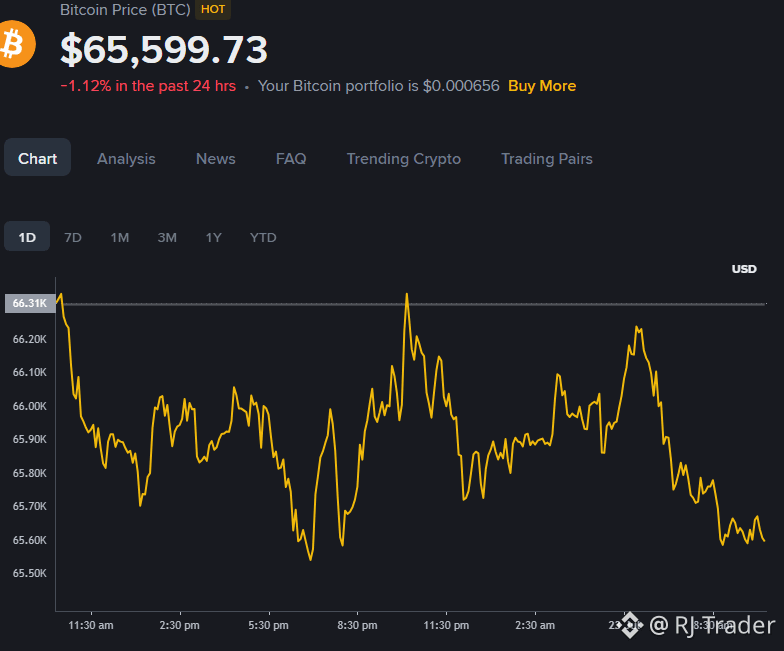
$BTC 65,600 (-1.1%) · $ETH 1,925 (flat)
😨 Fear & Greed: 39 (Fear)
Key level: BTC tapped a one-month high near 66.5k, then faded as oil pushed above 85 dollars and inflation nerves crept back in.
65.5k is the line bulls need to hold — we're sitting right on it. Lose it and 64k comes back into play.
Watching: Bitcoin dominance quietly climbing to 59% while alts bleed. That's a risk-off tell, not a rally.
My read: green on the month, heavy on the day.
This isn't fear of a crash — it's the market holding its breath into next week's Fed. Patience beats chasing here.
Where do you see $BTC closing this week? 👇
NFA · DYOR
#bitcoin #BitcoinDominanceRisesTo59
🌅 Daily Pulse — 23 July 2026
$BTC 65,600 (-1.1%) · $ETH 1,925 (flat)
😨 Fear & Greed: 39 (Fear)
Key level: BTC tapped a one-month high near 66.5k, then faded as oil pushed above 85 dollars and inflation nerves crept back in.
65.5k is the line bulls need to hold — we're sitting right on it. Lose it and 64k comes back into play.
Watching: Bitcoin dominance quietly climbing to 59% while alts bleed. That's a risk-off tell, not a rally.
My read: green on the month, heavy on the day.
This isn't fear of a crash — it's the market holding its breath into next week's Fed. Patience beats chasing here.
Where do you see $BTC closing this week? 👇
NFA · DYOR
#bitcoin #BitcoinDominanceRisesTo59
$BTC 65,600 (-1.1%) · $ETH 1,925 (flat)
😨 Fear & Greed: 39 (Fear)
Key level: BTC tapped a one-month high near 66.5k, then faded as oil pushed above 85 dollars and inflation nerves crept back in.
65.5k is the line bulls need to hold — we're sitting right on it. Lose it and 64k comes back into play.
Watching: Bitcoin dominance quietly climbing to 59% while alts bleed. That's a risk-off tell, not a rally.
My read: green on the month, heavy on the day.
This isn't fear of a crash — it's the market holding its breath into next week's Fed. Patience beats chasing here.
Where do you see $BTC closing this week? 👇
NFA · DYOR
#bitcoin #BitcoinDominanceRisesTo59
97

·
--
Last week, a trader I know rotated from $BTC into alts right before Bitcoin dominance pushed toward 59%, and his portfolio started bleeding even while the market looked “stable.”
That is the part many people miss. When dominance rises, it does not always mean crypto is healthy across the board. It often means capital is hiding in $BTC while smaller assets lose liquidity, narratives fade, and late altcoin entries get punished.
Here’s the case study: Bitcoin dominance climbing to 59% tells us money is concentrating, not spreading. In a fear-driven market, with traders searching $USDT and $ETH more than chasing deep risk, the crowd is quietly prioritizing safety and liquidity. That usually creates a trap for anyone assuming “alts are cheap” just because they are down.
The risk is timing. If $BTC keeps leading and dominance stays strong, many altcoins can underperform even during green Bitcoin candles. Then when Bitcoin pulls back, those same alts often drop harder because they never had real bid support in the first place.
The lesson is simple: dominance is not just a chart, it is a capital flow warning. Before rotating into alts, watch whether $ETH is gaining relative strength and whether stablecoin liquidity is actually moving back into risk. Otherwise, the “discount” might just be the market telling you there is no buyer yet.
Are you treating this dominance move as a Bitcoin strength signal or an altcoin risk warning? #BitcoinDominanceRisesTo59 #BitcoinETFAUMReaches #BitcoinHits
Last week, a trader I know rotated from $BTC into alts right before Bitcoin dominance pushed toward 59%, and his portfolio started bleeding even while the market looked “stable.”
That is the part many people miss. When dominance rises, it does not always mean crypto is healthy across the board. It often means capital is hiding in $BTC while smaller assets lose liquidity, narratives fade, and late altcoin entries get punished.
Here’s the case study: Bitcoin dominance climbing to 59% tells us money is concentrating, not spreading. In a fear-driven market, with traders searching $USDT and $ETH more than chasing deep risk, the crowd is quietly prioritizing safety and liquidity. That usually creates a trap for anyone assuming “alts are cheap” just because they are down.
The risk is timing. If $BTC keeps leading and dominance stays strong, many altcoins can underperform even during green Bitcoin candles. Then when Bitcoin pulls back, those same alts often drop harder because they never had real bid support in the first place.
The lesson is simple: dominance is not just a chart, it is a capital flow warning. Before rotating into alts, watch whether $ETH is gaining relative strength and whether stablecoin liquidity is actually moving back into risk. Otherwise, the “discount” might just be the market telling you there is no buyer yet.
Are you treating this dominance move as a Bitcoin strength signal or an altcoin risk warning? #BitcoinDominanceRisesTo59 #BitcoinETFAUMReaches #BitcoinHits
That is the part many people miss. When dominance rises, it does not always mean crypto is healthy across the board. It often means capital is hiding in $BTC while smaller assets lose liquidity, narratives fade, and late altcoin entries get punished.
Here’s the case study: Bitcoin dominance climbing to 59% tells us money is concentrating, not spreading. In a fear-driven market, with traders searching $USDT and $ETH more than chasing deep risk, the crowd is quietly prioritizing safety and liquidity. That usually creates a trap for anyone assuming “alts are cheap” just because they are down.
The risk is timing. If $BTC keeps leading and dominance stays strong, many altcoins can underperform even during green Bitcoin candles. Then when Bitcoin pulls back, those same alts often drop harder because they never had real bid support in the first place.
The lesson is simple: dominance is not just a chart, it is a capital flow warning. Before rotating into alts, watch whether $ETH is gaining relative strength and whether stablecoin liquidity is actually moving back into risk. Otherwise, the “discount” might just be the market telling you there is no buyer yet.
Are you treating this dominance move as a Bitcoin strength signal or an altcoin risk warning? #BitcoinDominanceRisesTo59 #BitcoinETFAUMReaches #BitcoinHits

20
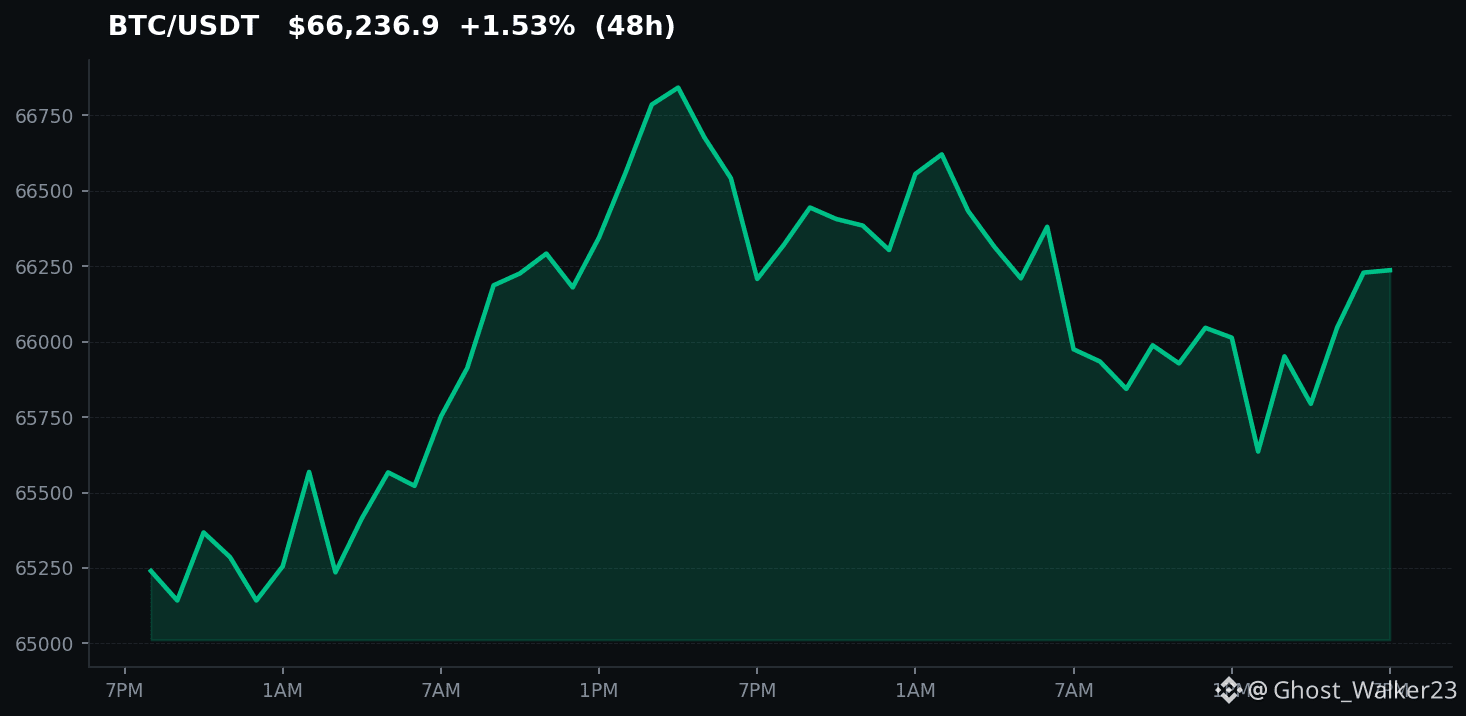
**Bitcoin Dominance Rises To 59%** is on everyone’s lips today, and for good reason. BTC dominance has just hit **59%**, the highest level since March, while the price reached **$66,500** (one-month high) and the ETFs reached **$80.9B in assets under management**.
What does it mean? That capital is **rotating from altcoins into Bitcoin**. When dominance rises, money flows toward the ecosystem’s most liquid and least speculative asset. That can point to two things: fresh institutional inflows (bullish for BTC) or risk-off positioning (bearish overall, but BTC tends to hold up better).
The data suggests the first. ETFs are stringing together their longest run of inflows since May, confirming sustained institutional demand. But that demand is **selective**: BTC rises, while alts stall or fall.
Now, the multi-timeframe technical structure shows **conflict**. The intraday and weekly rebound is bullish (+1), but the monthly and annual bias remains bearish (-1). In Wyckoff terms, this reads as a **bounce within distribution**, not a confirmed reversal. Price tagged resistance at $66,711 and backed off. The 100-day EMA sits at $68,066 (+2.99% above), acting as a structural ceiling.
For this to be a reversal rather than just a rebound, Bitcoin needs to break above $68K and align the monthly bias. Until then, each rise is a selling zone for those who bought lower.
Do you see this move as the start of a new bullish leg, or as a technical bounce before seeking liquidity lower down? Share your take in the comments.
#BitcoinDominanceRisesTo59%
**Bitcoin Dominance Rises To 59%** is on everyone’s lips today, and for good reason. BTC dominance has just hit **59%**, the highest level since March, while the price reached **$66,500** (one-month high) and the ETFs reached **$80.9B in assets under management**.
What does it mean? That capital is **rotating from altcoins into Bitcoin**. When dominance rises, money flows toward the ecosystem’s most liquid and least speculative asset. That can point to two things: fresh institutional inflows (bullish for BTC) or risk-off positioning (bearish overall, but BTC tends to hold up better).
The data suggests the first. ETFs are stringing together their longest run of inflows since May, confirming sustained institutional demand. But that demand is **selective**: BTC rises, while alts stall or fall.
Now, the multi-timeframe technical structure shows **conflict**. The intraday and weekly rebound is bullish (+1), but the monthly and annual bias remains bearish (-1). In Wyckoff terms, this reads as a **bounce within distribution**, not a confirmed reversal. Price tagged resistance at $66,711 and backed off. The 100-day EMA sits at $68,066 (+2.99% above), acting as a structural ceiling.
For this to be a reversal rather than just a rebound, Bitcoin needs to break above $68K and align the monthly bias. Until then, each rise is a selling zone for those who bought lower.
Do you see this move as the start of a new bullish leg, or as a technical bounce before seeking liquidity lower down? Share your take in the comments.
#BitcoinDominanceRisesTo59%
What does it mean? That capital is **rotating from altcoins into Bitcoin**. When dominance rises, money flows toward the ecosystem’s most liquid and least speculative asset. That can point to two things: fresh institutional inflows (bullish for BTC) or risk-off positioning (bearish overall, but BTC tends to hold up better).
The data suggests the first. ETFs are stringing together their longest run of inflows since May, confirming sustained institutional demand. But that demand is **selective**: BTC rises, while alts stall or fall.
Now, the multi-timeframe technical structure shows **conflict**. The intraday and weekly rebound is bullish (+1), but the monthly and annual bias remains bearish (-1). In Wyckoff terms, this reads as a **bounce within distribution**, not a confirmed reversal. Price tagged resistance at $66,711 and backed off. The 100-day EMA sits at $68,066 (+2.99% above), acting as a structural ceiling.
For this to be a reversal rather than just a rebound, Bitcoin needs to break above $68K and align the monthly bias. Until then, each rise is a selling zone for those who bought lower.
Do you see this move as the start of a new bullish leg, or as a technical bounce before seeking liquidity lower down? Share your take in the comments.
#BitcoinDominanceRisesTo59%
82

🚀 Bitcoin dominance hitting 59% signals a major shift in market confidence! With many altcoins struggling, #BTC is reclaiming its throne. Are we witnessing the start of a new bull run, or is this just a temporary spike? 🤔 #BitcoinDominanceRisesTo59%
🚀 Bitcoin dominance hitting 59% signals a major shift in market confidence! With many altcoins struggling, #BTC is reclaiming its throne. Are we witnessing the start of a new bull run, or is this just a temporary spike? 🤔 #BitcoinDominanceRisesTo59%
8

#BitcoinDominanceRisesTo59
Bitcoin dominance is not really a blueprint for Bitcoin. It's a blueprint for money flows.
When it rises, it means capital chooses Bitcoin over the rest of the market.
When it starts to fall, it’s usually the moment altcoins get their chance to shine.
59% is definitely a level worth watching.
Please follow up
$BTC
{future}(BTCUSDT)
#BitcoinDominanceRisesTo59
Bitcoin dominance is not really a blueprint for Bitcoin. It's a blueprint for money flows.
When it rises, it means capital chooses Bitcoin over the rest of the market.
When it starts to fall, it’s usually the moment altcoins get their chance to shine.
59% is definitely a level worth watching.
Please follow up
$BTC
Bitcoin dominance is not really a blueprint for Bitcoin. It's a blueprint for money flows.
When it rises, it means capital chooses Bitcoin over the rest of the market.
When it starts to fall, it’s usually the moment altcoins get their chance to shine.
59% is definitely a level worth watching.
Please follow up
$BTC

1
26

🔥 At 3am UTC, a shocking $400M moved out of exchanges, sparking a chain reaction that would change the narrative of Bitcoin's dominance, now at 59% #BitcoinDominanceRisesTo59%, with $1.4B in volume and a neutral RSI of 52.9, as $6.84B in open interest hangs in the balance.
📊 The story behind this move is one of institutional FOMO, as top traders go net long with a 60.1% ratio, and a bullish funding rate of +0.0015%, while smart money wallets like Jimothy and PVE accumulate Solana with max gains of +16.9993% and +0.389% respectively, amidst a sea of #Nasdaq100RisesOnChipRebound and #KospiJumpsOver5%AsChipmakersRebound.
💡 But here's the twist: as Bitcoin hits a one-month high of $65,600, the real question isn't whether it will go higher, but whether the influx of AI-generated content will disrupt the very fabric of our online interactions, and what role will crypto play in this new landscape, as Alleged Cowl Meme Coin sees an inflow of $16K in just one hour.
❓ Will the convergence of AI and crypto create a new paradigm, or will it be the catalyst for a global awakening, and what will be the ultimate price of this transformation?
🔥 At 3am UTC, a shocking $400M moved out of exchanges, sparking a chain reaction that would change the narrative of Bitcoin's dominance, now at 59% #BitcoinDominanceRisesTo59%, with $1.4B in volume and a neutral RSI of 52.9, as $6.84B in open interest hangs in the balance.
📊 The story behind this move is one of institutional FOMO, as top traders go net long with a 60.1% ratio, and a bullish funding rate of +0.0015%, while smart money wallets like Jimothy and PVE accumulate Solana with max gains of +16.9993% and +0.389% respectively, amidst a sea of #Nasdaq100RisesOnChipRebound and #KospiJumpsOver5%AsChipmakersRebound.
💡 But here's the twist: as Bitcoin hits a one-month high of $65,600, the real question isn't whether it will go higher, but whether the influx of AI-generated content will disrupt the very fabric of our online interactions, and what role will crypto play in this new landscape, as Alleged Cowl Meme Coin sees an inflow of $16K in just one hour.
❓ Will the convergence of AI and crypto create a new paradigm, or will it be the catalyst for a global awakening, and what will be the ultimate price of this transformation?
📊 The story behind this move is one of institutional FOMO, as top traders go net long with a 60.1% ratio, and a bullish funding rate of +0.0015%, while smart money wallets like Jimothy and PVE accumulate Solana with max gains of +16.9993% and +0.389% respectively, amidst a sea of #Nasdaq100RisesOnChipRebound and #KospiJumpsOver5%AsChipmakersRebound.
💡 But here's the twist: as Bitcoin hits a one-month high of $65,600, the real question isn't whether it will go higher, but whether the influx of AI-generated content will disrupt the very fabric of our online interactions, and what role will crypto play in this new landscape, as Alleged Cowl Meme Coin sees an inflow of $16K in just one hour.
❓ Will the convergence of AI and crypto create a new paradigm, or will it be the catalyst for a global awakening, and what will be the ultimate price of this transformation?
31

·
--
#BitcoinDominanceRisesTo59
🚨 BTC DOMINANCE: EARLY ON EVERYTHING IS JUST SNATCHED, EVEN THE LUCKY MONEY—ALTCOINS JUST STAND THERE WATCHING! 🧧😂
If the crypto market were a family, then BTC would be exactly the “eldest son.”
The parents (capital inflows) have barely just handed out envelopes when BTC immediately goes around and grabs everything, taking nearly 59% of the “wealth.” And in the meantime, ETH, SOL, XRP... are just sitting in the corner, staring at each other like:
“Hey... don’t we get our share too?” 🥲
But the funniest part is that when you look at the numbers, you see a pretty amusing scene:
Some websites show BTC dominance around 56%, while others are close to 61%.
Looks like someone messed up their calculation?
Not really.
It’s simply that each platform calculates differently: some even include stablecoins, while others exclude them. You’re looking at the same market, but the “weight scale” isn’t the same.
So does high dominance mean that altcoins have definitely lost?
Not necessarily.
The history of many cycles shows that BTC often pulls in flows first. When Bitcoin stabilizes and market sentiment improves, new capital starts to spread out toward strong altcoins. So dominance is mostly an indicator to watch—not a statement that an Altseason will never come.
🎯 What matters most right now isn’t:
“Will Altseason happen?”
But instead:
“When will the flows start leaving BTC?” 👀
And where are you in this?
🟠 Do you hold BTC and wait for the trend to continue?
Or 🔵 are you keeping your patience with ALT, ready to catch the next “bonanza”?
👇 Comment to say which camp your portfolio is leaning toward!
$BTC $ETH $SOL
#Altseason
#BitcoinDominanceRisesTo59
🚨 BTC DOMINANCE: EARLY ON EVERYTHING IS JUST SNATCHED, EVEN THE LUCKY MONEY—ALTCOINS JUST STAND THERE WATCHING! 🧧😂
If the crypto market were a family, then BTC would be exactly the “eldest son.”
The parents (capital inflows) have barely just handed out envelopes when BTC immediately goes around and grabs everything, taking nearly 59% of the “wealth.” And in the meantime, ETH, SOL, XRP... are just sitting in the corner, staring at each other like:
“Hey... don’t we get our share too?” 🥲
But the funniest part is that when you look at the numbers, you see a pretty amusing scene:
Some websites show BTC dominance around 56%, while others are close to 61%.
Looks like someone messed up their calculation?
Not really.
It’s simply that each platform calculates differently: some even include stablecoins, while others exclude them. You’re looking at the same market, but the “weight scale” isn’t the same.
So does high dominance mean that altcoins have definitely lost?
Not necessarily.
The history of many cycles shows that BTC often pulls in flows first. When Bitcoin stabilizes and market sentiment improves, new capital starts to spread out toward strong altcoins. So dominance is mostly an indicator to watch—not a statement that an Altseason will never come.
🎯 What matters most right now isn’t:
“Will Altseason happen?”
But instead:
“When will the flows start leaving BTC?” 👀
And where are you in this?
🟠 Do you hold BTC and wait for the trend to continue?
Or 🔵 are you keeping your patience with ALT, ready to catch the next “bonanza”?
👇 Comment to say which camp your portfolio is leaning toward!
$BTC $ETH $SOL
#Altseason
🚨 BTC DOMINANCE: EARLY ON EVERYTHING IS JUST SNATCHED, EVEN THE LUCKY MONEY—ALTCOINS JUST STAND THERE WATCHING! 🧧😂
If the crypto market were a family, then BTC would be exactly the “eldest son.”
The parents (capital inflows) have barely just handed out envelopes when BTC immediately goes around and grabs everything, taking nearly 59% of the “wealth.” And in the meantime, ETH, SOL, XRP... are just sitting in the corner, staring at each other like:
“Hey... don’t we get our share too?” 🥲
But the funniest part is that when you look at the numbers, you see a pretty amusing scene:
Some websites show BTC dominance around 56%, while others are close to 61%.
Looks like someone messed up their calculation?
Not really.
It’s simply that each platform calculates differently: some even include stablecoins, while others exclude them. You’re looking at the same market, but the “weight scale” isn’t the same.
So does high dominance mean that altcoins have definitely lost?
Not necessarily.
The history of many cycles shows that BTC often pulls in flows first. When Bitcoin stabilizes and market sentiment improves, new capital starts to spread out toward strong altcoins. So dominance is mostly an indicator to watch—not a statement that an Altseason will never come.
🎯 What matters most right now isn’t:
“Will Altseason happen?”
But instead:
“When will the flows start leaving BTC?” 👀
And where are you in this?
🟠 Do you hold BTC and wait for the trend to continue?
Or 🔵 are you keeping your patience with ALT, ready to catch the next “bonanza”?
👇 Comment to say which camp your portfolio is leaning toward!
$BTC $ETH $SOL
#Altseason

63

·
--
Bitcoin dominance near 59% can look bullish, but it often means your altcoin bag is quietly losing the market share battle.
The trap is thinking “BTC is up, alts will follow next.” Sometimes they do, but when fear is still around and traders hide in $BTC or $USDT, smaller coins can bleed even while the total market looks stable.
Bitcoin dominance measures how much of the total crypto market cap belongs to $BTC. When it rises, money is either rotating into Bitcoin faster than everything else, or altcoins are dropping harder. That matters because an alt can be “only down 5%” in dollars but still getting wrecked against BTC, which means you’re taking extra risk for worse performance.
A simple check I use: look at your alt versus both $USDT and $BTC. If $ETH or your favorite alt is flat in dollars but falling on its BTC pair, it means Bitcoin is the stronger trade right now. That doesn’t mean alts are dead, but it does mean chasing breakouts too early can turn into being exit liquidity for rotations.
The warning sign is when dominance keeps climbing while people are still calling for altseason. Real altseason usually needs BTC to cool off, liquidity to expand, and ETH/large caps to start outperforming first. Until then, protecting capital can be smarter than trying to catch every green candle.
Are you rotating more into BTC here, or still holding alts through this dominance move? #BitcoinDominanceRisesTo59 #BitcoinETFAUMReaches #BitcoinHits
Bitcoin dominance near 59% can look bullish, but it often means your altcoin bag is quietly losing the market share battle.
The trap is thinking “BTC is up, alts will follow next.” Sometimes they do, but when fear is still around and traders hide in $BTC or $USDT, smaller coins can bleed even while the total market looks stable.
Bitcoin dominance measures how much of the total crypto market cap belongs to $BTC . When it rises, money is either rotating into Bitcoin faster than everything else, or altcoins are dropping harder. That matters because an alt can be “only down 5%” in dollars but still getting wrecked against BTC, which means you’re taking extra risk for worse performance.
A simple check I use: look at your alt versus both $USDT and $BTC . If $ETH or your favorite alt is flat in dollars but falling on its BTC pair, it means Bitcoin is the stronger trade right now. That doesn’t mean alts are dead, but it does mean chasing breakouts too early can turn into being exit liquidity for rotations.
The warning sign is when dominance keeps climbing while people are still calling for altseason. Real altseason usually needs BTC to cool off, liquidity to expand, and ETH/large caps to start outperforming first. Until then, protecting capital can be smarter than trying to catch every green candle.
Are you rotating more into BTC here, or still holding alts through this dominance move? #BitcoinDominanceRisesTo59 #BitcoinETFAUMReaches #BitcoinHits
The trap is thinking “BTC is up, alts will follow next.” Sometimes they do, but when fear is still around and traders hide in $BTC or $USDT, smaller coins can bleed even while the total market looks stable.
Bitcoin dominance measures how much of the total crypto market cap belongs to $BTC . When it rises, money is either rotating into Bitcoin faster than everything else, or altcoins are dropping harder. That matters because an alt can be “only down 5%” in dollars but still getting wrecked against BTC, which means you’re taking extra risk for worse performance.
A simple check I use: look at your alt versus both $USDT and $BTC . If $ETH or your favorite alt is flat in dollars but falling on its BTC pair, it means Bitcoin is the stronger trade right now. That doesn’t mean alts are dead, but it does mean chasing breakouts too early can turn into being exit liquidity for rotations.
The warning sign is when dominance keeps climbing while people are still calling for altseason. Real altseason usually needs BTC to cool off, liquidity to expand, and ETH/large caps to start outperforming first. Until then, protecting capital can be smarter than trying to catch every green candle.
Are you rotating more into BTC here, or still holding alts through this dominance move? #BitcoinDominanceRisesTo59 #BitcoinETFAUMReaches #BitcoinHits

21

·
--
Have you noticed how everyone calls rising Bitcoin dominance “bad for alts” instead of admitting it is a survival signal?
This is where traders bleed: they keep rotating into weak alt setups because prices look “cheap,” while $BTC quietly absorbs liquidity and leaves the rest of the market gasping. Fear is already in the air, and forcing trades during fear usually turns patience into regret.
My hot take: Bitcoin dominance near 59% is not an altcoin death sentence. It is a filter. When dominance rises, the market is telling you capital wants safety, liquidity, and narrative strength first. That means your job is not to predict the bottom on every $ETH or mid-cap chart. Your job is to stop fighting the flow.
Here’s the practical move: keep a larger $USDT buffer, reduce exposure to coins making lower highs against BTC, and watch BTC pairs before looking at USD pairs. If an alt cannot outperform $BTC while dominance is rising, it is probably not “undervalued.” It is just weak.
The rotation will come, but usually after Bitcoin cools or dominance stalls. Until then, discipline beats excitement.
Are you positioning for more $BTC strength, or waiting for the alt rotation? #BitcoinDominanceRisesTo59 #BitcoinETFAUMReaches #BitcoinHits
Have you noticed how everyone calls rising Bitcoin dominance “bad for alts” instead of admitting it is a survival signal?
This is where traders bleed: they keep rotating into weak alt setups because prices look “cheap,” while $BTC quietly absorbs liquidity and leaves the rest of the market gasping. Fear is already in the air, and forcing trades during fear usually turns patience into regret.
My hot take: Bitcoin dominance near 59% is not an altcoin death sentence. It is a filter. When dominance rises, the market is telling you capital wants safety, liquidity, and narrative strength first. That means your job is not to predict the bottom on every $ETH or mid-cap chart. Your job is to stop fighting the flow.
Here’s the practical move: keep a larger $USDT buffer, reduce exposure to coins making lower highs against BTC, and watch BTC pairs before looking at USD pairs. If an alt cannot outperform $BTC while dominance is rising, it is probably not “undervalued.” It is just weak.
The rotation will come, but usually after Bitcoin cools or dominance stalls. Until then, discipline beats excitement.
Are you positioning for more $BTC strength, or waiting for the alt rotation? #BitcoinDominanceRisesTo59 #BitcoinETFAUMReaches #BitcoinHits
This is where traders bleed: they keep rotating into weak alt setups because prices look “cheap,” while $BTC quietly absorbs liquidity and leaves the rest of the market gasping. Fear is already in the air, and forcing trades during fear usually turns patience into regret.
My hot take: Bitcoin dominance near 59% is not an altcoin death sentence. It is a filter. When dominance rises, the market is telling you capital wants safety, liquidity, and narrative strength first. That means your job is not to predict the bottom on every $ETH or mid-cap chart. Your job is to stop fighting the flow.
Here’s the practical move: keep a larger $USDT buffer, reduce exposure to coins making lower highs against BTC, and watch BTC pairs before looking at USD pairs. If an alt cannot outperform $BTC while dominance is rising, it is probably not “undervalued.” It is just weak.
The rotation will come, but usually after Bitcoin cools or dominance stalls. Until then, discipline beats excitement.
Are you positioning for more $BTC strength, or waiting for the alt rotation? #BitcoinDominanceRisesTo59 #BitcoinETFAUMReaches #BitcoinHits
17
·
--
Everyone thinks rising Bitcoin ETF AUM means “price must go up next,” but actually it can be the exact moment retail makes sloppy entries.
When big numbers trend, people FOMO into $BTC like they’re chasing a bus that already left the stop. The pain is not being bullish, it’s buying without a plan while the market is still sitting in Fear.
Here’s the warning list: 1) ETF AUM is a fuel gauge, not a steering wheel. It shows how much money is parked in the vehicle, but it doesn’t tell you whether the driver is about to brake, rotate, or take profits. 2) Bitcoin dominance rising near 59% can drain attention from smaller coins, so chasing random alts while $BTC absorbs liquidity is like opening a lemonade stand during a supermarket sale.
3) Stablecoin searches like $USDT and renewed interest in $ETH usually mean traders are positioning, not necessarily panic buying. Watch whether flows create higher lows and clean breakouts, not just headlines. If you entered late, your exit level matters more than the ETF headline.
With #BitcoinETFAUMReaches and #BitcoinDominanceRisesTo59 in play, are you adding here or waiting for a cleaner pullback?
Everyone thinks rising Bitcoin ETF AUM means “price must go up next,” but actually it can be the exact moment retail makes sloppy entries.
When big numbers trend, people FOMO into $BTC like they’re chasing a bus that already left the stop. The pain is not being bullish, it’s buying without a plan while the market is still sitting in Fear.
Here’s the warning list: 1) ETF AUM is a fuel gauge, not a steering wheel. It shows how much money is parked in the vehicle, but it doesn’t tell you whether the driver is about to brake, rotate, or take profits. 2) Bitcoin dominance rising near 59% can drain attention from smaller coins, so chasing random alts while $BTC absorbs liquidity is like opening a lemonade stand during a supermarket sale.
3) Stablecoin searches like $USDT and renewed interest in $ETH usually mean traders are positioning, not necessarily panic buying. Watch whether flows create higher lows and clean breakouts, not just headlines. If you entered late, your exit level matters more than the ETF headline.
With #BitcoinETFAUMReaches and #BitcoinDominanceRisesTo59 in play, are you adding here or waiting for a cleaner pullback?
When big numbers trend, people FOMO into $BTC like they’re chasing a bus that already left the stop. The pain is not being bullish, it’s buying without a plan while the market is still sitting in Fear.
Here’s the warning list: 1) ETF AUM is a fuel gauge, not a steering wheel. It shows how much money is parked in the vehicle, but it doesn’t tell you whether the driver is about to brake, rotate, or take profits. 2) Bitcoin dominance rising near 59% can drain attention from smaller coins, so chasing random alts while $BTC absorbs liquidity is like opening a lemonade stand during a supermarket sale.
3) Stablecoin searches like $USDT and renewed interest in $ETH usually mean traders are positioning, not necessarily panic buying. Watch whether flows create higher lows and clean breakouts, not just headlines. If you entered late, your exit level matters more than the ETF headline.
With #BitcoinETFAUMReaches and #BitcoinDominanceRisesTo59 in play, are you adding here or waiting for a cleaner pullback?

47
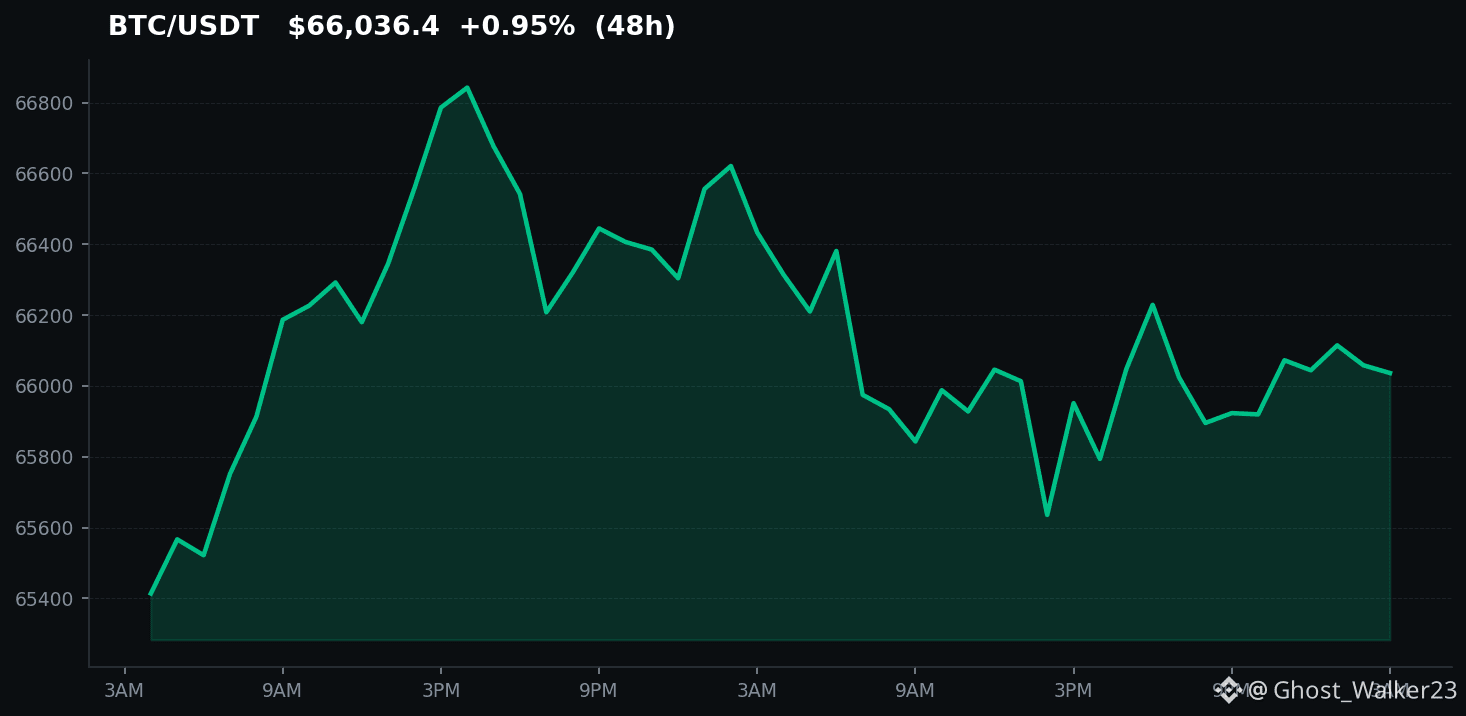
·
--
If you're still treating every DeFi yield app like a bank account, stop now.
SecondFi shutting down after 16 months is the kind of “quiet” event that still teaches loud lessons. Traders don’t usually lose sleep on launch day; they lose it when exits get crowded, rewards dry up, and the roadmap suddenly becomes a farewell post.
We’ve seen this movie before, from Anchor-style yield obsession to smaller incentive-driven protocols that looked alive until the subsidies stopped breathing. Not every shutdown is a rug, but every shutdown reminds you that APY is not revenue, TVL is not loyalty, and “community” can disappear faster than a low-liquidity candle.
With fear still hanging over the market, it makes sense that people rotate back into $USDT, $ETH, and safer $BTC narratives. When Bitcoin dominance rises, the market basically says: “Nice experiment, but show me survival.”
So is SecondFi just another normal DeFi casualty, or a warning that the next cycle will punish weak token models harder than the last one? #SecondFiToShutDownAfter16 #BitcoinDominanceRisesTo59 #BitcoinETFAUMReaches
If you're still treating every DeFi yield app like a bank account, stop now.
SecondFi shutting down after 16 months is the kind of “quiet” event that still teaches loud lessons. Traders don’t usually lose sleep on launch day; they lose it when exits get crowded, rewards dry up, and the roadmap suddenly becomes a farewell post.
We’ve seen this movie before, from Anchor-style yield obsession to smaller incentive-driven protocols that looked alive until the subsidies stopped breathing. Not every shutdown is a rug, but every shutdown reminds you that APY is not revenue, TVL is not loyalty, and “community” can disappear faster than a low-liquidity candle.
With fear still hanging over the market, it makes sense that people rotate back into $USDT, $ETH , and safer $BTC narratives. When Bitcoin dominance rises, the market basically says: “Nice experiment, but show me survival.”
So is SecondFi just another normal DeFi casualty, or a warning that the next cycle will punish weak token models harder than the last one? #SecondFiToShutDownAfter16 #BitcoinDominanceRisesTo59 #BitcoinETFAUMReaches
SecondFi shutting down after 16 months is the kind of “quiet” event that still teaches loud lessons. Traders don’t usually lose sleep on launch day; they lose it when exits get crowded, rewards dry up, and the roadmap suddenly becomes a farewell post.
We’ve seen this movie before, from Anchor-style yield obsession to smaller incentive-driven protocols that looked alive until the subsidies stopped breathing. Not every shutdown is a rug, but every shutdown reminds you that APY is not revenue, TVL is not loyalty, and “community” can disappear faster than a low-liquidity candle.
With fear still hanging over the market, it makes sense that people rotate back into $USDT, $ETH , and safer $BTC narratives. When Bitcoin dominance rises, the market basically says: “Nice experiment, but show me survival.”
So is SecondFi just another normal DeFi casualty, or a warning that the next cycle will punish weak token models harder than the last one? #SecondFiToShutDownAfter16 #BitcoinDominanceRisesTo59 #BitcoinETFAUMReaches

31
·
--
Have you noticed how everyone treats Alphabet’s 2026 capex raise as “bullish AI,” but almost nobody asks what it means for crypto liquidity?
This is exactly how traders get trapped: they see big tech spending headlines, assume risk assets will automatically pump, then FOMO into $BTC or $ETH without asking where the money is actually flowing.
Alphabet ramping capex is a real case study in how the AI trade is changing markets. More data centers, more chips, more energy demand, more infrastructure winners. That can support the broader risk narrative, but it also means capital is being absorbed by mega-cap tech instead of rotating freely into higher-beta crypto.
The mainstream take is “AI spending = good for everything.” I think that’s too lazy. If investors are parking in dominant tech names while the Fear & Greed Index sits at 39, crypto may not get the same clean liquidity wave people expect. $USDT demand can rise as traders wait, while $BTC dominance stays firm because the market prefers safety over speculation.
The real signal is not the capex number itself, it’s what it says about institutional priorities. Big money is still paying for infrastructure, not narratives. Crypto projects tied to compute, storage, or real utility may benefit later, but random hype coins probably won’t just because Alphabet is spending more.
Where do you think this goes from here: delayed crypto rotation, or the start of a bigger risk-on cycle? #AlphabetRaises2026CapexTo #BitcoinDominanceRisesTo59 #SuperMicroRisesNearly20
Have you noticed how everyone treats Alphabet’s 2026 capex raise as “bullish AI,” but almost nobody asks what it means for crypto liquidity?
This is exactly how traders get trapped: they see big tech spending headlines, assume risk assets will automatically pump, then FOMO into $BTC or $ETH without asking where the money is actually flowing.
Alphabet ramping capex is a real case study in how the AI trade is changing markets. More data centers, more chips, more energy demand, more infrastructure winners. That can support the broader risk narrative, but it also means capital is being absorbed by mega-cap tech instead of rotating freely into higher-beta crypto.
The mainstream take is “AI spending = good for everything.” I think that’s too lazy. If investors are parking in dominant tech names while the Fear & Greed Index sits at 39, crypto may not get the same clean liquidity wave people expect. $USDT demand can rise as traders wait, while $BTC dominance stays firm because the market prefers safety over speculation.
The real signal is not the capex number itself, it’s what it says about institutional priorities. Big money is still paying for infrastructure, not narratives. Crypto projects tied to compute, storage, or real utility may benefit later, but random hype coins probably won’t just because Alphabet is spending more.
Where do you think this goes from here: delayed crypto rotation, or the start of a bigger risk-on cycle? #AlphabetRaises2026CapexTo #BitcoinDominanceRisesTo59 #SuperMicroRisesNearly20
This is exactly how traders get trapped: they see big tech spending headlines, assume risk assets will automatically pump, then FOMO into $BTC or $ETH without asking where the money is actually flowing.
Alphabet ramping capex is a real case study in how the AI trade is changing markets. More data centers, more chips, more energy demand, more infrastructure winners. That can support the broader risk narrative, but it also means capital is being absorbed by mega-cap tech instead of rotating freely into higher-beta crypto.
The mainstream take is “AI spending = good for everything.” I think that’s too lazy. If investors are parking in dominant tech names while the Fear & Greed Index sits at 39, crypto may not get the same clean liquidity wave people expect. $USDT demand can rise as traders wait, while $BTC dominance stays firm because the market prefers safety over speculation.
The real signal is not the capex number itself, it’s what it says about institutional priorities. Big money is still paying for infrastructure, not narratives. Crypto projects tied to compute, storage, or real utility may benefit later, but random hype coins probably won’t just because Alphabet is spending more.
Where do you think this goes from here: delayed crypto rotation, or the start of a bigger risk-on cycle? #AlphabetRaises2026CapexTo #BitcoinDominanceRisesTo59 #SuperMicroRisesNearly20

32
·
--
A weird truth about Bitcoin ETFs: record AUM can look bullish even when fresh buying is already slowing.
A lot of traders see “ETF assets hit new highs” and instantly FOMO into $BTC, but AUM is not the same as new inflows. It can rise because Bitcoin’s price went up, not because institutions are aggressively buying today.
Here’s the risk: ETF demand works both ways. When flows are strong, spot supply gets absorbed and dips feel shallow. But if redemptions start during a fearful market, especially with the Fear & Greed Index sitting around 40, that same ETF channel can add selling pressure fast.
Also, rising Bitcoin dominance matters. If money keeps hiding in $BTC while $ETH and smaller caps lag, altcoin setups can look “cheap” for weeks and still bleed against Bitcoin. Sitting in $USDT waiting for confirmation is boring, but sometimes boring beats being trapped in a rotation that never comes.
The lesson: don’t just read “ETF AUM reached X” as automatic upside. Watch daily net flows, Bitcoin dominance, volume on breakdowns, and whether price reacts positively to good news or starts ignoring it.
With #BitcoinETFAUMReaches and #BitcoinDominanceRisesTo59, are ETF flows still a bullish signal here or a crowded trade risk?
A weird truth about Bitcoin ETFs: record AUM can look bullish even when fresh buying is already slowing.
A lot of traders see “ETF assets hit new highs” and instantly FOMO into $BTC , but AUM is not the same as new inflows. It can rise because Bitcoin’s price went up, not because institutions are aggressively buying today.
Here’s the risk: ETF demand works both ways. When flows are strong, spot supply gets absorbed and dips feel shallow. But if redemptions start during a fearful market, especially with the Fear & Greed Index sitting around 40, that same ETF channel can add selling pressure fast.
Also, rising Bitcoin dominance matters. If money keeps hiding in $BTC while $ETH and smaller caps lag, altcoin setups can look “cheap” for weeks and still bleed against Bitcoin. Sitting in $USDT waiting for confirmation is boring, but sometimes boring beats being trapped in a rotation that never comes.
The lesson: don’t just read “ETF AUM reached X” as automatic upside. Watch daily net flows, Bitcoin dominance, volume on breakdowns, and whether price reacts positively to good news or starts ignoring it.
With #BitcoinETFAUMReaches and #BitcoinDominanceRisesTo59, are ETF flows still a bullish signal here or a crowded trade risk?
A lot of traders see “ETF assets hit new highs” and instantly FOMO into $BTC , but AUM is not the same as new inflows. It can rise because Bitcoin’s price went up, not because institutions are aggressively buying today.
Here’s the risk: ETF demand works both ways. When flows are strong, spot supply gets absorbed and dips feel shallow. But if redemptions start during a fearful market, especially with the Fear & Greed Index sitting around 40, that same ETF channel can add selling pressure fast.
Also, rising Bitcoin dominance matters. If money keeps hiding in $BTC while $ETH and smaller caps lag, altcoin setups can look “cheap” for weeks and still bleed against Bitcoin. Sitting in $USDT waiting for confirmation is boring, but sometimes boring beats being trapped in a rotation that never comes.
The lesson: don’t just read “ETF AUM reached X” as automatic upside. Watch daily net flows, Bitcoin dominance, volume on breakdowns, and whether price reacts positively to good news or starts ignoring it.
With #BitcoinETFAUMReaches and #BitcoinDominanceRisesTo59, are ETF flows still a bullish signal here or a crowded trade risk?

22
·
--
Why is nobody talking about the fact that Bitcoin ETF AUM rising is not automatically a “buy now” signal?
A lot of traders see big ETF numbers and instantly FOMO into $BTC, then get shaken out on the first pullback. The pain is not being wrong on the trend, it’s entering at the worst possible spot.
Here’s my take: ETF AUM growth confirms institutional demand, but it does not remove volatility. In fact, it can make the market more deceptive because everyone starts assuming dips are “guaranteed buys” while leverage quietly builds up.
The smarter move is to use ETF momentum as a filter, not a trigger. If $BTC dominance keeps rising and fear stays around the market, I’d rather wait for clean retests, watch whether $USDT liquidity rotates back into risk, and compare how $ETH behaves against BTC before chasing green candles.
My guide is simple: define your entry before the move, set the level that proves you wrong, and don’t confuse institutional accumulation with instant upside. Strong flows matter, but price still punishes impatience.
Are you treating ETF AUM as a buy signal, or as a liquidity map for your next $BTC entry? #BitcoinETFAUMReaches #BitcoinDominanceRisesTo59
Why is nobody talking about the fact that Bitcoin ETF AUM rising is not automatically a “buy now” signal?
A lot of traders see big ETF numbers and instantly FOMO into $BTC , then get shaken out on the first pullback. The pain is not being wrong on the trend, it’s entering at the worst possible spot.
Here’s my take: ETF AUM growth confirms institutional demand, but it does not remove volatility. In fact, it can make the market more deceptive because everyone starts assuming dips are “guaranteed buys” while leverage quietly builds up.
The smarter move is to use ETF momentum as a filter, not a trigger. If $BTC dominance keeps rising and fear stays around the market, I’d rather wait for clean retests, watch whether $USDT liquidity rotates back into risk, and compare how $ETH behaves against BTC before chasing green candles.
My guide is simple: define your entry before the move, set the level that proves you wrong, and don’t confuse institutional accumulation with instant upside. Strong flows matter, but price still punishes impatience.
Are you treating ETF AUM as a buy signal, or as a liquidity map for your next $BTC entry? #BitcoinETFAUMReaches #BitcoinDominanceRisesTo59
A lot of traders see big ETF numbers and instantly FOMO into $BTC , then get shaken out on the first pullback. The pain is not being wrong on the trend, it’s entering at the worst possible spot.
Here’s my take: ETF AUM growth confirms institutional demand, but it does not remove volatility. In fact, it can make the market more deceptive because everyone starts assuming dips are “guaranteed buys” while leverage quietly builds up.
The smarter move is to use ETF momentum as a filter, not a trigger. If $BTC dominance keeps rising and fear stays around the market, I’d rather wait for clean retests, watch whether $USDT liquidity rotates back into risk, and compare how $ETH behaves against BTC before chasing green candles.
My guide is simple: define your entry before the move, set the level that proves you wrong, and don’t confuse institutional accumulation with instant upside. Strong flows matter, but price still punishes impatience.
Are you treating ETF AUM as a buy signal, or as a liquidity map for your next $BTC entry? #BitcoinETFAUMReaches #BitcoinDominanceRisesTo59
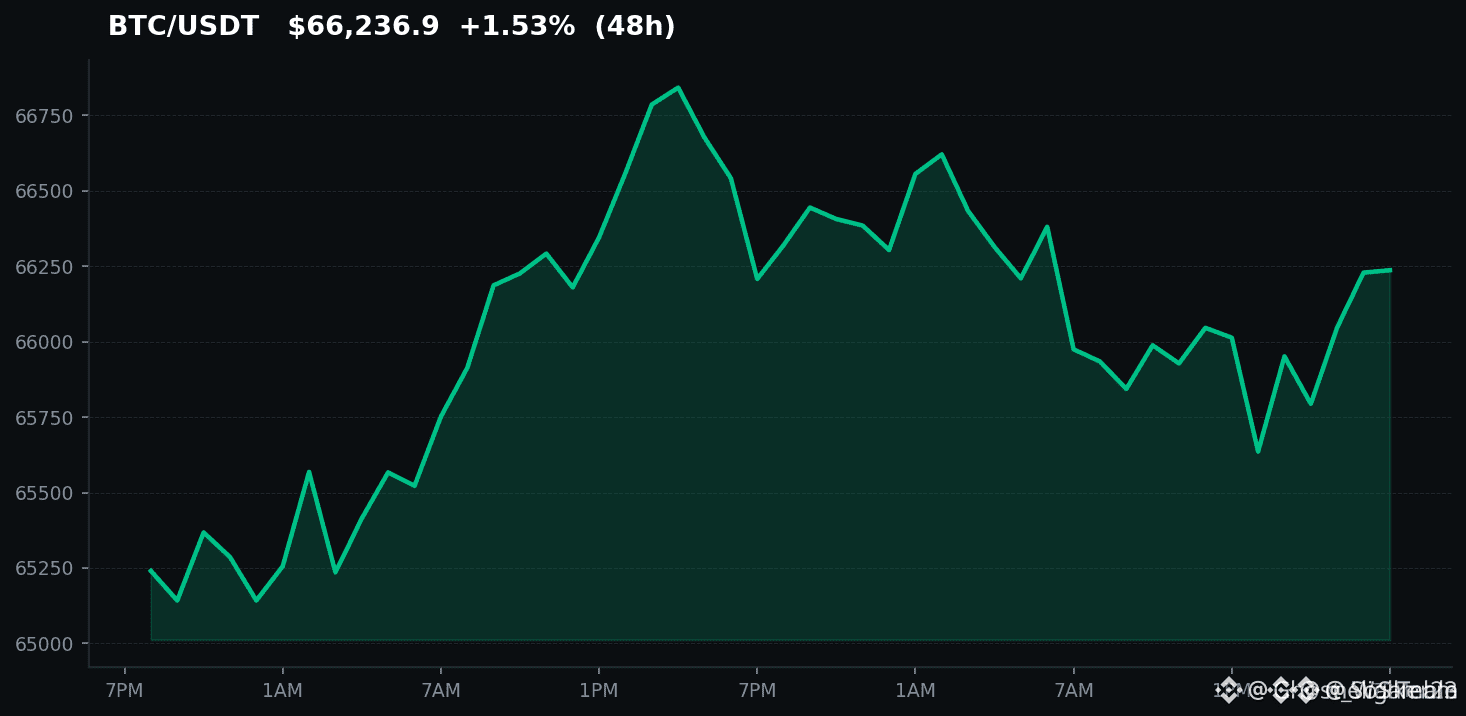
14
·
--
Have you noticed how every oil spike gets treated like “just a macro headline” until crypto traders are already late reacting?
The pain is simple: people stare at $BTC candles, miss the real driver, then buy the move after liquidity has already shifted. In a fear-heavy market, with sentiment sitting around 39, that mistake gets expensive fast.
Here’s the hot take: crude oil futures rising over 4% is not just an energy story. It’s a liquidity story. Higher oil can feed inflation expectations, make rate-cut hopes look less clean, and push traders back into defensive positioning. That’s why $USDT demand, $BTC dominance, and weaker alt entries often move together when macro pressure hits.
Look at this as a case study. If oil keeps squeezing higher, the market may not reward random risk-taking in small caps. It may reward patience, stronger balance sheets, and assets with deeper liquidity. $ETH can still catch a bid, but in this environment, chasing every green candle because “alts are back” feels more like hope than strategy.
The mainstream narrative says crypto trades on crypto news. I think this week proves the opposite: macro still decides when risk gets permission to run.
Are you treating the oil move as noise, or as an early warning for your next crypto position? #CrudeOilFuturesRiseOver4 #BitcoinDominanceRisesTo59 #BitcoinETFAUMReaches
Have you noticed how every oil spike gets treated like “just a macro headline” until crypto traders are already late reacting?
The pain is simple: people stare at $BTC candles, miss the real driver, then buy the move after liquidity has already shifted. In a fear-heavy market, with sentiment sitting around 39, that mistake gets expensive fast.
Here’s the hot take: crude oil futures rising over 4% is not just an energy story. It’s a liquidity story. Higher oil can feed inflation expectations, make rate-cut hopes look less clean, and push traders back into defensive positioning. That’s why $USDT demand, $BTC dominance, and weaker alt entries often move together when macro pressure hits.
Look at this as a case study. If oil keeps squeezing higher, the market may not reward random risk-taking in small caps. It may reward patience, stronger balance sheets, and assets with deeper liquidity. $ETH can still catch a bid, but in this environment, chasing every green candle because “alts are back” feels more like hope than strategy.
The mainstream narrative says crypto trades on crypto news. I think this week proves the opposite: macro still decides when risk gets permission to run.
Are you treating the oil move as noise, or as an early warning for your next crypto position? #CrudeOilFuturesRiseOver4 #BitcoinDominanceRisesTo59 #BitcoinETFAUMReaches
The pain is simple: people stare at $BTC candles, miss the real driver, then buy the move after liquidity has already shifted. In a fear-heavy market, with sentiment sitting around 39, that mistake gets expensive fast.
Here’s the hot take: crude oil futures rising over 4% is not just an energy story. It’s a liquidity story. Higher oil can feed inflation expectations, make rate-cut hopes look less clean, and push traders back into defensive positioning. That’s why $USDT demand, $BTC dominance, and weaker alt entries often move together when macro pressure hits.
Look at this as a case study. If oil keeps squeezing higher, the market may not reward random risk-taking in small caps. It may reward patience, stronger balance sheets, and assets with deeper liquidity. $ETH can still catch a bid, but in this environment, chasing every green candle because “alts are back” feels more like hope than strategy.
The mainstream narrative says crypto trades on crypto news. I think this week proves the opposite: macro still decides when risk gets permission to run.
Are you treating the oil move as noise, or as an early warning for your next crypto position? #CrudeOilFuturesRiseOver4 #BitcoinDominanceRisesTo59 #BitcoinETFAUMReaches

51
·
--
A 4% jump in crude oil can move your crypto portfolio without a single crypto headline being involved.
Most traders only notice the pain after it shows up as a red candle on $BTC or $ETH. They chase the bounce, panic into $USDT, then wonder why “good setups” suddenly stop working.
Here’s the lesson old cycles keep teaching: oil is not just an energy chart, it is an inflation signal. When crude spikes, markets start pricing higher input costs, stickier inflation, and a more cautious central bank. That usually means tighter liquidity, and crypto hates tight liquidity more than bad news.
I saw this in 2022. Many traders were staring only at coin charts while oil, yields, and the dollar were quietly explaining why every rally kept getting sold. When fear is already in the market, like a Fear & Greed reading near 39, macro shocks can turn small hesitation into forced selling.
The practical move is not to predict oil perfectly. It is to understand the chain reaction: crude up, inflation fears up, yields/dollar potentially up, risk appetite down. If $BTC dominance is rising at the same time, alts can bleed even when Bitcoin looks “stable.”
Are you treating this oil spike as noise, or as an early warning for crypto liquidity? #CrudeOilFuturesRiseOver4 #BitcoinDominanceRisesTo59 #BitcoinETFAUMReaches
A 4% jump in crude oil can move your crypto portfolio without a single crypto headline being involved.
Most traders only notice the pain after it shows up as a red candle on $BTC or $ETH . They chase the bounce, panic into $USDT, then wonder why “good setups” suddenly stop working.
Here’s the lesson old cycles keep teaching: oil is not just an energy chart, it is an inflation signal. When crude spikes, markets start pricing higher input costs, stickier inflation, and a more cautious central bank. That usually means tighter liquidity, and crypto hates tight liquidity more than bad news.
I saw this in 2022. Many traders were staring only at coin charts while oil, yields, and the dollar were quietly explaining why every rally kept getting sold. When fear is already in the market, like a Fear & Greed reading near 39, macro shocks can turn small hesitation into forced selling.
The practical move is not to predict oil perfectly. It is to understand the chain reaction: crude up, inflation fears up, yields/dollar potentially up, risk appetite down. If $BTC dominance is rising at the same time, alts can bleed even when Bitcoin looks “stable.”
Are you treating this oil spike as noise, or as an early warning for crypto liquidity? #CrudeOilFuturesRiseOver4 #BitcoinDominanceRisesTo59 #BitcoinETFAUMReaches
Most traders only notice the pain after it shows up as a red candle on $BTC or $ETH . They chase the bounce, panic into $USDT, then wonder why “good setups” suddenly stop working.
Here’s the lesson old cycles keep teaching: oil is not just an energy chart, it is an inflation signal. When crude spikes, markets start pricing higher input costs, stickier inflation, and a more cautious central bank. That usually means tighter liquidity, and crypto hates tight liquidity more than bad news.
I saw this in 2022. Many traders were staring only at coin charts while oil, yields, and the dollar were quietly explaining why every rally kept getting sold. When fear is already in the market, like a Fear & Greed reading near 39, macro shocks can turn small hesitation into forced selling.
The practical move is not to predict oil perfectly. It is to understand the chain reaction: crude up, inflation fears up, yields/dollar potentially up, risk appetite down. If $BTC dominance is rising at the same time, alts can bleed even when Bitcoin looks “stable.”
Are you treating this oil spike as noise, or as an early warning for crypto liquidity? #CrudeOilFuturesRiseOver4 #BitcoinDominanceRisesTo59 #BitcoinETFAUMReaches

40
·
--
Here’s what happened when crude oil futures jumped over 4%: crypto traders suddenly had to care about barrels, not just candles.
The pain is familiar. You’re watching $BTC or $ETH for a clean entry, then a macro shock hits, the dollar reacts, risk appetite shifts, and your “perfect setup” gets invalidated before dinner.
Case study: oil spikes are rarely just about oil. They can signal supply stress, geopolitical risk, or inflation pressure coming back into the room. When energy prices run hot, markets often start pricing tighter financial conditions, and that usually makes speculative assets more fragile. With the Fear & Greed Index sitting in Fear territory, traders are already defensive, so a crude move like this can amplify caution fast.
We’ve seen versions of this before. In 2022, energy shocks fed inflation anxiety and crypto sold off alongside tech. In 2023, when oil rallied but liquidity was improving, $BTC handled it better. The difference wasn’t the oil chart alone; it was the broader macro backdrop. That’s the lesson: commodities don’t “control” crypto, but they often reveal what big money is preparing for.
Compared with $USDT flows or ETH narratives, crude feels boring until it starts moving 4% in a session. Then it becomes a risk signal. If oil keeps climbing while Bitcoin dominance is elevated, altcoins may struggle more than BTC because traders usually rotate toward liquidity first.
What’s your take if oil keeps squeezing and crypto stays in fear mode? #CrudeOilFuturesRiseOver4 #BitcoinDominanceRisesTo59
Here’s what happened when crude oil futures jumped over 4%: crypto traders suddenly had to care about barrels, not just candles.
The pain is familiar. You’re watching $BTC or $ETH for a clean entry, then a macro shock hits, the dollar reacts, risk appetite shifts, and your “perfect setup” gets invalidated before dinner.
Case study: oil spikes are rarely just about oil. They can signal supply stress, geopolitical risk, or inflation pressure coming back into the room. When energy prices run hot, markets often start pricing tighter financial conditions, and that usually makes speculative assets more fragile. With the Fear & Greed Index sitting in Fear territory, traders are already defensive, so a crude move like this can amplify caution fast.
We’ve seen versions of this before. In 2022, energy shocks fed inflation anxiety and crypto sold off alongside tech. In 2023, when oil rallied but liquidity was improving, $BTC handled it better. The difference wasn’t the oil chart alone; it was the broader macro backdrop. That’s the lesson: commodities don’t “control” crypto, but they often reveal what big money is preparing for.
Compared with $USDT flows or ETH narratives, crude feels boring until it starts moving 4% in a session. Then it becomes a risk signal. If oil keeps climbing while Bitcoin dominance is elevated, altcoins may struggle more than BTC because traders usually rotate toward liquidity first.
What’s your take if oil keeps squeezing and crypto stays in fear mode? #CrudeOilFuturesRiseOver4 #BitcoinDominanceRisesTo59
The pain is familiar. You’re watching $BTC or $ETH for a clean entry, then a macro shock hits, the dollar reacts, risk appetite shifts, and your “perfect setup” gets invalidated before dinner.
Case study: oil spikes are rarely just about oil. They can signal supply stress, geopolitical risk, or inflation pressure coming back into the room. When energy prices run hot, markets often start pricing tighter financial conditions, and that usually makes speculative assets more fragile. With the Fear & Greed Index sitting in Fear territory, traders are already defensive, so a crude move like this can amplify caution fast.
We’ve seen versions of this before. In 2022, energy shocks fed inflation anxiety and crypto sold off alongside tech. In 2023, when oil rallied but liquidity was improving, $BTC handled it better. The difference wasn’t the oil chart alone; it was the broader macro backdrop. That’s the lesson: commodities don’t “control” crypto, but they often reveal what big money is preparing for.
Compared with $USDT flows or ETH narratives, crude feels boring until it starts moving 4% in a session. Then it becomes a risk signal. If oil keeps climbing while Bitcoin dominance is elevated, altcoins may struggle more than BTC because traders usually rotate toward liquidity first.
What’s your take if oil keeps squeezing and crypto stays in fear mode? #CrudeOilFuturesRiseOver4 #BitcoinDominanceRisesTo59

69
Log in to explore more content
Join global crypto users on Binance Square
⚡️ Get latest and useful information about crypto.
💬 Trusted by the world’s largest crypto exchange.
👍 Discover real insights from verified creators.
Email / Phone number
Trending Topics
1
#BinanceWillListHyperliquid(HYPE)
22,819 views
654 Discussing
2
#FedOctoberRateHikeOddsRiseTo69.7%
3 views
24 Discussing
3
#BitcoinFallsBelow$83,000
1,132 views
20 Discussing
4
#BitcoinFallsToAround$84,600ThisWeek
0 views
0 Discussing
5
#US30YearYieldHighestSince2004
2,402 views
113 Discussing
6
#ETHBreaksAbove$2,700
670 views
20 Discussing
7
#USWeighsPromotingDollarStablecoinsAbroad
27,343 views
924 Discussing
8
#US10YTreasuryYieldHits19YearHigh
25,175 views
704 Discussing
9
#SpotBitcoinETFsInflow$2.31BInFourDays
3,894 views
59 Discussing
10
#BitcoinRejectedAt$87,300Twice
0 views
0 Discussing