
#baby
baby
10.2M views
82,724 Discussing
Hot
Latest

·
--
Binance’s 400 BNB $BABY Tournament Is Now LIVEANOTHER BINANCE CAMPAIGN IS ALREADY LIVE: BABY TRADERS ARE COMPETING FOR UP TO 400 BNB IN TOKEN VOUCHERS.
FACTS: Binance’s Babylon Spot tournament started at 10:00 UTC today and runs until Sept. 29 at 10:00 UTC. Eligible pairs are $BABY /USDT and BABY/USDC.
Users must opt in and generate at least $500 equivalent in eligible trading volume to qualify.
Main leaderboard rewards include:
🥇 12 $BNB
🥈 10 BNB
🥉 8 BNB
Binance has also introduced separate Sprint Rewards, with the first round running from Sept. 22, 10:00 UTC through Sept. 24, 10:00 UTC. Eligible users can potentially qualify for both the main and Sprint pools.
WHY IT MATTERS: A large exchange campaign can focus short-term trader attention and liquidity on BABY.
INTERPRETATION: 🟢 Increased participation may improve activity and liquidity. 🔴 Competition incentives do not create fundamental token value, and excessive trading solely to climb a leaderboard can generate losses and fees.
$BNB
#baby #Binance
{spot}(BABYUSDT)
Binance’s 400 BNB $BABY Tournament Is Now LIVE
ANOTHER BINANCE CAMPAIGN IS ALREADY LIVE: BABY TRADERS ARE COMPETING FOR UP TO 400 BNB IN TOKEN VOUCHERS.
FACTS: Binance’s Babylon Spot tournament started at 10:00 UTC today and runs until Sept. 29 at 10:00 UTC. Eligible pairs are $BABY /USDT and BABY/USDC.
Users must opt in and generate at least $500 equivalent in eligible trading volume to qualify.
Main leaderboard rewards include:
🥇 12 $BNB
🥈 10 BNB
🥉 8 BNB
Binance has also introduced separate Sprint Rewards, with the first round running from Sept. 22, 10:00 UTC through Sept. 24, 10:00 UTC. Eligible users can potentially qualify for both the main and Sprint pools.
WHY IT MATTERS: A large exchange campaign can focus short-term trader attention and liquidity on BABY.
INTERPRETATION: 🟢 Increased participation may improve activity and liquidity. 🔴 Competition incentives do not create fundamental token value, and excessive trading solely to climb a leaderboard can generate losses and fees.
$BNB
#baby #Binance
FACTS: Binance’s Babylon Spot tournament started at 10:00 UTC today and runs until Sept. 29 at 10:00 UTC. Eligible pairs are $BABY /USDT and BABY/USDC.
Users must opt in and generate at least $500 equivalent in eligible trading volume to qualify.
Main leaderboard rewards include:
🥇 12 $BNB
🥈 10 BNB
🥉 8 BNB
Binance has also introduced separate Sprint Rewards, with the first round running from Sept. 22, 10:00 UTC through Sept. 24, 10:00 UTC. Eligible users can potentially qualify for both the main and Sprint pools.
WHY IT MATTERS: A large exchange campaign can focus short-term trader attention and liquidity on BABY.
INTERPRETATION: 🟢 Increased participation may improve activity and liquidity. 🔴 Competition incentives do not create fundamental token value, and excessive trading solely to climb a leaderboard can generate losses and fees.
$BNB
#baby #Binance
5

·
--
Bullish
$BABY/USDT Market Update 🚀
Babylon (BABY) is showing positive momentum, with buyers trying to push the price higher. Traders should watch the current support and resistance levels carefully before entering a position.
✅ Trade with a proper plan
✅ Use stop-loss
✅ Avoid emotional buying
✅ Do your own research
Is BABY ready for the next move? Share your analysis below 👇$
#baby
$BABY/USDT Market Update 🚀
Babylon (BABY) is showing positive momentum, with buyers trying to push the price higher. Traders should watch the current support and resistance levels carefully before entering a position.
✅ Trade with a proper plan
✅ Use stop-loss
✅ Avoid emotional buying
✅ Do your own research
Is BABY ready for the next move? Share your analysis below 👇$
#baby
Babylon (BABY) is showing positive momentum, with buyers trying to push the price higher. Traders should watch the current support and resistance levels carefully before entering a position.
✅ Trade with a proper plan
✅ Use stop-loss
✅ Avoid emotional buying
✅ Do your own research
Is BABY ready for the next move? Share your analysis below 👇$
#baby
145

BINANCE JUST LAUNCHED BABY TRADING. THE RULES MATTER MORE THAN THE 400 BNB HEADLINE.
Binance launched the $BABY Trading Tournament today.
The headline:
400 $BNB in token-voucher rewards
But here’s the Wealth Engine filter.
Promotion: Sept. 22 → Sept. 29
Pairs: BABY/$USDT + BABY/$USDC
Minimum volume: $500 equivalent
Eligible: verified new, regular and VIP 1–6 users
EEA: excluded
Liquidity providers + brokers: excluded
There’s also a limited-time Sprint Reward where higher trading volume can generate additional rewards.
Before participating:
1. ELIGIBILITY
Does your account qualify?
2. PAIRS
Are you trading the qualifying markets?
3. VOLUME
Do you understand the $500 threshold?
4. COSTS
What are the fees and liquidity conditions?
5. DEADLINE
Sept. 29 at 10:00 UTC.
6. REGION
Never assume availability based solely on your country.
The Binance Traders League Season 4 also remains active through Oct. 7 with a $4M equivalent reward pool, subject to track and regional requirements.
When a campaign launches, what do you check first: reward pool, qualifying volume, or eligibility?
#Binance #BinanceSquare #BABY #BNB #Crypto #CryptoTrading #TradingTournament #Web3 #DYOR #RiskManagement #Investing #WealthEngine
BINANCE JUST LAUNCHED BABY TRADING. THE RULES MATTER MORE THAN THE 400 BNB HEADLINE.
Binance launched the $BABY Trading Tournament today.
The headline:
400 $BNB in token-voucher rewards
But here’s the Wealth Engine filter.
Promotion: Sept. 22 → Sept. 29
Pairs: BABY/$USDT + BABY/$USDC
Minimum volume: $500 equivalent
Eligible: verified new, regular and VIP 1–6 users
EEA: excluded
Liquidity providers + brokers: excluded
There’s also a limited-time Sprint Reward where higher trading volume can generate additional rewards.
Before participating:
1. ELIGIBILITY
Does your account qualify?
2. PAIRS
Are you trading the qualifying markets?
3. VOLUME
Do you understand the $500 threshold?
4. COSTS
What are the fees and liquidity conditions?
5. DEADLINE
Sept. 29 at 10:00 UTC.
6. REGION
Never assume availability based solely on your country.
The Binance Traders League Season 4 also remains active through Oct. 7 with a $4M equivalent reward pool, subject to track and regional requirements.
When a campaign launches, what do you check first: reward pool, qualifying volume, or eligibility?
#Binance #BinanceSquare #BABY #BNB #Crypto #CryptoTrading #TradingTournament #Web3 #DYOR #RiskManagement #Investing #WealthEngine
Binance launched the $BABY Trading Tournament today.
The headline:
400 $BNB in token-voucher rewards
But here’s the Wealth Engine filter.
Promotion: Sept. 22 → Sept. 29
Pairs: BABY/$USDT + BABY/$USDC
Minimum volume: $500 equivalent
Eligible: verified new, regular and VIP 1–6 users
EEA: excluded
Liquidity providers + brokers: excluded
There’s also a limited-time Sprint Reward where higher trading volume can generate additional rewards.
Before participating:
1. ELIGIBILITY
Does your account qualify?
2. PAIRS
Are you trading the qualifying markets?
3. VOLUME
Do you understand the $500 threshold?
4. COSTS
What are the fees and liquidity conditions?
5. DEADLINE
Sept. 29 at 10:00 UTC.
6. REGION
Never assume availability based solely on your country.
The Binance Traders League Season 4 also remains active through Oct. 7 with a $4M equivalent reward pool, subject to track and regional requirements.
When a campaign launches, what do you check first: reward pool, qualifying volume, or eligibility?
#Binance #BinanceSquare #BABY #BNB #Crypto #CryptoTrading #TradingTournament #Web3 #DYOR #RiskManagement #Investing #WealthEngine

169

·
--
$BABY
{spot}(BABYUSDT)
🚀 $BABY LONG SETUP 🟢
🔥 Strong momentum is building — here is the setup. ⚡
Trade Plan
Entry: 0.01280000
Stop Loss: 0.01235000
TP1: 0.01325000
TP2: 0.01365000
TP3: 0.01400000
Trigger:
Immediate entry
Risk Note:
This trade setup is for educational purposes only and not financial advice. Always manage your risk effectively.
#BABY #Crypto #SwingTrading #Long
$BABY
🚀 $BABY LONG SETUP 🟢
🔥 Strong momentum is building — here is the setup. ⚡
Trade Plan
Entry: 0.01280000
Stop Loss: 0.01235000
TP1: 0.01325000
TP2: 0.01365000
TP3: 0.01400000
Trigger:
Immediate entry
Risk Note:
This trade setup is for educational purposes only and not financial advice. Always manage your risk effectively.
#BABY #Crypto #SwingTrading #Long
🚀 $BABY LONG SETUP 🟢
🔥 Strong momentum is building — here is the setup. ⚡
Trade Plan
Entry: 0.01280000
Stop Loss: 0.01235000
TP1: 0.01325000
TP2: 0.01365000
TP3: 0.01400000
Trigger:
Immediate entry
Risk Note:
This trade setup is for educational purposes only and not financial advice. Always manage your risk effectively.
#BABY #Crypto #SwingTrading #Long
72

🚀 BABY TOKEN — Is the Next Move About to Begin? 🍼🔥The market is always searching for the next token that can catch fire.
Right now, $BABY deserves attention. 👀
Why?
🔥 Strong community narrative
📈 Potential for growing market attention
⚡ Meme energy + crypto momentum
💎 A simple brand that’s easy to remember
In a bullish market, attention can move fast.
And when volume + community + momentum come together, a small token can suddenly become a market talking point. 🚀
I’m keeping $BABY on my watchlist.
Maybe it’s just another token…
Or maybe BABY is preparing for its next big move. 🍼🔥
Watch. DYOR. Stay alert.
#BABY #BABYtoken #crypto #BİNANCESQUARE #Altcoins #Memecoin #bullish
🚀 BABY TOKEN — Is the Next Move About to Begin? 🍼🔥
The market is always searching for the next token that can catch fire.
Right now, $BABY deserves attention. 👀
Why?
🔥 Strong community narrative
📈 Potential for growing market attention
⚡ Meme energy + crypto momentum
💎 A simple brand that’s easy to remember
In a bullish market, attention can move fast.
And when volume + community + momentum come together, a small token can suddenly become a market talking point. 🚀
I’m keeping $BABY on my watchlist.
Maybe it’s just another token…
Or maybe BABY is preparing for its next big move. 🍼🔥
Watch. DYOR. Stay alert.
#BABY #BABYtoken #crypto #BİNANCESQUARE #Altcoins #Memecoin #bullish
Right now, $BABY deserves attention. 👀
Why?
🔥 Strong community narrative
📈 Potential for growing market attention
⚡ Meme energy + crypto momentum
💎 A simple brand that’s easy to remember
In a bullish market, attention can move fast.
And when volume + community + momentum come together, a small token can suddenly become a market talking point. 🚀
I’m keeping $BABY on my watchlist.
Maybe it’s just another token…
Or maybe BABY is preparing for its next big move. 🍼🔥
Watch. DYOR. Stay alert.
#BABY #BABYtoken #crypto #BİNANCESQUARE #Altcoins #Memecoin #bullish
239

·
--
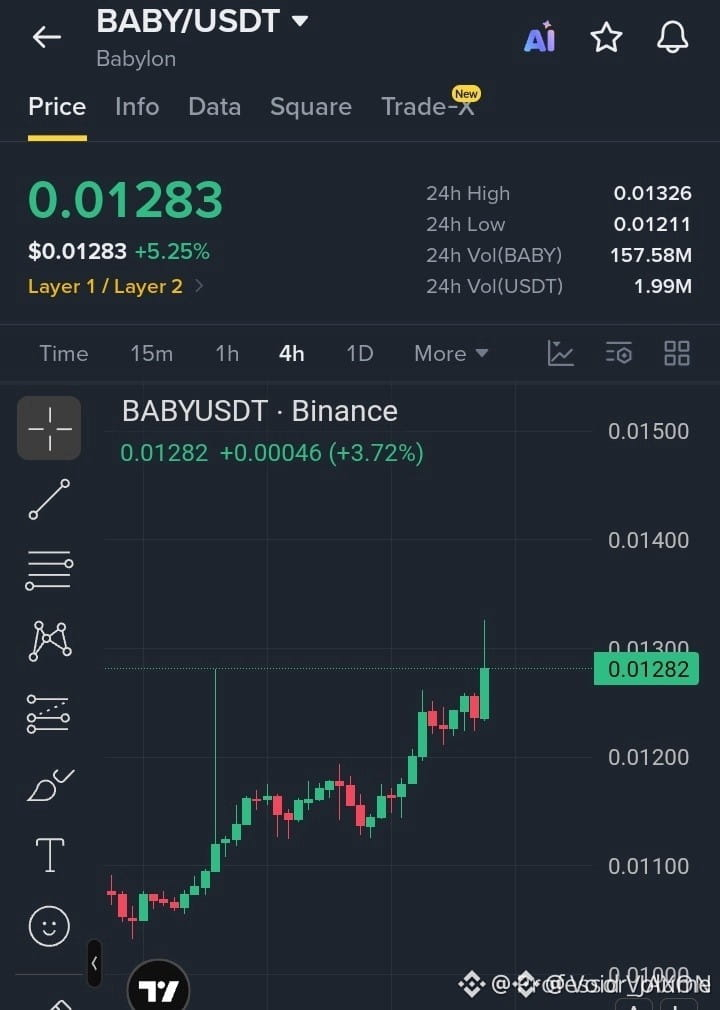
🚨 $BABY STRUCTURE FLIPS BULLISH AS INSTITUTIONAL DEMAND FUELS EXPANSION TOWARD 0.013 RESISTANCE! 💥
Entry: 0.01260 - 0.01285 ⚡
Target: 0.01325 - 0.01420 🚀
Stop Loss: 0.01215 ⚠️
📌 Smart money is leaving clear footprints on the 4H chart, printing a sequence of higher highs and higher lows while absorbing supply at the current demand block. 📊 As momentum builds directly below key overhead resistance, holding this consolidation corridor signals strong order flow expansion into upper liquidity pools.
💡 A sustained defend above entry sets up an elegant continuation trade toward higher structural targets as inefficiencies get reclaimed. 💬 Are you front-running this 4H market structure shift or waiting for a clean breakout confirmation above resistance? 👇
⚠️ Not financial advice. Always manage your risk. 🛡️
🏷️ #BABY #LongSetup #Crypto #MarketStructure #Breakout
⚡ 🦈
🚨 $BABY STRUCTURE FLIPS BULLISH AS INSTITUTIONAL DEMAND FUELS EXPANSION TOWARD 0.013 RESISTANCE! 💥
Entry: 0.01260 - 0.01285 ⚡
Target: 0.01325 - 0.01420 🚀
Stop Loss: 0.01215 ⚠️
📌 Smart money is leaving clear footprints on the 4H chart, printing a sequence of higher highs and higher lows while absorbing supply at the current demand block. 📊 As momentum builds directly below key overhead resistance, holding this consolidation corridor signals strong order flow expansion into upper liquidity pools.
💡 A sustained defend above entry sets up an elegant continuation trade toward higher structural targets as inefficiencies get reclaimed. 💬 Are you front-running this 4H market structure shift or waiting for a clean breakout confirmation above resistance? 👇
⚠️ Not financial advice. Always manage your risk. 🛡️
🏷️ #BABY #LongSetup #Crypto #MarketStructure #Breakout
⚡ 🦈
Entry: 0.01260 - 0.01285 ⚡
Target: 0.01325 - 0.01420 🚀
Stop Loss: 0.01215 ⚠️
📌 Smart money is leaving clear footprints on the 4H chart, printing a sequence of higher highs and higher lows while absorbing supply at the current demand block. 📊 As momentum builds directly below key overhead resistance, holding this consolidation corridor signals strong order flow expansion into upper liquidity pools.
💡 A sustained defend above entry sets up an elegant continuation trade toward higher structural targets as inefficiencies get reclaimed. 💬 Are you front-running this 4H market structure shift or waiting for a clean breakout confirmation above resistance? 👇
⚠️ Not financial advice. Always manage your risk. 🛡️
🏷️ #BABY #LongSetup #Crypto #MarketStructure #Breakout
⚡ 🦈
71

·
--
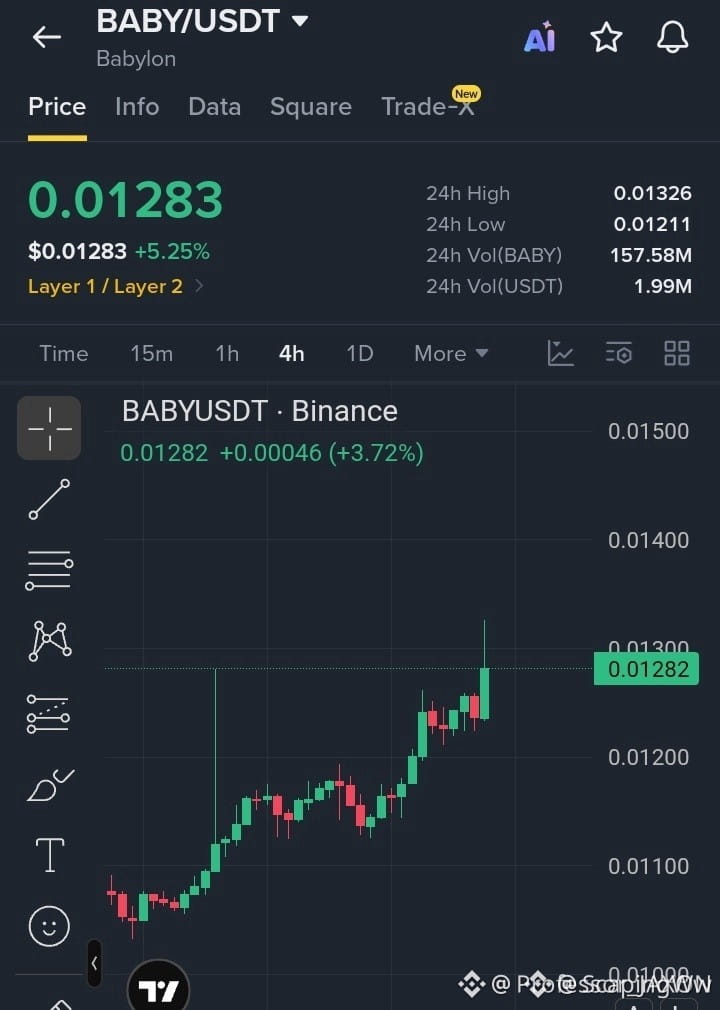
🐂 $BABY STRUCTURE STRENGTHENS AS BULLS TARGET THE EXPLOSIVE 0.013 BREAKOUT ZONE! ⚡
Entry: $0.01260 - $0.01285 ⚡
Target: $0.01325 / $0.01370 / $0.01420 🚀
Stop Loss: $0.01215 ⚠️
📌 Sellers are losing control as $BABY builds a clean 4H stair-step structure of higher highs and higher lows. 📊 Dip buyers are actively defending the lower demand band, building momentum right beneath key resistance.
💡 Maintaining strength above this reload zone clears the runway for an expansion phase into upper target liquidity. 💬 Are you riding this trend continuation or waiting for a breakout confirmation? 👇
⚠️ Not financial advice. Always manage your risk. 🛡️
🏷️ #BABY #LongSetup #Altcoins #Breakout #Crypto
🔥 💎
🐂 $BABY STRUCTURE STRENGTHENS AS BULLS TARGET THE EXPLOSIVE 0.013 BREAKOUT ZONE! ⚡
Entry: $0.01260 - $0.01285 ⚡
Target: $0.01325 / $0.01370 / $0.01420 🚀
Stop Loss: $0.01215 ⚠️
📌 Sellers are losing control as $BABY builds a clean 4H stair-step structure of higher highs and higher lows. 📊 Dip buyers are actively defending the lower demand band, building momentum right beneath key resistance.
💡 Maintaining strength above this reload zone clears the runway for an expansion phase into upper target liquidity. 💬 Are you riding this trend continuation or waiting for a breakout confirmation? 👇
⚠️ Not financial advice. Always manage your risk. 🛡️
🏷️ #BABY #LongSetup #Altcoins #Breakout #Crypto
🔥 💎
Entry: $0.01260 - $0.01285 ⚡
Target: $0.01325 / $0.01370 / $0.01420 🚀
Stop Loss: $0.01215 ⚠️
📌 Sellers are losing control as $BABY builds a clean 4H stair-step structure of higher highs and higher lows. 📊 Dip buyers are actively defending the lower demand band, building momentum right beneath key resistance.
💡 Maintaining strength above this reload zone clears the runway for an expansion phase into upper target liquidity. 💬 Are you riding this trend continuation or waiting for a breakout confirmation? 👇
⚠️ Not financial advice. Always manage your risk. 🛡️
🏷️ #BABY #LongSetup #Altcoins #Breakout #Crypto
🔥 💎
85

·
--
Bullish
🚨 JOE & BABY | Crypto Market Watch
$JOE and $BABY are catching attention as traders monitor fresh momentum across the market. 📈🔥
{spot}(JOEUSDT)
Both tokens are showing increased community interest, but volatility remains high. Key levels, trading volume and market structure will be important to watch before making any decision.
{spot}(BABYUSDT)
Not financial advice. Trade with proper risk management.
#JOE #BABY
🚨 JOE & BABY | Crypto Market Watch
$JOE and $BABY are catching attention as traders monitor fresh momentum across the market. 📈🔥
Both tokens are showing increased community interest, but volatility remains high. Key levels, trading volume and market structure will be important to watch before making any decision.
Not financial advice. Trade with proper risk management.
#JOE #BABY
$JOE and $BABY are catching attention as traders monitor fresh momentum across the market. 📈🔥
Both tokens are showing increased community interest, but volatility remains high. Key levels, trading volume and market structure will be important to watch before making any decision.
Not financial advice. Trade with proper risk management.
#JOE #BABY

142
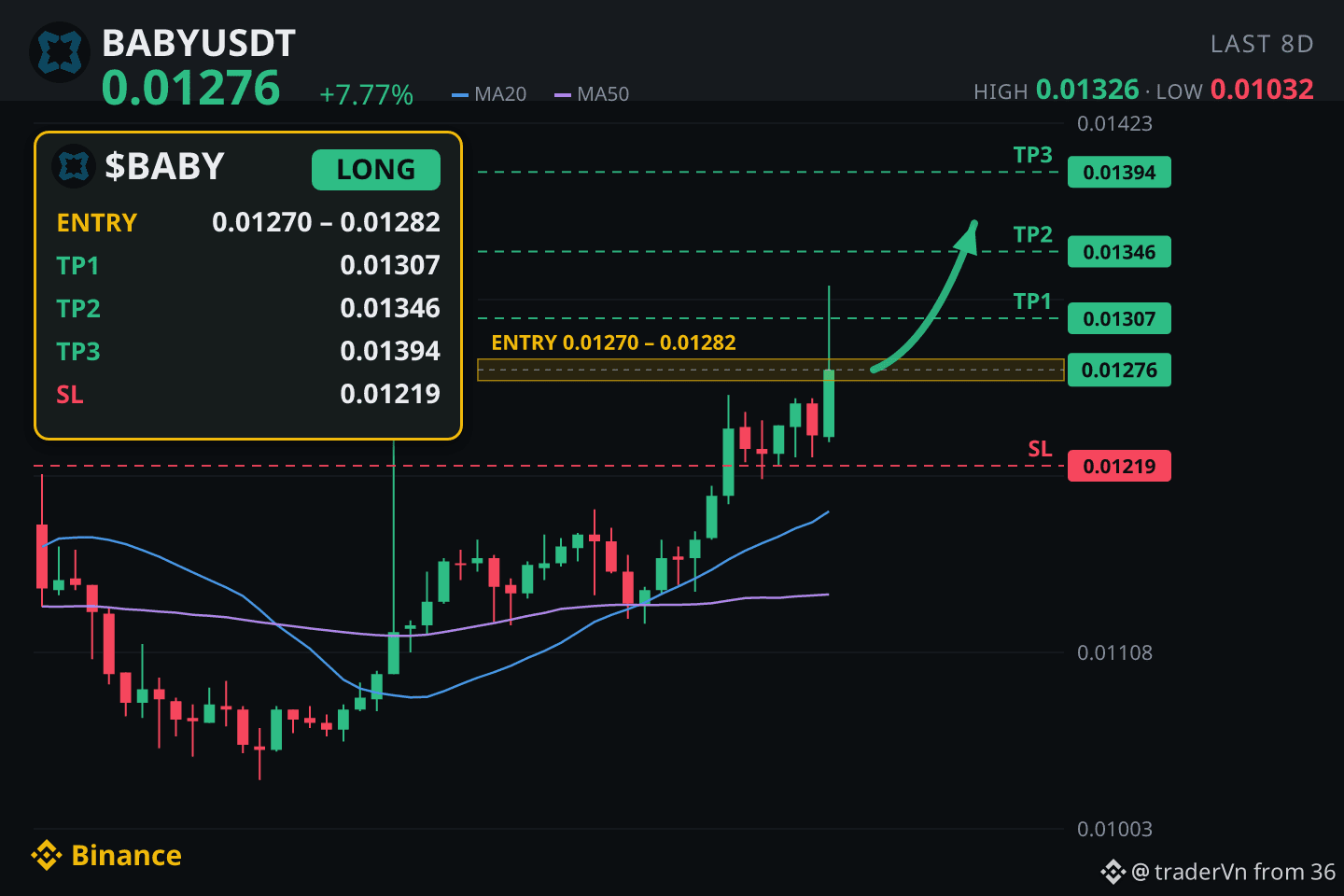
📢 BABY TRADING TOURNAMENT OFFERS BNB VOUCHERS
$BABY $MUBARAK $KERNEL
BABY is at 0.01276 USDT · +4.85% over 24h · Vol 2M
🏷️ Event type: Trading Competition · published by Binance on 22/09/2026
The upcoming BABY trading tournament aims to stimulate activity on the BABY pair, which has shown modest gains amid broader market optimism. With recent price appreciation and elevated volumes, the competition could further boost short‑term trading turnover, though the underlying fundamentals remain unchanged.
📈 Live market data — TRENDING UP
• BABY 0.01276 · 4.85% · Vol 2M
• MUBARAK · 52.6% · Vol 38M
• KERNEL · 37.3% · Vol 8M
Trading competitions reward VOLUME, so volume during the contest is inflated by design. Do not read these days as genuine interest.
#BABY #Binance
Source: https://www.binance.com/vi/support/announcement/b8ed81af5344412a8d18386f1515516d
For reference only, not financial advice (DYOR).
📢 BABY TRADING TOURNAMENT OFFERS BNB VOUCHERS
$BABY $MUBARAK $KERNEL
BABY is at 0.01276 USDT · +4.85% over 24h · Vol 2M
🏷️ Event type: Trading Competition · published by Binance on 22/09/2026
The upcoming BABY trading tournament aims to stimulate activity on the BABY pair, which has shown modest gains amid broader market optimism. With recent price appreciation and elevated volumes, the competition could further boost short‑term trading turnover, though the underlying fundamentals remain unchanged.
📈 Live market data — TRENDING UP
• BABY 0.01276 · 4.85% · Vol 2M
• MUBARAK · 52.6% · Vol 38M
• KERNEL · 37.3% · Vol 8M
Trading competitions reward VOLUME, so volume during the contest is inflated by design. Do not read these days as genuine interest.
#BABY #Binance
Source: https://www.binance.com/vi/support/announcement/b8ed81af5344412a8d18386f1515516d
For reference only, not financial advice (DYOR).
$BABY $MUBARAK $KERNEL
BABY is at 0.01276 USDT · +4.85% over 24h · Vol 2M
🏷️ Event type: Trading Competition · published by Binance on 22/09/2026
The upcoming BABY trading tournament aims to stimulate activity on the BABY pair, which has shown modest gains amid broader market optimism. With recent price appreciation and elevated volumes, the competition could further boost short‑term trading turnover, though the underlying fundamentals remain unchanged.
📈 Live market data — TRENDING UP
• BABY 0.01276 · 4.85% · Vol 2M
• MUBARAK · 52.6% · Vol 38M
• KERNEL · 37.3% · Vol 8M
Trading competitions reward VOLUME, so volume during the contest is inflated by design. Do not read these days as genuine interest.
#BABY #Binance
Source: https://www.binance.com/vi/support/announcement/b8ed81af5344412a8d18386f1515516d
For reference only, not financial advice (DYOR).
1
199
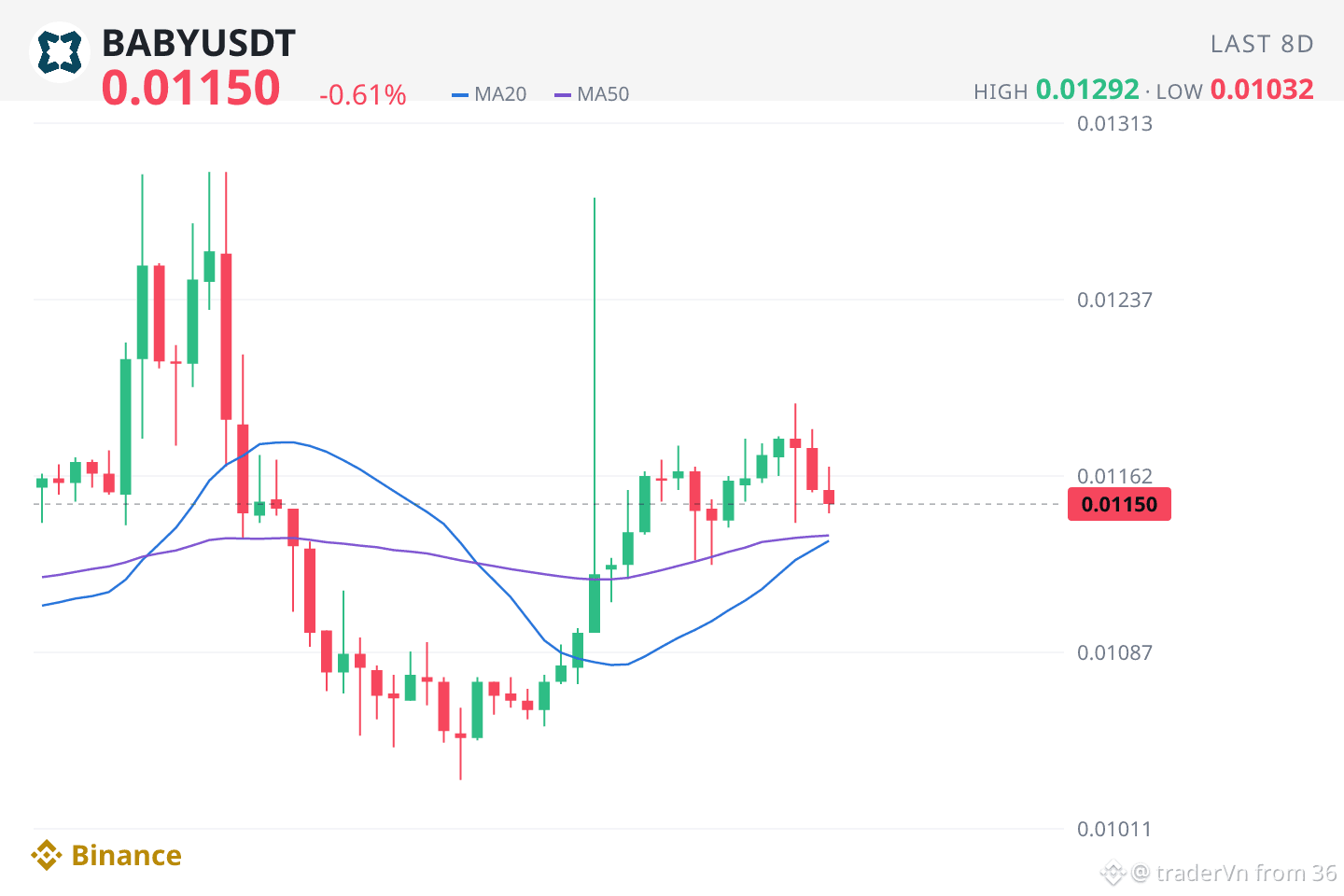
$BABY PLAN CLOSED A LOSS — TP3 MISSED BY 1.2% AND THAT STILL COUNTS AS A MISS
• Called 21 Aug at 0.01214 · spot 0.0115 (−5.27%)
Count so far: 1307 reached, 66 expired unhit — 95.19%. Missed ones are never deleted.
• The full ladder published on 21 Aug, graded 30 days later:
• TP1 0.012427 — reached · published hit rate 74.8%
• TP2 0.012813 — reached · published hit rate 50%
• TP3 0.013259 — expired unhit · best price got was 0.0131, short by 1.2% · published hit rate 30%
• Invalidation SL 0.010688 — reached, 11.96% under the call. That is the level the original post named as the point where it is wrong, and price went through it.
• Invalidation SL 0.011265 — reached, 7.21% under the call. That is the level the original post named as the point where it is wrong, and price went through it.
• Invalidation SL 0.011596 — reached, 4.48% under the call. That is the level the original post named as the point where it is wrong, and price went through it.
There is nothing to celebrate in this one. It is here because misses belong on the timeline too, in the same place the wins go.
• Levels come from historical quantiles, not forecasts. Not financial advice.
#BABY #CryptoTrading
$BABY PLAN CLOSED A LOSS — TP3 MISSED BY 1.2% AND THAT STILL COUNTS AS A MISS
• Called 21 Aug at 0.01214 · spot 0.0115 (−5.27%)
Count so far: 1307 reached, 66 expired unhit — 95.19%. Missed ones are never deleted.
• The full ladder published on 21 Aug, graded 30 days later:
• TP1 0.012427 — reached · published hit rate 74.8%
• TP2 0.012813 — reached · published hit rate 50%
• TP3 0.013259 — expired unhit · best price got was 0.0131, short by 1.2% · published hit rate 30%
• Invalidation SL 0.010688 — reached, 11.96% under the call. That is the level the original post named as the point where it is wrong, and price went through it.
• Invalidation SL 0.011265 — reached, 7.21% under the call. That is the level the original post named as the point where it is wrong, and price went through it.
• Invalidation SL 0.011596 — reached, 4.48% under the call. That is the level the original post named as the point where it is wrong, and price went through it.
There is nothing to celebrate in this one. It is here because misses belong on the timeline too, in the same place the wins go.
• Levels come from historical quantiles, not forecasts. Not financial advice.
#BABY #CryptoTrading
• Called 21 Aug at 0.01214 · spot 0.0115 (−5.27%)
Count so far: 1307 reached, 66 expired unhit — 95.19%. Missed ones are never deleted.
• The full ladder published on 21 Aug, graded 30 days later:
• TP1 0.012427 — reached · published hit rate 74.8%
• TP2 0.012813 — reached · published hit rate 50%
• TP3 0.013259 — expired unhit · best price got was 0.0131, short by 1.2% · published hit rate 30%
• Invalidation SL 0.010688 — reached, 11.96% under the call. That is the level the original post named as the point where it is wrong, and price went through it.
• Invalidation SL 0.011265 — reached, 7.21% under the call. That is the level the original post named as the point where it is wrong, and price went through it.
• Invalidation SL 0.011596 — reached, 4.48% under the call. That is the level the original post named as the point where it is wrong, and price went through it.
There is nothing to celebrate in this one. It is here because misses belong on the timeline too, in the same place the wins go.
• Levels come from historical quantiles, not forecasts. Not financial advice.
#BABY #CryptoTrading
2
96


This is a replay of that set of bearish alerts from about 6 hours ago, the “high-level distribution observation.”
Of the three contracts issued in the morning alert, none has broken into a one-way downside move: two are still in a tug-of-war, and one instead pulled back upward.
The basis for the initial call was that the chips were scattered.
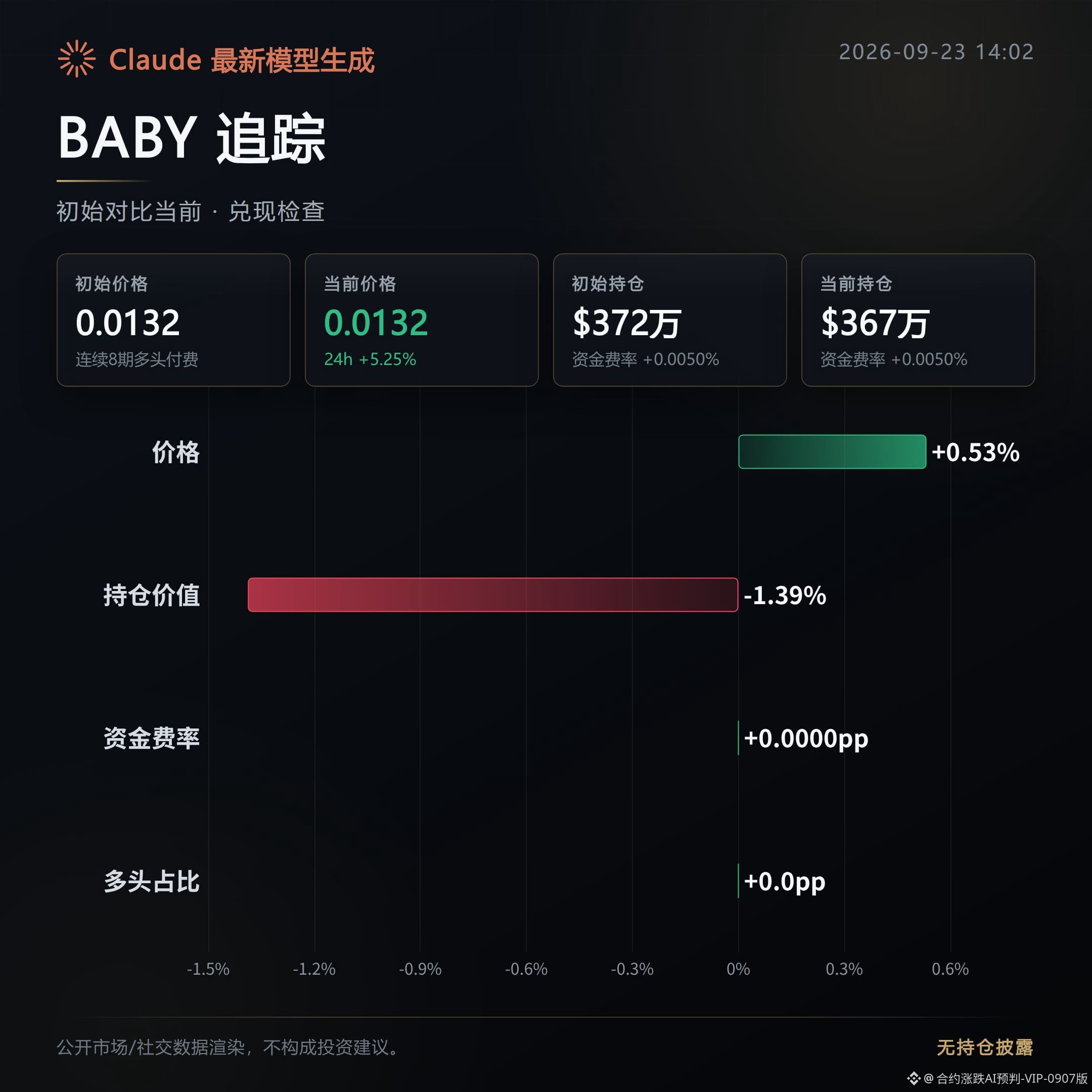
BABY: Choppy/tug-of-war. The morning bearish alert still hasn’t played out.
After the initial launch, the price rose only 0.53% and did not break into a downward trend.
The strength of the aggressive buy orders dropped from 1.13 to 0.94—follow-through willingness is weakening—but the price is still holding up. Bulls and bears are still in the midst of a struggle.
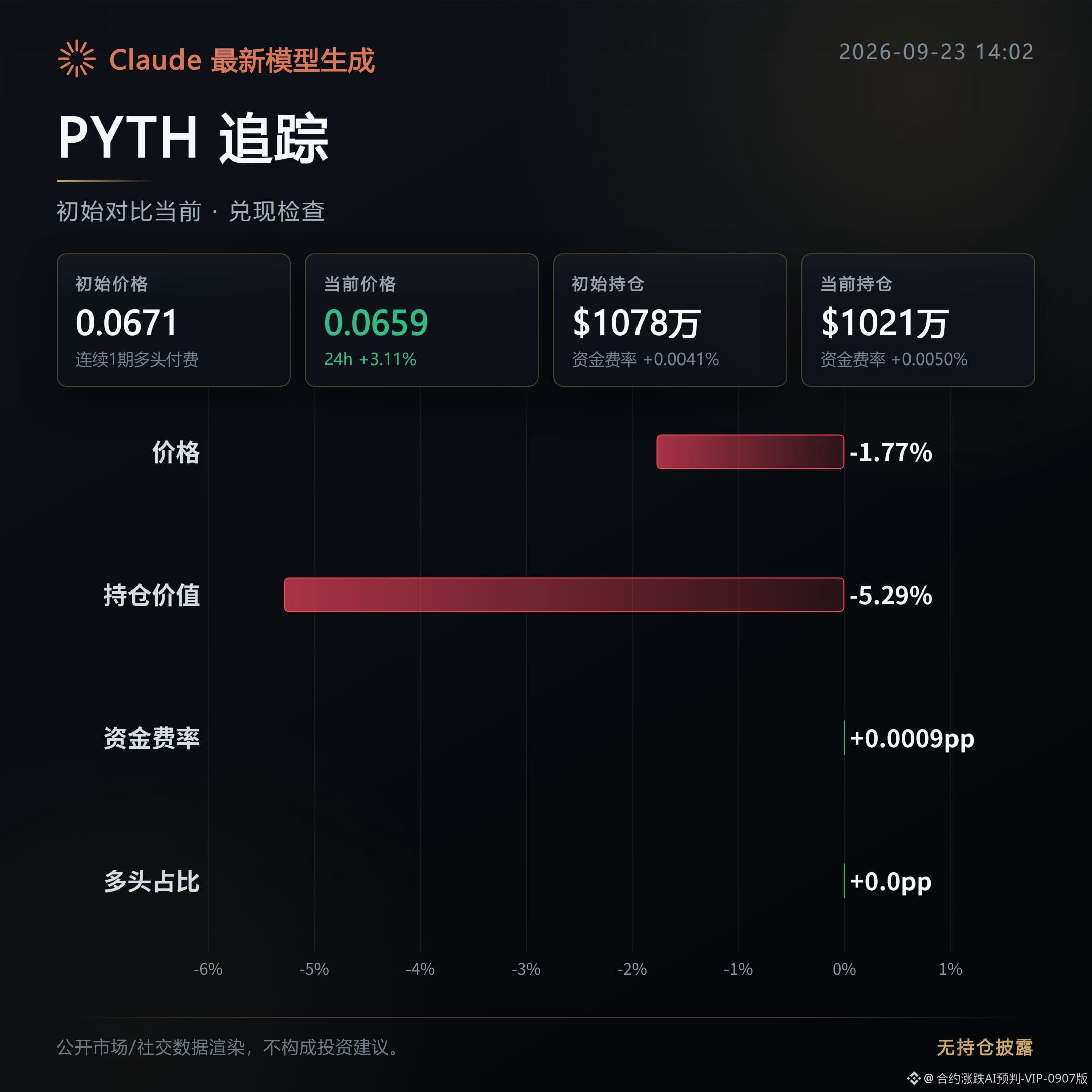
PYTH: Choppy/tug-of-war, the closest in this group to showing weakness, but it hasn’t yet been confirmed as a one-way down move.
After the initial launch, the price fell 1.77%, and open interest fell in sync by 5.29%. The two directions match, making it the one that most resembles an ongoing move.
However, aggressive buy orders only dropped from 1.19 to 0.89—the decline isn’t steep. Whether it will truly break down next hasn’t been established yet.
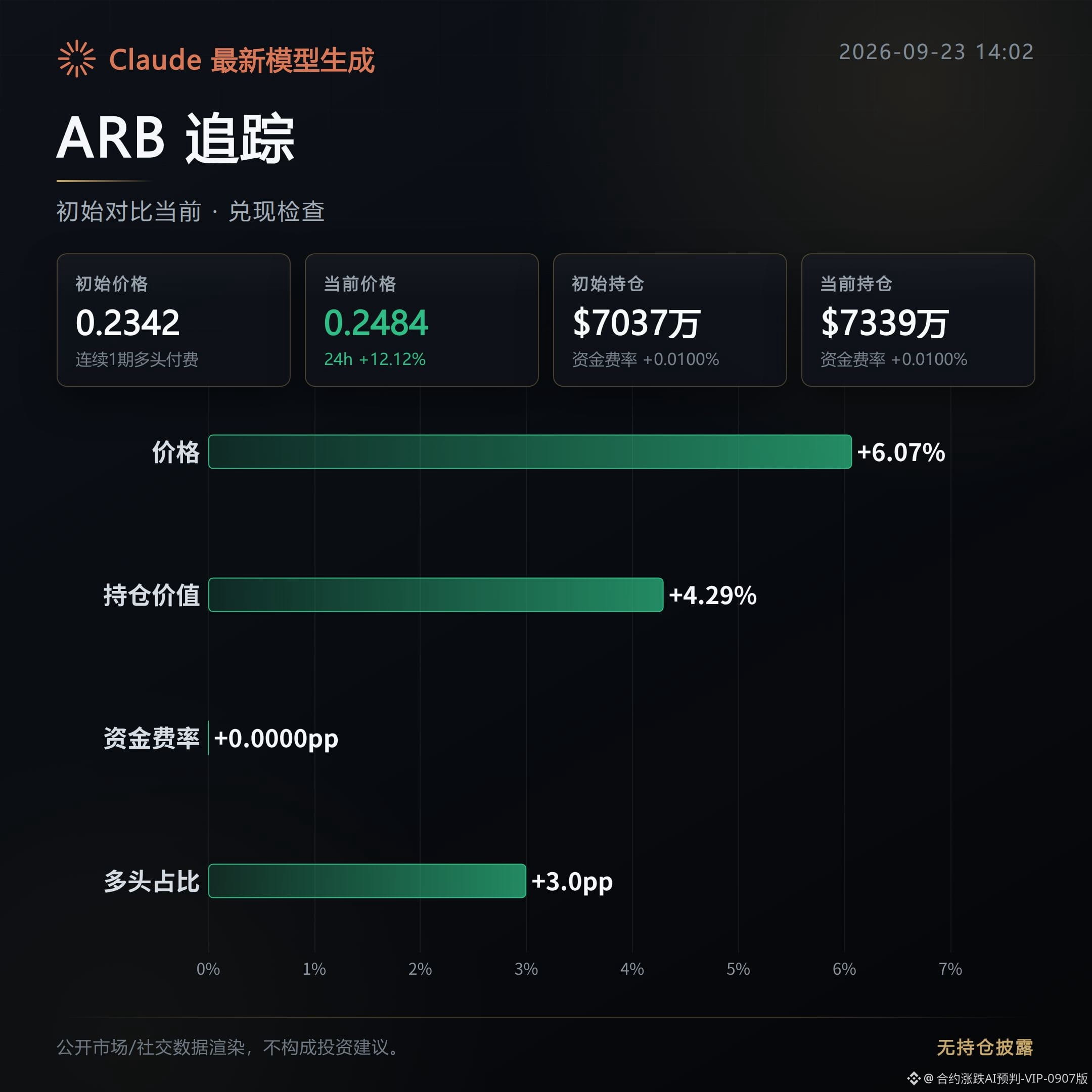
ARB: A rebound—the one that was most clearly “slapped in the face” by the morning bearish alert.
After the initial launch, instead of falling, the price surged 6.07%, and the rise/fall percentage widened by another 8.53 percentage points compared with the initial move.
Open interest increased in sync by 4.29%, while trading volume expanded by 43.13%. The price strengthening has confirmation from both position (open interest) and volume, not just an emotional spike.
This morning’s bearish alert for this set still hasn’t been fulfilled. Next, the key to watch is whether support/follow-through will truly thin out.
For BABY and PYTH, watch whether aggressive buy orders continue to retreat, and whether open interest can move down along with price. Only when both signals weaken in sync can the pullback be confirmed.
ARB’s technical indicators currently lean toward the overbought zone, and open interest is still rising with the price. If this combination continues to strengthen, the morning bearish judgment will need to be revisited.
#BABY #PYTH #ARB # Contract replay
This content is generated with the assistance of Claude Fable 5 and is for reference only. Please verify it yourself.
This is a replay of that set of bearish alerts from about 6 hours ago, the “high-level distribution observation.”
Of the three contracts issued in the morning alert, none has broken into a one-way downside move: two are still in a tug-of-war, and one instead pulled back upward.
The basis for the initial call was that the chips were scattered.
BABY: Choppy/tug-of-war. The morning bearish alert still hasn’t played out.
After the initial launch, the price rose only 0.53% and did not break into a downward trend.
The strength of the aggressive buy orders dropped from 1.13 to 0.94—follow-through willingness is weakening—but the price is still holding up. Bulls and bears are still in the midst of a struggle.
PYTH: Choppy/tug-of-war, the closest in this group to showing weakness, but it hasn’t yet been confirmed as a one-way down move.
After the initial launch, the price fell 1.77%, and open interest fell in sync by 5.29%. The two directions match, making it the one that most resembles an ongoing move.
However, aggressive buy orders only dropped from 1.19 to 0.89—the decline isn’t steep. Whether it will truly break down next hasn’t been established yet.
ARB: A rebound—the one that was most clearly “slapped in the face” by the morning bearish alert.
After the initial launch, instead of falling, the price surged 6.07%, and the rise/fall percentage widened by another 8.53 percentage points compared with the initial move.
Open interest increased in sync by 4.29%, while trading volume expanded by 43.13%. The price strengthening has confirmation from both position (open interest) and volume, not just an emotional spike.
This morning’s bearish alert for this set still hasn’t been fulfilled. Next, the key to watch is whether support/follow-through will truly thin out.
For BABY and PYTH, watch whether aggressive buy orders continue to retreat, and whether open interest can move down along with price. Only when both signals weaken in sync can the pullback be confirmed.
ARB’s technical indicators currently lean toward the overbought zone, and open interest is still rising with the price. If this combination continues to strengthen, the morning bearish judgment will need to be revisited.
#BABY #PYTH #ARB # Contract replay
This content is generated with the assistance of Claude Fable 5 and is for reference only. Please verify it yourself.
Of the three contracts issued in the morning alert, none has broken into a one-way downside move: two are still in a tug-of-war, and one instead pulled back upward.
The basis for the initial call was that the chips were scattered.
BABY: Choppy/tug-of-war. The morning bearish alert still hasn’t played out.
After the initial launch, the price rose only 0.53% and did not break into a downward trend.
The strength of the aggressive buy orders dropped from 1.13 to 0.94—follow-through willingness is weakening—but the price is still holding up. Bulls and bears are still in the midst of a struggle.
PYTH: Choppy/tug-of-war, the closest in this group to showing weakness, but it hasn’t yet been confirmed as a one-way down move.
After the initial launch, the price fell 1.77%, and open interest fell in sync by 5.29%. The two directions match, making it the one that most resembles an ongoing move.
However, aggressive buy orders only dropped from 1.19 to 0.89—the decline isn’t steep. Whether it will truly break down next hasn’t been established yet.
ARB: A rebound—the one that was most clearly “slapped in the face” by the morning bearish alert.
After the initial launch, instead of falling, the price surged 6.07%, and the rise/fall percentage widened by another 8.53 percentage points compared with the initial move.
Open interest increased in sync by 4.29%, while trading volume expanded by 43.13%. The price strengthening has confirmation from both position (open interest) and volume, not just an emotional spike.
This morning’s bearish alert for this set still hasn’t been fulfilled. Next, the key to watch is whether support/follow-through will truly thin out.
For BABY and PYTH, watch whether aggressive buy orders continue to retreat, and whether open interest can move down along with price. Only when both signals weaken in sync can the pullback be confirmed.
ARB’s technical indicators currently lean toward the overbought zone, and open interest is still rising with the price. If this combination continues to strengthen, the morning bearish judgment will need to be revisited.
#BABY #PYTH #ARB # Contract replay
This content is generated with the assistance of Claude Fable 5 and is for reference only. Please verify it yourself.
329

·
--
$BABY today is energized, it rises more than 6% and settles at $0.013, with a market capitalization of 130M that keeps it in the medium-sized projects category. This rebound shows that there are attentive buyers and that the market is giving it a vote of confidence. BABY looks like an interesting option to take advantage of momentum. #baby
{spot}(BABYUSDT)
$BABY today is energized, it rises more than 6% and settles at $0.013, with a market capitalization of 130M that keeps it in the medium-sized projects category. This rebound shows that there are attentive buyers and that the market is giving it a vote of confidence. BABY looks like an interesting option to take advantage of momentum. #baby
29

·
--
【See Rise】
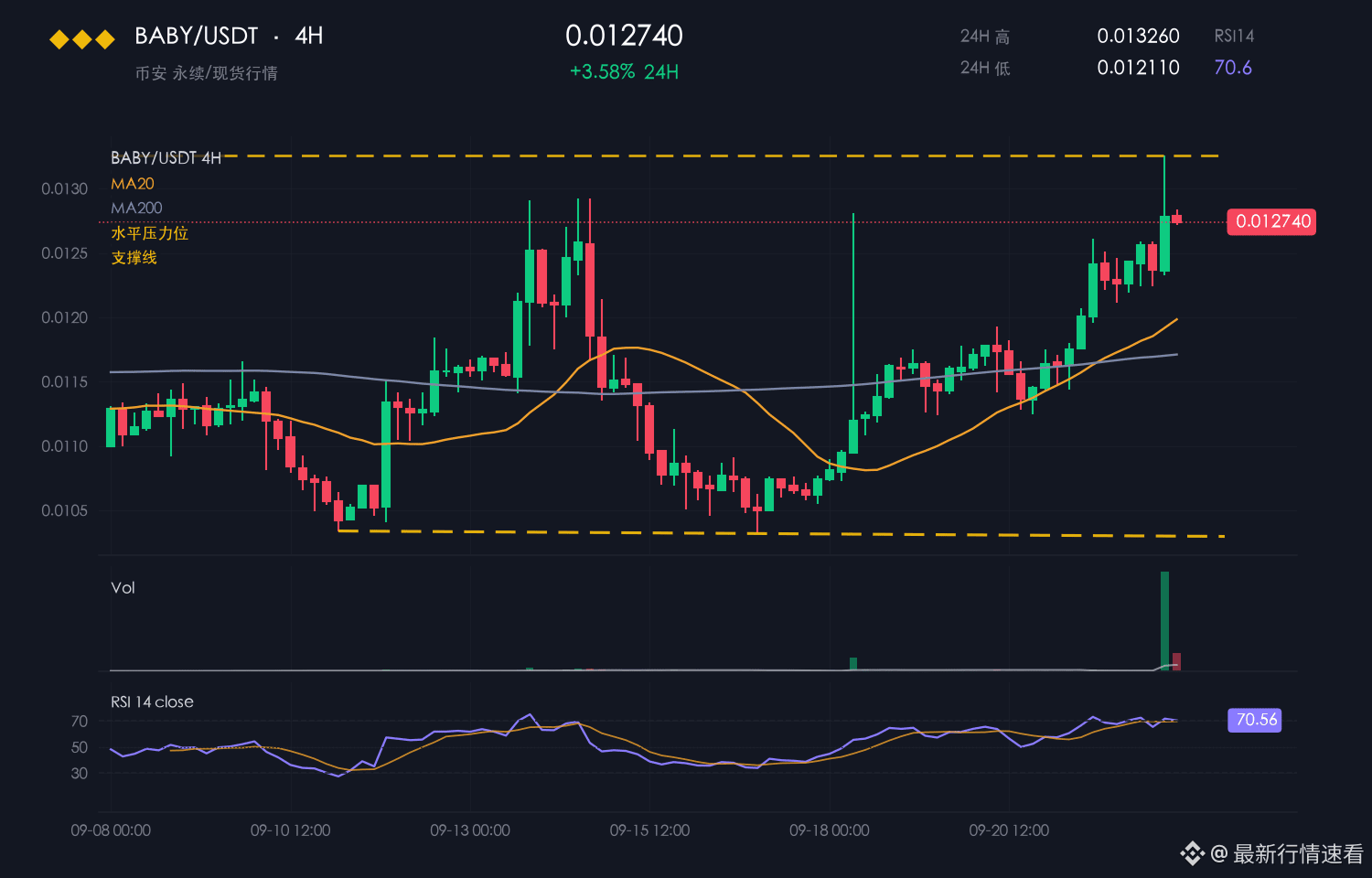
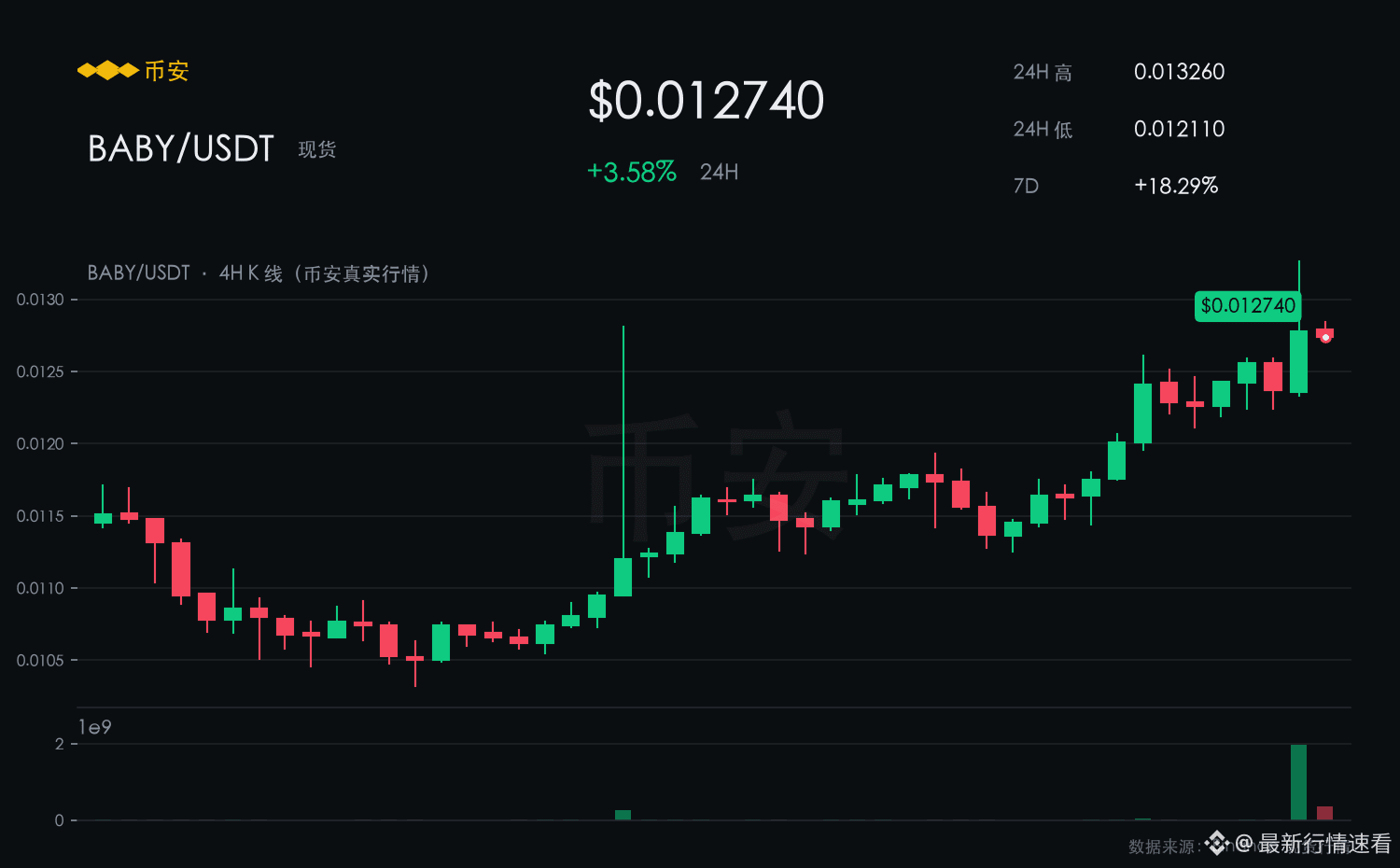
BABY is currently at 0.0127, up 3.58% over the past 24 hours, with a 7-day gain of 18.29%. The intraday range is 0.0121–0.0133, and the amplitude is 9.5%.
【Market View】
BABY’s trend is clearly decoupled from the broader market, moving to its own rhythm.
As long as 0.0121 doesn’t break, the current pullback can be considered a strong consolidation.
Compared with BTC’s +1.05%, BABY’s relative strength is stronger—this kind of asset is usually the vanguard for a rebound.
In the short term, the outlook is bullish.
【Bullish Rationale】
With a 24-hour gain of 3.58% alongside volatility within 0.0121–0.0133, the side that is going long is currently in control.
The 0.0133 area has been tested repeatedly, and the bulls have not shown signs of backing off for now.
Keep an eye on it if the broader market turns and pulls back—BABY’s high-level supply could loosen at any time.
Near-term resistance is at 0.0133; if it breaks through with increased volume, follow along. 0.0121 is the long position’s defense level for this move.
$BABY #BABY
【See Rise】
BABY is currently at 0.0127, up 3.58% over the past 24 hours, with a 7-day gain of 18.29%. The intraday range is 0.0121–0.0133, and the amplitude is 9.5%.
【Market View】
BABY’s trend is clearly decoupled from the broader market, moving to its own rhythm.
As long as 0.0121 doesn’t break, the current pullback can be considered a strong consolidation.
Compared with BTC’s +1.05%, BABY’s relative strength is stronger—this kind of asset is usually the vanguard for a rebound.
In the short term, the outlook is bullish.
【Bullish Rationale】
With a 24-hour gain of 3.58% alongside volatility within 0.0121–0.0133, the side that is going long is currently in control.
The 0.0133 area has been tested repeatedly, and the bulls have not shown signs of backing off for now.
Keep an eye on it if the broader market turns and pulls back—BABY’s high-level supply could loosen at any time.
Near-term resistance is at 0.0133; if it breaks through with increased volume, follow along. 0.0121 is the long position’s defense level for this move.
$BABY #BABY
BABY is currently at 0.0127, up 3.58% over the past 24 hours, with a 7-day gain of 18.29%. The intraday range is 0.0121–0.0133, and the amplitude is 9.5%.
【Market View】
BABY’s trend is clearly decoupled from the broader market, moving to its own rhythm.
As long as 0.0121 doesn’t break, the current pullback can be considered a strong consolidation.
Compared with BTC’s +1.05%, BABY’s relative strength is stronger—this kind of asset is usually the vanguard for a rebound.
In the short term, the outlook is bullish.
【Bullish Rationale】
With a 24-hour gain of 3.58% alongside volatility within 0.0121–0.0133, the side that is going long is currently in control.
The 0.0133 area has been tested repeatedly, and the bulls have not shown signs of backing off for now.
Keep an eye on it if the broader market turns and pulls back—BABY’s high-level supply could loosen at any time.
Near-term resistance is at 0.0133; if it breaks through with increased volume, follow along. 0.0121 is the long position’s defense level for this move.
$BABY #BABY
28

·
--
$S In the last 3.1 hours, holdings increased by 13.6%. Some people are accumulating
$BABY Net buy in half an hour: 2.04 million, volume expansion reaching 7.5x
💰 S 0.04419 BULLISH bias
🟢 Holds above 0.04550
Targets 0.04650 / 0.04720 / 0.04810
Stop-loss 0.04250
🔴 Breaks below 0.04320
Next support 0.04220 / 0.04150
🎯 The main force is currently pushing up; the half-hour volume is 1.4x. Stronger volume confirmation is still lacking. Observe whether it can hold above 0.04550 to confirm that the main force continues going long.
━━━━━━━━━
💰 BABY 0.01273 BULLISH bias
🟢 Holds above 0.01320
Targets 0.01360 / 0.01410 / 0.01450
Stop-loss 0.01220
🔴 Breaks below 0.01250
Next support 0.01210 / 0.01180
🎯 The main force is pushing up with increased volume; the half-hour volume is 7.5x. Still, there is no higher-price confirmation yet. Observe whether it can hold above 0.01320 to confirm the main force continues going long.
—
🕒 Data taken from 09-22 17:05 (UTC+8) Binance futures market; you can verify it yourself
Objective data is presented only, not investment advice—be mindful of risk.
#S #BABY
$S In the last 3.1 hours, holdings increased by 13.6%. Some people are accumulating
$BABY Net buy in half an hour: 2.04 million, volume expansion reaching 7.5x
💰 S 0.04419 BULLISH bias
🟢 Holds above 0.04550
Targets 0.04650 / 0.04720 / 0.04810
Stop-loss 0.04250
🔴 Breaks below 0.04320
Next support 0.04220 / 0.04150
🎯 The main force is currently pushing up; the half-hour volume is 1.4x. Stronger volume confirmation is still lacking. Observe whether it can hold above 0.04550 to confirm that the main force continues going long.
━━━━━━━━━
💰 BABY 0.01273 BULLISH bias
🟢 Holds above 0.01320
Targets 0.01360 / 0.01410 / 0.01450
Stop-loss 0.01220
🔴 Breaks below 0.01250
Next support 0.01210 / 0.01180
🎯 The main force is pushing up with increased volume; the half-hour volume is 7.5x. Still, there is no higher-price confirmation yet. Observe whether it can hold above 0.01320 to confirm the main force continues going long.
—
🕒 Data taken from 09-22 17:05 (UTC+8) Binance futures market; you can verify it yourself
Objective data is presented only, not investment advice—be mindful of risk.
#S #BABY
$BABY Net buy in half an hour: 2.04 million, volume expansion reaching 7.5x
💰 S 0.04419 BULLISH bias
🟢 Holds above 0.04550
Targets 0.04650 / 0.04720 / 0.04810
Stop-loss 0.04250
🔴 Breaks below 0.04320
Next support 0.04220 / 0.04150
🎯 The main force is currently pushing up; the half-hour volume is 1.4x. Stronger volume confirmation is still lacking. Observe whether it can hold above 0.04550 to confirm that the main force continues going long.
━━━━━━━━━
💰 BABY 0.01273 BULLISH bias
🟢 Holds above 0.01320
Targets 0.01360 / 0.01410 / 0.01450
Stop-loss 0.01220
🔴 Breaks below 0.01250
Next support 0.01210 / 0.01180
🎯 The main force is pushing up with increased volume; the half-hour volume is 7.5x. Still, there is no higher-price confirmation yet. Observe whether it can hold above 0.01320 to confirm the main force continues going long.
—
🕒 Data taken from 09-22 17:05 (UTC+8) Binance futures market; you can verify it yourself
Objective data is presented only, not investment advice—be mindful of risk.
#S #BABY
137

·
--
Bearish
30D trade $BABY 23.6 USDT
The $5.0056K BABY long liquidation shows forced selling near $0.0113.
I’d watch the next downside pocket if sellers remain active.
$BABY
{future}(BABYUSDT)
$AKE
{future}(AKEUSDT)
🔴 LIQUIDITY ZONE HIT 🔴
Long liquidation spotted 🧨
$5.0056K cleared at $0.0113
Downside liquidity swept — watch reaction 👀
🎯 TP Targets:
TP1: ~$0.01119
TP2: ~$0.01102
TP3: ~$0.01085
#baby
The $5.0056K BABY long liquidation shows forced selling near $0.0113.
I’d watch the next downside pocket if sellers remain active.
$BABY
$AKE
🔴 LIQUIDITY ZONE HIT 🔴
Long liquidation spotted 🧨
$5.0056K cleared at $0.0113
Downside liquidity swept — watch reaction 👀
🎯 TP Targets:
TP1: ~$0.01119
TP2: ~$0.01102
TP3: ~$0.01085
#baby
I’d watch the next downside pocket if sellers remain active.
$BABY
$AKE
🔴 LIQUIDITY ZONE HIT 🔴
Long liquidation spotted 🧨
$5.0056K cleared at $0.0113
Downside liquidity swept — watch reaction 👀
🎯 TP Targets:
TP1: ~$0.01119
TP2: ~$0.01102
TP3: ~$0.01085
#baby
365

·
--
📉 $BABY Bearish Rejection at Key Resistance
Setup: 🔴 SHORT $BABY (FUTURES)
🎯 Entry: 0.01143
🛑 Stop-Loss: 0.01152 (-0.79%)
✅ Take-Profit: 0.01120 (+2.01%)
⚖️ Risk/Reward: 1:2.6
🔍 Technical Reasoning:
Price pulled back directly into the 61.8%–65% Fibonacci resistance pocket on the 1-hour chart, where sellers actively absorbed incoming bids, favoring a resumption of the downtrend.
💡 Key Confluences:
• Spot+Futures ✓
• 📊 ATR 1.3% — healthy volatility
• 🚀 Volume ×2.9 above average
🚫 Invalidation Rule: If a 1-hour candle closes above $0.01152 (+0.79%), this bearish thesis is invalidated. Cut position immediately.
💡 Trade Management: Secure 50% profit at Take-Profit target ($0.01120 +2.01%) and move Stop-Loss to Breakeven to eliminate downside risk.
📊 Market Metrics:
• Funding: 0.0050% (Neutral) • Next: 3h 38m
• Open Interest (OI): $3.67M
• 24h Volume: $16.86M
• 24h Range: 0.01106 — 0.01281 (-6.1%)
📈 Strategy Track Record: WR 40% over 118 trades
#BABY #CryptoTrading #Altcoins #BinanceSquare
⚠️ Not financial advice. Always manage your risk.
📉 $BABY Bearish Rejection at Key Resistance
Setup: 🔴 SHORT $BABY (FUTURES)
🎯 Entry: 0.01143
🛑 Stop-Loss: 0.01152 (-0.79%)
✅ Take-Profit: 0.01120 (+2.01%)
⚖️ Risk/Reward: 1:2.6
🔍 Technical Reasoning:
Price pulled back directly into the 61.8%–65% Fibonacci resistance pocket on the 1-hour chart, where sellers actively absorbed incoming bids, favoring a resumption of the downtrend.
💡 Key Confluences:
• Spot+Futures ✓
• 📊 ATR 1.3% — healthy volatility
• 🚀 Volume ×2.9 above average
🚫 Invalidation Rule: If a 1-hour candle closes above $0.01152 (+0.79%), this bearish thesis is invalidated. Cut position immediately.
💡 Trade Management: Secure 50% profit at Take-Profit target ($0.01120 +2.01%) and move Stop-Loss to Breakeven to eliminate downside risk.
📊 Market Metrics:
• Funding: 0.0050% (Neutral) • Next: 3h 38m
• Open Interest (OI): $3.67M
• 24h Volume: $16.86M
• 24h Range: 0.01106 — 0.01281 (-6.1%)
📈 Strategy Track Record: WR 40% over 118 trades
#BABY #CryptoTrading #Altcoins #BinanceSquare
⚠️ Not financial advice. Always manage your risk.
Setup: 🔴 SHORT $BABY (FUTURES)
🎯 Entry: 0.01143
🛑 Stop-Loss: 0.01152 (-0.79%)
✅ Take-Profit: 0.01120 (+2.01%)
⚖️ Risk/Reward: 1:2.6
🔍 Technical Reasoning:
Price pulled back directly into the 61.8%–65% Fibonacci resistance pocket on the 1-hour chart, where sellers actively absorbed incoming bids, favoring a resumption of the downtrend.
💡 Key Confluences:
• Spot+Futures ✓
• 📊 ATR 1.3% — healthy volatility
• 🚀 Volume ×2.9 above average
🚫 Invalidation Rule: If a 1-hour candle closes above $0.01152 (+0.79%), this bearish thesis is invalidated. Cut position immediately.
💡 Trade Management: Secure 50% profit at Take-Profit target ($0.01120 +2.01%) and move Stop-Loss to Breakeven to eliminate downside risk.
📊 Market Metrics:
• Funding: 0.0050% (Neutral) • Next: 3h 38m
• Open Interest (OI): $3.67M
• 24h Volume: $16.86M
• 24h Range: 0.01106 — 0.01281 (-6.1%)
📈 Strategy Track Record: WR 40% over 118 trades
#BABY #CryptoTrading #Altcoins #BinanceSquare
⚠️ Not financial advice. Always manage your risk.
1
210

·
--
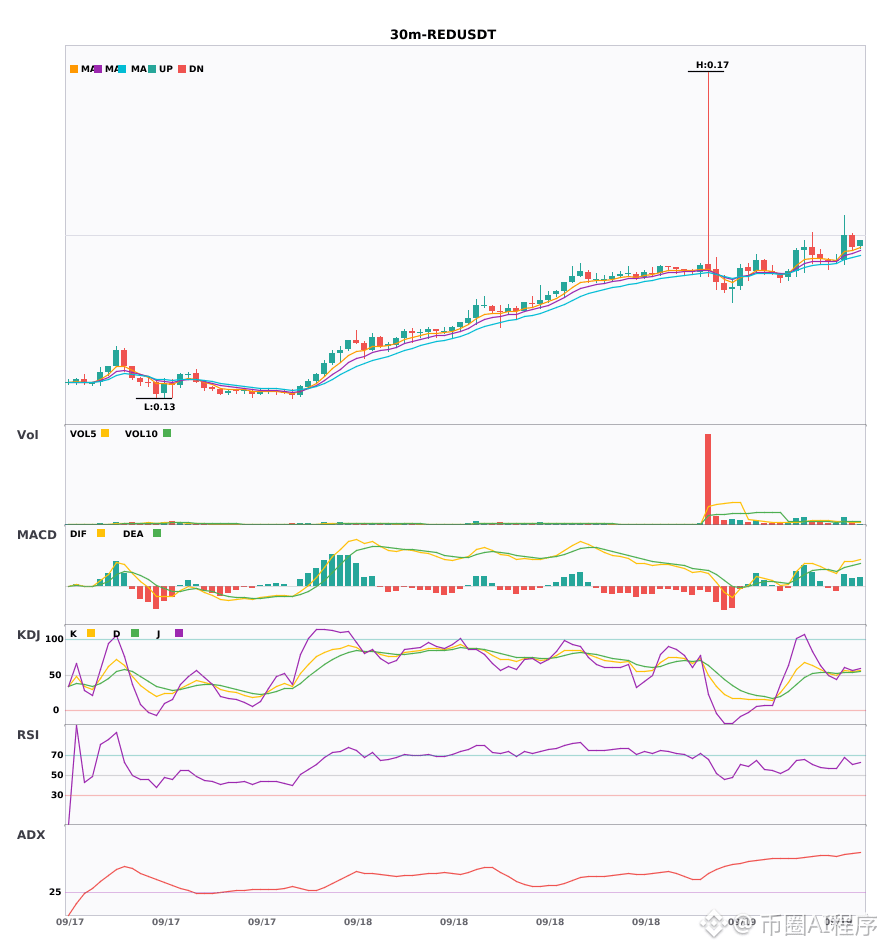
Three-currency multi-period resonance — 30-minute bullish alignment, 4-hour bullish trend confirmation🔥
════════════════════
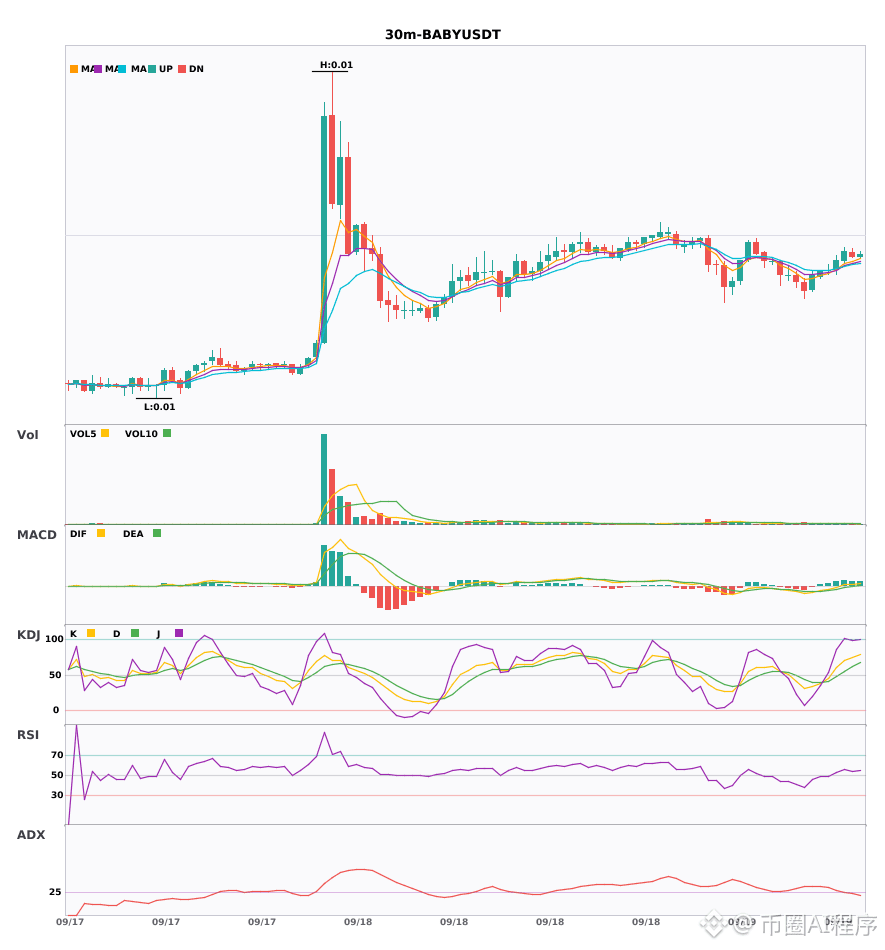
🔴 $BABY 30 minutes Bullish Signal
⚠️ Technicals: This is a multi-period resonance long signal. 4-hour bullish confirmation; 30-minute entry/exit points. MACD forms a bullish crossover with volume expansion; moving averages are bullishly aligned; KDJ K crosses above D without being overbought; volume is 1.4x.
════════════════════
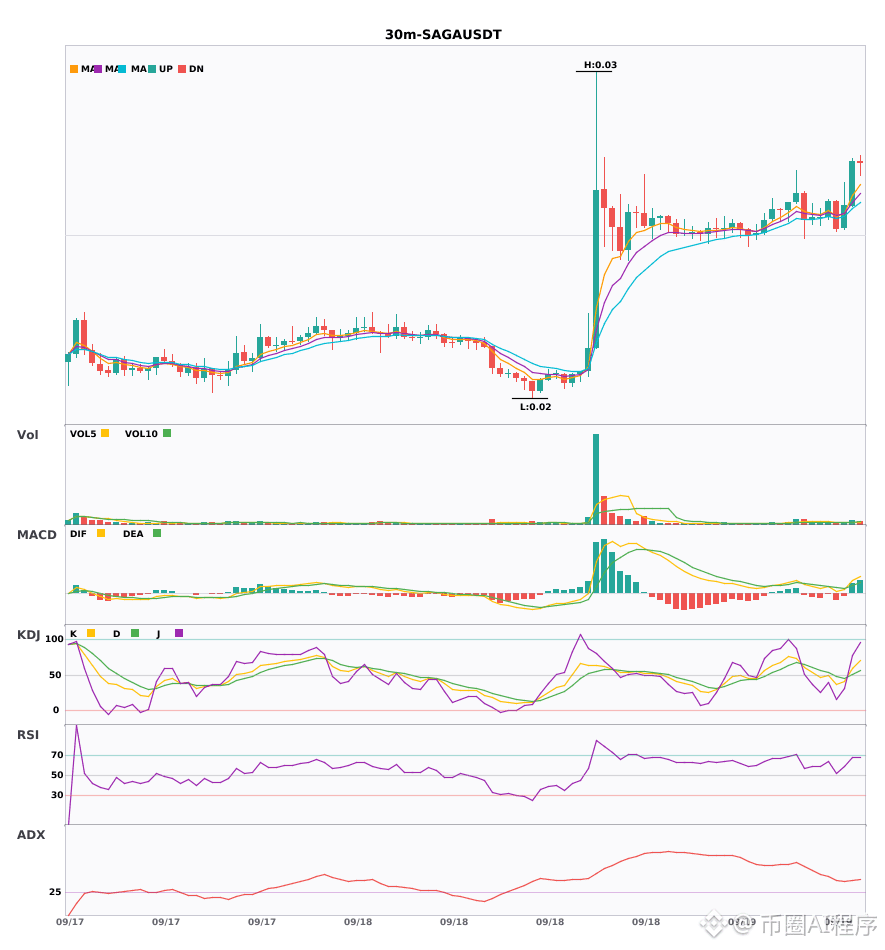
🔴 $SAGA 30 minutes Bullish Signal
⚠️ Technicals: Multi-period resonance! 4-hour bullish confirmation. 30-minute entry/exit signal: MACD bullish crossover above zero with volume expansion; moving averages bullishly aligned; KDJ golden cross not overbought. Short-term bias: bullish.
════════════════════
🔴 $RED 30 minutes Bullish Signal
⚠️ Technicals: 4-hour bullish resonance confirmed. 30-minute entry. MACD bullish crossover above zero; bullish momentum released. EMA5 > EMA8 > EMA13 with bullish alignment. KDJ golden cross; short-term bullish (K = 55.8, D = 53.1). Trading volume expanded (2.1x).
════════════════════
🔔 Watch for first-hand market fluctuations 🔔
#多周期共振 #BABY #SAGA #RED
📌 When trading, pay attention to whether the candlestick pattern matches
Three-currency multi-period resonance — 30-minute bullish alignment, 4-hour bullish trend confirmation🔥
════════════════════
🔴 $BABY 30 minutes Bullish Signal
⚠️ Technicals: This is a multi-period resonance long signal. 4-hour bullish confirmation; 30-minute entry/exit points. MACD forms a bullish crossover with volume expansion; moving averages are bullishly aligned; KDJ K crosses above D without being overbought; volume is 1.4x.
════════════════════
🔴 $SAGA 30 minutes Bullish Signal
⚠️ Technicals: Multi-period resonance! 4-hour bullish confirmation. 30-minute entry/exit signal: MACD bullish crossover above zero with volume expansion; moving averages bullishly aligned; KDJ golden cross not overbought. Short-term bias: bullish.
════════════════════
🔴 $RED 30 minutes Bullish Signal
⚠️ Technicals: 4-hour bullish resonance confirmed. 30-minute entry. MACD bullish crossover above zero; bullish momentum released. EMA5 > EMA8 > EMA13 with bullish alignment. KDJ golden cross; short-term bullish (K = 55.8, D = 53.1). Trading volume expanded (2.1x).
════════════════════
🔔 Watch for first-hand market fluctuations 🔔
#多周期共振 #BABY #SAGA #RED
📌 When trading, pay attention to whether the candlestick pattern matches
════════════════════
🔴 $BABY 30 minutes Bullish Signal
⚠️ Technicals: This is a multi-period resonance long signal. 4-hour bullish confirmation; 30-minute entry/exit points. MACD forms a bullish crossover with volume expansion; moving averages are bullishly aligned; KDJ K crosses above D without being overbought; volume is 1.4x.
════════════════════
🔴 $SAGA 30 minutes Bullish Signal
⚠️ Technicals: Multi-period resonance! 4-hour bullish confirmation. 30-minute entry/exit signal: MACD bullish crossover above zero with volume expansion; moving averages bullishly aligned; KDJ golden cross not overbought. Short-term bias: bullish.
════════════════════
🔴 $RED 30 minutes Bullish Signal
⚠️ Technicals: 4-hour bullish resonance confirmed. 30-minute entry. MACD bullish crossover above zero; bullish momentum released. EMA5 > EMA8 > EMA13 with bullish alignment. KDJ golden cross; short-term bullish (K = 55.8, D = 53.1). Trading volume expanded (2.1x).
════════════════════
🔔 Watch for first-hand market fluctuations 🔔
#多周期共振 #BABY #SAGA #RED
📌 When trading, pay attention to whether the candlestick pattern matches
14

·
--
Bullish
$BABY is showing strong bullish momentum.
{future}(BABYUSDT)
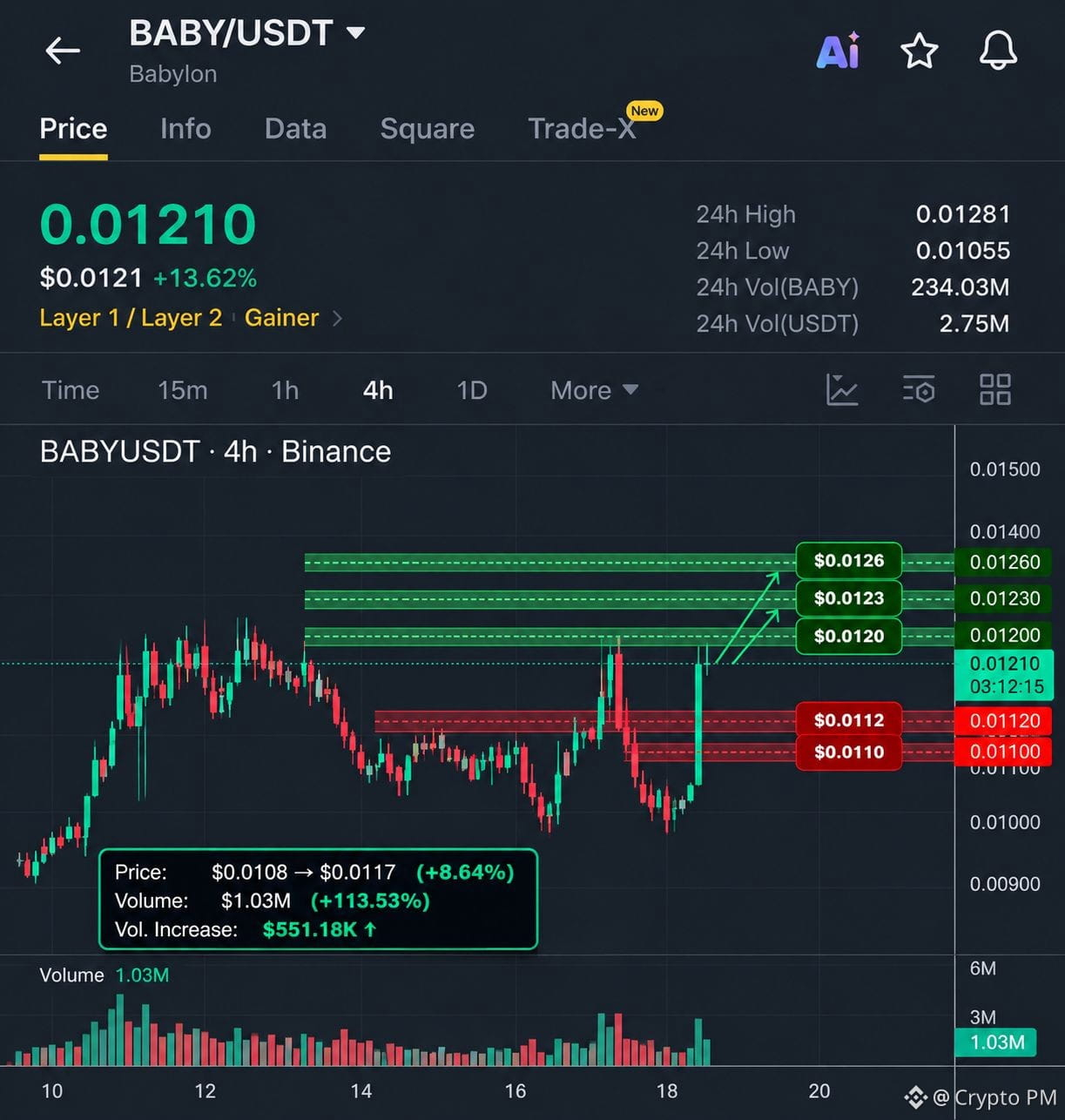
The price moved from $0.0108 to $0.0117, recording a +8.64% gain.
📊 Volume surged to $1.03M, up 113.53%, with an additional $551.18K in volume , a sharp increase in trading activity.
The 4H chart shows $BABY recovering strongly from the $0.0105–$0.0110 area and pushing back toward the recent highs. The volume expansion adds confirmation to the current bullish move.
🎯 Levels to watch: • $0.0120 • $0.0123 • $0.0126
Key support: $0.0110–$0.0112
A sustained breakout above $0.0120 with strong volume could open the way toward $0.0123 and $0.0126.
#baby
$BABY is showing strong bullish momentum.
The price moved from $0.0108 to $0.0117, recording a +8.64% gain.
📊 Volume surged to $1.03M, up 113.53%, with an additional $551.18K in volume , a sharp increase in trading activity.
The 4H chart shows $BABY recovering strongly from the $0.0105–$0.0110 area and pushing back toward the recent highs. The volume expansion adds confirmation to the current bullish move.
🎯 Levels to watch: • $0.0120 • $0.0123 • $0.0126
Key support: $0.0110–$0.0112
A sustained breakout above $0.0120 with strong volume could open the way toward $0.0123 and $0.0126.
#baby
The price moved from $0.0108 to $0.0117, recording a +8.64% gain.
📊 Volume surged to $1.03M, up 113.53%, with an additional $551.18K in volume , a sharp increase in trading activity.
The 4H chart shows $BABY recovering strongly from the $0.0105–$0.0110 area and pushing back toward the recent highs. The volume expansion adds confirmation to the current bullish move.
🎯 Levels to watch: • $0.0120 • $0.0123 • $0.0126
Key support: $0.0110–$0.0112
A sustained breakout above $0.0120 with strong volume could open the way toward $0.0123 and $0.0126.
#baby
1
2
1.2k

·
--
Holding $BABY 3 USDT
🚀$BABY Today isn’t just a candle story…
After it touched $0.01073, it calmly bounced back above $0.0115.
The beautiful part is that the rebound came from an area where selling was clearly evident,
but the real test is still ahead
near $0.0128 — today’s high.
If price stays above $0.0110, the market says buyers haven’t disappeared.
If it breaks, pressure will return quickly.
BABY$ is now in a simple but delicate moment:
either the bounce turns into confidence…
or it ends up being just a hope candle amid market noise.
{future}(BABYUSDT)
#baby #altcoins #BinanceSquare
🚀$BABY Today isn’t just a candle story…
After it touched $0.01073, it calmly bounced back above $0.0115.
The beautiful part is that the rebound came from an area where selling was clearly evident,
but the real test is still ahead
near $0.0128 — today’s high.
If price stays above $0.0110, the market says buyers haven’t disappeared.
If it breaks, pressure will return quickly.
BABY$ is now in a simple but delicate moment:
either the bounce turns into confidence…
or it ends up being just a hope candle amid market noise.
#baby #altcoins #BinanceSquare
After it touched $0.01073, it calmly bounced back above $0.0115.
The beautiful part is that the rebound came from an area where selling was clearly evident,
but the real test is still ahead
near $0.0128 — today’s high.
If price stays above $0.0110, the market says buyers haven’t disappeared.
If it breaks, pressure will return quickly.
BABY$ is now in a simple but delicate moment:
either the bounce turns into confidence…
or it ends up being just a hope candle amid market noise.
#baby #altcoins #BinanceSquare
2
34

$BABY 4 hour-level multi-head (bullish) technical signals
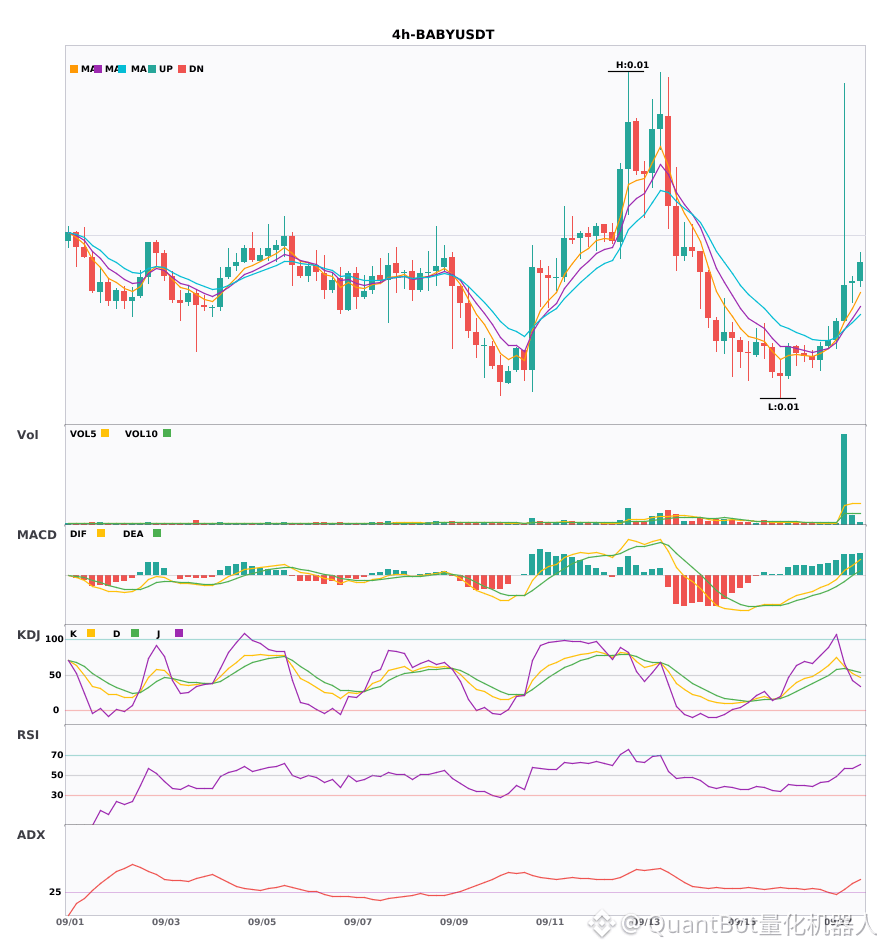
📈 $BABY | 4-hour bullish signal
━━━━━━━━━━━━━━━━━━
Technical Analysis: ADX is at 31 with a clear trend; MACD-DIF has broken above the zero axis and turned bullish; EMA5/8/13 are in a bullish alignment; KDJ is strong (K61.4, D59.1), with a volume increase of 8.2x.
Price Movement: 2.6600%
━━━━━━━━━━━━━━━━━━
#技术分析 #BABY
📌 The above content is for reference only and does not constitute investment advice
$BABY 4 hour-level multi-head (bullish) technical signals
📈 $BABY | 4-hour bullish signal
━━━━━━━━━━━━━━━━━━
Technical Analysis: ADX is at 31 with a clear trend; MACD-DIF has broken above the zero axis and turned bullish; EMA5/8/13 are in a bullish alignment; KDJ is strong (K61.4, D59.1), with a volume increase of 8.2x.
Price Movement: 2.6600%
━━━━━━━━━━━━━━━━━━
#技术分析 #BABY
📌 The above content is for reference only and does not constitute investment advice
📈 $BABY | 4-hour bullish signal
━━━━━━━━━━━━━━━━━━
Technical Analysis: ADX is at 31 with a clear trend; MACD-DIF has broken above the zero axis and turned bullish; EMA5/8/13 are in a bullish alignment; KDJ is strong (K61.4, D59.1), with a volume increase of 8.2x.
Price Movement: 2.6600%
━━━━━━━━━━━━━━━━━━
#技术分析 #BABY
📌 The above content is for reference only and does not constitute investment advice
97
Log in to explore more content
Join global crypto users on Binance Square
⚡️ Get latest and useful information about crypto.
💬 Trusted by the world’s largest crypto exchange.
👍 Discover real insights from verified creators.
Email / Phone number
Trending Topics
1
#AIStocksWhatNext
581,659 views
4,353 Discussing
2
#21SharesLaunchesEuropesFirstZcashETP
2,869 views
161 Discussing
3
#CardanoJoinsX402PaymentStandard
2,078 views
135 Discussing
4
#BitcoinTops$87KAtEightMonthHigh
4,563 views
60 Discussing
5
#ZECBreaksAbove$1600AtRecordHigh
2,132 views
48 Discussing
6
#BitwiseNEARStakingETPAssetsTop$100M
20,534 views
68 Discussing
7
#BitcoinBreaksAboveMayHighNears$86K
25,902 views
251 Discussing
8
#DogecoinRises15%
92,787 views
1,558 Discussing
9
#$14BBitcoinOptionsExpireFriday
7,560 views
109 Discussing
10
#BNBMarketCapPassesBNYMellon
56,953 views
1,228 Discussing