

#brekingnews
brekingnews
74,550 views
99 Discussing
Hot
Latest
·
--
Bullish
#imfsayselsalvadorbtcnopublicfunds
🚨:#brekingnews
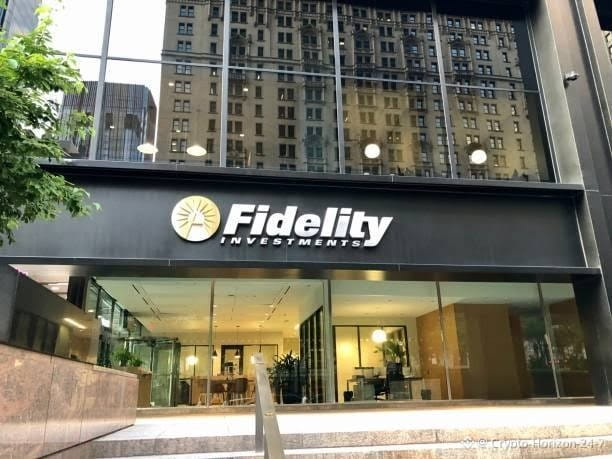
: The company "Fidelity" -which manages assets worth $5 trillion- has just bought Bitcoin worth more than $130 million.
A massive surge of capital is flowing into Bitcoin right now.
Get ready for what’s coming.#USIranTradeTankerStrikesEscalate $BTC
$SOL #BitcoinETFsStill$1BShortIn2026
$ETH
{spot}(BTCUSDT)
{spot}(SOLUSDT)
{spot}(ETHUSDT)
#imfsayselsalvadorbtcnopublicfunds
🚨:#brekingnews
: The company "Fidelity" -which manages assets worth $5 trillion- has just bought Bitcoin worth more than $130 million.
A massive surge of capital is flowing into Bitcoin right now.
Get ready for what’s coming.#USIranTradeTankerStrikesEscalate $BTC
$SOL #BitcoinETFsStill$1BShortIn2026
$ETH
🚨:#brekingnews
: The company "Fidelity" -which manages assets worth $5 trillion- has just bought Bitcoin worth more than $130 million.
A massive surge of capital is flowing into Bitcoin right now.
Get ready for what’s coming.#USIranTradeTankerStrikesEscalate $BTC
$SOL #BitcoinETFsStill$1BShortIn2026
$ETH
1
1
197

🇺🇸🇮🇷 America is ready to restart strikes on Iran if a deal cannot be reached — Secretary Pete Hegseth
#IRANIANPRESIDENT #Iran #US #brekingnews #Binance
🇺🇸🇮🇷 America is ready to restart strikes on Iran if a deal cannot be reached — Secretary Pete Hegseth
#IRANIANPRESIDENT #Iran #US #brekingnews #Binance
#IRANIANPRESIDENT #Iran #US #brekingnews #Binance

184

·
--
Bullish
Gianni Infantino stated that the World Cup would be "impossible" without Trump’s backing, emphasizing he has "no regrets" about choosing the U.S. as a co-host, according to The Athletic.
This comment comes after the controversy surrounding the denial of entry for Somali referee Omar Artan in Miami, where U.S. authorities claimed he had "links to alleged members of terrorist organizations," according to AP.
The media reaction was swift: British pundit Gary Lineker dubbed Infantino as "Sycophant-ino," criticizing his closeness to the U.S. president in an interview with Bloomberg.
#brekingnews
$CHZ
{future}(CHZUSDT)
$ACM
{spot}(ACMUSDT)
$ASR
{future}(ASRUSDT)
Gianni Infantino stated that the World Cup would be "impossible" without Trump’s backing, emphasizing he has "no regrets" about choosing the U.S. as a co-host, according to The Athletic.
This comment comes after the controversy surrounding the denial of entry for Somali referee Omar Artan in Miami, where U.S. authorities claimed he had "links to alleged members of terrorist organizations," according to AP.
The media reaction was swift: British pundit Gary Lineker dubbed Infantino as "Sycophant-ino," criticizing his closeness to the U.S. president in an interview with Bloomberg.
#brekingnews
$CHZ
$ACM
$ASR
This comment comes after the controversy surrounding the denial of entry for Somali referee Omar Artan in Miami, where U.S. authorities claimed he had "links to alleged members of terrorist organizations," according to AP.
The media reaction was swift: British pundit Gary Lineker dubbed Infantino as "Sycophant-ino," criticizing his closeness to the U.S. president in an interview with Bloomberg.
#brekingnews
$CHZ
$ACM
$ASR

2
559

Hello Traders, ✅📈
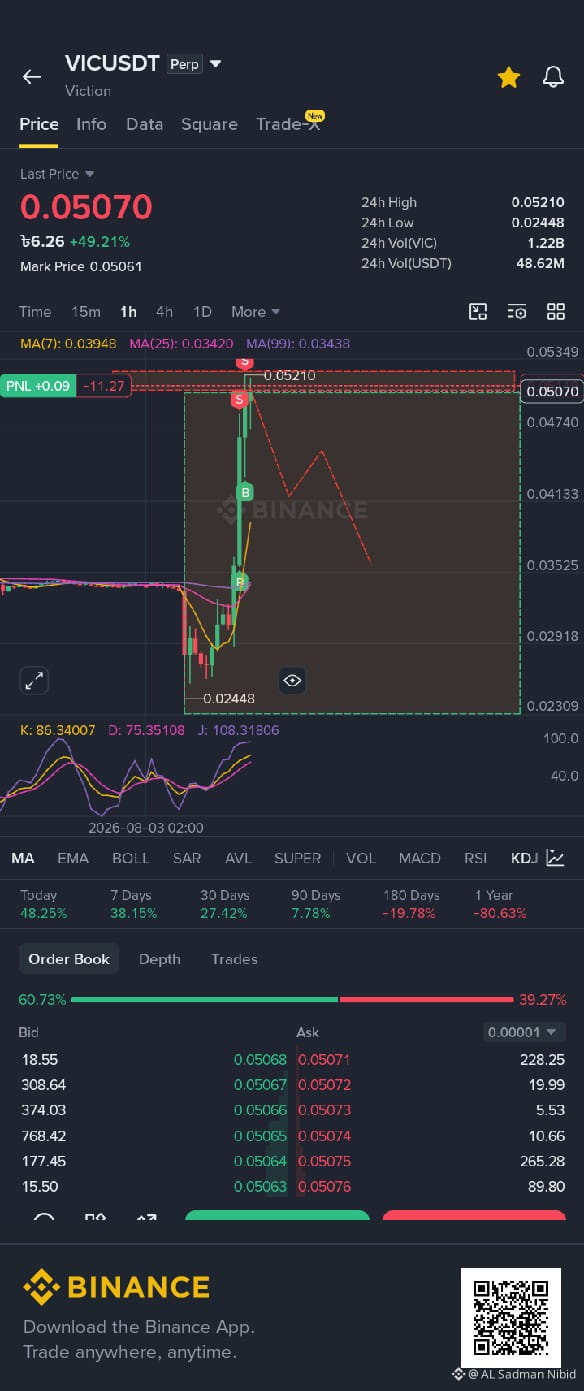
$VIC SHORT🔴 a massive down waiting
this is Delisting Token
Entry : 0.051 - 0.053
Boom shot : 0.039- 0.035
#brekingnews #btcpumping #ShortSignals #SHORT📉
Hello Traders, ✅📈
$VIC SHORT🔴 a massive down waiting
this is Delisting Token
Entry : 0.051 - 0.053
Boom shot : 0.039- 0.035
#brekingnews #btcpumping #ShortSignals #SHORT📉
$VIC SHORT🔴 a massive down waiting
this is Delisting Token
Entry : 0.051 - 0.053
Boom shot : 0.039- 0.035
#brekingnews #btcpumping #ShortSignals #SHORT📉
1
192

·
--
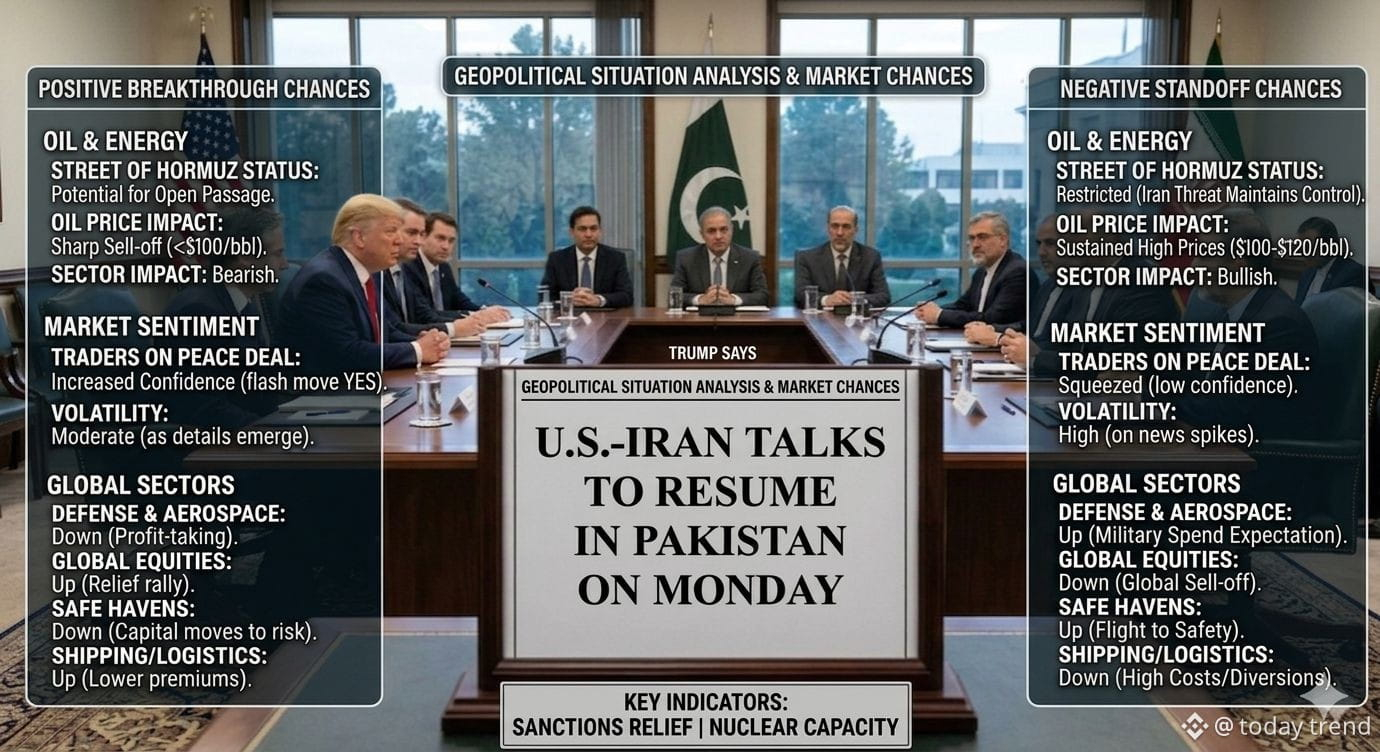
#brekingnews Trump says talks between U.S. and Iran to resume in Pakistan on Monday.
#binancenews #market #xauusd #todaytrend
#brekingnews Trump says talks between U.S. and Iran to resume in Pakistan on Monday.
#binancenews #market #xauusd #todaytrend
#binancenews #market #xauusd #todaytrend
5
1
513

#brekingnews
THE GOLD CRAZE JUST WENT INSANE! 🤯
#Sydney has lost its mind! People are literally camping outside ABC Bullion stores like it’s the end of civilization. Tents, sleeping bags, coffee — all for a piece of gold. 😂
🔥 Gold just shattered history — $4,217 per ounce!
Crowds are rushing like it’s Walmart Black Friday, only this time, the prize is a shiny yellow rock.
But let’s be real…
Why are people fighting for metal when crypto already gives you digital gold with a tap? 📱⚡
While others wait in the cold, hoping the price doesn’t crash before sunrise,
Smart money is moving silently — on-chain, borderless, unstoppable. 🌍💎
This isn’t 1850 anymore.
It’s 2025. The new gold rush is on your screen, not in a mine.
Crypto traders are the real pioneers. 🚀
$ATOM
{spot}(ATOMUSDT)
$MYX
{alpha}(560xd82544bf0dfe8385ef8fa34d67e6e4940cc63e16)
$ETH
{spot}(ETHUSDT)
#PowellRemarks #BinanceHODLerENSO #FedRateCutExpectations
#brekingnews
THE GOLD CRAZE JUST WENT INSANE! 🤯
#Sydney has lost its mind! People are literally camping outside ABC Bullion stores like it’s the end of civilization. Tents, sleeping bags, coffee — all for a piece of gold. 😂
🔥 Gold just shattered history — $4,217 per ounce!
Crowds are rushing like it’s Walmart Black Friday, only this time, the prize is a shiny yellow rock.
But let’s be real…
Why are people fighting for metal when crypto already gives you digital gold with a tap? 📱⚡
While others wait in the cold, hoping the price doesn’t crash before sunrise,
Smart money is moving silently — on-chain, borderless, unstoppable. 🌍💎
This isn’t 1850 anymore.
It’s 2025. The new gold rush is on your screen, not in a mine.
Crypto traders are the real pioneers. 🚀
$ATOM
$MYX
$ETH
#PowellRemarks #BinanceHODLerENSO #FedRateCutExpectations
THE GOLD CRAZE JUST WENT INSANE! 🤯
#Sydney has lost its mind! People are literally camping outside ABC Bullion stores like it’s the end of civilization. Tents, sleeping bags, coffee — all for a piece of gold. 😂
🔥 Gold just shattered history — $4,217 per ounce!
Crowds are rushing like it’s Walmart Black Friday, only this time, the prize is a shiny yellow rock.
But let’s be real…
Why are people fighting for metal when crypto already gives you digital gold with a tap? 📱⚡
While others wait in the cold, hoping the price doesn’t crash before sunrise,
Smart money is moving silently — on-chain, borderless, unstoppable. 🌍💎
This isn’t 1850 anymore.
It’s 2025. The new gold rush is on your screen, not in a mine.
Crypto traders are the real pioneers. 🚀
$ATOM
$MYX
$ETH
#PowellRemarks #BinanceHODLerENSO #FedRateCutExpectations

2
2
11
10.3k

🚨 JUST IN:
#BREKINGNEWS
🇯🇵 Japan will officially recognize foreign-issued crypto stablecoins as legal electronic payment methods starting June 1. 👀₿
This is a massive step toward real-world crypto adoption in one of the world’s largest economies. 🌍
What this could mean:
• Wider stablecoin usage 💵
• Faster global crypto payments ⚡
• Increased institutional confidence 🏦
• Stronger crypto regulation framework 📜
Japan continues positioning itself as one of the most crypto-friendly major economies. 🔥
Traditional finance and digital assets are moving closer together faster than ever. 👀
#Japan #Crypto #Stablecoins #Bitcoin #USDT #USDC #Blockchain #BreakingNews
🚨 JUST IN:
#BREKINGNEWS
🇯🇵 Japan will officially recognize foreign-issued crypto stablecoins as legal electronic payment methods starting June 1. 👀₿
This is a massive step toward real-world crypto adoption in one of the world’s largest economies. 🌍
What this could mean:
• Wider stablecoin usage 💵
• Faster global crypto payments ⚡
• Increased institutional confidence 🏦
• Stronger crypto regulation framework 📜
Japan continues positioning itself as one of the most crypto-friendly major economies. 🔥
Traditional finance and digital assets are moving closer together faster than ever. 👀
#Japan #Crypto #Stablecoins #Bitcoin #USDT #USDC #Blockchain #BreakingNews
#BREKINGNEWS
🇯🇵 Japan will officially recognize foreign-issued crypto stablecoins as legal electronic payment methods starting June 1. 👀₿
This is a massive step toward real-world crypto adoption in one of the world’s largest economies. 🌍
What this could mean:
• Wider stablecoin usage 💵
• Faster global crypto payments ⚡
• Increased institutional confidence 🏦
• Stronger crypto regulation framework 📜
Japan continues positioning itself as one of the most crypto-friendly major economies. 🔥
Traditional finance and digital assets are moving closer together faster than ever. 👀
#Japan #Crypto #Stablecoins #Bitcoin #USDT #USDC #Blockchain #BreakingNews
3
4


·
--
Bullish
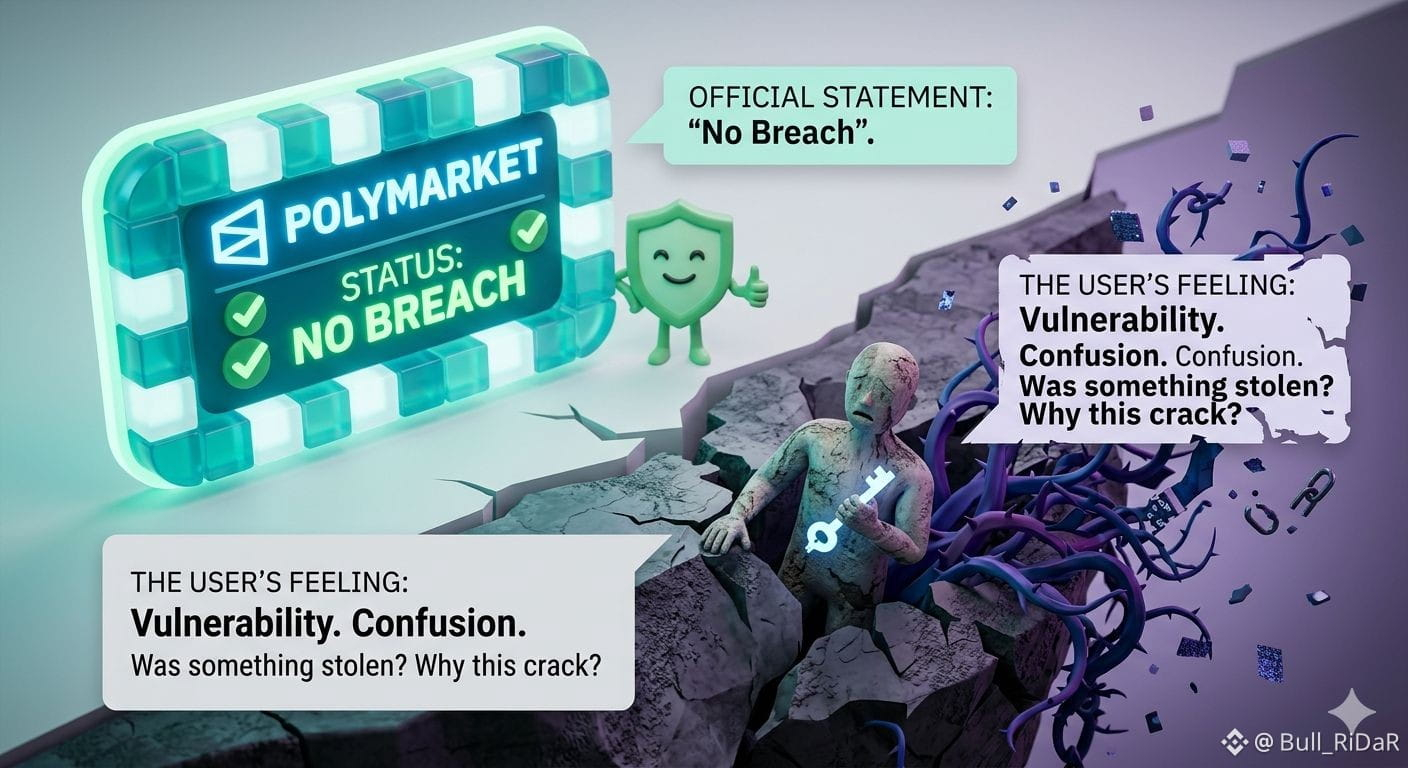
Polymarket says “no breach.”
So why does it still feel like one?
At first, it looked like another crypto scare — a trending hashtag, a spike in panic, then silence. But this one didn’t fade so easily.
A hacker claimed access to over 300,000 user records. Dark web listings. Mentions of vulnerabilities. Internal systems. Enough noise to shake confidence fast.
Polymarket shut it down immediately: nothing hacked, nothing stolen.
Their explanation? The data is already public — pulled from APIs and on-chain activity. No private breach. No sensitive exposure.
Technically, that might be true.
But here’s where it gets uncomfortable…
In crypto, public doesn’t always feel public. Most users don’t think about their activity being scraped, organized, and repackaged into something that looks like a leak. But when it is, perception changes instantly.
Because method matters.
If someone used loopholes, weak endpoints, or misconfigurations to gather that data — even if it’s “public” — it raises a different question:
How easy was it to dig deeper than expected?
And that’s where trust starts to slip.
This isn’t happening in a vacuum either. There’s already been noise around Polymarket concerns about market integrity, insider positioning, outcome resolutions. So when something like this surfaces, it doesn’t hit neutral ground. It amplifies everything.
Here’s the bigger tension:
Crypto promises transparency.
But transparency, at scale, can start to feel like exposure.
The interface feels like a normal app clean, familiar, almost private.
But underneath, it’s open infrastructure. Fully traceable. Fully visible.
That mismatch is the real story.
No confirmed breach.
No confirmed failure.
Just a growing realization:
Your data doesn’t have to be stolen to feel exposed.
And in markets driven by confidence, that feeling alone can move everything sentiment, liquidity, participation.
Prices don’t just react to facts.
They react to perception.
And right now, perception is unsettled.
#CryptoNewss #brekingnews #trading #Polymarket
Polymarket says “no breach.”
So why does it still feel like one?
At first, it looked like another crypto scare — a trending hashtag, a spike in panic, then silence. But this one didn’t fade so easily.
A hacker claimed access to over 300,000 user records. Dark web listings. Mentions of vulnerabilities. Internal systems. Enough noise to shake confidence fast.
Polymarket shut it down immediately: nothing hacked, nothing stolen.
Their explanation? The data is already public — pulled from APIs and on-chain activity. No private breach. No sensitive exposure.
Technically, that might be true.
But here’s where it gets uncomfortable…
In crypto, public doesn’t always feel public. Most users don’t think about their activity being scraped, organized, and repackaged into something that looks like a leak. But when it is, perception changes instantly.
Because method matters.
If someone used loopholes, weak endpoints, or misconfigurations to gather that data — even if it’s “public” — it raises a different question:
How easy was it to dig deeper than expected?
And that’s where trust starts to slip.
This isn’t happening in a vacuum either. There’s already been noise around Polymarket concerns about market integrity, insider positioning, outcome resolutions. So when something like this surfaces, it doesn’t hit neutral ground. It amplifies everything.
Here’s the bigger tension:
Crypto promises transparency.
But transparency, at scale, can start to feel like exposure.
The interface feels like a normal app clean, familiar, almost private.
But underneath, it’s open infrastructure. Fully traceable. Fully visible.
That mismatch is the real story.
No confirmed breach.
No confirmed failure.
Just a growing realization:
Your data doesn’t have to be stolen to feel exposed.
And in markets driven by confidence, that feeling alone can move everything sentiment, liquidity, participation.
Prices don’t just react to facts.
They react to perception.
And right now, perception is unsettled.
#CryptoNewss #brekingnews #trading #Polymarket
So why does it still feel like one?
At first, it looked like another crypto scare — a trending hashtag, a spike in panic, then silence. But this one didn’t fade so easily.
A hacker claimed access to over 300,000 user records. Dark web listings. Mentions of vulnerabilities. Internal systems. Enough noise to shake confidence fast.
Polymarket shut it down immediately: nothing hacked, nothing stolen.
Their explanation? The data is already public — pulled from APIs and on-chain activity. No private breach. No sensitive exposure.
Technically, that might be true.
But here’s where it gets uncomfortable…
In crypto, public doesn’t always feel public. Most users don’t think about their activity being scraped, organized, and repackaged into something that looks like a leak. But when it is, perception changes instantly.
Because method matters.
If someone used loopholes, weak endpoints, or misconfigurations to gather that data — even if it’s “public” — it raises a different question:
How easy was it to dig deeper than expected?
And that’s where trust starts to slip.
This isn’t happening in a vacuum either. There’s already been noise around Polymarket concerns about market integrity, insider positioning, outcome resolutions. So when something like this surfaces, it doesn’t hit neutral ground. It amplifies everything.
Here’s the bigger tension:
Crypto promises transparency.
But transparency, at scale, can start to feel like exposure.
The interface feels like a normal app clean, familiar, almost private.
But underneath, it’s open infrastructure. Fully traceable. Fully visible.
That mismatch is the real story.
No confirmed breach.
No confirmed failure.
Just a growing realization:
Your data doesn’t have to be stolen to feel exposed.
And in markets driven by confidence, that feeling alone can move everything sentiment, liquidity, participation.
Prices don’t just react to facts.
They react to perception.
And right now, perception is unsettled.
#CryptoNewss #brekingnews #trading #Polymarket
1
359
Log in to explore more content
Join global crypto users on Binance Square
⚡️ Get latest and useful information about crypto.
💬 Trusted by the world’s largest crypto exchange.
👍 Discover real insights from verified creators.
Email / Phone number
Trending Topics
1
#BitcoinSpotETFsDraw$6.34BInflowsInQ3
6,850 views
102 Discussing
2
#EthereumValidatorExitQueueJumps392%
119,879 views
1,044 Discussing
3
#IMFApprovesElSalvador$138MWithBitcoinWaiver
14,781 views
69 Discussing
4
#SECHaltsCryptoETFReviewsAmidFundingLapse
276,438 views
1,881 Discussing
5
#ZcashETFPostsFirstWeeklyOutflow$93.6M
97,714 views
256 Discussing
6
#GreekPoliceBustCryptoScamRingArrest17
394,590 views
2,512 Discussing
7
#BitcoinRejectedAt$87K
228,826 views
324 Discussing
8
#FedOctoberRateHikeOddsFallTo17%
405,930 views
2,633 Discussing
9
#NvidiaHitsRecordHighUp2.4%
234,817 views
1,464 Discussing
10
#CanaryFilesAmendedS1ForPEPEETF
76,967 views
897 Discussing