
#amcusdt
amcusdt
369 views
8 Discussing
Hot
Latest

·
--
Bullish
$AMC USDT BULLISH TECHNICAL ANALYSIS
{future}(AMCUSDT)
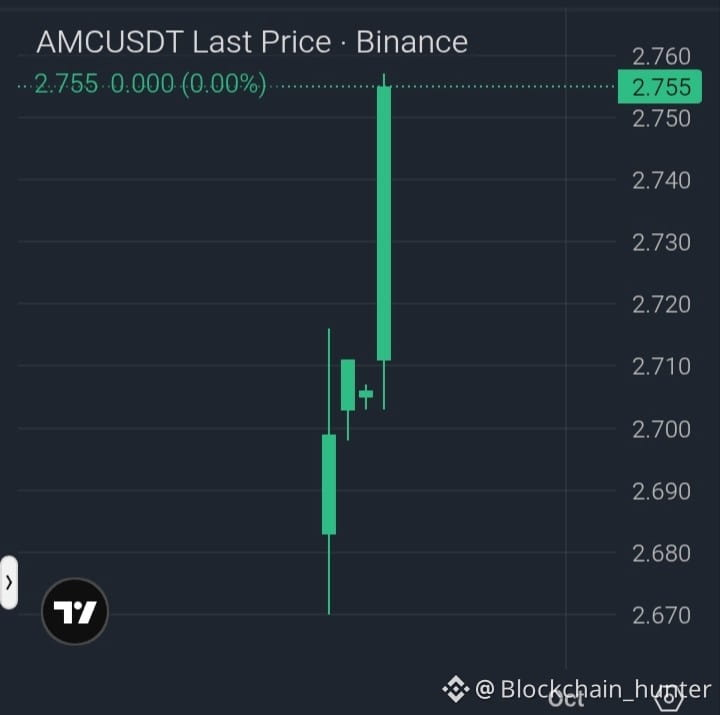
Entry Zone: 2.72 – 2.76
TP1: 2.82
TP2: 2.90
TP3: 3.00
TP4: 3.12
SL: 2.65
Setup: Bullish continuation above the support zone, with upside targets activated on a confirmed breakout and sustained momentum.
Risk Management:
Use controlled position size, keep the stop loss strictly defined, and avoid chasing sudden pumps. Secure partial profits at targets and adjust risk as the trade moves in your favor.
#AMCUSDT #CryptoTrading #CanaryFilesSecondAmendmentForStakedSEIETF #Binance #Bullish
$AMC USDT BULLISH TECHNICAL ANALYSIS
Entry Zone: 2.72 – 2.76
TP1: 2.82
TP2: 2.90
TP3: 3.00
TP4: 3.12
SL: 2.65
Setup: Bullish continuation above the support zone, with upside targets activated on a confirmed breakout and sustained momentum.
Risk Management:
Use controlled position size, keep the stop loss strictly defined, and avoid chasing sudden pumps. Secure partial profits at targets and adjust risk as the trade moves in your favor.
#AMCUSDT #CryptoTrading #CanaryFilesSecondAmendmentForStakedSEIETF #Binance #Bullish
Entry Zone: 2.72 – 2.76
TP1: 2.82
TP2: 2.90
TP3: 3.00
TP4: 3.12
SL: 2.65
Setup: Bullish continuation above the support zone, with upside targets activated on a confirmed breakout and sustained momentum.
Risk Management:
Use controlled position size, keep the stop loss strictly defined, and avoid chasing sudden pumps. Secure partial profits at targets and adjust risk as the trade moves in your favor.
#AMCUSDT #CryptoTrading #CanaryFilesSecondAmendmentForStakedSEIETF #Binance #Bullish
56

·
--
$AMC #AMCUSDT
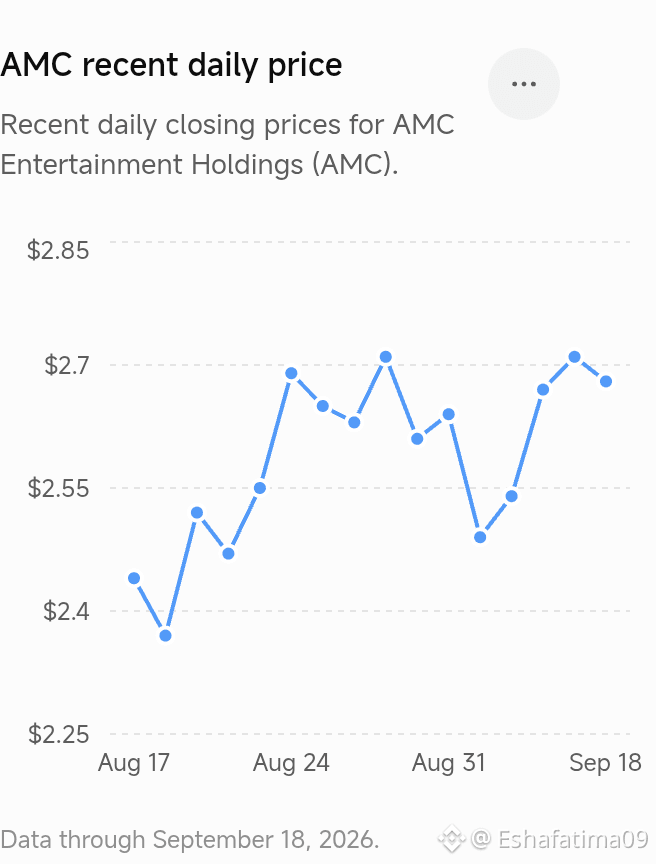
Sep 18 close: about $2.68–$2.70.
Sep 18 range: $2.65–$2.77.
Recent momentum has been positive: Sep 15–17 moved from $2.54 → $2.67 → $2.71.
Near support: $2.53–$2.65.
Near resistance: $2.77–$2.80.
A move above $2.80 would be an important resistance break to watch.
A drop below $2.53 would show increasing short-term weakness.
AMC is highly volatile, so these levels can change quickly
#VietnamPlansFirstCryptoLicensesIn2026
#HKCompletesFirstHKDStablecoinUseCase
$AMC #AMCUSDT
Sep 18 close: about $2.68–$2.70.
Sep 18 range: $2.65–$2.77.
Recent momentum has been positive: Sep 15–17 moved from $2.54 → $2.67 → $2.71.
Near support: $2.53–$2.65.
Near resistance: $2.77–$2.80.
A move above $2.80 would be an important resistance break to watch.
A drop below $2.53 would show increasing short-term weakness.
AMC is highly volatile, so these levels can change quickly
#VietnamPlansFirstCryptoLicensesIn2026
#HKCompletesFirstHKDStablecoinUseCase
Sep 18 close: about $2.68–$2.70.
Sep 18 range: $2.65–$2.77.
Recent momentum has been positive: Sep 15–17 moved from $2.54 → $2.67 → $2.71.
Near support: $2.53–$2.65.
Near resistance: $2.77–$2.80.
A move above $2.80 would be an important resistance break to watch.
A drop below $2.53 would show increasing short-term weakness.
AMC is highly volatile, so these levels can change quickly
#VietnamPlansFirstCryptoLicensesIn2026
#HKCompletesFirstHKDStablecoinUseCase
76

🚨 $AMC
{future}(AMCUSDT)
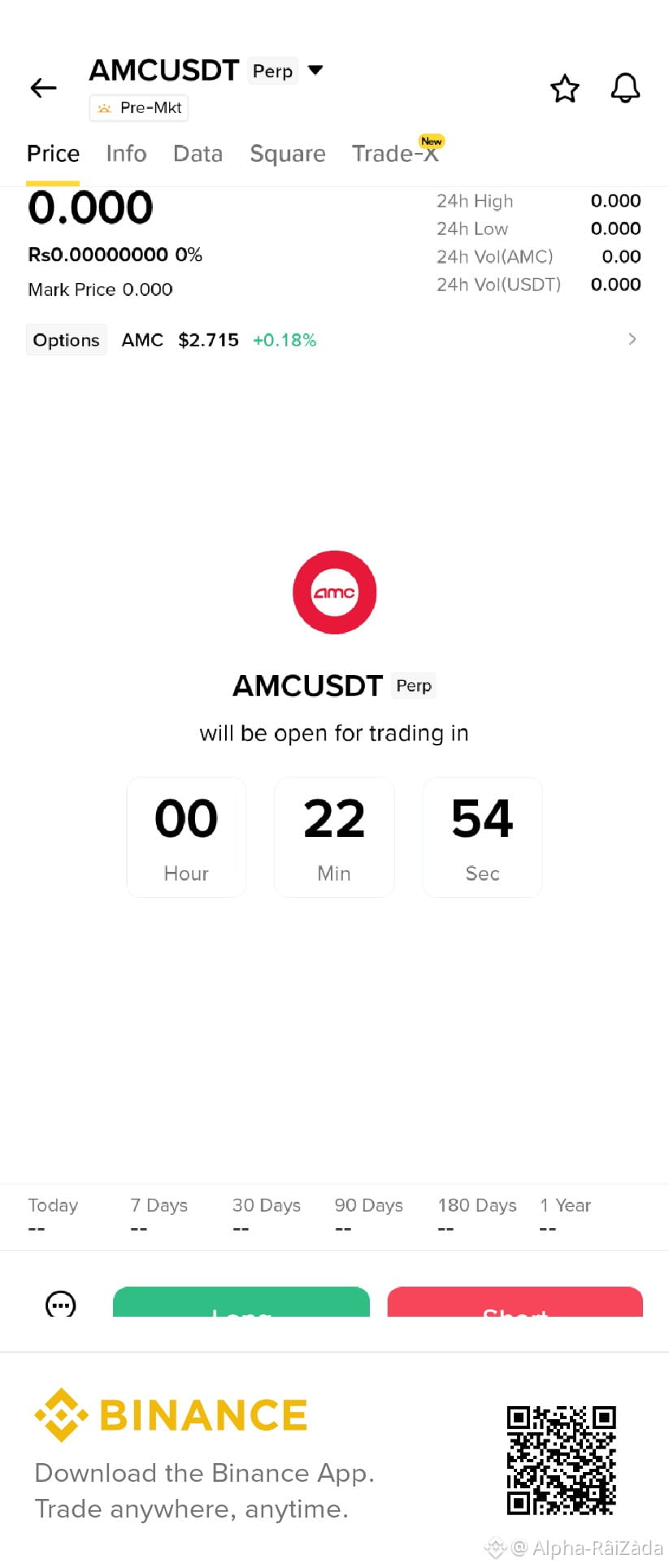
USDT PERP — 22 MINUTES TO LISTING
Binance is set to launch AMCUSDT Perpetual, tracking AMC Entertainment stock.
📊 Reference Price: $2.714
⏳ Listing: ~22 minutes
⚡ Expect: High volatility at launch
My Plan:
No FOMO. I’ll wait 10–15 minutes after listing for the initial volatility to settle, then watch for a clear Long/Short setup with proper SL confirmation.
Trade smart. Manage risk. DYOR • NFA
#AMC #AMCUSDT #NewListing
🚨 $AMC
USDT PERP — 22 MINUTES TO LISTING
Binance is set to launch AMCUSDT Perpetual, tracking AMC Entertainment stock.
📊 Reference Price: $2.714
⏳ Listing: ~22 minutes
⚡ Expect: High volatility at launch
My Plan:
No FOMO. I’ll wait 10–15 minutes after listing for the initial volatility to settle, then watch for a clear Long/Short setup with proper SL confirmation.
Trade smart. Manage risk. DYOR • NFA
#AMC #AMCUSDT #NewListing
USDT PERP — 22 MINUTES TO LISTING
Binance is set to launch AMCUSDT Perpetual, tracking AMC Entertainment stock.
📊 Reference Price: $2.714
⏳ Listing: ~22 minutes
⚡ Expect: High volatility at launch
My Plan:
No FOMO. I’ll wait 10–15 minutes after listing for the initial volatility to settle, then watch for a clear Long/Short setup with proper SL confirmation.
Trade smart. Manage risk. DYOR • NFA
#AMC #AMCUSDT #NewListing
108



·
--
[M1_mag7]
The old dog glanced at the data: in the past 24 hours, $AMC racked up a 6.5-point move, and the price reached 2.877. What’s interesting is that, over the same period, the funding rate was completely unchanged—set at zero. A zero funding rate means a rare equilibrium between long and short positions in terms of their holding costs: neither side pays the other.
This kind of state is uncommon in on-chain US stock futures. Usually, when price moves but the funding rate stays flat, it suggests that the push behind this rally isn’t speculative longs from the futures market—perhaps it’s spot buying or a catalyst from news—or else both long and short positions are increasing in sync, offsetting the funding pressure against each other. Taking its open interest of 42556.98 into account, there hasn’t been a sharp OI spike accompanying the price rise, which doesn’t look like a squeeze driven by crowded leveraged longs. Shifting the perspective to M1_mag7: it should normally track the broader large-cap basket, but AMC’s own sector classification is “Other.” This rally looks more like an individual stock behavior decoupled from sector beta. On-chain futures liquidity hasn’t shown strong signs of macro hedging or speculative demand.
My take is: the current zero funding rate, combined with warming conditions and volume picking up, is a quiet period before choosing a direction. Calm is often broken—and the catalyst that breaks it isn’t clear yet. The opposing view is that this is precisely the calm before the storm: if US stock sentiment turns next, or if a short-term headline fails, once long positions start exiting, it could trigger a quick pullback. A second-order effect is that if there’s a sudden drop, the short-term futures longs that chased near 2.877 would be the first forced sellers, while the liquidity-providing counterparties would take those cheap chips.
What I’m doing now is waiting. The trigger is clear: if price breaks out of the current consolidation range with volume, and the funding rate turns positive and amplifies, I’ll consider following. Conversely, if price directly breaks below 2.877, I’d rather stay on the sidelines than catch a falling knife. The most likely way this thesis is wrong is if it underestimates the instantaneous price impact of some fundamental news—something not provided as input—coming out suddenly. In that case, the zero-funding state would be broken immediately. If the funding rate stays at zero for a long time while trading volume shrinks, then I’ll cancel the above direction-selection judgment.
Trading tag: #BinanceFutures #TradFi #USDⓈM #AMC #AMCUSDT $AMC
[M1_mag7]
The old dog glanced at the data: in the past 24 hours, $AMC racked up a 6.5-point move, and the price reached 2.877. What’s interesting is that, over the same period, the funding rate was completely unchanged—set at zero. A zero funding rate means a rare equilibrium between long and short positions in terms of their holding costs: neither side pays the other.
This kind of state is uncommon in on-chain US stock futures. Usually, when price moves but the funding rate stays flat, it suggests that the push behind this rally isn’t speculative longs from the futures market—perhaps it’s spot buying or a catalyst from news—or else both long and short positions are increasing in sync, offsetting the funding pressure against each other. Taking its open interest of 42556.98 into account, there hasn’t been a sharp OI spike accompanying the price rise, which doesn’t look like a squeeze driven by crowded leveraged longs. Shifting the perspective to M1_mag7: it should normally track the broader large-cap basket, but AMC’s own sector classification is “Other.” This rally looks more like an individual stock behavior decoupled from sector beta. On-chain futures liquidity hasn’t shown strong signs of macro hedging or speculative demand.
My take is: the current zero funding rate, combined with warming conditions and volume picking up, is a quiet period before choosing a direction. Calm is often broken—and the catalyst that breaks it isn’t clear yet. The opposing view is that this is precisely the calm before the storm: if US stock sentiment turns next, or if a short-term headline fails, once long positions start exiting, it could trigger a quick pullback. A second-order effect is that if there’s a sudden drop, the short-term futures longs that chased near 2.877 would be the first forced sellers, while the liquidity-providing counterparties would take those cheap chips.
What I’m doing now is waiting. The trigger is clear: if price breaks out of the current consolidation range with volume, and the funding rate turns positive and amplifies, I’ll consider following. Conversely, if price directly breaks below 2.877, I’d rather stay on the sidelines than catch a falling knife. The most likely way this thesis is wrong is if it underestimates the instantaneous price impact of some fundamental news—something not provided as input—coming out suddenly. In that case, the zero-funding state would be broken immediately. If the funding rate stays at zero for a long time while trading volume shrinks, then I’ll cancel the above direction-selection judgment.
Trading tag: #BinanceFutures #TradFi #USDⓈM #AMC #AMCUSDT $AMC
The old dog glanced at the data: in the past 24 hours, $AMC racked up a 6.5-point move, and the price reached 2.877. What’s interesting is that, over the same period, the funding rate was completely unchanged—set at zero. A zero funding rate means a rare equilibrium between long and short positions in terms of their holding costs: neither side pays the other.
This kind of state is uncommon in on-chain US stock futures. Usually, when price moves but the funding rate stays flat, it suggests that the push behind this rally isn’t speculative longs from the futures market—perhaps it’s spot buying or a catalyst from news—or else both long and short positions are increasing in sync, offsetting the funding pressure against each other. Taking its open interest of 42556.98 into account, there hasn’t been a sharp OI spike accompanying the price rise, which doesn’t look like a squeeze driven by crowded leveraged longs. Shifting the perspective to M1_mag7: it should normally track the broader large-cap basket, but AMC’s own sector classification is “Other.” This rally looks more like an individual stock behavior decoupled from sector beta. On-chain futures liquidity hasn’t shown strong signs of macro hedging or speculative demand.
My take is: the current zero funding rate, combined with warming conditions and volume picking up, is a quiet period before choosing a direction. Calm is often broken—and the catalyst that breaks it isn’t clear yet. The opposing view is that this is precisely the calm before the storm: if US stock sentiment turns next, or if a short-term headline fails, once long positions start exiting, it could trigger a quick pullback. A second-order effect is that if there’s a sudden drop, the short-term futures longs that chased near 2.877 would be the first forced sellers, while the liquidity-providing counterparties would take those cheap chips.
What I’m doing now is waiting. The trigger is clear: if price breaks out of the current consolidation range with volume, and the funding rate turns positive and amplifies, I’ll consider following. Conversely, if price directly breaks below 2.877, I’d rather stay on the sidelines than catch a falling knife. The most likely way this thesis is wrong is if it underestimates the instantaneous price impact of some fundamental news—something not provided as input—coming out suddenly. In that case, the zero-funding state would be broken immediately. If the funding rate stays at zero for a long time while trading volume shrinks, then I’ll cancel the above direction-selection judgment.
Trading tag: #BinanceFutures #TradFi #USDⓈM #AMC #AMCUSDT $AMC
21

·
--
Bullish
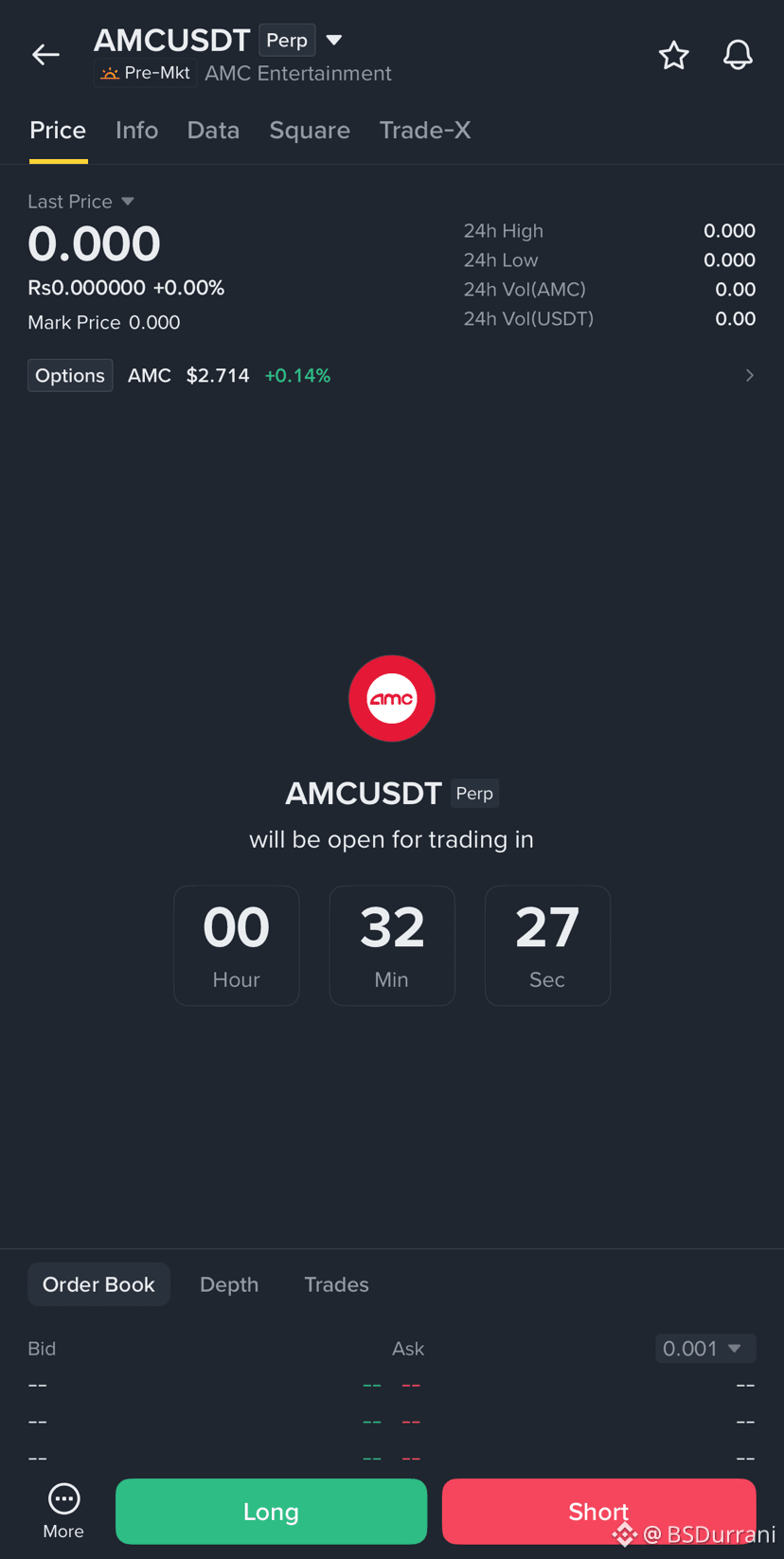
🚨 $AMC USDT Perp - Listing in 32 Minutes!
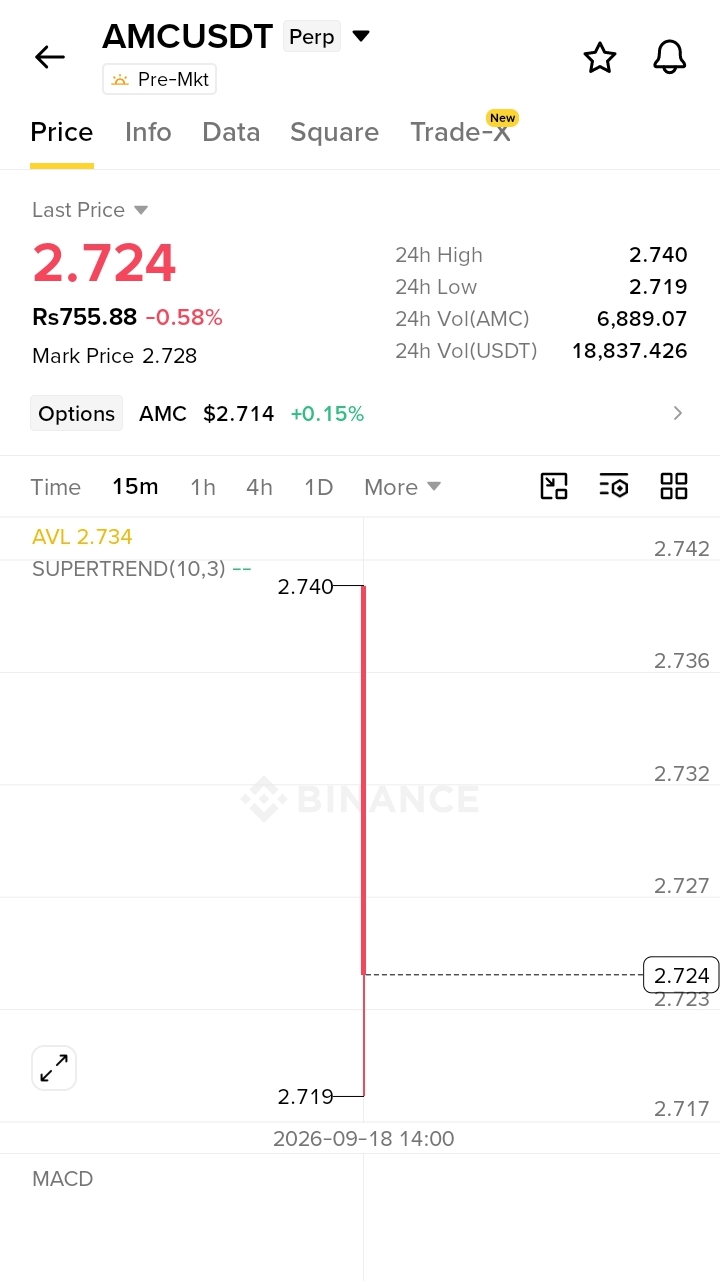
Binance will open AMCUSDT Perp (AMC Entertainment) trading in 00h 32m 27s as per screenshot.
Real Options Price: $2.714 (+0.14%)
Perp Price: $0.000 - Not started yet.
This is a Stock Perp, price will track AMC stock. Expect high volatility at open!
My Plan:
No FOMO. I will wait 10-15 minutes after listing, let the price settle near real price $2.714, then look for long/short setup with SL.
Who is trading AMC?
Not Financial Advice. For information only. DYOR.
#AMCUSDT #AMC #NewListing #StockFutures #Write2Earn!
{future}(AMCUSDT)
🚨 $AMC USDT Perp - Listing in 32 Minutes!
Binance will open AMCUSDT Perp (AMC Entertainment) trading in 00h 32m 27s as per screenshot.
Real Options Price: $2.714 (+0.14%)
Perp Price: $0.000 - Not started yet.
This is a Stock Perp, price will track AMC stock. Expect high volatility at open!
My Plan:
No FOMO. I will wait 10-15 minutes after listing, let the price settle near real price $2.714, then look for long/short setup with SL.
Who is trading AMC?
Not Financial Advice. For information only. DYOR.
#AMCUSDT #AMC #NewListing #StockFutures #Write2Earn!
Binance will open AMCUSDT Perp (AMC Entertainment) trading in 00h 32m 27s as per screenshot.
Real Options Price: $2.714 (+0.14%)
Perp Price: $0.000 - Not started yet.
This is a Stock Perp, price will track AMC stock. Expect high volatility at open!
My Plan:
No FOMO. I will wait 10-15 minutes after listing, let the price settle near real price $2.714, then look for long/short setup with SL.
Who is trading AMC?
Not Financial Advice. For information only. DYOR.
#AMCUSDT #AMC #NewListing #StockFutures #Write2Earn!
1
1
298
Log in to explore more content
Join global crypto users on Binance Square
⚡️ Get latest and useful information about crypto.
💬 Trusted by the world’s largest crypto exchange.
👍 Discover real insights from verified creators.
Email / Phone number
Trending Topics
1
#AIStocksWhatNext
137,441 views
1,679 Discussing
2
#BitcoinBreaksAboveMayHighNears$86K
3,577 views
63 Discussing
3
#DogecoinRises15%
8,921 views
398 Discussing
4
#$14BBitcoinOptionsExpireFriday
424 views
37 Discussing
5
#BNBMarketCapPassesBNYMellon
4,720 views
287 Discussing
6
#CryptoMarketCapReclaims$3Trillion
877 views
36 Discussing
7
#MuseOvertakesChatGPTAsTopFreeIOSApp
4,768 views
279 Discussing
8
#TokenizedStockPlatformsCouldLaunchNextQuarter
7,323 views
310 Discussing
9
#StrategyAdds950Bitcoin
11,874 views
406 Discussing
10
#CardanoAddedToX402KitForADAPayments
16,223 views
505 Discussing