

#aiagent
aiagent
634,433 views
2,197 Discussing
Hot
Latest

【Retail traders still drawing trend lines: AI Agent has already been targeting “real winners” whale profits on the millisecond-level chain-sniping flow】
If your trading method is still: open TradingView, watch the 15-minute candlestick chart and draw a few support/resistance lines, then anxiously guess what the market maker is going to do next—
then you need to realize that the market’s top hunters have already handed the entire process over to a queue of “autonomous, thinking AI Agent teams”!
Well-known crypto quant trader Moon Dev recently demonstrated his AI whale-tracking agent, revealing the underlying architecture of how AI traders carry out “dimension-reduction attacks” on ordinary retail investors:
⚡️ The 3 Major Dimension-Reduction Logics of the AI Agent Trading Era:
1️⃣ Big players ≠ smart money: AI automatically builds the “real PnL picture”
- Traditional Telegram “big order” alerts only tell you “a certain wallet bought $1,000,000,” but retail traders have no idea whether that person is a high-win-rate genius or just a gambler with more money than brains.
- AI Agents can continuously pull on-chain transaction history in the background via API, automatically calculate each whale’s historical profit/loss ratio (PnL) and Sharpe value, filter out noise, and only tag “mathematically proven long-term winners (Sharps).”
2️⃣ Cross-market, millisecond-level intelligence capture
- Retail traders can’t simultaneously watch Polymarket prediction markets, Binance perpetual contract funding rates, and on-chain whale movements.
- But multiple AI Sub-Agents can run in parallel 24/7:
- Agent A watches prediction markets: catches sudden win-rate shifts from elections or macro events;
- Agent B watches contract order books: monitors the liquidation depth of $BTC , $ETH , and $SOL on both long and short sides;
- Agent C executes decisions: when a “high-win-rate whale” starts a large positioning ahead of a key event, it automatically triggers coordinated hedging within 5 seconds—completely without relying on human reaction.
3️⃣ Self-repair and debugging (Self-Healing Workflow)
- Traditional bots will simply crash and freeze if the API is updated or errors occur;
- The new generation powered by LLM-driven AI Agents has “reflection and autonomous correction” capabilities—if it encounters documentation mistakes or interface changes, it can automatically send Probe packets to find the correct endpoints, automatically repair the code, and restart the run.
🎯 Ultimate thoughts for modern traders:
In the past, quant trading was a privilege of Wall Street hedge funds; but today, with LLMs and Agent tools becoming mainstream, ordinary traders can also build their own 24/7 emotionless trading squad through natural language (Prompting).
In the future crypto market, it won’t be a “battle between people,” but a competition of “whose AI system can detect liquidity mismatches faster”!
💬 Interaction self-test: When faced with the widespread adoption of AI Agents and quant trading, what’s your attitude?
- Poll 1: Very optimistic! I’m already researching how to use AI to assist analysis and automate order placement
- Poll 2: Still observing—do you trust your own trading experience and subjective market feel more
#AIAgent #CryptoQuant #BinanceSquare
【Retail traders still drawing trend lines: AI Agent has already been targeting “real winners” whale profits on the millisecond-level chain-sniping flow】
If your trading method is still: open TradingView, watch the 15-minute candlestick chart and draw a few support/resistance lines, then anxiously guess what the market maker is going to do next—
then you need to realize that the market’s top hunters have already handed the entire process over to a queue of “autonomous, thinking AI Agent teams”!
Well-known crypto quant trader Moon Dev recently demonstrated his AI whale-tracking agent, revealing the underlying architecture of how AI traders carry out “dimension-reduction attacks” on ordinary retail investors:
⚡️ The 3 Major Dimension-Reduction Logics of the AI Agent Trading Era:
1️⃣ Big players ≠ smart money: AI automatically builds the “real PnL picture”
- Traditional Telegram “big order” alerts only tell you “a certain wallet bought $1,000,000,” but retail traders have no idea whether that person is a high-win-rate genius or just a gambler with more money than brains.
- AI Agents can continuously pull on-chain transaction history in the background via API, automatically calculate each whale’s historical profit/loss ratio (PnL) and Sharpe value, filter out noise, and only tag “mathematically proven long-term winners (Sharps).”
2️⃣ Cross-market, millisecond-level intelligence capture
- Retail traders can’t simultaneously watch Polymarket prediction markets, Binance perpetual contract funding rates, and on-chain whale movements.
- But multiple AI Sub-Agents can run in parallel 24/7:
- Agent A watches prediction markets: catches sudden win-rate shifts from elections or macro events;
- Agent B watches contract order books: monitors the liquidation depth of $BTC , $ETH , and $SOL on both long and short sides;
- Agent C executes decisions: when a “high-win-rate whale” starts a large positioning ahead of a key event, it automatically triggers coordinated hedging within 5 seconds—completely without relying on human reaction.
3️⃣ Self-repair and debugging (Self-Healing Workflow)
- Traditional bots will simply crash and freeze if the API is updated or errors occur;
- The new generation powered by LLM-driven AI Agents has “reflection and autonomous correction” capabilities—if it encounters documentation mistakes or interface changes, it can automatically send Probe packets to find the correct endpoints, automatically repair the code, and restart the run.
🎯 Ultimate thoughts for modern traders:
In the past, quant trading was a privilege of Wall Street hedge funds; but today, with LLMs and Agent tools becoming mainstream, ordinary traders can also build their own 24/7 emotionless trading squad through natural language (Prompting).
In the future crypto market, it won’t be a “battle between people,” but a competition of “whose AI system can detect liquidity mismatches faster”!
💬 Interaction self-test: When faced with the widespread adoption of AI Agents and quant trading, what’s your attitude?
- Poll 1: Very optimistic! I’m already researching how to use AI to assist analysis and automate order placement
- Poll 2: Still observing—do you trust your own trading experience and subjective market feel more
#AIAgent #CryptoQuant #BinanceSquare
If your trading method is still: open TradingView, watch the 15-minute candlestick chart and draw a few support/resistance lines, then anxiously guess what the market maker is going to do next—
then you need to realize that the market’s top hunters have already handed the entire process over to a queue of “autonomous, thinking AI Agent teams”!
Well-known crypto quant trader Moon Dev recently demonstrated his AI whale-tracking agent, revealing the underlying architecture of how AI traders carry out “dimension-reduction attacks” on ordinary retail investors:
⚡️ The 3 Major Dimension-Reduction Logics of the AI Agent Trading Era:
1️⃣ Big players ≠ smart money: AI automatically builds the “real PnL picture”
- Traditional Telegram “big order” alerts only tell you “a certain wallet bought $1,000,000,” but retail traders have no idea whether that person is a high-win-rate genius or just a gambler with more money than brains.
- AI Agents can continuously pull on-chain transaction history in the background via API, automatically calculate each whale’s historical profit/loss ratio (PnL) and Sharpe value, filter out noise, and only tag “mathematically proven long-term winners (Sharps).”
2️⃣ Cross-market, millisecond-level intelligence capture
- Retail traders can’t simultaneously watch Polymarket prediction markets, Binance perpetual contract funding rates, and on-chain whale movements.
- But multiple AI Sub-Agents can run in parallel 24/7:
- Agent A watches prediction markets: catches sudden win-rate shifts from elections or macro events;
- Agent B watches contract order books: monitors the liquidation depth of $BTC , $ETH , and $SOL on both long and short sides;
- Agent C executes decisions: when a “high-win-rate whale” starts a large positioning ahead of a key event, it automatically triggers coordinated hedging within 5 seconds—completely without relying on human reaction.
3️⃣ Self-repair and debugging (Self-Healing Workflow)
- Traditional bots will simply crash and freeze if the API is updated or errors occur;
- The new generation powered by LLM-driven AI Agents has “reflection and autonomous correction” capabilities—if it encounters documentation mistakes or interface changes, it can automatically send Probe packets to find the correct endpoints, automatically repair the code, and restart the run.
🎯 Ultimate thoughts for modern traders:
In the past, quant trading was a privilege of Wall Street hedge funds; but today, with LLMs and Agent tools becoming mainstream, ordinary traders can also build their own 24/7 emotionless trading squad through natural language (Prompting).
In the future crypto market, it won’t be a “battle between people,” but a competition of “whose AI system can detect liquidity mismatches faster”!
💬 Interaction self-test: When faced with the widespread adoption of AI Agents and quant trading, what’s your attitude?
- Poll 1: Very optimistic! I’m already researching how to use AI to assist analysis and automate order placement
- Poll 2: Still observing—do you trust your own trading experience and subjective market feel more
#AIAgent #CryptoQuant #BinanceSquare
290

·
--
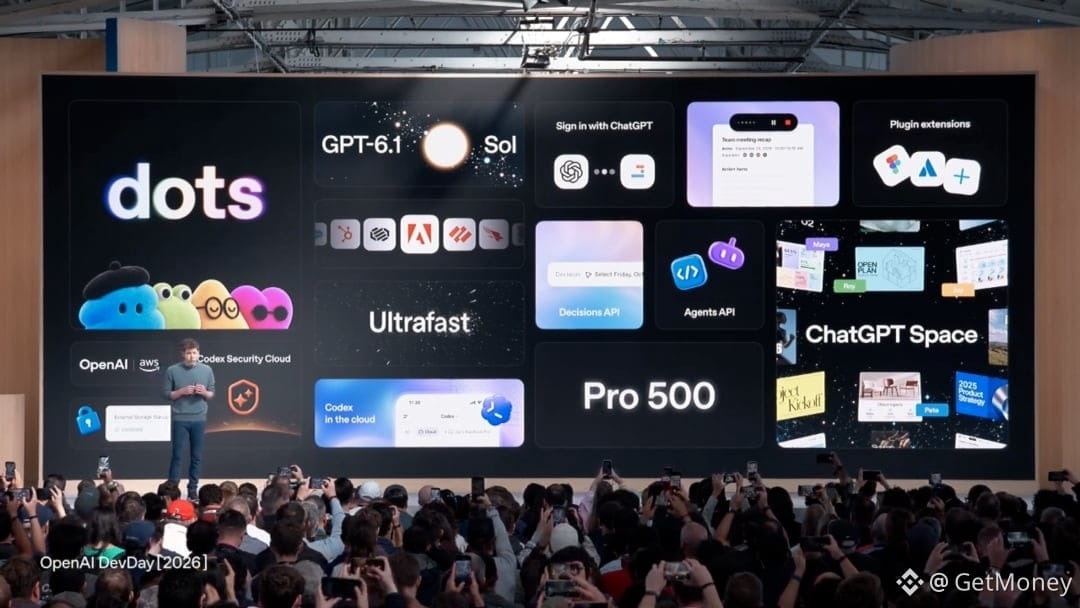
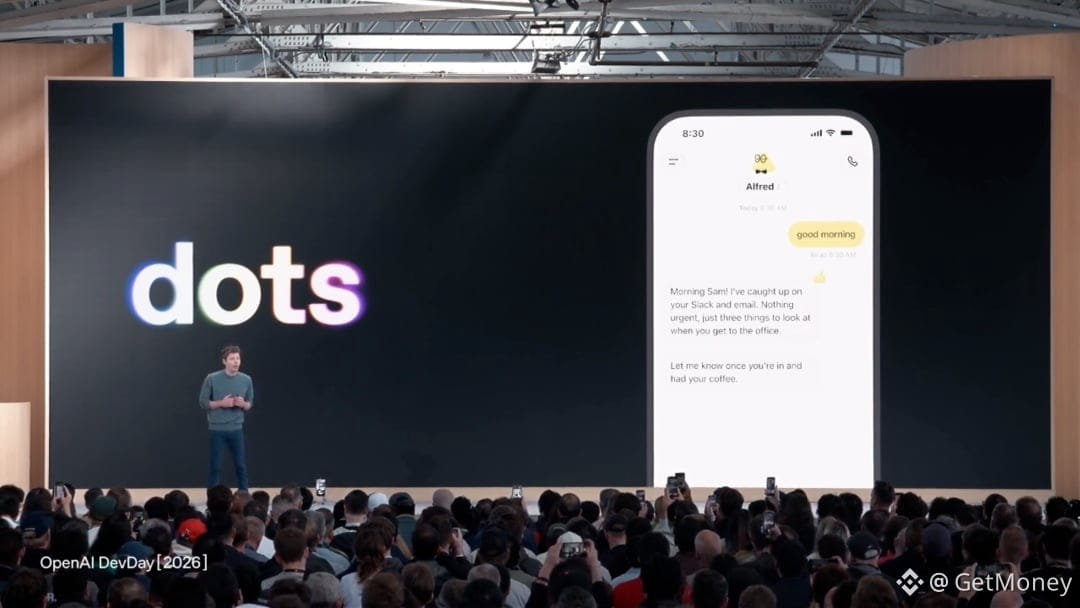
📰 OpenAI DevDay 2026: Dots, GPT-6.1 Sol, and a $500 Pro membership were released at once. The most eye-catching is Dots: it has its own cloud computer, browser, and execution environment. It can operate web pages, call code tools, and even connect to the plugins and apps already connected to ChatGPT.
🔥 OpenAI says that there are now over 4,000 applications that can collaborate with Dots. Users can also authorize it to connect to their personal computer—assign tasks via text or voice. Later, SMS and phone call entry points will be added as well. Dots has started rolling out to ChatGPT Pro, Business Premium, and Enterprise users: each person gets one to start, and the conversation does not consume regular ChatGPT quotas.
💡 GPT-6.1 Sol is also straightforward: caching prices are cut in half again. DeepSWE v1.1 improves by 6.4 percentage points over GPT-6 Sol, and OSWorld 2.0 improves by 7 percentage points. It trails Astra by 2.1 percentage points, but its task cost is about one-seventh of Astra’s. It has already started replacing GPT-6 Sol in Codex.
👀 The subscription side is a bit concerning. The $200 Pro tier has reopened, but the quota multiplier drops from 20x to 10x. The newly launched $500 tier offers only 25x. The exclusive Ultra Fast tier is even more expensive to run—consuming about 6 times the cost. It’s fast, but quotas burn quickly.
🤔 Honestly, Dots really seems like it’s meant to pull the Agent out of the chat box and put it to work—yet subscriptions and consumption keep getting more expensive. Would you get Pro for Dots, or wait to see how well it performs on real tasks first?
#OpenAI #AIAgent #GPT6 #Artificial Intelligence
📰 OpenAI DevDay 2026: Dots, GPT-6.1 Sol, and a $500 Pro membership were released at once. The most eye-catching is Dots: it has its own cloud computer, browser, and execution environment. It can operate web pages, call code tools, and even connect to the plugins and apps already connected to ChatGPT.
🔥 OpenAI says that there are now over 4,000 applications that can collaborate with Dots. Users can also authorize it to connect to their personal computer—assign tasks via text or voice. Later, SMS and phone call entry points will be added as well. Dots has started rolling out to ChatGPT Pro, Business Premium, and Enterprise users: each person gets one to start, and the conversation does not consume regular ChatGPT quotas.
💡 GPT-6.1 Sol is also straightforward: caching prices are cut in half again. DeepSWE v1.1 improves by 6.4 percentage points over GPT-6 Sol, and OSWorld 2.0 improves by 7 percentage points. It trails Astra by 2.1 percentage points, but its task cost is about one-seventh of Astra’s. It has already started replacing GPT-6 Sol in Codex.
👀 The subscription side is a bit concerning. The $200 Pro tier has reopened, but the quota multiplier drops from 20x to 10x. The newly launched $500 tier offers only 25x. The exclusive Ultra Fast tier is even more expensive to run—consuming about 6 times the cost. It’s fast, but quotas burn quickly.
🤔 Honestly, Dots really seems like it’s meant to pull the Agent out of the chat box and put it to work—yet subscriptions and consumption keep getting more expensive. Would you get Pro for Dots, or wait to see how well it performs on real tasks first?
#OpenAI #AIAgent #GPT6 #Artificial Intelligence
🔥 OpenAI says that there are now over 4,000 applications that can collaborate with Dots. Users can also authorize it to connect to their personal computer—assign tasks via text or voice. Later, SMS and phone call entry points will be added as well. Dots has started rolling out to ChatGPT Pro, Business Premium, and Enterprise users: each person gets one to start, and the conversation does not consume regular ChatGPT quotas.
💡 GPT-6.1 Sol is also straightforward: caching prices are cut in half again. DeepSWE v1.1 improves by 6.4 percentage points over GPT-6 Sol, and OSWorld 2.0 improves by 7 percentage points. It trails Astra by 2.1 percentage points, but its task cost is about one-seventh of Astra’s. It has already started replacing GPT-6 Sol in Codex.
👀 The subscription side is a bit concerning. The $200 Pro tier has reopened, but the quota multiplier drops from 20x to 10x. The newly launched $500 tier offers only 25x. The exclusive Ultra Fast tier is even more expensive to run—consuming about 6 times the cost. It’s fast, but quotas burn quickly.
🤔 Honestly, Dots really seems like it’s meant to pull the Agent out of the chat box and put it to work—yet subscriptions and consumption keep getting more expensive. Would you get Pro for Dots, or wait to see how well it performs on real tasks first?
#OpenAI #AIAgent #GPT6 #Artificial Intelligence
13
·
--
📰 After Meta raised its full-year capital expenditure guidance to $130–145 billion, the market has been asking: with so many GPUs, data centers, and AI talent, how do they ultimately make money? Muse, launched on September 8, is a new answer from Zuckerberg.
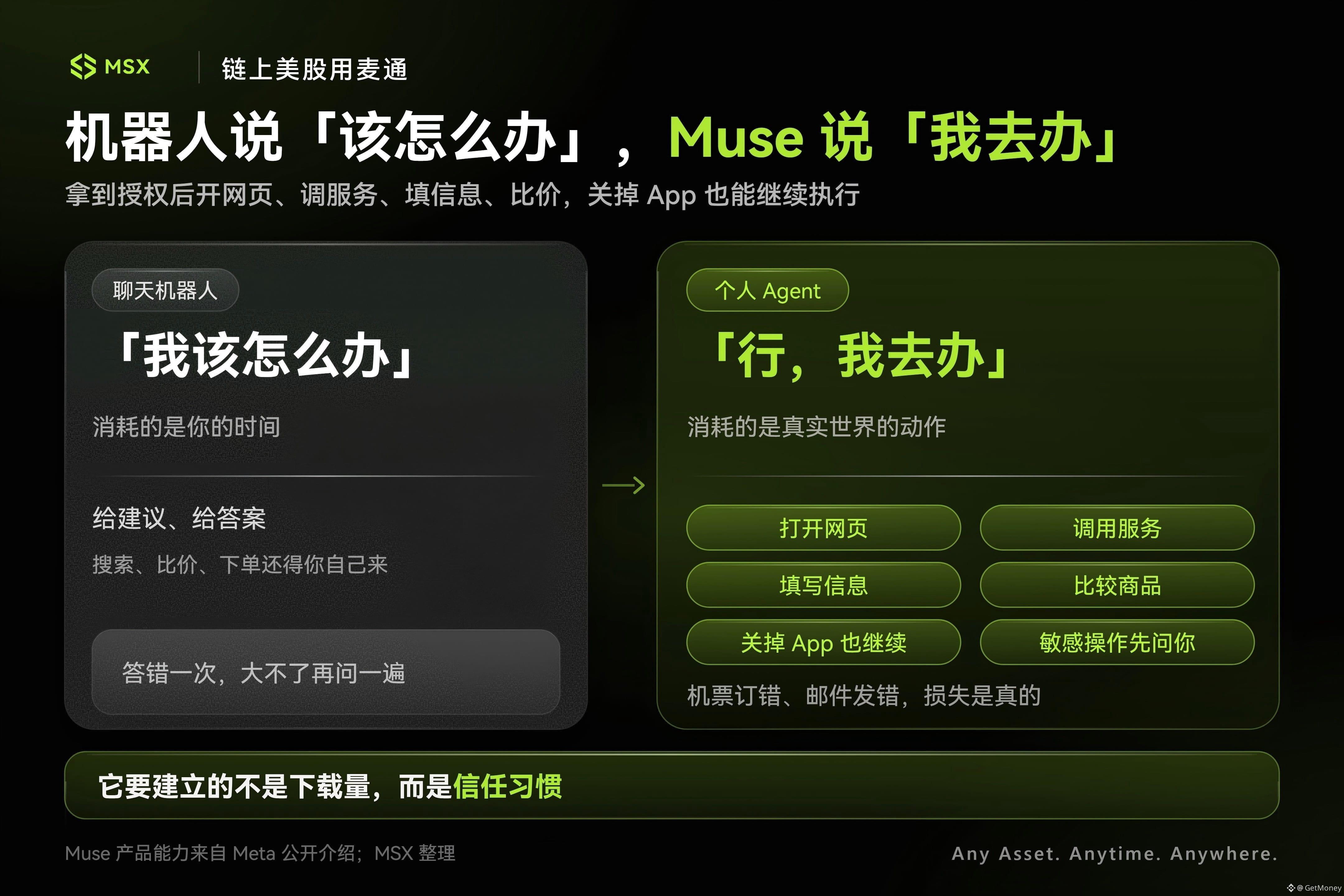
🔥 Muse isn’t just a chatbot. Once authorized, it can browse the web, call APIs, fill out forms, compare prices across platforms, and continue running tasks even after you lock your phone screen—only asking for user confirmation when it comes time to pay or send key emails. In the past, AI told you “what to do.” Now it directly says, “I’ll handle it.”
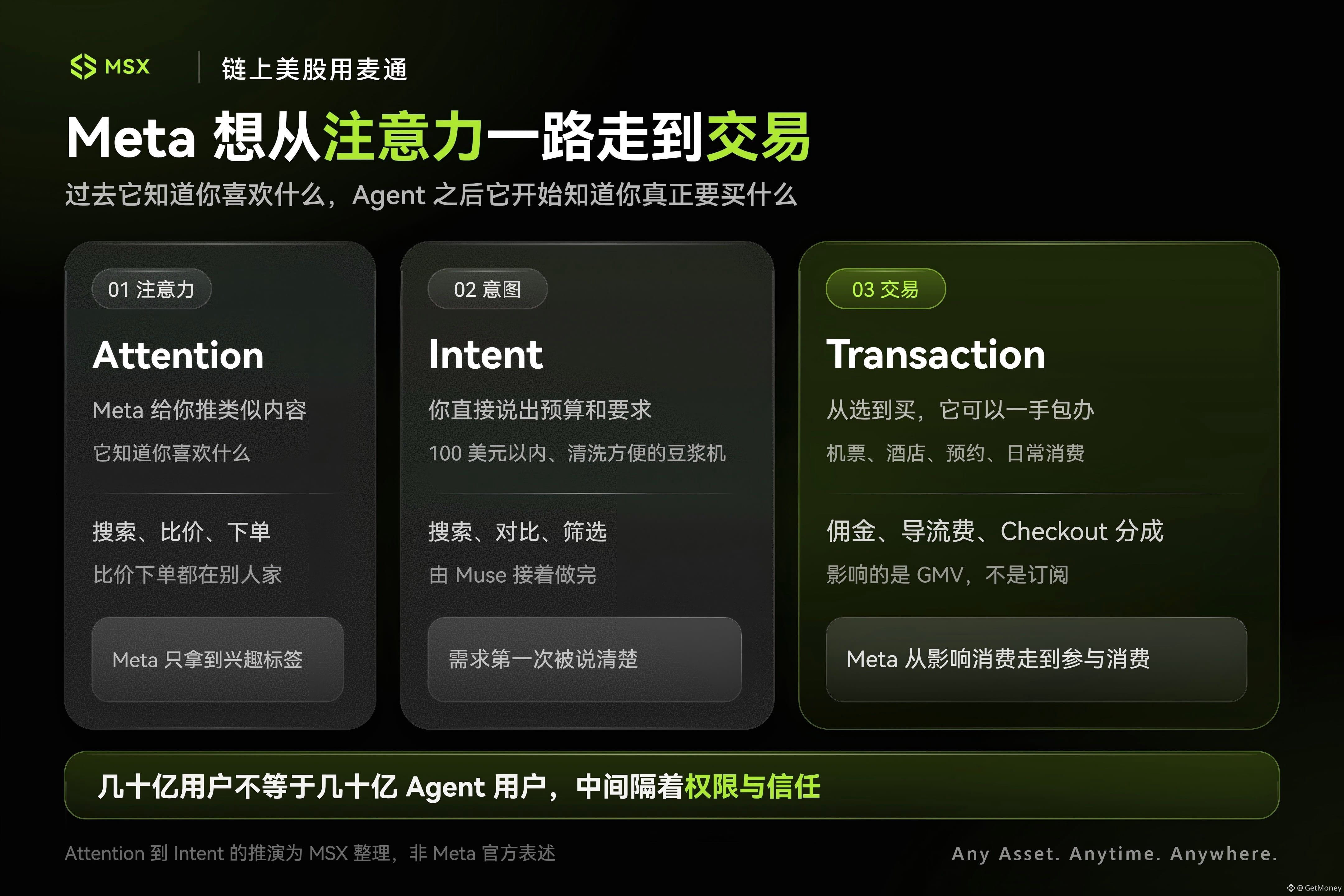
💡 This step is crucial for Meta. With Facebook, Instagram, WhatsApp, and Messenger already holding the attention of billions of users, Muse aims to capture purchase intent—having filtering, comparison, confirmation, and payment all happen within the agent channel. Honestly, this offers far more room for imagination than just targeting ads a bit better.
👀 Amazon has restricted Muse from placing orders on behalf of customers, while Shopify is willing to allow integration with Shop Pay. The reason is pretty straightforward: Amazon worries that external agents might intercept shopping decisions, whereas Shopify only needs orders to go through its own payment and merchant channels to keep charging.
🤔 The real challenge is trust. A chatbot getting something wrong once can still be questioned again, but if an agent buys the wrong quantity, books the wrong hotel, or sends the wrong email, users may immediately revoke access. Would you dare to hand your email, calendar, and payment information to Muse so it can place orders for you?
#Meta #Muse #AIAgent #Web3观察
📰 After Meta raised its full-year capital expenditure guidance to $130–145 billion, the market has been asking: with so many GPUs, data centers, and AI talent, how do they ultimately make money? Muse, launched on September 8, is a new answer from Zuckerberg.
🔥 Muse isn’t just a chatbot. Once authorized, it can browse the web, call APIs, fill out forms, compare prices across platforms, and continue running tasks even after you lock your phone screen—only asking for user confirmation when it comes time to pay or send key emails. In the past, AI told you “what to do.” Now it directly says, “I’ll handle it.”
💡 This step is crucial for Meta. With Facebook, Instagram, WhatsApp, and Messenger already holding the attention of billions of users, Muse aims to capture purchase intent—having filtering, comparison, confirmation, and payment all happen within the agent channel. Honestly, this offers far more room for imagination than just targeting ads a bit better.
👀 Amazon has restricted Muse from placing orders on behalf of customers, while Shopify is willing to allow integration with Shop Pay. The reason is pretty straightforward: Amazon worries that external agents might intercept shopping decisions, whereas Shopify only needs orders to go through its own payment and merchant channels to keep charging.
🤔 The real challenge is trust. A chatbot getting something wrong once can still be questioned again, but if an agent buys the wrong quantity, books the wrong hotel, or sends the wrong email, users may immediately revoke access. Would you dare to hand your email, calendar, and payment information to Muse so it can place orders for you?
#Meta #Muse #AIAgent #Web3观察
🔥 Muse isn’t just a chatbot. Once authorized, it can browse the web, call APIs, fill out forms, compare prices across platforms, and continue running tasks even after you lock your phone screen—only asking for user confirmation when it comes time to pay or send key emails. In the past, AI told you “what to do.” Now it directly says, “I’ll handle it.”
💡 This step is crucial for Meta. With Facebook, Instagram, WhatsApp, and Messenger already holding the attention of billions of users, Muse aims to capture purchase intent—having filtering, comparison, confirmation, and payment all happen within the agent channel. Honestly, this offers far more room for imagination than just targeting ads a bit better.
👀 Amazon has restricted Muse from placing orders on behalf of customers, while Shopify is willing to allow integration with Shop Pay. The reason is pretty straightforward: Amazon worries that external agents might intercept shopping decisions, whereas Shopify only needs orders to go through its own payment and merchant channels to keep charging.
🤔 The real challenge is trust. A chatbot getting something wrong once can still be questioned again, but if an agent buys the wrong quantity, books the wrong hotel, or sends the wrong email, users may immediately revoke access. Would you dare to hand your email, calendar, and payment information to Muse so it can place orders for you?
#Meta #Muse #AIAgent #Web3观察
27

·
--
AI has already started paying for itself—you noticed, right?🤖💸
This week everyone’s been watching $BTC pull back from 87,000 to around 84,000, but I think the more important thing to remember is another piece of news:
Payments giant Block has connected the Bitcoin Lightning Network to x402—a payments protocol specifically built for AI agents. Google, Microsoft, Amazon, and Coinbase are all in its foundation.
In plain terms: in the future, when AI helps you book flights, buy data, or purchase compute, it can pay on its own. Small amounts, high frequency, on-chain settlement.
Last night I hosted an AI+Web3 voice room on DeBox, and the most common question I got was: “What does AI actually have to do with crypto?”
Here’s one answer: AI does the work; the blockchain handles the settlement.
Do you think the wallets of AI agents will ultimately use stablecoins or BTC? Let’s discuss in the comments 👇
#AIAgent #BTC #x402 #Web3
AI has already started paying for itself—you noticed, right?🤖💸
This week everyone’s been watching $BTC pull back from 87,000 to around 84,000, but I think the more important thing to remember is another piece of news:
Payments giant Block has connected the Bitcoin Lightning Network to x402—a payments protocol specifically built for AI agents. Google, Microsoft, Amazon, and Coinbase are all in its foundation.
In plain terms: in the future, when AI helps you book flights, buy data, or purchase compute, it can pay on its own. Small amounts, high frequency, on-chain settlement.
Last night I hosted an AI+Web3 voice room on DeBox, and the most common question I got was: “What does AI actually have to do with crypto?”
Here’s one answer: AI does the work; the blockchain handles the settlement.
Do you think the wallets of AI agents will ultimately use stablecoins or BTC? Let’s discuss in the comments 👇
#AIAgent #BTC #x402 #Web3
This week everyone’s been watching $BTC pull back from 87,000 to around 84,000, but I think the more important thing to remember is another piece of news:
Payments giant Block has connected the Bitcoin Lightning Network to x402—a payments protocol specifically built for AI agents. Google, Microsoft, Amazon, and Coinbase are all in its foundation.
In plain terms: in the future, when AI helps you book flights, buy data, or purchase compute, it can pay on its own. Small amounts, high frequency, on-chain settlement.
Last night I hosted an AI+Web3 voice room on DeBox, and the most common question I got was: “What does AI actually have to do with crypto?”
Here’s one answer: AI does the work; the blockchain handles the settlement.
Do you think the wallets of AI agents will ultimately use stablecoins or BTC? Let’s discuss in the comments 👇
#AIAgent #BTC #x402 #Web3

122

·
--
Verified
*$SIREN - AI + Meme Gem on BNB Chain 🚨*
What is $SIREN?
$SIREN is not just a meme coin. It is an AI-driven project built on *BNB Chain (BEP20)* with a total supply of 1 Billion tokens.
It was launched on *Binance Alpha* and got *$200,000 liquidity support from BNB Chain*. The core product is the *Siren AI Agent* which has two personas:
*Golden Persona:* Conservative mode - filters risky contracts and tracks trends.
*Crimson Persona:* Aggressive mode - finds high-volatility opportunities for high-risk traders.
The AI scans BNB Chain, Solana and Base in real-time for whale activity, contract security, and community sentiment.
Current Price: Around *$0.0249* with a market cap of ∼$20M. The project already has 50k+ holders.
In my view, after the big correction from its ATH, SIREN is consolidating and has good potential for the next 3-4 months if the team delivers AI DEX and multi-chain expansion.
*Note:* This is not financial advice. Meme + AI tokens are highly volatile. Please do your own research (DYOR).
#SIREN #SIRENUSDT #BinanceAlpha #BNBChain #AIAgent
$SIREN
*$SIREN - AI + Meme Gem on BNB Chain 🚨*
What is $SIREN ?
$SIREN is not just a meme coin. It is an AI-driven project built on *BNB Chain (BEP20)* with a total supply of 1 Billion tokens.
It was launched on *Binance Alpha* and got *$200,000 liquidity support from BNB Chain*. The core product is the *Siren AI Agent* which has two personas:
*Golden Persona:* Conservative mode - filters risky contracts and tracks trends.
*Crimson Persona:* Aggressive mode - finds high-volatility opportunities for high-risk traders.
The AI scans BNB Chain, Solana and Base in real-time for whale activity, contract security, and community sentiment.
Current Price: Around *$0.0249* with a market cap of ∼$20M. The project already has 50k+ holders.
In my view, after the big correction from its ATH, SIREN is consolidating and has good potential for the next 3-4 months if the team delivers AI DEX and multi-chain expansion.
*Note:* This is not financial advice. Meme + AI tokens are highly volatile. Please do your own research (DYOR).
#SIREN #SIRENUSDT #BinanceAlpha #BNBChain #AIAgent
$SIREN
What is $SIREN ?
$SIREN is not just a meme coin. It is an AI-driven project built on *BNB Chain (BEP20)* with a total supply of 1 Billion tokens.
It was launched on *Binance Alpha* and got *$200,000 liquidity support from BNB Chain*. The core product is the *Siren AI Agent* which has two personas:
*Golden Persona:* Conservative mode - filters risky contracts and tracks trends.
*Crimson Persona:* Aggressive mode - finds high-volatility opportunities for high-risk traders.
The AI scans BNB Chain, Solana and Base in real-time for whale activity, contract security, and community sentiment.
Current Price: Around *$0.0249* with a market cap of ∼$20M. The project already has 50k+ holders.
In my view, after the big correction from its ATH, SIREN is consolidating and has good potential for the next 3-4 months if the team delivers AI DEX and multi-chain expansion.
*Note:* This is not financial advice. Meme + AI tokens are highly volatile. Please do your own research (DYOR).
#SIREN #SIRENUSDT #BinanceAlpha #BNBChain #AIAgent
$SIREN
1
1.8k

·
--
Bullish
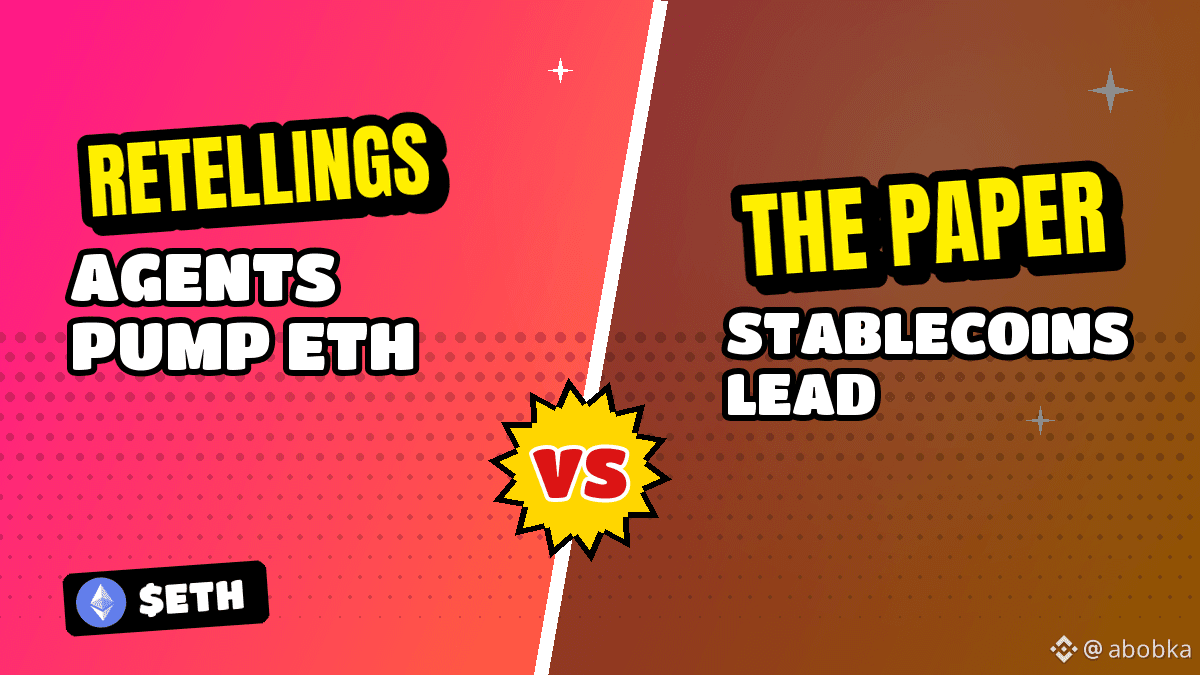
🔸 BlackRock's new AI-agent paper mentions ETH exactly once. in brackets
my feed already turned it into BlackRock-says-agents-pump-ETH
what the paper actually says: native cryptoassets "(e.g. ETH)" handle consensus and fees, and stablecoin growth "could support usage-related demand" for them
"subject to each network's fee, staking, and gas-sponsorship design"
that last bit is doing a lot of work)
the same paragraph names Circle's Arc, where USDC itself is the gas. on a chain like that the agents pay and the native token can sit it out
where the paper leans harder:
- stablecoins "are likely to lead transactional use"
- the one "we expect" in there is about exchange-traded compute futures
i don't hold $ETH . my stuff is BNB and stables, USDC included, parked in Simple Earn Flexible, and a PDF isn't moving any of it
#BlackRock #AIAgent
🔸 BlackRock's new AI-agent paper mentions ETH exactly once. in brackets
my feed already turned it into BlackRock-says-agents-pump-ETH
what the paper actually says: native cryptoassets "(e.g. ETH)" handle consensus and fees, and stablecoin growth "could support usage-related demand" for them
"subject to each network's fee, staking, and gas-sponsorship design"
that last bit is doing a lot of work)
the same paragraph names Circle's Arc, where USDC itself is the gas. on a chain like that the agents pay and the native token can sit it out
where the paper leans harder:
- stablecoins "are likely to lead transactional use"
- the one "we expect" in there is about exchange-traded compute futures
i don't hold $ETH . my stuff is BNB and stables, USDC included, parked in Simple Earn Flexible, and a PDF isn't moving any of it
#BlackRock #AIAgent
my feed already turned it into BlackRock-says-agents-pump-ETH
what the paper actually says: native cryptoassets "(e.g. ETH)" handle consensus and fees, and stablecoin growth "could support usage-related demand" for them
"subject to each network's fee, staking, and gas-sponsorship design"
that last bit is doing a lot of work)
the same paragraph names Circle's Arc, where USDC itself is the gas. on a chain like that the agents pay and the native token can sit it out
where the paper leans harder:
- stablecoins "are likely to lead transactional use"
- the one "we expect" in there is about exchange-traded compute futures
i don't hold $ETH . my stuff is BNB and stables, USDC included, parked in Simple Earn Flexible, and a PDF isn't moving any of it
#BlackRock #AIAgent
4
141


Article
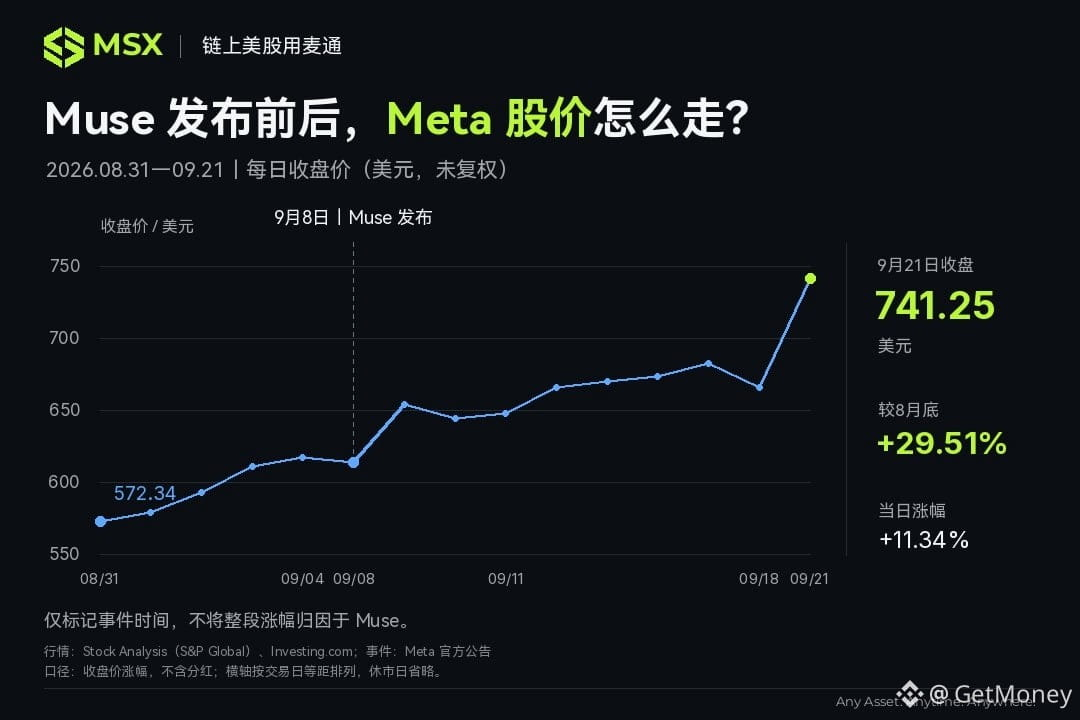
Meta Muse Breaks Ground: AI Agents Are Entering a Maturity PhaseOn September 8, Meta launched its personal AI Agent, Muse.
In less than two weeks, Muse’s downloads have exceeded 2.5 million, and it once topped the U.S. App Store Free rankings;
September 21,
The stock price rose by about 11.3% in a single day, setting a strong performance for the period.
What’s truly traded in the capital markets may not just be a new app.
Rather, it’s a more important judgment:
AI Agent, is entering the “gateway that takes care of things for you” from the “chat-capable model.”
Meta has equipped Muse with a dedicated Secure VM, a browser, background execution, permission confirmation, and a one-time payment card.
All the user needs to do is state the goal. Muse can then plan, search, fill out forms, place orders by itself, and only come back to the user for confirmation when necessary.
Meta Muse Breaks Ground: AI Agents Are Entering a Maturity Phase
On September 8, Meta launched its personal AI Agent, Muse.
In less than two weeks, Muse’s downloads have exceeded 2.5 million, and it once topped the U.S. App Store Free rankings;
September 21,
The stock price rose by about 11.3% in a single day, setting a strong performance for the period.
What’s truly traded in the capital markets may not just be a new app.
Rather, it’s a more important judgment:
AI Agent, is entering the “gateway that takes care of things for you” from the “chat-capable model.”
Meta has equipped Muse with a dedicated Secure VM, a browser, background execution, permission confirmation, and a one-time payment card.
All the user needs to do is state the goal. Muse can then plan, search, fill out forms, place orders by itself, and only come back to the user for confirmation when necessary.
In less than two weeks, Muse’s downloads have exceeded 2.5 million, and it once topped the U.S. App Store Free rankings;
September 21,
The stock price rose by about 11.3% in a single day, setting a strong performance for the period.
What’s truly traded in the capital markets may not just be a new app.
Rather, it’s a more important judgment:
AI Agent, is entering the “gateway that takes care of things for you” from the “chat-capable model.”
Meta has equipped Muse with a dedicated Secure VM, a browser, background execution, permission confirmation, and a one-time payment card.
All the user needs to do is state the goal. Muse can then plan, search, fill out forms, place orders by itself, and only come back to the user for confirmation when necessary.
METAUS+0.22%
1
457

·
--
Nikita Bier fires a warning: an AI agent swarm is going to crash websites—fighting bots is a top priority for enterprises. Going forward, when you browse the internet, you’ll need to first prove you’re human, otherwise even CAPTCHAs won’t let you through. This human-vs-machine verification narrative is direct and blazing—will Humanity protocols like Worldcoin take off? The market hasn’t come yet, but CAPTCHAs are first.🤖
$WORLD $ENS #DID #AIagent
Nikita Bier fires a warning: an AI agent swarm is going to crash websites—fighting bots is a top priority for enterprises. Going forward, when you browse the internet, you’ll need to first prove you’re human, otherwise even CAPTCHAs won’t let you through. This human-vs-machine verification narrative is direct and blazing—will Humanity protocols like Worldcoin take off? The market hasn’t come yet, but CAPTCHAs are first.🤖
$WORLD $ENS #DID #AIagent
$WORLD $ENS #DID #AIagent

141

·
--
Moss has just announced the global Builders this time.
Builders are participating in the Chinese, English, and Korean communities.
Let’s introduce Moss in the simplest, most straightforward way:
Moss doesn’t require you to start by wrestling with complex code.
You can directly describe your ideas in natural language.
Try building a strategy, then run backtesting.
Finally, deploy it on-chain.
In short:
You handle the ideas— the Agent handles running them.
Moss is the simplest, easiest-to-understand, and fastest to get started trading Agent.
#MossAI #AIAgent @MossAI_Official @MossAI_CN
Moss has just announced the global Builders this time.
Builders are participating in the Chinese, English, and Korean communities.
Let’s introduce Moss in the simplest, most straightforward way:
Moss doesn’t require you to start by wrestling with complex code.
You can directly describe your ideas in natural language.
Try building a strategy, then run backtesting.
Finally, deploy it on-chain.
In short:
You handle the ideas— the Agent handles running them.
Moss is the simplest, easiest-to-understand, and fastest to get started trading Agent.
#MossAI #AIAgent @MossAI_Official @MossAI_CN
Builders are participating in the Chinese, English, and Korean communities.
Let’s introduce Moss in the simplest, most straightforward way:
Moss doesn’t require you to start by wrestling with complex code.
You can directly describe your ideas in natural language.
Try building a strategy, then run backtesting.
Finally, deploy it on-chain.
In short:
You handle the ideas— the Agent handles running them.
Moss is the simplest, easiest-to-understand, and fastest to get started trading Agent.
#MossAI #AIAgent @MossAI_Official @MossAI_CN
7
·
--
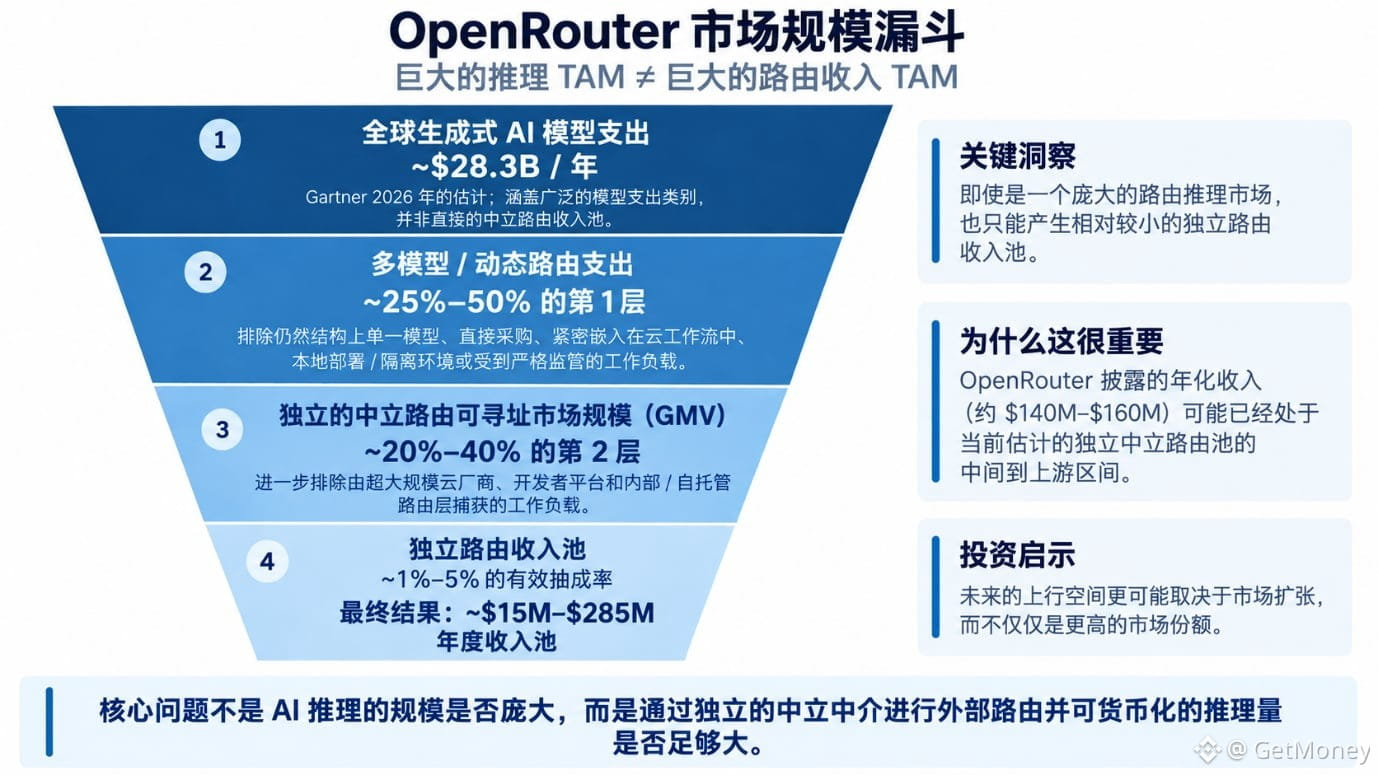
📰 On August 19, Stripe announced the acquisition of OpenRouter. The parties did not disclose the final price, but media reports put the range at about USD 7.0 to 8.0 billion and above. The New York Times’ figure is about USD 7.5 billion. Even more striking, OpenRouter’s Series B valuation from 83 days ago was only about USD 1.3 billion—less than three months later, it was repriced at nearly a 6x premium.
🔥 OpenRouter’s business is easy to understand: it connects 500+ models and 80+ compute providers into a single OpenAI-compatible interface. Platform disclosed data includes processing over 40 trillion tokens per month, more than 10 million global users, and coverage of 250,000+ applications.
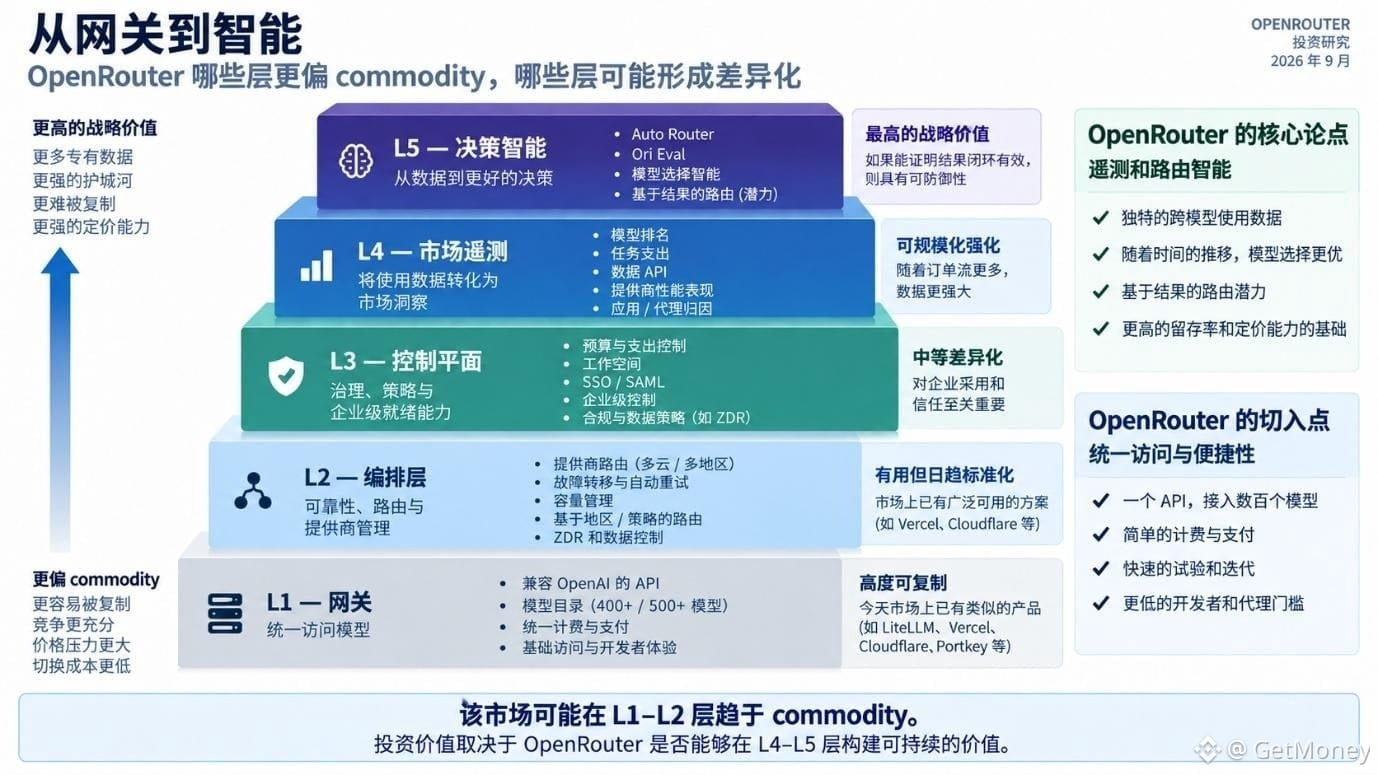
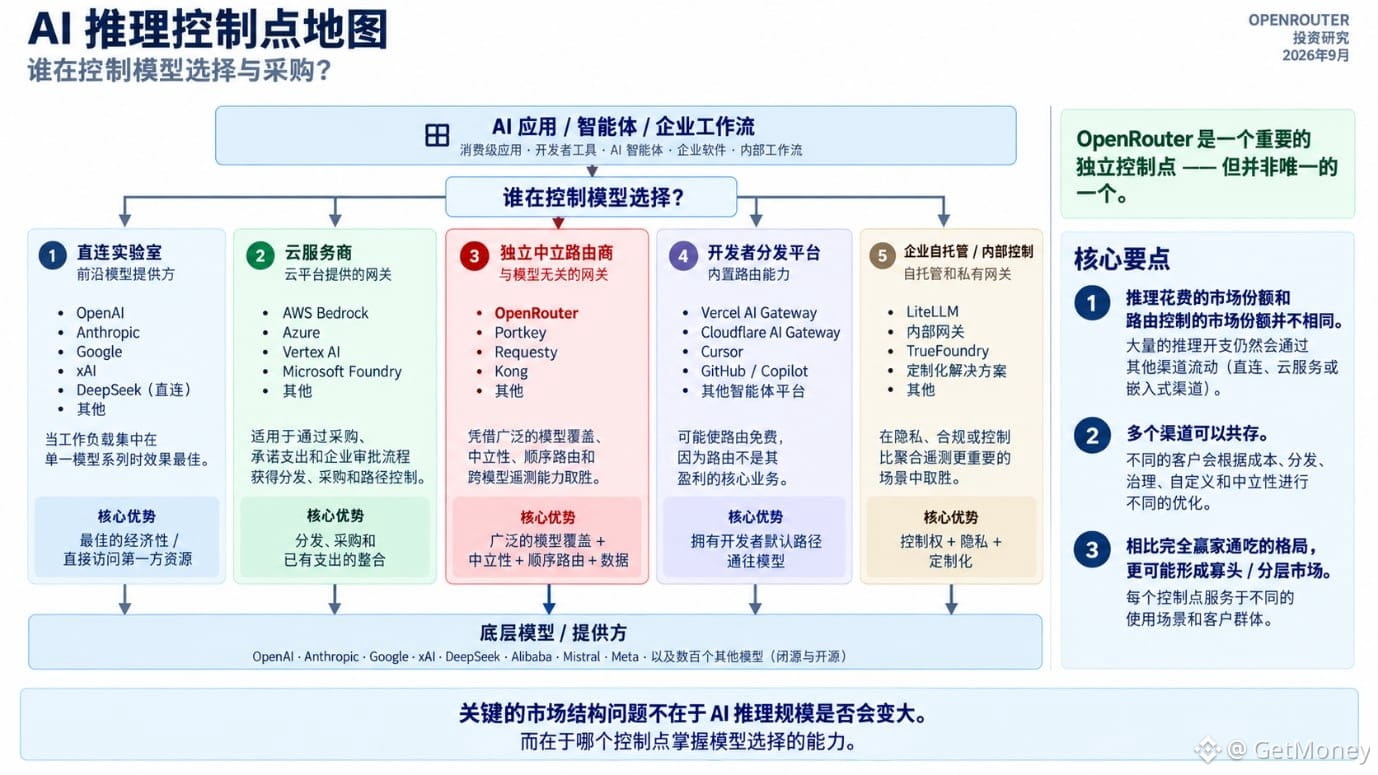
But the problem is just as straightforward. Since the interface is already standardized, developers can switch platforms by changing the base URL. The same batch of compute providers would also simultaneously integrate competitors like Vercel. And Vercel has turned AI routing into a free feature—charging only via a channel cut—so it’s hard to justify this acquisition price on that basis alone.
💡 So what Stripe might be buying is not just a model entry point, but the transaction control of future Agents. Model routing, call data, plus the Agent’s identity, budget, and settlement—if all of that can be stitched together, OpenRouter would have a chance to evolve from a middleware you can swap anytime into a control point that’s difficult to bypass.
🤔 Honestly, this deal looks a bit like an early bet on the era of “software automatically selecting models.” Do you think OpenRouter can ultimately hold onto a USD 7.5 billion valuation, or will free routing quickly drive the price down?
#Stripe #OpenRouter #AIAgent #Artificial Intelligence
📰 On August 19, Stripe announced the acquisition of OpenRouter. The parties did not disclose the final price, but media reports put the range at about USD 7.0 to 8.0 billion and above. The New York Times’ figure is about USD 7.5 billion. Even more striking, OpenRouter’s Series B valuation from 83 days ago was only about USD 1.3 billion—less than three months later, it was repriced at nearly a 6x premium.
🔥 OpenRouter’s business is easy to understand: it connects 500+ models and 80+ compute providers into a single OpenAI-compatible interface. Platform disclosed data includes processing over 40 trillion tokens per month, more than 10 million global users, and coverage of 250,000+ applications.
But the problem is just as straightforward. Since the interface is already standardized, developers can switch platforms by changing the base URL. The same batch of compute providers would also simultaneously integrate competitors like Vercel. And Vercel has turned AI routing into a free feature—charging only via a channel cut—so it’s hard to justify this acquisition price on that basis alone.
💡 So what Stripe might be buying is not just a model entry point, but the transaction control of future Agents. Model routing, call data, plus the Agent’s identity, budget, and settlement—if all of that can be stitched together, OpenRouter would have a chance to evolve from a middleware you can swap anytime into a control point that’s difficult to bypass.
🤔 Honestly, this deal looks a bit like an early bet on the era of “software automatically selecting models.” Do you think OpenRouter can ultimately hold onto a USD 7.5 billion valuation, or will free routing quickly drive the price down?
#Stripe #OpenRouter #AIAgent #Artificial Intelligence
🔥 OpenRouter’s business is easy to understand: it connects 500+ models and 80+ compute providers into a single OpenAI-compatible interface. Platform disclosed data includes processing over 40 trillion tokens per month, more than 10 million global users, and coverage of 250,000+ applications.
But the problem is just as straightforward. Since the interface is already standardized, developers can switch platforms by changing the base URL. The same batch of compute providers would also simultaneously integrate competitors like Vercel. And Vercel has turned AI routing into a free feature—charging only via a channel cut—so it’s hard to justify this acquisition price on that basis alone.
💡 So what Stripe might be buying is not just a model entry point, but the transaction control of future Agents. Model routing, call data, plus the Agent’s identity, budget, and settlement—if all of that can be stitched together, OpenRouter would have a chance to evolve from a middleware you can swap anytime into a control point that’s difficult to bypass.
🤔 Honestly, this deal looks a bit like an early bet on the era of “software automatically selecting models.” Do you think OpenRouter can ultimately hold onto a USD 7.5 billion valuation, or will free routing quickly drive the price down?
#Stripe #OpenRouter #AIAgent #Artificial Intelligence
24
·
--
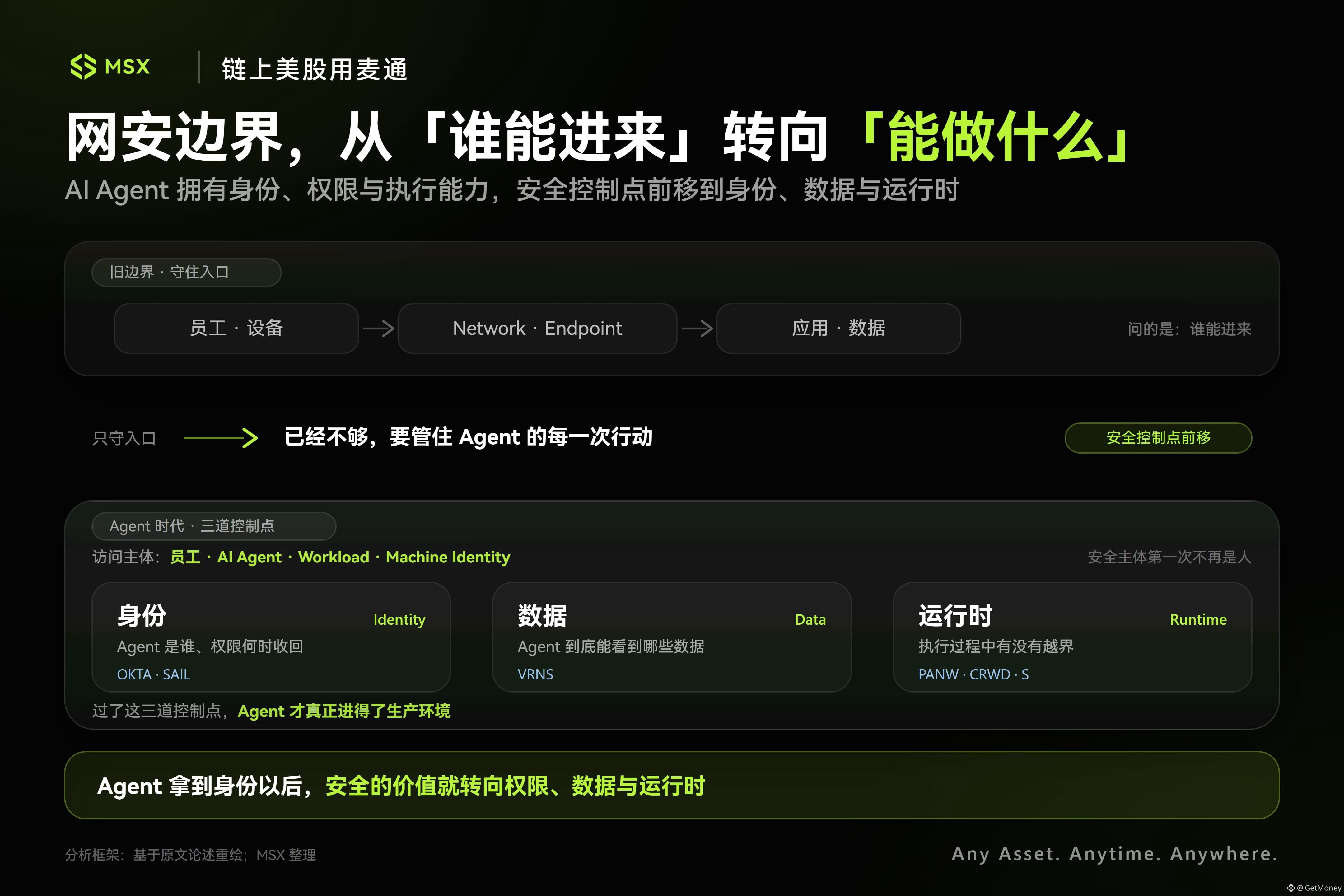
📰 Once an AI agent steps out of the chat box, what cybersecurity firms face is no longer just “whether the model might answer incorrectly.” Instead, it comes down to whether, with legitimate credentials, it can read SharePoint, run SQL, modify code, and even click through payment approvals in an ERP.
To be honest, the most troublesome part is right here: an agent isn’t an employee, yet it holds system credentials; it isn’t traditional software, yet it can proactively call tools, access data, and carry out tasks. Even with a valid identity and a normal login, it may still perform actions nobody expects—because of overly broad permissions, incorrect tool calls, or malicious prompt influence.
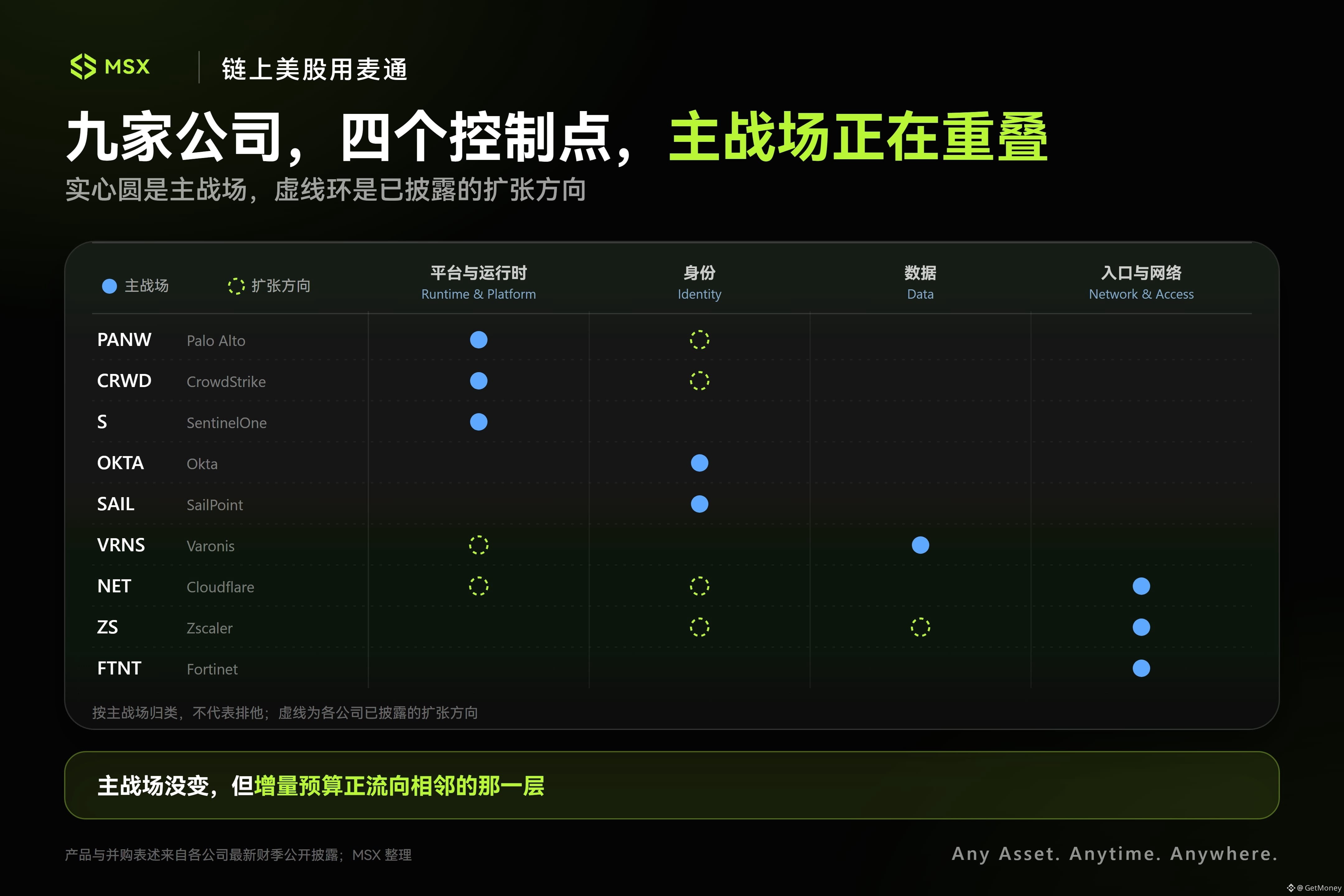
🔥 So the focus of this round of cybersecurity is shifting—from perimeter networks and endpoints to identity, data, and runtime. In the past, firewalls, EDR, and IAM were handled in separate lanes, but once agents appear, enterprises have to ask: are the things it’s doing still consistent with the original purpose it was authorized for?
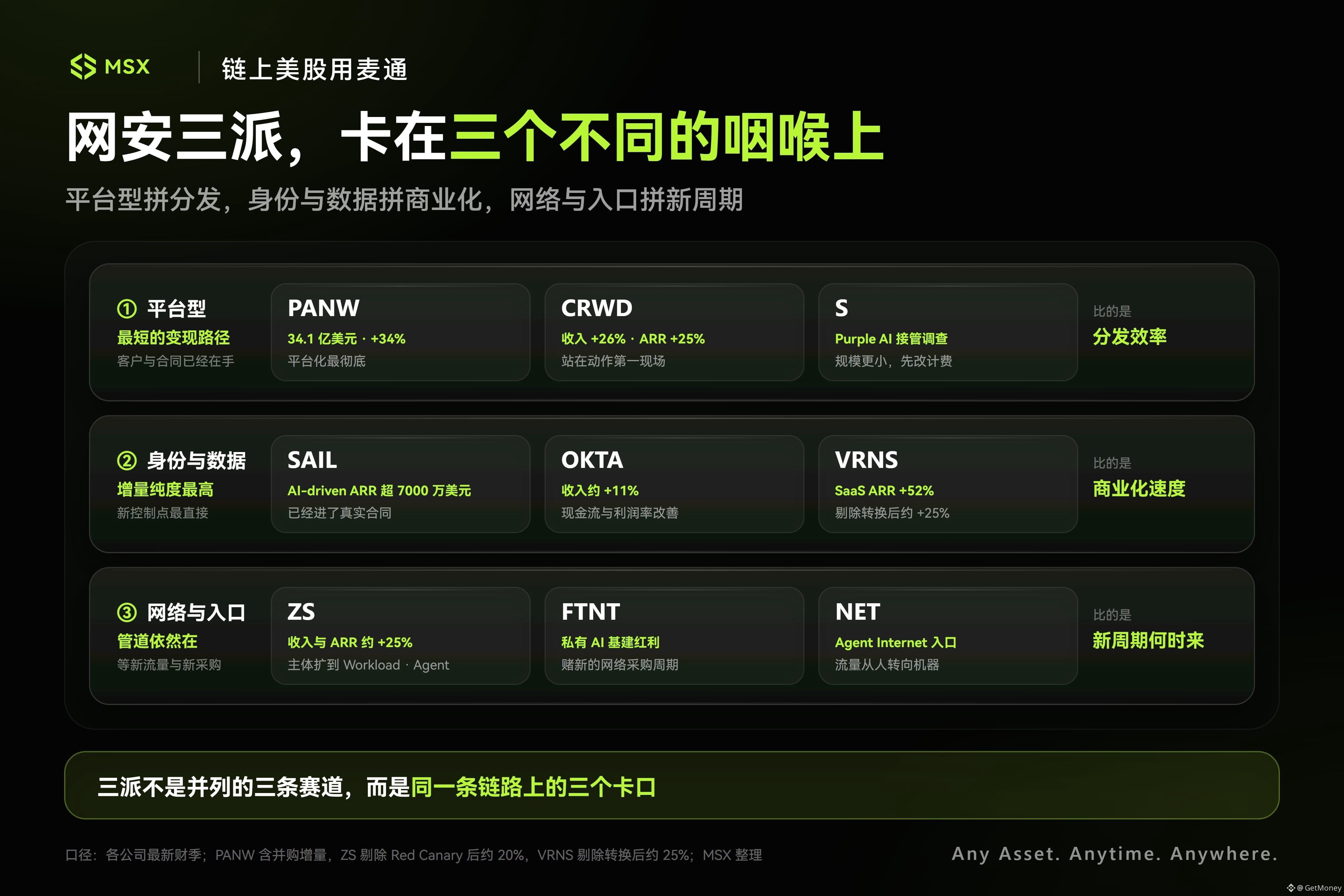
PANW is taking a platform approach: it has bundled network security, cloud security, SOC, identity, and AI security under one umbrella, with the latest quarterly revenue reaching $3.41 billion, up 34% year over year. CRWD is closer to where the action happens. Since an agent ultimately runs scripts, writes files, and modifies system processes, it will land on servers, containers, or endpoints—its latest quarterly revenue grew 26% year over year, and ARR grew 25%.
💡 What’s really interesting is the identity-and-data side. SAIL’s latest quarterly ARR grew 25% year over year; SaaS ARR grew 36%; AI-driven ARR has already surpassed $70 million; and AI products contributed more than 30% of net new ARR. VRNS’s SaaS ARR grew 52% year over year—its goal is to solve what data an agent can actually see and what permissions it holds.
As agents increasingly enter enterprise internal networks, what cybersecurity firms sell may no longer be only “attack prevention.” They’ll also need to control machine identities, tool usage, and the execution process. Which direction do you think is most likely to see a breakthrough first: identity governance, data permissions, or runtime security?
#AI安全 #网安 #AIAgent #Web3-инвестирование
📰 Once an AI agent steps out of the chat box, what cybersecurity firms face is no longer just “whether the model might answer incorrectly.” Instead, it comes down to whether, with legitimate credentials, it can read SharePoint, run SQL, modify code, and even click through payment approvals in an ERP.
To be honest, the most troublesome part is right here: an agent isn’t an employee, yet it holds system credentials; it isn’t traditional software, yet it can proactively call tools, access data, and carry out tasks. Even with a valid identity and a normal login, it may still perform actions nobody expects—because of overly broad permissions, incorrect tool calls, or malicious prompt influence.
🔥 So the focus of this round of cybersecurity is shifting—from perimeter networks and endpoints to identity, data, and runtime. In the past, firewalls, EDR, and IAM were handled in separate lanes, but once agents appear, enterprises have to ask: are the things it’s doing still consistent with the original purpose it was authorized for?
PANW is taking a platform approach: it has bundled network security, cloud security, SOC, identity, and AI security under one umbrella, with the latest quarterly revenue reaching $3.41 billion, up 34% year over year. CRWD is closer to where the action happens. Since an agent ultimately runs scripts, writes files, and modifies system processes, it will land on servers, containers, or endpoints—its latest quarterly revenue grew 26% year over year, and ARR grew 25%.
💡 What’s really interesting is the identity-and-data side. SAIL’s latest quarterly ARR grew 25% year over year; SaaS ARR grew 36%; AI-driven ARR has already surpassed $70 million; and AI products contributed more than 30% of net new ARR. VRNS’s SaaS ARR grew 52% year over year—its goal is to solve what data an agent can actually see and what permissions it holds.
As agents increasingly enter enterprise internal networks, what cybersecurity firms sell may no longer be only “attack prevention.” They’ll also need to control machine identities, tool usage, and the execution process. Which direction do you think is most likely to see a breakthrough first: identity governance, data permissions, or runtime security?
#AI安全 #网安 #AIAgent #Web3-инвестирование
To be honest, the most troublesome part is right here: an agent isn’t an employee, yet it holds system credentials; it isn’t traditional software, yet it can proactively call tools, access data, and carry out tasks. Even with a valid identity and a normal login, it may still perform actions nobody expects—because of overly broad permissions, incorrect tool calls, or malicious prompt influence.
🔥 So the focus of this round of cybersecurity is shifting—from perimeter networks and endpoints to identity, data, and runtime. In the past, firewalls, EDR, and IAM were handled in separate lanes, but once agents appear, enterprises have to ask: are the things it’s doing still consistent with the original purpose it was authorized for?
PANW is taking a platform approach: it has bundled network security, cloud security, SOC, identity, and AI security under one umbrella, with the latest quarterly revenue reaching $3.41 billion, up 34% year over year. CRWD is closer to where the action happens. Since an agent ultimately runs scripts, writes files, and modifies system processes, it will land on servers, containers, or endpoints—its latest quarterly revenue grew 26% year over year, and ARR grew 25%.
💡 What’s really interesting is the identity-and-data side. SAIL’s latest quarterly ARR grew 25% year over year; SaaS ARR grew 36%; AI-driven ARR has already surpassed $70 million; and AI products contributed more than 30% of net new ARR. VRNS’s SaaS ARR grew 52% year over year—its goal is to solve what data an agent can actually see and what permissions it holds.
As agents increasingly enter enterprise internal networks, what cybersecurity firms sell may no longer be only “attack prevention.” They’ll also need to control machine identities, tool usage, and the execution process. Which direction do you think is most likely to see a breakthrough first: identity governance, data permissions, or runtime security?
#AI安全 #网安 #AIAgent #Web3-инвестирование

66
The weak spot in AI Agent economics isn’t just whether the model can do the work—it’s whether Agents can establish trust with each other, complete acceptance, and automatically get paid. Agentum wants to bring this workflow to the BNB Chain: tasks, bidding, escrow, delivery through to settlement—everything can be completed by Agents without human supervision.
The protocol combines Agent NFT / .agent ID, on-chain escrow and settlement, TEE confidential computing, and zkVM verifiable evaluation. The focus is on reducing the trust cost of “fake delivery” and collaboration between unfamiliar Agents. While the mainnet hasn’t been fully launched yet, the BSC testnet already has hundreds of registered Agents that have completed transactions.
For funding, Agentum raised $7 million. The round wasn’t disclosed; investors include MEXC, BingX, Arca, Blocktower Capital, Echo3 Labs, and Vega Ventures.
Going forward, the key will come down to three things: mainnet security, whether real task demand can scale up, and whether cross-platform Agent collaboration standards can be established.
#AIAgent #BNBChain #Web3
The weak spot in AI Agent economics isn’t just whether the model can do the work—it’s whether Agents can establish trust with each other, complete acceptance, and automatically get paid. Agentum wants to bring this workflow to the BNB Chain: tasks, bidding, escrow, delivery through to settlement—everything can be completed by Agents without human supervision.
The protocol combines Agent NFT / .agent ID, on-chain escrow and settlement, TEE confidential computing, and zkVM verifiable evaluation. The focus is on reducing the trust cost of “fake delivery” and collaboration between unfamiliar Agents. While the mainnet hasn’t been fully launched yet, the BSC testnet already has hundreds of registered Agents that have completed transactions.
For funding, Agentum raised $7 million. The round wasn’t disclosed; investors include MEXC, BingX, Arca, Blocktower Capital, Echo3 Labs, and Vega Ventures.
Going forward, the key will come down to three things: mainnet security, whether real task demand can scale up, and whether cross-platform Agent collaboration standards can be established.
#AIAgent #BNBChain #Web3
The protocol combines Agent NFT / .agent ID, on-chain escrow and settlement, TEE confidential computing, and zkVM verifiable evaluation. The focus is on reducing the trust cost of “fake delivery” and collaboration between unfamiliar Agents. While the mainnet hasn’t been fully launched yet, the BSC testnet already has hundreds of registered Agents that have completed transactions.
For funding, Agentum raised $7 million. The round wasn’t disclosed; investors include MEXC, BingX, Arca, Blocktower Capital, Echo3 Labs, and Vega Ventures.
Going forward, the key will come down to three things: mainnet security, whether real task demand can scale up, and whether cross-platform Agent collaboration standards can be established.
#AIAgent #BNBChain #Web3
76

AI Agent truly moves toward “self-accepting jobs, doing the work themselves, and collecting the payments themselves”—the gap isn’t the model, but on-chain trust and the settlement layer.
Agentum has just completed a $7 million funding round; the round details were not disclosed. Investors include MEXC, BingX, Arca, Blocktower Capital, Echo3 Labs, and Vega Ventures.
The protocol is deployed on BNB Chain. Its core idea is to let the Agent build an on-chain identity via Agent NFT / .agent ID, and to use custodial settlement, TEE confidential computing, and zkVM verifiable evaluation to handle the full flow—job posting, bidding, delivery, and automated payouts—with as little manual intervention as possible throughout.
Its mainnet hasn’t fully launched yet. However, the BSC testnet already has hundreds of registered Agents and completed transactions. I’m most interested in three things going forward: whether complex tasks can be reliably verified, whether the dispute-resolution mechanisms are mature, and whether testnet activity can migrate to the mainnet.
The imagination space in this track is huge, but it’s still very early. News of funding doesn’t necessarily mean an ecosystem boom in the short term.
🔗 agentum.space
#AIAgent #BNBChain #Web3 financing
AI Agent truly moves toward “self-accepting jobs, doing the work themselves, and collecting the payments themselves”—the gap isn’t the model, but on-chain trust and the settlement layer.
Agentum has just completed a $7 million funding round; the round details were not disclosed. Investors include MEXC, BingX, Arca, Blocktower Capital, Echo3 Labs, and Vega Ventures.
The protocol is deployed on BNB Chain. Its core idea is to let the Agent build an on-chain identity via Agent NFT / .agent ID, and to use custodial settlement, TEE confidential computing, and zkVM verifiable evaluation to handle the full flow—job posting, bidding, delivery, and automated payouts—with as little manual intervention as possible throughout.
Its mainnet hasn’t fully launched yet. However, the BSC testnet already has hundreds of registered Agents and completed transactions. I’m most interested in three things going forward: whether complex tasks can be reliably verified, whether the dispute-resolution mechanisms are mature, and whether testnet activity can migrate to the mainnet.
The imagination space in this track is huge, but it’s still very early. News of funding doesn’t necessarily mean an ecosystem boom in the short term.
🔗 agentum.space
#AIAgent #BNBChain #Web3 financing
Agentum has just completed a $7 million funding round; the round details were not disclosed. Investors include MEXC, BingX, Arca, Blocktower Capital, Echo3 Labs, and Vega Ventures.
The protocol is deployed on BNB Chain. Its core idea is to let the Agent build an on-chain identity via Agent NFT / .agent ID, and to use custodial settlement, TEE confidential computing, and zkVM verifiable evaluation to handle the full flow—job posting, bidding, delivery, and automated payouts—with as little manual intervention as possible throughout.
Its mainnet hasn’t fully launched yet. However, the BSC testnet already has hundreds of registered Agents and completed transactions. I’m most interested in three things going forward: whether complex tasks can be reliably verified, whether the dispute-resolution mechanisms are mature, and whether testnet activity can migrate to the mainnet.
The imagination space in this track is huge, but it’s still very early. News of funding doesn’t necessarily mean an ecosystem boom in the short term.
🔗 agentum.space
#AIAgent #BNBChain #Web3 financing
67

·
--
AI agents must take orders, bid, and deliver themselves—the hardest part isn’t just getting the workflow working, but whether the parties are willing to automatically release funds to each other. Agentum aims to build this missing infrastructure: deploy on BNB Chain, combining Agent NFTs / .agent IDs, escrow settlement, TEE confidential computing, and zkVM verifiable evaluation, so that posting tasks, bidding, delivery, and fund release can be executed even when no one is actively monitoring.
The project has disclosed completion of a $700,000 funding round; the round details were not disclosed. Investors include MEXC Exchange, BingX, Arca, Blocktower Capital, Echo3 Labs, and Vega Ventures. The mainnet has not been fully launched yet, but the BSC testnet already has hundreds of registered agents that have completed transactions.
The highlight is that only when agents have an on-chain identity, escrowed funds, and verifiable execution can machines truly form a task marketplace. The next focus is mainnet progress, real task volume, and the scale of settlements.
#AIAgent #BNBChain #Web3融资
AI agents must take orders, bid, and deliver themselves—the hardest part isn’t just getting the workflow working, but whether the parties are willing to automatically release funds to each other. Agentum aims to build this missing infrastructure: deploy on BNB Chain, combining Agent NFTs / .agent IDs, escrow settlement, TEE confidential computing, and zkVM verifiable evaluation, so that posting tasks, bidding, delivery, and fund release can be executed even when no one is actively monitoring.
The project has disclosed completion of a $700,000 funding round; the round details were not disclosed. Investors include MEXC Exchange, BingX, Arca, Blocktower Capital, Echo3 Labs, and Vega Ventures. The mainnet has not been fully launched yet, but the BSC testnet already has hundreds of registered agents that have completed transactions.
The highlight is that only when agents have an on-chain identity, escrowed funds, and verifiable execution can machines truly form a task marketplace. The next focus is mainnet progress, real task volume, and the scale of settlements.
#AIAgent #BNBChain #Web3融资
The project has disclosed completion of a $700,000 funding round; the round details were not disclosed. Investors include MEXC Exchange, BingX, Arca, Blocktower Capital, Echo3 Labs, and Vega Ventures. The mainnet has not been fully launched yet, but the BSC testnet already has hundreds of registered agents that have completed transactions.
The highlight is that only when agents have an on-chain identity, escrowed funds, and verifiable execution can machines truly form a task marketplace. The next focus is mainnet progress, real task volume, and the scale of settlements.
#AIAgent #BNBChain #Web3融资
67
·
--
The next phase of competition for AI agents isn’t just about model capability—it’s whether they can trust each other and automate trading.
Agentum is building a self-custody agent economic protocol on BNB Chain, covering the entire workflow from order creation, bidding, execution, custody, to settlement. It establishes an on-chain identity using Agent NFTs and .agent IDs, handles confidential execution via TEE processors, and performs verifiable assessments of delivery results with zkVM—enabling automated payouts without human oversight.
The project has disclosed that it has completed a $7 million funding round, with participating investors including MEXC, BingX, Arca, Blocktower Capital, Echo3 Labs, and Vega Ventures. The round is not publicly disclosed yet. The mainnet has not been fully launched, but the BSC testnet already has hundreds of agents registered and completed transactions.
I’m especially focused on three metrics: order density between agents, the rate of disputes in custody, and the real cost of TEE combined with zkVM evaluation. If these pieces run smoothly, AI agents may evolve from single-person tools into true on-chain economic participants.
#AIAgent #BNBChain #AI融资
The next phase of competition for AI agents isn’t just about model capability—it’s whether they can trust each other and automate trading.
Agentum is building a self-custody agent economic protocol on BNB Chain, covering the entire workflow from order creation, bidding, execution, custody, to settlement. It establishes an on-chain identity using Agent NFTs and .agent IDs, handles confidential execution via TEE processors, and performs verifiable assessments of delivery results with zkVM—enabling automated payouts without human oversight.
The project has disclosed that it has completed a $7 million funding round, with participating investors including MEXC, BingX, Arca, Blocktower Capital, Echo3 Labs, and Vega Ventures. The round is not publicly disclosed yet. The mainnet has not been fully launched, but the BSC testnet already has hundreds of agents registered and completed transactions.
I’m especially focused on three metrics: order density between agents, the rate of disputes in custody, and the real cost of TEE combined with zkVM evaluation. If these pieces run smoothly, AI agents may evolve from single-person tools into true on-chain economic participants.
#AIAgent #BNBChain #AI融资
Agentum is building a self-custody agent economic protocol on BNB Chain, covering the entire workflow from order creation, bidding, execution, custody, to settlement. It establishes an on-chain identity using Agent NFTs and .agent IDs, handles confidential execution via TEE processors, and performs verifiable assessments of delivery results with zkVM—enabling automated payouts without human oversight.
The project has disclosed that it has completed a $7 million funding round, with participating investors including MEXC, BingX, Arca, Blocktower Capital, Echo3 Labs, and Vega Ventures. The round is not publicly disclosed yet. The mainnet has not been fully launched, but the BSC testnet already has hundreds of agents registered and completed transactions.
I’m especially focused on three metrics: order density between agents, the rate of disputes in custody, and the real cost of TEE combined with zkVM evaluation. If these pieces run smoothly, AI agents may evolve from single-person tools into true on-chain economic participants.
#AIAgent #BNBChain #AI融资
61

·
--
A trust layer is also needed between AI agents—a “send orders–bid–deliver–funding release” workflow. Agentum announced it has completed a $7 million funding round, with the round details undisclosed; investors include MEXC, BingX, Arca, Blocktower Capital, Echo3 Labs, and Vega Ventures.
The project is deployed on BNB Chain. It positions itself as a self-custody Agent economic protocol: it establishes an on-chain identity via Agent NFTs / .agent ID, combined with escrow settlement, TEE confidential computing, and zkVM verifiable evaluation—so AI agents can publish tasks, submit bids, deliver outcomes, and automatically release funds without human supervision.
What’s worth noting isn’t just another AI entry point, but its attempt to turn collaboration among agents into a verifiable, settleable on-chain process. Its mainnet has not yet fully gone live; however, the BSC testnet already has hundreds of registered agents completing transactions.
But testnet registration volume doesn’t equal real network effects, and funding endorsement can’t replace adoption through data. Going forward, key areas to watch include the mainnet rollout pace, settlement security audits, mechanisms for resolving task disputes, and whether it can generate sustained, real demand for tasks.#AIAgent #BNBChain #Funding
A trust layer is also needed between AI agents—a “send orders–bid–deliver–funding release” workflow. Agentum announced it has completed a $7 million funding round, with the round details undisclosed; investors include MEXC, BingX, Arca, Blocktower Capital, Echo3 Labs, and Vega Ventures.
The project is deployed on BNB Chain. It positions itself as a self-custody Agent economic protocol: it establishes an on-chain identity via Agent NFTs / .agent ID, combined with escrow settlement, TEE confidential computing, and zkVM verifiable evaluation—so AI agents can publish tasks, submit bids, deliver outcomes, and automatically release funds without human supervision.
What’s worth noting isn’t just another AI entry point, but its attempt to turn collaboration among agents into a verifiable, settleable on-chain process. Its mainnet has not yet fully gone live; however, the BSC testnet already has hundreds of registered agents completing transactions.
But testnet registration volume doesn’t equal real network effects, and funding endorsement can’t replace adoption through data. Going forward, key areas to watch include the mainnet rollout pace, settlement security audits, mechanisms for resolving task disputes, and whether it can generate sustained, real demand for tasks.#AIAgent #BNBChain #Funding
The project is deployed on BNB Chain. It positions itself as a self-custody Agent economic protocol: it establishes an on-chain identity via Agent NFTs / .agent ID, combined with escrow settlement, TEE confidential computing, and zkVM verifiable evaluation—so AI agents can publish tasks, submit bids, deliver outcomes, and automatically release funds without human supervision.
What’s worth noting isn’t just another AI entry point, but its attempt to turn collaboration among agents into a verifiable, settleable on-chain process. Its mainnet has not yet fully gone live; however, the BSC testnet already has hundreds of registered agents completing transactions.
But testnet registration volume doesn’t equal real network effects, and funding endorsement can’t replace adoption through data. Going forward, key areas to watch include the mainnet rollout pace, settlement security audits, mechanisms for resolving task disputes, and whether it can generate sustained, real demand for tasks.#AIAgent #BNBChain #Funding
79
The key to AI agents is not just being able to “get things done,” but whether they can reliably take orders, deliver work, and settle payments securely with each other without any human intervention. Agentum is building an autonomous agent economic protocol on BNB Chain—turning the full flow from task posting, bidding, and escrow to evaluation and loan disbursement into an on-chain closed loop.
Its core components include an Agent NFT / .agent ID identity system, escrow and settlement, TEE confidential computing, and zkVM verifiable evaluation, aiming to reduce the costs of fraud and default between agents.
The project recently completed a $7 million funding round; the round details were not disclosed. Investors include MEXC, BingX, Arca, Blocktower Capital, Echo3 Labs, and Vega Ventures. Currently, the BSC testnet has hundreds of agents registered and completed transactions, but the mainnet has not been fully launched yet.
What’s truly worth tracking is whether agents can form a verifiable, scalable labor market. If the identity, escrow, and evaluation closed loop can’t run end-to-end, the AI agent economy still has difficulty forming a true commercial closed loop.
#BNBChain #AIAgent
https://agentum.space/
The key to AI agents is not just being able to “get things done,” but whether they can reliably take orders, deliver work, and settle payments securely with each other without any human intervention. Agentum is building an autonomous agent economic protocol on BNB Chain—turning the full flow from task posting, bidding, and escrow to evaluation and loan disbursement into an on-chain closed loop.
Its core components include an Agent NFT / .agent ID identity system, escrow and settlement, TEE confidential computing, and zkVM verifiable evaluation, aiming to reduce the costs of fraud and default between agents.
The project recently completed a $7 million funding round; the round details were not disclosed. Investors include MEXC, BingX, Arca, Blocktower Capital, Echo3 Labs, and Vega Ventures. Currently, the BSC testnet has hundreds of agents registered and completed transactions, but the mainnet has not been fully launched yet.
What’s truly worth tracking is whether agents can form a verifiable, scalable labor market. If the identity, escrow, and evaluation closed loop can’t run end-to-end, the AI agent economy still has difficulty forming a true commercial closed loop.
#BNBChain #AIAgent
https://agentum.space/
Its core components include an Agent NFT / .agent ID identity system, escrow and settlement, TEE confidential computing, and zkVM verifiable evaluation, aiming to reduce the costs of fraud and default between agents.
The project recently completed a $7 million funding round; the round details were not disclosed. Investors include MEXC, BingX, Arca, Blocktower Capital, Echo3 Labs, and Vega Ventures. Currently, the BSC testnet has hundreds of agents registered and completed transactions, but the mainnet has not been fully launched yet.
What’s truly worth tracking is whether agents can form a verifiable, scalable labor market. If the identity, escrow, and evaluation closed loop can’t run end-to-end, the AI agent economy still has difficulty forming a true commercial closed loop.
#BNBChain #AIAgent
https://agentum.space/
112
When AI agents truly begin to do business with each other, what they lack is not the model, but the trust layer for issuing orders, bidding, delivery, and lending. Agentum is bringing this entire process onto the BNB Chain: Agents establish on-chain identities via NFTs and .agent IDs, task funds go into escrow, TEE handles confidential execution, and zkVM provides verifiable evaluation—ultimately enabling unattended bidding, delivery, and automatic settlement.
On funding, Agentum announced it has completed a $7.0 million funding round; the round details were not disclosed. Investors include MEXC Exchange, BingX, Arca, Blocktower Capital, Echo3 Labs, and Vega Ventures.
In terms of progress, its mainnet has not been fully rolled out yet, but the BSC testnet already has hundreds of Agents registered and has completed transactions. The key question is whether the AI Agent economy will form a dedicated settlement layer. The risks are also clear: the mainnet rollout, real task demand, and the scale of cross-Agent collaboration still need to be validated.
$BNB
#AIAgent #BNBChain #Web3 financing
When AI agents truly begin to do business with each other, what they lack is not the model, but the trust layer for issuing orders, bidding, delivery, and lending. Agentum is bringing this entire process onto the BNB Chain: Agents establish on-chain identities via NFTs and .agent IDs, task funds go into escrow, TEE handles confidential execution, and zkVM provides verifiable evaluation—ultimately enabling unattended bidding, delivery, and automatic settlement.
On funding, Agentum announced it has completed a $7.0 million funding round; the round details were not disclosed. Investors include MEXC Exchange, BingX, Arca, Blocktower Capital, Echo3 Labs, and Vega Ventures.
In terms of progress, its mainnet has not been fully rolled out yet, but the BSC testnet already has hundreds of Agents registered and has completed transactions. The key question is whether the AI Agent economy will form a dedicated settlement layer. The risks are also clear: the mainnet rollout, real task demand, and the scale of cross-Agent collaboration still need to be validated.
$BNB
#AIAgent #BNBChain #Web3 financing
On funding, Agentum announced it has completed a $7.0 million funding round; the round details were not disclosed. Investors include MEXC Exchange, BingX, Arca, Blocktower Capital, Echo3 Labs, and Vega Ventures.
In terms of progress, its mainnet has not been fully rolled out yet, but the BSC testnet already has hundreds of Agents registered and has completed transactions. The key question is whether the AI Agent economy will form a dedicated settlement layer. The risks are also clear: the mainnet rollout, real task demand, and the scale of cross-Agent collaboration still need to be validated.
$BNB
#AIAgent #BNBChain #Web3 financing
95
·
--
An AI agent needs not only a stronger model, but also a trust mechanism that can independently identify requirements, bid, deliver, and handle payments. Agentum has disclosed that it has completed a $7 million funding round, with investors including MEXC Exchange, BingX, Arca, Blocktower Capital, Echo3 Labs, and Vega Ventures; the round details have not yet been disclosed.
Agentum is deployed on BNB Chain and positioned as a task posting and settlement layer between agents: Agent NFT / .agent ID provide on-chain identity, escrow contracts lock funds, TEE handles confidential execution, zkVM performs verifiable evaluation of delivery results, and final automatic payouts follow. The goal is to enable agents to credibly place orders, bid, and fulfill obligations even without human supervision.
In terms of progress, its mainnet has not yet fully launched, but the BSC testnet already has hundreds of agents registered and completed transactions. The focus going forward is on two things: whether real task volumes can scale up, and whether the cost and user experience of complex evaluations under TEE + zkVM can run smoothly.
#AIAgent #BNBChain #Funding
An AI agent needs not only a stronger model, but also a trust mechanism that can independently identify requirements, bid, deliver, and handle payments. Agentum has disclosed that it has completed a $7 million funding round, with investors including MEXC Exchange, BingX, Arca, Blocktower Capital, Echo3 Labs, and Vega Ventures; the round details have not yet been disclosed.
Agentum is deployed on BNB Chain and positioned as a task posting and settlement layer between agents: Agent NFT / .agent ID provide on-chain identity, escrow contracts lock funds, TEE handles confidential execution, zkVM performs verifiable evaluation of delivery results, and final automatic payouts follow. The goal is to enable agents to credibly place orders, bid, and fulfill obligations even without human supervision.
In terms of progress, its mainnet has not yet fully launched, but the BSC testnet already has hundreds of agents registered and completed transactions. The focus going forward is on two things: whether real task volumes can scale up, and whether the cost and user experience of complex evaluations under TEE + zkVM can run smoothly.
#AIAgent #BNBChain #Funding
Agentum is deployed on BNB Chain and positioned as a task posting and settlement layer between agents: Agent NFT / .agent ID provide on-chain identity, escrow contracts lock funds, TEE handles confidential execution, zkVM performs verifiable evaluation of delivery results, and final automatic payouts follow. The goal is to enable agents to credibly place orders, bid, and fulfill obligations even without human supervision.
In terms of progress, its mainnet has not yet fully launched, but the BSC testnet already has hundreds of agents registered and completed transactions. The focus going forward is on two things: whether real task volumes can scale up, and whether the cost and user experience of complex evaluations under TEE + zkVM can run smoothly.
#AIAgent #BNBChain #Funding
59
·
--
How do businesses get done between AI agents? Agentum wants to bring the whole thing onto the blockchain.
It’s deployed on BNB Chain and is positioned as a self-directed agent economic protocol: agents can post tasks, bid, and deliver, and the protocol automatically escrow and handle payouts. The core is a four-layer design—on-chain identity (Agent NFT / .agent ID), escrow-based settlement, TEE confidential computing, and zkVM verifiable evaluation. What it addresses is the fundamental question: when there’s no human oversight, why should you trust the other party?
In terms of progress, the mainnet hasn’t fully launched yet, but on the BSC testnet there are already hundreds of agents registered and completing transactions. On the funding side, it just disclosed $7 million; MEXC, BingX, Arca, Blocktower Capital, Echo3 Labs, and Vega Ventures participated. Exchanges and institutions are moving in at the same time, giving a clear signal about expectations for the "agent settlement layer" track.
The narrative is definitely sexy, but what really matters is the actual volume of tasks, settlement scale, and repeat usage after the mainnet goes live—not just the number of registered agents. Add it to your watchlist.
#AIAgent #BNBChain
How do businesses get done between AI agents? Agentum wants to bring the whole thing onto the blockchain.
It’s deployed on BNB Chain and is positioned as a self-directed agent economic protocol: agents can post tasks, bid, and deliver, and the protocol automatically escrow and handle payouts. The core is a four-layer design—on-chain identity (Agent NFT / .agent ID), escrow-based settlement, TEE confidential computing, and zkVM verifiable evaluation. What it addresses is the fundamental question: when there’s no human oversight, why should you trust the other party?
In terms of progress, the mainnet hasn’t fully launched yet, but on the BSC testnet there are already hundreds of agents registered and completing transactions. On the funding side, it just disclosed $7 million; MEXC, BingX, Arca, Blocktower Capital, Echo3 Labs, and Vega Ventures participated. Exchanges and institutions are moving in at the same time, giving a clear signal about expectations for the "agent settlement layer" track.
The narrative is definitely sexy, but what really matters is the actual volume of tasks, settlement scale, and repeat usage after the mainnet goes live—not just the number of registered agents. Add it to your watchlist.
#AIAgent #BNBChain
It’s deployed on BNB Chain and is positioned as a self-directed agent economic protocol: agents can post tasks, bid, and deliver, and the protocol automatically escrow and handle payouts. The core is a four-layer design—on-chain identity (Agent NFT / .agent ID), escrow-based settlement, TEE confidential computing, and zkVM verifiable evaluation. What it addresses is the fundamental question: when there’s no human oversight, why should you trust the other party?
In terms of progress, the mainnet hasn’t fully launched yet, but on the BSC testnet there are already hundreds of agents registered and completing transactions. On the funding side, it just disclosed $7 million; MEXC, BingX, Arca, Blocktower Capital, Echo3 Labs, and Vega Ventures participated. Exchanges and institutions are moving in at the same time, giving a clear signal about expectations for the "agent settlement layer" track.
The narrative is definitely sexy, but what really matters is the actual volume of tasks, settlement scale, and repeat usage after the mainnet goes live—not just the number of registered agents. Add it to your watchlist.
#AIAgent #BNBChain
77
Log in to explore more content
Join global crypto users on Binance Square
⚡️ Get latest and useful information about crypto.
💬 Trusted by the world’s largest crypto exchange.
👍 Discover real insights from verified creators.
Email / Phone number
Trending Topics
1
#BitcoinRejectedAt$87K
24,882 views
58 Discussing
2
#FedOctoberRateHikeOddsFallTo17%
17,330 views
305 Discussing
3
#NvidiaHitsRecordHighUp2.4%
4,418 views
196 Discussing
4
#CanaryFilesAmendedS1ForPEPEETF
2,018 views
142 Discussing
5
#USRussiaUkraineTalksReportedlyIncludeLukoilOilDeal
11,488 views
220 Discussing
6
#BitcoinParesGainsAfterRallyTo$86.5K
37,006 views
141 Discussing
7
#CerebrasSinksNearly20%OnReportNvidiaToPowerOpenAI
79,403 views
799 Discussing
8
#SECProposesCryptoCustodyRules
103,370 views
1,006 Discussing
9
#SECApproves3xLongCryptoCommodityETPs
66,079 views
691 Discussing
10
#MASKHitsRecordMarketCapAbove$35M
4,159 views
36 Discussing