

Robic_Vic
226 Posts

Robic_Vic
Report
Block User
If you don't believe in yourself nobody else will.
Open Trade
Frequent Trader
3.2 Years
89 Following
4.2K+ Followers
448 Liked
Posts
Portfolio
All
Quotes
Videos
Live
·
--
The Fed wants stablecoins to be backed by specific high-quality assets and for issuers to meet capital and risk-management requirements.
The Federal Reserve Board on Thursday requested public comment on two proposals related to establishing a regulatory framework for Board-supervised payment stablecoin issuers under the GENIUS Act.
The first proposal would require that Board-supervised payment stablecoin issuers fully back their stablecoins with certain permissible reserve assets, such as short-term Treasury bills and certain other high-quality, liquid assets. The proposal would also establish standardized capital requirements to address certain credit and operational risks of payment stablecoin activities, as well as risk management standards, in accordance with the law. Separately, the proposal would introduce rules for Board-supervised firms that safekeep the assets backing payment stablecoins. It would also clarify the permissibility of stablecoin and related activities for Board-supervised banks.
The second proposal would establish a tailored application process for Board-supervised banks applying to issue payment stablecoins. These applicants would be required to submit a business plan and financial information, among other documents. The proposal would also create a process governing appeals, hearings, and final determinations for applications.
The comment period will close 60 days after publication in the Federal Register.
$USDC $USDT
#FedProposesPaymentStablecoinRules有50人讨论
The Fed wants stablecoins to be backed by specific high-quality assets and for issuers to meet capital and risk-management requirements.
The Federal Reserve Board on Thursday requested public comment on two proposals related to establishing a regulatory framework for Board-supervised payment stablecoin issuers under the GENIUS Act.
The first proposal would require that Board-supervised payment stablecoin issuers fully back their stablecoins with certain permissible reserve assets, such as short-term Treasury bills and certain other high-quality, liquid assets. The proposal would also establish standardized capital requirements to address certain credit and operational risks of payment stablecoin activities, as well as risk management standards, in accordance with the law. Separately, the proposal would introduce rules for Board-supervised firms that safekeep the assets backing payment stablecoins. It would also clarify the permissibility of stablecoin and related activities for Board-supervised banks.
The second proposal would establish a tailored application process for Board-supervised banks applying to issue payment stablecoins. These applicants would be required to submit a business plan and financial information, among other documents. The proposal would also create a process governing appeals, hearings, and final determinations for applications.
The comment period will close 60 days after publication in the Federal Register.
$USDC $USDT
#FedProposesPaymentStablecoinRules有50人讨论
The Federal Reserve Board on Thursday requested public comment on two proposals related to establishing a regulatory framework for Board-supervised payment stablecoin issuers under the GENIUS Act.
The first proposal would require that Board-supervised payment stablecoin issuers fully back their stablecoins with certain permissible reserve assets, such as short-term Treasury bills and certain other high-quality, liquid assets. The proposal would also establish standardized capital requirements to address certain credit and operational risks of payment stablecoin activities, as well as risk management standards, in accordance with the law. Separately, the proposal would introduce rules for Board-supervised firms that safekeep the assets backing payment stablecoins. It would also clarify the permissibility of stablecoin and related activities for Board-supervised banks.
The second proposal would establish a tailored application process for Board-supervised banks applying to issue payment stablecoins. These applicants would be required to submit a business plan and financial information, among other documents. The proposal would also create a process governing appeals, hearings, and final determinations for applications.
The comment period will close 60 days after publication in the Federal Register.
$USDC $USDT
#FedProposesPaymentStablecoinRules有50人讨论
1
82
·
--
Strategy has acquired 1,665 $BTC and repurchased $152M of $STRC . As of 9/27/26, we hold 847,666 BTC and $6.02B of USD Assets. $MSTR
Strategy has acquired 1,665 $BTC and repurchased $152M of $STRC . As of 9/27/26, we hold 847,666 BTC and $6.02B of USD Assets. $MSTR

1
112
·
--
Benson Sun: Bitcoin may experience a slow bull run in this cycle and will gradually reach new highs.
Crypto KOL and former FTX community partner Benson Sun posted that he expects Bitcoin’s current market cycle to follow a slow bull run marked by successive new all-time highs, rather than the sharp short-term rallies that peaked abruptly in 2013 and 2017. Before the actual cycle peak arrives, the market may see multiple local topping signals in succession. He noted that since 2021, BTC’s main buying demand has gradually shifted from retail investors to institutional players including public companies, spot ETFs, and corporate treasuries. Since institutions primarily purchase spot assets, and some funds also use delta neutral strategies for arbitrage, traditional metrics such as funding rates and MVRV Z-Score may not reach extreme levels again at the cycle peak. The upcoming cycle peak is more likely to be defined by a lack of follow-through from institutional capital, rather than widespread retail euphoria. The Institutional Liquidity Index (ILI), which tracks overall U.S. dollar liquidity, Strategy’s mNAV, and Bitcoin ETF net flows, is designed to determine if institutional capital is aligning with BTC when the asset hits new highs. A yellow divergence occurs when BTC posts a 30-day rolling high while the ILI fails to rise in tandem; a red divergence forms when BTC breaks its all-time high and the ILI is in divergence and below 50. Benson Sun stated that he will use the number of yellow divergences as a reference for gauging the cycle’s progress: each occurrence will prompt him to appropriately reduce his altcoin positions and leverage; as the market enters its later stages, he will gradually increase his BTC allocation and eventually hold only spot assets. If a red divergence appears, he will stop further participation.
#BitcoinBullrun #CYCLE
$BTC
Benson Sun: Bitcoin may experience a slow bull run in this cycle and will gradually reach new highs.
Crypto KOL and former FTX community partner Benson Sun posted that he expects Bitcoin’s current market cycle to follow a slow bull run marked by successive new all-time highs, rather than the sharp short-term rallies that peaked abruptly in 2013 and 2017. Before the actual cycle peak arrives, the market may see multiple local topping signals in succession. He noted that since 2021, BTC’s main buying demand has gradually shifted from retail investors to institutional players including public companies, spot ETFs, and corporate treasuries. Since institutions primarily purchase spot assets, and some funds also use delta neutral strategies for arbitrage, traditional metrics such as funding rates and MVRV Z-Score may not reach extreme levels again at the cycle peak. The upcoming cycle peak is more likely to be defined by a lack of follow-through from institutional capital, rather than widespread retail euphoria. The Institutional Liquidity Index (ILI), which tracks overall U.S. dollar liquidity, Strategy’s mNAV, and Bitcoin ETF net flows, is designed to determine if institutional capital is aligning with BTC when the asset hits new highs. A yellow divergence occurs when BTC posts a 30-day rolling high while the ILI fails to rise in tandem; a red divergence forms when BTC breaks its all-time high and the ILI is in divergence and below 50. Benson Sun stated that he will use the number of yellow divergences as a reference for gauging the cycle’s progress: each occurrence will prompt him to appropriately reduce his altcoin positions and leverage; as the market enters its later stages, he will gradually increase his BTC allocation and eventually hold only spot assets. If a red divergence appears, he will stop further participation.
#BitcoinBullrun #CYCLE
$BTC
Crypto KOL and former FTX community partner Benson Sun posted that he expects Bitcoin’s current market cycle to follow a slow bull run marked by successive new all-time highs, rather than the sharp short-term rallies that peaked abruptly in 2013 and 2017. Before the actual cycle peak arrives, the market may see multiple local topping signals in succession. He noted that since 2021, BTC’s main buying demand has gradually shifted from retail investors to institutional players including public companies, spot ETFs, and corporate treasuries. Since institutions primarily purchase spot assets, and some funds also use delta neutral strategies for arbitrage, traditional metrics such as funding rates and MVRV Z-Score may not reach extreme levels again at the cycle peak. The upcoming cycle peak is more likely to be defined by a lack of follow-through from institutional capital, rather than widespread retail euphoria. The Institutional Liquidity Index (ILI), which tracks overall U.S. dollar liquidity, Strategy’s mNAV, and Bitcoin ETF net flows, is designed to determine if institutional capital is aligning with BTC when the asset hits new highs. A yellow divergence occurs when BTC posts a 30-day rolling high while the ILI fails to rise in tandem; a red divergence forms when BTC breaks its all-time high and the ILI is in divergence and below 50. Benson Sun stated that he will use the number of yellow divergences as a reference for gauging the cycle’s progress: each occurrence will prompt him to appropriately reduce his altcoin positions and leverage; as the market enters its later stages, he will gradually increase his BTC allocation and eventually hold only spot assets. If a red divergence appears, he will stop further participation.
#BitcoinBullrun #CYCLE
$BTC
2
95
·
--
Ondo, Quant Jump 30% as Wall Street Pushes Tokenization Onchain.
Quant and Ondo tokens gained more than 30% since Wednesday as a US payments network, BlackRock model portfolios and a CFTC update pushed tokenization.
Quant and Ondo each gained about 33% since Wednesday's close, while Bitcoin was little changed over the past 24 hours.
The Clearing House picked Quant to power a tokenized-deposit network, and Ondo put BlackRock-built portfolios onchain, both on Sept. 24.
Futures volume ran about 20 times spot volume in Quant and four times in Ondo, and Chainlink and Canton rose without news of their own.
Quant and Ondo each gained more than 30% since Wednesday after a major US payments network, BlackRock's model portfolios and a CFTC update all pushed tokenization forward in one day. Whether that turns into lasting demand for the tokens is the question.
Quant (QNT) traded near $94.40 as of 9:51 a.m. ET on Friday, up 21.7% over 24 hours, according to CoinMarketCap. Ondo (ONDO) rose 14.1% to about $0.55. Chainlink (LINK) and Canton (CC) each gained about 12%. Bitcoin (BTC) was little changed.
Bullish, one of the firms behind Thursday's announcements, set out what it expects the technology to change.
"Tokenization will turn static, opaque assets into active, transparent digital shares," Bullish CEO Tom Farley said on Thursday.
#QNTRises39% $ONDO $LINK $CC
Ondo, Quant Jump 30% as Wall Street Pushes Tokenization Onchain.
Quant and Ondo tokens gained more than 30% since Wednesday as a US payments network, BlackRock model portfolios and a CFTC update pushed tokenization.
Quant and Ondo each gained about 33% since Wednesday's close, while Bitcoin was little changed over the past 24 hours.
The Clearing House picked Quant to power a tokenized-deposit network, and Ondo put BlackRock-built portfolios onchain, both on Sept. 24.
Futures volume ran about 20 times spot volume in Quant and four times in Ondo, and Chainlink and Canton rose without news of their own.
Quant and Ondo each gained more than 30% since Wednesday after a major US payments network, BlackRock's model portfolios and a CFTC update all pushed tokenization forward in one day. Whether that turns into lasting demand for the tokens is the question.
Quant (QNT) traded near $94.40 as of 9:51 a.m. ET on Friday, up 21.7% over 24 hours, according to CoinMarketCap. Ondo (ONDO) rose 14.1% to about $0.55. Chainlink (LINK) and Canton (CC) each gained about 12%. Bitcoin (BTC) was little changed.
Bullish, one of the firms behind Thursday's announcements, set out what it expects the technology to change.
"Tokenization will turn static, opaque assets into active, transparent digital shares," Bullish CEO Tom Farley said on Thursday.
#QNTRises39% $ONDO $LINK $CC
Quant and Ondo tokens gained more than 30% since Wednesday as a US payments network, BlackRock model portfolios and a CFTC update pushed tokenization.
Quant and Ondo each gained about 33% since Wednesday's close, while Bitcoin was little changed over the past 24 hours.
The Clearing House picked Quant to power a tokenized-deposit network, and Ondo put BlackRock-built portfolios onchain, both on Sept. 24.
Futures volume ran about 20 times spot volume in Quant and four times in Ondo, and Chainlink and Canton rose without news of their own.
Quant and Ondo each gained more than 30% since Wednesday after a major US payments network, BlackRock's model portfolios and a CFTC update all pushed tokenization forward in one day. Whether that turns into lasting demand for the tokens is the question.
Quant (QNT) traded near $94.40 as of 9:51 a.m. ET on Friday, up 21.7% over 24 hours, according to CoinMarketCap. Ondo (ONDO) rose 14.1% to about $0.55. Chainlink (LINK) and Canton (CC) each gained about 12%. Bitcoin (BTC) was little changed.
Bullish, one of the firms behind Thursday's announcements, set out what it expects the technology to change.
"Tokenization will turn static, opaque assets into active, transparent digital shares," Bullish CEO Tom Farley said on Thursday.
#QNTRises39% $ONDO $LINK $CC
2
405
·
--
I'm so happy today it seems like it was my lucky day. I headed to rewards hub and did a convert trade of a total volume of $5 and I received 6 binance points. Let's get those binance points
#binancepointreward
I'm so happy today it seems like it was my lucky day. I headed to rewards hub and did a convert trade of a total volume of $5 and I received 6 binance points. Let's get those binance points
#binancepointreward
#binancepointreward

2
174
·
--
Bitget Exchange Reportedly Hacked For Over $170 Million.
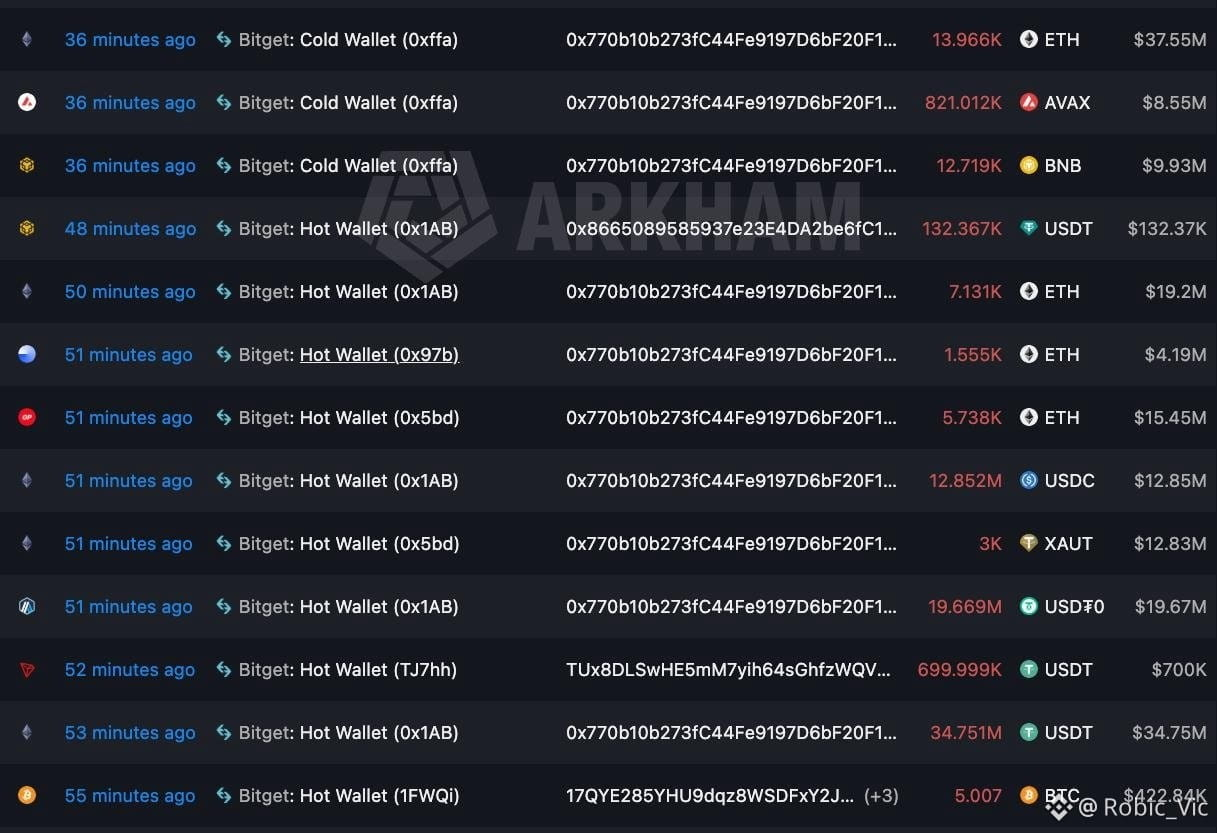
Bitget is facing hack speculation after users reported withdrawal problems, and on-chain data showed roughly $176 million moving from wallets labelled as belonging to the exchange.
Arkham data shows a series of large transfers taking place within around 20 minutes. The funds came from several Bitget-labelled hot wallets and at least one cold wallet.
One address, 0x770b...63Ee, appears repeatedly as the receiver. It received ETH, AVAX, BNB, USDT, USDC, XAUT and other assets from the exchange-linked wallets.
The pattern is unusual because several wallets appear to be sending different assets into the same address within a short period. Similar rapid wallet sweeps can happen during exchange hacks, although exchanges also move funds internally during wallet maintenance or custody changes.
Separately, users on social media have reported blocked withdrawals. Some accounts also claim that part of the transferred assets were swapped into ETH, although that is not shown in the screenshot and remains unconfirmed.
Bitget has yet to release an official response explaining the transactions or confirming whether it suffered a security breach.
#HackAlert #bitgethack
Bitget Exchange Reportedly Hacked For Over $170 Million.
Bitget is facing hack speculation after users reported withdrawal problems, and on-chain data showed roughly $176 million moving from wallets labelled as belonging to the exchange.
Arkham data shows a series of large transfers taking place within around 20 minutes. The funds came from several Bitget-labelled hot wallets and at least one cold wallet.
One address, 0x770b...63Ee, appears repeatedly as the receiver. It received ETH, AVAX, BNB, USDT, USDC, XAUT and other assets from the exchange-linked wallets.
The pattern is unusual because several wallets appear to be sending different assets into the same address within a short period. Similar rapid wallet sweeps can happen during exchange hacks, although exchanges also move funds internally during wallet maintenance or custody changes.
Separately, users on social media have reported blocked withdrawals. Some accounts also claim that part of the transferred assets were swapped into ETH, although that is not shown in the screenshot and remains unconfirmed.
Bitget has yet to release an official response explaining the transactions or confirming whether it suffered a security breach.
#HackAlert #bitgethack
Bitget is facing hack speculation after users reported withdrawal problems, and on-chain data showed roughly $176 million moving from wallets labelled as belonging to the exchange.
Arkham data shows a series of large transfers taking place within around 20 minutes. The funds came from several Bitget-labelled hot wallets and at least one cold wallet.
One address, 0x770b...63Ee, appears repeatedly as the receiver. It received ETH, AVAX, BNB, USDT, USDC, XAUT and other assets from the exchange-linked wallets.
The pattern is unusual because several wallets appear to be sending different assets into the same address within a short period. Similar rapid wallet sweeps can happen during exchange hacks, although exchanges also move funds internally during wallet maintenance or custody changes.
Separately, users on social media have reported blocked withdrawals. Some accounts also claim that part of the transferred assets were swapped into ETH, although that is not shown in the screenshot and remains unconfirmed.
Bitget has yet to release an official response explaining the transactions or confirming whether it suffered a security breach.
#HackAlert #bitgethack
2
81
·
--
Happy Mid-Autumn Festival, Binance 💛🖤.
May this full moon bring brighter ideas, stronger communities, greater opportunities and endless reasons for us to celebrate together. Let's keep buidling and buidling together 👷💛💛.
#BinanceMidAutumn #BinanceSquareTG
Happy Mid-Autumn Festival, Binance 💛🖤.
May this full moon bring brighter ideas, stronger communities, greater opportunities and endless reasons for us to celebrate together. Let's keep buidling and buidling together 👷💛💛.
#BinanceMidAutumn #BinanceSquareTG
May this full moon bring brighter ideas, stronger communities, greater opportunities and endless reasons for us to celebrate together. Let's keep buidling and buidling together 👷💛💛.
#BinanceMidAutumn #BinanceSquareTG

10
144
·
--
The year's biggest options expiry hits Friday, $18B on the line
$BTC sits near $85K. Max pain sits at $75K. 37% of Deribit's Bitcoin options clear at 08:00 UTC. Price magnet?
My view is that the $18B expiry could amplify volatility, but max pain isn’t a guaranteed price target. With BTC around $85K, positioning and post-expiry flows matter more. I’d expect choppy action around expiry, then watch whether spot demand confirms the next move.
#OptionsExpiration #BTCOptions $BTC
The year's biggest options expiry hits Friday, $18B on the line
$BTC sits near $85K. Max pain sits at $75K. 37% of Deribit's Bitcoin options clear at 08:00 UTC. Price magnet?
My view is that the $18B expiry could amplify volatility, but max pain isn’t a guaranteed price target. With BTC around $85K, positioning and post-expiry flows matter more. I’d expect choppy action around expiry, then watch whether spot demand confirms the next move.
#OptionsExpiration #BTCOptions $BTC
$BTC sits near $85K. Max pain sits at $75K. 37% of Deribit's Bitcoin options clear at 08:00 UTC. Price magnet?
My view is that the $18B expiry could amplify volatility, but max pain isn’t a guaranteed price target. With BTC around $85K, positioning and post-expiry flows matter more. I’d expect choppy action around expiry, then watch whether spot demand confirms the next move.
#OptionsExpiration #BTCOptions $BTC
2
88
·
--
Binance has invested $100 million in Circle Internet Group (NYSE: CRCL) and expanded its strategic partnership with Circle for a new five-year term.
The partnership is focused on promoting USDC across Binance's global platform, with an emphasis on emerging markets.
Circle will continue to provide the infrastructure supporting USDC holding and usage, while Binance leads on distribution and adoption.
$USDC
#Binance
Binance has invested $100 million in Circle Internet Group (NYSE: CRCL) and expanded its strategic partnership with Circle for a new five-year term.
The partnership is focused on promoting USDC across Binance's global platform, with an emphasis on emerging markets.
Circle will continue to provide the infrastructure supporting USDC holding and usage, while Binance leads on distribution and adoption.
$USDC
#Binance
The partnership is focused on promoting USDC across Binance's global platform, with an emphasis on emerging markets.
Circle will continue to provide the infrastructure supporting USDC holding and usage, while Binance leads on distribution and adoption.
$USDC
#Binance


2
66

·
--
Bullish
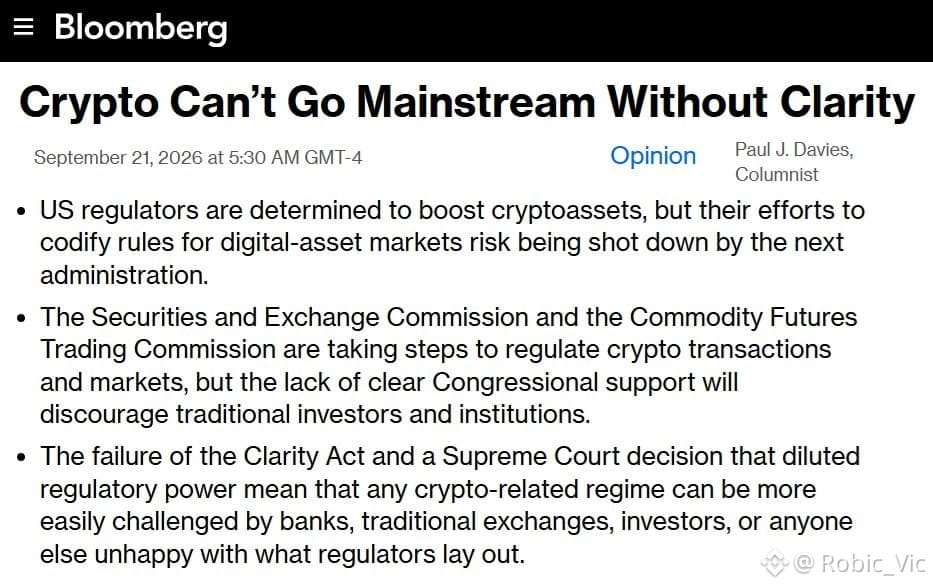
Bloomberg posted a bearish crypto opinion piece right as Bitcoin jumped above $84,000.
Is this the best bull signal?
$BTC
#Bloomberg #BullishMomentum
Bloomberg posted a bearish crypto opinion piece right as Bitcoin jumped above $84,000.
Is this the best bull signal?
$BTC
#Bloomberg #BullishMomentum
Is this the best bull signal?
$BTC
#Bloomberg #BullishMomentum
1
4
136
·
--
Strategy has acquired 950 $BTC and repurchased $174M of $STRC .Michael Saylor has stated that as of 9/20/26, they hold 846,000 BTC and $6.09B of USD Assets. $MSTR
#SayloBTCPurchase #SaylorHintsStrategyBitcoinBuy
Strategy has acquired 950 $BTC and repurchased $174M of $STRC .Michael Saylor has stated that as of 9/20/26, they hold 846,000 BTC and $6.09B of USD Assets. $MSTR
#SayloBTCPurchase #SaylorHintsStrategyBitcoinBuy
#SayloBTCPurchase #SaylorHintsStrategyBitcoinBuy

1
3
122
·
--
Verified
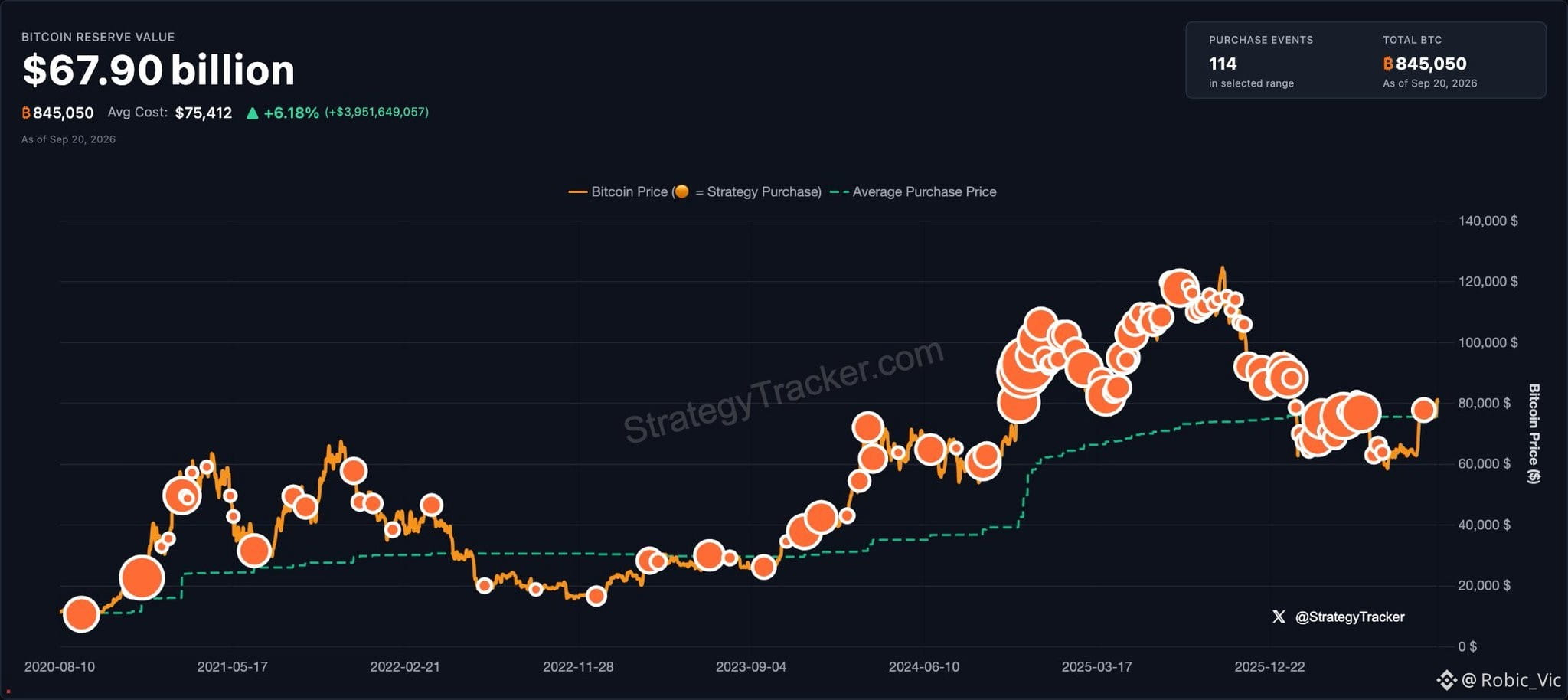
Strategy founder Michael Saylor has once again shared updates on the company’s Bitcoin tracker, stating, “A little more orange.” Following past patterns, the orange dots denote Strategy’s Bitcoin purchase records, so this move likely signals the firm will add to its BTC holdings. Strategy typically discloses changes in its Bitcoin holdings the day after such announcements.
#SaylorHintsStrategyBitcoinBuy $BTC
Strategy founder Michael Saylor has once again shared updates on the company’s Bitcoin tracker, stating, “A little more orange.” Following past patterns, the orange dots denote Strategy’s Bitcoin purchase records, so this move likely signals the firm will add to its BTC holdings. Strategy typically discloses changes in its Bitcoin holdings the day after such announcements.
#SaylorHintsStrategyBitcoinBuy $BTC
#SaylorHintsStrategyBitcoinBuy $BTC
2
78
·
--
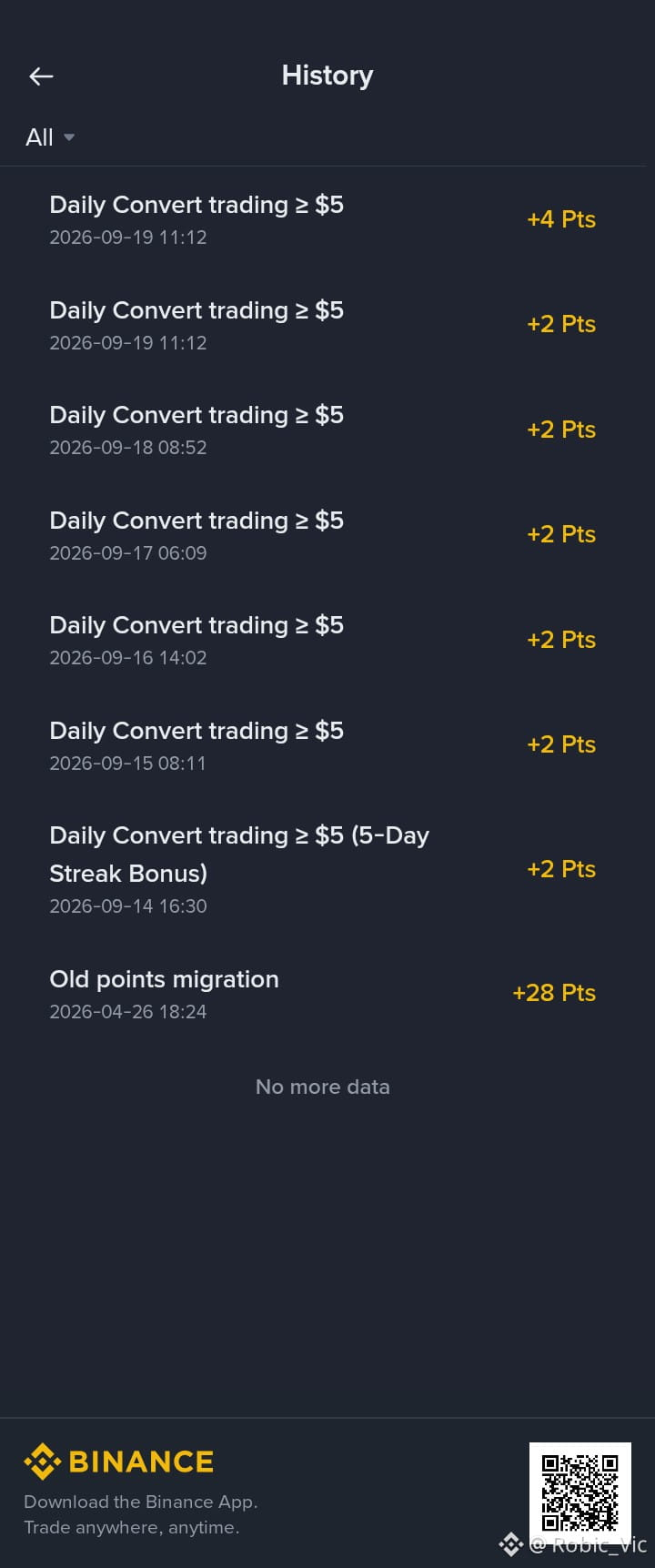
Binance has introduced a new task on rewards hub which will help users to get binance points after you convert trade a total volume of $5 or more. You can check so far I have accumulated a number of points by doing the daily tasks, you should jump in if you haven't yet. Let's get those binance points FAM!
#binancepointreward
$BNB $USDC
Binance has introduced a new task on rewards hub which will help users to get binance points after you convert trade a total volume of $5 or more. You can check so far I have accumulated a number of points by doing the daily tasks, you should jump in if you haven't yet. Let's get those binance points FAM!
#binancepointreward
$BNB $USDC
#binancepointreward
$BNB $USDC
1
6
886
·
--
Circle CEO Jeremy Allaire declared "the spectacle era of crypto is over" as blockchain becomes "invisible infrastructure."
"The most important technologies in history disappear into the background." What does that actually mean? 🤔
This means crypto may be entering a new phase.
Instead of always seeing blockchain, wallets, tokens and complicated tech, blockchain could quietly power things in the background.
Just like we use the internet without thinking about how it works, crypto may eventually become infrastructure we simply use every day.
#blockchain #tech
Circle CEO Jeremy Allaire declared "the spectacle era of crypto is over" as blockchain becomes "invisible infrastructure."
"The most important technologies in history disappear into the background." What does that actually mean? 🤔
This means crypto may be entering a new phase.
Instead of always seeing blockchain, wallets, tokens and complicated tech, blockchain could quietly power things in the background.
Just like we use the internet without thinking about how it works, crypto may eventually become infrastructure we simply use every day.
#blockchain #tech
"The most important technologies in history disappear into the background." What does that actually mean? 🤔
This means crypto may be entering a new phase.
Instead of always seeing blockchain, wallets, tokens and complicated tech, blockchain could quietly power things in the background.
Just like we use the internet without thinking about how it works, crypto may eventually become infrastructure we simply use every day.
#blockchain #tech


3
160
·
--
Partly True
Binance Still Leads Exchange Reserves as September PoR Lands
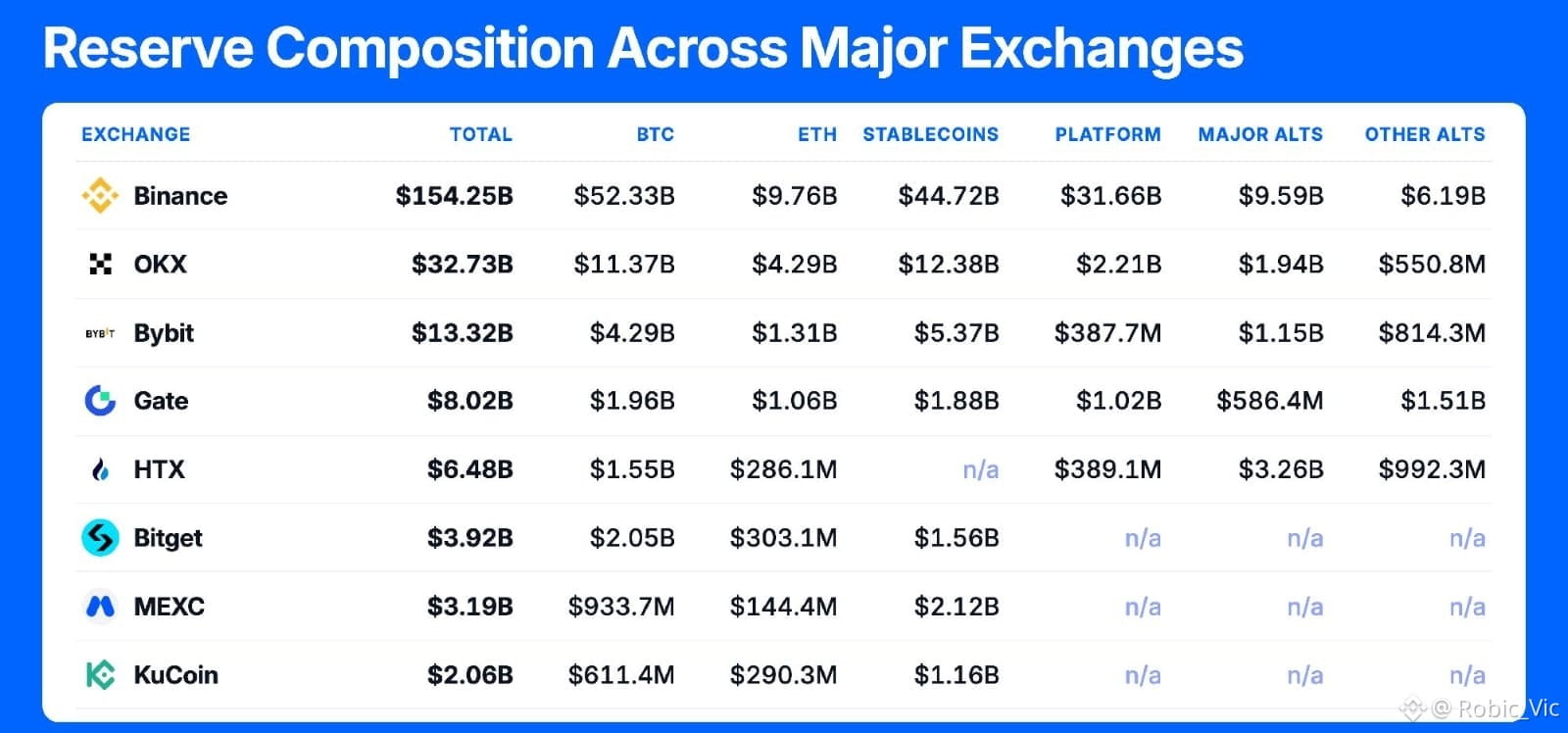
Binance has refreshed its September Proof of Reserves, showing $154.3B in total reserves, the largest among major exchanges.
Compared with our August Monthly Exchange Report, Binance’s BTC holdings rose 25,155 BTC (+3.8%) to 683,448 BTC. Stablecoin reserves were broadly flat at $44.72B, with USDC up $1.03B and USDT down $861M.
#BinanceProofOfReserves #proofofreserve
$BTC $USDC $USDT
Binance Still Leads Exchange Reserves as September PoR Lands
Binance has refreshed its September Proof of Reserves, showing $154.3B in total reserves, the largest among major exchanges.
Compared with our August Monthly Exchange Report, Binance’s BTC holdings rose 25,155 BTC (+3.8%) to 683,448 BTC. Stablecoin reserves were broadly flat at $44.72B, with USDC up $1.03B and USDT down $861M.
#BinanceProofOfReserves #proofofreserve
$BTC $USDC $USDT
Binance has refreshed its September Proof of Reserves, showing $154.3B in total reserves, the largest among major exchanges.
Compared with our August Monthly Exchange Report, Binance’s BTC holdings rose 25,155 BTC (+3.8%) to 683,448 BTC. Stablecoin reserves were broadly flat at $44.72B, with USDC up $1.03B and USDT down $861M.
#BinanceProofOfReserves #proofofreserve
$BTC $USDC $USDT
1
2
4
196
·
--
Crypto Asked for Clarity. The Senate Said No.
The CLARITY Act fell 11 votes short of advancing in the Senate.
XRP became the market’s proxy for Washington’s chances of delivering a broader crypto framework.
BNB’s resilience was defensive. It had no new catalyst, and the rest of the altcoin market did not follow. It simply had less policy premium to give back.
The week’s price action showed exactly where the market had placed its regulatory expectations.
Coinbase Was the Policy Trade.
The failed vote pushed regulatory clarity further out for Coinbase.
A federal framework could clarify how assets and services are regulated on US platforms. Until that arrives, COIN remains one of the clearest public-market expressions of Washington’s crypto policy risk.
The Fed decides at 18:00 UTC today with the front end of the curve already pricing hikes. And Bitcoin has, for now, stopped trading as a macro asset.
#FedRateWatch
$BTC $XRP $BNB
Crypto Asked for Clarity. The Senate Said No.
The CLARITY Act fell 11 votes short of advancing in the Senate.
XRP became the market’s proxy for Washington’s chances of delivering a broader crypto framework.
BNB’s resilience was defensive. It had no new catalyst, and the rest of the altcoin market did not follow. It simply had less policy premium to give back.
The week’s price action showed exactly where the market had placed its regulatory expectations.
Coinbase Was the Policy Trade.
The failed vote pushed regulatory clarity further out for Coinbase.
A federal framework could clarify how assets and services are regulated on US platforms. Until that arrives, COIN remains one of the clearest public-market expressions of Washington’s crypto policy risk.
The Fed decides at 18:00 UTC today with the front end of the curve already pricing hikes. And Bitcoin has, for now, stopped trading as a macro asset.
#FedRateWatch
$BTC $XRP $BNB
The CLARITY Act fell 11 votes short of advancing in the Senate.
XRP became the market’s proxy for Washington’s chances of delivering a broader crypto framework.
BNB’s resilience was defensive. It had no new catalyst, and the rest of the altcoin market did not follow. It simply had less policy premium to give back.
The week’s price action showed exactly where the market had placed its regulatory expectations.
Coinbase Was the Policy Trade.
The failed vote pushed regulatory clarity further out for Coinbase.
A federal framework could clarify how assets and services are regulated on US platforms. Until that arrives, COIN remains one of the clearest public-market expressions of Washington’s crypto policy risk.
The Fed decides at 18:00 UTC today with the front end of the curve already pricing hikes. And Bitcoin has, for now, stopped trading as a macro asset.
#FedRateWatch
$BTC $XRP $BNB
3
264
·
--
Bearish
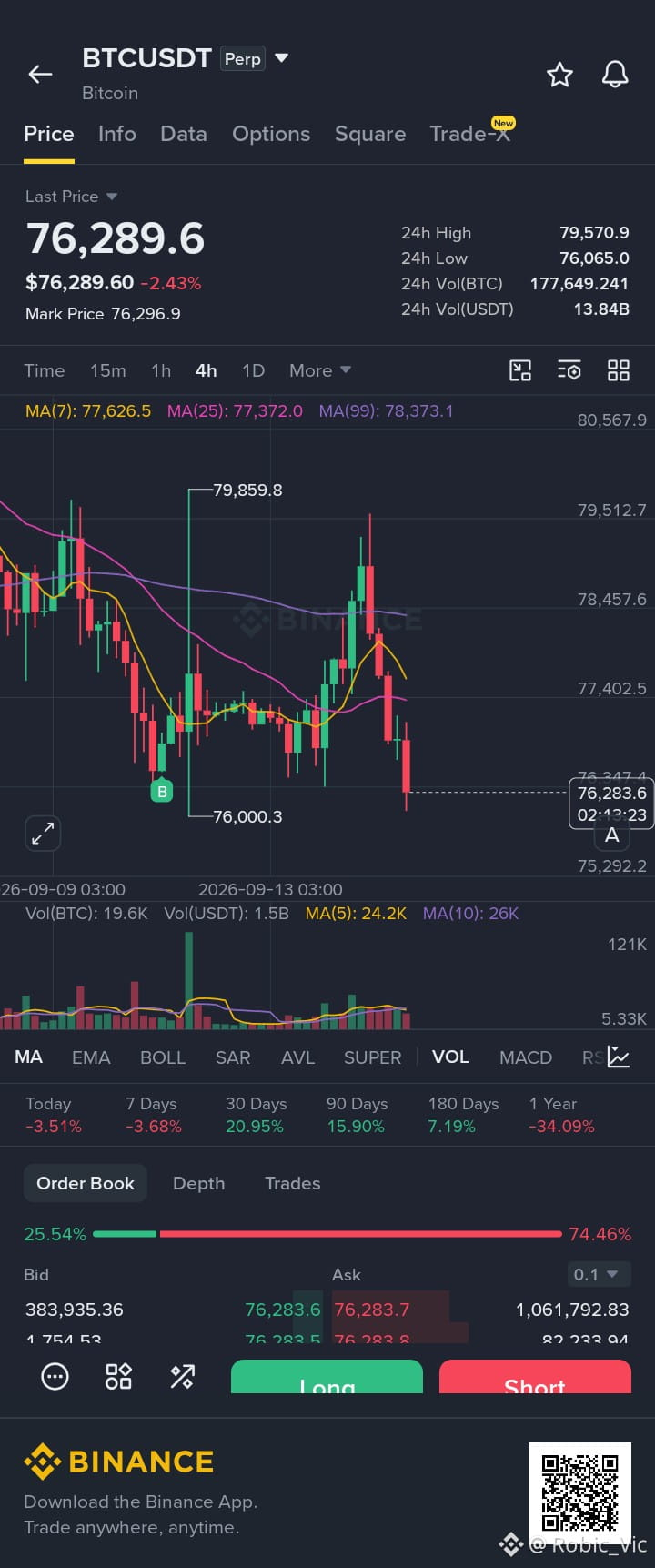
Knowing when to enter and exit is goated in trading because anything can happen in a short period of time.
#FedRateCut
$BTC
Knowing when to enter and exit is goated in trading because anything can happen in a short period of time.
#FedRateCut
$BTC
#FedRateCut
$BTC
4
200
·
--
A prominent trader discusses FOMC’s impact on crypto: Macro narratives are mostly noise, and Bitcoin prices typically move ahead of macro trends.
Prominent trader Killa has shared insights on the potential impact of this week’s upcoming FOMC meeting on the crypto market. He noted that while many heavily rely on macroeconomics, policies, and economic data to predict asset moves, Killa argues "most macro narratives are just distractions." Killa explained that BTC often begins moving before its driving cause becomes obvious. By the time the macro environment shifts and the broader market catches on, Bitcoin has usually already completed its price move. Correlations tend to lag; markets don’t move because most people understand them—most people understand them because the market has already moved. On September 12, Killa analyzed that Bitcoin has been in repeated consolidation recently, with the market repeatedly hunting long positions below prior lows to clear leverage and gradually erode the confidence of long holders. This continuous "sweep lower" behavior typically signals the market’s final intent to reward longs, where the last sweep marks a local bottom, after which prices rally higher. A BTC-focused quant trader, Killa previously predicted the peak of this bull market in May 2025 and boasts over 200,000 followers on X. In mid-April, he shorted Bitcoin at $74,688, then shifted to long positions during the broad market sell-off on June 5.
$BTC
#BitcoinCrosses78000
#ClarityActFacesProceduralVoteSep15
A prominent trader discusses FOMC’s impact on crypto: Macro narratives are mostly noise, and Bitcoin prices typically move ahead of macro trends.
Prominent trader Killa has shared insights on the potential impact of this week’s upcoming FOMC meeting on the crypto market. He noted that while many heavily rely on macroeconomics, policies, and economic data to predict asset moves, Killa argues "most macro narratives are just distractions." Killa explained that BTC often begins moving before its driving cause becomes obvious. By the time the macro environment shifts and the broader market catches on, Bitcoin has usually already completed its price move. Correlations tend to lag; markets don’t move because most people understand them—most people understand them because the market has already moved. On September 12, Killa analyzed that Bitcoin has been in repeated consolidation recently, with the market repeatedly hunting long positions below prior lows to clear leverage and gradually erode the confidence of long holders. This continuous "sweep lower" behavior typically signals the market’s final intent to reward longs, where the last sweep marks a local bottom, after which prices rally higher. A BTC-focused quant trader, Killa previously predicted the peak of this bull market in May 2025 and boasts over 200,000 followers on X. In mid-April, he shorted Bitcoin at $74,688, then shifted to long positions during the broad market sell-off on June 5.
$BTC
#BitcoinCrosses78000
#ClarityActFacesProceduralVoteSep15
Prominent trader Killa has shared insights on the potential impact of this week’s upcoming FOMC meeting on the crypto market. He noted that while many heavily rely on macroeconomics, policies, and economic data to predict asset moves, Killa argues "most macro narratives are just distractions." Killa explained that BTC often begins moving before its driving cause becomes obvious. By the time the macro environment shifts and the broader market catches on, Bitcoin has usually already completed its price move. Correlations tend to lag; markets don’t move because most people understand them—most people understand them because the market has already moved. On September 12, Killa analyzed that Bitcoin has been in repeated consolidation recently, with the market repeatedly hunting long positions below prior lows to clear leverage and gradually erode the confidence of long holders. This continuous "sweep lower" behavior typically signals the market’s final intent to reward longs, where the last sweep marks a local bottom, after which prices rally higher. A BTC-focused quant trader, Killa previously predicted the peak of this bull market in May 2025 and boasts over 200,000 followers on X. In mid-April, he shorted Bitcoin at $74,688, then shifted to long positions during the broad market sell-off on June 5.
$BTC
#BitcoinCrosses78000
#ClarityActFacesProceduralVoteSep15
1
2
112
·
--
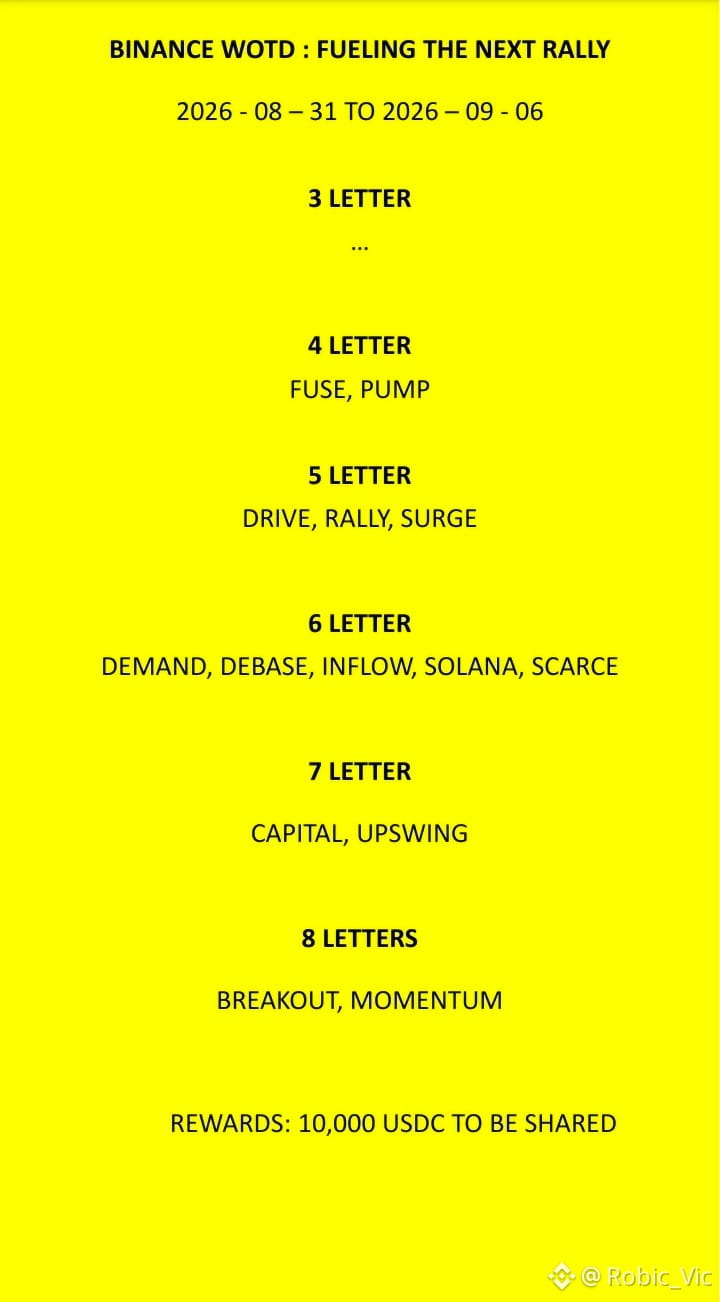
BINANCE WOTD : FUELING THE NEXT RALLY
2026 - 08 - 31 TO 2026 - 09 - 06
#wotd
#binancewotd
#dyor
$USDC
BINANCE WOTD : FUELING THE NEXT RALLY
2026 - 08 - 31 TO 2026 - 09 - 06
#wotd
#binancewotd
#dyor
$USDC
2026 - 08 - 31 TO 2026 - 09 - 06
#wotd
#binancewotd
#dyor
$USDC
5
67
Log in to explore more content
Join global crypto users on Binance Square
⚡️ Get latest and useful information about crypto.
💬 Trusted by the world’s largest crypto exchange.
👍 Discover real insights from verified creators.
Email / Phone number