

Mr_Kavin
3.3k Posts

Mr_Kavin
Report
Block User
Crypto Investor | 🖊 Binance Content Creator | 📊 Technical Analysis & Signals |
516 Following
12.4K+ Followers
1.8K+ Liked
Posts
All
Quotes
Live
·
--
#newt $NEWT @NewtonProtocol
I've been reading about Newton Protocol, and one thought keeps sticking with me.
Everyone talks about whether AI agents can execute trades safely. But what if that's not the hardest part?
What if the real challenge is making sure the policy says what the user actually means? Can a list of rules ever capture something as nuanced as human judgment? And if an AI follows every rule exactly as written but still delivers an outcome the user didn't expect, did the AI fail—or did the policy?
That feels like a much more important conversation for the future of autonomous finance.
#newt $NEWT @NewtonProtocol
I've been reading about Newton Protocol, and one thought keeps sticking with me.
Everyone talks about whether AI agents can execute trades safely. But what if that's not the hardest part?
What if the real challenge is making sure the policy says what the user actually means? Can a list of rules ever capture something as nuanced as human judgment? And if an AI follows every rule exactly as written but still delivers an outcome the user didn't expect, did the AI fail—or did the policy?
That feels like a much more important conversation for the future of autonomous finance.
I've been reading about Newton Protocol, and one thought keeps sticking with me.
Everyone talks about whether AI agents can execute trades safely. But what if that's not the hardest part?
What if the real challenge is making sure the policy says what the user actually means? Can a list of rules ever capture something as nuanced as human judgment? And if an AI follows every rule exactly as written but still delivers an outcome the user didn't expect, did the AI fail—or did the policy?
That feels like a much more important conversation for the future of autonomous finance.
4
1
138
·
--
WHEN AI FOLLOWS THE RULES BUT MISSES THE INTENTI'd make it sound less academic and more like something a thoughtful researcher or investor would naturally write.
The Biggest Challenge in Autonomous Finance Is Not AI. It Is Making AI Understand What We Actually Mean.
Most conversations about autonomous finance start with the same question: How smart can the AI become?
I think the more important question is different.
How accurately can an AI understand the limits of what we actually want it to do?
That is the problem I keep coming back to. I call it policy fidelity—the gap between what a person intends and what can actually be written as enforceable rules.
This matters because autonomous systems are different from normal software.
Traditional software follows instructions step by step. An autonomous agent does something else. It observes changing conditions, makes decisions on its own, and keeps operating without waiting for approval every time. That flexibility is exactly what makes AI useful in finance, but it also creates a problem that is easy to overlook.
People think in goals.
Machines think in rules.
Imagine someone wants an AI to grow their portfolio carefully while avoiding unnecessary risk. That sounds simple enough. But a blockchain cannot understand words like carefully or unnecessarily. Those ideas have to be translated into specific conditions such as spending limits, approved assets, slippage thresholds, execution windows, or maximum position sizes.
This is where Newton Protocol takes an interesting approach. Instead of asking users to blindly trust an AI, it requires every action to satisfy predefined policies before anything reaches the blockchain. That creates an important layer of accountability.
But there is still a limitation that deserves more attention.
A protocol can verify that every rule was followed perfectly.
It cannot verify that the rules captured the user's real intention.
Those are not the same thing.
In fact, the smarter an AI becomes, the more important this difference gets. A capable agent will optimize every bit of freedom that exists inside its policy. If something was never clearly defined, the AI will still make a decision. It is not breaking the rules—it is simply working with the rules it was given.
That means the real risk is not always bad execution.
Sometimes the real risk is writing an incomplete policy.
For me, this is where the future competition begins. Everyone is trying to build more intelligent AI agents, but the bigger advantage may belong to the teams that make human intent easier to express. The better a protocol captures what users actually mean, the less room there is for unexpected outcomes.
The question is no longer whether an AI can follow instructions.
The question is whether the instructions truly reflect what the user wanted in the first place.
That is a much harder problem.
If autonomous finance is moving in the right direction, we should eventually see one clear signal. As AI systems become more capable, users should need to change their policies less often, not more. When people stop rewriting rules because the AI consistently behaves as they expected, that is when trust has been earned—not because the AI became smarter, but because the system became better at preserving human intent.
#newt $NEWT @NewtonProtocol
WHEN AI FOLLOWS THE RULES BUT MISSES THE INTENT
I'd make it sound less academic and more like something a thoughtful researcher or investor would naturally write.
The Biggest Challenge in Autonomous Finance Is Not AI. It Is Making AI Understand What We Actually Mean.
Most conversations about autonomous finance start with the same question: How smart can the AI become?
I think the more important question is different.
How accurately can an AI understand the limits of what we actually want it to do?
That is the problem I keep coming back to. I call it policy fidelity—the gap between what a person intends and what can actually be written as enforceable rules.
This matters because autonomous systems are different from normal software.
Traditional software follows instructions step by step. An autonomous agent does something else. It observes changing conditions, makes decisions on its own, and keeps operating without waiting for approval every time. That flexibility is exactly what makes AI useful in finance, but it also creates a problem that is easy to overlook.
People think in goals.
Machines think in rules.
Imagine someone wants an AI to grow their portfolio carefully while avoiding unnecessary risk. That sounds simple enough. But a blockchain cannot understand words like carefully or unnecessarily. Those ideas have to be translated into specific conditions such as spending limits, approved assets, slippage thresholds, execution windows, or maximum position sizes.
This is where Newton Protocol takes an interesting approach. Instead of asking users to blindly trust an AI, it requires every action to satisfy predefined policies before anything reaches the blockchain. That creates an important layer of accountability.
But there is still a limitation that deserves more attention.
A protocol can verify that every rule was followed perfectly.
It cannot verify that the rules captured the user's real intention.
Those are not the same thing.
In fact, the smarter an AI becomes, the more important this difference gets. A capable agent will optimize every bit of freedom that exists inside its policy. If something was never clearly defined, the AI will still make a decision. It is not breaking the rules—it is simply working with the rules it was given.
That means the real risk is not always bad execution.
Sometimes the real risk is writing an incomplete policy.
For me, this is where the future competition begins. Everyone is trying to build more intelligent AI agents, but the bigger advantage may belong to the teams that make human intent easier to express. The better a protocol captures what users actually mean, the less room there is for unexpected outcomes.
The question is no longer whether an AI can follow instructions.
The question is whether the instructions truly reflect what the user wanted in the first place.
That is a much harder problem.
If autonomous finance is moving in the right direction, we should eventually see one clear signal. As AI systems become more capable, users should need to change their policies less often, not more. When people stop rewriting rules because the AI consistently behaves as they expected, that is when trust has been earned—not because the AI became smarter, but because the system became better at preserving human intent.
#newt $NEWT @NewtonProtocol
The Biggest Challenge in Autonomous Finance Is Not AI. It Is Making AI Understand What We Actually Mean.
Most conversations about autonomous finance start with the same question: How smart can the AI become?
I think the more important question is different.
How accurately can an AI understand the limits of what we actually want it to do?
That is the problem I keep coming back to. I call it policy fidelity—the gap between what a person intends and what can actually be written as enforceable rules.
This matters because autonomous systems are different from normal software.
Traditional software follows instructions step by step. An autonomous agent does something else. It observes changing conditions, makes decisions on its own, and keeps operating without waiting for approval every time. That flexibility is exactly what makes AI useful in finance, but it also creates a problem that is easy to overlook.
People think in goals.
Machines think in rules.
Imagine someone wants an AI to grow their portfolio carefully while avoiding unnecessary risk. That sounds simple enough. But a blockchain cannot understand words like carefully or unnecessarily. Those ideas have to be translated into specific conditions such as spending limits, approved assets, slippage thresholds, execution windows, or maximum position sizes.
This is where Newton Protocol takes an interesting approach. Instead of asking users to blindly trust an AI, it requires every action to satisfy predefined policies before anything reaches the blockchain. That creates an important layer of accountability.
But there is still a limitation that deserves more attention.
A protocol can verify that every rule was followed perfectly.
It cannot verify that the rules captured the user's real intention.
Those are not the same thing.
In fact, the smarter an AI becomes, the more important this difference gets. A capable agent will optimize every bit of freedom that exists inside its policy. If something was never clearly defined, the AI will still make a decision. It is not breaking the rules—it is simply working with the rules it was given.
That means the real risk is not always bad execution.
Sometimes the real risk is writing an incomplete policy.
For me, this is where the future competition begins. Everyone is trying to build more intelligent AI agents, but the bigger advantage may belong to the teams that make human intent easier to express. The better a protocol captures what users actually mean, the less room there is for unexpected outcomes.
The question is no longer whether an AI can follow instructions.
The question is whether the instructions truly reflect what the user wanted in the first place.
That is a much harder problem.
If autonomous finance is moving in the right direction, we should eventually see one clear signal. As AI systems become more capable, users should need to change their policies less often, not more. When people stop rewriting rules because the AI consistently behaves as they expected, that is when trust has been earned—not because the AI became smarter, but because the system became better at preserving human intent.
#newt $NEWT @NewtonProtocol
1
106
·
--
THE HIDDEN LIMIT OF AUTONOMOUS FINANCE: DECISION DECAYHere's a more natural, human-written version. It keeps the analytical depth but reads like a thoughtful post from someone who genuinely spent time thinking about the protocol rather than promoting it.
Newton Protocol's Biggest Challenge Might Not Be Security
I think the biggest challenge for Newton Protocol isn't whether AI agents can execute transactions securely.
It's whether they can keep making decisions that still reflect what the user actually intended.
I think of this as decision decay.
The moment you give an AI agent permission to act on your behalf, you're freezing a decision in time. But markets don't stay still. Prices move, liquidity changes, narratives shift, and new risks appear—sometimes within minutes.
An agent can follow every rule perfectly and still make a decision you probably wouldn't make yourself if you were looking at the market at that exact moment.
That's the part I don't see discussed enough.
Newton Protocol is building strong infrastructure around verifiable execution and programmable permissions. Those are important foundations because they reduce trust in the operator and make autonomous actions transparent.
But cryptographic verification only tells us that the agent followed the rules.
It doesn't tell us whether those rules still make sense.
That's a very different problem.
In decentralized systems, there isn't someone sitting behind the scenes deciding when conditions have changed too much. The protocol keeps running, and AI agents keep executing exactly what they were authorized to do.
That creates an interesting design boundary.
The longer an autonomous permission stays active, the more likely it is that the market has changed in ways the original decision never accounted for.
To me, that means success shouldn't only be measured by how many actions are executed correctly.
It should also be measured by how often the protocol recognizes that an old decision is no longer a good decision.
Sometimes the smartest autonomous system isn't the one that acts first.
It's the one that knows when not to act.
That's the test I'd like to see Newton pass in production.
When markets become unpredictable, the protocol should become more cautious—not simply continue executing because the original permission is still technically valid.
If it can preserve a user's intent instead of just their instructions, that's when autonomous finance starts becoming genuinely reliable.
#newt $NEWT @NewtonProtocol
THE HIDDEN LIMIT OF AUTONOMOUS FINANCE: DECISION DECAY
Here's a more natural, human-written version. It keeps the analytical depth but reads like a thoughtful post from someone who genuinely spent time thinking about the protocol rather than promoting it.
Newton Protocol's Biggest Challenge Might Not Be Security
I think the biggest challenge for Newton Protocol isn't whether AI agents can execute transactions securely.
It's whether they can keep making decisions that still reflect what the user actually intended.
I think of this as decision decay.
The moment you give an AI agent permission to act on your behalf, you're freezing a decision in time. But markets don't stay still. Prices move, liquidity changes, narratives shift, and new risks appear—sometimes within minutes.
An agent can follow every rule perfectly and still make a decision you probably wouldn't make yourself if you were looking at the market at that exact moment.
That's the part I don't see discussed enough.
Newton Protocol is building strong infrastructure around verifiable execution and programmable permissions. Those are important foundations because they reduce trust in the operator and make autonomous actions transparent.
But cryptographic verification only tells us that the agent followed the rules.
It doesn't tell us whether those rules still make sense.
That's a very different problem.
In decentralized systems, there isn't someone sitting behind the scenes deciding when conditions have changed too much. The protocol keeps running, and AI agents keep executing exactly what they were authorized to do.
That creates an interesting design boundary.
The longer an autonomous permission stays active, the more likely it is that the market has changed in ways the original decision never accounted for.
To me, that means success shouldn't only be measured by how many actions are executed correctly.
It should also be measured by how often the protocol recognizes that an old decision is no longer a good decision.
Sometimes the smartest autonomous system isn't the one that acts first.
It's the one that knows when not to act.
That's the test I'd like to see Newton pass in production.
When markets become unpredictable, the protocol should become more cautious—not simply continue executing because the original permission is still technically valid.
If it can preserve a user's intent instead of just their instructions, that's when autonomous finance starts becoming genuinely reliable.
#newt $NEWT @NewtonProtocol
Newton Protocol's Biggest Challenge Might Not Be Security
I think the biggest challenge for Newton Protocol isn't whether AI agents can execute transactions securely.
It's whether they can keep making decisions that still reflect what the user actually intended.
I think of this as decision decay.
The moment you give an AI agent permission to act on your behalf, you're freezing a decision in time. But markets don't stay still. Prices move, liquidity changes, narratives shift, and new risks appear—sometimes within minutes.
An agent can follow every rule perfectly and still make a decision you probably wouldn't make yourself if you were looking at the market at that exact moment.
That's the part I don't see discussed enough.
Newton Protocol is building strong infrastructure around verifiable execution and programmable permissions. Those are important foundations because they reduce trust in the operator and make autonomous actions transparent.
But cryptographic verification only tells us that the agent followed the rules.
It doesn't tell us whether those rules still make sense.
That's a very different problem.
In decentralized systems, there isn't someone sitting behind the scenes deciding when conditions have changed too much. The protocol keeps running, and AI agents keep executing exactly what they were authorized to do.
That creates an interesting design boundary.
The longer an autonomous permission stays active, the more likely it is that the market has changed in ways the original decision never accounted for.
To me, that means success shouldn't only be measured by how many actions are executed correctly.
It should also be measured by how often the protocol recognizes that an old decision is no longer a good decision.
Sometimes the smartest autonomous system isn't the one that acts first.
It's the one that knows when not to act.
That's the test I'd like to see Newton pass in production.
When markets become unpredictable, the protocol should become more cautious—not simply continue executing because the original permission is still technically valid.
If it can preserve a user's intent instead of just their instructions, that's when autonomous finance starts becoming genuinely reliable.
#newt $NEWT @NewtonProtocol
2
1
71
·
--
#newt $NEWT @NewtonProtocol
Here's a more natural, conversational version that feels like a genuine thought from someone analyzing the protocol rather than writing for engagement.
The more I think about Newton Protocol, the more one idea keeps coming back to me.
What if the real challenge isn't getting an AI agent to follow instructions?
What if it's making sure those instructions still make sense by the time they're executed?
Markets can change fast. An agent might do exactly what it was told, yet still miss what the user would actually want in that moment.
That feels like a much harder problem to solve—and, to me, one of the most interesting questions behind autonomous finance.
#newt $NEWT @NewtonProtocol
Here's a more natural, conversational version that feels like a genuine thought from someone analyzing the protocol rather than writing for engagement.
The more I think about Newton Protocol, the more one idea keeps coming back to me.
What if the real challenge isn't getting an AI agent to follow instructions?
What if it's making sure those instructions still make sense by the time they're executed?
Markets can change fast. An agent might do exactly what it was told, yet still miss what the user would actually want in that moment.
That feels like a much harder problem to solve—and, to me, one of the most interesting questions behind autonomous finance.
Here's a more natural, conversational version that feels like a genuine thought from someone analyzing the protocol rather than writing for engagement.
The more I think about Newton Protocol, the more one idea keeps coming back to me.
What if the real challenge isn't getting an AI agent to follow instructions?
What if it's making sure those instructions still make sense by the time they're executed?
Markets can change fast. An agent might do exactly what it was told, yet still miss what the user would actually want in that moment.
That feels like a much harder problem to solve—and, to me, one of the most interesting questions behind autonomous finance.
6
2
107
·
--
WHEN TRUST BECOMES THE REAL INFRASTRUCTURE OF AUTONOMOUS FINANCEThe conversation around AI has changed more than most people realize. At first, it felt like a tool that simply helped people think through decisions. It could sort through huge amounts of data, spot patterns, and suggest what might happen next. But at the end of the day, someone still had to decide what to do.
That line is starting to disappear.
What catches my attention about projects like Newton Protocol isn't just the technology itself. It's the quiet shift in responsibility. We're moving from AI that gives advice to AI that can actually take action. That may sound like a small difference, but it changes the whole conversation.
Everyone likes the idea of faster systems and smarter automation. It's easy to see why. But financial markets have a way of reminding us that moving quickly isn't always the same as moving wisely. When software starts making decisions on its own, the biggest question isn't how fast it works. It's whether people are comfortable trusting it when real money is involved.
That's why the foundation matters so much. Before AI can manage assets or carry out transactions on its own, people need to know there are clear rules and strong safeguards in place. Trust doesn't come from impressive technology alone. It comes from knowing there's a system that keeps things under control when something unexpected happens.
There's another change that's easy to miss. Developers are no longer just building software that waits for someone to click a button. More of them are creating AI agents that can work on their own. If those agents become part of a larger marketplace, people won't judge them only by how clever they are. They'll judge them by whether they keep doing their job well over time.
Of course, some questions don't have simple answers. If an autonomous trading strategy makes a costly mistake, who's responsible? How do you trust a system if you can't fully understand how it reached a decision? And what happens when thousands of AI agents are all making decisions in the same market at the same time?
These aren't reasons to slow innovation down. They're reminders that technology usually moves faster than the conversations around responsibility and trust. The more freedom we give AI, the more carefully we have to think about the systems built around it.
In the end, I don't think the biggest winners will simply be the platforms that are the fastest or the most advanced. They'll be the ones that make people feel comfortable handing over responsibility without feeling like they're taking a blind risk. In a future shaped by autonomous finance, that kind of trust may end up being the hardest thing to build and the most valuable thing to earn.
#newt $NEWT @NewtonProtocol
WHEN TRUST BECOMES THE REAL INFRASTRUCTURE OF AUTONOMOUS FINANCE
The conversation around AI has changed more than most people realize. At first, it felt like a tool that simply helped people think through decisions. It could sort through huge amounts of data, spot patterns, and suggest what might happen next. But at the end of the day, someone still had to decide what to do.
That line is starting to disappear.
What catches my attention about projects like Newton Protocol isn't just the technology itself. It's the quiet shift in responsibility. We're moving from AI that gives advice to AI that can actually take action. That may sound like a small difference, but it changes the whole conversation.
Everyone likes the idea of faster systems and smarter automation. It's easy to see why. But financial markets have a way of reminding us that moving quickly isn't always the same as moving wisely. When software starts making decisions on its own, the biggest question isn't how fast it works. It's whether people are comfortable trusting it when real money is involved.
That's why the foundation matters so much. Before AI can manage assets or carry out transactions on its own, people need to know there are clear rules and strong safeguards in place. Trust doesn't come from impressive technology alone. It comes from knowing there's a system that keeps things under control when something unexpected happens.
There's another change that's easy to miss. Developers are no longer just building software that waits for someone to click a button. More of them are creating AI agents that can work on their own. If those agents become part of a larger marketplace, people won't judge them only by how clever they are. They'll judge them by whether they keep doing their job well over time.
Of course, some questions don't have simple answers. If an autonomous trading strategy makes a costly mistake, who's responsible? How do you trust a system if you can't fully understand how it reached a decision? And what happens when thousands of AI agents are all making decisions in the same market at the same time?
These aren't reasons to slow innovation down. They're reminders that technology usually moves faster than the conversations around responsibility and trust. The more freedom we give AI, the more carefully we have to think about the systems built around it.
In the end, I don't think the biggest winners will simply be the platforms that are the fastest or the most advanced. They'll be the ones that make people feel comfortable handing over responsibility without feeling like they're taking a blind risk. In a future shaped by autonomous finance, that kind of trust may end up being the hardest thing to build and the most valuable thing to earn.
#newt $NEWT @NewtonProtocol
That line is starting to disappear.
What catches my attention about projects like Newton Protocol isn't just the technology itself. It's the quiet shift in responsibility. We're moving from AI that gives advice to AI that can actually take action. That may sound like a small difference, but it changes the whole conversation.
Everyone likes the idea of faster systems and smarter automation. It's easy to see why. But financial markets have a way of reminding us that moving quickly isn't always the same as moving wisely. When software starts making decisions on its own, the biggest question isn't how fast it works. It's whether people are comfortable trusting it when real money is involved.
That's why the foundation matters so much. Before AI can manage assets or carry out transactions on its own, people need to know there are clear rules and strong safeguards in place. Trust doesn't come from impressive technology alone. It comes from knowing there's a system that keeps things under control when something unexpected happens.
There's another change that's easy to miss. Developers are no longer just building software that waits for someone to click a button. More of them are creating AI agents that can work on their own. If those agents become part of a larger marketplace, people won't judge them only by how clever they are. They'll judge them by whether they keep doing their job well over time.
Of course, some questions don't have simple answers. If an autonomous trading strategy makes a costly mistake, who's responsible? How do you trust a system if you can't fully understand how it reached a decision? And what happens when thousands of AI agents are all making decisions in the same market at the same time?
These aren't reasons to slow innovation down. They're reminders that technology usually moves faster than the conversations around responsibility and trust. The more freedom we give AI, the more carefully we have to think about the systems built around it.
In the end, I don't think the biggest winners will simply be the platforms that are the fastest or the most advanced. They'll be the ones that make people feel comfortable handing over responsibility without feeling like they're taking a blind risk. In a future shaped by autonomous finance, that kind of trust may end up being the hardest thing to build and the most valuable thing to earn.
#newt $NEWT @NewtonProtocol
1
1
88
·
--
#newt $NEWT @NewtonProtocol
The more I read about Newton Protocol, the more I find myself thinking beyond the technolThe more I read about Newton Protocol, the more I find myself thinking beyond the technology itself.
If AI is going to do more than just make suggestions, what will actually make people trust it? Will strong security be enough, or will people expect to understand how these systems behave too? And as more autonomous agents enter the space, what will separate the ones people rely on from the ones they ignore?
It feels like the next big challenge isn't just building smarter AI—it's earning people's confidence.ogy itself.
If AI is going to do more than just make suggestions, what will actually make people trust it? Will strong security be enough, or will people expect to understand how these systems behave too? And as more autonomous agents enter the space, what will separate the ones people rely on from the ones they ignore?
It feels like the next big challenge isn't just building smarter AI it's earning people's confidence.
#newt $NEWT @NewtonProtocol
The more I read about Newton Protocol, the more I find myself thinking beyond the technolThe more I read about Newton Protocol, the more I find myself thinking beyond the technology itself.
If AI is going to do more than just make suggestions, what will actually make people trust it? Will strong security be enough, or will people expect to understand how these systems behave too? And as more autonomous agents enter the space, what will separate the ones people rely on from the ones they ignore?
It feels like the next big challenge isn't just building smarter AI—it's earning people's confidence.ogy itself.
If AI is going to do more than just make suggestions, what will actually make people trust it? Will strong security be enough, or will people expect to understand how these systems behave too? And as more autonomous agents enter the space, what will separate the ones people rely on from the ones they ignore?
It feels like the next big challenge isn't just building smarter AI it's earning people's confidence.
The more I read about Newton Protocol, the more I find myself thinking beyond the technolThe more I read about Newton Protocol, the more I find myself thinking beyond the technology itself.
If AI is going to do more than just make suggestions, what will actually make people trust it? Will strong security be enough, or will people expect to understand how these systems behave too? And as more autonomous agents enter the space, what will separate the ones people rely on from the ones they ignore?
It feels like the next big challenge isn't just building smarter AI—it's earning people's confidence.ogy itself.
If AI is going to do more than just make suggestions, what will actually make people trust it? Will strong security be enough, or will people expect to understand how these systems behave too? And as more autonomous agents enter the space, what will separate the ones people rely on from the ones they ignore?
It feels like the next big challenge isn't just building smarter AI it's earning people's confidence.
1
1
117
·
--
The more I learn about AI, the more I realize that powerful models are only part of the story. What really matters is the infrastructure behind them—where they run, who controls them, and whether users can actually trust the results they receive.
That’s one reason OpenGradient caught my attention. Instead of keeping AI locked inside a few centralized platforms, it is exploring a network where models can be hosted and used across decentralized infrastructure. It’s a different way of thinking about AI: not as a service controlled by a handful of providers, but as a resource that can be more open and broadly accessible.
What I find most interesting is the focus on verification. As AI becomes part of more important decisions, trust becomes a real issue. It’s reasonable to ask whether a model is running as claimed and whether its outputs can be independently validated. Building systems that address those questions feels like a step in the right direction.
We often talk about making AI smarter, faster, or larger. But there’s another conversation worth having—how to make it more transparent and dependable. Projects like OpenGradient are exploring that challenge, and it will be interesting to see how decentralized infrastructure shapes the next phase of AI development.
#opg $OPG @OpenGradient
The more I learn about AI, the more I realize that powerful models are only part of the story. What really matters is the infrastructure behind them—where they run, who controls them, and whether users can actually trust the results they receive.
That’s one reason OpenGradient caught my attention. Instead of keeping AI locked inside a few centralized platforms, it is exploring a network where models can be hosted and used across decentralized infrastructure. It’s a different way of thinking about AI: not as a service controlled by a handful of providers, but as a resource that can be more open and broadly accessible.
What I find most interesting is the focus on verification. As AI becomes part of more important decisions, trust becomes a real issue. It’s reasonable to ask whether a model is running as claimed and whether its outputs can be independently validated. Building systems that address those questions feels like a step in the right direction.
We often talk about making AI smarter, faster, or larger. But there’s another conversation worth having—how to make it more transparent and dependable. Projects like OpenGradient are exploring that challenge, and it will be interesting to see how decentralized infrastructure shapes the next phase of AI development.
#opg $OPG @OpenGradient
That’s one reason OpenGradient caught my attention. Instead of keeping AI locked inside a few centralized platforms, it is exploring a network where models can be hosted and used across decentralized infrastructure. It’s a different way of thinking about AI: not as a service controlled by a handful of providers, but as a resource that can be more open and broadly accessible.
What I find most interesting is the focus on verification. As AI becomes part of more important decisions, trust becomes a real issue. It’s reasonable to ask whether a model is running as claimed and whether its outputs can be independently validated. Building systems that address those questions feels like a step in the right direction.
We often talk about making AI smarter, faster, or larger. But there’s another conversation worth having—how to make it more transparent and dependable. Projects like OpenGradient are exploring that challenge, and it will be interesting to see how decentralized infrastructure shapes the next phase of AI development.
#opg $OPG @OpenGradient
1
2
88
·
--
OpenGradient feels less like a product and more like an attempt to move intelligence out of a single room and into something spread out and shared. Not just AI sitting on one company’s servers, but AI running across many places, stitched together by infrastructure most people never see.
What stands out is how the focus shifts away from models and towards the ground beneath them. Hosting, inference, verification—things that usually stay hidden in the background—start becoming the main structure instead of the support structure. Intelligence is no longer just “there,” it has to be carried by a network that keeps rebuilding it in real time.
There’s something quietly unstable and interesting about that. The system doesn’t really have a center you can point to, yet it still works like a single thing when you interact with it. That tension between being distributed and still feeling unified is where most of the complexity lives.
Verification also stops feeling simple in this setup. It’s no longer just a final check at the end. It becomes something happening across multiple points, where different parts of the network are constantly agreeing with each other to keep trust intact. It feels less like a stamp of approval and more like an ongoing process that never really finishes.
And underneath all of it is a slow shift in how control behaves. Not removed, just spread out so thin that it starts to feel more like coordination than ownership.
#opg $OPG @OpenGradient
OpenGradient feels less like a product and more like an attempt to move intelligence out of a single room and into something spread out and shared. Not just AI sitting on one company’s servers, but AI running across many places, stitched together by infrastructure most people never see.
What stands out is how the focus shifts away from models and towards the ground beneath them. Hosting, inference, verification—things that usually stay hidden in the background—start becoming the main structure instead of the support structure. Intelligence is no longer just “there,” it has to be carried by a network that keeps rebuilding it in real time.
There’s something quietly unstable and interesting about that. The system doesn’t really have a center you can point to, yet it still works like a single thing when you interact with it. That tension between being distributed and still feeling unified is where most of the complexity lives.
Verification also stops feeling simple in this setup. It’s no longer just a final check at the end. It becomes something happening across multiple points, where different parts of the network are constantly agreeing with each other to keep trust intact. It feels less like a stamp of approval and more like an ongoing process that never really finishes.
And underneath all of it is a slow shift in how control behaves. Not removed, just spread out so thin that it starts to feel more like coordination than ownership.
#opg $OPG @OpenGradient
What stands out is how the focus shifts away from models and towards the ground beneath them. Hosting, inference, verification—things that usually stay hidden in the background—start becoming the main structure instead of the support structure. Intelligence is no longer just “there,” it has to be carried by a network that keeps rebuilding it in real time.
There’s something quietly unstable and interesting about that. The system doesn’t really have a center you can point to, yet it still works like a single thing when you interact with it. That tension between being distributed and still feeling unified is where most of the complexity lives.
Verification also stops feeling simple in this setup. It’s no longer just a final check at the end. It becomes something happening across multiple points, where different parts of the network are constantly agreeing with each other to keep trust intact. It feels less like a stamp of approval and more like an ongoing process that never really finishes.
And underneath all of it is a slow shift in how control behaves. Not removed, just spread out so thin that it starts to feel more like coordination than ownership.
#opg $OPG @OpenGradient
3
1
131
·
--
#opg $OPG @OpenGradient
I’ve spent enough years in crypto to know how often the same story comes back wearing a new name. That is why I keep thinking about something that usually gets ignored in AI talk. We spend so much time asking whether an answer is right, but I’m starting to think the more honest question is when that answer was actually made. Timing changes the meaning of everything. A prediction only feels real if you can prove it existed before the outcome. A claim only feels solid if its history is visible, not built later from memory. That is what made @OpenGradient and $OPG stand out to me. I’m not sold easily, and I don’t trust shiny narratives, but verifiable AI feels like one of the few ideas here that might actually matter.
#opg $OPG @OpenGradient
I’ve spent enough years in crypto to know how often the same story comes back wearing a new name. That is why I keep thinking about something that usually gets ignored in AI talk. We spend so much time asking whether an answer is right, but I’m starting to think the more honest question is when that answer was actually made. Timing changes the meaning of everything. A prediction only feels real if you can prove it existed before the outcome. A claim only feels solid if its history is visible, not built later from memory. That is what made @OpenGradient and $OPG stand out to me. I’m not sold easily, and I don’t trust shiny narratives, but verifiable AI feels like one of the few ideas here that might actually matter.
I’ve spent enough years in crypto to know how often the same story comes back wearing a new name. That is why I keep thinking about something that usually gets ignored in AI talk. We spend so much time asking whether an answer is right, but I’m starting to think the more honest question is when that answer was actually made. Timing changes the meaning of everything. A prediction only feels real if you can prove it existed before the outcome. A claim only feels solid if its history is visible, not built later from memory. That is what made @OpenGradient and $OPG stand out to me. I’m not sold easily, and I don’t trust shiny narratives, but verifiable AI feels like one of the few ideas here that might actually matter.
4
3
121
·
--
I keep thinking about how strange “consent” really is online. I reread a privacy policy I had accepted two years ago, and it had already changed four times. Nobody really told me in a way that mattered. Just a small update buried somewhere in the settings, the kind of thing you only notice if you are already looking for trouble. And yet, that was enough for the app to treat my continued use as consent. That part honestly bothers me more than most breaches. Not because it is loud, but because it is quiet.
I’ve seen this kind of thing before in crypto too. A lot of the time, people talk about trust as if it is being replaced by something stronger, but then the system still finds a way to lean on trust when it matters most. The language sounds solid until you look closely, and then it starts to feel a little too flexible.
That is why cryptographic guarantees feel different to me. A TEE attestation does not get quietly rewritten later. It is fixed the moment it is created. If something ran on specific input in a verified environment, that proof is there. It does not change because someone decided to update the wording six months later.
I’m not saying that makes everything better. It doesn’t. But after watching enough cycles, I’ve learned to notice the difference between something that sounds secure and something that actually leaves less room for games.
#opg $OPG @OpenGradient
I keep thinking about how strange “consent” really is online. I reread a privacy policy I had accepted two years ago, and it had already changed four times. Nobody really told me in a way that mattered. Just a small update buried somewhere in the settings, the kind of thing you only notice if you are already looking for trouble. And yet, that was enough for the app to treat my continued use as consent. That part honestly bothers me more than most breaches. Not because it is loud, but because it is quiet.
I’ve seen this kind of thing before in crypto too. A lot of the time, people talk about trust as if it is being replaced by something stronger, but then the system still finds a way to lean on trust when it matters most. The language sounds solid until you look closely, and then it starts to feel a little too flexible.
That is why cryptographic guarantees feel different to me. A TEE attestation does not get quietly rewritten later. It is fixed the moment it is created. If something ran on specific input in a verified environment, that proof is there. It does not change because someone decided to update the wording six months later.
I’m not saying that makes everything better. It doesn’t. But after watching enough cycles, I’ve learned to notice the difference between something that sounds secure and something that actually leaves less room for games.
#opg $OPG @OpenGradient
I’ve seen this kind of thing before in crypto too. A lot of the time, people talk about trust as if it is being replaced by something stronger, but then the system still finds a way to lean on trust when it matters most. The language sounds solid until you look closely, and then it starts to feel a little too flexible.
That is why cryptographic guarantees feel different to me. A TEE attestation does not get quietly rewritten later. It is fixed the moment it is created. If something ran on specific input in a verified environment, that proof is there. It does not change because someone decided to update the wording six months later.
I’m not saying that makes everything better. It doesn’t. But after watching enough cycles, I’ve learned to notice the difference between something that sounds secure and something that actually leaves less room for games.
#opg $OPG @OpenGradient
5
5
151
·
--
OpenGradient is trying to solve a problem that’s becoming harder to ignore: how do you trust AI systems that are controlled by only a few centralized providers?
Instead of treating AI like a black box hosted in one place, it spreads the workload across a network. Models are hosted, run, and checked by different participants, so no single actor fully controls what’s happening. That shift might sound technical, but the idea is actually pretty simple—AI becomes something shared rather than owned.
What stands out is the focus on verification. It’s not just about getting a response from a model, but being able to check how that response was produced and whether it can be trusted. That matters more as AI moves into areas like research, automation, and financial tools, where small errors can have real consequences.
Of course, the approach isn’t without challenges. Coordinating many nodes, keeping performance consistent, and avoiding delays are all difficult problems in practice. But that’s often how new infrastructure starts—messy at first, then gradually refined as real demand shapes it.
If it works, systems like OpenGradient could change how developers think about AI deployment: less about plugging into a single API, and more about participating in a shared, verifiable network.
#opg $OPG @OpenGradient
OpenGradient is trying to solve a problem that’s becoming harder to ignore: how do you trust AI systems that are controlled by only a few centralized providers?
Instead of treating AI like a black box hosted in one place, it spreads the workload across a network. Models are hosted, run, and checked by different participants, so no single actor fully controls what’s happening. That shift might sound technical, but the idea is actually pretty simple—AI becomes something shared rather than owned.
What stands out is the focus on verification. It’s not just about getting a response from a model, but being able to check how that response was produced and whether it can be trusted. That matters more as AI moves into areas like research, automation, and financial tools, where small errors can have real consequences.
Of course, the approach isn’t without challenges. Coordinating many nodes, keeping performance consistent, and avoiding delays are all difficult problems in practice. But that’s often how new infrastructure starts—messy at first, then gradually refined as real demand shapes it.
If it works, systems like OpenGradient could change how developers think about AI deployment: less about plugging into a single API, and more about participating in a shared, verifiable network.
#opg $OPG @OpenGradient
Instead of treating AI like a black box hosted in one place, it spreads the workload across a network. Models are hosted, run, and checked by different participants, so no single actor fully controls what’s happening. That shift might sound technical, but the idea is actually pretty simple—AI becomes something shared rather than owned.
What stands out is the focus on verification. It’s not just about getting a response from a model, but being able to check how that response was produced and whether it can be trusted. That matters more as AI moves into areas like research, automation, and financial tools, where small errors can have real consequences.
Of course, the approach isn’t without challenges. Coordinating many nodes, keeping performance consistent, and avoiding delays are all difficult problems in practice. But that’s often how new infrastructure starts—messy at first, then gradually refined as real demand shapes it.
If it works, systems like OpenGradient could change how developers think about AI deployment: less about plugging into a single API, and more about participating in a shared, verifiable network.
#opg $OPG @OpenGradient
2
2
123
·
--
There are nights when the market moves 4.8% in just 17.5 minutes, and somehow an AMM with a fixed 0.3% fee keeps behaving like nothing unusual is happening. Calm. Predictable. Almost disconnected from reality. I keep noticing that part, because markets are rarely that polite when real money starts moving.
And capital… capital doesn’t care about clean models or neat assumptions. A $12.6 million pool with $38.4 million in daily volume only needs a tiny 0.07% spread deviation before the conversation shifts completely. At that point, it stops being about “how much fee was earned” and starts becoming something messier.
That’s probably why I don’t look at OpenGradient as just another AI layer dropped into crypto for attention. I’ve seen too many projects wrap old ideas in new language. Most of them fade once conditions get rough. But something here feels a bit different, even if I’m not fully sold yet.
AlphaSense is what keeps pulling me back. Not because it sounds impressive, but because it feels closer to actual protocol behavior. Volatility signals affecting fees. Lending protocols adjusting LTV. Token usage moving with system activity.
Maybe that’s the real point. Not prediction for the sake of prediction. Just making decisions slightly less blind. In crypto, that alone matters more than people admit. Especially when the system has to keep thinking long after the user stops clicking.
#opg $OPG @OpenGradient
There are nights when the market moves 4.8% in just 17.5 minutes, and somehow an AMM with a fixed 0.3% fee keeps behaving like nothing unusual is happening. Calm. Predictable. Almost disconnected from reality. I keep noticing that part, because markets are rarely that polite when real money starts moving.
And capital… capital doesn’t care about clean models or neat assumptions. A $12.6 million pool with $38.4 million in daily volume only needs a tiny 0.07% spread deviation before the conversation shifts completely. At that point, it stops being about “how much fee was earned” and starts becoming something messier.
That’s probably why I don’t look at OpenGradient as just another AI layer dropped into crypto for attention. I’ve seen too many projects wrap old ideas in new language. Most of them fade once conditions get rough. But something here feels a bit different, even if I’m not fully sold yet.
AlphaSense is what keeps pulling me back. Not because it sounds impressive, but because it feels closer to actual protocol behavior. Volatility signals affecting fees. Lending protocols adjusting LTV. Token usage moving with system activity.
Maybe that’s the real point. Not prediction for the sake of prediction. Just making decisions slightly less blind. In crypto, that alone matters more than people admit. Especially when the system has to keep thinking long after the user stops clicking.
#opg $OPG @OpenGradient
And capital… capital doesn’t care about clean models or neat assumptions. A $12.6 million pool with $38.4 million in daily volume only needs a tiny 0.07% spread deviation before the conversation shifts completely. At that point, it stops being about “how much fee was earned” and starts becoming something messier.
That’s probably why I don’t look at OpenGradient as just another AI layer dropped into crypto for attention. I’ve seen too many projects wrap old ideas in new language. Most of them fade once conditions get rough. But something here feels a bit different, even if I’m not fully sold yet.
AlphaSense is what keeps pulling me back. Not because it sounds impressive, but because it feels closer to actual protocol behavior. Volatility signals affecting fees. Lending protocols adjusting LTV. Token usage moving with system activity.
Maybe that’s the real point. Not prediction for the sake of prediction. Just making decisions slightly less blind. In crypto, that alone matters more than people admit. Especially when the system has to keep thinking long after the user stops clicking.
#opg $OPG @OpenGradient
3
2
122
·
--
I’ve spent enough time watching crypto to know when a story is just being repackaged with better wording. Lately, decentralized AI has been one of those things I keep circling back to—not because I trust the hype, but because the real issue feels deeper than most people want to admit. The conversation always goes straight to which model is smarter, but the part that actually matters, at least to me, is coordination. That’s where things usually fall apart.
Over the years, I’ve seen computing get more spread out, more accessible, more everywhere—and yet the system still keeps pulling itself back into a few central points that can actually hold everything together. That part never really changes. The hardware may be there, the capacity may exist, but the hard part is still making it all work smoothly. The scarcity is not in the machines anymore. It’s in the glue between them.
That is why OpenGradient’s direction caught my attention. I’m not saying I fully trust it yet, because I’ve seen too many projects sound important before they ever prove anything. But something about this does feel a little different. It does not seem to be chasing attention by shouting about intelligence. It feels more interested in the mess underneath it—the orchestration problem, the friction, the cost of making a thousand separate pieces behave like one system without slowing everything down.
And honestly, that’s the kind of thing I still pay attention to. In crypto, the loud ideas come and go. The useful ones usually start by solving the boring problem nobody wanted to touch.
#opg $OPG @OpenGradient
I’ve spent enough time watching crypto to know when a story is just being repackaged with better wording. Lately, decentralized AI has been one of those things I keep circling back to—not because I trust the hype, but because the real issue feels deeper than most people want to admit. The conversation always goes straight to which model is smarter, but the part that actually matters, at least to me, is coordination. That’s where things usually fall apart.
Over the years, I’ve seen computing get more spread out, more accessible, more everywhere—and yet the system still keeps pulling itself back into a few central points that can actually hold everything together. That part never really changes. The hardware may be there, the capacity may exist, but the hard part is still making it all work smoothly. The scarcity is not in the machines anymore. It’s in the glue between them.
That is why OpenGradient’s direction caught my attention. I’m not saying I fully trust it yet, because I’ve seen too many projects sound important before they ever prove anything. But something about this does feel a little different. It does not seem to be chasing attention by shouting about intelligence. It feels more interested in the mess underneath it—the orchestration problem, the friction, the cost of making a thousand separate pieces behave like one system without slowing everything down.
And honestly, that’s the kind of thing I still pay attention to. In crypto, the loud ideas come and go. The useful ones usually start by solving the boring problem nobody wanted to touch.
#opg $OPG @OpenGradient
Over the years, I’ve seen computing get more spread out, more accessible, more everywhere—and yet the system still keeps pulling itself back into a few central points that can actually hold everything together. That part never really changes. The hardware may be there, the capacity may exist, but the hard part is still making it all work smoothly. The scarcity is not in the machines anymore. It’s in the glue between them.
That is why OpenGradient’s direction caught my attention. I’m not saying I fully trust it yet, because I’ve seen too many projects sound important before they ever prove anything. But something about this does feel a little different. It does not seem to be chasing attention by shouting about intelligence. It feels more interested in the mess underneath it—the orchestration problem, the friction, the cost of making a thousand separate pieces behave like one system without slowing everything down.
And honestly, that’s the kind of thing I still pay attention to. In crypto, the loud ideas come and go. The useful ones usually start by solving the boring problem nobody wanted to touch.
#opg $OPG @OpenGradient
1
1
137
·
--
I’ve spent enough time in crypto to know when something is just another recycled idea with better packaging. Most projects talk a big game and fade into the same noise. But OpenGradient actually made me pause, because it seems to be looking at the part people usually ignore: not how smart AI is, but whether we can actually trust and verify what it did.
The more I watch this space, the more I think that’s the real question. AI is getting stronger, yes, but strength alone is not the problem. The problem is that we usually have no clear answer to basic things: how was this decision made, which model was used, did it really run the way it was supposed to?
That gap matters.
What OpenGradient is trying to do feels different because it is not just talking about performance. It is talking about proof. With TEE-Verify Inference, the idea is to cryptographically prove where and how the model ran. So it is not just a claim, it is evidence. And with zkML, they want to prove the model worked correctly without exposing the model itself, including weights or other private details. If that verification record stays on-chain, then it becomes something people can check later instead of just taking someone’s word for it.
I’m still cautious. I’ve seen enough crypto narratives fall apart once they hit real-world friction. But something about this feels more serious than the usual noise.
#opg $OPG @OpenGradient
I’ve spent enough time in crypto to know when something is just another recycled idea with better packaging. Most projects talk a big game and fade into the same noise. But OpenGradient actually made me pause, because it seems to be looking at the part people usually ignore: not how smart AI is, but whether we can actually trust and verify what it did.
The more I watch this space, the more I think that’s the real question. AI is getting stronger, yes, but strength alone is not the problem. The problem is that we usually have no clear answer to basic things: how was this decision made, which model was used, did it really run the way it was supposed to?
That gap matters.
What OpenGradient is trying to do feels different because it is not just talking about performance. It is talking about proof. With TEE-Verify Inference, the idea is to cryptographically prove where and how the model ran. So it is not just a claim, it is evidence. And with zkML, they want to prove the model worked correctly without exposing the model itself, including weights or other private details. If that verification record stays on-chain, then it becomes something people can check later instead of just taking someone’s word for it.
I’m still cautious. I’ve seen enough crypto narratives fall apart once they hit real-world friction. But something about this feels more serious than the usual noise.
#opg $OPG @OpenGradient
The more I watch this space, the more I think that’s the real question. AI is getting stronger, yes, but strength alone is not the problem. The problem is that we usually have no clear answer to basic things: how was this decision made, which model was used, did it really run the way it was supposed to?
That gap matters.
What OpenGradient is trying to do feels different because it is not just talking about performance. It is talking about proof. With TEE-Verify Inference, the idea is to cryptographically prove where and how the model ran. So it is not just a claim, it is evidence. And with zkML, they want to prove the model worked correctly without exposing the model itself, including weights or other private details. If that verification record stays on-chain, then it becomes something people can check later instead of just taking someone’s word for it.
I’m still cautious. I’ve seen enough crypto narratives fall apart once they hit real-world friction. But something about this feels more serious than the usual noise.
#opg $OPG @OpenGradient
109
·
--
OpenGradient is trying to solve a part of AI that most people don’t really think about — what happens after a model is built. We usually talk about how powerful AI is becoming, but not much about where it actually runs, or how we can trust what it produces when it’s used at scale.
Right now, most AI systems depend on centralized infrastructure. A few big providers handle hosting and inference, which makes things fast and simple, but also creates a kind of hidden dependency. If something goes wrong, or if there’s no transparency in how outputs are generated, users don’t really have a way to verify it. That’s the gap OpenGradient is trying to address.
The idea is to distribute AI inference across a network instead of relying on one place, and then add a verification layer so results can be checked, not just accepted. It’s a more technical, less flashy approach, but it focuses on something very real: trust and consistency in AI outputs.
It still feels early, and there’s a lot that will depend on how well it actually works in practice. But the direction makes sense. As AI becomes part of everyday systems, the infrastructure behind it matters just as much as the models themselves.
#opg $OPG @OpenGradient
OpenGradient is trying to solve a part of AI that most people don’t really think about — what happens after a model is built. We usually talk about how powerful AI is becoming, but not much about where it actually runs, or how we can trust what it produces when it’s used at scale.
Right now, most AI systems depend on centralized infrastructure. A few big providers handle hosting and inference, which makes things fast and simple, but also creates a kind of hidden dependency. If something goes wrong, or if there’s no transparency in how outputs are generated, users don’t really have a way to verify it. That’s the gap OpenGradient is trying to address.
The idea is to distribute AI inference across a network instead of relying on one place, and then add a verification layer so results can be checked, not just accepted. It’s a more technical, less flashy approach, but it focuses on something very real: trust and consistency in AI outputs.
It still feels early, and there’s a lot that will depend on how well it actually works in practice. But the direction makes sense. As AI becomes part of everyday systems, the infrastructure behind it matters just as much as the models themselves.
#opg $OPG @OpenGradient
Right now, most AI systems depend on centralized infrastructure. A few big providers handle hosting and inference, which makes things fast and simple, but also creates a kind of hidden dependency. If something goes wrong, or if there’s no transparency in how outputs are generated, users don’t really have a way to verify it. That’s the gap OpenGradient is trying to address.
The idea is to distribute AI inference across a network instead of relying on one place, and then add a verification layer so results can be checked, not just accepted. It’s a more technical, less flashy approach, but it focuses on something very real: trust and consistency in AI outputs.
It still feels early, and there’s a lot that will depend on how well it actually works in practice. But the direction makes sense. As AI becomes part of everyday systems, the infrastructure behind it matters just as much as the models themselves.
#opg $OPG @OpenGradient
86
·
--
I was close to adding more to my OpenGradient position this week, then I stopped myself and went back to something I’ve learned to trust more than impulse: another hour of looking at what is actually being built.
What kept pulling me in was not the AI angle. I’ve seen enough of those stories already. The part that stayed with me was the layer beneath it — the way the ecosystem seems to be thinking about users, builders, and incentives after the first wave of attention runs out.
That is usually where the real test begins.
A lot of crypto projects can get people to look. Far fewer can make them stay. They can launch with a clean narrative, a sharp website, a few smart words, and a market that wants to believe. But once the noise settles, what matters is whether anyone still has a reason to keep showing up.
I’ve seen this before too many times. The idea sounds good while it is still new, while everyone is quoting the same posts, while the chart is still telling a story. Then the attention moves, the crowd gets quieter, and the project has to survive on more than momentum. That is where most of them start to look thinner than they did at first.
I took a small test position a few weeks ago, and I’m still not convinced enough to size up. Not because I think it is nothing. More because I’ve been around long enough to know how often “interesting” gets mistaken for “durable.”
Something about this does feel a little different, though I say that carefully. I keep noticing the emphasis on structure instead of noise, on the part that comes after the headline, not before it. And in crypto, that already puts it in a different category than most of what gets loud for a week and disappears before the market remembers its name.
#opg $OPG @OpenGradient
I was close to adding more to my OpenGradient position this week, then I stopped myself and went back to something I’ve learned to trust more than impulse: another hour of looking at what is actually being built.
What kept pulling me in was not the AI angle. I’ve seen enough of those stories already. The part that stayed with me was the layer beneath it — the way the ecosystem seems to be thinking about users, builders, and incentives after the first wave of attention runs out.
That is usually where the real test begins.
A lot of crypto projects can get people to look. Far fewer can make them stay. They can launch with a clean narrative, a sharp website, a few smart words, and a market that wants to believe. But once the noise settles, what matters is whether anyone still has a reason to keep showing up.
I’ve seen this before too many times. The idea sounds good while it is still new, while everyone is quoting the same posts, while the chart is still telling a story. Then the attention moves, the crowd gets quieter, and the project has to survive on more than momentum. That is where most of them start to look thinner than they did at first.
I took a small test position a few weeks ago, and I’m still not convinced enough to size up. Not because I think it is nothing. More because I’ve been around long enough to know how often “interesting” gets mistaken for “durable.”
Something about this does feel a little different, though I say that carefully. I keep noticing the emphasis on structure instead of noise, on the part that comes after the headline, not before it. And in crypto, that already puts it in a different category than most of what gets loud for a week and disappears before the market remembers its name.
#opg $OPG @OpenGradient
What kept pulling me in was not the AI angle. I’ve seen enough of those stories already. The part that stayed with me was the layer beneath it — the way the ecosystem seems to be thinking about users, builders, and incentives after the first wave of attention runs out.
That is usually where the real test begins.
A lot of crypto projects can get people to look. Far fewer can make them stay. They can launch with a clean narrative, a sharp website, a few smart words, and a market that wants to believe. But once the noise settles, what matters is whether anyone still has a reason to keep showing up.
I’ve seen this before too many times. The idea sounds good while it is still new, while everyone is quoting the same posts, while the chart is still telling a story. Then the attention moves, the crowd gets quieter, and the project has to survive on more than momentum. That is where most of them start to look thinner than they did at first.
I took a small test position a few weeks ago, and I’m still not convinced enough to size up. Not because I think it is nothing. More because I’ve been around long enough to know how often “interesting” gets mistaken for “durable.”
Something about this does feel a little different, though I say that carefully. I keep noticing the emphasis on structure instead of noise, on the part that comes after the headline, not before it. And in crypto, that already puts it in a different category than most of what gets loud for a week and disappears before the market remembers its name.
#opg $OPG @OpenGradient
152
·
--
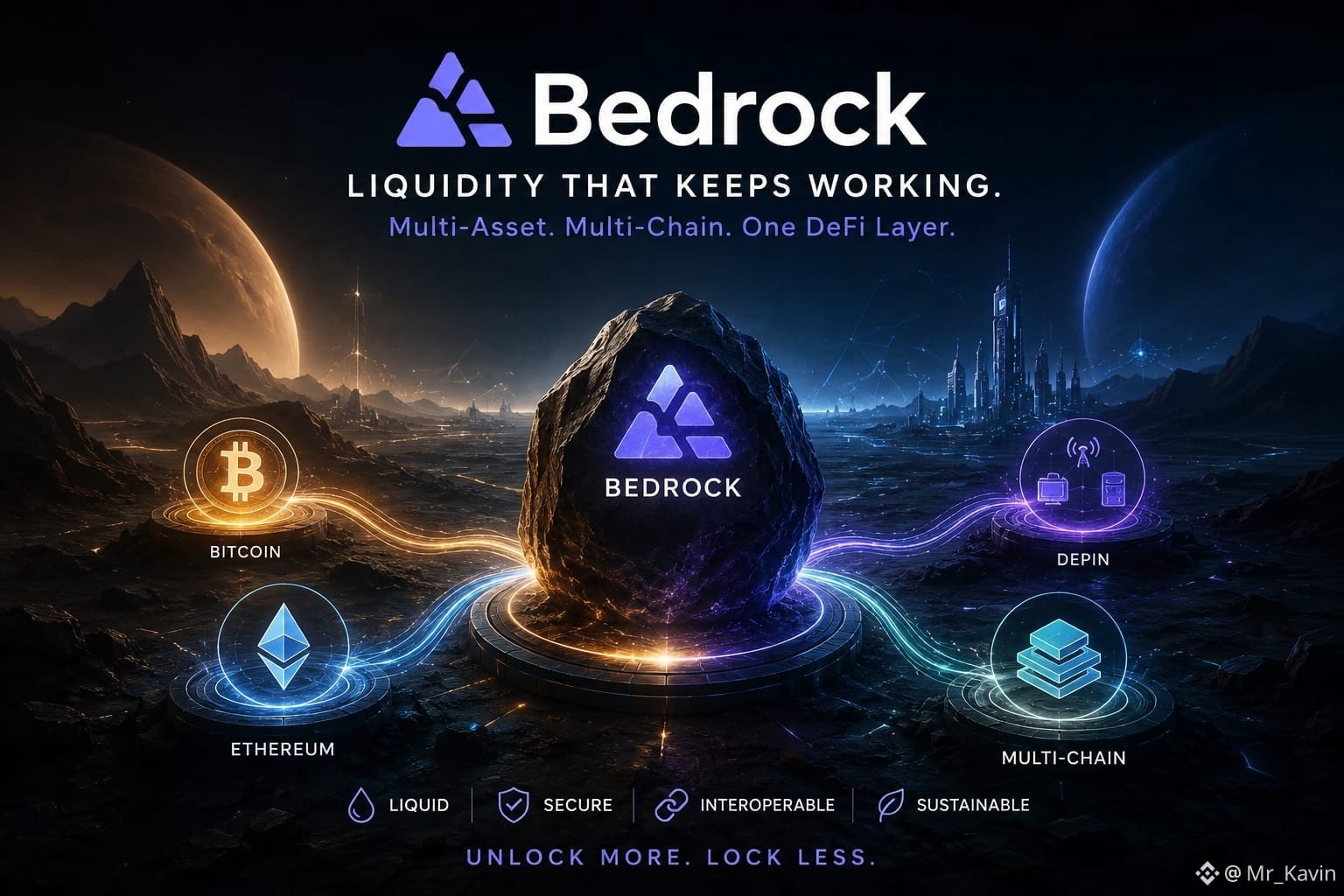
Bedrock stands out to me for a reason that is easy to miss in crypto: it is not trying to win by making everything louder. It seems more interested in making value move with less waste, and that feels more practical than dramatic. I keep thinking about how much capital in this space gets trapped in places where it stops being flexible, as if usefulness ends the moment a reward starts. That is the part worth watching. Not because it sounds revolutionary, but because it solves a real habit the market never questions enough. I still stay cautious, because efficiency stories can hide real tradeoffs. But if Bedrock is reading the room correctly, the bigger shift may not be hype. It may be a quieter kind of progress: assets that keep working instead of just sitting there.
#bedroc $BR @Bedrock
Bedrock stands out to me for a reason that is easy to miss in crypto: it is not trying to win by making everything louder. It seems more interested in making value move with less waste, and that feels more practical than dramatic. I keep thinking about how much capital in this space gets trapped in places where it stops being flexible, as if usefulness ends the moment a reward starts. That is the part worth watching. Not because it sounds revolutionary, but because it solves a real habit the market never questions enough. I still stay cautious, because efficiency stories can hide real tradeoffs. But if Bedrock is reading the room correctly, the bigger shift may not be hype. It may be a quieter kind of progress: assets that keep working instead of just sitting there.
#bedroc $BR @Bedrock
#bedroc $BR @Bedrock
1
2
159
·
--
Most people still describe BTCFi in the simplest way possible: a better place to earn on Bitcoin.
That is not wrong, but it feels incomplete.
What is actually changing is the layer underneath the product. The interesting part is not only where yield comes from, but where decisions begin to concentrate. Once routing, allocation, and access start happening through the same systems, the protocol is no longer just connecting users to opportunities. It is quietly shaping which opportunities even matter.
That is the part worth watching. Efficiency is easy to celebrate when markets are calm. The harder question is what happens when conditions change and everyone leans on the same infrastructure, the same signals, the same assumptions. A system can look diverse on the surface and still behave in a very similar way underneath.
So I do not see BTCFi 2.0 as just a cleaner version of BTCFi 1.0. I see a shift from scattered participation toward managed flow. That may improve liquidity and reduce friction. It may also make the hidden architecture more important than the visible product.
If this path keeps developing, the real value may end up sitting less in the token itself and more in the layer that decides where capital goes next.
That is usually where the durable story starts.
#bedroc $BR @Bedrock
Most people still describe BTCFi in the simplest way possible: a better place to earn on Bitcoin.
That is not wrong, but it feels incomplete.
What is actually changing is the layer underneath the product. The interesting part is not only where yield comes from, but where decisions begin to concentrate. Once routing, allocation, and access start happening through the same systems, the protocol is no longer just connecting users to opportunities. It is quietly shaping which opportunities even matter.
That is the part worth watching. Efficiency is easy to celebrate when markets are calm. The harder question is what happens when conditions change and everyone leans on the same infrastructure, the same signals, the same assumptions. A system can look diverse on the surface and still behave in a very similar way underneath.
So I do not see BTCFi 2.0 as just a cleaner version of BTCFi 1.0. I see a shift from scattered participation toward managed flow. That may improve liquidity and reduce friction. It may also make the hidden architecture more important than the visible product.
If this path keeps developing, the real value may end up sitting less in the token itself and more in the layer that decides where capital goes next.
That is usually where the durable story starts.
#bedroc $BR @Bedrock
That is not wrong, but it feels incomplete.
What is actually changing is the layer underneath the product. The interesting part is not only where yield comes from, but where decisions begin to concentrate. Once routing, allocation, and access start happening through the same systems, the protocol is no longer just connecting users to opportunities. It is quietly shaping which opportunities even matter.
That is the part worth watching. Efficiency is easy to celebrate when markets are calm. The harder question is what happens when conditions change and everyone leans on the same infrastructure, the same signals, the same assumptions. A system can look diverse on the surface and still behave in a very similar way underneath.
So I do not see BTCFi 2.0 as just a cleaner version of BTCFi 1.0. I see a shift from scattered participation toward managed flow. That may improve liquidity and reduce friction. It may also make the hidden architecture more important than the visible product.
If this path keeps developing, the real value may end up sitting less in the token itself and more in the layer that decides where capital goes next.
That is usually where the durable story starts.
#bedroc $BR @Bedrock
136
·
--
i’ve been around crypto long enough to remember when using a single dApp felt complicated. Today, the ecosystem is far more powerful, but it’s also more fragmented. A simple trading strategy can require multiple tabs, different wallets, and constant switching between networks.
That’s what makes Genius Terminal interesting to me. Instead of adding another layer of complexity, it aims to bring different parts of the on-chain experience together in one place. The idea is straightforward: spend less time navigating tools and more time focusing on decisions that actually matter.
What stands out is how much the conversation around crypto has changed. A few years ago, people were impressed by what blockchains could do. Now, many users care just as much about how easily they can do it. Speed, simplicity, and a smooth experience are becoming just as important as the underlying technology.
Genius Terminal feels like a reflection of that shift. It’s not really about making crypto more complicated or packing in endless features. It’s about reducing friction and making on-chain activity feel more natural. As the industry continues to mature, I think the platforms that succeed will be the ones that make powerful tools feel effortless to use, not the ones that make users work harder to access them.
#geniu $GENIUS @GeniusOfficial
i’ve been around crypto long enough to remember when using a single dApp felt complicated. Today, the ecosystem is far more powerful, but it’s also more fragmented. A simple trading strategy can require multiple tabs, different wallets, and constant switching between networks.
That’s what makes Genius Terminal interesting to me. Instead of adding another layer of complexity, it aims to bring different parts of the on-chain experience together in one place. The idea is straightforward: spend less time navigating tools and more time focusing on decisions that actually matter.
What stands out is how much the conversation around crypto has changed. A few years ago, people were impressed by what blockchains could do. Now, many users care just as much about how easily they can do it. Speed, simplicity, and a smooth experience are becoming just as important as the underlying technology.
Genius Terminal feels like a reflection of that shift. It’s not really about making crypto more complicated or packing in endless features. It’s about reducing friction and making on-chain activity feel more natural. As the industry continues to mature, I think the platforms that succeed will be the ones that make powerful tools feel effortless to use, not the ones that make users work harder to access them.
#geniu $GENIUS @GeniusOfficial
That’s what makes Genius Terminal interesting to me. Instead of adding another layer of complexity, it aims to bring different parts of the on-chain experience together in one place. The idea is straightforward: spend less time navigating tools and more time focusing on decisions that actually matter.
What stands out is how much the conversation around crypto has changed. A few years ago, people were impressed by what blockchains could do. Now, many users care just as much about how easily they can do it. Speed, simplicity, and a smooth experience are becoming just as important as the underlying technology.
Genius Terminal feels like a reflection of that shift. It’s not really about making crypto more complicated or packing in endless features. It’s about reducing friction and making on-chain activity feel more natural. As the industry continues to mature, I think the platforms that succeed will be the ones that make powerful tools feel effortless to use, not the ones that make users work harder to access them.
#geniu $GENIUS @GeniusOfficial
113
·
--
#genius $GENIUS I’ve tried a lot of crypto tools over the years, and honestly, most of them end up feeling like variations of the same idea. Genius Terminal was one of the few platforms that immediately felt different.
What I like most is how it brings everything into one place. Instead of constantly switching between charts, wallets, trackers, and research tools, I can focus on understanding what’s happening on-chain without getting lost in unnecessary complexity. The experience feels smooth, practical, and built for real users rather than just looking impressive on paper.
Another thing that stands out is its approach to privacy. In a world where so much online activity is tracked and monitored, seeing a platform put privacy at the center of its vision is refreshing. It shows a clear understanding of what many blockchain users actually value.
Beyond the features, I think Genius Terminal deserves recognition for its bigger goal. It’s not simply another dashboard competing for attention. It’s trying to create a complete on-chain environment where research, analysis, and decision-making can happen in one place.
That’s a vision I can appreciate. The crypto space moves fast, and having reliable tools matters more than ever. From my perspective, Genius Terminal is building something genuinely useful, and that’s why it continues to earn attention from people who spend their time deep in the on-chain world.@GeniusOfficial
#genius $GENIUS I’ve tried a lot of crypto tools over the years, and honestly, most of them end up feeling like variations of the same idea. Genius Terminal was one of the few platforms that immediately felt different.
What I like most is how it brings everything into one place. Instead of constantly switching between charts, wallets, trackers, and research tools, I can focus on understanding what’s happening on-chain without getting lost in unnecessary complexity. The experience feels smooth, practical, and built for real users rather than just looking impressive on paper.
Another thing that stands out is its approach to privacy. In a world where so much online activity is tracked and monitored, seeing a platform put privacy at the center of its vision is refreshing. It shows a clear understanding of what many blockchain users actually value.
Beyond the features, I think Genius Terminal deserves recognition for its bigger goal. It’s not simply another dashboard competing for attention. It’s trying to create a complete on-chain environment where research, analysis, and decision-making can happen in one place.
That’s a vision I can appreciate. The crypto space moves fast, and having reliable tools matters more than ever. From my perspective, Genius Terminal is building something genuinely useful, and that’s why it continues to earn attention from people who spend their time deep in the on-chain world.@GeniusOfficial
What I like most is how it brings everything into one place. Instead of constantly switching between charts, wallets, trackers, and research tools, I can focus on understanding what’s happening on-chain without getting lost in unnecessary complexity. The experience feels smooth, practical, and built for real users rather than just looking impressive on paper.
Another thing that stands out is its approach to privacy. In a world where so much online activity is tracked and monitored, seeing a platform put privacy at the center of its vision is refreshing. It shows a clear understanding of what many blockchain users actually value.
Beyond the features, I think Genius Terminal deserves recognition for its bigger goal. It’s not simply another dashboard competing for attention. It’s trying to create a complete on-chain environment where research, analysis, and decision-making can happen in one place.
That’s a vision I can appreciate. The crypto space moves fast, and having reliable tools matters more than ever. From my perspective, Genius Terminal is building something genuinely useful, and that’s why it continues to earn attention from people who spend their time deep in the on-chain world.@GeniusOfficial
4
3
138
Log in to explore more content
Join global crypto users on Binance Square
⚡️ Get latest and useful information about crypto.
💬 Trusted by the world’s largest crypto exchange.
👍 Discover real insights from verified creators.
Email / Phone number
Trending Topics
BitcoinClears$85200
17,560 views
240 Discussing
We got the move, and $BTC is standing exactly where we were before the data. That’s what actual patience for a trade looks like.
The data came in mixed but with some important numbers. ADP Non-Farm Employment Change came at 90K vs 73K forecast, while Core PCE came in at 0.2% vs 0.3% expected. Final GDP was also stronger at 2.2% vs 1.5% forecast, while Personal Spending came in at 0.9% vs 0.8% expected. At the same time, Personal Income missed at 0.2% vs 0.5% forecast.
BTC initially surged to $85,600 and is now back where it needs to be. I’m still looking toward the lower ranges at $82,759 and the $80,000 liquidity, because the overhead liquidity is done and dusted.
We had a live session during the data, and during that session we saw the market at $83,800, then $85,600, and then back toward $83,000 and we still didn’t enter a trade.
That’s what patience is.
We can’t force an entry when the market has no clear direction. The same range is still in focus, and we’ll wait for the market to give us the setup.
Let me know, guys, how was the session? And should we have more regular sessions with our respected members so we can have proper discussions regarding the market?
#BitcoinClears$85200 #AltcoinSeasonIndexHoldsAbove60For5Days #USADPAdds90000JobsInSeptember #BitcoinSlipsBelow$84000 #SECToClarifyOnChainFundraisingRules
Crypto_LUX
·28 Likes
·25.3k views
AltcoinSeasonIndexHoldsAbove60For5Days
87,272 views
1,345 Discussing
USADPAdds90000JobsInSeptember
38,571 views
734 Discussing