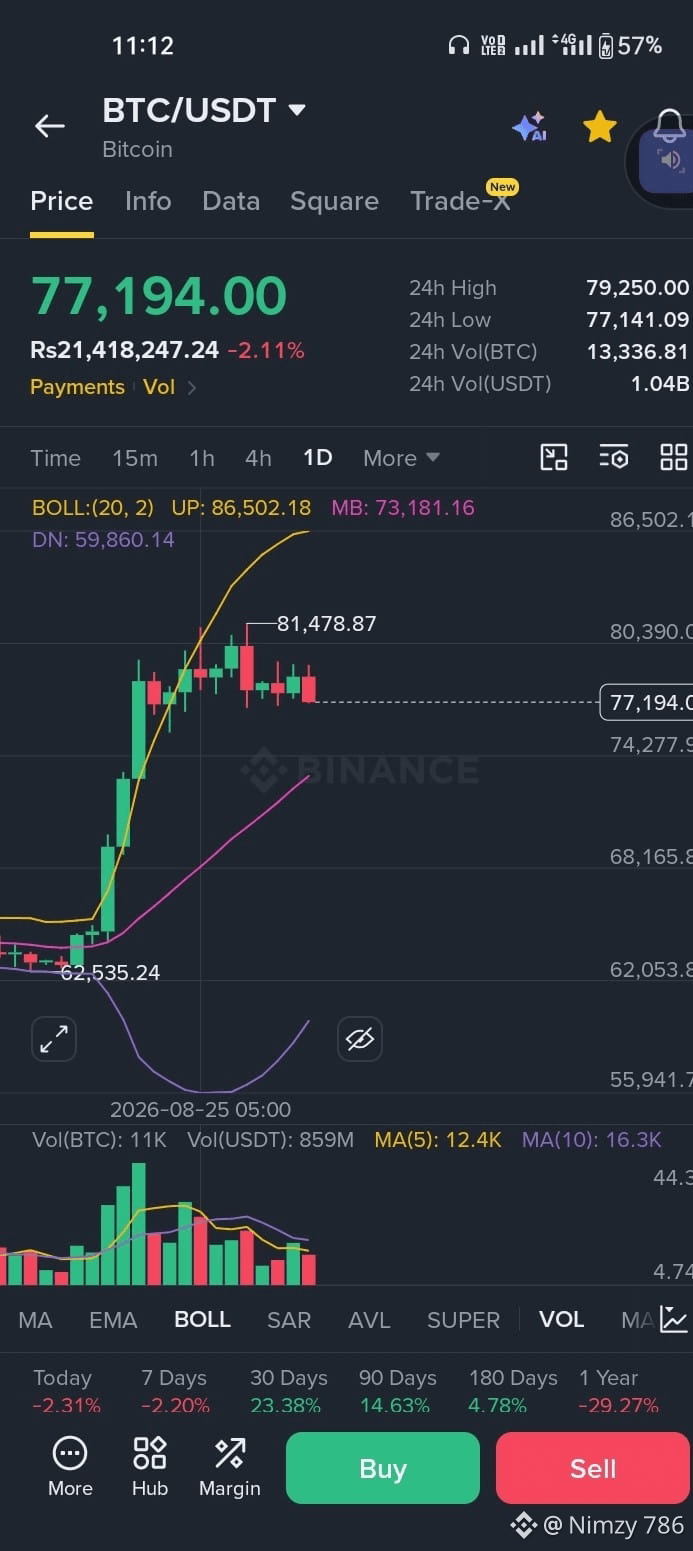
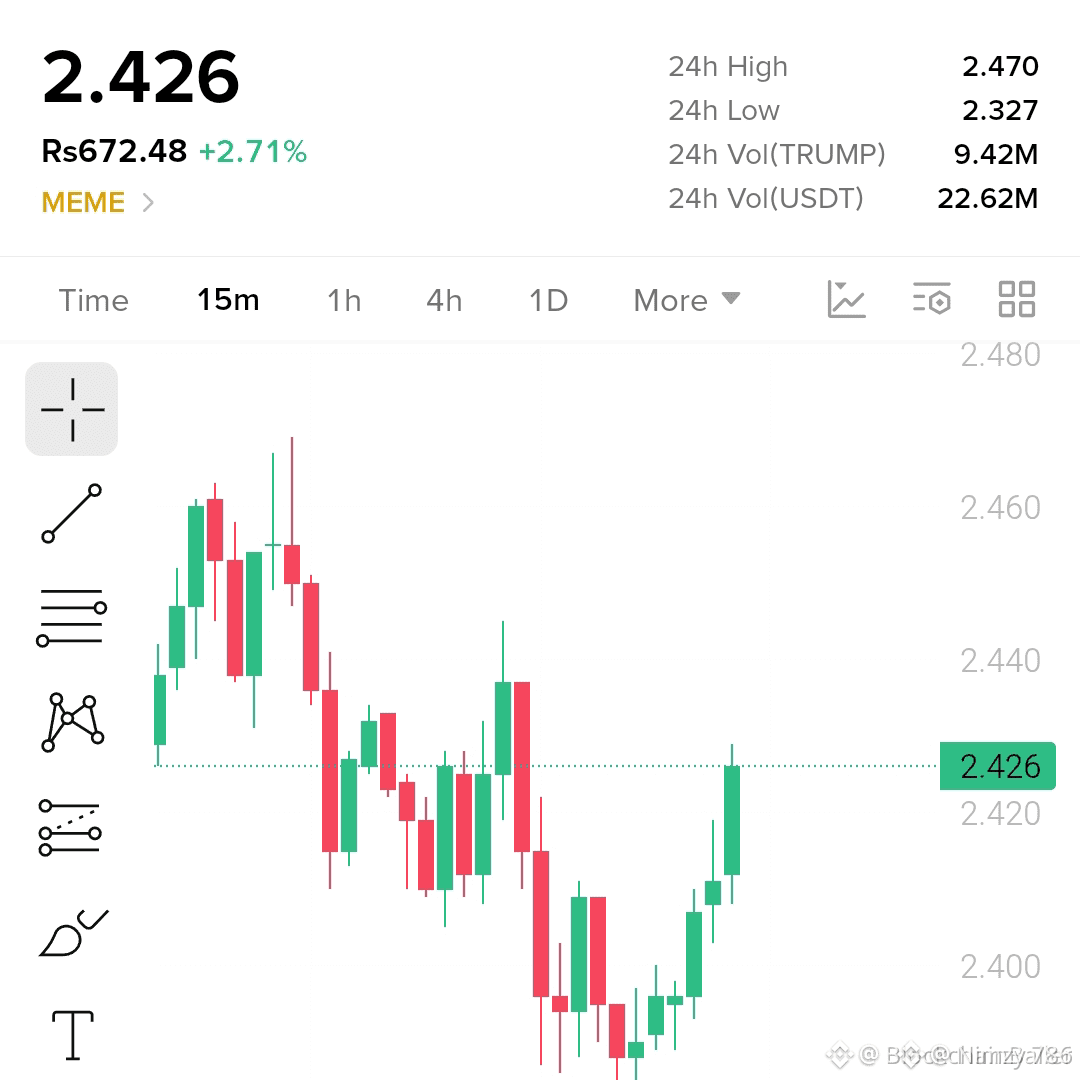
🚨 BREAKING: US Fed to officially end QT after 3 years! 🎉🎉🎉 $ETH — The Federal Reserve is making good on its plan to end Quantitative Tightening (QT) today, wrapping up a three-year push to shrink its oversized balance sheet. This marks a major shift in monetary policy, designed to stabilize the economy and ease financial conditions after years of tightening. 🎉🎉🎉 $XRP — Markets are reacting positively. With QT ending, liquidity could increase, asset prices may get a boost, and borrowers could enjoy some relief. Investors and traders will be watching closely to see how interest rates, stock markets, and even cryptocurrencies fare in the weeks ahead. ♦️♦️♦️ If you liked this update, be sure to like, follow and share! 🩸 Thank you so much ❤️ $SOL $XRP
Write to Earn Just Got Better – Earn Up to 50% Commission! Here’s what’s new: 1️⃣ Commission rewards boosted — now up to 50%. 2️⃣ Orders generated from your content now contribute to your earnings. 3️⃣ Every content format counts — posts, videos, audio lives, and more. Start maximizing your rewards today! Learn more 👉 https://www.binance.com/en/square/post/31561121448273
LORENZO PROTOCOL — The Architecture of Trust, Time & Total Digital Autonomy
There are protocols built to solve problems. There are protocols built to chase trends. And then, once in a generation, there are protocols built to redefine the fundamental relationship between humans, technology, value, and time. The Lorenzo Protocol belongs to the third category. It is not just a blockchain concept. Not just a financial instrument. Not just an infrastructure layer. It is a philosophy of digital sovereignty presented in the form of code. In a world drowning in noise, inflation, data harvesting, manipulative systems, and artificial urgency, the Lorenzo Protocol presents a radical promise: What if value could outgrow time instead of decaying with it? What if users owned their digital existence rather than renting it? What if the world could rebuild trust not through institutions, but through immutable mathematics? The Lorenzo Protocol is less about technology and more about a new way of thinking — a shift from extraction to empowerment, from opacity to clarity, from dependency to autonomy. To understand the Lorenzo Protocol is to understand the future we are building toward. CHAPTER 1: THE GENESIS OF A NEW DIGITAL ORDER Every revolutionary system begins with dissatisfaction — a quiet rebellion against the limits of the present. The origins of the Lorenzo Protocol lie in the fractures of the modern digital economy: People no longer trust financial intermediaries. Inflation silently drains value from savings. Digital assets exist, but ownership is not sovereign. Protocols are powerful, but not personalized. Networks reward early adopters but neglect long-term contributors. Time decays assets instead of amplifying them. Users are participants, but rarely beneficiaries. In the middle of this chaos emerged a question: What if a protocol could transform time from an enemy into an ally? Traditional finance treats time as a force of erosion. Traditional blockchain systems treat time as a neutral sequence of blocks. But what if time could be a multiplier? What if participation could be cumulative instead of extractive? This question sparked the early blueprint of the Lorenzo Protocol — a system where time, trust, and transparency converge to create compounding value for every participant. CHAPTER 2: THE CORE OF LORENZO — TIME AS A VALUE ENGINE In typical financial systems, time degrades: currencies lose purchasing power assets decay fees accumulate intermediaries take cuts inflation erases savings Time works against the individual. The Lorenzo Protocol flips this principle: Under Lorenzo, time works for you. Every second a user participates in the network, the protocol recognizes it, stores it, rewards it, and builds upon it. The Lorenzo architecture treats time the same way nature treats growth — slow, steady, cumulative, exponential. This concept is called L-Accrual, the heartbeat of the protocol. L-Accrual means: your digital presence compounds your early contributions expand over time your network-aligned behavior generates increasing rewards your long-term trust in the system becomes a structural asset The Lorenzo Protocol makes time sacred again — not something that slips away, but something that builds a foundation. Where traditional systems make you poorer the longer you stay, Lorenzo makes you richer the longer you commit. This isn’t yield. This isn’t staking. This is protocol-level appreciation embedded into the system’s DNA. CHAPTER 3: THE THREE PILLARS OF THE LORENZO ECOSYSTEM The Lorenzo Protocol stands on three conceptual pillars. 1. The Marble Ledger — Immutable Trust The Lorenzo ledger is called the Marble, a reference to classical sculptures carved from marble that stood for centuries. The Marble Ledger is engineered with the same philosophy: Data engraved once becomes permanent truth. Unlike traditional blockchains where finality is probabilistic, the Marble Ledger operates on deterministic finality. When something is carved into the ledger, it is as unchangeable as stone. A protocol cannot thrive without trust, and trust cannot exist without permanence. The Marble Ledger ensures: absolute finality perfect transparency tamper-proof historical records zero reliance on external validators This creates the foundation Lorenzo needs — a world where truth is not negotiable. 2. The Continuum Engine — Time Invocation The Continuum Engine is where the magic happens. It is the subsystem that: measures participation tracks time validates engagement amplifies rewards increases asset value Imagine a river. Even if you stand still, the river moves. Time flows. In the Lorenzo Protocol, the Continuum Engine turns this flow into value. Every second becomes a micro-contribution, and every micro-contribution becomes a building block of digital wealth. This is why Lorenzo is different. It does not reward noise. It rewards presence. 3. The Sovereign Vault — Autonomous Ownership The Sovereign Vault is the user’s sanctuary. It is not a wallet. It is not a key store. It is a self-governing digital identity container that cannot be seized, censored, frozen, or manipulated. Within the Sovereign Vault: assets accrue automatically ownership is absolute no authority can interfere value is self-generated through protocol alignment This is digital sovereignty in its purest form. The Lorenzo Protocol does not ask users to trust the network. The network is designed so users never have to trust at all. CHAPTER 4: LORENZO’S PHILOSOPHY — A SYSTEM BUILT AGAINST HUMAN FLAWS Technology is easy. Human behavior is complex. Most protocols fail because they do not understand human psychology. Lorenzo succeeds because it is built around it. The Lorenzo Protocol embraces seven fundamental truths of human nature: 1. People value what grows. If their assets appreciate over time, trust increases. 2. People fear loss. Lorenzo protects value from volatility and erosion. 3. People are inconsistent. L-Accrual rewards long-term patterns, not momentary effort. 4. People avoid complexity. Lorenzo automates everything: compounding, rewards, identity, finality. 5. People want fairness. Every participant receives proportional value based on time, not status. 6. People distrust institutions. The protocol requires no intermediaries and no central authority. 7. People seek autonomy. The Sovereign Vault gives them ultimate control. Lorenzo is not built to change human nature. It is built to harmonize with it. The protocol is not a network of machines. It is a reflection of how humans truly behave — and how systems should support them. CHAPTER 5: THE RISE OF THE TIME ECONOMY There was a time when economies were shaped by: land labor capital currency Lorenzo introduces something entirely new: The Time Economy. In the Time Economy, participation is the new currency. Commitment is the new collateral. Presence is the new productivity. Alignment is the new wealth. Under Lorenzo: Wealth is not inherited — it is accumulated through consistency. Networks don’t exploit users — they grow with them. Protocols don’t promise hype — they deliver certainty. Value is not extracted — it is co-created. This is not utopian. This is mathematically engineered. In traditional systems, the longer you stay in the economy, the more you lose to inflation and intermediaries. In the Lorenzo Protocol, the longer you stay, the more the system works for you. This is economic inversion at its finest — a new era where time boosts wealth instead of destroying it. CHAPTER 6: PARTICIPATION WITHOUT PRESSURE Most protocols demand behavior: stake this farm that lock here move here vote now delegate this follow that bridge across chains They exhaust users with tasks that feel more like chores than participation. The Lorenzo Protocol believes in a different approach: The less you do, the more efficiently the system should reward you. This is not laziness. It is simplicity engineered for sustainability. Lorenzo understands that: people get busy attention fluctuates energy is limited motivation has cycles behavior is inconsistent So the protocol compensates for these realities. When you participate in the Lorenzo ecosystem, the protocol does the heavy lifting: It tracks your contribution. It manages your growth. It compounds your value. It synchronizes your presence with the network. You don’t work for Lorenzo. Lorenzo works for you. This is the opposite of Web2 systems that farm user data or Web3 systems that farm user liquidity. The Lorenzo Protocol does not drain energy. It multiplies it. CHAPTER 7: LORENZO AND THE FUTURE OF DIGITAL TRUST What is trust in the digital age? Is it: encrypted transactions? verified identities? transparent ledgers? decentralized consensus? These are components of trust, but not its essence. Trust is one thing only: The ability to rely without fear. The Lorenzo Protocol creates trust not by demanding it — but by removing the need for it completely. Users don’t trust Lorenzo. They trust mathematics, certainty, finality, time, and proven algorithms. This is the new paradigm: Trustless trust. The system works whether: the world changes governments collapse markets crash validators fail actors behave irrationally Lorenzo’s architecture makes trust obsolete by making reliability absolute. That is how true digital civilizations begin — with systems that cannot be corrupted.#LorenzoProtocol @Lorenzo Protocol $BANK
FALCON FINENESS — The Discipline of Precision, Power & Perfected Motion
Some creatures simply live. Some creatures survive. And then there are creatures that define the air around them, turning the sky into a canvas, turning physics into instinct, turning existence into elegance. The falcon is one of those beings — a paradox wrapped in feathers: violence wrapped in grace, speed wrapped in silence, dominance wrapped in humility. Falcon Fineness is not merely a poetic phrase. It is a principle. A discipline. A mindset that mirrors the falcon’s approach to life: ruthless accuracy paired with effortless beauty. To study Falcon Fineness is to ask a deeper question: What does the falcon understand about life that humans keep forgetting? It is not just the bird that soars — it is the philosophy hidden in its wings. CHAPTER 1: Born From Height — The Inheritance of the Sky The falcon is not a creature trying to reach the sky. It is a creature born from it. While other beings struggle upward, the falcon begins where others aspire to be. Height is not a privilege for the falcon — it is home. And from that height comes perspective, clarity, stillness. Humans misunderstand height. They think height is power, fame, visibility. But the falcon sees height as something else entirely: A vantage point for strategy A sanctuary for observation A realm of preparation rather than celebration For the falcon, the sky is not a throne — it is the training ground. This is Falcon Fineness: The understanding that true elevation is silent, strategic, and earned through patience. The falcon doesn’t flap its wings in panic. The wings work minimally, intentionally, economically. It is the master of using less to create more. It is not the muscular force that lifts the falcon — it is the alignment with nature’s invisible powers. And that is lesson one: People waste energy on flapping where they should be gliding. Most people try to rise by force, by noise, by struggle. Falcons rise by awareness. They conserve energy until the exact moment the world gives them the wind they need — and then they extend their wings. Not earlier. Not later. Exactly when it is right. That is fineness: power guided by timing. CHAPTER 2: The Art of Watching Without Moving Humans live in motion — constant, frantic, exhausting. They equate activity with progress, speed with success, noise with importance. The falcon disagrees. The falcon’s elegance is found in its stillness. On a cliff edge, on a rooftop, on a desert rock, the falcon becomes a statue with a pulse. Nothing moves except its eyes — two orbs engineered by nature to calculate distance, trajectory, velocity, probability. The body stays still. The mind moves. This is the opposite of modern human behavior. People keep their bodies in motion and their minds distracted. Falcons keep their bodies still and their minds razor-sharp. This stillness is not laziness. It is preparation. It is the silent prelude before the perfect strike. Falcon Fineness teaches: Stillness is part of the strike. Planning is part of the attack. Silence is part of power. A falcon knows that the world rewards those who see clearly before they move. While others panic, the falcon watches. While others chase everything, the falcon chooses one target. While others rush into mistakes, the falcon waits. It waits because waiting is strength. A falcon may wait minutes, hours, or even longer for the one opportunity that matters — the one moment when all variables align. Humans often drown in quantity. Falcons thrive in quality. This is Falcon Fineness: the discipline to act only when the outcome is nearly guaranteed. CHAPTER 3: Descent — The Poetry of Controlled Violence The world knows the falcon for one thing: the dive. The stoop. The legendary descent that breaks every known rule of motion. When the falcon tucks its wings and transforms from bird to bullet, it becomes the fastest creature on Earth. A living missile guided not by combustion but by intent. But what most people don’t understand is this: The falcon’s dive is not raw power. It is geometry, mathematics, aerodynamics, and lethal precision. Everything about the stoop is fine-tuned: The angle of descent The aerodynamic position The micro-adjustments of feathers The calculation of wind resistance The stabilization through the tail The split-second timing of the strike The dive is not rage — it is refinement. It is fineness weaponized. People admire the falcon for its speed, but speed is not what makes it terrifying. Many things in nature are fast. What makes the falcon extraordinary is accuracy at unimaginable velocity. Imagine hitting a target while plummeting faster than a sports car, while controlling your trajectory through invisible winds that shift second by second. Humans lose control at high speed. The falcon becomes clearer, calmer, deadlier. This is the secret of Falcon Fineness: Speed is useless without control. Power is useless without accuracy. Motion is useless without intention. The falcon teaches us that the world does not reward the one who moves fastest — it rewards the one who moves with the most precision. CHAPTER 4: Talons of Purpose — When Action Finally Arrives After the dive, there is the moment of impact. The talons — curved, sharpened, engineered for grip, pressure, and termination — extend at exactly the right millisecond. Too soon, and the strike fails. Too late, and the opportunity is gone. At the perfect moment, the world changes. This is the falcon’s philosophy of execution: Decisive action, zero hesitation. Humans think too much at the last second. Falcons never do. By the time the falcon acts, the decision was already made in the sky above. The body simply carries out what the vision already confirmed and what the calculation already validated. This is the brilliance of their discipline: The falcon does not think during execution — it thinks before execution. In life, hesitation is the invisible killer: Hesitation kills creativity Hesitation kills opportunity Hesitation kills confidence Hesitation kills momentum Falcon Fineness teaches that the moment of action is sacred. You either commit or you don’t. There is no half-strike, no partial dive, no maybe. The talons of purpose close fully or not at all. This is elegance in decision-making. CHAPTER 5: Return to the Sky — The Cycle of Mastery After the kill, the falcon returns to height. The cycle repeats. But it returns not to: boast flaunt rest in arrogance It returns to reset. To regain perspective. To study the wind again. Falcons do not live in constant attack mode. They live in cycles: Observation Calculation Descent Execution Re-ascent This rhythm is the heart of Falcon Fineness. Humans often stay stuck in one mode: Always attacking Always planning Always worrying Always reacting The falcon refuses imbalance. It knows that mastery is in the cycle — not in the moment. Every ascent prepares for the next descent. Every descent teaches for the next ascent. This is growth without burnout, ambition without anxiety, excellence without chaos. This is the falcon’s secret to longevity.#FalconFinance، @Falcon Finance $FF
There are simple things in life that evolve into symbols far greater than their physical form. The flame that becomes a ritual. The wheel that becomes civilization. The story that becomes culture. And somewhere between these transformations, there is the kite—an object so humble in its construction, yet so profound in the philosophy it represents. A kite is wood, paper, string, and color. But “Kite,” as a concept, is something else entirely. It is flight, resistance, risk, imagination, alignment, balance, discipline, and joy all at once. It is childhood and adulthood woven together. It is science disguised as play and philosophy disguised as sport. It is the idea that something fragile can become powerful when held by the right hands and guided by the right winds. To write about the kite is to write about the human experience—not the polished version we show the world, but the version that longs to rise, drifts with uncertainty, gets tangled, breaks, repairs itself, and still tries again. This is the story of “Kite,” not just as an artifact, but as a metaphor for life, ambition, connection, and the invisible forces that govern our ascent. Chapter 1: The First Tug of the String Every story about rising begins on the ground. For kites, the earth is not just a starting point—it’s where their destiny is defined. A kite lying on the soil is a dream waiting for a push, and the first tug of the string is more than a pull—it’s an invitation. Think back to the first time you flew a kite. There was hesitation, maybe frustration, maybe excitement. The wind didn’t cooperate the way you expected. The kite wobbled, fell, crashed, scraped, and refused to listen. But in every attempt, there was a lesson buried under the motion: Nothing rises without resistance. The kite teaches patience before it teaches flight. The child running across a field is not actually chasing the wind—they are learning how to work with something they cannot control. That’s the first philosophy of Kite: You do not conquer the wind; you collaborate with it. The first tug is not about power. It is about alignment. You learn that pulling too hard destroys balance. Giving too much slack creates chaos. Only the middle path—the controlled tension—creates lift. Strangely enough, that is how most of life works. Careers grow not by force, but by timing. Relationships thrive not by control, but by connection. Dreams manifest not by impatience, but by iteration. In that very first tug, Kite teaches you the subtle art of coexistence with forces bigger than yourself. Chapter 2: Reading the Wind — The Skill Nobody Teaches There are experts in engineering, finance, design, or technology. But how many experts exist in “wind reading”? Yet, it is one of the most important skills—literal for flying a kite, metaphorical for living a meaningful life. The wind is invisible, unpredictable, and indifferent. You cannot see it directly; you can only observe its influence. It is the perfect symbol of the conditions surrounding your life—economic weather, emotional climate, generational waves, social patterns, cultural storms, periods of calm. Reading the wind is both art and instinct. The best kite flyers are not the strongest or the fastest. They are the ones who feel the wind’s intentions. They recognize the gust that lifts, the breeze that supports, the lull that warns, and the current that carries. They don’t fight the air—they listen to it. As Kite philosophy, this teaches us: Some opportunities require immediate lift. Some require holding position and conserving energy. Some winds will never favor you, no matter how hard you try. Some breezes are gentle beginnings disguised as insignificant moments. We often think success comes from pushing harder. But Kite insists success comes from sensing better. Timing is the most underrated talent. People say “Go with the flow,” but Kite suggests something deeper: Go with awareness. Flow without awareness is drifting. Flow with awareness is mastery. Chapter 3: The Thread That Connects Two Worlds A kite is pointless without a string. It is the string that keeps it tethered, guided, and aligned with the person on the ground. And yet the string is also what limits it. This duality is fascinating. The same force that gives you freedom gives you boundaries. The same rope that lets you rise refuses to let you escape. It is a paradox: connection and constraint in the same line. This string represents many things: Responsibility Relationships Roots Identity Discipline Purpose We all have strings. Some are long, some are short. Some are tangled, some are taut. Some feel heavy, some feel liberating. A kite with no string is free, yes—but free to crash, free to get lost, free to disappear. A human with no grounding is the same. We romanticize freedom as detachment, but in truth, freedom is direction, and direction requires connection. The mastery of Kite is not in cutting the string, but in learning how to extend it without losing control. The more you trust the wind, the more string you release. The more the kite proves its stability, the more room it gets. This is how parenting works. How mentorship works. How creativity works. How growth works. You don’t give unlimited freedom at the start. You give expandable freedom based on demonstrated balance. The string is the silent contract between ambition and responsibility. Chapter 4: Colors Against the Sky — Identity in Motion Every kite has a personality. Some are simple diamonds. Some are vibrant triangles. Some are elaborate dragons, birds, or geometric marvels. Some represent cultural heritage. Some represent childhood imagination. Some represent competitive precision. The color of a kite is not just paint—it’s personality projected onto the sky. When a kite rises, it becomes a moving canvas of identity. Maybe that’s why people are drawn to kites in festivals. Maybe that’s why entire cultures revolve around kite celebrations. Maybe that’s why the sky feels more alive when kites dance across it. A kite’s design represents stories: A child’s creation expresses wonder. A craftsman’s intricate design expresses mastery. A competitor’s kite expresses control and strategy. A festival kite expresses culture and belonging. In the world of Kite as metaphor, the sky becomes a public stage where everyone’s identity takes motion. Your dreams, your failures, your attempts, your perseverance—they all paint streaks across life’s horizon. Even when the kite falls, the colors remain unchanged. That’s the lesson: Falling does not strip you of your identity; it only tests its resilience. Chapter 5: The Dance Between Lift and Drag Physics describes kite flight as a balance of opposing forces: lift, drag, gravity, and tension. Philosophy describes human progress in the same terms. Lift is ambition. What pulls you upward. What excites you. What ignites your energy. Drag is resistance. The doubts, the obstacles, the setbacks, the criticism. Gravity is reality. Bills, responsibilities, health, time, and limits. Tension is discipline. The string that keeps your ambition from becoming chaos. To fly is to balance these forces. To crash is to misjudge them. To rise again is to recalibrate them. A kite that flies too aggressively becomes unstable. A kite that is too cautious never lifts. The sweet spot is in the harmony between all four forces. In life, that harmony is rare, but when it appears—it feels like magic. Chapter 6: The Sky Is Not Always Kind People romanticize kites, but kite flyers know the truth: the sky is unpredictable. A sudden gust can rip your kite. A shift in direction can force a dive. A tangled line can ruin a perfect flight. A stronger kite nearby can disrupt your wind. A storm can undo hours of patience. Not every failure is your fault. Not every fall means you flew wrong. Sometimes the sky is simply teaching you resilience. Kite wisdom says: Expect turbulence, prepare for it, and don’t take it personally. Some days the wind is generous. Some days it is indifferent. Some days it is hostile. The key is recognizing that neither the generosity nor hostility is permanent. The wind changes. Conditions change. Opportunity cycles. The kite flyer adapts. The kite philosophy insists you do the same. Chapter 7: The Music of Tension There is a sound—a quiet humming—that forms when a kite is perfectly aligned with the wind. It is the vibration of the string, the voice of the tension, a kind of music only those who listen closely can hear. This sound represents balance. In life, this sound is metaphorical: When your effort meets timing—there is harmony. When your ambition meets opportunity—there is resonance. When your talent meets discipline—there is music. Every dream requires tension. Too much tension snaps the string. Too little tension leaves the kite powerless. But just the right amount creates a symphony. Kite teaches you that pressure is not the enemy; uncontrolled pressure is. A little stress sharpens. A little struggle strengthens. A little resistance teaches technique. Tension, in the right measure, is the secret to flight. Chapter 8: Cutting, Falling, Rising — The Cycle of Flight Every kite flyer knows the cycle. Every person lives it too. You build a kite (create a dream). You prepare the string (build structure). You chase the wind (seek opportunity). You launch (take a risk). You stabilize (find your rhythm). You rise (gain momentum). You fall (face setbacks). You repair (renew your strategy). You fly again (embrace resilience). The kite does not resent falling. It expects falling. Because falling is part of flying. That is why Kite as a philosophy is humble. It never promises eternal success. It promises perpetual motion—if you’re willing to try again. Chapter 9: When Two Kites Meet—The Art of Competition and Respect In many cultures, kite flying becomes a sport. Kites compete for height, position, dominance, and sometimes even combat. But beneath the competitive fire lies an unwritten code of respect. A kite battle is a duel of skill, not hatred. The goal is precision, not destruction. The victory lies not in humiliating the opponent, but in proving one's own mastery. This teaches something important: Competition is not about defeating others; it is about discovering yourself. Two kites meeting in the sky create tension, strategy, maneuvering, and artistry. Sometimes one wins, sometimes one loses. But both return to the ground with lessons. Chapter 10: Kite as a Life Philosophy When you truly understand Kite, you understand that it is not a toy, not even a craft—it is a worldview. Kite teaches: Control your tension. Work with the wind, not against it. Rise when the time is right. Fall with grace. Repair without shame. Fly again with courage. Honor your colors. Anchor yourself but don’t imprison yourself. Respect others flying beside you. Recognize when the sky is safe and when it is storming. These principles shape not just kite flyers but humans who live with awareness, humility, and purpose. Chapter 11: The Sky Belongs to Everyone A beautiful truth about kites is that they democratize the sky. You don’t need wealth, status, or privilege to fly. You need curiosity, patience, and a bit of wind. A kite in the sky belongs to the one holding the string—but the sky belongs to everyone watching. There is something communal about flight. People gather to watch. Children point upward. Strangers smile. Everyone shares in the spectacle, even if they aren’t the ones flying. Kite teaches that greatness is not always solitary. Sometimes your flight inspires someone else to try. Sometimes your fall teaches someone else to learn. Sometimes your colors brighten someone else’s day. The sky is a shared canvas, and every kite adds its own stroke of color. Chapter 12: Why Kite Matters Today In a world filled with screens, noise, speed, and pressure, Kite offers something rare: a moment of alignment between nature and human intention. It slows you down to the pace of the wind. It teaches focus in a distracted world. It demands presence in a world addicted to multitasking. It turns chaos into choreography. It transforms frustration into finesse. Kite matters today because it reminds us: that not everything powerful is digital, that not every joy must be purchased, that not every ascent requires competition—sometimes it requires surrender, that not everything beautiful is complicated. A kite is simplicity elevated into art. Conclusion: You Are the Kite, You Are the Wind, You Are the Flyer When you look deeply enough, the metaphor becomes complete: You are the kite — the dream that longs to rise. You are the wind — the force that pushes your own destiny. You are the flyer — the guide who balances ambition and control. You are all three, simultaneously. And every day, the world gives you a new sky and a new breeze. Some winds you chase. Some you wait for. Some you respect. Some you avoid. But the truth remains: You were meant to rise. You were designed to dance with the wind. You were built for balance, resilience, and flight. That is the story of Kite—not as an object, but as a philosophy of being.#Kite @KITE AI $KITE
Yield Guild Games: The Rise, Fall, and Rebirth of the Metaversal Guild — A Deep Dive Into
There are stories that shape industries, revolutions that bend technological arcs, and movements that begin with a simple idea, yet grow into global ecosystems. The story of Yield Guild Games — widely known as YGG — is not merely a tale of a gaming guild, nor just another chapter in the ever-evolving crypto landscape. It is a reflection of how communities form, how digital worlds reshape identities, and how economic opportunity extends beyond physical boundaries. YGG is one of the rare Web3 projects that did not simply launch into a trend — it created one. Before the world understood “play-to-earn,” before metaverse economies became headlines, before Web3 gaming matured into a serious sector, Yield Guild Games emerged as a pioneer, a collective, a movement of players who believed that games could be more than games. To some, YGG is nostalgia — a reminder of Axie Infinity’s golden age, of guilds that lifted entire families in Southeast Asia, of the moment when Web3 gaming became more than speculation. To others, YGG is the future — a decentralized network of subDAOs, a credential layer for gamers, a multi-game economy spanning across chains, titles, and virtual worlds. To understand YGG is to understand the entire evolution of Web3 gaming: The rise. The hype. The crash. The restructuring. The innovation. And the resurgence happening again in 2025 and beyond. This is the complete story — a deep, human, analytical, and narrative-driven exploration of Yield Guild Games, stretching from early beginnings to the modern ecosystem. 1. The Origin Story — When the World Was Ready for a New Kind of Guild The early 2020s were marked by chaos and opportunity. The world was indoors. Remote work became normal. Digital economies surged as physical ones contracted. Blockchain adoption accelerated when people realized they could earn online, independent of geography, without traditional barriers. In the middle of this transformation, something unexpected began happening: Players started earning real money by playing games. Not in the sense of esports prizes. Not streaming income. Not item trading. But through blockchain-native, play-to-earn mechanics, where in-game effort generated tokens that could be exchanged for real-world value. This was new. This was disruptive. This was fertile ground. In this chaos, three founders — Gabby Dizon, Beryl Li, and Owl of Moistness — identified a gap. People wanted to play blockchain games like Axie Infinity, but many couldn’t afford the upfront cost. The founders asked a simple question: “What if a guild could buy assets, lend them to players, and everyone shared the earnings?” The idea was primitive at the time — almost naive in its simplicity — but revolutionary in its outcome. YGG became: A DAO A guild A treasury A venture portfolio A scholarship platform A global community A metaverse-native economy In a world looking for new opportunities, YGG became the bridge. Players with no money could play. Investors could deploy idle capital. Games could acquire users. Communities could form tribes. And the concept of Web3 labor was born. 2. The Axie Era — When Yield Guild Games Became a Global Movement Axie Infinity was not just another Web3 game. It became the spark that ignited the largest gaming movement of the early crypto era. When Axie exploded: Some players earned more than their traditional jobs. Families used Axie earnings to buy food. Students used it to pay tuition. Entire Filipino villages adopted the game. And YGG became the largest organizer of players. YGG didn’t just grow — it multiplied: Thousands of scholars Millions in monthly payouts Global expansion Partnerships with over 50+ games A token launch at the height of excitement At its peak, YGG symbolized hope — especially for emerging markets like Southeast Asia, Latin America, and India. This was the first moment in history where a gaming guild became a socioeconomic force. But success is a double-edged sword. As Axie grew rapidly, systemic cracks began forming. And when the crash came, it shook the entire industry including YGG. 3. The Bear Market Collapse — When Play-to-Earn Met Reality Play-to-earn was brilliant in theory — until the economics became unsustainable. Token emissions inflated. Reward systems relied on new players to fund old ones. Games couldn’t maintain long-term value. Asset prices soared, then crashed. Axie Infinity went from: Peak daily active users: 2.7 million To nearly 90% decline Scholarships evaporated. Guilds shrank. Players who once earned daily income found themselves holding devalued tokens. And YGG — being the largest Web3 guild — found itself in the center of criticism. People asked: “Is YGG dead?” “Was the model flawed?” “Is play-to-earn a bubble?” “Do blockchain games have real value?” But behind the scenes, something deeper was happening — YGG wasn’t dying. It was evolving. Because at its core, YGG was never meant to be a one-game guild. It was designed to be a multigame, multichain gaming network, and the bear market forced YGG back to that vision. 4. YGG’s Rebirth — Transitioning From Play-to-Earn to Play-to-Own, Play-to-Progress, and On-Chain Credentials Where others gave up, YGG redesigned itself. Instead of relying on high-inflation reward tokens, YGG shifted its focus to real gameplay, real value, and real progression. The new era introduced: A. SubDAOs Mini-guilds that focus on specific regions, games, or communities. Examples: YGG Philippines YGG Korea YGG LATAM IndiGG (India) Ola Guild Game YGG Japan Each operates semi-independently, fostering localized growth. B. The YGG Soulbound Identity System (SBTs / On-Chain Credentials) This is one of the most powerful innovations in Web3 gaming today. YGG began issuing on-chain proof-of-play credentials: Every quest completed Every achievement Every game mastered Every event attended Every ecosystem contribution …gets recorded as a permanent badge on-chain. These credentials unlock: Early access to new games Whitelists Token rewards Tournament entries Rarity-based privileges In essence, YGG turned gamer identity into something measurable, portable, and valuable. C. A Multi-Game Economy Instead of a Single Dependency YGG expanded across: MMORPGs FPS games Strategy titles Metaverse worlds Move-to-earn apps Trading card games Social metaverses Esports initiatives The new model distributes risk and stabilizes value. D. The Guild Became an Ecosystem, Not Just a Scholarship Program The bear market forced YGG to innovate far beyond its original role. Today, YGG is: A credentialing platform A game onboarding engine A player identity network A decentralized gaming DAO A growth accelerator for new titles A liquidity partner for metaverse economies A builder in questing, tournaments, and player XP systems YGG isn't a guild anymore. It's a digital nation built around gaming. 5. The Human Side: What YGG Really Did for Players It’s easy to discuss markets, tokenomics, and DAOs. But YGG’s impact goes far beyond charts. YGG created: New income opportunities New friendships Global digital communities Skill-based identities Purpose for players who felt stuck A chance for ordinary people to participate in global economies There are stories of: Filipino parents paying hospital bills from Axie earnings. Students in India learning blockchain through YGG communities. Families in Venezuela using game rewards when inflation soared. Women entering gaming communities for the first time. Players discovering purpose through teamwork and progression. YGG gave thousands of players identity, dignity, and belonging. Crypto rarely talks about human outcomes, but YGG is one of the few projects where real lives were changed. 6. The YGG Token — Utility, Evolution, and Economic Role Many think YGG is just a governance token, but its functionality goes far deeper. Token Utilities Include: Staking DAO governance Reward distribution Incentives for quests Access to YGG-exclusive events Priority access to partnered games Rewards for subDAO participation A share in the economic activity of the ecosystem The token isn’t used to support inflationary “play-to-earn” rewards anymore. Instead, it’s tied to: Player progression Network effects Reputation scoring Ecosystem value creation YGG’s new token model aligns supply with sustainable player activity. 7. SubDAOs — The Backbone of YGG’s Decentralized Future SubDAOs are one of the most underappreciated innovations in all of Web3 gaming. Each SubDAO specializes in: A specific region A specific game A specific player base For example: YGG Philippines The largest, strongest region with massive grassroots adoption. YGG Korea Focused on competitive gaming and high-skill players. YGG Japan Deep collaboration with Japanese gaming studios and Web2 brands. YGG LATAM A rapidly growing market with millions of gamers entering Web3. IndiGG India’s largest Web3 gaming guild, operating semi-independently. Ola Guild Game Focused on Indonesian players. Each subDAO has: Its own community managers Its own tournaments Its own partnerships Its own cultural identity Its own YGG credentials Its own micro-economy This decentralized expansion model allows YGG to scale infinitely without losing culture or community. 8. The Quest System — The Largest Web3 Gaming Onboarding Engine One of the most powerful innovations from YGG is its Questing platform, where players can: Complete tasks Explore partner games Earn badges Build identity Gain XP Access token rewards Unlock future privileges YGG’s Quest Layer is essentially: A discovery engine for new games A progression system for players A credential engine for identity A marketing funnel for studios A player who completes 100 quests across 20 games becomes a high-value user with measurable skills. YGG is building the LinkedIn of gaming — but on-chain. 9. YGG Partnerships — A Deep Pipeline of Games Across Web2 and Web3 YGG’s partnerships extend across: MMORPGs Simulations Battle royales Defi-integrated games Social metaverses Mobile games E-sports ecosystems Biggest gaming studios in Asia Some titles include: Axie Infinity Ember Sword Illuvium Thetan Arena Big Time Star Atlas Zed Run Gods Unchained Pixels Parallel Ronin ecosystem games Solana and Polygon games YGG is not betting on the success of one game. It’s betting on the entire future of gaming becoming on-chain. This diversification makes the ecosystem more sustainable. 10. YGG and the Rise of the Metaverse Economy YGG’s original mission was to create a global network of earners in digital worlds. But today, it is: A workforce network A digital citizenship platform A marketplace for skills A credential layer for gaming The metaverse economy is not about VR or digital land — it is about: Identity Belonging Markets Reputation Economic participation YGG is building the scaffolding for these digital civilizations. 11. The Resurgence of Web3 Gaming (2024–2025) — And Why YGG Is Returning Stronger Than Ever The play-to-earn narrative collapsed. But Web3 gaming didn’t die — it matured. Games became: Higher quality Better funded More sustainable More fun-first Less inflationary Studios like: Illuvium Shrapnel Nifty Island Pixelmon (reborn) Ronin ecosystem Palworld integrations Parallel Colony …are creating new momentum. And where players go, YGG follows. Today, YGG isn’t relying on a single flagship game. It is integrated across an entire industry revival. As gaming shifts toward: Asset ownership On-chain identity Questing systems Open economies Decentralized leaderboards Reputation scoring Cross-game avatars YGG becomes more essential, not less. The next wave of gaming will not be “play-to-earn” — it will be: Play-to-progress Play-to-own Play-to-become Play-to-create Play-to-prove (skills & credentials) YGG is positioned at the intersection of all these verticals. 12. Why Yield Guild Games Still Matters — The Psychological, Social, and Cultural Dimensions Gaming is not just entertainment — it is culture. Players today: Form tribes Build identities Compete globally Participate in digital economies Earn reputations within communities YGG is more than a DAO. It is: A digital society A network state A decentralized guild system A reputation-based progression ecosystem A cross-game economic engine The psychological value of belonging is high. YGG gives players: A badge of identity A place to grow A role in a global community A chance to prove skill A route into professional gaming A soft landing into the Web3 world YGG matters because it gives gamers purpose and connection. Something that transcends tokens and charts. 13. The Future: YGG as the Universal Player Identity Layer Here is the coming vision of YGG: A. Players complete quests → earn credentials These become soulbound identity records. B. Credentials unlock opportunities: Game access Tournaments Whitelists Rewards Early access Premium roles C. Developers use YGG to onboard real players Not bots, not airdrop hunters — but skilled, trackable gamers. D. SubDAOs evolve into regional digital nations Each with its own: Population Events Onboarding Skill trees E. YGG becomes the largest talent layer in gaming Every esports player, tester, early adopter, or Web3 gamer becomes part of the network. This future positions YGG as: The LinkedIn of gaming The guild system of the metaverse The reputation layer of Web3 The on-chain credential passport for players This is bigger than “play-to-earn.” It’s the infrastructure of digital identity. 14. Conclusion — Why Yield Guild Games Is One of the Most Important Movements in Web3 Yield Guild Games is not a token. Not a DAO. Not a scholarship program. Not a portfolio of NFTs. It is a movement. A movement that: Pushed Web3 gaming into global consciousness Helped real people earn money Built communities across countries Redefined digital identity Introduced on-chain credentials Formed decentralized gaming tribes Survived the crash Evolved with the industry And is now re-emerging stronger than before YGG’s story is not one of hype cycles. It is the story of evolution. From play-to-earn → to play-to-own → to play-to-progress → to on-chain identity → to digital citizenship → to a metaverse-native guild system. If gaming becomes the largest industry in Web3… If digital identity becomes as important as physical identity… If metaverse economies grow beyond our imagination… Then YGG will stand at the center as one of the most impactful ecosystems ever created. YGG is no longer just a guild — It is the infrastructure for the future of gaming culture.#YGGPlay @Yield Guild Games $YGG
Injective: The Chain That Rewrote the Rules — A Deep Dive Into the Most Efficient Layer-1 in Crypto
There are blockchains that make noise. There are blockchains that gather hype. And then there is Injective — a chain that doesn’t need noise or hype to prove a point, because the technology speaks long before the marketing ever does. In a crypto landscape overflowing with narratives — modular chains, rollups, restaking, omnichains, AI chains, gaming chains, and thousands of “Ethereum-killers” — Injective quietly built a foundation so sharp, so efficient, and so specialized that it is slowly evolving from a niche cosmos-native chain into the go-to financial infrastructure layer for Web3. This is not a meme chain, not a “smart-contract playground,” and not a VC-flavored experiment that collapses the moment real usage arrives. Injective was built for one purpose: To create the fastest, most interoperable, and most capital-efficient blockchain for real-world decentralized finance. And if you zoom out far enough, almost everything happening in the larger crypto ecosystem is accidentally walking into Injective’s territory: derivatives, order books, liquidity infrastructure, real-world assets, cross-chain execution, MEV-minimizing design, ultra-low gas fees, and lightning-fast finality. This article will explore Injective from a human perspective — not as a technical whitepaper summary or a marketing pitch — but as a narrative: What Injective is really trying to build Why traders, builders, and institutions care about it What makes Injective’s architecture different Why the chain feels like an “undervalued giant” quietly getting stronger And why so many call it the “Dark Horse of Layer-1s.” Let’s dive into the evolution of Injective, its innovations, its ecosystem, and its growing impact on the future of decentralized finance. 1. Injective’s Origin Story — Built for a World That Didn’t Exist Yet Injective didn’t emerge from a hype cycle. It emerged from a gap. Back in 2018–2020, most of crypto’s activity revolved around: Centralized exchanges Basic AMMs Ethereum congestion High slippage trading Slow finality And DeFi that barely resembled the financial systems it claimed to disrupt There was no blockchain optimized for order book applications. No chain designed specifically for real financial infrastructure. No chain offering near-zero fees with sub-second execution, cross-chain composability, and high-performance trading primitives built directly into the protocol. Injective’s founders didn’t want to build “just another blockchain.” They were building a platform for the future version of DeFi — one that actually competes with TradFi. If Ethereum was the decentralized world computer… If Solana was the high-speed consumer chain… If Cosmos was the interoperability layer… …then Injective would become the financial engine, the chain designed for the movement of capital itself. Years later, that vision aged like fine wine. 2. What Makes Injective Truly Unique? (Beyond the Marketing Lines) Many chains claim they are fast, scalable, and interoperable. But Injective built things other chains never attempted — because Injective isn’t optimized for general-purpose usage. It’s optimized for financial usage. Below is what truly separates it from the rest. (A) Injective’s Orderbook Infrastructure (Not an AMM-Only Chain) Most DeFi lives on AMMs (Uniswap-style designs). AMMs are great for simplicity — but terrible for professional trading. Injective uses a native on-chain order book, meaning: Orders execute instantly Trades are low-slippage Strategies look like real markets Institutions can integrate without friction Market makers can deploy at high speed You can build: Perpetual futures Options Spot markets Derivatives Prediction markets Synthetic assets …all with CEX-level performance but fully decentralized. This is something Ethereum cannot do natively, Solana attempts through third-party protocols, but Injective built directly into the chain’s DNA. (B) Lightning-Fast Execution (Sub-Second Finality) Injective finalizes blocks in ~0.8 seconds. That speed isn’t just a bragging right — it is necessary for: Derivatives trading Arbitrage Market making Real-time price feeds RFQ systems Institutional-grade workflows Imagine running a trading strategy where latency is measured in milliseconds — not tens of seconds. That’s what Injective offers. (C) Near-Zero Fees (Gas Costs That Actually Make Sense) Most chains claim “low fees,” but Injective pushes fees close to zero. Why does this matter? Because in derivatives or high-frequency trading, even a few cents per trade destroys profitability. On Injective: Market makers thrive Arbitrage becomes possible Retail traders aren’t punished Complex transactions cost almost nothing Injective doesn’t just reduce gas costs — it removes them as a barrier entirely. (D) Interoperability: Injective is a Chain That Talks to Everyone Injective was built in the Cosmos ecosystem — which means it benefits from IBC (Inter-Blockchain Communication). But Injective didn’t stop there. It also integrates with: Ethereum Solana Polygon Avalanche Cosmos Hub Osmosis Binance Chain And many more through bridges and direct connections Injective wants to be the financial router of Web3. A place where liquidity from multiple chains settles efficiently. This is why many call Injective the cross-chain financial highway. (E) MEV-Resistant Architecture (Fairness by Design) MEV (Miner/Validator Extractable Value) is a hidden tax on users. On most blockchains: Bots reorder transactions Sandwich attacks destroy traders Liquidity providers get exploited Injective minimizes MEV at the chain level by design logics and sequencing. This makes Injective one of the fairest trading environments in crypto. 3. Injective Isn’t Just a Blockchain — It’s an Entire Financial Stack To understand Injective’s impact, you need to understand what it enables. Here are the layers: Layer 1: The Chain Itself A fast, interoperable blockchain optimized for finance. Layer 2: The Protocols Injective supports protocols for: Spot exchanges Perpetual futures Options Prediction markets RWAs Lending Credit markets Liquid staking Asset issuance Insurance markets Each one benefits from Injective’s ultra-efficient design. Layer 3: Builders & Apps Some of the biggest players in the Injective ecosystem include: Helix Mito DojoSwap Hydro Black Panther Frontrunner QUBE ApolloSafe and more launching every month These aren’t meme coins or low-effort projects — they are infrastructure dApps, trading platforms, and liquidity engines. Layer 4: Institutions & Real-World Partners Injective is one of the few blockchains with: Backing from Binance Backing from Jump Crypto Funding from Pantera Capital Investments from Mark Cuban Partnerships with major Web3 firms This is not a chain built only for retail degen cycles — it’s positioned for a world where institutional liquidity flows on-chain. 4. The Injective Ecosystem — A New Financial City Being Built in Real Time Every ecosystem starts small. Ethereum had its ICO era. Solana had its DeFi summer. Avalanche had its rush. Polygon had its partnership boom. Injective is having its own moment — but instead of hype, it’s driven by utility. Let’s explore some of the major pillars. (A) Injective’s Exchange Layer (Helix & Beyond) Helix is the flagship perp & spot exchange on Injective. Features: Low fees High liquidity Cross-chain deposits Order book execution Trading bots Institutional-grade UI But Helix is not the only exchange. Injective allows anyone to spin up markets. It’s like a permissionless version of NASDAQ. (B) Mito — Asset Management & Yield Strategies Mito brings automated vaults to Injective: Structured products Passive yield strategies Automated trading vaults Launchpad mechanisms Capital-efficient pools Mito is one of the reasons new liquidity keeps flowing into Injective — it offers yield in an ecosystem where fees are low and execution is fast. (C) RWAs (Real World Assets) on Injective Injective is increasingly becoming an RWA-friendly chain. This includes: Tokenized treasuries Synthetic assets Forex markets Commodity exposure On-chain indices Compared to Ethereum-based RWA platforms, Injective offers a financially optimized execution layer for these markets. (D) Lending, Borrowing, and Liquidity Protocols New DeFi protocols on Injective enable: Leverage Lending markets Borrowing against INJ and other assets Yield optimization On-chain treasury management This is critical infrastructure needed for long-term DeFi. (E) Derivatives & Synthetic Markets Injective’s biggest strength. Trading protocols can: Create perpetual futures for any asset Build options markets Launch ETF-like tokenized indices Develop prediction and event markets This gives Injective a major edge over generic L1s. 5. INJ Token Economics — Designed for Scarcity & Utility INJ is not a “governance-only” token. Its tokenomics were engineered to strengthen over time. Key Utilities: Fee burns Governance Staking rewards Collateral in applications Insurance backing for protocols Participation in new markets Contribution to network security Injective’s burn mechanism is similar to EIP-1559 but even more aggressive — fees from dApps are used to buy back and burn INJ weekly. Over time: Supply decreases Circulating tokens reduce Stakers benefit Validators benefit The ecosystem strengthens This is why many long-term holders refer to INJ as a “deflationary powerhouse.” 6. Why Builders Are Choosing Injective Over Other Layer-1s Builders don’t choose blockchains because of hype — they choose them because of incentives, performance, and reliability. Injective provides all three. (A) A chain where fees are not a barrier A user shouldn’t spend $15 on gas to swap $50. Injective solves this. (B) A chain where MEV doesn’t rob traders Bots can’t reorder your transactions — making Injective the fairest trading environment. (C) A chain where financial logic is native Order books, oracles, and modules are built directly into the chain. (D) A chain that connects to all major ecosystems Injective enables developers to tap into liquidity from: Ethereum Solana Cosmos BSC Avalanche And more Interoperability = user growth + liquidity growth. (E) A chain with real institutional backing Venture funding isn’t everything. But it signals maturity. Injective is one of the few chains with support from elite funds. 7. Injective’s Philosophy: Efficiency Above All Injective didn’t chase the “L1 wars.” It chased financial efficiency. When you think of Injective, think of: Fast settlement Chain-level trading infrastructure Zero gas friction Highly secure consensus Cross-chain liquidity Institutional-grade design Injective isn’t trying to be the chain where you mint NFTs or play casual games. It’s trying to be the chain where you move money, trade assets, manage liquidity, and interact with markets. Injective is building the invisible plumbing that financial systems rely on. 8. Injective’s Growth Curve — Slow, Steady, Consistent Some blockchains explode in one cycle and die in the next. Injective isn’t built like that. Instead, it grows through: New apps New markets New liquidity Better tooling Cross-chain expansions Institutional adoption Partnerships Every month, there’s a new protocol building on Injective. Every quarter, new liquidity migrates in. Every cycle, Injective’s dominance in DeFi increases. This is what sustainable growth looks like. 9. Where Injective Is Headed (The Next Era) Injective is entering what many call Injective 2.0, an era defined by: 1. Massive liquidity migration from centralized exchanges As exchanges become more regulated, more liquidity shifts on-chain. Injective benefits more than almost any chain. 2. RWA boom Tokenized assets require efficient infrastructure. Injective was built precisely for this. 3. Interoperable finance As chains connect, Injective becomes the settlement layer for cross-chain markets. 4. Specialized app-chains Cosmos is moving toward modular, app-chain ecosystems. Injective fits perfectly in this architecture. 5. Institutional DeFi Banks, funds, and trading firms need: Speed Reliability Low fees Predictable execution Injective checks all four boxes. 10. The Emotional Side of Injective — Why People Believe in It Crypto isn’t just technology — it’s also belief systems. And Injective has built a community that is: Mature Long-term oriented Builder-focused Supportive Composed of real traders, not hype farmers People believe in Injective because: It actually works It keeps shipping It doesn’t rely on hype cycles It delivers serious products It has survived multiple bear markets It evolves with the industry It solves real problems Injective doesn’t feel like a crypto toy. It feels like future infrastructure. 11. A Human Conclusion: Why Injective Truly Stands Out If you strip away the charts, the price, the narratives, and the noise, and focus only on fundamentals, Injective stands out as one of the most thoughtfully engineered chains in Web3. It is: Fast without sacrificing decentralization Interoperable without becoming messy Financially optimized rather than general-purpose Built for a future where billions move on-chain Supported by top-tier institutions Home to a rapidly expanding ecosystem Injective is not here to entertain. Injective is here to rewrite the mechanics of decentralized finance. If Ethereum laid the foundation… If Solana pushed speed limits… If Cosmos built interoperability… Then Injective built the financial engine. A chain designed not for today’s crypto — but for the crypto world that’s still forming. The world where: Markets run 24/7 Assets exist across multiple chains Institutions operate on-chain Liquidity moves without friction Exchanges become global open protocols Traders expect fairness and speed Finance becomes fully decentralized Injective isn’t waiting for this future — it’s already building it. And that is why Injective is one of the most important, underrated, and ambitious projects in all of crypto.#Injective @Injective $INJ
Many are calling this $LUNC move “manipulation,” but that’s what people usually say when they don’t understand the setup. The reality is simple: LUNC is showing unexpected strength, and momentum like this doesn’t just appear out of thin air. If some want to yell “short it,” let them go ahead. History repeats the same script: • Early short-sellers get blown out • Market makers drive liquidity upward • Doubters suddenly ask, “Wait… can it hit $1?” I’m not here to persuade anyone. I’m just recognizing a pattern that has played out countless times — the kind that blindsides the skeptics every cycle. LUNC hasn’t finished its move. The story is still unfolding. And the next leg will make things clear. Let the market reveal who was right.$LUNC
Whenever pressure is put on Tether… Bitcoin tends to rocket upward. Zoom out and look at the pattern: Major Bitcoin bottoms have always formed during peak chaos: Depegs Legal battles Waves of FUD And now? The same fear… the same conditions… the same setup. History suggests a strong rebound could be close. Don’t ignore the pattern forming. 👇 $BTC BTCUSDT Perp: 89,580.1 (−1.55%) $ETH : 3,030.35 (−2.71%) $SOL : 132.64 (−2.89%) #BTCVSGOLD #TrumpTariffs$BTC $SOL $ETH
🚨 Powell Hints at Possible QE — Markets on Alert 🚨 Fed Chair Jerome Powell suggested that the Fed may “add reserves at some point,” sparking speculation that Quantitative Easing (QE) could return. 💸 If QE does come back, it would inject fresh liquidity into the system — potentially sending markets soaring or significantly altering current trends. Traders are calling it the calm before the storm. 🌪️ Market Snapshot: $BNB: 883.09 (-1.8%) $TON: 1.587 (+0.31%) $AVNT (Alpha): 0.32698 (-4.01%) The unexpected hint has also drawn attention to how former President Trump may respond to renewed QE talks. Crypto and equities are preparing for increased volatility. 👀 Stay informed and always do your own research (DYOR) — this is news, not financial advice. If you found this useful, don’t forget to like, follow, and share! ❤️$AVNT
$VIC /USDT Long Trade Setup Current Price: $0.1032 24h High / Low: $0.1055 / $0.0980 Entry Zone: $0.1020 – $0.1035 Targets: • Target 1: $0.1058 • Target 2: $0.1085 • Target 3: $0.1120 Stop-Loss: $0.0995 Analysis: $VIC has bounced strongly from the $0.098–$0.100 support area and is now forming a clear bullish reversal on the 1-hour chart. Consecutive higher lows and fresh upward candles suggest growing buying pressure. If the price holds above $0.102, momentum could push toward the previous resistance at $0.1055 and potentially extend up to $0.112. Action: Consider buying and trading $VIC . VICUSDT Perp: 0.1028 (+0.88%)
$STABLE has made a strong bounce and is moving back toward the breakout zone. The structure is turning bullish again, supported by rising volume. Entry Zone: 0.0320 – 0.0330 Stop-Loss: 0.0295 Targets: • TP1: 0.0365 • TP2: 0.0398 • TP3: 0.0435
🚀 Connect with the Binance Square Telegram Channel! Stay in the loop and earn real token rewards by joining the Binance Square community: 🔹 Get the latest updates on campaigns and features 🔹 Receive real-time notifications for new CreatorPad launches 🔹 Be the first to hear about AMA sessions and exclusive events
The Bitcoin capitulation metric has just reached a new all-time high! 🔥 The last time this occurred, BTC surged 50% shortly after. Buckle up—big moves could be coming! 🚀 $ZEC $LUNC $LUNA
Binance Square is excited to be the official partner of this year’s BeInCrypto 100 Awards by @BeInCrypto Global✨ Celebrate the leaders, projects, and products defining the Web3 space in 2025 with us! Join the live award ceremony on Binance Square: Date: December 10th Time: 12 PM UTC Location: Live on Binance Square Mark your calendars and be among the first to discover who made the Top 100!
Falcon Fineness: Mastery, Precision, and the Art of Aerial Excellence
There are creatures that glide, creatures that soar, and then there are creatures that redefine the very meaning of air and velocity. Among all aerial beings, the falcon stands as a symbol of precision, mastery, and unrelenting focus. But beyond its biological prowess, the concept of Falcon Fineness transcends the avian world. It has evolved into a philosophy—a framework for excellence that can inspire humans, athletes, traders, and creators alike. Falcon Fineness is the art of achieving peak performance through sharp focus, calculated movement, and disciplined execution. It is about understanding the environment, anticipating changes, and responding with agility and accuracy. In this post, we explore Falcon Fineness not just as a biological marvel but as a blueprint for human performance, innovation, and achievement. From the physiology of the falcon to the metaphorical applications in modern life, this long-form article offers a deep dive into the philosophy of refined mastery. The Anatomy of Precision: Understanding the Falcon To truly appreciate Falcon Fineness, one must begin with the creature itself. Falcons are renowned for their extraordinary speed, sharp vision, and lethal accuracy. 1. Vision: Seeing the World in High Definition A falcon’s eyesight is among the sharpest in the animal kingdom. It can detect prey from miles away and discern the slightest movements in complex environments. This ability stems from: High Density of Photoreceptors: Falcons have far more retinal cells than humans, allowing them to perceive finer details. Binocular Vision: The alignment of their eyes enables depth perception, crucial for targeting prey during high-speed dives. UV Perception: Falcons can see ultraviolet light, helping them track prey that may otherwise be camouflaged. From a human perspective, this translates metaphorically into the importance of clarity of vision in achieving excellence. The finer your focus and the broader your perspective, the better you can anticipate and respond to challenges. 2. Speed and Agility The peregrine falcon, the fastest bird on the planet, can reach speeds exceeding 240 miles per hour during its hunting dive, known as the stoop. Its aerodynamic body, powerful muscles, and precise wing adjustments allow it to: Maintain control at high speeds Change direction rapidly mid-flight Strike targets with pinpoint accuracy In human endeavors, Falcon Fineness manifests as decisive action and adaptive agility—the ability to execute plans swiftly without losing control, to pivot in response to changing circumstances, and to act with precision under pressure. 3. Hunting Strategy: Calculated Patience Falcons do not rely on brute force alone. Their hunting strategy involves: Observation: Studying prey behavior Timing: Waiting for the perfect moment to strike Efficiency: Minimizing wasted energy This illustrates a key principle of Falcon Fineness: strategic patience. Mastery is not about reckless speed but about knowing when and how to act for maximum impact. Falcon Fineness as a Human Philosophy While the falcon’s physical attributes are remarkable, the deeper value lies in how we can apply the principles of Falcon Fineness to human endeavors. 1. Focus and Clarity In a world filled with distractions, clarity of vision is rare. Falcon Fineness emphasizes: Setting clear goals: Knowing exactly what you aim to achieve Eliminating distractions: Focusing energy and attention on high-priority objectives Continuous observation: Monitoring environments, trends, and changes that affect outcomes By cultivating sharp focus, individuals can enhance productivity, reduce errors, and maximize efficiency—mirroring the falcon’s ability to detect and capture prey with precision. 2. Precision and Execution Falcon Fineness is ultimately about execution. Vision and strategy are meaningless without action. The philosophy emphasizes: Attention to detail: Every movement, decision, and action matters Consistency: Repetition and refinement lead to mastery Calculated risk: Acting decisively when the opportunity aligns with preparation This approach applies to sports, trading, business, and creative endeavors, where precision is the difference between success and failure. 3. Adaptability and Agility Just as a falcon adjusts its flight to wind patterns and obstacles, humans must adapt to: Market fluctuations in finance or business Changing dynamics in team or project environments Technological advancements that redefine best practices Falcon Fineness teaches that agility is not reactionary but proactive—anticipating changes and adjusting with finesse. 4. Patience and Timing The stoop of a falcon is effective because of timing. Similarly, human success often depends on knowing when to act and when to wait. Whether launching a product, executing a trade, or making a life decision, timing is critical. Patience allows preparation to mature and ensures that action is effective rather than hasty. Falcon Fineness in Modern Contexts The principles of Falcon Fineness can be applied across multiple domains, from personal development to professional achievement. 1. In Sports and Physical Performance Athletes embody Falcon Fineness when they: Maintain mental focus amidst distractions Execute plays with split-second precision Adjust strategies mid-competition based on opponents’ movements Training regimes, visualization techniques, and performance analytics reflect the falcon’s combination of observation, preparation, and execution. 2. In Business and Entrepreneurship Entrepreneurs practicing Falcon Fineness: Analyze market trends carefully before launching products Take calculated risks with a clear exit strategy Iterate quickly on feedback while maintaining strategic focus Startups often succeed when leaders emulate the falcon’s patience, precision, and adaptability, ensuring that opportunities are seized efficiently. 3. In Financial Markets Traders and investors can also benefit from Falcon Fineness: Observation: Monitoring economic indicators and market signals Precision: Entering and exiting positions at optimal points Risk Management: Balancing speed and caution in volatile markets Much like a falcon striking its prey, success in trading comes from clarity, preparation, and decisive execution. 4. In Creative and Intellectual Pursuits Artists, writers, and innovators achieve Falcon Fineness when they: Focus deeply on their craft Refine techniques and iterate relentlessly Seek inspiration from patterns in the environment and human behavior The philosophy encourages deliberate practice, keen observation, and disciplined output. Cultivating Falcon Fineness While some attributes of falcons are innate, humans can cultivate Falcon Fineness through deliberate practices: 1. Mindfulness and Awareness Developing situational awareness and mental clarity allows individuals to detect subtle cues and opportunities in their environment. Meditation, journaling, and reflective practices enhance observation skills. 2. Skill Development and Practice Mastery requires repetition and refinement. Like a falcon perfecting its stoop, humans must: Hone technical skills Study strategies and methodologies Simulate scenarios to improve decision-making 3. Strategic Planning Preparation is critical. Falcon Fineness emphasizes the importance of: Analyzing past data and performance Anticipating challenges Developing adaptable strategies for multiple scenarios 4. Discipline and Patience Action without discipline is reckless. Falcon Fineness teaches: Delayed gratification: Waiting for the optimal moment to act Consistent effort: Maintaining high standards over time Resilience: Overcoming failures while refining approaches Symbolism of the Falcon The falcon has long been a symbol of: Freedom: Soaring through vast skies unrestricted Vision: Seeing beyond the immediate horizon Power: Striking with force and precision Mastery: Commanding its environment through skill and instinct Adopting Falcon Fineness is not just about performance—it is about embracing a mindset of excellence, awareness, and deliberate action. Falcon Fineness in Leadership Leaders who embody Falcon Fineness: Anticipate challenges and opportunities Communicate with clarity and purpose Execute strategies with precision while inspiring teams Maintain adaptability without losing strategic focus Such leaders are not reactionary; they operate with the confidence and foresight of a falcon surveying its territory, ensuring that decisions are both timely and impactful. Falcon Fineness in Technology and Innovation In fast-moving technological landscapes, Falcon Fineness can guide innovation: Observation: Monitoring trends, competitors, and emerging technologies Precision Execution: Deploying solutions effectively without wasted resources Agility: Adapting products and strategies based on real-world feedback Strategic Patience: Waiting for the right moment to launch innovations for maximum impact Startups, developers, and technologists who embrace this philosophy are better positioned to navigate uncertainty and create lasting value. Conclusion Falcon Fineness is more than a biological marvel; it is a philosophy of excellence. It teaches us to observe deeply, act decisively, adapt rapidly, and execute with precision. Whether in sports, business, finance, creativity, or leadership, adopting the principles of Falcon Fineness allows individuals and organizations to soar above mediocrity and achieve extraordinary outcomes. In a world that often rewards speed over strategy, quantity over quality, and reaction over reflection, Falcon Fineness is a reminder that true mastery combines vision, patience, discipline, and precision. By studying the falcon—its physiology, strategies, and instincts—we uncover timeless lessons applicable to every human pursuit. To embody Falcon Fineness is to embrace clarity, focus, and deliberate excellence, ensuring that every action, decision, and endeavor is executed with unparalleled precision and impact. In essence, it is not just about flying—it is about soaring with purpose, control, and Master #FalconFinance، @Falcon Finance $FF
Kite Protocol: Elevating Decentralized Finance and Next-Generation Web3 Experiences
The blockchain ecosystem is evolving at an unprecedented pace. What began as simple peer-to-peer transactions on Bitcoin has now expanded into an intricate universe of decentralized finance (DeFi), tokenized assets, decentralized autonomous organizations (DAOs), and the metaverse. Amidst this rapidly expanding landscape, Kite Protocol emerges as a forward-looking blockchain platform designed to streamline decentralized finance, enhance user experiences, and provide seamless interoperability across multiple ecosystems. Kite Protocol is not just another layer-1 blockchain or DeFi solution; it represents a paradigm shift in how users interact with decentralized applications. By prioritizing scalability, cross-chain connectivity, and user-centric design, Kite Protocol positions itself as a foundational infrastructure for the next generation of Web3 applications. This article delves into Kite Protocol’s vision, architecture, key features, tokenomics, ecosystem, real-world use cases, and the promising future it is shaping for decentralized finance. Understanding Kite Protocol Kite Protocol is a decentralized, high-performance blockchain network that combines the best features of traditional DeFi with advanced infrastructure innovations. At its core, Kite Protocol aims to create a frictionless and interoperable ecosystem where users, developers, and enterprises can engage in financial, gaming, and Web3 applications without the limitations posed by existing networks. What sets Kite Protocol apart is its holistic approach. Unlike many blockchain platforms that focus solely on DeFi, NFTs, or gaming, Kite Protocol integrates multiple dimensions: Financial applications such as lending, borrowing, and decentralized trading. NFT ecosystems for digital ownership, collectibles, and virtual real estate. Cross-chain interoperability that allows seamless asset movement between different blockchains. Community-driven governance through decentralized autonomous organization (DAO) mechanisms. The vision of Kite Protocol is clear: to bridge disparate blockchain ecosystems, empower users to fully own their digital assets, and provide developers with the tools to innovate efficiently and securely. Core Features of Kite Protocol Several features distinguish Kite Protocol in the increasingly competitive blockchain landscape. 1. High-Performance Layer-1 Blockchain Kite Protocol operates as a high-performance layer-1 blockchain, optimized for low-latency transactions and high throughput. This ensures that users can execute trades, stake tokens, or interact with DeFi applications without delays or congestion. The protocol leverages a hybrid consensus mechanism, combining proof-of-stake (PoS) for security and scalability with innovative sharding techniques to achieve sub-second transaction finality. This design allows Kite Protocol to support thousands of transactions per second while keeping fees minimal. 2. Cross-Chain Interoperability One of Kite Protocol’s defining features is its cross-chain capability. Through secure bridges and interoperability protocols, users can transfer assets between Ethereum, Binance Smart Chain, Solana, and other major networks seamlessly. This functionality opens up liquidity aggregation, cross-chain trading, and multi-chain DeFi strategies, allowing users to maximize returns without being confined to a single ecosystem. Cross-chain interoperability also reduces fragmentation in DeFi markets and enhances accessibility for global users. 3. Smart Contract Flexibility and Modularity Kite Protocol supports modular smart contracts that allow developers to build scalable and upgradeable decentralized applications (dApps). These contracts are designed with security in mind, minimizing vulnerabilities while allowing for dynamic updates and expansions. The protocol supports multiple programming languages, making it accessible to a wide range of developers and fostering innovation within the ecosystem. This flexibility is crucial for developing complex DeFi protocols, NFT platforms, and decentralized marketplaces. 4. User-Centric Design Unlike many early blockchain platforms that focused on technical novelty over usability, Kite Protocol prioritizes the user experience. Key elements include: Low transaction fees to ensure accessibility for users in emerging markets. Intuitive wallets and interfaces for seamless onboarding and asset management. Fast confirmation times for transactions, staking, and token swaps. By creating a platform that is both powerful and user-friendly, Kite Protocol ensures that mainstream adoption is achievable. 5. DAO Governance and Token Utility Kite Protocol operates under a decentralized autonomous organization (DAO) model, where holders of the KITE token can propose and vote on network upgrades, fee structures, and ecosystem funding. The KITE token is a multi-purpose utility token used for: Governance: Empowering community-driven decision-making. Staking: Securing the network while earning rewards. Transaction Fees: Paying for fees within the ecosystem. Incentives: Rewarding developers, liquidity providers, and participants in governance initiatives. The DAO framework ensures transparency, fairness, and alignment between the network’s users and its long-term growth. Kite Protocol Ecosystem Kite Protocol is more than a blockchain; it is a comprehensive ecosystem designed to facilitate a wide range of applications and digital interactions. 1. Decentralized Finance (DeFi) The DeFi layer of Kite Protocol enables users to: Lend and borrow assets in a decentralized manner. Participate in liquidity pools to earn rewards. Trade synthetic and tokenized assets without intermediaries. By combining high-speed execution, low fees, and cross-chain liquidity, Kite Protocol makes decentralized finance accessible, efficient, and profitable for users of all levels. 2. NFT and Metaverse Integration Kite Protocol also supports NFT ecosystems and metaverse applications, allowing users to create, trade, and manage digital collectibles, virtual real estate, and tokenized experiences. Users can: Mint and trade NFTs directly on the blockchain. Use NFTs as collateral for DeFi loans. Participate in virtual land economies within the metaverse. This integration bridges gaming, digital ownership, and decentralized finance, creating an interconnected economy where value flows seamlessly across platforms. 3. Cross-Chain Liquidity Aggregation One of Kite Protocol’s most powerful features is its ability to aggregate liquidity across multiple blockchains. By connecting different ecosystems, users gain access to a broader range of assets, trading pairs, and yield opportunities. This cross-chain approach increases market efficiency, reduces slippage, and enables sophisticated strategies such as arbitrage, multi-chain staking, and derivative trading. 4. Developer-Centric Tools and Grants Kite Protocol actively supports developers through: SDKs and APIs for building scalable dApps. Grants and incubator programs to encourage innovation. Technical support and community resources for seamless development. By empowering developers, Kite Protocol ensures a continuous pipeline of new applications, services, and features within its ecosystem. Real-World Use Cases Kite Protocol’s infrastructure enables a diverse range of real-world applications: Decentralized Trading: Users can trade tokens, synthetic assets, and NFTs without intermediaries. Global Lending and Borrowing: Individuals and organizations can access liquidity and capital across borders. NFT Finance: Leveraging NFTs as collateral or creating yield-generating NFT products. Cross-Chain DeFi Strategies: Arbitrage, staking, and yield farming across multiple blockchain networks. Metaverse Economies: Virtual real estate, gaming assets, and tokenized experiences powered by decentralized infrastructure. These use cases illustrate Kite Protocol’s versatility and its potential to reshape how value is created, transferred, and managed in the digital economy. Tokenomics and Incentives The KITE token is central to the network’s ecosystem, functioning as a governance token, staking asset, and utility token. Its design incentivizes long-term engagement, liquidity provision, and community participation: Staking Rewards: Token holders who stake KITE contribute to network security and earn rewards. Governance Participation: Voting on proposals strengthens community oversight and alignment. Liquidity Mining: Incentives for users providing liquidity to decentralized exchanges. Ecosystem Incentives: Rewards for developers, partners, and early adopters who contribute to network growth. The tokenomics structure is designed to balance supply and demand, reward active participants, and ensure sustainable growth of the Kite Protocol ecosystem. Challenges and Opportunities While Kite Protocol is well-positioned for growth, it faces both challenges and opportunities: Challenges Regulatory Environment: Blockchain projects face varying legal frameworks worldwide, which could impact adoption and compliance. Market Competition: Other layer-1 blockchains and DeFi ecosystems are vying for user attention and liquidity. Technical Complexity: Ensuring security and scalability in cross-chain operations requires ongoing innovation. Opportunities Cross-Chain DeFi Expansion: Increased interoperability can attract users seeking multi-chain strategies. Metaverse Integration: Early adoption of virtual economies can position Kite Protocol as a leader in the digital experience space. Global Adoption: Accessible fees, fast transactions, and intuitive interfaces can drive mainstream engagement. Developer Ecosystem Growth: Supporting innovation ensures a sustainable pipeline of new dApps and services. By addressing challenges and leveraging its unique capabilities, Kite Protocol can establish itself as a core infrastructure layer for Web3. Roadmap and Future Vision The future of Kite Protocol focuses on: Enhanced Cross-Chain Bridges: Expanding interoperability with additional blockchains. DeFi Innovation: Launching advanced financial products and synthetic asset platforms. NFT and Metaverse Growth: Supporting virtual economies, NFT collateralization, and gaming integrations. Developer Empowerment: Expanding tools, grants, and ecosystem support for dApp creation. Global Community Expansion: Building localized communities to increase adoption and participation worldwide. Through these initiatives, Kite Protocol aims to become a comprehensive Web3 infrastructure, powering decentralized finance, gaming, and metaverse applications across the globe. Conclusion Kite Protocol represents a new wave of blockchain innovation, combining high-performance infrastructure, cross-chain interoperability, DeFi capabilities, NFT integration, and community governance into a cohesive ecosystem. By focusing on scalability, accessibility, and developer empowerment, Kite Protocol is poised to redefine how users interact with decentralized applications. From global lending markets to NFT economies, from cross-chain DeFi strategies to metaverse experiences, Kite Protocol offers a vision of a digital economy that is inclusive, efficient, and community-driven. For developers, investors, and users seeking a next-generation blockchain ecosystem, Kite Protocol is not just an option—it is a blueprint for the future of Web3.#Kite @KITE AI $KITE
Yield Guild Games: Shaping the Future of Play-to-Earn and the Metaverse
In recent years, the concept of blockchain gaming has evolved from a niche curiosity into a major component of the digital economy. At the heart of this evolution lies the play-to-earn (P2E) model, which empowers players not only to enjoy immersive gaming experiences but also to generate real economic value. Among the pioneering organizations driving this shift is Yield Guild Games (YGG), a decentralized autonomous organization (DAO) that has redefined what it means to earn, play, and participate in the metaverse. Yield Guild Games is not just a gaming guild—it is a vibrant ecosystem that combines blockchain technology, decentralized governance, and digital asset ownership to create new opportunities for players, investors, and developers alike. This post explores the origins, structure, operations, and future potential of YGG, providing a comprehensive understanding of how it is shaping the future of decentralized gaming. Origins of Yield Guild Games Yield Guild Games was founded in 2020 by a group of blockchain enthusiasts and gamers who recognized the potential of play-to-earn gaming long before it became mainstream. The idea was simple yet revolutionary: create a community that pools resources, invests in digital assets, and distributes gaming rewards among participants. The early days of YGG focused primarily on games like Axie Infinity, which became the flagship P2E platform for the guild. Players, often from regions with limited economic opportunities, were able to earn meaningful income by participating in blockchain-based games. YGG provided the infrastructure, training, and assets—such as non-fungible tokens (NFTs)—to enable players to succeed, while also sharing in the rewards generated by the collective activity. This model quickly proved to be transformative. By combining the principles of traditional guilds, decentralized finance (DeFi), and blockchain gaming, YGG created a scalable system where players could thrive economically while contributing to the growth of the metaverse ecosystem. What Makes YGG Unique Yield Guild Games stands out in the blockchain and gaming landscape for several key reasons: 1. Decentralized Autonomous Organization (DAO) Governance YGG operates as a DAO, which means that strategic decisions—such as which games to invest in, which regions to focus on, and how to allocate resources—are made collectively by token holders. The YGG token serves as both a governance mechanism and a reward system, allowing the community to have a direct say in the guild’s operations. This decentralized governance model ensures transparency, aligns incentives between players and investors, and fosters a sense of ownership and accountability within the community. Unlike traditional gaming companies, decisions at YGG are driven by the collective voice of its stakeholders rather than a centralized management team. 2. Play-to-Earn Ecosystem YGG has become a leader in the play-to-earn movement, offering players the opportunity to earn income through gaming. By pooling resources and acquiring NFTs and in-game assets, YGG enables players—often referred to as “scholars”—to participate in games without the need for upfront investment. The guild provides: Scholarships: Access to NFTs and in-game assets for players who lack the capital to buy them. Training and Support: Guidance on game mechanics, strategies, and optimal earning methods. Revenue Sharing: A structured system where both the guild and the player share the profits generated through gameplay. This model has created economic opportunities for thousands of players worldwide, particularly in regions like Southeast Asia and Latin America, where traditional employment options may be limited. 3. Strategic Investment in Digital Assets YGG is not just a guild—it is also a sophisticated investment vehicle. The organization acquires valuable in-game assets, NFTs, and tokens from a wide range of blockchain games. These assets generate passive income, appreciating in value over time while providing liquidity for the guild’s operations. By diversifying its investments across multiple games and metaverse platforms, YGG reduces risk and positions itself as a long-term player in the rapidly evolving digital economy. 4. Education and Community Building A critical part of YGG’s mission is education. The guild runs programs to teach players about blockchain technology, game mechanics, and digital asset management. This ensures that participants are not only earning but also gaining knowledge that can be applied across the broader metaverse and DeFi ecosystems. Community building is another cornerstone. By fostering collaboration, sharing strategies, and celebrating achievements, YGG cultivates a sense of belonging and purpose that transcends the purely economic aspects of play-to-earn gaming. How YGG Operates Yield Guild Games operates as a complex yet efficient ecosystem, combining investment, scholarship programs, and community engagement. Here’s a closer look at its operational model: 1. The Scholarship System The scholarship system is central to YGG’s impact. Many blockchain games require players to own NFTs or in-game items to participate effectively. For individuals in economically disadvantaged regions, these costs can be prohibitive. YGG addresses this by: Providing scholars with access to NFTs and game assets. Assigning revenue-sharing agreements, typically splitting earnings between the scholar and the guild. Offering mentorship and training to maximize in-game performance and earnings. This approach democratizes access to play-to-earn opportunities and ensures that talented players can participate regardless of their financial background. 2. Asset Acquisition and Management YGG actively acquires and manages digital assets across multiple games and platforms. These assets include: In-game NFTs: Characters, equipment, or land parcels that can generate revenue. Tokenized Game Economies: Governance tokens and utility tokens associated with blockchain games. Virtual Real Estate: Land and properties in metaverse environments that can appreciate in value or generate passive income. By strategically managing these assets, YGG ensures both liquidity and long-term growth for the guild and its members. 3. Global Community Engagement YGG’s global community is one of its most valuable assets. Through Discord servers, online forums, and social media channels, YGG connects players, scholars, and investors across continents. This community-driven approach facilitates knowledge sharing, provides support for new players, and fosters collaboration on new initiatives. 4. Governance and Decision-Making Decisions within YGG are made collectively through the DAO. YGG token holders vote on: Allocation of resources to new games or projects. Expansion into new regions or markets. Changes to scholarship structures and revenue-sharing models. Strategic partnerships with other blockchain projects. This governance model ensures that the organization remains agile, transparent, and aligned with the interests of its stakeholders. The Economic Impact of YGG Yield Guild Games has created tangible economic opportunities for thousands of individuals worldwide. Some notable impacts include: Income Generation: Scholars participating in P2E games can earn wages comparable to traditional employment in some regions, sometimes exceeding the local minimum wage. Entrepreneurial Opportunities: Some scholars and players have leveraged their earnings to start small businesses or reinvest in additional digital assets. Skill Development: Participants gain valuable skills in blockchain technology, digital asset management, and gaming strategy, which are increasingly relevant in the modern digital economy. This economic impact has been particularly pronounced in countries like the Philippines, Vietnam, and Indonesia, where YGG’s programs have provided life-changing opportunities for participants. Key Partnerships and Collaborations YGG has established strategic partnerships with leading blockchain projects and gaming platforms. These partnerships provide access to early-game assets, exclusive opportunities, and technical support. Some examples include: Axie Infinity: YGG’s initial flagship game, providing significant exposure to the play-to-earn model. The Sandbox: Participation in virtual land economies and metaverse development. Illuvium and Other DeFi Games: Expanding the guild’s portfolio across multiple genres and platforms. These collaborations not only diversify YGG’s assets but also position the guild as a central player in the broader blockchain gaming ecosystem. Challenges and Opportunities Despite its success, YGG faces several challenges: Market Volatility: The value of in-game assets and tokens can fluctuate significantly, impacting revenue. Regulatory Risks: As blockchain gaming grows, governments may introduce regulations that affect tokenized economies or play-to-earn models. Sustainability: Maintaining long-term engagement and ensuring equitable revenue sharing requires constant adaptation. However, these challenges also present opportunities. By expanding into multiple games, fostering global communities, and continuing to innovate, YGG can strengthen its position as a leader in decentralized gaming. The Future of YGG The future of Yield Guild Games is closely tied to the evolution of blockchain gaming and the metaverse. Key areas of focus include: Expansion into New Games: Continuously identifying emerging play-to-earn games to diversify income streams. Metaverse Integration: Building virtual economies, NFT marketplaces, and cross-platform experiences. Decentralized Finance Integration: Leveraging DeFi protocols to maximize returns on digital assets. Educational Initiatives: Providing training and resources to empower the next generation of players and scholars. Institutional Partnerships: Collaborating with investors and organizations to scale the guild’s reach and impact. As the metaverse and play-to-earn ecosystems mature, YGG is positioned to remain at the forefront, bridging gaming, finance, and community-driven innovation. Conclusion Yield Guild Games represents more than a guild—it is a movement redefining the relationship between gaming, finance, and global economic opportunity. Through its innovative scholarship programs, strategic asset management, and DAO-driven governance, YGG has created a scalable and sustainable model for decentralized gaming. For players, it provides the tools and resources to participate in play-to-earn opportunities. For investors, it offers exposure to a diversified portfolio of digital assets. And for the broader blockchain ecosystem, it demonstrates how decentralized communities can generate real-world economic impact. In a world where the lines between gaming, finance, and digital identity are increasingly blurred, Yield Guild Games is leading the way, proving that the metaverse is not just a space for entertainment—it is a frontier of economic innovation, community empowerment, and decentralized opportunity.#YGGPlay @Yield Guild Games $YGG
Lorenzo Protocol: Pioneering the Future of Decentralized Finance
In the vast, dynamic, and sometimes chaotic world of blockchain technology, every once in a while, a project emerges that doesn’t just innovate—it redefines how we think about decentralized finance (DeFi). Lorenzo Protocol is one of those rare projects. From its inception, it has aimed to bridge the gaps in traditional finance, blockchain interoperability, and user-centric DeFi experiences. Unlike many platforms that focus on a single vertical, Lorenzo Protocol presents a holistic vision, combining decentralized finance, smart contract innovation, and cross-chain utility to create an ecosystem that empowers users, developers, and institutions alike. This post will explore Lorenzo Protocol in depth: its architecture, key features, tokenomics, ecosystem, potential use cases, and the roadmap ahead. By the end, you will understand why Lorenzo Protocol is poised to be a significant player in the DeFi space and why its approach represents the next evolution in blockchain finance. What is Lorenzo Protocol? At its core, Lorenzo Protocol is a decentralized, layer-1 blockchain platform designed to support scalable DeFi applications, cross-chain interactions, and next-generation financial products. Its foundation rests on three primary pillars: speed, decentralization, and composability. Unlike older blockchain networks, which often struggle with congestion, high fees, and limited interoperability, Lorenzo Protocol was engineered from the ground up to address these pain points. It leverages a high-performance consensus mechanism to ensure rapid transaction throughput while maintaining security and decentralization. The vision behind Lorenzo Protocol goes beyond simple transaction processing. It seeks to enable a financial ecosystem where users retain full control over their assets, developers can innovate without friction, and markets can operate seamlessly across chains. Core Features of Lorenzo Protocol Several features set Lorenzo Protocol apart from other blockchain projects and DeFi protocols. Understanding these features is key to appreciating its potential. 1. Layer-1 Scalability and Speed Lorenzo Protocol operates as a high-performance layer-1 blockchain. Its architecture supports thousands of transactions per second, ensuring that users can interact with DeFi applications without worrying about congestion or high fees. By implementing an optimized consensus algorithm, Lorenzo achieves sub-second finality, meaning transactions are confirmed almost instantly. This is critical for applications such as decentralized exchanges, lending platforms, and NFT marketplaces, where speed is essential. 2. Smart Contract Flexibility Smart contracts are at the heart of any DeFi ecosystem, and Lorenzo Protocol has been designed with developer flexibility in mind. It supports multiple programming environments, making it easier for developers to deploy complex contracts without sacrificing security. Moreover, Lorenzo’s modular smart contract architecture allows for easy upgrades, ensuring that contracts can evolve alongside the ecosystem without introducing systemic risk. 3. Cross-Chain Interoperability One of the biggest challenges in DeFi today is siloed liquidity. Many blockchains operate in isolation, preventing assets from moving freely and limiting user opportunities. Lorenzo Protocol addresses this by integrating cross-chain interoperability through secure bridges and messaging protocols. Users can transfer assets between Ethereum, Binance Smart Chain, Solana, and other networks seamlessly. This opens up new possibilities for decentralized trading, lending, and yield farming across ecosystems. 4. Decentralized Governance A protocol is only as strong as its community, and Lorenzo Protocol places governance at the center of its philosophy. Through its native token, $LORE, users participate in decision-making processes that affect network upgrades, fee structures, and ecosystem funding. This governance model ensures that Lorenzo evolves according to the needs of its users, rather than being dictated solely by a centralized team. In a world where many projects face criticism for top-down management, this is a significant differentiator. 5. Low Fees and High Accessibility Unlike some networks where high gas fees can prevent small users from participating, Lorenzo Protocol is designed to minimize transaction costs while maintaining security. This makes DeFi accessible to a broader audience, including users in regions where high fees are prohibitive. The $LORE Token: Backbone of the Ecosystem The $LORE token is the lifeblood of the Lorenzo Protocol ecosystem. Its utility is multi-faceted, providing governance, staking, and economic incentives for users and developers alike. Governance: $LORE holders can propose and vote on protocol changes, from fee adjustments to ecosystem grants. Staking: Users can stake $LORE to secure the network and earn rewards. This incentivizes long-term participation and aligns stakeholders with the protocol’s success. Transaction Fees: $LORE is used to pay for fees within the ecosystem, creating inherent demand for the token. Ecosystem Incentives: Developers and users can earn $LORE through liquidity provision, participation in governance, or engagement in community-driven initiatives. The tokenomics of $LORE are designed to encourage adoption and retention, with mechanisms for staking rewards, liquidity mining, and strategic burns to manage supply over time. The Lorenzo Ecosystem Lorenzo Protocol is more than a blockchain; it is a comprehensive DeFi ecosystem designed to support a wide array of financial products and applications. Here’s a closer look at the major components: 1. Lorenzo DEX At the heart of the ecosystem is the Lorenzo Decentralized Exchange (DEX). This platform allows users to trade a wide range of assets, including cryptocurrencies, synthetic assets, and tokenized real-world assets. Key advantages of the Lorenzo DEX include: Zero or Minimal Fees: Encouraging frequent trading without prohibitive costs. Decentralized Order Books: Eliminating front-running and providing fair execution. Cross-Chain Liquidity: Users can trade assets from multiple chains without needing multiple wallets or exchanges. 2. Lending and Borrowing Platforms Lorenzo Protocol also supports lending and borrowing applications, enabling users to earn interest on their holdings or access capital without selling their assets. The protocol uses over-collateralized lending models, ensuring security while providing liquidity to users. This functionality opens doors to sophisticated financial strategies, including leverage trading and yield farming. 3. Synthetic Assets and Derivatives One of the most innovative aspects of Lorenzo Protocol is its support for synthetic assets and derivatives. Users can create tokenized representations of real-world assets, such as stocks, commodities, or indices, and trade them in a decentralized manner. This not only democratizes access to global markets but also expands the DeFi ecosystem beyond crypto-only assets, bringing real-world finance on-chain. 4. NFT Integration and Tokenized Assets Lorenzo Protocol is also exploring NFT integrations, allowing users to use NFTs as collateral, participate in NFT-based lending, and tokenize digital collectibles for trading. By bridging DeFi and NFTs, Lorenzo creates opportunities for a more diverse and interactive financial ecosystem. 5. Developer Grants and Ecosystem Growth A robust protocol requires a thriving community of developers. Lorenzo Protocol incentivizes developers through grants, hackathons, and incubator programs, fostering innovation within the ecosystem. This ensures a continuous flow of new products, tools, and services built on the Lorenzo blockchain. Real-World Use Cases The true power of Lorenzo Protocol is evident in its applications: Decentralized Trading: Individuals can trade cryptocurrencies, synthetic assets, and derivatives without relying on centralized intermediaries. Global Lending Markets: Users can borrow and lend across borders without traditional banking restrictions. Tokenized Real-World Assets: Access to stocks, commodities, or real estate via synthetic tokens democratizes investment opportunities. NFT Finance: Leveraging NFTs for loans, collateral, or fractional ownership opens a new financial dimension in digital assets. Cross-Chain DeFi: Seamless asset movement across multiple blockchains increases liquidity and market efficiency. Challenges and Opportunities No project exists in a vacuum, and Lorenzo Protocol faces both challenges and opportunities in its mission: Regulatory Environment: Navigating global financial regulations is complex, especially for derivatives and tokenized real-world assets. Competition: Other layer-1 chains and DeFi protocols compete for liquidity and developer attention. Adoption: Success depends on user and developer adoption, requiring continuous outreach, education, and incentivization. However, these challenges also represent opportunities: by providing scalable, low-cost, interoperable, and community-governed solutions, Lorenzo Protocol positions itself as a leader in the next phase of DeFi evolution. The Roadmap Ahead The future of Lorenzo Protocol is ambitious. Key areas of focus include: Enhanced Cross-Chain Functionality: Expanding bridges to additional blockchains for greater interoperability. Advanced Financial Products: Introducing more sophisticated derivatives, automated market makers, and yield optimization strategies. Institutional Adoption: Attracting hedge funds, investment firms, and traditional finance participants to leverage the Lorenzo ecosystem. Developer Ecosystem Expansion: Growing the developer community through grants, tutorials, and ecosystem tools. NFT and Tokenized Asset Integration: Expanding the use of NFTs and tokenized real-world assets within the ecosystem. These initiatives aim to position Lorenzo Protocol not just as a blockchain, but as a comprehensive financial ecosystem for the decentralized future. Conclusion Lorenzo Protocol represents a new frontier in decentralized finance. Its combination of scalability, cross-chain interoperability, low fees, and user-centric governance creates a platform capable of supporting both retail and institutional participants. By bridging DeFi with real-world assets, derivatives, and NFTs, Lorenzo offers a vision of finance that is more accessible, transparent, and efficient than ever before. In a landscape crowded with projects claiming to “revolutionize finance,” Lorenzo Protocol stands out not because of hype, but because of its holistic approach to building a scalable, interoperable, and user-first ecosystem. For anyone looking to engage with the next generation of DeFi, understanding and participating in Lorenzo Protocol is more than an opportunity—it’s a gateway to the future of finance.#LorenzoProtocol @Lorenzo Protocol $BANK
Injective Protocol: The Future of Decentralized Finance and Beyond
In the ever-evolving landscape of blockchain technology and decentralized finance (DeFi), few projects have managed to capture attention with the same level of innovation and vision as Injective Protocol. While Ethereum, Solana, and other blockchains have defined the general direction of decentralized applications, Injective has carved a niche that promises to redefine the very mechanics of trading, derivatives, and decentralized markets. This post explores the inner workings of Injective, its ecosystem, technology, market relevance, and why it could become a cornerstone of Web3 finance in the coming years. Understanding Injective Protocol: More Than a Blockchain At its core, Injective Protocol is a layer-2 decentralized exchange (DEX) protocol designed to enable fully decentralized trading with speed, security, and composability. Unlike traditional exchanges or even first-generation DEXs, Injective focuses on derivatives markets, allowing users to trade perpetual swaps, futures, and spot markets in a completely trustless manner. One of the fundamental problems in crypto trading today is that centralized exchanges dominate the derivatives space. Platforms like Binance, FTX (pre-collapse), and BitMEX provide leverage trading, but at the cost of centralization, opaque systems, and custodial risks. Injective aims to solve these problems by providing a fully decentralized infrastructure where traders retain control of their funds while still accessing sophisticated financial products. Injective Protocol is built on Cosmos SDK, leveraging the Inter-Blockchain Communication (IBC) protocol. This allows for cross-chain operability, meaning Injective is not restricted to a single blockchain ecosystem. It can interact with Ethereum, Binance Smart Chain, Solana, and other chains, creating a truly interoperable DeFi experience. Key Features That Set Injective Apart Several features make Injective Protocol stand out in the crowded DeFi landscape: 1. Fully Decentralized Derivatives Trading Injective allows traders to engage in derivatives trading without relying on centralized intermediaries. This includes futures contracts, perpetual swaps, and spot trading. Traders can execute orders instantly with zero front-running, thanks to Injective’s innovative use of layer-2 technology and its decentralized order book mechanism. 2. Fast and Scalable Infrastructure The protocol operates on a layer-2 solution that offers high throughput and low latency. Unlike Ethereum, where network congestion can significantly delay transactions and increase gas fees, Injective ensures that trades are executed quickly and efficiently, making it viable for both retail and institutional traders. 3. Cross-Chain Compatibility By utilizing Cosmos IBC, Injective is not isolated. It can bridge assets across multiple chains, enabling a cross-chain DeFi ecosystem. This interoperability expands trading possibilities and allows liquidity to flow freely between chains without the bottlenecks of traditional bridges. 4. No Gas Fees on Trades One of the most user-friendly aspects of Injective is its elimination of gas fees for trading on the platform. This dramatically reduces the cost of executing complex strategies and makes it accessible to a wider audience. 5. Decentralized Governance The governance of Injective is community-driven through its native token, $INJ . Token holders can vote on proposals ranging from network upgrades to changes in fee structures. This aligns incentives and ensures that the direction of the protocol reflects the interests of its users, not a centralized team. The Role of INJ Token The INJ token is the backbone of the Injective ecosystem. Its utility is multifaceted, encompassing governance, staking, and fee settlement. Here’s how $INJ functions within the ecosystem: Governance: Token holders can propose and vote on protocol upgrades, fee changes, and other governance matters. This creates a truly decentralized decision-making process. Staking: Validators stake $INJ to secure the network. In return, they earn rewards, incentivizing active participation in network security. Fee Settlement: $INJ can be used to pay transaction fees on the Injective platform. This creates utility and demand for the token beyond speculative trading. The deflationary model of $INJ , where tokens are burned from trading fees, further adds to its economic appeal. Over time, this can create upward pressure on price, especially as adoption grows. Injective Ecosystem: Building a New Financial Paradigm Beyond trading, Injective has ambitions to create an entire financial ecosystem. Its ecosystem includes several interconnected components: 1. Injective Hub The Injective Hub serves as the central layer-1 blockchain, powered by Cosmos SDK. It’s optimized for fast transactions and scalable infrastructure, acting as the backbone for Injective DEXs, decentralized derivatives, and other DeFi applications. 2. Injective Futures and Perpetuals By allowing users to trade derivatives on-chain, Injective opens the door to sophisticated financial strategies that were previously only available on centralized exchanges. Traders can hedge risk, speculate, and even create entirely new financial products in a decentralized environment. 3. Injective Staking and DeFi Products Injective is not just about trading. It also integrates staking, lending, and borrowing products that leverage the protocol’s fast, low-fee infrastructure. Users can earn yield by participating in these DeFi services, increasing engagement and utility. 4. Cross-Chain DeFi Integrations One of Injective’s most ambitious goals is to serve as a cross-chain hub for decentralized finance. By bridging multiple blockchains, Injective enables users to trade any asset in a decentralized manner, whether it’s wrapped BTC, ETH, or synthetic assets. This composability is a hallmark of the Web3 vision. Injective and Institutional Adoption While many DeFi platforms primarily target retail users, Injective has designed its infrastructure with institutional adoption in mind. High-frequency trading, derivatives trading, and cross-chain liquidity are features that appeal to hedge funds, market makers, and other institutional participants. Moreover, the absence of gas fees for trading and the high throughput of the network make it viable for large-scale traders. By attracting institutional liquidity, Injective can increase market depth, reduce slippage, and make the platform more robust for all users. Real-World Use Cases The practical applications of Injective Protocol are vast. Some notable examples include: Decentralized Derivatives Markets: Traders can create markets for any asset, including crypto, commodities, or synthetic stocks. This opens a new frontier for global finance. Hedging and Risk Management: Investors can hedge positions on-chain without relying on centralized intermediaries. Synthetic Assets: Injective enables the creation of synthetic tokens representing real-world assets, offering exposure without the need for custody or brokers. Decentralized Prediction Markets: Users can trade on the outcome of events in a fully decentralized, trustless environment. NFT Collateralized Loans: The platform could support innovative lending solutions, including loans collateralized by NFTs or other digital assets. Challenges and Opportunities Like any ambitious project, Injective faces challenges. Regulatory uncertainty, competition from other DeFi platforms, and the complexities of scaling decentralized derivatives markets are significant hurdles. However, these challenges also present opportunities: Innovation: By creating new financial products that don’t exist in traditional finance, Injective can capture a unique market segment. Global Reach: Unlike traditional exchanges limited by jurisdiction, Injective is accessible to anyone with an internet connection. Community Governance: Decentralized governance can mitigate centralization risks, creating resilience in the face of regulatory or technical challenges. The Future of Injective Protocol Looking ahead, Injective Protocol has the potential to become a cornerstone of Web3 finance. Its focus on decentralized derivatives, cross-chain interoperability, and high-performance infrastructure positions it well for mass adoption. As more traders, institutions, and developers engage with the protocol, the ecosystem is likely to expand, creating new opportunities for financial innovation. The combination of user-friendly features (no gas fees, fast execution), robust infrastructure (layer-2 scalability, Cosmos SDK), and a thriving community makes Injective a project to watch in the coming years. Conclusion Injective Protocol is more than just a decentralized exchange; it is a vision for the future of finance. By combining speed, decentralization, and cross-chain interoperability, it has the potential to democratize access to sophisticated financial instruments. For traders, investors, and developers alike, Injective represents an opportunity to participate in a new era of DeFi—one where control, transparency, and innovation are the defining principles. In a rapidly evolving market, Injective’s approach—prioritizing decentralized derivatives, community governance, and cross-chain integration—may well set the standard for the next generation of financial platforms. For anyone serious about the future of decentralized finance, understanding and engaging with Injective Protocol is not just an option; it’s becoming a necessity.#injective @Injective $INJ