

Crypto Breaking
19.9k Posts

Crypto Breaking
 Square Verified+
Report
Block User
Get real-time cryptocurrency news, blockchain updates, market analysis, and expert insights. Explore the latest trends in Bitcoin, Ethereum, DeFi, and Web3.
6 Following
32.8K+ Followers
31.6K+ Liked
Posts
All
Quotes
Article
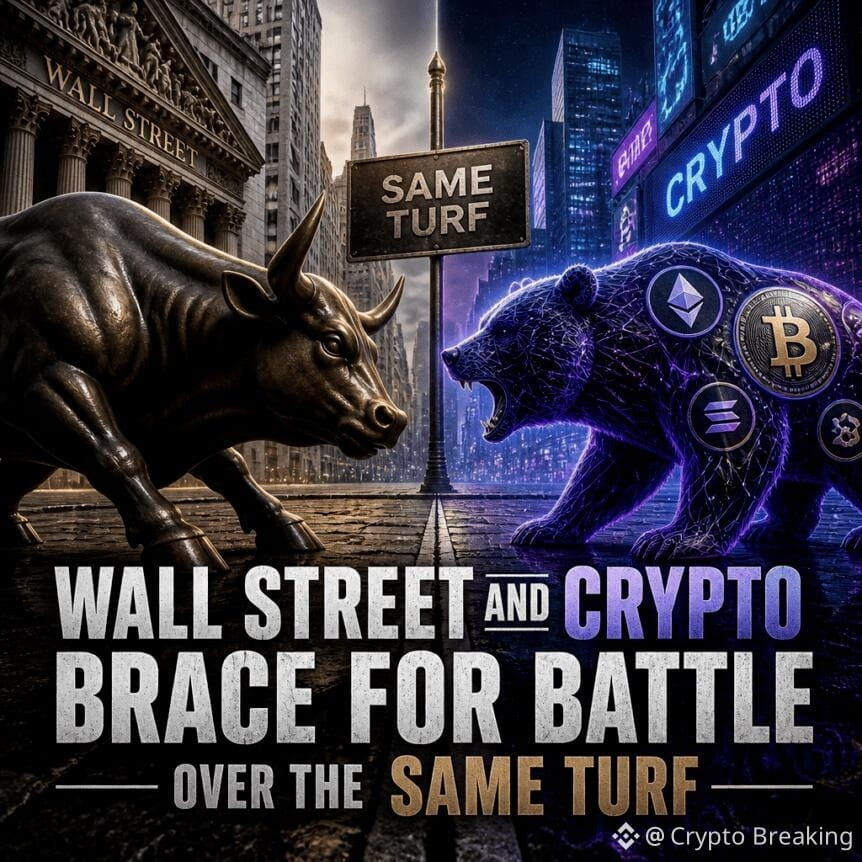
Wall Street and Crypto Brace for Battle Over the Same TurfCrypto’s boundary with traditional finance is getting thinner, and this week’s business developments show how both sides are converging on the same outcomes: faster payments, wider access to dollar-denominated assets, and settlement rails that can be used 24/7.
From Binance expanding its relationship with Circle to Canada’s largest banks testing tokenized deposits and the NYSE partnering with Blockchain.com on tokenized stocks, the thread tying these stories together is clear—stablecoins and tokenized real-world assets are becoming strategic battlegrounds for control over how money moves.
Key takeaways
Binance is set to deepen its USDC push via a reported $100 million investment in Circle, alongside a five-year commercial agreement aimed at expanding USDC usage on the exchange.
Canada’s six largest banks are exploring tokenized Canadian dollar deposits, framing them as programmable payment rails while keeping them legally tied to traditional deposits.
Chainalysis data points to continued growth in cross-border stablecoin transfers—even as overall crypto market capitalization declines.
The NYSE and Blockchain.com plan a regulatory-reviewed alternative trading system to bring tokenized US stocks and ETFs to crypto users.
Binance expands its Circle stake and USDC plan
Binance is increasing its exposure to stablecoin infrastructure through an expanded relationship with Circle. According to Cointelegraph’s report, the exchange is making a $100 million investment in Circle and signing a five-year agreement designed to broaden USDC adoption across Binance.
A Tuesday filing with the US Securities and Exchange Commission states that Circle issued Binance 1,237,011 shares of Class A common stock at $80.84 per share in a private placement dated Sept. 17. The purchase price was below Circle’s market price at the time before the deal closed, and the filing notes shares rose after the announcement.
The investment is paired with commercial terms: Circle will pay Binance a monthly incentive fee linked to the amount of USDC held through Binance’s Modular Smart Contract Wallet infrastructure. That structure matters because it aligns a major exchange’s product usage incentives with stablecoin circulation, rather than relying solely on trading activity.
Binance is subject to restrictions on selling, transferring, pledging, or otherwise disposing of the shares for up to two years, though the lockup may end earlier under certain termination provisions. Importantly for market observers, Binance retains voting rights during the restriction period.
Canadian banks explore tokenized deposits—without changing their legal nature
While stablecoins remain the most visible tokenized asset, banks are also exploring tokenization at the level of deposits. A joint initiative among Canada’s six largest banks is testing “tokenized Canadian dollar deposits,” a setup that could allow digital representations of bank deposits to move between participating institutions.
The project brings together Bank of Montreal, CIBC, National Bank of Canada, Royal Bank of Canada, Scotiabank and TD Bank Group. The first phase focuses on transfers between these banks, with potential connectivity to other digital asset networks later. As with most pilot efforts, the immediate value is operational: determining how tokenized representations can improve settlement speed and payment programmability in a controlled environment.
This effort follows guidance from Canada’s Office of the Superintendent of Financial Institutions. As noted by Cointelegraph, the office clarified on Sept. 10 that tokenized deposits are “not legally distinct from traditional deposits,” meaning the use of blockchain or other technology does not change their underlying legal treatment.
The distinction is also practical for risk framing. Unlike fiat-backed stablecoins, tokenized deposits remain liabilities of the issuing banks. The participating banks argue the model could enable faster, programmable payments, and that additional deposit-taking institutions may join later.
The legal and regulatory nuance is especially relevant as Canada develops stablecoin rules. The country’s framework applies to non-financial institution issuers, while regulated banks and credit unions fall outside its scope—an asymmetry that could shape which institutions pursue which tokenized products.
Stablecoin use keeps rising as broader crypto shrinks
Even as the wider crypto market struggles, stablecoins—particularly those used for cross-border movement—continue to show resilience. Cross-border stablecoin flows rose nearly 78% to $220.3 billion over the year through June, according to data cited from Chainalysis.
Chainalysis reports a 77.5% increase in cross-border stablecoin flows alongside a 37% decline in total crypto market capitalization, which fell to $2.1 trillion. The analytics firm also identified 4,708 new cross-border corridors carrying $2.64 billion. Still, the report emphasizes that the biggest corridors accounted for 96.1% of total value, suggesting growth is expanding the map, but liquidity and volume remain concentrated in established routes.
Chainalysis attributes much of the rise to transfers averaging about $3,000, a pattern it characterizes as more consistent with trade, remittances, and savings than speculative activity.
In commentary relayed in the coverage, Tether economist Philip Gradwell described the activity as having a “steady rhythm” typical of business use. StraitsX CEO Tianwei Liu pointed to demand for dollar access, inflation hedging, and alternatives to capital controls outside Asia.
Broader regulatory direction is also part of the backdrop. Coverage notes that the US passed the GENIUS Act in July 2025, while the EU’s MiCA framework and Hong Kong’s licensing regime have placed stablecoins under more formal oversight. For investors and builders, this matters because compliance clarity can reduce friction for payment partners and institutional-adjacent users—often a prerequisite for stablecoin-based services to scale.
NYSE and Blockchain.com move tokenized US stocks toward crypto rails
Stablecoin settlement and tokenized deposits are not the only areas seeing institutional momentum. In the United States, the NYSE is also working to bring traditional market assets closer to crypto trading infrastructure.
As reported by Cointelegraph, Blockchain.com and the New York Stock Exchange are teaming up to bring tokenized US stocks and exchange-traded funds to crypto users through a planned alternative trading system.
The companies signed a memorandum of understanding covering the digital ATS, which remains subject to regulatory approval. The agreement additionally includes a market-data partnership between Blockchain.com and Intercontinental Exchange’s ICE Data Services.
In the same coverage, TD Securities’ Reid Noch described the move as an effort to capture retail trading activity, particularly as tokenized markets could enable 24-hour and weekend trading. Talos’ Tanay Ved added that crypto venues are increasingly evolving into multi-asset platforms rather than purely crypto-native exchanges.
Demand indicators underline why these partnerships are gaining attention. The value of tokenized stocks has reached $3.14 billion, and the number of holders has increased 72% to 3.87 million, according to RWA.xyz, figures cited in the original report.
The plan also aligns with recent US regulatory developments. The coverage references the SEC’s introduction of a five-year Innovation Exemption for certain tokenized securities venues. It notes that eligible tokenized stocks must represent actual shares with the same economic and governance rights as their traditional counterparts—an important constraint that distinguishes tokenization that mirrors existing shareholder rights from models that only approximate them.
What to watch next is whether these initiatives converge into a clearer operating standard for tokenized money and assets—especially around interoperability, settlement finality, and regulatory approvals. If pilots progress as expected, the next phase may be less about proving the concept and more about who controls the rails: exchanges and stablecoin issuers, bank networks, or regulated market infrastructure working directly with crypto platforms.
This article was originally published as Wall Street and Crypto Brace for Battle Over the Same Turf on Crypto Breaking News – your trusted source for crypto news, Bitcoin news, and blockchain updates.
Wall Street and Crypto Brace for Battle Over the Same Turf
Crypto’s boundary with traditional finance is getting thinner, and this week’s business developments show how both sides are converging on the same outcomes: faster payments, wider access to dollar-denominated assets, and settlement rails that can be used 24/7.
From Binance expanding its relationship with Circle to Canada’s largest banks testing tokenized deposits and the NYSE partnering with Blockchain.com on tokenized stocks, the thread tying these stories together is clear—stablecoins and tokenized real-world assets are becoming strategic battlegrounds for control over how money moves.
Key takeaways
Binance is set to deepen its USDC push via a reported $100 million investment in Circle, alongside a five-year commercial agreement aimed at expanding USDC usage on the exchange.
Canada’s six largest banks are exploring tokenized Canadian dollar deposits, framing them as programmable payment rails while keeping them legally tied to traditional deposits.
Chainalysis data points to continued growth in cross-border stablecoin transfers—even as overall crypto market capitalization declines.
The NYSE and Blockchain.com plan a regulatory-reviewed alternative trading system to bring tokenized US stocks and ETFs to crypto users.
Binance expands its Circle stake and USDC plan
Binance is increasing its exposure to stablecoin infrastructure through an expanded relationship with Circle. According to Cointelegraph’s report, the exchange is making a $100 million investment in Circle and signing a five-year agreement designed to broaden USDC adoption across Binance.
A Tuesday filing with the US Securities and Exchange Commission states that Circle issued Binance 1,237,011 shares of Class A common stock at $80.84 per share in a private placement dated Sept. 17. The purchase price was below Circle’s market price at the time before the deal closed, and the filing notes shares rose after the announcement.
The investment is paired with commercial terms: Circle will pay Binance a monthly incentive fee linked to the amount of USDC held through Binance’s Modular Smart Contract Wallet infrastructure. That structure matters because it aligns a major exchange’s product usage incentives with stablecoin circulation, rather than relying solely on trading activity.
Binance is subject to restrictions on selling, transferring, pledging, or otherwise disposing of the shares for up to two years, though the lockup may end earlier under certain termination provisions. Importantly for market observers, Binance retains voting rights during the restriction period.
Canadian banks explore tokenized deposits—without changing their legal nature
While stablecoins remain the most visible tokenized asset, banks are also exploring tokenization at the level of deposits. A joint initiative among Canada’s six largest banks is testing “tokenized Canadian dollar deposits,” a setup that could allow digital representations of bank deposits to move between participating institutions.
The project brings together Bank of Montreal, CIBC, National Bank of Canada, Royal Bank of Canada, Scotiabank and TD Bank Group. The first phase focuses on transfers between these banks, with potential connectivity to other digital asset networks later. As with most pilot efforts, the immediate value is operational: determining how tokenized representations can improve settlement speed and payment programmability in a controlled environment.
This effort follows guidance from Canada’s Office of the Superintendent of Financial Institutions. As noted by Cointelegraph, the office clarified on Sept. 10 that tokenized deposits are “not legally distinct from traditional deposits,” meaning the use of blockchain or other technology does not change their underlying legal treatment.
The distinction is also practical for risk framing. Unlike fiat-backed stablecoins, tokenized deposits remain liabilities of the issuing banks. The participating banks argue the model could enable faster, programmable payments, and that additional deposit-taking institutions may join later.
The legal and regulatory nuance is especially relevant as Canada develops stablecoin rules. The country’s framework applies to non-financial institution issuers, while regulated banks and credit unions fall outside its scope—an asymmetry that could shape which institutions pursue which tokenized products.
Stablecoin use keeps rising as broader crypto shrinks
Even as the wider crypto market struggles, stablecoins—particularly those used for cross-border movement—continue to show resilience. Cross-border stablecoin flows rose nearly 78% to $220.3 billion over the year through June, according to data cited from Chainalysis.
Chainalysis reports a 77.5% increase in cross-border stablecoin flows alongside a 37% decline in total crypto market capitalization, which fell to $2.1 trillion. The analytics firm also identified 4,708 new cross-border corridors carrying $2.64 billion. Still, the report emphasizes that the biggest corridors accounted for 96.1% of total value, suggesting growth is expanding the map, but liquidity and volume remain concentrated in established routes.
Chainalysis attributes much of the rise to transfers averaging about $3,000, a pattern it characterizes as more consistent with trade, remittances, and savings than speculative activity.
In commentary relayed in the coverage, Tether economist Philip Gradwell described the activity as having a “steady rhythm” typical of business use. StraitsX CEO Tianwei Liu pointed to demand for dollar access, inflation hedging, and alternatives to capital controls outside Asia.
Broader regulatory direction is also part of the backdrop. Coverage notes that the US passed the GENIUS Act in July 2025, while the EU’s MiCA framework and Hong Kong’s licensing regime have placed stablecoins under more formal oversight. For investors and builders, this matters because compliance clarity can reduce friction for payment partners and institutional-adjacent users—often a prerequisite for stablecoin-based services to scale.
NYSE and Blockchain.com move tokenized US stocks toward crypto rails
Stablecoin settlement and tokenized deposits are not the only areas seeing institutional momentum. In the United States, the NYSE is also working to bring traditional market assets closer to crypto trading infrastructure.
As reported by Cointelegraph, Blockchain.com and the New York Stock Exchange are teaming up to bring tokenized US stocks and exchange-traded funds to crypto users through a planned alternative trading system.
The companies signed a memorandum of understanding covering the digital ATS, which remains subject to regulatory approval. The agreement additionally includes a market-data partnership between Blockchain.com and Intercontinental Exchange’s ICE Data Services.
In the same coverage, TD Securities’ Reid Noch described the move as an effort to capture retail trading activity, particularly as tokenized markets could enable 24-hour and weekend trading. Talos’ Tanay Ved added that crypto venues are increasingly evolving into multi-asset platforms rather than purely crypto-native exchanges.
Demand indicators underline why these partnerships are gaining attention. The value of tokenized stocks has reached $3.14 billion, and the number of holders has increased 72% to 3.87 million, according to RWA.xyz, figures cited in the original report.
The plan also aligns with recent US regulatory developments. The coverage references the SEC’s introduction of a five-year Innovation Exemption for certain tokenized securities venues. It notes that eligible tokenized stocks must represent actual shares with the same economic and governance rights as their traditional counterparts—an important constraint that distinguishes tokenization that mirrors existing shareholder rights from models that only approximate them.
What to watch next is whether these initiatives converge into a clearer operating standard for tokenized money and assets—especially around interoperability, settlement finality, and regulatory approvals. If pilots progress as expected, the next phase may be less about proving the concept and more about who controls the rails: exchanges and stablecoin issuers, bank networks, or regulated market infrastructure working directly with crypto platforms.
This article was originally published as Wall Street and Crypto Brace for Battle Over the Same Turf on Crypto Breaking News – your trusted source for crypto news, Bitcoin news, and blockchain updates.
From Binance expanding its relationship with Circle to Canada’s largest banks testing tokenized deposits and the NYSE partnering with Blockchain.com on tokenized stocks, the thread tying these stories together is clear—stablecoins and tokenized real-world assets are becoming strategic battlegrounds for control over how money moves.
Key takeaways
Binance is set to deepen its USDC push via a reported $100 million investment in Circle, alongside a five-year commercial agreement aimed at expanding USDC usage on the exchange.
Canada’s six largest banks are exploring tokenized Canadian dollar deposits, framing them as programmable payment rails while keeping them legally tied to traditional deposits.
Chainalysis data points to continued growth in cross-border stablecoin transfers—even as overall crypto market capitalization declines.
The NYSE and Blockchain.com plan a regulatory-reviewed alternative trading system to bring tokenized US stocks and ETFs to crypto users.
Binance expands its Circle stake and USDC plan
Binance is increasing its exposure to stablecoin infrastructure through an expanded relationship with Circle. According to Cointelegraph’s report, the exchange is making a $100 million investment in Circle and signing a five-year agreement designed to broaden USDC adoption across Binance.
A Tuesday filing with the US Securities and Exchange Commission states that Circle issued Binance 1,237,011 shares of Class A common stock at $80.84 per share in a private placement dated Sept. 17. The purchase price was below Circle’s market price at the time before the deal closed, and the filing notes shares rose after the announcement.
The investment is paired with commercial terms: Circle will pay Binance a monthly incentive fee linked to the amount of USDC held through Binance’s Modular Smart Contract Wallet infrastructure. That structure matters because it aligns a major exchange’s product usage incentives with stablecoin circulation, rather than relying solely on trading activity.
Binance is subject to restrictions on selling, transferring, pledging, or otherwise disposing of the shares for up to two years, though the lockup may end earlier under certain termination provisions. Importantly for market observers, Binance retains voting rights during the restriction period.
Canadian banks explore tokenized deposits—without changing their legal nature
While stablecoins remain the most visible tokenized asset, banks are also exploring tokenization at the level of deposits. A joint initiative among Canada’s six largest banks is testing “tokenized Canadian dollar deposits,” a setup that could allow digital representations of bank deposits to move between participating institutions.
The project brings together Bank of Montreal, CIBC, National Bank of Canada, Royal Bank of Canada, Scotiabank and TD Bank Group. The first phase focuses on transfers between these banks, with potential connectivity to other digital asset networks later. As with most pilot efforts, the immediate value is operational: determining how tokenized representations can improve settlement speed and payment programmability in a controlled environment.
This effort follows guidance from Canada’s Office of the Superintendent of Financial Institutions. As noted by Cointelegraph, the office clarified on Sept. 10 that tokenized deposits are “not legally distinct from traditional deposits,” meaning the use of blockchain or other technology does not change their underlying legal treatment.
The distinction is also practical for risk framing. Unlike fiat-backed stablecoins, tokenized deposits remain liabilities of the issuing banks. The participating banks argue the model could enable faster, programmable payments, and that additional deposit-taking institutions may join later.
The legal and regulatory nuance is especially relevant as Canada develops stablecoin rules. The country’s framework applies to non-financial institution issuers, while regulated banks and credit unions fall outside its scope—an asymmetry that could shape which institutions pursue which tokenized products.
Stablecoin use keeps rising as broader crypto shrinks
Even as the wider crypto market struggles, stablecoins—particularly those used for cross-border movement—continue to show resilience. Cross-border stablecoin flows rose nearly 78% to $220.3 billion over the year through June, according to data cited from Chainalysis.
Chainalysis reports a 77.5% increase in cross-border stablecoin flows alongside a 37% decline in total crypto market capitalization, which fell to $2.1 trillion. The analytics firm also identified 4,708 new cross-border corridors carrying $2.64 billion. Still, the report emphasizes that the biggest corridors accounted for 96.1% of total value, suggesting growth is expanding the map, but liquidity and volume remain concentrated in established routes.
Chainalysis attributes much of the rise to transfers averaging about $3,000, a pattern it characterizes as more consistent with trade, remittances, and savings than speculative activity.
In commentary relayed in the coverage, Tether economist Philip Gradwell described the activity as having a “steady rhythm” typical of business use. StraitsX CEO Tianwei Liu pointed to demand for dollar access, inflation hedging, and alternatives to capital controls outside Asia.
Broader regulatory direction is also part of the backdrop. Coverage notes that the US passed the GENIUS Act in July 2025, while the EU’s MiCA framework and Hong Kong’s licensing regime have placed stablecoins under more formal oversight. For investors and builders, this matters because compliance clarity can reduce friction for payment partners and institutional-adjacent users—often a prerequisite for stablecoin-based services to scale.
NYSE and Blockchain.com move tokenized US stocks toward crypto rails
Stablecoin settlement and tokenized deposits are not the only areas seeing institutional momentum. In the United States, the NYSE is also working to bring traditional market assets closer to crypto trading infrastructure.
As reported by Cointelegraph, Blockchain.com and the New York Stock Exchange are teaming up to bring tokenized US stocks and exchange-traded funds to crypto users through a planned alternative trading system.
The companies signed a memorandum of understanding covering the digital ATS, which remains subject to regulatory approval. The agreement additionally includes a market-data partnership between Blockchain.com and Intercontinental Exchange’s ICE Data Services.
In the same coverage, TD Securities’ Reid Noch described the move as an effort to capture retail trading activity, particularly as tokenized markets could enable 24-hour and weekend trading. Talos’ Tanay Ved added that crypto venues are increasingly evolving into multi-asset platforms rather than purely crypto-native exchanges.
Demand indicators underline why these partnerships are gaining attention. The value of tokenized stocks has reached $3.14 billion, and the number of holders has increased 72% to 3.87 million, according to RWA.xyz, figures cited in the original report.
The plan also aligns with recent US regulatory developments. The coverage references the SEC’s introduction of a five-year Innovation Exemption for certain tokenized securities venues. It notes that eligible tokenized stocks must represent actual shares with the same economic and governance rights as their traditional counterparts—an important constraint that distinguishes tokenization that mirrors existing shareholder rights from models that only approximate them.
What to watch next is whether these initiatives converge into a clearer operating standard for tokenized money and assets—especially around interoperability, settlement finality, and regulatory approvals. If pilots progress as expected, the next phase may be less about proving the concept and more about who controls the rails: exchanges and stablecoin issuers, bank networks, or regulated market infrastructure working directly with crypto platforms.
This article was originally published as Wall Street and Crypto Brace for Battle Over the Same Turf on Crypto Breaking News – your trusted source for crypto news, Bitcoin news, and blockchain updates.
18

Article
Company Moves to Secure Shareholder Approval for Daily Preferred DividendsStrategy is asking shareholders to approve a structural change to how its preferred stock dividends are paid, moving four series—including STRC—from periodic distributions to daily dividend payments. The company says the switch would not alter the dividend rates or the total amount paid, only the timing and record-date mechanics.
According to an SEC filing released on Friday, Strategy’s board approved the proposal on Thursday and scheduled a virtual special meeting for Oct. 28. If approved, the company would make every calendar day a dividend record date, with dividends paid on the next business day. STRC would be the first to transition, with its initial daily dividend payment expected on Nov. 2.
Key takeaways
Strategy plans to change four preferred stock series to daily dividend record dates without changing the stated dividend rates or total payout.
Shareholders will vote on Oct. 28 during a virtual special meeting, following board approval disclosed in an SEC filing.
STRC would move first; STRF, STRK, and STRD would follow in January, with first daily payments expected on Jan. 4.
The schedule uses calendar-day record dates, unlike the business-day approach used by a prior “daily dividends” example in the market.
Strategy’s CEO linked recent STRC volatility to leverage entering the market, saying the company is working to prevent similar unwind dynamics.
What Strategy is proposing to change
In the filing, Strategy states that it is seeking shareholder approval to amend the terms governing its four preferred stocks: STRC, STRF, STRK, and STRD. The proposal would shift dividends to a daily schedule while keeping the economics the same—specifically, Strategy emphasizes that it would not change dividend rates or the total amount paid.
Under the amended approach, each calendar day would become a dividend record date, with the payment made on the next business day. Strategy’s filings also outline the implementation timing: STRC would start the daily cadence first, while the other three series would transition later in the year.
Strategy further indicates that the amendments would take effect after it updates preferred stock certificates with the Delaware state authorities.
Timeline for STRC, STRF, STRK, and STRD
If shareholders approve the amendments, STRC would begin issuing dividends on a daily basis first. Strategy expects the initial daily dividend payment for STRC to arrive on Nov. 2.
The remaining series—STRF, STRK, and STRD—would follow in January. Strategy’s filing points to Jan. 4 as the expected first payment date under the daily dividend schedule for those securities.
Strategy’s daily-dividend shift follows Strive’s earlier move
Strategy’s proposal comes months after fellow Bitcoin-treasury company Strive became the first public company to adopt daily dividends for a preferred stock. According to earlier coverage and Strive’s announcements, Strive moved its SATA preferred stock to business-day dividend payments, setting the system to pay dividends every business day at a 13% annual rate starting June 16. Strive also reported it eliminated its outstanding debt in the first quarter.
Strategy’s plan is similar in spirit but different in mechanics. While Strive’s schedule is tied to business days, Strategy’s proposal would treat every calendar day as a dividend record date and then pay on the next business day. That distinction matters for investors because it affects how often new dividend entitlements can accrue and how dividends line up with weekends and holidays.
It also positions Strategy in an increasingly competitive landscape for yield-focused structures tied to Bitcoin treasury strategies, where timing of income distribution can become part of how investors assess convenience and cash flow patterns.
Why the change could matter for investors holding STRC
Strategy has marketed its preferred securities as part of its “digital credit” approach—preferred instruments intended to generate income within a capital structure connected to its Bitcoin treasury. STRC, described as a key component of that strategy, has been the subject of significant market attention this year due to volatility around its $100 stated amount.
As context for investors, Yahoo Finance data shows that in June, STRC fell sharply below its stated $100 level, reaching an intraday low of $71.25 on June 26.
In a recent appearance on Natalie Brunell’s Coin Stories podcast, Strategy CEO Phong Le attributed the decline to leverage building up in the STRC market more than the company anticipated. He described investors borrowing against Bitcoin at lower rates to buy STRC in order to capture the spread between borrowing costs and the preferred dividend yield. When Bitcoin fell, Le said, participants who borrowed against their holdings faced pressure to either add collateral or sell STRC, creating an unwind dynamic.
Le framed this as a lesson for future cycles—saying Strategy “did not expect the amount of leverage that came into the system”—and suggested the company is adjusting how it thinks about risk and investor behavior.
To reduce the odds of another similar unwind, Le said Strategy is aiming to maintain a strong US dollar reserve and has a policy that allows the company to repurchase STRC when it trades below its $100 stated amount. He also indicated an intent to attract more long-term holders, including institutional investors.
Since that June dip, STRC has reportedly recovered to around $98.41, close to Strategy’s stated goal of keeping the security within a $99 to $100 range. The preferred stock currently carries a 12% variable annual dividend rate.
What to watch next
Investors will likely focus on two near-term milestones: the Oct. 28 shareholder vote and the timing of the first daily dividend payments under the new calendar-day record-date system. Beyond logistics, the bigger question is whether moving to daily distributions meaningfully changes the trading and leverage dynamics that Strategy’s CEO said contributed to STRC’s earlier decline.
This article was originally published as Company Moves to Secure Shareholder Approval for Daily Preferred Dividends on Crypto Breaking News – your trusted source for crypto news, Bitcoin news, and blockchain updates.
Company Moves to Secure Shareholder Approval for Daily Preferred Dividends
Strategy is asking shareholders to approve a structural change to how its preferred stock dividends are paid, moving four series—including STRC—from periodic distributions to daily dividend payments. The company says the switch would not alter the dividend rates or the total amount paid, only the timing and record-date mechanics.
According to an SEC filing released on Friday, Strategy’s board approved the proposal on Thursday and scheduled a virtual special meeting for Oct. 28. If approved, the company would make every calendar day a dividend record date, with dividends paid on the next business day. STRC would be the first to transition, with its initial daily dividend payment expected on Nov. 2.
Key takeaways
Strategy plans to change four preferred stock series to daily dividend record dates without changing the stated dividend rates or total payout.
Shareholders will vote on Oct. 28 during a virtual special meeting, following board approval disclosed in an SEC filing.
STRC would move first; STRF, STRK, and STRD would follow in January, with first daily payments expected on Jan. 4.
The schedule uses calendar-day record dates, unlike the business-day approach used by a prior “daily dividends” example in the market.
Strategy’s CEO linked recent STRC volatility to leverage entering the market, saying the company is working to prevent similar unwind dynamics.
What Strategy is proposing to change
In the filing, Strategy states that it is seeking shareholder approval to amend the terms governing its four preferred stocks: STRC, STRF, STRK, and STRD. The proposal would shift dividends to a daily schedule while keeping the economics the same—specifically, Strategy emphasizes that it would not change dividend rates or the total amount paid.
Under the amended approach, each calendar day would become a dividend record date, with the payment made on the next business day. Strategy’s filings also outline the implementation timing: STRC would start the daily cadence first, while the other three series would transition later in the year.
Strategy further indicates that the amendments would take effect after it updates preferred stock certificates with the Delaware state authorities.
Timeline for STRC, STRF, STRK, and STRD
If shareholders approve the amendments, STRC would begin issuing dividends on a daily basis first. Strategy expects the initial daily dividend payment for STRC to arrive on Nov. 2.
The remaining series—STRF, STRK, and STRD—would follow in January. Strategy’s filing points to Jan. 4 as the expected first payment date under the daily dividend schedule for those securities.
Strategy’s daily-dividend shift follows Strive’s earlier move
Strategy’s proposal comes months after fellow Bitcoin-treasury company Strive became the first public company to adopt daily dividends for a preferred stock. According to earlier coverage and Strive’s announcements, Strive moved its SATA preferred stock to business-day dividend payments, setting the system to pay dividends every business day at a 13% annual rate starting June 16. Strive also reported it eliminated its outstanding debt in the first quarter.
Strategy’s plan is similar in spirit but different in mechanics. While Strive’s schedule is tied to business days, Strategy’s proposal would treat every calendar day as a dividend record date and then pay on the next business day. That distinction matters for investors because it affects how often new dividend entitlements can accrue and how dividends line up with weekends and holidays.
It also positions Strategy in an increasingly competitive landscape for yield-focused structures tied to Bitcoin treasury strategies, where timing of income distribution can become part of how investors assess convenience and cash flow patterns.
Why the change could matter for investors holding STRC
Strategy has marketed its preferred securities as part of its “digital credit” approach—preferred instruments intended to generate income within a capital structure connected to its Bitcoin treasury. STRC, described as a key component of that strategy, has been the subject of significant market attention this year due to volatility around its $100 stated amount.
As context for investors, Yahoo Finance data shows that in June, STRC fell sharply below its stated $100 level, reaching an intraday low of $71.25 on June 26.
In a recent appearance on Natalie Brunell’s Coin Stories podcast, Strategy CEO Phong Le attributed the decline to leverage building up in the STRC market more than the company anticipated. He described investors borrowing against Bitcoin at lower rates to buy STRC in order to capture the spread between borrowing costs and the preferred dividend yield. When Bitcoin fell, Le said, participants who borrowed against their holdings faced pressure to either add collateral or sell STRC, creating an unwind dynamic.
Le framed this as a lesson for future cycles—saying Strategy “did not expect the amount of leverage that came into the system”—and suggested the company is adjusting how it thinks about risk and investor behavior.
To reduce the odds of another similar unwind, Le said Strategy is aiming to maintain a strong US dollar reserve and has a policy that allows the company to repurchase STRC when it trades below its $100 stated amount. He also indicated an intent to attract more long-term holders, including institutional investors.
Since that June dip, STRC has reportedly recovered to around $98.41, close to Strategy’s stated goal of keeping the security within a $99 to $100 range. The preferred stock currently carries a 12% variable annual dividend rate.
What to watch next
Investors will likely focus on two near-term milestones: the Oct. 28 shareholder vote and the timing of the first daily dividend payments under the new calendar-day record-date system. Beyond logistics, the bigger question is whether moving to daily distributions meaningfully changes the trading and leverage dynamics that Strategy’s CEO said contributed to STRC’s earlier decline.
This article was originally published as Company Moves to Secure Shareholder Approval for Daily Preferred Dividends on Crypto Breaking News – your trusted source for crypto news, Bitcoin news, and blockchain updates.
According to an SEC filing released on Friday, Strategy’s board approved the proposal on Thursday and scheduled a virtual special meeting for Oct. 28. If approved, the company would make every calendar day a dividend record date, with dividends paid on the next business day. STRC would be the first to transition, with its initial daily dividend payment expected on Nov. 2.
Key takeaways
Strategy plans to change four preferred stock series to daily dividend record dates without changing the stated dividend rates or total payout.
Shareholders will vote on Oct. 28 during a virtual special meeting, following board approval disclosed in an SEC filing.
STRC would move first; STRF, STRK, and STRD would follow in January, with first daily payments expected on Jan. 4.
The schedule uses calendar-day record dates, unlike the business-day approach used by a prior “daily dividends” example in the market.
Strategy’s CEO linked recent STRC volatility to leverage entering the market, saying the company is working to prevent similar unwind dynamics.
What Strategy is proposing to change
In the filing, Strategy states that it is seeking shareholder approval to amend the terms governing its four preferred stocks: STRC, STRF, STRK, and STRD. The proposal would shift dividends to a daily schedule while keeping the economics the same—specifically, Strategy emphasizes that it would not change dividend rates or the total amount paid.
Under the amended approach, each calendar day would become a dividend record date, with the payment made on the next business day. Strategy’s filings also outline the implementation timing: STRC would start the daily cadence first, while the other three series would transition later in the year.
Strategy further indicates that the amendments would take effect after it updates preferred stock certificates with the Delaware state authorities.
Timeline for STRC, STRF, STRK, and STRD
If shareholders approve the amendments, STRC would begin issuing dividends on a daily basis first. Strategy expects the initial daily dividend payment for STRC to arrive on Nov. 2.
The remaining series—STRF, STRK, and STRD—would follow in January. Strategy’s filing points to Jan. 4 as the expected first payment date under the daily dividend schedule for those securities.
Strategy’s daily-dividend shift follows Strive’s earlier move
Strategy’s proposal comes months after fellow Bitcoin-treasury company Strive became the first public company to adopt daily dividends for a preferred stock. According to earlier coverage and Strive’s announcements, Strive moved its SATA preferred stock to business-day dividend payments, setting the system to pay dividends every business day at a 13% annual rate starting June 16. Strive also reported it eliminated its outstanding debt in the first quarter.
Strategy’s plan is similar in spirit but different in mechanics. While Strive’s schedule is tied to business days, Strategy’s proposal would treat every calendar day as a dividend record date and then pay on the next business day. That distinction matters for investors because it affects how often new dividend entitlements can accrue and how dividends line up with weekends and holidays.
It also positions Strategy in an increasingly competitive landscape for yield-focused structures tied to Bitcoin treasury strategies, where timing of income distribution can become part of how investors assess convenience and cash flow patterns.
Why the change could matter for investors holding STRC
Strategy has marketed its preferred securities as part of its “digital credit” approach—preferred instruments intended to generate income within a capital structure connected to its Bitcoin treasury. STRC, described as a key component of that strategy, has been the subject of significant market attention this year due to volatility around its $100 stated amount.
As context for investors, Yahoo Finance data shows that in June, STRC fell sharply below its stated $100 level, reaching an intraday low of $71.25 on June 26.
In a recent appearance on Natalie Brunell’s Coin Stories podcast, Strategy CEO Phong Le attributed the decline to leverage building up in the STRC market more than the company anticipated. He described investors borrowing against Bitcoin at lower rates to buy STRC in order to capture the spread between borrowing costs and the preferred dividend yield. When Bitcoin fell, Le said, participants who borrowed against their holdings faced pressure to either add collateral or sell STRC, creating an unwind dynamic.
Le framed this as a lesson for future cycles—saying Strategy “did not expect the amount of leverage that came into the system”—and suggested the company is adjusting how it thinks about risk and investor behavior.
To reduce the odds of another similar unwind, Le said Strategy is aiming to maintain a strong US dollar reserve and has a policy that allows the company to repurchase STRC when it trades below its $100 stated amount. He also indicated an intent to attract more long-term holders, including institutional investors.
Since that June dip, STRC has reportedly recovered to around $98.41, close to Strategy’s stated goal of keeping the security within a $99 to $100 range. The preferred stock currently carries a 12% variable annual dividend rate.
What to watch next
Investors will likely focus on two near-term milestones: the Oct. 28 shareholder vote and the timing of the first daily dividend payments under the new calendar-day record-date system. Beyond logistics, the bigger question is whether moving to daily distributions meaningfully changes the trading and leverage dynamics that Strategy’s CEO said contributed to STRC’s earlier decline.
This article was originally published as Company Moves to Secure Shareholder Approval for Daily Preferred Dividends on Crypto Breaking News – your trusted source for crypto news, Bitcoin news, and blockchain updates.
46
Article
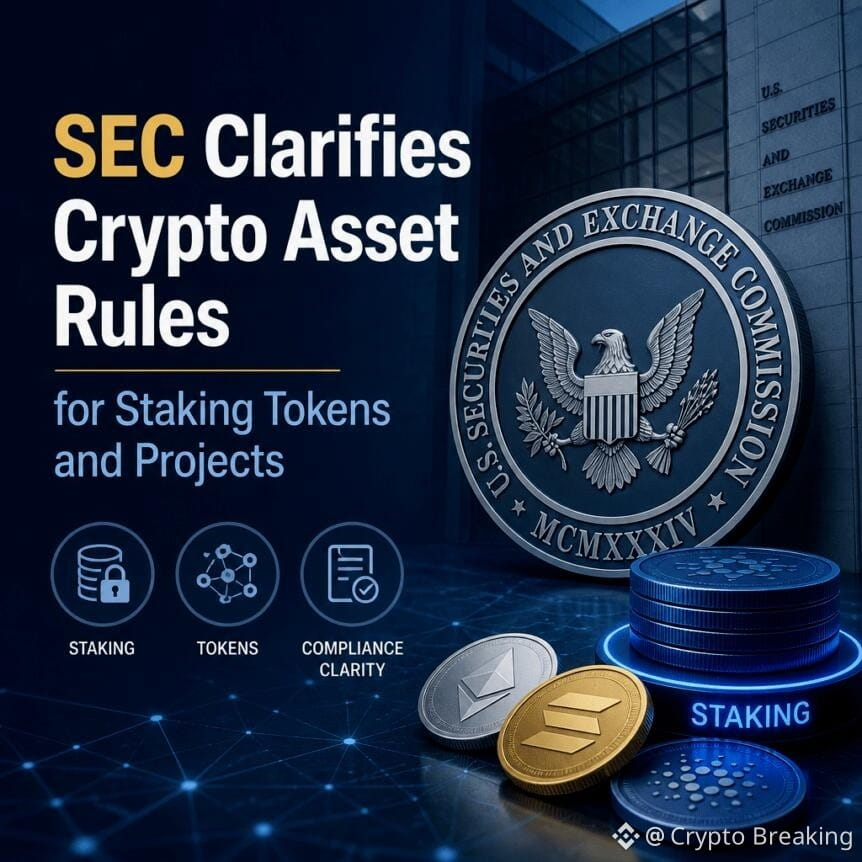
SEC Clarifies Crypto Asset Rules for Staking Tokens and ProjectsThe SEC Division of Corporation Finance released new crypto guidance on September 25 covering staking receipt tokens, wrapped assets, buybacks, and functional networks. The update explains how certain crypto activities may not create investment contracts under existing federal securities laws. However, the guidance represents staff views and does not create new legal requirements.
The latest FAQs clarify how SEC staff evaluates different crypto assets and network activities. The document focuses on whether specific actions involve ongoing managerial efforts linked to investment expectations. Therefore, the guidance highlights conditions that may affect how digital assets are treated under securities laws.
The SEC staff explained that some crypto assets can operate as digital tools rather than securities. The analysis also depends on each digital asset’s structure, purpose, and operation.
SEC Explains Staking Receipt Token Treatment Under Crypto Rules
The new guidance addresses staking receipt tokens issued through blockchain-based staking services. These tokens can represent ownership of underlying digital assets while allowing users to track their staking positions. Therefore, the SEC staff said some staking receipt tokens may function as digital commodities.
The guidance also explains that liquid staking providers may issue tokens connected to protocol-based systems. In these cases, the tokens can represent claims linked to staked assets rather than traditional investment contracts. However, the classification depends on the facts surrounding each network and token structure.
Additionally, the SEC staff noted that the agency has not approved or rejected the FAQ responses. Instead, the document provides staff interpretations based on current federal securities law principles. Therefore, crypto projects must still consider their individual operations and structures.
Functional Networks And Crypto Buybacks Receive Updated SEC Views
The SEC staff also guided when crypto networks may move beyond investment contract concerns. The analysis focuses on whether an issuer continues performing essential managerial activities for digital asset holders. Therefore, network development and maintenance alone may not always represent managerial efforts.
The guidance explains that functional networks can continue operating through security improvements, software updates, and community development. Moreover, these activities may support network operations without creating an investment contract. The SEC staff emphasized that decentralization can influence this evaluation.
Crypto buybacks also received attention in the updated FAQs. The staff explained that buybacks involving active networks may not automatically indicate issuer efforts that support an investment contract. However, buybacks promoted as generating returns could receive different consideration depending on the circumstances.
The SEC staff further noted that network functionality plays an important role in evaluating crypto activities. Before a network becomes functional, issuer actions may carry different legal implications. Therefore, project structures and promotional methods remain important factors.
SEC Reviews Crypto Marketing Statements And Platform Promotion Rules
The guidance also covers statements made by crypto companies when promoting their products and services. The SEC staff said general support for existing network utility does not automatically create an investment contract. Therefore, ordinary communications about network use may receive different treatment.
However, promotional statements can create concerns when they connect future issuer actions with expected financial returns. The SEC staff indicated that the details and context of each statement remain important. Consequently, crypto companies must consider how they present plans and developments.
The FAQs also address whether trading platforms automatically become crypto promoters. The SEC staff explained that platforms must meet the existing Securities Act definition of a promoter before receiving that classification. Therefore, operating a crypto marketplace alone does not determine promoter status.
The latest SEC guidance adds further clarity to ongoing discussions around digital assets and securities rules. It outlines how staking tokens, functional networks, buybacks, and promotions may receive different treatment. However, each crypto project requires separate evaluation based on its specific activities and structure.
This article was originally published as SEC Clarifies Crypto Asset Rules for Staking Tokens and Projects on Crypto Breaking News – your trusted source for crypto news, Bitcoin news, and blockchain updates.
SEC Clarifies Crypto Asset Rules for Staking Tokens and Projects
The SEC Division of Corporation Finance released new crypto guidance on September 25 covering staking receipt tokens, wrapped assets, buybacks, and functional networks. The update explains how certain crypto activities may not create investment contracts under existing federal securities laws. However, the guidance represents staff views and does not create new legal requirements.
The latest FAQs clarify how SEC staff evaluates different crypto assets and network activities. The document focuses on whether specific actions involve ongoing managerial efforts linked to investment expectations. Therefore, the guidance highlights conditions that may affect how digital assets are treated under securities laws.
The SEC staff explained that some crypto assets can operate as digital tools rather than securities. The analysis also depends on each digital asset’s structure, purpose, and operation.
SEC Explains Staking Receipt Token Treatment Under Crypto Rules
The new guidance addresses staking receipt tokens issued through blockchain-based staking services. These tokens can represent ownership of underlying digital assets while allowing users to track their staking positions. Therefore, the SEC staff said some staking receipt tokens may function as digital commodities.
The guidance also explains that liquid staking providers may issue tokens connected to protocol-based systems. In these cases, the tokens can represent claims linked to staked assets rather than traditional investment contracts. However, the classification depends on the facts surrounding each network and token structure.
Additionally, the SEC staff noted that the agency has not approved or rejected the FAQ responses. Instead, the document provides staff interpretations based on current federal securities law principles. Therefore, crypto projects must still consider their individual operations and structures.
Functional Networks And Crypto Buybacks Receive Updated SEC Views
The SEC staff also guided when crypto networks may move beyond investment contract concerns. The analysis focuses on whether an issuer continues performing essential managerial activities for digital asset holders. Therefore, network development and maintenance alone may not always represent managerial efforts.
The guidance explains that functional networks can continue operating through security improvements, software updates, and community development. Moreover, these activities may support network operations without creating an investment contract. The SEC staff emphasized that decentralization can influence this evaluation.
Crypto buybacks also received attention in the updated FAQs. The staff explained that buybacks involving active networks may not automatically indicate issuer efforts that support an investment contract. However, buybacks promoted as generating returns could receive different consideration depending on the circumstances.
The SEC staff further noted that network functionality plays an important role in evaluating crypto activities. Before a network becomes functional, issuer actions may carry different legal implications. Therefore, project structures and promotional methods remain important factors.
SEC Reviews Crypto Marketing Statements And Platform Promotion Rules
The guidance also covers statements made by crypto companies when promoting their products and services. The SEC staff said general support for existing network utility does not automatically create an investment contract. Therefore, ordinary communications about network use may receive different treatment.
However, promotional statements can create concerns when they connect future issuer actions with expected financial returns. The SEC staff indicated that the details and context of each statement remain important. Consequently, crypto companies must consider how they present plans and developments.
The FAQs also address whether trading platforms automatically become crypto promoters. The SEC staff explained that platforms must meet the existing Securities Act definition of a promoter before receiving that classification. Therefore, operating a crypto marketplace alone does not determine promoter status.
The latest SEC guidance adds further clarity to ongoing discussions around digital assets and securities rules. It outlines how staking tokens, functional networks, buybacks, and promotions may receive different treatment. However, each crypto project requires separate evaluation based on its specific activities and structure.
This article was originally published as SEC Clarifies Crypto Asset Rules for Staking Tokens and Projects on Crypto Breaking News – your trusted source for crypto news, Bitcoin news, and blockchain updates.
The latest FAQs clarify how SEC staff evaluates different crypto assets and network activities. The document focuses on whether specific actions involve ongoing managerial efforts linked to investment expectations. Therefore, the guidance highlights conditions that may affect how digital assets are treated under securities laws.
The SEC staff explained that some crypto assets can operate as digital tools rather than securities. The analysis also depends on each digital asset’s structure, purpose, and operation.
SEC Explains Staking Receipt Token Treatment Under Crypto Rules
The new guidance addresses staking receipt tokens issued through blockchain-based staking services. These tokens can represent ownership of underlying digital assets while allowing users to track their staking positions. Therefore, the SEC staff said some staking receipt tokens may function as digital commodities.
The guidance also explains that liquid staking providers may issue tokens connected to protocol-based systems. In these cases, the tokens can represent claims linked to staked assets rather than traditional investment contracts. However, the classification depends on the facts surrounding each network and token structure.
Additionally, the SEC staff noted that the agency has not approved or rejected the FAQ responses. Instead, the document provides staff interpretations based on current federal securities law principles. Therefore, crypto projects must still consider their individual operations and structures.
Functional Networks And Crypto Buybacks Receive Updated SEC Views
The SEC staff also guided when crypto networks may move beyond investment contract concerns. The analysis focuses on whether an issuer continues performing essential managerial activities for digital asset holders. Therefore, network development and maintenance alone may not always represent managerial efforts.
The guidance explains that functional networks can continue operating through security improvements, software updates, and community development. Moreover, these activities may support network operations without creating an investment contract. The SEC staff emphasized that decentralization can influence this evaluation.
Crypto buybacks also received attention in the updated FAQs. The staff explained that buybacks involving active networks may not automatically indicate issuer efforts that support an investment contract. However, buybacks promoted as generating returns could receive different consideration depending on the circumstances.
The SEC staff further noted that network functionality plays an important role in evaluating crypto activities. Before a network becomes functional, issuer actions may carry different legal implications. Therefore, project structures and promotional methods remain important factors.
SEC Reviews Crypto Marketing Statements And Platform Promotion Rules
The guidance also covers statements made by crypto companies when promoting their products and services. The SEC staff said general support for existing network utility does not automatically create an investment contract. Therefore, ordinary communications about network use may receive different treatment.
However, promotional statements can create concerns when they connect future issuer actions with expected financial returns. The SEC staff indicated that the details and context of each statement remain important. Consequently, crypto companies must consider how they present plans and developments.
The FAQs also address whether trading platforms automatically become crypto promoters. The SEC staff explained that platforms must meet the existing Securities Act definition of a promoter before receiving that classification. Therefore, operating a crypto marketplace alone does not determine promoter status.
The latest SEC guidance adds further clarity to ongoing discussions around digital assets and securities rules. It outlines how staking tokens, functional networks, buybacks, and promotions may receive different treatment. However, each crypto project requires separate evaluation based on its specific activities and structure.
This article was originally published as SEC Clarifies Crypto Asset Rules for Staking Tokens and Projects on Crypto Breaking News – your trusted source for crypto news, Bitcoin news, and blockchain updates.
72

Article
Ex-CFTC Official Steps Down from Blockchain Association After CLARITY VoteSummer Mersinger, the former US Commodity Futures Trading Commission (CFTC) commissioner who led the Blockchain Association, will step down as chief executive as the advocacy group heads into its next chapter. The organization says Mersinger will leave the role on Oct. 16 and will depart the Blockchain Association at the end of the year.
In a move the group framed as a return to familiar leadership, Kristin Smith—Blockchain Association’s former CEO—will take over as interim CEO on Oct. 16 while continuing her existing position as president of the Solana Policy Institute.
Key takeaways
Summer Mersinger will step down as CEO of the Blockchain Association on Oct. 16.
Kristin Smith is set to return as interim CEO while remaining president of the Solana Policy Institute.
The Blockchain Association cited progress on stablecoin policy, including work connected to the GENIUS Act.
The group’s update did not mention a separate stablecoin/regulatory push in the Senate that failed to advance earlier this month.
Why the CEO transition is happening
The Blockchain Association said Mersinger’s departure follows a setback for one of the organization’s key legislative priorities in Congress. The group’s announcement indicates it sees the leadership change as timed with a period of renewed advocacy, starting with Smith’s interim return.
Mersinger joined the Blockchain Association in June 2025 after leaving the CFTC years earlier than the planned end of her second commissioner term. Her background at the regulator is a core part of the story: the association emphasized that she joined the industry effort to build a unified policy message in Washington.
“I came here from the CFTC because I believed this industry deserved clear rules of the road and a credible, unified voice making the case for them in Washington,” Mersinger said in remarks tied to her departure, according to the Blockchain Association’s announcement.
Legislative focus: GENIUS Act and broader “clarity” goals
In explaining her tenure, the Blockchain Association pointed to Mersinger’s efforts related to the Guiding and Establishing National Innovation for US Stablecoins (GENIUS Act). The organization also credited her work with achieving more regulatory clarity across both the Securities and Exchange Commission (SEC) and the CFTC.
That emphasis matters because US crypto policy remains fragmented between agencies and often depends on how lawmakers define stablecoins and other digital assets. For advocacy groups, demonstrating progress toward a workable regulatory framework—rather than only case-by-case enforcement—can shape how seriously Congress treats proposed bills and how businesses plan compliance strategies.
A Senate setback the association didn’t highlight
While the Blockchain Association highlighted stablecoin-related work around GENIUS, it did not reference a separate Senate measure it had previously urged lawmakers to support. In earlier outreach, the association pushed for the Digital Asset Market Clarity Act—a bill described in coverage as being under consideration in the Senate.
According to reporting linked in the original announcement’s context, the Senate failed to move the legislation forward. The measure was not able to secure enough votes in a cloture motion earlier this month, with expectations that it could remain stalled until later in the decade—potentially stretching into 2027.
The Blockchain Association did not provide immediate details on what the leadership change means for its plans for 2027, nor did it outline a replacement strategy for the stalled legislation in the information provided with this CEO update.
Leadership change and what to watch next
With Mersinger stepping down on Oct. 16 and Kristin Smith taking over as interim CEO, the next phase of the Blockchain Association’s legislative campaign may hinge on how it reframes its priorities after the Senate cloture result. Investors and builders watching US crypto regulation will want to pay close attention to whether the organization pivots to alternative bills, refines its approach to stablecoin definitions, or focuses more on agency-level guidance given the SEC/CFTC dynamics mentioned by the association.
For now, the key uncertainty is timeline: the stalled Senate effort suggests near-term momentum may be limited, even as internal leadership transitions prepare the advocacy group for the legislative calendar ahead. Readers should watch for updates on the association’s next set of targets in Congress and whether the “clarity” push remains centered on stablecoins—or broadens to other parts of the digital asset market.
This article was originally published as Ex-CFTC Official Steps Down from Blockchain Association After CLARITY Vote on Crypto Breaking News – your trusted source for crypto news, Bitcoin news, and blockchain updates.
Ex-CFTC Official Steps Down from Blockchain Association After CLARITY Vote
Summer Mersinger, the former US Commodity Futures Trading Commission (CFTC) commissioner who led the Blockchain Association, will step down as chief executive as the advocacy group heads into its next chapter. The organization says Mersinger will leave the role on Oct. 16 and will depart the Blockchain Association at the end of the year.
In a move the group framed as a return to familiar leadership, Kristin Smith—Blockchain Association’s former CEO—will take over as interim CEO on Oct. 16 while continuing her existing position as president of the Solana Policy Institute.
Key takeaways
Summer Mersinger will step down as CEO of the Blockchain Association on Oct. 16.
Kristin Smith is set to return as interim CEO while remaining president of the Solana Policy Institute.
The Blockchain Association cited progress on stablecoin policy, including work connected to the GENIUS Act.
The group’s update did not mention a separate stablecoin/regulatory push in the Senate that failed to advance earlier this month.
Why the CEO transition is happening
The Blockchain Association said Mersinger’s departure follows a setback for one of the organization’s key legislative priorities in Congress. The group’s announcement indicates it sees the leadership change as timed with a period of renewed advocacy, starting with Smith’s interim return.
Mersinger joined the Blockchain Association in June 2025 after leaving the CFTC years earlier than the planned end of her second commissioner term. Her background at the regulator is a core part of the story: the association emphasized that she joined the industry effort to build a unified policy message in Washington.
“I came here from the CFTC because I believed this industry deserved clear rules of the road and a credible, unified voice making the case for them in Washington,” Mersinger said in remarks tied to her departure, according to the Blockchain Association’s announcement.
Legislative focus: GENIUS Act and broader “clarity” goals
In explaining her tenure, the Blockchain Association pointed to Mersinger’s efforts related to the Guiding and Establishing National Innovation for US Stablecoins (GENIUS Act). The organization also credited her work with achieving more regulatory clarity across both the Securities and Exchange Commission (SEC) and the CFTC.
That emphasis matters because US crypto policy remains fragmented between agencies and often depends on how lawmakers define stablecoins and other digital assets. For advocacy groups, demonstrating progress toward a workable regulatory framework—rather than only case-by-case enforcement—can shape how seriously Congress treats proposed bills and how businesses plan compliance strategies.
A Senate setback the association didn’t highlight
While the Blockchain Association highlighted stablecoin-related work around GENIUS, it did not reference a separate Senate measure it had previously urged lawmakers to support. In earlier outreach, the association pushed for the Digital Asset Market Clarity Act—a bill described in coverage as being under consideration in the Senate.
According to reporting linked in the original announcement’s context, the Senate failed to move the legislation forward. The measure was not able to secure enough votes in a cloture motion earlier this month, with expectations that it could remain stalled until later in the decade—potentially stretching into 2027.
The Blockchain Association did not provide immediate details on what the leadership change means for its plans for 2027, nor did it outline a replacement strategy for the stalled legislation in the information provided with this CEO update.
Leadership change and what to watch next
With Mersinger stepping down on Oct. 16 and Kristin Smith taking over as interim CEO, the next phase of the Blockchain Association’s legislative campaign may hinge on how it reframes its priorities after the Senate cloture result. Investors and builders watching US crypto regulation will want to pay close attention to whether the organization pivots to alternative bills, refines its approach to stablecoin definitions, or focuses more on agency-level guidance given the SEC/CFTC dynamics mentioned by the association.
For now, the key uncertainty is timeline: the stalled Senate effort suggests near-term momentum may be limited, even as internal leadership transitions prepare the advocacy group for the legislative calendar ahead. Readers should watch for updates on the association’s next set of targets in Congress and whether the “clarity” push remains centered on stablecoins—or broadens to other parts of the digital asset market.
This article was originally published as Ex-CFTC Official Steps Down from Blockchain Association After CLARITY Vote on Crypto Breaking News – your trusted source for crypto news, Bitcoin news, and blockchain updates.
In a move the group framed as a return to familiar leadership, Kristin Smith—Blockchain Association’s former CEO—will take over as interim CEO on Oct. 16 while continuing her existing position as president of the Solana Policy Institute.
Key takeaways
Summer Mersinger will step down as CEO of the Blockchain Association on Oct. 16.
Kristin Smith is set to return as interim CEO while remaining president of the Solana Policy Institute.
The Blockchain Association cited progress on stablecoin policy, including work connected to the GENIUS Act.
The group’s update did not mention a separate stablecoin/regulatory push in the Senate that failed to advance earlier this month.
Why the CEO transition is happening
The Blockchain Association said Mersinger’s departure follows a setback for one of the organization’s key legislative priorities in Congress. The group’s announcement indicates it sees the leadership change as timed with a period of renewed advocacy, starting with Smith’s interim return.
Mersinger joined the Blockchain Association in June 2025 after leaving the CFTC years earlier than the planned end of her second commissioner term. Her background at the regulator is a core part of the story: the association emphasized that she joined the industry effort to build a unified policy message in Washington.
“I came here from the CFTC because I believed this industry deserved clear rules of the road and a credible, unified voice making the case for them in Washington,” Mersinger said in remarks tied to her departure, according to the Blockchain Association’s announcement.
Legislative focus: GENIUS Act and broader “clarity” goals
In explaining her tenure, the Blockchain Association pointed to Mersinger’s efforts related to the Guiding and Establishing National Innovation for US Stablecoins (GENIUS Act). The organization also credited her work with achieving more regulatory clarity across both the Securities and Exchange Commission (SEC) and the CFTC.
That emphasis matters because US crypto policy remains fragmented between agencies and often depends on how lawmakers define stablecoins and other digital assets. For advocacy groups, demonstrating progress toward a workable regulatory framework—rather than only case-by-case enforcement—can shape how seriously Congress treats proposed bills and how businesses plan compliance strategies.
A Senate setback the association didn’t highlight
While the Blockchain Association highlighted stablecoin-related work around GENIUS, it did not reference a separate Senate measure it had previously urged lawmakers to support. In earlier outreach, the association pushed for the Digital Asset Market Clarity Act—a bill described in coverage as being under consideration in the Senate.
According to reporting linked in the original announcement’s context, the Senate failed to move the legislation forward. The measure was not able to secure enough votes in a cloture motion earlier this month, with expectations that it could remain stalled until later in the decade—potentially stretching into 2027.
The Blockchain Association did not provide immediate details on what the leadership change means for its plans for 2027, nor did it outline a replacement strategy for the stalled legislation in the information provided with this CEO update.
Leadership change and what to watch next
With Mersinger stepping down on Oct. 16 and Kristin Smith taking over as interim CEO, the next phase of the Blockchain Association’s legislative campaign may hinge on how it reframes its priorities after the Senate cloture result. Investors and builders watching US crypto regulation will want to pay close attention to whether the organization pivots to alternative bills, refines its approach to stablecoin definitions, or focuses more on agency-level guidance given the SEC/CFTC dynamics mentioned by the association.
For now, the key uncertainty is timeline: the stalled Senate effort suggests near-term momentum may be limited, even as internal leadership transitions prepare the advocacy group for the legislative calendar ahead. Readers should watch for updates on the association’s next set of targets in Congress and whether the “clarity” push remains centered on stablecoins—or broadens to other parts of the digital asset market.
This article was originally published as Ex-CFTC Official Steps Down from Blockchain Association After CLARITY Vote on Crypto Breaking News – your trusted source for crypto news, Bitcoin news, and blockchain updates.
75
Article
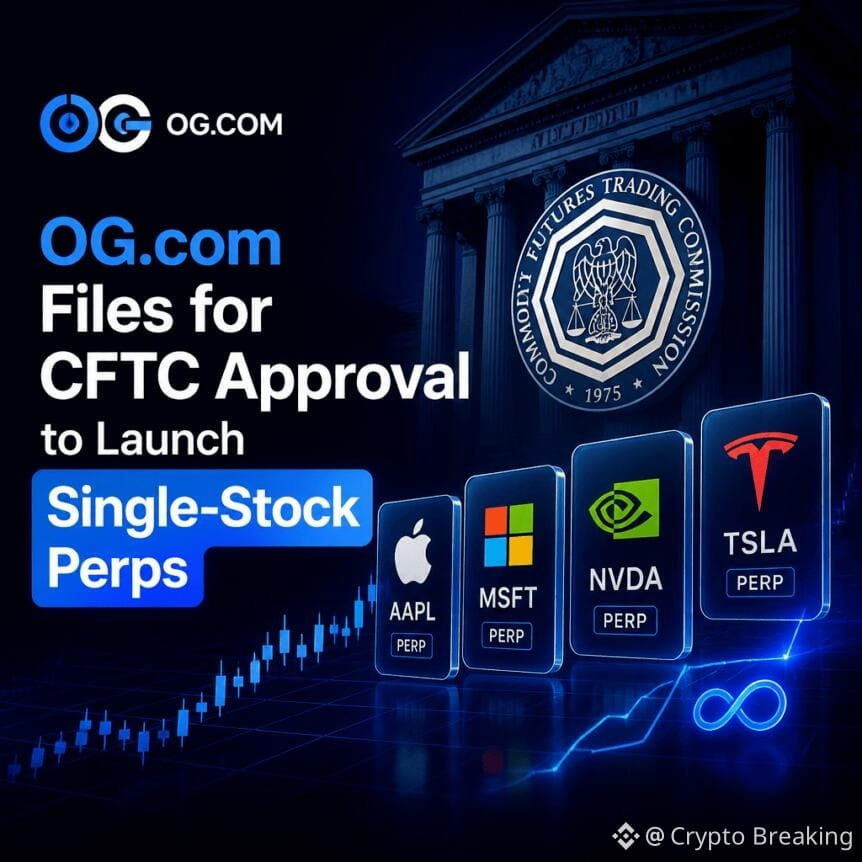
OG.com Files for CFTC Approval to Launch Single-Stock PerpsOG.com Markets has filed with the U.S. Commodity Futures Trading Commission (CFTC) to seek permission to offer cash-settled perpetual futures tied to individual stocks—an attempt to bring “perps” to U.S. equity derivatives.
In a filing submitted Thursday, the company proposed rules for single-stock futures that do not expire and can be traded continuously, 24 hours a day, five days a week. If approved, the structure could give traders an alternative to dated futures contracts by allowing them to maintain exposure without periodically rolling into new contracts.
Key takeaways
OG.com Markets is seeking CFTC approval for cash-settled, perpetual single-stock futures that never expire.
The proposed contracts would run 24/5, aiming to extend around-the-clock derivatives trading to U.S. equities.
OG.com emerged as an independent platform after being spun out of Crypto.com, and it has since drawn attention from established market participants.
The filing arrives amid broader efforts by other U.S. derivatives venues—including Coinbase, Kraken’s Bitnomial, and prediction market operator Kalshi—to pursue similar products.
Regulators have been gradually creating pathways for perpetual-style crypto derivatives, setting the stage for further expansion into traditional markets.
OG.com Markets seeks CFTC rules for stock-linked perps
The core of OG.com Markets’ request is regulatory authority to list cash-settled single-stock futures with perpetual terms. Unlike traditional futures—where contracts have defined expiration dates—perpetual futures are designed to keep positions open across contract cycles without requiring traders to roll into a new instrument.
According to OG.com’s Thursday CFTC filing, the company is asking for permission to trade these instruments on a nearly continuous schedule: 24 hours per day, five days per week. That trading window is aligned with how crypto markets often operate, and it reflects the industry’s push to match derivatives trading to the real-time nature of financial flows.
How OG.com got here: spin-off and partnerships
OG.com was recently spun out of the crypto exchange Crypto.com and re-established as an independent prediction markets and derivatives platform valued at $5 billion, as previously reported by Cointelegraph.
At the time of the spin-off, CEO Kris Marszalek said the platform planned to expand beyond prediction markets into futures and perpetual contracts. Shortly after the restructuring, Cointelegraph also reported that Robinhood took an equity stake in OG.com as part of a multi-year deal. The agreement includes plans to use OG.com’s CFTC-regulated derivatives exchange and clearinghouse for prediction markets.
While the current filing focuses on stock-linked perps, the sequence matters: OG.com is positioning itself as a venue where existing regulatory infrastructure used for derivatives and prediction markets could extend into single-stock futures.
Why perps are attracting equity market attention
OG.com’s application is part of a wider trend: trading platforms and prediction market firms are increasingly exploring whether the perpetual futures model can be adapted to U.S. equities.
In the same general push, Cointelegraph previously reported that on Sept. 18, Coinbase, Kraken’s parent through its Bitnomial exchange, and Kalshi filed applications to offer perpetual futures tied to individual U.S. stocks. The wave of filings underscores that the regulatory pathway is no longer seen as purely speculative by major market players.
At the policy level, the timing came after U.S. congressional efforts to advance the CLARITY Act stalled in the Senate on Sept. 15, according to earlier coverage by Cointelegraph. Still, regulators continued moving on targeted crypto initiatives. Just days after the vote, the SEC cleared limited onchain trading of tokenized U.S. stocks under its Innovation Exemption, while the CFTC expanded regulatory relief for software providers connecting users to regulated derivatives platforms, including those that support perpetual contracts—also previously covered by Cointelegraph.
Taken together, these steps suggest a partial but growing willingness to carve out permission structures for specific use cases, even as broader, comprehensive crypto legislation has not advanced.
CFTC groundwork for perpetual contracts
OG.com’s filing fits into work the CFTC began earlier to clarify how perpetual contracts can be reviewed. According to CFTC press materials referenced by Cointelegraph, the agency established a case-by-case review process for perpetual contracts in May, then approved Kalshi’s Bitcoin perpetual futures product.
In June, the CFTC also issued temporary relief that allowed certain registered exchanges to convert existing crypto futures into contracts without expiration dates. That matters for stock-linked perps because it indicates regulators have already been willing—at least under defined conditions—to treat perpetual structures as something beyond the initial crypto derivatives experimentation cycle.
For investors and traders, the practical question now becomes what changes once equity becomes the underlying asset. Perpetual stock futures would bring the derivative form closer to the mechanics many crypto traders know, but the economic drivers—such as stock-specific market dynamics, hedging costs, and settlement rules—could differ substantially from crypto benchmarks.
What to watch next
OG.com’s CFTC filing is a step toward making perpetual, stock-linked derivatives available in the U.S., but approval is not guaranteed. Market participants should track how the CFTC evaluates perpetual contract mechanics for single stocks—especially around settlement design and the regulatory boundaries between traditional securities markets and crypto-style trading infrastructure.
This article was originally published as OG.com Files for CFTC Approval to Launch Single-Stock Perps on Crypto Breaking News – your trusted source for crypto news, Bitcoin news, and blockchain updates.
OG.com Files for CFTC Approval to Launch Single-Stock Perps
OG.com Markets has filed with the U.S. Commodity Futures Trading Commission (CFTC) to seek permission to offer cash-settled perpetual futures tied to individual stocks—an attempt to bring “perps” to U.S. equity derivatives.
In a filing submitted Thursday, the company proposed rules for single-stock futures that do not expire and can be traded continuously, 24 hours a day, five days a week. If approved, the structure could give traders an alternative to dated futures contracts by allowing them to maintain exposure without periodically rolling into new contracts.
Key takeaways
OG.com Markets is seeking CFTC approval for cash-settled, perpetual single-stock futures that never expire.
The proposed contracts would run 24/5, aiming to extend around-the-clock derivatives trading to U.S. equities.
OG.com emerged as an independent platform after being spun out of Crypto.com, and it has since drawn attention from established market participants.
The filing arrives amid broader efforts by other U.S. derivatives venues—including Coinbase, Kraken’s Bitnomial, and prediction market operator Kalshi—to pursue similar products.
Regulators have been gradually creating pathways for perpetual-style crypto derivatives, setting the stage for further expansion into traditional markets.
OG.com Markets seeks CFTC rules for stock-linked perps
The core of OG.com Markets’ request is regulatory authority to list cash-settled single-stock futures with perpetual terms. Unlike traditional futures—where contracts have defined expiration dates—perpetual futures are designed to keep positions open across contract cycles without requiring traders to roll into a new instrument.
According to OG.com’s Thursday CFTC filing, the company is asking for permission to trade these instruments on a nearly continuous schedule: 24 hours per day, five days per week. That trading window is aligned with how crypto markets often operate, and it reflects the industry’s push to match derivatives trading to the real-time nature of financial flows.
How OG.com got here: spin-off and partnerships
OG.com was recently spun out of the crypto exchange Crypto.com and re-established as an independent prediction markets and derivatives platform valued at $5 billion, as previously reported by Cointelegraph.
At the time of the spin-off, CEO Kris Marszalek said the platform planned to expand beyond prediction markets into futures and perpetual contracts. Shortly after the restructuring, Cointelegraph also reported that Robinhood took an equity stake in OG.com as part of a multi-year deal. The agreement includes plans to use OG.com’s CFTC-regulated derivatives exchange and clearinghouse for prediction markets.
While the current filing focuses on stock-linked perps, the sequence matters: OG.com is positioning itself as a venue where existing regulatory infrastructure used for derivatives and prediction markets could extend into single-stock futures.
Why perps are attracting equity market attention
OG.com’s application is part of a wider trend: trading platforms and prediction market firms are increasingly exploring whether the perpetual futures model can be adapted to U.S. equities.
In the same general push, Cointelegraph previously reported that on Sept. 18, Coinbase, Kraken’s parent through its Bitnomial exchange, and Kalshi filed applications to offer perpetual futures tied to individual U.S. stocks. The wave of filings underscores that the regulatory pathway is no longer seen as purely speculative by major market players.
At the policy level, the timing came after U.S. congressional efforts to advance the CLARITY Act stalled in the Senate on Sept. 15, according to earlier coverage by Cointelegraph. Still, regulators continued moving on targeted crypto initiatives. Just days after the vote, the SEC cleared limited onchain trading of tokenized U.S. stocks under its Innovation Exemption, while the CFTC expanded regulatory relief for software providers connecting users to regulated derivatives platforms, including those that support perpetual contracts—also previously covered by Cointelegraph.
Taken together, these steps suggest a partial but growing willingness to carve out permission structures for specific use cases, even as broader, comprehensive crypto legislation has not advanced.
CFTC groundwork for perpetual contracts
OG.com’s filing fits into work the CFTC began earlier to clarify how perpetual contracts can be reviewed. According to CFTC press materials referenced by Cointelegraph, the agency established a case-by-case review process for perpetual contracts in May, then approved Kalshi’s Bitcoin perpetual futures product.
In June, the CFTC also issued temporary relief that allowed certain registered exchanges to convert existing crypto futures into contracts without expiration dates. That matters for stock-linked perps because it indicates regulators have already been willing—at least under defined conditions—to treat perpetual structures as something beyond the initial crypto derivatives experimentation cycle.
For investors and traders, the practical question now becomes what changes once equity becomes the underlying asset. Perpetual stock futures would bring the derivative form closer to the mechanics many crypto traders know, but the economic drivers—such as stock-specific market dynamics, hedging costs, and settlement rules—could differ substantially from crypto benchmarks.
What to watch next
OG.com’s CFTC filing is a step toward making perpetual, stock-linked derivatives available in the U.S., but approval is not guaranteed. Market participants should track how the CFTC evaluates perpetual contract mechanics for single stocks—especially around settlement design and the regulatory boundaries between traditional securities markets and crypto-style trading infrastructure.
This article was originally published as OG.com Files for CFTC Approval to Launch Single-Stock Perps on Crypto Breaking News – your trusted source for crypto news, Bitcoin news, and blockchain updates.
In a filing submitted Thursday, the company proposed rules for single-stock futures that do not expire and can be traded continuously, 24 hours a day, five days a week. If approved, the structure could give traders an alternative to dated futures contracts by allowing them to maintain exposure without periodically rolling into new contracts.
Key takeaways
OG.com Markets is seeking CFTC approval for cash-settled, perpetual single-stock futures that never expire.
The proposed contracts would run 24/5, aiming to extend around-the-clock derivatives trading to U.S. equities.
OG.com emerged as an independent platform after being spun out of Crypto.com, and it has since drawn attention from established market participants.
The filing arrives amid broader efforts by other U.S. derivatives venues—including Coinbase, Kraken’s Bitnomial, and prediction market operator Kalshi—to pursue similar products.
Regulators have been gradually creating pathways for perpetual-style crypto derivatives, setting the stage for further expansion into traditional markets.
OG.com Markets seeks CFTC rules for stock-linked perps
The core of OG.com Markets’ request is regulatory authority to list cash-settled single-stock futures with perpetual terms. Unlike traditional futures—where contracts have defined expiration dates—perpetual futures are designed to keep positions open across contract cycles without requiring traders to roll into a new instrument.
According to OG.com’s Thursday CFTC filing, the company is asking for permission to trade these instruments on a nearly continuous schedule: 24 hours per day, five days per week. That trading window is aligned with how crypto markets often operate, and it reflects the industry’s push to match derivatives trading to the real-time nature of financial flows.
How OG.com got here: spin-off and partnerships
OG.com was recently spun out of the crypto exchange Crypto.com and re-established as an independent prediction markets and derivatives platform valued at $5 billion, as previously reported by Cointelegraph.
At the time of the spin-off, CEO Kris Marszalek said the platform planned to expand beyond prediction markets into futures and perpetual contracts. Shortly after the restructuring, Cointelegraph also reported that Robinhood took an equity stake in OG.com as part of a multi-year deal. The agreement includes plans to use OG.com’s CFTC-regulated derivatives exchange and clearinghouse for prediction markets.
While the current filing focuses on stock-linked perps, the sequence matters: OG.com is positioning itself as a venue where existing regulatory infrastructure used for derivatives and prediction markets could extend into single-stock futures.
Why perps are attracting equity market attention
OG.com’s application is part of a wider trend: trading platforms and prediction market firms are increasingly exploring whether the perpetual futures model can be adapted to U.S. equities.
In the same general push, Cointelegraph previously reported that on Sept. 18, Coinbase, Kraken’s parent through its Bitnomial exchange, and Kalshi filed applications to offer perpetual futures tied to individual U.S. stocks. The wave of filings underscores that the regulatory pathway is no longer seen as purely speculative by major market players.
At the policy level, the timing came after U.S. congressional efforts to advance the CLARITY Act stalled in the Senate on Sept. 15, according to earlier coverage by Cointelegraph. Still, regulators continued moving on targeted crypto initiatives. Just days after the vote, the SEC cleared limited onchain trading of tokenized U.S. stocks under its Innovation Exemption, while the CFTC expanded regulatory relief for software providers connecting users to regulated derivatives platforms, including those that support perpetual contracts—also previously covered by Cointelegraph.
Taken together, these steps suggest a partial but growing willingness to carve out permission structures for specific use cases, even as broader, comprehensive crypto legislation has not advanced.
CFTC groundwork for perpetual contracts
OG.com’s filing fits into work the CFTC began earlier to clarify how perpetual contracts can be reviewed. According to CFTC press materials referenced by Cointelegraph, the agency established a case-by-case review process for perpetual contracts in May, then approved Kalshi’s Bitcoin perpetual futures product.
In June, the CFTC also issued temporary relief that allowed certain registered exchanges to convert existing crypto futures into contracts without expiration dates. That matters for stock-linked perps because it indicates regulators have already been willing—at least under defined conditions—to treat perpetual structures as something beyond the initial crypto derivatives experimentation cycle.
For investors and traders, the practical question now becomes what changes once equity becomes the underlying asset. Perpetual stock futures would bring the derivative form closer to the mechanics many crypto traders know, but the economic drivers—such as stock-specific market dynamics, hedging costs, and settlement rules—could differ substantially from crypto benchmarks.
What to watch next
OG.com’s CFTC filing is a step toward making perpetual, stock-linked derivatives available in the U.S., but approval is not guaranteed. Market participants should track how the CFTC evaluates perpetual contract mechanics for single stocks—especially around settlement design and the regulatory boundaries between traditional securities markets and crypto-style trading infrastructure.
This article was originally published as OG.com Files for CFTC Approval to Launch Single-Stock Perps on Crypto Breaking News – your trusted source for crypto news, Bitcoin news, and blockchain updates.
81

Article
Ex-CFTC Official Exits Blockchain Association After CLARITY Vote FailsSummer Mersinger, a former U.S. Commodity Futures Trading Commission (CFTC) commissioner, is stepping down as CEO of the Blockchain Association and will leave the advocacy group at the end of the year. The change comes after one of the organization’s top legislative priorities stalled in Congress, underscoring how quickly momentum in Washington can shift for crypto policy groups.
On Friday, the Blockchain Association said Mersinger will step down on Oct. 16, when Kristin Smith—who previously led the organization—returns as interim CEO. Mersinger joined the Blockchain Association in June 2025 after departing the CFTC three years ahead of the scheduled end of her second term as a commissioner.
Key takeaways
The Blockchain Association announced a leadership transition: Summer Mersinger will exit as CEO on Oct. 16, with Kristin Smith returning as interim CEO.
Mersinger’s tenure emphasized stablecoin-focused policy efforts, including the GENIUS Act, and efforts to improve regulatory clarity across the SEC and CFTC.
One major legislative priority—tied to a Senate “clarity” effort for digital assets—failed to advance on a cloture motion, raising the likelihood of delay into later Congresses.
The association did not publicly address what the leadership change could mean for its remaining 2027 policy strategy.
Leadership transition at the Blockchain Association
The Blockchain Association’s announcement sets a clear timeline for the organization’s top leadership. Mersinger will step down as CEO on Oct. 16, aligning with Kristin Smith’s return as interim CEO. The group also indicated that Mersinger will leave the organization by year’s end.
According to Mersinger, her move to the association was driven by a desire for clearer regulatory “rules of the road” and a unified policy voice in Washington. She joined the advocacy group after leaving the CFTC earlier than the completion of her second term, which many observers interpreted as a shift from regulator to policy advocate.
Stablecoins and regulatory clarity remain the headline of her tenure
In explaining Mersinger’s impact, the Blockchain Association pointed to her work advancing the “Guiding and Establishing National Innovation for US Stablecoins” framework—commonly referred to as the GENIUS Act. The organization also credited her with efforts aimed at improving regulatory clarity with both the Securities and Exchange Commission (SEC) and the CFTC.
The emphasis on stablecoin legislation is notable because stablecoin policy has been a recurring flashpoint for U.S. crypto regulation. For advocacy groups, stablecoins are often treated as a practical focal point: they are already widely used for payments, trading, and settlement, while lawmakers continue to debate how existing securities and commodities regimes should apply.
Importantly, the association’s statement did not limit itself to stablecoins alone; it suggested a broader goal of clarifying enforcement and compliance expectations across agencies. That matters to market participants because regulatory uncertainty can translate into higher compliance costs, delayed product launches, and shifting legal risk assessments—especially for firms operating at the boundary between securities-like activity and commodities-like activity.
The setback in Congress changes the political clock
While the Blockchain Association highlighted GENIUS Act progress, it did not mention another Senate effort that had been repeatedly urged by the organization: the Digital Asset Market Clarity Act, which had been under consideration in the Senate.
Previously, the Blockchain Association pushed lawmakers to support the measure, sharing calls for action through its social media channels. However, coverage noted that the bill failed to gain enough votes during a cloture motion earlier this month, according to the original reporting cited by Cointelegraph.
Experts expect that outcome to leave the legislation in limbo until 2027—an extended delay that can be consequential for an advocacy group’s strategy. Legislative priorities that do not clear procedural hurdles often lose momentum as attention moves to other issues or as new political dynamics take over. For stakeholders watching U.S. crypto regulation, it also suggests that near-term certainty may remain difficult to achieve even when industry support for a framework is visible.
The timing is especially relevant for leadership decisions. The association’s communications did not explicitly tie Mersinger’s departure to any single vote outcome, but the context is difficult to ignore: a major policy push appears to have stalled right as she is exiting.
What comes next for the group—and what to watch
The Blockchain Association did not immediately respond to questions about what Mersinger’s plans are beyond her departure, including any strategy for 2027. That leaves open a key question for members and observers: whether the organization will adjust its legislative priorities or shift its messaging focus as the political calendar extends.
With Kristin Smith stepping in as interim CEO, attention will likely turn to how the group reallocates its efforts—particularly whether it keeps pursuing the Senate clarity push or doubles down on alternative paths, such as agency-level rulemaking or narrower frameworks like stablecoins. For crypto industry participants, the leadership handoff may signal continuity in advocacy priorities, but the legislative calendar suggests that tangible progress may still depend on votes and procedural outcomes that can take months to overcome.
Readers should watch for any new statements from the association on its legislative roadmap after the cloture failure, along with signals from congressional leadership on whether any crypto-related bills can move without being trapped in extended procedural delays.
This article was originally published as Ex-CFTC Official Exits Blockchain Association After CLARITY Vote Fails on Crypto Breaking News – your trusted source for crypto news, Bitcoin news, and blockchain updates.
Ex-CFTC Official Exits Blockchain Association After CLARITY Vote Fails
Summer Mersinger, a former U.S. Commodity Futures Trading Commission (CFTC) commissioner, is stepping down as CEO of the Blockchain Association and will leave the advocacy group at the end of the year. The change comes after one of the organization’s top legislative priorities stalled in Congress, underscoring how quickly momentum in Washington can shift for crypto policy groups.
On Friday, the Blockchain Association said Mersinger will step down on Oct. 16, when Kristin Smith—who previously led the organization—returns as interim CEO. Mersinger joined the Blockchain Association in June 2025 after departing the CFTC three years ahead of the scheduled end of her second term as a commissioner.
Key takeaways
The Blockchain Association announced a leadership transition: Summer Mersinger will exit as CEO on Oct. 16, with Kristin Smith returning as interim CEO.
Mersinger’s tenure emphasized stablecoin-focused policy efforts, including the GENIUS Act, and efforts to improve regulatory clarity across the SEC and CFTC.
One major legislative priority—tied to a Senate “clarity” effort for digital assets—failed to advance on a cloture motion, raising the likelihood of delay into later Congresses.
The association did not publicly address what the leadership change could mean for its remaining 2027 policy strategy.
Leadership transition at the Blockchain Association
The Blockchain Association’s announcement sets a clear timeline for the organization’s top leadership. Mersinger will step down as CEO on Oct. 16, aligning with Kristin Smith’s return as interim CEO. The group also indicated that Mersinger will leave the organization by year’s end.
According to Mersinger, her move to the association was driven by a desire for clearer regulatory “rules of the road” and a unified policy voice in Washington. She joined the advocacy group after leaving the CFTC earlier than the completion of her second term, which many observers interpreted as a shift from regulator to policy advocate.
Stablecoins and regulatory clarity remain the headline of her tenure
In explaining Mersinger’s impact, the Blockchain Association pointed to her work advancing the “Guiding and Establishing National Innovation for US Stablecoins” framework—commonly referred to as the GENIUS Act. The organization also credited her with efforts aimed at improving regulatory clarity with both the Securities and Exchange Commission (SEC) and the CFTC.
The emphasis on stablecoin legislation is notable because stablecoin policy has been a recurring flashpoint for U.S. crypto regulation. For advocacy groups, stablecoins are often treated as a practical focal point: they are already widely used for payments, trading, and settlement, while lawmakers continue to debate how existing securities and commodities regimes should apply.
Importantly, the association’s statement did not limit itself to stablecoins alone; it suggested a broader goal of clarifying enforcement and compliance expectations across agencies. That matters to market participants because regulatory uncertainty can translate into higher compliance costs, delayed product launches, and shifting legal risk assessments—especially for firms operating at the boundary between securities-like activity and commodities-like activity.
The setback in Congress changes the political clock
While the Blockchain Association highlighted GENIUS Act progress, it did not mention another Senate effort that had been repeatedly urged by the organization: the Digital Asset Market Clarity Act, which had been under consideration in the Senate.
Previously, the Blockchain Association pushed lawmakers to support the measure, sharing calls for action through its social media channels. However, coverage noted that the bill failed to gain enough votes during a cloture motion earlier this month, according to the original reporting cited by Cointelegraph.
Experts expect that outcome to leave the legislation in limbo until 2027—an extended delay that can be consequential for an advocacy group’s strategy. Legislative priorities that do not clear procedural hurdles often lose momentum as attention moves to other issues or as new political dynamics take over. For stakeholders watching U.S. crypto regulation, it also suggests that near-term certainty may remain difficult to achieve even when industry support for a framework is visible.
The timing is especially relevant for leadership decisions. The association’s communications did not explicitly tie Mersinger’s departure to any single vote outcome, but the context is difficult to ignore: a major policy push appears to have stalled right as she is exiting.
What comes next for the group—and what to watch
The Blockchain Association did not immediately respond to questions about what Mersinger’s plans are beyond her departure, including any strategy for 2027. That leaves open a key question for members and observers: whether the organization will adjust its legislative priorities or shift its messaging focus as the political calendar extends.
With Kristin Smith stepping in as interim CEO, attention will likely turn to how the group reallocates its efforts—particularly whether it keeps pursuing the Senate clarity push or doubles down on alternative paths, such as agency-level rulemaking or narrower frameworks like stablecoins. For crypto industry participants, the leadership handoff may signal continuity in advocacy priorities, but the legislative calendar suggests that tangible progress may still depend on votes and procedural outcomes that can take months to overcome.
Readers should watch for any new statements from the association on its legislative roadmap after the cloture failure, along with signals from congressional leadership on whether any crypto-related bills can move without being trapped in extended procedural delays.
This article was originally published as Ex-CFTC Official Exits Blockchain Association After CLARITY Vote Fails on Crypto Breaking News – your trusted source for crypto news, Bitcoin news, and blockchain updates.
On Friday, the Blockchain Association said Mersinger will step down on Oct. 16, when Kristin Smith—who previously led the organization—returns as interim CEO. Mersinger joined the Blockchain Association in June 2025 after departing the CFTC three years ahead of the scheduled end of her second term as a commissioner.
Key takeaways
The Blockchain Association announced a leadership transition: Summer Mersinger will exit as CEO on Oct. 16, with Kristin Smith returning as interim CEO.
Mersinger’s tenure emphasized stablecoin-focused policy efforts, including the GENIUS Act, and efforts to improve regulatory clarity across the SEC and CFTC.
One major legislative priority—tied to a Senate “clarity” effort for digital assets—failed to advance on a cloture motion, raising the likelihood of delay into later Congresses.
The association did not publicly address what the leadership change could mean for its remaining 2027 policy strategy.
Leadership transition at the Blockchain Association
The Blockchain Association’s announcement sets a clear timeline for the organization’s top leadership. Mersinger will step down as CEO on Oct. 16, aligning with Kristin Smith’s return as interim CEO. The group also indicated that Mersinger will leave the organization by year’s end.
According to Mersinger, her move to the association was driven by a desire for clearer regulatory “rules of the road” and a unified policy voice in Washington. She joined the advocacy group after leaving the CFTC earlier than the completion of her second term, which many observers interpreted as a shift from regulator to policy advocate.
Stablecoins and regulatory clarity remain the headline of her tenure
In explaining Mersinger’s impact, the Blockchain Association pointed to her work advancing the “Guiding and Establishing National Innovation for US Stablecoins” framework—commonly referred to as the GENIUS Act. The organization also credited her with efforts aimed at improving regulatory clarity with both the Securities and Exchange Commission (SEC) and the CFTC.
The emphasis on stablecoin legislation is notable because stablecoin policy has been a recurring flashpoint for U.S. crypto regulation. For advocacy groups, stablecoins are often treated as a practical focal point: they are already widely used for payments, trading, and settlement, while lawmakers continue to debate how existing securities and commodities regimes should apply.
Importantly, the association’s statement did not limit itself to stablecoins alone; it suggested a broader goal of clarifying enforcement and compliance expectations across agencies. That matters to market participants because regulatory uncertainty can translate into higher compliance costs, delayed product launches, and shifting legal risk assessments—especially for firms operating at the boundary between securities-like activity and commodities-like activity.
The setback in Congress changes the political clock
While the Blockchain Association highlighted GENIUS Act progress, it did not mention another Senate effort that had been repeatedly urged by the organization: the Digital Asset Market Clarity Act, which had been under consideration in the Senate.
Previously, the Blockchain Association pushed lawmakers to support the measure, sharing calls for action through its social media channels. However, coverage noted that the bill failed to gain enough votes during a cloture motion earlier this month, according to the original reporting cited by Cointelegraph.
Experts expect that outcome to leave the legislation in limbo until 2027—an extended delay that can be consequential for an advocacy group’s strategy. Legislative priorities that do not clear procedural hurdles often lose momentum as attention moves to other issues or as new political dynamics take over. For stakeholders watching U.S. crypto regulation, it also suggests that near-term certainty may remain difficult to achieve even when industry support for a framework is visible.
The timing is especially relevant for leadership decisions. The association’s communications did not explicitly tie Mersinger’s departure to any single vote outcome, but the context is difficult to ignore: a major policy push appears to have stalled right as she is exiting.
What comes next for the group—and what to watch
The Blockchain Association did not immediately respond to questions about what Mersinger’s plans are beyond her departure, including any strategy for 2027. That leaves open a key question for members and observers: whether the organization will adjust its legislative priorities or shift its messaging focus as the political calendar extends.
With Kristin Smith stepping in as interim CEO, attention will likely turn to how the group reallocates its efforts—particularly whether it keeps pursuing the Senate clarity push or doubles down on alternative paths, such as agency-level rulemaking or narrower frameworks like stablecoins. For crypto industry participants, the leadership handoff may signal continuity in advocacy priorities, but the legislative calendar suggests that tangible progress may still depend on votes and procedural outcomes that can take months to overcome.
Readers should watch for any new statements from the association on its legislative roadmap after the cloture failure, along with signals from congressional leadership on whether any crypto-related bills can move without being trapped in extended procedural delays.
This article was originally published as Ex-CFTC Official Exits Blockchain Association After CLARITY Vote Fails on Crypto Breaking News – your trusted source for crypto news, Bitcoin news, and blockchain updates.
26

Article
OG.com Pursues CFTC Approval to Launch Single-Stock Perpetual FuturesOG.com Markets has submitted a filing to the U.S. Commodity Futures Trading Commission (CFTC) seeking approval to launch cash-settled perpetual futures linked to individual stocks—an effort to bring a product format widely used in crypto derivatives into traditional equity markets.
According to the CFTC filing released Thursday, the proposed rules would cover single-stock futures that do not expire (“perpetuals”), trade around the clock, and are designed to offer continuous exposure without requiring traders to roll positions into new contract months.
Key takeaways
OG.com Markets is pursuing CFTC approval for perpetual futures tied to specific U.S. equities.
The product is described as cash-settled and perpetual, with continuous trading for five days a week.
Regulatory momentum comes as other major crypto trading and prediction-market players also seek permission to offer similar stock-linked perps.
The CFTC has been building a framework for perpetual contracts through approvals and temporary relief tied to specific arrangements.
OG.com’s CFTC filing outlines stock-linked “perps”
In a Thursday filing with the CFTC, OG.com Markets outlined a proposed rule set intended to enable the listing of cash-settled single-stock futures that never expire. The proposal also calls for trading to operate 24 hours a day, five days a week.
Perpetual futures differ from traditional futures by removing the need for contract expiration. For traders, that structure can reduce the operational friction of rolling between dated contracts, while for markets it can support more continuous liquidity and positioning.
The concept is not new in crypto. Perpetual contracts were pioneered in digital-asset derivatives, with BitMEX introducing an early version of the model in 2016—helping make “perps” one of the most actively traded derivatives formats in the sector.
How OG.com ties into the wider prediction-markets and derivatives shift
OG.com Markets recently emerged as an independent prediction markets and derivatives platform after being spun out from crypto exchange Crypto.com. At the time of the separation, OG.com was described as being valued at $5 billion, and CEO Kris Marszalek said the company planned to expand beyond prediction markets into futures and perpetual contracts.
Shortly after the spin-off, Robinhood acquired an equity stake in OG.com as part of a multi-year agreement. The deal includes the use of OG.com’s CFTC-regulated derivatives exchange and clearinghouse for prediction markets. That backdrop matters because it places OG.com’s U.S. equity-derivatives ambitions directly within a set of business relationships already aligned with regulated derivatives infrastructure.
Importantly, while OG.com is now aiming at stock-linked perpetual futures, its current positioning originates in prediction markets—where the mechanics of cash settlement and continuous trading can be attractive to participants who want to express views over time without physical delivery.
Not alone: Coinbase, Kraken’s parent, and Kalshi have also filed
OG.com’s move fits into a growing cluster of filings from platforms attempting to introduce perpetual futures tied to individual U.S. stocks. Earlier coverage noted that Coinbase, Kraken parent Payward through its Bitnomial exchange, and prediction market platform Kalshi all filed to offer similar stock-linked perpetual futures.
The timing also reflects a regulatory environment that has been more permissive toward certain crypto-adjacent activities than some market participants expected. The shift gained attention after U.S. Senate action failed to advance the proposed CLARITY Act on Sept. 15—yet regulators continued moving forward on crypto initiatives through other channels.
In particular, after the Senate vote, the SEC cleared limited onchain trading of tokenized U.S. stocks under its Innovation Exemption, and the CFTC expanded regulatory relief for software providers that connect users to regulated derivatives platforms, including those offering perpetual contracts.
The CFTC’s groundwork for perpetual contracts
The CFTC’s approach to perpetual futures has not been confined to one company or one application. The agency previously began laying out a path for perpetual contracts through a combination of case-by-case review and targeted relief.
In May, the CFTC established a case-by-case review process for perpetual contracts and approved Kalshi’s Bitcoin perpetual futures product. It then followed in June with temporary relief allowing certain registered exchanges to convert existing crypto futures into contracts without expiration dates.
That incremental regulatory scaffolding helps explain why the market is converging on perpetual structures now. Even without a single comprehensive rule that automatically covers every new product variation, firms can structure applications around how the CFTC has already evaluated perpetual contracts—making the approval process feel more navigable than it might have been in earlier years.
For investors and traders, the key question is how quickly the CFTC can translate precedent from crypto perpetuals and targeted relief into approvals for cash-settled, stock-linked perps. Watch for updates on the OG.com rulemaking process and whether regulators request changes to trading mechanics, settlement terms, or operational guardrails as these filings move through review.
This article was originally published as OG.com Pursues CFTC Approval to Launch Single-Stock Perpetual Futures on Crypto Breaking News – your trusted source for crypto news, Bitcoin news, and blockchain updates.
OG.com Pursues CFTC Approval to Launch Single-Stock Perpetual Futures
OG.com Markets has submitted a filing to the U.S. Commodity Futures Trading Commission (CFTC) seeking approval to launch cash-settled perpetual futures linked to individual stocks—an effort to bring a product format widely used in crypto derivatives into traditional equity markets.
According to the CFTC filing released Thursday, the proposed rules would cover single-stock futures that do not expire (“perpetuals”), trade around the clock, and are designed to offer continuous exposure without requiring traders to roll positions into new contract months.
Key takeaways
OG.com Markets is pursuing CFTC approval for perpetual futures tied to specific U.S. equities.
The product is described as cash-settled and perpetual, with continuous trading for five days a week.
Regulatory momentum comes as other major crypto trading and prediction-market players also seek permission to offer similar stock-linked perps.
The CFTC has been building a framework for perpetual contracts through approvals and temporary relief tied to specific arrangements.
OG.com’s CFTC filing outlines stock-linked “perps”
In a Thursday filing with the CFTC, OG.com Markets outlined a proposed rule set intended to enable the listing of cash-settled single-stock futures that never expire. The proposal also calls for trading to operate 24 hours a day, five days a week.
Perpetual futures differ from traditional futures by removing the need for contract expiration. For traders, that structure can reduce the operational friction of rolling between dated contracts, while for markets it can support more continuous liquidity and positioning.
The concept is not new in crypto. Perpetual contracts were pioneered in digital-asset derivatives, with BitMEX introducing an early version of the model in 2016—helping make “perps” one of the most actively traded derivatives formats in the sector.
How OG.com ties into the wider prediction-markets and derivatives shift
OG.com Markets recently emerged as an independent prediction markets and derivatives platform after being spun out from crypto exchange Crypto.com. At the time of the separation, OG.com was described as being valued at $5 billion, and CEO Kris Marszalek said the company planned to expand beyond prediction markets into futures and perpetual contracts.
Shortly after the spin-off, Robinhood acquired an equity stake in OG.com as part of a multi-year agreement. The deal includes the use of OG.com’s CFTC-regulated derivatives exchange and clearinghouse for prediction markets. That backdrop matters because it places OG.com’s U.S. equity-derivatives ambitions directly within a set of business relationships already aligned with regulated derivatives infrastructure.
Importantly, while OG.com is now aiming at stock-linked perpetual futures, its current positioning originates in prediction markets—where the mechanics of cash settlement and continuous trading can be attractive to participants who want to express views over time without physical delivery.
Not alone: Coinbase, Kraken’s parent, and Kalshi have also filed
OG.com’s move fits into a growing cluster of filings from platforms attempting to introduce perpetual futures tied to individual U.S. stocks. Earlier coverage noted that Coinbase, Kraken parent Payward through its Bitnomial exchange, and prediction market platform Kalshi all filed to offer similar stock-linked perpetual futures.
The timing also reflects a regulatory environment that has been more permissive toward certain crypto-adjacent activities than some market participants expected. The shift gained attention after U.S. Senate action failed to advance the proposed CLARITY Act on Sept. 15—yet regulators continued moving forward on crypto initiatives through other channels.
In particular, after the Senate vote, the SEC cleared limited onchain trading of tokenized U.S. stocks under its Innovation Exemption, and the CFTC expanded regulatory relief for software providers that connect users to regulated derivatives platforms, including those offering perpetual contracts.
The CFTC’s groundwork for perpetual contracts
The CFTC’s approach to perpetual futures has not been confined to one company or one application. The agency previously began laying out a path for perpetual contracts through a combination of case-by-case review and targeted relief.
In May, the CFTC established a case-by-case review process for perpetual contracts and approved Kalshi’s Bitcoin perpetual futures product. It then followed in June with temporary relief allowing certain registered exchanges to convert existing crypto futures into contracts without expiration dates.
That incremental regulatory scaffolding helps explain why the market is converging on perpetual structures now. Even without a single comprehensive rule that automatically covers every new product variation, firms can structure applications around how the CFTC has already evaluated perpetual contracts—making the approval process feel more navigable than it might have been in earlier years.
For investors and traders, the key question is how quickly the CFTC can translate precedent from crypto perpetuals and targeted relief into approvals for cash-settled, stock-linked perps. Watch for updates on the OG.com rulemaking process and whether regulators request changes to trading mechanics, settlement terms, or operational guardrails as these filings move through review.
This article was originally published as OG.com Pursues CFTC Approval to Launch Single-Stock Perpetual Futures on Crypto Breaking News – your trusted source for crypto news, Bitcoin news, and blockchain updates.
According to the CFTC filing released Thursday, the proposed rules would cover single-stock futures that do not expire (“perpetuals”), trade around the clock, and are designed to offer continuous exposure without requiring traders to roll positions into new contract months.
Key takeaways
OG.com Markets is pursuing CFTC approval for perpetual futures tied to specific U.S. equities.
The product is described as cash-settled and perpetual, with continuous trading for five days a week.
Regulatory momentum comes as other major crypto trading and prediction-market players also seek permission to offer similar stock-linked perps.
The CFTC has been building a framework for perpetual contracts through approvals and temporary relief tied to specific arrangements.
OG.com’s CFTC filing outlines stock-linked “perps”
In a Thursday filing with the CFTC, OG.com Markets outlined a proposed rule set intended to enable the listing of cash-settled single-stock futures that never expire. The proposal also calls for trading to operate 24 hours a day, five days a week.
Perpetual futures differ from traditional futures by removing the need for contract expiration. For traders, that structure can reduce the operational friction of rolling between dated contracts, while for markets it can support more continuous liquidity and positioning.
The concept is not new in crypto. Perpetual contracts were pioneered in digital-asset derivatives, with BitMEX introducing an early version of the model in 2016—helping make “perps” one of the most actively traded derivatives formats in the sector.
How OG.com ties into the wider prediction-markets and derivatives shift
OG.com Markets recently emerged as an independent prediction markets and derivatives platform after being spun out from crypto exchange Crypto.com. At the time of the separation, OG.com was described as being valued at $5 billion, and CEO Kris Marszalek said the company planned to expand beyond prediction markets into futures and perpetual contracts.
Shortly after the spin-off, Robinhood acquired an equity stake in OG.com as part of a multi-year agreement. The deal includes the use of OG.com’s CFTC-regulated derivatives exchange and clearinghouse for prediction markets. That backdrop matters because it places OG.com’s U.S. equity-derivatives ambitions directly within a set of business relationships already aligned with regulated derivatives infrastructure.
Importantly, while OG.com is now aiming at stock-linked perpetual futures, its current positioning originates in prediction markets—where the mechanics of cash settlement and continuous trading can be attractive to participants who want to express views over time without physical delivery.
Not alone: Coinbase, Kraken’s parent, and Kalshi have also filed
OG.com’s move fits into a growing cluster of filings from platforms attempting to introduce perpetual futures tied to individual U.S. stocks. Earlier coverage noted that Coinbase, Kraken parent Payward through its Bitnomial exchange, and prediction market platform Kalshi all filed to offer similar stock-linked perpetual futures.
The timing also reflects a regulatory environment that has been more permissive toward certain crypto-adjacent activities than some market participants expected. The shift gained attention after U.S. Senate action failed to advance the proposed CLARITY Act on Sept. 15—yet regulators continued moving forward on crypto initiatives through other channels.
In particular, after the Senate vote, the SEC cleared limited onchain trading of tokenized U.S. stocks under its Innovation Exemption, and the CFTC expanded regulatory relief for software providers that connect users to regulated derivatives platforms, including those offering perpetual contracts.
The CFTC’s groundwork for perpetual contracts
The CFTC’s approach to perpetual futures has not been confined to one company or one application. The agency previously began laying out a path for perpetual contracts through a combination of case-by-case review and targeted relief.
In May, the CFTC established a case-by-case review process for perpetual contracts and approved Kalshi’s Bitcoin perpetual futures product. It then followed in June with temporary relief allowing certain registered exchanges to convert existing crypto futures into contracts without expiration dates.
That incremental regulatory scaffolding helps explain why the market is converging on perpetual structures now. Even without a single comprehensive rule that automatically covers every new product variation, firms can structure applications around how the CFTC has already evaluated perpetual contracts—making the approval process feel more navigable than it might have been in earlier years.
For investors and traders, the key question is how quickly the CFTC can translate precedent from crypto perpetuals and targeted relief into approvals for cash-settled, stock-linked perps. Watch for updates on the OG.com rulemaking process and whether regulators request changes to trading mechanics, settlement terms, or operational guardrails as these filings move through review.
This article was originally published as OG.com Pursues CFTC Approval to Launch Single-Stock Perpetual Futures on Crypto Breaking News – your trusted source for crypto news, Bitcoin news, and blockchain updates.
41
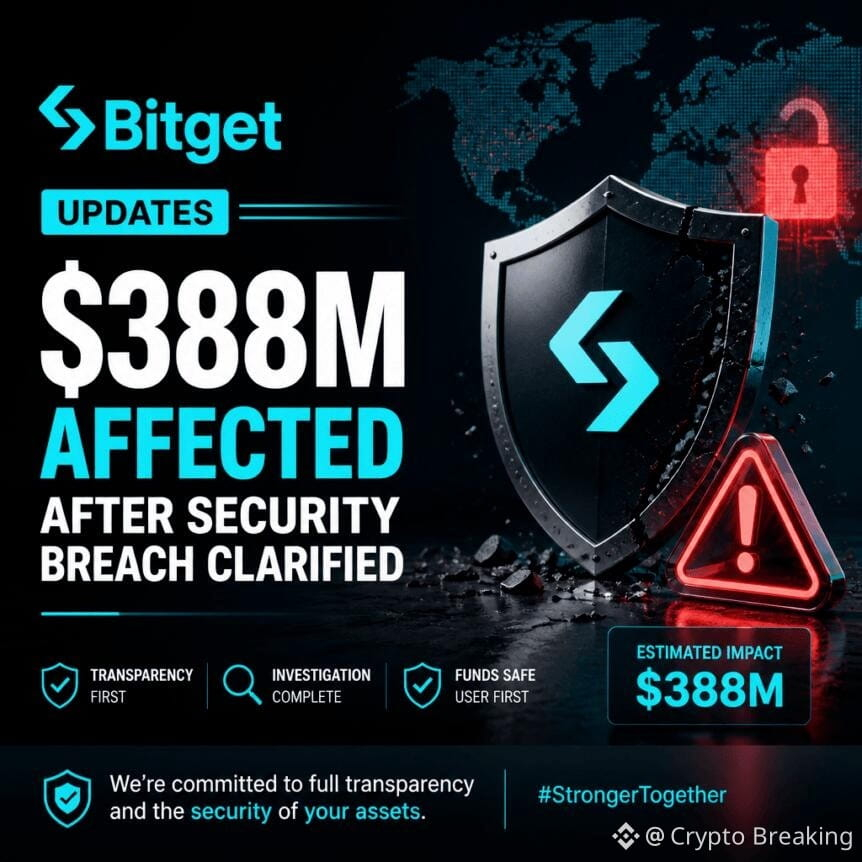
Article
Bitget Updates: $388M Affected After Security Breach ClarifiedBitget has revised the scale of its security breach after initially reporting a smaller figure for the amount of crypto impacted. In an updated incident report, the exchange said roughly $388 million in assets were affected—higher than Thursday’s estimate of $352 million.
In a follow-up update on Friday, Bitget also confirmed it would continue pausing withdrawals while it investigates, and it introduced a bounty program designed to encourage the freezing or recovery of stolen funds. The exchange attributed the upward revision to a more complete accounting of transfers during the incident, including assets on networks not captured in the first report.
Key takeaways
Bitget revised the breach impact to about $388 million, up from the previously reported $352 million.
About $387.5 million was traced to attacker-controlled addresses, based on onchain monitoring—around $35 million more than previously disclosed.
Withdrawals remain paused, while the exchange says the incident is contained and no further unauthorized transfers are possible.
Bitget says the change reflects fuller accounting, including additional affected assets on Zcash and TRON that were missing from the initial estimate.
The breach involved multiple networks, including EVM chains, the XRP Ledger, Zcash, and TRON, with multiple asset types listed.
Recalculated losses: what changed in Bitget’s numbers
Bitget’s revised incident report clarifies that the affected amount was understated in the first estimate. According to the exchange, its revised figures reflect a more complete accounting of transfers that occurred during the breach—specifically by adding affected assets on Zcash and TRON that were not included in the initial calculation.
Bitget emphasized that the update does not indicate additional theft beyond what was already captured during the incident window. The company stated that the incident remains contained and that no further unauthorized transfers are possible.
In practical terms for users and market participants, the revision matters because it changes how investors assess the severity of the event and the scope of remediation Bitget must carry out—particularly for assets moved to addresses controlled by the attackers.
Where the funds went: tracing to attacker-controlled addresses
Alongside the updated total, Bitget reported that $387.5 million were transferred to attacker-controlled addresses according to onchain tracing. That figure is about $35 million higher than what was reported on Thursday.
The exchange framed the difference as an accounting refinement rather than an expansion of the breach’s duration or a new wave of withdrawals being stolen. Bitget said the updated estimate includes additional transfers involving assets on Zcash and TRON, helping align its reported figures with a more comprehensive view of movement across affected chains.
For traders and users, the most important operational takeaway is that Bitget’s control measures continue—withdrawals are still paused—while the company focuses on identifying and potentially freezing or recovering funds connected to the hack.
Networks and assets named in the incident update
Bitget said the incident involved addresses spanning multiple ecosystems, including Ethereum Virtual Machine (EVM) networks, the XRP Ledger, Zcash, and TRON. The exchange listed a range of assets that were stolen, including:
XRP
Ether (ETH)
USDT (including Tether’s USDt)
Zcash (ZEC)
USDC
USDT0
XAUt
BNB
AVAX
TRX
The follow-up report, however, did not directly address comments made by Bitget CEO Gracy Chen on Thursday. Earlier coverage from Cointelegraph noted her speculation that a North Korean hacking group may have been behind the attack, citing what she described as IP-related clues.
With the company now focusing on the revised scope of funds moved and its response plan, the attribution question remains separate from the immediate need to secure withdrawals and work through the largest cross-chain theft figure Bitget says it identified.
What the bounty program signals for recovery efforts
Bitget’s Friday update included a decision to keep withdrawals paused and to launch a bounty program. While the details of how participants can qualify are not included in the article text provided, the stated purpose is clear: to encourage freezing or recovery of stolen assets.
In previous breach cases across crypto exchanges and custodial services, incentives aimed at accelerating fund discovery and coordination have become a common response pattern—particularly when assets are already moved across multiple networks. By tying the recovery push to a bounty, Bitget appears to be attempting to widen the net beyond internal controls and forensic analysis.
At the same time, the exchange’s insistence that “no further unauthorized transfers are possible” suggests it believes attackers’ ability to continue moving funds has been interrupted—though users will ultimately want confirmation as withdrawals resume and balances are reconciled.
A major industry incident, compared with other recent hacks
Even with the updated accounting, Bitget’s breach remains among the largest security incidents to hit the crypto industry. The incident is now described as causing about $388 million in affected assets, placing it in the same category of major exchange events that have shaken user confidence and forced rapid operational changes.
The article also notes a recent benchmark from earlier in the industry cycle: hackers stole about $1.5 billion worth of Ether from Bybit in February 2025. That comparison underscores how, despite improvements in security practices over time, large-scale thefts can still occur—and that recovery efforts often extend beyond the initial incident window.
For Bitget customers, the next phase will likely center on how quickly the platform can finalize asset reconciliation, whether withdrawal pauses can be lifted in stages, and how the bounty program contributes to recovering—or at least mitigating—the portion of funds that ended up in attacker-controlled addresses.
As Bitget continues its review, investors and users should watch for updates on withdrawal timelines and any additional operational details around the bounty program’s implementation, alongside evidence that the exchange’s claims of containment hold up as funds are fully traced and accounted for.
This article was originally published as Bitget Updates: $388M Affected After Security Breach Clarified on Crypto Breaking News – your trusted source for crypto news, Bitcoin news, and blockchain updates.
Bitget Updates: $388M Affected After Security Breach Clarified
Bitget has revised the scale of its security breach after initially reporting a smaller figure for the amount of crypto impacted. In an updated incident report, the exchange said roughly $388 million in assets were affected—higher than Thursday’s estimate of $352 million.
In a follow-up update on Friday, Bitget also confirmed it would continue pausing withdrawals while it investigates, and it introduced a bounty program designed to encourage the freezing or recovery of stolen funds. The exchange attributed the upward revision to a more complete accounting of transfers during the incident, including assets on networks not captured in the first report.
Key takeaways
Bitget revised the breach impact to about $388 million, up from the previously reported $352 million.
About $387.5 million was traced to attacker-controlled addresses, based on onchain monitoring—around $35 million more than previously disclosed.
Withdrawals remain paused, while the exchange says the incident is contained and no further unauthorized transfers are possible.
Bitget says the change reflects fuller accounting, including additional affected assets on Zcash and TRON that were missing from the initial estimate.
The breach involved multiple networks, including EVM chains, the XRP Ledger, Zcash, and TRON, with multiple asset types listed.
Recalculated losses: what changed in Bitget’s numbers
Bitget’s revised incident report clarifies that the affected amount was understated in the first estimate. According to the exchange, its revised figures reflect a more complete accounting of transfers that occurred during the breach—specifically by adding affected assets on Zcash and TRON that were not included in the initial calculation.
Bitget emphasized that the update does not indicate additional theft beyond what was already captured during the incident window. The company stated that the incident remains contained and that no further unauthorized transfers are possible.
In practical terms for users and market participants, the revision matters because it changes how investors assess the severity of the event and the scope of remediation Bitget must carry out—particularly for assets moved to addresses controlled by the attackers.
Where the funds went: tracing to attacker-controlled addresses
Alongside the updated total, Bitget reported that $387.5 million were transferred to attacker-controlled addresses according to onchain tracing. That figure is about $35 million higher than what was reported on Thursday.
The exchange framed the difference as an accounting refinement rather than an expansion of the breach’s duration or a new wave of withdrawals being stolen. Bitget said the updated estimate includes additional transfers involving assets on Zcash and TRON, helping align its reported figures with a more comprehensive view of movement across affected chains.
For traders and users, the most important operational takeaway is that Bitget’s control measures continue—withdrawals are still paused—while the company focuses on identifying and potentially freezing or recovering funds connected to the hack.
Networks and assets named in the incident update
Bitget said the incident involved addresses spanning multiple ecosystems, including Ethereum Virtual Machine (EVM) networks, the XRP Ledger, Zcash, and TRON. The exchange listed a range of assets that were stolen, including:
XRP
Ether (ETH)
USDT (including Tether’s USDt)
Zcash (ZEC)
USDC
USDT0
XAUt
BNB
AVAX
TRX
The follow-up report, however, did not directly address comments made by Bitget CEO Gracy Chen on Thursday. Earlier coverage from Cointelegraph noted her speculation that a North Korean hacking group may have been behind the attack, citing what she described as IP-related clues.
With the company now focusing on the revised scope of funds moved and its response plan, the attribution question remains separate from the immediate need to secure withdrawals and work through the largest cross-chain theft figure Bitget says it identified.
What the bounty program signals for recovery efforts
Bitget’s Friday update included a decision to keep withdrawals paused and to launch a bounty program. While the details of how participants can qualify are not included in the article text provided, the stated purpose is clear: to encourage freezing or recovery of stolen assets.
In previous breach cases across crypto exchanges and custodial services, incentives aimed at accelerating fund discovery and coordination have become a common response pattern—particularly when assets are already moved across multiple networks. By tying the recovery push to a bounty, Bitget appears to be attempting to widen the net beyond internal controls and forensic analysis.
At the same time, the exchange’s insistence that “no further unauthorized transfers are possible” suggests it believes attackers’ ability to continue moving funds has been interrupted—though users will ultimately want confirmation as withdrawals resume and balances are reconciled.
A major industry incident, compared with other recent hacks
Even with the updated accounting, Bitget’s breach remains among the largest security incidents to hit the crypto industry. The incident is now described as causing about $388 million in affected assets, placing it in the same category of major exchange events that have shaken user confidence and forced rapid operational changes.
The article also notes a recent benchmark from earlier in the industry cycle: hackers stole about $1.5 billion worth of Ether from Bybit in February 2025. That comparison underscores how, despite improvements in security practices over time, large-scale thefts can still occur—and that recovery efforts often extend beyond the initial incident window.
For Bitget customers, the next phase will likely center on how quickly the platform can finalize asset reconciliation, whether withdrawal pauses can be lifted in stages, and how the bounty program contributes to recovering—or at least mitigating—the portion of funds that ended up in attacker-controlled addresses.
As Bitget continues its review, investors and users should watch for updates on withdrawal timelines and any additional operational details around the bounty program’s implementation, alongside evidence that the exchange’s claims of containment hold up as funds are fully traced and accounted for.
This article was originally published as Bitget Updates: $388M Affected After Security Breach Clarified on Crypto Breaking News – your trusted source for crypto news, Bitcoin news, and blockchain updates.
In a follow-up update on Friday, Bitget also confirmed it would continue pausing withdrawals while it investigates, and it introduced a bounty program designed to encourage the freezing or recovery of stolen funds. The exchange attributed the upward revision to a more complete accounting of transfers during the incident, including assets on networks not captured in the first report.
Key takeaways
Bitget revised the breach impact to about $388 million, up from the previously reported $352 million.
About $387.5 million was traced to attacker-controlled addresses, based on onchain monitoring—around $35 million more than previously disclosed.
Withdrawals remain paused, while the exchange says the incident is contained and no further unauthorized transfers are possible.
Bitget says the change reflects fuller accounting, including additional affected assets on Zcash and TRON that were missing from the initial estimate.
The breach involved multiple networks, including EVM chains, the XRP Ledger, Zcash, and TRON, with multiple asset types listed.
Recalculated losses: what changed in Bitget’s numbers
Bitget’s revised incident report clarifies that the affected amount was understated in the first estimate. According to the exchange, its revised figures reflect a more complete accounting of transfers that occurred during the breach—specifically by adding affected assets on Zcash and TRON that were not included in the initial calculation.
Bitget emphasized that the update does not indicate additional theft beyond what was already captured during the incident window. The company stated that the incident remains contained and that no further unauthorized transfers are possible.
In practical terms for users and market participants, the revision matters because it changes how investors assess the severity of the event and the scope of remediation Bitget must carry out—particularly for assets moved to addresses controlled by the attackers.
Where the funds went: tracing to attacker-controlled addresses
Alongside the updated total, Bitget reported that $387.5 million were transferred to attacker-controlled addresses according to onchain tracing. That figure is about $35 million higher than what was reported on Thursday.
The exchange framed the difference as an accounting refinement rather than an expansion of the breach’s duration or a new wave of withdrawals being stolen. Bitget said the updated estimate includes additional transfers involving assets on Zcash and TRON, helping align its reported figures with a more comprehensive view of movement across affected chains.
For traders and users, the most important operational takeaway is that Bitget’s control measures continue—withdrawals are still paused—while the company focuses on identifying and potentially freezing or recovering funds connected to the hack.
Networks and assets named in the incident update
Bitget said the incident involved addresses spanning multiple ecosystems, including Ethereum Virtual Machine (EVM) networks, the XRP Ledger, Zcash, and TRON. The exchange listed a range of assets that were stolen, including:
XRP
Ether (ETH)
USDT (including Tether’s USDt)
Zcash (ZEC)
USDC
USDT0
XAUt
BNB
AVAX
TRX
The follow-up report, however, did not directly address comments made by Bitget CEO Gracy Chen on Thursday. Earlier coverage from Cointelegraph noted her speculation that a North Korean hacking group may have been behind the attack, citing what she described as IP-related clues.
With the company now focusing on the revised scope of funds moved and its response plan, the attribution question remains separate from the immediate need to secure withdrawals and work through the largest cross-chain theft figure Bitget says it identified.
What the bounty program signals for recovery efforts
Bitget’s Friday update included a decision to keep withdrawals paused and to launch a bounty program. While the details of how participants can qualify are not included in the article text provided, the stated purpose is clear: to encourage freezing or recovery of stolen assets.
In previous breach cases across crypto exchanges and custodial services, incentives aimed at accelerating fund discovery and coordination have become a common response pattern—particularly when assets are already moved across multiple networks. By tying the recovery push to a bounty, Bitget appears to be attempting to widen the net beyond internal controls and forensic analysis.
At the same time, the exchange’s insistence that “no further unauthorized transfers are possible” suggests it believes attackers’ ability to continue moving funds has been interrupted—though users will ultimately want confirmation as withdrawals resume and balances are reconciled.
A major industry incident, compared with other recent hacks
Even with the updated accounting, Bitget’s breach remains among the largest security incidents to hit the crypto industry. The incident is now described as causing about $388 million in affected assets, placing it in the same category of major exchange events that have shaken user confidence and forced rapid operational changes.
The article also notes a recent benchmark from earlier in the industry cycle: hackers stole about $1.5 billion worth of Ether from Bybit in February 2025. That comparison underscores how, despite improvements in security practices over time, large-scale thefts can still occur—and that recovery efforts often extend beyond the initial incident window.
For Bitget customers, the next phase will likely center on how quickly the platform can finalize asset reconciliation, whether withdrawal pauses can be lifted in stages, and how the bounty program contributes to recovering—or at least mitigating—the portion of funds that ended up in attacker-controlled addresses.
As Bitget continues its review, investors and users should watch for updates on withdrawal timelines and any additional operational details around the bounty program’s implementation, alongside evidence that the exchange’s claims of containment hold up as funds are fully traced and accounted for.
This article was originally published as Bitget Updates: $388M Affected After Security Breach Clarified on Crypto Breaking News – your trusted source for crypto news, Bitcoin news, and blockchain updates.
23

Article
Death of Former Hack VC Partner Hsin-Ju Chuang Ruled SuicideHsin-Ju Chuang, a former partner at the crypto venture firm Hack VC, has died at age 37, according to the San Bernardino County Sheriff-Coroner. The county’s Coroner Death Registry later listed her death as a suicide.
California Highway Patrol officers responded on Aug. 24 to a report southbound on Interstate 15 south of Field Road in Harvard, California, where Chuang was pronounced dead at the scene, the sheriff’s office said in a coroner press release linked in the report.
Key takeaways
San Bernardino County Sheriff-Coroner records list Chuang’s death as a suicide after an Aug. 24 response on Interstate 15.
Chuang previously worked across major crypto ecosystems, including roles tied to Stellar and Solana.
Hack VC said it had not spoken directly with Chuang for more than 10 months and had no additional details about the circumstances.
Chuang had publicly accused Hack VC of mistreatment and said she planned to release evidence, according to her earlier posts.
What authorities and county records show
Officer response details point to an Aug. 24 incident on Interstate 15 in Harvard, California. Chuang was pronounced dead at the scene, according to the information referenced from the San Bernardino County Sheriff’s media materials.
A search of the San Bernardino County Sheriff’s Department Coroner Death Register shows Chuang’s entry dated Aug. 24, 2026. The registry later categorized her death as suicide.
Chuang’s background in crypto investing and projects
Chuang’s professional profile traces a career spanning both venture and ecosystem growth. Per her LinkedIn profile, she founded Dystopia Labs and held leadership roles that included head of growth at Stellar and Solana.
In venture, she joined Hack VC in 2021 as a venture partner. Later, she became partner and head of platform in 2025, according to the same publicly listed career history.
Hack VC’s statement and what it said it knew
Hack VC co-founder and managing partner Alexander Pack said the firm was “shocked and saddened” by Chuang’s death and extended condolences to her family, friends, and those close to her.
Pack added that Hack VC had not spoken directly with Chuang for more than 10 months. He said the firm was not aware of the circumstances surrounding her death and that it had “no further information,” urging people to be respectful of those grieving.
Earlier public accusations and unresolved questions
Before her death, Chuang had publicly accused Hack VC of mistreating her during her time at the firm. In her posts, she said she intended to release evidence supporting her allegations.
In that context, Chuang also described attempting suicide after experiencing what she characterized as mistreatment while she was “going through a serious medical emergency,” according to the account presented in the earlier public statement referenced in the report.
With the coroner registry now listing her death as suicide, the relationship between those prior allegations and the circumstances of her death remains a sensitive and unconfirmed area that readers should approach cautiously. Hack VC’s statement emphasizes it did not have recent direct contact and did not know the circumstances at the time of her passing.
Chuang’s death also raises a broader question for the crypto industry: how mental-health and workplace conflict are handled, documented, and addressed—especially in highly networked environments where reputational battles can move quickly into public channels.
For now, what matters most is what additional public information, if any, emerges from the coroner process and whether any further verified details about the earlier claims become available. Observers will likely watch for follow-up statements from those close to Chuang, as well as any developments that clarify the gap between her earlier allegations and the circumstances surrounding her death.
This article was originally published as Death of Former Hack VC Partner Hsin-Ju Chuang Ruled Suicide on Crypto Breaking News – your trusted source for crypto news, Bitcoin news, and blockchain updates.
Death of Former Hack VC Partner Hsin-Ju Chuang Ruled Suicide
Hsin-Ju Chuang, a former partner at the crypto venture firm Hack VC, has died at age 37, according to the San Bernardino County Sheriff-Coroner. The county’s Coroner Death Registry later listed her death as a suicide.
California Highway Patrol officers responded on Aug. 24 to a report southbound on Interstate 15 south of Field Road in Harvard, California, where Chuang was pronounced dead at the scene, the sheriff’s office said in a coroner press release linked in the report.
Key takeaways
San Bernardino County Sheriff-Coroner records list Chuang’s death as a suicide after an Aug. 24 response on Interstate 15.
Chuang previously worked across major crypto ecosystems, including roles tied to Stellar and Solana.
Hack VC said it had not spoken directly with Chuang for more than 10 months and had no additional details about the circumstances.
Chuang had publicly accused Hack VC of mistreatment and said she planned to release evidence, according to her earlier posts.
What authorities and county records show
Officer response details point to an Aug. 24 incident on Interstate 15 in Harvard, California. Chuang was pronounced dead at the scene, according to the information referenced from the San Bernardino County Sheriff’s media materials.
A search of the San Bernardino County Sheriff’s Department Coroner Death Register shows Chuang’s entry dated Aug. 24, 2026. The registry later categorized her death as suicide.
Chuang’s background in crypto investing and projects
Chuang’s professional profile traces a career spanning both venture and ecosystem growth. Per her LinkedIn profile, she founded Dystopia Labs and held leadership roles that included head of growth at Stellar and Solana.
In venture, she joined Hack VC in 2021 as a venture partner. Later, she became partner and head of platform in 2025, according to the same publicly listed career history.
Hack VC’s statement and what it said it knew
Hack VC co-founder and managing partner Alexander Pack said the firm was “shocked and saddened” by Chuang’s death and extended condolences to her family, friends, and those close to her.
Pack added that Hack VC had not spoken directly with Chuang for more than 10 months. He said the firm was not aware of the circumstances surrounding her death and that it had “no further information,” urging people to be respectful of those grieving.
Earlier public accusations and unresolved questions
Before her death, Chuang had publicly accused Hack VC of mistreating her during her time at the firm. In her posts, she said she intended to release evidence supporting her allegations.
In that context, Chuang also described attempting suicide after experiencing what she characterized as mistreatment while she was “going through a serious medical emergency,” according to the account presented in the earlier public statement referenced in the report.
With the coroner registry now listing her death as suicide, the relationship between those prior allegations and the circumstances of her death remains a sensitive and unconfirmed area that readers should approach cautiously. Hack VC’s statement emphasizes it did not have recent direct contact and did not know the circumstances at the time of her passing.
Chuang’s death also raises a broader question for the crypto industry: how mental-health and workplace conflict are handled, documented, and addressed—especially in highly networked environments where reputational battles can move quickly into public channels.
For now, what matters most is what additional public information, if any, emerges from the coroner process and whether any further verified details about the earlier claims become available. Observers will likely watch for follow-up statements from those close to Chuang, as well as any developments that clarify the gap between her earlier allegations and the circumstances surrounding her death.
This article was originally published as Death of Former Hack VC Partner Hsin-Ju Chuang Ruled Suicide on Crypto Breaking News – your trusted source for crypto news, Bitcoin news, and blockchain updates.
California Highway Patrol officers responded on Aug. 24 to a report southbound on Interstate 15 south of Field Road in Harvard, California, where Chuang was pronounced dead at the scene, the sheriff’s office said in a coroner press release linked in the report.
Key takeaways
San Bernardino County Sheriff-Coroner records list Chuang’s death as a suicide after an Aug. 24 response on Interstate 15.
Chuang previously worked across major crypto ecosystems, including roles tied to Stellar and Solana.
Hack VC said it had not spoken directly with Chuang for more than 10 months and had no additional details about the circumstances.
Chuang had publicly accused Hack VC of mistreatment and said she planned to release evidence, according to her earlier posts.
What authorities and county records show
Officer response details point to an Aug. 24 incident on Interstate 15 in Harvard, California. Chuang was pronounced dead at the scene, according to the information referenced from the San Bernardino County Sheriff’s media materials.
A search of the San Bernardino County Sheriff’s Department Coroner Death Register shows Chuang’s entry dated Aug. 24, 2026. The registry later categorized her death as suicide.
Chuang’s background in crypto investing and projects
Chuang’s professional profile traces a career spanning both venture and ecosystem growth. Per her LinkedIn profile, she founded Dystopia Labs and held leadership roles that included head of growth at Stellar and Solana.
In venture, she joined Hack VC in 2021 as a venture partner. Later, she became partner and head of platform in 2025, according to the same publicly listed career history.
Hack VC’s statement and what it said it knew
Hack VC co-founder and managing partner Alexander Pack said the firm was “shocked and saddened” by Chuang’s death and extended condolences to her family, friends, and those close to her.
Pack added that Hack VC had not spoken directly with Chuang for more than 10 months. He said the firm was not aware of the circumstances surrounding her death and that it had “no further information,” urging people to be respectful of those grieving.
Earlier public accusations and unresolved questions
Before her death, Chuang had publicly accused Hack VC of mistreating her during her time at the firm. In her posts, she said she intended to release evidence supporting her allegations.
In that context, Chuang also described attempting suicide after experiencing what she characterized as mistreatment while she was “going through a serious medical emergency,” according to the account presented in the earlier public statement referenced in the report.
With the coroner registry now listing her death as suicide, the relationship between those prior allegations and the circumstances of her death remains a sensitive and unconfirmed area that readers should approach cautiously. Hack VC’s statement emphasizes it did not have recent direct contact and did not know the circumstances at the time of her passing.
Chuang’s death also raises a broader question for the crypto industry: how mental-health and workplace conflict are handled, documented, and addressed—especially in highly networked environments where reputational battles can move quickly into public channels.
For now, what matters most is what additional public information, if any, emerges from the coroner process and whether any further verified details about the earlier claims become available. Observers will likely watch for follow-up statements from those close to Chuang, as well as any developments that clarify the gap between her earlier allegations and the circumstances surrounding her death.
This article was originally published as Death of Former Hack VC Partner Hsin-Ju Chuang Ruled Suicide on Crypto Breaking News – your trusted source for crypto news, Bitcoin news, and blockchain updates.
30
Article
Bitget Updates: $388M in Assets Impacted by Security BreachBitget has revised its accounting of losses from last week’s security breach, raising the figure tied to attacker-controlled addresses to $387.5 million—up from an earlier estimate of $352 million. The updated incident report, released Thursday and followed by another update Friday, also said the incident remains contained and that no further unauthorized transfers are possible.
The exchange reiterated that it will continue pausing withdrawals and said it has launched a bounty program intended to help freeze or recover affected assets. The key change in Bitget’s latest disclosure is a “more complete accounting” of transfers, including assets that were not included in the initial estimate.
Key takeaways
Bitget updated its breach figures: $387.5 million was transferred to attacker-controlled addresses, not $352 million.
The exchange said the revision reflects additional accounting of affected assets on Zcash and TRON, without indicating any new unauthorized activity.
Withdrawals remain paused, while Bitget launched a bounty program aimed at freezing or recovering funds.
Bitget reported involvement of multiple networks, including EVM chains, XRP Ledger, Zcash, and TRON.
What Bitget changed in its incident report
In its revised accounting, Bitget said that the updated figure comes from a fuller reconciliation of transfers that occurred during the incident. The exchange attributed the adjustment to affected assets on Zcash and TRON that were left out of the initial estimate, stating that the new number does not reflect further unauthorized transfers.
Bitget’s statement emphasized containment: the company said the incident remains contained and that “no further unauthorized transfers are possible.” For users watching the case, the practical implication is that the revision is about measurement and scope rather than evidence of an expanded compromise.
Withdrawals paused as attacker routing is traced on-chain
In its Friday update, Bitget confirmed it will continue pausing withdrawals. At the same time, the platform said it has launched a bounty program designed to incentivize efforts to freeze or recover the assets that were moved to addresses controlled by the attacker.
Bitget also pointed to on-chain tracing in explaining where funds went. According to the exchange, “$387.5 million were transferred to attacker-controlled addresses,” with the revised total about $35 million higher than the earlier number. In other words, the updated report is not just a re-phrasing of loss estimates—it is an adjustment tied to the mapping of those transfers to attacker-controlled endpoints.
Networks and assets implicated across the ecosystem
Bitget’s revised incident report lists multiple affected blockchain environments. The exchange said the incident involved addresses on Ethereum Virtual Machine (EVM) networks as well as the XRP Ledger, Zcash, and TRON.
The follow-up disclosure also enumerated several assets the attackers allegedly took. According to Bitget, stolen or affected assets included XRP, Ether (ETH), Tether’s USDt (USDT), Zcash (ZEC), USDC, USDT0, XAUt, BNB, AVAX, and TRX.
For investors and traders, the multi-network nature of the incident matters because it affects how quickly risk can be reduced. Different chains can require different monitoring, compliance processes, and—critically—different operational steps for exchanges trying to halt or limit withdrawals and protect hot and intermediate custody.
Broader industry context and what remains unclear
Even with the clarification on the corrected loss figure, Bitget’s security breach remains among the largest incidents to hit the industry. The article’s context highlights that hackers stole about $1.5 billion worth of Ether from Bybit in February 2025, underscoring how damaging major exchange compromises can be even when withdrawals are halted and funds are monitored.
Notably, Bitget’s later update did not directly address comments made by CEO Gracy Chen from Thursday. In earlier coverage, Chen speculated that a North Korean hacking group might be behind the attack, citing what she described as “IP clues.” The revised incident report, as presented in the update, focuses on accounting and containment rather than attributing the breach to a specific actor.
That leaves an important tension for readers: while the exchange’s updated figures aim to settle questions about scale, attribution and motive appear to remain separate and unresolved in Bitget’s latest public disclosures. As the bounty program ramps up and tracing work continues, additional information could emerge—either from on-chain evidence, coordination efforts to identify and freeze assets, or follow-on updates from the exchange.
For now, market participants should watch whether Bitget later provides more details on recovery efforts and the timeline for when withdrawals might resume, alongside any further revisions to affected totals. The updated numbers suggest the incident’s spread is better understood, but the path from attacker-controlled transfers to recoverable funds—and the question of who carried out the breach—will likely determine the next phase of this story.
This article was originally published as Bitget Updates: $388M in Assets Impacted by Security Breach on Crypto Breaking News – your trusted source for crypto news, Bitcoin news, and blockchain updates.
Bitget Updates: $388M in Assets Impacted by Security Breach
Bitget has revised its accounting of losses from last week’s security breach, raising the figure tied to attacker-controlled addresses to $387.5 million—up from an earlier estimate of $352 million. The updated incident report, released Thursday and followed by another update Friday, also said the incident remains contained and that no further unauthorized transfers are possible.
The exchange reiterated that it will continue pausing withdrawals and said it has launched a bounty program intended to help freeze or recover affected assets. The key change in Bitget’s latest disclosure is a “more complete accounting” of transfers, including assets that were not included in the initial estimate.
Key takeaways
Bitget updated its breach figures: $387.5 million was transferred to attacker-controlled addresses, not $352 million.
The exchange said the revision reflects additional accounting of affected assets on Zcash and TRON, without indicating any new unauthorized activity.
Withdrawals remain paused, while Bitget launched a bounty program aimed at freezing or recovering funds.
Bitget reported involvement of multiple networks, including EVM chains, XRP Ledger, Zcash, and TRON.
What Bitget changed in its incident report
In its revised accounting, Bitget said that the updated figure comes from a fuller reconciliation of transfers that occurred during the incident. The exchange attributed the adjustment to affected assets on Zcash and TRON that were left out of the initial estimate, stating that the new number does not reflect further unauthorized transfers.
Bitget’s statement emphasized containment: the company said the incident remains contained and that “no further unauthorized transfers are possible.” For users watching the case, the practical implication is that the revision is about measurement and scope rather than evidence of an expanded compromise.
Withdrawals paused as attacker routing is traced on-chain
In its Friday update, Bitget confirmed it will continue pausing withdrawals. At the same time, the platform said it has launched a bounty program designed to incentivize efforts to freeze or recover the assets that were moved to addresses controlled by the attacker.
Bitget also pointed to on-chain tracing in explaining where funds went. According to the exchange, “$387.5 million were transferred to attacker-controlled addresses,” with the revised total about $35 million higher than the earlier number. In other words, the updated report is not just a re-phrasing of loss estimates—it is an adjustment tied to the mapping of those transfers to attacker-controlled endpoints.
Networks and assets implicated across the ecosystem
Bitget’s revised incident report lists multiple affected blockchain environments. The exchange said the incident involved addresses on Ethereum Virtual Machine (EVM) networks as well as the XRP Ledger, Zcash, and TRON.
The follow-up disclosure also enumerated several assets the attackers allegedly took. According to Bitget, stolen or affected assets included XRP, Ether (ETH), Tether’s USDt (USDT), Zcash (ZEC), USDC, USDT0, XAUt, BNB, AVAX, and TRX.
For investors and traders, the multi-network nature of the incident matters because it affects how quickly risk can be reduced. Different chains can require different monitoring, compliance processes, and—critically—different operational steps for exchanges trying to halt or limit withdrawals and protect hot and intermediate custody.
Broader industry context and what remains unclear
Even with the clarification on the corrected loss figure, Bitget’s security breach remains among the largest incidents to hit the industry. The article’s context highlights that hackers stole about $1.5 billion worth of Ether from Bybit in February 2025, underscoring how damaging major exchange compromises can be even when withdrawals are halted and funds are monitored.
Notably, Bitget’s later update did not directly address comments made by CEO Gracy Chen from Thursday. In earlier coverage, Chen speculated that a North Korean hacking group might be behind the attack, citing what she described as “IP clues.” The revised incident report, as presented in the update, focuses on accounting and containment rather than attributing the breach to a specific actor.
That leaves an important tension for readers: while the exchange’s updated figures aim to settle questions about scale, attribution and motive appear to remain separate and unresolved in Bitget’s latest public disclosures. As the bounty program ramps up and tracing work continues, additional information could emerge—either from on-chain evidence, coordination efforts to identify and freeze assets, or follow-on updates from the exchange.
For now, market participants should watch whether Bitget later provides more details on recovery efforts and the timeline for when withdrawals might resume, alongside any further revisions to affected totals. The updated numbers suggest the incident’s spread is better understood, but the path from attacker-controlled transfers to recoverable funds—and the question of who carried out the breach—will likely determine the next phase of this story.
This article was originally published as Bitget Updates: $388M in Assets Impacted by Security Breach on Crypto Breaking News – your trusted source for crypto news, Bitcoin news, and blockchain updates.
The exchange reiterated that it will continue pausing withdrawals and said it has launched a bounty program intended to help freeze or recover affected assets. The key change in Bitget’s latest disclosure is a “more complete accounting” of transfers, including assets that were not included in the initial estimate.
Key takeaways
Bitget updated its breach figures: $387.5 million was transferred to attacker-controlled addresses, not $352 million.
The exchange said the revision reflects additional accounting of affected assets on Zcash and TRON, without indicating any new unauthorized activity.
Withdrawals remain paused, while Bitget launched a bounty program aimed at freezing or recovering funds.
Bitget reported involvement of multiple networks, including EVM chains, XRP Ledger, Zcash, and TRON.
What Bitget changed in its incident report
In its revised accounting, Bitget said that the updated figure comes from a fuller reconciliation of transfers that occurred during the incident. The exchange attributed the adjustment to affected assets on Zcash and TRON that were left out of the initial estimate, stating that the new number does not reflect further unauthorized transfers.
Bitget’s statement emphasized containment: the company said the incident remains contained and that “no further unauthorized transfers are possible.” For users watching the case, the practical implication is that the revision is about measurement and scope rather than evidence of an expanded compromise.
Withdrawals paused as attacker routing is traced on-chain
In its Friday update, Bitget confirmed it will continue pausing withdrawals. At the same time, the platform said it has launched a bounty program designed to incentivize efforts to freeze or recover the assets that were moved to addresses controlled by the attacker.
Bitget also pointed to on-chain tracing in explaining where funds went. According to the exchange, “$387.5 million were transferred to attacker-controlled addresses,” with the revised total about $35 million higher than the earlier number. In other words, the updated report is not just a re-phrasing of loss estimates—it is an adjustment tied to the mapping of those transfers to attacker-controlled endpoints.
Networks and assets implicated across the ecosystem
Bitget’s revised incident report lists multiple affected blockchain environments. The exchange said the incident involved addresses on Ethereum Virtual Machine (EVM) networks as well as the XRP Ledger, Zcash, and TRON.
The follow-up disclosure also enumerated several assets the attackers allegedly took. According to Bitget, stolen or affected assets included XRP, Ether (ETH), Tether’s USDt (USDT), Zcash (ZEC), USDC, USDT0, XAUt, BNB, AVAX, and TRX.
For investors and traders, the multi-network nature of the incident matters because it affects how quickly risk can be reduced. Different chains can require different monitoring, compliance processes, and—critically—different operational steps for exchanges trying to halt or limit withdrawals and protect hot and intermediate custody.
Broader industry context and what remains unclear
Even with the clarification on the corrected loss figure, Bitget’s security breach remains among the largest incidents to hit the industry. The article’s context highlights that hackers stole about $1.5 billion worth of Ether from Bybit in February 2025, underscoring how damaging major exchange compromises can be even when withdrawals are halted and funds are monitored.
Notably, Bitget’s later update did not directly address comments made by CEO Gracy Chen from Thursday. In earlier coverage, Chen speculated that a North Korean hacking group might be behind the attack, citing what she described as “IP clues.” The revised incident report, as presented in the update, focuses on accounting and containment rather than attributing the breach to a specific actor.
That leaves an important tension for readers: while the exchange’s updated figures aim to settle questions about scale, attribution and motive appear to remain separate and unresolved in Bitget’s latest public disclosures. As the bounty program ramps up and tracing work continues, additional information could emerge—either from on-chain evidence, coordination efforts to identify and freeze assets, or follow-on updates from the exchange.
For now, market participants should watch whether Bitget later provides more details on recovery efforts and the timeline for when withdrawals might resume, alongside any further revisions to affected totals. The updated numbers suggest the incident’s spread is better understood, but the path from attacker-controlled transfers to recoverable funds—and the question of who carried out the breach—will likely determine the next phase of this story.
This article was originally published as Bitget Updates: $388M in Assets Impacted by Security Breach on Crypto Breaking News – your trusted source for crypto news, Bitcoin news, and blockchain updates.
42

Article
Company Moves to Win Shareholder Backing for Daily Preferred DividendsStrategy is asking shareholders to approve a change to the payment schedule for its four preferred “digital credit” securities—moving them from periodic payouts to daily dividends. The company says the switch would not alter the preferred stocks’ dividend rates or the total amount paid, but would make dividend record dates occur on every calendar day.
According to a Friday filing with the U.S. Securities and Exchange Commission, the board approved the proposal on Thursday. Shareholders are set to vote on the amendments during a virtual special meeting scheduled for Oct. 28.
Key takeaways
Strategy wants to convert STRC, STRF, STRK, and STRD to daily dividend record dates, without changing their dividend rates or aggregate payout.
If approved, each calendar day becomes a record date, with payments made on the next business day.
STRC would be the first to transition, with an initial expected daily dividend payment on Nov. 2.
The other three preferred stocks would follow in January, with their first daily-schedule payments expected on Jan. 4.
Strategy is following Strive’s earlier step toward daily dividends after Strive became the first public company to adopt the model.
Strategy seeks approval for daily dividend schedule
In its SEC filing, Strategy outlined amendments that would alter how dividends are timed for its preferred stock lineup, including STRC. The company’s stated goal is to shift to a daily framework while keeping economics consistent—specifically, maintaining the same dividend rates and the same total amount paid.
Under the proposed structure, a dividend record date would be set for every calendar day. The corresponding dividend payment would then be processed on the next business day. Strategy also specified an implementation sequence: STRC would transition first, followed by STRF, STRK, and STRD in the subsequent months.
Strategic timing details included in the filing indicate that STRC’s first expected daily dividend payment would arrive on Nov. 2. The remaining three preferred stocks are expected to begin daily payouts in January, with the first payments under the daily record-date schedule anticipated for Jan. 4.
The company said the amendments would take effect after Strategy updates the preferred stock certificates governed under Delaware law.
A broader shift in Bitcoin treasury preferred securities
Strategy’s move arrives after Strive, another Bitcoin treasury-focused public company, changed its own preferred stock payout mechanics to daily dividends. Earlier coverage of Strive noted that SATA began paying dividends every business day on June 16 at a 13% annual rate, after Strive reported eliminating outstanding debt in the first quarter.
While both companies are aiming for the same general outcome—more frequent income timing—the details differ. The source describing Strive’s change emphasized dividends on each business day. Strategy’s plan, by contrast, would treat every calendar day as the record date, with payments aligned to the next business day. For investors, that distinction matters for cash-flow timing and for how dividends accrue around weekends and holidays.
Strategy also positions the preferred securities within its “digital credit” approach—preferred securities designed to generate income from a capital structure anchored by its Bitcoin holdings.
Why daily dividends may matter to holders
Daily dividend schedules can be appealing because they more closely align income distribution with the passage of time. For traders and income-focused investors, more frequent payouts may reduce reliance on longer intervals between distribution dates and can improve short-term planning around liquidity needs.
At the same time, Strategy emphasized that the proposal would not change the dividend rates or the total amount paid. That detail signals the company is aiming primarily at payment mechanics rather than changing the underlying economics of the securities.
Strategy’s scale within the Bitcoin treasury category provides context for why the proposal could draw attention. According to BitcoinTreasuries.NET, Strategy holds about 846,000 BTC, compared with Strive’s 26,355 BTC.
CEO discusses volatility tied to leverage in STRC
Beyond the dividend schedule, Strategy has also been managing investor expectations around STRC’s trading behavior. The article notes that STRC saw notable volatility during the year. In June, it dropped sharply below its $100 stated amount, with an intraday low reported at $71.25 on June 26 based on Yahoo Finance data.
Speaking on Natalie Brunell’s Coin Stories podcast earlier this week, Strategy CEO Phong Le attributed the downturn to more leverage entering the STRC market than the company expected. He said that some investors borrowed against Bitcoin at lower rates to buy STRC and capture the spread between their borrowing costs and STRC’s dividend yield. When Bitcoin’s price declined, Le said those positions faced pressure to add collateral or sell STRC.
“We did not expect the amount of leverage that came into the system,” Le said. “And so that’s a lesson learned, next time around.”
Le also described measures Strategy is pursuing to avoid another similar unwind. These include maintaining a strong U.S. dollar reserve, using a policy that allows the company to repurchase STRC when it trades below its $100 stated amount, and working to attract more long-term holders—particularly institutional investors.
Since the June lows, the article states that STRC has recovered to around $98.41, near Strategy’s stated target range of keeping the security between $99 and $100. It also notes that STRC currently carries a 12% variable annual dividend rate.
What to watch before the shareholder vote
Investors should focus on the Oct. 28 special meeting outcome and on the implementation details once Strategy updates its Delaware certificates. If the daily schedule is approved, traders will likely watch how the more frequent record-date structure interacts with STRC’s ongoing volatility and with the company’s repurchase and reserve strategy.
This article was originally published as Company Moves to Win Shareholder Backing for Daily Preferred Dividends on Crypto Breaking News – your trusted source for crypto news, Bitcoin news, and blockchain updates.
Company Moves to Win Shareholder Backing for Daily Preferred Dividends
Strategy is asking shareholders to approve a change to the payment schedule for its four preferred “digital credit” securities—moving them from periodic payouts to daily dividends. The company says the switch would not alter the preferred stocks’ dividend rates or the total amount paid, but would make dividend record dates occur on every calendar day.
According to a Friday filing with the U.S. Securities and Exchange Commission, the board approved the proposal on Thursday. Shareholders are set to vote on the amendments during a virtual special meeting scheduled for Oct. 28.
Key takeaways
Strategy wants to convert STRC, STRF, STRK, and STRD to daily dividend record dates, without changing their dividend rates or aggregate payout.
If approved, each calendar day becomes a record date, with payments made on the next business day.
STRC would be the first to transition, with an initial expected daily dividend payment on Nov. 2.
The other three preferred stocks would follow in January, with their first daily-schedule payments expected on Jan. 4.
Strategy is following Strive’s earlier step toward daily dividends after Strive became the first public company to adopt the model.
Strategy seeks approval for daily dividend schedule
In its SEC filing, Strategy outlined amendments that would alter how dividends are timed for its preferred stock lineup, including STRC. The company’s stated goal is to shift to a daily framework while keeping economics consistent—specifically, maintaining the same dividend rates and the same total amount paid.
Under the proposed structure, a dividend record date would be set for every calendar day. The corresponding dividend payment would then be processed on the next business day. Strategy also specified an implementation sequence: STRC would transition first, followed by STRF, STRK, and STRD in the subsequent months.
Strategic timing details included in the filing indicate that STRC’s first expected daily dividend payment would arrive on Nov. 2. The remaining three preferred stocks are expected to begin daily payouts in January, with the first payments under the daily record-date schedule anticipated for Jan. 4.
The company said the amendments would take effect after Strategy updates the preferred stock certificates governed under Delaware law.
A broader shift in Bitcoin treasury preferred securities
Strategy’s move arrives after Strive, another Bitcoin treasury-focused public company, changed its own preferred stock payout mechanics to daily dividends. Earlier coverage of Strive noted that SATA began paying dividends every business day on June 16 at a 13% annual rate, after Strive reported eliminating outstanding debt in the first quarter.
While both companies are aiming for the same general outcome—more frequent income timing—the details differ. The source describing Strive’s change emphasized dividends on each business day. Strategy’s plan, by contrast, would treat every calendar day as the record date, with payments aligned to the next business day. For investors, that distinction matters for cash-flow timing and for how dividends accrue around weekends and holidays.
Strategy also positions the preferred securities within its “digital credit” approach—preferred securities designed to generate income from a capital structure anchored by its Bitcoin holdings.
Why daily dividends may matter to holders
Daily dividend schedules can be appealing because they more closely align income distribution with the passage of time. For traders and income-focused investors, more frequent payouts may reduce reliance on longer intervals between distribution dates and can improve short-term planning around liquidity needs.
At the same time, Strategy emphasized that the proposal would not change the dividend rates or the total amount paid. That detail signals the company is aiming primarily at payment mechanics rather than changing the underlying economics of the securities.
Strategy’s scale within the Bitcoin treasury category provides context for why the proposal could draw attention. According to BitcoinTreasuries.NET, Strategy holds about 846,000 BTC, compared with Strive’s 26,355 BTC.
CEO discusses volatility tied to leverage in STRC
Beyond the dividend schedule, Strategy has also been managing investor expectations around STRC’s trading behavior. The article notes that STRC saw notable volatility during the year. In June, it dropped sharply below its $100 stated amount, with an intraday low reported at $71.25 on June 26 based on Yahoo Finance data.
Speaking on Natalie Brunell’s Coin Stories podcast earlier this week, Strategy CEO Phong Le attributed the downturn to more leverage entering the STRC market than the company expected. He said that some investors borrowed against Bitcoin at lower rates to buy STRC and capture the spread between their borrowing costs and STRC’s dividend yield. When Bitcoin’s price declined, Le said those positions faced pressure to add collateral or sell STRC.
“We did not expect the amount of leverage that came into the system,” Le said. “And so that’s a lesson learned, next time around.”
Le also described measures Strategy is pursuing to avoid another similar unwind. These include maintaining a strong U.S. dollar reserve, using a policy that allows the company to repurchase STRC when it trades below its $100 stated amount, and working to attract more long-term holders—particularly institutional investors.
Since the June lows, the article states that STRC has recovered to around $98.41, near Strategy’s stated target range of keeping the security between $99 and $100. It also notes that STRC currently carries a 12% variable annual dividend rate.
What to watch before the shareholder vote
Investors should focus on the Oct. 28 special meeting outcome and on the implementation details once Strategy updates its Delaware certificates. If the daily schedule is approved, traders will likely watch how the more frequent record-date structure interacts with STRC’s ongoing volatility and with the company’s repurchase and reserve strategy.
This article was originally published as Company Moves to Win Shareholder Backing for Daily Preferred Dividends on Crypto Breaking News – your trusted source for crypto news, Bitcoin news, and blockchain updates.
According to a Friday filing with the U.S. Securities and Exchange Commission, the board approved the proposal on Thursday. Shareholders are set to vote on the amendments during a virtual special meeting scheduled for Oct. 28.
Key takeaways
Strategy wants to convert STRC, STRF, STRK, and STRD to daily dividend record dates, without changing their dividend rates or aggregate payout.
If approved, each calendar day becomes a record date, with payments made on the next business day.
STRC would be the first to transition, with an initial expected daily dividend payment on Nov. 2.
The other three preferred stocks would follow in January, with their first daily-schedule payments expected on Jan. 4.
Strategy is following Strive’s earlier step toward daily dividends after Strive became the first public company to adopt the model.
Strategy seeks approval for daily dividend schedule
In its SEC filing, Strategy outlined amendments that would alter how dividends are timed for its preferred stock lineup, including STRC. The company’s stated goal is to shift to a daily framework while keeping economics consistent—specifically, maintaining the same dividend rates and the same total amount paid.
Under the proposed structure, a dividend record date would be set for every calendar day. The corresponding dividend payment would then be processed on the next business day. Strategy also specified an implementation sequence: STRC would transition first, followed by STRF, STRK, and STRD in the subsequent months.
Strategic timing details included in the filing indicate that STRC’s first expected daily dividend payment would arrive on Nov. 2. The remaining three preferred stocks are expected to begin daily payouts in January, with the first payments under the daily record-date schedule anticipated for Jan. 4.
The company said the amendments would take effect after Strategy updates the preferred stock certificates governed under Delaware law.
A broader shift in Bitcoin treasury preferred securities
Strategy’s move arrives after Strive, another Bitcoin treasury-focused public company, changed its own preferred stock payout mechanics to daily dividends. Earlier coverage of Strive noted that SATA began paying dividends every business day on June 16 at a 13% annual rate, after Strive reported eliminating outstanding debt in the first quarter.
While both companies are aiming for the same general outcome—more frequent income timing—the details differ. The source describing Strive’s change emphasized dividends on each business day. Strategy’s plan, by contrast, would treat every calendar day as the record date, with payments aligned to the next business day. For investors, that distinction matters for cash-flow timing and for how dividends accrue around weekends and holidays.
Strategy also positions the preferred securities within its “digital credit” approach—preferred securities designed to generate income from a capital structure anchored by its Bitcoin holdings.
Why daily dividends may matter to holders
Daily dividend schedules can be appealing because they more closely align income distribution with the passage of time. For traders and income-focused investors, more frequent payouts may reduce reliance on longer intervals between distribution dates and can improve short-term planning around liquidity needs.
At the same time, Strategy emphasized that the proposal would not change the dividend rates or the total amount paid. That detail signals the company is aiming primarily at payment mechanics rather than changing the underlying economics of the securities.
Strategy’s scale within the Bitcoin treasury category provides context for why the proposal could draw attention. According to BitcoinTreasuries.NET, Strategy holds about 846,000 BTC, compared with Strive’s 26,355 BTC.
CEO discusses volatility tied to leverage in STRC
Beyond the dividend schedule, Strategy has also been managing investor expectations around STRC’s trading behavior. The article notes that STRC saw notable volatility during the year. In June, it dropped sharply below its $100 stated amount, with an intraday low reported at $71.25 on June 26 based on Yahoo Finance data.
Speaking on Natalie Brunell’s Coin Stories podcast earlier this week, Strategy CEO Phong Le attributed the downturn to more leverage entering the STRC market than the company expected. He said that some investors borrowed against Bitcoin at lower rates to buy STRC and capture the spread between their borrowing costs and STRC’s dividend yield. When Bitcoin’s price declined, Le said those positions faced pressure to add collateral or sell STRC.
“We did not expect the amount of leverage that came into the system,” Le said. “And so that’s a lesson learned, next time around.”
Le also described measures Strategy is pursuing to avoid another similar unwind. These include maintaining a strong U.S. dollar reserve, using a policy that allows the company to repurchase STRC when it trades below its $100 stated amount, and working to attract more long-term holders—particularly institutional investors.
Since the June lows, the article states that STRC has recovered to around $98.41, near Strategy’s stated target range of keeping the security between $99 and $100. It also notes that STRC currently carries a 12% variable annual dividend rate.
What to watch before the shareholder vote
Investors should focus on the Oct. 28 special meeting outcome and on the implementation details once Strategy updates its Delaware certificates. If the daily schedule is approved, traders will likely watch how the more frequent record-date structure interacts with STRC’s ongoing volatility and with the company’s repurchase and reserve strategy.
This article was originally published as Company Moves to Win Shareholder Backing for Daily Preferred Dividends on Crypto Breaking News – your trusted source for crypto news, Bitcoin news, and blockchain updates.
152

Article
Wall Street and Crypto Move to Compete for the Same MarketsCrypto’s boundary with traditional finance is getting harder to define—fast. This week’s Crypto Biz roundup highlights a shared push by crypto firms and legacy institutions toward the same battleground: stable value transfer, tokenized assets, and the plumbing that moves money and securities.
From Binance deepening its USDC relationship with Circle to Canada’s largest banks testing tokenized deposits, and the New York Stock Exchange pairing with Blockchain.com for tokenized US stocks, the common theme is clear: both sides want to capture distribution and control as financial rails increasingly run on-chain.
Key takeaways
Binance is investing $100 million in Circle and expanding a USDC deal through a new multi-year commercial agreement tied to USDC balances on Binance infrastructure.
Canada’s six biggest banks are jointly exploring tokenized Canadian dollar deposits, initially focusing on transfers between participating banks.
Chainalysis data shows cross-border stablecoin flows rose nearly 78% year through June even as total crypto market cap fell 37%.
The NYSE is moving toward on-chain distribution of tokenized US stocks and ETFs via a planned alternative trading system with Blockchain.com.
Binance expands USDC ties through Circle investment
Binance is strengthening its partnership with Circle via a combination of equity investment and expanded commercial terms around USDC. According to a report linked to a filing discussed by Cointelegraph, Binance will make a $100 million investment in Circle alongside a five-year agreement intended to expand USDC adoption across the exchange.
In a Tuesday filing referenced in that coverage, Circle reportedly issued Binance 1,237,011 shares of Class A common stock at $80.84 per share as part of a private placement dated Sept. 17. The purchase price was described as below Circle’s market price before the transaction closed, and Cointelegraph noted that Circle’s shares rose after the announcement.
The deal also includes incentives designed to tie Binance’s economics to USDC usage. As described, Circle will pay Binance a monthly incentive fee based on the amount of USDC held through the exchange’s Modular Smart Contract Wallet infrastructure.
Regulatory and governance constraints are part of the structure as well. Binance is reportedly restricted from selling or transferring the Circle shares for up to two years, though the lockup could end earlier under certain termination provisions. During the restriction period, Binance retains voting rights.
For investors and traders, the practical takeaway is that stablecoin distribution is increasingly being treated like strategic market infrastructure rather than a standalone product. Equity alignment plus volume-linked incentives suggest Binance is positioning itself not just as a marketplace for USDC, but as a long-term channel for stablecoin settlement and custody patterns that can follow users across the market.
Canadian banks test tokenized deposits—without changing the legal character
While stablecoins often dominate headlines, Canada’s largest banks are experimenting with a different on-chain narrative: tokenized representations of bank deposits. Cointelegraph reported that the country’s six largest banks are jointly exploring tokenized Canadian dollar deposits—a payment rail that could let digital representations of deposits move between financial institutions.
The banks involved—Bank of Montreal, CIBC, National Bank of Canada, Royal Bank of Canada, Scotiabank, and TD Bank Group—plan to start with a limited scope. The first phase, as described, focuses on transfers between participating banks, with the possibility of connecting to other digital asset networks later.
A key detail is regulatory treatment. Cointelegraph noted that Canada’s Office of the Superintendent of Financial Institutions clarified on Sept. 10 that tokenized deposits are “not legally distinct from traditional deposits.” In other words, blockchain or other technology would not change their underlying legal classification.
That distinction matters because it separates tokenized deposits from the way many fiat-backed stablecoins are typically structured. Tokenized deposits remain liabilities of the issuing banks, whereas stablecoins are not treated the same way under the same liability framework. The banks also argue the model could support faster and programmable payments, and that other deposit-taking institutions may join in the future.
This approach may be especially relevant for Canada’s evolving stablecoin rules. As mentioned in the coverage, the framework applies to non-financial institution issuers, while regulated banks and credit unions fall outside its scope—meaning tokenized deposit experiments can progress while still fitting into how regulators already categorize traditional banking liabilities.
Stablecoins keep moving as crypto market value contracts
Even as broader crypto market capitalization has weakened, stablecoins appear to be gaining momentum—particularly in cross-border usage. Cointelegraph cited Chainalysis data showing cross-border stablecoin flows climbed nearly 78% to $220.3 billion over the year through June, while total crypto market cap dropped 37% to $2.1 trillion.
According to the same Chainalysis-referenced analysis, cross-border stablecoin flows increased 77.5%, and Chainalysis identified 4,708 new cross-border corridors carrying $2.64 billion. Importantly, the largest corridors still dominated value, accounting for 96.1% of total transfer value.
Chainalysis also attributed much of the growth to transfer sizes and patterns that look less like speculation. The firm noted that transfers averaged around $3,000, aligning with use cases like trade, remittances, and savings rather than high-frequency speculative behavior.
Cointelegraph further reported commentary from Tether economist Philip Gradwell, who described the activity as a “steady rhythm” typical of business usage. StraitsX CEO Tianwei Liu pointed to the role of stablecoins in providing dollar access, offering inflation protection, and potentially offering routes around capital controls outside Asia.
There’s also a regulatory undertone to the data. The coverage referenced stablecoin oversight tightening in major jurisdictions, including the US’s GENIUS Act enacted in July 2025, along with the EU’s MiCA framework and Hong Kong’s licensing regime. The implication is that even during periods when overall crypto valuations fall, stablecoin rails may keep attracting demand where traditional settlement systems are slower, less flexible, or more constrained.
NYSE and Blockchain.com pursue tokenized US stocks via a new trading venue
For tokenized assets, the story is shifting from concept to market access. Cointelegraph reported that Blockchain.com and the New York Stock Exchange (NYSE) are teaming up to bring tokenized US stocks and exchange-traded funds to crypto users through a planned alternative trading system (ATS).
The companies reportedly signed a memorandum of understanding covering this digital ATS, which remains subject to regulatory approval. The agreement also includes a market-data partnership between Blockchain.com and NYSE parent Intercontinental Exchange’s ICE Data Services.
In commentary highlighted by the report, TD Securities’ Reid Noch framed the initiative as a bid to capture retail trading activity—particularly as tokenized markets enable 24-hour and weekend trading. Talos’ Tanay Ved also argued that crypto venues are increasingly evolving into multi-asset platforms rather than staying isolated within purely digital-asset categories.
Demand signals cited in the coverage point to growing participation: RWA.xyz reported that tokenized stocks have reached $3.14 billion in value and that the number of holders rose 72% to 3.87 million.
The partnership also arrives alongside regulatory scaffolding for tokenized securities. Cointelegraph noted that the US Securities and Exchange Commission introduced a five-year Innovation Exemption for certain tokenized securities venues. The coverage described eligible tokenized stocks as representing actual shares that carry the same economic and governance rights as traditional counterparts.
For market participants, this development matters less as a “tokenization trend” and more as a distribution question: which platforms and venues will allow tokenized equities to reach everyday investors. If the ATS receives approval, it could accelerate how quickly tokenized products shift from niche issuance toward usable liquidity with established market-data infrastructure.
Across these stories, the next watch-item is the same: whether on-chain rails—stablecoins, tokenized deposits, and tokenized equities—can scale under real-world compliance constraints without fragmenting liquidity. Investors should track the practical rollout timelines, especially where regulatory approvals and lockups determine how quickly access expands.
This article was originally published as Wall Street and Crypto Move to Compete for the Same Markets on Crypto Breaking News – your trusted source for crypto news, Bitcoin news, and blockchain updates.
Wall Street and Crypto Move to Compete for the Same Markets
Crypto’s boundary with traditional finance is getting harder to define—fast. This week’s Crypto Biz roundup highlights a shared push by crypto firms and legacy institutions toward the same battleground: stable value transfer, tokenized assets, and the plumbing that moves money and securities.
From Binance deepening its USDC relationship with Circle to Canada’s largest banks testing tokenized deposits, and the New York Stock Exchange pairing with Blockchain.com for tokenized US stocks, the common theme is clear: both sides want to capture distribution and control as financial rails increasingly run on-chain.
Key takeaways
Binance is investing $100 million in Circle and expanding a USDC deal through a new multi-year commercial agreement tied to USDC balances on Binance infrastructure.
Canada’s six biggest banks are jointly exploring tokenized Canadian dollar deposits, initially focusing on transfers between participating banks.
Chainalysis data shows cross-border stablecoin flows rose nearly 78% year through June even as total crypto market cap fell 37%.
The NYSE is moving toward on-chain distribution of tokenized US stocks and ETFs via a planned alternative trading system with Blockchain.com.
Binance expands USDC ties through Circle investment
Binance is strengthening its partnership with Circle via a combination of equity investment and expanded commercial terms around USDC. According to a report linked to a filing discussed by Cointelegraph, Binance will make a $100 million investment in Circle alongside a five-year agreement intended to expand USDC adoption across the exchange.
In a Tuesday filing referenced in that coverage, Circle reportedly issued Binance 1,237,011 shares of Class A common stock at $80.84 per share as part of a private placement dated Sept. 17. The purchase price was described as below Circle’s market price before the transaction closed, and Cointelegraph noted that Circle’s shares rose after the announcement.
The deal also includes incentives designed to tie Binance’s economics to USDC usage. As described, Circle will pay Binance a monthly incentive fee based on the amount of USDC held through the exchange’s Modular Smart Contract Wallet infrastructure.
Regulatory and governance constraints are part of the structure as well. Binance is reportedly restricted from selling or transferring the Circle shares for up to two years, though the lockup could end earlier under certain termination provisions. During the restriction period, Binance retains voting rights.
For investors and traders, the practical takeaway is that stablecoin distribution is increasingly being treated like strategic market infrastructure rather than a standalone product. Equity alignment plus volume-linked incentives suggest Binance is positioning itself not just as a marketplace for USDC, but as a long-term channel for stablecoin settlement and custody patterns that can follow users across the market.
Canadian banks test tokenized deposits—without changing the legal character
While stablecoins often dominate headlines, Canada’s largest banks are experimenting with a different on-chain narrative: tokenized representations of bank deposits. Cointelegraph reported that the country’s six largest banks are jointly exploring tokenized Canadian dollar deposits—a payment rail that could let digital representations of deposits move between financial institutions.
The banks involved—Bank of Montreal, CIBC, National Bank of Canada, Royal Bank of Canada, Scotiabank, and TD Bank Group—plan to start with a limited scope. The first phase, as described, focuses on transfers between participating banks, with the possibility of connecting to other digital asset networks later.
A key detail is regulatory treatment. Cointelegraph noted that Canada’s Office of the Superintendent of Financial Institutions clarified on Sept. 10 that tokenized deposits are “not legally distinct from traditional deposits.” In other words, blockchain or other technology would not change their underlying legal classification.
That distinction matters because it separates tokenized deposits from the way many fiat-backed stablecoins are typically structured. Tokenized deposits remain liabilities of the issuing banks, whereas stablecoins are not treated the same way under the same liability framework. The banks also argue the model could support faster and programmable payments, and that other deposit-taking institutions may join in the future.
This approach may be especially relevant for Canada’s evolving stablecoin rules. As mentioned in the coverage, the framework applies to non-financial institution issuers, while regulated banks and credit unions fall outside its scope—meaning tokenized deposit experiments can progress while still fitting into how regulators already categorize traditional banking liabilities.
Stablecoins keep moving as crypto market value contracts
Even as broader crypto market capitalization has weakened, stablecoins appear to be gaining momentum—particularly in cross-border usage. Cointelegraph cited Chainalysis data showing cross-border stablecoin flows climbed nearly 78% to $220.3 billion over the year through June, while total crypto market cap dropped 37% to $2.1 trillion.
According to the same Chainalysis-referenced analysis, cross-border stablecoin flows increased 77.5%, and Chainalysis identified 4,708 new cross-border corridors carrying $2.64 billion. Importantly, the largest corridors still dominated value, accounting for 96.1% of total transfer value.
Chainalysis also attributed much of the growth to transfer sizes and patterns that look less like speculation. The firm noted that transfers averaged around $3,000, aligning with use cases like trade, remittances, and savings rather than high-frequency speculative behavior.
Cointelegraph further reported commentary from Tether economist Philip Gradwell, who described the activity as a “steady rhythm” typical of business usage. StraitsX CEO Tianwei Liu pointed to the role of stablecoins in providing dollar access, offering inflation protection, and potentially offering routes around capital controls outside Asia.
There’s also a regulatory undertone to the data. The coverage referenced stablecoin oversight tightening in major jurisdictions, including the US’s GENIUS Act enacted in July 2025, along with the EU’s MiCA framework and Hong Kong’s licensing regime. The implication is that even during periods when overall crypto valuations fall, stablecoin rails may keep attracting demand where traditional settlement systems are slower, less flexible, or more constrained.
NYSE and Blockchain.com pursue tokenized US stocks via a new trading venue
For tokenized assets, the story is shifting from concept to market access. Cointelegraph reported that Blockchain.com and the New York Stock Exchange (NYSE) are teaming up to bring tokenized US stocks and exchange-traded funds to crypto users through a planned alternative trading system (ATS).
The companies reportedly signed a memorandum of understanding covering this digital ATS, which remains subject to regulatory approval. The agreement also includes a market-data partnership between Blockchain.com and NYSE parent Intercontinental Exchange’s ICE Data Services.
In commentary highlighted by the report, TD Securities’ Reid Noch framed the initiative as a bid to capture retail trading activity—particularly as tokenized markets enable 24-hour and weekend trading. Talos’ Tanay Ved also argued that crypto venues are increasingly evolving into multi-asset platforms rather than staying isolated within purely digital-asset categories.
Demand signals cited in the coverage point to growing participation: RWA.xyz reported that tokenized stocks have reached $3.14 billion in value and that the number of holders rose 72% to 3.87 million.
The partnership also arrives alongside regulatory scaffolding for tokenized securities. Cointelegraph noted that the US Securities and Exchange Commission introduced a five-year Innovation Exemption for certain tokenized securities venues. The coverage described eligible tokenized stocks as representing actual shares that carry the same economic and governance rights as traditional counterparts.
For market participants, this development matters less as a “tokenization trend” and more as a distribution question: which platforms and venues will allow tokenized equities to reach everyday investors. If the ATS receives approval, it could accelerate how quickly tokenized products shift from niche issuance toward usable liquidity with established market-data infrastructure.
Across these stories, the next watch-item is the same: whether on-chain rails—stablecoins, tokenized deposits, and tokenized equities—can scale under real-world compliance constraints without fragmenting liquidity. Investors should track the practical rollout timelines, especially where regulatory approvals and lockups determine how quickly access expands.
This article was originally published as Wall Street and Crypto Move to Compete for the Same Markets on Crypto Breaking News – your trusted source for crypto news, Bitcoin news, and blockchain updates.
From Binance deepening its USDC relationship with Circle to Canada’s largest banks testing tokenized deposits, and the New York Stock Exchange pairing with Blockchain.com for tokenized US stocks, the common theme is clear: both sides want to capture distribution and control as financial rails increasingly run on-chain.
Key takeaways
Binance is investing $100 million in Circle and expanding a USDC deal through a new multi-year commercial agreement tied to USDC balances on Binance infrastructure.
Canada’s six biggest banks are jointly exploring tokenized Canadian dollar deposits, initially focusing on transfers between participating banks.
Chainalysis data shows cross-border stablecoin flows rose nearly 78% year through June even as total crypto market cap fell 37%.
The NYSE is moving toward on-chain distribution of tokenized US stocks and ETFs via a planned alternative trading system with Blockchain.com.
Binance expands USDC ties through Circle investment
Binance is strengthening its partnership with Circle via a combination of equity investment and expanded commercial terms around USDC. According to a report linked to a filing discussed by Cointelegraph, Binance will make a $100 million investment in Circle alongside a five-year agreement intended to expand USDC adoption across the exchange.
In a Tuesday filing referenced in that coverage, Circle reportedly issued Binance 1,237,011 shares of Class A common stock at $80.84 per share as part of a private placement dated Sept. 17. The purchase price was described as below Circle’s market price before the transaction closed, and Cointelegraph noted that Circle’s shares rose after the announcement.
The deal also includes incentives designed to tie Binance’s economics to USDC usage. As described, Circle will pay Binance a monthly incentive fee based on the amount of USDC held through the exchange’s Modular Smart Contract Wallet infrastructure.
Regulatory and governance constraints are part of the structure as well. Binance is reportedly restricted from selling or transferring the Circle shares for up to two years, though the lockup could end earlier under certain termination provisions. During the restriction period, Binance retains voting rights.
For investors and traders, the practical takeaway is that stablecoin distribution is increasingly being treated like strategic market infrastructure rather than a standalone product. Equity alignment plus volume-linked incentives suggest Binance is positioning itself not just as a marketplace for USDC, but as a long-term channel for stablecoin settlement and custody patterns that can follow users across the market.
Canadian banks test tokenized deposits—without changing the legal character
While stablecoins often dominate headlines, Canada’s largest banks are experimenting with a different on-chain narrative: tokenized representations of bank deposits. Cointelegraph reported that the country’s six largest banks are jointly exploring tokenized Canadian dollar deposits—a payment rail that could let digital representations of deposits move between financial institutions.
The banks involved—Bank of Montreal, CIBC, National Bank of Canada, Royal Bank of Canada, Scotiabank, and TD Bank Group—plan to start with a limited scope. The first phase, as described, focuses on transfers between participating banks, with the possibility of connecting to other digital asset networks later.
A key detail is regulatory treatment. Cointelegraph noted that Canada’s Office of the Superintendent of Financial Institutions clarified on Sept. 10 that tokenized deposits are “not legally distinct from traditional deposits.” In other words, blockchain or other technology would not change their underlying legal classification.
That distinction matters because it separates tokenized deposits from the way many fiat-backed stablecoins are typically structured. Tokenized deposits remain liabilities of the issuing banks, whereas stablecoins are not treated the same way under the same liability framework. The banks also argue the model could support faster and programmable payments, and that other deposit-taking institutions may join in the future.
This approach may be especially relevant for Canada’s evolving stablecoin rules. As mentioned in the coverage, the framework applies to non-financial institution issuers, while regulated banks and credit unions fall outside its scope—meaning tokenized deposit experiments can progress while still fitting into how regulators already categorize traditional banking liabilities.
Stablecoins keep moving as crypto market value contracts
Even as broader crypto market capitalization has weakened, stablecoins appear to be gaining momentum—particularly in cross-border usage. Cointelegraph cited Chainalysis data showing cross-border stablecoin flows climbed nearly 78% to $220.3 billion over the year through June, while total crypto market cap dropped 37% to $2.1 trillion.
According to the same Chainalysis-referenced analysis, cross-border stablecoin flows increased 77.5%, and Chainalysis identified 4,708 new cross-border corridors carrying $2.64 billion. Importantly, the largest corridors still dominated value, accounting for 96.1% of total transfer value.
Chainalysis also attributed much of the growth to transfer sizes and patterns that look less like speculation. The firm noted that transfers averaged around $3,000, aligning with use cases like trade, remittances, and savings rather than high-frequency speculative behavior.
Cointelegraph further reported commentary from Tether economist Philip Gradwell, who described the activity as a “steady rhythm” typical of business usage. StraitsX CEO Tianwei Liu pointed to the role of stablecoins in providing dollar access, offering inflation protection, and potentially offering routes around capital controls outside Asia.
There’s also a regulatory undertone to the data. The coverage referenced stablecoin oversight tightening in major jurisdictions, including the US’s GENIUS Act enacted in July 2025, along with the EU’s MiCA framework and Hong Kong’s licensing regime. The implication is that even during periods when overall crypto valuations fall, stablecoin rails may keep attracting demand where traditional settlement systems are slower, less flexible, or more constrained.
NYSE and Blockchain.com pursue tokenized US stocks via a new trading venue
For tokenized assets, the story is shifting from concept to market access. Cointelegraph reported that Blockchain.com and the New York Stock Exchange (NYSE) are teaming up to bring tokenized US stocks and exchange-traded funds to crypto users through a planned alternative trading system (ATS).
The companies reportedly signed a memorandum of understanding covering this digital ATS, which remains subject to regulatory approval. The agreement also includes a market-data partnership between Blockchain.com and NYSE parent Intercontinental Exchange’s ICE Data Services.
In commentary highlighted by the report, TD Securities’ Reid Noch framed the initiative as a bid to capture retail trading activity—particularly as tokenized markets enable 24-hour and weekend trading. Talos’ Tanay Ved also argued that crypto venues are increasingly evolving into multi-asset platforms rather than staying isolated within purely digital-asset categories.
Demand signals cited in the coverage point to growing participation: RWA.xyz reported that tokenized stocks have reached $3.14 billion in value and that the number of holders rose 72% to 3.87 million.
The partnership also arrives alongside regulatory scaffolding for tokenized securities. Cointelegraph noted that the US Securities and Exchange Commission introduced a five-year Innovation Exemption for certain tokenized securities venues. The coverage described eligible tokenized stocks as representing actual shares that carry the same economic and governance rights as traditional counterparts.
For market participants, this development matters less as a “tokenization trend” and more as a distribution question: which platforms and venues will allow tokenized equities to reach everyday investors. If the ATS receives approval, it could accelerate how quickly tokenized products shift from niche issuance toward usable liquidity with established market-data infrastructure.
Across these stories, the next watch-item is the same: whether on-chain rails—stablecoins, tokenized deposits, and tokenized equities—can scale under real-world compliance constraints without fragmenting liquidity. Investors should track the practical rollout timelines, especially where regulatory approvals and lockups determine how quickly access expands.
This article was originally published as Wall Street and Crypto Move to Compete for the Same Markets on Crypto Breaking News – your trusted source for crypto news, Bitcoin news, and blockchain updates.
191

Article
Ripple CEO Admits He Owns Solana, Says XRP Isn’t His Only BetRipple CEO Brad Garlinghouse has stunned the XRP community with a surprising admission. He revealed that he personally holds Solana tokens alongside his XRP position. The comment challenges the idea that Ripple’s chief backs only XRP.
Garlinghouse Breaks From XRP Maximalism
Garlinghouse told a podcast audience that he does not push people toward XRP alone. Instead, he encourages a broader approach to crypto holdings. He suggested buying the top five cryptocurrencies by market cap and holding for five years.
That basket currently includes Bitcoin, Ethereum, Tether, BNB, and XRP. Garlinghouse’s remarks show he still values XRP as part of a diversified strategy. However, he made clear that XRP does not stand alone in his personal portfolio.
The Ripple CEO also stressed that he supports multiple blockchain projects for different reasons. He does not view himself as loyal to a single token. This stance marks a shift from the maximalist image often tied to Ripple leadership.
Solana Enters Garlinghouse’s Portfolio
Garlinghouse confirmed he owns a modest amount of Solana. He explained that he does not see Solana as a rival to XRP. Rather, he framed both networks as capable of succeeding together.
He pointed to Solana’s meme-coin activity as a factor driving fresh liquidity to the chain. This activity, he noted, strengthens Solana’s broader ecosystem over time. Garlinghouse added that he expects both XRP and Solana to perform well long-term.
Ripple’s leader also said his firm’s real competition comes from elsewhere. He named other blockchain projects as bigger threats to XRP’s market position. Still, he expressed support for Solana’s continued growth and adoption.
Market Context Around The XRP And Solana Remarks
XRP has long carried a reputation shaped by loyal supporters and cross-border payment use cases. Ripple has spent years building partnerships tied directly to XRP adoption. Garlinghouse’s comments do not change that underlying business focus.
Solana, meanwhile, has grown through fast transaction speeds and a thriving meme-coin culture. The network has attracted developers and traders seeking lower fees. Garlinghouse’s disclosure adds a notable voice to Solana’s growing credibility.
For XRP holders, the statement signals that diversification does not equal disloyalty. Garlinghouse continues to back XRP as part of his five-year basket strategy. His comments simply widen the conversation beyond XRP alone.
Ultimately, the remarks reflect a broader shift toward multi-asset crypto strategies among industry leaders. XRP remains central to Garlinghouse’s outlook, even as his portfolio expands. The market now watches how this balanced stance shapes future XRP and Solana sentiment.
This article was originally published as Ripple CEO Admits He Owns Solana, Says XRP Isn’t His Only Bet on Crypto Breaking News – your trusted source for crypto news, Bitcoin news, and blockchain updates.
Ripple CEO Admits He Owns Solana, Says XRP Isn’t His Only Bet
Ripple CEO Brad Garlinghouse has stunned the XRP community with a surprising admission. He revealed that he personally holds Solana tokens alongside his XRP position. The comment challenges the idea that Ripple’s chief backs only XRP.
Garlinghouse Breaks From XRP Maximalism
Garlinghouse told a podcast audience that he does not push people toward XRP alone. Instead, he encourages a broader approach to crypto holdings. He suggested buying the top five cryptocurrencies by market cap and holding for five years.
That basket currently includes Bitcoin, Ethereum, Tether, BNB, and XRP. Garlinghouse’s remarks show he still values XRP as part of a diversified strategy. However, he made clear that XRP does not stand alone in his personal portfolio.
The Ripple CEO also stressed that he supports multiple blockchain projects for different reasons. He does not view himself as loyal to a single token. This stance marks a shift from the maximalist image often tied to Ripple leadership.
Solana Enters Garlinghouse’s Portfolio
Garlinghouse confirmed he owns a modest amount of Solana. He explained that he does not see Solana as a rival to XRP. Rather, he framed both networks as capable of succeeding together.
He pointed to Solana’s meme-coin activity as a factor driving fresh liquidity to the chain. This activity, he noted, strengthens Solana’s broader ecosystem over time. Garlinghouse added that he expects both XRP and Solana to perform well long-term.
Ripple’s leader also said his firm’s real competition comes from elsewhere. He named other blockchain projects as bigger threats to XRP’s market position. Still, he expressed support for Solana’s continued growth and adoption.
Market Context Around The XRP And Solana Remarks
XRP has long carried a reputation shaped by loyal supporters and cross-border payment use cases. Ripple has spent years building partnerships tied directly to XRP adoption. Garlinghouse’s comments do not change that underlying business focus.
Solana, meanwhile, has grown through fast transaction speeds and a thriving meme-coin culture. The network has attracted developers and traders seeking lower fees. Garlinghouse’s disclosure adds a notable voice to Solana’s growing credibility.
For XRP holders, the statement signals that diversification does not equal disloyalty. Garlinghouse continues to back XRP as part of his five-year basket strategy. His comments simply widen the conversation beyond XRP alone.
Ultimately, the remarks reflect a broader shift toward multi-asset crypto strategies among industry leaders. XRP remains central to Garlinghouse’s outlook, even as his portfolio expands. The market now watches how this balanced stance shapes future XRP and Solana sentiment.
This article was originally published as Ripple CEO Admits He Owns Solana, Says XRP Isn’t His Only Bet on Crypto Breaking News – your trusted source for crypto news, Bitcoin news, and blockchain updates.
Garlinghouse Breaks From XRP Maximalism
Garlinghouse told a podcast audience that he does not push people toward XRP alone. Instead, he encourages a broader approach to crypto holdings. He suggested buying the top five cryptocurrencies by market cap and holding for five years.
That basket currently includes Bitcoin, Ethereum, Tether, BNB, and XRP. Garlinghouse’s remarks show he still values XRP as part of a diversified strategy. However, he made clear that XRP does not stand alone in his personal portfolio.
The Ripple CEO also stressed that he supports multiple blockchain projects for different reasons. He does not view himself as loyal to a single token. This stance marks a shift from the maximalist image often tied to Ripple leadership.
Solana Enters Garlinghouse’s Portfolio
Garlinghouse confirmed he owns a modest amount of Solana. He explained that he does not see Solana as a rival to XRP. Rather, he framed both networks as capable of succeeding together.
He pointed to Solana’s meme-coin activity as a factor driving fresh liquidity to the chain. This activity, he noted, strengthens Solana’s broader ecosystem over time. Garlinghouse added that he expects both XRP and Solana to perform well long-term.
Ripple’s leader also said his firm’s real competition comes from elsewhere. He named other blockchain projects as bigger threats to XRP’s market position. Still, he expressed support for Solana’s continued growth and adoption.
Market Context Around The XRP And Solana Remarks
XRP has long carried a reputation shaped by loyal supporters and cross-border payment use cases. Ripple has spent years building partnerships tied directly to XRP adoption. Garlinghouse’s comments do not change that underlying business focus.
Solana, meanwhile, has grown through fast transaction speeds and a thriving meme-coin culture. The network has attracted developers and traders seeking lower fees. Garlinghouse’s disclosure adds a notable voice to Solana’s growing credibility.
For XRP holders, the statement signals that diversification does not equal disloyalty. Garlinghouse continues to back XRP as part of his five-year basket strategy. His comments simply widen the conversation beyond XRP alone.
Ultimately, the remarks reflect a broader shift toward multi-asset crypto strategies among industry leaders. XRP remains central to Garlinghouse’s outlook, even as his portfolio expands. The market now watches how this balanced stance shapes future XRP and Solana sentiment.
This article was originally published as Ripple CEO Admits He Owns Solana, Says XRP Isn’t His Only Bet on Crypto Breaking News – your trusted source for crypto news, Bitcoin news, and blockchain updates.
355
Article
Magic Eden Incident: 3,832 NFTs Placed in Whitehat CustodyNFT holders tracking activity tied to Magic Eden reported what appeared to be a large-scale “rescue” transfer on Friday: a whitehat account moved 3,832 non-fungible tokens from hundreds of wallets after concerns surfaced about a potential vulnerability affecting the marketplace’s listings.
As questions spread across the community, Yuga Labs’ blockchain vice president, a pseudonymous account known as 0xQuit, said the movement was part of a controlled white-hat operation and that the NFTs in the destination wallet are safe and would be returned once they are no longer considered at risk. Magic Eden later narrowed the issue to a specific component connected to the Limit Break protocol and issued targeted instructions for affected former users.
Key takeaways
A whitehat moved 3,832 NFTs from many wallets after community members flagged suspicious activity resembling Magic Eden sales.
Yuga Labs executive 0xQuit characterized the transfers as a rescue operation, saying the assets will be returned when risk is reduced.
Magic Eden linked the exploit to Limit Break’s Payment Processor V2 and said it stopped using the related system in October 2024.
Magic Eden advised former users to revoke Ethereum, Polygon, and Base contract approvals, noting this will not bring back tokens already moved.
Magic Eden said no live Magic Eden listings were impacted, while NFT listings on its EVM marketplace from roughly February to October 2024 could be affected.
Community flags transfers resembling Magic Eden sales
According to NFT community member Cirrus, activity on Friday looked like a coordinated set of transactions where a single wallet appeared to route NFTs out from many holders. In posts on X, Cirrus said the transfers involved 3,832 NFTs moved from hundreds of wallets and that the on-chain transactions appeared to be tied to trades executed through Magic Eden.
Cirrus also recommended a precautionary step: revoke token permissions/approvals to reduce exposure if the underlying issue still allowed unauthorized movement. The guidance resonated quickly within NFT circles, particularly because “approval” patterns are a common weakness when third-party contracts can move assets that owners have already authorized.
Yuga Labs describes a white-hat rescue in progress
Not long after the community’s warnings, 0xQuit—described by Yuga Labs as its pseudonymous vice president of blockchain—responded that the transfers were part of a white-hat operation. He said the NFTs held in the receiving wallet are safe and would be returned once they are no longer at risk.
0xQuit has previously participated in NFT recovery efforts. In June, coverage by Cointelegraph described a rescue after an exploit targeted Flooring Protocol, where 0xQuit helped recover 68 NFTs valued at more than $500,000. Those assets were later held with the goal of returning them to affected users.
Separately, Yuga Labs CEO Michael Figge indicated a vulnerability had been discovered earlier and that additional details would follow, signaling that the company was aware of the issue and coordinating on next steps.
Magic Eden ties the problem to Limit Break’s Payment Processor V2
Magic Eden provided its own account of what happened, stating on X that the exploit involved Limit Break’s Payment Processor V2. The marketplace said it stopped using that payment processor as part of its integration timeline, noting that it closed its EVM marketplace in the first quarter of 2026.
In Magic Eden’s framing, the key distinction for investors and collectors is that the company did not believe ongoing listings were being targeted in real time. “No live Magic Eden listings were impacted in this exploit,” Magic Eden said. However, it warned that NFTs listed on its EVM marketplace from approximately February to October 2024 could be exposed.
This time window matters because it points to which approvals and integrations were likely in place during the period when the affected payment processor could still be reachable. If a holder interacted with Magic Eden’s EVM marketplace during those months—especially if they granted blanket approvals—permissions may still linger even after a platform changes or sunsets its tooling.
Actions for former users: revoke approvals across networks
Magic Eden urged former users to revoke approvals for the relevant contract on Ethereum, Polygon, and Base. The company emphasized that revoking approvals would not reverse transfers that have already occurred, but it could help prevent additional token movement for remaining assets under the same approval setup.
In parallel, Magic Eden said it was contacting Limit Break—the protocol owner and maintainer—about further mitigations. The company specifically referenced efforts aimed at pausing transfers, suggesting that technical controls on the protocol side may still play a role in limiting harm while the rescue process unfolds.
Magic Eden also noted that it was providing guidance to those potentially affected rather than issuing a blanket alert that all users were at risk. Cointelegraph reported contacting Magic Eden for comment but did not receive a response by publication beyond the statements already posted.
What to watch next
For holders, the immediate focus is whether token approvals tied to the affected integration remain in place and whether Limit Break implements additional transfer-pausing measures. For the broader market, this episode underscores how quickly “approval-based” vulnerabilities can outlast marketplace support windows—making rescues possible, but also leaving many users to verify permissions across chains long after a protocol’s usage has changed.
This article was originally published as Magic Eden Incident: 3,832 NFTs Placed in Whitehat Custody on Crypto Breaking News – your trusted source for crypto news, Bitcoin news, and blockchain updates.
Magic Eden Incident: 3,832 NFTs Placed in Whitehat Custody
NFT holders tracking activity tied to Magic Eden reported what appeared to be a large-scale “rescue” transfer on Friday: a whitehat account moved 3,832 non-fungible tokens from hundreds of wallets after concerns surfaced about a potential vulnerability affecting the marketplace’s listings.
As questions spread across the community, Yuga Labs’ blockchain vice president, a pseudonymous account known as 0xQuit, said the movement was part of a controlled white-hat operation and that the NFTs in the destination wallet are safe and would be returned once they are no longer considered at risk. Magic Eden later narrowed the issue to a specific component connected to the Limit Break protocol and issued targeted instructions for affected former users.
Key takeaways
A whitehat moved 3,832 NFTs from many wallets after community members flagged suspicious activity resembling Magic Eden sales.
Yuga Labs executive 0xQuit characterized the transfers as a rescue operation, saying the assets will be returned when risk is reduced.
Magic Eden linked the exploit to Limit Break’s Payment Processor V2 and said it stopped using the related system in October 2024.
Magic Eden advised former users to revoke Ethereum, Polygon, and Base contract approvals, noting this will not bring back tokens already moved.
Magic Eden said no live Magic Eden listings were impacted, while NFT listings on its EVM marketplace from roughly February to October 2024 could be affected.
Community flags transfers resembling Magic Eden sales
According to NFT community member Cirrus, activity on Friday looked like a coordinated set of transactions where a single wallet appeared to route NFTs out from many holders. In posts on X, Cirrus said the transfers involved 3,832 NFTs moved from hundreds of wallets and that the on-chain transactions appeared to be tied to trades executed through Magic Eden.
Cirrus also recommended a precautionary step: revoke token permissions/approvals to reduce exposure if the underlying issue still allowed unauthorized movement. The guidance resonated quickly within NFT circles, particularly because “approval” patterns are a common weakness when third-party contracts can move assets that owners have already authorized.
Yuga Labs describes a white-hat rescue in progress
Not long after the community’s warnings, 0xQuit—described by Yuga Labs as its pseudonymous vice president of blockchain—responded that the transfers were part of a white-hat operation. He said the NFTs held in the receiving wallet are safe and would be returned once they are no longer at risk.
0xQuit has previously participated in NFT recovery efforts. In June, coverage by Cointelegraph described a rescue after an exploit targeted Flooring Protocol, where 0xQuit helped recover 68 NFTs valued at more than $500,000. Those assets were later held with the goal of returning them to affected users.
Separately, Yuga Labs CEO Michael Figge indicated a vulnerability had been discovered earlier and that additional details would follow, signaling that the company was aware of the issue and coordinating on next steps.
Magic Eden ties the problem to Limit Break’s Payment Processor V2
Magic Eden provided its own account of what happened, stating on X that the exploit involved Limit Break’s Payment Processor V2. The marketplace said it stopped using that payment processor as part of its integration timeline, noting that it closed its EVM marketplace in the first quarter of 2026.
In Magic Eden’s framing, the key distinction for investors and collectors is that the company did not believe ongoing listings were being targeted in real time. “No live Magic Eden listings were impacted in this exploit,” Magic Eden said. However, it warned that NFTs listed on its EVM marketplace from approximately February to October 2024 could be exposed.
This time window matters because it points to which approvals and integrations were likely in place during the period when the affected payment processor could still be reachable. If a holder interacted with Magic Eden’s EVM marketplace during those months—especially if they granted blanket approvals—permissions may still linger even after a platform changes or sunsets its tooling.
Actions for former users: revoke approvals across networks
Magic Eden urged former users to revoke approvals for the relevant contract on Ethereum, Polygon, and Base. The company emphasized that revoking approvals would not reverse transfers that have already occurred, but it could help prevent additional token movement for remaining assets under the same approval setup.
In parallel, Magic Eden said it was contacting Limit Break—the protocol owner and maintainer—about further mitigations. The company specifically referenced efforts aimed at pausing transfers, suggesting that technical controls on the protocol side may still play a role in limiting harm while the rescue process unfolds.
Magic Eden also noted that it was providing guidance to those potentially affected rather than issuing a blanket alert that all users were at risk. Cointelegraph reported contacting Magic Eden for comment but did not receive a response by publication beyond the statements already posted.
What to watch next
For holders, the immediate focus is whether token approvals tied to the affected integration remain in place and whether Limit Break implements additional transfer-pausing measures. For the broader market, this episode underscores how quickly “approval-based” vulnerabilities can outlast marketplace support windows—making rescues possible, but also leaving many users to verify permissions across chains long after a protocol’s usage has changed.
This article was originally published as Magic Eden Incident: 3,832 NFTs Placed in Whitehat Custody on Crypto Breaking News – your trusted source for crypto news, Bitcoin news, and blockchain updates.
As questions spread across the community, Yuga Labs’ blockchain vice president, a pseudonymous account known as 0xQuit, said the movement was part of a controlled white-hat operation and that the NFTs in the destination wallet are safe and would be returned once they are no longer considered at risk. Magic Eden later narrowed the issue to a specific component connected to the Limit Break protocol and issued targeted instructions for affected former users.
Key takeaways
A whitehat moved 3,832 NFTs from many wallets after community members flagged suspicious activity resembling Magic Eden sales.
Yuga Labs executive 0xQuit characterized the transfers as a rescue operation, saying the assets will be returned when risk is reduced.
Magic Eden linked the exploit to Limit Break’s Payment Processor V2 and said it stopped using the related system in October 2024.
Magic Eden advised former users to revoke Ethereum, Polygon, and Base contract approvals, noting this will not bring back tokens already moved.
Magic Eden said no live Magic Eden listings were impacted, while NFT listings on its EVM marketplace from roughly February to October 2024 could be affected.
Community flags transfers resembling Magic Eden sales
According to NFT community member Cirrus, activity on Friday looked like a coordinated set of transactions where a single wallet appeared to route NFTs out from many holders. In posts on X, Cirrus said the transfers involved 3,832 NFTs moved from hundreds of wallets and that the on-chain transactions appeared to be tied to trades executed through Magic Eden.
Cirrus also recommended a precautionary step: revoke token permissions/approvals to reduce exposure if the underlying issue still allowed unauthorized movement. The guidance resonated quickly within NFT circles, particularly because “approval” patterns are a common weakness when third-party contracts can move assets that owners have already authorized.
Yuga Labs describes a white-hat rescue in progress
Not long after the community’s warnings, 0xQuit—described by Yuga Labs as its pseudonymous vice president of blockchain—responded that the transfers were part of a white-hat operation. He said the NFTs held in the receiving wallet are safe and would be returned once they are no longer at risk.
0xQuit has previously participated in NFT recovery efforts. In June, coverage by Cointelegraph described a rescue after an exploit targeted Flooring Protocol, where 0xQuit helped recover 68 NFTs valued at more than $500,000. Those assets were later held with the goal of returning them to affected users.
Separately, Yuga Labs CEO Michael Figge indicated a vulnerability had been discovered earlier and that additional details would follow, signaling that the company was aware of the issue and coordinating on next steps.
Magic Eden ties the problem to Limit Break’s Payment Processor V2
Magic Eden provided its own account of what happened, stating on X that the exploit involved Limit Break’s Payment Processor V2. The marketplace said it stopped using that payment processor as part of its integration timeline, noting that it closed its EVM marketplace in the first quarter of 2026.
In Magic Eden’s framing, the key distinction for investors and collectors is that the company did not believe ongoing listings were being targeted in real time. “No live Magic Eden listings were impacted in this exploit,” Magic Eden said. However, it warned that NFTs listed on its EVM marketplace from approximately February to October 2024 could be exposed.
This time window matters because it points to which approvals and integrations were likely in place during the period when the affected payment processor could still be reachable. If a holder interacted with Magic Eden’s EVM marketplace during those months—especially if they granted blanket approvals—permissions may still linger even after a platform changes or sunsets its tooling.
Actions for former users: revoke approvals across networks
Magic Eden urged former users to revoke approvals for the relevant contract on Ethereum, Polygon, and Base. The company emphasized that revoking approvals would not reverse transfers that have already occurred, but it could help prevent additional token movement for remaining assets under the same approval setup.
In parallel, Magic Eden said it was contacting Limit Break—the protocol owner and maintainer—about further mitigations. The company specifically referenced efforts aimed at pausing transfers, suggesting that technical controls on the protocol side may still play a role in limiting harm while the rescue process unfolds.
Magic Eden also noted that it was providing guidance to those potentially affected rather than issuing a blanket alert that all users were at risk. Cointelegraph reported contacting Magic Eden for comment but did not receive a response by publication beyond the statements already posted.
What to watch next
For holders, the immediate focus is whether token approvals tied to the affected integration remain in place and whether Limit Break implements additional transfer-pausing measures. For the broader market, this episode underscores how quickly “approval-based” vulnerabilities can outlast marketplace support windows—making rescues possible, but also leaving many users to verify permissions across chains long after a protocol’s usage has changed.
This article was originally published as Magic Eden Incident: 3,832 NFTs Placed in Whitehat Custody on Crypto Breaking News – your trusted source for crypto news, Bitcoin news, and blockchain updates.
23

Article
Crypto exchanges tracking IRS gains face mounting tax compliance strainThe United States’ first crypto tax filing season under upgraded broker reporting requirements is bringing a familiar problem into sharp focus: more data for the IRS, but still a heavy lift for taxpayers. Under the newer Form 1099-DA rules applying to 2025 activity, brokers generally report the gross proceeds from certain digital asset sales—information that is new (or at least more visible) for the tax authority—yet cost basis is generally not included, leaving taxpayers to reconstruct their gains and losses from their own records.
That mismatch between what exchanges report and what returns require is showing up in real-world filing experiences. In an August survey of 1,000 US crypto investors conducted by Awaken Tax, 21% of respondents who had filed—or planned to file for an extension—said they were still waiting for information needed from an exchange or platform. A further 20% said their 1099-DA was incomplete or that they were unsure whether it accurately reflected their transactions.
Key takeaways
For 2025, broker reporting generally covers gross sale proceeds, while cost basis is typically not provided—so taxpayers must compute gains and losses themselves.
A survey by Awaken Tax found filing friction remains high: 21% of respondents reported waiting on exchange/platform information, and 20% questioned the completeness or accuracy of their 1099-DA.
Professionals say reconciling 1099-DAs with full trade histories is difficult, especially when activity spans multiple platforms and years.
Some exchanges have been reported to deliver 1099-DAs late in the filing season or with transaction details that appear inconsistent with customer records.
Cost basis reporting is slated to expand in 2026 for covered assets, but transfers into broker accounts from outside sources may still create gaps.
More reporting visibility—without the full calculation
To understand why taxpayers still struggle, it helps to look at what 1099-DA is designed to tell the IRS. In a basic example, if an investor buys Bitcoin for $9,000 and sells it for $10,000, the taxable gain is $1,000. But a 2025 1099-DA can show the $10,000 in proceeds without providing the $9,000 cost basis needed to calculate that $1,000 outcome.
The IRS’s approach effectively increases how much sale information the tax authority receives, while taxpayers remain responsible for the arithmetic. That structure can turn record-keeping into a more complex, multi-step process—particularly for anyone who traded frequently, used several platforms, or moved assets between wallets and exchanges during the year.
According to Chris Herbst, managing director at CountDeFi tax reporting, the issue is amplified for active traders. Each sale is counted at full value while the basis-side math still needs to be assembled separately. “For an active trader, that number can be many times their real gain,” Herbst said, summarizing how gross proceeds visibility can mislead the intuitive sense of profit.
Reconciling forms with transaction histories is proving error-prone
While taxpayers are expected to keep their own records, the filing workflow becomes harder when the documents they receive don’t line up cleanly with the trading history they track. Tax professionals interviewed in the reporting describe discrepancies that can make reconciliation a time-consuming (and sometimes confusing) exercise.
Sharon Yip, founder of Crypto Tax Advisors, says her firm has seen differences between the 1099-DAs clients receive and the crypto tax reports her team prepares. In some cases, she says, forms omitted trades. She also points to format differences across exchanges, and notes that some exchanges included cost basis for certain trades but not others—despite basis reporting not being mandatory for 2025.
Yip also highlights a stablecoin-related example: one client conducted more than $300,000 worth of stablecoin trades on an exchange in 2025, yet the exchange’s 1099-DA showed less than $100,000 in total stablecoin proceeds. Even where the underlying activity is recorded correctly somewhere, mismatched reporting can force taxpayers to spend additional time validating what the form actually represents.
Timing has been another friction point. Andrew Duca, founder of Awaken Tax, said the firm has seen customers receiving 1099-DAs relatively late in the filing season. Duca pointed to exchanges such as Kraken as an example, citing an account that Kraken reportedly did not send forms to users until about two weeks before the April 15 tax deadline. He also referenced a Kraken 1099-DA from that period showing no reported transaction information.
Kraken did not respond to the publication’s request for comment.
Why taxpayers still can’t “just copy the numbers”
The core practical takeaway for investors is that 1099-DAs are not meant to replace a taxpayer’s own reporting work. Even when a form is complete, the IRS still expects returns to reflect actual gains and losses. Where cost basis is not included in broker reporting, taxpayers must fill in the missing elements using their records.
Herbst emphasized that what matters is the “full transaction history from the day the account opened,” including trades, fees, deposits, withdrawals, and transaction identifiers such as wallet information. He added that basis generally follows the asset across transfers. That means a missing piece of history can distort gain calculations later—possibly years after a trade occurred—if the asset was moved between platforms in the meantime.
Andrew Duca similarly argued that the updated visibility does not automatically create a finished calculation for taxpayers. As he framed it, “Visibility without basis produces the zero-basis problem.” The issue is straightforward: if a taxpayer relies on a form that shows proceeds but lacks acquisition-cost information, the return may fail to capture the true economic outcome.
Duca’s advice to taxpayers is to compare 1099-DA information against their complete transaction history rather than treating the form as authoritative on gain and loss. In his view, the IRS expects returns to show actual gains and losses—even if an exchange’s reporting may contain errors or omissions.
What changes in 2026—and what may remain unsolved
Looking ahead, broker reporting requirements are expected to expand. From 2026, brokers must generally report cost basis for covered digital assets, which should reduce—but not necessarily eliminate—the “proceeds without basis” problem. That would give taxpayers more of the inputs needed to compute taxable results without manually reconstructing acquisition costs for every covered transaction.
However, the reporting picture is not guaranteed to be seamless. The rules do not necessarily cover every scenario—for example, assets transferred into a broker from another exchange or wallet may fall outside certain requirements. That means gaps can still arise depending on where assets originated and how transactions are structured across custody providers.
In the near term, the broader lesson from the 2025 filing season is that increased IRS visibility doesn’t remove the need for strong internal records. As reporting improves, the key question for taxpayers and tax software providers will be whether transaction history can be reconciled accurately, quickly, and with enough detail to compute real gains and losses—not just gross sales totals.
As the industry transitions into 2026’s cost-basis phase, readers should watch how reliably brokers supply the additional fields and whether late or incomplete forms continue to create mismatches—especially for users who move assets between exchanges, wallets, and brokers.
This article was originally published as Crypto exchanges tracking IRS gains face mounting tax compliance strain on Crypto Breaking News – your trusted source for crypto news, Bitcoin news, and blockchain updates.
Crypto exchanges tracking IRS gains face mounting tax compliance strain
The United States’ first crypto tax filing season under upgraded broker reporting requirements is bringing a familiar problem into sharp focus: more data for the IRS, but still a heavy lift for taxpayers. Under the newer Form 1099-DA rules applying to 2025 activity, brokers generally report the gross proceeds from certain digital asset sales—information that is new (or at least more visible) for the tax authority—yet cost basis is generally not included, leaving taxpayers to reconstruct their gains and losses from their own records.
That mismatch between what exchanges report and what returns require is showing up in real-world filing experiences. In an August survey of 1,000 US crypto investors conducted by Awaken Tax, 21% of respondents who had filed—or planned to file for an extension—said they were still waiting for information needed from an exchange or platform. A further 20% said their 1099-DA was incomplete or that they were unsure whether it accurately reflected their transactions.
Key takeaways
For 2025, broker reporting generally covers gross sale proceeds, while cost basis is typically not provided—so taxpayers must compute gains and losses themselves.
A survey by Awaken Tax found filing friction remains high: 21% of respondents reported waiting on exchange/platform information, and 20% questioned the completeness or accuracy of their 1099-DA.
Professionals say reconciling 1099-DAs with full trade histories is difficult, especially when activity spans multiple platforms and years.
Some exchanges have been reported to deliver 1099-DAs late in the filing season or with transaction details that appear inconsistent with customer records.
Cost basis reporting is slated to expand in 2026 for covered assets, but transfers into broker accounts from outside sources may still create gaps.
More reporting visibility—without the full calculation
To understand why taxpayers still struggle, it helps to look at what 1099-DA is designed to tell the IRS. In a basic example, if an investor buys Bitcoin for $9,000 and sells it for $10,000, the taxable gain is $1,000. But a 2025 1099-DA can show the $10,000 in proceeds without providing the $9,000 cost basis needed to calculate that $1,000 outcome.
The IRS’s approach effectively increases how much sale information the tax authority receives, while taxpayers remain responsible for the arithmetic. That structure can turn record-keeping into a more complex, multi-step process—particularly for anyone who traded frequently, used several platforms, or moved assets between wallets and exchanges during the year.
According to Chris Herbst, managing director at CountDeFi tax reporting, the issue is amplified for active traders. Each sale is counted at full value while the basis-side math still needs to be assembled separately. “For an active trader, that number can be many times their real gain,” Herbst said, summarizing how gross proceeds visibility can mislead the intuitive sense of profit.
Reconciling forms with transaction histories is proving error-prone
While taxpayers are expected to keep their own records, the filing workflow becomes harder when the documents they receive don’t line up cleanly with the trading history they track. Tax professionals interviewed in the reporting describe discrepancies that can make reconciliation a time-consuming (and sometimes confusing) exercise.
Sharon Yip, founder of Crypto Tax Advisors, says her firm has seen differences between the 1099-DAs clients receive and the crypto tax reports her team prepares. In some cases, she says, forms omitted trades. She also points to format differences across exchanges, and notes that some exchanges included cost basis for certain trades but not others—despite basis reporting not being mandatory for 2025.
Yip also highlights a stablecoin-related example: one client conducted more than $300,000 worth of stablecoin trades on an exchange in 2025, yet the exchange’s 1099-DA showed less than $100,000 in total stablecoin proceeds. Even where the underlying activity is recorded correctly somewhere, mismatched reporting can force taxpayers to spend additional time validating what the form actually represents.
Timing has been another friction point. Andrew Duca, founder of Awaken Tax, said the firm has seen customers receiving 1099-DAs relatively late in the filing season. Duca pointed to exchanges such as Kraken as an example, citing an account that Kraken reportedly did not send forms to users until about two weeks before the April 15 tax deadline. He also referenced a Kraken 1099-DA from that period showing no reported transaction information.
Kraken did not respond to the publication’s request for comment.
Why taxpayers still can’t “just copy the numbers”
The core practical takeaway for investors is that 1099-DAs are not meant to replace a taxpayer’s own reporting work. Even when a form is complete, the IRS still expects returns to reflect actual gains and losses. Where cost basis is not included in broker reporting, taxpayers must fill in the missing elements using their records.
Herbst emphasized that what matters is the “full transaction history from the day the account opened,” including trades, fees, deposits, withdrawals, and transaction identifiers such as wallet information. He added that basis generally follows the asset across transfers. That means a missing piece of history can distort gain calculations later—possibly years after a trade occurred—if the asset was moved between platforms in the meantime.
Andrew Duca similarly argued that the updated visibility does not automatically create a finished calculation for taxpayers. As he framed it, “Visibility without basis produces the zero-basis problem.” The issue is straightforward: if a taxpayer relies on a form that shows proceeds but lacks acquisition-cost information, the return may fail to capture the true economic outcome.
Duca’s advice to taxpayers is to compare 1099-DA information against their complete transaction history rather than treating the form as authoritative on gain and loss. In his view, the IRS expects returns to show actual gains and losses—even if an exchange’s reporting may contain errors or omissions.
What changes in 2026—and what may remain unsolved
Looking ahead, broker reporting requirements are expected to expand. From 2026, brokers must generally report cost basis for covered digital assets, which should reduce—but not necessarily eliminate—the “proceeds without basis” problem. That would give taxpayers more of the inputs needed to compute taxable results without manually reconstructing acquisition costs for every covered transaction.
However, the reporting picture is not guaranteed to be seamless. The rules do not necessarily cover every scenario—for example, assets transferred into a broker from another exchange or wallet may fall outside certain requirements. That means gaps can still arise depending on where assets originated and how transactions are structured across custody providers.
In the near term, the broader lesson from the 2025 filing season is that increased IRS visibility doesn’t remove the need for strong internal records. As reporting improves, the key question for taxpayers and tax software providers will be whether transaction history can be reconciled accurately, quickly, and with enough detail to compute real gains and losses—not just gross sales totals.
As the industry transitions into 2026’s cost-basis phase, readers should watch how reliably brokers supply the additional fields and whether late or incomplete forms continue to create mismatches—especially for users who move assets between exchanges, wallets, and brokers.
This article was originally published as Crypto exchanges tracking IRS gains face mounting tax compliance strain on Crypto Breaking News – your trusted source for crypto news, Bitcoin news, and blockchain updates.
That mismatch between what exchanges report and what returns require is showing up in real-world filing experiences. In an August survey of 1,000 US crypto investors conducted by Awaken Tax, 21% of respondents who had filed—or planned to file for an extension—said they were still waiting for information needed from an exchange or platform. A further 20% said their 1099-DA was incomplete or that they were unsure whether it accurately reflected their transactions.
Key takeaways
For 2025, broker reporting generally covers gross sale proceeds, while cost basis is typically not provided—so taxpayers must compute gains and losses themselves.
A survey by Awaken Tax found filing friction remains high: 21% of respondents reported waiting on exchange/platform information, and 20% questioned the completeness or accuracy of their 1099-DA.
Professionals say reconciling 1099-DAs with full trade histories is difficult, especially when activity spans multiple platforms and years.
Some exchanges have been reported to deliver 1099-DAs late in the filing season or with transaction details that appear inconsistent with customer records.
Cost basis reporting is slated to expand in 2026 for covered assets, but transfers into broker accounts from outside sources may still create gaps.
More reporting visibility—without the full calculation
To understand why taxpayers still struggle, it helps to look at what 1099-DA is designed to tell the IRS. In a basic example, if an investor buys Bitcoin for $9,000 and sells it for $10,000, the taxable gain is $1,000. But a 2025 1099-DA can show the $10,000 in proceeds without providing the $9,000 cost basis needed to calculate that $1,000 outcome.
The IRS’s approach effectively increases how much sale information the tax authority receives, while taxpayers remain responsible for the arithmetic. That structure can turn record-keeping into a more complex, multi-step process—particularly for anyone who traded frequently, used several platforms, or moved assets between wallets and exchanges during the year.
According to Chris Herbst, managing director at CountDeFi tax reporting, the issue is amplified for active traders. Each sale is counted at full value while the basis-side math still needs to be assembled separately. “For an active trader, that number can be many times their real gain,” Herbst said, summarizing how gross proceeds visibility can mislead the intuitive sense of profit.
Reconciling forms with transaction histories is proving error-prone
While taxpayers are expected to keep their own records, the filing workflow becomes harder when the documents they receive don’t line up cleanly with the trading history they track. Tax professionals interviewed in the reporting describe discrepancies that can make reconciliation a time-consuming (and sometimes confusing) exercise.
Sharon Yip, founder of Crypto Tax Advisors, says her firm has seen differences between the 1099-DAs clients receive and the crypto tax reports her team prepares. In some cases, she says, forms omitted trades. She also points to format differences across exchanges, and notes that some exchanges included cost basis for certain trades but not others—despite basis reporting not being mandatory for 2025.
Yip also highlights a stablecoin-related example: one client conducted more than $300,000 worth of stablecoin trades on an exchange in 2025, yet the exchange’s 1099-DA showed less than $100,000 in total stablecoin proceeds. Even where the underlying activity is recorded correctly somewhere, mismatched reporting can force taxpayers to spend additional time validating what the form actually represents.
Timing has been another friction point. Andrew Duca, founder of Awaken Tax, said the firm has seen customers receiving 1099-DAs relatively late in the filing season. Duca pointed to exchanges such as Kraken as an example, citing an account that Kraken reportedly did not send forms to users until about two weeks before the April 15 tax deadline. He also referenced a Kraken 1099-DA from that period showing no reported transaction information.
Kraken did not respond to the publication’s request for comment.
Why taxpayers still can’t “just copy the numbers”
The core practical takeaway for investors is that 1099-DAs are not meant to replace a taxpayer’s own reporting work. Even when a form is complete, the IRS still expects returns to reflect actual gains and losses. Where cost basis is not included in broker reporting, taxpayers must fill in the missing elements using their records.
Herbst emphasized that what matters is the “full transaction history from the day the account opened,” including trades, fees, deposits, withdrawals, and transaction identifiers such as wallet information. He added that basis generally follows the asset across transfers. That means a missing piece of history can distort gain calculations later—possibly years after a trade occurred—if the asset was moved between platforms in the meantime.
Andrew Duca similarly argued that the updated visibility does not automatically create a finished calculation for taxpayers. As he framed it, “Visibility without basis produces the zero-basis problem.” The issue is straightforward: if a taxpayer relies on a form that shows proceeds but lacks acquisition-cost information, the return may fail to capture the true economic outcome.
Duca’s advice to taxpayers is to compare 1099-DA information against their complete transaction history rather than treating the form as authoritative on gain and loss. In his view, the IRS expects returns to show actual gains and losses—even if an exchange’s reporting may contain errors or omissions.
What changes in 2026—and what may remain unsolved
Looking ahead, broker reporting requirements are expected to expand. From 2026, brokers must generally report cost basis for covered digital assets, which should reduce—but not necessarily eliminate—the “proceeds without basis” problem. That would give taxpayers more of the inputs needed to compute taxable results without manually reconstructing acquisition costs for every covered transaction.
However, the reporting picture is not guaranteed to be seamless. The rules do not necessarily cover every scenario—for example, assets transferred into a broker from another exchange or wallet may fall outside certain requirements. That means gaps can still arise depending on where assets originated and how transactions are structured across custody providers.
In the near term, the broader lesson from the 2025 filing season is that increased IRS visibility doesn’t remove the need for strong internal records. As reporting improves, the key question for taxpayers and tax software providers will be whether transaction history can be reconciled accurately, quickly, and with enough detail to compute real gains and losses—not just gross sales totals.
As the industry transitions into 2026’s cost-basis phase, readers should watch how reliably brokers supply the additional fields and whether late or incomplete forms continue to create mismatches—especially for users who move assets between exchanges, wallets, and brokers.
This article was originally published as Crypto exchanges tracking IRS gains face mounting tax compliance strain on Crypto Breaking News – your trusted source for crypto news, Bitcoin news, and blockchain updates.
163

Article
SlowMist Still Has Not Confirmed Crypto Theft From iPhone Safari AttackSecurity warnings circulating this week about a malicious iPhone Safari attack have prompted renewed calls for iOS updates—particularly over fears that the exploit could be used to steal crypto wallet secrets. However, SlowMist says it has not yet confirmed a real victim whose device was compromised by the specific Safari sample it analyzed, and it cautions that the initially reported iOS versions affected may be wider than what is technically proven.
In an investigation shared with Cointelegraph, SlowMist said the strongest evidence it has supports impact on iOS 18.4 through iOS 18.6.2, while an oft-cited “iOS 13 to 26.5” range should be treated as preliminary until reproducible proof is available. The firm also highlighted that the Safari campaign reuses techniques from the previously disclosed DarkSword iOS exploit chain, and that it is separate from another SlowMist case involving a malicious component embedded in an App Store application tied to the FomoPeek investigation.
Key takeaways
SlowMist has not independently confirmed a crypto theft or a specific confirmed victim tied to the exact Safari sample it examined.
The firm’s strongest technical evidence points to iOS versions 18.4 through 18.6.2; broader iOS coverage reported elsewhere is not yet proven.
The malicious webpage was designed to trigger an exploit via Safari and, once accessed, target Apple Keychain data and other app storage.
SlowMist links the Safari techniques to DarkSword reuse, while emphasizing this Safari campaign is distinct from its earlier FomoPeek App Store-related investigation.
SlowMist continues to recommend installing the latest iOS security updates and taking additional precautions such as Apple’s Lockdown Mode and rotating wallet credentials on suspected exposure.
Why the Safari warning is still urgent
The core claim behind the current wave of warnings is that a malicious Safari page could expose crypto private keys and seed phrases. While SlowMist’s analysis supports that the sample includes functionality aimed at collecting sensitive information, it draws a clear line between “capability” and “confirmed success against a particular wallet on a real device.”
SlowMist told Cointelegraph that it has not independently confirmed a victim compromise tied specifically to the Safari attack sample it studied. The company further noted that its investigation did not execute the full exploit chain on a real victim device, limiting the ability to identify an actual endpoint where secrets were successfully extracted.
That distinction matters for both users and defenders: even without confirmed theft, the presence of a plausible collection mechanism is enough to justify immediate defensive steps—especially because seed phrases and private keys are once-off secrets that can’t be safely “partially” exposed.
DarkSword techniques reused in a WYINCC Safari campaign
SlowMist’s write-up ties the Safari attack’s underlying approach to DarkSword, an iOS exploit chain that was disclosed earlier by Google Threat Intelligence Group (GTIG) in March. According to GTIG, DarkSword had been used by multiple threat actors since at least November 2025.
Google’s disclosure described DarkSword as an iOS exploit chain, and SlowMist said its own threat intelligence team—led by its chief information security officer, 23pds—first identified relevant activity in early May. SlowMist then published its analysis of the WYINCC Safari campaign on Sept. 4.
In this campaign, SlowMist said the malicious webpage appeared to advertise a free virtual private server service. When opened on an iPhone using Safari, the page loaded exploit code. SlowMist’s description indicates that the page could trigger the malicious code without requiring an additional click beyond visiting the page.
Importantly for risk assessment, SlowMist said the vulnerabilities employed in the chain had already been disclosed and patched by Apple. That aligns with the practical takeaway for users: applying the latest iOS updates is the most reliable way to reduce exposure to known, patched weaknesses.
What the sample was built to target
Beyond the delivery mechanism, SlowMist focused on what the malicious Safari sample attempted to access. The firm said the sample included a component designed to interact with Apple’s Keychain and retrieve and decrypt information stored there.
SlowMist also said the code could access app files and shared app data—capabilities that may overlap with information stored by cryptocurrency wallet applications. At the same time, SlowMist stressed that this demonstrates collection capability and intended targets, but does not itself prove successful extraction from every targeted wallet.
In other words, the technical evidence suggests a route to sensitive data. But it doesn’t automatically establish that the exploit would work on every device running the affected versions, nor does it prove that any specific wallet compromise occurred in the wild for this exact sample.
SlowMist also cautioned that it did not run the complete chain on a real victim device, which prevented it from independently identifying a specific confirmed victim whose device was compromised by the exact Safari sample.
How SlowMist frames iOS version risk and what to do next
The most sensitive aspect of the reporting has been the breadth of iOS versions claimed to be affected. Some warnings circulating this week cited a wide range from iOS 13 through iOS 26.5. SlowMist told Cointelegraph it views that range as preliminary and prefers to avoid stating that iOS 26.5 is affected until there is reproducible technical evidence.
SlowMist said its strongest technical evidence covers iOS 18.4 through iOS 18.6.2. For users, the practical implication is straightforward even if the exact upper or lower bounds remain uncertain: anyone on an older iOS version should prioritize upgrading to the latest available security release.
SlowMist still recommended updating iOS and avoiding suspicious links. For users unable to update immediately—or those facing higher exposure risk—it pointed to Apple’s Lockdown Mode as an added defense, while also noting it has not confirmed that Lockdown Mode fully blocks this particular Safari attack.
Finally, SlowMist urged users who suspect their wallet key or seed phrase may have been exposed to move assets to a newly generated wallet created on a clean device, rather than continuing to rely on potentially compromised credentials.
With the iOS version scope still being refined and no confirmed victim tied to the exact sample yet established by SlowMist, the next phase to watch is whether further independent technical validation narrows the affected ranges and whether defenders see confirmed real-world compromises tied to the WYINCC Safari campaign.
This article was originally published as SlowMist Still Has Not Confirmed Crypto Theft From iPhone Safari Attack on Crypto Breaking News – your trusted source for crypto news, Bitcoin news, and blockchain updates.
SlowMist Still Has Not Confirmed Crypto Theft From iPhone Safari Attack
Security warnings circulating this week about a malicious iPhone Safari attack have prompted renewed calls for iOS updates—particularly over fears that the exploit could be used to steal crypto wallet secrets. However, SlowMist says it has not yet confirmed a real victim whose device was compromised by the specific Safari sample it analyzed, and it cautions that the initially reported iOS versions affected may be wider than what is technically proven.
In an investigation shared with Cointelegraph, SlowMist said the strongest evidence it has supports impact on iOS 18.4 through iOS 18.6.2, while an oft-cited “iOS 13 to 26.5” range should be treated as preliminary until reproducible proof is available. The firm also highlighted that the Safari campaign reuses techniques from the previously disclosed DarkSword iOS exploit chain, and that it is separate from another SlowMist case involving a malicious component embedded in an App Store application tied to the FomoPeek investigation.
Key takeaways
SlowMist has not independently confirmed a crypto theft or a specific confirmed victim tied to the exact Safari sample it examined.
The firm’s strongest technical evidence points to iOS versions 18.4 through 18.6.2; broader iOS coverage reported elsewhere is not yet proven.
The malicious webpage was designed to trigger an exploit via Safari and, once accessed, target Apple Keychain data and other app storage.
SlowMist links the Safari techniques to DarkSword reuse, while emphasizing this Safari campaign is distinct from its earlier FomoPeek App Store-related investigation.
SlowMist continues to recommend installing the latest iOS security updates and taking additional precautions such as Apple’s Lockdown Mode and rotating wallet credentials on suspected exposure.
Why the Safari warning is still urgent
The core claim behind the current wave of warnings is that a malicious Safari page could expose crypto private keys and seed phrases. While SlowMist’s analysis supports that the sample includes functionality aimed at collecting sensitive information, it draws a clear line between “capability” and “confirmed success against a particular wallet on a real device.”
SlowMist told Cointelegraph that it has not independently confirmed a victim compromise tied specifically to the Safari attack sample it studied. The company further noted that its investigation did not execute the full exploit chain on a real victim device, limiting the ability to identify an actual endpoint where secrets were successfully extracted.
That distinction matters for both users and defenders: even without confirmed theft, the presence of a plausible collection mechanism is enough to justify immediate defensive steps—especially because seed phrases and private keys are once-off secrets that can’t be safely “partially” exposed.
DarkSword techniques reused in a WYINCC Safari campaign
SlowMist’s write-up ties the Safari attack’s underlying approach to DarkSword, an iOS exploit chain that was disclosed earlier by Google Threat Intelligence Group (GTIG) in March. According to GTIG, DarkSword had been used by multiple threat actors since at least November 2025.
Google’s disclosure described DarkSword as an iOS exploit chain, and SlowMist said its own threat intelligence team—led by its chief information security officer, 23pds—first identified relevant activity in early May. SlowMist then published its analysis of the WYINCC Safari campaign on Sept. 4.
In this campaign, SlowMist said the malicious webpage appeared to advertise a free virtual private server service. When opened on an iPhone using Safari, the page loaded exploit code. SlowMist’s description indicates that the page could trigger the malicious code without requiring an additional click beyond visiting the page.
Importantly for risk assessment, SlowMist said the vulnerabilities employed in the chain had already been disclosed and patched by Apple. That aligns with the practical takeaway for users: applying the latest iOS updates is the most reliable way to reduce exposure to known, patched weaknesses.
What the sample was built to target
Beyond the delivery mechanism, SlowMist focused on what the malicious Safari sample attempted to access. The firm said the sample included a component designed to interact with Apple’s Keychain and retrieve and decrypt information stored there.
SlowMist also said the code could access app files and shared app data—capabilities that may overlap with information stored by cryptocurrency wallet applications. At the same time, SlowMist stressed that this demonstrates collection capability and intended targets, but does not itself prove successful extraction from every targeted wallet.
In other words, the technical evidence suggests a route to sensitive data. But it doesn’t automatically establish that the exploit would work on every device running the affected versions, nor does it prove that any specific wallet compromise occurred in the wild for this exact sample.
SlowMist also cautioned that it did not run the complete chain on a real victim device, which prevented it from independently identifying a specific confirmed victim whose device was compromised by the exact Safari sample.
How SlowMist frames iOS version risk and what to do next
The most sensitive aspect of the reporting has been the breadth of iOS versions claimed to be affected. Some warnings circulating this week cited a wide range from iOS 13 through iOS 26.5. SlowMist told Cointelegraph it views that range as preliminary and prefers to avoid stating that iOS 26.5 is affected until there is reproducible technical evidence.
SlowMist said its strongest technical evidence covers iOS 18.4 through iOS 18.6.2. For users, the practical implication is straightforward even if the exact upper or lower bounds remain uncertain: anyone on an older iOS version should prioritize upgrading to the latest available security release.
SlowMist still recommended updating iOS and avoiding suspicious links. For users unable to update immediately—or those facing higher exposure risk—it pointed to Apple’s Lockdown Mode as an added defense, while also noting it has not confirmed that Lockdown Mode fully blocks this particular Safari attack.
Finally, SlowMist urged users who suspect their wallet key or seed phrase may have been exposed to move assets to a newly generated wallet created on a clean device, rather than continuing to rely on potentially compromised credentials.
With the iOS version scope still being refined and no confirmed victim tied to the exact sample yet established by SlowMist, the next phase to watch is whether further independent technical validation narrows the affected ranges and whether defenders see confirmed real-world compromises tied to the WYINCC Safari campaign.
This article was originally published as SlowMist Still Has Not Confirmed Crypto Theft From iPhone Safari Attack on Crypto Breaking News – your trusted source for crypto news, Bitcoin news, and blockchain updates.
In an investigation shared with Cointelegraph, SlowMist said the strongest evidence it has supports impact on iOS 18.4 through iOS 18.6.2, while an oft-cited “iOS 13 to 26.5” range should be treated as preliminary until reproducible proof is available. The firm also highlighted that the Safari campaign reuses techniques from the previously disclosed DarkSword iOS exploit chain, and that it is separate from another SlowMist case involving a malicious component embedded in an App Store application tied to the FomoPeek investigation.
Key takeaways
SlowMist has not independently confirmed a crypto theft or a specific confirmed victim tied to the exact Safari sample it examined.
The firm’s strongest technical evidence points to iOS versions 18.4 through 18.6.2; broader iOS coverage reported elsewhere is not yet proven.
The malicious webpage was designed to trigger an exploit via Safari and, once accessed, target Apple Keychain data and other app storage.
SlowMist links the Safari techniques to DarkSword reuse, while emphasizing this Safari campaign is distinct from its earlier FomoPeek App Store-related investigation.
SlowMist continues to recommend installing the latest iOS security updates and taking additional precautions such as Apple’s Lockdown Mode and rotating wallet credentials on suspected exposure.
Why the Safari warning is still urgent
The core claim behind the current wave of warnings is that a malicious Safari page could expose crypto private keys and seed phrases. While SlowMist’s analysis supports that the sample includes functionality aimed at collecting sensitive information, it draws a clear line between “capability” and “confirmed success against a particular wallet on a real device.”
SlowMist told Cointelegraph that it has not independently confirmed a victim compromise tied specifically to the Safari attack sample it studied. The company further noted that its investigation did not execute the full exploit chain on a real victim device, limiting the ability to identify an actual endpoint where secrets were successfully extracted.
That distinction matters for both users and defenders: even without confirmed theft, the presence of a plausible collection mechanism is enough to justify immediate defensive steps—especially because seed phrases and private keys are once-off secrets that can’t be safely “partially” exposed.
DarkSword techniques reused in a WYINCC Safari campaign
SlowMist’s write-up ties the Safari attack’s underlying approach to DarkSword, an iOS exploit chain that was disclosed earlier by Google Threat Intelligence Group (GTIG) in March. According to GTIG, DarkSword had been used by multiple threat actors since at least November 2025.
Google’s disclosure described DarkSword as an iOS exploit chain, and SlowMist said its own threat intelligence team—led by its chief information security officer, 23pds—first identified relevant activity in early May. SlowMist then published its analysis of the WYINCC Safari campaign on Sept. 4.
In this campaign, SlowMist said the malicious webpage appeared to advertise a free virtual private server service. When opened on an iPhone using Safari, the page loaded exploit code. SlowMist’s description indicates that the page could trigger the malicious code without requiring an additional click beyond visiting the page.
Importantly for risk assessment, SlowMist said the vulnerabilities employed in the chain had already been disclosed and patched by Apple. That aligns with the practical takeaway for users: applying the latest iOS updates is the most reliable way to reduce exposure to known, patched weaknesses.
What the sample was built to target
Beyond the delivery mechanism, SlowMist focused on what the malicious Safari sample attempted to access. The firm said the sample included a component designed to interact with Apple’s Keychain and retrieve and decrypt information stored there.
SlowMist also said the code could access app files and shared app data—capabilities that may overlap with information stored by cryptocurrency wallet applications. At the same time, SlowMist stressed that this demonstrates collection capability and intended targets, but does not itself prove successful extraction from every targeted wallet.
In other words, the technical evidence suggests a route to sensitive data. But it doesn’t automatically establish that the exploit would work on every device running the affected versions, nor does it prove that any specific wallet compromise occurred in the wild for this exact sample.
SlowMist also cautioned that it did not run the complete chain on a real victim device, which prevented it from independently identifying a specific confirmed victim whose device was compromised by the exact Safari sample.
How SlowMist frames iOS version risk and what to do next
The most sensitive aspect of the reporting has been the breadth of iOS versions claimed to be affected. Some warnings circulating this week cited a wide range from iOS 13 through iOS 26.5. SlowMist told Cointelegraph it views that range as preliminary and prefers to avoid stating that iOS 26.5 is affected until there is reproducible technical evidence.
SlowMist said its strongest technical evidence covers iOS 18.4 through iOS 18.6.2. For users, the practical implication is straightforward even if the exact upper or lower bounds remain uncertain: anyone on an older iOS version should prioritize upgrading to the latest available security release.
SlowMist still recommended updating iOS and avoiding suspicious links. For users unable to update immediately—or those facing higher exposure risk—it pointed to Apple’s Lockdown Mode as an added defense, while also noting it has not confirmed that Lockdown Mode fully blocks this particular Safari attack.
Finally, SlowMist urged users who suspect their wallet key or seed phrase may have been exposed to move assets to a newly generated wallet created on a clean device, rather than continuing to rely on potentially compromised credentials.
With the iOS version scope still being refined and no confirmed victim tied to the exact sample yet established by SlowMist, the next phase to watch is whether further independent technical validation narrows the affected ranges and whether defenders see confirmed real-world compromises tied to the WYINCC Safari campaign.
This article was originally published as SlowMist Still Has Not Confirmed Crypto Theft From iPhone Safari Attack on Crypto Breaking News – your trusted source for crypto news, Bitcoin news, and blockchain updates.
47

Article
DoubleZero Launches Fiber Market Data Feed for Hyperliquid TradersDoubleZero has launched a dedicated market data feed for Hyperliquid, aiming to give professional trading firms a more reliable and complete view of the decentralized exchange’s order book. The service delivers Hyperliquid’s market data over fiber, rather than relying on the exchange’s public APIs.
According to DoubleZero, the feed provides an ordered, continuous stream of order book data for market makers, quantitative traders, and proprietary trading firms that depend on consistent update frequency and depth.
Key takeaways
DoubleZero’s Hyperliquid feed distributes full order book data via a dedicated fiber network instead of public APIs.
The service supports Hyperliquid’s native perpetual futures and also markets run through trade[XYZ], a venue using Hyperliquid infrastructure for asset-linked perpetuals.
DoubleZero says public API changes have reduced both the frequency and the depth of order book updates available to external consumers.
The initiative broadens DoubleZero’s “Edge” market-data offering, which already includes Solana and the prediction market Kalshi.
A fiber-based order book for professional traders
For firms that need a full and timely order book, pulling liquidity data from a public interface can introduce inconsistency. DoubleZero’s new feed is designed to address that by providing market data as a continuous stream, with ordering guarantees intended to help automated systems interpret changes quickly and predictably.
DoubleZero positioned the launch around a practical problem: before this release, companies seeking a complete view of Hyperliquid’s order book typically had to reconstruct it themselves from public API responses or run their own Hyperliquid nodes. DoubleZero now offers a third path—an outsourced, purpose-built distribution layer.
The company also attributes the need for a dedicated feed to changes in Hyperliquid’s public APIs. DoubleZero said those updates have lowered the cadence and reduced the depth of information available through the public routes, making it harder for data consumers that require more frequent, comprehensive updates.
What’s included: native perps and Hyperliquid-powered markets
DoubleZero said the feed covers Hyperliquid’s native perpetual futures markets, alongside markets operated by trade[XYZ]. In this structure, trade[XYZ] provides perpetual contracts linked to assets including oil, gold, and silver, using Hyperliquid’s underlying infrastructure.
DoubleZero added that the feed was developed in collaboration with validator operators and ecosystem partners, including Hyperion DeFi, MAVAN, and Kinetiq. That matters because fiber-based delivery depends not just on software integration but also on reliable distribution pathways across network participants.
Why this matters: convergence with traditional exchange data workflows
The launch also highlights a broader trend in onchain market infrastructure: professional trading firms are increasingly looking for data distribution patterns similar to those used by large traditional exchanges.
Hyperion DeFi CEO Hyunsu Jung told Cointelegraph that major exchanges such as CME and Nasdaq distribute professional market data over dedicated networks. The point is to deliver a consistent stream of ordered information at high speeds to automated trading systems.
Jung argued that Hyperliquid’s market data can now be consumed through a similar model. In his words, the approach is effectively “publish once, distribute simultaneously over dedicated fiber,” echoing the logic behind how institutional infrastructure treats market data as a specialized distribution problem.
That said, Jung emphasized there are meaningful differences. Traditional exchanges allow firms to reduce latency further by placing trading infrastructure close to the venue’s execution systems. Hyperliquid, by contrast, executes trades onchain, which changes where latency is incurred and how it can be optimized.
He also noted that physical geography still matters. A firm based in Tokyo, for example, will maintain a speed advantage over one in New York regardless of how the data is delivered—an important reminder that fiber distribution can improve consistency and reduce certain bottlenecks, but it does not eliminate real-world network and distance effects.
Jung summarized the relationship as not a claim that Hyperliquid is becoming “CME,” but rather that onchain markets are borrowing the market-data infrastructure layer that professional firms already rely on in conventional finance.
Expanding “Edge” market data beyond crypto venues
DoubleZero’s Hyperliquid feed is the third venue available through its Edge market-data service. The company previously deployed similar services for Solana and for Kalshi, a prediction market. With this expansion, DoubleZero is effectively positioning Edge as a cross-venue distribution platform aimed at professional-grade data consumption.
For market makers and quantitative firms, the practical value of an Edge-style service is straightforward: fewer gaps in update streams, less reliance on reconstructing order books from partial public feeds, and a single distribution layer designed for automation.
For the broader Hyperliquid ecosystem, it may also signal a shift toward treating market data as critical infrastructure in its own right. Instead of forcing each data-heavy firm to build bespoke ingestion and normalization systems, venues can increasingly support dedicated distribution pipelines that align with how trading desks already operate.
Investors and traders will likely watch next how widely institutions adopt the feed and whether other onchain venues respond with similar dedicated distribution layers, particularly as more market participants push for predictable, ordered depth updates beyond what public APIs can provide.
This article was originally published as DoubleZero Launches Fiber Market Data Feed for Hyperliquid Traders on Crypto Breaking News – your trusted source for crypto news, Bitcoin news, and blockchain updates.
DoubleZero Launches Fiber Market Data Feed for Hyperliquid Traders
DoubleZero has launched a dedicated market data feed for Hyperliquid, aiming to give professional trading firms a more reliable and complete view of the decentralized exchange’s order book. The service delivers Hyperliquid’s market data over fiber, rather than relying on the exchange’s public APIs.
According to DoubleZero, the feed provides an ordered, continuous stream of order book data for market makers, quantitative traders, and proprietary trading firms that depend on consistent update frequency and depth.
Key takeaways
DoubleZero’s Hyperliquid feed distributes full order book data via a dedicated fiber network instead of public APIs.
The service supports Hyperliquid’s native perpetual futures and also markets run through trade[XYZ], a venue using Hyperliquid infrastructure for asset-linked perpetuals.
DoubleZero says public API changes have reduced both the frequency and the depth of order book updates available to external consumers.
The initiative broadens DoubleZero’s “Edge” market-data offering, which already includes Solana and the prediction market Kalshi.
A fiber-based order book for professional traders
For firms that need a full and timely order book, pulling liquidity data from a public interface can introduce inconsistency. DoubleZero’s new feed is designed to address that by providing market data as a continuous stream, with ordering guarantees intended to help automated systems interpret changes quickly and predictably.
DoubleZero positioned the launch around a practical problem: before this release, companies seeking a complete view of Hyperliquid’s order book typically had to reconstruct it themselves from public API responses or run their own Hyperliquid nodes. DoubleZero now offers a third path—an outsourced, purpose-built distribution layer.
The company also attributes the need for a dedicated feed to changes in Hyperliquid’s public APIs. DoubleZero said those updates have lowered the cadence and reduced the depth of information available through the public routes, making it harder for data consumers that require more frequent, comprehensive updates.
What’s included: native perps and Hyperliquid-powered markets
DoubleZero said the feed covers Hyperliquid’s native perpetual futures markets, alongside markets operated by trade[XYZ]. In this structure, trade[XYZ] provides perpetual contracts linked to assets including oil, gold, and silver, using Hyperliquid’s underlying infrastructure.
DoubleZero added that the feed was developed in collaboration with validator operators and ecosystem partners, including Hyperion DeFi, MAVAN, and Kinetiq. That matters because fiber-based delivery depends not just on software integration but also on reliable distribution pathways across network participants.
Why this matters: convergence with traditional exchange data workflows
The launch also highlights a broader trend in onchain market infrastructure: professional trading firms are increasingly looking for data distribution patterns similar to those used by large traditional exchanges.
Hyperion DeFi CEO Hyunsu Jung told Cointelegraph that major exchanges such as CME and Nasdaq distribute professional market data over dedicated networks. The point is to deliver a consistent stream of ordered information at high speeds to automated trading systems.
Jung argued that Hyperliquid’s market data can now be consumed through a similar model. In his words, the approach is effectively “publish once, distribute simultaneously over dedicated fiber,” echoing the logic behind how institutional infrastructure treats market data as a specialized distribution problem.
That said, Jung emphasized there are meaningful differences. Traditional exchanges allow firms to reduce latency further by placing trading infrastructure close to the venue’s execution systems. Hyperliquid, by contrast, executes trades onchain, which changes where latency is incurred and how it can be optimized.
He also noted that physical geography still matters. A firm based in Tokyo, for example, will maintain a speed advantage over one in New York regardless of how the data is delivered—an important reminder that fiber distribution can improve consistency and reduce certain bottlenecks, but it does not eliminate real-world network and distance effects.
Jung summarized the relationship as not a claim that Hyperliquid is becoming “CME,” but rather that onchain markets are borrowing the market-data infrastructure layer that professional firms already rely on in conventional finance.
Expanding “Edge” market data beyond crypto venues
DoubleZero’s Hyperliquid feed is the third venue available through its Edge market-data service. The company previously deployed similar services for Solana and for Kalshi, a prediction market. With this expansion, DoubleZero is effectively positioning Edge as a cross-venue distribution platform aimed at professional-grade data consumption.
For market makers and quantitative firms, the practical value of an Edge-style service is straightforward: fewer gaps in update streams, less reliance on reconstructing order books from partial public feeds, and a single distribution layer designed for automation.
For the broader Hyperliquid ecosystem, it may also signal a shift toward treating market data as critical infrastructure in its own right. Instead of forcing each data-heavy firm to build bespoke ingestion and normalization systems, venues can increasingly support dedicated distribution pipelines that align with how trading desks already operate.
Investors and traders will likely watch next how widely institutions adopt the feed and whether other onchain venues respond with similar dedicated distribution layers, particularly as more market participants push for predictable, ordered depth updates beyond what public APIs can provide.
This article was originally published as DoubleZero Launches Fiber Market Data Feed for Hyperliquid Traders on Crypto Breaking News – your trusted source for crypto news, Bitcoin news, and blockchain updates.
According to DoubleZero, the feed provides an ordered, continuous stream of order book data for market makers, quantitative traders, and proprietary trading firms that depend on consistent update frequency and depth.
Key takeaways
DoubleZero’s Hyperliquid feed distributes full order book data via a dedicated fiber network instead of public APIs.
The service supports Hyperliquid’s native perpetual futures and also markets run through trade[XYZ], a venue using Hyperliquid infrastructure for asset-linked perpetuals.
DoubleZero says public API changes have reduced both the frequency and the depth of order book updates available to external consumers.
The initiative broadens DoubleZero’s “Edge” market-data offering, which already includes Solana and the prediction market Kalshi.
A fiber-based order book for professional traders
For firms that need a full and timely order book, pulling liquidity data from a public interface can introduce inconsistency. DoubleZero’s new feed is designed to address that by providing market data as a continuous stream, with ordering guarantees intended to help automated systems interpret changes quickly and predictably.
DoubleZero positioned the launch around a practical problem: before this release, companies seeking a complete view of Hyperliquid’s order book typically had to reconstruct it themselves from public API responses or run their own Hyperliquid nodes. DoubleZero now offers a third path—an outsourced, purpose-built distribution layer.
The company also attributes the need for a dedicated feed to changes in Hyperliquid’s public APIs. DoubleZero said those updates have lowered the cadence and reduced the depth of information available through the public routes, making it harder for data consumers that require more frequent, comprehensive updates.
What’s included: native perps and Hyperliquid-powered markets
DoubleZero said the feed covers Hyperliquid’s native perpetual futures markets, alongside markets operated by trade[XYZ]. In this structure, trade[XYZ] provides perpetual contracts linked to assets including oil, gold, and silver, using Hyperliquid’s underlying infrastructure.
DoubleZero added that the feed was developed in collaboration with validator operators and ecosystem partners, including Hyperion DeFi, MAVAN, and Kinetiq. That matters because fiber-based delivery depends not just on software integration but also on reliable distribution pathways across network participants.
Why this matters: convergence with traditional exchange data workflows
The launch also highlights a broader trend in onchain market infrastructure: professional trading firms are increasingly looking for data distribution patterns similar to those used by large traditional exchanges.
Hyperion DeFi CEO Hyunsu Jung told Cointelegraph that major exchanges such as CME and Nasdaq distribute professional market data over dedicated networks. The point is to deliver a consistent stream of ordered information at high speeds to automated trading systems.
Jung argued that Hyperliquid’s market data can now be consumed through a similar model. In his words, the approach is effectively “publish once, distribute simultaneously over dedicated fiber,” echoing the logic behind how institutional infrastructure treats market data as a specialized distribution problem.
That said, Jung emphasized there are meaningful differences. Traditional exchanges allow firms to reduce latency further by placing trading infrastructure close to the venue’s execution systems. Hyperliquid, by contrast, executes trades onchain, which changes where latency is incurred and how it can be optimized.
He also noted that physical geography still matters. A firm based in Tokyo, for example, will maintain a speed advantage over one in New York regardless of how the data is delivered—an important reminder that fiber distribution can improve consistency and reduce certain bottlenecks, but it does not eliminate real-world network and distance effects.
Jung summarized the relationship as not a claim that Hyperliquid is becoming “CME,” but rather that onchain markets are borrowing the market-data infrastructure layer that professional firms already rely on in conventional finance.
Expanding “Edge” market data beyond crypto venues
DoubleZero’s Hyperliquid feed is the third venue available through its Edge market-data service. The company previously deployed similar services for Solana and for Kalshi, a prediction market. With this expansion, DoubleZero is effectively positioning Edge as a cross-venue distribution platform aimed at professional-grade data consumption.
For market makers and quantitative firms, the practical value of an Edge-style service is straightforward: fewer gaps in update streams, less reliance on reconstructing order books from partial public feeds, and a single distribution layer designed for automation.
For the broader Hyperliquid ecosystem, it may also signal a shift toward treating market data as critical infrastructure in its own right. Instead of forcing each data-heavy firm to build bespoke ingestion and normalization systems, venues can increasingly support dedicated distribution pipelines that align with how trading desks already operate.
Investors and traders will likely watch next how widely institutions adopt the feed and whether other onchain venues respond with similar dedicated distribution layers, particularly as more market participants push for predictable, ordered depth updates beyond what public APIs can provide.
This article was originally published as DoubleZero Launches Fiber Market Data Feed for Hyperliquid Traders on Crypto Breaking News – your trusted source for crypto news, Bitcoin news, and blockchain updates.
42
Article
KelpDAO Files Lawsuit Against LayerZero, CEO Over $292M rsETH ExploitKelpDAO has escalated its legal fight over a major cross-chain bridge exploit by filing a lawsuit against LayerZero, alleging that shortcomings in LayerZero’s security infrastructure helped enable the theft of roughly $292 million worth of rsETH earlier this year.
The filing, first reported by KelpDAO and reported in related coverage of the incident, targets LayerZero as well as its co-founder and CEO, Bryan Pellegrino. KelpDAO says LayerZero did not adequately disclose risks and failed to stop attackers from compromising its infrastructure, while it also alleges LayerZero reviewed and endorsed KelpDAO’s bridge deployment and configuration in writing.
Key takeaways
KelpDAO claims LayerZero’s technology and security infrastructure contributed to the April rsETH bridge exploit that stole 116,500 rsETH.
The lawsuit alleges LayerZero failed to disclose relevant risks and did not prevent attackers from compromising its internal systems.
KelpDAO also alleges LayerZero reviewed and endorsed KelpDAO’s bridge configuration and deployment in writing before the incident.
LayerZero previously attributed the loss to attackers compromising its internal nodes and approval process, while arguing KelpDAO’s setup relied too heavily on a single verification path.
Pellegrino rejected the allegations as “meritless” and said he plans to defend the case in Vancouver.
From exploit to courtroom dispute
The legal move follows the April 18 attack, which resulted in the theft of 116,500 rsETH from Kelp’s LayerZero-powered bridge. According to earlier reporting from Cointelegraph, the haul was valued at about $292 million at the time.
In its account of the incident, LayerZero said attackers compromised its internal nodes and manipulated the verifier into approving a forged cross-chain message. LayerZero argued that the theft was possible because the bridge design relied on a single decentralized verifier network (DVN) as the only verification path.
LayerZero also said it recommended using multiple DVNs and later stopped acting as the sole required verifier for applications, an important detail because it suggests the protocol changed its posture after the incident. KelpDAO, however, disputes that narrative and argues that the core failure lies with LayerZero’s security practices.
KelpDAO’s accusations against LayerZero
KelpDAO said LayerZero failed to disclose risks in its technology and did not prevent attackers from compromising LayerZero’s infrastructure. The lawsuit further alleges that LayerZero reviewed and endorsed KelpDAO’s deployment and configuration in writing before the exploit.
KelpDAO framed the case as both a security response and an effort to correct what it sees as an inaccurate public record about responsibility for the breach. In a statement shared via KelpDAO’s account, the group emphasized that protecting users’ assets remains its top priority, while it seeks to hold LayerZero and Pellegrino accountable for the harm it says was caused to KelpDAO and the broader DeFi ecosystem.
Separately, KelpDAO also targeted the question of disclosure—essentially arguing that even if a bridge design includes certain dependencies, users and operators must be clearly informed about risks and threat models associated with those dependencies.
LayerZero’s stance: internal compromise and verifier design
LayerZero’s position, as described in prior coverage, focused on what happened inside its own system and why the message verification pathway worked the way it did. In its final incident report cited by Cointelegraph, LayerZero said internal nodes were compromised and that a forged cross-chain message was approved by its verifier.
LayerZero argued that the bridge released rsETH after receiving approval for the forged message—pointing to the fact that there was no requirement for a second independent verifier in the setup used for that deployment.
That distinction matters because it frames the dispute as more than a question of whether something went wrong; it becomes a debate over whether the dominant failure mode was inside LayerZero’s infrastructure, inside KelpDAO’s configuration choices, or a combination of both.
LayerZero also said it recommended the use of multiple DVNs and later stopped acting as the sole required verifier for applications—implying that the system design risk was mitigated after the exploit. The lawsuit, by contrast, suggests KelpDAO believes these controls and warnings should have been in place earlier.
Pellegrino rejects the claims; responsibility remains contested
LayerZero co-founder and CEO Bryan Pellegrino responded by calling KelpDAO’s claims “meritless,” according to a post shared on X. He also said he would defend the case in Vancouver.
The lawsuit therefore intensifies a dispute that had been brewing for months after the April incident. As Cointelegraph previously reported, the arguments have repeatedly returned to the same central fault line: whether the loss was caused primarily by compromise of LayerZero’s infrastructure, weaknesses or decisions in KelpDAO’s bridge configuration, or both.
In May, KelpDAO publicly disputed LayerZero’s account of responsibility. KelpDAO said that its DVN configuration had been previously discussed with LayerZero and “confirmed as secure,” while it accused LayerZero of failing to adequately warn it about the risks. In that period, KelpDAO also announced plans to migrate the rsETH bridge to Chainlink’s Cross-Chain Interoperability Protocol.
That migration plan is relevant to investors and users because it shows that KelpDAO did not wait for legal clarity to alter its operational posture. Still, legal filings aim to determine accountability—how the incident is ultimately characterized and who is held responsible for losses.
Cointelegraph attempted to obtain additional comment from LayerZero but did not receive a response before publication, according to the earlier reporting included in the source material.
For now, the key thing to watch is how the court frames the alleged “shared failure” described by each side—especially the claims around risk disclosure and whether LayerZero’s alleged written endorsement of KelpDAO’s configuration becomes central evidence. As the case develops, the most important unanswered question remains whether the evidence supports KelpDAO’s view that LayerZero’s security infrastructure and communications were the decisive factors, or whether LayerZero can persuade the court that the exploit was driven mainly by configuration choices at the application layer.
This article was originally published as KelpDAO Files Lawsuit Against LayerZero, CEO Over $292M rsETH Exploit on Crypto Breaking News – your trusted source for crypto news, Bitcoin news, and blockchain updates.
KelpDAO Files Lawsuit Against LayerZero, CEO Over $292M rsETH Exploit
KelpDAO has escalated its legal fight over a major cross-chain bridge exploit by filing a lawsuit against LayerZero, alleging that shortcomings in LayerZero’s security infrastructure helped enable the theft of roughly $292 million worth of rsETH earlier this year.
The filing, first reported by KelpDAO and reported in related coverage of the incident, targets LayerZero as well as its co-founder and CEO, Bryan Pellegrino. KelpDAO says LayerZero did not adequately disclose risks and failed to stop attackers from compromising its infrastructure, while it also alleges LayerZero reviewed and endorsed KelpDAO’s bridge deployment and configuration in writing.
Key takeaways
KelpDAO claims LayerZero’s technology and security infrastructure contributed to the April rsETH bridge exploit that stole 116,500 rsETH.
The lawsuit alleges LayerZero failed to disclose relevant risks and did not prevent attackers from compromising its internal systems.
KelpDAO also alleges LayerZero reviewed and endorsed KelpDAO’s bridge configuration and deployment in writing before the incident.
LayerZero previously attributed the loss to attackers compromising its internal nodes and approval process, while arguing KelpDAO’s setup relied too heavily on a single verification path.
Pellegrino rejected the allegations as “meritless” and said he plans to defend the case in Vancouver.
From exploit to courtroom dispute
The legal move follows the April 18 attack, which resulted in the theft of 116,500 rsETH from Kelp’s LayerZero-powered bridge. According to earlier reporting from Cointelegraph, the haul was valued at about $292 million at the time.
In its account of the incident, LayerZero said attackers compromised its internal nodes and manipulated the verifier into approving a forged cross-chain message. LayerZero argued that the theft was possible because the bridge design relied on a single decentralized verifier network (DVN) as the only verification path.
LayerZero also said it recommended using multiple DVNs and later stopped acting as the sole required verifier for applications, an important detail because it suggests the protocol changed its posture after the incident. KelpDAO, however, disputes that narrative and argues that the core failure lies with LayerZero’s security practices.
KelpDAO’s accusations against LayerZero
KelpDAO said LayerZero failed to disclose risks in its technology and did not prevent attackers from compromising LayerZero’s infrastructure. The lawsuit further alleges that LayerZero reviewed and endorsed KelpDAO’s deployment and configuration in writing before the exploit.
KelpDAO framed the case as both a security response and an effort to correct what it sees as an inaccurate public record about responsibility for the breach. In a statement shared via KelpDAO’s account, the group emphasized that protecting users’ assets remains its top priority, while it seeks to hold LayerZero and Pellegrino accountable for the harm it says was caused to KelpDAO and the broader DeFi ecosystem.
Separately, KelpDAO also targeted the question of disclosure—essentially arguing that even if a bridge design includes certain dependencies, users and operators must be clearly informed about risks and threat models associated with those dependencies.
LayerZero’s stance: internal compromise and verifier design
LayerZero’s position, as described in prior coverage, focused on what happened inside its own system and why the message verification pathway worked the way it did. In its final incident report cited by Cointelegraph, LayerZero said internal nodes were compromised and that a forged cross-chain message was approved by its verifier.
LayerZero argued that the bridge released rsETH after receiving approval for the forged message—pointing to the fact that there was no requirement for a second independent verifier in the setup used for that deployment.
That distinction matters because it frames the dispute as more than a question of whether something went wrong; it becomes a debate over whether the dominant failure mode was inside LayerZero’s infrastructure, inside KelpDAO’s configuration choices, or a combination of both.
LayerZero also said it recommended the use of multiple DVNs and later stopped acting as the sole required verifier for applications—implying that the system design risk was mitigated after the exploit. The lawsuit, by contrast, suggests KelpDAO believes these controls and warnings should have been in place earlier.
Pellegrino rejects the claims; responsibility remains contested
LayerZero co-founder and CEO Bryan Pellegrino responded by calling KelpDAO’s claims “meritless,” according to a post shared on X. He also said he would defend the case in Vancouver.
The lawsuit therefore intensifies a dispute that had been brewing for months after the April incident. As Cointelegraph previously reported, the arguments have repeatedly returned to the same central fault line: whether the loss was caused primarily by compromise of LayerZero’s infrastructure, weaknesses or decisions in KelpDAO’s bridge configuration, or both.
In May, KelpDAO publicly disputed LayerZero’s account of responsibility. KelpDAO said that its DVN configuration had been previously discussed with LayerZero and “confirmed as secure,” while it accused LayerZero of failing to adequately warn it about the risks. In that period, KelpDAO also announced plans to migrate the rsETH bridge to Chainlink’s Cross-Chain Interoperability Protocol.
That migration plan is relevant to investors and users because it shows that KelpDAO did not wait for legal clarity to alter its operational posture. Still, legal filings aim to determine accountability—how the incident is ultimately characterized and who is held responsible for losses.
Cointelegraph attempted to obtain additional comment from LayerZero but did not receive a response before publication, according to the earlier reporting included in the source material.
For now, the key thing to watch is how the court frames the alleged “shared failure” described by each side—especially the claims around risk disclosure and whether LayerZero’s alleged written endorsement of KelpDAO’s configuration becomes central evidence. As the case develops, the most important unanswered question remains whether the evidence supports KelpDAO’s view that LayerZero’s security infrastructure and communications were the decisive factors, or whether LayerZero can persuade the court that the exploit was driven mainly by configuration choices at the application layer.
This article was originally published as KelpDAO Files Lawsuit Against LayerZero, CEO Over $292M rsETH Exploit on Crypto Breaking News – your trusted source for crypto news, Bitcoin news, and blockchain updates.
The filing, first reported by KelpDAO and reported in related coverage of the incident, targets LayerZero as well as its co-founder and CEO, Bryan Pellegrino. KelpDAO says LayerZero did not adequately disclose risks and failed to stop attackers from compromising its infrastructure, while it also alleges LayerZero reviewed and endorsed KelpDAO’s bridge deployment and configuration in writing.
Key takeaways
KelpDAO claims LayerZero’s technology and security infrastructure contributed to the April rsETH bridge exploit that stole 116,500 rsETH.
The lawsuit alleges LayerZero failed to disclose relevant risks and did not prevent attackers from compromising its internal systems.
KelpDAO also alleges LayerZero reviewed and endorsed KelpDAO’s bridge configuration and deployment in writing before the incident.
LayerZero previously attributed the loss to attackers compromising its internal nodes and approval process, while arguing KelpDAO’s setup relied too heavily on a single verification path.
Pellegrino rejected the allegations as “meritless” and said he plans to defend the case in Vancouver.
From exploit to courtroom dispute
The legal move follows the April 18 attack, which resulted in the theft of 116,500 rsETH from Kelp’s LayerZero-powered bridge. According to earlier reporting from Cointelegraph, the haul was valued at about $292 million at the time.
In its account of the incident, LayerZero said attackers compromised its internal nodes and manipulated the verifier into approving a forged cross-chain message. LayerZero argued that the theft was possible because the bridge design relied on a single decentralized verifier network (DVN) as the only verification path.
LayerZero also said it recommended using multiple DVNs and later stopped acting as the sole required verifier for applications, an important detail because it suggests the protocol changed its posture after the incident. KelpDAO, however, disputes that narrative and argues that the core failure lies with LayerZero’s security practices.
KelpDAO’s accusations against LayerZero
KelpDAO said LayerZero failed to disclose risks in its technology and did not prevent attackers from compromising LayerZero’s infrastructure. The lawsuit further alleges that LayerZero reviewed and endorsed KelpDAO’s deployment and configuration in writing before the exploit.
KelpDAO framed the case as both a security response and an effort to correct what it sees as an inaccurate public record about responsibility for the breach. In a statement shared via KelpDAO’s account, the group emphasized that protecting users’ assets remains its top priority, while it seeks to hold LayerZero and Pellegrino accountable for the harm it says was caused to KelpDAO and the broader DeFi ecosystem.
Separately, KelpDAO also targeted the question of disclosure—essentially arguing that even if a bridge design includes certain dependencies, users and operators must be clearly informed about risks and threat models associated with those dependencies.
LayerZero’s stance: internal compromise and verifier design
LayerZero’s position, as described in prior coverage, focused on what happened inside its own system and why the message verification pathway worked the way it did. In its final incident report cited by Cointelegraph, LayerZero said internal nodes were compromised and that a forged cross-chain message was approved by its verifier.
LayerZero argued that the bridge released rsETH after receiving approval for the forged message—pointing to the fact that there was no requirement for a second independent verifier in the setup used for that deployment.
That distinction matters because it frames the dispute as more than a question of whether something went wrong; it becomes a debate over whether the dominant failure mode was inside LayerZero’s infrastructure, inside KelpDAO’s configuration choices, or a combination of both.
LayerZero also said it recommended the use of multiple DVNs and later stopped acting as the sole required verifier for applications—implying that the system design risk was mitigated after the exploit. The lawsuit, by contrast, suggests KelpDAO believes these controls and warnings should have been in place earlier.
Pellegrino rejects the claims; responsibility remains contested
LayerZero co-founder and CEO Bryan Pellegrino responded by calling KelpDAO’s claims “meritless,” according to a post shared on X. He also said he would defend the case in Vancouver.
The lawsuit therefore intensifies a dispute that had been brewing for months after the April incident. As Cointelegraph previously reported, the arguments have repeatedly returned to the same central fault line: whether the loss was caused primarily by compromise of LayerZero’s infrastructure, weaknesses or decisions in KelpDAO’s bridge configuration, or both.
In May, KelpDAO publicly disputed LayerZero’s account of responsibility. KelpDAO said that its DVN configuration had been previously discussed with LayerZero and “confirmed as secure,” while it accused LayerZero of failing to adequately warn it about the risks. In that period, KelpDAO also announced plans to migrate the rsETH bridge to Chainlink’s Cross-Chain Interoperability Protocol.
That migration plan is relevant to investors and users because it shows that KelpDAO did not wait for legal clarity to alter its operational posture. Still, legal filings aim to determine accountability—how the incident is ultimately characterized and who is held responsible for losses.
Cointelegraph attempted to obtain additional comment from LayerZero but did not receive a response before publication, according to the earlier reporting included in the source material.
For now, the key thing to watch is how the court frames the alleged “shared failure” described by each side—especially the claims around risk disclosure and whether LayerZero’s alleged written endorsement of KelpDAO’s configuration becomes central evidence. As the case develops, the most important unanswered question remains whether the evidence supports KelpDAO’s view that LayerZero’s security infrastructure and communications were the decisive factors, or whether LayerZero can persuade the court that the exploit was driven mainly by configuration choices at the application layer.
This article was originally published as KelpDAO Files Lawsuit Against LayerZero, CEO Over $292M rsETH Exploit on Crypto Breaking News – your trusted source for crypto news, Bitcoin news, and blockchain updates.
31
Article
KelpDAO Files Lawsuit Against LayerZero, CEO Over $292M rsETH ExploitKelpDAO has escalated its dispute with cross-chain protocol LayerZero by filing a lawsuit tied to the roughly $292 million exploit that hit its rsETH bridge earlier this year. In the complaint, the restaking and tokenization platform alleges that shortcomings in LayerZero’s security infrastructure helped enable the attack.
According to KelpDAO, LayerZero failed to properly disclose risks in its technology and did not stop attackers from compromising components of its infrastructure. The filing also names LayerZero co-founder and CEO Bryan Pellegrino as a defendant, setting up a legal fight over who—if anyone—bears primary responsibility for the loss.
Key takeaways
KelpDAO’s lawsuit targets LayerZero and names CEO Bryan Pellegrino over the April 18 rsETH bridge exploit.
The complaint alleges LayerZero did not disclose key risks and that attackers were able to compromise LayerZero’s infrastructure.
KelpDAO also claims LayerZero reviewed and endorsed Kelp’s bridge deployment and configuration in writing.
LayerZero’s prior incident report attributed the theft to compromise of its internal nodes and the subsequent approval of a forged cross-chain message.
The case reflects a broader pattern in DeFi cross-chain disputes: responsibility is contested between protocol infrastructure failures and application-level design choices.
The lawsuit: allegations of undisclosed risks and infrastructure compromise
KelpDAO said in its filing that LayerZero did not adequately disclose risks associated with its technology and did not prevent attackers from compromising the systems underlying its cross-chain verification process.
The lawsuit further alleges that LayerZero reviewed and supported KelpDAO’s deployment and configuration before the exploit, according to a document made available by KelpDAO. This is a central part of the dispute because it challenges LayerZero’s narrative that the loss was primarily driven by how KelpDAO configured its bridge.
KelpDAO framed the legal action as both a security-focused effort and an attempt to correct what it views as an inaccurate account of the incident. It said holding LayerZero and Pellegrino accountable is necessary to address the harm caused to KelpDAO and to parts of the broader DeFi ecosystem.
LayerZero’s leadership has denied the core allegations. Pellegrino characterized the claim as “meritless” and indicated he would defend the case in Vancouver, signaling that the protocol intends to contest the complaint rather than pursue a settlement immediately.
What happened in April—and why the blame is contested
On April 18, an attack on KelpDAO’s LayerZero-powered bridge led to the theft of 116,500 rsETH, which was valued at about $292 million at the time, according to earlier reporting by Cointelegraph. The loss centered on the way cross-chain messages were verified and approved before funds moved.
LayerZero’s final incident report, as described by Cointelegraph, stated that attackers compromised internal nodes and caused a verifier to approve a forged cross-chain message. In that account, the theft was enabled by the bridge’s reliance on a single decentralized verifier network (DVN) as its only verification path.
In practical terms, once LayerZero’s verifier approved the forged message, Kelp’s bridge released rsETH. LayerZero argued that the risk of this outcome was tied to the bridge architecture—specifically, the lack of a second independent verification step.
LayerZero said it had recommended using multiple DVNs and later stopped serving as the sole required verifier for applications that depend on a single DVN arrangement. That position effectively shifts responsibility toward KelpDAO’s configuration choices, even if LayerZero acknowledges that its infrastructure components were involved.
KelpDAO contests that shift. In May, KelpDAO said its DVN configuration had been discussed with LayerZero and “confirmed as secure,” while accusing LayerZero of failing to adequately warn it about relevant risks. KelpDAO has since announced plans to migrate the rsETH bridge to Chainlink’s Cross-Chain Interoperability Protocol, reflecting a move away from the LayerZero-dependent architecture that was implicated in the dispute.
Why configuration decisions matter in cross-chain security
This case highlights a persistent tension in cross-chain protocols: even when a cross-chain platform provides verification infrastructure, the security outcome can depend heavily on how applications select and combine verification paths.
LayerZero’s incident narrative emphasizes that using only one DVN created a structural vulnerability—meaning that if that verification path were compromised, the bridge could still process fraudulent messages. KelpDAO’s counter-narrative focuses on what it says were assurances and endorsements from LayerZero, arguing that the risks were not properly communicated and that LayerZero accepted responsibility for the setup.
For investors and users, the distinction is not academic. Cross-chain incidents rarely fit neatly into a single bucket of “infrastructure failure” versus “application misconfiguration.” Instead, the legal question tends to revolve around whether the infrastructure provider warned partners about known failure modes and whether the integration conformed to what both sides understood to be secure at the time.
That uncertainty is also a practical concern for builders operating in this space: a protocol’s incident report may focus on one set of technical causes, while an application’s complaint may spotlight integration assumptions, documentation, and prior guidance.
What to watch next as the dispute moves into court
With KelpDAO now asking the court to rule on LayerZero’s alleged failures—alongside the decision to include Pellegrino personally—the next phase of the case will likely center on evidence about risk disclosure and integration oversight. KelpDAO’s claims that LayerZero reviewed and endorsed the deployment in writing will be particularly important if the parties present documentary records.
At the same time, LayerZero’s defense will need to reconcile its earlier incident framing—compromised internal nodes and a forged message—with KelpDAO’s argument that the configuration was previously validated. Readers should watch for how each side explains the boundary between verifier-level security and application-level bridge design, because that boundary may determine whether the court treats the incident as primarily an infrastructure problem, a configuration problem, or a combination of both.
This article was originally published as KelpDAO Files Lawsuit Against LayerZero, CEO Over $292M rsETH Exploit on Crypto Breaking News – your trusted source for crypto news, Bitcoin news, and blockchain updates.
KelpDAO Files Lawsuit Against LayerZero, CEO Over $292M rsETH Exploit
KelpDAO has escalated its dispute with cross-chain protocol LayerZero by filing a lawsuit tied to the roughly $292 million exploit that hit its rsETH bridge earlier this year. In the complaint, the restaking and tokenization platform alleges that shortcomings in LayerZero’s security infrastructure helped enable the attack.
According to KelpDAO, LayerZero failed to properly disclose risks in its technology and did not stop attackers from compromising components of its infrastructure. The filing also names LayerZero co-founder and CEO Bryan Pellegrino as a defendant, setting up a legal fight over who—if anyone—bears primary responsibility for the loss.
Key takeaways
KelpDAO’s lawsuit targets LayerZero and names CEO Bryan Pellegrino over the April 18 rsETH bridge exploit.
The complaint alleges LayerZero did not disclose key risks and that attackers were able to compromise LayerZero’s infrastructure.
KelpDAO also claims LayerZero reviewed and endorsed Kelp’s bridge deployment and configuration in writing.
LayerZero’s prior incident report attributed the theft to compromise of its internal nodes and the subsequent approval of a forged cross-chain message.
The case reflects a broader pattern in DeFi cross-chain disputes: responsibility is contested between protocol infrastructure failures and application-level design choices.
The lawsuit: allegations of undisclosed risks and infrastructure compromise
KelpDAO said in its filing that LayerZero did not adequately disclose risks associated with its technology and did not prevent attackers from compromising the systems underlying its cross-chain verification process.
The lawsuit further alleges that LayerZero reviewed and supported KelpDAO’s deployment and configuration before the exploit, according to a document made available by KelpDAO. This is a central part of the dispute because it challenges LayerZero’s narrative that the loss was primarily driven by how KelpDAO configured its bridge.
KelpDAO framed the legal action as both a security-focused effort and an attempt to correct what it views as an inaccurate account of the incident. It said holding LayerZero and Pellegrino accountable is necessary to address the harm caused to KelpDAO and to parts of the broader DeFi ecosystem.
LayerZero’s leadership has denied the core allegations. Pellegrino characterized the claim as “meritless” and indicated he would defend the case in Vancouver, signaling that the protocol intends to contest the complaint rather than pursue a settlement immediately.
What happened in April—and why the blame is contested
On April 18, an attack on KelpDAO’s LayerZero-powered bridge led to the theft of 116,500 rsETH, which was valued at about $292 million at the time, according to earlier reporting by Cointelegraph. The loss centered on the way cross-chain messages were verified and approved before funds moved.
LayerZero’s final incident report, as described by Cointelegraph, stated that attackers compromised internal nodes and caused a verifier to approve a forged cross-chain message. In that account, the theft was enabled by the bridge’s reliance on a single decentralized verifier network (DVN) as its only verification path.
In practical terms, once LayerZero’s verifier approved the forged message, Kelp’s bridge released rsETH. LayerZero argued that the risk of this outcome was tied to the bridge architecture—specifically, the lack of a second independent verification step.
LayerZero said it had recommended using multiple DVNs and later stopped serving as the sole required verifier for applications that depend on a single DVN arrangement. That position effectively shifts responsibility toward KelpDAO’s configuration choices, even if LayerZero acknowledges that its infrastructure components were involved.
KelpDAO contests that shift. In May, KelpDAO said its DVN configuration had been discussed with LayerZero and “confirmed as secure,” while accusing LayerZero of failing to adequately warn it about relevant risks. KelpDAO has since announced plans to migrate the rsETH bridge to Chainlink’s Cross-Chain Interoperability Protocol, reflecting a move away from the LayerZero-dependent architecture that was implicated in the dispute.
Why configuration decisions matter in cross-chain security
This case highlights a persistent tension in cross-chain protocols: even when a cross-chain platform provides verification infrastructure, the security outcome can depend heavily on how applications select and combine verification paths.
LayerZero’s incident narrative emphasizes that using only one DVN created a structural vulnerability—meaning that if that verification path were compromised, the bridge could still process fraudulent messages. KelpDAO’s counter-narrative focuses on what it says were assurances and endorsements from LayerZero, arguing that the risks were not properly communicated and that LayerZero accepted responsibility for the setup.
For investors and users, the distinction is not academic. Cross-chain incidents rarely fit neatly into a single bucket of “infrastructure failure” versus “application misconfiguration.” Instead, the legal question tends to revolve around whether the infrastructure provider warned partners about known failure modes and whether the integration conformed to what both sides understood to be secure at the time.
That uncertainty is also a practical concern for builders operating in this space: a protocol’s incident report may focus on one set of technical causes, while an application’s complaint may spotlight integration assumptions, documentation, and prior guidance.
What to watch next as the dispute moves into court
With KelpDAO now asking the court to rule on LayerZero’s alleged failures—alongside the decision to include Pellegrino personally—the next phase of the case will likely center on evidence about risk disclosure and integration oversight. KelpDAO’s claims that LayerZero reviewed and endorsed the deployment in writing will be particularly important if the parties present documentary records.
At the same time, LayerZero’s defense will need to reconcile its earlier incident framing—compromised internal nodes and a forged message—with KelpDAO’s argument that the configuration was previously validated. Readers should watch for how each side explains the boundary between verifier-level security and application-level bridge design, because that boundary may determine whether the court treats the incident as primarily an infrastructure problem, a configuration problem, or a combination of both.
This article was originally published as KelpDAO Files Lawsuit Against LayerZero, CEO Over $292M rsETH Exploit on Crypto Breaking News – your trusted source for crypto news, Bitcoin news, and blockchain updates.
According to KelpDAO, LayerZero failed to properly disclose risks in its technology and did not stop attackers from compromising components of its infrastructure. The filing also names LayerZero co-founder and CEO Bryan Pellegrino as a defendant, setting up a legal fight over who—if anyone—bears primary responsibility for the loss.
Key takeaways
KelpDAO’s lawsuit targets LayerZero and names CEO Bryan Pellegrino over the April 18 rsETH bridge exploit.
The complaint alleges LayerZero did not disclose key risks and that attackers were able to compromise LayerZero’s infrastructure.
KelpDAO also claims LayerZero reviewed and endorsed Kelp’s bridge deployment and configuration in writing.
LayerZero’s prior incident report attributed the theft to compromise of its internal nodes and the subsequent approval of a forged cross-chain message.
The case reflects a broader pattern in DeFi cross-chain disputes: responsibility is contested between protocol infrastructure failures and application-level design choices.
The lawsuit: allegations of undisclosed risks and infrastructure compromise
KelpDAO said in its filing that LayerZero did not adequately disclose risks associated with its technology and did not prevent attackers from compromising the systems underlying its cross-chain verification process.
The lawsuit further alleges that LayerZero reviewed and supported KelpDAO’s deployment and configuration before the exploit, according to a document made available by KelpDAO. This is a central part of the dispute because it challenges LayerZero’s narrative that the loss was primarily driven by how KelpDAO configured its bridge.
KelpDAO framed the legal action as both a security-focused effort and an attempt to correct what it views as an inaccurate account of the incident. It said holding LayerZero and Pellegrino accountable is necessary to address the harm caused to KelpDAO and to parts of the broader DeFi ecosystem.
LayerZero’s leadership has denied the core allegations. Pellegrino characterized the claim as “meritless” and indicated he would defend the case in Vancouver, signaling that the protocol intends to contest the complaint rather than pursue a settlement immediately.
What happened in April—and why the blame is contested
On April 18, an attack on KelpDAO’s LayerZero-powered bridge led to the theft of 116,500 rsETH, which was valued at about $292 million at the time, according to earlier reporting by Cointelegraph. The loss centered on the way cross-chain messages were verified and approved before funds moved.
LayerZero’s final incident report, as described by Cointelegraph, stated that attackers compromised internal nodes and caused a verifier to approve a forged cross-chain message. In that account, the theft was enabled by the bridge’s reliance on a single decentralized verifier network (DVN) as its only verification path.
In practical terms, once LayerZero’s verifier approved the forged message, Kelp’s bridge released rsETH. LayerZero argued that the risk of this outcome was tied to the bridge architecture—specifically, the lack of a second independent verification step.
LayerZero said it had recommended using multiple DVNs and later stopped serving as the sole required verifier for applications that depend on a single DVN arrangement. That position effectively shifts responsibility toward KelpDAO’s configuration choices, even if LayerZero acknowledges that its infrastructure components were involved.
KelpDAO contests that shift. In May, KelpDAO said its DVN configuration had been discussed with LayerZero and “confirmed as secure,” while accusing LayerZero of failing to adequately warn it about relevant risks. KelpDAO has since announced plans to migrate the rsETH bridge to Chainlink’s Cross-Chain Interoperability Protocol, reflecting a move away from the LayerZero-dependent architecture that was implicated in the dispute.
Why configuration decisions matter in cross-chain security
This case highlights a persistent tension in cross-chain protocols: even when a cross-chain platform provides verification infrastructure, the security outcome can depend heavily on how applications select and combine verification paths.
LayerZero’s incident narrative emphasizes that using only one DVN created a structural vulnerability—meaning that if that verification path were compromised, the bridge could still process fraudulent messages. KelpDAO’s counter-narrative focuses on what it says were assurances and endorsements from LayerZero, arguing that the risks were not properly communicated and that LayerZero accepted responsibility for the setup.
For investors and users, the distinction is not academic. Cross-chain incidents rarely fit neatly into a single bucket of “infrastructure failure” versus “application misconfiguration.” Instead, the legal question tends to revolve around whether the infrastructure provider warned partners about known failure modes and whether the integration conformed to what both sides understood to be secure at the time.
That uncertainty is also a practical concern for builders operating in this space: a protocol’s incident report may focus on one set of technical causes, while an application’s complaint may spotlight integration assumptions, documentation, and prior guidance.
What to watch next as the dispute moves into court
With KelpDAO now asking the court to rule on LayerZero’s alleged failures—alongside the decision to include Pellegrino personally—the next phase of the case will likely center on evidence about risk disclosure and integration oversight. KelpDAO’s claims that LayerZero reviewed and endorsed the deployment in writing will be particularly important if the parties present documentary records.
At the same time, LayerZero’s defense will need to reconcile its earlier incident framing—compromised internal nodes and a forged message—with KelpDAO’s argument that the configuration was previously validated. Readers should watch for how each side explains the boundary between verifier-level security and application-level bridge design, because that boundary may determine whether the court treats the incident as primarily an infrastructure problem, a configuration problem, or a combination of both.
This article was originally published as KelpDAO Files Lawsuit Against LayerZero, CEO Over $292M rsETH Exploit on Crypto Breaking News – your trusted source for crypto news, Bitcoin news, and blockchain updates.
1
43

Article
US Weighs Overseas Expansion of Dollar-Backed Stablecoins, BloombergAccording to Bloomberg, the Trump administration is weighing an initiative aimed at encouraging the use of dollar-backed stablecoins outside the United States, framing the push as a way to strengthen the dollar’s role as the world’s reserve currency.
The report, citing people familiar with the plans, says the US government could support stablecoin projects by partnering through joint ventures with private-sector firms. The effort could involve multiple agencies, including the Treasury Department, the State Department, and the US International Development Finance Corporation (DFC). Bloomberg reported the details on Wednesday.
Key takeaways
Bloomberg reports a potential US government initiative to promote overseas adoption of dollar-backed stablecoins.
The proposed approach would reportedly rely on joint ventures with private-sector firms, potentially involving multiple federal agencies.
US officials have repeatedly tied stablecoin expansion to strengthening dollar dominance and increasing demand for US Treasurys.
The plan arrives as other regions accelerate digital infrastructure work, including CBDC pilots and cross-border payment platforms.
Why stablecoins are part of US dollar strategy
The reported initiative highlights a broader policy theme: dollar-backed stablecoins are increasingly viewed by senior US officials not only as financial technology, but also as infrastructure that can reinforce the dollar’s global settlement role.
In February 2025, venture capitalist David Sacks—who at the time served as the White House crypto and AI czar—argued that stablecoins could “extend the dollar’s dominance internationally,” and potentially “generate trillions of dollars” in additional demand for US government debt. Earlier Cointelegraph coverage connected these claims to the administration’s stance on stablecoin regulation and the dollar economy. Earlier coverage from Cointelegraph noted how officials framed the relationship between stablecoin growth and US Treasury demand.
That linkage has also appeared in subsequent statements by Treasury leadership. In July 2025, US Treasury Secretary Scott Bessent said the GENIUS Act—legislation that created a federal regulatory framework for payment stablecoins—could strengthen the dollar’s status as a reserve currency, broaden access to the dollar economy, and increase demand for US Treasurys. Cointelegraph previously reported on this framing, including the argument that stablecoin rules are designed to “cement” US dollar prominence. Cointelegraph’s analysis also highlighted concerns that the rules’ treatment of foreign issuers remained unclear.
GENIUS implementation continues as the government considers a wider push
While the overseas initiative is still at the consideration stage, the administration’s domestic stablecoin work has continued in parallel. The Treasury Department has been moving forward with implementation of the GENIUS Act, including rulemaking focused on how payment stablecoins can be issued, offered, and sold.
On Aug. 17, the Treasury issued a notice of proposed rulemaking seeking public comment on provisions that would govern issuance, offering, and sale of payment stablecoins. Cointelegraph reported on the move, and the reporting noted Bessent’s comments that the rules would help “cement” the US dollar’s status as the world’s reserve currency.
For investors and market participants, that matters because overseas adoption would likely require a predictable compliance framework—especially for the kinds of projects that would be eligible for public-private support. A government-linked push could also change competitive dynamics abroad by accelerating distribution partnerships and expanding the set of jurisdictions where dollar stablecoins can be used for settlement and retail payments.
Global competition: CBDCs and cross-border pilots advance elsewhere
The potential US push for dollar-backed stablecoins comes amid rapid movement in other parts of the world to modernize payments, including central bank digital currency efforts and cross-border experimentation.
Cointelegraph noted that China’s digital yuan is used in Project mBridge, a platform designed for cross-border CBDC transactions. Earlier coverage from Cointelegraph described how participating institutions have treated mBridge as a practical sandbox for multinational settlement use cases.
In Europe, the European Central Bank is preparing a 12-month digital euro pilot expected to begin in the second half of 2027, according to Cointelegraph. That reporting underscored how the euro area is building a timeline for experimentation with a digital euro that could eventually influence cross-border payments and merchant settlement preferences.
Against that backdrop, a US initiative promoting dollar stablecoins overseas would be entering a competitive environment where governments are exploring multiple settlement rails—CBDCs, tokenized assets, and stablecoin-based payment networks. The key uncertainty is whether the US will prioritize stablecoin issuance and compliance standards, partnerships and distribution, or targeted support for specific cross-border use cases.
What remains unclear—and what to watch next
Bloomberg’s report suggests the US government could use joint ventures with private-sector firms to help drive adoption of dollar-backed stablecoins internationally, with Treasury, State, and the DFC among the agencies that may be involved. However, details on how such arrangements would be structured, which jurisdictions would be targeted, and what regulatory constraints would apply are not provided in the available reporting.
Cointelegraph said it reached out to the US Treasury, the DFC, and several US-based stablecoin companies for comment but did not receive a response before publication.
Readers should watch for follow-on disclosures—especially any indication of which stablecoin activities could receive support, how the initiative would interact with GENIUS implementation, and whether the administration’s goal of increasing US Treasury demand translates into specific, measurable policy outcomes.
This article was originally published as US Weighs Overseas Expansion of Dollar-Backed Stablecoins, Bloomberg on Crypto Breaking News – your trusted source for crypto news, Bitcoin news, and blockchain updates.
US Weighs Overseas Expansion of Dollar-Backed Stablecoins, Bloomberg
According to Bloomberg, the Trump administration is weighing an initiative aimed at encouraging the use of dollar-backed stablecoins outside the United States, framing the push as a way to strengthen the dollar’s role as the world’s reserve currency.
The report, citing people familiar with the plans, says the US government could support stablecoin projects by partnering through joint ventures with private-sector firms. The effort could involve multiple agencies, including the Treasury Department, the State Department, and the US International Development Finance Corporation (DFC). Bloomberg reported the details on Wednesday.
Key takeaways
Bloomberg reports a potential US government initiative to promote overseas adoption of dollar-backed stablecoins.
The proposed approach would reportedly rely on joint ventures with private-sector firms, potentially involving multiple federal agencies.
US officials have repeatedly tied stablecoin expansion to strengthening dollar dominance and increasing demand for US Treasurys.
The plan arrives as other regions accelerate digital infrastructure work, including CBDC pilots and cross-border payment platforms.
Why stablecoins are part of US dollar strategy
The reported initiative highlights a broader policy theme: dollar-backed stablecoins are increasingly viewed by senior US officials not only as financial technology, but also as infrastructure that can reinforce the dollar’s global settlement role.
In February 2025, venture capitalist David Sacks—who at the time served as the White House crypto and AI czar—argued that stablecoins could “extend the dollar’s dominance internationally,” and potentially “generate trillions of dollars” in additional demand for US government debt. Earlier Cointelegraph coverage connected these claims to the administration’s stance on stablecoin regulation and the dollar economy. Earlier coverage from Cointelegraph noted how officials framed the relationship between stablecoin growth and US Treasury demand.
That linkage has also appeared in subsequent statements by Treasury leadership. In July 2025, US Treasury Secretary Scott Bessent said the GENIUS Act—legislation that created a federal regulatory framework for payment stablecoins—could strengthen the dollar’s status as a reserve currency, broaden access to the dollar economy, and increase demand for US Treasurys. Cointelegraph previously reported on this framing, including the argument that stablecoin rules are designed to “cement” US dollar prominence. Cointelegraph’s analysis also highlighted concerns that the rules’ treatment of foreign issuers remained unclear.
GENIUS implementation continues as the government considers a wider push
While the overseas initiative is still at the consideration stage, the administration’s domestic stablecoin work has continued in parallel. The Treasury Department has been moving forward with implementation of the GENIUS Act, including rulemaking focused on how payment stablecoins can be issued, offered, and sold.
On Aug. 17, the Treasury issued a notice of proposed rulemaking seeking public comment on provisions that would govern issuance, offering, and sale of payment stablecoins. Cointelegraph reported on the move, and the reporting noted Bessent’s comments that the rules would help “cement” the US dollar’s status as the world’s reserve currency.
For investors and market participants, that matters because overseas adoption would likely require a predictable compliance framework—especially for the kinds of projects that would be eligible for public-private support. A government-linked push could also change competitive dynamics abroad by accelerating distribution partnerships and expanding the set of jurisdictions where dollar stablecoins can be used for settlement and retail payments.
Global competition: CBDCs and cross-border pilots advance elsewhere
The potential US push for dollar-backed stablecoins comes amid rapid movement in other parts of the world to modernize payments, including central bank digital currency efforts and cross-border experimentation.
Cointelegraph noted that China’s digital yuan is used in Project mBridge, a platform designed for cross-border CBDC transactions. Earlier coverage from Cointelegraph described how participating institutions have treated mBridge as a practical sandbox for multinational settlement use cases.
In Europe, the European Central Bank is preparing a 12-month digital euro pilot expected to begin in the second half of 2027, according to Cointelegraph. That reporting underscored how the euro area is building a timeline for experimentation with a digital euro that could eventually influence cross-border payments and merchant settlement preferences.
Against that backdrop, a US initiative promoting dollar stablecoins overseas would be entering a competitive environment where governments are exploring multiple settlement rails—CBDCs, tokenized assets, and stablecoin-based payment networks. The key uncertainty is whether the US will prioritize stablecoin issuance and compliance standards, partnerships and distribution, or targeted support for specific cross-border use cases.
What remains unclear—and what to watch next
Bloomberg’s report suggests the US government could use joint ventures with private-sector firms to help drive adoption of dollar-backed stablecoins internationally, with Treasury, State, and the DFC among the agencies that may be involved. However, details on how such arrangements would be structured, which jurisdictions would be targeted, and what regulatory constraints would apply are not provided in the available reporting.
Cointelegraph said it reached out to the US Treasury, the DFC, and several US-based stablecoin companies for comment but did not receive a response before publication.
Readers should watch for follow-on disclosures—especially any indication of which stablecoin activities could receive support, how the initiative would interact with GENIUS implementation, and whether the administration’s goal of increasing US Treasury demand translates into specific, measurable policy outcomes.
This article was originally published as US Weighs Overseas Expansion of Dollar-Backed Stablecoins, Bloomberg on Crypto Breaking News – your trusted source for crypto news, Bitcoin news, and blockchain updates.
The report, citing people familiar with the plans, says the US government could support stablecoin projects by partnering through joint ventures with private-sector firms. The effort could involve multiple agencies, including the Treasury Department, the State Department, and the US International Development Finance Corporation (DFC). Bloomberg reported the details on Wednesday.
Key takeaways
Bloomberg reports a potential US government initiative to promote overseas adoption of dollar-backed stablecoins.
The proposed approach would reportedly rely on joint ventures with private-sector firms, potentially involving multiple federal agencies.
US officials have repeatedly tied stablecoin expansion to strengthening dollar dominance and increasing demand for US Treasurys.
The plan arrives as other regions accelerate digital infrastructure work, including CBDC pilots and cross-border payment platforms.
Why stablecoins are part of US dollar strategy
The reported initiative highlights a broader policy theme: dollar-backed stablecoins are increasingly viewed by senior US officials not only as financial technology, but also as infrastructure that can reinforce the dollar’s global settlement role.
In February 2025, venture capitalist David Sacks—who at the time served as the White House crypto and AI czar—argued that stablecoins could “extend the dollar’s dominance internationally,” and potentially “generate trillions of dollars” in additional demand for US government debt. Earlier Cointelegraph coverage connected these claims to the administration’s stance on stablecoin regulation and the dollar economy. Earlier coverage from Cointelegraph noted how officials framed the relationship between stablecoin growth and US Treasury demand.
That linkage has also appeared in subsequent statements by Treasury leadership. In July 2025, US Treasury Secretary Scott Bessent said the GENIUS Act—legislation that created a federal regulatory framework for payment stablecoins—could strengthen the dollar’s status as a reserve currency, broaden access to the dollar economy, and increase demand for US Treasurys. Cointelegraph previously reported on this framing, including the argument that stablecoin rules are designed to “cement” US dollar prominence. Cointelegraph’s analysis also highlighted concerns that the rules’ treatment of foreign issuers remained unclear.
GENIUS implementation continues as the government considers a wider push
While the overseas initiative is still at the consideration stage, the administration’s domestic stablecoin work has continued in parallel. The Treasury Department has been moving forward with implementation of the GENIUS Act, including rulemaking focused on how payment stablecoins can be issued, offered, and sold.
On Aug. 17, the Treasury issued a notice of proposed rulemaking seeking public comment on provisions that would govern issuance, offering, and sale of payment stablecoins. Cointelegraph reported on the move, and the reporting noted Bessent’s comments that the rules would help “cement” the US dollar’s status as the world’s reserve currency.
For investors and market participants, that matters because overseas adoption would likely require a predictable compliance framework—especially for the kinds of projects that would be eligible for public-private support. A government-linked push could also change competitive dynamics abroad by accelerating distribution partnerships and expanding the set of jurisdictions where dollar stablecoins can be used for settlement and retail payments.
Global competition: CBDCs and cross-border pilots advance elsewhere
The potential US push for dollar-backed stablecoins comes amid rapid movement in other parts of the world to modernize payments, including central bank digital currency efforts and cross-border experimentation.
Cointelegraph noted that China’s digital yuan is used in Project mBridge, a platform designed for cross-border CBDC transactions. Earlier coverage from Cointelegraph described how participating institutions have treated mBridge as a practical sandbox for multinational settlement use cases.
In Europe, the European Central Bank is preparing a 12-month digital euro pilot expected to begin in the second half of 2027, according to Cointelegraph. That reporting underscored how the euro area is building a timeline for experimentation with a digital euro that could eventually influence cross-border payments and merchant settlement preferences.
Against that backdrop, a US initiative promoting dollar stablecoins overseas would be entering a competitive environment where governments are exploring multiple settlement rails—CBDCs, tokenized assets, and stablecoin-based payment networks. The key uncertainty is whether the US will prioritize stablecoin issuance and compliance standards, partnerships and distribution, or targeted support for specific cross-border use cases.
What remains unclear—and what to watch next
Bloomberg’s report suggests the US government could use joint ventures with private-sector firms to help drive adoption of dollar-backed stablecoins internationally, with Treasury, State, and the DFC among the agencies that may be involved. However, details on how such arrangements would be structured, which jurisdictions would be targeted, and what regulatory constraints would apply are not provided in the available reporting.
Cointelegraph said it reached out to the US Treasury, the DFC, and several US-based stablecoin companies for comment but did not receive a response before publication.
Readers should watch for follow-on disclosures—especially any indication of which stablecoin activities could receive support, how the initiative would interact with GENIUS implementation, and whether the administration’s goal of increasing US Treasury demand translates into specific, measurable policy outcomes.
This article was originally published as US Weighs Overseas Expansion of Dollar-Backed Stablecoins, Bloomberg on Crypto Breaking News – your trusted source for crypto news, Bitcoin news, and blockchain updates.
60
Log in to explore more content
Join global crypto users on Binance Square
⚡️ Get latest and useful information about crypto.
💬 Trusted by the world’s largest crypto exchange.
👍 Discover real insights from verified creators.
Email / Phone number
Trending Topics
BitwiseFilesToListNEARETFOnNYSEArca
27 views
16 Discussing
🚨 BITWISE FILES FOR NEAR ETF
Bitwise has filed to list the Bitwise NEAR ETF, giving investors a potential regulated way to gain exposure to NEAR through an exchange-traded product.
The filing names NYSE Arca as the exchange and the proposed ticker is NRR.
👀 NEAR is back in focus.
#Crypto #ETF #Bitwise $NEAR
#bitwisefilestolistnearetfonnysearca
The07
·0 Likes
·18 views
SECCommissionerPeirceToLeaveOct2
59 views
14 Discussing
SECSaysBuybacksUpgradesDontMakeTokenSecurity
635 views
46 Discussing