
CryptoPhantomRM
81 Posts

CryptoPhantomRM
Report
Block User
Explore CryptoPhantom: your crypto news and AirDrop leader. Dive into digital red envelopes filled with insights! 🚀💎 #CryptoPulse
Open Trade
Frequent Trader
2.8 Years
5 Following
96 Followers
236 Liked
Posts
Portfolio
All
Quotes
Videos
🚨 $UNI LLEGS INTO CME’S FUTURES
CME Group continues expanding its presence in crypto.
The derivatives giant plans to launch Uniswap ($UNI) and Bitcoin Cash ($BCH) futures starting October 19, including standard and Micro contracts.
Why does it matter?
CME is one of the main gateways for institutions into the derivatives market. Just during the first half of 2026, its crypto futures and options moved an average of US$8.3 billion per day in notional value.
For $UNI to enter that infrastructure shows how regulated derivatives keep expanding beyond BTC and ETH.
👀 Do you think we’ll see more altcoins come to CME during 2026?
$UNI
Market information. Not financial advice.
🚨 $UNI LLEGS INTO CME’S FUTURES
CME Group continues expanding its presence in crypto.
The derivatives giant plans to launch Uniswap ($UNI ) and Bitcoin Cash ($BCH) futures starting October 19, including standard and Micro contracts.
Why does it matter?
CME is one of the main gateways for institutions into the derivatives market. Just during the first half of 2026, its crypto futures and options moved an average of US$8.3 billion per day in notional value.
For $UNI to enter that infrastructure shows how regulated derivatives keep expanding beyond BTC and ETH.
👀 Do you think we’ll see more altcoins come to CME during 2026?
$UNI
Market information. Not financial advice.
CME Group continues expanding its presence in crypto.
The derivatives giant plans to launch Uniswap ($UNI ) and Bitcoin Cash ($BCH) futures starting October 19, including standard and Micro contracts.
Why does it matter?
CME is one of the main gateways for institutions into the derivatives market. Just during the first half of 2026, its crypto futures and options moved an average of US$8.3 billion per day in notional value.
For $UNI to enter that infrastructure shows how regulated derivatives keep expanding beyond BTC and ETH.
👀 Do you think we’ll see more altcoins come to CME during 2026?
$UNI
Market information. Not financial advice.

2
505
Verified
🟡 BINANCE JUST MADE A $100M BET ON USDC 👀
Binance invested $100 million in Circle, deepening its alliance with the $USDC issuer.
But the interesting part isn’t just the investment.
The alliance includes greater integration of USDC into Binance’s ecosystem, including savings/investment products and incentives for certain trading pairs denominated in USDC.
This could intensify competition among the leading stablecoins and increase the role of $USDC within the largest crypto exchange.
👀 Key question: Are we seeing the beginning of a new battle for stablecoin dominance?
$USDC $BNB
Informational data. Not financial advice.
🟡 BINANCE JUST MADE A $100M BET ON USDC 👀
Binance invested $100 million in Circle, deepening its alliance with the $USDC issuer.
But the interesting part isn’t just the investment.
The alliance includes greater integration of USDC into Binance’s ecosystem, including savings/investment products and incentives for certain trading pairs denominated in USDC.
This could intensify competition among the leading stablecoins and increase the role of $USDC within the largest crypto exchange.
👀 Key question: Are we seeing the beginning of a new battle for stablecoin dominance?
$USDC $BNB
Informational data. Not financial advice.
Binance invested $100 million in Circle, deepening its alliance with the $USDC issuer.
But the interesting part isn’t just the investment.
The alliance includes greater integration of USDC into Binance’s ecosystem, including savings/investment products and incentives for certain trading pairs denominated in USDC.
This could intensify competition among the leading stablecoins and increase the role of $USDC within the largest crypto exchange.
👀 Key question: Are we seeing the beginning of a new battle for stablecoin dominance?
$USDC $BNB
Informational data. Not financial advice.
1
61
Verified
🔥MORPHO IS TURNING BITCOIN INTO PRODUCTIVE COLLATERAL
For years, having Bitcoin meant one thing above all: holding it or selling it.
Morpho is helping build a third option.
With on-chain lending markets, users can use assets like $BTC as collateral to access liquidity in $USDC, without necessarily having to sell their Bitcoin exposure.
And now this is reaching much bigger players.
🏦 Circle launched loans backed by Bitcoin using Morpho as its first integrated lending protocol.
🔵 Coinbase is incorporating Morpho Midnight to offer USDC loans backed by BTC with a predefined interest rate and repayment date.
This shows something bigger than a token’s price:
DeFi is starting to become financial infrastructure behind institutional products.
Morpho doesn’t need to replace banks.
It can become one of the layers that operates beneath them.
👀 And that could be one of the most important DeFi stories in the coming years.
$MORPHO $BTC #defi #crypto
📊 Informational content. Not financial advice.
🔥MORPHO IS TURNING BITCOIN INTO PRODUCTIVE COLLATERAL
For years, having Bitcoin meant one thing above all: holding it or selling it.
Morpho is helping build a third option.
With on-chain lending markets, users can use assets like $BTC as collateral to access liquidity in $USDC, without necessarily having to sell their Bitcoin exposure.
And now this is reaching much bigger players.
🏦 Circle launched loans backed by Bitcoin using Morpho as its first integrated lending protocol.
🔵 Coinbase is incorporating Morpho Midnight to offer USDC loans backed by BTC with a predefined interest rate and repayment date.
This shows something bigger than a token’s price:
DeFi is starting to become financial infrastructure behind institutional products.
Morpho doesn’t need to replace banks.
It can become one of the layers that operates beneath them.
👀 And that could be one of the most important DeFi stories in the coming years.
$MORPHO $BTC #defi #crypto
📊 Informational content. Not financial advice.
For years, having Bitcoin meant one thing above all: holding it or selling it.
Morpho is helping build a third option.
With on-chain lending markets, users can use assets like $BTC as collateral to access liquidity in $USDC, without necessarily having to sell their Bitcoin exposure.
And now this is reaching much bigger players.
🏦 Circle launched loans backed by Bitcoin using Morpho as its first integrated lending protocol.
🔵 Coinbase is incorporating Morpho Midnight to offer USDC loans backed by BTC with a predefined interest rate and repayment date.
This shows something bigger than a token’s price:
DeFi is starting to become financial infrastructure behind institutional products.
Morpho doesn’t need to replace banks.
It can become one of the layers that operates beneath them.
👀 And that could be one of the most important DeFi stories in the coming years.
$MORPHO $BTC #defi #crypto
📊 Informational content. Not financial advice.
1
74
📊 MARKET PULSE
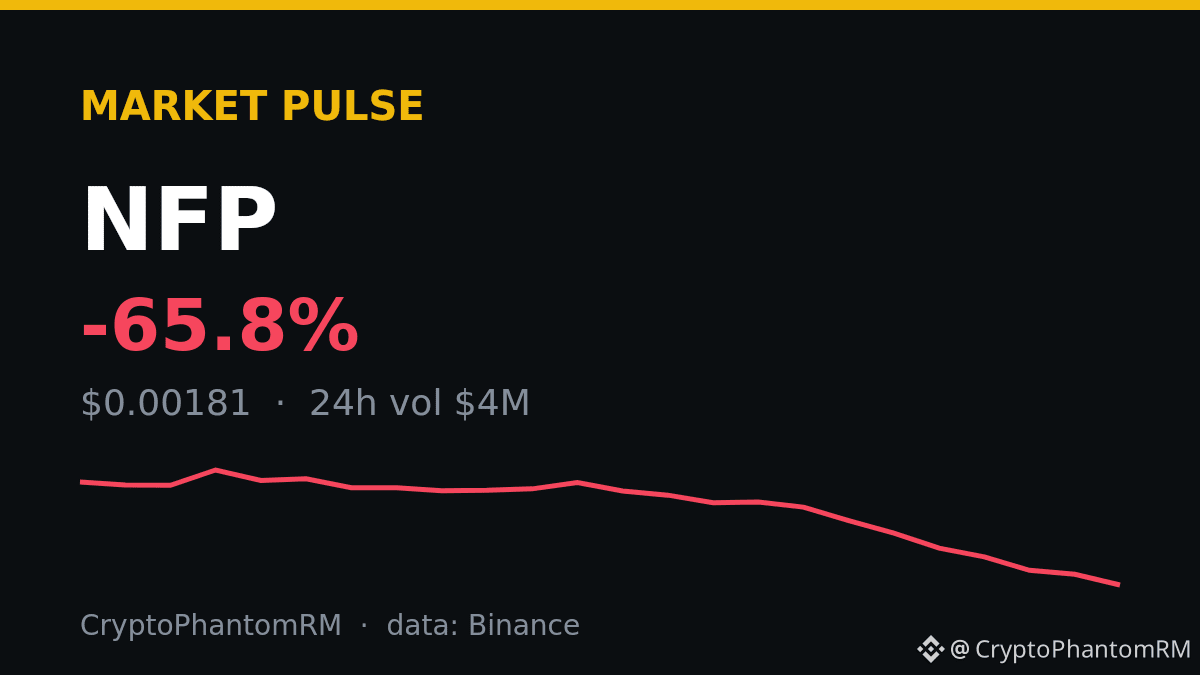
$NFP is down 65.8% in 24h to $0.00181 — today's top loser on Binance, with $4M traded.
Data, not advice.
$NFP #Binance #MarketPulse
📊 MARKET PULSE
$NFP is down 65.8% in 24h to $0.00181 — today's top loser on Binance, with $4M traded.
Data, not advice.
$NFP #Binance #MarketPulse
$NFP is down 65.8% in 24h to $0.00181 — today's top loser on Binance, with $4M traded.
Data, not advice.
$NFP #Binance #MarketPulse
87
🏦 EUROPA JUST TOOK ANOTHER STEP TOWARD FINANCING IN BLOCKCHAIN
The European Central Bank today launched “Pontes”, a service that connects its payment infrastructure with financial markets based on blockchain.
The idea is important: to allow institutions to settle transactions with tokenized assets using money backed by the central bank, instead of necessarily relying on private stablecoins.
🏦 Deutsche Bank, Santander, and Clearstream are among the first participants.
⛓️ Blockchain is getting deeper into traditional financial infrastructure.
💶 The ECB also plans to invest part of its own funds in euro-denominated securities issued via blockchain.
Tokenization is no longer just a crypto narrative. Traditional financial infrastructure is starting to use it.
👀 Will asset tokenization be the next big blockchain adoption case?
$ETH $LINK #RWA #Tokenization #Blockchain #crypto
📊 Market information. Not financial advice.
🏦 EUROPA JUST TOOK ANOTHER STEP TOWARD FINANCING IN BLOCKCHAIN
The European Central Bank today launched “Pontes”, a service that connects its payment infrastructure with financial markets based on blockchain.
The idea is important: to allow institutions to settle transactions with tokenized assets using money backed by the central bank, instead of necessarily relying on private stablecoins.
🏦 Deutsche Bank, Santander, and Clearstream are among the first participants.
⛓️ Blockchain is getting deeper into traditional financial infrastructure.
💶 The ECB also plans to invest part of its own funds in euro-denominated securities issued via blockchain.
Tokenization is no longer just a crypto narrative. Traditional financial infrastructure is starting to use it.
👀 Will asset tokenization be the next big blockchain adoption case?
$ETH $LINK #RWA #Tokenization #Blockchain #crypto
📊 Market information. Not financial advice.
The European Central Bank today launched “Pontes”, a service that connects its payment infrastructure with financial markets based on blockchain.
The idea is important: to allow institutions to settle transactions with tokenized assets using money backed by the central bank, instead of necessarily relying on private stablecoins.
🏦 Deutsche Bank, Santander, and Clearstream are among the first participants.
⛓️ Blockchain is getting deeper into traditional financial infrastructure.
💶 The ECB also plans to invest part of its own funds in euro-denominated securities issued via blockchain.
Tokenization is no longer just a crypto narrative. Traditional financial infrastructure is starting to use it.
👀 Will asset tokenization be the next big blockchain adoption case?
$ETH $LINK #RWA #Tokenization #Blockchain #crypto
📊 Market information. Not financial advice.
1
305
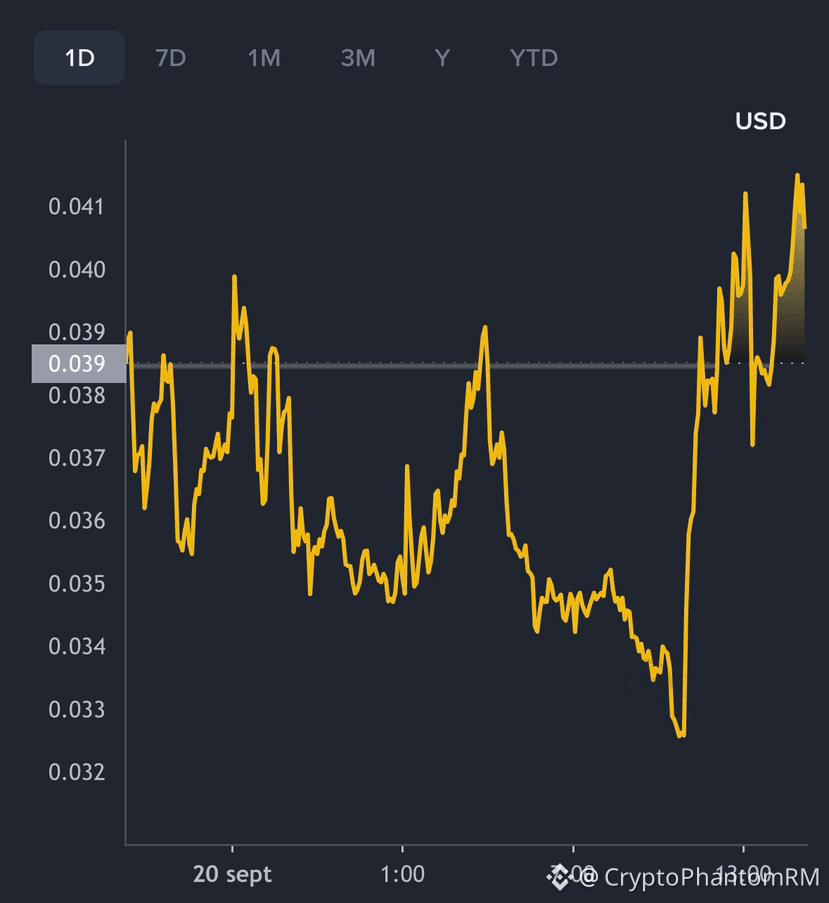
🚀 $SAGA SE SHOOTS CLOSE TO 50% IN 24 HOURS
$SAGA is leading market moves today, trading around $0.038 after a rise of nearly +48%.
But there’s an important detail: there’s no clear fundamental catalyst behind the move, as attention and capital are rotating toward altcoins with higher volatility.
🔥 Price: ≈ $0.04
📈 24H: ≈ +48%
💰 Token below $0.05
⚠️ High-volatility move
After a surge like this, chasing the price can be especially risky.
👀 Does SAGA still have fuel, or will we see profit-taking? #crypto #altcoins
📊 Market data. Not financial advice.
🚀 $SAGA SE SHOOTS CLOSE TO 50% IN 24 HOURS
$SAGA is leading market moves today, trading around $0.038 after a rise of nearly +48%.
But there’s an important detail: there’s no clear fundamental catalyst behind the move, as attention and capital are rotating toward altcoins with higher volatility.
🔥 Price: ≈ $0.04
📈 24H: ≈ +48%
💰 Token below $0.05
⚠️ High-volatility move
After a surge like this, chasing the price can be especially risky.
👀 Does SAGA still have fuel, or will we see profit-taking? #crypto #altcoins
📊 Market data. Not financial advice.
$SAGA is leading market moves today, trading around $0.038 after a rise of nearly +48%.
But there’s an important detail: there’s no clear fundamental catalyst behind the move, as attention and capital are rotating toward altcoins with higher volatility.
🔥 Price: ≈ $0.04
📈 24H: ≈ +48%
💰 Token below $0.05
⚠️ High-volatility move
After a surge like this, chasing the price can be especially risky.
👀 Does SAGA still have fuel, or will we see profit-taking? #crypto #altcoins
📊 Market data. Not financial advice.
2
343
·
--
Bullish
🔥 $DOGE SUBE WHILE ALTCOINS GAIN STRENGTH
Dogecoin is advancing close to 5% over the last 24 hours, while Bitcoin stays above $82K and the crypto market kicks off the week in the green.
What’s interesting isn’t just DOGE:
📈 $XRP: ≈ +4%
⚡ $ETH: ≈ +3%
☀️ $SOL: ≈ +3%
🐕 $DOGE: ≈ +5%
With BTC staying strong, capital is beginning to move toward altcoins as well.
👀 If Bitcoin keeps up its momentum, DOGE will be one of the sub-$1 tokens we’ll be watching closely.
Are we seeing the start of a rotation into altcoins?
$DOGE $BTC #dogecoin #altcoins #crypto
📊 Market data. Not financial advice.
🔥 $DOGE SUBE WHILE ALTCOINS GAIN STRENGTH
Dogecoin is advancing close to 5% over the last 24 hours, while Bitcoin stays above $82K and the crypto market kicks off the week in the green.
What’s interesting isn’t just DOGE:
📈 $XRP: ≈ +4%
⚡ $ETH: ≈ +3%
☀️ $SOL: ≈ +3%
🐕 $DOGE : ≈ +5%
With BTC staying strong, capital is beginning to move toward altcoins as well.
👀 If Bitcoin keeps up its momentum, DOGE will be one of the sub-$1 tokens we’ll be watching closely.
Are we seeing the start of a rotation into altcoins?
$DOGE $BTC #dogecoin #altcoins #crypto
📊 Market data. Not financial advice.
Dogecoin is advancing close to 5% over the last 24 hours, while Bitcoin stays above $82K and the crypto market kicks off the week in the green.
What’s interesting isn’t just DOGE:
📈 $XRP: ≈ +4%
⚡ $ETH: ≈ +3%
☀️ $SOL: ≈ +3%
🐕 $DOGE : ≈ +5%
With BTC staying strong, capital is beginning to move toward altcoins as well.
👀 If Bitcoin keeps up its momentum, DOGE will be one of the sub-$1 tokens we’ll be watching closely.
Are we seeing the start of a rotation into altcoins?
$DOGE $BTC #dogecoin #altcoins #crypto
📊 Market data. Not financial advice.

1
200
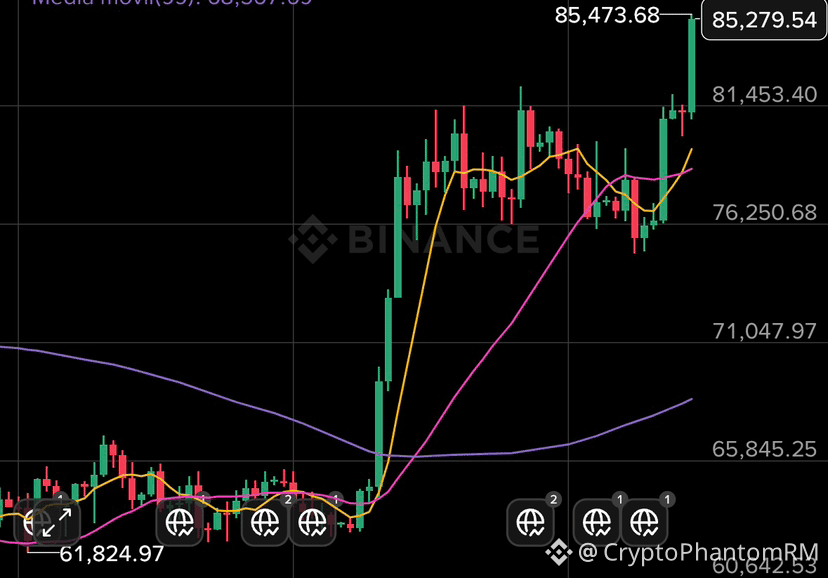
🚨 $BTC REACHES ITS HIGHEST PRICE IN 8 MONTHS
Bitcoin rose to approximately $85,166, marking its highest level in the last eight months.
Now the key is to know whether buyers can hold the breakout.
🔥 High: ≈ $85.2K
👀 Key zone: $85K
⚠️ A rejection could bring back strong volatility.
¿$BTC is it preparing for another bullish push or will $85K become a strong resistance?
$BTC #Bitcoin #Crypto #BTC
📊 Market data. Not financial advice.
🚨 $BTC REACHES ITS HIGHEST PRICE IN 8 MONTHS
Bitcoin rose to approximately $85,166, marking its highest level in the last eight months.
Now the key is to know whether buyers can hold the breakout.
🔥 High: ≈ $85.2K
👀 Key zone: $85K
⚠️ A rejection could bring back strong volatility.
¿$BTC is it preparing for another bullish push or will $85K become a strong resistance?
$BTC #Bitcoin #Crypto #BTC
📊 Market data. Not financial advice.
Bitcoin rose to approximately $85,166, marking its highest level in the last eight months.
Now the key is to know whether buyers can hold the breakout.
🔥 High: ≈ $85.2K
👀 Key zone: $85K
⚠️ A rejection could bring back strong volatility.
¿$BTC is it preparing for another bullish push or will $85K become a strong resistance?
$BTC #Bitcoin #Crypto #BTC
📊 Market data. Not financial advice.
1
125
·
--
Bullish
Altseason? Not so fast yet
👀 70% OF BINANCE’S ALTCOINS HAVE JUST RECOVERED AN IMPORTANT LEVEL
According to data cited by CryptoQuant, around 70% of Binance altcoins are trading above their 200-day average.
But there’s an interesting contradiction:
📈 Total Market Cap: again >$800B
🟢 70% above the 200-day average
⚠️ Altcoin Season Index: only 41
₿ BTC Dominance: ≈ 59.34%
Translation: many alts are recovering versus the dollar, but there’s still no broad confirmation that they’re outperforming Bitcoin.
Are we seeing the start of a rotation—or just a rebound?
$BTC $ETH #altcoins #crypto
📊 Data, not financial advice.
Altseason? Not so fast yet
👀 70% OF BINANCE’S ALTCOINS HAVE JUST RECOVERED AN IMPORTANT LEVEL
According to data cited by CryptoQuant, around 70% of Binance altcoins are trading above their 200-day average.
But there’s an interesting contradiction:
📈 Total Market Cap: again >$800B
🟢 70% above the 200-day average
⚠️ Altcoin Season Index: only 41
₿ BTC Dominance: ≈ 59.34%
Translation: many alts are recovering versus the dollar, but there’s still no broad confirmation that they’re outperforming Bitcoin.
Are we seeing the start of a rotation—or just a rebound?
$BTC $ETH #altcoins #crypto
📊 Data, not financial advice.
👀 70% OF BINANCE’S ALTCOINS HAVE JUST RECOVERED AN IMPORTANT LEVEL
According to data cited by CryptoQuant, around 70% of Binance altcoins are trading above their 200-day average.
But there’s an interesting contradiction:
📈 Total Market Cap: again >$800B
🟢 70% above the 200-day average
⚠️ Altcoin Season Index: only 41
₿ BTC Dominance: ≈ 59.34%
Translation: many alts are recovering versus the dollar, but there’s still no broad confirmation that they’re outperforming Bitcoin.
Are we seeing the start of a rotation—or just a rebound?
$BTC $ETH #altcoins #crypto
📊 Data, not financial advice.
1
78
🚨 $BTC DEFEND THE $80,000
Bitcoin is trading around $80K–$81K after recently touching the $82,000 area.
The market is leaving a very clear zone:
🟢 $80K → key psychological level
🔴 $82K → recent resistance
👀 Losing $80K could increase selling pressure again.
Will BTC break $82K first or lose $80K?
$BTC #bitcoin #crypto
📊 Market data. Not financial advice.
🚨 $BTC DEFEND THE $80,000
Bitcoin is trading around $80K–$81K after recently touching the $82,000 area.
The market is leaving a very clear zone:
🟢 $80K → key psychological level
🔴 $82K → recent resistance
👀 Losing $80K could increase selling pressure again.
Will BTC break $82K first or lose $80K?
$BTC #bitcoin #crypto
📊 Market data. Not financial advice.
Bitcoin is trading around $80K–$81K after recently touching the $82,000 area.
The market is leaving a very clear zone:
🟢 $80K → key psychological level
🔴 $82K → recent resistance
👀 Losing $80K could increase selling pressure again.
Will BTC break $82K first or lose $80K?
$BTC #bitcoin #crypto
📊 Market data. Not financial advice.
3
1
734
📊 MARKET PULSE
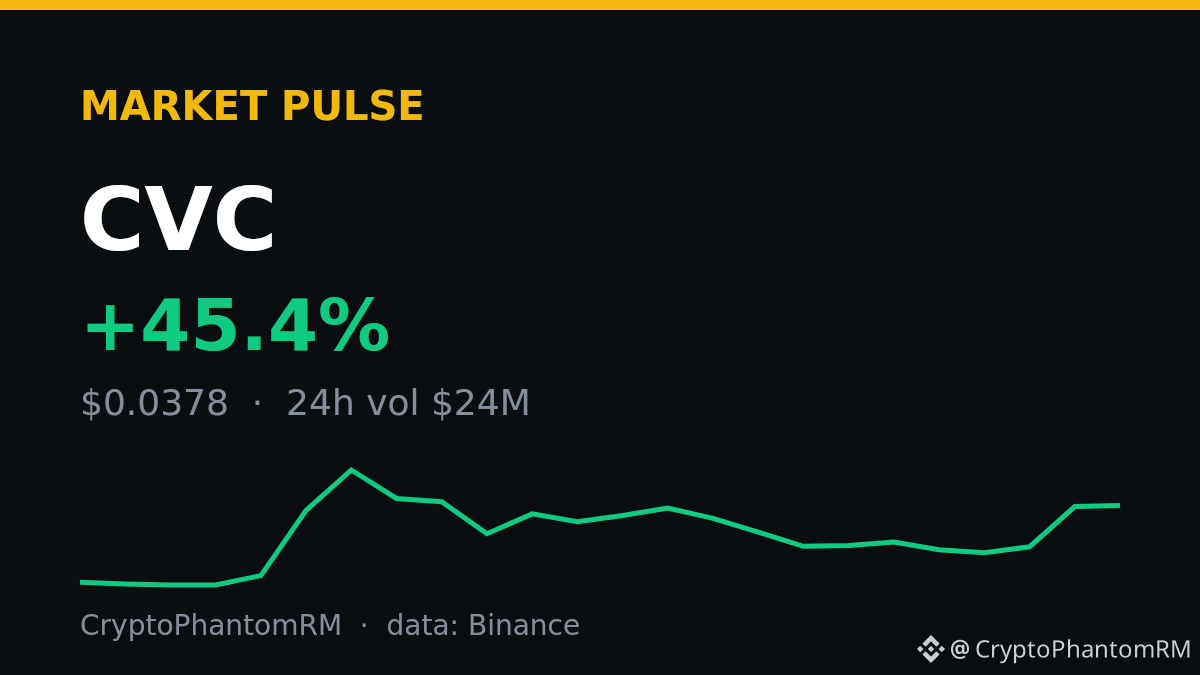
$CVC is up 45.4% in 24h to $0.0378 — today's top gainer on Binance, with $24M traded.
Data, not advice.
$CVC #Binance #MarketPulse
📊 MARKET PULSE
$CVC is up 45.4% in 24h to $0.0378 — today's top gainer on Binance, with $24M traded.
Data, not advice.
$CVC #Binance #MarketPulse
$CVC is up 45.4% in 24h to $0.0378 — today's top gainer on Binance, with $24M traded.
Data, not advice.
$CVC #Binance #MarketPulse
149
📊 MARKET PULSE
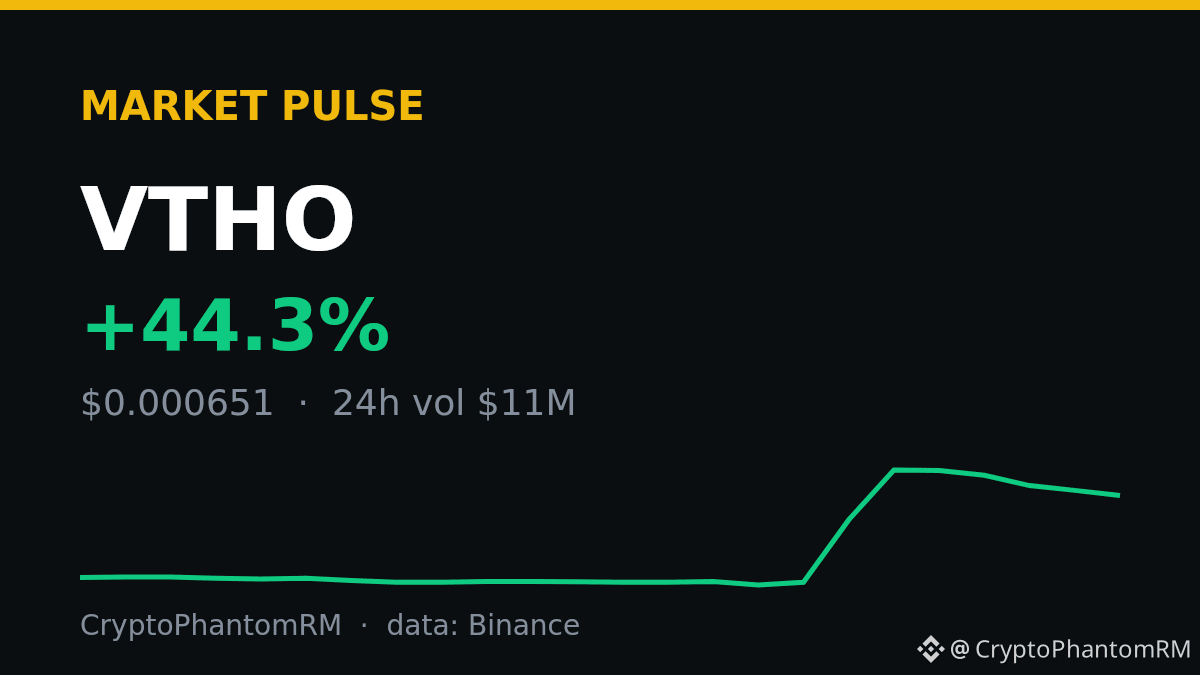
$VTHO is up 44.3% in 24h to $0.000651 — today's top gainer on Binance, with $11M traded.
Data, not advice.
$VTHO #Binance #MarketPulse
📊 MARKET PULSE
$VTHO is up 44.3% in 24h to $0.000651 — today's top gainer on Binance, with $11M traded.
Data, not advice.
$VTHO #Binance #MarketPulse
$VTHO is up 44.3% in 24h to $0.000651 — today's top gainer on Binance, with $11M traded.
Data, not advice.
$VTHO #Binance #MarketPulse
147
·
--
Bullish
🔄 Where the small-cap money is rotating right now:
Polkadot ecosystem and Xrp Ledger ecosystem tokens are leading gains across the market.
Meanwhile Solana spot DEX volumes hit $10.29 billion — overtaking NYSE American.
Why it matters for small caps: capital rotates by ecosystem, not by individual token. Find the chain getting flows, then look inside it. That’s the order that works.
Which ecosystem are you positioned in? 👇
$DOT $XRP $SOL
🔄 Where the small-cap money is rotating right now:
Polkadot ecosystem and Xrp Ledger ecosystem tokens are leading gains across the market.
Meanwhile Solana spot DEX volumes hit $10.29 billion — overtaking NYSE American.
Why it matters for small caps: capital rotates by ecosystem, not by individual token. Find the chain getting flows, then look inside it. That’s the order that works.
Which ecosystem are you positioned in? 👇
$DOT $XRP $SOL
Polkadot ecosystem and Xrp Ledger ecosystem tokens are leading gains across the market.
Meanwhile Solana spot DEX volumes hit $10.29 billion — overtaking NYSE American.
Why it matters for small caps: capital rotates by ecosystem, not by individual token. Find the chain getting flows, then look inside it. That’s the order that works.
Which ecosystem are you positioned in? 👇
$DOT $XRP $SOL

1
249
🤖 $ZEREBRO up 21% to $0.04048 on $15.5M volume.
Zerebro is a Solana-based autonomous AI agent that posts content across X and Telegram without human oversight.
No project-specific news behind the move — this is rotation into small-cap AI tokens.
Risk to know: ZEREBRO has faced pump-and-dump suspicions after similar rallies, and historically gives back a large share of these gains within days.
Rotation or trap? 👇
$ZEREBRO #AI #solana #Altcoins
🤖 $ZEREBRO up 21% to $0.04048 on $15.5M volume.
Zerebro is a Solana-based autonomous AI agent that posts content across X and Telegram without human oversight.
No project-specific news behind the move — this is rotation into small-cap AI tokens.
Risk to know: ZEREBRO has faced pump-and-dump suspicions after similar rallies, and historically gives back a large share of these gains within days.
Rotation or trap? 👇
$ZEREBRO #AI #solana #Altcoins
Zerebro is a Solana-based autonomous AI agent that posts content across X and Telegram without human oversight.
No project-specific news behind the move — this is rotation into small-cap AI tokens.
Risk to know: ZEREBRO has faced pump-and-dump suspicions after similar rallies, and historically gives back a large share of these gains within days.
Rotation or trap? 👇
$ZEREBRO #AI #solana #Altcoins
1
163
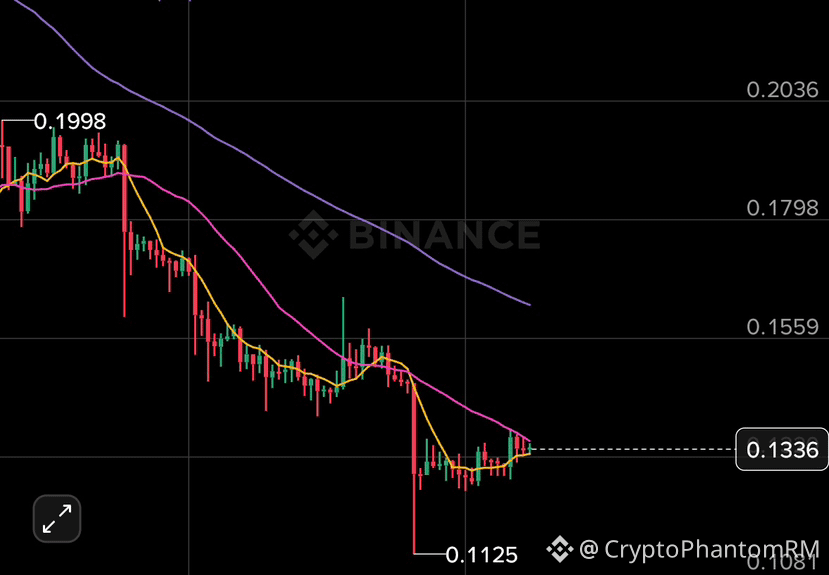
Do you think $LAB will resurrect or get stuck if you still believe in $LAB it's time to buy now 🚀🚀
Do you think $LAB will resurrect or get stuck if you still believe in $LAB it's time to buy now 🚀🚀
3
789
💰 FTX PAYS CREDITORS $900M ON JULY 31
FTX will return nearly $900 million to creditors on July 31 in its fifth distribution wave, with recoveries topping 100% for most claim classes.
Why it matters: billions flowing back to former FTX users is potential fresh capital for the market. Some returns to crypto; the collapse’s long shadow keeps shrinking.
💰 FTX PAYS CREDITORS $900M ON JULY 31
FTX will return nearly $900 million to creditors on July 31 in its fifth distribution wave, with recoveries topping 100% for most claim classes.
Why it matters: billions flowing back to former FTX users is potential fresh capital for the market. Some returns to crypto; the collapse’s long shadow keeps shrinking.
FTX will return nearly $900 million to creditors on July 31 in its fifth distribution wave, with recoveries topping 100% for most claim classes.
Why it matters: billions flowing back to former FTX users is potential fresh capital for the market. Some returns to crypto; the collapse’s long shadow keeps shrinking.
1
595
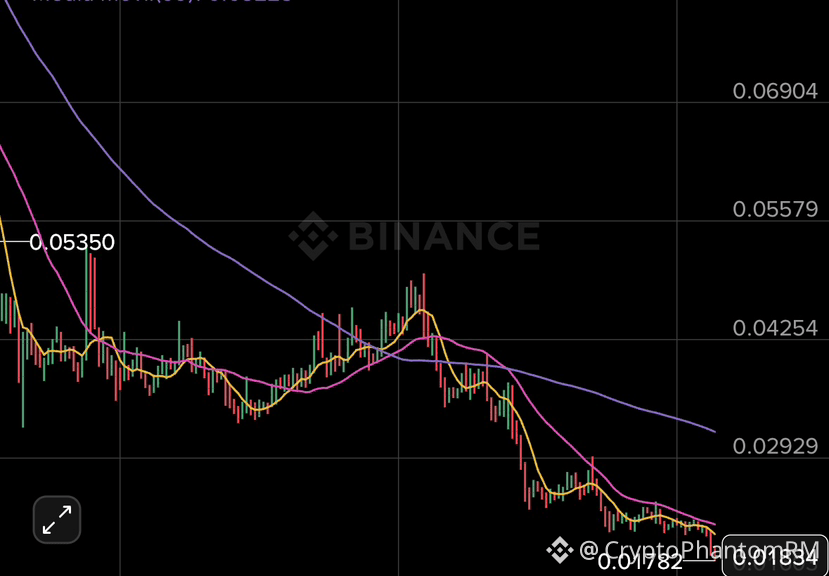
Long $YGG Now
Entrance 0.0182
Tp
0.019
0.0195
0.0205
SL
0.017
Long $YGG Now
Entrance 0.0182
Tp
0.019
0.0195
0.0205
SL
0.017
Entrance 0.0182
Tp
0.019
0.0195
0.0205
SL
0.017
1
351
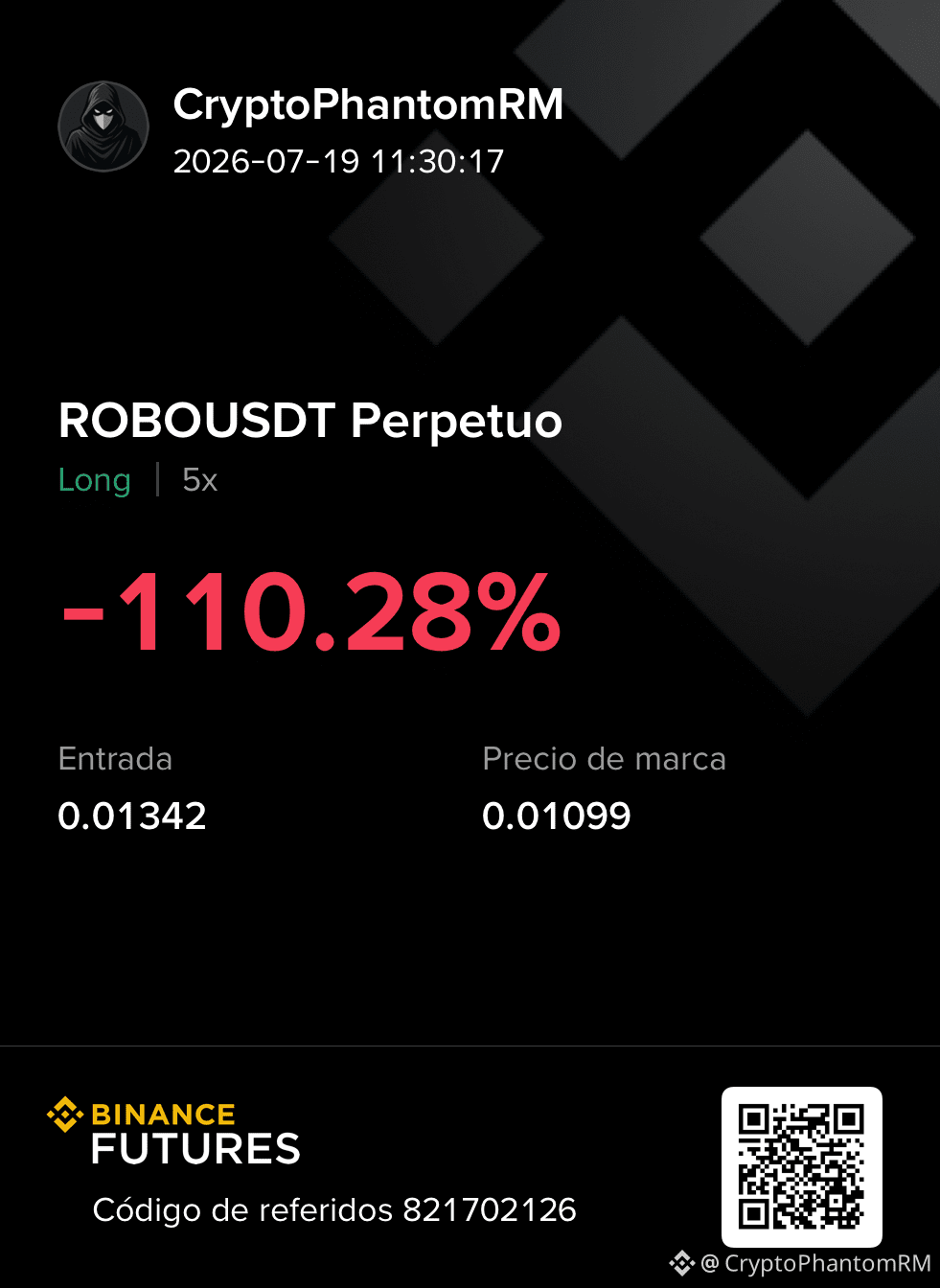
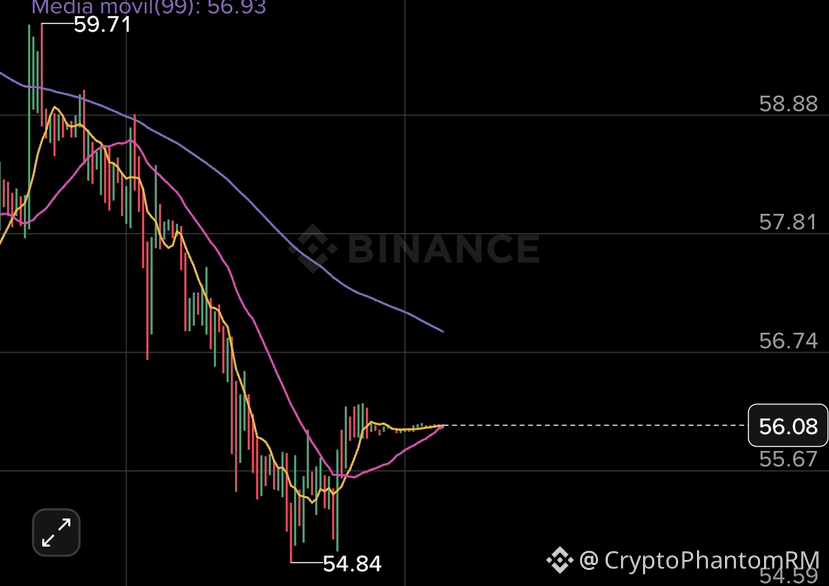
⏰ $1.43B IN OPTIONS JUST EXPIRED
Bitcoin and Ethereum options worth $1.43 billion expired Friday as BTC held near $63,000, with ETH put demand rising into the event.
Why it matters: large expiries often pin price action into the weekend — and their resolution frees the market to move. With the overhang gone, next week starts with a cleaner board.
⏰ $1.43B IN OPTIONS JUST EXPIRED
Bitcoin and Ethereum options worth $1.43 billion expired Friday as BTC held near $63,000, with ETH put demand rising into the event.
Why it matters: large expiries often pin price action into the weekend — and their resolution frees the market to move. With the overhang gone, next week starts with a cleaner board.
Bitcoin and Ethereum options worth $1.43 billion expired Friday as BTC held near $63,000, with ETH put demand rising into the event.
Why it matters: large expiries often pin price action into the weekend — and their resolution frees the market to move. With the overhang gone, next week starts with a cleaner board.
102
3
676
Log in to explore more content
Join global crypto users on Binance Square
⚡️ Get latest and useful information about crypto.
💬 Trusted by the world’s largest crypto exchange.
👍 Discover real insights from verified creators.
Email / Phone number
Trending Topics
AIStocksWhatNext
558,349 views
4,167 Discussing
Share & Win Traffic Reward in our Trending Hashtag Campaign
✨Topic: What Other Investment Opportunities Remain as AI Stocks Keep Rising?
👉How to Join:
Publish a short post or article with hashtag #AIStocksWhatNext
Share whether you’re bullish or bearish, and post your AI stock holdings or trade — using the trade widget may improve your eligibility.
You can also strengthen your post by sharing data or charts, and avoiding AI-generated images.
✍️Create content based on the below angles:
- Nvidia says chip sales will double next year, and top AI companies keep hitting record revenue, the compute spend behind it is just as staggering. Is AI demand really taking off? And how long can it last? AI stocks are up across the board. Is this a real breakout, or just a short-term bounce?
- Industry leaders are calling to slow down AI development, while Trump plans to build an “AI Force”, claiming AI could account for 25% of U.S. GDP in the future. Whose side are you on? Will state-level backing be a long-term win for AI stocks?
- Are you buying AI stocks? Share your AI-related trade/holdings with our trade sharing widget.
⏰Campaign Period:
- 2026-09-22 7:00 - 2026-09-24 4:00 UTC
🎁Reward:
- Qualified posts that comply with the above guidelines and contain more than 100 words will be reviewed and may receive a random traffic boost of 500 to 3,000 views. You will receive a notification from your feed secretary if your post is selected.
- Get a chance to have your article featured on Binance Square Official
Need ideas for your post? Visit the topic page #AIStocksWhatNext or the Square Guide on How to Post for Better Reach.
Binance Square Official
·450 Likes
·1.2M views
21SharesLaunchesEuropesFirstZcashETP
769 views
62 Discussing
CardanoJoinsX402PaymentStandard
904 views
81 Discussing