

Mr Azun
3.1k Posts

Mr Azun
Report
Block User
bnb holder
1.8K+ Following
1.8K+ Followers
1.6K+ Liked
Posts
All
Quotes
·
--
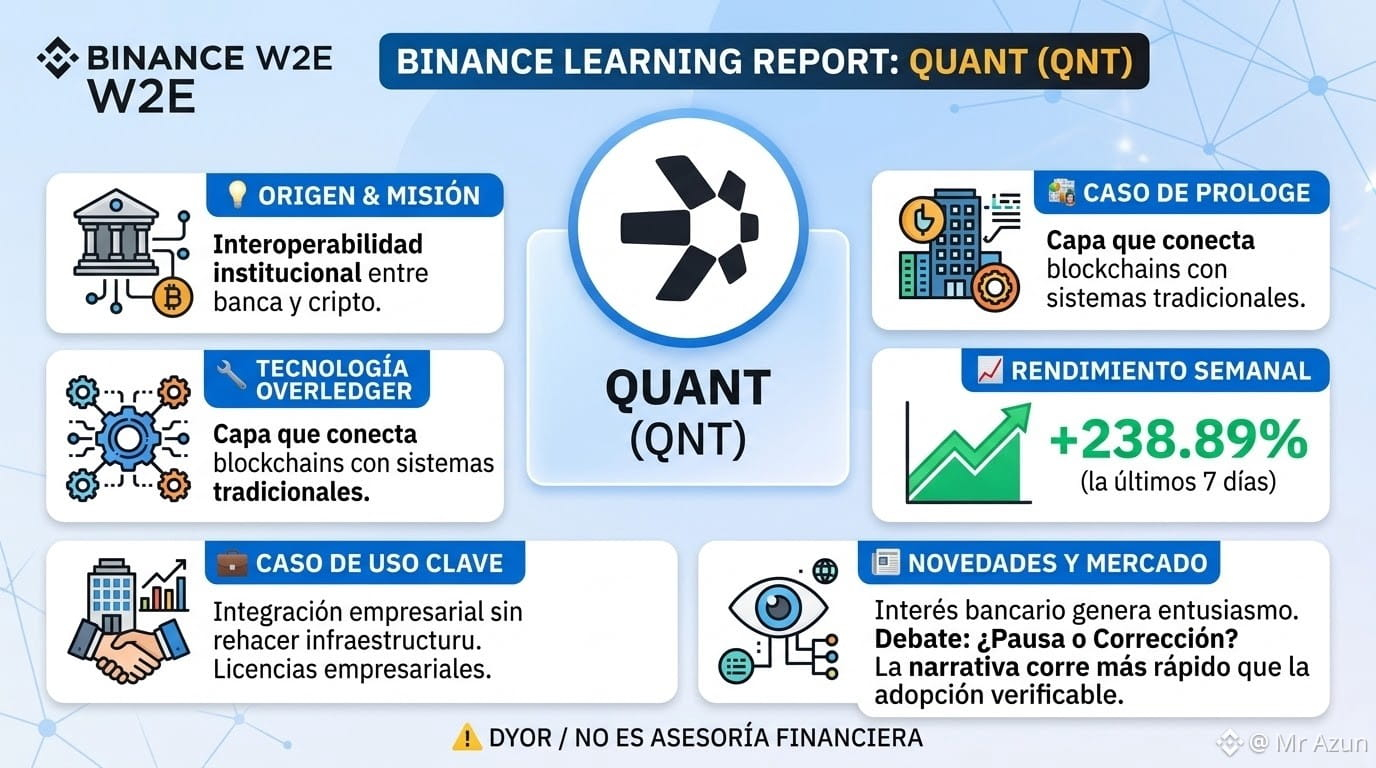
🏛️ Origin: Quant $QNT is a project focused on institutional interoperability between the crypto world and banking.
🔧 Technology: Its Overledger protocol acts as a layer that connects different blockchain networks with traditional banking systems.
💼 Use case: It allows banks and businesses to integrate blockchain without rebuilding their infrastructure. Its monetization depends on enterprise licenses.
📰 News: The banking sector’s interest in its technology generated great enthusiasm in the past few days. The market is debating whether this is a healthy pause or the start of a correction. The analysis warns that the narrative is moving faster than the measurable adoption metrics.
📈 Weekly variation: +238.89% over the last 7 days.
⚠️ DYOR / Not financial advice
{future}(QNTUSDT)
🏛️ Origin: Quant $QNT is a project focused on institutional interoperability between the crypto world and banking.
🔧 Technology: Its Overledger protocol acts as a layer that connects different blockchain networks with traditional banking systems.
💼 Use case: It allows banks and businesses to integrate blockchain without rebuilding their infrastructure. Its monetization depends on enterprise licenses.
📰 News: The banking sector’s interest in its technology generated great enthusiasm in the past few days. The market is debating whether this is a healthy pause or the start of a correction. The analysis warns that the narrative is moving faster than the measurable adoption metrics.
📈 Weekly variation: +238.89% over the last 7 days.
⚠️ DYOR / Not financial advice
🔧 Technology: Its Overledger protocol acts as a layer that connects different blockchain networks with traditional banking systems.
💼 Use case: It allows banks and businesses to integrate blockchain without rebuilding their infrastructure. Its monetization depends on enterprise licenses.
📰 News: The banking sector’s interest in its technology generated great enthusiasm in the past few days. The market is debating whether this is a healthy pause or the start of a correction. The analysis warns that the narrative is moving faster than the measurable adoption metrics.
📈 Weekly variation: +238.89% over the last 7 days.
⚠️ DYOR / Not financial advice
1
1
365
·
--
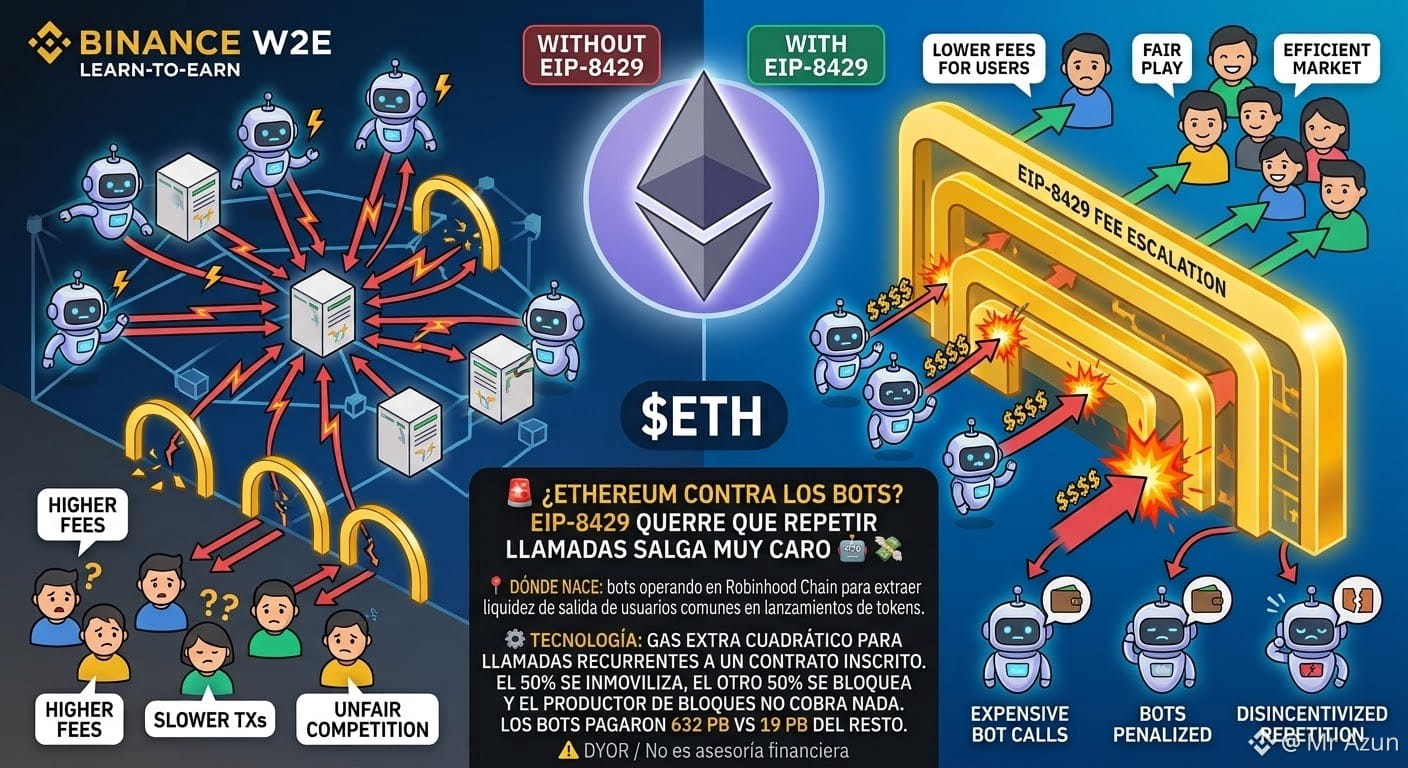
🚨 Ethereum vs bots? EIP-8429 wants repeated calls to get VERY expensive 🤖💸
📌 Origin: it came from seeing bots on Robinhood Chain operating newly launched tokens block after block, using regular buyers as exit liquidity.
⚙️ Technology: extra quadratic gas for recurring calls to a registered contract. 50% is locked up, the other 50% is blocked, and the block producer earns nothing.
🎯 Use: whoever buys once doesn’t pay a surcharge; a bot that calls 50 times in a block pays the maximum.
📰 Updates: a version is already running on Robinhood Chain since 28/09—bots paid 632 pb vs 19 pb for everyone else.
$ETH #Ethereum #EIP8429
⚠️ DYOR / Not financial advice
{future}(ETHUSDT)
🚨 Ethereum vs bots? EIP-8429 wants repeated calls to get VERY expensive 🤖💸
📌 Origin: it came from seeing bots on Robinhood Chain operating newly launched tokens block after block, using regular buyers as exit liquidity.
⚙️ Technology: extra quadratic gas for recurring calls to a registered contract. 50% is locked up, the other 50% is blocked, and the block producer earns nothing.
🎯 Use: whoever buys once doesn’t pay a surcharge; a bot that calls 50 times in a block pays the maximum.
📰 Updates: a version is already running on Robinhood Chain since 28/09—bots paid 632 pb vs 19 pb for everyone else.
$ETH #Ethereum #EIP8429
⚠️ DYOR / Not financial advice
📌 Origin: it came from seeing bots on Robinhood Chain operating newly launched tokens block after block, using regular buyers as exit liquidity.
⚙️ Technology: extra quadratic gas for recurring calls to a registered contract. 50% is locked up, the other 50% is blocked, and the block producer earns nothing.
🎯 Use: whoever buys once doesn’t pay a surcharge; a bot that calls 50 times in a block pays the maximum.
📰 Updates: a version is already running on Robinhood Chain since 28/09—bots paid 632 pb vs 19 pb for everyone else.
$ETH #Ethereum #EIP8429
⚠️ DYOR / Not financial advice
108
·
--
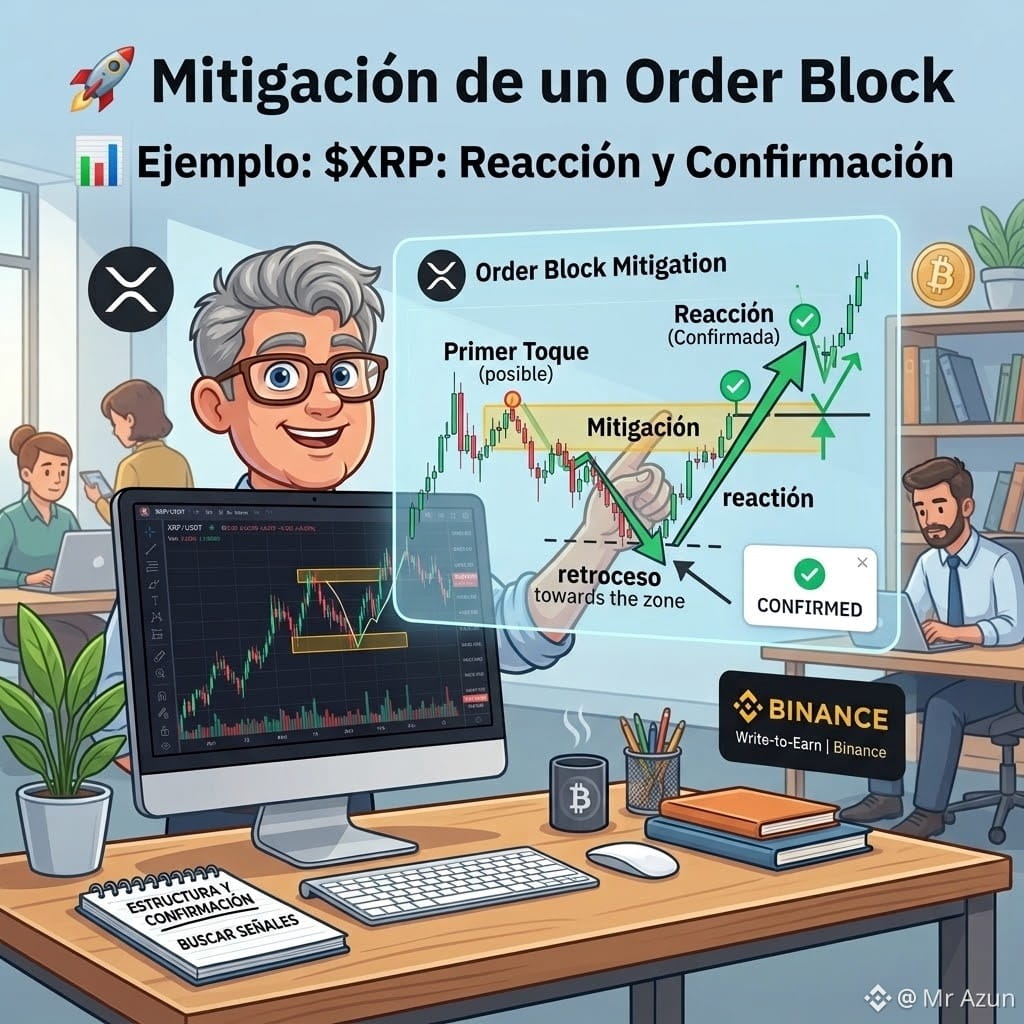
🚀 Mitigation of an Order Block
An Order Block does not necessarily work on the first touch.
If price later returns to the zone, a new reaction may occur.
📊 Example: $XRP
Bullish impulse → Order Block → continuation → pullback to the zone → reaction.
Also look for structure and confirmation before entering.
📌 A zone is not a guarantee; it’s an area to watch behavior.
{future}(XRPUSDT)
🚀 Mitigation of an Order Block
An Order Block does not necessarily work on the first touch.
If price later returns to the zone, a new reaction may occur.
📊 Example: $XRP
Bullish impulse → Order Block → continuation → pullback to the zone → reaction.
Also look for structure and confirmation before entering.
📌 A zone is not a guarantee; it’s an area to watch behavior.
An Order Block does not necessarily work on the first touch.
If price later returns to the zone, a new reaction may occur.
📊 Example: $XRP
Bullish impulse → Order Block → continuation → pullback to the zone → reaction.
Also look for structure and confirmation before entering.
📌 A zone is not a guarantee; it’s an area to watch behavior.
779
·
--
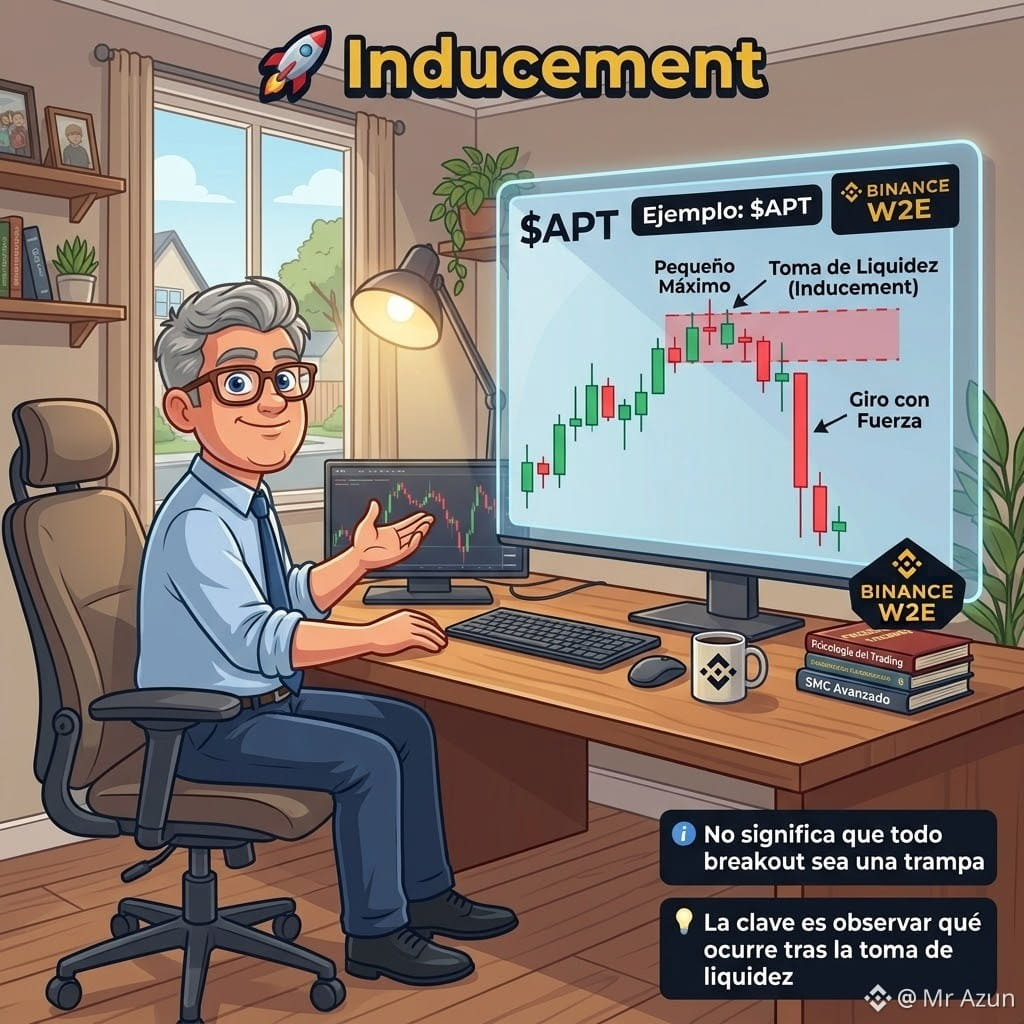
🚀 Inducement
Sometimes the market seems to offer an entry that’s too obvious before making the real move.
That small push can attract orders before it seeks liquidity.
📊 Example: $APT
A small high forms → many enter anticipating a breakout → the price breaks above that high → it reverses strongly.
💡 This doesn’t mean every breakout is a trap. The idea is to watch what happens after the liquidity grab.
{future}(APTUSDT)
🚀 Inducement
Sometimes the market seems to offer an entry that’s too obvious before making the real move.
That small push can attract orders before it seeks liquidity.
📊 Example: $APT
A small high forms → many enter anticipating a breakout → the price breaks above that high → it reverses strongly.
💡 This doesn’t mean every breakout is a trap. The idea is to watch what happens after the liquidity grab.
Sometimes the market seems to offer an entry that’s too obvious before making the real move.
That small push can attract orders before it seeks liquidity.
📊 Example: $APT
A small high forms → many enter anticipating a breakout → the price breaks above that high → it reverses strongly.
💡 This doesn’t mean every breakout is a trap. The idea is to watch what happens after the liquidity grab.
2
401
·
--
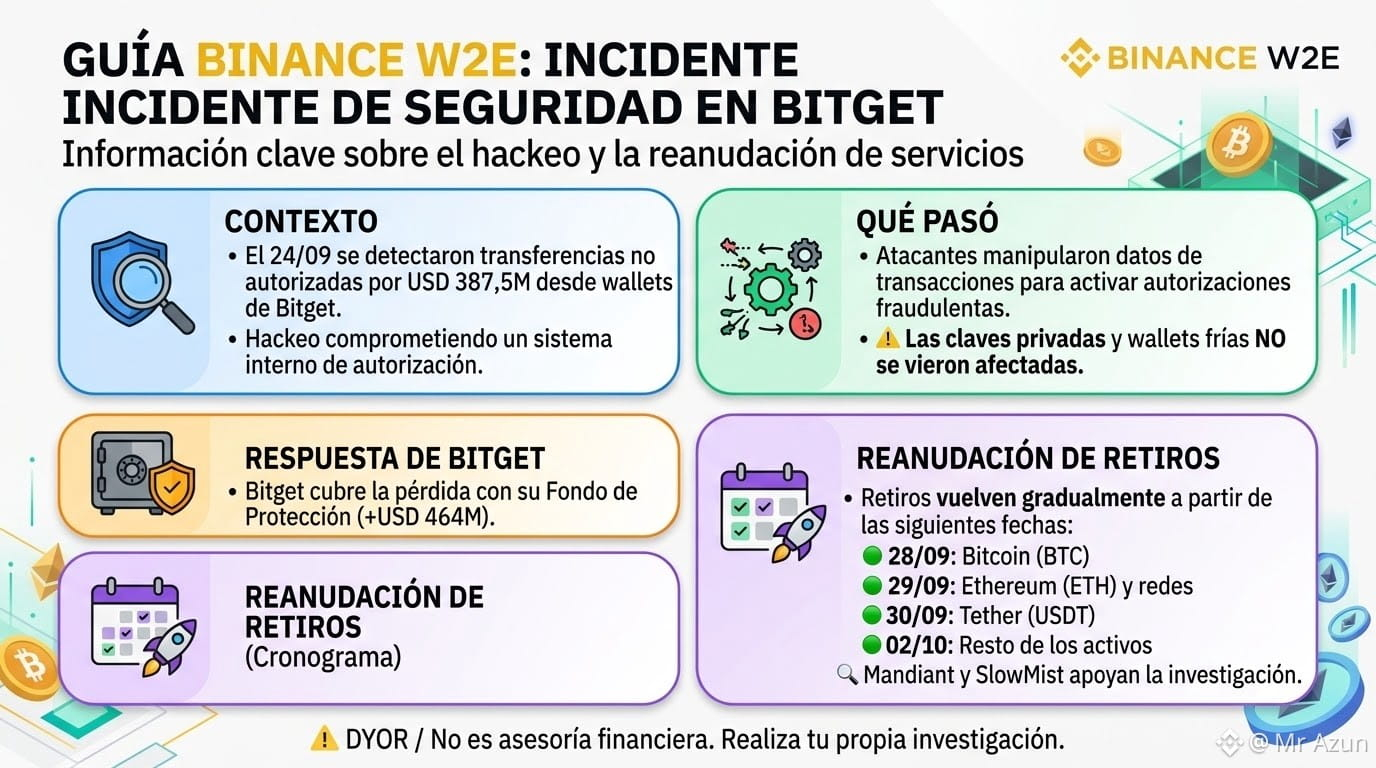
📌 Bitget – Hacking and resumption of withdrawals
🔎 Background: On 09/24, unauthorized transfers totaling USD 387.5M were detected from Bitget wallets after an internal authorization system was compromised.
⚙️ What happened: The attackers manipulated transaction data to trigger fraudulent authorizations. Private keys and cold wallets were not affected.
🛡️ Response: Bitget covers the loss with its protection fund (+USD 464M). Users’ balances remained intact; deposits and trading continued.
📅 Updates: Withdrawals resume gradually starting 09/28 ($BTC ), 09/29 ($ETH and networks), 09/30 (USDT), and 10/02 (the rest). Mandiant and SlowMist are supporting the investigation.
⚠️ DYOR / Not financial advice
{future}(BTCUSDT)
{future}(ETHUSDT)
📌 Bitget – Hacking and resumption of withdrawals
🔎 Background: On 09/24, unauthorized transfers totaling USD 387.5M were detected from Bitget wallets after an internal authorization system was compromised.
⚙️ What happened: The attackers manipulated transaction data to trigger fraudulent authorizations. Private keys and cold wallets were not affected.
🛡️ Response: Bitget covers the loss with its protection fund (+USD 464M). Users’ balances remained intact; deposits and trading continued.
📅 Updates: Withdrawals resume gradually starting 09/28 ($BTC ), 09/29 ($ETH and networks), 09/30 (USDT), and 10/02 (the rest). Mandiant and SlowMist are supporting the investigation.
⚠️ DYOR / Not financial advice
🔎 Background: On 09/24, unauthorized transfers totaling USD 387.5M were detected from Bitget wallets after an internal authorization system was compromised.
⚙️ What happened: The attackers manipulated transaction data to trigger fraudulent authorizations. Private keys and cold wallets were not affected.
🛡️ Response: Bitget covers the loss with its protection fund (+USD 464M). Users’ balances remained intact; deposits and trading continued.
📅 Updates: Withdrawals resume gradually starting 09/28 ($BTC ), 09/29 ($ETH and networks), 09/30 (USDT), and 10/02 (the rest). Mandiant and SlowMist are supporting the investigation.
⚠️ DYOR / Not financial advice
596
·
--
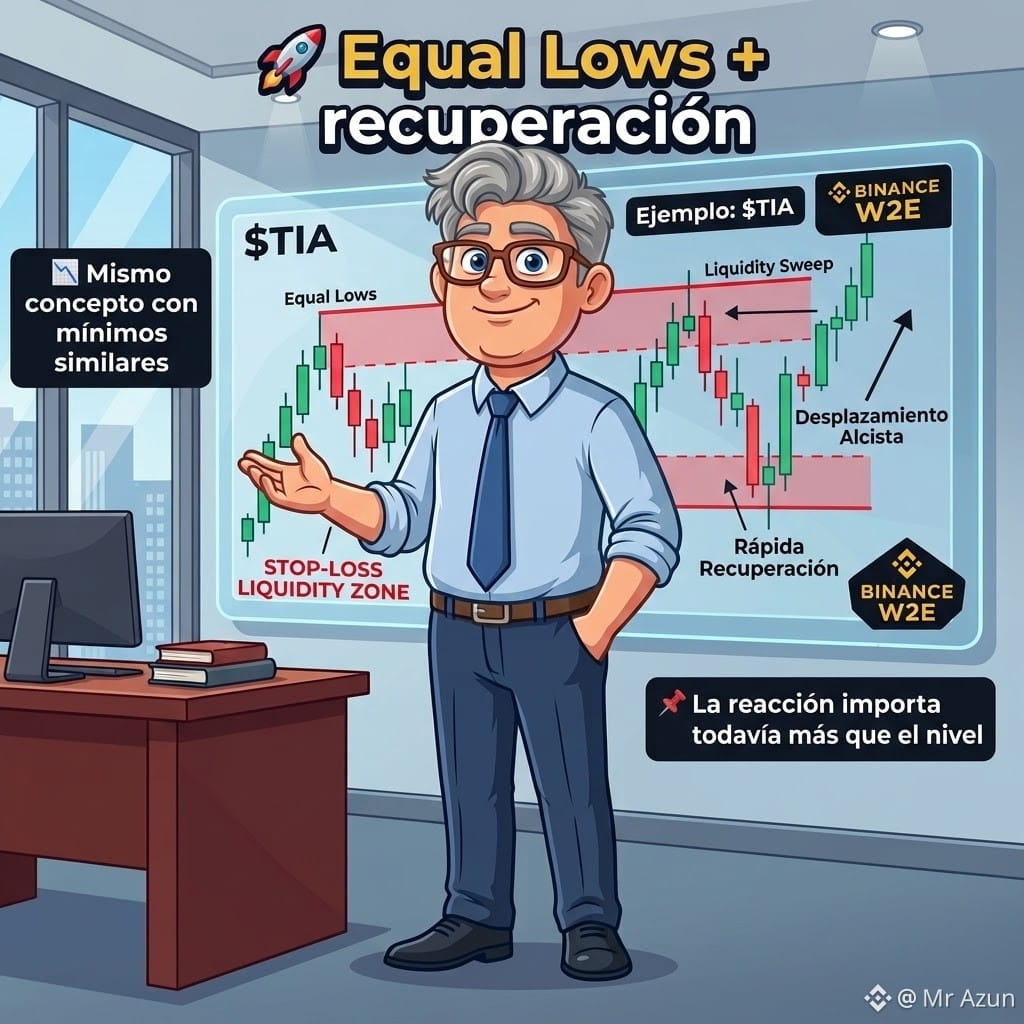
🚀 Equal Lows + recovery
The same idea works with similar lows.
📊 Example: $TIA
Two lows are practically at the same level → the price breaks below → it recovers quickly → bullish displacement appears.
The recovery can be the first sign that the breakout was rejected.
📌 The level matters, but the reaction matters even more.
{future}(TIAUSDT)
🚀 Equal Lows + recovery
The same idea works with similar lows.
📊 Example: $TIA
Two lows are practically at the same level → the price breaks below → it recovers quickly → bullish displacement appears.
The recovery can be the first sign that the breakout was rejected.
📌 The level matters, but the reaction matters even more.
The same idea works with similar lows.
📊 Example: $TIA
Two lows are practically at the same level → the price breaks below → it recovers quickly → bullish displacement appears.
The recovery can be the first sign that the breakout was rejected.
📌 The level matters, but the reaction matters even more.
195
·
--
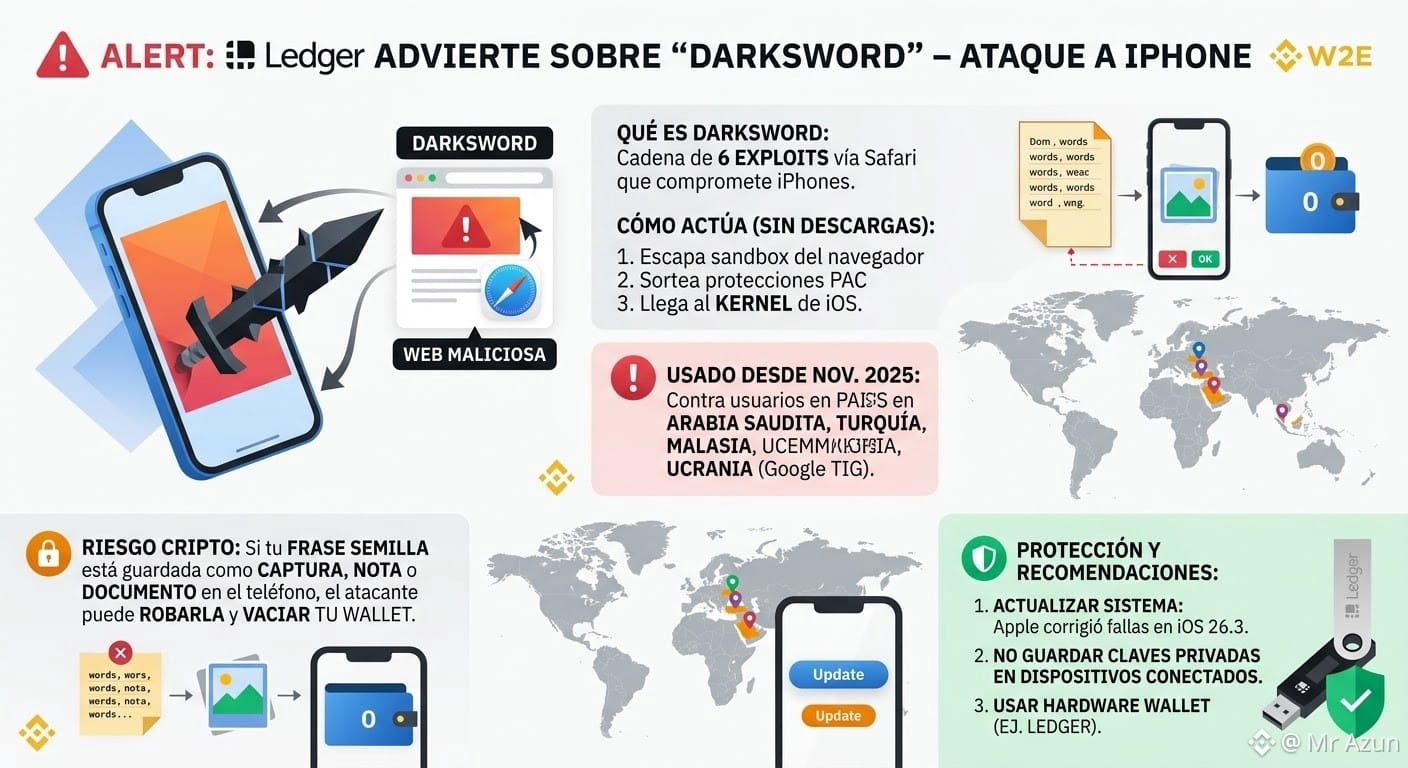
⚠️ Ledger alert about DarkSword, attack on iPhone
Ledger CTO Charles Guillemet warned about DarkSword, a chain of 6 exploits that uses a malicious page in Safari as an entry point to compromise iPhones.
🔓 How it works: it escapes the browser sandbox, bypasses protections like PAC, and can reach the iOS kernel, without the victim downloading anything or handing over their keys.
🔑 Crypto risk: if the seed phrase is stored as a screenshot, note, or document on the phone, the attacker could steal it and drain the wallet.
🌍 It has already been used since Nov. 2025 against users in Saudi Arabia, Turkey, Malaysia, and Ukraine (Google TIG).
🛡️ Apple fixed the flaws in iOS 26.3. Recommendation: update the system and do not store private keys on connected devices; use a hardware wallet.
$BTC $SOL $ZEC
{future}(BTCUSDT)
{future}(SOLUSDT)
{future}(ZECUSDT)
⚠️ Ledger alert about DarkSword, attack on iPhone
Ledger CTO Charles Guillemet warned about DarkSword, a chain of 6 exploits that uses a malicious page in Safari as an entry point to compromise iPhones.
🔓 How it works: it escapes the browser sandbox, bypasses protections like PAC, and can reach the iOS kernel, without the victim downloading anything or handing over their keys.
🔑 Crypto risk: if the seed phrase is stored as a screenshot, note, or document on the phone, the attacker could steal it and drain the wallet.
🌍 It has already been used since Nov. 2025 against users in Saudi Arabia, Turkey, Malaysia, and Ukraine (Google TIG).
🛡️ Apple fixed the flaws in iOS 26.3. Recommendation: update the system and do not store private keys on connected devices; use a hardware wallet.
$BTC $SOL $ZEC
Ledger CTO Charles Guillemet warned about DarkSword, a chain of 6 exploits that uses a malicious page in Safari as an entry point to compromise iPhones.
🔓 How it works: it escapes the browser sandbox, bypasses protections like PAC, and can reach the iOS kernel, without the victim downloading anything or handing over their keys.
🔑 Crypto risk: if the seed phrase is stored as a screenshot, note, or document on the phone, the attacker could steal it and drain the wallet.
🌍 It has already been used since Nov. 2025 against users in Saudi Arabia, Turkey, Malaysia, and Ukraine (Google TIG).
🛡️ Apple fixed the flaws in iOS 26.3. Recommendation: update the system and do not store private keys on connected devices; use a hardware wallet.
$BTC $SOL $ZEC
724
·
--
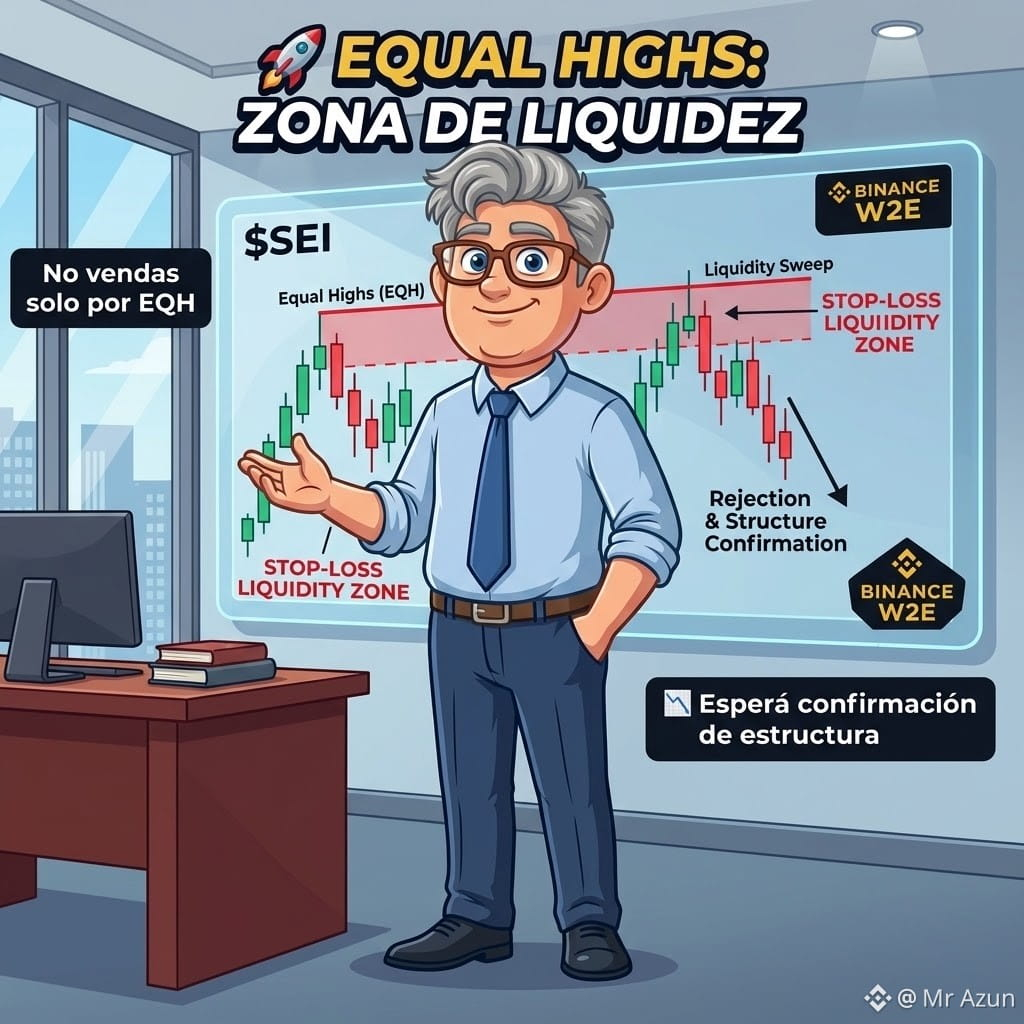
🚀 Equal Highs as a liquidity zone
When two highs are approximately at the same level, many traders place stops around that area.
📊 Example: $SEI
The price forms two similar highs → breaks slightly above → comes back below → rejection appears.
That move can represent a liquidity sweep.
💡 Don’t sell just because there are Equal Highs. Wait for structure confirmation.
{future}(SEIUSDT)
🚀 Equal Highs as a liquidity zone
When two highs are approximately at the same level, many traders place stops around that area.
📊 Example: $SEI
The price forms two similar highs → breaks slightly above → comes back below → rejection appears.
That move can represent a liquidity sweep.
💡 Don’t sell just because there are Equal Highs. Wait for structure confirmation.
When two highs are approximately at the same level, many traders place stops around that area.
📊 Example: $SEI
The price forms two similar highs → breaks slightly above → comes back below → rejection appears.
That move can represent a liquidity sweep.
💡 Don’t sell just because there are Equal Highs. Wait for structure confirmation.
1
194
·
--
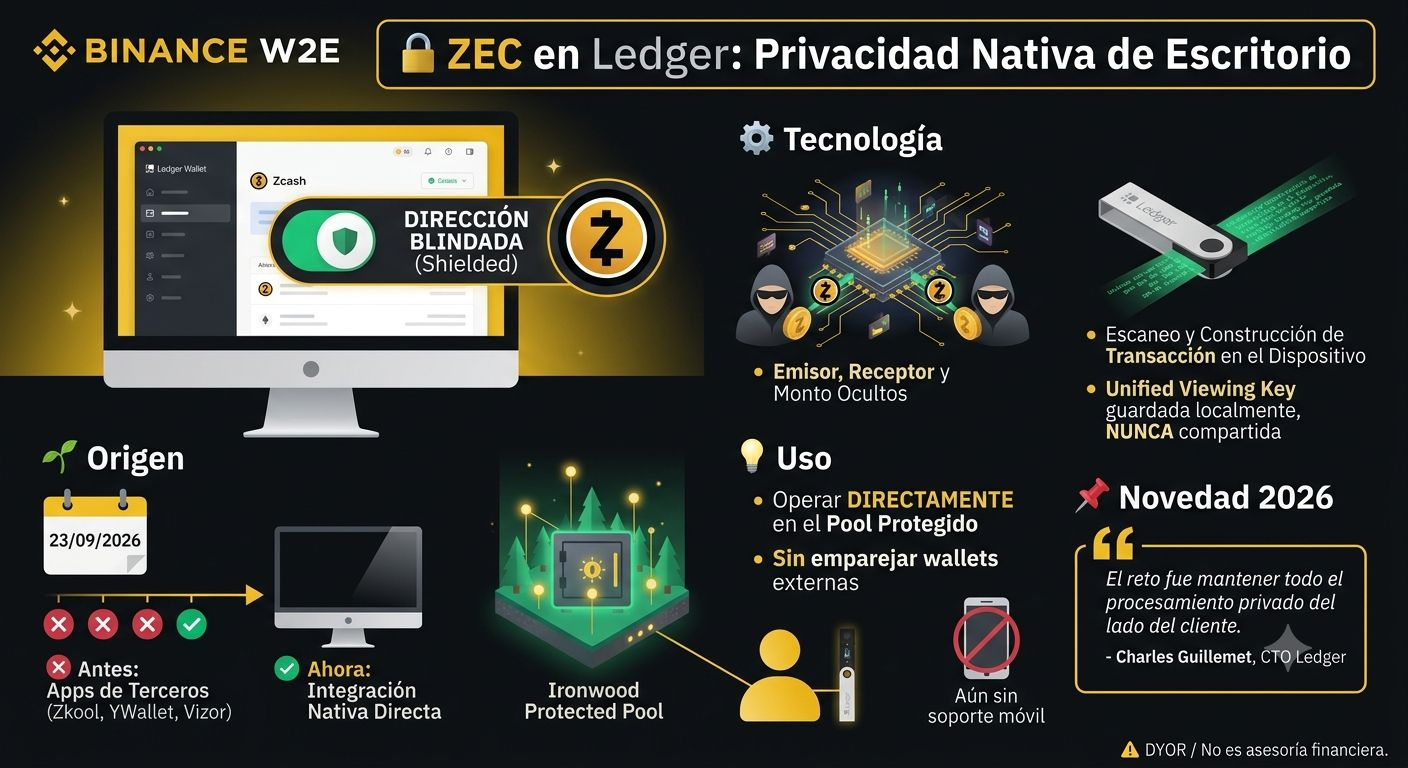
🔐 $ZEC en Ledger: native desktop privacy
🌱 Source: On 23/09/2026, Ledger integrated native management of shielded ZEC into Ledger Wallet Desktop, no longer depending on third-party apps like Zkool, YWallet, or Vizor.
⚙️ Technology: Zcash uses zero-knowledge proofs to hide the sender, receiver, and amount. Now scanning and transaction construction happen on the device itself; the unified viewing key is stored locally and is never shared with Ledger.
💡 Use: Any user with Ledger hardware can operate directly in the protected Ironwood pool, without pairing external wallets. Even without mobile support.
📌 2026 Update: The CTO, Charles Guillemet, confirmed that the challenge was keeping all private processing on the client side.
⚠️ DYOR / Not financial advice
{future}(ZECUSDT)
🔐 $ZEC en Ledger: native desktop privacy
🌱 Source: On 23/09/2026, Ledger integrated native management of shielded ZEC into Ledger Wallet Desktop, no longer depending on third-party apps like Zkool, YWallet, or Vizor.
⚙️ Technology: Zcash uses zero-knowledge proofs to hide the sender, receiver, and amount. Now scanning and transaction construction happen on the device itself; the unified viewing key is stored locally and is never shared with Ledger.
💡 Use: Any user with Ledger hardware can operate directly in the protected Ironwood pool, without pairing external wallets. Even without mobile support.
📌 2026 Update: The CTO, Charles Guillemet, confirmed that the challenge was keeping all private processing on the client side.
⚠️ DYOR / Not financial advice
🌱 Source: On 23/09/2026, Ledger integrated native management of shielded ZEC into Ledger Wallet Desktop, no longer depending on third-party apps like Zkool, YWallet, or Vizor.
⚙️ Technology: Zcash uses zero-knowledge proofs to hide the sender, receiver, and amount. Now scanning and transaction construction happen on the device itself; the unified viewing key is stored locally and is never shared with Ledger.
💡 Use: Any user with Ledger hardware can operate directly in the protected Ironwood pool, without pairing external wallets. Even without mobile support.
📌 2026 Update: The CTO, Charles Guillemet, confirmed that the challenge was keeping all private processing on the client side.
⚠️ DYOR / Not financial advice
2
329
·
--
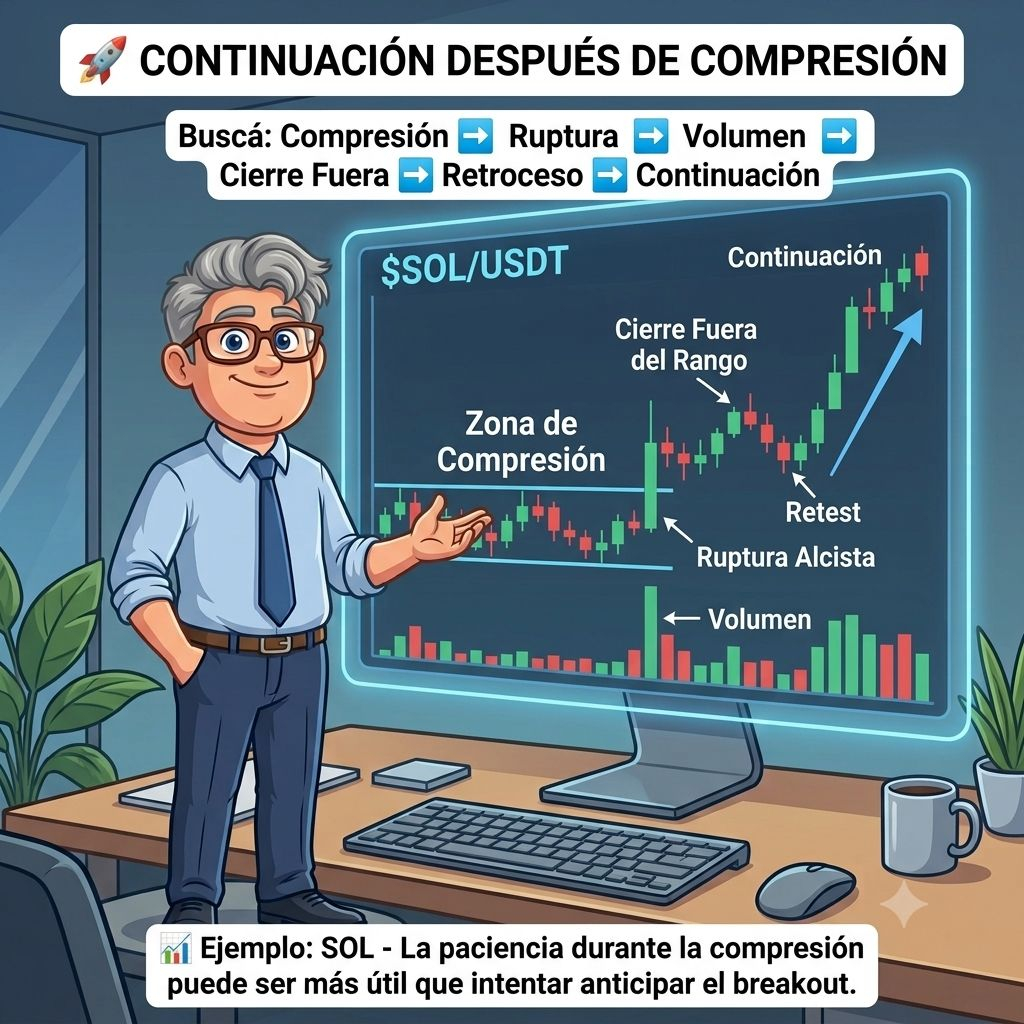
🚀 Continuation after compression
When the price stays in a small range for a long time, volatility may expand afterward.
Look for:
➡️ compression ➡️ breakout ➡️ volume ➡️ close outside the range ➡️ pullback ➡️ continuation
📊 Example: $SOL Several small candles within a narrow zone → bullish breakout → retest → continuation.
💡 Patience during compression can be more useful than trying to anticipate the breakout.
{future}(SOLUSDT)
🚀 Continuation after compression
When the price stays in a small range for a long time, volatility may expand afterward.
Look for:
➡️ compression ➡️ breakout ➡️ volume ➡️ close outside the range ➡️ pullback ➡️ continuation
📊 Example: $SOL Several small candles within a narrow zone → bullish breakout → retest → continuation.
💡 Patience during compression can be more useful than trying to anticipate the breakout.
When the price stays in a small range for a long time, volatility may expand afterward.
Look for:
➡️ compression ➡️ breakout ➡️ volume ➡️ close outside the range ➡️ pullback ➡️ continuation
📊 Example: $SOL Several small candles within a narrow zone → bullish breakout → retest → continuation.
💡 Patience during compression can be more useful than trying to anticipate the breakout.
1
404
·
--
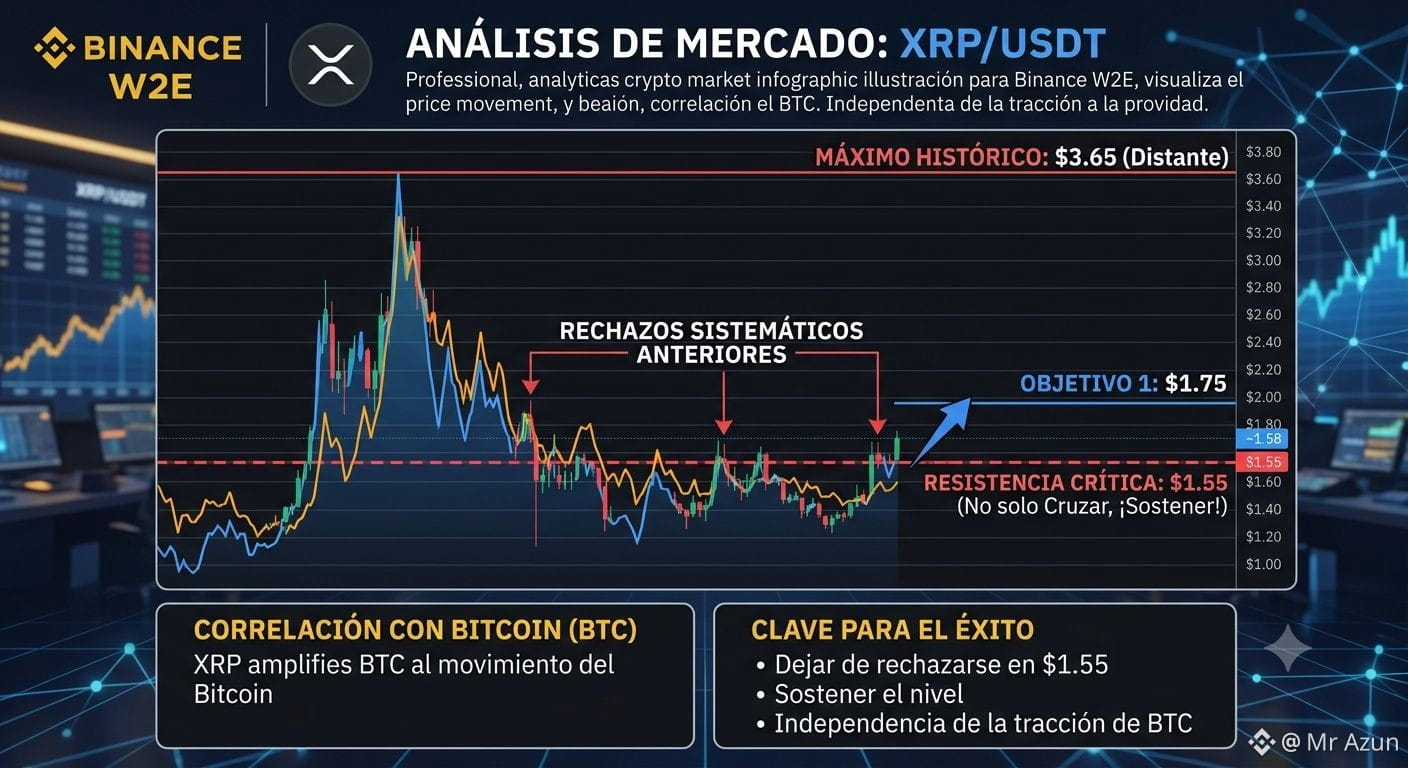
$XRP is very closely correlated with bitcoin, amplifying both its rises and its drops. The key is not only to cross back above $1.55, but to stop being rejected there systematically, and also to hold it even when bitcoin stops driving the market. If it achieves that, the next target would be $1.75; the all-time high ($3.65) is much farther away.
{future}(XRPUSDT)
$XRP is very closely correlated with bitcoin, amplifying both its rises and its drops. The key is not only to cross back above $1.55, but to stop being rejected there systematically, and also to hold it even when bitcoin stops driving the market. If it achieves that, the next target would be $1.75; the all-time high ($3.65) is much farther away.
1
1.1k
·
--
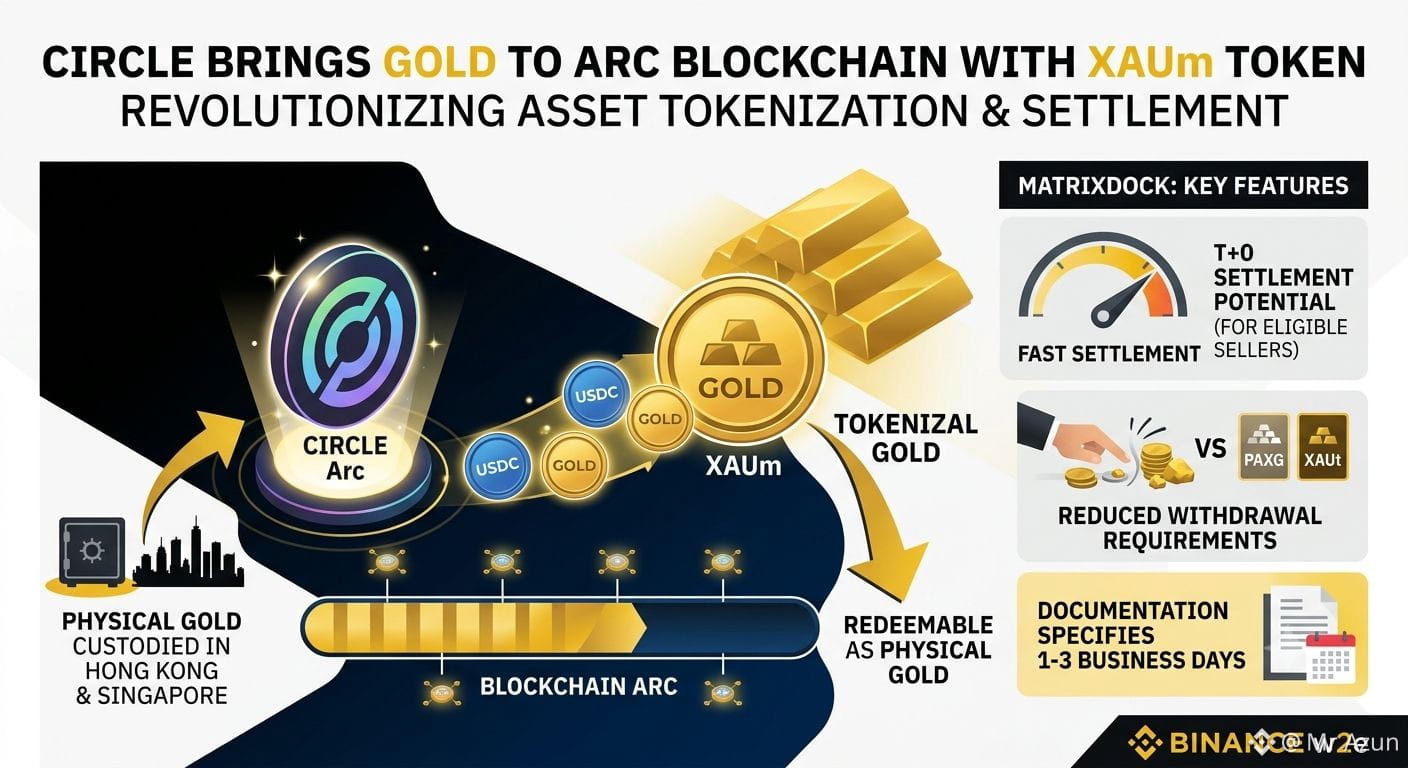
Circle incorporated the first tokenized gold asset into its Arc blockchain via XAUM, a token backed by bullion bars custodied in Hong Kong and Singapore. Matrixdock highlights a potential same-day cash settlement for eligible sellers, although its documentation still allows up to three business days, while the company seeks to differentiate itself from $PAXG and $XAUT with lower requirements to withdraw physical gold.
{future}(XAUTUSDT)
{future}(PAXGUSDT)
Circle incorporated the first tokenized gold asset into its Arc blockchain via XAUM, a token backed by bullion bars custodied in Hong Kong and Singapore. Matrixdock highlights a potential same-day cash settlement for eligible sellers, although its documentation still allows up to three business days, while the company seeks to differentiate itself from $PAXG and $XAUT with lower requirements to withdraw physical gold.
2
524
·
--
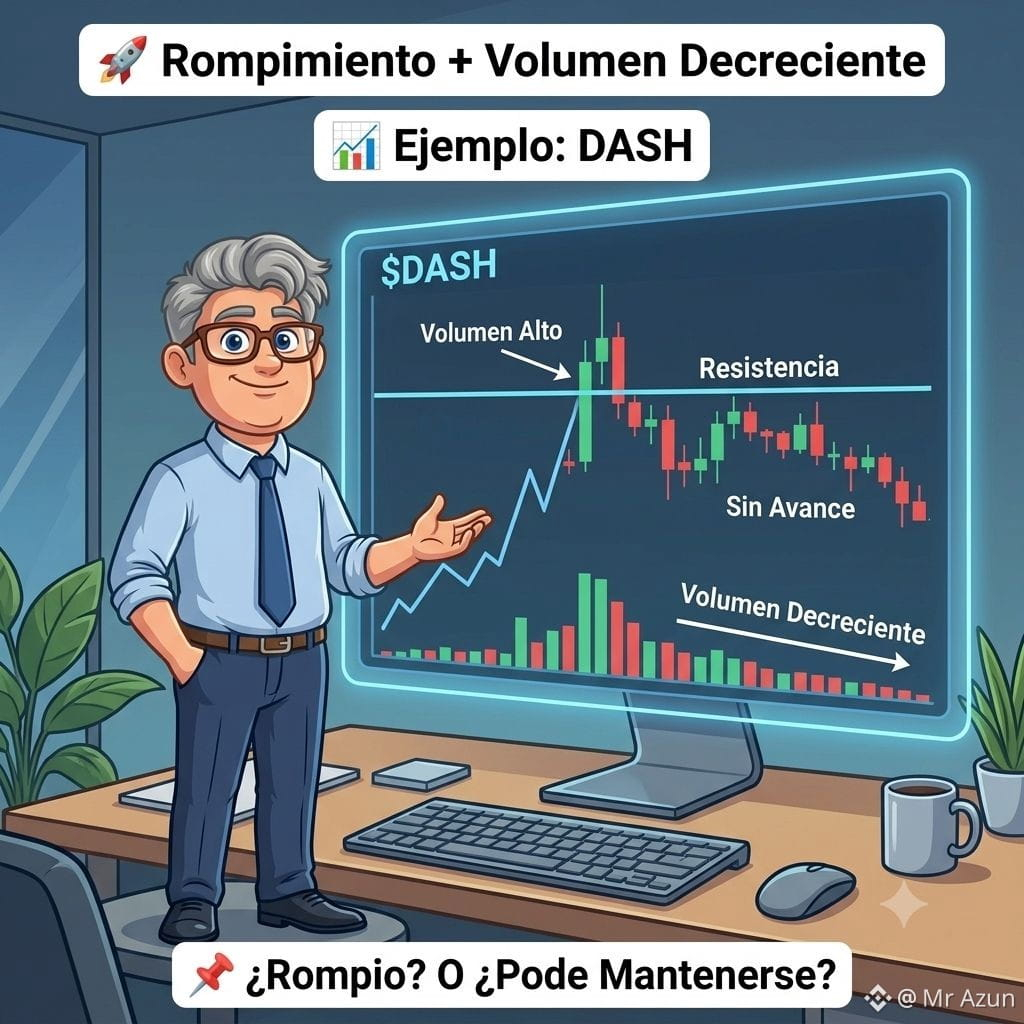
🚀 Breakthrough + decreasing volume
Not every breakout with a large candle means continuation.
Watch what happens next.
📊 Example: $DASH Breaks resistance with high volume, but the following candles show less participation and the price can’t move forward.
That can indicate a loss of momentum.
📌 The question isn’t only “did it break?”. It’s also: “can it hold above it?”.
{future}(DASHUSDT)
🚀 Breakthrough + decreasing volume
Not every breakout with a large candle means continuation.
Watch what happens next.
📊 Example: $DASH Breaks resistance with high volume, but the following candles show less participation and the price can’t move forward.
That can indicate a loss of momentum.
📌 The question isn’t only “did it break?”. It’s also: “can it hold above it?”.
Not every breakout with a large candle means continuation.
Watch what happens next.
📊 Example: $DASH Breaks resistance with high volume, but the following candles show less participation and the price can’t move forward.
That can indicate a loss of momentum.
📌 The question isn’t only “did it break?”. It’s also: “can it hold above it?”.
1
1
620
·
--
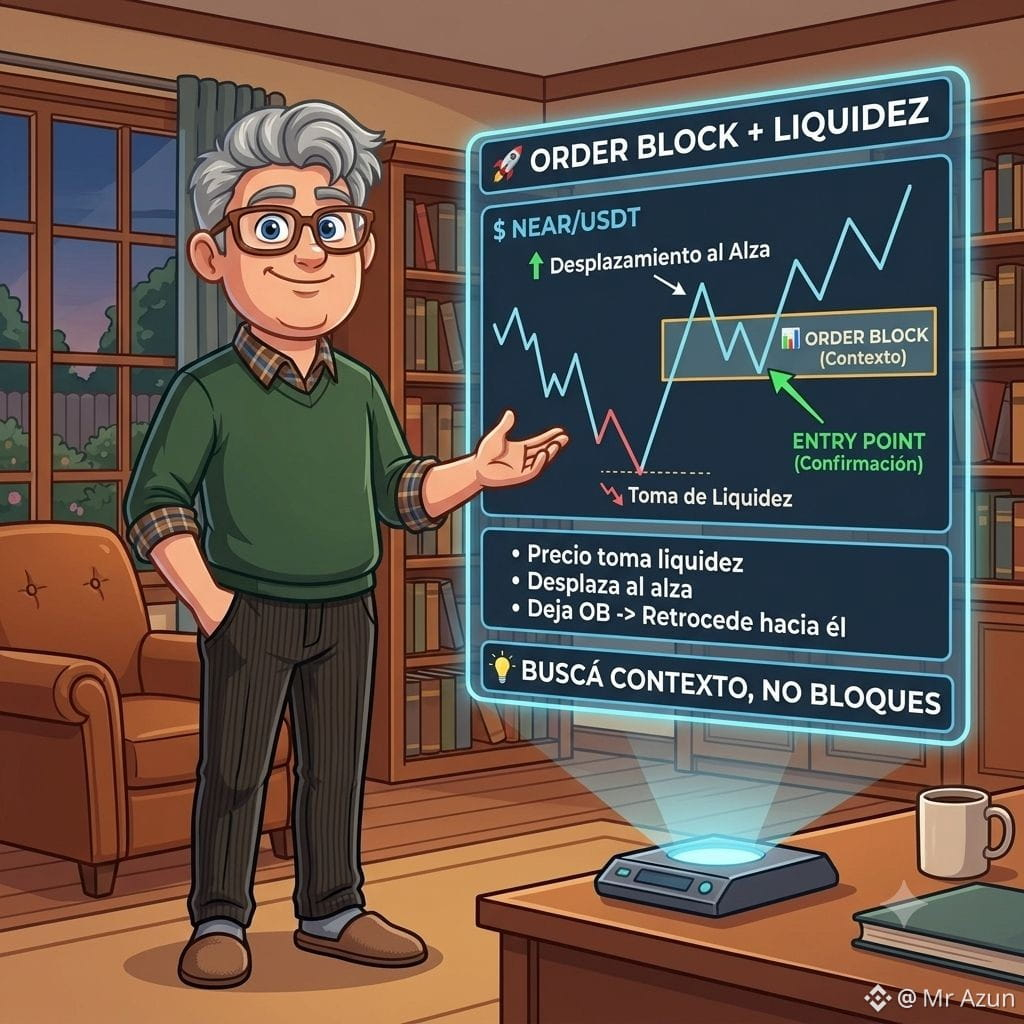
🚀 Order Block + liquidity
An Order Block can gain context when it appears near a liquidity zone.
📊 Example: $NEAR
Price → takes liquidity below a minimum → pushes upward → leaves an Order Block → retraces back to it.
The zone can be used to look for an entry if the structure continues to support the scenario.
💡 This is not about marking blocks on every chart. Look for the ones that have context.
{future}(NEARUSDT)
🚀 Order Block + liquidity
An Order Block can gain context when it appears near a liquidity zone.
📊 Example: $NEAR
Price → takes liquidity below a minimum → pushes upward → leaves an Order Block → retraces back to it.
The zone can be used to look for an entry if the structure continues to support the scenario.
💡 This is not about marking blocks on every chart. Look for the ones that have context.
An Order Block can gain context when it appears near a liquidity zone.
📊 Example: $NEAR
Price → takes liquidity below a minimum → pushes upward → leaves an Order Block → retraces back to it.
The zone can be used to look for an entry if the structure continues to support the scenario.
💡 This is not about marking blocks on every chart. Look for the ones that have context.
3
772
·
--
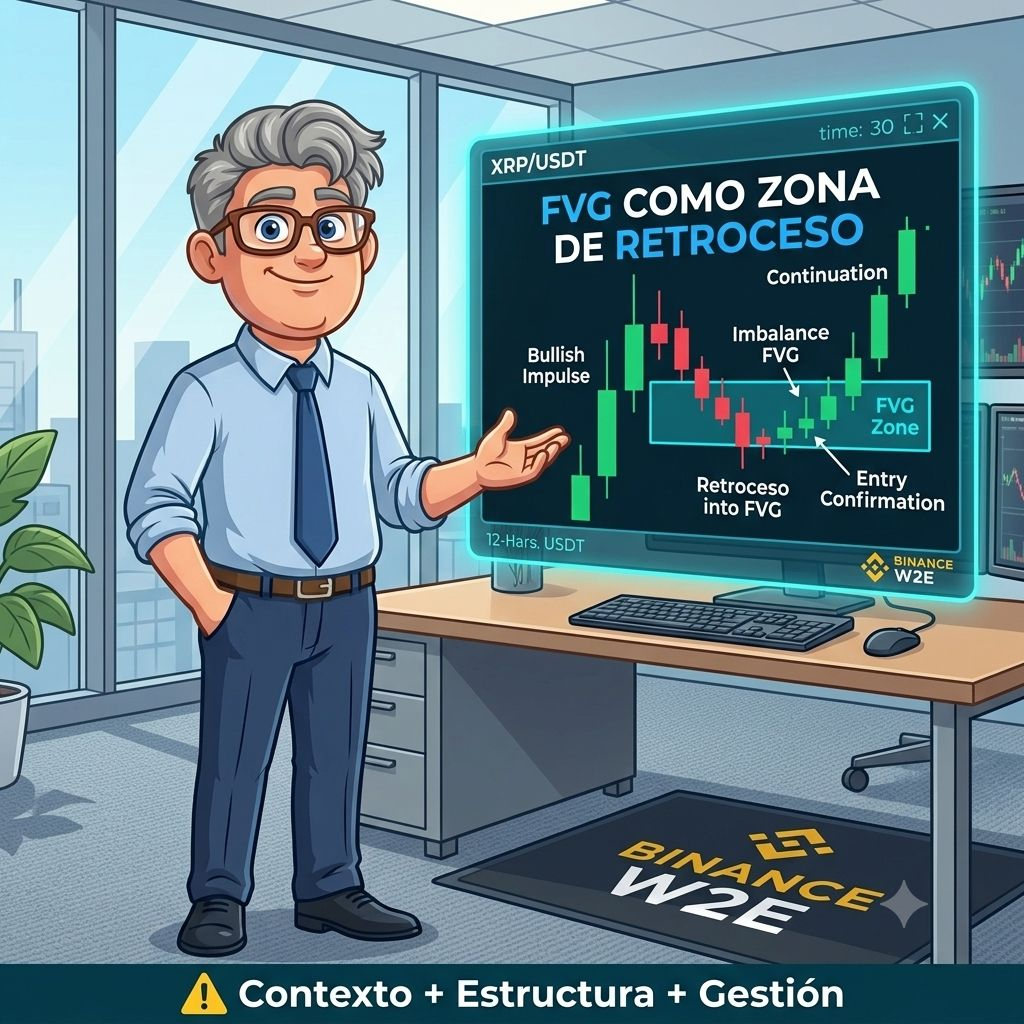
🚀 FVG as a retracement zone
After an impulsive move, a Fair Value Gap may form.
Instead of chasing the price, you expect it to return to that zone.
📊 Example: $XRP Strong bullish move → FVG → retracement into the imbalance → confirmation → continuation.
⚠️ An FVG by itself does not guarantee an entry. Context + structure + risk management are still necessary.
{future}(XRPUSDT)
🚀 FVG as a retracement zone
After an impulsive move, a Fair Value Gap may form.
Instead of chasing the price, you expect it to return to that zone.
📊 Example: $XRP Strong bullish move → FVG → retracement into the imbalance → confirmation → continuation.
⚠️ An FVG by itself does not guarantee an entry. Context + structure + risk management are still necessary.
After an impulsive move, a Fair Value Gap may form.
Instead of chasing the price, you expect it to return to that zone.
📊 Example: $XRP Strong bullish move → FVG → retracement into the imbalance → confirmation → continuation.
⚠️ An FVG by itself does not guarantee an entry. Context + structure + risk management are still necessary.
2
212
·
--
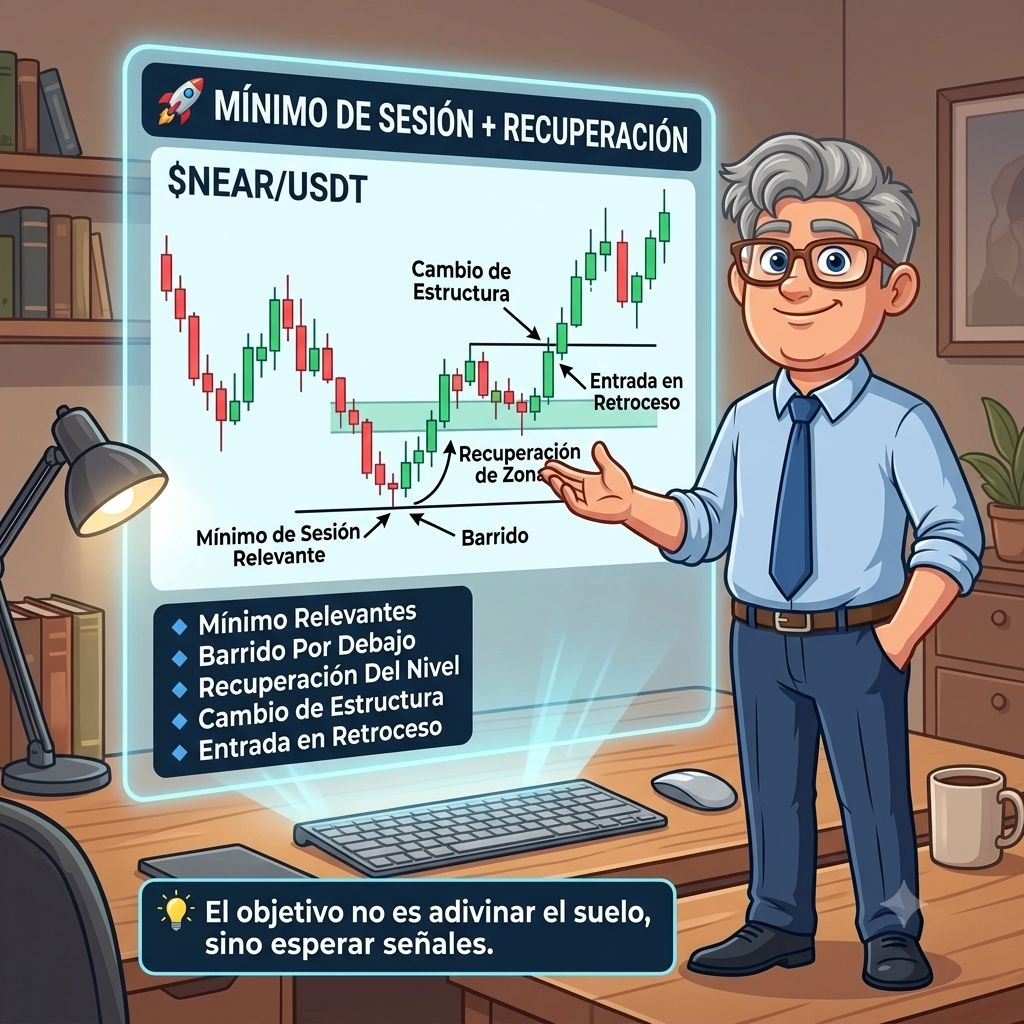
🚀 Session minimum + recovery
The same logic works the other way around.
Look for:
🔹 relevant minimum
🔹 sweep below
🔹 level recovery
🔹 structure change
🔹 pullback entry
📊 Example: $NEAR
The price temporarily loses the minimum, recovers the zone, and subsequently breaks an internal high.
💡 The goal isn’t to guess the floor, but to wait for recovery signals.
{future}(NEARUSDT)
🚀 Session minimum + recovery
The same logic works the other way around.
Look for:
🔹 relevant minimum
🔹 sweep below
🔹 level recovery
🔹 structure change
🔹 pullback entry
📊 Example: $NEAR
The price temporarily loses the minimum, recovers the zone, and subsequently breaks an internal high.
💡 The goal isn’t to guess the floor, but to wait for recovery signals.
The same logic works the other way around.
Look for:
🔹 relevant minimum
🔹 sweep below
🔹 level recovery
🔹 structure change
🔹 pullback entry
📊 Example: $NEAR
The price temporarily loses the minimum, recovers the zone, and subsequently breaks an internal high.
💡 The goal isn’t to guess the floor, but to wait for recovery signals.
2
615
·
--
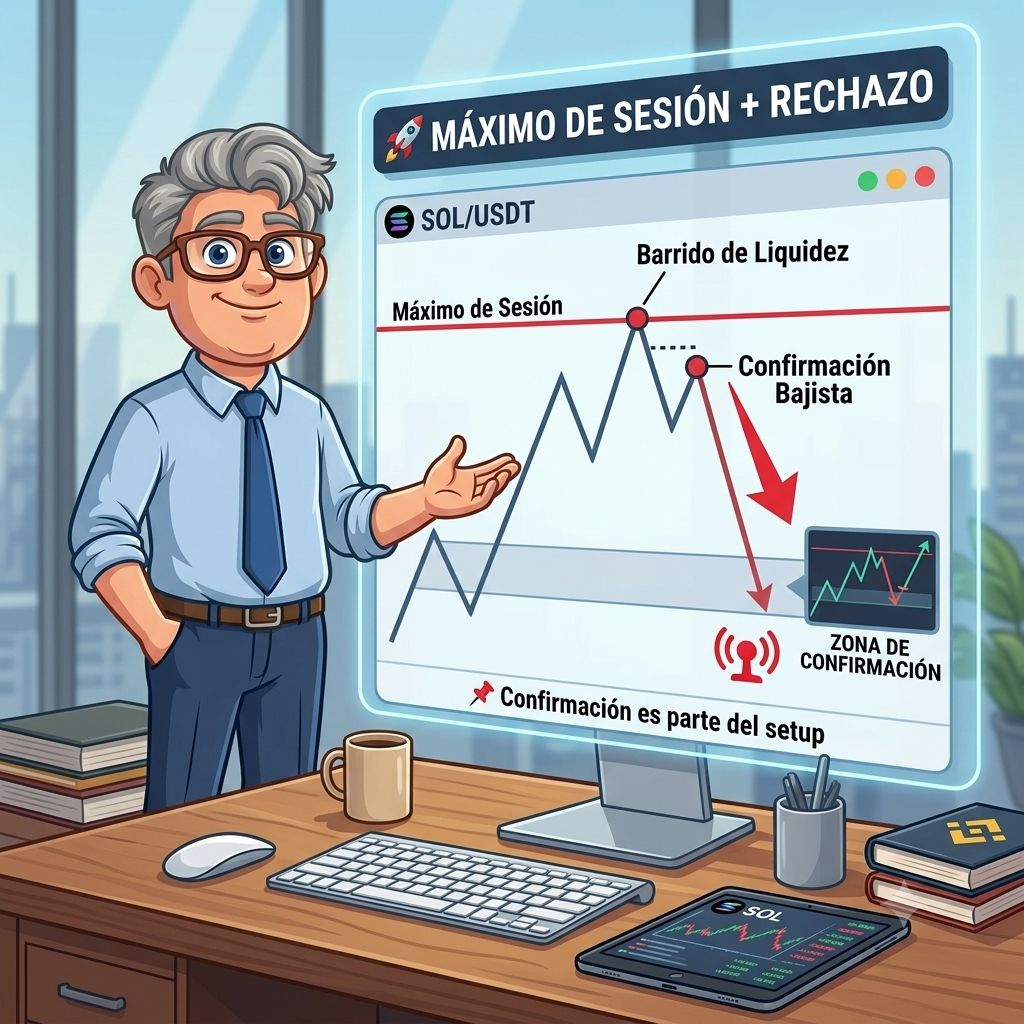
🚀 Maximum session high + rejection
Recent highs and lows often become important zones.
If price reaches the session high, briefly breaks above it, and then falls back below, a liquidity sweep scenario may be present.
📊 Example: $SOL Session high → momentary break → close again below → bearish confirmation.
📌 The entry is not at the simple touch. Confirmation is part of the setup.
{future}(SOLUSDT)
🚀 Maximum session high + rejection
Recent highs and lows often become important zones.
If price reaches the session high, briefly breaks above it, and then falls back below, a liquidity sweep scenario may be present.
📊 Example: $SOL Session high → momentary break → close again below → bearish confirmation.
📌 The entry is not at the simple touch. Confirmation is part of the setup.
Recent highs and lows often become important zones.
If price reaches the session high, briefly breaks above it, and then falls back below, a liquidity sweep scenario may be present.
📊 Example: $SOL Session high → momentary break → close again below → bearish confirmation.
📌 The entry is not at the simple touch. Confirmation is part of the setup.
4
477
·
--
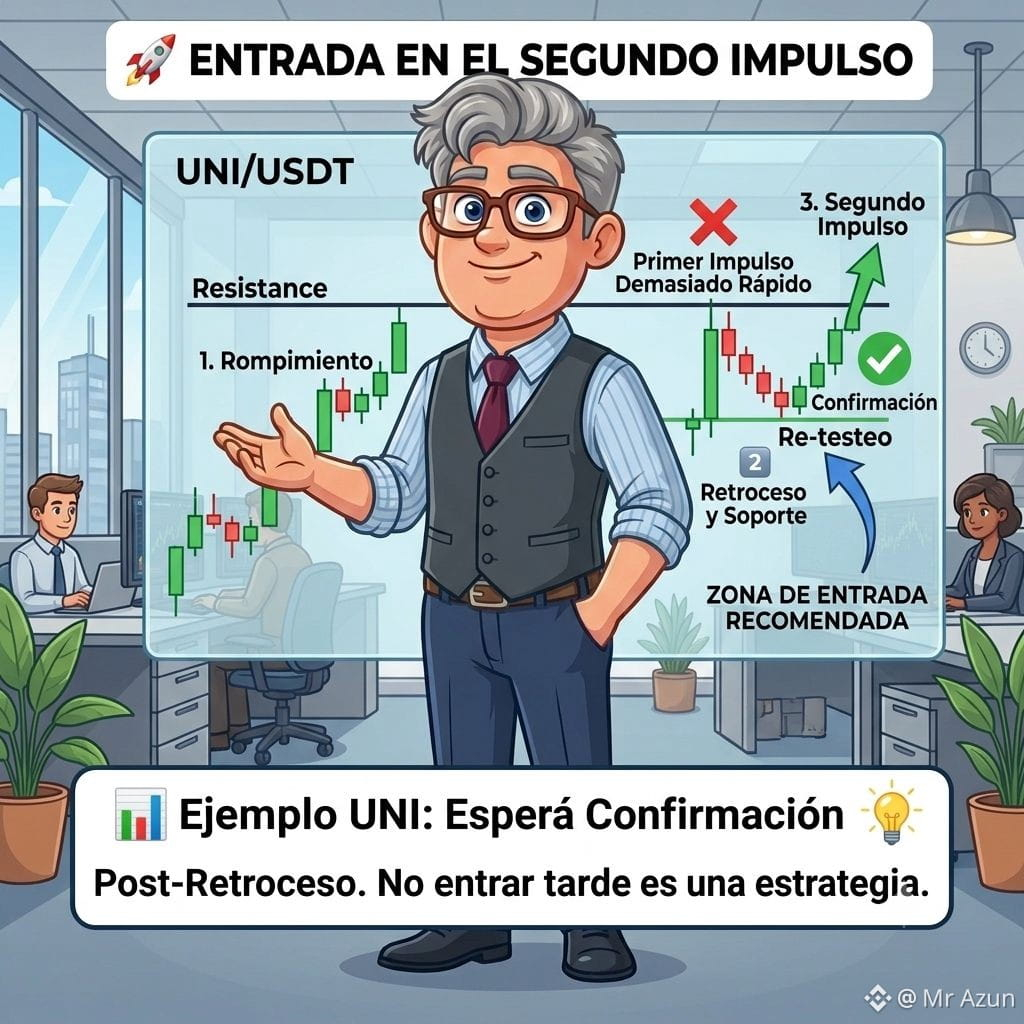
🚀 Entry on the second impulse
Sometimes the first move after a breakout is too fast to enter.
Instead of chasing it, wait for:
➡️ breakout ➡️ pullback ➡️ second impulse
📊 Example: $UNI Breaks a resistance and rises strongly. Instead of buying the first candle, you wait for the pullback. If the broken level acts as support and confirmation appears, you look for the second move.
💡 Not entering late is also a strategy.
{future}(UNIUSDT)
🚀 Entry on the second impulse
Sometimes the first move after a breakout is too fast to enter.
Instead of chasing it, wait for:
➡️ breakout ➡️ pullback ➡️ second impulse
📊 Example: $UNI Breaks a resistance and rises strongly. Instead of buying the first candle, you wait for the pullback. If the broken level acts as support and confirmation appears, you look for the second move.
💡 Not entering late is also a strategy.
Sometimes the first move after a breakout is too fast to enter.
Instead of chasing it, wait for:
➡️ breakout ➡️ pullback ➡️ second impulse
📊 Example: $UNI Breaks a resistance and rises strongly. Instead of buying the first candle, you wait for the pullback. If the broken level acts as support and confirmation appears, you look for the second move.
💡 Not entering late is also a strategy.
1
1
643
·
--
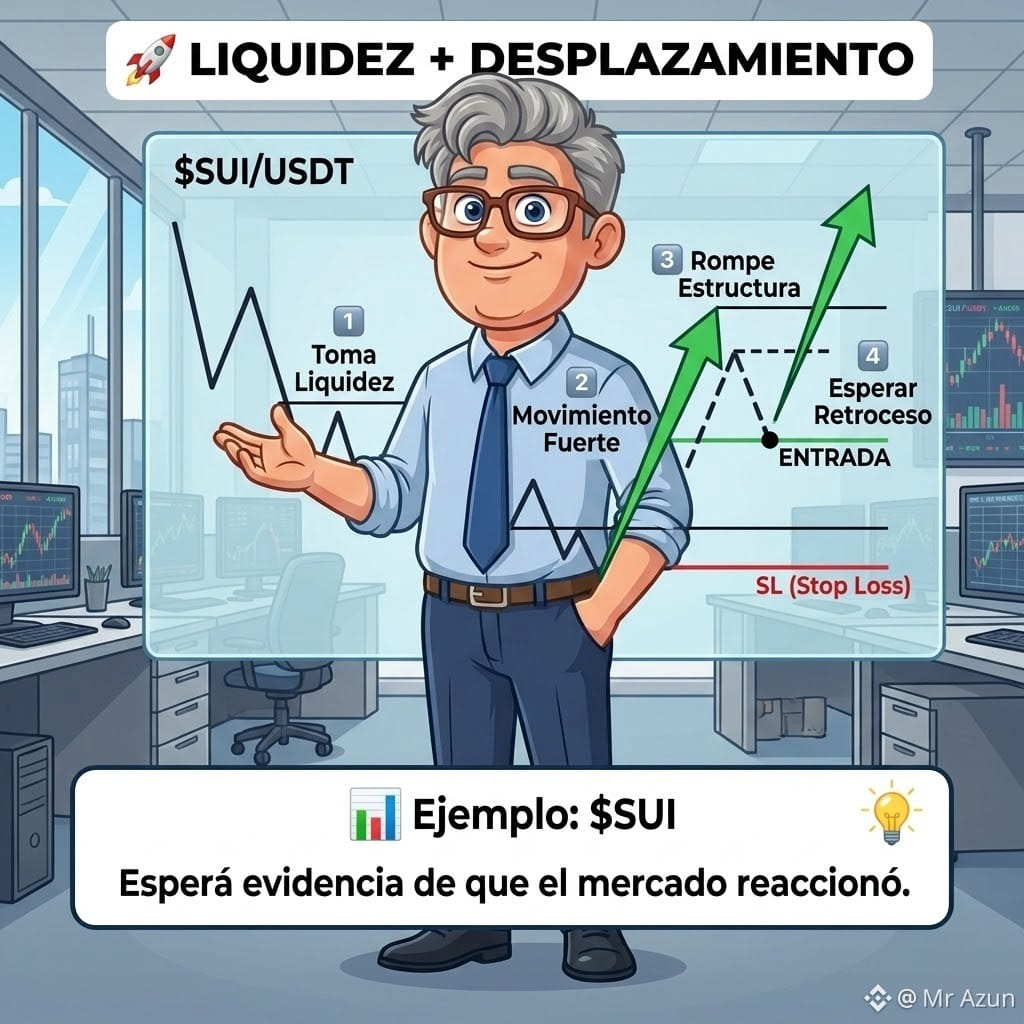
🚀 Liquidity + displacement
Don’t enter just because the price touches a support or resistance.
A more interesting sequence is:
1️⃣ Price takes liquidity.
2️⃣ A strong move appears in the opposite direction.
3️⃣ Structure is broken.
4️⃣ You wait for a pullback to look for an entry.
📊 Example: $SUI It makes a low below a support, recovers quickly, and breaks the last relevant high. The pullback may offer an entry with SL below the low.
💡 The key is to wait for evidence that the market reacted.
{future}(SUIUSDT)
🚀 Liquidity + displacement
Don’t enter just because the price touches a support or resistance.
A more interesting sequence is:
1️⃣ Price takes liquidity.
2️⃣ A strong move appears in the opposite direction.
3️⃣ Structure is broken.
4️⃣ You wait for a pullback to look for an entry.
📊 Example: $SUI It makes a low below a support, recovers quickly, and breaks the last relevant high. The pullback may offer an entry with SL below the low.
💡 The key is to wait for evidence that the market reacted.
Don’t enter just because the price touches a support or resistance.
A more interesting sequence is:
1️⃣ Price takes liquidity.
2️⃣ A strong move appears in the opposite direction.
3️⃣ Structure is broken.
4️⃣ You wait for a pullback to look for an entry.
📊 Example: $SUI It makes a low below a support, recovers quickly, and breaks the last relevant high. The pullback may offer an entry with SL below the low.
💡 The key is to wait for evidence that the market reacted.
1
4
853
·
--
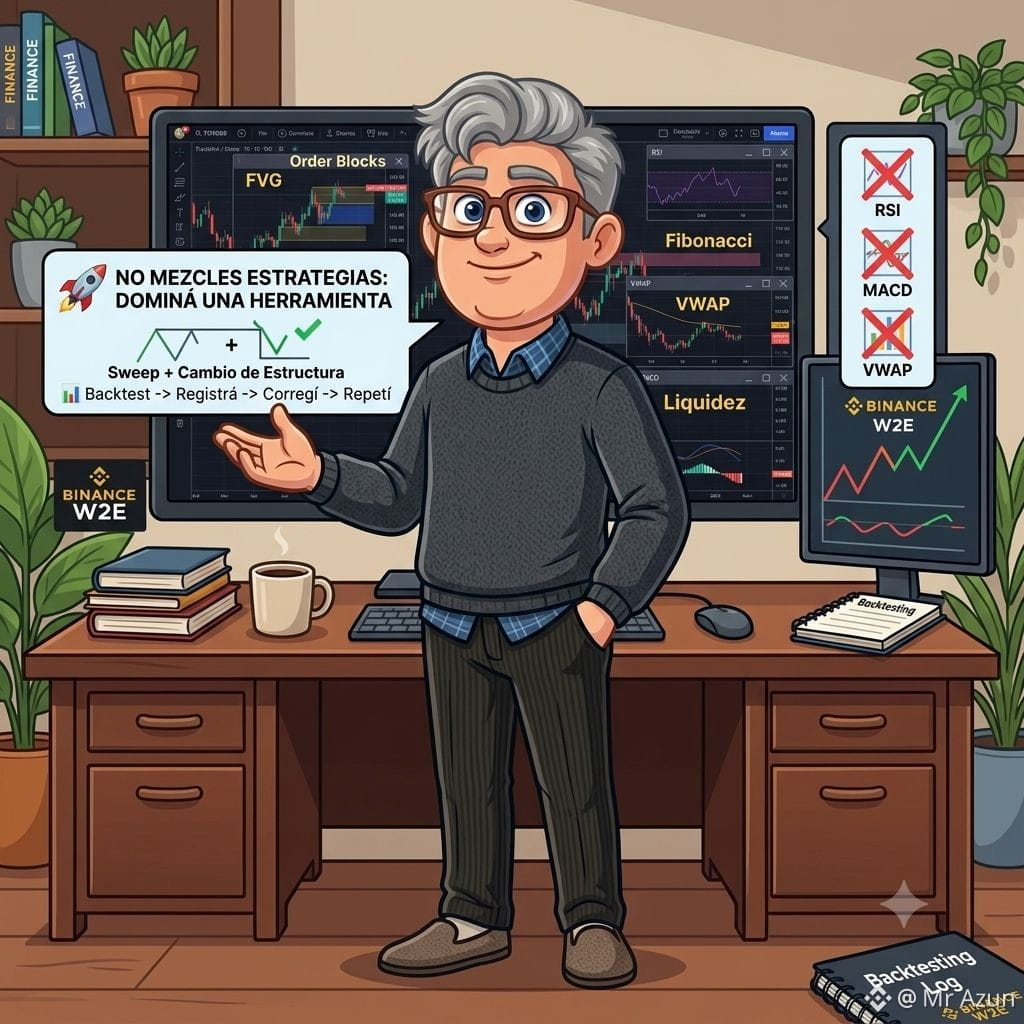
🚀 Don’t mix all strategies at the same time
This advice is especially important for beginners.
Learn:
❌ FVG
❌ Order Blocks
❌ RSI
❌ Fibonacci
❌ VWAP
❌ Liquidity
❌ MACD
...doing all of them simultaneously can create more confusion than knowledge.
📊 Choose one strategy, for example:
Sweep + change of structure.
Backtest → record results → fix → repeat.
💡 First, try to master one tool.
👉 Then add another.
{future}(SOLUSDT)
{future}(BNBUSDT)
🚀 Don’t mix all strategies at the same time
This advice is especially important for beginners.
Learn:
❌ FVG
❌ Order Blocks
❌ RSI
❌ Fibonacci
❌ VWAP
❌ Liquidity
❌ MACD
...doing all of them simultaneously can create more confusion than knowledge.
📊 Choose one strategy, for example:
Sweep + change of structure.
Backtest → record results → fix → repeat.
💡 First, try to master one tool.
👉 Then add another.
This advice is especially important for beginners.
Learn:
❌ FVG
❌ Order Blocks
❌ RSI
❌ Fibonacci
❌ VWAP
❌ Liquidity
❌ MACD
...doing all of them simultaneously can create more confusion than knowledge.
📊 Choose one strategy, for example:
Sweep + change of structure.
Backtest → record results → fix → repeat.
💡 First, try to master one tool.
👉 Then add another.
1
4
288
Log in to explore more content
Join global crypto users on Binance Square
⚡️ Get latest and useful information about crypto.
💬 Trusted by the world’s largest crypto exchange.
👍 Discover real insights from verified creators.
Email / Phone number
Trending Topics
TrumpRejectsAIRulesForVoluntaryAudits
1,956 views
131 Discussing
Super Intelligence" & The AI Policy Shift: Self-Policing or a Risky Gamble?
Nurul Hasnat Samir
·0 Likes
·341 views
BitgetHotWalletBreachTiedToThirdPartySecurityFlaw
905 views
99 Discussing
OpenAIUnveilsAlwaysOnAgentDots
2,002 views
147 Discussing