

Seba1988
756 Posts

Seba1988
Report
Block User
ESTUDO, PERSISTÊNCIA, PACIÊNCIA E DISCIPLINA. ISSO SERVE PARA O MUNDO CRIPTO E PARA VIDA
Open Trade
High-Frequency Trader
5.1 Years
966 Following
598 Followers
1.0K+ Liked
Posts
Portfolio
All
Quotes
Videos
PINNED
·
--
Bullish
$BTC
Study the futures market. Test your knowledge with a trading test first. But test many times. And only if you really have it—make sure you do it. Only if you have money that won’t be missed—start trading with real money. Anyone who doesn’t listen to this loses savings from a lifetime in the futures market.
$BTC
Study the futures market. Test your knowledge with a trading test first. But test many times. And only if you really have it—make sure you do it. Only if you have money that won’t be missed—start trading with real money. Anyone who doesn’t listen to this loses savings from a lifetime in the futures market.
Study the futures market. Test your knowledge with a trading test first. But test many times. And only if you really have it—make sure you do it. Only if you have money that won’t be missed—start trading with real money. Anyone who doesn’t listen to this loses savings from a lifetime in the futures market.
12
2
49
366
·
--
Bullish
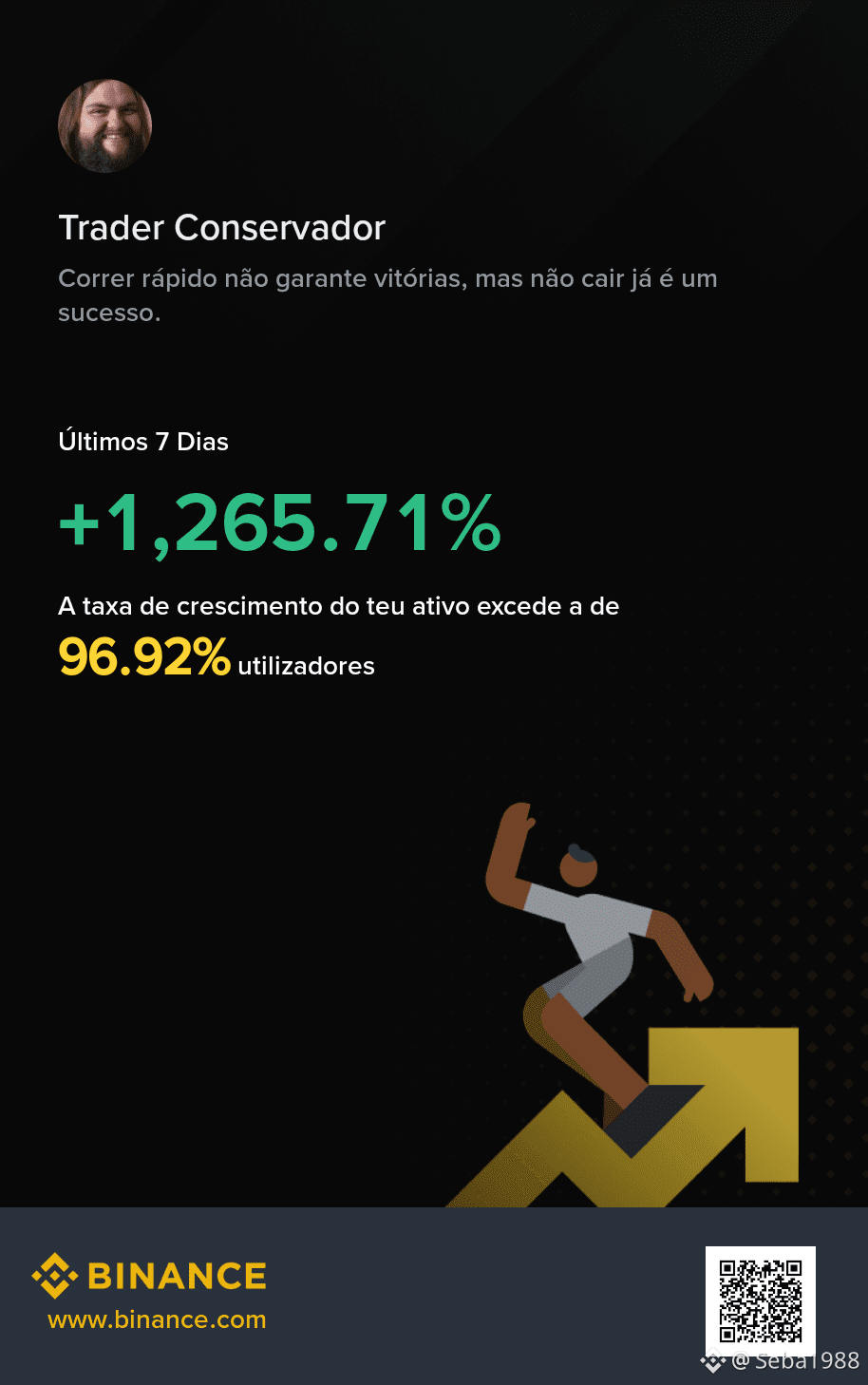
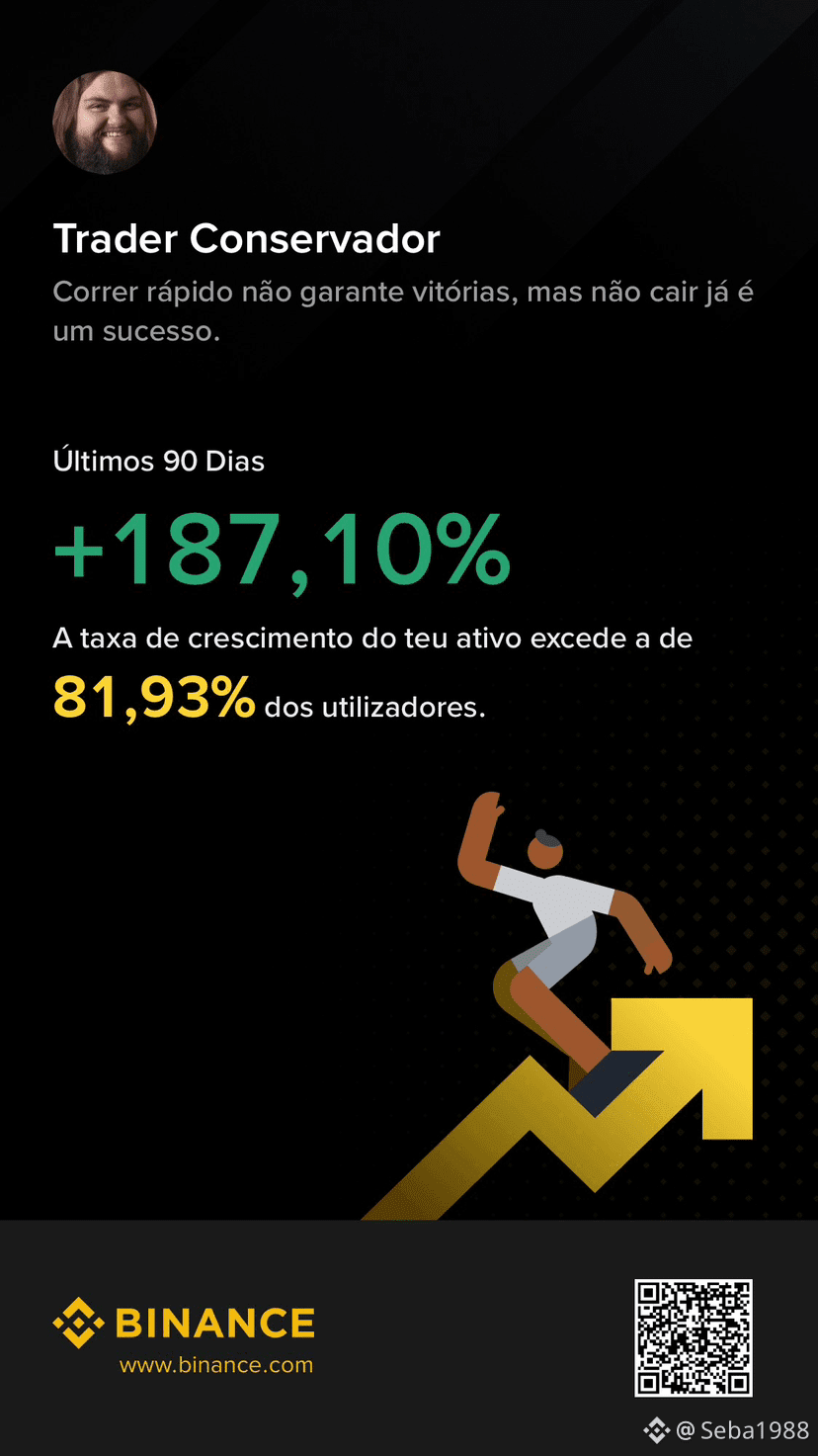
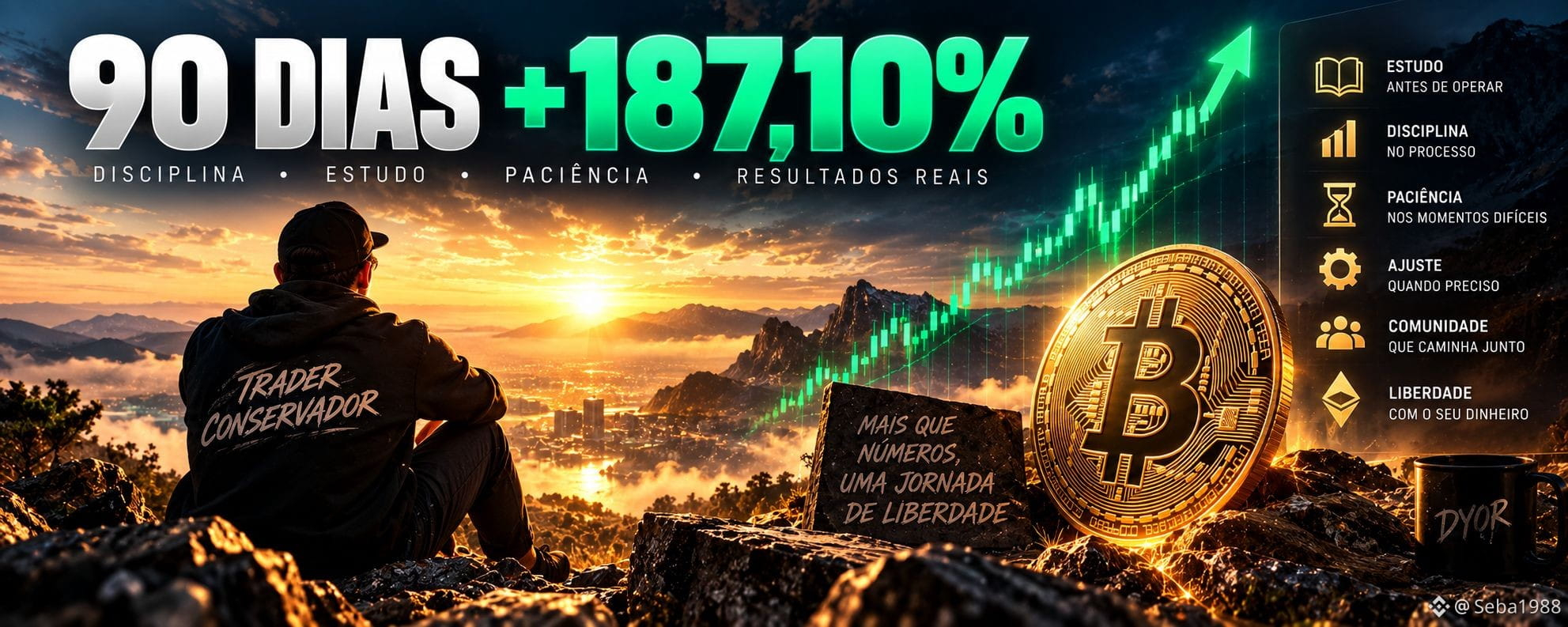
90 days, +187.10%. And it wasn’t luck.
I want to share this with you because nothing here happened overnight. It was study, it was discipline—of not rushing after every miracle promise; it was patience to hold my position when the market tested my conviction; and it was persistence in continuing to learn, make mistakes, and adjust the course. “Conservative Trader” isn’t about being timid—it’s about respecting the process, understanding that running too fast doesn’t guarantee victory, but not falling already is, by itself, a way of winning.
And this result exists only because, at some point, I decided to truly believe in the proposal that Bitcoin and the crypto world bring: decentralization, autonomy over your own money, real financial freedom—without depending on any intermediary to decide what I can or can’t do with what is mine. That belief is the engine behind every study, every analysis, every cold decision made amid the market’s euphoria or panic.
A sincere thank-you to everyone who follows this project day after day. You who comment, share, ask questions, exchange ideas—you’re directly part of this result. This space only makes sense because there’s people on the other side who are believing together in this vision of a fairer and more accessible financial system.
And if you’re not part of this world yet, or you’re starting now and feel lost: there’s still time. Nobody is born knowing. Start slowly, study before risking, be patient with the process—the results come from accumulation, not shortcuts.
Follow along on the profile, turn on the bell, be part of this journey. Let’s build financial freedom together, one day at a time.
@Aaronsilva88 🚀🚀🚀
This is not financial advice. Past results do not guarantee future results. DYOR.
$BTC
{spot}(BTCUSDT)
$ETH
{spot}(ETHUSDT)
$BNB
{spot}(BNBUSDT)
#btc #ETH #bnb #Descentralización #liberdadefinanceira
90 days, +187.10%. And it wasn’t luck.
I want to share this with you because nothing here happened overnight. It was study, it was discipline—of not rushing after every miracle promise; it was patience to hold my position when the market tested my conviction; and it was persistence in continuing to learn, make mistakes, and adjust the course. “Conservative Trader” isn’t about being timid—it’s about respecting the process, understanding that running too fast doesn’t guarantee victory, but not falling already is, by itself, a way of winning.
And this result exists only because, at some point, I decided to truly believe in the proposal that Bitcoin and the crypto world bring: decentralization, autonomy over your own money, real financial freedom—without depending on any intermediary to decide what I can or can’t do with what is mine. That belief is the engine behind every study, every analysis, every cold decision made amid the market’s euphoria or panic.
A sincere thank-you to everyone who follows this project day after day. You who comment, share, ask questions, exchange ideas—you’re directly part of this result. This space only makes sense because there’s people on the other side who are believing together in this vision of a fairer and more accessible financial system.
And if you’re not part of this world yet, or you’re starting now and feel lost: there’s still time. Nobody is born knowing. Start slowly, study before risking, be patient with the process—the results come from accumulation, not shortcuts.
Follow along on the profile, turn on the bell, be part of this journey. Let’s build financial freedom together, one day at a time.
@Seba1988 🚀🚀🚀
This is not financial advice. Past results do not guarantee future results. DYOR.
$BTC
$ETH
$BNB
#btc #ETH #bnb #Descentralización #liberdadefinanceira
I want to share this with you because nothing here happened overnight. It was study, it was discipline—of not rushing after every miracle promise; it was patience to hold my position when the market tested my conviction; and it was persistence in continuing to learn, make mistakes, and adjust the course. “Conservative Trader” isn’t about being timid—it’s about respecting the process, understanding that running too fast doesn’t guarantee victory, but not falling already is, by itself, a way of winning.
And this result exists only because, at some point, I decided to truly believe in the proposal that Bitcoin and the crypto world bring: decentralization, autonomy over your own money, real financial freedom—without depending on any intermediary to decide what I can or can’t do with what is mine. That belief is the engine behind every study, every analysis, every cold decision made amid the market’s euphoria or panic.
A sincere thank-you to everyone who follows this project day after day. You who comment, share, ask questions, exchange ideas—you’re directly part of this result. This space only makes sense because there’s people on the other side who are believing together in this vision of a fairer and more accessible financial system.
And if you’re not part of this world yet, or you’re starting now and feel lost: there’s still time. Nobody is born knowing. Start slowly, study before risking, be patient with the process—the results come from accumulation, not shortcuts.
Follow along on the profile, turn on the bell, be part of this journey. Let’s build financial freedom together, one day at a time.
@Seba1988 🚀🚀🚀
This is not financial advice. Past results do not guarantee future results. DYOR.
$BTC
$ETH
$BNB
#btc #ETH #bnb #Descentralización #liberdadefinanceira
4
563
·
--
Bullish
We reached our goal, friends—one more for the books. $USUAL let’s go full throttle 🚀🚀🚀
{future}(USUALUSDT)
#usual #TradingSignals #FutureTradingSignals #analysis #StrategicTrading
We reached our goal, friends—one more for the books. $USUAL let’s go full throttle 🚀🚀🚀
#usual #TradingSignals #FutureTradingSignals #analysis #StrategicTrading
#usual #TradingSignals #FutureTradingSignals #analysis #StrategicTrading
Seba1988
·
--
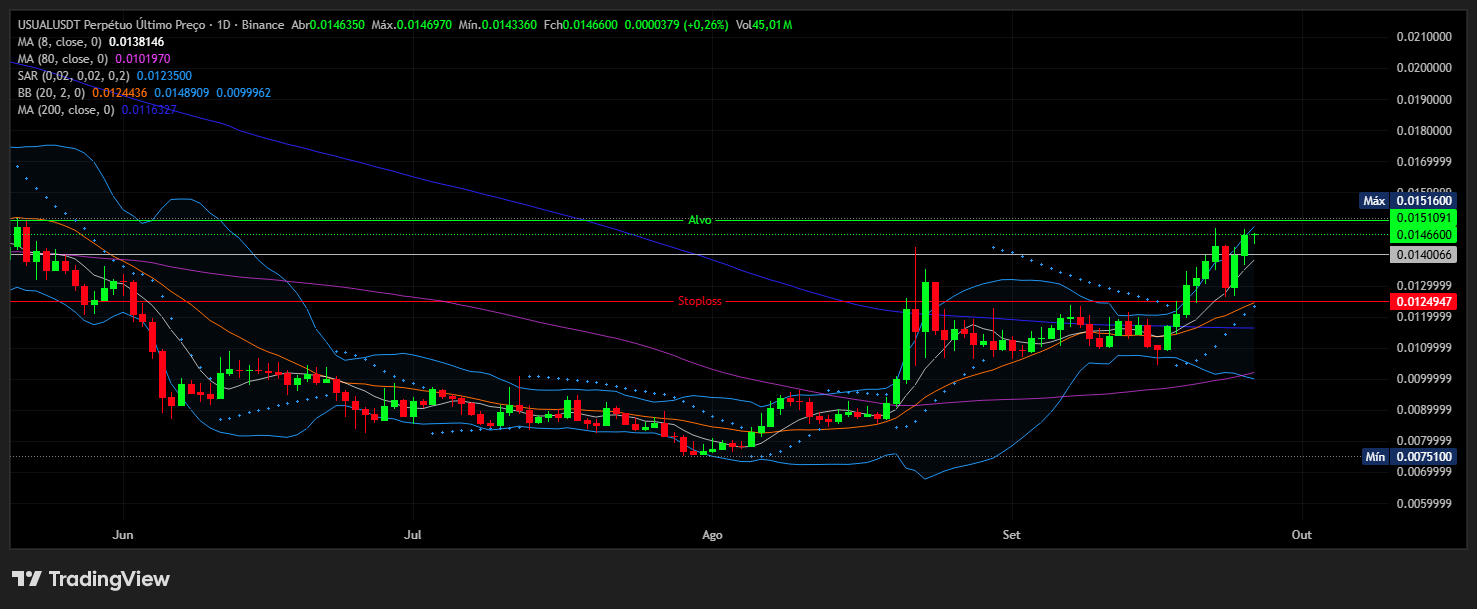
BullishUSUAL/USDT is approaching a decisive region on the daily chart. Based on my reading, the high is likely to go a bit further. Below is the position with a short target.
🟢 LONG | $USUAL
🚪 Entry: 0,0144800, if the price returns to this region and shows a buying reaction. I won’t chase the high above the entry.
🎯 Target: 0,0150100
🛑 Stop loss: 0,0124882 (The stop is set quite far, so I advise you to closely monitor this position—if you see the upward move losing momentum, we can close the position before the StopLoss.)
Stop loss is a safety measure to reduce losses, but nothing prevents closing a position earlier.
The price has risen above the short moving averages and is approaching the upper Bollinger Band. This favors the continuation of the move, but also calls for caution: StochRSI is already in an elevated region. That’s why the target is for a short, quick trade to strengthen the Cash.
#usual #TradingSignals #cryptotrading #BinanceSquare
🟢 LONG | $USUAL
🚪 Entry: 0,0144800, if the price returns to this region and shows a buying reaction. I won’t chase the high above the entry.
🎯 Target: 0,0150100
🛑 Stop loss: 0,0124882 (The stop is set quite far, so I advise you to closely monitor this position—if you see the upward move losing momentum, we can close the position before the StopLoss.)
Stop loss is a safety measure to reduce losses, but nothing prevents closing a position earlier.
The price has risen above the short moving averages and is approaching the upper Bollinger Band. This favors the continuation of the move, but also calls for caution: StochRSI is already in an elevated region. That’s why the target is for a short, quick trade to strengthen the Cash.
#usual #TradingSignals #cryptotrading #BinanceSquare
3
390
·
--
Bullish
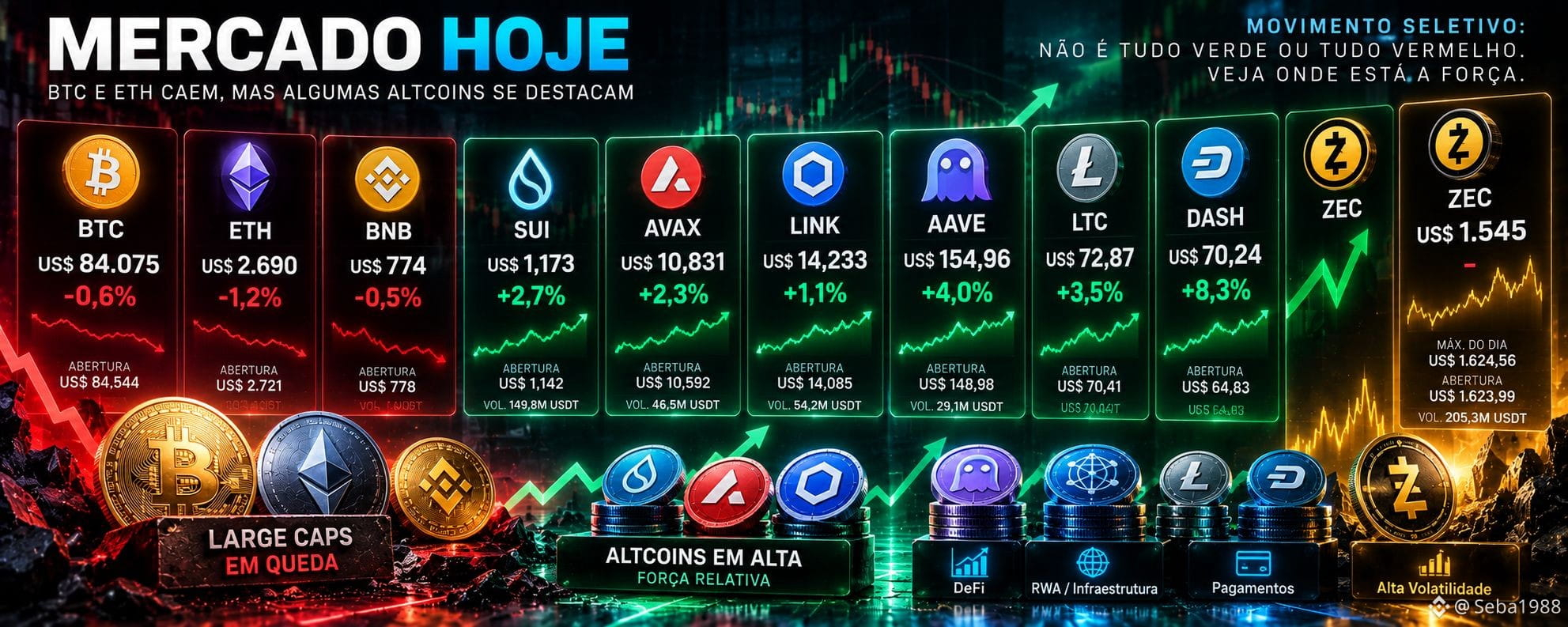
📊 BTC E ETH CAEM, MAS ALGUMAS ALTCOINS NADAM CONTRA A CORRENTE
Today’s market shows something important for beginners: a drop in Bitcoin doesn’t mean every coin must fall together.
In this session, $BTC is down about 0.6%, from US$ 84,544 to US$ 84,075. ETH drops by roughly 1.2%, moving from US$ 2,721 to US$ 2,690.
$BNB is also negative, but holds up better: around -0.5%. That’s relative strength — it doesn’t mean it’s going up, only that it’s losing less than BTC and $ETH.
🔥 So where does the strength show up?
$SUI is advancing about +2.7%, while $AVAX rises 2.3%. When relevant altcoins move up even as BTC and ETH are weak, a capital rotation may be happening: money leaving one part of the market and entering another.
$LINK stays positive, near +1.1%. Chainlink is tied to blockchain infrastructure and real-world asset tokenization, the so-called RWA.
In DeFi, the sector that brings financial services to the blockchain, the highlight is $AAVE: approximately +4%. For newcomers, think of Aave as lending infrastructure and other operations without a traditional bank at the center.
Among older projects, $LTC is up around 3.5%, while $DASH stands out with roughly +8.3%.
⚠️ And what about $ZEC?
Here it’s important to be careful. Even though it reaches US$ 1,624.56 in the session, it’s near US$ 1,545, below the US$ 1,623.99 open. With over US$ 205 million in volume and strong swings, this is a high-volatility case — not a sign that the whole market is strong.
💡 WHAT DOES THIS SHOW?
We don’t have a broad rally. The move is selective: BTC and ETH are under pressure, while some altcoins and sectors show relative strength.
For beginners, the main lesson is this: don’t just look at whether “the market is up or down.” Watch which coins and sectors are attracting strength.
#zec #AAVE #bnb #BTC #ETH
{spot}(ETHUSDT)
{spot}(BNBUSDT)
{spot}(BTCUSDT)
📊 BTC E ETH CAEM, MAS ALGUMAS ALTCOINS NADAM CONTRA A CORRENTE
Today’s market shows something important for beginners: a drop in Bitcoin doesn’t mean every coin must fall together.
In this session, $BTC is down about 0.6%, from US$ 84,544 to US$ 84,075. ETH drops by roughly 1.2%, moving from US$ 2,721 to US$ 2,690.
$BNB is also negative, but holds up better: around -0.5%. That’s relative strength — it doesn’t mean it’s going up, only that it’s losing less than BTC and $ETH.
🔥 So where does the strength show up?
$SUI is advancing about +2.7%, while $AVAX rises 2.3%. When relevant altcoins move up even as BTC and ETH are weak, a capital rotation may be happening: money leaving one part of the market and entering another.
$LINK stays positive, near +1.1%. Chainlink is tied to blockchain infrastructure and real-world asset tokenization, the so-called RWA.
In DeFi, the sector that brings financial services to the blockchain, the highlight is $AAVE: approximately +4%. For newcomers, think of Aave as lending infrastructure and other operations without a traditional bank at the center.
Among older projects, $LTC is up around 3.5%, while $DASH stands out with roughly +8.3%.
⚠️ And what about $ZEC?
Here it’s important to be careful. Even though it reaches US$ 1,624.56 in the session, it’s near US$ 1,545, below the US$ 1,623.99 open. With over US$ 205 million in volume and strong swings, this is a high-volatility case — not a sign that the whole market is strong.
💡 WHAT DOES THIS SHOW?
We don’t have a broad rally. The move is selective: BTC and ETH are under pressure, while some altcoins and sectors show relative strength.
For beginners, the main lesson is this: don’t just look at whether “the market is up or down.” Watch which coins and sectors are attracting strength.
#zec #AAVE #bnb #BTC #ETH
Today’s market shows something important for beginners: a drop in Bitcoin doesn’t mean every coin must fall together.
In this session, $BTC is down about 0.6%, from US$ 84,544 to US$ 84,075. ETH drops by roughly 1.2%, moving from US$ 2,721 to US$ 2,690.
$BNB is also negative, but holds up better: around -0.5%. That’s relative strength — it doesn’t mean it’s going up, only that it’s losing less than BTC and $ETH.
🔥 So where does the strength show up?
$SUI is advancing about +2.7%, while $AVAX rises 2.3%. When relevant altcoins move up even as BTC and ETH are weak, a capital rotation may be happening: money leaving one part of the market and entering another.
$LINK stays positive, near +1.1%. Chainlink is tied to blockchain infrastructure and real-world asset tokenization, the so-called RWA.
In DeFi, the sector that brings financial services to the blockchain, the highlight is $AAVE: approximately +4%. For newcomers, think of Aave as lending infrastructure and other operations without a traditional bank at the center.
Among older projects, $LTC is up around 3.5%, while $DASH stands out with roughly +8.3%.
⚠️ And what about $ZEC?
Here it’s important to be careful. Even though it reaches US$ 1,624.56 in the session, it’s near US$ 1,545, below the US$ 1,623.99 open. With over US$ 205 million in volume and strong swings, this is a high-volatility case — not a sign that the whole market is strong.
💡 WHAT DOES THIS SHOW?
We don’t have a broad rally. The move is selective: BTC and ETH are under pressure, while some altcoins and sectors show relative strength.
For beginners, the main lesson is this: don’t just look at whether “the market is up or down.” Watch which coins and sectors are attracting strength.
#zec #AAVE #bnb #BTC #ETH
1
6
2.6k
·
--
Bullish
USUAL/USDT is approaching a decisive region on the daily chart. Based on my reading, the high is likely to go a bit further. Below is the position with a short target.
🟢 LONG | $USUAL
🚪 Entry: 0,0144800, if the price returns to this region and shows a buying reaction. I won’t chase the high above the entry.
🎯 Target: 0,0150100
🛑 Stop loss: 0,0124882 (The stop is set quite far, so I advise you to closely monitor this position—if you see the upward move losing momentum, we can close the position before the StopLoss.)
Stop loss is a safety measure to reduce losses, but nothing prevents closing a position earlier.
The price has risen above the short moving averages and is approaching the upper Bollinger Band. This favors the continuation of the move, but also calls for caution: StochRSI is already in an elevated region. That’s why the target is for a short, quick trade to strengthen the Cash.
{future}(USUALUSDT)
#usual #TradingSignals #cryptotrading #BinanceSquare
USUAL/USDT is approaching a decisive region on the daily chart. Based on my reading, the high is likely to go a bit further. Below is the position with a short target.
🟢 LONG | $USUAL
🚪 Entry: 0,0144800, if the price returns to this region and shows a buying reaction. I won’t chase the high above the entry.
🎯 Target: 0,0150100
🛑 Stop loss: 0,0124882 (The stop is set quite far, so I advise you to closely monitor this position—if you see the upward move losing momentum, we can close the position before the StopLoss.)
Stop loss is a safety measure to reduce losses, but nothing prevents closing a position earlier.
The price has risen above the short moving averages and is approaching the upper Bollinger Band. This favors the continuation of the move, but also calls for caution: StochRSI is already in an elevated region. That’s why the target is for a short, quick trade to strengthen the Cash.
#usual #TradingSignals #cryptotrading #BinanceSquare
🟢 LONG | $USUAL
🚪 Entry: 0,0144800, if the price returns to this region and shows a buying reaction. I won’t chase the high above the entry.
🎯 Target: 0,0150100
🛑 Stop loss: 0,0124882 (The stop is set quite far, so I advise you to closely monitor this position—if you see the upward move losing momentum, we can close the position before the StopLoss.)
Stop loss is a safety measure to reduce losses, but nothing prevents closing a position earlier.
The price has risen above the short moving averages and is approaching the upper Bollinger Band. This favors the continuation of the move, but also calls for caution: StochRSI is already in an elevated region. That’s why the target is for a short, quick trade to strengthen the Cash.
#usual #TradingSignals #cryptotrading #BinanceSquare
1
338
·
--
Bullish
🇺🇸 STRATEGIC BITCOIN RESERVE: WHAT CHANGED IN THE U.S.?
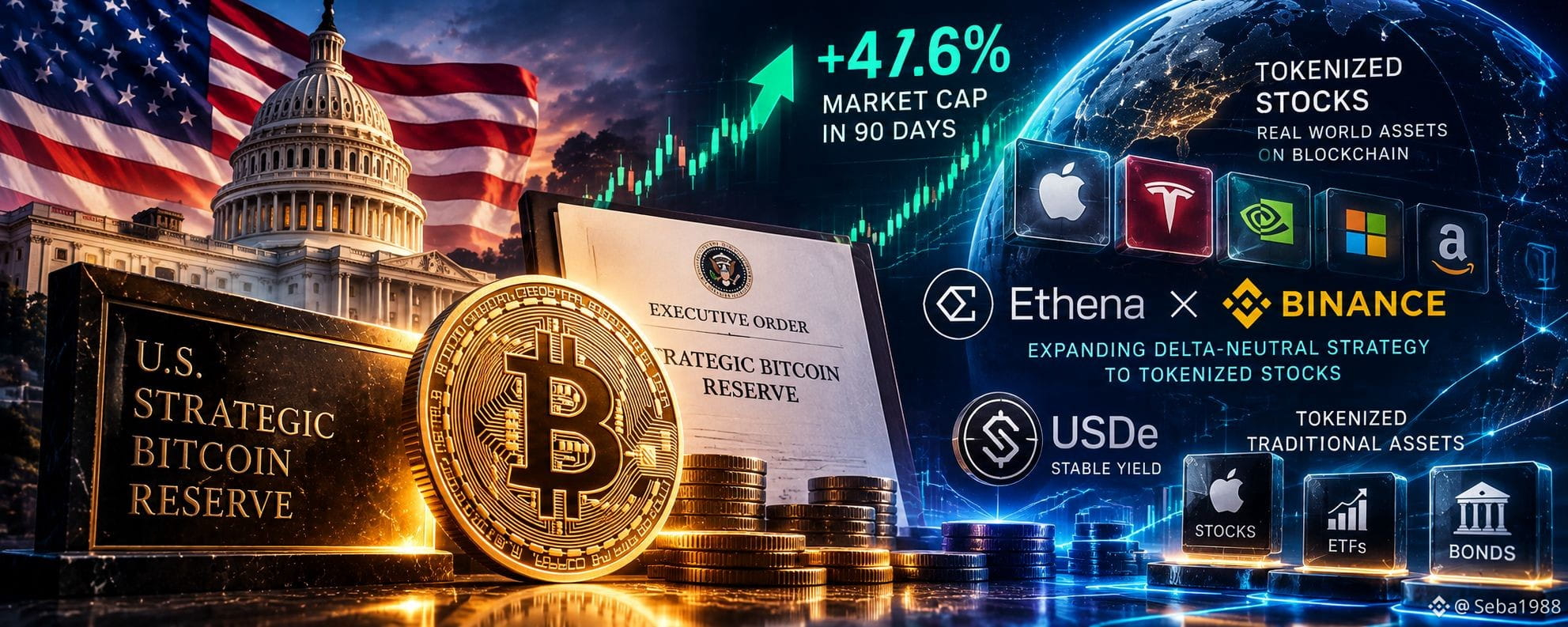
An important change has happened in the relationship between government and crypto: the United States has officially created a Strategic Bitcoin Reserve.
And there’s a detail that many people confuse. The reserve is specific to BTC. Other cryptoassets confiscated by the government are kept in a separate structure, the U.S. Digital Asset Stockpile. The Bitcoin allocated to the reserve should not be sold, and the government can explore ways to acquire more BTC as long as there’s no additional cost to taxpayers.
This changes the narrative. Bitcoin stops appearing only as a speculative asset and formally becomes part of a U.S. government reserve strategy.
📈 AND THE MARKET IS CHANGING ALONG WITH IT
According to the data from the category we’re tracking, market capitalization rose 47.6% over 90 days. This doesn’t mean the rally happened only because of American policy, but it does show increased interest in this topic.
At the same time, stocks and ETFs are beginning to migrate toward blockchain infrastructure. In 2026, the active market for tokenized stocks reached about $4 billion, while Binance expanded its use of bStocks, including as collateral assets for eligible users.
💡 THE MOST INTERESTING POINT
We’re seeing three movements happening at the same time:
governments holding crypto → institutions entering → traditional assets going to blockchain.
This doesn’t guarantee a continuous rise. Liquidity, interest rates, regulation, and macro risk remain important.
But the structural shift deserves attention: for years, the crypto market has tried to enter the traditional financial system.
Now, parts of the traditional financial system are beginning to move onto the blockchain.
$ENA
$BTC
#bitcoin #BTC
#RWA #Tokenization #BinanceSquare
{spot}(BTCUSDT)
{spot}(ENAUSDT)
🇺🇸 STRATEGIC BITCOIN RESERVE: WHAT CHANGED IN THE U.S.?
An important change has happened in the relationship between government and crypto: the United States has officially created a Strategic Bitcoin Reserve.
And there’s a detail that many people confuse. The reserve is specific to BTC. Other cryptoassets confiscated by the government are kept in a separate structure, the U.S. Digital Asset Stockpile. The Bitcoin allocated to the reserve should not be sold, and the government can explore ways to acquire more BTC as long as there’s no additional cost to taxpayers.
This changes the narrative. Bitcoin stops appearing only as a speculative asset and formally becomes part of a U.S. government reserve strategy.
📈 AND THE MARKET IS CHANGING ALONG WITH IT
According to the data from the category we’re tracking, market capitalization rose 47.6% over 90 days. This doesn’t mean the rally happened only because of American policy, but it does show increased interest in this topic.
At the same time, stocks and ETFs are beginning to migrate toward blockchain infrastructure. In 2026, the active market for tokenized stocks reached about $4 billion, while Binance expanded its use of bStocks, including as collateral assets for eligible users.
💡 THE MOST INTERESTING POINT
We’re seeing three movements happening at the same time:
governments holding crypto → institutions entering → traditional assets going to blockchain.
This doesn’t guarantee a continuous rise. Liquidity, interest rates, regulation, and macro risk remain important.
But the structural shift deserves attention: for years, the crypto market has tried to enter the traditional financial system.
Now, parts of the traditional financial system are beginning to move onto the blockchain.
$ENA
$BTC
#bitcoin #BTC
#RWA #Tokenization #BinanceSquare
An important change has happened in the relationship between government and crypto: the United States has officially created a Strategic Bitcoin Reserve.
And there’s a detail that many people confuse. The reserve is specific to BTC. Other cryptoassets confiscated by the government are kept in a separate structure, the U.S. Digital Asset Stockpile. The Bitcoin allocated to the reserve should not be sold, and the government can explore ways to acquire more BTC as long as there’s no additional cost to taxpayers.
This changes the narrative. Bitcoin stops appearing only as a speculative asset and formally becomes part of a U.S. government reserve strategy.
📈 AND THE MARKET IS CHANGING ALONG WITH IT
According to the data from the category we’re tracking, market capitalization rose 47.6% over 90 days. This doesn’t mean the rally happened only because of American policy, but it does show increased interest in this topic.
At the same time, stocks and ETFs are beginning to migrate toward blockchain infrastructure. In 2026, the active market for tokenized stocks reached about $4 billion, while Binance expanded its use of bStocks, including as collateral assets for eligible users.
💡 THE MOST INTERESTING POINT
We’re seeing three movements happening at the same time:
governments holding crypto → institutions entering → traditional assets going to blockchain.
This doesn’t guarantee a continuous rise. Liquidity, interest rates, regulation, and macro risk remain important.
But the structural shift deserves attention: for years, the crypto market has tried to enter the traditional financial system.
Now, parts of the traditional financial system are beginning to move onto the blockchain.
$ENA
$BTC
#bitcoin #BTC
#RWA #Tokenization #BinanceSquare
2
1.3k
·
--
Article
CRYPTO DIARY | EP. 31 MAKERDAO/SKY — THE PROTOCOL THAT CREATED DECENTRALIZED MONEY FROM SCRATCHCRYPTO DIARY | EPISODE 31
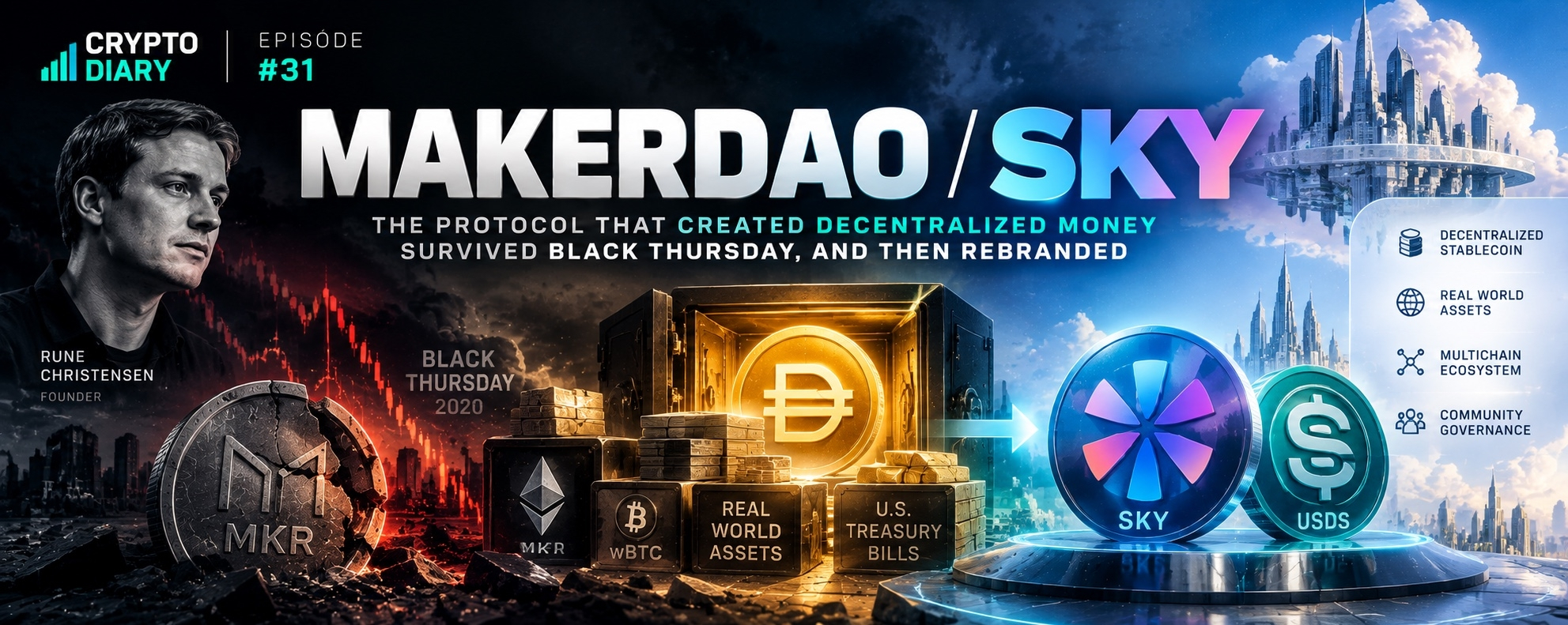
🏛️ MAKERDAO/SKY — THE PROTOCOL THAT CREATED DECENTRALIZED MONEY FROM SCRATCH, ALMOST DIED ON A BLACK THURSDAY, AND THEN SPENT $25 MILLION TO CHANGE ITS NAME AND REGRET
Imagine building, alone, the world’s first decentralized, heavyweight stablecoin in crypto—synthetic one dollar that doesn’t rely on any bank, supported only by mathematics and collateral locked in a smart contract. You survive a market collapse that nearly wipes out the entire system in a single dark Thursday. Rebuild. Become a pillar of DeFi, with billions of dollars locked up. And then, after almost a decade of reputation built, you decide to rename everything, spend $25 million in the process, and the very community asks you to undo it. This is the story of MakerDAO—now rebranded as Sky.
CRYPTO DIARY | EP. 31 MAKERDAO/SKY — THE PROTOCOL THAT CREATED DECENTRALIZED MONEY FROM SCRATCH
CRYPTO DIARY | EPISODE 31
🏛️ MAKERDAO/SKY — THE PROTOCOL THAT CREATED DECENTRALIZED MONEY FROM SCRATCH, ALMOST DIED ON A BLACK THURSDAY, AND THEN SPENT $25 MILLION TO CHANGE ITS NAME AND REGRET
Imagine building, alone, the world’s first decentralized, heavyweight stablecoin in crypto—synthetic one dollar that doesn’t rely on any bank, supported only by mathematics and collateral locked in a smart contract. You survive a market collapse that nearly wipes out the entire system in a single dark Thursday. Rebuild. Become a pillar of DeFi, with billions of dollars locked up. And then, after almost a decade of reputation built, you decide to rename everything, spend $25 million in the process, and the very community asks you to undo it. This is the story of MakerDAO—now rebranded as Sky.
🏛️ MAKERDAO/SKY — THE PROTOCOL THAT CREATED DECENTRALIZED MONEY FROM SCRATCH, ALMOST DIED ON A BLACK THURSDAY, AND THEN SPENT $25 MILLION TO CHANGE ITS NAME AND REGRET
Imagine building, alone, the world’s first decentralized, heavyweight stablecoin in crypto—synthetic one dollar that doesn’t rely on any bank, supported only by mathematics and collateral locked in a smart contract. You survive a market collapse that nearly wipes out the entire system in a single dark Thursday. Rebuild. Become a pillar of DeFi, with billions of dollars locked up. And then, after almost a decade of reputation built, you decide to rename everything, spend $25 million in the process, and the very community asks you to undo it. This is the story of MakerDAO—now rebranded as Sky.
3
442
·
--
WE HAVE TO BE CAREFUL ABOUT WHAT WE POST!!!
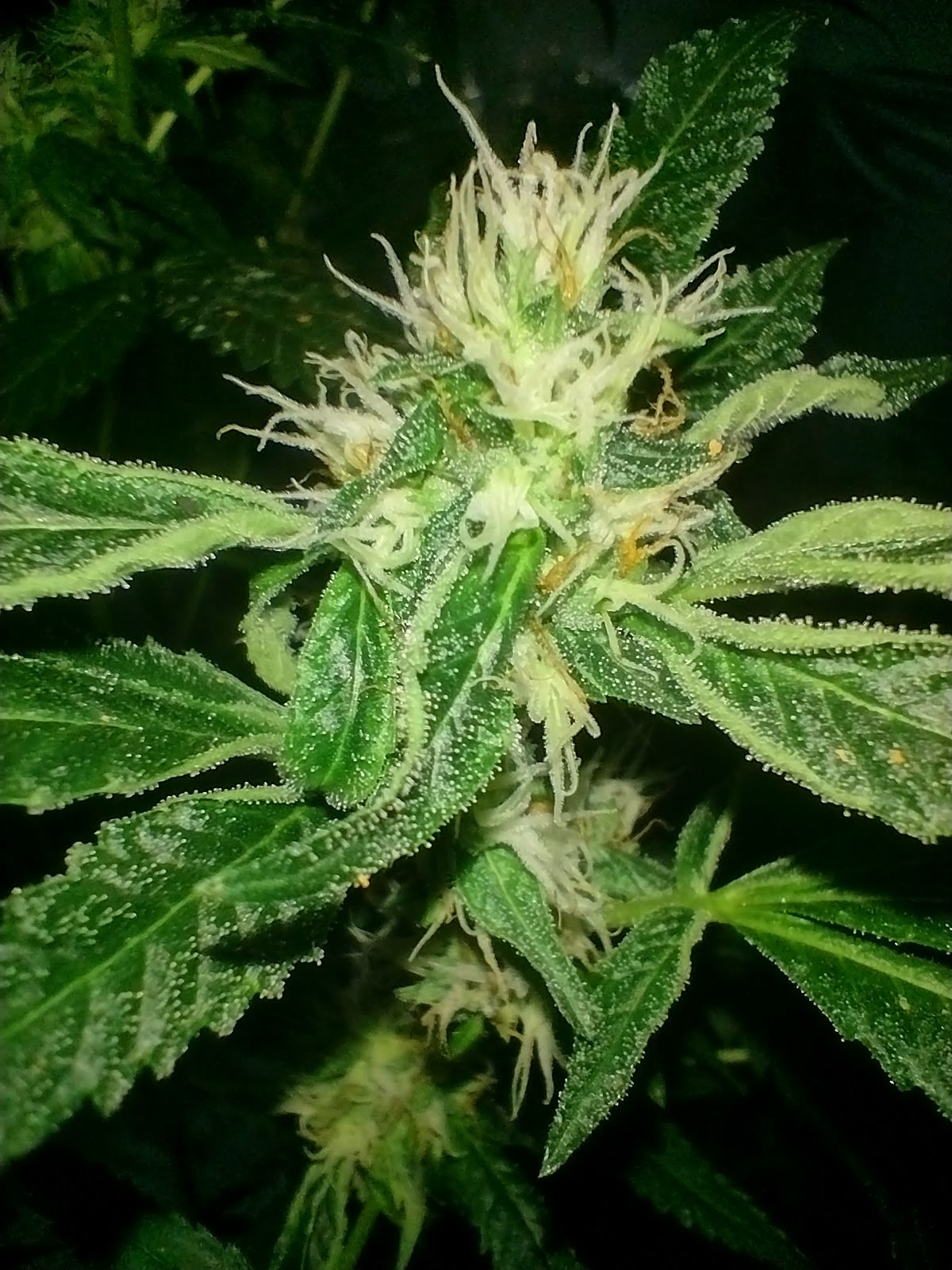
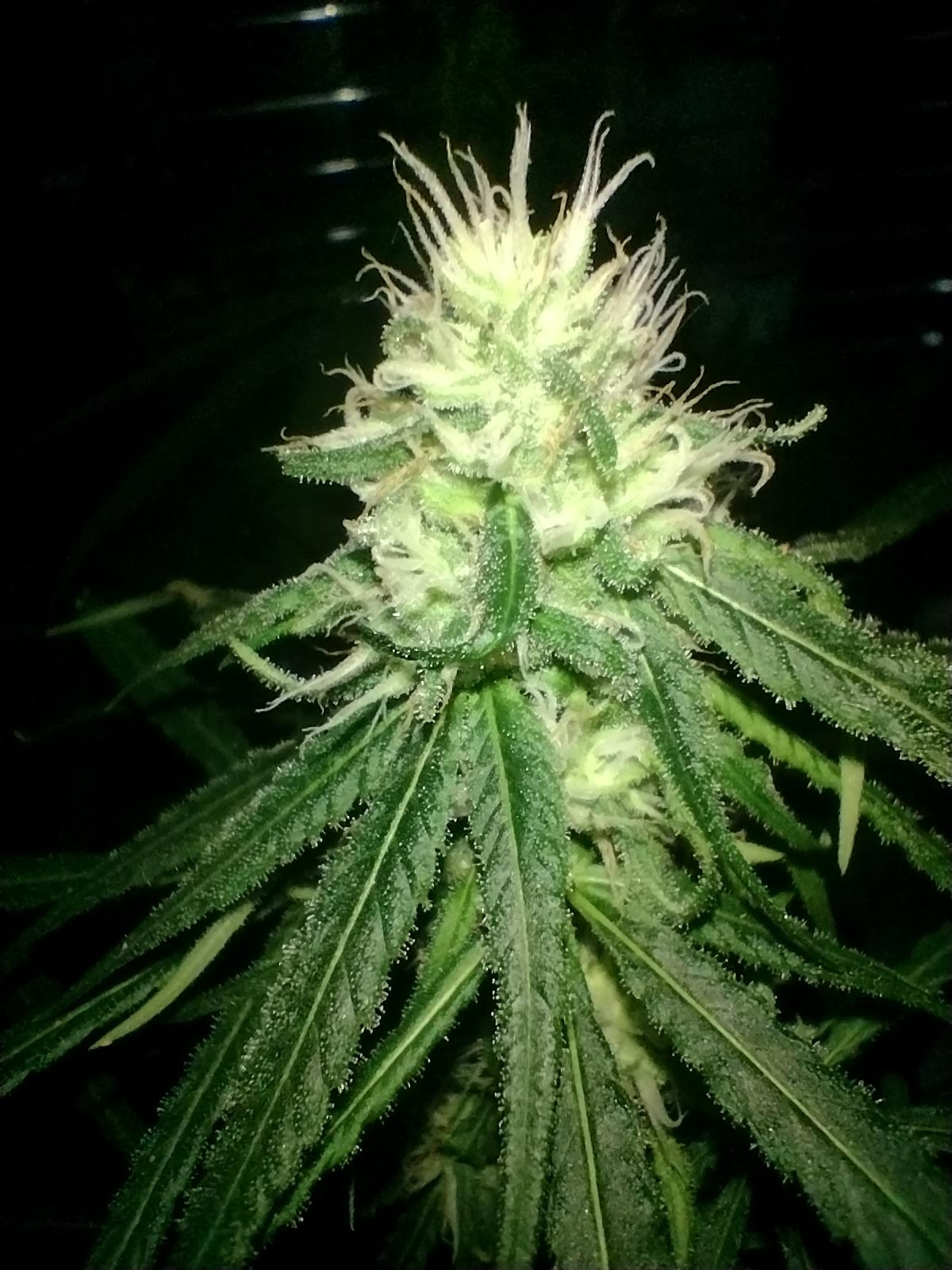
There will always be people who are just starting out in the crypto universe and in investments. I believe the friend who posted doesn’t have bad intentions, but if you catch a reader who believes what he posted and can see some money going down the drain with losses. $THC.US what the friend highlighted in a tag is an asset that has nothing to do with the cannabis universe. Besides that, the other tokens are projects that are breathing with life support.
The ticker THC refers to Tenet Healthcare Corporation, a U.S. healthcare company listed on the NYSE. It operates hospitals, outpatient surgical centers, and other medical services in the United States. According to Yahoo Finance, the company’s operations are focused on hospital operations and outpatient care, headquartered in Dallas, with around 77 thousand employees.
There are or were crypto tokens/projects with a cannabis theme. The best-known examples are:
HempCoin
PotCoin (POT)
CannabisCoin (CANN)
But the important point is: that doesn’t mean they are relevant projects today. Based on the current public data, many of these tokens appear to be very small, with extremely low liquidity/volume or nearly inactive trading, which increases the risk of high spreads, makes it harder to enter/exit, and raises the chance of discontinuation. For example, the PotCoin and HempCoin pages on aggregators show very low volume or even zero at certain times.
Today, I wouldn’t consider “cannabis crypto” a strong sector within the crypto market.
In terms of size and market relevance, it looks like a small niche, not a dominant crypto vertical today. One sign of this is that CannabisCoin shows very low capitalization on Binance’s price page, and the public results found for this topic are, for the most part, small projects or content explaining use cases—rather than broad ecosystems with clear adoption.
I would recommend investing in $THC.US the hospitals I mentioned above have a good estimate for growth
{stock_us}(THC.US)
WE HAVE TO BE CAREFUL ABOUT WHAT WE POST!!!
There will always be people who are just starting out in the crypto universe and in investments. I believe the friend who posted doesn’t have bad intentions, but if you catch a reader who believes what he posted and can see some money going down the drain with losses. $THC.US what the friend highlighted in a tag is an asset that has nothing to do with the cannabis universe. Besides that, the other tokens are projects that are breathing with life support.
The ticker THC refers to Tenet Healthcare Corporation, a U.S. healthcare company listed on the NYSE. It operates hospitals, outpatient surgical centers, and other medical services in the United States. According to Yahoo Finance, the company’s operations are focused on hospital operations and outpatient care, headquartered in Dallas, with around 77 thousand employees.
There are or were crypto tokens/projects with a cannabis theme. The best-known examples are:
HempCoin
PotCoin (POT)
CannabisCoin (CANN)
But the important point is: that doesn’t mean they are relevant projects today. Based on the current public data, many of these tokens appear to be very small, with extremely low liquidity/volume or nearly inactive trading, which increases the risk of high spreads, makes it harder to enter/exit, and raises the chance of discontinuation. For example, the PotCoin and HempCoin pages on aggregators show very low volume or even zero at certain times.
Today, I wouldn’t consider “cannabis crypto” a strong sector within the crypto market.
In terms of size and market relevance, it looks like a small niche, not a dominant crypto vertical today. One sign of this is that CannabisCoin shows very low capitalization on Binance’s price page, and the public results found for this topic are, for the most part, small projects or content explaining use cases—rather than broad ecosystems with clear adoption.
I would recommend investing in $THC.US the hospitals I mentioned above have a good estimate for growth
There will always be people who are just starting out in the crypto universe and in investments. I believe the friend who posted doesn’t have bad intentions, but if you catch a reader who believes what he posted and can see some money going down the drain with losses. $THC.US what the friend highlighted in a tag is an asset that has nothing to do with the cannabis universe. Besides that, the other tokens are projects that are breathing with life support.
The ticker THC refers to Tenet Healthcare Corporation, a U.S. healthcare company listed on the NYSE. It operates hospitals, outpatient surgical centers, and other medical services in the United States. According to Yahoo Finance, the company’s operations are focused on hospital operations and outpatient care, headquartered in Dallas, with around 77 thousand employees.
There are or were crypto tokens/projects with a cannabis theme. The best-known examples are:
HempCoin
PotCoin (POT)
CannabisCoin (CANN)
But the important point is: that doesn’t mean they are relevant projects today. Based on the current public data, many of these tokens appear to be very small, with extremely low liquidity/volume or nearly inactive trading, which increases the risk of high spreads, makes it harder to enter/exit, and raises the chance of discontinuation. For example, the PotCoin and HempCoin pages on aggregators show very low volume or even zero at certain times.
Today, I wouldn’t consider “cannabis crypto” a strong sector within the crypto market.
In terms of size and market relevance, it looks like a small niche, not a dominant crypto vertical today. One sign of this is that CannabisCoin shows very low capitalization on Binance’s price page, and the public results found for this topic are, for the most part, small projects or content explaining use cases—rather than broad ecosystems with clear adoption.
I would recommend investing in $THC.US the hospitals I mentioned above have a good estimate for growth

Felipe Brayner
·
--
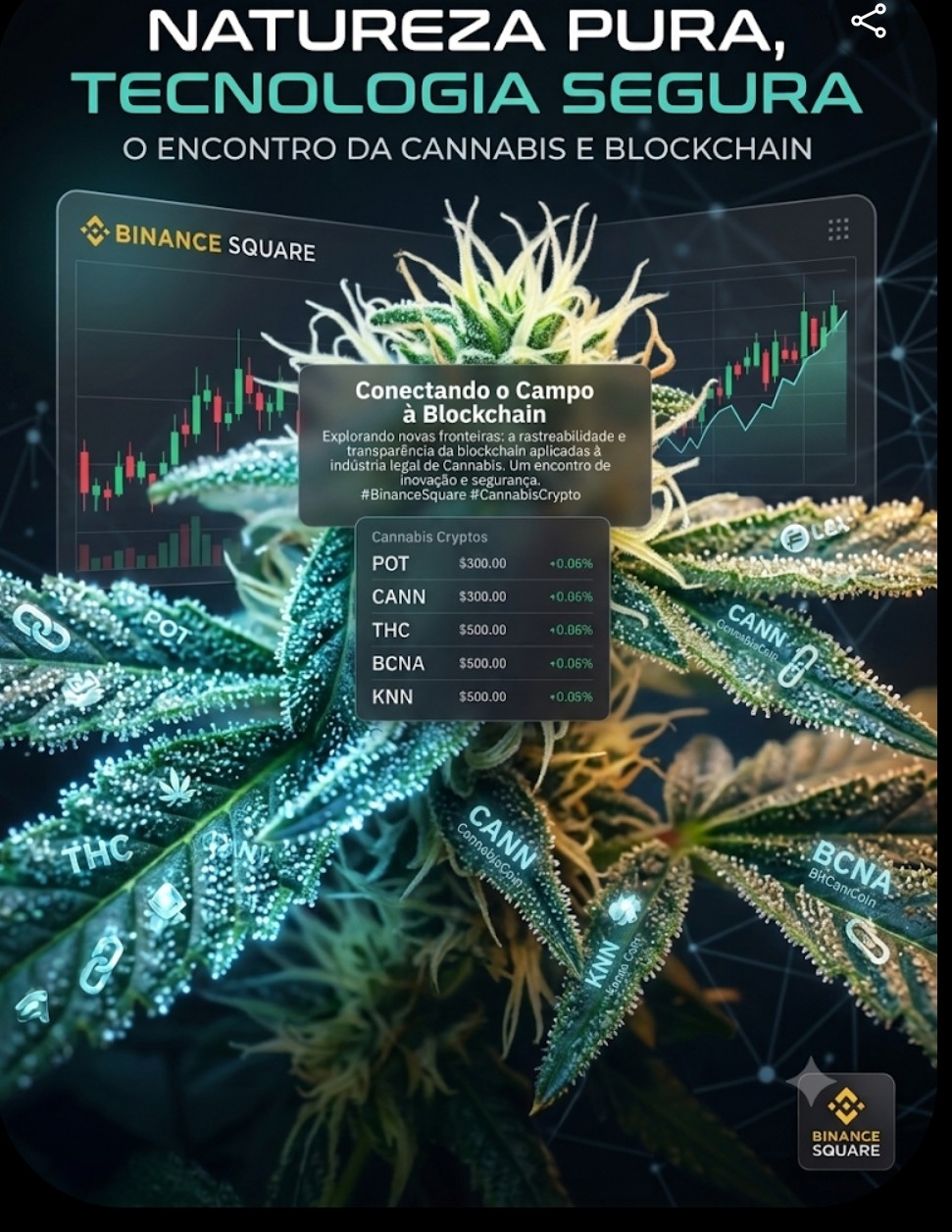
🍁 Focus on Agricultural Innovation & Web3
From Seed to Token: How blockchain ensures traceability from crop cultivation to harvest
From Soil to Code: Where precision agriculture meets cryptocurrencies
Agrotech in Web3: How crypto technology is financing and auditing legal cultivation.
💬 And you, do you believe this union of the countryside with Web3 has market potential? Comment below what you think!
$POT $CANN $THC $BCNA $KNN
From Seed to Token: How blockchain ensures traceability from crop cultivation to harvest
From Soil to Code: Where precision agriculture meets cryptocurrencies
Agrotech in Web3: How crypto technology is financing and auditing legal cultivation.
💬 And you, do you believe this union of the countryside with Web3 has market potential? Comment below what you think!
$POT $CANN $THC $BCNA $KNN
THCUS+0.01%
3
374
·
--
Article
CRYPTO DAILY | EP. 30 USDT THE “DIGITAL DOLLAR” THAT STARTED ON BITCOIN SURVIVED HACKS📺 CRYPTO DAILY | EPISODE 30
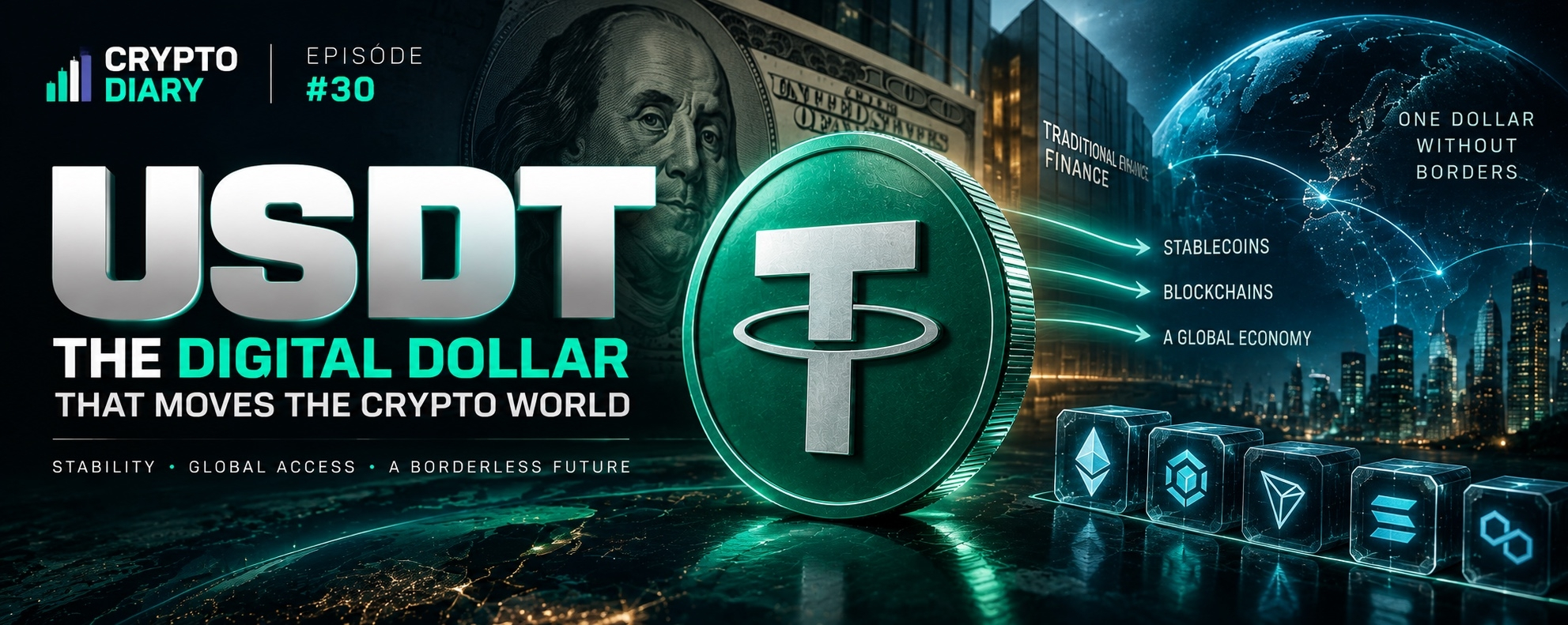
💵 USDT — THE “DIGITAL DOLLAR” THAT STARTED ON BITCOIN, SURVIVED HACKS AND DISTRUST, AND BECAME A $183 BILLION MACHINE
If you follow cryptocurrencies, you’ve probably already used USDT.
Buy Bitcoin with USDT. Sell Ethereum and receive USDT. Transfer money between exchanges using USDT. In several countries, people keep USDT simply because they want exposure to the dollar.
It seems so normal today that it’s easy to forget one thing: there was a time when the idea of putting a dollar inside a blockchain seemed strange.
CRYPTO DAILY | EP. 30 USDT THE “DIGITAL DOLLAR” THAT STARTED ON BITCOIN SURVIVED HACKS
📺 CRYPTO DAILY | EPISODE 30
💵 USDT — THE “DIGITAL DOLLAR” THAT STARTED ON BITCOIN, SURVIVED HACKS AND DISTRUST, AND BECAME A $183 BILLION MACHINE
If you follow cryptocurrencies, you’ve probably already used USDT.
Buy Bitcoin with USDT. Sell Ethereum and receive USDT. Transfer money between exchanges using USDT. In several countries, people keep USDT simply because they want exposure to the dollar.
It seems so normal today that it’s easy to forget one thing: there was a time when the idea of putting a dollar inside a blockchain seemed strange.
💵 USDT — THE “DIGITAL DOLLAR” THAT STARTED ON BITCOIN, SURVIVED HACKS AND DISTRUST, AND BECAME A $183 BILLION MACHINE
If you follow cryptocurrencies, you’ve probably already used USDT.
Buy Bitcoin with USDT. Sell Ethereum and receive USDT. Transfer money between exchanges using USDT. In several countries, people keep USDT simply because they want exposure to the dollar.
It seems so normal today that it’s easy to forget one thing: there was a time when the idea of putting a dollar inside a blockchain seemed strange.
1
142
·
--
Bullish
🔥 LAYER 1 VOLTAM AO RADAR — AND IT’S NOT JUST HYPE
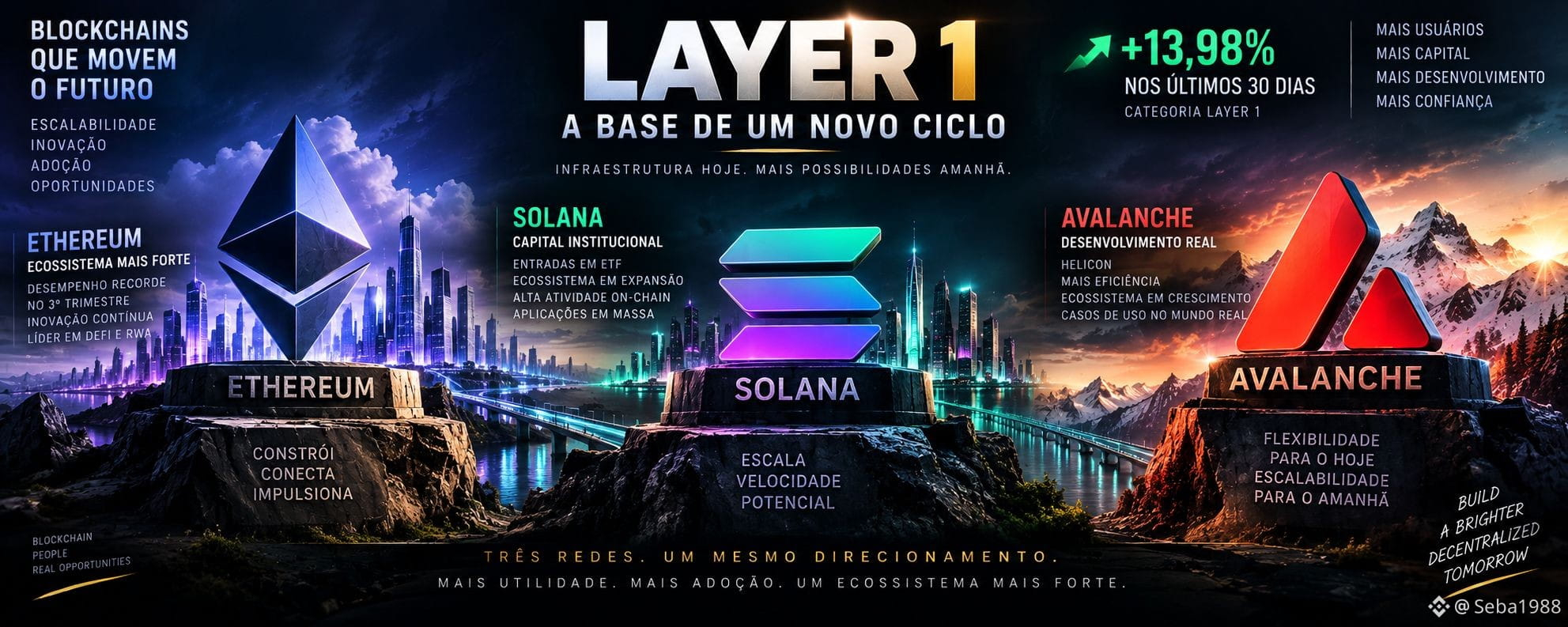
There’s interesting movement happening across major blockchains. The Layer 1 category has accumulated 13.98% over the last 30 days, with ETH, SOL, and AVAX once again drawing attention.
But what is Layer 1?
Think of it as the foundation of a city. It’s the main blockchain where transactions are recorded and where applications, tokens, and protocols are built. Ethereum, Solana, and Avalanche are examples.
The interest doesn’t seem to be driven only by speculation. There are concrete factors behind this move.
On Ethereum, ETH’s strong performance in the third quarter brought the network back onto the radar. On Solana, flows related to SOL ETFs reinforce institutional presence. And Avalanche continues working on infrastructure improvements, including Helicon.
🏦 AND REGULATION ALSO MATTERS
Clearer regulatory classification of certain cryptoassets as digital commodities can reduce one of the biggest barriers for institutions: legal uncertainty.
For an asset manager moving billions, that matters. The clearer the rules, the easier it is to assess exposure to the sector.
📊 IS THIS ALREADY ALTSEASON?
Not yet.
A 13.98% gain in Layer 1 alone doesn’t confirm an altcoin season. What it shows is a renewed interest in large, established blockchains.
If capital continues flowing first into ETH, SOL, and AVAX, we may be seeing investors looking for established infrastructure before taking risk on smaller projects.
In the coming weeks, I’d watch three things: volume, institutional flow, and whether these coins can keep rising without relying solely on Bitcoin.
When multiple Layer 1s gain momentum together, it doesn’t automatically mean altseason. But it can be a sign that money is starting to circulate differently through the market.
It’s not too late to invest in these cryptos. Just click the tag of the coins
$ETH $SOL $AVAX
#eth #solana #AVAX #Layer1
{spot}(SOLUSDT)
{spot}(AVAXUSDT)
{spot}(ETHUSDT)
🔥 LAYER 1 VOLTAM AO RADAR — AND IT’S NOT JUST HYPE
There’s interesting movement happening across major blockchains. The Layer 1 category has accumulated 13.98% over the last 30 days, with ETH, SOL, and AVAX once again drawing attention.
But what is Layer 1?
Think of it as the foundation of a city. It’s the main blockchain where transactions are recorded and where applications, tokens, and protocols are built. Ethereum, Solana, and Avalanche are examples.
The interest doesn’t seem to be driven only by speculation. There are concrete factors behind this move.
On Ethereum, ETH’s strong performance in the third quarter brought the network back onto the radar. On Solana, flows related to SOL ETFs reinforce institutional presence. And Avalanche continues working on infrastructure improvements, including Helicon.
🏦 AND REGULATION ALSO MATTERS
Clearer regulatory classification of certain cryptoassets as digital commodities can reduce one of the biggest barriers for institutions: legal uncertainty.
For an asset manager moving billions, that matters. The clearer the rules, the easier it is to assess exposure to the sector.
📊 IS THIS ALREADY ALTSEASON?
Not yet.
A 13.98% gain in Layer 1 alone doesn’t confirm an altcoin season. What it shows is a renewed interest in large, established blockchains.
If capital continues flowing first into ETH, SOL, and AVAX, we may be seeing investors looking for established infrastructure before taking risk on smaller projects.
In the coming weeks, I’d watch three things: volume, institutional flow, and whether these coins can keep rising without relying solely on Bitcoin.
When multiple Layer 1s gain momentum together, it doesn’t automatically mean altseason. But it can be a sign that money is starting to circulate differently through the market.
It’s not too late to invest in these cryptos. Just click the tag of the coins
$ETH $SOL $AVAX
#eth #solana #AVAX #Layer1
There’s interesting movement happening across major blockchains. The Layer 1 category has accumulated 13.98% over the last 30 days, with ETH, SOL, and AVAX once again drawing attention.
But what is Layer 1?
Think of it as the foundation of a city. It’s the main blockchain where transactions are recorded and where applications, tokens, and protocols are built. Ethereum, Solana, and Avalanche are examples.
The interest doesn’t seem to be driven only by speculation. There are concrete factors behind this move.
On Ethereum, ETH’s strong performance in the third quarter brought the network back onto the radar. On Solana, flows related to SOL ETFs reinforce institutional presence. And Avalanche continues working on infrastructure improvements, including Helicon.
🏦 AND REGULATION ALSO MATTERS
Clearer regulatory classification of certain cryptoassets as digital commodities can reduce one of the biggest barriers for institutions: legal uncertainty.
For an asset manager moving billions, that matters. The clearer the rules, the easier it is to assess exposure to the sector.
📊 IS THIS ALREADY ALTSEASON?
Not yet.
A 13.98% gain in Layer 1 alone doesn’t confirm an altcoin season. What it shows is a renewed interest in large, established blockchains.
If capital continues flowing first into ETH, SOL, and AVAX, we may be seeing investors looking for established infrastructure before taking risk on smaller projects.
In the coming weeks, I’d watch three things: volume, institutional flow, and whether these coins can keep rising without relying solely on Bitcoin.
When multiple Layer 1s gain momentum together, it doesn’t automatically mean altseason. But it can be a sign that money is starting to circulate differently through the market.
It’s not too late to invest in these cryptos. Just click the tag of the coins
$ETH $SOL $AVAX
#eth #solana #AVAX #Layer1
2
190
·
--
Bullish
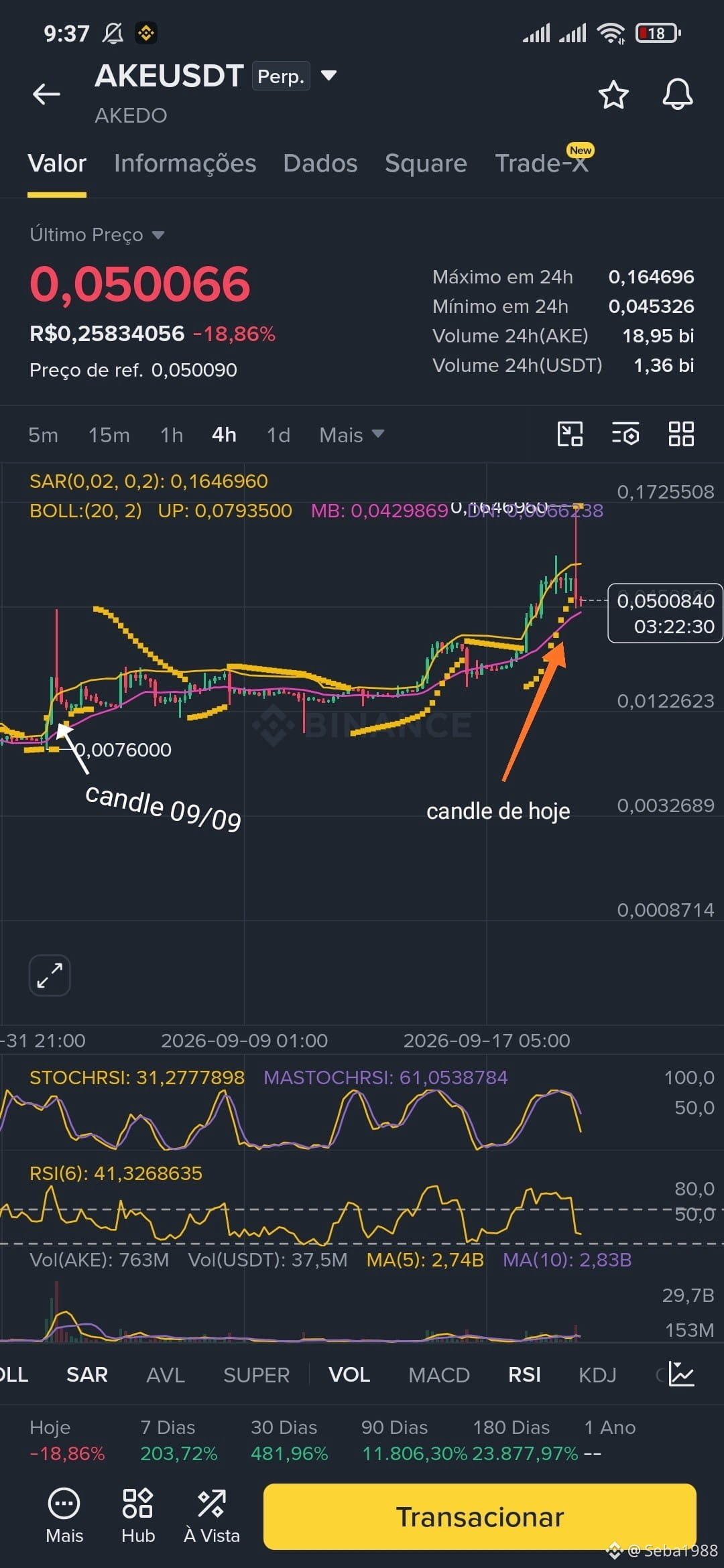
🤔 Is it a repetition of the movements from day 09/09, or will it start to drop for good? $AKE
See the chart and the 4h below that I captured the screenshot just now
{future}(AKEUSDT)
So what do you think, guys???
1. repetition of the movement from day 09/09 👨💻
2. it will drop for good—save it if you can 🔽😭
comment below and let’s see in the next few hours who can figure this out
#AKETRADE #AnalyseCrypto #strategy #analysis #BinanceSquareTalks
🤔 Is it a repetition of the movements from day 09/09, or will it start to drop for good? $AKE
See the chart and the 4h below that I captured the screenshot just now
So what do you think, guys???
1. repetition of the movement from day 09/09 👨💻
2. it will drop for good—save it if you can 🔽😭
comment below and let’s see in the next few hours who can figure this out
#AKETRADE #AnalyseCrypto #strategy #analysis #BinanceSquareTalks
See the chart and the 4h below that I captured the screenshot just now
So what do you think, guys???
1. repetition of the movement from day 09/09 👨💻
2. it will drop for good—save it if you can 🔽😭
comment below and let’s see in the next few hours who can figure this out
#AKETRADE #AnalyseCrypto #strategy #analysis #BinanceSquareTalks
1
5
147
·
--
Article
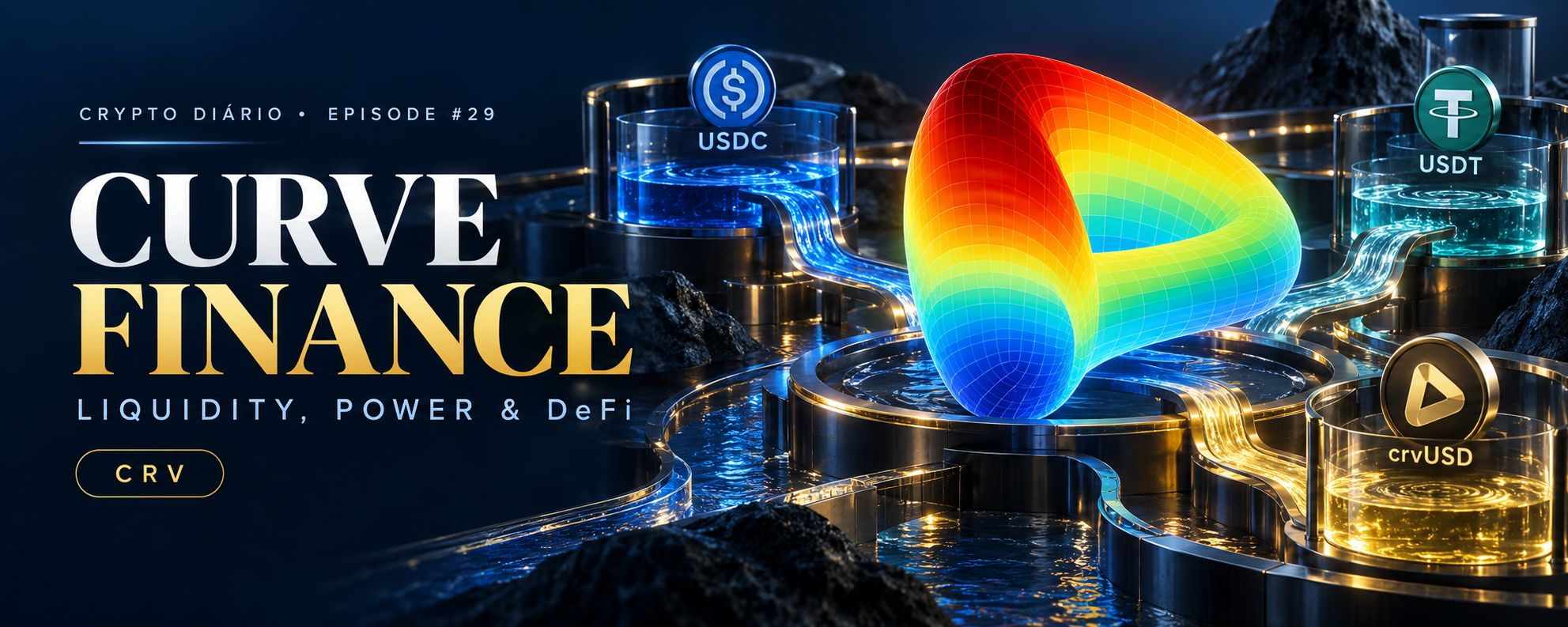
CRYPTO DAILY | EP. 29 CURVE FINANCE (CRV)
HOW THE EXCHANGE OF STABLECOINS TURNED INTO A POWER STRUGGLE📺 CRYPTO DAILY | EPISODE 29 CURVE FINANCE (CRV)
CURVE FINANCE (CRV): HOW THE EXCHANGE OF STABLECOINS TURNED INTO A POWER STRUGGLE IN DEFI
When I think about projects that help explain how DeFi works, Curve makes the list. Its original proposal seems simple: improve exchanges between coins that should be worth practically the same thing.
It was from this idea that a system was born in which controlling votes means influencing where incentives go. And this changes the conversation about the CRV quite a lot.
CRYPTO DAILY | EP. 29 CURVE FINANCE (CRV) HOW THE EXCHANGE OF STABLECOINS TURNED INTO A POWER STRUGGLE
📺 CRYPTO DAILY | EPISODE 29 CURVE FINANCE (CRV)
CURVE FINANCE (CRV): HOW THE EXCHANGE OF STABLECOINS TURNED INTO A POWER STRUGGLE IN DEFI
When I think about projects that help explain how DeFi works, Curve makes the list. Its original proposal seems simple: improve exchanges between coins that should be worth practically the same thing.
It was from this idea that a system was born in which controlling votes means influencing where incentives go. And this changes the conversation about the CRV quite a lot.
CURVE FINANCE (CRV): HOW THE EXCHANGE OF STABLECOINS TURNED INTO A POWER STRUGGLE IN DEFI
When I think about projects that help explain how DeFi works, Curve makes the list. Its original proposal seems simple: improve exchanges between coins that should be worth practically the same thing.
It was from this idea that a system was born in which controlling votes means influencing where incentives go. And this changes the conversation about the CRV quite a lot.
6
466
·
--
Bearish
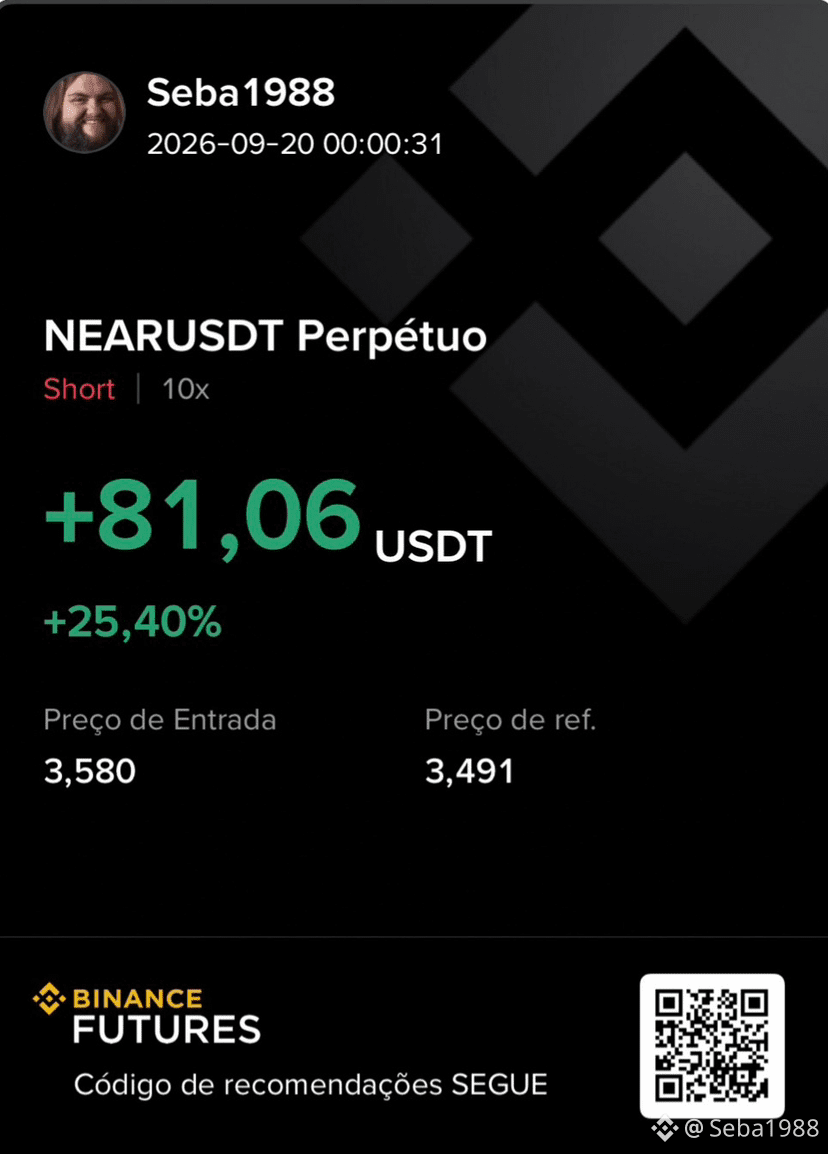
Whoever followed this tip will get through the weekend calmly 🚀🚀🚀
If you weren’t able to catch this entry, follow me to keep up with news, information from the crypto world, and tips like this to earn some extra money.
Let’s go, my friends.
Sunday barbecue is guaranteed thanks to $NEAR
{future}(NEARUSDT)
Whoever followed this tip will get through the weekend calmly 🚀🚀🚀
If you weren’t able to catch this entry, follow me to keep up with news, information from the crypto world, and tips like this to earn some extra money.
Let’s go, my friends.
Sunday barbecue is guaranteed thanks to $NEAR
If you weren’t able to catch this entry, follow me to keep up with news, information from the crypto world, and tips like this to earn some extra money.
Let’s go, my friends.
Sunday barbecue is guaranteed thanks to $NEAR
Seba1988
·
--
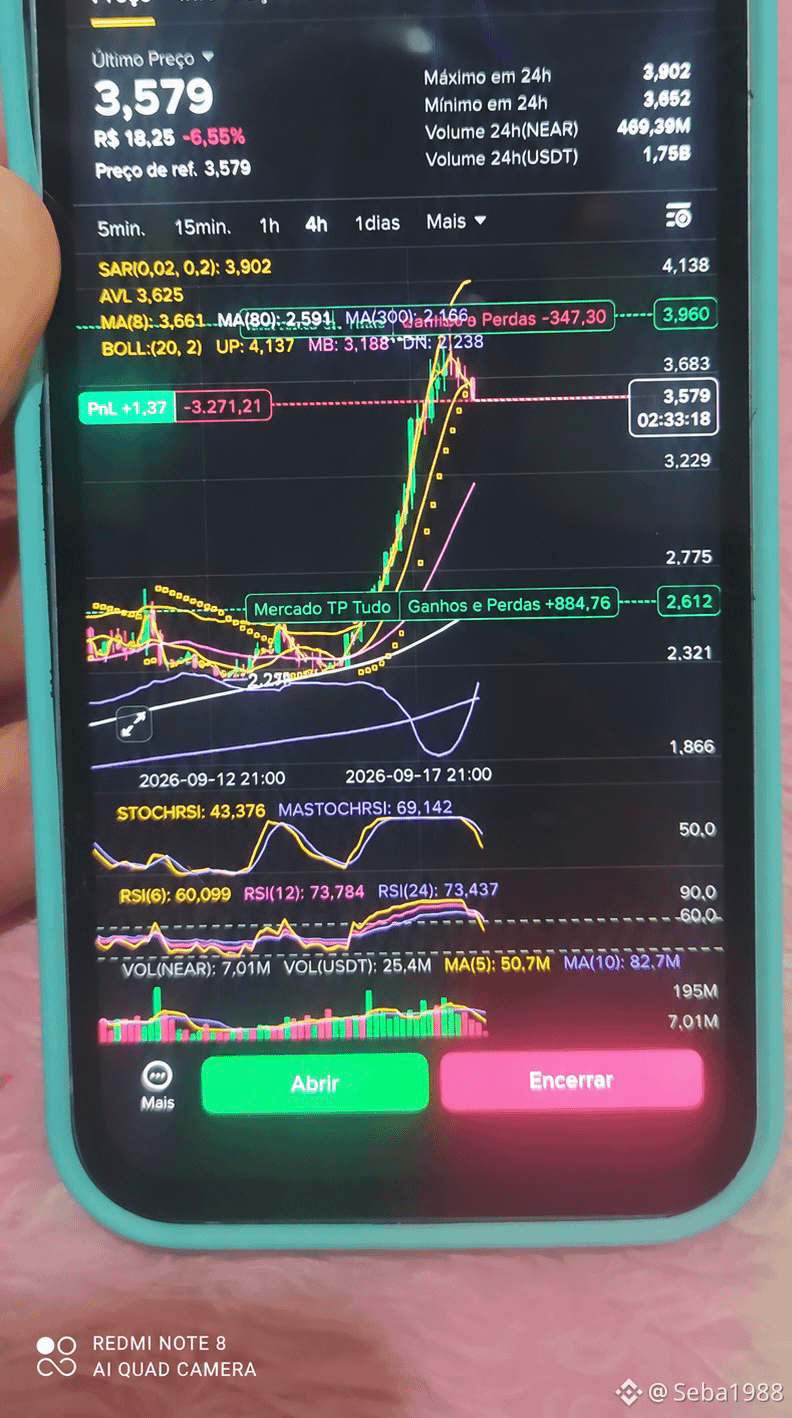
Bearish$NEAR watching 🔻SHORT🔻 in 4h 📉
🔻 SHORT 🔻 $NEAR
🚪 My entry would be at 3.54–3.55, only after it closes below 3.55 and rejects that region on the retest.
🎯 Targets 1: 3.35
🎯 Targets 2: 3.23
🎯 Targets 3: 3.19
🛑 Stop loss: 3.70
#Near #TradingSignals #FutureTradingSignals #analysis #StrategicTrading
After the spike, the short-term average loss and StochRSI turning downward make me consider a correction. It’s against the recent uptrend, so I won’t anticipate it: without confirmation, I stay out.
🔻 SHORT 🔻 $NEAR
🚪 My entry would be at 3.54–3.55, only after it closes below 3.55 and rejects that region on the retest.
🎯 Targets 1: 3.35
🎯 Targets 2: 3.23
🎯 Targets 3: 3.19
🛑 Stop loss: 3.70
#Near #TradingSignals #FutureTradingSignals #analysis #StrategicTrading
After the spike, the short-term average loss and StochRSI turning downward make me consider a correction. It’s against the recent uptrend, so I won’t anticipate it: without confirmation, I stay out.
2
29
·
--
Bearish
$NEAR watching 🔻SHORT🔻 in 4h 📉
🔻 SHORT 🔻 $NEAR
🚪 My entry would be at 3.54–3.55, only after it closes below 3.55 and rejects that region on the retest.
🎯 Targets 1: 3.35
🎯 Targets 2: 3.23
🎯 Targets 3: 3.19
🛑 Stop loss: 3.70
#Near #TradingSignals #FutureTradingSignals #analysis #StrategicTrading
After the spike, the short-term average loss and StochRSI turning downward make me consider a correction. It’s against the recent uptrend, so I won’t anticipate it: without confirmation, I stay out.
{future}(NEARUSDT)
$NEAR watching 🔻SHORT🔻 in 4h 📉
🔻 SHORT 🔻 $NEAR
🚪 My entry would be at 3.54–3.55, only after it closes below 3.55 and rejects that region on the retest.
🎯 Targets 1: 3.35
🎯 Targets 2: 3.23
🎯 Targets 3: 3.19
🛑 Stop loss: 3.70
#Near #TradingSignals #FutureTradingSignals #analysis #StrategicTrading
After the spike, the short-term average loss and StochRSI turning downward make me consider a correction. It’s against the recent uptrend, so I won’t anticipate it: without confirmation, I stay out.
🔻 SHORT 🔻 $NEAR
🚪 My entry would be at 3.54–3.55, only after it closes below 3.55 and rejects that region on the retest.
🎯 Targets 1: 3.35
🎯 Targets 2: 3.23
🎯 Targets 3: 3.19
🛑 Stop loss: 3.70
#Near #TradingSignals #FutureTradingSignals #analysis #StrategicTrading
After the spike, the short-term average loss and StochRSI turning downward make me consider a correction. It’s against the recent uptrend, so I won’t anticipate it: without confirmation, I stay out.
1
2
402
·
--
Article
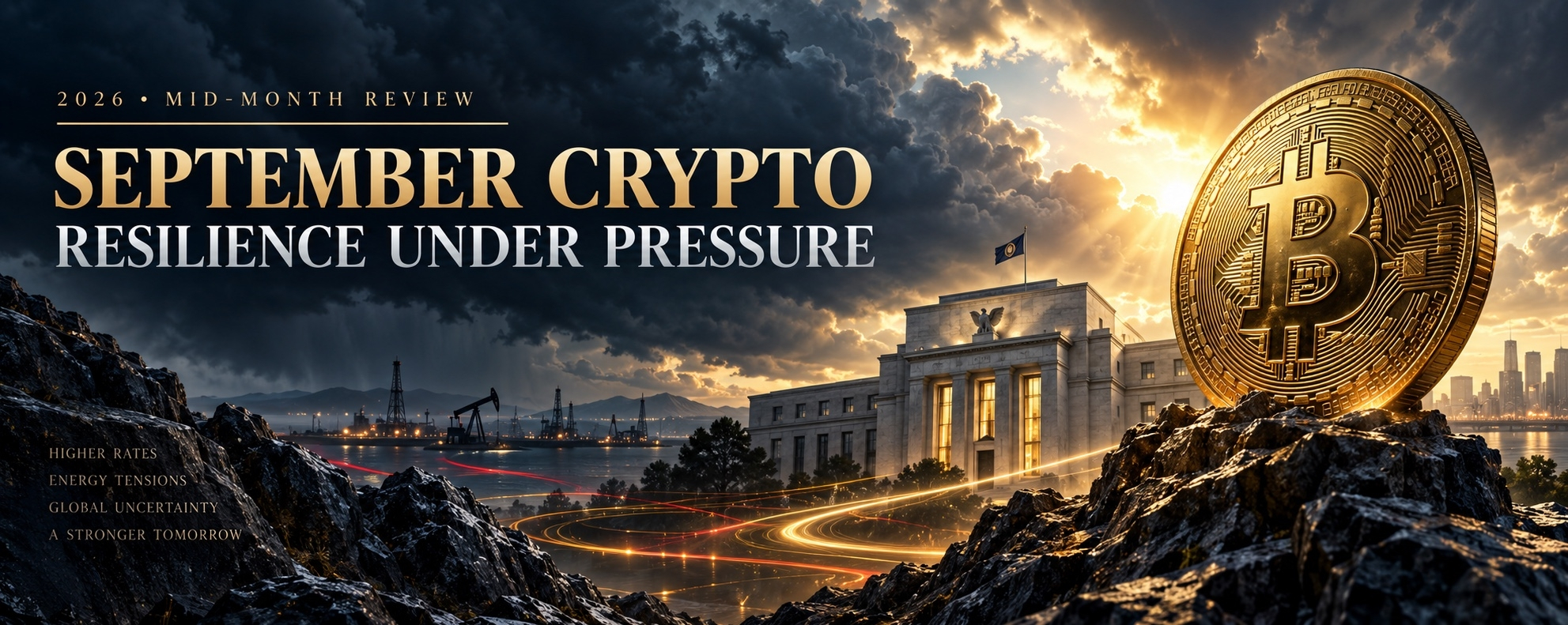
FIRST HALF OF SEPTEMBER: THE MONTH THAT STARTED STRONG AND ENDED BY TESTING THE MARKET'S PATIENCEFIRST HALF OF SEPTEMBER: THE MONTH THAT STARTED STRONG AND ENDED BY TESTING THE MARKET'S PATIENCE
September has always had a reputation as a difficult month for crypto, and 2026 didn’t disappoint—though with a more twisted script, mixing geopolitics, an unexpected interest-rate decision, and a price surge coming from where no one expected.
The fortnight opened well. Right in the first days, Bitcoin broke above the $82,000 mark, a three-month high, pulling the whole market up to $2.8 trillion in aggregate capitalization. Renewed optimism, consistent institutional inflows via ETFs, and sentiment returning to the greed zone.
FIRST HALF OF SEPTEMBER: THE MONTH THAT STARTED STRONG AND ENDED BY TESTING THE MARKET'S PATIENCE
FIRST HALF OF SEPTEMBER: THE MONTH THAT STARTED STRONG AND ENDED BY TESTING THE MARKET'S PATIENCE
September has always had a reputation as a difficult month for crypto, and 2026 didn’t disappoint—though with a more twisted script, mixing geopolitics, an unexpected interest-rate decision, and a price surge coming from where no one expected.
The fortnight opened well. Right in the first days, Bitcoin broke above the $82,000 mark, a three-month high, pulling the whole market up to $2.8 trillion in aggregate capitalization. Renewed optimism, consistent institutional inflows via ETFs, and sentiment returning to the greed zone.
September has always had a reputation as a difficult month for crypto, and 2026 didn’t disappoint—though with a more twisted script, mixing geopolitics, an unexpected interest-rate decision, and a price surge coming from where no one expected.
The fortnight opened well. Right in the first days, Bitcoin broke above the $82,000 mark, a three-month high, pulling the whole market up to $2.8 trillion in aggregate capitalization. Renewed optimism, consistent institutional inflows via ETFs, and sentiment returning to the greed zone.
2
645
·
--

Article
CRYPTO DIÁRIO EP.28 AAVE-DO ETHLEND AO BANCO DESCENTRALIZADO Q MOVIMENTOU QUASE $ 1TRI EM EMPRESTI📺 DAILY CRYPTO | EP. 28 - AAVE
👻 AAVE — FROM ETHLEND 2017 TO THE “BANCO” DECENTRALIZED THAT MOVED ALMOST US$ 1 TRILLION IN LOANS WITHOUT HAVING A SINGLE BRANCH
Borrowing money has always meant going through someone. Bank, finance company, credit analysis, registration, manager, business hours.
Aave started from a different question: what if the people who have money to lend and those who need liquidity could meet through code?
No manager. No branch. No one manually approving every transaction.
CRYPTO DIÁRIO EP.28 AAVE-DO ETHLEND AO BANCO DESCENTRALIZADO Q MOVIMENTOU QUASE $ 1TRI EM EMPRESTI
📺 DAILY CRYPTO | EP. 28 - AAVE
👻 AAVE — FROM ETHLEND 2017 TO THE “BANCO” DECENTRALIZED THAT MOVED ALMOST US$ 1 TRILLION IN LOANS WITHOUT HAVING A SINGLE BRANCH
Borrowing money has always meant going through someone. Bank, finance company, credit analysis, registration, manager, business hours.
Aave started from a different question: what if the people who have money to lend and those who need liquidity could meet through code?
No manager. No branch. No one manually approving every transaction.
👻 AAVE — FROM ETHLEND 2017 TO THE “BANCO” DECENTRALIZED THAT MOVED ALMOST US$ 1 TRILLION IN LOANS WITHOUT HAVING A SINGLE BRANCH
Borrowing money has always meant going through someone. Bank, finance company, credit analysis, registration, manager, business hours.
Aave started from a different question: what if the people who have money to lend and those who need liquidity could meet through code?
No manager. No branch. No one manually approving every transaction.
1
25
·
--
Article
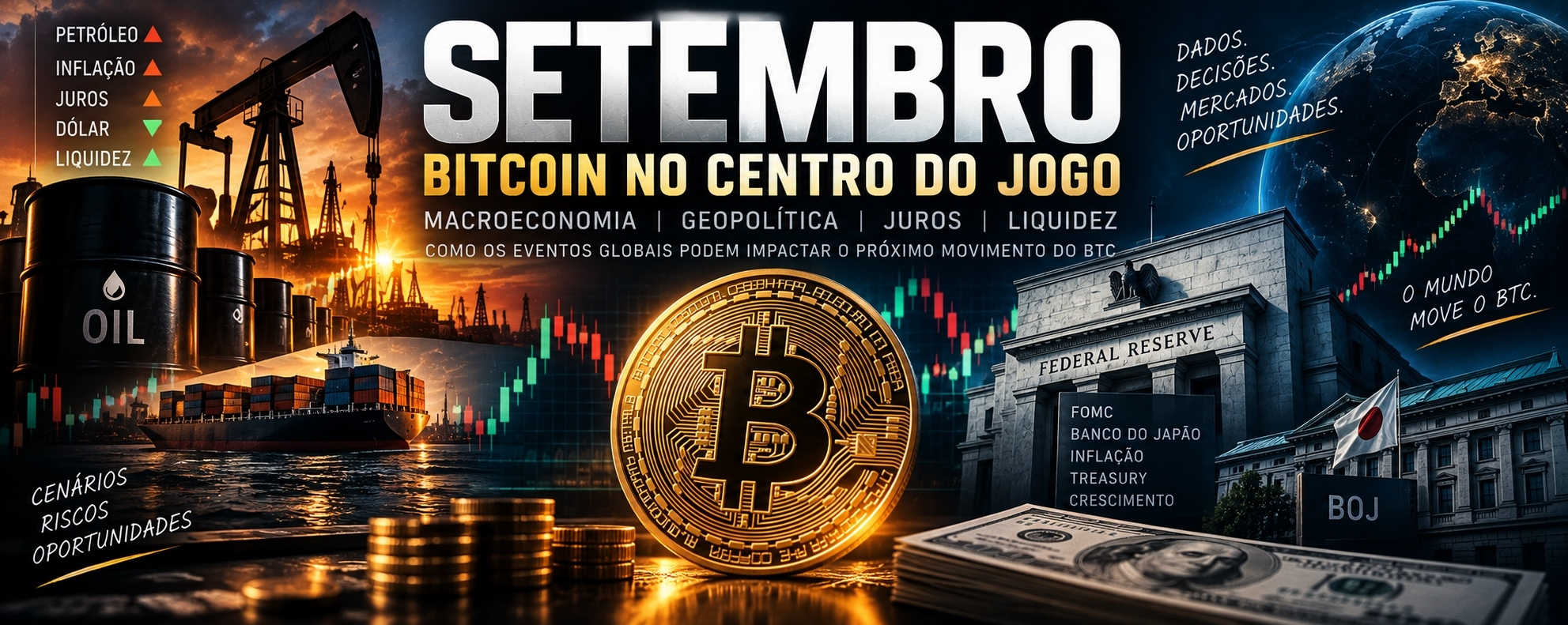
SEPTEMBER BEGAN UNDER PRESSURE: OIL, RATES AND GEOPOLITICS PUT BITCOIN TO THE TEST🌍 SEPTEMBER BEGAN UNDER PRESSURE: OIL, RATES AND GEOPOLITICS PUT BITCOIN TO THE TEST
The first week of September made one thing clear: at this moment, looking only at the Bitcoin chart is seeing just half of the market.
The shock came from outside the cryptocurrency world. The escalation of the conflict between the United States and Iran put the Strait of Hormuz back at the center of attention and pushed oil prices higher. On September 1, Brent was trading around $95, while Treasuries were also being sold and the yield on the U.S. 10-year Treasury note rose to near 4.8%.
SEPTEMBER BEGAN UNDER PRESSURE: OIL, RATES AND GEOPOLITICS PUT BITCOIN TO THE TEST
🌍 SEPTEMBER BEGAN UNDER PRESSURE: OIL, RATES AND GEOPOLITICS PUT BITCOIN TO THE TEST
The first week of September made one thing clear: at this moment, looking only at the Bitcoin chart is seeing just half of the market.
The shock came from outside the cryptocurrency world. The escalation of the conflict between the United States and Iran put the Strait of Hormuz back at the center of attention and pushed oil prices higher. On September 1, Brent was trading around $95, while Treasuries were also being sold and the yield on the U.S. 10-year Treasury note rose to near 4.8%.
The first week of September made one thing clear: at this moment, looking only at the Bitcoin chart is seeing just half of the market.
The shock came from outside the cryptocurrency world. The escalation of the conflict between the United States and Iran put the Strait of Hormuz back at the center of attention and pushed oil prices higher. On September 1, Brent was trading around $95, while Treasuries were also being sold and the yield on the U.S. 10-year Treasury note rose to near 4.8%.
1
123
·
--
Bearish
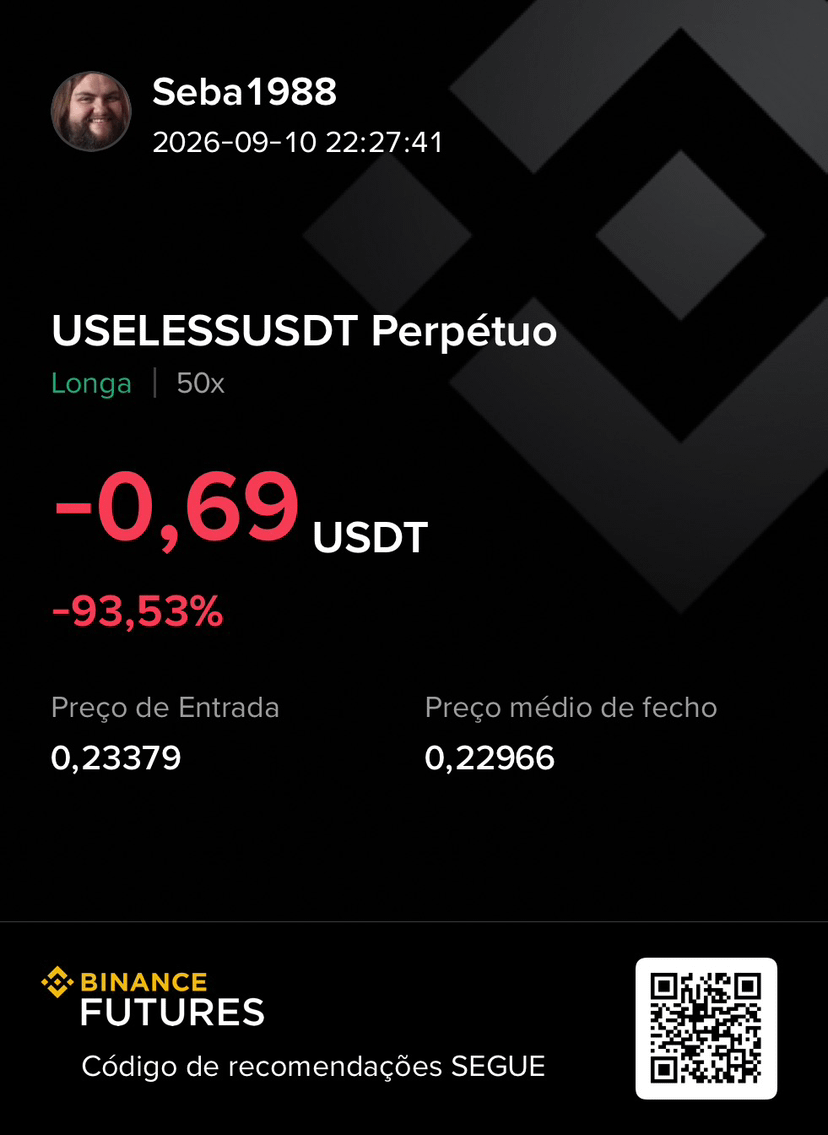
It’s not only gains we live on, friends. I closed it before the stop loss. I suggest that whoever followed this tip closes too so the loss is smaller.
The market is like that—there are days we win and days we lose. $USELESS didn’t have the strength to correct upward and kept plummeting. The secret is not to give up on the first loss, but to learn and come back stronger next time.
Don’t forget the importance of the stop loss—protect your capital!!!
🛑 this one didn’t work 🔻
{future}(USELESSUSDT)
It’s not only gains we live on, friends. I closed it before the stop loss. I suggest that whoever followed this tip closes too so the loss is smaller.
The market is like that—there are days we win and days we lose. $USELESS didn’t have the strength to correct upward and kept plummeting. The secret is not to give up on the first loss, but to learn and come back stronger next time.
Don’t forget the importance of the stop loss—protect your capital!!!
🛑 this one didn’t work 🔻
The market is like that—there are days we win and days we lose. $USELESS didn’t have the strength to correct upward and kept plummeting. The secret is not to give up on the first loss, but to learn and come back stronger next time.
Don’t forget the importance of the stop loss—protect your capital!!!
🛑 this one didn’t work 🔻
Seba1988
·
--
Bullish$USELESS
Fast trading just click on the coin tag or the open position just below and follow the position parameters
$USELESS 🟢🔼 LONG 🔼🟢
🚪 entry 0,23350 - 0,23385
🎯 target 0,24547
🛑 stoploss 0,22270
🚀🚀🚀
#TradingSignals #FutureTradingSignals #StrategicTrading #useless
Fast trading just click on the coin tag or the open position just below and follow the position parameters
$USELESS 🟢🔼 LONG 🔼🟢
🚪 entry 0,23350 - 0,23385
🎯 target 0,24547
🛑 stoploss 0,22270
🚀🚀🚀
#TradingSignals #FutureTradingSignals #StrategicTrading #useless
570
·
--
Bullish
$USELESS
Fast trading just click on the coin tag or the open position just below and follow the position parameters
$USELESS 🟢🔼 LONG 🔼🟢
🚪 entry 0,23350 - 0,23385
🎯 target 0,24547
🛑 stoploss 0,22270
🚀🚀🚀
#TradingSignals #FutureTradingSignals #StrategicTrading #useless
$USELESS
Fast trading just click on the coin tag or the open position just below and follow the position parameters
$USELESS 🟢🔼 LONG 🔼🟢
🚪 entry 0,23350 - 0,23385
🎯 target 0,24547
🛑 stoploss 0,22270
🚀🚀🚀
#TradingSignals #FutureTradingSignals #StrategicTrading #useless
Fast trading just click on the coin tag or the open position just below and follow the position parameters
$USELESS 🟢🔼 LONG 🔼🟢
🚪 entry 0,23350 - 0,23385
🎯 target 0,24547
🛑 stoploss 0,22270
🚀🚀🚀
#TradingSignals #FutureTradingSignals #StrategicTrading #useless
1
1
134
·
--
Bullish
🚀 $ESP — 🟢 SETUP LONG 🟢
🚪 path: US$ 0,08820 - 0,08855
🎯 TP: US$ 0,09024
🛑 SL: US$ 0,08674
Position in progress, operating above the 20-period average on the hourly chart, with neutral RSI (~54) and Stoch RSI exiting the oversold zone. The structure is still respecting the range of the past few days.
Leverage involves extreme risk. Not financial advice.
Trade using tag $ESP or on the chart below — it helps keep this content active.
#esp #TradingSignals #FutureTradingSignals #analysis #StrategicTrading
🚀 $ESP — 🟢 SETUP LONG 🟢
🚪 path: US$ 0,08820 - 0,08855
🎯 TP: US$ 0,09024
🛑 SL: US$ 0,08674
Position in progress, operating above the 20-period average on the hourly chart, with neutral RSI (~54) and Stoch RSI exiting the oversold zone. The structure is still respecting the range of the past few days.
Leverage involves extreme risk. Not financial advice.
Trade using tag $ESP or on the chart below — it helps keep this content active.
#esp #TradingSignals #FutureTradingSignals #analysis #StrategicTrading
🚪 path: US$ 0,08820 - 0,08855
🎯 TP: US$ 0,09024
🛑 SL: US$ 0,08674
Position in progress, operating above the 20-period average on the hourly chart, with neutral RSI (~54) and Stoch RSI exiting the oversold zone. The structure is still respecting the range of the past few days.
Leverage involves extreme risk. Not financial advice.
Trade using tag $ESP or on the chart below — it helps keep this content active.
#esp #TradingSignals #FutureTradingSignals #analysis #StrategicTrading

107
Log in to explore more content
Join global crypto users on Binance Square
⚡️ Get latest and useful information about crypto.
💬 Trusted by the world’s largest crypto exchange.
👍 Discover real insights from verified creators.
Email / Phone number
Trending Topics
BinanceLaunchesBinanceIntelligence
452,384 views
3,241 Discussing
#BinanceLaunchesBinanceIntelligence
⚡ AI Meets Crypto Trading: Binance Intelligence is Live! ⚡
Trading just got a massive upgrade with Binance's new AI suite:
1️⃣ Binance AI: Personalized market dashboards & 4-hour macro market audio briefings.
2️⃣ Binance AI Pro: Build and run automated strategies using simple natural language prompts.
3️⃣ Binance Agent OS: Developer framework for autonomous financial AI agents.
Describe your strategy ➔ Paper test ➔ Execute 24/7.
Are you building your next trading strategy with AI? Drop your thoughts below! 👇
#BinanceLaunchesBinanceIntelligence #BinanceSquare #CryptoAI #Trading $EDEN
Hazi BNB
·2 Likes
·1k views
BitcoinTargets2026OpenAt$87570
3,053 views
83 Discussing
BitcoinRejectedAt$87KThirdTime
2,851 views
67 Discussing