

0xMinh
1.7k Posts

0xMinh
Report
Block User
Researcher / Airdrop Hunter $BTC $ETH
Web 3 Airdrop | X : @M91inktats
Open Trade
Occasional Trader
5 Years
149 Following
450 Followers
1.9K+ Liked
Posts
Portfolio
All
Quotes
Videos
·
--
Verified
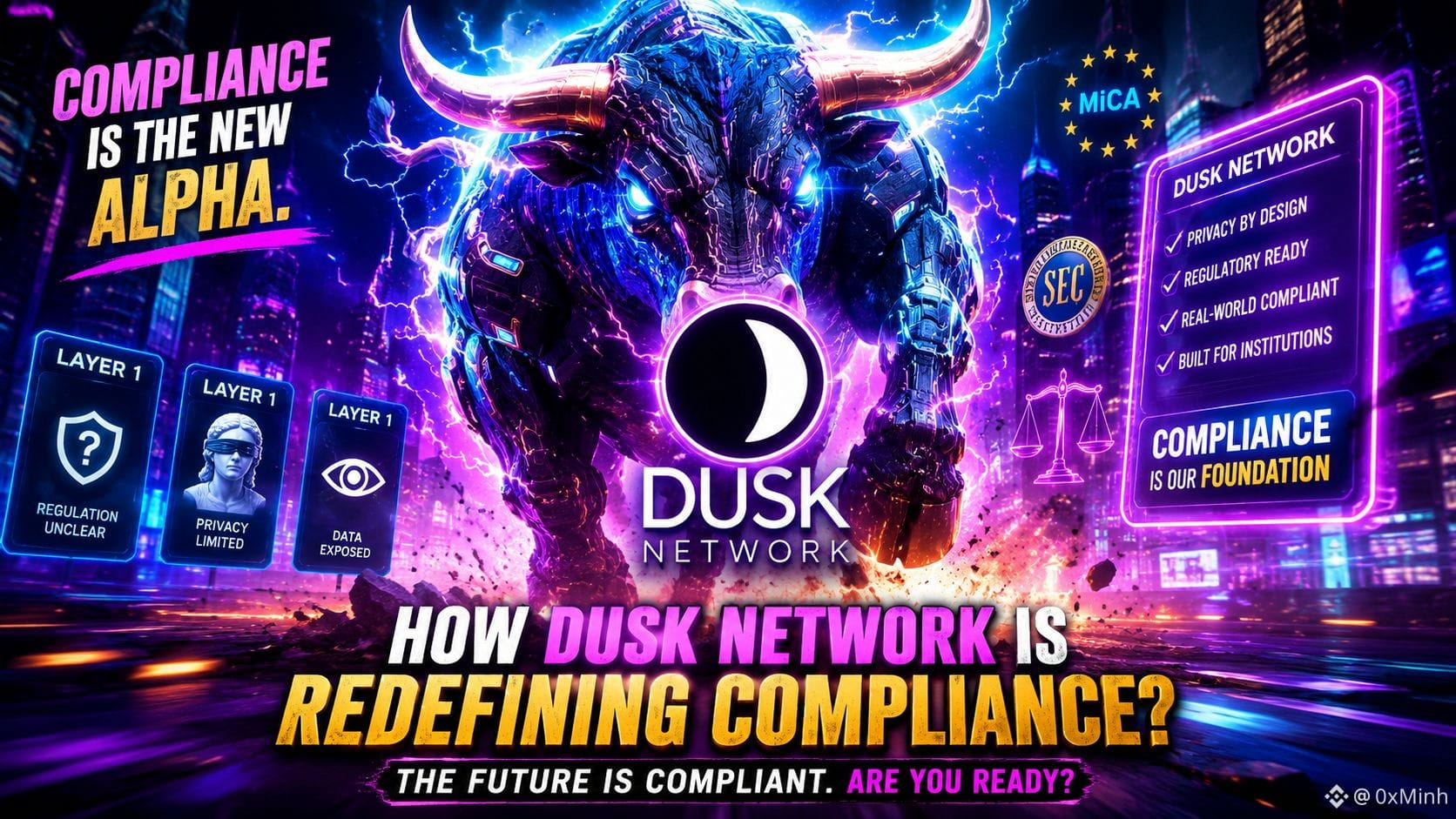
Previously, I used to think compliance was something outside of blockchain. The protocol only needs to be permissionless, while regulations would be handled in the application layer or by a third party.
When I delved deeper into Dusk Network, I encountered an approach that made me stop and reconsider. Compliance isn’t simply treated as an additional layer of checks placed on top; it appears directly in how the system models assets, identities, access rights, and data.
At first, I thought Dusk was just adding a few tools to support RWA. Then I realized the issue is broader. If an asset is subject to regulation, eligibility, transfer restrictions, disclosures, and settlement are already part of the asset’s lifecycle.
The way I see it now is that Dusk Network is trying to bring those constraints into the same operating environment. Citadel handles identity and selective disclosure, while Moonlight and Phoenix enable a balance between transparency and privacy.
This reflects a different trust model. Instead of assuming that the blockchain must be completely neutral with respect to regulation, Dusk seems to assume that markets that are regulated also need to be programmable.
I still don’t think that automatically makes Dusk more suitable than every other Layer 1. The more interesting question is: when Regulation becomes part of the system design, where will the boundary between protocol, applications, and financial infrastructure be?
#dusk $DUSK @Dusk_Foundation $BTC
Previously, I used to think compliance was something outside of blockchain. The protocol only needs to be permissionless, while regulations would be handled in the application layer or by a third party.
When I delved deeper into Dusk Network, I encountered an approach that made me stop and reconsider. Compliance isn’t simply treated as an additional layer of checks placed on top; it appears directly in how the system models assets, identities, access rights, and data.
At first, I thought Dusk was just adding a few tools to support RWA. Then I realized the issue is broader. If an asset is subject to regulation, eligibility, transfer restrictions, disclosures, and settlement are already part of the asset’s lifecycle.
The way I see it now is that Dusk Network is trying to bring those constraints into the same operating environment. Citadel handles identity and selective disclosure, while Moonlight and Phoenix enable a balance between transparency and privacy.
This reflects a different trust model. Instead of assuming that the blockchain must be completely neutral with respect to regulation, Dusk seems to assume that markets that are regulated also need to be programmable.
I still don’t think that automatically makes Dusk more suitable than every other Layer 1. The more interesting question is: when Regulation becomes part of the system design, where will the boundary between protocol, applications, and financial infrastructure be?
#dusk $DUSK @Dusk $BTC
When I delved deeper into Dusk Network, I encountered an approach that made me stop and reconsider. Compliance isn’t simply treated as an additional layer of checks placed on top; it appears directly in how the system models assets, identities, access rights, and data.
At first, I thought Dusk was just adding a few tools to support RWA. Then I realized the issue is broader. If an asset is subject to regulation, eligibility, transfer restrictions, disclosures, and settlement are already part of the asset’s lifecycle.
The way I see it now is that Dusk Network is trying to bring those constraints into the same operating environment. Citadel handles identity and selective disclosure, while Moonlight and Phoenix enable a balance between transparency and privacy.
This reflects a different trust model. Instead of assuming that the blockchain must be completely neutral with respect to regulation, Dusk seems to assume that markets that are regulated also need to be programmable.
I still don’t think that automatically makes Dusk more suitable than every other Layer 1. The more interesting question is: when Regulation becomes part of the system design, where will the boundary between protocol, applications, and financial infrastructure be?
#dusk $DUSK @Dusk $BTC
1
3
307
·
--
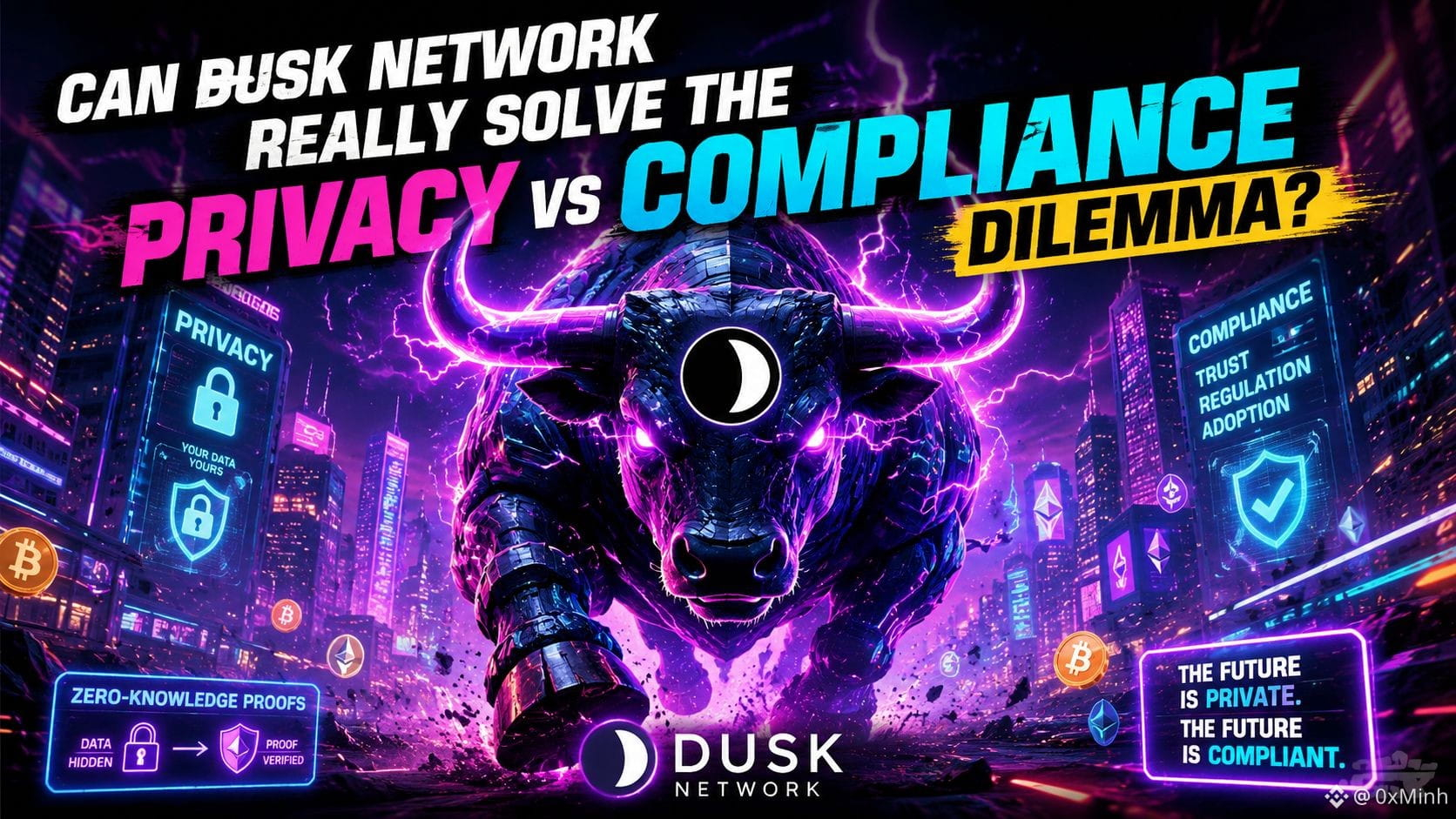
Previously, I used to think that privacy and compliance were almost opposite directions. One side wanted to hide data, while the other needed the ability to verify, audit, and retrieve it when necessary.
I had gotten used to that way of thinking for quite a long time, so when I read about Dusk Network, I initially expected some kind of trade-off.
But the more I read the documentation, the more I had to stop at a different idea: privacy does not necessarily mean that everything must be invisible.
At first, I believed that Dusk Network was just trying to make transactions more confidential with zero-knowledge proofs. Then I realized the issue lies in how the system handles permissioning for who can see the data.
Phoenix can conceal transaction information, while selective disclosure enables specific data to be revealed to the parties who are authorized. Moonlight keeps the flows transparent when transparency is required.
That’s when I finally understood that I had asked the wrong question.
Not “privacy or compliance?” but “who needs to know what, and in which circumstances?”.
At least from my current perspective, Dusk Network is changing the trust model in that direction. The system does not require everyone to see the same truth; it tries to create enough proof to verify while limiting the right to know.
I still don’t think this is a complete solution for compliance. The law still sits outside the blockchain.
And perhaps even more thought-provoking is that Dusk Network isn’t trying to erase the conflict—it’s trying to change how we define that conflict.
#dusk $DUSK @Dusk_Foundation $BTC
Previously, I used to think that privacy and compliance were almost opposite directions. One side wanted to hide data, while the other needed the ability to verify, audit, and retrieve it when necessary.
I had gotten used to that way of thinking for quite a long time, so when I read about Dusk Network, I initially expected some kind of trade-off.
But the more I read the documentation, the more I had to stop at a different idea: privacy does not necessarily mean that everything must be invisible.
At first, I believed that Dusk Network was just trying to make transactions more confidential with zero-knowledge proofs. Then I realized the issue lies in how the system handles permissioning for who can see the data.
Phoenix can conceal transaction information, while selective disclosure enables specific data to be revealed to the parties who are authorized. Moonlight keeps the flows transparent when transparency is required.
That’s when I finally understood that I had asked the wrong question.
Not “privacy or compliance?” but “who needs to know what, and in which circumstances?”.
At least from my current perspective, Dusk Network is changing the trust model in that direction. The system does not require everyone to see the same truth; it tries to create enough proof to verify while limiting the right to know.
I still don’t think this is a complete solution for compliance. The law still sits outside the blockchain.
And perhaps even more thought-provoking is that Dusk Network isn’t trying to erase the conflict—it’s trying to change how we define that conflict.
#dusk $DUSK @Dusk $BTC
I had gotten used to that way of thinking for quite a long time, so when I read about Dusk Network, I initially expected some kind of trade-off.
But the more I read the documentation, the more I had to stop at a different idea: privacy does not necessarily mean that everything must be invisible.
At first, I believed that Dusk Network was just trying to make transactions more confidential with zero-knowledge proofs. Then I realized the issue lies in how the system handles permissioning for who can see the data.
Phoenix can conceal transaction information, while selective disclosure enables specific data to be revealed to the parties who are authorized. Moonlight keeps the flows transparent when transparency is required.
That’s when I finally understood that I had asked the wrong question.
Not “privacy or compliance?” but “who needs to know what, and in which circumstances?”.
At least from my current perspective, Dusk Network is changing the trust model in that direction. The system does not require everyone to see the same truth; it tries to create enough proof to verify while limiting the right to know.
I still don’t think this is a complete solution for compliance. The law still sits outside the blockchain.
And perhaps even more thought-provoking is that Dusk Network isn’t trying to erase the conflict—it’s trying to change how we define that conflict.
#dusk $DUSK @Dusk $BTC
1
3
282
·
--
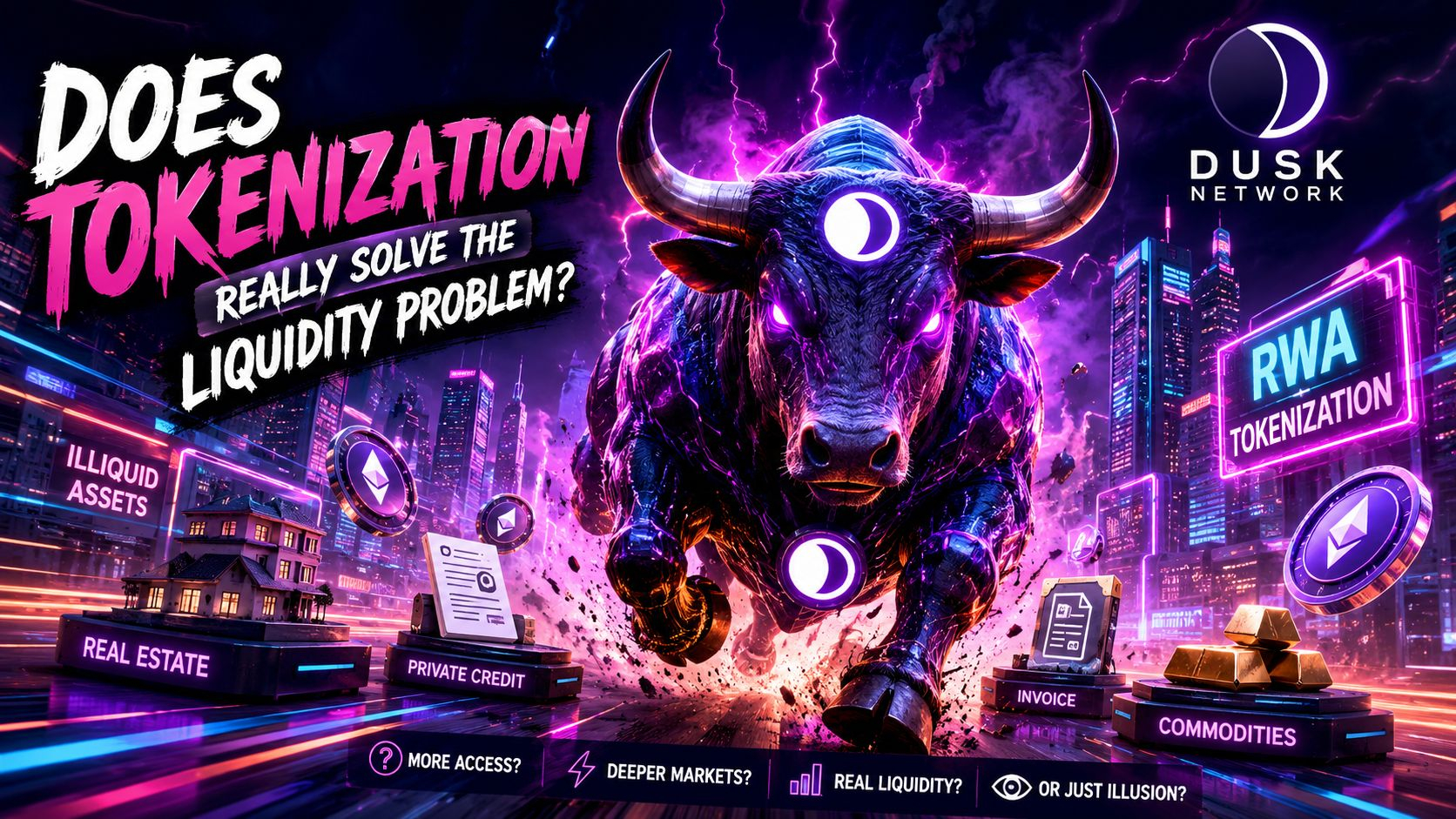
Previously, I often thought that tokenization was nearly synonymous with liquidity. Putting an asset on a blockchain, splitting ownership rights, and opening the door for more people to participate sounds fairly reasonable. But when I read more deeply about Dusk Network and their approach to RWA, I started to see that assumption was flawed. There is a gap between “being able to tokenize” and “being able to trade efficiently.”
At first, I believed blockchain was the hardest part. Then I realized that creating tokens only solves one layer of the problem. Liquidity also depends on legal frameworks, ownership structures, transferability, and the level of trust between parties.
My current perspective is quite different. Tokenization does not automatically create liquidity; it only makes an asset easier to represent and transfer within a digital system.
What caught my attention about Dusk Network is that they don’t separate the blockchain from the real-world constraints of the underlying asset. When RWA involves securities, investors, and regulations, “opening” can’t simply mean that anyone can participate.
That’s when I realized the deeper issue isn’t in the token itself—it lies in the trust model behind the token.
I still wonder this: if blockchain reduces trading friction but the legal constraints remain, have we truly created new liquidity, or are we just moving old liquidity into a different form?
#dusk $DUSK @Dusk_Foundation $BTC
Previously, I often thought that tokenization was nearly synonymous with liquidity. Putting an asset on a blockchain, splitting ownership rights, and opening the door for more people to participate sounds fairly reasonable. But when I read more deeply about Dusk Network and their approach to RWA, I started to see that assumption was flawed. There is a gap between “being able to tokenize” and “being able to trade efficiently.”
At first, I believed blockchain was the hardest part. Then I realized that creating tokens only solves one layer of the problem. Liquidity also depends on legal frameworks, ownership structures, transferability, and the level of trust between parties.
My current perspective is quite different. Tokenization does not automatically create liquidity; it only makes an asset easier to represent and transfer within a digital system.
What caught my attention about Dusk Network is that they don’t separate the blockchain from the real-world constraints of the underlying asset. When RWA involves securities, investors, and regulations, “opening” can’t simply mean that anyone can participate.
That’s when I realized the deeper issue isn’t in the token itself—it lies in the trust model behind the token.
I still wonder this: if blockchain reduces trading friction but the legal constraints remain, have we truly created new liquidity, or are we just moving old liquidity into a different form?
#dusk $DUSK @Dusk $BTC
At first, I believed blockchain was the hardest part. Then I realized that creating tokens only solves one layer of the problem. Liquidity also depends on legal frameworks, ownership structures, transferability, and the level of trust between parties.
My current perspective is quite different. Tokenization does not automatically create liquidity; it only makes an asset easier to represent and transfer within a digital system.
What caught my attention about Dusk Network is that they don’t separate the blockchain from the real-world constraints of the underlying asset. When RWA involves securities, investors, and regulations, “opening” can’t simply mean that anyone can participate.
That’s when I realized the deeper issue isn’t in the token itself—it lies in the trust model behind the token.
I still wonder this: if blockchain reduces trading friction but the legal constraints remain, have we truly created new liquidity, or are we just moving old liquidity into a different form?
#dusk $DUSK @Dusk $BTC
1
5
12.2k
·
--
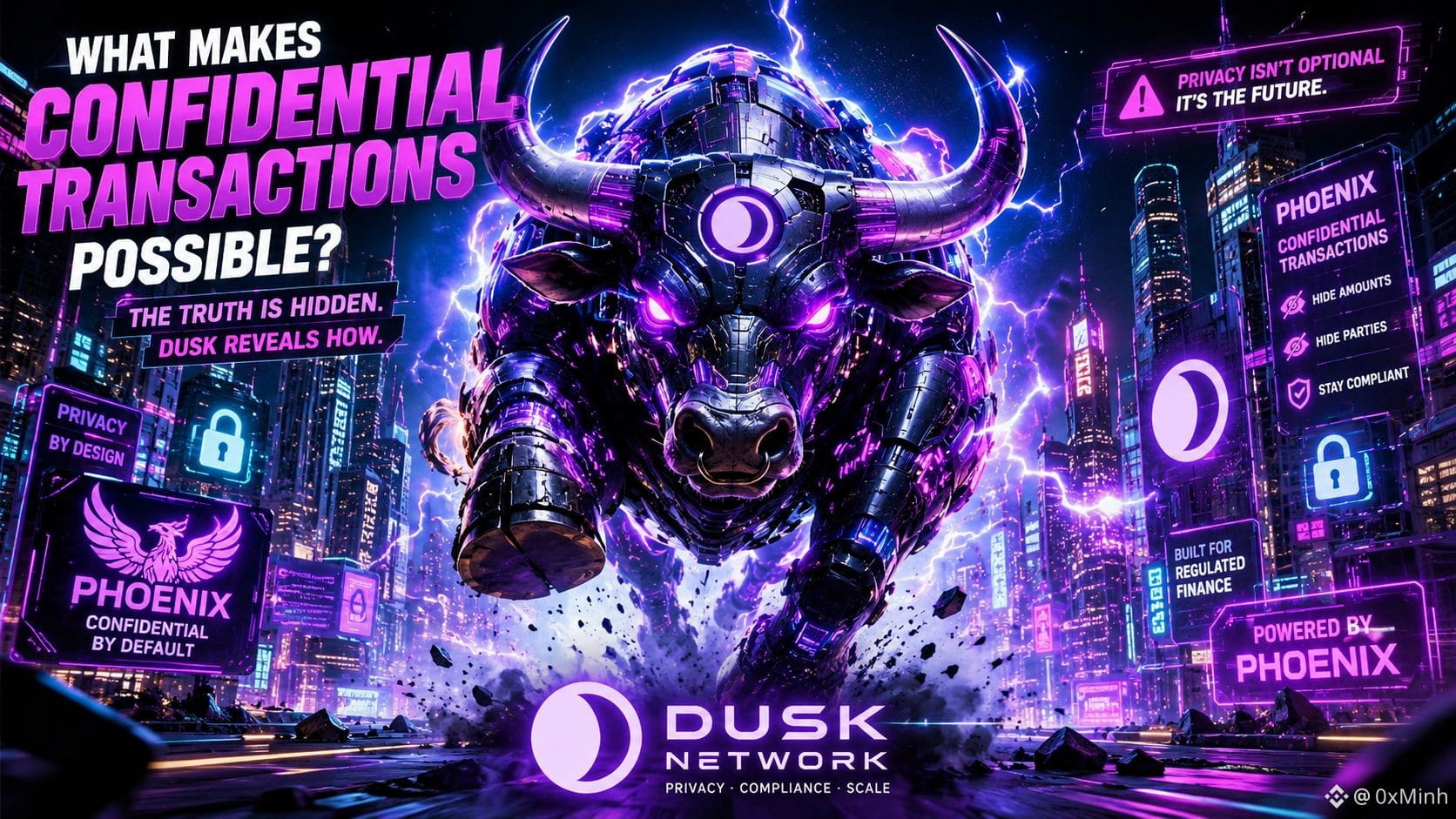
Previously, I often thought blockchain privacy meant hiding all transactions. The less data that is revealed, the better I considered the design.
But when I read more deeply about the Dusk Network, that assumption started to change. One detail in Phoenix made me reread it a few times: the network still has to verify transactions, but it doesn’t necessarily need to see the entire value inside.
At first, I assumed that Confidential Transactions simply encrypt the amount, but I realized that understanding wasn’t sufficient. Phoenix uses shielded notes and nullifiers. Zero-knowledge proofs allow proving spending authority, validity, and protection against double spends without disclosing sensitive transaction data.
How I see it now is that the difference lies in the boundary between “being verified” and “being seen.” The blockchain still needs to know the transaction is valid, but it doesn’t necessarily need to know the amount and the parties involved.
Phoenix 2.0 takes this idea even further. The recipient can determine who the sender is while that information does not become public data for the entire network.
What I find noteworthy is no longer just the privacy feature. It’s how this design changes the trust model: instead of forcing everyone to see the data to believe it, the system uses cryptographic proofs to replace part of what would otherwise be observation.
And maybe this is the harder question of all: in a managed blockchain for finance, what exactly do we want to hide, and what do we want to prove?
#dusk $DUSK @Dusk_Foundation $BTC
Previously, I often thought blockchain privacy meant hiding all transactions. The less data that is revealed, the better I considered the design.
But when I read more deeply about the Dusk Network, that assumption started to change. One detail in Phoenix made me reread it a few times: the network still has to verify transactions, but it doesn’t necessarily need to see the entire value inside.
At first, I assumed that Confidential Transactions simply encrypt the amount, but I realized that understanding wasn’t sufficient. Phoenix uses shielded notes and nullifiers. Zero-knowledge proofs allow proving spending authority, validity, and protection against double spends without disclosing sensitive transaction data.
How I see it now is that the difference lies in the boundary between “being verified” and “being seen.” The blockchain still needs to know the transaction is valid, but it doesn’t necessarily need to know the amount and the parties involved.
Phoenix 2.0 takes this idea even further. The recipient can determine who the sender is while that information does not become public data for the entire network.
What I find noteworthy is no longer just the privacy feature. It’s how this design changes the trust model: instead of forcing everyone to see the data to believe it, the system uses cryptographic proofs to replace part of what would otherwise be observation.
And maybe this is the harder question of all: in a managed blockchain for finance, what exactly do we want to hide, and what do we want to prove?
#dusk $DUSK @Dusk $BTC
But when I read more deeply about the Dusk Network, that assumption started to change. One detail in Phoenix made me reread it a few times: the network still has to verify transactions, but it doesn’t necessarily need to see the entire value inside.
At first, I assumed that Confidential Transactions simply encrypt the amount, but I realized that understanding wasn’t sufficient. Phoenix uses shielded notes and nullifiers. Zero-knowledge proofs allow proving spending authority, validity, and protection against double spends without disclosing sensitive transaction data.
How I see it now is that the difference lies in the boundary between “being verified” and “being seen.” The blockchain still needs to know the transaction is valid, but it doesn’t necessarily need to know the amount and the parties involved.
Phoenix 2.0 takes this idea even further. The recipient can determine who the sender is while that information does not become public data for the entire network.
What I find noteworthy is no longer just the privacy feature. It’s how this design changes the trust model: instead of forcing everyone to see the data to believe it, the system uses cryptographic proofs to replace part of what would otherwise be observation.
And maybe this is the harder question of all: in a managed blockchain for finance, what exactly do we want to hide, and what do we want to prove?
#dusk $DUSK @Dusk $BTC
1
1
326
·
--
In the past, I often thought that blockchain adoption started with developers, applications, and users. With more users, the ecosystem would naturally expand.
I once viewed it almost like a rule, but when I delved deeper into Dusk Network, I began to doubt this assumption.
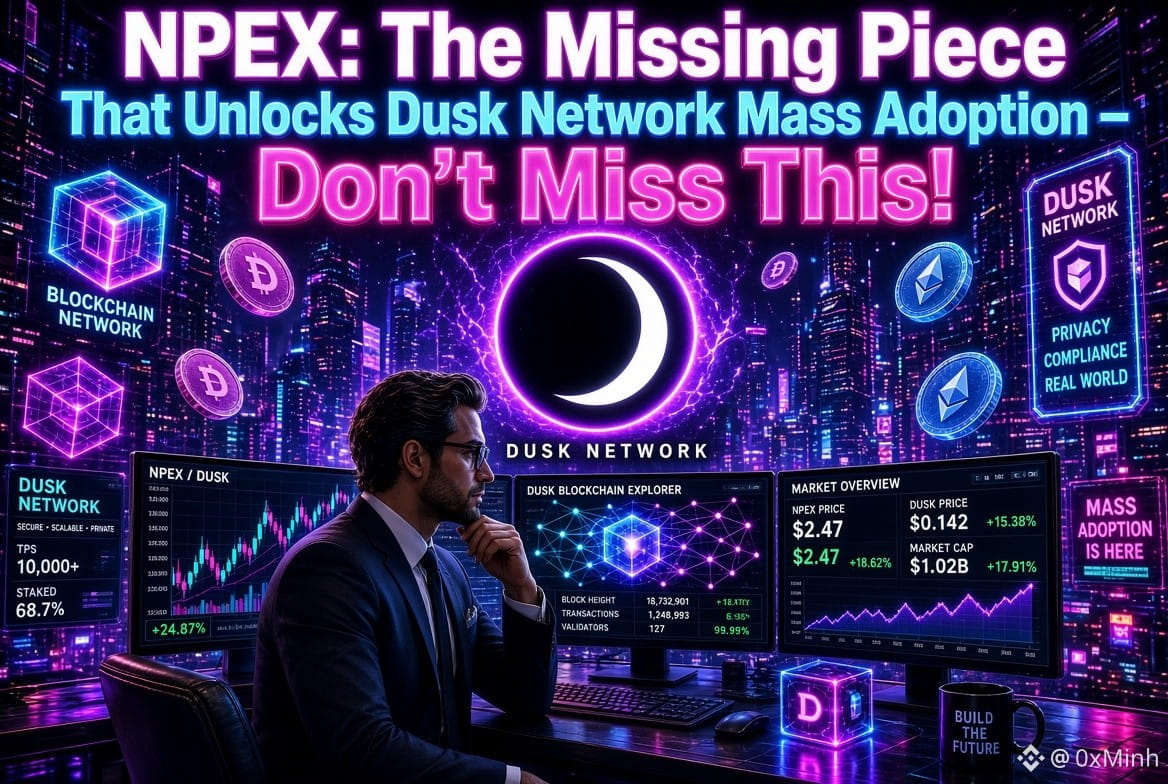
What made me pause was the relationship with NPEX. Dusk became a shareholder of NPEX in 2020, while NPEX is a licensed MTF in the Netherlands.
At first, I thought NPEX mainly provided a use case for RWA, but then I realized the issue is broader. Adoption doesn’t just require a good blockchain—it also needs issuer and investor access, a trading venue, and processes that the market has already accepted.
NPEX already has a portion of that market layer in place. Dusk provides the infrastructure to move issuance, trading, and settlement workflows onchain.
So my view of the current problem is different from before. NPEX is not proof that adoption has already happened, but it can create a more practical path for adoption to begin.
The thought-provoking part here is: instead of hunting for a traditional market to find the Dusk blockchain, Dusk is trying to bring blockchain into an existing market.
I still don’t know how far this model will expand, but perhaps the key question isn’t how many users Dusk has, but whether NPEX can turn real financial demand into demand for using onchain infrastructure.
#dusk $DUSK @Dusk_Foundation $BTC
In the past, I often thought that blockchain adoption started with developers, applications, and users. With more users, the ecosystem would naturally expand.
I once viewed it almost like a rule, but when I delved deeper into Dusk Network, I began to doubt this assumption.
What made me pause was the relationship with NPEX. Dusk became a shareholder of NPEX in 2020, while NPEX is a licensed MTF in the Netherlands.
At first, I thought NPEX mainly provided a use case for RWA, but then I realized the issue is broader. Adoption doesn’t just require a good blockchain—it also needs issuer and investor access, a trading venue, and processes that the market has already accepted.
NPEX already has a portion of that market layer in place. Dusk provides the infrastructure to move issuance, trading, and settlement workflows onchain.
So my view of the current problem is different from before. NPEX is not proof that adoption has already happened, but it can create a more practical path for adoption to begin.
The thought-provoking part here is: instead of hunting for a traditional market to find the Dusk blockchain, Dusk is trying to bring blockchain into an existing market.
I still don’t know how far this model will expand, but perhaps the key question isn’t how many users Dusk has, but whether NPEX can turn real financial demand into demand for using onchain infrastructure.
#dusk $DUSK @Dusk $BTC
I once viewed it almost like a rule, but when I delved deeper into Dusk Network, I began to doubt this assumption.
What made me pause was the relationship with NPEX. Dusk became a shareholder of NPEX in 2020, while NPEX is a licensed MTF in the Netherlands.
At first, I thought NPEX mainly provided a use case for RWA, but then I realized the issue is broader. Adoption doesn’t just require a good blockchain—it also needs issuer and investor access, a trading venue, and processes that the market has already accepted.
NPEX already has a portion of that market layer in place. Dusk provides the infrastructure to move issuance, trading, and settlement workflows onchain.
So my view of the current problem is different from before. NPEX is not proof that adoption has already happened, but it can create a more practical path for adoption to begin.
The thought-provoking part here is: instead of hunting for a traditional market to find the Dusk blockchain, Dusk is trying to bring blockchain into an existing market.
I still don’t know how far this model will expand, but perhaps the key question isn’t how many users Dusk has, but whether NPEX can turn real financial demand into demand for using onchain infrastructure.
#dusk $DUSK @Dusk $BTC
2
4
500
·
--
Before, I used to see the lending protocol as quite straightforward: one party supplies capital, another borrows, and the interest rate is a variable adjusted by the market. I almost assumed that the most important part was liquidity allocation and risk control for the loans.
When I read more deeply into TermMax, there was one detail that made me stop: the protocol doesn’t just fix the interest rate, it also ties the loan to a specific maturity time.
At first, I thought this was only a variant of fixed-rate lending, but then I realized that perspective was still too close to the traditional lending model. TermMax packages the interest rate, the term, and the right to receive future value into a tradable structure.
Only then did I understand why the documentation talks so much about FT, XT, and valuation curves. They’re not merely ancillary tokens—they change how the rights of borrowers and lenders are separated and exchanged.
From today’s perspective, I no longer see TermMax as simply a place to deposit or borrow assets.
I began to view it as an effort to build an onchain fixed-income market, where time and interest rates become components that can be valued separately.
But I’m still wondering: when the term is turned into part of this market, to what extent will this change how DeFi defines liquidity?
#termmax @termmax $BTC
Before, I used to see the lending protocol as quite straightforward: one party supplies capital, another borrows, and the interest rate is a variable adjusted by the market. I almost assumed that the most important part was liquidity allocation and risk control for the loans.
When I read more deeply into TermMax, there was one detail that made me stop: the protocol doesn’t just fix the interest rate, it also ties the loan to a specific maturity time.
At first, I thought this was only a variant of fixed-rate lending, but then I realized that perspective was still too close to the traditional lending model. TermMax packages the interest rate, the term, and the right to receive future value into a tradable structure.
Only then did I understand why the documentation talks so much about FT, XT, and valuation curves. They’re not merely ancillary tokens—they change how the rights of borrowers and lenders are separated and exchanged.
From today’s perspective, I no longer see TermMax as simply a place to deposit or borrow assets.
I began to view it as an effort to build an onchain fixed-income market, where time and interest rates become components that can be valued separately.
But I’m still wondering: when the term is turned into part of this market, to what extent will this change how DeFi defines liquidity?
#termmax @TermMax $BTC
When I read more deeply into TermMax, there was one detail that made me stop: the protocol doesn’t just fix the interest rate, it also ties the loan to a specific maturity time.
At first, I thought this was only a variant of fixed-rate lending, but then I realized that perspective was still too close to the traditional lending model. TermMax packages the interest rate, the term, and the right to receive future value into a tradable structure.
Only then did I understand why the documentation talks so much about FT, XT, and valuation curves. They’re not merely ancillary tokens—they change how the rights of borrowers and lenders are separated and exchanged.
From today’s perspective, I no longer see TermMax as simply a place to deposit or borrow assets.
I began to view it as an effort to build an onchain fixed-income market, where time and interest rates become components that can be valued separately.
But I’m still wondering: when the term is turned into part of this market, to what extent will this change how DeFi defines liquidity?
#termmax @TermMax $BTC
3
5
916
·
--
I used to think strong liquidity is just a matter of looking at the amount of capital sitting in the protocol, but the more I read about TermMax, the more I realize that measurement doesn’t tell the whole story.
A single pool of capital can be split across multiple markets. The issue is that when demand spikes in one market, the capital currently allocated to other markets isn’t immediately transferable.
That detail caught my attention when reading about Atomic Orders.
By TermMax’s design, the same source of liquidity can be placed across multiple markets at the same time, but it cannot be used more than once. When an order pulls away a portion of that liquidity, the corresponding portion disappears simultaneously from the other markets.
At first, I thought this was simply a way to make liquidity “look deeper,” but then I realized the real problem lies in capital allocation.
Capital doesn’t need to be locked rigidly into a single market from the start. It can sit behind multiple possible demands, only to be consumed where actual trading occurs.
That’s why my view of Atomic Orders is different now. I don’t see it as a mechanism for creating additional liquidity; it looks more like a way of repositioning liquidity before demand emerges.
But I still want to see real-world data: order-book depth, loan size, and how capital is utilized over time.
Maybe the more interesting question isn’t how much TVL TermMax has, but how effectively each unit of liquidity can actually serve the market.
#termmax @termmax $BTC
I used to think strong liquidity is just a matter of looking at the amount of capital sitting in the protocol, but the more I read about TermMax, the more I realize that measurement doesn’t tell the whole story.
A single pool of capital can be split across multiple markets. The issue is that when demand spikes in one market, the capital currently allocated to other markets isn’t immediately transferable.
That detail caught my attention when reading about Atomic Orders.
By TermMax’s design, the same source of liquidity can be placed across multiple markets at the same time, but it cannot be used more than once. When an order pulls away a portion of that liquidity, the corresponding portion disappears simultaneously from the other markets.
At first, I thought this was simply a way to make liquidity “look deeper,” but then I realized the real problem lies in capital allocation.
Capital doesn’t need to be locked rigidly into a single market from the start. It can sit behind multiple possible demands, only to be consumed where actual trading occurs.
That’s why my view of Atomic Orders is different now. I don’t see it as a mechanism for creating additional liquidity; it looks more like a way of repositioning liquidity before demand emerges.
But I still want to see real-world data: order-book depth, loan size, and how capital is utilized over time.
Maybe the more interesting question isn’t how much TVL TermMax has, but how effectively each unit of liquidity can actually serve the market.
#termmax @TermMax $BTC
A single pool of capital can be split across multiple markets. The issue is that when demand spikes in one market, the capital currently allocated to other markets isn’t immediately transferable.
That detail caught my attention when reading about Atomic Orders.
By TermMax’s design, the same source of liquidity can be placed across multiple markets at the same time, but it cannot be used more than once. When an order pulls away a portion of that liquidity, the corresponding portion disappears simultaneously from the other markets.
At first, I thought this was simply a way to make liquidity “look deeper,” but then I realized the real problem lies in capital allocation.
Capital doesn’t need to be locked rigidly into a single market from the start. It can sit behind multiple possible demands, only to be consumed where actual trading occurs.
That’s why my view of Atomic Orders is different now. I don’t see it as a mechanism for creating additional liquidity; it looks more like a way of repositioning liquidity before demand emerges.
But I still want to see real-world data: order-book depth, loan size, and how capital is utilized over time.
Maybe the more interesting question isn’t how much TVL TermMax has, but how effectively each unit of liquidity can actually serve the market.
#termmax @TermMax $BTC
2
2
449
·
--
I once encountered a situation that made me have to change the way I think about contacting support. I remember that it was around the time of Tet 2026. I sold 500 USDT on Binance P2P to buy household items. The buyer said they had transferred 13 million VND and sent a receipt photo in the chat box, but when I checked my bank account, I hadn’t actually seen the money credited.
My first reaction back then was quite simple: I wanted to contact support and say that the buyer had paid but I hadn’t received the funds. I thought that was enough to start handling the issue.
But then I slowed down and read more carefully about Binance P2P. That’s when I realized I had skipped a step. Binance states that when a dispute arises, both parties can file an appeal, and the support team will review the relevant evidence. That made me reconsider.
Instead of just recounting what happened, I started checking the order code, the transaction status, the amount to be received, and my bank account history. I also kept the confirmation screenshots and other related evidence in case I needed to appeal.
At first, I saw support as the place to resolve the problem, but later I realized I also had a responsibility to prepare clear enough data before requesting intervention. The difference was that I was providing a story or a happening that could be verified against records.
Thanks to having complete information and evidence prepared, things went smoothly afterward.
Since then, I always double-check everything that can be verified before reaching out to support. In a new data dispute, that’s what’s worth placing trust in.
#binancep2pantoan @Binance_Vietnam $BTC
I once encountered a situation that made me have to change the way I think about contacting support. I remember that it was around the time of Tet 2026. I sold 500 USDT on Binance P2P to buy household items. The buyer said they had transferred 13 million VND and sent a receipt photo in the chat box, but when I checked my bank account, I hadn’t actually seen the money credited.
My first reaction back then was quite simple: I wanted to contact support and say that the buyer had paid but I hadn’t received the funds. I thought that was enough to start handling the issue.
But then I slowed down and read more carefully about Binance P2P. That’s when I realized I had skipped a step. Binance states that when a dispute arises, both parties can file an appeal, and the support team will review the relevant evidence. That made me reconsider.
Instead of just recounting what happened, I started checking the order code, the transaction status, the amount to be received, and my bank account history. I also kept the confirmation screenshots and other related evidence in case I needed to appeal.
At first, I saw support as the place to resolve the problem, but later I realized I also had a responsibility to prepare clear enough data before requesting intervention. The difference was that I was providing a story or a happening that could be verified against records.
Thanks to having complete information and evidence prepared, things went smoothly afterward.
Since then, I always double-check everything that can be verified before reaching out to support. In a new data dispute, that’s what’s worth placing trust in.
#binancep2pantoan @Binance Vietnam $BTC
My first reaction back then was quite simple: I wanted to contact support and say that the buyer had paid but I hadn’t received the funds. I thought that was enough to start handling the issue.
But then I slowed down and read more carefully about Binance P2P. That’s when I realized I had skipped a step. Binance states that when a dispute arises, both parties can file an appeal, and the support team will review the relevant evidence. That made me reconsider.
Instead of just recounting what happened, I started checking the order code, the transaction status, the amount to be received, and my bank account history. I also kept the confirmation screenshots and other related evidence in case I needed to appeal.
At first, I saw support as the place to resolve the problem, but later I realized I also had a responsibility to prepare clear enough data before requesting intervention. The difference was that I was providing a story or a happening that could be verified against records.
Thanks to having complete information and evidence prepared, things went smoothly afterward.
Since then, I always double-check everything that can be verified before reaching out to support. In a new data dispute, that’s what’s worth placing trust in.
#binancep2pantoan @Binance Vietnam $BTC
1
2
422
·
--
Today I spent quite a bit of time reading about how Dusk handles private transactions, and I started noticing a detail I used to overlook.
Privacy here isn’t just an add-on layer. Dusk uses Zero-Knowledge Proof to prove that a condition is true without having to publicly reveal all the underlying data. It could be the ability to pay, eligibility conditions, or the transaction’s status.
At first, I still thought crypto usually has to choose between two things: being transparent for easier verification, or being private to hide data. But the more I read about selective disclosure, the more I feel that framing the problem this way might be too simplistic.
The way I see it now is that privacy doesn’t necessarily mean it can’t be audited. An authorized party may be allowed to view the information that’s necessary, while others only need to know that the transaction satisfied the conditions.
Zedger and Dusk’s asset tokenization approach caught my attention most at this point. DuskEVM is also worth keeping an eye on, as it paves the way for Solidity developers to access the ecosystem without having to start from scratch.
But I’m still not ready to jump to conclusions.
“Private but auditable” sounds sensible in theory. The harder question is how it will hold up in front of a regulator, in real-world disputes, and at large scale.
NPEX shows this model is being brought closer to the real market, but real-world testing and proving it at scale are two different things.
Maybe that’s the part I want to keep observing in Dusk.
#dusk $DUSK @Dusk_Foundation $BTC
Today I spent quite a bit of time reading about how Dusk handles private transactions, and I started noticing a detail I used to overlook.
Privacy here isn’t just an add-on layer. Dusk uses Zero-Knowledge Proof to prove that a condition is true without having to publicly reveal all the underlying data. It could be the ability to pay, eligibility conditions, or the transaction’s status.
At first, I still thought crypto usually has to choose between two things: being transparent for easier verification, or being private to hide data. But the more I read about selective disclosure, the more I feel that framing the problem this way might be too simplistic.
The way I see it now is that privacy doesn’t necessarily mean it can’t be audited. An authorized party may be allowed to view the information that’s necessary, while others only need to know that the transaction satisfied the conditions.
Zedger and Dusk’s asset tokenization approach caught my attention most at this point. DuskEVM is also worth keeping an eye on, as it paves the way for Solidity developers to access the ecosystem without having to start from scratch.
But I’m still not ready to jump to conclusions.
“Private but auditable” sounds sensible in theory. The harder question is how it will hold up in front of a regulator, in real-world disputes, and at large scale.
NPEX shows this model is being brought closer to the real market, but real-world testing and proving it at scale are two different things.
Maybe that’s the part I want to keep observing in Dusk.
#dusk $DUSK @Dusk $BTC
Privacy here isn’t just an add-on layer. Dusk uses Zero-Knowledge Proof to prove that a condition is true without having to publicly reveal all the underlying data. It could be the ability to pay, eligibility conditions, or the transaction’s status.
At first, I still thought crypto usually has to choose between two things: being transparent for easier verification, or being private to hide data. But the more I read about selective disclosure, the more I feel that framing the problem this way might be too simplistic.
The way I see it now is that privacy doesn’t necessarily mean it can’t be audited. An authorized party may be allowed to view the information that’s necessary, while others only need to know that the transaction satisfied the conditions.
Zedger and Dusk’s asset tokenization approach caught my attention most at this point. DuskEVM is also worth keeping an eye on, as it paves the way for Solidity developers to access the ecosystem without having to start from scratch.
But I’m still not ready to jump to conclusions.
“Private but auditable” sounds sensible in theory. The harder question is how it will hold up in front of a regulator, in real-world disputes, and at large scale.
NPEX shows this model is being brought closer to the real market, but real-world testing and proving it at scale are two different things.
Maybe that’s the part I want to keep observing in Dusk.
#dusk $DUSK @Dusk $BTC
6
5
113
·
--
Previously, I used to think that when I had idle capital, the most important thing was to find the highest interest rate, but the more I learned about TermMax, the more I started to see things differently. Fixed interest rates bring something that DeFi does not always have: predictability.
I know the interest rate, know the term, and can plan based on those numbers, but certainty always comes with a trade-off. Once a position is locked in, the market continues to change. Interest rates may rise higher, another opportunity may appear, or simply my strategy may change midway. At that point, what once felt safe becomes a limitation.
So I no longer think about whether fixed or floating interest rates are better. From my current perspective, they solve two different needs. Fixed rates prioritize certainty, while floating rates prioritize flexibility.
Suppose I have 15.000 USD to lend for 6 months, I would not just ask which interest rate is higher. I would ask: do I want to lock in profit in exchange for stability, or keep the ability to change my position when the market fluctuates? Perhaps splitting the capital into both is also an option. In the end, the question worth considering is not which is better, but what I am willing to trade off.
#termmax @termmax
Previously, I used to think that when I had idle capital, the most important thing was to find the highest interest rate, but the more I learned about TermMax, the more I started to see things differently. Fixed interest rates bring something that DeFi does not always have: predictability.
I know the interest rate, know the term, and can plan based on those numbers, but certainty always comes with a trade-off. Once a position is locked in, the market continues to change. Interest rates may rise higher, another opportunity may appear, or simply my strategy may change midway. At that point, what once felt safe becomes a limitation.
So I no longer think about whether fixed or floating interest rates are better. From my current perspective, they solve two different needs. Fixed rates prioritize certainty, while floating rates prioritize flexibility.
Suppose I have 15.000 USD to lend for 6 months, I would not just ask which interest rate is higher. I would ask: do I want to lock in profit in exchange for stability, or keep the ability to change my position when the market fluctuates? Perhaps splitting the capital into both is also an option. In the end, the question worth considering is not which is better, but what I am willing to trade off.
#termmax @TermMax
I know the interest rate, know the term, and can plan based on those numbers, but certainty always comes with a trade-off. Once a position is locked in, the market continues to change. Interest rates may rise higher, another opportunity may appear, or simply my strategy may change midway. At that point, what once felt safe becomes a limitation.
So I no longer think about whether fixed or floating interest rates are better. From my current perspective, they solve two different needs. Fixed rates prioritize certainty, while floating rates prioritize flexibility.
Suppose I have 15.000 USD to lend for 6 months, I would not just ask which interest rate is higher. I would ask: do I want to lock in profit in exchange for stability, or keep the ability to change my position when the market fluctuates? Perhaps splitting the capital into both is also an option. In the end, the question worth considering is not which is better, but what I am willing to trade off.
#termmax @TermMax
9
6
106
·
--
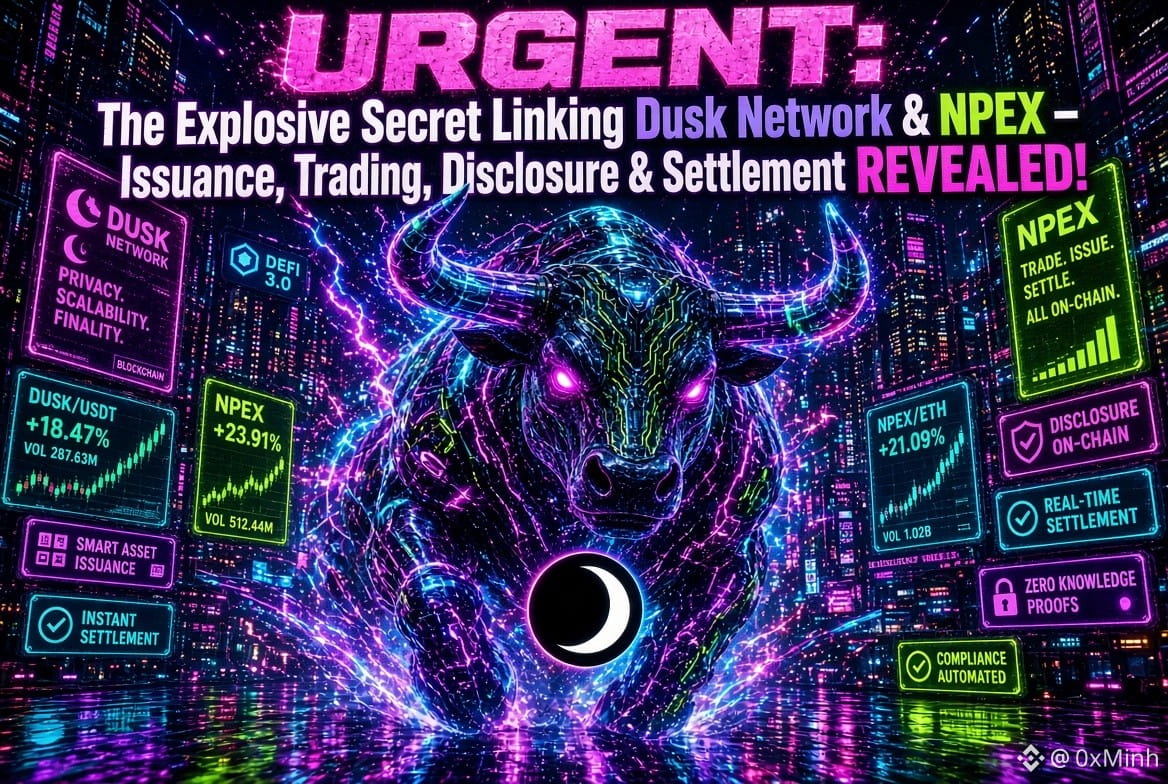
Previously, I often thought of a financial market as operating like many systems in sequence—issuance in one place, trading in another, and then settlement and reconciliation handled afterward.
As I dug deeper into the Dusk Network and NPEX, I started to revisit that assumption. What made me pause wasn’t the idea of putting assets on the blockchain, but the way Dusk describes the entire connected workflow of an asset.
At first, I thought this was still mostly about tokenization. Create a token representing the asset, then bring it to the market; however, Dusk’s documentation distinguishes tokenization clearly from native issuance. With native issuance, the asset’s lifecycle can be designed around the ledger itself, rather than using tokens merely as a representation layer.
Then I realized I had overlooked something more important. Dusk Trade isn’t only about buying and selling. It includes eligibility, disclosure, coordinating the payment leg and the asset leg, and then settlement.
NPEX, in turn, provides a managed market infrastructure layer. Dusk is now describing both sides moving issuance, trading, disclosure, and settlement into a single unified onchain workflow.
From my current perspective, the biggest change lies in the trust model. The issue is no longer simply “whether the token exists on the blockchain,” but how consistently the rules regarding access, transfer, information, and settlement can all be enforced together.
I still wonder where the boundary lies between what the blockchain enforces and what the NPEX legal framework continues to take care of. Perhaps that’s the part most worth watching.
#dusk $DUSK @Dusk_Foundation $BTC
Previously, I often thought of a financial market as operating like many systems in sequence—issuance in one place, trading in another, and then settlement and reconciliation handled afterward.
As I dug deeper into the Dusk Network and NPEX, I started to revisit that assumption. What made me pause wasn’t the idea of putting assets on the blockchain, but the way Dusk describes the entire connected workflow of an asset.
At first, I thought this was still mostly about tokenization. Create a token representing the asset, then bring it to the market; however, Dusk’s documentation distinguishes tokenization clearly from native issuance. With native issuance, the asset’s lifecycle can be designed around the ledger itself, rather than using tokens merely as a representation layer.
Then I realized I had overlooked something more important. Dusk Trade isn’t only about buying and selling. It includes eligibility, disclosure, coordinating the payment leg and the asset leg, and then settlement.
NPEX, in turn, provides a managed market infrastructure layer. Dusk is now describing both sides moving issuance, trading, disclosure, and settlement into a single unified onchain workflow.
From my current perspective, the biggest change lies in the trust model. The issue is no longer simply “whether the token exists on the blockchain,” but how consistently the rules regarding access, transfer, information, and settlement can all be enforced together.
I still wonder where the boundary lies between what the blockchain enforces and what the NPEX legal framework continues to take care of. Perhaps that’s the part most worth watching.
#dusk $DUSK @Dusk $BTC
As I dug deeper into the Dusk Network and NPEX, I started to revisit that assumption. What made me pause wasn’t the idea of putting assets on the blockchain, but the way Dusk describes the entire connected workflow of an asset.
At first, I thought this was still mostly about tokenization. Create a token representing the asset, then bring it to the market; however, Dusk’s documentation distinguishes tokenization clearly from native issuance. With native issuance, the asset’s lifecycle can be designed around the ledger itself, rather than using tokens merely as a representation layer.
Then I realized I had overlooked something more important. Dusk Trade isn’t only about buying and selling. It includes eligibility, disclosure, coordinating the payment leg and the asset leg, and then settlement.
NPEX, in turn, provides a managed market infrastructure layer. Dusk is now describing both sides moving issuance, trading, disclosure, and settlement into a single unified onchain workflow.
From my current perspective, the biggest change lies in the trust model. The issue is no longer simply “whether the token exists on the blockchain,” but how consistently the rules regarding access, transfer, information, and settlement can all be enforced together.
I still wonder where the boundary lies between what the blockchain enforces and what the NPEX legal framework continues to take care of. Perhaps that’s the part most worth watching.
#dusk $DUSK @Dusk $BTC
4
3
495
·
--
Previously, I used to think that filing a complaint on Binance P2P should be the final step—something to use only when the transaction has truly fallen apart.
I was once inclined to handle things myself first. I’d message a few more times, wait for the other party to respond, and hope the issue could be resolved without involving a third party.
But when I reviewed how Binance P2P handles disputes, I started to think differently. There was one point I had overlooked: when both sides can no longer agree on the status of the transaction, continuing to negotiate sometimes doesn’t make the situation any clearer.
At first, I believed that opening a dispute meant making everything more serious.
Then I realized I had misunderstood its purpose. A dispute isn’t necessarily a confrontational act. It’s a way to put the dispute into a process so Binance can review it based on the relevant information and evidence.
From my current perspective, the time to consider filing a dispute isn’t when I’m losing patience. It’s when a problem arises in the transaction and the two parties can’t clarify it and resolve it on their own.
This has also changed how I view responsibility. It’s not that the moment there’s a dispute you should file immediately—but you also shouldn’t delay just because you’re afraid of making things more complicated.
Maybe the more important question isn’t “when should I file a dispute?” but rather: at what point should I stop believing that private negotiation is still enough?
#binancep2pantoan @Binance_Vietnam $BTC
Previously, I used to think that filing a complaint on Binance P2P should be the final step—something to use only when the transaction has truly fallen apart.
I was once inclined to handle things myself first. I’d message a few more times, wait for the other party to respond, and hope the issue could be resolved without involving a third party.
But when I reviewed how Binance P2P handles disputes, I started to think differently. There was one point I had overlooked: when both sides can no longer agree on the status of the transaction, continuing to negotiate sometimes doesn’t make the situation any clearer.
At first, I believed that opening a dispute meant making everything more serious.
Then I realized I had misunderstood its purpose. A dispute isn’t necessarily a confrontational act. It’s a way to put the dispute into a process so Binance can review it based on the relevant information and evidence.
From my current perspective, the time to consider filing a dispute isn’t when I’m losing patience. It’s when a problem arises in the transaction and the two parties can’t clarify it and resolve it on their own.
This has also changed how I view responsibility. It’s not that the moment there’s a dispute you should file immediately—but you also shouldn’t delay just because you’re afraid of making things more complicated.
Maybe the more important question isn’t “when should I file a dispute?” but rather: at what point should I stop believing that private negotiation is still enough?
#binancep2pantoan @Binance Vietnam $BTC
I was once inclined to handle things myself first. I’d message a few more times, wait for the other party to respond, and hope the issue could be resolved without involving a third party.
But when I reviewed how Binance P2P handles disputes, I started to think differently. There was one point I had overlooked: when both sides can no longer agree on the status of the transaction, continuing to negotiate sometimes doesn’t make the situation any clearer.
At first, I believed that opening a dispute meant making everything more serious.
Then I realized I had misunderstood its purpose. A dispute isn’t necessarily a confrontational act. It’s a way to put the dispute into a process so Binance can review it based on the relevant information and evidence.
From my current perspective, the time to consider filing a dispute isn’t when I’m losing patience. It’s when a problem arises in the transaction and the two parties can’t clarify it and resolve it on their own.
This has also changed how I view responsibility. It’s not that the moment there’s a dispute you should file immediately—but you also shouldn’t delay just because you’re afraid of making things more complicated.
Maybe the more important question isn’t “when should I file a dispute?” but rather: at what point should I stop believing that private negotiation is still enough?
#binancep2pantoan @Binance Vietnam $BTC
2
192
·
--
Verified
Previously, I often looked at a new token’s price after the TGE. Whether the price goes up or down seems like the quickest signal to understand what the market is thinking, but when I read the TMX documents carefully, I realized that perspective isn’t enough.
TermMax plans its TGE for August 25, 2026. So what I’m interested in isn’t only the TMX price that the market forms after that date, but what happens next.
What made me stop and think was the way TermMax designed the role of TMX. The whitepaper describes TMX for governance, staking, and ecosystem incentives. Total supply is 1 billion tokens, with 20% allocated to initial circulation.
At first, I thought the TGE was mainly the moment the market sets the price. Then I realized it’s also the starting point for validating an economic design.
That’s why my view of TMX today is different. I want to see whether staking actually creates a real incentive to hold, whether governance is truly used, and whether incentives generate sustainable activity or just drive short-term demand.
I also notice that the allocation groups have different vesting schedules. In particular, the Ecosystem portion is allocated 290 million TMX with a 48-month vesting period.
That leads me to think that the price only reflects a very short slice of what’s to come.
Perhaps after August 25, the more important question isn’t how much TMX is worth, but whether the mechanisms around it truly work as designed.
#termmax @termmax $BTC
Previously, I often looked at a new token’s price after the TGE. Whether the price goes up or down seems like the quickest signal to understand what the market is thinking, but when I read the TMX documents carefully, I realized that perspective isn’t enough.
TermMax plans its TGE for August 25, 2026. So what I’m interested in isn’t only the TMX price that the market forms after that date, but what happens next.
What made me stop and think was the way TermMax designed the role of TMX. The whitepaper describes TMX for governance, staking, and ecosystem incentives. Total supply is 1 billion tokens, with 20% allocated to initial circulation.
At first, I thought the TGE was mainly the moment the market sets the price. Then I realized it’s also the starting point for validating an economic design.
That’s why my view of TMX today is different. I want to see whether staking actually creates a real incentive to hold, whether governance is truly used, and whether incentives generate sustainable activity or just drive short-term demand.
I also notice that the allocation groups have different vesting schedules. In particular, the Ecosystem portion is allocated 290 million TMX with a 48-month vesting period.
That leads me to think that the price only reflects a very short slice of what’s to come.
Perhaps after August 25, the more important question isn’t how much TMX is worth, but whether the mechanisms around it truly work as designed.
#termmax @TermMax $BTC
TermMax plans its TGE for August 25, 2026. So what I’m interested in isn’t only the TMX price that the market forms after that date, but what happens next.
What made me stop and think was the way TermMax designed the role of TMX. The whitepaper describes TMX for governance, staking, and ecosystem incentives. Total supply is 1 billion tokens, with 20% allocated to initial circulation.
At first, I thought the TGE was mainly the moment the market sets the price. Then I realized it’s also the starting point for validating an economic design.
That’s why my view of TMX today is different. I want to see whether staking actually creates a real incentive to hold, whether governance is truly used, and whether incentives generate sustainable activity or just drive short-term demand.
I also notice that the allocation groups have different vesting schedules. In particular, the Ecosystem portion is allocated 290 million TMX with a 48-month vesting period.
That leads me to think that the price only reflects a very short slice of what’s to come.
Perhaps after August 25, the more important question isn’t how much TMX is worth, but whether the mechanisms around it truly work as designed.
#termmax @TermMax $BTC
4
4
201
·
--
Previously, I used to view EVM compatibility rather simply. If a blockchain supports Solidity and Ethereum tooling, I assumed that was the straightforward way to attract developers into a new ecosystem.
But as I read the Dusk documentation more deeply, I started to realize that assumption wasn’t quite enough. One detail that made me pause was how Dusk separates execution from settlement.
At first, I thought DuskEVM mainly helps Ethereum applications run on Dusk—then I realized its role is broader, yet also more specific than I had imagined.
DuskEVM is the EVM execution environment, while DuskDS handles consensus, settlement, and data availability. The regulated finance part, in turn, relies on multiple components such as access control, selective disclosure, and Dusk’s transaction models.
From my current perspective, I no longer see DuskEVM as an Ethereum bridge in the technical sense. I see it as a compatibility layer that helps Solidity applications and Ethereum tooling reach Dusk’s infrastructure.
What’s interesting is this division of responsibilities. The EVM preserves the familiar development model, while settlement and the requirements of regulated finance are handled in other layers.
Perhaps the “bridge” here isn’t between two blockchains, but between two ways of building systems.
I still wonder: is the key noteworthy aspect of Dusk’s design really the separation between compatibility and the new regulated infrastructure?
#dusk $DUSK @Dusk_Foundation
Previously, I used to view EVM compatibility rather simply. If a blockchain supports Solidity and Ethereum tooling, I assumed that was the straightforward way to attract developers into a new ecosystem.
But as I read the Dusk documentation more deeply, I started to realize that assumption wasn’t quite enough. One detail that made me pause was how Dusk separates execution from settlement.
At first, I thought DuskEVM mainly helps Ethereum applications run on Dusk—then I realized its role is broader, yet also more specific than I had imagined.
DuskEVM is the EVM execution environment, while DuskDS handles consensus, settlement, and data availability. The regulated finance part, in turn, relies on multiple components such as access control, selective disclosure, and Dusk’s transaction models.
From my current perspective, I no longer see DuskEVM as an Ethereum bridge in the technical sense. I see it as a compatibility layer that helps Solidity applications and Ethereum tooling reach Dusk’s infrastructure.
What’s interesting is this division of responsibilities. The EVM preserves the familiar development model, while settlement and the requirements of regulated finance are handled in other layers.
Perhaps the “bridge” here isn’t between two blockchains, but between two ways of building systems.
I still wonder: is the key noteworthy aspect of Dusk’s design really the separation between compatibility and the new regulated infrastructure?
#dusk $DUSK @Dusk
But as I read the Dusk documentation more deeply, I started to realize that assumption wasn’t quite enough. One detail that made me pause was how Dusk separates execution from settlement.
At first, I thought DuskEVM mainly helps Ethereum applications run on Dusk—then I realized its role is broader, yet also more specific than I had imagined.
DuskEVM is the EVM execution environment, while DuskDS handles consensus, settlement, and data availability. The regulated finance part, in turn, relies on multiple components such as access control, selective disclosure, and Dusk’s transaction models.
From my current perspective, I no longer see DuskEVM as an Ethereum bridge in the technical sense. I see it as a compatibility layer that helps Solidity applications and Ethereum tooling reach Dusk’s infrastructure.
What’s interesting is this division of responsibilities. The EVM preserves the familiar development model, while settlement and the requirements of regulated finance are handled in other layers.
Perhaps the “bridge” here isn’t between two blockchains, but between two ways of building systems.
I still wonder: is the key noteworthy aspect of Dusk’s design really the separation between compatibility and the new regulated infrastructure?
#dusk $DUSK @Dusk
5
5
129
·
--
I used to think that once money had been deposited into the account, transactions could continue—but the more I watch Binance P2P, the more I notice a small detail that might be worth stopping for: the payer’s name doesn’t match.
Binance clearly states that if the counterparty’s payment account name doesn’t match the name verified on the platform, the seller should not release crypto. Binance allows a refund and recommends reporting the Order via Binance Chat.
Previously, I might have viewed this as just a formality check, but there was a real case that made me think differently. One seller shared that he received money via Momo, but the sender’s name didn’t match the name on Binance. He still released the crypto; then the payment was disputed, and the funds were held.
I can’t say for sure that every name mismatch is a scam, but this case shows that “the money has been received” isn’t necessarily enough to conclude the checks.
My current view is simpler: before releasing, you should cross-check the Order details against the actual payment. If there’s anything unusual, I’d rather add a bit of friction than act too quickly.
Perhaps Binance P2P doesn’t remove trust—it only reduces how much trust you have to place in your counterparty by keeping the transaction within a process that can be verified.
And I still wonder: what risk is a mismatched name warning about?
#binancep2pantoan @Binance_Vietnam $BTC
I used to think that once money had been deposited into the account, transactions could continue—but the more I watch Binance P2P, the more I notice a small detail that might be worth stopping for: the payer’s name doesn’t match.
Binance clearly states that if the counterparty’s payment account name doesn’t match the name verified on the platform, the seller should not release crypto. Binance allows a refund and recommends reporting the Order via Binance Chat.
Previously, I might have viewed this as just a formality check, but there was a real case that made me think differently. One seller shared that he received money via Momo, but the sender’s name didn’t match the name on Binance. He still released the crypto; then the payment was disputed, and the funds were held.
I can’t say for sure that every name mismatch is a scam, but this case shows that “the money has been received” isn’t necessarily enough to conclude the checks.
My current view is simpler: before releasing, you should cross-check the Order details against the actual payment. If there’s anything unusual, I’d rather add a bit of friction than act too quickly.
Perhaps Binance P2P doesn’t remove trust—it only reduces how much trust you have to place in your counterparty by keeping the transaction within a process that can be verified.
And I still wonder: what risk is a mismatched name warning about?
#binancep2pantoan @Binance Vietnam $BTC
Binance clearly states that if the counterparty’s payment account name doesn’t match the name verified on the platform, the seller should not release crypto. Binance allows a refund and recommends reporting the Order via Binance Chat.
Previously, I might have viewed this as just a formality check, but there was a real case that made me think differently. One seller shared that he received money via Momo, but the sender’s name didn’t match the name on Binance. He still released the crypto; then the payment was disputed, and the funds were held.
I can’t say for sure that every name mismatch is a scam, but this case shows that “the money has been received” isn’t necessarily enough to conclude the checks.
My current view is simpler: before releasing, you should cross-check the Order details against the actual payment. If there’s anything unusual, I’d rather add a bit of friction than act too quickly.
Perhaps Binance P2P doesn’t remove trust—it only reduces how much trust you have to place in your counterparty by keeping the transaction within a process that can be verified.
And I still wonder: what risk is a mismatched name warning about?
#binancep2pantoan @Binance Vietnam $BTC
1
3
125
·
--
Verified
Previously, I often viewed the TGE as the finish line for a token project. Once the token started trading, I assumed the hardest part had already passed.
But when I read TermMax’s documentation, I started to see that perspective as a bit too simplistic.
The TMX whitepaper describes a total supply of 1 billion tokens, with 20% circulating at the TGE, and a distribution mechanism controlled over 48 months. I got stuck on the word “after.”
At first, I thought the TGE was mainly a tokenomics problem; then I realized it creates an additional layer of economics around the protocol. TermMax had already built lending, borrowing, and leverage with interest rates before TMX came into the picture.
My current way of looking at it is slightly different. The TGE doesn’t only verify token distribution—it begins to test whether the token is tied to the protocol’s activity.
For me, this is a shift in belief. Before the TGE, I looked at the design and the product; after the TGE, I have to observe how incentives, token entitlements, and protocol activity interact.
So I no longer see TermMax’s TGE as the final test; it looks more like a state-transition point.
The question I still want to track is: after TMX appears, how will the system prove its value through real-world activity?
#termmax @termmax $BTC
Previously, I often viewed the TGE as the finish line for a token project. Once the token started trading, I assumed the hardest part had already passed.
But when I read TermMax’s documentation, I started to see that perspective as a bit too simplistic.
The TMX whitepaper describes a total supply of 1 billion tokens, with 20% circulating at the TGE, and a distribution mechanism controlled over 48 months. I got stuck on the word “after.”
At first, I thought the TGE was mainly a tokenomics problem; then I realized it creates an additional layer of economics around the protocol. TermMax had already built lending, borrowing, and leverage with interest rates before TMX came into the picture.
My current way of looking at it is slightly different. The TGE doesn’t only verify token distribution—it begins to test whether the token is tied to the protocol’s activity.
For me, this is a shift in belief. Before the TGE, I looked at the design and the product; after the TGE, I have to observe how incentives, token entitlements, and protocol activity interact.
So I no longer see TermMax’s TGE as the final test; it looks more like a state-transition point.
The question I still want to track is: after TMX appears, how will the system prove its value through real-world activity?
#termmax @TermMax $BTC
But when I read TermMax’s documentation, I started to see that perspective as a bit too simplistic.
The TMX whitepaper describes a total supply of 1 billion tokens, with 20% circulating at the TGE, and a distribution mechanism controlled over 48 months. I got stuck on the word “after.”
At first, I thought the TGE was mainly a tokenomics problem; then I realized it creates an additional layer of economics around the protocol. TermMax had already built lending, borrowing, and leverage with interest rates before TMX came into the picture.
My current way of looking at it is slightly different. The TGE doesn’t only verify token distribution—it begins to test whether the token is tied to the protocol’s activity.
For me, this is a shift in belief. Before the TGE, I looked at the design and the product; after the TGE, I have to observe how incentives, token entitlements, and protocol activity interact.
So I no longer see TermMax’s TGE as the final test; it looks more like a state-transition point.
The question I still want to track is: after TMX appears, how will the system prove its value through real-world activity?
#termmax @TermMax $BTC
5
2
324
·
--
Previously, I often thought that a good financial system had to choose a side. Either be transparent so it’s easy to verify, or be private to protect participants.
When I read deeper into Dusk Network’s documentation, I came across an approach that made me stop and reconsider. Dusk doesn’t treat privacy and transparency as mutually exclusive states. The system allows public, shielded, and selective disclosure flows depending on needs.
At first, I thought privacy mainly meant hiding transaction data, but I then realized that view was a bit simplistic. In regulated markets, the real issue is not just what information exists, but who is allowed to know what information, and under what circumstances.
So my view of Dusk today is different. Privacy doesn’t necessarily have to be at odds with compliance. Phoenix can conceal transaction information, while viewing keys and selective disclosure enable data to be revealed when the workflow calls for it.
This led me to think more about the trust model. Perhaps a financial system doesn’t need to make everything public in order to provide verifiability. More importantly, it’s about controlling the boundaries between privacy, transparency, and access rights.
I still wonder how these principles will be implemented differently across each application. Maybe the thought-provoking question isn’t whether Dusk chooses privacy or transparency, but what information it decides needs to be trusted, proven, and disclosed.
#dusk $DUSK @Dusk_Foundation $BTC
Previously, I often thought that a good financial system had to choose a side. Either be transparent so it’s easy to verify, or be private to protect participants.
When I read deeper into Dusk Network’s documentation, I came across an approach that made me stop and reconsider. Dusk doesn’t treat privacy and transparency as mutually exclusive states. The system allows public, shielded, and selective disclosure flows depending on needs.
At first, I thought privacy mainly meant hiding transaction data, but I then realized that view was a bit simplistic. In regulated markets, the real issue is not just what information exists, but who is allowed to know what information, and under what circumstances.
So my view of Dusk today is different. Privacy doesn’t necessarily have to be at odds with compliance. Phoenix can conceal transaction information, while viewing keys and selective disclosure enable data to be revealed when the workflow calls for it.
This led me to think more about the trust model. Perhaps a financial system doesn’t need to make everything public in order to provide verifiability. More importantly, it’s about controlling the boundaries between privacy, transparency, and access rights.
I still wonder how these principles will be implemented differently across each application. Maybe the thought-provoking question isn’t whether Dusk chooses privacy or transparency, but what information it decides needs to be trusted, proven, and disclosed.
#dusk $DUSK @Dusk $BTC
When I read deeper into Dusk Network’s documentation, I came across an approach that made me stop and reconsider. Dusk doesn’t treat privacy and transparency as mutually exclusive states. The system allows public, shielded, and selective disclosure flows depending on needs.
At first, I thought privacy mainly meant hiding transaction data, but I then realized that view was a bit simplistic. In regulated markets, the real issue is not just what information exists, but who is allowed to know what information, and under what circumstances.
So my view of Dusk today is different. Privacy doesn’t necessarily have to be at odds with compliance. Phoenix can conceal transaction information, while viewing keys and selective disclosure enable data to be revealed when the workflow calls for it.
This led me to think more about the trust model. Perhaps a financial system doesn’t need to make everything public in order to provide verifiability. More importantly, it’s about controlling the boundaries between privacy, transparency, and access rights.
I still wonder how these principles will be implemented differently across each application. Maybe the thought-provoking question isn’t whether Dusk chooses privacy or transparency, but what information it decides needs to be trusted, proven, and disclosed.
#dusk $DUSK @Dusk $BTC
Privacy
50%
Transparency
0%
Compliance
0%
Cân bằng cả 3
50%
2 votes • Voting closed
11
7
176
·
--
Previously, I often thought that a smooth transaction also reflected the trustworthiness of the other party. If the buyer paid correctly and the transaction completed, I almost automatically assumed that everything afterward would be fine and nothing to worry about—until a recent Binance P2P transaction made me rethink that.
I remember that I sold 500 USDT, and the buyer paid normally. While I was checking the money at the bank, they started asking whether I usually trade crypto. Then they introduced a new project and wanted to get my phone number and Telegram so they could talk privately.
At first, I didn’t think it was a big issue, but then I realized that invitation was completely outside the scope of the transaction taking place.
I didn’t know whether the project they wanted to introduce was good or bad, so I didn’t judge it—and I also didn’t share a phone number or Telegram. I went back to check exactly what needed checking: the actual received amount, the sender information, and then only after that did I confirm completion. Before that, the 500 USDT was still held by the system in Escrow until I confirmed.
What I take away isn’t that I should suspect every buyer, but that you shouldn’t use a valid transaction to generalize about other things.
The fact that the buyer transferred the correct amount only confirms that this transaction followed the proper process; it doesn’t help me evaluate the project they just introduced.
So, I still keep the chat log, the transaction code, and any documents in case there’s an issue that needs to be disputed or I need to contact Binance P2P support.
From this experience, I remind myself that for matters outside the transaction, it’s probably better to keep a bit of skepticism and verify for myself before trusting.
#binancep2pantoan @Binance_Vietnam $BTC
Previously, I often thought that a smooth transaction also reflected the trustworthiness of the other party. If the buyer paid correctly and the transaction completed, I almost automatically assumed that everything afterward would be fine and nothing to worry about—until a recent Binance P2P transaction made me rethink that.
I remember that I sold 500 USDT, and the buyer paid normally. While I was checking the money at the bank, they started asking whether I usually trade crypto. Then they introduced a new project and wanted to get my phone number and Telegram so they could talk privately.
At first, I didn’t think it was a big issue, but then I realized that invitation was completely outside the scope of the transaction taking place.
I didn’t know whether the project they wanted to introduce was good or bad, so I didn’t judge it—and I also didn’t share a phone number or Telegram. I went back to check exactly what needed checking: the actual received amount, the sender information, and then only after that did I confirm completion. Before that, the 500 USDT was still held by the system in Escrow until I confirmed.
What I take away isn’t that I should suspect every buyer, but that you shouldn’t use a valid transaction to generalize about other things.
The fact that the buyer transferred the correct amount only confirms that this transaction followed the proper process; it doesn’t help me evaluate the project they just introduced.
So, I still keep the chat log, the transaction code, and any documents in case there’s an issue that needs to be disputed or I need to contact Binance P2P support.
From this experience, I remind myself that for matters outside the transaction, it’s probably better to keep a bit of skepticism and verify for myself before trusting.
#binancep2pantoan @Binance Vietnam $BTC
I remember that I sold 500 USDT, and the buyer paid normally. While I was checking the money at the bank, they started asking whether I usually trade crypto. Then they introduced a new project and wanted to get my phone number and Telegram so they could talk privately.
At first, I didn’t think it was a big issue, but then I realized that invitation was completely outside the scope of the transaction taking place.
I didn’t know whether the project they wanted to introduce was good or bad, so I didn’t judge it—and I also didn’t share a phone number or Telegram. I went back to check exactly what needed checking: the actual received amount, the sender information, and then only after that did I confirm completion. Before that, the 500 USDT was still held by the system in Escrow until I confirmed.
What I take away isn’t that I should suspect every buyer, but that you shouldn’t use a valid transaction to generalize about other things.
The fact that the buyer transferred the correct amount only confirms that this transaction followed the proper process; it doesn’t help me evaluate the project they just introduced.
So, I still keep the chat log, the transaction code, and any documents in case there’s an issue that needs to be disputed or I need to contact Binance P2P support.
From this experience, I remind myself that for matters outside the transaction, it’s probably better to keep a bit of skepticism and verify for myself before trusting.
#binancep2pantoan @Binance Vietnam $BTC
1
2
249
·
--
In the past, I often thought that consensus is a story of many validators coming together to confirm a block. I assumed that the more nodes participate in the network, the more trustworthy it is.
When I delved deeper into the Dusk Network, one detail in Succinct Attestation made me pause. Dusk does not design consensus in the direction of having every provisioner process every decision.
At first, I understood SA as fairly straightforward: people who stake DUSK would propose and vote together, but that understanding missed an important part. SA is a Proof-of-Stake mechanism based on committees, where provisioners are selected for different roles.
Reading further, I realized that each round goes through three steps: Proposal, Validation, and Ratification. One provisioner proposes a block, then a committee checks it, after which another committee confirms the result and completes the block.
From my current perspective, I no longer see SA as simply a way of voting. I see it as a division of responsibilities within consensus. The system does not require every provisioner to confirm everything. It selects groups for each task, then sets conditions for the block to achieve finality.
This changed how I view the trust model. Trust does not only come from the number of nodes, but also from the committee selection rules and stake.
I still wonder: when consensus relies on selected groups, where exactly is the real limit of trust?
#dusk $DUSK @Dusk_Foundation
In the past, I often thought that consensus is a story of many validators coming together to confirm a block. I assumed that the more nodes participate in the network, the more trustworthy it is.
When I delved deeper into the Dusk Network, one detail in Succinct Attestation made me pause. Dusk does not design consensus in the direction of having every provisioner process every decision.
At first, I understood SA as fairly straightforward: people who stake DUSK would propose and vote together, but that understanding missed an important part. SA is a Proof-of-Stake mechanism based on committees, where provisioners are selected for different roles.
Reading further, I realized that each round goes through three steps: Proposal, Validation, and Ratification. One provisioner proposes a block, then a committee checks it, after which another committee confirms the result and completes the block.
From my current perspective, I no longer see SA as simply a way of voting. I see it as a division of responsibilities within consensus. The system does not require every provisioner to confirm everything. It selects groups for each task, then sets conditions for the block to achieve finality.
This changed how I view the trust model. Trust does not only come from the number of nodes, but also from the committee selection rules and stake.
I still wonder: when consensus relies on selected groups, where exactly is the real limit of trust?
#dusk $DUSK @Dusk
When I delved deeper into the Dusk Network, one detail in Succinct Attestation made me pause. Dusk does not design consensus in the direction of having every provisioner process every decision.
At first, I understood SA as fairly straightforward: people who stake DUSK would propose and vote together, but that understanding missed an important part. SA is a Proof-of-Stake mechanism based on committees, where provisioners are selected for different roles.
Reading further, I realized that each round goes through three steps: Proposal, Validation, and Ratification. One provisioner proposes a block, then a committee checks it, after which another committee confirms the result and completes the block.
From my current perspective, I no longer see SA as simply a way of voting. I see it as a division of responsibilities within consensus. The system does not require every provisioner to confirm everything. It selects groups for each task, then sets conditions for the block to achieve finality.
This changed how I view the trust model. Trust does not only come from the number of nodes, but also from the committee selection rules and stake.
I still wonder: when consensus relies on selected groups, where exactly is the real limit of trust?
#dusk $DUSK @Dusk
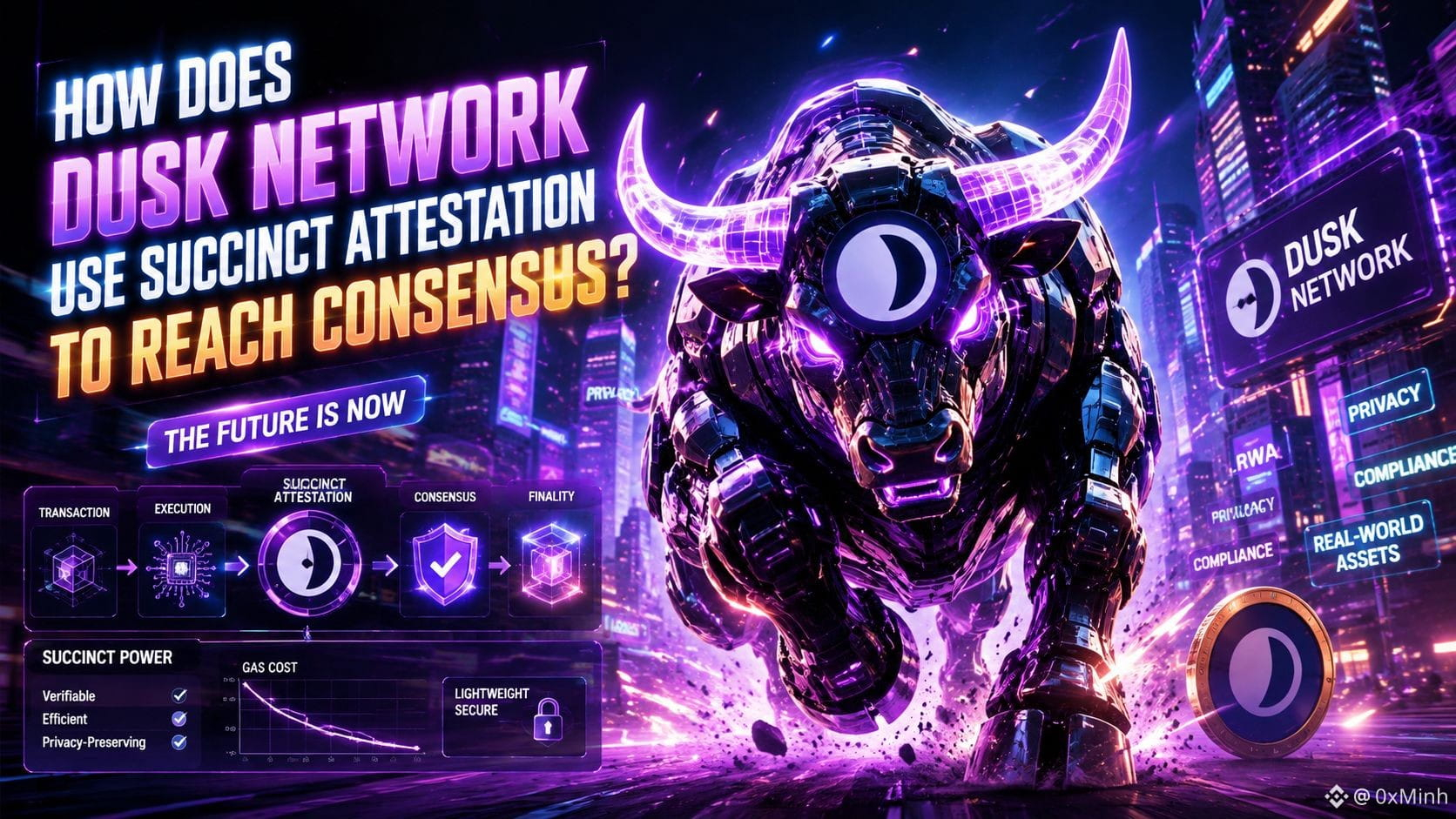
20
10
130
·
--
A note line that made me not release USDT....!
I still remember during Christmas 2025, I sold 1,000 USDT to prepare for year-end expenses. When I checked my banking app, I saw the incoming funds with a note saying “chuyen tien mua usdt binance.”
The amount was correct, and the money had arrived too. After waiting, releasing the USDT then felt almost like a natural reflex.
But I stopped because of one small detail: the payment note required by the order did not include any words related to crypto or Binance.
At first I thought this note didn’t prove the payment was problematic, but it showed that part of the transaction no longer matched the original conditions. In my way of trading crypto, even this mismatch was enough for me to double-check.
I went back to the Binance P2P chat and asked the buyer to verify their identity further. I wanted to make sure the person who paid was still the correct counterparty for the order.
When the conditions couldn’t be met, I chose to refund the money according to the process instead of trying to force the trade to complete.
Only then did I understand Escrow’s role more clearly. Binance P2P holds the crypto in the order, but I still have to verify the actual received funds before releasing the crypto. The “paid” status can’t replace checking my bank account.
So I always keep all communications on Binance P2P. Chat, Order ID, and payment details together form a linked record in case an Appeal is needed or I need to contact Support.
In the end, what I remember most isn’t a problematic payment note—it’s how a small detail can make the entire transaction feel uncertain, and when there’s still a link that hasn’t been confirmed, I think slowing down is always better than rushing..
#binancep2pantoan @Binance_Vietnam $BTC
A note line that made me not release USDT....!
I still remember during Christmas 2025, I sold 1,000 USDT to prepare for year-end expenses. When I checked my banking app, I saw the incoming funds with a note saying “chuyen tien mua usdt binance.”
The amount was correct, and the money had arrived too. After waiting, releasing the USDT then felt almost like a natural reflex.
But I stopped because of one small detail: the payment note required by the order did not include any words related to crypto or Binance.
At first I thought this note didn’t prove the payment was problematic, but it showed that part of the transaction no longer matched the original conditions. In my way of trading crypto, even this mismatch was enough for me to double-check.
I went back to the Binance P2P chat and asked the buyer to verify their identity further. I wanted to make sure the person who paid was still the correct counterparty for the order.
When the conditions couldn’t be met, I chose to refund the money according to the process instead of trying to force the trade to complete.
Only then did I understand Escrow’s role more clearly. Binance P2P holds the crypto in the order, but I still have to verify the actual received funds before releasing the crypto. The “paid” status can’t replace checking my bank account.
So I always keep all communications on Binance P2P. Chat, Order ID, and payment details together form a linked record in case an Appeal is needed or I need to contact Support.
In the end, what I remember most isn’t a problematic payment note—it’s how a small detail can make the entire transaction feel uncertain, and when there’s still a link that hasn’t been confirmed, I think slowing down is always better than rushing..
#binancep2pantoan @Binance Vietnam $BTC
I still remember during Christmas 2025, I sold 1,000 USDT to prepare for year-end expenses. When I checked my banking app, I saw the incoming funds with a note saying “chuyen tien mua usdt binance.”
The amount was correct, and the money had arrived too. After waiting, releasing the USDT then felt almost like a natural reflex.
But I stopped because of one small detail: the payment note required by the order did not include any words related to crypto or Binance.
At first I thought this note didn’t prove the payment was problematic, but it showed that part of the transaction no longer matched the original conditions. In my way of trading crypto, even this mismatch was enough for me to double-check.
I went back to the Binance P2P chat and asked the buyer to verify their identity further. I wanted to make sure the person who paid was still the correct counterparty for the order.
When the conditions couldn’t be met, I chose to refund the money according to the process instead of trying to force the trade to complete.
Only then did I understand Escrow’s role more clearly. Binance P2P holds the crypto in the order, but I still have to verify the actual received funds before releasing the crypto. The “paid” status can’t replace checking my bank account.
So I always keep all communications on Binance P2P. Chat, Order ID, and payment details together form a linked record in case an Appeal is needed or I need to contact Support.
In the end, what I remember most isn’t a problematic payment note—it’s how a small detail can make the entire transaction feel uncertain, and when there’s still a link that hasn’t been confirmed, I think slowing down is always better than rushing..
#binancep2pantoan @Binance Vietnam $BTC
1
2
273
Log in to explore more content
Join global crypto users on Binance Square
⚡️ Get latest and useful information about crypto.
💬 Trusted by the world’s largest crypto exchange.
👍 Discover real insights from verified creators.
Email / Phone number