In the regulatory hall of Washington D.C., rows of seats await the upcoming clash of ideas, where the technical presentation from the founder of Zcash and the compliance manual from SEC officials will engage in dialogue.
In the conference room of the U.S. Securities and Exchange Commission headquarters, privacy technology advocates and financial regulatory officials will sit at the same table, attempting to answer a question that has plagued the crypto world for years—how to protect privacy without crossing legal boundaries.
 1. The delayed convening of the crypto roundtable meeting
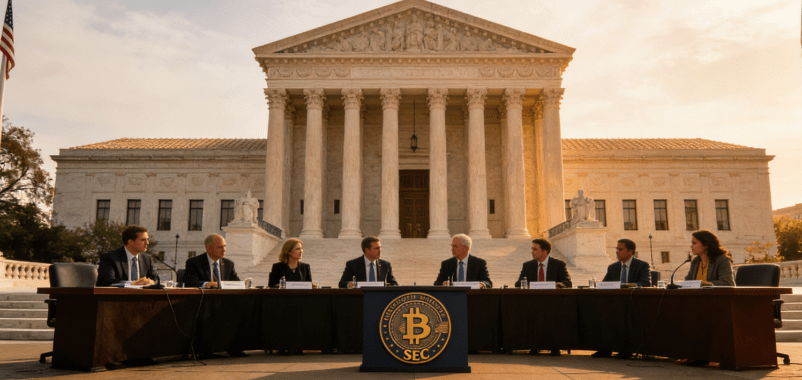
● The U.S. Securities and Exchange Commission's crypto special working group will hold a roundtable meeting on cryptocurrency, financial monitoring, and privacy on December 15 at the Washington D.C. headquarters. This meeting was originally scheduled for an earlier date but was postponed due to the U.S. government shutdown.
● The meeting will be hosted by Richard B. Gabbert, head of the SEC's cryptocurrency special working group, Chairman Paul S. Atkins, and several commissioners. This meeting is viewed by industry insiders as a critical turning point for seeking legal status for crypto privacy technologies within the U.S. regulatory framework.
● The U.S. Securities and Exchange Commission has chosen "Financial Surveillance and Privacy" as the theme for this meeting, directly addressing the most sensitive and complex regulatory challenges in the crypto industry.
● The official agenda for the meeting has been published on the U.S. Securities and Exchange Commission's website, indicating that it will include keynote speeches, panel discussions, and public Q&A sessions. Although the meeting will be held at the SEC headquarters, it will be live-streamed through official channels to ensure industry participation and transparency.
II. Lineup: A tripartite dialogue among regulators, builders, and advocates
The participant list reveals the SEC's carefully curated balancing act—inviting builders of privacy technologies, legal policymakers, and defenders of civil liberties to engage in dialogue.
● Privacy technology pioneers dominate, with Zcash founder Zooko Wilcox giving a keynote speech at the meeting. Aleo Network Foundation's CEO Koh will also speak at the meeting. These two individuals represent two different technological paths for privacy protection based on zero-knowledge proofs.
● Legal and policy experts are gathering, and the meeting has specifically invited several influential figures in the fields of law and policy. Professor J.W. Verret from George Mason University School of Law will provide an academic perspective, as he has long studied the regulatory framework for crypto assets.
● Jay Stanley, a senior policy analyst at the American Civil Liberties Union, will also participate in the discussion, bringing a civil rights perspective to the meeting. This diverse lineup is clearly designed to avoid discussions skewed towards a single interest group.
III. The Technological Possibilities of Zero-Knowledge Proofs and Regulatory Compliance
The core focus of the meeting will revolve around a fundamental question: Can privacy-enhancing technologies like zero-knowledge proofs coexist with existing financial regulatory requirements?
● The backdrop of this discussion is complex and sensitive, occurring at a time when crypto privacy tools face increasingly severe legal challenges. In recent years, U.S. regulatory agencies have adopted a stricter stance toward crypto privacy tools, particularly against privacy tools like Tornado Cash and Samourai Wallet.
● In August of this year, Matthew Galeotti, Acting Assistant Attorney General of the U.S. Department of Justice's Criminal Division, made a statement emphasizing that "technological innovation should not serve as a shield to evade legal responsibilities." However, there seem to be differing voices within the regulatory agencies.
● On a technical level, the meeting may delve into the differences among various privacy protection solutions. The zk-SNARKs technology used by Zcash allows users to conduct transactions on a public blockchain while concealing transaction amounts and participant information.
● Aleo focuses on building a programmable privacy platform that enables developers to create decentralized applications that protect privacy while potentially meeting specific regulatory requirements.
IV. The Gap Between Regulatory Frameworks and Technological Development
● There is a clear cognitive and rhythmic gap between regulation and innovation. Traditional financial regulation is built on the frameworks of "Know Your Customer" and "Anti-Money Laundering," requiring financial institutions to track the flow of funds and identify transaction participants.
● Emerging crypto privacy technologies aim to protect user identities and transaction details, directly challenging the basic premises of traditional regulation. Regulators are concerned that these technologies may be used for illegal activities, including money laundering, terrorist financing, and evading sanctions.
● Privacy advocates counter that financial privacy is a fundamental right, and technological innovation should not be restricted due to potential abuse.
● This divergence is reflected in specific legal cases, such as the U.S. government's accusations against the developers of Tornado Cash, which have sparked widespread controversy. Many members of the crypto community view this as a threat to open-source software development.
The challenge faced by the SEC in this roundtable meeting is: Can it find a feasible balance between protecting innovation and preventing illegal activities?
V. The Sensitive Reaction of the Privacy Coin Market
● The news of the SEC's upcoming roundtable has already triggered a noticeable response from the cryptocurrency market, with significant fluctuations in privacy coin prices. Over the past two months, privacy coin prices have surged, with Monero, Zcash, and Secret experiencing significant rebounds.
● Market analysts point out that this volatility reflects investors' desire for regulatory clarity. Privacy coin projects have long faced valuation discounts due to regulatory uncertainty, and any signals that could lead to a more defined regulatory framework may trigger a market revaluation.
● Participants in the privacy coin ecosystem are also closely watching the outcomes of the meeting. Many privacy projects have proactively adopted "compliance-friendly" strategies, such as Zcash offering "selective disclosure" features.
● Whether this technological compromise can meet regulatory requirements is likely to become one of the hot topics of the meeting. The market generally believes that if the meeting sends a signal of greater openness from regulators towards privacy technologies, privacy coins may usher in a new round of growth.
VI. Possible Consensus and Divergence
● Industry analysts believe that this roundtable may take two completely different directions, depending on whether the parties can find common ground. The ideal scenario is to reach some form of consensus, recognizing that privacy technologies such as zero-knowledge proofs can protect user privacy while meeting compliance obligations.
● For example, regulators may accept compliance proofs based on zero-knowledge proofs, allowing users to demonstrate that their transactions comply with regulations without disclosing specific transaction details. Such a technological compromise requires regulators to update their understanding of "compliance" from "full transparency" to "verifiable compliance."
● Conversely, if the meeting fails to reach a consensus, it may split into two camps: "Privacy is a right" and "Privacy facilitates crime." Privacy advocates may insist that financial privacy is a fundamental right in the digital age and should not be compromised due to potential abuse.
● Regulators may emphasize concerns about illegal activities, demanding that privacy projects integrate stronger monitoring capabilities. This deadlock may lead to stricter enforcement actions, forcing privacy projects to either change their technological designs or face legal risks.
VII. The Impact of U.S. Policy on Global Cryptocurrency Regulation
● The policy direction of the U.S. SEC will have profound implications for the global cryptocurrency regulatory environment. As the largest financial market and a significant driver of technological innovation, the U.S. regulatory stance is often referenced or emulated by other countries.
● The EU has passed the (Cryptocurrency Asset Market Regulation Act), which includes specific provisions for privacy assets. The MiCA Act categorizes privacy coins as "high-risk assets," requiring trading platforms to implement additional due diligence.
● Some jurisdictions are taking a more differentiated approach, with Switzerland and Singapore attempting to create regulatory frameworks that allow privacy innovations while ensuring compliance.
● If the U.S. SEC can propose a viable balancing solution through this roundtable, it may become a reference model for global regulation. Conversely, if the U.S. adopts a strict stance against privacy technologies, it may lead to privacy projects migrating to regions with more lenient regulations, resulting in regulatory arbitrage.
Join our community to discuss and become stronger together!
Official Telegram community: https://t.me/aicoincn
AiCoin Chinese Twitter: https://x.com/AiCoinzh
OKX benefits group: https://aicoin.com/link/chat?cid=l61eM4owQ
Binance benefits group: https://aicoin.com/link/chat?cid=ynr7d1P6Z