

#sec
sec
333.9M views
1.4M Discussing
Hot
Latest

RWA Theory Becomes Reality: Securitize Stock Surges 15% on Historic SEC Tokenization RulingReal-World Asset (RWA) tokenization has officially crossed the chasm from institutional theory to live trading reality.
Shares of Securitize (SECZ) surged over 15%, driven by a groundbreaking U.S. Securities and Exchange Commission (SEC) "Innovation Exemption." This historic regulatory pivot establishes a clear, compliant pathway for public equities to be traded directly on-chain, fundamentally altering the landscape of digital finance.
🏛️ The Catalyst: SEC’s 5-Year Innovation Exemption
The engine behind the sudden rally is a freshly minted regulatory relief program that solves historical friction points for digital assets:
On-Chain Liquidity: Tokenized Securities Venues (TSVs) can now leverage public blockchain ledgers and automated market makers (AMMs) for stock trading.Streamlined Settlement: The framework permits compliant public ledger recordkeeping, drastically reducing settlement times and operational overhead.Strict Investor Protections: To qualify, digital tokens must represent actual underlying corporate shares carrying full dividend and voting rights—strictly excluding synthetic tracking tokens.
💼 Wall Street Reacts: Institutional Momentum Builds
Traditional equity researchers and asset managers are rapidly re-rating the sector as tokenization moves into the financial mainstream:
Major Moats: Securitize continues to cement its position as the premier operational bridge for Wall Street, building on its existing deep relationships with heavyweights like BlackRock and KKR.Analyst Upgrades: Major institutions like Cantor Fitzgerald and Needham have noted the firm's dominant enterprise base, positioning it to capture market share in a multi-trillion-dollar traditional asset pool.Market Validation: The 15% single-day surge reflects a broader market realization that compliant, domestic blockchain recordkeeping rails are no longer a future concept—they are open for business today.
What This Means for the Crypto Ecosystem
This milestone marks a permanent shift in how capital markets view public blockchains. By transitioning traditional equity infrastructure to decentralized networks, this ruling bridges the gap between traditional finance (TradFi) and Web3, unlocking massive liquidity pipelines and validating the long-term utility of blockchain technology.
Disclaimer: This post is for informational purposes only and does not constitute financial, investment, or legal advice.
#RAW #SEC #web3 #FedOctoberRateHikeOddsRiseTo69.7%
RWA Theory Becomes Reality: Securitize Stock Surges 15% on Historic SEC Tokenization Ruling
Real-World Asset (RWA) tokenization has officially crossed the chasm from institutional theory to live trading reality.
Shares of Securitize (SECZ) surged over 15%, driven by a groundbreaking U.S. Securities and Exchange Commission (SEC) "Innovation Exemption." This historic regulatory pivot establishes a clear, compliant pathway for public equities to be traded directly on-chain, fundamentally altering the landscape of digital finance.
🏛️ The Catalyst: SEC’s 5-Year Innovation Exemption
The engine behind the sudden rally is a freshly minted regulatory relief program that solves historical friction points for digital assets:
On-Chain Liquidity: Tokenized Securities Venues (TSVs) can now leverage public blockchain ledgers and automated market makers (AMMs) for stock trading.Streamlined Settlement: The framework permits compliant public ledger recordkeeping, drastically reducing settlement times and operational overhead.Strict Investor Protections: To qualify, digital tokens must represent actual underlying corporate shares carrying full dividend and voting rights—strictly excluding synthetic tracking tokens.
💼 Wall Street Reacts: Institutional Momentum Builds
Traditional equity researchers and asset managers are rapidly re-rating the sector as tokenization moves into the financial mainstream:
Major Moats: Securitize continues to cement its position as the premier operational bridge for Wall Street, building on its existing deep relationships with heavyweights like BlackRock and KKR.Analyst Upgrades: Major institutions like Cantor Fitzgerald and Needham have noted the firm's dominant enterprise base, positioning it to capture market share in a multi-trillion-dollar traditional asset pool.Market Validation: The 15% single-day surge reflects a broader market realization that compliant, domestic blockchain recordkeeping rails are no longer a future concept—they are open for business today.
What This Means for the Crypto Ecosystem
This milestone marks a permanent shift in how capital markets view public blockchains. By transitioning traditional equity infrastructure to decentralized networks, this ruling bridges the gap between traditional finance (TradFi) and Web3, unlocking massive liquidity pipelines and validating the long-term utility of blockchain technology.
Disclaimer: This post is for informational purposes only and does not constitute financial, investment, or legal advice.
#RAW #SEC #web3 #FedOctoberRateHikeOddsRiseTo69.7%
Shares of Securitize (SECZ) surged over 15%, driven by a groundbreaking U.S. Securities and Exchange Commission (SEC) "Innovation Exemption." This historic regulatory pivot establishes a clear, compliant pathway for public equities to be traded directly on-chain, fundamentally altering the landscape of digital finance.
🏛️ The Catalyst: SEC’s 5-Year Innovation Exemption
The engine behind the sudden rally is a freshly minted regulatory relief program that solves historical friction points for digital assets:
On-Chain Liquidity: Tokenized Securities Venues (TSVs) can now leverage public blockchain ledgers and automated market makers (AMMs) for stock trading.Streamlined Settlement: The framework permits compliant public ledger recordkeeping, drastically reducing settlement times and operational overhead.Strict Investor Protections: To qualify, digital tokens must represent actual underlying corporate shares carrying full dividend and voting rights—strictly excluding synthetic tracking tokens.
💼 Wall Street Reacts: Institutional Momentum Builds
Traditional equity researchers and asset managers are rapidly re-rating the sector as tokenization moves into the financial mainstream:
Major Moats: Securitize continues to cement its position as the premier operational bridge for Wall Street, building on its existing deep relationships with heavyweights like BlackRock and KKR.Analyst Upgrades: Major institutions like Cantor Fitzgerald and Needham have noted the firm's dominant enterprise base, positioning it to capture market share in a multi-trillion-dollar traditional asset pool.Market Validation: The 15% single-day surge reflects a broader market realization that compliant, domestic blockchain recordkeeping rails are no longer a future concept—they are open for business today.
What This Means for the Crypto Ecosystem
This milestone marks a permanent shift in how capital markets view public blockchains. By transitioning traditional equity infrastructure to decentralized networks, this ruling bridges the gap between traditional finance (TradFi) and Web3, unlocking massive liquidity pipelines and validating the long-term utility of blockchain technology.
Disclaimer: This post is for informational purposes only and does not constitute financial, investment, or legal advice.
#RAW #SEC #web3 #FedOctoberRateHikeOddsRiseTo69.7%

JOIN & SHARE 🎉🎁
From Crypto__Today
SECZUS+1.62%
Emmie Rozanski:
thank you
2
2
252

If you're still treating tokenized stocks like a 2030 problem, stop now.
Crypto investors keep losing money by waiting for a cleaner narrative while the actual plumbing gets built without them. Missing a regulatory shift like this is how you watch from the sidelines as capital rotates into assets you already understood too late.
The SEC just opened a door for tokenized stocks to exist onchain in a more legitimate way. That is the news. One camp says wrapping listed companies on a blockchain just hands crypto over to the same institutions that spent years trying to kill it. The other camp says this is how $ETH finally sees settlement volume that is not just leverage and memes.
I am arguing for the second view. Tokenized RWAs have already crossed $15 billion, and $ONDO has been one of the clearest proofs that people will hold real yield onchain when the product is simple enough. Stocks are the bigger prize. Pair that with $USDC as the settlement layer and you start to see why this is not just another narrative rotation.
Where do you think this goes from here?
#Tokenization #RWA #SEC
If you're still treating tokenized stocks like a 2030 problem, stop now.
Crypto investors keep losing money by waiting for a cleaner narrative while the actual plumbing gets built without them. Missing a regulatory shift like this is how you watch from the sidelines as capital rotates into assets you already understood too late.
The SEC just opened a door for tokenized stocks to exist onchain in a more legitimate way. That is the news. One camp says wrapping listed companies on a blockchain just hands crypto over to the same institutions that spent years trying to kill it. The other camp says this is how $ETH finally sees settlement volume that is not just leverage and memes.
I am arguing for the second view. Tokenized RWAs have already crossed $15 billion, and $ONDO has been one of the clearest proofs that people will hold real yield onchain when the product is simple enough. Stocks are the bigger prize. Pair that with $USDC as the settlement layer and you start to see why this is not just another narrative rotation.
Where do you think this goes from here?
#Tokenization #RWA #SEC
Crypto investors keep losing money by waiting for a cleaner narrative while the actual plumbing gets built without them. Missing a regulatory shift like this is how you watch from the sidelines as capital rotates into assets you already understood too late.
The SEC just opened a door for tokenized stocks to exist onchain in a more legitimate way. That is the news. One camp says wrapping listed companies on a blockchain just hands crypto over to the same institutions that spent years trying to kill it. The other camp says this is how $ETH finally sees settlement volume that is not just leverage and memes.
I am arguing for the second view. Tokenized RWAs have already crossed $15 billion, and $ONDO has been one of the clearest proofs that people will hold real yield onchain when the product is simple enough. Stocks are the bigger prize. Pair that with $USDC as the settlement layer and you start to see why this is not just another narrative rotation.
Where do you think this goes from here?
#Tokenization #RWA #SEC
65


So I just saw that the Clarity Act actually failed to pass the Senate, which is honestly a massive bummer for anyone hoping for clear rules. 🙄 Now we are basically back to square one with the SEC and CFTC running the show through enforcement actions. Ngl, this means more regulatory drama ahead for major assets like $BTC and $ETH, so we definitely need to keep our eyes peeled.
It feels like we are just kicking the can down the road instead of getting actual legislation. 🤷♂️ Expecting some choppy waters as regulators try to flex their muscles again in the coming months. Stay safe out there!
#CryptoRegulation #SEC #Write2Earn
So I just saw that the Clarity Act actually failed to pass the Senate, which is honestly a massive bummer for anyone hoping for clear rules. 🙄 Now we are basically back to square one with the SEC and CFTC running the show through enforcement actions. Ngl, this means more regulatory drama ahead for major assets like $BTC and $ETH , so we definitely need to keep our eyes peeled.
It feels like we are just kicking the can down the road instead of getting actual legislation. 🤷♂️ Expecting some choppy waters as regulators try to flex their muscles again in the coming months. Stay safe out there!
#CryptoRegulation #SEC #Write2Earn
It feels like we are just kicking the can down the road instead of getting actual legislation. 🤷♂️ Expecting some choppy waters as regulators try to flex their muscles again in the coming months. Stay safe out there!
#CryptoRegulation #SEC #Write2Earn
139

·
--
Bullish
🚀🛡️ REGULATORY REVOLUTION:
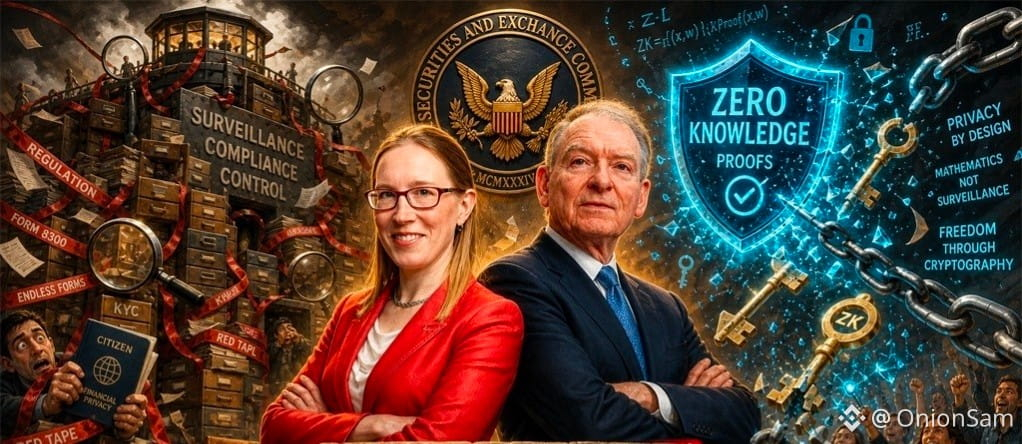
#SEC Commissioner Hester Peirce Calls to Abolish Mass #kyc Surveillance & Adopt Zero-Knowledge Proofs! 🌐🔐
💼⚡ Advanced cryptographic solutions guarantee regulatory compliance and protect financial data from breaches without exposing users' personal identities. 📊⚖️
🔎 Key Highlights:
🎚️ The Paradigm Shift:
SEC Commissioner Hester Peirce advocates replacing invasive mass KYC data collection with privacy-preserving technologies.
🔐 Zero-Knowledge Proofs (#ZKPs ):
Utilizing ZK-cryptography allows users to prove regulatory compliance (e.g., age, residency, accredited status) without revealing sensitive private identity data.
🛡️ Data Security:
Transitioning to decentralised proofs protects global investors from catastrophic corporate and governmental financial data hacks.
#Privacy #Zcash
$ZEC
{spot}(ZECUSDT)
$ZK
{spot}(ZKUSDT)
$POL
{spot}(POLUSDT)
🚀🛡️ REGULATORY REVOLUTION:
#SEC Commissioner Hester Peirce Calls to Abolish Mass #kyc Surveillance & Adopt Zero-Knowledge Proofs! 🌐🔐
💼⚡ Advanced cryptographic solutions guarantee regulatory compliance and protect financial data from breaches without exposing users' personal identities. 📊⚖️
🔎 Key Highlights:
🎚️ The Paradigm Shift:
SEC Commissioner Hester Peirce advocates replacing invasive mass KYC data collection with privacy-preserving technologies.
🔐 Zero-Knowledge Proofs (#ZKPs ):
Utilizing ZK-cryptography allows users to prove regulatory compliance (e.g., age, residency, accredited status) without revealing sensitive private identity data.
🛡️ Data Security:
Transitioning to decentralised proofs protects global investors from catastrophic corporate and governmental financial data hacks.
#Privacy #Zcash
$ZEC
$ZK
$POL
#SEC Commissioner Hester Peirce Calls to Abolish Mass #kyc Surveillance & Adopt Zero-Knowledge Proofs! 🌐🔐
💼⚡ Advanced cryptographic solutions guarantee regulatory compliance and protect financial data from breaches without exposing users' personal identities. 📊⚖️
🔎 Key Highlights:
🎚️ The Paradigm Shift:
SEC Commissioner Hester Peirce advocates replacing invasive mass KYC data collection with privacy-preserving technologies.
🔐 Zero-Knowledge Proofs (#ZKPs ):
Utilizing ZK-cryptography allows users to prove regulatory compliance (e.g., age, residency, accredited status) without revealing sensitive private identity data.
🛡️ Data Security:
Transitioning to decentralised proofs protects global investors from catastrophic corporate and governmental financial data hacks.
#Privacy #Zcash
$ZEC
$ZK
$POL
Good luck 🍀
From OnionSam
1
479

🚨 BIG US CRYPTO UPDATE: SEC Steps In! 📈
📌 What Happened?
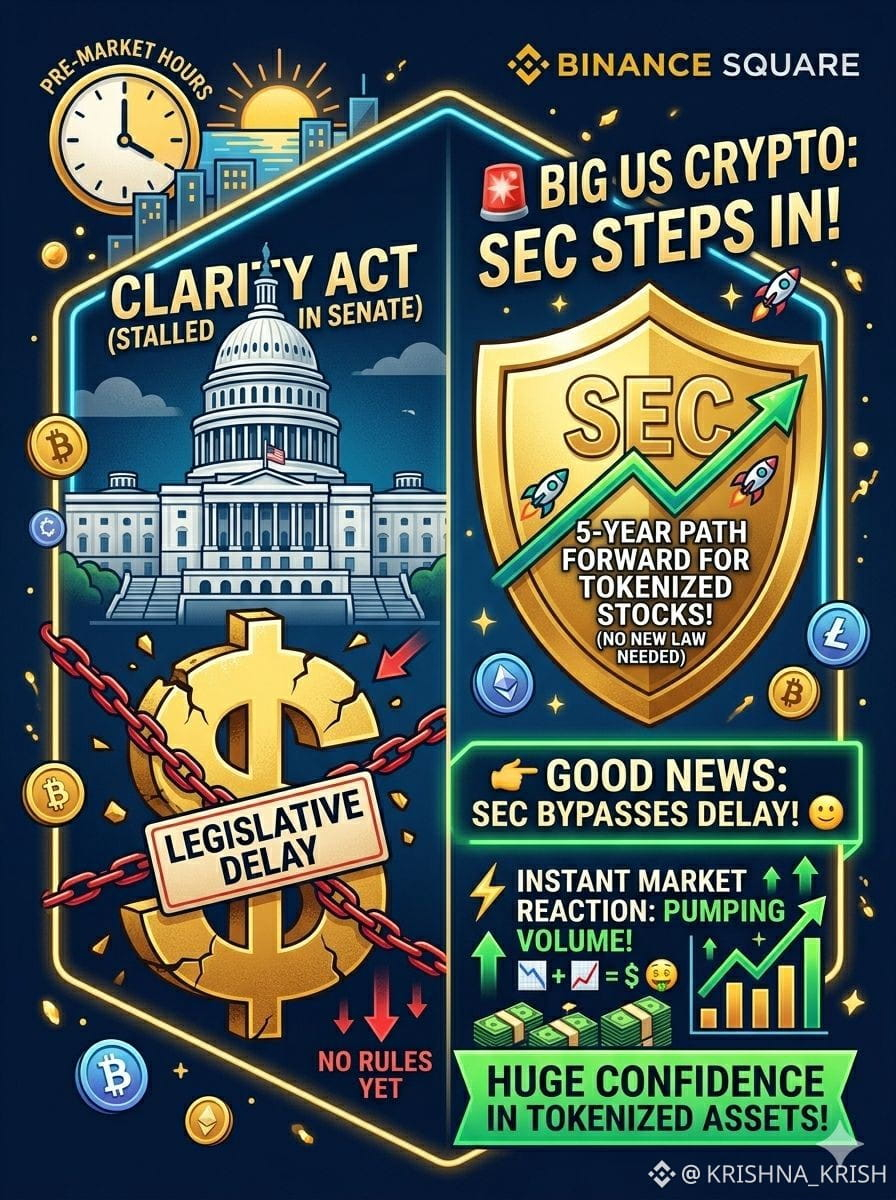
👉The Bill: The US "CLARITY Act" (a law for clear crypto rules) got stuck in the Senate and didn't pass yet.
👉The Twist: Instead of waiting, the SEC (US Market Regulator) stepped in directly!
👉The Good News: They gave Tokenized Stocks a clear 5-year path forward without needing the new law.🙂
⚡ Market Reaction: 📉+📈=$ 🤑
✅ Traders reacted instantly, pumping volume hours before the US stock markets even opened! This shows huge confidence in tokenized assets.
⚠️"Disclaimer: This is for educational purposes only and not financial advice."
#CryptoNews #SEC #Tokenization #BinanceSquare #CryptoRegulation
🚨 BIG US CRYPTO UPDATE: SEC Steps In! 📈
📌 What Happened?
👉The Bill: The US "CLARITY Act" (a law for clear crypto rules) got stuck in the Senate and didn't pass yet.
👉The Twist: Instead of waiting, the SEC (US Market Regulator) stepped in directly!
👉The Good News: They gave Tokenized Stocks a clear 5-year path forward without needing the new law.🙂
⚡ Market Reaction: 📉+📈=$ 🤑
✅ Traders reacted instantly, pumping volume hours before the US stock markets even opened! This shows huge confidence in tokenized assets.
⚠️"Disclaimer: This is for educational purposes only and not financial advice."
#CryptoNews #SEC #Tokenization #BinanceSquare #CryptoRegulation
📌 What Happened?
👉The Bill: The US "CLARITY Act" (a law for clear crypto rules) got stuck in the Senate and didn't pass yet.
👉The Twist: Instead of waiting, the SEC (US Market Regulator) stepped in directly!
👉The Good News: They gave Tokenized Stocks a clear 5-year path forward without needing the new law.🙂
⚡ Market Reaction: 📉+📈=$ 🤑
✅ Traders reacted instantly, pumping volume hours before the US stock markets even opened! This shows huge confidence in tokenized assets.
⚠️"Disclaimer: This is for educational purposes only and not financial advice."
#CryptoNews #SEC #Tokenization #BinanceSquare #CryptoRegulation
1
108

·
--
Bullish
🇺🇸 SEC DROPPED CRYPTO CASES FOR A REASON. 👀
Former SEC Acting Chair Mark Uyeda says the agency dropped several crypto cases in early 2025 because continuing to defend them could have damaged the SEC’s credibility in court. ⚖️
Why?
The agency was preparing a major shift in how it regulated crypto.
Uyeda described it as a “180-degree change” in rulemaking.
Instead of continuing to fight cases based on the previous approach, the SEC began moving toward clearer crypto rules and rulemaking. 🔄
And this wasn’t just talk.
The SEC later proposed a dedicated “Regulation Crypto Assets” framework in 2026. 📜
The bigger story?
The U.S. crypto regulatory battle may be moving from the courtroom to the rulebook. 👀
$BTC $ETH $XRP
#Crypto #SEC #Bitcoin #Regulation
🇺🇸 SEC DROPPED CRYPTO CASES FOR A REASON. 👀
Former SEC Acting Chair Mark Uyeda says the agency dropped several crypto cases in early 2025 because continuing to defend them could have damaged the SEC’s credibility in court. ⚖️
Why?
The agency was preparing a major shift in how it regulated crypto.
Uyeda described it as a “180-degree change” in rulemaking.
Instead of continuing to fight cases based on the previous approach, the SEC began moving toward clearer crypto rules and rulemaking. 🔄
And this wasn’t just talk.
The SEC later proposed a dedicated “Regulation Crypto Assets” framework in 2026. 📜
The bigger story?
The U.S. crypto regulatory battle may be moving from the courtroom to the rulebook. 👀
$BTC $ETH $XRP
#Crypto #SEC #Bitcoin #Regulation
Former SEC Acting Chair Mark Uyeda says the agency dropped several crypto cases in early 2025 because continuing to defend them could have damaged the SEC’s credibility in court. ⚖️
Why?
The agency was preparing a major shift in how it regulated crypto.
Uyeda described it as a “180-degree change” in rulemaking.
Instead of continuing to fight cases based on the previous approach, the SEC began moving toward clearer crypto rules and rulemaking. 🔄
And this wasn’t just talk.
The SEC later proposed a dedicated “Regulation Crypto Assets” framework in 2026. 📜
The bigger story?
The U.S. crypto regulatory battle may be moving from the courtroom to the rulebook. 👀
$BTC $ETH $XRP
#Crypto #SEC #Bitcoin #Regulation
290

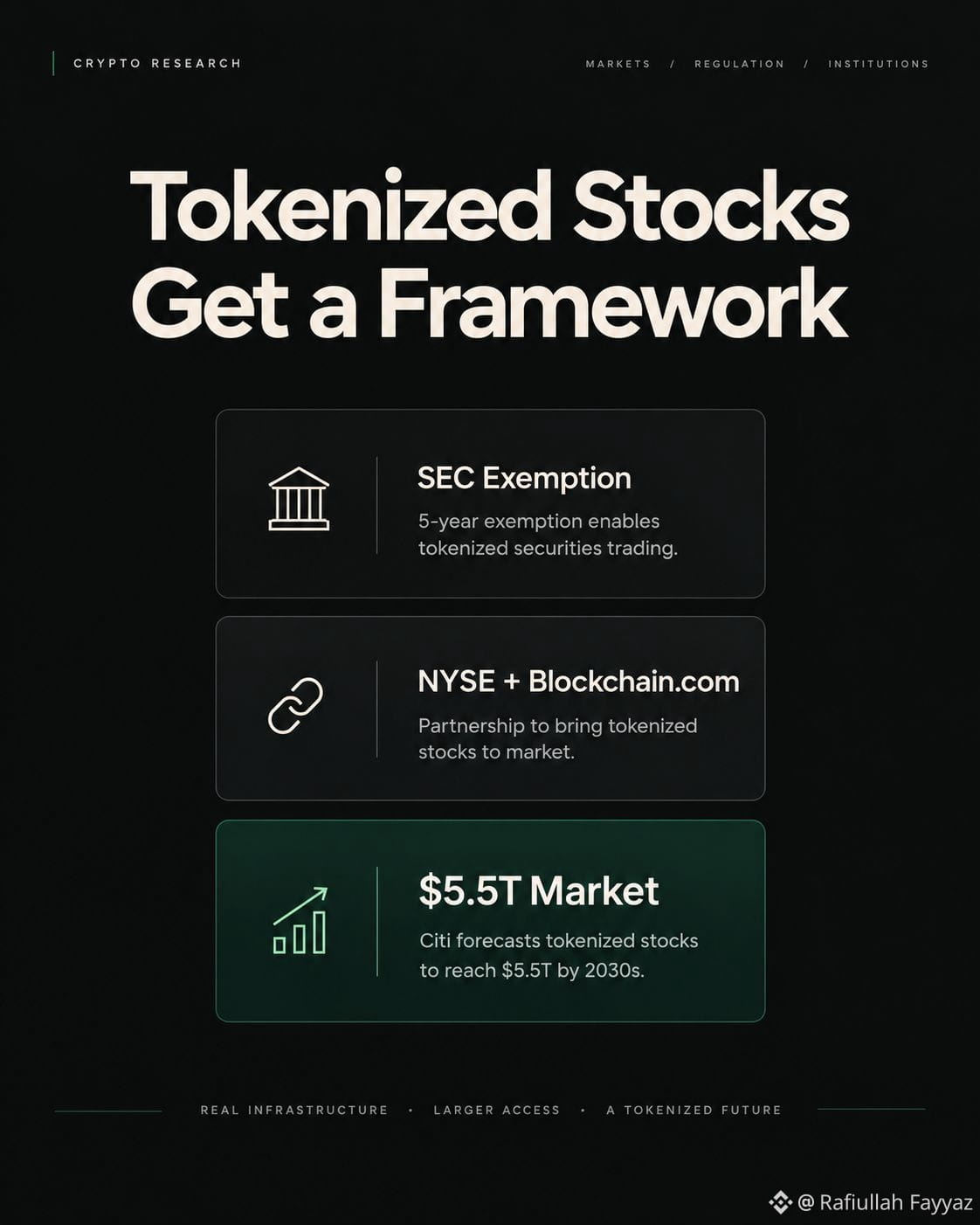
The SEC granted a five-year "innovation exemption" for tokenized US stocks. This is a real regulatory shift.
The exemption lets certain platforms trade digital versions of US-listed stocks on public blockchains — without registering as a stock exchange. There are strict conditions: tokens must carry the same rights as real shares (voting, dividends). Synthetic price-trackers don't qualify. Issuers can veto third-party tokenization of their stock.
Why this matters: for years, tokenized stocks existed in a grey area. Now there's a framework. The first trading platforms could start preparations as early as Q4 2026.
Meanwhile, the NYSE and Blockchain.com signed an MOU to explore offering tokenized US stocks and ETFs to Blockchain.com's 44 million verified users.
This connects to what Binance has been building with bStocks — tokenized securities trading on a crypto exchange. The difference is that the SEC exemption is specifically for US-regulated platforms. Binance operates in ADGM.
Citi forecasts the tokenized-asset market could reach $5.5 trillion by the 2030s. The infrastructure race is underway.
#Binance #Tokenization #SEC
The SEC granted a five-year "innovation exemption" for tokenized US stocks. This is a real regulatory shift.
The exemption lets certain platforms trade digital versions of US-listed stocks on public blockchains — without registering as a stock exchange. There are strict conditions: tokens must carry the same rights as real shares (voting, dividends). Synthetic price-trackers don't qualify. Issuers can veto third-party tokenization of their stock.
Why this matters: for years, tokenized stocks existed in a grey area. Now there's a framework. The first trading platforms could start preparations as early as Q4 2026.
Meanwhile, the NYSE and Blockchain.com signed an MOU to explore offering tokenized US stocks and ETFs to Blockchain.com's 44 million verified users.
This connects to what Binance has been building with bStocks — tokenized securities trading on a crypto exchange. The difference is that the SEC exemption is specifically for US-regulated platforms. Binance operates in ADGM.
Citi forecasts the tokenized-asset market could reach $5.5 trillion by the 2030s. The infrastructure race is underway.
#Binance #Tokenization #SEC
The exemption lets certain platforms trade digital versions of US-listed stocks on public blockchains — without registering as a stock exchange. There are strict conditions: tokens must carry the same rights as real shares (voting, dividends). Synthetic price-trackers don't qualify. Issuers can veto third-party tokenization of their stock.
Why this matters: for years, tokenized stocks existed in a grey area. Now there's a framework. The first trading platforms could start preparations as early as Q4 2026.
Meanwhile, the NYSE and Blockchain.com signed an MOU to explore offering tokenized US stocks and ETFs to Blockchain.com's 44 million verified users.
This connects to what Binance has been building with bStocks — tokenized securities trading on a crypto exchange. The difference is that the SEC exemption is specifically for US-regulated platforms. Binance operates in ADGM.
Citi forecasts the tokenized-asset market could reach $5.5 trillion by the 2030s. The infrastructure race is underway.
#Binance #Tokenization #SEC
107
·
--
Bullish
🚨 CONGRESS SAID “NOT YET.” THE SEC & CFTC KEPT MOVING. 🇺🇸₿
The CLARITY Act failed to advance in the Senate.
But crypto regulation in the U.S. didn’t stop. 👀
Within days, the SEC and CFTC started moving forward with their own crypto rulemaking using existing authority.
The CFTC even sent its crypto market proposals to the White House for review. ⚡️
Meanwhile, the SEC introduced a five-year exemption for qualifying platforms to trade tokenized stocks on-chain.
So something important just changed:
Crypto’s regulatory future may no longer be waiting entirely on Congress.
The agencies are already writing the next chapter. 📜
And the rules they create could shape how $BTC, $ETH and the rest of the digital asset market operates in the U.S.
$BTC $ETH #Crypto #Bitcoin #SEC #CFTC
🚨 CONGRESS SAID “NOT YET.” THE SEC & CFTC KEPT MOVING. 🇺🇸₿
The CLARITY Act failed to advance in the Senate.
But crypto regulation in the U.S. didn’t stop. 👀
Within days, the SEC and CFTC started moving forward with their own crypto rulemaking using existing authority.
The CFTC even sent its crypto market proposals to the White House for review. ⚡️
Meanwhile, the SEC introduced a five-year exemption for qualifying platforms to trade tokenized stocks on-chain.
So something important just changed:
Crypto’s regulatory future may no longer be waiting entirely on Congress.
The agencies are already writing the next chapter. 📜
And the rules they create could shape how $BTC , $ETH and the rest of the digital asset market operates in the U.S.
$BTC $ETH #Crypto #Bitcoin #SEC #CFTC
The CLARITY Act failed to advance in the Senate.
But crypto regulation in the U.S. didn’t stop. 👀
Within days, the SEC and CFTC started moving forward with their own crypto rulemaking using existing authority.
The CFTC even sent its crypto market proposals to the White House for review. ⚡️
Meanwhile, the SEC introduced a five-year exemption for qualifying platforms to trade tokenized stocks on-chain.
So something important just changed:
Crypto’s regulatory future may no longer be waiting entirely on Congress.
The agencies are already writing the next chapter. 📜
And the rules they create could shape how $BTC , $ETH and the rest of the digital asset market operates in the U.S.
$BTC $ETH #Crypto #Bitcoin #SEC #CFTC
125

·
--
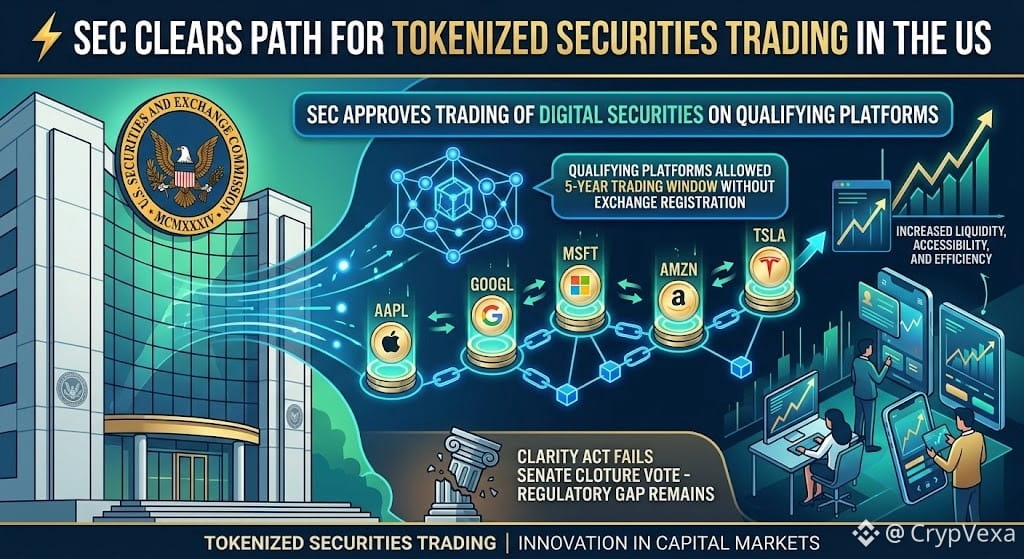
⚡ SEC Opens Path for Tokenized Stock Trading
🇺🇸 The SEC has granted temporary, conditional relief allowing certain tokenized U.S. stocks to trade on approved on-chain venues without those venues being treated as traditional exchanges under the exemption.
⏳ The relief is set to last 5 years, with limits and investor-protection conditions.
📉 The move comes after Congress failed to advance the CLARITY Act, leaving broader crypto-market legislation unresolved.
🌐 Tokenized securities are moving closer to mainstream U.S. market infrastructure.
👀 Could tokenized stocks become a major bridge between Wall Street and blockchain?
#Tokenization #TokenizedStocks #SEC #CryptoNews
⚡ SEC Opens Path for Tokenized Stock Trading
🇺🇸 The SEC has granted temporary, conditional relief allowing certain tokenized U.S. stocks to trade on approved on-chain venues without those venues being treated as traditional exchanges under the exemption.
⏳ The relief is set to last 5 years, with limits and investor-protection conditions.
📉 The move comes after Congress failed to advance the CLARITY Act, leaving broader crypto-market legislation unresolved.
🌐 Tokenized securities are moving closer to mainstream U.S. market infrastructure.
👀 Could tokenized stocks become a major bridge between Wall Street and blockchain?
#Tokenization #TokenizedStocks #SEC #CryptoNews
🇺🇸 The SEC has granted temporary, conditional relief allowing certain tokenized U.S. stocks to trade on approved on-chain venues without those venues being treated as traditional exchanges under the exemption.
⏳ The relief is set to last 5 years, with limits and investor-protection conditions.
📉 The move comes after Congress failed to advance the CLARITY Act, leaving broader crypto-market legislation unresolved.
🌐 Tokenized securities are moving closer to mainstream U.S. market infrastructure.
👀 Could tokenized stocks become a major bridge between Wall Street and blockchain?
#Tokenization #TokenizedStocks #SEC #CryptoNews
1
61
Verified
REAL US STOCKS ARE FINALLY COMING ON-CHAIN UNDER SEC REGULATION
The SEC is officially opening a regulated US pathway for tokenized stocks, marking a massive bridge between traditional finance and public blockchains. While this is huge, the regulators are keeping a very tight grip on trading volumes, user access, and issuer rights to maintain control.
🚀 Traditional equities will now live on the same ledger tech powering $BTC and $ETH
🔒 Access will be highly regulated with strict limits on who can trade them initially
📈 This could pave the way for massive institutional capital flowing into Web3 infrastructure
Honestly, this is the regulatory clarity we have been waiting for even if it comes with strings attached.
#Tokenization #TradFi #SEC #Write2Earn
REAL US STOCKS ARE FINALLY COMING ON-CHAIN UNDER SEC REGULATION
The SEC is officially opening a regulated US pathway for tokenized stocks, marking a massive bridge between traditional finance and public blockchains. While this is huge, the regulators are keeping a very tight grip on trading volumes, user access, and issuer rights to maintain control.
🚀 Traditional equities will now live on the same ledger tech powering $BTC and $ETH
🔒 Access will be highly regulated with strict limits on who can trade them initially
📈 This could pave the way for massive institutional capital flowing into Web3 infrastructure
Honestly, this is the regulatory clarity we have been waiting for even if it comes with strings attached.
#Tokenization #TradFi #SEC #Write2Earn
The SEC is officially opening a regulated US pathway for tokenized stocks, marking a massive bridge between traditional finance and public blockchains. While this is huge, the regulators are keeping a very tight grip on trading volumes, user access, and issuer rights to maintain control.
🚀 Traditional equities will now live on the same ledger tech powering $BTC and $ETH
🔒 Access will be highly regulated with strict limits on who can trade them initially
📈 This could pave the way for massive institutional capital flowing into Web3 infrastructure
Honestly, this is the regulatory clarity we have been waiting for even if it comes with strings attached.
#Tokenization #TradFi #SEC #Write2Earn
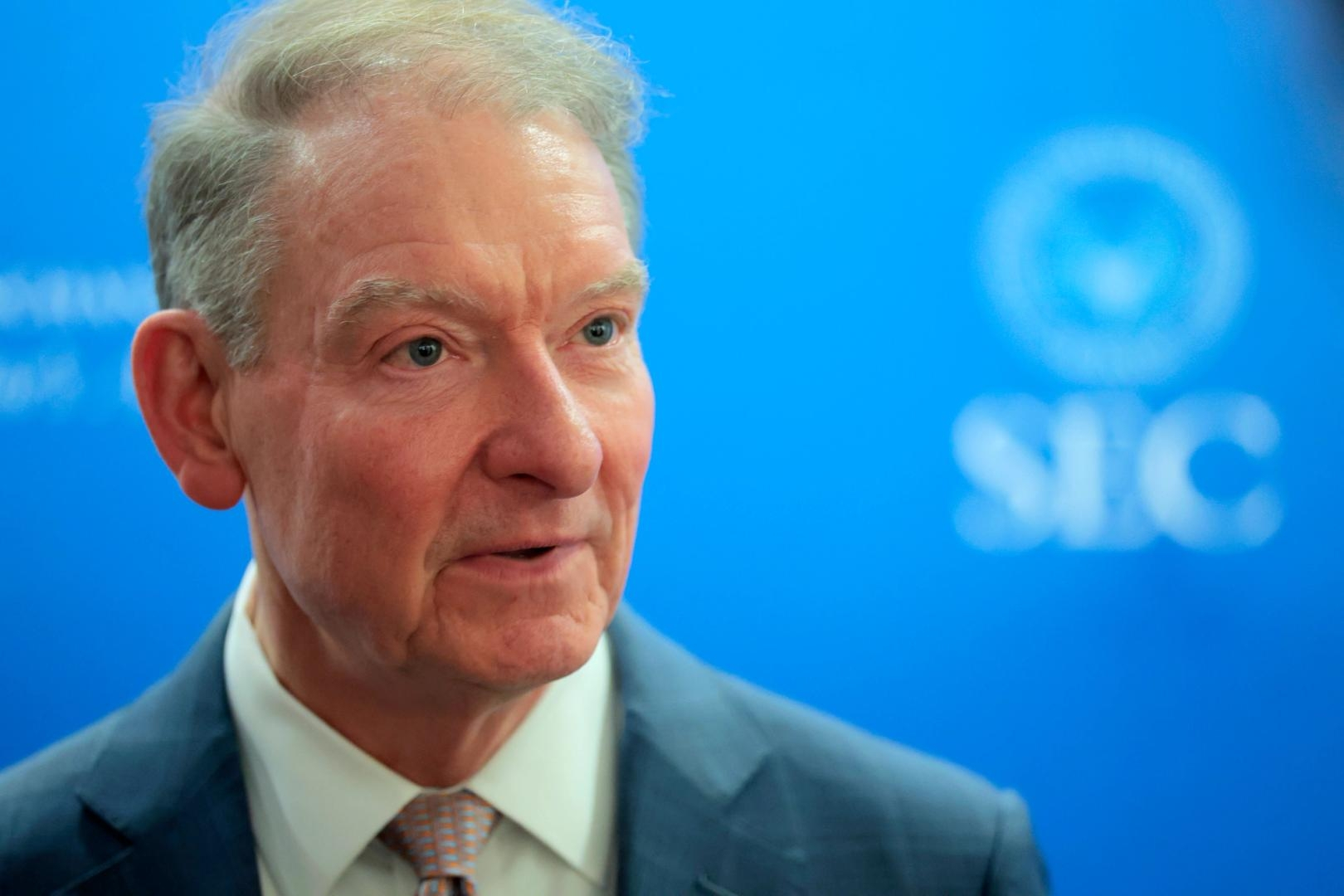
1
1.2k

🚨 BREAKING: SEC OPENS NEW PATHWAY FOR TOKENIZED STOCK TRADING! 🇺🇸📈
#SEC : ⚡ The SEC has issued a conditional “Innovation Exemption” order under Section 36(a)(1) of the Exchange Act.
🪙 The temporary, notice-based framework creates a pathway for tokenized stock trading venues (TSVs) and AMM liquidity providers.
🔥 A major regulatory development for tokenized securities and on-chain markets.
👀 Is Wall Street moving deeper onto the blockchain?
Follow for daily updates ⚡
$TAKE $MET $BCH
🚨 BREAKING: SEC OPENS NEW PATHWAY FOR TOKENIZED STOCK TRADING! 🇺🇸📈
#SEC : ⚡ The SEC has issued a conditional “Innovation Exemption” order under Section 36(a)(1) of the Exchange Act.
🪙 The temporary, notice-based framework creates a pathway for tokenized stock trading venues (TSVs) and AMM liquidity providers.
🔥 A major regulatory development for tokenized securities and on-chain markets.
👀 Is Wall Street moving deeper onto the blockchain?
Follow for daily updates ⚡
$TAKE $MET $BCH
#SEC : ⚡ The SEC has issued a conditional “Innovation Exemption” order under Section 36(a)(1) of the Exchange Act.
🪙 The temporary, notice-based framework creates a pathway for tokenized stock trading venues (TSVs) and AMM liquidity providers.
🔥 A major regulatory development for tokenized securities and on-chain markets.
👀 Is Wall Street moving deeper onto the blockchain?
Follow for daily updates ⚡
$TAKE $MET $BCH

305

·
--
🚨 BREAKING: 🇺🇸 HUGE MOVE FROM THE SEC! 🔥
The SEC has announced a framework allowing stocks to be traded on-chain, opening the door for traditional financial assets to move onto blockchain infrastructure. 🌐📈
This could be a major step toward bringing traditional markets and crypto closer together.
And with blockchain networks like XRP Ledger focused on fast, low-cost settlement, $XRP
{spot}(XRPUSDT)
is once again attracting attention. 👀⚡
The line between traditional finance and crypto continues to blur.
🚀 On-chain markets could be a major trend to watch.
#XRP #Crypto #Blockchain #SEC #BinanceSquare
🚨 BREAKING: 🇺🇸 HUGE MOVE FROM THE SEC! 🔥
The SEC has announced a framework allowing stocks to be traded on-chain, opening the door for traditional financial assets to move onto blockchain infrastructure. 🌐📈
This could be a major step toward bringing traditional markets and crypto closer together.
And with blockchain networks like XRP Ledger focused on fast, low-cost settlement, $XRP
is once again attracting attention. 👀⚡
The line between traditional finance and crypto continues to blur.
🚀 On-chain markets could be a major trend to watch.
#XRP #Crypto #Blockchain #SEC #BinanceSquare
The SEC has announced a framework allowing stocks to be traded on-chain, opening the door for traditional financial assets to move onto blockchain infrastructure. 🌐📈
This could be a major step toward bringing traditional markets and crypto closer together.
And with blockchain networks like XRP Ledger focused on fast, low-cost settlement, $XRP
is once again attracting attention. 👀⚡
The line between traditional finance and crypto continues to blur.
🚀 On-chain markets could be a major trend to watch.
#XRP #Crypto #Blockchain #SEC #BinanceSquare
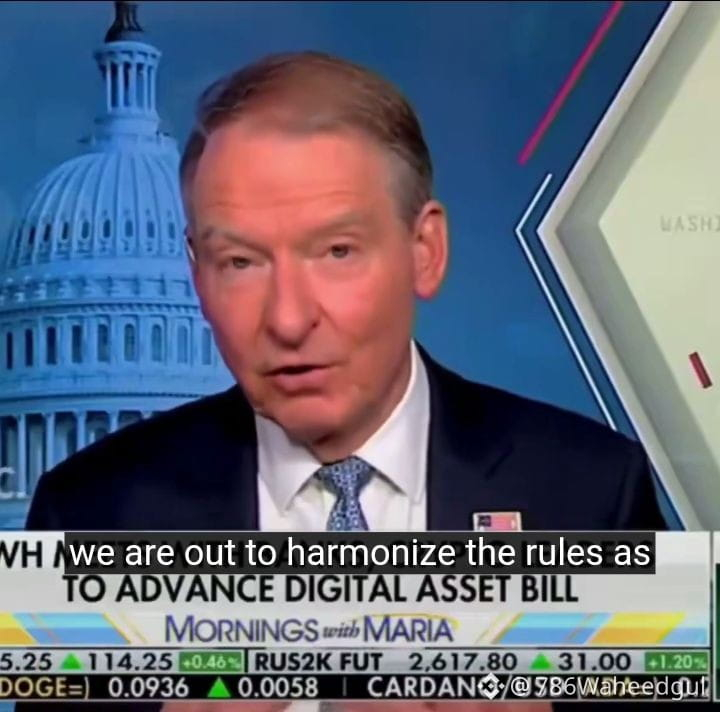
80
#SEC #CFTC
🚀 CFTC and SEC Set Course for Mass Tokenization of Financial Markets
US regulators are taking significant steps toward blockchain and on-chain markets, laying the groundwork for the tokenization of traditional assets.
📊 Key takeaways from regulator statements:
➡️ Mass tokenization of assets (RWA): CFTC Chair Michael Selig stated at a US Treasury Department conference that financial markets should prepare for a transition to blockchain. In his view, tokenizing real-world assets will enable near-instant settlement and the real-time movement of collateral.
➡️ Flexible regulation from the CFTC: With the CLARITY Act stalled in the Senate, the CFTC is moving forward independently. The regulator has already submitted a document to the White House proposing the development of rules for crypto-assets based on its existing authority.
➡️ SEC opens the door to tokenized stocks: The SEC has granted a temporary "Innovation Exemption," allowing select platforms to trade digital versions of US stocks in a test environment while comprehensive legislation is being developed.
➡️ Beyond politics: The SEC emphasizes that the development of crypto technologies and tokenization should not be politicized, as it represents a step toward the overall modernization and increased efficiency of the entire US financial system.
⚠️ The financial world is gradually shifting tracks: the transition from electronic trading to on-chain infrastructure is becoming a matter of time, not probability. 🌐📈
#SEC #CFTC
🚀 CFTC and SEC Set Course for Mass Tokenization of Financial Markets
US regulators are taking significant steps toward blockchain and on-chain markets, laying the groundwork for the tokenization of traditional assets.
📊 Key takeaways from regulator statements:
➡️ Mass tokenization of assets (RWA): CFTC Chair Michael Selig stated at a US Treasury Department conference that financial markets should prepare for a transition to blockchain. In his view, tokenizing real-world assets will enable near-instant settlement and the real-time movement of collateral.
➡️ Flexible regulation from the CFTC: With the CLARITY Act stalled in the Senate, the CFTC is moving forward independently. The regulator has already submitted a document to the White House proposing the development of rules for crypto-assets based on its existing authority.
➡️ SEC opens the door to tokenized stocks: The SEC has granted a temporary "Innovation Exemption," allowing select platforms to trade digital versions of US stocks in a test environment while comprehensive legislation is being developed.
➡️ Beyond politics: The SEC emphasizes that the development of crypto technologies and tokenization should not be politicized, as it represents a step toward the overall modernization and increased efficiency of the entire US financial system.
⚠️ The financial world is gradually shifting tracks: the transition from electronic trading to on-chain infrastructure is becoming a matter of time, not probability. 🌐📈
🚀 CFTC and SEC Set Course for Mass Tokenization of Financial Markets
US regulators are taking significant steps toward blockchain and on-chain markets, laying the groundwork for the tokenization of traditional assets.
📊 Key takeaways from regulator statements:
➡️ Mass tokenization of assets (RWA): CFTC Chair Michael Selig stated at a US Treasury Department conference that financial markets should prepare for a transition to blockchain. In his view, tokenizing real-world assets will enable near-instant settlement and the real-time movement of collateral.
➡️ Flexible regulation from the CFTC: With the CLARITY Act stalled in the Senate, the CFTC is moving forward independently. The regulator has already submitted a document to the White House proposing the development of rules for crypto-assets based on its existing authority.
➡️ SEC opens the door to tokenized stocks: The SEC has granted a temporary "Innovation Exemption," allowing select platforms to trade digital versions of US stocks in a test environment while comprehensive legislation is being developed.
➡️ Beyond politics: The SEC emphasizes that the development of crypto technologies and tokenization should not be politicized, as it represents a step toward the overall modernization and increased efficiency of the entire US financial system.
⚠️ The financial world is gradually shifting tracks: the transition from electronic trading to on-chain infrastructure is becoming a matter of time, not probability. 🌐📈
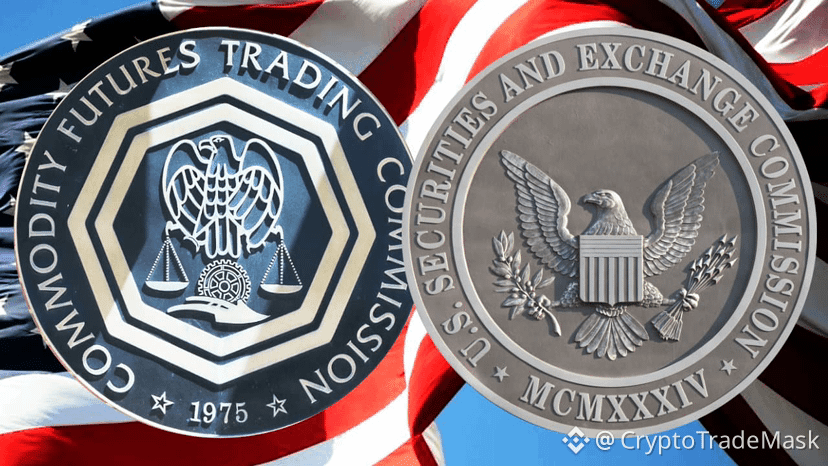
55

💥US SEC Commissioner Hester Peirce calls for an end to the mass collection of KYC data, warning that it puts cryptocurrency holders at risk from phishing and physical attacks. 😳
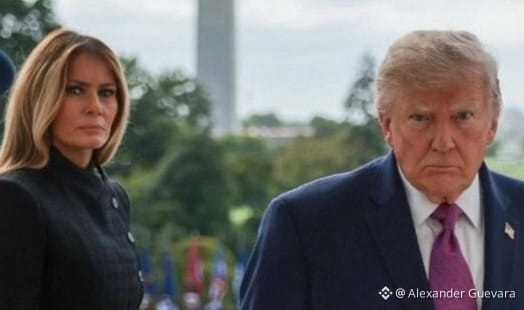
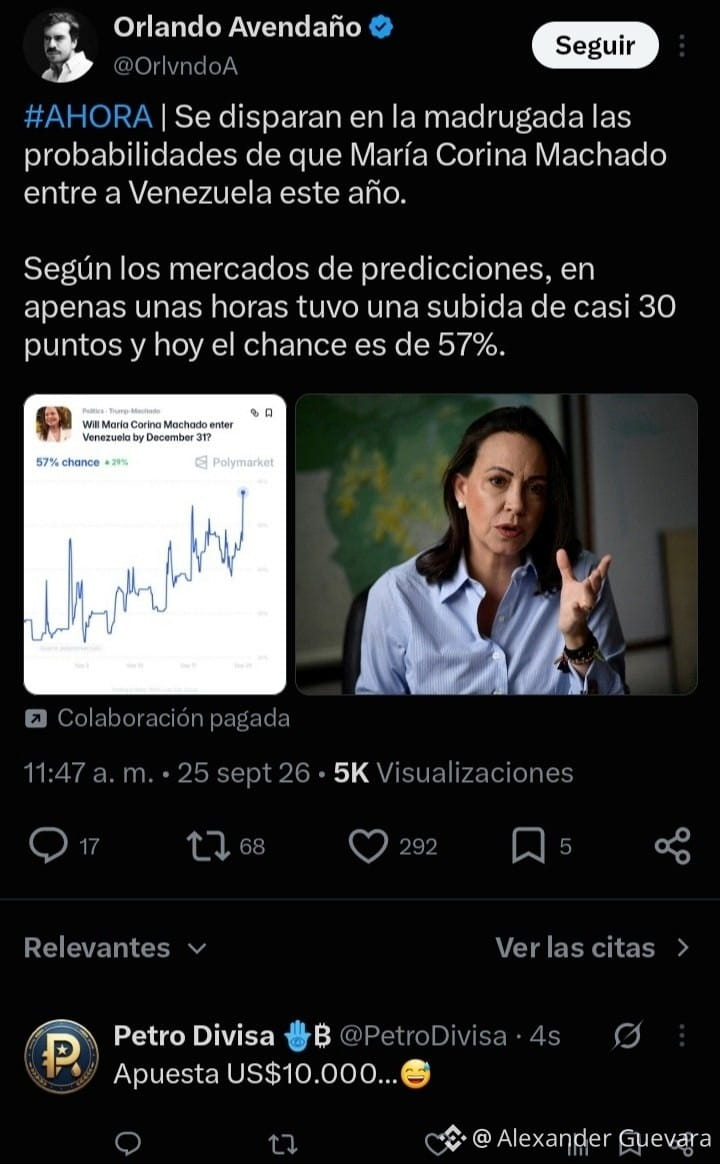
I like to tease the #CoriLovers...😅💩
🎬I highly recommend the Indian film CTRL—it shows us the danger of AI in the hands of global corporations, on Netflix.
When you take your last cold beer from the wine cellar...😅🤣😂
#SEC #EEUU #India #netflix #MariaMachado
$NFLX $TRUMP
💥US SEC Commissioner Hester Peirce calls for an end to the mass collection of KYC data, warning that it puts cryptocurrency holders at risk from phishing and physical attacks. 😳
I like to tease the #CoriLovers...😅💩
🎬I highly recommend the Indian film CTRL—it shows us the danger of AI in the hands of global corporations, on Netflix.
When you take your last cold beer from the wine cellar...😅🤣😂
#SEC #EEUU #India #netflix #MariaMachado
$NFLX $TRUMP
I like to tease the #CoriLovers...😅💩
🎬I highly recommend the Indian film CTRL—it shows us the danger of AI in the hands of global corporations, on Netflix.
When you take your last cold beer from the wine cellar...😅🤣😂
#SEC #EEUU #India #netflix #MariaMachado
$NFLX $TRUMP
217

·
--
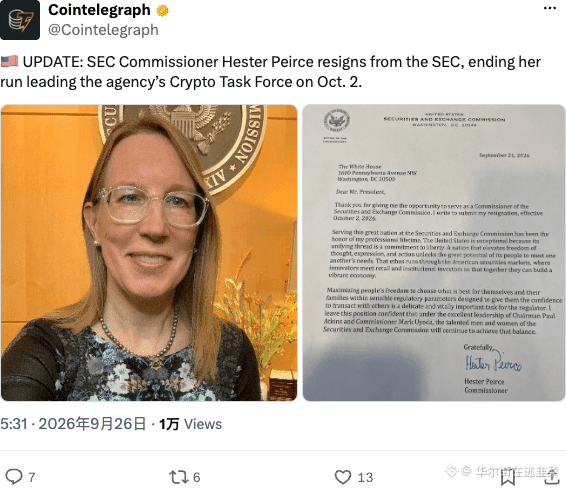
The last ally on the SEC is gone. Hester Peirce has resigned and officially stepped down as head of the crypto working group on October 2. The crypto world has lost an insider who really understood things; going forward, ETF approvals, exchange settlement clauses—everything will only get tougher. Don’t expect BTC to react immediately; mid-term regulatory pricing is the real variable.
$BTC #加密监管 #SEC
The last ally on the SEC is gone. Hester Peirce has resigned and officially stepped down as head of the crypto working group on October 2. The crypto world has lost an insider who really understood things; going forward, ETF approvals, exchange settlement clauses—everything will only get tougher. Don’t expect BTC to react immediately; mid-term regulatory pricing is the real variable.
$BTC #加密监管 #SEC
$BTC #加密监管 #SEC
12

·
--
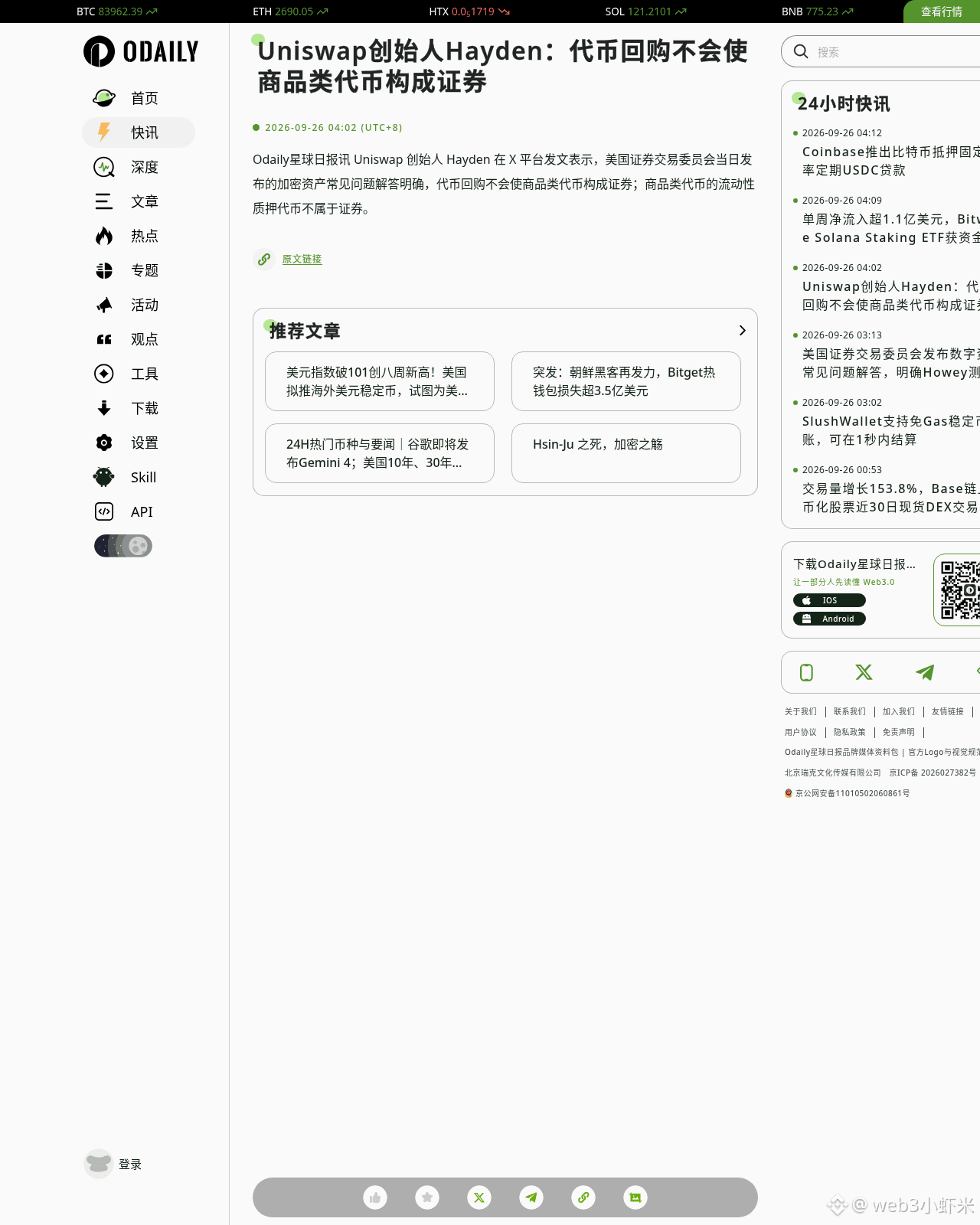
Saw Odaily: SEC staff released a set of common questions and answers about crypto assets today, explaining how the March explanatory document maps onto token buybacks, liquidity staking, and network maintenance—making things clearer in a big way.
Uniswap founder Hayden summarized it very plainly: buybacks of commodity-type tokens, by themselves, do not turn them into securities; the liquidity-staking receipts for commodity-type tokens are also not securities. Fox Business added one more point: once a network is up and running, the services involved in maintaining, improving, and developing the network are typically not considered the “essential managerial efforts” in the Howey Test.
The official write-up also notes that this is just the staff’s view and has no legal binding effect. The boundary still comes down to factual determinations, but on the two issues of buybacks and staking—an industry debate that has gone on for a long time—there is finally a more detailed written interpretation.
$UNI #加密监管 #SEC
Saw Odaily: SEC staff released a set of common questions and answers about crypto assets today, explaining how the March explanatory document maps onto token buybacks, liquidity staking, and network maintenance—making things clearer in a big way.
Uniswap founder Hayden summarized it very plainly: buybacks of commodity-type tokens, by themselves, do not turn them into securities; the liquidity-staking receipts for commodity-type tokens are also not securities. Fox Business added one more point: once a network is up and running, the services involved in maintaining, improving, and developing the network are typically not considered the “essential managerial efforts” in the Howey Test.
The official write-up also notes that this is just the staff’s view and has no legal binding effect. The boundary still comes down to factual determinations, but on the two issues of buybacks and staking—an industry debate that has gone on for a long time—there is finally a more detailed written interpretation.
$UNI #加密监管 #SEC
Uniswap founder Hayden summarized it very plainly: buybacks of commodity-type tokens, by themselves, do not turn them into securities; the liquidity-staking receipts for commodity-type tokens are also not securities. Fox Business added one more point: once a network is up and running, the services involved in maintaining, improving, and developing the network are typically not considered the “essential managerial efforts” in the Howey Test.
The official write-up also notes that this is just the staff’s view and has no legal binding effect. The boundary still comes down to factual determinations, but on the two issues of buybacks and staking—an industry debate that has gone on for a long time—there is finally a more detailed written interpretation.
$UNI #加密监管 #SEC
157


Article
Wall Street Just Got a Blockchain Door, and Almost Nobody NoticedToday, something opened that most people scrolling their phones probably won't even register. The SEC's conditional five-year exemption window went live, letting select institutional venues start pilot trading of tokenized stocks directly on public blockchains. No press conference, no confetti. Just a regulatory switch flipped quietly on a Tuesday.
I keep thinking about how backwards this feels compared to how crypto usually makes headlines. Normally it's a coin pumping 30% or a hack draining millions that gets attention. This is the opposite: a slow, boring, bureaucratic door creaking open. But boring doors sometimes lead somewhere bigger than loud ones.
Here's what it actually means. For years, "tokenized stocks" has been a phrase thrown around at crypto conferences with more excitement than substance. A handful of platforms offered synthetic exposure to stocks like Tesla or Apple, but it always lived in a gray zone, never quite legal, never quite banned. This exemption changes that calculus for the institutions willing to move carefully. It's a pilot, not a green light for everyone, but pilots are how every big regulatory shift starts.
And the market noticed before the headline did. Over the past week, DeFi tokens tied to onchain trading infrastructure quietly outperformed the rest of the market. $UNI jumped 30% on exactly this kind of speculation. That's usually how it goes: traders price in a possibility months before the average person hears about it, and by the time it's obvious, the early move is already over.
What I find genuinely interesting is the timing. This exemption landed in the same week the US Senate rejected the CLARITY Act, the bill meant to give crypto clearer rules. So on one hand, Congress can't agree on basic definitions. On the other hand, a regulator just quietly built a legal pathway for actual Wall Street assets to trade onchain. Two different parts of the same government moving in almost opposite directions, in the same seven days.
I don't think this turns into overnight adoption. Institutions move carefully, especially with something this new, and a five-year pilot window suggests the SEC itself expects a long runway before this becomes normal. But the direction of travel matters more than the speed. Traditional finance and onchain infrastructure are being wired together, one exemption at a time, whether the rest of the market is watching or not.
The thing worth tracking isn't the announcement, it's the first real trade. When one institutional venue actually settles a tokenized stock transaction on a public chain, that's the moment this stops being theoretical.
{future}(UNIUSDT)
#SEC #defi #CryptoNews #WallStreetNews #BinanceSquare
Wall Street Just Got a Blockchain Door, and Almost Nobody Noticed
Today, something opened that most people scrolling their phones probably won't even register. The SEC's conditional five-year exemption window went live, letting select institutional venues start pilot trading of tokenized stocks directly on public blockchains. No press conference, no confetti. Just a regulatory switch flipped quietly on a Tuesday.
I keep thinking about how backwards this feels compared to how crypto usually makes headlines. Normally it's a coin pumping 30% or a hack draining millions that gets attention. This is the opposite: a slow, boring, bureaucratic door creaking open. But boring doors sometimes lead somewhere bigger than loud ones.
Here's what it actually means. For years, "tokenized stocks" has been a phrase thrown around at crypto conferences with more excitement than substance. A handful of platforms offered synthetic exposure to stocks like Tesla or Apple, but it always lived in a gray zone, never quite legal, never quite banned. This exemption changes that calculus for the institutions willing to move carefully. It's a pilot, not a green light for everyone, but pilots are how every big regulatory shift starts.
And the market noticed before the headline did. Over the past week, DeFi tokens tied to onchain trading infrastructure quietly outperformed the rest of the market. $UNI jumped 30% on exactly this kind of speculation. That's usually how it goes: traders price in a possibility months before the average person hears about it, and by the time it's obvious, the early move is already over.
What I find genuinely interesting is the timing. This exemption landed in the same week the US Senate rejected the CLARITY Act, the bill meant to give crypto clearer rules. So on one hand, Congress can't agree on basic definitions. On the other hand, a regulator just quietly built a legal pathway for actual Wall Street assets to trade onchain. Two different parts of the same government moving in almost opposite directions, in the same seven days.
I don't think this turns into overnight adoption. Institutions move carefully, especially with something this new, and a five-year pilot window suggests the SEC itself expects a long runway before this becomes normal. But the direction of travel matters more than the speed. Traditional finance and onchain infrastructure are being wired together, one exemption at a time, whether the rest of the market is watching or not.
The thing worth tracking isn't the announcement, it's the first real trade. When one institutional venue actually settles a tokenized stock transaction on a public chain, that's the moment this stops being theoretical.
#SEC #defi #CryptoNews #WallStreetNews #BinanceSquare
I keep thinking about how backwards this feels compared to how crypto usually makes headlines. Normally it's a coin pumping 30% or a hack draining millions that gets attention. This is the opposite: a slow, boring, bureaucratic door creaking open. But boring doors sometimes lead somewhere bigger than loud ones.
Here's what it actually means. For years, "tokenized stocks" has been a phrase thrown around at crypto conferences with more excitement than substance. A handful of platforms offered synthetic exposure to stocks like Tesla or Apple, but it always lived in a gray zone, never quite legal, never quite banned. This exemption changes that calculus for the institutions willing to move carefully. It's a pilot, not a green light for everyone, but pilots are how every big regulatory shift starts.
And the market noticed before the headline did. Over the past week, DeFi tokens tied to onchain trading infrastructure quietly outperformed the rest of the market. $UNI jumped 30% on exactly this kind of speculation. That's usually how it goes: traders price in a possibility months before the average person hears about it, and by the time it's obvious, the early move is already over.
What I find genuinely interesting is the timing. This exemption landed in the same week the US Senate rejected the CLARITY Act, the bill meant to give crypto clearer rules. So on one hand, Congress can't agree on basic definitions. On the other hand, a regulator just quietly built a legal pathway for actual Wall Street assets to trade onchain. Two different parts of the same government moving in almost opposite directions, in the same seven days.
I don't think this turns into overnight adoption. Institutions move carefully, especially with something this new, and a five-year pilot window suggests the SEC itself expects a long runway before this becomes normal. But the direction of travel matters more than the speed. Traditional finance and onchain infrastructure are being wired together, one exemption at a time, whether the rest of the market is watching or not.
The thing worth tracking isn't the announcement, it's the first real trade. When one institutional venue actually settles a tokenized stock transaction on a public chain, that's the moment this stops being theoretical.
#SEC #defi #CryptoNews #WallStreetNews #BinanceSquare
FEDAT - sport digital assets marketplace:
Отличный и очень глубокий анализ Друг! 💎 Самые важные изменения на рынке всегда происходят тихо, без громких заголовков и конфетти. Токенизация реальных активов (RWA) и выход институционалов на публичные блокчейны — это не вопрос "если", а вопрос "когда". Этот пятилетний пилот — именно тот мост, который соединяет TradFi и Web3. Следим за первой реальной сделкой!🤝👍
3
1
52

Next for the U.S. SEC: Agency's chief crypto counsel illuminates path for custody
Taylor Lindman, the top lawyer on the agency's Crypto Task Force, says the SEC is trying to get firms comfortable with blockchain technology and crypto assets.
#SEC
Next for the U.S. SEC: Agency's chief crypto counsel illuminates path for custody
Taylor Lindman, the top lawyer on the agency's Crypto Task Force, says the SEC is trying to get firms comfortable with blockchain technology and crypto assets.
#SEC
Taylor Lindman, the top lawyer on the agency's Crypto Task Force, says the SEC is trying to get firms comfortable with blockchain technology and crypto assets.
#SEC
11
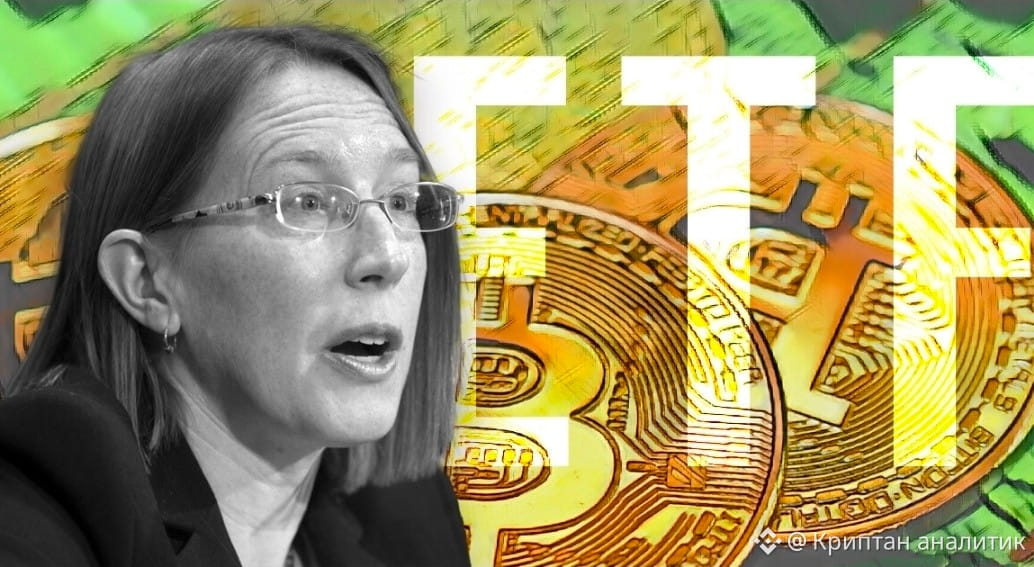
REVOLUTION in KYC: The «CRYPTO MOMS» Initiative by Hester Peirce🤚🤚🤚
SEC Commissioner Hester Peirce (whom the community calls Crypto Mom) tonight put forward a revolutionary proposal for the crypto industry. She called for reducing excessive collection of personal data in KYC/AML procedures (know your customer). Instead, she proposes implementing zero-knowledge proof technologies (ZKP) and digital credentials on news portal ForkLog. This will allow users to verify their identity and the legality of funds without disclosing their passports and private data to exchanges.
What do you think about the Crypto Mom initiative? Do we need full anonymity thanks to ZKP, or does strict KYC protect the market from scams? Share your opinion in the comments! 👇
$BTC $ETH $HYPE
#CryptoNewss #whales #bitcoin #bnb #SEC
{spot}(HYPEUSDT)
{spot}(BTCUSDT)
{spot}(ETHUSDT)
REVOLUTION in KYC: The «CRYPTO MOMS» Initiative by Hester Peirce🤚🤚🤚
SEC Commissioner Hester Peirce (whom the community calls Crypto Mom) tonight put forward a revolutionary proposal for the crypto industry. She called for reducing excessive collection of personal data in KYC/AML procedures (know your customer). Instead, she proposes implementing zero-knowledge proof technologies (ZKP) and digital credentials on news portal ForkLog. This will allow users to verify their identity and the legality of funds without disclosing their passports and private data to exchanges.
What do you think about the Crypto Mom initiative? Do we need full anonymity thanks to ZKP, or does strict KYC protect the market from scams? Share your opinion in the comments! 👇
$BTC $ETH $HYPE
#CryptoNewss #whales #bitcoin #bnb #SEC
SEC Commissioner Hester Peirce (whom the community calls Crypto Mom) tonight put forward a revolutionary proposal for the crypto industry. She called for reducing excessive collection of personal data in KYC/AML procedures (know your customer). Instead, she proposes implementing zero-knowledge proof technologies (ZKP) and digital credentials on news portal ForkLog. This will allow users to verify their identity and the legality of funds without disclosing their passports and private data to exchanges.
What do you think about the Crypto Mom initiative? Do we need full anonymity thanks to ZKP, or does strict KYC protect the market from scams? Share your opinion in the comments! 👇
$BTC $ETH $HYPE
#CryptoNewss #whales #bitcoin #bnb #SEC
Crazy VIP trader:
Согласен анонимность важна и привлечёт больше денег на биржи.
1
2
1k
LATEST: 🇺🇸 TD Cowen says the SEC's tokenized stock innovation exemption will likely see limited near-term adoption, saying stock perpetuals draw far more trading.
#SEC
LATEST: 🇺🇸 TD Cowen says the SEC's tokenized stock innovation exemption will likely see limited near-term adoption, saying stock perpetuals draw far more trading.
#SEC
#SEC
12
Log in to explore more content
Join global crypto users on Binance Square
⚡️ Get latest and useful information about crypto.
💬 Trusted by the world’s largest crypto exchange.
👍 Discover real insights from verified creators.
Email / Phone number
Trending Topics
1
#QNTRises39%
33,174 views
1,050 Discussing
2
#EthereumBreaksAbove$2700
3,052 views
106 Discussing
3
#BitgetBreachForgedRequestsNotStolenKeys
30,378 views
827 Discussing
4
#BitcoinSpotETFsTurnNetPositiveYTD
20,132 views
645 Discussing
5
#GrayscaleZcashETFHits$1BNetAssets
2,134 views
48 Discussing
6
#BitcoinSpotETFsNetInflow$191M
8,247 views
186 Discussing
7
#CFTCUpdatesGuidanceOnTokenizedAssets
60,307 views
1,587 Discussing
8
#BitgetSays$352MAffectedInHack
20,499 views
97 Discussing
9
#BinanceWillListHyperliquid(HYPE)
297,375 views
4,158 Discussing
10
#BrazilOrdersReportingOf$10KSelfCustodyTransfers
7,498 views
56 Discussing