
#sec
sec
334.1M views
1.4M Discussing
Hot
Latest

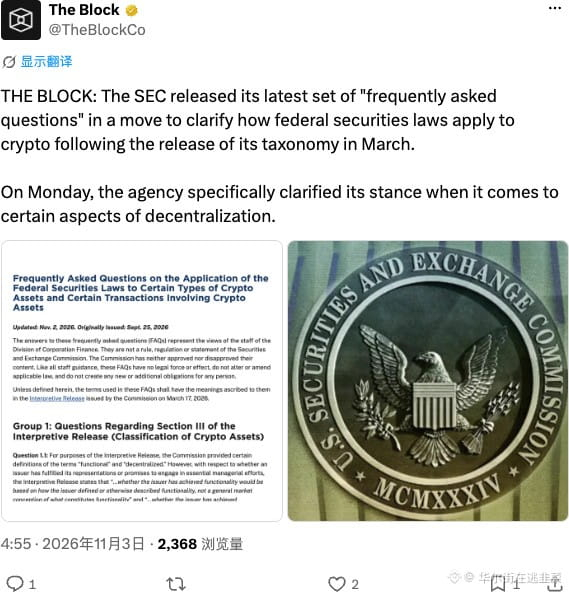
JUST IN: 🇺🇸 The #SEC keeps moving on crypto without Congress, adding 3 new answers on who controls a crypto network.
Under the new guidance:
1. Token holders voting on a network generally don’t count as a “central party,” unless they’re affiliated or agree to act together.
2. A central party “oversees participation” if it can control access at the protocol, validator or user level.
3. A network being “functional” (its token actually works on it) is different from being “decentralized” (no one controls it).
It’s the SEC’s latest crypto move since the CLARITY Act failed a Senate vote 49 to 50 on Sept 15:
- Sept 17: an exemption for trading tokenized US stocks on blockchain venues
- Sept 25: a crypto FAQ on how securities laws apply to tokens
- Oct 1: a proposal on how investment advisers and funds can hold crypto
$USDC $HOT $BTC
#BinanceWithdrawalScamWarning #USMidtermElections #USOctoberNFP-AreRateCutsStillPossible #Verify1to1BinanceReserves
1
361

On Monday, the SEC’s Division of Corporation Finance slipped three new Q&As into its crypto FAQ. Big accounts did their usual thing: sounded the alarm and slapped on an ALL-CAPS headline, as if regulators had just loosened the rules. Stay calm: this is staff guidance, not binding, and a new chair or division director could change the tune at any time. The CLARITY Act is still stalled in Congress, and the fact that regulators are plugging gaps with FAQs shows legislation isn’t making progress.
The content itself is actually pretty interesting. It boils down to two points: token holders can vote broadly without there being a central controlling party, as long as they’re exercising that power independently; a true central party is someone who can restrict others’ access or change the core rules.
Apply that yardstick, and a lot of “decentralized governance” is exposed on the spot. The vote may look like it belongs to everyone, but if the votes are concentrated in a few dozen addresses, can you really call that independent? If a multisig can upgrade the contract with one click, pause the bridge, or freeze it, then it fits the standard’s definition of “someone who can change the core rules.”
The irony is that people on X have also been arguing these past couple of days about Scroll turning from a public L2 into a permissioned network. The SEC has just singled out permissioned systems for discussion, while some L2s are heading in that very direction.
So don’t tout this FAQ as bullish news. It’s not handing projects a get-out-of-jail-free card; it’s giving you a yardstick. Next time a project claims to be decentralized, first check who holds the upgrade permissions, then see what share of the votes is held by the top ten addresses.
#SEC #DeFi

·
--
The SEC just dropped a new FAQ, specifically drawing a new red line around “decentralization.” Although it’s still the same old tune of federal securities law, at least it gives crypto veterans a little more confidence as they feel their way forward. Decentralization isn’t a get-out-of-jail-free card; compliance is a never-ending requirement.
$BTC $ETH #Crypto #SEC
$BTC $ETH #Crypto #SEC
269

·
--
SEC Exempts Institutions from Repo Clearing Rules, Improving the Crypto Liquidity Environment
The U.S. Securities and Exchange Commission (SEC) recently issued an exemptive order waiving Treasury clearing requirements for certain affiliated-party and non-U.S. repo transactions. This marks a substantive step by regulators to reduce friction costs in institutional fund operations. While the policy adjustment does not directly target the crypto market, its effect on improving the broader liquidity environment is being transmitted indirectly through institutional fund flows.
According to an SEC announcement, the exemption primarily covers Inter-Affiliate and Non-U.S. repo transactions. The core rationale is that streamlining the clearing process will lower compliance costs and trading frictions, encouraging institutions to allocate more capital to crypto and related asset markets. For institutions holding core crypto assets such as $BTC over the long term, greater efficiency in moving funds in and out means lower implicit costs, which may strengthen their willingness to hold for the long term.
From a macro perspective, liquidity in the crypto market depends heavily on spillover effects from the traditional financial system. When trading frictions in crypto markets decline and capital allocation becomes more efficient, expectations for broader crypto-market liquidity improve directly. This improvement is not driven by short-term sentiment, but reflects a long-term trend based on institutional optimization. Compared with recent events such as high-frequency trading or hacking news, these policy adjustments address a gap at the macro-policy level and provide the market with a more stable liquidity foundation.
However, there may be a lag between the policy’s implementation and any actual improvement in market liquidity. In the short term, market sentiment may be affected by fluctuations in macroeconomic data. External factors such as expectations for Federal Reserve policy and inflation data could still disrupt the crypto market. In addition, the actual scale and pace of institutional inflows remain to be seen, pending subsequent market reactions and capital-flow data.
Going forward, it will be important to monitor actual changes in institutional allocations to crypto markets, as well as whether liquidity indicators—such as stablecoin supply and ETF fund flows—show sustained improvement. If the liquidity environment continues to improve, the crypto market may see a more stable recovery in valuations.
$BTC #CryptoLiquidity #SEC #InstitutionalCrypto
The above is a summary of information and personal analysis, and does not constitute investment advice.
Follow me for ongoing coverage of key market developments and data.
35

·
--
The scammers used the SEC’s own website as proof of their legitimacy — and the SEC has just sued them.
The facts: The SEC filed a civil lawsuit on Oct. 29 (litigation release on Oct. 30) against BG Wealth Sharing and DSJ Exchange, which allegedly took more than $130 million from tens of thousands of retail investors in 40+ U.S. states between Oct. 2025 and Jun. 2026. Their scheme: promises of risk-free returns from AI-generated crypto trading “signals,” plus fake Forms ADV and D that they displayed as proof of SEC registration — even though neither was registered at all. The SEC says most of the funds were misappropriated, with only about $25 million returned through Ponzi-style payments, and that DSJ blocked withdrawals before asking for “taxes” to unlock accounts. The fake forms have now been removed from the SEC’s website. Important note: these are still civil allegations, not a court ruling.
My take: This is the most expensive lesson in checking legitimacy: appearing in a government database does not mean you’re approved by a regulator. Any “risk-free” promise tied to any kind of signal is the biggest red flag — in real markets, risk is never zero, especially while BTC is still hovering around $78,140. Scammers selling certainty are the ones you should be most wary of.
What I’m watching: the court proceedings in Northern California and whether victims recover any of their funds.
Have you ever been offered “guaranteed profit signals” with claims of legitimacy like these?
This is my analysis, not financial advice — always DYOR.
#PenipuanKripto #SEC $BTC
30

·
--

Article
Warning: Scammers are using the SEC's name to steal $130 million!🚨 Warning: Scammers are using the SEC's name to steal $130 million!
📊 Official SEC statement:
• Two companies (BG Wealth and DSJ Exchange) scammed people
• They raised $130 million
• They used fake documents on the SEC website
━━━━━━━━━━━━━━━
🔍 How did they scam people?
1️⃣ They submitted fake documents to the SEC (Form ADV and Form D)
2️⃣ They told people: "Look, we're on the SEC website, so we're licensed!"
Warning: Scammers are using the SEC's name to steal $130 million!
🚨 Warning: Scammers are using the SEC's name to steal $130 million!
📊 Official SEC statement:
• Two companies (BG Wealth and DSJ Exchange) scammed people
• They raised $130 million
• They used fake documents on the SEC website
━━━━━━━━━━━━━━━
🔍 How did they scam people?
1️⃣ They submitted fake documents to the SEC (Form ADV and Form D)
2️⃣ They told people: "Look, we're on the SEC website, so we're licensed!"
1
17

·
--
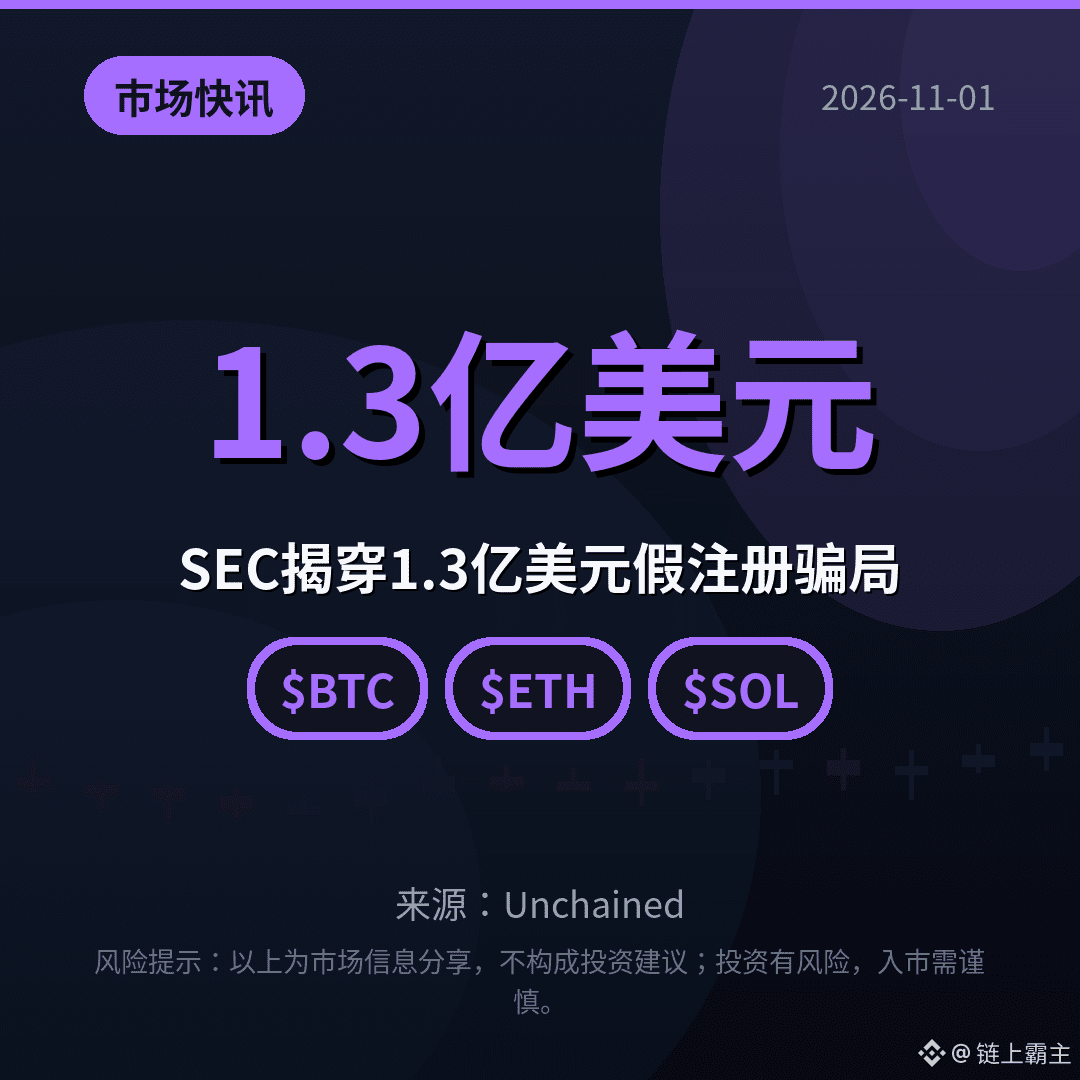
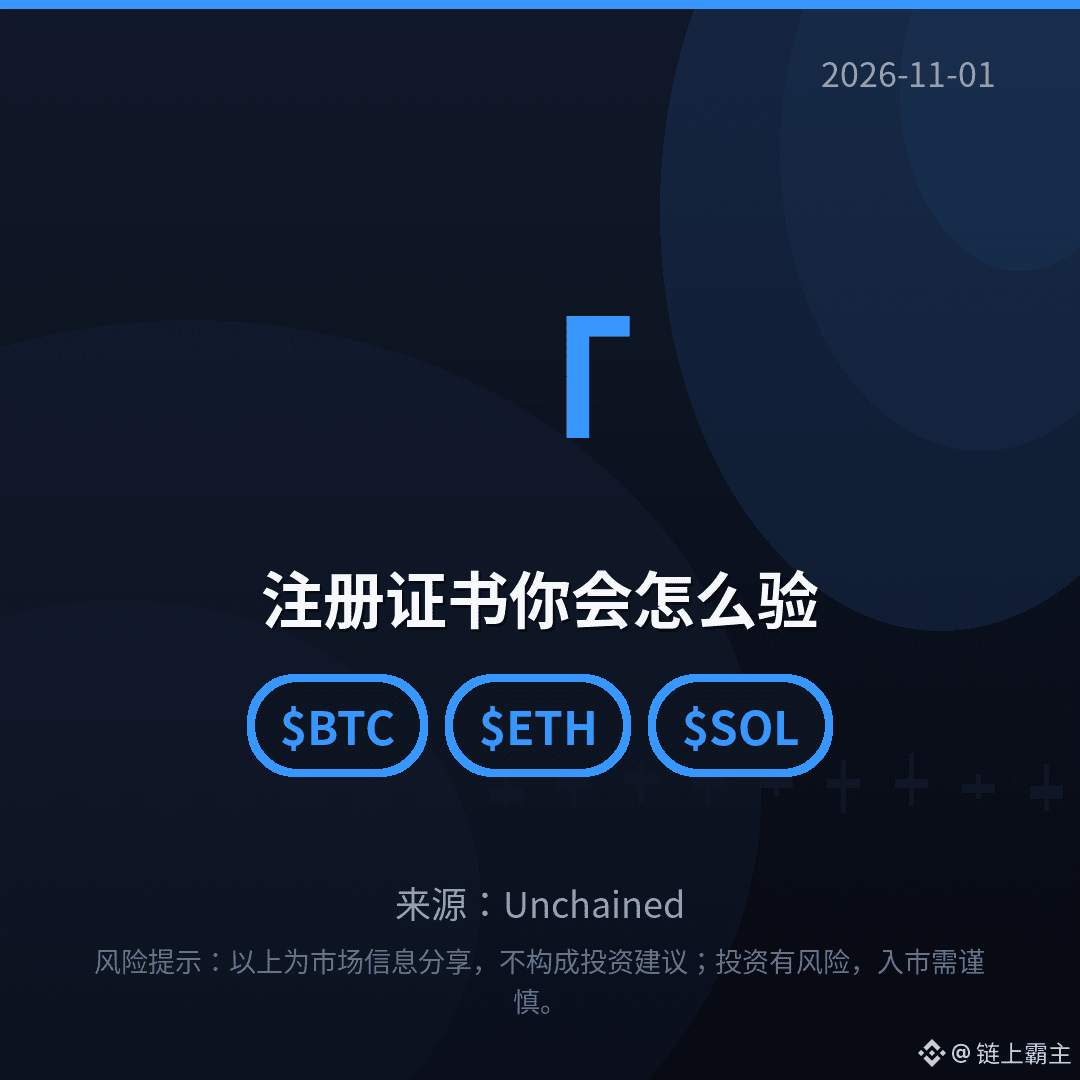
【Market Flash】SEC exposes $130 million fake registration scam
The U.S. SEC sued BG Wealth Sharing and DSJ Exchange, alleging that they used filings from the SEC database and fake registration certificates to convince retail investors that the scheme was government-approved. From March 2026 to mid-June, the two companies raised over $130 million from more than 223,000 addresses, with losses exceeding $100 million, according to the SEC. How would you verify a registration certificate?
$BTC $ETH $SOL
#SEC #加密监管 #ScamPrevention
(Source: Unchained)
⚠️Risk warning: The above is shared for informational purposes only and does not constitute investment advice. Investing involves risks; exercise caution when entering the market.
9

🇺🇸 TODAY: The SEC has joined other regulators in its scrutiny of prediction markets, as its enforcement chief says bets tied to company earnings or KPIs may fall under its watch.
#Crypto #SEC
🇺🇸 TODAY: The SEC has joined other regulators in its scrutiny of prediction markets, as its enforcement chief says bets tied to company earnings or KPIs may fall under its watch.
#Crypto #SEC
#Crypto #SEC
FEDAT - sport digital assets marketplace:
Классика жанра: как только появляется новый способ зарабатывать или делать прогнозы без посредников, SEC тут как тут с линейкой и справочником "что является ценной бумагой" 😂. Добро пожаловать в реальность, где инновации всегда идут на шаг впереди, но регулятор в итоге всегда догоняет и выставляет счет 📜🦅🤝👍
1
3
1.8k

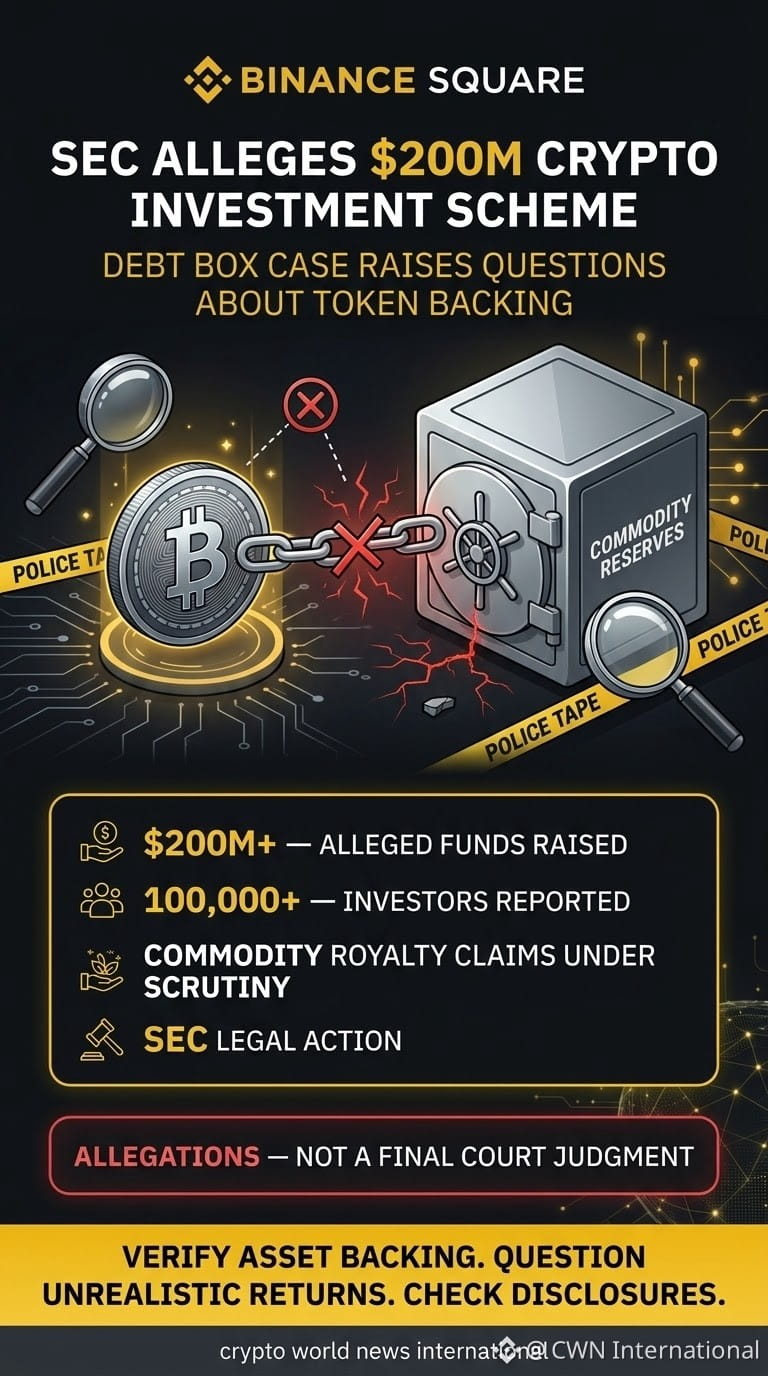
Headline: SEC ALLEGES $200M CRYPTO INVESTMENT SCHEME INVOLVING DEBT BOX
Summary:
The U.S. Securities and Exchange Commission (SEC) has sued operators linked to the DEBT Box crypto investment platform, alleging that they raised more than $200 million from over 100,000 investors through misleading claims about commodity-backed digital tokens.
Key Points:
🔹 $200M+ Alleged: The SEC alleges that the platform raised more than $200 million from investors.
🔹 100,000+ Investors: The complaint reportedly involves more than 100,000 investors.
🔹 Commodity Royalty Claims: The SEC alleges that investors were misled about commodity royalties supposedly backing the digital tokens.
🔹 Ponzi-Like Allegations: Regulators claim investor funds were used to simulate revenue.
🔹 Legal Action: The complaint names Blox Lending LLC, Digital Licensing Inc., and three principals, alleging violations of U.S. securities laws.
Market Insight:
The case highlights the importance of verifying token backing, revenue claims, and project disclosures. It may renew attention to crypto investment risks, but it does not establish that the wider cryptocurrency market is fraudulent.
Bottom Line:
Investors should scrutinize projects promising asset-backed tokens and verify their underlying assets and financial disclosures. These remain allegations, not a final court judgment.
#SEC #DEBTBox #CryptoSecurity #InvestorProtection #Blockchain $BTC $ZEC $BNB
{future}(BNBUSDT)
{future}(ZECUSDT)
{future}(BTCUSDT)
Headline: SEC ALLEGES $200M CRYPTO INVESTMENT SCHEME INVOLVING DEBT BOX
Summary:
The U.S. Securities and Exchange Commission (SEC) has sued operators linked to the DEBT Box crypto investment platform, alleging that they raised more than $200 million from over 100,000 investors through misleading claims about commodity-backed digital tokens.
Key Points:
🔹 $200M+ Alleged: The SEC alleges that the platform raised more than $200 million from investors.
🔹 100,000+ Investors: The complaint reportedly involves more than 100,000 investors.
🔹 Commodity Royalty Claims: The SEC alleges that investors were misled about commodity royalties supposedly backing the digital tokens.
🔹 Ponzi-Like Allegations: Regulators claim investor funds were used to simulate revenue.
🔹 Legal Action: The complaint names Blox Lending LLC, Digital Licensing Inc., and three principals, alleging violations of U.S. securities laws.
Market Insight:
The case highlights the importance of verifying token backing, revenue claims, and project disclosures. It may renew attention to crypto investment risks, but it does not establish that the wider cryptocurrency market is fraudulent.
Bottom Line:
Investors should scrutinize projects promising asset-backed tokens and verify their underlying assets and financial disclosures. These remain allegations, not a final court judgment.
#SEC #DEBTBox #CryptoSecurity #InvestorProtection #Blockchain $BTC $ZEC $BNB
414

Article
SEC accuses principals of $200 million crypto schemeSEC accuses companies and executives of alleged $200 million crypto fraud involving more than 100,000 investors
On October 29, 2026, the Securities and Exchange Commission (SEC) announced a lawsuit against Blox Lending, Digital Licensing, and their respective principals over an alleged fraud scheme involving crypto asset investments marketed under the DEBT Box brand.
According to the complaint, the operation raised at least $200 million from more than 100,000 individual investors in various countries.
SEC accuses principals of $200 million crypto scheme
SEC accuses companies and executives of alleged $200 million crypto fraud involving more than 100,000 investors
On October 29, 2026, the Securities and Exchange Commission (SEC) announced a lawsuit against Blox Lending, Digital Licensing, and their respective principals over an alleged fraud scheme involving crypto asset investments marketed under the DEBT Box brand.
According to the complaint, the operation raised at least $200 million from more than 100,000 individual investors in various countries.
1
601

·
--
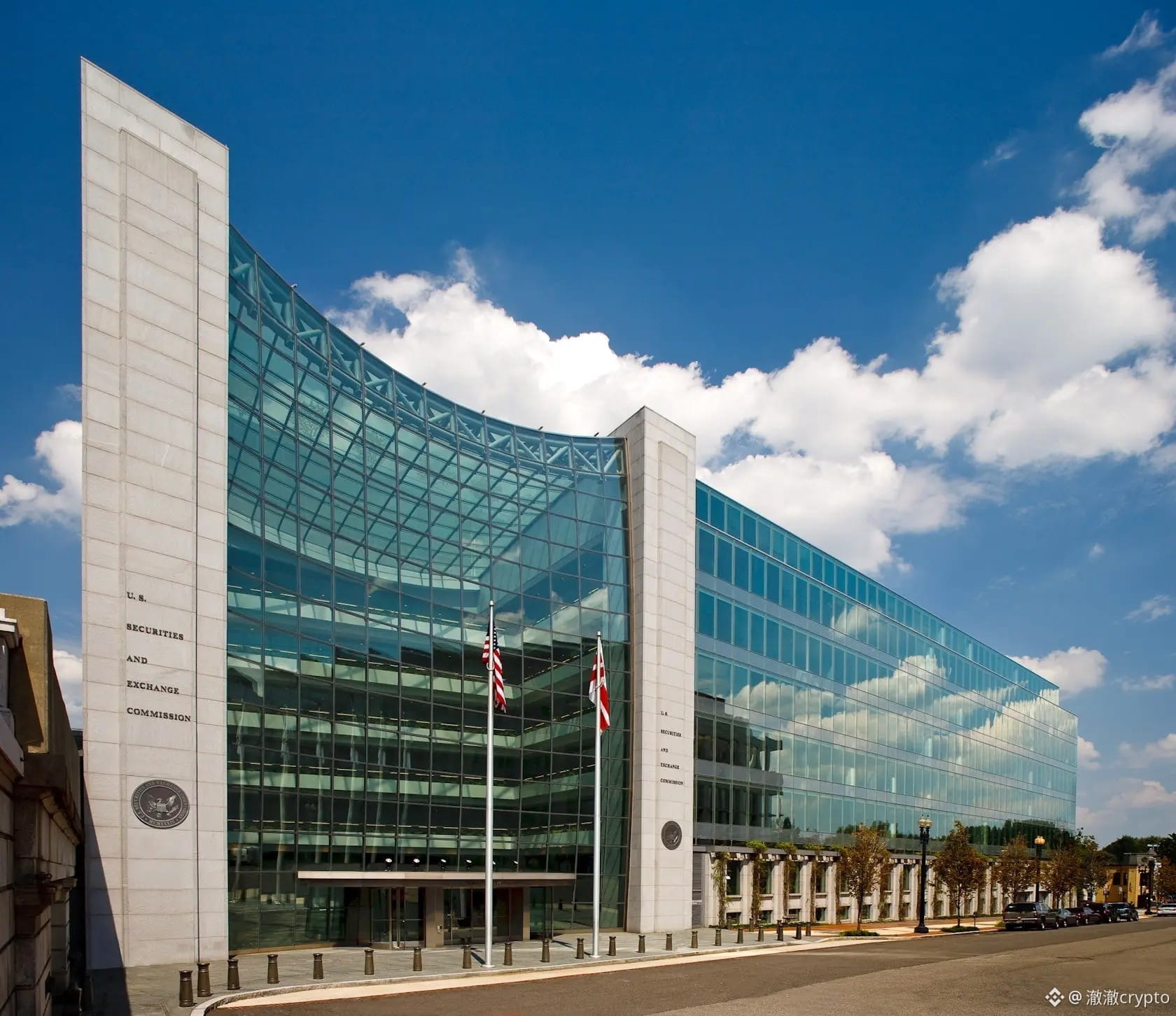
The SEC is finally taking action: fake filings, fake seals, and a $130 million scheme headed to court.
Here’s what happened: On October 29, the SEC formally sued BG Wealth Sharing and DSJ Exchange, accusing the companies of using crypto trading “signals” to lure tens of thousands of retail investors between October 2025 and June 2026, raising more than $130 million across over 40 states and territories.
The most outrageous trick: They first submitted fake Form ADV and Form D filings to the SEC (the forms filed with regulators), then showed investors the public filing records to pose as “officially certified.” They even displayed fake certificates bearing the SEC seal.
The complaint has been filed in federal court in the Northern District of California. The SEC is seeking a permanent injunction, disgorgement of ill-gotten gains, and civil penalties.
My take: If they can forge documents, they’re not exploiting greed—they’re exploiting people’s trust in anything labeled “official.” That’s far worse than hyping a token.
What I’ll do: From now on, whenever a project touts being “filed with the SEC,” I’ll check it out on Investor.gov first. If they only show screenshots and I can’t verify it, I’m out.
Which kind of scam worries you more: A) openly promising high returns, or B) using fake official documents to look legitimate?
$BTC $ETH $SOL
#SEC #CryptoRegulation
416

·
--
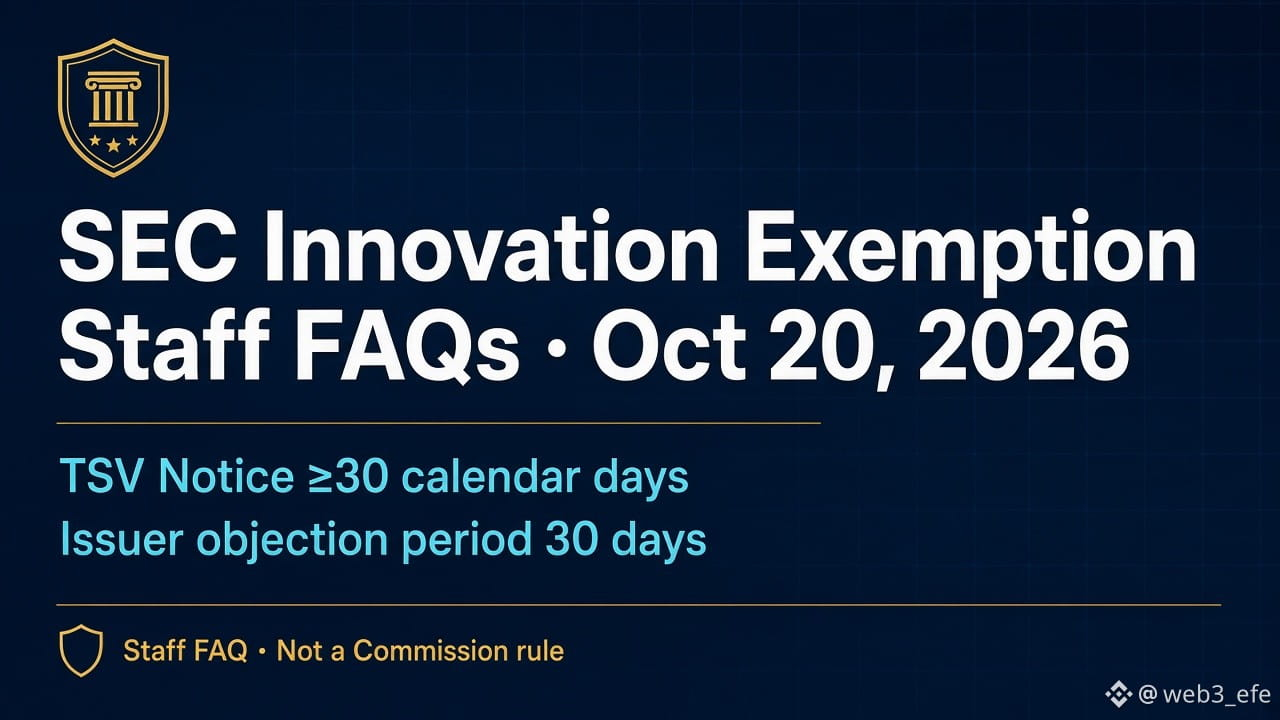
Around 10-20, the SEC Division of Trading and Markets publishes a staff FAQ on the Innovation Exemption
TSVs must publish a complete, production-grade Notice on their website at least 30 calendar days before opening
The issuer objection period is also 30 calendar days; a timely objection means the tokenized NMS stock cannot go live
The FAQ reflects staff views, ≠ Commission rules, ≠ the revised around 9-17 exemption order
The exemption order grants conditional exemptions to tokenized NMS stock distributed ledger trading venues (TSVs) and certain liquidity providers
#加密合规 #SEC #代币化 $BTC
风中浪客:
字都认识 连一起没看懂 等真能上再说吧 $BTCSEC
1
171

SEC Adds Tokenization and Market Infrastructure to 2027 Examination Priorities
- The SEC identifies tokenization and evolving market infrastructure as risks for its fiscal year 2027 examination program
- Signals increased regulatory attention to digital assets and new market structures
- The RSS feed has not provided further specific details about enforcement measures
#BinanceSquare #CryptoNews #SEC #Regulation #Tokenization
$btc $eth
vlikevn Titanbot
Source: NewsBTC
196
·
--
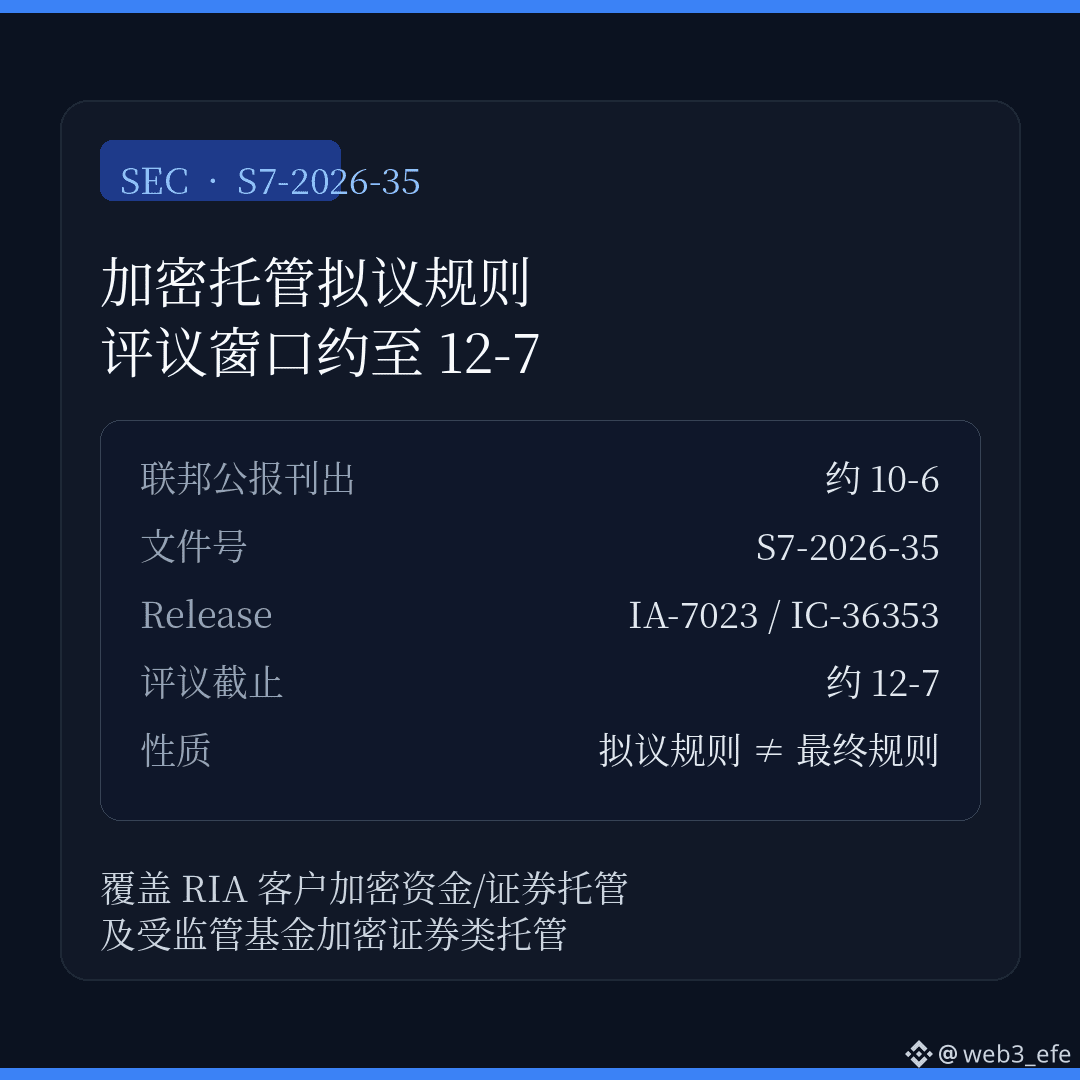
SEC crypto custody proposed rule comment period expected to run through approximately 12-7
File No. S7-2026-35 (IA-7023 / IC-36353)
Expected to be published in the Federal Register around 10-6; issued by the SEC around 10-1
Proposed to cover registered investment advisers’ custody of clients’ crypto funds/securities
and custody of crypto-security assets held by regulated funds
while modernizing related reporting and recordkeeping rules
Proposed rule ≠ final rule ≠ effective
#合规 #SEC #监管 $BTC
187
SEC Adds Tokenization and Market Infrastructure to Its FY 2027 Examination Risk List
- The SEC has announced its examination priorities for FY 2027, identifying tokenization and evolving market infrastructure as risk areas requiring close scrutiny.
- The move signals growing interest from U.S. regulators in emerging technologies such as blockchain and asset tokenization within the financial system.
- Companies operating in this space should be prepared for the possibility of more rigorous SEC examinations and compliance requirements in the near future.
#BinanceSquare #CryptoNews #SEC #TokenHóa #Blockchain
$btc $eth
vlikevn Titanbot
Source: NewsBTC
129
SEC proposes crypto custody framework, expanding options for advisers and funds
- The SEC proposes a tailored custody framework for investment advisers and registered funds handling crypto assets.
- Goal: Provide more flexibility than traditional custody rules.
- Could expand institutional investors’ access to digital assets.
- Specific details about the scope and comment deadline have not been provided in the RSS description.
#BinanceSquare #CryptoNews #SEC #Regulation #Custody
$btc $eth
vlikevn Titanbot
Source: NewsBTC
172

·
--
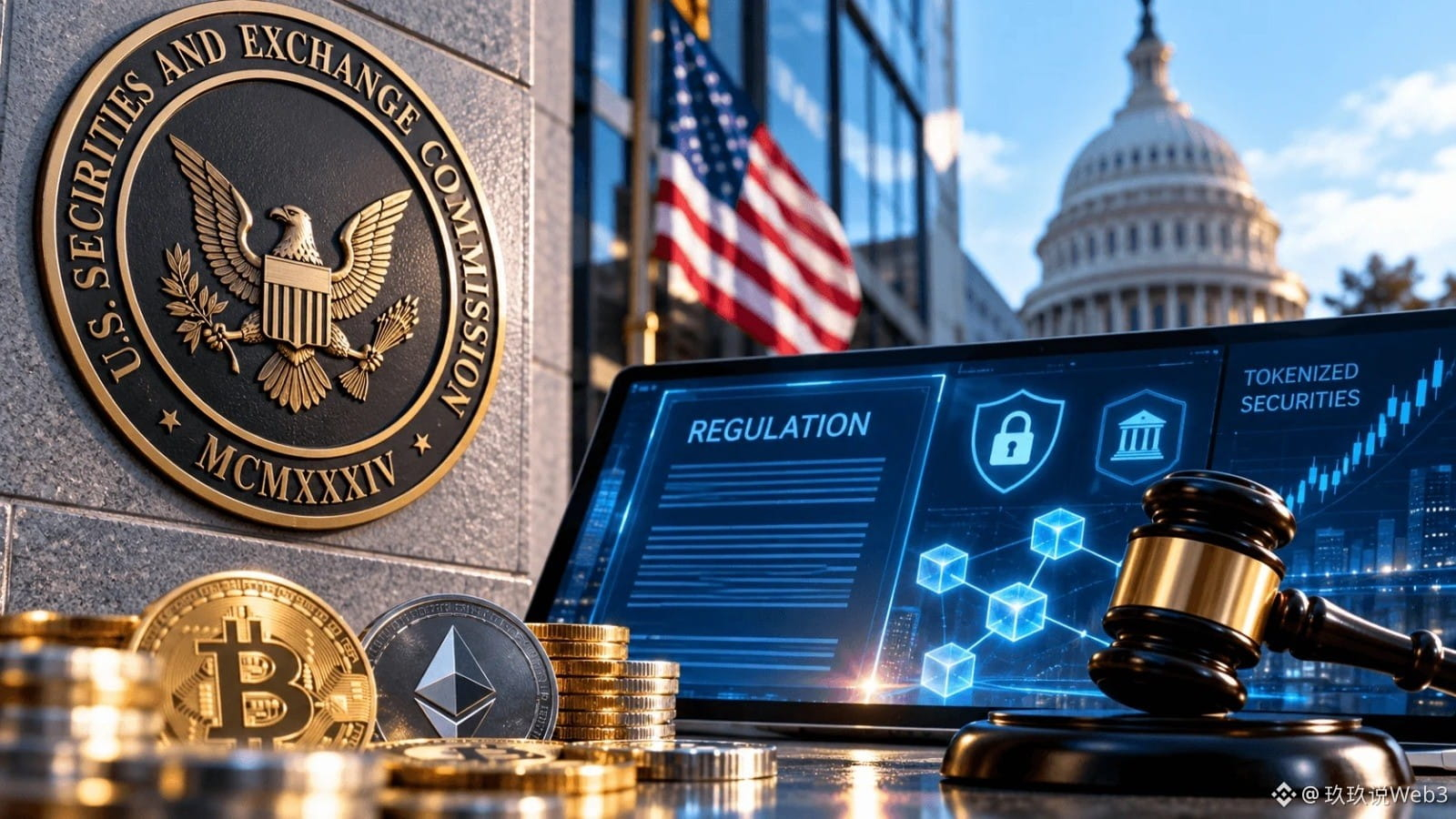
🚨 The U.S. SEC is shifting its focus on crypto regulation! From custody rules to tokenized securities and token issuance, the convergence of Wall Street and blockchain is accelerating.
Group: [点击加入短线策略群](https://app.binance.com/uni-qr/SC8V8G2r)
📌 Three areas are worth watching this time:
1️⃣ Crypto asset custody rules
The SEC has proposed rules that would further clarify custody, recordkeeping, and reporting requirements for registered investment advisers and regulated funds holding client crypto assets. The deadline for public comments is December 7, 2026.
This means institutions entering the crypto market will need to consider not only whether they can buy these assets, but also how to safeguard and account for them, and how to protect clients if risks arise.
2️⃣ Tokenized securities are becoming a regulatory priority
The SEC has added tokenized securities to its examination priorities for fiscal year 2027. As traditional securities such as stocks move onto the blockchain, how they are traded and held in custody, and how they comply with securities laws, will become central regulatory concerns.
Tokenization does not mean traditional securities rules automatically cease to apply. On the contrary, as more traditional financial assets move onto the blockchain, compliance requirements may become more specific.
3️⃣ Rules for crypto asset issuance may become clearer
The SEC is also exploring a clearer regulatory framework for crypto assets, including exemptions for certain offerings and conditional safe-harbor arrangements. If the relevant proposals are ultimately adopted, some projects may have a clearer path to raising funds in the U.S.
⚠️ However, proposals, regulatory guidance, and rules that have formally taken effect are not the same thing. The final documents will determine the specific scope of application.
💡 In my view, the most notable aspect of this shift is not that the SEC is suddenly easing its oversight, but that regulation is becoming more detailed. In the future, competition in the crypto industry may depend not only on technology and user engagement, but also on custody capabilities, compliance frameworks, and the ability to truly integrate with the traditional financial system.
For BTC, changes in the environment for institutional participation are worth watching over the long term. For tokenized assets and related projects, the clarity of regulatory boundaries will directly affect their room to grow. But these changes do not mean prices are bound to rise.
Tap my profile picture to follow me for daily market analysis and short-term strategies 🚀
#BTC #SEC
🚨 The U.S. SEC is shifting its focus on crypto regulation! From custody rules to tokenized securities and token issuance, the convergence of Wall Street and blockchain is accelerating.
Group: 点击加入短线策略群
📌 Three areas are worth watching this time:
1️⃣ Crypto asset custody rules
The SEC has proposed rules that would further clarify custody, recordkeeping, and reporting requirements for registered investment advisers and regulated funds holding client crypto assets. The deadline for public comments is December 7, 2026.
This means institutions entering the crypto market will need to consider not only whether they can buy these assets, but also how to safeguard and account for them, and how to protect clients if risks arise.
2️⃣ Tokenized securities are becoming a regulatory priority
The SEC has added tokenized securities to its examination priorities for fiscal year 2027. As traditional securities such as stocks move onto the blockchain, how they are traded and held in custody, and how they comply with securities laws, will become central regulatory concerns.
Tokenization does not mean traditional securities rules automatically cease to apply. On the contrary, as more traditional financial assets move onto the blockchain, compliance requirements may become more specific.
3️⃣ Rules for crypto asset issuance may become clearer
The SEC is also exploring a clearer regulatory framework for crypto assets, including exemptions for certain offerings and conditional safe-harbor arrangements. If the relevant proposals are ultimately adopted, some projects may have a clearer path to raising funds in the U.S.
⚠️ However, proposals, regulatory guidance, and rules that have formally taken effect are not the same thing. The final documents will determine the specific scope of application.
💡 In my view, the most notable aspect of this shift is not that the SEC is suddenly easing its oversight, but that regulation is becoming more detailed. In the future, competition in the crypto industry may depend not only on technology and user engagement, but also on custody capabilities, compliance frameworks, and the ability to truly integrate with the traditional financial system.
For BTC, changes in the environment for institutional participation are worth watching over the long term. For tokenized assets and related projects, the clarity of regulatory boundaries will directly affect their room to grow. But these changes do not mean prices are bound to rise.
Tap my profile picture to follow me for daily market analysis and short-term strategies 🚀
#BTC #SEC
217

✅URGENT: 🇺🇸 Treasury Secretary Scott Bessent says the U.S. Treasury could work with the SEC and CFTC to advance crypto regulations despite the failure of the CLARITY Act.
This would be HUGE for crypto!
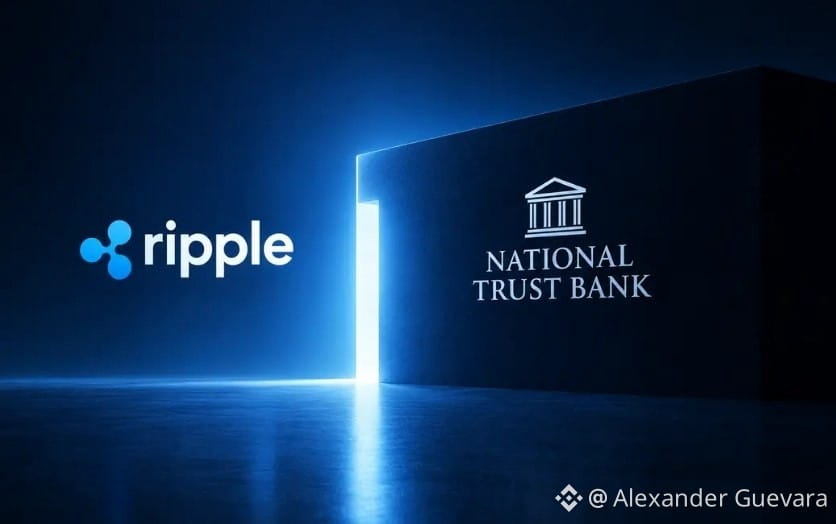
The OCC has granted final approval for Ripple National Trust Bank, a federally supervised charter that will manage RLUSD’s segregated reserves and offer fiduciary custody of digital assets. With this trust charter, Ripple now has a federally regulated entity in the U.S., significantly strengthening transparency and institutional confidence in its stablecoin, RLUSD.
As a national trust bank, it does not operate like a traditional commercial bank: it does not accept deposits from the general public or issue loans, and its operations are therefore not covered by the FDIC’s deposit insurance fund. This move strengthens Ripple’s payments and treasury infrastructure, bringing traditional finance and the digital asset space closer together.
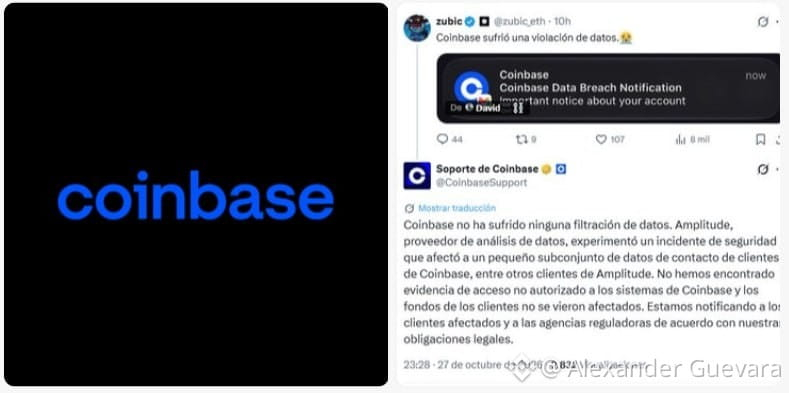
🚨Data belonging to some Coinbase users has been leaked. A third-party vendor experienced a security incident that exposed the contact information of a fraction of the exchange’s customers.
#SEC #Ripple #CFTC #coinbase #estafas $COIN $XRP $RLUSD

46

·
--
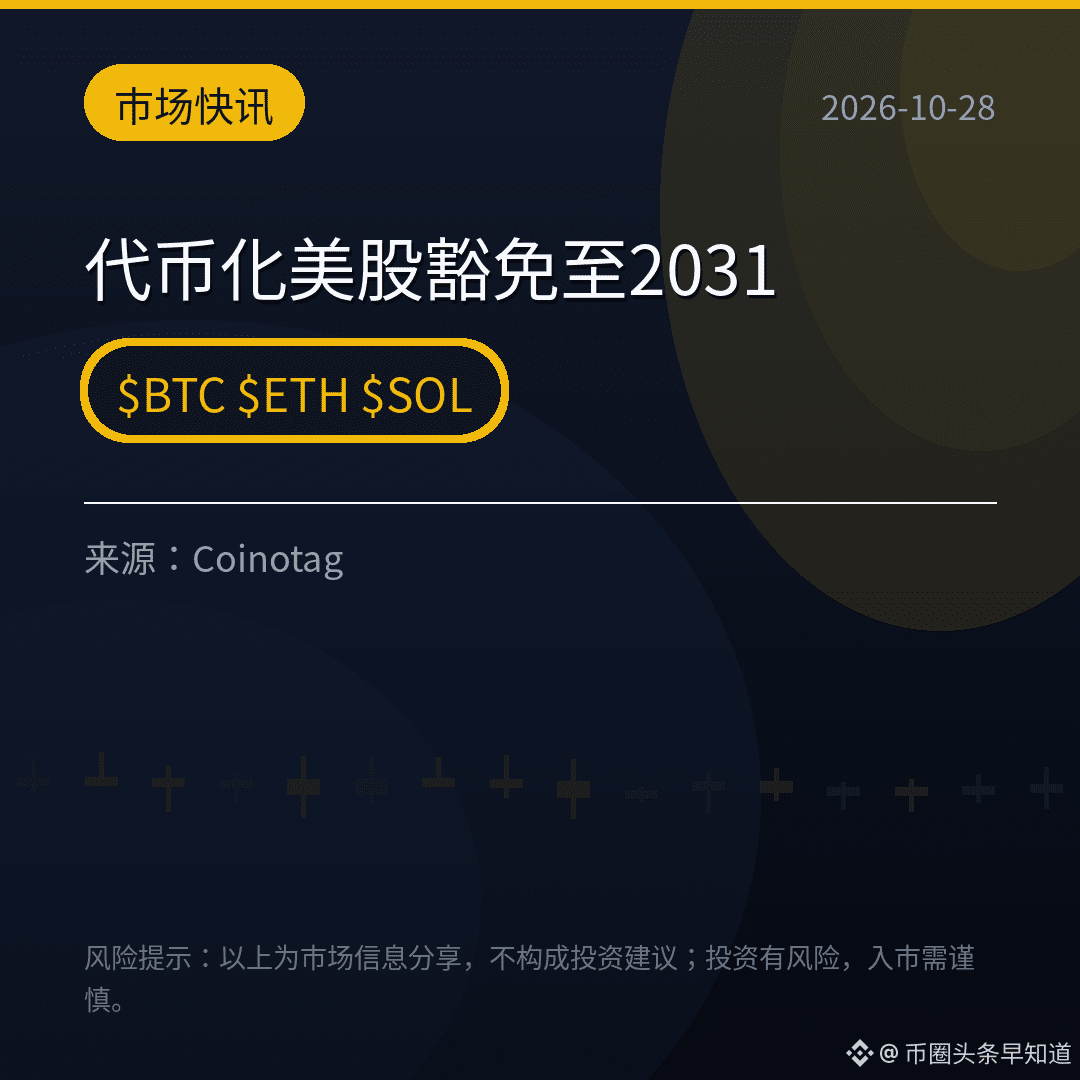
【Market Update】The SEC has extended the temporary exemption for tokenized U.S. stocks through September 17, 2031: compliant venues may trade tokenized U.S. stocks that carry genuine shareholder rights, while synthetic products that merely track the price are excluded. What’s been approved is “real stocks on-chain,” not “shadow stocks riding on their prices.” Robinhood-style stock tokens with debt-based structures and no shareholder rights are right up against this line. With conditions and a time limit—not a blanket green light—will tokenized products first add shareholder rights before scaling up?
$BTC $ETH $SOL
#SEC #代币化 #U.S. stocks
(Source: Coinotag)
⚠️Risk warning: The above is shared for market information only and does not constitute investment advice. Investing involves risks; please exercise caution.
$BTC $ETH $SOL
#SEC #代币化 #U.S. stocks
(Source: Coinotag)
⚠️Risk warning: The above is shared for market information only and does not constitute investment advice. Investing involves risks; please exercise caution.
180
·
--
The U.S. Securities and Exchange Commission (SEC) has launched a public page and accompanying FAQ for the “Innovation Exemption.” The page lists entities that have submitted a written notice of intent and propose to operate a Tokenized Securities Venue (TSV) under the exemption. As of the page’s disclosure, the list includes TSV LLC (9/23), OKXICE TSV (10/4), and Kephas Corporation (Perpetuals.com, 10/14). Being listed does not mean an entity has met the exemption’s conditions or been authorized to begin operations.
The exemption order was issued on 2026-09-17 (Exchange Act Release No. 106402). It grants qualifying TSVs a conditional, temporary exemption from the definition of an “exchange” for up to about five years, covering the period through approximately 2031-09-17. Before beginning operations, a TSV must publish a complete, production-ready TSV Notice on its website at least 30 calendar days in advance and notify the SEC in writing within one business day. The staff FAQ further clarifies that the notice should be issued only after operational and access criteria are production-ready, and may be marked as pending while the issuer’s 30-day objection period runs concurrently.
$BTC #SEC #RWA #Tokenization
57
Log in to explore more content
Join global crypto users on Binance Square
⚡️ Get latest and useful information about crypto.
💬 Trusted by the world’s largest crypto exchange.
👍 Discover real insights from verified creators.
Email / Phone number
Trending Topics
1
#BinanceWithdrawalScamWarning
34,334 views
607 Discussing
2
#USMidtermElections
595,100 views
3,180 Discussing
3
#USOctoberNFP-AreRateCutsStillPossible
41,911 views
501 Discussing
4
#AppleEarningsAhead-CanStockHitNewHigh
16,317 views
363 Discussing
5
#Verify1to1BinanceReserves
35,509 views
394 Discussing
6
#BinanceRestores28FiatWithdrawals
146,351 views
1,024 Discussing
7
#StrategyRepurchases$208MSTRCAdds811Bitcoin
6,935 views
17 Discussing
8
#FATFLaunchesReviewOfCryptoHubsMoneyLaunderingControls
639 views
14 Discussing
9
#BinanceProcesses$4.65BWithdrawals
113,989 views
367 Discussing
10
#HKMALaunchesSAGEAgenticFinanceProject
3,911 views
179 Discussing