

#educationalcontent
educationalcontent
3.2M views
1,463 Discussing
Hot
Latest


·
--
Verified
The classroom of the future may have 30 students but 30 different learning paths.
AI tutors could identify where each student struggles and adapt lessons in real time. One student may understand a concept in ten minutes while another may need an hour. Both could learn at their own pace.
Teachers will not disappear. Their role may become even more important as mentors, learning designers and human guides focused on creativity, judgment and teamwork.
Classrooms may also change. Less memorization. More projects. More virtual labs. More global collaboration.
The biggest challenge will be using #AI without allowing students to outsource their thinking.
#crypto may also play a role in this future.
$EDU : Open Campus is building a Web3 education ecosystem designed to give teachers, learners and institutions more ownership over education. Its EDU Chain is a Layer 3 blockchain focused specifically on educational applications.
{spot}(EDUUSDT)
The ecosystem is exploring verifiable digital credentials so diplomas, certificates and badges can be stored onchain and checked anywhere. It also includes EduFi, which can support scholarships, student financing and rewards through smart contracts.
Another important part is educational content ownership. Teachers and creators can tokenize learning materials through Publisher NFTs and potentially earn a share of the revenue generated by their content. EDU is used for payments, rewards and governance across the ecosystem.
That is why I find EDU interesting in this discussion.
The future of education may not only be about smarter classrooms.
It may also be about giving students portable credentials and giving teachers real ownership of the knowledge they create.
The real revolution may not be replacing teachers with machines. It may be giving every teacher the ability to teach every student differently.
{web3_wallet_create}(10x42778037d69350508cdd34d9fa17053970591101)
#EducationalContent
The classroom of the future may have 30 students but 30 different learning paths.
AI tutors could identify where each student struggles and adapt lessons in real time. One student may understand a concept in ten minutes while another may need an hour. Both could learn at their own pace.
Teachers will not disappear. Their role may become even more important as mentors, learning designers and human guides focused on creativity, judgment and teamwork.
Classrooms may also change. Less memorization. More projects. More virtual labs. More global collaboration.
The biggest challenge will be using #AI without allowing students to outsource their thinking.
#crypto may also play a role in this future.
$EDU : Open Campus is building a Web3 education ecosystem designed to give teachers, learners and institutions more ownership over education. Its EDU Chain is a Layer 3 blockchain focused specifically on educational applications.
The ecosystem is exploring verifiable digital credentials so diplomas, certificates and badges can be stored onchain and checked anywhere. It also includes EduFi, which can support scholarships, student financing and rewards through smart contracts.
Another important part is educational content ownership. Teachers and creators can tokenize learning materials through Publisher NFTs and potentially earn a share of the revenue generated by their content. EDU is used for payments, rewards and governance across the ecosystem.
That is why I find EDU interesting in this discussion.
The future of education may not only be about smarter classrooms.
It may also be about giving students portable credentials and giving teachers real ownership of the knowledge they create.
The real revolution may not be replacing teachers with machines. It may be giving every teacher the ability to teach every student differently.
#EducationalContent
AI tutors could identify where each student struggles and adapt lessons in real time. One student may understand a concept in ten minutes while another may need an hour. Both could learn at their own pace.
Teachers will not disappear. Their role may become even more important as mentors, learning designers and human guides focused on creativity, judgment and teamwork.
Classrooms may also change. Less memorization. More projects. More virtual labs. More global collaboration.
The biggest challenge will be using #AI without allowing students to outsource their thinking.
#crypto may also play a role in this future.
$EDU : Open Campus is building a Web3 education ecosystem designed to give teachers, learners and institutions more ownership over education. Its EDU Chain is a Layer 3 blockchain focused specifically on educational applications.
The ecosystem is exploring verifiable digital credentials so diplomas, certificates and badges can be stored onchain and checked anywhere. It also includes EduFi, which can support scholarships, student financing and rewards through smart contracts.
Another important part is educational content ownership. Teachers and creators can tokenize learning materials through Publisher NFTs and potentially earn a share of the revenue generated by their content. EDU is used for payments, rewards and governance across the ecosystem.
That is why I find EDU interesting in this discussion.
The future of education may not only be about smarter classrooms.
It may also be about giving students portable credentials and giving teachers real ownership of the knowledge they create.
The real revolution may not be replacing teachers with machines. It may be giving every teacher the ability to teach every student differently.
#EducationalContent

CRYPTO PRO 02:
The concept of 30 students having 30 completely unique learning paths is revolutionary. Personalized education like this will unlock so much hidden potential in kids! 🌍#StarLineTeam
30
12
34
1k

·
--
Bullish
#EducationalContent #InvestSmart
Education (highly shared)
🚨 5 mistakes that make crypto beginners lose money:
Buying because “it’s already going up”
Putting all your capital into a single crypto
Trading without a stop-loss
Following rumors instead of checking sources
Not managing your risk (max 1 to 2% of capital per trade)
Save this post so you remember it 📌
Which of these mistakes have you already made? 👇
$BTC $ETH
$BNB
#EducationalContent #InvestSmart
Education (highly shared)
🚨 5 mistakes that make crypto beginners lose money:
Buying because “it’s already going up”
Putting all your capital into a single crypto
Trading without a stop-loss
Following rumors instead of checking sources
Not managing your risk (max 1 to 2% of capital per trade)
Save this post so you remember it 📌
Which of these mistakes have you already made? 👇
$BTC $ETH
$BNB
Education (highly shared)
🚨 5 mistakes that make crypto beginners lose money:
Buying because “it’s already going up”
Putting all your capital into a single crypto
Trading without a stop-loss
Following rumors instead of checking sources
Not managing your risk (max 1 to 2% of capital per trade)
Save this post so you remember it 📌
Which of these mistakes have you already made? 👇
$BTC $ETH
$BNB

Meilleurs vœux !
From arslane_silver
Fully Claimed
23

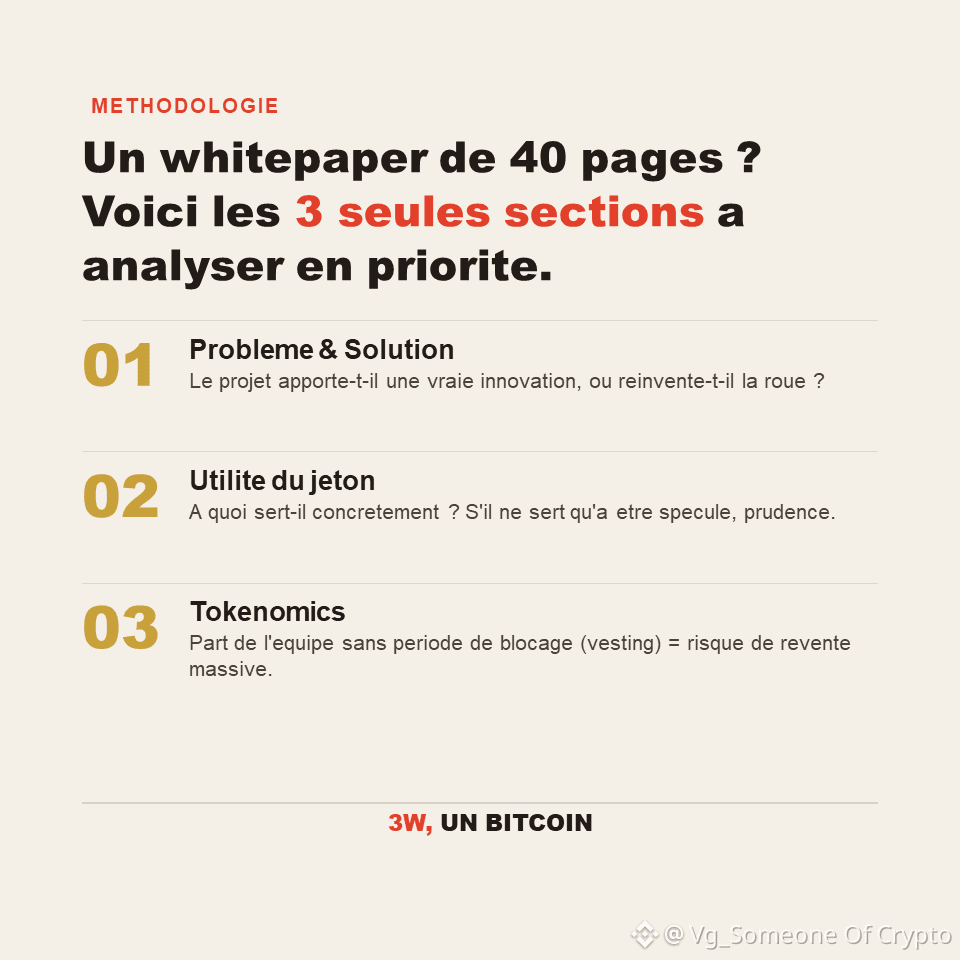
Reading a 40-page whitepaper makes you afraid? Here are the only 3 sections to analyze first.
A whitepaper is the identity card of a blockchain project. Unfortunately, most are packed with complex technical terms designed to impress… or even to hide a lack of substance.
To save you time, here is the simplified analysis framework I outline in 3W, A BITCOIN:
The Problem and the Solution: Does the project bring genuine innovation, or does it just reinvent the wheel?
The Token Utility: What is the token used for concretely in the ecosystem? If it’s only meant to be speculated on, be cautious.
The Distribution (Tokenomics): What proportion of tokens is reserved for the team and early investors? If they have 50% of the tokens with no lock-up period (vesting), the risk of massive reselling is enormous.
Spending 15 minutes checking these points will help you avoid investing in empty shell projects.
Do you read whitepapers before getting interested in a project?
#Web3 #defi #Whitepaper #EducationalContent
Reading a 40-page whitepaper makes you afraid? Here are the only 3 sections to analyze first.
A whitepaper is the identity card of a blockchain project. Unfortunately, most are packed with complex technical terms designed to impress… or even to hide a lack of substance.
To save you time, here is the simplified analysis framework I outline in 3W, A BITCOIN:
The Problem and the Solution: Does the project bring genuine innovation, or does it just reinvent the wheel?
The Token Utility: What is the token used for concretely in the ecosystem? If it’s only meant to be speculated on, be cautious.
The Distribution (Tokenomics): What proportion of tokens is reserved for the team and early investors? If they have 50% of the tokens with no lock-up period (vesting), the risk of massive reselling is enormous.
Spending 15 minutes checking these points will help you avoid investing in empty shell projects.
Do you read whitepapers before getting interested in a project?
#Web3 #defi #Whitepaper #EducationalContent
A whitepaper is the identity card of a blockchain project. Unfortunately, most are packed with complex technical terms designed to impress… or even to hide a lack of substance.
To save you time, here is the simplified analysis framework I outline in 3W, A BITCOIN:
The Problem and the Solution: Does the project bring genuine innovation, or does it just reinvent the wheel?
The Token Utility: What is the token used for concretely in the ecosystem? If it’s only meant to be speculated on, be cautious.
The Distribution (Tokenomics): What proportion of tokens is reserved for the team and early investors? If they have 50% of the tokens with no lock-up period (vesting), the risk of massive reselling is enormous.
Spending 15 minutes checking these points will help you avoid investing in empty shell projects.
Do you read whitepapers before getting interested in a project?
#Web3 #defi #Whitepaper #EducationalContent
1
1.3k
For too long, crypto has been seen only through the lens of speculation or preference. It’s time to change the paradigm and take control of our digital future.
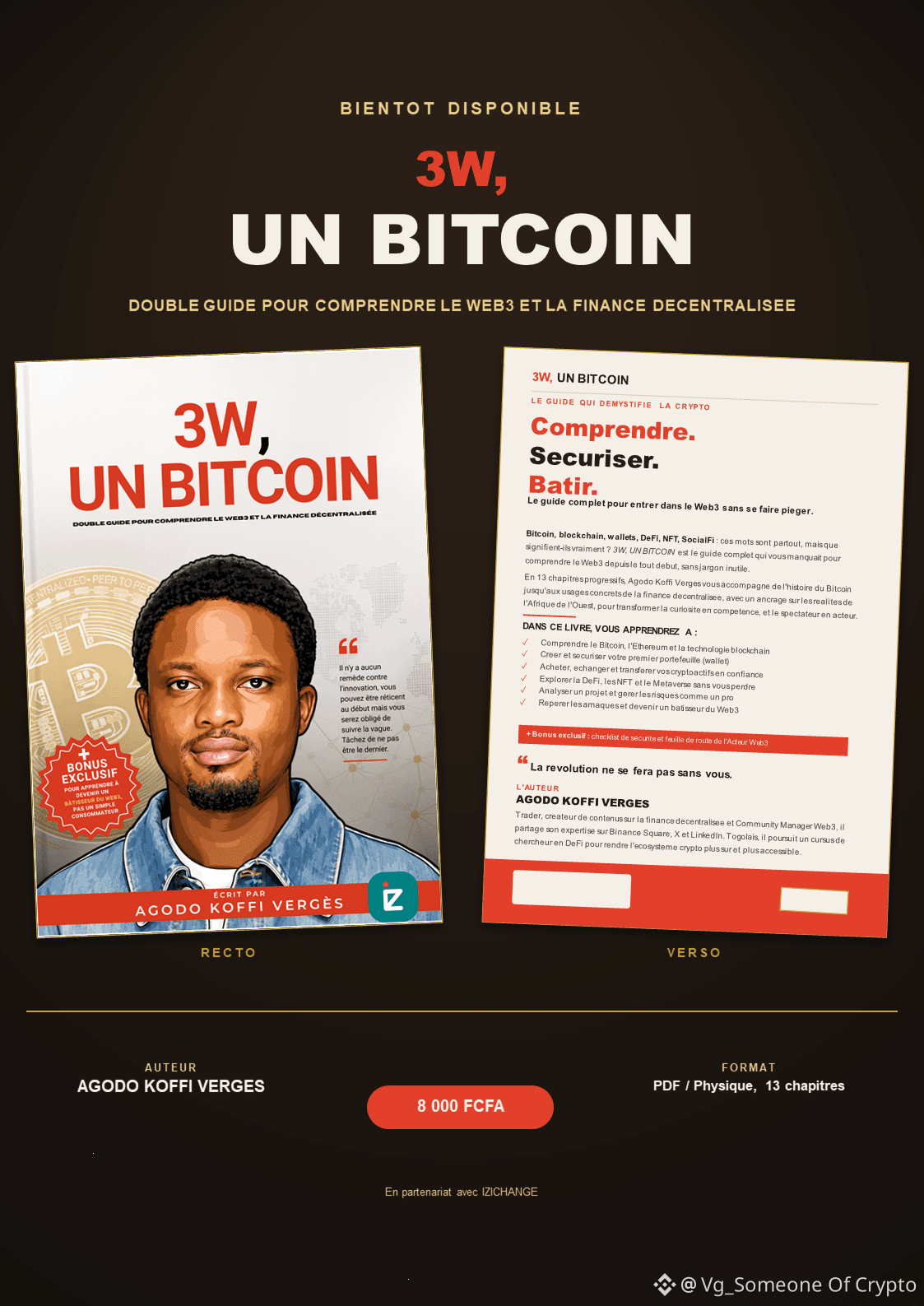
I am pleased to announce the upcoming release of my book: « 3W, UN BITCOIN » 📖.
🎯 What is it about?
This book is an educational compass designed to guide you step by step through the Blockchain revolution and Decentralized Finance (DeFi). From the ultra-secure management of your wallets ( « Not your keys, not your coins » ) to the fundamental analysis of projects, including practical uses like Mobile Money and SocialFi, this guide simplifies complexity to give you a real method.
👤 Who is this book for?
For beginners & curious minds who want to take their first steps without risk and avoid insider traps.
For enthusiasts & creators who want to move from being just a consumer to becoming an actor and builder of Web3.
Ready to go from curiosity to mastery? 💡
#defi
#Web3
#EducationalContent
#blockchain
For too long, crypto has been seen only through the lens of speculation or preference. It’s time to change the paradigm and take control of our digital future.
I am pleased to announce the upcoming release of my book: « 3W, UN BITCOIN » 📖.
🎯 What is it about?
This book is an educational compass designed to guide you step by step through the Blockchain revolution and Decentralized Finance (DeFi). From the ultra-secure management of your wallets ( « Not your keys, not your coins » ) to the fundamental analysis of projects, including practical uses like Mobile Money and SocialFi, this guide simplifies complexity to give you a real method.
👤 Who is this book for?
For beginners & curious minds who want to take their first steps without risk and avoid insider traps.
For enthusiasts & creators who want to move from being just a consumer to becoming an actor and builder of Web3.
Ready to go from curiosity to mastery? 💡
#defi
#Web3
#EducationalContent
#blockchain
I am pleased to announce the upcoming release of my book: « 3W, UN BITCOIN » 📖.
🎯 What is it about?
This book is an educational compass designed to guide you step by step through the Blockchain revolution and Decentralized Finance (DeFi). From the ultra-secure management of your wallets ( « Not your keys, not your coins » ) to the fundamental analysis of projects, including practical uses like Mobile Money and SocialFi, this guide simplifies complexity to give you a real method.
👤 Who is this book for?
For beginners & curious minds who want to take their first steps without risk and avoid insider traps.
For enthusiasts & creators who want to move from being just a consumer to becoming an actor and builder of Web3.
Ready to go from curiosity to mastery? 💡
#defi
#Web3
#EducationalContent
#blockchain
2
1
1
1.2k

·
--
Education
What is liquidity?
Simply put, liquidity describes how easily an asset can be bought or sold without significantly moving its price.
High liquidity generally makes entering and exiting positions easier.
Low liquidity can make price movements more extreme.
That's why trading volume and liquidity deserve attention.
#EducationalContent
Education
What is liquidity?
Simply put, liquidity describes how easily an asset can be bought or sold without significantly moving its price.
High liquidity generally makes entering and exiting positions easier.
Low liquidity can make price movements more extreme.
That's why trading volume and liquidity deserve attention.
#EducationalContent
What is liquidity?
Simply put, liquidity describes how easily an asset can be bought or sold without significantly moving its price.
High liquidity generally makes entering and exiting positions easier.
Low liquidity can make price movements more extreme.
That's why trading volume and liquidity deserve attention.
#EducationalContent
1
62

Article
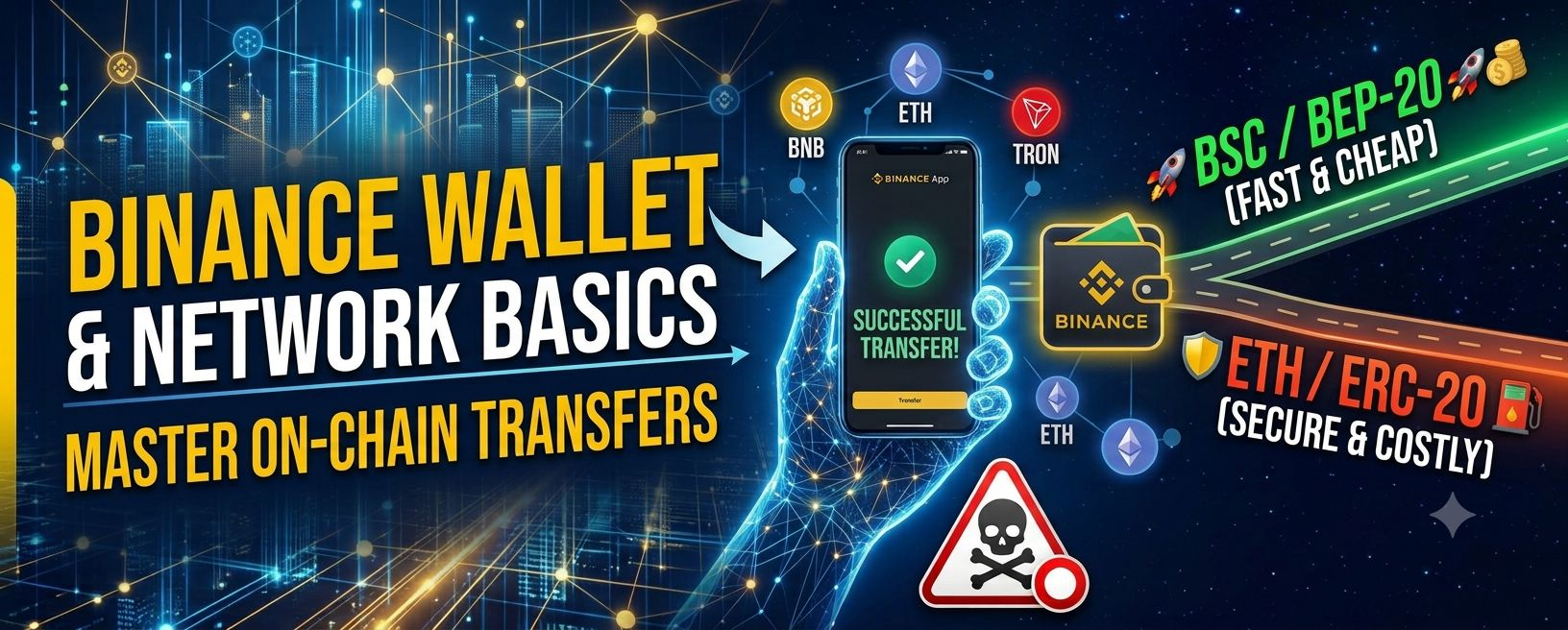
Understanding Binance Wallet & Network Basics: Master On-Chain Transfers and Avoid Wrong Network 👇Sending crypto without double-checking the deposit network is like shipping a parcel with the correct home address but the wrong city—it gets lost in transit. Every single day, traders lose access to funds or face delayed deposits simply because they selected the wrong blockchain network during a withdrawal. In crypto, speed and low fees mean nothing if your assets are routed down the wrong rail.
1. Binance Exchange Wallet vs. Binance Web3 Wallet
Before selecting a network, it is essential to distinguish between the two core wallet systems within the Binance ecosystem:
Binance Exchange Wallet (Custodial): A centralized wallet managed directly by Binance. Binance holds the private keys and safeguards funds. Transfers between Binance users via Pay ID, phone, or email bypass blockchain network fees entirely.
Binance Web3 Wallet (Non-Custodial): A decentralized self-custody wallet integrated into the Binance App where you retain total ownership of your assets. Powered by Multi-Party Computation (MPC) technology, key shares are split to maintain maximum security without requiring traditional seed phrases.
2. Core Blockchain Networks on Binance Explained
When withdrawing or depositing crypto on Binance, selecting the correct network determines transfer speed, transaction costs, and asset safety.
BNB Smart Chain (BEP-20): Primary use case includes DeFi, BSC Altcoins, and Web3 apps. Features ultra-fast speeds and low gas fees, making it the most popular network for everyday transfers.
Ethereum (ERC-20): Primary use case includes Layer-1 security and major tokens. Offers the highest security and liquidity, though gas fees fluctuate depending on network traffic.
Solana (SOL Native): Primary use case includes high-frequency trading and Web3 tokens. Delivers sub-second transaction speed with near-zero network fees.
TRON (TRC-20): Primary use case is stablecoin transfers. Acts as the industry standard for reliable, low-cost USDT and USDC transfers.
Bitcoin (BTC Native / BRC-20): Primary use case is Bitcoin network transfers. Operates on the original Layer-1 Bitcoin chain, requiring higher confirmation time.
3. The Golden Rules of On-Chain Transfers
Strict Network Matching: The deposit network chosen on the receiving platform must match the withdrawal network selected on the sending platform. Example: Sending USDT via TRC-20 requires selecting a TRC-20 deposit address on the receiving exchange.
MEMO / Tag Verification: Certain networks (such as XRP, EOS, or BNB Beacon Chain) require a MEMO or Destination Tag alongside the wallet address. Omitting the MEMO will cause funds to land in the exchange's hot wallet without crediting your personal account.
Test Small Amounts First: When moving large sums or testing an unfamiliar network, always perform a small test transaction first to verify contract routing and network health.
4. What Happens If Funds Are Sent on the Wrong Network?
If tokens are accidentally sent over an unsupported or mismatched network, recovery depends on whether private keys or exchange systems are involved:
Exchange Deposits: Requires submitting an official Binance Self-Service Recovery Application (Asset Recovery Tool) to retrieve cross-chain deposits.
Self-Custody Wallets: If assets were sent to a Web3 wallet address on an unlisted EVM network, adding the custom network RPC parameters into the wallet typically restores full visibility.
Understanding network standards ensures seamless liquidity routing, zero lost transfers, and complete confidence when executing on-chain transactions.
$TRON.US $BTC $BNB
#EducationalContent #Write2Earn #Web3
Understanding Binance Wallet & Network Basics: Master On-Chain Transfers and Avoid Wrong Network 👇
Sending crypto without double-checking the deposit network is like shipping a parcel with the correct home address but the wrong city—it gets lost in transit. Every single day, traders lose access to funds or face delayed deposits simply because they selected the wrong blockchain network during a withdrawal. In crypto, speed and low fees mean nothing if your assets are routed down the wrong rail.
1. Binance Exchange Wallet vs. Binance Web3 Wallet
Before selecting a network, it is essential to distinguish between the two core wallet systems within the Binance ecosystem:
Binance Exchange Wallet (Custodial): A centralized wallet managed directly by Binance. Binance holds the private keys and safeguards funds. Transfers between Binance users via Pay ID, phone, or email bypass blockchain network fees entirely.
Binance Web3 Wallet (Non-Custodial): A decentralized self-custody wallet integrated into the Binance App where you retain total ownership of your assets. Powered by Multi-Party Computation (MPC) technology, key shares are split to maintain maximum security without requiring traditional seed phrases.
2. Core Blockchain Networks on Binance Explained
When withdrawing or depositing crypto on Binance, selecting the correct network determines transfer speed, transaction costs, and asset safety.
BNB Smart Chain (BEP-20): Primary use case includes DeFi, BSC Altcoins, and Web3 apps. Features ultra-fast speeds and low gas fees, making it the most popular network for everyday transfers.
Ethereum (ERC-20): Primary use case includes Layer-1 security and major tokens. Offers the highest security and liquidity, though gas fees fluctuate depending on network traffic.
Solana (SOL Native): Primary use case includes high-frequency trading and Web3 tokens. Delivers sub-second transaction speed with near-zero network fees.
TRON (TRC-20): Primary use case is stablecoin transfers. Acts as the industry standard for reliable, low-cost USDT and USDC transfers.
Bitcoin (BTC Native / BRC-20): Primary use case is Bitcoin network transfers. Operates on the original Layer-1 Bitcoin chain, requiring higher confirmation time.
3. The Golden Rules of On-Chain Transfers
Strict Network Matching: The deposit network chosen on the receiving platform must match the withdrawal network selected on the sending platform. Example: Sending USDT via TRC-20 requires selecting a TRC-20 deposit address on the receiving exchange.
MEMO / Tag Verification: Certain networks (such as XRP, EOS, or BNB Beacon Chain) require a MEMO or Destination Tag alongside the wallet address. Omitting the MEMO will cause funds to land in the exchange's hot wallet without crediting your personal account.
Test Small Amounts First: When moving large sums or testing an unfamiliar network, always perform a small test transaction first to verify contract routing and network health.
4. What Happens If Funds Are Sent on the Wrong Network?
If tokens are accidentally sent over an unsupported or mismatched network, recovery depends on whether private keys or exchange systems are involved:
Exchange Deposits: Requires submitting an official Binance Self-Service Recovery Application (Asset Recovery Tool) to retrieve cross-chain deposits.
Self-Custody Wallets: If assets were sent to a Web3 wallet address on an unlisted EVM network, adding the custom network RPC parameters into the wallet typically restores full visibility.
Understanding network standards ensures seamless liquidity routing, zero lost transfers, and complete confidence when executing on-chain transactions.
$TRON.US $BTC $BNB
#EducationalContent #Write2Earn #Web3
1. Binance Exchange Wallet vs. Binance Web3 Wallet
Before selecting a network, it is essential to distinguish between the two core wallet systems within the Binance ecosystem:
Binance Exchange Wallet (Custodial): A centralized wallet managed directly by Binance. Binance holds the private keys and safeguards funds. Transfers between Binance users via Pay ID, phone, or email bypass blockchain network fees entirely.
Binance Web3 Wallet (Non-Custodial): A decentralized self-custody wallet integrated into the Binance App where you retain total ownership of your assets. Powered by Multi-Party Computation (MPC) technology, key shares are split to maintain maximum security without requiring traditional seed phrases.
2. Core Blockchain Networks on Binance Explained
When withdrawing or depositing crypto on Binance, selecting the correct network determines transfer speed, transaction costs, and asset safety.
BNB Smart Chain (BEP-20): Primary use case includes DeFi, BSC Altcoins, and Web3 apps. Features ultra-fast speeds and low gas fees, making it the most popular network for everyday transfers.
Ethereum (ERC-20): Primary use case includes Layer-1 security and major tokens. Offers the highest security and liquidity, though gas fees fluctuate depending on network traffic.
Solana (SOL Native): Primary use case includes high-frequency trading and Web3 tokens. Delivers sub-second transaction speed with near-zero network fees.
TRON (TRC-20): Primary use case is stablecoin transfers. Acts as the industry standard for reliable, low-cost USDT and USDC transfers.
Bitcoin (BTC Native / BRC-20): Primary use case is Bitcoin network transfers. Operates on the original Layer-1 Bitcoin chain, requiring higher confirmation time.
3. The Golden Rules of On-Chain Transfers
Strict Network Matching: The deposit network chosen on the receiving platform must match the withdrawal network selected on the sending platform. Example: Sending USDT via TRC-20 requires selecting a TRC-20 deposit address on the receiving exchange.
MEMO / Tag Verification: Certain networks (such as XRP, EOS, or BNB Beacon Chain) require a MEMO or Destination Tag alongside the wallet address. Omitting the MEMO will cause funds to land in the exchange's hot wallet without crediting your personal account.
Test Small Amounts First: When moving large sums or testing an unfamiliar network, always perform a small test transaction first to verify contract routing and network health.
4. What Happens If Funds Are Sent on the Wrong Network?
If tokens are accidentally sent over an unsupported or mismatched network, recovery depends on whether private keys or exchange systems are involved:
Exchange Deposits: Requires submitting an official Binance Self-Service Recovery Application (Asset Recovery Tool) to retrieve cross-chain deposits.
Self-Custody Wallets: If assets were sent to a Web3 wallet address on an unlisted EVM network, adding the custom network RPC parameters into the wallet typically restores full visibility.
Understanding network standards ensures seamless liquidity routing, zero lost transfers, and complete confidence when executing on-chain transactions.
$TRON.US $BTC $BNB
#EducationalContent #Write2Earn #Web3
168
·
--
Bullish
@ANFELIA_INVESTMENT
HFT Trader · 5.8 years · 31.8K followers
Do you have $1,000 USD and want to get into crypto?
Read this before moving a single dollar.
Most people make the same mistake: they enter without a protocol, lose capital in the first weeks, and blame the market. The market isn’t the problem. The lack of a system is.
"Your Stop Loss isn’t fear. It’s professional discipline."
Recommended allocation — $1,000 USD
Active trading (trading capital)
$400 40%
Lending USDC (passive income)
$300 30%
Staking SOL (passive yield)
$200 20%
Liquid reserve (emergencies)
$100 10%
Risk protocol — no exceptions
1
Maximum 1–2% per trade. With $1,000, that’s $10–$20. No more.
2
Daily Stop Loss: 3%. If you lose $30 in a day, you close the platform.
3
Minimum R:R ratio of 1:2. For every $10 you risk, you aim for $20 in profit.
4
Maximum leverage: 5x. An efficiency tool, not a speculation tool.
5
Structure-based Stop Loss. Never based on convenience or emotion.
~6.8%
Estimated blended passive APY
$30
Daily loss limit
1:2
Minimum R:R per trade
$100
Total maximum drawdown
Before trading real capital:
Practice in demo mode until the risk protocol becomes an automatic habit—not a conscious decision. The market doesn’t forgive improvisation.
Want the complete step-by-step protocol?
Comment PROTOCOL and we’ll send it to you.
#trading #Binance #Bitcoin #AnfeliaInvestment #EducationalContent
Educational purposes only. This does not constitute investment advice. All invested capital carries the risk of loss. Your decisions are your responsibility. — ANFELIA_INVESTMENT
Follow on Binance Square 🤝
Share post 👍
$BTC
{future}(BTCUSDT)
@ANFELIA_INVESTMENT
HFT Trader · 5.8 years · 31.8K followers
Do you have $1,000 USD and want to get into crypto?
Read this before moving a single dollar.
Most people make the same mistake: they enter without a protocol, lose capital in the first weeks, and blame the market. The market isn’t the problem. The lack of a system is.
"Your Stop Loss isn’t fear. It’s professional discipline."
Recommended allocation — $1,000 USD
Active trading (trading capital)
$400 40%
Lending USDC (passive income)
$300 30%
Staking SOL (passive yield)
$200 20%
Liquid reserve (emergencies)
$100 10%
Risk protocol — no exceptions
1
Maximum 1–2% per trade. With $1,000, that’s $10–$20. No more.
2
Daily Stop Loss: 3%. If you lose $30 in a day, you close the platform.
3
Minimum R:R ratio of 1:2. For every $10 you risk, you aim for $20 in profit.
4
Maximum leverage: 5x. An efficiency tool, not a speculation tool.
5
Structure-based Stop Loss. Never based on convenience or emotion.
~6.8%
Estimated blended passive APY
$30
Daily loss limit
1:2
Minimum R:R per trade
$100
Total maximum drawdown
Before trading real capital:
Practice in demo mode until the risk protocol becomes an automatic habit—not a conscious decision. The market doesn’t forgive improvisation.
Want the complete step-by-step protocol?
Comment PROTOCOL and we’ll send it to you.
#trading #Binance #Bitcoin #AnfeliaInvestment #EducationalContent
Educational purposes only. This does not constitute investment advice. All invested capital carries the risk of loss. Your decisions are your responsibility. — ANFELIA_INVESTMENT
Follow on Binance Square 🤝
Share post 👍
$BTC
HFT Trader · 5.8 years · 31.8K followers
Do you have $1,000 USD and want to get into crypto?
Read this before moving a single dollar.
Most people make the same mistake: they enter without a protocol, lose capital in the first weeks, and blame the market. The market isn’t the problem. The lack of a system is.
"Your Stop Loss isn’t fear. It’s professional discipline."
Recommended allocation — $1,000 USD
Active trading (trading capital)
$400 40%
Lending USDC (passive income)
$300 30%
Staking SOL (passive yield)
$200 20%
Liquid reserve (emergencies)
$100 10%
Risk protocol — no exceptions
1
Maximum 1–2% per trade. With $1,000, that’s $10–$20. No more.
2
Daily Stop Loss: 3%. If you lose $30 in a day, you close the platform.
3
Minimum R:R ratio of 1:2. For every $10 you risk, you aim for $20 in profit.
4
Maximum leverage: 5x. An efficiency tool, not a speculation tool.
5
Structure-based Stop Loss. Never based on convenience or emotion.
~6.8%
Estimated blended passive APY
$30
Daily loss limit
1:2
Minimum R:R per trade
$100
Total maximum drawdown
Before trading real capital:
Practice in demo mode until the risk protocol becomes an automatic habit—not a conscious decision. The market doesn’t forgive improvisation.
Want the complete step-by-step protocol?
Comment PROTOCOL and we’ll send it to you.
#trading #Binance #Bitcoin #AnfeliaInvestment #EducationalContent
Educational purposes only. This does not constitute investment advice. All invested capital carries the risk of loss. Your decisions are your responsibility. — ANFELIA_INVESTMENT
Follow on Binance Square 🤝
Share post 👍
$BTC
215

The 6 red flags to recognize before investing
In a market where scams sit alongside real projects, knowing how to read warning signs is a skill that protects your capital.
🚩 THE 6 MOST COMMON RED FLAGS:
1️⃣ No whitepaper or vague, undated document
→ A serious project always documents its technology and vision
2️⃣ Anonymous team with no verifiable track record
→ Total anonymity without an established reputation is a risk factor
3️⃣ Guaranteed returns promises
→ "100x guaranteed", "20% return per month" — no legitimate investment promises that
4️⃣ Concentration of tokens in a few wallets
→ Check via explorers: if 3 wallets control 80% of the supply, manipulation is easy
5️⃣ Pressure to invest quickly
→ "Limited offer", "48-hour window" — rushing is the enemy of reason
6️⃣ Website and social media created very recently
→ A domain registered 3 weeks ago with 50,000 followers bought: be wary
💡 Reminder: a project can match none of these red flags and still fail. And a solid project can disappoint in the short term. Analysis reduces risk — it doesn’t eliminate it.
📝 Exercise: take the most recent token you heard about on social media. Check it against these 6 points. Share your analysis in the comments.
#cryptouniverseofficial #EducationalContent
The 6 red flags to recognize before investing
In a market where scams sit alongside real projects, knowing how to read warning signs is a skill that protects your capital.
🚩 THE 6 MOST COMMON RED FLAGS:
1️⃣ No whitepaper or vague, undated document
→ A serious project always documents its technology and vision
2️⃣ Anonymous team with no verifiable track record
→ Total anonymity without an established reputation is a risk factor
3️⃣ Guaranteed returns promises
→ "100x guaranteed", "20% return per month" — no legitimate investment promises that
4️⃣ Concentration of tokens in a few wallets
→ Check via explorers: if 3 wallets control 80% of the supply, manipulation is easy
5️⃣ Pressure to invest quickly
→ "Limited offer", "48-hour window" — rushing is the enemy of reason
6️⃣ Website and social media created very recently
→ A domain registered 3 weeks ago with 50,000 followers bought: be wary
💡 Reminder: a project can match none of these red flags and still fail. And a solid project can disappoint in the short term. Analysis reduces risk — it doesn’t eliminate it.
📝 Exercise: take the most recent token you heard about on social media. Check it against these 6 points. Share your analysis in the comments.
#cryptouniverseofficial #EducationalContent
In a market where scams sit alongside real projects, knowing how to read warning signs is a skill that protects your capital.
🚩 THE 6 MOST COMMON RED FLAGS:
1️⃣ No whitepaper or vague, undated document
→ A serious project always documents its technology and vision
2️⃣ Anonymous team with no verifiable track record
→ Total anonymity without an established reputation is a risk factor
3️⃣ Guaranteed returns promises
→ "100x guaranteed", "20% return per month" — no legitimate investment promises that
4️⃣ Concentration of tokens in a few wallets
→ Check via explorers: if 3 wallets control 80% of the supply, manipulation is easy
5️⃣ Pressure to invest quickly
→ "Limited offer", "48-hour window" — rushing is the enemy of reason
6️⃣ Website and social media created very recently
→ A domain registered 3 weeks ago with 50,000 followers bought: be wary
💡 Reminder: a project can match none of these red flags and still fail. And a solid project can disappoint in the short term. Analysis reduces risk — it doesn’t eliminate it.
📝 Exercise: take the most recent token you heard about on social media. Check it against these 6 points. Share your analysis in the comments.
#cryptouniverseofficial #EducationalContent
96


Article
Lesson 7 BINANCE🔹 What is Binance?
Binance is one of the largest cryptocurrency exchanges in the world.
It allows users to buy, sell, trade, and store cryptocurrencies such as Bitcoin, Ethereum, BNB, and thousands of other digital assets.
🔹 Why Is Binance Popular?
Millions of people use Binance because it offers a wide range of crypto services in one platform.
Users can trade cryptocurrencies, earn rewards, learn about blockchain, and manage their digital assets.
🔹 Main Binance Features
✅ Spot Trading
✅ Futures Trading
✅ Crypto Wallet
✅ Earn & Staking
✅ Launchpad
✅ P2P Trading
✅ Binance Pay
🔹 What Is Spot Trading?
Spot trading means buying and selling cryptocurrencies at the current market price.
It is the simplest and most common type of trading for beginners.
🔹 What Is Futures Trading?
Futures trading allows traders to speculate on whether prices will go up or down.
It offers higher potential rewards but also carries higher risks.
🔹 Why Do Beginners Choose Binance?
• Easy to use
• Large selection of cryptocurrencies
• High liquidity
• Strong security features
• Educational resources
🔹 Important Tip
Always enable:
🔒 Two-Factor Authentication (2FA)
🔒 Anti-Phishing Code
🔒 Withdrawal Whitelist
These features help protect your account from unauthorized access.
🔹 Final Thought
Binance has become one of the most important platforms in the cryptocurrency industry.
Learning how to use Binance safely is an essential skill for every crypto beginner.
📚 Learn Binance. Trade Smarter.
#CPIWatch #Binance #Write2Earn #EducationalContent
$BTC $ETH $HOME
{spot}(HOMEUSDT)
Lesson 7 BINANCE
🔹 What is Binance?
Binance is one of the largest cryptocurrency exchanges in the world.
It allows users to buy, sell, trade, and store cryptocurrencies such as Bitcoin, Ethereum, BNB, and thousands of other digital assets.
🔹 Why Is Binance Popular?
Millions of people use Binance because it offers a wide range of crypto services in one platform.
Users can trade cryptocurrencies, earn rewards, learn about blockchain, and manage their digital assets.
🔹 Main Binance Features
✅ Spot Trading
✅ Futures Trading
✅ Crypto Wallet
✅ Earn & Staking
✅ Launchpad
✅ P2P Trading
✅ Binance Pay
🔹 What Is Spot Trading?
Spot trading means buying and selling cryptocurrencies at the current market price.
It is the simplest and most common type of trading for beginners.
🔹 What Is Futures Trading?
Futures trading allows traders to speculate on whether prices will go up or down.
It offers higher potential rewards but also carries higher risks.
🔹 Why Do Beginners Choose Binance?
• Easy to use
• Large selection of cryptocurrencies
• High liquidity
• Strong security features
• Educational resources
🔹 Important Tip
Always enable:
🔒 Two-Factor Authentication (2FA)
🔒 Anti-Phishing Code
🔒 Withdrawal Whitelist
These features help protect your account from unauthorized access.
🔹 Final Thought
Binance has become one of the most important platforms in the cryptocurrency industry.
Learning how to use Binance safely is an essential skill for every crypto beginner.
📚 Learn Binance. Trade Smarter.
#CPIWatch #Binance #Write2Earn #EducationalContent
$BTC $ETH $HOME
Binance is one of the largest cryptocurrency exchanges in the world.
It allows users to buy, sell, trade, and store cryptocurrencies such as Bitcoin, Ethereum, BNB, and thousands of other digital assets.
🔹 Why Is Binance Popular?
Millions of people use Binance because it offers a wide range of crypto services in one platform.
Users can trade cryptocurrencies, earn rewards, learn about blockchain, and manage their digital assets.
🔹 Main Binance Features
✅ Spot Trading
✅ Futures Trading
✅ Crypto Wallet
✅ Earn & Staking
✅ Launchpad
✅ P2P Trading
✅ Binance Pay
🔹 What Is Spot Trading?
Spot trading means buying and selling cryptocurrencies at the current market price.
It is the simplest and most common type of trading for beginners.
🔹 What Is Futures Trading?
Futures trading allows traders to speculate on whether prices will go up or down.
It offers higher potential rewards but also carries higher risks.
🔹 Why Do Beginners Choose Binance?
• Easy to use
• Large selection of cryptocurrencies
• High liquidity
• Strong security features
• Educational resources
🔹 Important Tip
Always enable:
🔒 Two-Factor Authentication (2FA)
🔒 Anti-Phishing Code
🔒 Withdrawal Whitelist
These features help protect your account from unauthorized access.
🔹 Final Thought
Binance has become one of the most important platforms in the cryptocurrency industry.
Learning how to use Binance safely is an essential skill for every crypto beginner.
📚 Learn Binance. Trade Smarter.
#CPIWatch #Binance #Write2Earn #EducationalContent
$BTC $ETH $HOME
1
1
1
107
·
--
Article
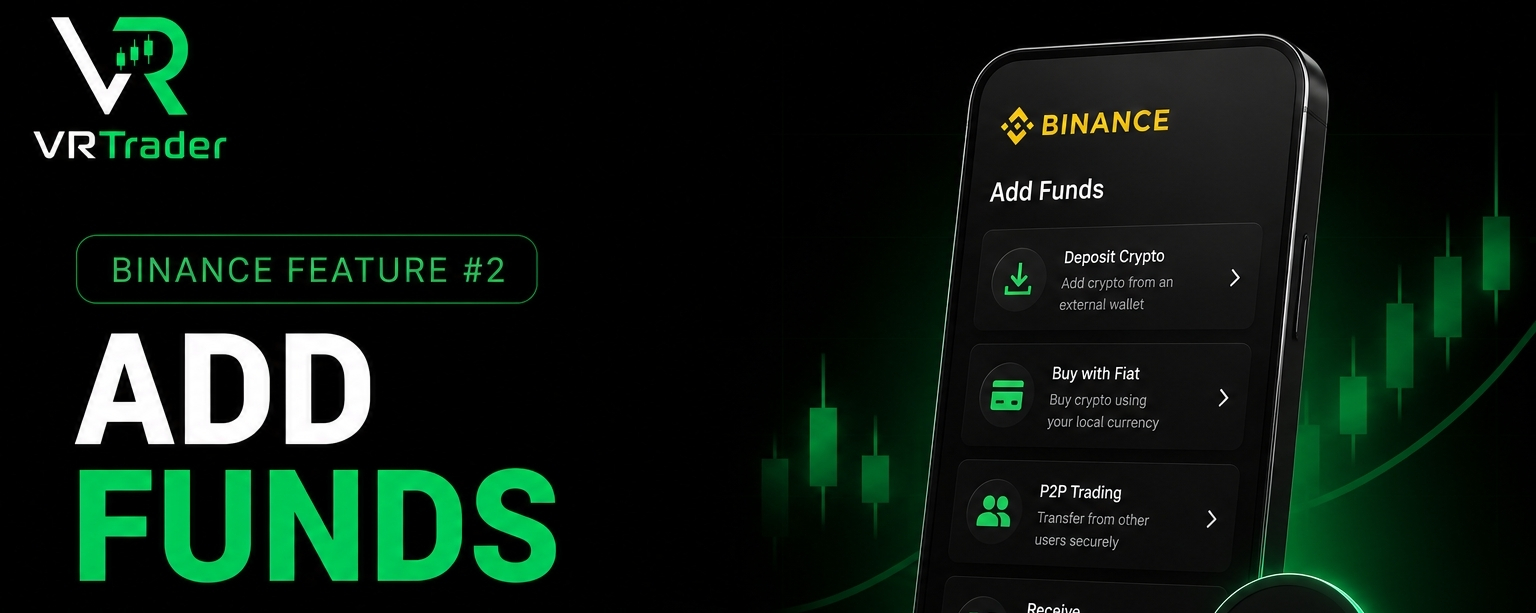
Binance Feature #2: Add Funds
(Quiz Material)Before you can trade, invest, or earn rewards on Binance, you need to fund your account.
The Add Funds feature is the starting point of every crypto journey. It gives you multiple ways to deposit money or cryptocurrency into your Binance account safely and conveniently.
Let's explore how it works.
[ Learn & Earn : Quiz 🧠
Get trading related education and win crypto rewards 🎉
Join upcoming quiz. Topic : "Add Funds"
Fun way to learn ✨ ]
What Is Add Funds?
The Add Funds section allows you to add assets to your Binance account using different methods, depending on your country and preferred payment option.
Common methods include:
• Deposit Crypto
• Buy with Card (Debit/Credit Card)
• Bank Transfer (where available)
• Binance P2P
• Third-Party Payment Providers (available in selected regions)
Choose the method that best suits your needs.
Method 1: Deposit Crypto
If you already own cryptocurrency in another wallet or exchange, you can transfer it to Binance.
Steps
Open Add FundsSelect Deposit CryptoChoose the cryptocurrency you want to deposit.Select the correct blockchain network.Copy your deposit address or scan the QR code.Send the crypto from your external wallet.
⚠️ Important: Always select the correct network. Sending assets to the wrong blockchain may result in permanent loss of funds.
Method 2: Buy with Card
If you're new to crypto, this is one of the easiest options.
Simply:
• Choose your local currency.
• Enter the amount.
• Select the cryptocurrency you want to buy.
• Complete the payment with your debit or credit card.
Your purchased crypto will be credited to your Binance account after the payment is processed.
Method 3: Binance P2P
Binance P2P allows users to buy and sell crypto directly with other users through Binance's escrow system.
While it's convenient, you should always follow safe trading practices.
P2P Safety Tips
✅ Never communicate or make deals outside the Binance P2P chat.
✅ Never send or receive payments outside the official Binance order.
✅ Keep all conversations inside Binance.
✅ Save payment receipts and transaction records until the trade is completed.
✅ If you're buying crypto, upload proof of payment after sending the funds.
✅ If you're selling crypto, never release your crypto until you have personally confirmed the money has arrived in your bank or payment account. Do not rely only on screenshots or messages from the buyer.
✅ If there's any issue, use Binance's Appeal feature instead of resolving the dispute privately.
Remember: Binance's escrow protection works best when the entire transaction stays within the platform.
Why Is Add Funds Important?
Without funding your account, you cannot:
• Buy cryptocurrencies
• Trade in Spot or Futures
• Invest in Binance Earn
• Participate in Launchpool or other Binance products
It is the first step before exploring the rest of the Binance ecosystem.
Common Mistakes to Avoid
❌ Sending crypto to the wrong blockchain network.
❌ Releasing crypto before confirming payment in your account.
❌ Trusting edited payment screenshots.
❌ Completing P2P deals outside Binance.
❌ Ignoring transaction details before confirming.
Taking a few extra minutes to verify each transaction can help prevent costly mistakes.
Final Thoughts
Adding funds is simple, but security should always come first.
Whether you're depositing crypto, buying with a card, or using Binance P2P, take your time, double-check every detail, and use Binance's built-in protections.
A secure investor isn't just someone who grows their portfolio—it's someone who protects it.
VRTrader Insight
The first investment you should make isn't into a coin—it's into good habits. Learn the platform, follow safe practices, and always verify before you confirm.
Learn today. Invest smarter tomorrow.
#Binance #EducationalContent #educational_post $BTC $NVDAB $SIREN
Binance Feature #2: Add Funds (Quiz Material)
Before you can trade, invest, or earn rewards on Binance, you need to fund your account.
The Add Funds feature is the starting point of every crypto journey. It gives you multiple ways to deposit money or cryptocurrency into your Binance account safely and conveniently.
Let's explore how it works.
[ Learn & Earn : Quiz 🧠
Get trading related education and win crypto rewards 🎉
Join upcoming quiz. Topic : "Add Funds"
Fun way to learn ✨ ]
What Is Add Funds?
The Add Funds section allows you to add assets to your Binance account using different methods, depending on your country and preferred payment option.
Common methods include:
• Deposit Crypto
• Buy with Card (Debit/Credit Card)
• Bank Transfer (where available)
• Binance P2P
• Third-Party Payment Providers (available in selected regions)
Choose the method that best suits your needs.
Method 1: Deposit Crypto
If you already own cryptocurrency in another wallet or exchange, you can transfer it to Binance.
Steps
Open Add FundsSelect Deposit CryptoChoose the cryptocurrency you want to deposit.Select the correct blockchain network.Copy your deposit address or scan the QR code.Send the crypto from your external wallet.
⚠️ Important: Always select the correct network. Sending assets to the wrong blockchain may result in permanent loss of funds.
Method 2: Buy with Card
If you're new to crypto, this is one of the easiest options.
Simply:
• Choose your local currency.
• Enter the amount.
• Select the cryptocurrency you want to buy.
• Complete the payment with your debit or credit card.
Your purchased crypto will be credited to your Binance account after the payment is processed.
Method 3: Binance P2P
Binance P2P allows users to buy and sell crypto directly with other users through Binance's escrow system.
While it's convenient, you should always follow safe trading practices.
P2P Safety Tips
✅ Never communicate or make deals outside the Binance P2P chat.
✅ Never send or receive payments outside the official Binance order.
✅ Keep all conversations inside Binance.
✅ Save payment receipts and transaction records until the trade is completed.
✅ If you're buying crypto, upload proof of payment after sending the funds.
✅ If you're selling crypto, never release your crypto until you have personally confirmed the money has arrived in your bank or payment account. Do not rely only on screenshots or messages from the buyer.
✅ If there's any issue, use Binance's Appeal feature instead of resolving the dispute privately.
Remember: Binance's escrow protection works best when the entire transaction stays within the platform.
Why Is Add Funds Important?
Without funding your account, you cannot:
• Buy cryptocurrencies
• Trade in Spot or Futures
• Invest in Binance Earn
• Participate in Launchpool or other Binance products
It is the first step before exploring the rest of the Binance ecosystem.
Common Mistakes to Avoid
❌ Sending crypto to the wrong blockchain network.
❌ Releasing crypto before confirming payment in your account.
❌ Trusting edited payment screenshots.
❌ Completing P2P deals outside Binance.
❌ Ignoring transaction details before confirming.
Taking a few extra minutes to verify each transaction can help prevent costly mistakes.
Final Thoughts
Adding funds is simple, but security should always come first.
Whether you're depositing crypto, buying with a card, or using Binance P2P, take your time, double-check every detail, and use Binance's built-in protections.
A secure investor isn't just someone who grows their portfolio—it's someone who protects it.
VRTrader Insight
The first investment you should make isn't into a coin—it's into good habits. Learn the platform, follow safe practices, and always verify before you confirm.
Learn today. Invest smarter tomorrow.
#Binance #EducationalContent #educational_post $BTC $NVDAB $SIREN
The Add Funds feature is the starting point of every crypto journey. It gives you multiple ways to deposit money or cryptocurrency into your Binance account safely and conveniently.
Let's explore how it works.
[ Learn & Earn : Quiz 🧠
Get trading related education and win crypto rewards 🎉
Join upcoming quiz. Topic : "Add Funds"
Fun way to learn ✨ ]
What Is Add Funds?
The Add Funds section allows you to add assets to your Binance account using different methods, depending on your country and preferred payment option.
Common methods include:
• Deposit Crypto
• Buy with Card (Debit/Credit Card)
• Bank Transfer (where available)
• Binance P2P
• Third-Party Payment Providers (available in selected regions)
Choose the method that best suits your needs.
Method 1: Deposit Crypto
If you already own cryptocurrency in another wallet or exchange, you can transfer it to Binance.
Steps
Open Add FundsSelect Deposit CryptoChoose the cryptocurrency you want to deposit.Select the correct blockchain network.Copy your deposit address or scan the QR code.Send the crypto from your external wallet.
⚠️ Important: Always select the correct network. Sending assets to the wrong blockchain may result in permanent loss of funds.
Method 2: Buy with Card
If you're new to crypto, this is one of the easiest options.
Simply:
• Choose your local currency.
• Enter the amount.
• Select the cryptocurrency you want to buy.
• Complete the payment with your debit or credit card.
Your purchased crypto will be credited to your Binance account after the payment is processed.
Method 3: Binance P2P
Binance P2P allows users to buy and sell crypto directly with other users through Binance's escrow system.
While it's convenient, you should always follow safe trading practices.
P2P Safety Tips
✅ Never communicate or make deals outside the Binance P2P chat.
✅ Never send or receive payments outside the official Binance order.
✅ Keep all conversations inside Binance.
✅ Save payment receipts and transaction records until the trade is completed.
✅ If you're buying crypto, upload proof of payment after sending the funds.
✅ If you're selling crypto, never release your crypto until you have personally confirmed the money has arrived in your bank or payment account. Do not rely only on screenshots or messages from the buyer.
✅ If there's any issue, use Binance's Appeal feature instead of resolving the dispute privately.
Remember: Binance's escrow protection works best when the entire transaction stays within the platform.
Why Is Add Funds Important?
Without funding your account, you cannot:
• Buy cryptocurrencies
• Trade in Spot or Futures
• Invest in Binance Earn
• Participate in Launchpool or other Binance products
It is the first step before exploring the rest of the Binance ecosystem.
Common Mistakes to Avoid
❌ Sending crypto to the wrong blockchain network.
❌ Releasing crypto before confirming payment in your account.
❌ Trusting edited payment screenshots.
❌ Completing P2P deals outside Binance.
❌ Ignoring transaction details before confirming.
Taking a few extra minutes to verify each transaction can help prevent costly mistakes.
Final Thoughts
Adding funds is simple, but security should always come first.
Whether you're depositing crypto, buying with a card, or using Binance P2P, take your time, double-check every detail, and use Binance's built-in protections.
A secure investor isn't just someone who grows their portfolio—it's someone who protects it.
VRTrader Insight
The first investment you should make isn't into a coin—it's into good habits. Learn the platform, follow safe practices, and always verify before you confirm.
Learn today. Invest smarter tomorrow.
#Binance #EducationalContent #educational_post $BTC $NVDAB $SIREN
708
5
32
708

·
--
🚨 The biggest risk in crypto is not volatility... it’s a lack of knowledge.
Before investing, first invest in your education.
✅ Understand the market.
✅ Manage your risks.
✅ Never invest more than you’re willing to lose.
In crypto, those who learn today often make better decisions tomorrow.
💬 In your opinion, what is the biggest mistake beginners make in crypto?
#EducationalContent ,
🚨 The biggest risk in crypto is not volatility... it’s a lack of knowledge.
Before investing, first invest in your education.
✅ Understand the market.
✅ Manage your risks.
✅ Never invest more than you’re willing to lose.
In crypto, those who learn today often make better decisions tomorrow.
💬 In your opinion, what is the biggest mistake beginners make in crypto?
#EducationalContent ,
Before investing, first invest in your education.
✅ Understand the market.
✅ Manage your risks.
✅ Never invest more than you’re willing to lose.
In crypto, those who learn today often make better decisions tomorrow.
💬 In your opinion, what is the biggest mistake beginners make in crypto?
#EducationalContent ,
1
1.7k

Article
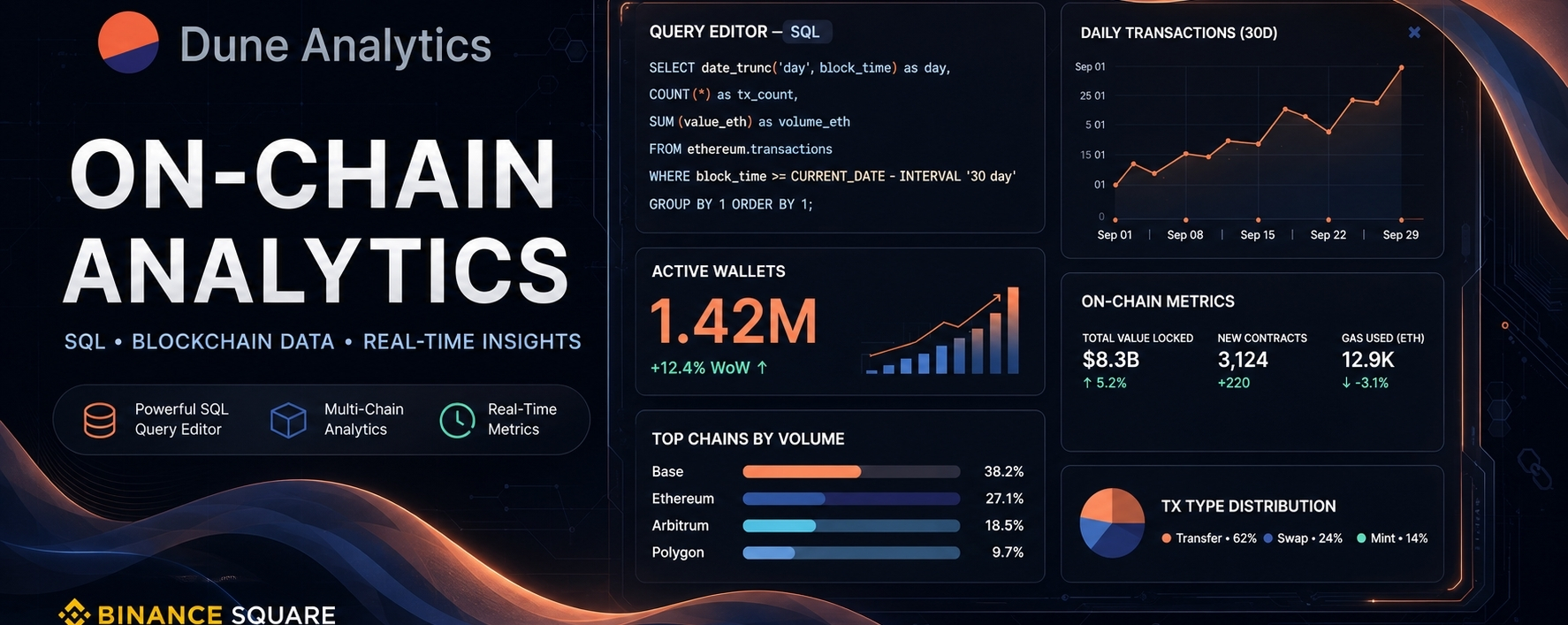
My Research on Dune Analytics: What It Is and How It Actually WorksI have been using Dune Analytics for a while now, and I want to share what I learned in simple words.
In short, Dune is a website where you can see what is really happening on the blockchain. All the data is hidden in blocks and transactions. Dune takes that messy data and makes it simple. You can search it with SQL and make charts from it.
The best part is, you don't need to be a coder to start. If you know SQL, you can make your own queries. If you don't, you can just open dashboards made by other people and learn from them.
But one thing I learned: Dune shows you the past, not the future. It will not tell you if price will go up or down.
What is Dune Analytics in Simple Words?
Think of Dune as Google for blockchain data.
Normally blockchain data is very hard to read. Dune collects data from more than 100 blockchains like Ethereum, Solana, Bitcoin, Base, Arbitrum, Polygon, BSC and many more.
Then it puts that data into 3 types of tables:
1. Raw Tables: This is the original data. Blocks, transactions, logs. Full data but hard to understand.
2. Decoded Tables: Dune reads the smart contract code (ABI) and translates it into simple tables. So you can see "Swap" or "Transfer" easily.
3. Curated Tables: These are clean tables made by Dune team. For example, all DEX trades or all stablecoin transfers are already cleaned for you.
What can you check on Dune? I use it for:
How many people used a chain daily
How much volume a DEX like Uniswap did Where tokens are going
DeFi deposits and fees
NFT sales and who is buying Stablecoin supply
You can see most dashboards without even making an account. But if you want to save your work, you need to sign up.
How Dune Works - From My Experience
When I first opened Dune, I got confused. But the flow is very simple:
Step 1: They collect data from 100+ chains. Not just Ethereum.
Step 2: They store it in tables. Raw, decoded, and clean.
Step 3: You write a query. They use DuneSQL. It is like normal SQL but made for crypto. Example: SELECT COUNT(*) FROM ethereum.transactions WHERE block_time > now() - interval '7' day
Step 4: You make a chart. Table becomes line chart, bar chart, counter.
Step 5: You make a dashboard. You combine 5-6 charts and add some notes, and share it with everyone.
I love the parameter feature. You can make a box where people can change token address or date without touching SQL.
And one more thing: Data is not 100% real-time. Sometimes there is 1-2 minute delay. Always check "last updated" time on top of dashboard.
How I Started - You Can Do Same
1. Create Account:
Just go to dune.com and sign up. No need to connect wallet. If any site asks for seed phrase in name of Dune, it is fake.
2. Start with Discover:
Don't start by writing query. I started by searching. Type "Solana" or "Uniswap" in search bar. You will see 100s of dashboards made by top analysts (they call them Wizards).
Before I trust any dashboard, I check 4 things:
Who made it?
When was it last refreshed?
Which contracts did they use?
Can I see the SQL behind it?
3. Learn from Queries:
Find a good query, open it, and click Fork. Then just change the date or token address. This is how I learned DuneSQL without watching long tutorials.
4. Pricing:
Dune has Free and Paid plans. Free is enough to learn. Paid gives you more credits, private dashboards, and API. Pricing keeps changing, so check their official pricing page. Don't trust old screenshots.
Why I Like Dune?
It is open. Most dashboards are public. You can see the exact SQL logic. No black box.
It covers everything. One place to compare Ethereum vs Base vs Solana. No need to run your own node.
It is community driven. Thousands of people share their work. I learned a lot just by reading other people's queries.
But be careful. Just because a dashboard looks nice does not mean it is correct. Sometimes people use old contracts or wrong filters.
Some Good Dashboards You Should Check
I found these very useful in my research:
For DeFi: DEX volumes, TVL comparison For NFT: Whale Watcher, marketplace sales tax For Bitcoin: Miner rewards, fees, inscriptions
One tip: "Active users" means different things in different dashboards. One counts wallets, other counts people who signed. So always read the description.
My 10 Tips After Using Dune
1. First decide your question. Don't just say "analyze Ethereum". Say "how many daily users on Base last month?"
2. Start by copying others. Fork is your best friend.
3. Double check contract addresses. Protocols change them.
4. Read table documentation. It saves hours.
5. Always put date filter, otherwise query will be slow and eat credits.
6. When you JOIN tables, you can get duplicate data. Be careful.
7. Write what your metric means. Don't confuse others.
8. Check refresh time before you share.
9. Compare with Etherscan or official site to confirm.
10. Read Dune Docs. They are actually good.
Impotent NOTE: Dune Analytics does NOT have any official token.
#blockchain #FOMCWatching #Insights #EducationalContent
My Research on Dune Analytics: What It Is and How It Actually Works
I have been using Dune Analytics for a while now, and I want to share what I learned in simple words.
In short, Dune is a website where you can see what is really happening on the blockchain. All the data is hidden in blocks and transactions. Dune takes that messy data and makes it simple. You can search it with SQL and make charts from it.
The best part is, you don't need to be a coder to start. If you know SQL, you can make your own queries. If you don't, you can just open dashboards made by other people and learn from them.
But one thing I learned: Dune shows you the past, not the future. It will not tell you if price will go up or down.
What is Dune Analytics in Simple Words?
Think of Dune as Google for blockchain data.
Normally blockchain data is very hard to read. Dune collects data from more than 100 blockchains like Ethereum, Solana, Bitcoin, Base, Arbitrum, Polygon, BSC and many more.
Then it puts that data into 3 types of tables:
1. Raw Tables: This is the original data. Blocks, transactions, logs. Full data but hard to understand.
2. Decoded Tables: Dune reads the smart contract code (ABI) and translates it into simple tables. So you can see "Swap" or "Transfer" easily.
3. Curated Tables: These are clean tables made by Dune team. For example, all DEX trades or all stablecoin transfers are already cleaned for you.
What can you check on Dune? I use it for:
How many people used a chain daily
How much volume a DEX like Uniswap did Where tokens are going
DeFi deposits and fees
NFT sales and who is buying Stablecoin supply
You can see most dashboards without even making an account. But if you want to save your work, you need to sign up.
How Dune Works - From My Experience
When I first opened Dune, I got confused. But the flow is very simple:
Step 1: They collect data from 100+ chains. Not just Ethereum.
Step 2: They store it in tables. Raw, decoded, and clean.
Step 3: You write a query. They use DuneSQL. It is like normal SQL but made for crypto. Example: SELECT COUNT(*) FROM ethereum.transactions WHERE block_time > now() - interval '7' day
Step 4: You make a chart. Table becomes line chart, bar chart, counter.
Step 5: You make a dashboard. You combine 5-6 charts and add some notes, and share it with everyone.
I love the parameter feature. You can make a box where people can change token address or date without touching SQL.
And one more thing: Data is not 100% real-time. Sometimes there is 1-2 minute delay. Always check "last updated" time on top of dashboard.
How I Started - You Can Do Same
1. Create Account:
Just go to dune.com and sign up. No need to connect wallet. If any site asks for seed phrase in name of Dune, it is fake.
2. Start with Discover:
Don't start by writing query. I started by searching. Type "Solana" or "Uniswap" in search bar. You will see 100s of dashboards made by top analysts (they call them Wizards).
Before I trust any dashboard, I check 4 things:
Who made it?
When was it last refreshed?
Which contracts did they use?
Can I see the SQL behind it?
3. Learn from Queries:
Find a good query, open it, and click Fork. Then just change the date or token address. This is how I learned DuneSQL without watching long tutorials.
4. Pricing:
Dune has Free and Paid plans. Free is enough to learn. Paid gives you more credits, private dashboards, and API. Pricing keeps changing, so check their official pricing page. Don't trust old screenshots.
Why I Like Dune?
It is open. Most dashboards are public. You can see the exact SQL logic. No black box.
It covers everything. One place to compare Ethereum vs Base vs Solana. No need to run your own node.
It is community driven. Thousands of people share their work. I learned a lot just by reading other people's queries.
But be careful. Just because a dashboard looks nice does not mean it is correct. Sometimes people use old contracts or wrong filters.
Some Good Dashboards You Should Check
I found these very useful in my research:
For DeFi: DEX volumes, TVL comparison For NFT: Whale Watcher, marketplace sales tax For Bitcoin: Miner rewards, fees, inscriptions
One tip: "Active users" means different things in different dashboards. One counts wallets, other counts people who signed. So always read the description.
My 10 Tips After Using Dune
1. First decide your question. Don't just say "analyze Ethereum". Say "how many daily users on Base last month?"
2. Start by copying others. Fork is your best friend.
3. Double check contract addresses. Protocols change them.
4. Read table documentation. It saves hours.
5. Always put date filter, otherwise query will be slow and eat credits.
6. When you JOIN tables, you can get duplicate data. Be careful.
7. Write what your metric means. Don't confuse others.
8. Check refresh time before you share.
9. Compare with Etherscan or official site to confirm.
10. Read Dune Docs. They are actually good.
Impotent NOTE: Dune Analytics does NOT have any official token.
#blockchain #FOMCWatching #Insights #EducationalContent
In short, Dune is a website where you can see what is really happening on the blockchain. All the data is hidden in blocks and transactions. Dune takes that messy data and makes it simple. You can search it with SQL and make charts from it.
The best part is, you don't need to be a coder to start. If you know SQL, you can make your own queries. If you don't, you can just open dashboards made by other people and learn from them.
But one thing I learned: Dune shows you the past, not the future. It will not tell you if price will go up or down.
What is Dune Analytics in Simple Words?
Think of Dune as Google for blockchain data.
Normally blockchain data is very hard to read. Dune collects data from more than 100 blockchains like Ethereum, Solana, Bitcoin, Base, Arbitrum, Polygon, BSC and many more.
Then it puts that data into 3 types of tables:
1. Raw Tables: This is the original data. Blocks, transactions, logs. Full data but hard to understand.
2. Decoded Tables: Dune reads the smart contract code (ABI) and translates it into simple tables. So you can see "Swap" or "Transfer" easily.
3. Curated Tables: These are clean tables made by Dune team. For example, all DEX trades or all stablecoin transfers are already cleaned for you.
What can you check on Dune? I use it for:
How many people used a chain daily
How much volume a DEX like Uniswap did Where tokens are going
DeFi deposits and fees
NFT sales and who is buying Stablecoin supply
You can see most dashboards without even making an account. But if you want to save your work, you need to sign up.
How Dune Works - From My Experience
When I first opened Dune, I got confused. But the flow is very simple:
Step 1: They collect data from 100+ chains. Not just Ethereum.
Step 2: They store it in tables. Raw, decoded, and clean.
Step 3: You write a query. They use DuneSQL. It is like normal SQL but made for crypto. Example: SELECT COUNT(*) FROM ethereum.transactions WHERE block_time > now() - interval '7' day
Step 4: You make a chart. Table becomes line chart, bar chart, counter.
Step 5: You make a dashboard. You combine 5-6 charts and add some notes, and share it with everyone.
I love the parameter feature. You can make a box where people can change token address or date without touching SQL.
And one more thing: Data is not 100% real-time. Sometimes there is 1-2 minute delay. Always check "last updated" time on top of dashboard.
How I Started - You Can Do Same
1. Create Account:
Just go to dune.com and sign up. No need to connect wallet. If any site asks for seed phrase in name of Dune, it is fake.
2. Start with Discover:
Don't start by writing query. I started by searching. Type "Solana" or "Uniswap" in search bar. You will see 100s of dashboards made by top analysts (they call them Wizards).
Before I trust any dashboard, I check 4 things:
Who made it?
When was it last refreshed?
Which contracts did they use?
Can I see the SQL behind it?
3. Learn from Queries:
Find a good query, open it, and click Fork. Then just change the date or token address. This is how I learned DuneSQL without watching long tutorials.
4. Pricing:
Dune has Free and Paid plans. Free is enough to learn. Paid gives you more credits, private dashboards, and API. Pricing keeps changing, so check their official pricing page. Don't trust old screenshots.
Why I Like Dune?
It is open. Most dashboards are public. You can see the exact SQL logic. No black box.
It covers everything. One place to compare Ethereum vs Base vs Solana. No need to run your own node.
It is community driven. Thousands of people share their work. I learned a lot just by reading other people's queries.
But be careful. Just because a dashboard looks nice does not mean it is correct. Sometimes people use old contracts or wrong filters.
Some Good Dashboards You Should Check
I found these very useful in my research:
For DeFi: DEX volumes, TVL comparison For NFT: Whale Watcher, marketplace sales tax For Bitcoin: Miner rewards, fees, inscriptions
One tip: "Active users" means different things in different dashboards. One counts wallets, other counts people who signed. So always read the description.
My 10 Tips After Using Dune
1. First decide your question. Don't just say "analyze Ethereum". Say "how many daily users on Base last month?"
2. Start by copying others. Fork is your best friend.
3. Double check contract addresses. Protocols change them.
4. Read table documentation. It saves hours.
5. Always put date filter, otherwise query will be slow and eat credits.
6. When you JOIN tables, you can get duplicate data. Be careful.
7. Write what your metric means. Don't confuse others.
8. Check refresh time before you share.
9. Compare with Etherscan or official site to confirm.
10. Read Dune Docs. They are actually good.
Impotent NOTE: Dune Analytics does NOT have any official token.
#blockchain #FOMCWatching #Insights #EducationalContent
4
69
·
--

Article
Automate Your Profits: How to Use Trading Bots and Get Returns 🤖💸🤖How many times has it happened that you close a trade at a loss just because fear took over, or you go to sleep and the market turns around, destroying your position? Manual trading is exhausting, and we don’t always have the time to be in front of the screen 24 hours a day.
The official solution that Binance offers us to calm our emotional exhaustion and put our money to work with AI models is the Binance Trading Bots. But beware: a bot is not a magic money-making machine; if you don’t know how to choose one according to the market, you could end up losing.
Automate Your Profits: How to Use Trading Bots and Get Returns 🤖💸🤖
How many times has it happened that you close a trade at a loss just because fear took over, or you go to sleep and the market turns around, destroying your position? Manual trading is exhausting, and we don’t always have the time to be in front of the screen 24 hours a day.
The official solution that Binance offers us to calm our emotional exhaustion and put our money to work with AI models is the Binance Trading Bots. But beware: a bot is not a magic money-making machine; if you don’t know how to choose one according to the market, you could end up losing.
The official solution that Binance offers us to calm our emotional exhaustion and put our money to work with AI models is the Binance Trading Bots. But beware: a bot is not a magic money-making machine; if you don’t know how to choose one according to the market, you could end up losing.
2
589
·
--
🎓 Trading Mentorship
Session #001
Why a good entry can end in a bad trade?
Many traders believe success depends on finding the perfect entry point. However, over time they discover that an excellent entry does not guarantee a good result. The difference usually lies in what you do after opening the position.
Before entering the market, you should have answers to simple questions: what will I do if the price goes against me? What will I do if it moves in my favor? At what point will I accept that my idea no longer makes sense? When those answers don’t exist, emotions end up taking control.
An entry is only the beginning of a plan. The real skill of a trader is to manage the trade with discipline, without letting fear or greed decide for them.
In your next trade, try to assess not only where you will enter, but also how you will act in each possible scenario. That small change can transform how you face the market.
This is one of the topics that generates the most doubts among traders and that can be analyzed in greater depth in a personalized consultation, adapting it to your methodology and way of trading.
What do you do when the price starts moving against your position?
#Nomadacripto #BinanceSquareFamily #trading #TrendingTopic #EducationalContent
🎓 Trading Mentorship
Session #001
Why a good entry can end in a bad trade?
Many traders believe success depends on finding the perfect entry point. However, over time they discover that an excellent entry does not guarantee a good result. The difference usually lies in what you do after opening the position.
Before entering the market, you should have answers to simple questions: what will I do if the price goes against me? What will I do if it moves in my favor? At what point will I accept that my idea no longer makes sense? When those answers don’t exist, emotions end up taking control.
An entry is only the beginning of a plan. The real skill of a trader is to manage the trade with discipline, without letting fear or greed decide for them.
In your next trade, try to assess not only where you will enter, but also how you will act in each possible scenario. That small change can transform how you face the market.
This is one of the topics that generates the most doubts among traders and that can be analyzed in greater depth in a personalized consultation, adapting it to your methodology and way of trading.
What do you do when the price starts moving against your position?
#Nomadacripto #BinanceSquareFamily #trading #TrendingTopic #EducationalContent
Session #001
Why a good entry can end in a bad trade?
Many traders believe success depends on finding the perfect entry point. However, over time they discover that an excellent entry does not guarantee a good result. The difference usually lies in what you do after opening the position.
Before entering the market, you should have answers to simple questions: what will I do if the price goes against me? What will I do if it moves in my favor? At what point will I accept that my idea no longer makes sense? When those answers don’t exist, emotions end up taking control.
An entry is only the beginning of a plan. The real skill of a trader is to manage the trade with discipline, without letting fear or greed decide for them.
In your next trade, try to assess not only where you will enter, but also how you will act in each possible scenario. That small change can transform how you face the market.
This is one of the topics that generates the most doubts among traders and that can be analyzed in greater depth in a personalized consultation, adapting it to your methodology and way of trading.
What do you do when the price starts moving against your position?
#Nomadacripto #BinanceSquareFamily #trading #TrendingTopic #EducationalContent
2
1.2k
·
--
Article
Binance Feature #1: Account Statement ( Quiz Material )Most people check their portfolio balance.
Few people track where their money came from, where it went, and how their account has changed over time.
That's where Account Statement becomes one of the most underrated features on Binance.
[ Learn & Earn : Quiz 🧠
Get trading related education, Join quiz and win rewards 🎉
2000 winners 🏆 Fun way to learn ]
What Is Binance Account Statement?
The Account Statement feature provides a detailed record of your account activity across different Binance products.
It allows you to review:
✅ Deposits and withdrawals
✅ Spot wallet activity
✅ Funding wallet transactions
✅ Futures account records
✅ Earn products
✅ Options trading activity
✅ Asset allocation and balances
✅ Historical account snapshots
Think of it as a financial report card for your crypto journey.
Instead of guessing what happened to your funds, you can see the complete picture.
Why Is It Important?
Many traders focus on profits but ignore tracking.
That is a mistake.
Professional investors track everything.
If you don't measure your finances, you cannot properly manage them.
The Account Statement helps you:
1. Track Your Performance
Have you actually made money this month?
Or does it only feel like you have?
The statement provides objective data instead of emotions.
2. Understand Asset Allocation
Many investors unknowingly become overexposed to a single asset.
By reviewing your statement, you can see:
How much Bitcoin you holdHow much stablecoin you holdHow much capital is deployed elsewhereThis helps maintain proper risk management.
3. Improve Financial Discipline
Successful investing is not just about making money.
It's about understanding where your money goes.
Reviewing statements regularly creates better habits and helps avoid careless decisions.
4. Tax and Record Keeping
Depending on your jurisdiction, transaction records may be required for reporting purposes.
Having a detailed account statement makes record-keeping significantly easier.
5. Detect Mistakes Early
Unexpected transfers.Forgotten subscriptions.Incorrect transactions.Unusual account activity.
A regular review helps identify issues before they become bigger problems.
Why Should We Track Our Money?
Imagine running a business without accounting.
Sounds risky, right?
Yet many people treat their personal finances exactly that way.
Tracking money helps you:
Understand spending habitsMeasure investment performanceManage riskSet realistic goalsMake informed decisionsWhat gets measured gets managed.
The Investor Mindset
Most beginners focus on finding the next winning coin.
Experienced investors focus on managing capital.
Capital preservation comes before capital growth.
The Binance Account Statement feature helps investors stay organized, informed, and in control of their financial activity.
A few minutes spent reviewing your statements each month can provide insights that save you money and improve your decision-making.
VRTrader Insight
The goal isn't simply to grow your portfolio.
The goal is to understand it.
Because the investors who know where their money is going are usually the ones who keep it the longest.
Learn today. Invest smarter tomorrow. 📊🚀
#Binance #LearnFromMistakes #EducationalContent $BTC $SPCXB $SIREN
Binance Feature #1: Account Statement ( Quiz Material )
Most people check their portfolio balance.
Few people track where their money came from, where it went, and how their account has changed over time.
That's where Account Statement becomes one of the most underrated features on Binance.
[ Learn & Earn : Quiz 🧠
Get trading related education, Join quiz and win rewards 🎉
2000 winners 🏆 Fun way to learn ]
What Is Binance Account Statement?
The Account Statement feature provides a detailed record of your account activity across different Binance products.
It allows you to review:
✅ Deposits and withdrawals
✅ Spot wallet activity
✅ Funding wallet transactions
✅ Futures account records
✅ Earn products
✅ Options trading activity
✅ Asset allocation and balances
✅ Historical account snapshots
Think of it as a financial report card for your crypto journey.
Instead of guessing what happened to your funds, you can see the complete picture.
Why Is It Important?
Many traders focus on profits but ignore tracking.
That is a mistake.
Professional investors track everything.
If you don't measure your finances, you cannot properly manage them.
The Account Statement helps you:
1. Track Your Performance
Have you actually made money this month?
Or does it only feel like you have?
The statement provides objective data instead of emotions.
2. Understand Asset Allocation
Many investors unknowingly become overexposed to a single asset.
By reviewing your statement, you can see:
How much Bitcoin you holdHow much stablecoin you holdHow much capital is deployed elsewhereThis helps maintain proper risk management.
3. Improve Financial Discipline
Successful investing is not just about making money.
It's about understanding where your money goes.
Reviewing statements regularly creates better habits and helps avoid careless decisions.
4. Tax and Record Keeping
Depending on your jurisdiction, transaction records may be required for reporting purposes.
Having a detailed account statement makes record-keeping significantly easier.
5. Detect Mistakes Early
Unexpected transfers.Forgotten subscriptions.Incorrect transactions.Unusual account activity.
A regular review helps identify issues before they become bigger problems.
Why Should We Track Our Money?
Imagine running a business without accounting.
Sounds risky, right?
Yet many people treat their personal finances exactly that way.
Tracking money helps you:
Understand spending habitsMeasure investment performanceManage riskSet realistic goalsMake informed decisionsWhat gets measured gets managed.
The Investor Mindset
Most beginners focus on finding the next winning coin.
Experienced investors focus on managing capital.
Capital preservation comes before capital growth.
The Binance Account Statement feature helps investors stay organized, informed, and in control of their financial activity.
A few minutes spent reviewing your statements each month can provide insights that save you money and improve your decision-making.
VRTrader Insight
The goal isn't simply to grow your portfolio.
The goal is to understand it.
Because the investors who know where their money is going are usually the ones who keep it the longest.
Learn today. Invest smarter tomorrow. 📊🚀
#Binance #LearnFromMistakes #EducationalContent $BTC $SPCXB $SIREN
Few people track where their money came from, where it went, and how their account has changed over time.
That's where Account Statement becomes one of the most underrated features on Binance.
[ Learn & Earn : Quiz 🧠
Get trading related education, Join quiz and win rewards 🎉
2000 winners 🏆 Fun way to learn ]
What Is Binance Account Statement?
The Account Statement feature provides a detailed record of your account activity across different Binance products.
It allows you to review:
✅ Deposits and withdrawals
✅ Spot wallet activity
✅ Funding wallet transactions
✅ Futures account records
✅ Earn products
✅ Options trading activity
✅ Asset allocation and balances
✅ Historical account snapshots
Think of it as a financial report card for your crypto journey.
Instead of guessing what happened to your funds, you can see the complete picture.
Why Is It Important?
Many traders focus on profits but ignore tracking.
That is a mistake.
Professional investors track everything.
If you don't measure your finances, you cannot properly manage them.
The Account Statement helps you:
1. Track Your Performance
Have you actually made money this month?
Or does it only feel like you have?
The statement provides objective data instead of emotions.
2. Understand Asset Allocation
Many investors unknowingly become overexposed to a single asset.
By reviewing your statement, you can see:
How much Bitcoin you holdHow much stablecoin you holdHow much capital is deployed elsewhereThis helps maintain proper risk management.
3. Improve Financial Discipline
Successful investing is not just about making money.
It's about understanding where your money goes.
Reviewing statements regularly creates better habits and helps avoid careless decisions.
4. Tax and Record Keeping
Depending on your jurisdiction, transaction records may be required for reporting purposes.
Having a detailed account statement makes record-keeping significantly easier.
5. Detect Mistakes Early
Unexpected transfers.Forgotten subscriptions.Incorrect transactions.Unusual account activity.
A regular review helps identify issues before they become bigger problems.
Why Should We Track Our Money?
Imagine running a business without accounting.
Sounds risky, right?
Yet many people treat their personal finances exactly that way.
Tracking money helps you:
Understand spending habitsMeasure investment performanceManage riskSet realistic goalsMake informed decisionsWhat gets measured gets managed.
The Investor Mindset
Most beginners focus on finding the next winning coin.
Experienced investors focus on managing capital.
Capital preservation comes before capital growth.
The Binance Account Statement feature helps investors stay organized, informed, and in control of their financial activity.
A few minutes spent reviewing your statements each month can provide insights that save you money and improve your decision-making.
VRTrader Insight
The goal isn't simply to grow your portfolio.
The goal is to understand it.
Because the investors who know where their money is going are usually the ones who keep it the longest.
Learn today. Invest smarter tomorrow. 📊🚀
#Binance #LearnFromMistakes #EducationalContent $BTC $SPCXB $SIREN
1.1k
4
61
1.1k

💸 What is Gas Fee?
Gas Fee is the fee users pay to execute transactions on the blockchain.
Think of the blockchain as a highway. Each transaction that wants to be confirmed has to pay a fee for validators/miners to process and record it on the blockchain.
🔹 Gas Fee is used for:
✅ Transferring tokens
✅ Swapping on DEX
✅ Minting NFTs
✅ Interacting with smart contracts
🔹 When the network is congested:
Transaction processing demand increases
Gas Fee rises
Those who pay higher fees are often prioritized for confirmation
For example:
You transfer 100 USDT on Ethereum and pay a 2 USDT gas fee. This fee doesn’t go to the Ethereum Foundation but is paid to the validators securing the network.
👉 Gas Fee is essentially the "operational cost" that keeps the blockchain secure and decentralized.
"What’s the highest Gas Fee you’ve ever paid on the blockchain?" 🚀
#ETH #blockchain #EducationalContent
{spot}(ETHUSDT)
💸 What is Gas Fee?
Gas Fee is the fee users pay to execute transactions on the blockchain.
Think of the blockchain as a highway. Each transaction that wants to be confirmed has to pay a fee for validators/miners to process and record it on the blockchain.
🔹 Gas Fee is used for:
✅ Transferring tokens
✅ Swapping on DEX
✅ Minting NFTs
✅ Interacting with smart contracts
🔹 When the network is congested:
Transaction processing demand increases
Gas Fee rises
Those who pay higher fees are often prioritized for confirmation
For example:
You transfer 100 USDT on Ethereum and pay a 2 USDT gas fee. This fee doesn’t go to the Ethereum Foundation but is paid to the validators securing the network.
👉 Gas Fee is essentially the "operational cost" that keeps the blockchain secure and decentralized.
"What’s the highest Gas Fee you’ve ever paid on the blockchain?" 🚀
#ETH #blockchain #EducationalContent
Gas Fee is the fee users pay to execute transactions on the blockchain.
Think of the blockchain as a highway. Each transaction that wants to be confirmed has to pay a fee for validators/miners to process and record it on the blockchain.
🔹 Gas Fee is used for:
✅ Transferring tokens
✅ Swapping on DEX
✅ Minting NFTs
✅ Interacting with smart contracts
🔹 When the network is congested:
Transaction processing demand increases
Gas Fee rises
Those who pay higher fees are often prioritized for confirmation
For example:
You transfer 100 USDT on Ethereum and pay a 2 USDT gas fee. This fee doesn’t go to the Ethereum Foundation but is paid to the validators securing the network.
👉 Gas Fee is essentially the "operational cost" that keeps the blockchain secure and decentralized.
"What’s the highest Gas Fee you’ve ever paid on the blockchain?" 🚀
#ETH #blockchain #EducationalContent
217

·
--
Bullish
🧠 IMPROVE YOUR CRYPTO VOCAB !
✅ FOMO = Fear of missing out.
✅ HOLD = Hold for on dear life .🧬
🐂 BULLISH = Expecting of price will increase .
📉 BEARISH = Expecting of price will decreased .
🚀 ATH = All Time High
🌕 MOOING = Price going to high .
$BNB $XRP
#EducationalContent
🧠 IMPROVE YOUR CRYPTO VOCAB !
✅ FOMO = Fear of missing out.
✅ HOLD = Hold for on dear life .🧬
🐂 BULLISH = Expecting of price will increase .
📉 BEARISH = Expecting of price will decreased .
🚀 ATH = All Time High
🌕 MOOING = Price going to high .
$BNB $XRP
#EducationalContent
✅ FOMO = Fear of missing out.
✅ HOLD = Hold for on dear life .🧬
🐂 BULLISH = Expecting of price will increase .
📉 BEARISH = Expecting of price will decreased .
🚀 ATH = All Time High
🌕 MOOING = Price going to high .
$BNB $XRP
#EducationalContent
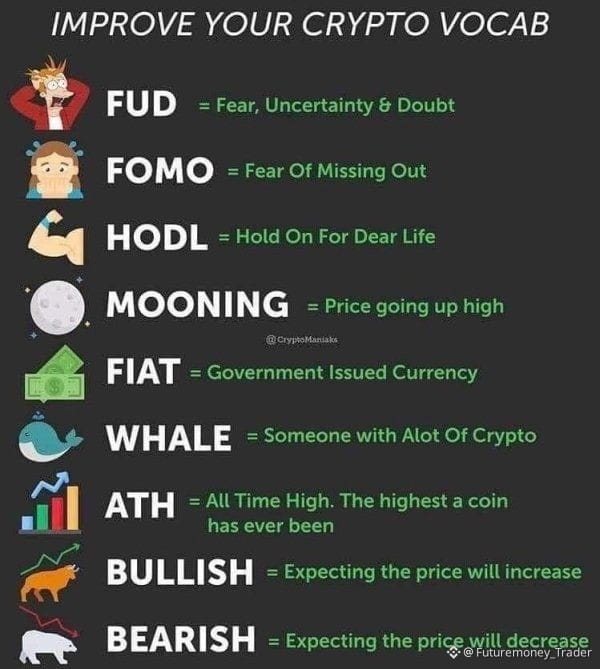
143

·
--
🚨 90% of New Crypto Traders Make This Mistake
Post:
Most beginners think the secret is finding the next 100x coin.
The truth?
The biggest profits usually c#ome from: ✅ Patience ✅ Risk management ✅ Buying with a plan, not emotions
Before entering any trade, ask yourself:
Where will I take profit?
Where will I cut my loss?
Why am I entering this trade?
In crypto, protecting your capital is more important than chasing quick gains.
What's the biggest lesson crypto has taught you? Share it below 👇
#bitcoin #crypto #trading #BinanceSquare #EducationalContent $BTC
🚨 90% of New Crypto Traders Make This Mistake
Post:
Most beginners think the secret is finding the next 100x coin.
The truth?
The biggest profits usually c#ome from: ✅ Patience ✅ Risk management ✅ Buying with a plan, not emotions
Before entering any trade, ask yourself:
Where will I take profit?
Where will I cut my loss?
Why am I entering this trade?
In crypto, protecting your capital is more important than chasing quick gains.
What's the biggest lesson crypto has taught you? Share it below 👇
#bitcoin #crypto #trading #BinanceSquare #EducationalContent $BTC
Post:
Most beginners think the secret is finding the next 100x coin.
The truth?
The biggest profits usually c#ome from: ✅ Patience ✅ Risk management ✅ Buying with a plan, not emotions
Before entering any trade, ask yourself:
Where will I take profit?
Where will I cut my loss?
Why am I entering this trade?
In crypto, protecting your capital is more important than chasing quick gains.
What's the biggest lesson crypto has taught you? Share it below 👇
#bitcoin #crypto #trading #BinanceSquare #EducationalContent $BTC
126
·
--
3 ERRORS THAT RUIN 90% OF BEGINNERS IN CRYPTO❌📉
Most trading losses do not come from the market, but from emotion management. Here’s what you absolutely need to avoid:
1️⃣ FOMO (Fear Of Missing Out): Buying a crypto when it’s already up +50% for the day is the best way to become the "liquidity" for others.
2️⃣ Putting all your capital into a single project: Diversification and the DCA (Dollar-Cost Averaging) strategy remain your best allies in the long run.
3️⃣ Neglecting security: Always enable two-factor authentication (2FA) and never share your private keys or passwords.
💡 Today's tip: The market rewards patience and discipline, not rushing.
👇 And you, what is the biggest lesson you learned since you started in crypto?
#CryptoTips #BinanceSquare #TradingTales #EducationalContent #Web3
3 ERRORS THAT RUIN 90% OF BEGINNERS IN CRYPTO❌📉
Most trading losses do not come from the market, but from emotion management. Here’s what you absolutely need to avoid:
1️⃣ FOMO (Fear Of Missing Out): Buying a crypto when it’s already up +50% for the day is the best way to become the "liquidity" for others.
2️⃣ Putting all your capital into a single project: Diversification and the DCA (Dollar-Cost Averaging) strategy remain your best allies in the long run.
3️⃣ Neglecting security: Always enable two-factor authentication (2FA) and never share your private keys or passwords.
💡 Today's tip: The market rewards patience and discipline, not rushing.
👇 And you, what is the biggest lesson you learned since you started in crypto?
#CryptoTips #BinanceSquare #TradingTales #EducationalContent #Web3
Most trading losses do not come from the market, but from emotion management. Here’s what you absolutely need to avoid:
1️⃣ FOMO (Fear Of Missing Out): Buying a crypto when it’s already up +50% for the day is the best way to become the "liquidity" for others.
2️⃣ Putting all your capital into a single project: Diversification and the DCA (Dollar-Cost Averaging) strategy remain your best allies in the long run.
3️⃣ Neglecting security: Always enable two-factor authentication (2FA) and never share your private keys or passwords.
💡 Today's tip: The market rewards patience and discipline, not rushing.
👇 And you, what is the biggest lesson you learned since you started in crypto?
#CryptoTips #BinanceSquare #TradingTales #EducationalContent #Web3
meilleurs voeux
From Denji Rf
1
1
15

How I Find The Best Coins To Trade From The Losers ListMost beginners see a coin down 10% and immediately think it is a buying opportunity. I used to think the same way. I learned the hard way that not every red coin bounces.
After losing money on the wrong coins, I developed a simple method. Now I only pick coins that show specific signs before entering. Let me share exactly what I look for.
Step One — Find The Right Drop Size
Open Binance futures and sort by 24 hour change, lowest first. Ignore coins down more than 20 percent. Those are danger zones. Ignore coins down less than 5 percent. Not enough opportunity. The sweet spot is coins down 8 to 15 percent. Big enough drop to create a bounce, not big enough to keep falling forever.
Step Two — Check The Volume
Open the chart and look at the volume bars at the bottom. If volume was massive during the drop but is now getting smaller and smaller, that means sellers are exhausting. Less selling pressure equals bounce coming. If volume is still high and active on red candles, sellers are not done yet. Skip that coin and move to the next one.
Step Three — Check RSI
RSI is a simple indicator that tells you if a coin is oversold. Below 30 means oversold. Below 20 means extremely oversold. I personally look for RSI below 20 to 25 on the losers list. This means the coin has been sold too hard too fast and a recovery becomes very likely in the next few hours.
Step Four — Check Supertrend
Supertrend is the red or green line on your chart. Red means sellers in control. Green means buyers in control. On a bouncing coin from the losers list, Supertrend will be red but starting to flatten. When it stops going down and starts moving sideways, buyers are getting ready to take over. A flip to green confirms the bounce.
Step Five — Find A Support Level
Every coin has price levels where buyers historically stepped in before. Look for a previous low on the chart that held before. If current price is sitting exactly on that level with RSI oversold and volume drying up, that is your entry zone.
The Checklist I Use Every Time
Drop between 8 to 15 percent — yes or no
Volume drying up on recent candles — yes or no
RSI below 25 — yes or no
Supertrend flattening or about to flip — yes or no
Price sitting on a clear support level — yes or no
If a coin scores 4 or 5 out of 5, I take the trade seriously. If it scores 2 or less, I move to the next coin on the list.
One More Important Rule
Never enter the moment you see these signs. Wait for one strong green candle with volume to confirm buyers are actually stepping in. That confirmation candle is your signal. Without it you are just guessing.
Real Example From Today
I checked EIGEN on the losers list today. Down 10 percent, RSI at 15, volume completely dried up, price sitting on 0.2666 support. It scored 5 out of 5 on the checklist. That is the kind of setup worth watching closely.
SAHARA was also on the losers list. Down 8 percent, RSI at 15 but volume still active on red candles and no clear support nearby. It scored only 1 out of 5. I skipped it completely.
Same losers list. Completely different quality of setups
The Bottom Line
Any coin can bounce. But not every bounce is worth trading. Learn to be selective, use the checklist, wait for confirmation and you will avoid the biggest mistake most beginners make which is buying just because something looks cheap.
Red does not mean ready. The checklist decides.
Trade safe. Manage risk always.
$BTC #educational_post #EducationalContent
How I Find The Best Coins To Trade From The Losers List
Most beginners see a coin down 10% and immediately think it is a buying opportunity. I used to think the same way. I learned the hard way that not every red coin bounces.
After losing money on the wrong coins, I developed a simple method. Now I only pick coins that show specific signs before entering. Let me share exactly what I look for.
Step One — Find The Right Drop Size
Open Binance futures and sort by 24 hour change, lowest first. Ignore coins down more than 20 percent. Those are danger zones. Ignore coins down less than 5 percent. Not enough opportunity. The sweet spot is coins down 8 to 15 percent. Big enough drop to create a bounce, not big enough to keep falling forever.
Step Two — Check The Volume
Open the chart and look at the volume bars at the bottom. If volume was massive during the drop but is now getting smaller and smaller, that means sellers are exhausting. Less selling pressure equals bounce coming. If volume is still high and active on red candles, sellers are not done yet. Skip that coin and move to the next one.
Step Three — Check RSI
RSI is a simple indicator that tells you if a coin is oversold. Below 30 means oversold. Below 20 means extremely oversold. I personally look for RSI below 20 to 25 on the losers list. This means the coin has been sold too hard too fast and a recovery becomes very likely in the next few hours.
Step Four — Check Supertrend
Supertrend is the red or green line on your chart. Red means sellers in control. Green means buyers in control. On a bouncing coin from the losers list, Supertrend will be red but starting to flatten. When it stops going down and starts moving sideways, buyers are getting ready to take over. A flip to green confirms the bounce.
Step Five — Find A Support Level
Every coin has price levels where buyers historically stepped in before. Look for a previous low on the chart that held before. If current price is sitting exactly on that level with RSI oversold and volume drying up, that is your entry zone.
The Checklist I Use Every Time
Drop between 8 to 15 percent — yes or no
Volume drying up on recent candles — yes or no
RSI below 25 — yes or no
Supertrend flattening or about to flip — yes or no
Price sitting on a clear support level — yes or no
If a coin scores 4 or 5 out of 5, I take the trade seriously. If it scores 2 or less, I move to the next coin on the list.
One More Important Rule
Never enter the moment you see these signs. Wait for one strong green candle with volume to confirm buyers are actually stepping in. That confirmation candle is your signal. Without it you are just guessing.
Real Example From Today
I checked EIGEN on the losers list today. Down 10 percent, RSI at 15, volume completely dried up, price sitting on 0.2666 support. It scored 5 out of 5 on the checklist. That is the kind of setup worth watching closely.
SAHARA was also on the losers list. Down 8 percent, RSI at 15 but volume still active on red candles and no clear support nearby. It scored only 1 out of 5. I skipped it completely.
Same losers list. Completely different quality of setups
The Bottom Line
Any coin can bounce. But not every bounce is worth trading. Learn to be selective, use the checklist, wait for confirmation and you will avoid the biggest mistake most beginners make which is buying just because something looks cheap.
Red does not mean ready. The checklist decides.
Trade safe. Manage risk always.
$BTC #educational_post #EducationalContent
After losing money on the wrong coins, I developed a simple method. Now I only pick coins that show specific signs before entering. Let me share exactly what I look for.
Step One — Find The Right Drop Size
Open Binance futures and sort by 24 hour change, lowest first. Ignore coins down more than 20 percent. Those are danger zones. Ignore coins down less than 5 percent. Not enough opportunity. The sweet spot is coins down 8 to 15 percent. Big enough drop to create a bounce, not big enough to keep falling forever.
Step Two — Check The Volume
Open the chart and look at the volume bars at the bottom. If volume was massive during the drop but is now getting smaller and smaller, that means sellers are exhausting. Less selling pressure equals bounce coming. If volume is still high and active on red candles, sellers are not done yet. Skip that coin and move to the next one.
Step Three — Check RSI
RSI is a simple indicator that tells you if a coin is oversold. Below 30 means oversold. Below 20 means extremely oversold. I personally look for RSI below 20 to 25 on the losers list. This means the coin has been sold too hard too fast and a recovery becomes very likely in the next few hours.
Step Four — Check Supertrend
Supertrend is the red or green line on your chart. Red means sellers in control. Green means buyers in control. On a bouncing coin from the losers list, Supertrend will be red but starting to flatten. When it stops going down and starts moving sideways, buyers are getting ready to take over. A flip to green confirms the bounce.
Step Five — Find A Support Level
Every coin has price levels where buyers historically stepped in before. Look for a previous low on the chart that held before. If current price is sitting exactly on that level with RSI oversold and volume drying up, that is your entry zone.
The Checklist I Use Every Time
Drop between 8 to 15 percent — yes or no
Volume drying up on recent candles — yes or no
RSI below 25 — yes or no
Supertrend flattening or about to flip — yes or no
Price sitting on a clear support level — yes or no
If a coin scores 4 or 5 out of 5, I take the trade seriously. If it scores 2 or less, I move to the next coin on the list.
One More Important Rule
Never enter the moment you see these signs. Wait for one strong green candle with volume to confirm buyers are actually stepping in. That confirmation candle is your signal. Without it you are just guessing.
Real Example From Today
I checked EIGEN on the losers list today. Down 10 percent, RSI at 15, volume completely dried up, price sitting on 0.2666 support. It scored 5 out of 5 on the checklist. That is the kind of setup worth watching closely.
SAHARA was also on the losers list. Down 8 percent, RSI at 15 but volume still active on red candles and no clear support nearby. It scored only 1 out of 5. I skipped it completely.
Same losers list. Completely different quality of setups
The Bottom Line
Any coin can bounce. But not every bounce is worth trading. Learn to be selective, use the checklist, wait for confirmation and you will avoid the biggest mistake most beginners make which is buying just because something looks cheap.
Red does not mean ready. The checklist decides.
Trade safe. Manage risk always.
$BTC #educational_post #EducationalContent
345
Log in to explore more content
Join global crypto users on Binance Square
⚡️ Get latest and useful information about crypto.
💬 Trusted by the world’s largest crypto exchange.
👍 Discover real insights from verified creators.
Email / Phone number
Trending Topics
1
#BitcoinClears$85200
640 views
70 Discussing
2
#AltcoinSeasonIndexHoldsAbove60For5Days
7,016 views
445 Discussing
3
#USADPAdds90000JobsInSeptember
1,705 views
200 Discussing
4
#USCorePCEEasesTo3%InAugust
1,695 views
176 Discussing
5
#KospiPostsWorstQuarterSince2020
2,460 views
229 Discussing
6
#SECToClarifyOnChainFundraisingRules
8,439 views
394 Discussing
7
#UKFCAOpensCryptoFirmAuthorization
11,973 views
367 Discussing
8
#JapanMOFStudyGroupOnTokenizedGovtBonds
10,380 views
308 Discussing
9
#QNTRises287%
51,208 views
701 Discussing
10
#TrumpRejectsAIRulesForVoluntaryAudits
34,174 views
625 Discussing