

#defi
defi
56.8M views
298,159 Discussing
Hot
Latest

·
--
Verified
🚨 ENA JUST ENTERED A VERY DIFFERENT PHASE
Ethena has officially ended the ENA incentives tied to USDe growth as of October 1.
That means the protocol is moving away from using new ENA emissions to incentivize USDe growth, while its new revenue-based ENA buyback framework becomes a bigger part of the token-economics story. Governance approved a framework that can redirect protocol revenue toward ENA purchases once specified USDe supply milestones are reached.
There’s another date to watch: StablecoinX’s special ENA lock-up waiver takes effect on October 5, changing the restrictions around its ENA holdings.
So ENA now has two very different forces in focus: reduced incentive emissions and upcoming token-unlock dynamics.
🚨 ENA UPDATE: The incentive era is changing. Click the $ENA setup below 🫵🏻 and check the latest tokenomics and market structure.
$ENA
{future}(ENAUSDT)
.
.
.
#ethena #DeFi #Write2Earn
🚨 ENA JUST ENTERED A VERY DIFFERENT PHASE
Ethena has officially ended the ENA incentives tied to USDe growth as of October 1.
That means the protocol is moving away from using new ENA emissions to incentivize USDe growth, while its new revenue-based ENA buyback framework becomes a bigger part of the token-economics story. Governance approved a framework that can redirect protocol revenue toward ENA purchases once specified USDe supply milestones are reached.
There’s another date to watch: StablecoinX’s special ENA lock-up waiver takes effect on October 5, changing the restrictions around its ENA holdings.
So ENA now has two very different forces in focus: reduced incentive emissions and upcoming token-unlock dynamics.
🚨 ENA UPDATE: The incentive era is changing. Click the $ENA setup below 🫵🏻 and check the latest tokenomics and market structure.
$ENA
.
.
.
#ethena #DeFi #Write2Earn
Ethena has officially ended the ENA incentives tied to USDe growth as of October 1.
That means the protocol is moving away from using new ENA emissions to incentivize USDe growth, while its new revenue-based ENA buyback framework becomes a bigger part of the token-economics story. Governance approved a framework that can redirect protocol revenue toward ENA purchases once specified USDe supply milestones are reached.
There’s another date to watch: StablecoinX’s special ENA lock-up waiver takes effect on October 5, changing the restrictions around its ENA holdings.
So ENA now has two very different forces in focus: reduced incentive emissions and upcoming token-unlock dynamics.
🚨 ENA UPDATE: The incentive era is changing. Click the $ENA setup below 🫵🏻 and check the latest tokenomics and market structure.
$ENA
.
.
.
#ethena #DeFi #Write2Earn
1
1.8k

⚡ $HYPE TREASURY WIPES OUT DEBT ENTIRELY AS DEFI ACCELERATION BEGINS 🦈
Hyperion DeFi just cleared $8.6M in legacy debt, wiping its balance sheet completely clean while unlocking pure capital flexibility for on-chain expansion. 📊 By monetizing $HYPE treasury reserves to obliterate institutional debt obligations, management is streamlining equity buybacks alongside boosted revenue guidance.
💡 Smart money recognizes clean balance sheets as the ultimate springboard before aggressive DeFi deployment cycles take off. 🌊 With legacy debt friction removed, capital efficiency turns heavily in favor of long-term treasury expansion. 🤔 How do you see corporate treasury models impacting the next phase of DeFi adoption? 👇
⚠️ Not financial advice. Always manage your risk. 🛡️
🏷️ #HYPE #DeFi #Treasury #Crypto
🔥 💎
⚡ $HYPE TREASURY WIPES OUT DEBT ENTIRELY AS DEFI ACCELERATION BEGINS 🦈
Hyperion DeFi just cleared $8.6M in legacy debt, wiping its balance sheet completely clean while unlocking pure capital flexibility for on-chain expansion. 📊 By monetizing $HYPE treasury reserves to obliterate institutional debt obligations, management is streamlining equity buybacks alongside boosted revenue guidance.
💡 Smart money recognizes clean balance sheets as the ultimate springboard before aggressive DeFi deployment cycles take off. 🌊 With legacy debt friction removed, capital efficiency turns heavily in favor of long-term treasury expansion. 🤔 How do you see corporate treasury models impacting the next phase of DeFi adoption? 👇
⚠️ Not financial advice. Always manage your risk. 🛡️
🏷️ #HYPE #DeFi #Treasury #Crypto
🔥 💎
Hyperion DeFi just cleared $8.6M in legacy debt, wiping its balance sheet completely clean while unlocking pure capital flexibility for on-chain expansion. 📊 By monetizing $HYPE treasury reserves to obliterate institutional debt obligations, management is streamlining equity buybacks alongside boosted revenue guidance.
💡 Smart money recognizes clean balance sheets as the ultimate springboard before aggressive DeFi deployment cycles take off. 🌊 With legacy debt friction removed, capital efficiency turns heavily in favor of long-term treasury expansion. 🤔 How do you see corporate treasury models impacting the next phase of DeFi adoption? 👇
⚠️ Not financial advice. Always manage your risk. 🛡️
🏷️ #HYPE #DeFi #Treasury #Crypto
🔥 💎
23
·
--
🚨 UNISWAP JUST MADE CROSS-CHAIN SWAPS SIMPLER
Uniswap has introduced a new "swapSource" feature for its API that can let bridge providers complete a bridge-and-swap in one atomic transaction.
Instead of requiring another approval or signature after tokens arrive on the destination chain, the bridge can swap the tokens already deposited into Uniswap’s Universal Router.
There’s another deadline coming.
Uniswap’s API will begin enforcing slippage settings on October 4. Every "/quote" request will need either "autoSlippage" or "slippageTolerance".
And Universal Router 2.1.2 is now the recommended version, with older 2.0 and 2.1.1 versions scheduled to be sunset on October 21.
🚨 UNI UPDATE: Cross-chain execution is getting simpler while new API rules are rolling out. Click the $UNI setup below 🫵🏻 and check the latest ecosystem developments.
$UNI
{future}(UNIUSDT)
.
.
#uniswap #DeFi #Write2Earn
🚨 UNISWAP JUST MADE CROSS-CHAIN SWAPS SIMPLER
Uniswap has introduced a new "swapSource" feature for its API that can let bridge providers complete a bridge-and-swap in one atomic transaction.
Instead of requiring another approval or signature after tokens arrive on the destination chain, the bridge can swap the tokens already deposited into Uniswap’s Universal Router.
There’s another deadline coming.
Uniswap’s API will begin enforcing slippage settings on October 4. Every "/quote" request will need either "autoSlippage" or "slippageTolerance".
And Universal Router 2.1.2 is now the recommended version, with older 2.0 and 2.1.1 versions scheduled to be sunset on October 21.
🚨 UNI UPDATE: Cross-chain execution is getting simpler while new API rules are rolling out. Click the $UNI setup below 🫵🏻 and check the latest ecosystem developments.
$UNI
.
.
#uniswap #DeFi #Write2Earn
Uniswap has introduced a new "swapSource" feature for its API that can let bridge providers complete a bridge-and-swap in one atomic transaction.
Instead of requiring another approval or signature after tokens arrive on the destination chain, the bridge can swap the tokens already deposited into Uniswap’s Universal Router.
There’s another deadline coming.
Uniswap’s API will begin enforcing slippage settings on October 4. Every "/quote" request will need either "autoSlippage" or "slippageTolerance".
And Universal Router 2.1.2 is now the recommended version, with older 2.0 and 2.1.1 versions scheduled to be sunset on October 21.
🚨 UNI UPDATE: Cross-chain execution is getting simpler while new API rules are rolling out. Click the $UNI setup below 🫵🏻 and check the latest ecosystem developments.
$UNI
.
.
#uniswap #DeFi #Write2Earn
228

·
--
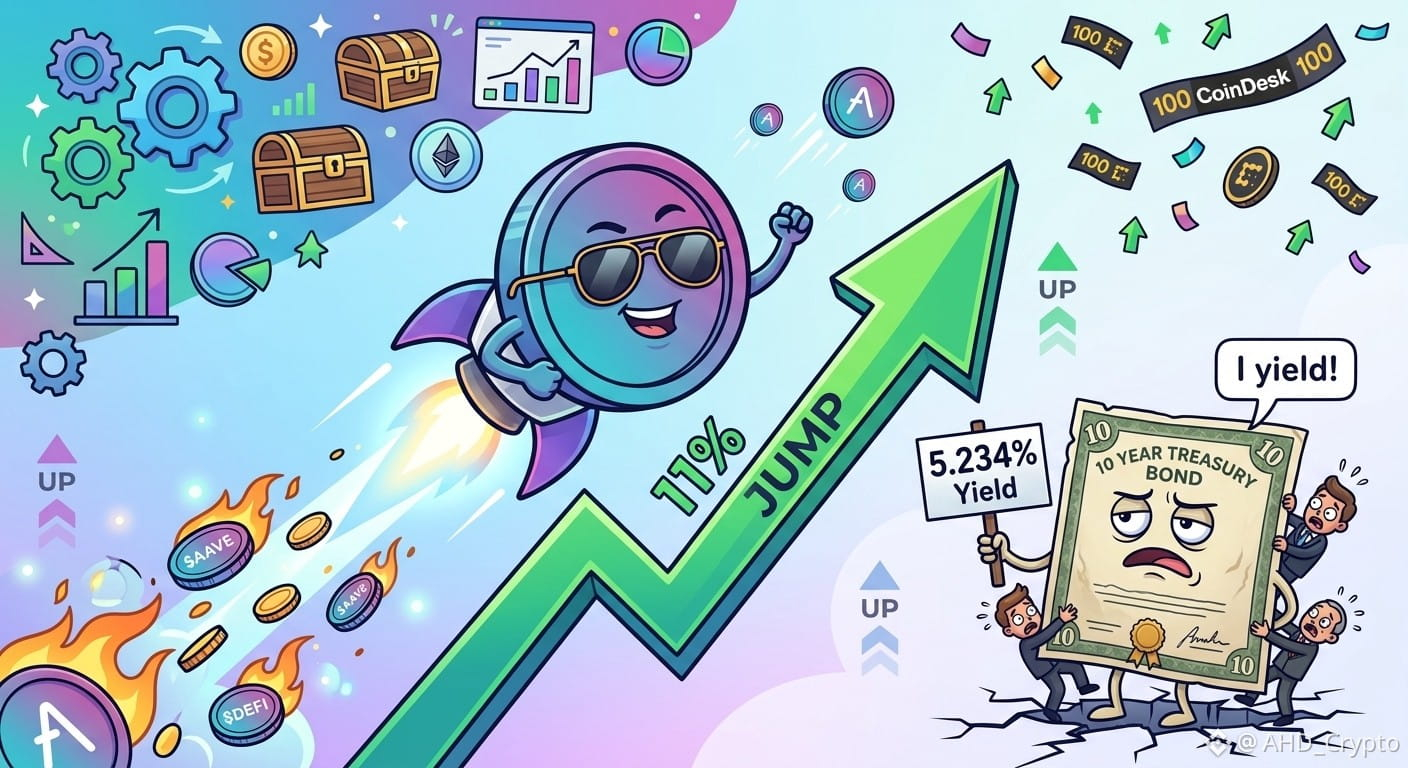
🚀 DeFi Outperforms Macro Headwinds: $AAVE Surges 11% Amid Token Burn Speculation
{spot}(AAVEUSDT)
The crypto market is demonstrating serious resilience! Despite the 10-year US Treasury yield surging to a staggering 5.234%—traditionally a major headwind for risk-on assets—the digital asset ecosystem is shaking off the macro pressure.
Leading the charge is DeFi, with $AAVE jumping over 11% as market speculation mounts around an upcoming token burn model designed to permanently reduce supply.
Key Market Takeaways:
1- Broad Market Strength: It’s not just a single-token rally—72 out of 100 constituents in the CoinDesk 100 index are trading in the green.
2- DeFi Renaissance: Investors are flocking back into decentralized finance protocols, prioritizing strong tokenomics upgrades over traditional bond market yields.
3- Macro Decoupling: Crypto’s ability to rally while bond yields hold near multi-year highs signals growing independent demand and strong native catalysts.
Are you adding to your $AAVE positions, or staying cautious given the high-yield macro environment? Drop your thoughts below! 👇
#writetoearn #defi #CryptoNews #AAVE #Write2Earn
🚀 DeFi Outperforms Macro Headwinds: $AAVE Surges 11% Amid Token Burn Speculation
The crypto market is demonstrating serious resilience! Despite the 10-year US Treasury yield surging to a staggering 5.234%—traditionally a major headwind for risk-on assets—the digital asset ecosystem is shaking off the macro pressure.
Leading the charge is DeFi, with $AAVE jumping over 11% as market speculation mounts around an upcoming token burn model designed to permanently reduce supply.
Key Market Takeaways:
1- Broad Market Strength: It’s not just a single-token rally—72 out of 100 constituents in the CoinDesk 100 index are trading in the green.
2- DeFi Renaissance: Investors are flocking back into decentralized finance protocols, prioritizing strong tokenomics upgrades over traditional bond market yields.
3- Macro Decoupling: Crypto’s ability to rally while bond yields hold near multi-year highs signals growing independent demand and strong native catalysts.
Are you adding to your $AAVE positions, or staying cautious given the high-yield macro environment? Drop your thoughts below! 👇
#writetoearn #defi #CryptoNews #AAVE #Write2Earn
The crypto market is demonstrating serious resilience! Despite the 10-year US Treasury yield surging to a staggering 5.234%—traditionally a major headwind for risk-on assets—the digital asset ecosystem is shaking off the macro pressure.
Leading the charge is DeFi, with $AAVE jumping over 11% as market speculation mounts around an upcoming token burn model designed to permanently reduce supply.
Key Market Takeaways:
1- Broad Market Strength: It’s not just a single-token rally—72 out of 100 constituents in the CoinDesk 100 index are trading in the green.
2- DeFi Renaissance: Investors are flocking back into decentralized finance protocols, prioritizing strong tokenomics upgrades over traditional bond market yields.
3- Macro Decoupling: Crypto’s ability to rally while bond yields hold near multi-year highs signals growing independent demand and strong native catalysts.
Are you adding to your $AAVE positions, or staying cautious given the high-yield macro environment? Drop your thoughts below! 👇
#writetoearn #defi #CryptoNews #AAVE #Write2Earn
34

·
--
The Ethereum capital efficiency engine is entering a new phase that most casual observers are completely overlooking. While the headlines often focus on short-term price fluctuations, the movement of smart money into restaking and liquid staking tells a much more significant story about where the ecosystem is headed. We are looking at a structural transformation where $ETH is no longer just a gas token but the primary collateral for a multi-layered economy.
Nearly 36 percent of all staked assets, roughly 39.7 million units, are now liquid. This allows for massive capital participation in DeFi without sacrificing staking rewards. The growth in restaking is even more aggressive. TVL in this sector skyrocketed from 284 million to 17 billion throughout 2024, with EigenLayer leading the charge. This 6000 percent increase highlights a massive market demand for using staked assets to secure additional protocols, creating a compounding yield effect that centralized alternatives cannot match.
On-chain revenue reinforces this dominance. The mainnet is generating over 748,300 in daily revenue, showing a 105.9 percent week-over-week increase. This is crucial because, under the EIP-1559 burn mechanism, approximately 954,000 ETH is removed from supply annually, often exceeding new issuance. We are watching a supply-side squeeze play out in real-time, supported by whale accumulation of 60,000 ETH just this past week. With institutional targets from firms like Citi moving toward 3,028 based on these inflows, the fundamental floor for ETH looks exceptionally solid.
The shift toward real yield protocols that distribute actual fee revenue instead of inflationary tokens is the final piece of the puzzle. It signals a move toward sustainable financial models that can survive any market cycle. Are you focusing your strategy on the restaking narrative, or is the core mainnet yield enough for your portfolio?
_
#DeFi #TVL
The Ethereum capital efficiency engine is entering a new phase that most casual observers are completely overlooking. While the headlines often focus on short-term price fluctuations, the movement of smart money into restaking and liquid staking tells a much more significant story about where the ecosystem is headed. We are looking at a structural transformation where $ETH is no longer just a gas token but the primary collateral for a multi-layered economy.
Nearly 36 percent of all staked assets, roughly 39.7 million units, are now liquid. This allows for massive capital participation in DeFi without sacrificing staking rewards. The growth in restaking is even more aggressive. TVL in this sector skyrocketed from 284 million to 17 billion throughout 2024, with EigenLayer leading the charge. This 6000 percent increase highlights a massive market demand for using staked assets to secure additional protocols, creating a compounding yield effect that centralized alternatives cannot match.
On-chain revenue reinforces this dominance. The mainnet is generating over 748,300 in daily revenue, showing a 105.9 percent week-over-week increase. This is crucial because, under the EIP-1559 burn mechanism, approximately 954,000 ETH is removed from supply annually, often exceeding new issuance. We are watching a supply-side squeeze play out in real-time, supported by whale accumulation of 60,000 ETH just this past week. With institutional targets from firms like Citi moving toward 3,028 based on these inflows, the fundamental floor for ETH looks exceptionally solid.
The shift toward real yield protocols that distribute actual fee revenue instead of inflationary tokens is the final piece of the puzzle. It signals a move toward sustainable financial models that can survive any market cycle. Are you focusing your strategy on the restaking narrative, or is the core mainnet yield enough for your portfolio?
_
#DeFi #TVL
Nearly 36 percent of all staked assets, roughly 39.7 million units, are now liquid. This allows for massive capital participation in DeFi without sacrificing staking rewards. The growth in restaking is even more aggressive. TVL in this sector skyrocketed from 284 million to 17 billion throughout 2024, with EigenLayer leading the charge. This 6000 percent increase highlights a massive market demand for using staked assets to secure additional protocols, creating a compounding yield effect that centralized alternatives cannot match.
On-chain revenue reinforces this dominance. The mainnet is generating over 748,300 in daily revenue, showing a 105.9 percent week-over-week increase. This is crucial because, under the EIP-1559 burn mechanism, approximately 954,000 ETH is removed from supply annually, often exceeding new issuance. We are watching a supply-side squeeze play out in real-time, supported by whale accumulation of 60,000 ETH just this past week. With institutional targets from firms like Citi moving toward 3,028 based on these inflows, the fundamental floor for ETH looks exceptionally solid.
The shift toward real yield protocols that distribute actual fee revenue instead of inflationary tokens is the final piece of the puzzle. It signals a move toward sustainable financial models that can survive any market cycle. Are you focusing your strategy on the restaking narrative, or is the core mainnet yield enough for your portfolio?
_
#DeFi #TVL
18

·
--
MEV is DeFi's hidden infrastructure tax — and most users never see it.
Maximal Extractable Value (MEV) is the profit validators and searchers extract by reordering, inserting, or censoring transactions within a block. Every time you swap on a DEX, there's a probabilistic cost beyond gas fees: sandwich attacks front-run your trade, backrun arb bots capture the price delta you created, and liquidation bots race to claim collateral before you can react.
The scale is staggering. Hundreds of millions of dollars are extracted from DeFi users annually — a structural tax baked into how blockchains process transactions. On $ETH, MEV-Boost and the PBS (Proposer-Builder Separation) framework have partially civilized this: profits now flow partly back to stakers rather than pure searchers. But the extraction itself continues.
$SOL faces MEV dynamics at even higher throughput, where priority fees and block engine design shape who wins. $BNB Chain's validator structure concentrates extraction differently. Subnet architecture offers potential isolation, but cross-subnet MEV is an open problem.
What this means practically:
→ Use DEX aggregators that route around sandwich-prone pools
→ Set tighter slippage tolerance on illiquid pairs
→ Understand that "gas paid" ≠ "total cost of trade"
MEV isn't a bug — it's an emergent property of open blockchains. Understanding it is the difference between a sophisticated DeFi user and one who consistently bleeds basis points.
#DeFi #MEV #CryptoInfrastructure #Blockchain #Web3
MEV is DeFi's hidden infrastructure tax — and most users never see it.
Maximal Extractable Value (MEV) is the profit validators and searchers extract by reordering, inserting, or censoring transactions within a block. Every time you swap on a DEX, there's a probabilistic cost beyond gas fees: sandwich attacks front-run your trade, backrun arb bots capture the price delta you created, and liquidation bots race to claim collateral before you can react.
The scale is staggering. Hundreds of millions of dollars are extracted from DeFi users annually — a structural tax baked into how blockchains process transactions. On $ETH , MEV-Boost and the PBS (Proposer-Builder Separation) framework have partially civilized this: profits now flow partly back to stakers rather than pure searchers. But the extraction itself continues.
$SOL faces MEV dynamics at even higher throughput, where priority fees and block engine design shape who wins. $BNB Chain's validator structure concentrates extraction differently. Subnet architecture offers potential isolation, but cross-subnet MEV is an open problem.
What this means practically:
→ Use DEX aggregators that route around sandwich-prone pools
→ Set tighter slippage tolerance on illiquid pairs
→ Understand that "gas paid" ≠ "total cost of trade"
MEV isn't a bug — it's an emergent property of open blockchains. Understanding it is the difference between a sophisticated DeFi user and one who consistently bleeds basis points.
#DeFi #MEV #CryptoInfrastructure #Blockchain #Web3
Maximal Extractable Value (MEV) is the profit validators and searchers extract by reordering, inserting, or censoring transactions within a block. Every time you swap on a DEX, there's a probabilistic cost beyond gas fees: sandwich attacks front-run your trade, backrun arb bots capture the price delta you created, and liquidation bots race to claim collateral before you can react.
The scale is staggering. Hundreds of millions of dollars are extracted from DeFi users annually — a structural tax baked into how blockchains process transactions. On $ETH , MEV-Boost and the PBS (Proposer-Builder Separation) framework have partially civilized this: profits now flow partly back to stakers rather than pure searchers. But the extraction itself continues.
$SOL faces MEV dynamics at even higher throughput, where priority fees and block engine design shape who wins. $BNB Chain's validator structure concentrates extraction differently. Subnet architecture offers potential isolation, but cross-subnet MEV is an open problem.
What this means practically:
→ Use DEX aggregators that route around sandwich-prone pools
→ Set tighter slippage tolerance on illiquid pairs
→ Understand that "gas paid" ≠ "total cost of trade"
MEV isn't a bug — it's an emergent property of open blockchains. Understanding it is the difference between a sophisticated DeFi user and one who consistently bleeds basis points.
#DeFi #MEV #CryptoInfrastructure #Blockchain #Web3
88

NEAR, UNI & ENA: A Risk-Off Session with Different Market Narratives
NEAR is trading near $4.645, down 5.0% over the latest 24-hour session after moving between $4.605 and $5.066. The pullback shows that Layer-1 exposure remains sensitive to broader market risk, though NEAR’s relatively strong trading activity keeps it on watch as sentiment stabilizes.
UNI is changing hands around $8.725, down 3.7%, with a session range of $8.580–$9.319. As a leading DeFi governance asset, UNI’s performance continues to reflect both Ethereum ecosystem activity and the market’s appetite for decentralized-exchange exposure. It has held up better than NEAR in percentage terms, but still faces pressure from the broader risk-off tone.
ENA is trading near $0.2369, down 3.6%, after testing a low around $0.2320. Ethena remains one of the higher-beta DeFi narratives, and its elevated token turnover suggests active participation despite the decline. That can support liquidity, but it also means price swings may remain sharp while market direction is uncertain.
Overall, all three assets are under short-term pressure, but they represent distinct themes: NEAR for scalable Layer-1 infrastructure, UNI for decentralized trading, and ENA for synthetic-dollar and yield-oriented DeFi. Price action from here will likely depend on broader crypto liquidity, risk appetite, and whether buyers defend recent session lows.
#NEARProtocol #Uniswap #Ethena #DeFi #CryptoMarket
$NEAR
{spot}(NEARUSDT)
$UNI
{spot}(UNIUSDT)
$ENA
{spot}(ENAUSDT)
NEAR, UNI & ENA: A Risk-Off Session with Different Market Narratives
NEAR is trading near $4.645, down 5.0% over the latest 24-hour session after moving between $4.605 and $5.066. The pullback shows that Layer-1 exposure remains sensitive to broader market risk, though NEAR’s relatively strong trading activity keeps it on watch as sentiment stabilizes.
UNI is changing hands around $8.725, down 3.7%, with a session range of $8.580–$9.319. As a leading DeFi governance asset, UNI’s performance continues to reflect both Ethereum ecosystem activity and the market’s appetite for decentralized-exchange exposure. It has held up better than NEAR in percentage terms, but still faces pressure from the broader risk-off tone.
ENA is trading near $0.2369, down 3.6%, after testing a low around $0.2320. Ethena remains one of the higher-beta DeFi narratives, and its elevated token turnover suggests active participation despite the decline. That can support liquidity, but it also means price swings may remain sharp while market direction is uncertain.
Overall, all three assets are under short-term pressure, but they represent distinct themes: NEAR for scalable Layer-1 infrastructure, UNI for decentralized trading, and ENA for synthetic-dollar and yield-oriented DeFi. Price action from here will likely depend on broader crypto liquidity, risk appetite, and whether buyers defend recent session lows.
#NEARProtocol #Uniswap #Ethena #DeFi #CryptoMarket
$NEAR
$UNI
$ENA
NEAR is trading near $4.645, down 5.0% over the latest 24-hour session after moving between $4.605 and $5.066. The pullback shows that Layer-1 exposure remains sensitive to broader market risk, though NEAR’s relatively strong trading activity keeps it on watch as sentiment stabilizes.
UNI is changing hands around $8.725, down 3.7%, with a session range of $8.580–$9.319. As a leading DeFi governance asset, UNI’s performance continues to reflect both Ethereum ecosystem activity and the market’s appetite for decentralized-exchange exposure. It has held up better than NEAR in percentage terms, but still faces pressure from the broader risk-off tone.
ENA is trading near $0.2369, down 3.6%, after testing a low around $0.2320. Ethena remains one of the higher-beta DeFi narratives, and its elevated token turnover suggests active participation despite the decline. That can support liquidity, but it also means price swings may remain sharp while market direction is uncertain.
Overall, all three assets are under short-term pressure, but they represent distinct themes: NEAR for scalable Layer-1 infrastructure, UNI for decentralized trading, and ENA for synthetic-dollar and yield-oriented DeFi. Price action from here will likely depend on broader crypto liquidity, risk appetite, and whether buyers defend recent session lows.
#NEARProtocol #Uniswap #Ethena #DeFi #CryptoMarket
$NEAR
$UNI
$ENA
65

·
--
🚨 CAN $ENA REACH $2 ON USDE REVENUE EXPANSION? INSTITUTIONAL ANALYSIS 🔍
Target: 2.00 🚀
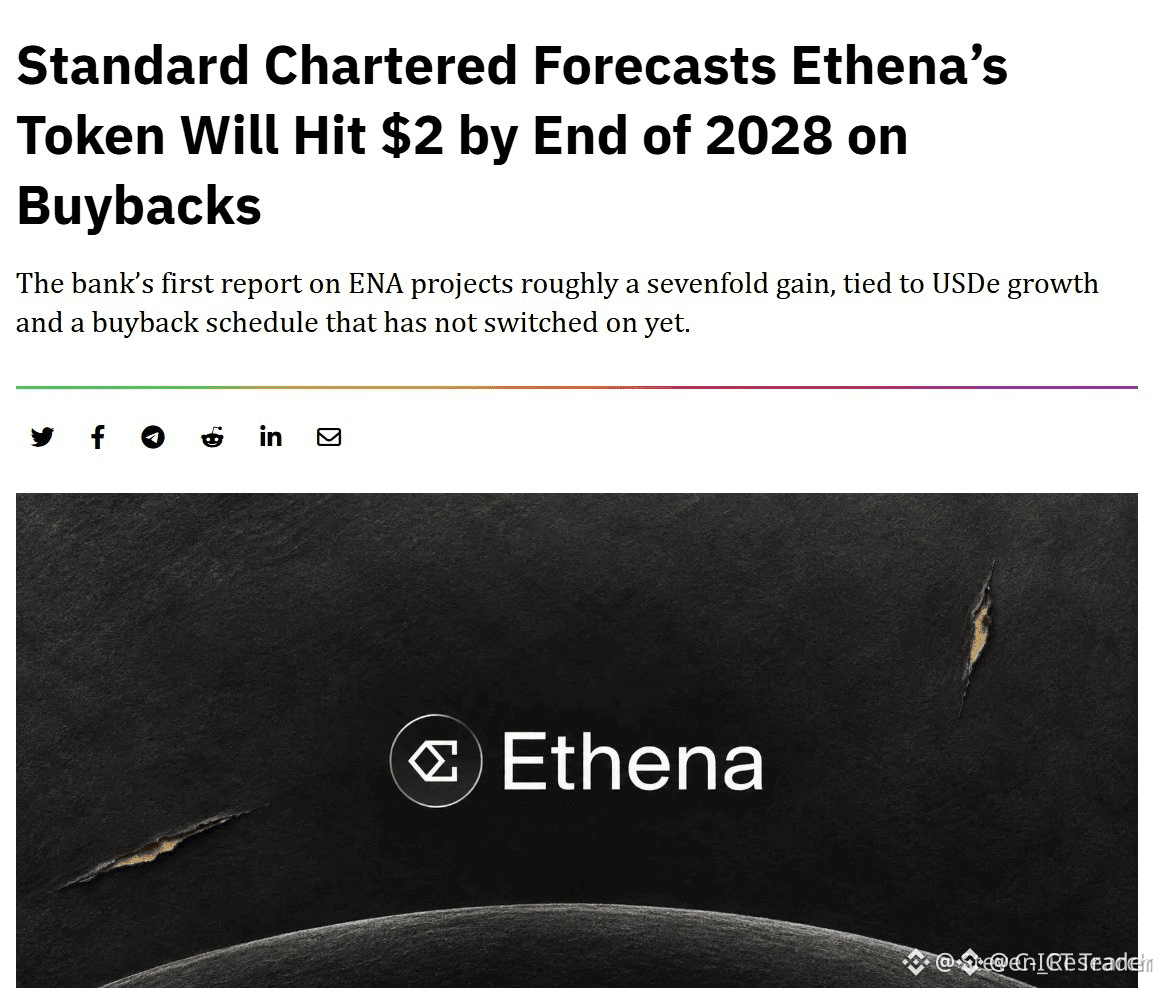
Standard Chartered projects $ENA reaching 2 USD backed by a forecasted expansion of $USDe supply to 40 billion. 🏦 However, institutional mechanics reveal critical structural nuances behind this valuation.
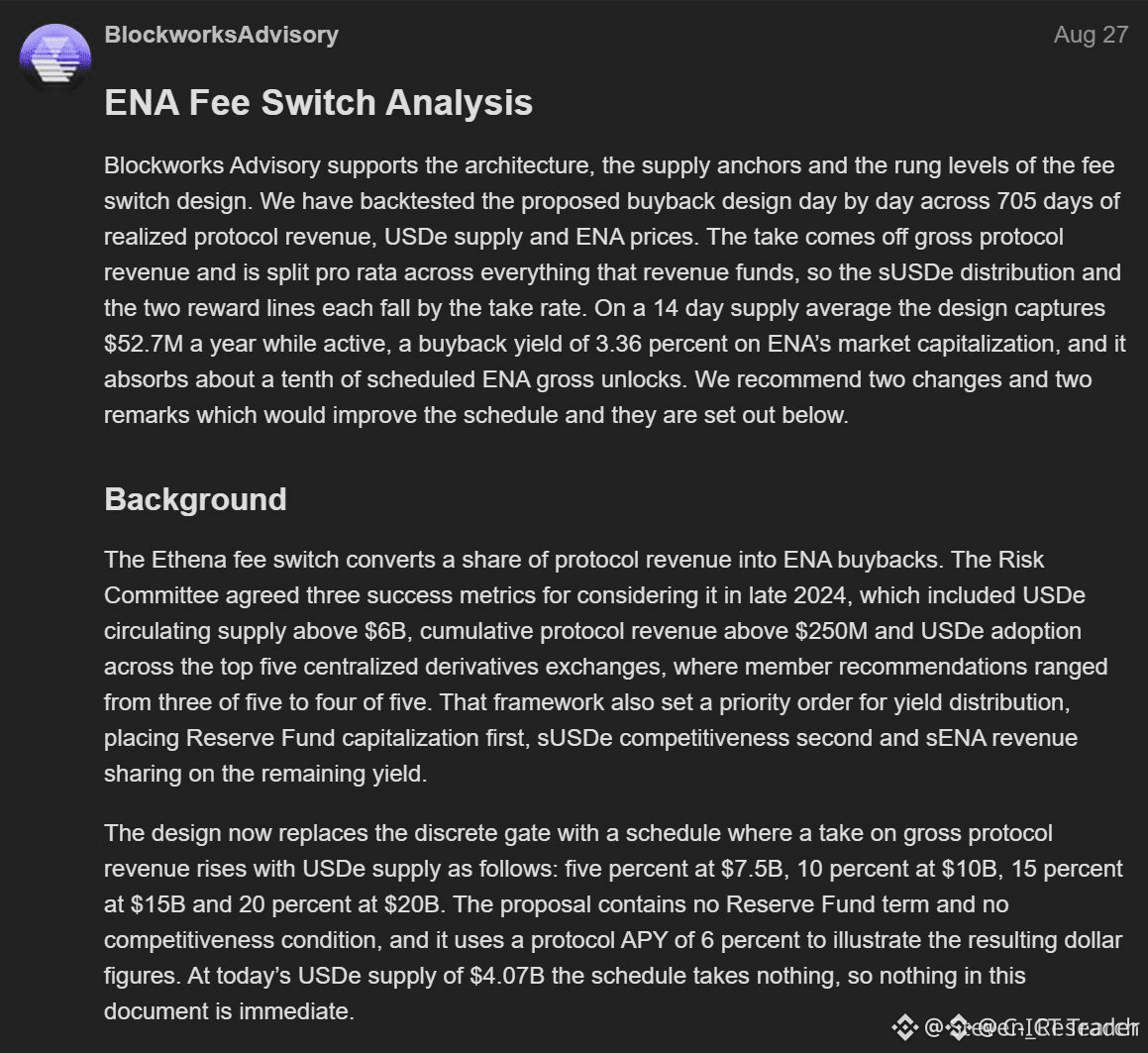
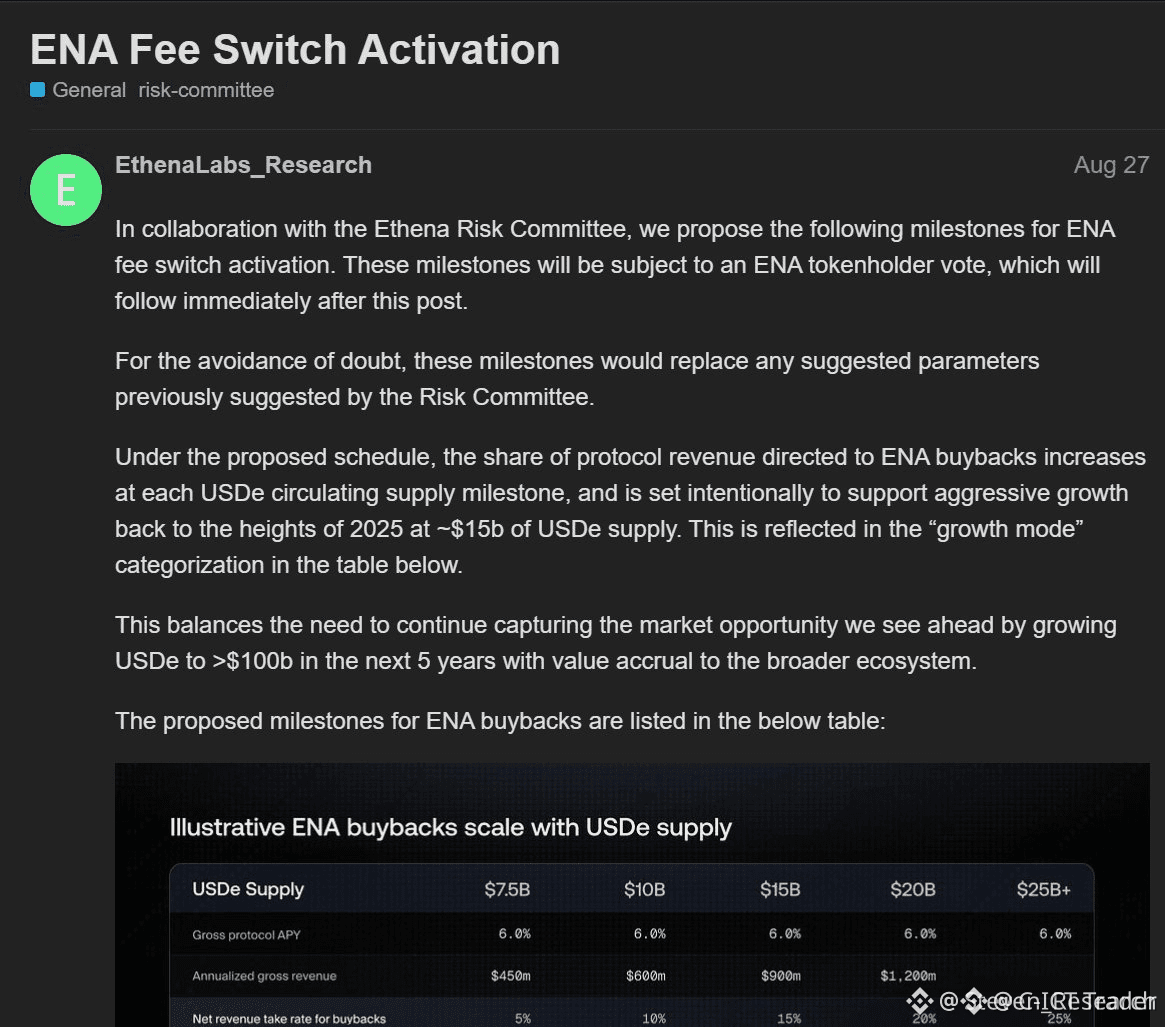
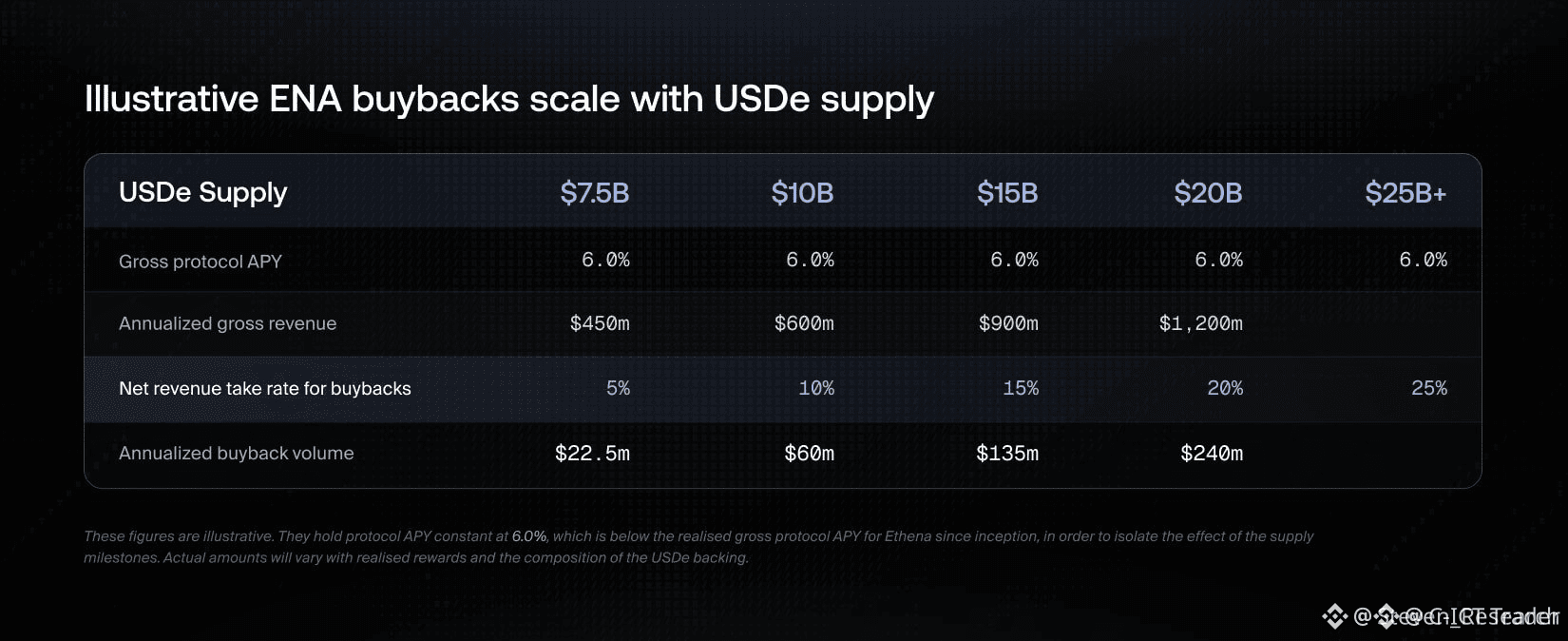
The protocol fee switch requires $USDe supply to clear the 7.5 billion threshold before activating, whereas current reserves sit at 4.9 billion. 📊 Furthermore, diverting yield toward token buybacks risks compressing staking returns, potentially slowing ecosystem expansion during compressed funding environments. 🔍
Smart money evaluates protocol cash flows over speculative projections rather than assuming linear revenue conversion. 💬 Do you believe protocol buybacks will drive structural re-expansion for $ENA or will yield compression limit upside? 👇
⚠️ Not financial advice. Always manage your risk. 🛡️
🏷️ #ENA #USDe #CryptoAnalysis #DeFi
🔥 💎
🚨 CAN $ENA REACH $2 ON USDE REVENUE EXPANSION? INSTITUTIONAL ANALYSIS 🔍
Target: 2.00 🚀
Standard Chartered projects $ENA reaching 2 USD backed by a forecasted expansion of $USDe supply to 40 billion. 🏦 However, institutional mechanics reveal critical structural nuances behind this valuation.
The protocol fee switch requires $USDe supply to clear the 7.5 billion threshold before activating, whereas current reserves sit at 4.9 billion. 📊 Furthermore, diverting yield toward token buybacks risks compressing staking returns, potentially slowing ecosystem expansion during compressed funding environments. 🔍
Smart money evaluates protocol cash flows over speculative projections rather than assuming linear revenue conversion. 💬 Do you believe protocol buybacks will drive structural re-expansion for $ENA or will yield compression limit upside? 👇
⚠️ Not financial advice. Always manage your risk. 🛡️
🏷️ #ENA #USDe #CryptoAnalysis #DeFi
🔥 💎
Target: 2.00 🚀
Standard Chartered projects $ENA reaching 2 USD backed by a forecasted expansion of $USDe supply to 40 billion. 🏦 However, institutional mechanics reveal critical structural nuances behind this valuation.
The protocol fee switch requires $USDe supply to clear the 7.5 billion threshold before activating, whereas current reserves sit at 4.9 billion. 📊 Furthermore, diverting yield toward token buybacks risks compressing staking returns, potentially slowing ecosystem expansion during compressed funding environments. 🔍
Smart money evaluates protocol cash flows over speculative projections rather than assuming linear revenue conversion. 💬 Do you believe protocol buybacks will drive structural re-expansion for $ENA or will yield compression limit upside? 👇
⚠️ Not financial advice. Always manage your risk. 🛡️
🏷️ #ENA #USDe #CryptoAnalysis #DeFi
🔥 💎
32

·
--
Verified
🦈 $HYPE ABSORBS INSTITUTIONAL RWA EXPANSION AS AUCTION FEES ACCELERATE DEFI LIQUIDITY! ⚡
Institutional appetite for real-world assets is quietly restructuring protocol demand mechanics. 🏦 Over 1,107 $HYPE was committed in HIP-3 auctions to deploy Corning ($GLW ) and the VanEck Gold Miners ETF ($GDX ) synth markets, signaling direct capital sink integration.
TradeXYZ’s deployment of traditional equity and commodity proxies creates structural order flow bridges for smart money. 📊 As institutional liquidity anchors into decentralized execution layers, protocol utility fee burns continue to absorb circulating supply.
💡 When traditional finance macro exposure meets friction-free decentralized venue routing, structural expansion becomes inevitable. 💬 Are you tracking these institutional RWA deployment metrics or sleeping on $HYPE ecosystem velocity? 👇
⚠️ Not financial advice. Always manage your risk. 🛡️
🏷️ #HYPE #RWA #DeFi #Crypto
🦈 🏦
🦈 $HYPE ABSORBS INSTITUTIONAL RWA EXPANSION AS AUCTION FEES ACCELERATE DEFI LIQUIDITY! ⚡
Institutional appetite for real-world assets is quietly restructuring protocol demand mechanics. 🏦 Over 1,107 $HYPE was committed in HIP-3 auctions to deploy Corning ($GLW ) and the VanEck Gold Miners ETF ($GDX ) synth markets, signaling direct capital sink integration.
TradeXYZ’s deployment of traditional equity and commodity proxies creates structural order flow bridges for smart money. 📊 As institutional liquidity anchors into decentralized execution layers, protocol utility fee burns continue to absorb circulating supply.
💡 When traditional finance macro exposure meets friction-free decentralized venue routing, structural expansion becomes inevitable. 💬 Are you tracking these institutional RWA deployment metrics or sleeping on $HYPE ecosystem velocity? 👇
⚠️ Not financial advice. Always manage your risk. 🛡️
🏷️ #HYPE #RWA #DeFi #Crypto
🦈 🏦
Institutional appetite for real-world assets is quietly restructuring protocol demand mechanics. 🏦 Over 1,107 $HYPE was committed in HIP-3 auctions to deploy Corning ($GLW ) and the VanEck Gold Miners ETF ($GDX ) synth markets, signaling direct capital sink integration.
TradeXYZ’s deployment of traditional equity and commodity proxies creates structural order flow bridges for smart money. 📊 As institutional liquidity anchors into decentralized execution layers, protocol utility fee burns continue to absorb circulating supply.
💡 When traditional finance macro exposure meets friction-free decentralized venue routing, structural expansion becomes inevitable. 💬 Are you tracking these institutional RWA deployment metrics or sleeping on $HYPE ecosystem velocity? 👇
⚠️ Not financial advice. Always manage your risk. 🛡️
🏷️ #HYPE #RWA #DeFi #Crypto
🦈 🏦
72

·
--
Bullish
🚀 DEFI KING SHOWING STRENGTH! Shorts attempted a wall and got instantly vaporized! 🔥
$AAVE
{future}(AAVEUSDT)
🟢 LIQUIDITY ZONE HIT 🟢
Short liquidation spotted 🧨
$1.8281K cleared at $182.81
Upside liquidity swept — Key resistance cleared with margin liquidations, looking for higher highs! 👀
🎯 Targets: $186.00, $190.00
#AAVE #DeFi #CryptoTrading
🚀 DEFI KING SHOWING STRENGTH! Shorts attempted a wall and got instantly vaporized! 🔥
$AAVE
🟢 LIQUIDITY ZONE HIT 🟢
Short liquidation spotted 🧨
$1.8281K cleared at $182.81
Upside liquidity swept — Key resistance cleared with margin liquidations, looking for higher highs! 👀
🎯 Targets: $186.00, $190.00
#AAVE #DeFi #CryptoTrading
$AAVE
🟢 LIQUIDITY ZONE HIT 🟢
Short liquidation spotted 🧨
$1.8281K cleared at $182.81
Upside liquidity swept — Key resistance cleared with margin liquidations, looking for higher highs! 👀
🎯 Targets: $186.00, $190.00
#AAVE #DeFi #CryptoTrading
11

🚀 DeFi Positioning — Structure Before Momentum
$ENA | $ONDO | $AAVE
ENA, ONDO, and AAVE remain connected to important DeFi and financial-infrastructure narratives. As liquidity returns to decentralized finance, these sectors can attract renewed attention. 🔥
Key Takeaway: 💡 Follow liquidity and structure before reacting to short-term volatility.
#ENA #ONDO #AAVE #DeFi #StrategicEntry
{future}(ENAUSDT)
{future}(ONDOUSDT)
{future}(AAVEUSDT)
🚀 DeFi Positioning — Structure Before Momentum
$ENA | $ONDO | $AAVE
ENA, ONDO, and AAVE remain connected to important DeFi and financial-infrastructure narratives. As liquidity returns to decentralized finance, these sectors can attract renewed attention. 🔥
Key Takeaway: 💡 Follow liquidity and structure before reacting to short-term volatility.
#ENA #ONDO #AAVE #DeFi #StrategicEntry
$ENA | $ONDO | $AAVE
ENA, ONDO, and AAVE remain connected to important DeFi and financial-infrastructure narratives. As liquidity returns to decentralized finance, these sectors can attract renewed attention. 🔥
Key Takeaway: 💡 Follow liquidity and structure before reacting to short-term volatility.
#ENA #ONDO #AAVE #DeFi #StrategicEntry
1
384
·
--
⚡ $PONS LAUNCHES V3 ARCHITECTURE TO NEUTRALIZE VALUE EXTRACTION AND EMPOWER CREATORS! 🦈
Pons has officially transitioned into its V3 framework, shifting structural control back to token deployers. 💡 By allowing creators to custom-configure bonding curve parameters for new issuances while leaving legacy V1 and V2 architecture intact, the protocol directly addresses structural inefficiencies.
This upgrade is engineered to limit predatory liquidity extraction, curb vampire activity, and refine order flow mechanics for market participants. 🔍 Giving deployers full discretion over bonding curve mechanics aligns creator incentives directly with long-term community value retention.
With reduced systemic friction and enhanced creator monetization, this structural pivot could significantly reshape launch dynamics. 💬 Will deployers stick to classic bonding curves or opt for custom liquidity models under V3? 👇
⚠️ Not financial advice. Always manage your risk. 🛡️
🏷️ #PONS #CryptoNews #Tokenomics #DeFi
🎯 🦈
⚡ $PONS LAUNCHES V3 ARCHITECTURE TO NEUTRALIZE VALUE EXTRACTION AND EMPOWER CREATORS! 🦈
Pons has officially transitioned into its V3 framework, shifting structural control back to token deployers. 💡 By allowing creators to custom-configure bonding curve parameters for new issuances while leaving legacy V1 and V2 architecture intact, the protocol directly addresses structural inefficiencies.
This upgrade is engineered to limit predatory liquidity extraction, curb vampire activity, and refine order flow mechanics for market participants. 🔍 Giving deployers full discretion over bonding curve mechanics aligns creator incentives directly with long-term community value retention.
With reduced systemic friction and enhanced creator monetization, this structural pivot could significantly reshape launch dynamics. 💬 Will deployers stick to classic bonding curves or opt for custom liquidity models under V3? 👇
⚠️ Not financial advice. Always manage your risk. 🛡️
🏷️ #PONS #CryptoNews #Tokenomics #DeFi
🎯 🦈
Pons has officially transitioned into its V3 framework, shifting structural control back to token deployers. 💡 By allowing creators to custom-configure bonding curve parameters for new issuances while leaving legacy V1 and V2 architecture intact, the protocol directly addresses structural inefficiencies.
This upgrade is engineered to limit predatory liquidity extraction, curb vampire activity, and refine order flow mechanics for market participants. 🔍 Giving deployers full discretion over bonding curve mechanics aligns creator incentives directly with long-term community value retention.
With reduced systemic friction and enhanced creator monetization, this structural pivot could significantly reshape launch dynamics. 💬 Will deployers stick to classic bonding curves or opt for custom liquidity models under V3? 👇
⚠️ Not financial advice. Always manage your risk. 🛡️
🏷️ #PONS #CryptoNews #Tokenomics #DeFi
🎯 🦈
444
🚀 Emerging DeFi — Before Expansion
$ONDO | $SKY | $PIPPIN
ONDO, SKY, and PIPPIN represent different areas of the evolving crypto market. Their price behavior can become increasingly sensitive to liquidity and market sentiment. 📊
Key Takeaway: ⚡ Watch participation before chasing expansion.
#ONDO #SKY #PIPPIN #DeFi #MarketWatch
{future}(ONDOUSDT)
{future}(SKYUSDT)
{future}(PIPPINUSDT)
🚀 Emerging DeFi — Before Expansion
$ONDO | $SKY | $PIPPIN
ONDO, SKY, and PIPPIN represent different areas of the evolving crypto market. Their price behavior can become increasingly sensitive to liquidity and market sentiment. 📊
Key Takeaway: ⚡ Watch participation before chasing expansion.
#ONDO #SKY #PIPPIN #DeFi #MarketWatch
$ONDO | $SKY | $PIPPIN
ONDO, SKY, and PIPPIN represent different areas of the evolving crypto market. Their price behavior can become increasingly sensitive to liquidity and market sentiment. 📊
Key Takeaway: ⚡ Watch participation before chasing expansion.
#ONDO #SKY #PIPPIN #DeFi #MarketWatch
1
22
DeFi Leaders — Positioning Before Expansion
$AAVE | $UNI | $CRV
AAVE, UNI, and CRV remain important names within decentralized finance. Their market behavior can become increasingly relevant when liquidity rotates back toward DeFi protocols.
Key Takeaway: DeFi momentum often starts with liquidity returning to the sector.
#AAVE #UNI #CRV #DeFi #CryptoMomentum
{future}(AAVEUSDT)
{future}(SUIUSDT)
{future}(CRVUSDT)
DeFi Leaders — Positioning Before Expansion
$AAVE | $UNI | $CRV
AAVE, UNI, and CRV remain important names within decentralized finance. Their market behavior can become increasingly relevant when liquidity rotates back toward DeFi protocols.
Key Takeaway: DeFi momentum often starts with liquidity returning to the sector.
#AAVE #UNI #CRV #DeFi #CryptoMomentum
$AAVE | $UNI | $CRV
AAVE, UNI, and CRV remain important names within decentralized finance. Their market behavior can become increasingly relevant when liquidity rotates back toward DeFi protocols.
Key Takeaway: DeFi momentum often starts with liquidity returning to the sector.
#AAVE #UNI #CRV #DeFi #CryptoMomentum
1
104
DeFi Yield Narrative — Building Attention
$PENDLE | $ENA | $ETHFI
PENDLE, ENA, and ETHFI remain connected to DeFi, yield, and liquid-staking narratives. These sectors can attract capital when decentralized finance activity begins expanding.
Key Takeaway: Watch liquidity flows before expecting acceleration.
#PENDLE #ENA #ETHFI #DeFi #StrategicEntry
{future}(PENDLEUSDT)
{future}(ENAUSDT)
{future}(ETHFIUSDT)
DeFi Yield Narrative — Building Attention
$PENDLE | $ENA | $ETHFI
PENDLE, ENA, and ETHFI remain connected to DeFi, yield, and liquid-staking narratives. These sectors can attract capital when decentralized finance activity begins expanding.
Key Takeaway: Watch liquidity flows before expecting acceleration.
#PENDLE #ENA #ETHFI #DeFi #StrategicEntry
$PENDLE | $ENA | $ETHFI
PENDLE, ENA, and ETHFI remain connected to DeFi, yield, and liquid-staking narratives. These sectors can attract capital when decentralized finance activity begins expanding.
Key Takeaway: Watch liquidity flows before expecting acceleration.
#PENDLE #ENA #ETHFI #DeFi #StrategicEntry
1
237
DeFi & Cross-Chain — Watch the Structure
$RUNE | $AAVE | $ZRO
RUNE, AAVE, and ZRO combine DeFi and cross-chain infrastructure narratives. Their market performance can become increasingly sensitive to liquidity returning across decentralized markets.
Key Takeaway: Cross-chain and DeFi liquidity remain important momentum indicators.
#RUNE #AAVE #ZRO #DeFi #CryptoMomentum
{future}(RUNEUSDT)
{future}(AAVEUSDT)
{future}(ZROUSDT)
DeFi & Cross-Chain — Watch the Structure
$RUNE | $AAVE | $ZRO
RUNE, AAVE, and ZRO combine DeFi and cross-chain infrastructure narratives. Their market performance can become increasingly sensitive to liquidity returning across decentralized markets.
Key Takeaway: Cross-chain and DeFi liquidity remain important momentum indicators.
#RUNE #AAVE #ZRO #DeFi #CryptoMomentum
$RUNE | $AAVE | $ZRO
RUNE, AAVE, and ZRO combine DeFi and cross-chain infrastructure narratives. Their market performance can become increasingly sensitive to liquidity returning across decentralized markets.
Key Takeaway: Cross-chain and DeFi liquidity remain important momentum indicators.
#RUNE #AAVE #ZRO #DeFi #CryptoMomentum
1
211
·
--
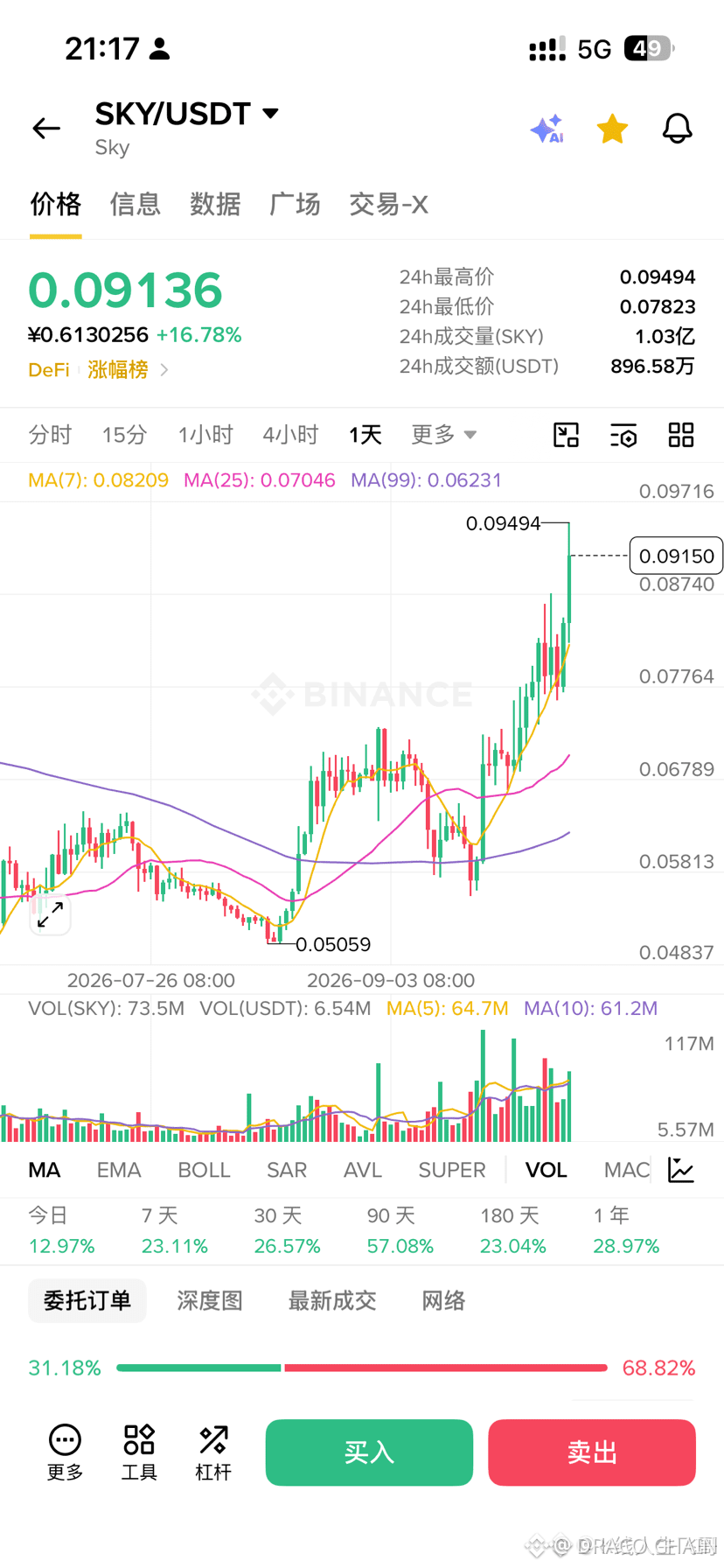
🦈 $SKY SURGES 50% AS INSTITUTIONAL DEFI VALUE DISCOVERY EXPANDS! ⚡
$SKY has expanded 50% following our structural breakdown in September. Smart money systematically absorbed sell-side liquidity while retail dismissed the protocol during its low-volatility range. Legacy DeFi assets like $SKY , $UNI , and $AAVE are entering an active repricing phase driven by real yield and institutional value accrual. 📊
Market structure shifts quickly once price sweeps upside inefficiency, making entries after major expansion unfavorable from a risk-to-reward perspective. 🔍 We are currently analyzing additional undervalued DeFi protocols printing clean institutional accumulation blocks. 💡
💬 Which legacy DeFi protocol is sitting on your watchlist for the next structural expansion? 👇
⚠️ Not financial advice. Always manage your risk. 🛡️
🏷️ #SKY #DeFi #MarketStructure #Crypto
🦈 ⚡
🦈 $SKY SURGES 50% AS INSTITUTIONAL DEFI VALUE DISCOVERY EXPANDS! ⚡
$SKY has expanded 50% following our structural breakdown in September. Smart money systematically absorbed sell-side liquidity while retail dismissed the protocol during its low-volatility range. Legacy DeFi assets like $SKY , $UNI , and $AAVE are entering an active repricing phase driven by real yield and institutional value accrual. 📊
Market structure shifts quickly once price sweeps upside inefficiency, making entries after major expansion unfavorable from a risk-to-reward perspective. 🔍 We are currently analyzing additional undervalued DeFi protocols printing clean institutional accumulation blocks. 💡
💬 Which legacy DeFi protocol is sitting on your watchlist for the next structural expansion? 👇
⚠️ Not financial advice. Always manage your risk. 🛡️
🏷️ #SKY #DeFi #MarketStructure #Crypto
🦈 ⚡
$SKY has expanded 50% following our structural breakdown in September. Smart money systematically absorbed sell-side liquidity while retail dismissed the protocol during its low-volatility range. Legacy DeFi assets like $SKY , $UNI , and $AAVE are entering an active repricing phase driven by real yield and institutional value accrual. 📊
Market structure shifts quickly once price sweeps upside inefficiency, making entries after major expansion unfavorable from a risk-to-reward perspective. 🔍 We are currently analyzing additional undervalued DeFi protocols printing clean institutional accumulation blocks. 💡
💬 Which legacy DeFi protocol is sitting on your watchlist for the next structural expansion? 👇
⚠️ Not financial advice. Always manage your risk. 🛡️
🏷️ #SKY #DeFi #MarketStructure #Crypto
🦈 ⚡
17

·
--
🚨 Cardano’s DeFi TVL has dropped over 50%, signaling weak retail liquidity and protocol stress. RealFi aims to revive it by introducing credit-backed instruments, letting institutions redeem issuers while stakers absorb losses after reserves. This shift could rebalance risk but depends on institutional adoption. Can credit restore trust in ADA’s DeFi ecosystem? #DeFi
$ADA #TradingSignal #CryptoAnalysis
🚨 Cardano’s DeFi TVL has dropped over 50%, signaling weak retail liquidity and protocol stress. RealFi aims to revive it by introducing credit-backed instruments, letting institutions redeem issuers while stakers absorb losses after reserves. This shift could rebalance risk but depends on institutional adoption. Can credit restore trust in ADA’s DeFi ecosystem? #DeFi
$ADA #TradingSignal #CryptoAnalysis
$ADA #TradingSignal #CryptoAnalysis

31

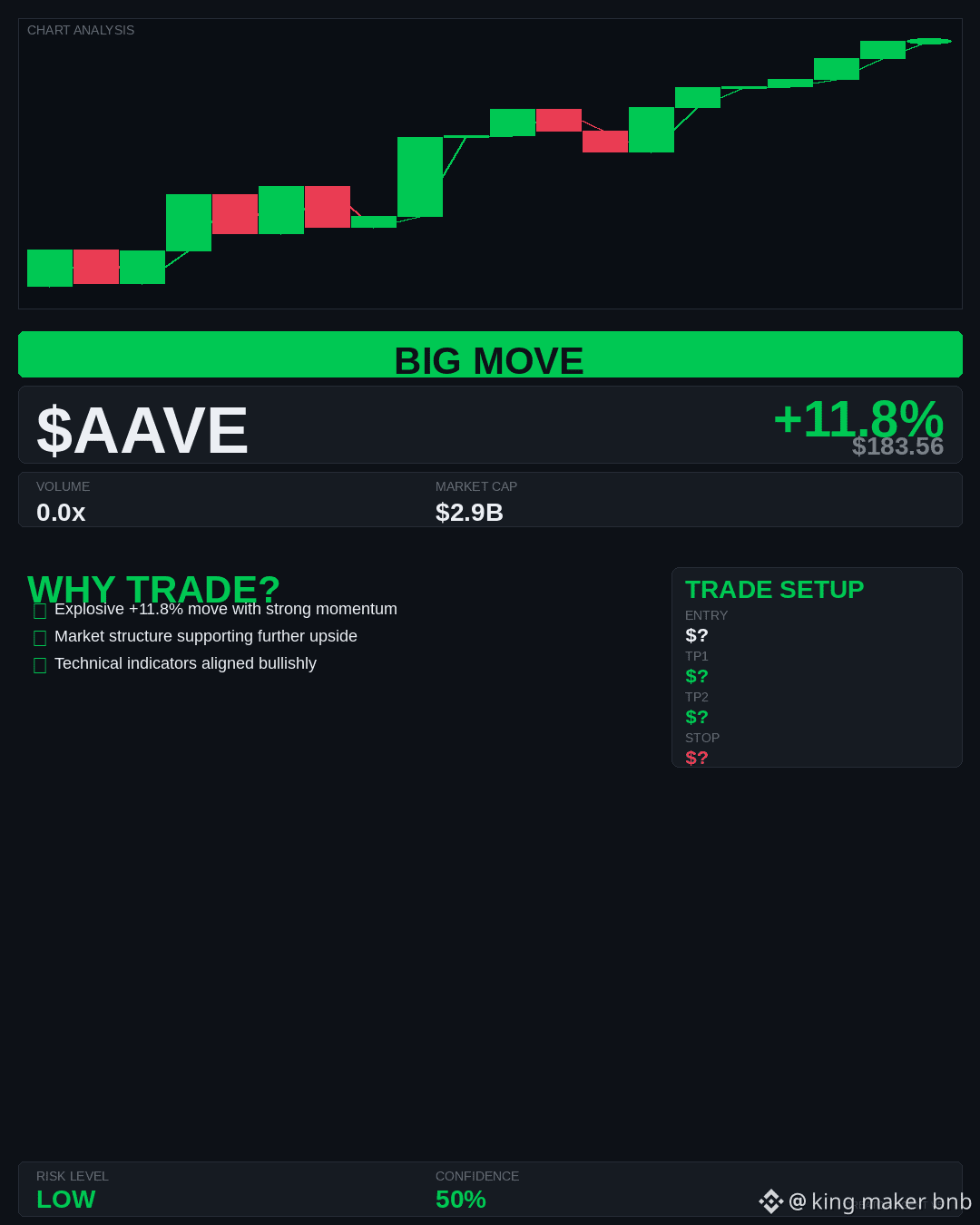
$AAVE just ripped +11.8% in 24h! This DeFi blue-chip is finally showing some serious strength. 🚀
Entry zone for $AAVE around $180-$185. First target is looking solid at $195, pushing towards $205 if momentum holds. Place your stop loss tight below $175. This strong move aligns perfectly with the renewed interest in the DeFi sector, and the conviction is palpable. While volume is still normal, the current momentum is undeniable, making it a key mover to watch. Keep an eye on incoming volume to confirm sustainability.
#AAVE #Write2Earn #DeFi #CryptoTrading
$AAVE just ripped +11.8% in 24h! This DeFi blue-chip is finally showing some serious strength. 🚀
Entry zone for $AAVE around $180-$185. First target is looking solid at $195, pushing towards $205 if momentum holds. Place your stop loss tight below $175. This strong move aligns perfectly with the renewed interest in the DeFi sector, and the conviction is palpable. While volume is still normal, the current momentum is undeniable, making it a key mover to watch. Keep an eye on incoming volume to confirm sustainability.
#AAVE #Write2Earn #DeFi #CryptoTrading
Entry zone for $AAVE around $180-$185. First target is looking solid at $195, pushing towards $205 if momentum holds. Place your stop loss tight below $175. This strong move aligns perfectly with the renewed interest in the DeFi sector, and the conviction is palpable. While volume is still normal, the current momentum is undeniable, making it a key mover to watch. Keep an eye on incoming volume to confirm sustainability.
#AAVE #Write2Earn #DeFi #CryptoTrading
91

If you are still treating real-world asset tokenization like a distant narrative, you are setting yourself up for an expensive mistake.
Most traders burn their capital chasing hyper-volatile microcaps and getting dumped on by insiders. They miss the steady structural migration happening right under their nose simply because it does not pump overnight.
Skeptics argue that bringing traditional assets onchain creates unnecessary compliance friction and compromises decentralization. But look at where actual sticky yield is moving. Protocols like $ONDO are already anchoring hundreds of millions in tokenized short-term treasuries, giving onchain capital direct exposure to risk-free real yield without leaving the ecosystem.
Infrastructure networks are absorbing this demand rapidly. Cross-chain communication networks like $LINK are facilitating institutional clearing rails, while platforms like $PENDLE split and trade these yield streams with surgical precision. The debate over whether traditional finance belongs onchain is effectively over; the only remaining question is how fast settlement efficiency forces the rest of the market to follow.
Do you see tokenized assets becoming the primary driver of DeFi liquidity, or will regulatory hurdles slow adoption down?
#RWA #DeFi #Tokenization
If you are still treating real-world asset tokenization like a distant narrative, you are setting yourself up for an expensive mistake.
Most traders burn their capital chasing hyper-volatile microcaps and getting dumped on by insiders. They miss the steady structural migration happening right under their nose simply because it does not pump overnight.
Skeptics argue that bringing traditional assets onchain creates unnecessary compliance friction and compromises decentralization. But look at where actual sticky yield is moving. Protocols like $ONDO are already anchoring hundreds of millions in tokenized short-term treasuries, giving onchain capital direct exposure to risk-free real yield without leaving the ecosystem.
Infrastructure networks are absorbing this demand rapidly. Cross-chain communication networks like $LINK are facilitating institutional clearing rails, while platforms like $PENDLE split and trade these yield streams with surgical precision. The debate over whether traditional finance belongs onchain is effectively over; the only remaining question is how fast settlement efficiency forces the rest of the market to follow.
Do you see tokenized assets becoming the primary driver of DeFi liquidity, or will regulatory hurdles slow adoption down?
#RWA #DeFi #Tokenization
Most traders burn their capital chasing hyper-volatile microcaps and getting dumped on by insiders. They miss the steady structural migration happening right under their nose simply because it does not pump overnight.
Skeptics argue that bringing traditional assets onchain creates unnecessary compliance friction and compromises decentralization. But look at where actual sticky yield is moving. Protocols like $ONDO are already anchoring hundreds of millions in tokenized short-term treasuries, giving onchain capital direct exposure to risk-free real yield without leaving the ecosystem.
Infrastructure networks are absorbing this demand rapidly. Cross-chain communication networks like $LINK are facilitating institutional clearing rails, while platforms like $PENDLE split and trade these yield streams with surgical precision. The debate over whether traditional finance belongs onchain is effectively over; the only remaining question is how fast settlement efficiency forces the rest of the market to follow.
Do you see tokenized assets becoming the primary driver of DeFi liquidity, or will regulatory hurdles slow adoption down?
#RWA #DeFi #Tokenization
158
Log in to explore more content
Join global crypto users on Binance Square
⚡️ Get latest and useful information about crypto.
💬 Trusted by the world’s largest crypto exchange.
👍 Discover real insights from verified creators.
Email / Phone number
Trending Topics
1
#NFPWatch
10.8M views
19,031 Discussing
2
#BitcoinFundingRateTriplesTo10%
120,122 views
1,019 Discussing
3
#BitcoinSurpasses$86KUp2.99%
36,479 views
99 Discussing
4
#ZcashFalls21%FromSeptemberPeak
69,879 views
763 Discussing
5
#USSeptemberPayrollsAdd29KUnemploymentRises4.2%
57,854 views
454 Discussing
6
#XRPPostsFirstThreeGreenMonthsInQ3
46,386 views
633 Discussing
7
#BNBChainTokenizedStocksTop$1BAt30%Share
20,491 views
34 Discussing
8
#BitcoinRisesToward$85K
104,982 views
149 Discussing
9
#AmazonPlansToSell$8BNvidiaChips
7,434 views
88 Discussing
10
#NEARFallsToAround$4.70Down14%
46,994 views
116 Discussing