

#blockchainsecurity
blockchainsecurity
650,767 views
1,656 Discussing
Hot
Latest

·
--
🚨 ZACHXBT EXPOSES ON-CHAIN ILLICIT FLOWS LINKED TO $USDT CARD RAILS! 🔍
🔍 On-chain investigator ZachXBT has highlighted severe compliance vulnerabilities, calling out UPay for allegedly enabling sanctioned marketplace Xinbi to white-label crypto Visa cards. The flagged transactions are tied to illicit activities including money laundering and fraudulent schemes, exposing critical friction between real-world payment integrations and institutional regulatory oversight.
🏦 As institutional capital demands transparency, unmonitored liquidity bridges create structural headline risk for broader market rails. Smart money tracks these structural disclosures closely, as regulatory enforcement actions often trigger localized liquidity shifts across major stablecoin pairs like $USDT . 💬 How will tighter regulatory scrutiny on payment rails impact overall market liquidity this quarter? 👇
⚠️ Not financial advice. Always manage your risk. 🛡️
🏷️ #USDT #OnChain #CryptoCompliance #BlockchainSecurity
🛡️ 🔍
🚨 ZACHXBT EXPOSES ON-CHAIN ILLICIT FLOWS LINKED TO $USDT CARD RAILS! 🔍
🔍 On-chain investigator ZachXBT has highlighted severe compliance vulnerabilities, calling out UPay for allegedly enabling sanctioned marketplace Xinbi to white-label crypto Visa cards. The flagged transactions are tied to illicit activities including money laundering and fraudulent schemes, exposing critical friction between real-world payment integrations and institutional regulatory oversight.
🏦 As institutional capital demands transparency, unmonitored liquidity bridges create structural headline risk for broader market rails. Smart money tracks these structural disclosures closely, as regulatory enforcement actions often trigger localized liquidity shifts across major stablecoin pairs like $USDT . 💬 How will tighter regulatory scrutiny on payment rails impact overall market liquidity this quarter? 👇
⚠️ Not financial advice. Always manage your risk. 🛡️
🏷️ #USDT #OnChain #CryptoCompliance #BlockchainSecurity
🛡️ 🔍
🔍 On-chain investigator ZachXBT has highlighted severe compliance vulnerabilities, calling out UPay for allegedly enabling sanctioned marketplace Xinbi to white-label crypto Visa cards. The flagged transactions are tied to illicit activities including money laundering and fraudulent schemes, exposing critical friction between real-world payment integrations and institutional regulatory oversight.
🏦 As institutional capital demands transparency, unmonitored liquidity bridges create structural headline risk for broader market rails. Smart money tracks these structural disclosures closely, as regulatory enforcement actions often trigger localized liquidity shifts across major stablecoin pairs like $USDT . 💬 How will tighter regulatory scrutiny on payment rails impact overall market liquidity this quarter? 👇
⚠️ Not financial advice. Always manage your risk. 🛡️
🏷️ #USDT #OnChain #CryptoCompliance #BlockchainSecurity
🛡️ 🔍
7


·
--
🧩 One Incident Can Create Two Different Recovery Problems
Blockstream reported that an attacker exploited a rangeproof-verification cache bug on September 6. Federation signers released approximately 3,996 BTC on Bitcoin mainnet before the Liquid network was paused.
The attacker later returned around 3,400 BTC, leaving approximately 600 BTC subject to continuing recovery and accounting efforts at the time of the later assessment.
The chain problem and reserve problem are related, but they are not identical.
Replaying the chain without the faulty cache allowed invalid transactions and their descendants to be identified deterministically. That helps restore confidence in chain history. It does not automatically replace every reserve asset or settle every outstanding accounting question.
Sidechain security should be measured across code correctness, federation controls, peg accounting, monitoring and recovery procedures.
Reopening operations should depend on independently verified chain history and reserve reconciliation—not only the amount already recovered.
Disclaimer: Protocol-security commentary only. Recovery totals and incident status may change as technical and financial reviews continue.
$BTC
Liquid Network • Blockstream • Bitcoin Infrastructure
#Bitcoin #Sidechains #BlockchainSecurity
🧩 One Incident Can Create Two Different Recovery Problems
Blockstream reported that an attacker exploited a rangeproof-verification cache bug on September 6. Federation signers released approximately 3,996 BTC on Bitcoin mainnet before the Liquid network was paused.
The attacker later returned around 3,400 BTC, leaving approximately 600 BTC subject to continuing recovery and accounting efforts at the time of the later assessment.
The chain problem and reserve problem are related, but they are not identical.
Replaying the chain without the faulty cache allowed invalid transactions and their descendants to be identified deterministically. That helps restore confidence in chain history. It does not automatically replace every reserve asset or settle every outstanding accounting question.
Sidechain security should be measured across code correctness, federation controls, peg accounting, monitoring and recovery procedures.
Reopening operations should depend on independently verified chain history and reserve reconciliation—not only the amount already recovered.
Disclaimer: Protocol-security commentary only. Recovery totals and incident status may change as technical and financial reviews continue.
$BTC
Liquid Network • Blockstream • Bitcoin Infrastructure
#Bitcoin #Sidechains #BlockchainSecurity
Blockstream reported that an attacker exploited a rangeproof-verification cache bug on September 6. Federation signers released approximately 3,996 BTC on Bitcoin mainnet before the Liquid network was paused.
The attacker later returned around 3,400 BTC, leaving approximately 600 BTC subject to continuing recovery and accounting efforts at the time of the later assessment.
The chain problem and reserve problem are related, but they are not identical.
Replaying the chain without the faulty cache allowed invalid transactions and their descendants to be identified deterministically. That helps restore confidence in chain history. It does not automatically replace every reserve asset or settle every outstanding accounting question.
Sidechain security should be measured across code correctness, federation controls, peg accounting, monitoring and recovery procedures.
Reopening operations should depend on independently verified chain history and reserve reconciliation—not only the amount already recovered.
Disclaimer: Protocol-security commentary only. Recovery totals and incident status may change as technical and financial reviews continue.
$BTC
Liquid Network • Blockstream • Bitcoin Infrastructure
#Bitcoin #Sidechains #BlockchainSecurity

76

·
--
Near Intents really pulled through this time! It intercepted a $50 million Bitget hacker transaction—after most of the stolen funds were rejected, they ran off through other routes. This proves that a permissionless intents system can come in handy at critical moments! $NEAR
Near Intents just blocked $50M in Bitget hacker swaps! Most rejected funds later moved through other channels, but this shows how permissionless systems can step up in critical moments. $NEAR
#加密安全 #区块链安全 #HackerAttack #BlockchainSecurity
Near Intents really pulled through this time! It intercepted a $50 million Bitget hacker transaction—after most of the stolen funds were rejected, they ran off through other routes. This proves that a permissionless intents system can come in handy at critical moments! $NEAR
Near Intents just blocked $50M in Bitget hacker swaps! Most rejected funds later moved through other channels, but this shows how permissionless systems can step up in critical moments. $NEAR
#加密安全 #区块链安全 #HackerAttack #BlockchainSecurity
Near Intents just blocked $50M in Bitget hacker swaps! Most rejected funds later moved through other channels, but this shows how permissionless systems can step up in critical moments. $NEAR
#加密安全 #区块链安全 #HackerAttack #BlockchainSecurity
222
·
--
Chainlink has just released a new version of CCIP! This move is perfectly timed right after the industry experienced a $292M hacker attack. The new CCIP allows projects to add custom security checks to prevent repeating the same mistakes made by other bridging technologies. Security is controllable—that’s how Web3 should be! #区块链安全 #跨链桥 $LINK $CCIP
Chainlink just dropped a new version of CCIP! Perfect timing after that $292M hack shook the industry. The update lets projects add custom security checks to avoid vulnerabilities that plagued other bridges. More control over security, this is how Web3 should be! #BlockchainSecurity #CrossChainBridges $LINK $CCIP
Chainlink has just released a new version of CCIP! This move is perfectly timed right after the industry experienced a $292M hacker attack. The new CCIP allows projects to add custom security checks to prevent repeating the same mistakes made by other bridging technologies. Security is controllable—that’s how Web3 should be! #区块链安全 #跨链桥 $LINK $CCIP
Chainlink just dropped a new version of CCIP! Perfect timing after that $292M hack shook the industry. The update lets projects add custom security checks to avoid vulnerabilities that plagued other bridges. More control over security, this is how Web3 should be! #BlockchainSecurity #CrossChainBridges $LINK $CCIP
Chainlink just dropped a new version of CCIP! Perfect timing after that $292M hack shook the industry. The update lets projects add custom security checks to avoid vulnerabilities that plagued other bridges. More control over security, this is how Web3 should be! #BlockchainSecurity #CrossChainBridges $LINK $CCIP
216
·
--
Chainlink has just upgraded its cross-chain bridge technology! This is a timely response after a rival suffered a $292M hack. The new feature allows projects to add custom security checks to prevent single-point failure vulnerabilities. Safety first—Chainlink once again proving industry leadership! #区块链安全 $LINK
Chainlink just upgraded its cross-chain bridge tech! This comes timely after a rival suffered a $292M hack. The new feature lets projects add custom security checks to prevent single-point failure vulnerabilities. Safety first, Chainlink once again proving industry leadership! #BlockchainSecurity $LINK
Chainlink has just upgraded its cross-chain bridge technology! This is a timely response after a rival suffered a $292M hack. The new feature allows projects to add custom security checks to prevent single-point failure vulnerabilities. Safety first—Chainlink once again proving industry leadership! #区块链安全 $LINK
Chainlink just upgraded its cross-chain bridge tech! This comes timely after a rival suffered a $292M hack. The new feature lets projects add custom security checks to prevent single-point failure vulnerabilities. Safety first, Chainlink once again proving industry leadership! #BlockchainSecurity $LINK
Chainlink just upgraded its cross-chain bridge tech! This comes timely after a rival suffered a $292M hack. The new feature lets projects add custom security checks to prevent single-point failure vulnerabilities. Safety first, Chainlink once again proving industry leadership! #BlockchainSecurity $LINK
358

#BitgetHackerMoves$83MStolenXRP
🚨 $83M Stolen XRP on the Move
The Bitget hacker has reportedly moved around 54 million XRP worth approximately $83 million from wallets linked to the September 24 security breach. Around $75 million in XRP remains across the original wallets.
The transfers show the stolen XRP being distributed across multiple addresses, making recovery and tracking more challenging. Importantly, moving the tokens does not by itself prove they have been sold.
The incident has put renewed attention on exchange security, on-chain tracking and XRP liquidity. Bitget says the broader incident involved approximately $387.5 million in assets and that customer balances remain protected.
#Bitget #XRP’ #CryptoNews🚀🔥V #BlockchainSecurity
$XRP
#BitgetHackerMoves$83MStolenXRP
🚨 $83M Stolen XRP on the Move
The Bitget hacker has reportedly moved around 54 million XRP worth approximately $83 million from wallets linked to the September 24 security breach. Around $75 million in XRP remains across the original wallets.
The transfers show the stolen XRP being distributed across multiple addresses, making recovery and tracking more challenging. Importantly, moving the tokens does not by itself prove they have been sold.
The incident has put renewed attention on exchange security, on-chain tracking and XRP liquidity. Bitget says the broader incident involved approximately $387.5 million in assets and that customer balances remain protected.
#Bitget #XRP’ #CryptoNews🚀🔥V #BlockchainSecurity
$XRP
🚨 $83M Stolen XRP on the Move
The Bitget hacker has reportedly moved around 54 million XRP worth approximately $83 million from wallets linked to the September 24 security breach. Around $75 million in XRP remains across the original wallets.
The transfers show the stolen XRP being distributed across multiple addresses, making recovery and tracking more challenging. Importantly, moving the tokens does not by itself prove they have been sold.
The incident has put renewed attention on exchange security, on-chain tracking and XRP liquidity. Bitget says the broader incident involved approximately $387.5 million in assets and that customer balances remain protected.
#Bitget #XRP’ #CryptoNews🚀🔥V #BlockchainSecurity
$XRP
87
·
--
Just now, after the $ZANO blockchain was hacked, it was forced to roll back a month of blocks! The team rolled back to the height before the 6th hard fork that introduced Gateway Addresses—essentially sending the entire blockchain back by one month. 😱 This is rarely seen in blockchain history, showing just how serious the security issue was! #区块链安全 #DeFi
Zano blockchain got hacked and they had to roll back a whole month! The team rolled back to before the 6th hard fork introduced Gateway Addresses, essentially making the blockchain go back in time. 🤯 This rarely happens in blockchain history, showing how serious the security issue was! #blockchainsecurity #DeFi
Just now, after the $ZANO blockchain was hacked, it was forced to roll back a month of blocks! The team rolled back to the height before the 6th hard fork that introduced Gateway Addresses—essentially sending the entire blockchain back by one month. 😱 This is rarely seen in blockchain history, showing just how serious the security issue was! #区块链安全 #DeFi
Zano blockchain got hacked and they had to roll back a whole month! The team rolled back to before the 6th hard fork introduced Gateway Addresses, essentially making the blockchain go back in time. 🤯 This rarely happens in blockchain history, showing how serious the security issue was! #blockchainsecurity #DeFi
Zano blockchain got hacked and they had to roll back a whole month! The team rolled back to before the 6th hard fork introduced Gateway Addresses, essentially making the blockchain go back in time. 🤯 This rarely happens in blockchain history, showing how serious the security issue was! #blockchainsecurity #DeFi
18

·
--
How to Stay Safe in 2026
Cryptocurrency has grown from a niche experiment into a trillion-dollar ecosystem, and with that growth has come an equally explosive rise in wallet hacks, phishing scams and exchange breaches. Every year, billions of dollars in digital assets vanish, often stolen not through some Hollywood-style code-breaking, but through simple human error: a fake app, a malicious browser extension, a convincing phishing email, or a moment of carelessness with a seed phrase.
Unlike a bank account, there is no fraud department to call once your crypto is gone. Transactions are irreversible. That is the trade-off of decentralization: full control, but full responsibility too.
How Wallets Get Hacked
Most attacks fall into a few familiar patterns: Phishing sites and fake apps that mimic real wallet interfaces to steal login credentials or seed phrases, malicious browser extensions that quietly intercept wallet connections, social engineering, where scammers pose as "support staff" to trick users into revealing private keys.
How to Protect Yourself
1. Use a hardware wallet, devices like Ledger or Trezor keep your private keys offline, out of reach from remote attackers.
2. Never share your seed phrase. No legitimate service will ever ask for it.
3. Enable 2FA with an authenticator app, not SMS, which is vulnerable to SIM-swapping.
4. Double-check URLs before connecting a wallet.
5. Bookmark official sites rather than trusting search results or links in messages.
6. Be wary of browser extensions and unsolicited DMs offering "help" or giveaways.
7. Keep software and firmware updated to patch known vulnerabilities.
8. Separate your funds — a small "hot" wallet for daily use, and a "cold" wallet for long-term holdings.
The Bottom Line
In crypto, you are your own bank. This means security isn't optional, it's foundational. A little skepticism and a few good habits go a long way toward keeping your assets safe in an ecosystem where mistakes are permanent.
#CryptoSecurity #WalletSafety #CryptoHacks #BlockchainSecurity #CryptoScams #web3security
How to Stay Safe in 2026
Cryptocurrency has grown from a niche experiment into a trillion-dollar ecosystem, and with that growth has come an equally explosive rise in wallet hacks, phishing scams and exchange breaches. Every year, billions of dollars in digital assets vanish, often stolen not through some Hollywood-style code-breaking, but through simple human error: a fake app, a malicious browser extension, a convincing phishing email, or a moment of carelessness with a seed phrase.
Unlike a bank account, there is no fraud department to call once your crypto is gone. Transactions are irreversible. That is the trade-off of decentralization: full control, but full responsibility too.
How Wallets Get Hacked
Most attacks fall into a few familiar patterns: Phishing sites and fake apps that mimic real wallet interfaces to steal login credentials or seed phrases, malicious browser extensions that quietly intercept wallet connections, social engineering, where scammers pose as "support staff" to trick users into revealing private keys.
How to Protect Yourself
1. Use a hardware wallet, devices like Ledger or Trezor keep your private keys offline, out of reach from remote attackers.
2. Never share your seed phrase. No legitimate service will ever ask for it.
3. Enable 2FA with an authenticator app, not SMS, which is vulnerable to SIM-swapping.
4. Double-check URLs before connecting a wallet.
5. Bookmark official sites rather than trusting search results or links in messages.
6. Be wary of browser extensions and unsolicited DMs offering "help" or giveaways.
7. Keep software and firmware updated to patch known vulnerabilities.
8. Separate your funds — a small "hot" wallet for daily use, and a "cold" wallet for long-term holdings.
The Bottom Line
In crypto, you are your own bank. This means security isn't optional, it's foundational. A little skepticism and a few good habits go a long way toward keeping your assets safe in an ecosystem where mistakes are permanent.
#CryptoSecurity #WalletSafety #CryptoHacks #BlockchainSecurity #CryptoScams #web3security
Cryptocurrency has grown from a niche experiment into a trillion-dollar ecosystem, and with that growth has come an equally explosive rise in wallet hacks, phishing scams and exchange breaches. Every year, billions of dollars in digital assets vanish, often stolen not through some Hollywood-style code-breaking, but through simple human error: a fake app, a malicious browser extension, a convincing phishing email, or a moment of carelessness with a seed phrase.
Unlike a bank account, there is no fraud department to call once your crypto is gone. Transactions are irreversible. That is the trade-off of decentralization: full control, but full responsibility too.
How Wallets Get Hacked
Most attacks fall into a few familiar patterns: Phishing sites and fake apps that mimic real wallet interfaces to steal login credentials or seed phrases, malicious browser extensions that quietly intercept wallet connections, social engineering, where scammers pose as "support staff" to trick users into revealing private keys.
How to Protect Yourself
1. Use a hardware wallet, devices like Ledger or Trezor keep your private keys offline, out of reach from remote attackers.
2. Never share your seed phrase. No legitimate service will ever ask for it.
3. Enable 2FA with an authenticator app, not SMS, which is vulnerable to SIM-swapping.
4. Double-check URLs before connecting a wallet.
5. Bookmark official sites rather than trusting search results or links in messages.
6. Be wary of browser extensions and unsolicited DMs offering "help" or giveaways.
7. Keep software and firmware updated to patch known vulnerabilities.
8. Separate your funds — a small "hot" wallet for daily use, and a "cold" wallet for long-term holdings.
The Bottom Line
In crypto, you are your own bank. This means security isn't optional, it's foundational. A little skepticism and a few good habits go a long way toward keeping your assets safe in an ecosystem where mistakes are permanent.
#CryptoSecurity #WalletSafety #CryptoHacks #BlockchainSecurity #CryptoScams #web3security
82

#bitgetbreachforgedrequestsnotstolenkeys
🚨 Security update: Bitget breach involves forged requests, not stolen keys
Details: Crypto communities have been closely following recent security events following an incident involving Bitget. Approximately $351.6 million was affected through unauthorized transfers. However, the leadership confirmed that the private keys were not stolen. Instead, the attackers compromised the backend wallet system and falsified transaction data to submit fake requests through the normal authorization routes. Cold storage remains fully secure, and the exchange protection fund is set up to cover losses.
What it means for the market: Incidents like this significantly shift the industry’s focus toward strengthening backend systems and infrastructure security. While withdrawals are temporarily paused to conduct safety reviews, trading and deposits are still operating normally—prompting traders to keep a sharp eye on risk management and the exchange’s liquidity flows.
$BTC (Bitcoin): The key benchmark for measuring market performance at the macroeconomic level; monitor how overall liquidity responds and how it maintains critical support levels during exchange security updates.
How do you handle your wallet security and current market conditions? Let’s discuss in the comments below! 👇
Please follow up
#Bitget #CryptoSecurity #BlockchainSecurity #CryptoNews
#bitgetbreachforgedrequestsnotstolenkeys
🚨 Security update: Bitget breach involves forged requests, not stolen keys
Details: Crypto communities have been closely following recent security events following an incident involving Bitget. Approximately $351.6 million was affected through unauthorized transfers. However, the leadership confirmed that the private keys were not stolen. Instead, the attackers compromised the backend wallet system and falsified transaction data to submit fake requests through the normal authorization routes. Cold storage remains fully secure, and the exchange protection fund is set up to cover losses.
What it means for the market: Incidents like this significantly shift the industry’s focus toward strengthening backend systems and infrastructure security. While withdrawals are temporarily paused to conduct safety reviews, trading and deposits are still operating normally—prompting traders to keep a sharp eye on risk management and the exchange’s liquidity flows.
$BTC (Bitcoin): The key benchmark for measuring market performance at the macroeconomic level; monitor how overall liquidity responds and how it maintains critical support levels during exchange security updates.
How do you handle your wallet security and current market conditions? Let’s discuss in the comments below! 👇
Please follow up
#Bitget #CryptoSecurity #BlockchainSecurity #CryptoNews
🚨 Security update: Bitget breach involves forged requests, not stolen keys
Details: Crypto communities have been closely following recent security events following an incident involving Bitget. Approximately $351.6 million was affected through unauthorized transfers. However, the leadership confirmed that the private keys were not stolen. Instead, the attackers compromised the backend wallet system and falsified transaction data to submit fake requests through the normal authorization routes. Cold storage remains fully secure, and the exchange protection fund is set up to cover losses.
What it means for the market: Incidents like this significantly shift the industry’s focus toward strengthening backend systems and infrastructure security. While withdrawals are temporarily paused to conduct safety reviews, trading and deposits are still operating normally—prompting traders to keep a sharp eye on risk management and the exchange’s liquidity flows.
$BTC (Bitcoin): The key benchmark for measuring market performance at the macroeconomic level; monitor how overall liquidity responds and how it maintains critical support levels during exchange security updates.
How do you handle your wallet security and current market conditions? Let’s discuss in the comments below! 👇
Please follow up
#Bitget #CryptoSecurity #BlockchainSecurity #CryptoNews

1
80
·
--
EU financial regulators warn: quantum computing is becoming an imminent threat to blockchain encryption! Especially those Bitcoin addresses whose public keys have been exposed online—the security risks are worrying. It’s time to discuss upgrading encryption technology, otherwise quantum computers may break the current security, and your $BTC may be at risk!
EU financial watchdogs are sounding the alarm: quantum computing poses an imminent threat to blockchain encryption! Those Bitcoin addresses with exposed public keys are particularly vulnerable. Time to talk about upgrading our encryption tech before quantum computers break current security and put your $BTC at risk! #QuantumComputing #BlockchainSecurity
EU financial regulators warn: quantum computing is becoming an imminent threat to blockchain encryption! Especially those Bitcoin addresses whose public keys have been exposed online—the security risks are worrying. It’s time to discuss upgrading encryption technology, otherwise quantum computers may break the current security, and your $BTC may be at risk!
EU financial watchdogs are sounding the alarm: quantum computing poses an imminent threat to blockchain encryption! Those Bitcoin addresses with exposed public keys are particularly vulnerable. Time to talk about upgrading our encryption tech before quantum computers break current security and put your $BTC at risk! #QuantumComputing #BlockchainSecurity
EU financial watchdogs are sounding the alarm: quantum computing poses an imminent threat to blockchain encryption! Those Bitcoin addresses with exposed public keys are particularly vulnerable. Time to talk about upgrading our encryption tech before quantum computers break current security and put your $BTC at risk! #QuantumComputing #BlockchainSecurity
244

Here's what happened when a once-promising layer-1 network finally threw in the towel after getting exploited one too many times.
There is nothing worse for an investor than holding bags while watching a chain's underlying infrastructure completely collapse. You back a project believing in its technology, only to realize that persistent security flaws can wipe out years of adoption in a single afternoon.
The downfall of Harmony $ONE is a sobering case study in how cumulative security failures destroy user trust. It started with the 2022 Horizon bridge exploit that drained $100 million, followed by a minting bug in 2023. The final blow came when attackers illegally minted roughly 2.4 trillion unauthorized $ONE tokens, forcing the core team to admit that defending the network was no longer financially sustainable. Rather than fighting an uphill battle, they announced plans to shut down the chain entirely and migrate remaining users to $ETH via a snapshot airdrop.
When you compare this trajectory to resilient networks like $SOL that weathered massive outages and market crashes to rebuild their ecosystem, it highlights how crucial battle-tested code really is. We saw similar bridge-related collapses during the last cycle, but seeing an established layer-1 give up its sovereign chain to become an Ethereum token proves that not every network is built to survive the long game.
Do you think we will see more struggling layer-1 chains abandon their native networks to pivot into Ethereum tokens?
#CryptoAnalysis #Harmony #BlockchainSecurity
Here's what happened when a once-promising layer-1 network finally threw in the towel after getting exploited one too many times.
There is nothing worse for an investor than holding bags while watching a chain's underlying infrastructure completely collapse. You back a project believing in its technology, only to realize that persistent security flaws can wipe out years of adoption in a single afternoon.
The downfall of Harmony $ONE is a sobering case study in how cumulative security failures destroy user trust. It started with the 2022 Horizon bridge exploit that drained $100 million, followed by a minting bug in 2023. The final blow came when attackers illegally minted roughly 2.4 trillion unauthorized $ONE tokens, forcing the core team to admit that defending the network was no longer financially sustainable. Rather than fighting an uphill battle, they announced plans to shut down the chain entirely and migrate remaining users to $ETH via a snapshot airdrop.
When you compare this trajectory to resilient networks like $SOL that weathered massive outages and market crashes to rebuild their ecosystem, it highlights how crucial battle-tested code really is. We saw similar bridge-related collapses during the last cycle, but seeing an established layer-1 give up its sovereign chain to become an Ethereum token proves that not every network is built to survive the long game.
Do you think we will see more struggling layer-1 chains abandon their native networks to pivot into Ethereum tokens?
#CryptoAnalysis #Harmony #BlockchainSecurity
There is nothing worse for an investor than holding bags while watching a chain's underlying infrastructure completely collapse. You back a project believing in its technology, only to realize that persistent security flaws can wipe out years of adoption in a single afternoon.
The downfall of Harmony $ONE is a sobering case study in how cumulative security failures destroy user trust. It started with the 2022 Horizon bridge exploit that drained $100 million, followed by a minting bug in 2023. The final blow came when attackers illegally minted roughly 2.4 trillion unauthorized $ONE tokens, forcing the core team to admit that defending the network was no longer financially sustainable. Rather than fighting an uphill battle, they announced plans to shut down the chain entirely and migrate remaining users to $ETH via a snapshot airdrop.
When you compare this trajectory to resilient networks like $SOL that weathered massive outages and market crashes to rebuild their ecosystem, it highlights how crucial battle-tested code really is. We saw similar bridge-related collapses during the last cycle, but seeing an established layer-1 give up its sovereign chain to become an Ethereum token proves that not every network is built to survive the long game.
Do you think we will see more struggling layer-1 chains abandon their native networks to pivot into Ethereum tokens?
#CryptoAnalysis #Harmony #BlockchainSecurity
354

North Korea drives a surge in on-chain malware; CoinEx shuts down: Asia Express
- A news report says North Korea-linked activities are driving a spike in on-chain malware.
- CoinEx has been reported to be shut down, but the current RSS does not provide the reason, timing, scope, or subsequent arrangements.
- The update touches on on-chain security, exchange operations, and geopolitical risk, which could have potential effects on the crypto market.
- The RSS does not specify the malware types involved, affected assets, the scale of losses, or market reaction.
#BinanceSquare #CryptoNews #BlockchainSecurity
$btc $eth
#vlikevn #Titanbot
Source: CoinTelegraph
North Korea drives a surge in on-chain malware; CoinEx shuts down: Asia Express
- A news report says North Korea-linked activities are driving a spike in on-chain malware.
- CoinEx has been reported to be shut down, but the current RSS does not provide the reason, timing, scope, or subsequent arrangements.
- The update touches on on-chain security, exchange operations, and geopolitical risk, which could have potential effects on the crypto market.
- The RSS does not specify the malware types involved, affected assets, the scale of losses, or market reaction.
#BinanceSquare #CryptoNews #BlockchainSecurity
$btc $eth
#vlikevn #Titanbot
Source: CoinTelegraph
- A news report says North Korea-linked activities are driving a spike in on-chain malware.
- CoinEx has been reported to be shut down, but the current RSS does not provide the reason, timing, scope, or subsequent arrangements.
- The update touches on on-chain security, exchange operations, and geopolitical risk, which could have potential effects on the crypto market.
- The RSS does not specify the malware types involved, affected assets, the scale of losses, or market reaction.
#BinanceSquare #CryptoNews #BlockchainSecurity
$btc $eth
#vlikevn #Titanbot
Source: CoinTelegraph
104

·
--
🚨 $ETC DODGES NETWORK SPLIT AFTER UNAUTHORIZED CLIENT SECURITY BREACH! ⚠️
🚨 Social engineering attacked the $ETC infrastructure through an unreviewed Core-Geth update. Mining pool nodes briefly adopted the unauthorized client before swiftly rolling back to the long-maintained version. 📊
🔍 While block production, fund safety, and chain continuity remained completely intact, the compromised code targeted critical node discovery and consensus mechanics. 💡 Structural risk was neutralized quickly, but client governance remains under the institutional microscope. 💬 Do you view this swift rollback as proof of network resilience or structural vulnerability? 👇
⚠️ Not financial advice. Always manage your risk. 🛡️
🏷️ #ETC #EthereumClassic #Crypto #BlockchainSecurity
🛡️ 🔍
🚨 $ETC DODGES NETWORK SPLIT AFTER UNAUTHORIZED CLIENT SECURITY BREACH! ⚠️
🚨 Social engineering attacked the $ETC infrastructure through an unreviewed Core-Geth update. Mining pool nodes briefly adopted the unauthorized client before swiftly rolling back to the long-maintained version. 📊
🔍 While block production, fund safety, and chain continuity remained completely intact, the compromised code targeted critical node discovery and consensus mechanics. 💡 Structural risk was neutralized quickly, but client governance remains under the institutional microscope. 💬 Do you view this swift rollback as proof of network resilience or structural vulnerability? 👇
⚠️ Not financial advice. Always manage your risk. 🛡️
🏷️ #ETC #EthereumClassic #Crypto #BlockchainSecurity
🛡️ 🔍
🚨 Social engineering attacked the $ETC infrastructure through an unreviewed Core-Geth update. Mining pool nodes briefly adopted the unauthorized client before swiftly rolling back to the long-maintained version. 📊
🔍 While block production, fund safety, and chain continuity remained completely intact, the compromised code targeted critical node discovery and consensus mechanics. 💡 Structural risk was neutralized quickly, but client governance remains under the institutional microscope. 💬 Do you view this swift rollback as proof of network resilience or structural vulnerability? 👇
⚠️ Not financial advice. Always manage your risk. 🛡️
🏷️ #ETC #EthereumClassic #Crypto #BlockchainSecurity
🛡️ 🔍
22

·
--
Article
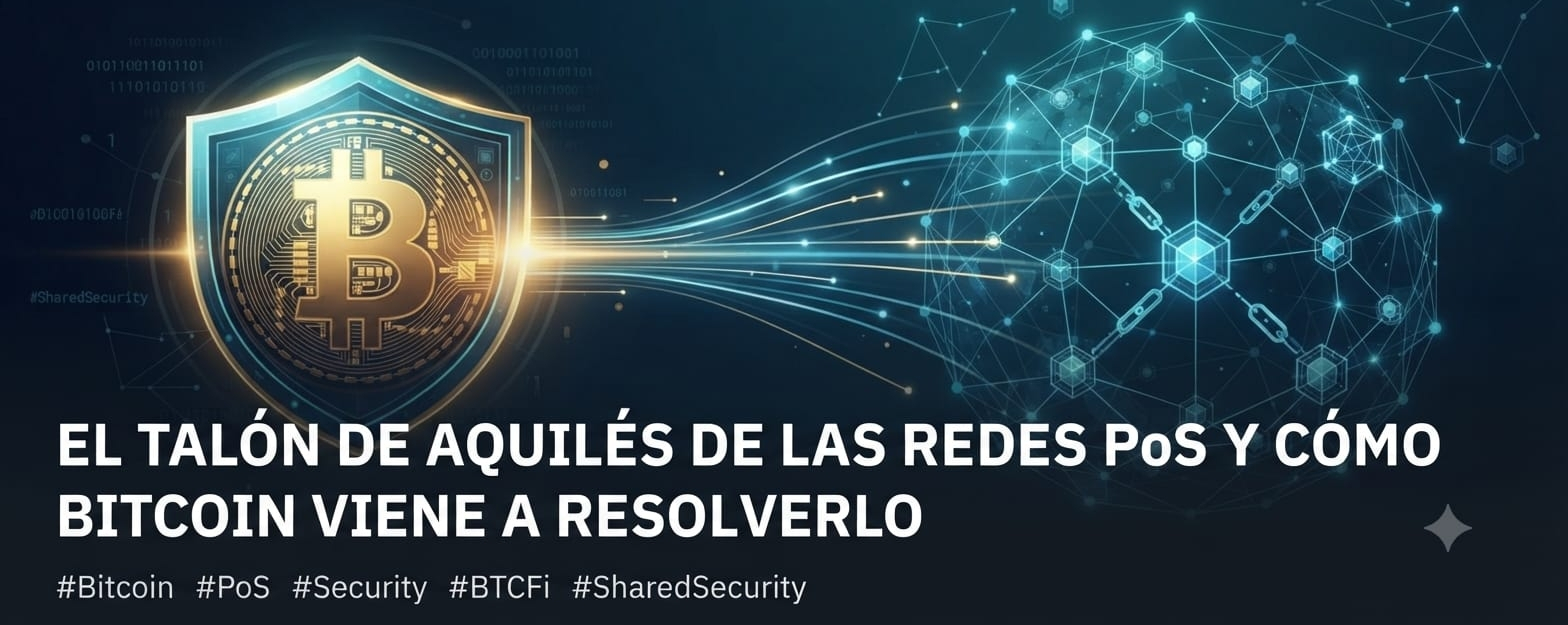
The Achilles’ Heel of PoS Networks and How Bitcoin Comes to Fix It 🛡️
Hello DeFi & RWA community! 🚀
If we analyze the growth of Proof-of-Stake (PoS) networks and modular application chains, we will come across a recurring technical challenge that is rarely discussed in depth: the cold-start problem of economic security.
Today we’re going to break down why new blockchains struggle to protect themselves at the beginning, and how the world’s largest cryptocurrency is changing the rules of the game.
🧩 1. What is "Cold Start" in Proof-of-Stake Networks?
The Achilles’ Heel of PoS Networks and How Bitcoin Comes to Fix It 🛡️
Hello DeFi & RWA community! 🚀
If we analyze the growth of Proof-of-Stake (PoS) networks and modular application chains, we will come across a recurring technical challenge that is rarely discussed in depth: the cold-start problem of economic security.
Today we’re going to break down why new blockchains struggle to protect themselves at the beginning, and how the world’s largest cryptocurrency is changing the rules of the game.
🧩 1. What is "Cold Start" in Proof-of-Stake Networks?
Hello DeFi & RWA community! 🚀
If we analyze the growth of Proof-of-Stake (PoS) networks and modular application chains, we will come across a recurring technical challenge that is rarely discussed in depth: the cold-start problem of economic security.
Today we’re going to break down why new blockchains struggle to protect themselves at the beginning, and how the world’s largest cryptocurrency is changing the rules of the game.
🧩 1. What is "Cold Start" in Proof-of-Stake Networks?
1
3
112

#bitcointhirdsingleblockreorginfourweeks
ON-CHAIN ALARM BELLS: Bitcoin Suffers A Third Block Reorganization! 🔍
While retail is blindly celebrating the recent breakout, on-chain analysts and node operators are quietly raising serious technical questions tonight.
Data confirms that $BTC has just experienced its third single-block reorganization (reorg) in the last four weeks alone.
Here is the breakdown you need to know:
What is a Reorg? It occurs when two separate miners solve blocks nearly simultaneously, forcing the network to drop one valid block to keep consensus uniform.
The Real Concern: While a single-block reorg is typically a harmless network latency anomaly, witnessing three of them in a tiny 30-day window points directly to mining pool structural shifts or significant block propagation lag.
Your spot portfolio is perfectly safe, but this is a critical structural anomaly that smart money is monitoring with extreme precision.
👇 Do you see this as a minor network latency issue, or an underlying mining pool problem? 👇
#BitcoinNetwork #BlockchainSecurity #OnChainData
#bitcointhirdsingleblockreorginfourweeks
ON-CHAIN ALARM BELLS: Bitcoin Suffers A Third Block Reorganization! 🔍
While retail is blindly celebrating the recent breakout, on-chain analysts and node operators are quietly raising serious technical questions tonight.
Data confirms that $BTC has just experienced its third single-block reorganization (reorg) in the last four weeks alone.
Here is the breakdown you need to know:
What is a Reorg? It occurs when two separate miners solve blocks nearly simultaneously, forcing the network to drop one valid block to keep consensus uniform.
The Real Concern: While a single-block reorg is typically a harmless network latency anomaly, witnessing three of them in a tiny 30-day window points directly to mining pool structural shifts or significant block propagation lag.
Your spot portfolio is perfectly safe, but this is a critical structural anomaly that smart money is monitoring with extreme precision.
👇 Do you see this as a minor network latency issue, or an underlying mining pool problem? 👇
#BitcoinNetwork #BlockchainSecurity #OnChainData
ON-CHAIN ALARM BELLS: Bitcoin Suffers A Third Block Reorganization! 🔍
While retail is blindly celebrating the recent breakout, on-chain analysts and node operators are quietly raising serious technical questions tonight.
Data confirms that $BTC has just experienced its third single-block reorganization (reorg) in the last four weeks alone.
Here is the breakdown you need to know:
What is a Reorg? It occurs when two separate miners solve blocks nearly simultaneously, forcing the network to drop one valid block to keep consensus uniform.
The Real Concern: While a single-block reorg is typically a harmless network latency anomaly, witnessing three of them in a tiny 30-day window points directly to mining pool structural shifts or significant block propagation lag.
Your spot portfolio is perfectly safe, but this is a critical structural anomaly that smart money is monitoring with extreme precision.
👇 Do you see this as a minor network latency issue, or an underlying mining pool problem? 👇
#BitcoinNetwork #BlockchainSecurity #OnChainData

125

·
--
Picture this: you wake up to a screenshot floating around Telegram claiming your personal financial records are being auctioned off until a major fintech app pays up.
For anyone holding crypto, that sinking feeling is all too familiar. A single leaked database can expose user identities, turning your assets into prime targets for targeted phishing and account takeovers.
We saw this dynamic during past hardware wallet breaches, where leaked customer records led to relentless phishing waves aimed at draining $BTC and $ETH holdings. Now, attackers are allegedly threatening to release daily tranches of customer information unless an extortion fee is settled. But before panic sets in, there is a fundamental difference between an unverified hacker claim and a confirmed security compromise.
In crypto risk management, treating attacker claims with healthy skepticism is just as critical as securing your private keys. When similar extortion attempts targeted fiat gateways and platforms trading $BNB in the past, threat actors routinely inflated breach claims to create panic and force quick payouts. Until independent forensic investigations or law enforcement confirm the scope, reacting to unverified ransom claims usually creates unnecessary panic.
How do you separate credible security reports from extortion bluffing when breaking headlines hit your feed?
#CryptoSecurity #DataPrivacy #BlockchainSecurity
Picture this: you wake up to a screenshot floating around Telegram claiming your personal financial records are being auctioned off until a major fintech app pays up.
For anyone holding crypto, that sinking feeling is all too familiar. A single leaked database can expose user identities, turning your assets into prime targets for targeted phishing and account takeovers.
We saw this dynamic during past hardware wallet breaches, where leaked customer records led to relentless phishing waves aimed at draining $BTC and $ETH holdings. Now, attackers are allegedly threatening to release daily tranches of customer information unless an extortion fee is settled. But before panic sets in, there is a fundamental difference between an unverified hacker claim and a confirmed security compromise.
In crypto risk management, treating attacker claims with healthy skepticism is just as critical as securing your private keys. When similar extortion attempts targeted fiat gateways and platforms trading $BNB in the past, threat actors routinely inflated breach claims to create panic and force quick payouts. Until independent forensic investigations or law enforcement confirm the scope, reacting to unverified ransom claims usually creates unnecessary panic.
How do you separate credible security reports from extortion bluffing when breaking headlines hit your feed?
#CryptoSecurity #DataPrivacy #BlockchainSecurity
For anyone holding crypto, that sinking feeling is all too familiar. A single leaked database can expose user identities, turning your assets into prime targets for targeted phishing and account takeovers.
We saw this dynamic during past hardware wallet breaches, where leaked customer records led to relentless phishing waves aimed at draining $BTC and $ETH holdings. Now, attackers are allegedly threatening to release daily tranches of customer information unless an extortion fee is settled. But before panic sets in, there is a fundamental difference between an unverified hacker claim and a confirmed security compromise.
In crypto risk management, treating attacker claims with healthy skepticism is just as critical as securing your private keys. When similar extortion attempts targeted fiat gateways and platforms trading $BNB in the past, threat actors routinely inflated breach claims to create panic and force quick payouts. Until independent forensic investigations or law enforcement confirm the scope, reacting to unverified ransom claims usually creates unnecessary panic.
How do you separate credible security reports from extortion bluffing when breaking headlines hit your feed?
#CryptoSecurity #DataPrivacy #BlockchainSecurity
25
·
--
Shock! Cronos confirms that during the Tectonic vulnerability incident, $9.2 million had already been successfully transferred by hackers before the rollback! Total impacted amount is $120.4 million, with over 7% of funds flowing out. $CRO and $TETIC holders should be alert to short-term downside price risk!#DeFi #BlockchainSecurity
Shock! Cronos confirms that during the Tectonic vulnerability incident, $9.2 million had already been successfully transferred by hackers before the rollback! Total impacted amount is $120.4 million, with over 7% of funds flowing out. $CRO and $TETIC holders should be alert to short-term downside price risk!#DeFi #BlockchainSecurity
5

Crypto researchers cut Bitcoin and Ethereum quantum attack estimate by 50%
A paper shared with CoinDesk shows humans and AI agents beating Google’s March result on a core calculation used by Shor’s algorithm, adding another variable to crypto’s quantum clock.
#BTC $NVDAB
#ETH #CPIWatch
#CryptoNews
#BlockchainSecurity
Crypto researchers cut Bitcoin and Ethereum quantum attack estimate by 50%
A paper shared with CoinDesk shows humans and AI agents beating Google’s March result on a core calculation used by Shor’s algorithm, adding another variable to crypto’s quantum clock.
#BTC $NVDAB
#ETH #CPIWatch
#CryptoNews
#BlockchainSecurity
A paper shared with CoinDesk shows humans and AI agents beating Google’s March result on a core calculation used by Shor’s algorithm, adding another variable to crypto’s quantum clock.
#BTC $NVDAB
#ETH #CPIWatch
#CryptoNews
#BlockchainSecurity

84
·
--
What on earth is quantum computing? This quantum special-issue article explains, in a straightforward way, the difference between quantum computing and traditional computing—along with the potential impact on the cryptocurrency industry. In theory, quantum computers could break the encryption algorithms used by today’s blockchains, posing a potential threat to the security of crypto assets like Bitcoin. But don’t panic— the industry is already developing quantum-resistant solutions! In the long run, projects that are first to achieve quantum resistance could see a significant value revaluation.
$BTC #量子计算 #区块链安全
Quantum computing explained in simple terms! This article breaks down how quantum computing differs from traditional computing and the potential impact on crypto. In theory, quantum computers could crack current blockchain encryption, posing a threat to assets like Bitcoin's security. But don't panic—the industry is already developing quantum-resistant solutions! Projects that first achieve quantum resistance could see significant value revaluation in the long run.
$BTC #QuantumComputing #BlockchainSecurity
What on earth is quantum computing? This quantum special-issue article explains, in a straightforward way, the difference between quantum computing and traditional computing—along with the potential impact on the cryptocurrency industry. In theory, quantum computers could break the encryption algorithms used by today’s blockchains, posing a potential threat to the security of crypto assets like Bitcoin. But don’t panic— the industry is already developing quantum-resistant solutions! In the long run, projects that are first to achieve quantum resistance could see a significant value revaluation.
$BTC #量子计算 #区块链安全
Quantum computing explained in simple terms! This article breaks down how quantum computing differs from traditional computing and the potential impact on crypto. In theory, quantum computers could crack current blockchain encryption, posing a threat to assets like Bitcoin's security. But don't panic—the industry is already developing quantum-resistant solutions! Projects that first achieve quantum resistance could see significant value revaluation in the long run.
$BTC #QuantumComputing #BlockchainSecurity
$BTC #量子计算 #区块链安全
Quantum computing explained in simple terms! This article breaks down how quantum computing differs from traditional computing and the potential impact on crypto. In theory, quantum computers could crack current blockchain encryption, posing a threat to assets like Bitcoin's security. But don't panic—the industry is already developing quantum-resistant solutions! Projects that first achieve quantum resistance could see significant value revaluation in the long run.
$BTC #QuantumComputing #BlockchainSecurity
121

🚨 Spanish Crypto Exchange Bit2Me Takes On Illegal Crypto Activity with Specialized Law Enforcement Unit!
Spanish crypto exchange Bit2Me has officially established a dedicated unit designed specifically to assist global law enforcement agencies in tracking and recovering illicit digital assets.
🔹 Building on Success: Formalizes previous operations that already processed over 1.5 million euros in seized assets in 2025.
🛡️ High-Profile Partners: Working directly alongside major international agencies including Interpol and Europol.
✅ Compliance Focus: Demonstrates growing institutional focus on compliance, transparency, and regulation in European crypto markets.
As regulatory oversight tightens globally, proactive compliance moves by exchanges are setting new security standards across the industry.
$BTC #CryptoNews #BlockchainSecurity #Compliance #Write2Earn
🚨 Spanish Crypto Exchange Bit2Me Takes On Illegal Crypto Activity with Specialized Law Enforcement Unit!
Spanish crypto exchange Bit2Me has officially established a dedicated unit designed specifically to assist global law enforcement agencies in tracking and recovering illicit digital assets.
🔹 Building on Success: Formalizes previous operations that already processed over 1.5 million euros in seized assets in 2025.
🛡️ High-Profile Partners: Working directly alongside major international agencies including Interpol and Europol.
✅ Compliance Focus: Demonstrates growing institutional focus on compliance, transparency, and regulation in European crypto markets.
As regulatory oversight tightens globally, proactive compliance moves by exchanges are setting new security standards across the industry.
$BTC #CryptoNews #BlockchainSecurity #Compliance #Write2Earn
Spanish crypto exchange Bit2Me has officially established a dedicated unit designed specifically to assist global law enforcement agencies in tracking and recovering illicit digital assets.
🔹 Building on Success: Formalizes previous operations that already processed over 1.5 million euros in seized assets in 2025.
🛡️ High-Profile Partners: Working directly alongside major international agencies including Interpol and Europol.
✅ Compliance Focus: Demonstrates growing institutional focus on compliance, transparency, and regulation in European crypto markets.
As regulatory oversight tightens globally, proactive compliance moves by exchanges are setting new security standards across the industry.
$BTC #CryptoNews #BlockchainSecurity #Compliance #Write2Earn
33
Log in to explore more content
Join global crypto users on Binance Square
⚡️ Get latest and useful information about crypto.
💬 Trusted by the world’s largest crypto exchange.
👍 Discover real insights from verified creators.
Email / Phone number
Trending Topics
1
#BNBSurpasses$790
18,091 views
143 Discussing
2
#ZamaRises15.99%ToIntradayHigh$0.09
16,103 views
105 Discussing
3
#BitcoinSpotETFsDraw$6.34BInflowsInQ3
5,917 views
90 Discussing
4
#EthereumValidatorExitQueueJumps392%
92,908 views
913 Discussing
5
#IMFApprovesElSalvador$138MWithBitcoinWaiver
13,412 views
62 Discussing
6
#SECHaltsCryptoETFReviewsAmidFundingLapse
257,512 views
1,786 Discussing
7
#ZcashETFPostsFirstWeeklyOutflow$93.6M
95,069 views
254 Discussing
8
#GreekPoliceBustCryptoScamRingArrest17
376,701 views
2,435 Discussing
9
#BitcoinRejectedAt$87K
222,600 views
318 Discussing
10
#FedOctoberRateHikeOddsFallTo17%
382,799 views
2,547 Discussing