

#br
br
2.6M views
12,878 Discussing
Hot
Latest

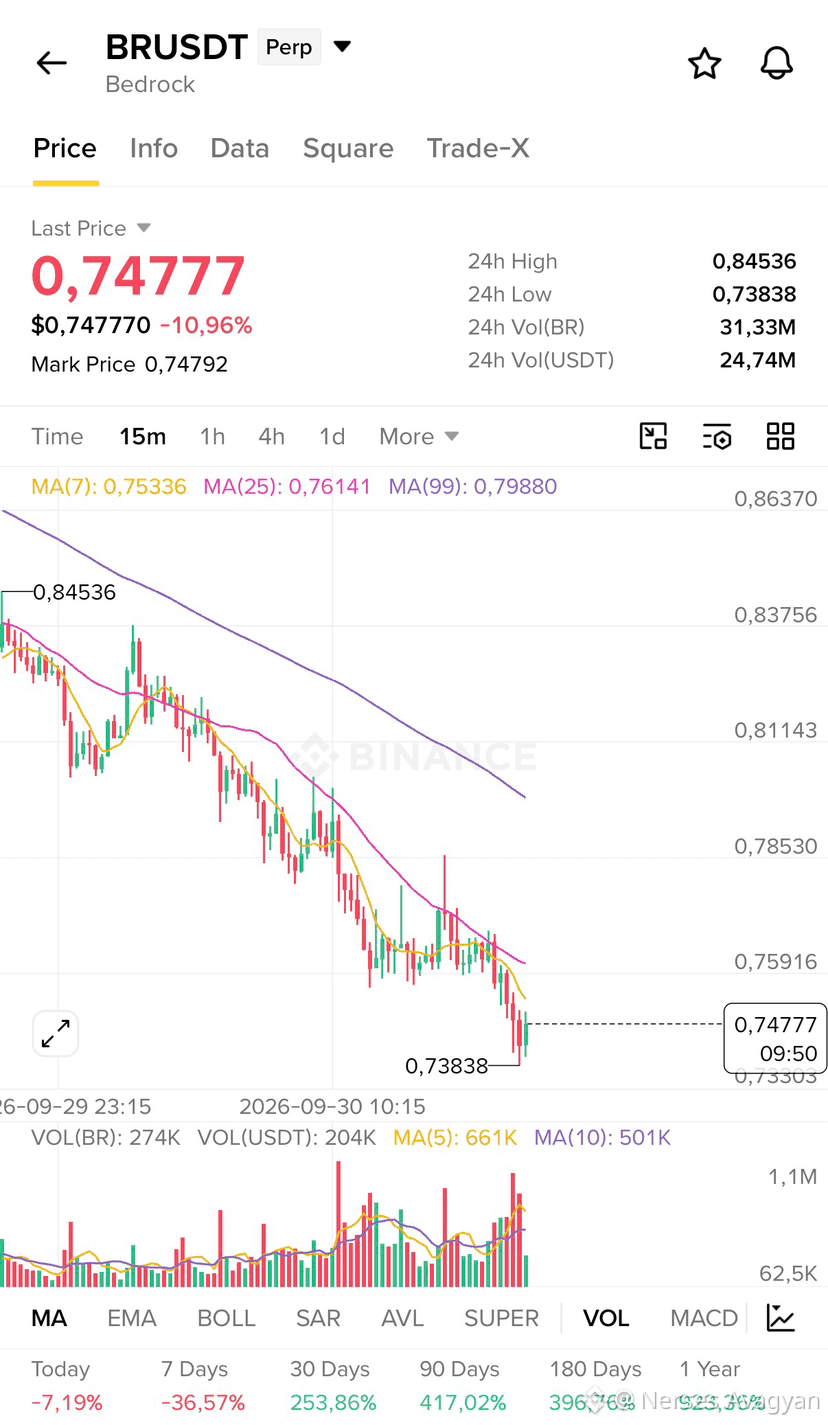

🚨 $BR HOVERS AT CRITICAL RETEST ZONE AS SELLERS SCOUT BEARISH CONTINUATION! 🐻
Entry: 0.7538 - 0.75758 ⚡
Target: 0.70896 🚀
Stop Loss: 0.77206 ⚠️
Sellers are pushing $BR back up into local supply after a clean 1H breakdown, setting up a potential continuation leg lower. 📊 However, higher timeframe BTC momentum is flashing structural conflict, dragging the current expected value down until full confirmation arrives.
Execution here requires discipline rather than front-running an unconfirmed pivot into macro tailwinds. 🔍 Keeping this level mapped on the watchlist while waiting for aggressive seller absorption at resistance. 💬 Are you setting alerts for confirmation here or waiting for BTC to clear the path? 👇
⚠️ Not financial advice. Always manage your risk. 🛡️
🏷️ #BR #ShortSetup #Crypto #Trading #PriceAction
🎯 🐻
🚨 $BR HOVERS AT CRITICAL RETEST ZONE AS SELLERS SCOUT BEARISH CONTINUATION! 🐻
Entry: 0.7538 - 0.75758 ⚡
Target: 0.70896 🚀
Stop Loss: 0.77206 ⚠️
Sellers are pushing $BR back up into local supply after a clean 1H breakdown, setting up a potential continuation leg lower. 📊 However, higher timeframe BTC momentum is flashing structural conflict, dragging the current expected value down until full confirmation arrives.
Execution here requires discipline rather than front-running an unconfirmed pivot into macro tailwinds. 🔍 Keeping this level mapped on the watchlist while waiting for aggressive seller absorption at resistance. 💬 Are you setting alerts for confirmation here or waiting for BTC to clear the path? 👇
⚠️ Not financial advice. Always manage your risk. 🛡️
🏷️ #BR #ShortSetup #Crypto #Trading #PriceAction
🎯 🐻
Entry: 0.7538 - 0.75758 ⚡
Target: 0.70896 🚀
Stop Loss: 0.77206 ⚠️
Sellers are pushing $BR back up into local supply after a clean 1H breakdown, setting up a potential continuation leg lower. 📊 However, higher timeframe BTC momentum is flashing structural conflict, dragging the current expected value down until full confirmation arrives.
Execution here requires discipline rather than front-running an unconfirmed pivot into macro tailwinds. 🔍 Keeping this level mapped on the watchlist while waiting for aggressive seller absorption at resistance. 💬 Are you setting alerts for confirmation here or waiting for BTC to clear the path? 👇
⚠️ Not financial advice. Always manage your risk. 🛡️
🏷️ #BR #ShortSetup #Crypto #Trading #PriceAction
🎯 🐻
38

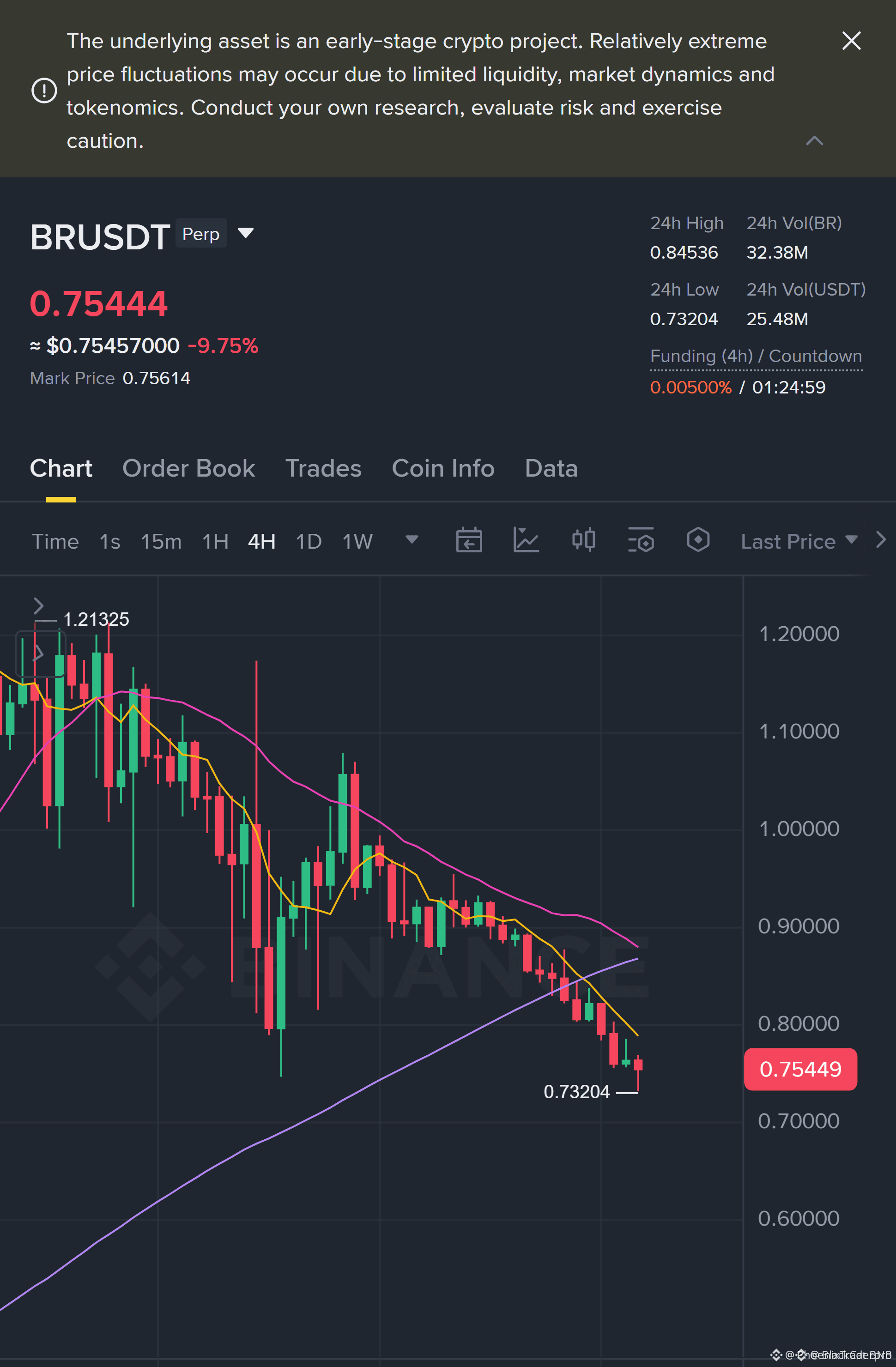
🚨 $BR RETESTING BREAKOUT LEVEL FOR POTENTIAL BEARISH CONTINUATION ON WATCHLIST! 📉
Entry: 0.7538 - 0.75758 ⚡
Target: 0.73838 🎯
Stop Loss: 0.77206 ⚠️
$BR is currently retesting a recent breakdown zone on the 1H timeframe, presenting a potential continuation short setup. However, smart money remains cautious as this short bias directly conflicts with the broader $BTC 4H trend filter, keeping estimated EV below active execution thresholds. 🔍
📌 We are placing this structure strictly on the watchlist, holding off until clear lower timeframe confirmation or liquidity sweeps emerge. Managing risk means respecting high-tf alignment before committing capital. 💬 Do you trade counter-trend setups when lower timeframes align, or wait for macro alignment? 👇
⚠️ Not financial advice. Always manage your risk. 🛡️
🏷️ #BR #ShortSetup #MarketStructure #Crypto
🐻 📉
🚨 $BR RETESTING BREAKOUT LEVEL FOR POTENTIAL BEARISH CONTINUATION ON WATCHLIST! 📉
Entry: 0.7538 - 0.75758 ⚡
Target: 0.73838 🎯
Stop Loss: 0.77206 ⚠️
$BR is currently retesting a recent breakdown zone on the 1H timeframe, presenting a potential continuation short setup. However, smart money remains cautious as this short bias directly conflicts with the broader $BTC 4H trend filter, keeping estimated EV below active execution thresholds. 🔍
📌 We are placing this structure strictly on the watchlist, holding off until clear lower timeframe confirmation or liquidity sweeps emerge. Managing risk means respecting high-tf alignment before committing capital. 💬 Do you trade counter-trend setups when lower timeframes align, or wait for macro alignment? 👇
⚠️ Not financial advice. Always manage your risk. 🛡️
🏷️ #BR #ShortSetup #MarketStructure #Crypto
🐻 📉
Entry: 0.7538 - 0.75758 ⚡
Target: 0.73838 🎯
Stop Loss: 0.77206 ⚠️
$BR is currently retesting a recent breakdown zone on the 1H timeframe, presenting a potential continuation short setup. However, smart money remains cautious as this short bias directly conflicts with the broader $BTC 4H trend filter, keeping estimated EV below active execution thresholds. 🔍
📌 We are placing this structure strictly on the watchlist, holding off until clear lower timeframe confirmation or liquidity sweeps emerge. Managing risk means respecting high-tf alignment before committing capital. 💬 Do you trade counter-trend setups when lower timeframes align, or wait for macro alignment? 👇
⚠️ Not financial advice. Always manage your risk. 🛡️
🏷️ #BR #ShortSetup #MarketStructure #Crypto
🐻 📉
30

·
--
Bearish
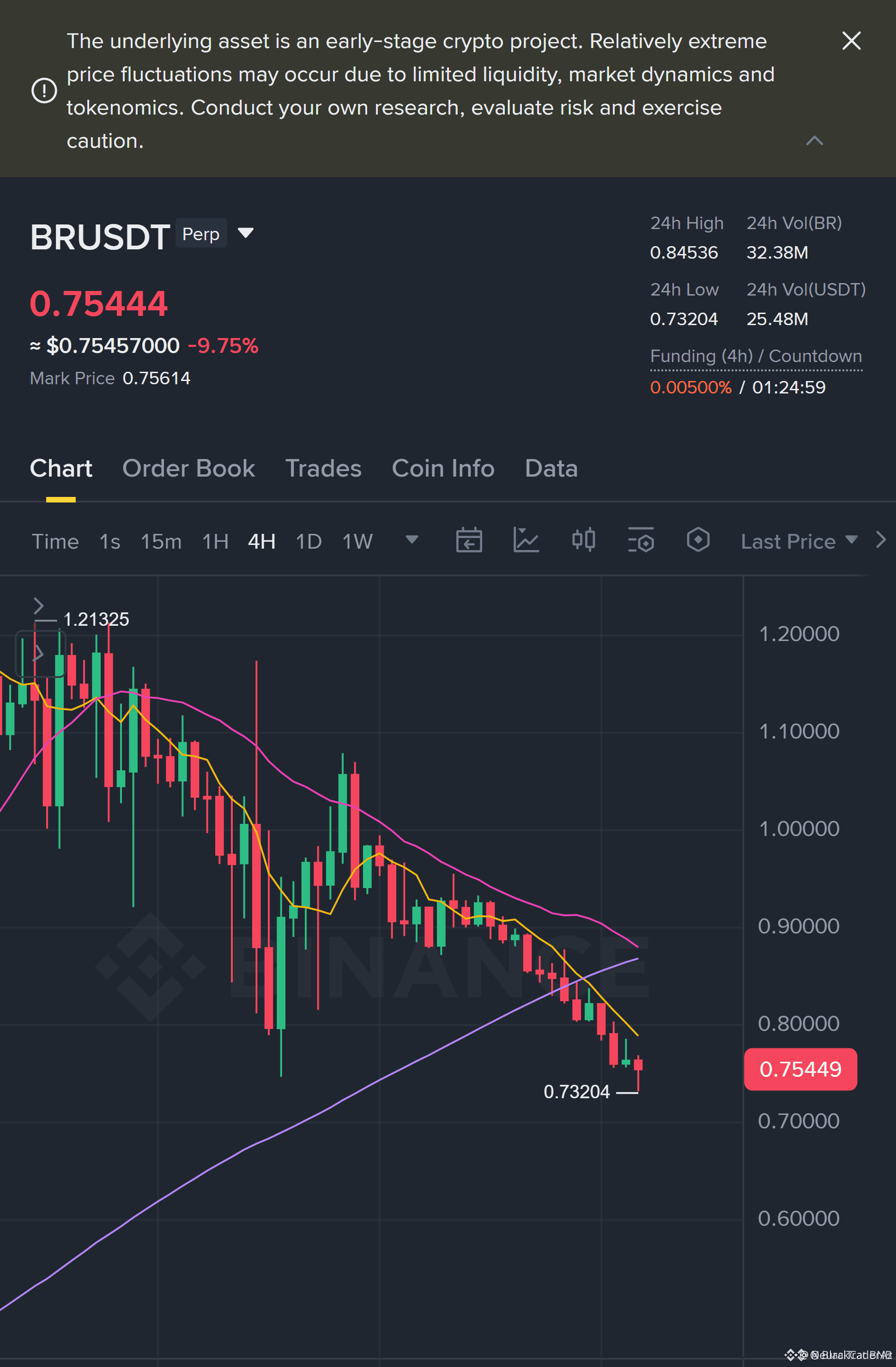
📉 BR — SUSTAINED DOWNTREND & MOVING AVERAGE PRESSURE! 🔴
$BR (Bedrock) is trading lower at 0.74680 (-11.15%), moving within a 24h range between a high of 0.84536 and a low of 0.74132. Price action on this 15-minute chart shows sustained downward pressure, trading clearly below the fast MA(7) (0.75852), MA(25) (0.76270), and major structural MA(99) (0.80073).
📊 QUICK TRADE PLAN — 15M
🟢 LONG ENTRY: 0.68000–0.72000 (on confirmed reversal signals and solid defense near major demand support)
🛑 STOP LOSS: 0.65000
🎯 TP1: 0.78000
🎯 TP2: 0.82000
Are you staying cautious on Bedrock while it tests lower levels, or keeping an eye out for a reversal setup? Let's discuss below! 👇
👉 Trade: $BR
{future}(BRUSDT)
#BR #bedrocke #cryptotrading #BinanceSquare #bearish
📉 BR — SUSTAINED DOWNTREND & MOVING AVERAGE PRESSURE! 🔴
$BR (Bedrock) is trading lower at 0.74680 (-11.15%), moving within a 24h range between a high of 0.84536 and a low of 0.74132. Price action on this 15-minute chart shows sustained downward pressure, trading clearly below the fast MA(7) (0.75852), MA(25) (0.76270), and major structural MA(99) (0.80073).
📊 QUICK TRADE PLAN — 15M
🟢 LONG ENTRY: 0.68000–0.72000 (on confirmed reversal signals and solid defense near major demand support)
🛑 STOP LOSS: 0.65000
🎯 TP1: 0.78000
🎯 TP2: 0.82000
Are you staying cautious on Bedrock while it tests lower levels, or keeping an eye out for a reversal setup? Let's discuss below! 👇
👉 Trade: $BR
#BR #bedrocke #cryptotrading #BinanceSquare #bearish
$BR (Bedrock) is trading lower at 0.74680 (-11.15%), moving within a 24h range between a high of 0.84536 and a low of 0.74132. Price action on this 15-minute chart shows sustained downward pressure, trading clearly below the fast MA(7) (0.75852), MA(25) (0.76270), and major structural MA(99) (0.80073).
📊 QUICK TRADE PLAN — 15M
🟢 LONG ENTRY: 0.68000–0.72000 (on confirmed reversal signals and solid defense near major demand support)
🛑 STOP LOSS: 0.65000
🎯 TP1: 0.78000
🎯 TP2: 0.82000
Are you staying cautious on Bedrock while it tests lower levels, or keeping an eye out for a reversal setup? Let's discuss below! 👇
👉 Trade: $BR
#BR #bedrocke #cryptotrading #BinanceSquare #bearish
388

·
--
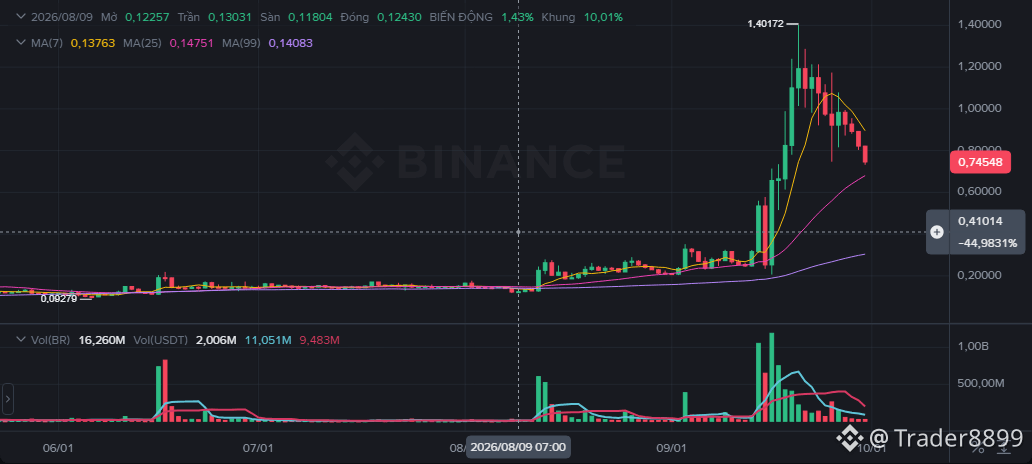
🧠 $BR — patience over prediction
The chart currently shows:
1H → BEARISH
4H → BEARISH
RSI → 25.4
MACD → Bearish
EMA20/50 → EMA20 < EMA50
Price: 0.74281
24H: -9.81%
My level: SHORT 0.75047607–0.75673279
Targets: TP1 0.71293579 / TP2 0.70709643
Risk: SL 0.77133179
I’d rather wait for a clean setup than manufacture one.
#Binance #Crypto #BR
🧠 $BR — patience over prediction
The chart currently shows:
1H → BEARISH
4H → BEARISH
RSI → 25.4
MACD → Bearish
EMA20/50 → EMA20 < EMA50
Price: 0.74281
24H: -9.81%
My level: SHORT 0.75047607–0.75673279
Targets: TP1 0.71293579 / TP2 0.70709643
Risk: SL 0.77133179
I’d rather wait for a clean setup than manufacture one.
#Binance #Crypto #BR
The chart currently shows:
1H → BEARISH
4H → BEARISH
RSI → 25.4
MACD → Bearish
EMA20/50 → EMA20 < EMA50
Price: 0.74281
24H: -9.81%
My level: SHORT 0.75047607–0.75673279
Targets: TP1 0.71293579 / TP2 0.70709643
Risk: SL 0.77133179
I’d rather wait for a clean setup than manufacture one.
#Binance #Crypto #BR
10

·
--
Bullish
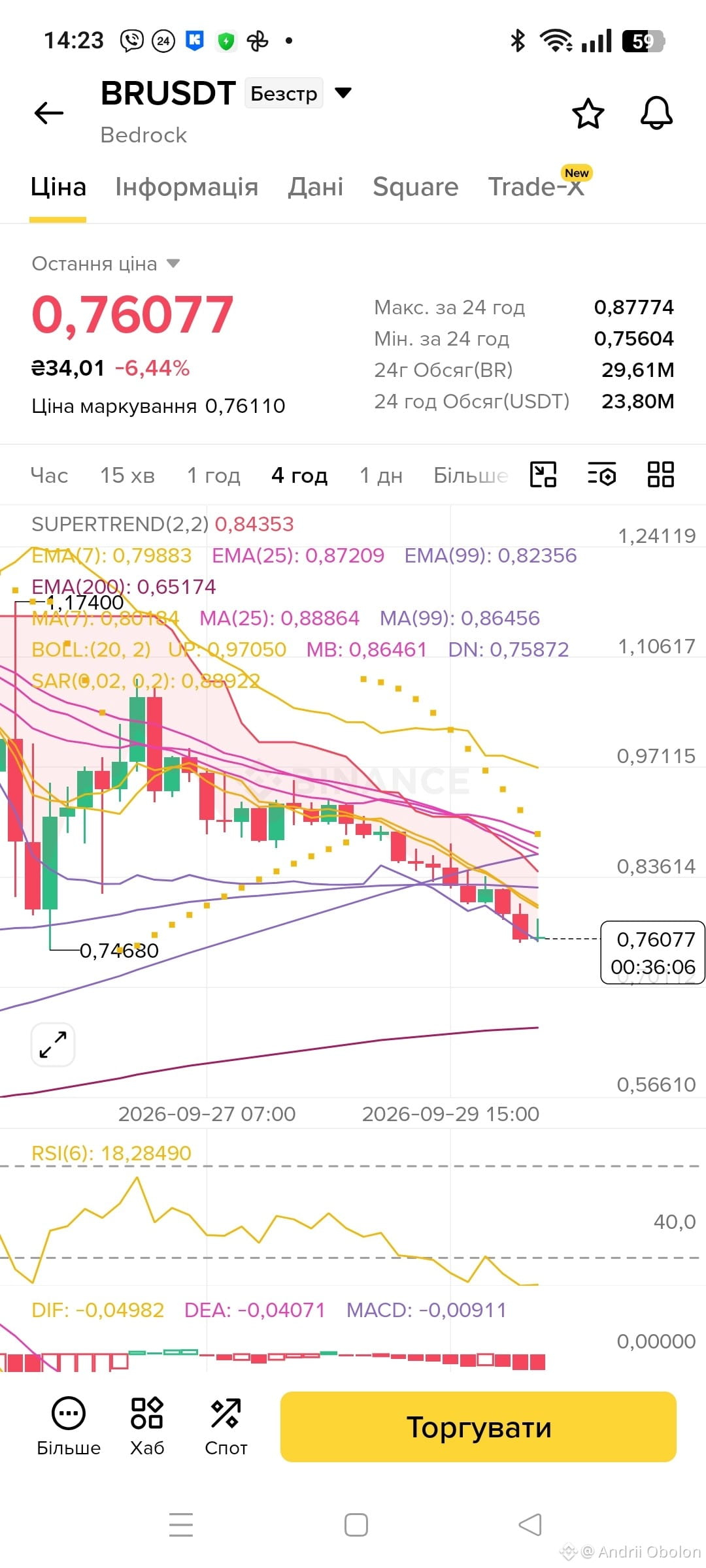
🟢 $BR LONG
Entry 0.7638 to 0.7485
TP 0.7920 / 0.8240 / 0.8720
SL 0.7218
After a sharp dump the zone looks like a point to intercept momentum Holding the level opens the way to recapture upper liquidity
Not financial advice DYOR
#BR #FuturesTrading #PriceAction #Momentum
🟢 $BR
{future}(BRUSDT)
🟢 $BR LONG
Entry 0.7638 to 0.7485
TP 0.7920 / 0.8240 / 0.8720
SL 0.7218
After a sharp dump the zone looks like a point to intercept momentum Holding the level opens the way to recapture upper liquidity
Not financial advice DYOR
#BR #FuturesTrading #PriceAction #Momentum
🟢 $BR
Entry 0.7638 to 0.7485
TP 0.7920 / 0.8240 / 0.8720
SL 0.7218
After a sharp dump the zone looks like a point to intercept momentum Holding the level opens the way to recapture upper liquidity
Not financial advice DYOR
#BR #FuturesTrading #PriceAction #Momentum
🟢 $BR
1
75

·
--
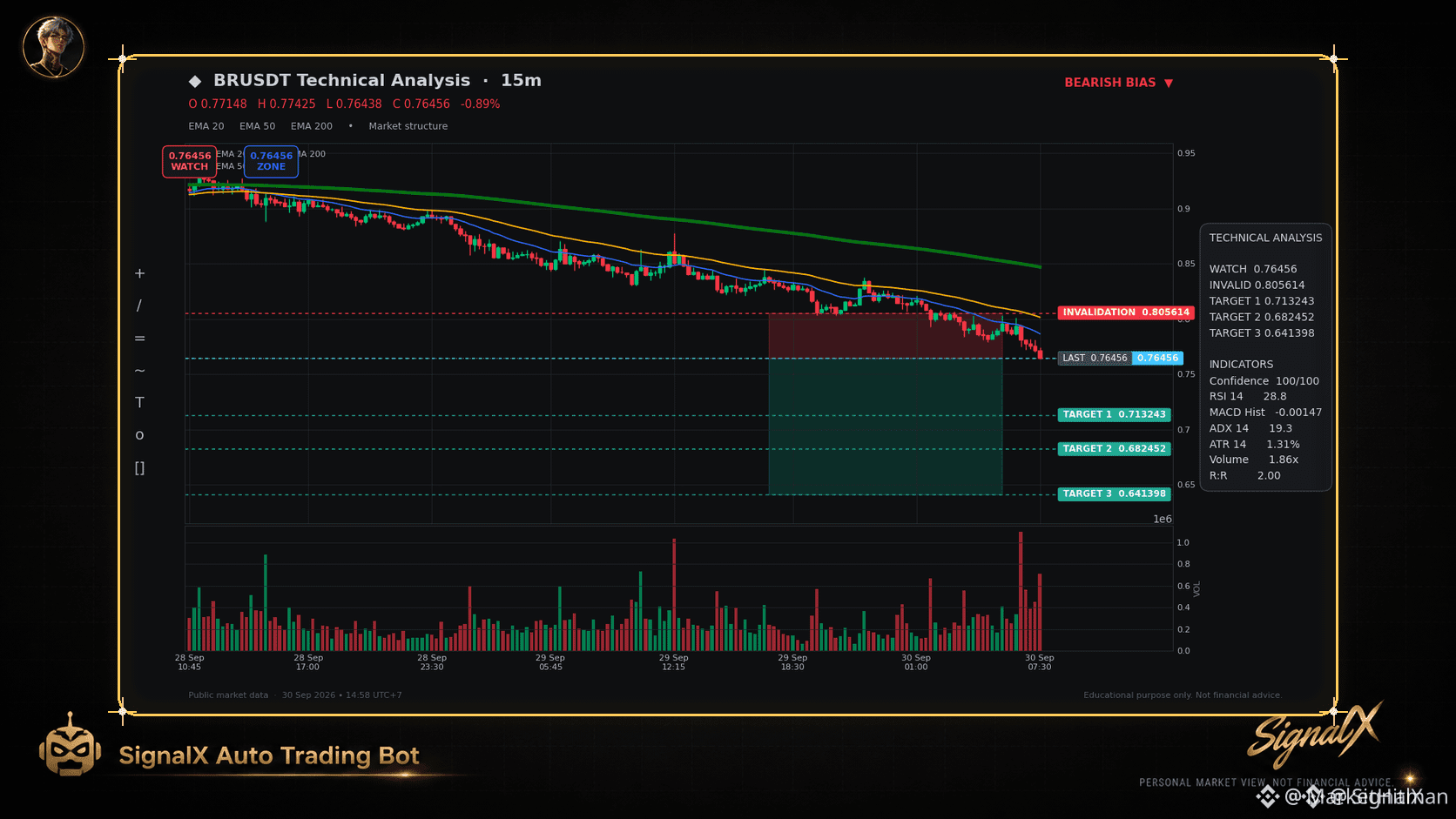
🚨 $BR REJECTION AT LOCAL HIGH SPELLS SHORT-SIDE LIQUIDITY DRAIN! 📉
Entry: 0.76456 ⚡
Target: 0.713243 🎯
Stop Loss: 0.805614 ⚠️
Sellers are moving in heavy on the 15m chart as momentum stalls right at key resistance. 📊 Buyers failed to sustain upside velocity, leaving open space for smart money to flush price straight down toward lower liquidity pockets. 📉
📌 Execution precision is critical here—stick strictly to the entry reference level and avoid chasing late fills. 💡 If momentum breaks down as expected, the unwind could accelerate fast through the target levels. 💬 Are you taking the short entry here or waiting to see if buyers defend lower levels? 👇
⚠️ Not financial advice. Always manage your risk. 🛡️
🏷️ #BR #ShortSetup #Bearish #Trading #Crypto
🎯 🐻
🚨 $BR REJECTION AT LOCAL HIGH SPELLS SHORT-SIDE LIQUIDITY DRAIN! 📉
Entry: 0.76456 ⚡
Target: 0.713243 🎯
Stop Loss: 0.805614 ⚠️
Sellers are moving in heavy on the 15m chart as momentum stalls right at key resistance. 📊 Buyers failed to sustain upside velocity, leaving open space for smart money to flush price straight down toward lower liquidity pockets. 📉
📌 Execution precision is critical here—stick strictly to the entry reference level and avoid chasing late fills. 💡 If momentum breaks down as expected, the unwind could accelerate fast through the target levels. 💬 Are you taking the short entry here or waiting to see if buyers defend lower levels? 👇
⚠️ Not financial advice. Always manage your risk. 🛡️
🏷️ #BR #ShortSetup #Bearish #Trading #Crypto
🎯 🐻
Entry: 0.76456 ⚡
Target: 0.713243 🎯
Stop Loss: 0.805614 ⚠️
Sellers are moving in heavy on the 15m chart as momentum stalls right at key resistance. 📊 Buyers failed to sustain upside velocity, leaving open space for smart money to flush price straight down toward lower liquidity pockets. 📉
📌 Execution precision is critical here—stick strictly to the entry reference level and avoid chasing late fills. 💡 If momentum breaks down as expected, the unwind could accelerate fast through the target levels. 💬 Are you taking the short entry here or waiting to see if buyers defend lower levels? 👇
⚠️ Not financial advice. Always manage your risk. 🛡️
🏷️ #BR #ShortSetup #Bearish #Trading #Crypto
🎯 🐻
44

·
--
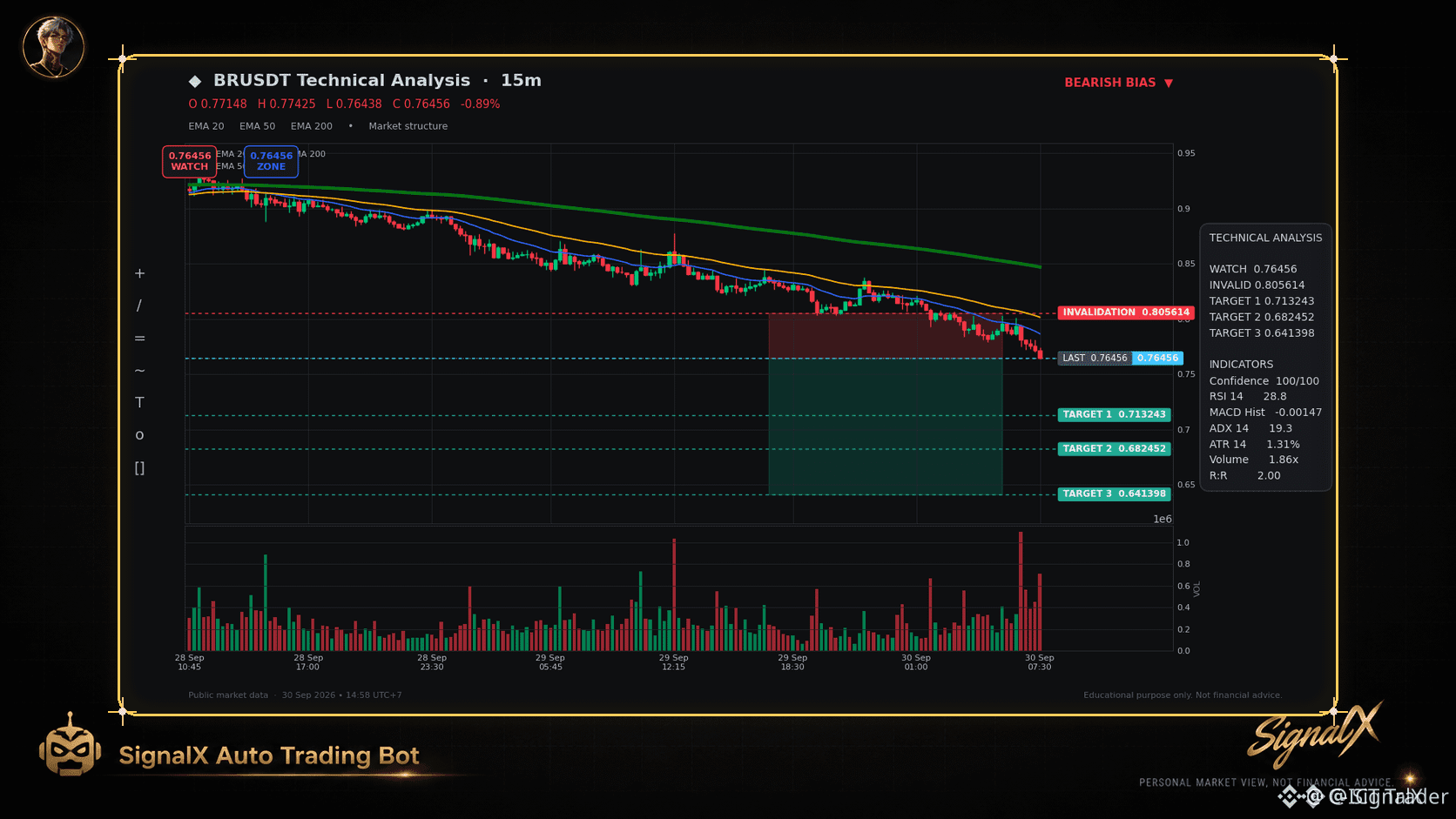
🚨 $BR LIQUIDITY SWEEP AT PREMIUM RESISTANCE OPENS CLEAN 15M SHORT OPPORTUNITY 📉
Entry: 0.76456 🔻
Target: 0.713243 🎯
Stop Loss: 0.805614 ⚠️
Smart money left a clear footprint on the 15m chart after sweeping liquidity above recent highs, shifting localized structure back toward lower liquidity pockets. 🦈 Price has entered a high-probability distribution node around 0.76456, where institutional order flow is signaling downside expansion.
📊 As long as price respects the invalidation point at 0.805614, the path of least resistance favors a swift retest of the lower fair value gaps down to the 0.713243 target cluster. 📌 Execution demands strict discipline—avoid chasing extension candles away from entry zone. 💬 Are you taking the short from supply or waiting for a lower low break? 👇
⚠️ Not financial advice. Always manage your risk. 🛡️
🏷️ #BR #ShortSetup #MarketStructure #Crypto #TechnicalAnalysis
🐻 🦈
🚨 $BR LIQUIDITY SWEEP AT PREMIUM RESISTANCE OPENS CLEAN 15M SHORT OPPORTUNITY 📉
Entry: 0.76456 🔻
Target: 0.713243 🎯
Stop Loss: 0.805614 ⚠️
Smart money left a clear footprint on the 15m chart after sweeping liquidity above recent highs, shifting localized structure back toward lower liquidity pockets. 🦈 Price has entered a high-probability distribution node around 0.76456, where institutional order flow is signaling downside expansion.
📊 As long as price respects the invalidation point at 0.805614, the path of least resistance favors a swift retest of the lower fair value gaps down to the 0.713243 target cluster. 📌 Execution demands strict discipline—avoid chasing extension candles away from entry zone. 💬 Are you taking the short from supply or waiting for a lower low break? 👇
⚠️ Not financial advice. Always manage your risk. 🛡️
🏷️ #BR #ShortSetup #MarketStructure #Crypto #TechnicalAnalysis
🐻 🦈
Entry: 0.76456 🔻
Target: 0.713243 🎯
Stop Loss: 0.805614 ⚠️
Smart money left a clear footprint on the 15m chart after sweeping liquidity above recent highs, shifting localized structure back toward lower liquidity pockets. 🦈 Price has entered a high-probability distribution node around 0.76456, where institutional order flow is signaling downside expansion.
📊 As long as price respects the invalidation point at 0.805614, the path of least resistance favors a swift retest of the lower fair value gaps down to the 0.713243 target cluster. 📌 Execution demands strict discipline—avoid chasing extension candles away from entry zone. 💬 Are you taking the short from supply or waiting for a lower low break? 👇
⚠️ Not financial advice. Always manage your risk. 🛡️
🏷️ #BR #ShortSetup #MarketStructure #Crypto #TechnicalAnalysis
🐻 🦈
28

·
--
🚨 $BR SUPPLY REJECTION FLASHES BEARISH MOMENTUM TOWARD DOWNSIDE LIQUIDITY! 🔻
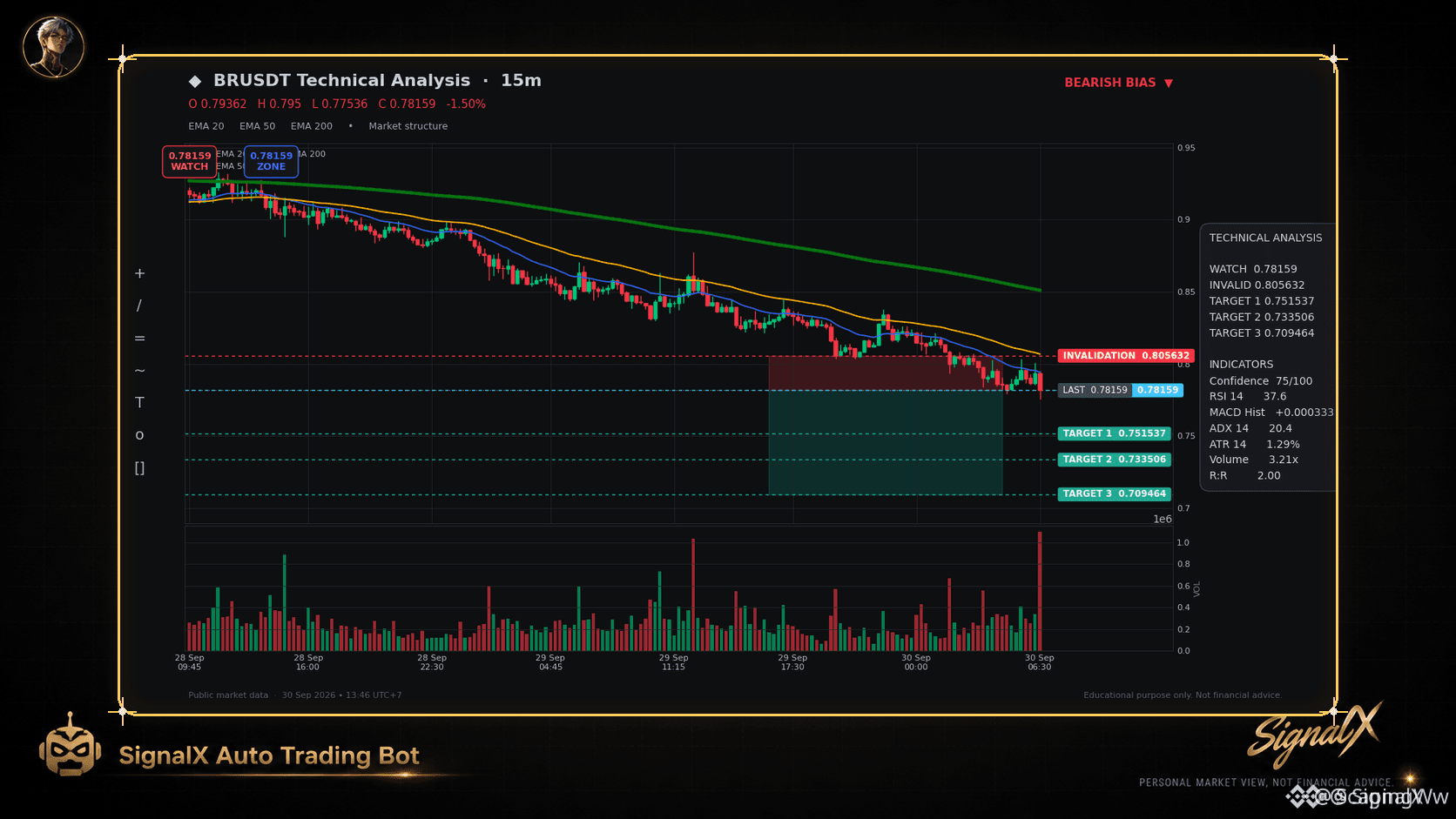
Entry: 0.78159 ⚡
Target: 0.751537 🚀
Stop Loss: 0.805632 ⚠️
📌 The 15-minute timeframe on $BR is displaying a textbook supply rejection right at the 0.78159 zone. Buyers are losing momentum while sell-side liquidity quietly absorbs incoming bids. 📉
💡 Invalidation triggers cleanly above 0.805632, offering a sharp, asymmetrical short setup targeting liquidity down to 0.751537. 📊 Execution demands patience here; respect the entry reference and let the order flow confirm the move. 💬 Are you positioning for this downside target or waiting for a breakdown sweep? 👇
⚠️ Not financial advice. Always manage your risk. 🛡️
🏷️ #BR #ShortSetup #Trading #Crypto #OrderFlow
📉 🐻
🚨 $BR SUPPLY REJECTION FLASHES BEARISH MOMENTUM TOWARD DOWNSIDE LIQUIDITY! 🔻
Entry: 0.78159 ⚡
Target: 0.751537 🚀
Stop Loss: 0.805632 ⚠️
📌 The 15-minute timeframe on $BR is displaying a textbook supply rejection right at the 0.78159 zone. Buyers are losing momentum while sell-side liquidity quietly absorbs incoming bids. 📉
💡 Invalidation triggers cleanly above 0.805632, offering a sharp, asymmetrical short setup targeting liquidity down to 0.751537. 📊 Execution demands patience here; respect the entry reference and let the order flow confirm the move. 💬 Are you positioning for this downside target or waiting for a breakdown sweep? 👇
⚠️ Not financial advice. Always manage your risk. 🛡️
🏷️ #BR #ShortSetup #Trading #Crypto #OrderFlow
📉 🐻
Entry: 0.78159 ⚡
Target: 0.751537 🚀
Stop Loss: 0.805632 ⚠️
📌 The 15-minute timeframe on $BR is displaying a textbook supply rejection right at the 0.78159 zone. Buyers are losing momentum while sell-side liquidity quietly absorbs incoming bids. 📉
💡 Invalidation triggers cleanly above 0.805632, offering a sharp, asymmetrical short setup targeting liquidity down to 0.751537. 📊 Execution demands patience here; respect the entry reference and let the order flow confirm the move. 💬 Are you positioning for this downside target or waiting for a breakdown sweep? 👇
⚠️ Not financial advice. Always manage your risk. 🛡️
🏷️ #BR #ShortSetup #Trading #Crypto #OrderFlow
📉 🐻
33

·
--
🚨 $BR REJECTING SUPPLY AT 0.78159 AS INSTITUTIONAL SELLERS SEIZE CONTROL 🔴
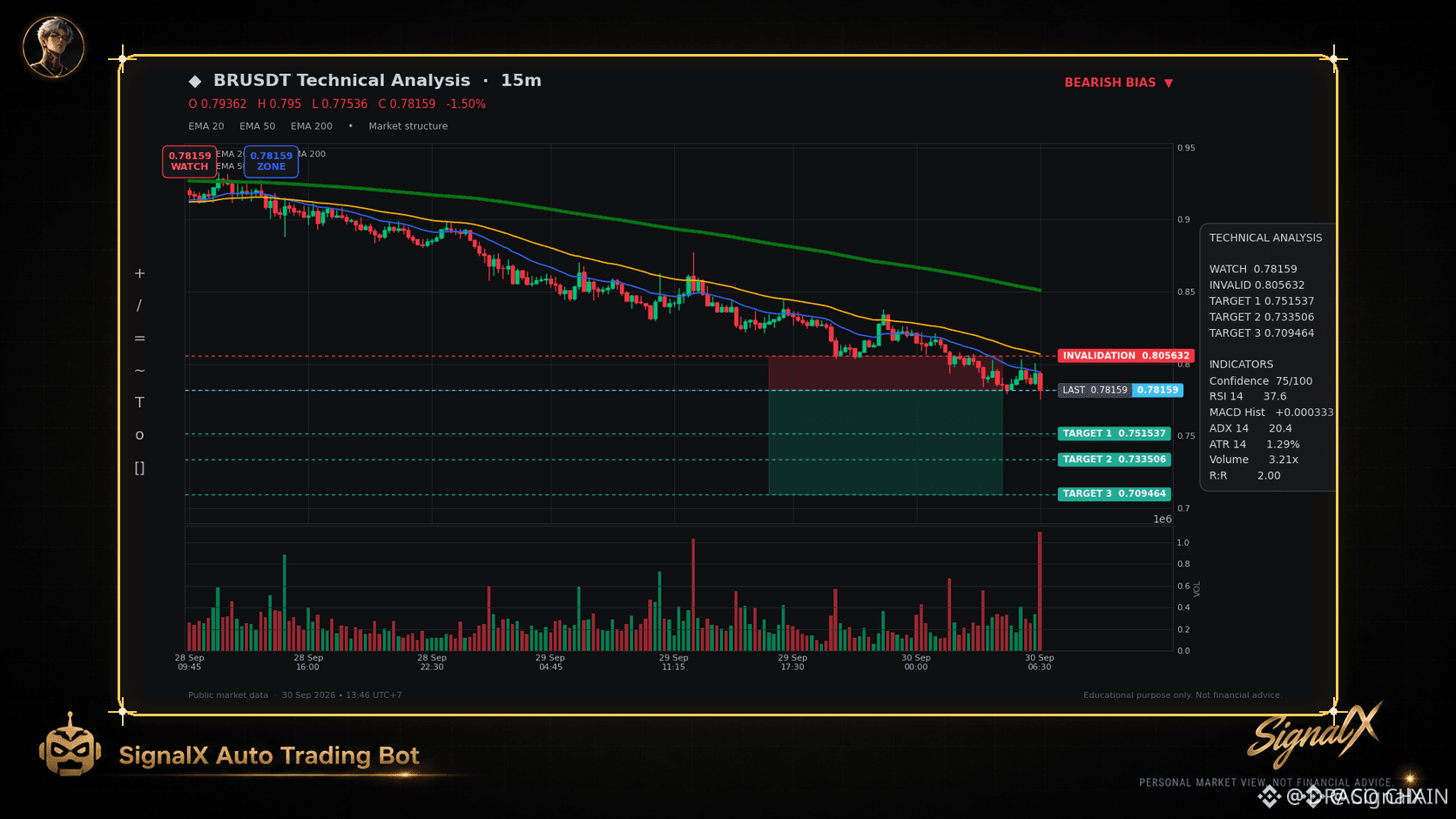
Entry: 0.78159 ⚡
Target: 0.751537 🎯
Target: 0.733506 💥
Target: 0.709464 🚀
Stop Loss: 0.805632 ⚠️
📌 The 15-minute timeframe is displaying a clean structural shift, with smart money defending the 0.78159 premium supply block. 📊 Momentum signals indicate sellers are sweeping local liquidity before pushing toward deeper downside efficiency gaps.
💡 Execution requires strict discipline here — treat entry as reference only without chasing extended candles. 🔍 A break above 0.805632 invalidates the short bias completely. 💬 Are you taking the short off this supply mitigation or waiting for confirmation on the lower timeframes? 👇
⚠️ Not financial advice. Always manage your risk. 🛡️
🏷️ #BR #ShortSetup #MarketStructure #CryptoTrading #SMC
📉 🐻
🚨 $BR REJECTING SUPPLY AT 0.78159 AS INSTITUTIONAL SELLERS SEIZE CONTROL 🔴
Entry: 0.78159 ⚡
Target: 0.751537 🎯
Target: 0.733506 💥
Target: 0.709464 🚀
Stop Loss: 0.805632 ⚠️
📌 The 15-minute timeframe is displaying a clean structural shift, with smart money defending the 0.78159 premium supply block. 📊 Momentum signals indicate sellers are sweeping local liquidity before pushing toward deeper downside efficiency gaps.
💡 Execution requires strict discipline here — treat entry as reference only without chasing extended candles. 🔍 A break above 0.805632 invalidates the short bias completely. 💬 Are you taking the short off this supply mitigation or waiting for confirmation on the lower timeframes? 👇
⚠️ Not financial advice. Always manage your risk. 🛡️
🏷️ #BR #ShortSetup #MarketStructure #CryptoTrading #SMC
📉 🐻
Entry: 0.78159 ⚡
Target: 0.751537 🎯
Target: 0.733506 💥
Target: 0.709464 🚀
Stop Loss: 0.805632 ⚠️
📌 The 15-minute timeframe is displaying a clean structural shift, with smart money defending the 0.78159 premium supply block. 📊 Momentum signals indicate sellers are sweeping local liquidity before pushing toward deeper downside efficiency gaps.
💡 Execution requires strict discipline here — treat entry as reference only without chasing extended candles. 🔍 A break above 0.805632 invalidates the short bias completely. 💬 Are you taking the short off this supply mitigation or waiting for confirmation on the lower timeframes? 👇
⚠️ Not financial advice. Always manage your risk. 🛡️
🏷️ #BR #ShortSetup #MarketStructure #CryptoTrading #SMC
📉 🐻
29
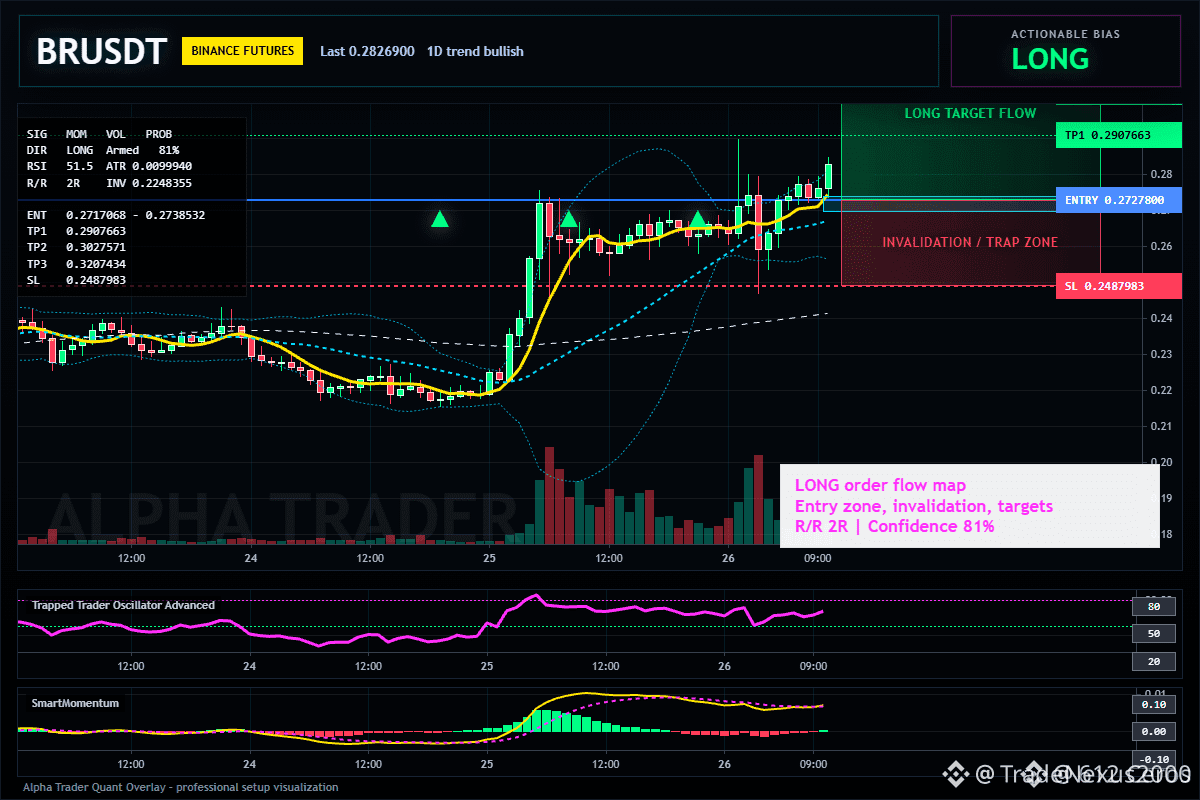
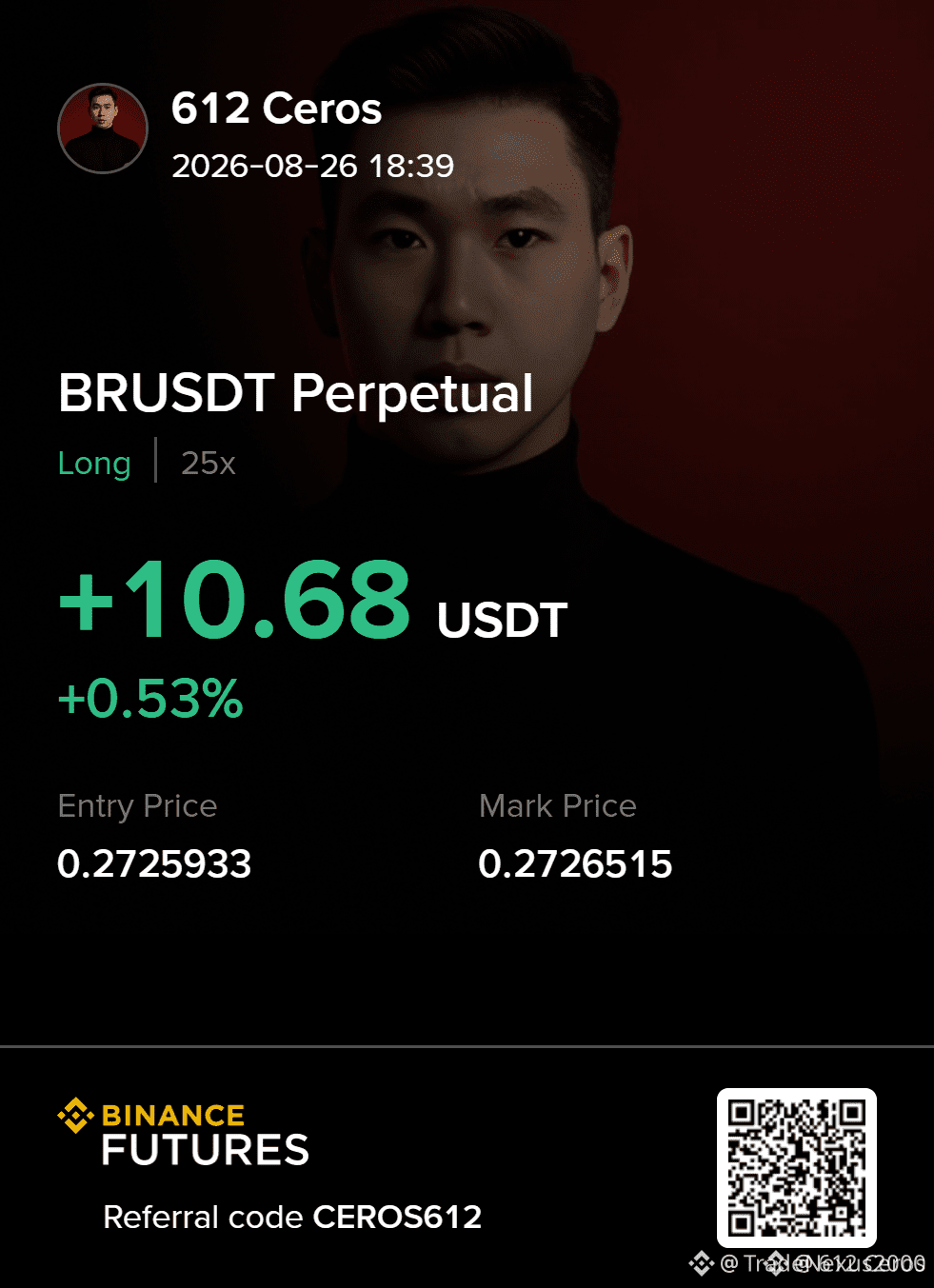
WHILE MARKET DISTRACTIONS MOUNT $BR SILENTLY ALIGNS FOR HIGH-CONVICTION HIGHER TIMEFRAME EXPANSION ⚡ 🦈
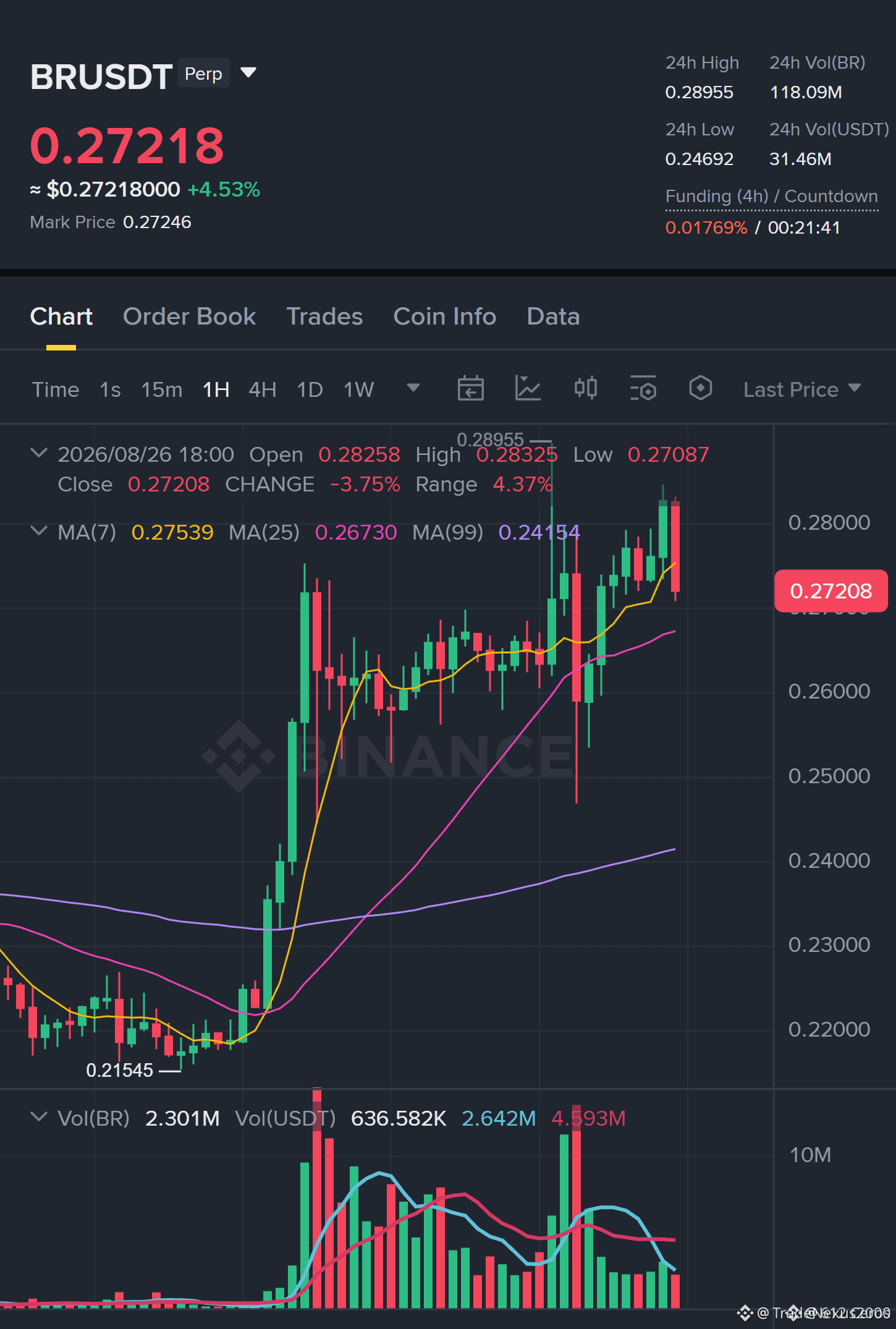
Entry: 0.2717 - 0.2738 ⚡
Target: 0.2907 - 0.3207 🚀
Stop Loss: 0.2487 ⚠️
While broad market focus remains fragmented, $BR is printing a textbook structural continuation pattern within its established daily uptrend. 📊 Lower timeframe RSI compression around 51 coupled with expanding hourly ATR signals institutional order accumulation before the next volatility expansion phase.
📌 The path of least resistance favors continuation toward upper structural inefficiencies, backed by high-confluence trend dynamics rather than counter-trend speculation. 💡
💬 Do you see TP2 at 0.3027 getting swept this week, or are you expecting a deeper liquidity raid before expansion? 👇
⚠️ Not financial advice. Always manage your risk. 🛡️
🏷️ #BR #LongSetup #MarketStructure #Crypto #TechnicalAnalysis
🎯 🦈
WHILE MARKET DISTRACTIONS MOUNT $BR SILENTLY ALIGNS FOR HIGH-CONVICTION HIGHER TIMEFRAME EXPANSION ⚡ 🦈
Entry: 0.2717 - 0.2738 ⚡
Target: 0.2907 - 0.3207 🚀
Stop Loss: 0.2487 ⚠️
While broad market focus remains fragmented, $BR is printing a textbook structural continuation pattern within its established daily uptrend. 📊 Lower timeframe RSI compression around 51 coupled with expanding hourly ATR signals institutional order accumulation before the next volatility expansion phase.
📌 The path of least resistance favors continuation toward upper structural inefficiencies, backed by high-confluence trend dynamics rather than counter-trend speculation. 💡
💬 Do you see TP2 at 0.3027 getting swept this week, or are you expecting a deeper liquidity raid before expansion? 👇
⚠️ Not financial advice. Always manage your risk. 🛡️
🏷️ #BR #LongSetup #MarketStructure #Crypto #TechnicalAnalysis
🎯 🦈
Entry: 0.2717 - 0.2738 ⚡
Target: 0.2907 - 0.3207 🚀
Stop Loss: 0.2487 ⚠️
While broad market focus remains fragmented, $BR is printing a textbook structural continuation pattern within its established daily uptrend. 📊 Lower timeframe RSI compression around 51 coupled with expanding hourly ATR signals institutional order accumulation before the next volatility expansion phase.
📌 The path of least resistance favors continuation toward upper structural inefficiencies, backed by high-confluence trend dynamics rather than counter-trend speculation. 💡
💬 Do you see TP2 at 0.3027 getting swept this week, or are you expecting a deeper liquidity raid before expansion? 👇
⚠️ Not financial advice. Always manage your risk. 🛡️
🏷️ #BR #LongSetup #MarketStructure #Crypto #TechnicalAnalysis
🎯 🦈
26

·
--
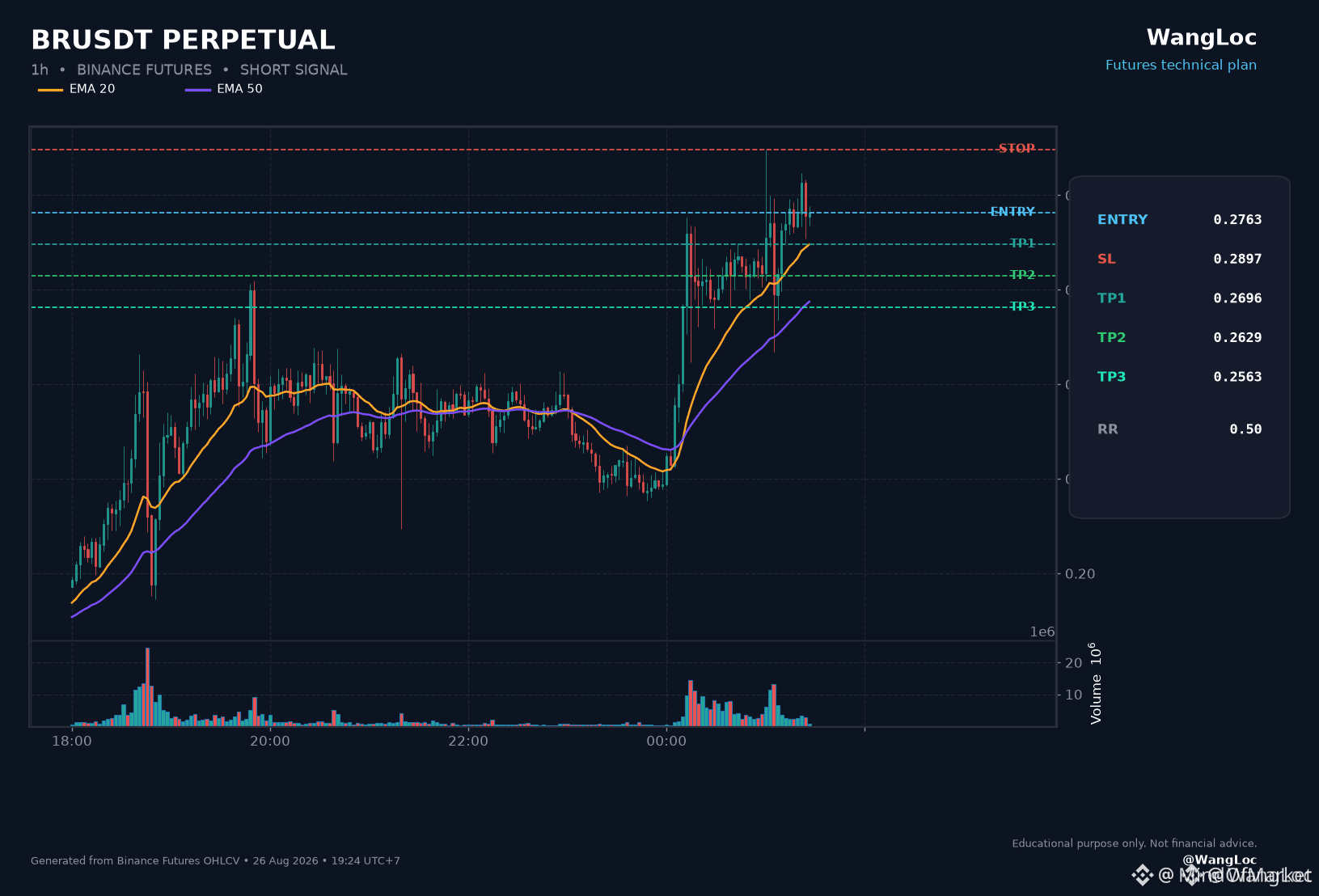
🚨 $BR DISTRIBUTION IN PLAY AS HEAVY SUPPLY OPENS THE DOOR FOR A DOWNWARD SWEEP! 📉
Entry: 0.2763 ⚡
Target: 0.2563 📉
Stop Loss: 0.2897 ⚠️
Institutional distribution is becoming visible on $BR as price fails to maintain higher timeframe structure. 🔍 Rejection near the primary supply block indicates smart money actively releasing inventory, opening an inefficiency gap toward lower demand zones.
With selling volume building, the path of least resistance points toward liquidity pools below. 🛡️ Maintaining invalidation strictly above 0.2897 preserves a clean risk profile as order flow shifts in favor of sellers.
💬 Are you riding this short expansion down to lower targets, or waiting for a demand reclaim? 👇
⚠️ Not financial advice. Always manage your risk. 🛡️
🏷️ #BR #ShortSetup #Crypto #Trading #Bearish
🐻 📉
🚨 $BR DISTRIBUTION IN PLAY AS HEAVY SUPPLY OPENS THE DOOR FOR A DOWNWARD SWEEP! 📉
Entry: 0.2763 ⚡
Target: 0.2563 📉
Stop Loss: 0.2897 ⚠️
Institutional distribution is becoming visible on $BR as price fails to maintain higher timeframe structure. 🔍 Rejection near the primary supply block indicates smart money actively releasing inventory, opening an inefficiency gap toward lower demand zones.
With selling volume building, the path of least resistance points toward liquidity pools below. 🛡️ Maintaining invalidation strictly above 0.2897 preserves a clean risk profile as order flow shifts in favor of sellers.
💬 Are you riding this short expansion down to lower targets, or waiting for a demand reclaim? 👇
⚠️ Not financial advice. Always manage your risk. 🛡️
🏷️ #BR #ShortSetup #Crypto #Trading #Bearish
🐻 📉
Entry: 0.2763 ⚡
Target: 0.2563 📉
Stop Loss: 0.2897 ⚠️
Institutional distribution is becoming visible on $BR as price fails to maintain higher timeframe structure. 🔍 Rejection near the primary supply block indicates smart money actively releasing inventory, opening an inefficiency gap toward lower demand zones.
With selling volume building, the path of least resistance points toward liquidity pools below. 🛡️ Maintaining invalidation strictly above 0.2897 preserves a clean risk profile as order flow shifts in favor of sellers.
💬 Are you riding this short expansion down to lower targets, or waiting for a demand reclaim? 👇
⚠️ Not financial advice. Always manage your risk. 🛡️
🏷️ #BR #ShortSetup #Crypto #Trading #Bearish
🐻 📉
72
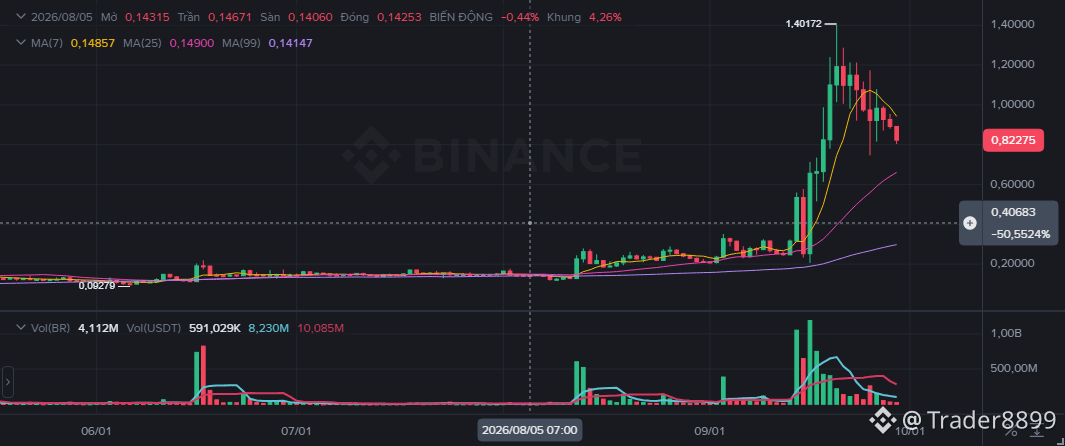
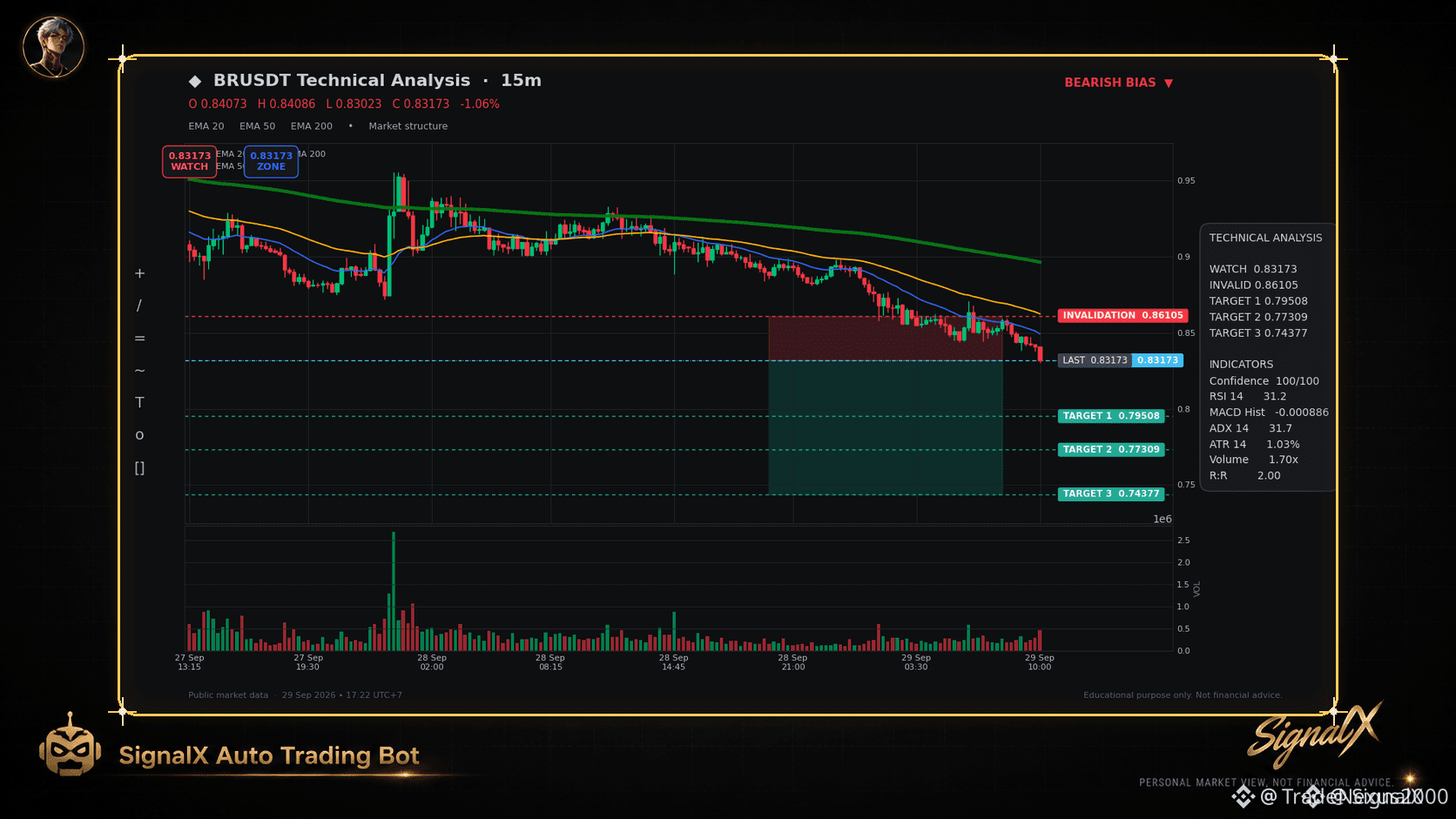
🔴 $BR REJECTS PREMIUM ARRAY WITH 15M MARKET STRUCTURE SHIFT SLIDING TOWARD SELL-SIDE LIQUIDITY 📉
Entry: 0.83173 ⚡
Target: 0.79508 / 0.77309 / 0.74377 🎯
Stop Loss: 0.86105 ⚠️
📌 The 15m chart on $BR displays a clean displacement below local support, marking an institutional shift in lower timeframe market structure. 🔍 As price retests this supply zone around 0.83173, order flow indicates aggressive distribution absorbing buying attempts.
📉 Sell-side liquidity rests heavily near the target pools down to 0.74377, providing clear downside expansion potential while the invalidation level remains firmly defined at 0.86105. 💬 Are you shorting this structural breakdown or waiting for lower confirmation? 👇
⚠️ Not financial advice. Always manage your risk. 🛡️
🏷️ #BR #ShortSetup #Bearish #MarketStructure #Crypto
🔴 📉
🔴 $BR REJECTS PREMIUM ARRAY WITH 15M MARKET STRUCTURE SHIFT SLIDING TOWARD SELL-SIDE LIQUIDITY 📉
Entry: 0.83173 ⚡
Target: 0.79508 / 0.77309 / 0.74377 🎯
Stop Loss: 0.86105 ⚠️
📌 The 15m chart on $BR displays a clean displacement below local support, marking an institutional shift in lower timeframe market structure. 🔍 As price retests this supply zone around 0.83173, order flow indicates aggressive distribution absorbing buying attempts.
📉 Sell-side liquidity rests heavily near the target pools down to 0.74377, providing clear downside expansion potential while the invalidation level remains firmly defined at 0.86105. 💬 Are you shorting this structural breakdown or waiting for lower confirmation? 👇
⚠️ Not financial advice. Always manage your risk. 🛡️
🏷️ #BR #ShortSetup #Bearish #MarketStructure #Crypto
🔴 📉
Entry: 0.83173 ⚡
Target: 0.79508 / 0.77309 / 0.74377 🎯
Stop Loss: 0.86105 ⚠️
📌 The 15m chart on $BR displays a clean displacement below local support, marking an institutional shift in lower timeframe market structure. 🔍 As price retests this supply zone around 0.83173, order flow indicates aggressive distribution absorbing buying attempts.
📉 Sell-side liquidity rests heavily near the target pools down to 0.74377, providing clear downside expansion potential while the invalidation level remains firmly defined at 0.86105. 💬 Are you shorting this structural breakdown or waiting for lower confirmation? 👇
⚠️ Not financial advice. Always manage your risk. 🛡️
🏷️ #BR #ShortSetup #Bearish #MarketStructure #Crypto
🔴 📉
15

·
--
Bearish
🔥 $BR — THE UPTREND IS LOCKED IN & TALKING TO US! 🚀📈
Look at the way this chart is behaving right now... absolute perfection. The way $BR is respecting its uptrend tells me one thing loud and clear: someone with big money knows something we don't. 👀💎
The market structure is innocent until proven guilty, and right now? It is screaming bullish. Fighting this recovery trend is a rookie mistake—we ride with the bulls or get left behind! 🌊✨
📊 The Blueprint (LONG 🟢):
Entry Zone: 0.83963 – 0.84807 🎯
Target 1: 0.89639 🎯
Target 2: 0.92505 🎯
Target 3: 0.96397 🚀
Stop Loss (SL): 0.80945 🛑
Confidence Rating: 78% 🔥
The range is broken, the momentum is clean, and the window is wide open. Chase it now or watch it fly! ⚡️️
💬 Crypto fam, talk to me: Are you loading up your bags on BR right now, or waiting to see how the next retest plays out? Drop your game plan below! 👇🧠
#BR #CryptoTrading #BinanceSquare #Altcoins #TradingSignals #CryptoCommunity #Write2Earn $BR BTCSOL
{future}(BRUSDT)
🔥 $BR — THE UPTREND IS LOCKED IN & TALKING TO US! 🚀📈
Look at the way this chart is behaving right now... absolute perfection. The way $BR is respecting its uptrend tells me one thing loud and clear: someone with big money knows something we don't. 👀💎
The market structure is innocent until proven guilty, and right now? It is screaming bullish. Fighting this recovery trend is a rookie mistake—we ride with the bulls or get left behind! 🌊✨
📊 The Blueprint (LONG 🟢):
Entry Zone: 0.83963 – 0.84807 🎯
Target 1: 0.89639 🎯
Target 2: 0.92505 🎯
Target 3: 0.96397 🚀
Stop Loss (SL): 0.80945 🛑
Confidence Rating: 78% 🔥
The range is broken, the momentum is clean, and the window is wide open. Chase it now or watch it fly! ⚡️️
💬 Crypto fam, talk to me: Are you loading up your bags on BR right now, or waiting to see how the next retest plays out? Drop your game plan below! 👇🧠
#BR #CryptoTrading #BinanceSquare #Altcoins #TradingSignals #CryptoCommunity #Write2Earn $BR BTCSOL
Look at the way this chart is behaving right now... absolute perfection. The way $BR is respecting its uptrend tells me one thing loud and clear: someone with big money knows something we don't. 👀💎
The market structure is innocent until proven guilty, and right now? It is screaming bullish. Fighting this recovery trend is a rookie mistake—we ride with the bulls or get left behind! 🌊✨
📊 The Blueprint (LONG 🟢):
Entry Zone: 0.83963 – 0.84807 🎯
Target 1: 0.89639 🎯
Target 2: 0.92505 🎯
Target 3: 0.96397 🚀
Stop Loss (SL): 0.80945 🛑
Confidence Rating: 78% 🔥
The range is broken, the momentum is clean, and the window is wide open. Chase it now or watch it fly! ⚡️️
💬 Crypto fam, talk to me: Are you loading up your bags on BR right now, or waiting to see how the next retest plays out? Drop your game plan below! 👇🧠
#BR #CryptoTrading #BinanceSquare #Altcoins #TradingSignals #CryptoCommunity #Write2Earn $BR BTCSOL
2
511
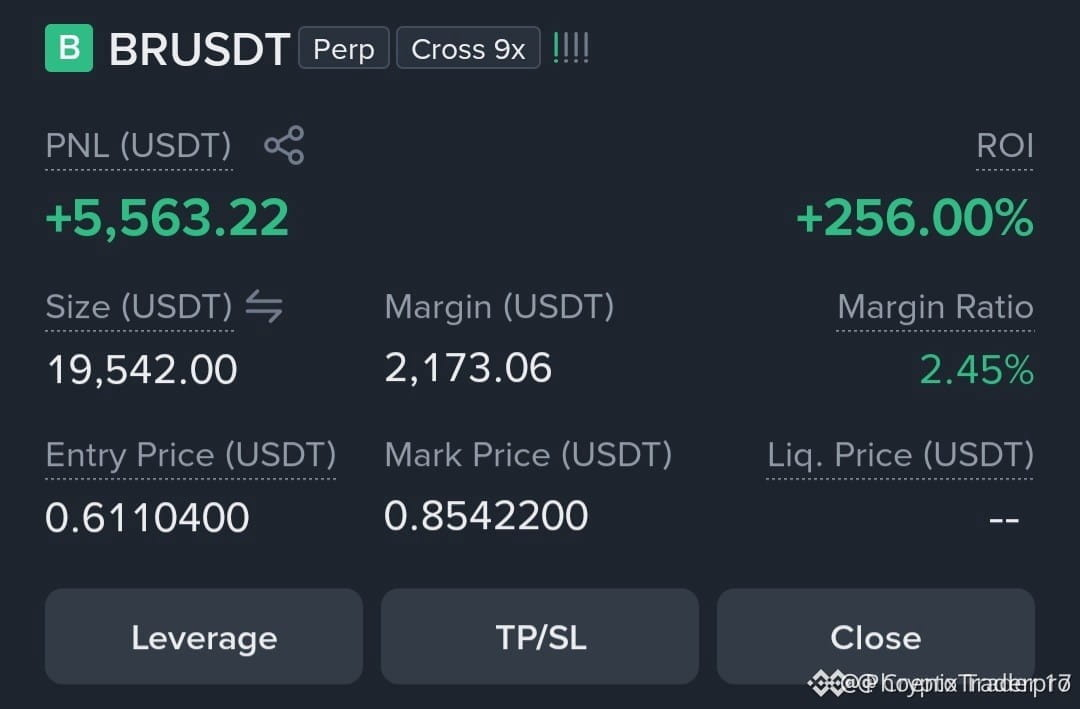
💥 $BR ACCUMULATION PHASE IS PAYING OFF AS COMMITTED HOLDERS TASTE THE BULLISH MOMENTUM! 🚀
Early conviction always feels sweet when the market starts rewarding patience. 📊 Order flow is signaling renewed buyer interest, turning quiet consolidation into a launchpad for the next leg up.
Smart money spent weeks absorbing sell-side pressure, and now $BR holders are sitting on prime real estate as momentum builds across shorter timeframes. ⚡ Staying patient through the noise separates true position builders from late chasers.
💡 When sentiment flips positive while volume expands, the order book usually tells the rest of the story. 💬 Are you holding your spot position for higher targets or taking profits into this push? 👇
⚠️ Not financial advice. Always manage your risk. 🛡️
🏷️ #BR #Crypto #Bullish #Momentum #Altcoins
🎯 🚀
💥 $BR ACCUMULATION PHASE IS PAYING OFF AS COMMITTED HOLDERS TASTE THE BULLISH MOMENTUM! 🚀
Early conviction always feels sweet when the market starts rewarding patience. 📊 Order flow is signaling renewed buyer interest, turning quiet consolidation into a launchpad for the next leg up.
Smart money spent weeks absorbing sell-side pressure, and now $BR holders are sitting on prime real estate as momentum builds across shorter timeframes. ⚡ Staying patient through the noise separates true position builders from late chasers.
💡 When sentiment flips positive while volume expands, the order book usually tells the rest of the story. 💬 Are you holding your spot position for higher targets or taking profits into this push? 👇
⚠️ Not financial advice. Always manage your risk. 🛡️
🏷️ #BR #Crypto #Bullish #Momentum #Altcoins
🎯 🚀
Early conviction always feels sweet when the market starts rewarding patience. 📊 Order flow is signaling renewed buyer interest, turning quiet consolidation into a launchpad for the next leg up.
Smart money spent weeks absorbing sell-side pressure, and now $BR holders are sitting on prime real estate as momentum builds across shorter timeframes. ⚡ Staying patient through the noise separates true position builders from late chasers.
💡 When sentiment flips positive while volume expands, the order book usually tells the rest of the story. 💬 Are you holding your spot position for higher targets or taking profits into this push? 👇
⚠️ Not financial advice. Always manage your risk. 🛡️
🏷️ #BR #Crypto #Bullish #Momentum #Altcoins
🎯 🚀
50


·
--
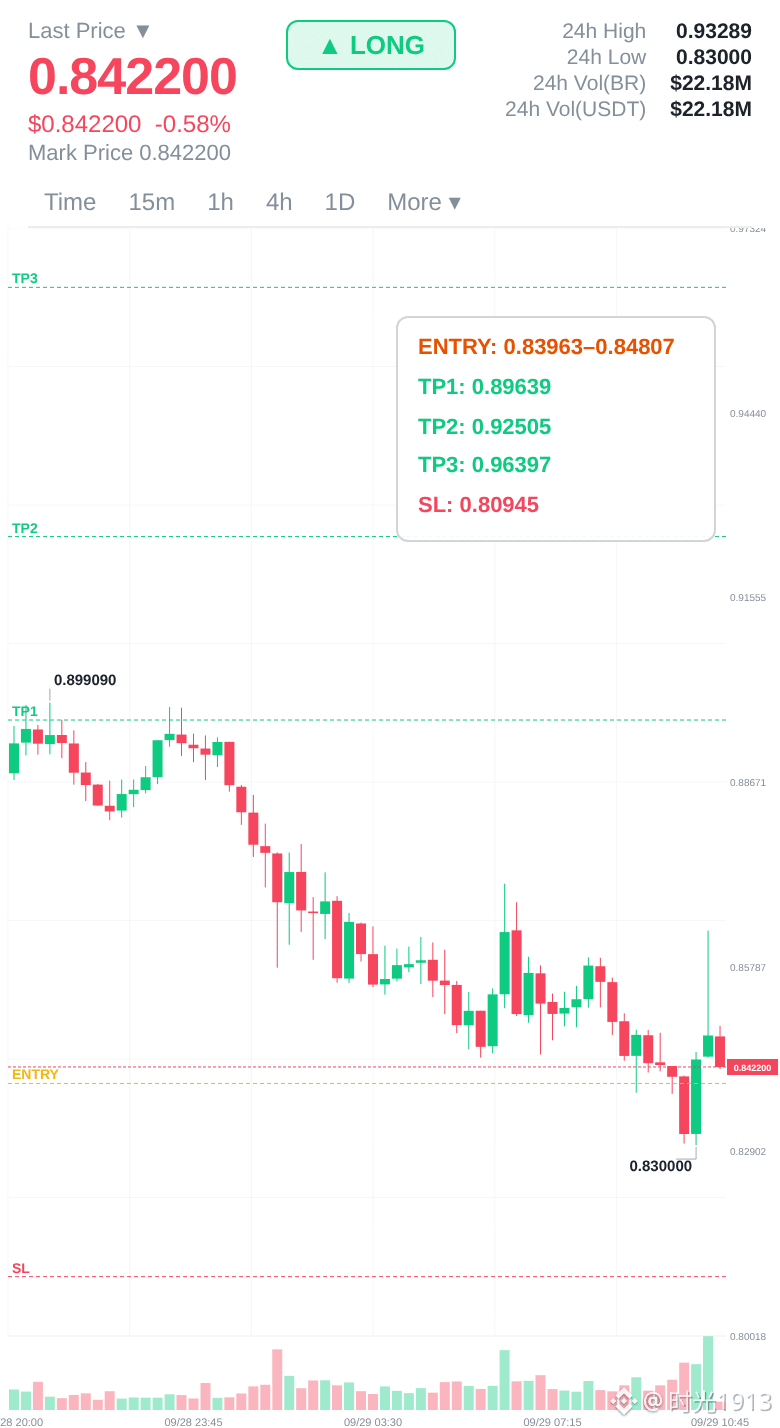
📊 BR is respecting its uptrend perfectly
The way this has been behaving tells me someone knows something.
CONTINUATION — 📈 LONG
Here's what the data shows:
📈 If yes, here's the plan:
📈 Entry: 0.83963 – 0.84807
🛑 Stop: 0.80945
🎯 TP1: 0.89639
🎯 TP2: 0.92505
🎯 TP3: 0.96397
📊 Confidence: 78%
The trend is innocent until proven guilty — and it's bullish.
No reason to be short at this stage of the recovery.
The trend is intact — bulls are patient.
Range Broken 👉 $BR 👈 Chase It Now
#BR $BTC $SOL
📊 BR is respecting its uptrend perfectly
The way this has been behaving tells me someone knows something.
CONTINUATION — 📈 LONG
Here's what the data shows:
📈 If yes, here's the plan:
📈 Entry: 0.83963 – 0.84807
🛑 Stop: 0.80945
🎯 TP1: 0.89639
🎯 TP2: 0.92505
🎯 TP3: 0.96397
📊 Confidence: 78%
The trend is innocent until proven guilty — and it's bullish.
No reason to be short at this stage of the recovery.
The trend is intact — bulls are patient.
Range Broken 👉 $BR 👈 Chase It Now
#BR $BTC $SOL
The way this has been behaving tells me someone knows something.
CONTINUATION — 📈 LONG
Here's what the data shows:
📈 If yes, here's the plan:
📈 Entry: 0.83963 – 0.84807
🛑 Stop: 0.80945
🎯 TP1: 0.89639
🎯 TP2: 0.92505
🎯 TP3: 0.96397
📊 Confidence: 78%
The trend is innocent until proven guilty — and it's bullish.
No reason to be short at this stage of the recovery.
The trend is intact — bulls are patient.
Range Broken 👉 $BR 👈 Chase It Now
#BR $BTC $SOL
1
364

·
--
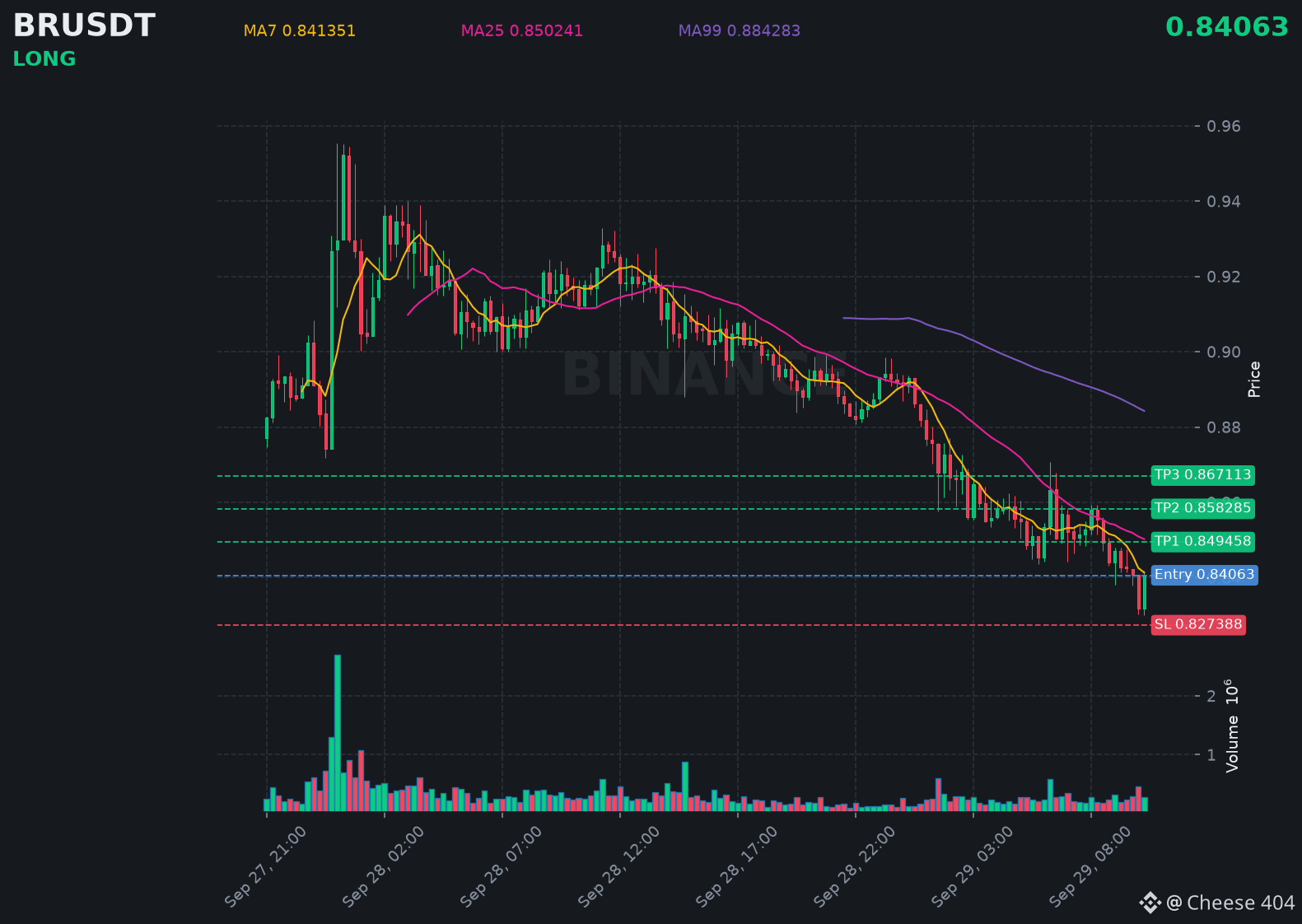
$BR is gaining strong bullish momentum as volume rises and price breaks key resistance.
📍 @ 0.84063 | Volume: 0.24M USD
RSI 41 | EMA20: 0.848397 USD
📈 Trade Plan:
📈 Entry: 0.837982 – 0.843278
🛑 Stop Loss: 0.827388
🎯 TP1: 0.849458
🎯 TP2: 0.858285
🎯 TP3: 0.867113
Waiting for a retest, then riding the uptrend.
👉 $BR 👈 Catch it
#BR
$BR is gaining strong bullish momentum as volume rises and price breaks key resistance.
📍 @ 0.84063 | Volume: 0.24M USD
RSI 41 | EMA20: 0.848397 USD
📈 Trade Plan:
📈 Entry: 0.837982 – 0.843278
🛑 Stop Loss: 0.827388
🎯 TP1: 0.849458
🎯 TP2: 0.858285
🎯 TP3: 0.867113
Waiting for a retest, then riding the uptrend.
👉 $BR 👈 Catch it
#BR
📍 @ 0.84063 | Volume: 0.24M USD
RSI 41 | EMA20: 0.848397 USD
📈 Trade Plan:
📈 Entry: 0.837982 – 0.843278
🛑 Stop Loss: 0.827388
🎯 TP1: 0.849458
🎯 TP2: 0.858285
🎯 TP3: 0.867113
Waiting for a retest, then riding the uptrend.
👉 $BR 👈 Catch it
#BR
117

·
--
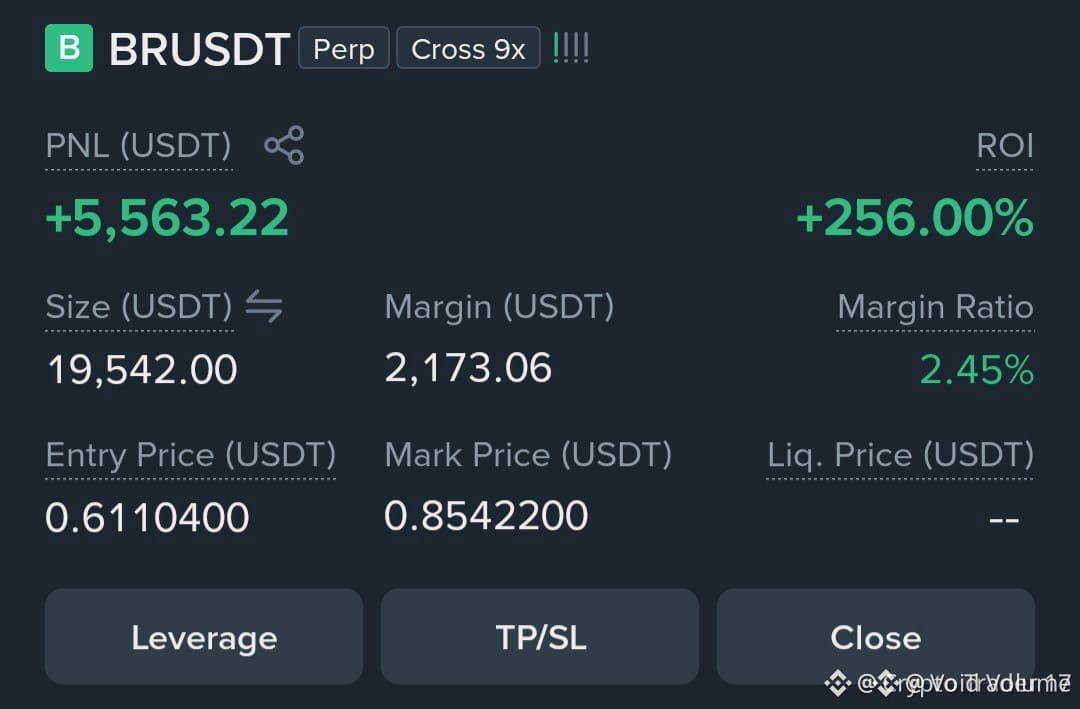
$BR HOLDING STRUCTURAL DEMAND AS INSTITUTIONAL ORDER FLOW STRENGTHENS CONTINUATION PROSPECTS ⚡ 📈
$BR market structure is displaying textbook bullish resilience as sell-side liquidity gets absorbed at key demand zones. 📊 Price action shows strong institutional footing, defending critical higher-low pivots while building momentum for an upward expansion.
💡 Market depth points toward clear efficiency fills above, setting up an intriguing risk-adjusted trajectory for patient holders. 🔍 With market participants accumulating steadily, the structural bias remains cleanly intact on higher timeframes. 💬 How are you positioning around this current structural consolidation on $BR ? 👇
⚠️ Not financial advice. Always manage your risk. 🛡️
🏷️ #BR #MarketStructure #Crypto #Altcoins #Bullish
⚡ 💎
$BR HOLDING STRUCTURAL DEMAND AS INSTITUTIONAL ORDER FLOW STRENGTHENS CONTINUATION PROSPECTS ⚡ 📈
$BR market structure is displaying textbook bullish resilience as sell-side liquidity gets absorbed at key demand zones. 📊 Price action shows strong institutional footing, defending critical higher-low pivots while building momentum for an upward expansion.
💡 Market depth points toward clear efficiency fills above, setting up an intriguing risk-adjusted trajectory for patient holders. 🔍 With market participants accumulating steadily, the structural bias remains cleanly intact on higher timeframes. 💬 How are you positioning around this current structural consolidation on $BR ? 👇
⚠️ Not financial advice. Always manage your risk. 🛡️
🏷️ #BR #MarketStructure #Crypto #Altcoins #Bullish
⚡ 💎
$BR market structure is displaying textbook bullish resilience as sell-side liquidity gets absorbed at key demand zones. 📊 Price action shows strong institutional footing, defending critical higher-low pivots while building momentum for an upward expansion.
💡 Market depth points toward clear efficiency fills above, setting up an intriguing risk-adjusted trajectory for patient holders. 🔍 With market participants accumulating steadily, the structural bias remains cleanly intact on higher timeframes. 💬 How are you positioning around this current structural consolidation on $BR ? 👇
⚠️ Not financial advice. Always manage your risk. 🛡️
🏷️ #BR #MarketStructure #Crypto #Altcoins #Bullish
⚡ 💎
15
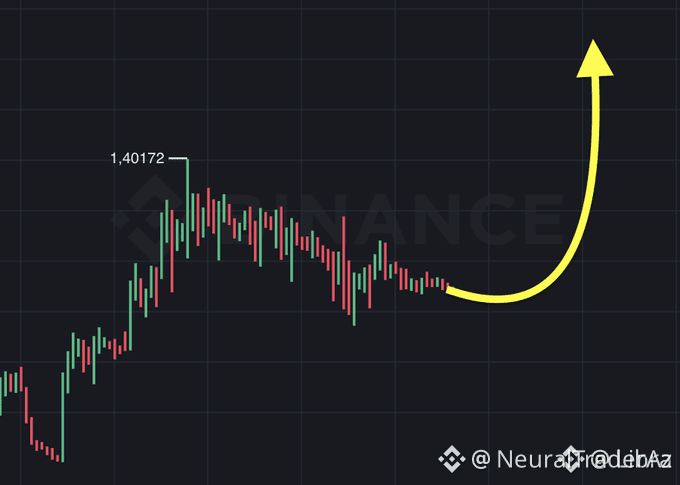
🦈 $BR IS NOT DUMPING — INSTITUTIONAL ACCUMULATION IS SILENTLY COMPRESSING PRICE FOR A BREAKOUT! 💥
What retail misinterprets as weakness on $BR is a textbook structural absorption phase. 📊 Smart money is methodically consuming sell-side liquidity inside this tight range without shifting market structure lower.
🔍 Price compression near demand historically precedes high-velocity expansion once trapped sellers are fully absorbed. 💡 With structural probability heavily favoring upside expansion, this range is coiling for a swift markup. 💬 Are you accumulating inside this range or waiting for the breakout confirmation? 👇
⚠️ Not financial advice. Always manage your risk. 🛡️
🏷️ #BR #SmartMoney #Crypto #TechnicalAnalysis #Altcoins
🎯 🦈
🦈 $BR IS NOT DUMPING — INSTITUTIONAL ACCUMULATION IS SILENTLY COMPRESSING PRICE FOR A BREAKOUT! 💥
What retail misinterprets as weakness on $BR is a textbook structural absorption phase. 📊 Smart money is methodically consuming sell-side liquidity inside this tight range without shifting market structure lower.
🔍 Price compression near demand historically precedes high-velocity expansion once trapped sellers are fully absorbed. 💡 With structural probability heavily favoring upside expansion, this range is coiling for a swift markup. 💬 Are you accumulating inside this range or waiting for the breakout confirmation? 👇
⚠️ Not financial advice. Always manage your risk. 🛡️
🏷️ #BR #SmartMoney #Crypto #TechnicalAnalysis #Altcoins
🎯 🦈
What retail misinterprets as weakness on $BR is a textbook structural absorption phase. 📊 Smart money is methodically consuming sell-side liquidity inside this tight range without shifting market structure lower.
🔍 Price compression near demand historically precedes high-velocity expansion once trapped sellers are fully absorbed. 💡 With structural probability heavily favoring upside expansion, this range is coiling for a swift markup. 💬 Are you accumulating inside this range or waiting for the breakout confirmation? 👇
⚠️ Not financial advice. Always manage your risk. 🛡️
🏷️ #BR #SmartMoney #Crypto #TechnicalAnalysis #Altcoins
🎯 🦈
47
Log in to explore more content
Join global crypto users on Binance Square
⚡️ Get latest and useful information about crypto.
💬 Trusted by the world’s largest crypto exchange.
👍 Discover real insights from verified creators.
Email / Phone number
Trending Topics
1
#BitcoinClears$85200
800 views
71 Discussing
2
#AltcoinSeasonIndexHoldsAbove60For5Days
7,899 views
453 Discussing
3
#USADPAdds90000JobsInSeptember
2,036 views
207 Discussing
4
#USCorePCEEasesTo3%InAugust
2,045 views
180 Discussing
5
#KospiPostsWorstQuarterSince2020
2,658 views
233 Discussing
6
#SECToClarifyOnChainFundraisingRules
8,824 views
396 Discussing
7
#UKFCAOpensCryptoFirmAuthorization
12,352 views
371 Discussing
8
#JapanMOFStudyGroupOnTokenizedGovtBonds
10,705 views
309 Discussing
9
#QNTRises287%
52,166 views
708 Discussing
10
#TrumpRejectsAIRulesForVoluntaryAudits
34,174 views
634 Discussing