

#avalanche
avalanche
2.4M views
6,091 Discussing
Hot
Latest

·
--
Verified
🚨 AVALANCHE JUST CHANGED HOW THE NETWORK RUNS
Avalanche’s Helicon upgrade is now live on Mainnet — and this is more than a simple speed upgrade.
Helicon separates consensus from transaction execution through Continuous Execution, helping the network keep processing consistently under heavy activity.
It also cuts the minimum validator staking duration from 14 days to 48 hours, raises the validator uptime requirement from 80% to 90%, and introduces a dynamic minimum gas price.
The upgrade is already active, with the remaining staking-economics change rolling out over 90 days.
🚨 AVAX UPDATE: Helicon is now live. Click the $AVAX setup below 🫵🏻 and check what changed across the network.
$AVAX
{future}(AVAXUSDT)
.
.
.
#Avalanche #Crypto #Write2Earn
🚨 AVALANCHE JUST CHANGED HOW THE NETWORK RUNS
Avalanche’s Helicon upgrade is now live on Mainnet — and this is more than a simple speed upgrade.
Helicon separates consensus from transaction execution through Continuous Execution, helping the network keep processing consistently under heavy activity.
It also cuts the minimum validator staking duration from 14 days to 48 hours, raises the validator uptime requirement from 80% to 90%, and introduces a dynamic minimum gas price.
The upgrade is already active, with the remaining staking-economics change rolling out over 90 days.
🚨 AVAX UPDATE: Helicon is now live. Click the $AVAX setup below 🫵🏻 and check what changed across the network.
$AVAX
.
.
.
#Avalanche #Crypto #Write2Earn
Avalanche’s Helicon upgrade is now live on Mainnet — and this is more than a simple speed upgrade.
Helicon separates consensus from transaction execution through Continuous Execution, helping the network keep processing consistently under heavy activity.
It also cuts the minimum validator staking duration from 14 days to 48 hours, raises the validator uptime requirement from 80% to 90%, and introduces a dynamic minimum gas price.
The upgrade is already active, with the remaining staking-economics change rolling out over 90 days.
🚨 AVAX UPDATE: Helicon is now live. Click the $AVAX setup below 🫵🏻 and check what changed across the network.
$AVAX
.
.
.
#Avalanche #Crypto #Write2Earn

1
642
·
--
Bullish
📉 $AVAX update: −1.1% so far
📍 Entry: 11.192
💰 Now: ~11.067
🛑 Stop: 10.046, unchanged. I don't move it.
Red for now, and that's fine. The stop is where I'm wrong, not before it.
👇 Would you hold $AVAX here or take it off?
#AVAX #Avalanche #CryptoTrading #FuturesTrading
Not financial advice. I'm sharing my own trade.
📉 $AVAX update: −1.1% so far
📍 Entry: 11.192
💰 Now: ~11.067
🛑 Stop: 10.046, unchanged. I don't move it.
Red for now, and that's fine. The stop is where I'm wrong, not before it.
👇 Would you hold $AVAX here or take it off?
#AVAX #Avalanche #CryptoTrading #FuturesTrading
Not financial advice. I'm sharing my own trade.
📍 Entry: 11.192
💰 Now: ~11.067
🛑 Stop: 10.046, unchanged. I don't move it.
Red for now, and that's fine. The stop is where I'm wrong, not before it.
👇 Would you hold $AVAX here or take it off?
#AVAX #Avalanche #CryptoTrading #FuturesTrading
Not financial advice. I'm sharing my own trade.
69

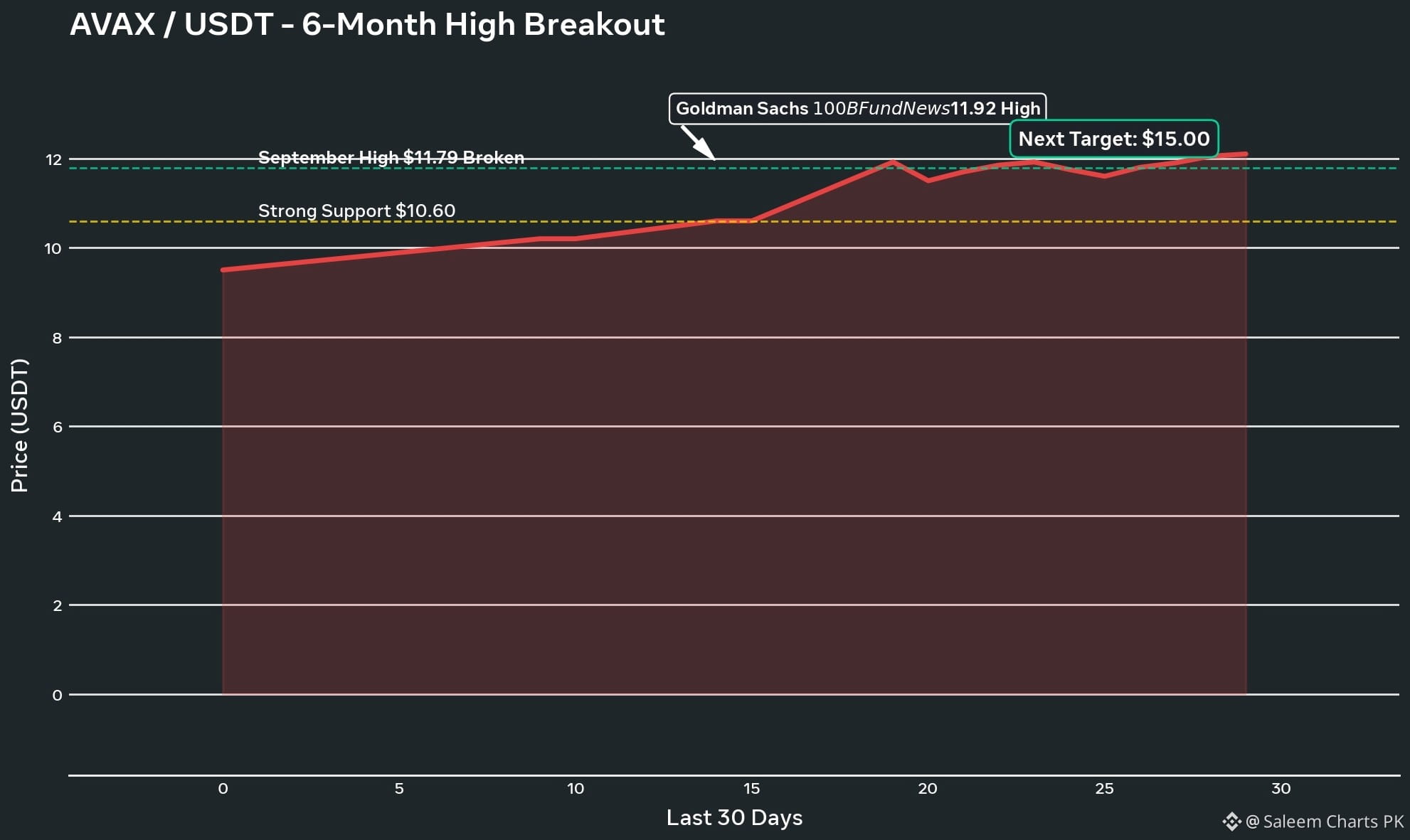
🚨 AVAX BREAKS 6-MONTH HIGH! $15 NEXT? 🚀
Avalanche is pumping hard after Goldman Sachs $100B Treasury Fund went live on Avalanche!
Key Points:
- AVAX hit $11.92, highest in 6 months
- Broke September high $11.79
- Strong support at $10.60
If AVAX holds above $11.79, $15 is coming fast.
This is not financial advice, for educational purpose only.
Are you holding $AVAX?
$AVAX $BTC $ETH $SOL $BNB
#AVAX #Avalanche #Crypto #Binance Square #Bullish
🚨 AVAX BREAKS 6-MONTH HIGH! $15 NEXT? 🚀
Avalanche is pumping hard after Goldman Sachs $100B Treasury Fund went live on Avalanche!
Key Points:
- AVAX hit $11.92, highest in 6 months
- Broke September high $11.79
- Strong support at $10.60
If AVAX holds above $11.79, $15 is coming fast.
This is not financial advice, for educational purpose only.
Are you holding $AVAX ?
$AVAX $BTC $ETH $SOL $BNB
#AVAX #Avalanche #Crypto #Binance Square #Bullish
Avalanche is pumping hard after Goldman Sachs $100B Treasury Fund went live on Avalanche!
Key Points:
- AVAX hit $11.92, highest in 6 months
- Broke September high $11.79
- Strong support at $10.60
If AVAX holds above $11.79, $15 is coming fast.
This is not financial advice, for educational purpose only.
Are you holding $AVAX ?
$AVAX $BTC $ETH $SOL $BNB
#AVAX #Avalanche #Crypto #Binance Square #Bullish
119

·
--
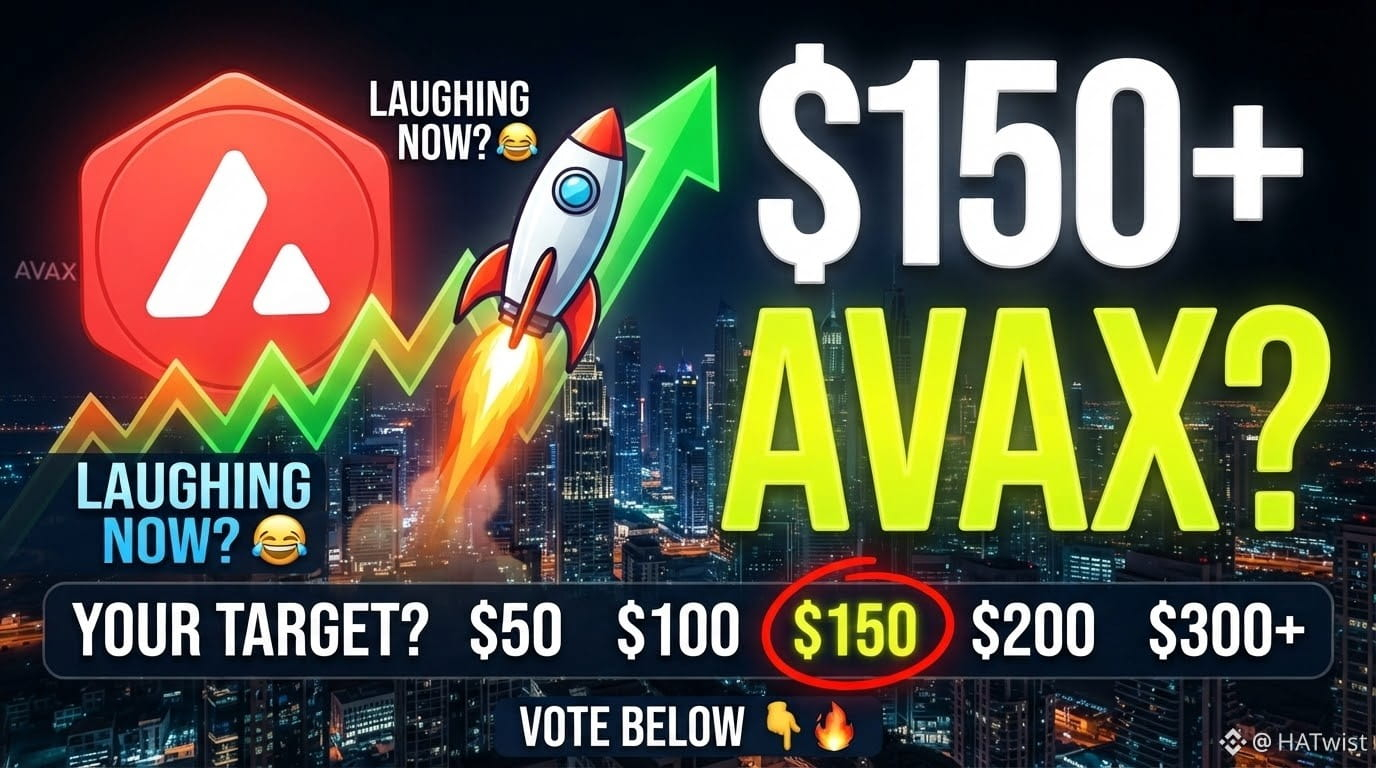
🔥 Many people are laughing at the idea of $AVAX reaching $150+ …
But what do you think? 👀
Is $150+ actually possible for $AVAX, or is it just hype? 🚀
🎯 What’s YOUR AVAX target?
🔹 $50
🔹 $100
🔹 $150
🔹 $200
🔹 $300+
Drop your target below 👇🔥
#AVAX #Avalanche #Crypto
🔥 Many people are laughing at the idea of $AVAX reaching $150+ …
But what do you think? 👀
Is $150+ actually possible for $AVAX, or is it just hype? 🚀
🎯 What’s YOUR AVAX target?
🔹 $50
🔹 $100
🔹 $150
🔹 $200
🔹 $300+
Drop your target below 👇🔥
#AVAX #Avalanche #Crypto
But what do you think? 👀
Is $150+ actually possible for $AVAX, or is it just hype? 🚀
🎯 What’s YOUR AVAX target?
🔹 $50
🔹 $100
🔹 $150
🔹 $200
🔹 $300+
Drop your target below 👇🔥
#AVAX #Avalanche #Crypto
1
41


·
--
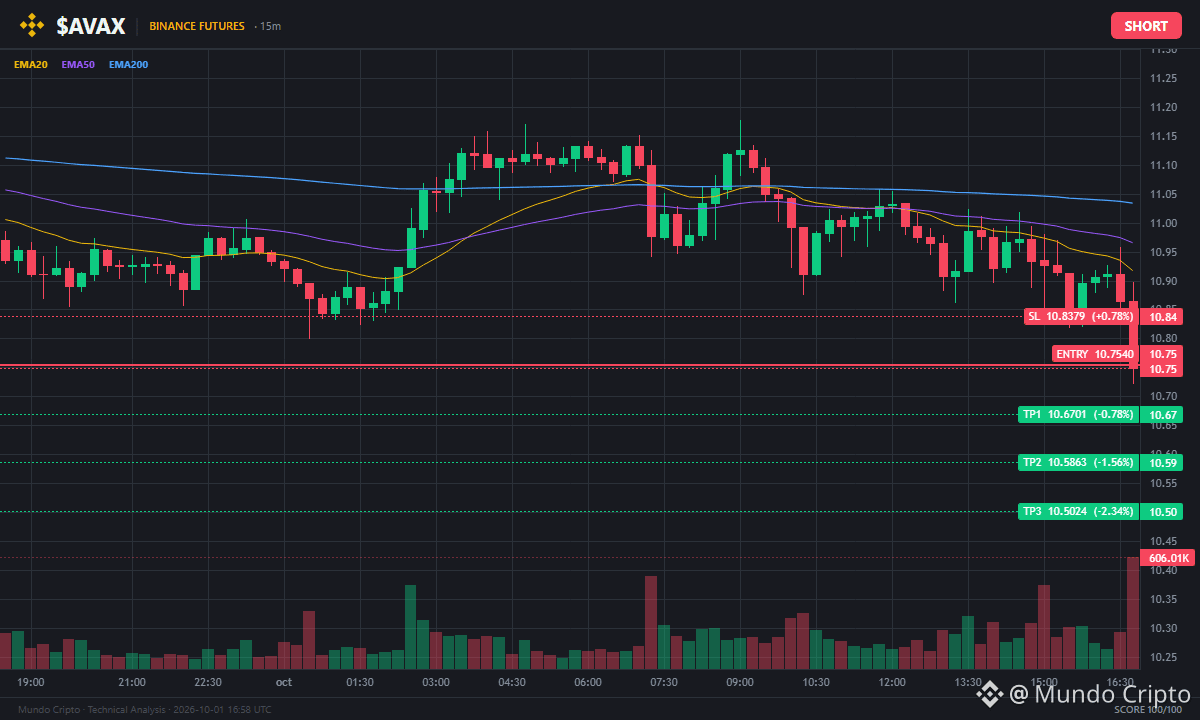
📉 $AVAX — Short setup.
Rejection from resistance confirmed. Bears are pushing lower.
• Entry: $10.73 - $10.78
• TP: $10.67 - $10.59 - $10.50 - $10.42 - $10.29 - $10.08
• SL: $10.84
#Avalanche #AVAX #MundoCripto #Crypto #Trading
📉 $AVAX — Short setup.
Rejection from resistance confirmed. Bears are pushing lower.
• Entry: $10.73 - $10.78
• TP: $10.67 - $10.59 - $10.50 - $10.42 - $10.29 - $10.08
• SL: $10.84
#Avalanche #AVAX #MundoCripto #Crypto #Trading
Rejection from resistance confirmed. Bears are pushing lower.
• Entry: $10.73 - $10.78
• TP: $10.67 - $10.59 - $10.50 - $10.42 - $10.29 - $10.08
• SL: $10.84
#Avalanche #AVAX #MundoCripto #Crypto #Trading
1
80
·
--
Verified
🚨 AVAX JUST GOT A BIG INSTITUTIONAL SIGNAL
Avalanche is suddenly back in focus after a fresh institutional development.
Goldman Sachs’ roughly $100B Treasury fund, FTIXX, is now available through Lynq, an institutional settlement network built on an Avalanche-based private Layer 1.
That puts Avalanche technology directly into an institutional settlement workflow involving major crypto firms.
And the timing is interesting.
Avalanche’s Helicon upgrade went live on September 22, bringing Continuous Execution, shorter validator staking commitments and other network changes.
This is no longer just an upgrade story.
Institutional infrastructure + RWA adoption + network upgrades are now converging around Avalanche.
🚨 AVAX UPDATE: Fresh institutional infrastructure is putting Avalanche back under the spotlight. Click the $AVAX setup below 🫵🏻 to review the market structure and watch the next reaction.
$AVAX
{future}(AVAXUSDT)
.
.
.
#AVAX #Avalanche #Write2Earn
🚨 AVAX JUST GOT A BIG INSTITUTIONAL SIGNAL
Avalanche is suddenly back in focus after a fresh institutional development.
Goldman Sachs’ roughly $100B Treasury fund, FTIXX, is now available through Lynq, an institutional settlement network built on an Avalanche-based private Layer 1.
That puts Avalanche technology directly into an institutional settlement workflow involving major crypto firms.
And the timing is interesting.
Avalanche’s Helicon upgrade went live on September 22, bringing Continuous Execution, shorter validator staking commitments and other network changes.
This is no longer just an upgrade story.
Institutional infrastructure + RWA adoption + network upgrades are now converging around Avalanche.
🚨 AVAX UPDATE: Fresh institutional infrastructure is putting Avalanche back under the spotlight. Click the $AVAX setup below 🫵🏻 to review the market structure and watch the next reaction.
$AVAX
.
.
.
#AVAX #Avalanche #Write2Earn
Avalanche is suddenly back in focus after a fresh institutional development.
Goldman Sachs’ roughly $100B Treasury fund, FTIXX, is now available through Lynq, an institutional settlement network built on an Avalanche-based private Layer 1.
That puts Avalanche technology directly into an institutional settlement workflow involving major crypto firms.
And the timing is interesting.
Avalanche’s Helicon upgrade went live on September 22, bringing Continuous Execution, shorter validator staking commitments and other network changes.
This is no longer just an upgrade story.
Institutional infrastructure + RWA adoption + network upgrades are now converging around Avalanche.
🚨 AVAX UPDATE: Fresh institutional infrastructure is putting Avalanche back under the spotlight. Click the $AVAX setup below 🫵🏻 to review the market structure and watch the next reaction.
$AVAX
.
.
.
#AVAX #Avalanche #Write2Earn

Ravi Das Goyal:
hlo
2
13
8.8k

·
--
Avalanche (AVAX): A Sharp Move Gets Traders' Attention
Avalanche has experienced notable short-term volatility.
AVAX recently dropped toward the $10.90 area after trading around $11.28 earlier in the session.
The move highlights how quickly liquidity and derivatives activity can influence altcoin prices. Traders are watching whether AVAX can stabilize after the recent decline.
#Avalanche $AVAX #Crypto #Altcoins
Avalanche (AVAX): A Sharp Move Gets Traders' Attention
Avalanche has experienced notable short-term volatility.
AVAX recently dropped toward the $10.90 area after trading around $11.28 earlier in the session.
The move highlights how quickly liquidity and derivatives activity can influence altcoin prices. Traders are watching whether AVAX can stabilize after the recent decline.
#Avalanche $AVAX #Crypto #Altcoins
Avalanche has experienced notable short-term volatility.
AVAX recently dropped toward the $10.90 area after trading around $11.28 earlier in the session.
The move highlights how quickly liquidity and derivatives activity can influence altcoin prices. Traders are watching whether AVAX can stabilize after the recent decline.
#Avalanche $AVAX #Crypto #Altcoins
60

·
--
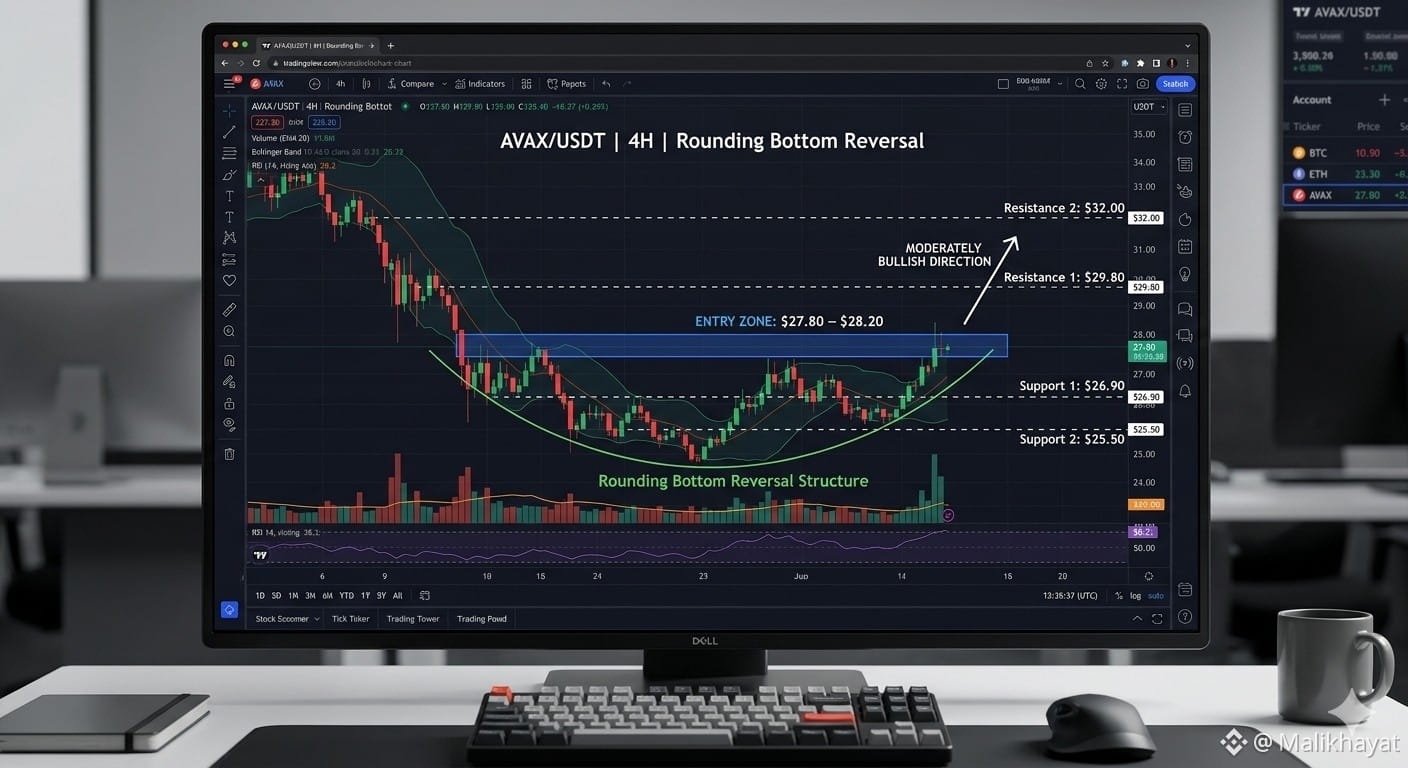
$AVAX is forming a clean rounding structure on the 4-hour chart, with the 20 EMA crossing above the 50 EMA. OI is up 2.1% and funding remains near baseline at +0.010%, supporting the supplied moderately bullish structure without excessive speculative positioning. The $27.80–$28.20 area is the potential entry zone, while the key stated risk is rejection near the psychological $30 area.
📈 Bias: Moderately Bullish | 🎯 Entry: $27.80–$28.20 | 🛡 Support: $26.90 / $25.50 | 🚧 Resistance: $29.80 / $32.00 | 🎯 Targets: $29.70 / $31.50 / $33.80 | ❌ Invalidation: $26.40
Strategy: Rounding-bottom confirmation or support entry within the supplied zone.
#Avalanche #AVAX #CryptoTrading #Binance #TechnicalAnalysis
{future}(AVAXUSDT)
$AVAX is forming a clean rounding structure on the 4-hour chart, with the 20 EMA crossing above the 50 EMA. OI is up 2.1% and funding remains near baseline at +0.010%, supporting the supplied moderately bullish structure without excessive speculative positioning. The $27.80–$28.20 area is the potential entry zone, while the key stated risk is rejection near the psychological $30 area.
📈 Bias: Moderately Bullish | 🎯 Entry: $27.80–$28.20 | 🛡 Support: $26.90 / $25.50 | 🚧 Resistance: $29.80 / $32.00 | 🎯 Targets: $29.70 / $31.50 / $33.80 | ❌ Invalidation: $26.40
Strategy: Rounding-bottom confirmation or support entry within the supplied zone.
#Avalanche #AVAX #CryptoTrading #Binance #TechnicalAnalysis
📈 Bias: Moderately Bullish | 🎯 Entry: $27.80–$28.20 | 🛡 Support: $26.90 / $25.50 | 🚧 Resistance: $29.80 / $32.00 | 🎯 Targets: $29.70 / $31.50 / $33.80 | ❌ Invalidation: $26.40
Strategy: Rounding-bottom confirmation or support entry within the supplied zone.
#Avalanche #AVAX #CryptoTrading #Binance #TechnicalAnalysis
63

·
--
Bullish
🔥 #AVAX RECLAIMED MAJOR MACRO SUPPORT – PAY CLOSE ATTENTION! 🚀📈
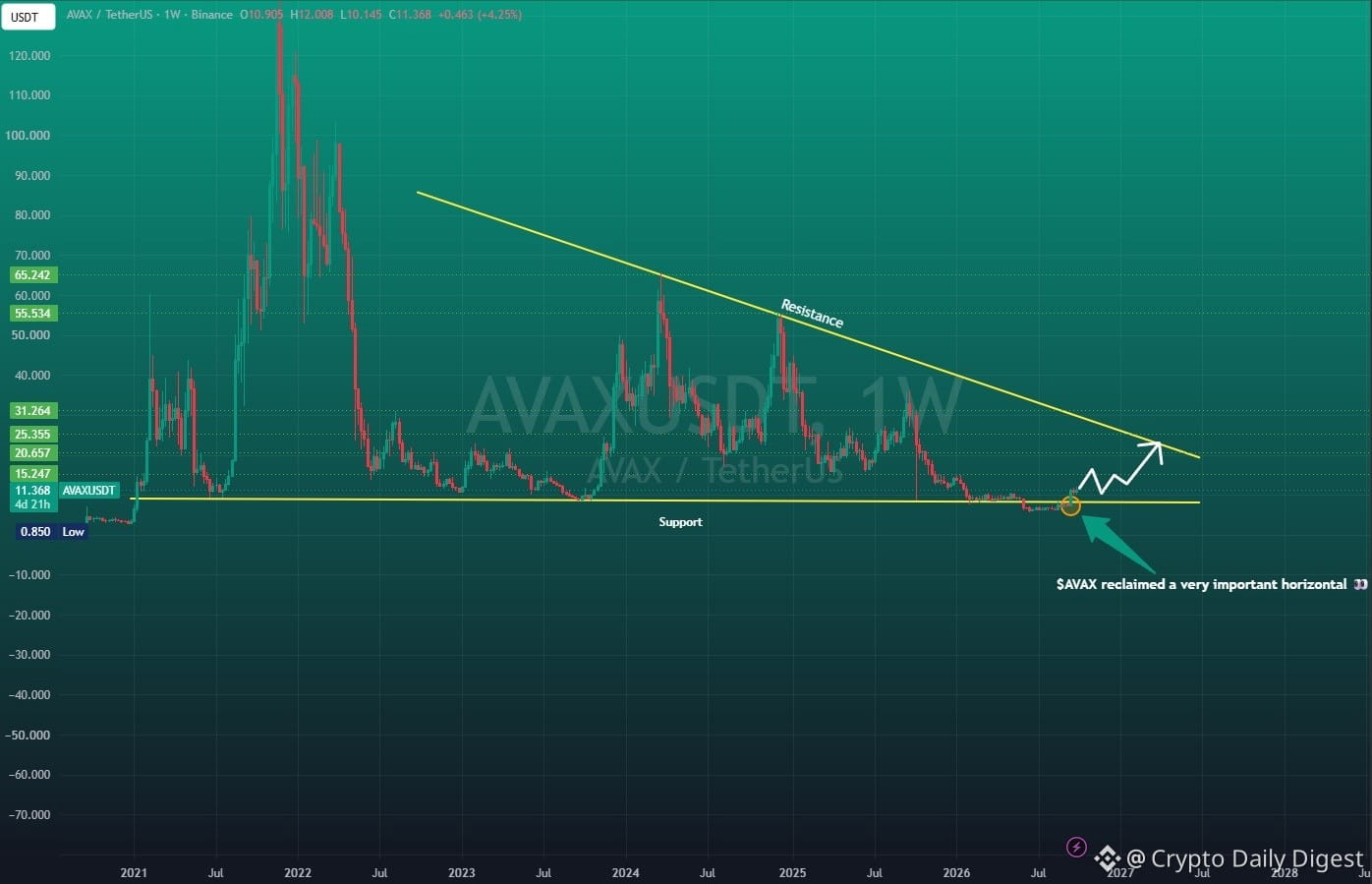
$AVAX (Avalanche/USDT) has officially reclaimed its critical multi-year horizontal support zone around $10.50 – $11.00 on the 1W timeframe! After a brief deviation below this key level during mid-2026, buyers stepped in, trapping bears and sweeping liquidity before pushing price back above $11.40.
Reclaiming a lost macro support level is one of the strongest bullish reversal signals in technical analysis. As long as $AVAX holds above this reclaimed floor, the downside risk remains limited, opening up massive upside potential toward higher resistance targets! 🎯
📊 Technical Snapshot:
• Timeframe: 1-Week (1W) Chart
• Pattern: Macro Horizontal Support Reclaim / Deviation Reversal 🔥
• Current Price: ~$11.40
• Key Reclaimed Floor: $10.50 – $11.00
• Intermediate Target Levels: $15.25 ➔ $20.65 ➔ $25.35 ➔ $31.25
• Macro Expansion Target: $55.50 – $65.20 (~+400%+ upside potential toward upper trendline resistance)
Watch for weekly candle confirmation above the $11.00 mark to lock in this macro trend shift! 📈
⚠️ Disclaimer: Not Financial Advice (NFA). Always Do Your Own Research (DYOR) before entering any trade.
💬 Are you accumulating $AVAX at this macro reclaim zone or waiting for a push above $15? Drop your price targets below! 👇
#AVAX #Avalanche #Avaxusdt #CryptoSignals #TechnicalAnalysis #Altcoins #CryptoTrading #Bullish #Bitcoin #dyor #NFA
{spot}(AVAXUSDT)
🔥 #AVAX RECLAIMED MAJOR MACRO SUPPORT – PAY CLOSE ATTENTION! 🚀📈
$AVAX (Avalanche/USDT) has officially reclaimed its critical multi-year horizontal support zone around $10.50 – $11.00 on the 1W timeframe! After a brief deviation below this key level during mid-2026, buyers stepped in, trapping bears and sweeping liquidity before pushing price back above $11.40.
Reclaiming a lost macro support level is one of the strongest bullish reversal signals in technical analysis. As long as $AVAX holds above this reclaimed floor, the downside risk remains limited, opening up massive upside potential toward higher resistance targets! 🎯
📊 Technical Snapshot:
• Timeframe: 1-Week (1W) Chart
• Pattern: Macro Horizontal Support Reclaim / Deviation Reversal 🔥
• Current Price: ~$11.40
• Key Reclaimed Floor: $10.50 – $11.00
• Intermediate Target Levels: $15.25 ➔ $20.65 ➔ $25.35 ➔ $31.25
• Macro Expansion Target: $55.50 – $65.20 (~+400%+ upside potential toward upper trendline resistance)
Watch for weekly candle confirmation above the $11.00 mark to lock in this macro trend shift! 📈
⚠️ Disclaimer: Not Financial Advice (NFA). Always Do Your Own Research (DYOR) before entering any trade.
💬 Are you accumulating $AVAX at this macro reclaim zone or waiting for a push above $15? Drop your price targets below! 👇
#AVAX #Avalanche #Avaxusdt #CryptoSignals #TechnicalAnalysis #Altcoins #CryptoTrading #Bullish #Bitcoin #dyor #NFA
$AVAX (Avalanche/USDT) has officially reclaimed its critical multi-year horizontal support zone around $10.50 – $11.00 on the 1W timeframe! After a brief deviation below this key level during mid-2026, buyers stepped in, trapping bears and sweeping liquidity before pushing price back above $11.40.
Reclaiming a lost macro support level is one of the strongest bullish reversal signals in technical analysis. As long as $AVAX holds above this reclaimed floor, the downside risk remains limited, opening up massive upside potential toward higher resistance targets! 🎯
📊 Technical Snapshot:
• Timeframe: 1-Week (1W) Chart
• Pattern: Macro Horizontal Support Reclaim / Deviation Reversal 🔥
• Current Price: ~$11.40
• Key Reclaimed Floor: $10.50 – $11.00
• Intermediate Target Levels: $15.25 ➔ $20.65 ➔ $25.35 ➔ $31.25
• Macro Expansion Target: $55.50 – $65.20 (~+400%+ upside potential toward upper trendline resistance)
Watch for weekly candle confirmation above the $11.00 mark to lock in this macro trend shift! 📈
⚠️ Disclaimer: Not Financial Advice (NFA). Always Do Your Own Research (DYOR) before entering any trade.
💬 Are you accumulating $AVAX at this macro reclaim zone or waiting for a push above $15? Drop your price targets below! 👇
#AVAX #Avalanche #Avaxusdt #CryptoSignals #TechnicalAnalysis #Altcoins #CryptoTrading #Bullish #Bitcoin #dyor #NFA
AngelOfCrypto_-:
nice
2
2
1.4k
·
--
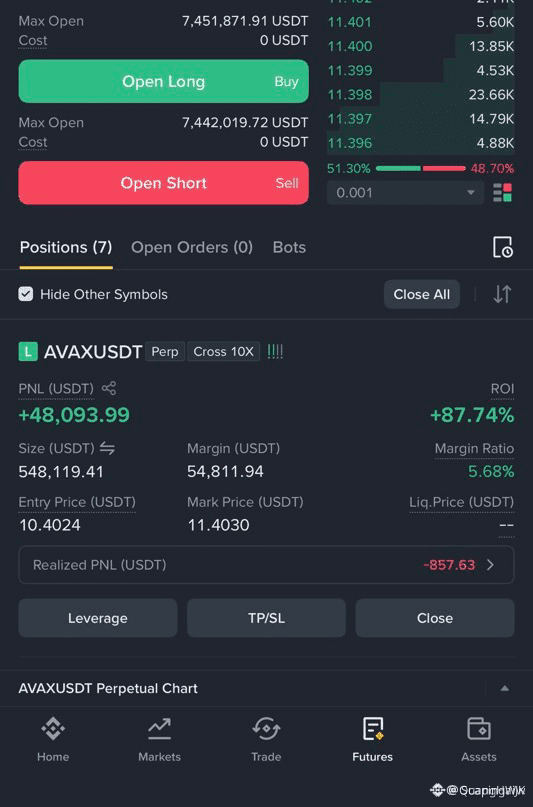
🔔 My system went long $AVAX
That's two live trades running now: $SOL and $AVAX 👀
📍 Entry: 11.19
🛑 Stop: 10.05 (on the exchange from minute one)
🎯 Target: none. Winners get room to run.
Current price: ~11.13. Barely moved yet. That's the best time to look at a trade, not after it has pumped.
The stop is wide, so the position is smaller. Same risk, more room to breathe. 🧠
📊 My last closed trades:
$Sol +11.9% ✅
$DOGE +16.4% ✅
$ETH +3.7% ✅
I post every entry, and every exit, win or lose. Follow to see how this one ends. 🔔
👇 Where does go this week? Up or down?
#Avalanche #CryptoTrading #FuturesTrading #Altcoins
🔔 My system went long $AVAX
That's two live trades running now: $SOL and $AVAX 👀
📍 Entry: 11.19
🛑 Stop: 10.05 (on the exchange from minute one)
🎯 Target: none. Winners get room to run.
Current price: ~11.13. Barely moved yet. That's the best time to look at a trade, not after it has pumped.
The stop is wide, so the position is smaller. Same risk, more room to breathe. 🧠
📊 My last closed trades:
$Sol +11.9% ✅
$DOGE +16.4% ✅
$ETH +3.7% ✅
I post every entry, and every exit, win or lose. Follow to see how this one ends. 🔔
👇 Where does go this week? Up or down?
#Avalanche #CryptoTrading #FuturesTrading #Altcoins
That's two live trades running now: $SOL and $AVAX 👀
📍 Entry: 11.19
🛑 Stop: 10.05 (on the exchange from minute one)
🎯 Target: none. Winners get room to run.
Current price: ~11.13. Barely moved yet. That's the best time to look at a trade, not after it has pumped.
The stop is wide, so the position is smaller. Same risk, more room to breathe. 🧠
📊 My last closed trades:
$Sol +11.9% ✅
$DOGE +16.4% ✅
$ETH +3.7% ✅
I post every entry, and every exit, win or lose. Follow to see how this one ends. 🔔
👇 Where does go this week? Up or down?
#Avalanche #CryptoTrading #FuturesTrading #Altcoins
191

·
--
🔥 $AVAX BOUNCE SETUP | Momentum Watch
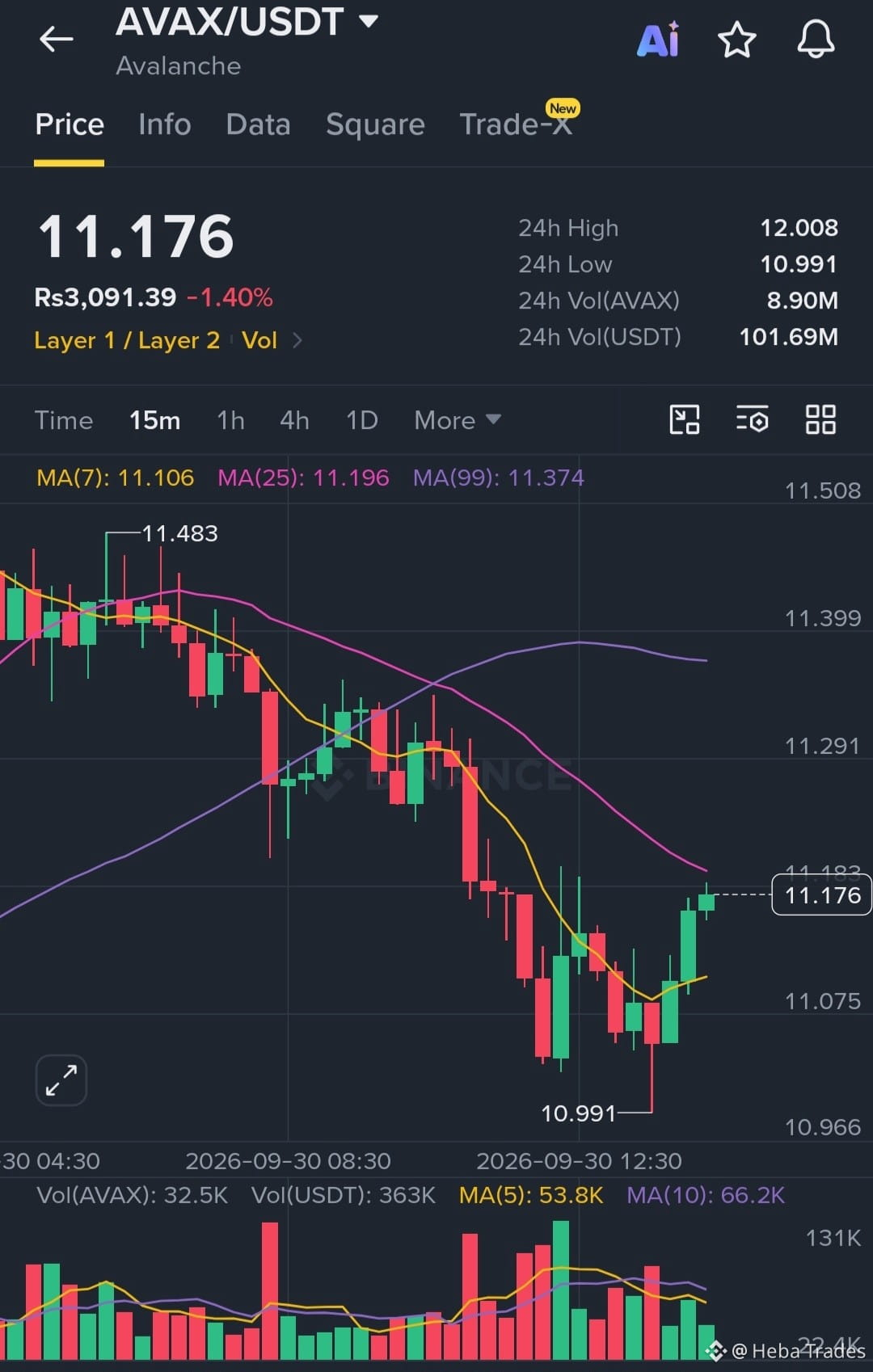
$AVAX is showing a recovery from the $10.99 low and has reclaimed the short-term MA7.
📌 Entry: $11.12 – $11.18
🎯 TP1: $11.29
🎯 TP2: $11.40
🎯 TP3: $11.50
🛑 SL: $10.98
A clean break and hold above $11.20 could strengthen the recovery.
Watch the $11.00 support closely. ⚡
#AVAX #Avalanche #CryptoTrading #Binance
{future}(AVAXUSDT)
🔥 $AVAX BOUNCE SETUP | Momentum Watch
$AVAX is showing a recovery from the $10.99 low and has reclaimed the short-term MA7.
📌 Entry: $11.12 – $11.18
🎯 TP1: $11.29
🎯 TP2: $11.40
🎯 TP3: $11.50
🛑 SL: $10.98
A clean break and hold above $11.20 could strengthen the recovery.
Watch the $11.00 support closely. ⚡
#AVAX #Avalanche #CryptoTrading #Binance
$AVAX is showing a recovery from the $10.99 low and has reclaimed the short-term MA7.
📌 Entry: $11.12 – $11.18
🎯 TP1: $11.29
🎯 TP2: $11.40
🎯 TP3: $11.50
🛑 SL: $10.98
A clean break and hold above $11.20 could strengthen the recovery.
Watch the $11.00 support closely. ⚡
#AVAX #Avalanche #CryptoTrading #Binance
1
175

·
--
$QNT and $ZEC already had their moments 👀
Now $AVAX could be next on the list. The chart is getting interesting and if buyers push through the key resistance, we could see a sharp breakout move.
{future}(AVAXUSDT)
#AVAX #Avalanche #crypto
$QNT and $ZEC already had their moments 👀
Now $AVAX could be next on the list. The chart is getting interesting and if buyers push through the key resistance, we could see a sharp breakout move.
#AVAX #Avalanche #crypto
Now $AVAX could be next on the list. The chart is getting interesting and if buyers push through the key resistance, we could see a sharp breakout move.
#AVAX #Avalanche #crypto
1
182

·
--
🚨 $AVAX SILENT ACCUMULATION OR PRE-VOLATILITY CALM BEFORE THE FLIP? ⚡
📌 Smart money doesn't make noise when building positions, and the order flow on $AVAX is displaying subtle signs of systemic absorption. 🌊 Order books are thinning out on the ask side while spot buyers quietly absorb every speculative dip.
🔍 Compression on the higher timeframes usually leads to aggressive expansion once the key structural pivot breaks. 📊 Momentum is coiling tight, and when the breakout triggers, early positioning makes all the difference. 💬 Are you loading spot positions here or waiting for confirmed resistance reclamation? 👇
⚠️ Not financial advice. Always manage your risk. 🛡️
🏷️ #AVAX #Avalanche #Crypto #Altcoins
⚡ 💎
🚨 $AVAX SILENT ACCUMULATION OR PRE-VOLATILITY CALM BEFORE THE FLIP? ⚡
📌 Smart money doesn't make noise when building positions, and the order flow on $AVAX is displaying subtle signs of systemic absorption. 🌊 Order books are thinning out on the ask side while spot buyers quietly absorb every speculative dip.
🔍 Compression on the higher timeframes usually leads to aggressive expansion once the key structural pivot breaks. 📊 Momentum is coiling tight, and when the breakout triggers, early positioning makes all the difference. 💬 Are you loading spot positions here or waiting for confirmed resistance reclamation? 👇
⚠️ Not financial advice. Always manage your risk. 🛡️
🏷️ #AVAX #Avalanche #Crypto #Altcoins
⚡ 💎
📌 Smart money doesn't make noise when building positions, and the order flow on $AVAX is displaying subtle signs of systemic absorption. 🌊 Order books are thinning out on the ask side while spot buyers quietly absorb every speculative dip.
🔍 Compression on the higher timeframes usually leads to aggressive expansion once the key structural pivot breaks. 📊 Momentum is coiling tight, and when the breakout triggers, early positioning makes all the difference. 💬 Are you loading spot positions here or waiting for confirmed resistance reclamation? 👇
⚠️ Not financial advice. Always manage your risk. 🛡️
🏷️ #AVAX #Avalanche #Crypto #Altcoins
⚡ 💎
19

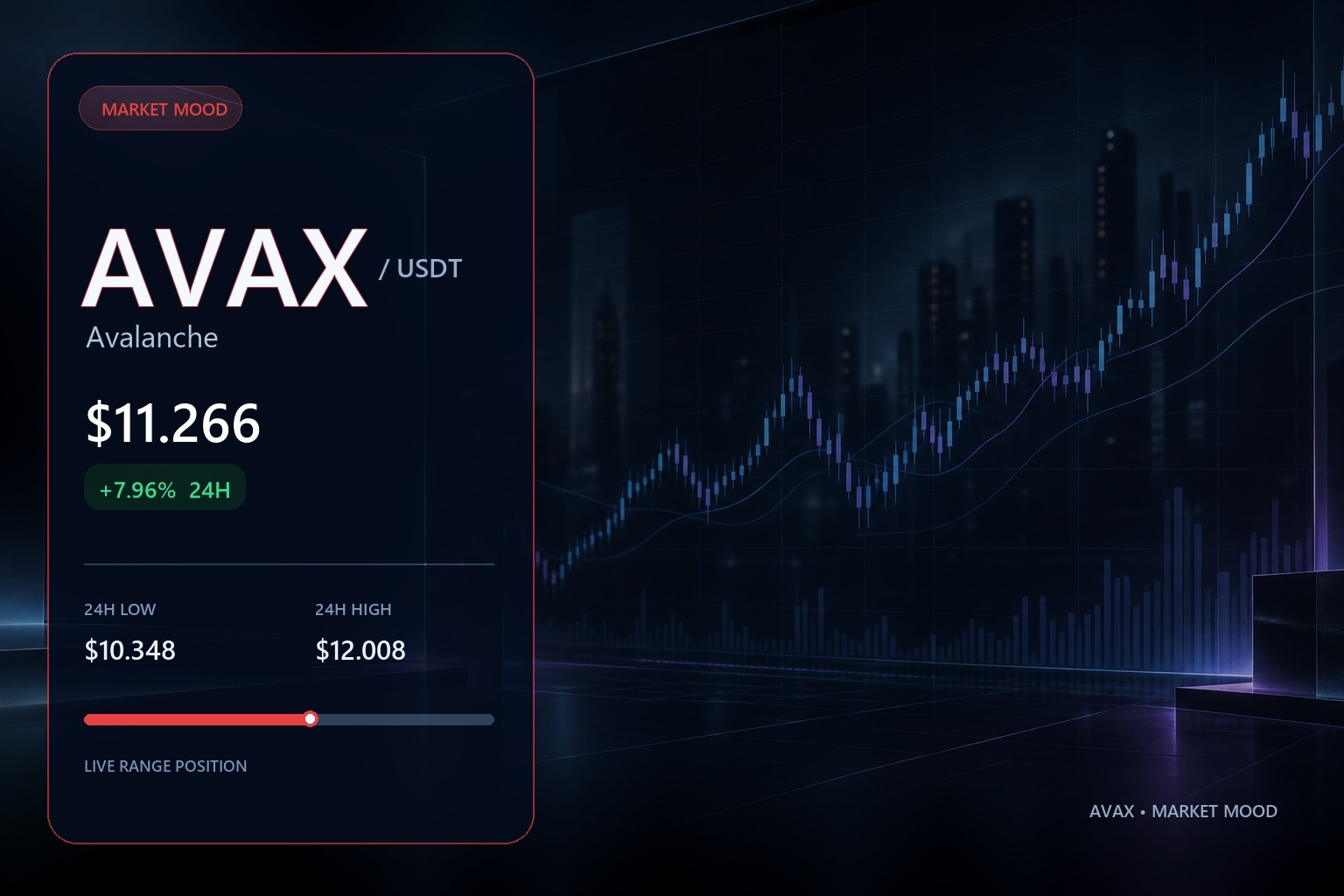
Flash update: AVAX breaks higher with a solid 7.964 percent daily gain. 🚀 Price sits at $11.266 after touching a low of $10.348 and a high of $12.008. Here is the breakdown. 📊 Momentum is testing the upper range. Volume confirms the active session. Volatility demands sharp risk control. Not financial advice, always DYOR. AVAX #Write2Earn #CryptoTrading #Avalanche
Flash update: AVAX breaks higher with a solid 7.964 percent daily gain. 🚀 Price sits at $11.266 after touching a low of $10.348 and a high of $12.008. Here is the breakdown. 📊 Momentum is testing the upper range. Volume confirms the active session. Volatility demands sharp risk control. Not financial advice, always DYOR. AVAX #Write2Earn #CryptoTrading #Avalanche
7

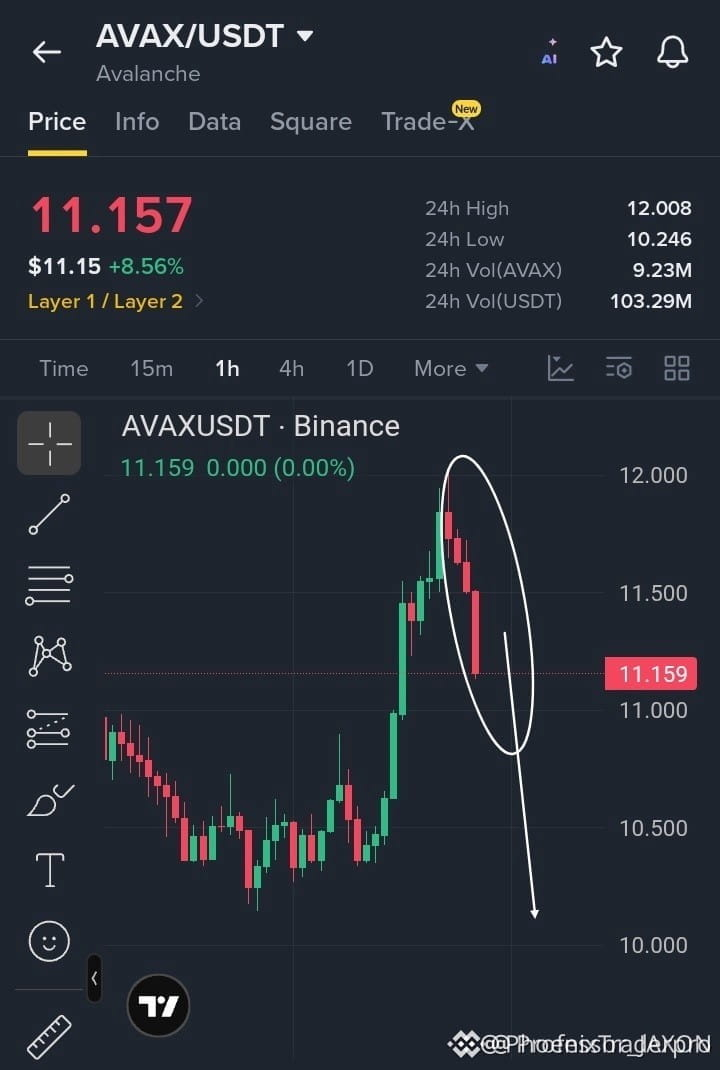
$AVAX LOSES $12 MOMENTUM AS SELLERS PREPARE A DOWNSTREAM FLUSH! 📉 🚨
Entry: 11.15 - 11.30 ⚡
Target: 10.90, 10.55, 10.20 🎯
Stop Loss: 11.60 ⚠️
Sellers decisively rejected $AVAX right at the heavy $12.00 psychological wall, drying up buyer volume and printing aggressive top-wick candles. 📉 Order flow shows momentum draining fast, positioning this setup for a rapid liquidity sweep downward if the critical 11.15 local floor fails to hold. 🔍
A clean breakdown below 11.15 opens up a clear runway straight into lower demand blocks down to 10.20. 📌
💬 Are you opening bids at lower support levels or riding this breakdown move down? 👇
⚠️ Not financial advice. Always manage your risk. 🛡️
🏷️ #AVAX #ShortSetup #Avalanche #Crypto
🔴 📉
$AVAX LOSES $12 MOMENTUM AS SELLERS PREPARE A DOWNSTREAM FLUSH! 📉 🚨
Entry: 11.15 - 11.30 ⚡
Target: 10.90, 10.55, 10.20 🎯
Stop Loss: 11.60 ⚠️
Sellers decisively rejected $AVAX right at the heavy $12.00 psychological wall, drying up buyer volume and printing aggressive top-wick candles. 📉 Order flow shows momentum draining fast, positioning this setup for a rapid liquidity sweep downward if the critical 11.15 local floor fails to hold. 🔍
A clean breakdown below 11.15 opens up a clear runway straight into lower demand blocks down to 10.20. 📌
💬 Are you opening bids at lower support levels or riding this breakdown move down? 👇
⚠️ Not financial advice. Always manage your risk. 🛡️
🏷️ #AVAX #ShortSetup #Avalanche #Crypto
🔴 📉
Entry: 11.15 - 11.30 ⚡
Target: 10.90, 10.55, 10.20 🎯
Stop Loss: 11.60 ⚠️
Sellers decisively rejected $AVAX right at the heavy $12.00 psychological wall, drying up buyer volume and printing aggressive top-wick candles. 📉 Order flow shows momentum draining fast, positioning this setup for a rapid liquidity sweep downward if the critical 11.15 local floor fails to hold. 🔍
A clean breakdown below 11.15 opens up a clear runway straight into lower demand blocks down to 10.20. 📌
💬 Are you opening bids at lower support levels or riding this breakdown move down? 👇
⚠️ Not financial advice. Always manage your risk. 🛡️
🏷️ #AVAX #ShortSetup #Avalanche #Crypto
🔴 📉
14
·
--
Verified
🚨 AVAX JUST ENTERED A NEW PHASE
Avalanche’s biggest recent network upgrade is now live.
Helicon activated on September 22, bringing Continuous Execution to the C-Chain, auto-renewed staking, shorter minimum staking durations and stronger validator uptime requirements.
But there’s another important change.
Avalanche is also recalibrating its staking economics, with the minimum consumption rate gradually moving from 10% toward 7.5%.
This is more than a headline upgrade. It changes how staking, validator performance and network execution work across Avalanche.
Now the market has to show whether traders will treat Helicon as a lasting fundamental catalyst or simply a short-term event.
Watch the reaction closely.
🚨 AVAX UPDATE: Helicon is now live. Click the $AVAX setup below 🫵🏻 to review the structure and watch for the next major market reaction.
$AVAX
{future}(AVAXUSDT)
.
.
.
#AVAX #Avalanche #Write2Earn
🚨 AVAX JUST ENTERED A NEW PHASE
Avalanche’s biggest recent network upgrade is now live.
Helicon activated on September 22, bringing Continuous Execution to the C-Chain, auto-renewed staking, shorter minimum staking durations and stronger validator uptime requirements.
But there’s another important change.
Avalanche is also recalibrating its staking economics, with the minimum consumption rate gradually moving from 10% toward 7.5%.
This is more than a headline upgrade. It changes how staking, validator performance and network execution work across Avalanche.
Now the market has to show whether traders will treat Helicon as a lasting fundamental catalyst or simply a short-term event.
Watch the reaction closely.
🚨 AVAX UPDATE: Helicon is now live. Click the $AVAX setup below 🫵🏻 to review the structure and watch for the next major market reaction.
$AVAX
.
.
.
#AVAX #Avalanche #Write2Earn
Avalanche’s biggest recent network upgrade is now live.
Helicon activated on September 22, bringing Continuous Execution to the C-Chain, auto-renewed staking, shorter minimum staking durations and stronger validator uptime requirements.
But there’s another important change.
Avalanche is also recalibrating its staking economics, with the minimum consumption rate gradually moving from 10% toward 7.5%.
This is more than a headline upgrade. It changes how staking, validator performance and network execution work across Avalanche.
Now the market has to show whether traders will treat Helicon as a lasting fundamental catalyst or simply a short-term event.
Watch the reaction closely.
🚨 AVAX UPDATE: Helicon is now live. Click the $AVAX setup below 🫵🏻 to review the structure and watch for the next major market reaction.
$AVAX
.
.
.
#AVAX #Avalanche #Write2Earn

8
2.9k

·
--
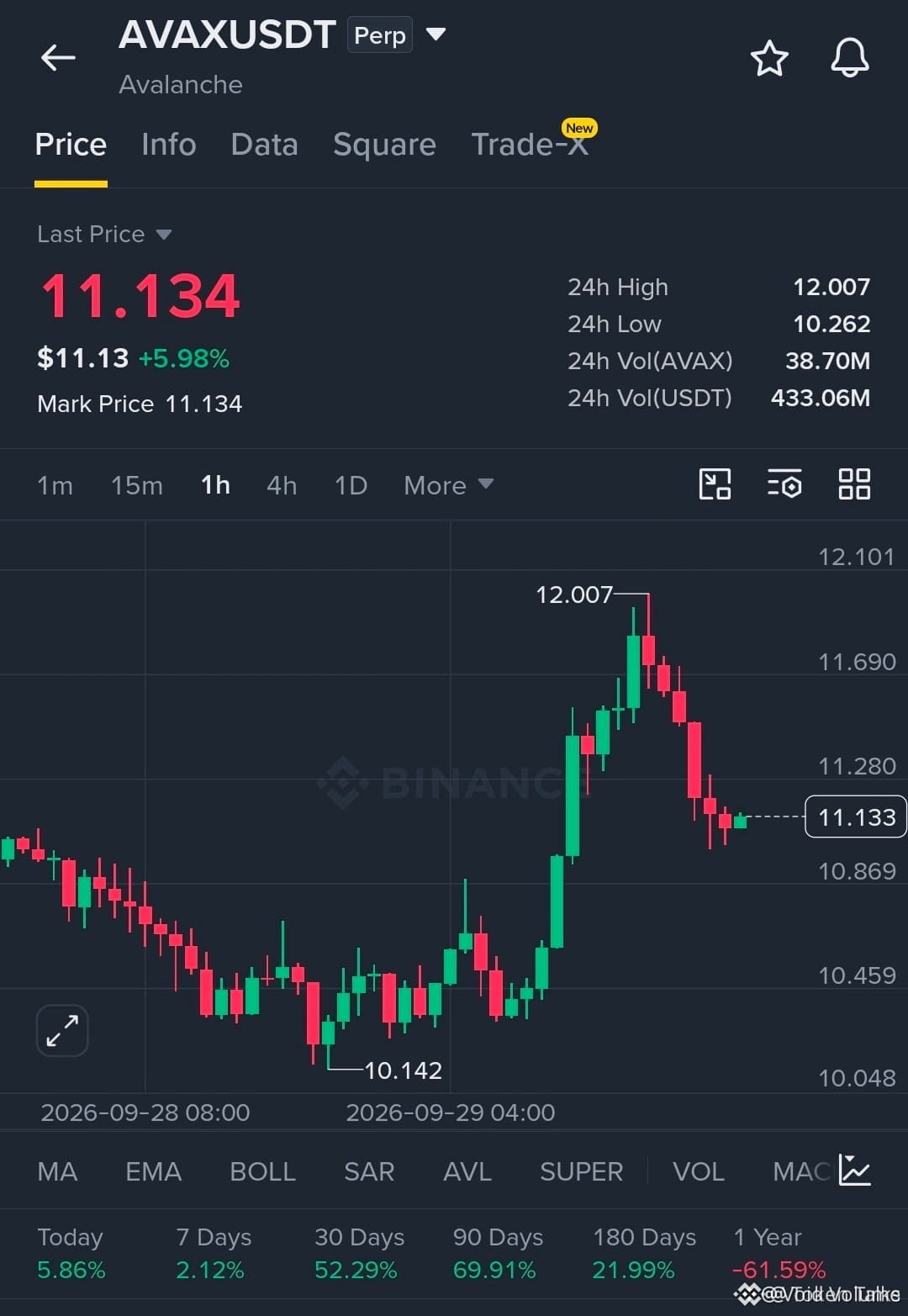
🚨 $AVAX FACES SHARP REJECTION AT $12 RESISTANCE AS SMART MONEY HUNTS SUPPORT 🦈
Entry: 10.87 ⚡
Target: 12.00 🚀
Stop Loss: 10.45 ⚠️
$AVAX printed a violent expansion from $10.14 into the $12.00 overhead supply, backed by over $433M in daily USDT volume. 📊 However, institutional sellers defended the high-volume range edge, triggering a swift retracement back toward the primary demand cluster at $10.87.
📌 This structural pullback is testing whether buyers can absorb sell pressure above major support at $10.45 to build a higher-low base. 🔍 A reclaim of $12.00 confirms bullish market structure continuation, while losing key support shifts bias toward lower liquidity pools. 💬 Will $AVAX hold this key support pivot or fall lower before the next leg? 👇
⚠️ Not financial advice. Always manage your risk. 🛡️
🏷️ #AVAX #Avalanche #MarketStructure #Crypto
🎯 🦈
🚨 $AVAX FACES SHARP REJECTION AT $12 RESISTANCE AS SMART MONEY HUNTS SUPPORT 🦈
Entry: 10.87 ⚡
Target: 12.00 🚀
Stop Loss: 10.45 ⚠️
$AVAX printed a violent expansion from $10.14 into the $12.00 overhead supply, backed by over $433M in daily USDT volume. 📊 However, institutional sellers defended the high-volume range edge, triggering a swift retracement back toward the primary demand cluster at $10.87.
📌 This structural pullback is testing whether buyers can absorb sell pressure above major support at $10.45 to build a higher-low base. 🔍 A reclaim of $12.00 confirms bullish market structure continuation, while losing key support shifts bias toward lower liquidity pools. 💬 Will $AVAX hold this key support pivot or fall lower before the next leg? 👇
⚠️ Not financial advice. Always manage your risk. 🛡️
🏷️ #AVAX #Avalanche #MarketStructure #Crypto
🎯 🦈
Entry: 10.87 ⚡
Target: 12.00 🚀
Stop Loss: 10.45 ⚠️
$AVAX printed a violent expansion from $10.14 into the $12.00 overhead supply, backed by over $433M in daily USDT volume. 📊 However, institutional sellers defended the high-volume range edge, triggering a swift retracement back toward the primary demand cluster at $10.87.
📌 This structural pullback is testing whether buyers can absorb sell pressure above major support at $10.45 to build a higher-low base. 🔍 A reclaim of $12.00 confirms bullish market structure continuation, while losing key support shifts bias toward lower liquidity pools. 💬 Will $AVAX hold this key support pivot or fall lower before the next leg? 👇
⚠️ Not financial advice. Always manage your risk. 🛡️
🏷️ #AVAX #Avalanche #MarketStructure #Crypto
🎯 🦈
4

$AVAX: Buying Pressure Rises as Bulls Test Key Resistance
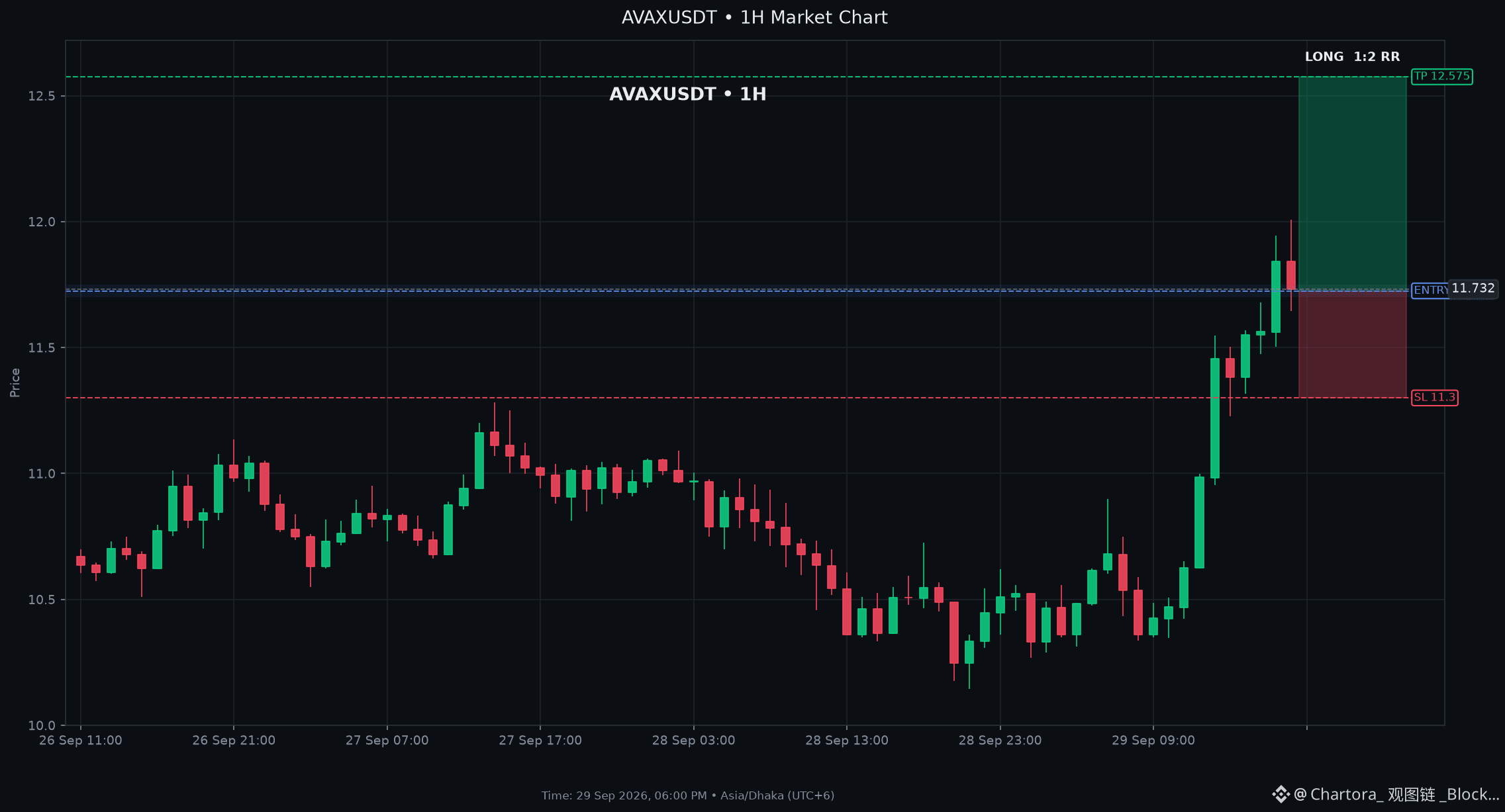
LONG SETUP AVAX
Entry: $11.7000 - $11.7500
Stop Loss: $11.3000
Take Profit: $12.5750 (2R)
Key Levels: Support $10.8120 | Resistance $12.0080
Technical Analysis for $AVAX: Price sits above EMA9 (11.37), EMA21 (11.02), EMA50 (10.83) and EMA200 (10.45), confirming a bullish hierarchy. MACD is positive (0.286) with a clear histogram (+0.141). RSI at 71.5 and Stochastic K/D in the high 80s indicate overbought momentum but the ADX of 32 shows a strong trend. Volume is up >118%, supporting the move. The 1H/4H swing high sits at 12.008 and swing low at 10.812, placing the current price near the upper half of the range, suitable for a swinglong with a 2R target.
Market Context: BTC remains in a bullish stance on both 4H and 1D timeframes, and the broader crypto market is broadly positive (63% green). This backdrop adds bias toward higher risk assets like AVAX.
#AVAX #Avalanche #AltcoinAnalysis
LONG $AVAX
$AVAX : Buying Pressure Rises as Bulls Test Key Resistance
LONG SETUP AVAX
Entry: $11.7000 - $11.7500
Stop Loss: $11.3000
Take Profit: $12.5750 (2R)
Key Levels: Support $10.8120 | Resistance $12.0080
Technical Analysis for $AVAX : Price sits above EMA9 (11.37), EMA21 (11.02), EMA50 (10.83) and EMA200 (10.45), confirming a bullish hierarchy. MACD is positive (0.286) with a clear histogram (+0.141). RSI at 71.5 and Stochastic K/D in the high 80s indicate overbought momentum but the ADX of 32 shows a strong trend. Volume is up >118%, supporting the move. The 1H/4H swing high sits at 12.008 and swing low at 10.812, placing the current price near the upper half of the range, suitable for a swinglong with a 2R target.
Market Context: BTC remains in a bullish stance on both 4H and 1D timeframes, and the broader crypto market is broadly positive (63% green). This backdrop adds bias toward higher risk assets like AVAX.
#AVAX #Avalanche #AltcoinAnalysis
LONG $AVAX
LONG SETUP AVAX
Entry: $11.7000 - $11.7500
Stop Loss: $11.3000
Take Profit: $12.5750 (2R)
Key Levels: Support $10.8120 | Resistance $12.0080
Technical Analysis for $AVAX : Price sits above EMA9 (11.37), EMA21 (11.02), EMA50 (10.83) and EMA200 (10.45), confirming a bullish hierarchy. MACD is positive (0.286) with a clear histogram (+0.141). RSI at 71.5 and Stochastic K/D in the high 80s indicate overbought momentum but the ADX of 32 shows a strong trend. Volume is up >118%, supporting the move. The 1H/4H swing high sits at 12.008 and swing low at 10.812, placing the current price near the upper half of the range, suitable for a swinglong with a 2R target.
Market Context: BTC remains in a bullish stance on both 4H and 1D timeframes, and the broader crypto market is broadly positive (63% green). This backdrop adds bias toward higher risk assets like AVAX.
#AVAX #Avalanche #AltcoinAnalysis
LONG $AVAX
7

·
--
$AVAX
{spot}(AVAXUSDT)
Avalanche around $10.4, with $10.15–$10.30 acting as the key support zone.
If buyers defend this area and Avalanche reclaims $10.52, I’d watch $10.68 and $10.87 next.
But if $10.15 breaks, the setup weakens and $9.97 becomes the next level I’d watch.
I wouldn’t chase Avalanche here. For me, the clean setup is either a strong bounce from support or a confirmed reclaim above $10.52.
Support hold or breakdown — which level are you watching?
#AVAX #Avalanche #Crypto #trading #BinanceSquare
$AVAX
Avalanche around $10.4, with $10.15–$10.30 acting as the key support zone.
If buyers defend this area and Avalanche reclaims $10.52, I’d watch $10.68 and $10.87 next.
But if $10.15 breaks, the setup weakens and $9.97 becomes the next level I’d watch.
I wouldn’t chase Avalanche here. For me, the clean setup is either a strong bounce from support or a confirmed reclaim above $10.52.
Support hold or breakdown — which level are you watching?
#AVAX #Avalanche #Crypto #trading #BinanceSquare
Avalanche around $10.4, with $10.15–$10.30 acting as the key support zone.
If buyers defend this area and Avalanche reclaims $10.52, I’d watch $10.68 and $10.87 next.
But if $10.15 breaks, the setup weakens and $9.97 becomes the next level I’d watch.
I wouldn’t chase Avalanche here. For me, the clean setup is either a strong bounce from support or a confirmed reclaim above $10.52.
Support hold or breakdown — which level are you watching?
#AVAX #Avalanche #Crypto #trading #BinanceSquare
6

·
--
$AVAX closes this week above $12, or I am wrong.
Trading at $11.95 after a sharp 13.6% day. The 4h move is already +15.7%, with volume running 1.4x the 20d average. Momentum is real. 🔥
But RSI is 69 and longs are paying 0.010% funding, so this isn't a free chase. If AVAX tags $12 and holds, I stay bullish. Lose it, I step aside.
$BNB has strength too, but AVAX is the cleaner momentum trade right now. The level is obvious.
What's your AVAX target?
#Avalanche #Layer1 #Altcoin
$AVAX closes this week above $12, or I am wrong.
Trading at $11.95 after a sharp 13.6% day. The 4h move is already +15.7%, with volume running 1.4x the 20d average. Momentum is real. 🔥
But RSI is 69 and longs are paying 0.010% funding, so this isn't a free chase. If AVAX tags $12 and holds, I stay bullish. Lose it, I step aside.
$BNB has strength too, but AVAX is the cleaner momentum trade right now. The level is obvious.
What's your AVAX target?
#Avalanche #Layer1 #Altcoin
Trading at $11.95 after a sharp 13.6% day. The 4h move is already +15.7%, with volume running 1.4x the 20d average. Momentum is real. 🔥
But RSI is 69 and longs are paying 0.010% funding, so this isn't a free chase. If AVAX tags $12 and holds, I stay bullish. Lose it, I step aside.
$BNB has strength too, but AVAX is the cleaner momentum trade right now. The level is obvious.
What's your AVAX target?
#Avalanche #Layer1 #Altcoin
47
Log in to explore more content
Join global crypto users on Binance Square
⚡️ Get latest and useful information about crypto.
💬 Trusted by the world’s largest crypto exchange.
👍 Discover real insights from verified creators.
Email / Phone number
Trending Topics
1
#NFPWatch
10.4M views
16,784 Discussing
2
#BitcoinRisesToward$85K
5,801 views
27 Discussing
3
#AmazonPlansToSell$8BNvidiaChips
806 views
30 Discussing
4
#NEARFallsToAround$4.70Down14%
29,770 views
63 Discussing
5
#EthereumFoundationLaunchesZkAPIOnMainnet
37,930 views
545 Discussing
6
#EvernorthPlansNasdaqListingOct8
60,106 views
488 Discussing
7
#SECProposesCryptoCustodyFramework
53,020 views
426 Discussing
8
#IMFApproves$139MDisbursementToElSalvador
28,131 views
27 Discussing
9
#AnthropicTargetsIPOAsSoonAsMidNovember
35,387 views
362 Discussing
10
#EtherGains70.9%InQ3
254,908 views
1,719 Discussing