stablecoin

4M views
19,260 Discussing
MW Trader
·
--
Stablecoin supply shrank 17 billion dollars in 30 days, the sharpest drop since 2022. 📊 Glassnode data reported by Finvestly shows stablecoin supplies contracted by 17 billion dollars over 30 days through November 14, the sharpest decline since 2022, which means real buying power is leaving the market. ⚠️ At the same time US spot Bitcoin ETFs lost 1.91 billion dollars in seven sessions and about 1.26 billion dollars of leveraged positions were liquidated in a day, so both the cash and the leverage are drying up together. My reading is that a market cannot bottom while its stablecoin fuel keeps shrinking, because every bounce then runs out of buyers, and the turn comes when stablecoin supply stops falling, not before. Does stablecoin supply stop shrinking this week, or does the liquidity drain keep going? 🤔 Follow for more trades. #Crypto #Bitcoin #FuturesTrading #TradingSignals #Stablecoin
Stablecoin supply shrank 17 billion dollars in 30 days, the sharpest drop since 2022. 📊

Glassnode data reported by Finvestly shows stablecoin supplies contracted by 17 billion dollars over 30 days through November 14, the sharpest decline since 2022, which means real buying power is leaving the market. ⚠️ At the same time US spot Bitcoin ETFs lost 1.91 billion dollars in seven sessions and about 1.26 billion dollars of leveraged positions were liquidated in a day, so both the cash and the leverage are drying up together. My reading is that a market cannot bottom while its stablecoin fuel keeps shrinking, because every bounce then runs out of buyers, and the turn comes when stablecoin supply stops falling, not before.

Does stablecoin supply stop shrinking this week, or does the liquidity drain keep going? 🤔

Follow for more trades.
#Crypto #Bitcoin #FuturesTrading #TradingSignals #Stablecoin
Visa and eligible partners can now settle VisaNet obligations using Western Union's USDPT stablecoin, Anchorage Digital said on November 12, 2026. Anchorage Digital Bank, N.A. said it is collaborating with Visa to support select stablecoins issued by the federally chartered bank as native settlement assets on the Visa network, starting with USDPT. The Western Union token is the first Anchorage-issued stablecoin to be supported in that role. Anchorage said USDPT is fully backed by U.S. dollars and cash equivalents and is redeemable one-for-one. Visa and eligible partners now have the option to use USDPT to settle VisaNet obligations. Dan Roesbery, Visa's vice president of global crypto partnerships, said the move gives partners another institution-grade settlement choice backed by a federally chartered bank. The firms also described a framework to explore support for additional Anchorage-issued stablecoins later; the announcement did not name other tokens or a settlement chain. #Stablecoin #Visa #Payments DYOR. Not financial advice.
Visa and eligible partners can now settle VisaNet obligations using Western Union's USDPT stablecoin, Anchorage Digital said on November 12, 2026.

Anchorage Digital Bank, N.A. said it is collaborating with Visa to support select stablecoins issued by the federally chartered bank as native settlement assets on the Visa network, starting with USDPT. The Western Union token is the first Anchorage-issued stablecoin to be supported in that role. Anchorage said USDPT is fully backed by U.S. dollars and cash equivalents and is redeemable one-for-one.

Visa and eligible partners now have the option to use USDPT to settle VisaNet obligations. Dan Roesbery, Visa's vice president of global crypto partnerships, said the move gives partners another institution-grade settlement choice backed by a federally chartered bank. The firms also described a framework to explore support for additional Anchorage-issued stablecoins later; the announcement did not name other tokens or a settlement chain.

#Stablecoin #Visa #Payments
DYOR. Not financial advice.
WUUS+1.45%
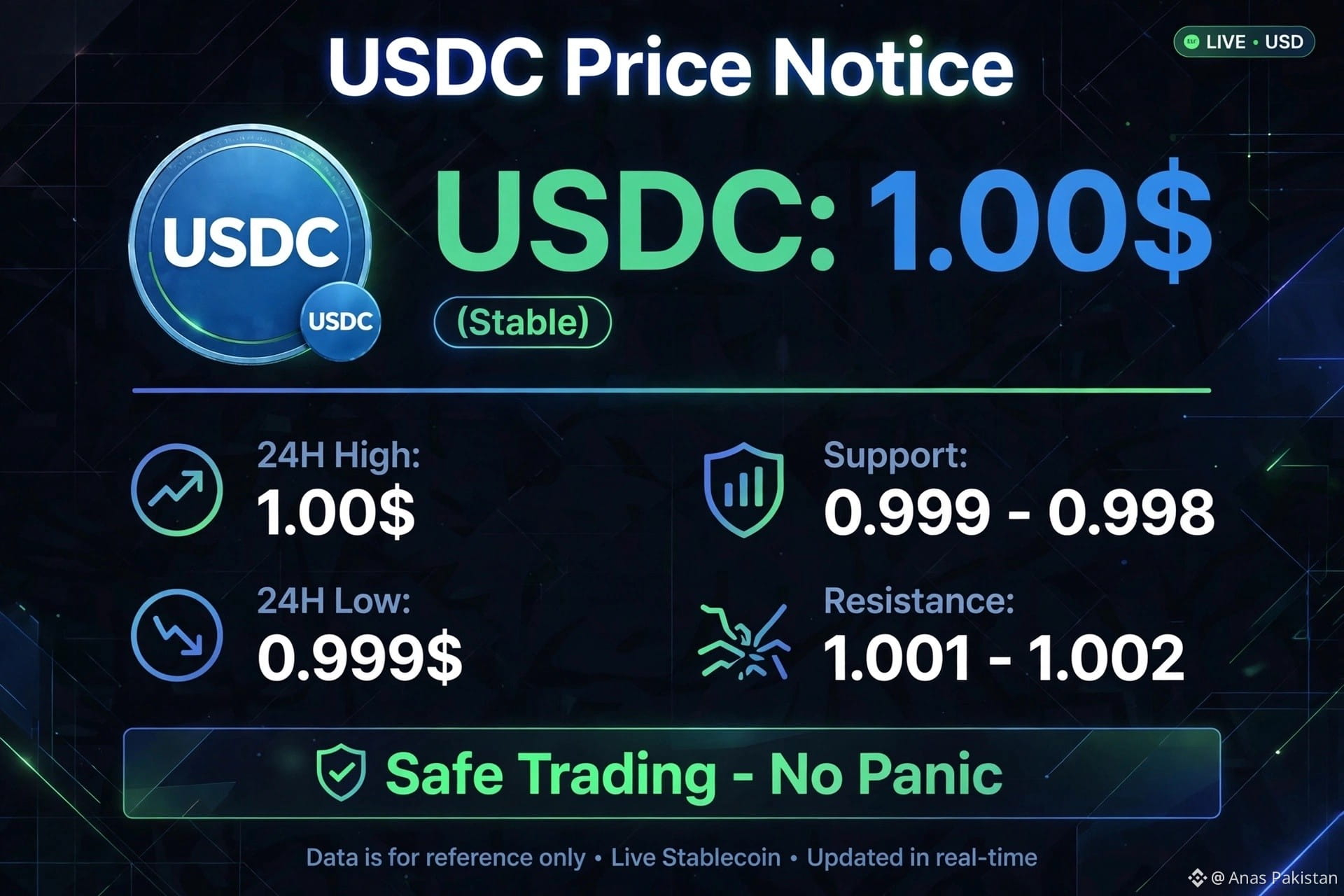
USDC Price Notice 💵 USDC: 1.00$ (Stable) 24H High: 1.00$ 24H Low: 0.999$ Support: 0.999 - 0.998 Resistance: 1.001 - 1.002 USDC Stablecoin ہے، اس میں زیادہ اتار چڑھاؤ نہیں آتا۔ اس کو زیادہ تر USDT میں Convert یا Holding کے لیے استعمال کیا جاتا ہے۔ Safe Trading - No Panic ✅ #USDC #crypto #Stablecoin #Binance #Trading
USDC Price Notice 💵

USDC: 1.00$ (Stable)

24H High: 1.00$
24H Low: 0.999$

Support: 0.999 - 0.998
Resistance: 1.001 - 1.002

USDC Stablecoin ہے، اس میں زیادہ اتار چڑھاؤ نہیں آتا۔ اس کو زیادہ تر USDT میں Convert یا Holding کے لیے استعمال کیا جاتا ہے۔

Safe Trading - No Panic ✅

#USDC #crypto #Stablecoin #Binance #Trading
Wealthsimple and Tetra opened a Canadian-dollar stablecoin to retail clients on November 13, 2026, starting with a limited beta inside the Wealthsimple app. CADD, issued by Alberta-registered Tetra Trust, is designed to stay one-to-one with the Canadian dollar and is fully backed by cash, money market funds, and short-term Canadian government debt held at regulated Canadian institutions. Wealthsimple said it is the first regulated financial institution to offer the token to its clients, and that the rollout will reach all of its clients later in 2026. Eligible users can buy, hold, sell, send, and receive CADD in the app, and the token launched on Ethereum and Base. Eligible balances can earn a 3.25% annual promotional reward, funded by Wealthsimple, accrued daily and paid weekly in CADD, with no minimum. CADD is not legal tender, is not government-backed, and is not covered by Canadian deposit insurance; redemptions follow the issuer's terms. #Stablecoin #Ethereum #Crypto DYOR. Not financial advice.
Wealthsimple and Tetra opened a Canadian-dollar stablecoin to retail clients on November 13, 2026, starting with a limited beta inside the Wealthsimple app.

CADD, issued by Alberta-registered Tetra Trust, is designed to stay one-to-one with the Canadian dollar and is fully backed by cash, money market funds, and short-term Canadian government debt held at regulated Canadian institutions. Wealthsimple said it is the first regulated financial institution to offer the token to its clients, and that the rollout will reach all of its clients later in 2026. Eligible users can buy, hold, sell, send, and receive CADD in the app, and the token launched on Ethereum and Base.

Eligible balances can earn a 3.25% annual promotional reward, funded by Wealthsimple, accrued daily and paid weekly in CADD, with no minimum. CADD is not legal tender, is not government-backed, and is not covered by Canadian deposit insurance; redemptions follow the issuer's terms.

#Stablecoin #Ethereum #Crypto
DYOR. Not financial advice.
🚨 CRYPTO MARKET WARNING: $14.2 BILLION STABLECOIN SUPPLY DISAPPEARS! 💸 Is the crypto market running out of fuel? A major development is raising concerns across the cryptocurrency industry. According to market analysis cited by Binance Square, the total stablecoin supply contracted by approximately $14.2 BILLION over 30 days through November 9, 2026. 📉 Why Is This Important? Stablecoins are a major source of liquidity in the crypto ecosystem. Traders use them to: 🔹 Buy Bitcoin and altcoins. 🔹 Move funds between exchanges. 🔹 Protect capital during market volatility. 🔹 Provide liquidity to DeFi platforms. What Could Happen Next? 🔴 Bearish Scenario: Continued stablecoin outflows could reduce buying power and make market recoveries more difficult. 🟢 Bullish Scenario: Stablecoin supply starts growing again, suggesting renewed demand and potentially stronger buying capacity. 📊 My Market Perspective: This is an important metric that crypto investors should not ignore. Bitcoin price movements tell us what is happening in the market, but stablecoin liquidity can help us understand how much capital is available to support the next move. However, declining supply alone does not confirm another crash. 🔥 THE BIG QUESTION: Are we approaching a major crypto liquidity crisis, or is this temporary capital rotation before the next opportunity? 👇 What is your opinion? $USDC $USDT {spot}(USDCUSDT) #CryptoMarket #stablecoin #USDT #USDC #CryptoLiquidity
🚨 CRYPTO MARKET WARNING: $14.2 BILLION STABLECOIN SUPPLY DISAPPEARS! 💸
Is the crypto market running out of fuel?
A major development is raising concerns across the cryptocurrency industry.
According to market analysis cited by Binance Square, the total stablecoin supply contracted by approximately $14.2 BILLION over 30 days through November 9, 2026.

📉 Why Is This Important?
Stablecoins are a major source of liquidity in the crypto ecosystem. Traders use them to:
🔹 Buy Bitcoin and altcoins.
🔹 Move funds between exchanges.
🔹 Protect capital during market volatility.
🔹 Provide liquidity to DeFi platforms.

What Could Happen Next?
🔴 Bearish Scenario: Continued stablecoin outflows could reduce buying power and make market recoveries more difficult.
🟢 Bullish Scenario: Stablecoin supply starts growing again, suggesting renewed demand and potentially stronger buying capacity.

📊 My Market Perspective:
This is an important metric that crypto investors should not ignore.
Bitcoin price movements tell us what is happening in the market, but stablecoin liquidity can help us understand how much capital is available to support the next move.
However, declining supply alone does not confirm another crash.

🔥 THE BIG QUESTION:
Are we approaching a major crypto liquidity crisis, or is this temporary capital rotation before the next opportunity?

👇 What is your opinion?
$USDC $USDT
#CryptoMarket #stablecoin #USDT #USDC #CryptoLiquidity
Article
USDT/USD Analysis: Will Tether Maintain Its $1.00 Stability?$USDT USDT/USD Price Analysis: Stablecoin Holds Near $1 as Market Activity Increases The USDT/USD market is showing relatively stable price action, continuing to trade very close to its $1.00 peg. At the time of this chart observation, USDT is trading around $0.99917, reflecting a small positive movement of approximately 0.03%. Looking at the 1-hour chart, the market has experienced a period of sideways movement followed by a gradual upward push. Buyers managed to move the price from the lower $0.9988 area toward the $0.9994 region, showing increased short-term buying activity. However, after reaching these higher levels, the market faced some selling pressure, resulting in a minor pullback. 1. Price Action and Market Structure The recent candles show that USDT has maintained a relatively narrow trading range. The upward movement suggests that buyers have been active, while the latest red candles indicate some short-term profit-taking and selling activity. The current price near $0.99917 suggests that the market is still maintaining its stability. The long lower wick on the latest candle also highlights that buyers stepped in when the price moved lower. 2. Important Support and Resistance Levels Support Levels: * $0.99900 – Immediate support zone. * $0.99880 – Secondary support. * $0.99860 – A deeper support area visible on the chart. Resistance Levels: * $0.99930 – Immediate resistance. * $0.99940 – Recent local high. * $0.99950 – 24-hour high and an important short-term level. A sustained move above the $0.99940–$0.99950 region would indicate stronger upward momentum. On the other hand, a move below $0.99900 could bring another test of the lower support areas. 3. Volume and Order Book Analysis Trading volume has increased during some of the recent upward movements, showing that market participation has picked up. The order book currently displays approximately 31.11% buying pressure and 68.89% selling pressure. This suggests that sell orders are currently stronger in the displayed order book. However, these figures can change quickly and do not guarantee the next price movement. 4. What Could Happen Next? For the next few hours, USDT/USD may continue consolidating around its current price level. If buyers maintain support above $0.99900, the market could attempt another move toward $0.99930 and $0.99940. However, if selling pressure increases, the price could revisit $0.99880 before finding renewed buying interest. Since USDT is designed to maintain a value close to one US dollar, these small price movements are generally more relevant to short-term liquidity and market conditions than traditional directional price trends. Final Thoughts USDT/USD is currently showing a stable market structure with minor fluctuations around the $1.00 level. The recent upward movement demonstrates buying interest, while the order book indicates that sellers remain active. The key levels to monitor are $0.99900 as immediate support and $0.99940–$0.99950 as the nearby resistance zone. What do you think? Will USDT maintain its stability near $1.00, or will market pressure create another short-term deviation? Share your thoughts in the comments! #Binance #CryptoMarket #stablecoin #tradingview #MarketUpdate $USDT

USDT/USD Analysis: Will Tether Maintain Its $1.00 Stability?

$USDT USDT/USD Price Analysis: Stablecoin Holds Near $1 as Market Activity Increases
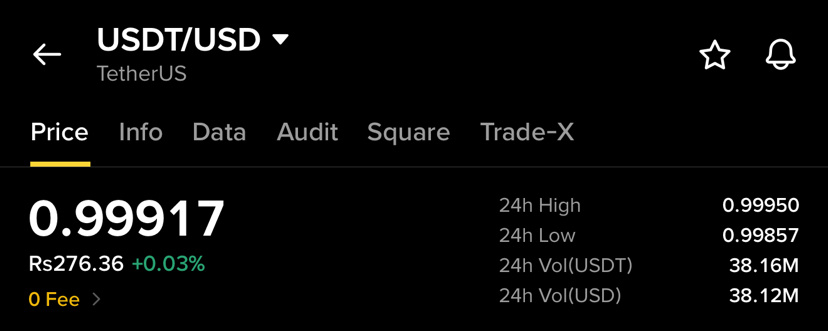
The USDT/USD market is showing relatively stable price action, continuing to trade very close to its $1.00 peg. At the time of this chart observation, USDT is trading around $0.99917, reflecting a small positive movement of approximately 0.03%.
Looking at the 1-hour chart, the market has experienced a period of sideways movement followed by a gradual upward push. Buyers managed to move the price from the lower $0.9988 area toward the $0.9994 region, showing increased short-term buying activity. However, after reaching these higher levels, the market faced some selling pressure, resulting in a minor pullback.
1. Price Action and Market Structure
The recent candles show that USDT has maintained a relatively narrow trading range. The upward movement suggests that buyers have been active, while the latest red candles indicate some short-term profit-taking and selling activity.
The current price near $0.99917 suggests that the market is still maintaining its stability. The long lower wick on the latest candle also highlights that buyers stepped in when the price moved lower.
2. Important Support and Resistance Levels
Support Levels:
* $0.99900 – Immediate support zone.
* $0.99880 – Secondary support.
* $0.99860 – A deeper support area visible on the chart.
Resistance Levels:
* $0.99930 – Immediate resistance.
* $0.99940 – Recent local high.
* $0.99950 – 24-hour high and an important short-term level.
A sustained move above the $0.99940–$0.99950 region would indicate stronger upward momentum. On the other hand, a move below $0.99900 could bring another test of the lower support areas.
3. Volume and Order Book Analysis
Trading volume has increased during some of the recent upward movements, showing that market participation has picked up.
The order book currently displays approximately 31.11% buying pressure and 68.89% selling pressure. This suggests that sell orders are currently stronger in the displayed order book. However, these figures can change quickly and do not guarantee the next price movement.
4. What Could Happen Next?
For the next few hours, USDT/USD may continue consolidating around its current price level.
If buyers maintain support above $0.99900, the market could attempt another move toward $0.99930 and $0.99940.
However, if selling pressure increases, the price could revisit $0.99880 before finding renewed buying interest.
Since USDT is designed to maintain a value close to one US dollar, these small price movements are generally more relevant to short-term liquidity and market conditions than traditional directional price trends.
Final Thoughts
USDT/USD is currently showing a stable market structure with minor fluctuations around the $1.00 level. The recent upward movement demonstrates buying interest, while the order book indicates that sellers remain active.
The key levels to monitor are $0.99900 as immediate support and $0.99940–$0.99950 as the nearby resistance zone.
What do you think? Will USDT maintain its stability near $1.00, or will market pressure create another short-term deviation? Share your thoughts in the comments! #Binance #CryptoMarket #stablecoin #tradingview #MarketUpdate $USDT
🦈 $XRP LIQUIDITY EXPANDS AS INSTITUTIONAL STABLECOIN CAPITAL FLOODS THE ORDER BOOKS ⚡ The structural expansion of native stablecoin issuance on the $XRP network is quietly restructuring underlying liquidity flows across the ledger. 📊 While retail participants chase fleeting momentum, smart money monitors structural capital absorption as RLUSD market capitalization steadily scales to new highs. 💡 This continuous injection of efficient capital creates a robust foundation for upcoming structural shifts, outpacing legacy issuance rates across major networks. 🌊 Are you positioning alongside these institutional accumulation footprints before the broader market recognizes the structural transition? 💬 ⚠️ Not financial advice. Always manage your risk. 🛡️ 🏷️ #XRP #SmartMoney #Stablecoin #Crypto 🔥 💎
🦈 $XRP LIQUIDITY EXPANDS AS INSTITUTIONAL STABLECOIN CAPITAL FLOODS THE ORDER BOOKS ⚡

The structural expansion of native stablecoin issuance on the $XRP network is quietly restructuring underlying liquidity flows across the ledger. 📊 While retail participants chase fleeting momentum, smart money monitors structural capital absorption as RLUSD market capitalization steadily scales to new highs. 💡

This continuous injection of efficient capital creates a robust foundation for upcoming structural shifts, outpacing legacy issuance rates across major networks. 🌊 Are you positioning alongside these institutional accumulation footprints before the broader market recognizes the structural transition? 💬

⚠️ Not financial advice. Always manage your risk. 🛡️

🏷️ #XRP #SmartMoney #Stablecoin #Crypto

🔥 💎
Stablecoin supply just shrank 14.2 billion dollars in 30 days, the fastest drain since June 2022. 📉 Glassnode data reported by The Bit Journal shows stablecoin supply contracted by 14.2 billion dollars over 30 days, its fastest contraction since June 2022, while US spot Bitcoin ETFs recorded 1.6 billion dollars in net outflows across 20 trading sessions. 📊 CoinGecko data checked at 23:00 PKT puts Bitcoin near 68,946 dollars, down 4.10 percent in 24 hours, with total market cap at 2.34 trillion dollars, down 5.47 percent in a day. My reading is that stablecoins are the fuel for crypto buying, and when the fuel tank shrinks this fast, every rally runs out of buyers sooner, because fresh money is leaving the system instead of waiting on the sidelines. Does the stablecoin drain stop here, or does it keep starving the next bounce? 🤔 Follow for more trades. #Crypto #Bitcoin #FuturesTrading #TradingSignals #Stablecoin
Stablecoin supply just shrank 14.2 billion dollars in 30 days, the fastest drain since June 2022. 📉

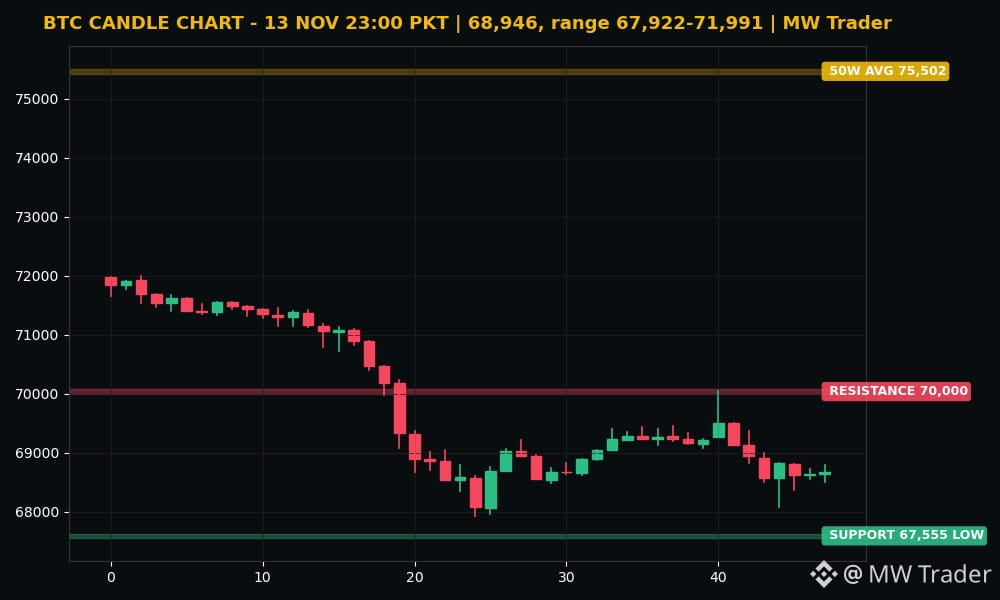
Glassnode data reported by The Bit Journal shows stablecoin supply contracted by 14.2 billion dollars over 30 days, its fastest contraction since June 2022, while US spot Bitcoin ETFs recorded 1.6 billion dollars in net outflows across 20 trading sessions. 📊 CoinGecko data checked at 23:00 PKT puts Bitcoin near 68,946 dollars, down 4.10 percent in 24 hours, with total market cap at 2.34 trillion dollars, down 5.47 percent in a day. My reading is that stablecoins are the fuel for crypto buying, and when the fuel tank shrinks this fast, every rally runs out of buyers sooner, because fresh money is leaving the system instead of waiting on the sidelines.

Does the stablecoin drain stop here, or does it keep starving the next bounce? 🤔

Follow for more trades.
#Crypto #Bitcoin #FuturesTrading #TradingSignals #Stablecoin
·
--
Article
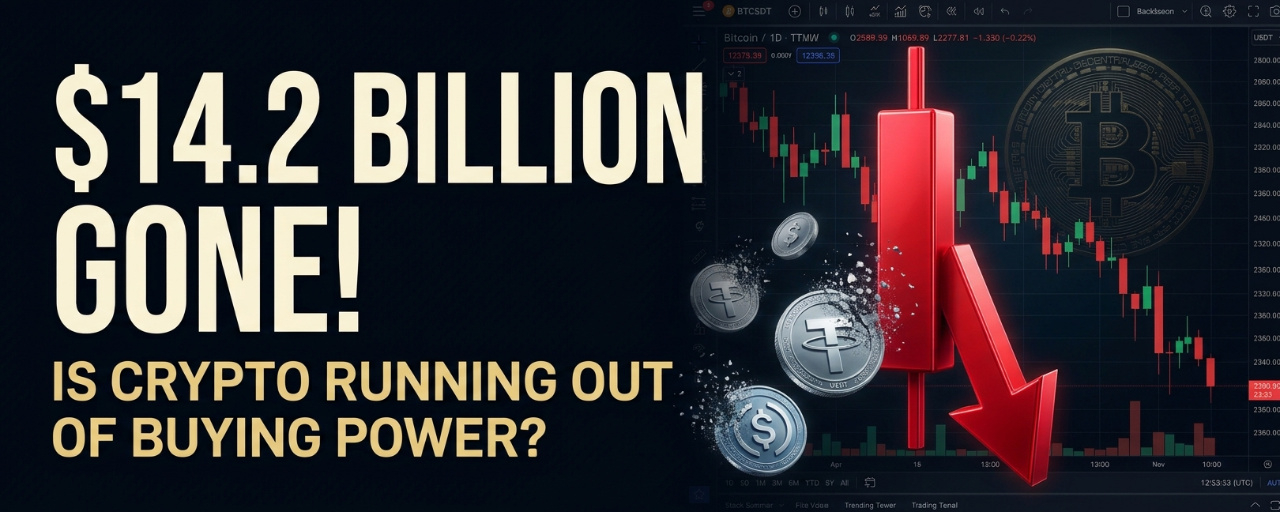
$14.2 Billion Vanishes from Stablecoin Supply: Is Crypto Running Out of Buying Power? 🚨 Glassnode data reveals the sharpest 30-day stablecoin supply contraction since June 2022. With USDT and USDC losing nearly $11 billion in combined supply, the bigger concern may not be Bitcoin's price, but the liquidity disappearing behind the market. Bitcoin is falling. Altcoins are struggling. But there is another development that deserves investors' attention. Crypto's stablecoin supply has dropped by $14.2 billion in just 30 days. That matters because stablecoins are more than digital dollars. They represent a significant pool of capital traders use to enter positions, buy dips and move between crypto assets. When that pool starts shrinking, the entire market can feel the pressure. So, is crypto facing a temporary liquidity slowdown, or is something bigger happening? Let's take a closer look. 👇 💸 1. $14.2 Billion Leaves Stablecoin Supply According to Glassnode data reported by The Block, the combined supply of major stablecoins contracted by $14.2 billion over the 30 days through November 9. This is the largest monthly contraction since June 2022. The decline is particularly important because stablecoins provide much of the readily available dollar-linked liquidity within crypto markets. When their supply contracts, it can indicate that capital is being redeemed or otherwise leaving the stablecoin ecosystem. However, declining supply does not automatically mean every dollar has left crypto exchanges or that investors have permanently exited the market. What it does show is that the available stablecoin base is getting smaller. And that deserves attention. 🏦 2. USDT and USDC Are at the Centre of the Decline The two largest stablecoins are responsible for a substantial part of this contraction. According to The Block's reporting: Tether (USDT) lost approximately $6.6 billion in market capitalization over 60 days, according to CryptoQuant.USDT and USDC together accounted for nearly $11 billion of the reported monthly stablecoin supply decline.Total major stablecoin supply experienced its sharpest 30-day contraction since June 2022. These numbers matter because USDT and USDC are widely used for trading, transfers and maintaining dollar exposure within crypto. When their supply declines, the market potentially has less readily available stablecoin liquidity to support new buying activity. 📉 3. Why This Could Become a Problem for Bitcoin and Altcoins Imagine Bitcoin suddenly becomes attractive at a lower price. Traders want to buy the dip, but the amount of available stablecoin capital has been shrinking. That doesn't mean buyers disappear completely. Investors can still deposit fresh funds, convert fiat into stablecoins or use other sources of capital. However, a shrinking stablecoin base can make it harder for sustained buying demand to develop. Altcoins could be particularly vulnerable because they generally depend on market liquidity and investor risk appetite. This is why watching stablecoin supply can provide a different perspective from simply following Bitcoin's price chart. ⚠️ 4. Is This Another Warning Like 2022? The comparison with June 2022 is difficult to ignore. That period was marked by the Terra ecosystem collapse and a much deeper crypto market crisis. However, there is an important distinction. A similar stablecoin supply contraction does not mean the market is about to repeat the 2022 crash. Market conditions, investor positioning and the underlying reasons for redemptions can be very different. The historical comparison is a warning signal, not a prediction. What matters now is whether stablecoin supply continues declining or starts recovering. 🔮 5. What Happens Next? Bullish vs Bearish Scenarios 🐂 Bullish Scenario If stablecoin supply begins recovering, it could suggest that fresh dollar-linked liquidity is returning to the crypto ecosystem. Combined with improving Bitcoin demand and renewed ETF inflows, this could create better conditions for a market recovery. A sustained increase in stablecoin supply would be an encouraging development. 🐻 Bearish Scenario If stablecoin supply continues contracting, the market could face further liquidity pressure. Bitcoin may struggle to attract sustained buying demand, while smaller altcoins could remain vulnerable to additional selling. Continued ETF withdrawals alongside declining stablecoin supply would make the recovery even more challenging. Neither scenario is guaranteed. The next few weeks of liquidity data will be important. 👀 6. Three Things Crypto Investors Should Watch Stablecoin supply: Does the 30-day contraction slow down or continue?USDT and USDC: Do their market capitalizations begin recovering?Bitcoin and ETF flows: Does institutional demand return alongside improving market liquidity? These indicators could help determine whether the current weakness is temporary or part of a broader reduction in crypto market demand. 💡 The Bigger Picture Bitcoin's price gets most of the attention, but liquidity often tells a deeper story. A market can experience sharp rallies, short squeezes and temporary recoveries. But sustaining those moves becomes more difficult when the pool of available capital is shrinking. The $14.2 billion stablecoin contraction is therefore worth watching. I wouldn't interpret it as confirmation of another 2022-style crash. But I also wouldn't ignore a liquidity warning of this scale. The next major crypto rally may depend not only on who is willing to buy Bitcoin, but also on how much capital is still available to buy it. What do you think? Is this a temporary liquidity reset before the next crypto rally, or are investors quietly moving their money out of the market? Share your thoughts below. 👇 Disclaimer: This article is for informational and educational purposes only and does not constitute financial advice. Cryptocurrency markets are volatile. Always conduct your own research before making financial decisions. #BinanceSquare #Bitcoin #Stablecoin #CryptoLiquidity #USDC {spot}(BTCUSDT) {spot}(USDCUSDT)

$14.2 Billion Vanishes from Stablecoin Supply: Is Crypto Running Out of Buying Power?

🚨 Glassnode data reveals the sharpest 30-day stablecoin supply contraction since June 2022. With USDT and USDC losing nearly $11 billion in combined supply, the bigger concern may not be Bitcoin's price, but the liquidity disappearing behind the market.
Bitcoin is falling. Altcoins are struggling. But there is another development that deserves investors' attention.
Crypto's stablecoin supply has dropped by $14.2 billion in just 30 days.
That matters because stablecoins are more than digital dollars. They represent a significant pool of capital traders use to enter positions, buy dips and move between crypto assets.
When that pool starts shrinking, the entire market can feel the pressure.
So, is crypto facing a temporary liquidity slowdown, or is something bigger happening?
Let's take a closer look. 👇
💸 1. $14.2 Billion Leaves Stablecoin Supply
According to Glassnode data reported by The Block, the combined supply of major stablecoins contracted by $14.2 billion over the 30 days through November 9.
This is the largest monthly contraction since June 2022.
The decline is particularly important because stablecoins provide much of the readily available dollar-linked liquidity within crypto markets.
When their supply contracts, it can indicate that capital is being redeemed or otherwise leaving the stablecoin ecosystem.
However, declining supply does not automatically mean every dollar has left crypto exchanges or that investors have permanently exited the market.
What it does show is that the available stablecoin base is getting smaller.
And that deserves attention.
🏦 2. USDT and USDC Are at the Centre of the Decline
The two largest stablecoins are responsible for a substantial part of this contraction.
According to The Block's reporting:
Tether (USDT) lost approximately $6.6 billion in market capitalization over 60 days, according to CryptoQuant.USDT and USDC together accounted for nearly $11 billion of the reported monthly stablecoin supply decline.Total major stablecoin supply experienced its sharpest 30-day contraction since June 2022.
These numbers matter because USDT and USDC are widely used for trading, transfers and maintaining dollar exposure within crypto.
When their supply declines, the market potentially has less readily available stablecoin liquidity to support new buying activity.
📉 3. Why This Could Become a Problem for Bitcoin and Altcoins
Imagine Bitcoin suddenly becomes attractive at a lower price.
Traders want to buy the dip, but the amount of available stablecoin capital has been shrinking.
That doesn't mean buyers disappear completely. Investors can still deposit fresh funds, convert fiat into stablecoins or use other sources of capital.
However, a shrinking stablecoin base can make it harder for sustained buying demand to develop.
Altcoins could be particularly vulnerable because they generally depend on market liquidity and investor risk appetite.
This is why watching stablecoin supply can provide a different perspective from simply following Bitcoin's price chart.
⚠️ 4. Is This Another Warning Like 2022?
The comparison with June 2022 is difficult to ignore.
That period was marked by the Terra ecosystem collapse and a much deeper crypto market crisis.
However, there is an important distinction.
A similar stablecoin supply contraction does not mean the market is about to repeat the 2022 crash.
Market conditions, investor positioning and the underlying reasons for redemptions can be very different.
The historical comparison is a warning signal, not a prediction.
What matters now is whether stablecoin supply continues declining or starts recovering.
🔮 5. What Happens Next? Bullish vs Bearish Scenarios
🐂 Bullish Scenario
If stablecoin supply begins recovering, it could suggest that fresh dollar-linked liquidity is returning to the crypto ecosystem.
Combined with improving Bitcoin demand and renewed ETF inflows, this could create better conditions for a market recovery.
A sustained increase in stablecoin supply would be an encouraging development.
🐻 Bearish Scenario
If stablecoin supply continues contracting, the market could face further liquidity pressure.
Bitcoin may struggle to attract sustained buying demand, while smaller altcoins could remain vulnerable to additional selling.
Continued ETF withdrawals alongside declining stablecoin supply would make the recovery even more challenging.
Neither scenario is guaranteed. The next few weeks of liquidity data will be important.
👀 6. Three Things Crypto Investors Should Watch
Stablecoin supply: Does the 30-day contraction slow down or continue?USDT and USDC: Do their market capitalizations begin recovering?Bitcoin and ETF flows: Does institutional demand return alongside improving market liquidity?
These indicators could help determine whether the current weakness is temporary or part of a broader reduction in crypto market demand.
💡 The Bigger Picture
Bitcoin's price gets most of the attention, but liquidity often tells a deeper story.
A market can experience sharp rallies, short squeezes and temporary recoveries. But sustaining those moves becomes more difficult when the pool of available capital is shrinking.
The $14.2 billion stablecoin contraction is therefore worth watching.
I wouldn't interpret it as confirmation of another 2022-style crash. But I also wouldn't ignore a liquidity warning of this scale.
The next major crypto rally may depend not only on who is willing to buy Bitcoin, but also on how much capital is still available to buy it.
What do you think?
Is this a temporary liquidity reset before the next crypto rally, or are investors quietly moving their money out of the market?
Share your thoughts below. 👇
Disclaimer: This article is for informational and educational purposes only and does not constitute financial advice. Cryptocurrency markets are volatile. Always conduct your own research before making financial decisions.
#BinanceSquare #Bitcoin #Stablecoin #CryptoLiquidity #USDC
📰 Crypto News Update Coinbase adds Ripple’s RLUSD stablecoin across retail, exchange and Prime platforms Why it matters: This development may be relevant to crypto-market participants. Importance score: 10/10 Source: The Block Read the original report: https://www.theblock.co/news/business/2026-10-28-coinbase-adds-ripple-rlusd-stablecoin-432009 #Stablecoin #CryptoNews #Cryptocurrency #Blockchain
📰 Crypto News Update

Coinbase adds Ripple’s RLUSD stablecoin across retail, exchange and Prime platforms

Why it matters: This development may be relevant to crypto-market participants.

Importance score: 10/10
Source: The Block
Read the original report: https://www.theblock.co/news/business/2026-10-28-coinbase-adds-ripple-rlusd-stablecoin-432009

#Stablecoin #CryptoNews #Cryptocurrency #Blockchain
Article
Crypto Liquidity Is Shrinking: Why Bitcoin Investors Should Pay AttentionBitcoin's recent decline has brought an important topic back into focus: liquidity. Most beginners focus only on Bitcoin's price. But understanding liquidity can help explain why crypto markets sometimes struggle to recover. Let's break it down. 1. What is happening? According to market reporting citing Glassnode, stablecoin supply declined by approximately $14.2 billion over the 30 days through November 9. The same reporting highlighted continued outflows from Bitcoin and Ethereum spot ETFs. These developments suggest that liquidity conditions have become less supportive for crypto markets. 2. Why does stablecoin supply matter? Stablecoins such as USDT and USDC provide dollar-linked liquidity within the crypto ecosystem. They are commonly used for: - Buying and selling cryptocurrencies - Moving funds between exchanges - Holding dollar-linked value - Providing liquidity in DeFi markets When stablecoin supply contracts, it can indicate weaker demand for holding dollar-linked assets on-chain. However, this does not mean every dollar of declining stablecoin supply represents money leaving Bitcoin. 3. Does lower liquidity mean Bitcoin must fall? No. Markets are influenced by several factors: - Spot buying and selling pressure - Institutional investment flows - Macroeconomic conditions - Leverage and liquidations - Investor sentiment Liquidity is one important piece of the puzzle, not a standalone price prediction. 4. What should investors monitor? Here are five useful indicators: 1. Stablecoin supply trends. 2. Bitcoin spot ETF net flows. 3. Exchange trading volume. 4. Bitcoin market structure. 5. Federal Reserve and inflation developments. 5. The lesson for beginners Don't build your entire trading strategy around one indicator. A falling market can create opportunities, but entering without confirmation and risk management can be expensive. Final thought: The best crypto investors don't just ask, "Where is Bitcoin going?" They also ask, "What is happening beneath the market?" 💬 Do you think stablecoin liquidity is one of the most important indicators for understanding Bitcoin's next move? Let's discuss. Educational content only. Not financial advice. #Bitcoin #Stablecoin #CryptoLiquidity #BinanceSquare #CryptoEducation $BTC $BNB

Crypto Liquidity Is Shrinking: Why Bitcoin Investors Should Pay Attention

Bitcoin's recent decline has brought an important topic back into focus: liquidity.
Most beginners focus only on Bitcoin's price. But understanding liquidity can help explain why crypto markets sometimes struggle to recover.
Let's break it down.
1. What is happening?
According to market reporting citing Glassnode, stablecoin supply declined by approximately $14.2 billion over the 30 days through November 9.
The same reporting highlighted continued outflows from Bitcoin and Ethereum spot ETFs.
These developments suggest that liquidity conditions have become less supportive for crypto markets.
2. Why does stablecoin supply matter?
Stablecoins such as USDT and USDC provide dollar-linked liquidity within the crypto ecosystem.
They are commonly used for:
- Buying and selling cryptocurrencies
- Moving funds between exchanges
- Holding dollar-linked value
- Providing liquidity in DeFi markets
When stablecoin supply contracts, it can indicate weaker demand for holding dollar-linked assets on-chain.
However, this does not mean every dollar of declining stablecoin supply represents money leaving Bitcoin.
3. Does lower liquidity mean Bitcoin must fall?
No.
Markets are influenced by several factors:
- Spot buying and selling pressure
- Institutional investment flows
- Macroeconomic conditions
- Leverage and liquidations
- Investor sentiment
Liquidity is one important piece of the puzzle, not a standalone price prediction.
4. What should investors monitor?
Here are five useful indicators:
1. Stablecoin supply trends.
2. Bitcoin spot ETF net flows.
3. Exchange trading volume.
4. Bitcoin market structure.
5. Federal Reserve and inflation developments.
5. The lesson for beginners
Don't build your entire trading strategy around one indicator.
A falling market can create opportunities, but entering without confirmation and risk management can be expensive.
Final thought:
The best crypto investors don't just ask, "Where is Bitcoin going?"
They also ask, "What is happening beneath the market?"
💬 Do you think stablecoin liquidity is one of the most important indicators for understanding Bitcoin's next move?
Let's discuss.
Educational content only. Not financial advice.
#Bitcoin #Stablecoin #CryptoLiquidity #BinanceSquare #CryptoEducation $BTC $BNB
🔥 LATEST: Ripple’s $RLUSD overtakes PayPal’s $PYUSD to become the 7th-largest stablecoin by market cap, per DefiLlama. $RLUSD: $2.70B $PYUSD: $2.63B #XRP $XRP #Stablecoin
🔥 LATEST: Ripple’s $RLUSD overtakes PayPal’s $PYUSD to become the 7th-largest stablecoin by market cap, per DefiLlama.
$RLUSD : $2.70B $PYUSD: $2.63B

#XRP $XRP #Stablecoin
·
--
Bullish
#WhatWillDriveCryptoandStocks’NextRebound? #stablecoinmarketlosing15billion The #stablecoin market is experiencing one of its sharpest contractions since the 2022 bear market. Total stablecoin market capitalization has fallen to approximately $285–289 billion as of mid-November 2026, representing a decline of roughly $14–15 billion over the past 30 days. Compared with the May 2026 peak of approximately $312–315 billion, the market has lost around $21–24 billion in supply. This matters because stablecoins represent the dollar liquidity available within the cryptocurrency ecosystem. When supply contracts, the amount of readily available capital that traders and institutions can deploy into Bitcoin, Ethereum and altcoins also becomes more constrained. The market is not just dealing with falling crypto prices. It is also experiencing a reduction in the liquidity that could otherwise support a recovery. The question now is whether stablecoin issuance will resume before the broader crypto market attempts another major rebound.
#WhatWillDriveCryptoandStocks’NextRebound?
#stablecoinmarketlosing15billion
The #stablecoin market is experiencing one of its sharpest contractions since the 2022 bear market.
Total stablecoin market capitalization has fallen to approximately $285–289 billion as of mid-November 2026, representing a decline of roughly $14–15 billion over the past 30 days.
Compared with the May 2026 peak of approximately $312–315 billion, the market has lost around $21–24 billion in supply.
This matters because stablecoins represent the dollar liquidity available within the cryptocurrency ecosystem.
When supply contracts, the amount of readily available capital that traders and institutions can deploy into Bitcoin, Ethereum and altcoins also becomes more constrained.
The market is not just dealing with falling crypto prices. It is also experiencing a reduction in the liquidity that could otherwise support a recovery.
The question now is whether stablecoin issuance will resume before the broader crypto market attempts another major rebound.
kaymyg
·
--
Stablecoin Supply Contracts by $15 Billion: Is Crypto Running Out of Liquidity?
Stablecoins Are Becoming a Critical Indicator of Crypto Market Weakness

#Stablecoins are the primary dollar liquidity layer of the cryptocurrency market. They function as the cash reserves, or dry powder, that traders and institutions hold before deploying capital into Bitcoin, Ethereum and other digital assets.
Beyond their role as a store of dollar value, stablecoins facilitate most on-chain settlements and a substantial portion of cryptocurrency derivatives activity. Their supply trends therefore provide an important indication of whether capital is entering the digital asset ecosystem or leaving it.
As of mid-November 2026, the stablecoin market is showing signs of significant contraction, raising concerns about the amount of available liquidity supporting the broader cryptocurrency market.
Total stablecoin market capitalization currently stands at approximately $285–289 billion, according to trackers such as DefiLlama and Stablecoin Beat. This represents a contraction of roughly $14–15 billion over the past 30 days, equivalent to approximately 5%.
It is reportedly the sharpest 30-day decline since June 2022.
Compared with the May 2026 peak of approximately $312–315 billion, the market has lost between $21 billion and $24 billion in stablecoin supply, representing a decline of approximately 7%.
The significance of this contraction extends beyond stablecoin valuations. It points to a reduction in the dollar liquidity available within the cryptocurrency ecosystem at a time when Bitcoin and altcoins are already experiencing considerable selling pressure.
USDT and USDC Account for the Bulk of the Contraction
The stablecoin market remains highly concentrated, with Tether's $USDT and Circle's $USDC accounting for approximately 85% of total supply.
USDT (Tether) maintains the largest share, with a market capitalization of approximately $175.5–175.7 billion, representing around 61% of the market. Its supply has declined by approximately $8.3 billion over the past 30 days, equivalent to a reduction of about 4.5%.
USDC (Circle) follows with approximately $69.5 billion in market capitalization, representing around 24% of the market. Its supply has contracted by approximately $3–3.7 billion over the same period, a decline of roughly 4–5%.
Together, these two stablecoins account for the overwhelming majority of the recent reduction in market supply.
Smaller stablecoins are showing more divergent behaviour. Some crypto-backed and newer tokens, including USDS and USD1, have recorded declines exceeding 20%, while others, such as RLUSD and USDe, have demonstrated modest growth or relative stability.
Despite these differences, market dominance remains concentrated in USDT and USDC, making their individual supply movements particularly important when assessing overall crypto liquidity.
Stablecoin pegs have largely remained intact, although USDT has experienced minor trading pressure, occasionally changing hands slightly below its $1 target.
What Does a $15 Billion Stablecoin Contraction Mean for Crypto?
A declining stablecoin supply can reflect redemptions, where holders exchange stablecoins for traditional fiat currencies and withdraw capital from the cryptocurrency ecosystem.
This is different from simply moving stablecoins between exchanges or blockchain networks. A reduction in aggregate supply indicates that the overall pool of issued stablecoins is shrinking, although supply changes alone cannot establish the precise destination of redeemed funds.
Glassnode and other market analytics have described similar conditions as the market effectively running on empty, with less dollar liquidity available across exchanges and on-chain markets to support purchases of risk assets.
This development is consistent with the broader bearish environment currently affecting cryptocurrencies.
Bitcoin spot ETF flows have experienced substantial weakness, with reported net outflows of approximately $1.6 billion over recent sessions. The Coinbase premium has also remained negative or subdued, suggesting weaker US spot demand.
At the same time, extreme fear readings and persistent long liquidations across derivatives markets indicate that investor confidence and leveraged positioning remain under pressure.
The combined effect is a reduction in the amount of available capital that can support spot buying and leveraged market activity.
When stablecoin supply contracts, the amount of sidelined dollar-denominated capital available to enter the market also becomes more constrained. This can amplify downside movements or prolong consolidation because there is less readily available liquidity to absorb selling pressure.
For market makers and large liquidity providers, thinner liquidity conditions can also make price movements more sensitive to concentrated orders, stop-losses and liquidation clusters.
This does not necessarily mean that large players are deliberately driving prices lower. Rather, it means that reduced counter-buying demand can make existing liquidity imbalances more consequential.
Where Is Stablecoin Liquidity Concentrated?
The distribution of stablecoins across blockchain networks is another important consideration.
#Ethereum and #Tron continue to dominate stablecoin circulation, with Tron particularly important for USDT transactions.
Other networks, including #solana and #BNBSmartChain , account for smaller portions of the overall market.
The distribution matters because stablecoin liquidity is not necessarily interchangeable across every blockchain or trading venue. Capital concentrated on one network may not immediately provide liquidity to another without additional transfers or bridging activity.
Current net-flow trends across major chains have also been negative, reinforcing the broader picture of liquidity contraction.
For the cryptocurrency market to experience a meaningful improvement, it will be important to monitor not only aggregate stablecoin supply but also where newly issued stablecoins are being deployed.
What Would Signal That Stablecoin Liquidity Is Returning?
Although the current contraction presents a significant headwind, several indicators could help identify an eventual reversal.
1. A Positive 30-Day Stablecoin Supply Change
One of the clearest indicators would be a return to positive 30-day stablecoin supply growth.
When new issuance exceeds redemptions, the aggregate supply expands, indicating that additional dollar-denominated liquidity is entering the stablecoin ecosystem.
A sustained transition from contraction to expansion would provide an important early indication that capital is returning.
2. Rising Stablecoin Balances on Exchanges
An increase in USDT and USDC balances on major cryptocurrency exchanges could indicate that traders are positioning capital for potential purchases.
Exchange inflows are particularly important because stablecoins deposited on trading platforms can be deployed more readily into Bitcoin, Ethereum and altcoins.
However, exchange inflows do not automatically translate into buying pressure. Their significance depends on subsequent trading activity.
3. Stabilization and Growth in USDT and USDC Supply
Given that USDT and USDC account for approximately 85% of the stablecoin market, their individual supply trends will remain central to determining the direction of aggregate liquidity.
A stabilization in their redemptions, followed by renewed issuance, would provide stronger evidence that the broader contraction is easing.
4. Stablecoin Supply Bottoming While Bitcoin Stabilizes
A particularly constructive development would be stablecoin supply establishing a bottom and beginning to expand while Bitcoin successfully defends its major support levels.
Such a divergence could indicate that dollar liquidity is beginning to return before the broader cryptocurrency market has fully recovered.
Historically, improvements in stablecoin liquidity have sometimes preceded or coincided with relief rallies, although they do not guarantee an immediate price reversal.
5. Improvement in Supporting Capital-Flow Indicators
Stablecoin supply should also be assessed alongside other indicators of capital movement.
A reduction or reversal in Bitcoin ETF outflows, a positive Coinbase premium and declining redemption pressure would strengthen the argument that institutional and broader market demand is improving.
When these indicators begin aligning, the probability of a more sustainable recovery could increase.
Until then, the stablecoin liquidity environment remains a significant headwind for the wider cryptocurrency market.
How Long Could Stablecoin Contraction Affect the Market?
The impact of declining stablecoin supply could unfold across different time horizons.
Near Term: The Coming Weeks
Continued stablecoin contraction is likely to constrain upside potential across the cryptocurrency market.
Bitcoin and other digital assets can still experience relief rallies because of oversold conditions, short-term buying activity and the exhaustion of forced selling.
However, without an improvement in stablecoin supply, such rebounds may struggle to develop into sustained upward movements.
Medium Term: Late 2026 to Early 2027
A more sustainable recovery becomes increasingly probable if stablecoin supply growth resumes and remains positive.
This improvement would likely coincide with Bitcoin establishing a durable higher low and broader investor risk appetite returning.
A full expansion in market liquidity, accompanied by stronger altcoin relative strength, would generally require a sustained period of net stablecoin issuance rather than a brief increase in supply.
Consequently, the return of stablecoin liquidity could become one of the more important developments to monitor as the market moves towards 2027.
The Bigger Picture: Is the Crypto Market Running Out of Dry Powder?
The stablecoin market is currently experiencing a significant contraction, with approximately $14–15 billion disappearing from aggregate supply over the past 30 days.
This is particularly important because stablecoins provide much of the dollar liquidity that supports cryptocurrency trading, settlement and investment activity.
The simultaneous weakness in Bitcoin ETF flows, subdued US spot demand, extreme market fear and ongoing derivatives liquidations reinforces the broader risk-off environment.
The market is therefore facing pressure from two directions: falling asset prices and a shrinking pool of available dollar liquidity.
A reversal in stablecoin supply would be an important development. Sustained net issuance, rising exchange balances and improving capital flows could indicate that investors are beginning to rebuild their positions and prepare for renewed market activity.
The bottom line: Stablecoin supply is one of the most important liquidity indicators to watch during the current cryptocurrency downturn. The contraction suggests that the market has less readily available dollar liquidity to support a sustained recovery. Until net issuance turns positive and broader capital flows improve, liquidity is likely to remain a significant obstacle to a meaningful Bitcoin and altcoin rebound.
Disclaimer: This article presents data-driven market analysis based on stablecoin and cryptocurrency market information available as of mid-November 2026. It is not financial advice. Stablecoin supply, capital flows and cryptocurrency market conditions can change rapidly in response to macroeconomic developments, investor behaviour and liquidity movements.
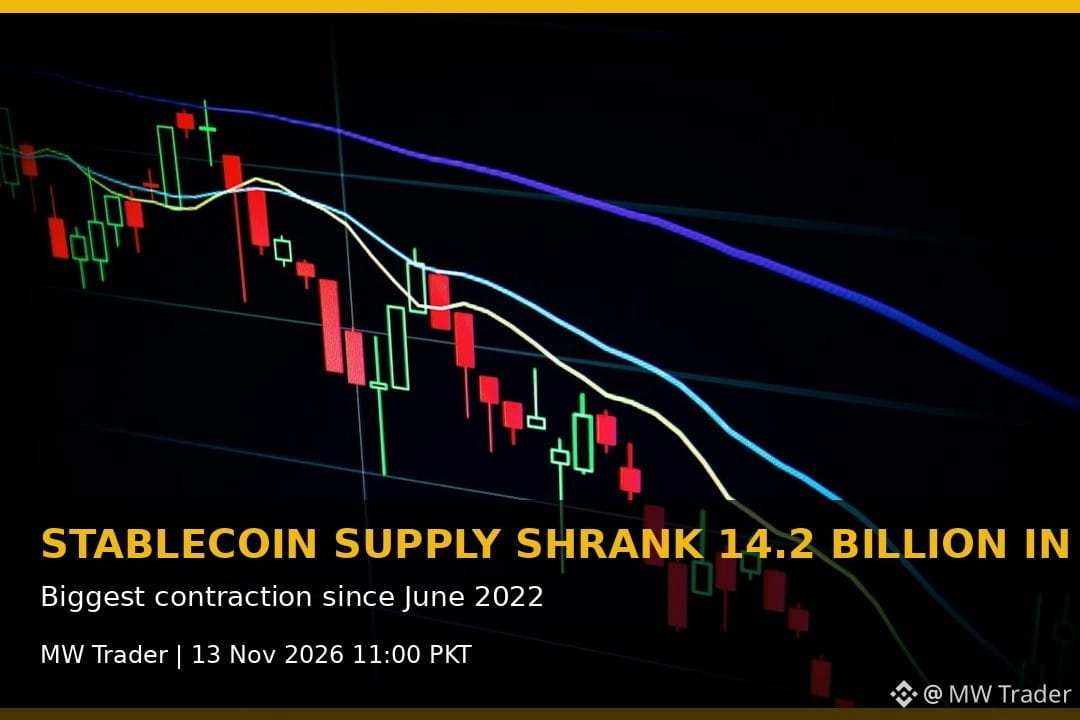
Stablecoin supply just shrank by 14.2 billion dollars in 30 days. That is the biggest contraction since June 2022. 📊 Glassnode data reported by KuCoin shows stablecoin supply fell 14.2 billion dollars over the past month, the largest drop since the June 2022 crash, which means the cash available to buy crypto keeps getting smaller. 📉 My reading is that this is the quiet reason Bitcoin cannot bounce yet, because every rally needs fresh dollars entering the market, and right now dollars are leaving faster than they arrive, while ETF outflows of 1.44 billion dollars in five sessions pull even more out. Price follows money, and the money flow is still pointing out the door. Does the stablecoin drain stop soon, or does it keep starving every bounce? 🤔 Follow for more trades. #Crypto #Bitcoin #FuturesTrading #TradingSignals #Stablecoin
Stablecoin supply just shrank by 14.2 billion dollars in 30 days. That is the biggest contraction since June 2022. 📊

Glassnode data reported by KuCoin shows stablecoin supply fell 14.2 billion dollars over the past month, the largest drop since the June 2022 crash, which means the cash available to buy crypto keeps getting smaller. 📉 My reading is that this is the quiet reason Bitcoin cannot bounce yet, because every rally needs fresh dollars entering the market, and right now dollars are leaving faster than they arrive, while ETF outflows of 1.44 billion dollars in five sessions pull even more out. Price follows money, and the money flow is still pointing out the door.

Does the stablecoin drain stop soon, or does it keep starving every bounce? 🤔

Follow for more trades.
#Crypto #Bitcoin #FuturesTrading #TradingSignals #Stablecoin
·
--
Bearish
Verified
🚀 𝐔.𝐒. 𝐁𝐀𝐍𝐊 𝐆𝐎𝐄𝐒 𝐁𝐈𝐆, 𝐁𝐑𝐈𝐍𝐆𝐈𝐍𝐆 𝐈𝐓𝐒 𝐒𝐎𝐅𝐈𝐔𝐒𝐃 𝐒𝐓𝐀𝐁𝐋𝐄𝐂𝐎𝐈𝐍 𝐓𝐎 𝐏𝐎𝐋𝐘𝐆𝐎𝐍! U.S. bank goes big, bringing its SoFiUSD stablecoin to Polygon! 🚀🏦 SoFi Bank, a U.S.-licensed bank, has officially launched SoFiUSD (pegged 1:1 to the USD) on Polygon Open Money Stack. The best part? Users can buy and sell right in the banking app - no need to set up a separate wallet or wrestle with manual bridging that could go wrong! 📊 Quick Analysis: A traditional bank choosing Polygon shows just how solid this infrastructure is for large-scale payments. TradFi money is flowing into the ecosystem faster than an ex can change their tune! 🎯 What Should Traders Do? 1. Keep a close eye on money flowing into the Polygon ecosystem ($POL)! 2. Take advantage of the positive news to ride the wave, but don't get carried away by FOMO! 3. Manage your size, don't go all-in on one news! 🛡️ This is not financial advice! Tell me honestly, will SoFiUSD on Polygon make POL fly, or will traders sell the news?👇✨ 👉 $POL - Watch for Polygon move, strong. 👉 $ETH - Watch for stablecoin move, strong. 👉 $AGT - Watch for pullback, strong. ✨ 𝐅𝐀𝐑𝐙𝐀𝐍𝐀 𝐇𝐀𝐌𝐄𝐄𝐃 𝐎𝐅𝐅𝐈𝐂𝐈𝐀𝐋 • 🦋 ✨ #SoFiExpandsSoFiUSDStablecoinToPolygon #SOFI #Stablecoin #CryptoNews {future}(POLUSDT) {future}(ETHUSDT) {future}(AGTUSDT)
🚀 𝐔.𝐒. 𝐁𝐀𝐍𝐊 𝐆𝐎𝐄𝐒 𝐁𝐈𝐆, 𝐁𝐑𝐈𝐍𝐆𝐈𝐍𝐆 𝐈𝐓𝐒 𝐒𝐎𝐅𝐈𝐔𝐒𝐃 𝐒𝐓𝐀𝐁𝐋𝐄𝐂𝐎𝐈𝐍 𝐓𝐎 𝐏𝐎𝐋𝐘𝐆𝐎𝐍!

U.S. bank goes big, bringing its SoFiUSD stablecoin to Polygon! 🚀🏦

SoFi Bank, a U.S.-licensed bank, has officially launched SoFiUSD (pegged 1:1 to the USD) on Polygon Open Money Stack. The best part? Users can buy and sell right in the banking app - no need to set up a separate wallet or wrestle with manual bridging that could go wrong!

📊 Quick Analysis:
A traditional bank choosing Polygon shows just how solid this infrastructure is for large-scale payments. TradFi money is flowing into the ecosystem faster than an ex can change their tune!

🎯 What Should Traders Do?
1. Keep a close eye on money flowing into the Polygon ecosystem ($POL )! 2. Take advantage of the positive news to ride the wave, but don't get carried away by FOMO! 3. Manage your size, don't go all-in on one news!
🛡️ This is not financial advice!

Tell me honestly, will SoFiUSD on Polygon make POL fly, or will traders sell the news?👇✨

👉 $POL - Watch for Polygon move, strong.
👉 $ETH - Watch for stablecoin move, strong.
👉 $AGT - Watch for pullback, strong.

✨ 𝐅𝐀𝐑𝐙𝐀𝐍𝐀 𝐇𝐀𝐌𝐄𝐄𝐃 𝐎𝐅𝐅𝐈𝐂𝐈𝐀𝐋 • 🦋 ✨
#SoFiExpandsSoFiUSDStablecoinToPolygon
#SOFI #Stablecoin #CryptoNews
Mudassir5348:
Farzana
THAI REGULATORY SHIFT ON $BTC & $ETH STABLECOIN FLOWS RESHAPES INSTITUTIONAL LIQUIDITY! 🦈 ⚡ Institutional capital flows in Southeast Asia face a structural bottleneck as regulatory authorities cap daily stablecoin inflows at 148,000 USD equivalents. This friction directly restricts large-scale whale positioning and tightens order book liquidity across local fiat gateways. 🦈 Market participants must adapt to strict travel compliance and mandatory self-custody verification protocols. Clean wallet hygiene is now essential to protect operational capital from unexpected administrative freezing. 🔍 How will institutional desks navigate these tighter liquidity pipelines moving forward? 👇 ⚠️ Not financial advice. Always manage your risk. 🛡️ 🏷️ #BTC #Stablecoin #Regulation #Crypto 🔥 💎
THAI REGULATORY SHIFT ON $BTC & $ETH STABLECOIN FLOWS RESHAPES INSTITUTIONAL LIQUIDITY! 🦈 ⚡

Institutional capital flows in Southeast Asia face a structural bottleneck as regulatory authorities cap daily stablecoin inflows at 148,000 USD equivalents. This friction directly restricts large-scale whale positioning and tightens order book liquidity across local fiat gateways. 🦈

Market participants must adapt to strict travel compliance and mandatory self-custody verification protocols. Clean wallet hygiene is now essential to protect operational capital from unexpected administrative freezing. 🔍

How will institutional desks navigate these tighter liquidity pipelines moving forward? 👇

⚠️ Not financial advice. Always manage your risk. 🛡️

🏷️ #BTC #Stablecoin #Regulation #Crypto

🔥 💎
⚡️ NEW: Visa has partnered with Anchorage Digital to add Western Union’s USDPT stablecoin to its settlement network, allowing eligible partners to settle VisaNet obligations using the token. #Crypto #Stablecoin
⚡️ NEW: Visa has partnered with Anchorage Digital to add Western Union’s USDPT stablecoin to its settlement network, allowing eligible partners to settle VisaNet obligations using the token.

#Crypto #Stablecoin
🚨 $USDT on $TRX under fire, $7 B already frozen! AI tools will spot scams and theft instantly. $TRX’s $94 B USDT pool could see big freezes. Bullish or bearish, what’s next? 🤔💬 $TRX #Crypto #crimes #stablecoin
🚨 $USDT on $TRX under fire, $7 B already frozen!

AI tools will spot scams and theft instantly.

$TRX ’s $94 B USDT pool could see big freezes. Bullish or bearish, what’s next?

🤔💬
$TRX #Crypto #crimes #stablecoin
🔥 While regulators scream “danger” over custodial wallets, the on‑chain ledger whispers a very different story. 📊 Smart‑money is quietly loading up stablecoins on Binance: #stablecoin inflow ratio has spiked to its highest level in 6 weeks, even as #BTC hovers at $73,541 with a bullish MACD crossover and a modest 28/100 fear index. Meanwhile, futures OI sits at $7.23 B, funding is +0.0051% and long positions dominate at 73.8%—a clear sign that leveraged players still trust the peg. 💡 This means the BoE’s unhosted‑wallet ban may actually tighten demand on the very platforms that still hold the bulk of stablecoin supply, fueling a supply‑constrained rally rather than a crackdown. 👀 Keep an eye on the #stablecoin inflow ratio this week; a breach of the 1.5 × threshold typically precedes a 10‑15% price lift in the top‑10 pegged assets. ❓ If the market’s silent bet is that stablecoins will become the primary bridge into a regulated future, are we about to witness the next wave of institutional entry?
🔥 While regulators scream “danger” over custodial wallets, the on‑chain ledger whispers a very different story.

📊 Smart‑money is quietly loading up stablecoins on Binance: #stablecoin inflow ratio has spiked to its highest level in 6 weeks, even as #BTC hovers at $73,541 with a bullish MACD crossover and a modest 28/100 fear index. Meanwhile, futures OI sits at $7.23 B, funding is +0.0051% and long positions dominate at 73.8%—a clear sign that leveraged players still trust the peg.

💡 This means the BoE’s unhosted‑wallet ban may actually tighten demand on the very platforms that still hold the bulk of stablecoin supply, fueling a supply‑constrained rally rather than a crackdown.

👀 Keep an eye on the #stablecoin inflow ratio this week; a breach of the 1.5 × threshold typically precedes a 10‑15% price lift in the top‑10 pegged assets.

❓ If the market’s silent bet is that stablecoins will become the primary bridge into a regulated future, are we about to witness the next wave of institutional entry?
JUST IN: The crypto stablecoin supply dropped by $14.2 billion — the largest decline since the 2022 bear market. The sharp fall in $USDT and other stablecoins points to money leaving the crypto market. Is this a warning sign for crypto prices ahead? #Stablecoin #Crypto #USDT DYOR. This is not financial advice.
JUST IN: The crypto stablecoin supply dropped by $14.2 billion — the largest decline since the 2022 bear market.

The sharp fall in $USDT and other stablecoins points to money leaving the crypto market.

Is this a warning sign for crypto prices ahead?

#Stablecoin #Crypto #USDT
DYOR. This is not financial advice.
Log in to explore more content
Join global crypto users on Binance Square
⚡️ Get latest and useful information about crypto.
💬 Trusted by the world’s largest crypto exchange.
👍 Discover real insights from verified creators.
Email / Phone number