
#sofiexpandssofiusdstablecointopolygon
sofiexpandssofiusdstablecointopolygon
13,309 views
139 Discussing
Hot
Latest

·
--
Verified
#sofiexpandssofiusdstablecointopolygon
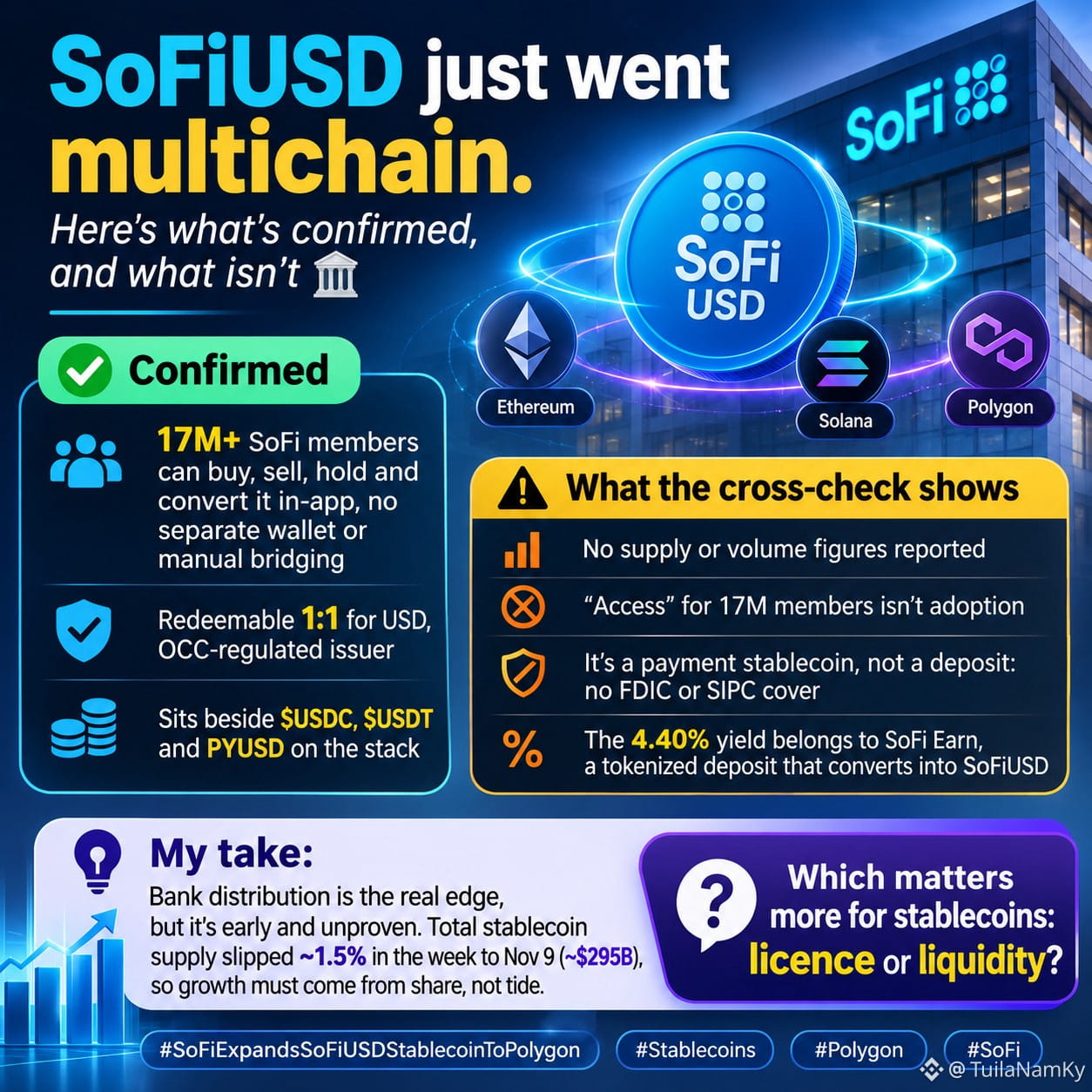
SoFiUSD just went multichain. Here's what's confirmed, and what isn't 🏦
On Nov 12, Polygon Labs ($POL) said SoFiUSD, issued by SoFi Bank, N.A., is live on its Open Money Stack, joining Ethereum and Solana.
✅ Confirmed
• 17M+ SoFi members can buy, sell, hold and convert it in-app, no separate wallet or manual bridging
• Redeemable 1:1 for USD, OCC-regulated issuer
• Sits beside $USDC, USDT and PYUSD on the stack
⚠️ What the cross-check shows
• No supply or volume figures reported
• "Access" for 17M members isn't adoption
• It's a payment stablecoin, not a deposit: no FDIC or SIPC cover
• The 4.40% yield belongs to SoFi Earn, a tokenized deposit that converts into SoFiUSD
🧠 My take: bank distribution is the real edge, but it's early and unproven. Total stablecoin supply slipped ~1.5% in the week to Nov 9 (~$295B), so growth must come from share, not tide.
Which matters more for stablecoins: licence or liquidity?
#Stablecoins #Polygon #SoFi
$POL
{future}(POLUSDT)
$USDC
{future}(USDCUSDT)
$USDT
#sofiexpandssofiusdstablecointopolygon
SoFiUSD just went multichain. Here's what's confirmed, and what isn't 🏦
On Nov 12, Polygon Labs ($POL ) said SoFiUSD, issued by SoFi Bank, N.A., is live on its Open Money Stack, joining Ethereum and Solana.
✅ Confirmed
• 17M+ SoFi members can buy, sell, hold and convert it in-app, no separate wallet or manual bridging
• Redeemable 1:1 for USD, OCC-regulated issuer
• Sits beside $USDC , USDT and PYUSD on the stack
⚠️ What the cross-check shows
• No supply or volume figures reported
• "Access" for 17M members isn't adoption
• It's a payment stablecoin, not a deposit: no FDIC or SIPC cover
• The 4.40% yield belongs to SoFi Earn, a tokenized deposit that converts into SoFiUSD
🧠 My take: bank distribution is the real edge, but it's early and unproven. Total stablecoin supply slipped ~1.5% in the week to Nov 9 (~$295B), so growth must come from share, not tide.
Which matters more for stablecoins: licence or liquidity?
#Stablecoins #Polygon #SoFi
$POL
$USDC
$USDT
1
832

·
--
#SoFiExpandsSoFiUSDStablecoinToPolygon
🏦 A US Bank's Dollar Token Just Got Its Third Chain
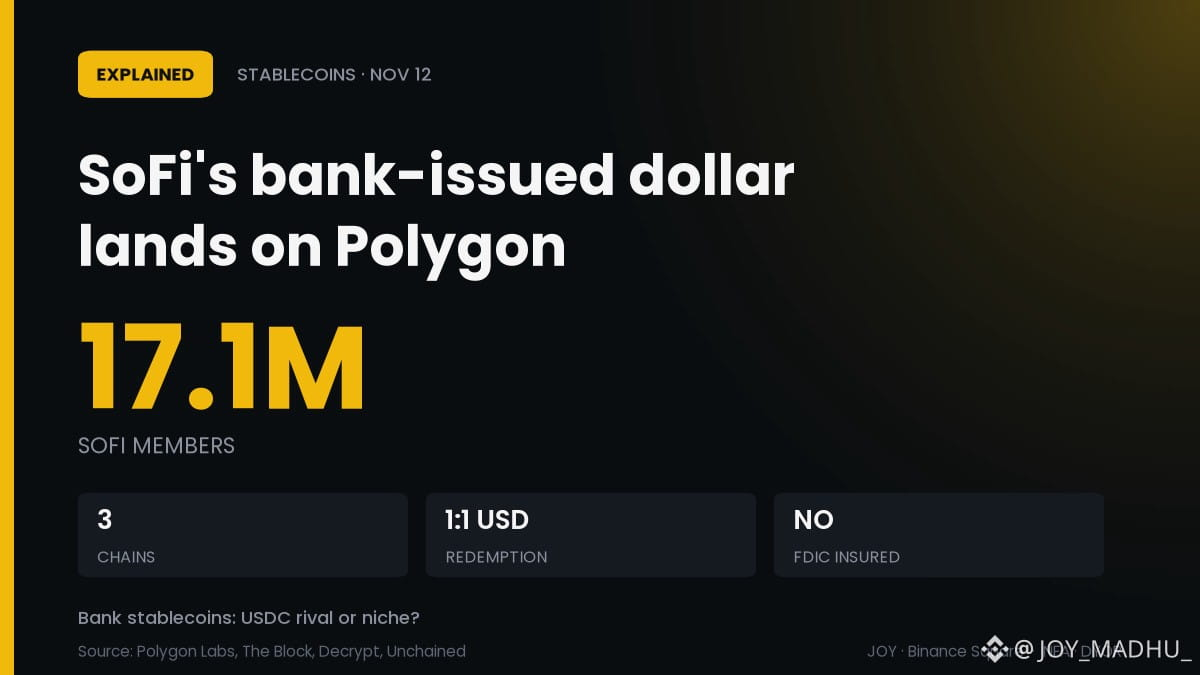
SoFiUSD, the first stablecoin from a US national bank, went live on Polygon on Nov 12.
📊 SoFi members: 17.1M at end of September
🏦 Issuer: SoFi Bank, OCC-regulated, redeemable 1:1 for USD
📈 Chains: Ethereum, Solana, now Polygon
⚠️ Not FDIC or SIPC insured; joins USDC, USDT, PYUSD
The catch: holding it on-chain gives no direct right to redeem; only approved customers can.
Will bank stablecoins grab 10%+ of stablecoin payments by end of 2027, or stay niche? 👇
$POL
#SoFiExpandsSoFiUSDStablecoinToPolygon #Stablecoins #Polygon
41

·
--
🚨 SOFI BRINGS ITS BANK-ISSUED STABLECOIN TO POLYGON!
A major development for the stablecoin and blockchain payments sector
SoFi has expanded its dollar-backed stablecoin, SoFiUSD, to Polygon, adding a third blockchain alongside Ethereum and Solana.
The biggest highlight? More than 17 million SoFi members can now buy, sell, hold, and convert SoFiUSD directly through the SoFi app without setting up a separate crypto wallet.
Issued by SoFi Bank and redeemable 1:1 for US dollars, SoFiUSD is designed to support faster payments, business settlements, and cross-border money transfers.
For Polygon, this integration strengthens its position as a serious player in real-world payment infrastructure. For the broader crypto industry, it signals growing connections between traditional banking and blockchain technology.
The big question: Could bank-issued stablecoins become a major driver of mainstream crypto adoption?
#sofiexpandssofiusdstablecointopolygon $USDC $POL
{spot}(POLUSDT)
{spot}(USDCUSDT)
🚨 SOFI BRINGS ITS BANK-ISSUED STABLECOIN TO POLYGON!
A major development for the stablecoin and blockchain payments sector
SoFi has expanded its dollar-backed stablecoin, SoFiUSD, to Polygon, adding a third blockchain alongside Ethereum and Solana.
The biggest highlight? More than 17 million SoFi members can now buy, sell, hold, and convert SoFiUSD directly through the SoFi app without setting up a separate crypto wallet.
Issued by SoFi Bank and redeemable 1:1 for US dollars, SoFiUSD is designed to support faster payments, business settlements, and cross-border money transfers.
For Polygon, this integration strengthens its position as a serious player in real-world payment infrastructure. For the broader crypto industry, it signals growing connections between traditional banking and blockchain technology.
The big question: Could bank-issued stablecoins become a major driver of mainstream crypto adoption?
#sofiexpandssofiusdstablecointopolygon $USDC $POL

1
142

·
--
Bearish
Verified
🚀 𝐔.𝐒. 𝐁𝐀𝐍𝐊 𝐆𝐎𝐄𝐒 𝐁𝐈𝐆, 𝐁𝐑𝐈𝐍𝐆𝐈𝐍𝐆 𝐈𝐓𝐒 𝐒𝐎𝐅𝐈𝐔𝐒𝐃 𝐒𝐓𝐀𝐁𝐋𝐄𝐂𝐎𝐈𝐍 𝐓𝐎 𝐏𝐎𝐋𝐘𝐆𝐎𝐍!
U.S. bank goes big, bringing its SoFiUSD stablecoin to Polygon! 🚀🏦
SoFi Bank, a U.S.-licensed bank, has officially launched SoFiUSD (pegged 1:1 to the USD) on Polygon Open Money Stack. The best part? Users can buy and sell right in the banking app - no need to set up a separate wallet or wrestle with manual bridging that could go wrong!
📊 Quick Analysis:
A traditional bank choosing Polygon shows just how solid this infrastructure is for large-scale payments. TradFi money is flowing into the ecosystem faster than an ex can change their tune!
🎯 What Should Traders Do?
1. Keep a close eye on money flowing into the Polygon ecosystem ($POL)! 2. Take advantage of the positive news to ride the wave, but don't get carried away by FOMO! 3. Manage your size, don't go all-in on one news!
🛡️ This is not financial advice!
Tell me honestly, will SoFiUSD on Polygon make POL fly, or will traders sell the news?👇✨
👉 $POL - Watch for Polygon move, strong.
👉 $ETH - Watch for stablecoin move, strong.
👉 $AGT - Watch for pullback, strong.
✨ 𝐅𝐀𝐑𝐙𝐀𝐍𝐀 𝐇𝐀𝐌𝐄𝐄𝐃 𝐎𝐅𝐅𝐈𝐂𝐈𝐀𝐋 • 🦋 ✨
#SoFiExpandsSoFiUSDStablecoinToPolygon
#SOFI #Stablecoin #CryptoNews
{future}(POLUSDT)
{future}(ETHUSDT)
{future}(AGTUSDT)
🚀 𝐔.𝐒. 𝐁𝐀𝐍𝐊 𝐆𝐎𝐄𝐒 𝐁𝐈𝐆, 𝐁𝐑𝐈𝐍𝐆𝐈𝐍𝐆 𝐈𝐓𝐒 𝐒𝐎𝐅𝐈𝐔𝐒𝐃 𝐒𝐓𝐀𝐁𝐋𝐄𝐂𝐎𝐈𝐍 𝐓𝐎 𝐏𝐎𝐋𝐘𝐆𝐎𝐍!
U.S. bank goes big, bringing its SoFiUSD stablecoin to Polygon! 🚀🏦
SoFi Bank, a U.S.-licensed bank, has officially launched SoFiUSD (pegged 1:1 to the USD) on Polygon Open Money Stack. The best part? Users can buy and sell right in the banking app - no need to set up a separate wallet or wrestle with manual bridging that could go wrong!
📊 Quick Analysis:
A traditional bank choosing Polygon shows just how solid this infrastructure is for large-scale payments. TradFi money is flowing into the ecosystem faster than an ex can change their tune!
🎯 What Should Traders Do?
1. Keep a close eye on money flowing into the Polygon ecosystem ($POL )! 2. Take advantage of the positive news to ride the wave, but don't get carried away by FOMO! 3. Manage your size, don't go all-in on one news!
🛡️ This is not financial advice!
Tell me honestly, will SoFiUSD on Polygon make POL fly, or will traders sell the news?👇✨
👉 $POL - Watch for Polygon move, strong.
👉 $ETH - Watch for stablecoin move, strong.
👉 $AGT - Watch for pullback, strong.
✨ 𝐅𝐀𝐑𝐙𝐀𝐍𝐀 𝐇𝐀𝐌𝐄𝐄𝐃 𝐎𝐅𝐅𝐈𝐂𝐈𝐀𝐋 • 🦋 ✨
#SoFiExpandsSoFiUSDStablecoinToPolygon
#SOFI #Stablecoin #CryptoNews

Mudassir5348:
Farzana
14
10
3.8k

Verified
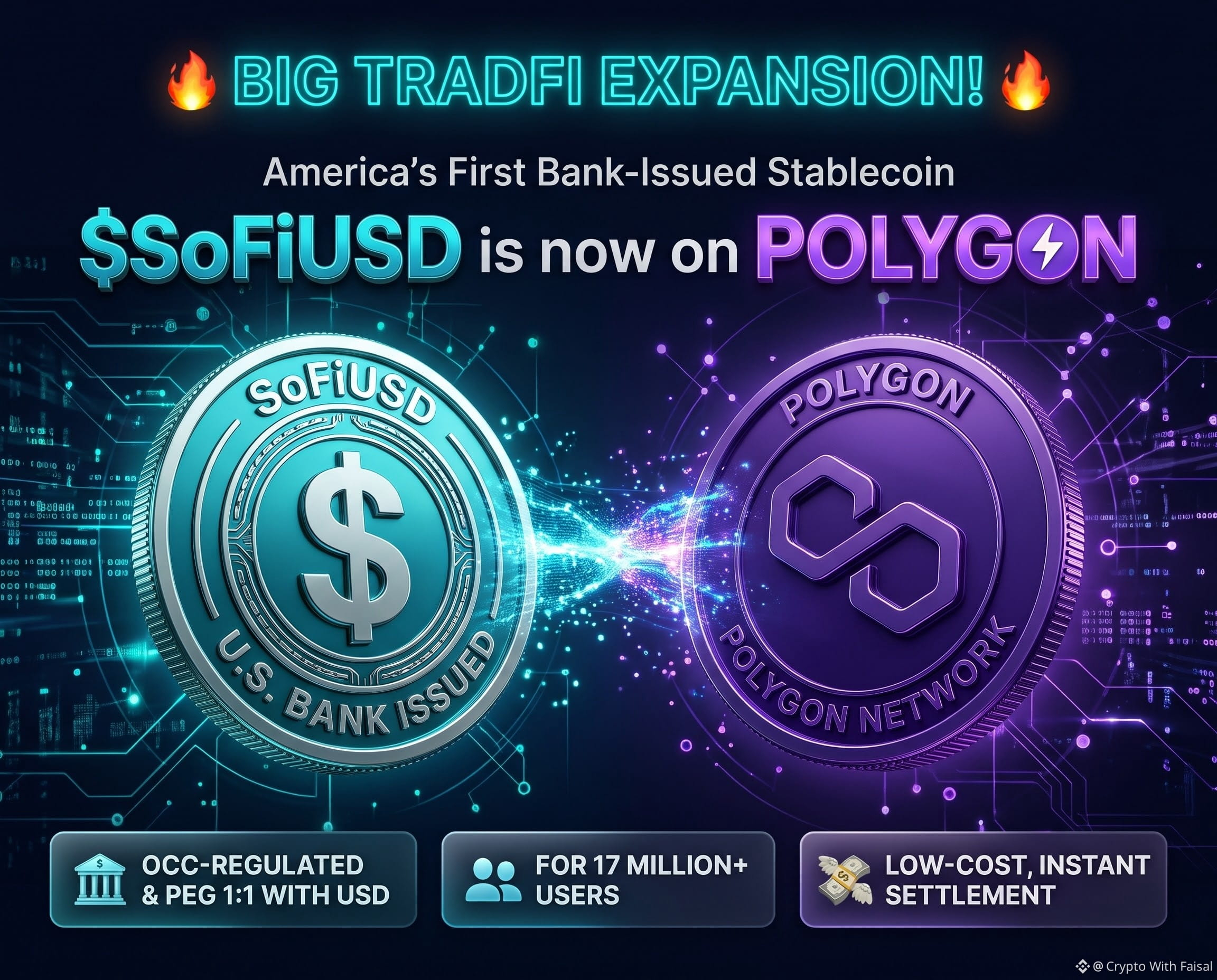
🚨 TRADFI MEETS DEFI: The Stablecoin Wars Just Leveled Up! 🚨
As a trader watching the bridge between traditional banking and Web3, this is the exact adoption catalyst we’ve been waiting for. SoFi—an OCC-regulated U.S. national bank—just expanded its SoFiUSD stablecoin to the Polygon network.
Here’s the pure alpha on why this is a massive shift:
🔥 Retail Reach: Over 17 MILLION SoFi app users can now hold, trade, and settle digital dollars directly on Polygon. The best part? Zero external crypto wallets are required.
🔥 Seamless Tech: It leverages the Polygon Open Money Stack for lightning-fast, low-cost cross-chain payment settlement.
🔥 Regulated & Pegged: Issued directly by a national U.S. bank and redeemable 1:1 for USD.
🔥 Ecosystem Growth: Already live on ETH and SOL, adding Polygon highlights the heavy institutional demand for scalable, low-fee payment rails.
This isn’t just another token launch. It’s a regulated TradFi giant validating Polygon’s infrastructure for everyday retail payments. When onboarding friction drops to zero for 17M users, liquidity typically follows.
Will we see a massive capital rotation into POL, or will other national banks rush to build their own stablecoins to compete? Drop your targets below! 👇📊
$POL
{future}(POLUSDT)
$ETH
{future}(ETHUSDT)
$SOL
{future}(SOLUSDT)
#sofiexpandssofiusdstablecointopolygon #Polygon #POL #Stablecoins
🚨 TRADFI MEETS DEFI: The Stablecoin Wars Just Leveled Up! 🚨
As a trader watching the bridge between traditional banking and Web3, this is the exact adoption catalyst we’ve been waiting for. SoFi—an OCC-regulated U.S. national bank—just expanded its SoFiUSD stablecoin to the Polygon network.
Here’s the pure alpha on why this is a massive shift:
🔥 Retail Reach: Over 17 MILLION SoFi app users can now hold, trade, and settle digital dollars directly on Polygon. The best part? Zero external crypto wallets are required.
🔥 Seamless Tech: It leverages the Polygon Open Money Stack for lightning-fast, low-cost cross-chain payment settlement.
🔥 Regulated & Pegged: Issued directly by a national U.S. bank and redeemable 1:1 for USD.
🔥 Ecosystem Growth: Already live on ETH and SOL, adding Polygon highlights the heavy institutional demand for scalable, low-fee payment rails.
This isn’t just another token launch. It’s a regulated TradFi giant validating Polygon’s infrastructure for everyday retail payments. When onboarding friction drops to zero for 17M users, liquidity typically follows.
Will we see a massive capital rotation into POL, or will other national banks rush to build their own stablecoins to compete? Drop your targets below! 👇📊
$POL
$ETH
$SOL
#sofiexpandssofiusdstablecointopolygon #Polygon #POL #Stablecoins
1
918

·
--
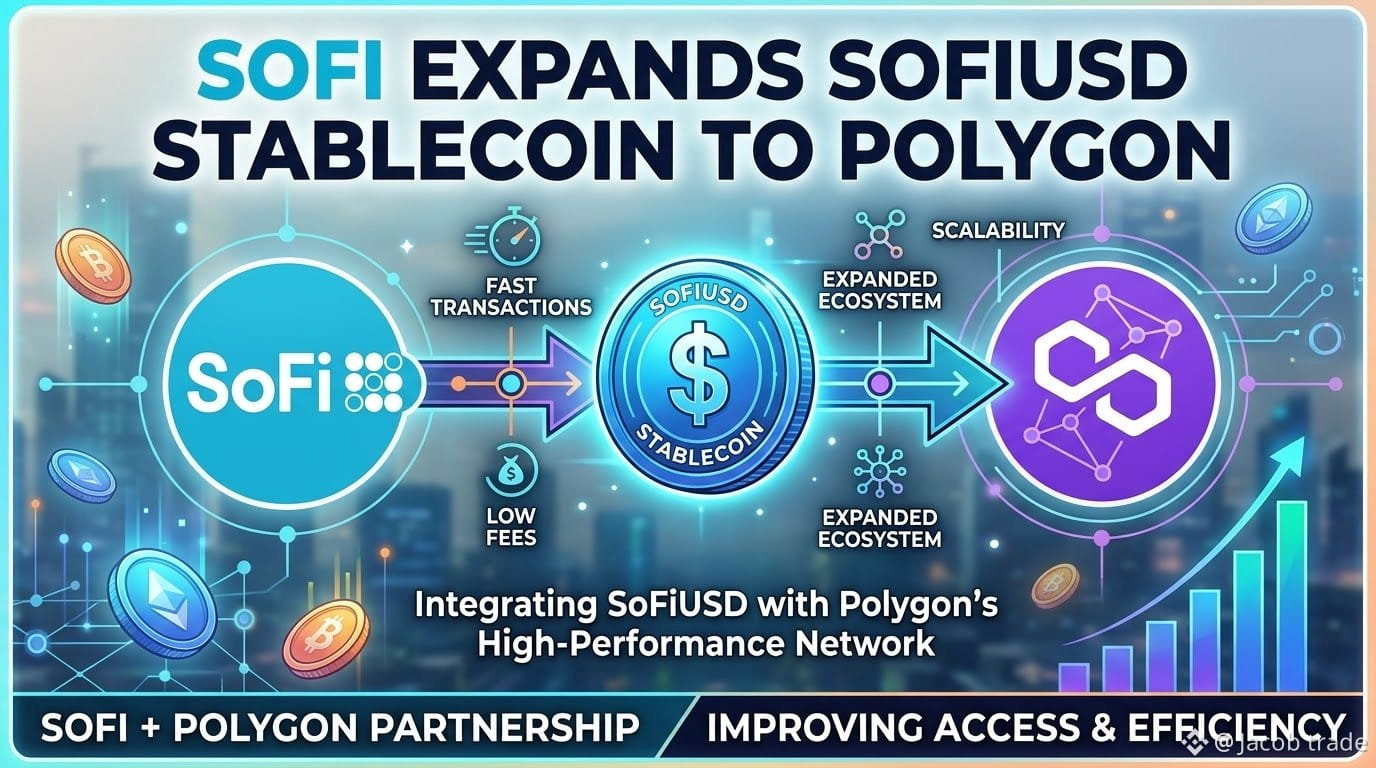
SoFi has officially expanded its USD stablecoin to the Polygon network, marking a significant step in its growing presence within the decentralized finance ecosystem. This move allows users to leverage SoFi's stablecoin on a wider range of applications and protocols built on Polygon, potentially increasing liquidity and accessibility. The integration is expected to foster greater adoption of stablecoins for everyday transactions and DeFi activities, offering users more options and potentially lower transaction fees compared to other networks. This expansion signals SoFi's commitment to interoperability and its strategic vision for the future of digital finance.
This development could attract more users and developers to the Polygon ecosystem, further solidifying its position as a leading Layer 2 scaling solution. The increased utility of the SoFi USD stablecoin on Polygon may lead to heightened trading volumes and new use cases emerging within the DeFi space.
Disclaimer: This content is for informational purposes only and does not constitute financial advice.
#SoFiExpandsSoFiUSDStablecoinToPolygon $MATIC

113

·
--
Verified
#sofiexpandssofiusdstablecointopolygon
SoFiUSD is now available across multiple blockchains. Here’s what’s confirmed—and what isn’t 🏦
On November 12, Polygon Labs (POL) announced that SoFiUSD, issued by SoFi Bank, N.A., is available on its Open Money Stack, alongside Ethereum and Solana.
✅ Confirmed
• More than 17 million SoFi members can buy, sell, hold, and convert it in the app, without a separate wallet or manual transfers between blockchains
• Redeemable for U.S. dollars at a 1:1 rate, issued by an OCC-regulated institution
• Available alongside $USDC, USDT, and PYUSD on the platform
⚠️ What cross-checking reveals
• No figures for trading volume or circulating supply were disclosed
• “Access” for 17 million members doesn’t mean they’re adopting it
• It’s a payment stablecoin, not a deposit: it’s not covered by either the FDIC or the SIPC
• The 4.40% yield is associated with SoFi Earn, a tokenized deposit that is converted into SoFiUSD
🧠 My take: distribution through a bank is a real advantage, but the project is still in its early stages and hasn’t yet proven itself. Total stablecoin supply fell by about 1.5% during the week ending November 9 (to around $295 billion), so growth will have to come from gaining market share, not from a rising overall market.
What matters most for stablecoins: regulatory approval or liquidity?
$POL
{future}(POLUSDT)
$AKE
{future}(AKEUSDT)
$BARD
{future}(BARDUSDT)
#sofiexpandssofiusdstablecointopolygon
SoFiUSD is now available across multiple blockchains. Here’s what’s confirmed—and what isn’t 🏦
On November 12, Polygon Labs (POL) announced that SoFiUSD, issued by SoFi Bank, N.A., is available on its Open Money Stack, alongside Ethereum and Solana.
✅ Confirmed
• More than 17 million SoFi members can buy, sell, hold, and convert it in the app, without a separate wallet or manual transfers between blockchains
• Redeemable for U.S. dollars at a 1:1 rate, issued by an OCC-regulated institution
• Available alongside $USDC, USDT, and PYUSD on the platform
⚠️ What cross-checking reveals
• No figures for trading volume or circulating supply were disclosed
• “Access” for 17 million members doesn’t mean they’re adopting it
• It’s a payment stablecoin, not a deposit: it’s not covered by either the FDIC or the SIPC
• The 4.40% yield is associated with SoFi Earn, a tokenized deposit that is converted into SoFiUSD
🧠 My take: distribution through a bank is a real advantage, but the project is still in its early stages and hasn’t yet proven itself. Total stablecoin supply fell by about 1.5% during the week ending November 9 (to around $295 billion), so growth will have to come from gaining market share, not from a rising overall market.
What matters most for stablecoins: regulatory approval or liquidity?
$POL
$AKE
$BARD
Abu Fahadأ:
💛
1
2
3k

A BANKING GIANT HAS JUST DECLARED WAR ON THE STABLECOIN MARKET
જ⁀➴
SoFi didn’t come to play. SoFiUSD has landed on Polygon, joining Ethereum and Solana.
The heavy artillery is clear. More than 17 million users just one click away, no complex wallets, backed by the OCC, and pegged exactly to the dollar.
But don’t get your hopes up. The hype hides pitfalls. Where are the volume and supply figures? Having the door open doesn’t guarantee people will walk in. And red alert: it’s a payment stablecoin, with no FDIC or SIPC safety net. The 4.40 percent yield requires SoFi Earn.
The stablecoin pie shrank by 1.5 percent last week. To survive, SoFi will have to steal customers from its rivals. At your trading desk, what matters more: a regulatory stamp of approval or real liquidity?
$POL
$AKE
$BARD
Follow the page and turn on notifications. Don’t be late. Whatever the next update is, I’ll post it here first.
#sofiexpandssofiusdstablecointopolygon
{future}(AKEUSDT)
{spot}(POLUSDT)
{future}(BARDUSDT)
A BANKING GIANT HAS JUST DECLARED WAR ON THE STABLECOIN MARKET
જ⁀➴
SoFi didn’t come to play. SoFiUSD has landed on Polygon, joining Ethereum and Solana.
The heavy artillery is clear. More than 17 million users just one click away, no complex wallets, backed by the OCC, and pegged exactly to the dollar.
But don’t get your hopes up. The hype hides pitfalls. Where are the volume and supply figures? Having the door open doesn’t guarantee people will walk in. And red alert: it’s a payment stablecoin, with no FDIC or SIPC safety net. The 4.40 percent yield requires SoFi Earn.
The stablecoin pie shrank by 1.5 percent last week. To survive, SoFi will have to steal customers from its rivals. At your trading desk, what matters more: a regulatory stamp of approval or real liquidity?
$POL
$AKE
$BARD
Follow the page and turn on notifications. Don’t be late. Whatever the next update is, I’ll post it here first.
#sofiexpandssofiusdstablecointopolygon

1
211

·
--
Verified

Article
SoFiUSD is now available across multiple blockchains.Here’s what’s confirmed — and what isn’t 🏦
On November 12, Polygon Labs (POL) announced that SoFiUSD, issued by SoFi Bank, N.A., is now available on the Open Money Stack alongside Ethereum and Solana.
✅ Confirmed
• More than 17 million SoFi members can buy, sell, hold, and convert the token in the app without a separate wallet or manual transfers between blockchains
• Redeemable for U.S. dollars at a 1:1 rate; the issuer is regulated by the OCC
SoFiUSD is now available across multiple blockchains.
Here’s what’s confirmed — and what isn’t 🏦
On November 12, Polygon Labs (POL) announced that SoFiUSD, issued by SoFi Bank, N.A., is now available on the Open Money Stack alongside Ethereum and Solana.
✅ Confirmed
• More than 17 million SoFi members can buy, sell, hold, and convert the token in the app without a separate wallet or manual transfers between blockchains
• Redeemable for U.S. dollars at a 1:1 rate; the issuer is regulated by the OCC
1
751

·
--
Bearish
Verified
#sofiexpandssofiusdstablecointopolygon
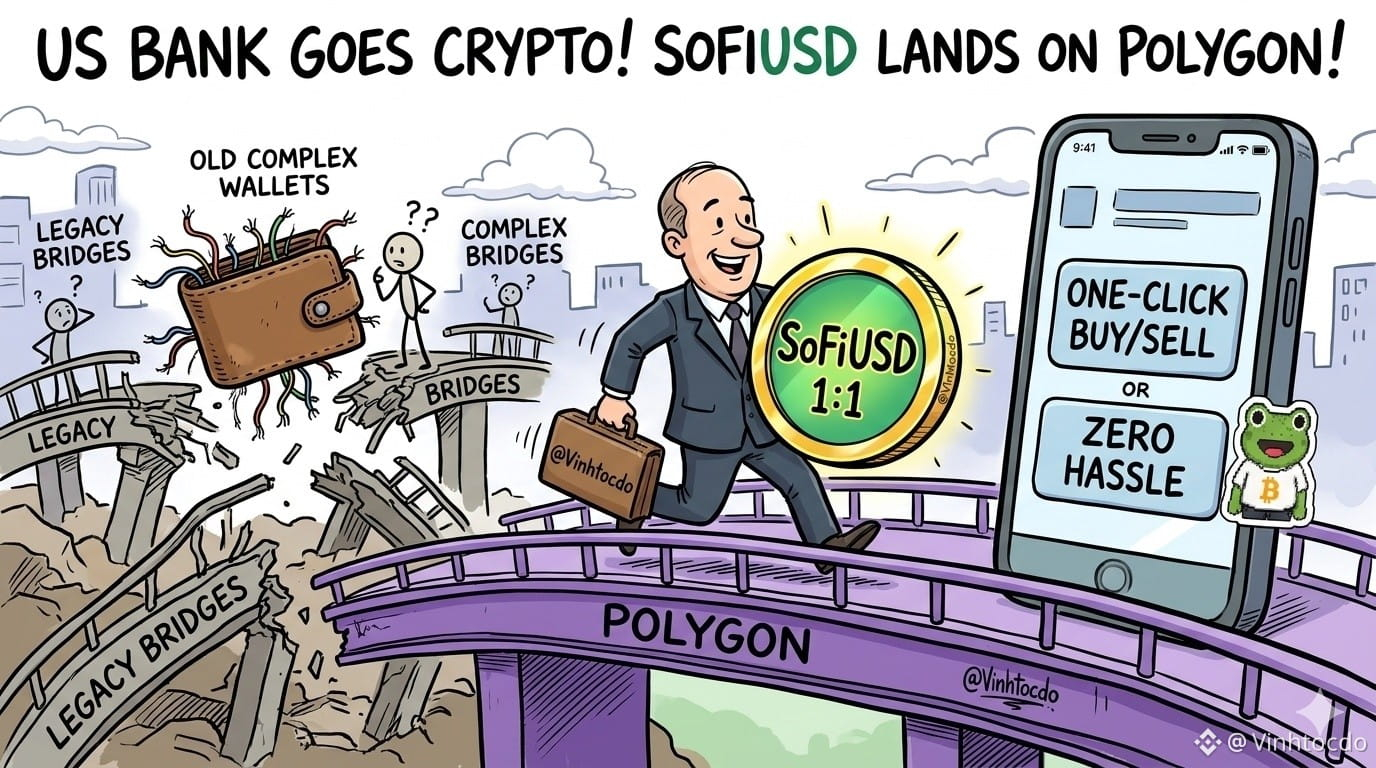
U.S. bank goes big, bringing its SoFiUSD stablecoin to Polygon! 🚀🏦
SoFi Bank, a U.S.-licensed bank, has officially launched SoFiUSD (pegged 1:1 to the USD) on Polygon Open Money Stack. The best part? Users can buy and sell right in the banking app—no need to set up a separate wallet or wrestle with manual bridging that could go wrong!
A traditional bank choosing Polygon shows just how solid this infrastructure is for large-scale payments. TradFi money is flowing into the ecosystem faster than an ex can change their tune!
👉 What should traders do? Keep a close eye on money flowing into the Polygon ecosystem ($POL), and take advantage of the positive news to ride the wave—but don’t get carried away by FOMO!
⚠️ This is not financial advice.
👇 Click below to trade and support me:
$POL
{spot}(POLUSDT)
$ETH
{spot}(ETHUSDT)
$AGT
{future}(AGTUSDT)
#Polygon #SOFI #Stablecoin #CryptoNews #DeFi #VINHTOCDO
#sofiexpandssofiusdstablecointopolygon
U.S. bank goes big, bringing its SoFiUSD stablecoin to Polygon! 🚀🏦
SoFi Bank, a U.S.-licensed bank, has officially launched SoFiUSD (pegged 1:1 to the USD) on Polygon Open Money Stack. The best part? Users can buy and sell right in the banking app—no need to set up a separate wallet or wrestle with manual bridging that could go wrong!
A traditional bank choosing Polygon shows just how solid this infrastructure is for large-scale payments. TradFi money is flowing into the ecosystem faster than an ex can change their tune!
👉 What should traders do? Keep a close eye on money flowing into the Polygon ecosystem ($POL ), and take advantage of the positive news to ride the wave—but don’t get carried away by FOMO!
⚠️ This is not financial advice.
👇 Click below to trade and support me:
$POL
$ETH
$AGT
#Polygon #SOFI #Stablecoin #CryptoNews #DeFi #VINHTOCDO
9
7.5k

·
--
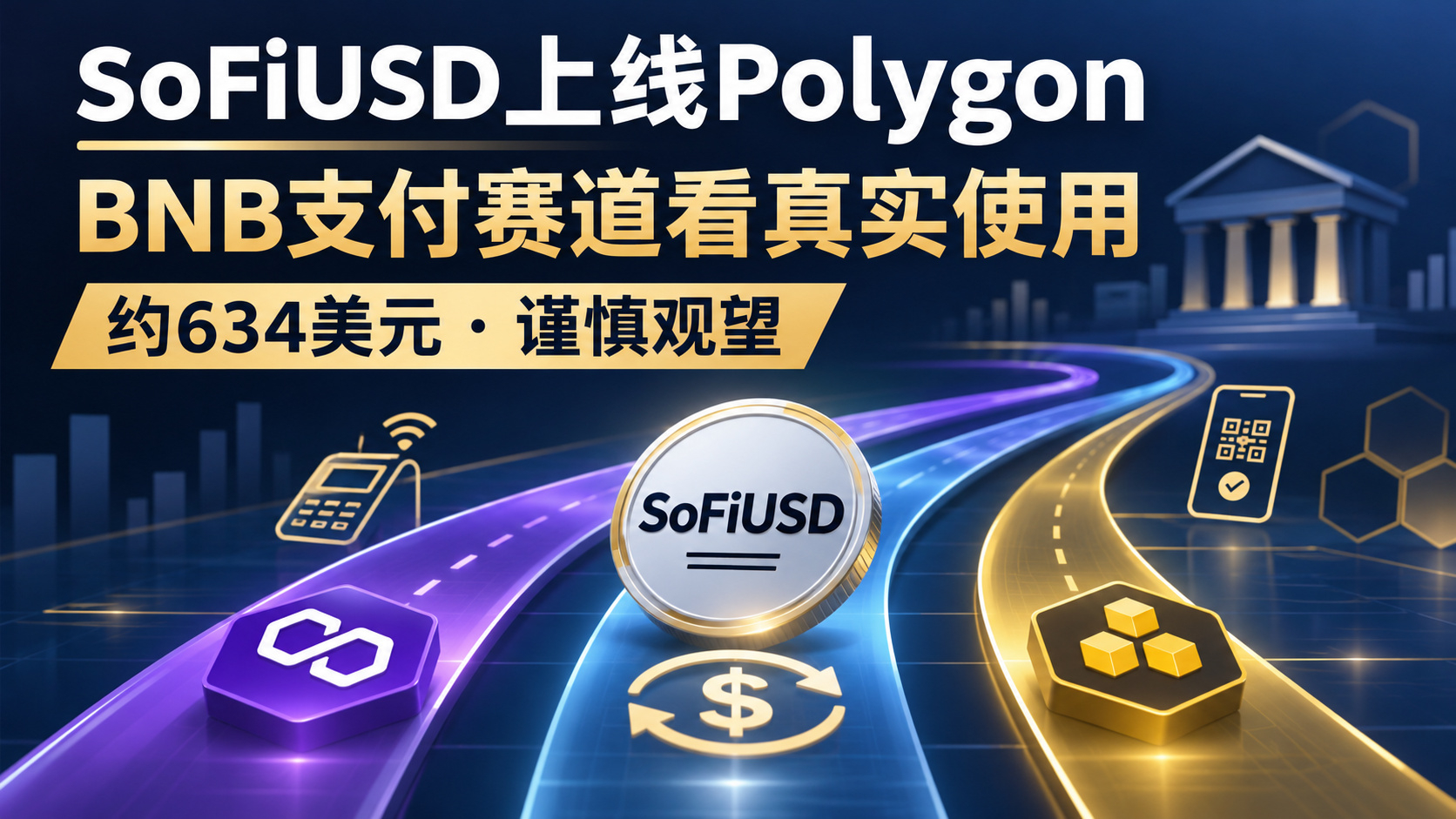
SoFiUSD Expands to Polygon|BNB’s Payments Sector Faces New Competition|Stay Disciplined Around $634
My stance is cautious: I wouldn’t mechanically interpret the launch of a new asset on another blockchain as bearish for BNB. A trending topic on Binance Square shows #SoFiExpandsSoFiUSDStablecoinToPolygon; in an announcement dated November 12, Polygon said that SoFiUSD, issued by SoFi Bank, is now live on Polygon, joining the Ethereum and Solana networks it already supports. Users can buy, sell, hold, and convert it in the SoFi app. SoFi’s quarterly report filed with the SEC states that, as of September 30, about $73.5 million of SoFiUSD was in circulation, backed by an equivalent amount of cash in U.S. dollars. That’s historical quarter-end data, not today’s issuance figure. Polygon’s announcement also notes that SoFiUSD is a payment stablecoin, not a bank deposit protected by deposit insurance.
The connection between this news and BNB lies in competition among payment networks. BNB Chain’s official stablecoin page already lists assets such as USDT, USDC, and USD1, positioning the chain for wallets, exchanges, DeFi, and payment flows. SoFiUSD’s choice of Polygon shows that bank issuers are willing to put settlement rails on multiple chains; it did not announce that it was abandoning BNB Chain, because this announcement never said that it had chosen BNB in the first place. For BNB holders, what’s more worth watching is whether bank-grade issuers come onboard in the future, along with real transfer volumes, merchant adoption, retention, and on-chain fees—not converting “a competitor added a new coin” directly into a projected drop in BNB’s price.
The market is currently weak, but that weakness can’t be attributed to this one news item. When I checked BNB/USDT on Binance, it was around $634.47, down about 5.53% over 24 hours, with a low of $622.41 and a high of $674.73. BNB was still among the six-hour trending searches on Binance Square. The news is generating discussion, but spot prices don’t show that risk appetite has recovered. Around $622 is the day’s line of defense; $640–$645 is the immediate recovery zone, and around $675 is higher resistance. If the price can’t reclaim $645 and hold above it, I’ll continue to treat any bounce as a weak rebound. If it breaks below $622 and can’t quickly recover, my view that the short-term decline has stabilized is invalidated. Conversely, only a sustained move back above $645, accompanied by continued trading activity, would justify reassessing the upside.
If I were trading this myself, I wouldn’t enter now. I’d only consider a small spot long, with no high leverage. The entry trigger would be a four-hour close above $645, followed by a successful hold of $640–$645 on a retest. I’d then test the waters with no more than 3% of my total assets. The first target is $660, where I’d sell half; the second is $675, where I’d close the remainder in stages. I’d set a stop below $631 and exit immediately if it’s triggered, rather than averaging down to dilute the loss. If the price breaks below $622 first, I’d cancel this plan. If the news gains traction but the price doesn’t confirm it, I’d stay in cash. The long-term trend in payments and the execution of an individual short-term trade are two different things; a story shouldn’t override a stop-loss.
Sources: Polygon’s official announcement, SoFi’s quarterly report filed with the SEC, BNB Chain’s stablecoin page, and Binance BNB/USDT market data. #SoFiExpandsSoFiUSDStablecoinToPolygon #BNB
The above is solely my personal market observation and does not constitute investment advice.
16

·
--
Article
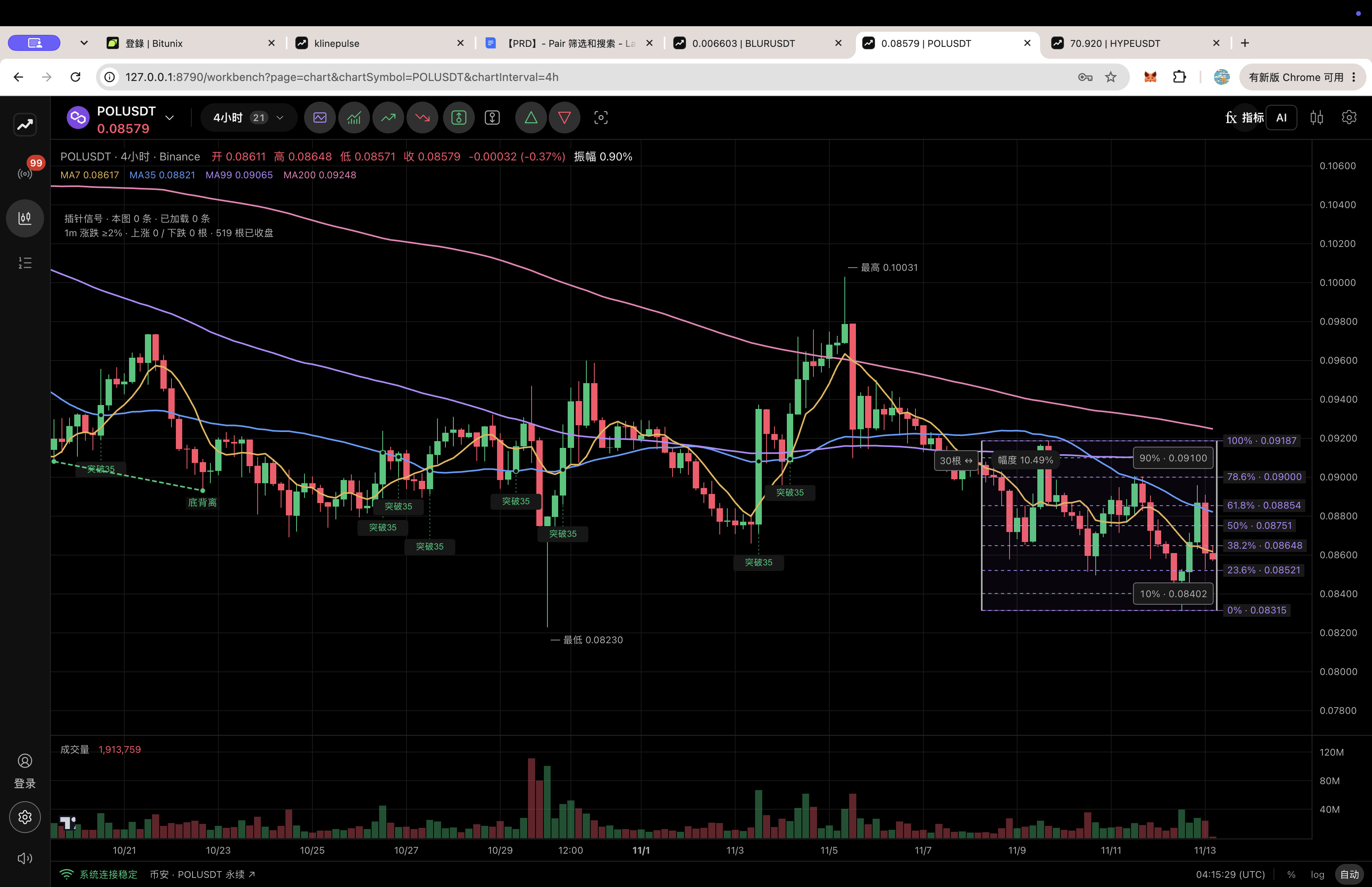
SoFiUSD Goes Live on Polygon: Bank-Issued Stablecoin Expands, but POL Has Yet to See Immediate BuyingSoFiUSD Goes Live on Polygon: Bank-Issued Stablecoin Expands, but POL Has Yet to See Immediate Buying
At around 12:12 Beijing time, Binance Square’s trending page showed 67 people discussing `#SoFiExpandsSoFiUSDStablecoinToPolygon`, ranking it eighth. The topic page had around 2,384 views and 63 people discussing it. This level of interest shows that the market is talking about it, but it does not indicate broad platform-wide attention, much less confirm that funds are flowing into POL.
What happened? Polygon officially confirmed on November 12 that SoFiUSD is now live on Polygon Chain. SoFi members can buy, sell, hold, and convert SoFiUSD directly in the SoFi app without setting up a separate wallet. The announcement also noted that SoFiUSD was already supported on Ethereum and Solana, and that Polygon’s Open Money Stack also supports USDC, USDT, and PYUSD.
SoFiUSD Goes Live on Polygon: Bank-Issued Stablecoin Expands, but POL Has Yet to See Immediate Buying
SoFiUSD Goes Live on Polygon: Bank-Issued Stablecoin Expands, but POL Has Yet to See Immediate Buying
At around 12:12 Beijing time, Binance Square’s trending page showed 67 people discussing `#SoFiExpandsSoFiUSDStablecoinToPolygon`, ranking it eighth. The topic page had around 2,384 views and 63 people discussing it. This level of interest shows that the market is talking about it, but it does not indicate broad platform-wide attention, much less confirm that funds are flowing into POL.
What happened? Polygon officially confirmed on November 12 that SoFiUSD is now live on Polygon Chain. SoFi members can buy, sell, hold, and convert SoFiUSD directly in the SoFi app without setting up a separate wallet. The announcement also noted that SoFiUSD was already supported on Ethereum and Solana, and that Polygon’s Open Money Stack also supports USDC, USDT, and PYUSD.
317


·
--
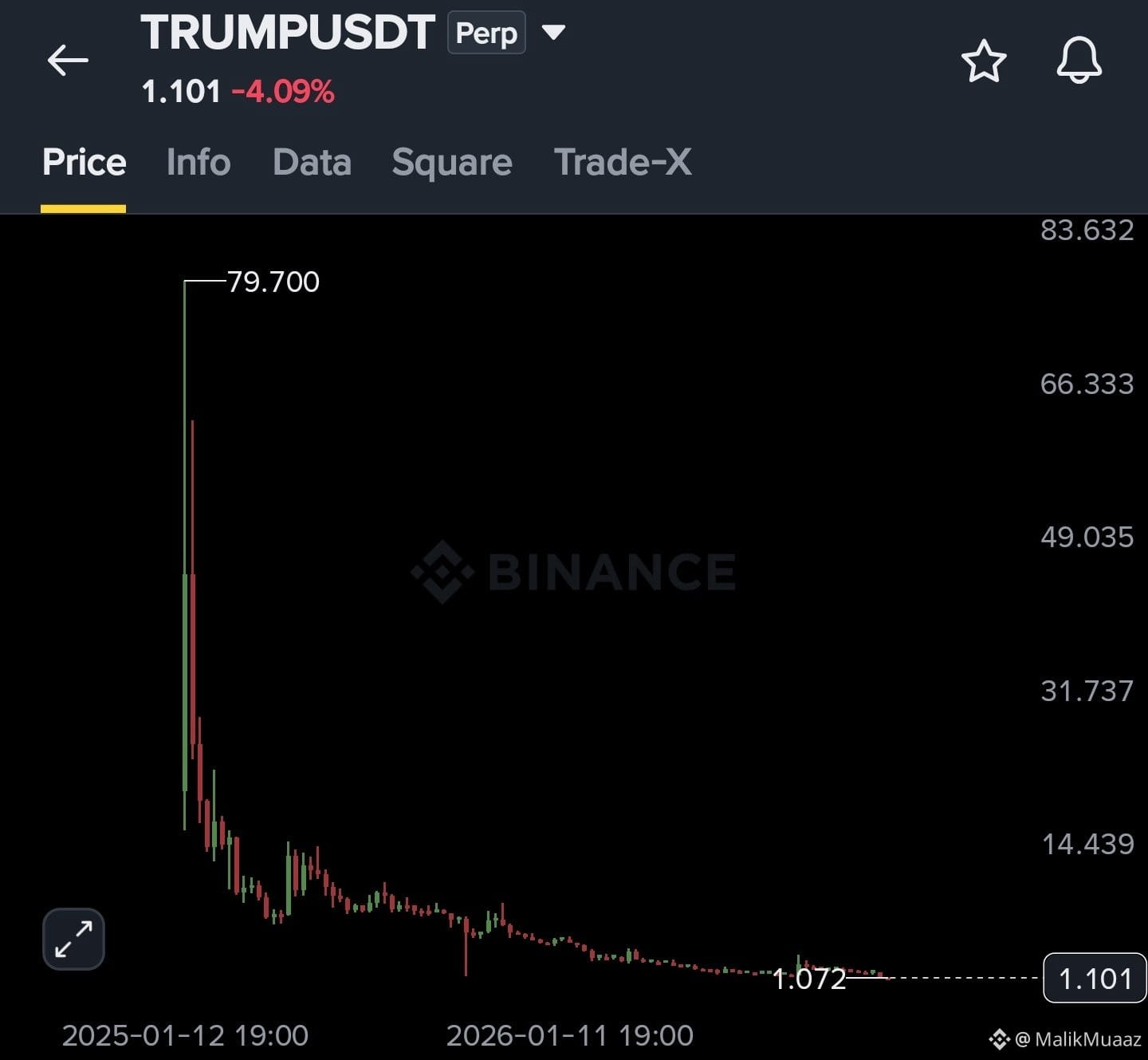
Why Is $TRUMP Still Listed on Binance?
$TRUMP has fallen from nearly $79.70 to around $1.10 — a devastating 98.6% decline from its peak.
This isn't just another market correction. It's a serious reminder of the risks involved in hype-driven crypto projects.
Thousands of investors trusted the name, the movement, and the promises surrounding this token. Many are now facing massive losses.
Crypto is risky, and nobody guarantees profits. But this raises an important question:
Does $TRUMP still meet Binance's listing standards?
If a token loses almost 99% of its value, shouldn't exchanges review its market condition, liquidity, and investor risks?
Exchanges earn trading fees, but investor protection and transparency matter too.
I'm not asking Binance to delist it without a proper review. I'm asking for transparency.
Investors deserve answers. Not just another market warning.
What do you think? Should Binance review $TRUMP's listing status
#AnthropicIPOAboutSixTimesOversubscribed #SoFiExpandsSoFiUSDStablecoinToPolygon #TetherGoldXAUTCompletesKPMGAudit #ChipStocksExtendLossesAfterNvidiaCEOChange #TrezorConfirmsMaliciousImplantsIn3Safe5Devices
Why Is $TRUMP Still Listed on Binance?
$TRUMP has fallen from nearly $79.70 to around $1.10 — a devastating 98.6% decline from its peak.
This isn't just another market correction. It's a serious reminder of the risks involved in hype-driven crypto projects.
Thousands of investors trusted the name, the movement, and the promises surrounding this token. Many are now facing massive losses.
Crypto is risky, and nobody guarantees profits. But this raises an important question:
Does $TRUMP still meet Binance's listing standards?
If a token loses almost 99% of its value, shouldn't exchanges review its market condition, liquidity, and investor risks?
Exchanges earn trading fees, but investor protection and transparency matter too.
I'm not asking Binance to delist it without a proper review. I'm asking for transparency.
Investors deserve answers. Not just another market warning.
What do you think? Should Binance review $TRUMP 's listing status
#AnthropicIPOAboutSixTimesOversubscribed #SoFiExpandsSoFiUSDStablecoinToPolygon #TetherGoldXAUTCompletesKPMGAudit #ChipStocksExtendLossesAfterNvidiaCEOChange #TrezorConfirmsMaliciousImplantsIn3Safe5Devices
Este año sere millonario:
ese cerdo se queda con la ganancia de los inversores, ya que posee el 88% , rip Trump
2
4
1.6k

·
--
$NEAR breakout setup is heating up around $3.44.
🟢 Long $NEAR
Entry: $3.42 – $3.46
SL: $3.36
TP1: $3.52
TP2: $3.60
TP3: $3.72
Short liquidations are adding fuel as buyers step in. A clean reclaim of $3.46 with expanding volume could open the door for a stronger upside breakout.
Momentum loading. Eyes up. 🚀
{spot}(NEARUSDT)
#SoFiExpandsSoFiUSDStablecoinToPolygon #AnthropicRejectsIPODelayValuationinQuestion #WhatWillDriveCryptoandStocks’NextRebound?
$NEAR breakout setup is heating up around $3.44.
🟢 Long $NEAR
Entry: $3.42 – $3.46
SL: $3.36
TP1: $3.52
TP2: $3.60
TP3: $3.72
Short liquidations are adding fuel as buyers step in. A clean reclaim of $3.46 with expanding volume could open the door for a stronger upside breakout.
Momentum loading. Eyes up. 🚀
#SoFiExpandsSoFiUSDStablecoinToPolygon #AnthropicRejectsIPODelayValuationinQuestion #WhatWillDriveCryptoandStocks’NextRebound?
Dj Snak:
😂😂😂😂😂😂
1
371

·
--
**Good morning, Friday traders.**
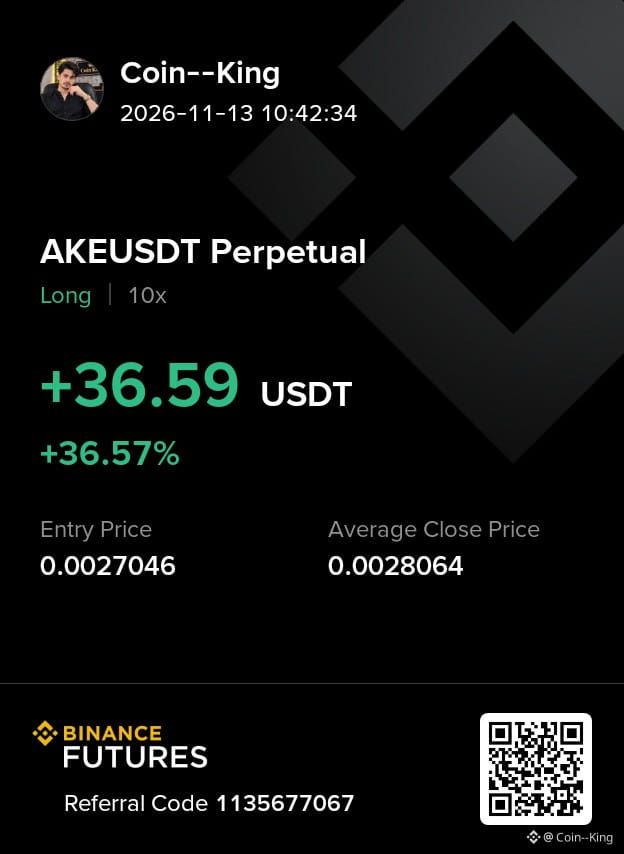
Woke up, checked the charts like always, and $AKE was already setting up a clean long for a quick scalp.
I stay glued to this token — don’t let any decent scalping chance go to waste on it.
Entered early morning, long with 10x leverage around 0.0027046.
Held it through the move and closed at an average of 0.0028064.
Ended up with +36.59 USDT, roughly +36.57% on the position.
These early morning moves on AKE are why I never switch off completely.
Another solid one booked, now let’s see what the rest of the session brings.
**Disclaimer:** This is not financial advice. Crypto trading involves high risk and you can lose money. Always do your own research and only trade with capital you can afford to lose. Past performance is not indicative of future results.
$BARD $MAGMA
#TradFiForBeginners #HedgeFundsCMEBitcoinNetShortsFall89% #SoFiExpandsSoFiUSDStablecoinToPolygon #TetherGoldXAUTCompletesKPMGAudit
2
839

·
--
Bearish
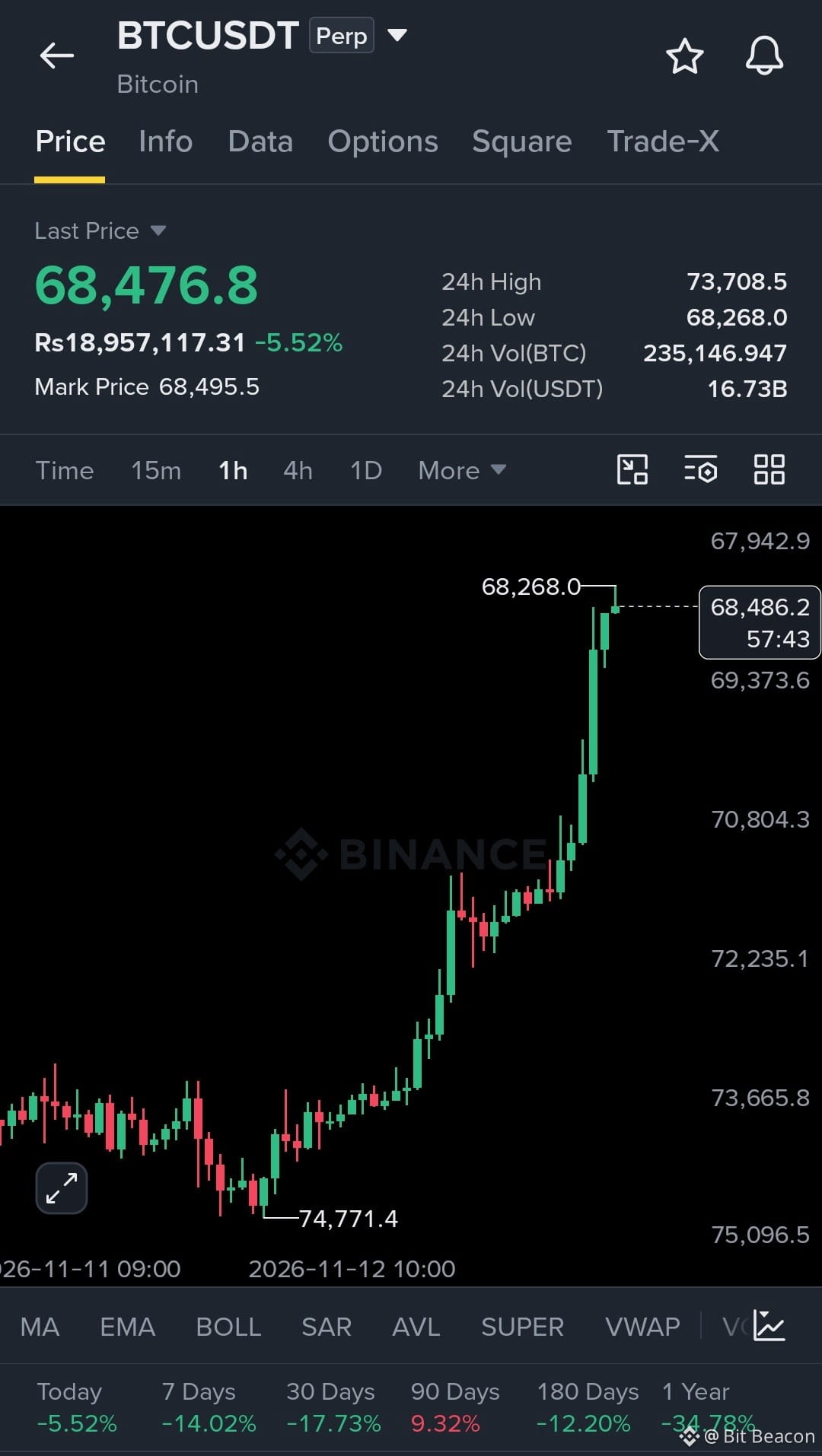
$BTC is showing a sharp bullish rebound after defending the $68,268 support zone. Buyers are stepping in with strong momentum, but holding above $68,500 is key for continuation.
Entry: $68,400 – $68,600
TP1: $69,000
TP2: $69,800
TP3: $70,800
SL: $67,950
A clean reclaim of $69,000 could open the door for further upside. Watch the breakout confirmation and avoid chasing.
Risk managed. Eyes on the targets. Let's go $BTC
{spot}(BTCUSDT)
#ChipStocksExtendLossesAfterNvidiaCEOChange #TetherGoldXAUTCompletesKPMGAudit #SoFiExpandsSoFiUSDStablecoinToPolygon #TradFiForBeginners #HedgeFundsCMEBitcoinNetShortsFall89%
$BTC is showing a sharp bullish rebound after defending the $68,268 support zone. Buyers are stepping in with strong momentum, but holding above $68,500 is key for continuation.
Entry: $68,400 – $68,600
TP1: $69,000
TP2: $69,800
TP3: $70,800
SL: $67,950
A clean reclaim of $69,000 could open the door for further upside. Watch the breakout confirmation and avoid chasing.
Risk managed. Eyes on the targets. Let's go $BTC
#ChipStocksExtendLossesAfterNvidiaCEOChange #TetherGoldXAUTCompletesKPMGAudit #SoFiExpandsSoFiUSDStablecoinToPolygon #TradFiForBeginners #HedgeFundsCMEBitcoinNetShortsFall89%
2
375

·
--
Bearish
🚀 Can $TRUMP Make a Strong Comeback❓ 👀🔥
$TRUMP
{spot}(TRUMPUSDT)
has experienced a significant correction and is still trading far below its previous all-time high. ✳️However, the question is whether this decline could eventually set the stage for another major rally. While a recovery toward previous highs would require substantial buying pressure and renewed market interest, the crypto market has shown that unexpected comebacks are always possible. 📈 Are you considering buying this dip, or would you rather wait for stronger bullish confirmation before entering? 🎯 What’s your realistic price target for $TRUMP in the next bull run? Share your predictions below! 👇
#HuangExitNvidiaStrategyInFocus
#SoFiExpandsSoFiUSDStablecoinToPolygon #TetherGoldXAUTCompletesKPMGAudit
#NvidiaNamesColetteKressInterimCEO
#ChipStocksExtendLossesAfterNvidiaCEOChange
🚀 Can $TRUMP Make a Strong Comeback❓ 👀🔥
$TRUMP
has experienced a significant correction and is still trading far below its previous all-time high. ✳️However, the question is whether this decline could eventually set the stage for another major rally. While a recovery toward previous highs would require substantial buying pressure and renewed market interest, the crypto market has shown that unexpected comebacks are always possible. 📈 Are you considering buying this dip, or would you rather wait for stronger bullish confirmation before entering? 🎯 What’s your realistic price target for $TRUMP in the next bull run? Share your predictions below! 👇
#HuangExitNvidiaStrategyInFocus
#SoFiExpandsSoFiUSDStablecoinToPolygon #TetherGoldXAUTCompletesKPMGAudit
#NvidiaNamesColetteKressInterimCEO
#ChipStocksExtendLossesAfterNvidiaCEOChange

647

·
--
Bullish
$OSMO /USDT — Buyers Just Woke Up! Is Another Rally Coming?
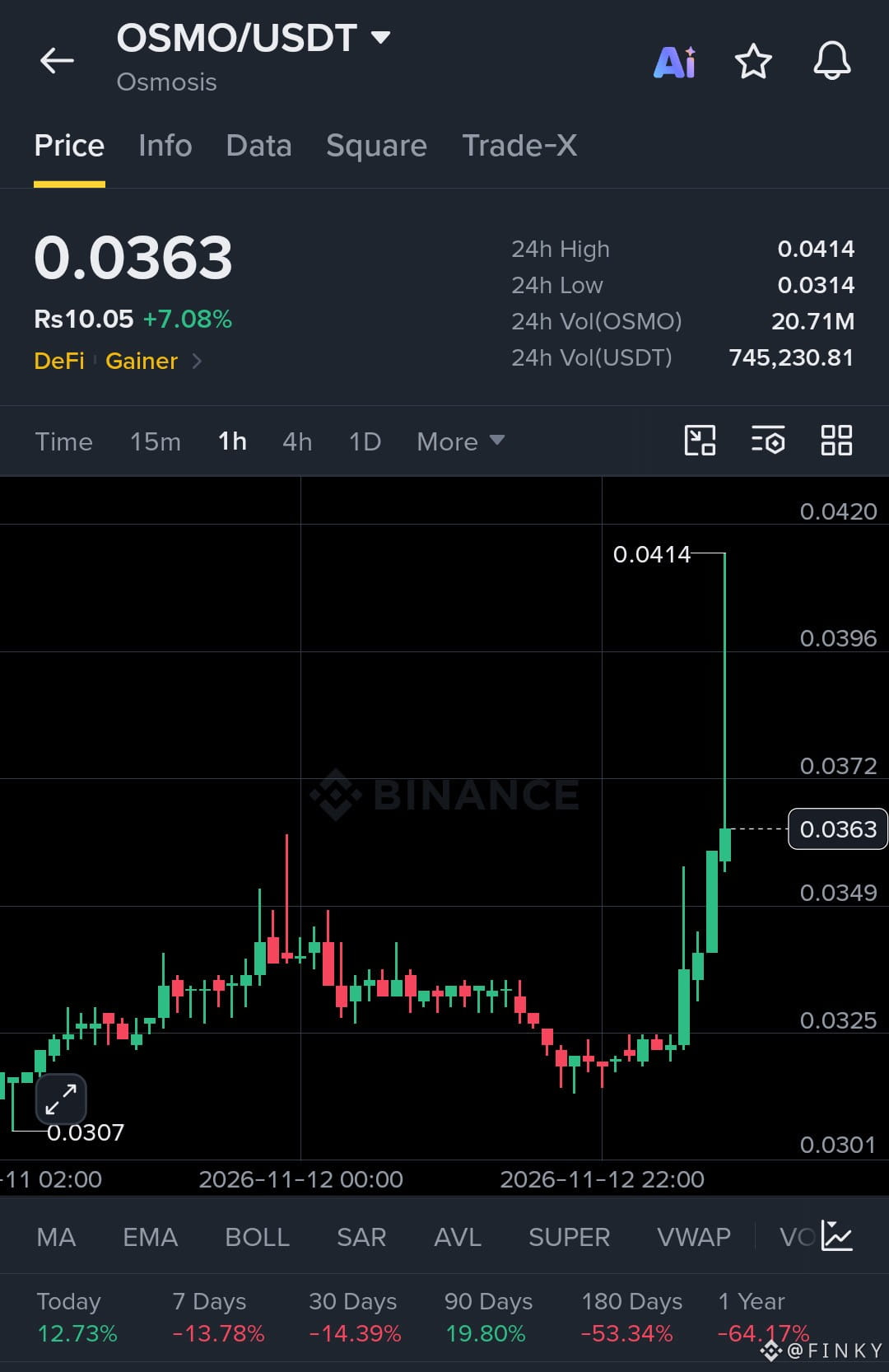
OSMO is showing a strong bullish move on the 1-hour chart. Price is currently trading around $0.0363, up 7.08%, after breaking out of a long consolidation zone.
The interesting part is where this move started. Buyers defended the $0.0307 area, built a base around $0.0320, and then pushed price sharply higher. Now OSMO has reached $0.0414 before pulling back toward $0.0363.
This is a strong move, but the long upper wick tells us sellers are also active. Bulls still need to prove they can hold the breakout.
Key Market Details:
- Current Price: $0.0363
- 24H High: $0.0414
- 24H Low: $0.0314
- 24H Volume: $745,230.81 USDT
- 24H Change: +7.08%
My Trading Plan:
Entry (EP): $0.0350–$0.0360
Stop Loss (SL): $0.0338
TP1: $0.0372
TP2: $0.0396
TP3: $0.0414
Bullish Scenario:
If OSMO holds above $0.0349 and buyers regain momentum, another attempt toward $0.0396 and $0.0414 could follow. A clean break above $0.0414 would be the next major confirmation.
Bearish Scenario:
If price loses $0.0349, the breakout could weaken. Watch $0.0325 as the next important support area.
My focus is simple: don't chase the sudden green candles. Let OSMO establish support before considering an entry.
Cash is a position. Patience is part of trading.
Can OSMO reclaim $0.0414, or will sellers stop this recovery?
Risk managed. Eyes on the targets. Let's go
{spot}(OSMOUSDT)
#HuangExitNvidiaStrategyInFocus #AnthropicRejectsIPODelayValuationinQuestion #ChipStocksExtendLossesAfterNvidiaCEOChange #TrezorConfirmsMaliciousImplantsIn3Safe5Devices #SoFiExpandsSoFiUSDStablecoinToPolygon
$OSMO /USDT — Buyers Just Woke Up! Is Another Rally Coming?
OSMO is showing a strong bullish move on the 1-hour chart. Price is currently trading around $0.0363, up 7.08%, after breaking out of a long consolidation zone.
The interesting part is where this move started. Buyers defended the $0.0307 area, built a base around $0.0320, and then pushed price sharply higher. Now OSMO has reached $0.0414 before pulling back toward $0.0363.
This is a strong move, but the long upper wick tells us sellers are also active. Bulls still need to prove they can hold the breakout.
Key Market Details:
- Current Price: $0.0363
- 24H High: $0.0414
- 24H Low: $0.0314
- 24H Volume: $745,230.81 USDT
- 24H Change: +7.08%
My Trading Plan:
Entry (EP): $0.0350–$0.0360
Stop Loss (SL): $0.0338
TP1: $0.0372
TP2: $0.0396
TP3: $0.0414
Bullish Scenario:
If OSMO holds above $0.0349 and buyers regain momentum, another attempt toward $0.0396 and $0.0414 could follow. A clean break above $0.0414 would be the next major confirmation.
Bearish Scenario:
If price loses $0.0349, the breakout could weaken. Watch $0.0325 as the next important support area.
My focus is simple: don't chase the sudden green candles. Let OSMO establish support before considering an entry.
Cash is a position. Patience is part of trading.
Can OSMO reclaim $0.0414, or will sellers stop this recovery?
Risk managed. Eyes on the targets. Let's go
#HuangExitNvidiaStrategyInFocus #AnthropicRejectsIPODelayValuationinQuestion #ChipStocksExtendLossesAfterNvidiaCEOChange #TrezorConfirmsMaliciousImplantsIn3Safe5Devices #SoFiExpandsSoFiUSDStablecoinToPolygon
1
385

·
--
$FOREST : Strong momentum with an impressive 85.77% gain. Current price is 0.046869. Resistance sits near 0.0500, while holding 0.0440 could support another upward move. Watch for profit-taking.
$ZEST : Trading at 0.10715, up 3.42%. Resistance is around 0.1100–0.1150. A breakout could attract fresh buyers, while 0.1030 is an important support zone.
HANA: Currently at 0.016788, gaining 3.39%. Resistance near 0.0175 could determine the next move. A sustained breakout may encourage further upside.
$TSLAon : At 398.17, up 2.95%. Resistance around 405–410 remains important for bullish continuation.
NVDAon: At 164.07, up 2.38%. A move above 167 could strengthen momentum, while 160 is a key support area.
Which coin should get a deeper professional analysis: FOREST or ZEST?
#HuangExitNvidiaStrategyInFocus #AnthropicRejectsIPODelayValuationinQuestion #SoFiExpandsSoFiUSDStablecoinToPolygon #ChipStocksExtendLossesAfterNvidiaCEOChange #TrezorConfirmsMaliciousImplantsIn3Safe5Devices .
{future}(ZESTUSDT)
{alpha}(560x11cf6bf6d87cb0eb9c294fd6cbfec91ee3a1a7d0)
{future}(HANAUSDT)
$FOREST : Strong momentum with an impressive 85.77% gain. Current price is 0.046869. Resistance sits near 0.0500, while holding 0.0440 could support another upward move. Watch for profit-taking.
$ZEST : Trading at 0.10715, up 3.42%. Resistance is around 0.1100–0.1150. A breakout could attract fresh buyers, while 0.1030 is an important support zone.
HANA: Currently at 0.016788, gaining 3.39%. Resistance near 0.0175 could determine the next move. A sustained breakout may encourage further upside.
$TSLAon : At 398.17, up 2.95%. Resistance around 405–410 remains important for bullish continuation.
NVDAon: At 164.07, up 2.38%. A move above 167 could strengthen momentum, while 160 is a key support area.
Which coin should get a deeper professional analysis: FOREST or ZEST?
#HuangExitNvidiaStrategyInFocus #AnthropicRejectsIPODelayValuationinQuestion #SoFiExpandsSoFiUSDStablecoinToPolygon #ChipStocksExtendLossesAfterNvidiaCEOChange #TrezorConfirmsMaliciousImplantsIn3Safe5Devices .
$ZEST
$HANA
$FOREST
9 hr(s) left
2
402

·
--
$BTC Bitcoin (BTC)
Current Status: Trading near $70,500 – $71,000 (~NPR 10.57M). BTC lost its $73,000 support floor overnight following sharp sell-offs across risk assets and leveraged long liquidations.
Key Focus: Crucial downside structural floor now sits at $68,000 – $70,000. Reclaiming and holding a daily candle back above $73,000 – $75,000 is urgently required to absorb selling pressure and stabilize the market ahead of the weekend.#HuangExitNvidiaStrategyInFocus #AnthropicRejectsIPODelayValuationinQuestion #HedgeFundsCMEBitcoinNetShortsFall89% #AnthropicIPOAboutSixTimesOversubscribed #SoFiExpandsSoFiUSDStablecoinToPolygon
{spot}(BTCUSDT)
$BTC Bitcoin (BTC)
Current Status: Trading near $70,500 – $71,000 (~NPR 10.57M). BTC lost its $73,000 support floor overnight following sharp sell-offs across risk assets and leveraged long liquidations.
Key Focus: Crucial downside structural floor now sits at $68,000 – $70,000. Reclaiming and holding a daily candle back above $73,000 – $75,000 is urgently required to absorb selling pressure and stabilize the market ahead of the weekend.#HuangExitNvidiaStrategyInFocus #AnthropicRejectsIPODelayValuationinQuestion #HedgeFundsCMEBitcoinNetShortsFall89% #AnthropicIPOAboutSixTimesOversubscribed #SoFiExpandsSoFiUSDStablecoinToPolygon
1
131
Log in to explore more content
Join global crypto users on Binance Square
⚡️ Get latest and useful information about crypto.
💬 Trusted by the world’s largest crypto exchange.
👍 Discover real insights from verified creators.
Email / Phone number
Trending Topics
1
#USPPIMissMayEaseBTCPressure
20,104 views
502 Discussing
2
#BitcoinCoreDisclosesTorTrafficVulnerability
6,823 views
235 Discussing
3
#WhatWillDriveCryptoandStocks’NextRebound?
119,096 views
1,434 Discussing
4
#BitcoinBreaksBelow200WeekMovingAverage
31,627 views
398 Discussing
5
#SpaceXTeslaMergerTalksWouldCombine30220BTC
10,893 views
206 Discussing
6
#Anthropic’s6xIPODemandSignalsPotentialRecordRaise
39,605 views
650 Discussing
7
#USCryptoETFsLose$1.48BInFiveDays
1,919 views
40 Discussing
8
#KoreaDigitalAssetBasicActFinalDraftExpectedEarlyJanuary
3,427 views
20 Discussing
9
#RippleRLUSDMarketCapSurpassesPayPalPYUSD
6,288 views
114 Discussing
10
#JaneStreetNearlyOctuplesFidelityBitcoinETFHoldings
14,967 views
227 Discussing